RU2126373C1 - Method of producing phosphate-potash fertilizer - Google Patents
Method of producing phosphate-potash fertilizer Download PDFInfo
- Publication number
- RU2126373C1 RU2126373C1 RU97108349/25A RU97108349A RU2126373C1 RU 2126373 C1 RU2126373 C1 RU 2126373C1 RU 97108349/25 A RU97108349/25 A RU 97108349/25A RU 97108349 A RU97108349 A RU 97108349A RU 2126373 C1 RU2126373 C1 RU 2126373C1
- Authority
- RU
- Russia
- Prior art keywords
- pulp
- water
- amount
- fertilizer
- potash
- Prior art date
Links
Images
Landscapes
- Fertilizers (AREA)
Abstract
Description
Предлагаемое изобретение относится к технологии получения сложных, в частности двухкомпонентных фосфорно-калийных удобрений. The present invention relates to a technology for producing complex, in particular two-component phosphorus-potassium fertilizers.
Известен способ получения фосфорно-калийного удобрения путем прессования смеси простого суперфосфата и хлорида калия. Оно содержит не менее 14%. P2O5 усв и 14% К2О, не более 2% P2O5 св, 3% влаги (Позин М.Е. Технология минеральных удобрений. - Л.: Химия, 1983, с.326).A known method of producing phosphorus-potassium fertilizer by pressing a mixture of simple superphosphate and potassium chloride. It contains at least 14%. P 2 O 5 assimilation and 14% K 2 O, not more than 2% P 2 O 5 sv, 3% moisture (Pozin M.E. Technology of mineral fertilizers. - L.: Chemistry, 1983, p.326).
Недостатком данного способа является использование готовых форм удобрений, наличие соединений хлора в готовом продукте, что приводит к удорожанию и снижению потребительских свойств удобрений. The disadvantage of this method is the use of finished forms of fertilizers, the presence of chlorine compounds in the finished product, which leads to higher prices and lower consumer properties of fertilizers.
Наиболее близким является способ получения фосфорно-калийного удобрения путем обработки природного фосфата серной кислотой с последующим смешением образовавшейся массы с хлористым калием, грануляции и сушки готового продукта, в котором обработку ведут 40 - 60%-ной серной кислотой или ее смесью с фосфорной кислотой в течение 30 - 60 мин, а образовавшуюся массу до смешения с хлоридом калия нейтрализуют известняком до остаточной кислотности 1 - 2% P2O5 (авт.св. СССР 1013445, 1983, Б.И. 15).The closest is a method of producing phosphorus-potassium fertilizer by treating natural phosphate with sulfuric acid, followed by mixing the resulting mass with potassium chloride, granulating and drying the finished product, in which treatment is carried out with 40-60% sulfuric acid or its mixture with phosphoric acid for 30-60 minutes, and the resulting mass, before mixing with potassium chloride, is neutralized with limestone to a residual acidity of 1 - 2% P 2 O 5 (ed. St. USSR 1013445, 1983, B.I. 15).
В данном способе разложение фосфатного сырья проводится при температуре 80oС в течение 30 - 60 мин, что приводит к недостаточно высокой степени разложения фосфатного сырья (Кразл = 87 - 90%) и, соответственно, к снижению содержания усвояемого фосфора в удобрении, к потере фосфора. Нейтрализация продуктов сернокислотного разложения фосфатного сырья известняком протекает до рН 2,5 - 3, т.е. недостаточно полно с получением пульпы с остаточной кислотностью 1 - 2% P2O5, при этом в процессе нейтрализации образуется растворимая в воде соль - кремнефторид кальция, которая при подщелачивании распадается с выделением четырехфтористого кремния (Позин М.Е. Технология минеральных солей.- Л.: Химия, 1983, с.225). Это приводит к тому, что практически весь содержащийся в исходном сырье фтор переходит в водорастворимое состояние и при использовании удобрений переходит в почву и растения, что снижает потребительские свойства продукции. Содержание водорастворимого фтора в удобрении составляет 0,8 - 1%. Введение калийного реагента в виде хлористого калия приводит к высокому содержанию хлора в удобрении, что ограничивает применение удобрения, так как наличие хлора отрицательно сказывается на росте и развитии хлорофобных культур, таких как табак, гречиха, виноград, овощи и зелень, выращиваемые в закрытом грунте. По своему солевому составу удобрение состоит из фосфатов кальция и хлорида калия с соотношением P2O5 и К2О, равным 1:1, с достаточно низкой концентрацией питательных веществ (30 - 31%) и достаточно высокой свободной кислотностью 0,9 - 2% P2O5 св.In this method, the decomposition of phosphate raw materials is carried out at a temperature of 80 o C for 30-60 minutes, which leads to an insufficiently high degree of decomposition of phosphate raw materials (K dec = 87 - 90%) and, accordingly, to reduce the content of assimilable phosphorus in the fertilizer, to phosphorus loss. Neutralization of products of sulfuric acid decomposition of phosphate raw materials by limestone proceeds to pH 2.5 - 3, i.e. not enough to obtain pulp with a residual acidity of 1 - 2% P 2 O 5 , while in the process of neutralization a water-soluble salt is formed - calcium silicofluoride, which, when alkalized, decomposes with the release of silicon tetrafluoride (Pozin M.E. Mineral salt technology. L .: Chemistry, 1983, p. 225). This leads to the fact that almost all the fluorine contained in the feedstock goes into a water-soluble state and, when using fertilizers, goes into soil and plants, which reduces the consumer properties of the products. The content of water-soluble fluorine in the fertilizer is 0.8 - 1%. The introduction of a potassium reagent in the form of potassium chloride leads to a high chlorine content in the fertilizer, which limits the use of fertilizer, since the presence of chlorine adversely affects the growth and development of chlorophobic crops, such as tobacco, buckwheat, grapes, vegetables and herbs grown in closed ground. According to its salt composition, the fertilizer consists of calcium phosphates and potassium chloride with a ratio of P 2 O 5 and K 2 O equal to 1: 1, with a sufficiently low concentration of nutrients (30 - 31%) and a sufficiently high free acidity of 0.9 - 2 % P 2 O 5 St.
Недостатками известного способа являются недостаточно высокие потребительские свойства удобрений, а именно достаточно высокая кислотность конечного продукта (0,9 - 2% P2O5), узкие диапазоны соотношений P2O5 и К2О и концентраций питательных веществ, наличие солей хлора и водорастворимого фтора.The disadvantages of this method are not sufficiently high consumer properties of fertilizers, namely, a sufficiently high acidity of the final product (0.9 - 2% P 2 O 5 ), narrow ranges of ratios of P 2 O 5 and K 2 O and nutrient concentrations, the presence of chlorine salts and water soluble fluoride.
Задачей данного изобретения является получение удобрений с высокими потребительскими свойствами, а именно снижение содержания свободной кислотности в пульпе и удобрении, увеличение диапазонов соотношений P2O5 и К2О и концентраций питательных веществ, исключение солей хлора и уменьшение количества водорастворимого фтора в удобрении.The objective of the invention is to obtain fertilizers with high consumer properties, namely reducing the free acid content in the pulp and fertilizer, increasing the ranges of ratios of P 2 O 5 and K 2 O and nutrient concentrations, eliminating chlorine salts and reducing the amount of water-soluble fluorine in the fertilizer.
Способ получения фосфорно-калийных удобрений включает разложение фосфатного сырья серной кислотой или ее смесью с фосфорной кислотой, смешение фосфорно-кислотной пульпы с калийным реагентом, грануляцию и сушку готового продукта, причем нейтрализацию пульпы проводят щелочным калийсодержащим реагентом при рН 3,1 - 7,5. The method of producing phosphorus-potassium fertilizers includes the decomposition of phosphate raw materials with sulfuric acid or its mixture with phosphoric acid, mixing phosphoric acid pulp with potassium reagent, granulation and drying of the finished product, and the pulp is neutralized with an alkaline potassium-containing reagent at pH 3.1-7.5 .
Изменение условий процесса достигается за счет расширения диапазона температур и концентраций кислот при разложении и нейтрализации пульпы поташом или его водным раствором до рН 3,1 - 7,5, что приводит к увеличению коэффициента разложения сырья и получению в качестве основных составляющих удобрения солей фосфатов калия с соотношением P2O5 : К2О = 1:0,5-1,32 и концентрацией питательных веществ в диапазоне 21 - 80% в зависимости от качества используемого фосфатного сырья и количества используемой фосфорной кислоты. Это позволяет получить удобрение с высокими агрохимическими свойствами, не содержащее хлора и содержащее незначительное количество водорастворимого фтора.Changing the process conditions is achieved by expanding the temperature range and acid concentrations during decomposition and neutralization of the pulp with potash or its aqueous solution to a pH of 3.1 - 7.5, which leads to an increase in the decomposition coefficient of raw materials and to obtain potassium phosphate salts as the main components of the fertilizer the ratio of P 2 O 5 : K 2 O = 1: 0.5-1.32 and a concentration of nutrients in the range of 21 - 80%, depending on the quality of the phosphate feed used and the amount of phosphoric acid used. This allows you to get fertilizer with high agrochemical properties, not containing chlorine and containing a small amount of water-soluble fluorine.
При нейтрализации фосфорно-кислотной пульпы протекают реакции
2Н3РО4 + К2СО3 = 2КН2РО4 + СО2 + Н2О (1)
2КН2РО4 + К2СО3 = 2К2НРО4 + СО2 + Н2О (2)
Соотношение солей по реакциям (1) и (2) и, соответственно, состав удобрения зависит от величины рН. В интервале рН 3,1 - 7,5 соотношение P2O5 : К2О изменяется от 1:0,5 до 1:1,32. При рН 3,1 содержание K2O по отношению к P2O5 составляет 0,5. При этом часть P2O5 остается свободной, данное удобрение имеет слабокислую реакцию и применимо для защелаченных почв. Увеличение количества K2O до 0,7 по отношению к P2O5 приводит к образованию монокалийфосфата. Это удобрение имеет рН 3,5 и состоит из монокалийфосфата и гипса (полугидрата). Дальнейшее увеличение содержания К2О до 1:1 по отношению к Р2О5 приводит к образованию эквимолекулярной смеси моно- и дикалийфосфата. Это удобрение уравновешено по фосфору и калию и обладает хорошими физическими свойствами, имеет рН 6,5. При рН 7,5 соотношение P2O5 и К2О в удобрении 1:1,32, при этом образуется дикалийфосфат. Дикалийфосфат является практически безбалластным комплексным удобрением с содержанием питательных веществ до 95%, однако оно обладает плохими физическими свойствами. В присутствии гипса содержание питательных веществ снижается, но при этом значительно улучшаются физические свойства удобрений. Повышение рН выше 7,5 нецелесообразно в связи с наличием щелочности в готовом продукте и ухудшением его физических свойств.When neutralizing phosphoric acid pulp, reactions occur
2Н 3 РО 4 + К 2 СО 3 = 2КН 2 РО 4 + СО 2 + Н 2 О (1)
2KN 2 PO 4 + K 2 СО 3 = 2К 2 НРО 4 + СО 2 + Н 2 О (2)
The ratio of salts according to reactions (1) and (2) and, accordingly, the composition of the fertilizer depends on the pH value. In the range of pH 3.1 - 7.5, the ratio of P 2 O 5 : K 2 O varies from 1: 0.5 to 1: 1.32. At pH 3.1, the K 2 O content with respect to P 2 O 5 is 0.5. At the same time, part of P 2 O 5 remains free, this fertilizer has a slightly acid reaction and is applicable for alkalized soils. An increase in the amount of K 2 O to 0.7 with respect to P 2 O 5 leads to the formation of monopotassium phosphate. This fertilizer has a pH of 3.5 and consists of monopotassium phosphate and gypsum (hemihydrate). A further increase in the content of K 2 O to 1: 1 with respect to P 2 O 5 leads to the formation of an equimolecular mixture of mono- and dipotassium phosphate. This fertilizer is balanced by phosphorus and potassium and has good physical properties, has a pH of 6.5. At pH 7.5, the ratio of P 2 O 5 and K 2 O in the fertilizer is 1: 1.32, and dipotassium phosphate is formed. Dicalium phosphate is an almost ballast-free complex fertilizer with a nutrient content of up to 95%, but it has poor physical properties. In the presence of gypsum, the nutrient content decreases, but the physical properties of the fertilizers are significantly improved. Raising the pH above 7.5 is impractical due to the presence of alkalinity in the finished product and the deterioration of its physical properties.
Кроме того, при нейтрализации экстракционной фосфорной кислоты, содержащей кремнефтористоводородную кислоту, поташом протекает реакция осаждения фтора в неусвояемую форму по реакции
H2SiF6 + K2CO3 = K2SiF6 + CO2 + H2O (3)
(Гафарова А.Ф. и др. Исследование растворимости кремнефтористоводородных солей в системах Н3РО4-Na2SiF6-Na2HPO4-H2O и Н3РО4-K2SiF6-K2SO4-H2O //Физическая химия и электрохимия. //Труды МХТИ им.Менделеева, М., 1973, вып.75, с.56).In addition, when neutralizing extraction phosphoric acid containing hydrofluoric acid, potash fluorine precipitation reaction takes place in an unapproachable form by reaction
H 2 SiF 6 + K 2 CO 3 = K 2 SiF 6 + CO 2 + H 2 O (3)
(Gafarova A.F. et al. Investigation of the solubility of hydrofluoric salts in H 3 PO 4 -Na 2 SiF 6 -Na 2 HPO 4 -H 2 O and H 3 PO 4 -K 2 SiF 6 -K 2 SO 4 -H systems 2 O // Physical chemistry and electrochemistry. // Proceedings of the Moscow Art Institute named after Mendeleev, M., 1973, issue 75, p. 56).
Степень осаждения фтора по реакции (3), по нашим исследованиям, зависит от величины рН и в интервале рН 3,1 - 7,5 составляет 96 - 98%. Остаточное содержание фтора в водорастворимой форме с учетом растворимости кремнефторида калия в воде в пределах рН удобрения 3,1 - 7,5 не превышает 0,1 - 0,2%. The degree of fluorine deposition according to reaction (3), according to our studies, depends on the pH value and in the range of pH 3.1 - 7.5 is 96 - 98%. The residual fluorine content in a water-soluble form, taking into account the solubility of potassium silicofluoride in water within the range of fertilizer pH 3.1 - 7.5, does not exceed 0.1 - 0.2%.
Сущность процесса поясняется примерами. The essence of the process is illustrated by examples.
Пример 1. 1000 кг апатитового концентрата состава 38% Р2О5, 50% СаО, суспензируют в фосфорной кислоте в количестве 3470 кг, содержащей 16% Р2О5 (Ж: Т= 3,47: 1), вводят 1000 кг 75%-ной серной кислоты (750 кг мнг). Процесс разложения протекает в течение 240 мин при температуре 84oС. При этом в газовую фазу выделяется 250 кг воды и 6 кг фтора. Количество пульпы составляет 5214 кг, в том числе количество гипса 1535 кг. Содержание Р2О5 в пульпе составляет 17,2%, Р2О5 св 16%, воды 41,5%. Коэффициент разложения составляет 98%. Пульпа направляется на нейтрализацию поташом в количестве 916 кг (648 кг К2О). Нейтрализация происходит при температуре 120oС в течение 15 мин при рН 3,5. При этом в газовую фазу выделяется 300 кг воды и 268 кг СО2. Пульпа с рН 3,8 в количестве 5562 кг с влажностью 34% направляется на грануляцию и сушку в БГС. При этом испаряется 1708 кг воды. Готовый продукт в количестве 3854 кг имеет состав 24,1% Р2О5 общ, 24% Р2О5 усв, 16,8% К2О, 1% воды, 0,17% F водораств. Концентрация питательных веществ составляет 40,8%. Отношение P2O5 : К2О = 1:0,7.Example 1. 1000 kg of apatite concentrate composition 38% P 2 O 5 , 50% CaO, suspended in phosphoric acid in an amount of 3470 kg, containing 16% P 2 O 5 (W: T = 3.47: 1), 1000 kg are administered 75% sulfuric acid (750 kg mng). The decomposition process takes place for 240 min at a temperature of 84 o C. In this case, 250 kg of water and 6 kg of fluorine are released into the gas phase. The amount of pulp is 5214 kg, including the amount of gypsum 1535 kg. The content of P 2 O 5 in the pulp is 17.2%, P 2 O 5 sv 16%, water 41.5%. The decomposition coefficient is 98%. The pulp is sent to neutralize potash in an amount of 916 kg (648 kg K 2 O). Neutralization occurs at a temperature of 120 o C for 15 min at a pH of 3.5. In this case, 300 kg of water and 268 kg of CO 2 are released into the gas phase. The pulp with a pH of 3.8 in the amount of 5562 kg with a moisture content of 34% is sent to granulation and drying in BGS. In this case, 1708 kg of water evaporates. The finished product in an amount of 3854 kg has a composition of 24.1% P 2 O 5 total, 24% P 2 O 5 assimilation, 16.8% K 2 O, 1% water, 0.17% F water. The concentration of nutrients is 40.8%. The ratio of P 2 O 5 : K 2 O = 1: 0.7.
Пример 2. 1000 кг апатитового концентрата состава 39,4% Р2О5, 51,8% СаО суспензируют в 43,5%-ной Р2О5 фосфорной кислоте в количестве 10000 кг (Ж:Т= 10:1), вводят 828 кг 93%-ной серной кислоты (700 кг мнг). Процесс разложения протекает в течение 210 мин при температуре 95oС. При этом в газовую фазу выделяется 400 кг воды и 14 кг фтора. Количество пульпы составляет 11414 кг, в том числе количество полугидрата 1316 кг. Содержание Р2О5 в пульпе 41%, Р2О5 св 39%, воды 31%. Коэффициент разложения 98%. Пульпа направляется на нейтрализацию поташом в количестве 6955 кг (4736 кг К2О). Нейтрализация происходит при температуре 100oС в течение 15 мин при рН 6,5. При этом в газовую фазу выделяется 600 кг воды и 2050 кг СО2. Пульпа с рН 6,5 в количестве 15711 кг с влажностью 25,2% направляется в БГС на грануляцию и сушку. При этом испаряется 3879 кг воды. Готовый продукт в количестве 11832 кг имеет состав 40,05% Р2О5 общ, 40% Р2О5 усв, 40% К2О, 1% воды, 0,12% F водораствор. Концентрация питательных веществ составляет 80%. Отношение P2O5 : К2О равно 1:1.Example 2. 1000 kg of apatite concentrate with a composition of 39.4% P 2 O 5 , 51.8% CaO are suspended in 43.5% P 2 O 5 phosphoric acid in an amount of 10,000 kg (W: T = 10: 1), 828 kg of 93% sulfuric acid (700 kg mng) are introduced. The decomposition process proceeds for 210 min at a temperature of 95 o C. In this case, 400 kg of water and 14 kg of fluorine are released into the gas phase. The amount of pulp is 11414 kg, including the amount of hemihydrate 1316 kg. The content of P 2 O 5 in the pulp is 41%, P 2 O 5 sv 39%, water 31%. The decomposition coefficient is 98%. The pulp is sent to neutralize potash in an amount of 6955 kg (4736 kg K 2 O). Neutralization occurs at a temperature of 100 o C for 15 min at a pH of 6.5. In this case, 600 kg of water and 2050 kg of CO 2 are released into the gas phase. Pulp with a pH of 6.5 in the amount of 15711 kg with a moisture content of 25.2% is sent to the CWG for granulation and drying. In this case, 3879 kg of water evaporates. The finished product in an amount of 11832 kg has a composition of 40.05% P 2 O 5 total, 40% P 2 O 5 assimilation, 40% K 2 O, 1% water, 0.12% F water solution. The concentration of nutrients is 80%. The ratio of P 2 O 5 : K 2 O is 1: 1.
Пример 3. 1000 кг ковдорского апатитового концентрата состава 36% Р2О5, 53% СаО, 2% МgO суспензируют в абсорбционной воде в отношении 1,5:1 и направляют на смешение с 93%-ной серной кислотой в количестве 997 кг (927 кг мнг). Процесс разложения протекает в течение 180 мин при температуре 81oС. Степень разложения составляет 97%. При этом выделяется 220 кг воды и 3 кг фтора. Образуется пульпа в количестве 3267 кг, содержащая 10,7% Р2О5, 8% Р2О5 св, 33% Н2О, содержание гипса 1627 кг. Пульпа направляется на нейтрализацию поташом в количестве 677 кг (461 кг К2О). Процесс протекает при температуре 100oС при рН 7,5 в течение 20 мин. При этом выделяется 200 кг воды и 216 кг СО2. Пульпа в количестве 3528 кг с влажностью 30% направляется в БГС на сушку и грануляцию. При этом испаряется 961 кг воды. Готовый продукт в количестве 2567 кг имеет состав 14% Р2О5 общ, 13,6% Р2О5 усв, 17,9% К2О, 1% Н2О, 0,1% F водораств. Концентрация питательных веществ составляет 31,5%. Отношение P2O5 : К2О = 1:1,32.Example 3. 1000 kg of Kovdor apatite concentrate with a composition of 36% P 2 O 5 , 53% CaO, 2% MgO are suspended in absorption water in a ratio of 1.5: 1 and sent to mix with 93% sulfuric acid in an amount of 997 kg ( 927 kg mng). The decomposition process takes place for 180 min at a temperature of 81 o C. the Degree of decomposition is 97%. In this case, 220 kg of water and 3 kg of fluorine are released. Pulp is formed in the amount of 3267 kg, containing 10.7% P 2 O 5 , 8% P 2 O 5 sv, 33% H 2 O, gypsum content 1627 kg. The pulp is sent to neutralize potash in an amount of 677 kg (461 kg K 2 O). The process proceeds at a temperature of 100 o With a pH of 7.5 for 20 minutes In this case, 200 kg of water and 216 kg of CO 2 are released . Pulp in the amount of 3528 kg with a moisture content of 30% is sent to the BGS for drying and granulation. In this case, 961 kg of water evaporates. The finished product in an amount of 2567 kg has a composition of 14% P 2 O 5 total, 13.6% P 2 O 5 assimilation, 17.9% K 2 O, 1% H 2 O, 0.1% F water. The concentration of nutrients is 31.5%. The ratio of P 2 O 5 : K 2 O = 1: 1.32.
Пример 4. 1000 кг фосфоритного концентрата Кингисеппского месторождения состава 29,5% P2O5, 42% СаО, 1,5% MgO, 6% СО2 суспензируют в оборотной воде с отделения абсорбции с Ж:Т=1:1 и смешивают с 790 кг 93%-ной серной кислотой (735 кг мнг). Процесс разложения протекает при температуре 90oС в течение 120 мин. Степень разложения составляет 98%. При этом в газовую фазу выделяется 200 кг воды, 40 кг СО2 и 3 кг фтора. Пульпа содержит 11,3% P2O5 водн, 9,4% P2O5 св, 30% Н2О. Эта пульпа в количестве 2520 кг направляется на смешение с 903 кг 47%-ного раствора поташа (424 кг К2СО3). Процесс протекает при 100oС в течение 20 мин при рН 6,5. При этом в газовую фазу уходит 135 кг СО2 и 200 кг воды. Пульпа в количестве 3118 кг с влажностью 34% направляется на грануляцию и сушку. При этом испаряется 1067 кг воды. Готовый продукт в количестве 2055 кг имеет состав 14,3% P2O5 общ, 14% P2O5 усв, 14% К2О, 1% Н2О, 0,13% F водораствор. Концентрация питательных веществ составляет 28%. Отношение P2O5:К2О=1:1.Example 4. 1000 kg of phosphate concentrate of the Kingisepp deposit of 29.5% P 2 O 5 , 42% CaO, 1.5% MgO, 6% CO 2 are suspended in recycled water from the absorption compartment with W: T = 1: 1 and mixed with 790 kg of 93% sulfuric acid (735 kg mng). The decomposition process proceeds at a temperature of 90 o C for 120 minutes The degree of decomposition is 98%. In this case, 200 kg of water, 40 kg of CO 2 and 3 kg of fluorine are released into the gas phase. The pulp contains 11.3% P 2 O 5 aq, 9.4% P 2 O 5 sv, 30% H 2 O. This pulp in the amount of 2520 kg is sent to mix with 903 kg of a 47% potash solution (424 kg K 2 СО 3 ). The process proceeds at 100 o C for 20 min at a pH of 6.5. In this case, 135 kg of CO 2 and 200 kg of water go into the gas phase. Pulp in the amount of 3118 kg with a moisture content of 34% is sent to granulation and drying. In this case, 1067 kg of water evaporates. The finished product in an amount of 2055 kg has a composition of 14.3% P 2 O 5 total, 14% P 2 O 5 assimilation, 14% K 2 O, 1% H 2 O, 0.13% F water solution. The concentration of nutrients is 28%. The ratio of P 2 O 5 : K 2 O = 1: 1.
Пример 5. 1000 кг фосфоритного концентрата Кингисеппского месторождения состава 24% P2O5, 38% СаО, 3% MgO, 7% СО2 смешивают с оборотной водой с отделения абсорбции в количестве 1000 кг и с 715 кг 93%-ной серной кислотой (665 кг мнг). Процесс разложения протекает при температуре 85oС в течение 70 мин. Степень разложения составляет 97%. При этом в газовую фазу уходит 200 кг воды, 70 кг СО2 и 3 кг фтора. Пульпа содержит 9,8% P2O5 водн, 6% P2O5 св, 33% воды, 1167 кг гипса. Пульпа в количестве 2442 кг направляется на смешение с 173 кг поташа (118 кг К2О). Процесс протекает при 80oС в течение 15 мин при рН 3,1. При этом в газовую фазу уходит 55 кг СО2 и 150 кг воды. Пульпа в количестве 2410 кг со свободной кислотностью 0,8% P2O5 и влажностью 25% направляется на грануляцию и сушку. При этом испаряется 727 кг воды. Готовый продукт в количестве 1683 кг имеет состав 14,3% P2O5 общ, 14% P2O5 усв, 7% К2О, 0,8% P2O5 св, 1% воды, 0,2% F водораствор. Концентрация питательных веществ составляет 21%. Отношение P2O5:К2О = 1:0,5.Example 5. 1000 kg of phosphate concentrate of the Kingisepp deposit of 24% P 2 O 5 , 38% CaO, 3% MgO, 7% CO 2 are mixed with recycled water from the absorption compartment in the amount of 1000 kg and with 715 kg of 93% sulfuric acid (665 kg mng). The decomposition process proceeds at a temperature of 85 o C for 70 minutes The degree of decomposition is 97%. In this case, 200 kg of water, 70 kg of CO 2 and 3 kg of fluorine go into the gas phase. The pulp contains 9.8% P 2 O 5 aq, 6% P 2 O 5 sv, 33% water, 1167 kg of gypsum. Pulp in the amount of 2442 kg is sent for mixing with 173 kg of potash (118 kg K 2 O). The process proceeds at 80 o C for 15 min at a pH of 3.1. In this case, 55 kg of CO 2 and 150 kg of water go into the gas phase. Pulp in the amount of 2410 kg with a free acidity of 0.8% P 2 O 5 and a moisture content of 25% is sent to granulation and drying. In this case, 727 kg of water evaporates. The finished product in an amount of 1683 kg has a composition of 14.3% P 2 O 5 total, 14% P 2 O 5 assimilation, 7% K 2 O, 0.8% P 2 O 5 sv, 1% water, 0.2% F water solution. The concentration of nutrients is 21%. The ratio of P 2 O 5 : K 2 O = 1: 0.5.
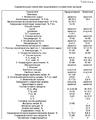
В таблице приведены сравнительные показатели предлагаемого и известного методов. The table shows the comparative indicators of the proposed and known methods.
Как видно из таблицы, предлагаемый процесс позволяет снизить кислотность пульпы до 0-0,9% P2O5 св, исключить введение карбоната кальция и хлористого калия, снизить содержание водорастворимого фтора в готовом продукте до 0,1 - 0,2% вместо 0,8 -1 % за счет нейтрализации продуктов сернокислотного разложения поташом в интервале рН 3,1 - 7,5. Снижение величины рН ниже 3,1 нецелесообразно в связи с высокой кислотностью продукта и более низкой степенью связывания фтора в водонерастворимую форму. Повышение величины рН более 7,5 также нецелесообразно в связи с наличием в таком продукте излишней щелочности, что ухудшает физические свойства продукта. Введение щелочного калийсодержащего реагента в интервале рН 3,1 - 7,5 приводит к уменьшению свободной кислотности продукта до 0 - 0,8% вместо 0,9 - 2%, увеличению соотношения P2O5: К2О до 1:0,5-1,32 вместо 1:1 без введения вредного для растений хлора, увеличению диапазона изменения концентраций питательных веществ в удобрении от 21 до 80%. По предлагаемому методу весь фосфор в удобрении связан с калием, в известном способе - с кальцием. Количество стадий процесса уменьшилось до 3 вместо 4.As can be seen from the table, the proposed process allows to reduce the acidity of the pulp to 0-0.9% P 2 O 5 sv, to exclude the introduction of calcium carbonate and potassium chloride, to reduce the content of water-soluble fluorine in the finished product to 0.1 - 0.2% instead of 0 , 8 -1% due to the neutralization of products of sulfuric acid decomposition by potash in the range of pH 3.1 - 7.5. A decrease in pH below 3.1 is impractical due to the high acidity of the product and a lower degree of fluorine binding to a water-insoluble form. Raising the pH above 7.5 is also impractical due to the presence of excessive alkalinity in such a product, which impairs the physical properties of the product. The introduction of an alkaline potassium-containing reagent in the range of pH 3.1 - 7.5 leads to a decrease in the free acidity of the product to 0 - 0.8% instead of 0.9 - 2%, an increase in the ratio of P 2 O 5 : K 2 O to 1: 0, 5-1.32 instead of 1: 1 without the introduction of chlorine harmful to plants, increasing the range of changes in the concentration of nutrients in the fertilizer from 21 to 80%. According to the proposed method, all phosphorus in the fertilizer is associated with potassium, in the known method - with calcium. The number of process steps decreased to 3 instead of 4.
Кроме того, в предлагаемом процессе происходит более полное разложение фосфатного сырья до 97 - 98% вместо 87 - 90% за счет использования более крепкой серной кислоты, увеличения продолжительности процесса и температурного интервала. In addition, in the proposed process there is a more complete decomposition of phosphate raw materials up to 97 - 98% instead of 87 - 90% due to the use of stronger sulfuric acid, increasing the duration of the process and the temperature range.
Claims (1)
Priority Applications (1)
| Application Number | Priority Date | Filing Date | Title |
|---|---|---|---|
| RU97108349/25A RU2126373C1 (en) | 1997-05-20 | 1997-05-20 | Method of producing phosphate-potash fertilizer |
Applications Claiming Priority (1)
| Application Number | Priority Date | Filing Date | Title |
|---|---|---|---|
| RU97108349/25A RU2126373C1 (en) | 1997-05-20 | 1997-05-20 | Method of producing phosphate-potash fertilizer |
Publications (2)
| Publication Number | Publication Date |
|---|---|
| RU2126373C1 true RU2126373C1 (en) | 1999-02-20 |
| RU97108349A RU97108349A (en) | 1999-05-20 |
Family
ID=20193188
Family Applications (1)
| Application Number | Title | Priority Date | Filing Date |
|---|---|---|---|
| RU97108349/25A RU2126373C1 (en) | 1997-05-20 | 1997-05-20 | Method of producing phosphate-potash fertilizer |
Country Status (1)
| Country | Link |
|---|---|
| RU (1) | RU2126373C1 (en) |
Cited By (5)
| Publication number | Priority date | Publication date | Assignee | Title |
|---|---|---|---|---|
| RU2141461C1 (en) * | 1999-05-31 | 1999-11-20 | Селиванов Вадим Николаевич | Method of preparing complex fertilizers |
| RU2157354C1 (en) * | 1999-07-01 | 2000-10-10 | ОАО "Волховский алюминий" | Complex fertilizer production process |
| RU2167134C1 (en) * | 2000-06-14 | 2001-05-20 | ООО научно-производственная фирма "Интеком" | Method of production of phosphorus-potassium fertilizer |
| RU2188809C1 (en) * | 2001-04-27 | 2002-09-10 | Общество с ограниченной ответственностью "Эковита" | Method of production of phosphorus-potassium fertilizers |
| RU2200139C1 (en) * | 2001-12-11 | 2003-03-10 | Общество с ограниченной ответственностью "Эковита" | Complex fertilizer production process |
Citations (1)
| Publication number | Priority date | Publication date | Assignee | Title |
|---|---|---|---|---|
| GB1166930A (en) * | 1967-06-23 | 1969-10-15 | Dansk Svovlsyreog Superphospha | Fertilizer production |
-
1997
- 1997-05-20 RU RU97108349/25A patent/RU2126373C1/en not_active IP Right Cessation
Patent Citations (1)
| Publication number | Priority date | Publication date | Assignee | Title |
|---|---|---|---|---|
| GB1166930A (en) * | 1967-06-23 | 1969-10-15 | Dansk Svovlsyreog Superphospha | Fertilizer production |
Cited By (5)
| Publication number | Priority date | Publication date | Assignee | Title |
|---|---|---|---|---|
| RU2141461C1 (en) * | 1999-05-31 | 1999-11-20 | Селиванов Вадим Николаевич | Method of preparing complex fertilizers |
| RU2157354C1 (en) * | 1999-07-01 | 2000-10-10 | ОАО "Волховский алюминий" | Complex fertilizer production process |
| RU2167134C1 (en) * | 2000-06-14 | 2001-05-20 | ООО научно-производственная фирма "Интеком" | Method of production of phosphorus-potassium fertilizer |
| RU2188809C1 (en) * | 2001-04-27 | 2002-09-10 | Общество с ограниченной ответственностью "Эковита" | Method of production of phosphorus-potassium fertilizers |
| RU2200139C1 (en) * | 2001-12-11 | 2003-03-10 | Общество с ограниченной ответственностью "Эковита" | Complex fertilizer production process |
Similar Documents
| Publication | Publication Date | Title |
|---|---|---|
| Numonov et al. | Low-waste process of complex fertilizer based on sulphuric acid processing thermic calcinated phosphorite concentrate. | |
| RU2412140C2 (en) | Method of producing compound fertilisers | |
| RU2107055C1 (en) | Method of producing compound fertilizers | |
| RU2240992C1 (en) | Complex fertilizer manufacture process | |
| RU2182142C1 (en) | Method to obtain granulated nitroammophoska | |
| RU2145316C1 (en) | Method of preparing complex fertilizers | |
| RU2177465C1 (en) | Method of preparing fertilizers | |
| SU1063800A1 (en) | Method for producing slow-release fertilizer | |
| RU2174970C1 (en) | Complex nitrogen phosphoric mineral fertilizer and method of preparing thereof | |
| RU2167134C1 (en) | Method of production of phosphorus-potassium fertilizer | |
| US2611691A (en) | Process of producing a compound fertilizer | |
| RU2234485C1 (en) | Method for preparing complex fertilizer | |
| RU2672408C1 (en) | Granulated complex chlorine free nitrogen-potassium-magnetic fertilizer and method for preparation thereof | |
| US2555634A (en) | Production of phosphate materials | |
| RU2223933C1 (en) | Method for preparing complex fertilizer | |
| RU2164506C1 (en) | Method of preparing diammonium phosphate | |
| RU2200139C1 (en) | Complex fertilizer production process | |
| RU2188809C1 (en) | Method of production of phosphorus-potassium fertilizers | |
| RU2286320C1 (en) | Method for production of complex fertilizers | |
| RU2141462C1 (en) | Method of preparing complex fertilizers | |
| SU783293A1 (en) | Method of superphosphate production | |
| Dormeshkin | Interactions between components of complex fertilizers. Chemical and physico-chemical interactions at the stages of mixing, granulating and drying during their production | |
| SU1186609A1 (en) | Method of producing complex fertilizer | |
| RU2115636C1 (en) | Method of preparing granulated potassium containing fertilizers | |
| RU2142927C1 (en) | Method of production of phosphate fertilizer |
Legal Events
| Date | Code | Title | Description |
|---|---|---|---|
| PC4A | Invention patent assignment |
Effective date: 20051115 |
|
| PD4A | Correction of name of patent owner | ||
| PD4A | Correction of name of patent owner | ||
| MM4A | The patent is invalid due to non-payment of fees |
Effective date: 20150521 |