KR20230128362A - line for oiling - Google Patents
line for oiling Download PDFInfo
- Publication number
- KR20230128362A KR20230128362A KR1020237026521A KR20237026521A KR20230128362A KR 20230128362 A KR20230128362 A KR 20230128362A KR 1020237026521 A KR1020237026521 A KR 1020237026521A KR 20237026521 A KR20237026521 A KR 20237026521A KR 20230128362 A KR20230128362 A KR 20230128362A
- Authority
- KR
- South Korea
- Prior art keywords
- mass
- wire
- less
- oil ring
- ring
- Prior art date
- Legal status (The legal status is an assumption and is not a legal conclusion. Google has not performed a legal analysis and makes no representation as to the accuracy of the status listed.)
- Ceased
Links
Images




Classifications
-
- C—CHEMISTRY; METALLURGY
- C22—METALLURGY; FERROUS OR NON-FERROUS ALLOYS; TREATMENT OF ALLOYS OR NON-FERROUS METALS
- C22C—ALLOYS
- C22C38/00—Ferrous alloys, e.g. steel alloys
- C22C38/18—Ferrous alloys, e.g. steel alloys containing chromium
- C22C38/40—Ferrous alloys, e.g. steel alloys containing chromium with nickel
- C22C38/46—Ferrous alloys, e.g. steel alloys containing chromium with nickel with vanadium
-
- C—CHEMISTRY; METALLURGY
- C22—METALLURGY; FERROUS OR NON-FERROUS ALLOYS; TREATMENT OF ALLOYS OR NON-FERROUS METALS
- C22C—ALLOYS
- C22C38/00—Ferrous alloys, e.g. steel alloys
- C22C38/02—Ferrous alloys, e.g. steel alloys containing silicon
-
- C—CHEMISTRY; METALLURGY
- C21—METALLURGY OF IRON
- C21D—MODIFYING THE PHYSICAL STRUCTURE OF FERROUS METALS; GENERAL DEVICES FOR HEAT TREATMENT OF FERROUS OR NON-FERROUS METALS OR ALLOYS; MAKING METAL MALLEABLE, e.g. BY DECARBURISATION OR TEMPERING
- C21D1/00—General methods or devices for heat treatment, e.g. annealing, hardening, quenching or tempering
- C21D1/06—Surface hardening
-
- C—CHEMISTRY; METALLURGY
- C21—METALLURGY OF IRON
- C21D—MODIFYING THE PHYSICAL STRUCTURE OF FERROUS METALS; GENERAL DEVICES FOR HEAT TREATMENT OF FERROUS OR NON-FERROUS METALS OR ALLOYS; MAKING METAL MALLEABLE, e.g. BY DECARBURISATION OR TEMPERING
- C21D1/00—General methods or devices for heat treatment, e.g. annealing, hardening, quenching or tempering
- C21D1/18—Hardening; Quenching with or without subsequent tempering
-
- C—CHEMISTRY; METALLURGY
- C21—METALLURGY OF IRON
- C21D—MODIFYING THE PHYSICAL STRUCTURE OF FERROUS METALS; GENERAL DEVICES FOR HEAT TREATMENT OF FERROUS OR NON-FERROUS METALS OR ALLOYS; MAKING METAL MALLEABLE, e.g. BY DECARBURISATION OR TEMPERING
- C21D1/00—General methods or devices for heat treatment, e.g. annealing, hardening, quenching or tempering
- C21D1/26—Methods of annealing
- C21D1/32—Soft annealing, e.g. spheroidising
-
- C—CHEMISTRY; METALLURGY
- C21—METALLURGY OF IRON
- C21D—MODIFYING THE PHYSICAL STRUCTURE OF FERROUS METALS; GENERAL DEVICES FOR HEAT TREATMENT OF FERROUS OR NON-FERROUS METALS OR ALLOYS; MAKING METAL MALLEABLE, e.g. BY DECARBURISATION OR TEMPERING
- C21D8/00—Modifying the physical properties of ferrous metals or ferrous alloys by deformation combined with, or followed by, heat treatment
- C21D8/06—Modifying the physical properties of ferrous metals or ferrous alloys by deformation combined with, or followed by, heat treatment during manufacturing of rods or wires
-
- C21D8/065—
-
- C—CHEMISTRY; METALLURGY
- C21—METALLURGY OF IRON
- C21D—MODIFYING THE PHYSICAL STRUCTURE OF FERROUS METALS; GENERAL DEVICES FOR HEAT TREATMENT OF FERROUS OR NON-FERROUS METALS OR ALLOYS; MAKING METAL MALLEABLE, e.g. BY DECARBURISATION OR TEMPERING
- C21D9/00—Heat treatment, e.g. annealing, hardening, quenching or tempering, adapted for particular articles; Furnaces therefor
- C21D9/40—Heat treatment, e.g. annealing, hardening, quenching or tempering, adapted for particular articles; Furnaces therefor for rings; for bearing races
-
- C—CHEMISTRY; METALLURGY
- C21—METALLURGY OF IRON
- C21D—MODIFYING THE PHYSICAL STRUCTURE OF FERROUS METALS; GENERAL DEVICES FOR HEAT TREATMENT OF FERROUS OR NON-FERROUS METALS OR ALLOYS; MAKING METAL MALLEABLE, e.g. BY DECARBURISATION OR TEMPERING
- C21D9/00—Heat treatment, e.g. annealing, hardening, quenching or tempering, adapted for particular articles; Furnaces therefor
- C21D9/52—Heat treatment, e.g. annealing, hardening, quenching or tempering, adapted for particular articles; Furnaces therefor for wires; for strips ; for rods of unlimited length
- C21D9/525—Heat treatment, e.g. annealing, hardening, quenching or tempering, adapted for particular articles; Furnaces therefor for wires; for strips ; for rods of unlimited length for wire, for rods
-
- C—CHEMISTRY; METALLURGY
- C22—METALLURGY; FERROUS OR NON-FERROUS ALLOYS; TREATMENT OF ALLOYS OR NON-FERROUS METALS
- C22C—ALLOYS
- C22C38/00—Ferrous alloys, e.g. steel alloys
- C22C38/04—Ferrous alloys, e.g. steel alloys containing manganese
-
- C—CHEMISTRY; METALLURGY
- C22—METALLURGY; FERROUS OR NON-FERROUS ALLOYS; TREATMENT OF ALLOYS OR NON-FERROUS METALS
- C22C—ALLOYS
- C22C38/00—Ferrous alloys, e.g. steel alloys
- C22C38/18—Ferrous alloys, e.g. steel alloys containing chromium
- C22C38/40—Ferrous alloys, e.g. steel alloys containing chromium with nickel
- C22C38/42—Ferrous alloys, e.g. steel alloys containing chromium with nickel with copper
-
- F—MECHANICAL ENGINEERING; LIGHTING; HEATING; WEAPONS; BLASTING
- F02—COMBUSTION ENGINES; HOT-GAS OR COMBUSTION-PRODUCT ENGINE PLANTS
- F02F—CYLINDERS, PISTONS OR CASINGS, FOR COMBUSTION ENGINES; ARRANGEMENTS OF SEALINGS IN COMBUSTION ENGINES
- F02F5/00—Piston rings, e.g. associated with piston crown
-
- C—CHEMISTRY; METALLURGY
- C21—METALLURGY OF IRON
- C21D—MODIFYING THE PHYSICAL STRUCTURE OF FERROUS METALS; GENERAL DEVICES FOR HEAT TREATMENT OF FERROUS OR NON-FERROUS METALS OR ALLOYS; MAKING METAL MALLEABLE, e.g. BY DECARBURISATION OR TEMPERING
- C21D2211/00—Microstructure comprising significant phases
- C21D2211/001—Austenite
-
- C—CHEMISTRY; METALLURGY
- C21—METALLURGY OF IRON
- C21D—MODIFYING THE PHYSICAL STRUCTURE OF FERROUS METALS; GENERAL DEVICES FOR HEAT TREATMENT OF FERROUS OR NON-FERROUS METALS OR ALLOYS; MAKING METAL MALLEABLE, e.g. BY DECARBURISATION OR TEMPERING
- C21D2211/00—Microstructure comprising significant phases
- C21D2211/003—Cementite
-
- C—CHEMISTRY; METALLURGY
- C21—METALLURGY OF IRON
- C21D—MODIFYING THE PHYSICAL STRUCTURE OF FERROUS METALS; GENERAL DEVICES FOR HEAT TREATMENT OF FERROUS OR NON-FERROUS METALS OR ALLOYS; MAKING METAL MALLEABLE, e.g. BY DECARBURISATION OR TEMPERING
- C21D2211/00—Microstructure comprising significant phases
- C21D2211/008—Martensite
-
- C—CHEMISTRY; METALLURGY
- C21—METALLURGY OF IRON
- C21D—MODIFYING THE PHYSICAL STRUCTURE OF FERROUS METALS; GENERAL DEVICES FOR HEAT TREATMENT OF FERROUS OR NON-FERROUS METALS OR ALLOYS; MAKING METAL MALLEABLE, e.g. BY DECARBURISATION OR TEMPERING
- C21D6/00—Heat treatment of ferrous alloys
- C21D6/004—Heat treatment of ferrous alloys containing Cr and Ni
-
- C—CHEMISTRY; METALLURGY
- C21—METALLURGY OF IRON
- C21D—MODIFYING THE PHYSICAL STRUCTURE OF FERROUS METALS; GENERAL DEVICES FOR HEAT TREATMENT OF FERROUS OR NON-FERROUS METALS OR ALLOYS; MAKING METAL MALLEABLE, e.g. BY DECARBURISATION OR TEMPERING
- C21D6/00—Heat treatment of ferrous alloys
- C21D6/005—Heat treatment of ferrous alloys containing Mn
-
- C—CHEMISTRY; METALLURGY
- C21—METALLURGY OF IRON
- C21D—MODIFYING THE PHYSICAL STRUCTURE OF FERROUS METALS; GENERAL DEVICES FOR HEAT TREATMENT OF FERROUS OR NON-FERROUS METALS OR ALLOYS; MAKING METAL MALLEABLE, e.g. BY DECARBURISATION OR TEMPERING
- C21D6/00—Heat treatment of ferrous alloys
- C21D6/008—Heat treatment of ferrous alloys containing Si
-
- C—CHEMISTRY; METALLURGY
- C21—METALLURGY OF IRON
- C21D—MODIFYING THE PHYSICAL STRUCTURE OF FERROUS METALS; GENERAL DEVICES FOR HEAT TREATMENT OF FERROUS OR NON-FERROUS METALS OR ALLOYS; MAKING METAL MALLEABLE, e.g. BY DECARBURISATION OR TEMPERING
- C21D8/00—Modifying the physical properties of ferrous metals or ferrous alloys by deformation combined with, or followed by, heat treatment
-
- C—CHEMISTRY; METALLURGY
- C22—METALLURGY; FERROUS OR NON-FERROUS ALLOYS; TREATMENT OF ALLOYS OR NON-FERROUS METALS
- C22C—ALLOYS
- C22C38/00—Ferrous alloys, e.g. steel alloys
- C22C38/18—Ferrous alloys, e.g. steel alloys containing chromium
- C22C38/34—Ferrous alloys, e.g. steel alloys containing chromium with more than 1.5% by weight of silicon
-
- F—MECHANICAL ENGINEERING; LIGHTING; HEATING; WEAPONS; BLASTING
- F16—ENGINEERING ELEMENTS AND UNITS; GENERAL MEASURES FOR PRODUCING AND MAINTAINING EFFECTIVE FUNCTIONING OF MACHINES OR INSTALLATIONS; THERMAL INSULATION IN GENERAL
- F16J—PISTONS; CYLINDERS; SEALINGS
- F16J9/00—Piston-rings, e.g. non-metallic piston-rings, seats therefor; Ring sealings of similar construction
- F16J9/26—Piston-rings, e.g. non-metallic piston-rings, seats therefor; Ring sealings of similar construction characterised by the use of particular materials
Landscapes
- Chemical & Material Sciences (AREA)
- Engineering & Computer Science (AREA)
- Mechanical Engineering (AREA)
- Metallurgy (AREA)
- Materials Engineering (AREA)
- Organic Chemistry (AREA)
- Thermal Sciences (AREA)
- Crystallography & Structural Chemistry (AREA)
- Physics & Mathematics (AREA)
- General Engineering & Computer Science (AREA)
- Manufacturing & Machinery (AREA)
- Combustion & Propulsion (AREA)
- Heat Treatment Of Strip Materials And Filament Materials (AREA)
- Pistons, Piston Rings, And Cylinders (AREA)
- Heat Treatment Of Steel (AREA)
- Heat Treatment Of Articles (AREA)
Abstract
오일 링용 선(2)의 재질은, 합금강이다. 이 합금강은, C: 0.50 질량% 이상 0.65 질량% 이하 Si: 1.60 질량% 이상 2.30 질량% 이하 Mn: 0.60 질량% 이상 1.10 질량% 이하 Cr: 0.75 질량% 이상 1.15 질량% 이하 Ni: 0.18 질량% 이상 0.45 질량% 이하 V: 0.05 질량% 이상 0.15 질량% 이하 Cu: 0.15 질량% 이하 및 불가피적 불순물을 포함한다. 이 오일 링용 선(2)에서의 탄화물의 면적률은, 6.0%를 초과하고 10.0% 이하이다.The material of the wire 2 for an oil ring is alloy steel. In this alloy steel, C: 0.50 mass% or more and 0.65 mass% or less Si: 1.60 mass% or more and 2.30 mass% or less Mn: 0.60 mass% or more and 1.10 mass% or less Cr: 0.75 mass% or more and 1.15 mass% or less Ni: 0.18 mass% or more 0.45 mass % or less V: 0.05 mass % or more and 0.15 mass % or less Cu: 0.15 mass % or less and unavoidable impurities are included. The area ratio of carbide in this oil ring wire 2 is more than 6.0% and is 10.0% or less.
Description
본 발명은 내연 기관의 피스톤에 장착되는 오일 링을 위한 선에 관한 것이다. 상세하게는, 본 발명은 2피스형 조합 오일 링에 적합한 선에 관한 것이다.The present invention relates to a line for an oil ring mounted on a piston of an internal combustion engine. Specifically, the present invention relates to a wire suitable for a two-piece combination oil ring.
내연 기관은, 실린더, 피스톤, 압력 링 및 오일 링을 갖고 있다. 압력 링 및 오일 링은, 피스톤에 장착되어 있다. 압력 링 및 오일 링은, 피스톤 링이라고 총칭되고 있다. 피스톤 링의 일례가, 일본 특허 공개 제2008-50649 공보에 개시되어 있다.An internal combustion engine has a cylinder, a piston, a pressure ring, and an oil ring. A pressure ring and an oil ring are attached to the piston. A pressure ring and an oil ring are generically called a piston ring. An example of a piston ring is disclosed in Japanese Unexamined Patent Publication No. 2008-50649.
피스톤의 이동에 의해, 오일 링도 실린더 중에서 이동한다. 오일 링은, 이 이동에 의해, 내주면에 부착되어 있는 오일을 긁어낸다. 이 오일은, 오일 받이부로 되돌아간다.As the piston moves, the oil ring also moves in the cylinder. The oil ring scrapes off the oil adhering to the inner circumferential surface by this movement. This oil returns to the oil receiver.
오일 링은, 2피스형 조합 오일 링과, 3피스형 조합 오일 링으로 대별된다. 2피스형 조합 오일 링은, 주(主) 링( 「본체」라고 칭해지고 있음)과 코일 익스팬더를 갖고 있다. 주 링은, 한 쌍의 레일을 갖고 있다. 각각의 레일의 외주면이, 실린더의 내주면과 마찰 이동한다.The oil ring is roughly divided into a two-piece combination oil ring and a three-piece combination oil ring. The two-piece combination oil ring has a main ring (referred to as "body") and a coil expander. The main ring has a pair of rails. The outer circumferential surface of each rail frictionally moves with the inner circumferential surface of the cylinder.
그 재질이 스테인리스강인 주 링이 보급되어 있다. 이 주 링에는, 질화 처리가 실시되어 있다. 이 주 링의 표면은, 경질이다. 질화 처리는, 주 링의 내마모성에 기여한다.Main rings made of stainless steel are popular. Nitriding treatment is given to this main ring. The surface of this main ring is hard. Nitriding treatment contributes to the wear resistance of the main ring.
그 재질이 탄소강 또는 저합금강인 주 링이 보급되어 있다. 탄소강 및 저합금강은, 가공성이 우수하다. 따라서 이 주 링은, 용이하게 얻어질 수 있다. 이 주 링은, 경질 피막을 갖고 있다. 이 경질 피막은, 도금(또는 코팅)에 의해 형성될 수 있다. 경질 피막은, 주 링의 내마모성에 기여한다.Main rings made of carbon steel or low-alloy steel are popular. Carbon steel and low alloy steel are excellent in workability. Therefore, this main ring can be obtained easily. This main ring has a hard film. This hard film may be formed by plating (or coating). The hard film contributes to the wear resistance of the main ring.
그 재질이 스테인리스강인 주 링은, 재료의 비용이 높다. 스테인리스강은 가공성이 뒤떨어지기 때문에, 복잡한 형상의 주 링은 용이하게는 얻어지지 않는다.The main ring whose material is stainless steel is high in material cost. Since stainless steel is inferior in machinability, a main ring with a complex shape is not easily obtained.
그 재질이, 일반적인 탄소강 또는 저합금강인 주 링은, 질화 처리에 적합하지 않다. 따라서 이 주 링에는, 전술한 바와 같이, 도금 또는 코팅이 실시된다. 도금에는, 폐액 처리 등의 비용이 든다. 코팅에는 가열 공정이 필요하고, 이 가열은 주 링의 연화(軟化)를 초래한다.A main ring whose material is general carbon steel or low-alloy steel is not suitable for nitriding treatment. Accordingly, plating or coating is applied to this main ring as described above. Plating requires costs such as waste liquid treatment. The coating requires a heating process, which causes softening of the main ring.
본 발명의 목적은, 저비용이며 또한 내마모성이 우수한 오일 링이 얻어지는 선의 제공에 있다.An object of the present invention is to provide a wire from which an oil ring with low cost and excellent wear resistance can be obtained.
본 발명에 따른 오일 링용 선의 재질은, 합금강이다. 이 합금강은,The material of the wire for an oil ring according to the present invention is alloy steel. This alloy steel
C: 0.50 질량% 이상 0.65 질량% 이하C: 0.50% by mass or more and 0.65% by mass or less
Si: 1.60 질량% 이상 2.30 질량% 이하Si: 1.60 mass% or more and 2.30 mass% or less
Mn: 0.60 질량% 이상 1.10 질량% 이하Mn: 0.60 mass% or more and 1.10 mass% or less
Cr: 0.75 질량% 이상 1.15 질량% 이하Cr: 0.75% by mass or more and 1.15% by mass or less
Ni: 0.18 질량% 이상 0.45 질량% 이하Ni: 0.18 mass% or more and 0.45 mass% or less
V: 0.05 질량% 이상 0.15 질량% 이하V: 0.05% by mass or more and 0.15% by mass or less
Cu: 0.15 질량% 이하Cu: 0.15% by mass or less
및and
불가피적 불순물unavoidable impurities
을 포함한다. 이 오일 링용 선의, 탄화물의 면적률은, 6.0%를 초과하고 10.0% 이하이다.includes The area ratio of carbide in this oil ring wire is more than 6.0% and is 10.0% or less.
바람직하게는, 이 오일 링용 선의 비커스 경도는, 510 이상 650 이하이다.Preferably, the Vickers hardness of this wire for an oil ring is 510 or more and 650 or less.
오일 링용 선은, 보디와, 한 쌍의 레일을 가질 수 있다. 각각의 레일은, 보디로부터 돌출된다. 이 레일은, 선단부를 갖는다. 바람직하게는, 선단부의 폭은, 0.10 ㎜ 이하이다.A wire for an oil ring may have a body and a pair of rails. Each rail protrudes from the body. This rail has a front end. Preferably, the width of the tip is 0.10 mm or less.
바람직하게는, 이 오일 링용 선의, 구(舊) 오스테나이트 결정의 입도 번호는, 9.0 이상이다.Preferably, the grain size number of old austenite crystals of this oil ring wire is 9.0 or more.
다른 관점에 의하면, 본 발명에 따른 오일 링용 선의 제조 방법은,According to another point of view, the method for manufacturing a wire for an oil ring according to the present invention,
(1) 그 재질이,(1) the material is
C: 0.50 질량% 이상 0.65 질량% 이하C: 0.50% by mass or more and 0.65% by mass or less
Si: 1.60 질량% 이상 2.30 질량% 이하Si: 1.60 mass% or more and 2.30 mass% or less
Mn: 0.60 질량% 이상 1.10 질량% 이하Mn: 0.60 mass% or more and 1.10 mass% or less
Cr: 0.75 질량% 이상 1.15 질량% 이하Cr: 0.75% by mass or more and 1.15% by mass or less
Ni: 0.18 질량% 이상 0.45 질량% 이하Ni: 0.18 mass% or more and 0.45 mass% or less
V: 0.05 질량% 이상 0.15 질량% 이하V: 0.05% by mass or more and 0.15% by mass or less
Cu: 0.15 질량% 이하Cu: 0.15% by mass or less
및and
불가피적 불순물unavoidable impurities
을 포함하는 합금강인 원선에, 냉간 신선 및 구상화 소둔(spheroidizing annealing)을 실시하여, 세선을 얻는 공정,A process of obtaining a thin wire by subjecting a raw wire, which is an alloy steel containing, to cold drawing and spheroidizing annealing;
(2) 이 세선에, 냉간 압연 및 구상화 소둔을 실시하여, 이형(異形) 선을 얻는 공정,(2) a step of obtaining a deformed wire by subjecting the fine wire to cold rolling and spheroidization annealing;
및and
(3) 이 이형 선에 담금질 및 템퍼링을 실시하는 공정(3) Process of quenching and tempering this release wire
을 포함한다. 이 제조 방법에 의해, 탄화물의 면적률이 6.0%를 초과하고 10.0% 이하인 오일 링용 선이 얻어진다.includes With this manufacturing method, a wire for oil rings having a carbide area ratio of more than 6.0% and not more than 10.0% is obtained.
본 발명에 따른 오일 링용 선의 재질인 합금강은, 저렴하다. 이 합금강은, 가공성이 우수하다. 또한 이 오일 링용 선은 질화 처리에 적합하기 때문에, 이 선으로부터 얻어진 주 링 등에는, 도금은 불필요하다. 이 선으로부터, 오일 링이 저비용으로 얻어질 수 있다.Alloy steel, which is a material of the wire for an oil ring according to the present invention, is inexpensive. This alloy steel has excellent workability. In addition, since this wire for an oil ring is suitable for nitriding treatment, plating is unnecessary for the main ring or the like obtained from this wire. From this line, an oil ring can be obtained at low cost.
이 오일 링용 선은, 탄화물을 포함한다. 이 탄화물은, 주 링 등의 경도에 기여한다. 이 탄화물을 포함하는 주 링 등은, 연화 저항이 우수하다. 이 선으로부터 열처리를 거쳐 얻어진 주 링 등은, 고경도이다. 이 오일 링은, 내마모성이 우수하다.This oil ring wire contains carbide. This carbide contributes to the hardness of the main ring or the like. A main ring or the like made of this carbide has excellent softening resistance. A main ring or the like obtained through heat treatment from this wire has high hardness. This oil ring is excellent in wear resistance.
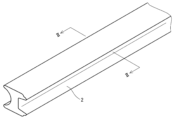
도 1은 본 발명의 일 실시형태에 따른 오일 링용 선의 일부가 도시된 사시도이다.
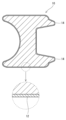
도 2는 도 1의 II-II선을 따른 확대 단면도이다.
도 3은 도 1의 오일 링용 선의 제조 방법의 일례가 도시된 흐름도이다.
도 4는 도 1의 오일 링용 선으로부터 얻어진 주 링이 도시된 사시도이다.
도 5는 도 4의 V-V선을 따른 확대 단면도이다.
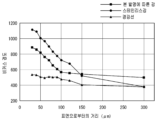
도 6은 도 4의 주 링의 질화층의 비커스 경도가 도시된 그래프이다.
도 7은 도 4의 주 링을 포함하는 오일 링의 일부가 도시된 단면도이다.
도 8은 본 발명의 실시예 1에 따른 오일 링용 선의 금속 조직이 도시된 현미경 사진이다.1 is a perspective view showing a part of a line for an oil ring according to an embodiment of the present invention.
FIG. 2 is an enlarged cross-sectional view along line II-II of FIG. 1 .
FIG. 3 is a flow chart illustrating an example of a method for manufacturing the wire for an oil ring of FIG. 1 .
Fig. 4 is a perspective view showing a main ring obtained from the oil ring line of Fig. 1;
5 is an enlarged cross-sectional view taken along line VV of FIG. 4 .
6 is a graph showing the Vickers hardness of the nitride layer of the main ring of FIG. 4;
FIG. 7 is a cross-sectional view showing a portion of an oil ring including the main ring of FIG. 4 .
8 is a photomicrograph showing the metal structure of the oil ring wire according to Example 1 of the present invention.
이하, 적절히 도면이 참조되면서, 바람직한 실시형태에 기초하여 본 발명이 상세히 설명된다.DETAILED DESCRIPTION OF THE PREFERRED EMBODIMENTS Hereinafter, the present invention will be described in detail based on preferred embodiments with appropriate reference to the drawings.
도 1 및 2에, 오일 링용 선(2)이 도시되어 있다. 이 오일 링용 선(2)의 단면 형상은, 원이 아니다. 환언하면, 이 오일 링용 선(2)은, 이형이다. 도 2에 도시된 바와 같이, 이 오일 링용 선(2)은, 보디(4)와 한 쌍의 레일(6)을 갖고 있다. 각각의 레일(6)은, 선단부(8)를 갖고 있다.1 and 2, a
이 오일 링용 선(2)의 재질은, 합금강이다. 이 합금강은,The material of this
C: 0.50 질량% 이상 0.65 질량% 이하C: 0.50% by mass or more and 0.65% by mass or less
Si: 1.60 질량% 이상 2.30 질량% 이하Si: 1.60 mass% or more and 2.30 mass% or less
Mn: 0.60 질량% 이상 1.10 질량% 이하Mn: 0.60 mass% or more and 1.10 mass% or less
Cr: 0.75 질량% 이상 1.15 질량% 이하Cr: 0.75% by mass or more and 1.15% by mass or less
Ni: 0.18 질량% 이상 0.45 질량% 이하Ni: 0.18 mass% or more and 0.45 mass% or less
V: 0.05 질량% 이상 0.15 질량% 이하V: 0.05% by mass or more and 0.15% by mass or less
및and
Cu: 0.15 질량% 이하Cu: 0.15% by mass or less
를 포함하고 있다. 바람직하게는, 잔부는 Fe 및 불가피적 불순물이다. 이 합금강에 포함되는 합금 원소의 양은, 비교적 적다. 이 오일 링용 선(2)의 재질은, 저합금강이다. 이 저합금강은, 저렴하다.contains Preferably, the balance is Fe and unavoidable impurities. The amount of alloy elements contained in this alloy steel is relatively small. The material of this
도 3은 도 1의 오일 링용 선(2)의 제조 방법의 일례가 도시된 흐름도이다.FIG. 3 is a flowchart showing an example of a method for manufacturing the
이 제조 방법에서는, 먼저, 원선(Basic Wire)이 준비된다(STEP1). 이 원선은, 제강, 정련, 주조, 열간 압연, 소둔 등의 공정을 거쳐 얻어진다. 이 원선의 단면 형상은, 원이다. 이 원의 직경은, 예컨대 6.4 ㎜이다.In this manufacturing method, first, a basic wire is prepared (STEP1). This original wire is obtained through processes such as steelmaking, refining, casting, hot rolling, and annealing. The cross-sectional shape of this circular wire is a circle. The diameter of this circle is, for example, 6.4 mm.
이 선에, 냉간 신선이 실시된다(STEP2). 이 냉간 신선에 의해, 원선이 서서히 세경화(細徑化)하고, 또한 서서히 장척화(長尺化)한다. 냉간 신선(STEP2) 후의 선의 단면 형상은, 원이다. 이 선의 직경은, 예컨대 4.5 ㎜이다.Cold drawing is given to this wire (STEP2). Due to this cold drawing, the original wire gradually narrows and becomes longer. The cross-sectional shape of the wire after cold drawing (STEP2) is a circle. The diameter of this wire is, for example, 4.5 mm.
이 선에, 패턴팅(patenting)이 실시된다(STEP3). 패턴팅은, 오스테나이트 영역까지 가열된 선을 냉각하여, 미세 펄라이트 조직을 얻는 열처리이다. 패턴팅에 의해, 냉간 신선(STEP2)에 의해 손상된 선의 전연성(展延性)이 회복된다. 냉간 신선(STEP2) 및 패턴팅(STEP3)이, 생략되어도 좋다. 패턴팅(STEP3)을 대신하여, 선에 구상화 소둔이 실시되어도 좋다.Patterning is performed on this line (STEP3). Patterning is a heat treatment in which a wire heated to an austenite region is cooled to obtain a fine pearlite structure. By patterning, the malleability of the wire damaged by cold drawing (STEP2) is restored. Cold drawing (STEP2) and patterning (STEP3) may be omitted. Instead of patterning (STEP3), spheroidization annealing may be performed on the wire.
이 선에, 또한 냉간 신선이 실시된다(STEP4). 이 냉간 신선에 의해, 선이 서서히 세경화하고, 또한 서서히 장척화한다. 냉간 신선(STEP4) 후의 선의 단면 형상은, 원이다. 이 선의 직경은, 예컨대 3.0 ㎜이다. 필요에 따라, 패턴팅(STEP3)과 냉간 신선(STEP4)이, 반복되어도 좋다.Cold drawing is further given to this wire (STEP4). Due to this cold drawing, the wire gradually narrows and becomes longer. The cross-sectional shape of the wire after cold drawing (STEP4) is a circle. The diameter of this wire is, for example, 3.0 mm. Patterning (STEP3) and cold drawing (STEP4) may be repeated as needed.
이 선에, 구상화 소둔이 실시되어(STEP5), 세선이 얻어진다. 구상화 소둔에 의해, 이 세선에 구상(球狀) 탄화물이 생성된다. 구상화 소둔에 의해, 냉간 신선(STEP4)에 의해 손상된 세선의 전연성이 회복된다. 충분한 양의 구상 탄화물이 얻어진다는 관점에서, 구상화 소둔(STEP5)에서의 유지 온도는 700℃ 이상이 바람직하고, 730℃ 이상이 보다 바람직하며, 750℃ 이상이 특히 바람직하다. 동일한 관점에서, 구상화 소둔(STEP5)에서의 유지 시간은 4.0시간 이상이 바람직하고, 4.3시간 이상이 보다 바람직하며, 4.5시간 이상이 특히 바람직하다.Spheroidization annealing is given to this wire (STEP5), and a thin wire is obtained. By spheroidizing annealing, spherical carbide is generated in this fine wire. By spheroidization annealing, the malleability of the fine wire damaged by cold drawing (STEP4) is restored. From the viewpoint of obtaining a sufficient amount of spherical carbide, the holding temperature in the spheroidization annealing (STEP5) is preferably 700°C or higher, more preferably 730°C or higher, and particularly preferably 750°C or higher. From the same viewpoint, the holding time in the spheroidization annealing (STEP5) is preferably 4.0 hours or more, more preferably 4.3 hours or more, and particularly preferably 4.5 hours or more.
이 세선에, 냉간 압연이 실시된다(STEP6). 이 냉간 압연에 의해, 이형 선이 얻어진다. 이형 선의 단면 형상은, 원이 아니다. 예컨대, 이 이형 선에 있어서, 두께는 2.2 ㎜이고, 폭은 2.2 ㎜이다.Cold rolling is applied to this fine wire (STEP6). By this cold rolling, a release wire is obtained. The cross-sectional shape of the deformed line is not circular. For example, in this release line, the thickness is 2.2 mm and the width is 2.2 mm.
이 이형 선에, 구상화 소둔이 실시된다(STEP7). 이 구상화 소둔(STEP7)에 의해, 앞선 구상화 소둔(STEP5)에서 생긴 구상 탄화물이 성장한다. 또한, 이 구상화 소둔(STEP7)에 의해, 새로운 구상 탄화물이 생성된다. 구상화 소둔(STEP7)에 의해, 냉간 압연(STEP6)에 의해 손상된 이형 선의 전연성이 회복된다. 구상 탄화물이 충분히 성장한다는 관점, 또는 충분한 양의 구상 탄화물이 얻어진다는 관점에서, 구상화 소둔(STEP7)에서의 유지 온도는 700℃ 이상이 바람직하고, 730℃ 이상이 보다 바람직하며, 750℃ 이상이 특히 바람직하다. 동일한 관점에서, 구상화 소둔(STEP7)에서의 유지 시간은 4.0시간 이상이 바람직하고, 4.3시간 이상이 보다 바람직하며, 4.5시간 이상이 특히 바람직하다.Spheroidization annealing is given to this release wire (STEP7). By this spheroidization annealing (STEP7), the spheroidal carbide produced in the preceding spheroidization annealing (STEP5) grows. In addition, by this spheroidization annealing (STEP7), a new spheroidal carbide is generated. By spheroidization annealing (STEP7), the malleability of the release wire damaged by cold rolling (STEP6) is restored. From the viewpoint of sufficiently growing spherical carbide or obtaining a sufficient amount of spherical carbide, the holding temperature in the spheroidizing annealing (STEP7) is preferably 700°C or higher, more preferably 730°C or higher, and particularly 750°C or higher. desirable. From the same viewpoint, the holding time in the spheroidization annealing (STEP7) is preferably 4.0 hours or more, more preferably 4.3 hours or more, and particularly preferably 4.5 hours or more.
이 선에, 또한 냉간 압연이 실시된다(STEP8). 이 냉간 압연에 의해, 이형 선의 단면이 변화한다. 예컨대, 냉간 압연(STEP8) 후의 이형 선에 있어서, 두께는 2.0 ㎜이고, 폭은 2.0 ㎜이다. 필요에 따라 구상화 소둔(STEP7)과 냉간 압연(STEP8)이, 반복되어도 좋다.Cold rolling is further applied to this line (STEP8). By this cold rolling, the cross section of the deformed wire changes. For example, in the release wire after cold rolling (STEP8), the thickness is 2.0 mm and the width is 2.0 mm. Spheroidization annealing (STEP7) and cold rolling (STEP8) may be repeated as needed.
이 이형 선에, 담금질이 실시된다. 담금질에서는 먼저, 이형 선이 가열된다(STEP9). 이 가열에 있어서, 이형 선의 온도는, 오스테나이트 영역에 도달한다. 다음으로 이 이형 선이 급랭된다(STEP10). 바람직하게는, 이형 선은, 오일 중에서 냉각된다. 담금질 후의 이형 선은, 마르텐사이트 조직을 갖는다.Quenching is applied to this release wire. In quenching, first, the release wire is heated (STEP9). In this heating, the temperature of the release wire reaches the austenite region. Next, this release wire is quenched (STEP10). Preferably, the release wire is cooled in oil. The release wire after quenching has a martensitic structure.
이 이형 선에, 템퍼링이 실시된다. 템퍼링에서는 먼저, 이형 선이 가열된다(STEP11). 다음으로 이 이형 선이 냉각된다(STEP12). 템퍼링에 의해, 도 1에 도시된 오일 링용 선(2)이 얻어진다.Tempering is applied to this release wire. In tempering, a release wire is first heated (STEP11). Next, this release wire is cooled (STEP12). By tempering, the
이 오일 링용 선(2)에 코일링이 실시되어, 코일이 얻어진다. 이 코일에, 왜곡 제거 열처리(잔류 응력을 제거하기 위한 열처리)가 실시된다. 또한 이 코일에, 질화 처리가 실시된다. 질화 처리에서는, 코일이 고온(예컨대 500℃)의 환경하에 유지된다. 이 질화 처리에 의해, 도 4 및 5에 도시된 주 링(10)이 얻어진다. 도 5에 도시된 바와 같이, 이 주 링(10)은, 그 표면 근방에, 질화 처리로 얻어진 경질층(12)을 갖고 있다. 이 경질층(12)은, 주 링(10)의 전면에 걸쳐 존재하고 있다. 이 경질층(12)은, 질화물을 포함하고 있다. 질화 처리를 대신하여, 물리 증착, 이온 플레이팅 등의 수단으로, 경질층(12)이 형성되어도 좋다. 도 5에 도시된 바와 같이, 이 주 링(10)은, 한 쌍의 외주면(14)을 갖고 있다.Coiling is given to this
도 6에, 질화 후의 주 링(10)의, 비커스 경도(하중: 50 gf)와 표면으로부터의 깊이의 관계가 도시되어 있다. 주 링(10)에 필요해지는 비커스 경도는, 700 이상이다. 도 6의 그래프로부터 명백한 바와 같이, 본 발명에 따른 오일 링용 선(2)으로부터 얻어진 주 링(10)에서는, 깊이가 제로인 위치로부터, 깊이가 70 ㎛인 위치까지에 있어서, 700 이상의 비커스 경도가 달성되어 있다. 본 발명에 따른 오일 링용 선(2)은, 저합금강[경강선(硬鋼線) 등]에 비하면, 질화 처리에 적합하다.6 shows the relationship between the Vickers hardness (load: 50 gf) and the depth from the surface of the
도 7은 도 4의 주 링(10)을 포함하는 오일 링(16)의 일부가 도시된 단면도이다. 이 오일 링(16)은, 주 링(10)과, 코일 익스팬더(18)를 갖고 있다. 이 오일 링(16)은, 2피스형 조합 오일 링이라고 칭해지고 있다. 도 7에서 부호 20은, 실린더의 내주면을 나타낸다. 주 링(10)의 각각의 외주면(14)은, 내주면(20)과 접촉하고 있다.FIG. 7 is a cross-sectional view showing a part of the
도 5에 도시된 주 링(10)의 외주면(14)에는, 도 2에 도시된 오일 링용 선(2)의 선단부(8)의 형상이 반영되어 있다. 전술한 바와 같이, 오일 링용 선(2)의 재질은, 저합금강이다. 이 저합금강은, 가공성이 우수하다. 따라서, 냉간 압연(STEP6, STEP8)에 의해, 선단부(8)가 용이하게 형성될 수 있다. 이 오일 링용 선(2)으로부터 얻어진 주 링(10)에서는, 대폭적인 마무리 가공은 불필요하다. 이 오일 링용 선(2)으로부터, 저비용으로 주 링(10)이 얻어질 수 있다.The outer
도 2에 도시된 바와 같이, 선단부(8)의 2개의 코너는, 둥글게 되어 있다. 도 2에서 화살표 W는, 선단부(8)의 폭이다. 폭(W)은, 둥글게 되어 있지 않다고 가정되었을 때의, 2개의 코너 사이의 거리이다. 폭(W)은, 0.10 ㎜ 이하가 바람직하다. 폭(W)이 0.10 ㎜ 이하인 오일 링용 선(2)으로부터, 외주면(14)의 폭이 작은 주 링(10)이 얻어질 수 있다. 이 주 링(10)은, 큰 압력으로, 실린더의 내주면(20)에 접촉한다. 이 주 링(10)을 갖는 오일 링(16)은, 오일을 잘 긁어낸다. 고합금강을 포함하는 원선에서는, 0.10 ㎜ 이하의 폭(W)을 갖는 오일 링용 선(2)으로의 가공은 곤란하다. 본 발명에서는, 원선의 재질(즉 저합금강)이, 폭(W)이 0.10 ㎜ 이하인 오일 링용 선(2)으로의 가공을 가능하게 한다.As shown in FIG. 2 , two corners of the
이후에 상세히 서술되는 바와 같이, 이 주 링(10)에서는, 합금 원소가, 질화 처리를 가능하게 하고 있다. 따라서, 이 주 링(10)에, 도금은 불필요하다. 이 주 링(10)은, 저비용으로 얻어질 수 있다.As described in detail later, in this
전술한 바와 같이, 이 오일 링용 선(2)의 제조에서는, 냉간 신선에 의해 손상된 선의 전연성이, 구상화 소둔에 의해 회복된다. 이 구상화 소둔을 거쳐 얻어진 이형 선은, 다량의 구상 탄화물을 포함하고 있다. 이 이형 선이 담금질(STEP9, STEP10)에 제공되면, 구상 탄화물의 일부의 C 원소는, 매트릭스에 고용(固溶)된다. 그러나, 대부분의 C 원소는, 구상 탄화물로서 잔존한다. 이 오일 링용 선(2)은, 다량의 구상 탄화물을 함유하고 있다. 이 구상 탄화물은, 질화 처리 후의 주 링(10)에도 잔존한다. 이 구상 탄화물은, 고경도이다. 이 구상 탄화물은, 주 링(10)의 고경도에 기여한다. 구상 탄화물을 포함하는 주 링(10)은, 내마모성이 우수하다.As described above, in the production of the
담금질의 가열(STEP9)에 있어서 이형 선에 부여된 열에너지가 과대하면, 구상 탄화물에 포함되는 C 원소의 대부분이, 매트릭스에 고용된다. 이 고용에 의해, 오일 링용 선(2)에 포함되는 구상 탄화물이 감소한다. 환언하면, 오일 링용 선(2)에서의 구상 탄화물의 면적률(Ps)은, 담금질의 가열(STEP9)에 있어서 이형 선에 부여된 열에너지와 부(負)의 상관을 갖는다. 따라서 이 면적률(Ps)은, 담금질 후의 이형 선의 결정립의 직경과 부의 상관을 갖고, 결정립계의 면적과 정(正)의 상관을 갖는다. 이 면적률(Ps)이 과소한 오일 링용 선(2)에서는, 결정립계의 면적이 작기 때문에, 코일링에 의해 결정립계에 응력이 집중된다. 이 결정립계에서는 C 원소의 확산이 조장되어, 새로운 탄화물이 석출된다. 이 탄화물을 포함하는 주 링(10)에서는, 매트릭스에서의 C 원소의 함유율이 작다. 이 주 링(10)의 경도는, 충분하지 않다. 이 주 링(10)은, 내마모성이 뒤떨어진다.When the thermal energy applied to the release wire in the heating for quenching (STEP9) is excessive, most of the C element contained in the spherical carbide is dissolved in the matrix. By this solid solution, the spherical carbide contained in the
주 링(10)의 내마모성의 관점에서, 오일 링용 선(2)에서의 탄화물의 면적률(Ps)은 6.0% 초과가 바람직하고, 6.5% 이상이 보다 바람직하며, 7.0% 이상이 특히 바람직하다.From the viewpoint of the wear resistance of the
탄화물의 양이 과잉이 아닌 이형 선에서는, 충분한 양의 C 원소가 매트릭스에 고용되어 있다. 이 이형 선의 담금질(STEP9, STEP10) 후의 경도는 크다. 경도가 큰 이형 선에 대한 템퍼링에서는, 고온에서의 가열(STEP12)이 채용될 수 있다. 고온 가열을 포함하는 템퍼링을 거쳐 얻어진 오일 링용 선(2)으로부터 형성된 코일에, 왜곡 제거 열처리가 실시되어도, 경도는 대폭으로는 저하되지 않는다. 환언하면, 이 오일 링용 선(2)은, 연화 저항이 우수하다. 이 오일 링용 선(2)으로부터 얻어진 주 링(10)은, 고경도이다. 따라서 이 주 링(10)은, 내마모성이 우수하다.In a release wire in which the amount of carbide is not excessive, a sufficient amount of C element is dissolved in the matrix. The hardness of this deformed wire after quenching (STEP9, STEP10) is large. In tempering for a release wire with high hardness, heating at a high temperature (STEP12) may be employed. Even if strain removal heat treatment is given to the coil formed from the
주 링(10)의 내마모성의 관점에서, 오일 링용 선(2)에서의 탄화물의 면적률(Ps)은 10.0% 이하가 바람직하고, 9.5% 이하가 보다 바람직하며, 9.0% 이하가 특히 바람직하다.From the viewpoint of the wear resistance of the
탄화물의 면적률(Ps)의 측정에는, 화상 해석 소프트 「Image J」가 이용된다. 측정에서는, 오일 링용 선(2)의 단면이 주사형 전자 현미경으로 촬영되어, 배율이 3000배인 SEM 사진이 얻어진다. 이 사진의 화상 파일이 상기 화상 해석 소프트로 2치화되어, 탄화물 입자의 영역과 다른 영역이 색별된다. 각각의 탄화물 입자의 면적이 산출된다. 이 면적과 동일한 면적을 갖는 원이 상정되고, 이 원의 직경이 이 입자의 직경으로 된다. 직경이 0.05 ㎛ 이상인 탄화물의 직경과 개수가, 히스토그램화된다. 직경이 0.05 ㎛ 미만인 탄화물은, 카운트에서 제외된다. 이 히스토그램에 기초하여, 직경이 0.05 ㎛ 이상인 탄화물의 합계 면적이 산출된다. 이 합계 면적의, 사진의 전면적에 대한 비율이, 면적률(Ps)이다. 환언하면, 면적률(Ps)은, 입상(粒狀) 탄화물(구상 탄화물을 포함함)이 차지하는 면적의 비율이다.The image analysis software “Image J” is used to measure the area ratio (Ps) of carbides. In the measurement, the cross section of the
과대하지 않은 면적률(Ps)이 달성된다는 관점에서, 담금질의 가열(STEP9)에서의 온도는 950℃ 이상이 바람직하고, 980℃ 이상이 특히 바람직하다. 과소하지 않은 면적률(Ps)이 달성된다는 관점에서, 이 온도는 1050℃ 이하가 바람직하다.From the viewpoint of achieving a non-excessive area ratio Ps, the temperature in the quenching heating (STEP9) is preferably 950°C or higher, and particularly preferably 980°C or higher. From the viewpoint of achieving an area ratio Ps that is not excessive, the temperature is preferably 1050°C or lower.
담금질에서는, 이형 선이 고온으로 가열(STEP9)된 후, 급랭된다(STEP10). 고온하에서의 이형 선의 금속 조직은, 오스테나이트이다. 이 금속 조직은, 오스테나이트 결정립을 갖는다. 이 이형 선이 급랭된다. 급랭에 의해, 금속 조직이 마르텐사이트로 변태한다. 이 급랭에 의해, 오스테나이트 결정립의 입계로부터, 우선적으로 화합물이 석출된다. 따라서, 급랭 전의 오스테나이트 결정(구 오스테나이트 결정)은, 마르텐사이트의 조직에 영향을 준다. 구 오스테나이트 결정의 형적은, 마르텐사이트에 있어서 관찰될 수 있다.In quenching, after the release wire is heated to a high temperature (STEP9), it is rapidly cooled (STEP10). The metal structure of the release wire under high temperature is austenite. This metal structure has austenite crystal grains. This release line is quenched. Rapid cooling transforms the metal structure into martensite. By this rapid cooling, compounds preferentially precipitate from grain boundaries of austenite crystal grains. Therefore, the austenite crystal before quenching (prior austenite crystal) affects the structure of martensite. Traces of prior austenite crystals can be observed in martensite.
오일 링용 선(2)에서의, 구 오스테나이트 결정의 입도 번호는, 9.0 이상이 바람직하다. 환언하면, 구 오스테나이트 결정은 미세하다. 이 오일 링용 선(2)으로부터 얻어진 주 링(10)은, 내피로성이 우수하다. 이 관점에서, 입도 번호는 9.5 이상이 보다 바람직하고, 10.0 이상이 특히 바람직하다. 입도 번호는, 「JIS G 0551:2020」의 규정에 준거하여 측정된다. 도 2에 도시된 단면의 현미경 관찰로 얻어진, 배율이 100배인 사진이, 결정 입도 표준도와 대비된다. 담금질 시의 가열 오버가 억제됨으로써, 9.0 이상의 입도 번호가 달성될 수 있다.The particle size number of prior austenite crystals in the
오일 링용 선(2)의 비커스 경도(Hv)는, 510 이상이 바람직하다. 이 오일 링용 선(2)이 열처리 또는 질화 처리에 제공되어도, 충분한 경도가 유지될 수 있다. 이 오일 링용 선(2)으로부터, 내마모성이 우수한 주 링(10)이 얻어질 수 있다. 이 관점에서, 비커스 경도는 530 이상이 보다 바람직하고, 560 이상이 특히 바람직하다. 코일링의 용이의 관점에서, 오일 링용 선(2)의 비커스 경도는, 650 이하가 바람직하다. 비커스 경도는, 「JIS Z 2244」의 규정에 준거하여 측정된다. 10 kgf의 하중이 부하되어, 비커스 경도가 측정된다.As for the Vickers hardness (Hv) of the
질화 처리가 가능한 종래의 고합금강에서의, 큰 비커스 경도는, 코일링 시의 절손(折損)을 초래한다. 본 발명에 따른 오일 링용 선(2)의 저합금강은, 질화 처리가 가능함에도 불구하고, 가공성이 우수하다. 이 오일 링용 선(2)에서는, 큰 비커스 경도와 가공성이 양립될 수 있다. 이 오일 링용 선(2)으로부터, 내마모성이 우수한 주 링(10)이 저비용으로 얻어질 수 있다.A high Vickers hardness in a conventional high-alloy steel capable of nitriding treatment causes breakage during coiling. The low-alloy steel of the
전술한 바와 같이, 질화 처리를 대신하여, 물리 증착(PVD)이 채용되어도 좋다. 물리 증착에 의해, 경질의 피막이 형성된다. 이 피막은, 외주면(14)의 근방에 형성된다. 이 피막은, 실린더의 내주면(20)과의 마찰 이동에 기인하는 주 링(10)의 마모를 억제할 수 있다. 주 링(10)의 표면 중, 잔여의 부분에는, 피막은 형성되지 않는다. 주 링(10)은, 피막을 갖지 않는 개소에서, 피스톤과 접촉한다. 전술한 바와 같이 주 링(10)은, 왜곡 제거 열처리를 거치고 있다. 또한 주 링(10)은, 물리 증착을 거치고 있다. 본 발명에 따른 오일 링용 선(2)은 연화 저항이 우수하기 때문에, 이들 열이력을 거쳐도, 주 링(10)은 충분한 경도를 갖고 있다. 따라서, 피막을 갖지 않는 개소가 피스톤과 접촉해도, 주 링(10)의 마모가 억제된다. 내연 기관이 장기간에 걸쳐 사용되어도, 주 링(10)의 마모에 기인하는 피스톤의 운동의 이상은 발생하기 어렵다. 이 주 링(10)은, 오일의 소비량의 억제에 기여할 수 있다.As described above, instead of the nitriding treatment, physical vapor deposition (PVD) may be employed. A hard film is formed by physical vapor deposition. This film is formed in the vicinity of the outer
이하, 본 발명에 따른 오일 링용 선(2)의 저합금강에 포함되는 원소의 역할이 상세히 서술된다.Hereinafter, the role of elements contained in the low-alloy steel of the
[탄소(C)][Carbon (C)]
C는, 매트릭스에 고용된다. 적량의 C는, 오일 링용 선(2)의 경도 및 내피로성에 기여한다. 또한 C는, 탄화물을 생성시킨다. 이 탄화물은, 오일 링용 선(2)의 내마모성에 기여한다. 이들의 관점에서, C의 함유율은 0.50 질량% 이상이 바람직하고, 0.53 질량% 이상이 보다 바람직하며, 0.55 질량% 이상이 특히 바람직하다. 과잉의 C는, 합금강의 냉간 가공성을 손상시킨다. 냉간 가공성의 관점에서, C의 함유율은 0.65 질량% 이하가 바람직하다.C is employed in the matrix. An appropriate amount of C contributes to the hardness and fatigue resistance of the
[규소(Si)][silicon (Si)]
Si는, 오일 링용 선(2)의 고온 강도 및 연화 저항에 기여한다. 이들의 관점에서, Si의 함유율은 1.60 질량% 이상이 바람직하고, 1.80 질량% 이상이 보다 바람직하며, 2.00 질량% 이상이 특히 바람직하다. 과잉의 Si는, 합금강의 냉간 가공성, 인성(靭性) 및 담금질성을 손상시킨다. 이들의 관점에서, Si의 함유율은 2.30 질량% 이하가 바람직하다.Si contributes to the high-temperature strength and softening resistance of the
[망간(Mn)][Manganese (Mn)]
Mn은, 저합금강의 용제(溶製) 시에, 탈산제로서 기능한다. 또한 Mn은, 불순물인 S의 악영향을 억제한다. 이들의 관점에서, Mn의 함유율은 0.60 질량% 이상이 바람직하고, 0.80 질량% 이상이 보다 바람직하며, 0.90 질량% 이상이 특히 바람직하다. 합금강의 냉간 가공성의 관점에서, Mn의 함유율은 1.10 질량% 이하가 바람직하다.Mn functions as a deoxidizer during melting of low-alloy steel. Also, Mn suppresses the adverse effects of S as an impurity. From these viewpoints, the Mn content is preferably 0.60% by mass or more, more preferably 0.80% by mass or more, and particularly preferably 0.90% by mass or more. From the viewpoint of the cold workability of alloy steel, the content of Mn is preferably 1.10% by mass or less.
[크롬(Cr)][Chrome (Cr)]
Cr은, 질화 처리에 있어서 질소와 결합한다. Cr은, 오일 링용 선(2)의 질화 처리를 가능하게 한다. 질화 처리에 있어서 얻어진 경질층(12)은, 주 링(10)의 내마모성에 기여한다. Cr은 또한, C와 결합하여 탄화물을 생성시킨다. 이 탄화물은, 주 링(10)의 내마모성에 기여한다. 이들의 관점에서, Cr의 함유율은 0.75 질량% 이상이 바람직하고, 0.85 질량% 이상이 보다 바람직하며, 0.90 질량% 이상이 특히 바람직하다. 과잉의 Cr은, 합금강의 냉간 가공성을 저해한다. 과잉의 Cr은 또한, 코일링 시의 오일 링용 선(2)의 절손을 초래한다. 냉간 가공성 및 절손 억제의 관점에서, Cr의 함유율은 1.15 질량% 이하가 바람직하다.Cr bonds with nitrogen in nitriding treatment. Cr enables the nitriding treatment of the
[니켈(Ni)][Nickel (Ni)]
Ni는, 매트릭스에 고용되어, 오일 링용 선(2)의 인성에 기여한다. 이 관점에서, Ni의 함유율은 0.18 질량% 이상이 바람직하고, 0.25 질량% 이상이 보다 바람직하며, 0.30 질량% 이상이 특히 바람직하다. 과잉의 Ni는, 담금질 후의 오일 링용 선(2)에 잔류 오스테나이트를 생성시킨다. 이 잔류 오스테나이트는, 주 링(10)의 저경도를 초래한다. 이 잔류 오스테나이트는 또한, 시효(時效)에 의해 주 링(10)의 치수를 변화시킨다. 잔류 오스테나이트의 억제의 관점에서, Ni의 함유율은 0.45 질량% 이하가 바람직하다.Ni is dissolved in the matrix and contributes to the toughness of the
[바나듐(V)][Vanadium (V)]
V는, 질화 처리에 있어서 질소와 결합한다. V는, 오일 링용 선(2)의 질화 처리를 가능하게 한다. 질화 처리에 있어서 얻어진 경질층(12)은, 주 링(10)의 내마모성에 기여한다. V는 또한, 금속 조직의 미세화에 기여한다. 이들의 관점에서, V의 함유율은 0.05 질량% 이상이 바람직하고, 0.08 질량% 이상이 보다 바람직하며, 0.10 질량% 이상이 특히 바람직하다. 합금강의 냉간 가공성 및 열간 가공성의 관점에서, V의 함유율은 0.15 질량% 이하가 바람직하다.V bonds with nitrogen in nitriding treatment. V enables the nitriding treatment of the
[구리(Cu)][Copper (Cu)]
Cu는, 냉간 가공 시의 인성에 기여한다. 이 관점에서, Cu의 함유율은 0.05 질량% 이상이 바람직하고, 0.08 질량% 이상이 보다 바람직하며, 0.10 질량% 이상이 특히 바람직하다. 합금강의 열간 가공성의 관점에서, Cu의 함유율은 0.15 질량% 이하가 바람직하다. Cu는, 필수적인 원소가 아니다. 따라서, Cu의 함유율이 실질적으로 제로여도 좋다.Cu contributes to toughness during cold working. From this point of view, the content of Cu is preferably 0.05% by mass or more, more preferably 0.08% by mass or more, and particularly preferably 0.10% by mass or more. From the viewpoint of the hot workability of alloy steel, the content of Cu is preferably 0.15% by mass or less. Cu is not an essential element. Therefore, the Cu content may be substantially zero.
[철(Fe)][Iron (Fe)]
Fe는, 저합금강의 주성분이다. Fe는, 매트릭스의 베이스 금속이다. 이 저합금강은, 강인성이 우수하다. Fe의 함유율은 85 질량% 이상이 바람직하고, 90 질량% 이상이 보다 바람직하며, 93 질량% 이상이 특히 바람직하다.Fe is a main component of low-alloy steel. Fe is the base metal of the matrix. This low-alloy steel is excellent in toughness. The content of Fe is preferably 85% by mass or more, more preferably 90% by mass or more, and particularly preferably 93% by mass or more.
[불가피적 불순물][Inevitable impurities]
저합금강은, 불순물을 포함할 수 있다. 전형적인 불순물은, P이다. P는, 결정립계에 편석(偏析)한다. P는, 합금강의 인성을 저해한다. 인성의 관점에서, P의 함유율은 0.02 질량% 이하가 바람직하다. 다른 전형적인 불순물은, S이다. S는, 다른 원소와 결합하여 개재물을 형성한다. S는, 합금강의 인성을 저해한다. 인성의 관점에서, S의 함유율은 0.02 질량% 이하가 바람직하다.Low-alloy steel may contain impurities. A typical impurity is P. P segregates at grain boundaries. P inhibits the toughness of alloy steel. From the viewpoint of toughness, the content of P is preferably 0.02% by mass or less. Another typical impurity is S. S combines with other elements to form inclusions. S inhibits the toughness of alloy steel. From the viewpoint of toughness, the content of S is preferably 0.02% by mass or less.
실시예Example
이하, 실시예에 의해 본 발명의 효과가 명백해지지만, 이 실시예의 기재에 기초하여 본 발명이 한정적으로 해석되어서는 안 된다.The effects of the present invention will be clarified by examples below, but the present invention should not be construed as being limited based on the description of these examples.
[실시예 1][Example 1]
도 3에 도시된 방법으로, 실시예 1의 오일 링용 선을 얻었다. 담금질 시의 가열 온도는, 980℃였다. 템퍼링 온도는, 바람직한 경도가 얻어지도록, 적절히 조정하였다. 이 오일 링용 선의 재질은, 저합금강이었다. 이 저합금강은, 0.59 질량%의 C, 2.05 질량%의 Si, 0.76 질량%의 Mn, 1.00 질량%의 Cr, 0.22 질량%의 Ni, 0.09 질량%의 V, 및 0.01 질량%의 Cu를 포함하고 있었다. 잔부는, Fe 및 불가피적 불순물이었다. 이 오일 링용 선의 금속 조직이, 도 8에 도시되어 있다. 이 오일 링용 선의 면적률(Ps)은, 6.4%였다. 이 오일 링용 선의 비커스 경도(하중: 10 kgf)는, 589였다.By the method shown in FIG. 3, the wire for oil ring of Example 1 was obtained. The heating temperature during quenching was 980°C. The tempering temperature was appropriately adjusted so as to obtain a desired hardness. The material of this wire for an oil ring was low-alloy steel. This low-alloy steel contains 0.59% by mass of C, 2.05% by mass of Si, 0.76% by mass of Mn, 1.00% by mass of Cr, 0.22% by mass of Ni, 0.09% by mass of V, and 0.01% by mass of Cu; there was. The balance was Fe and unavoidable impurities. The metal structure of this wire for an oil ring is shown in FIG. The area ratio (Ps) of this oil ring wire was 6.4%. The Vickers hardness (load: 10 kgf) of this oil ring wire was 589.
[실시예 2 및 3 및 비교예 1 및 2][Examples 2 and 3 and Comparative Examples 1 and 2]
담금질 온도를 하기의 표 1에 나타나는 바와 같이 하여, 실시예 2 및 3 및 비교예 1 및 2의 오일 링용 선을 얻었다.The quenching temperature was set as shown in Table 1 below, and oil ring wires of Examples 2 and 3 and Comparative Examples 1 and 2 were obtained.
[열처리][Heat treatment]
오일 링용 선으로부터 코일을 형성하고, 이 코일을 450℃의 온도하에 30분간 유지한 후, 서랭(徐冷)하였다. 이 열처리 조건은, 주 링의 제조에 있어서 일반적으로 이루어지고 있는 왜곡 제거 열처리의 조건에 상당한다. 이 열처리 후의 코일의 비커스 경도(하중: 10 kgf)를 측정하였다. 이 결과가, 하기의 표 1에 나타나 있다.A coil was formed from the wire for an oil ring, and after holding this coil at a temperature of 450°C for 30 minutes, it was slowly cooled. These heat treatment conditions correspond to the conditions of strain removal heat treatment generally performed in the manufacture of the main ring. The Vickers hardness (load: 10 kgf) of the coil after this heat treatment was measured. These results are shown in Table 1 below.
주 링에 필요해지는 비커스 경도는, 450 이상이다. 표 1에 나타나는 바와 같이, 각 실시예에 따른 오일 링용 선에서는, 열처리 후의 비커스 경도가 450을 초과하고 있다. 이 평가 결과로부터, 본 발명의 우위성은 명백하다.The Vickers hardness required for the main ring is 450 or more. As shown in Table 1, in the wire for an oil ring according to each example, the Vickers hardness after heat treatment exceeds 450. From this evaluation result, the superiority of this invention is clear.
본 발명에 따른 오일 링용 선은, 여러 가지 내연 기관의 피스톤 링의 재료로서 이용될 수 있다.The oil ring wire according to the present invention can be used as a material for piston rings of various internal combustion engines.
2: 오일 링용 선
4: 보디
6: 레일
8: 선단부
10: 주(主) 링
12: 경질층
14: 외주면
16: 오일 링
18: 코일 익스팬더
20: 실린더의 내주면2: Oil ring wire 4: Body
6: rail 8: distal end
10: main ring 12: hard layer
14: outer circumference 16: oil ring
18: coil expander 20: inner circumferential surface of the cylinder
Claims (5)
그 재질이 합금강이고,
상기 합금강은,
C: 0.50 질량% 이상 0.65 질량% 이하
Si: 1.60 질량% 이상 2.30 질량% 이하
Mn: 0.60 질량% 이상 1.10 질량% 이하
Cr: 0.75 질량% 이상 1.15 질량% 이하
Ni: 0.18 질량% 이상 0.45 질량% 이하
V: 0.05 질량% 이상 0.15 질량% 이하
Cu: 0.15 질량% 이하
및
불가피적 불순물
을 포함하고 있고,
탄화물의 면적률이 6.0%를 초과하고 10.0% 이하인 것인 오일 링용 선.As a wire for oiling,
The material is alloy steel,
The alloy steel,
C: 0.50% by mass or more and 0.65% by mass or less
Si: 1.60 mass% or more and 2.30 mass% or less
Mn: 0.60 mass% or more and 1.10 mass% or less
Cr: 0.75% by mass or more and 1.15% by mass or less
Ni: 0.18 mass% or more and 0.45 mass% or less
V: 0.05% by mass or more and 0.15% by mass or less
Cu: 0.15% by mass or less
and
unavoidable impurities
contains,
An oil ring wire in which the area ratio of carbide exceeds 6.0% and is 10.0% or less.
보디와,
한 쌍의 레일
을 갖고 있고,
각각의 레일은, 상기 보디로부터 돌출되어 있고, 또한 선단부를 갖고 있으며,
상기 선단부의 폭이 0.10 ㎜ 이하인 것인 오일 링용 선.According to claim 1 or 2,
body,
a pair of rails
has,
Each rail protrudes from the body and has a front end,
A wire for an oil ring in which the width of the tip portion is 0.10 mm or less.
(1) 그 재질이,
C: 0.50 질량% 이상 0.65 질량% 이하
Si: 1.60 질량% 이상 2.30 질량% 이하
Mn: 0.60 질량% 이상 1.10 질량% 이하
Cr: 0.75 질량% 이상 1.15 질량% 이하
Ni: 0.18 질량% 이상 0.45 질량% 이하
V: 0.05 질량% 이상 0.15 질량% 이하
Cu: 0.15 질량% 이하
및
불가피적 불순물
을 포함하는 합금강인 원선에, 냉간 신선 및 구상화 소둔(spheroidizing annealing)을 실시하여, 세선을 얻는 공정,
(2) 상기 세선에, 냉간 압연 및 구상화 소둔을 실시하여, 이형(異形) 선을 얻는 공정,
및
(3) 상기 이형 선에 담금질 및 템퍼링을 실시하는 공정
을 구비한, 탄화물의 면적률이 6.0%를 초과하고 10.0% 이하인 오일 링용 선의 제조 방법.
In the manufacturing method of the wire for an oil ring,
(1) the material is
C: 0.50% by mass or more and 0.65% by mass or less
Si: 1.60 mass% or more and 2.30 mass% or less
Mn: 0.60 mass% or more and 1.10 mass% or less
Cr: 0.75% by mass or more and 1.15% by mass or less
Ni: 0.18 mass% or more and 0.45 mass% or less
V: 0.05% by mass or more and 0.15% by mass or less
Cu: 0.15% by mass or less
and
unavoidable impurities
A process of obtaining a thin wire by subjecting a raw wire, which is an alloy steel containing, to cold drawing and spheroidizing annealing;
(2) a step of obtaining a deformed wire by subjecting the fine wire to cold rolling and spheroidization annealing;
and
(3) Step of quenching and tempering the release wire
A method for producing a wire for an oil ring having a carbide area ratio of more than 6.0% and less than 10.0%.
Applications Claiming Priority (3)
| Application Number | Priority Date | Filing Date | Title |
|---|---|---|---|
| JPJP-P-2021-067235 | 2021-04-12 | ||
| JP2021067235A JP7297808B2 (en) | 2021-04-12 | 2021-04-12 | Wire for oil ring |
| PCT/JP2021/048637 WO2022219854A1 (en) | 2021-04-12 | 2021-12-27 | Oil ring wire |
Publications (1)
| Publication Number | Publication Date |
|---|---|
| KR20230128362A true KR20230128362A (en) | 2023-09-04 |
Family
ID=83639554
Family Applications (1)
| Application Number | Title | Priority Date | Filing Date |
|---|---|---|---|
| KR1020237026521A Ceased KR20230128362A (en) | 2021-04-12 | 2021-12-27 | line for oiling |
Country Status (8)
| Country | Link |
|---|---|
| US (1) | US20240026972A1 (en) |
| EP (1) | EP4276203A4 (en) |
| JP (1) | JP7297808B2 (en) |
| KR (1) | KR20230128362A (en) |
| CN (1) | CN116897212A (en) |
| MX (1) | MX2023009157A (en) |
| TW (1) | TWI800200B (en) |
| WO (1) | WO2022219854A1 (en) |
Citations (1)
| Publication number | Priority date | Publication date | Assignee | Title |
|---|---|---|---|---|
| JP2008050649A (en) | 2006-08-24 | 2008-03-06 | Tokusen Kogyo Co Ltd | Piston ring and manufacturing method thereof |
Family Cites Families (10)
| Publication number | Priority date | Publication date | Assignee | Title |
|---|---|---|---|---|
| US5944920A (en) * | 1996-04-10 | 1999-08-31 | Hitachi Metals, Ltd. | Piston ring material excellent in workability |
| ATE323856T1 (en) * | 1999-06-25 | 2006-05-15 | Hitachi Metals Ltd | SELF-LUBRICANT PISTON RING MATERIAL FOR COMBUSTION ENGINES AND PISTON RING |
| EP2295777B1 (en) * | 2003-03-31 | 2016-12-07 | Hitachi Metals, Ltd. | Internal engine piston and its production method |
| EP2011892A1 (en) * | 2006-04-20 | 2009-01-07 | Hitachi Metals, Limited | Piston ring material for internal combustion engine |
| JP5099910B2 (en) | 2008-08-29 | 2012-12-19 | 日本ピストンリング株式会社 | Oil ring for internal combustion engine |
| DE102009010728C5 (en) * | 2009-02-26 | 2019-08-14 | Federal-Mogul Burscheid Gmbh | Piston rings and cylinder liners |
| JP2015108417A (en) | 2013-12-05 | 2015-06-11 | 株式会社リケン | Large-sized piston ring, material thereof and manufacturing method thereof |
| RU2674177C2 (en) * | 2013-09-09 | 2018-12-05 | Ниссан Мотор Ко., Лтд. | Highly heat conductive piston ring for internal combustion engine |
| CN108350537B (en) * | 2015-09-04 | 2021-01-08 | 日本制铁株式会社 | Steel wire for spring and spring |
| KR101867709B1 (en) * | 2016-12-06 | 2018-06-14 | 주식회사 포스코 | Wire rod and steel wire for spring having excellent corrosion fatigue resistance and method for manufacturing the same |
-
2021
- 2021-04-12 JP JP2021067235A patent/JP7297808B2/en active Active
- 2021-12-27 MX MX2023009157A patent/MX2023009157A/en unknown
- 2021-12-27 WO PCT/JP2021/048637 patent/WO2022219854A1/en not_active Ceased
- 2021-12-27 US US18/274,763 patent/US20240026972A1/en active Pending
- 2021-12-27 KR KR1020237026521A patent/KR20230128362A/en not_active Ceased
- 2021-12-27 CN CN202180094895.8A patent/CN116897212A/en active Pending
- 2021-12-27 EP EP21937047.5A patent/EP4276203A4/en active Pending
-
2022
- 2022-01-04 TW TW111100233A patent/TWI800200B/en active
Patent Citations (1)
| Publication number | Priority date | Publication date | Assignee | Title |
|---|---|---|---|---|
| JP2008050649A (en) | 2006-08-24 | 2008-03-06 | Tokusen Kogyo Co Ltd | Piston ring and manufacturing method thereof |
Also Published As
| Publication number | Publication date |
|---|---|
| EP4276203A1 (en) | 2023-11-15 |
| TWI800200B (en) | 2023-04-21 |
| JP2022162404A (en) | 2022-10-24 |
| TW202239989A (en) | 2022-10-16 |
| WO2022219854A1 (en) | 2022-10-20 |
| US20240026972A1 (en) | 2024-01-25 |
| JP7297808B2 (en) | 2023-06-26 |
| EP4276203A4 (en) | 2025-11-05 |
| CN116897212A (en) | 2023-10-17 |
| MX2023009157A (en) | 2023-08-17 |
Similar Documents
| Publication | Publication Date | Title |
|---|---|---|
| JP5815946B2 (en) | Hardening method of steel | |
| JP2007162128A (en) | Case hardening steel having excellent forgeability and crystal grain-coarsening prevention property, its production method and carburized component | |
| CN102482747A (en) | Drawn and heat-treated steel wire for high-strength spring, and undrawn steel wire for high-strength spring | |
| JP5233846B2 (en) | Steel materials used for nitriding and induction hardening | |
| US20180347025A1 (en) | Steel, carburized steel component, and method for manufacturing carburized steel component | |
| US10597765B2 (en) | Steel, carburized steel component, and method for manufacturing carburized steel component | |
| TWI778905B (en) | oil ring wire | |
| JP4687616B2 (en) | Steel carburized or carbonitrided parts | |
| JP2020029608A (en) | Steel for carbonitriding | |
| KR20230128362A (en) | line for oiling | |
| JP7617372B2 (en) | Steel material for sliding parts and manufacturing method thereof | |
| KR101634055B1 (en) | Wire for piston rings | |
| JP2019143197A (en) | Steel nitride, and nitriding treatment member and manufacturing method therefor | |
| JP2018178228A (en) | Material for induction hardened parts | |
| JP4616209B2 (en) | Piston ring steel with excellent seizure resistance, deformed wire for piston ring, and piston ring | |
| JPH11302734A (en) | Manufacturing method of constant velocity joint with excellent cold workability and strength | |
| TW200538559A (en) | The crank shaft excellent in bending fatigue strength | |
| CN112689686B (en) | High surface pressure resistant member and method for manufacturing same | |
| JP2005314744A (en) | Piston ring material and piston ring using the material | |
| JP2017160474A (en) | Bearing parts |
Legal Events
| Date | Code | Title | Description |
|---|---|---|---|
| PA0105 | International application |
St.27 status event code: A-0-1-A10-A15-nap-PA0105 |
|
| PA0201 | Request for examination |
St.27 status event code: A-1-2-D10-D11-exm-PA0201 |
|
| P11-X000 | Amendment of application requested |
St.27 status event code: A-2-2-P10-P11-nap-X000 |
|
| P13-X000 | Application amended |
St.27 status event code: A-2-2-P10-P13-nap-X000 |
|
| PG1501 | Laying open of application |
St.27 status event code: A-1-1-Q10-Q12-nap-PG1501 |
|
| E902 | Notification of reason for refusal | ||
| PE0902 | Notice of grounds for rejection |
St.27 status event code: A-1-2-D10-D21-exm-PE0902 |
|
| P11-X000 | Amendment of application requested |
St.27 status event code: A-2-2-P10-P11-nap-X000 |
|
| D21 | Rejection of application intended |
Free format text: ST27 STATUS EVENT CODE: A-1-2-D10-D21-EXM-PE0902 (AS PROVIDED BY THE NATIONAL OFFICE) |
|
| PE0902 | Notice of grounds for rejection |
St.27 status event code: A-1-2-D10-D21-exm-PE0902 |
|
| T11 | Administrative time limit extension requested |
Free format text: ST27 STATUS EVENT CODE: U-3-3-T10-T11-OTH-X000 (AS PROVIDED BY THE NATIONAL OFFICE) |
|
| T11-X000 | Administrative time limit extension requested |
St.27 status event code: U-3-3-T10-T11-oth-X000 |
|
| P22-X000 | Classification modified |
St.27 status event code: A-2-2-P10-P22-nap-X000 |
|
| B15 | Application refused following examination |
Free format text: ST27 STATUS EVENT CODE: N-2-6-B10-B15-EXM-PE0601 (AS PROVIDED BY THE NATIONAL OFFICE) |
|
| PE0601 | Decision on rejection of patent |
St.27 status event code: N-2-6-B10-B15-exm-PE0601 |