JP7635672B2 - Information processing device - Google Patents
Information processing device Download PDFInfo
- Publication number
- JP7635672B2 JP7635672B2 JP2021132846A JP2021132846A JP7635672B2 JP 7635672 B2 JP7635672 B2 JP 7635672B2 JP 2021132846 A JP2021132846 A JP 2021132846A JP 2021132846 A JP2021132846 A JP 2021132846A JP 7635672 B2 JP7635672 B2 JP 7635672B2
- Authority
- JP
- Japan
- Prior art keywords
- vehicle
- location
- item
- control unit
- processing device
- Prior art date
- Legal status (The legal status is an assumption and is not a legal conclusion. Google has not performed a legal analysis and makes no representation as to the accuracy of the status listed.)
- Active
Links
Images








Landscapes
- Management, Administration, Business Operations System, And Electronic Commerce (AREA)
Description
本発明は、車両による物品の預かりサービスに関する。 The present invention relates to a vehicle-based item storage service.
様々な用途向けに設計された自動運転車を派遣することでサービスを提供する試みがなされている。例えば、特許文献1には、コインロッカーを搭載した自動運転車を運行することで、様々な場所で荷物の預け入れおよび引き取りが可能なシステムに関する発明が開示されている。
Attempts are being made to provide services by dispatching self-driving cars designed for various purposes. For example,
本開示は、車両による物品の預かりサービスの利便性を向上することを目的とする。 The purpose of this disclosure is to improve the convenience of vehicle-based item storage services.
本開示の第一の態様は、車両への物品の預け入れを希望する複数のユーザに関連付いた複数のユーザ端末から位置情報を取得することと、複数の前記位置情報に基づいて、前記複数のユーザが前記物品を前記車両に預け入れる地点である第一の地点を決定することと、前記複数のユーザにそれぞれ対応する複数のユーザ端末に対して、前記第一の地点に前記車両が派遣されることを通知することと、を実行する制御部を有する、情報処理装置である。 A first aspect of the present disclosure is an information processing device having a control unit that executes the following: acquiring location information from a plurality of user terminals associated with a plurality of users who wish to deposit items in a vehicle; determining a first location at which the plurality of users deposit the items in the vehicle based on the plurality of location information; and notifying a plurality of user terminals respectively corresponding to the plurality of users that the vehicle will be dispatched to the first location.
また、本開示の第二の態様は、車両への物品の預け入れを希望する複数のユーザに関連付いた複数のユーザ端末から位置情報を取得することと、複数の前記位置情報に基づいて、前記複数のユーザが前記物品を前記車両に預け入れる地点である第一の地点を決定することと、前記車両を前記第一の地点に派遣する指令を生成することと、を実行する制御部を有する、情報処理装置である。 A second aspect of the present disclosure is an information processing device having a control unit that executes the following: acquiring location information from multiple user terminals associated with multiple users who wish to deposit items in a vehicle; determining a first location at which the multiple users deposit the items in the vehicle based on the location information; and generating a command to dispatch the vehicle to the first location.
また、他の態様として、上記の情報処理装置が実行する情報処理方法をコンピュータに実行させるためのプログラム、または、該プログラムを非一時的に記憶したコンピュータ可読記憶媒体が挙げられる。 Other aspects include a program for causing a computer to execute the information processing method executed by the above-mentioned information processing device, or a computer-readable storage medium that non-temporarily stores the program.
本発明によれば、車両による物品の預かりサービスの利便性を向上することができる。 The present invention can improve the convenience of vehicle-based item storage services.
実施形態に係る情報処理装置は、物品の保管を行う格納装置を搭載して走行する車両を管理する装置である。格納装置は、独立して施錠が可能な複数の区画を有し、各区画に物品を格納可能なロッカー型の装置である。車両に搭載された格納装置は、移動ロッカーとも呼ばれる。格納装置を搭載した車両を運行することで、ユーザが希望する地点にロッカーを移動させ、物品の出し入れを行わせることができる。 The information processing device according to the embodiment is a device that manages a traveling vehicle equipped with a storage device for storing items. The storage device is a locker-type device that has multiple compartments that can be locked independently, and can store items in each compartment. A storage device installed in a vehicle is also called a mobile locker. By operating a vehicle equipped with a storage device, the locker can be moved to a location desired by the user, allowing the user to put in and take out items.
車両は、移動するコインロッカーとして機能させることもできるし、物品の引き渡し場所として機能させることもできる。例えば、第一のユーザが、車両に物品を預け入れ、当該物品を必要とする第二のユーザが当該物品を引き取るといったこともできる。また、預け入れられた物品を不特定多数のユーザに見てもらい、希望するユーザに引き渡すこともできる。すなわち、当該車両は、不用品のリサイクルや、物品の販売を行うレンタルショーケースとして機能させることもできる。 The vehicle can function as a mobile coin locker, or as a place for handing over items. For example, a first user can deposit an item in the vehicle, and a second user who needs the item can pick it up. The deposited item can also be viewed by an unspecified number of users, and then handed over to the desired user. In other words, the vehicle can function as a rental showcase for recycling unwanted items and selling items.
実施形態に係る格納装置は、車両に搭載されているため、所定の拠点を巡回させることができる。これにより、より人目につきやすい場所にショーケースを配置することができる。さらに、物品の預け入れを希望するユーザがいる場合、当該ユーザの自宅等に車両を派遣することで、当該ユーザの利便性を高めることができる。 Since the storage device according to the embodiment is mounted on a vehicle, it can be made to travel around specified locations. This allows showcases to be placed in more visible locations. Furthermore, if a user wishes to deposit an item, the vehicle can be dispatched to the user's home or other location, thereby increasing the user's convenience.
一方、車両をレンタルショーケースとして機能させる場合、可能な限り、当該車両を人通りの多い場所に留め置くことが好ましい。車両が走行していると、ショーケースとしての機能を発揮できないためである。
すなわち、ユーザの利便性を高めると、人目に付きにくくなるというトレードオフの問題が発生する。
本開示に係る情報処理装置は、この問題を解決する。
On the other hand, when a vehicle is used as a rental showcase, it is preferable to park the vehicle in a location with a lot of foot traffic as much as possible, because the vehicle cannot function as a showcase if it is moving.
In other words, there is a trade-off between improving user convenience and being less noticeable to the public.
The information processing device according to the present disclosure solves this problem.
本開示の一態様に係る情報処理装置は、車両への物品の預け入れを希望する複数のユーザに関連付いた複数のユーザ端末から位置情報を取得することと、複数の前記位置情報に基づいて、前記複数のユーザが前記物品を前記車両に預け入れる地点である第一の地点を決定することと、前記複数のユーザにそれぞれ対応する複数のユーザ端末に対して、前記第一の地点に前記車両が派遣されることを通知することと、を実行する制御部を有する。 An information processing device according to one aspect of the present disclosure has a control unit that executes the following: acquiring location information from multiple user terminals associated with multiple users who wish to deposit items in a vehicle; determining a first location at which the multiple users deposit the items in the vehicle based on the location information; and notifying multiple user terminals corresponding to the multiple users that the vehicle will be dispatched to the first location.
本開示に係る車両は、複数のユーザから物品を預かる機能を有する車両である。当該車両は、自律走行車両などであってもよい。なお、物品を預け入れるユーザと、当該物品を取り出すユーザは別の人物であってもよい。例えば、第二のユーザに物品を引き渡すために、第一のユーザが当該物品を格納装置に格納することや、販売のための物品を格納装置に格納することも「預け入れ」に含まれる。 The vehicle according to the present disclosure is a vehicle that has the function of accepting items from multiple users. The vehicle may be an autonomous vehicle, etc. The user who deposits the item may be a different person from the user who retrieves the item. For example, "depositing" includes a first user storing an item in a storage device in order to deliver the item to a second user, or storing an item for sale in a storage device.
第一の地点は、複数のユーザが車両への物品の預け入れを行う地点である。情報処理装
置は、例えば、近隣に位置する複数のユーザをグルーピングした結果に基づいて、第一の地点を決定する。第一の地点は、例えば、アクセス性がよく、人目につきやすい場所とすることができる。車両を第一の地点に駐車し、近隣に位置する複数のユーザに、預け入れる物品を持参してもらうことで、前述した問題を解決することができる。
The first location is a location where multiple users deposit items in the vehicle. The information processing device determines the first location based on, for example, a result of grouping multiple users located in the vicinity. The first location can be, for example, a location that is easily accessible and visible. The above-mentioned problem can be solved by parking the vehicle at the first location and having multiple users located in the vicinity bring the items to be deposited.
また、本開示の別態様に係る情報処理装置は、車両への物品の預け入れを希望する複数のユーザに関連付いた複数のユーザ端末から位置情報を取得することと、複数の前記位置情報に基づいて、前記複数のユーザが前記物品を前記車両に預け入れる地点である第一の地点を決定することと、前記車両を前記第一の地点に派遣する指令を生成することと、を実行する制御部を有する。 In addition, an information processing device according to another aspect of the present disclosure has a control unit that executes the following: acquiring location information from multiple user terminals associated with multiple users who wish to deposit items in a vehicle; determining a first location where the multiple users deposit the items in the vehicle based on the multiple location information; and generating a command to dispatch the vehicle to the first location.
以下、図面に基づいて、本開示の実施の形態を説明する。以下の実施形態の構成は例示であり、本開示は実施形態の構成に限定されない。 Embodiments of the present disclosure will be described below with reference to the drawings. The configurations of the following embodiments are examples, and the present disclosure is not limited to the configurations of the embodiments.
(第一の実施形態)
第一の実施形態に係る車両システムの概要について、図1を参照しながら説明する。本実施形態に係る車両システムは、自律走行を行う一台以上の車両300と、当該車両300の制御を行うサーバ装置100と、一台以上のユーザ端末200と、を含んで構成される。
(First embodiment)
An overview of a vehicle system according to a first embodiment will be described with reference to Fig. 1. The vehicle system according to this embodiment includes one or more vehicles 300 that perform autonomous driving, a server device 100 that controls the vehicles 300, and one or more user terminals 200.
車両300は、格納装置400を搭載した自律走行車両である。
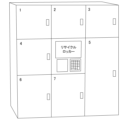
格納装置400は、複数の区画を有し、それぞれの区画に物品を収納することができるロッカー型の装置である。図2に、格納装置400の外観を示す。図示したように、格納装置400は、複数の扉によってそれぞれの区画にアクセスできるよう構成される。なお、外部から内容物を確認できるよう、扉は透明であってもよい。システムのユーザは、格納装置400に設けられたインタフェースを介して、指定された区画の解錠操作を行うことができる。格納装置400は、車両300の車室内に搭載される。
以下、格納装置400を、ショーケースとも称する。
The vehicle 300 is an autonomous vehicle equipped with a storage device 400 .
The storage device 400 is a locker-type device having multiple compartments, each capable of storing an item. FIG. 2 shows the external appearance of the storage device 400. As shown in the figure, the storage device 400 is configured to allow access to each compartment through multiple doors. The doors may be transparent so that the contents can be confirmed from the outside. A user of the system can unlock a specified compartment via an interface provided on the storage device 400. The storage device 400 is mounted in the passenger compartment of the vehicle 300.
Hereinafter, the storage device 400 will also be referred to as a showcase.
車両300は、搭載されたショーケースを用いて、所定のユーザに対して、物品を預かるサービス(以下、預かりサービス)を提供する。
なお、物品は、販売目的のものであってもよい。例えば、ショーケースに、不用品やハンドメイド品などの物品を預け入れ、譲受を希望する他のユーザに対して当該物品を譲り渡すこともできる。
なお、車両300は、必ずしも無人車両である必要はない。例えば、保安要員などが乗車していてもよい。また、車両300は、必ずしも完全なる自律走行が可能な車両でなくてもよい。例えば、状況に応じて人が運転ないし運転の補助を行う車両であってもよい。
The vehicle 300 uses the showcase installed therein to provide a service of storing items (hereinafter, storage service) to a predetermined user.
The items may be for sale. For example, items such as unwanted items or handmade goods may be deposited in the showcase, and the items may be transferred to other users who wish to receive them.
The vehicle 300 does not necessarily have to be an unmanned vehicle. For example, a security officer or the like may be on board. The vehicle 300 does not necessarily have to be a vehicle capable of completely autonomous driving. For example, the vehicle 300 may be a vehicle in which a person drives or assists in driving depending on the situation.
サーバ装置100は、車両300の運行を管理する装置である。
前述した通り、車両300はショーケースとしての役割を持つ格納装置400を搭載して自律移動することができる。サーバ装置100は、車両300を派遣する地点を決定し、当該車両300に対して運行を指示する。これにより、様々な場所で物品の展示を行うことができる。また、サーバ装置100は、物品の預け入れを行うユーザが所持するユーザ端末200から要請を受けた場合に、車両300の割り当てを行い、当該車両300に対して、当該ユーザから物品を預かるための運行を指示する。これにより、ユーザは、居所の近くにおいて物品の預け入れを行うことができる。
The server device 100 is a device that manages the operation of the vehicle 300 .
As described above, the vehicle 300 can move autonomously with the storage device 400 that functions as a showcase mounted thereon. The server device 100 determines a location to which the vehicle 300 is dispatched, and instructs the vehicle 300 to operate. This allows items to be exhibited in various locations. Furthermore, when the server device 100 receives a request from a user terminal 200 owned by a user who is to deposit an item, it assigns the vehicle 300 and instructs the vehicle 300 to operate to receive the item from the user. This allows the user to deposit an item near their residence.
サーバ装置100、ユーザ端末200、および、車両300は、ネットワークによって相互に接続される。ネットワークには、例えば、インターネット等の世界規模の公衆通信網であるWAN(Wide Area Network)やその他の通信網が採用されて
もよい。また、ネットワークは、携帯電話等の電話通信網、Wi-Fi(登録商標)等の無線通信網を含んでもよい。
The server device 100, the user terminal 200, and the vehicle 300 are connected to each other via a network. The network may be, for example, a Wide Area Network (WAN), which is a global public communication network such as the Internet, or another communication network. The network may also include a telephone communication network such as a mobile phone, or a wireless communication network such as Wi-Fi (registered trademark).
次に、サーバ装置100の詳細について説明する。
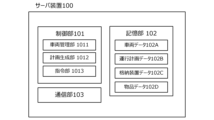
図3は、サーバ装置100のシステム構成を示した図である。サーバ装置100は、制御部101、記憶部102、および、通信部103を含んで構成される。
Next, the server device 100 will be described in detail.
3 is a diagram showing a system configuration of the server device 100. The server device 100 includes a control unit 101, a storage unit 102, and a communication unit 103.
サーバ装置100は、一般的なコンピュータにより構成される。すなわち、サーバ装置100は、CPUやGPU等のプロセッサ、RAMやROM等の主記憶装置、EPROM、ハードディスクドライブ、リムーバブルメディア等の補助記憶装置を有するコンピュータである。補助記憶装置には、オペレーティングシステム(OS)、各種プログラム、各種テーブル等が格納され、そこに格納されたプログラムを主記憶装置の作業領域にロードして実行し、プログラムの実行を通じて各構成部等が制御されることによって、後述するような、所定の目的に合致した各機能を実現することができる。ただし、一部または全部の機能はASICやFPGAのようなハードウェア回路によって実現されてもよい。なお、サーバ装置100は、単一のコンピュータで構成されてもよいし、互いに連携する複数台のコンピュータによって構成されてもよい。 The server device 100 is configured with a general computer. In other words, the server device 100 is a computer having a processor such as a CPU or GPU, a main memory such as a RAM or ROM, and an auxiliary memory such as an EPROM, a hard disk drive, or a removable media. The auxiliary memory stores an operating system (OS), various programs, various tables, etc., and the programs stored therein are loaded into the working area of the main memory and executed. By controlling each component through the execution of the programs, each function that matches a specific purpose, as described below, can be realized. However, some or all of the functions may be realized by hardware circuits such as ASICs and FPGAs. The server device 100 may be configured with a single computer, or may be configured with multiple computers that work together.
制御部101は、サーバ装置100が行う制御を司る演算装置である。制御部101は、CPUなどの演算処理装置によって実現することができる。
制御部101は、車両管理部1011と、計画生成部1012と、指令部1013の3つの機能モジュールを有して構成される。各機能モジュールは、補助記憶手段に記憶されたプログラムをCPUによって実行することで実現してもよい。
The control unit 101 is an arithmetic unit that controls the server device 100. The control unit 101 can be realized by an arithmetic processing unit such as a CPU.
The control unit 101 is configured to have three functional modules: a vehicle management unit 1011, a plan generation unit 1012, and a command unit 1013. Each functional module may be realized by causing a CPU to execute a program stored in an auxiliary storage unit.
車両管理部1011は、車両300に関する情報を収集し、記憶部102に構築されたデータベースを更新する。具体的には、車両管理部1011は、複数の車両300と周期的に通信を行い、車両300に関する情報、および、当該車両300に搭載されている格納装置400に関する情報を収集する。収集した情報は、後述するデータベースに反映される。 The vehicle management unit 1011 collects information about the vehicles 300 and updates the database constructed in the memory unit 102. Specifically, the vehicle management unit 1011 periodically communicates with multiple vehicles 300 and collects information about the vehicles 300 and information about the storage devices 400 installed in the vehicles 300. The collected information is reflected in the database described below.
計画生成部1012は、車両300の運行計画を生成する。運行計画とは、車両300に対して実行すべきタスクを指示するデータである。
タスクとして、例えば、ユーザから物品を預かるタスクや、所定の地点においてショーケースの展示を行うタスク等が例示できる。個々のタスクには、目標地点、到着日時、出発日時が関連付いている。
計画生成部1012が、複数のタスクを組み合わせた運行計画を生成し、車両300が、当該運行計画に従ってタスクを順に完了させることで、所定のサービスを提供することができる。
計画生成部1012は、車両300に対して、ユーザから預かった物品を複数の拠点において展示させるための運行(以下、展示運行)と、展示する物品をユーザから預かるための運行(以下、集荷運行)のいずれかを指示する。
The plan generating unit 1012 generates an operation plan for the vehicle 300. The operation plan is data that instructs the vehicle 300 on tasks to be executed.
Examples of tasks include a task of receiving an item from a user, a task of displaying an item in a showcase at a specific location, etc. Each task is associated with a destination location, an arrival date and time, and a departure date and time.
The plan generating unit 1012 generates an operation plan that combines a plurality of tasks, and the vehicle 300 completes the tasks in order according to the operation plan, thereby enabling the provision of a specified service.
The plan generation unit 1012 instructs the vehicle 300 to either operate to display items entrusted to it by the user at multiple locations (hereinafter referred to as "exhibition operation"), or to collect items to be exhibited from the user (hereinafter referred to as "collection operation").
指令部1013は、生成された運行計画を対象の車両300に送信することで、当該車両300に対して運行を指示する。車両300は、サーバ装置100から送信された運行計画に従って自律走行を行い、ユーザに対してサービスの提供を行う。 The command unit 1013 instructs the target vehicle 300 to operate by transmitting the generated operation plan to the vehicle 300. The vehicle 300 performs autonomous driving according to the operation plan transmitted from the server device 100, and provides services to the user.
記憶部102は、主記憶装置と補助記憶装置を含んで構成される。主記憶装置は、制御部101によって実行されるプログラムや、当該制御プログラムが利用するデータが展開されるメモリである。補助記憶装置は、制御部101において実行されるプログラムや、当該制御プログラムが利用するデータが記憶される装置である。 The storage unit 102 is composed of a main storage device and an auxiliary storage device. The main storage device is a memory in which the programs executed by the control unit 101 and the data used by the control programs are expanded. The auxiliary storage device is a device in which the programs executed by the control unit 101 and the data used by the control programs are stored.
さらに、記憶部102は、車両データ102A、運行計画データ102B、格納装置データ102C、および、物品データ102Dを記憶する。 Furthermore, the memory unit 102 stores vehicle data 102A, operation plan data 102B, storage device data 102C, and item data 102D.
車両データ102Aは、サーバ装置100の管理下にある複数の車両300のステータスを記録するデータである。
図4Aは、車両データ102Aの例である。車両データ102Aは、車両の識別子、更新日時、ステータス情報を含む。ステータス情報は、車両300の現在の状態を表すデータが格納されるフィールドである。具体的には、車両300の現在位置、車両300が現在までに完了したタスクに関する情報、これから行うタスクに関する情報、車両300のバッテリ残量や走行可能距離、車両300の予定経路に関する情報などが格納される。
車両データ102Aは、車両300から送信されるデータ(以下、ステータスデータ)によって周期的に更新される。
The vehicle data 102A is data that records the status of multiple vehicles 300 under the management of the server device 100.
4A is an example of the vehicle data 102A. The vehicle data 102A includes a vehicle identifier, an update date and time, and status information. The status information is a field in which data indicating the current state of the vehicle 300 is stored. Specifically, the status information stores the current position of the vehicle 300, information on tasks that the vehicle 300 has completed up to now, information on tasks to be performed in the future, the remaining battery charge and possible driving distance of the vehicle 300, information on the planned route of the vehicle 300, and the like.
The vehicle data 102A is periodically updated by data transmitted from the vehicle 300 (hereinafter, status data).
運行計画データ102Bは、計画生成部1012が生成した運行計画を記録するデータである。
図4Bは、運行計画データ102Bの例である。運行計画データ102Bは、車両300ごとに定義され、タスクの種類、目標地点、到着日時、出発日時などが記録される。車両300は、サーバ装置100から送信された運行計画に含まれるタスクを順に実行していくことで、ユーザに対してサービスを提供する。
The operation plan data 102B is data that records the operation plan generated by the plan generating unit 1012.
4B is an example of operation plan data 102B. The operation plan data 102B is defined for each vehicle 300, and records the type of task, a target point, an arrival date and time, a departure date and time, etc. The vehicle 300 provides a service to the user by sequentially executing the tasks included in the operation plan transmitted from the server device 100.
図示した例では、V001という識別子を持つ車両が、
(1)12時から13時まで地点Aにおいて物品を預かるために停車し、
(2)15時から16時まで地点Bにおいて物品を預かるために停車し、
(3)17時から18時まで地点Cにおいてショーケースの展示を行う旨が表されている。
In the illustrated example, a vehicle with an identifier V001 is
(1) Stopping at point A from 12:00 to 13:00 to store items,
(2) Stopping at point B from 3:00 p.m. to 4:00 p.m. to store items,
(3) It indicates that a showcase display will be held at point C from 5:00 p.m. to 6:00 p.m.
格納装置データ102Cは、対象の車両300に搭載された格納装置400の状態が記録されたデータである。
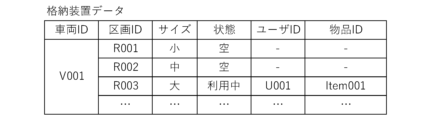
図4Cは、格納装置データ102Cの例である。格納装置データ102Cは、車両300ごとに定義され、格納装置400が有している複数の区画についての情報(区画のサイズ、占有状態(利用中であるか否か)、物品を出品したユーザの識別子、割り当てられた物品の識別子など)が記録される。
格納装置データ102Cは、車両300から送信されるステータスデータに基づいて更新される。
The storage device data 102C is data that records the state of the storage device 400 installed in the target vehicle 300.
4C is an example of the storage device data 102C. The storage device data 102C is defined for each vehicle 300, and information on a plurality of compartments in the storage device 400 (such as the size of the compartment, the occupancy status (whether or not it is being used), the identifier of the user who put up the item, the identifier of the assigned item, etc.) is recorded.
The stored device data 102C is updated based on the status data transmitted from the vehicle 300.
物品データ102Dは、個々の物品の詳細を表すデータである。物品データには、物品の識別子、物品を出品したユーザの識別子、物品の名称、物品の説明文、希望価格、画像データ、サイズに関する情報等が含まれる。物品データ102Dは、物品を預け入れるためのリクエストに基づいて生成される。なお、物品データ102Dには、配車の希望に関するデータが付加されていてもよい。 Item data 102D is data that represents details of individual items. Item data includes an item identifier, an identifier of the user who put the item up for sale, the name of the item, a description of the item, the desired price, image data, size information, etc. Item data 102D is generated based on a request to deposit an item. Note that item data 102D may also include data regarding desired delivery.
なお、記憶部102には、車両300が走行する道路ネットワークに関するデータ(道路地図データ。例えば、複数の道路セグメントの定義と、各道路セグメントの位置情報および接続関係など)が記憶されていてもよい。道路地図データには、車両300の駐車または停車が可能なエリアについての情報が含まれていてもよい。道路地図データは、車両300の目標地点を決定する際に使用される。 The memory unit 102 may also store data (road map data, such as definitions of multiple road segments, and the location information and connection relationships of each road segment) related to the road network on which the vehicle 300 travels. The road map data may include information about areas where the vehicle 300 can be parked or stopped. The road map data is used when determining a destination point for the vehicle 300.
これらのデータを記憶するデータベースは、プロセッサによって実行されるデータベース管理システム(DBMS)のプログラムが、記憶装置に記憶されるデータを管理するこ
とで構築される。本実施形態において利用されるデータベースは、例えばリレーショナルデータベースである。
The database that stores these data is constructed by a database management system (DBMS) program executed by a processor that manages the data stored in the storage device. The database used in this embodiment is, for example, a relational database.
通信部103は、サーバ装置100をネットワークに接続するための通信インタフェースである。通信部103は、例えば、ネットワークインタフェースボードや、無線通信のための無線通信回路を含んで構成される。 The communication unit 103 is a communication interface for connecting the server device 100 to a network. The communication unit 103 includes, for example, a network interface board and a wireless communication circuit for wireless communication.
次に、ユーザ端末200について説明する。
ユーザ端末200は、物品の預け入れを行うユーザが所持するコンピュータである。ユーザは、ユーザ端末200を介してサーバ装置100にアクセスし、物品の預け入れをリクエストすることができる。ユーザ端末200は、例えば、パーソナルコンピュータ、スマートフォン、携帯電話、タブレットコンピュータ、個人情報端末等である。
Next, the user terminal 200 will be described.
The user terminal 200 is a computer owned by a user who is to deposit an item. The user can access the server device 100 via the user terminal 200 and request the deposit of an item. The user terminal 200 is, for example, a personal computer, a smartphone, a mobile phone, a tablet computer, a personal information terminal, or the like.
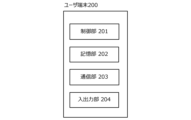
図5は、ユーザ端末200のシステム構成を示した図である。
ユーザ端末200は、制御部201、記憶部202、通信部203、および入出力部204を含んで構成される。
FIG. 5 is a diagram showing the system configuration of the user terminal 200. As shown in FIG.
The user terminal 200 includes a control unit 201 , a storage unit 202 , a communication unit 203 , and an input/output unit 204 .
制御部201は、ユーザ端末200が行う制御を司る演算装置である。制御部201は、CPU(Central Processing Unit)などの演算処理装置によって実現することができ
る。
制御部201は、サーバ装置100にアクセスしてインタラクションを行う機能を実行する。当該機能は、ユーザ端末200で動作するウェブブラウザや、専用のアプリケーションソフトウェアによって実現されてもよい。
The control unit 201 is a calculation device that manages the control performed by the user terminal 200. The control unit 201 can be realized by a calculation processing device such as a CPU (Central Processing Unit).
The control unit 201 executes a function of accessing the server device 100 and performing an interaction. This function may be realized by a web browser running on the user terminal 200 or dedicated application software.
記憶部202は、主記憶装置と補助記憶装置を含んで構成される。主記憶装置は、制御部201によって実行されるプログラムや、当該制御プログラムが利用するデータが展開されるメモリである。補助記憶装置は、制御部201において実行されるプログラムや、当該制御プログラムが利用するデータが記憶される装置である。補助記憶装置には、制御部201で実行されるプログラムをアプリケーションとしてパッケージ化したものを記憶してもよい。また、これらのアプリケーションを実行するためのオペレーティングシステムを記憶してもよい。補助記憶装置に記憶されたプログラムが主記憶装置にロードされ、制御部201によって実行されることで、以降に説明する処理が行われる。 The storage unit 202 is composed of a main storage device and an auxiliary storage device. The main storage device is a memory in which the programs executed by the control unit 201 and the data used by the control programs are expanded. The auxiliary storage device is a device in which the programs executed by the control unit 201 and the data used by the control programs are stored. The auxiliary storage device may store the programs executed by the control unit 201 packaged as applications. It may also store an operating system for executing these applications. The programs stored in the auxiliary storage device are loaded into the main storage device and executed by the control unit 201, thereby performing the processing described below.
主記憶装置は、RAM(Random Access Memory)やROM(Read Only Memory)を含んでもよい。また、補助記憶装置は、EPROM(Erasable Programmable ROM)やハード
ディスクドライブ(HDD、Hard Disk Drive)を含んでもよい。さらに、補助記憶装置
は、リムーバブルメディア、すなわち可搬記録媒体を含んでもよい。
また、記憶部202には、物品の預け入れ/引き渡し時にユーザの認証を行うための認証情報が記憶される。
The primary storage device may include a random access memory (RAM) or a read only memory (ROM). The secondary storage device may include an erasable programmable ROM (EPROM) or a hard disk drive (HDD). The secondary storage device may also include a removable medium, i.e., a portable recording medium.
The storage unit 202 also stores authentication information for authenticating a user when depositing/delivering an item.
通信部203は、ユーザ端末200をネットワークに接続するための無線通信インタフェースである。通信部203は、例えば、無線LANや3G、LTE、5G等の移動体通信サービスを介して、サーバ装置100と通信可能に構成される。 The communication unit 203 is a wireless communication interface for connecting the user terminal 200 to a network. The communication unit 203 is configured to be able to communicate with the server device 100, for example, via a wireless LAN or a mobile communication service such as 3G, LTE, or 5G.
入出力部204は、ユーザが行った入力操作を受け付け、ユーザに対して情報を提示するユニットである。本実施形態では一つのタッチパネルディスプレイからなる。すなわち、液晶ディスプレイとその制御手段、タッチパネルとその制御手段から構成される。
また、入出力部204は、格納装置400との間で認証情報を交換するためのさらなる手段を有していてもよい。例えば、二次元バーコードを読み取るためのカメラ、無線伝送を行うための近距離通信手段などを有していてもよい。
The input/output unit 204 is a unit that receives input operations performed by a user and presents information to the user. In this embodiment, the input/output unit 204 is made up of a single touch panel display. That is, the input/output unit 204 is made up of a liquid crystal display and its control means, and a touch panel and its control means.
The input/output unit 204 may further include a means for exchanging authentication information with the storage device 400. For example, the input/output unit 204 may include a camera for reading a two-dimensional barcode, a short-range communication means for wireless transmission, or the like.
次に、車両300、および、車両300に搭載された格納装置400について説明する。
車両300は、サーバ装置100の制御下において自律走行する車両プラットフォームである。具体的には、サーバ装置100から送信された運行計画に基づいて走行経路を決定し、車両の周辺をセンシングしながら適切な方法で道路上を走行する。また、移動先において、預かりサービスに関する所定のタスク(物品の預かりやショーケースの展示等)を実行する。
Next, the vehicle 300 and the storage device 400 mounted on the vehicle 300 will be described.
The vehicle 300 is a vehicle platform that runs autonomously under the control of the server device 100. Specifically, the vehicle determines a route based on an operation plan transmitted from the server device 100, and runs on roads in an appropriate manner while sensing the surroundings of the vehicle. In addition, at the destination, the vehicle executes a predetermined task related to the storage service (storing items, displaying items in a showcase, etc.).
図6は、車両300および格納装置400のシステム構成を示した図である。
車両300は、制御装置301、センサ302、通信部303、駆動部304、位置情報取得部305、および、格納装置400を含んで構成される。車両300および格納装置400は、バッテリから供給される電力で動作する。
FIG. 6 is a diagram showing a system configuration of the vehicle 300 and the storage device 400.
The vehicle 300 includes a control device 301, a
制御装置301は、後述するセンサ302から取得した情報に基づいて、車両300の制御を行うコンピュータである。制御装置301は、例えば、CPUおよび記憶装置を有するコンピュータによって構成される。
The control device 301 is a computer that controls the vehicle 300 based on information acquired from the
制御装置301は、機能モジュールとして、経路生成部3011、走行制御部3012、および、タスク制御部3013を有している。各機能モジュールは、ROM(Read Only Memory)等の記憶手段に記憶されたプログラムをCPU(Central Processing Unit)
によって実行することで実現してもよい。
The control device 301 has, as functional modules, a route generation unit 3011, a driving control unit 3012, and a task control unit 3013. Each functional module executes a program stored in a storage unit such as a ROM (Read Only Memory) by a CPU (Central Processing Unit).
This may be achieved by executing the
経路生成部3011は、サーバ装置100から送信された運行計画に基づいて、自車両の走行経路を生成する。経路生成部3011は、運行計画で指定された複数の地点を、指定されたスケジュールで巡回できるよう、走行経路を生成する。経路の生成は、予め記憶された地図データを参照することで行ってもよいし、外部のサービスを利用して行ってもよい。 The route generation unit 3011 generates a driving route for the vehicle based on the operation plan transmitted from the server device 100. The route generation unit 3011 generates a driving route so that the vehicle can travel around multiple points specified in the operation plan according to a specified schedule. The route may be generated by referring to pre-stored map data or by using an external service.
走行制御部3012は、第一に、センサ302が取得したデータに基づいて、車両周辺の環境を検出し、環境データを生成する。検出の対象は、例えば、車線の数や位置、自車両の周辺に存在する車両の数や位置、自車両の周辺に存在する障害物(例えば歩行者、自転車、構造物、建築物など)の数や位置、道路の構造、道路標識などであるが、これらに限られない。自律的な走行を行うために必要なものであれば、検出の対象はどのようなものであってもよい。
First, the driving control unit 3012 detects the environment around the vehicle based on the data acquired by the
さらに、走行制御部3012は、第二に、経路生成部3011が生成した経路と、生成した環境データ、ならびに、後述する位置情報取得部305が取得した自車両の位置情報に基づいて、自車両の走行を制御する。例えば、所定の経路に沿って走行し、かつ、自車両を中心とする所定の安全領域内に障害物が進入しないように自車両を走行させる。車両を自律走行させる方法については、公知の方法を採用することができる。 Secondly, the driving control unit 3012 controls the driving of the host vehicle based on the route generated by the route generation unit 3011, the generated environmental data, and the location information of the host vehicle acquired by the location information acquisition unit 305 described below. For example, the vehicle is driven along a predetermined route and such that no obstacles enter a predetermined safety area centered on the host vehicle. A publicly known method can be used as a method for autonomously driving the vehicle.
タスク制御部3013は、車両300が実行するタスクを制御する。タスクとは、格納装置400を用いてユーザに預かりサービスを提供するためのタスクであり、典型的には、「ユーザから物品を預かるタスク」および「ショーケースを展示するタスク」である。なお、タスク制御部3013は、これらに付随するタスクを実行してもよい。タスク制御部3013は、例えば、ユーザを呼び出すタスク、ユーザを認証するタスク、ユーザからの申し出に応じて物品の引き渡し(および決済)を行うタスクなどを実行してもよい。 The task control unit 3013 controls the tasks executed by the vehicle 300. The tasks are tasks for providing a storage service to a user using the storage device 400, and are typically a "task of accepting items from a user" and a "task of displaying a showcase." The task control unit 3013 may also execute tasks associated with these. For example, the task control unit 3013 may execute a task of calling the user, a task of authenticating the user, a task of handing over an item (and making a payment) in response to a request from the user, and the like.
また、タスク制御部3013は、サーバ装置100に対して周期的に自己のステータス
を表すデータ(以下、ステータスデータ)を送信する。
ステータスデータには、例えば、以下のような情報が含まれる。
・車両300の識別子
・車両300の現在位置
・現在までに完了したタスクに関する情報
・残りのタスクに関する情報
・現在のバッテリ残量(SOC)または走行可能距離
・予定している運行経路(運行中である場合)
・格納装置400に格納されている物品に関する情報
サーバ装置100(車両管理部1011)は、受信したステータスデータに基づいて、車両データ102Aおよび格納装置データ102Cを更新する。
Furthermore, the task control unit 3013 periodically transmits data indicating its own status (hereinafter, status data) to the server device 100 .
The status data includes, for example, the following information:
- Identifier of the vehicle 300 - Current location of the vehicle 300 - Information on tasks completed to date - Information on remaining tasks - Current battery state of charge (SOC) or mileage - Planned driving route (if in operation)
Information on items stored in the storage device 400 The server device 100 (vehicle management unit 1011) updates the vehicle data 102A and the storage device data 102C based on the received status data.
センサ302は、車両周辺のセンシングを行う手段であり、典型的にはカメラ、レーザスキャナ、LIDAR、レーダなどを含んで構成される。センサ302が取得した情報は、制御装置301に送信される。センサ302は、自律走行を行うためのセンサを含んで構成される。センサ302は、車両300に設けられたカメラを含んでもよい。例えば、Charged-Coupled Devices(CCD)、Metal-oxide-semiconductor(MOS)あるいはComplementary Metal-Oxide-Semiconductor(CMOS)等のイメージセンサを用いた撮影
装置を含むことができる。
The
通信部303は、車両300をネットワークに接続するための通信手段である。本実施形態では、3G、LTE、5G等の移動体通信サービスを利用して、ネットワーク経由で他の装置(例えばサーバ装置100)と通信を行うことができる。なお、通信部303は、他の車両と車々間通信を行うための通信手段をさらに有していてもよい。
The
駆動部304は、走行制御部3012が生成した指令に基づいて、車両300を走行させる手段である。駆動部304は、例えば、車輪を駆動するためのモータやインバータ、ブレーキ、ステアリング機構、二次電池等を含んで構成される。
The driving
位置情報取得部305は、車両300の現在位置を取得する手段であり、典型的にはGPSアンテナ、GPSモジュールなどを含んで構成される。位置情報取得部305が取得した情報は、制御装置301に送信される。 The location information acquisition unit 305 is a means for acquiring the current location of the vehicle 300, and typically includes a GPS antenna, a GPS module, etc. The information acquired by the location information acquisition unit 305 is transmitted to the control device 301.
格納装置400は、複数の区画を有し、それぞれの区画に物品を収納することができるロッカー型の装置である。図2を参照して説明したように、格納装置400は、複数の扉によってそれぞれ独立した区画にアクセスできるよう構成される。格納装置400は、制御装置301と接続されており、その動作(ユーザの認証や施解錠など)は、制御装置301(タスク制御部3013)によって制御される。
格納装置400は、入出力部を有しており、当該入出力部を用いてユーザとインタラクションを行うことができる。入出力部は、典型的には、タッチパネル、液晶ディスプレイ、キーボード等を含んで構成される。
The storage device 400 is a locker-type device having multiple compartments, each capable of storing an item. As described with reference to Fig. 2, the storage device 400 is configured such that each independent compartment can be accessed by multiple doors. The storage device 400 is connected to the control device 301, and its operation (such as user authentication and locking/unlocking) is controlled by the control device 301 (task control unit 3013).
The storage device 400 has an input/output unit, and can interact with a user using the input/output unit. The input/output unit typically includes a touch panel, a liquid crystal display, a keyboard, and the like.
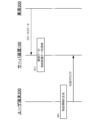
次に、本実施形態に係る車両システムが預かりサービスを提供する方法について説明する。ここでは、車両300から収集したデータに基づいて、サーバ装置100が有するデータベースを更新するフェーズ(第一のフェーズ)と、ショーケースへの物品の預け入れをリクエストするデータをユーザ端末200から受信するフェーズ(第二のフェーズ)について説明する。図7Aは、第一および第二のフェーズに対応するフロー図である。図7Aに示した処理は、随時実行される。 Next, a method for providing the storage service by the vehicle system according to this embodiment will be described. Here, a phase (first phase) in which the database held by the server device 100 is updated based on data collected from the vehicle 300, and a phase (second phase) in which data requesting deposit of an item in a showcase is received from the user terminal 200 will be described. Figure 7A is a flow diagram corresponding to the first and second phases. The process shown in Figure 7A is executed as needed.
車両300は、運行中において、周期的にステータスデータを生成し、サーバ装置10
0に送信する。ステータスデータには、車両300の状態のほか、現在までに完了したタスクに関する情報や、格納装置400に格納されている物品に関する情報などが含まれる。
ステータスデータを受信したサーバ装置100(車両管理部1011)は、受信したステータスデータに基づいて車両データ102Aおよび格納装置データ102Cを更新する(ステップS11)。
The vehicle 300 periodically generates status data during operation, and transmits the status data to the server device 10.
0. The status data includes information on the state of the vehicle 300, information on tasks that have been completed up to now, information on items stored in the storage device 400, and the like.
The server device 100 (vehicle management unit 1011) that has received the status data updates the vehicle data 102A and the storage device data 102C based on the received status data (step S11).
譲受人を募るため、物品のショーケースへの預け入れ(出品と称する)を希望するユーザが、ユーザ端末200を介して、出品物に関する情報を入力すると(ステップS21)、ユーザ端末200は、当該情報に基づいて出品リクエストを生成し、サーバ装置100に送信する。出品リクエストには、出品物に関する情報(物品情報)と、配車リクエストが含まれる。図8Aは、出品リクエストの生成時にユーザ端末200によって提示される画面の例であり、図8Bは、生成される出品リクエストの一例である。出品物に関する情報には、物品の名称、説明文、希望価格、画像データなどが含まれる。また、配車リクエストには、希望エリアおよび希望時間帯が含まれる。
サーバ装置100は、受信した出品リクエストを一時的に記憶する。
When a user who wishes to deposit an item in a showcase (referred to as listing) in order to find a recipient inputs information about the item via the user terminal 200 (step S21), the user terminal 200 generates an listing request based on the information and transmits it to the server device 100. The listing request includes information about the item (item information) and a vehicle dispatch request. FIG. 8A is an example of a screen presented by the user terminal 200 when generating a listing request, and FIG. 8B is an example of the generated listing request. The information about the item includes the name, description, desired price, image data, etc. of the item. The vehicle dispatch request also includes a desired area and desired time zone.
The server device 100 temporarily stores the received listing request.
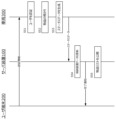
一方、サーバ装置100は、所定の周期ごとに、一時的に記憶した出品リクエストを参照して、車両300の運行計画を生成し、車両300に対して運行を指示する。この処理を第三のフェーズと称する。
図7Bは、第三のフェーズに対応するフロー図である。
Meanwhile, the server device 100 references the temporarily stored auction requests at predetermined intervals, generates an operation plan for the vehicle 300, and instructs the vehicle 300 to operate. This process is referred to as a third phase.
FIG. 7B is a flow diagram corresponding to the third phase.
まず、ステップS31で、展示運行を指示すべき車両があるか否かを判定する。例えば、新規の出品リクエストが無く、かつ、ユーザから物品を預かっている車両300がある場合、処理はステップS32に遷移し、当該車両300を、展示運行を指示する車両として決定する。
ステップS33では、所定のスケジュールで所定の地点を巡回してショーケースの展示を行う運行計画を生成し、決定された車両300に送信する。所定の地点やスケジュールは、サーバ装置100によって予め定められていてもよい。
First, in step S31, it is determined whether or not there is a vehicle to be instructed to operate as an exhibition vehicle. For example, if there is no new exhibition request and there is a vehicle 300 that is holding an item from a user, the process proceeds to step S32, where the vehicle 300 is determined to be the vehicle to be instructed to operate as an exhibition vehicle.
In step S33, an operation plan for displaying the showcase by visiting the specified locations according to a specified schedule is generated and transmitted to the determined vehicle 300. The specified locations and the schedule may be determined in advance by the server device 100.
ステップS31で、展示運行を指示すべき車両が無いと判定された場合、処理はステップS34へ遷移する。
ステップS34では、一時的に記憶している出品リクエストがあるか否かを判定する。ここで、未処理の出品リクエストがある場合、処理はステップS35へ遷移する。未処理の出品リクエストがない場合、処理は終了する。
If it is determined in step S31 that there is no vehicle to be instructed to perform a demonstration run, the process proceeds to step S34.
In step S34, it is determined whether or not there is a temporarily stored exhibition request. If there is an unprocessed exhibition request, the process proceeds to step S35. If there is no unprocessed exhibition request, the process ends.
ステップS35~S39は、車両300に対して集荷運行を指示するための処理である。
ステップS35では、ユーザが車両300に物品を預け入れる地点、および、当該地点に車両300を停車させる時間帯を決定する。
出品リクエストを送信したユーザが複数いる場合、計画生成部1012は、当該複数のユーザのそれぞれに対応する位置情報をグルーピングし、グループに対して目標地点を設定する。例えば、図9に示したように、所定の範囲内に位置する複数のユーザ(ユーザA~Dの4名)が出品リクエストを送信した場合、4名をグルーピングし、グループを代表する地点Eを目標地点として設定する。各ユーザは、目標地点まで物品を持参し、当該物品の預け入れを行う。
Steps S35 to S39 are processes for instructing the vehicle 300 to carry out a collection operation.
In step S35, the user determines the location where the user will deposit the item in the vehicle 300 and the time period during which the vehicle 300 will be parked at that location.
When multiple users have sent listing requests, the plan generating unit 1012 groups the location information corresponding to each of the multiple users and sets a target point for the group. For example, as shown in Fig. 9, when multiple users (four users A to D) located within a predetermined range have sent listing requests, the four users are grouped and a point E representing the group is set as the target point. Each user brings an item to the target point and deposits the item.
グルーピングは、地理的距離に基づいて行うことができる。例えば、所定の範囲内に位置する複数のユーザが、同一のグループに属するようにグルーピングを実行してもよい。グルーピングの結果、グループが2つ以上生成されてもよい。
なお、グルーピングは、希望時間帯に基づいて行ってもよい。例えば、希望時間帯が重複している複数のユーザが、同一のグループに属するようにグルーピングを実行してもよい。この場合、車両300が停車する時間帯は、ユーザが希望する時間帯を満たすように決定される。図9に示した例では、4名のユーザの希望を満たすよう、停車時間帯が「17時30分から18時」に決定される。
The grouping may be performed based on geographical distance. For example, the grouping may be performed such that a plurality of users located within a certain range belong to the same group. As a result of the grouping, two or more groups may be generated.
The grouping may be performed based on desired time periods. For example, grouping may be performed such that a plurality of users with overlapping desired time periods belong to the same group. In this case, the time period during which the vehicle 300 stops is determined so as to satisfy the time periods desired by the users. In the example shown in FIG. 9, the stop time period is determined to be "17:30 to 18:00" so as to satisfy the desires of four users.
このように、出品リクエストを送信した複数のユーザをグルーピングし、車両300を派遣する地点を一箇所に決定することで、複数のユーザから物品を引き取るコストを抑制することができる。さらに、停車中においてショーケースの展示を行うことが可能になる。 In this way, by grouping multiple users who have sent listing requests and determining a single location to dispatch the vehicle 300 to, the cost of collecting items from multiple users can be reduced. Furthermore, it becomes possible to display items in a showcase while the vehicle is parked.
ステップS36では、計画生成部1012が、ユーザの元へ派遣する車両300を決定する。ユーザの元へ派遣される車両300は、車両データ102A、および、格納装置データ102Cを参照することで決定される。具体的には、ステップS35で決定された地点に、決定された時間帯に派遣可能、かつ、全ての物品を格納できる格納装置400を有している車両300が、派遣対象として決定される。 In step S36, the plan generation unit 1012 determines the vehicle 300 to be dispatched to the user. The vehicle 300 to be dispatched to the user is determined by referring to the vehicle data 102A and the storage device data 102C. Specifically, the vehicle 300 to be dispatched is determined to be the vehicle to be dispatched, which can be dispatched to the location determined in step S35 during the determined time period and has a storage device 400 capable of storing all items.
ステップS37では、複数のユーザのそれぞれに対して区画を割り当てる。区画の割り当ては、出品リクエストに含まれる出品物のサイズ情報、および、格納装置データ102Cを参照することで行うことができる。これにより、物品に適合するサイズの区画が割り当てられる。本ステップが完了すると、ユーザ端末200に対して、車両300が派遣される地点、および、車両300が停車する時間帯を通知するデータが送信される。
なお、本ステップにおいて、サーバ装置100は、ユーザ端末200に対して、割り当てられた区画を施解錠するための認証情報を送信してもよい。
In step S37, a section is assigned to each of the multiple users. The section assignment can be performed by referring to the size information of the item included in the listing request and the storage device data 102C. In this way, a section of a size suitable for the item is assigned. When this step is completed, data is transmitted to the user terminal 200 informing the location to which the vehicle 300 will be dispatched and the time period during which the vehicle 300 will be parked.
In addition, in this step, the server device 100 may transmit, to the user terminal 200, authentication information for locking and unlocking the assigned section.
なお、ステップS35~S37の処理において、車両の割り当てや区画の割り当てに失敗した場合、その旨をユーザ端末200に通知し、再度の出品リクエストの送信を依頼するようにしてもよい。 If the vehicle allocation or the plot allocation fails in the processing of steps S35 to S37, the user terminal 200 may be notified of this and asked to send the listing request again.
次に、ステップS38で、計画生成部1012が、車両300に対応する運行計画を生成ないし更新する。ここで、対象の車両300が待機中である場合、計画生成部1012は、当該車両300に対応する新たな運行計画を生成する。対象の車両300が運行中である場合、すなわち、当該車両300の運行計画が既に生成されている場合、新たなタスクを運行計画に追加する。車両300に対応する運行計画は、当該車両300に送信される。 Next, in step S38, the plan generation unit 1012 generates or updates an operation plan corresponding to the vehicle 300. Here, if the target vehicle 300 is waiting, the plan generation unit 1012 generates a new operation plan corresponding to the vehicle 300. If the target vehicle 300 is in operation, i.e., if an operation plan for the vehicle 300 has already been generated, a new task is added to the operation plan. The operation plan corresponding to the vehicle 300 is transmitted to the vehicle 300.
ステップS39では、車両300(制御装置301)が運行計画を受信する。制御装置301は、受信した運行計画に従って、移動およびタスクを実行する。 In step S39, the vehicle 300 (control device 301) receives the operation plan. The control device 301 performs movement and tasks according to the received operation plan.
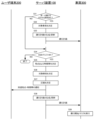
図10は、運行計画を受信した車両300が行う処理のフローチャートである。当該処理は、車両300がサーバ装置100から運行計画を受信した場合に開始される。
まず、ステップS41で、車両300(経路生成部3011)が、受信した運行計画に基づいて、未処理のタスクを実行するための走行経路を生成する。
10 is a flowchart of a process performed by the vehicle 300 that has received an operation plan. The process is started when the vehicle 300 receives the operation plan from the server device 100.
First, in step S41, the vehicle 300 (route generation unit 3011) generates a driving route for executing an unprocessed task based on the received operation plan.
ステップS42では、走行制御部3012が、生成した経路に従って、目標地点(すなわち、サーバ装置100によって指定された地点)への走行を開始させる。 In step S42, the driving control unit 3012 starts driving to the destination point (i.e., the point specified by the server device 100) according to the generated route.
車両300が目標地点に接近すると(ステップS43)、走行制御部3012が、近傍にて停車が可能な場所を探して停車し、タスクを実行する(ステップS44)。タスクとは、ユーザから物品を預かるタスク、または、ショーケースを展示するタスクのいずれか
である。
When the vehicle 300 approaches the target point (step S43), the driving control unit 3012 searches for a nearby place where the vehicle can be stopped, stops the vehicle, and executes a task (step S44). The task is either a task of receiving an item from a user or a task of displaying an item in a showcase.
タスクが完了すると、走行制御部3012が、運行計画に従って、次の目標地点の有無を判定し(ステップS45)、次の目標地点がある場合、運行を継続する。次の目標地点が無い場合(運行計画に含まれるタスクを全て完了した場合)、拠点へ帰還する。 When the task is completed, the driving control unit 3012 determines whether there is a next destination point according to the operation plan (step S45), and if there is a next destination point, the vehicle continues operation. If there is no next destination point (if all tasks included in the operation plan have been completed), the vehicle returns to the base.
次に、車両300によって実行されるタスクが、ユーザから物品を預かるタスクであった場合に、ステップS44で実行される処理の詳細について説明する。
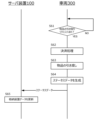
図11は、ユーザが物品の預け入れを行う際に実行される処理のフロー図である。図示した処理は、物品の預け入れを行うユーザを乗車させるために車両300が駐車したタイミングで、タスク制御部3013によって開始される。
Next, details of the process executed in step S44 when the task executed by vehicle 300 is a task of accepting an item from a user will be described.
11 is a flow diagram of a process executed when a user deposits an item. The process shown in the figure is started by the task control unit 3013 when the vehicle 300 is parked to accommodate the user who is to deposit the item.
まず、ステップS51において、ユーザの認証を行う。
所定の地点に駐車された車両300の元へユーザが到着すると、格納装置400が、入出力部を介して第一の認証情報を取得し、予め記憶された第二の認証情報との照合を行う。第一の認証情報は、キーボードやタッチパネルを介して文字データとして取得してもよいし、カメラやスキャナを介して画像データとして取得してもよい。また、無線通信を介してユーザ端末200から取得してもよい。照合に成功した場合、処理はステップS52へ遷移する。照合に失敗した場合、処理は終了する。
First, in step S51, user authentication is performed.
When the user arrives at the vehicle 300 parked at a specified location, the storage device 400 acquires the first authentication information via the input/output unit and compares it with the second authentication information stored in advance. The first authentication information may be acquired as character data via a keyboard or touch panel, or as image data via a camera or scanner. It may also be acquired from the user terminal 200 via wireless communication. If the comparison is successful, the process proceeds to step S52. If the comparison is unsuccessful, the process ends.
ユーザの認証が完了すると、ステップS52で、物品の預かりを行う。本ステップでは、ユーザに割り当てられた区画のロックを解除し、物品を収納させる。収納が完了すると、当該区画を施錠する。 Once user authentication is complete, the item is deposited in step S52. In this step, the compartment assigned to the user is unlocked and the user is allowed to store the item. Once the item has been stored, the compartment is locked.
ステップS53では、ステータスデータを生成し、サーバ装置100へ送信する。ステータスデータは、格納装置400に格納されている物品に関する情報、例えば、複数の区画の占有状態、物品の識別子、物品を出品したユーザの識別子等を含む。ステータスデータを受信したサーバ装置100は、当該データを格納装置データ102Cに反映させる(ステップS54)。処理が完了すると、ユーザ端末200に完了通知が送信される。 In step S53, status data is generated and transmitted to the server device 100. The status data includes information about the items stored in the storage device 400, such as the occupancy status of multiple compartments, the item identifier, and the identifier of the user who put the item up for sale. Having received the status data, the server device 100 reflects the data in the storage device data 102C (step S54). When the process is complete, a completion notification is transmitted to the user terminal 200.
ステップS55では、サーバ装置100が、車両300に預け入れられている物品のリストを生成し、インターネット上に公開する。本ステップでは、物品データ102Dに基づいて、物品の名称、説明文、希望価格、画像データなどを含むリストを生成する。図12は、公開される情報の例である。図示したように、リストには、車両300の運行予定に関する情報を含ませてもよい。これにより、閲覧者は、当該物品を搭載した車両300の現在位置や、今後の運行予定(巡回する地点や巡回スケジュール)を知ることができる。これらの情報は、所定のウェブページからアクセス可能としてもよい。 In step S55, the server device 100 generates a list of items stored in the vehicle 300 and publishes it on the Internet. In this step, a list including the names, descriptions, desired prices, image data, etc. of the items is generated based on the item data 102D. FIG. 12 is an example of the information to be published. As shown, the list may also include information regarding the operation schedule of the vehicle 300. This allows viewers to know the current location of the vehicle 300 carrying the item and its future operation schedule (traveling points and tour schedule). This information may be accessible from a specified web page.
次に、車両300によって実行されるタスクが、ショーケースの展示を行うタスクであった場合に、ステップS44で実行される処理の詳細について説明する。図13は、ショーケースの展示中に実行される処理のフロー図である。 Next, we will explain the details of the process executed in step S44 when the task executed by the vehicle 300 is a task of displaying items in the showcase. Figure 13 is a flow diagram of the process executed during the showcase display.
まず、ステップS61で、預け入れられた物品の引き取りを希望するユーザがいるか否かを判定する。例えば、格納装置400が有する入出力部を介して、物品の引き取りリクエストが入力された場合、本ステップは肯定判定となる。本ステップで否定判定となった場合、ショーケースの展示が継続される。 First, in step S61, it is determined whether or not there is a user who wishes to pick up the deposited item. For example, if a request to pick up the item is input via the input/output unit of the storage device 400, this step is determined to be positive. If this step is determined to be negative, the display in the showcase continues.
格納装置400が有する入出力部を介して、物品の引き取りを行う意思表示をしたユーザ(以下、第二ユーザ)がいる場合、処理はステップS62へ遷移する。 If a user (hereinafter, the second user) has indicated his/her intention to pick up the item via the input/output unit of the storage device 400, the process transitions to step S62.
ステップS62では、物品の代金を決済する処理を行う。決済額は、出品データにて指定された金額である。決済は、オンラインによるカード決済であってもよい。本ステップでは、第二ユーザが所持する携帯端末を利用して代金のオンライン決済を行ってもよい。この場合、決済が完了したタイミングで、対象の物品が格納されている区画を解錠するための認証情報を、当該携帯端末に送信してもよい。なお、本ステップでは、代金の決済以外に、物品の譲受に関する所定の処理を実行してもよい。 In step S62, a process is performed to settle the price of the item. The payment amount is the amount specified in the listing data. Payment may be made by online card payment. In this step, online payment of the price may be made using a mobile terminal possessed by the second user. In this case, when the payment is completed, authentication information for unlocking the compartment in which the target item is stored may be sent to the mobile terminal. Note that in this step, in addition to settling the price, a predetermined process related to the transfer of the item may be executed.
次に、ステップS63で、格納装置400の、指定された物品に関連付いた区画を解錠し、物品の引き取りを行わせる。区画の解錠は、例えば、第二ユーザが所持する携帯端末に送信された認証情報を用いて行ってもよい。
ステップS64では、ステップS53と同様のステータスデータを生成し、サーバ装置100へ送信する。
Next, in step S63, the compartment associated with the specified item in the storage device 400 is unlocked, and the item is picked up. The compartment may be unlocked using authentication information transmitted to the mobile terminal carried by the second user, for example.
In step S64, the same status data as in step S53 is generated and transmitted to the server device 100.
ステップS65では、サーバ装置100が、受信したステータスデータに基づいて格納装置データ102Cを更新する。 In step S65, the server device 100 updates the storage device data 102C based on the received status data.
以上説明したように、第一の実施形態によると、所定の拠点を巡回する車両300をリサイクルショップとして機能させることができる。また、ユーザが物品の預け入れを行う際、車両300を当該ユーザの近くまで移動させることができ、利便性を高めることができる。さらに、複数のユーザをグルーピングし、物品の受け入れを一箇所で行うため、集荷コストを削減することができ、ショーケースの展示時間を伸ばすことができる。 As described above, according to the first embodiment, the vehicle 300 that travels around a specified base can function as a recycle shop. Also, when a user deposits an item, the vehicle 300 can be moved close to the user, improving convenience. Furthermore, by grouping multiple users and accepting items at one location, collection costs can be reduced and the display time in the showcase can be extended.
(第二の実施形態)
第一の実施形態では、出品リクエストを送信したユーザ、すなわち、物品を売却する意思があるユーザに対して車両300を派遣した。
これに対し、第二の実施形態は、所定の物品を所有しているユーザに対して、当該物品のショーケースへの出品を提案する実施形態である。
Second Embodiment
In the first embodiment, the vehicle 300 is dispatched to a user who has transmitted an auction request, that is, a user who has the intention of selling an item.
In contrast, the second embodiment is an embodiment in which a user who owns a specific item is offered the opportunity to put the item up for sale in a showcase.
第二の実施形態では、ユーザ端末200が、ステップS21で物品情報を入力する際に、下書きの保存が可能に構成される。下書きは、次回以降のタイミングで呼び出すことができる。
また、第二の実施形態では、下書きが保存されたタイミングで、物品情報と位置情報をユーザ端末200からサーバ装置100に送信し、サーバ装置100がこれを保存する。物品情報は、入力可能な情報のうちの一部(例えば、物品の名称のみ)であってもよい。
In the second embodiment, the user terminal 200 is configured to be able to save a draft when inputting the product information in step S21. The draft can be called up at the next or subsequent timing.
In the second embodiment, when the draft is saved, the item information and the position information are transmitted from the user terminal 200 to the server device 100, and are saved by the server device 100. The item information may be a part of the information that can be input (for example, only the name of the item).
サーバ装置100は、保存された位置情報と、随時生成される車両300の運行計画とを比較し、下書きを保存したユーザの近傍に派遣される車両300があるか否かを判定する。例えば、ショーケースの展示や、他のユーザによる物品の預け入れのため、車両300がユーザの近傍にやってくるタイミングがある場合、サーバ装置100は、対応するユーザ端末200に通知を送信し、車両300が近くに来るタイミングがある旨を通知する。さらに、サーバ装置100は、当該車両が到着するタイミングまでに出品リクエストを送信するよう、ユーザに促してもよい。
これにより、ショーケースへの物品の出品を促すことが可能になる。
The server device 100 compares the saved location information with the vehicle 300 operation plan generated from time to time, and determines whether or not there is a vehicle 300 to be dispatched near the user who saved the draft. For example, when there is a time when the vehicle 300 will come near the user for display in a showcase or for another user to deposit an item, the server device 100 transmits a notification to the corresponding user terminal 200 to notify that there is a time when the vehicle 300 will come nearby. Furthermore, the server device 100 may prompt the user to transmit a listing request by the time the vehicle arrives.
This makes it possible to encourage people to put items up for sale in the showcase.
なお、本実施形態では、保存された下書きの有無に基づいて、所定の物品を所有しているユーザがいることを判定したが、これ以外の方法によって、物品の所有の有無を判定してもよい。例えば、ユーザ端末200によって撮影された写真と位置情報を収集し、これらのデータに基づいて、ユーザの自宅に所定の物品があることを判定してもよい。さらに、物品の購入履歴に基づいて、当該ユーザが所定の物品を所有していることを判定してもよい。さらに、物品の種別に基づいて、出品の提案有無を決定、ないし、付加的な処理を
実行してもよい。例えば、中古市場で人気のある物品を所有しているユーザがいる場合、より優先的に車両300の派遣を提案するようにしてもよい。さらに、所定の車両300についての既存の運行計画を変更し、より優先的に当該車両300を派遣するようにしてもよい。
In this embodiment, it is determined whether a user owns a specific item based on the presence or absence of a saved draft, but the presence or absence of an item may be determined by other methods. For example, photos taken by the user terminal 200 and location information may be collected, and based on these data, it may be determined that a specific item is in the user's home. Furthermore, it may be determined that the user owns a specific item based on the purchase history of the item. Furthermore, based on the type of item, it may be determined whether or not to propose putting the item up for sale, or additional processing may be performed. For example, if a user owns an item that is popular in the secondhand market, it may be proposed to dispatch the vehicle 300 with higher priority. Furthermore, it may be possible to change the existing operation plan for the specific vehicle 300 and dispatch the vehicle 300 with higher priority.
(変形例)
上記の実施形態はあくまでも一例であって、本開示はその要旨を逸脱しない範囲内で適宜変更して実施しうる。
例えば、本開示において説明した処理や手段は、技術的な矛盾が生じない限りにおいて、自由に組み合わせて実施することができる。
(Modification)
The above-described embodiment is merely an example, and the present disclosure can be modified and implemented as appropriate without departing from the spirit and scope of the present disclosure.
For example, the processes and means described in this disclosure can be freely combined and implemented as long as no technical contradiction occurs.
また、実施形態の説明では、ショーケースによって物品の販売を行う形態を示したが、本開示に係る情報処理装置は他の形態に適用することもできる。例えば、不用品の買い取りサービス、廃品回収サービス、集荷サービスなど、複数のユーザから物品を集める形態のサービスに適用することもできる。 In addition, in the description of the embodiment, a form in which goods are sold using a showcase has been shown, but the information processing device according to the present disclosure can also be applied to other forms. For example, it can also be applied to services in which goods are collected from multiple users, such as a service for purchasing unwanted items, a waste collection service, or a collection service.
また、1つの装置が行うものとして説明した処理が、複数の装置によって分担して実行されてもよい。あるいは、異なる装置が行うものとして説明した処理が、1つの装置によって実行されても構わない。コンピュータシステムにおいて、各機能をどのようなハードウェア構成(サーバ構成)によって実現するかは柔軟に変更可能である。 In addition, a process described as being performed by one device may be shared and executed by multiple devices. Or, a process described as being performed by different devices may be executed by one device. In a computer system, the hardware configuration (server configuration) by which each function is realized can be flexibly changed.
本開示は、上記の実施形態で説明した機能を実装したコンピュータプログラムをコンピュータに供給し、当該コンピュータが有する1つ以上のプロセッサがプログラムを読み出して実行することによっても実現可能である。このようなコンピュータプログラムは、コンピュータのシステムバスに接続可能な非一時的なコンピュータ可読記憶媒体によってコンピュータに提供されてもよいし、ネットワークを介してコンピュータに提供されてもよい。非一時的なコンピュータ可読記憶媒体は、例えば、磁気ディスク(フロッピー(登録商標)ディスク、ハードディスクドライブ(HDD)等)、光ディスク(CD-ROM、DVDディスク・ブルーレイディスク等)など任意のタイプのディスク、読み込み専用メモリ(ROM)、ランダムアクセスメモリ(RAM)、EPROM、EEPROM、磁気カード、フラッシュメモリ、光学式カード、電子的命令を格納するために適した任意のタイプの媒体を含む。 The present disclosure can also be realized by supplying a computer program that implements the functions described in the above embodiments to a computer, and having one or more processors of the computer read and execute the program. Such a computer program may be provided to the computer by a non-transitory computer-readable storage medium that can be connected to the system bus of the computer, or may be provided to the computer via a network. Non-transitory computer-readable storage media include, for example, any type of disk, such as a magnetic disk (floppy disk, hard disk drive (HDD), etc.), an optical disk (CD-ROM, DVD disk, Blu-ray disk, etc.), a read-only memory (ROM), a random access memory (RAM), an EPROM, an EEPROM, a magnetic card, a flash memory, an optical card, or any type of medium suitable for storing electronic instructions.
100・・・サーバ装置
101,201・・・制御部
102,202・・・記憶部
103,203,303・・・通信部
204・・・入出力部
200・・・ユーザ端末
300・・・車両
301・・・制御装置
302・・・センサ
304・・・駆動部
305・・・位置情報取得部
400・・・格納装置
Reference Signs List 100: Server device 101, 201: Control unit 102, 202: Storage unit 103, 203, 303: Communication unit 204: Input/output unit 200: User terminal 300: Vehicle 301: Control device 302: Sensor 304: Driving unit 305: Position information acquisition unit 400: Storage device
Claims (19)
複数の前記位置情報に基づいて、前記複数のユーザが前記物品を前記車両に預け入れる地点である第一の地点を決定することと、
前記複数のユーザにそれぞれ対応する複数のユーザ端末に対して、前記第一の地点に前記車両が派遣されることを通知することと、
を実行する制御部を有し、
前記制御部は、前記複数のユーザ端末から、前記物品の預け入れを希望するエリアを示す前記位置情報を取得し、
前記制御部は、前記複数のユーザを地理的位置に基づいてグルーピングし、得られたグループごとに、グループを代表する地点として前記第一の地点を決定する、情報処理装置。 obtaining location information from a plurality of user terminals associated with a plurality of users wishing to deposit an item in the vehicle;
determining a first location where the plurality of users deposit the items into the vehicle based on the plurality of location information;
notifying a plurality of user terminals corresponding to the plurality of users, respectively, that the vehicle will be dispatched to the first location;
A control unit that executes
The control unit acquires the location information indicating an area in which the user desires to deposit the item from the plurality of user terminals,
The control unit groups the plurality of users based on geographical locations, and for each of the resulting groups, determines the first location as a location that represents the group .
請求項1に記載の情報処理装置。 The control unit acquires information regarding a desired date and time for depositing the item from the plurality of user terminals, and groups a plurality of users whose geographical locations and desired dates and times are both within a predetermined range.
The information processing device according to claim 1 .
請求項2に記載の情報処理装置。 the control unit notifies user terminals belonging to the same group of the first location and an arrival date and time of the vehicle at the first location;
The information processing device according to claim 2 .
請求項1から3のいずれか1項に記載の情報処理装置。 The control unit generates a command to dispatch the vehicle to the first location.
The information processing device according to claim 1 .
請求項1から4のいずれか1項に記載の情報処理装置。 The control unit determines a vehicle to be dispatched to the first location from among the plurality of vehicles equipped with a storage device having a plurality of compartments.
The information processing device according to claim 1 .
む物品データをさらに取得する、
請求項5に記載の情報処理装置。 The control unit further acquires item data including information regarding the size of the item to be deposited from the plurality of user terminals.
The information processing device according to claim 5 .
請求項6に記載の情報処理装置。 The control unit determines to dispatch, to the first location, a vehicle equipped with the storage device capable of storing all of the items deposited by the users at the first location in the multiple compartments.
The information processing device according to claim 6 .
請求項5から7のいずれか1項に記載の情報処理装置。 the control unit transmits authentication information for locking/unlocking each of the plurality of compartments of the storage device to each of the plurality of user terminals;
The information processing device according to claim 5 .
請求項1から8のいずれか1項に記載の情報処理装置。 the vehicle being a showcase vehicle that displays deposited items at a plurality of predetermined locations;
The information processing device according to claim 1 .
請求項9に記載の情報処理装置。 The control unit performs a predetermined procedure for receiving the item when there is a second user who wishes to receive the deposited item.
The information processing device according to claim 9 .
前記推定の結果に基づいて、前記車両による前記物品の展示を提案するデータを対応するユーザ端末に送信する、
請求項9または10に記載の情報処理装置。 The control unit estimates an item owned by each of the plurality of users;
transmitting data to a corresponding user terminal proposing an exhibition of the item by the vehicle based on a result of the estimation;
The information processing device according to claim 9 or 10 .
請求項9から11のいずれか1項に記載の情報処理装置。 the control unit generates a list of one or more items exhibited by the vehicle.
The information processing device according to claim 9 .
請求項9から11のいずれか1項に記載の情報処理装置。 The control unit generates a list of one or more items exhibited by the vehicle and publishes the list together with the vehicle's operating schedule.
The information processing device according to claim 9 .
請求項13に記載の情報処理装置。 The operation schedule includes a plurality of locations at which the deposited items are to be displayed and a duration of the stop at each location.
The information processing device according to claim 13 .
請求項12から14のいずれか1項に記載の情報処理装置。 the list includes an image of each item provided by each of the plurality of users;
The information processing device according to claim 12 .
複数の前記位置情報に基づいて、前記複数のユーザが前記物品を前記車両に預け入れる地点である第一の地点を決定することと、
前記車両を前記第一の地点に派遣する指令を生成することと、
を実行する制御部を有し、
前記制御部は、前記複数のユーザ端末から、前記物品の預け入れを希望するエリアを示す前記位置情報を取得し、
前記制御部は、前記複数のユーザを地理的位置に基づいてグルーピングし、得られたグループごとに、グループを代表する地点として前記第一の地点を決定する、情報処理装置。 obtaining location information from a plurality of user terminals associated with a plurality of users wishing to deposit an item in the vehicle;
determining a first location where the plurality of users deposit the items into the vehicle based on the plurality of location information;
generating a command to dispatch the vehicle to the first location;
A control unit that executes
The control unit acquires the location information indicating an area in which the user desires to deposit the item from the plurality of user terminals,
The control unit groups the plurality of users based on geographical locations, and for each of the resulting groups, determines the first location as a location that represents the group .
請求項16に記載の情報処理装置。 The control unit determines a vehicle to be dispatched to the first location from among the plurality of vehicles equipped with a storage device having a plurality of compartments.
The information processing device according to claim 16 .
請求項17に記載の情報処理装置。 The control unit further acquires item data including information regarding the size of the item to be deposited from the plurality of user terminals.
The information processing device according to claim 17 .
請求項18に記載の情報処理装置。 The control unit determines to dispatch, to the first location, a vehicle equipped with the storage device capable of storing all of the items deposited by the users at the first location in the multiple compartments.
The information processing device according to claim 18 .
Priority Applications (1)
| Application Number | Priority Date | Filing Date | Title |
|---|---|---|---|
| JP2021132846A JP7635672B2 (en) | 2021-08-17 | 2021-08-17 | Information processing device |
Applications Claiming Priority (1)
| Application Number | Priority Date | Filing Date | Title |
|---|---|---|---|
| JP2021132846A JP7635672B2 (en) | 2021-08-17 | 2021-08-17 | Information processing device |
Publications (2)
| Publication Number | Publication Date |
|---|---|
| JP2023027619A JP2023027619A (en) | 2023-03-02 |
| JP7635672B2 true JP7635672B2 (en) | 2025-02-26 |
Family
ID=85330479
Family Applications (1)
| Application Number | Title | Priority Date | Filing Date |
|---|---|---|---|
| JP2021132846A Active JP7635672B2 (en) | 2021-08-17 | 2021-08-17 | Information processing device |
Country Status (1)
| Country | Link |
|---|---|
| JP (1) | JP7635672B2 (en) |
Citations (7)
| Publication number | Priority date | Publication date | Assignee | Title |
|---|---|---|---|---|
| JP2003271727A (en) | 2002-03-19 | 2003-09-26 | Toshio Katayama | System and method for procedure substitution |
| JP2004083233A (en) | 2002-08-28 | 2004-03-18 | Honda Express Co Ltd | How to formulate a cyclic pickup / delivery plan |
| JP2017524195A (en) | 2014-08-04 | 2017-08-24 | ウーバー テクノロジーズ,インコーポレイテッド | Determination of predetermined position data points and supply to service providers |
| JP2019096201A (en) | 2017-11-27 | 2019-06-20 | トヨタ自動車株式会社 | Locker management device |
| JP2020113086A (en) | 2019-01-11 | 2020-07-27 | パナソニックIpマネジメント株式会社 | Collection delivery management device, collection delivery management method and program |
| US20200410442A1 (en) | 2020-09-16 | 2020-12-31 | Cheetah Technologies Inc. | Location modeling for hybrid last-mile delivery |
| JP2021039432A (en) | 2019-08-30 | 2021-03-11 | トヨタ自動車株式会社 | Vehicle, operation management system, operation management method, and information processing device |
-
2021
- 2021-08-17 JP JP2021132846A patent/JP7635672B2/en active Active
Patent Citations (7)
| Publication number | Priority date | Publication date | Assignee | Title |
|---|---|---|---|---|
| JP2003271727A (en) | 2002-03-19 | 2003-09-26 | Toshio Katayama | System and method for procedure substitution |
| JP2004083233A (en) | 2002-08-28 | 2004-03-18 | Honda Express Co Ltd | How to formulate a cyclic pickup / delivery plan |
| JP2017524195A (en) | 2014-08-04 | 2017-08-24 | ウーバー テクノロジーズ,インコーポレイテッド | Determination of predetermined position data points and supply to service providers |
| JP2019096201A (en) | 2017-11-27 | 2019-06-20 | トヨタ自動車株式会社 | Locker management device |
| JP2020113086A (en) | 2019-01-11 | 2020-07-27 | パナソニックIpマネジメント株式会社 | Collection delivery management device, collection delivery management method and program |
| JP2021039432A (en) | 2019-08-30 | 2021-03-11 | トヨタ自動車株式会社 | Vehicle, operation management system, operation management method, and information processing device |
| US20200410442A1 (en) | 2020-09-16 | 2020-12-31 | Cheetah Technologies Inc. | Location modeling for hybrid last-mile delivery |
Also Published As
| Publication number | Publication date |
|---|---|
| JP2023027619A (en) | 2023-03-02 |
Similar Documents
| Publication | Publication Date | Title |
|---|---|---|
| JP7363936B2 (en) | Mobile object management device, program, and package delivery support method | |
| JP7135014B2 (en) | Ride-sharing management device, ride-sharing management method, and program | |
| JP7010066B2 (en) | Autonomous mobile and drug delivery system | |
| WO2018230692A1 (en) | Rideshare management system, rideshare management method, and program | |
| CN113581724B (en) | Server device, vehicle, service providing system, and non-transitory storage medium | |
| JP7180535B2 (en) | Information processing device, information processing method and program | |
| JP6869822B2 (en) | Car sharing management system | |
| CN111461810B (en) | System, information processing device, information processing method and storage medium | |
| JP7075626B2 (en) | Information processing equipment, information processing methods and programs | |
| JP2002099961A (en) | Navigation device, car rental system and navigation rental system | |
| JP7635672B2 (en) | Information processing device | |
| JP7586208B2 (en) | Autonomous Vehicles | |
| JP7722043B2 (en) | Information processing device and information processing method | |
| JP7673612B2 (en) | Information processing device and information processing method | |
| CN113052649B (en) | Information processing device, information processing method, and non-transitory storage medium | |
| JP7722044B2 (en) | Information processing device and information processing method | |
| JP2022153088A (en) | Information presentation method and information processing apparatus | |
| JP7694327B2 (en) | Information processing device and information processing method | |
| JP7666218B2 (en) | Information processing device and vehicle | |
| JP7616790B1 (en) | Information processing device, information processing system, information processing method, and information processing program | |
| CN115797108B (en) | Information processing device and information processing method | |
| JP2020144704A (en) | Information processing system | |
| JP7521506B2 (en) | Information processing device and information processing method | |
| JP2023077839A (en) | Information processing system, information processing device, display terminal, information processing method, and communication method | |
| JP2023094040A (en) | Business support apparatus and program |
Legal Events
| Date | Code | Title | Description |
|---|---|---|---|
| A621 | Written request for application examination |
Free format text: JAPANESE INTERMEDIATE CODE: A621 Effective date: 20240125 |
|
| A131 | Notification of reasons for refusal |
Free format text: JAPANESE INTERMEDIATE CODE: A131 Effective date: 20241022 |
|
| A977 | Report on retrieval |
Free format text: JAPANESE INTERMEDIATE CODE: A971007 Effective date: 20241025 |
|
| A521 | Request for written amendment filed |
Free format text: JAPANESE INTERMEDIATE CODE: A523 Effective date: 20241220 |
|
| TRDD | Decision of grant or rejection written | ||
| A01 | Written decision to grant a patent or to grant a registration (utility model) |
Free format text: JAPANESE INTERMEDIATE CODE: A01 Effective date: 20250114 |
|
| A61 | First payment of annual fees (during grant procedure) |
Free format text: JAPANESE INTERMEDIATE CODE: A61 Effective date: 20250127 |
|
| R150 | Certificate of patent or registration of utility model |
Ref document number: 7635672 Country of ref document: JP Free format text: JAPANESE INTERMEDIATE CODE: R150 |