JP3580098B2 - Fuel production method from waste - Google Patents
Fuel production method from waste Download PDFInfo
- Publication number
- JP3580098B2 JP3580098B2 JP24691997A JP24691997A JP3580098B2 JP 3580098 B2 JP3580098 B2 JP 3580098B2 JP 24691997 A JP24691997 A JP 24691997A JP 24691997 A JP24691997 A JP 24691997A JP 3580098 B2 JP3580098 B2 JP 3580098B2
- Authority
- JP
- Japan
- Prior art keywords
- waste
- crushed
- primary
- particle size
- garbage
- Prior art date
- Legal status (The legal status is an assumption and is not a legal conclusion. Google has not performed a legal analysis and makes no representation as to the accuracy of the status listed.)
- Expired - Fee Related
Links
Images
Classifications
-
- Y—GENERAL TAGGING OF NEW TECHNOLOGICAL DEVELOPMENTS; GENERAL TAGGING OF CROSS-SECTIONAL TECHNOLOGIES SPANNING OVER SEVERAL SECTIONS OF THE IPC; TECHNICAL SUBJECTS COVERED BY FORMER USPC CROSS-REFERENCE ART COLLECTIONS [XRACs] AND DIGESTS
- Y02—TECHNOLOGIES OR APPLICATIONS FOR MITIGATION OR ADAPTATION AGAINST CLIMATE CHANGE
- Y02E—REDUCTION OF GREENHOUSE GAS [GHG] EMISSIONS, RELATED TO ENERGY GENERATION, TRANSMISSION OR DISTRIBUTION
- Y02E50/00—Technologies for the production of fuel of non-fossil origin
- Y02E50/10—Biofuels, e.g. bio-diesel
-
- Y—GENERAL TAGGING OF NEW TECHNOLOGICAL DEVELOPMENTS; GENERAL TAGGING OF CROSS-SECTIONAL TECHNOLOGIES SPANNING OVER SEVERAL SECTIONS OF THE IPC; TECHNICAL SUBJECTS COVERED BY FORMER USPC CROSS-REFERENCE ART COLLECTIONS [XRACs] AND DIGESTS
- Y02—TECHNOLOGIES OR APPLICATIONS FOR MITIGATION OR ADAPTATION AGAINST CLIMATE CHANGE
- Y02E—REDUCTION OF GREENHOUSE GAS [GHG] EMISSIONS, RELATED TO ENERGY GENERATION, TRANSMISSION OR DISTRIBUTION
- Y02E50/00—Technologies for the production of fuel of non-fossil origin
- Y02E50/30—Fuel from waste, e.g. synthetic alcohol or diesel
Landscapes
- Processing Of Solid Wastes (AREA)
- Solid Fuels And Fuel-Associated Substances (AREA)
Description
【0001】
【発明の属する技術分野】
この発明は、一般の家庭から出る、厨芥、紙、プラスチック、布、木屑、金属等を含む廃棄物(「ごみ」と同意語)から燃料(「RDF」と略称する)を得るための廃棄物からの燃料製造方法に関するものである。
【0002】
【従来の技術】
ごみの燃料化の技術についてはヨーロッパが先行しており、例えば、ごみから可燃成分を抽出する方法が既に提案されている。しかしながら、これらヨーロッパにおけるごみの燃料化の技術は、ごみ中の水分量の違いから、直ちにそのまま転用して日本国内で利用することは困難であった。
【0003】
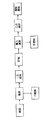
上記の水分量の違いに係る問題点を鑑みて提案された先行技術として、特開平7−150158号公報に、図5に示すような工程を有するごみの固形燃料化方法が提案されている(以下、「先行技術1」という)。図5に示すように、先行技術1は、破袋、磁選、一次破砕、乾燥、風力選別、二次破砕、固形化の工程からなるごみの中の可燃物選別成形方法およびその装置である。
【0004】
【発明が解決しようとする課題】
上述した先行技術1には、下記に示すような問題がある。
▲1▼ 廃棄物(ごみ)には、燃料として不適当な金属(鉄、ステンレス、アルミニウム)および瓦礫等が含まれている。従来の方法では、破袋してから磁選を行なって金属不燃物を回収しているが、不燃物である金属のみが単体で存在することはまれで、大半は可燃物との複合体である。一般に、可燃物と考えられている衣類を例にとってもわかるように、ボタンおよびチャック等は金属からなっている。従来の方法のように、破袋しただけで磁選を行うと、ボタンおよびチャック等の金属部分と共に布等の可燃物も一緒に除去される。
【0005】
▲2▼ また、ごみ、特に日本においては、一般廃棄物である家庭ごみには50%程度の水分が含まれているため、従来の方法のように、破袋しただけで磁選を行うと、不燃物に厨芥等の可燃物が付着し不燃物とともに可燃物までが除去されてしまう。更に、厨芥等が付着しているため、その付着ごみが腐敗し、金属およびその他の不燃物(以下、「不適物」という)より金属を回収して再利用する場合においても、その保管および輸送中の臭いの問題が生じるので、腐敗物を取り除く等の作業が必要となる。
【0006】
▲3▼ 従来の方法のように、乾燥を破袋、磁選および一次破砕の3工程の後の工程に設定すると、乾燥していないごみは含水率が高いため、厨芥等のごみが前記3工程分の設備および工程間のつなぎのためのコンベヤに付着し、ごみの収集率が低下する。また、その付着物が腐敗し、プラント内での腐敗臭を発生させる。
【0007】
▲4▼ 従来の方法のように、ごみの比重差を利用して選別する風力選別では、粒径が揃っている物に対しては有効であるが、ごみのように形状が定まらない物を選別する場合には極端に精度が落ち、本来可燃物として回収すべきごみの中に金属等の不適物が混入し、燃料(「RDF」)の灰分を増やす。この混入は、下流側に破砕機がある場合にはその破砕機の刃の摩耗の問題、および、固形化装置である造粒機の損傷やトラブルを生じる。また、風力選別は精度が悪いので、本来不燃物として回収するごみの中に可燃物が混入し、ごみの収集率を下げる。また、そのため、不燃物として回収したごみをそのまま埋立て処分する場合は、埋立地の延命化に問題を残し、不適物より金属を回収する場合においても処理能力の大きな設備を設置する必要があり、運転コスト等の面においても不利となる。
【0008】
▲5▼ 従来の方法は、ごみを細かく破砕するために二次破砕設備が必ず必要であり、設備が増大し運転コストが上昇し、またそれに伴って運転トラブルが生じ易くなる。
【0009】
従って、この発明の目的は、上述の問題を解決し、廃棄物からのRDF製造効率を向上することができる廃棄物からの燃料製造方法を提供することにある。
【0010】
【課題を解決するための手段】
請求項1記載の発明は、1台の一次破砕機よりも細かい粒度に廃棄物を破砕可能な、一次破砕機が複数台並設されてなっている一次破砕設備によって廃棄物を一次破砕し、次いで、このようにして細かい粒度に一次破砕した廃棄物を乾燥し、次いで、一次破砕し乾燥した廃棄物を揺動反発式分別機によって堅くて重いごみと小粒径ごみと柔らかくて軽いごみとに分別し、前記堅くて重いごみを二次破砕設備によって二次破砕し、次いで、二次破砕した堅くて重いごみに対して風力選別を実施して可燃物を選別し、前記柔らかくて軽いごみを二次破砕設備によって二次破砕し、次いで、前記可燃物、前記小粒径ごみおよび二次破砕した柔らかくて軽いごみを混合することに特徴を有するものである。
【0011】
請求項2記載の発明は、1台の一次破砕機よりも細かい粒度に廃棄物を破砕可能な、一次破砕機が複数台並設されてなっている一次破砕設備によって廃棄物を一次破砕し、次いで、このようにして細かい粒度に一次破砕した廃棄物を乾燥し、次いで、一次破砕し乾燥した廃棄物を揺動反発式分別機によって堅くて重いごみと小粒径ごみと柔らかくて軽いごみとに分別し、前記堅くて重いごみを前記一次破砕設備に戻して破砕を再度実施することを1回または複数回繰り返すことによりその粒度を前記小粒径ごみの粒度まで下げて小粒径ごみとなし、前記柔らかくて軽いごみを二次破砕設備によって二次破砕し、次いで、前記小粒径ごみおよび二次破砕した柔らかくて軽いごみを混合することに特徴を有するものである。
【0012】
請求項3記載の発明は、1台の一次破砕機よりも細かい粒度に廃棄物を破砕可能な、一次破砕機が複数台並設されてなっている一次破砕設備によって廃棄物を一次破砕し、次いで、このようにして細かい粒度に一次破砕した廃棄物を乾燥し、次いで、一次破砕し乾燥した廃棄物を揺動反発式分別機によって堅くて重いごみと小粒径ごみと柔らかくて軽いごみとに分別し、前記堅くて重いごみを二次破砕設備によって二次破砕し、次いで、二次破砕した堅くて重いごみに対して風力選別を実施して可燃物を選別し、前記柔らかくて軽いごみに対して風力選別を実施して可燃物を選別し、柔らかくて軽いごみから選別した可燃物を二次破砕設備によって二次破砕し、次いで、二次破砕した堅くて重いごみから選別した可燃物と柔らかくて軽いごみから選別し二次破砕した可燃物と、小粒径ごみに対して風力選別を実施して選別した可燃物または風力選別を実施しない小粒径ごみとを混合することに特徴を有するものである。
【0013】
請求項4記載の発明は1台の一次破砕機よりも細かい粒度に廃棄物を破砕可能な、一次破砕機が複数台並設されてなっている一次破砕設備によって廃棄物を一次破砕し、次いで、このようにして細かい粒度に一次破砕した廃棄物を乾燥し、次いで、一次破砕し乾燥した廃棄物を揺動反発式分別機によって堅くて重いごみと小粒径ごみと柔らかくて軽いごみとに分別し、前記堅くて重いごみを前記一次破砕設備に戻して破砕を再度実施することを1回または複数回繰り返すことによりその粒度を前記小粒径ごみの粒度まで下げて小粒径ごみとなし、前記柔らかくて軽いごみに対して風力選別を実施して可燃物を選別し、柔らかくて軽いごみから選別した可燃物を二次破砕設備によって二次破砕し、次いで、柔らかくて軽いごみから選別し二次破砕した可燃物と、小粒径ごみに対して風力選別を実施して選別した可燃物または風力選別を実施しない小粒径ごみとを混合することに特徴を有するものである。
【0014】
請求項5記載の発明は、請求項1、2、3または4記載の方法において、混合されたごみを圧縮成型することに特徴を有するものである。
【0015】
【発明の実施の形態】
次に、この発明の実施の形態を図面を参照しながら説明する。
〔実施の形態1、2〕
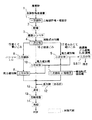
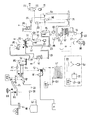
図1は、この発明の実施の形態1に係るフローチャートを示す工程図、図2は、この発明の実施の形態2に係る工程を実施に使用される設備機器を図示して説明する工程図である。図1、図2中の符号1〜14は、下記工程の番号1〜14と一致する。実施の形態2は、実施の形態1から、工程5、6、9、11、14を省いた構成となっている。
【0016】
1 ごみピット21から一次破砕設備23に運ばれた廃棄物(ごみ)は、該破砕設備23によって一次破砕される。22はゴミクレーンである。一次破砕されたごみは、コンベヤ24、56により乾燥機27に運ばれる。ごみは、その大半が袋等で回収され、更にその内容物の形状も大きいため、そのまま分別機に投入しても可燃物と不燃物とを分けることができない。そのため、上記の一次破砕設備23によってごみを細かく破砕する。一次破砕のために使用される一次破砕設備23として、回転刃を有する一次破砕機を複数台並設して構成された破砕設備が用いられている。このような一次破砕機として、例えば、二軸剪断式破砕機が用いられる。
【0017】
上記のように複数の一次破砕機により構成された一次破砕設備を用いることにより、1辺が約50mm(以下、「□50mm」という)以下の粒径の粒度の破砕を可能とした。前記一次破砕機を1台のみ設けた従来の一次破砕設備では、ごみを□50mmよりも細かく破砕することは困難である。また、このように細かく破砕することによりその後の乾燥効率を上げ、更には、コンベヤ等の搬送設備等その後の設備の負荷を下げることにも効果を発揮する。このことも考慮し、一次破砕後の粒径は約□50mm以下が良く、できれば50mmメッシュスクリーンを通過できるものが約95%以下であることが望ましい。但し、ごみはその物性が特定できにくいため、金属塊等にも対応させるため前記の二軸剪断式破砕機を用いることが望ましい。そして、更に、二軸剪断式破砕機は、回転刃(スクリュー)間で剪断するため、その特性上、布および番線等のごみが短冊状に破砕されて長い紐状のごみとなる特長があるため前記破砕機を複数台上下に並設して設けるべきである。それも1段目(上段)の破砕機から紐として落ちてきたごみを効率良く破砕するため、2段目(下段)の破砕機の回転刃の回転軸は、1段目の回転刃の回転軸に対して約90度の角度を付けて配置するとよい。更に、1段目の回転刃の刃幅は約50mm以上、2段目以降は約25mm以下が望ましい。また、破砕機に投入するごみは、破砕機の破砕能力を高めるため、定量供給することが望ましい。また、ごみ質により危険物が混入する場合は、破砕前に危険物を選別する装置を設置する。または、危険物を取り除くのに手選別等を用いてもよい。
【0018】
2 一次破砕直後に、ごみは乾燥機27によって乾燥される。49は熱風炉、46は燃料タンク、51、69はポンプ、50は燃料サービスタンク、25は誘引ファン、26は乾燥機サイクロンである。43は、乾燥機の排ガスを処理する熱交換器、44は冷却塔、42は脱臭装置、52は脱臭装置誘引ファンである。乾燥は、RDFの腐敗を防止するため、含水率が約10%以下になるまで行う。そうすることにより、設備へのごみの蓄積による収集率の低減を図り、プラント臭を抑えることにも効果を発揮する。また、乾燥することによりごみがばらけ、その後に行う分別を精度良く行える。なお、ごみ質により含水率が初めから約10%以下の場合には乾燥工程を省いてもよい。
【0019】
3 乾燥されたごみは、コンベヤ47によって振動コンベヤ28まで運ばれ、ここでほぐされ、そして、揺動反発式分別機29に均一に定量供給される。乾燥されたごみはばらけた状態であり分別しやすい状態になっているが、更に分別精度を高めるため、乾燥機から出てくるごみをほぐし、均一に定量供給するため、振動コンベヤ28は是非設置することが望ましい。
【0020】
4 次いで、揺動反発式分別機29によって、堅くて重いごみ15と、小粒径ごみ16と、柔らかくて軽いごみ17とに分別される。乾燥したごみを揺動反発式分別機によって、柔らかくて軽いごみ、堅くて重いごみ、小粒径のごみに分別する。揺動反発式分別機は、物質の反発力の差を利用して選別する装置で、孔の開いた傾斜したプレート(スクリーン)が揺動運動し、その上に投入されたごみの内、柔らかくて軽いごみは反発しにくいためプレートにより傾斜上方に搬送される。その多くは、紙、布およびフィルムプラスチックである。堅くて重いごみは反発しやすいためプレートと反発して、傾斜下方に落ちる。その多くは、金属、硬質状プラスチックおよび段ボール紙等である。また、プレートには孔が開いているため、細かく破砕された小粒径ごみは、孔を通過してプレート下に落ちる。小粒径ごみの多くは、厨芥、紙およびプラスチック等の軽いごみとボルト、ナット等の金属や硝子片等である。なお、プレートの傾斜角度や揺動運動の回転数を変えることにより、落下ごみの割合を変更することが可能である。傾斜角度は約0〜9度、揺動運動の回転数は約103〜206rpm、プレートの孔のサイズは、約20〜50mmが目安となる。なお、ごみ質により厨芥等の小粒径物が少ない場合は、プレートに孔がなくても良い。
【0021】
5 傾斜上方に送られたごみの多くは柔らかくて軽いごみであるが、アルミニウム片等が少量混入する場合がある。分別精度を高めるためには、風力選別機によって不燃物を除去することが望ましい。風速は10m/s以上が望ましい。ただし、ごみ質により、または、揺動反発式分別機の傾斜角度が約6度以上、回転数が約150rpm以下およびプレートの孔サイズが約20mm以上の場合など、不燃物の混入が少ない場合には、風力選別機がなくてもよい。5は、実施の形態2では省略されている。
【0022】
6 その後、鉄等の金属を回収する場合は、各々に適した選別機を設置することが望ましい。例えば、鉄を回収する場合は磁選機、アルミニウムを回収する場合はアルミニウム選別機、そして、ステンレスを回収する場合はSUS選別機などである。6は、実施の形態2では省略されている。
【0023】
7 柔らかくて軽いごみ17は、二次破砕機30によって二次破砕され、二次破砕設備誘引ファン31、二次破砕設備サイクロン37を経てコンベヤ54に運ばれる。傾斜上方に送られたごみは造粒性を高めたり、造粒機の負荷を減らしたり、紐状のごみのからみつきによる分別機以降の装置トラブルを避けるため、柔らかくて軽いごみは、更に細かく破砕することが望ましい。紐状のごみのからみつきによる下流側の装置トラブルを避けるため、紐除去のための二次破砕機は設置する。なお、二次破砕機には紐状の布も細かく破砕することが可能な一軸回転式破砕機が適している。ただし、他の紐除去手段を使用してもよい。
【0024】
8 堅くて重いごみ15は選別精度を高めるために二次破砕設備によって風力選別前に破砕する。堅くて重いごみの二次破砕に使用される二次破砕設備としてハンマーミルが望ましい。堅くて重いごみ15は、ハンマーミル45によって二次破砕され、コンベヤ61等により風力選別機35に運ばれ、ここで可燃物が風力選別され残渣と選別される。可燃物は、風選機サイクロン63を経てコンベヤ54に運ばれる。33はバグフィルター、32は誘引ファン、64はコンテナである。一方、風力選別機35によって選別された不燃物は、コンテナ68に回収される。傾斜下方に落ちたごみの多くは堅くて重いごみであるが、重いごみは金属およびプラスチック等の可燃物の複合体であるため、更に分別精度を高めるためには、ハンマーミル等の破砕機により更に細かく破砕し、風力選別機によって不燃物を除去する。風速は10m/s以上が望ましい。
【0025】
9 その後、鉄等の金属を回収する場合は、各々に適した選別機を設置することが望ましい。例えば、鉄を回収する場合は磁選機、アルミニウムを回収する場合はアルミニウム選別機、そして、ステンレスを回収する場合はSUS選別機などである。9は、実施の形態2では省略されている。
【0026】
10 小粒径ごみ16は、コンベア53により風力選別機34に運ばれ、ここで可燃物が風力選別される。可燃物は、風力選別機サイクロン36を経てコンベヤ54に運ばれる。孔を通過してプレート下に落ちる小粒径ごみから更に分別精度を高めるためには、風力選別機によって不燃物を除去する。風速は10m/s以上が望ましい。但し、ごみ質により不燃物の混入が少ない場合は、風力選別しなくても良い。
【0027】
11 その後、鉄等の金属を回収する場合は、各々に適した選別機を設置することが望ましい。例えば、鉄を回収する場合は磁選機、アルミニウムを回収する場合はアルミニウム選別機、そして、ステンレスを回収する場合はSUS選別機などである。11は、実施の形態2では省略されている。
【0028】
12 風力選別や二次破砕がなされた後、コンベヤ54によりホッパー62に集合したごみには、消石灰供給機39から供給される消石灰が添加され、混合機40によって混合される。上記7、8、10工程のごみは、その後RDF燃焼時の有害ガス抑制や、RDF腐敗防止のため、添加剤を添加し、混合機にて均一に混合する。添加剤には消石灰を使用することが望ましい。なお、ごみ質により有害ガスが発生しない場合や腐敗しないごみの場合は、添加剤を入れて混合しなくてもよい。
【0029】
13 次いで、圧縮成型機41によって圧縮されて固形燃料(RDF)化される。そして、RDFは、コンベヤ55によって運ばれ梱包66がなされる。更に、RDFにより発生する臭いは脱臭装置59により脱臭される。58はバグフィルター、67はコンテナ、60は脱臭装置サイクロンである。運搬性や貯蔵性を高める場合は圧縮成型してごみを固形燃料化することが望ましい。
【0030】
14 その固形燃料は、約50℃以上の高温で排出されるため、そのまま袋詰めすると、袋内でRDFに水分が付着し、かびが発生しRDFが腐敗するため、冷却装置を使用して常温で冷却することが望ましい。なお、ごみ質により腐敗しないごみの場合は、冷却装置がなくても良い。14は、実施の形態2では省略されている。
【0031】
〔実施の形態3、4〕
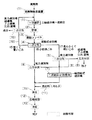
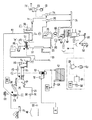
図3は、この発明の実施の形態3に係るフローチャートを示す工程図、図4は、この発明の実施の形態4に係る工程を実施に使用される設備機器を図示して説明する工程図である。図3、4において、図1、2に示す実施の形態1、2と実質的に同一または相当部分については、図1、2と同じ符合を付することにより説明を省略する。図3、4中の符号(1)〜(13)は、下記工程の番号(1)〜(13)と一致する。なお、図3中の点線枠で囲ったものは削除可能な工程を示したものである。実施の形態4は、実施の形態3から、工程(5)、(6)、(9)、(14)を省いた構成となっている。
(1)〜(5)工程は、実施の形態1、2の工程1〜6と同様である。(6)は、実施の形態4では省略されている。
(7)、(8)、(9)は、前記工程7、10、9と同様である。(9)は、実施の形態4では省略されている。
(10)揺動反発式分別機29のプレートにより傾斜下方に落ちたごみの多くは堅くて重いごみであるが、金属等の不燃物とプラスチック等の可燃物との複合体であるため、更に分別精度を高めるために、堅くて重いごみ15は、コンベヤ61等により一次破砕設備23に戻され、再度一次破砕設備23によって破砕粒度を下げられる。一次破砕設備23に戻す途中で、風力選別機による風力選別、磁選機による鉄の回収、アルミニウム選別機によるアルミニウムの回収、SUS選別機によるステンレスの回収を実施してもよい。この工程を1回または複数回繰り返すことにより、ごみのほとんど全てが小粒径ごみになる。このようにして小粒径ごみの粒度まで下げられた堅くて重いごみは、工程(8)において、小粒径ごみ16とともに、コンベア53により風力選別機34に運ばれ、ここで可燃物が風力選別され残渣と選別される。そして、風力選別機34における風速は10m/s以上が望ましい。なお、ごみ質やごみ量の循環量等の調整は、風力選別機の場合を例にすると、風量等を調整する機構により調整可能であることが望ましい。選別された可燃物は、風力選別機サイクロン36を経てコンベヤ54に運ばれる。
(11)は、前記工程12と同様である。
(12)は、前記工程13と同様である。
(13)は、前記工程14と同様である。(13)は実施の形態4では省略されている。
【0032】
【発明の効果】
以上説明したように、この発明によれば、以下に示す有用な効果がもたらされる。
▲1▼ 一次破砕機を複数設けた一次破砕設備を用いることによって、一次破砕による廃棄物の粒度を従来よりも下げることができるため、廃棄物中の可燃物を効率良く固形燃料(RDF)化することができる。
▲2▼ 可燃物と不燃物との選別が効率よく行われ、そして、回収された不燃物から金属等を効率良く回収できるため金属等のリサイクル率が上がり、そして、リサイクルできず埋立て処分されるべき不燃物、残渣量も低減することができ、埋立地の延命化を図ることができる。
▲3▼ 従来の方法に比べ、処理設備が小規模であり運転コストが低減できメンテナンスも容易である。
【図面の簡単な説明】
【図1】この発明の実施の形態1に係るフローチャートを示す工程図である。
【図2】この発明の実施の形態2に係る工程を実施に使用される設備機器を図示して説明する工程図である。
【図3】この発明の実施の形態3に係るフローチャートを示す工程図である。
【図4】この発明の実施の形態4に係る工程を実施に使用される設備機器を図示して説明する工程図である。
【図5】従来の廃棄物からの燃料製造方法の一例を示す工程図である。
【符号の説明】
1〜14:実施の形態1、2の工程
(1)〜(13):実施の形態3、4の工程
15:堅くて重いごみ
16:小粒径ごみ
17:軟らかくて軽いごみ
21:ごみピット
22:ごみクレーン
23:一次破砕設備(二軸剪断式破砕機が複数並設)
24:コンベヤ
25:誘引ファン
26:乾燥機サイクロン
27:乾燥機
28:振動コンベヤ
29:揺動反発式分別機
30:二次破砕設備(一軸回転式破砕機)
31:二次破砕設備誘引ファン
32:ファン
33:バグフィルター
34〜35:風力選別機
36:風力選別機サイクロン
37:二次破砕設備サイクロン
38:コンテナ
39:消石灰
40:混合機
41:圧縮成型機
42:脱臭装置
43:熱交換器
44:冷却塔
45:二次破砕設備(ハンマーミル)
46:燃料タンク
47:コンベヤ
49:熱風炉
50:燃料サービスタンク
51:ポンプ
52:脱臭装置誘引ファン
53〜57:コンベヤ
58:バグフィルタ
59:脱臭装置
60:脱臭装置誘引ファン
61:コンベヤ
62:ホッパー
63:サイクロン
64、65:コンテナ
66:RDF梱包
67:コンテナ
68:コンテナ
69:ポンプ[0001]
TECHNICAL FIELD OF THE INVENTION
The present invention relates to wastes from general households for obtaining fuel (abbreviated as "RDF") from waste (synonymous with "garbage") including kitchen waste, paper, plastic, cloth, wood chips, metal and the like. The present invention relates to a method for producing a fuel from a fuel.
[0002]
[Prior art]
Europe is leading the technology of converting waste into fuel. For example, a method of extracting combustible components from waste has already been proposed. However, it is difficult to convert these waste-to-fuel technologies in Europe immediately and use them in Japan due to differences in the amount of water in the waste.
[0003]
As a prior art proposed in view of the above-mentioned problem relating to the difference in the amount of water, Japanese Patent Application Laid-Open No. 7-150158 proposes a method for converting waste into a solid fuel having a process as shown in FIG. Hereinafter, this will be referred to as “
[0004]
[Problems to be solved by the invention]
(1) Waste (garbage) contains metals (iron, stainless steel, aluminum) and rubble that are unsuitable as fuel. In the conventional method, metal incombustibles are collected by conducting magnetic separation after breaking the bag.However, it is rare that only incombustible metals exist alone, and most are composites with combustibles. . In general, the buttons, the chucks, and the like are made of metal, as can be seen from clothing considered to be combustible. When the magnetic separation is performed only by breaking the bag as in the conventional method, combustible materials such as cloth are removed together with metal parts such as buttons and chucks.
[0005]
(2) Also, in Japan, especially household waste, which is general waste in Japan, contains about 50% of water. A combustible material such as kitchen garbage adheres to the noncombustible material, and the combustible material is removed together with the noncombustible material. In addition, even if kitchen waste is attached, the attached garbage will decay, and if metal is recovered from metal and other non-combustible materials (hereinafter referred to as "unsuitable material") and reused, storage and transportation of the same are also required. Since the problem of odor inside occurs, it is necessary to perform operations such as removing putrefactions.
[0006]
(3) As in the conventional method, if the drying is set to the step after the three steps of bag breaking, magnetic separation, and primary crushing, the garbage such as kitchen garbage is reduced to the three steps because the non-dried garbage has a high moisture content. The waste adheres to the conveyor for the connection between the equipment and the process, and the waste collection rate is reduced. In addition, the deposits are putrefied and generate putrid odor in the plant.
[0007]
(4) As in the conventional method, in the wind separation, which uses the difference in the specific gravity of refuse to separate, it is effective for objects with uniform particle diameters, but it is effective for objects with indeterminate shapes such as trash. In the case of sorting, the accuracy is extremely reduced, and unsuitable substances such as metals are mixed in the garbage that should be collected as combustibles, thereby increasing the ash content of the fuel (“RDF”). This mixing causes a problem of abrasion of the blade of the crusher, if there is a crusher on the downstream side, and damage or trouble of a granulator as a solidifying device. In addition, since the accuracy of the wind separation is low, combustibles are mixed in the refuse that is originally collected as incombustibles, and the refuse collection rate is reduced. In addition, if waste collected as incombustibles is landfilled as it is, there is a problem in extending the life of the landfill, and it is necessary to install equipment with a large processing capacity even when collecting metals from unsuitable materials. This is disadvantageous in terms of operating costs and the like.
[0008]
{Circle around (5)} In the conventional method, secondary crushing equipment is indispensable for finely crushing the refuse, the equipment is increased, the operating cost is increased, and operation troubles are apt to occur accordingly.
[0009]
Therefore, an object of the present invention is to provide a method for producing fuel from waste, which can solve the above-mentioned problem and can improve the efficiency of producing RDF from waste.
[0010]
[Means for Solving the Problems]
The invention according to claim 1 crushes waste by primary crushing equipment in which a plurality of primary crushers are arranged side by side, which can crush waste to a finer particle size than one primary crusher, Next, the waste thus primarily crushed to a fine particle size is dried, and then the primary crushed and dried waste is separated into a hard and heavy waste, a small-sized waste and a soft and light waste by an oscillating repulsion sorter. The hard and heavy garbage is secondarily crushed by a secondary crushing facility, and then the secondary crushed hard and heavy garbage is subjected to a wind separation to separate combustible materials, and the soft and light garbage is separated. Is secondarily crushed by a second crushing facility, and then the combustible material, the small particle size refuse, and the second crushed soft and light refuse are mixed.
[0011]
The invention according to claim 2 crushes waste by primary crushing equipment in which a plurality of primary crushers are arranged side by side, which can crush waste to a finer particle size than one primary crusher, Next, the waste thus primarily crushed to a fine particle size is dried, and then the primary crushed and dried waste is separated into a hard and heavy waste, a small-sized waste and a soft and light waste by an oscillating repulsion sorter. The hard and heavy refuse is returned to the primary crushing facility and the crushing is repeated once or more times to reduce the particle size to the particle size of the small particle size refuse and the small particle size refuse. No, the soft and light refuse is secondarily crushed by a secondary crushing facility, and then the small particle size refuse and the secondly crushed soft and light refuse are mixed.
[0012]
The invention according to claim 3 crushes waste by primary crushing equipment in which a plurality of primary crushers are arranged side by side, which can crush waste to a finer particle size than one primary crusher, Next, the waste thus primarily crushed to a fine particle size is dried, and then the primary crushed and dried waste is separated into a hard and heavy waste, a small-sized waste and a soft and light waste by an oscillating repulsion sorter. The hard and heavy garbage is secondarily crushed by a secondary crushing facility, and then the secondary crushed hard and heavy garbage is subjected to a wind separation to separate combustible materials, and the soft and light garbage is separated. Combustion materials are sorted by wind power, and combustible materials selected from soft and light garbage are secondarily crushed by secondary crushing equipment, and then combustible materials are selected from secondary crushed hard and heavy garbage And soft and light garbage And et screened secondarily crushed combustible materials, those having a particular characteristic mixing the small particle size dust is not performed combustibles or air classifiers were selected to implement the wind screened against a small particle size dust .
[0013]
The invention according to claim 4 crushes waste by primary crushing equipment in which a plurality of primary crushers are arranged side by side, which can crush waste to a finer particle size than one primary crusher. The primary crushed waste is dried to a fine particle size in this manner, and then the primary crushed and dried waste is converted into a hard and heavy trash, a small sized trash and a soft and light refuse by a rocking repulsion sorter. Separating and returning the hard and heavy refuse to the primary crushing facility and re-implementing the crushing once or a plurality of times reduces the particle size to the size of the small-size garbage and forms small-size garbage. , The soft and light garbage is subjected to wind power sorting to sort combustibles, the combustibles selected from soft and light garbage are secondarily crushed by secondary crushing equipment, and then sorted from soft and light garbage. Secondary destruction And combustibles that are those having a particular characteristic mixing the small particle size dust is not performed combustibles or air classifiers were selected to implement the wind screened against a small particle size dust.
[0014]
According to a fifth aspect of the present invention, in the method of the first, second, third or fourth aspect, the mixed waste is compression-molded.
[0015]
BEST MODE FOR CARRYING OUT THE INVENTION
Next, embodiments of the present invention will be described with reference to the drawings.
[
FIG. 1 is a process diagram showing a flowchart according to the first embodiment of the present invention, and FIG. 2 is a process diagram illustrating and illustrating equipment used for carrying out the process according to the second embodiment of the present invention. is there.
[0016]
1 Waste (garbage) carried from the
[0017]
By using the primary crushing equipment constituted by a plurality of primary crushers as described above, it is possible to crush particles having a particle size of about 50 mm or less on one side (hereinafter referred to as “□ 50 mm”). With the conventional primary crushing equipment provided with only one primary crusher, it is difficult to crush the dust finer than □ 50 mm. Further, such fine crushing increases the subsequent drying efficiency, and is also effective in reducing the load on subsequent equipment such as conveyor equipment such as a conveyor. In consideration of this, the particle size after primary crushing is preferably about □ 50 mm or less, and preferably about 95% or less that can pass through a 50 mm mesh screen. However, since it is difficult to specify the physical properties of the refuse, it is desirable to use the above-mentioned twin-shaft crusher to cope with metal lump and the like. Further, the biaxial shearing type crusher is characterized in that, due to the shearing between the rotary blades (screw), garbage such as cloth and wire is crushed into strips and becomes long string-like garbage due to its characteristics. For this reason, a plurality of crushers should be provided vertically above and below. The rotary shaft of the rotary blade of the second (lower) crusher rotates the first rotary blade in order to efficiently crush the trash that has fallen as a string from the first (upper) crusher. It may be arranged at an angle of about 90 degrees to the axis. Further, the blade width of the first stage rotary blade is preferably about 50 mm or more and about 25 mm or less in the second and subsequent stages. In addition, it is desirable to supply a fixed amount of garbage to the crusher in order to increase the crushing capacity of the crusher. If hazardous materials are mixed due to the quality of the waste, a device for sorting hazardous materials before crushing will be installed. Alternatively, manual sorting or the like may be used to remove dangerous goods.
[0018]
2 Immediately after the primary crushing, the refuse is dried by the dryer 27. 49 is a hot blast stove, 46 is a fuel tank, 51 and 69 are pumps, 50 is a fuel service tank, 25 is an induction fan, and 26 is a dryer cyclone. 43 is a heat exchanger for treating exhaust gas from the dryer, 44 is a cooling tower, 42 is a deodorizer, and 52 is a fan for inducing the deodorizer. Drying is performed until the water content becomes about 10% or less in order to prevent RDF from spoiling. By doing so, it is possible to reduce the collection rate due to the accumulation of refuse in the equipment, and it is also effective in suppressing plant odor. In addition, by drying, refuse is separated, and subsequent separation can be accurately performed. When the moisture content is about 10% or less from the beginning due to the dust quality, the drying step may be omitted.
[0019]
(3) The dried refuse is conveyed by the conveyor 47 to the vibrating conveyor 28 where it is loosened and uniformly supplied to the swinging repulsion
[0020]
4 Next, the repulsion
[0021]
5 Most of the refuse sent upward on the slope is soft and light refuse, but a small amount of aluminum pieces may be mixed. In order to increase the separation accuracy, it is desirable to remove incombustibles using a wind separator. The wind speed is desirably 10 m / s or more. However, depending on the quality of the waste, or when the incorporation of incombustibles is small, such as when the tilt angle of the swing repulsion type separator is about 6 degrees or more, the rotation speed is about 150 rpm or less, and the hole size of the plate is about 20 mm or more. Need not have a wind separator. 5 is omitted in the second embodiment.
[0022]
6. After that, when collecting metals such as iron, it is desirable to install a sorter suitable for each. For example, a magnetic separator for recovering iron, an aluminum separator for recovering aluminum, and a SUS separator for recovering stainless steel. 6 is omitted in the second embodiment.
[0023]
7 The soft and
[0024]
8 The hard and
[0025]
9. After that, when collecting metals such as iron, it is desirable to install a sorter suitable for each. For example, a magnetic separator for recovering iron, an aluminum separator for recovering aluminum, and a SUS separator for recovering stainless steel. 9 is omitted in the second embodiment.
[0026]
10 The small
[0027]
11 After that, when recovering metals such as iron, it is desirable to install a sorter suitable for each. For example, a magnetic separator for recovering iron, an aluminum separator for recovering aluminum, and a SUS separator for recovering stainless steel. 11 is omitted in the second embodiment.
[0028]
12 After the wind separation and the secondary crushing are performed, slaked lime supplied from the slaked
[0029]
13 Next, it is compressed by a compression molding machine 41 to be converted into a solid fuel (RDF). Then, the RDF is transported by the
[0030]
14. Since the solid fuel is discharged at a high temperature of about 50 ° C. or higher, if the bag is packed as it is, moisture adheres to the RDF in the bag, mold is generated, and the RDF is spoiled. It is desirable to cool with. In the case of garbage that does not decay due to the quality of the garbage, a cooling device may not be required. 14 is omitted in the second embodiment.
[0031]
[
FIG. 3 is a process diagram showing a flowchart according to the third embodiment of the present invention, and FIG. 4 is a process diagram illustrating and explaining equipment used for implementing the process according to the fourth embodiment of the present invention. is there. 3 and 4, substantially the same or equivalent parts as those in the first and second embodiments shown in FIGS. 1 and 2 are denoted by the same reference numerals as those in FIGS. Reference numerals (1) to (13) in FIGS. 3 and 4 correspond to numbers (1) to (13) of the following steps. Note that the steps surrounded by a dotted line frame in FIG. 3 indicate steps that can be deleted. The fourth embodiment is different from the third embodiment in that steps (5), (6), (9), and (14) are omitted.
Steps (1) to (5) are the same as
Steps (7), (8) and (9) are the same as
(10) Most of the refuse dropped downward by the plate of the rocking
(11) is the same as
(12) is the same as
(13) is the same as
[0032]
【The invention's effect】
As described above, according to the present invention, the following useful effects are provided.
(1) By using primary crushing equipment equipped with multiple primary crushers, the particle size of waste due to primary crushing can be reduced as compared with the conventional method, so combustibles in waste can be efficiently converted to solid fuel (RDF). can do.
(2) Combustible materials and incombustible materials are efficiently sorted, and metals and other materials can be efficiently recovered from the collected incombustible materials, increasing the recycling rate of metals and other materials. The amount of incombustibles and residues to be reduced can be reduced, and the life of the landfill can be extended.
{Circle around (3)} Compared with the conventional method, the processing equipment is smaller, the operating cost is reduced, and the maintenance is easier.
[Brief description of the drawings]
FIG. 1 is a process chart showing a flowchart according to a first embodiment of the present invention.
FIG. 2 is a process drawing illustrating and illustrating equipment used for carrying out a process according to a second embodiment of the present invention.
FIG. 3 is a process diagram showing a flowchart according to a third embodiment of the present invention.
FIG. 4 is a process diagram illustrating and illustrating equipment used for performing a process according to a fourth embodiment of the present invention.
FIG. 5 is a process chart showing an example of a conventional method for producing fuel from waste.
[Explanation of symbols]
1 to 14: Steps (1) to (13) of
24: Conveyor 25: Attraction fan 26: Dryer cyclone 27: Dryer 28: Vibrating conveyor 29: Swinging repulsion sorter 30: Secondary crushing equipment (single-shaft rotary crusher)
31: Secondary crushing equipment inducing fan 32: Fan 33:
46: Fuel tank 47: Conveyor 49: Hot stove 50: Fuel service tank 51: Pump 52: Deodorizing
Claims (5)
Priority Applications (1)
| Application Number | Priority Date | Filing Date | Title |
|---|---|---|---|
| JP24691997A JP3580098B2 (en) | 1997-09-11 | 1997-09-11 | Fuel production method from waste |
Applications Claiming Priority (1)
| Application Number | Priority Date | Filing Date | Title |
|---|---|---|---|
| JP24691997A JP3580098B2 (en) | 1997-09-11 | 1997-09-11 | Fuel production method from waste |
Publications (2)
| Publication Number | Publication Date |
|---|---|
| JPH1180761A JPH1180761A (en) | 1999-03-26 |
| JP3580098B2 true JP3580098B2 (en) | 2004-10-20 |
Family
ID=17155714
Family Applications (1)
| Application Number | Title | Priority Date | Filing Date |
|---|---|---|---|
| JP24691997A Expired - Fee Related JP3580098B2 (en) | 1997-09-11 | 1997-09-11 | Fuel production method from waste |
Country Status (1)
| Country | Link |
|---|---|
| JP (1) | JP3580098B2 (en) |
Cited By (1)
| Publication number | Priority date | Publication date | Assignee | Title |
|---|---|---|---|---|
| CN103381420A (en) * | 2013-06-24 | 2013-11-06 | 南京万德斯环保科技有限公司 | Device and method for sewage collaborative reutilization comprehensive treatment |
Families Citing this family (14)
| Publication number | Priority date | Publication date | Assignee | Title |
|---|---|---|---|---|
| JP2002273346A (en) * | 2001-03-22 | 2002-09-24 | Ngk Insulators Ltd | Waste sorting method in solid waste fuel conversion |
| PL1812647T3 (en) | 2004-10-25 | 2014-09-30 | Oldcastle Building Prod Canada | An artificial flagstone for providing a surface with a natural random look |
| CA2818920C (en) * | 2010-11-24 | 2022-01-04 | Organic Energy Corporation | Mechanized separation of wet and dry materials in a solid waste stream |
| CN102500607A (en) * | 2011-10-28 | 2012-06-20 | 北京建筑材料科学研究总院有限公司 | Method for performing pyrolysis uniting building-material utilization to rubbish oversize products |
| PL2861801T3 (en) | 2012-06-18 | 2016-12-30 | Dual-unit paving system | |
| US9315950B2 (en) | 2012-10-19 | 2016-04-19 | Oldcastle Architectural, Inc. | Paving stones |
| CN104118130B (en) * | 2014-06-26 | 2016-06-29 | 南京工业大学大丰海洋产业研究院 | A manufacturing system for making waste biomass templates |
| CN105032885B (en) * | 2015-06-04 | 2017-04-05 | 北京工商大学 | Villages and small towns domestic refuse anaerobic aerobic integratedization processing meanss and processing method |
| CN106799387A (en) * | 2016-12-21 | 2017-06-06 | 四川雷鸣环保装备有限公司 | The method for preparing derivatived fuel RDF, biological organic fertilizer and inorganic building material as raw material with rubbish |
| CN107030089B (en) * | 2017-04-18 | 2023-02-17 | 江阴市广福机械有限公司 | A domestic waste treatment production line and its domestic waste treatment process |
| CN107448944B (en) * | 2017-08-04 | 2019-01-22 | 北京鸿洲兴业环保科技有限公司 | Aging waste incineration and building materials system processed |
| JP7172936B2 (en) * | 2019-09-27 | 2022-11-16 | Jfeエンジニアリング株式会社 | Garbage sorting method and device |
| CN111701983A (en) * | 2020-06-24 | 2020-09-25 | 中山斯瑞德环保科技有限公司 | Waste treatment system and waste treatment process |
| KR102263675B1 (en) * | 2020-11-09 | 2021-06-10 | 주식회사 주승 | System for treating of food waste |
-
1997
- 1997-09-11 JP JP24691997A patent/JP3580098B2/en not_active Expired - Fee Related
Cited By (2)
| Publication number | Priority date | Publication date | Assignee | Title |
|---|---|---|---|---|
| CN103381420A (en) * | 2013-06-24 | 2013-11-06 | 南京万德斯环保科技有限公司 | Device and method for sewage collaborative reutilization comprehensive treatment |
| CN103381420B (en) * | 2013-06-24 | 2015-07-08 | 南京万德斯环保科技有限公司 | Device and method for sewage collaborative reutilization comprehensive treatment |
Also Published As
| Publication number | Publication date |
|---|---|
| JPH1180761A (en) | 1999-03-26 |
Similar Documents
| Publication | Publication Date | Title |
|---|---|---|
| JP6384846B1 (en) | Separation of metals from shredder dust, conversion of organic combustible residues into fuel, effective utilization of inorganic residues, and treatment equipment | |
| US8393558B2 (en) | Mechanized separation and recovery system for solid waste | |
| CN103476516B (en) | Mechanical separation of wet and dry materials in solid waste streams | |
| JP2859576B2 (en) | Solid waste recycling plant for waste | |
| JP3476439B2 (en) | Solid waste fuel conversion plant | |
| JPH1180761A (en) | Fuel production from waste | |
| JP7172936B2 (en) | Garbage sorting method and device | |
| CN1649673A (en) | Method and apparatus for processing materials or composite materials and mixtures | |
| US6976646B2 (en) | Method and apparatus for grinding rubber | |
| JP2859580B2 (en) | Glassware recycling plant | |
| JP2683631B2 (en) | Waste recycling plant | |
| JP2002220594A (en) | Solid fuel conversion facility deodorization method and solid fuel conversion facility | |
| JP3562092B2 (en) | How to convert general waste into solid fuel | |
| JP2923244B2 (en) | Solid waste recycling plant for waste | |
| JP3787975B2 (en) | Method for converting solid waste into solid fuel | |
| JP2865541B2 (en) | Method and apparatus for sorting and molding combustibles in waste | |
| JPH0810743A (en) | Waste disposal method and equipment | |
| JP4643242B2 (en) | Ash recovery system for incineration ash | |
| JP3295688B2 (en) | Wood chip recovery system and equipment | |
| JPH11158476A (en) | Fuel production from waste | |
| JP3531371B2 (en) | Fuel production method from general waste | |
| KR20220033374A (en) | Efficient waste sorting method | |
| JPH11165091A (en) | High-speed rotary crusher | |
| JP2001252580A (en) | Method and apparatus for crushing waste synthetic resin | |
| KR20030081805A (en) | Processing System of Synthetic Resins-Paper Mixed Waste Matter |
Legal Events
| Date | Code | Title | Description |
|---|---|---|---|
| A977 | Report on retrieval |
Free format text: JAPANESE INTERMEDIATE CODE: A971007 Effective date: 20040331 |
|
| A131 | Notification of reasons for refusal |
Free format text: JAPANESE INTERMEDIATE CODE: A132 Effective date: 20040413 |
|
| A521 | Request for written amendment filed |
Free format text: JAPANESE INTERMEDIATE CODE: A523 Effective date: 20040609 |
|
| TRDD | Decision of grant or rejection written | ||
| A01 | Written decision to grant a patent or to grant a registration (utility model) |
Free format text: JAPANESE INTERMEDIATE CODE: A01 Effective date: 20040629 |
|
| A61 | First payment of annual fees (during grant procedure) |
Free format text: JAPANESE INTERMEDIATE CODE: A61 Effective date: 20040712 |
|
| R150 | Certificate of patent or registration of utility model |
Free format text: JAPANESE INTERMEDIATE CODE: R150 |
|
| LAPS | Cancellation because of no payment of annual fees |