JP2024166312A - Intraocular lens materials and components - Google Patents
Intraocular lens materials and components Download PDFInfo
- Publication number
- JP2024166312A JP2024166312A JP2024156656A JP2024156656A JP2024166312A JP 2024166312 A JP2024166312 A JP 2024166312A JP 2024156656 A JP2024156656 A JP 2024156656A JP 2024156656 A JP2024156656 A JP 2024156656A JP 2024166312 A JP2024166312 A JP 2024166312A
- Authority
- JP
- Japan
- Prior art keywords
- adhesive
- intraocular lens
- polymer
- silicone oil
- fluid
- Prior art date
- Legal status (The legal status is an assumption and is not a legal conclusion. Google has not performed a legal analysis and makes no representation as to the accuracy of the status listed.)
- Pending
Links
Images

Classifications
-
- A—HUMAN NECESSITIES
- A61—MEDICAL OR VETERINARY SCIENCE; HYGIENE
- A61L—METHODS OR APPARATUS FOR STERILISING MATERIALS OR OBJECTS IN GENERAL; DISINFECTION, STERILISATION OR DEODORISATION OF AIR; CHEMICAL ASPECTS OF BANDAGES, DRESSINGS, ABSORBENT PADS OR SURGICAL ARTICLES; MATERIALS FOR BANDAGES, DRESSINGS, ABSORBENT PADS OR SURGICAL ARTICLES
- A61L27/00—Materials for grafts or prostheses or for coating grafts or prostheses
- A61L27/14—Macromolecular materials
- A61L27/16—Macromolecular materials obtained by reactions only involving carbon-to-carbon unsaturated bonds
-
- A—HUMAN NECESSITIES
- A61—MEDICAL OR VETERINARY SCIENCE; HYGIENE
- A61F—FILTERS IMPLANTABLE INTO BLOOD VESSELS; PROSTHESES; DEVICES PROVIDING PATENCY TO, OR PREVENTING COLLAPSING OF, TUBULAR STRUCTURES OF THE BODY, e.g. STENTS; ORTHOPAEDIC, NURSING OR CONTRACEPTIVE DEVICES; FOMENTATION; TREATMENT OR PROTECTION OF EYES OR EARS; BANDAGES, DRESSINGS OR ABSORBENT PADS; FIRST-AID KITS
- A61F2/00—Filters implantable into blood vessels; Prostheses, i.e. artificial substitutes or replacements for parts of the body; Appliances for connecting them with the body; Devices providing patency to, or preventing collapsing of, tubular structures of the body, e.g. stents
- A61F2/02—Prostheses implantable into the body
- A61F2/14—Eye parts, e.g. lenses or corneal implants; Artificial eyes
- A61F2/16—Intraocular lenses
-
- A—HUMAN NECESSITIES
- A61—MEDICAL OR VETERINARY SCIENCE; HYGIENE
- A61F—FILTERS IMPLANTABLE INTO BLOOD VESSELS; PROSTHESES; DEVICES PROVIDING PATENCY TO, OR PREVENTING COLLAPSING OF, TUBULAR STRUCTURES OF THE BODY, e.g. STENTS; ORTHOPAEDIC, NURSING OR CONTRACEPTIVE DEVICES; FOMENTATION; TREATMENT OR PROTECTION OF EYES OR EARS; BANDAGES, DRESSINGS OR ABSORBENT PADS; FIRST-AID KITS
- A61F2/00—Filters implantable into blood vessels; Prostheses, i.e. artificial substitutes or replacements for parts of the body; Appliances for connecting them with the body; Devices providing patency to, or preventing collapsing of, tubular structures of the body, e.g. stents
- A61F2/02—Prostheses implantable into the body
- A61F2/14—Eye parts, e.g. lenses or corneal implants; Artificial eyes
- A61F2/16—Intraocular lenses
- A61F2/1613—Intraocular lenses having special lens configurations, e.g. multipart lenses; having particular optical properties, e.g. pseudo-accommodative lenses, lenses having aberration corrections, diffractive lenses, lenses for variably absorbing electromagnetic radiation, lenses having variable focus
-
- A—HUMAN NECESSITIES
- A61—MEDICAL OR VETERINARY SCIENCE; HYGIENE
- A61F—FILTERS IMPLANTABLE INTO BLOOD VESSELS; PROSTHESES; DEVICES PROVIDING PATENCY TO, OR PREVENTING COLLAPSING OF, TUBULAR STRUCTURES OF THE BODY, e.g. STENTS; ORTHOPAEDIC, NURSING OR CONTRACEPTIVE DEVICES; FOMENTATION; TREATMENT OR PROTECTION OF EYES OR EARS; BANDAGES, DRESSINGS OR ABSORBENT PADS; FIRST-AID KITS
- A61F2/00—Filters implantable into blood vessels; Prostheses, i.e. artificial substitutes or replacements for parts of the body; Appliances for connecting them with the body; Devices providing patency to, or preventing collapsing of, tubular structures of the body, e.g. stents
- A61F2/02—Prostheses implantable into the body
- A61F2/14—Eye parts, e.g. lenses or corneal implants; Artificial eyes
- A61F2/16—Intraocular lenses
- A61F2/1613—Intraocular lenses having special lens configurations, e.g. multipart lenses; having particular optical properties, e.g. pseudo-accommodative lenses, lenses having aberration corrections, diffractive lenses, lenses for variably absorbing electromagnetic radiation, lenses having variable focus
- A61F2/1624—Intraocular lenses having special lens configurations, e.g. multipart lenses; having particular optical properties, e.g. pseudo-accommodative lenses, lenses having aberration corrections, diffractive lenses, lenses for variably absorbing electromagnetic radiation, lenses having variable focus having adjustable focus; power activated variable focus means, e.g. mechanically or electrically by the ciliary muscle or from the outside
- A61F2/1635—Intraocular lenses having special lens configurations, e.g. multipart lenses; having particular optical properties, e.g. pseudo-accommodative lenses, lenses having aberration corrections, diffractive lenses, lenses for variably absorbing electromagnetic radiation, lenses having variable focus having adjustable focus; power activated variable focus means, e.g. mechanically or electrically by the ciliary muscle or from the outside for changing shape
-
- A—HUMAN NECESSITIES
- A61—MEDICAL OR VETERINARY SCIENCE; HYGIENE
- A61L—METHODS OR APPARATUS FOR STERILISING MATERIALS OR OBJECTS IN GENERAL; DISINFECTION, STERILISATION OR DEODORISATION OF AIR; CHEMICAL ASPECTS OF BANDAGES, DRESSINGS, ABSORBENT PADS OR SURGICAL ARTICLES; MATERIALS FOR BANDAGES, DRESSINGS, ABSORBENT PADS OR SURGICAL ARTICLES
- A61L27/00—Materials for grafts or prostheses or for coating grafts or prostheses
- A61L27/14—Macromolecular materials
- A61L27/18—Macromolecular materials obtained otherwise than by reactions only involving carbon-to-carbon unsaturated bonds
-
- A—HUMAN NECESSITIES
- A61—MEDICAL OR VETERINARY SCIENCE; HYGIENE
- A61L—METHODS OR APPARATUS FOR STERILISING MATERIALS OR OBJECTS IN GENERAL; DISINFECTION, STERILISATION OR DEODORISATION OF AIR; CHEMICAL ASPECTS OF BANDAGES, DRESSINGS, ABSORBENT PADS OR SURGICAL ARTICLES; MATERIALS FOR BANDAGES, DRESSINGS, ABSORBENT PADS OR SURGICAL ARTICLES
- A61L27/00—Materials for grafts or prostheses or for coating grafts or prostheses
- A61L27/14—Macromolecular materials
- A61L27/26—Mixtures of macromolecular compounds
-
- A—HUMAN NECESSITIES
- A61—MEDICAL OR VETERINARY SCIENCE; HYGIENE
- A61L—METHODS OR APPARATUS FOR STERILISING MATERIALS OR OBJECTS IN GENERAL; DISINFECTION, STERILISATION OR DEODORISATION OF AIR; CHEMICAL ASPECTS OF BANDAGES, DRESSINGS, ABSORBENT PADS OR SURGICAL ARTICLES; MATERIALS FOR BANDAGES, DRESSINGS, ABSORBENT PADS OR SURGICAL ARTICLES
- A61L27/00—Materials for grafts or prostheses or for coating grafts or prostheses
- A61L27/50—Materials characterised by their function or physical properties, e.g. injectable or lubricating compositions, shape-memory materials, surface modified materials
-
- C—CHEMISTRY; METALLURGY
- C08—ORGANIC MACROMOLECULAR COMPOUNDS; THEIR PREPARATION OR CHEMICAL WORKING-UP; COMPOSITIONS BASED THEREON
- C08G—MACROMOLECULAR COMPOUNDS OBTAINED OTHERWISE THAN BY REACTIONS ONLY INVOLVING UNSATURATED CARBON-TO-CARBON BONDS
- C08G77/00—Macromolecular compounds obtained by reactions forming a linkage containing silicon with or without sulfur, nitrogen, oxygen or carbon in the main chain of the macromolecule
- C08G77/04—Polysiloxanes
- C08G77/32—Post-polymerisation treatment
- C08G77/34—Purification
-
- C—CHEMISTRY; METALLURGY
- C09—DYES; PAINTS; POLISHES; NATURAL RESINS; ADHESIVES; COMPOSITIONS NOT OTHERWISE PROVIDED FOR; APPLICATIONS OF MATERIALS NOT OTHERWISE PROVIDED FOR
- C09J—ADHESIVES; NON-MECHANICAL ASPECTS OF ADHESIVE PROCESSES IN GENERAL; ADHESIVE PROCESSES NOT PROVIDED FOR ELSEWHERE; USE OF MATERIALS AS ADHESIVES
- C09J4/00—Adhesives based on organic non-macromolecular compounds having at least one polymerisable carbon-to-carbon unsaturated bond ; adhesives, based on monomers of macromolecular compounds of groups C09J183/00 - C09J183/16
-
- C—CHEMISTRY; METALLURGY
- C09—DYES; PAINTS; POLISHES; NATURAL RESINS; ADHESIVES; COMPOSITIONS NOT OTHERWISE PROVIDED FOR; APPLICATIONS OF MATERIALS NOT OTHERWISE PROVIDED FOR
- C09J—ADHESIVES; NON-MECHANICAL ASPECTS OF ADHESIVE PROCESSES IN GENERAL; ADHESIVE PROCESSES NOT PROVIDED FOR ELSEWHERE; USE OF MATERIALS AS ADHESIVES
- C09J4/00—Adhesives based on organic non-macromolecular compounds having at least one polymerisable carbon-to-carbon unsaturated bond ; adhesives, based on monomers of macromolecular compounds of groups C09J183/00 - C09J183/16
- C09J4/06—Organic non-macromolecular compounds having at least one polymerisable carbon-to-carbon unsaturated bond in combination with a macromolecular compound other than an unsaturated polymer of groups C09J159/00 - C09J187/00
-
- G—PHYSICS
- G02—OPTICS
- G02C—SPECTACLES; SUNGLASSES OR GOGGLES INSOFAR AS THEY HAVE THE SAME FEATURES AS SPECTACLES; CONTACT LENSES
- G02C7/00—Optical parts
- G02C7/02—Lenses; Lens systems ; Methods of designing lenses
- G02C7/08—Auxiliary lenses; Arrangements for varying focal length
- G02C7/081—Ophthalmic lenses with variable focal length
- G02C7/085—Fluid-filled lenses, e.g. electro-wetting lenses
-
- A—HUMAN NECESSITIES
- A61—MEDICAL OR VETERINARY SCIENCE; HYGIENE
- A61F—FILTERS IMPLANTABLE INTO BLOOD VESSELS; PROSTHESES; DEVICES PROVIDING PATENCY TO, OR PREVENTING COLLAPSING OF, TUBULAR STRUCTURES OF THE BODY, e.g. STENTS; ORTHOPAEDIC, NURSING OR CONTRACEPTIVE DEVICES; FOMENTATION; TREATMENT OR PROTECTION OF EYES OR EARS; BANDAGES, DRESSINGS OR ABSORBENT PADS; FIRST-AID KITS
- A61F2240/00—Manufacturing or designing of prostheses classified in groups A61F2/00 - A61F2/26 or A61F2/82 or A61F9/00 or A61F11/00 or subgroups thereof
-
- A—HUMAN NECESSITIES
- A61—MEDICAL OR VETERINARY SCIENCE; HYGIENE
- A61F—FILTERS IMPLANTABLE INTO BLOOD VESSELS; PROSTHESES; DEVICES PROVIDING PATENCY TO, OR PREVENTING COLLAPSING OF, TUBULAR STRUCTURES OF THE BODY, e.g. STENTS; ORTHOPAEDIC, NURSING OR CONTRACEPTIVE DEVICES; FOMENTATION; TREATMENT OR PROTECTION OF EYES OR EARS; BANDAGES, DRESSINGS OR ABSORBENT PADS; FIRST-AID KITS
- A61F2240/00—Manufacturing or designing of prostheses classified in groups A61F2/00 - A61F2/26 or A61F2/82 or A61F9/00 or A61F11/00 or subgroups thereof
- A61F2240/001—Designing or manufacturing processes
-
- A—HUMAN NECESSITIES
- A61—MEDICAL OR VETERINARY SCIENCE; HYGIENE
- A61L—METHODS OR APPARATUS FOR STERILISING MATERIALS OR OBJECTS IN GENERAL; DISINFECTION, STERILISATION OR DEODORISATION OF AIR; CHEMICAL ASPECTS OF BANDAGES, DRESSINGS, ABSORBENT PADS OR SURGICAL ARTICLES; MATERIALS FOR BANDAGES, DRESSINGS, ABSORBENT PADS OR SURGICAL ARTICLES
- A61L2430/00—Materials or treatment for tissue regeneration
- A61L2430/16—Materials or treatment for tissue regeneration for reconstruction of eye parts, e.g. intraocular lens, cornea
Landscapes
- Health & Medical Sciences (AREA)
- Ophthalmology & Optometry (AREA)
- General Health & Medical Sciences (AREA)
- Veterinary Medicine (AREA)
- Public Health (AREA)
- Oral & Maxillofacial Surgery (AREA)
- Transplantation (AREA)
- Life Sciences & Earth Sciences (AREA)
- Animal Behavior & Ethology (AREA)
- Chemical & Material Sciences (AREA)
- Cardiology (AREA)
- Engineering & Computer Science (AREA)
- Biomedical Technology (AREA)
- Heart & Thoracic Surgery (AREA)
- Vascular Medicine (AREA)
- Medicinal Chemistry (AREA)
- Epidemiology (AREA)
- Dermatology (AREA)
- Physics & Mathematics (AREA)
- Chemical Kinetics & Catalysis (AREA)
- Organic Chemistry (AREA)
- General Physics & Mathematics (AREA)
- Optics & Photonics (AREA)
- Polymers & Plastics (AREA)
- Prostheses (AREA)
- Materials For Medical Uses (AREA)
- Adhesives Or Adhesive Processes (AREA)
Abstract
【課題】眼内レンズ材料及び部材に関して、ポリマー材料中への流体の膨潤が最小化される、又は更には阻止されるようにポリマー及び/又は流体を適合させること、バルクポリマー材料の屈折率と可能な限り近い屈折率を有する流体を提供すること。【解決手段】眼内レンズ用のポリマー材料、眼内レンズ用の流体、及び眼内レンズ用の接着剤を含む、眼内レンズの材料及び眼内レンズを製造する方法。眼内レンズは、流体連通している光学部及び周辺領域を含んでいてもよい。【選択図】図1AThe present invention relates to intraocular lens materials and components, matching polymers and/or fluids such that swelling of the fluid into the polymer material is minimized or even prevented, and providing a fluid having a refractive index as close as possible to that of the bulk polymer material. The present invention relates to intraocular lens materials and methods of manufacturing intraocular lenses, including polymeric materials for intraocular lenses, fluids for intraocular lenses, and adhesives for intraocular lenses. The intraocular lenses may include an optic and a peripheral region in fluid communication. Optionally, the present invention relates to a method of manufacturing an intraocular lens, including a method of manufacturing an intraocular lens, a method of manufacturing an intraocular lens, and an intraocular lens adhesive.
Description
関連出願の相互参照
本出願は、本明細書に参照により組み込まれる2015年6月10日出願の米国仮出願第62/173,877号の利益を主張する。本出願はまた、本明細書に参照により組み込まれる2016年4月12日出願の米国仮出願第62/321,704号の利益も主張する。
CROSS-REFERENCE TO RELATED APPLICATIONS This application claims the benefit of U.S. Provisional Application No. 62/173,877, filed June 10, 2015, which is incorporated herein by reference. This application also claims the benefit of U.S. Provisional Application No. 62/321,704, filed April 12, 2016, which is incorporated herein by reference.
本出願は以下の出願及び特許:2004年12月2日発行の米国特許第8,900,298号;2013年5月23日公開の米国特許公開番号第2013/0131794号;2012年4月17日発行の米国特許第8,158,712号に関し、それらの各々を本明細書に参照により組み込む。
文献の援用
This application is related to the following applications and patents: U.S. Patent No. 8,900,298, issued December 2, 2004; U.S. Patent Publication No. 2013/0131794, published May 23, 2013; and U.S. Patent No. 8,158,712, issued April 17, 2012, each of which is incorporated by reference herein.
References
本明細書に記載されるすべての刊行物及び特許出願は、あたかも各々の個々の刊行物又は特許出願が参照により組み込まれることが具体的且つ個々に示されるのと同等に、本明細書に参照により組み込まれる。 All publications and patent applications mentioned in this specification are herein incorporated by reference to the same extent as if each individual publication or patent application was specifically and individually indicated to be incorporated by reference.
老眼は、眼が近くの物体に焦点を合わせる能力を失う状態である。これは加齢と共に自然と起こることの一部であり、多くの場合は40歳代半ばの人において目立つようになり、この状態は約65歳まで悪化し続けることがある。眼が近くの物体をはっきりと見るためには、近くの物体に対する焦点合わせを改善させるように、眼用レンズの屈折率を高くする必要がある、又はその形状をより凸状にする必要がある。 Presbyopia is a condition in which the eye loses its ability to focus on nearby objects. It is a natural part of aging and often becomes noticeable in people in their mid-40s, and the condition can continue to worsen until about age 65. For the eye to see nearby objects clearly, the refractive index of the ophthalmic lens needs to be increased or its shape needs to be more convex to improve focusing on nearby objects.
白内障は、世界中の失明の主な原因であり、最もよく見られる眼疾患であるが、この視覚障害によって、1年で800万件を超える診察が行われている。白内障による障害が日常生活における個人の活動に影響を与えたりそれを変化させたりする場合、眼内レンズ(IOL)移植を伴う水晶体除去手術が、関連する視覚的な制限を治療する好ましい方法である。米国では、約250万件の白内障外科手術が毎年行われ、65歳を超えるアメリカ人にとって最も一般的な手術となっている。毎年、白内障手術患者の約97パーセントが眼内レンズ移植を受けるため、米国における白内障手術及び関連するケアの年間コストは40億ドルを超える。 Cataracts are the leading cause of blindness worldwide and the most common eye disease, with vision impairment resulting in over 8 million doctor's visits per year. When cataract impairment impacts or alters an individual's activities of daily living, lens removal surgery with intraocular lens (IOL) implantation is the preferred method of treating the associated visual limitations. Approximately 2.5 million cataract surgeries are performed annually in the United States, making it the most common procedure for Americans over the age of 65. Each year, approximately 97 percent of cataract surgery patients receive an IOL implant, resulting in the annual cost of cataract surgery and related care in the United States exceeding $4 billion.
白内障は、局所的な濁りであれ又は拡散した全体的な透明度の低下であれ、患者の水晶体の濁りと定義される。しかし、臨床的意義を有するには、視力の大幅な低下又は機能性障害が、白内障によって引き起こされねばならない。白内障は、加齢の結果として、又は遺伝要因、外傷、炎症、代謝異常若しくは栄養異常、又は放射線に続発して生じる。加齢に関連した白内障疾患が最も一般的である。 Cataract is defined as a clouding of a patient's lens, whether it is a localized opacity or a diffuse, global decrease in transparency. However, to be clinically significant, a significant decrease in vision or functional impairment must be caused by the cataract. Cataracts can occur as a result of aging or secondary to genetic factors, trauma, inflammation, metabolic or nutritional disorders, or radiation. Age-related cataract disease is the most common.
白内障の治療では、外科医は水晶体嚢から水晶体マトリックスを除去し、眼内レンズ(「IOL」)移植物でそれを置き換える。典型的なIOLは、患者がかなり良好な遠見視力を有することを可能にする選択された焦点距離を実現する。しかし、白内障手術後、患者は典型的には読書用メガネを必要とする。このことはいくつかの光学的界面によって促進される、ヒトの眼の結像特性によって説明される。 In treating cataracts, surgeons remove the lens matrix from the capsular bag and replace it with an intraocular lens ("IOL") implant. A typical IOL provides a selected focal length that allows the patient to have fairly good distance vision. However, after cataract surgery, patients typically require reading glasses. This is explained by the imaging properties of the human eye, which are facilitated by several optical interfaces.
加齢に関連した調節力の低下の他に、そのような低下は白内障の治療のためのIOLにも影響を与えてきた。調節型IOLを対象とする研究はある程度の成果をもたらしたが、今まで開発された方法及び装置の相対的な複雑さ及び限られた有効性がそのようなデバイスの幅広い商業化を妨げてきた。 In addition to age-related loss of accommodation, such loss has also impacted IOLs for the treatment of cataracts. Although research into accommodative IOLs has yielded some success, the relative complexity and limited effectiveness of the methods and apparatus developed to date have hindered widespread commercialization of such devices.
一部の眼内レンズは光学部を含み、その1つ又は複数の部材はポリマーである。ポリマーは、眼内レンズが眼内に移植できる送達形状に変形し、尚且つ眼内に移植した後に移植前の形状まで戻ることができるような特性を有することが望ましい場合がある。更に、ポリマー組成物が十分に高い屈折率を有することが望ましい場合もある。 Some intraocular lenses include an optic portion, one or more components of which are polymeric. It may be desirable for the polymer to have properties that allow the intraocular lens to transform into a delivery shape that allows it to be implanted in the eye, and to return to its pre-implant shape after implantation in the eye. Additionally, it may be desirable for the polymer composition to have a sufficiently high refractive index.
本明細書における一部の眼内レンズは、シリコーン流体等の流体をその内部に含む。例えば、一部の調節型IOLは、IOL内の流体移動、又はIOL内の流体圧力の変化を使用して、調節の際に屈折力変化を生じさせる。シリコーンオイル等の流体を眼内レンズ内で使用する場合、流体は時間と共に、眼内レンズのバルクポリマー材料中に膨潤する傾向がある。このことはIOL中の屈折力変化を推進するのに利用可能なシリコーンオイルの量を減少させることがある。したがってバルク材料中への膨潤の量を最小限にすることが望ましい。調節型IOLの応答時間を短くさせないシリコーンオイルを提供することも重要である。ポリマー材料中への流体の膨潤が最小化される、又は更には阻止されるようにポリマー及び/又は流体を適合させることが望ましいことになる。 Some intraocular lenses herein include a fluid therein, such as a silicone fluid. For example, some accommodating IOLs use fluid movement within the IOL, or changes in fluid pressure within the IOL, to produce optical power changes during accommodation. When a fluid such as silicone oil is used within an intraocular lens, the fluid tends to swell over time into the bulk polymeric material of the intraocular lens. This can reduce the amount of silicone oil available to drive optical power changes in the IOL. It is therefore desirable to minimize the amount of swelling into the bulk material. It is also important to provide a silicone oil that does not shorten the response time of the accommodating IOL. It would be desirable to match the polymer and/or fluid such that swelling of the fluid into the polymeric material is minimized or even prevented.
異なる種類の材料(例えば、硬化ポリマー及びシリコーンオイル)を含むIOLにおいて、異なる種類の材料を実質的に屈折率整合させる(すなわち同じ又は実質的に同じ屈折率を有する)ことが望まれる場合がある。したがって、バルクポリマー材料の屈折率と可能な限り近い屈折率を有する流体を提供することも有益である場合がある。 In IOLs that include different types of materials (e.g., cured polymer and silicone oil), it may be desirable to have the different types of materials substantially index matched (i.e., have the same or substantially the same index of refraction). Therefore, it may also be beneficial to provide a fluid that has a refractive index as close as possible to that of the bulk polymer material.
本開示の一態様は、2%~20%の量で存在するブチルアクリラートと、10%~35%の量で存在するトリフルオロエチルメタクリラートと、50%~80%の量で存在するフェニルエチルアクリラートとを含むポリマー材料を含む、眼内レンズである。 One aspect of the present disclosure is an intraocular lens comprising a polymeric material that includes butyl acrylate present in an amount of 2% to 20%, trifluoroethyl methacrylate present in an amount of 10% to 35%, and phenylethyl acrylate present in an amount of 50% to 80%.
いくつかの実施形態において、ポリマー材料の屈折率は1.48~1.53である。いくつかの実施形態において、ポリマー材料の屈折率は1.50~1.53である。 In some embodiments, the refractive index of the polymeric material is between 1.48 and 1.53. In some embodiments, the refractive index of the polymeric material is between 1.50 and 1.53.
いくつかの実施形態において、ポリマー材料は流体チャネルを画定し、眼内レンズは流体チャネル中にシリコーンオイルを更に含む。いくつかの実施形態において、シリコーンオイルはポリマー材料と屈折率整合されている。いくつかの実施形態において、シリコーンオイルの多分散性は1.2未満である。 In some embodiments, the polymeric material defines a fluid channel, and the intraocular lens further comprises a silicone oil in the fluid channel. In some embodiments, the silicone oil is index matched to the polymeric material. In some embodiments, the silicone oil has a polydispersity of less than 1.2.
本開示の一態様は、3%~20%の量で存在するアルキルアクリラートと;10%~35%の量で存在するフルオロアクリラートと;50%~80%の量で存在するフェニルアクリラートとを含む、眼科デバイス用のポリマー材料である。 One aspect of the present disclosure is a polymeric material for an ophthalmic device comprising: an alkyl acrylate present in an amount of 3% to 20%; a fluoroacrylate present in an amount of 10% to 35%; and a phenyl acrylate present in an amount of 50% to 80%.
本開示の一態様は、光を網膜上へ屈折させるように適合された、ポリマー材料を含む光学部と;光学部内に配置された、多分散指数が約1.2未満であるシリコーンオイルとを含む、調節型眼内レンズである。 One aspect of the present disclosure is an accommodating intraocular lens that includes an optic that includes a polymeric material adapted to refract light onto the retina; and a silicone oil having a polydispersity index of less than about 1.2 disposed within the optic.
いくつかの実施形態において、シリコーンオイルの平均分子量は4500~6500である。 In some embodiments, the average molecular weight of the silicone oil is 4500-6500.
いくつかの実施形態において、粘度は2400cP以下である。 In some embodiments, the viscosity is 2400 cP or less.
いくつかの実施形態において、シリコーンオイルはジフェニルシロキサン単位を含む。 In some embodiments, the silicone oil contains diphenylsiloxane units.
いくつかの実施形態において、シリコーンオイルは2つのジメチルシロキサン単位対1つのジフェニルシロキサン単位の比を含むシクロトリシロキサンからできている。 In some embodiments, the silicone oil is made from a cyclotrisiloxane containing a ratio of two dimethylsiloxane units to one diphenylsiloxane unit.
いくつかの実施形態において、シリコーンオイルの屈折率は1.47~1.53、場合により1.50~1.53である。 In some embodiments, the refractive index of the silicone oil is 1.47 to 1.53, and optionally 1.50 to 1.53.
本開示の一態様は、調節型眼内レンズ用の接着剤であって、調節型眼内レンズの第1の物体のポリマー材料と同じである又は実質的に類似した特性を有する第1の成分を含む、接着剤である。 One aspect of the present disclosure is an adhesive for an accommodating intraocular lens, the adhesive comprising a first component having the same or substantially similar properties as a polymeric material of a first object of the accommodating intraocular lens.
いくつかの実施形態において、接着剤は、眼内レンズの第1の物体のポリマー材料と同じである第1の成分を含む。いくつかの実施形態において、接着剤は、ポリマー材料中に存在するモノマーを含む第1の成分を含む。 In some embodiments, the adhesive includes a first component that is the same as the polymeric material of the first object of the intraocular lens. In some embodiments, the adhesive includes a first component that includes a monomer that is present in the polymeric material.
いくつかの実施形態において、接着剤は、反応性アクリル系希釈剤である第2の主成分を含む。 In some embodiments, the adhesive includes a second main component that is a reactive acrylic diluent.
いくつかの実施形態において、接着剤は、調節型眼内レンズの第1の物体のポリマー材
料と同じではないが実質的に類似した第1の成分を含む。
In some embodiments, the adhesive comprises a first component that is substantially similar, but not the same, as the polymeric material of the first object of the accommodating intraocular lens.
本開示の一態様は、調節型眼内レンズを製造する方法であって、調節型眼内レンズの第1及び第2の部材を硬化させる工程と;第1及び第2の部材の少なくとも1つと同じであるか、実質的に同じであるか、又は実質的に類似した特性を有する第1の成分を含み、反応性アクリル系希釈剤である第2の主成分を更に含む接着剤を、第1の部材と第2の部材との間に塗布する工程とを含む、方法である。 One aspect of the present disclosure is a method of manufacturing an accommodating intraocular lens, the method comprising: curing first and second components of the accommodating intraocular lens; and applying an adhesive between the first and second components, the adhesive comprising a first component having the same, substantially the same, or substantially similar properties as at least one of the first and second components, and further comprising a second main component that is a reactive acrylic diluent.
本開示の一態様は、複数のモノマーを含む眼内レンズのポリマー成分を製造する方法であって、複数のモノマーを含む、ポリマーのプレポリマーを形成する工程と;プレポリマーを硬化してポリマー成分を形成する工程とを含む、方法である。 One aspect of the present disclosure is a method for producing a polymer component of an intraocular lens that includes a plurality of monomers, the method comprising the steps of forming a prepolymer of the polymer, the prepolymer including the plurality of monomers; and curing the prepolymer to form the polymer component.
いくつかの実施形態において、プレポリマーを形成する工程は、複数のモノマーとヒドロキシ部分を含むモノマーとを化合させる工程を含む。本方法は、プレポリマーから架橋性ポリマーを作る工程を更に含んでいてもよく、架橋性ポリマーを作る工程はヒドロキシル部分をメタクリラート部分へ変化させる工程を含む。 In some embodiments, forming the prepolymer includes combining a plurality of monomers with a monomer that includes a hydroxyl moiety. The method may further include forming a crosslinkable polymer from the prepolymer, the crosslinkable polymer including converting the hydroxyl moiety to a methacrylate moiety.
本開示は一般に眼内レンズ、場合により調節型眼内レンズに関し、例示的な材料及び眼内レンズの所望の特性を与えるためのそれらの特性に関する。本明細書における眼内レンズは単に、本明細書における材料のいずれかを含んでいてもよい眼内レンズの例であり、本開示は決して本明細書における例示的な眼内レンズに限定されない。 The present disclosure relates generally to intraocular lenses, optionally accommodating intraocular lenses, and to exemplary materials and their properties for imparting desired properties to the intraocular lenses. The intraocular lenses herein are merely examples of intraocular lenses that may include any of the materials herein, and the present disclosure is in no way limited to the exemplary intraocular lenses herein.
いくつかの実施形態において、眼内レンズは、天然レンズが除去された天然水晶体嚢の中に配置されるように適合されている調節型眼内レンズである。いくつかの実施形態において、周辺の非光学部(すなわち、網膜上に光の焦点を合わせるように特に適合されていない部分)は、毛様体筋の弛緩と収縮に起因する水晶体嚢の変形に応答するように適合させることができる。応答は、非光学部及び光学部の中に配置された流体が周辺部分と光学部との間で移動して眼内レンズの光学パラメーター(例えば屈折力)を変化させることを引き起こす、周辺部分の変形である。これらの実施形態は、本明細書における材料のいずれかを含む又は本明細書における任意の方法を使用して製造される、場合により調節型の、眼内レンズの単なる例である。 In some embodiments, the intraocular lens is an accommodating intraocular lens that is adapted to be placed in the natural lens capsule after the natural lens has been removed. In some embodiments, the peripheral non-optical portion (i.e., the portion not specifically adapted to focus light on the retina) can be adapted to respond to deformation of the lens capsule due to relaxation and contraction of the ciliary muscle. The response is deformation of the peripheral portion causing fluid disposed in the non-optical and optic portions to move between the peripheral portion and the optic portion, changing the optical parameters (e.g., optical power) of the intraocular lens. These embodiments are merely examples of intraocular lenses, optionally accommodating, that include any of the materials or are manufactured using any of the methods herein.
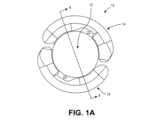
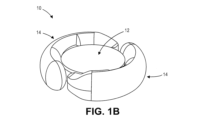
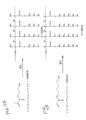
図1Aは、光学部12と、この実施形態では光学部12に結合し光学部12から周辺に延びる第1及び第2の支持部14を含む周辺部分とを含む、単に例示的な調節型眼内レンズ10を示す上面図である。光学部12は、眼に入る光を網膜上へ屈折させるように適合されている。支持部14は、水晶体嚢に係合するように構成されており、毛様体筋に関連する水晶体嚢の変形に応答して変形するように適合されている。図1Bは、光学部12及び光学部12に結合した支持部14を示す、眼内レンズ10の斜視図である。
FIG. 1A is a top view of a merely exemplary accommodating
支持部は光学部と流体連通している。各支持部は、光学部の中の光学部チャンバーと流体連通している流体チャンバーを有する。支持部は、変形可能な材料で形成されており、水晶体嚢に係合し毛様体筋に関連する水晶体嚢の変形に応答して変形するように適合されている。支持部が変形すると支持部流体チャンバーの体積が変化し、支持部流体チャンバー及び光学部流体チャンバー中に配置された流体が支持部流体チャンバーから光学部流体チャンバー中へ移動するか、又は光学部流体チャンバーから支持部流体チャンバー中へ移動することを引き起こす。支持部流体チャンバーの体積が減少すると、流体は光学部流体チャンバー中へ移動する。支持部流体チャンバーの体積が増加すると、流体は光学部流体チャンバーから支持部流体チャンバー中へ移動する。光学部流体チャンバーに出入りする流体の流れは光学部の構成及び眼内レンズの屈折力を変化させる。 The haptics are in fluid communication with the optics. Each haptic has a fluid chamber in fluid communication with the optics chamber in the optics. The haptics are formed of a deformable material and adapted to engage the lens capsule and deform in response to deformation of the lens capsule associated with the ciliary muscle. Deformation of the haptics changes the volume of the haptics fluid chamber, causing fluid disposed in the haptics fluid chamber and the optics fluid chamber to move from the haptics fluid chamber into the optics fluid chamber or from the optics fluid chamber into the haptics fluid chamber. When the volume of the haptics fluid chamber decreases, fluid moves into the optics fluid chamber. When the volume of the haptics fluid chamber increases, fluid moves from the optics fluid chamber into the haptics fluid chamber. The flow of fluid into and out of the optics fluid chamber changes the configuration of the optics and the refractive power of the intraocular lens.
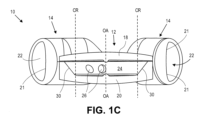
図1Cは、図1Aに示される断面A-Aによる側断面図である。光学部12は、変形可能な後部要素20に固定された変形可能な前部要素18を含む。各支持部14は、光学部12の光学部流体チャンバー24と流体連通している流体チャンバー22を含む。図の左側の支持部14と光学部12との間の結合のみを図1Cの断面図に示す(ただし不明瞭である)。後部要素20に形成されている2つの開口部26によって光学部流体チャンバー24と流体連通している、図の左側の支持部流体チャンバー22を示す。図1Cの右側の支持部14は、図示される開口部から実質的に180度のところでやはり後部要素に形成されている2つの更なる開口部(図示せず)によって、光学部チャンバー24と流体連通している。
Figure 1C is a side cross-sectional view through section A-A shown in Figure 1A. The optic 12 includes a deformable
図1Dは、後部要素20の上面図である(前部要素18及び支持部14は図示せず)。後部要素20は、内部にチャネル32が形成されているバットレス部分29を含む。チャネル32は、光学部12と支持部14との間の流体連通を実現する。開口部26はチャネル32の一方の端に配置されている。したがって光学部流体チャンバー24は2つの流体チャネルによって1つの支持部と流体連通している。バットレス部分29は、以下に説明するように、支持部流体チャンバーの一方の端を画定する支持部14に形成された開口の中に配置されるような構成及びサイズである。バットレス部分29の各々はその内部に形成された2つのチャネルを含む。第1のバットレスの第1のチャネルは、第2のバットレスの第1のチャネルと一直線になっている。第1のバットレスの第2のチャネルは、第2のバットレスの第2のチャネルと一直線になっている。
1D is a top view of the posterior element 20 (
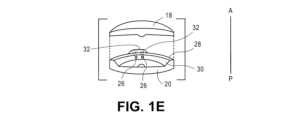
図1Eは、前部要素18及び後部要素20(明確にするために支持部は図示せず)を含む光学部12の断面A-Aの、側面から見た組立図である。流体チャネル32が後部要素20に含まれることにより、後部要素20はチャネル32を形成することができる十分な構造を有することが必要である。バットレス部分29は内部にチャネル32を形成することができる構造を実現する。その最外周部分において、後部要素20は前部から後部へ向かう方向で前部要素18よりも高い。代替的実施形態において、チャネルは後部要素20よりむしろ前部要素18で形成されてもよい。前部要素は、内部にチャネルを形成することができる構造を実現するように、バットレス部分29又は他の同様の構造を含むことになる。これらの代替的実施形態において、後部要素は前部要素18と同様に形成することができる。
FIG. 1E is a side view of an assembled view of section A-A of the optic 12, including the
図1Eに示すように、後部要素20は周縁表面28で前部要素18に固定されており、周縁表面28は後部要素20の周縁付近にわたっており平坦な表面である。要素18及び要素20は、既知の生体適合性接着剤、又は本明細書の他の部分で説明される接着剤を使用して、及び既知の方法又は本明細書における第1及び第2の部材を接着させる方法のいずれかを使用して、互いに固定することができる。前部要素18及び後部要素20は、2つの要素を互いに固定する必要性を取り除くために1つの材料から形成することもできる。いくつかの実施形態において、前部要素18及び後部要素20が互いに固定される領域の直径は、約5.4mm~約6mmの直径である。
As shown in FIG. 1E, the
支持部(又は別個の部材である場合は他のタイプの周辺部分で)は、本明細書における接着剤のいずれか又は本明細書に記載の第1及び第2の部材を互いに接着させる方法のいずれかを使用して、光学部に接着させることができる。 The haptics (or other type of peripheral portion if a separate member) can be adhered to the optic using any of the adhesives described herein or any of the methods described herein for adhering the first and second members to one another.
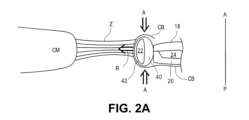
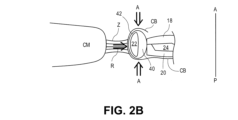
図2A及び図2Bは、眼内への調節型眼内レンズ(図1A~図1Eに示される)の配置を単に示しており、それが毛様体筋の動きにどのように応答し得るのかを示す。眼内レンズの少なくとも一部の変形、及びその内部の流体の応答性は、AIOL用に選択された材料によって影響を受け、図2A及び図2Bに示される。弾性の水晶体嚢「CB」は毛様小体「Z」につながっており、毛様小体「Z」は毛様体筋「CM」につながっている。図2Aに示すように、毛様体筋が弛緩すると、毛様小体が伸びる。この伸びは、水晶体嚢と毛様小体との間の接続位置が全体として赤道様式であることによる径方向外向きの力「R」に起因して、水晶体嚢を略径方向外向きの方向へ引っ張る。毛様小体の伸びにより、水晶体嚢の全体的な伸びが生じ、水晶体嚢が薄くなる。天然の水晶体が水晶体嚢の中にまだ存在する場合は、天然の水晶体はより平坦になり(前部から後部への方向で)、半径方向に高くなり、これによって水晶体の屈折力が小さくなる。図2Aに示すように、毛様体筋の弛緩は、遠見視力をもたらす。しかし、眼が近くの物体に焦点を合わせようと試みる場合に起きるように、毛様体筋が収縮すると、筋肉の径方向内側部分が径方向内向きに動き、毛様小体の緩みを生じさせる。これを図2Bに示す。毛様小体の緩みによって、前部表面が調節していない形状よりも高い曲率を有する、全体的により曲線状の形状に向かって水晶体嚢が動き、このことは高い屈折力を実現させ眼が近くの物体に焦点を合わせることを可能にする。これは一般に「調節」と呼ばれ、レンズは「調節している」形状であると言われる。 2A and 2B simply illustrate the placement of an accommodating intraocular lens (as shown in FIGS. 1A-1E) in the eye and how it may respond to ciliary muscle movement. The deformation of at least a portion of the intraocular lens, and the responsiveness of the fluid therein, is influenced by the material selected for the AIOL and is shown in FIGS. 2A and 2B. The elastic lens capsule "CB" is connected to the zonules "Z", which are connected to the ciliary muscle "CM". As shown in FIG. 2A, when the ciliary muscle relaxes, the zonules stretch. This stretch pulls the capsule in a generally radially outward direction due to a radially outward force "R" due to the generally equatorial nature of the connection between the capsule and the zonules. The stretching of the zonules results in an overall stretching of the capsule, thinning it. When the natural lens is still present within the capsule, it becomes flatter (in the anterior to posterior direction) and radially higher, which reduces the refractive power of the lens. Relaxation of the ciliary muscle, as shown in FIG. 2A, results in distance vision. However, when the ciliary muscle contracts, as occurs when the eye attempts to focus on a near object, the radially inner portion of the muscle moves radially inward, causing the zonules to relax. This is shown in FIG. 2B. Relaxation of the zonules causes the capsule to move toward a generally more curved shape, with the anterior surface having a higher curvature than the unaccommodated shape, which provides increased refractive power and allows the eye to focus on near objects. This is commonly referred to as "accommodation" and the lens is said to be in an "accommodating" shape.
径方向外側部分42は、毛様小体につながっている水晶体嚢の部分に直接係合する、単に例示的な支持部の部分である。支持部の外側部分42は、毛様小体が弛緩し伸びた場合に略径方向に加えられる水晶体嚢の変形力「R」に応答するように適合されている。このことは支持部が毛様体筋に関連する力(すなわち、水晶体嚢の収縮及び弛緩)に応答して変形することを可能にし、その結果、毛様体筋の弛緩と収縮に応答して流体が支持部と光学部との間で流動することになる。これを図2Bに示す。毛様体筋が収縮すると(図2B)、弾性の水晶体嚢の周辺領域が変形し、支持部14の径方向外側部分42に対して径方向内向きの力「R」を加える。径方向外側部分42はこの水晶体嚢の変形に応答して変形するように適合している。変形は流体チャネル22の体積を減少させ、流体を支持部チャンバー22から光学部チャンバー24へ押し通す。これは光学部チャンバー42の中の流体圧力を増加させる。流体圧力の増加は可撓性の前部要素18及び可撓性の後部要素20の変形、曲率の増加を生じさせ、そのため眼内レンズの屈折力が高くなる。
The radially
本明細書における調節型眼内レンズはまた、天然水晶体嚢の外側に配置されるように適合させてもよい。例えば、調節型眼内レンズは、天然レンズが除去された後又は天然レンズがまだ水晶体嚢の中にある間に、水晶体嚢の前、又は水晶体嚢の前部に配置されるように適合させてもよく、ここでレンズの周辺部分は水晶体嚢の変形に依存するよりもむしろ毛様体筋に直接応答するように適合している。 The accommodating intraocular lenses herein may also be adapted to be placed outside the natural lens capsule. For example, the accommodating intraocular lenses may be adapted to be placed in front of, or at the anterior portion of, the capsule after the natural lens has been removed or while the natural lens is still in the capsule, where the peripheral portion of the lens is adapted to respond directly to the ciliary muscle rather than relying on deformation of the capsule.
図1A~図1Eに記載される調節型眼内レンズ等の、本明細書に記載の眼内レンズは、ポリマーである1つ又は複数の部材を有していてもよい。例えば、図1A~図1Eの例において、前部及び後部の部材はポリマー材料であってもよい。周辺部分(例えば支持部)もポリマーであってもよい。 The intraocular lenses described herein, such as the accommodating intraocular lenses described in Figures 1A-1E, may have one or more components that are polymeric. For example, in the examples of Figures 1A-1E, the anterior and posterior components may be polymeric materials. The peripheral portions (e.g., haptics) may also be polymeric.
ポリマー材料は流体の拡散に対する改善された耐性、比較的高い屈折率を有し、人体内に移植する間に変形された後に初期の形状をとるように適合されている。ポリマー材料は多様な用途で使用することができるが、ポリマーは眼内レンズ(「IOL」)等の眼科デバイスでのそれらの使用において本明細書に記載されている。ポリマーの1つの使用法は流体駆動型、調節型IOLにおけるものであるが、ポリマーは非調節型又は非流体駆動型IOLで使用できる。IOLに加えて、本発明のポリマー組成物は、他の眼科デバイス、例えば限定はされないが、コンタクトレンズ、人口角膜、水晶体嚢拡張リング、角膜インレー、角膜リング、又は他の眼科デバイス等においても使用できる。例示的な別の使用法は、内部の材料が漏れるのを防ぐための外側シェル様材料としてポリマーを使用できるような、豊胸手術の分野におけるものである。 The polymeric materials have improved resistance to fluid diffusion, a relatively high refractive index, and are adapted to assume an initial shape after being deformed during implantation in the human body. Although the polymeric materials can be used in a variety of applications, the polymers are described herein in their use in ophthalmic devices, such as intraocular lenses ("IOLs"). One use of the polymers is in fluid-driven, accommodative IOLs, although the polymers can be used in non-accommodative or non-fluid-driven IOLs. In addition to IOLs, the polymeric compositions of the present invention can also be used in other ophthalmic devices, such as, but not limited to, contact lenses, artificial corneas, capsular expansion rings, corneal inlays, corneal rings, or other ophthalmic devices. Another exemplary use is in the field of breast implants, where the polymers can be used as an outer shell-like material to prevent leakage of the inner material.
本明細書に記載のポリマー組成物は、2002年12月12日出願の米国特許出願第60/433,046号、2003年12月12日出願の米国特許出願第10/734,514号、2004年10月22日出願の米国特許出願第10/971,598号、2005年7月1日出願の米国特許出願第11/173,961号、2005年10月17日出願の米国特許出願第11/252,916号、2006年12月19日出願の米国特許出願第11/642,388号、及び2006年12月27日出願の米国特許出願第11/646,913号に記載の流体駆動型IOLのいずれか等の、IOLにおいて使用してもよく、その開示は全体が参照により本明細書に組み込まれる。しかし組成物は、非流体駆動型IOL又は非調節型IOLにおいても使用してもよい。 The polymer compositions described herein may be used in an IOL, such as any of the fluid-driven IOLs described in U.S. Patent Application No. 60/433,046, filed December 12, 2002; U.S. Patent Application No. 10/734,514, filed December 12, 2003; U.S. Patent Application No. 10/971,598, filed October 22, 2004; U.S. Patent Application No. 11/173,961, filed July 1, 2005; U.S. Patent Application No. 11/252,916, filed October 17, 2005; U.S. Patent Application No. 11/642,388, filed December 19, 2006; and U.S. Patent Application No. 11/646,913, filed December 27, 2006, the disclosures of which are incorporated herein by reference in their entireties. However, the compositions may also be used in non-fluid-driven or non-accommodating IOLs.
眼内に移植されたデバイスは眼内で流体にさらされるようになる。眼内の流体は、時間と共にデバイスを通って拡散しデバイスの物理特性に意図しない及び/又は望ましくない効果を与える可能性がある。例えば、眼内に移植されたポリマーIOLは、IOLのポリマー材料中に眼の流体が拡散するという問題を抱えることがある。そのような拡散を防ぐためのバリア層で眼科デバイスを被覆する試みがなされてきたが、これらの方法は高価で時間のかかるものである場合がある。更に、眼科デバイスが流体の入ったチャンバー又はチャネルをデバイス内に含む場合、その流体がその流体チャンバーから出てポリマー材料中に拡散し得るリスクがある。このことはIOLが利用できる流体の量を減少させるだけでなく、場合によってポリマー材料の物理特性を変化させる。したがって、本明細書に記載の本発明のバルクポリマーは、デバイスの中への又はデバイスからの流体の拡散に耐えるために眼科デバイスで使用してもよい。 Devices implanted in the eye become exposed to fluids within the eye. Fluids within the eye can diffuse through the device over time and have unintended and/or undesirable effects on the physical properties of the device. For example, polymeric IOLs implanted in the eye can suffer from diffusion of ocular fluids into the polymeric material of the IOL. Attempts have been made to coat ophthalmic devices with barrier layers to prevent such diffusion, but these methods can be expensive and time consuming. Furthermore, if the ophthalmic device contains a chamber or channel within the device that contains fluid, there is a risk that the fluid may diffuse out of the fluid chamber and into the polymeric material. This not only reduces the amount of fluid available to the IOL, but also potentially changes the physical properties of the polymeric material. Thus, the bulk polymers of the present invention described herein may be used in ophthalmic devices to resist diffusion of fluids into or out of the device.
強膜の切り口を通して移植しなければならない埋め込み型デバイスについては、一般にデバイスを損傷せずに変形させることがやはりなお可能でありながら強膜の切り口が可能な限り小さいことが望ましい。デバイスは送達後にその初期の形状に変形することも可能でなければならない。したがって本明細書に記載の本発明のポリマーは、切り口を通して送達するために変形させる必要があるが眼内に移植させるとすぐにその初期の形状に戻ることになる、眼科デバイスにおいて使用できる。 For implantable devices that must be implanted through an incision in the sclera, it is generally desirable for the incision in the sclera to be as small as possible while still being able to deform the device without damaging it. The device must also be able to deform to its initial shape after delivery. Thus, the polymers of the invention described herein can be used in ophthalmic devices that must be deformed for delivery through an incision, but will return to their initial shape immediately upon implantation in the eye.
同様に、眼科デバイスの屈折率(「RI」)を増加させてその屈折力を高めることが望ましい場合がある。バルクポリマーのRIの増加はデバイスをより薄くすることを可能にし得るが、所望の屈折力を維持する。これは、移植する間の眼の切り口のサイズを小さくするために送達時の外形がより小さいデバイスを提供することもできる。 Similarly, it may be desirable to increase the refractive index ("RI") of an ophthalmic device to increase its optical power. Increasing the RI of the bulk polymer may allow the device to be made thinner, while maintaining the desired optical power. This may also provide a device with a smaller profile upon delivery to reduce the size of the incision in the eye during implantation.
本明細書に記載のポリマーの改善された特性としては、限定はされないが、弾性係数、屈折率、流体の拡散に対する耐性、組成物の応答性、機械的強度、剛性、濡れ性、及び光学的透明度が挙げられる。これらの特性は必ずしも相互排他的ではなく、リストは網羅的であることを意図していない。 Improved properties of the polymers described herein include, but are not limited to, elastic modulus, refractive index, resistance to fluid diffusion, compositional responsiveness, mechanical strength, stiffness, wettability, and optical clarity. These properties are not necessarily mutually exclusive, and the list is not intended to be exhaustive.
本開示のいくつかの実施形態は、眼科デバイス用のポリマー材料を含む。ポリマーは第1の成分、第2の成分、及び第3又は更なる成分を含む。好ましい実施形態において、組成物は、ブチルアクリラート、トリフルオロエチルメタクリラート、フェニルエチルアクリラート、及び架橋剤、例えばエチレングリコールジメタクリラート等を含む。これらのモノマーは限定的なものであることを意図しておらず、例として示される。 Some embodiments of the present disclosure include a polymeric material for an ophthalmic device. The polymer includes a first component, a second component, and a third or additional component. In a preferred embodiment, the composition includes butyl acrylate, trifluoroethyl methacrylate, phenylethyl acrylate, and a crosslinker, such as ethylene glycol dimethacrylate. These monomers are not intended to be limiting and are provided by way of example.
上記のポリマーの所望の特性を得るために、特定のモノマー若しくは他の成分を選択して特定の特性を得ること、又は特定のモノマー及び他の成分を組み合わせて選択して特定の特性を得ることが考えられる。 To obtain desired properties of the above polymers, it is conceivable that particular monomers or other components may be selected to obtain the particular properties, or that particular monomers and other components may be selected in combination to obtain the particular properties.
例えば、ゴム性材料であるブチルアクリラートは、一般にポリマー材料の応答性を高める。ブチルアクリラートの代替としては、アルキルアクリラート、及び適切な応答特性を有する他のモノマーが挙げられる。応答特性を示すことができるブチルアクリラートの代替としては、限定はされないが、オクチルアクリラート、ドデシルメタクリラート、n-ヘキシルアクリラート、n-オクチルメタクリラート、n-ブチルメタクリラート、n-ヘキシルメタクリラート、n-オクチルメタクリラート、2-エチルヘキシルアクリラート、2-エチルヘキシルメタクリラート、2,2-ジメチルプロピルアクリラート、2,2-ジメチルプロピルメタクリラート、トリメチルシクロヘキシルアクリラート、トリメチルシクロヘキシルメタクリラート、イソブチルアクリラート、イソブチルメタクリラート、イソペンチルアクリラート、イソペンチルメタクリラート、及びそれらの混合物が挙げられる。更に、ブチルアクリラートの代替としては、分岐鎖アルキルエステル、例えば2-エチルヘキシルアクリラート、2-エチルヘキシルメタクリラート、2,2-ジメチルプロピルアクリラート、2,2-ジメチルプロピルメタクリラート、トリメチルシクロヘキシルアクリラート、トリメチルシクロヘキシルメタクリラート、イソブチルアクリラート、イソブチルメタクリラート、イソペンチルアクリラート、イソペンチルメタクリラート、及びそれらの混合物を挙げることができる。 For example, butyl acrylate, a rubbery material, generally increases the responsiveness of polymeric materials. Alternatives to butyl acrylate include alkyl acrylates and other monomers with suitable responsive properties. Alternatives to butyl acrylate that can exhibit responsive properties include, but are not limited to, octyl acrylate, dodecyl methacrylate, n-hexyl acrylate, n-octyl methacrylate, n-butyl methacrylate, n-hexyl methacrylate, n-octyl methacrylate, 2-ethylhexyl acrylate, 2-ethylhexyl methacrylate, 2,2-dimethylpropyl acrylate, 2,2-dimethylpropyl methacrylate, trimethylcyclohexyl acrylate, trimethylcyclohexyl methacrylate, isobutyl acrylate, isobutyl methacrylate, isopentyl acrylate, isopentyl methacrylate, and mixtures thereof. Additionally, alternatives to butyl acrylate include branched alkyl esters such as 2-ethylhexyl acrylate, 2-ethylhexyl methacrylate, 2,2-dimethylpropyl acrylate, 2,2-dimethylpropyl methacrylate, trimethylcyclohexyl acrylate, trimethylcyclohexyl methacrylate, isobutyl acrylate, isobutyl methacrylate, isopentyl acrylate, isopentyl methacrylate, and mixtures thereof.
いくつかの実施形態において、ブチルアクリラートは約10体積%~約80体積%の範囲で存在し、いくつかの実施形態において約20体積%~約70体積%の範囲で存在する。好ましい実施形態において、ブチルアクリラートは約35体積%~約65体積%の範囲で、更に好ましい実施形態では約45体積%~約65体積%の範囲で存在する。本明細書において列挙されるすべてのパーセンテージは、特に別段の記載がない限り「体積による」と考えられる。 In some embodiments, butyl acrylate is present in the range of about 10% to about 80% by volume, and in some embodiments, in the range of about 20% to about 70% by volume. In preferred embodiments, butyl acrylate is present in the range of about 35% to about 65% by volume, and in more preferred embodiments, in the range of about 45% to about 65% by volume. All percentages recited herein are considered to be "by volume" unless specifically stated otherwise.
いくつかの実施形態において、ポリマーは約0.1~約0.6Mpaの範囲の弾性係数を有する。いくつかの実施形態において、弾性係数は約0.1~約0.3Mpaである。 In some embodiments, the polymer has an elastic modulus in the range of about 0.1 to about 0.6 MPa. In some embodiments, the elastic modulus is about 0.1 to about 0.3 MPa.
本明細書に記載の流体の拡散に対するポリマーの耐性を高めるために、トリフルオロエチルメタクリラート、又は適切な代替をポリマー材料へ加えてもよい。一般に、より多くのフッ素原子を有するモノマーを使用すると、流体の拡散に対するポリマーの耐性を高めることになる。 Trifluoroethyl methacrylate, or a suitable alternative, may be added to the polymeric material to increase the resistance of the polymer to diffusion of the fluids described herein. In general, using a monomer with more fluorine atoms will increase the resistance of the polymer to diffusion of fluids.
トリフルオロエチルのエチル基は場合により5個までのフッ素原子を結合することができるが、多数のフッ素原子はポリマーの屈折率を低下させることがある。したがって、いくつかの実施形態において、トリフルオロエチルメタクリラートは拡散に対するポリマーの耐性とポリマーの屈折率との望ましいバランスを実現することになる。 Although the ethyl group of trifluoroethyl can optionally be bonded with up to five fluorine atoms, a large number of fluorine atoms can reduce the refractive index of the polymer. Thus, in some embodiments, trifluoroethyl methacrylate provides a desirable balance between the polymer's resistance to diffusion and the polymer's refractive index.
フルオロカーボンモノマーは流体の拡散に対するポリマーの耐性を高めることができ、一部はトリフルオロエチルメタクリラートの代替物として使用できる。トリフルオロエチルメタクリラートの代替としては、フルオロアクリラート、及び拡散特性に対する適切な耐性を有するポリマーを提供する他のモノマーが挙げられる。トリフルオロエチルメタクリラートの代替としては、限定はされないが、ヘプタデカフルオロデシルアクリラート、ヘプタデカフルオロデシルメタクリラート、ヘキサフルオロブチルアクリラート、ヘキサフルオロブチルメタクリラート、テトラフルオロプロピルメタクリラート、オクタフルオロペンチルアクリラート、オクタフルオロペンチルメタクリラート、ドデカフルオロヘプチルメタクリラート、ヘプタフルオロブチルアクリラート、トリフルオロエチルアクリラート、ヘキサフルオロイソプロピルメタクリラート、ペンタフルオロフェニルアクリラート、及びペンタフルオロフェニルメタクリラートが挙げられる。 Fluorocarbon monomers can increase the polymer's resistance to fluid diffusion, and some can be used as replacements for trifluoroethyl methacrylate. Alternatives to trifluoroethyl methacrylate include fluoroacrylates and other monomers that provide the polymer with suitable resistance to diffusion properties. Alternatives to trifluoroethyl methacrylate include, but are not limited to, heptadecafluorodecyl acrylate, heptadecafluorodecyl methacrylate, hexafluorobutyl acrylate, hexafluorobutyl methacrylate, tetrafluoropropyl methacrylate, octafluoropentyl acrylate, octafluoropentyl methacrylate, dodecafluoroheptyl methacrylate, heptafluorobutyl acrylate, trifluoroethyl acrylate, hexafluoroisopropyl methacrylate, pentafluorophenyl acrylate, and pentafluorophenyl methacrylate.
いくつかの実施形態において、トリフルオロエチルメタクリラートは約5%~約70%の範囲で存在し、いくつかの実施形態においてこれは約10%~約50%の範囲で存在する。好ましい実施形態において、これは約15%~約30%の範囲で存在し、更に好ましい実施形態においてこれは約18%~約22%の範囲で存在する。 In some embodiments, trifluoroethyl methacrylate is present in the range of about 5% to about 70%, and in some embodiments, it is present in the range of about 10% to about 50%. In preferred embodiments, it is present in the range of about 15% to about 30%, and in more preferred embodiments, it is present in the range of about 18% to about 22%.
フェニルエチルアクリラート、又は適切な代替は、ポリマーの屈折率を高めるためにポリマー組成物中に含まれてもよい。フェニル基は一般にポリマーの屈折率を高めることができる。フェニルエチルアクリラートの代替としては、フェニルアクリラート、及び適切に高い屈折率を有するポリマーを提供する他のモノマーが挙げられる。 Phenylethylacrylate, or a suitable alternative, may be included in the polymer composition to increase the refractive index of the polymer. Phenyl groups generally can increase the refractive index of a polymer. Alternatives to phenylethylacrylate include phenylacrylate and other monomers that provide a polymer with a suitably high refractive index.
ポリマーの屈折率を高めるために使用できる他の基としては、限定はされないが、ベンジル(ベンゾイル)、カルバゾール-9-イル、トリブロモフェニル、クロロフェニル、及びペンタブロモフェニルが挙げられる。フェニルエチルアクリラートの代替として使用できる例示的なモノマーとしては、限定はされないが、トリブロモフェニルアクリラート、2-(9H-カルバゾール(Carazole)-9-イル)エチルメタクリラート、3-クロロスチレン、4-クロロフェニルアクリラート、ベンジルアクリラート、ベンジルメタクリラート、ベンジルメタクリルアミド、n-ビニル-2-ピロリドン、n-ビニルカルバゾール、ペンタブロモフェニルアクリラート、及びペンタブロモフェニルメタクリラート、フェニルエチルメタクリラート、2-フェニルプロピルアクリラート、又は2-フェニルプロピルメタクリラートが挙げられる。 Other groups that can be used to increase the refractive index of the polymer include, but are not limited to, benzyl (benzoyl), carbazol-9-yl, tribromophenyl, chlorophenyl, and pentabromophenyl. Exemplary monomers that can be used to replace phenylethyl acrylate include, but are not limited to, tribromophenyl acrylate, 2-(9H-Carbazolyl-9-yl)ethyl methacrylate, 3-chlorostyrene, 4-chlorophenyl acrylate, benzyl acrylate, benzyl methacrylate, benzyl methacrylamide, n-vinyl-2-pyrrolidone, n-vinylcarbazole, pentabromophenyl acrylate, and pentabromophenyl methacrylate, phenylethyl methacrylate, 2-phenylpropyl acrylate, or 2-phenylpropyl methacrylate.
いくつかの実施形態において、フェニルエチルアクリラートは約5%~約60%の範囲で存在するが、いくつかの実施形態において、これは約10%~約50%の範囲で存在する。好ましい実施形態において、これは約20%~約40%の範囲で存在し、更に好ましい実施形態において、これは約26%~約34%の範囲で存在する。 In some embodiments, phenylethyl acrylate is present in the range of about 5% to about 60%, while in some embodiments, it is present in the range of about 10% to about 50%. In preferred embodiments, it is present in the range of about 20% to about 40%, and in more preferred embodiments, it is present in the range of about 26% to about 34%.
いくつかの実施形態において、ポリマーの屈折率は約1.44~約1.52である。いくつかの実施形態において、屈折率は約1.47~約1.52である。いくつかの実施形態において、屈折率は約1.47~約1.5である。 In some embodiments, the refractive index of the polymer is from about 1.44 to about 1.52. In some embodiments, the refractive index is from about 1.47 to about 1.52. In some embodiments, the refractive index is from about 1.47 to about 1.5.
いくつかの実施形態において、組成物はエチレングリコールジメタクリラート等の架橋剤も含む。適切な架橋剤の例としては、限定はされないが、トリエチレングリコール、ブチレングリコール、ネオペンチルグリコール、エチレングリコール、ヘキサン-1,6-ジオール、及びチオ-ジエチレングリコールの、ジアクリラート及びジメタクリラート、トリメチロールプロパントリアクリラート、N,N'-ジヒドロキシエチレンビスアクリルアミド、ジアリルフタラート、トリアリルシアヌラート、ジビニルベンゼン;エチレングリコールジビニルエーテル、N,N'-メチレン-ビス-(メタ)アクリルアミド、スルホン化ジビニルベンゼン、ジビニルスルホン、エチレングリコールジアクリラート、1,3-ブタンジオールジメタクリラート、1,6ヘキサンジオールジアクリラート、テトラエチレングリコールジメタクリラート、三官能性アクリラート、三官能性メタクリラート、四官能性アクリラート、四官能性メタクリラート、並びにそれらの混合物が挙げられる。 In some embodiments, the composition also includes a crosslinker such as ethylene glycol dimethacrylate. Examples of suitable crosslinkers include, but are not limited to, diacrylates and dimethacrylates of triethylene glycol, butylene glycol, neopentyl glycol, ethylene glycol, hexane-1,6-diol, and thio-diethylene glycol, trimethylolpropane triacrylate, N,N'-dihydroxyethylenebisacrylamide, diallyl phthalate, triallyl cyanurate, divinylbenzene; ethylene glycol divinyl ether, N,N'-methylene-bis-(meth)acrylamide, sulfonated divinylbenzene, divinyl sulfone, ethylene glycol diacrylate, 1,3-butanediol dimethacrylate, 1,6 hexanediol diacrylate, tetraethylene glycol dimethacrylate, trifunctional acrylates, trifunctional methacrylates, tetrafunctional acrylates, tetrafunctional methacrylates, and mixtures thereof.
架橋剤は約10%未満、約5%未満、約2%未満、又は約1%未満の量で存在していてもよい。架橋剤によってポリマーが三次元空間内で織り交ざることが可能であり、非架橋組成物を上回る改善された弾性記憶、又は応答性を有する、コンパクトな分子構造を実現する。 The crosslinker may be present in an amount of less than about 10%, less than about 5%, less than about 2%, or less than about 1%. The crosslinker allows the polymer to interweave in three-dimensional space, resulting in a compact molecular structure with improved elastic memory or response over non-crosslinked compositions.
本発明のいくつかの実施形態において、ポリマー組成物は1つ又は複数の紫外線(UV)光吸収物質、例えばアクリラート又はメタクリラート官能化ベンゾトリアゾール又はベンゾフェノン等も、約5%未満の量で含む。いくつかの実施形態において、紫外線吸収物質は約0.05%~約2%の範囲で存在する。本発明での使用に適した紫外線吸収剤としては、限定はされないが、β-(4-ベンゾトリアゾイル-3-ヒドロキシフェノキシ)エチルアクリラート、4-(2-アクリロイルオキシエトキシ)-2-ヒドロキシベンゾフェノン、4-メタクリロイルオキシ-2-ヒドロキシベンゾフェノン、2-(2'-メタクリロイルオキシ-5'-メチルフェニル)ベンゾトリアゾール、2-(2'-ヒドロキシ-5'-メタクリロイルオキシエチルフェニル)-2H-ベンゾトリアゾール、2-[3'-tert-ブチル-2'-ヒドロキシ-5'-(3''-メタクリロイルオキシプロピル)フェニル]-5-クロロ-ベンゾトリアゾール、2-[3'-tert-ブチル-5'-(3''-ジメチルビニルシリルプロポキシ)-2'-ヒドロキシフェニル]-5-m-エトキシベンゾトリアゾール、2-(3'-アリル-2'-ヒドロキシ-5'-メチルフェニル)ベンゾトリアゾール、2-[3'-tert-ブチル-2'-ヒドロキシ-5-(3''-メタクリロイルオキシプロポキシ)フェニル]-5-クロロ-ベンゾトリアゾール、及び2-[3'-tert-ブチル-2'-ヒドロキシ-5'-(3''-メタクリロイルオキシプロポキシ)フェニル]-5-クロロ-ベンゾトリアゾールが挙げられる。当業者は、紫外線吸収剤の様々な他の化学物質を選択してもよいことを認識することになる。 In some embodiments of the present invention, the polymer composition also includes one or more ultraviolet (UV) light absorbing materials, such as acrylate or methacrylate functionalized benzotriazoles or benzophenones, in an amount of less than about 5%. In some embodiments, the UV absorbing materials are present in a range of about 0.05% to about 2%. UV absorbers suitable for use in the present invention include, but are not limited to, β-(4-benzotriazoyl-3-hydroxyphenoxy)ethyl acrylate, 4-(2-acryloyloxyethoxy)-2-hydroxybenzophenone, 4-methacryloyloxy-2-hydroxybenzophenone, 2-(2'-methacryloyloxy-5'-methylphenyl)benzotriazole, 2-(2'-hydroxy-5'-methacryloyloxyethylphenyl)-2H-benzotriazole, 2-[3'-tert-butyl-2'-hydroxy-5'-(3''-methacryloyloxypropyl)phenyl]-5- Examples of suitable UV absorbers include chloro-benzotriazole, 2-[3'-tert-butyl-5'-(3''-dimethylvinylsilylpropoxy)-2'-hydroxyphenyl]-5-m-ethoxybenzotriazole, 2-(3'-allyl-2'-hydroxy-5'-methylphenyl)benzotriazole, 2-[3'-tert-butyl-2'-hydroxy-5-(3''-methacryloyloxypropoxy)phenyl]-5-chloro-benzotriazole, and 2-[3'-tert-butyl-2'-hydroxy-5'-(3''-methacryloyloxypropoxy)phenyl]-5-chloro-benzotriazole. Those skilled in the art will recognize that a variety of other chemicals may be selected as UV absorbers.
1つ又は複数の適切なフリーラジカル熱重合開始剤を、本明細書に記載のポリマー組成物に加えてもよい。そのような開始剤の例としては、限定はされないが、有機過酸化物、例えば過酸化アセチル、過酸化ラウロイル、過酸化デカノイル、過酸化ステアロイル、過酸化ベンゾイル、tert-ブチルペルオキシピバラート、ペルオキシジカルボナート等が挙げられる。そのような開始剤を全ポリマー混合物の約0.01%~約1%の範囲で加えてもよい。 One or more suitable free radical thermal polymerization initiators may be added to the polymer compositions described herein. Examples of such initiators include, but are not limited to, organic peroxides such as acetyl peroxide, lauroyl peroxide, decanoyl peroxide, stearoyl peroxide, benzoyl peroxide, tert-butyl peroxypivalate, peroxydicarbonate, and the like. Such initiators may be added in the range of about 0.01% to about 1% of the total polymer mixture.
代替的なUV開始剤としては、この分野で知られているもの、例えば限定はされないが、ベンゾインメチルエーテル、ベンゾインエチルエーテル、Darocur(登録商標)1173、1164、2273、1116、2959、3331(EM Industries社)、並びにIrgacur(登録商標)651及び184(Ciba-Geigy社、Basel、スイス)等が挙げられる。 Alternative UV initiators include those known in the art, such as, but not limited to, benzoin methyl ether, benzoin ethyl ether, Darocur® 1173, 1164, 2273, 1116, 2959, 3331 (EM Industries), and Irgacur® 651 and 184 (Ciba-Geigy, Basel, Switzerland).
本明細書に記載される本発明のポリマーの耐拡散性は、眼科デバイスの外表面上にバリア層を設けることによって更に高めてもよい。更に、デバイスがデバイス内に配置された流体チャンバー(流体駆動型調節型IOL内に配置された流体チャンバー等)を含む場合、デバイスは流体チャンバーからの拡散に対する耐性を高めるために流体チャンバーの内表面上にバリア層も有していてもよい。バリア層はフルオロカーボン材料又はポリマーの薄層であってもよく、その例としては、ヘキサフルオロエタン、ヘキサフルオロプロピレン、ヘキサフルオロプロパン、オクタフルオロプロパン、ポリテトラフルオロエチレン、及び1H、1H、2H-ペルフルオロ-1-ドデセンが挙げられる。バリア層は、個々に又は様々な製造プロセスによって組合せで、眼科デバイスの固体表面上に付着又は共有結合していてもよい。1つの一般的な製造プロセスはプラズマ蒸着である。 The diffusion resistance of the polymers of the invention described herein may be further enhanced by providing a barrier layer on the outer surface of the ophthalmic device. Additionally, if the device includes a fluid chamber disposed within the device (such as a fluid chamber disposed within a fluid-driven accommodative IOL), the device may also have a barrier layer on the inner surface of the fluid chamber to enhance resistance to diffusion from the fluid chamber. The barrier layer may be a thin layer of a fluorocarbon material or polymer, examples of which include hexafluoroethane, hexafluoropropylene, hexafluoropropane, octafluoropropane, polytetrafluoroethylene, and 1H,1H,2H-perfluoro-1-dodecene. The barrier layers may be deposited or covalently bonded onto the solid surface of the ophthalmic device, either individually or in combination by various manufacturing processes. One common manufacturing process is plasma deposition.
プラズマ蒸着によって形成される層は一般に非常に薄く、例えば約20~約100ナノメートルとなる。フルオロカーボンポリマーは一般に屈折率が低いので、厚さが可視光の波長の4分の1未満であるバリア層は肉眼で見えないことになる。 The layers formed by plasma deposition are typically very thin, for example, about 20 to about 100 nanometers. Fluorocarbon polymers generally have a low refractive index, so barrier layers with thicknesses less than one-quarter of the wavelength of visible light are invisible to the naked eye.
上記のように、本明細書に記載される本発明のポリマーは、内部に、例えば流体チャンバー等の中に流体が配置されているIOLにおいて使用してもよい。一般に、流体の粘度は流体の拡散特性に関連する。低粘度の流体はより容易にポリマーを通って拡散することができる。 As noted above, the polymers of the invention described herein may be used in IOLs that have a fluid disposed therein, such as in a fluid chamber. In general, the viscosity of the fluid is related to the diffusion properties of the fluid. Fluids with lower viscosity can diffuse through the polymer more easily.
眼科デバイスはシリコーンオイルを含有していてもよい。ポリマーを通って拡散するシリコーンオイルの量は、分子量分布が狭い、特に低分子量シリコーンオイル分子を除去したシリコーンオイルを選択することによって、低減することができる。一連のストリッピング法はシリコーンオイル中の低分子量成分を除去するのに一般的に使用される。一般に、低分子量成分は高分子量の成分よりも速く拡散することになる。しかし、高分子量成分は、流体をIOL全体に送り出すのにより大きい力を必要とする、粘度の増加に寄与する。したがって、分子量分布が狭いシリコーンオイルが好ましい。眼科デバイス内に配置された流体はシリコーンオイルに限定されず、例えば生理食塩水であってもよい。 The ophthalmic device may contain silicone oil. The amount of silicone oil diffusing through the polymer can be reduced by selecting a silicone oil with a narrow molecular weight distribution, particularly one that has had the low molecular weight silicone oil molecules removed. A series of stripping methods are commonly used to remove the low molecular weight components in the silicone oil. In general, low molecular weight components will diffuse faster than high molecular weight components. However, high molecular weight components contribute to an increase in viscosity, which requires more force to pump the fluid through the IOL. Therefore, silicone oils with a narrow molecular weight distribution are preferred. The fluid placed in the ophthalmic device is not limited to silicone oil, and may be, for example, saline.
しかし、いくつかの実施形態において、IOLの表面の1つのたわみが調節の際の屈折力のいかなる変化にも大きく寄与するように、IOL部材は実質的に屈折率整合される。例えば、バルクポリマーはIOL内のいかなる流体にも実質的に屈折率整合されることになる。実質的に屈折率整合された状態は、その表現が本明細書において使用される場合、IOLの部材間の屈折率のわずかな差を含む。例えば、接着剤がIOLの製造において使用される場合、それらの接着剤は異なる屈折率を有していてもよいが、その差は調節型IOLの全体の屈折力の変化を考慮した場合に無視できるものとなる。 However, in some embodiments, the IOL members are substantially index matched such that deflection of one of the IOL's surfaces contributes significantly to any change in optical power during accommodation. For example, the bulk polymer will be substantially index matched to any fluid within the IOL. Substantially index matched, as the term is used herein, includes small differences in refractive index between the members of the IOL. For example, if adhesives are used in the manufacture of the IOL, they may have different refractive indices, but the differences will be negligible when considering the overall optical power change of the accommodative IOL.
いくつかの実施形態において、ポリマーのTGは約-20℃であり、長さの約4倍まで破断せずに伸びることが可能である。 In some embodiments, the polymer has a T G of about −20° C. and is capable of stretching up to about four times its length without breaking.
光学部及び支持部は同じポリマー組成物で構成されていてもよく、又は異なる組成物で構成されていてもよい。光学部及び支持部の組成は部材の各々でどの特性が望まれているかによって決めてもよい。例えば、支持部は一般に光の焦点合わせに寄与しないので、支持部で高屈折率を実現する必要がない場合があり、そのため支持部に使用されるポリマーは高い屈折率を必要としなくてもよい。同様に、例えば、支持部が静的光学部とは異なる応答性を有することが望ましいことがある。 The optic and haptics may be composed of the same polymer composition or different compositions. The composition of the optic and haptics may depend on what properties are desired in each of the components. For example, it may not be necessary to achieve a high refractive index in the haptics since they generally do not contribute to focusing light, so the polymer used in the haptics may not require a high refractive index. Similarly, for example, it may be desirable for the haptics to have a different response than the static optic.
以下の非限定的な例は本発明の特定の態様を説明する。
〔実施例1〕
The following non-limiting examples illustrate certain aspects of the invention.
Example 1
以下の配合を互いに足し合わせ、良く混合する。 Add the following ingredients together and mix well.
配合物を金型へ注ぎ、UV又は熱硬化のいずれかによりポリマーを硬化させることによって、ポリマーを製造することができる。得られるポリマーはシリコーンオイル中の膨潤率が0、屈折率が1.477、弾性係数が0.163Mpaであった。
〔実施例2〕
The polymer can be produced by pouring the formulation into a mold and curing the polymer by either UV or thermal curing. The resulting polymer had a swelling index of 0 in silicone oil, a refractive index of 1.477, and an elastic modulus of 0.163 Mpa.
Example 2
以下の配合物を互いに足し合わせ、良く混合し、実施例1の配合物と同じ加工を行うことができる。 The following ingredients can be added together, mixed well, and processed in the same way as the ingredient in Example 1.
得られるポリマーの膨潤率は0.019、屈折率は1.473、及び弾性係数は0.27Mpaであった。 The swelling ratio of the resulting polymer was 0.019, the refractive index was 1.473, and the elastic modulus was 0.27 MPa.
上記の実施形態は例示的なポリマー配合物を示したが、上記のものよりも高い屈折率を有する更なる例示的な配合物を以下に示す。屈折率を高めることは眼内レンズの基本的な屈折力を高めるために望ましい場合がある。いくつかの実施形態において、眼内レンズのポリマー材料の屈折率はおよそ1.48~およそ1.53、場合により1.50~1.53である。バルクポリマーの屈折率はポリマーの重量パーセントとしてのフェニルエチルアクリラートの濃度を増加させることによって高めてもよい。他の成分は、フェニル基を含むモノマーの濃度の増加を相殺するために修正してもよい。以下のTable1(表3)は眼科デバイス及びそれらの部材に使用するための更なる例示的なポリマー配合物を示し、ここで屈折率は上記のいくつかの実施形態よりも高い。最初の3つの配合物は、532nm及び35℃で1.5180に非常に近い屈折率値を有し、これは1.50~1.53のRIの一例である。4つ目の配合物は上記のいくつかの例と類似している。Table1(表3)の4つのすべての配合物はBA、PEA、及びTFEMAを含む。 While the above embodiments show exemplary polymer formulations, further exemplary formulations having higher refractive indices than those shown above are shown below. Increasing the refractive index may be desirable to increase the base optical power of the intraocular lens. In some embodiments, the refractive index of the polymeric material of the intraocular lens is about 1.48 to about 1.53, and in some cases 1.50 to 1.53. The refractive index of the bulk polymer may be increased by increasing the concentration of phenylethyl acrylate as a weight percent of the polymer. Other components may be modified to offset the increased concentration of phenyl-containing monomers. Table 1 below shows further exemplary polymer formulations for use in ophthalmic devices and components thereof, where the refractive index is higher than some of the above embodiments. The first three formulations have refractive index values very close to 1.5180 at 532 nm and 35° C., which are examples of RIs between 1.50 and 1.53. The fourth formulation is similar to some of the above examples. All four formulations in Table 1 include BA, PEA, and TFEMA.
Table1(表3)の例示的な配合物の、典型的で重要な利点は(比較的高い屈折率を含める)、参照により本明細書に組み込まれるもの等の、一部の流体駆動型調節型眼内レンズで一般に使用されるシリコーン流体にさらされると、それらの配合物が膨潤する傾向が劇的に低いことである。データは膨潤の低減を裏付けており、膨潤の低減は、著しく改善された屈折力の安定性、及び一部の流体駆動型調節型眼内レンズで見られる膨潤に起因する屈折力の低下を伴わずに加速エージング試験を行うことができる潜在的可能性として現れる。 A typical and important advantage of the exemplary formulations of Table 1 (including their relatively high refractive index) is that they have a dramatically reduced tendency to swell when exposed to silicone fluids commonly used in some fluid-driven accommodating intraocular lenses, such as those incorporated herein by reference. The data supports the reduced swelling, which manifests itself as significantly improved optical power stability and the potential ability to perform accelerated aging studies without the loss of optical power due to swelling seen in some fluid-driven accommodating intraocular lenses.
Table1(表3)の配合物1~3は、例えば調節型眼内レンズ(「AIOL」)の光学部(調節型眼内レンズは流体駆動型である)、又はAIOLの周辺部分で使用できる。 Formulations 1-3 in Table 1 can be used, for example, in the optic portion of an accommodating intraocular lens ("AIOL") (accommodating intraocular lenses are fluid-driven), or in the peripheral portion of an AIOL.
本明細書に示される特定のモノマーは単に例として示され、本開示の範囲はそのように限定されない。例えば、いくつかの実施形態において、BAのパーセンテージは2~20%、例えば3~17%等である。いくつかの実施形態において、PEAのパーセンテージは50~80%、例えば60~75%等である。いくつかの実施形態において、TFEMAのパーセンテージは10~35%、例えば15~30%等である。 The specific monomers shown herein are provided by way of example only, and the scope of the disclosure is not so limited. For example, in some embodiments, the percentage of BA is 2-20%, such as 3-17%. In some embodiments, the percentage of PEA is 50-80%, such as 60-75%. In some embodiments, the percentage of TFEMA is 10-35%, such as 15-30%.
Table3(表5)の最初の3つの配合物は、3%~20%の量で存在するアルキルアクリラート、10%~35%の量で存在するフルオロアクリラート、及び50%~80%の量で存在するフェニルアクリラートを含むポリマー材料の例でもある。 The first three formulations in Table 3 are also examples of polymeric materials that contain an alkyl acrylate present in an amount between 3% and 20%, a fluoroacrylate present in an amount between 10% and 35%, and a phenyl acrylate present in an amount between 50% and 80%.
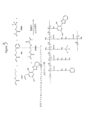
硬化を含め、様々な製造工程を使用してポリマー材料を製造することができる。図3は、3種のモノマー(すなわち、BA、PEA、及びTFEMA)、UVブロック剤、及び架橋剤、例えばEGDMA等を硬化させ、3種のモノマーを含む硬化ポリマー材料を得る、例示的な方法を示す。ポリマー材料のいずれかをこの方法で製造することができる。 A variety of manufacturing processes, including curing, can be used to produce the polymeric material. Figure 3 shows an exemplary method for curing three monomers (i.e., BA, PEA, and TFEMA), a UV blocker, and a crosslinker, such as EGDMA, to obtain a cured polymeric material comprising the three monomers. Any of the polymeric materials can be produced in this manner.
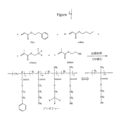
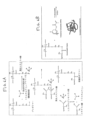
図4は別の製造プロセスを示し、ここでは複数のモノマー(この例ではそれらは図3におけるものと同じであるが、同じである必要はない)でプレポリマーが最初に作られ、図4に示すように、プレポリマーはまだ架橋していない(まだ完全に硬化してない)。モノマーを最初にヒドロキシル部分を含むモノマーと化合させ、これをその後、架橋性メタクリラートに転化させ、これにより架橋性ポリマーが完全に硬化することが可能となる。いくつかの実施形態において、ヒドロキシル部分を含むモノマーは、メタクリラート(例えば、ヒドロキシエチルメタクリラート(「HEMA」))又はアクリラート(例えば、ヒドロキシエチルアクリラート(「HEA」)、ヒドロキシブチルアクリラート(「HBA」))である。例示的な図4ではHEMAを使用する。図6Aは、プレポリマー(図4のプレポリマー等)から架橋性ポリマーを作る例示的な方法を示し、ここではヒドロキシル部分はメタクリラート(図6Aの右下)に転化され、次いでこれを架橋させて硬化ポリマー材料を形成することができ、これは本明細書における任意の例示的なIOLの部材のいずれかを作るのに使用できる。 Figure 4 shows an alternative manufacturing process, where a prepolymer is first made with multiple monomers (in this example, they are the same as in Figure 3, but need not be the same), and as shown in Figure 4, the prepolymer is not yet crosslinked (not yet fully cured). The monomer is first combined with a monomer containing a hydroxyl moiety, which is then converted to a crosslinkable methacrylate, which allows the crosslinkable polymer to be fully cured. In some embodiments, the monomer containing a hydroxyl moiety is a methacrylate (e.g., hydroxyethyl methacrylate ("HEMA")) or an acrylate (e.g., hydroxyethyl acrylate ("HEA"), hydroxybutyl acrylate ("HBA")). HEMA is used in the exemplary Figure 4. Figure 6A shows an exemplary method of making a crosslinkable polymer from a prepolymer (such as the prepolymer of Figure 4), where the hydroxyl moiety is converted to a methacrylate (bottom right of Figure 6A), which can then be crosslinked to form a cured polymeric material that can be used to make any of the components of any of the exemplary IOLs herein.
接着剤についての考察(本開示のこの節に完全に組み込まれる)に関してより詳細に記載されるように、上記のもの等の架橋性ポリマーは、親水性反応性希釈剤と組み合わせることができる。親水性モノマー(例えばHEMA、HBA)を反応性希釈剤として架橋性ポリマーに使用すると、硬化によって、親水性ホモポリマーを第2の相として含むポリマーマトリックス中の相互貫入網目構造が得られることになる。長鎖ホモポリマー「ブロック」は、ランダムコポリマー中の親水性成分に関連する官能基の有効性を高めることができる。いくつかの実施形態において、約25~35%(例えば、30%)のHEMA又はHBAを反応性希釈剤として架橋性ポリマーに使用することによってポリマーが開発される。いくつかの例示的な製造方法において、硬化による相分離は生じず、硬化ポリマー材料は透明であった。支持部及び光学部又は本明細書に記載される若しくは参照により本明細書に組み込まれる調節型眼内レンズのいずれか等において、これらの架橋性ポリマーに基づく配合物は直接成形される部品の高精度(非常に収縮が少ない)の製造に非常に適している。 As described in more detail with respect to the adhesive discussion (fully incorporated in this section of the disclosure), crosslinkable polymers such as those listed above can be combined with hydrophilic reactive diluents. When hydrophilic monomers (e.g., HEMA, HBA) are used in the crosslinkable polymer as reactive diluents, curing results in an interpenetrating network in the polymer matrix that includes a hydrophilic homopolymer as a second phase. Long chain homopolymer "blocks" can increase the availability of functional groups associated with the hydrophilic component in a random copolymer. In some embodiments, polymers are developed by using about 25-35% (e.g., 30%) HEMA or HBA in the crosslinkable polymer as reactive diluents. In some exemplary manufacturing methods, no phase separation occurred upon curing and the cured polymer material was transparent. Formulations based on these crosslinkable polymers are well suited for high precision (very low shrinkage) manufacturing of directly molded parts, such as in haptics and optics or any of the accommodating intraocular lenses described herein or incorporated by reference herein.
1つ又は複数の親水性モノマー(例えば、HEMA、HBA)を反応性希釈剤としてポリマー材料中に組み込むことの更に典型的な利点は、水に起因するヘイズ又はグリスニング(すなわち、材料中の水胞)を低減できることである。 A further typical advantage of incorporating one or more hydrophilic monomers (e.g., HEMA, HBA) as reactive diluents into a polymeric material is the reduction of water-induced haze or glistening (i.e., blisters in the material).
図5A及び5Bは例示的な親水性材料の重合を示し、HEMAは図5Aに示され、図5BはHBAを示す。 Figures 5A and 5B show the polymerization of exemplary hydrophilic materials, HEMA is shown in Figure 5A and HBA in Figure 5B.
接着剤 glue
本開示の一態様は、第1及び第2のポリマー、場合により眼内レンズの第1及び第2のポリマーを互いに接着させるのに使用できる接着剤を記載する。本開示は眼科用途において使用するための接着剤及びポリマーを記載しているが、そのように限定されることを意図していない。本明細書に記載の材料は他の適切な用途に使用できる。上記の例示的なポリマー材料(例えば、実施例1、実施例2、及びTable1(表3))は、互いに接着される第1及び第2の部材のためのポリマーの配合物の単なる例である。本明細書に記載の接着剤は、本明細書に記載のポリマーに関連して記載されることになるが、本明細書におけるコンセプトは他のポリマー材料及び他の接着剤に適用できる。本明細書に示される実施例は単に例示的なものであり、本開示は本明細書における特定の接着剤又は特定のポリマーに限定されることを意図していない。 One aspect of the present disclosure describes an adhesive that can be used to bond a first and a second polymer, optionally a first and a second polymer of an intraocular lens, to one another. While the present disclosure describes adhesives and polymers for use in ophthalmic applications, it is not intended to be so limited. The materials described herein can be used in other suitable applications. The exemplary polymer materials described above (e.g., Example 1, Example 2, and Table 1) are merely examples of polymeric formulations for the first and second components to be bonded to one another. The adhesives described herein will be described in relation to the polymers described herein, but the concepts herein are applicable to other polymeric materials and other adhesives. The examples shown herein are merely exemplary, and the present disclosure is not intended to be limited to the specific adhesives or the specific polymers described herein.
一部の眼科デバイスを製造する間、2つ以上のポリマー性物体は互いに接着、又はのりづけされる。接着は2つ以上の物体が使用中及び移植手術中に互いに接着したままであるように十分に強いものであるべきである。例えば、デバイスが眼内に装着及び/又は送達される際に再構成又は変形する必要があるとしても、接着が維持される必要がある。更に、接着剤の存在は、デバイスの光学的透明度が接着剤において又は接着剤付近等で許容不可能なレベルまで低下することを引き起こすべきではない。本明細書における接着剤とポリマーの組合せは、許容可能なレベルの光学的透明度を維持するだけでなく、接着剤/ポリマーの接着の機械的完全性を改善又は維持する。 During the manufacture of some ophthalmic devices, two or more polymeric objects are adhered or glued together. The adhesion should be strong enough so that the two or more objects remain adhered to one another during use and during the implantation procedure. For example, the adhesion should be maintained even if the device needs to be reconfigured or deformed as it is placed and/or delivered into the eye. Furthermore, the presence of the adhesive should not cause the optical clarity of the device to be reduced to an unacceptable level, such as at or near the adhesive. The adhesive and polymer combinations herein not only maintain an acceptable level of optical clarity, but also improve or maintain the mechanical integrity of the adhesive/polymer bond.
本開示の一態様は、互いに接着されている第1及び第2のポリマー性物体と同じ若しくは実質的に同じ材料である、又は実質的に同様の特性を有する、第1の成分を有する接着剤である。第1及び第2の物体は代わりに異なる配合物を有していてもよい。本明細書で使用する場合、接着剤は「第1の物体」を「第2の物体」へ接着させるのに使用される。 One aspect of the present disclosure is an adhesive having a first component that is the same or substantially the same material, or has substantially similar properties, as a first and second polymeric object being adhered to one another. The first and second objects may alternatively have different formulations. As used herein, an adhesive is used to adhere a "first object" to a "second object."
いくつかの実施形態において、第1及び第2の物体を最初に硬化させ、次いで本明細書における接着技術を使用して互いに接着させる。 In some embodiments, the first and second objects are first cured and then adhered to one another using the adhesion techniques described herein.
いくつかの実施形態において、接着剤は第1及び第2の主成分並びに硬化性添加剤(例えば光開始剤)を含む。例示的な製造方法を含む純粋に例示的な実施形態において、第1の主成分(例えば、約50~75%)は、第1及び第2の物体と同じ若しくは類似した組成を有する、又は実質的に同様の特性を有する、架橋性ポリマーである(「CLP」;架橋性ポリマーについての上記考察は本開示のこの態様に組み込まれる)。CLPはまだ架橋していないので、熱硬化性材料よりもむしろ、流動性、溶解性、熱可塑性プラスチック材料として振る舞う。次いでCLPは第2の主成分である反応性アクリル系モノマー希釈剤(例えば図16に示す、ADMA等、例えば、約20~50%)と化合し、残りの構成成分は接着剤を硬化させるための約2%の光開始剤である。第1の物体と第2の物体の間の接合ラインでは、CLPは非常に大きい/嵩高いのでいずれの物体中にも移動することができず、一方反応性アクリル系モノマー希釈剤及び光開始剤は接合ラインを越えて両方の硬化ポリマー性物体の中に移動/拡散できる。時間、温度、及び接合ラインの厚さに応じて、反応性アクリル系モノマー希釈剤及び開始剤は一定程度(制御可能)に拡散し、その後硬化し(例えば紫外線により)、第1及び第2の物体中の反応性アクリル系モノマー希釈剤(例えば、ADMA)の相互貫入網目構造、並びに浸透した反応性アクリル系モノマー希釈剤の網目構造をやはり含む既に架橋したポリマー(第1及び第2の物体と同じ若しくは類似している、又は類似した特性を有する)が作られる。反応性アクリル系モノマー希釈剤の濃度が接合ラインを越えて及び接合ラインの内部で本質的に同じであるような、拡散の程度である場合、材料の特性は領域をまたがって実質的に同じとなる。 In some embodiments, the adhesive comprises a first and second main component and a curable additive (e.g., photoinitiator). In a purely exemplary embodiment, including an exemplary manufacturing method, the first main component (e.g., about 50-75%) is a crosslinkable polymer ("CLP"; the above discussion of crosslinkable polymers is incorporated into this aspect of the disclosure) that has the same or similar composition as the first and second objects, or has substantially similar properties. Because the CLP has not yet crosslinked, it behaves as a flowable, soluble, thermoplastic material, rather than a thermosetting material. The CLP then combines with the second main component, a reactive acrylic monomer diluent (e.g., ADMA, etc., as shown in FIG. 16, e.g., about 20-50%), and the remaining component is about 2% photoinitiator to cure the adhesive. At the bond line between the first and second objects, the CLP is too large/bulky to migrate into either object, while the reactive acrylic monomer diluent and photoinitiator can migrate/diffuse across the bond line into both cured polymeric objects. Depending on the time, temperature, and thickness of the bond line, the reactive acrylic monomer diluent and initiator will diffuse to a certain degree (controllable) and then cure (e.g., with UV light) to create an interpenetrating network of reactive acrylic monomer diluent (e.g., ADMA) in the first and second objects, as well as a now crosslinked polymer (that is the same or similar, or has similar properties as the first and second objects) that also contains a network of interpenetrating reactive acrylic monomer diluent. If the degree of diffusion is such that the concentration of reactive acrylic monomer diluent is essentially the same across the bond line and within the bond line, the properties of the material will be substantially the same across the regions.
いくつかの実施形態において、第1の主成分(場合により第1及び/又は第2の物体と同じ又は類似した組成を有する)は接着剤の約55%~約80%(約55%~約75%等)である。いくつかの実施形態において、第2の主成分(反応性アクリル系モノマー希釈剤)は接着剤の約18%~約43%(約23%~約43%等)である。 In some embodiments, the first major component (optionally having the same or similar composition as the first and/or second objects) is about 55% to about 80% (e.g., about 55% to about 75%) of the adhesive. In some embodiments, the second major component (reactive acrylic monomer diluent) is about 18% to about 43% (e.g., about 23% to about 43%) of the adhesive.
本明細書における接着剤はいくつかの機械的な利点をもたらす。一般に、結合強度は時間と共に良好になり、これはデバイスの耐用年数を長くする。実質的に同じ材料、又は実質的に類似した特性を有する材料を使用する場合、ポリマーと接着剤の間で材料の相互貫入網目構造が形成され、ここで得られる接着材料は全体にわたって実質的に同じである。更に、材料の機械的及び熱的特性も実質的に同じとなり得る。例えば、ポリマー及び接着剤の弾性係数は同じ又は実質的に同じであるように設計することができる。更に、表面エネルギーは実質的に同じとすることができ、これは接着剤からの周囲水を保持するのを助け、水がデバイス内に移動し水滴を形成するのを防ぐことができる。 The adhesives herein provide several mechanical advantages. Generally, bond strength improves over time, which increases the useful life of the device. When using substantially the same materials, or materials with substantially similar properties, an interpenetrating network of materials is formed between the polymer and the adhesive, where the resulting adhesive material is substantially the same throughout. Additionally, the mechanical and thermal properties of the materials can also be substantially the same. For example, the elastic modulus of the polymer and adhesive can be designed to be the same or substantially the same. Additionally, the surface energy can be substantially the same, which can help retain ambient water from the adhesive and prevent it from migrating into the device and forming water droplets.
更に、第1の物体の材料と同じ又は実質的に同じである、接着剤の第1の成分を使用する場合、製造中に架橋をより良好に制御することが可能であり、このことは接着剤が硬化したときにより少ない収縮につながる。モノマーが硬化すると収縮が常に生じるが(大部分のアクリル系モノマーでは典型的には約10体積%)、CLPの架橋はほとんど収縮を伴わずに行われ、なぜならこれは本質的にすべての予備硬化材料の最後の約1%と考えることができ、そのため接着剤配合物中で使用されるCLPが多いほど、硬化時に配合物が示すことになる収縮は少ないからである。更に、例えばADMAが、接着したアクリルの中に拡散すると付随する膨潤が続いて起こり、これは硬化に起因する収縮の一部又はすべてを相殺することがある。 Furthermore, when using a first component of the adhesive that is the same or substantially the same as the material of the first object, crosslinking can be better controlled during manufacture, which leads to less shrinkage when the adhesive cures. While shrinkage always occurs when monomers cure (typically about 10% by volume for most acrylic monomers), crosslinking of CLP occurs with little shrinkage, since it can essentially be considered the last about 1% of all pre-cured material, so the more CLP used in the adhesive formulation, the less shrinkage the formulation will exhibit upon curing. Furthermore, when ADMA, for example, diffuses into the adhered acrylic, an associated swelling follows, which may offset some or all of the shrinkage due to curing.
本開示の一態様において、「実質的に同じ」という用語は、ほとんど同じ量の同じ成分、又は類似した成分、若しくは実質的に同じである特性を有する組成物を含むことを意図している。いくつかの実施形態において、実質的に同じという用語は、同じ成分を含み、重量又は体積のいずれかで各成分のパーセンテージが比較される組成物の成分の1~50%の範囲内である組成物を指すことができる。他の実施形態において、実質的に同じとは、実質的に同じ物理特性(例えば粘度、屈折率、構造等)を有する組成物を指すのに使用してもよい。 In one aspect of the present disclosure, the term "substantially the same" is intended to include compositions that contain approximately the same amounts of the same components, or similar components, or properties that are substantially the same. In some embodiments, the term substantially the same can refer to compositions that contain the same components, with the percentage of each component being within the range of 1-50% of the components of the compared compositions, either by weight or volume. In other embodiments, substantially the same may be used to refer to compositions that have substantially the same physical properties (e.g., viscosity, refractive index, structure, etc.).
更に、ポリマー性物体材料と同じ又は実質的に同じである第1の成分を含む接着剤材料の使用において、光学的な利点がある。上記に示したように、表面エネルギーは実質的に同じであってもよく、実質的に疎水性部位がない。実質的に同じ表面エネルギーは、水滴が形成されるのを防ぎ、これは光学的透明度が低下するのを防ぐ。更に、実質的に同じ材料を使用することによって、接着剤及び接着したポリマーの屈折率を実質的に同じにすることができる。接着剤とポリマーとの屈折率の差は顕著な光学的な乱れを生じさせないが、実質的に同じ屈折率を有する材料を作ると、そのような乱れの可能性を低減することができる。 Additionally, there are optical advantages in using an adhesive material that includes a first component that is the same or substantially the same as the polymeric object material. As noted above, the surface energy may be substantially the same and there are substantially no hydrophobic sites. The substantially same surface energy prevents water droplets from forming, which prevents the optical clarity from decreasing. Furthermore, by using substantially the same materials, the refractive index of the adhesive and the adhered polymer can be made substantially the same. While the difference in refractive index between the adhesive and the polymer does not cause significant optical disturbances, creating materials with substantially the same refractive index can reduce the possibility of such disturbances.
接着剤の架橋性ポリマーは、互いに接着される第1及び/又は第2のポリマー性物体のポリマー配合物と同じ配合(同じモノマー及び同じパーセンテージ)を有する必要はなく、又は同じモノマーを有する必要さえない。架橋性ポリマー配合物が上記で記載される第1及び/又は第2のポリマー性物体の配合物と類似した特性を有することは有利であるが、他の実施形態ではそれらは非常に異なっている。単に例として、表の配合物#4は接着剤配合物中の架橋性ポリマーとして使用されており、Table1(表3)の配合物#1~#3のいずれかに示されるような配合を有するポリマー性物体を接着させるのに使用されている。この例において、接着剤の架橋性ポリマーと第1及び第2の物体のポリマー配合物は共に、同じである3種のモノマーを含むが、パーセンテージが異なる。これは実質的に同じである又は実質的に類似した特性を有することの一例である。この例における結合強度は非常に強かった。いくつかの実施形態において、接着剤の架橋性ポリマーと第1及び第2の物体のポリマー配合物が同じであってもよい。
The crosslinkable polymer of the adhesive does not have to have the same formulation (same monomers and same percentages) or even the same monomers as the polymer formulation of the first and/or second polymeric objects to be bonded together. It is advantageous for the crosslinkable polymer formulation to have similar properties to the formulation of the first and/or second polymeric objects described above, but in other embodiments they are very different. By way of example only,
互いに接着される第1及び第2の部材を含む任意の眼内レンズは、本明細書のコンセプトを使用して互いに接着させることができる。 Any intraocular lens that includes first and second members that are bonded together can be bonded together using the concepts herein.
いくつかの実施形態において、上記の図16に示される方法に従って接着剤を形成し、架橋性ポリマーを形成する。すなわち、反応性希釈剤(例えばADMA)と混合すると第1及び第2の物体と共に硬化させることができる、架橋性ポリマー作るために、プレポリマーを使用して架橋ポリマーを形成する。 In some embodiments, the adhesive is formed according to the method shown in FIG. 16 above to form a crosslinkable polymer. That is, a prepolymer is used to form a crosslinkable polymer that can be mixed with a reactive diluent (e.g., ADMA) to create a crosslinkable polymer that can be cured with the first and second objects.
本明細書における開示は、眼内レンズで使用できる例示的な流体も記載している。いくつかの実施形態において、流体はシリコーンオイルであり、いくつかの実施形態において、眼内レンズは調節型眼内レンズである。 The disclosure herein also describes exemplary fluids that may be used in the intraocular lens. In some embodiments, the fluid is a silicone oil, and in some embodiments, the intraocular lens is an accommodating intraocular lens.
眼科デバイスは1つ又は複数のシリコーンオイルを含有していてもよい。シリコーンオイルは、流体移動を使用してIOLの屈折力変化を行う調節型眼内レンズにおいて使用してもよい。シリコーンオイルは非調節型眼内レンズにおいても使用してもよい。ポリマー材料等のバルク材料を含む調節型IOLにおいてシリコーンオイルを使用する場合、オイル成分の一部はバルク材料中に通過することができ、バルク材料の膨潤を引き起こす。したがって選択されたシリコーンオイル又はオイルはバルクポリマーの望ましくない膨潤を防ぐ。IOLのバルク材料に使用できる例示的なポリマー材料は本明細書で見出すことができる。 The ophthalmic device may contain one or more silicone oils. Silicone oils may be used in accommodating intraocular lenses that use fluid movement to effect power change in the IOL. Silicone oils may also be used in non-accommodating intraocular lenses. When silicone oils are used in accommodating IOLs that include bulk materials such as polymeric materials, some of the oil components may pass into the bulk material, causing swelling of the bulk material. Thus, the selected silicone oil or oils prevent undesired swelling of the bulk polymer. Exemplary polymeric materials that may be used for the bulk material of the IOL may be found herein.
ポリマーを通って拡散するシリコーンオイルの量は、分子量分布が狭い、特に低分子量シリコーンオイル分子を除去したシリコーンオイルを選択することによって、低減することができる。一連のストリッピング法を使用してシリコーンオイル中の低分子量成分を除去することができる。一般に、低分子量成分は高分子量成分よりも速く拡散することになる。しかし、高分子量成分は、流体をIOL全体に送り出すのにより大きい力を必要とする、粘度の増加に寄与する。したがって、分子量分布が狭いシリコーンオイルが好ましい。眼科デバイス内に配置された流体はシリコーンオイルに限定されず、例えば生理食塩水であってもよい。 The amount of silicone oil diffusing through the polymer can be reduced by selecting a silicone oil with a narrow molecular weight distribution, particularly one that has had the low molecular weight silicone oil molecules removed. A series of stripping methods can be used to remove the low molecular weight components in the silicone oil. In general, the low molecular weight components will diffuse faster than the high molecular weight components. However, the high molecular weight components contribute to an increase in viscosity, which requires more force to pump the fluid through the IOL. Therefore, silicone oils with a narrow molecular weight distribution are preferred. The fluid placed in the ophthalmic device is not limited to silicone oil, but may be, for example, saline.
十分な応答を確実にするのを助け、望ましくない膨潤を防ぐシリコーンオイルの1つの特性は、IOLに使用しようとするシリコーンオイルの多分散指数(「PDI」)である。PDIは一般に所与の試料の分子量の分布の指標である。比較的低いPDIは比較的狭い範囲の分子量を示す。本明細書に記載のシリコーンオイルはPDIが約1.5未満、より具体的には約1.3以下である。他の例において、シリコーンオイルのPDIは約1.2未満である。 One property of a silicone oil that helps ensure adequate response and prevents undesirable swelling is the polydispersity index ("PDI") of the silicone oil to be used in the IOL. The PDI is generally a measure of the distribution of molecular weights for a given sample. A relatively low PDI indicates a relatively narrow range of molecular weights. The silicone oils described herein have a PDI of less than about 1.5, more specifically, less than or equal to about 1.3. In other examples, the silicone oil has a PDI of less than about 1.2.
十分な応答を確実にするのを助け、望ましくない膨潤を防ぐシリコーンオイルの第2の特性は、シリコーンオイルの平均分子量である。高濃度の比較的低分子量の成分がシリコーンオイル中に存在する場合、より多くの低分子量成分がIOLのバルク材料中に通過して入り、バルク材料の膨潤を引き起こす。望ましくない膨潤を防ぐために、比較的低分子量の成分の濃度を最小限にするべきである。比較的低分子量の成分の濃度を低下させ高濃度の比較的高分子量の成分を維持することによって、より少ない低分子量成分しかバルクポリマー材料中に通過して入らないことになり、バルク材料中で生じる膨潤の量を低減させる。 A second property of the silicone oil that helps ensure adequate response and prevents undesired swelling is the average molecular weight of the silicone oil. If a high concentration of relatively low molecular weight components is present in the silicone oil, more of the low molecular weight components will pass into the bulk material of the IOL, causing swelling of the bulk material. To prevent undesired swelling, the concentration of relatively low molecular weight components should be minimized. By reducing the concentration of relatively low molecular weight components and maintaining a high concentration of relatively high molecular weight components, less of the low molecular weight components will pass into the bulk polymeric material, reducing the amount of swelling that occurs in the bulk material.
シリコーンオイルのPDI及びオイルの平均分子量は関連している。シリコーンオイルのPDIを低下させ、一方で高濃度の比較的高分子量の成分及び低濃度の低分子量成分を含むシリコーンオイルを提供することによって、IOLの応答が維持され(適切な粘度を有するシリコーンオイルを提供することにより)、望ましくない膨潤が回避される。更に、低PDI及び非常に低濃度の低分子量成分を有するシリコーンオイルを提供することは、シリコーンオイルがポリマーの膨潤を防ぐのに最低限必要な大きさの分子量を有することを意味する。 The PDI of a silicone oil and the average molecular weight of the oil are related. By lowering the PDI of the silicone oil while providing a silicone oil with a high concentration of relatively high molecular weight components and a low concentration of low molecular weight components, the response of the IOL is maintained (by providing a silicone oil with the appropriate viscosity) and undesirable swelling is avoided. Furthermore, providing a silicone oil with a low PDI and a very low concentration of low molecular weight components means that the silicone oil has a molecular weight just large enough to prevent swelling of the polymer.
いくつかの実施形態において、平均分子量が約4500~約6500ダルトンである、又は平均分子量が約5000~約6500ダルトンであるシリコーンオイルが提供される。分子量がこの範囲内にあるシリコーンオイルは、バルクポリマー材料の膨潤を実質的に防ぐのに十分な大きさである。これは、本質的に低分子量成分がより少ない、より高分子量のシリコーンオイルを使用する代替の方法よりも好ましく、なぜならこれを構成するほとんどすべての分子が大きいからである。したがって高分子量シリコーンオイルは高粘度を有することが可能であり、このことは調節型IOLの応答時間を短縮することができる。 In some embodiments, silicone oils are provided that have an average molecular weight of about 4500 to about 6500 Daltons, or an average molecular weight of about 5000 to about 6500 Daltons. Silicone oils with molecular weights in this range are large enough to substantially prevent swelling of the bulk polymeric material. This is preferable over alternative approaches that use higher molecular weight silicone oils that are essentially less low molecular weight because almost all of the molecules that make them up are large. Thus, high molecular weight silicone oils can have high viscosities, which can shorten the response time of accommodative IOLs.
本明細書に記載のシリコーンオイルは非常に低濃度の比較的低分子量の成分を有する。非常に低分子量の成分は、各成分の約200ppm未満、いくつかの実施形態では約100ppm未満の量で存在する。いくつかの特定の実施形態において、非常に低分子量の成分は約50ppm未満の量で存在する。 The silicone oils described herein have very low concentrations of relatively low molecular weight components. The very low molecular weight components are present in an amount less than about 200 ppm, and in some embodiments less than about 100 ppm, of each component. In some specific embodiments, the very low molecular weight components are present in an amount less than about 50 ppm.
比較的低分子量の成分としては、約1000ダルトン以下のものが挙げられる。例えば、いくつかの実施形態において、約1000ダルトン以下の成分の濃度は約50ppm以下である。 Relatively low molecular weight components include those having a molecular weight of about 1000 daltons or less. For example, in some embodiments, the concentration of components having a molecular weight of about 1000 daltons or less is about 50 ppm or less.
1つの特定の実施形態において、全シリコーンの20%以下が約4000ダルトン未満の成分で構成され;重量で全ポリマー流体の10%以下が3000ダルトン未満の成分で構成され;50ppm以下が1000ダルトン未満の任意の成分で構成されているシリコーンオイルが提供される。 In one particular embodiment, a silicone oil is provided in which no more than 20% of the total silicone is comprised of components less than about 4000 Daltons; no more than 10% by weight of the total polymer fluid is comprised of components less than 3000 Daltons; and no more than 50 ppm is comprised of any component less than 1000 Daltons.
本明細書に記載される見積もりの分子量及び多分散性は、ポリスチレン分子量標準物質に対するものである。 The estimated molecular weights and polydispersities given herein are relative to polystyrene molecular weight standards.
シリコーンオイルは一般に、一部のIOLにおける、周囲のバルクIOL材料との有害な相互作用、例えば膨潤、フォギング、溶解、又は材料(例えば、ポリアクリラート)との反応等を防ぐような方法で設計される必要がある。バルク材料中のシリコーンオイルの溶解度は、シリコーンオイルの化学構造及び分子量分布によって決まる。この相互作用に影響を与える他のパラメーターは、バルク材料の組成及び特性、例えば均質性、化学構造、疎水性、弾性率、及び架橋密度等である。 Silicone oils generally need to be designed in such a way as to prevent adverse interactions with the surrounding bulk IOL material in some IOLs, such as swelling, fogging, dissolving, or reacting with the material (e.g., polyacrylates). The solubility of the silicone oil in the bulk material is determined by the chemical structure and molecular weight distribution of the silicone oil. Other parameters that affect this interaction are the composition and properties of the bulk material, such as homogeneity, chemical structure, hydrophobicity, elastic modulus, and crosslink density.
一般にシリコーンオイルの粘度が規定され最小化されることも必要であり、なぜなら流体駆動型調節型IOLが動的に作動する実施形態では、IOLは適切な応答時間を有する必要があるからである。いくつかの実施形態において、シリコーンオイルの粘度は2400cP以下である。 It is also generally necessary that the viscosity of the silicone oil be defined and minimized, because in embodiments where the fluid-driven accommodative IOL is dynamically actuated, the IOL must have adequate response time. In some embodiments, the viscosity of the silicone oil is 2400 cP or less.
いくつかの実施形態において、シリコーンオイルは2つのジメチルシロキサン単位対1つのジフェニルシロキサン単位の比を含むシクロトリシロキサンから作られる。いくつかの実施形態において、オイルは2つのジメチルシロキサン単位対1つのジフェニルシロキサン単位の比を含む、少なくとも95%(例えば、100%)の単一のシクロトリシロキサンである。 In some embodiments, the silicone oil is made from a cyclotrisiloxane that contains a ratio of two dimethylsiloxane units to one diphenylsiloxane unit. In some embodiments, the oil is at least 95% (e.g., 100%) a single cyclotrisiloxane that contains a ratio of two dimethylsiloxane units to one diphenylsiloxane unit.
いくつかの実施形態において、オイルは約20%ジフェニルシロキサン及び約80%ジメチルシロキサンを含む、ジフェニルシロキサンとジメチルシロキサンのコポリマーである。 In some embodiments, the oil is a copolymer of diphenylsiloxane and dimethylsiloxane, comprising about 20% diphenylsiloxane and about 80% dimethylsiloxane.
いくつかの実施形態において、シリコーンオイルはジフェニルシロキサン(例えばおよそ100%)の単一の成分であってもよい。他の実施形態において、ジフェニルシロキサンのパーセンテージはおよそ95%以上である。これらの実施形態において、シリコーンオイルの屈折率は約1.5180であり、これは1.50~1.53の一例である。いくつかの実施形態において、およそ100%ジフェニルシロキサンであるシリコーンオイルを、上記の表の#1~#3等の配合物を有する調節型眼内レンズで使用できる。これらの実施形態において、流体及びポリマーを約1.518に屈折率整合させた。 In some embodiments, the silicone oil may be a single component of diphenylsiloxane (e.g., approximately 100%). In other embodiments, the percentage of diphenylsiloxane is approximately 95% or greater. In these embodiments, the refractive index of the silicone oil is approximately 1.5180, which is an example of a range of 1.50-1.53. In some embodiments, a silicone oil that is approximately 100% diphenylsiloxane may be used in an accommodating intraocular lens having a formulation such as #1-#3 in the table above. In these embodiments, the fluid and polymer are index matched to approximately 1.518.
いくつかの実施形態において、ジフェニルシロキサンポリマー化合物の平均分子量はおよそ4500~およそ6500ダルトンである。 In some embodiments, the average molecular weight of the diphenylsiloxane polymer compound is from about 4500 to about 6500 Daltons.
一部のIOLでは、IOLのバルク材料とIOL内のシリコーンオイルとの間に光学的界面を作ることを避けるのが望ましい場合がある。これは、シリコーンオイルをIOLのバルク材料(いくつかの実施形態において、ポリマー材料である)に屈折率整合させることによって行うことができる。本明細書で使用する「屈折率整合」とは、第1及び第2の媒体間の光学的界面を最小化することを指す。例えば、シリコーンオイルとポリマー材料を屈折率整合させることは、それらの間の光学的界面を排除しようと試みることを指し、「実質的に同じ」とは、それらがわずかに異なっているとしても、屈折率の差を最小化するように可能な限り近づけることを意図した屈折率を指す。 In some IOLs, it may be desirable to avoid creating an optical interface between the bulk material of the IOL and the silicone oil within the IOL. This can be done by index matching the silicone oil to the bulk material of the IOL, which in some embodiments is a polymeric material. As used herein, "index matching" refers to minimizing the optical interface between the first and second mediums. For example, index matching a silicone oil and a polymeric material refers to attempting to eliminate an optical interface between them, and "substantially the same" refers to refractive indices that are intended to be as close as possible, even if they are slightly different, to minimize differences in refractive index.
シリコーンオイルがバルクポリマー材料に屈折率整合されている、いくつかの実施形態において、シリコーンオイルの屈折率は約1.47~約1.55であり、いくつかの実施形態では約1.50~約1.53である。 In some embodiments where the silicone oil is index matched to the bulk polymer material, the refractive index of the silicone oil is from about 1.47 to about 1.55, and in some embodiments, from about 1.50 to about 1.53.
いくつかの実施形態において、シリコーンオイルは約0.7ミクロンのフィルターを通過してろ過されることが可能である必要がある。いくつかの実施形態において、揮発性物質のパーセントは約0.2%未満である。いくつかの実施形態において、シリコーンオイルは400nm~750nmの可視範囲内で35℃において、波長分散が約0.035以下の屈折率単位を有する。いくつかの実施形態において、シリコーンオイル成分は互いに完全に混和性であり相分離の兆候(すなわち曇り又は懸濁)はない。いくつかの実施形態において、シリコーンオイルは400nm~1100nmの範囲内で約1cmの厚さの流体試料について透過率が85%を上回る。 In some embodiments, the silicone oil should be capable of being filtered through about a 0.7 micron filter. In some embodiments, the percent volatiles is less than about 0.2%. In some embodiments, the silicone oil has a wavelength dispersion of about 0.035 or less refractive index units at 35° C. within the visible range of 400 nm to 750 nm. In some embodiments, the silicone oil components are completely miscible with each other with no signs of phase separation (i.e., cloudiness or turbidity). In some embodiments, the silicone oil has a transmission of greater than 85% for a fluid sample about 1 cm thick within the range of 400 nm to 1100 nm.
更に、シリコーンオイルは透明、無色で、重金属及び他の不溶性無機不純物が約10ppm未満で、シラノールを実質的に含まないべきである。 In addition, the silicone oil should be clear, colorless, contain less than about 10 ppm of heavy metals and other insoluble inorganic impurities, and be substantially free of silanols.
シリコーンオイルの合成 Synthesis of silicone oil
シリコーンオイルの分子量、多分散性、及び場合よって屈折率は、シリコーンオイルを合成及び精製する方法によって制御できる。オイルの粘度はオイルの分子量、オイルの多分散性、及びバルクポリマーの構造に関連し、それらのすべてがポリマーの合成及び精製によって影響を受ける。しかし目標粘度は、シリコーンオイルの目標分子量、多分散性、組成物、構造とは無関係に、任意に選択することはできない。「リビング重合反応」として知られる一般的なクラスのポリマー合成反応は、シリコーンオイルの設計要件のいくつかを満たすのを支援するのに必要な制御の度合いを提供することができる。 The molecular weight, polydispersity, and sometimes refractive index of silicone oils can be controlled by the methods of synthesis and purification of the silicone oil. The viscosity of the oil is related to the molecular weight of the oil, the polydispersity of the oil, and the structure of the bulk polymer, all of which are affected by the synthesis and purification of the polymer. However, the target viscosity cannot be chosen arbitrarily, independent of the target molecular weight, polydispersity, composition, and structure of the silicone oil. A general class of polymer synthesis reactions known as "living polymerization reactions" can provide the degree of control necessary to help meet some of the design requirements of silicone oils.
「リビング重合」という用語は、多くの数の連鎖停止又は連鎖移動副反応が起きない重合反応を意味する。副反応がないことによって、他の方法では調製が難しい様々な材料を合成するのにリビング重合を使用することが可能になる。このクラスの重合反応は、様々な1)構造-直鎖、「星型」、及び「櫛型」ポリマーを含める;2)組成-ホモポリマー、ランダムコポリマー、ブロックコポリマー、及びグラフトコポリマー;並びに3)官能化ポリマー-一末端及び二末端官能性ポリマー、並びに側鎖官能性ポリマーを有するポリマーを調製するのに使用できる。このクラスの重合反応は、多くの場合に狭い分子量分布を有するポリマーを様々な分子量で調製するのに使用できる。その結果として、リビング重合は多くの場合、特定の構造及び組成を有するポリマーが必要とされる場合に採用される。例えば、広い分子量分布を有するポリマーは多数の化合物の混合物と考えることができ、材料の特性はその分布の何らかの関数である。しかし、リビング重合から得ることができるような、狭い分子量分布を有するポリマーは、より良く規定された特性を有する「純粋な」試料と考えることができる。 The term "living polymerization" refers to a polymerization reaction that does not undergo a large number of chain termination or chain transfer side reactions. The absence of side reactions allows living polymerization to be used to synthesize a variety of materials that are otherwise difficult to prepare. This class of polymerization reactions can be used to prepare polymers with a variety of 1) structures-including linear, "star", and "comb" polymers; 2) compositions-homopolymers, random copolymers, block copolymers, and graft copolymers; and 3) functionalized polymers-mono- and di-end functional polymers, as well as side chain functional polymers. This class of polymerization reactions can be used to prepare polymers at a variety of molecular weights, often with narrow molecular weight distributions. As a result, living polymerization is often employed when a polymer with a specific structure and composition is required. For example, a polymer with a broad molecular weight distribution can be considered a mixture of many compounds, and the properties of the material are some function of that distribution. However, a polymer with a narrow molecular weight distribution, such as can be obtained from living polymerization, can be considered a "pure" sample with better defined properties.
アニオン性及びカチオン性リビング重合は当技術分野において記載されている。より最近では、ラジカルリビング重合が開発されている。アニオン性合成経路の一例では、シクロトリシロキサンの開環重合におけるアルキルリチウム化合物の使用は「リビング」重合であると思われ、上記のシリコーンオイルを作るのに必要な制御の度合いを可能にする。メチルのみを含有するシクロトリシロキサンに対するフェニル含有シクロトリシロキサンの比を変化させることによって(すなわち、ランダムブロックコポリマーの調製)、シリコーンオイルの屈折率を両方の純粋なホモポリマーのみの屈折率の間で変化させることができる(すなわち、純粋なジフェニルポリシロキサンと純粋なジメチルポリシロキサンの間)。 Anionic and cationic living polymerizations have been described in the art. More recently, radical living polymerizations have been developed. In one example of an anionic synthetic route, the use of alkyllithium compounds in the ring-opening polymerization of cyclotrisiloxanes is believed to be a "living" polymerization, allowing the degree of control necessary to make the silicone oils described above. By varying the ratio of phenyl-containing cyclotrisiloxanes to methyl-only containing cyclotrisiloxanes (i.e., preparation of random block copolymers), the refractive index of the silicone oil can be varied between that of both pure homopolymers alone (i.e., between pure diphenylpolysiloxane and pure dimethylpolysiloxane).
別の例として、シリコーンオイル組成物の屈折率は、テトラメチル-ジフェニル-シクロトリシロキサン対ヘキサメチルシクロトリシロキサンの比を変化させることによって、変化させることができる。この比を変化させると、約1.47~1.49の屈折率を含めた、約1.40~約1.54の様々な屈折率を実現できる。 As another example, the refractive index of a silicone oil composition can be varied by varying the ratio of tetramethyl-diphenyl-cyclotrisiloxane to hexamethylcyclotrisiloxane. Varying this ratio can achieve a range of refractive indices from about 1.40 to about 1.54, including refractive indices from about 1.47 to 1.49.
上記のように、リビング重合は目標分子量のポリマー生成物を調製することが可能であるという利点も提供する。これは、重合反応の間のモノマー対開始剤の比、特定の式量のシリコーンオイルの調製に適用することができる応用を変化させることによって、実現できる。 As mentioned above, living polymerization also offers the advantage of being able to prepare polymer products of targeted molecular weights. This can be achieved by varying the monomer to initiator ratio during the polymerization reaction, an application that can be applied to the preparation of specific formula weight silicone oils.
狭い範囲の分子量の生成物の特徴もシリコーンオイルの調製において実現できる利点であり、なぜなら重合反応の間に、より少量の低分子量オリゴマーしか作られないからである。調製される低分子量物質がより少量であると、より高い分子量の生成物から低分子量物質を除去するために後で行う必要がある精製の量が最小化される。例えば、重合反応の間に少量の低分子量オリゴマーしか作られない場合、超臨界CO2抽出(下記で説明される)を使用して合成シリコーンオイルを精製する際に低分子量物質を抽出するのがより容易であり、より高収率の所望の生成物が得られる。 The narrow molecular weight product feature is also an advantage that can be realized in the preparation of silicone oil, because less low molecular weight oligomers are produced during polymerization reaction.The smaller amount of low molecular weight material produced minimizes the amount of purification that needs to be carried out later to remove low molecular weight material from higher molecular weight product.For example, if only a small amount of low molecular weight oligomers is produced during polymerization reaction, it is easier to extract low molecular weight material when purifying synthetic silicone oil using supercritical CO2 extraction (described below), and a higher yield of desired product is obtained.
ポリマーの粘度はポリマーを調製する方法に直接は関係しないが、リビング重合は生成物ポリマーのこの特徴を間接的に改変するのにも使用できる。リビング重合は、他の合成法を使用すると実現するのが困難であるポリマー構造を作るのに使用できる。例えば、「櫛型」ポリマー、「星型」ポリマー、及び他の分岐構造を調製することができ、これらは、「直鎖」ポリマーと非常に類似した化学組成を有するとしても、それらの構造が有する異なる物理的形状に起因して異なる物理特性(例えば、粘度)を有する可能性がある。高度分岐シリコーンオイルの調製は、分子量が同じであるが直鎖構造であるシリコーンオイルよりも大幅に低い粘度を有する生成物を生じることが可能である。 Although the viscosity of a polymer is not directly related to the method of preparing the polymer, living polymerization can also be used to indirectly modify this characteristic of the product polymer. Living polymerization can be used to create polymer structures that are difficult to achieve using other synthetic methods. For example, "comb" polymers, "star" polymers, and other branched structures can be prepared that have very similar chemical compositions to "linear" polymers, but may have different physical properties (e.g., viscosity) due to the different physical shapes that these structures have. The preparation of highly branched silicone oils can result in products that have significantly lower viscosities than silicone oils of the same molecular weight but linear structure.
シリコーンオイルは、シクロトリシロキサンの塩基触媒開環、及びジアルキルジクロロシランと水の縮合等の、他の合成法を使用して調製することもできる。これらの合成法も上記の特性の多くを有するシリコーンオイルを調製できるが、精製により多くの労力を要することがある。 Silicone oils can also be prepared using other synthetic methods, such as the base-catalyzed ring-opening of cyclotrisiloxanes and the condensation of dialkyldichlorosilanes with water. These synthetic methods can also produce silicone oils with many of the properties listed above, but they may require more effort for purification.
シリコーンオイルの精製 Silicone oil purification
シリコーンオイルは様々な方法で精製できる。上で考察したような重合反応後に得られるシリコーンオイルは、様々な分子量を有するシリコーンオイルポリマー変形物を含有することがある。低分子量シリコーンオイルはバルクポリマー材料の望ましくない膨潤を引き起こすことがあり、最小限にするべきである。高沸点を有する低分子量化合物を除去するのにワイパー式薄膜蒸発(wiped film evaporation)を使用できる。しかしシリコーンオイル生成物は、ワイパー式薄膜蒸発を使用する際に過度の加熱によって変色することがある。 Silicone oils can be purified in a variety of ways. The silicone oil obtained after the polymerization reaction as discussed above may contain silicone oil polymer variants with various molecular weights. Low molecular weight silicone oils can cause undesirable swelling of the bulk polymeric material and should be minimized. Wiped film evaporation can be used to remove low molecular weight compounds with high boiling points. However, the silicone oil product may discolor due to excessive heating when using wiped film evaporation.
超臨界CO2抽出は、分子量に基づいて、及び化学的親和性に基づいてシリコーンオイルの画分を選択的に除去するのに使用できる1つの例示的な精製法である。シリコーンオイルを精製してシリコーン網膜硝子体タンポナーデを製造するための超臨界CO2抽出が、米国特許第7,276,619号に記載され、その全体の開示は参照により本明細書に組み込まれる。これらのオイルはIOLには使用されず、特に流体駆動型調節型IOLにおいては使用されない。圧力、温度、抽出速度条件、例えばアセトン等の共溶出する溶媒の使用は、狭い分子量分布(すなわち低PDI)を有する画分を得るように変化させることができる。非常に低分子量及び非常に高分子量の画分を試料から除去して所望の分子量を得るような方法で、混合物を分離することができる。化学的親和性に基づく分離が得られるように超臨界抽出条件を変化させることができるので、この精製法も所望の屈折率を得るのに使用できる。したがって超臨界CO2抽出は、例えば、眼内レンズで(例えば流体駆動型調節型眼内レンズで)使用しようとするバルクポリマーと実質的に同じ屈折率を有するシリコーンオイルを製造するのに使用できる。 Supercritical CO2 extraction is one exemplary purification method that can be used to selectively remove fractions of silicone oil based on molecular weight and based on chemical affinity. Supercritical CO2 extraction to purify silicone oil to produce silicone vitreoretinal tamponade is described in U.S. Patent No. 7,276,619, the entire disclosure of which is incorporated herein by reference. These oils are not used in IOLs, especially not in fluid-driven accommodative IOLs. Pressure, temperature, extraction rate conditions, and the use of coeluting solvents such as acetone can be varied to obtain fractions with narrow molecular weight distributions (i.e., low PDI). Mixtures can be separated in such a way that very low and very high molecular weight fractions are removed from the sample to obtain the desired molecular weight. Since supercritical extraction conditions can be varied to obtain separation based on chemical affinity, this purification method can also be used to obtain the desired refractive index. Thus, supercritical CO2 extraction can be used, for example, to produce silicone oils that have substantially the same refractive index as the bulk polymer to be used in intraocular lenses (e.g., in fluid-driven accommodative intraocular lenses).
Table2(表4)~Table4(表6)は試料シリコーンオイルの例示的な超臨界CO2抽出によるデータを示す。 Tables 2-6 show exemplary supercritical CO2 extraction data for sample silicone oils.
同様に、調製スケールのサイズ排除クロマトグラフィーは、ポリマー試料を分子量成分に分画するための代替の方法である。シリコーンオイルの分別沈殿も生成物ポリマーの成分を分離するのに使用してもよい。 Similarly, preparative-scale size-exclusion chromatography is an alternative method for fractionating polymer samples into molecular weight components. Fractional precipitation of silicone oil may also be used to separate components of the product polymer.
時間と共に(例えば保存中)バルクIOL材料中に溶解するシリコーンオイル成分の除去は、バルク量のIOL材料、又はその目的のために選択された他の材料にシリコーンオイルをさらすことによって実現してもよい。適切な材料と共に保存すると、バルクIOLポリマー材料中に溶解するシリコーンオイルの成分は、それらの材料が十分に低いレベルしかオイル中に残留しないようにシリコーンオイル対ポリマー吸着剤の比を調整することによって除去することができる。 Removal of silicone oil components that dissolve into the bulk IOL material over time (e.g., during storage) may be accomplished by exposing the silicone oil to a bulk amount of the IOL material, or other material selected for that purpose. When stored with the appropriate materials, components of the silicone oil that dissolve into the bulk IOL polymer material can be removed by adjusting the silicone oil to polymer adsorbent ratio so that only sufficiently low levels of those materials remain in the oil.
本明細書における分画オイルの重要な態様は、他の既知の重合法で得ることができなかった非常に低い多分散性(「PDI」)(例えば、1.5未満、1.3未満、又は更には1.2未満)である。過去に達成できなかった所望の特性を得るための1つの方法は、合成後にオイルを分画して非常に低分子量の部分(及び場合により非常に高分子量の部分も)を除去することである。非常に低いPDIは、材料の特性を機能特性;特に高分子量(したがって低膨潤及び屈折力安定性)及び低粘度(したがって調節及び非調節の速い応答時間)に適合させるという利点をもたらす。ブレンドした高屈折率及び低屈折率オイル成分、例えば以下のTable5(表7)及びTable6(表8)等(例えば、ブレンドしたジメチルシロキサン対ジフェニルシロキサン)を含む、本明細書におけるいくつかの実施形態の更なる利益は、分画オイルが高分子量を有するにもかかわらず、ブレンドした屈折率整合系(レンズのポリマー材料と屈折率整合されている)は実際には、成分の含量(例えば、オイル成分はジメチルシロキサン及びジフェニルシロキサン)の関数としての固有粘度変化と連動するブレンド比の変化に起因して、粘度を大幅に増加させないという点である。 An important aspect of the fractionated oils herein is their very low polydispersity ("PDI") (e.g., less than 1.5, less than 1.3, or even less than 1.2) that could not be obtained by other known polymerization methods. One way to obtain desired properties that were previously unattainable is to fractionate the oil after synthesis to remove the very low molecular weight portions (and sometimes also the very high molecular weight portions). The very low PDI provides the advantage of matching the material's properties to functional properties; particularly high molecular weight (and therefore low swelling and refractive power stability) and low viscosity (and therefore fast response times for accommodation and deaccommodation). A further benefit of some embodiments herein, including blended high and low refractive index oil components, such as those in Tables 5 and 6 below (e.g., blended dimethylsiloxane vs. diphenylsiloxane), is that despite the high molecular weight of the fractionated oils, the blended refractive index matching system (index matched to the polymeric material of the lens) does not actually increase viscosity significantly due to the change in blend ratio coupled with the intrinsic viscosity change as a function of component content (e.g., oil components are dimethylsiloxane and diphenylsiloxane).
Table6(表8)及びTable7(表9)はそれぞれ、例示的なシリコーンオイルの未分画及び分画後のブレンド(高RI及び低RIの)の例を示す。Table5(表7)及びTable6(表8)の例示的なブレンドオイルは1000cPs未満の粘度、及び1.47~1.50のブレンドされた屈折率を有する。 Tables 6 and 7 show examples of exemplary unfractionated and fractionated blends (high and low RI) of exemplary silicone oils, respectively. The exemplary blend oils in Tables 5 and 6 have viscosities of less than 1000 cPs and blended refractive indices of 1.47 to 1.50.
非常に低いPDIを有するオイルを作る1つの例示的な方法は、堅実、高信頼性、再現可能、スケールアップ可能、高精度等の分画法を使用することによる。分画法は、他の方法では達成できないレンズ用アクリル系材料へのシリコーン流体の特性適合を可能にし、それにより膨潤に起因する屈折力のシフトを最小化し、一方で許容可能な速い応答時間を可能にする望ましい低粘度流体を維持することができ、両方が本明細書に記載されている。 One exemplary method of making oils with very low PDI is by using a fractionation method that is consistent, reliable, reproducible, scalable, highly accurate, etc. The fractionation method allows for property matching of silicone fluids to acrylic lens materials that cannot be achieved by other methods, thereby minimizing optical power shifts due to swelling, while maintaining a desirable low viscosity fluid that allows for acceptably fast response times, both of which are described herein.
例示的な方法は高温イソプロピルアルコール/水分画である。使用される唯一の試薬はイソプロピルアルコール及び水であり、これらはオイルから蒸発させて除くことができる。 An exemplary method is hot isopropyl alcohol/water fractionation. The only reagents used are isopropyl alcohol and water, which can be evaporated off from the oil.
例示的な実施形態において、オイルはブレンドしたジメチルシロキサン及びジフェニルシロキサンを含み、その例は表等において本明細書に記載されている。いくつかの実施形態において、オイルはジメチルシロキサンとジフェニルシロキサンのコポリマーを含み、いくつかの実施形態において、2つの比は1:1から3:1まで変動してもよい。 In exemplary embodiments, the oil comprises a blend of dimethylsiloxane and diphenylsiloxane, examples of which are described herein in the tables, etc. In some embodiments, the oil comprises a copolymer of dimethylsiloxane and diphenylsiloxane, and in some embodiments, the ratio of the two may vary from 1:1 to 3:1.
Table7(表9)は例示的なシリコーンオイルを記載し、平均分子量、多分散性、及び予測される拡散が含まれる。これらの例の多分散性はすべて1.3未満であり、これは1.5未満の例である。 Table 7 (Table 9) lists exemplary silicone oils, including average molecular weight, polydispersity, and predicted diffusion. The polydispersity of these examples are all less than 1.3, including an example with a polydispersity of less than 1.5.
Table8(表10)は例示的なシリコーンオイルを記載し、平均分子量、多分散性、及び屈折力の変化が含まれる。これらの例の多分散性はすべて1.3未満であり、これは1.5未満の例である。 Table 8 lists exemplary silicone oils, including the average molecular weight, polydispersity, and refractive power variations. The polydispersity of these examples are all less than 1.3, with this example being less than 1.5.
いくつかの実施形態において、オイルの平均分子量は約4500Da~約6500Daであり、いくつかの実施形態において、5000Da~6000Da、例えば約5200Da~5800Da等である。いくつかの実施形態において、粘度は2400cPs未満である。 In some embodiments, the average molecular weight of the oil is from about 4500 Da to about 6500 Da, and in some embodiments, from 5000 Da to 6000 Da, such as from about 5200 Da to 5800 Da. In some embodiments, the viscosity is less than 2400 cPs.
調節型IOLで使用されるシリコーンオイルが主に本明細書に記載されているが、非調節型IOLでシリコーンオイルのいずれかを使用することが可能である。例えば、非調節型IOLはシリコーンオイルコアを取り囲む比較的堅い外側ポリマーシェルを有していてもよい。バルクポリマー材料の膨潤はやはり考慮に入れる必要があり、したがって本明細書に記載の所望のシリコーンオイルの製造方法を利用できる。 Although silicone oils for use in accommodating IOLs are primarily described herein, it is possible to use any of the silicone oils in non-accommodating IOLs. For example, a non-accommodating IOL may have a relatively rigid outer polymer shell surrounding a silicone oil core. Swelling of the bulk polymer material must still be taken into consideration, and thus the methods for making the desired silicone oil described herein can be utilized.
米国特許公開第2013/0131794号のいくつかの実施形態において、調節型眼内レンズは、光学部流体チャンバーを画定する前部レンズ要素及び後部レンズ要素を含む、光学部を含む。いくつかの実施形態において、流体を前部及び後部要素の材料と実質的に屈折率整合させることができるが(本質的に1つのレンズのように振る舞う光学部を作る)、いくつかの実施形態において流体は前部レンズ要素及び後部レンズ要素の一方又は両方とは異なる屈折率を有する。異なる屈折率を有する光学部チャンバーに流体を入れることにより、2つの更なる光学的界面を光学部内部に作ることができる(前部レンズ要素/流体界面、及び流体/後部レンズ要素界面)。更なる光学的界面を設けることによって、調節のプロセス全体を通してIOLの屈折力に対して更に制御することが可能である。
なお、本願発明の実施形態として以下のものが挙げられる。
[実施形態1]
2%~20%の量で存在するブチルアクリラートと、10%~35%の量で存在するトリフルオロエチルメタクリラートと、50%~80%の量で存在するフェニルエチルアクリラートとを含むポリマー材料を含む、眼内レンズ。
[実施形態2]
ポリマー材料の屈折率が1.48~1.53である、実施形態1に記載の眼内レンズ。
[実施形態3]
ポリマー材料の屈折率が1.50~1.53である、実施形態2に記載の眼内レンズ。
[実施形態4]
ポリマー材料が流体チャネルを画定し、眼内レンズが流体チャネル中にシリコーンオイルを更に含む、実施形態1に記載の眼内レンズ。
[実施形態5]
シリコーンオイルがポリマー材料と屈折率整合されている、実施形態4に記載の眼内レンズ。
[実施形態6]
シリコーンオイルの多分散性が1.2未満である、実施形態4に記載の眼内レンズ。
[実施形態7]
3%~20%の量で存在するアルキルアクリラートと;
10%~35%の量で存在するフルオロアクリラートと;
50%~80%の量で存在するフェニルアクリラートと
を含む、眼科デバイス用のポリマー材料。
[実施形態8]
光を網膜上へ屈折させるように適合された、ポリマー材料を含む光学部と;
光学部内に配置された、多分散指数が約1.2未満であるシリコーンオイルと
を含む、調節型眼内レンズ。
[実施形態9]
シリコーンオイルの平均分子量が4500~6500である、実施形態8に記載の調節型眼内レンズ。
[実施形態10]
粘度が2400cP以下である、実施形態8に記載の調節型眼内レンズ。
[実施形態11]
シリコーンオイルがジフェニルシロキサン単位を含む、実施形態8に記載の調節型眼内レンズ。
[実施形態12]
シリコーンオイルが、2つのジメチルシロキサン単位対1つのジフェニルシロキサン単位の比を含むシクロトリシロキサンからできている、実施形態8に記載の調節型眼内レンズ。
[実施形態13]
シリコーンオイルの屈折率が1.47~1.53、場合により1.50~1.53である、実施形態8に記載の調節型眼内レンズ。
[実施形態14]
調節型眼内レンズ用の接着剤であって、調節型眼内レンズの第1の物体のポリマー材料と同じである又は実質的に類似した特性を有する第1の成分を含む、接着剤。
[実施形態15]
眼内レンズの第1の物体のポリマー材料と同じである第1の成分を含む、実施形態14に記載の接着剤。
[実施形態16]
ポリマー材料中に存在するモノマーを含む第1の成分を含む、実施形態15に記載の接着剤。
[実施形態17]
反応性アクリル系希釈剤である第2の主成分を含む、実施形態14に記載の接着剤。
[実施形態18]
調節型眼内レンズの第1の物体のポリマー材料と同じではないが実質的に類似した第1の成分を含む、実施形態14に記載の接着剤。
[実施形態19]
調節型眼内レンズを製造する方法であって、
調節型眼内レンズの第1及び第2の部材を硬化させる工程と;
第1及び第2の部材の少なくとも1つと同じであるか、実質的に同じであるか、又は実質的に類似した特性を有する第1の成分を含み、反応性アクリル系希釈剤である第2の主成分を更に含む接着剤を、第1の部材と第2の部材との間に塗布する工程と
を含む、方法。
[実施形態20]
複数のモノマーを含む眼内レンズのポリマー成分を製造する方法であって、
複数のモノマーを含む、ポリマーのプレポリマーを形成する工程と;
プレポリマーを硬化してポリマー成分を形成する工程と
を含む、方法。
[実施形態21]
プレポリマーを形成する工程が、複数のモノマーとヒドロキシ部分を含むモノマーとを化合させる工程を含む、実施形態20に記載の方法。
[実施形態22]
プレポリマーから架橋性ポリマーを作る工程を更に含み、架橋性ポリマーを作る工程がヒドロキシル部分をメタクリラート部分へ変化させる工程を含む、実施形態21に記載の方法。
また、本開示の態様として以下のものも含まれる。
〔態様1〕
眼内レンズの支持部及び光学部の少なくとも一方を製造する方法であって、
複数のモノマーを、ヒドロキシル部分を含む追加のモノマーと組み合わせることであって、前記複数のモノマーは、ブチルアクリラート、トリフルオロエチルメタクリラート、及びフェニルエチルアクリラートを含む、組み合わせることと、
前記眼内レンズの前記支持部及び前記光学部の少なくとも一方を形成するために、前記複数のモノマー及び前記追加のモノマーを硬化させることであって、ヒドロキシル部分を架橋可能なメタクリラートに変換する、硬化させることと、
を含む、方法。
〔態様2〕
前記ヒドロキシル部分を含む前記追加のモノマーはヒドロキシエチルメタクリラート(HEMA)である、態様1に記載の方法。
〔態様3〕
前記ヒドロキシル部分を含む前記追加のモノマーはヒドロキシエチルアクリラート(HEA)である、態様1に記載の方法。
〔態様4〕
前記ヒドロキシル部分を含む前記追加のモノマーはヒドロキシブチルアクリラート(HBA)である、態様1に記載の方法。
〔態様5〕
前記ヒドロキシル部分を含む前記追加のモノマーは、水に起因するヘイズ又はグリスニングを低減するために添加される、態様1に記載の方法。
〔態様6〕
硬化は、光開始剤の存在下でのUV硬化を含む、態様1に記載の方法。
〔態様7〕
眼内レンズを製造する方法であって、
前記眼内レンズの第1の本体及び第2の本体を形成することと、
前記第1本体と前記第2本体の間に接着剤を塗布することであって、前記接着剤は、
前記第1の本体又は前記第2の本体を構成するポリマー材料と同じ、実質的に同じ、又は実質的に同様の特性を有する第1の主成分であって、前記第1の主成分が55%から80%の間の量で前記接着剤中に存在する、第1の主成分、及び
第2の主成分、を含む、塗布することと、
前記接着剤を硬化させることによって前記第1の本体を前記第2の本体に接着することであって、前記接着剤は、硬化時に前記第1の本体及び前記第2の本体内に反応性アクリル希釈剤の相互貫入網目構造を作成する、接着することと、
を含む、方法。
〔態様8〕
接着剤を塗布することは、前記眼内レンズの後部要素の円形の隆起した周囲に沿って前記接着剤を塗布することをさらに含み、前記接着剤は、前記後部要素を前記眼内レンズの前部要素に接着するために使用される、態様7に記載の方法。
〔態様9〕
前記第1の主成分は、
トリフルオロエチルメタクリラートと、
ブチルアクリラート及びn-ブチルメタクリラートの少なくとも1つと、
フェニルエチルアクリラート及びフェニルエチルメタクリラートの少なくとも1つと、を含む、態様7に記載の方法。
〔態様10〕
前記第1の主成分は、まだ架橋されていない架橋性ポリマーであり、前記架橋性ポリマーは、嵩高いので前記第1の本体又は前記第2の本体のいずれにも移動できない、態様9に記載の方法。
〔態様11〕
前記第2の主成分は反応性アクリル系モノマー希釈剤である、態様7に記載の方法。
〔態様12〕
前記反応性アクリル系モノマー希釈剤は、1-アダマンチルメタクリラート(ADMA)である、態様11に記載の方法。
〔態様13〕
前記第2の主成分は接着剤中に18%から43%の間の量で存在する、態様7に記載の方法。
〔態様14〕
前記接着剤はさらに光開始剤を含む、態様7に記載の方法。
〔態様15〕
前記光開始剤は、接着剤配合物の約2%の量で前記接着剤中に存在する、態様14に記載の方法。
〔態様16〕
前記接着剤はUV光を使用して硬化される、態様7に記載の方法。
〔態様17〕
調節性眼内レンズに使用するシリコーンオイルの精製方法であって、該方法は、
加熱したイソプロピルアルコール及び水を試薬として含む分画プロセスを使用してシリコーンオイルを分画することと、
前記シリコーンオイルからイソプロピルアルコール及び水を蒸発させることと、を含む、方法。
〔態様18〕
分画プロセスから得られる分画されたシリコーンオイルは、1.2未満の多分散性指数(PDI)を有する、態様17に記載の方法。
〔態様19〕
前記シリコーンオイルの平均分子量は4500から6500の間である、態様17に記載の方法。
〔態様20〕
前記シリコーンオイルはジメチルシロキサンとジフェニルシロキサンを含み、ジメチルシロキサンとジフェニルシロキサンとの比率は1:1から3:1の間である、態様17に記載の方法。
In some embodiments of US2013/0131794, the accommodating intraocular lens includes an optic that includes an anterior lens element and a posterior lens element that define an optic fluid chamber. In some embodiments, the fluid can be substantially index matched to the material of the anterior and posterior elements (making the optic essentially behave like a lens), while in some embodiments the fluid has a different index of refraction than one or both of the anterior and posterior lens elements. By placing a fluid in the optic chamber with a different index of refraction, two additional optical interfaces can be created within the optic (anterior lens element/fluid interface, and a fluid/posterior lens element interface). By providing additional optical interfaces, further control over the optical power of the IOL can be achieved throughout the process of accommodation.
The following are examples of the embodiments of the present invention.
[Embodiment 1]
An intraocular lens comprising a polymeric material comprising butyl acrylate present in an amount between 2% and 20%, trifluoroethyl methacrylate present in an amount between 10% and 35%, and phenylethyl acrylate present in an amount between 50% and 80%.
[Embodiment 2]
2. The intraocular lens of
[Embodiment 3]
3. The intraocular lens of
[Embodiment 4]
2. The intraocular lens of
[Embodiment 5]
5. The intraocular lens of
[Embodiment 6]
5. The intraocular lens of
[Embodiment 7]
an alkyl acrylate present in an amount from 3% to 20%;
a fluoroacrylate present in an amount of 10% to 35%;
and phenyl acrylate present in an amount of 50% to 80%.
[Embodiment 8]
an optic including a polymeric material adapted to refract light onto the retina;
and a silicone oil disposed within the optic portion, the silicone oil having a polydispersity index of less than about 1.2.
[Embodiment 9]
The accommodating intraocular lens according to embodiment 8, wherein the average molecular weight of the silicone oil is 4500-6500.
[Embodiment 10]
The accommodating intraocular lens of embodiment 8, having a viscosity of 2400 cP or less.
[Embodiment 11]
The accommodating intraocular lens of embodiment 8, wherein the silicone oil comprises diphenylsiloxane units.
[Embodiment 12]
The accommodating intraocular lens of embodiment 8, wherein the silicone oil is made of cyclotrisiloxane containing a ratio of two dimethylsiloxane units to one diphenylsiloxane unit.
[Embodiment 13]
The accommodating intraocular lens of embodiment 8, wherein the silicone oil has a refractive index of 1.47 to 1.53, optionally 1.50 to 1.53.
[Embodiment 14]
An adhesive for an accommodating intraocular lens, the adhesive comprising a first component having the same or substantially similar properties as a polymeric material of a first object of the accommodating intraocular lens.
[Embodiment 15]
15. The adhesive of
[Embodiment 16]
16. The adhesive of embodiment 15, comprising a first component comprising a monomer present in a polymeric material.
[Embodiment 17]
15. The adhesive of
[Embodiment 18]
15. The adhesive of
[Embodiment 19]
1. A method of making an accommodating intraocular lens, comprising:
curing the first and second components of the accommodating intraocular lens;
applying an adhesive between the first and second components, the adhesive comprising a first component having the same, substantially the same, or substantially similar properties as at least one of the first and second components, and further comprising a second primary component that is a reactive acrylic diluent.
[Embodiment 20]
1. A method for making a polymer component of an intraocular lens comprising a plurality of monomers, comprising:
forming a prepolymer of the polymer comprising a plurality of monomers;
and curing the prepolymer to form the polymer component.
[Embodiment 21]
21. The method of
[Embodiment 22]
22. The method of
The present disclosure also includes the following aspects.
[Aspect 1]
1. A method for manufacturing at least one of a haptic portion and an optic portion of an intraocular lens, comprising the steps of:
combining a plurality of monomers with additional monomers comprising a hydroxyl moiety, the plurality of monomers comprising butyl acrylate, trifluoroethyl methacrylate, and phenylethyl acrylate;
curing the plurality of monomers and the additional monomer to form at least one of the haptics and the optic of the intraocular lens, the curing converting hydroxyl moieties to crosslinkable methacrylates;
A method comprising:
[Aspect 2]
2. The method of
[Aspect 3]
2. The method of
[Aspect 4]
2. The method of
[Aspect 5]
2. The method of
[Aspect 6]
2. The method of
[Aspect 7]
1. A method for manufacturing an intraocular lens, comprising:
forming a first body and a second body of the intraocular lens;
Applying an adhesive between the first body and the second body, the adhesive comprising:
applying a first main component having the same, substantially the same, or substantially similar properties as the polymeric material constituting the first body or the second body, the first main component being present in the adhesive in an amount between 55% and 80%; and a second main component;
adhering the first body to the second body by curing the adhesive, the adhesive creating an interpenetrating network of reactive acrylic diluent within the first body and the second body upon curing;
A method comprising:
[Aspect 8]
8. The method of claim 7, wherein applying adhesive further comprises applying the adhesive along a circular raised perimeter of a posterior element of the intraocular lens, the adhesive being used to bond the posterior element to an anterior element of the intraocular lens.
[Aspect 9]
The first main component is
trifluoroethyl methacrylate,
at least one of butyl acrylate and n-butyl methacrylate;
and at least one of phenylethyl acrylate and phenylethyl methacrylate.
[Aspect 10]
10. The method of claim 9, wherein the first main component is a crosslinkable polymer that has not yet been crosslinked, and the crosslinkable polymer is too bulky to migrate into either the first body or the second body.
[Aspect 11]
The method of claim 7, wherein the second principal component is a reactive acrylic monomer diluent.
[Aspect 12]
The method of claim 11, wherein the reactive acrylic monomer diluent is 1-adamantyl methacrylate (ADMA).
[Aspect 13]
The method of claim 7, wherein the second major component is present in the adhesive in an amount between 18% and 43%.
The method of claim 7, wherein the adhesive further comprises a photoinitiator.
Aspect 15
15. The method of
Aspect 16
8. The method of claim 7, wherein the adhesive is cured using UV light.
Aspect 17
1. A method for purifying a silicone oil for use in an accommodating intraocular lens, the method comprising:
fractionating the silicone oil using a fractionation process that includes heated isopropyl alcohol and water as reagents;
and evaporating the isopropyl alcohol and water from the silicone oil.
20. The method of claim 17, wherein the fractionated silicone oil obtained from the fractionation process has a polydispersity index (PDI) of less than 1.2.
Aspect 19:
18. The method of claim 17, wherein the silicone oil has an average molecular weight between 4500 and 6500.
[Aspect 20]
18. The method of claim 17, wherein the silicone oil comprises dimethylsiloxane and diphenylsiloxane, and the ratio of dimethylsiloxane to diphenylsiloxane is between 1:1 and 3:1.
10 調節型眼内レンズ
12 光学部
14 支持部
18 前部要素
20 後部要素
22 支持部流体チャンバー
24 光学部流体チャンバー
26 開口部
28 周縁表面
29 バットレス部分
32 流路
42 支持部の外側部分
10 Accommodative intraocular lenses
12 Optical section
14 Support
18 Front element
20 Rear element
22 Support Fluid Chamber
24 Optical fluid chamber
26 Opening
28 Peripheral Surface
29 Buttress section
32 Flow Path
42 Outer part of support
Claims (14)
複数のモノマーを、ヒドロキシル部分を含む追加のモノマーと化合させて、プレポリマーを作成することであって、前記複数のモノマーは、ブチルアクリラート、トリフルオロエチルメタクリラート、及びフェニルエチルアクリラートを含む、プレポリマーを作成することと、
前記ヒドロキシル部分を架橋可能なメタクリラートに転化させて、前記プレポリマーから架橋性ポリマーを作成することと、
前記眼内レンズの前記支持部及び前記光学部の少なくとも一方を形成するために、前記架橋性ポリマーを硬化させることと、
を含む、方法。 1. A method for manufacturing at least one of a haptic portion and an optic portion of an intraocular lens, comprising the steps of:
combining a plurality of monomers with additional monomers comprising a hydroxyl moiety to form a prepolymer, the plurality of monomers comprising butyl acrylate, trifluoroethyl methacrylate, and phenylethyl acrylate;
converting said hydroxyl moieties to crosslinkable methacrylates to form a crosslinkable polymer from said prepolymer;
curing the crosslinkable polymer to form at least one of the haptics and the optic of the intraocular lens;
A method comprising:
前記眼内レンズの第1の本体及び第2の本体を形成することと、
前記第1の本体と前記第2の本体の間に接着剤を塗布することであって、前記接着剤は、
55%から80%の間の量で前記接着剤中に存在する第1の主成分であって、前記第1の主成分は、
トリフルオロエチルメタクリラートと、
ブチルアクリラート及びn-ブチルメタクリラートの少なくとも1つと、
フェニルエチルアクリラート及びフェニルエチルメタクリラートの少なくとも1つと、を含む、第1の主成分、及び
反応性アクリル系モノマー希釈剤である第2の主成分、を含む、塗布することと、
前記接着剤を硬化させることによって前記第1の本体を前記第2の本体に接着することであって、前記接着剤は、硬化時に前記第1の本体及び前記第2の本体内に反応性アクリル系モノマー希釈剤の相互貫入網目構造を作成する、接着することと、
を含む、方法。 1. A method for manufacturing an intraocular lens, comprising:
forming a first body and a second body of the intraocular lens;
applying an adhesive between the first body and the second body, the adhesive comprising:
A first major component present in the adhesive in an amount between 55% and 80%, the first major component comprising:
trifluoroethyl methacrylate,
at least one of butyl acrylate and n-butyl methacrylate;
applying a first main component comprising at least one of phenylethyl acrylate and phenylethyl methacrylate, and a second main component which is a reactive acrylic monomer diluent;
adhering the first body to the second body by curing the adhesive, the adhesive creating an interpenetrating network of reactive acrylic monomer diluent within the first body and the second body upon curing;
A method comprising:
Priority Applications (1)
| Application Number | Priority Date | Filing Date | Title |
|---|---|---|---|
| JP2026009932A JP2026065199A (en) | 2015-06-10 | 2026-01-23 | Intraocular lens materials and components |
Applications Claiming Priority (6)
| Application Number | Priority Date | Filing Date | Title |
|---|---|---|---|
| US201562173877P | 2015-06-10 | 2015-06-10 | |
| US62/173,877 | 2015-06-10 | ||
| US201662321704P | 2016-04-12 | 2016-04-12 | |
| US62/321,704 | 2016-04-12 | ||
| JP2021015617A JP7165219B2 (en) | 2015-06-10 | 2021-02-03 | intraocular lens materials and components |
| JP2022166165A JP7555381B2 (en) | 2015-06-10 | 2022-10-17 | Intraocular lens materials and components |
Related Parent Applications (1)
| Application Number | Title | Priority Date | Filing Date |
|---|---|---|---|
| JP2022166165A Division JP7555381B2 (en) | 2015-06-10 | 2022-10-17 | Intraocular lens materials and components |
Related Child Applications (1)
| Application Number | Title | Priority Date | Filing Date |
|---|---|---|---|
| JP2026009932A Division JP2026065199A (en) | 2015-06-10 | 2026-01-23 | Intraocular lens materials and components |
Publications (1)
| Publication Number | Publication Date |
|---|---|
| JP2024166312A true JP2024166312A (en) | 2024-11-28 |
Family
ID=57504655
Family Applications (5)
| Application Number | Title | Priority Date | Filing Date |
|---|---|---|---|
| JP2017563993A Active JP6839100B2 (en) | 2015-06-10 | 2016-06-10 | Intraocular lens materials and components |
| JP2021015617A Active JP7165219B2 (en) | 2015-06-10 | 2021-02-03 | intraocular lens materials and components |
| JP2022166165A Active JP7555381B2 (en) | 2015-06-10 | 2022-10-17 | Intraocular lens materials and components |
| JP2024156656A Pending JP2024166312A (en) | 2015-06-10 | 2024-09-10 | Intraocular lens materials and components |
| JP2026009932A Pending JP2026065199A (en) | 2015-06-10 | 2026-01-23 | Intraocular lens materials and components |
Family Applications Before (3)
| Application Number | Title | Priority Date | Filing Date |
|---|---|---|---|
| JP2017563993A Active JP6839100B2 (en) | 2015-06-10 | 2016-06-10 | Intraocular lens materials and components |
| JP2021015617A Active JP7165219B2 (en) | 2015-06-10 | 2021-02-03 | intraocular lens materials and components |
| JP2022166165A Active JP7555381B2 (en) | 2015-06-10 | 2022-10-17 | Intraocular lens materials and components |
Family Applications After (1)
| Application Number | Title | Priority Date | Filing Date |
|---|---|---|---|
| JP2026009932A Pending JP2026065199A (en) | 2015-06-10 | 2026-01-23 | Intraocular lens materials and components |
Country Status (8)
| Country | Link |
|---|---|
| US (4) | US20180153682A1 (en) |
| EP (2) | EP3307206B1 (en) |
| JP (5) | JP6839100B2 (en) |
| CN (2) | CN107635511A (en) |
| AU (4) | AU2016275073B2 (en) |
| CA (2) | CA3219515A1 (en) |
| ES (1) | ES2962463T3 (en) |
| WO (1) | WO2016201351A1 (en) |
Families Citing this family (52)
| Publication number | Priority date | Publication date | Assignee | Title |
|---|---|---|---|---|
| US8048155B2 (en) | 2002-02-02 | 2011-11-01 | Powervision, Inc. | Intraocular implant devices |
| US10835373B2 (en) | 2002-12-12 | 2020-11-17 | Alcon Inc. | Accommodating intraocular lenses and methods of use |
| EP1599748A4 (en) | 2003-03-06 | 2007-10-24 | John H Shadduck | Adaptive optic lens and method of making |
| US8968396B2 (en) | 2007-07-23 | 2015-03-03 | Powervision, Inc. | Intraocular lens delivery systems and methods of use |
| US8668734B2 (en) | 2010-07-09 | 2014-03-11 | Powervision, Inc. | Intraocular lens delivery devices and methods of use |
| US10299913B2 (en) | 2009-01-09 | 2019-05-28 | Powervision, Inc. | Accommodating intraocular lenses and methods of use |
| US8900298B2 (en) | 2010-02-23 | 2014-12-02 | Powervision, Inc. | Fluid for accommodating intraocular lenses |
| WO2011137191A1 (en) | 2010-04-27 | 2011-11-03 | Ramgopal Rao | Accommodating intraocular lens device |
| US9220590B2 (en) | 2010-06-10 | 2015-12-29 | Z Lens, Llc | Accommodative intraocular lens and method of improving accommodation |
| US10433949B2 (en) | 2011-11-08 | 2019-10-08 | Powervision, Inc. | Accommodating intraocular lenses |
| US9364318B2 (en) | 2012-05-10 | 2016-06-14 | Z Lens, Llc | Accommodative-disaccommodative intraocular lens |
| US20230200976A1 (en) | 2013-02-14 | 2023-06-29 | Shifamed Holdings, Llc | Accommodating intraocular lens |
| US9486311B2 (en) | 2013-02-14 | 2016-11-08 | Shifamed Holdings, Llc | Hydrophilic AIOL with bonding |
| EP2967842B1 (en) | 2013-03-15 | 2020-11-04 | Alcon Inc. | Method of reconfiguring an intraocular lens for delivery to a delivery device |
| CN105392448B (en) | 2013-03-21 | 2017-10-20 | 施菲姆德控股有限责任公司 | accommodative intraocular lens |
| US10195018B2 (en) | 2013-03-21 | 2019-02-05 | Shifamed Holdings, Llc | Accommodating intraocular lens |
| WO2015066532A1 (en) | 2013-11-01 | 2015-05-07 | Daniel Brady | Two-part accommodating intraocular lens device |
| EP3062741B1 (en) | 2013-11-01 | 2023-04-26 | Lensgen, Inc. | Accomodating intraocular lens device |
| US10004596B2 (en) | 2014-07-31 | 2018-06-26 | Lensgen, Inc. | Accommodating intraocular lens device |
| JP6267832B2 (en) | 2014-08-26 | 2018-01-24 | シファメド・ホールディングス・エルエルシー | Adjustable intraocular lens |
| EP3197462A4 (en) | 2014-09-23 | 2018-05-30 | Lensgen, Inc | Polymeric material for accommodating intraocular lenses |
| EP3307206B1 (en) | 2015-06-10 | 2023-09-20 | Alcon Inc. | Intraocular lens materials and components |
| AU2016349532B2 (en) | 2015-11-06 | 2021-08-26 | Alcon Inc. | Accommodating intraocular lenses and methods of manufacturing |
| US11141263B2 (en) | 2015-11-18 | 2021-10-12 | Shifamed Holdings, Llc | Multi-piece accommodating intraocular lens |
| EP3376999B1 (en) | 2015-11-18 | 2021-08-04 | Shifamed Holdings, LLC | Multi-piece accommodating intraocular lens |
| AU2016362384B2 (en) | 2015-12-01 | 2021-10-07 | Lensgen, Inc. | Accommodating intraocular lens device |
| EP3463188B1 (en) | 2016-05-27 | 2023-04-26 | LensGen, Inc. | Lens oil having a narrow molecular weight distribution for intraocular lens devices |
| US10512535B2 (en) | 2016-08-24 | 2019-12-24 | Z Lens, Llc | Dual mode accommodative-disaccomodative intraocular lens |
| JP6954679B2 (en) | 2016-12-23 | 2021-10-27 | シファメド・ホールディングス・エルエルシー | Multi-piece adjustable intraocular lens, and how to make and use it |
| CN110996848B (en) | 2017-05-30 | 2023-08-04 | 施菲姆德控股有限责任公司 | Surface treatment of accommodating intraocular lenses and related methods and apparatus |
| WO2018227014A1 (en) | 2017-06-07 | 2018-12-13 | Shifamed Holdings, Llc | Adjustable optical power intraocular lenses |
| CN117323062A (en) | 2017-11-01 | 2024-01-02 | 爱尔康公司 | Stabilization of intraocular lenses and peripheral portions |
| TR201906605A2 (en) * | 2019-05-03 | 2020-11-23 | Vsy Biyoteknoloji Ve Ilac Sanayi Anonim Sirketi | A NEW FORMULATION AND MANUFACTURING METHOD FOR HYDROPHOBIC INTRAOCULAR LENSES. |
| US12521232B2 (en) | 2019-07-11 | 2026-01-13 | Shifamed Holdings, Llc | Accommodating intraocular lenses and associated methods |
| WO2021067575A1 (en) | 2019-10-04 | 2021-04-08 | Alcon Inc. | Accommodating intraocular lenses with toric surface |
| CA3152310A1 (en) | 2019-10-04 | 2021-04-08 | Terah Whiting Smiley | Adjustable intraocular lenses and methods of post-operatively adjusting intraocular lenses |
| EP4181825B1 (en) * | 2020-07-17 | 2024-07-10 | Jellisee Ophthalmics Inc. | Intraocular lens including silicone oil |
| US12336903B2 (en) * | 2021-01-13 | 2025-06-24 | Forsight Vision6, Inc. | Variable thickness dynamic membrane for accommodating intraocular lenses |
| CN113549174B (en) * | 2021-04-06 | 2023-06-23 | 上海富吉医疗科技有限公司 | Polymer, method for producing polymer, and intraocular lens |
| US12446774B2 (en) | 2021-04-06 | 2025-10-21 | Alcon Inc. | Apparatus, systems, and methods for objectively assessing accommodation in an eye |
| CN117321142A (en) * | 2021-05-20 | 2023-12-29 | 普雷斯弗雷克斯股份公司 | Silicone oils that match the refractive index of transparent materials/optically clear liquids with kinematic viscosity within a well-defined range |
| US20240287232A1 (en) * | 2021-05-20 | 2024-08-29 | Duke University | Biostable polymer brushes with defined viscosity and optical properties for use in a novel intraocular lens |
| CN118510469A (en) | 2022-01-31 | 2024-08-16 | 爱尔康公司 | Adjustable intraocular lens and method for post-operative adjustment of an intraocular lens |
| US20240325140A1 (en) | 2023-03-27 | 2024-10-03 | Alcon Inc. | Intraocular lenses with anti-anterior capsular contraction feature and method of implantation thereof |
| CN116212122B (en) * | 2023-05-09 | 2023-08-01 | 成都德信安创新医疗技术有限公司 | Anticoagulation coating and application and preparation method thereof |
| US11944534B1 (en) | 2023-06-26 | 2024-04-02 | Richard James MACKOOL | Intraocular lens with channel to facilitate removal |
| JP2026523040A (en) | 2023-06-30 | 2026-07-10 | アルコン インコーポレイティド | System and method for compensating for tilt of intraocular lens |
| WO2025101660A1 (en) * | 2023-11-07 | 2025-05-15 | Shifamed Holdings, Llc | Bases for multi-component accommodating intraocular lenses and associated methods |
| WO2025178731A1 (en) | 2024-02-21 | 2025-08-28 | Alcon Inc. | Ophthalmic lenses, ophthalmic lens components, and apparatus, systems, and methods of forming an ophthalmic lens component |
| US20250382423A1 (en) | 2024-06-17 | 2025-12-18 | Alcon Inc. | Silicone oils, methods of synthesizing silicone oils for intraocular lenses, and methods of manufacturing fluid-filled intraocular lenses |
| WO2026015286A1 (en) | 2024-07-11 | 2026-01-15 | Alcon Inc. | Intraocular lenses and methods of adjusting a cylinder power of an intraocular lens |
| US20260096877A1 (en) | 2024-10-03 | 2026-04-09 | Alcon Inc. | Apparatus and methods for 3d printing intraocular lens components, intraocular lens formulations suitable for 3d printing, and 3d-printed intraocular lens components |
Citations (2)
| Publication number | Priority date | Publication date | Assignee | Title |
|---|---|---|---|---|
| US20040176628A1 (en) * | 2002-03-21 | 2004-09-09 | Kunzler Jay F. | Vitreoretinal silicone tamponades made by supercritical fluid extraction |
| JP2013520291A (en) * | 2010-02-23 | 2013-06-06 | パワーヴィジョン・インコーポレーテッド | Liquid for accommodation type intraocular lens |
Family Cites Families (533)
| Publication number | Priority date | Publication date | Assignee | Title |
|---|---|---|---|---|
| GB811770A (en) * | 1956-12-27 | 1959-04-08 | Ohio Commw Eng Co | Method for hydrolyzing dextran |
| US2990670A (en) | 1957-03-07 | 1961-07-04 | North American Rayon Corp | Yarn crimping and texturing apparatus |
| US3915172A (en) | 1970-05-27 | 1975-10-28 | Ceskoslovenska Akademie Ved | Capillary drain for glaucoma |
| US4304895A (en) | 1973-06-20 | 1981-12-08 | Wesley-Jessen, Inc. | Ultraviolet absorbing corneal contact lenses |
| US4097994A (en) * | 1975-11-24 | 1978-07-04 | Monsanto Company | Dental restorative composition containing oligomeric BIS-GMA resin and Michler's ketone |
| US4055602A (en) | 1976-01-08 | 1977-10-25 | The Upjohn Company | 2-Decarboxy-2-hydroxy-methyl-5-oxa-17-phenyl-18,19,20-trinor-PGF-analogs |
| US4070323A (en) * | 1976-03-26 | 1978-01-24 | Vanderhoff John W | Aqueous polyurethane emulsions |
| US4273109A (en) | 1976-07-06 | 1981-06-16 | Cavitron Corporation | Fiber optic light delivery apparatus and medical instrument utilizing same |
| US4097935A (en) * | 1976-07-21 | 1978-07-04 | Sterling Drug Inc. | Hydroxylapatite ceramic |
| US4112017A (en) * | 1976-07-23 | 1978-09-05 | Lord Corporation | Radiation curable coating compositions |
| US4102856A (en) * | 1977-02-15 | 1978-07-25 | Lee Pharmaceuticals | Dental restorative compositions and process of using them |
| US4253199A (en) | 1978-09-25 | 1981-03-03 | Surgical Design Corporation | Surgical method and apparatus for implants for the eye |
| US4251887A (en) | 1979-04-02 | 1981-02-24 | Anis Aziz Y | Posterior chamber capsular lens implant and method for implantation of the lens |
| US4254509A (en) | 1979-04-09 | 1981-03-10 | Tennant Jerald L | Accommodating intraocular implant |
| US4435855A (en) | 1980-04-01 | 1984-03-13 | Pannu Jaswant S | Universal intraocular lens and a method of measuring an eye chamber size |
| US4298996A (en) | 1980-07-23 | 1981-11-10 | Barnet Ronald W | Magnetic retention system for intraocular lens |
| US4373218A (en) | 1980-11-17 | 1983-02-15 | Schachar Ronald A | Variable power intraocular lens and method of implanting into the posterior chamber |
| US4409691A (en) | 1981-11-02 | 1983-10-18 | Levy Chauncey F | Focussable intraocular lens |
| US4633866A (en) | 1981-11-23 | 1987-01-06 | Gholam Peyman | Ophthalmic laser surgical method |
| US4490860A (en) | 1982-01-18 | 1985-01-01 | Ioptex Inc. | Intraocular lens apparatus and method for implantation of same |
| US4461294A (en) | 1982-01-20 | 1984-07-24 | Baron Neville A | Apparatus and process for recurving the cornea of an eye |
| US4423809A (en) | 1982-02-05 | 1984-01-03 | Staar Surgical Company, Inc. | Packaging system for intraocular lens structures |
| US4435856A (en) | 1982-04-14 | 1984-03-13 | Esperance Francis A L | Bifocal intraocular lens structure and spectacle actuation frame |
| US4494254A (en) | 1982-05-03 | 1985-01-22 | Osvaldo Lopez | Intraocular lens |
| US4512040A (en) | 1982-06-09 | 1985-04-23 | Mcclure Hubert L | Bifocal intraocular lens |
| US4466705A (en) | 1982-09-30 | 1984-08-21 | Michelson Paul E | Fluid lens |
| US4528311A (en) | 1983-07-11 | 1985-07-09 | Iolab Corporation | Ultraviolet absorbing polymers comprising 2-hydroxy-5-acrylyloxyphenyl-2H-benzotriazoles |
| US4604295A (en) | 1983-12-22 | 1986-08-05 | Loctite Corporation | Visible light absorbing peroxy-esters |
| US4615701A (en) | 1984-01-03 | 1986-10-07 | Woods Randall L | Intraocular lens and method of implantation thereof |
| US4558698A (en) | 1984-03-01 | 1985-12-17 | Dell Lawrence W O | Laser canaliculostomy eye-treatment |
| US4538608A (en) | 1984-03-23 | 1985-09-03 | Esperance Jr Francis A L | Method and apparatus for removing cataractous lens tissue by laser radiation |
| US4720286A (en) | 1984-07-20 | 1988-01-19 | Bailey Kelvin E | Multifocus intraocular lens |
| US4994060A (en) | 1984-09-17 | 1991-02-19 | Xintec Corporation | Laser heated cautery cap with transparent substrate |
| US4566438A (en) | 1984-10-05 | 1986-01-28 | Liese Grover J | Fiber-optic stylet for needle tip localization |
| US4575373A (en) | 1984-11-02 | 1986-03-11 | Johnson Don R | Laser adjustable intraocular lens and method of altering lens power |
| GB8428984D0 (en) * | 1984-11-16 | 1984-12-27 | Allied Colloids Ltd | Water soluble polymers |
| US4784485A (en) | 1984-11-29 | 1988-11-15 | Unisearch Limited | Contact lens zonometer |
| US5235003A (en) | 1985-01-04 | 1993-08-10 | Thoratec Laboratories Corporation | Polysiloxane-polylactone block copolymers |
| US4731080A (en) | 1985-01-18 | 1988-03-15 | Galin Miles A | Coated intraocular lens |
| US4604087A (en) | 1985-02-26 | 1986-08-05 | Joseph Neil H | Aqueous humor drainage device |
| US4585457A (en) | 1985-05-16 | 1986-04-29 | Kalb Irvin M | Inflatable intraocular lens |
| US4620954A (en) | 1985-06-07 | 1986-11-04 | Ciba Vision Care Corp. | Hydrogel from ultraviolet-initiated copolymerization |
| US4787903A (en) | 1985-07-24 | 1988-11-29 | Grendahl Dennis T | Intraocular lens |
| US4731078A (en) | 1985-08-21 | 1988-03-15 | Kingston Technologies Limited Partnership | Intraocular lens |
| US4770654A (en) | 1985-09-26 | 1988-09-13 | Alcon Laboratories Inc. | Multimedia apparatus for driving powered surgical instruments |
| JPH0632906B2 (en) | 1985-10-18 | 1994-05-02 | 富士写真フイルム株式会社 | Polishing tape for magnetic head polishing |
| US4685921A (en) | 1986-02-24 | 1987-08-11 | Peyman Gholam A | Variable refractive power, expandable intraocular lenses |
| NZ215409A (en) | 1986-03-07 | 1989-02-24 | Anthony Christopher Be Molteno | Implant for drainage of aqueous humour in glaucoma |
| US4693717A (en) | 1986-03-12 | 1987-09-15 | Michelson Paul E | Intraocular lens formed in situ within the eye |
| US4722724A (en) | 1986-06-23 | 1988-02-02 | Stanley Schocket | Anterior chamber tube shunt to an encircling band, and related surgical procedure |
| US4685922A (en) | 1986-06-25 | 1987-08-11 | Peyman Gholam A | Alterable refractive power intraocular lenses |
| SE455834B (en) | 1986-10-31 | 1988-08-15 | Medinvent Sa | DEVICE FOR TRANSLUMINAL IMPLANTATION OF A PRINCIPLE RODFORMALLY RADIALLY EXPANDABLE PROSTHESIS |
| US4950289A (en) | 1986-11-03 | 1990-08-21 | Coopervision, Inc. | Small incision intraocular lens with adjustable refractive power |
| US5145884A (en) | 1986-11-13 | 1992-09-08 | Menicon Co., Ltd. | Ultraviolet-hardenable adhesive |
| US4731079A (en) | 1986-11-26 | 1988-03-15 | Kingston Technologies, Inc. | Intraocular lenses |
| US4729373A (en) | 1986-12-18 | 1988-03-08 | Peyman Gholam A | Laser-powered surgical device with a vibrating crystalline tip |
| US4911714A (en) | 1987-03-26 | 1990-03-27 | Poley Brooks J | Foldable intraocular lens and improved fold retaining means |
| US4819631A (en) | 1987-03-26 | 1989-04-11 | Poley Brooks J | Folded intraocular lens, method of implanting it, retainer, and apparatus for folding lens |
| US4813956A (en) | 1987-04-03 | 1989-03-21 | Ioptex Research, Inc. | Method of forming single-piece intraocular lens and core member and lens formed thereby |
| US4842601A (en) | 1987-05-18 | 1989-06-27 | Smith S Gregory | Accommodating intraocular lens and method of implanting and using same |
| US4790847A (en) | 1987-05-26 | 1988-12-13 | Woods Randall L | Intraocular lens implant having eye focusing capabilities |
| US4919151A (en) | 1987-07-06 | 1990-04-24 | California Institute Of Technology | Synthetic polymer for endocapsular lens replacement |
| IL83179A0 (en) | 1987-07-14 | 1987-12-31 | Daniel Barnea | Variable lens |
| US4781719A (en) | 1987-07-28 | 1988-11-01 | Kelman Charles D | Method of inserting an intraocular lens into an eye |
| US4880000A (en) | 1987-12-15 | 1989-11-14 | Iolab Corporation | Lens insertion instrument |
| US4934363A (en) | 1987-12-15 | 1990-06-19 | Iolab Corporation | Lens insertion instrument |
| US4876250A (en) | 1988-10-31 | 1989-10-24 | Alcon Laboratories, Inc. | Methods for controlling ocular hypertension with angiostatic steroids |
| US4888012A (en) | 1988-01-14 | 1989-12-19 | Gerald Horn | Intraocular lens assemblies |
| US4816031A (en) | 1988-01-29 | 1989-03-28 | Pfoff David S | Intraocular lens system |
| DE68920167T2 (en) | 1988-02-12 | 1995-06-29 | Menicon Co Ltd | Method of making an intraocular lens balloon. |
| US4836201A (en) | 1988-03-24 | 1989-06-06 | Patton Medical Technologies, Inc. | "Envelope" apparatus for inserting intra-ocular lens into the eye |
| CS271606B1 (en) | 1988-04-11 | 1990-10-12 | Sulc Jiri | Intraocular optical system |
| US4934809A (en) | 1988-06-24 | 1990-06-19 | Volk Donald A | Lens positioning device for indirect biomicroscopy of the eye |
| US4861341A (en) | 1988-07-18 | 1989-08-29 | Woodburn Robert T | Subcutaneous venous access device and needle system |
| US4932966A (en) | 1988-08-15 | 1990-06-12 | Storz Instrument Company | Accommodating intraocular lens |
| US4994082A (en) | 1988-09-09 | 1991-02-19 | Ophthalmic Ventures Limited Partnership | Accommodating intraocular lens |
| DE3831141A1 (en) | 1988-09-13 | 1990-03-22 | Zeiss Carl Fa | METHOD AND DEVICE FOR MICROSURGERY ON EYE BY LASER RADIATION |
| JP2502132B2 (en) | 1988-09-30 | 1996-05-29 | 三菱重工業株式会社 | Shape memory polyurethane elastomer molded body |
| US4892543A (en) | 1989-02-02 | 1990-01-09 | Turley Dana F | Intraocular lens providing accomodation |
| US4906247A (en) | 1989-03-06 | 1990-03-06 | Fritch Charles D | Intraocular lens insertion system |
| US4902293A (en) | 1989-04-13 | 1990-02-20 | Feaster Fred T | Intraocular lens with inflatable haptic |
| US4946469A (en) | 1989-04-20 | 1990-08-07 | Faezeh Sarfarazi | Intraocular lens |
| US5171241A (en) | 1989-06-09 | 1992-12-15 | Ioptex Research Inc. | Device for folding an intraocular lens and holding it in the folded state |
| SU1810052A1 (en) | 1989-06-15 | 1993-04-23 | Ki I Usovershenstvovaniya Vrac | Artificial crystalline lens |
| US5061914A (en) | 1989-06-27 | 1991-10-29 | Tini Alloy Company | Shape-memory alloy micro-actuator |
| US5817075A (en) | 1989-08-14 | 1998-10-06 | Photogenesis, Inc. | Method for preparation and transplantation of planar implants and surgical instrument therefor |
| DE3927360A1 (en) | 1989-08-18 | 1991-02-21 | Adatomed Pharma & Med | INTRAOCULAR REAR CHAMBER LENS |
| US4995880A (en) | 1989-09-26 | 1991-02-26 | Galib Samuel H | Intraocular lens and method of surgically implanting same in an eye |
| US4995879A (en) | 1989-10-10 | 1991-02-26 | Dougherty Robert R | Intraocular lens with unitary drawn haptics |
| US4946436A (en) | 1989-11-17 | 1990-08-07 | Smith Stewart G | Pressure-relieving device and process for implanting |
| FR2655841A1 (en) | 1989-12-20 | 1991-06-21 | Maigret Yves | Ocular implant with two components |
| US5133747A (en) * | 1990-03-16 | 1992-07-28 | Feaster Fred T | Epiphakic intraocular lens and process of implantation |
| US5133748A (en) * | 1990-03-16 | 1992-07-28 | Feaster Fred T | Intraocular lens fixated to the capsular membrane or iris with adhesive |
| US5078740A (en) | 1990-04-02 | 1992-01-07 | Walman Gerald B | Intraocular lens |
| US5180362A (en) | 1990-04-03 | 1993-01-19 | Worst J G F | Gonio seton |
| US5238004A (en) | 1990-04-10 | 1993-08-24 | Boston Scientific Corporation | High elongation linear elastic guidewire |
| US5047051A (en) | 1990-04-27 | 1991-09-10 | Cumming J Stuart | Intraocular lens with haptic anchor plate |
| US6197059B1 (en) | 1990-04-27 | 2001-03-06 | Medevec Licensing, B.V. | Accomodating intraocular lens |
| JP2978206B2 (en) | 1990-04-28 | 1999-11-15 | 東レ・ダウコーニング・シリコーン株式会社 | Method for producing diphenylsiloxane / dimethylsiloxane copolymer |
| US5041081A (en) | 1990-05-18 | 1991-08-20 | Odrich Ronald B | Ocular implant for controlling glaucoma |
| US5127901A (en) | 1990-05-18 | 1992-07-07 | Odrich Ronald B | Implant with subconjunctival arch |
| US5007510A (en) | 1990-07-26 | 1991-04-16 | Vichai Houng | Frame assembly for case or similar article |
| US5171266A (en) | 1990-09-04 | 1992-12-15 | Wiley Robert G | Variable power intraocular lens with astigmatism correction |
| US5108429A (en) | 1991-03-11 | 1992-04-28 | Wiley Robert G | Micromotor actuated adjustable focus lens |
| US5066301A (en) | 1990-10-09 | 1991-11-19 | Wiley Robert G | Variable focus lens |
| US5254112A (en) | 1990-10-29 | 1993-10-19 | C. R. Bard, Inc. | Device for use in laser angioplasty |
| US5100410A (en) | 1991-01-28 | 1992-03-31 | Andrew Tool Co., Inc. | Means and method for facilitating folding of an intraocular lens |
| US5152789A (en) | 1991-05-14 | 1992-10-06 | Allergan, Inc. | Fixation member for an intraocular lens |
| US5578081A (en) | 1991-11-12 | 1996-11-26 | Henry H. McDonald | Eye muscle responsive artificial lens unit |
| US20040015236A1 (en) | 1991-11-18 | 2004-01-22 | Sarfarazi Faezeh M. | Sarfarazi elliptical accommodative intraocular lens for small incision surgery |
| US5251993A (en) | 1992-08-25 | 1993-10-12 | Sigourney James W | Connecting structure |
| DE69325518T2 (en) | 1992-10-02 | 1999-10-28 | Nestle S.A., Vevey | INTRAOCULAR LENS SYSTEM |
| WO1994021196A2 (en) | 1993-03-18 | 1994-09-29 | C.R. Bard, Inc. | Endovascular stents |
| US5342370A (en) | 1993-03-19 | 1994-08-30 | University Of Miami | Method and apparatus for implanting an artifical meshwork in glaucoma surgery |
| WO1995002378A1 (en) | 1993-07-13 | 1995-01-26 | Kabi Pharmacia Ophthalmics, Inc. | Intraocular lens with improved haptic locking |
| JPH0744938A (en) | 1993-07-29 | 1995-02-14 | Hitachi Ltd | Magnetic recording / reproducing device |
| US5443505A (en) | 1993-11-15 | 1995-08-22 | Oculex Pharmaceuticals, Inc. | Biocompatible ocular implants |
| JP3567335B2 (en) | 1993-12-28 | 2004-09-22 | 三好化成株式会社 | Organosilicon compound-treated pigment or extender, method for producing the same and cosmetics |
| US5454746A (en) | 1994-01-06 | 1995-10-03 | Meccano, S.A. | Toy hand tool |
| US5426166A (en) * | 1994-01-26 | 1995-06-20 | Caschem, Inc. | Urethane adhesive compositions |
| IL109499A (en) | 1994-05-02 | 1998-01-04 | Univ Ramot | Implant device for draining excess intraocular fluid |
| US5571189A (en) | 1994-05-20 | 1996-11-05 | Kuslich; Stephen D. | Expandable fabric implant for stabilizing the spinal motion segment |
| JP3453430B2 (en) | 1994-07-21 | 2003-10-06 | 東レ・ダウコーニング・シリコーン株式会社 | Method for producing diphenylsiloxane / dimethylsiloxane copolymer |
| US5725493A (en) | 1994-12-12 | 1998-03-10 | Avery; Robert Logan | Intravitreal medicine delivery |
| US5433701A (en) | 1994-12-21 | 1995-07-18 | Rubinstein; Mark H. | Apparatus for reducing ocular pressure |
| US5558630A (en) | 1994-12-30 | 1996-09-24 | Fisher; Bret L. | Intrascleral implant and method for the regulation of intraocular pressure |
| DE69637520D1 (en) | 1995-02-15 | 2008-06-19 | Medevec Licensing Bv | Customizable intraocular lens with T-shaped retaining clips |
| JP2967093B2 (en) | 1995-02-23 | 1999-10-25 | ホーヤ株式会社 | Flexible intraocular lens |
| JPH08239479A (en) | 1995-03-02 | 1996-09-17 | Shin Etsu Chem Co Ltd | Method for producing monodisperse organopolysiloxane |
| US7892226B2 (en) | 1995-03-20 | 2011-02-22 | Amo Development, Llc. | Method of corneal surgery by laser incising a contoured corneal flap |
| US5774274A (en) | 1995-05-12 | 1998-06-30 | Schachar; Ronald A. | Variable focus lens by small changes of the equatorial lens diameter |
| WO1996036377A1 (en) | 1995-05-14 | 1996-11-21 | Optonol Ltd. | Intraocular implant, delivery device, and method of implantation |
| US5800530A (en) | 1995-08-18 | 1998-09-01 | Rizzo, Iii; Joseph | Intra-ocular lens system including microelectric components |
| US5741292A (en) | 1995-10-26 | 1998-04-21 | Eagle Vision | Punctum dilating and plug inserting instrument with push-button plug release |
| JP3627336B2 (en) | 1995-12-15 | 2005-03-09 | チッソ株式会社 | Method for producing diorganopolysiloxane |
| US20040148022A1 (en) | 1996-03-18 | 2004-07-29 | Eggleston Harry C. | Modular intraocular implant |
| US5921918A (en) | 1996-03-26 | 1999-07-13 | Riza; Erol D. | Surgical retractor |
| JPH09294754A (en) | 1996-05-02 | 1997-11-18 | ▲桜▼井精技株式会社 | Intraocular lens structure and focal length adjustment method |
| US6786888B1 (en) | 1996-05-20 | 2004-09-07 | Medtronic Ave, Inc. | Low profile catheter for emboli protection |
| US5767669A (en) | 1996-06-14 | 1998-06-16 | Ascension Technology Corporation | Magnetic field position and orientation measurement system with dynamic eddy current rejection |
| US6881197B1 (en) | 1996-10-25 | 2005-04-19 | Anamed, Inc. | Sutureless implantable device and method for treatment of glaucoma |
| US5807244A (en) | 1996-11-15 | 1998-09-15 | Barot; Jagdish Shantilal | Single use disposable iris retractor |
| JPH10206609A (en) | 1997-01-21 | 1998-08-07 | M L C:Kk | Optical device or lens therefor |
| IL121327A (en) | 1997-07-16 | 2003-12-10 | Henry M Israel | Intraocular lens assembly |
| US5989462A (en) | 1997-07-31 | 1999-11-23 | Q2100, Inc. | Method and composition for producing ultraviolent blocking lenses |
| JP3641110B2 (en) | 1997-08-20 | 2005-04-20 | 株式会社メニコン | Materials for soft intraocular lenses |
| GB9723140D0 (en) | 1997-11-04 | 1998-01-07 | British Nuclear Fuels Plc | Improvements in and relating to material separations |
| US6203513B1 (en) | 1997-11-20 | 2001-03-20 | Optonol Ltd. | Flow regulating implant, method of manufacture, and delivery device |
| JP3297685B2 (en) | 1997-12-12 | 2002-07-02 | ホーヤ・ヘルスケア株式会社 | Flexible intraocular lens |
| US6050999A (en) | 1997-12-18 | 2000-04-18 | Keravision, Inc. | Corneal implant introducer and method of use |
| JPH11276509A (en) | 1998-03-27 | 1999-10-12 | ▲桜▼井精技株式会社 | Intraocular lens structure and focal length adjustment method |
| FR2778093B1 (en) | 1998-05-04 | 2000-06-16 | Khalil Hanna | INTRAOCULAR IMPLANT |
| JPH11332903A (en) | 1998-05-28 | 1999-12-07 | Menicon Co Ltd | Intraocular lens inspection jig |
| FR2784575B1 (en) | 1998-10-15 | 2000-12-22 | Megaoptic Gmbh | ACCOMMODATIVE INTRAOCULAR IMPLANT |
| US6231603B1 (en) | 1998-11-10 | 2001-05-15 | Allergan Sales, Inc. | Accommodating multifocal intraocular lens |
| US7246905B2 (en) | 1998-11-13 | 2007-07-24 | Jean Benedikt | Method and an apparatus for the simultaneous determination of surface topometry and biometry of the eye |
| US6450642B1 (en) | 1999-01-12 | 2002-09-17 | California Institute Of Technology | Lenses capable of post-fabrication power modification |
| US7578828B2 (en) | 1999-01-15 | 2009-08-25 | Medtronic, Inc. | Methods and devices for placing a conduit in fluid communication with a target vessel |
| US8702727B1 (en) | 1999-02-01 | 2014-04-22 | Hologic, Inc. | Delivery catheter with implant ejection mechanism |
| US7662179B2 (en) | 1999-04-09 | 2010-02-16 | Sarfarazi Faezeh M | Haptics for accommodative intraocular lens system |
| US6309585B1 (en) | 1999-04-23 | 2001-10-30 | Rodenstock North America, Inc. | Curable casting compositions having a high refractive index and high impact resistance |
| MXPA01010829A (en) | 1999-04-26 | 2003-06-30 | Gmp Vision Solutions Inc | Trabeculotomy device and method for treating glaucoma. |
| US6406494B1 (en) | 1999-04-30 | 2002-06-18 | Allergan Sales, Inc. | Moveable intraocular lens |
| US20030060881A1 (en) | 1999-04-30 | 2003-03-27 | Advanced Medical Optics, Inc. | Intraocular lens combinations |
| US6685741B2 (en) | 1999-07-29 | 2004-02-03 | Bausch & Lomb Incorporated | Intraocular lenses |
| US6451056B1 (en) | 1999-08-09 | 2002-09-17 | J. Stuart Cumming | Lens for increased depth of focus |
| US20020087210A1 (en) | 1999-09-02 | 2002-07-04 | Donald Carrol Stenger | Intraocular |
| US6767363B1 (en) | 1999-11-05 | 2004-07-27 | Bausch & Lomb Surgical, Inc. | Accommodating positive and negative intraocular lens system |
| EP1108402B1 (en) | 1999-12-14 | 2006-09-20 | Boehm, Hans-Georg, Dr. rer. nat. | Accomodating intraocular lens |
| US6586740B1 (en) | 1999-12-15 | 2003-07-01 | Bausch & Lomb Incorporated | Method and apparatus for detecting lenses in package |
| US6342073B1 (en) | 1999-12-30 | 2002-01-29 | J. Stuart Cumming | Intraocular lens for posterior vaulting |
| US6969384B2 (en) | 2000-01-03 | 2005-11-29 | The Johns Hopkins University | Surgical devices and methods of use thereof for enhanced tactile perception |
| US20050119737A1 (en) | 2000-01-12 | 2005-06-02 | Bene Eric A. | Ocular implant and methods for making and using same |
| WO2001053559A1 (en) | 2000-01-24 | 2001-07-26 | Smart Therapeutics, Inc. | Thin-film shape memory alloy device and method |
| JP4261801B2 (en) | 2000-02-03 | 2009-04-30 | アコモ アー・ゲー | Lens implant |
| US7455407B2 (en) | 2000-02-11 | 2008-11-25 | Amo Wavefront Sciences, Llc | System and method of measuring and mapping three dimensional structures |
| FR2804860B1 (en) | 2000-02-16 | 2002-04-12 | Humanoptics Ag | ACCOMODATIVE CRYSTALLINE IMPLANT |
| US6471666B1 (en) | 2000-02-24 | 2002-10-29 | Steven A. Odrich | Injectable glaucoma device |
| US7048759B2 (en) | 2000-02-24 | 2006-05-23 | Advanced Medical Optics, Inc. | Intraocular lenses |
| US6797004B1 (en) | 2000-03-02 | 2004-09-28 | Advanced Medical Optics, Inc. | Holders for intraocular lenses |
| US6410643B1 (en) | 2000-03-09 | 2002-06-25 | Surmodics, Inc. | Solid phase synthesis method and reagent |
| US6551354B1 (en) | 2000-03-09 | 2003-04-22 | Advanced Medical Optics, Inc. | Accommodating intraocular lens |
| US6949093B1 (en) | 2000-03-21 | 2005-09-27 | Minu, L.L.C. | Adjustable universal implant blank for modifying corneal curvature and methods of modifying corneal curvature therewith |
| US8162927B2 (en) | 2000-03-21 | 2012-04-24 | Gholam A. Peyman | Method and apparatus for accommodating intraocular lens |
| US20050113911A1 (en) | 2002-10-17 | 2005-05-26 | Peyman Gholam A. | Adjustable intraocular lens for insertion into the capsular bag |
| US20120226351A1 (en) | 2000-03-21 | 2012-09-06 | Peyman Gholam A | Accommodating intraocular lens |
| US20050049578A1 (en) | 2000-04-14 | 2005-03-03 | Hosheng Tu | Implantable ocular pump to reduce intraocular pressure |
| US6638239B1 (en) | 2000-04-14 | 2003-10-28 | Glaukos Corporation | Apparatus and method for treating glaucoma |
| US7867186B2 (en) | 2002-04-08 | 2011-01-11 | Glaukos Corporation | Devices and methods for treatment of ocular disorders |
| BR0106643A (en) | 2000-04-21 | 2002-04-09 | Allergan Sales Inc | Method for making an intraocular accommodation lens |
| US9603741B2 (en) | 2000-05-19 | 2017-03-28 | Michael S. Berlin | Delivery system and method of use for the eye |
| ATE377404T1 (en) | 2000-05-19 | 2007-11-15 | Michael S Berlin | LASER APPLICATION SYSTEM AND METHOD FOR USE IN THE EYE |
| US6609793B2 (en) | 2000-05-23 | 2003-08-26 | Pharmacia Groningen Bv | Methods of obtaining ophthalmic lenses providing the eye with reduced aberrations |
| SE0001934D0 (en) | 2000-05-24 | 2000-05-24 | Pharmacia & Upjohn Bv | Method of implantation in intraocular lens |
| US20050251254A1 (en) | 2000-06-02 | 2005-11-10 | Brady Daniel G | Method of implanting accommodating intraocular lenses |
| US6730123B1 (en) | 2000-06-22 | 2004-05-04 | Proteus Vision, Llc | Adjustable intraocular lens |
| US6790298B2 (en) | 2000-07-10 | 2004-09-14 | Tini Alloy Company | Method of fabrication of free standing shape memory alloy thin film |
| WO2002009619A2 (en) | 2000-07-28 | 2002-02-07 | Kiyoshi Okada | Intraocular lenses with reduced complications |
| US7462194B1 (en) | 2000-08-04 | 2008-12-09 | Blake Larry W | Two part “L”-shaped phakic IOL |
| US7060094B2 (en) | 2000-08-07 | 2006-06-13 | Ophthalmotronics, Inc. | Accommodating zonular mini-bridge implants |
| US7230048B1 (en) * | 2000-08-25 | 2007-06-12 | Basf Corporation | Process for continuous production of reactive polymers with in-line post-modification and products thereof |
| GB0025611D0 (en) | 2000-10-19 | 2000-12-06 | Duckworth & Kent Ltd | Tablet inserters |
| US7293871B2 (en) | 2000-11-27 | 2007-11-13 | Ophthonix, Inc. | Apparatus and method of correcting higher-order aberrations of the human eye |
| US6558420B2 (en) | 2000-12-12 | 2003-05-06 | Bausch & Lomb Incorporated | Durable flexible attachment components for accommodating intraocular lens |
| SE0004829D0 (en) | 2000-12-22 | 2000-12-22 | Pharmacia Groningen Bv | Methods of obtaining ophthalmic lenses providing the eye with reduced aberrations |
| US6881198B2 (en) | 2001-01-09 | 2005-04-19 | J. David Brown | Glaucoma treatment device and method |
| US20030078657A1 (en) | 2001-01-25 | 2003-04-24 | Gholam-Reza Zadno-Azizi | Materials for use in accommodating intraocular lens system |
| US20030078658A1 (en) | 2001-01-25 | 2003-04-24 | Gholam-Reza Zadno-Azizi | Single-piece accomodating intraocular lens system |
| US6761737B2 (en) | 2001-01-25 | 2004-07-13 | Visiogen, Inc. | Translation member for intraocular lens system |
| US7198640B2 (en) | 2001-01-25 | 2007-04-03 | Visiogen, Inc. | Accommodating intraocular lens system with separation member |
| IL141529A0 (en) | 2001-02-20 | 2002-03-10 | Ben Nun Yehoshua | Intraocular lens with scleral fixation capability |
| US20020133228A1 (en) | 2001-03-13 | 2002-09-19 | Sarver Edwin J. | Adjustable intraocular lens |
| US6596025B2 (en) | 2001-03-15 | 2003-07-22 | Valdemar Portney | Narrow profile intraocular lens |
| US7431710B2 (en) | 2002-04-08 | 2008-10-07 | Glaukos Corporation | Ocular implants with anchors and methods thereof |
| US6981958B1 (en) | 2001-05-02 | 2006-01-03 | Glaukos Corporation | Implant with pressure sensor for glaucoma treatment |
| ES2304438T3 (en) | 2001-04-07 | 2008-10-16 | Glaukos Corporation | GLAUCOMA STENT FOR THE TREATMENT OF GLAUCOMA. |
| US7094225B2 (en) | 2001-05-03 | 2006-08-22 | Glaukos Corporation | Medical device and methods of use of glaucoma treatment |
| US6524340B2 (en) | 2001-05-23 | 2003-02-25 | Henry M. Israel | Accommodating intraocular lens assembly |
| EP2316394B1 (en) | 2001-06-12 | 2016-11-23 | The Johns Hopkins University | Reservoir device for intraocular drug delivery |
| US6884263B2 (en) | 2001-07-17 | 2005-04-26 | Medennium, Inc. | Accommodative intraocular lens |
| US20030033011A1 (en) * | 2001-08-08 | 2003-02-13 | Singer Jack A. | Intraocular lens for vision correction and cataract prevention |
| IL145015A0 (en) | 2001-08-21 | 2002-06-30 | Nun Yehoshua Ben | Accommodating lens |
| US7331984B2 (en) | 2001-08-28 | 2008-02-19 | Glaukos Corporation | Glaucoma stent for treating glaucoma and methods of use |
| US20030060878A1 (en) | 2001-08-31 | 2003-03-27 | Shadduck John H. | Intraocular lens system and method for power adjustment |
| US6533813B1 (en) | 2001-09-07 | 2003-03-18 | Chwen Yih Lin | Intraocular lens that may accommodate automatically |
| GB0126234D0 (en) | 2001-11-01 | 2002-01-02 | Khoury Elie | Intraocular lens implant having accommodative capabilities |
| US20050041200A1 (en) | 2001-11-07 | 2005-02-24 | Darren Rich | Gonioscopy assembly |
| JP2003144387A (en) | 2001-11-09 | 2003-05-20 | Makoto Araya | Information display method and display device for selecting intraocular lens |
| US7097660B2 (en) | 2001-12-10 | 2006-08-29 | Valdemar Portney | Accommodating intraocular lens |
| FR2833154B1 (en) | 2001-12-12 | 2004-11-19 | Ioltechnologie Production | CASSETTE AND FLEXIBLE INTRAOCULAR LENS INJECTOR AND METHOD FOR INJECTING SUCH LENSES |
| AU2003210533A1 (en) | 2002-01-14 | 2003-07-30 | Advanced Medical Optics, Inc. | Accommodating intraocular lens with elongated suspension structure |
| US7150759B2 (en) | 2002-01-14 | 2006-12-19 | Advanced Medical Optics, Inc. | Multi-mechanistic accommodating intraocular lenses |
| US7763069B2 (en) | 2002-01-14 | 2010-07-27 | Abbott Medical Optics Inc. | Accommodating intraocular lens with outer support structure |
| AU2003210534A1 (en) | 2002-01-14 | 2003-07-30 | Advanced Medical Optics, Inc. | Accommodating intraocular lens with integral capsular bag ring |
| US20050021139A1 (en) | 2003-02-03 | 2005-01-27 | Shadduck John H. | Ophthalmic devices, methods of use and methods of fabrication |
| US20070100445A1 (en) | 2003-02-03 | 2007-05-03 | Shadduck John H | Intraocular lenses and business methods |
| US7261737B2 (en) | 2002-12-12 | 2007-08-28 | Powervision, Inc. | Accommodating intraocular lens system and method |
| US8048155B2 (en) | 2002-02-02 | 2011-11-01 | Powervision, Inc. | Intraocular implant devices |
| US10045844B2 (en) | 2002-02-02 | 2018-08-14 | Powervision, Inc. | Post-implant accommodating lens modification |
| US6860601B2 (en) | 2002-02-06 | 2005-03-01 | John H. Shadduck | Adaptive optic lens system and method of use |
| JP2005517802A (en) * | 2002-02-15 | 2005-06-16 | ゼットエムエス エルエルシー | Polymerization methods and materials for biomedical applications |
| US20030171808A1 (en) | 2002-03-05 | 2003-09-11 | Phillips Andrew F. | Accommodating intraocular lens |
| US7186232B1 (en) | 2002-03-07 | 2007-03-06 | Glaukoa Corporation | Fluid infusion methods for glaucoma treatment |
| US6846892B2 (en) | 2002-03-11 | 2005-01-25 | Johnson & Johnson Vision Care, Inc. | Low polydispersity poly-HEMA compositions |
| US20030187505A1 (en) | 2002-03-29 | 2003-10-02 | Xiugao Liao | Accommodating intraocular lens with textured haptics |
| US6695881B2 (en) | 2002-04-29 | 2004-02-24 | Alcon, Inc. | Accommodative intraocular lens |
| US6923815B2 (en) | 2002-05-14 | 2005-08-02 | Advanced Medical Optics, Inc. | Intraocular lens insertion apparatus |
| US6852793B2 (en) * | 2002-06-19 | 2005-02-08 | Bausch & Lomb Incorporated | Low water content, high refractive index, flexible, polymeric compositions |
| US7083646B2 (en) | 2002-06-28 | 2006-08-01 | Bausch & Lomb Incorporated | Surface modification of functional group-containing intraocular lenses |
| US20040001180A1 (en) | 2002-07-01 | 2004-01-01 | Saul Epstein | Variable focus lens with internal refractive surface |
| US20040006387A1 (en) | 2002-07-03 | 2004-01-08 | Kelman Charles David | Intraocular lens |
| DE60325606D1 (en) | 2002-07-19 | 2009-02-12 | Univ Yale | UVEKLERAL DRAINAGE DEVICE |
| JP4405388B2 (en) | 2002-07-26 | 2010-01-27 | エイ・エム・オー・フローニンゲン・ベー・ベー | Method and apparatus for operating intraocular lens |
| WO2004010904A1 (en) | 2002-07-29 | 2004-02-05 | Yosef Gross | Tensioning intraocular lens assembly |
| GB0217606D0 (en) | 2002-07-30 | 2002-09-11 | Rayner Intraocular Lenses Ltd | Intraocular lens |
| US6972033B2 (en) | 2002-08-26 | 2005-12-06 | Advanced Medical Optics, Inc. | Accommodating intraocular lens assembly with multi-functional capsular bag ring |
| US7018409B2 (en) | 2002-09-13 | 2006-03-28 | Advanced Medical Optics, Inc. | Accommodating intraocular lens assembly with aspheric optic design |
| WO2004026106A2 (en) | 2002-09-18 | 2004-04-01 | Allergan, Inc. | Methods and apparatus for delivery of ocular implants |
| US20040059343A1 (en) | 2002-09-25 | 2004-03-25 | Kevin Shearer | Novel enhanced system for intraocular lens insertion |
| US7125422B2 (en) | 2002-10-25 | 2006-10-24 | Quest Vision Technology, Inc. | Accommodating intraocular lens implant |
| US20040082993A1 (en) | 2002-10-25 | 2004-04-29 | Randall Woods | Capsular intraocular lens implant having a refractive liquid therein |
| JP4112944B2 (en) | 2002-10-29 | 2008-07-02 | 株式会社ニデック | Intraocular lens |
| US7370962B2 (en) | 2002-10-31 | 2008-05-13 | Johnson & Johnson Vision Care, Inc. | Pupil regulated multifocal contact lenses |
| WO2004046768A2 (en) | 2002-11-20 | 2004-06-03 | Powervision | Lens system and method for power adjustment |
| JP2003144538A (en) * | 2002-11-22 | 2003-05-20 | Menicon Co Ltd | Materials for soft intraocular lenses |
| US7662180B2 (en) | 2002-12-05 | 2010-02-16 | Abbott Medical Optics Inc. | Accommodating intraocular lens and method of manufacture thereof |
| US7434936B2 (en) | 2002-12-06 | 2008-10-14 | Amo Manufacturing Usa, Llc | Residual accommodation threshold for correction of presbyopia and other presbyopia correction using patient data |
| US20040111152A1 (en) | 2002-12-10 | 2004-06-10 | Kelman Charles David | Accommodating multifocal intraocular lens |
| US20040116909A1 (en) | 2002-12-11 | 2004-06-17 | Ceramoptec Industries Inc. | Multipurpose diode laser system for ophthalmic laser treatments |
| US7247168B2 (en) | 2002-12-12 | 2007-07-24 | Powervision, Inc. | Accommodating intraocular lens system and method |
| US8361145B2 (en) | 2002-12-12 | 2013-01-29 | Powervision, Inc. | Accommodating intraocular lens system having circumferential haptic support and method |
| JP4480585B2 (en) | 2002-12-12 | 2010-06-16 | パワービジョン, インコーポレイテッド | Intraocular lens adjustment and method |
| US8328869B2 (en) | 2002-12-12 | 2012-12-11 | Powervision, Inc. | Accommodating intraocular lenses and methods of use |
| US10835373B2 (en) | 2002-12-12 | 2020-11-17 | Alcon Inc. | Accommodating intraocular lenses and methods of use |
| CA2508143A1 (en) | 2002-12-12 | 2004-06-24 | Powervision, Inc. | Lens system for power adjustment using micropumps |
| US7217288B2 (en) | 2002-12-12 | 2007-05-15 | Powervision, Inc. | Accommodating intraocular lens having peripherally actuated deflectable surface and method |
| US7637947B2 (en) | 2002-12-12 | 2009-12-29 | Powervision, Inc. | Accommodating intraocular lens system having spherical aberration compensation and method |
| US7160264B2 (en) | 2002-12-19 | 2007-01-09 | Medtronic-Xomed, Inc. | Article and method for ocular aqueous drainage |
| JP5148107B2 (en) | 2003-01-21 | 2013-02-20 | カルメル ファルマ アクチボラゲット | Needle for piercing the membrane |
| AT413332B (en) | 2003-01-23 | 2006-02-15 | Clemens Dr Vass | DRAINAGE IMPLANT FOR THE DISPOSAL OF CHAMBER WATER FROM THE FRONT EYE CHAMBER IN THE EPISCLERAL VEINS |
| US7238201B2 (en) | 2003-02-13 | 2007-07-03 | Visiogen, Inc. | Accommodating intraocular lens system with enhanced range of motion |
| US8012115B2 (en) | 2003-02-18 | 2011-09-06 | S.K. Pharmaceuticals, Inc. | Optic nerve implants |
| EP1599748A4 (en) | 2003-03-06 | 2007-10-24 | John H Shadduck | Adaptive optic lens and method of making |
| EP2213257B1 (en) | 2003-03-28 | 2013-04-24 | C. R. Bard, Inc. | Braided Mesh Catheter |
| US20050033308A1 (en) | 2003-04-11 | 2005-02-10 | Callahan Wayne B. | Intraocular lens storage and insertion device and method of use thereof |
| US8404269B2 (en) | 2003-04-11 | 2013-03-26 | Michael Snyder | Sustained release implantable eye device |
| JP4370371B2 (en) | 2003-05-15 | 2009-11-25 | 学校法人昭和大学 | Lens capsule retainer |
| US20040236343A1 (en) | 2003-05-23 | 2004-11-25 | Taylor Jon B. | Insertion tool for ocular implant and method for using same |
| US7156854B2 (en) | 2003-05-28 | 2007-01-02 | Alcon, Inc. | Lens delivery system |
| ES2523454T3 (en) | 2003-06-16 | 2014-11-26 | Solx, Inc. | Referral for the treatment of glaucoma |
| US8097565B2 (en) | 2003-06-30 | 2012-01-17 | Johnson & Johnson Vision Care, Inc. | Silicone hydrogels having consistent concentrations of multi-functional polysiloxanes |
| US6960231B2 (en) | 2003-07-14 | 2005-11-01 | Alcon, Inc. | Intraocular lens system |
| GB0319408D0 (en) | 2003-08-19 | 2003-09-17 | Chawdhary Satish | Intraocular device |
| US7429263B2 (en) | 2003-08-28 | 2008-09-30 | Bausch & Lomb Incorporated | Preloaded IOL injector |
| JP4713478B2 (en) | 2003-09-02 | 2011-06-29 | アボット・ラボラトリーズ | Medical device delivery system |
| US7758625B2 (en) | 2003-09-12 | 2010-07-20 | Abbott Vascular Solutions Inc. | Delivery system for medical devices |
| US7147650B2 (en) | 2003-10-30 | 2006-12-12 | Woojin Lee | Surgical instrument |
| CA2536042A1 (en) | 2003-11-10 | 2005-06-02 | Angiotech International Ag | Medical implants and anti-scarring agents |
| US7291125B2 (en) | 2003-11-14 | 2007-11-06 | Transcend Medical, Inc. | Ocular pressure regulation |
| JP5009623B2 (en) | 2003-12-05 | 2012-08-22 | イノレーン リミティド ライアビリティ カンパニー | Improved intraocular lens |
| EP1689333B1 (en) | 2003-12-05 | 2014-02-12 | Innfocus, Inc. | Improved glaucoma implant device |
| BRPI0417503B1 (en) | 2003-12-09 | 2015-07-21 | Abbott Medical Optics Inc | Folding Intraocular Lens |
| US7615073B2 (en) | 2003-12-09 | 2009-11-10 | Advanced Medical Optics, Inc. | Foldable intraocular lens and method of making |
| US20050131535A1 (en) | 2003-12-15 | 2005-06-16 | Randall Woods | Intraocular lens implant having posterior bendable optic |
| JP4426837B2 (en) | 2003-12-22 | 2010-03-03 | 株式会社ニデック | Eye adjustment function measuring device |
| JP2007516054A (en) | 2003-12-23 | 2007-06-21 | アドバンスト メディカル オプティクス, インコーポレーテッド | Lubricating biocompatible coating for medical devices |
| US7311194B2 (en) | 2003-12-29 | 2007-12-25 | Bausch & Lomb Incorporated | Lens mounting fixture for accommodating IOL |
| US20050143750A1 (en) | 2003-12-30 | 2005-06-30 | Edward Vaquero | IOL inserter plunger |
| EP2248494B1 (en) | 2004-01-23 | 2013-06-05 | iScience Interventional Corporation | Composite ophthalmic microcannula |
| US7364564B2 (en) | 2004-03-02 | 2008-04-29 | Becton, Dickinson And Company | Implant having MEMS flow module with movable, flow-controlling baffle |
| US7458976B2 (en) | 2005-03-02 | 2008-12-02 | Advanced Medical Optics, Inc. | Devices and methods for storing, loading, and delivering an intraocular lens |
| JP4749413B2 (en) | 2004-03-02 | 2011-08-17 | アボット・メディカル・オプティクス・インコーポレイテッド | Devices and methods for storing, loading and delivering intraocular lenses |
| US7453646B2 (en) | 2004-03-31 | 2008-11-18 | The Regents Of The University Of California | Fluidic adaptive lens systems and methods |
| US20110118834A1 (en) | 2004-03-31 | 2011-05-19 | Yuhwa Lo | Fluidic intraocular lens systems and methods |
| US8018658B2 (en) | 2004-03-31 | 2011-09-13 | The Regents Of The Univeristy Of California | Fluidic adaptive lens systems and methods |
| US8535331B2 (en) | 2004-03-31 | 2013-09-17 | Bausch & Lomb Incorporated | IOL injector |
| WO2006011937A2 (en) | 2004-03-31 | 2006-02-02 | The Regents Of The University Of California | Fluidic adaptive lens |
| EP1740239A4 (en) | 2004-04-29 | 2008-12-03 | Iscience Interventional Corp | Apparatus and method for surgical enhancement of aqueous humor drainage |
| IL161706A0 (en) | 2004-04-29 | 2004-09-27 | Nulens Ltd | Intraocular lens fixation device |
| US20100173866A1 (en) | 2004-04-29 | 2010-07-08 | Iscience Interventional Corporation | Apparatus and method for ocular treatment |
| US9713527B2 (en) | 2004-04-30 | 2017-07-25 | Rxsight, Inc. | Multilens intraocular lens system with injectable accommodation material |
| US9005282B2 (en) | 2004-04-30 | 2015-04-14 | Calhoun Vision, Inc. | Intraocular lens system with injectable accommodation material |
| US7378382B2 (en) | 2004-05-05 | 2008-05-27 | The Clorox Company | Rheologically stabilized silicone dispersions comprising a polydimethylsiloxane mixture |
| EP1744792B1 (en) | 2004-05-13 | 2018-11-28 | Synthes GmbH | Resorbable polymeric medical goods with improved mechanical properties and method for producing same |
| US20050264756A1 (en) | 2004-05-14 | 2005-12-01 | Powervision, Inc. | Custom contact lens molding system and methods |
| US20080269987A1 (en) | 2004-06-02 | 2008-10-30 | Barron Richard J | Semi-Active Roll Control System and Control Strategies for Semi-Active Roll Control |
| US20050283162A1 (en) | 2004-06-22 | 2005-12-22 | Stratas Byron A | Intraocular lens inserter |
| US20060001186A1 (en) | 2004-06-30 | 2006-01-05 | Richardson Gary A | IOL and method of manufacturing an IOL |
| CN101039635A (en) | 2004-08-24 | 2007-09-19 | 视觉隔膜技术股份有限公司 | Foldable intraocular lens with adaptable haptics |
| WO2006026325A2 (en) * | 2004-08-26 | 2006-03-09 | Pathak Chandrashekhar P | Implantable tissue compositions and method |
| FR2875125B1 (en) | 2004-09-13 | 2006-12-01 | Patrick Meunier | DEVICE FOR LOADING AN INTRAOCULAR LENS IN AN INJECTION CARTRIDGE |
| JP4480766B2 (en) | 2004-10-13 | 2010-06-16 | ニューレンズ・リミテッド | Adjustable intraocular lens (AIOL) and AIOL assembly including the same |
| US9872763B2 (en) | 2004-10-22 | 2018-01-23 | Powervision, Inc. | Accommodating intraocular lenses |
| US8377123B2 (en) | 2004-11-10 | 2013-02-19 | Visiogen, Inc. | Method of implanting an intraocular lens |
| SE0402769D0 (en) | 2004-11-12 | 2004-11-12 | Amo Groningen Bv | Method of selecting intraocular lenses |
| US20060135642A1 (en) | 2004-11-30 | 2006-06-22 | Advanced Medical Optics, Inc. | Biocompatible polymeric compositions for use in making posterior chamber intraocular lenses |
| US20060116763A1 (en) | 2004-12-01 | 2006-06-01 | Simpson Michael J | Contrast-enhancing aspheric intraocular lens |
| US20060129141A1 (en) | 2004-12-10 | 2006-06-15 | Lin J T | Treatment of eye disorders using articulated-arm coupled ultraviolet lasers |
| US20060129129A1 (en) | 2004-12-10 | 2006-06-15 | Cloud Farm Associates, L.P. | Eye implant devices and method and device for implanting such devices for treatment of glaucoma |
| BE1016383A3 (en) * | 2004-12-15 | 2006-10-03 | Physiol | Polymer composition for intraocular lens. |
| KR20070092279A (en) | 2004-12-16 | 2007-09-12 | 아이싸이언스 인터벤셔날 코포레이션 | Ophthalmic Implants for Glaucoma Treatment |
| SE0403093D0 (en) | 2004-12-20 | 2004-12-20 | Amo Groningen Bv | New polysiloxanes; synthesis and use thereof |
| US20060167421A1 (en) | 2005-01-21 | 2006-07-27 | Radius International Ltd. Partnership | Catheter with insert-molded tip |
| US20060178674A1 (en) | 2005-02-08 | 2006-08-10 | Mcintyre John | Surgical apparatus having configurable portions |
| US8562674B2 (en) | 2005-02-11 | 2013-10-22 | Abbott Medical Optics Inc. | Front loading IOL insertion apparatus and method of using |
| US7288350B2 (en) | 2005-02-15 | 2007-10-30 | Lexmark International, Inc. | Photoconductor member with bound silicone oil |
| US7641627B2 (en) | 2005-02-23 | 2010-01-05 | Camras Carl B | Method and apparatus for reducing intraocular pressure |
| US7714090B2 (en) | 2005-03-09 | 2010-05-11 | Hoya Corporation | (Meth)acrylate compound and process for the production thereof, (meth)acrylate copolymer and process for the production of (meth)acrylate copolymer, and soft intraocular lens |
| WO2006103674A2 (en) | 2005-03-30 | 2006-10-05 | Nulens Ltd | Accommodating intraocular lens (aiol) assemblies, and discrete components therfor |
| US20060241752A1 (en) | 2005-04-20 | 2006-10-26 | Israel Henry M | Accommodating multiple lens assembly |
| DE102005026371B4 (en) | 2005-06-07 | 2024-02-08 | Oculus Optikgeräte GmbH | Method for operating an ophthalmological analysis system |
| US7534836B2 (en) | 2005-07-01 | 2009-05-19 | Bausch & Lomb Incorporated | Biomedical devices |
| US20070005135A1 (en) | 2005-07-01 | 2007-01-04 | Harish Makker | Intraocular lens insertion plunger with low stimulus soft tip |
| US7591849B2 (en) | 2005-07-01 | 2009-09-22 | Bausch & Lomb Incorpoted | Multi-component accommodative intraocular lens with compressible haptic |
| US8038711B2 (en) | 2005-07-19 | 2011-10-18 | Clarke Gerald P | Accommodating intraocular lens and methods of use |
| US20120179249A1 (en) | 2005-07-21 | 2012-07-12 | Cornell University | Accommodating intraocular lens and methods of use |
| US8088161B2 (en) | 2005-07-28 | 2012-01-03 | Visioncare Ophthalmic Technologies Inc. | Compressed haptics |
| US20070050023A1 (en) | 2005-08-29 | 2007-03-01 | Bausch & Lomb Incorporated | Preloaded injector for intraocular lenses and methods of making and using |
| US9629712B2 (en) | 2005-09-01 | 2017-04-25 | Donald C. Stenger | Accommodating intraocular lens |
| US8034107B2 (en) | 2005-09-01 | 2011-10-11 | Stenger Donald C | Accommodating intraocular lens |
| EP1919971B1 (en) | 2005-09-01 | 2010-03-17 | Abbott Medical Optics Inc. | Biocompatible polymeric compositions for use in making anterior chamber intraocular lenses |
| JP4927371B2 (en) | 2005-09-28 | 2012-05-09 | 興和株式会社 | Intraocular lens |
| JP4922174B2 (en) | 2005-09-28 | 2012-04-25 | Hoya株式会社 | Intraocular lens insertion device |
| US9636213B2 (en) | 2005-09-30 | 2017-05-02 | Abbott Medical Optics Inc. | Deformable intraocular lenses and lens systems |
| US20070088433A1 (en) | 2005-10-17 | 2007-04-19 | Powervision | Accommodating intraocular lens system utilizing direct force transfer from zonules and method of use |
| US8241355B2 (en) | 2005-10-28 | 2012-08-14 | Abbott Medical Optics Inc. | Haptic for accommodating intraocular lens |
| US20070118216A1 (en) | 2005-11-21 | 2007-05-24 | Joel Pynson | Accommodative intraocular lens |
| US7985253B2 (en) | 2005-12-07 | 2011-07-26 | C&C Vision International Limited | Hydrolic accommodating intraocular lens |
| US7981155B2 (en) | 2005-12-07 | 2011-07-19 | C&C Vision International Limited | Hydrolic accommodating intraocular lens |
| JP4877643B2 (en) | 2005-12-08 | 2012-02-15 | Hoya株式会社 | Intraocular lens insertion device |
| CN1985781B (en) | 2005-12-20 | 2010-10-13 | 视达日本有限公司 | Insertion device for lens for intraocular insertion |
| EP1800623A1 (en) | 2005-12-20 | 2007-06-27 | Canon-Staar Co., Inc. | Insertion device for intraocular lens |
| US7759408B2 (en) | 2005-12-21 | 2010-07-20 | Bausch & Lomb Incorporated | Silicon-containing monomers end-capped with polymerizable cationic hydrophilic groups |
| DE602005015238D1 (en) | 2005-12-28 | 2009-08-13 | Sorin Biomedica Cardio Srl | Denture for annuloplasty with auxetic structure |
| PT2526910E (en) | 2006-01-17 | 2015-11-18 | Transcend Medical Inc | Glaucoma treatment device |
| CA2640239C (en) | 2006-01-26 | 2014-12-09 | Advanced Medical Optics, Inc. | Intraocular lens insertion apparatus and lens case |
| CN101495063B (en) | 2006-01-26 | 2015-04-22 | 韦克福里斯特大学健康科学院 | Medical tools for facilitating deep lamellar endothelial keratoplasty and related methods |
| JP2007244671A (en) | 2006-03-16 | 2007-09-27 | Fujifilm Corp | Blood collection needle, injection needle, winged needle, inspection kit and blood collection kit |
| US8377125B2 (en) | 2006-04-05 | 2013-02-19 | Anew Optics, Inc. | Intraocular lens with accommodation |
| US20120330415A1 (en) | 2011-06-23 | 2012-12-27 | Anew Optics, Inc. | Haptic devices for intraocular lens |
| US8439974B2 (en) | 2006-05-03 | 2013-05-14 | Vision Crc Limited | Adjusted index of refraction of ocular replacement material |
| DE102006021521A1 (en) | 2006-05-05 | 2007-11-08 | Carl Zeiss Meditec Ag | Aspherical artificial eye lens and method for the construction of such |
| US7416300B2 (en) | 2006-05-25 | 2008-08-26 | Coopervision International Holding Company, Lp | Measurement of lenses and lens molds using optical coherence tomography |
| WO2007138564A1 (en) | 2006-05-31 | 2007-12-06 | Acuity (Israel) Ltd. | Accommodating multiple lens assembly |
| US20070282438A1 (en) | 2006-05-31 | 2007-12-06 | Xin Hong | Intraocular lenses with enhanced off-axis visual performance |
| US7458953B2 (en) | 2006-06-20 | 2008-12-02 | Gholam A. Peyman | Ocular drainage device |
| US7909789B2 (en) | 2006-06-26 | 2011-03-22 | Sight Sciences, Inc. | Intraocular implants and methods and kits therefor |
| US8974511B2 (en) | 2010-11-15 | 2015-03-10 | Aquesys, Inc. | Methods for treating closed angle glaucoma |
| US20120123316A1 (en) | 2010-11-15 | 2012-05-17 | Aquesys, Inc. | Intraocular shunts for placement in the intra-tenon's space |
| US8308701B2 (en) | 2010-11-15 | 2012-11-13 | Aquesys, Inc. | Methods for deploying intraocular shunts |
| WO2008006097A2 (en) | 2006-07-07 | 2008-01-10 | Intezyne Technologies Llc | Covalent modification of metal surfaces |
| US20080027537A1 (en) | 2006-07-26 | 2008-01-31 | Calhoun Vision, Inc. | Method for improved retinal safety using the light adjustable lens (LAL) |
| WO2008022093A2 (en) | 2006-08-11 | 2008-02-21 | Mynosys Cellular Devices, Inc. | Microsurgery for treatment of glaucoma |
| JP4908977B2 (en) | 2006-09-05 | 2012-04-04 | 興和株式会社 | Intraocular lens insertion device |
| GB0618262D0 (en) | 2006-09-16 | 2006-10-25 | Khoury Elie | Accommodative intra-ocular lens |
| US8888845B2 (en) | 2006-10-20 | 2014-11-18 | Bausch & Lomb Incorporated | Method of inserting an intraocular lens |
| US9681947B2 (en) | 2006-10-23 | 2017-06-20 | Novartis Ag | Intraocular lens delivery system with temperature control |
| US8075552B2 (en) | 2006-11-20 | 2011-12-13 | Amo Development Llc. | System and method for preparation of donor corneal tissue |
| US20090036840A1 (en) | 2006-11-22 | 2009-02-05 | Cytyc Corporation | Atraumatic ball tip and side wall opening |
| WO2008079671A1 (en) | 2006-12-22 | 2008-07-03 | Bausch & Lomb Incorporated | Multi-element accommodative intraocular lens |
| CA2674018C (en) | 2006-12-29 | 2015-05-26 | Advanced Medical Optics, Inc. | Multifocal accommodating intraocular lens |
| US20080179770A1 (en) | 2007-01-31 | 2008-07-31 | Rooney Thomas R | Free form ophthalmic lens mold |
| US8034106B2 (en) | 2007-02-02 | 2011-10-11 | Adoptics Ag | Interfacial refraction accommodating lens (IRAL) |
| EP2111188A4 (en) | 2007-02-02 | 2010-01-13 | Key Medical Technologies Inc | Interfacial refraction accommodating lens (iral) |
| CN101678149B (en) * | 2007-02-21 | 2013-07-17 | 力景公司 | Polymeric materials suitable for use in ophthalmic devices and methods of making the same |
| US20080306587A1 (en) * | 2007-02-21 | 2008-12-11 | Jingjong Your | Lens Material and Methods of Curing with UV Light |
| KR100807940B1 (en) | 2007-03-08 | 2008-02-28 | 박경진 | Intraocular lens |
| KR100807939B1 (en) | 2007-03-08 | 2008-02-28 | 박경진 | Intraocular lens assembly |
| KR100843454B1 (en) | 2007-03-08 | 2008-07-03 | 박경진 | Intraocular lens support |
| US20080243247A1 (en) | 2007-03-26 | 2008-10-02 | Poley Brooks J | Method and apparatus for prevention and treatment of adult glaucoma |
| US7753953B1 (en) | 2007-03-30 | 2010-07-13 | Kingman Yee | Accommodating intraocular lens system |
| KR101494921B1 (en) | 2007-05-29 | 2015-02-24 | 스티븐 제이. 델 | Accommodative intraocular lens having a haptic plate |
| US20080312661A1 (en) | 2007-06-12 | 2008-12-18 | Downer David A | Lens Injector Lumen Tip for Wound Assisted Delivery |
| US7988290B2 (en) | 2007-06-27 | 2011-08-02 | AMO Wavefront Sciences LLC. | Systems and methods for measuring the shape and location of an object |
| US20090228101A1 (en) | 2007-07-05 | 2009-09-10 | Visiogen, Inc. | Intraocular lens with post-implantation adjustment capabilities |
| JP5086713B2 (en) | 2007-07-11 | 2012-11-28 | Hoya株式会社 | Intraocular lens insertion device |
| US20090018512A1 (en) | 2007-07-13 | 2009-01-15 | Charles Steven T | Pneumatically-Powered Ophthalmic Injector |
| EP2178463B1 (en) | 2007-07-23 | 2013-09-04 | PowerVision, Inc. | Accommodating intraocular lenses |
| US8314927B2 (en) | 2007-07-23 | 2012-11-20 | Powervision, Inc. | Systems and methods for testing intraocular lenses |
| US8668734B2 (en) | 2010-07-09 | 2014-03-11 | Powervision, Inc. | Intraocular lens delivery devices and methods of use |
| US8968396B2 (en) | 2007-07-23 | 2015-03-03 | Powervision, Inc. | Intraocular lens delivery systems and methods of use |
| CN101754728B (en) | 2007-07-23 | 2013-09-18 | 力景公司 | Lens delivery system |
| JP5042740B2 (en) | 2007-08-03 | 2012-10-03 | 株式会社ニデック | Intraocular lens selection device and program |
| US9456925B2 (en) | 2007-09-06 | 2016-10-04 | Alcon Lensx, Inc. | Photodisruptive laser treatment of the crystalline lens |
| US7740604B2 (en) | 2007-09-24 | 2010-06-22 | Ivantis, Inc. | Ocular implants for placement in schlemm's canal |
| US8734377B2 (en) | 2007-09-24 | 2014-05-27 | Ivantis, Inc. | Ocular implants with asymmetric flexibility |
| TWI426931B (en) | 2007-10-03 | 2014-02-21 | Alcon Inc | Ophthalmic and otorhinolaryngological device materials |
| US8216629B2 (en) | 2007-10-29 | 2012-07-10 | Advanced Vision Science, Inc. | Lubricious intraocular lens insertion device |
| US8142423B2 (en) | 2007-11-07 | 2012-03-27 | Amo Development, Llc. | System and method for incising material |
| US9849027B2 (en) | 2007-11-08 | 2017-12-26 | Alimera Sciences, Inc. | Ocular implantation device |
| US8765895B2 (en) | 2007-11-08 | 2014-07-01 | Innolene Llc | Crosslinked polyolefins for biomedical applications and method of making same |
| ATE526907T1 (en) | 2007-11-16 | 2011-10-15 | Staar Japan Inc | INSERTING DEVICE FOR AN INTRAOCULAR LENS |
| US8808222B2 (en) | 2007-11-20 | 2014-08-19 | Ivantis, Inc. | Methods and apparatus for delivering ocular implants into the eye |
| US8414646B2 (en) | 2007-12-27 | 2013-04-09 | Forsight Labs, Llc | Intraocular, accommodating lens and methods of use |
| US8480734B2 (en) | 2007-12-27 | 2013-07-09 | Anew Optics, Inc. | Intraocular lens with accommodation |
| JP5255832B2 (en) | 2007-12-28 | 2013-08-07 | 興和株式会社 | Intraocular lens insertion device |
| AU2009212211B2 (en) | 2008-02-07 | 2013-03-14 | Alcon Inc. | Lens delivery system cartridge |
| US8109896B2 (en) | 2008-02-11 | 2012-02-07 | Optonol Ltd. | Devices and methods for opening fluid passageways |
| CA2717441A1 (en) | 2008-03-05 | 2009-09-11 | Ivantis, Inc. | Methods and apparatus for treating glaucoma |
| US20100069522A1 (en) | 2008-03-17 | 2010-03-18 | Linhardt Jeffrey G | Lenses comprising amphiphilic multiblock copolymers |
| WO2009124192A1 (en) | 2008-04-02 | 2009-10-08 | Laurimed, Llc | Methods and devices for delivering injections |
| US8702794B2 (en) | 2008-04-28 | 2014-04-22 | Abbott Medical Optics Inc. | Back loaded IOL insertion cartridge |
| US8231673B2 (en) | 2008-05-06 | 2012-07-31 | Novartis Ag | Non-invasive power adjustable intraocular lens |
| US8439973B2 (en) | 2008-05-20 | 2013-05-14 | Amo Regional Holdings | Plungers for intraocular lens injectors |
| US20110153015A1 (en) | 2008-06-19 | 2011-06-23 | Akkolens International B.V. | Accommodating intraocular lens |
| US8273122B2 (en) | 2008-06-23 | 2012-09-25 | Abbott Medical Optics Inc. | Pre-loaded IOL insertion system |
| EP3298995A1 (en) | 2008-06-25 | 2018-03-28 | Novartis AG | Ocular implant with shape change capabilities |
| US7878655B2 (en) | 2008-09-29 | 2011-02-01 | Sifi Diagnostic Spa | Systems and methods for implanting and examining intraocular lens |
| CA2738222A1 (en) | 2008-10-15 | 2010-04-22 | Alcon, Inc. | Accommodating intraocular lens |
| US7988293B2 (en) | 2008-11-14 | 2011-08-02 | AMO Wavefront Sciences LLC. | Method of qualifying light spots for optical measurements and measurement instrument employing method of qualifying light spots |
| TWI455734B (en) | 2008-11-20 | 2014-10-11 | Alcon Res Ltd | Intraocular lens delivery device having a cartridge with an internal coating |
| AU2009319753B2 (en) | 2008-11-26 | 2013-11-14 | Anew Iol Technologies, Inc. | Haptic devices for intraocular lens |
| US20120303119A1 (en) | 2008-11-26 | 2012-11-29 | Anew Optics, Inc. | Capsular opacification blocking lens |
| US20110313522A1 (en) | 2008-11-26 | 2011-12-22 | Anew Optics, Inc. | Pseudophakic Accommodating Intraocular Lens |
| WO2010065970A1 (en) | 2008-12-05 | 2010-06-10 | Ivantis, Inc. | Methods and apparatus for delivering ocular implants into the eye |
| WO2010081093A2 (en) | 2009-01-09 | 2010-07-15 | Powervision, Inc. | Intraocular lenses and methods of accounting for capsule size variability and post-implant changes in the eye |
| US10299913B2 (en) | 2009-01-09 | 2019-05-28 | Powervision, Inc. | Accommodating intraocular lenses and methods of use |
| JP5726186B2 (en) | 2009-07-09 | 2015-05-27 | イバンティス インコーポレイテッド | Single operator device for delivering an intraocular implant |
| WO2011006113A1 (en) | 2009-07-09 | 2011-01-13 | Ivantis, Inc. | Ocular implants and methods for delivering ocular implants into the eye |
| US8419721B2 (en) | 2009-07-29 | 2013-04-16 | Alcon Lensx, Inc. | Optical system for ophthalmic surgical laser |
| EP2473138A4 (en) | 2009-08-31 | 2017-08-16 | PowerVision, Inc. | Lens capsule size estimation |
| CN102665620B (en) | 2009-10-22 | 2014-11-26 | 兴和株式会社 | Intraocular lens insertion device |
| WO2011050360A1 (en) | 2009-10-23 | 2011-04-28 | Ivantis, Inc. | Ocular implant system and method |
| WO2011062826A2 (en) | 2009-11-17 | 2011-05-26 | Lu Kenneth L | Accommodating intraocular lens |
| KR102337046B1 (en) | 2010-01-22 | 2021-12-08 | 알러간, 인코포레이티드 | Intracameral sustained release therapeutic agent implants |
| DE102010010430A1 (en) | 2010-03-05 | 2011-09-08 | Fluoron Gmbh | Filler material, useful for filling an ophthalmic implant, preferably self-accommodative lenses, comprises free-flowing silicone oils having a predetermined refractive index |
| EP2547289B1 (en) | 2010-03-16 | 2018-05-16 | Nir Betser | Accommodating intraocular lens assembly |
| US9039762B2 (en) | 2010-03-23 | 2015-05-26 | Novartis Ag | Accommodating intraocular lens using trapezoidal phase shift |
| WO2011137191A1 (en) | 2010-04-27 | 2011-11-03 | Ramgopal Rao | Accommodating intraocular lens device |
| US8632589B2 (en) | 2010-05-04 | 2014-01-21 | Abbott Medical Optics Inc. | IOL insertion system with semi-automatic trailing haptic configuration management |
| CA2800217C (en) | 2010-05-21 | 2015-05-26 | Anew Optics, Inc. | Pseudophakic accommodating intraocular lens |
| US8444589B2 (en) | 2010-06-09 | 2013-05-21 | Transcend Medical, Inc. | Ocular implant with fluid outflow pathways having microporous membranes |
| US8545430B2 (en) | 2010-06-09 | 2013-10-01 | Transcend Medical, Inc. | Expandable ocular devices |
| WO2012010201A1 (en) | 2010-07-20 | 2012-01-26 | Fraunhofer-Gesellschaft zur Förderung der angewandten Forschung e.V. | Fluidic variable focal length optical lens and method for manufacturing the same |
| US8492001B2 (en) * | 2010-10-01 | 2013-07-23 | Toyota Motor Engineering & Manufacturing North America, Inc. | Self-stratifying coating |
| EP2637707A4 (en) * | 2010-11-09 | 2014-10-01 | Kensey Nash Corp | ADHESIVE COMPOUNDS AND METHODS OF USE FOR HERNIA REPAIR |
| US20120116506A1 (en) | 2010-11-09 | 2012-05-10 | Compertore David C | Accommodating intraocular lens system including a bag |
| EP3685801B1 (en) | 2011-02-04 | 2025-01-22 | ForSight Vision6, Inc. | Intraocular accommodating lens |
| TWI517861B (en) * | 2011-02-08 | 2016-01-21 | 諾華公司 | Low viscosity hydrophobic ophthalmic device material |
| EP2688515B1 (en) | 2011-03-24 | 2021-05-19 | Alcon Inc. | Intraocular lens loading systems and methods of use |
| US20140227437A1 (en) | 2011-05-23 | 2014-08-14 | California Institute Of Technology | Accommodating intraocular lens |
| TWI513768B (en) * | 2011-06-01 | 2015-12-21 | Novartis Ag | Hydrophobic acrylic intraocular crystal material |
| US8657776B2 (en) | 2011-06-14 | 2014-02-25 | Ivantis, Inc. | Ocular implants for delivery into the eye |
| CN202288610U (en) | 2011-09-30 | 2012-07-04 | 爱博诺德(北京)医疗科技有限公司 | Artificial crystal push rod and artificial crystal implanting device |
| EP2768380B1 (en) | 2011-10-21 | 2018-08-08 | Novartis Ag | Gonio lens system with stabilization mechanism |
| US10433949B2 (en) | 2011-11-08 | 2019-10-08 | Powervision, Inc. | Accommodating intraocular lenses |
| US9610195B2 (en) | 2013-02-27 | 2017-04-04 | Aquesys, Inc. | Intraocular shunt implantation methods and devices |
| US8765210B2 (en) | 2011-12-08 | 2014-07-01 | Aquesys, Inc. | Systems and methods for making gelatin shunts |
| US8663150B2 (en) | 2011-12-19 | 2014-03-04 | Ivantis, Inc. | Delivering ocular implants into the eye |
| US20130184816A1 (en) | 2011-12-30 | 2013-07-18 | Anew Optics, Inc. | Intraocular lens rings |
| US9095412B2 (en) | 2012-03-20 | 2015-08-04 | Sight Sciences, Inc. | Ocular delivery systems and methods |
| AU2013235467B2 (en) | 2012-03-21 | 2017-11-09 | Alcon Inc. | Intraocular lens delivery systems and methods of use |
| US9554940B2 (en) | 2012-03-26 | 2017-01-31 | Glaukos Corporation | System and method for delivering multiple ocular implants |
| WO2013146813A1 (en) * | 2012-03-30 | 2013-10-03 | リンテック株式会社 | Adhesive composition and adhesive sheet |
| US9358156B2 (en) | 2012-04-18 | 2016-06-07 | Invantis, Inc. | Ocular implants for delivery into an anterior chamber of the eye |
| US9241832B2 (en) | 2012-04-24 | 2016-01-26 | Transcend Medical, Inc. | Delivery system for ocular implant |
| US9427312B2 (en) | 2012-05-25 | 2016-08-30 | California Institute Of Technology | Accommodating intraocular composite lens and related methods |
| DE102012211075A1 (en) * | 2012-06-27 | 2014-05-08 | Tesa Se | Pressure-sensitive adhesive, in particular for bonding printing plates to printing cylinders for flexographic printing |
| US9622855B2 (en) | 2012-10-08 | 2017-04-18 | Valdemar Portney | Remote multifocal to monofocal optic conversion |
| IN2015DN03055A (en) * | 2012-10-09 | 2015-10-02 | Avery Dennison Corp | |
| WO2014070331A1 (en) | 2012-10-31 | 2014-05-08 | Novartis Ag | Accommodating intraocular lens with ciliary body activation |
| WO2014085450A1 (en) | 2012-11-28 | 2014-06-05 | Ivantis, Inc. | Apparatus for delivering ocular implants into an anterior chamber of the eye |
| DE102012223885B4 (en) | 2012-12-20 | 2022-01-05 | Humanoptics Ag | Intraocular lens storage system, transfer arrangement and method for transferring an intraocular lens to an injection device |
| CA2875856A1 (en) | 2012-12-21 | 2014-06-26 | Abbott Medical Optics, Inc. | Accommodating intraocular lens providing progressive power change |
| US9186244B2 (en) | 2012-12-21 | 2015-11-17 | Lensgen, Inc. | Accommodating intraocular lens |
| US9486311B2 (en) * | 2013-02-14 | 2016-11-08 | Shifamed Holdings, Llc | Hydrophilic AIOL with bonding |
| US20140257478A1 (en) | 2013-03-07 | 2014-09-11 | Sean J. McCafferty | Accommodating fluidic intraocular lens with flexible interior membrane |
| US20140330375A1 (en) | 2013-03-11 | 2014-11-06 | Sean J. McCafferty | Accommodating intraocular lens system with mutually-deforming opposing surfaces |
| US9040621B2 (en) * | 2013-03-15 | 2015-05-26 | Ppg Industries Ohio, Inc. | Aqueous dispersions of microgel encapsulated particles utilizing hyperbranched acrylic polymers |
| EP2967842B1 (en) | 2013-03-15 | 2020-11-04 | Alcon Inc. | Method of reconfiguring an intraocular lens for delivery to a delivery device |
| CN105392448B (en) | 2013-03-21 | 2017-10-20 | 施菲姆德控股有限责任公司 | accommodative intraocular lens |
| US10195018B2 (en) | 2013-03-21 | 2019-02-05 | Shifamed Holdings, Llc | Accommodating intraocular lens |
| US9861469B2 (en) | 2013-05-07 | 2018-01-09 | Akkolens International B.V. | Accommodating intraocular lens with haptics for sulcus fixation |
| US10137034B2 (en) | 2013-11-26 | 2018-11-27 | Novartis Ag | Pressure-sensing vitrectomy surgical systems and methods |
| EP3077429B1 (en) * | 2013-12-04 | 2018-09-26 | Novartis AG | Soft hydrophobic acrylic materials |
| CN103725245B (en) * | 2013-12-20 | 2015-12-30 | 广州慧谷工程材料有限公司 | A kind of optical clear adhesive tape solvent-free UV solidified glue and Synthesis and applications thereof |
| WO2015094485A1 (en) | 2013-12-20 | 2015-06-25 | Novartis Ag | Accommodating intraocular lens |
| JP6355821B2 (en) | 2014-04-25 | 2018-07-11 | ノバルティス アーゲー | Carbosiloxane vinyl monomer |
| DE102014212457A1 (en) | 2014-06-27 | 2015-12-31 | Implandata Ophthalmic Products Gmbh | Implant for the determination of intraocular pressure |
| WO2016061233A1 (en) | 2014-10-15 | 2016-04-21 | 1Co, Inc. | Methods and intraocular lens for counteracting astigmatism aberrations |
| US10052197B2 (en) | 2014-12-09 | 2018-08-21 | Novartis Ag | Accommodative, curvature-changing intraocular lenses |
| US10265163B2 (en) | 2014-12-27 | 2019-04-23 | Jitander Dudee | Accommodating intraocular lens assembly |
| EP3307206B1 (en) * | 2015-06-10 | 2023-09-20 | Alcon Inc. | Intraocular lens materials and components |
| AU2016349532B2 (en) | 2015-11-06 | 2021-08-26 | Alcon Inc. | Accommodating intraocular lenses and methods of manufacturing |
| US20170164831A1 (en) | 2015-11-30 | 2017-06-15 | California Institute Of Technology | System and method for measuring intraocular pressure |
| US9931202B2 (en) | 2016-03-08 | 2018-04-03 | Novartis Ag | Dual optic, curvature changing accommodative IOL having a fixed disaccommodated refractive state |
| US10159566B2 (en) | 2016-09-26 | 2018-12-25 | Novartis Ag | Heat tunable intraocular lens |
| US11523898B2 (en) | 2016-10-28 | 2022-12-13 | Forsight Vision6, Inc. | Accommodating intraocular lens and methods of implantation |
| SE541262C2 (en) | 2016-11-15 | 2019-05-21 | Heads Stockholm Ab | Method and device for eye metric acquisition |
| US11000363B2 (en) | 2017-05-02 | 2021-05-11 | Alcon Inc. | Accommodating intraocular lens devices, systems, and methods using an opaque frame |
| GB2568579B (en) | 2017-09-15 | 2022-06-29 | Oxular Ltd | Ophthalmic drug compositions |
| WO2022150684A1 (en) | 2021-01-11 | 2022-07-14 | Ivantis, Inc. | Systems and methods for viscoelastic delivery |
| US11939454B2 (en) * | 2021-02-19 | 2024-03-26 | Saudi Arabian Oil Company | Dendritic fibrous materials-based poly(methyl methacrylate) and methods of preparation |
-
2016
- 2016-06-10 EP EP16808461.4A patent/EP3307206B1/en active Active
- 2016-06-10 CN CN201680033996.3A patent/CN107635511A/en active Pending
- 2016-06-10 CA CA3219515A patent/CA3219515A1/en active Pending
- 2016-06-10 JP JP2017563993A patent/JP6839100B2/en active Active
- 2016-06-10 CA CA2987311A patent/CA2987311C/en active Active
- 2016-06-10 US US15/575,405 patent/US20180153682A1/en not_active Abandoned
- 2016-06-10 EP EP23189669.7A patent/EP4245327A3/en active Pending
- 2016-06-10 CN CN202111502915.9A patent/CN114452440A/en active Pending
- 2016-06-10 WO PCT/US2016/037055 patent/WO2016201351A1/en not_active Ceased
- 2016-06-10 AU AU2016275073A patent/AU2016275073B2/en active Active
- 2016-06-10 ES ES16808461T patent/ES2962463T3/en active Active
-
2020
- 2020-03-30 US US16/834,787 patent/US12059342B2/en active Active
-
2021
- 2021-02-03 JP JP2021015617A patent/JP7165219B2/en active Active
- 2021-05-24 AU AU2021203350A patent/AU2021203350B2/en active Active
-
2022
- 2022-10-17 JP JP2022166165A patent/JP7555381B2/en active Active
-
2023
- 2023-07-12 AU AU2023204633A patent/AU2023204633B2/en active Active
-
2024
- 2024-07-02 US US18/762,521 patent/US12611296B2/en active Active
- 2024-09-10 JP JP2024156656A patent/JP2024166312A/en active Pending
-
2026
- 2026-01-23 JP JP2026009932A patent/JP2026065199A/en active Pending
- 2026-03-23 US US19/575,305 patent/US20260224350A1/en active Pending
- 2026-05-15 AU AU2026203770A patent/AU2026203770A1/en active Pending
Patent Citations (2)
| Publication number | Priority date | Publication date | Assignee | Title |
|---|---|---|---|---|
| US20040176628A1 (en) * | 2002-03-21 | 2004-09-09 | Kunzler Jay F. | Vitreoretinal silicone tamponades made by supercritical fluid extraction |
| JP2013520291A (en) * | 2010-02-23 | 2013-06-06 | パワーヴィジョン・インコーポレーテッド | Liquid for accommodation type intraocular lens |
Also Published As
| Publication number | Publication date |
|---|---|
| EP4245327A3 (en) | 2023-12-27 |
| AU2021203350B2 (en) | 2023-04-27 |
| JP7555381B2 (en) | 2024-09-24 |
| EP3307206A1 (en) | 2018-04-18 |
| AU2023204633A1 (en) | 2023-08-03 |
| AU2021203350A1 (en) | 2021-06-24 |
| EP4245327A2 (en) | 2023-09-20 |
| US12611296B2 (en) | 2026-04-28 |
| US20180153682A1 (en) | 2018-06-07 |
| US20260224350A1 (en) | 2026-08-06 |
| US20200246134A1 (en) | 2020-08-06 |
| JP6839100B2 (en) | 2021-03-03 |
| JP7165219B2 (en) | 2022-11-02 |
| EP3307206A4 (en) | 2019-02-20 |
| AU2016275073A1 (en) | 2018-01-18 |
| US20240350256A1 (en) | 2024-10-24 |
| CA2987311A1 (en) | 2016-12-15 |
| AU2026203770A1 (en) | 2026-06-04 |
| JP2026065199A (en) | 2026-04-14 |
| CN107635511A (en) | 2018-01-26 |
| CN114452440A (en) | 2022-05-10 |
| CA3219515A1 (en) | 2016-12-15 |
| EP3307206B1 (en) | 2023-09-20 |
| JP2021065748A (en) | 2021-04-30 |
| ES2962463T3 (en) | 2024-03-19 |
| WO2016201351A1 (en) | 2016-12-15 |
| AU2023204633B2 (en) | 2026-02-19 |
| JP2022179785A (en) | 2022-12-02 |
| CA2987311C (en) | 2024-01-02 |
| JP2018527038A (en) | 2018-09-20 |
| US12059342B2 (en) | 2024-08-13 |
| AU2016275073B2 (en) | 2021-02-25 |
Similar Documents
| Publication | Publication Date | Title |
|---|---|---|
| JP7555381B2 (en) | Intraocular lens materials and components | |
| JP5452235B2 (en) | Polymer material suitable for ophthalmic device and method for producing the same | |
| US9339373B2 (en) | Polymer compositions suitable for intraocular lenses and related methods | |
| AU2003243507B2 (en) | Low water content high refractive index, flexible, polymeric compositions | |
| JP2023052498A (en) | Polymers and methods for ophthalmic applications |
Legal Events
| Date | Code | Title | Description |
|---|---|---|---|
| A521 | Request for written amendment filed |
Free format text: JAPANESE INTERMEDIATE CODE: A523 Effective date: 20240910 |
|
| A621 | Written request for application examination |
Free format text: JAPANESE INTERMEDIATE CODE: A621 Effective date: 20240910 |
|
| A131 | Notification of reasons for refusal |
Free format text: JAPANESE INTERMEDIATE CODE: A131 Effective date: 20251125 |
|
| A02 | Decision of refusal |
Free format text: JAPANESE INTERMEDIATE CODE: A02 Effective date: 20260526 |