JP2005298885A - Magnesium or magnesium alloy sheet having excellent plastic workability and its production method - Google Patents
Magnesium or magnesium alloy sheet having excellent plastic workability and its production method Download PDFInfo
- Publication number
- JP2005298885A JP2005298885A JP2004115719A JP2004115719A JP2005298885A JP 2005298885 A JP2005298885 A JP 2005298885A JP 2004115719 A JP2004115719 A JP 2004115719A JP 2004115719 A JP2004115719 A JP 2004115719A JP 2005298885 A JP2005298885 A JP 2005298885A
- Authority
- JP
- Japan
- Prior art keywords
- magnesium
- plane
- magnesium alloy
- treatment
- plate
- Prior art date
- Legal status (The legal status is an assumption and is not a legal conclusion. Google has not performed a legal analysis and makes no representation as to the accuracy of the status listed.)
- Granted
Links
- 229910000861 Mg alloy Inorganic materials 0.000 title claims abstract description 49
- FYYHWMGAXLPEAU-UHFFFAOYSA-N Magnesium Chemical compound [Mg] FYYHWMGAXLPEAU-UHFFFAOYSA-N 0.000 title claims abstract description 28
- 239000011777 magnesium Substances 0.000 title claims abstract description 27
- 238000004519 manufacturing process Methods 0.000 title claims abstract description 12
- 238000005096 rolling process Methods 0.000 claims abstract description 40
- 238000011282 treatment Methods 0.000 claims abstract description 37
- 229910052749 magnesium Inorganic materials 0.000 claims abstract description 24
- 238000005452 bending Methods 0.000 claims abstract description 23
- 238000010438 heat treatment Methods 0.000 claims abstract description 22
- 238000001953 recrystallisation Methods 0.000 claims abstract description 16
- 238000005496 tempering Methods 0.000 claims description 16
- 238000007670 refining Methods 0.000 abstract description 4
- 230000009467 reduction Effects 0.000 abstract description 2
- 238000010008 shearing Methods 0.000 abstract 1
- 239000000463 material Substances 0.000 description 49
- 239000000956 alloy Substances 0.000 description 29
- 238000000034 method Methods 0.000 description 29
- 229910045601 alloy Inorganic materials 0.000 description 17
- 238000005266 casting Methods 0.000 description 12
- 238000012545 processing Methods 0.000 description 11
- 229910052751 metal Inorganic materials 0.000 description 10
- 230000000052 comparative effect Effects 0.000 description 8
- 239000013078 crystal Substances 0.000 description 8
- 239000002184 metal Substances 0.000 description 8
- 230000008569 process Effects 0.000 description 8
- 238000000465 moulding Methods 0.000 description 7
- PWHULOQIROXLJO-UHFFFAOYSA-N Manganese Chemical compound [Mn] PWHULOQIROXLJO-UHFFFAOYSA-N 0.000 description 5
- HCHKCACWOHOZIP-UHFFFAOYSA-N Zinc Chemical compound [Zn] HCHKCACWOHOZIP-UHFFFAOYSA-N 0.000 description 5
- 229910052782 aluminium Inorganic materials 0.000 description 5
- XAGFODPZIPBFFR-UHFFFAOYSA-N aluminium Chemical compound [Al] XAGFODPZIPBFFR-UHFFFAOYSA-N 0.000 description 5
- 238000010586 diagram Methods 0.000 description 5
- 239000011572 manganese Substances 0.000 description 5
- 229910052748 manganese Inorganic materials 0.000 description 5
- 239000011701 zinc Substances 0.000 description 5
- 229910052725 zinc Inorganic materials 0.000 description 5
- 239000000155 melt Substances 0.000 description 4
- 238000002441 X-ray diffraction Methods 0.000 description 3
- 238000005516 engineering process Methods 0.000 description 3
- 238000011156 evaluation Methods 0.000 description 3
- 238000001125 extrusion Methods 0.000 description 3
- 239000007769 metal material Substances 0.000 description 3
- 238000012360 testing method Methods 0.000 description 3
- 229910018137 Al-Zn Inorganic materials 0.000 description 2
- 229910018573 Al—Zn Inorganic materials 0.000 description 2
- 229910001093 Zr alloy Inorganic materials 0.000 description 2
- 230000006835 compression Effects 0.000 description 2
- 238000007906 compression Methods 0.000 description 2
- 230000007547 defect Effects 0.000 description 2
- 230000005484 gravity Effects 0.000 description 2
- 239000000314 lubricant Substances 0.000 description 2
- 229910018131 Al-Mn Inorganic materials 0.000 description 1
- 229910018461 Al—Mn Inorganic materials 0.000 description 1
- 229910000882 Ca alloy Inorganic materials 0.000 description 1
- 229910000914 Mn alloy Inorganic materials 0.000 description 1
- 229910000691 Re alloy Inorganic materials 0.000 description 1
- 229910007565 Zn—Cu Inorganic materials 0.000 description 1
- 230000008859 change Effects 0.000 description 1
- 238000000748 compression moulding Methods 0.000 description 1
- 238000007796 conventional method Methods 0.000 description 1
- 238000005520 cutting process Methods 0.000 description 1
- 230000007423 decrease Effects 0.000 description 1
- 238000011161 development Methods 0.000 description 1
- 238000004512 die casting Methods 0.000 description 1
- 238000005098 hot rolling Methods 0.000 description 1
- 230000006872 improvement Effects 0.000 description 1
- 229910000765 intermetallic Inorganic materials 0.000 description 1
- 239000007791 liquid phase Substances 0.000 description 1
- 230000001050 lubricating effect Effects 0.000 description 1
- 230000007246 mechanism Effects 0.000 description 1
- 239000002245 particle Substances 0.000 description 1
- 238000003672 processing method Methods 0.000 description 1
- 229910052761 rare earth metal Inorganic materials 0.000 description 1
- 150000002910 rare earth metals Chemical class 0.000 description 1
- 239000002994 raw material Substances 0.000 description 1
- 238000009987 spinning Methods 0.000 description 1
- 238000009864 tensile test Methods 0.000 description 1
- 238000004804 winding Methods 0.000 description 1
Images






Landscapes
- Metal Rolling (AREA)
Abstract
Description
本発明は、低温領域での塑性加工性が優れたマグネシウム又はマグネシウム合金の板及びその製造方法に関する。 The present invention relates to a magnesium or magnesium alloy plate excellent in plastic workability in a low temperature region and a method for producing the same.
マグネシウム及びマグネシウム合金は、稠密六方構造を有し、室温近傍で活動可能なすべり系が少なく、底面である{0002}面の<11(上バー)20>方向のすべりにほぼ限定される。このことから、低温領域、特に室温近傍での塑性加工は非常に困難である。
一方、近年のIT関連機器のパーソナル化に伴い、パーソナルコンピュータ、携帯電話、携帯音楽プレーヤー、デジタルカメラ等の筐体をより軽量化、薄型化する必要性が高まっている。このような要求を満たすために、産業用金属として最も比重が小さいマグネシウム(比重1.74)及びそれを含む合金が注目されている。ところがマグネシウム及びそれを含む合金は先に述べたように稠密六方構造を有することから、塑性加工が困難であり、鋳造を基本技術とした、ダイキャスト、チクソモールドを主流とする成形が行われている。しかし、鋳造を基本とした技術では、肉厚の薄肉化限界及び歩留、表面欠陥、気泡のような内在欠陥等の問題が存在するため、押し出し展伸材や圧延薄板を塑性加工によって成形する技術に対する要請が高くなっている。
Magnesium and magnesium alloys have a dense hexagonal structure, have few slip systems that can operate near room temperature, and are almost limited to slips in the <11 (upper bar) 20> direction of the {0002} plane that is the bottom surface. For this reason, plastic working in a low temperature region, particularly in the vicinity of room temperature, is very difficult.
On the other hand, with the recent personalization of IT-related equipment, there is an increasing need for lighter and thinner casings for personal computers, mobile phones, portable music players, digital cameras, and the like. In order to satisfy such requirements, magnesium (specific gravity 1.74) having the lowest specific gravity as an industrial metal and an alloy containing the same are attracting attention. However, since magnesium and alloys containing it have a dense hexagonal structure as described above, it is difficult to perform plastic working, and die casting and thixo molds are mainly used as a basic technology for casting. Yes. However, in the technology based on casting, there are problems such as thinning limit of wall thickness and yield, surface defects, internal defects such as bubbles, etc., so extruded wrought material and rolled sheet are formed by plastic working. The demand for technology is high.
このような要請に応えるために、いくつかの提案がなされている。
特開2000−271693号公報は、熱間塑性加工を施したマグネシウム合金材に、220%以上の相当伸びに相当する歪み量の大きな変形を加え、平均結晶粒径を1μm以下、金属間化合物の平均粒径を1μm以下とする、機械的特性の優れたマグネシウム合金材を製造する方法が記載され、この合金材は100〜350℃の条件で種々の形状に加工できると記載されている。(特許文献1)
しかしながら、この公報に記載された方法は結晶方位を制御するものではなく、得られた合金材も100℃より高い温度で加工されている。
Several proposals have been made to meet such demands.
Japanese Patent Laid-Open No. 2000-271893 discloses a magnesium alloy material that has been subjected to hot plastic working, with a large amount of deformation corresponding to an equivalent elongation of 220% or more, an average crystal grain size of 1 μm or less, and an intermetallic compound. A method for producing a magnesium alloy material having an average particle diameter of 1 μm or less and excellent mechanical properties is described, and it is described that this alloy material can be processed into various shapes under conditions of 100 to 350 ° C. (Patent Document 1)
However, the method described in this publication does not control the crystal orientation, and the obtained alloy material is also processed at a temperature higher than 100 ° C.
吉田らは、ECAE加工(金型上部より試料を挿入し、強制的に押出すことにより二つの等断面積チャンネルの交差部で試料にせん断ひずみを加える加工法)を行ったマグネシウム合金材料の延性を試験した結果、250℃−4パス材では基底面が押出方向に対して45°傾いた配向を示し、その結果、押出方向に引張試験した場合には底面すべりが生じやすく、35%もの高い伸びを示すことを記載している。(非特許文献1、2)
しかしながら、ECAE法では、1回の処理では均等な歪み付与ができないことから、被加工材料全域の組織を均質化するために、被加工材料を回転させながらの多工程処理が必要とされている(非特許文献1、557頁、右欄、「3.1 ECAE加工によるミクロ組織」の項)。従ってこの処理は、被加工材料の断面形状の縦横比が1に近いものに限られ、板又は長さの長い板を巻回したいわゆるコイル状のものについては到底不可能である。
Yoshida et al. Ductility of magnesium alloy material that has been subjected to ECAE processing (a processing method in which shear strain is applied to the sample at the intersection of two equal cross-sectional area channels by inserting the sample from the upper part of the mold and forcibly pushing it out). As a result, in the 250 ° C.-4 pass material, the base surface shows an orientation inclined by 45 ° with respect to the extrusion direction. As a result, when a tensile test is performed in the extrusion direction, the bottom surface slips easily and is as high as 35%. It describes that it shows elongation. (Non-Patent
However, in the ECAE method, since uniform strain cannot be imparted by a single process, a multi-step process while rotating the work material is required to homogenize the structure of the entire work material. (Non-Patent
特開2004−27320号公報は、押し出し加工したマグネシウム合金材料を押し出し方向に対して70〜110°の角度で切断して得られた塑性加工用塊状マグネシウム合金材料を開示している。(特許文献2)
しかしながら、このようにして得られる材料は、生産効率や歩留まりが極端に悪く、量産に適したものとはいえない。
Japanese Unexamined Patent Publication No. 2004-27320 discloses a massive magnesium alloy material for plastic working obtained by cutting an extruded magnesium alloy material at an angle of 70 to 110 ° with respect to the extrusion direction. (Patent Document 2)
However, the material obtained in this manner is extremely poor in production efficiency and yield and cannot be said to be suitable for mass production.
特開2004−27321号公報は、塑性変形した複数の凹面及び/又は凸面を有し、前記凹面及び/又は凸面のX線回折パターンにおいて、{0002}面に帰属されるピークの強度が、30°≦2θ≦150°の範囲に存在する27個のピークの強度の総和の40%以上を占めている塑性加工用マグネシウム金属材料を開示している。この材料は、これを巨視的に見た場合に{0002}面の法線方向が分散しており、任意の一方向からの加圧に対して作動するすべり系が多く、延性に富んでいる。また、{0002}面は常温〜約300℃の範囲において作動する最も主要なすべり面であるとしている。(特許文献3)
しかしながら、一般に塑性加工の素材となる板材は、金型のクリアランスとの関係から、板厚公差は厳しく定められており、この材料のように凹凸を有する板材をそのまま塑性加工することは到底できない。
さらに、この材料をこのまま塑性加工すると、巨視的に見た板厚方向の法線方向からの圧縮については、凹凸の角度が開く方向、すなわち凹凸が消滅する方向に変形が生じ、全く平らになった場合は{0002}面が傾斜していない通常材となってしまう。
Japanese Patent Application Laid-Open No. 2004-27321 has a plurality of plastically deformed concave surfaces and / or convex surfaces, and in the X-ray diffraction pattern of the concave surfaces and / or convex surfaces, the peak intensity attributed to the {0002} plane is 30. Disclosed is a magnesium metal material for plastic working that accounts for 40% or more of the sum of the intensities of 27 peaks existing in the range of ° ≦ 2θ ≦ 150 °. When this material is viewed macroscopically, the normal direction of the {0002} plane is dispersed, there are many slip systems that operate against pressure from any one direction, and the ductility is high. . In addition, the {0002} plane is the most important sliding surface that operates in the range of room temperature to about 300 ° C. (Patent Document 3)
However, in general, a plate thickness as a material for plastic working is strictly determined because of the relationship with the mold clearance, and it is impossible to plastically process a plate material having irregularities like this material as it is.
Furthermore, when this material is plastically processed as it is, compression from the normal direction of the plate thickness direction viewed macroscopically causes deformation in the direction in which the angle of the unevenness opens, that is, in the direction in which the unevenness disappears, and becomes completely flat. In such a case, the {0002} plane is not inclined.
特開2004−10959号公報は、マグネシウム合金をクロス圧延して、最小曲げ半径、エリクセン値、引張強度、破断延び及び面内異方性の少なくとも一つの性質を改質する方法を開示している。(特許文献4)
しかしながら、マグネシウム合金として具体的に開示されているのはLiを含む体心立方構造を有するマグネシウム合金であって稠密六方構造を有するものではなく、クロス圧延によって稠密六方構造を有するマグネシウム合金の性質も改質できる旨の記載ないし示唆もない。
また、面内異方性が小さくなるということは、方向による材料の性質の相違が小さくなるということであり、{0002}面が圧延方向又はその他の面に対して傾斜することを意味するものではなく、そのことを示唆するものでもない。
Japanese Unexamined Patent Application Publication No. 2004-10959 discloses a method of cross-rolling a magnesium alloy to improve at least one property of minimum bending radius, Erichsen value, tensile strength, elongation at break and in-plane anisotropy. . (Patent Document 4)
However, what is specifically disclosed as a magnesium alloy is a magnesium alloy having a body-centered cubic structure containing Li and not a dense hexagonal structure, and the properties of a magnesium alloy having a dense hexagonal structure by cross rolling are also included. There is no description or suggestion that it can be modified.
Also, the smaller in-plane anisotropy means that the difference in material properties depending on the direction becomes smaller, meaning that the {0002} plane is inclined with respect to the rolling direction or other planes. It is not an indication of that.
これらの従来技術で製造されたマグネシウム合金材料は、{0002}面が圧延面と平行になっていることから、室温近傍では板厚を減じる方向のすべり変形が生じないために塑性加工が困難である。このため、これらの材料の加工は温間又は熱間で行われるが、温間ないし熱間加工では、素材であるマグネシウム又はマグネシウム合金又は金型を事前に加熱する必要があり、工程が煩雑となるだけでなく、省エネルギーの観点からも望ましくない。そのうえ、温間ないし熱間加工を行うためには特別なノウハウが必要となることから、一部の限られた開発能力のある加工業者しかこのような加工を行うことができず、マグネシウム及びマグネシウム合金などの材料を板状又はコイル状とした材料の実用化が妨げられていた。
また、このような材料を低温領域で塑性加工を行うと、耳割れ等を生じて最終製品として使用できない仕上がりとなったり、あるいは材料が破断して加工ができないといった問題点がある。
Magnesium alloy materials manufactured by these conventional techniques have difficulty in plastic working because the {0002} plane is parallel to the rolling surface, and slip deformation in the direction of reducing the plate thickness does not occur near room temperature. is there. For this reason, processing of these materials is performed warmly or hotly. However, in warm or hot processing, it is necessary to heat magnesium, a magnesium alloy, or a die as a raw material in advance, and the process is complicated. It is not desirable from the viewpoint of energy saving. In addition, special know-how is required to perform warm or hot working, so only some of the processors with limited development capabilities can perform such processing. Practical use of a plate-like or coil-like material such as an alloy has been hindered.
In addition, when such a material is plastically processed in a low temperature region, there is a problem that an ear crack or the like is generated and the finished product cannot be used, or the material is broken and cannot be processed.
従って、本発明の目的は、低温領域における塑性加工性が優れた、圧延面に対して{0002}面が傾斜している、マグネシウム又はマグネシウム合金の板を提供することである。エリクセン値が5.7mm以上であること、及び最小曲げ半径率a(a=R/t、R:曲げ半径、t:板厚)が1.97以下であること、の少なくとも一つの特性を有する、マグネシウム又はマグネシウム合金の板を提供することも、本発明の目的である。
さらに本発明の目的は、マグネシウム又はマグネシウム合金の板を調質処理する、圧延面に対して{0002}面が傾斜している、マグネシウム又はマグネシウム合金の板を製造する簡便な方法を提供することである。
また、コイル状形態であるこれらの板を提供することも、本発明の目的の一つである。
Accordingly, an object of the present invention is to provide a magnesium or magnesium alloy plate having excellent plastic workability in a low temperature region and having a {0002} plane inclined with respect to a rolled surface. It has at least one characteristic that the Erichsen value is 5.7 mm or more and that the minimum bending radius a (a = R / t, R: bending radius, t: plate thickness) is 1.97 or less. It is also an object of the present invention to provide a magnesium or magnesium alloy plate.
Furthermore, an object of the present invention is to provide a simple method for producing a magnesium or magnesium alloy plate in which the {0002} plane is inclined with respect to the rolling surface, for tempering the magnesium or magnesium alloy plate. It is.
It is also an object of the present invention to provide these plates in coil form.
本発明者は、上記の課題を解決するために鋭意研究を行った結果、マグネシウム又はマグネシウム合金の{0002}面を圧延面に対して傾斜させることにより、上記の問題点が解決されることを見出し、本発明を完成させたものである。
本発明の金属又は合金の{0002}面を圧延面に対して傾斜させる方向に制限はなく、圧延方向、圧延方向に直角の方向、又は両者の中間のいずれかの方向であってもよく、傾斜角度は圧延面に対して0°より大きく±90°以下の角度である。
マグネシウム又はマグネシウム合金の{0002}面を圧延面に対して傾斜させるために、被加工材であるマグネシウム又はマグネシウム合金にせん断変形(歪み)を与える処理と再結晶熱処理とを組み合わせた調質処理を行う。
As a result of intensive studies to solve the above problems, the present inventor has found that the above problems can be solved by inclining the {0002} surface of magnesium or a magnesium alloy with respect to the rolling surface. The title and the present invention have been completed.
There is no limitation on the direction in which the {0002} plane of the metal or alloy of the present invention is inclined with respect to the rolling plane, and it may be the rolling direction, the direction perpendicular to the rolling direction, or any direction in between. The inclination angle is greater than 0 ° and not more than ± 90 ° with respect to the rolling surface.
In order to incline the {0002} surface of magnesium or magnesium alloy with respect to the rolling surface, refining heat treatment is combined with recrystallization heat treatment combined with processing that imparts shear deformation (strain) to magnesium or magnesium alloy that is the workpiece. Do.
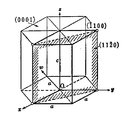
稠密六方構造を有する金属又は合金の格子面及びその方向の表現について説明する。六方格子の格子面と方向を表すために、通常ミラーの指数が用いられる。図1に示すように、互いに2π/3radの角度をなすx、y、w軸と,これに垂直なz軸を基準にして決めた(hkil)の4指数(六方指数)で格子面を表す。また、結晶面及び方向については、
面指数 (hkil)
等価な面 {hkil}
方向 [uvtw]
等価な方向 <uvtw>
と表記し、格子面が負の軸と交わる場合は指数の上に上バーをつけ、例えば−w軸と交わる場合は(hk(上バー)il)と表す。
The expression of the lattice plane and the direction of the metal or alloy having a dense hexagonal structure will be described. The mirror index is usually used to represent the lattice plane and direction of the hexagonal lattice. As shown in FIG. 1, the lattice plane is expressed by 4 indices (hexagonal indices) of (hkil) determined with reference to the x, y, and w axes that form an angle of 2π / 3 rad to each other and the z axis perpendicular thereto. . For crystal planes and directions,
Face index (hkil)
Equivalent surface {hkil}
Direction [uvtw]
Equivalent direction <uvtw>
In the case where the lattice plane intersects with the negative axis, an upper bar is added on the index. For example, when the lattice plane intersects with the −w axis, it is represented as (hk (upper bar) il).
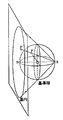
格子面や格子方向の空間的方位関係は投影図法によって表すことができる。そのなかに球面投影法がある。図2に示すように基準球の中心に結晶の中心をおいて、その共通の中心から各格子面に下ろした垂線の延長が基準球と交わる点によって格子面を代表させる。この球面上の点は格子面の極点と呼ばれ、極点の配列は格子面の方位関係を表す。図3に示すように球面投影した基準球に接して投影面を置き、その接点Nの反対側に直径の端点Sから基準球を投影する。そうすると、直径NSに垂直な基準球の大円が投影面上に基円として投影され、極点Pはこの基円内に点P'として映される。こうして得られるのがステレオ投影である。極図形は、試料の方向に対する特定の結晶の配向を表すステレオ投影であり、ある結晶面の極の配向とともに極の密度変化を示す。 The spatial orientation relationship between the lattice plane and the lattice direction can be expressed by projection projection. Among them is the spherical projection method. As shown in FIG. 2, the center of the crystal is placed at the center of the reference sphere, and the lattice plane is represented by the point where the extension of the perpendicular line extending from the common center to each lattice plane intersects the reference sphere. The points on this spherical surface are called pole points on the lattice plane, and the arrangement of the pole points represents the orientation relation of the lattice plane. As shown in FIG. 3, a projection plane is placed in contact with the spherically projected reference sphere, and the reference sphere is projected from the end point S of the diameter on the opposite side of the contact point N. Then, a great circle of the reference sphere perpendicular to the diameter NS is projected as a base circle on the projection surface, and the pole P is projected as a point P ′ within this base circle. A stereo projection is thus obtained. A polar figure is a stereo projection representing the orientation of a particular crystal relative to the direction of the sample, and shows the density change of the pole along with the orientation of the pole on a crystal plane.
本発明のマグネシウム又はマグネシウム合金の板状又はコイル状展伸材料は、一般的に{0002}面が圧延面に平行に配向する強い集合組織を有する。また、この{0002}面のすべり方向は<11(上バー)20>であり、室温近傍での最も主要なすべり機構である。すなわち、室温近傍において{0002}面に平行な方向のすべりしか存在しないために、{0002}面の法線方向、例えば板厚を減じる方向からの力によって破断しやすい。 The plate-shaped or coil-shaped expanded material of magnesium or magnesium alloy of the present invention generally has a strong texture in which the {0002} plane is oriented parallel to the rolling surface. Further, the sliding direction of the {0002} plane is <11 (upper bar) 20>, which is the most important sliding mechanism near room temperature. That is, since there is only a slip in a direction parallel to the {0002} plane in the vicinity of room temperature, it is easily broken by a force from the normal direction of the {0002} plane, for example, the direction of reducing the plate thickness.
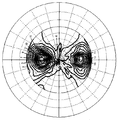
本発明の調質処理によって、本発明の金属又は合金の{0002}面が圧延面に対して傾斜することは、(0002)正極点図形を解析することによって確認することができる。すなわち、(0002)正極点図形に、最高の相対強度点又は領域が円の中心にのみ存在する場合(例えば図11参照)は、{0002}面は圧延面に対していかなる方向にも全く傾斜していないことを意味する。これに対して、(0002)正極点図形に、最高の相対強度点又は領域が円の中心以外に1以上存在する場合(例えば図9及び10参照)は、{0002}面は圧延面に対して傾斜していることを意味する。 The fact that the {0002} plane of the metal or alloy of the present invention is inclined with respect to the rolling plane by the tempering treatment of the present invention can be confirmed by analyzing the (0002) positive electrode dot pattern. That is, when the highest relative intensity point or region exists only in the center of the circle in the (0002) positive electrode dot figure (see, for example, FIG. 11), the {0002} plane is completely inclined in any direction with respect to the rolling surface. Means not. On the other hand, if the (0002) positive dot figure has one or more highest relative intensity points or regions other than the center of the circle (see, for example, FIGS. 9 and 10), the {0002} plane is relative to the rolled surface. Means that it is inclined.
本発明により、低温領域において、曲げ成形、張り出し成形、絞り成形(縮みフランジ成形)、伸びフランジ成形(バーリング成形、スピニング成形)、圧縮成形、引張成形等、特に板厚の減少を伴う塑性加工において優れた特性を有するマグネシウム又はマグネシウム合金の板が提供される。本明細書において低温領域とは450℃以下、好ましくは200℃以下、より好ましくは180℃以下、さらに好ましくは100℃以下を意味する。また、本発明の板を塑性加工する際の温度は、塑性加工可能な温度であればその下限に特に制限はない。
さらに、被加工材料に、せん断変形を与える処理と再結晶熱処理とを組み合わせた調質処理を行うことによって、低温領域で塑性加工性に優れたマグネシウム又はマグネシウム合金の板を製造する方法が提供される。
また、このような板は{0002}面に平行な主滑り方向である<11(上バー)20>方向が圧延面に対して傾斜するため、低温領域、例えば室温における塑性加工特性が向上することからコイル状形態とすることができ、産業上の利用性が著しく改善される。
According to the present invention, in the low temperature region, bending molding, stretch molding, drawing (shrinking flange molding), stretch flange molding (burring molding, spinning molding), compression molding, tensile molding, etc., especially in plastic working with a reduction in plate thickness. Magnesium or magnesium alloy plates having excellent properties are provided. In this specification, the low temperature region means 450 ° C. or lower, preferably 200 ° C. or lower, more preferably 180 ° C. or lower, and still more preferably 100 ° C. or lower. In addition, the lower limit of the temperature at which the plate of the present invention is plastically processed is not particularly limited as long as it is a temperature at which plastic processing is possible.
Furthermore, a method for producing a magnesium or magnesium alloy plate excellent in plastic workability in a low temperature region is provided by subjecting a work material to a refining treatment that combines a treatment for imparting shear deformation and a recrystallization heat treatment. The
In addition, since the <11 (upper bar) 20> direction, which is the main sliding direction parallel to the {0002} plane, is inclined with respect to the rolling surface, such a plate has improved plastic working characteristics in a low temperature region, for example, room temperature. Therefore, it can be in a coiled form, and the industrial utility is remarkably improved.
本発明の被加工材料は、マグネシウム又はマグネシウム合金材料である。これらのうち、マグネシウム合金、例えばMg−Al−Zn系合金、Mg−Al−Mn系合金、Mg−Zn−Zr系合金、Mg−Al−Ca系合金、Mg−Th−Zr系合金、Mg−Th−Mn系合金、Mg−Y−Re系合金(Reは希土類金属)、Mg−Zn−Cu系合金が好ましく、さらにMg−Al−Zn系合金が好ましい。 The material to be processed of the present invention is magnesium or a magnesium alloy material. Among these, magnesium alloys such as Mg—Al—Zn alloys, Mg—Al—Mn alloys, Mg—Zn—Zr alloys, Mg—Al—Ca alloys, Mg—Th—Zr alloys, Mg— A Th—Mn alloy, an Mg—Y—Re alloy (Re is a rare earth metal), and an Mg—Zn—Cu alloy are preferable, and an Mg—Al—Zn alloy is more preferable.
本発明の調質処理を受ける被加工材料として、マグネシウム又はマグネシウム合金の鋳造スラブ若しくはインゴット、押し出しスラブ若しくはインゴット、又は板鋳造法等により得られた材料を挙げることができる。さらに、これらの材料を圧延、例えば温間ないし熱間圧延して得られた材料にも、本発明の調質処理を行って、本発明の圧延面に対して{0002}面が傾斜した金属又は合金材料を得ることができる。
マグネシウム又はマグネシウム合金の鋳造スラブ若しくはインゴット、押し出しスラブ若しくはインゴット、又は板鋳造法等により得られた材料を、塑性加工を行う板厚まで温間圧延し、こうして得られた材料に調質処理を行って、圧延面に対して{0002}面が傾斜した金属又は合金材料を製造することが好ましい。
圧延方法は、稠密六方構造を有する金属又は合金の圧延に用いられる方法であればいずれでもよく、例えば、本発明者らの発明に係る特開2001−252703号公報に記載された方法を適用することができる。すなわち、鋳造スラブ若しくはインゴット、押し出しスラブ若しくはインゴット、又は板鋳造法等により得られた材料をあらかじめ160℃〜400℃に加熱し、温間リバース圧延を行うことができる。さらに、そのときの圧延条件として、非対称圧延法又は片面潤滑圧延法等を併用することもできる。
Examples of the material to be processed subjected to the tempering treatment of the present invention include magnesium or a magnesium alloy cast slab or ingot, extruded slab or ingot, or a material obtained by a plate casting method. Furthermore, the material obtained by rolling these materials, for example, warm or hot rolling, is subjected to the tempering treatment of the present invention, and the {0002} plane is inclined with respect to the rolled surface of the present invention. Or an alloy material can be obtained.
A material obtained by casting slab or ingot of magnesium or magnesium alloy, extruded slab or ingot, or plate casting method is warm-rolled to the plate thickness for plastic working, and the material thus obtained is tempered. Thus, it is preferable to manufacture a metal or alloy material whose {0002} plane is inclined with respect to the rolling surface.
The rolling method may be any method as long as it is used for rolling a metal or alloy having a dense hexagonal structure. For example, the method described in Japanese Patent Application Laid-Open No. 2001-252703 according to the inventors' invention is applied. be able to. That is, a material obtained by a casting slab or ingot, an extruded slab or ingot, a plate casting method, or the like can be heated in advance to 160 ° C. to 400 ° C. and warm reverse rolling can be performed. Furthermore, as a rolling condition at that time, an asymmetric rolling method, a single-sided lubricating rolling method, etc. can also be used together.
調質処理のうちの一方は、マグネシウム又はマグネシウム合金の被加工材料に、せん断変形(歪み)を与える処理である。この処理は、被加工材料を破壊することなく連続的にせん断変形(歪み)を与える処理であり、より具体的には、被加工材料の厚さ方向の両端へ引張変形と圧縮変形のいずれか一方又は両方を与える処理であり、さらに具体的には、曲げ変形、特にその繰り返しである。 One of the tempering treatments is a treatment for imparting shear deformation (strain) to the workpiece material of magnesium or magnesium alloy. This process is a process of continuously applying shear deformation (strain) without destroying the work material, and more specifically, either tensile deformation or compression deformation at both ends in the thickness direction of the work material. It is a treatment that gives one or both, and more specifically, bending deformation, particularly repetition thereof.
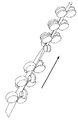
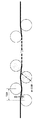
このような変形を与える処理は、例えばローラレベラ(図4に一例を示す)若しくはロールフォーミング(図5に一例を示す)、又はこれらの組み合わせ等による連続曲げ変形によって行うことができる。
ローラレベラは、連続的に配置された1本以上のロールにより、単独の曲げ又は連続した繰り返し曲げによる歪みを付加することができる。
ロールフォーミングは、組み合わされたロールにより,曲げ変形を与えることで歪みを付加することができる。ロールフォーミングの場合、板状又はコイル状材料の長手方向に平行な曲げ変形を与えることができ、タンデム化することで、連続曲げ変形が可能である。
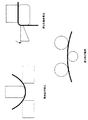
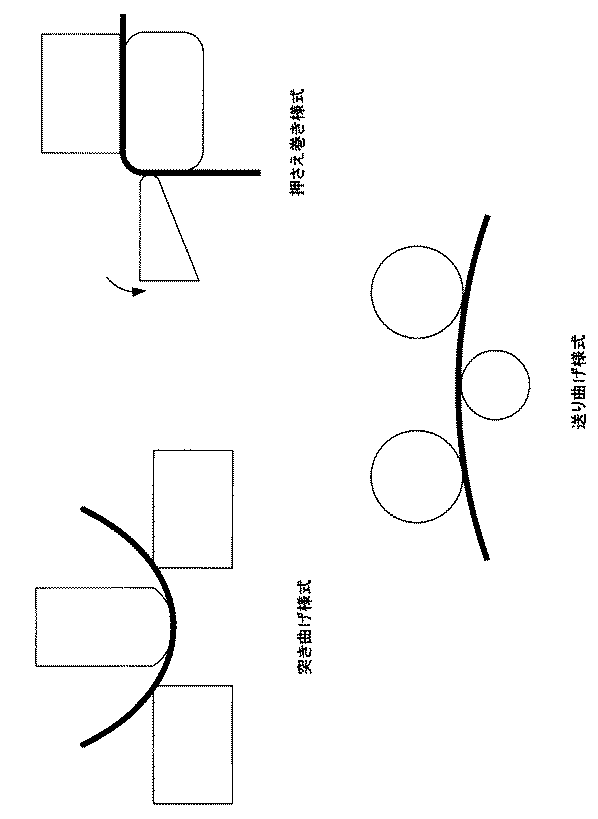
さらに、同様の歪み付加方法として、図6に一例を示す突き曲げや押さえ巻きを代表とするプレス型曲げや、図7、8に一例を示すテンションレベラ、ストレッチャレベラ等を用いることができる。
The processing for giving such deformation can be performed by, for example, continuous bending deformation by roller leveler (an example is shown in FIG. 4), roll forming (an example is shown in FIG. 5), or a combination thereof.
The roller leveler can be distorted by single bending or continuous repeated bending by one or more rolls arranged continuously.
In roll forming, distortion can be applied by applying bending deformation by a combined roll. In the case of roll forming, bending deformation parallel to the longitudinal direction of the plate-like or coil-like material can be given, and continuous bending deformation is possible by forming into tandem.
Furthermore, as a similar strain applying method, a press-type bending represented by a butt-bending or a press-winding as shown in FIG. 6 or a tension leveler or a stretcher leveler shown as an example in FIGS.
せん断変形を与える処理は、いかなる温度においても実施することができる。省エネルギーの観点から、室温近傍で行うことが望ましい。 The treatment for imparting shear deformation can be carried out at any temperature. From the viewpoint of energy saving, it is desirable to carry out near room temperature.
調質処理のうちの他方は、再結晶熱処理である。この処理を、大気中で、又は加熱炉などを用いて、個別に又は連続的に行う。処理温度は対象金属板が回復又は再結晶する温度以上で液相が出る温度以下、例えばAZ31B合金においては、好ましくは180℃以上、さらに好ましくは180℃〜400℃の範囲で行うことができる。処理時間は、例えば使用する加熱炉の性能、仕上がり品の目標とする特性等に応じて、適宜に設定することができる。 The other of the tempering treatment is a recrystallization heat treatment. This treatment is performed individually or continuously in the air or using a heating furnace or the like. The treatment temperature is not less than the temperature at which the target metal plate recovers or recrystallizes and is not more than the temperature at which the liquid phase emerges. For example, in the AZ31B alloy, the treatment temperature is preferably 180 ° C. The treatment time can be appropriately set according to, for example, the performance of the heating furnace to be used, the target characteristics of the finished product, and the like.
調質処理のうち、せん断変形を与える処理及び再結晶熱処理は、それぞれ少なくとも1回ずつ行うことが必要である。せん断変形を与える処理を単一又は複数の手段により複数回行い、次いで再結晶熱処理を単一又は複数の手段により複数回行うことができる。せん断変形を与える処理と再結晶熱処理を順次複数回行うとさらによい。
調質処理は、1回のみの曲げ変形と1回のみの再結晶熱処理との組合せでも、例えばローラレベラのような連続的な曲げ変形と再結晶熱処理との組合せでも本発明の目的を達成することができる。また、このせん断変形を与える処理と再結晶熱処理を順次複数回行うことで、得られた材料の特性が順次向上し、例えば{0002}面の傾斜が次第に大きくなる。
Of the tempering treatment, the treatment for imparting shear deformation and the recrystallization heat treatment must each be performed at least once. The treatment for imparting shear deformation can be performed a plurality of times by a single or a plurality of means, and then the recrystallization heat treatment can be performed a plurality of times by a single or a plurality of means. More preferably, the treatment for applying shear deformation and the recrystallization heat treatment are sequentially performed a plurality of times.
The tempering treatment can achieve the object of the present invention by a combination of only one bending deformation and only one recrystallization heat treatment or a combination of continuous bending deformation and recrystallization heat treatment such as a roller leveler. Can do. Further, by performing the treatment for applying shear deformation and the recrystallization heat treatment a plurality of times in order, the characteristics of the obtained material are sequentially improved, and for example, the inclination of the {0002} plane gradually increases.
調質処理によって生じる{0002}面の圧延面に対する傾斜の角度は、0°より大きく±90°より小さければいずれの角度であっても、本発明の目的を達成することができる。この傾斜角度は、0°より大きくなるに従って得られた板材料の低温領域における塑性加工特性が向上し、±45°近傍で塑性加工特性が最も改善され、この角度が90°に向けてさらに大きくなると改善の程度が次第に低下する。従って、{0002}面の圧延面に対する傾斜角度は、±10°〜±80°の範囲であることが好ましく、±15°〜±75°の範囲であることがさらに好ましい。 The object of the present invention can be achieved regardless of the angle of inclination of the {0002} plane caused by the tempering treatment with respect to the rolled surface, as long as the angle is greater than 0 ° and less than ± 90 °. As the inclination angle becomes larger than 0 °, the plastic working characteristics in the low temperature region of the obtained plate material are improved, and the plastic working characteristics are most improved in the vicinity of ± 45 °, and this angle is further increased toward 90 °. As a result, the degree of improvement gradually decreases. Therefore, the inclination angle of the {0002} plane with respect to the rolling surface is preferably in the range of ± 10 ° to ± 80 °, and more preferably in the range of ± 15 ° to ± 75 °.
圧延面に対して{0002}面が傾斜した本発明の金属又は合金材料は低温領域において優れた塑性加工性を有し、例えばエリクセン試験によるエリクセン値が5.7mm以上であること、最小曲げ半径率a(a=R/t、R:曲げ半径、t:板厚)が1.97以下であること、という特性のうち少なくとも一つの特性を有する。 The metal or alloy material of the present invention in which the {0002} plane is inclined with respect to the rolling surface has excellent plastic workability in a low temperature region, for example, an Erichsen value by an Ericksen test is 5.7 mm or more, a minimum bending radius It has at least one characteristic among the characteristics that the ratio a (a = R / t, R: bending radius, t: plate thickness) is 1.97 or less.
以下に本発明の例を示すが、これらは本発明を説明するためのものであり、本発明の範囲を限定するものではない。 Examples of the present invention are shown below, but these are for explaining the present invention and do not limit the scope of the present invention.
例1
溶解鋳造法により製造した、稠密六方構造を有するASTMに定めるAZ31B合金(アルミニウム3質量%、亜鉛1質量%、マンガン0.4質量%含有)インゴットに、温間圧延を施して板厚0.6mm、板幅260mm、全長約370メートルの板状素材を得た。この素材にローラレベラと再結晶熱処理を組み合わせた調質処理を行った。ローラレベラは、図14に示すように、上9ロール、下10ロールの19ロールを有する。各ロール径は12mm、ロールの芯間距離は13mmである。ロール押し込み量は0.5mmとした。このレベラに常温で3回通板した後、300℃で1時間の再結晶熱処理を大気中で施した。この工程を1セットとして、3セットの処理を施した。処理をした板をコイル状形態に巻き取ることができた。
Example 1
An AZ31B alloy (contains 3% by mass of aluminum, 1% by mass of zinc and 0.4% by mass of manganese) ingot manufactured by the melt casting method and defined by ASTM has a thickness of 0.6 mm. A plate-like material having a plate width of 260 mm and a total length of about 370 meters was obtained. This material was subjected to a tempering treatment combining roller leveler and recrystallization heat treatment. As shown in FIG. 14, the roller leveler has 19 rolls of 9 upper rolls and 10 lower rolls. Each roll diameter is 12 mm, and the roll center distance is 13 mm. The roll push-in amount was 0.5 mm. After passing through this leveler three times at room temperature, recrystallization heat treatment at 300 ° C. for 1 hour was performed in the air. This process was regarded as one set, and three sets of treatments were performed. The treated plate could be wound into a coiled form.
例2
例1と同様の溶解鋳造法により、稠密六方構造を有するASTMに定めるAZ31B合金(アルミニウム3質量%、亜鉛1質量%、マンガン0.4質量%含有)インゴットに、温間圧延を施して板厚0.6mmの素材を得た。この素材から板厚0.6mmで200mm角の板材を製造し、これにローラレベラと再結晶熱処理を組み合わせた調質処理を行った。ローラレベラは例1と同様のものを常温で使用した。まず、圧延方向と平行に3回通板した後、さらに圧延方向と直角方向に3回通板した。この後、300℃で1時間の再結晶熱処理を施した。この工程を1セットとして、3セットの処理を施した。
Example 2
Thickness of the AZ31B alloy (containing 3% by weight of aluminum, 1% by weight of zinc and 0.4% by weight of manganese) ingot, which is specified in ASTM having a dense hexagonal structure, is subjected to warm rolling by the same melt casting method as in Example 1. A material of 0.6 mm was obtained. A 200 mm square plate with a thickness of 0.6 mm was produced from this material, and a tempering treatment was performed by combining this with a roller leveler and a recrystallization heat treatment. The same roller leveler as in Example 1 was used at room temperature. First, after passing 3 times in parallel with the rolling direction, it was further passed 3 times in the direction perpendicular to the rolling direction. Thereafter, recrystallization heat treatment was performed at 300 ° C. for 1 hour. This process was regarded as one set, and three sets of treatments were performed.
例3(比較例1)
例1の溶解鋳造法により製造した、稠密六方構造を有するASTMに定めるAZ31B合金(アルミニウム3質量%、亜鉛1質量%、マンガン0.4質量%含有)インゴットに、温間圧延を施して板厚0.6mm、板幅260mm、全長約370メートルの板状素材を得た。この素材を調質処理をせずに、そのまま各種試験に供した。
Example 3 (Comparative Example 1)
AZ31B alloy (containing 3% by mass of aluminum, 1% by mass of zinc and 0.4% by mass of manganese) ingot manufactured by the melt casting method of Example 1 and having a dense hexagonal structure is subjected to warm rolling to obtain a plate thickness. A plate-like material having a thickness of 0.6 mm, a width of 260 mm, and a total length of about 370 meters was obtained. This material was subjected to various tests as it was without any tempering treatment.
例4(比較例2)
例1の溶解鋳造法により製造した、稠密六方構造を有するASTMに定めるAZ31B合金(アルミニウム3質量%、亜鉛1質量%、マンガン0.4質量%含有)インゴットに、温間圧延を施して板厚0.6mm、板幅260mm、全長約370メートルの板状素材を得た。この素材に例1と同一のローラレベラ処理のみを1回行った。
Example 4 (Comparative Example 2)
AZ31B alloy (containing 3% by mass of aluminum, 1% by mass of zinc and 0.4% by mass of manganese) ingot manufactured by the melt casting method of Example 1 and having a dense hexagonal structure is subjected to warm rolling to obtain a plate thickness. A plate-like material having a thickness of 0.6 mm, a width of 260 mm, and a total length of about 370 meters was obtained. This material was subjected to the same roller leveler treatment as in Example 1 only once.
例5(比較例3)
例1の溶解鋳造法により製造した、稠密六方構造を有するASTMに定めるAZ31B合金(アルミニウム3質量%、亜鉛1質量%、マンガン0.4質量%含有)インゴットに、温間圧延を施して板厚0.6mm、板幅260mm、全長約370メートルの板状素材を得た。この素材に例1と同一の再結晶熱処理のみを1回行った。
Example 5 (Comparative Example 3)
AZ31B alloy (containing 3% by mass of aluminum, 1% by mass of zinc and 0.4% by mass of manganese) ingot manufactured by the melt casting method of Example 1 and having a dense hexagonal structure is subjected to warm rolling to obtain a plate thickness. A plate-like material having a thickness of 0.6 mm, a width of 260 mm, and a total length of about 370 meters was obtained. Only the same recrystallization heat treatment as in Example 1 was performed once on this material.
(X線回折による結晶配向性の評価)
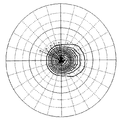
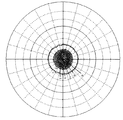
例1ないし例5に従って製造したマグネシウム合金板の(0002)正極点図形を、X線回折により作成した。それぞれ図9ないし図13として示す。
正極点図形に記載されている数値は面(極)密度を示したものであり、測定された回折強度を15等分して表示した。15が最も面(極)密度が高い点及び領域である。
図9から、例1に従って製造したマグネシウム合金の(0002)面は圧延方向と平行方向に30°〜45°傾斜していることが読みとれる。
また、例2に従って製造したマグネシウム合金の(0002)面は45〜50°傾斜し、圧延方向から±45°の位置に分布していた(図10)。極は4カ所存在した。このように圧延面と直角の方向にも(0002)面を分散させることで,特性の方向性が減少する。
これに対して、調質処理を行っていない比較例1の材料では、円の中心を最高の相対強度領域とする唯一の図形が示されており(図11)、ほとんどの(0002)面が圧延面に平行に配列していることが分かる。
さらに、調質処理のうちの一方のみを行った材料である、比較例2及び3に従って製造したものはいずれも円の中心のみに最高の相対強度領域が示されており(図12及び図13)、このような材料の(0002)面は圧延面に対して傾斜していないことが分かる。
(Evaluation of crystal orientation by X-ray diffraction)
A (0002) positive dot pattern of a magnesium alloy plate produced according to Examples 1 to 5 was prepared by X-ray diffraction. These are shown as FIGS. 9 to 13, respectively.
The numerical value described in the positive electrode dot figure indicates the surface (pole) density, and the measured diffraction intensity is divided into 15 equal parts and displayed. Reference numeral 15 denotes a point or region having the highest surface (pole) density.
From FIG. 9, it can be read that the (0002) plane of the magnesium alloy manufactured according to Example 1 is inclined 30 ° to 45 ° in the direction parallel to the rolling direction.
Further, the (0002) plane of the magnesium alloy produced according to Example 2 was inclined by 45 to 50 ° and distributed at a position of ± 45 ° from the rolling direction (FIG. 10). There were four poles. Thus, the directionality of the characteristics is reduced by dispersing the (0002) plane in the direction perpendicular to the rolling plane.
On the other hand, in the material of Comparative Example 1 that has not been subjected to the tempering treatment, only a figure with the center of the circle as the highest relative strength region is shown (FIG. 11), and most of the (0002) planes are shown. It turns out that it has arranged in parallel with the rolling surface.
Further, the ones manufactured according to Comparative Examples 2 and 3 which are materials subjected to only one of the tempering treatments show the highest relative strength region only at the center of the circle (FIGS. 12 and 13). ), It can be seen that the (0002) plane of such a material is not inclined with respect to the rolling plane.
(塑性加工性の評価)
エリクセン試験機を用い、JIS Z 2247に従って、室温における張り出し成形性の指標であるエリクセン値を求めた。
JIS Z 2248に従って、Vブロック法により曲げ試験を行った。評価はR/t(R:げ半径、t:板厚)で行った。
平均結晶粒径を、JIS G 0551 附属書3(規定)に示される計数方法によって測定した。
以上の結果をまとめて表1に示す。
表1 マグネシウム合金の特性
Using an Erichsen tester, an Erichsen value, which is an index of stretch formability at room temperature, was determined according to JIS Z 2247.
According to JIS Z 2248, a bending test was performed by the V block method. The evaluation was performed by R / t (R: radius, t: plate thickness).
The average crystal grain size was measured by the counting method shown in JIS G 0551 Annex 3 (normative).
The above results are summarized in Table 1.
Table 1 Characteristics of magnesium alloys
以上の結果から、調質処理によって{0002}面が傾斜した本発明のマグネシウム合金は、{0002}面が傾斜していない材料と比較して、非常に高いエリクセン値及び小さい最小曲げ半径率を示し、優れた塑性加工性を有することが分かった。 From the above results, the magnesium alloy of the present invention in which the {0002} plane is inclined by the tempering treatment has a very high Erichsen value and a small minimum bending radius compared to a material in which the {0002} plane is not inclined. It was shown that it has excellent plastic workability.
本発明のマグネシウム又はマグネシウム合金は低温領域での塑性加工性に優れていることから、これを使用することによって人的、設備的、時間的効率が向上し、コストダウンが図れ、かつ本発明の材料の利用範囲を拡大することができ、具体的には以下のような産業上の優位性がある。
低温領域での塑性加工が可能であることから、製品精度を向上させることができ、従来対象とされていなかった大型部品や薄物部品等も本発明の材料で製造することができる。
加熱せずに塑性加工を行うために、材料、金型を加熱するのに要するエネルギー及び時間が不要となり、熱管理に関する知識や技能がなくても加工可能となり、加熱のための特別な設備投資が不要となり、また、火災や火傷が生じないので作業安全性が向上する。
さらに、温間加工に用いる潤滑剤ではなく、一般的な潤滑剤を使用することが可能となり、加熱して加工するものに比較して表面状態が良好な製品を製造することができる。
Since the magnesium or magnesium alloy of the present invention is excellent in plastic workability in a low temperature region, the use thereof improves human, facility, and time efficiency, and can reduce the cost. The range of use of materials can be expanded. Specifically, there are the following industrial advantages.
Since plastic working in a low temperature region is possible, the product accuracy can be improved, and large parts and thin parts that have not been previously targeted can be manufactured with the material of the present invention.
Since plastic processing is performed without heating, the energy and time required to heat the material and mold are not required, and processing is possible without knowledge and skills related to thermal management. Special capital investment for heating Work safety is improved because no fire or burns occur.
Furthermore, it is possible to use a general lubricant instead of the lubricant used for warm processing, and it is possible to manufacture a product having a better surface condition than that processed by heating.
Claims (7)
Priority Applications (1)
| Application Number | Priority Date | Filing Date | Title |
|---|---|---|---|
| JP2004115719A JP3988888B2 (en) | 2004-04-09 | 2004-04-09 | Manufacturing method of magnesium alloy plate with excellent plastic workability |
Applications Claiming Priority (1)
| Application Number | Priority Date | Filing Date | Title |
|---|---|---|---|
| JP2004115719A JP3988888B2 (en) | 2004-04-09 | 2004-04-09 | Manufacturing method of magnesium alloy plate with excellent plastic workability |
Publications (2)
| Publication Number | Publication Date |
|---|---|
| JP2005298885A true JP2005298885A (en) | 2005-10-27 |
| JP3988888B2 JP3988888B2 (en) | 2007-10-10 |
Family
ID=35330797
Family Applications (1)
| Application Number | Title | Priority Date | Filing Date |
|---|---|---|---|
| JP2004115719A Expired - Lifetime JP3988888B2 (en) | 2004-04-09 | 2004-04-09 | Manufacturing method of magnesium alloy plate with excellent plastic workability |
Country Status (1)
| Country | Link |
|---|---|
| JP (1) | JP3988888B2 (en) |
Cited By (18)
| Publication number | Priority date | Publication date | Assignee | Title |
|---|---|---|---|---|
| KR100783918B1 (en) * | 2006-05-04 | 2007-12-10 | 현대자동차주식회사 | Method for Increasing Room Formability of Magnesium Alloy Plate by Controlling Texture |
| WO2009001516A1 (en) * | 2007-06-28 | 2008-12-31 | Sumitomo Electric Industries, Ltd. | Magnesium alloy plate |
| JP2009172657A (en) * | 2008-01-25 | 2009-08-06 | National Institute Of Advanced Industrial & Technology | High performance magnesium alloy member and manufacturing method thereof |
| WO2009147861A1 (en) * | 2008-06-05 | 2009-12-10 | 独立行政法人産業技術総合研究所 | Easily formable magnesium alloy sheet and process for production thereof |
| JP2010070821A (en) * | 2008-09-19 | 2010-04-02 | Osaka Prefecture Univ | Magnesium alloy sheet having excellent room temperature formability and method for treating magnesium alloy sheet |
| JP2010202897A (en) * | 2009-02-27 | 2010-09-16 | National Institute Of Advanced Industrial Science & Technology | Magnesium alloy sheet material having superior cold-forming characteristics, and manufacturing method therefor |
| JP2010236014A (en) * | 2009-03-31 | 2010-10-21 | National Institute Of Advanced Industrial Science & Technology | Thermomechanical processing method and magnesium alloy sheet |
| JP2011184726A (en) * | 2010-03-05 | 2011-09-22 | National Institute Of Advanced Industrial Science & Technology | General-purpose magnesium alloy sheet material exhibiting cold formability equal to that of aluminum alloy and method of producing the same |
| JP2012201928A (en) * | 2011-03-25 | 2012-10-22 | Nippon Kinzoku Co Ltd | Magnesium alloy sheet material excellent in cold workability, and method for producing the same |
| JP2014213379A (en) * | 2013-04-30 | 2014-11-17 | 権田金属工業株式会社 | Magnesium alloy manufacturing device and magnesium alloy manufacturing method used for the device |
| KR20150021518A (en) | 2012-06-13 | 2015-03-02 | 스미토모덴키고교가부시키가이샤 | Magnesium alloy plate and magnesium alloy member |
| JP2015134378A (en) * | 2010-03-18 | 2015-07-27 | ガンヌン−ウォンジュ ナショナル ユニバーシティ インダストリー アカデミー コーポレイション グループ | Asymmetrical rolling apparatus, asymmetrical rolling method, and rolled material manufactured by using the same |
| KR20190036725A (en) * | 2017-09-28 | 2019-04-05 | 한국기계연구원 | Method of manufacturing for magnesium alloy sheet with improved total elongation |
| CN109881130A (en) * | 2019-01-28 | 2019-06-14 | 沈阳理工大学 | Magnesium alloy sheet rolling-rolling composite deformation method and rolling roll used |
| CN112048687A (en) * | 2020-09-15 | 2020-12-08 | 贵州大学 | Preparation method of ultrafine crystal magnesium alloy with multi-scale microstructure |
| WO2021215241A1 (en) | 2020-04-21 | 2021-10-28 | 国立研究開発法人産業技術総合研究所 | Magnesium alloy, magnesium alloy plate, magnesium alloy rod, methods for producing these, and magnesium alloy member |
| CN113825850A (en) * | 2020-04-21 | 2021-12-21 | 住友电气工业株式会社 | Magnesium alloy sheet material, press-formed body, and method for producing magnesium alloy sheet material |
| CN115090708A (en) * | 2022-06-30 | 2022-09-23 | 重庆科技学院 | Magnesium alloy plate and method for preparing magnesium alloy plate through online composite deformation |
Families Citing this family (1)
| Publication number | Priority date | Publication date | Assignee | Title |
|---|---|---|---|---|
| JP5660374B2 (en) | 2009-11-24 | 2015-01-28 | 住友電気工業株式会社 | Magnesium alloy plate manufacturing method and magnesium alloy coil material |
-
2004
- 2004-04-09 JP JP2004115719A patent/JP3988888B2/en not_active Expired - Lifetime
Cited By (38)
| Publication number | Priority date | Publication date | Assignee | Title |
|---|---|---|---|---|
| KR100783918B1 (en) * | 2006-05-04 | 2007-12-10 | 현대자동차주식회사 | Method for Increasing Room Formability of Magnesium Alloy Plate by Controlling Texture |
| KR101318460B1 (en) | 2007-06-28 | 2013-10-16 | 스미토모덴키고교가부시키가이샤 | Magnesium alloy sheet, magnesium alloy formed body and method of producing magnesium alloy sheet |
| EP3330393A1 (en) | 2007-06-28 | 2018-06-06 | Sumitomo Electric Industries, Ltd. | Magnesium alloy sheet |
| US9499887B2 (en) | 2007-06-28 | 2016-11-22 | Sumitomo Electric Industries, Ltd. | Magnesium alloy sheet |
| JPWO2009001516A1 (en) * | 2007-06-28 | 2010-08-26 | 住友電気工業株式会社 | Magnesium alloy sheet |
| JP2014080690A (en) * | 2007-06-28 | 2014-05-08 | Sumitomo Electric Ind Ltd | Magnesium alloy sheet material, magnesium alloy molded body, and method for producing the magnesium alloy sheet material |
| US8828158B2 (en) | 2007-06-28 | 2014-09-09 | Sumitomo Electric Industries, Ltd. | Magnesium alloy sheet |
| WO2009001516A1 (en) * | 2007-06-28 | 2008-12-31 | Sumitomo Electric Industries, Ltd. | Magnesium alloy plate |
| EP3026137A1 (en) | 2007-06-28 | 2016-06-01 | Sumitomo Electric Industries, Ltd. | Magnesium alloy plate |
| AU2008268813B2 (en) * | 2007-06-28 | 2011-08-04 | Sumitomo Electric Industries, Ltd. | Magnesium alloy sheet |
| CN102191418A (en) * | 2007-06-28 | 2011-09-21 | 住友电气工业株式会社 | Magnesium alloy plate, its manufacturing method, and worked member |
| TWI427157B (en) * | 2007-06-28 | 2014-02-21 | Sumitomo Electric Industries | Magnesium alloy plate material |
| JP2011214155A (en) * | 2007-06-28 | 2011-10-27 | Sumitomo Electric Ind Ltd | Magnesium alloy plate |
| JP2011214156A (en) * | 2007-06-28 | 2011-10-27 | Sumitomo Electric Ind Ltd | Magnesium alloy plate |
| JP4873078B2 (en) * | 2007-06-28 | 2012-02-08 | 住友電気工業株式会社 | Magnesium alloy sheet |
| JP2012041637A (en) * | 2007-06-28 | 2012-03-01 | Sumitomo Electric Ind Ltd | Magnesium alloy sheet |
| RU2459000C2 (en) * | 2007-06-28 | 2012-08-20 | Сумитомо Электрик Индастриз, Лтд. | Plate made from magnesium alloy |
| JP2009172657A (en) * | 2008-01-25 | 2009-08-06 | National Institute Of Advanced Industrial & Technology | High performance magnesium alloy member and manufacturing method thereof |
| JP2010013725A (en) * | 2008-06-05 | 2010-01-21 | National Institute Of Advanced Industrial & Technology | Easily formable magnesium alloy sheet and method for production thereof |
| WO2009147861A1 (en) * | 2008-06-05 | 2009-12-10 | 独立行政法人産業技術総合研究所 | Easily formable magnesium alloy sheet and process for production thereof |
| JP2010070821A (en) * | 2008-09-19 | 2010-04-02 | Osaka Prefecture Univ | Magnesium alloy sheet having excellent room temperature formability and method for treating magnesium alloy sheet |
| JP2010202897A (en) * | 2009-02-27 | 2010-09-16 | National Institute Of Advanced Industrial Science & Technology | Magnesium alloy sheet material having superior cold-forming characteristics, and manufacturing method therefor |
| JP2010236014A (en) * | 2009-03-31 | 2010-10-21 | National Institute Of Advanced Industrial Science & Technology | Thermomechanical processing method and magnesium alloy sheet |
| JP2011184726A (en) * | 2010-03-05 | 2011-09-22 | National Institute Of Advanced Industrial Science & Technology | General-purpose magnesium alloy sheet material exhibiting cold formability equal to that of aluminum alloy and method of producing the same |
| US9421592B2 (en) | 2010-03-18 | 2016-08-23 | Gangneung-Wonju National University Industry Academy Cooperation Group | Asymmetric rolling device, asymmetric rolling method and rolled material manufactured using same |
| JP2015134378A (en) * | 2010-03-18 | 2015-07-27 | ガンヌン−ウォンジュ ナショナル ユニバーシティ インダストリー アカデミー コーポレイション グループ | Asymmetrical rolling apparatus, asymmetrical rolling method, and rolled material manufactured by using the same |
| JP2012201928A (en) * | 2011-03-25 | 2012-10-22 | Nippon Kinzoku Co Ltd | Magnesium alloy sheet material excellent in cold workability, and method for producing the same |
| KR20150021518A (en) | 2012-06-13 | 2015-03-02 | 스미토모덴키고교가부시키가이샤 | Magnesium alloy plate and magnesium alloy member |
| JP2014213379A (en) * | 2013-04-30 | 2014-11-17 | 権田金属工業株式会社 | Magnesium alloy manufacturing device and magnesium alloy manufacturing method used for the device |
| KR102069361B1 (en) * | 2017-09-28 | 2020-01-22 | 한국기계연구원 | Method of manufacturing for magnesium alloy sheet with improved total elongation |
| KR20190036725A (en) * | 2017-09-28 | 2019-04-05 | 한국기계연구원 | Method of manufacturing for magnesium alloy sheet with improved total elongation |
| CN109881130A (en) * | 2019-01-28 | 2019-06-14 | 沈阳理工大学 | Magnesium alloy sheet rolling-rolling composite deformation method and rolling roll used |
| WO2021215241A1 (en) | 2020-04-21 | 2021-10-28 | 国立研究開発法人産業技術総合研究所 | Magnesium alloy, magnesium alloy plate, magnesium alloy rod, methods for producing these, and magnesium alloy member |
| CN113825850A (en) * | 2020-04-21 | 2021-12-21 | 住友电气工业株式会社 | Magnesium alloy sheet material, press-formed body, and method for producing magnesium alloy sheet material |
| KR20220162137A (en) | 2020-04-21 | 2022-12-07 | 고쿠리츠켄큐카이하츠호진 상교기쥬츠 소고켄큐쇼 | Magnesium alloy, magnesium alloy plate, magnesium alloy rod and manufacturing method thereof, magnesium alloy member |
| CN112048687A (en) * | 2020-09-15 | 2020-12-08 | 贵州大学 | Preparation method of ultrafine crystal magnesium alloy with multi-scale microstructure |
| CN115090708A (en) * | 2022-06-30 | 2022-09-23 | 重庆科技学院 | Magnesium alloy plate and method for preparing magnesium alloy plate through online composite deformation |
| CN115090708B (en) * | 2022-06-30 | 2024-07-02 | 重庆科技大学 | Magnesium alloy plate and method for preparing magnesium alloy plate by on-line composite deformation |
Also Published As
| Publication number | Publication date |
|---|---|
| JP3988888B2 (en) | 2007-10-10 |
Similar Documents
| Publication | Publication Date | Title |
|---|---|---|
| JP3988888B2 (en) | Manufacturing method of magnesium alloy plate with excellent plastic workability | |
| Pustovoytov et al. | Asymmetric (hot, warm, cold, cryo) rolling of light alloys: a review | |
| Utsunomiya et al. | Continuous grain refinement of aluminum strip by conshearing | |
| Gong et al. | Enhanced plasticity of twin-roll cast ZK60 magnesium alloy through differential speed rolling | |
| CN101688270B (en) | Magnesium alloy plate | |
| CN1274431C (en) | Continuous casting slab or strip processing method and metal plate or strip obtained in this way | |
| Hamad et al. | Continuous differential speed rolling for grain refinement of metals: processing, microstructure, and properties | |
| CN102471838B (en) | Magnesium alloy plate | |
| CN108472699B (en) | Magnesium alloy sheet material and method for producing same | |
| WO2006104028A1 (en) | Method for producing magnesium alloy plate and magnesium alloy plate | |
| Lipińska et al. | The influence of an ECAP-based deformation process on the microstructure and properties of electrolytic tough pitch copper | |
| TW201111521A (en) | Magnesium alloy plate | |
| KR101532646B1 (en) | Preparing method of Manesium alloy sheet using symmetric and assymetric rolling and the magnesium alloy sheet thereby | |
| CN110129695A (en) | A method for preparing high-performance magnesium alloy plate | |
| JP6213901B2 (en) | Magnesium alloy plate and magnesium alloy member | |
| Ghosh et al. | Development of mechanical properties and microstructure for Al–Zn–Mg–Cu alloys through ECAP after optimizing the outer corner angles through FE modeling | |
| Guo et al. | Microstructure, texture, and mechanical properties of continuously extruded and rolled AZ31 magnesium alloy sheets | |
| Hendriok et al. | Die geometry influence on the texture and microstructure development during extrusion of AZ31 and ZK60 magnesium alloy chips | |
| Kudo et al. | Effect of dimple patterning conditions of Periodical Straining Rolling on microstructures and mechanical properties of AZ31 sheets | |
| TWI796118B (en) | Titanium alloy plate and titanium alloy coil and manufacturing method of titanium alloy plate and titanium alloy coil | |
| JP2004027321A (en) | Magnesium alloy molding material and method and apparatus for producing the same | |
| JP2010043335A (en) | Metal plate, magnesium alloy plate, and method and apparatus for manufacturing the same by rolling | |
| CN103415636A (en) | Titanium sheet with excellent stamping performance | |
| CN104060138B (en) | A kind of non-rare earth-magnesium alloy board of low-cost and high-performance and preparation method thereof | |
| JP2012025981A (en) | Magnesium alloy coil material |
Legal Events
| Date | Code | Title | Description |
|---|---|---|---|
| A977 | Report on retrieval |
Free format text: JAPANESE INTERMEDIATE CODE: A971007 Effective date: 20060228 |
|
| A131 | Notification of reasons for refusal |
Free format text: JAPANESE INTERMEDIATE CODE: A131 Effective date: 20061204 |
|
| A521 | Request for written amendment filed |
Free format text: JAPANESE INTERMEDIATE CODE: A523 Effective date: 20070202 |
|
| A131 | Notification of reasons for refusal |
Free format text: JAPANESE INTERMEDIATE CODE: A131 Effective date: 20070305 |
|
| A521 | Request for written amendment filed |
Free format text: JAPANESE INTERMEDIATE CODE: A523 Effective date: 20070502 |
|
| A521 | Request for written amendment filed |
Free format text: JAPANESE INTERMEDIATE CODE: A523 Effective date: 20070509 |
|
| TRDD | Decision of grant or rejection written | ||
| A01 | Written decision to grant a patent or to grant a registration (utility model) |
Free format text: JAPANESE INTERMEDIATE CODE: A01 Effective date: 20070702 |
|
| A61 | First payment of annual fees (during grant procedure) |
Free format text: JAPANESE INTERMEDIATE CODE: A61 Effective date: 20070711 |
|
| FPAY | Renewal fee payment (event date is renewal date of database) |
Free format text: PAYMENT UNTIL: 20100727 Year of fee payment: 3 |
|
| R150 | Certificate of patent or registration of utility model |
Ref document number: 3988888 Country of ref document: JP Free format text: JAPANESE INTERMEDIATE CODE: R150 Free format text: JAPANESE INTERMEDIATE CODE: R150 |
|
| FPAY | Renewal fee payment (event date is renewal date of database) |
Free format text: PAYMENT UNTIL: 20110727 Year of fee payment: 4 |
|
| R250 | Receipt of annual fees |
Free format text: JAPANESE INTERMEDIATE CODE: R250 |
|
| FPAY | Renewal fee payment (event date is renewal date of database) |
Free format text: PAYMENT UNTIL: 20120727 Year of fee payment: 5 |
|
| R250 | Receipt of annual fees |
Free format text: JAPANESE INTERMEDIATE CODE: R250 |
|
| FPAY | Renewal fee payment (event date is renewal date of database) |
Free format text: PAYMENT UNTIL: 20130727 Year of fee payment: 6 |
|
| R250 | Receipt of annual fees |
Free format text: JAPANESE INTERMEDIATE CODE: R250 |
|
| R250 | Receipt of annual fees |
Free format text: JAPANESE INTERMEDIATE CODE: R250 |
|
| R250 | Receipt of annual fees |
Free format text: JAPANESE INTERMEDIATE CODE: R250 |
|
| R250 | Receipt of annual fees |
Free format text: JAPANESE INTERMEDIATE CODE: R250 |
|
| R250 | Receipt of annual fees |
Free format text: JAPANESE INTERMEDIATE CODE: R250 |
|
| R250 | Receipt of annual fees |
Free format text: JAPANESE INTERMEDIATE CODE: R250 |
|
| R250 | Receipt of annual fees |
Free format text: JAPANESE INTERMEDIATE CODE: R250 |
|
| R250 | Receipt of annual fees |
Free format text: JAPANESE INTERMEDIATE CODE: R250 |
|
| R250 | Receipt of annual fees |
Free format text: JAPANESE INTERMEDIATE CODE: R250 |
|
| R250 | Receipt of annual fees |
Free format text: JAPANESE INTERMEDIATE CODE: R250 |
|
| R250 | Receipt of annual fees |
Free format text: JAPANESE INTERMEDIATE CODE: R250 |
|
| R250 | Receipt of annual fees |
Free format text: JAPANESE INTERMEDIATE CODE: R250 |
|
| EXPY | Cancellation because of completion of term |