【0001】
【発明の属する技術分野】
本発明は、既存のガソリン用内燃機関の構造または材質の変更を必要とせずに、従来のガソリンと同程度またはそれ以上の効率と出力が得られ、かつ排気ガス中の一酸化炭素(CO)と炭化水素(HC)濃度が従来のガソリンに比較して著しく減少するとともに、排出ガス中の窒素酸化物(NOx)濃度の低減をも低減できる低公害の液体燃料の改良およびその製造方法に関する。
【0002】
【従来の技術】
近年の環境問題への取り組みの一環として、自動車の排出ガスによる大気汚染の問題がより一層重大視されるようになってきており、これら自動車の排出ガス中の一酸化炭素(CO)と炭化水素(HC)濃度を著しく下げ、従来のガソリンに代わり使用することのできる内燃機関用燃料としては、本発明者が先に出願しているように、軽質ナフサにアルコールとエーテルとを混合したものが実用化されて既に販売されている。
【0003】
【発明が解決しようとする課題】
これら軽質ナフサにアルコールとエーテルとを混合した合成液体燃料は、前述のように一酸化炭素(CO)と炭化水素(HC)とともに、アルコール等には実質的に軽質ナフサ等に比較して硫黄成分が非常に少ないことからSOx等も低減できることから好ましいものの、その成分中に安価であはあるが極性の大きなメタノ−ルを含むことから、長期において使用すると、内燃機関の付属部品である燃料供給用のゴムパイプに膨潤が発生し燃圧の変化による弊害が見られたり、燃料パイプの強度が低下して破損してしまうという問題があった。また、これと同様にガソリンスタンドの給油機に使用されているゴムホースやパッキン等にも膨潤が見られ、その寿命が低下する等の問題があり、これら新たな代替え燃料の普及において大きな障害となっていた。
【0004】
更には、これらゴムホースやパッキン等の膨潤に加えて、近年においては、これら合成液体燃料は、比較的高い濃度のアルコールを含有するために、これら合成液体燃料が燃料噴射装置等において、高温・高圧にて金属、特にアルミやアルミ合金等と接触すると、これらアルミやアルミ合金等が長期の使用において腐食(溶出)して故障の原因となってしまうという問題があった。
【0005】
よって、本発明は前記問題点に着目してなされたもので、これら燃料パイプや給油ホ−スの膨潤や損傷、または寿命の低下といった問題を生じることがなく、且つ、金属、特にはアルミやアルミ合金等の腐食(溶出)が生じることのない、極めて実用性に優れた内燃機関用燃料を提供することを目的としている。
【0006】
【課題を解決するための手段】
上記した目的を達成するために、本発明の内燃機関用低公害液体燃料は、分子中の炭素原子数が2〜6である脂肪族一価のアルコ−ル単体若しくは混合アルコール成分を15重量%〜75重量%、飽和または不飽和炭化水素成分を20〜80重量%、分子中の炭素原子数が12以下であって該分子中に少なくとも1つのエーテル結合を有する少なくとも1種類のエーテル成分を5〜30重量%、を含む内燃機関用低公害液体燃料であって、該内燃機関用低公害液体燃料中の前記アルコール成分がN重量%である場合に、0.002×N重量%以上の水を内燃機関用低公害液体燃料に添加したことを特徴としている。
この特徴によれば、得られる燃料中に炭素原子数が1つのメタノ−ルを含まないことから、これら極性の大きなメタノ−ルによる燃料パイプや給油ホ−スの膨潤や損傷、または寿命の低下の問題を解消することができるとともに、燃料中に含まれるアルコール成分N重量%に対して、0.002×N重量%以上の水を添加することにより、金属、特にはアルミやアルミ合金等の腐食(溶出)を著しく抑えることが可能となる。
【0007】
本発明の内燃機関用低公害液体燃料は、前記内燃機関用低公害液体燃料に添加される水の量が、前記内燃機関用低公害液体燃料中の前記アルコール成分がN重量%である場合に、0.004×N重量%以上であることが好ましい。
このようにすれば、前記添加される水の量が液体燃料中の前記アルコール成分N重量%に対して0.004×N重量%以上とすることで、得られる液体燃料が、夏場等において、エンジンルーム中の燃料パイプ内において100℃程度になる場合であっても、金属、特にはアルミやアルミ合金等の腐食(溶出)を、ほぼ皆無にすることができる。
【0008】
本発明の内燃機関用低公害液体燃料は、前記内燃機関用低公害液体燃料に添加される水の量が、該内燃機関用低公害液体燃料中の前記アルコール成分がN重量%である場合に、0.05×N重量%以下であることが好ましい。
このようにすれば、前記添加される水の量が液体燃料中の前記アルコール成分N重量%に対して0.05×N重量%以上となると、燃料中において添加された水が単離する場合があるばかりか、銅等の金属の腐食を生じる場合があることから、これらこれら単離した水による不具合や銅等の金属の腐食等を回避できるようになる。
【0009】
本発明の内燃機関用低公害液体燃料は、前記アルコール成分が少なくとも2種類以上の異なるアルコール成分から成る混合アルコールであることが好ましい。このようにすれば、アルコール成分中に2種類以上の異なるアルコールを含むようにすることにより、飽和または不飽和炭化水素成分として使用する軽質ナフサやリサイクル炭化水素の組成のばらつきによる合成燃料の比重のばらつきを、これら複種のアルコールの比率を適宜に変化させることで調節できるようになる。
【0010】
本発明の内燃機関用低公害液体燃料は、前記脂肪族一価のアルコ−ルの少なくとも1種類が、非直鎖系のアルコ−ルであることが好ましい。
このようにすれば、同じ炭素数の直鎖系のアルコ−ルを用いた場合よりも高いオクタン価を得ることができる。
【0011】
本発明の内燃機関用低公害液体燃料は、前記アルコール成分が、イソブチルアルコール、エタノール+イソブチルアルコール、イソプロピルアルコール+ノルマルブチルアルコール、イソプロピルアルコール+イソブチルアルコール、ノルマルブチルアルコール+イソブチルアルコール、イソプロピルアルコール+ノルマルブチルアルコール+イソブチルアルコールのいずれかであることが好ましい。
このようにすれば、前記の組み合わせは、前記水の添加範囲において金属、特にはアルミやアルミ合金等の腐食(溶出)に関して良好な特性を示しており、本発明のアルコール成分として好適に用いることができる。
【0012】
【発明の実施の形態】
これら配合される前記アルコール、直鎖系炭化水素並びにエーテル並びに水の各々について、得られる合成液体燃料中の含有比率や好適に使用することのできるものとその理由を以下に説明する。
【0013】
まず、前記アルコールとしては、該アルコール分子中の炭素数が2以上で6以下の直鎖系或いは非直鎖系のアルコールを好適に使用することができる。これらアルコールとして分子中の炭素数が2であるエチルアルコールよりも炭素数の多いアルコールを使用し、極性の著しく大きな炭素数1のアルコールであるメタノールを使用しないようにすることで、得られる合成液体燃料全体の極性が大きくなってしまうことや、これら極性の大きなメタノールが分離して燃料供給用のゴムパイプ等を膨潤させてしまうことを回避できるようになる。
【0014】
これらアルコールとしては、複数の水酸基を分子中に有するグリコール類等もあるが、これら2級や3級の多価アルコールは、その価格が高いとともに入手し難いために、得られる合成液体燃料の価格も高くなってしまうことから、1級アルコール(一価)を使用することが好ましい。
【0015】
また、これらアルコール分子中に含まれる分子鎖の炭素数としては、これが7以上、特には10を越えると、通常の室温や低温時における揮発性が大きく低下してしまうとともに、燃焼において燃焼時間が長くなる傾向にあることから、炭化水素の燃焼速度との差が生じやすくなってしまいガソリン代替え燃料として不適になってしまうことから、その炭素数は10以下、特に低温を考慮する場合には、6以下とすることが好ましい。
【0016】
また、これらアルコールとしては、アルコール単体のみではなく、価格や入手のしやすさ、プラントの能力等により異なる適宜な2種〜5種のアルコールを混合して使用することができる。このように異なる2種類以上のアルコールを併用することにより、液体燃料として使用する軽質ナフサやリサイクル炭化水素の組成のばらつきによる合成燃料の比重のばらつきを、これらアルコールの比率を適宜に変化させることで調節できるようになるばかりか、その燃焼速度がそれぞれのアルコールで多少違いがあるため、これらアルコールを組み合わせることで、燃焼速度をガソリンに合わせることができるようになるとともに、これらガソリン用の施設を利用する場合の作業上の観点から好ましく、これらアルコールの組み合わせとしては、価格や揮発性等の観点からエタノール、イソプロピルアルコー(IPA)、イソブチルアルコール(IBA)、ブチルアルコール、ペンタノール、ヘキサノール等を適宜に組み合わせることが好ましく、特に非直鎖系の脂肪族一価アルコールを用いることは、同一炭素数のアルコールである直鎖系アルコールとしてのnブタノールと非直鎖系アルコールとしてのイソプロピルアルコールを用い、双方の配合量を逆転した以下の配合例に見られるように、得られるオクタン価を向上できることから好ましいが、本発明はこれに限定されるものではない。
【0017】
(比較配合例1)
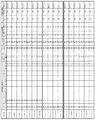
nブタノール 26重量%
イソプロピルアルコール 8重量%
MTBE 8重量%
エタノール 13重量%
ナフサ 43重量%
オクタン価 96.6(リサーチ法)
【0018】
(比較配合例2)
nブタノール 8重量%
イソプロピルアルコール 26重量%
MTBE 8重量%
エタノール 13重量%
ナフサ 43重量%
オクタン価 102.8(リサーチ法)
【0019】
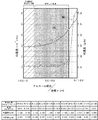
これらアルコールの合成燃料中の比率としては、これが25重量%を下回ると、図2に示すように、排出ガス中の一酸化炭素(CO)と炭化水素(HC)漸増し、15重量%を下回ると特に炭化水素(HC)が著しく増加してしまうし、混合アルコール成分の重量%が55重量%を上回ると、55重量%を越えるあたりから、得られる燃料をガソリンエンジン用の燃料として使用した場合においては、該ガソリンエンジンではアクセレーション(加減速)の変化が大きく、燃料の送り込み量がエンジンの回転の上昇に追随できない場合が生じるとともに、得られる燃料の燃焼速度が炭化水素とアルコールとで同期しない回転域を生じ易くなり、未燃焼の燃料と燃焼中の燃料とが排気系にまで流れ込んで走行に不具合が生じはじめ、その比率が75重量%を越えると、前記燃焼の非同期現象が一層激しくなって走行に支障をきたす場合があることから、これらアルコール比率としては、15〜75重量%の範囲、より好ましくは25〜55重量%の範囲とすれば良い。
【0020】
次いで、前記炭化水素としては飽和または不飽和炭化水素を好適に使用することができるが、該炭化水素分子中に含まれる炭素数が13を越えると、その揮発性が低下して着火装置の着火能力を低下させたり、燃焼時の残査による排気ガス中のCOやHCの濃度が上昇してしまうことから、これら燃焼時の残査による排気ガス中のCOやHCの濃度や着火装置の着火能力等を考慮して適宜に選択すれば良く、好ましくは、炭素原子数が9以下の飽和または不飽和炭化水素とすれば良い。その中でも、飽和炭化水素の混合物である軽質ナフサは、価格が安価であることから好適に使用することができる。
【0021】
これら軽質ナフサ中には、B(ベンゼン)、T(トルエン)、X(キシレン)等の芳香族炭化水素を含有するものが多いが、これら芳香族炭化水素の濃度が高いと、ガソリン燃料の場合と同様に、排気ガス中のCOやHCの濃度が上昇したり、これら有害なB(べンゼン)、T(トルエン)、X(キシレン)等の芳香族炭化水素自体が排気ガス中に排出されてしまう場合があることから、これらB(ベンゼン)、T(トルエン)、X(キシレン)等の芳香族炭化水素の各々の含有率が1%以下となるように精製したものを使用することが好ましい。
【0022】
また、これら軽質ナフサとしては、原油産地により内在する硫黄分濃度が大きく異なるが、これら硫黄分濃度が高いと、排気ガス中のSOxが増大してしまうことから、0.01%以下となるように脱硫することが好ましい。
【0023】
また、これら軽質ナフサとともに、昨今大量に処理に窮している廃プラスッティク類をリサイクル処理の一貫である油化したリサイクル油を初留点38〜60℃、終点180〜220℃まで分溜した再製油を使用することもできる。これらの再製油はプラスッティクの原料であるナフサの段階で脱硫されているので、排気ガス中のSOxをより一層低減する事もできる。
【0024】
これらリサイクル油を使用する場合は、初留点が38℃を下回ると、気温が低い場合や寒冷地では始動性が著しく低下してしまい、ガソリンと同等の始動性が得られなくなってしまうし、終点が220℃より高くなると、エンジン回転が高回転の時に、エンジンのパワーを設計値通りに発生させることができなくなってしまうことから、初留点38〜60℃、終点180〜220℃まで分溜した再製油とすることが好ましい。
【0025】
これら炭化水素成分の合成燃料中の比率としては、これら炭化水素比率が20重量%以下だとアルコール成分やエーテル成分が過度に多くなって、前記アルコール量が多い場合と同じく、燃焼速度が従来のガソリンとかけ離れた燃焼速度となってしまうようになり、自動車のように回転数の変化が多い内燃機関ではアクセレーションへの追随が悪くなってしまう。
【0026】
また、炭化水素比率が80重量%を超えると排気ガス中のCO、HC、NOxの減少効果が急激に少なくなってしまう。
【0027】
次いで、エーテル成分としては、分子中の炭素原子数が12以下であって該分子中に少なくとも1つのエーテル結合を有する少なくとも1種類のエーテルを使用することができる。
【0028】
これらエーテル成分の合成燃料中の比率としては、該エーテル比率が5重量%以下だと経年変化等で炭化水素成分とアルコール成分とが分離してしまうし、エーテル比率が30重量%以上だと燃料としてエーテル臭が発生することと、揮発性が大幅に上昇して燃料の蒸発量が多くなり燃料としての備蓄における損失が多くなることから、5〜30重量%とすれば良い。
【0029】
これら、配合するエーテルとしては、エーテル結合を少なくとも分子中に有するものであれば使用することができるが、これら使用するエーテル分子中の炭素数が多いと、エーテルの揮発性が低下するばかりか、アルコールと炭化水素との相溶性を向上させる能力が低下するとともに、その価格が高く、且つ燃料としての量の入手が難しいことから、その炭素数は12以下とすれば良い。
【0030】
また、これら炭素数が比較的多いエーテルを用いる場合には、前述のように、炭化水素とアルコールとの分離が生じやすくなってしまうことから、例えばジエチレングリコールジメチルエーテルや、エチレングリコールジエチルエーテルのように、その分子中にエーテル結合を2つ以上有するものとしたり、エチレングリコールモノエチルエーテルのように、該分子中にエーテル結合の他に水酸基(OH)を有するものを用いるようにすることで、極性の低下による炭化水素とアルコールとの分離を回避することが好ましく、これらの分子中に複数のエーテル結合や該エーテル結合の他に水酸基(OH)を有するものを用いることで、従来の低炭素数のエーテルと同等或いはそれ以上の分離防止効果を得るようにしても良い。
【0031】
また、これらエーテルとしては、単一のエーテルのみではなく、価格や、揮発性並びに前記炭化水素とアルコールとの相溶性の観点から、炭素数の少ないエーテルと炭素数の多いエーテルとを混合して使用するようにしても良い。
【0032】
また、これら配合する水の量としては、これら水の量が少ないと、得られる液体燃料が内燃機であるエンジンに供給される間に、燃料ホースや燃料噴射装置への供給パイプ中において、エンジンの切った状態にて通常期では80℃程度、夏期では100℃程度にもなり、これら温度にて供給パイプ、特にはアルミやアルミ合金等と接触していると、これらアルミやアルミ合金等が燃料中に溶出して腐食されてしまう場合があり、最悪の場合は、燃料が漏出して火災を生じる場合があるが、これらのアルミやアルミ合金等の溶出は、アルコールの内在しない液体燃料(ナフサ単体やとナフサとエーテル系の2成分系)では起きないことから、アルコールに起因しているものと考えられ、後述する実施例の各結果から、これら液体燃料中に内在するアルコールの総量Nに対し、0.2%以上(0.002×N)加えることで、前記通常期における80℃時の溶出を解消でき、更に、0.4%以上(0.004×N)加えることで、夏場の温度である100℃時の溶出を解消することができる。
【0033】
また、これら液体燃料に添加する水の量が、燃料中に含有するアルコールの総量に対して多く成りすぎると、水が単離して燃料が白濁したり、アルミ以外の他の金属、例えは銅や鉄等の腐食を生じてしまう等の問題があることから、液体燃料中に内在するアルコールの総量Nに対し、5.0%以下(0.05×N)とすることが好ましい。
【0034】
(実施例)
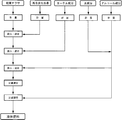
図1は、本実施例の内燃機関用液体燃料の製造方法を示すフロー図である。本発明の内燃機関用液体燃料は、少なくとも1種の脂肪族一価(一級)アルコール、飽和或いは不飽和炭化水素、分子中の炭素数が12以下であって、該分子中にエーテル結合を有するエーテルを含む単一成分または混合エーテル、並びに水とから主に構成されており、これら各原燃料を所定重量%に計量した後、比較的重量比率の大きく、極性の一番小さな前記炭化水素としての軽量ナフサに対し、まず前記脂肪族一級アルコールよりも極性の小さなエーテルを投入、混合する。
【0035】
また、これら軽量ナフサとエーテルの混合物に投入するアルコールには、予め該アルコールに対して前記0.2重量%〜5.0重量%の範囲内の所定比率の水を添加、混合しておき、該水を所定比率にて含有するアルコールを前記軽量ナフサとエーテルの混合物に投入することで、燃料中のアルコール成分に対して常時所定比率の水を含有する燃料を得られるようにしている。
【0036】
この際、前記アルコールとして2種以上のアルコールを使用する場合においては、前記水を添加する以前に予め異なるアルコールを混合しておき、該混合アルコールに水を添加するようにすれば良い。
【0037】
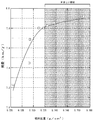
このアルコールを投入した後、混合した液体燃料の比重を測定し、該比重が0.735以上の所定比重(本実施例では0.755としている)以下である場合には、その比重が0.755となるように、前記アルコールを適宜に添加して比重を調整する。
【0038】
これら得られる燃料の比重と燃費との関係を図3に示す。この結果から、比重が0.735未満になると、燃費が従来のガソリンの燃費(7.83Km/リットル)に比較して著しく悪いのに対し、0.735以上とすることで、燃費がの変化曲線の傾きが減少し、従来のガソリンの燃費にほぼ近いものとなることから、これら得られる燃料の比重を0.735以上とすることで従来のガソリンにほぼ遜色ないか、或いはそれ以上の燃費を安定して得ることができるようになることが判ることから、使用するアルコールとしては、前記得られる燃料の比重を0.735以上となる適宜なアルコールの組み合わせを選択することが好ましいが、本発明はこれに限定されるものではない。
【0039】
以下、前記した製造方法による内燃機関用液体燃料において、種々のアルコールにて水の添加量並びにアルコールやエーテル等の配合比率を変化させた場合のアルミニウムの溶出量(重量減)や銅板の腐食試験結果を示す。
【0040】
尚、アルミニウムの溶出量(重量減)の試験方法、並びに銅板の腐食試験の試験方法は以下の通りである。
【0041】
<アルミニウムの溶出量試験>
▲1▼SUS製ボールミルポット(300ml)に試料燃料及び水(蒸留水)を所定量秤量し、全量で100mlとする。
▲2▼前記▲1▼容器に純アルミニウムサンプル片(A1050)を浸積させ、試料燃料に浸った条件でヤスリでアルミニウムサンプル片に5本程度の傷をつける。(アルミニウムサンプル片表面の酸化被膜を除去するため。)
▲3▼ボールミルポットの雰囲気ガスを窒素に置換し、素早くふたをする。
▲4▼80℃,100℃、120℃の各々に設定した定温乾燥器の中にボールミルポットを入れる。
▲5▼24時間経過したらボールミルポットを取り出し、ドラフト内で放冷する。
▲6▼アルミニウムサンプル片及び燃料液の変化を観察する。尚、重量減少が少ないが、部分変色、或いは孔食が見られた場合は、重量減が1に満たなくても1と表記した。
【0042】
<銅板の腐食試験>
▲1▼磁製ボールミルポット(300ml)に試料燃料及び水(蒸留水)を所定量秤量し、全量で100mlとする。
▲2▼前記▲1▼容器に銅板サンプル片を浸積させる。
▲3▼ボールミルポットの雰囲気ガスを窒素に置換し、素早くふたをする。
▲4▼60℃に設定した電気定温湯煎器の中にボールミルポットを入れる。
(温度はサーモメーター(TYPEK Thermo-couple)で定期的にモニタする)
▲5▼240時間経過したらボールミルポットを取り出し、ドラフト内で放冷する。
▲6▼金属サンプル片及び燃料液の変化を観察する。
【0043】
尚、得られた燃料の相溶性評価として、配合後、室温放置1時間後の燃料の状態並びに、冷凍庫(−11℃)へ入れ、1日放置後取りだし、燃料液の状態を観察し、相溶しているものは100、白濁しているものでは50、水が分離しているものは0として評価した。
【0044】
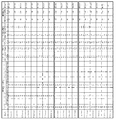
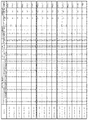
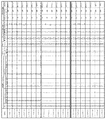
まず、使用するアルコールがエタノール単体の実施例を図4に示す。上段に示す配合は、エーテルの比率上限(30%)となる軽質ナフサとアルコールとエーテルの比率がほぼ均質な配合における水の添加量による影響を示すものであり、中段は、アルコールの量が最も少ない15重量%の配合例における水の添加量による影響を示すものであり、下段は、アルコールの量が最も多い75重量%の配合例における水の添加量による影響を示すものである。
【0045】
これらの結果から、まず、アルコールに対する水の添加量が少ない配合、例えば水が0や0.1%であるEE30−0.0やEE30−0.1等では、試験温度80℃において、溶出によるアルミニウム試験片の重量減少が見られるのに対し、アルコールに対する水の添加量が0.2を越えると、配合EE30−0.2の試験結果に見られるように、80℃だけではなく100℃における重量減少も認められず、アルミニウムの溶出が水の添加にて解消されているのが判る。
【0046】
これら水の添加によるアルミニウムの溶出防止は、燃料中に内在するアルコールの最も少ない15重量%の配合であるEE15の配合系でも、燃料中に内在するアルコールの最も大きい75重量%の配合であるEE75の配合系でも、内在するアルコールの相対的な量の違いにより、アルミニウムの減少量に違いはあるものの、ほぼ前記EE30の場合と同様に、水の添加量が0.2を越えると、80℃だけではなく100℃におけるアルミニウムの重量減少が認められなくなっており、依って、アルコール成分を15重量%〜75重量%、炭化水素成分を20〜80重量%、エーテル成分を5〜30重量%の範囲に関して、水の添加量が0.2%以上にてアルミニウムの溶出を抑えることができることが判る。
【0047】
また、燃料中に内在するアルコール量の最も大きい75重量%の配合であるEE75の配合系において、これら水の添加量を順次増やしていくと、水の添加量が少ない場合には、前記銅板の腐食試験における銅板腐食は起きていないのに対し、水の添加量が4.5%に達した場合に、銅板にかすかな赤化が見られ、5.0%では比較的明確な赤化が見られたことから、これらエタノールの場合には、エタノールの配合量が少ない場合には9%や7%の水を添加しても良いが、エタノールの内在量が多い場合には、添加する水の量を5.0%以下に留めることが好ましいことが判る。
【0048】
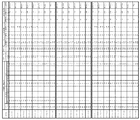
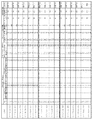
次いで、使用するアルコールがイソブチルアルコール(IBA)単体の実施例を図5に示す。前記エタノールの場合と同様に、上段に示す配合は、エーテルの比率上限(30%)となる軽質ナフサとアルコールとエーテルの比率がほぼ均質な配合における水の添加量による影響を示すものであり、中段は、IBAの量が最も少ない15重量%の配合例における水の添加量による影響を示すものであり、下段は、IBAの量が最も多い75重量%の配合例における水の添加量による影響を示すものである。
【0049】
これらの結果から、これらIBAに関しても、前記エタノールの場合と同様に、IBAに対する水の添加量が少ない配合、例えば水が0.0%や0.1%であるIB30−0.0やIB30−0.1等では、試験温度100℃において、溶出によるアルミニウム試験片の重量減少が見られるのに対し、IBAに対する水の添加量が0.2を越えると、配合IB30−0.2の試験結果に見られるように、100℃における重量減少も認められず、アルミニウムの溶出が水の添加にて解消されているのが判る。尚、前記エタノールとIBAの比較により、IBAは高温時におけるアルミニウムの溶出量がエタノールに比較して少ないことが判る。
【0050】
また、これら水の添加によるアルミニウムの溶出防止は、燃料中に内在するIBAの最も少ない15重量%の配合であるIB15の配合系でも、燃料中に内在するアルコールの最も大きい75重量%の配合であるIB75の配合系でも、内在するアルコールの相対的な量の違いにより、アルミニウムの減少量に違いはあるものの、ほぼ前記IB30の場合と同様に、水の添加量が0.2%を越えると、100℃におけるアルミニウムの重量減少が認められなくなっており、更に、水の添加量が0.3%を越えると、120℃におけるアルミニウムの重量減少が認められなくなっており、IBA成分を15重量%〜75重量%、炭化水素成分を20〜80重量%、エーテル成分を5〜30重量%の範囲に関して、水の添加量が0.2%以上にてアルミニウムの溶出を抑えることができることが判る。
【0051】
また、燃料中に内在するアルコール量の最も大きい75重量%の配合であるIB75の配合系において、これら水の添加量を順次増やしていくと前記エタノールの場合と同様に、水の添加量が少ない場合には、前記銅板の腐食試験における銅板腐食は起きていないのに対し、水の添加量が4.5%に達した場合に、銅板にかすかな赤化が見られ、5.0%では比較的明確な赤化が見られたことから、これらIBAの場合にも、添加する水の量を5.0%以下に留めることが安全上の観点から好ましいことが判る。
【0052】
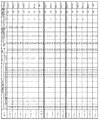
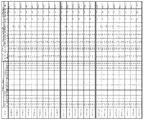
次いで、使用するアルコールとして、エタノールとイソブチルアルコール(IBA)の混合アルコールを用いた実施例を図6に示す。前記エタノール並びにIBAの単体の場合と同様に、上段に示す配合は、エーテルの比率上限(30%)となる軽質ナフサと混合アルコールとエーテルの比率がほぼ均質な配合における水の添加量による影響を示すものであり、中段は、混合アルコールの量が最も少ない15重量%の配合例における水の添加量による影響を示すものであり、下段は、混合アルコールの量が最も多い75重量%の配合例における水の添加量による影響を示すものである。
【0053】
これらの結果から、これら混合アルコールに関しても、前記エタノール単体やIBA単体の場合と同様に、混合アルコールに対する水の添加量が少ない配合、例えば水が0.0%や0.1%であるEI35−0.0やEI35−0.1等では、試験温度80℃において、溶出によるアルミニウム試験片の大きな重量減少が見られるのに対し、混合アルコールに対する水の添加量が0.2を越えると、配合EI35−0.2の試験結果に見られるように、80℃における重量減少が解消され、水の添加量が0.4を越えると、100℃における重量減少も認められず、アルミニウムの溶出が水の添加にて解消されているのが判る。
【0054】
また、これら水の添加によるアルミニウムの溶出防止は、燃料中に内在する混合アルコールの最も少ない15重量%の配合であるEI15の配合系でも、燃料中に内在するアルコールの最も大きい75重量%の配合であるEI75の配合系でも、内在するアルコールの相対的な量の違いにより、アルミニウムの減少量に違いはあるものの、ほぼ前記EI35の場合と同様に、水の添加量が0.2%を越えると、80℃における重量減少が、水の添加量が0.4%を越えると、100℃におけるアルミニウムの重量減少が認められなくなっており、更に、水の添加量が増加すると、120℃におけるアルミニウムの重量減少も認められなくなっていることから、これら混合アルコール成分を15重量%〜75重量%、炭化水素成分を20〜80重量%、エーテル成分を5〜30重量%の範囲に関して、水の添加量が0.2%以上にて80℃におけるアルミニウムの溶出が、水の添加量が0.4%以上にて100℃におけるアルミニウムの溶出を抑えることができることが判る。
【0055】
また、燃料中に内在する混合アルコール量の最も大きい75重量%の配合であるEI75の配合系において、これら水の添加量を順次増やしていくと、水の添加量が少ない場合には、前記銅板の腐食試験における銅板腐食は起きていないのに対し、水の添加量が4.5%に達した場合に、銅板にかすかな赤化が見られ、5.0%では比較的明確な赤化が見られたことから、これら混合アルコールの場合には、液体燃料中に含まれる混合アルコールの配合量が少ない場合には、配合EI35−7.0に見られるように、7%程度の水を添加しても良いが、混合アルコールの内在量が多い場合には、添加する水の量を5.0%以下に留めることが好ましいことが判る。
【0056】
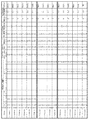
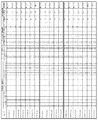
次いで、使用するアルコールとして、イソプロピルアルコール(IPA)とn−ブチルアルコール(NBA)の混合アルコールを用いた実施例を図7に示す。この場合も前記した混合アルコールの場合と同様に、上段に示す配合は、エーテルの比率上限(30%)となる軽質ナフサと混合アルコールとエーテルの比率がほぼ均質な配合における水の添加量による影響を示すものであり、中段は、混合アルコールの量が最も少ない15重量%の配合例における水の添加量による影響を示すものであり、下段は、混合アルコールの量が最も多い75重量%の配合例における水の添加量による影響を示すものである。
【0057】
これらの結果から、これら混合アルコールに関しても、前記したエタノールとIBAとの混合アルコールの場合と同様に、混合アルコールに対する水の添加量が少ない配合、例えば水が0.0%であるIN30−0.0では、試験温度80℃並びに100℃において、溶出によるアルミニウム試験片の大きな重量減少が見られるのに対し、混合アルコールに対して水の添加量を0.1%としたIN30−0.1では80℃における溶出が、水の添加量を0.2%としたIN30−0.2では100℃における溶出が解消され、水の添加量が0.5では、120℃における重量減少も認められず、アルミニウムの溶出が水の添加にて解消されているのが判る。
【0058】
また、これら水の添加によるアルミニウムの溶出防止は、燃料中に内在する混合アルコールの最も少ない15重量%の配合であるIN15の配合系でも、燃料中に内在するアルコールの最も大きい75重量%の配合であるIN75の配合系でも、内在するアルコールの相対的な量の違いにより、アルミニウムの減少量に違いはあるものの、ほぼ前記IN30の場合と同様に、水の添加量が0.2%を越えると、100℃までの重量減少が解消され、水の添加量が0.5%を越えると、120℃におけるアルミニウムの重量減少が認められなくなっていることから、これら混合アルコール成分を15重量%〜75重量%、炭化水素成分を20〜80重量%、エーテル成分を5〜30重量%の範囲に関して、水の添加量が0.2%以上にて100℃以下におけるアルミニウムの溶出が、更に、水の添加量が0.5%以上にて120℃におけるアルミニウムの溶出を抑えることができることが判る。
【0059】
また、燃料中に内在する混合アルコール量の最も大きい75重量%の配合であるIN75の配合系において、これら水の添加量を順次増やしていくと、水の添加量が少ない場合には、前記銅板の腐食試験における銅板腐食は起きていないのに対し、水の添加量が4.5%に達した場合に、銅板にかすかな赤化が見られ、5.0%では比較的明確な赤化が見られたことから、これら混合アルコールの場合には、液体燃料中に含まれる混合アルコールの配合量が少ない場合には、配合IN30−5.0に見られるように、5%程度の水を添加しても良いが、混合アルコールの内在量が多い場合には、添加する水の量を5.0%以下に留めることが好ましいことが判る。
【0060】
次いで、使用するアルコールとして、イソプロピルアルコール(IPA)とイソブチルアルコール(IBA)の混合アルコールを用いた実施例を図8に示す。この場合も前記した混合アルコールの場合と同様に、上段に示す配合は、エーテルの比率上限(30%)となる軽質ナフサと混合アルコールとエーテルの比率がほぼ均質な配合における水の添加量による影響を示すものであり、中段は、混合アルコールの量が最も少ない15重量%の配合例における水の添加量による影響を示すものであり、下段は、混合アルコールの量が最も多い75重量%の配合例における水の添加量による影響を示すものである。
【0061】
これらの結果から、これら混合アルコールに関しても、前記したエタノールとIBAとの混合アルコールの場合と同様に、混合アルコールに対する水の添加量が少ない配合、例えば水が0.0%や0.1%であるIPB40−0やIPB40−0.1では、試験温度100℃において、溶出によるアルミニウム試験片に少ないが重量減少が見られるのに対し、混合アルコールに対して水の添加量を0.2%としたIPB40−0.2では100℃における溶出が、水の添加量を0.4%としたIPB40−0.4では120℃における溶出が解消され、このように、アルミニウムの溶出が水の添加にて解消されているのが判る。尚、これら混合アルコールの双方に非直鎖系のアルコールを使用すると、少ない水の添加或いは、水の添加が無くても、アルミニウムの溶出量が少ないことは、注目すべき特徴であり、水の添加量を極力少なくしたい場合等には、これら非直鎖系の混合アルコールの配合は好適であることが判る。
【0062】
また、これら水の添加によるアルミニウムの溶出防止は、燃料中に内在する混合アルコールの最も少ない15重量%の配合であるIPB15の配合系(中段)でも、燃料中に内在するアルコールの最も大きい75重量%の配合であるIPB75の配合系(下段)でも、内在するアルコールの相対的な量の違いにより、アルミニウムの減少量に違いはあるものの、ほぼ前記IPB40の配合系(上段)の場合と同様に、水の添加量が0.2%を越えると、100℃までの重量減少が解消され、水の添加量が0.4%を越えると、120℃におけるアルミニウムの重量減少が認められなくなっていることから、これら混合アルコール成分を15重量%〜75重量%、炭化水素成分を20〜80重量%、エーテル成分を5〜30重量%の範囲に関して、水の添加量が0.2%以上にて100℃以下におけるアルミニウムの溶出が、更に、水の添加量が0.4%以上にて120℃におけるアルミニウムの溶出を抑えることができることが判る。
【0063】
また、燃料中に内在する混合アルコール量の最も大きい75重量%の配合であるIN75の配合系において、これら水の添加量を順次増やしていくと、水の添加量が少ない場合には、前記銅板の腐食試験における銅板腐食は起きていないのに対し、水の添加量が4.5%に達した場合に、銅板にかすかな赤化が見られ、5.0%では比較的明確な赤化が見られたことから、これら混合アルコールの内在量が多い場合には、添加する水の量を5.0%以下に留めることが好ましいことが判る。
【0064】
次いで、使用するアルコールとして、n−ブチルアルコール(NBA)とイソブチルアルコール(IBA)の混合アルコールを用いた実施例を図11に示す。この場合も前記した混合アルコールの場合と同様に、上段に示す配合は、エーテルの比率上限(30%)となる軽質ナフサと混合アルコールとエーテルの比率がほぼ均質な配合における水の添加量による影響を示すものであり、中段は、混合アルコールの量が最も少ない15重量%の配合例における水の添加量による影響を示すものであり、下段は、混合アルコールの量が最も多い75重量%の配合例における水の添加量による影響を示すものである。
【0065】
これらの結果から、これら混合アルコールに関しても、前記した各混合アルコールの場合と同様に、該混合アルコールに対する水の添加量が少ない配合、例えば水が0.0%や0.1%であるIBN30−0.0やIBN30−0.1では、試験温度80℃や100℃において、アルミニウム試験片に少ないが溶出による重量減少が見られるのに対し、混合アルコールに対して水の添加量を0.2%としたIBN30−0.2では80℃における溶出が、水の添加量を0.4%としたIBN30−0.4では100℃における溶出が解消され、更にIBN30−0.5では120℃における溶出が解消されていることから、アルミニウムの溶出が水の添加にて解消されていることが判る。
【0066】
また、これら水の添加によるアルミニウムの溶出防止は、燃料中に内在する混合アルコールの最も少ない15重量%の配合であるIBN15の配合系(中段)でも、燃料中に内在するアルコールの最も大きい75重量%の配合であるIBN75の配合系(下段)でも、内在するアルコールの相対的な量の違いにより、アルミニウムの減少量に違いはあるものの、ほぼ前記IBN30の配合系(上段)の場合と同様に、水の添加量が0.2%を越えると80℃までの重量減少が解消され、水の添加量が0.4%を越えると100℃におけるアルミニウムの重量減少が認められなくなり、更に水の添加量が0.5%を越えると120℃におけるアルミニウムの重量減少が認められなくなっていることから、これら混合アルコール成分を15重量%〜75重量%、炭化水素成分を20〜80重量%、エーテル成分を5〜30重量%の範囲に関して、水の添加量が0.2%以上にて80℃以下におけるアルミニウムの溶出が、更に、水の添加量が0.4%以上にて100℃におけるアルミニウムの溶出が、更に水の添加量が0.5%以上にて120℃におけるアルミニウムの溶出を抑えることができることが判る。
【0067】
また、燃料中に内在する混合アルコール量の最も大きい75重量%の配合であるIBN75の配合系において、これら水の添加量を順次増やしていくと、水の添加量が少ない場合には、前記銅板の腐食試験における銅板腐食は起きていないのに対し、水の添加量が4.5%に達した場合に、銅板にかすかな赤化が見られ、5.0%では比較的明確な赤化が見られたことから、これら混合アルコールの内在量が多い場合には、添加する水の量を5.0%以下に留めることが好ましいことが判る。
【0068】
次いで、使用するアルコールとして、イソプロピルアルコール(IPA)とn−ブチルアルコール(NBA)とイソブチルアルコール(IBA)の3種の混合アルコールを用いた実施例を図12に示す。
【0069】
これらの結果から、これら3種による混合アルコールに関しても、前記した各混合アルコールの場合と同様に、該混合アルコールに対する水の添加量が少ない配合、例えば水が0.0%や0.1%であるPNB30−0.0では、試験温度80℃や100℃において、アルミニウム試験片に少ないが溶出による重量減少が見られるのに対し、混合アルコールに対して水の添加量を0.2%としたPNB30−0.2では80℃における溶出が、水の添加量を0.3%としたPNB30−0.3では100℃における溶出が解消され、更にPNB30−0.5では120℃における溶出が解消されていることから、アルミニウムの溶出が水の添加にて解消されていることが判る。
【0070】
また、これら水の添加によるアルミニウムの溶出防止は、燃料中に内在する混合アルコールの最も少ない15重量%の配合であるPNB15の配合系(中段)でも、燃料中に内在するアルコールの最も大きい75重量%の配合であるPNB75の配合系(下段)でも、内在するアルコールの相対的な量の違いにより、アルミニウムの減少量に違いはあるものの、ほぼ前記PNB30の配合系(上段)の場合と同様に、水の添加量が0.2%を越えると80℃までの重量減少が解消され、水の添加量が0.4%を越えると100℃におけるアルミニウムの重量減少が認められなくなり、更に水の添加量が0.5%を越えると120℃におけるアルミニウムの重量減少が認められなくなっていることから、これら混合アルコール成分を15重量%〜75重量%、炭化水素成分を20〜80重量%、エーテル成分を5〜30重量%の範囲に関して、水の添加量が0.2%以上にて80℃以下におけるアルミニウムの溶出が、更に、水の添加量が0.4%以上にて100℃におけるアルミニウムの溶出が、更に水の添加量が0.5%以上にて120℃におけるアルミニウムの溶出を抑えることができることが判る。
【0071】
また、燃料中に内在する混合アルコール量の最も大きい75重量%の配合であるPNB75の配合系において、これら水の添加量を順次増やしていくと、水の添加量が少ない場合には、前記銅板の腐食試験における銅板腐食は起きていないのに対し、水の添加量が4.5%に達した場合に、銅板にかすかな赤化が見られ、5.0%では比較的明確な赤化が見られたことから、これら混合アルコールの内在量が多い場合には、添加する水の量を5.0%以下に留めることが好ましいことが判る。尚、燃料中に内在する混合アルコールの量が比較的少ない場合であれば、例えば配合PNB30−7.0に示すように、5.0%以上の水を添加しても良い。
【0072】
次いで、使用するアルコールとして、直鎖系アルコールであるエタノールと炭素数5のn−ペンタノールと、炭素数6のn−ヘキサノールの3種の混合アルコールを用いた実施例を図13に示す。
【0073】
これらの結果から、これら3種による混合アルコールに関しても、前記した各混合アルコールの場合と同様に、該混合アルコールに対する水の添加量が少ない配合、例えば水が0.0であるEPO30−0.0では、試験温度80℃において、アルミニウム試験片に少ないが溶出による重量減少が見られるのに対し、混合アルコールに対して水の添加量を0.1%としたEPO30−0.1では80℃における溶出が、水の添加量を0.3%としたEPO30−0.4では100℃における溶出が解消され、更にEPO30−1.2では120℃における溶出が解消されていることから、アルミニウムの溶出が水の添加にて解消されていることが判る。
【0074】
また、これら水の添加によるアルミニウムの溶出防止は、燃料中に内在する混合アルコールの最も少ない15重量%の配合であるEPO15の配合系(中段)でも、燃料中に内在するアルコールの最も大きい75重量%の配合であるEPO75の配合系(下段)でも、内在するアルコールの相対的な量の違いにより、アルミニウムの減少量に違いはあるものの、ほぼ前記EPO30の配合系(上段)の場合と同様に、水の添加量が0.1或いは0.2%を越えると80℃までの重量減少が解消され、水の添加量が0.4%を越えると100℃におけるアルミニウムの重量減少が認められなくなり、更に水の添加量が1.2%を越えると120℃におけるアルミニウムの重量減少が認められなくなっていることから、これら混合アルコール成分を15重量%〜75重量%、炭化水素成分を20〜80重量%、エーテル成分を5〜30重量%の範囲に関して、水の添加量が0.2%以上にて80℃以下におけるアルミニウムの溶出が、更に、水の添加量が0.4%以上にて100℃におけるアルミニウムの溶出が、更に水の添加量が1.2%以上にて120℃におけるアルミニウムの溶出を抑えることができることが判り、炭素数6までのアルコールに関しても、前記水の添加による効果があるものと判断できる。
【0075】
また、燃料中に内在する混合アルコール量の最も大きい75重量%の配合であるEPO75の配合系において、これら水の添加量を順次増やしていくと、水の添加量が少ない場合には、前記銅板の腐食試験における銅板腐食は起きていないのに対し、水の添加量が4.5%に達した場合に、銅板にかすかな赤化が見られ、5.0%では比較的明確な赤化が見られたことから、これら混合アルコールの内在量が多い場合には、添加する水の量を5.0%以下に留めることが好ましいことが判る。
【0076】
次いで、使用するアルコールとして、エタノールとイソブチルアルコール(IBA)と炭素数5のn−ペンタノールとの3種の混合アルコールを用いた実施例を図14に示す。
【0077】
これらの結果から、これら3種による混合アルコールに関しても、前記した各混合アルコールの場合と同様に、該混合アルコールに対する水の添加量が少ない配合、例えば水が0や0.1%であるEIP30−0.0やEIP30−0.1では、試験温度80℃や100℃において、アルミニウム試験片に溶出による重量減少が見られるのに対し、混合アルコールに対して水の添加量を0.2%としたEIP30−0.2では80℃における溶出が、水の添加量を0.4%としたEIP30−0.4では100℃における溶出が解消され、更にPNB30−0.9では120℃における溶出が解消されていることから、アルミニウムの溶出が水の添加にて解消されていることが判る。
【0078】
また、これら水の添加によるアルミニウムの溶出防止は、燃料中に内在する混合アルコールの最も少ない15重量%の配合であるEIP15の配合系(中段)でも、燃料中に内在するアルコールの最も大きい75重量%の配合であるEIP75の配合系(下段)でも、内在するアルコールの相対的な量の違いにより、アルミニウムの減少量に違いはあるものの、ほぼ前記EIP30の配合系(上段)の場合と同様に、水の添加量が0.2%を越えると80℃までの重量減少が解消され、水の添加量が0.4%を越えると100℃におけるアルミニウムの重量減少が認められなくなり、更に水の添加量が0.9%を越えると120℃におけるアルミニウムの重量減少が認められなくなっていることから、これら混合アルコール成分を15重量%〜75重量%、炭化水素成分を20〜80重量%、エーテル成分を5〜30重量%の範囲に関して、水の添加量が0.2%以上にて80℃以下におけるアルミニウムの溶出が、更に、水の添加量が0.4%以上にて100℃におけるアルミニウムの溶出が、更に水の添加量が0.9%以上にて120℃におけるアルミニウムの溶出を抑えることができることが判る。
【0079】
また、燃料中に内在する混合アルコール量の最も大きい75重量%の配合であるEIP75の配合系において、これら水の添加量を順次増やしていくと、水の添加量が少ない場合には、前記銅板の腐食試験における銅板腐食は起きていないのに対し、水の添加量が4.5%に達した場合に、銅板にかすかな赤化が見られ、5.0%では比較的明確な赤化が見られたことから、これら混合アルコールの内在量が多い場合には、添加する水の量を5.0%以下に留めることが好ましいことが判る。尚、燃料中に内在する混合アルコールの量が比較的少ない場合であれば、例えば配合EIP30−7.0に示すように、5.0%以上の水を添加しても良い。
【0080】
次いで、使用するアルコールとしては、図8に示す前記イソプロピルアルコール(IPA)とイソブチルアルコール(IBA)の混合アルコールを用い、使用するエーテルを前記メチルターシャリーブチルエーテル(MTBE)からエチルターシャリーブチルエーテル(ETBE)又はジブチルエーテル(DBE)に代えた実施例を図9並びに図10に示す。この場合も前記した図8に示すMTBEに示す結果とほぼ同様の結果が得られることが判り、これらエーテルの違いによる水添加への影響が殆ど無いことが判る。
【0081】
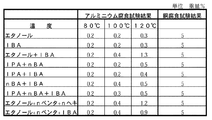
以上に示す図4〜図14の実施結果から、各アルコールにおける各試験温度にてアルミニウムの溶出を生じない最低の水添加量と、銅板の腐食を生じる上限の水添加量についてまとめると、図15に示すようになり、ほぼ全てのアルコールの組み合わせ、並びにアルコール配合量の上下限において、含有されるアルコールに対し、水を0.2%以上添加することで、80℃までのアルミニウムの溶出を防止でき、約0.4%以上添加することで、100℃までのアルミニウムの溶出を防止できることが判る。
【0082】
以上、本発明の実施形態を前記実施例にて説明してきたが、本発明はこれら実施例に限定されるものではなく、本発明の主旨を逸脱しない範囲における変更や追加、つまりは、本発明の内燃機関用燃料の特性が大幅に変わることのない範囲にて他の原燃料や添加剤(金属等を含む)を加える事等は任意とされ、これらの内燃機関用燃料も本発明に含まれることは言うまでもない。
【0083】
【発明の効果】
本発明は次の効果を奏する。
(a)請求項1の発明によれば、得られる燃料中に炭素原子数が1つのメタノ−ルを含まないことから、これら極性の大きなメタノ−ルによる燃料パイプや給油ホ−スの膨潤や損傷、または寿命の低下の問題を解消することができるとともに、燃料中に含まれるアルコール成分N重量%に対して、0.002×N重量%以上の水を添加することにより、金属、特にはアルミやアルミ合金等の腐食(溶出)を著しく抑えることが可能となる。
【0084】
(b)請求項2の発明によれば、前記添加される水の量が液体燃料中の前記アルコール成分N重量%に対して0.004×N重量%以上とすることで、得られる液体燃料が、夏場等において、エンジンルーム中の燃料パイプ内において100℃程度になる場合であっても、金属、特にはアルミやアルミ合金等の腐食(溶出)を、ほぼ皆無にすることができる。
【0085】
(c)請求項3の発明によれば、前記添加される水の量が液体燃料中の前記アルコール成分N重量%に対して0.05×N重量%以上となると、燃料中において添加された水が単離する場合があるばかりか、銅等の金属の腐食を生じる場合があることから、これらこれら単離した水による不具合や銅等の金属の腐食等を回避できるようになる。
【0086】
(d)請求項4の発明によれば、アルコール成分中に2種類以上の異なるアルコールを含むようにすることにより、飽和または不飽和炭化水素成分として使用する軽質ナフサやリサイクル炭化水素の組成のばらつきによる合成燃料の比重のばらつきを、これら複種のアルコールの比率を適宜に変化させることで調節できるようになる。
【0087】
(e)請求項5の発明によれば、同じ炭素数の直鎖系のアルコ−ルを用いた場合よりも高いオクタン価を得ることができる。
【0088】
(f)請求項6の発明によれば、前記の組み合わせは、前記水の添加範囲において金属、特にはアルミやアルミ合金等の腐食(溶出)に関して良好な特性を示しており、本発明のアルコール成分として好適に用いることができる。
【図面の簡単な説明】
【図1】本発明の実施例における内燃機関用低公害液体燃料の製造方法を示すフロー図である。
【図2】液体燃料中のアルコールと炭化水素成分の比率と排出ガス中の汚染ガス濃度との関係を示すグラフである。
【図3】得られる燃料の比重と燃費との関係を示すグラフである。
【図4】本発明のアルコールとしてエタノールを用いた試験結果を示す図である。
【図5】本発明のアルコールとしてイソブチルアルコールを用いた試験結果を示す図である。
【図6】本発明のアルコールとしてエタノールとイソブチルアルコールを用いた試験結果を示す図である。
【図7】本発明のアルコールとして、イソプロピルアルコールとn−ブチルアルコールを用いた試験結果を示す図である。
【図8】本発明のアルコールとして、イソプロピルアルコールとイソブチルアルコールを用いた試験結果を示す図である。
【図9】本発明のエーテルとして、エチルターシャリーブチルエーテル(ETBE)を用いた試験結果を示す図である。
【図10】本発明のエーテルとして、ジブチルエーテル(DBE)を用いた試験結果を示す図である。
【図11】本発明のアルコールとして、n−ブチルアルコールとイソブチルアルコールを用いた試験結果を示す図である。
【図12】本発明のアルコールとして、イソプロピルアルコールとn−ブチルアルコールとイソブチルアルコールを用いた試験結果を示す図である。
【図13】本発明のアルコールとして、エタノールとn−ペンタノールとn−ヘキサノールを用いた試験結果を示す図である。
【図14】本発明のアルコールとして、エタノールとイソブチルアルコールとn−ペンタノールを用いた試験結果を示す図である。
【図15】本発明の各アルコールの試験結果の集計内容を示す図である。[0001]
BACKGROUND OF THE INVENTION
The present invention does not require a change in the structure or material of an existing gasoline internal combustion engine, and can achieve efficiency and output equivalent to or higher than that of conventional gasoline, and carbon monoxide (CO) in exhaust gas. The present invention relates to an improved low-pollution liquid fuel and a method for producing the same that can significantly reduce the concentration of hydrocarbons (HC) compared to conventional gasoline and also reduce the reduction of nitrogen oxide (NOx) concentration in exhaust gas.
[0002]
[Prior art]
As part of efforts to address environmental issues in recent years, the problem of air pollution caused by automobile exhaust gases has become more important, and carbon monoxide (CO) and hydrocarbons in these automobile exhaust gases As a fuel for an internal combustion engine that can be used in place of conventional gasoline, the concentration of (HC) is significantly reduced, as the present inventor filed earlier, a mixture of light naphtha and alcohol and ether. Already commercialized and sold.
[0003]
[Problems to be solved by the invention]
Synthetic liquid fuels in which alcohol and ether are mixed with light naphtha, as described above, together with carbon monoxide (CO) and hydrocarbon (HC), alcohol and the like are substantially sulfur components compared to light naphtha and the like. Although it is preferable because SOx can be reduced because it is very small, the component contains inexpensive but large polarity methanol, so that it can be used for a long period of time, so that it is a fuel supply that is an accessory part of an internal combustion engine. There has been a problem that the rubber pipe is swollen and has a negative effect due to a change in fuel pressure, or the strength of the fuel pipe is reduced and broken. Similarly, rubber hoses and packings used in gas station refuelers are also swollen and have a problem that their service life is reduced, which is a major obstacle to the spread of these new alternative fuels. It was.
[0004]
Furthermore, in addition to the swelling of these rubber hoses and packings, in recent years, these synthetic liquid fuels contain a relatively high concentration of alcohol. In contact with metals, particularly aluminum and aluminum alloys, there is a problem that these aluminum and aluminum alloys corrode (elute) during long-term use and cause failure.
[0005]
Therefore, the present invention has been made paying attention to the above-mentioned problems, and does not cause problems such as swelling and damage of these fuel pipes and oil supply hose, or a decrease in service life, and metal, particularly aluminum or An object of the present invention is to provide a fuel for an internal combustion engine that is extremely practical and does not cause corrosion (elution) of an aluminum alloy or the like.
[0006]
[Means for Solving the Problems]
In order to achieve the above object, the low-pollution liquid fuel for internal combustion engines of the present invention comprises 15% by weight of an aliphatic monovalent alcohol alone or a mixed alcohol component having 2 to 6 carbon atoms in the molecule. 75% by weight, 20 to 80% by weight of a saturated or unsaturated hydrocarbon component, 5 at least one ether component having 12 or less carbon atoms in the molecule and having at least one ether bond in the molecule When the alcohol component in the low-pollution liquid fuel for internal combustion engines is N wt%, the water content is 0.002 x N wt% or more. Is added to a low-pollution liquid fuel for internal combustion engines.
According to this feature, since the obtained fuel does not contain a methanol having one carbon atom, the fuel pipe and the fuel hose are swollen and damaged by the methanol having a large polarity, or the life is shortened. In addition to eliminating N2% by weight of the alcohol component contained in the fuel, 0.002 × N% by weight or more of water is added to the metal, particularly aluminum or aluminum alloy. Corrosion (elution) can be remarkably suppressed.
[0007]
The low-pollution liquid fuel for internal combustion engines of the present invention is such that the amount of water added to the low-pollution liquid fuel for internal combustion engines is N% by weight of the alcohol component in the low-pollution liquid fuel for internal combustion engines. 0.004 × N wt% or more is preferable.
In this way, when the amount of the added water is 0.004 × N wt% or more with respect to N wt% of the alcohol component in the liquid fuel, the obtained liquid fuel can be used in summer, etc. Even when the temperature is about 100 ° C. in the fuel pipe in the engine room, the corrosion (elution) of metals, particularly aluminum and aluminum alloys, can be almost eliminated.
[0008]
The low-pollution liquid fuel for internal combustion engines of the present invention is such that the amount of water added to the low-pollution liquid fuel for internal combustion engines is N% by weight of the alcohol component in the low-pollution liquid fuel for internal combustion engines. 0.05 × N wt% or less is preferable.
In this case, when the amount of the added water is 0.05 × N wt% or more with respect to N wt% of the alcohol component in the liquid fuel, the water added in the fuel is isolated. Moreover, since corrosion of metals such as copper may occur, it is possible to avoid such troubles due to the isolated water and corrosion of metals such as copper.
[0009]
In the low-pollution liquid fuel for internal combustion engines of the present invention, the alcohol component is preferably a mixed alcohol composed of at least two different alcohol components. In this way, by including two or more different alcohols in the alcohol component, the specific gravity of the synthetic fuel due to variations in the composition of light naphtha and recycled hydrocarbons used as saturated or unsaturated hydrocarbon components can be reduced. The variation can be adjusted by appropriately changing the ratio of these two kinds of alcohols.
[0010]
In the low-pollution liquid fuel for an internal combustion engine of the present invention, it is preferable that at least one of the aliphatic monovalent alcohols is a non-linear alcohol.
In this way, a higher octane number can be obtained than when a linear alcohol having the same carbon number is used.
[0011]
In the low-pollution liquid fuel for an internal combustion engine of the present invention, the alcohol component is isobutyl alcohol, ethanol + isobutyl alcohol, isopropyl alcohol + normal butyl alcohol, isopropyl alcohol + isobutyl alcohol, normal butyl alcohol + isobutyl alcohol, isopropyl alcohol + normal butyl. It is preferably either alcohol + isobutyl alcohol.
In this way, the above combination shows good characteristics with respect to the corrosion (elution) of metals, particularly aluminum and aluminum alloys in the water addition range, and is preferably used as the alcohol component of the present invention. Can do.
[0012]
DETAILED DESCRIPTION OF THE INVENTION
About each of these alcohols, linear hydrocarbons, ethers, and water to be blended, the content ratio in the obtained synthetic liquid fuel, what can be suitably used, and the reasons thereof will be described below.
[0013]
First, as the alcohol, a linear or non-linear alcohol having 2 to 6 carbon atoms in the alcohol molecule can be preferably used. A synthetic liquid obtained by using an alcohol having more carbon atoms than ethyl alcohol having 2 carbon atoms in the molecule and not using methanol, which is an alcohol having 1 carbon atom having a significantly large polarity, as these alcohols. It becomes possible to avoid that the polarity of the whole fuel becomes large and that the methanol having a large polarity separates and swells the rubber pipe for supplying fuel.
[0014]
These alcohols include glycols having a plurality of hydroxyl groups in the molecule, but these secondary and tertiary polyhydric alcohols are expensive and difficult to obtain. It is preferable to use a primary alcohol (monovalent).
[0015]
Further, if the number of carbon atoms in the molecular chain contained in these alcohol molecules is 7 or more, particularly more than 10, the volatility at normal room temperature or low temperature is greatly reduced, and the combustion time in combustion is reduced. Since it tends to be long, a difference from the combustion rate of hydrocarbons is likely to occur, making it unsuitable as a gasoline substitute fuel. Therefore, when considering the low temperature, especially when the carbon number is 10 or less, 6 or less is preferable.
[0016]
Further, as these alcohols, not only alcohol alone but also appropriate 2 to 5 kinds of alcohols which are different depending on the price, availability, plant capacity and the like can be mixed and used. By using two or more kinds of different alcohols together in this way, the ratio of these alcohols can be changed appropriately by varying the specific gravity of the synthetic fuel due to variations in the composition of light naphtha and recycled hydrocarbons used as liquid fuel. In addition to being able to adjust, the burning rate is somewhat different for each alcohol, so combining these alcohols makes it possible to match the burning rate with gasoline and use facilities for these gasolines From the viewpoint of work, the combination of these alcohols is suitably selected from ethanol, isopropyl alcohol (IPA), isobutyl alcohol (IBA), butyl alcohol, pentanol, hexanol and the like from the viewpoint of price and volatility. Can be combined In particular, the use of a non-linear aliphatic monohydric alcohol uses n-butanol as a linear alcohol and isopropyl alcohol as a non-linear alcohol, both of which have the same carbon number, As seen in the following formulation examples in which the amounts are reversed, the octane number obtained can be improved, but the present invention is not limited to this.
[0017]
(Comparative Formulation Example 1)
nButanol 26% by weight
Isopropyl alcohol 8% by weight
MTBE 8% by weight
Ethanol 13% by weight
Naphtha 43% by weight
Octane number 96.6 (Research method)
[0018]
(Comparative Formulation Example 2)
nButanol 8% by weight
Isopropyl alcohol 26% by weight
MTBE 8% by weight
Ethanol 13% by weight
Naphtha 43% by weight
Octane number 102.8 (Research method)
[0019]
As the ratio of these alcohols in the synthetic fuel, if this is less than 25% by weight, as shown in FIG. 2, the carbon monoxide (CO) and hydrocarbon (HC) in the exhaust gas gradually increase and fall below 15% by weight. In particular, hydrocarbon (HC) will increase remarkably, and if the mixed alcohol component exceeds 55% by weight, the resulting fuel will be used as a fuel for gasoline engines. In the gasoline engine, the acceleration (acceleration / deceleration) changes greatly in the gasoline engine, and there is a case where the amount of fuel fed cannot follow the increase in engine rotation, and the combustion speed of the obtained fuel is synchronized between hydrocarbon and alcohol. Rotation range does not easily occur, and unburned fuel and burning fuel flow into the exhaust system, causing problems in running, and the ratio is If it exceeds 5% by weight, the asynchronous phenomenon of combustion may become more severe, which may hinder driving. Therefore, the alcohol ratio is in the range of 15 to 75% by weight, more preferably 25 to 55% by weight. It may be in the range.
[0020]
Next, a saturated or unsaturated hydrocarbon can be suitably used as the hydrocarbon. However, when the number of carbons contained in the hydrocarbon molecule exceeds 13, the volatility is lowered and the ignition device is ignited. Since the concentration of CO and HC in exhaust gas increases due to a decrease in capacity and the residue during combustion, the concentration of CO and HC in the exhaust gas due to the residue during combustion and ignition of the ignition device It may be selected as appropriate in consideration of capacity and the like, and preferably a saturated or unsaturated hydrocarbon having 9 or less carbon atoms. Among these, light naphtha, which is a mixture of saturated hydrocarbons, can be suitably used because of its low cost.
[0021]
Many of these light naphthas contain aromatic hydrocarbons such as B (benzene), T (toluene), and X (xylene). However, if the concentration of these aromatic hydrocarbons is high, As with, the concentration of CO and HC in the exhaust gas increases, and these harmful aromatic hydrocarbons such as B (benzene), T (toluene), and X (xylene) themselves are discharged into the exhaust gas. Therefore, it is necessary to use those purified so that the content of each of these aromatic hydrocarbons such as B (benzene), T (toluene), and X (xylene) is 1% or less. preferable.
[0022]
In addition, these light naphthas vary greatly in the concentration of sulfur contained in crude oil production areas, but if these sulfur concentrations are high, SOx in the exhaust gas will increase, so that it will be 0.01% or less. It is preferable to desulfurize.
[0023]
In addition to these light naphthas, waste plastics that are currently being processed in large quantities have been recycled into oily recycled oil that is consistent with the recycling process, with an initial boiling point of 38-60 ° C and an end point of 180-220 ° C. Oil refinement can also be used. Since these regenerated oils are desulfurized at the stage of naphtha which is a plastic raw material, SOx in the exhaust gas can be further reduced.
[0024]
When using these recycled oils, if the initial boiling point is below 38 ° C., the startability will be significantly reduced when the temperature is low or in cold regions, and startability equivalent to gasoline will not be obtained, If the end point is higher than 220 ° C, the engine power cannot be generated as designed when the engine speed is high. Therefore, the initial boiling point is 38 to 60 ° C and the end point is 180 to 220 ° C. It is preferable to make it a regenerated oil.
[0025]
As a ratio of these hydrocarbon components in the synthetic fuel, if the hydrocarbon ratio is 20% by weight or less, the alcohol component and the ether component are excessively increased, and the combustion rate is the same as in the case where the amount of alcohol is large. The combustion speed is far from gasoline, and an internal combustion engine with a large change in the number of revolutions, such as an automobile, is less likely to follow acceleration.
[0026]
Further, when the hydrocarbon ratio exceeds 80% by weight, the reduction effect of CO, HC and NOx in the exhaust gas is drastically reduced.
[0027]
Next, as the ether component, at least one ether having 12 or less carbon atoms in the molecule and having at least one ether bond in the molecule can be used.
[0028]
As a ratio of these ether components in the synthetic fuel, if the ether ratio is 5% by weight or less, the hydrocarbon component and the alcohol component are separated due to secular change or the like, and if the ether ratio is 30% by weight or more, the fuel is separated. As the ether odor is generated and the volatility increases significantly, the amount of fuel evaporation increases and the loss in the stockpile as fuel increases.
[0029]
These ethers to be blended can be used as long as they have at least an ether bond in the molecule. However, if the number of carbon atoms in the ether molecule used is large, not only the volatility of the ether decreases, The ability to improve the compatibility between alcohol and hydrocarbon is reduced, the price is high, and it is difficult to obtain the amount as a fuel, so the carbon number may be 12 or less.
[0030]
In addition, when using an ether having a relatively large number of carbon atoms, separation of hydrocarbon and alcohol is likely to occur as described above. For example, like diethylene glycol dimethyl ether and ethylene glycol diethyl ether, By having two or more ether bonds in the molecule, or using one having a hydroxyl group (OH) in addition to the ether bond in the molecule, such as ethylene glycol monoethyl ether, It is preferable to avoid separation of hydrocarbon and alcohol due to lowering, and by using those having a plurality of ether bonds or a hydroxyl group (OH) in addition to the ether bonds in these molecules, the conventional low carbon number You may make it acquire the separation prevention effect equivalent to or more than ether.
[0031]
These ethers are not only a single ether but also a mixture of a low-carbon ether and a high-carbon ether in view of price, volatility and compatibility between the hydrocarbon and the alcohol. It may be used.
[0032]
In addition, as the amount of water to be blended, if the amount of water is small, while the liquid fuel obtained is supplied to the engine which is an internal combustion engine, In a cut state, the temperature is about 80 ° C in the normal period and about 100 ° C in the summer, and if these pipes are in contact with the supply pipe, particularly aluminum or aluminum alloy, at these temperatures, the aluminum or aluminum alloy is fuel. In the worst case, the fuel may leak and cause a fire, but the elution of these aluminum and aluminum alloys is a liquid fuel that does not contain alcohol (naphtha). Since it does not occur in a simple substance or two-component system of naphtha and ether), it is considered to be caused by alcohol. From each result of Examples described later, it is inherent in these liquid fuels. By adding 0.2% or more (0.002 × N) to the total amount N of alcohol, elution at 80 ° C. in the normal period can be eliminated, and 0.4% or more (0.004 × N) By adding, elution at 100 ° C., which is a summer temperature, can be eliminated.
[0033]
Also, if the amount of water added to these liquid fuels is too large relative to the total amount of alcohol contained in the fuel, the water will become isolated and the fuel will become cloudy, or other metals other than aluminum, such as copper Therefore, it is preferable to set the amount to 5.0% or less (0.05 × N) with respect to the total amount N of alcohol contained in the liquid fuel.
[0034]
(Example)
FIG. 1 is a flowchart showing a method of manufacturing a liquid fuel for an internal combustion engine according to this embodiment. The liquid fuel for an internal combustion engine of the present invention has at least one aliphatic monovalent (primary) alcohol, saturated or unsaturated hydrocarbon, a molecule having 12 or less carbon atoms, and an ether bond in the molecule. It is mainly composed of a single component or a mixed ether containing ether, and water, and after weighing each raw fuel to a predetermined weight percent, the hydrocarbon having a relatively large weight ratio and the smallest polarity is used. First, an ether having a smaller polarity than the aliphatic primary alcohol is added to and mixed with the light naphtha.
[0035]
In addition, to the alcohol to be added to the mixture of these lightweight naphtha and ether, water in a predetermined ratio within the range of 0.2 wt% to 5.0 wt% with respect to the alcohol is previously added and mixed. By introducing an alcohol containing the water in a predetermined ratio into the light naphtha and ether mixture, a fuel containing a predetermined ratio of water is always obtained with respect to the alcohol component in the fuel.
[0036]
In this case, when two or more kinds of alcohols are used as the alcohol, different alcohols may be mixed in advance before adding the water, and water may be added to the mixed alcohol.
[0037]
After the alcohol is added, the specific gravity of the mixed liquid fuel is measured, and when the specific gravity is equal to or less than a predetermined specific gravity of 0.735 (in this embodiment, 0.755), the specific gravity is 0.7. The specific gravity is adjusted by appropriately adding the alcohol so as to be 755.
[0038]
FIG. 3 shows the relationship between the specific gravity of the obtained fuel and the fuel consumption. From this result, when the specific gravity is less than 0.735, the fuel efficiency is remarkably worse than that of the conventional gasoline (7.83 Km / liter). Since the slope of the curve is reduced and the fuel consumption of the conventional gasoline is almost the same, the fuel density obtained by setting the specific gravity of these fuels to 0.735 or more is almost the same as that of conventional gasoline, or more than that. From the above, it is preferable to select an appropriate alcohol combination that makes the obtained fuel have a specific gravity of 0.735 or more. The invention is not limited to this.
[0039]
Hereinafter, in the liquid fuel for an internal combustion engine by the above-described production method, the amount of water dissolved in various alcohols and the aluminum elution amount (weight reduction) and the corrosion test of the copper plate when the blending ratio of alcohol, ether, etc. is changed. Results are shown.
[0040]
In addition, the test method of the elution amount (weight reduction) of aluminum and the test method of the corrosion test of a copper plate are as follows.
[0041]
<Aluminum dissolution test>
{Circle around (1)} A predetermined amount of sample fuel and water (distilled water) are weighed into a SUS ball mill pot (300 ml) to make a total volume of 100 ml.
(2) Pure aluminum sample piece (A1050) is immersed in the container (1), and the aluminum sample piece is scratched with a file under the condition of being immersed in the sample fuel. (To remove the oxide film on the surface of the aluminum sample piece.)
(3) Replace the atmosphere gas in the ball mill pot with nitrogen and quickly close the lid.
(4) Place the ball mill pot in a constant temperature drier set at 80 ° C, 100 ° C and 120 ° C.
(5) After 24 hours, take out the ball mill pot and let it cool in a fume hood.
(6) Observe changes in the aluminum sample piece and the fuel liquid. In addition, although there was little weight loss, when partial discoloration or pitting corrosion was seen, even if weight loss was less than 1, it described with 1.
[0042]
<Corrosion test of copper plate>
{Circle around (1)} A predetermined amount of sample fuel and water (distilled water) are weighed into a magnetic ball mill pot (300 ml) to make a total amount of 100 ml.
(2) The copper plate sample piece is immersed in the container (1).
(3) Replace the atmosphere gas in the ball mill pot with nitrogen and quickly close the lid.
(4) Place the ball mill pot in an electric constant temperature water bath set at 60 ° C.
(Temperature is monitored regularly with a thermometer (TYPEK Thermo-couple))
(5) When 240 hours have elapsed, the ball mill pot is taken out and allowed to cool in a fume hood.
(6) Observe changes in metal sample pieces and fuel liquid.
[0043]
In addition, as a compatibility evaluation of the obtained fuel, after blending, the state of the fuel after 1 hour at room temperature and the state of the fuel after putting it in a freezer (-11 ° C) and leaving it for 1 day were observed, and the state of the fuel liquid was observed. The dissolved one was evaluated as 100, the white turbid one as 50, and the water separated as zero.
[0044]
First, FIG. 4 shows an example in which the alcohol used is ethanol alone. The composition shown in the upper part shows the influence of the amount of water added in the composition in which the ratio of light naphtha, which is the upper limit of ether ratio (30%), and the ratio of alcohol to ether is almost homogeneous. The effect of the amount of water added in a small blending example of 15% by weight is shown, and the lower part shows the effect of the amount of water added in a blending example of 75% by weight with the largest amount of alcohol.
[0045]
From these results, first, in a formulation with a small amount of water added to the alcohol, such as EE30-0.0 or EE30-0.1 in which water is 0 or 0.1%, elution occurs at a test temperature of 80 ° C. While the weight loss of the aluminum test piece is observed, when the amount of water added to the alcohol exceeds 0.2, as seen in the test result of Formulation EE30-0.2, not only at 80 ° C. but also at 100 ° C. No decrease in weight is observed, and it can be seen that elution of aluminum is eliminated by the addition of water.
[0046]
The prevention of aluminum elution by the addition of these waters is achieved even in the blending system of EE15, which is a blend of 15% by weight of the least alcohol present in the fuel, and EE75, which is a blend of 75% by weight of the largest alcohol in the fuel. Even in the case of the blending system of, although there is a difference in the reduction of aluminum due to the difference in the relative amount of the alcohol present, when the addition amount of water exceeds 0.2 as in the case of EE30, Not only the weight loss of aluminum at 100 ° C. but also 15 to 75% by weight of alcohol component, 20 to 80% by weight of hydrocarbon component and 5 to 30% by weight of ether component. Regarding the range, it can be seen that the elution of aluminum can be suppressed when the amount of water added is 0.2% or more.
[0047]
In addition, in the blending system of EE75, which is a blend of 75% by weight with the largest amount of alcohol present in the fuel, when the amount of water added is sequentially increased, if the amount of water added is small, the copper plate In the corrosion test, copper plate corrosion did not occur, but when the amount of water added reached 4.5%, a faint redness was seen on the copper plate, and a relatively clear redness was seen at 5.0%. Therefore, in the case of these ethanols, 9% or 7% water may be added when the amount of ethanol is small, but when the amount of ethanol is large, the amount of water to be added It can be seen that it is preferable to keep the content at 5.0% or less.
[0048]
Next, FIG. 5 shows an example in which the alcohol used is isobutyl alcohol (IBA) alone. As in the case of ethanol, the composition shown in the upper part shows the effect of the amount of water added in a composition in which the ratio of light naphtha and alcohol to ether, which is the upper limit of the ether ratio (30%), is almost homogeneous, The middle row shows the effect of the addition amount of water in the formulation example of 15% by weight with the smallest amount of IBA, and the lower row shows the effect of the addition amount of water in the formulation example of 75% by weight with the largest amount of IBA. Is shown.
[0049]
From these results, as for these IBAs, as in the case of ethanol, a formulation with a small amount of water added to IBA, for example, IB30-0.0 and IB30- with 0.0% or 0.1% water. At 0.1, etc., the weight loss of the aluminum test piece due to elution was observed at a test temperature of 100 ° C., whereas when the amount of water added to IBA exceeded 0.2, the test result of Formulation IB30-0.2 As can be seen from FIG. 3, no weight reduction at 100 ° C. was observed, and it was found that the dissolution of aluminum was eliminated by the addition of water. In addition, by comparing the ethanol and IBA, it can be seen that IBA has a smaller amount of aluminum eluted at high temperatures than ethanol.
[0050]
In addition, the prevention of aluminum elution by the addition of these waters can be achieved even in the blending system of IB15, which is a blend of 15% by weight of the least IBA contained in the fuel, with the blend of 75% by weight of the largest alcohol contained in the fuel. Even in a certain IB75 blending system, although there is a difference in the amount of aluminum reduction due to the difference in the relative amount of alcohol present, when the added amount of water exceeds 0.2%, as in the case of IB30. The weight loss of aluminum at 100 ° C. is no longer recognized, and when the amount of water added exceeds 0.3%, the weight loss of aluminum at 120 ° C. is no longer recognized, and the IBA component is 15% by weight. ~ 75 wt%, hydrocarbon component 20-80 wt%, ether component 5-30 wt% It can be seen that it is possible to suppress the elution of the chloride.
[0051]
In addition, in the blending system of IB75, which is a blend of 75% by weight with the largest amount of alcohol present in the fuel, when the amount of water added is sequentially increased, the amount of water added is small as in the case of ethanol. In this case, corrosion of the copper plate in the copper plate corrosion test did not occur, whereas when the amount of water reached 4.5%, the copper plate was faintly reddened. From these results, it can be seen that it is preferable from the viewpoint of safety to keep the amount of water added to 5.0% or less even in the case of these IBAs.
[0052]
Next, FIG. 6 shows an example in which a mixed alcohol of ethanol and isobutyl alcohol (IBA) was used as the alcohol to be used. As in the case of ethanol and IBA alone, the composition shown in the upper part is influenced by the amount of water added in a composition in which the ratio of light naphtha, mixed alcohol and ether, which is the upper limit of the ether ratio (30%), is almost homogeneous. The middle row shows the effect of the addition amount of water in the blending example of 15% by weight with the smallest amount of the mixed alcohol, and the lower row shows the blending example of 75% by weight with the largest amount of the mixed alcohol. This shows the influence of the amount of water added in the.
[0053]
From these results, as for these mixed alcohols, as in the case of the ethanol simple substance or IBA simple substance, a blend with a small amount of water added to the mixed alcohol, for example, EI35- containing 0.0% or 0.1% of water. In 0.0 and EI35-0.1, etc., a large weight loss of the aluminum test piece was observed due to elution at a test temperature of 80 ° C., but when the amount of water added to the mixed alcohol exceeded 0.2, As seen in the test results of EI35-0.2, when the weight loss at 80 ° C. is eliminated and the amount of water added exceeds 0.4, no weight reduction at 100 ° C. is observed, and the elution of aluminum does not occur in water. It can be seen that it is eliminated by the addition of.
[0054]
Moreover, the elution prevention of aluminum by the addition of these waters can be achieved even in the blending system of EI15, which is a blend of 15% by weight of the least mixed alcohol present in the fuel, and the blend of 75% by weight of the largest alcohol present in the fuel. Even in the blended system of EI75, the amount of water added exceeds 0.2%, almost as in the case of EI35, although there is a difference in the amount of aluminum reduction due to the difference in the relative amount of alcohol present. In addition, when the weight decrease at 80 ° C. exceeds 0.4% of water, the weight decrease of aluminum at 100 ° C. is not recognized, and when the amount of water increase increases, the aluminum at 120 ° C. Therefore, the mixed alcohol component is 15% to 75% by weight and the hydrocarbon component is 20 to 80%. % And the ether component in the range of 5 to 30% by weight, elution of aluminum at 80 ° C. when the added amount of water is 0.2% or more, and aluminum at 100 ° C. when the added amount of water is 0.4% or more. It can be seen that elution of can be suppressed.
[0055]
In addition, in the blending system of EI75, which is a blend of 75% by weight with the largest mixed alcohol amount in the fuel, when the amount of water added is increased sequentially, the amount of water added is small. In the corrosion test of the copper plate, corrosion of the copper plate did not occur, but when the amount of water added reached 4.5%, a faint redness was seen in the copper plate, and a relatively clear redness was seen at 5.0%. Therefore, in the case of these mixed alcohols, when the blending amount of the mixed alcohol contained in the liquid fuel is small, about 7% of water is added as seen in the blending EI 35-7.0. However, when the amount of the mixed alcohol is large, it can be seen that it is preferable to keep the amount of water added to 5.0% or less.
[0056]
Next, an example in which a mixed alcohol of isopropyl alcohol (IPA) and n-butyl alcohol (NBA) is used as the alcohol to be used is shown in FIG. In this case as well, as in the case of the mixed alcohol described above, the composition shown in the upper part is affected by the amount of water added in a composition in which the ratio of light naphtha, which is the upper limit of the ether ratio (30%), and the ratio of the mixed alcohol and ether is almost homogeneous. The middle row shows the effect of the addition amount of water in the blending example of 15% by weight with the smallest amount of mixed alcohol, and the lower row shows the blending of 75% by weight with the largest amount of mixed alcohol. The influence by the addition amount of the water in an example is shown.
[0057]
From these results, these mixed alcohols are blended with a small amount of water added to the mixed alcohol, for example, IN30-0. In the case of 0, a large weight loss of the aluminum test piece due to elution was observed at test temperatures of 80 ° C. and 100 ° C., whereas in IN30-0.1 where the amount of water added was 0.1% with respect to the mixed alcohol Elution at 80 ° C is eliminated at 100 ° C for IN30-0.2 with water addition of 0.2%, and no weight loss at 120 ° C is observed for water addition at 0.5. It can be seen that the dissolution of aluminum is eliminated by the addition of water.
[0058]
In addition, the prevention of aluminum elution by the addition of these waters is achieved even in the blending system of IN15, which is a blend of 15% by weight of the smallest mixed alcohol present in the fuel, and the blend of 75% by weight of the largest alcohol present in the fuel. Even in the IN75 blending system, the amount of water added exceeds 0.2%, almost as in the case of IN30, although there is a difference in the amount of aluminum reduction due to the relative amount of alcohol present. When the weight loss up to 100 ° C. is eliminated and the amount of water added exceeds 0.5%, the weight loss of aluminum at 120 ° C. is no longer recognized. 75% by weight, hydrocarbon component 20-80% by weight, ether component 5-30% by weight Elution of aluminum in further, the amount of water added is understood that it is possible to suppress the elution of aluminum at 120 ° C. at 0.5% or more.
[0059]
In addition, in the blending system of IN75, which is a blend of 75% by weight with the largest amount of mixed alcohol present in the fuel, when the amount of water added is sequentially increased, In the corrosion test of the copper plate, corrosion of the copper plate did not occur, but when the amount of water added reached 4.5%, a faint redness was seen in the copper plate, and a relatively clear redness was seen at 5.0%. Therefore, in the case of these mixed alcohols, when the blending amount of the mixed alcohol contained in the liquid fuel is small, about 5% of water is added as seen in the blending IN30-5.0. However, when the amount of the mixed alcohol is large, it can be seen that it is preferable to keep the amount of water added to 5.0% or less.
[0060]
Next, an example in which a mixed alcohol of isopropyl alcohol (IPA) and isobutyl alcohol (IBA) is used as the alcohol to be used is shown in FIG. In this case as well, as in the case of the mixed alcohol described above, the composition shown in the upper part is affected by the amount of water added in a composition in which the ratio of light naphtha, which is the upper limit of the ether ratio (30%), and the ratio of the mixed alcohol and ether is almost homogeneous. The middle row shows the effect of the addition amount of water in the blending example of 15% by weight with the smallest amount of mixed alcohol, and the lower row shows the blending of 75% by weight with the largest amount of mixed alcohol. The influence by the addition amount of the water in an example is shown.
[0061]
From these results, as for these mixed alcohols, as in the case of the mixed alcohols of ethanol and IBA described above, the blending amount of water added to the mixed alcohol is small, for example, water is 0.0% or 0.1%. In some IPB40-0 and IPB40-0.1, while the test temperature is 100 ° C., a small weight loss is seen in the aluminum test piece due to elution, whereas the amount of water added to the mixed alcohol is 0.2%. In IPB40-0.2, elution at 100 ° C. was eliminated, and in IPB40-0.4 with an addition amount of water of 0.4%, elution at 120 ° C. was eliminated. You can see that it has been resolved. It should be noted that when non-linear alcohol is used for both of these mixed alcohols, it is a remarkable feature that the amount of aluminum elution is small even if little water is added or no water is added. It can be seen that blending of these non-linear mixed alcohols is suitable when it is desired to reduce the amount of addition as much as possible.
[0062]
Further, the elution prevention of aluminum by the addition of these waters can prevent 75% by weight of the largest alcohol contained in the fuel even in the blending system (middle stage) of IPB15 which is the blend of 15% by weight of the smallest mixed alcohol contained in the fuel. Even in the IPB75 blending system (lower), the amount of decrease in aluminum varies depending on the relative amount of alcohol present, but almost the same as the IPB40 blending system (upper). When the added amount of water exceeds 0.2%, the weight reduction up to 100 ° C is eliminated, and when the added amount of water exceeds 0.4%, the weight reduction of aluminum at 120 ° C is not recognized. Therefore, the mixed alcohol component is in the range of 15 to 75% by weight, the hydrocarbon component is in the range of 20 to 80% by weight, and the ether component is in the range of 5 to 30% by weight. Amount of water elute aluminum in 100 ° C. or less at 0.2% or higher, further, the amount of water added is understood that it is possible to suppress the elution of aluminum at 120 ° C. at 0.4% or more.
[0063]
In addition, in the blending system of IN75, which is a blend of 75% by weight with the largest amount of mixed alcohol present in the fuel, when the amount of water added is sequentially increased, While the copper plate corrosion did not occur in this corrosion test, when the added amount of water reached 4.5%, the copper plate showed a faint redness, and 5.0% showed a relatively clear redness. From this, it can be seen that when the amount of these mixed alcohols is large, it is preferable to keep the amount of water added to 5.0% or less.
[0064]
Next, an example in which a mixed alcohol of n-butyl alcohol (NBA) and isobutyl alcohol (IBA) is used as the alcohol to be used is shown in FIG. In this case as well, as in the case of the mixed alcohol described above, the composition shown in the upper part is affected by the amount of water added in a composition in which the ratio of light naphtha, which is the upper limit of the ether ratio (30%), and the ratio of the mixed alcohol and ether is almost homogeneous. The middle row shows the effect of the addition amount of water in the blending example of 15% by weight with the smallest amount of mixed alcohol, and the lower row shows the blending of 75% by weight with the largest amount of mixed alcohol. The influence by the addition amount of the water in an example is shown.
[0065]
From these results, as for these mixed alcohols, as in the case of each of the mixed alcohols described above, a formulation with a small amount of water added to the mixed alcohols, for example, IBN30− with 0.0% or 0.1% water. With 0.0 and IBN30-0.1, the aluminum test piece shows a small weight loss due to elution at a test temperature of 80 ° C or 100 ° C, whereas the amount of water added to the mixed alcohol is 0.2. % Of IBN30-0.2, the elution at 80 ° C. was eliminated with 100% of IBN30-0.4 with an added amount of water of 0.4%, and IBN30-0.5 at 120 ° C. From the fact that elution has been eliminated, it can be seen that the elution of aluminum has been eliminated by the addition of water.
[0066]
Further, the elution prevention of aluminum by the addition of these waters can prevent 75% by weight of the largest alcohol contained in the fuel even in the blended system of IBN15 (middle stage) which is a blend of 15% by weight of the smallest mixed alcohol contained in the fuel. % Of IBN75 blending system (lower), although there is a difference in the amount of aluminum reduction due to the relative amount of alcohol present, it is almost the same as in the case of IBN30 blending system (upper). If the added amount of water exceeds 0.2%, the weight loss up to 80 ° C is eliminated, and if the added amount of water exceeds 0.4%, the weight loss of aluminum at 100 ° C is not recognized. If the added amount exceeds 0.5%, the weight loss of aluminum at 120 ° C. is no longer observed. With respect to the ranges of 20% by weight, 20% by weight of hydrocarbon component, and 5-30% by weight of ether component, the elution of aluminum at 80 ° C. or less with water addition amount of 0.2% or more is further achieved. It can be seen that the elution of aluminum at 100 ° C. can be suppressed when the addition amount is 0.4% or more, and the elution of aluminum at 120 ° C. can be suppressed when the addition amount of water is 0.5% or more.
[0067]
In addition, in the blending system of 75% by weight of IBN75, which has the largest mixed alcohol content in the fuel, when the amount of water added is increased sequentially, the amount of water added is small. While the copper plate corrosion did not occur in this corrosion test, when the added amount of water reached 4.5%, the copper plate showed a faint redness, and 5.0% showed a relatively clear redness. From this, it can be seen that when the amount of these mixed alcohols is large, it is preferable to keep the amount of water added to 5.0% or less.
[0068]
Next, an example using three kinds of mixed alcohols of isopropyl alcohol (IPA), n-butyl alcohol (NBA), and isobutyl alcohol (IBA) as the alcohol to be used is shown in FIG.
[0069]
From these results, the mixed alcohols of these three types are blended with a small amount of water added to the mixed alcohol, for example, with water of 0.0% or 0.1%, as in the case of each of the mixed alcohols described above. In a certain PNB30-0.0, at a test temperature of 80 ° C. or 100 ° C., the aluminum test piece has a small weight loss due to elution, but the amount of water added to the mixed alcohol is 0.2%. PNB30-0.2 elution at 80 ° C, PNB30-0.3 with water addition of 0.3% eliminates elution at 100 ° C, and PNB30-0.5 eliminates elution at 120 ° C. From this, it can be seen that elution of aluminum is eliminated by the addition of water.
[0070]
Further, the elution prevention of aluminum by the addition of these waters can prevent 75% by weight of the largest alcohol contained in the fuel even in the blending system (middle stage) of PNB15 which is the blend of 15% by weight of the smallest mixed alcohol contained in the fuel. % Of PNB75 blending system (bottom), although there is a difference in the amount of aluminum decrease due to the relative amount of alcohol present, it is almost the same as in the case of PNB30 blending system (top). If the added amount of water exceeds 0.2%, the weight loss up to 80 ° C is eliminated, and if the added amount of water exceeds 0.4%, the weight loss of aluminum at 100 ° C is not recognized. If the added amount exceeds 0.5%, the weight loss of aluminum at 120 ° C. is no longer observed. With respect to the ranges of 20% by weight, 20% by weight of hydrocarbon component, and 5-30% by weight of ether component, the elution of aluminum at 80 ° C. or less with water addition amount of 0.2% or more is further achieved. It can be seen that the elution of aluminum at 100 ° C. can be suppressed when the addition amount is 0.4% or more, and the elution of aluminum at 120 ° C. can be suppressed when the addition amount of water is 0.5% or more.
[0071]
In addition, in the blending system of PNB75, which is a blend of 75% by weight with the largest amount of mixed alcohol present in the fuel, when the amount of water added is sequentially increased, if the amount of water added is small, the copper plate In the corrosion test of the copper plate, corrosion of the copper plate did not occur, but when the added amount of water reached 4.5%, the copper plate showed faint redness, and 5.0% showed a relatively clear redness. From this, it can be seen that when the amount of these mixed alcohols is large, it is preferable to keep the amount of water added to 5.0% or less. In the case where the amount of mixed alcohol contained in the fuel is relatively small, 5.0% or more of water may be added as shown in, for example, blended PNB30-7.0.
[0072]
Next, FIG. 13 shows an example using three types of mixed alcohols of ethanol, which is a linear alcohol, n-pentanol having 5 carbon atoms, and n-hexanol having 6 carbon atoms, as the alcohol to be used.
[0073]
From these results, as for the mixed alcohols of these three types, as in the case of each of the mixed alcohols described above, a blend with a small amount of water added to the mixed alcohols, for example, EPO30-0.0 in which water is 0.0. However, at a test temperature of 80 ° C., the aluminum test piece has a small weight loss due to elution, whereas EPO 30-0.1 with 0.1% water added to the mixed alcohol at 80 ° C. Elution is eliminated at 100 ° C with EPO30-0.4 with 0.3% water addition, and at 120 ° C with EPO30-1.2. It can be seen that is eliminated by the addition of water.
[0074]
In addition, the elution prevention of aluminum by the addition of these waters can prevent 75% by weight of the largest alcohol contained in the fuel even in the blending system (middle stage) of EPO15 which is a blend of 15% by weight of the smallest mixed alcohol contained in the fuel. Even in the EPO75 blending system (bottom), the amount of decrease in aluminum is different due to the difference in the relative amount of alcohol present, but almost the same as in the blending system of EPO30 (top). When the added amount of water exceeds 0.1 or 0.2%, the weight reduction up to 80 ° C is eliminated, and when the added amount of water exceeds 0.4%, the weight decrease of aluminum at 100 ° C is not recognized. Further, when the amount of water added exceeds 1.2%, the weight loss of aluminum at 120 ° C. is not recognized. Aluminum elution at 80 ° C. or less at a water addition amount of 0.2% or more with respect to the ranges of wt% to 75 wt%, hydrocarbon component 20 to 80 wt%, ether component 5 to 30 wt%, Further, it was found that the elution of aluminum at 100 ° C. can be suppressed when the amount of water added is 0.4% or more, and the elution of aluminum at 120 ° C. can be suppressed when the amount of water added is 1.2% or more. It can be judged that there is an effect by addition of the water also with respect to the alcohol up to Formula 6.
[0075]
In addition, in the blending system of EPO75, which is a blend of 75% by weight with the largest mixed alcohol content in the fuel, when the amount of water added is sequentially increased, While the copper plate corrosion did not occur in this corrosion test, when the added amount of water reached 4.5%, the copper plate showed a faint redness, and 5.0% showed a relatively clear redness. From this, it can be seen that when the amount of these mixed alcohols is large, it is preferable to keep the amount of water added to 5.0% or less.
[0076]
Next, FIG. 14 shows an example using three kinds of mixed alcohols of ethanol, isobutyl alcohol (IBA), and n-pentanol having 5 carbon atoms as alcohols to be used.
[0077]
From these results, as for the mixed alcohols of these three types, as in the case of each of the above-mentioned mixed alcohols, a formulation with a small amount of water added to the mixed alcohol, for example, EIP30- with 0 or 0.1% water. With 0.0 and EIP30-0.1, weight loss due to elution is seen in the aluminum test piece at test temperatures of 80 ° C and 100 ° C, whereas the amount of water added to the mixed alcohol is 0.2%. EIP30-0.2 was dissolved at 80 ° C, EIP30-0.4 with 0.4% water was dissolved at 100 ° C, and PNB30-0.9 was eluted at 120 ° C. From the fact that it has been eliminated, it can be seen that the dissolution of aluminum has been eliminated by the addition of water.
[0078]
Further, the elution prevention of aluminum by the addition of these waters can prevent 75% by weight of the largest alcohol contained in the fuel even in the blending system (middle stage) of EIP15 which is a blend of 15% by weight of the least mixed alcohol present in the fuel. Even in the blending system of EIP75 (bottom), the amount of decrease in aluminum is different due to the difference in the relative amount of alcohol present, but almost the same as in the blending system of EIP30 (top). If the added amount of water exceeds 0.2%, the weight loss up to 80 ° C is eliminated, and if the added amount of water exceeds 0.4%, the weight loss of aluminum at 100 ° C is not recognized. If the added amount exceeds 0.9%, the weight loss of aluminum at 120 ° C. is not recognized, so these mixed alcohol components are added in an amount of 15% by weight to 7%. With respect to the ranges of 20% by weight, 20% by weight of hydrocarbon component, and 5-30% by weight of ether component, the elution of aluminum at 80 ° C. or less with water addition amount of 0.2% or more is further achieved. It can be seen that elution of aluminum at 100 ° C. can be suppressed when the addition amount is 0.4% or more, and further, elution of aluminum at 120 ° C. can be suppressed when the addition amount of water is 0.9% or more.
[0079]
In addition, in the blending system of EIP75, which is a blend of 75% by weight with the largest amount of mixed alcohol present in the fuel, when the amount of water added is sequentially increased, if the amount of water added is small, the copper plate In the corrosion test of the copper plate, corrosion of the copper plate did not occur, but when the amount of water reached 4.5%, the copper plate was faintly reddish, and 5.0% showed a relatively clear reddishness. From this, it can be seen that when the amount of these mixed alcohols is large, it is preferable to keep the amount of water added to 5.0% or less. If the amount of mixed alcohol contained in the fuel is relatively small, 5.0% or more of water may be added, for example, as shown in Formulation EIP30-7.0.
[0080]
Next, as the alcohol used, a mixed alcohol of the isopropyl alcohol (IPA) and isobutyl alcohol (IBA) shown in FIG. 8 is used, and the ether used is changed from the methyl tertiary butyl ether (MTBE) to the ethyl tertiary butyl ether (ETBE). Alternatively, examples in place of dibutyl ether (DBE) are shown in FIGS. Also in this case, it can be seen that a result almost similar to the result shown in the MTBE shown in FIG. 8 is obtained, and it is understood that there is almost no influence on the water addition due to the difference in these ethers.
[0081]
From the results of FIGS. 4 to 14 shown above, the minimum water addition amount that does not cause elution of aluminum at each test temperature in each alcohol and the upper limit water addition amount that causes corrosion of the copper plate are summarized. As shown in the above, by adding 0.2% or more of water to the alcohol contained in almost all alcohol combinations and the upper and lower limits of the alcohol blending amount, elution of aluminum up to 80 ° C is prevented. It can be seen that the elution of aluminum up to 100 ° C. can be prevented by adding about 0.4% or more.
[0082]
As mentioned above, although the embodiment of the present invention has been described in the above examples, the present invention is not limited to these examples, and modifications and additions within the scope not departing from the gist of the present invention, that is, the present invention. It is optional to add other raw fuels and additives (including metals) within the range where the characteristics of the fuel for internal combustion engines do not change significantly. These fuels for internal combustion engines are also included in the present invention. Needless to say.
[0083]
【The invention's effect】
The present invention has the following effects.
(A) According to the invention of claim 1, since the obtained fuel does not contain a methanol having one carbon atom, the fuel pipe and the fuel hose are swollen by these highly polar methanol. The problem of damage or life reduction can be solved, and by adding 0.002 × N wt% or more of water to N wt% of the alcohol component contained in the fuel, metal, particularly Corrosion (elution) of aluminum or aluminum alloy can be remarkably suppressed.
[0084]
(B) According to invention of Claim 2, the amount of the added water is 0.004 × N wt% or more with respect to N wt% of the alcohol component in the liquid fuel. However, even in the summer, etc., even when the temperature is about 100 ° C. in the fuel pipe in the engine room, the corrosion (elution) of metals, particularly aluminum and aluminum alloys, can be almost eliminated.
[0085]
(C) According to the invention of claim 3, when the amount of the added water is 0.05 × N wt% or more with respect to N wt% of the alcohol component in the liquid fuel, the added water is added in the fuel Not only water may be isolated but also corrosion of metals such as copper may occur, so that it is possible to avoid problems caused by these isolated water and corrosion of metals such as copper.
[0086]
(D) According to the invention of claim 4, the composition of light naphtha or recycled hydrocarbon used as a saturated or unsaturated hydrocarbon component by containing two or more different alcohols in the alcohol component The variation in the specific gravity of the synthetic fuel due to the fuel can be adjusted by appropriately changing the ratio of these two kinds of alcohols.
[0087]
(E) According to the invention of claim 5, a higher octane number can be obtained than when a linear alcohol having the same carbon number is used.
[0088]
(F) According to the invention of claim 6, the combination shows good characteristics with respect to corrosion (elution) of metals, particularly aluminum and aluminum alloys, in the water addition range, and the alcohol of the present invention It can be suitably used as a component.
[Brief description of the drawings]
FIG. 1 is a flowchart showing a method of manufacturing a low pollution liquid fuel for an internal combustion engine in an embodiment of the present invention.
FIG. 2 is a graph showing the relationship between the ratio of alcohol and hydrocarbon components in liquid fuel and the concentration of pollutant gas in exhaust gas.
FIG. 3 is a graph showing the relationship between the specific gravity of the obtained fuel and fuel consumption.
FIG. 4 is a diagram showing test results using ethanol as the alcohol of the present invention.
FIG. 5 is a diagram showing test results using isobutyl alcohol as the alcohol of the present invention.
FIG. 6 is a diagram showing test results using ethanol and isobutyl alcohol as alcohols of the present invention.
FIG. 7 is a diagram showing test results using isopropyl alcohol and n-butyl alcohol as the alcohol of the present invention.
FIG. 8 is a diagram showing test results using isopropyl alcohol and isobutyl alcohol as the alcohol of the present invention.
FIG. 9 is a diagram showing test results using ethyl tertiary butyl ether (ETBE) as the ether of the present invention.
FIG. 10 is a diagram showing test results using dibutyl ether (DBE) as the ether of the present invention.
FIG. 11 is a diagram showing test results using n-butyl alcohol and isobutyl alcohol as the alcohol of the present invention.
FIG. 12 is a diagram showing test results using isopropyl alcohol, n-butyl alcohol and isobutyl alcohol as the alcohol of the present invention.
FIG. 13 is a diagram showing test results using ethanol, n-pentanol, and n-hexanol as alcohols of the present invention.
FIG. 14 is a diagram showing test results using ethanol, isobutyl alcohol and n-pentanol as the alcohol of the present invention.
FIG. 15 is a diagram showing the total content of test results for each alcohol of the present invention.