JP2005118564A - Mounting adhesive for ostomy pouch that resists small hole discharge - Google Patents
Mounting adhesive for ostomy pouch that resists small hole discharge Download PDFInfo
- Publication number
- JP2005118564A JP2005118564A JP2004299725A JP2004299725A JP2005118564A JP 2005118564 A JP2005118564 A JP 2005118564A JP 2004299725 A JP2004299725 A JP 2004299725A JP 2004299725 A JP2004299725 A JP 2004299725A JP 2005118564 A JP2005118564 A JP 2005118564A
- Authority
- JP
- Japan
- Prior art keywords
- adhesive
- poly
- ostomy appliance
- appliance according
- styrene
- Prior art date
- Legal status (The legal status is an assumption and is not a legal conclusion. Google has not performed a legal analysis and makes no representation as to the accuracy of the status listed.)
- Pending
Links
Classifications
-
- A—HUMAN NECESSITIES
- A61—MEDICAL OR VETERINARY SCIENCE; HYGIENE
- A61F—FILTERS IMPLANTABLE INTO BLOOD VESSELS; PROSTHESES; DEVICES PROVIDING PATENCY TO, OR PREVENTING COLLAPSING OF, TUBULAR STRUCTURES OF THE BODY, e.g. STENTS; ORTHOPAEDIC, NURSING OR CONTRACEPTIVE DEVICES; FOMENTATION; TREATMENT OR PROTECTION OF EYES OR EARS; BANDAGES, DRESSINGS OR ABSORBENT PADS; FIRST-AID KITS
- A61F5/00—Orthopaedic methods or devices for non-surgical treatment of bones or joints; Nursing devices ; Anti-rape devices
- A61F5/44—Devices worn by the patient for reception of urine, faeces, catamenial or other discharge; Colostomy devices
- A61F5/443—Devices worn by the patient for reception of urine, faeces, catamenial or other discharge; Colostomy devices having adhesive seals for securing to the body, e.g. of hydrocolloid type seals, e.g. gels, starches or karaya gums
-
- A—HUMAN NECESSITIES
- A61—MEDICAL OR VETERINARY SCIENCE; HYGIENE
- A61L—METHODS OR APPARATUS FOR STERILISING MATERIALS OR OBJECTS IN GENERAL; DISINFECTION, STERILISATION OR DEODORISATION OF AIR; CHEMICAL ASPECTS OF BANDAGES, DRESSINGS, ABSORBENT PADS OR SURGICAL ARTICLES; MATERIALS FOR BANDAGES, DRESSINGS, ABSORBENT PADS OR SURGICAL ARTICLES
- A61L24/00—Surgical adhesives or cements; Adhesives for colostomy devices
- A61L24/001—Use of materials characterised by their function or physical properties
- A61L24/0021—Plasticisers
-
- A—HUMAN NECESSITIES
- A61—MEDICAL OR VETERINARY SCIENCE; HYGIENE
- A61L—METHODS OR APPARATUS FOR STERILISING MATERIALS OR OBJECTS IN GENERAL; DISINFECTION, STERILISATION OR DEODORISATION OF AIR; CHEMICAL ASPECTS OF BANDAGES, DRESSINGS, ABSORBENT PADS OR SURGICAL ARTICLES; MATERIALS FOR BANDAGES, DRESSINGS, ABSORBENT PADS OR SURGICAL ARTICLES
- A61L24/00—Surgical adhesives or cements; Adhesives for colostomy devices
- A61L24/04—Surgical adhesives or cements; Adhesives for colostomy devices containing macromolecular materials
- A61L24/043—Mixtures of macromolecular materials
Landscapes
- Health & Medical Sciences (AREA)
- Veterinary Medicine (AREA)
- Public Health (AREA)
- Epidemiology (AREA)
- Life Sciences & Earth Sciences (AREA)
- Animal Behavior & Ethology (AREA)
- General Health & Medical Sciences (AREA)
- Engineering & Computer Science (AREA)
- Chemical & Material Sciences (AREA)
- Surgery (AREA)
- Dispersion Chemistry (AREA)
- Materials Engineering (AREA)
- Nursing (AREA)
- Orthopedic Medicine & Surgery (AREA)
- Biomedical Technology (AREA)
- Heart & Thoracic Surgery (AREA)
- Vascular Medicine (AREA)
- Orthopedics, Nursing, And Contraception (AREA)
- Adhesives Or Adhesive Processes (AREA)
- Materials For Medical Uses (AREA)
Abstract
【課題】 本発明は、オストミー器具に用いて、排出物収納部材(もしくはパウチ)を体取付部材(もしくはウェファー)に固定するのを助ける接着剤を提供する。
【解決手段】 本発明の接着剤は、小孔排出物に抵抗性を有し、ビニル芳香族およびオレフィンコモノマーのマルチブロックコポリマー、ポリ(エチレン−酢酸ビニル)またはこれらの組合せを含有する。
【選択図】なしPROBLEM TO BE SOLVED: To provide an adhesive for use in an ostomy appliance to help fix an exhaust storage member (or pouch) to a body attachment member (or wafer).
The adhesive of the present invention is resistant to small pore emissions and contains a vinyl aromatic and olefin comonomer multi-block copolymer, poly (ethylene-vinyl acetate) or combinations thereof.
[Selection figure] None
Description
本発明は、オストミー(ostomy,造瘻)器具に用いる接着剤、特に小孔排出物に抵抗する接着剤に関する。 The present invention relates to an adhesive for use in an ostomy device, particularly an adhesive that resists small hole discharge.
最も普通の市販オストミー器具は、許容できる性能、該器具の小孔周囲領域への取付および小孔からの排出物の収納のための2つの基本的要求条件を有する。これらの要求条件は、該器具の2つの別々の(分離した)部材、すなわち、ベースプレート(底板)と称せられるウェファー(体取付用)と、パウチまたはバッグ(排出物の収集または収納用)によって満たされる。ウェファーとパウチは共に作用して、小孔周囲皮膚を保護し、かつ排出物の収集と廃棄を別々に行なうための安全手段を付与する。 The most common commercial ostomy appliances have two basic requirements for acceptable performance, attachment of the appliance to the peristomal area and storage of effluent from the perforations. These requirements are met by two separate (separate) parts of the instrument: a wafer (for body mounting) called the base plate (bottom plate) and a pouch or bag (for collecting or storing waste). It is. Wafers and pouches work together to protect the peristomal skin and provide a safe means to separately collect and dispose of effluent.
ウェファー部材とパウチ部材は、種々の手段、たとえば熱、超音波、高周波、または他種のプラスチック溶接、ホットメルトまたは反応性もしくは硬化性のグルー(接着剤)、感圧接着剤、および各種機械的手段によって共に連結することができる。これらの部材を容易に分離できないか、あるいは器具への損傷を起さずに分離できないとき、たとえば連結機構(coupling mechanism)がプラスチック溶接あるいはグルー接合であるとき、その製品はワンピース器具である。ツーピース器具は、パウチ部材とウェファー部材を分離することができ、しかも、該部材の片方または両方の有用性を保持できる器具である。ツーピース器具は、感圧接着剤に基づく連結機構を用い、あるいは各種デザインの機械的カップリングによって作ることができる。商業上成功した機械的カップリングの一つのデザインは、特許文献1に記載されている。 Wafer and pouch members can be used in a variety of ways, such as heat, ultrasound, high frequency, or other types of plastic welding, hot melt or reactive or curable glues, pressure sensitive adhesives, and various mechanical They can be connected together by means. When these members cannot be easily separated or separated without causing damage to the instrument, for example when the coupling mechanism is a plastic weld or glue joint, the product is a one-piece instrument. A two-piece device is a device that can separate the pouch member and the wafer member while retaining the usefulness of one or both of the members. Two-piece devices can be made using a pressure sensitive adhesive based coupling mechanism or by mechanical coupling of various designs. One design of a commercially successful mechanical coupling is described in US Pat.
ワンピースおよびツーピースのオストミー器具は共に、利点と不都合を有する。ワンピース・デザインは典型的に、曲げにくくかつ断面厚みが大きい傾向にあるツーピース製品と比較して、非常にフレキシブルで、体に十分順応し、かつ衣類の下からの目立ちが少ない。ツーピースデザインにおいては、ウェファーとパウチを分離することができ、好ましくは、該器具部材の少なくとも一方の有効性を落とさずに、分離した同じウェファーとパウチを繰返し連結することができる。ツーピースデザインは幾つかの利点を示し、主たる利点は、追加の作業を要しかつ皮膚に圧力を加えるウェファーの交換の必要もなく、パウチを取外し、交換できることである。ツーピースデザインの他の利点は、小孔と小孔周囲領域を観察することができ、そして必要ならば、ウェファーを取外したりあるいはパウチを破壊することなく小孔と小孔周囲領域を処置できることである。ワンピース製品は一般に、これらの利点を提供しない。 Both one-piece and two-piece ostomy appliances have advantages and disadvantages. One-piece designs are typically very flexible, well-adapted to the body, and less noticeable from underneath clothing than two-piece products that tend to bend less and have a larger cross-sectional thickness. In a two-piece design, the wafer and pouch can be separated, and preferably the same separated wafer and pouch can be connected repeatedly without compromising the effectiveness of at least one of the instrument members. The two-piece design presents several advantages, the main advantage being that the pouch can be removed and replaced without the need for additional work and the need to replace the wafer that applies pressure to the skin. Another advantage of the two-piece design is that the stoma and surrounding area can be observed, and if necessary, the stoma and surrounding area can be treated without removing the wafer or destroying the pouch. . One-piece products generally do not provide these benefits.
上記の検討において、連結機構は、オストミー器具の有用性を判定する上でかなり重要であることが認めることができるが、何故なら、該器具の可撓性、便利さおよび融通性に強く影響を及ぼすからである。またそれは、着用者にとって最も重要な必要、すなわち、排出物の収納にも悪い影響を与える。器具の他の部材も同様、カップリングは、固体、液体またはガスの形状で放出されうる。小孔からの全ての排出物を支持しなければならない。ウェファーとパウチ間の熱溶接のような永久連結は、小孔排出量の信頼性のある収納の簡単でかつ有効な機構であるが、ワンピースデザインの欠点をこうむる。 In the above discussion, it can be appreciated that the coupling mechanism is quite important in determining the utility of an ostomy appliance, because it strongly affects the flexibility, convenience and flexibility of the appliance. Because it affects. It also has a negative impact on the wearer's most important need, namely the storage of waste. As with other parts of the instrument, the coupling can be released in the form of a solid, liquid or gas. All effluent from the stoma must be supported. A permanent connection, such as thermal welding between the wafer and pouch, is a simple and effective mechanism for reliable storage of small hole discharges, but suffers from the disadvantages of a one-piece design.
この理由から、ツーピース製品を生む機械的カップリングが時々、好まれることがある。しかしながら、機械的カップリングは、ワンピースデザインのカップリングと比較して曲げにくくかつ断面厚みが大きく、そして着用者にとって着心地が悪くかつ目立ちを控えめにできなくなる。また機械的カップリングは、正確に取付けたりあるいは分解するのに、十分な手の器用さと視力を要する。とはいえ、特許文献1に記載されるような、正確にデザインされた機械的カップリングは、パウチとウェファーの連結において、すばらしい安全と収納特性をもたらす。 For this reason, mechanical couplings that produce two-piece products are sometimes preferred. However, mechanical couplings are more difficult to bend and have a larger cross-sectional thickness than one-piece design couplings, and are less comfortable to wear and less conspicuous. Mechanical couplings also require sufficient hand dexterity and visual acuity to be accurately installed or disassembled. Nevertheless, a precisely designed mechanical coupling, such as that described in US Pat. No. 6,057,086, provides excellent safety and storage characteristics in the connection of pouches and wafers.
感圧接着剤を用いてオストミーパウチとウェファーを共に結合させることに基づく連結機構は、該パウチとウェファーの繰返しでき安全な取付けを可能にし、断面厚みの小さい器具をもたらし、かつ信頼性のある排出物の収納を付与する場合、ワンピースおよびツーピースデザイン両方の利点を兼備することができる。本明細書で規定される、感圧接着剤ベースのオストミー器具連結は、少なくとも1つの他のオストミー器具部材との接着接触において、感圧接着剤を包含する。 A coupling mechanism based on bonding an ostomy pouch and wafer together using a pressure sensitive adhesive allows for repeatable and secure attachment of the pouch and wafer, resulting in a device with a small cross-sectional thickness and reliable drainage When providing storage of objects, the advantages of both one-piece and two-piece designs can be combined. As defined herein, a pressure sensitive adhesive based ostomy device connection includes a pressure sensitive adhesive in adhesive contact with at least one other ostomy device member.
オストミー器具連結において、接着剤の使用を記載する多数の先行技術が開示されている。特許文献2は、外科手術創傷または小孔からの排泄物を受容する術後ドレナージ器具、および該器具を患者の体に固定する取付手段を開示する。この取付手段は、面と面が向かい合うように組立てられる2つの層状部品から成る。取付手段の第一部品は、取付手段を体に固定する接着剤である。取付手段の第二部品は、接着剤によりパウチに固定したフレキシブルなプラスチックシートである。 A number of prior art has been disclosed describing the use of adhesives in ostomy appliance connections. U.S. Patent No. 6,057,031 discloses a post-operative drainage device that accepts excretion from a surgical wound or stoma and an attachment means that secures the device to the patient's body. This attachment means consists of two layered parts that are assembled face to face. The first part of the attachment means is an adhesive that fixes the attachment means to the body. The second part of the attachment means is a flexible plastic sheet fixed to the pouch with an adhesive.
特許文献3は、体側に取付けできるパッドと、複数のオストミーバッグを次々とパッドに接着取付けできるようにする手段(きれいなバッグの取付けが望まれる毎に、新しい接着剤の層を露出することによる)から成るオストミー器具を開示する。
特許文献4は、接着剤ディスクを有する水洗便所に使い捨てできるパウチを開示し、該接着剤ディスクはバッグの内側壁に固定され、体に着けたフランジにバッグを接続するのに用いる。
Patent Document 3 discloses a pad that can be attached to the body side and a means that allows a plurality of ostomy bags to be adhesively attached to the pad one after another (by exposing a new layer of adhesive each time a clean bag is desired to be attached). An ostomy appliance comprising:
U.S. Patent No. 6,057,089 discloses a pouch that can be disposable in a flush toilet with an adhesive disk that is secured to the inner wall of the bag and used to connect the bag to a flange on the body.
特許文献5は、オストミーパウチと面板を接着剤連結した器具を開示し、ここで、面板は面板の区画室からしぼり出される接着剤を含有し、小孔周囲のガスケットを形成する。
特許文献6は、ワンピースまたはツーピースデザインのフラッシできるオストミーパウチを開示し、ここで、ツーピースデザインは、ウェファーとパウチを共に接合する接着剤カップリングを包含する。
Patent Document 5 discloses an instrument in which an ostomy pouch and a face plate are connected by an adhesive, where the face plate contains an adhesive that is squeezed out of a compartment of the face plate and forms a gasket around the small holes.
U.S. Patent No. 6,057,031 discloses a flashable ostomy pouch in a one-piece or two-piece design, where the two-piece design includes an adhesive coupling that joins the wafer and pouch together.
特許文献7は、接着剤連結のオストミー器具を開示し、該器具は、連結機構におけるしわ形成を阻止する位置変動可能な(repositionable)フォームテープを含有する。
特許文献8は、パウチを取付ウェファーに接着剤連結してなるオストミーシステムを開示する。取付ウェファーは、剥離性プラスチックの着陸(landing)ゾーンフィルムを有する。着陸ゾーンは、体面に対して不動の一部と、それを取付ける体面からそらせることができる他の部分を有する。
U.S. Patent No. 6,057,031 discloses an adhesive-connected ostomy device that contains a repositionable foam tape that prevents wrinkle formation in the connection mechanism.
Patent Document 8 discloses an ostomy system in which a pouch is adhesively connected to a mounting wafer. The mounting wafer has a peelable plastic landing zone film. The landing zone has a part that is stationary relative to the body surface and another part that can be deflected from the body surface to which it is attached.
特許文献9は、それぞれフランジを有する、体側部材と受容バッグから成るオストミー器具であって、該器具部材の取外しできる接着剤接続を行なうようデザインされている器具を開示し、ここで、収集バッグのフランジは、穿孔を取入れて漏れの危険を縮小する。
特許文献10は、オストミー収集バッグとの接着剤接続のためのフランジを持つベースプレートからなるキャリヤー器具を開示し、ここで、フランジの外側部はベースプレートに対し自由に移動する。
U.S. Pat. No. 6,057,028 discloses an ostomy device consisting of a body side member and a receiving bag, each having a flange, designed to make a removable adhesive connection of the device member, wherein The flange incorporates perforations to reduce the risk of leakage.
U.S. Pat. No. 6,057,031 discloses a carrier device consisting of a base plate with a flange for adhesive connection with an ostomy collection bag, wherein the outer part of the flange is free to move relative to the base plate.
上記の特許および特許出願は全て、体側取付部材と排出物収集部材が共に本質的に平面な領域のみを有することにより、両部材を接着剤の使用で取付けるようになったオストミー器具カップリングを開示する。追加の先行技術の開示によれば、実質的に非平面のフレキシブルな部材から作られ、かつ二次元を越えて組立てることによって機能する、オストミー器具カップリングが記載されている。 All of the above patents and patent applications disclose an ostomy appliance coupling in which both the body attachment member and the waste collection member have only essentially planar regions so that both members can be attached using adhesive. To do. According to additional prior art disclosure, an ostomy appliance coupling is described that is made from a substantially non-planar flexible member and that functions by assembling beyond two dimensions.
特許文献11は、オストミー器具用のカップリングリング集成体を開示し、ここで、両リングの1つは、他のリングのラッチフランジを受容する放射状に面した環状溝を有する。2つのカップリングリングを結合すれば、変形しうる粘弾性のポリマー材料は溝にライニングを施す。ライナーが接着剤特性をも有する場合、さらなる安全が得られうると述べられている。 U.S. Patent No. 6,057,031 discloses a coupling ring assembly for an ostomy appliance, where one of the rings has a radially facing annular groove that receives the latch flange of the other ring. When the two coupling rings are joined, the deformable viscoelastic polymer material lines the groove. It is stated that additional safety can be obtained if the liner also has adhesive properties.
特許文献12は、水洗便所にフラッシできるオストミーバッグと、該バッグと感圧接着剤によって連結できる保持プレートを開示する。保持プレートは、パウチの中に突出する中空ビードを有し、これはガスがパウチから流出する通路を付与すると記載されている。 Patent Document 12 discloses an ostomy bag that can be flushed in a flush toilet and a holding plate that can be connected to the bag by a pressure-sensitive adhesive. The retaining plate has a hollow bead protruding into the pouch, which is described as providing a passage for gas to flow out of the pouch.
特許文献13は、皮膚への取付けのための取付部材を有するオストミー器具を開示し、該取付部材はその末端の硬質取付プレートと、パウチと整合のため軸方向に延びる囲い(curb)を包含する。パウチには、接着剤の環状バンドが設けられ、該バンドはパウチを取付プレートに対し取外し可能に接着する。 U.S. Pat. No. 6,057,031 discloses an ostomy appliance having an attachment member for attachment to the skin, the attachment member including a rigid attachment plate at its distal end and an axially extending curb for alignment with the pouch. . The pouch is provided with an annular band of adhesive, which removably bonds the pouch to the mounting plate.
特許文献14は、オストミー面板に接着剤で取付けることができるフラッシ可能なパウチからなるツーピースのオストミー器具を開示する。面板部材は、軸方向に延びる保護カラーを有し、該カラーはパウチに浸入する流体から、パウチの水溶性層を保護するためパウチの中に挿入される。 U.S. Patent No. 6,057,051 discloses a two-piece ostomy appliance consisting of a flushable pouch that can be attached to an ostomy faceplate with an adhesive. The faceplate member has an axially extending protective collar that is inserted into the pouch to protect the water-soluble layer of the pouch from fluid that enters the pouch.
特許文献15は、オストミーバッグを体に取付けるカップリング器具を開示し、該器具はパウチとウェファー両方における、環状シール要素および環状結合領域からなる。結合領域の少なくとも1つに、位置変動可能な接着剤の層が設けられる。シール要素は、共同作用によって水密シールを形成し、しかも、結合領域は剥離しうる結合を形成する。 U.S. Pat. No. 6,057,031 discloses a coupling device for attaching an ostomy bag to the body, which device comprises an annular sealing element and an annular coupling region in both the pouch and the wafer. At least one of the bonding regions is provided with a position-variable adhesive layer. The sealing elements cooperate to form a watertight seal, and the bonding region forms a bond that can be peeled off.
特許文献16は、収集バッグとベースプレートからなり、これらはそれぞれ、接着剤カップリングのための環状フランジを有するオストミー収集システムを開示する。また軸方向に延びるカラーも開示され、これはバッグの不都合な取付けを防止する案内面として作用し、かつ小孔の通路を形成して、小孔排出物からのカップリング接着剤の保護を付与する。 U.S. Pat. No. 6,057,051 consists of a collection bag and a base plate, each of which discloses an ostomy collection system having an annular flange for adhesive coupling. An axially extending collar is also disclosed, which acts as a guide surface to prevent inconvenient mounting of the bag and forms a small hole passage to provide protection of the coupling adhesive from small hole discharges. To do.
本発明の目的は、腸内流体に対し抵抗性を改善した感圧接着剤組成物、および該接着剤を含有する腸内流体または小孔からの排出物の収集用器具である。これらの接着剤組成物は、流体または排出物収集の器具部材を、体側取付の器具部材に連結するのに使用しうる。また接着剤組成物は、小孔排出物にさらされうる器具部材のいずれかを取付けるのにも使用しうる。 An object of the present invention is a pressure sensitive adhesive composition with improved resistance to intestinal fluid, and an instrument for collecting excreta from intestinal fluid or small holes containing the adhesive. These adhesive compositions may be used to connect a fluid or effluent collection device member to a body side mounted device member. The adhesive composition may also be used to attach any instrument member that may be exposed to the stoma discharge.
一般に、腸内流体は、オストミー器具の部材材料を攻撃する能力が大いに変化しうることが知られている。腸内流体の潜在力における変化は、その界面活性および酵素活性に影響を及ぼす多くの要因に由来すると思われる。これらの要因は、生理学的要因および他の原因の中で、食事療法に従って、個人個人で異なる。オストミー器具の性能に影響する他の要因は、該器具を排出物と接触させている間の着用時間である。その結果、同じ部材デザインおよび材料は、幾人かの個人にとっては満足されるが、その他にとっては容認できないことになる。従って、小孔排出物の十分な収納を付与するカップリング器具の能力は、そのデザインおよび構成によっても変化する。 In general, it is known that intestinal fluid can vary greatly in its ability to attack ostomy appliance component materials. Changes in the potential of intestinal fluid appear to come from many factors that affect its surface activity and enzyme activity. These factors vary among individuals, according to diet, among physiological factors and other causes. Another factor that affects the performance of an ostomy appliance is the wearing time while the appliance is in contact with the effluent. As a result, the same component design and materials are satisfactory for some individuals but unacceptable for others. Thus, the ability of a coupling device to provide adequate storage of stoma discharge will also vary depending on its design and configuration.
プラスチック溶接または機械的手段のいずれかで連結したオストミー器具において、収納不良が生じるとき、それは通常、警告なしに起こる不慮の突発的不良である。これに対して、感圧接着剤で連結したオストミー器具は、長期間にわたる収納を逸する傾向にあることが認められる。漏れは突然に起こらないかもしれないが、接着剤で接合した界面を横切る腸内流体の移行(マイグレーション、migration)によって徐々に起こりうる。 In an ostomy appliance connected by either plastic welding or mechanical means, when a storage failure occurs, it is usually an accidental failure that occurs without warning. In contrast, it can be seen that ostomy appliances connected with a pressure sensitive adhesive tend to miss storage over time. Leakage may not occur suddenly, but can be gradual due to intestinal fluid migration across the adhesively bonded interface.
当業者であれば、接着剤結合の強さは通常、接着剤をその被接着面からはがすことによって測定されることが認識される。結合の強さは、結合を引き起こすのに用いる加圧と、圧力を維持する時間量の強い関数である。オストミー器具部材の連結に用いる感圧接着剤カップリングの場合、結合強さの大きな接着剤は、オストミー器具の内容物をより良好に支持しうることが予測される。しかしながら、意外にも、接着剤の化学組成がより重要な要因となることがわかった。 One skilled in the art will recognize that the strength of an adhesive bond is usually measured by peeling the adhesive from its adherend surface. The strength of the bond is a strong function of the pressure used to cause the bond and the amount of time that the pressure is maintained. In the case of pressure sensitive adhesive couplings used to connect ostomy appliance members, it is anticipated that adhesives with high bond strength can better support the contents of ostomy appliances. Surprisingly, however, it has been found that the chemical composition of the adhesive is a more important factor.
腸内流体に抵抗する再シール可能な接着剤カップリングの組成物が本発明と同様に記載された先行技術は、全く存在していないと思われる。上記検討した15件の接着剤カップリング特許または出願の中で、5件は接着剤の組成に関する記載がない。8件は、オストミーカップリング用のアクリル系接着剤の一般的適性、特に皮膚との接触用を指示するこれらの接着剤のグレードを示唆している。残りの2件は、ホットメルト接着剤の使用を示唆しているが、これら特許のカップリングのデザインは、軸方向に延びる部材のカップリングであって、接着剤への応力を軽減するものである。 There appears to be no prior art where a composition of resealable adhesive coupling that resists intestinal fluid has been described as well as the present invention. Of the 15 adhesive coupling patents or applications discussed above, 5 do not describe the adhesive composition. Eight suggests the general suitability of acrylic adhesives for ostomy couplings, particularly the grades of these adhesives that indicate direct contact with the skin. The remaining two suggest the use of hot melt adhesives, but the coupling designs in these patents are axially extending member couplings that reduce stress on the adhesive. is there.
先行技術に、オストミー器具カップリングに好適でかつ腸内流体に抵抗する本発明の接着剤についての開示がないばかりか、開示のカップリングの幾つかは、その接着剤が腸内流体に抵抗できないのを補うようにデザインされていると思われる。また、これらの軸方向に延びたデザインは、着用者にとって断面厚みが大きく、他人に対し目立ちすぎ、着用者に対しフレキシブルでない、あるいは上述の全ての不都合をこうむる。 The prior art does not disclose about the adhesives of the present invention that are suitable for ostomy appliance couplings and resist intestinal fluids, but some of the disclosed couplings cannot resist the intestinal fluids. It seems that it is designed to make up for. Also, these axially extending designs have a large cross-sectional thickness for the wearer, are too conspicuous for others, are not flexible for the wearer, or suffer from all the disadvantages described above.
先行技術の具体例の中に米国特許第5496296号明細書が含まれるが、これには、通常の医療グレードのアクリル系接着剤の使用が示唆されている。アクリル系ポリマーをベースとする接着剤カップリングの他の例は、米国特許第5722965号明細書に開示があり、低アレルゲン性のアクリル系接着剤を持つ再シール可能なフォームテープが記載されている。この接着剤は、国際公開第99/26565に記載の、小孔排出物を数日間にわたり首尾よく支持するオストミー器具をもたらすことが認められている。アクリル系接着剤の幾つかは、小孔排出物の支持を数日間においてうまく行なうオストミー器具をもたらすことが認められている。しかしながら、その期間中に、これも生理学的要因に基づき、排出物が接着剤連結の界面を横切ってゆっくりと移行するのを観察することができる。 Among the prior art examples is US Pat. No. 5,496,296, which suggests the use of conventional medical grade acrylic adhesives. Another example of an adhesive coupling based on an acrylic polymer is disclosed in US Pat. No. 5,722,965, which describes a resealable foam tape with a hypoallergenic acrylic adhesive. . This adhesive has been found to provide an ostomy appliance that successfully supports stoma discharge over several days, as described in WO 99/26565. Some of the acrylic adhesives have been found to provide ostomy appliances that successfully support stoma discharge in a few days. However, during that period, it can also be observed that the effluent slowly migrates across the interface of the adhesive connection, also based on physiological factors.
移行最前線がカップリングの放射縁に接近すると、カップリングの合せ面に接触する接着剤が次第に少なくなり、カップリングの安全が次第に低下し、かつ漏れが次第に切迫する。現実の漏れあるいは切迫する漏れの脅威は、製品の満足な性能に相容れない。長期にわたる着用期間の場合あるいは強裂な排出物を持つ個人の場合に、カップリングにおいて、糞便移行および/またはカップリング界面内の排出物の漏れを遅延あるいは排除すれば、改善が得られることになるだろう。 As the transition front approaches the radiating edge of the coupling, less adhesive is in contact with the mating surfaces of the coupling, the safety of the coupling is gradually reduced, and leaks are increasingly impending. The threat of real or imminent leaks is incompatible with the satisfactory performance of the product. In the case of long wear periods or individuals with ruptured discharges, improvements can be gained by delaying or eliminating stool transfer and / or leakage of discharges within the coupling interface in the coupling. It will be.
(発明の説明)
本発明に係るオストミー器具は、体への取付用の取付部材、排出物収納部材、およびかかる二部材を共に連結する連結機構から成る。該連結機構は、ビニル芳香族およびオレフィンコモノマーのマルチブロックコポリマーもしくはポリ(エチレン−酢酸ビニル)またはこれらの組合せからなる接着剤を持つ付着部材(adhering component)を包含する。
ビニル芳香族およびオレフィンコモノマーのマルチブロックコポリマーは、ポリ(スチレン−イソプレン−スチレン)、ポリ(スチレン−ブタジエン−スチレン)、ポリ(スチレン−エチレン−ブチレン−スチレン)、ポリ(スチレン−エチレン−プロピレン−スチレン)、ポリ(スチレン−イソブチレン−スチレン)、ポリ(スチレン−エチレン−エチレン−プロピレン−スチレン)およびこれらの組合せからなる群から選ばれてよい。
(Description of the invention)
The ostomy appliance according to the present invention comprises an attachment member for attachment to the body, an exhaust storage member, and a connection mechanism for connecting the two members together. The coupling mechanism includes an adhering component having an adhesive composed of a multi-block copolymer of vinyl aromatic and olefin comonomer or poly (ethylene-vinyl acetate) or combinations thereof.
Multi-block copolymers of vinyl aromatic and olefin comonomers include poly (styrene-isoprene-styrene), poly (styrene-butadiene-styrene), poly (styrene-ethylene-butylene-styrene), poly (styrene-ethylene-propylene-styrene). ), Poly (styrene-isobutylene-styrene), poly (styrene-ethylene-ethylene-propylene-styrene), and combinations thereof.
ビニル芳香族およびオレフィンコモノマーのマルチブロックコポリマーは、乾燥接着剤中約20〜85重量%、好ましくは約30〜60重量%である。ビニル芳香族およびオレフィンコモノマーのマルチブロックコポリマーは、可塑剤とブレンドされ、ここで、可塑剤は、乾燥接着剤中0〜約40重量%である。さらに、ビニル芳香族およびオレフィンコモノマーのマルチブロックコポリマーは、粘着付与剤とブレンドされ、ここで、粘着付与剤は、乾燥接着剤中約5〜60重量%である。
ビニル芳香族およびオレフィンコモノマーのマルチブロックコポリマーは、(AB)x(ここでx>1)のマルチブロックコポリマー構造、ABAトリブロックコポリマー構造、ABAトリブロックとABジブロックコポリマーの組合せ構造、(AB)x(ここで、x>1)のマルチブロックコポリマーとABジブロックコポリマーの組合せ構造、およびこれらの組合せ構造からなる群から選ばれてよい。
フィルムまたはフォームを包含しうる付着部材、および取付部材は、ポリエチレン(PE)、ポリプロピレン(PP)、ポリ(エチレン−酢酸ビニル)(EVA)、ポリ(塩化ビニル)(PVC)、ポリスチレン(PS)、ポリウレタン(PU)、ポリ(エチレン−テレフタレート)(PET)、ポリ(エーテルアミド)、ポリ(エステルアミド)、ポリ(エーテルエステル)、およびこれらのコポリマーからなる群から選ばれる材料で構成される。
The multi-block copolymer of vinyl aromatic and olefin comonomer is about 20-85% by weight, preferably about 30-60% by weight in the dry adhesive. The multi-block copolymer of vinyl aromatic and olefin comonomer is blended with a plasticizer, where the plasticizer is 0 to about 40% by weight in the dry adhesive. In addition, the multi-block copolymer of vinyl aromatic and olefin comonomer is blended with a tackifier, wherein the tackifier is about 5-60% by weight in the dry adhesive.
A multi-block copolymer of vinyl aromatic and olefin comonomer has a multi-block copolymer structure of (AB) x (where x> 1), an ABA triblock copolymer structure, a combined structure of an ABA triblock and an AB diblock copolymer, (AB) It may be selected from the group consisting of a combination structure of a multi-block copolymer of x (where x> 1) and an AB diblock copolymer, and a combination structure thereof.
Attachment members that can include films or foams, and attachment members include polyethylene (PE), polypropylene (PP), poly (ethylene-vinyl acetate) (EVA), poly (vinyl chloride) (PVC), polystyrene (PS), It is composed of a material selected from the group consisting of polyurethane (PU), poly (ethylene-terephthalate) (PET), poly (ether amide), poly (ester amide), poly (ether ester), and copolymers thereof.
各種接着剤の腸内流体に抵抗する能力に関する性能を評価するため、米国薬局方(United States Pharmacopeia)で供給される腸内流体試験溶液のバリエーションである、シミュレーテッド・イリア・フラッド(Simulated Ileo Fluid,シミュレーション回腸流体)(SIF)を用いて、実験室試験を行った。試験ジグはPETシートから作り、これに国際公開第99/26565号パンフレットに開示のデザインのオストミーウェファーを取付ける。ポリエチレンおよびポリ(エチレン−酢酸ビニル)フィルムからなるウェファー着陸ゾーン上に、国際公開第99/26565号パンフレットに開示のデザインのオストミーパウチを、接着剤カップリングで取付ける。このEVAフィルムは、9%の酢酸ビニルコモノマーを含有する。 In order to evaluate the ability of various adhesives to resist intestinal fluid, Simulated Ileo Fluid is a variation of the intestinal fluid test solution supplied by the United States Pharmacopoeia. , Simulated ileal fluid) (SIF) was used for laboratory tests. The test jig is made from a PET sheet, to which an ostomy wafer with the design disclosed in WO 99/26565 is attached. An ostomy pouch with the design disclosed in WO 99/26565 is mounted with an adhesive coupling on a wafer landing zone consisting of polyethylene and poly (ethylene-vinyl acetate) film. This EVA film contains 9% vinyl acetate comonomer.
各試験において、10個以下のパウチに200gの各種濃度のSIFを充填し、シールし、次いで逆さにして、内容物とカップリング界面の接触が、絶え間なくかつ行き届くようにする。いずれのパウチも、可動ウォールまたはレイド・フラット(laid flat)につるす。環境条件を温度40℃および相対湿度75%以上に維持して、使用条件をまねる。 In each test, no more than 10 pouches are filled with 200 g of various concentrations of SIF, sealed, and then inverted to ensure continuous contact between the contents and the coupling interface. All pouches hang on a movable wall or laid flat. Maintain the environmental conditions at a temperature of 40 ° C. and a relative humidity of 75% or more to simulate the conditions of use.
約12〜24時間後、環境室からパウチを取出し、次いで該カップリングのSIFへの抵抗性を評価するため、実験室に戻す。試験はSIFの種々の濃度で行ない、個人的な小孔排出量のバリエーションを考慮する。移行の等級は、SIFがカップリングシステム間を移動する半径距離に従って設定する。カップリングの内径から外径までの半径距離は、約1インチである。以下に示す結果が得られる。
表1:国際公開第99/26565号パンフレットに開示のオストミー器具の代表的な移行結果
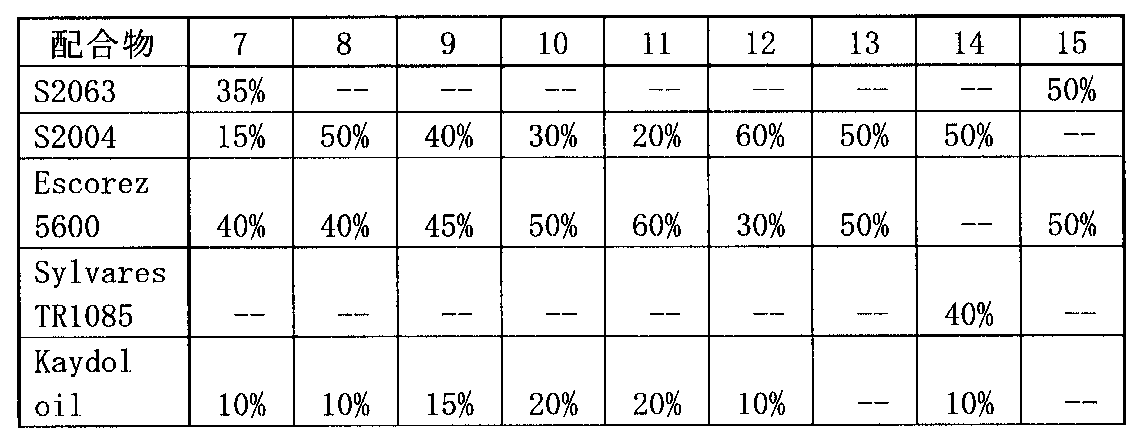
Table 1: Typical transition results of ostomy appliances disclosed in WO99 / 26565
感圧接着剤カップリングの接着剤成分を、下記表に示される種々の他の接着剤に代える以外は、国際公開第99/26565号パンフレットに開示のデザインに従って、フォームを有する追加のパウチを製造する。これらのパウチを上記の方法で試験する。幾つかの場合、オストミーウェファーを使用せずに、接着剤カップリングを直接EVAシートに接着し、該シートの組成および寸法は、ウェファー取付部材のそれと同等である。その場合、EVAシートにパウチを取付け、次いでさらにこれを試験ジグのパウチと反対側に接着する。 Manufacture additional pouches with foam according to the design disclosed in WO 99/26565, except that the adhesive component of the pressure sensitive adhesive coupling is replaced with various other adhesives as shown in the table below To do. These pouches are tested as described above. In some cases, without using an ostomy wafer, the adhesive coupling is bonded directly to the EVA sheet, and the composition and dimensions of the sheet are equivalent to that of the wafer mounting member. In that case, a pouch is attached to the EVA sheet, which is then glued to the opposite side of the test jig from the pouch.
EVAシートは約0.010インチの厚みであり、9%の酢酸ビニルコモノマーを持つポリエチレン(エチレン−酢酸ビニルコポリマー)からなり、これは時々着陸ゾーン(おむつタブを固定する接着剤取付を説明するのに時々用いる語句)と呼ばれることがある、体取付部材の主たる取付ポイントである。結果を表3に記載する。指定の条件で試験した個々のパウチの移行結果を示す。 The EVA sheet is approximately 0.010 inches thick and is made of polyethylene (ethylene-vinyl acetate copolymer) with 9% vinyl acetate comonomer, which sometimes explains the landing zone (adhesive attachment securing diaper tabs) This is the main attachment point of the body attachment member. The results are listed in Table 3. Shows the migration results of individual pouches tested under specified conditions.
表3:オストミーカップリング用に評価した各種接着剤の移行等級(経過タイム12〜24時間)
表中、
1)Duro−Takは、ザ・ナショナル・スターチ・アンド・ケミカル・カンパニー(I CIの事業部)の登録商標
2)GMSおよびGMEはそれぞれ、Solutia Inc.の登録商標で、Gelva
Multipolymer Solution およびGelva Multipolymer Emulsion を表わす
3)H.B.Fuller Company
4)Conmed Corporation
5)Mylan Technologics,Inc
In the table,
1) Duro-Tak is a registered trademark of The National Starch and Chemical Company (ICI Division) 2) GMS and GME are trademarks of Solutia Inc., respectively. Is a registered trademark of Gelva
Represents Multipolymer Solution and Gelva Multipolymer Emulsion 3) H. B. Fuller Company
4) Conmed Corporation
5) Mylan Technologics, Inc
表3の結果から、接着剤の全ては、接着剤カップリングを通じて接着剤とEVAシート間の界面でのSIFの重大な移行を示していることが認められる。移行は、接着剤自体の化学組成に基づくことがわかり、そしてカップリング部材間の接着力のレベルに依存しないと思われる。 From the results in Table 3, it can be seen that all of the adhesive exhibits a significant shift in SIF at the interface between the adhesive and the EVA sheet through the adhesive coupling. It can be seen that the migration is based on the chemical composition of the adhesive itself and does not depend on the level of adhesion between the coupling members.
腸内流体に抵抗する接着剤を見出すために、追加の試験を行った。良好な化学抵抗性を示すポリマーからなる接着剤も、小孔排出物に抵抗しうると思われる。そのため、スチレンブロックコポリマーやポリイソブチレンからなる接着剤を試験した。この種の商業上入手しうる接着剤は、SIF試験溶液の移行を防止しなかった。スチレンとオレフィンのマルチブロックコポリマーをベースとする一定の接着剤組成物が、小孔排出物に抵抗しうることを認められるかどうかを決定する実験を行った。 Additional tests were performed to find adhesives that resist intestinal fluids. Adhesives made of polymers that exhibit good chemical resistance may also be able to resist small pore emissions. Therefore, adhesives consisting of styrene block copolymers and polyisobutylene were tested. This type of commercially available adhesive did not prevent migration of the SIF test solution. Experiments were performed to determine whether certain adhesive compositions based on styrene and olefin multi-block copolymers could be found to be able to resist small pore emissions.
ビニル芳香族およびオレフィンコモノマーのマルチブロックコポリマーをベースとする感圧接着剤配合:
ビニル芳香族モノマー、たとえばスチレンとオレフィンの多数のマルチブロックコポリマーが知られている。しかし、本発明で規定されるように、ビニル芳香族およびオレフィンコモノマーのマルチブロックコポリマーを接着剤に用いて、小孔排出物を支持しかつこれに抵抗する、オストミー器具の二部材間の連結機構を構成することは知られていない。有効なマルチブロックコポリマーとしては、“トリブロック”コポリマーと称せられる、ABAブロックコポリマーが挙げられ、ここで、A成分は非エラストマー成分、たとえばスチレンで、B成分はエラストマー成分、たとえばオレフィンである。
Pressure sensitive adhesive formulation based on multi-block copolymer of vinyl aromatic and olefin comonomer:
Many multi-block copolymers of vinyl aromatic monomers such as styrene and olefins are known. However, as defined in the present invention, a multi-block copolymer of vinyl aromatic and olefin comonomers is used as an adhesive to support and resist small-pore emissions and a coupling mechanism between two members of an ostomy appliance. Is not known to make up. Useful multi-block copolymers include ABA block copolymers, referred to as “triblock” copolymers, where the A component is a non-elastomeric component, such as styrene, and the B component is an elastomer component, such as an olefin.
またトリブロックコポリマーは、“ジブロック”コポリマーと称せられる、ABブロックコポリマーを含有しうる。加えて、マルチブロックコポリマーは、(AB)xマルチブロック(ここで、x>1)を包含しうる。たとえば、(AB)x=4=ABABABAB。有効なオレフィンとしては、ブタジエン、エチレン−プロピレン、エチレン−ブチレン、イソブチレン、およびエチレン−エチレン−プロピレンおよびこれらの組合せが挙げられる。ブロックコポリマーのB成分は、飽和および/または不飽和であってよい。本発明の接着剤は、粘着付与剤、可塑剤、酸化防止剤、および他の添加成分、たとえばフィラー、顔料等と配合されてよい。使用しうる粘着付与剤としては、炭化水素樹脂(脂肪族、芳香族および両者の組合せ)、テルペン、テルペン−フェノール樹脂、スチレン化テルペンン、ロジン、エステルガム等が挙げられる。 Triblock copolymers may also contain AB block copolymers, referred to as “diblock” copolymers. In addition, the multi-block copolymer can include (AB) x multi-block, where x> 1. For example, (AB) x = 4 = ABABABAB. Effective olefins include butadiene, ethylene-propylene, ethylene-butylene, isobutylene, and ethylene-ethylene-propylene and combinations thereof. The B component of the block copolymer may be saturated and / or unsaturated. The adhesive of the present invention may be blended with a tackifier, a plasticizer, an antioxidant, and other additive components such as a filler and a pigment. Examples of tackifiers that can be used include hydrocarbon resins (aliphatic, aromatic and combinations thereof), terpenes, terpene-phenol resins, styrenated terpenes, rosins, ester gums, and the like.
可塑剤は一般に、接着剤溶液またはメルトの粘度や乾燥接着剤の剛性を下げるのに加えられる。これらの可塑剤は、ナフテン系またはパラフィン系である鉱油、有機化合物、たとえばジオクチルフタレートやジオクチルアジペート、およびワックス、たとえば極性または非極性ワックスであってよい。
酸化防止剤は、熱や光によるブロックコポリマーの分解を防止するのに加えることができる。これらの酸化防止剤は、その化学的性質に基づき、接着剤の溶液および/またはメルト状態や有効寿命中の安定性を付与する。
Plasticizers are generally added to reduce the viscosity of the adhesive solution or melt and the stiffness of the dry adhesive. These plasticizers may be mineral oils that are naphthenic or paraffinic, organic compounds such as dioctyl phthalate or dioctyl adipate, and waxes such as polar or nonpolar waxes.
Antioxidants can be added to prevent degradation of the block copolymer by heat and light. These antioxidants provide stability during the solution and / or melt state and useful life of the adhesive, based on their chemical properties.
スチレンブロックコポリマー接着剤組成物の実施例:
接着剤成分の種別は、下記表4を参照。
SISゴム接着剤
混合容器に230gのヘプタンを入れ、これを加熱プレートに載せ、次いでプロペラ形混合羽根で50〜100rpmの速度にて絶えず撹拌する。かかる撹拌溶媒に、120gのVector4111,ポリ(スチレン−イソプレン−スチレン)(SIS)ブロックコポリマーを加える。混合物をほぼ沸点まで加熱し、約90℃の温度に到達せしめる。ポリマーが溶媒中で十分に溶解したとき、80gのEscorez 2510,芳香族変性脂肪族粘着付与樹脂を加え、ポリマー溶液に溶解する。
Examples of styrene block copolymer adhesive compositions:
See Table 4 below for types of adhesive components.
Place 230 g of heptane in a SIS rubber adhesive mixing vessel, place it on a heating plate, and then continuously stir with a propeller-type mixing blade at a speed of 50-100 rpm. To such stirred solvent is added 120 g of Vector 4111, poly (styrene-isoprene-styrene) (SIS) block copolymer. The mixture is heated to about the boiling point to reach a temperature of about 90 ° C. When the polymer is fully dissolved in the solvent, 80 g Escorez 2510, an aromatic modified aliphatic tackifying resin is added and dissolved in the polymer solution.
この混合物に、20gのJayflex,接着剤のポリマー成分を可塑化するナフテン系石油を加える。均質ブレンドが得られるまで、溶液を混合する。当業者であれば、上記組成物の調製には数多くの溶媒ブレンド法が適切であり、かつプロセスによって本明細書開示の発明が決して制限されないことを理解するであろう。好ましいスチレンブロックコポリマーは、上記例示のVector 4111,スチレン−イソプレン−スチレンのトリブロックポリマーである。 To this mixture is added 20 g Jayflex, a naphthenic petroleum that plasticizes the polymer component of the adhesive. Mix the solution until a homogeneous blend is obtained. One skilled in the art will appreciate that a number of solvent blending methods are suitable for preparing the composition and that the process is in no way limited to the invention disclosed herein. A preferred styrene block copolymer is the above exemplified Vector 4111, styrene-isoprene-styrene triblock polymer.
ブレンドの一部を取出し、これをドクターナイフでシリコーン処理ペーパーに引き伸ばして、接着剤層の厚みを約0.003インチにコントロールする。接着剤層から周囲条件にて5分間溶媒を乾燥せしめ、次いで105℃のオーブンにて5分間乾燥せしめる。得られる接着剤層は、実質的に溶媒を含有せず、次いでこれにエチレンと酢酸ビニルの架橋コポリマー(EVA)からなる独立気泡フォームを積層する。 Remove a portion of the blend and stretch it to silicone-treated paper with a doctor knife to control the adhesive layer thickness to about 0.003 inches. The solvent is allowed to dry from the adhesive layer at ambient conditions for 5 minutes and then dried in an oven at 105 ° C. for 5 minutes. The resulting adhesive layer is substantially free of solvent and is then laminated with a closed cell foam made of a crosslinked copolymer of ethylene and vinyl acetate (EVA).
このようにして製造される接着剤被覆フォームは、特に接着剤組成を除き、国際公開第99/26565号パンフレットに記載のものに類似する。シートから接着剤被覆フォームの環状セクションをカットし、プラスチックフィルムのパネルに融着して、国際公開第99/26565号パンフレットに記載の種類のオストミーパウチに加工する。当業者であれば、上述の被覆フォームやオストミーパウチの製造に適当な方法が多数存在し、またそのプロセスによっていかなる場合も本発明が制限されないことが理解されよう。同一もしくは類似の条件を使用し、かつ下記の成分を用い、表5の配合表に従って他の接着剤配合物を調製する。 The adhesive-coated foam produced in this way is similar to that described in WO 99/26565, except for the adhesive composition. An annular section of adhesive-coated foam is cut from the sheet, fused to a panel of plastic film, and processed into an ostomy pouch of the type described in WO 99/26565. Those skilled in the art will appreciate that there are many suitable methods for manufacturing the above-described coated foams and ostomy pouches, and that the process does not limit the invention in any way. Other adhesive formulations are prepared according to the recipe in Table 5 using the same or similar conditions and using the following ingredients.
表4:接着剤成分の種別
表5:パウチ取付用のSISゴム接着剤配合
国際公開第99/26565号パンフレットのEVAフォームに、配合物のそれぞれを被覆し、国際公開第99/26565号パンフレットに開示のデザインのオストミーウェファーの着陸ゾーン(EVAフィルム)からの剥離強さを試験した。これらの接着剤被覆フォームからパウチを製造し、SIF試験溶液を用いて試験した。結果を下記表6に示す。指定の条件で試験した個々のパウチの、移行結果を示す。対照パウチの結果は、指定条件での対照の実際の結果を示す。 The EVA foam of WO 99/26565 is coated with each of the formulations and tested for peel strength from the ostomy wafer landing zone (EVA film) of the design disclosed in WO 99/26565. did. Pouches were made from these adhesive-coated foams and tested using SIF test solutions. The results are shown in Table 6 below. Shows the migration results for individual pouches tested under specified conditions. The control pouch results show the actual results of the controls at the specified conditions.
表6:SISゴム接着剤の移行結果(経過タイム12〜24時間)
注*)酢酸ビニル含量9%のエチレン−酢酸ビニルコポリマーフィルムからなるオスト ミーウェファー着陸ゾーン基体を用い、ASTM D3330による
**)対照フォームの代表的な結果範囲
さらに接着剤を被覆したフォームについて、ASTM D3330により試験を行ったところ、ステンレス鋼からの剥離強さ3.0〜21.0ニュートン/インチが認められた。
試験経過タイムを約240時間とする以外は、上記と同じ方法で追加の試験を行った。結果を表7に示す。
Note *) ASTM D3330 using an ostomy wafer landing zone substrate made of an ethylene-vinyl acetate copolymer film with a vinyl acetate content of 9%. **) Typical range of results for the control foam. When tested according to D3330, a peel strength from stainless steel of 3.0-21.0 Newton / inch was observed.
Additional tests were conducted in the same manner as described above, except that the test elapsed time was about 240 hours. The results are shown in Table 7.
表7:SISゴム接着剤の長時間移行結果(約240時間)
これらの結果は、前記表1または表3に列挙したものと比較して、表5に列挙した接着剤の重要な改善を示す。ナフテン系石油の単独使用、あるいはスチレン末端ブロックとの相溶性を幾分か有する粘着付与剤との組合せ使用は、これらの配合物によって立証される移行抵抗を引き起こすと考えられる。また対照を超える改善は、パラフィン系石油の使用によっても示されるが、その改善は有意なものではない。 These results show a significant improvement of the adhesives listed in Table 5 compared to those listed in Table 1 or Table 3 above. The use of naphthenic petroleum alone or in combination with tackifiers that have some compatibility with styrene endblocks is believed to cause migration resistance demonstrated by these formulations. An improvement over control is also shown by the use of paraffinic oil, but the improvement is not significant.
連結機構の好ましい接着剤は、約70%のトリブロックのスチレン−イソプレン−スチレンコポリマーを、約10%の可塑化油(最も好ましくはナフテン系石油)および約20%の水素化エステルガム粘着付与ガムとブレンドしたものから成る。他の適当な粘着付与剤としては、これらに限定されるものでないが、ロジンまたはエステルガムをベースとする粘着付与剤、アルファおよびベーターピネン(Piccolye S115)およびd−リモネンを含むテルペン、脂肪族樹脂(Piccotac 1095)、および混合脂肪族−芳香族樹脂または芳香族変性脂肪族樹脂(Escorez 2510、Piccotac 8095)が挙げられる。 The preferred adhesive for the coupling mechanism is about 70% triblock styrene-isoprene-styrene copolymer, about 10% plasticized oil (most preferably naphthenic petroleum) and about 20% hydrogenated ester gum tackifying gum. And blended with. Other suitable tackifiers include, but are not limited to, rosin or ester gum based tackifiers, terpenes including alpha and beta pinene (Piccolye S115) and d-limonene, aliphatic resins (Piccotac 1095), and mixed aliphatic-aromatic resins or aromatic modified aliphatic resins (Escorez 2510, Piccotac 8095).
SEPSゴム接着剤
上述の混合手順を用い、SEPSゴム接着剤混合物を調製した。配合物を下記表8に示す。上記概説した手順により、接着剤被覆フォームを用いてパウチを製造し、次いでSIF試験溶液で試験した。移行試験結果を下記表9に示す。
SEPS Rubber Adhesive A SEPS rubber adhesive mixture was prepared using the mixing procedure described above. The formulations are shown in Table 8 below. The pouch was made using the adhesive-coated foam according to the procedure outlined above and then tested with the SIF test solution. The migration test results are shown in Table 9 below.
表8:パウチ取付用のSEPSゴム接着剤配合
表9:SEPSゴム接着剤の移行結果(経過タイム12〜24時間)
注*)酢酸ビニル含量9%のエチレン−酢酸ビニルコポリマーフィルムからなるオスト ミーウェファー着陸ゾーン基体を用い、ASTM D3330による
**)対照フォームの代表的な結果範囲
***)剥離試験中に伸張する苛酷なフォーム
表8から、SEPSゴム配合物の移行抵抗は、対照接着剤のそれより優れることが認められる。SEPSゴムを用いた接着剤カップリング用の好ましい組成物は、約50%のポリ(スチレン−エチレン−プロピレン−スチレン)ゴム、約40%の脂肪族−芳香族粘着付与剤、および約10%の鉱油から成る。
Note *) Using an ostomy wafer landing zone substrate composed of an ethylene-vinyl acetate copolymer film with a vinyl acetate content of 9%, according to ASTM D3330 **) Typical results range of control foam **) Stretched during peel test Severe Foam From Table 8, it can be seen that the migration resistance of the SEPS rubber formulation is superior to that of the control adhesive. A preferred composition for adhesive coupling with SEPS rubber is about 50% poly (styrene-ethylene-propylene-styrene) rubber, about 40% aliphatic-aromatic tackifier, and about 10%. Consists of mineral oil.
SIBSゴム接着剤
上述の混合手順を用い、SIBS[ポリ(スチレン−イソブチレン−スチレン)]ゴム接着剤混合物を調製した。配合物を下記表10に示す。上記概説した手順により、接着剤被覆フォームを用いてパウチを製造し、次いでSIF試験溶液で試験した。移行試験結果を下記表11に示す。表11から、SIBSゴム配合物の移行抵抗は、対照接着剤のそれより優れることが認められる。SIBSゴムを用いた接着剤カップリング用の好ましい組成物は、約50%のポリ(スチレン−イソブチレン−スチレン)ゴム、約40%の脂肪族−芳香族粘着付与剤、および約10%の鉱油から成る。
SIBS Rubber Adhesive A SIBS [poly (styrene-isobutylene-styrene)] rubber adhesive mixture was prepared using the mixing procedure described above. The formulations are shown in Table 10 below. The pouch was made using the adhesive-coated foam according to the procedure outlined above and then tested with the SIF test solution. The migration test results are shown in Table 11 below. From Table 11 it can be seen that the migration resistance of the SIBS rubber compound is superior to that of the control adhesive. A preferred composition for adhesive coupling using SIBS rubber is from about 50% poly (styrene-isobutylene-styrene) rubber, about 40% aliphatic-aromatic tackifier, and about 10% mineral oil. Become.
表10:パウチ取付用のSIBSゴム接着剤配合
表11:SIBSゴム接着剤の移行結果(経過タイム12〜24時間)
**)対照フォームの代表的な結果範囲
Table 11: Transition result of SIBS rubber adhesive (elapsed time 12-24 hours)
上記実施例では、溶媒を用いて混合し、被覆する接着剤について説明したが、当業者であれば、溶媒を使用せずに接着剤をメルト状態でも混合しうることが理解されるだろう。
粘着付与剤や可塑化油の量を、広範囲にわたって変化させ、有用なパウチ取付用接着剤を生成することができる。しかしながら、剥離強さには実用的な限界があり、これを越えるオストミー器具は許容されないだろう。体取付部材からの接着剤被覆フォームの剥離強さは、パウチをウェファーに取付けるに際し、不安定にしたりあるいは漏れやすくするような弱さであってはならない。この目的での許容しうる剥離強さの下限は、約0.3ニュートン/インチであると思われる。
In the above examples, adhesives that are mixed and coated using a solvent have been described. However, those skilled in the art will understand that adhesives can be mixed in a melt state without using a solvent.
The amount of tackifier or plasticizing oil can be varied over a wide range to produce a useful pouch mounting adhesive. However, there are practical limits to peel strength, and ostomy devices beyond this will not be acceptable. The peel strength of the adhesive-coated foam from the body attachment member should not be so weak that it may become unstable or leaky when the pouch is attached to the wafer. The lower limit of acceptable peel strength for this purpose appears to be about 0.3 Newton / inch.
また、体取付部材からの接着剤被覆フォームの剥離強さは、パウチをウェファーから取外すときに、ウェファーがこわれたり、あるいは部分的もしくは完全に皮膚から離脱してしまうような強さであってはならない。さらに、剥離強さは、接着剤が基体(この場合はEVAフォーム)から離層し、体取付部材上に残存する程度の強さであってもいけない。もし離層が起これば、残留物の妨げによって、次のパウチの偽和(adulterated)取付箇所に対する完全なシールが得られなくなり、このことは、体取付部材の再利用を無効にすることになる。この目的での許容しうる剥離強さの上限は、約6.0ニュートン/インチであると思われる。 Also, the peel strength of the adhesive-coated foam from the body mounting member should not be such a strength that the wafer is broken or partially or completely detached from the skin when the pouch is removed from the wafer. Don't be. Furthermore, the peel strength should not be such a strength that the adhesive delaminates from the substrate (in this case, EVA foam) and remains on the body attachment member. If delamination occurs, the blockage of the residue will not provide a complete seal for the next pouch's adulterated attachment, which will invalidate the reuse of body attachment members. Become. The upper limit of acceptable peel strength for this purpose appears to be about 6.0 Newtons / inch.
着陸ゾーン材料からの剥離強さ約0.3〜6.0ニュートン/インチを持つ、スチレンブロックコポリマー、粘着付与剤および可塑化油の配合物は、シミュレーション回腸流体(SIF)による攻撃に抵抗し、かつ小孔排出物に抵抗性と思われる、有用なパウチ取付用接着剤をもたらす。またこれらの配合物は、ASTM D3330によるステンレス鋼からの剥離強さ約3.0〜21.0ニュートン/インチ、好ましくは約5.0〜18.0ニュートン/インチを有することが認められた。 A blend of styrene block copolymer, tackifier and plasticizing oil having a peel strength from the landing zone material of about 0.3 to 6.0 Newtons / inch resists attack by simulated ileal fluid (SIF) It also provides a useful pouch mounting adhesive that appears to be resistant to stoma discharge. These formulations were also found to have a peel strength from stainless steel according to ASTM D3330 of about 3.0-21.0 Newtons / inch, preferably about 5.0-18.0 Newtons / inch.
SEBS、SBSおよびSEEPSゴム接着剤
さらに表12において、SEBS、SBSおよびSEEPSゴムをベースとする接着剤の配合を示す。該表から明らかなように、これらの配合物は、シミュレーション回腸流体に対し少なくとも12時間の抵抗性を有し、オストミーパウチの取付用接着剤として適切である。
表12:パウチ取付用のSEBS、SBSおよびSEEPSゴム接着剤配合
**)フォームカラーのパウチへの不適当な融着に基づくSIFの移行
SEBS, SBS and SEEPS Rubber Adhesives Further Table 12 shows the formulation of adhesives based on SEBS, SBS and SEEPS rubbers. As is apparent from the table, these formulations have a resistance of at least 12 hours to simulated ileal fluid and are suitable as adhesives for mounting ostomy pouches.
Table 12: SEBS, SBS and SEEPS rubber adhesive formulations for pouch attachment
EVAベース接着剤
Duro−Tak H 1509,感圧性のホットメルトポリ(エチレン−酢酸ビニル)接着剤を用いて、追加の実験を行った。移行試験結果を下記表13に示す。これらの結果は、スチレンブロックコポリマーの場合に得られるものに類する移行抵抗が、感圧接着剤に好適な他のゴム状ポリマー、たとえばポリ(エチレン−酢酸ビニル)を用いることにより得られうることを示す。EVAポリマーをベースとする接着剤は、従来より公知である。好ましい組成物は、酢酸ビニル含量約10〜50%、より好ましくは約30〜45%のものである。好適な粘着付与剤は、上記のものと同じであり、好ましくは、エステルガム、テルペン、テルペンフェノール樹脂、炭化水素樹脂(芳香族、脂肪族、および両者の組合せ)、およびこれらの組合せが挙げられる。EVAポリマーの配合物は、加工助剤または可塑剤としてワックスまたは鉱油も含有しうることが知られている。ワックスは、石油またはミネラルワックスであってもよい。加えて、合成ワックスも存在し、これも添加することができる。
Additional experiments were performed using EVA based adhesive Duro-Tak H 1509, a pressure sensitive hot melt poly (ethylene-vinyl acetate) adhesive. The migration test results are shown in Table 13 below. These results show that migration resistance similar to that obtained with styrene block copolymers can be obtained by using other rubbery polymers suitable for pressure sensitive adhesives, such as poly (ethylene-vinyl acetate). Show. Adhesives based on EVA polymers are conventionally known. Preferred compositions are those having a vinyl acetate content of about 10-50%, more preferably about 30-45%. Suitable tackifiers are the same as described above and preferably include ester gums, terpenes, terpene phenol resins, hydrocarbon resins (aromatic, aliphatic, and combinations of both), and combinations thereof. . It is known that blends of EVA polymers can also contain waxes or mineral oils as processing aids or plasticizers. The wax may be petroleum or mineral wax. In addition, synthetic waxes exist and can also be added.
表13:EVA感圧接着剤の平均的移行結果
Claims (27)
Applications Claiming Priority (1)
| Application Number | Priority Date | Filing Date | Title |
|---|---|---|---|
| US51099303P | 2003-10-14 | 2003-10-14 |
Publications (1)
| Publication Number | Publication Date |
|---|---|
| JP2005118564A true JP2005118564A (en) | 2005-05-12 |
Family
ID=34375591
Family Applications (1)
| Application Number | Title | Priority Date | Filing Date |
|---|---|---|---|
| JP2004299725A Pending JP2005118564A (en) | 2003-10-14 | 2004-10-14 | Mounting adhesive for ostomy pouch that resists small hole discharge |
Country Status (11)
| Country | Link |
|---|---|
| US (1) | US20050080155A1 (en) |
| EP (1) | EP1523967B1 (en) |
| JP (1) | JP2005118564A (en) |
| AT (1) | ATE362743T1 (en) |
| AU (1) | AU2004220703B2 (en) |
| CA (1) | CA2484545A1 (en) |
| DE (1) | DE602004006572T2 (en) |
| DK (1) | DK1523967T3 (en) |
| ES (1) | ES2286550T3 (en) |
| MX (1) | MXPA04009975A (en) |
| NZ (1) | NZ535919A (en) |
Cited By (7)
| Publication number | Priority date | Publication date | Assignee | Title |
|---|---|---|---|---|
| JP2009526587A (en) * | 2006-02-17 | 2009-07-23 | ベー・ブラウン・メディカル・エスアーエス | Joint for two-piece stoma bag fixed by bonding |
| JP2015189963A (en) * | 2014-03-31 | 2015-11-02 | 王子ホールディングス株式会社 | Tire adhesive sheet |
| JP2017160377A (en) * | 2016-03-11 | 2017-09-14 | 東洋インキScホールディングス株式会社 | Hot melt adhesive and sheet with hot melt adhesive |
| JP2018508260A (en) * | 2015-02-02 | 2018-03-29 | コロプラスト アクティーゼルスカブ | Ostomy equipment |
| JP2018130538A (en) * | 2017-02-03 | 2018-08-23 | ビー.ブラウン メディカルB.Braun Medical | Adhesive composition and element to be attached to human skin |
| US11077224B2 (en) | 2015-02-02 | 2021-08-03 | Coloplast A/S | Ostomy device |
| US11160681B2 (en) | 2015-04-10 | 2021-11-02 | Coloplast A/S | Ostomy device |
Families Citing this family (7)
| Publication number | Priority date | Publication date | Assignee | Title |
|---|---|---|---|---|
| ATE552317T1 (en) * | 2003-12-19 | 2012-04-15 | Coloplast As | ADHESIVES AND WOUND DRESSINGS AND STOMARY ARTICLES FITTED THEREOF |
| US20060229411A1 (en) * | 2005-04-06 | 2006-10-12 | Stephen Hatfield | Hot melt pressure sensitive adhesives based on blends of styrene/butadiene copolymers |
| EP2276435B1 (en) | 2008-04-17 | 2012-02-15 | Coloplast A/S | A collecting device for body fluids |
| BRPI0915998B8 (en) | 2008-07-18 | 2021-06-22 | Coloplast As | ostomy collection device |
| CN104869952B (en) * | 2013-01-02 | 2020-03-13 | 凯希特许有限公司 | Medical drape with ultra-thin drape film and thick adhesive coating |
| US9931239B2 (en) | 2013-02-07 | 2018-04-03 | Hollister Incorporated | Asymmetric multilayer film for ostomy application |
| US9050387B2 (en) | 2013-02-07 | 2015-06-09 | Hollister Incorporated | Sound absorbing ostomy pouch |
Citations (7)
| Publication number | Priority date | Publication date | Assignee | Title |
|---|---|---|---|---|
| US4551490A (en) * | 1983-06-27 | 1985-11-05 | E. R. Squibb & Sons, Inc. | Adhesive composition resistant to biological fluids |
| US5545154A (en) * | 1994-12-28 | 1996-08-13 | E. R. Squibb & Sons, Inc. | Ostomy device |
| JP2001502570A (en) * | 1996-10-22 | 2001-02-27 | コロプラスト アクティーゼルスカブ | Stoma |
| JP2001523517A (en) * | 1997-11-20 | 2001-11-27 | ブリストル−マイヤーズ スクイブ カンパニー | Repositionable pouch with floating mounting area |
| WO2002014260A1 (en) * | 2000-08-11 | 2002-02-21 | Degussa Ag | Hydrolysis of acylamino acids |
| WO2002045763A2 (en) * | 2000-12-07 | 2002-06-13 | Bostik Findley, Inc. | Antimicrobial hot melt adhesive |
| JP2002541285A (en) * | 1999-04-07 | 2002-12-03 | ナショナル スターチ アンド ケミカル カンパニー | Use of polyamino acid salts in water-based adhesive applications |
Family Cites Families (22)
| Publication number | Priority date | Publication date | Assignee | Title |
|---|---|---|---|---|
| US1274382A (en) * | 1916-02-15 | 1918-08-06 | John Louis Burgoyne | Adjustable tray. |
| US3908658A (en) * | 1972-05-22 | 1975-09-30 | Arthur E Marsan | Seal and appliance for ostomy patients |
| US4650817A (en) * | 1982-07-16 | 1987-03-17 | C. R. Bard, Inc. | Physiologically compatible adhesive composition |
| GB8430031D0 (en) * | 1983-12-19 | 1985-01-09 | Craig Med Prod Ltd | Ostomy appliance |
| US4808173A (en) * | 1986-08-07 | 1989-02-28 | Hollister Incorporated | Ostomy appliance coupling with viscoelastic liner |
| DK158827C (en) * | 1986-09-04 | 1991-01-14 | Coloplast As | REUSABLE CLUTCHING ORGANIZATION FOR STOMPOSE BAGS AND DISPOSAL AND STOMIPOUS SYSTEM FOR USE IN CONNECTION WITH IT |
| US4855335A (en) * | 1986-09-23 | 1989-08-08 | Findley Adhesives Inc. | Medical moisture resistant adhesive composition for use in the presence of moisture |
| US5015244A (en) * | 1988-11-08 | 1991-05-14 | Smiths Industries Public Limited Company | Adhesive ring assemblies for collection bags |
| GB9020218D0 (en) * | 1990-09-15 | 1990-10-24 | Smiths Industries Plc | Medico-surgical collection bag assemblies |
| ZA949721B (en) * | 1993-02-08 | 1994-08-02 | Squibb & Sons Inc | Flushable ostomy pouch |
| US5346482A (en) * | 1993-04-02 | 1994-09-13 | Hollister Incorporated | Two-piece ostomy appliance having flushable pouch and faceplate with protective collar |
| US5429626A (en) * | 1994-03-14 | 1995-07-04 | Fenton; Leonard | Ostomy pouch mounting arrangement |
| US5496296A (en) * | 1994-06-06 | 1996-03-05 | Dansac A/S | Ostomy appliance with extrudable gasket |
| EP1386592A3 (en) * | 1994-07-26 | 2004-03-17 | E.R. Squibb & Sons, Inc. | Resealable coupling device |
| EP0710737A3 (en) * | 1994-10-27 | 1998-01-07 | National Starch and Chemical Investment Holding Corporation | Hot melt adhesive compositions |
| US6179818B1 (en) * | 1994-11-14 | 2001-01-30 | Bristol-Myers Squibb Company | Ostomy bags and vessels for biological materials |
| DK60795A (en) * | 1995-05-29 | 1996-11-30 | Coloplast As | Ostomy Collection System |
| US5722965A (en) * | 1996-02-29 | 1998-03-03 | Bristol-Myers Squibb Company | Low profile ostomy system with repositionable pouch |
| DK172791B1 (en) * | 1997-05-26 | 1999-07-19 | Coloplast As | An ostomy appliance |
| US6569134B1 (en) * | 2000-06-14 | 2003-05-27 | Hollister Incorporated | Reformable convex adapter for ostomy appliance and method of use |
| US7078582B2 (en) * | 2001-01-17 | 2006-07-18 | 3M Innovative Properties Company | Stretch removable adhesive articles and methods |
| US7651485B2 (en) * | 2002-11-27 | 2010-01-26 | Bristol-Myers Squibb Company | Ostomy pouch adhesives such as polysiloxanes that are resistant to stomal effluent |
-
2004
- 2004-10-07 US US10/960,546 patent/US20050080155A1/en not_active Abandoned
- 2004-10-11 MX MXPA04009975A patent/MXPA04009975A/en active IP Right Grant
- 2004-10-13 DK DK04024344T patent/DK1523967T3/en active
- 2004-10-13 DE DE602004006572T patent/DE602004006572T2/en not_active Expired - Lifetime
- 2004-10-13 AU AU2004220703A patent/AU2004220703B2/en not_active Ceased
- 2004-10-13 NZ NZ535919A patent/NZ535919A/en not_active IP Right Cessation
- 2004-10-13 AT AT04024344T patent/ATE362743T1/en not_active IP Right Cessation
- 2004-10-13 EP EP04024344A patent/EP1523967B1/en not_active Revoked
- 2004-10-13 ES ES04024344T patent/ES2286550T3/en not_active Expired - Lifetime
- 2004-10-13 CA CA002484545A patent/CA2484545A1/en not_active Abandoned
- 2004-10-14 JP JP2004299725A patent/JP2005118564A/en active Pending
Patent Citations (7)
| Publication number | Priority date | Publication date | Assignee | Title |
|---|---|---|---|---|
| US4551490A (en) * | 1983-06-27 | 1985-11-05 | E. R. Squibb & Sons, Inc. | Adhesive composition resistant to biological fluids |
| US5545154A (en) * | 1994-12-28 | 1996-08-13 | E. R. Squibb & Sons, Inc. | Ostomy device |
| JP2001502570A (en) * | 1996-10-22 | 2001-02-27 | コロプラスト アクティーゼルスカブ | Stoma |
| JP2001523517A (en) * | 1997-11-20 | 2001-11-27 | ブリストル−マイヤーズ スクイブ カンパニー | Repositionable pouch with floating mounting area |
| JP2002541285A (en) * | 1999-04-07 | 2002-12-03 | ナショナル スターチ アンド ケミカル カンパニー | Use of polyamino acid salts in water-based adhesive applications |
| WO2002014260A1 (en) * | 2000-08-11 | 2002-02-21 | Degussa Ag | Hydrolysis of acylamino acids |
| WO2002045763A2 (en) * | 2000-12-07 | 2002-06-13 | Bostik Findley, Inc. | Antimicrobial hot melt adhesive |
Cited By (10)
| Publication number | Priority date | Publication date | Assignee | Title |
|---|---|---|---|---|
| JP2009526587A (en) * | 2006-02-17 | 2009-07-23 | ベー・ブラウン・メディカル・エスアーエス | Joint for two-piece stoma bag fixed by bonding |
| JP2015189963A (en) * | 2014-03-31 | 2015-11-02 | 王子ホールディングス株式会社 | Tire adhesive sheet |
| JP2018508260A (en) * | 2015-02-02 | 2018-03-29 | コロプラスト アクティーゼルスカブ | Ostomy equipment |
| US11077224B2 (en) | 2015-02-02 | 2021-08-03 | Coloplast A/S | Ostomy device |
| US11771798B2 (en) | 2015-02-02 | 2023-10-03 | Coloplast A/S | Ostomy device with a switchable adhesive layer located between a backing layer and an absorbent adhesive layer |
| US11160681B2 (en) | 2015-04-10 | 2021-11-02 | Coloplast A/S | Ostomy device |
| US11819444B2 (en) | 2015-04-10 | 2023-11-21 | Coloplast A/S | Ostomy device with a switchable adhesive composition adapted to be switched by moisture activation of a switch initiator |
| JP2017160377A (en) * | 2016-03-11 | 2017-09-14 | 東洋インキScホールディングス株式会社 | Hot melt adhesive and sheet with hot melt adhesive |
| JP2018130538A (en) * | 2017-02-03 | 2018-08-23 | ビー.ブラウン メディカルB.Braun Medical | Adhesive composition and element to be attached to human skin |
| JP7203498B2 (en) | 2017-02-03 | 2023-01-13 | ビー.ブラウン メディカル | Adhesive composition and material for application to human skin |
Also Published As
| Publication number | Publication date |
|---|---|
| EP1523967B1 (en) | 2007-05-23 |
| DE602004006572T2 (en) | 2008-01-31 |
| DK1523967T3 (en) | 2007-08-27 |
| CA2484545A1 (en) | 2005-04-14 |
| EP1523967A1 (en) | 2005-04-20 |
| ATE362743T1 (en) | 2007-06-15 |
| MXPA04009975A (en) | 2006-01-24 |
| NZ535919A (en) | 2006-03-31 |
| AU2004220703A1 (en) | 2005-04-28 |
| US20050080155A1 (en) | 2005-04-14 |
| ES2286550T3 (en) | 2007-12-01 |
| AU2004220703B2 (en) | 2011-04-21 |
| DE602004006572D1 (en) | 2007-07-05 |
Similar Documents
| Publication | Publication Date | Title |
|---|---|---|
| CA2450913C (en) | Ostomy pouch attachment adhesives resistant to stomal effluent | |
| US5492943A (en) | Adhesive skin barrier composition for ostomy appliance | |
| CA2269575C (en) | An ostomy appliance | |
| US7943812B2 (en) | Layered adhesive construct having a mouldable layer as skin contact surface | |
| AU2004220703B2 (en) | Ostomy pouch attachment adhesives resistant to stomal effluent | |
| AU2015289130B2 (en) | Ostomy bag | |
| JP5404958B1 (en) | Hot melt adhesive composition and water absorbent article using the same | |
| JP5404959B1 (en) | Hot melt adhesive composition and water absorbent article using the same | |
| AU2009328766A1 (en) | A soft shapeable adhesive paste | |
| CN102892441A (en) | permeable pressure sensitive adhesive | |
| EP2605734B1 (en) | A collecting device | |
| US5128187A (en) | Attachment tape for foam-backed absorbent product | |
| JP2006008947A (en) | Hot melt adhesive | |
| JP5898918B2 (en) | Disposable absorbent article | |
| JP2000080337A (en) | Adhesive sheet for fixing disposable body warmers | |
| JP2003301154A (en) | Adhesive for heating material and heating material using the same | |
| JPH11217551A (en) | Adhesive composition |
Legal Events
| Date | Code | Title | Description |
|---|---|---|---|
| A621 | Written request for application examination |
Free format text: JAPANESE INTERMEDIATE CODE: A621 Effective date: 20071001 |
|
| A131 | Notification of reasons for refusal |
Free format text: JAPANESE INTERMEDIATE CODE: A131 Effective date: 20110201 |
|
| A601 | Written request for extension of time |
Free format text: JAPANESE INTERMEDIATE CODE: A601 Effective date: 20110428 |
|
| A602 | Written permission of extension of time |
Free format text: JAPANESE INTERMEDIATE CODE: A602 Effective date: 20110509 |
|
| A711 | Notification of change in applicant |
Free format text: JAPANESE INTERMEDIATE CODE: A711 Effective date: 20110510 |
|
| A601 | Written request for extension of time |
Free format text: JAPANESE INTERMEDIATE CODE: A601 Effective date: 20110601 |
|
| A602 | Written permission of extension of time |
Free format text: JAPANESE INTERMEDIATE CODE: A602 Effective date: 20110614 |
|
| A601 | Written request for extension of time |
Free format text: JAPANESE INTERMEDIATE CODE: A601 Effective date: 20110630 |
|
| A602 | Written permission of extension of time |
Free format text: JAPANESE INTERMEDIATE CODE: A602 Effective date: 20110705 |
|
| A02 | Decision of refusal |
Free format text: JAPANESE INTERMEDIATE CODE: A02 Effective date: 20111011 |