EP4580285A1 - Datenübertragungsverfahren und -vorrichtung - Google Patents
Datenübertragungsverfahren und -vorrichtung Download PDFInfo
- Publication number
- EP4580285A1 EP4580285A1 EP23884509.3A EP23884509A EP4580285A1 EP 4580285 A1 EP4580285 A1 EP 4580285A1 EP 23884509 A EP23884509 A EP 23884509A EP 4580285 A1 EP4580285 A1 EP 4580285A1
- Authority
- EP
- European Patent Office
- Prior art keywords
- data
- terminal device
- information
- resource
- candidate
- Prior art date
- Legal status (The legal status is an assumption and is not a legal conclusion. Google has not performed a legal analysis and makes no representation as to the accuracy of the status listed.)
- Pending
Links
Images




Classifications
-
- H—ELECTRICITY
- H04—ELECTRIC COMMUNICATION TECHNIQUE
- H04W—WIRELESS COMMUNICATION NETWORKS
- H04W72/00—Local resource management
- H04W72/04—Wireless resource allocation
- H04W72/044—Wireless resource allocation based on the type of the allocated resource
- H04W72/0446—Resources in time domain, e.g. slots or frames
-
- H—ELECTRICITY
- H04—ELECTRIC COMMUNICATION TECHNIQUE
- H04W—WIRELESS COMMUNICATION NETWORKS
- H04W72/00—Local resource management
- H04W72/12—Wireless traffic scheduling
- H04W72/1263—Mapping of traffic onto schedule, e.g. scheduled allocation or multiplexing of flows
- H04W72/1268—Mapping of traffic onto schedule, e.g. scheduled allocation or multiplexing of flows of uplink data flows
-
- H—ELECTRICITY
- H04—ELECTRIC COMMUNICATION TECHNIQUE
- H04W—WIRELESS COMMUNICATION NETWORKS
- H04W72/00—Local resource management
- H04W72/04—Wireless resource allocation
- H04W72/044—Wireless resource allocation based on the type of the allocated resource
- H04W72/0453—Resources in frequency domain, e.g. a carrier in FDMA
-
- H—ELECTRICITY
- H04—ELECTRIC COMMUNICATION TECHNIQUE
- H04L—TRANSMISSION OF DIGITAL INFORMATION, e.g. TELEGRAPHIC COMMUNICATION
- H04L5/00—Arrangements affording multiple use of the transmission path
- H04L5/003—Arrangements for allocating sub-channels of the transmission path
- H04L5/0048—Allocation of pilot signals, i.e. of signals known to the receiver
- H04L5/0051—Allocation of pilot signals, i.e. of signals known to the receiver of dedicated pilots, i.e. pilots destined for a single user or terminal
-
- H—ELECTRICITY
- H04—ELECTRIC COMMUNICATION TECHNIQUE
- H04W—WIRELESS COMMUNICATION NETWORKS
- H04W52/00—Power management, e.g. Transmission Power Control [TPC] or power classes
- H04W52/02—Power saving arrangements
- H04W52/0209—Power saving arrangements in terminal devices
- H04W52/0212—Power saving arrangements in terminal devices managed by the network, e.g. network or access point is leader and terminal is follower
- H04W52/0216—Power saving arrangements in terminal devices managed by the network, e.g. network or access point is leader and terminal is follower using a pre-established activity schedule, e.g. traffic indication frame
-
- H—ELECTRICITY
- H04—ELECTRIC COMMUNICATION TECHNIQUE
- H04W—WIRELESS COMMUNICATION NETWORKS
- H04W52/00—Power management, e.g. Transmission Power Control [TPC] or power classes
- H04W52/02—Power saving arrangements
- H04W52/0209—Power saving arrangements in terminal devices
- H04W52/0225—Power saving arrangements in terminal devices using monitoring of external events, e.g. the presence of a signal
- H04W52/0229—Power saving arrangements in terminal devices using monitoring of external events, e.g. the presence of a signal where the received signal is a wanted signal
- H04W52/0235—Power saving arrangements in terminal devices using monitoring of external events, e.g. the presence of a signal where the received signal is a wanted signal where the received signal is a power saving command
-
- H—ELECTRICITY
- H04—ELECTRIC COMMUNICATION TECHNIQUE
- H04W—WIRELESS COMMUNICATION NETWORKS
- H04W52/00—Power management, e.g. Transmission Power Control [TPC] or power classes
- H04W52/02—Power saving arrangements
- H04W52/0209—Power saving arrangements in terminal devices
- H04W52/0225—Power saving arrangements in terminal devices using monitoring of external events, e.g. the presence of a signal
- H04W52/0248—Power saving arrangements in terminal devices using monitoring of external events, e.g. the presence of a signal dependent on the time of the day, e.g. according to expected transmission activity
-
- H—ELECTRICITY
- H04—ELECTRIC COMMUNICATION TECHNIQUE
- H04W—WIRELESS COMMUNICATION NETWORKS
- H04W72/00—Local resource management
- H04W72/20—Control channels or signalling for resource management
- H04W72/21—Control channels or signalling for resource management in the uplink direction of a wireless link, i.e. towards the network
-
- H—ELECTRICITY
- H04—ELECTRIC COMMUNICATION TECHNIQUE
- H04W—WIRELESS COMMUNICATION NETWORKS
- H04W72/00—Local resource management
- H04W72/04—Wireless resource allocation
- H04W72/044—Wireless resource allocation based on the type of the allocated resource
-
- H—ELECTRICITY
- H04—ELECTRIC COMMUNICATION TECHNIQUE
- H04W—WIRELESS COMMUNICATION NETWORKS
- H04W72/00—Local resource management
- H04W72/20—Control channels or signalling for resource management
- H04W72/23—Control channels or signalling for resource management in the downlink direction of a wireless link, i.e. towards a terminal
Definitions
- This application relates to the field of communication technologies, and in particular, to a data transmission method and an apparatus.
- a multi-modal service is a service for which a tactile experience dimension is added on the basis of extended reality (extended reality, XR), and can implement remote touch and remote management, including remote sensing in a plurality of aspects such as vision, hearing, tactile sensation, and kinesthesis.
- extended reality extended reality
- a tactile sensor in the multi-modal service may periodically generate data.
- a network device configures a periodic resource for a terminal device in a configured grant (configured grant, CG) manner, so that the terminal device sends the data generated by the tactile sensor to the network device on the configured resource.
- encoded data sent by the terminal device at different time may be from different numbers of tactile sensors.
- the terminal device may send different amounts of data to the network device at different time.
- resources in each periodicity that are configured based on a CG are fixed. If the terminal device needs to send a large amount of data to the network device, resources in one periodicity that are configured based on the CG may be insufficient to transmit the large amount of data, and the terminal device needs to wait for resources configured in a next periodicity. Consequently, a delay of sending data by the terminal device to the network device is large.
- Embodiments of this application provide a data transmission method and an apparatus, to reduce a delay of sending data by a terminal device to a network device.
- this application provides a data transmission method.
- the method may be applied to a terminal device, or may be applied to a chip in a terminal device, or may be applied to a logical module or software that can implement all or some functions of a terminal device.
- the following uses a terminal device as an example for description.
- the method includes: The terminal device receives first information from a network device, determines a plurality of candidate resources based on the first information, determines a target resource from the plurality of candidate resources based on a first data amount of to-be-sent data, sends a part or all of the to-be-sent data to the network device on the target resource, and sends second information to the network device, where the second information indicates the target resource.
- the target resource used to send the data is determined by the terminal device from the plurality of candidate resources based on the actual amount of the to-be-sent data, and an amount of data that can be transmitted on the plurality of candidate resources can cover an amount of data that the terminal device highly probably transmits. This helps increase a probability that the terminal device completes transmission of the to-be-sent data within a range of the plurality of candidate resources, and reduce a data transmission delay.
- the operation that the terminal device sends second information to the network device further helps the network device determine a resource used to receive the data from the terminal device. Compared with that the network device determines, in a blind detection manner, the resource used to receive the data, this helps reduce power consumption of the network device for receiving the data.
- the plurality of candidate resources are frequency domain resources, time domain resources, or time-frequency domain resources.
- At least two of the plurality of candidate resources overlap.
- the candidate resources configured for the terminal devices may be different or not completely the same. This helps reduce interference caused by sending data by another terminal device to sending data by the terminal device, and improves resource utilization.
- a proportion of an overlapping part between the at least two candidate resources in one of the at least two candidate resources is greater than a first threshold.
- the plurality of candidate resources do not overlap each other. This implementation helps increase a total amount of data that can be transmitted on the plurality of candidate resources, and further can increase an amount of data that can be transmitted by the terminal device within the range of the plurality of candidate resources, helps increase a probability that a large amount of data can be transmitted within the range of the plurality of candidate resources, and helps reduce a delay of sending the to-be-sent data by the terminal device.
- this application provides a data transmission method.
- the method may be applied to a network device, or may be applied to a chip in a network device, or may be applied to a logical module or software that can implement all or some functions of a network device.
- the following uses a network device as an example for description.
- the method includes: The network device sends first information to a terminal device, where the first information is used to determine a plurality of candidate resources, receives second information from the terminal device, where the second information indicates a target resource, and the target resource belongs to the plurality of candidate resources, and receives data from the terminal device on the target resource.
- the plurality of candidate resources are frequency domain resources, time domain resources, or time-frequency domain resources.
- At least two of the plurality of candidate resources overlap.
- the candidate resources configured for the terminal devices may be different or not completely the same. This helps reduce interference generated because different terminal devices send data, and improves resource utilization.
- the communication unit may be a transceiver or a communication interface
- the storage unit may be a memory
- the processing unit may be a processor.
- the processor is coupled to the memory.
- the memory is configured to store a program or an instruction.
- the processor may be configured to enable, when the program or instructions are executed by the processor, the communication apparatus to perform the method according to the first aspect or the second aspect.
- the transceiver or the communication interface may be configured to receive and send signals and/or data.
- the communication apparatus includes a processor and a transceiver.
- the transceiver is configured to receive first information from a network device.
- the processor is configured to determine a plurality of candidate resources based on the first information.
- the processor is further configured to determine a target resource from the plurality of candidate resources based on a first data amount of to-be-sent data.
- the transceiver is further configured to send a part or all of the to-be-sent data to the network device on the target resource.
- the transceiver is further configured to send second information to the network device, where the second information indicates the target resource.
- the transceiver receives the signal, and inputs the signal into the processor. Further, after the transceiver (or the communication interface) receives the signal, other processing may further need to be performed on the signal, and then a processed signal is input to the processor.
- Technical solutions in embodiments of this application are applied to various communication systems, for example, a global system for mobile communications, a long term evolution (long term evolution, LTE) system, a universal mobile telecommunications system, a 4th generation (4th generation, 4G) mobile communication technology system, a next-generation radio access network (next-generation radio access network, NG-RAN), a new radio technology (new radio, NR) system, and a 5th generation mobile communication technology (5th generation mobile networks, 5G) system.
- a subsequent evolved communication system such as a 6th generation mobile communication technology (6th generation mobile networks, 6G) system or 7th generation mobile communication technology (7th generation mobile networks, 7G) system.
- FIG. 1 is a diagram of a structure of a communication system according to an embodiment of this application.
- the communication system may include but is not limited to one network device and one terminal device. Uplink transmission or downlink transmission may be performed between the network device and the terminal device.
- the communication system may further include a channel for data/signal transmission between the network device and the terminal device, for example, a transmission medium like an optical fiber, a cable, or an atmosphere. Numbers and forms of devices shown in FIG. 1 are used as examples and do not constitute limitations on embodiments of this application. During actual application, two or more network devices and two or more terminal devices may be included.
- FIG. 1 is described by using one network device and two terminal devices (to be specific, a terminal device #1 and a terminal device #2 in FIG. 1 ) as an example.
- VR virtual reality
- the network device may alternatively be a device used in a 4G, 5G, or even 6G system, for example, an evolved NodeB (NodeB, eNB, or e-NodeB, evolutional NodeB) in LTE, a next-generation LTE base station (next-generation eNodeB, ng-eNB), a next-generation base station (next-generation NodeB, gNodeB, or gNB), a transceiver point, or a transmission point (TRP or TP).
- NodeB evolved NodeB
- eNB evolved NodeB
- eNB evolved NodeB
- e-NodeB evolutional NodeB
- next-generation LTE base station next-generation eNodeB, ng-eNB
- next-generation NodeB nodeB, gNodeB, or gNB
- TRP or TP transmission point
- the terminal device in embodiments of this application may be a joint device that performs digital signal transmission and receiving on a common telephone line, or may be a mobile phone (mobile phone), a tablet computer (Pad), a computer with a wireless transceiver function, a head mounted display (head mounted display, HMD), a VR terminal device (for example, VR glasses), an augmented reality (augmented reality, AR) terminal device (for example, AR glasses), a mixed reality (mixed reality, MR) terminal device, a wireless terminal in industrial control (industrial control), a tactile terminal device, a vehicle-mounted terminal device, a wireless terminal in self driving (self driving), a wireless terminal in remote medical (remote medical), a wireless terminal in a smart grid (smart grid), a wireless terminal in transportation safety (transportation safety), a wireless terminal in a smart city (smart city), a wireless terminal in a smart home (smart home), an RSU of the foregoing wireless terminal type, a wearable terminal device, or the like.
- the XR is a technology that can be for combining real and virtual environments, and the technology can be used for human-computer interaction.
- the XR may be applied to education, entertainment, military affairs, medical care, environmental protection, transportation, public health, and other fields closely related to production and life of people.
- the XR is a general term of various reality-related technologies, and may include VR, AR, and MR.
- the MR is a technology that can be for combining real and virtual worlds to create a new visual environment and in which a physical entity and a digital object coexist and interact with each other in real time to simulate a real object.
- the MR is an advanced form of the AR.
- One of implementations of the MR is inserting some virtual elements into a physical scene, to provide the user with immersive experience in which these virtual elements are a part of a real scene.
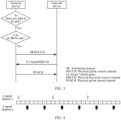
- the data sent by the terminal device to the network device on the PUSCH indicated by the scheduling information may further include a buffer status report (buffer status report, BSR).
- BSR buffer status report
- the BSR may be used to notify the network device of an amount of data that further needs to be sent by the terminal device to the network device. If the BSR received by the network device is greater than 0, the network device may continue to schedule a resource for the terminal device through the PDCCH that carries scheduling indication information, so that the terminal device can continue to send the data to the network device on the scheduled resource.
- the CG includes a type (Type)-1 CG and a type-2 CG.
- a parameter related to the CG is configured by using RRC signaling, and the RRC is further used to activate the CG resource.
- a parameter related to the CG is configured by using RRC signaling, and the configured CG resource and an activated CG resource are indicated by using the PDCCH.
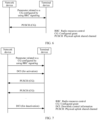
- FIG. 6 shows a procedure of the type-1 CG.
- the network device may include the parameter related to the CG in the RRC signaling.
- the parameter that is related to the CG and that is carried in the RRC signaling may include: a configured scheduling radio network temporary identifier (configured scheduling radio network temporary identifier, CS-RNTI), a CG periodicity, a frequency domain resource position, a hybrid automatic repeat request processes (hybrid automatic repeat request process, HARQ Process) number (HARQ Process Number) and an offset value, a specific value of a modulation and coding scheme (modulation and coding scheme, MCS), a number of repetitions, and the like.
- the terminal device may determine, based on received RRC signaling, a CG resource that periodically takes effect, and periodically send data to the network device on the CG resource.
- FIG. 7 shows a procedure of the type-2 CG.
- the network device may include, in the RRC signaling, the parameter related to the CG, including a CS-RNTI, a CG periodicity, and the like.
- the RRC signaling may carry parameters respectively related to the plurality of CGs, and the plurality of CGs may correspond to different CG periodicities.
- the network device further sends a PDCCH, where the PDCCH carries DCI used to activate a CG resource, and the DCI indicates a frequency domain resource and an MCS in the activated CG resource.
- the terminal device determines a CG resource that periodically takes effect, and sends a PUSCH to the network device on the CG resource.
- the network device needs to send the PDCCH again, where the PDCCH carries DCI used to release the CG resource, the DCI indicates the CG resource that needs to be released, and a format of the DCI meets the following conditions:
- a CRC is scrambled by using the CS-RNTI provided in the RRC signaling; (2) a HARQ process number is all set to '0', where when a plurality of CGs are configured, the HARQ process number is not all set to '0', but indicates a HARQ process number corresponding to the activated CG resource; (3) a new data indicator (new data indicator, NDI) is all set to '0'; (4) a redundancy version (redundancy version, RV) is all set to '0'; (5) an MCS is all set to '1'; and (6) a frequency domain resource allocation (frequency domain resource allocation, FDRA) is all set to '1' (all set to '0' in a special scenario).
- Data sent by the terminal device to the network device is encoded data.
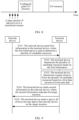
- Each tactile sensor may periodically generate data (or a signal). Periodicities in which different tactile sensors generate data may be different. For example, 500 to 2000 data packets are generated per second, and a size of each data packet is 12 to 48 bytes.
- duration for encoding the data generated by the tactile sensors may not be fixed, so that data generated by each tactile sensor arrives at the terminal device randomly, and a time interval between two adjacent arrivals complies with generalized Pareto distribution. Therefore, amounts of data that arrives at the terminal device at different moments may be different, and therefore, amounts of data sent by the terminal device to the network device at different moments may be different.
- data of three tactile sensors arrives at the terminal device, and an amount of data sent by the terminal device to the network device is an amount of data generated by the three tactile sensors.
- data of four tactile sensors arrives at the terminal device, and an amount of data sent by the terminal device to the network device is an amount of data generated by the four tactile sensors.
- a resource configured by the network device for the terminal device in a CG manner is periodic, and a resource in each periodicity is fixed.
- a resource, in a periodicity, that is configured based on the CG in a periodicity may be insufficient to transmit the large amount of data, and the terminal device needs to wait for a resource configured in a next periodicity. Consequently, a delay of sending data by the terminal device to the network device is large.
- the target resource used by the terminal device to send data is determined by the terminal device from the plurality of candidate resources based on the actual amount of the to-be-sent data, and an amount of data that can be transmitted on the plurality of candidate resources can cover an amount of data that the terminal device highly probably transmits. This helps increase a probability that the terminal device completes data transmission within a range of the plurality of candidate resources, and reduce a data transmission delay.
- the operation that the terminal device sends second information to the network device further helps the network device determine a resource used to receive the data. Compared with that the network device determines, in a blind detection manner, the resource used to receive the data, this can reduce power consumption of the network device.
- the network device in the figure may alternatively be a chip, a chip system, or a processor that supports the network device in implementing a corresponding method, or may be a logical module or software that can implement all or some functions of the network device; and the terminal device in the figure may alternatively be a chip, a chip system, or a processor that supports the terminal device in implementing a corresponding method, or may be a logical module or software that can implement all or some functions of the terminal device.
- FIG. 9 is a schematic flowchart of a data transmission method according to an embodiment of this application.
- the data transmission method is described from a perspective of interaction between a network device and a terminal device.
- the data transmission method includes the following steps.
- the network device sends first information to the terminal device, where the first information is used to determine a plurality of candidate resources.
- the terminal device receives the first information from the network device.
- the method may further include: The terminal device sends third information to the network device, where the third information indicates N second data amounts and a transmission probability corresponding to each of the N second data amounts, the transmission probability corresponding to each second data amount is a probability that the terminal device sends data having the second data amount to the network device, and N is an integer greater than 1.
- the network device receives the third information from the terminal device, and determines the plurality of candidate resources based on the N second data amounts and the transmission probability corresponding to each second data amount.
- the transmission probability corresponding to the second data amount may be a specific value, or may be a value range.
- the third information may be carried in a BSR.
- N is equal to 4, and four second data amounts indicated by the third information include a second data amount #1, a second data amount #2, a second data amount #3, and a second data amount #4.
- Table 1 shows an example of a transmission probability corresponding to each second data amount. Table 1 Second data amount Second data amount #1 Second data amount #2 Second data amount #3 Second data amount #4 Transmission probability P 1 P 2 P 3 P 4
- P 1 , P 2 , P 3 , and P 4 may be specific values, or may be value ranges.
- P 1 ranges from 0% to 25%
- P 2 ranges from 25% to 50%
- P 3 ranges from 50% to 75%
- P 4 ranges from 75% to 100%.
- a probability that an amount of the data sent by the terminal device to the network device is the second data amount #1 is 0% to 25%
- a probability that an amount of the sent data is the second data amount #2 is 25% to 50%
- a probability that an amount of the sent data is the second data amount #3 is 50% to 75%
- a probability that an amount of the sent data is the second data amount #4 is 75% to 100%.
- a delay from the time at which the to-be-sent data arrives at the terminal device to the time at which the terminal device sends the to-be-sent data to the network device in the manner #1 is less than a delay from the time at which the to-be-sent data arrives at the terminal device to the time at which the terminal device sends the to-be-sent data to the network device in the manner #2.
- the method may further include: The network device determines the plurality of candidate resources based on an amount of data received from the terminal device in a first time period. In this manner, the network device may collect statistics on the amount of data received from the terminal device in a historical time period (or may collect statistics on time for receiving the amount of data), and predict, based on the collected amount of data, an amount of data that may be sent by the terminal device to the network device and a probability of sending the amount of data, so that the amount of data that can be transmitted on the determined plurality of candidate resources can cover the amount of data that may be sent by the terminal device.
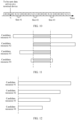
- That the at least two candidate resources partially overlap means that the at least two candidate resources are partially the same.
- FIG. 13 shows an example of a case in which at least two of the plurality of candidate resources partially overlap, and the at least two candidate resources have an inclusion relationship.
- a candidate resource #1 is a proper subset of a candidate resource #2, in other words, the candidate resource #1 and the candidate resource #2 have an inclusion relationship.
- the candidate resource #2, a candidate resource #3, and a candidate resource #4 partially overlap.
- a proportion of an overlapping part between the at least two candidate resources in one of the at least two candidate resources is greater than or equal to a first threshold.
- values of the first threshold may be different. For example, with reference to FIG. 11 , a proportion of the overlapping part (the gray part in FIG.
- the plurality of candidate resources do not overlap each other.
- a candidate resource #1, a candidate resource #2, a candidate resource #3, and a candidate resource #4 do not overlap each other.
- the network device sends the first information #1 to the terminal device #1, where the first information #1 is used by the terminal device #1 to determine a candidate resource #1A, a candidate resource #2A, a candidate resource #3A, and a candidate resource #4A, where the candidate resource #1A>the candidate resource #2A>the candidate resource #3A>the candidate resource #4A.
- the network device sends the first information #2 to the terminal device #2, where the first information #2 is used by the terminal device #2 to determine a candidate resource #1B, a candidate resource #2B, a candidate resource #3B, and a candidate resource #4B, where the candidate resource #1B>the candidate resource #2B>the candidate resource #3B>the candidate resource #4B.
- resource utilization can be improved in a manner in which a plurality of candidate resources of different terminal devices partially overlap.
- the terminal device #1 sends data by using the candidate resource #4B and the terminal device #2 sends data by using the candidate resource 3B
- an overlapping part between the candidate resource 3A and the candidate resource #4B is used by the terminal device #1 to send data
- the remaining of the resource other than the overlapping part between the candidate resource #4B and the candidate resource 3A is not used by the terminal device #1 to send data.
- the remaining of the resource and the candidate resource 3B partially overlap, a part of the remaining of the resource may be used by the terminal device #2 to send data.
- this reduces a waste of resources, and improves resource utilization.
- the plurality of candidate resources are frequency domain resources, time domain resources, or time-frequency domain resources.
- specific forms in which the first information is used to determine the plurality of candidate resources may be different. The following separately describes the first information in the three cases: the plurality of candidate resources being frequency domain resources, the plurality of candidate resources being time domain resources, and the plurality of candidate resources being time-frequency domain resources, as described in the following optional implementation 1.1 to implementation 1.3.
- the plurality of candidate resources are frequency domain resources.
- the first information may be carried in DCI, and is indicated by an FDRA in the DCI.
- each of the plurality of candidate resources is indicated by one FDRA, or the plurality of candidate resources are all indicated by one FDRA.
- the first information may be carried in RRC, and the plurality of candidate resources may be configured based on a type-1 CG.
- the preconfigured relationship in the RRC signaling may be represented as follows:
- the preconfigured relationship indicates a proportion of the plurality of FDRAs of the plurality of candidate resources in the FDRA carried in the DCI, and start frequency domain positions of candidate resources respectively indicated by the plurality of FDRAs and a start frequency domain position of a candidate resource indicated by the FDRA carried in the DCI are the same.
- the terminal device uses the start frequency domain position of the candidate resource #1 as the start frequency domain positions of the candidate resource #2, the candidate resource #3, and the candidate resource #4, and determines 80% of the candidate resource #1 as the candidate resource #2, 70% of the candidate resource #1 as the candidate resource #3, and 50% of the candidate resource #1 as the candidate resource #4.
- the plurality of candidate resources are time domain resources.
- the first information may be carried in the RRC signaling.
- each of the plurality of candidate resources is configured by using one field in the RRC signaling.
- a plurality of fields may be added to the RRC signaling, and one of the plurality of fields may be used to configure one candidate resource.
- one field is used to carry a start time domain position (for example, a start symbol) and a time domain length (for example, a symbol length) of one candidate resource, or one field is used to carry a start time domain position (for example, a start symbol) and an end time domain position (for example, an end symbol) of one candidate resource.
- Content carried in the field used to configure the candidate resource is not limited in this embodiment of this application.
- the plurality of fields added to the RRC signaling may be a plurality of start symbol and length (startSymbolAndLength) fields added to a PUSCH-time domain resource allocation (time domain resource allocation, TDRA) configuration in the RRC signaling.
- the plurality of candidate resources are all configured by using one field in the RRC signaling.
- the plurality of candidate resources are time-frequency domain resources.
- a frequency domain position of each of the plurality of candidate resources may be indicated by using DCI or configured by using RRC signaling, and a time domain position of each of the plurality of candidate resources may be configured by using the RRC signaling.
- a manner in which the DCI indicates the frequency domain position of the candidate resource is similar to a manner in which the DCI indicates the frequency domain resource in the implementation 1.1.
- a manner of configuring the frequency domain position of the candidate resource by using RRC signaling is similar to a manner of configuring the frequency domain resource by using the RRC signaling in the implementation 1.1.
- a manner of configuring the frequency domain position of the candidate resource by using RRC signaling is similar to a manner of configuring the time domain resource by using the RRC signaling in the implementation 1.2. Details are not described again.
- the terminal device determines a target resource from the plurality of candidate resources based on a first data amount of the to-be-sent data.
- the target resource may be at least one of the plurality of candidate resources.
- a manner of determining the target resource may be described in the following optional implementation 2.1 to implementation 2.4.
- Implementation 2.1 There is a case in which an amount of data that can be transmitted on each of the at least one candidate resource in the plurality of candidate resources is greater than or equal to the first data amount.
- the target resource may be a candidate resource that is in the plurality of candidate resources and on which data with an amount greater than or equal to the first data amount and closest to the first data amount can be transmitted.
- Implementation 2.2 An amount of data that can be transmitted on each of the plurality of candidate resources is less than the first data amount.
- the target resource may be a candidate resource that is in the plurality of candidate resources and on which a largest amount of data can be transmitted. For example, amounts of data that can be transmitted on a candidate resource #1, a candidate resource #2, a candidate resource #3, and a candidate resource #4 are respectively Q 1 , Q 2 , Q 3 , and Q 4 , where Q 1 >Q 2 >Q 3 >Q 4 . If Q 1 , Q 2 , Q 3 , and Q 4 are all less than the first data amount, the target resource is the candidate resource #1.
- the implementation 2.1 and the implementation 2.2 may be applicable to a case in which at least two of the plurality of candidate resources overlap, or may be applicable to a case in which the plurality of candidate resources do not overlap each other.
- the target resource may be alternatively determined based on an optional implementation 2.3 or an optional implementation 2.4.
- Implementation 2.3 The plurality of candidate resources do not overlap each other, and a total amount of data that can be transmitted on the plurality of candidate resources is greater than or equal to the first data amount.
- the target resource may be a group of candidate resources that is in a plurality of groups of candidate resources and on which data with an amount greater than or equal to the first data amount and closest to the first data amount can be transmitted.
- Each of the plurality of groups of candidate resources includes at least one of the plurality of candidate resources.
- a group #1 to a group #7 may be obtained by selecting one, two, and three candidate resources from the three candidate resources.
- Amounts of data that can be transmitted on the group #1 of candidate resources to the group #7 of candidate resources are sequentially Q 1 , Q 2 , Q 3 , Q 1 +Q 2 , Q 1 +Q 3 , Q 2 +Q 3 , and Q 1 +Q 2 +Q 3 .
- the target resource may be a group of candidate resources that is in the seven groups of candidate resources and on which data with an amount greater than or equal to the first data amount and closest to the first data amount can be transmitted. For example, if Q 1 +Q 2 in the seven data amounts is greater than or equal to the first data amount and is closest to the first data amount, the target resource are the candidate resource #2 and the candidate resource #3 in the group #4.
- the network device configures M consecutive symbols for the terminal device, each of the M symbols is a candidate resource, and a total amount of data that can be transmitted on the M symbols is greater than or equal to the first data amount.
- the terminal device may determine, from the M symbols, m consecutive symbols on which data with an amount equal to the first data amount can be transmitted.
- the m symbols are target resources.
- M is an integer greater than 1, and m is a positive integer less than or equal to M.
- Implementation 2.4 The plurality of candidate resources do not overlap each other, and a total amount of data that can be transmitted on the plurality of candidate resources is less than the first data amount.
- the target resources may be the plurality of candidate resources. For example, if amounts of data that can be transmitted on a candidate resource #1, a candidate resource #2, and a candidate resource #3 are respectively Q 1 , Q 2 , and Q 3 . If Q 1 +Q 2 +Q 3 is less than the first data amount, the target resources are the candidate resource #1, the candidate resource #2, and the candidate resource #3.
- the network device configures M consecutive symbols for the terminal device, each of the M symbols is a candidate resource, and a total amount of data that can be transmitted on the M symbols is less than the first data amount. In this case, the M symbols are all target resources.
- the first data amount may be a buffer size (buffer size) of the terminal device.
- the first data amount may be a buffer size corresponding to a logical channel that is in the terminal device and that is used to transmit the to-be-sent data.
- S104 The terminal device sends second information to the network device, where the second information indicates the target resource.
- the network device receives the second information from the terminal device.
- that the terminal device sends second information to the network device may include: The terminal device sends a demodulation reference signal (demodulation reference signal, DMRS) to the network device, where the second information is carried in a frequency domain position of the DMRS.
- DMRS demodulation reference signal
- the network device receives the DMRS from the terminal device.
- the frequency domain position of the DMRS indicates a frequency domain position of the target resource.
- the network device may determine the frequency domain position of the detected DMRS as the frequency domain position of the target resource.
- the second information is carried in uplink control information (uplink control information, UCI).
- uplink control information uplink control information
- the second information may be carried in configuration grant uplink control information (CG-UCI).
- CG-UCI configuration grant uplink control information
- the second information indicates an index of the target resource.
- the plurality of candidate resources are frequency domain resources or time-frequency domain resources, a frequency domain position of each of the plurality of candidate resources is indicated by one FDRA, the second information indicates an index of an FDRA corresponding to the target resource, and a start frequency domain position for transmitting the UCI and a start frequency domain position of the target resource may be the same.
- the plurality of candidate resources are time domain resources
- the first information is for configuring a start time domain position and a time domain length of each of the plurality of candidate resources
- the second information indicates a start time domain position and a time domain length of the target resource.
- a field may be added to UCI in a format 2, a format 3, or a format 4. The field is used to carry the index of the target resource.
- the second information indicates a proportion of the target resource in the plurality of candidate resources.
- This manner may be applicable to a scenario in which the plurality of candidate resources do not overlap each other.
- a value of a bit carrying the second information in the DCI may vary with the proportion of the target resource in the plurality of candidate resources.
- the network device may determine that frequency domain resources of half of the plurality of RBGs starting from the RBG with a smallest frequency in the plurality of RBGs is the target resource; or when the value of the bit carrying the second information in the UCI is 1, the network device may determine that the plurality of RBGs are all target resources.
- a plurality of symbols are configured for the terminal device by using the RRC signaling, each of the plurality of symbols is a candidate resource, the target resource is at least one of the plurality of symbols, and a start symbol of the at least one symbol and a start symbol of the plurality of symbols are the same.
- a proportion of the target resource to the plurality of symbols is 0.5
- a value of a bit carrying the second information in the UCI is 0.
- a value of a bit carrying the second information in the UCI is 1.
- the second information indicates a resource indication value (resource indicator value, RIV) corresponding to the target resource.
- RIV resource indicator value
- the second information indicates a bitmap
- each bit in the bitmap corresponds to at least one of the plurality of candidate resources
- a value of each bit represents whether a candidate resource corresponding to the bit belongs to the target resource.
- a value of the bit may be "0" or "1" to indicate whether the candidate resource corresponding to the bit belongs to the target resource.
- the candidate resource corresponding to the bit belongs to the target resource, and when the value of the bit is "0", the candidate resource corresponding to the bit does not belong to the target resource; or when the value of the bit is "1", the candidate resource corresponding to the bit does not belong to the target resource, and when the value of the bit is "0", the candidate resource corresponding to the bit belongs to the target resource.
- the value of the bit may be alternatively represented in another manner. For example, when the value of the bit is "true”, it indicates that the candidate resource corresponding to the bit belongs to the target resource, and when the value of the bit is "false", it indicates that the candidate resource corresponding to the bit does not belong to the target resource. This is not limited.
- one FDRA in the DCI indicates frequency domain resources of eight RBGs (which are sequentially an RBG #1 to an RBG #8), and a frequency domain resource of each of the eight RBGs is a candidate resource.
- the bitmap includes eight bits, and the eight bits are in one-to-one correspondence with the eight RBGs. If the target resources are frequency domain resources of the RBG #1 to the RBG #4, values of the eight bits are sequentially 1, 1, 1, 1, 0, 0, 0, and 0. When the value of the bit is "1", the candidate resource corresponding to the bit belongs to the target resource. When the value of the bit is "0", the candidate resource corresponding to the bit does not belong to the target resource; and the bitmap is represented as [1, 1, 1, 1, 0, 0, 0, 0].
- the terminal device sends a part or all of the to-be-sent data to the network device on the target resource.
- the network device receives the data from the terminal device on the target resource.
- a sequence of the operation that the terminal device sends second information to the network device and the operation that the terminal device sends a part or all of the to-be-sent data to the network device on the target resource is not limited in this embodiment of this application.
- the operation that the terminal device sends second information to the network device may be performed before the operation that the terminal device sends a part or all of the to-be-sent data to the network device on the target resource, or may be performed after the operation that the terminal device sends a part or all of the to-be-sent data to the network device on the target resource.
- the terminal device may perform the two operations simultaneously.
- the terminal device simultaneously sends the second information to the network device and sends the part or all of the to-be-sent data to the network device on the target resource.
- the network device after receiving the second information from the terminal device to determine the target resource, the network device receives the data from the terminal device on the target resource.
- the terminal device receives the first information from the network device, determines the plurality of candidate resources based on the first information, determines the target resource from the plurality of candidate resources based on the first data amount of the to-be-sent data, sends a part or all of the to-be-sent data to the network device on the target resource, and sends the second information to the network device, where the second information indicates the target resource.
- the network device may allocate, to the terminal device, a "resource pool" including the plurality of candidate resources.
- the terminal device may select, based on the actual amount of the to-be-sent data, a matched resource from the "resource pool", to send the to-be-sent data.
- An amount of data that can be transmitted on the plurality of candidate resources in the "resource pool” can cover an amount of data that the terminal device highly probably transmits. This helps increase the probability that the terminal device completes data transmission within the range of the plurality of candidate resources, and reduce the data transmission delay.
- the operation that the terminal device sends second information to the network device further helps the network device determine a resource used to receive the data. Compared with that the network device receives data in a blind detection manner, this can reduce power consumption of the network device.
- first information may be used to determine the plurality of frequency domain resources
- second information may indicate one frequency domain resource determined by a terminal device from the plurality of frequency domain resources.
- the terminal device determines the plurality of frequency domain resources based on the first information.
- the network device may indicate a plurality of FDRAs in DCI.
- the plurality of FDRAs are in one-to-one correspondence with the plurality of frequency domain resources, and each of the plurality of frequency domain resources is indicated by a corresponding FDRA.
- the terminal device may determine the plurality of frequency domain resources based on the plurality of FDRAs indicated in the DCI.
- the network device may indicate one FDRA in DCI, and configure, in RRC signaling, a preconfigured relationship between a plurality of FDRAs and the FDRA indicated in the DCI.
- a plurality of FDRAs are in one-to-one correspondence with the plurality of frequency domain resources, and each of the plurality of frequency domain resources is indicated by a corresponding FDRA.
- the terminal device may determine, based on the FDRA indicated in the DCI and the preconfigured relationship configured in the RRC signaling, the plurality of frequency domain resources indicated by the plurality of FDRA.
- At least two of the plurality of frequency domain resources partially overlap, and/or at least two of the plurality of frequency domain resources have an inclusion relationship.
- the plurality of frequency domain resources do not overlap each other.
- the terminal device sends the second information to the network device, where the second information indicates the frequency domain resource determined by the terminal device.
- the network device receives the second information from the terminal device, and then, the network device may learn of, based on the received second information, the frequency domain resource determined by the terminal device.
- the second information is carried in UCI, and the second information indicates an index of an FDRA corresponding to the frequency domain resource determined by the terminal device.
- a start position of a frequency domain resource used to transmit the UCI and a start position of the frequency domain resource determined by the terminal device may be the same.
- first information may be used to determine a plurality of time domain resources
- second information may indicate one time domain resource determined by a terminal device from the plurality of time domain resources.
- At least two of the plurality of time domain resources partially overlap, and/or at least two of the plurality of time domain resources have an inclusion relationship.
- the plurality of time domain resources do not overlap each other.
- the terminal device determines one time domain resource from the plurality of time domain resources based on a first data amount of to-be-sent data.
- the determined time domain resource is a time domain resource that is in the plurality of time domain resources and on which data with an amount greater than or equal to the first data amount and closest to the first data amount can be transmitted.
- the determined time domain resource is a time domain resource that is in the plurality of time domain resources and on which a largest amount of data can be transmitted.
- the terminal device sends the second information to the network device, where the second information indicates the time domain resource determined by the terminal device.
- the network device receives the second information from the terminal device, and then, the network device may learn of, based on the received second information, the time domain resource determined by the terminal device.
- the second information is carried in UCI, and the second information indicates a start time domain position and a time domain length of the time domain resource determined by the terminal device.
- the terminal device sends a part or all of the to-be-sent data to the network device on the determined time domain resource.
- the network device receives the data from the terminal device on the time domain resource determined by the terminal device.
- a sequence of the operation that the terminal device sends the second information to the network device and the operation that the terminal device sends a part or all of the to-be-sent data to the network device on the determined time domain resource is not limited in this embodiment of this application.
- S31 corresponds to S101 in the method shown in FIG. 9
- S32 corresponds to S102 in FIG. 9
- S33 corresponds to S103 in FIG. 9
- S34 corresponds to S104 in FIG. 9
- S35 corresponds to S105 in FIG. 9 .
- this embodiment may further include another implementation of the data transmission method shown in FIG. 9 , and there are also corresponding beneficial effects. Details are not described again.
- the terminal device may determine, based on the actual amount of the to-be-sent data, one time domain resource from the plurality of time domain resources configured by the network device to send the to-be-sent data.
- An amount of data that can be transmitted on the plurality of time domain resources can cover an amount of data that the terminal device highly probably transmits. This helps increase a probability that the terminal device completes data transmission within a range of the plurality of time domain resources, and reduce a data transmission delay.
- interaction between a terminal device and a network device may include but is not limited to the following steps.
- a network device sends first information to the terminal device, and correspondingly, the terminal device receives the first information.
- the first information is carried in the DCI.
- the terminal device determines the plurality of RBGs based on the first information.
- the terminal device determines at least one RBG from the plurality of RBGs based on a first data amount of to-be-sent data.
- the terminal device sends second information to the network device, where the second information indicates the at least one RBG determined by the terminal device.
- the network device receives the second information from the terminal device, and then, the network device may learn of, based on the received second information, the at least one RBG determined by the terminal device.
- the second information indicates a proportion of the determined at least one RBG in the plurality of RBGs.
- the second information indicates an RIV.
- the RIV may represent position distribution of the determined at least one RBG in the plurality of RBGs, and the determined at least one RBG is continuously distributed in the plurality of RBGs.
- the second information indicates a bitmap, each bit in the bitmap corresponds to at least one of the plurality of RBGs, and a value of each bit represents whether a frequency domain resource of an RBG corresponding to the bit is used by the terminal device to send the to-be-sent data.
- that the terminal device sends second information to the network device includes: The terminal device sends a DMRS to the network device, where the second information is carried in a frequency domain position of the DMRS.
- the terminal device sends a part or all of the to-be-sent data to the network device on the frequency domain resource of the determined at least one RBG.
- the network device receives the data from the terminal device.
- a sequence of the operation that the terminal device sends second information to the network device and the operation that the terminal device sends a part or all of the to-be-sent data to the network device on the frequency domain resource of the determined at least one RBG is not limited in this embodiment of this application.
- S41 corresponds to S101 in the method shown in FIG. 9
- S42 corresponds to S102 in FIG. 9
- S43 corresponds to S103 in FIG. 9
- S44 corresponds to S104 in FIG. 9
- S45 corresponds to S105 in FIG. 9 .
- this embodiment may further include another implementation of the data transmission method shown in FIG. 9 , and there are also corresponding beneficial effects. Details are not described again.
- the terminal device determines the plurality of symbols based on the first information.
- the terminal device sends second information to the network device, where the second information indicates the at least one symbol determined by the terminal device.
- the network device receives the second information from the terminal device, and then, the network device may learn of, based on the received second information, the at least one symbol determined by the terminal device.
Landscapes
- Engineering & Computer Science (AREA)
- Signal Processing (AREA)
- Computer Networks & Wireless Communication (AREA)
- Mobile Radio Communication Systems (AREA)
- Data Exchanges In Wide-Area Networks (AREA)
Applications Claiming Priority (2)
| Application Number | Priority Date | Filing Date | Title |
|---|---|---|---|
| CN202211354633.3A CN117998598A (zh) | 2022-11-01 | 2022-11-01 | 数据传输方法及装置 |
| PCT/CN2023/121234 WO2024093577A1 (zh) | 2022-11-01 | 2023-09-25 | 数据传输方法及装置 |
Publications (2)
| Publication Number | Publication Date |
|---|---|
| EP4580285A1 true EP4580285A1 (de) | 2025-07-02 |
| EP4580285A4 EP4580285A4 (de) | 2026-01-14 |
Family
ID=90895985
Family Applications (1)
| Application Number | Title | Priority Date | Filing Date |
|---|---|---|---|
| EP23884509.3A Pending EP4580285A4 (de) | 2022-11-01 | 2023-09-25 | Datenübertragungsverfahren und -vorrichtung |
Country Status (5)
| Country | Link |
|---|---|
| US (1) | US20250261177A1 (de) |
| EP (1) | EP4580285A4 (de) |
| CN (1) | CN117998598A (de) |
| TW (1) | TW202420871A (de) |
| WO (1) | WO2024093577A1 (de) |
Families Citing this family (2)
| Publication number | Priority date | Publication date | Assignee | Title |
|---|---|---|---|---|
| CN120980682A (zh) * | 2024-05-09 | 2025-11-18 | 荣耀终端股份有限公司 | 通信方法及装置 |
| CN119815528B (zh) * | 2025-03-12 | 2025-05-27 | 杭州企鹅科技有限公司 | 基于无线定位的共享设备综合管理方法、系统及介质 |
Family Cites Families (8)
| Publication number | Priority date | Publication date | Assignee | Title |
|---|---|---|---|---|
| CN108737040B (zh) * | 2017-04-14 | 2020-12-25 | 华为技术有限公司 | 传输方法、终端和网络设备 |
| CN110266463B (zh) * | 2017-07-17 | 2021-09-07 | 华为技术有限公司 | 数据传输方法和终端设备 |
| CN110324902B (zh) * | 2018-03-30 | 2023-06-27 | 华为技术有限公司 | 通信方法、通信装置和系统 |
| CN112703791B (zh) * | 2018-09-28 | 2023-06-20 | 华为技术有限公司 | 一种通信方法及装置 |
| CN112399579B (zh) * | 2019-08-16 | 2024-05-17 | 华为技术有限公司 | 反馈信息的传输方法及通信装置 |
| WO2021030991A1 (zh) * | 2019-08-16 | 2021-02-25 | 华为技术有限公司 | 一种上行传输资源的确定方法及装置 |
| CN113596999A (zh) * | 2020-04-30 | 2021-11-02 | 华为技术有限公司 | 通信方法和装置 |
| WO2022067726A1 (zh) * | 2020-09-30 | 2022-04-07 | 华为技术有限公司 | 用于资源调度的通信方法及装置 |
-
2022
- 2022-11-01 CN CN202211354633.3A patent/CN117998598A/zh active Pending
-
2023
- 2023-09-25 EP EP23884509.3A patent/EP4580285A4/de active Pending
- 2023-09-25 WO PCT/CN2023/121234 patent/WO2024093577A1/zh not_active Ceased
- 2023-10-30 TW TW112141619A patent/TW202420871A/zh unknown
-
2025
- 2025-05-01 US US19/196,718 patent/US20250261177A1/en active Pending
Also Published As
| Publication number | Publication date |
|---|---|
| US20250261177A1 (en) | 2025-08-14 |
| CN117998598A (zh) | 2024-05-07 |
| WO2024093577A1 (zh) | 2024-05-10 |
| TW202420871A (zh) | 2024-05-16 |
| EP4580285A4 (de) | 2026-01-14 |
Similar Documents
| Publication | Publication Date | Title |
|---|---|---|
| US20250261177A1 (en) | Data transmission method and apparatus | |
| EP4380220A1 (de) | Kommunikationsverfahren und kommunikationsvorrichtung | |
| EP4192074A1 (de) | Messverfahren und -vorrichtung | |
| EP4395213A1 (de) | Datenübertragungsverfahren und -vorrichtung | |
| CN115696423A (zh) | 一种通信方法及通信装置 | |
| CN115428545B (zh) | 基于设备到设备的资源确定方法和设备 | |
| EP3886488A1 (de) | Bsr-meldeverfahren und vorrichtung | |
| WO2015026929A1 (en) | Methods and devices for allocating resources in device-to device communication | |
| EP4013129B1 (de) | Verfahren und vorrichtung zur übertragungsmodusbestimmung | |
| CN115334696A (zh) | 一种非连续接收的通信方法及装置 | |
| EP3661299A1 (de) | Verfahren und vorrichtung zum empfangen von steuerinformationen und zum senden von steuerinformationen | |
| EP4284091A1 (de) | Datenübertragungsverfahren und -vorrichtung | |
| EP4207896A1 (de) | Signalübertragungsverfahren und zugehörige vorrichtung | |
| JP6980171B2 (ja) | 情報の伝送方法および装置 | |
| CN103249134A (zh) | 小区间上行干扰的协调方法及系统 | |
| CN117692892A (zh) | 一种无线通信方法及通信装置 | |
| US10951289B2 (en) | Electronic device, method applied to electronic device, and data processing device for reusing idle CSI-RS ports of an adjacent cell | |
| JP7539397B2 (ja) | V2x通信装置のためのリソースプールを軟分離する通信装置および通信方法 | |
| EP4683405A1 (de) | Kommunikationsverfahren und zugehörige vorrichtung | |
| WO2023109572A1 (zh) | 一种配置方法及装置 | |
| US20260046076A1 (en) | Data transmission method and apparatus | |
| KR20240032125A (ko) | 통신 방법 및 장치 | |
| JP2012129794A (ja) | 基地局、及び干渉基地局情報送信方法 | |
| EP4440023A1 (de) | Verfahren und vorrichtung zur übertragung von referenzsignalen | |
| KR20230173206A (ko) | 시간 영역 자원 할당 방법 및 그 장치(time domain resource assignment method and apparatus) |
Legal Events
| Date | Code | Title | Description |
|---|---|---|---|
| STAA | Information on the status of an ep patent application or granted ep patent |
Free format text: STATUS: THE INTERNATIONAL PUBLICATION HAS BEEN MADE |
|
| PUAI | Public reference made under article 153(3) epc to a published international application that has entered the european phase |
Free format text: ORIGINAL CODE: 0009012 |
|
| STAA | Information on the status of an ep patent application or granted ep patent |
Free format text: STATUS: REQUEST FOR EXAMINATION WAS MADE |
|
| 17P | Request for examination filed |
Effective date: 20250325 |
|
| AK | Designated contracting states |
Kind code of ref document: A1 Designated state(s): AL AT BE BG CH CY CZ DE DK EE ES FI FR GB GR HR HU IE IS IT LI LT LU LV MC ME MK MT NL NO PL PT RO RS SE SI SK SM TR |
|
| REG | Reference to a national code |
Ref country code: DE Ref legal event code: R079 Free format text: PREVIOUS MAIN CLASS: H04W0072044600 Ipc: H04W0052020000 |
|
| A4 | Supplementary search report drawn up and despatched |
Effective date: 20251216 |
|
| RIC1 | Information provided on ipc code assigned before grant |
Ipc: H04W 52/02 20090101AFI20251210BHEP Ipc: H04W 72/1268 20230101ALI20251210BHEP Ipc: H04W 72/044 20230101ALN20251210BHEP Ipc: H04W 72/21 20230101ALN20251210BHEP Ipc: H04W 72/23 20230101ALN20251210BHEP |
|
| DAV | Request for validation of the european patent (deleted) | ||
| DAX | Request for extension of the european patent (deleted) |