EP4576255A1 - Negatives elektrodenmaterial und batterie - Google Patents
Negatives elektrodenmaterial und batterie Download PDFInfo
- Publication number
- EP4576255A1 EP4576255A1 EP24857777.7A EP24857777A EP4576255A1 EP 4576255 A1 EP4576255 A1 EP 4576255A1 EP 24857777 A EP24857777 A EP 24857777A EP 4576255 A1 EP4576255 A1 EP 4576255A1
- Authority
- EP
- European Patent Office
- Prior art keywords
- anode material
- silicon
- primary nanoparticles
- equal
- silicon primary
- Prior art date
- Legal status (The legal status is an assumption and is not a legal conclusion. Google has not performed a legal analysis and makes no representation as to the accuracy of the status listed.)
- Pending
Links
Images

Classifications
-
- H—ELECTRICITY
- H01—ELECTRIC ELEMENTS
- H01M—PROCESSES OR MEANS, e.g. BATTERIES, FOR THE DIRECT CONVERSION OF CHEMICAL ENERGY INTO ELECTRICAL ENERGY
- H01M10/00—Secondary cells; Manufacture thereof
- H01M10/05—Accumulators with non-aqueous electrolyte
- H01M10/052—Li-accumulators
- H01M10/0525—Rocking-chair batteries, i.e. batteries with lithium insertion or intercalation in both electrodes; Lithium-ion batteries
-
- H—ELECTRICITY
- H01—ELECTRIC ELEMENTS
- H01M—PROCESSES OR MEANS, e.g. BATTERIES, FOR THE DIRECT CONVERSION OF CHEMICAL ENERGY INTO ELECTRICAL ENERGY
- H01M4/00—Electrodes
- H01M4/02—Electrodes composed of, or comprising, active material
- H01M4/04—Processes of manufacture in general
- H01M4/0471—Processes of manufacture in general involving thermal treatment, e.g. firing, sintering, backing particulate active material, thermal decomposition, pyrolysis
-
- H—ELECTRICITY
- H01—ELECTRIC ELEMENTS
- H01M—PROCESSES OR MEANS, e.g. BATTERIES, FOR THE DIRECT CONVERSION OF CHEMICAL ENERGY INTO ELECTRICAL ENERGY
- H01M4/00—Electrodes
- H01M4/02—Electrodes composed of, or comprising, active material
- H01M4/13—Electrodes for accumulators with non-aqueous electrolyte, e.g. for lithium-accumulators; Processes of manufacture thereof
- H01M4/134—Electrodes based on metals, Si or alloys
-
- H—ELECTRICITY
- H01—ELECTRIC ELEMENTS
- H01M—PROCESSES OR MEANS, e.g. BATTERIES, FOR THE DIRECT CONVERSION OF CHEMICAL ENERGY INTO ELECTRICAL ENERGY
- H01M4/00—Electrodes
- H01M4/02—Electrodes composed of, or comprising, active material
- H01M4/13—Electrodes for accumulators with non-aqueous electrolyte, e.g. for lithium-accumulators; Processes of manufacture thereof
- H01M4/139—Processes of manufacture
- H01M4/1395—Processes of manufacture of electrodes based on metals, Si or alloys
-
- H—ELECTRICITY
- H01—ELECTRIC ELEMENTS
- H01M—PROCESSES OR MEANS, e.g. BATTERIES, FOR THE DIRECT CONVERSION OF CHEMICAL ENERGY INTO ELECTRICAL ENERGY
- H01M4/00—Electrodes
- H01M4/02—Electrodes composed of, or comprising, active material
- H01M4/36—Selection of substances as active materials, active masses, active liquids
- H01M4/362—Composites
- H01M4/366—Composites as layered products
-
- H—ELECTRICITY
- H01—ELECTRIC ELEMENTS
- H01M—PROCESSES OR MEANS, e.g. BATTERIES, FOR THE DIRECT CONVERSION OF CHEMICAL ENERGY INTO ELECTRICAL ENERGY
- H01M4/00—Electrodes
- H01M4/02—Electrodes composed of, or comprising, active material
- H01M4/36—Selection of substances as active materials, active masses, active liquids
- H01M4/38—Selection of substances as active materials, active masses, active liquids of elements or alloys
- H01M4/381—Alkaline or alkaline earth metals elements
- H01M4/382—Lithium
-
- H—ELECTRICITY
- H01—ELECTRIC ELEMENTS
- H01M—PROCESSES OR MEANS, e.g. BATTERIES, FOR THE DIRECT CONVERSION OF CHEMICAL ENERGY INTO ELECTRICAL ENERGY
- H01M4/00—Electrodes
- H01M4/02—Electrodes composed of, or comprising, active material
- H01M4/36—Selection of substances as active materials, active masses, active liquids
- H01M4/38—Selection of substances as active materials, active masses, active liquids of elements or alloys
- H01M4/386—Silicon or alloys based on silicon
-
- H—ELECTRICITY
- H01—ELECTRIC ELEMENTS
- H01M—PROCESSES OR MEANS, e.g. BATTERIES, FOR THE DIRECT CONVERSION OF CHEMICAL ENERGY INTO ELECTRICAL ENERGY
- H01M4/00—Electrodes
- H01M4/02—Electrodes composed of, or comprising, active material
- H01M4/36—Selection of substances as active materials, active masses, active liquids
- H01M4/48—Selection of substances as active materials, active masses, active liquids of inorganic oxides or hydroxides
-
- H—ELECTRICITY
- H01—ELECTRIC ELEMENTS
- H01M—PROCESSES OR MEANS, e.g. BATTERIES, FOR THE DIRECT CONVERSION OF CHEMICAL ENERGY INTO ELECTRICAL ENERGY
- H01M4/00—Electrodes
- H01M4/02—Electrodes composed of, or comprising, active material
- H01M4/36—Selection of substances as active materials, active masses, active liquids
- H01M4/48—Selection of substances as active materials, active masses, active liquids of inorganic oxides or hydroxides
- H01M4/485—Selection of substances as active materials, active masses, active liquids of inorganic oxides or hydroxides of mixed oxides or hydroxides for inserting or intercalating light metals, e.g. LiTi2O4 or LiTi2OxFy
-
- H—ELECTRICITY
- H01—ELECTRIC ELEMENTS
- H01M—PROCESSES OR MEANS, e.g. BATTERIES, FOR THE DIRECT CONVERSION OF CHEMICAL ENERGY INTO ELECTRICAL ENERGY
- H01M4/00—Electrodes
- H01M4/02—Electrodes composed of, or comprising, active material
- H01M4/62—Selection of inactive substances as ingredients for active masses, e.g. binders, fillers
-
- H—ELECTRICITY
- H01—ELECTRIC ELEMENTS
- H01M—PROCESSES OR MEANS, e.g. BATTERIES, FOR THE DIRECT CONVERSION OF CHEMICAL ENERGY INTO ELECTRICAL ENERGY
- H01M4/00—Electrodes
- H01M4/02—Electrodes composed of, or comprising, active material
- H01M4/62—Selection of inactive substances as ingredients for active masses, e.g. binders, fillers
- H01M4/621—Binders
- H01M4/622—Binders being polymers
-
- H—ELECTRICITY
- H01—ELECTRIC ELEMENTS
- H01M—PROCESSES OR MEANS, e.g. BATTERIES, FOR THE DIRECT CONVERSION OF CHEMICAL ENERGY INTO ELECTRICAL ENERGY
- H01M4/00—Electrodes
- H01M4/02—Electrodes composed of, or comprising, active material
- H01M4/62—Selection of inactive substances as ingredients for active masses, e.g. binders, fillers
- H01M4/624—Electric conductive fillers
-
- H—ELECTRICITY
- H01—ELECTRIC ELEMENTS
- H01M—PROCESSES OR MEANS, e.g. BATTERIES, FOR THE DIRECT CONVERSION OF CHEMICAL ENERGY INTO ELECTRICAL ENERGY
- H01M4/00—Electrodes
- H01M4/02—Electrodes composed of, or comprising, active material
- H01M4/62—Selection of inactive substances as ingredients for active masses, e.g. binders, fillers
- H01M4/624—Electric conductive fillers
- H01M4/625—Carbon or graphite
-
- C—CHEMISTRY; METALLURGY
- C01—INORGANIC CHEMISTRY
- C01P—INDEXING SCHEME RELATING TO STRUCTURAL AND PHYSICAL ASPECTS OF SOLID INORGANIC COMPOUNDS
- C01P2004/00—Particle morphology
- C01P2004/60—Particles characterised by their size
- C01P2004/61—Micrometer sized, i.e. from 1-100 micrometer
-
- C—CHEMISTRY; METALLURGY
- C01—INORGANIC CHEMISTRY
- C01P—INDEXING SCHEME RELATING TO STRUCTURAL AND PHYSICAL ASPECTS OF SOLID INORGANIC COMPOUNDS
- C01P2004/00—Particle morphology
- C01P2004/60—Particles characterised by their size
- C01P2004/62—Submicrometer sized, i.e. from 0.1-1 micrometer
-
- C—CHEMISTRY; METALLURGY
- C01—INORGANIC CHEMISTRY
- C01P—INDEXING SCHEME RELATING TO STRUCTURAL AND PHYSICAL ASPECTS OF SOLID INORGANIC COMPOUNDS
- C01P2006/00—Physical properties of inorganic compounds
- C01P2006/11—Powder tap density
-
- C—CHEMISTRY; METALLURGY
- C01—INORGANIC CHEMISTRY
- C01P—INDEXING SCHEME RELATING TO STRUCTURAL AND PHYSICAL ASPECTS OF SOLID INORGANIC COMPOUNDS
- C01P2006/00—Physical properties of inorganic compounds
- C01P2006/12—Surface area
-
- H—ELECTRICITY
- H01—ELECTRIC ELEMENTS
- H01M—PROCESSES OR MEANS, e.g. BATTERIES, FOR THE DIRECT CONVERSION OF CHEMICAL ENERGY INTO ELECTRICAL ENERGY
- H01M4/00—Electrodes
- H01M4/02—Electrodes composed of, or comprising, active material
- H01M2004/021—Physical characteristics, e.g. porosity, surface area
-
- H—ELECTRICITY
- H01—ELECTRIC ELEMENTS
- H01M—PROCESSES OR MEANS, e.g. BATTERIES, FOR THE DIRECT CONVERSION OF CHEMICAL ENERGY INTO ELECTRICAL ENERGY
- H01M4/00—Electrodes
- H01M4/02—Electrodes composed of, or comprising, active material
- H01M2004/026—Electrodes composed of, or comprising, active material characterised by the polarity
- H01M2004/027—Negative electrodes
-
- H—ELECTRICITY
- H01—ELECTRIC ELEMENTS
- H01M—PROCESSES OR MEANS, e.g. BATTERIES, FOR THE DIRECT CONVERSION OF CHEMICAL ENERGY INTO ELECTRICAL ENERGY
- H01M2300/00—Electrolytes
- H01M2300/0017—Non-aqueous electrolytes
- H01M2300/0065—Solid electrolytes
- H01M2300/0068—Solid electrolytes inorganic
-
- Y—GENERAL TAGGING OF NEW TECHNOLOGICAL DEVELOPMENTS; GENERAL TAGGING OF CROSS-SECTIONAL TECHNOLOGIES SPANNING OVER SEVERAL SECTIONS OF THE IPC; TECHNICAL SUBJECTS COVERED BY FORMER USPC CROSS-REFERENCE ART COLLECTIONS [XRACs] AND DIGESTS
- Y02—TECHNOLOGIES OR APPLICATIONS FOR MITIGATION OR ADAPTATION AGAINST CLIMATE CHANGE
- Y02E—REDUCTION OF GREENHOUSE GAS [GHG] EMISSIONS, RELATED TO ENERGY GENERATION, TRANSMISSION OR DISTRIBUTION
- Y02E60/00—Enabling technologies; Technologies with a potential or indirect contribution to GHG emissions mitigation
- Y02E60/10—Energy storage using batteries
Definitions
- the present disclosure relates to the technical field of anode materials, and specifically, particularly relates to anode material and battery.
- Lithium-ion batteries due to the advantages of high energy density, high output power, long cycle life and low environmental pollution, have been widely used in electric vehicles and consumer electronics.
- silicon anode materials In order to improve the energy density of batteries, research and development of silicon anode materials are increasingly mature.
- the silicon anode materials have large volume expansion (>300%) in a lithium intercalation/deintercalation process, and the silicon anode materials will be pulverized and fall from current collectors in a charge and discharge process to result in the loss of electrical touch between active substances and the current collectors, leading to deterioration of electrochemical performance, decrease of capacity attenuation and cycle stability, and difficulty in realizing commercial application.
- carbon coating can be used.
- Existing carbon coating preparation methods have complicated steps, and mere carbon coating cannot effectively improve the electrochemical performance of silicon-carbon anodes.
- the present disclosure proposes an anode material and a battery, such that the anode material has excellent cycle stability and good expansion performance.
- the present disclosure provides an anode material.
- the anode material includes a secondary particle, and the secondary particle includes silicon primary nanoparticles.
- the silicon primary nanoparticles include at least one silicon grain, an average particle size of the silicon grains is Ds nm, and an average particle size of the silicon primary nanoparticles is Dn nm.
- a crystallinity of the silicon primary nanoparticles is A, the A is equal to Dn/Ds, and the A is equal to or greater than 1 and equal to or less than 200.
- control of the crystallinity of the silicon primary nanoparticles can better reduce the problem of stress concentration caused by the silicon primary nanoparticles in a lithium intercalation/deintercalation process, which is conducive to uniform release of stress, guarantees the structural stability of the silicon primary nanoparticles, and reduces particle pulverization.
- the crystallinity A of the silicon primary nanoparticles is too large, it is indicated that the size of the silicon grains is too small.
- anode materials are one of key materials affecting the charge and discharge performance.
- anode materials In order to improve the energy density of batteries, research and development of high-capacity anode materials are increasingly mature.
- these anode materials have large volume expansion in an alloying process with lithium, and the anode materials will be pulverized and fall from current collectors in a charge and discharge process to result in the loss of electrical touch between the anode materials and the current collectors, leading to deterioration of electrochemical performance of batteries prepared from the anode materials, decrease of capacity attenuation and cycle stability, and difficulty in realizing commercial application.
- Silicon materials will have macrostructural changes in a lithium intercalation/deintercalation process, and these changes are closely associated with the grain size of the silicon materials, the size of silicon particles and the size of a constructed secondary particle.
- silicon grains, silicon primary particles and a secondary particle are lack of a suitable balance point for the size proportion, leading to stress concentration of silicon-containing anode materials in a lithium intercalation/deintercalation process, easy breakage of anode material particles, and poor structural stability of the anode materials.
- the present disclosure provides an anode material.
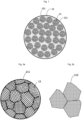
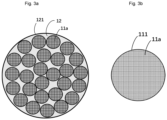
- the anode material includes a secondary particle 12, and the secondary particle 12 includes silicon primary nanoparticles 11.
- the silicon primary nanoparticles 11 include at least one silicon grain 112, an average particle size of the silicon grains 112 is Ds nm, and an average particle size of the silicon primary nanoparticles 11 is Dn nm; and a crystallinity of the silicon primary nanoparticles 11 is A, the A is equal to Dn/Ds, and the A is equal to or greater than 1 and equal to or less than 200.
- control of the crystallinity A of the silicon primary nanoparticles 11 can better reduce the problem of stress concentration caused by the silicon primary nanoparticles 11 in a lithium intercalation/deintercalation process, which is conducive to uniform release of stress of the primary nanoparticles, guarantees the structural stability of the silicon primary nanoparticles 11, and reduces particle pulverization.
- the crystallinity A of the silicon primary nanoparticles 11 is too large, it is indicated that the size of the silicon grains 12 is too small.
- the average particle size of the silicon primary nanoparticles 11 is Dn nm, and the Dn is equal to or greater than 1 and equal to or less than 200, and may be specifically 1 nm, 5 nm, 10 nm, 15 nm, 20 nm, 30 nm, 40 nm, 50 nm, 80 nm, 100 nm, 120 nm, 150 nm, 180 nm, 190 nm, or 200 nm, etc., which is not limited herein.
- the average particle size of the silicon grains 112 is Ds nm, and the Ds is equal to or greater than 1 and equal to or less than 100, and may be specifically 1 nm, 5 nm, 10 nm, 15 nm, 20 nm, 30 nm, 40 nm, 50 nm, 60 nm, 70 nm, 80 nm, 90 nm, or 100 nm, etc., which is not limited herein.
- the crystallinity of the silicon primary nanoparticles 11 is A, the A is equal to Dn/Ds, the A is equal to or greater than 1 and equal to or less than 200, and the A may be specifically in a value range of 1, 5, 10, 15, 20, 30, 40, 50, 80, 100, 120, 150, 180, or 200, etc., and certainly may also be other values in the above range, which is not limited herein.
- the crystallinity A of the silicon primary nanoparticles 11 is equal to 1, and the silicon primary nanoparticles are monocrystalline silicon.
- the secondary particle 12 includes a plurality of monocrystalline silicon primary particles 11a.
- the crystallinity (A) of the silicon primary nanoparticles is greater than 1 and equal to or less than 200, the silicon primary nanoparticles include silicon grains, and the silicon grains include polycrystalline silicon.
- the anode material includes a secondary particle 12, and the secondary particle 12 includes silicon primary nanoparticles 11; an average particle size of the silicon primary nanoparticles 11 is Dn nm, and an average particle size of the secondary particle 12 is Dm nm; and a bulking density of the secondary particle 12 is B, the B is equal to Dm/Dn, and the B is equal to or greater than 5 and equal to or less than 400.
- the average particle size of the secondary particle 12 is Dm nm, and the Dm is equal to or greater than 500 and equal to or less than 25,000, and may be specifically 500 nm, 1,000 nm, 1,500 nm, 2,000 nm, 3,000 nm, 5,000 nm, 8,000 nm, 10,000 nm, 15,000 nm, 20,000 nm, 23,000 nm, or 25,000 nm, etc., which is not limited herein.
- the bulking density of the secondary particle 12 is B, the B is equal to Dm/Dn, the B is equal to or greater than 5 and equal to or less than 400, and the B may be specifically in a value range of 5, 10, 20, 50, 80, 100, 150, 200, 300, 350, or 400, etc., and certainly may also be other values in the above range, which is not limited herein.
- Control of the bulking density of the secondary particle 12 can ensure the structural stability of the secondary particle, which is conducive to forming a stable SEI membrane, reducing the expansion rate of the entire anode material, and improving the initial efficiency and cycle performance of the anode material.
- the size of the silicon primary nanoparticles 11 is too small, leading to increase of the specific surface area of the secondary particle 12 and increase of the specific surface area of the anode material.
- side reactions are increased, and consumed active lithium ions are increased, leading to decrease of the initial coulombic efficiency of the anode material.
- the size of the silicon primary nanoparticles is too large, and the expansion stress of the secondary particle 12 is more concentrated, easily leading to disintegration and pulverization of the secondary particle, inconvenience for improving the structural stability of the anode material, and decrease of the cycle stability of a battery prepared from the anode material.
- the anode material further includes conductive layers 111 located on at least partial surfaces of the silicon primary nanoparticles 11, and the conductive layers 111 include at least one of an amorphous carbon material, a graphitized carbon material, and a conductive ceramic material.
- the conductive layers 111 have porous structures, and the porous structures are conducive to the transport of lithium ions and electrons.
- the conductive layers 111 can improve the electrical conductivity of the silicon primary nanoparticles 11, and can also effectively alleviate the volume expansion of the silicon primary nanoparticles 11.
- the conductive layers 111 include a graphitized carbon material, the graphitized carbon material is graphene, a layer number of the graphene is less than 20, and the layer number of graphene may be specifically 1 layer, 2 layers, 3 layers, 5 layers, 8 layers, 10 layers, 12 layers, 15 layers, 18 layers, or 19 layers, etc., and certainly may also be other values in the above range, which is not limited herein.
- a thickness of the conductive layers is 1 nm-200 nm, and may be specifically 1 nm, 10 nm, 20 nm, 40 nm, 50 nm, 80 nm, 100 nm, 150 nm, 180 nm, or 200 nm, etc., which is not limited herein.
- the conductive ceramic material includes at least one of a metal oxide, a transition metal nitride, and a sulfide.
- the metal oxide includes at least one of V 2 O 5 , TiO 2 , Nb 2 O 5 , CdO, CsO, MoO 3 , WO 3 , BaO, SnO 2 , Cr 2 O 3 , MnO, Ag 2 O, CoO, NiO, Cu 2 O, and SnO.
- the transition metal nitride includes at least one of VN, TiN, CoN, Fe 3 N, Co 4 N, and WN.
- the sulfide includes at least one of CdS, Ag 2 S, Sb 2 S 3 , TiS 2 , and Li 2 S.
- the anode material further includes a coating layer 121 located on at least a partial surface of the secondary particle 12, and the coating layer 121 includes at least one of an amorphous carbon material, a graphitized carbon material, and a polymer.
- the coating layer can further reduce the volume expansion of the anode material.
- the anode material By cooperatively modifying the anode material with the conductive layers and the coating layer and using the electrical conductivity and an alleviating effect of the conductive layers 111 on the volume expansion of the silicon primary nanoparticles, it is ensured that the anode material still has excellent electrical contact performance after lithium intercalation.
- the outermost coating layer 121 By combining with the outermost coating layer 121, side reactions between the silicon primary nanoparticles and an electrolyte can be effectively avoided, and meanwhile, the structural stability of the anode material is enhanced.
- the coating layer 121 includes a polymer, and exemplarily, the polymer may be at least one of a diblock copolymer, a triblock copolymer, and a multiblock copolymer.
- a mass content of the polymer in the anode material is 1%-20%, and may be specifically 1%, 3%, 4%, 5%, 6%, 7%, 10%, 12%, 15%, 18%, or 20%, etc., which is not limited herein.
- a thickness of the coating layer 121 is 5 nm-300 nm, and may be specifically 5 nm, 50 nm, 80 nm, 100 nm, 150 nm, 200 nm, 250 nm, or 300 nm, etc., which is not limited herein.
- the polymer includes at least one of polyacrylic acid, polyacrylonitrile, polyimide, polyurethane, polydopamine, xanthan gum, polypyrrole, polythiophene, polyphenylacetylene, polyaniline, polyacetylene, and tannic acid.
- the polymer is preferably at least one of polypyrrole, polythiophene, polyaniline, polyaniline, and polyacetylene.
- the coating layer 121 includes a graphitized carbon material, and the thickness of the coating layer is 5 nm-100 nm, and may be specifically 5 nm, 10 nm, 30 nm, 50 nm, 70 nm, 80 nm, 90 nm, or 100 nm, etc., which is not limited herein.
- the coating layer 121 includes an amorphous carbon material, and the thickness of the coating layer is 10 nm-500 nm, and may be specifically 10 nm, 50 nm, 80 nm, 100 nm, 150 nm, 200 nm, 250 nm, 300 nm, 450 nm, or 500 nm, etc., which is not limited herein.
- a mass content of carbon in the anode material is 5%-80%, and may be specifically 5%, 8%, 10%, 15%, 20%, 30%, 35%, 40%, 45%, 50%, 60%, 70%, or 80%, etc., which is not limited herein. It should be noted that the carbon in the anode material is derived from a carbon material.
- a powder tap density of the anode material is 0.3 g/cm 3 -1.3 g/cm 3 , and may be specifically 0.3 g/cm 3 , 0.5 g/cm 3 , 0.6 g/cm 3 , 0.7 g/cm 3 , 0.8 g/cm 3 , 1.0 g/cm 3 , 1.3 g/cm 3 , etc., preferably 0.5-0.8 g/cm 3 .
- a powder compaction density of the anode material is 1.2 g/cm 3 -1.8 g/cm 3 , for example, 1.2 g/cm 3 , 1.3 g/cm 3 , 1.4 g/cm 3 , 1.5 g/cm 3 , 1.6 g/cm 3 , or 1.8 g/cm 3 , etc., preferably 1.45 g/cm 3 -1.75 g/cm 3 .
- a median particle size of the anode material is 0.5 ⁇ m-25 ⁇ m.
- the median particle size of the anode material may be specifically 0.5 ⁇ m, 1 ⁇ m, 3 ⁇ m, 4 ⁇ m, 5 ⁇ m, 7 ⁇ m, 10 ⁇ m, 13 ⁇ m, 15 ⁇ m, 20 ⁇ m, or 25 ⁇ m, etc., which is not limited herein.
- the median particle size of the anode material is preferably 0.5 ⁇ m-10 ⁇ m, more preferably 1 ⁇ m-5 ⁇ m.
- a specific surface area of the anode material is 1 m 2 /g-50 m 2 /g.
- the specific surface area of the anode material may be 1 m 2 /g, 5 m 2 /g, 8 m 2 /g, 10 m 2 /g, 15 m 2 /g, 20 m 2 /g, 25 m 2 /g, 30 m 2 /g, 35 m 2 /g, 40 m 2 /g, 45 m 2 /g, or 50m 2 /g, etc., which is not limited herein.
- the specific surface area is controlled at 2 m 2 /g-15 m 2 /g.
- a mass content of oxygen in the anode material is less than 15%, and may be specifically 5%, 6%, 8%, 10%, 12%, 13%, 14%, or 15%, etc., which is not limited herein.
- the present disclosure further provides a preparation method for an anode material. As shown in Fig. 4 , the method includes the following steps:
- the preparation method for an anode material provided in the present disclosure not only can improve the electrochemical performance of the material, but also is suitable for large-scale production.
- the prepared anode material can effectively improve the rate performance and cycle stability of a lithium battery.
- silicon primary nanoparticles are prepared.
- the silicon primary nanoparticles include at least one silicon grain; an average particle size of the silicon grains is Ds nm, the Ds is equal to or greater than 1 and equal to or less than 100, an average particle size of the silicon primary nanoparticles is Dn nm, and the Dn is equal to or greater than 1 and equal to or less than 200; and a crystallinity of the silicon primary nanoparticles is A, the A is equal to Dn/Ds, and the A is equal to or greater than 1 and equal to or less than 200.
- the average particle size of the silicon primary nanoparticles is Dn nm, and the Dn is equal to or greater than 1 and equal to or less than 200, and may be specifically 1 nm, 5 nm, 10 nm, 15 nm, 20 nm, 30 nm, 40 nm, 50 nm, 80 nm, 100 nm, 120 nm, 150 nm, 180 nm, 190 nm, or 200 nm, etc., which is not limited herein.
- the average particle size of the silicon grains is Ds nm, and the Ds is equal to or greater than 1 and equal to or less than 100, and may be specifically 1 nm, 5 nm, 10 nm, 15 nm, 20 nm, 30 nm, 40 nm, 50 nm, 60 nm, 70 nm, 80 nm, 90 nm, or 100 nm, etc., which is not limited herein.
- the crystallinity of the silicon primary nanoparticles is A, the A is equal to Dn/Ds, the A is equal to or greater than 1 and equal to or less than 200, and the A may be specifically in a value range of 1, 5, 10, 15, 20, 30, 40, 50, 80, 100, 120, 150, 180, or 200, etc., and certainly may also be other values in the above range, which is not limited herein.
- the step of preparing silicon primary nanoparticles includes performing vapor deposition by using a silicon source gas to obtain the silicon primary nanoparticles.
- the silicon source gas includes at least one of silane, ethylsilane, trichlorosilane, dichlorosilane, or silicon tetrachloride.
- a vacuum pressure before the vapor deposition is less than 1.0 Torr, and may be specifically 0.9 Torr, 0.8 Torr, 0.7 Torr, 0.6 Torr, 0.5 Torr, 0.4 Torr, 0.3 Torr, or 0.1 Torr, etc., which is not limited herein. It may be understood that before chemical vapor deposition, the pressure in a furnace may be vacuumized to a vacuum state, which is conducive to improving the purity of the silicon primary nanoparticles. Then, heating is performed, an appropriate amount of the silicon source gas is introduced to serve as a raw material for growth of the silicon primary nanoparticles, and deposition is performed for a period of time to obtain the silicon primary nanoparticles.
- a heating rate of the vapor deposition is 1 °C/min-20 °C/min, and may be specifically 1 °C/min, 3 °C/min, 5 °C/min, 8 °C/min, 10 °C/min, 15 °C/min, or 20 °C/min, which is not limited herein.
- a temperature of the vapor deposition is 300 °C-1,000 °C, and may be specifically 300 °C, 400 °C, 500 °C, 600 °C, 700 °C, 800 °C, or 1,000 °C, etc., which is not limited herein.
- the temperature of the vapor deposition is 600 °C-1,000 °C, and may be specifically 400 °C, 500 °C, 600°C, 700°C, 800°C, or 1,000 °C.
- a flow quantity of the silicon source gas is 0.05 L/min-10 L/min, and may be specifically 0.05 L/min, 0.1 L/min, 0.5 L/min, 1 L/min, 2 L/min, 3 L/min, 5 L/min, 7 L/min, 8 L/min, or 10 L/min, which is not limited herein.
- a gas introduction time of the silicon source gas (namely a time of the vapor deposition) is 0.1 h-10 h, and may be specifically 0.1 h, 0.5 h, 1 h, 2 h, 4 h, 6 h, 8 h, or 10 h, which is not limited herein.
- a pressure of the vapor deposition is 100 Torr-500 Torr, and may be specifically 100 Torr, 150 Torr, 200 Torr, 250 Torr, 300 Torr, 350 Torr, 400 Torr, 450 Torr, or 500 Torr, etc., which is not limited herein.
- the silicon primary nanoparticles may be prepared by a plasma heating method, and the size ratio (crystallinity A) of the silicon primary nanoparticles to the silicon grains may be controlled within the above range.
- the method further includes forming conductive layers on surfaces of the silicon primary nanoparticles, and the conductive layers include at least one of an amorphous carbon material, a graphitized carbon material, and a conductive ceramic material.
- the step of forming conductive layers on surfaces of the silicon primary nanoparticles includes: in a protective atmosphere, depositing a first gas-phase carbon source on the surfaces of the silicon primary nanoparticles by a vapor deposition method to form the conductive layers.
- a concentration of the first gas-phase carbon source is 0.1 L/min-10 L/min, and may be specifically 0.1 L/min, 1 L/min, 3 L/min, 5 L/min, 8 L/min, or 10 L/min, etc., which is not limited herein.
- a heat preservation time of the vapor deposition is 1 h-48 h, and may be specifically 1 h, 2 h, 4 h, 6 h, 8 h, 12 h, 18 h, 24 h, or 48 h, which is not limited herein.
- a temperature of the vapor deposition is 200 °C-1,050 °C, and may be specifically 200 °CC, 300 °C, 400°C, 500°C, 600°C, 700°C, 800°C, 950 °C, or 1,050 °C, which is not limited herein.
- a heating rate of the vapor deposition is 1 °C/min-30 °C/min, and may be specifically 1 °C/min, 3 °C/min, 5 °C/min, 8 °C/min, 10 °C/min, 15 °C/min, 20°C/min, 25 °C/min, or 30 °C/min, which is not limited herein.
- the protective atmosphere includes at least one of helium, neon, argon, krypton, and xenon.
- a volume ratio of the protective atmosphere to the first gas-phase carbon source is 10:(0.5-10), and may be specifically 10:0.5, 10:1, 10:2, 10:3, 10:4, 10:5, 10:7, 10:8, 10:9, or 10:10, which is not limited herein.
- the first gas-phase carbon source includes at least one of acetylene, methane, toluene, cyclohexane, ethanol, ethylene, and propylene.
- the step of forming conductive layers on surfaces of the silicon primary nanoparticles includes: introducing a conductive material at a preset pulse frequency, and performing atomic layer deposition on the surfaces of the silicon primary nanoparticles to form the conductive layers. It may be understood that the conductive layers deposited on the surfaces of the silicon primary nanoparticles by an atomic layer deposition technology are conducive to improving the electrical conductivity of the silicon primary nanoparticles, and then improving the electrical conductivity and rate performance of the anode material.
- the silicon primary nanoparticles may be placed in an atomic layer deposition chamber, replacement with an inert gas is performed after vacuumizing, then heating is performed, one or more conductive materials are introduced at a certain pulse frequency for a certain period of time to serve as raw materials of the conductive layers, and one or more conductive layers are deposited on the surfaces of the silicon primary nanoparticles by controlling the amount of the conductive materials.
- a temperature of the atomic layer deposition is 200 °C-750 °C, may be specifically 200 °C, 300 °C, 400°C, 450 °C, 500°C, 550 °C, 600°C, or 750 °C, etc., and certainly may also be other values in the above range, which is not limited herein.
- a time of the atomic layer deposition is 1 h-48 h, and may be specifically 1 h, 2 h, 4 h, 6 h, 8 h, 12 h, 18 h, 24 h, or 48 h, which is not limited herein.
- the pulse frequency is 40 khz-500 khz, and may be specifically 40 khz, 60 khz, 80 khz, 100 khz, 150 khz, 200 khz, 250 khz, 300 khz, 400 khz, or 500 khz, etc., which is not limited herein.
- a pulse duration of the conductive material is 10 ms-800 ms, and may be specifically 10 ms, 50 ms, 100 ms, 200 ms, 300 ms, 400 ms, 500 ms, 600 ms, 700 ms, or 800 ms, etc., which is not limited herein.
- the conductive layers include a conductive ceramic material, and the conductive ceramic material includes at least one of a metal oxide, a transition metal nitride, or a sulfide.
- the conductive material includes an oxygen-containing organic compound of a transition metal
- the oxygen-containing organic compound of a transition metal includes at least one of titanium methoxide, vanadium acetate, tetrabutyl titanate, and niobium oxalate.
- An metal oxide may be formed on the surfaces of the silicon primary nanoparticles by an atomic layer deposition process, and the metal oxide includes at least one of V 2 O 5 , TiO 2 , Nb 2 O 5 , CdO, CsO, MoO 3 , WO 3 , BaO, SnO 2 , Cr 2 O 3 , MnO, Ag 2 O, CoO, NiO, Cu 2 O, and SnO.
- the conductive material includes a nitrogen-containing organic compound of a transition metal
- the nitrogen-containing organic compound of a transition metal includes at least one of ammonium metavanadate, ammonium titanate, ammonium cobaltate, ammonium trioxalatoferrate, tetrabutyl titanate, and ammonium tungstate.
- a transition metal nitride may be formed on the surfaces of the silicon primary nanoparticles by an atomic layer deposition process, and the transition metal nitride includes at least one of VN, TiN, CoN, Fe 3 N, Co 4 N, and WN.
- the conductive material includes an organic compound of a transition metal and a sulfur-containing gas
- the sulfur-containing gas includes at least one of gaseous sulfur vapor, hydrogen sulfide, and sulfur dioxide.
- a sulfide may be formed on the surfaces of the silicon primary nanoparticles by an atomic layer deposition process, and the sulfide includes at least one of CdS, Ag 2 S, Sb 2 S 3 , TiS 2 , and Li 2 S.
- step S20 the silicon primary nanoparticles are assembled into a secondary particle to obtain an anode material.
- the silicon primary nanoparticles may be assembled to form the secondary particle by self-assembly, melting assembly, electrostatic adsorption, or spray granulation coating and other methods, which is not limited herein.
- the step of assembling the silicon primary nanoparticles into a secondary particle includes: mixing a first solution containing the silicon primary nanoparticles and an anionic surfactant with a second solution containing the silicon primary nanoparticles and a cationic surfactant, and performing solid-liquid separation to obtain the secondary particle.
- the anionic surfactant includes at least one of cetyltrimethylammonium bromide, sodium hexadecyl sulfate, polyvinylpyrrolidone, and sodium polystyrenesulfonate.
- the cationic surfactant includes at least one of polydiallyldimethylammonium chloride, aminopropyl triethoxysilane, and a silane coupling agent.
- a mass ratio of the anionic surfactant to the silicon primary nanoparticles is (0.05-5):1, and may be specifically 0.05:1, 0.08:1, 1:1, 1.5:1, 2:1, 3:1, 4:1, or 5:1, etc., which is not limited herein.
- a mass ratio of the cationic surfactant to the silicon primary nanoparticles is (0.05-10):1, and may be specifically 0.05:1, 0.08:1, 1:1, 1.5:1, 2:1, 3:1, 4:1, 5:1, 8:1, 9:1, or 10:1, etc., which is not limited herein.
- the first solution and/or the second solution include a solvent
- the solvent may be a polar solvent
- the solvent includes at least one of water, anhydrous ethanol, methanol, and isopropanol.
- a mass ratio of the silicon primary nanoparticles in the first solution to the silicon primary nanoparticles in the second solution is 1:(0.5-1.5), and may be specifically 1:0.5, 1:0.8, 1:0.9, 1:1, 1:1.2, 1:1.3, or 1:1.5, which is not limited herein.
- a solid content of the first solution is 2%-50%, and may be specifically 2%, 5%, 8%, 10%, 15%, 18%, 20%, 25%, 30%, 40%, 45%, 49%, or 50%, etc., which is not limited herein.
- a solid content of the second solution is 0.5%-25%, and may be specifically 0.5%, 0.8%, 1%, 5%, 8%, 9%, 10%, 12%, 13%, 15%, 18%, 20%, 24%, or 25%, etc., which is not limited herein.
- a solid content of a mixed slurry is 5-60%, and may be specifically 5%, 8%, 10%, 15%, 18%, 20%, 25%, 30%, 40%, 45%, 50%, 54%, 59%, or 60%, etc., which is not limited herein.
- the step of assembling the silicon primary nanoparticles into a secondary particle includes: subjecting a mixed slurry containing the silicon primary nanoparticles, an anionic surfactant or a cationic surfactant to spray granulation to obtain the secondary particle.
- the step of assembling the silicon primary nanoparticles into a secondary particle further includes: subjecting the mixed slurry to dispersion and centrifugation treatment, and a dispersion method includes at least one of mechanical stirring and ultrasonic dispersion.
- the mixed slurry further includes a solvent, and the solvent is selected from at least one of water, anhydrous ethanol, methanol, and isopropanol.
- a drying temperature of the spray granulation is 100 °C-200 °C, and may be specifically 100 °C, 120 °C, 130 °C, 140 °C, 150 °C, 160 °C, 180 °C, or 200 °C, which is not limited herein.
- a feed rate of the spray granulation is 100 mL/min-1,000 mL/min, and may be specifically 100 mL/min, 200 mL/min, 300 mL/min, 400 mL/min, 600 mL/min, 800 mL/min, or 1,000 mL/min, etc., which is not limited herein.
- the secondary particle includes silicon primary nanoparticles; an average particle size of the silicon primary nanoparticles is Dn nm, and an average particle size of the secondary particle is Dm nm; and a bulking density of the secondary particle is B, the B is equal to Dm/Dn, and the B is equal to or greater than 5 and equal to or less than 400.
- the average particle size of the secondary particle is Dm nm, and the Dm is equal to or greater than 500 and equal to or less than 25,000, and may be specifically 500 nm, 1,000 nm, 1,500 nm, 2,000 nm, 3,000 nm, 5,000 nm, 8,000 nm, 10,000 nm, 15,000 nm, 20,000 nm, 23,000 nm, or 25,000 nm, etc., which is not limited herein.
- the bulking density of the secondary particle is B, the B is equal to Dm/Dn, the B is equal to or greater than 5 and equal to or less than 400, and the B may be specifically in a value range of 5, 10, 20, 50, 80, 100, 150, 200, 300, 350, or 400, etc., and certainly may also be other values in the above range, which is not limited herein.
- Control of the bulking density of the secondary particle can ensure the structural stability of the secondary particle, which is conducive to forming a stable SEI membrane, reducing the expansion rate of the anode material, and improving the initial efficiency and cycle performance of the anode material.
- the size of the silicon primary nanoparticles is too small, leading to increase of the specific surface area of the secondary particle and increase of the specific surface area of the anode material.
- side reactions are increased, and consumed active lithium ions are increased, leading to decrease of the initial coulombic efficiency of the anode material.
- the bulking density of the secondary particle is too small, at the same secondary particle size, the size of the silicon primary nanoparticles is too large, and the expansion stress of the secondary particle is more concentrated, easily leading to disintegration and pulverization of the secondary particle, inconvenience for improving the structural stability of the anode material, and decrease of the cycle stability of a battery prepared from the anode material.
- the method further includes: forming a coating layer on a surface of the secondary particle, and the coating layer includes at least one of an amorphous carbon material, a graphitized carbon material, and a polymer.
- the step of forming a coating layer on a surface of the secondary particle includes: subjecting a mixed coating solution containing the secondary particle and a polymer to spray drying to form the coating layer on the surface of the secondary particle, and the coating layer includes the polymer.
- a solid content of the secondary particle in the mixed coating solution is 5%-50%, and may be specifically 5% 10%, 15%, 20%, 25%, 30%, 35%, 40%, 45%, or 50%, etc., which is not limited herein.
- the mixed coating solution includes a polar solvent.
- the polar solvent includes at least one of water, anhydrous ethanol, methanol, and isopropanol.
- a mass ratio of the secondary particle to the polymer is 10:(0.1-5), and may be specifically 10:0.1, 10:1, 10:2, 10:3, 10:4, or 10:5, which is not limited herein.
- a drying temperature of the spray drying is 60 °C-200 °C, and may be specifically 60 °C, 80 °C, 100 °C, 120 °C, 150 °C, 180 °C, or 200 °C.
- the polymer includes at least one of a diblock copolymer, a triblock copolymer, and a multiblock copolymer.
- the polymer includes at least one of polyacrylic acid, polyacrylonitrile, polyimide, polyurethane, polydopamine, xanthan gum, polypyrrole, polythiophene, polyphenylacetylene, polyaniline, polyacetylene, and tannic acid.
- the step of forming a coating layer on a surface of the secondary particle includes: introducing a second gas-phase carbon source into the secondary particle, and performing heating until the second gas-phase carbon source undergoes a thermal cracking reaction to deposit the coating layer on the surface of the secondary particle, and the coating layer includes at least one of an amorphous carbon material and a graphitized carbon material.
- the second gas-phase carbon source includes at least one of acetylene, methane, toluene, cyclohexane, ethanol, ethylene, and propylene.
- a heating rate of the thermal cracking reaction is 1 °C/min-20 °C/min, and may be, for embodiment, 1 °C/min, 3 °C/min, 5 °C/min, 8 °C/min, 10 °C/min, 15 °C/min, or 20 °C/min, which is not limited herein.
- a temperature of the thermal cracking reaction is 600 °C-1,000 °C, and specifically, the reaction temperature may be 600°C, 650 °C, 700°C, 750 °C, 800°C, 890 °C, 900 °C, 960 °C, or 1,000 °C.
- the reaction temperature is 700 °C-900 °C.
- a heat preservation time of the thermal cracking reaction is 1 h-48 h, and may be specifically 1 h, 4 h, 8 h, 12 h, 16 h, 24 h, 28 h, 32 h, 38 h, or 48 h, which is not limited herein.
- a concentration of the second gas-phase carbon source is 0.1 L/min-10 L/min, and may be specifically 0.1 L/min, 0.4 L/min, 0.6 L/min, 0.8 L/min, 1.0 L/min, 2 L/min, 5 L/min, 6 L/min, 8 L/min, 9 L/min, or 10 L/min, etc., which is not limited herein.
- the thermal cracking reaction is carried out in a protective atmosphere.
- the protective atmosphere includes at least one of helium, neon, argon, krypton, and xenon.
- An embodiment of the present disclosure further provides a battery, which uses the anode material provided in the above embodiments of the present disclosure or an anode material prepared by the preparation method provided in the above embodiments of the present disclosure.
- the battery provided in the embodiment of the present disclosure has the advantages of high capacity, high initial efficiency, long cycle life, excellent rate performance, and low expansion.
- the battery may be a lithium-ion battery, a sodium-ion battery, a solid electrolyte battery, etc., which is not limited herein.
- the anode material prepared in the present embodiment included a secondary particle and a coating layer located on at least a partial surface of the secondary particle, and the coating layer was a polymer layer.
- the secondary particle included silicon primary nanoparticles and conductive layers located on at least partial surfaces of the silicon primary nanoparticles, the conductive layers were amorphous carbon layers, and the silicon primary nanoparticles included a plurality of silicon grains.
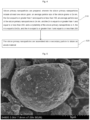
- Fig. 5 was a scanning electron microscope image of the anode material prepared in Embodiment 1;
- Fig. 6 was an XRD pattern of the anode material prepared in Embodiment 1; and
- Fig. 7 shown a cycle performance curve of the anode material prepared in Embodiment 1, wherein a charge and discharge current was 1,000 mA/g.
- the prepared anode material had a spherical structure on the surface and a dense coating layer coated on the surface.
- the material had excellent cycle performance, a capacity of 1,255 mAh/g after 100 cycles at a current of 0.25 C, and a capacity retention rate of 75%.
- the anode material prepared in the present embodiment included a secondary particle and a coating layer located on at least a partial surface of the secondary particle, and the coating layer was an amorphous carbon layer.
- the secondary particle included silicon primary nanoparticles and conductive layers located on at least partial surfaces of the silicon primary nanoparticles, the conductive layers were amorphous carbon layers, and the silicon primary nanoparticles included a plurality of silicon grains.
- the anode material prepared in the present embodiment includes a secondary particle and a coating layer located on at least a partial surface of the secondary particle, and the coating layer was an amorphous carbon layer.
- the secondary particle included silicon primary nanoparticles and conductive layers located on at least partial surfaces of the silicon primary nanoparticles, the conductive layers were titanium oxide layers, and the silicon primary nanoparticles included a plurality of silicon grains.
- the anode material prepared in the present embodiment includes a secondary particle and a coating layer located on at least a partial surface of the secondary particle, and the coating layer is an amorphous carbon layer.
- the secondary particle includes silicon primary nanoparticles and conductive layers located on at least partial surfaces of the silicon primary nanoparticles, the conductive layers are titanium oxide layers, and the silicon primary nanoparticles are monocrystalline silicon particles.
- the anode material prepared in the present embodiment included a secondary particle and a coating layer located on at least a partial surface of the secondary particle, and the coating layer was an amorphous carbon layer.
- the secondary particle included silicon primary nanoparticles and conductive layers located on at least partial surfaces of the silicon primary nanoparticles, the conductive layers were graphitized carbon layers, and the silicon primary nanoparticles were monocrystalline silicon particles.
- the gaseous titanium methoxide and the gaseous sulfur vapor were closed, a residual reaction gas in the chamber was replaced with argon, and cooling was performed to obtain a precursor, wherein the precursor included the silicon primary nanoparticles and Li 2 S layers located on surfaces thereof.
- Silicon primary nanoparticles were placed in a rotary atmosphere furnace and heated to 1,050 °C at a heating rate of 3 °C/min under the protection of an argon atmosphere, a methane gas was introduced at 0.1 L/min to reach a volume ratio of the argon to the methane in the rotary atmosphere furnace at 9:1, and after heat preservation was performed for 2 h, cooling was performed to obtain a precursor, wherein the precursor included the silicon primary nanoparticles and graphene carbon layers located on surfaces thereof, and a layer number of graphene was 5 layers.
- a coating layer included graphitized carbon and amorphous carbon.
- the anode material prepared in the present embodiment included a secondary particle, the secondary particle includes silicon primary nanoparticles, and the silicon primary nanoparticles included a plurality of silicon grains.
- An anode material prepared in the present embodiment includes a secondary particle and a coating layer located on at least a partial surface of the secondary particle, and the coating layer was an amorphous carbon layer.
- the secondary particle included silicon primary nanoparticles and conductive layers located on at least partial surfaces of the silicon primary nanoparticles, the conductive layers were titanium oxide layers, and the silicon primary nanoparticles included a plurality of silicon grains.
- An anode material prepared in the present embodiment included a secondary particle and a coating layer located on at least a partial surface of the secondary particle, and the coating layer was an amorphous carbon layer.
- the secondary particle included silicon primary nanoparticles and conductive layers located on at least partial surfaces of the silicon primary nanoparticles, the conductive layers were titanium oxide layers, and the silicon primary nanoparticles included a plurality of silicon grains.
- the anode material prepared in the present embodiment included a secondary particle and a coating layer located on at least a partial surface of the secondary particle, and the coating layer was an amorphous carbon layer.
- the secondary particle included silicon primary nanoparticles.
- Electrochemical test The anode materials, sodium carboxymethyl cellulose, styrene butadiene rubber, conductive graphite (KS-6), and carbon black (SP) were prepared into slurries at a ratio of 92:2:2:2:2, respectively, then evenly coated on copper foil, and dried to prepare anode sheets.
- Button batteries were assembled in a glove box under an argon atmosphere with a polypropylene microporous membrane as a diaphragm, 1 mol/L lithium hexafluorophosphate (a solvent was a mixture of vinyl carbonate, methyl ethyl carbonate, and dimethyl carbonate) as an electrolyte, and a metallic lithium sheet as a counter electrode.
- a specific discharge capacity test was carried out on the above 13 groups of batteries on a LAND CT2001A battery test system, and a ratio of a discharge capacity to a battery capacity within 1 hour was a specific discharge capacity.
- a 100 cycle test was carried out on the above 13 groups of batteries on the LAND CT2001A battery test system, and the post-cycle capacity and post-cycle capacity retention rate of the batteries after 100 cycles were tested and calculated at a charge and discharge current of 0.2 C.
- the capacity retention rate after 100 cycles at 0.2 C was equal to a discharge capacity of a 100th cycle/a discharge capacity of a first cycle*100%. Results were shown in Table 2. Table 2 Comparison table of parameters and performance of various batteries Sample Specific discharge capacity (mAh/g) Initial coulombic efficiency (%) Capacity after 200 cycles at 1 A/g (mAh/g) Capacity retention rate after 200 cycles at 1 A/g (%) Expansion rate of an electrode membrane (%) S1 2590 89.1 1255 75 23.4 S2 2500 86.6 990 72.4 24.7 S3 2250 84.7 905 72.5 26.6 S4 2130 83.1 914 68.6 24.5 S5 2340 83.4 955 70.1 33.6 S6 2240 84.2 925 73.5 27.6 S7 2230 83.7 901 72.1 27.1 S8 2258 85.8 935 74.6 25.5 S9 2235 85.6 900 72.1 26.9 S10 2460 86.7 858 65.2 22.8 S11 2160 79.5 708 61.5 35.1 S12 2188
- the coating layer on the surface of the secondary particle By constructing the conductive layers on the surfaces of the silicon primary nanoparticles, constructing the coating layer on the surface of the secondary particle, cooperatively modifying the anode material with the conductive layers and the coating layer and utilizing the conductivity of the conductive layer and the effect of relieving the volume expansion of silicon nanoscale primary particles to ensure that the anode material still had excellent electrical contact performance after lithium intercalation.
- side reactions between the silicon primary nanoparticles and an electrolyte could be effectively reduced, and meanwhile, the structural stability of the anode material was enhanced, such that a battery prepared from the anode material had low expansion, high cycle stability, high rate performance, and initial coulombic efficiency.
- Embodiment 10 Since the surfaces of the primary particles of the anode material in Embodiment 10 were free of conductive layers and the surface of the secondary particle was also free of a coating layer, although the initial coulombic efficiency of the anode material was similar to that in Embodiment 1, the cycle capacity retention rate and the capacity after 200 cycles were decreased compared with those in Embodiment 1, this was because due to the lack of protection of the coating layer, side reactions between an electrolyte and the anode material were increased, the volume expansion of the anode material was increased, and the electrochemical performance was obviously reduced.
- the bulking density (B) of the secondary particle was too large, indicating that the size of the silicon primary nanoparticles was too small, which will led to increase of the specific surface area of the secondary particle and increase of the specific surface area of the anode material.
- side reactions between the anode material and an electrolyte were increased, and consumed active lithium ions were increased, leading to decrease of the initial coulombic efficiency of the battery prepared from the anode material.
- the crystallinity (A) of the silicon primary nanoparticles was too large, indicating that the size of the silicon grains was too small, electrochemical sintering easily occurred on the surfaces of the silicon primary nanoparticles, and the silicon grains grow after the sintering.
- the local stress of the silicon primary nanoparticles was increased, and the instability of the entire structure was increased, leading to decrease of the cycle performance and capacity of the anode material and deterioration of the electrochemical performance of the anode material.
- the bulking density (B) of the secondary particle was too small, the size of the silicon primary nanoparticles was too large, and the expansion stress of the secondary particle was more concentrated, easily leading to disintegration and pulverization of the secondary particle, inconvenience for improving the structural stability of the anode material, and decrease of the cycle stability of the battery prepared from the anode material.
Landscapes
- Chemical & Material Sciences (AREA)
- Chemical Kinetics & Catalysis (AREA)
- Electrochemistry (AREA)
- General Chemical & Material Sciences (AREA)
- Engineering & Computer Science (AREA)
- Composite Materials (AREA)
- Materials Engineering (AREA)
- Manufacturing & Machinery (AREA)
- Inorganic Chemistry (AREA)
- Battery Electrode And Active Subsutance (AREA)
Applications Claiming Priority (2)
| Application Number | Priority Date | Filing Date | Title |
|---|---|---|---|
| CN202311125354.4A CN117038945B (zh) | 2023-08-31 | 2023-08-31 | 负极材料及其制备方法、电池 |
| PCT/CN2024/086922 WO2025044227A1 (zh) | 2023-08-31 | 2024-04-10 | 负极材料及电池 |
Publications (2)
| Publication Number | Publication Date |
|---|---|
| EP4576255A1 true EP4576255A1 (de) | 2025-06-25 |
| EP4576255A4 EP4576255A4 (de) | 2026-04-15 |
Family
ID=88628276
Family Applications (1)
| Application Number | Title | Priority Date | Filing Date |
|---|---|---|---|
| EP24857777.7A Pending EP4576255A4 (de) | 2023-08-31 | 2024-04-10 | Negatives elektrodenmaterial und batterie |
Country Status (6)
| Country | Link |
|---|---|
| US (1) | US20250149562A1 (de) |
| EP (1) | EP4576255A4 (de) |
| JP (1) | JP2025531318A (de) |
| KR (1) | KR20250047397A (de) |
| CN (1) | CN117038945B (de) |
| WO (1) | WO2025044227A1 (de) |
Families Citing this family (3)
| Publication number | Priority date | Publication date | Assignee | Title |
|---|---|---|---|---|
| CN117038945B (zh) * | 2023-08-31 | 2024-09-13 | 贝特瑞新材料集团股份有限公司 | 负极材料及其制备方法、电池 |
| CN117913231B (zh) * | 2023-12-21 | 2024-11-22 | 贝特瑞新材料集团股份有限公司 | 负极材料及其制备方法、电池 |
| KR102937805B1 (ko) * | 2023-12-21 | 2026-03-10 | 비티알 뉴 머티리얼 그룹 코., 엘티디. | 음극재 및 배터리 |
Family Cites Families (19)
| Publication number | Priority date | Publication date | Assignee | Title |
|---|---|---|---|---|
| JP2005276502A (ja) * | 2004-03-23 | 2005-10-06 | Mitsubishi Chemicals Corp | リチウム二次電池正極活物質用リチウム遷移金属複合酸化物粉体及びその製造方法、その前駆体及びその製造方法、それを用いたリチウム二次電池正極、並びにリチウム二次電池 |
| EP2204867A4 (de) * | 2007-09-06 | 2012-06-06 | Canon Kk | Verfahren zur herstellung eines materials zur speicherung/freisetzung von lithiumionen, material zur speicherung/freisetzung von lithiumionen, elektrodenstruktur mit dem material und stromspeichergerät |
| US9991510B2 (en) * | 2012-07-06 | 2018-06-05 | Toray Industries, Inc. | Negative electrode material for lithium ion secondary battery, composite negative electrode material for lithium ion secondary battery, resin composition for lithium ion secondary battery, negative electrode for lithium ion secondary battery, and lithium ion secondary battery |
| WO2015051309A1 (en) * | 2013-10-04 | 2015-04-09 | Board Of Trustees Of The Leland Stanford Junior University | Large-volume-change lithium battery electrodes |
| JP6300096B2 (ja) * | 2014-06-30 | 2018-04-11 | ティーエムシー株式会社 | シリコン微細粒子 |
| US20160156031A1 (en) * | 2014-11-28 | 2016-06-02 | Samsung Electronics Co., Ltd. | Anode active material for lithium secondary battery and lithium secondary battery including the anode active material |
| JP6236022B2 (ja) * | 2015-03-27 | 2017-11-22 | 三井金属鉱業株式会社 | シリコン含有粉末の製造方法 |
| ES2993278T3 (en) * | 2016-06-14 | 2024-12-26 | Nexeon Ltd | Electrodes for metal-ion batteries |
| WO2020129499A1 (ja) * | 2018-12-21 | 2020-06-25 | 株式会社トクヤマ | シリコン微粒子及びその製造方法 |
| KR102277243B1 (ko) * | 2019-10-22 | 2021-07-14 | 주식회사 그랩실 | 실리콘 복합체를 포함하는 음극 활물질의 제조방법 |
| KR102320977B1 (ko) * | 2019-10-22 | 2021-11-03 | 주식회사 그랩실 | 실리콘 복합체를 포함하는 음극 활물질 및 이를 포함하는 리튬 이차전지 |
| CN114628661A (zh) * | 2020-12-11 | 2022-06-14 | 贝特瑞新材料集团股份有限公司 | 负极材料、其制备方法及锂离子电池 |
| CN115347151B (zh) * | 2021-04-28 | 2025-05-27 | 贝特瑞新材料集团股份有限公司 | 复合负极材料及其制备方法、锂离子二次电池 |
| CN114725327B (zh) * | 2021-01-06 | 2025-03-25 | 贝特瑞新材料集团股份有限公司 | 复合负极材料及其制备方法、锂离子电池 |
| CN115172746A (zh) * | 2021-04-02 | 2022-10-11 | 贝特瑞新材料集团股份有限公司 | 复合负极材料及其制备方法、锂离子电池 |
| WO2022178748A1 (zh) * | 2021-02-25 | 2022-09-01 | 宁德新能源科技有限公司 | 负极活性材料、负极片、电化学装置和电子装置 |
| EP4445436A1 (de) * | 2021-12-30 | 2024-10-16 | Solid Power Operating, Inc. | Siliziumanode zur verwendung in einer elektrochemischen zelle |
| CN116598422B (zh) * | 2023-07-19 | 2024-01-19 | 广汽埃安新能源汽车股份有限公司 | 一种负极片、电极组件、锂离子电池以及用电设备 |
| CN117038945B (zh) * | 2023-08-31 | 2024-09-13 | 贝特瑞新材料集团股份有限公司 | 负极材料及其制备方法、电池 |
-
2023
- 2023-08-31 CN CN202311125354.4A patent/CN117038945B/zh active Active
-
2024
- 2024-04-10 WO PCT/CN2024/086922 patent/WO2025044227A1/zh active Pending
- 2024-04-10 EP EP24857777.7A patent/EP4576255A4/de active Pending
- 2024-04-10 JP JP2025516286A patent/JP2025531318A/ja active Pending
- 2024-04-10 KR KR1020257008782A patent/KR20250047397A/ko not_active Ceased
-
2025
- 2025-01-13 US US19/019,087 patent/US20250149562A1/en active Pending
Also Published As
| Publication number | Publication date |
|---|---|
| KR20250047397A (ko) | 2025-04-03 |
| JP2025531318A (ja) | 2025-09-19 |
| US20250149562A1 (en) | 2025-05-08 |
| EP4576255A4 (de) | 2026-04-15 |
| CN117038945A (zh) | 2023-11-10 |
| WO2025044227A1 (zh) | 2025-03-06 |
| CN117038945B (zh) | 2024-09-13 |
Similar Documents
| Publication | Publication Date | Title |
|---|---|---|
| KR102452874B1 (ko) | 리튬 이차전지 음극재용 탄소-규소복합산화물 복합체 및 이의 제조방법 | |
| CN112366301B (zh) | 一种锂离子电池用硅/硅氧化物/碳复合负极材料及其制备方法 | |
| US12609317B2 (en) | Lithium-replenishing additive and preparing method thereof, and lithium secondary battery | |
| EP4576255A1 (de) | Negatives elektrodenmaterial und batterie | |
| JP7455425B2 (ja) | ケイ素・酸化ケイ素-炭素複合材料、その調製方法、およびそれを含むリチウム二次電池用負極活物質 | |
| CN105409035B (zh) | SiOx/Si/C复合材料、制备该复合材料的方法及包含该复合材料的锂离子电池负极 | |
| CN113506861B (zh) | 一种锂离子电池硅基复合负极材料及其制备方法 | |
| CN101533904B (zh) | 磷酸铁锂/纳米碳复合正极材料的制备方法 | |
| Qiao et al. | One-pot synthesis of CoO/C hybrid microspheres as anode materials for lithium-ion batteries | |
| CN112018367A (zh) | 用于电池的负极活性材料及其制备方法、电池负极、电池 | |
| WO2022199389A1 (zh) | 硅氧复合负极材料及其制备方法、锂离子电池 | |
| Qian et al. | Two-step ball-milling synthesis of a Si/SiO x/C composite electrode for lithium ion batteries with excellent long-term cycling stability | |
| CN112467122B (zh) | 正硅酸锂复合材料及其制备方法和应用 | |
| EP4535501A1 (de) | Positivelektroden-lithiumsupplementierungsmaterial und herstellungsverfahren dafür und verwendung davon | |
| CN113410446A (zh) | 用于锂二次电池负极材料的硅复合氧化物及其制备方法 | |
| Shi et al. | Evaluation of the electrochemical characteristics of silicon/lithium titanate composite as anode material for lithium ion batteries | |
| WO2012000854A1 (en) | Negative electrode material for lithium-ion batteries | |
| Liang et al. | Synthesis and characterisation of SnO2 nano-single crystals as anode materials for lithium-ion batteries | |
| TW202115952A (zh) | 塗覆有熱解製造的含鋯氧化物之混合鋰過渡金屬氧化物 | |
| CN110808368A (zh) | 一种钾离子电池负极用SnS/TiO2/rGO复合材料、制备方法及其相匹配的电解液 | |
| US20030207178A1 (en) | Method of preparing electrode composition having a carbon-containing-coated metal oxide, electrode composition and electrochemical cell | |
| Hong et al. | Fabrication of porous SiOx/nanoSi@ C composites with homogeneous silicon distribution for high-performance Li-ion battery anodes | |
| CN115275161A (zh) | 一种具有包覆层的三元正极材料及其制备方法 | |
| CN221894724U (zh) | 一种利用两级反应器法生产锂电池硅碳负极材料的制备装置 | |
| CN117936781B (zh) | 补锂添加剂及其制备方法与应用 |
Legal Events
| Date | Code | Title | Description |
|---|---|---|---|
| STAA | Information on the status of an ep patent application or granted ep patent |
Free format text: STATUS: THE INTERNATIONAL PUBLICATION HAS BEEN MADE |
|
| PUAI | Public reference made under article 153(3) epc to a published international application that has entered the european phase |
Free format text: ORIGINAL CODE: 0009012 |
|
| STAA | Information on the status of an ep patent application or granted ep patent |
Free format text: STATUS: REQUEST FOR EXAMINATION WAS MADE |
|
| 17P | Request for examination filed |
Effective date: 20250317 |
|
| AK | Designated contracting states |
Kind code of ref document: A1 Designated state(s): AL AT BE BG CH CY CZ DE DK EE ES FI FR GB GR HR HU IE IS IT LI LT LU LV MC ME MK MT NL NO PL PT RO RS SE SI SK SM TR |
|
| A4 | Supplementary search report drawn up and despatched |
Effective date: 20260316 |
|
| RIC1 | Information provided on ipc code assigned before grant |
Ipc: H01M 4/38 20060101AFI20260310BHEP Ipc: H01M 4/36 20060101ALI20260310BHEP Ipc: H01M 4/62 20060101ALI20260310BHEP Ipc: H01M 4/48 20100101ALI20260310BHEP Ipc: H01M 4/485 20100101ALI20260310BHEP Ipc: H01M 10/0525 20100101ALI20260310BHEP Ipc: H01M 4/134 20100101ALI20260310BHEP Ipc: H01M 4/04 20060101ALI20260310BHEP Ipc: H01M 4/1395 20100101ALI20260310BHEP |