EP4574263A1 - Filter suction holder, nucleic acid extraction system, and nucleic acid extraction method - Google Patents
Filter suction holder, nucleic acid extraction system, and nucleic acid extraction method Download PDFInfo
- Publication number
- EP4574263A1 EP4574263A1 EP24218796.1A EP24218796A EP4574263A1 EP 4574263 A1 EP4574263 A1 EP 4574263A1 EP 24218796 A EP24218796 A EP 24218796A EP 4574263 A1 EP4574263 A1 EP 4574263A1
- Authority
- EP
- European Patent Office
- Prior art keywords
- filter
- nucleic acid
- suction holder
- container
- reaction tube
- Prior art date
- Legal status (The legal status is an assumption and is not a legal conclusion. Google has not performed a legal analysis and makes no representation as to the accuracy of the status listed.)
- Pending
Links
Images



Classifications
-
- B—PERFORMING OPERATIONS; TRANSPORTING
- B01—PHYSICAL OR CHEMICAL PROCESSES OR APPARATUS IN GENERAL
- B01L—CHEMICAL OR PHYSICAL LABORATORY APPARATUS FOR GENERAL USE
- B01L9/00—Supporting devices; Holding devices
-
- B—PERFORMING OPERATIONS; TRANSPORTING
- B01—PHYSICAL OR CHEMICAL PROCESSES OR APPARATUS IN GENERAL
- B01L—CHEMICAL OR PHYSICAL LABORATORY APPARATUS FOR GENERAL USE
- B01L3/00—Containers or dishes for laboratory use, e.g. laboratory glassware; Droppers
- B01L3/56—Labware specially adapted for transferring fluids
-
- B—PERFORMING OPERATIONS; TRANSPORTING
- B01—PHYSICAL OR CHEMICAL PROCESSES OR APPARATUS IN GENERAL
- B01D—SEPARATION
- B01D29/00—Filters with filtering elements stationary during filtration, e.g. pressure or suction filters, not covered by groups B01D24/00 - B01D27/00; Filtering elements therefor
- B01D29/01—Filters with filtering elements stationary during filtration, e.g. pressure or suction filters, not covered by groups B01D24/00 - B01D27/00; Filtering elements therefor with flat filtering elements
- B01D29/05—Filters with filtering elements stationary during filtration, e.g. pressure or suction filters, not covered by groups B01D24/00 - B01D27/00; Filtering elements therefor with flat filtering elements supported
-
- C—CHEMISTRY; METALLURGY
- C12—BIOCHEMISTRY; BEER; SPIRITS; WINE; VINEGAR; MICROBIOLOGY; ENZYMOLOGY; MUTATION OR GENETIC ENGINEERING
- C12N—MICROORGANISMS OR ENZYMES; COMPOSITIONS THEREOF; PROPAGATING, PRESERVING, OR MAINTAINING MICROORGANISMS; MUTATION OR GENETIC ENGINEERING; CULTURE MEDIA
- C12N15/00—Mutation or genetic engineering; DNA or RNA concerning genetic engineering, vectors, e.g. plasmids, or their isolation, preparation or purification; Use of hosts therefor
- C12N15/09—Recombinant DNA-technology
- C12N15/10—Processes for the isolation, preparation or purification of DNA or RNA
- C12N15/1003—Extracting or separating nucleic acids from biological samples, e.g. pure separation or isolation methods; Conditions, buffers or apparatuses therefor
- C12N15/1017—Extracting or separating nucleic acids from biological samples, e.g. pure separation or isolation methods; Conditions, buffers or apparatuses therefor by filtration, e.g. using filters, frits, membranes
-
- C—CHEMISTRY; METALLURGY
- C12—BIOCHEMISTRY; BEER; SPIRITS; WINE; VINEGAR; MICROBIOLOGY; ENZYMOLOGY; MUTATION OR GENETIC ENGINEERING
- C12Q—MEASURING OR TESTING PROCESSES INVOLVING ENZYMES, NUCLEIC ACIDS OR MICROORGANISMS; COMPOSITIONS OR TEST PAPERS THEREFOR; PROCESSES OF PREPARING SUCH COMPOSITIONS; CONDITION-RESPONSIVE CONTROL IN MICROBIOLOGICAL OR ENZYMOLOGICAL PROCESSES
- C12Q1/00—Measuring or testing processes involving enzymes, nucleic acids or microorganisms; Compositions therefor; Processes of preparing such compositions
- C12Q1/68—Measuring or testing processes involving enzymes, nucleic acids or microorganisms; Compositions therefor; Processes of preparing such compositions involving nucleic acids
- C12Q1/6806—Preparing nucleic acids for analysis, e.g. for polymerase chain reaction [PCR] assay
-
- B—PERFORMING OPERATIONS; TRANSPORTING
- B01—PHYSICAL OR CHEMICAL PROCESSES OR APPARATUS IN GENERAL
- B01D—SEPARATION
- B01D2201/00—Details relating to filtering apparatus
- B01D2201/04—Supports for the filtering elements
- B01D2201/0415—Details of supporting structures
-
- B—PERFORMING OPERATIONS; TRANSPORTING
- B01—PHYSICAL OR CHEMICAL PROCESSES OR APPARATUS IN GENERAL
- B01L—CHEMICAL OR PHYSICAL LABORATORY APPARATUS FOR GENERAL USE
- B01L2300/00—Additional constructional details
- B01L2300/06—Auxiliary integrated devices, integrated components
- B01L2300/0609—Holders integrated in container to position an object
-
- B—PERFORMING OPERATIONS; TRANSPORTING
- B01—PHYSICAL OR CHEMICAL PROCESSES OR APPARATUS IN GENERAL
- B01L—CHEMICAL OR PHYSICAL LABORATORY APPARATUS FOR GENERAL USE
- B01L2300/00—Additional constructional details
- B01L2300/06—Auxiliary integrated devices, integrated components
- B01L2300/0681—Filter
-
- B—PERFORMING OPERATIONS; TRANSPORTING
- B01—PHYSICAL OR CHEMICAL PROCESSES OR APPARATUS IN GENERAL
- B01L—CHEMICAL OR PHYSICAL LABORATORY APPARATUS FOR GENERAL USE
- B01L2300/00—Additional constructional details
- B01L2300/08—Geometry, shape and general structure
- B01L2300/0848—Specific forms of parts of containers
- B01L2300/0851—Bottom walls
-
- B—PERFORMING OPERATIONS; TRANSPORTING
- B01—PHYSICAL OR CHEMICAL PROCESSES OR APPARATUS IN GENERAL
- B01L—CHEMICAL OR PHYSICAL LABORATORY APPARATUS FOR GENERAL USE
- B01L2300/00—Additional constructional details
- B01L2300/08—Geometry, shape and general structure
- B01L2300/0848—Specific forms of parts of containers
- B01L2300/0858—Side walls
Definitions
- the present disclosure relates to a filter suction holder, a nucleic acid extraction system, and a nucleic acid extraction method.
- Patent Literatures (PTLs) 1 and 2 disclose nucleic acid extraction methods.
- nucleic acid extraction methods microorganisms in a sample are recovered on a surface of a membrane filter by filtering the sample through the membrane filter.
- the membrane filter is then picked up with sterilized tweezers, and inserted into a reaction tube so that the membrane filter is contained in the reaction tube.
- nucleic acid is extracted from the microorganisms by adding a surface-active agent into the reaction tube and heating the reaction tube to a temperature of a boiling point or more to make a high-temperature and high-pressure state.
- a process of collecting a filter after filtration and inserting the collected filter into a reaction tube is very complicated because the extremely thin filter has to be handled with tweezers. Furthermore, in order to extract nucleic acid, the filter needs to be immersed in a reaction solution containing a surface-active agent, but it is difficult to insert the filter into the bottom of the reaction tube because the wet filter easily sticks to an inner wall of the reaction tube.
- a filter suction holder, a nucleic acid extraction system, and a nucleic acid extraction method according to some embodiments will be described below.
- Vacuum tweezers may be used instead of the tweezers 220. Using the vacuum tweezers eliminates the need for picking up the filter 210 with the tweezers 220, and the filter 210 can be collected with simple operation. Therefore, the filter 210 can be reliably collected without being affected by a skill of a worker.
- the filter suction holder 310 is inserted into the reaction tube 320 together with the filter 210, after the filter 210 has captured the specimen by filtering the sample 110. Therefore, the filter suction holder 310 is in such a size as to be insertable into the reaction tube 320.
- the filter suction holder 310 has a container 311 to contain the filter 210.
- the container 311 has an inner wall surface 312 that sticks to a surface of the filter 210 and causes the filter 210 to be adsorbed.
- the container 311 is in the shape of a hollow cone or hollow truncated cone.
- the bottom of the cone or truncated cone is open so as to expose the inner wall surface 312.
- the container 311 has a first end 313 corresponding to the bottom of the cone or truncated cone, and a second end 314 corresponding to the apex of the cone or the opposite bottom of the truncated cone.
- the container 311 is inserted into the reaction tube 320 from the second end 314, which has a smaller diameter, of the cone or truncated cone, out of the first end 313 and the second end 314.
- the container 311 is open not only at the bottom of the cone or truncated cone, but also at the apex of the cone or the opposite bottom of the truncated cone. In other words, the container 311 has openings at both the first end 313 and the second end 314.
- the container 311 preferably has a heat resistance of at least 180°C.
- the container 311 may be formed of PES.
- the container 311 may be formed of a material that melts when a certain amount of heat is applied.
- the container 311 may be formed of a thermally degradable polymer. Since melting the container 311 increases the area of contact between the filter 210 and a reaction solution containing a surface-active agent during extraction of the nucleic acid, an improvement in reaction efficiency can be expected.
- the filter suction holder 310 may be further provided with a surface-active agent fixed to the container 311.
- a reaction solution containing the surface-active agent used for extracting the nucleic acid may be dried in advance and fixed to the container 311, thereby simplifying operation of adding the reaction solution.
- the reaction tube 320 has such a structure that can contain the filter suction holder 310 together with the filter 210.
- a general PCR tube can be used as the reaction tube 320.
- PCR is an abbreviation for polymerase chain reaction.
- the capacity of the reaction tube 320 is, for example, 0.2 mL.
- a method of extracting, using the reaction tube 320, the nucleic acid from the specimen is the same as known one, such as a method disclosed in PTL 1 or 2, except that the filter suction holder 310 is used, so a description is omitted.
- the sample 110 in which the nucleic acid has been extracted may be mixed with a liquid containing other nucleic acid B that reacts with the extracted nucleic acid.
- the nucleic acid B may be nucleic acid to which a part having a fluorescence, luminescence, or quenching action under specific conditions has been imparted for detection by the detection system 500.
- the hybridization reaction system 400 is a system that causes a hybridization reaction in the sample 110.
- the sample 110 is heated to, for example, 60°C and agitated so that the reaction occurs between the above-described nucleic acid B and the matching nucleic acid.
- the part having the fluorescence, luminescence, or quenching action under the specific conditions, which has been imparted to the nucleic acid B reacts with the nucleic acid in the sample 110, the fluorescence, luminescence, or quenching action is manifest.
- nucleic acid B nucleic acid that is structurally designed to react with specific nucleic acid allows the nucleic acid B to react only with the nucleic acid structure of specific microorganisms, for example.
- the detection system 500 is a system that detects the presence or absence of the fluorescence, luminescence, or quenching action that has been manifest by the reaction of the nucleic acid B, and the degree thereof, in the sample 110 processed by the hybridization reaction system 400.
- the detection may be carried out by exciting, using an excitation laser beam, the fluorescence action that has been imparted to the nucleic acid B and has been manifest by the reaction with the nucleic acid in the sample 110, and then detecting fluorescence after the excitation with a high-sensitivity camera.
- the detection may be carried out by detecting, with a high-sensitivity camera, the luminescence action that has been imparted to the nucleic acid B and has been manifest by the reaction with the nucleic acid in the sample 110.
- the detection may be carried out by detecting, with a high-sensitivity camera, the degree of quenching fluorescence or luminescence imparted in the vicinity of the part to which the quenching action has been imparted.
- nucleic acid analysis system 100 makes it possible to analyze whether the specific microorganisms are present in the sample 110, or the concentration of the specific microorganisms.
- a nucleic acid extraction method according to the present embodiment will be described with reference to FIG. 5 .
- the nucleic acid extraction method includes a capture process S 1, a containment process S2, an insertion process S3, and an extraction process S4.
- the capture process S1 is a process of capturing a specimen by filtering, using a filter 210, a sample 110 containing the specimen having nucleic acid.
- the containment process S2 is a process of containing the filter 210 in a container 311, which has an inner wall surface 312 that sticks to a surface of the filter 210 and causes the filter 210 to be adsorbed, of a filter suction holder 310.
- the insertion process S3 is a process of inserting the filter suction holder 310 into a reaction tube 320 together with the filter 210.
- the extraction process S4 is a process of extracting, using the reaction tube 320, the nucleic acid from the specimen.
- nucleic acid extraction method makes it easier to insert the filter 210 into the reaction tube 320.
Landscapes
- Chemical & Material Sciences (AREA)
- Health & Medical Sciences (AREA)
- Engineering & Computer Science (AREA)
- Life Sciences & Earth Sciences (AREA)
- Genetics & Genomics (AREA)
- Biomedical Technology (AREA)
- Organic Chemistry (AREA)
- Zoology (AREA)
- Wood Science & Technology (AREA)
- Bioinformatics & Cheminformatics (AREA)
- Biotechnology (AREA)
- General Engineering & Computer Science (AREA)
- Analytical Chemistry (AREA)
- Molecular Biology (AREA)
- Physics & Mathematics (AREA)
- Microbiology (AREA)
- Biochemistry (AREA)
- Chemical Kinetics & Catalysis (AREA)
- Biophysics (AREA)
- General Health & Medical Sciences (AREA)
- Plant Pathology (AREA)
- Crystallography & Structural Chemistry (AREA)
- Clinical Laboratory Science (AREA)
- Proteomics, Peptides & Aminoacids (AREA)
- Immunology (AREA)
- Apparatus Associated With Microorganisms And Enzymes (AREA)
- Measuring Or Testing Involving Enzymes Or Micro-Organisms (AREA)
Abstract
A filter suction holder 310 is insertable into a reaction tube together with a filter. The filter is configured to capture a specimen having nucleic acid by filtering a sample containing the specimen. The reaction tube is to be used for extracting the nucleic acid from the specimen. The filter suction holder 310 includes a container 311 for containing the filter. The container 311 has an inner wall surface 312 configured to stick to a surface of the filter and cause the filter to be absorbed.
Description
- This application claims priority to
Japanese Patent Application No. 2023-217112 filed on December 22, 2023 - The present disclosure relates to a filter suction holder, a nucleic acid extraction system, and a nucleic acid extraction method.
- Patent Literatures (PTLs) 1 and 2 disclose nucleic acid extraction methods.
- In the conventional nucleic acid extraction methods, microorganisms in a sample are recovered on a surface of a membrane filter by filtering the sample through the membrane filter. The membrane filter is then picked up with sterilized tweezers, and inserted into a reaction tube so that the membrane filter is contained in the reaction tube. Thereafter, nucleic acid is extracted from the microorganisms by adding a surface-active agent into the reaction tube and heating the reaction tube to a temperature of a boiling point or more to make a high-temperature and high-pressure state.
-
- PTL 1:
WO 2019/043779 A1 - PTL 2:
JP 2012-157265 A - A process of collecting a filter after filtration and inserting the collected filter into a reaction tube is very complicated because the extremely thin filter has to be handled with tweezers. Furthermore, in order to extract nucleic acid, the filter needs to be immersed in a reaction solution containing a surface-active agent, but it is difficult to insert the filter into the bottom of the reaction tube because the wet filter easily sticks to an inner wall of the reaction tube.
- It would be helpful to make it easier to insert a filter into a reaction tube.
- A filter suction holder, a nucleic acid extraction system, and a nucleic acid extraction method according to some embodiments will be described below.
- [1] A filter suction holder insertable into a reaction tube together with a filter, the filter being configured to capture a specimen having nucleic acid by filtering a sample containing the specimen, the reaction tube to be used for extracting the nucleic acid from the specimen, the filter suction holder including:
a container for containing the filter, the container having an inner wall surface configured to stick to a surface of the filter and cause the filter to be absorbed.
Using such a filter suction holder makes it easier to insert the filter into the reaction tube. - [2] The filter suction holder according to [1], wherein
- the container is in shape of a hollow cone or a hollow truncated cone,
- the cone or the truncated cone is open at a bottom to expose the inner wall surface, and
- the container is configured to be inserted into the reaction tube from an end of the cone or the truncated cone with a smaller diameter.
- [3] The filter suction holder according to [1] or [2], wherein the container has a heat resistance of at least 180°C.
In such a filter suction holder, it is possible to prevent unintended deterioration during heating. - [4] The filter suction holder according to any one of [1] to [3], wherein the container is formed of a material that melts when a certain amount of heat is applied.
With the use of such a filter suction holder, the filter suction holder melts during extraction of the nucleic acid and increases the area of contact between the filter and a reaction solution containing a surface-active agent, thus improving reaction efficiency. - [5] The filter suction holder according to any one of [1] to [4], further including a surface-active agent fixed to the container.
Using such a filter suction holder can simplify operation of adding the surface-active agent, which is required for extraction of the nucleic acid, to the reaction tube. - [6] A nucleic acid extraction system including:
- the filter suction holder according to any one of [1] to [5]; and
- a reaction tube capable of containing the filter suction holder together with the filter.
- [7] A nucleic acid extraction method including:
- capturing, using a filter, a specimen having nucleic acid by filtering a sample containing the specimen;
- containing the filter in a container of a filter suction holder, the container having an inner wall surface configured to stick to a surface of the filter and cause the filter to be absorbed;
- inserting the filter suction holder into a reaction tube together with the filter; and
- extracting, using the reaction tube, the nucleic acid from the specimen.
- In such a nucleic acid extraction method, it becomes easier to insert the filter into the reaction tube.
- The present disclosure can make it easier to insert a filter into a reaction tube.
- In the accompanying drawings:
-
FIG. 1 is a diagram illustrating a configuration of a nucleic acid analysis system according to an embodiment of the present disclosure; -
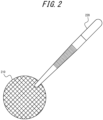
FIG. 2 is a diagram illustrating an example of a filter and tweezers according to the embodiment of the present disclosure; -
FIG. 3 is a diagram illustrating an example of a filter suction holder according to the embodiment of the present disclosure; -
FIG. 4 is a diagram illustrating an example of reaction tubes according to the embodiment of the present disclosure; and -
FIG. 5 is a flowchart illustrating a nucleic acid extraction method according to the embodiment of the present disclosure. - An embodiment of the present disclosure will be described below with reference to the drawings.
- In the drawings, the same or equivalent parts are indicated with the same reference numerals. In descriptions of each embodiment, descriptions of the same or equivalent parts are omitted or simplified as appropriate.
- A configuration of a nucleic
acid analysis system 100 according to the present embodiment will be described with reference toFIG. 1 . - The nucleic
acid analysis system 100 includes aspecimen recovery system 200, a nucleicacid extraction system 300, ahybridization reaction system 400, and adetection system 500. - The
specimen recovery system 200 is a system that recovers, from asample 110, a specimen contained in thesample 110. - The specimen is, for example, bacteria, fungi, viruses, or other microorganisms. When a test is carried out on a beverage, the
sample 110 may be the beverage manufactured. Alternatively, thesample 110 may be water to be used for manufacturing the beverage. Alternatively, thesample 110 may be liquid produced in the process of manufacturing the beverage. When bacteria are recovered into a liquid from a swab with which testing environment has been wiped, by vibrating the swab in the liquid or vibrating the liquid containing the swab, in order to test the presence or absence of contamination by bacteria in manufacturing environment or the degree of the contamination, thesample 110 may be that liquid. - The
specimen recovery system 200 includes afilter 210 as illustrated inFIG. 2 . - The recovery is carried out by, for example, pressurizing or depressurizing the
sample 110 and filtering thesample 110 through thefilter 210. When bacteria or fungi are recovered, the pore size of thefilter 210 is, for example, 0.45 mm or 0.22 mm. - Specifically, the
filter 210 is a membrane filter. The diameter of thefilter 210 is, for example, 13 mm. Thefilter 210 is required to be a size insertable into areaction tube 320, which is described below. The shape of thefilter 210 is, for example, a circle. The material of thefilter 210 is, for example, MCE, PVDF, PES, or PC. "MCE" is an abbreviation for mixed cellulose ester. "PVDF" is an abbreviation for polyvinylidene fluoride. "PES" is an abbreviation for polyethersulfone. "PC" is an abbreviation for polycarbonate. - The nucleic
acid extraction system 300 is a system that extracts, from the specimen recovered by thespecimen recovery system 200, nucleic acid contained in the specimen. - The nucleic
acid extraction system 300 includes afilter suction holder 310 as illustrated inFIG. 3 , and areaction tube 320 as illustrated inFIG. 4 . - After the specimen is recovered by the
filter 210, thefilter 210 is transferred to thefilter suction holder 310 usingtweezers 220 as illustrated inFIG. 2 . Thefilter suction holder 310 adsorbs thefilter 210. Thefilter suction holder 310 is inserted into thereaction tube 320 together with thefilter 210. In the present embodiment, thefilter 210 is not directly inserted into thereaction tube 320 using thetweezers 220, but is contained in thefilter suction holder 310 and then inserted into thereaction tube 320. Therefore, thefilter suction holder 310 can prevent thefilter 210 from falling out. Using thefilter suction holder 310 allows thefilter 210 to be fixed in place, making it easier to insert thefilter 210 into thereaction tube 320. Using thefilter suction holder 310 prevents thefilter 210 from sticking to an inner wall of thereaction tube 320, making it easier to insert thefilter 210 into the bottom of thereaction tube 320. Since thefilter suction holder 310 is disposable, the risk of contamination can also be reduced. - Vacuum tweezers may be used instead of the
tweezers 220. Using the vacuum tweezers eliminates the need for picking up thefilter 210 with thetweezers 220, and thefilter 210 can be collected with simple operation. Therefore, thefilter 210 can be reliably collected without being affected by a skill of a worker. - The
filter suction holder 310 is inserted into thereaction tube 320 together with thefilter 210, after thefilter 210 has captured the specimen by filtering thesample 110. Therefore, thefilter suction holder 310 is in such a size as to be insertable into thereaction tube 320. - The
filter suction holder 310 has acontainer 311 to contain thefilter 210. Thecontainer 311 has aninner wall surface 312 that sticks to a surface of thefilter 210 and causes thefilter 210 to be adsorbed. - In the present embodiment, the
container 311 is in the shape of a hollow cone or hollow truncated cone. The bottom of the cone or truncated cone is open so as to expose theinner wall surface 312. Thecontainer 311 has afirst end 313 corresponding to the bottom of the cone or truncated cone, and asecond end 314 corresponding to the apex of the cone or the opposite bottom of the truncated cone. Thecontainer 311 is inserted into thereaction tube 320 from thesecond end 314, which has a smaller diameter, of the cone or truncated cone, out of thefirst end 313 and thesecond end 314. - In the present embodiment, the
container 311 is open not only at the bottom of the cone or truncated cone, but also at the apex of the cone or the opposite bottom of the truncated cone. In other words, thecontainer 311 has openings at both thefirst end 313 and thesecond end 314. - The
container 311 preferably has a heat resistance of at least 180°C. For example, thecontainer 311 may be formed of PES. - The
container 311 may be formed of a material that melts when a certain amount of heat is applied. For example, thecontainer 311 may be formed of a thermally degradable polymer. Since melting thecontainer 311 increases the area of contact between thefilter 210 and a reaction solution containing a surface-active agent during extraction of the nucleic acid, an improvement in reaction efficiency can be expected. - The
filter suction holder 310 may be further provided with a surface-active agent fixed to thecontainer 311. For example, a reaction solution containing the surface-active agent used for extracting the nucleic acid may be dried in advance and fixed to thecontainer 311, thereby simplifying operation of adding the reaction solution. - The
reaction tube 320 has such a structure that can contain thefilter suction holder 310 together with thefilter 210. As thereaction tube 320, a general PCR tube can be used. "PCR" is an abbreviation for polymerase chain reaction. The capacity of thereaction tube 320 is, for example, 0.2 mL. A method of extracting, using thereaction tube 320, the nucleic acid from the specimen is the same as known one, such as a method disclosed in PTL 1 or 2, except that thefilter suction holder 310 is used, so a description is omitted. - The
sample 110 in which the nucleic acid has been extracted may be mixed with a liquid containing other nucleic acid B that reacts with the extracted nucleic acid. The nucleic acid B may be nucleic acid to which a part having a fluorescence, luminescence, or quenching action under specific conditions has been imparted for detection by thedetection system 500. - The
hybridization reaction system 400 is a system that causes a hybridization reaction in thesample 110. - In the
hybridization reaction system 400, thesample 110 is heated to, for example, 60°C and agitated so that the reaction occurs between the above-described nucleic acid B and the matching nucleic acid. For example, since the part having the fluorescence, luminescence, or quenching action under the specific conditions, which has been imparted to the nucleic acid B, reacts with the nucleic acid in thesample 110, the fluorescence, luminescence, or quenching action is manifest. Using, as the nucleic acid B, nucleic acid that is structurally designed to react with specific nucleic acid allows the nucleic acid B to react only with the nucleic acid structure of specific microorganisms, for example. Therefore, using the specific nucleic acid B in thishybridization reaction system 400 makes it possible to cause the fluorescence, luminescence, or quenching action, which has been imparted to the nucleic acid B, to be manifest only when the specific microorganisms are present in thesample 110. - The
detection system 500 is a system that detects the presence or absence of the fluorescence, luminescence, or quenching action that has been manifest by the reaction of the nucleic acid B, and the degree thereof, in thesample 110 processed by thehybridization reaction system 400. - For example, the detection may be carried out by exciting, using an excitation laser beam, the fluorescence action that has been imparted to the nucleic acid B and has been manifest by the reaction with the nucleic acid in the
sample 110, and then detecting fluorescence after the excitation with a high-sensitivity camera. Alternatively, the detection may be carried out by detecting, with a high-sensitivity camera, the luminescence action that has been imparted to the nucleic acid B and has been manifest by the reaction with the nucleic acid in thesample 110. Alternatively, for the quenching action that has been imparted to the nucleic acid B and has been manifest by the reaction with the nucleic acid in thesample 110, the detection may be carried out by detecting, with a high-sensitivity camera, the degree of quenching fluorescence or luminescence imparted in the vicinity of the part to which the quenching action has been imparted. - Using such a nucleic
acid analysis system 100 makes it possible to analyze whether the specific microorganisms are present in thesample 110, or the concentration of the specific microorganisms. - A nucleic acid extraction method according to the present embodiment will be described with reference to
FIG. 5 . - The nucleic acid extraction method according to the present embodiment includes a capture process S 1, a containment process S2, an insertion process S3, and an extraction process S4. The capture process S1 is a process of capturing a specimen by filtering, using a
filter 210, asample 110 containing the specimen having nucleic acid. The containment process S2 is a process of containing thefilter 210 in acontainer 311, which has aninner wall surface 312 that sticks to a surface of thefilter 210 and causes thefilter 210 to be adsorbed, of afilter suction holder 310. The insertion process S3 is a process of inserting thefilter suction holder 310 into areaction tube 320 together with thefilter 210. The extraction process S4 is a process of extracting, using thereaction tube 320, the nucleic acid from the specimen. - The use of such a nucleic acid extraction method makes it easier to insert the
filter 210 into thereaction tube 320. - The present disclosure is not limited to the above-described embodiment. Various modifications may be implemented within the scope of not deviating from the gist of the present disclosure.
Claims (7)
- A filter suction holder insertable into a reaction tube together with a filter, the filter being configured to capture a specimen having nucleic acid by filtering a sample containing the specimen, the reaction tube to be used for extracting the nucleic acid from the specimen, the filter suction holder comprising:
a container for containing the filter, the container having an inner wall surface configured to stick to a surface of the filter and cause the filter to be absorbed. - The filter suction holder according to claim 1, whereinthe container is in shape of a hollow cone or a hollow truncated cone,the cone or the truncated cone is open at a bottom to expose the inner wall surface, andthe container is configured to be inserted into the reaction tube from an end of the cone or the truncated cone with a smaller diameter.
- The filter suction holder according to claim 1, wherein the container has a heat resistance of at least 180°C.
- The filter suction holder according to claim 1, wherein the container is formed of a material that melts when a certain amount of heat is applied.
- The filter suction holder according to claim 1, further comprising a surface-active agent fixed to the container.
- A nucleic acid extraction system comprising:the filter suction holder according to any one of claims 1 to 5; anda reaction tube capable of containing the filter suction holder together with the filter.
- A nucleic acid extraction method comprising:capturing, using a filter, a specimen having nucleic acid by filtering a sample containing the specimen;containing the filter in a container of a filter suction holder, the container having an inner wall surface configured to stick to a surface of the filter and cause the filter to be absorbed;inserting the filter suction holder into a reaction tube together with the filter; andextracting, using the reaction tube, the nucleic acid from the specimen.
Applications Claiming Priority (1)
| Application Number | Priority Date | Filing Date | Title |
|---|---|---|---|
| JP2023217112A JP2025100032A (en) | 2023-12-22 | 2023-12-22 | Filter suction holder, nucleic acid extraction system, and nucleic acid extraction method |
Publications (1)
| Publication Number | Publication Date |
|---|---|
| EP4574263A1 true EP4574263A1 (en) | 2025-06-25 |
Family
ID=93852952
Family Applications (1)
| Application Number | Title | Priority Date | Filing Date |
|---|---|---|---|
| EP24218796.1A Pending EP4574263A1 (en) | 2023-12-22 | 2024-12-10 | Filter suction holder, nucleic acid extraction system, and nucleic acid extraction method |
Country Status (4)
| Country | Link |
|---|---|
| US (1) | US20250205709A1 (en) |
| EP (1) | EP4574263A1 (en) |
| JP (1) | JP2025100032A (en) |
| CN (1) | CN120192833A (en) |
Citations (5)
| Publication number | Priority date | Publication date | Assignee | Title |
|---|---|---|---|---|
| EP2303458B1 (en) * | 2008-06-27 | 2017-09-20 | Postech Academy-Industry- Foundation | Nucleic acid extraction apparatus |
| KR101955708B1 (en) * | 2018-01-04 | 2019-03-07 | 주식회사 진시스템 | A tube for extracting nucleic acid and method for nucleic acid extraction process using it |
| EP3647408A1 (en) * | 2017-06-30 | 2020-05-06 | Catchgene Co., Ltd. | Fixed tube of nucleic acid extraction component, and nucleic acid extraction component |
| EP3970859A1 (en) * | 2020-09-18 | 2022-03-23 | DPX Technologies, LLC | Membrane devices for filtration and extraction |
| JP2022106580A (en) * | 2021-01-07 | 2022-07-20 | 横河電機株式会社 | Container, culture kit, and nucleic acid analysis system |
-
2023
- 2023-12-22 JP JP2023217112A patent/JP2025100032A/en active Pending
-
2024
- 2024-11-22 US US18/956,258 patent/US20250205709A1/en active Pending
- 2024-12-05 CN CN202411781310.1A patent/CN120192833A/en active Pending
- 2024-12-10 EP EP24218796.1A patent/EP4574263A1/en active Pending
Patent Citations (5)
| Publication number | Priority date | Publication date | Assignee | Title |
|---|---|---|---|---|
| EP2303458B1 (en) * | 2008-06-27 | 2017-09-20 | Postech Academy-Industry- Foundation | Nucleic acid extraction apparatus |
| EP3647408A1 (en) * | 2017-06-30 | 2020-05-06 | Catchgene Co., Ltd. | Fixed tube of nucleic acid extraction component, and nucleic acid extraction component |
| KR101955708B1 (en) * | 2018-01-04 | 2019-03-07 | 주식회사 진시스템 | A tube for extracting nucleic acid and method for nucleic acid extraction process using it |
| EP3970859A1 (en) * | 2020-09-18 | 2022-03-23 | DPX Technologies, LLC | Membrane devices for filtration and extraction |
| JP2022106580A (en) * | 2021-01-07 | 2022-07-20 | 横河電機株式会社 | Container, culture kit, and nucleic acid analysis system |
Also Published As
| Publication number | Publication date |
|---|---|
| JP2025100032A (en) | 2025-07-03 |
| CN120192833A (en) | 2025-06-24 |
| US20250205709A1 (en) | 2025-06-26 |
Similar Documents
| Publication | Publication Date | Title |
|---|---|---|
| EP1873231A1 (en) | A method and unit for preparing a sample for the microbiological analysis of a liquid | |
| US20100111773A1 (en) | Apparatus and method for recovering fluid from a fluid absorbing element | |
| WO2003033740A2 (en) | Apparatus and method for isolating a nucleic acid | |
| EP2797696A1 (en) | Devices, apparatus, kit and method for treating a biological sample | |
| KR101825452B1 (en) | A container assembly for picking free medical treatment included pipet | |
| JP6771161B2 (en) | Nucleic acid extractor | |
| US20110104670A1 (en) | Method, device and molecular biology kit for extracting amplified genetic material | |
| KR101955708B1 (en) | A tube for extracting nucleic acid and method for nucleic acid extraction process using it | |
| WO2011032530A1 (en) | Disposable device for storing biological liquids and use thereof to detect materials, particles, and/or cells | |
| US20210363514A1 (en) | Syringe-type nucleic acid extraction apparatus, nucleic acid extraction kit and nucleic acid extraction method therewith | |
| US20230271176A1 (en) | Specimen collection tube system and method | |
| EP3160643B1 (en) | Method for cell nuclei preparation | |
| JP2015500003A (en) | An assembly comprising a reaction vessel and a sample matrix, a sample matrix comprising a sample matrix upper adsorbent layer and a lower transverse flow layer | |
| US20250205709A1 (en) | Filter suction holder, nucleic acid extraction system, and nucleic acid extraction method | |
| EP2167932B1 (en) | Sample preparation apparatus | |
| CN111656156A (en) | Methods for capturing microorganisms and genes and methods for extracting the same | |
| KR101743936B1 (en) | A container assembly for picking free medical treatment included pipet | |
| JP7635554B2 (en) | Container, culture kit, nucleic acid analysis system, and cell culture method | |
| JP2010169543A (en) | Blood separation vessel and method of separating blood | |
| JP2006329728A (en) | Sample collection liquid container | |
| KR102047073B1 (en) | Sample preparation device and method of preparing sample using the same | |
| US20220371006A1 (en) | Pathogen filtration apparatus, system, and method | |
| CN117363451A (en) | Nucleic acid extraction device and method | |
| CN203360439U (en) | DNA lysis and carrier removal device for massive biological samples | |
| WO2000077253A1 (en) | Apparatus and method for gene examination |
Legal Events
| Date | Code | Title | Description |
|---|---|---|---|
| PUAI | Public reference made under article 153(3) epc to a published international application that has entered the european phase |
Free format text: ORIGINAL CODE: 0009012 |
|
| STAA | Information on the status of an ep patent application or granted ep patent |
Free format text: STATUS: THE APPLICATION HAS BEEN PUBLISHED |
|
| AK | Designated contracting states |
Kind code of ref document: A1 Designated state(s): AL AT BE BG CH CY CZ DE DK EE ES FI FR GB GR HR HU IE IS IT LI LT LU LV MC ME MK MT NL NO PL PT RO RS SE SI SK SM TR |
|
| STAA | Information on the status of an ep patent application or granted ep patent |
Free format text: STATUS: REQUEST FOR EXAMINATION WAS MADE |
|
| 17P | Request for examination filed |
Effective date: 20251212 |