EP4574154A2 - Kristalline formen eines pyrimidinodiazepinderivats - Google Patents
Kristalline formen eines pyrimidinodiazepinderivats Download PDFInfo
- Publication number
- EP4574154A2 EP4574154A2 EP25168601.0A EP25168601A EP4574154A2 EP 4574154 A2 EP4574154 A2 EP 4574154A2 EP 25168601 A EP25168601 A EP 25168601A EP 4574154 A2 EP4574154 A2 EP 4574154A2
- Authority
- EP
- European Patent Office
- Prior art keywords
- crystalline form
- compound
- preferred
- salt
- mixture
- Prior art date
- Legal status (The legal status is an assumption and is not a legal conclusion. Google has not performed a legal analysis and makes no representation as to the accuracy of the status listed.)
- Pending
Links
Images












Classifications
-
- C—CHEMISTRY; METALLURGY
- C07—ORGANIC CHEMISTRY
- C07D—HETEROCYCLIC COMPOUNDS
- C07D487/00—Heterocyclic compounds containing nitrogen atoms as the only ring hetero atoms in the condensed system, not provided for by groups C07D451/00 - C07D477/00
- C07D487/02—Heterocyclic compounds containing nitrogen atoms as the only ring hetero atoms in the condensed system, not provided for by groups C07D451/00 - C07D477/00 in which the condensed system contains two hetero rings
- C07D487/04—Ortho-condensed systems
-
- A—HUMAN NECESSITIES
- A61—MEDICAL OR VETERINARY SCIENCE; HYGIENE
- A61K—PREPARATIONS FOR MEDICAL, DENTAL OR TOILETRY PURPOSES
- A61K31/00—Medicinal preparations containing organic active ingredients
- A61K31/33—Heterocyclic compounds
- A61K31/395—Heterocyclic compounds having nitrogen as a ring hetero atom, e.g. guanethidine or rifamycins
- A61K31/55—Heterocyclic compounds having nitrogen as a ring hetero atom, e.g. guanethidine or rifamycins having seven-membered rings, e.g. azelastine, pentylenetetrazole
- A61K31/551—Heterocyclic compounds having nitrogen as a ring hetero atom, e.g. guanethidine or rifamycins having seven-membered rings, e.g. azelastine, pentylenetetrazole having two nitrogen atoms, e.g. dilazep
-
- A—HUMAN NECESSITIES
- A61—MEDICAL OR VETERINARY SCIENCE; HYGIENE
- A61P—SPECIFIC THERAPEUTIC ACTIVITY OF CHEMICAL COMPOUNDS OR MEDICINAL PREPARATIONS
- A61P35/00—Antineoplastic agents
-
- C—CHEMISTRY; METALLURGY
- C07—ORGANIC CHEMISTRY
- C07B—GENERAL METHODS OF ORGANIC CHEMISTRY; APPARATUS THEREFOR
- C07B2200/00—Indexing scheme relating to specific properties of organic compounds
- C07B2200/13—Crystalline forms, e.g. polymorphs
Definitions
- the present invention relates to crystalline forms of a pyrimido-diazepine derivative.
- the invention also relates to pharmaceutical compositions containing said crystalline forms as the active ingredient, and use thereof in the prevention or treatment of disease.
- the invention further relates to a process for preparing the crystalline forms.
- Polo-like kinases are a family of serine threonine kinases that are critical regulators of cell cycle progression and DNA damage responses ( Petronczki et al, Curr Opin Cell Biol. 2008 Dec; 20(6):650-60 ). PLK1 is frequently overexpressed in cancer and its level correlates with aggressiveness and has prognostic value for predicting outcome ( Kanaji et al. Oncology. 2006; 70(2):126-33 ). Cancer cell proliferation is blocked in vitro and in vivo by small molecule PLK1 inhibitors and PLK1 antisense/siRNA ( Spankuch et al, Oncogene, 2007 Aug 23; 26(39):5793-807 ).
- PLK1 inhibitors cause mitotic arrest and subsequent induction of apoptosis. Due to the central role of PLK1 in mitosis and cell division, rapidly proliferating normal cells are also affected by PLK1 inhibitors. As a result clinical PLK1 inhibitors have shown narrow therapeutic windows, and have been shown to cause significant haematological toxicity ( Schoffski et al, Eur J Cancer, 2012 Jan; 48(2):179-86 ). Identification of patient/tumour selection markers and treatment regimens which will extend the therapeutic window is critical for the successful development of these agents. It has been shown that mutant TP53 can be one such predictive marker for sensitivity towards PLK1 inhibitors ( Degenhardt et al, Clin Cancer Res. 2010 Jan 15; 16(2):384-9 ).
- Compound (I) also known as 4-((9'-cyclopentyl-5'-methyl-6'-oxo-5',6',8',9'-tetrahydrospiro-[cyclopropane-1,7'-pyrimido[4,5-b][1,4]diazepin]-2'-yl)amino)-3-methoxy-N-((trans)-4-(4-methylpiperazin-1-yl)cyclohexyl)benzamide or 4-(9'-cyclopentyl-5'-methyl-6'-oxo-5',6',8',9'-tetrahydrospiro[cyclopropane-1,7'-pyrimido[4,5-b][1,4]diazepine]-2'-ylamino)-N((trans)-4-(4-methylpiperazin-1-yl)cyclohexyl)-3-methoxybenzamide, was first disclosed in WO 2009/040556 and has the structure
- compound (I) is a potent inhibitor of polo-like kinase 1 (PLK1), thereby rendering it therapeutically useful in the treatment of a range of proliferative disorders (including but not limited to, cancer, leukaemia, lymphoma, glomerulonephritis, rheumatoid arthritis and psoriasis), immune-mediated and inflammatory disorders, autoimmune and autoimmune-mediated disorders, kidney disorders and viral disorders.
- proliferative disorders including but not limited to, cancer, leukaemia, lymphoma, glomerulonephritis, rheumatoid arthritis and psoriasis
- Different solid state forms (including solvated forms) of an active pharmaceutical ingredient may possess different properties. Such variations in the properties of different solid state forms and solvates may provide a basis for improving formulation, for example, by facilitating better processing or handling characteristics, improving the dissolution profile, or improving stability (polymorph as well as chemical stability) and shelf-life. These variations in the properties of different solid state forms may also provide improvements to the final dosage form, for instance, if they serve to improve bioavailability. Different solid state forms and solvates of an active pharmaceutical ingredient may also give rise to a variety of polymorphs or crystalline forms, which may in turn provide additional opportunities to use variations in the properties and characteristics of a solid active pharmaceutical ingredient for providing an improved product.
- Discovering new solid state forms and solvates of a pharmaceutical product can provide materials having desirable processing properties, such as ease of handling, ease of processing, storage stability, and ease of purification or as desirable intermediate crystal forms that facilitate conversion to other polymorphic forms.
- New polymorphic forms and solvates of a pharmaceutically useful compound can also provide an opportunity to improve the performance characteristics of a pharmaceutical product (dissolution profile, bioavailability, etc). It enlarges the repertoire of materials that a formulation scientist has available for formulation optimization, for example by providing a product with different properties, e.g., a different crystal habit, higher crystallinity or polymorphic stability which may offer better processing or handling characteristics, improved dissolution profile, or improved shelf-life. For at least these reasons, there is a need for different solid state forms of compound (I).
- the present invention seeks to provide crystalline forms of compound (I).
- the invention seeks to provide crystalline forms that retain the desired pharmacological activity of the compound. More specifically, but not exclusively, the present invention seeks to provide crystalline forms of compound (I) that exhibit one or more improved properties over the amorphous form.
- the present invention relates to solid state forms of compound (I), particularly, salt forms of compound (I).
- a first aspect of the invention relates to a crystalline form of compound (I):
- said compound is in the form of a solvate, a pharmaceutically acceptable salt, or a solvated form of a pharmaceutically acceptable salt, or a co-crystal.
- the crystalline forms of the invention typically demonstrate one or more improved properties over the amorphous form. Suitable properties include, for example, better storage stability, improved ease of handling (flowability, compressibility, stability), easier purification, improved hygroscopicity profile, and easier synthetic scale up.
- a second aspect of the invention relates to a pharmaceutical composition
- a pharmaceutical composition comprising one or more crystalline forms as described above as an active ingredient and a pharmaceutically acceptable diluent, excipient or carrier.
- a third aspect of the invention relates to one or more crystalline forms as described above for use in medicine.
- a fourth aspect of the invention relates to one or more crystalline forms as described above for use in the prevention or treatment of proliferative disorders, immune-mediated and inflammatory disorders, autoimmune and autoimmune-mediated disorders, kidney disorders and viral disorders.
- a fifth aspect of the invention relates to use of one or more crystalline forms as described above in the preparation of a medicament for the prevention or treatment of proliferative disorders, immune-mediated and inflammatory disorders, autoimmune and autoimmune-mediated disorders, kidney disorders and viral disorders.
- a sixth aspect of the invention relates to a method for the prevention or treatment of proliferative disorders, immune-mediated and inflammatory disorders, autoimmune and autoimmune-mediated disorders, kidney disorders and viral disorders, said method comprising administering a pharmacologically effective amount of one or more crystalline forms as described above to a subject in need thereof.
- a seventh aspect of the invention relates to processes for preparing crystalline forms as described above.
- An eighth aspect relates to a process for preparing a pharmaceutical composition, said process comprising admixing one or more crystalline forms according to the invention with a pharmaceutically acceptable diluent, excipient or carrier.
- the present invention also provides solid state forms of compound (I) and salts thereof, for use in the preparation of other solid state forms of compound (I) and/or compound (I) co-crystals and/or salts, and solid state forms thereof.
- the present invention also provides for the use of one or more crystalline forms as described herein in the preparation of another solid state form of compound (I) or salt thereof or co-crystal thereof.
- the present invention also relates to a process for preparing another solid state form of compound (I) or salt or co-crystal thereof, said process comprising preparing a crystalline form according to the invention and converting to another solid state form of compound (I) or salt or co-crystal thereof.
- the present invention also relates to the use of one or more crystalline forms as described herein in the preparation of a pharmaceutical composition.
- the present invention also relates to one or more crystalline forms as described herein for use in the preparation of a pharmaceutical composition.
- the crystalline forms of the invention may be characterised by a range of different analytical techniques, including x-ray powder diffraction and differential scanning calorimetry. Further details of these techniques and equipment are set forth in the accompanying Examples section.
- the XRPD characterisation is carried out using a PANalytical diffractometer using CuK ⁇ radiation (45kV, 40mA).
- CuK ⁇ radiation 45kV, 40mA
- XRPD values are given as degrees 2-theta ⁇ 0.2 degrees 2-theta.
- the solid state forms of compound (I) and salts thereof according to the present invention may have advantageous properties selected from at least one of: chemical or polymorphic purity, flowability, solubility, wettability, low hygroscopicity, low solvent (e.g. water) content, dissolution rate, bioavailability, morphology or crystal habit, stability - such as chemical stability as well as thermal and mechanical stability with respect to polymorphic conversion, stability towards dehydration and/or storage stability, a lower degree of hygroscopicity, low content of residual solvents and advantageous processing and handling characteristics such as compressibility, or bulk density.
- advantageous properties selected from at least one of: chemical or polymorphic purity, flowability, solubility, wettability, low hygroscopicity, low solvent (e.g. water) content, dissolution rate, bioavailability, morphology or crystal habit, stability - such as chemical stability as well as thermal and mechanical stability with respect to polymorphic conversion, stability towards dehydration and/or storage stability, a lower degree of
- a crystalline form of compound (I) referred to herein as being characterized by graphical data "as shown in" a Figure will thus be understood to include any crystalline forms of the compound (I) characterized with the graphical data having such small variations, as are well known to the skilled person, in comparison with the Figure.
- a solid state form may be referred to herein as polymorphically pure or as substantially free of any other solid state (or polymorphic) forms.
- the expression “substantially free of any other forms” will be understood to mean that the solid state form contains about 20% or less, about 10% or less, about 5% or less, about 2% or less, about 1% or less, or 0% of any other crystalline forms of that particular salt of compound (I) as measured, for example, by XRPD.
- the term "isolated" in reference to solid state forms of compound (I) and salts thereof corresponds to a solid state form that is physically separated from the reaction mixture in which it is formed.
- anhydrous in reference to solid state forms of compound (I) and salts thereof corresponds to a solid state form which does not contain any crystalline water (or other solvents) in a defined stoichiometric amount within the crystal.
- an “anhydrous” form does not contain more than 1 % (w/w) of either water or organic solvents, as measured, for example, by TGA.
- ambient temperature means close to or at the same temperature as the surrounding space (e.g. room or fume hood) in which the sample is located. Typically ambient temperature is from about 15 °C to about 25 °C, more preferably about 20 °C to about 25 °C.
- polymorphs In general, different plural crystalline forms (polymorphs) of the same compound can be produced by varying the crystallisation conditions used. These different crystalline forms have different three-dimensional structures and different physicochemical properties. However, the existence of polymorphs is inherently unpredictable and theoretical calculations to predict polymorphs are extremely unreliable, with many more polymorphs predicted than can actually be isolated in practice.
- the present invention encompasses the crystalline form of various pharmaceutically acceptable salts, hydrates and/or co-crystals of compound (I).
- the crystalline form is a co-crystal.
- co-crystal refers to a crystalline material composed of two or more different molecules, one of which is an active pharmaceutical ingredient (API), and one of which is a co-crystal former ("coformer”), in a defined stoichiometric ratio within the same crystal lattice that are associated by non-ionic and non-covalent bonds (see definition in FDA Regulatory Classification of Pharmaceutical Co-Crystals Guidance for Industry, Feb 2018).
- the crystalline salt form is prepared in a single step by admixing a solution or suspension of compound (I) with a solution of the appropriate counterion (e.g. HCl, L-malic acid, succinic acid, HBr, maleic acid or p-toluenesulfonic acid) and crystallising the product therefrom.
- a solution or suspension of compound (I) with a solution of the appropriate counterion (e.g. HCl, L-malic acid, succinic acid, HBr, maleic acid or p-toluenesulfonic acid) and crystallising the product therefrom.
- the appropriate counterion e.g. HCl, L-malic acid, succinic acid, HBr, maleic acid or p-toluenesulfonic acid
- the crystalline salt form is prepared in a single step by treating a solution or suspension of compound (I) in free base form with the appropriate counterion (e.g. HCl, L-malic acid, succinic acid, HBr, maleic acid or p-toluenesulfonic acid) and crystallising the product therefrom.
- the counterion is in the form of a solution, more preferably, a solution comprising ethanol or a mixture of ethanol/THF.
- the compound of formula (I) is in the form of a solution or suspension which comprises ethanol.
- the counterion is in the form of a solution, more preferably, in ethanol or a mixture of ethanol/THF.
- the compound of formula (I) is in the form of a solution or suspension in ethanol. More preferably, the ethanol is used in an amount of from about 5 to about 10 ml, or about 6 to about 9 ml, or about 7 to about 9 ml per gram of compound (I).
- the solution or suspension of compound (I) is heated to a temperature of at least about 70 °C, more preferably, at least about 75 °C, more preferably, from about 75 °C to about 85 °C.
- the solution or suspension of compound (I) is heated at this temperature for at least 30 minutes, preferably at least 1 hour.
- the solution or suspension is then cooled to a temperature of from about 65 °C to about 75 °C.
- the counterion solution is added thereto and the resulting mixture is maintained at 65 °C to about 75 °C for at least 10 minutes, more preferably, at least 30 minutes.
- the solution or suspension of compound (I) is heated to a temperature of at least about 70 °C, more preferably, at least about 75 °C, more preferably, from about 75 °C to about 85 °C.
- the solution or suspension of compound (I) is heated at this temperature for at least 30 minutes, preferably at least 1 hour.
- the counterion is then added thereto.
- the mixture is then cooled to a temperature of from about 55 °C to about 65 °C, more preferably, about 60 °C.
- the mixture is maintained at this temperature (about 55 °C to about 65 °C, more preferably, about 60 °C) for at least 1 hour, more preferably at least 2 hours, even more preferably, about 2 hours.
- the mixture is then further cooled to a temperature of from about 35 °C to about 45 °C, more preferably, about 40 °C.
- the mixture is maintained at this temperature (about 35 °C to about 45 °C, more preferably, about 40 °C) for at least 1 hour, more preferably at least 2 hours, even more preferably, about 2 hours.
- the mixture is then cooled to a temperature of from about 15 °C to about 25 °C.
- the temperature for crystallisation is typically from about 0 to about 100°C, preferably from about 5°C to about 75°C.
- Precipitated crystals can be collected by filtration, centrifugation or decantation methods. Isolated crystals may be washed with an appropriate solvent.
- Slurry purification typically comprises stirring a suspension of the salt of compound (I) in an appropriate solvent.
- Solvents employed in the preparation of crystalline salt forms of compound (I) include ICH class 2 or preferably class 3 solvents.
- esters such as ethyl acetate, alcohols such as ethanol, ketones such as methyl ethyl ketone, ethers such as methyl t-butyl ether, alkanes such as heptane, and water.
- solvents may be used singly or as mixtures.
- Preferred solvents include IMS, acetonitrile, tetralin, cumene, 3-methyl-1-butanol, ethanol, methanol, isopropanol, ethyl acetate, methyl acetate, isopropyl acetate, water, heptane, TBME, THF, MEK, methyl isobutyl ketone, nPrOH and nBuOAc and mixtures thereof.
- the crystalline form is a hydrochloride salt of compound (I). More preferably, the crystalline form is a hydrate, even more preferably a monohydrochloride monohydrate salt.
- the crystalline form is characterized by an x-ray powder diffraction pattern having two or more diffraction peaks at 2[theta] values selected from 5.57 ⁇ 0.2, 6.19 ⁇ 0.2, 7.97 ⁇ 0.2, 8.32 ⁇ 0.2, 10.48 ⁇ 0.2, 10.72 ⁇ 0.2, 11.83 ⁇ 0.2, 12.53 ⁇ 0.2, 12.74 ⁇ 0.2, 13.34 ⁇ 0.2, 13.86 ⁇ 0.2, 14.69 ⁇ 0.2, 15.62 ⁇ 0.2, 16.02 ⁇ 0.2, 16.75 ⁇ 0.2, 17.02 ⁇ 0.2, 17.42 ⁇ 0.2, 18.19 ⁇ 0.2, 18.81 ⁇ 0.2, 19.08 ⁇ 0.2, 19.49 ⁇ 0.2, 19.83 ⁇ 0.2, 20.15 ⁇ 0.2, 20.55 ⁇ 0.2, 21.12 ⁇ 0.2, 22.82 ⁇ 0.2, 23.78 ⁇ 0.2, 24.68 ⁇ 0.2, 25.10 ⁇ 0.2, 25
- the crystalline form is characterized by having three or more, four or more, five or more, or six or more of the aforementioned diffraction peaks. More preferably, the crystalline form is characterized by having 7, 8, 9, 10, 11, 12, 13, 14, 15, 16, 17, 18, 19, 20 Vietnamese40 or more of the aforementioned diffraction peaks.
- the crystalline form is characterized by having three, four or five of the aforementioned diffraction peaks.
- the crystalline form is characterized by having three or more of the aforementioned diffraction peaks. In a more preferred embodiment, the crystalline form is characterized by having three of the aforementioned diffraction peaks. In one preferred embodiment, the crystalline form is characterized by having four or more of the aforementioned diffraction peaks. In a more preferred embodiment, the crystalline form is characterized by having four of the aforementioned diffraction peaks.
- the crystalline form is characterized by having five or more of the aforementioned diffraction peaks. In a more preferred embodiment, the crystalline form is characterized by having five of the aforementioned diffraction peaks.
- the crystalline form is characterized by having six or more of the aforementioned diffraction peaks. In a more preferred embodiment, the crystalline form is characterized by having six of the aforementioned diffraction peaks.
- the crystalline form is characterized by having seven or more of the aforementioned diffraction peaks. In a more preferred embodiment, the crystalline form is characterized by having seven of the aforementioned diffraction peaks.
- the crystalline form is characterized by having eight or more of the aforementioned diffraction peaks. In a more preferred embodiment, the crystalline form is characterized by having eight of the aforementioned diffraction peaks.
- the crystalline form is characterized by having nine or more of the aforementioned diffraction peaks. In a more preferred embodiment, the crystalline form is characterized by having nine of the aforementioned diffraction peaks.
- the crystalline form is characterized by having ten or more of the aforementioned diffraction peaks. In a more preferred embodiment, the crystalline form is characterized by having ten of the aforementioned diffraction peaks.
- the crystalline form is characterized by an x-ray powder diffraction pattern comprising two or more diffraction peaks at 2[theta] values selected from 8.32 ⁇ 0.2, 10.48 ⁇ 0.2, 11.83 ⁇ 0.2, 12.53 ⁇ 0.2, 16.02 ⁇ 0.2, 16.75 ⁇ 0.2, 18.19 ⁇ 0.2, 18.81 ⁇ 0.2, 19.49 ⁇ 0.2, 20.55 ⁇ 0.2, and 25.70 ⁇ 0.2. More preferably, the crystalline form is characterized by having three, four or five of the aforementioned diffraction peaks. More preferably, the crystalline form is characterized by having 6, 7, 8, 9 or 10 of the aforementioned diffraction peaks.
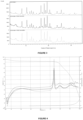
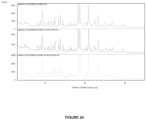
- the crystalline form is characterized by an x-ray powder diffraction pattern in which the peak positions are substantially in accordance with the peak positions of the pattern shown in Figure 25 or as listed in Table 1.
- the crystalline form is characterized by having three, four, five or six diffraction peaks as shown in Figure 25 or as listed in Table 1.
- the crystalline form is characterized by a differential scanning calorimetry trace recorded at a heating rate of 20°C per minute which shows a maximum endothermic peak at a temperature between about 265 °C and about 275 °C, more preferably between about 268°C and about 273°C.
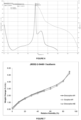
- the crystalline form is characterized by a differential scanning calorimetry trace substantially in accordance with that shown in Figure 4 .
- the crystalline form is characterized by:
- the crystalline form is characterized by (a) and (b) above.
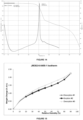
- the crystalline monohydrochloride monohydrate salt/co-crystal of compound (I) as defined herein is only slightly hygroscopic (as defined by the classification in Table 9; Hygroscopicity Classification adopted from Ph.Eur. and Sihorkar et al, Pharmaceutical Dev. & Technol. (2013), 18(2), 348-358 ).
- the crystalline form is isolated. In one preferred embodiment, the crystalline form can be isolated by crystallisation.
- the crystalline form is substantially free of any other forms.
- a further aspect of the invention relates to a crystalline form of compound (I) which is a hydrochloride salt, and which contains no more than about 20%, no more than about 10%, no more than about 5%, no more than about 2%, no more than about 1% or about 0% of any other crystalline forms of the hydrochloride salt of compound (I), for example, as measured by XRPD.
- a further aspect of the invention relates to a crystalline form of compound (I) which is a monohydrochloride monohydrate salt, and which contains no more than about 20%, no more than about 10%, no more than about 5%, no more than about 2%, no more than about 1% or about 0% of any other crystalline forms of the monohydrochloride monohydrate salt of compound (I), for example, as measured by XRPD.
- the crystalline form of the hydrochloride salt of compound (I) is obtained by a cooling method.
- the invention relates to a process for preparing the hydrochloride salt of compound (I) in crystalline form, said process comprising crystallizing the hydrochloride salt from a solution of ethanol or an ethanol/THF mixture.
- the invention relates to a process for preparing the hydrochloride salt of compound (I) in crystalline form, said process comprising treating a solution or suspension of compound (I) in free base form with HCl, and crystallising the product therefrom.
- HCl is in the form of a solution, more preferably, comprising ethanol or a mixture of ethanol/THF.
- the compound of formula (I) is in the form of a solution or suspension comprising ethanol.
- the process comprises adding an antisolvent (preferably, ethyl acetate) to aid crystallisation.
- the process comprises heating the mixture, followed by stepwise cooling as set out above in the detailed description.
- the invention relates to a process for preparing a crystalline form of the hydrochloride salt of compound (I), said process comprising the steps of:
- the process comprises heating a mixture of compound (I) in ethanol to at least about 75 °C, preparing a counter ion solution (e.g. HCl) in ethanol or ethanol/THF mixture and charging to the ethanol solution of compound (I), cooling in a stepwise manner to ambient temperature with agitation from about 75 °C to about 60 °C and holding for at least 2 hours, cooling to about 40 °C and holding for at least 2 hours, and then cooling to ambient temperature and agitating for at least 18 hours.
- a counter ion solution e.g. HCl
- the process comprises heating a mixture of compound (I) in ethanol to at least about 75 °C, preparing a counter ion solution (e.g. HCl) in ethanol or ethanol/THF mixture and charging to the ethanol solution of compound (I), cooling in a stepwise manner to ambient temperature with agitation from about 75 °C to about 60 °C and holding for at least 2 hours, cooling to about 40 °C and
- the solid is isolated by filtration, more preferably vacuum filtration.
- the isolated solid is dried in vacuo, preferably for at least 12 hours, or at least 24 hours, at temperature of at least 40 °C, more preferably, at least 50 °C.
- Another aspect of the invention relates to a product obtainable by, or obtained by, the above process.
- the crystalline form is a co-crystal or salt formed by the interaction (or reaction) of compound (I) with L-malic acid.
- the crystalline form is a malate salt of compound (I), more preferably, an L-malate salt.
- the ratio of L-malate to compound (I) is 2:1, i.e. one molecule of compound (I) to two molecules of L-malic acid.
- the crystalline form is anhydrous.
- the crystalline form is characterized by an x-ray powder diffraction pattern having two or more diffraction peaks at 2[theta] values selected from 4.48 ⁇ 0.2, 5.57 ⁇ 0.2, 5.89 ⁇ 0.2, 7.64 ⁇ 0.2, 9.02 ⁇ 0.2, 9.95 ⁇ 0.2, 10.20 ⁇ 0.2, 10.90 ⁇ 0.2, 12.20 ⁇ 0.2, 12.81 ⁇ 0.2, 13.47 ⁇ 0.2, 14.15 ⁇ 0.2, 14.69 ⁇ 0.2, 14.95 ⁇ 0.2, 15.67 ⁇ 0.2, 16.06 ⁇ 0.2, 17.91 ⁇ 0.2, 18.56 ⁇ 0.2, 19.25 ⁇ 0.2, 20.15 ⁇ 0.2, 20.65 ⁇ 0.2, 21.35 ⁇ 0.2, 21.94 ⁇ 0.2, 22.85 ⁇ 0.2, 24.07 ⁇ 0.2, 24.28 ⁇ 0.2, 24.98 ⁇ 0.2, 25.63 ⁇ 0.2, 26.82 ⁇
- the crystalline form is characterized by having six or more of the aforementioned diffraction peaks. In a more preferred embodiment, the crystalline form is characterized by having six of the aforementioned diffraction peaks.
- the crystalline form is characterized by having nine or more of the aforementioned diffraction peaks. In a more preferred embodiment, the crystalline form is characterized by having nine of the aforementioned diffraction peaks.
- the crystalline form is characterized by an x-ray powder diffraction pattern in which the peak positions are substantially in accordance with the peak positions of the pattern shown in Figure 26 or as listed in Table 2.
- the crystalline form is characterized by having three, four, five or six diffraction peaks as shown in Figure 26 or as listed in Table 2.
- the crystalline form is characterized by:
- the crystalline form is characterized by (a) and (b) above.
- the crystalline L-malate salt/co-crystal of compound (I) as defined herein is only slightly hygroscopic (as defined by the classification in Table 9; Hygroscopicity Classification adopted from Ph.Eur. and Sihorkar et al, Pharmaceutical Dev. & Technol. (2013), 18(2), 348-358 ).
- the crystalline form is isolated. In one preferred embodiment, the crystalline form can be isolated by crystallisation.
- the crystalline form is substantially free of any other forms.
- a further aspect of the invention relates to a crystalline form of compound (I) which is an L-malate salt, and which contains no more than about 20%, no more than about 10%, no more than about 5%, no more than about 2%, no more than about 1% or about 0% of any other crystalline forms of the L-malate salt of compound (I), for example, as measured by XRPD..
- the crystalline form of the L-malate salt of compound (I) is obtained by a cooling method.
- the invention relates to a process for preparing the L-malate salt of compound (I) in crystalline form, said process comprising crystallizing the L-malate salt from a solution of ethanol or an ethanol/THF mixture.
- the invention relates to a process for preparing a crystalline form of the L-malate salt of compound (I), said process comprising the steps of:
- step (iii) comprises:
- the cooling conditions are as defined above for the hydrochloride salt (more specifically, the monohydrochloride monohydrate salt).
- the solid is isolated by filtration, more preferably vacuum filtration.
- the isolated solid is dried in vacuo, preferably for at least 12 hours, or at least 24 hours, at temperature of at least 40 °C, more preferably, at least 50 °C.
- Another aspect of the invention relates to a product obtainable by, or obtained by, the above process.
- the crystalline form is a co-crystal or salt formed by the interaction (or reaction) of compound (I) with succinic acid.
- the crystalline form is a succinate salt of compound (I).
- the ratio of succinate to compound (I) is 2:1, i.e. one molecule of compound (I) to two molecules of succinic acid.
- the crystalline form is anhydrous.
- the crystalline form is characterized by an x-ray powder diffraction pattern having two or more diffraction peaks at 2[theta] values selected from 3.16 ⁇ 0.2, 5.47 ⁇ 0.2, 9.01 ⁇ 0.2, 10.10 ⁇ 0.2, 11.45 ⁇ 0.2, 12.12 ⁇ 0.2, 12.94 ⁇ 0.2, 13.17 ⁇ 0.2, 14.19 ⁇ 0.2, 14.43 ⁇ 0.2, 14.67 ⁇ 0.2, 15.08 ⁇ 0.2, 15.51 ⁇ 0.2, 15.69 ⁇ 0.2, 16.76 ⁇ 0.2, 17.55 ⁇ 0.2, 17.69 ⁇ 0.2, 18.54 ⁇ 0.2, 18.95 ⁇ 0.2, 19.52 ⁇ 0.2, 19.84 ⁇ 0.2, 20.30 ⁇ 0.2, 20.45 ⁇ 0.2, 21.04 ⁇ 0.2, 21.36 ⁇ 0.2, 21.83 ⁇ 0.2, 22.12 ⁇ 0.2, 22.76 ⁇ 0.2, 23.11 ⁇ 0.2,
- the crystalline form is characterized by having three or more, four or more, five or more, or six or more of the aforementioned diffraction peaks. More preferably, the crystalline form is characterized by having 7, 8, 9, 10, 11, 12, 13, 14, 15, 16, 17, 18, 19, 20,000.54 or more of the aforementioned diffraction peaks.
- the crystalline form is characterized by having three, four or five of the aforementioned diffraction peaks.
- the crystalline form is characterized by having two of the aforementioned diffraction peaks.
- the crystalline form is characterized by having three or more of the aforementioned diffraction peaks. In a more preferred embodiment, the crystalline form is characterized by having three of the aforementioned diffraction peaks.
- the crystalline form is characterized by having four or more of the aforementioned diffraction peaks. In a more preferred embodiment, the crystalline form is characterized by having four of the aforementioned diffraction peaks.
- the crystalline form is characterized by having five or more of the aforementioned diffraction peaks. In a more preferred embodiment, the crystalline form is characterized by having five of the aforementioned diffraction peaks.
- the crystalline form is characterized by having six or more of the aforementioned diffraction peaks. In a more preferred embodiment, the crystalline form is characterized by having six of the aforementioned diffraction peaks.
- the crystalline form is characterized by having seven or more of the aforementioned diffraction peaks. In a more preferred embodiment, the crystalline form is characterized by having seven of the aforementioned diffraction peaks.
- the crystalline form is characterized by having eight or more of the aforementioned diffraction peaks. In a more preferred embodiment, the crystalline form is characterized by having eight of the aforementioned diffraction peaks.
- the crystalline form is characterized by having nine or more of the aforementioned diffraction peaks. In a more preferred embodiment, the crystalline form is characterized by having nine of the aforementioned diffraction peaks.
- the crystalline form is characterized by having ten or more of the aforementioned diffraction peaks. In a more preferred embodiment, the crystalline form is characterized by having ten of the aforementioned diffraction peaks.
- the crystalline form is characterized by an x-ray powder diffraction pattern comprising two or more diffraction peaks at 2[theta] values selected from 10.10 ⁇ 0.2, 14.67 ⁇ 0.2, 15.08 ⁇ 0.2, 15.51 ⁇ 0.2, 15.69 ⁇ 0.2, 17.55 ⁇ 0.2, 18.54 ⁇ 0.2, 18.94 ⁇ 0.2, 19.52 ⁇ 0.2 and 21.83 ⁇ 0.2. More preferably, the crystalline form is characterized by having three, four or five of the aforementioned diffraction peaks. More preferably, the crystalline form is characterized by having 6, 7, 8, 9 or 10 of the aforementioned diffraction peaks.
- the crystalline form is characterized by an x-ray powder diffraction pattern in which the peak positions are substantially in accordance with the peak positions of the pattern shown in Figure 27 or as listed in Table 3.
- the crystalline form is characterized by having three, four, five or six diffraction peaks as shown in Figure 27 or as listed in Table 3.
- the crystalline form is characterized by a differential scanning calorimetry trace recorded at a heating rate of 20°C per minute which shows a maximum endothermic peak at a temperature between about 185 °C and about 190 °C.
- the maximum endothermic peak at is at a temperature between about 187 °C and about 190 °C, more preferably about 189 °C.
- the crystalline form is characterized by a differential scanning calorimetry trace substantially in accordance with that shown in Figure 10 .
- the crystalline form is characterized by:
- the crystalline form is characterized by (a) and (b) above.
- the crystalline succinate salt/co-crystal of compound (I) as defined herein is only slightly hygroscopic (as defined by the classification in Table 9; Hygroscopicity Classification adopted from Ph.Eur. and Sihorkar et al, Pharmaceutical Dev. & Technol. (2013), 18(2), 348-358 ).
- the crystalline form is isolated. In one preferred embodiment, the crystalline form can be isolated by crystallisation.
- the crystalline form is substantially free of any other forms.
- a further aspect of the invention relates to a crystalline form of compound (I) which is a succinate salt, and which contains no more than about 20%, no more than about 10%, no more than about 5%, no more than about 2%, no more than about 1% or about 0% of any other crystalline forms of the succinate salt of compound (I), for example, as measured by XRPD.
- the crystalline form is characterized by having three or more, four or more, five or more, or six or more of the aforementioned diffraction peaks. More preferably, the crystalline form is characterized by having 7, 8, 9, 10, 11, 12, 13, 14, 15, 16, 17, 18, 19, 20,000.48 or more of the aforementioned diffraction peaks.
- the crystalline form is characterized by having three, four or five of the aforementioned diffraction peaks.
- the crystalline form is characterized by having three or more of the aforementioned diffraction peaks. In a more preferred embodiment, the crystalline form is characterized by having three of the aforementioned diffraction peaks.
- the crystalline form is characterized by having seven or more of the aforementioned diffraction peaks. In a more preferred embodiment, the crystalline form is characterized by having seven of the aforementioned diffraction peaks. In one preferred embodiment, the crystalline form is characterized by having eight or more of the aforementioned diffraction peaks. In a more preferred embodiment, the crystalline form is characterized by having eight of the aforementioned diffraction peaks.
- the crystalline form is characterized by a differential scanning calorimetry trace substantially in accordance with that shown in Figure 14 .
- the crystalline form is characterized by:
- the crystalline form is characterized by (a) and (b) above.
- the crystalline maleate salt/co-crystal of compound (I) as defined herein is only slightly hygroscopic (as defined by the classification in Table 9; Hygroscopicity Classification adopted from Ph.Eur. and Sihorkar et al, Pharmaceutical Dev. & Technol. (2013), 18(2), 348-358 ).
- the crystalline form is isolated. In one preferred embodiment, the crystalline form can be isolated by crystallisation.
- the crystalline form is substantially free of any other forms.
- a further aspect of the invention relates to a crystalline form of compound (I) which is a maleate salt, and which contains no more than about 20%, no more than about 10%, no more than about 5%, no more than about 2%, no more than about 1% or about 0% of any other crystalline forms of the maleate salt of compound (I), for example, as measured by XRPD.
- the crystalline form of the maleate salt of compound (I) is obtained by a cooling method.
- the invention relates to a process for preparing the maleate salt of compound (I) in crystalline form, said process comprising treating a solution or suspension of compound (I) in free base form with maleic acid, and crystallising the product therefrom.
- a solution or suspension of compound (I) in free base form with maleic acid
- the maleic acid is in the form of a solution, more preferably, comprising ethanol or a mixture of ethanol/THF.
- the compound of formula (I) is in the form of a solution or suspension comprising ethanol.
- the process comprises adding an antisolvent (preferably, ethyl acetate) to aid crystallisation.
- the process comprises heating the mixture, followed by stepwise cooling as set out above in the detailed description.
- the invention relates to a process for preparing the maleate salt of compound (I) in crystalline form, said process comprising crystallizing the maleate salt from a solution of ethanol or an ethanol/THF mixture.
- the invention relates to a process for preparing a crystalline form of the maleate salt of compound (I), said process comprising the steps of:
- step (iii) comprises:
- the cooling conditions are as defined above for the hydrochloride salt (more specifically, the monohydrochloride monohydrate salt).
- the solid is isolated by filtration, more preferably vacuum filtration.
- the isolated solid is dried in vacuo, preferably for at least 12 hours, or at least 24 hours, at temperature of at least 40 °C, more preferably, at least 50 °C.
- Another aspect of the invention relates to a product obtainable by, or obtained by, the above process.
- the crystalline form is a co-crystal or salt formed by the interaction (or reaction) of compound (I) with hydrobromic acid.
- the crystalline form is hydrobromide salt of compound (I), more preferably, a monohydrobromide monohydrate salt.
- the crystalline form is characterized by an x-ray powder diffraction pattern having two or more diffraction peaks at 2[theta] values selected from 4.23 ⁇ 0.2, 5.38 ⁇ 0.2, 5.66 ⁇ 0.2, 8.11 ⁇ 0.2, 8.31 ⁇ 0.2, 8.61 ⁇ 0.2, 10.02 ⁇ 0.2, 10.45 ⁇ 0.2, 10.75 ⁇ 0.2, 11.32 ⁇ 0.2, 11.98 ⁇ 0.2, 12.45 ⁇ 0.2, 12.60 ⁇ 0.2, 13.10 ⁇ 0.2, 13.94 ⁇ 0.2, 14.71 ⁇ 0.2, 15.76 ⁇ 0.2, 15.91 ⁇ 0.2, 16.26 ⁇ 0.2, 16.72 ⁇ 0.2, 17.00 ⁇ 0.2, 17.24 ⁇ 0.2, 17.64 ⁇ 0.2, 17.97 ⁇ 0.2, 18.91 ⁇ 0.2, 19.19 ⁇ 0.2, 19.51 ⁇ 0.2, 19.76 ⁇ 0.2, 20.05 ⁇ 0.2, 20.19 ⁇ 0.2,
- the crystalline form is characterized by having three or more, four or more, five or more, or six or more of the aforementioned diffraction peaks. More preferably, the crystalline form is characterized by having 7, 8, 9, 10, 11, 12, 13, 14, 15, 16, 17, 18, 19, 20,000.54 or more of the aforementioned diffraction peaks.
- the crystalline form is characterized by having three, four or five of the aforementioned diffraction peaks.
- the crystalline form is characterized by having two of the aforementioned diffraction peaks.
- the crystalline form is characterized by having three or more of the aforementioned diffraction peaks. In a more preferred embodiment, the crystalline form is characterized by having three of the aforementioned diffraction peaks.
- the crystalline form is characterized by having four or more of the aforementioned diffraction peaks. In a more preferred embodiment, the crystalline form is characterized by having four of the aforementioned diffraction peaks.
- the crystalline form is characterized by having seven or more of the aforementioned diffraction peaks. In a more preferred embodiment, the crystalline form is characterized by having seven of the aforementioned diffraction peaks.
- the crystalline form is characterized by having eight or more of the aforementioned diffraction peaks. In a more preferred embodiment, the crystalline form is characterized by having eight of the aforementioned diffraction peaks.
- the crystalline form is characterized by having nine or more of the aforementioned diffraction peaks. In a more preferred embodiment, the crystalline form is characterized by having nine of the aforementioned diffraction peaks.
- the crystalline form is characterized by having ten or more of the aforementioned diffraction peaks. In a more preferred embodiment, the crystalline form is characterized by having ten of the aforementioned diffraction peaks.
- the crystalline form is characterized by an x-ray powder diffraction pattern in which the peak positions are substantially in accordance with the peak positions of the pattern shown in Figure 29 or as listed in Table 5.
- the crystalline form is characterized by having three, four, five or six diffraction peaks as shown in Figure 29 or as listed in Table 5.
- the crystalline form is characterized by a differential scanning calorimetry trace recorded at a heating rate of 20°C per minute which shows a maximum endothermic peak at a temperature between about 248 °C and about 253 °C.
- the maximum endothermic peak at is at a temperature between about 249 °C and about 251 °C, more preferably about 250 °C.
- the crystalline form is characterized by a differential scanning calorimetry trace substantially in accordance with that shown in Figure 18 .
- the crystalline form is characterized by:
- the invention relates to a process for preparing a crystalline form of the hydrobromide salt of compound (I), said process comprising the steps of:
- the solid is isolated by filtration, more preferably vacuum filtration.
- the isolated solid is dried in vacuo, preferably for at least 12 hours, or at least 24 hours, at temperature of at least 40 °C, more preferably, at least 50 °C.
- the crystalline form is a p-toluenesulfonate salt of compound (I).
- the ratio of compound (I) to p-toluenesulfonate is 1:1.
- the crystalline form is anhydrous.
- the crystalline form is characterized by an x-ray powder diffraction pattern having two or more diffraction peaks at 2[theta] values selected from 5.56 ⁇ 0.2, 7.91 ⁇ 0.2, 8.15 ⁇ 0.2, 8.76 ⁇ 0.2, 10.10 ⁇ 0.2, 10.29 ⁇ 0.2, 10.42 ⁇ 0.2, 12.17 ⁇ 0.2, 12.56 ⁇ 0.2, 13.61 ⁇ 0.2, 13.82 ⁇ 0.2, 14.00 ⁇ 0.2, 14.65 ⁇ 0.2, 14.89 ⁇ 0.2, 15.00 ⁇ 0.2, 15.45 ⁇ 0.2, 15.92 ⁇ 0.2, 16.40 ⁇ 0.2, 16.66 ⁇ 0.2, 16.89 ⁇ 0.2, 17.03 ⁇ 0.2, 17.38 ⁇ 0.2, 17.63 ⁇ 0.2, 17.85 ⁇ 0.2, 18.29 ⁇ 0.2, 19.10 ⁇ 0.2, 19.42 ⁇ 0.2, 19.89 ⁇ 0.2, 20.14 ⁇ 0.2, 20.54 ⁇ 0.2
- the crystalline form is characterized by having three or more, four or more, five or more, or six or more of the aforementioned diffraction peaks. More preferably, the crystalline form is characterized by having 7, 8, 9, 10, 11, 12, 13, 14, 15, 16, 17, 18, 19, 20,000.51 or more of the aforementioned diffraction peaks.
- the crystalline form is characterized by having three, four or five of the aforementioned diffraction peaks.
- the crystalline form is characterized by having two of the aforementioned diffraction peaks.
- the crystalline form is characterized by having three or more of the aforementioned diffraction peaks. In a more preferred embodiment, the crystalline form is characterized by having three of the aforementioned diffraction peaks.
- the crystalline form is characterized by having four or more of the aforementioned diffraction peaks. In a more preferred embodiment, the crystalline form is characterized by having four of the aforementioned diffraction peaks.
- the crystalline form is characterized by having five or more of the aforementioned diffraction peaks. In a more preferred embodiment, the crystalline form is characterized by having five of the aforementioned diffraction peaks.
- the crystalline form is characterized by having six or more of the aforementioned diffraction peaks. In a more preferred embodiment, the crystalline form is characterized by having six of the aforementioned diffraction peaks.
- the crystalline form is characterized by having seven or more of the aforementioned diffraction peaks. In a more preferred embodiment, the crystalline form is characterized by having seven of the aforementioned diffraction peaks.
- the crystalline form is characterized by having eight or more of the aforementioned diffraction peaks. In a more preferred embodiment, the crystalline form is characterized by having eight of the aforementioned diffraction peaks.
- the crystalline form is characterized by having nine or more of the aforementioned diffraction peaks. In a more preferred embodiment, the crystalline form is characterized by having nine of the aforementioned diffraction peaks.
- the crystalline form is characterized by having ten or more of the aforementioned diffraction peaks. In a more preferred embodiment, the crystalline form is characterized by having ten of the aforementioned diffraction peaks.
- the crystalline form is characterized by an x-ray powder diffraction pattern comprising two or more diffraction peaks at 2[theta] values selected from 10.42 ⁇ 0.2, 12.17 ⁇ 0.2, 12.56 ⁇ 0.2, 17.63 ⁇ 0.2, 18.29 ⁇ 0.2, 19.10 ⁇ 0.2, 19.89 ⁇ 0.2, 20.14 ⁇ 0.2, 20.54 ⁇ 0.2 and 22.47 ⁇ 0.2. More preferably, the crystalline form is characterized by having three, four or five of the aforementioned diffraction peaks. More preferably, the crystalline form is characterized by having 6, 7, 8, 9 or 10 of the aforementioned diffraction peaks.
- the crystalline form is characterized by an x-ray powder diffraction pattern in which the peak positions are substantially in accordance with the peak positions of the pattern shown in Figure 30 or as listed in Table 6.
- the crystalline form is characterized by having three, four, five or six diffraction peaks as shown in Figure 30 or as listed in Table 6.
- the crystalline form is characterized by a differential scanning calorimetry trace recorded at a heating rate of 20°C per minute which shows a maximum endothermic peak at a temperature between about 235 °C and about 240 °C.
- the maximum endothermic peak at is at a temperature between about 238°C and about 240 °C, more preferably about 239 °C.
- the crystalline form is characterized by a differential scanning calorimetry trace substantially in accordance with that shown in Figure 22 .
- the crystalline form is characterized by:
- the crystalline form is characterized by (a) and (b) above.
- the crystalline p-toluenesulfonate salt/co-crystal of compound (I) as defined herein is only slightly hygroscopic (as defined by the classification in Table 9; Hygroscopicity Classification adopted from Ph.Eur. and Sihorkar et al, Pharmaceutical Dev. & Technol. (2013), 18(2), 348-358 ).
- the crystalline form is isolated. In one preferred embodiment, the crystalline form can be isolated by crystallisation.
- the crystalline form is substantially free of any other forms.
- a further aspect of the invention relates to a crystalline form of compound (I) which is a p-toluenesulfonate salt, and which contains no more than about 20%, no more than about 10%, no more than about 5%, no more than about 2%, no more than about 1% or about 0% of any other crystalline forms of the p-toluenesulfonate salt of compound (I), for example, as measured by XRPD.
- the crystalline form of the p-toluenesulfonate salt of compound (I) is obtained by a cooling method.
- the invention relates to a process for preparing the p-toluenesulfonate salt of compound (I) in crystalline form, said process comprising crystallizing the p-toluenesulfonate salt from a mixture of ethanol/THF.
- the invention relates to a process for preparing the p-toluenesulfonate salt of compound (I) in crystalline form, said process comprising treating a solution or suspension of compound (I) in free base form with p-toluenesulfonic acid, and crystallising the product therefrom.
- p-toluenesulfonic acid Preferably, about 1 to about 1.2 equivalents of p-toluenesulfonic acid are used relative to the compound of formula (I).
- the p-toluenesulfonic acid is in the form of a solution, more preferably, comprising ethanol or a mixture of ethanol/THF.
- the compound of formula (I) is in the form of a solution or suspension comprising ethanol or a mixture of ethanol/THF.
- the process comprises adding an antisolvent (preferably, ethyl acetate) to aid crystallisation.
- the process comprises heating the mixture, followed by stepwise cooling as set out above in the detailed description.
- the invention relates to a process for preparing a crystalline form of the p-toluenesulfonate salt of compound (I), said process comprising the steps of:
- the ratio of THF to EtOH is at least 3:1, more preferably, at least 4:1, more preferably at least 5:1, more preferably at least 6:1, more preferably at least 7:1, more preferably at least 8:1, more preferably at least 9:1, more preferably at least 10:1.
- the ratio of THF to EtOH is about 3:1, more preferably, about 4:1, more preferably about 5:1, more preferably about 6:1, more preferably about 7:1, more preferably about 8:1, more preferably about 9:1, more preferably about 7.5:1.
- the process comprises the steps of:
- the solid is isolated by filtration, more preferably vacuum filtration.
- the isolated solid is dried in vacuo, preferably for at least 12 hours, or at least 24 hours, at temperature of at least 40 °C, more preferably, at least 50 °C.
- Another aspect of the invention relates to a product obtainable by, or obtained by, the above process.
- Compound (I) has shown to exhibit potent inhibitory activity on polo-like kinase, more specifically PLK1, and is therefore believed to be of use in the treatment of proliferative disorders (such as cancer, leukaemia, lymphoma and alopecia), immune-mediated and inflammatory disorders (such as graft-versus-host disease (GvHD), transplant rejection and psoriasis), autoimmune and autoimmune-mediated disorders (such as Hashimoto's thyroiditis, pernicious anaemia, Addison's disease, type I diabetes, rheumatoid arthritis, systemic lupus erythematosus, dermatomyositis, Sjogren's syndrome, drug-induced lupus erythematosus, multiple sclerosis, myasthenia gravis, Reiter's syndrome and Grave's disease, pemphigus vulgaris), kidney disorders (such as glomerulonephritis, nephronophthisis and polyc
- one aspect of the invention relates to a crystalline form, or pharmaceutical composition, as described herein for use in medicine or for use as a medicament.
- the proliferative disorder is a cancer, leukaemia or lymphoma.
- the term proliferative disorder is used herein in a broad sense to include any disorder that requires control of the cell cycle, for example genetic proliferative diseases such as polycystic kidney disease.
- an anti-proliferative effect within the scope of the present invention may be demonstrated by the ability to inhibit cell proliferation in an in vitro whole cell assay. Using such assays it may be determined whether a compound is anti-proliferative in the context of the present invention.
- the proliferative disorder is a solid tumour.
- the solid tumour is a bladder cancer, bone cancer, brain or nerve cancer, prostate cancer, skin cancer, lung cancer, breast cancer, colorectal, ovarian or uterine cancer or eosophageal cancer.
- the proliferative disorder is selected from glomerulonephritis, rheumatoid arthritis and psoriasis.
- Another aspect of the invention relates to a crystalline form, or pharmaceutical composition, as described herein for use in the prevention or treatment of an immune-mediated or inflammatory disorder. More preferably, the disorder is selected from graft-versus-host disease (GvHD), transplant rejection and psoriasis.
- GvHD graft-versus-host disease
- transplant rejection psoriasis
- Another aspect of the invention relates to a crystalline form, or pharmaceutical composition, as described herein for use in the prevention or treatment of an autoimmune or autoimmune-mediated disorder.
- the disorder is selected from Hashimoto's thyroiditis, pernicious anaemia, Addison's disease, type I diabetes, rheumatoid arthritis, systemic lupus erythematosus, dermatomyositis, Sjogren's syndrome, drug-induced lupus erythematosus, multiple sclerosis, myasthenia gravis, Reiter's syndrome and Grave's disease, pemphigus vulgaris.
- Another aspect of the invention relates to a crystalline form, or pharmaceutical composition, as described herein for use in the prevention or treatment of a kidney disorder. More preferably, the disorder selected from glomerulonephritis, nephronophthisis and polycystic kidney disease.
- Another aspect of the invention relates to a crystalline form, or pharmaceutical composition, as described herein for use in the prevention or treatment of a viral disorder.
- the disorder is selected from influenza virus, hepatitis B virus (HBV), hepatitis C virus (HCV), human cytomegalovirus (HCMV) and human immunodeficiency virus type 1 (HIV-1).
- the crystalline form When crystalline forms of the invention are used as a medicament, preferably as an agent for treatment or prevention of proliferative disorders, the crystalline form can be administered alone, or as a mixture of the crystalline form with an appropriate pharmacologically acceptable excipient(s), and/or diluent(s) and/or carrier(s).
- Another aspect of the invention therefore relates to a pharmaceutical composition
- a pharmaceutical composition comprising a crystalline form according as described above and a pharmaceutically acceptable diluent, excipient or carrier.
- a further aspect relates to a process for preparing a pharmaceutical composition as described above, said process comprising admixing a crystalline form according to the invention with a pharmaceutically acceptable diluent, excipient or carrier.
- compositions according to the present invention can be in unit dosage form such as tablets, capsules, granules, powders, syrups, injections, ointments, solutions, suspensions, aerosols, troches or the like for oral, topical (e.g. for psoriasis) or parenteral administration.
- unit dosage form such as tablets, capsules, granules, powders, syrups, injections, ointments, solutions, suspensions, aerosols, troches or the like for oral, topical (e.g. for psoriasis) or parenteral administration.
- compositions may comprise as, or in addition to, the carrier, excipient or diluent any suitable binder(s), lubricant(s), suspending agent(s), coating agent(s), solubilising agent(s).
- the pharmaceutical compositions may be for human or animal usage in human and veterinary medicine.
- the pharmaceutical composition is in solid form.
- compositions can be prepared in a known manner by using additives such as excipients, binding agents, disintegrating agents, lubricating agents, stabilizing agents, corrigents, suspending agents, diluents and solvents.
- additives such as excipients, binding agents, disintegrating agents, lubricating agents, stabilizing agents, corrigents, suspending agents, diluents and solvents.
- an excipient includes a sugar derivative such as lactose, sucrose, glucose, mannitol, or sorbitol; a starch derivative such as corn starch, potato starch, alpha -starch, dextrin, carboxy methylstarch; a cellulose derivative such as crystalline cellulose, low-substituted hydroxypropylcellulose, hydroxypropylmethylcellulose, carboxymethyl-cellulose, calcium carboxymethylcellulose, internal-cross-linked sodium carboxymethylcellulose; acacia; dextran; pullulan; a silicate derivative such as light silicic acid anhydride, synthetic aluminum silicate, magnesium aluminate metasilicate; a phosphate derivative such as calcium phosphate; a carbonate derivative such as calcium carbonate; a s
- Acceptable carriers or diluents for therapeutic use are well known in the pharmaceutical art, and are described, for example, in Remington's Pharmaceutical Sciences, Mack Publishing Co. (A. R. Gennaro edit. 1985 ).
- suitable carriers include lactose, starch, glucose, methyl cellulose, magnesium stearate, mannitol, sorbitol and the like.
- suitable diluents include ethanol, glycerol and water.
- An example of a disintegrating agent includes an excipient described hereinbefore, a chemically modified starch or cellulose derivative such as sodium cross-carmellose, sodium carboxymethylstarch, cross-linked polyvinylpyrrolidone or the like.
- Preservatives, stabilizers, dyes and even flavoring agents may be provided in the pharmaceutical composition.
- preservatives include sodium benzoate, sorbic acid and esters of p-hydroxybenzoic acid.
- Antioxidants and suspending agents may be also used.
- An example of a stabilizing agent includes a para-hydroxybenzoic acid ester derivative such as methylparabene, propylparabene; an alcohol derivative such as chlorobutanol, benzyl alcohol, phenetyl alcohol; benzalkonium chloride; a phenol derivative such as phenol, cresol; thimerosal; acetic anhydride; sorbic acid; or the like.
- An example of a corrigent includes a sweetning, souring, and flavoring agents or the like all of which are ordinarily used.
- An example of a solvent includes water, ethanol, glycerin or the like.
- Suitable binders include an excipient described hereinbefore; gelatin; polyvinylpyrrolidone; macrogol; or the like, starch, natural sugars such as glucose, anhydrous lactose, free-flow lactose, beta-lactose, corn sweeteners, natural and synthetic gums, such as acacia, tragacanth or sodium alginate, carboxymethyl cellulose and polyethylene glycol.
- An example of a lubricating agent includes talc; stearic acid; a metal stearate derivative such as calcium stearate, magnesium stearate, sodium stearate; colloidal silica; veegum; a wax such as beeswax or spermaceti; boric acid; a glycol; a carboxy acid derivative such as fumaric acid, adipic acid; a sodium carboxylate such as sodium benzoate; a sulfate such as sodium sulfate; leucine; a lauryl sulfate such as sodium lauryl sulfate, or magnesium lauryl sulfate; a silicic acid derivative such as silicic acid anhydride, silicic acid hydrate; a starch derivative described above as an excipient; sodium oleate, sodium acetate, sodium chloride, or the like.
- compositions For oral administration, particular use is made of compressed tablets, pills, tablets, gellules, drops, and capsules. Preferably, these compositions contain from 1 to 250 mg and more preferably from 10-100 mg, of active ingredient per dose.
- compositions of the present invention may also be in form of suppositories, pessaries, suspensions, emulsions, lotions, ointments, creams, gels, sprays, solutions or dusting powders.
- the active ingredient can be incorporated into a cream consisting of an aqueous emulsion of polyethylene glycols or liquid paraffin.
- the active ingredient can also be incorporated, at a concentration of between 1 and 10% by weight, into an ointment consisting of a white wax or white soft paraffin base together with such stabilisers and preservatives as may be required.
- Injectable forms may contain between 10 - 1000 mg, preferably between 10 - 250 mg, of active ingredient per dose.
- compositions may be formulated in unit dosage form, i.e., in the form of discrete portions containing a unit dose, or a multiple or sub-unit of a unit dose.
- the dose of the crystalline form of compound (I) will depend on such factors as symptom, body surface area, body weight and age of the patient.
- a suitable dosage level is 10 mg (preferably 200 mg) per day to 700 mg (preferably 400 mg) per day.
- the crystalline form of the compound of formula (I) can be administered as either a single unit dosage, or if desired, the dosage may be divided into convenient subunits administered at one to several times throughout the day depending on the symptoms of the patient.
- a person of ordinary skill in the art can easily determine an appropriate dose of one of the instant compositions to administer to a subject without undue experimentation.
- a physician will determine the actual dosage which will be most suitable for an individual patient and it will depend on a variety of factors including the activity of the specific compound employed, the metabolic stability and length of action of that compound, the age, body weight, general health, sex, diet, mode and time of administration, rate of excretion, drug combination, the severity of the particular condition, and the individual undergoing therapy.
- the dosages disclosed herein are exemplary of the average case. There can of course be individual instances where higher or lower dosage ranges are merited, and such are within the scope of this invention.
- X-Ray Powder Diffraction patterns were collected on a PANalytical diffractometer using Cu K ⁇ radiation (45kV, 40mA), ⁇ - ⁇ goniometer, focusing mirror, divergence slit (1/2"), soller slits at both incident and divergent beam (4mm) and a PIXcel detector.
- the software used for data collection was X'Pert Data Collector, version 2.2f and the data was presented using X'Pert Data Viewer, version 1.2d.
- XRPD patterns were acquired under ambient conditions via a transmission foil sample stage (polyimide - Kapton, 12.7 ⁇ m thickness film) under ambient conditions using a PANalytical X'Pert PRO.
- the data collection range was 2.994 - 35°2 ⁇ with a continuous scan speed of 0.202004°s -1 .
- XRPD values are given as degrees 2-theta ⁇ 0.2 degrees 2-theta.
- 2-theta values in the accompanying tables are presented to 4 decimal places; in the accompanying claims the 2-theta values are rounded to 2 decimal places. The skilled person would understand that the 2-theta values in the tables (which form the basis of the 2-theta values in the claims) could equally be rounded to 1 decimal place.
- TGA data were collected on a PerkinElmer Pyris 1 TGA equipped with a 20 position auto-sampler.
- the instrument was calibrated using a certified weight and certified Alumel and Perkalloy for temperature.
- a predefined amount of the sample, 1-5mg, was loaded onto a pre-tared aluminium crucible and was heated at 20°C.min -1 from ambient temperature to 400°C.
- a nitrogen purge at 20ml.min -1 was maintained over the sample.
- the instrument control, data acquisition and analysis were performed with Pyris Software v9.0.1.0203.
- Sorption isotherms were obtained using a Hiden Isochema moisture sorption analyser (model IGAsorp), controlled by IGAsorp Systems Software V6.50.48.
- the sample was maintained at a constant temperature (25°C) by the instrument controls.
- the humidity was controlled by mixing streams of dry and wet nitrogen, with a total flow of 250ml.min -1 .
- the instrument was verified for relative humidity content by measuring three calibrated Rotronic salt solutions (10 - 50 - 88%).
- the weight change of the sample was monitored as a function of humidity by a microbalance (accuracy +/- 0.005 mg).
- a defined amount of sample was placed in a tared mesh stainless steel basket under ambient conditions.
- a full experimental cycle typically consisted of three scans (sorption, desorption and sorption) at a constant temperature (25°C) and 10% RH intervals over a 0 - 90% range (60 minutes for each humidity level). This type of experiment should demonstrate the ability of samples studied to absorb moisture (or not) over a set of well-determined humidity ranges.
- HRGC spectra were obtained by Agilent 6890 series gas chromatography fitted with a headspace sampler. The samples were dissolved in methanol.
- Raney Nickel catalyst 200 g, 50 % water was washed with EtOH (3x100ml, solvent was decanted). The catalyst was then suspended in ethanol (200 ml). To a suspension of Raney Nickel (200 g, 50% suspension in EtOH) in EtOH (3L) was added ethyl-1-cyanocyclopropanecarboxylate (600 g, 4.3119 mol). The hydrogenator was purged with N 2 (3x) and H 2 (3x). The reaction was pressured to 20 bar with hydrogen and stirred at room temperature overnight. The mixture was filtered through a pad of Celite (500 g) and washed with ethanol (2x0.6L). The filtrate was concentrated. The residue was dissolved in DCM (1.8L), dried over MgSO 4 , filtered and concentrated. This gave the product as a clear oil (580 g, 94% yield).
- the mixture was diluted with water (15.2 L, no exotherm) and the product was filtered off using filter cloth.
- the filter cake was washed with water (500 ml) then treated with saturated NaHCO 3 aq (2L, gas evolution).
- the solids were filtered off (filter paper) and washed with water (3x500 ml).
- the damp cake (1717 g) was combined with three batches of the product from Stage 4 prepared by the same method [batch 1 (950 g)-1668 g water wet, batch 2 (950g)-1701g water wet, batch 3 (581.1g) 1113g water wet] and stirred in water (5L) for 1h at room temperature.
- the solids were filtered off and dried at 50°C for 5 days in a vacuum oven. This gave 2972.4 g of the product as a brown solid ( ⁇ 100% yield, LC purity 94.5%, KF 0.65%, contains Fe salts).
- the product was used in the next stage without purification.
- the intermediate enamine was treated with NaBH 4 (207.2 g, 5.477 mol) portionwise at 15-20°C and stirred at room temperature overnight.
- the excess of NaBH 4 was decomposed with 6M HCl (4L) at 10-15°C.
- alternative reducing agents could be used, e.g. LiBH 4 instead of NaBH 4 .
- the solids were filtered off and washed with DCM (2.5L, this was used later for the extraction).
- the filtrate was concentrated.
- the reaction mixture was cooled to within the specified range of 15-25 °C over 5 minutes and stirred at within the specified range of 15-25 °C overnight (17.5 hours) (final temperature 17.97 °C).
- the suspension was filtered and the filter cake washed with THF (6120 mL x 3 then 4080 mL).
- the combined filtrate was returned to the vessel and the phases separated.
- the organic phase was concentrated in vacuo in portions to give 1287.4 g of material.
- the residual water was removed by azeotroping with toluene (2025 mL, then 2020 mL).
- the reductive amination step can be carried out as follows:
- Boc-4-aminocyclohexanone (20 g, 93.8 mmol), followed by N-methylpiperazine (13 mL, 117.2 mmol), methanesulfonic acid (0.5 mL, 7.7 mmol) and toluene (140 mL) were added to a flask at RT under N 2 .
- the slurry was heated over 30 mins to reflux in a Dean-Stark set up [no exotherm noted upon warming] and a pale brown solution formed.
- the solution was stirred at 110°C to 115°C for 6 h to remove H 2 O. and at this point, 1 H NMR showed 83% enamine.
- the phases were separated, and the organic layer was removed.
- the aqueous was then basified via addition of K 2 CO 3 (s) (30 g, 217.1 mmol) over 15 mins [exotherm 20-28 °C and significant off-gassing] until pH 8 was reached.
- the slurry was filtered, and the filtrate was reduced in vacuo to give a pale brown oil.
- the filter cake was washed with DCM (2 x 80 mL).
- the brown oil- was partitioned between the DCM from the filter-cake washing and 2M NaOH (20 mL).
- the aqueous was removed and extracted with DCM (90 mL).
- the combined DCM extracts were dried (MgSO 4 ), filtered and reduced in vacuo to give a pale orange oil.
- the batch was cooled to 20 °C and the mixture was diluted with water for irrigation (6000 mL) with a moderate exotherm being observed which caused the batch to warm to 26.8 °C, external cooling was applied and the batch was then stirred at within the specified range of 10-25 °C for 40 minutes, the product was filtered, washed with water for irrigation (2x1500 mL), pulled dry and oven dried within the specified range of 45-55 °C for 18-20 hours by which time the product in each of the three oven drying trays showed a water content of LT 10%(by KF analysis).
- the final salt formation was commenced on 2033.6 g active (2067.3 g gross).
- the product was dried for 5 days to remove solvent and was then equilibrated for 1 day to achieve the required water content.
- the product was obtained in 84.8% yield (target 86%) and the product was within the required purity.
- Polish filtered EtOAc (20500 mL) was charged over 50 minutes maintaining the temperature within the specified range of 50-70 °C. After stirring at within the specified range of 50-70 °C for 10 minutes the mixture was cooled to within the specified range of 15-25 °C over two hours and then stirred at within the specified range of 15-25 °C for 12.5 hours (final temperature 19.62 °C). The suspension was cooled to within the specified range 0-10 °C and stirred for 3 hours (final temperature 5.00 °C). The suspension was filtered, washed with polish filtered ethyl acetate (2000 mL) and analysis indicated a crystalline form in accordance with Table 1.
- the solid was oven dried at within the specified temperature range of 45-55 °C for 5 days to remove solvent (mass 1834.5 g).
- the oven was turned off and filtered air (filter size 1.2 ⁇ m) was drawn through the oven for 25 hours to equilibrate (absorb moisture) to give 1875.5 g of product as an off-white solid.
- a clarified solution, 4.297ml, of compound (I), 0.5g, in ethanol was charged to reaction tubes and suspended with agitation and heated to 75°C.
- Counter ion solutions e.g. HCl, HBr, L-malic acid, maleic acid, succinic acid
- ethanol or ethanol/THF mixture which equated to the required equivalents of compound (I) were charged to the API solution and the mixtures cooled in a controlled manner to ambient temperature with agitation from 75°C to 60°C and held for ca 2 hours, then 40°C and held for ca 2 hours.
- Counterion equivalents (volume (ml) and concentration (mg/ml) are set out in Table 7.
- the procedure can be adapted to add EtOAc as an antisolvent prior to the cooling step; this can increase the yield.
- the mixtures were then cooled to ambient temperature and agitated at ambient temperature for ca 18 hours. Solids were isolated by filtration and dried in vacuo for ca 20 hours at 50°C. The observations of the mixtures at various temperatures are detailed in Table 7. The recoveries and appearance of the solids are detailed in Table 8.
- the monohydrochloride monohydrate was a stable crystalline form with relatively low hygroscopicity.
- the invention includes the aspects in the following paragraphs
Landscapes
- Chemical & Material Sciences (AREA)
- Organic Chemistry (AREA)
- Health & Medical Sciences (AREA)
- Life Sciences & Earth Sciences (AREA)
- Medicinal Chemistry (AREA)
- Pharmacology & Pharmacy (AREA)
- Animal Behavior & Ethology (AREA)
- General Health & Medical Sciences (AREA)
- Public Health (AREA)
- Veterinary Medicine (AREA)
- Nuclear Medicine, Radiotherapy & Molecular Imaging (AREA)
- General Chemical & Material Sciences (AREA)
- Chemical Kinetics & Catalysis (AREA)
- Epidemiology (AREA)
- Pharmaceuticals Containing Other Organic And Inorganic Compounds (AREA)
- Nitrogen Condensed Heterocyclic Rings (AREA)
Applications Claiming Priority (4)
| Application Number | Priority Date | Filing Date | Title |
|---|---|---|---|
| GBGB1911797.7A GB201911797D0 (en) | 2019-08-16 | 2019-08-16 | Crystalline forms |
| GBGB2008588.2A GB202008588D0 (en) | 2020-06-08 | 2020-06-08 | Crystalline forms |
| PCT/GB2020/051952 WO2021032959A1 (en) | 2019-08-16 | 2020-08-14 | Crystalline forms of pyrimidino diazepine derivative |
| EP20758303.0A EP4013503B1 (de) | 2019-08-16 | 2020-08-14 | Kristalline formen von pyrimidino-diazepin-derivat |
Related Parent Applications (1)
| Application Number | Title | Priority Date | Filing Date |
|---|---|---|---|
| EP20758303.0A Division EP4013503B1 (de) | 2019-08-16 | 2020-08-14 | Kristalline formen von pyrimidino-diazepin-derivat |
Publications (2)
| Publication Number | Publication Date |
|---|---|
| EP4574154A2 true EP4574154A2 (de) | 2025-06-25 |
| EP4574154A3 EP4574154A3 (de) | 2025-09-24 |
Family
ID=72148173
Family Applications (2)
| Application Number | Title | Priority Date | Filing Date |
|---|---|---|---|
| EP25168601.0A Pending EP4574154A3 (de) | 2019-08-16 | 2020-08-14 | Kristalline formen eines pyrimidinodiazepinderivats |
| EP20758303.0A Active EP4013503B1 (de) | 2019-08-16 | 2020-08-14 | Kristalline formen von pyrimidino-diazepin-derivat |
Family Applications After (1)
| Application Number | Title | Priority Date | Filing Date |
|---|---|---|---|
| EP20758303.0A Active EP4013503B1 (de) | 2019-08-16 | 2020-08-14 | Kristalline formen von pyrimidino-diazepin-derivat |
Country Status (12)
| Country | Link |
|---|---|
| US (1) | US12534466B2 (de) |
| EP (2) | EP4574154A3 (de) |
| JP (2) | JP7736311B2 (de) |
| KR (1) | KR20220047822A (de) |
| CN (1) | CN114269752A (de) |
| AU (2) | AU2020331723A1 (de) |
| BR (1) | BR112022001436A2 (de) |
| CA (1) | CA3145286A1 (de) |
| DK (1) | DK4013503T3 (de) |
| ES (1) | ES3036562T3 (de) |
| PL (1) | PL4013503T3 (de) |
| WO (1) | WO2021032959A1 (de) |
Citations (2)
| Publication number | Priority date | Publication date | Assignee | Title |
|---|---|---|---|---|
| WO2004067000A1 (en) | 2003-01-30 | 2004-08-12 | Cyclacel Limited | Benzthiazole-3 oxides useful for the treatment of proliferative disorders |
| WO2009040556A1 (en) | 2007-09-28 | 2009-04-02 | Cyclacel Limited | Pyrimidine derivatives as protein kinase inhibitors |
Family Cites Families (1)
| Publication number | Priority date | Publication date | Assignee | Title |
|---|---|---|---|---|
| GB201205752D0 (en) * | 2012-03-30 | 2012-05-16 | Cyclacel Ltd | Treatment |
-
2020
- 2020-08-14 CA CA3145286A patent/CA3145286A1/en active Pending
- 2020-08-14 ES ES20758303T patent/ES3036562T3/es active Active
- 2020-08-14 KR KR1020227008593A patent/KR20220047822A/ko active Pending
- 2020-08-14 AU AU2020331723A patent/AU2020331723A1/en active Pending
- 2020-08-14 US US17/634,717 patent/US12534466B2/en active Active
- 2020-08-14 CN CN202080057854.7A patent/CN114269752A/zh active Pending
- 2020-08-14 DK DK20758303.0T patent/DK4013503T3/da active
- 2020-08-14 EP EP25168601.0A patent/EP4574154A3/de active Pending
- 2020-08-14 PL PL20758303.0T patent/PL4013503T3/pl unknown
- 2020-08-14 JP JP2022509578A patent/JP7736311B2/ja active Active
- 2020-08-14 BR BR112022001436A patent/BR112022001436A2/pt unknown
- 2020-08-14 EP EP20758303.0A patent/EP4013503B1/de active Active
- 2020-08-14 WO PCT/GB2020/051952 patent/WO2021032959A1/en not_active Ceased
-
2025
- 2025-08-21 JP JP2025138112A patent/JP2025172789A/ja active Pending
-
2026
- 2026-01-19 AU AU2026200362A patent/AU2026200362A1/en active Pending
Patent Citations (2)
| Publication number | Priority date | Publication date | Assignee | Title |
|---|---|---|---|---|
| WO2004067000A1 (en) | 2003-01-30 | 2004-08-12 | Cyclacel Limited | Benzthiazole-3 oxides useful for the treatment of proliferative disorders |
| WO2009040556A1 (en) | 2007-09-28 | 2009-04-02 | Cyclacel Limited | Pyrimidine derivatives as protein kinase inhibitors |
Non-Patent Citations (8)
| Title |
|---|
| "Remington's Pharmaceutical Sciences", 1985, MACK PUBLISHING CO. |
| DEGENHARDT ET AL., , CLIN CANCER RES., vol. 16, no. 2, 15 January 2010 (2010-01-15), pages 384 - 9 |
| KANAJI ET AL., ONCOLOGY., vol. 70, no. 2, 2006, pages 126 - 33 |
| PETRONCZKI ET AL., CURR OPIN CELL BIOL, vol. 20, no. 6, December 2008 (2008-12-01), pages 650 - 60 |
| SCHOFFSKI ET AL., , EUR J CANCER, vol. 48, no. 2, January 2012 (2012-01-01), pages 179 - 86 |
| SIHORKAR ET AL., PHARMACEUTICAL DEV. & TECHNOL, vol. 18, no. 2, 2013, pages 348 - 358 |
| SIHORKAR ET AL., PHARMACEUTICAL DEV. & TECHNOL., vol. 18, no. 2, 2013, pages 348 - 358 |
| SPANKUCH ET AL., ONCOGENE, vol. 26, no. 39, 23 August 2007 (2007-08-23), pages 5793 - 807 |
Also Published As
| Publication number | Publication date |
|---|---|
| JP2022544672A (ja) | 2022-10-20 |
| AU2020331723A1 (en) | 2022-02-24 |
| DK4013503T3 (da) | 2025-08-18 |
| EP4013503A1 (de) | 2022-06-22 |
| ES3036562T3 (en) | 2025-09-22 |
| KR20220047822A (ko) | 2022-04-19 |
| US20220281880A1 (en) | 2022-09-08 |
| BR112022001436A2 (pt) | 2022-06-07 |
| EP4013503B1 (de) | 2025-04-23 |
| PL4013503T3 (pl) | 2025-09-01 |
| CA3145286A1 (en) | 2021-02-25 |
| AU2026200362A1 (en) | 2026-02-05 |
| JP7736311B2 (ja) | 2025-09-09 |
| CN114269752A (zh) | 2022-04-01 |
| US12534466B2 (en) | 2026-01-27 |
| EP4574154A3 (de) | 2025-09-24 |
| WO2021032959A1 (en) | 2021-02-25 |
| JP2025172789A (ja) | 2025-11-26 |
Similar Documents
| Publication | Publication Date | Title |
|---|---|---|
| EP3150602B1 (de) | Kristalline formen eines purinderivats | |
| EP2509963B1 (de) | Kristalline formen von 3-(2,6-dichlor-3,5-dimethoxyphenyl)-1-{6-[4-(4-ethylpiperazin-1-yl)phenylamino]pyrimidin-4-yl}-1-methylharnstoff und salze daraus | |
| WO2020047198A1 (en) | Salts of an lsd1 inhibitor and processes for preparing the same | |
| CN107531678B (zh) | Egfr抑制剂及其药学上可接受的盐和多晶型物及其应用 | |
| WO2016012470A1 (en) | New amorphous and crystalline forms of (3s)-4-[[(4r)-4-(2-chloro-4-fluoro-phenyl)-5-methoxycarbonyl-2-thiazol-2-yl-1, 4-dihydropyrimidin-6-yl]methyl]morpholine-3-carboxylic acid | |
| EP4393917A1 (de) | Feste form eines rho-assoziierten proteinkinasehemmers oder solvats davon, herstellungsverfahren und verwendung davon | |
| KR20150126881A (ko) | 히스타민 h4 수용체의 벤조이미다졸-2-일 피리미딘 조절제 | |
| US11639344B2 (en) | EGFR inhibitors | |
| AU2025287389A1 (en) | Solid form of diaminopyrimidine compound or hydrate thereof, preparation method therefor, and application thereof | |
| JP2025504276A (ja) | 窒素含有縮合環系誘導体阻害剤の酸性塩又は結晶形及びその製造方法並びに応用 | |
| EP4013503B1 (de) | Kristalline formen von pyrimidino-diazepin-derivat | |
| HK40127022A (en) | Crystalline forms of pyrimidino diazepine derivative | |
| HK40067287A (en) | Crystalline forms of pyrimidino diazepine derivative | |
| HK40067287B (en) | Crystalline forms of pyrimidino diazepine derivative | |
| EP4438600A1 (de) | Verbindung als kinasehemmer und verwendung davon | |
| EP4384525A1 (de) | Festkörperformen von relugolix | |
| KR20260066812A (ko) | 피리미디노 디아제핀 유도체의 결정질 형태 | |
| JP7034430B2 (ja) | 重水素化インドールアミン2,3-ジオキシゲナーゼ阻害剤及びその使用 | |
| WO2026078574A1 (en) | A crystalline ethanolate of an allosteric egfr inhibitor and an enantioselective synthesis thereof | |
| CN115724846A (zh) | 异喹啉磺酰衍生物新晶型及其制备方法和用途 | |
| HK1231046B (en) | Crystalline forms of a purine derivative | |
| HK1171016B (en) | Crystalline forms of 3-(2,6-dichloro-3,5-dimethoxy-phenyl)-1-{6-[4-(4-ethyl-piperazin-1-yl)-phenylamino]-pyrimidin-4-yl}-1-methyl-urea and salts thereof |
Legal Events
| Date | Code | Title | Description |
|---|---|---|---|
| PUAI | Public reference made under article 153(3) epc to a published international application that has entered the european phase |
Free format text: ORIGINAL CODE: 0009012 |
|
| STAA | Information on the status of an ep patent application or granted ep patent |
Free format text: STATUS: THE APPLICATION HAS BEEN PUBLISHED |
|
| AC | Divisional application: reference to earlier application |
Ref document number: 4013503 Country of ref document: EP Kind code of ref document: P |
|
| AK | Designated contracting states |
Kind code of ref document: A2 Designated state(s): AL AT BE BG CH CY CZ DE DK EE ES FI FR GB GR HR HU IE IS IT LI LT LU LV MC MK MT NL NO PL PT RO RS SE SI SK SM TR |
|
| REG | Reference to a national code |
Ref country code: DE Ref legal event code: R079 Free format text: PREVIOUS MAIN CLASS: A61K0031551000 Ipc: A61P0035000000 |
|
| PUAL | Search report despatched |
Free format text: ORIGINAL CODE: 0009013 |
|
| AK | Designated contracting states |
Kind code of ref document: A3 Designated state(s): AL AT BE BG CH CY CZ DE DK EE ES FI FR GB GR HR HU IE IS IT LI LT LU LV MC MK MT NL NO PL PT RO RS SE SI SK SM TR |
|
| RIC1 | Information provided on ipc code assigned before grant |
Ipc: A61P 35/00 20060101AFI20250818BHEP Ipc: C07D 487/04 20060101ALI20250818BHEP Ipc: A61K 31/551 20060101ALI20250818BHEP |
|
| REG | Reference to a national code |
Ref country code: HK Ref legal event code: DE Ref document number: 40127022 Country of ref document: HK |
|
| P01 | Opt-out of the competence of the unified patent court (upc) registered |
Free format text: CASE NUMBER: UPC_APP_0018253_4574154/2025 Effective date: 20251218 |
|
| STAA | Information on the status of an ep patent application or granted ep patent |
Free format text: STATUS: REQUEST FOR EXAMINATION WAS MADE |
|
| 17P | Request for examination filed |
Effective date: 20260324 |