EP4570835A1 - Neues copolymer - Google Patents
Neues copolymer Download PDFInfo
- Publication number
- EP4570835A1 EP4570835A1 EP23852645.3A EP23852645A EP4570835A1 EP 4570835 A1 EP4570835 A1 EP 4570835A1 EP 23852645 A EP23852645 A EP 23852645A EP 4570835 A1 EP4570835 A1 EP 4570835A1
- Authority
- EP
- European Patent Office
- Prior art keywords
- group
- copolymer
- copolymer according
- hydrogen atom
- substituent
- Prior art date
- Legal status (The legal status is an assumption and is not a legal conclusion. Google has not performed a legal analysis and makes no representation as to the accuracy of the status listed.)
- Pending
Links
Images




Classifications
-
- A—HUMAN NECESSITIES
- A61—MEDICAL OR VETERINARY SCIENCE; HYGIENE
- A61K—PREPARATIONS FOR MEDICAL, DENTAL OR TOILETRY PURPOSES
- A61K47/00—Medicinal preparations characterised by the non-active ingredients used, e.g. carriers or inert additives; Targeting or modifying agents chemically bound to the active ingredient
- A61K47/50—Medicinal preparations characterised by the non-active ingredients used, e.g. carriers or inert additives; Targeting or modifying agents chemically bound to the active ingredient the non-active ingredient being chemically bound to the active ingredient, e.g. polymer-drug conjugates
- A61K47/51—Medicinal preparations characterised by the non-active ingredients used, e.g. carriers or inert additives; Targeting or modifying agents chemically bound to the active ingredient the non-active ingredient being chemically bound to the active ingredient, e.g. polymer-drug conjugates the non-active ingredient being a modifying agent
- A61K47/62—Medicinal preparations characterised by the non-active ingredients used, e.g. carriers or inert additives; Targeting or modifying agents chemically bound to the active ingredient the non-active ingredient being chemically bound to the active ingredient, e.g. polymer-drug conjugates the non-active ingredient being a modifying agent the modifying agent being a protein, peptide or polyamino acid
- A61K47/66—Medicinal preparations characterised by the non-active ingredients used, e.g. carriers or inert additives; Targeting or modifying agents chemically bound to the active ingredient the non-active ingredient being chemically bound to the active ingredient, e.g. polymer-drug conjugates the non-active ingredient being a modifying agent the modifying agent being a protein, peptide or polyamino acid the modifying agent being a pre-targeting system involving a peptide or protein for targeting specific cells
-
- A—HUMAN NECESSITIES
- A61—MEDICAL OR VETERINARY SCIENCE; HYGIENE
- A61P—SPECIFIC THERAPEUTIC ACTIVITY OF CHEMICAL COMPOUNDS OR MEDICINAL PREPARATIONS
- A61P35/00—Antineoplastic agents
-
- A—HUMAN NECESSITIES
- A61—MEDICAL OR VETERINARY SCIENCE; HYGIENE
- A61K—PREPARATIONS FOR MEDICAL, DENTAL OR TOILETRY PURPOSES
- A61K47/00—Medicinal preparations characterised by the non-active ingredients used, e.g. carriers or inert additives; Targeting or modifying agents chemically bound to the active ingredient
- A61K47/30—Macromolecular organic or inorganic compounds, e.g. inorganic polyphosphates
- A61K47/32—Macromolecular compounds obtained by reactions only involving carbon-to-carbon unsaturated bonds, e.g. carbomers, poly(meth)acrylates, or polyvinyl pyrrolidone
-
- A—HUMAN NECESSITIES
- A61—MEDICAL OR VETERINARY SCIENCE; HYGIENE
- A61K—PREPARATIONS FOR MEDICAL, DENTAL OR TOILETRY PURPOSES
- A61K47/00—Medicinal preparations characterised by the non-active ingredients used, e.g. carriers or inert additives; Targeting or modifying agents chemically bound to the active ingredient
- A61K47/50—Medicinal preparations characterised by the non-active ingredients used, e.g. carriers or inert additives; Targeting or modifying agents chemically bound to the active ingredient the non-active ingredient being chemically bound to the active ingredient, e.g. polymer-drug conjugates
- A61K47/51—Medicinal preparations characterised by the non-active ingredients used, e.g. carriers or inert additives; Targeting or modifying agents chemically bound to the active ingredient the non-active ingredient being chemically bound to the active ingredient, e.g. polymer-drug conjugates the non-active ingredient being a modifying agent
- A61K47/56—Medicinal preparations characterised by the non-active ingredients used, e.g. carriers or inert additives; Targeting or modifying agents chemically bound to the active ingredient the non-active ingredient being chemically bound to the active ingredient, e.g. polymer-drug conjugates the non-active ingredient being a modifying agent the modifying agent being an organic macromolecular compound, e.g. an oligomeric, polymeric or dendrimeric molecule
- A61K47/58—Medicinal preparations characterised by the non-active ingredients used, e.g. carriers or inert additives; Targeting or modifying agents chemically bound to the active ingredient the non-active ingredient being chemically bound to the active ingredient, e.g. polymer-drug conjugates the non-active ingredient being a modifying agent the modifying agent being an organic macromolecular compound, e.g. an oligomeric, polymeric or dendrimeric molecule obtained by reactions only involving carbon-to-carbon unsaturated bonds, e.g. poly[meth]acrylate, polyacrylamide, polystyrene, polyvinylpyrrolidone, polyvinylalcohol or polystyrene sulfonic acid resin
-
- A—HUMAN NECESSITIES
- A61—MEDICAL OR VETERINARY SCIENCE; HYGIENE
- A61K—PREPARATIONS FOR MEDICAL, DENTAL OR TOILETRY PURPOSES
- A61K47/00—Medicinal preparations characterised by the non-active ingredients used, e.g. carriers or inert additives; Targeting or modifying agents chemically bound to the active ingredient
- A61K47/50—Medicinal preparations characterised by the non-active ingredients used, e.g. carriers or inert additives; Targeting or modifying agents chemically bound to the active ingredient the non-active ingredient being chemically bound to the active ingredient, e.g. polymer-drug conjugates
- A61K47/51—Medicinal preparations characterised by the non-active ingredients used, e.g. carriers or inert additives; Targeting or modifying agents chemically bound to the active ingredient the non-active ingredient being chemically bound to the active ingredient, e.g. polymer-drug conjugates the non-active ingredient being a modifying agent
- A61K47/68—Medicinal preparations characterised by the non-active ingredients used, e.g. carriers or inert additives; Targeting or modifying agents chemically bound to the active ingredient the non-active ingredient being chemically bound to the active ingredient, e.g. polymer-drug conjugates the non-active ingredient being a modifying agent the modifying agent being an antibody, an immunoglobulin or a fragment thereof, e.g. an Fc-fragment
- A61K47/6891—Pre-targeting systems involving an antibody for targeting specific cells
- A61K47/6897—Pre-targeting systems with two or three steps using antibody conjugates; Ligand-antiligand therapies
- A61K47/6898—Pre-targeting systems with two or three steps using antibody conjugates; Ligand-antiligand therapies using avidin- or biotin-conjugated antibodies
-
- A—HUMAN NECESSITIES
- A61—MEDICAL OR VETERINARY SCIENCE; HYGIENE
- A61K—PREPARATIONS FOR MEDICAL, DENTAL OR TOILETRY PURPOSES
- A61K47/00—Medicinal preparations characterised by the non-active ingredients used, e.g. carriers or inert additives; Targeting or modifying agents chemically bound to the active ingredient
- A61K47/50—Medicinal preparations characterised by the non-active ingredients used, e.g. carriers or inert additives; Targeting or modifying agents chemically bound to the active ingredient the non-active ingredient being chemically bound to the active ingredient, e.g. polymer-drug conjugates
- A61K47/69—Medicinal preparations characterised by the non-active ingredients used, e.g. carriers or inert additives; Targeting or modifying agents chemically bound to the active ingredient the non-active ingredient being chemically bound to the active ingredient, e.g. polymer-drug conjugates the conjugate being characterised by physical or galenical forms, e.g. emulsion, particle, inclusion complex, stent or kit
- A61K47/6921—Medicinal preparations characterised by the non-active ingredients used, e.g. carriers or inert additives; Targeting or modifying agents chemically bound to the active ingredient the non-active ingredient being chemically bound to the active ingredient, e.g. polymer-drug conjugates the conjugate being characterised by physical or galenical forms, e.g. emulsion, particle, inclusion complex, stent or kit the form being a particulate, a powder, an adsorbate, a bead or a sphere
- A61K47/6927—Medicinal preparations characterised by the non-active ingredients used, e.g. carriers or inert additives; Targeting or modifying agents chemically bound to the active ingredient the non-active ingredient being chemically bound to the active ingredient, e.g. polymer-drug conjugates the conjugate being characterised by physical or galenical forms, e.g. emulsion, particle, inclusion complex, stent or kit the form being a particulate, a powder, an adsorbate, a bead or a sphere the form being a solid microparticle having no hollow or gas-filled cores
- A61K47/6929—Medicinal preparations characterised by the non-active ingredients used, e.g. carriers or inert additives; Targeting or modifying agents chemically bound to the active ingredient the non-active ingredient being chemically bound to the active ingredient, e.g. polymer-drug conjugates the conjugate being characterised by physical or galenical forms, e.g. emulsion, particle, inclusion complex, stent or kit the form being a particulate, a powder, an adsorbate, a bead or a sphere the form being a solid microparticle having no hollow or gas-filled cores the form being a nanoparticle, e.g. an immuno-nanoparticle
- A61K47/6931—Medicinal preparations characterised by the non-active ingredients used, e.g. carriers or inert additives; Targeting or modifying agents chemically bound to the active ingredient the non-active ingredient being chemically bound to the active ingredient, e.g. polymer-drug conjugates the conjugate being characterised by physical or galenical forms, e.g. emulsion, particle, inclusion complex, stent or kit the form being a particulate, a powder, an adsorbate, a bead or a sphere the form being a solid microparticle having no hollow or gas-filled cores the form being a nanoparticle, e.g. an immuno-nanoparticle the material constituting the nanoparticle being a polymer
-
- A—HUMAN NECESSITIES
- A61—MEDICAL OR VETERINARY SCIENCE; HYGIENE
- A61K—PREPARATIONS FOR MEDICAL, DENTAL OR TOILETRY PURPOSES
- A61K9/00—Medicinal preparations characterised by special physical form
- A61K9/48—Preparations in capsules, e.g. of gelatin, of chocolate
- A61K9/50—Microcapsules having a gas, liquid or semi-solid filling; Solid microparticles or pellets surrounded by a distinct coating layer, e.g. coated microspheres, coated drug crystals
- A61K9/51—Nanocapsules; Nanoparticles
- A61K9/5107—Excipients; Inactive ingredients
- A61K9/513—Organic macromolecular compounds; Dendrimers
- A61K9/5138—Organic macromolecular compounds; Dendrimers obtained by reactions only involving carbon-to-carbon unsaturated bonds, e.g. polyvinyl pyrrolidone, poly(meth)acrylates
-
- C—CHEMISTRY; METALLURGY
- C08—ORGANIC MACROMOLECULAR COMPOUNDS; THEIR PREPARATION OR CHEMICAL WORKING-UP; COMPOSITIONS BASED THEREON
- C08F—MACROMOLECULAR COMPOUNDS OBTAINED BY REACTIONS ONLY INVOLVING CARBON-TO-CARBON UNSATURATED BONDS
- C08F220/00—Copolymers of compounds having one or more unsaturated aliphatic radicals, each having only one carbon-to-carbon double bond, and only one being terminated by only one carboxyl radical or a salt, anhydride ester, amide, imide or nitrile thereof
- C08F220/02—Monocarboxylic acids having less than ten carbon atoms; Derivatives thereof
- C08F220/10—Esters
- C08F220/12—Esters of monohydric alcohols or phenols
- C08F220/16—Esters of monohydric alcohols or phenols of phenols or of alcohols containing two or more carbon atoms
- C08F220/18—Esters of monohydric alcohols or phenols of phenols or of alcohols containing two or more carbon atoms with acrylic or methacrylic acids
- C08F220/1807—C7-(meth)acrylate, e.g. heptyl (meth)acrylate or benzyl (meth)acrylate
-
- C—CHEMISTRY; METALLURGY
- C08—ORGANIC MACROMOLECULAR COMPOUNDS; THEIR PREPARATION OR CHEMICAL WORKING-UP; COMPOSITIONS BASED THEREON
- C08F—MACROMOLECULAR COMPOUNDS OBTAINED BY REACTIONS ONLY INVOLVING CARBON-TO-CARBON UNSATURATED BONDS
- C08F220/00—Copolymers of compounds having one or more unsaturated aliphatic radicals, each having only one carbon-to-carbon double bond, and only one being terminated by only one carboxyl radical or a salt, anhydride ester, amide, imide or nitrile thereof
- C08F220/02—Monocarboxylic acids having less than ten carbon atoms; Derivatives thereof
- C08F220/10—Esters
- C08F220/26—Esters containing oxygen in addition to the carboxy oxygen
- C08F220/28—Esters containing oxygen in addition to the carboxy oxygen containing no aromatic rings in the alcohol moiety
- C08F220/281—Esters containing oxygen in addition to the carboxy oxygen containing no aromatic rings in the alcohol moiety and containing only one oxygen, e.g. furfuryl (meth)acrylate or 2-methoxyethyl (meth)acrylate
-
- C—CHEMISTRY; METALLURGY
- C08—ORGANIC MACROMOLECULAR COMPOUNDS; THEIR PREPARATION OR CHEMICAL WORKING-UP; COMPOSITIONS BASED THEREON
- C08F—MACROMOLECULAR COMPOUNDS OBTAINED BY REACTIONS ONLY INVOLVING CARBON-TO-CARBON UNSATURATED BONDS
- C08F220/00—Copolymers of compounds having one or more unsaturated aliphatic radicals, each having only one carbon-to-carbon double bond, and only one being terminated by only one carboxyl radical or a salt, anhydride ester, amide, imide or nitrile thereof
- C08F220/02—Monocarboxylic acids having less than ten carbon atoms; Derivatives thereof
- C08F220/10—Esters
- C08F220/26—Esters containing oxygen in addition to the carboxy oxygen
- C08F220/28—Esters containing oxygen in addition to the carboxy oxygen containing no aromatic rings in the alcohol moiety
- C08F220/285—Esters containing oxygen in addition to the carboxy oxygen containing no aromatic rings in the alcohol moiety and containing a polyether chain in the alcohol moiety
- C08F220/286—Esters containing oxygen in addition to the carboxy oxygen containing no aromatic rings in the alcohol moiety and containing a polyether chain in the alcohol moiety and containing polyethylene oxide in the alcohol moiety, e.g. methoxy polyethylene glycol (meth)acrylate
-
- C—CHEMISTRY; METALLURGY
- C08—ORGANIC MACROMOLECULAR COMPOUNDS; THEIR PREPARATION OR CHEMICAL WORKING-UP; COMPOSITIONS BASED THEREON
- C08F—MACROMOLECULAR COMPOUNDS OBTAINED BY REACTIONS ONLY INVOLVING CARBON-TO-CARBON UNSATURATED BONDS
- C08F8/00—Chemical modification by after-treatment
- C08F8/12—Hydrolysis
-
- C—CHEMISTRY; METALLURGY
- C08—ORGANIC MACROMOLECULAR COMPOUNDS; THEIR PREPARATION OR CHEMICAL WORKING-UP; COMPOSITIONS BASED THEREON
- C08F—MACROMOLECULAR COMPOUNDS OBTAINED BY REACTIONS ONLY INVOLVING CARBON-TO-CARBON UNSATURATED BONDS
- C08F2438/00—Living radical polymerisation
- C08F2438/03—Use of a di- or tri-thiocarbonylthio compound, e.g. di- or tri-thioester, di- or tri-thiocarbamate, or a xanthate as chain transfer agent, e.g . Reversible Addition Fragmentation chain Transfer [RAFT] or Macromolecular Design via Interchange of Xanthates [MADIX]
Definitions
- the present invention relates to a novel copolymer useful for drug delivery technology. More specifically, the present invention relates to a copolymer for a drug delivery carrier targeting tumors, a pharmaceutical composition in which a physiologically active substance such as an anticancer agent is carried on the copolymer, and a medicine containing the composition.
- DDS drug delivery systems
- neovascular vessel tumor blood vessel
- vascular endothelium vascular endothelium
- EPR effect Enhanced permeability and retention effect
- Drug delivery carriers are therefore required to have the ability to avoid barriers such as non-specific interactions with blood components, foreign body recognition by the reticuloendothelial system (RES) in the liver, spleen, and lungs, and glomerular filtration in the kidneys.
- RES reticuloendothelial system
- these barriers can be overcome by optimizing particle properties such as particle diameter and surface modification with a biocompatible polymer.
- the particle diameter of the drug delivery carrier be greater than about 6 nm, which is the threshold for renal clearance, and less than 200 nm, which may avoid recognition by the RES.
- the particle diameter of the drug delivery carrier is also known to affect tissue permeation at a disease site.
- the anticancer activity of drug-encapsulating nanoparticles with particle diameters measuring 30 nm, 50 nm, 70 nm, and 100 nm, which exhibit equivalent blood retention has been compared and studied, and it has been revealed that drug-encapsulating nanoparticles with a particle diameter of 30 nm reach the deep parts of a disease site and thus exhibit the highest therapeutic effect (Non-Patent Literature 1). Therefore, it would be desirable for the particle diameter of nanoparticles for a drug delivery carrier targeting solid cancer to be as small as possible within the range that avoids renal clearance.
- nanoparticles for drug delivery carriers methods using colloidal dispersions such as liposomes, emulsions, or nanoparticles, methods using biologically derived raw materials such as albumin, methods using natural polymers such as natural polysaccharides, or methods using synthetic polymers, have been developed.
- synthetic polymers are widely used as constituents of drug delivery carriers because it is possible to prepare nanoparticles whose particle diameter is precisely controlled by appropriately selecting monomers as constituent components and synthesis methods.
- an amphiphilic block copolymer composed of a hydrophilic segment and a hydrophobic segment as a drug delivery carrier is disclosed.
- the block copolymer spontaneously associates in an aqueous medium by, for example, hydrophobic interaction between molecules as a driving force to form core-shell type nanoparticles (polymeric micelles).
- SCNPs single chain nanoparticles
- Non-Patent Literature 5 Another is a drug delivery system that utilizes avidin/biotin binding. Affinity between avidin/streptavidin and biotin is very high, and their interaction is widely applied in the fields of biochemistry, molecular biology, and medical science. Moreover, drug delivery methods and pre-targeting methods combining this high binding capacity with antibody molecules have been devised (Non-Patent Literature 5).
- Patent Literature 1 JP 3270592 B
- the present inventors energetically studied, and found a property that a terpolymer of an acrylic acid derivative forms the SCNP in water.
- the present inventors succeeded in creating a novel polymer for a drug delivery carrier, which is capable of precisely controlling a particle diameter of an SCNP at a minute scale of 20 nm or less and about 10 nm, and has high tumor accumulation.
- an anticancer agent was carried on the polymer and administered to a mouse model subcutaneously implanted with a colon cancer, an excellent antitumor effect was exhibited.
- the present inventors also succeeded in creating the terpolymer derivative that forms a biotin-bonded SCNP applicable to the pre-targeting methods.
- the present invention relates to the following inventions.
- an SCNP obtained by self-association of the copolymer of the present invention carrying an anticancer agent exhibited a tumor growth suppressing in a mouse tumor-bearing model, and therefore can be applied as a therapeutic agent for malignant tumors.
- the SCNP obtained by the self-association of the copolymer of the present invention, which is carried with the anticancer agent makes it possible to provide a therapeutic agent for malignant tumors capable of achieving both pharmacological action enhancement and side effect suppression because of having a high effect of suppressing the tumor growth at a low dose.
- the copolymer (hereinafter, also referred to as a target-affinity copolymer) to which the target-affinity molecule of the present invention is bonded is useful as a drug delivery and a pre-targeting agent utilizing the biotin/avidin binding.
- nanoparticle refers to a structure showing a particle diameter of 100 nm or less.
- single chain nanoparticle refers to a nanoparticle formed by using, for example, chemical crosslinking, hydrophobic interaction, or ionic bonding in a single chain as a driving force.
- the SCNP often indicates a nanoparticle having a relatively small particle diameter of 20 nm or less among nanoparticles.
- initiator means an initiator for thermal radical polymerization such as an azo compound or a peroxide.
- chain transfer agent refers to a compound that causes a chain transfer reaction in radical polymerization, and is preferably a compound having a thiocarbonyl group.
- C 1-3 alkyl group means a linear or branched alkyl group having 1 to 3 carbon atoms, and examples thereof include a methyl group, an ethyl group, an n-propyl group, and an isopropyl group.
- C 1-18 alkyl group means a linear or branched, alkyl group having 1 to 18 carbon atoms, and examples thereof include a methyl group, an ethyl group, an n-propyl group, an isopropyl group, an n-butyl group, an isobutyl group, a sec-butyl group, a tert-butyl group, a pentyl group, a hexyl group, a heptyl group, an octyl group, a nonyl group, a decyl group, an undecyl group, a dodecyl group, a tridecyl group, a tetradecyl group, a pentadecyl group, a hexadecyl group, a heptadecyl group, and an octadecyl group.
- the term "3- to 8-membered cycloalkyl group optionally having a substituent” means a cyclic alkyl group having 3 to 8 carbon atoms, and examples thereof include a cyclopropyl group, a cyclobutyl group, a cyclopentyl group, a cyclohexyl group, a cycloheptyl group, and a cyclooctyl group.
- the substituent is not particularly limited, and examples thereof include a halogen atom, an alkyl group having 1 to 6 carbon atoms, an alkenyl group having 2 to 6 carbon atoms, an alkynyl group having 2 to 6 carbon atoms, a hydroxyl group, an alkoxy group having 1 to 6 carbon atoms, an amino group, an alkylamino group having 1 to 6 carbon atoms, a di-alkylamino group having 1 to 6 carbon atoms in which alkyl groups are the same or different, a thiol group, an alkylthio group having 1 to 6 carbon atoms, a carboxyl group, an alkoxycarbonyl group having 1 to 6 carbon atoms, and a carbamoyl group.
- a halogen atom an alkyl group having 1 to 6 carbon atoms, an alkenyl group having 2 to 6 carbon atoms, an alkynyl group having 2 to 6 carbon atoms, a hydroxyl group
- C 6-18 aryl group optionally having a substituent means a monocyclic or polycyclic condensed aromatic hydrocarbon group, and examples thereof include a phenyl group, a naphthyl group, an anthracenyl group, a phenanthrenyl group, a triphenylenyl group, a pyrenyl group, a chrysenyl group, and a naphthacenyl group.
- a "C 6-14 aryl group optionally having a substituent” means a monocyclic or polycyclic condensed aromatic hydrocarbon group, and examples thereof include a phenyl group, a naphthyl group, an anthracenyl group, and a phenanthrenyl group.
- the substituent is not particularly limited, and examples thereof include a halogen atom, an alkyl group having 1 to 6 carbon atoms, an alkenyl group having 2 to 6 carbon atoms, an alkynyl group having 2 to 6 carbon atoms, a hydroxyl group, an alkoxy group having 1 to 6 carbon atoms, an amino group, an alkylamino group having 1 to 6 carbon atoms, a di-alkylamino group having 1 to 6 carbon atoms in which alkyl groups are the same or different, a thiol group, an alkylthio group having 1 to 6 carbon atoms, a carboxyl group, an alkoxycarbonyl group having 1 to 6 carbon atoms, and a carbamoyl group.
- a halogen atom an alkyl group having 1 to 6 carbon atoms, an alkenyl group having 2 to 6 carbon atoms, an alkynyl group having 2 to 6 carbon atoms, a hydroxyl group
- the term "5- to 10-membered heteroaryl group optionally having a substituent” means a 5- to 10-membered, monocyclic aromatic heterocyclic group or condensed aromatic heterocyclic group containing 1 to 4 heteroatoms selected from a nitrogen atom, an oxygen atom, and a sulfur atom, other than a carbon atom, as atoms constituting the ring.
- Examples of the monocyclic aromatic heterocyclic group include a furyl group, a thienyl group, a pyrrolyl group, a pyridinyl group, a pyrazinyl group, a pyrimidinyl group, a pyridazinyl group, an imidazolyl group, a pyrazyl group, a thiallyl group, an oxazolyl group, an isoxazolyl group, a 1,3,4-thiadiazolyl group, a 1,2,3-triazolyl group, a 1,2,4-triazolyl group, and a tetrazolyl group.
- Examples of the condensed aromatic heterocyclic group include a benzofuranyl group, a benzothiophenyl group, a quinoxalinyl group, an indolyl group, an isoindolyl group, an isobenzofuranyl group, a chromanyl group, a benzimidazolyl group, a benzothiazolyl group, a benzoxazolyl group, a quinolyl group, and an isoquinolinyl group.
- 6- to 10-membered heteroaryl group optionally having a substituent means a 6- to 10-membered, monocyclic aromatic heterocyclic group or condensed aromatic heterocyclic group containing 1 to 4 heteroatoms selected from a nitrogen atom, an oxygen atom, and a sulfur atom, other than a carbon atom, as the atoms constituting the ring.
- monocyclic aromatic heterocyclic group include a pyridinyl group, a pyrazinyl group, a pyrimidinyl group, and a pyridazinyl group.
- Examples of the condensed aromatic heterocyclic group include a benzofuranyl group, a benzothiophenyl group, a quinoxalinyl group, an indolyl group, an isoindolyl group, an isobenzofuranyl group, a chromanyl group, a benzimidazolyl group, a benzothiazolyl group, a benzoxazolyl group, a quinolyl group, and an isoquinolinyl group.
- the substituent is not particularly limited, and examples thereof include a halogen atom, an alkyl group having 1 to 6 carbon atoms, an alkenyl group having 2 to 6 carbon atoms, an alkynyl group having 2 to 6 carbon atoms, a hydroxyl group, an alkoxy group having 1 to 6 carbon atoms, an amino group, an alkylamino group having 1 to 6 carbon atoms, a di-alkylamino group having 1 to 6 carbon atoms in which alkyl groups are the same or different, a thiol group, an alkylthio group having 1 to 6 carbon atoms, a carboxyl group, an alkoxycarbonyl group having 1 to 6 carbon atoms, and a carbamoyl group.
- a halogen atom an alkyl group having 1 to 6 carbon atoms, an alkenyl group having 2 to 6 carbon atoms, an alkynyl group having 2 to 6 carbon atoms, a hydroxyl group
- halogen atom examples include a fluorine atom, a chlorine atom, a bromine atom, and an iodine atom.
- target-affinity molecule means biotin or a derivative thereof having a specific binding function to avidin/streptavidin or a mutant (modified) form or functional fragment thereof.
- the target-affinity molecule may be carried on the copolymer by an action such as an electrostatic interaction, a hydrogen bond, a hydrophobic interaction, or a covalent bond to the copolymer X of the present invention.
- pre-targeting method means a drug delivery method for accurately accumulating a drug on a target cell such as a cancer cell.
- a fusion molecule probe such as a cancer antigen-specific antibody molecule and avidin/streptavidin or a mutant (modified) form or functional fragment thereof is prepared, and administered to a patient to accumulate the fusion molecule on the cancer cell.
- a process is performed to administer a conjugate of a pharmaceutical composition and a target-affinity molecule such as biotin having affinity for the avidin/streptavidin or the mutant (modified) form or functional fragment thereof to a patient, thereby accurately accumulating the drug on the cancer cell.
- the term "pharmaceutical composition” means one in which an active ingredient (drug, or physiologically active substance) that can be used for diagnosis, prevention, or treatment of a disease is carried on the copolymer X or the target-affinity copolymer of the present invention by the action such as the electrostatic interaction, the hydrogen bond, the hydrophobic interaction, or the covalent bond.
- the carrying form include a form in which the drug is present on the particle surface, a form in which the drug is contained in the nanoparticle, and a combination form thereof where the copolymer X or the target-affinity copolymer forms the nanoparticle.
- One embodiment of the present invention is a copolymer (target-affinity copolymer) in which a target-affinity molecule is bonded to a copolymer X comprising structural units represented by the following formulas (A), (B), and (C).
- R 1 , R 2 , and R 3 are the same or different and represent a hydrogen atom or a C 1-3 alkyl group
- R 4 represents a C 1-3 alkyl group
- R 5 represents a hydrogen atom, a C 1-18 alkyl group, a 3- to 8-membered cycloalkyl group optionally having a substituent, an adamantyl group, a C 6-18 aryl group optionally having a substituent, or a 5-to 10-membered heteroaryl group optionally having a substituent
- X 1 , X 2 , and X 3 are the same or different and represent an oxygen atom, a sulfur atom, or N-R 7
- R 6 represents a hydrogen atom, a leaving group, or a linker
- R 7 represents a hydrogen atom or a C 1-3 alkyl group
- m represents an integer of 1 to 100
- n represents an integer of 0 to 3.
- the structural unit (A) functions as a unit that imparts hydrophilicity
- the structural unit (B) functions as a unit that imparts hydrophobicity
- the structural unit (C) functions as a scaffold in which the active ingredient (drug, or physiologically active substance) is bonded to the copolymer X or the target-affinity copolymer. Having these three structural units serves to imparting the copolymer X or the target-affinity copolymer a property of forming SCNP in water, and to facilitating the formed SCNP to precisely control particle diameter at a minute scale of 20 nm or less, and to function as a drug delivery carrier having high tumor accumulation.
- R 1 in the structural unit (A) represents a hydrogen atom or a C 1-3 alkyl group, and is preferably a hydrogen atom or a methyl group, preferably a hydrogen atom, an ethyl group, or a propyl group, and more preferably a hydrogen atom.
- X 1 represents an oxygen atom, the sulfur atom, or N- R 7 , and is preferably an oxygen atom, a sulfur atom, or NH, and more preferably an oxygen atom.
- m represents an integer of 1 to 100, is preferably an integer of 3 to 100, and from a viewpoint of imparting good hydrophilicity, preferably 3 to 80, more preferably 4 to 60, still more preferably 4 to 40, and even more preferably 4 to 22.
- R 4 represents a C 1-3 alkyl group, specifically a methyl group, an ethyl group, an n-propyl group or an isopropyl group, preferably a methyl group or an ethyl group, and more preferably a methyl group.
- R 2 in the structural unit (B) represents a hydrogen atom or a C 1-3 alkyl group, and is preferably a hydrogen atom or a methyl group, preferably a hydrogen atom, an ethyl group, or a propyl group, and more preferably a hydrogen atom.
- X 2 represents an oxygen atom, a sulfur atom, or N-R 7 , and is preferably an oxygen atom, a sulfur atom, or NH, and more preferably an oxygen atom.
- n represents an integer of 0 to 3, preferably an integer of 1 to 3, and more preferably 1.
- R 5 represents a hydrogen atom, a C 1-18 alkyl group, a 3- to 8-membered cycloalkyl group optionally having a substituent, an adamantyl group, a C 6-18 aryl group optionally having a substituent, or a 5- to 10-membered heteroaryl group optionally having a substituent, and from a viewpoint of imparting the hydrophobicity to the structural unit (B), preferably a C 1-18 alkyl group, a 3- to 8-membered cycloalkyl group optionally having a substituent, an adamantyl group, a C 6-18 aryl group optionally having a substituent, or a 5- to 10-membered heteroaryl group optionally having a substituent, more preferably a C 1-18 alkyl group, a 3- to 8-membered cycloalkyl group optionally having a substituent, an adamantyl group, a C 6-18 aryl group optionally having a substitu
- a 3- to 8-membered cycloalkyl group optionally having a substituent an adamantyl group, a C 6-14 aryl group optionally having a substituent, or a 6- to 10-membered heteroaryl group optionally having a substituent is also preferable.
- the substituent is preferably one or more types selected from a halogen atom, an alkyl group having 1 to 6 carbon atoms, an alkenyl group having 2 to 6 carbon atoms, and an alkynyl group having 2 to 6 carbon atoms.
- R 3 in the structural unit (C) represents a hydrogen atom or a C 1-3 alkyl group, and is preferably a hydrogen atom or a methyl group, preferably a hydrogen atom, an ethyl group, or a propyl group, and more preferably a hydrogen atom.
- X 3 represents an oxygen atom, a sulfur atom, or N-R 7 , and is preferably an oxygen atom, a sulfur atom, or NH, and more preferably an oxygen atom.
- R 6 represents a hydrogen atom, a leaving group, or a linker.
- the leaving group is a group that can detach when the structural unit (C) binds to the drug (physiologically active substance)
- the linker is a group that can be used for crosslinking when the structural unit (C) binds to the drug (physiologically active substance).
- As the leaving group or linker a C 1-18 alkyl group optionally having a substituent, a 3- to 8-membered cycloalkyl group optionally having a substituent, or a C 7-19 aralkyl group optionally having a substituent is preferable.
- examples of the substituent include a halogen atom, an alkyl group having 1 to 6 carbon atoms, an alkenyl group having 2 to 6 carbon atoms, an alkynyl group having 2 to 6 carbon atoms, a hydroxyl group, an alkoxy group having 1 to 6 carbon atoms, an amino group, an alkylamino group having 1 to 6 carbon atoms, a di-alkylamino group having 1 to 6 carbon atoms in which alkyl groups are the same or different, a thiol group, an alkylthio group having 1 to 6 carbon atoms, a carboxyl group, an alkoxycarbonyl group having 1 to 6 carbon atoms, and a carbamoyl group.
- the linker is preferably a group having a functional group such as a hydroxyl group, an amino group, a thiol group, or a carboxyl group as a substituent.
- Preferred specific examples of the leaving group of R 6 include a group represented by the following formula (4):
- Preferred specific examples of the linker of R 6 include groups selected from the following formulas (5) to (7).
- the copolymer X of the present invention is the copolymer having the structural units represented by the formulas (A), (B) and (C).
- the copolymer X may be a random copolymer or a block copolymer, and is preferably a random copolymer.
- a composition ratio of each structural unit in one molecule when (A) is 1 part by mass, preferably (B) is 0.01 to 100 parts by mass and (C) is 0.1 to 100 parts by mass; more preferably (B) is 0.05 to 18 parts by mass and (C) is 0.1 to 20 parts by mass; and particularly preferably (B) is 0.05 to 4 parts by mass and (C) is 0.1 to 16 parts by mass.
- a polymerization degree of the copolymer X of the present invention is not particularly limited, and it is preferably 5 000 to 150 000, and more preferably 8 000 to 150 000 as a number average molecular weight.
- the monomer represented by general formula (1) functions as a unit that imparts the hydrophilicity
- the monomer represented by general formula (2) functions as a unit that imparts the hydrophobicity
- the monomer represented by general formula (3) functions as a scaffold to which the drug and the copolymer are bonded.
- Examples of the monomer functioning as the hydrophobic unit represented by general formula (2) include monomers represented by following formulas.
- R 1 represents a hydrogen atom or a C 1-3 alkyl group, and is preferably a hydrogen atom or a methyl group, preferably a hydrogen atom, an ethyl group, or a propyl group, and more preferably a hydrogen atom.
- R 2 represents a hydrogen atom or a C 1-3 alkyl group, and is preferably a hydrogen atom or a methyl group, preferably a hydrogen atom, an ethyl group, or a propyl group, and more preferably a hydrogen atom.
- R 3 represents a hydrogen atom or a C 1-3 alkyl group, and is preferably a hydrogen atom or a methyl group, preferably a hydrogen atom, an ethyl group, or a propyl group, and more preferably a hydrogen atom.
- R 4 represents a C 1-3 alkyl group, specifically a methyl group, an ethyl group, an n-propyl group or an isopropyl group, preferably a methyl group or an ethyl group, and more preferably a methyl group.
- X 1 represents an oxygen atom, a sulfur atom, or N-R 7 , and is preferably an oxygen atom, a sulfur atom, or NH, and more preferably an oxygen atom.
- m represents an integer of 1 to 100, and is preferably an integer of 3 to 100, and, preferably 3 to 80, more preferably 4 to 60, still more preferably 4 to 40, and still more preferably 4 to 22 from the viewpoint of imparting good hydrophilicity.
- R 5 represents a hydrogen atom, a C 1-18 alkyl group, a 3- to 8-membered cycloalkyl group optionally having a substituent, an adamantyl group, a C 6-18 aryl group optionally having a substituent, or a 5-to 10-membered heteroaryl group optionally having a substituent, and from the viewpoint of imparting hydrophobicity to the structural unit (B), a C 1-18 alkyl group, a 3- to 8-membered cycloalkyl group optionally having a substituent, an adamantyl group, a C 6-18 aryl group optionally having a substituent, or a 5- to 10-membered heteroaryl group optionally having a substituent is preferable, a C 1-18 alkyl group, a 3- to 8-membered cycloalkyl group optionally having a substituent, an adamantyl group, a C 6-18 aryl group optionally having a substituent, or
- a 3- to 8-membered cycloalkyl group optionally having a substituent, an adamantyl group, a C 6-14 aryl group optionally having a substituent, or a 6-to 10-membered heteroaryl group optionally having a substituent is also preferable.
- the substituent is preferably one or more types selected from a halogen atom, an alkyl group having 1 to 6 carbon atoms, an alkenyl group having 2 to 6 carbon atoms, and an alkynyl group having 2 to 6 carbon atoms.
- X 2 represents an oxygen atom, a sulfur atom, or N-R 7 , and is preferably an oxygen atom, a sulfur atom, or NH, and more preferably an oxygen atom.
- n represents an integer of 0 to 3, preferably an integer of 1 to 3, and more preferably 1.
- R 6 represents a hydrogen atom, a leaving group, or a linker.
- a leaving group or linker a C 1-18 alkyl group optionally having a substituent, a 3- to 8-membered cycloalkyl group optionally having a substituent, or a C 7-19 aralkyl group optionally having a substituent is preferable.
- examples of the substituent include a halogen atom, an alkyl group having 1 to 6 carbon atoms, an alkenyl group having 2 to 6 carbon atoms, an alkynyl group having 2 to 6 carbon atoms, a hydroxyl group, an alkoxy group having 1 to 6 carbon atoms, an amino group, an alkylamino group having 1 to 6 carbon atoms, a di-alkylamino group having 1 to 6 carbon atoms in which alkyl groups are the same or different, a thiol group, an alkylthio group having 1 to 6 carbon atoms, a carboxyl group, an alkoxycarbonyl group having 1 to 6 carbon atoms, and a carbamoyl group.
- a group having a functional group such as a hydroxyl group, an amino group, a thiol group, or a carboxyl group as a substituent is preferable.
- Preferred specific examples of the leaving group of R 6 include a group represented by the following formula (4):
- Preferred specific examples of the linker of R 6 include groups selected from the following formulas (5) to (7).
- X 3 represents an oxygen atom, a sulfur atom, or N-R 7 , and is preferably an oxygen atom, a sulfur atom, or NH, and more preferably an oxygen atom.
- the copolymer X of the present invention is formed by copolymerizing three monomers represented by general formulas (1) to (3).
- the copolymerization may be random copolymerization or block copolymerization, and those formed by random copolymerization are preferable.
- a blending ratio of the three monomers it is preferable that 0.01 to 100 parts by mass of monomer (2) and 0.1 to 100 parts by mass of monomer (3) are polymerized, it is more preferable that 0.05 to 18 parts by mass of monomer (2) and 0.1 to 20 parts by mass of monomer (3) are polymerized, and it is particularly preferable that 0.05 to 4 parts by mass of monomer (2) and 0.1 to 16 parts by mass of monomer (3) are polymerized, with respect to 1 part by mass of monomer (1) .
- solvates in which various solvents are coordinated are also included in the copolymer X of the present invention.
- examples of the "solvate” include a hydrate and an ethanolate.
- the solvent may be coordinated to the copolymer X of the present invention in any number.
- the copolymer X of the present invention can be produced by various known methods.
- the production method is not particularly limited, and for example, the copolymer X can be produced according to a basic polymer synthesis method described below. wherein R' represents a hydrogen atom or a C 1-3 alkyl group, and R" represents a group represented by R 4 , R 5 or R 6 .
- This reaction shows a step of producing a polymer (III) by reacting a monomer (I) with a chain transfer agent (II) and an initiator.
- This reaction can be performed in the absence of a solvent or in a solvent such as alcohols such as methanol, ethanol, 1-propanol, and 2-propanol; ethers such as diethyl ether, tetrahydrofuran, and 1,4-dioxane; aromatic hydrocarbons such as benzene, toluene, and xylene; halogenated hydrocarbons such as dichloromethane, chloroform, and 1,2-dichloroethane; N,N-dimethylformamide; N,N-dimethylacetamide; N-methylpyrrolidone; acetonitrile; and ethyl acetate, and it is preferable to use aromatic hydrocarbons such as toluene and xylene as a solvent.
- chain transfer agent it is possible to use 2-(dodecylthiocarbonothioylthio)-2-methylpropionic acid (DDMAT), cyanomethyl dodecyltrithiocarbonate (CDTTC), 2-cyano-2-propyldodecyl trithiocarbonate (CPDTTC), 4-cyano-4-[(dodecylsulfanyl-thiocarbonyl)sulfanyl]pentanoic acid (CDSPA), 2-(dodecylthiocarbonothioylthio)-2-methylpropionic acid 3-azido-1-propanol ester (N 3 -CTA), and it is preferable to use DDMAT or N 3 -CTA, and more preferably N 3 -CTA.
- DDMAT 2-(dodecylthiocarbonothioylthio)-2-methylpropionic acid
- CDTTC cyanomethyl dodecyltrithiocarbonate
- CPDTTC
- the copolymer X of the present invention has a structure in which a part or all of a structure of the chain transfer agent is partially bonded. Where the copolymer X includes a structure of a chain transfer agent, the structure may be removed by an appropriate method.
- an azo polymerization initiator such as 2,2'-azobis-isobutyronitrile (AIBN), 1,1'-azobis(cyclohexanecarbonitrile) (ACHN), 2,2'-azobis-2-methylbutyronitrile (AMBN), 2,2'-azobis-2,4-dimethylvaleronitrile (ADVN) can be used, and AIBN is preferably used.
- AIBN 2,2'-azobis-isobutyronitrile
- ACBN 1,1'-azobis(cyclohexanecarbonitrile)
- AMBN 2,2'-azobis-2-methylbutyronitrile
- ADVN 2,2'-azobis-2,4-dimethylvaleronitrile
- the reaction temperature is 0 to 300°C, preferably 0 to 150°C, and more preferably 1 to 100°C, and the reaction time is 1 minute to 48 hours, and preferably 5 minutes to 24 hours.
- a random copolymerized copolymer X can be produced by carrying out the reaction in the coexistence of monomers (I) having different structures.
- the copolymer X having an end at which the azide group is present will be obtained, which is advantageous for production of the target-affinity copolymer by a click reaction described later.
- the target-affinity molecule bonded to the copolymer X is biotin or the derivative thereof having a specific binding function to avidin/streptavidin or the mutant (modified) form or functional fragment thereof.
- biotin or the derivative thereof examples include biotin, norbiotin, homobiotin, iminobiotin, oxybiotin, thiobiotin, ethylbiotin, desthiobiotin, diaminobiotin, biotin carbamate, biotin carbonate, trisnorbiotin sulfoxide, bisnorbiotin sulfoxide, norbiotin sulfoxide, biotin sulfoxide, homobiotin sulfoxide, bishomobiotin sulfoxide, trishomobiotin sulfoxide, biotin sulfone, reduced biotin (biotinol), and compounds described in JP S58-154508 A and WO 2014/129446 A .
- biocytin or a compound having a spacer as described in Avidin-Biotin Technical Handbook from Thermo Fisher can also be used.
- examples of a bis-biotin derivative having high affinity for a streptavidin mutant having reduced affinity for natural biotin include compounds described in WO 2015/125820 A , WO 2018/151301 A , WO 2019/189867 A , WO 2019/230905 A , and WO 2021/210573 A , and are not limited thereto.
- biotin or the derivative thereof is preferably a molecule having a biotin residue represented by the following formula (a): wherein, Y represents O or NH.
- biotin or the derivative thereof can preferably include compounds represented by the following formulas (8) to (11).
- biotin or the derivative thereof is more preferably the compound represented by the following formula (8).
- the target-affinity copolymer of the present invention can be produced by various known methods.
- the production method is not particularly limited, and for example, the target-affinity copolymer can be produced according to a synthesis method through the click reaction described below.
- the "click chemistry” is classified to reactions similar to natural biochemical reactions, having the following attributes, and has the following characteristics.
- the click chemistry is a very efficient reaction that proceeds rapidly to obtain high yields, and is a very selective reaction that produces no (or little) by-products and allows polyfunctional groups.
- the click chemistry proceeds under mild reaction conditions such as a low temperature (or ambient temperature) or in an aqueous solution.
- This reaction can be performed in water or in a solvent such as an alcohol such as methanol, ethanol, 1-propanol, or 2-propanol; an ether such as diethyl ether, tetrahydrofuran, or 1,4-dioxane; an aromatic hydrocarbon such as benzene, toluene, or xylene; a halogenated hydrocarbon such as dichloromethane, chloroform, or 1,2-dichloroethane; N,N-dimethylformamide; N,N-dimethylacetamide; N-methylpyrrolidone; acetonitrile; or ethyl acetate. It is preferable to use water or N,N-dimethylformamide as the solvent.
- a solvent such as an alcohol such as methanol, ethanol, 1-propanol, or 2-propanol; an ether such as diethyl ether, tetrahydrofuran, or 1,4-dioxane
- the cyclooctyne is dibenzocyclooctyne (DBCO), difluorobenzocyclooctyne (DIFBO), biarylazacyclooctynone (BARAC), dibenzocyclooctyne (DIBO), difluorinated cyclooctyne (DIFO), monofluorinated cyclooctyne (MOFO), dimethoxyazacyclooctyne (DIMAC), or aryl-less octyne (ALO), with dibenzocyclooctyne (DBCO) being preferably used.
- DBCO dibenzocyclooctyne
- DIBO difluorobenzocyclooctyne
- BARAC biarylazacyclooctynone
- DIBO dibenzocyclooctyne
- DIFO difluorinated cyclooctyne
- the alkyne is aliphatic alkyne and the reacting step is performed in the presence of a copper (I) catalyst.
- the alkyne is cyclooctyne and the reacting step is performed under copper-free conditions.
- the reaction temperature is 0 to 300°C, preferably 0 to 150°C, and more preferably 1 to 100°C, and the reaction time is 1 minute to 48 hours, and preferably 5 minutes to 24 hours.
- Reaction of the reaction formula is Huisgen cycloaddition which is a kind of click reaction, and is a 1,3-dipolar cycloaddition reaction in which 1,2,3-triazole is formed from the azide and the alkyne.
- the produced polymer X and target-affinity copolymer of the present invention can be purified by a polymer isolation and purification method generally known in the field of polymer chemistry. Specific examples thereof include treatment operations such as extraction, recrystallization, salting out using, for example, ammonium sulfate or sodium sulfate, centrifugation, dialysis, ultrafiltration, adsorption chromatography, ion exchange chromatography, hydrophobic chromatography, normal phase chromatography, reverse phase chromatography, gel filtration, gel permeation chromatography, affinity chromatography, electrophoresis, countercurrent distribution, and combinations thereof.
- treatment operations such as extraction, recrystallization, salting out using, for example, ammonium sulfate or sodium sulfate, centrifugation, dialysis, ultrafiltration, adsorption chromatography, ion exchange chromatography, hydrophobic chromatography, normal phase chromatography, reverse phase chromatography, gel filtration, gel permeation
- the copolymer X and the target-affinity copolymer of the present invention can be used as a carrier for transporting of various physiologically active substances (drugs).
- a pharmaceutical composition in which a therapeutic agent for tumor is carried on (encapsulated in) the copolymer X or the target-affinity copolymer of the present invention can be used as a prophylactic and/or therapeutic agent for various cancer diseases such as a colon cancer, a duodenal cancer, a gastric cancer, a pancreatic cancer, a liver cancer, a lung cancer, a uterine cancer, and an ovarian cancer, because the pharmaceutical composition suppresses growth of tumors, as confirmed in test examples described later.
- the pharmaceutical composition can be used as a diagnostic agent or a contrast agent for tumor.
- a dose thereof and the number of administration times thereof may be appropriately selected in consideration of, for example, a dosage form, an age and body weight of a patient, and nature or severity of a symptom to be treated, and the dose and the number of administration times should not be limited.
- a single dose is preferably administered in an amount of 0.12 mg to 12 000 000 mg, more preferably 1.2 mg to 1 200 000 mg, and particularly preferably 12 to 120 000 mg.
- the pharmaceutical composition of the present invention can be produced by mixing the drug with the copolymer X or the target-affinity copolymer of the present invention.
- the copolymer or the target-affinity copolymer of the present invention may be mixed with the drug to produce the single chain nanoparticle, or the single chain nanoparticle of the copolymer X or the target-affinity copolymer may be produced and then mixed with the drug.
- the single chain nanoparticle can be produced by a known method.
- the drug may be carried on the copolymer X or the target-affinity copolymer by the action such as electrostatic interaction, hydrogen bond, hydrophobic interaction, or covalent bond.
- the drug may be any drug used for various cancer diseases, preferably an anticancer agent that acts on cancer cells to suppress proliferation of the cancer cells, and examples thereof include an antimetabolite, an alkylating agent, an anthracycline, an antibiotic, a mitotic inhibitor, a topoisomerase inhibitor, a proteasome inhibitor, and an anti-hormone agent.
- an anticancer agent that acts on cancer cells to suppress proliferation of the cancer cells
- examples thereof include an antimetabolite, an alkylating agent, an anthracycline, an antibiotic, a mitotic inhibitor, a topoisomerase inhibitor, a proteasome inhibitor, and an anti-hormone agent.
- antimetabolite examples include azathioprine, 6-mercaptopurine, 6-thioguanine, fludarabine, pentostatin, cladribine, 5-fluorouracil (5FU), floxuridine (FUDR), cytosine arabinoside (cytarabine), methotrexate, trimethoprim, pyrimethamine, and pemetrexed.
- alkylating agent examples include cyclophosphamide, mechlorethamine, uramustine, melphalan, chlorambucil, thiotepa/chlorambucil, ifosfamide, carmustine, lomustine, streptozocin, busulfan, dibromomannitol, cisplatin, carboplatin, nedaplatin, oxaliplatin, miriplatin, satraplatin, triplatin tetranitrate, procarbazine, altretamine, dacarbazine, mitozolomide, trabectedin, and temozolomide.
- anthracycline examples include daunorubicin, doxorubicin, epirubicin, idarubicin, valrubicin, aclarubicin, amrubicin, and pirarubicin.
- antibiotic examples include dactinomycin, bleomycin, mithramycin, anthramycin, streptozotocin, gramicidin D, staurosporine, mitomycins (for example, mitomycin C), duocarmycins (for example, CC-1065), and calicheamicins.
- mitotic inhibitor examples include maytansinoids (for example, DM0, mertansine (also known as DM1), DM2, DM3, DM4, or emtansine), auristatins (for example, auristatin E, auristatin phenylalanine phenylenediamine (AFP), monomethyl auristatin E, monomethyl auristatin D, or monomethyl auristatin F), dolastatins, cryptophycins, vinca alkaloid (for example, vincristine, vinblastine, vindesine, or vinorelbine), taxanes (for example, paclitaxel or docetaxel), and colchicines.
- maytansinoids for example, DM0, mertansine (also known as DM1), DM2, DM3, DM4, or emtansine
- auristatins for example, auristatin E, auristatin phenylalanine pheny
- topoisomerase inhibitor examples include irinotecan, topotecan, nogitecan, amsacrine, etoposide, teniposide, mizantrone, mitoxantrone, SN-38, exatecan, and deruxtecan.
- proteasome inhibitor can include a peptidyl boronic acid, carfilzomib, and bortezomib.
- anti-hormone agent can include fulvestrant, tamoxifen, and toremifene.
- a route of administration of the pharmaceutical composition of the present invention is desirably the most effective one for treatment, and the pharmaceutical composition can be administered by a parenteral administration preparation such as an oral administration preparation, an injection, or a transdermal administration preparation.
- parenteral administration such as intraarterial injection, intravenous injection, subcutaneous injection, intramuscular injection, or intraperitoneal injection is preferable, and intraarterial injection and intravenous injection are more preferable.
- the number of doses should not be limited, and examples thereof include one to several doses per week average.
- preparations suitable for the route of administration can be produced by a conventional method by appropriately selecting preparation additives such as excipients, extenders, binders, wetting agents, disintegrants, lubricants, surfactants, dispersants, buffers, preservatives, solubilizing agents, antiseptics, flavoring agents, soothing agents, stabilizers, and isotonizing agents that are conventionally used in formulation.
- preparation additives such as excipients, extenders, binders, wetting agents, disintegrants, lubricants, surfactants, dispersants, buffers, preservatives, solubilizing agents, antiseptics, flavoring agents, soothing agents, stabilizers, and isotonizing agents that are conventionally used in formulation.
- preparation additives that can be contained in the various preparations described above are not particularly limited as long as the preparation additives are pharmaceutically acceptable.
- preparation additives include purified water, water for injection, distilled water for injection, pharmaceutically acceptable organic solvents, collagen, polyvinyl alcohol, polyvinylpyrrolidone, carboxyvinyl polymer, sodium alginate, water-soluble dextran, sodium carboxymethyl starch, pectin, xanthan gum, gum arabic, casein, gelatin, agar, glycerin, propylene glycol, polyethylene glycol, petrolatum, paraffin, stearyl alcohol, stearic acid, human serum albumin, mannitol, sorbitol, and lactose.
- Additives to be used are appropriately selected according to various preparations, and can be used alone or in combination.
- the injection can also be prepared as a non-aqueous diluent (for example, polyethylene glycol, vegetable oils such as olive oil, and alcohols such as ethanol), a suspension, or an emulsion. Sterilization of the injection can be performed by filtration sterilization using a filter, and blending of, for example, a microbicide.
- the injection can be produced in a form of preparation before use. That is, the injection can be formed into a sterile solid composition by, for example, lyophilization, and can be dissolved in water for injection, distilled water for injection, or another solvent before use.
- the target-affinity copolymer of the present invention In a therapeutic method in which the target-affinity copolymer of the present invention is used, first, the fusion of the molecular probe such as the cancer antigen-specific antibody molecule and avidin/streptavidin or the mutant (modified) form or functional fragment thereof is prepared, and administered to the patient to accumulate the fusion on the cancer cell. Next, a process is performed to administer a conjugate of the target-affinity copolymer of the present invention and an anticancer agent to the patient, thereby accurately accumulating the drug on the cancer cell.
- the molecular probe such as the cancer antigen-specific antibody molecule and avidin/streptavidin or the mutant (modified) form or functional fragment thereof is prepared, and administered to the patient to accumulate the fusion on the cancer cell.
- a process is performed to administer a conjugate of the target-affinity copolymer of the present invention and an anticancer agent to the patient, thereby accurately accumulating the drug on the cancer
- Ethyl vinyl ether (28.725 mL) was weighed under an argon atmosphere, and thereto was added a phosphoric acid (50 mg) under ice cooling. Thereto was added acrylic acid (17.15 mL), and the mixture was stirred at room temperature for 48 hours. Further thereto was added hydrotalcite (3 g), and the mixture was stirred for 2 hours, and the reaction was stopped. After celite filtration, unreacted ethyl vinyl ether was removed by evaporation. Thereto was added phenothiazine (up to 500 ppm) as a polymerization inhibitor, and the mixture was purified by distillation under a reduced pressure together with calcium hydride (distillation temperature of 28 to 32°C). The obtained 1-ethoxyethyl acrylate was dispensed into a glass vial and stored at -30°C.
- DDMAT 2-(dodecylthiocarbonothioylthio)-2-methylpropionic acid
- DDMAT/toluene stock solution 5.78 mg/mL as a DDMAT concentration
- AIBN 2,2'-azobis(2-methylpropionitrile)
- mPEGA poly(ethylene glycol) methyl ether acrylate
- BnA benzyl acrylate
- 1-ethoxyethyl acrylate 1.73 mL of a DDMAT/toluene stock solution
- AIBN/toluene stock solution 1.73 mL of an AIBN/toluene stock solution
- the obtained copolymer was basically a viscous body
- an operation of dropping the reaction solution into a centrifuge tube to which a poor solvent (hexane/ethyl acetate 7/3 [v/v]) was added and recovering the solution by centrifugation (2 000 ⁇ g, 5 min) was repeated 3 times, and finally vacuum drying was performed to obtain 1.223 g of poly[(benzyl acrylate)-co-(poly(ethylene glycol) methyl ether acrylate)-co-(1-ethoxyethyl acrylate)].
- Polymers having different composition ratios and average molecular weights shown in the following table were produced by appropriately changing the type, charged amount, reaction temperature, and polymerization time of the monomers (mPEGA, BnA, and EEA) used in Example 1, and using the same method as in Example 1.
- DACHPt a Cl(H 2 O) form of (1,2-diaminocyclohexane)platinum(II)
- DACHPt a Cl(H 2 O) form of (1,2-diaminocyclohexane)platinum(II)
- the Pt content of the DACHPt-encapsulating SCNP obtained after purification was measured by inductively coupled plasma-atomic emission spectrometry (ICP-AES) and found to be 720 ug/mL (1.14 mg/mL as DACHPt).
- ICP-AES inductively coupled plasma-atomic emission spectrometry
- 200 ⁇ L of the DACHPt-encapsulating SCNP was lyophilized and the solid content concentration was calculated, then the ratio to the Pt content was taken, and the Pt binding amount per polymer was calculated. As a result, the Pt binding amount was 3.4 mol/mol.
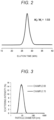
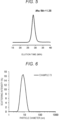
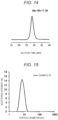
- the Z-average particle diameter and the polydispersity index of the obtained DACHPt-encapsulating SCNP were measured by dynamic light scattering (DLS), and as a result, the Z-average particle diameter was found to be 8.7 nm (polydispersity index: 0.14).
- the particle diameter of the SCNP before and after encapsulation of DACHPt is shown in Fig. 3 .
- the particle diameter of the SCNP hardly varied before and after encapsulation of DACHPt. The results are summarized in the following table.
- N 3 -CTA 2-(dodecylthiocarbonothioylthio)-2-methylpropionic acid 3-azido-1-propanol ester (N 3 -CTA) (100 mg) was dissolved after being weighed to obtain an N 3 -CTA/toluene stock solution (N 3 -CTA concentration: 5.78 mg/mL).
- AIBN 2,2'-azobis(2-methylpropionitrile)
- poly(ethylene glycol)methyl ether acrylate (mPEGA, average value (n) of the numbers of repetition times of ethylene glycol is 9) (2.592 g), benzyl acrylate (BnA) (0.684 g), 1-ethoxyethyl acrylate (0.172 g), the N 3 -CTA/toluene stock solution (4.15 mL), and the AIBN/toluene stock solution (3.46 mL) were added, and polymerization was performed in an oil bath at 70°C. After a lapse of 90 minutes, the polymerization was stopped, and then a copolymer was recovered by subjecting the reaction solution to reprecipitation or dialysis against methanol.
- mPEGA poly(ethylene glycol)methyl ether acrylate
- Example 71 By treating N 3 -poly[(benzyl acrylate)-co-(poly(ethylene glycol)methyl ether acrylate)-co-(1-ethoxyethyl acrylate)] obtained in Example 71 with 0.5N HCl at room temperature, an ethoxyethyl group was eliminated to obtain a terpolymer having a carboxyl group (2.455 g).
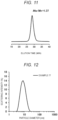
- a Z-average particle diameter and a polydispersity index of the obtained terpolymer in water were measured by dynamic light scattering (DLS), and a result of the Z-average particle diameter was 7.5 nm (polydispersity index: 0.18).
- the reaction solution was dialyzed against methanol, the solvent was distilled off, and then the biotin-bonded SCNP (265.7 mg) was recovered by the vacuum drying.
- a Z-average particle diameter and a polydispersity index of the biotin-bonded SCNP were measured by dynamic light scattering (DLS), and a result of the Z-average particle diameter was 8.6 nm (polydispersity index: 0.17).
- N 3 -poly[(benzyl acrylate)-co-(poly(ethylene glycol) methyl ether acrylate)-co-(acrylic acid)] 200 mg
- the compound (9) obtained in Example 74 (30 mg)
- DMF dimethyl ether acrylate
- the reaction solution was dialyzed against methanol, the solvent was distilled off, and then the compound (9)-bonded SCNP (197.4 mg) was recovered by the vacuum drying.
- a Z-average particle diameter and a polydispersity index of the compound (9)-bonded SCNP were measured by dynamic light scattering (DLS), and a result of the Z-average particle diameter was 7.2 nm (polydispersity index: 0.18).
- N 3 -poly[(benzyl acrylate)-co-(poly(ethylene glycol) methyl ether acrylate)-co-(acrylic acid)] 200 mg
- the compound (10) obtained in Example 76 (30 mg)
- DMF dimethyl ether acrylate
- the reaction solution was dialyzed against methanol, the solvent was distilled off, and then the compound (10)-bonded SCNP (195.8 mg) was recovered by the vacuum drying.
- a Z-average particle diameter and a polydispersity index of the compound (10)-bonded SCNP were measured by dynamic light scattering (DLS), and a result of the Z-average particle diameter was 8.3 nm (polydispersity index: 0.19).
- N 3 -poly[(benzyl acrylate)-co-(poly(ethylene glycol) methyl ether acrylate)-co-(acrylic acid)] 200 mg
- the compound (11) obtained in Example 78 (30 mg)
- DMF dimethyl ether acrylate
- the reaction solution was dialyzed against methanol, the solvent was distilled off, and then the compound (11)-bonded SCNP (198.5 mg) was recovered by the vacuum drying.
- a Z-average particle diameter and a polydispersity index of the compound (11)-bonded SCNP were measured by dynamic light scattering (DLS), and a result of the Z-average particle diameter was 8.6 nm (polydispersity index: 0.25).
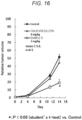
- a mouse colon cancer cell line C26 subcultured in a CO 2 incubator was suspended in a liquid medium (Dulbecco's Modified Eagle's Medium-high glucose, Sigma-Aldrich Co. LLC), and injected subcutaneously in the back of nude mice so that the number of cells per mouse was 1 ⁇ 10 6 /100 ⁇ L. Thereafter, the nude mice were raised for about 1 week, and administration of a drug was started when the average value of the tumor volume was grown to about 30 mm 3 .
- a DACHPt-encapsulating SCNP (DACHPt-encapsulating SCNP prepared using the copolymer of Example 70) was administered into the tail vein (3 times every other day), and the antitumor effect was evaluated from the tumor volume (4 to 5 mice in 1 group).
- an oxaliplatin solution (Comparative Example 1) was used, and the oxaliplatin solution was administered in the same manner.
- the dose of each preparation was 8 mg/kg (3.9 mg/kg in terms of Pt) as the maximum administrable dose for the oxaliplatin solution, and 3 mg/kg in terms of Pt for the DACHPt-encapsulating SCNP.
- T/C was 0.4 after 14 days from administration [T/C: ratio of the tumor volume of the drug administration group (T) to that of the control group (C)].
- T/C was 1.1 after 14 days from administration.
- the DACHPt-encapsulating SCNP significantly suppressed growth of a tumor as compared with the control (student's t-test). The above results indicate that the DACHPt-encapsulating SCNP has an excellent antitumor effect as compared with the oxaliplatin solution.
Landscapes
- Health & Medical Sciences (AREA)
- Chemical & Material Sciences (AREA)
- Medicinal Chemistry (AREA)
- Life Sciences & Earth Sciences (AREA)
- Engineering & Computer Science (AREA)
- General Health & Medical Sciences (AREA)
- Public Health (AREA)
- Veterinary Medicine (AREA)
- Animal Behavior & Ethology (AREA)
- Pharmacology & Pharmacy (AREA)
- Bioinformatics & Cheminformatics (AREA)
- Epidemiology (AREA)
- Chemical Kinetics & Catalysis (AREA)
- Organic Chemistry (AREA)
- Nanotechnology (AREA)
- Immunology (AREA)
- Polymers & Plastics (AREA)
- General Chemical & Material Sciences (AREA)
- Nuclear Medicine, Radiotherapy & Molecular Imaging (AREA)
- Inorganic Chemistry (AREA)
- Cell Biology (AREA)
- Molecular Biology (AREA)
- Proteomics, Peptides & Aminoacids (AREA)
- Physics & Mathematics (AREA)
- Biomedical Technology (AREA)
- Optics & Photonics (AREA)
- Addition Polymer Or Copolymer, Post-Treatments, Or Chemical Modifications (AREA)
- Pharmaceuticals Containing Other Organic And Inorganic Compounds (AREA)
Applications Claiming Priority (2)
| Application Number | Priority Date | Filing Date | Title |
|---|---|---|---|
| JP2022128535 | 2022-08-10 | ||
| PCT/JP2023/029355 WO2024034683A1 (ja) | 2022-08-10 | 2023-08-10 | 新規なコポリマー |
Publications (1)
| Publication Number | Publication Date |
|---|---|
| EP4570835A1 true EP4570835A1 (de) | 2025-06-18 |
Family
ID=89851678
Family Applications (1)
| Application Number | Title | Priority Date | Filing Date |
|---|---|---|---|
| EP23852645.3A Pending EP4570835A1 (de) | 2022-08-10 | 2023-08-10 | Neues copolymer |
Country Status (7)
| Country | Link |
|---|---|
| US (1) | US20260048140A1 (de) |
| EP (1) | EP4570835A1 (de) |
| JP (1) | JPWO2024034683A1 (de) |
| KR (1) | KR20250047357A (de) |
| CN (1) | CN119855844A (de) |
| TW (1) | TW202412846A (de) |
| WO (1) | WO2024034683A1 (de) |
Family Cites Families (16)
| Publication number | Priority date | Publication date | Assignee | Title |
|---|---|---|---|---|
| US4529587A (en) | 1982-02-19 | 1985-07-16 | Lever Brothers Company | Method of reducing sebum on the hair and skin |
| JP3270592B2 (ja) | 1992-10-26 | 2002-04-02 | 日本化薬株式会社 | ブロック共重合体−抗癌剤複合体医薬製剤 |
| JP4210828B2 (ja) * | 2001-12-07 | 2009-01-21 | Jsr株式会社 | 生理活性物質担体用ポリマー粒子およびその製造方法 |
| EP2230264B1 (de) * | 2006-06-29 | 2019-10-09 | Life Technologies AS | Teilchen enthaltend multiblockcopolymere |
| JP5613101B2 (ja) * | 2010-10-22 | 2014-10-22 | 富士フイルム株式会社 | 感光性樹脂組成物、硬化膜の形成方法、硬化膜、有機el表示装置、及び、液晶表示装置 |
| JP6178586B2 (ja) | 2013-02-20 | 2017-08-09 | サヴィッド・セラピューティックス株式会社 | ビオチン改変体、ストレプトアビジン変異体およびそれらの利用 |
| CN106459089B (zh) | 2014-02-18 | 2021-01-08 | 赛威德医疗公司 | 生物素变体、链霉亲和素突变体以及它们的应用 |
| WO2016024596A1 (ja) * | 2014-08-12 | 2016-02-18 | 株式会社Dnpファインケミカル | 色材分散液、カラーフィルタ用着色樹脂組成物、カラーフィルタ及び表示装置 |
| JP6551202B2 (ja) * | 2015-12-08 | 2019-07-31 | 東洋インキScホールディングス株式会社 | 皮膚貼付用粘着剤、経皮吸収性粘着剤、および経皮吸収性粘着シート |
| JP6734109B2 (ja) * | 2016-04-28 | 2020-08-05 | 東京応化工業株式会社 | 化学増幅型ポジ型感光性樹脂組成物 |
| JP7174951B2 (ja) | 2017-02-17 | 2022-11-18 | 三井化学株式会社 | 抗体医薬の開発に資する創薬標的タンパク質の同定方法及び標的タンパク質に対する抗体の製造方法 |
| WO2019189867A1 (ja) | 2018-03-30 | 2019-10-03 | 三井化学株式会社 | ビスイミノビオチン化合物の薬物送達用の用途 |
| EP3805235A4 (de) | 2018-05-30 | 2022-03-16 | The University of Tokyo | Halogenierte biotinmodifizierte dimere und verwendung davon |
| WO2020214858A1 (en) * | 2019-04-17 | 2020-10-22 | Avidea Technologies, Inc. | Compositions and methods of manufacturing star polymers for ligand display and/or drug delivery |
| US20230241257A1 (en) | 2020-04-14 | 2023-08-03 | The University Of Tokyo | Biotin-modified dimer and use thereof |
| KR20230141766A (ko) * | 2021-02-05 | 2023-10-10 | 교와 가부시키가이샤 | 신규한 코폴리머 |
-
2023
- 2023-08-10 KR KR1020257007365A patent/KR20250047357A/ko active Pending
- 2023-08-10 WO PCT/JP2023/029355 patent/WO2024034683A1/ja not_active Ceased
- 2023-08-10 US US19/101,030 patent/US20260048140A1/en active Pending
- 2023-08-10 CN CN202380058879.2A patent/CN119855844A/zh active Pending
- 2023-08-10 EP EP23852645.3A patent/EP4570835A1/de active Pending
- 2023-08-10 TW TW112130096A patent/TW202412846A/zh unknown
- 2023-08-10 JP JP2024540532A patent/JPWO2024034683A1/ja active Pending
Also Published As
| Publication number | Publication date |
|---|---|
| US20260048140A1 (en) | 2026-02-19 |
| WO2024034683A1 (ja) | 2024-02-15 |
| KR20250047357A (ko) | 2025-04-03 |
| JPWO2024034683A1 (de) | 2024-02-15 |
| CN119855844A (zh) | 2025-04-18 |
| TW202412846A (zh) | 2024-04-01 |
Similar Documents
| Publication | Publication Date | Title |
|---|---|---|
| CN102123698B (zh) | 载体纳米颗粒和相关的组合物、方法和系统 | |
| CN103044437B (zh) | 用于治疗肿瘤的两亲性缀合物纳米颗粒及制备方法、应用 | |
| EP4289877A1 (de) | Neues copolymer | |
| JP2022533791A (ja) | ボロン酸エステルプロドラッグおよびそれらの使用 | |
| US11912709B2 (en) | Temozolomide compounds, polymers prepared therefrom, and method of treating a disease | |
| Wang et al. | Calixarene-modified albumin for stoichiometric delivery of multiple drugs in combination-chemotherapy | |
| US12150996B2 (en) | Polymeric prodrugs and subcutaneous and/or intramuscular administration thereof | |
| US20210361777A1 (en) | Pharmaceutical prodrugs and methods of their preparation and use | |
| US20260048140A1 (en) | Novel copolymer | |
| Lu et al. | Nanoplatform for synergistic therapy constructed via the co-assembly of a reduction-responsive cholesterol-based block copolymer and a photothermal amphiphile | |
| US20230293432A1 (en) | Polymeric micelles comprising glucuronide-prodrugs | |
| US11833128B2 (en) | Ketone carbonyl-containing hydrophobic antitumor drug and conjugate thereof as well as nano preparation containing conjugate, preparation method therefor, and application thereof | |
| EP4570834A1 (de) | Affibody-mizellen-wirkstoffkonjugat | |
| CN102988998A (zh) | 具有抗肿瘤作用的泊洛沙姆-阿霉素偶联物及其制备方法 | |
| JP2024025749A (ja) | 新規なコポリマー | |
| EP4570837A1 (de) | Polymerkontrastmittel | |
| TWI922579B (zh) | 無規共聚合物、單鏈奈米顆粒及醫藥組成物 | |
| EP4570272A1 (de) | Neuer arzneimittelkomplex | |
| JP2025174750A (ja) | がん組織への薬剤送達用担体として有用な生体適合性複合ポリマー | |
| HK40074614A (en) | Boronic ester prodrugs and uses thereof | |
| Callari | Polymer Nanocarriers to Enhance the Efficiency of Platinum-Based Chemotherapeutics | |
| Nkepang | Development of a New Synthetic Scheme for Vinyl Diethers and Synthesis of Prodrugs for Targeted Delivery and Visible/NIR Light-triggered Release |
Legal Events
| Date | Code | Title | Description |
|---|---|---|---|
| STAA | Information on the status of an ep patent application or granted ep patent |
Free format text: STATUS: THE INTERNATIONAL PUBLICATION HAS BEEN MADE |
|
| PUAI | Public reference made under article 153(3) epc to a published international application that has entered the european phase |
Free format text: ORIGINAL CODE: 0009012 |
|
| STAA | Information on the status of an ep patent application or granted ep patent |
Free format text: STATUS: REQUEST FOR EXAMINATION WAS MADE |
|
| 17P | Request for examination filed |
Effective date: 20250305 |
|
| AK | Designated contracting states |
Kind code of ref document: A1 Designated state(s): AL AT BE BG CH CY CZ DE DK EE ES FI FR GB GR HR HU IE IS IT LI LT LU LV MC ME MK MT NL NO PL PT RO RS SE SI SK SM TR |
|
| DAV | Request for validation of the european patent (deleted) | ||
| DAX | Request for extension of the european patent (deleted) |