EP4570812A1 - Verestertes protein und verfahren zur herstellung davon - Google Patents
Verestertes protein und verfahren zur herstellung davon Download PDFInfo
- Publication number
- EP4570812A1 EP4570812A1 EP23857390.1A EP23857390A EP4570812A1 EP 4570812 A1 EP4570812 A1 EP 4570812A1 EP 23857390 A EP23857390 A EP 23857390A EP 4570812 A1 EP4570812 A1 EP 4570812A1
- Authority
- EP
- European Patent Office
- Prior art keywords
- protein
- modified protein
- base material
- producing
- adhesive
- Prior art date
- Legal status (The legal status is an assumption and is not a legal conclusion. Google has not performed a legal analysis and makes no representation as to the accuracy of the status listed.)
- Pending
Links
Images














Classifications
-
- C—CHEMISTRY; METALLURGY
- C09—DYES; PAINTS; POLISHES; NATURAL RESINS; ADHESIVES; COMPOSITIONS NOT OTHERWISE PROVIDED FOR; APPLICATIONS OF MATERIALS NOT OTHERWISE PROVIDED FOR
- C09D—COATING COMPOSITIONS, e.g. PAINTS, VARNISHES OR LACQUERS; FILLING PASTES; CHEMICAL PAINT OR INK REMOVERS; INKS; CORRECTING FLUIDS; WOODSTAINS; PASTES OR SOLIDS FOR COLOURING OR PRINTING; USE OF MATERIALS THEREFOR
- C09D5/00—Coating compositions, e.g. paints, varnishes or lacquers, characterised by their physical nature or the effects produced; Filling pastes
- C09D5/02—Emulsion paints including aerosols
-
- C—CHEMISTRY; METALLURGY
- C07—ORGANIC CHEMISTRY
- C07K—PEPTIDES
- C07K1/00—General methods for the preparation of peptides, i.e. processes for the organic chemical preparation of peptides or proteins of any length
- C07K1/107—General methods for the preparation of peptides, i.e. processes for the organic chemical preparation of peptides or proteins of any length by chemical modification of precursor peptides
- C07K1/1072—General methods for the preparation of peptides, i.e. processes for the organic chemical preparation of peptides or proteins of any length by chemical modification of precursor peptides by covalent attachment of residues or functional groups
- C07K1/1077—General methods for the preparation of peptides, i.e. processes for the organic chemical preparation of peptides or proteins of any length by chemical modification of precursor peptides by covalent attachment of residues or functional groups by covalent attachment of residues other than amino acids or peptide residues, e.g. sugars, polyols, fatty acids
-
- C—CHEMISTRY; METALLURGY
- C07—ORGANIC CHEMISTRY
- C07K—PEPTIDES
- C07K14/00—Peptides having more than 20 amino acids; Gastrins; Somatostatins; Melanotropins; Derivatives thereof
- C07K14/435—Peptides having more than 20 amino acids; Gastrins; Somatostatins; Melanotropins; Derivatives thereof from animals; from humans
- C07K14/43504—Peptides having more than 20 amino acids; Gastrins; Somatostatins; Melanotropins; Derivatives thereof from animals; from humans from invertebrates
- C07K14/43513—Peptides having more than 20 amino acids; Gastrins; Somatostatins; Melanotropins; Derivatives thereof from animals; from humans from invertebrates from arachnidae
- C07K14/43518—Peptides having more than 20 amino acids; Gastrins; Somatostatins; Melanotropins; Derivatives thereof from animals; from humans from invertebrates from arachnidae from spiders
-
- C—CHEMISTRY; METALLURGY
- C07—ORGANIC CHEMISTRY
- C07K—PEPTIDES
- C07K14/00—Peptides having more than 20 amino acids; Gastrins; Somatostatins; Melanotropins; Derivatives thereof
- C07K14/435—Peptides having more than 20 amino acids; Gastrins; Somatostatins; Melanotropins; Derivatives thereof from animals; from humans
- C07K14/43504—Peptides having more than 20 amino acids; Gastrins; Somatostatins; Melanotropins; Derivatives thereof from animals; from humans from invertebrates
- C07K14/43595—Peptides having more than 20 amino acids; Gastrins; Somatostatins; Melanotropins; Derivatives thereof from animals; from humans from invertebrates from coelenteratae, e.g. medusae
-
- C—CHEMISTRY; METALLURGY
- C08—ORGANIC MACROMOLECULAR COMPOUNDS; THEIR PREPARATION OR CHEMICAL WORKING-UP; COMPOSITIONS BASED THEREON
- C08H—DERIVATIVES OF NATURAL MACROMOLECULAR COMPOUNDS
- C08H1/00—Macromolecular products derived from proteins
-
- C—CHEMISTRY; METALLURGY
- C09—DYES; PAINTS; POLISHES; NATURAL RESINS; ADHESIVES; COMPOSITIONS NOT OTHERWISE PROVIDED FOR; APPLICATIONS OF MATERIALS NOT OTHERWISE PROVIDED FOR
- C09D—COATING COMPOSITIONS, e.g. PAINTS, VARNISHES OR LACQUERS; FILLING PASTES; CHEMICAL PAINT OR INK REMOVERS; INKS; CORRECTING FLUIDS; WOODSTAINS; PASTES OR SOLIDS FOR COLOURING OR PRINTING; USE OF MATERIALS THEREFOR
- C09D189/00—Coating compositions based on proteins; Coating compositions based on derivatives thereof
-
- C—CHEMISTRY; METALLURGY
- C09—DYES; PAINTS; POLISHES; NATURAL RESINS; ADHESIVES; COMPOSITIONS NOT OTHERWISE PROVIDED FOR; APPLICATIONS OF MATERIALS NOT OTHERWISE PROVIDED FOR
- C09J—ADHESIVES; NON-MECHANICAL ASPECTS OF ADHESIVE PROCESSES IN GENERAL; ADHESIVE PROCESSES NOT PROVIDED FOR ELSEWHERE; USE OF MATERIALS AS ADHESIVES
- C09J189/00—Adhesives based on proteins; Adhesives based on derivatives thereof
-
- C—CHEMISTRY; METALLURGY
- C12—BIOCHEMISTRY; BEER; SPIRITS; WINE; VINEGAR; MICROBIOLOGY; ENZYMOLOGY; MUTATION OR GENETIC ENGINEERING
- C12N—MICROORGANISMS OR ENZYMES; COMPOSITIONS THEREOF; PROPAGATING, PRESERVING, OR MAINTAINING MICROORGANISMS; MUTATION OR GENETIC ENGINEERING; CULTURE MEDIA
- C12N9/00—Enzymes; Proenzymes; Compositions thereof; Processes for preparing, activating, inhibiting, separating or purifying enzymes
- C12N9/14—Hydrolases (3)
- C12N9/16—Hydrolases (3) acting on ester bonds (3.1)
Definitions
- the present invention relates to an esterified protein and a method for producing the same.
- Patent Literature 1 discloses that a modified nucleic acid is prepared so as to express a desired amino acid sequence as a protein used for medicine or cosmetics to obtain a modified spider silk protein, and discloses that a substance such as a polypeptide, a polysaccharide, a marker molecule, a quantum dot, a metal, a nucleic acid, a lipid, or a low molecular weight drug is further bound to the modified spider silk protein.
- a property different from a protein-specific property can be imparted.
- a protein when a protein is modified, the protein is caused to react with a substance to be bound in a solvent capable of dissolving the protein.
- the solvent capable of dissolving the protein since the solvent capable of dissolving the protein is limited, there is a problem that the degree of freedom of a modification method is small, and as a result, a modified protein that can be produced is also limited.
- the protein in a reaction in a solvent, the protein reacts with the solvent depending on the type of solvent used, and an unnecessary by-product may be generated.
- DMSO dimethylsulfoxide
- HFIP hexafluoroisopropanol
- an object of the present invention is to provide a new method for producing a modified protein.
- the present inventor has found that a desired modified protein can be obtained by acylating a protein under a mechanochemical condition. That is, the present invention provides the following (1) to (66).
- the present invention it is possible to provide a new method for producing a modified protein, and to obtain a broader modified protein having a higher degree of freedom in reaction conditions as compared with conventional modification of a protein performed in a solvent.
- Non Patent Literature 1 As esterification by a mechanochemical method, acetylation of cellulose (see Non Patent Literature 1) and selective esterification of a lignin model compound using an enzyme (see Non Patent Literature 2) are known, but a case of applying the method to esterification of a protein is not known.
- each component in a composition means the total amount of a plurality of substances present in the composition, unless otherwise specified, when the plurality of substances corresponding to each component in the composition is present.
- a first embodiment of the present invention is a method for producing a modified protein, the method including a step of treating a mixture containing a protein and an acylating agent by a mechanochemical method to obtain a modified protein.
- the "modified protein” is a protein in which at least a part or the whole of a lysine residue, a serine residue, a threonine residue, a tyrosine residue, or a cysteine residue in a protein as a raw material is acylated. That is, the protein as a raw material has at least one lysine residue, serine residue, threonine residue, tyrosine residue, or cysteine residue in an amino acid sequence thereof.
- the protein may be a natural protein or an artificial protein.
- a protein having physical properties close to those required for a desired application can be adopted.
- the protein include a protein that can be used for industrial use and a protein that can be used for medical use.
- the phrase "can be used for industrial use" means, for example, that it can be used for various general-purpose materials used indoors or outdoors.
- Specific examples of the protein that can be used for industrial use include a structural protein.
- Specific examples of the structural protein include spider silk, silkworm silk, keratin, collagen, elastin, resilin, and proteins derived therefrom.
- a protein to be used may be an artificial fibroin or an artificial spider silk fibroin (artificial modified spider silk fibroin).
- the protein that can be used for medical use include an enzyme, a regulatory protein, a receptor, a peptide hormone, a cytokine, a membrane or a transport protein, an antigen used for vaccination, a vaccine, an antigen-binding protein, an immunostimulatory protein, an allergen, and a full length antibody or an antibody fragment or a derivative thereof.
- the artificial protein includes a recombinant protein and a synthetic protein. That is, in the present specification, the "artificial protein” means a protein artificially produced.
- the artificial protein may be a protein having a domain sequence different from an amino acid sequence of a naturally derived protein, or may be a protein having a domain sequence identical to an amino acid sequence of a naturally derived protein.
- the "artificial protein” may be a protein obtained by using an amino acid sequence of a naturally derived protein as it is, a protein in which an amino acid sequence is modified based on an amino acid sequence of a naturally derived protein (for example, a protein in which an amino acid sequence is modified by modifying a cloned gene sequence of a naturally derived protein), or a protein artificially designed and synthesized independently of a naturally derived protein (for example, a protein having a desired amino acid sequence by chemically synthesizing a nucleic acid encoding a designed amino acid sequence).
- an amino acid sequence can be freely designed unlike a natural protein.
- the artificial protein when the artificial protein is contained in a molding material or a molded body of the present embodiment described later, a function, a property, a physical property, and the like of the molding material or the molded body can be arbitrarily controlled by appropriately designing the amino acid sequence of the artificial protein.
- a uniform molecular design is always possible, a protein that has high homology with a target protein and is suitable for a purpose can be stably obtained.
- the quality a molding material or a molded body obtained using the artificial protein is advantageously stabilized. From this viewpoint, an artificial structural protein is advantageously used as the artificial protein.
- the number of amino acid residues of each of the protein and the modified protein according to the present embodiment is not particularly limited, and may be, for example, 50 or more.
- the number of amino acid residues is, for example, 100 or more, 150 or more, 200 or more, 250 or more, 300 or more, 350 or more, 400 or more, 450 or more, or 500 or more.
- the number of amino acid residues may be, for example, 5,000 or less, 4,500 or less, 4,000 or less, 3,500 or less, 3,000 or less, 2,500 or less, 2,000 or less, 1,500 or less, or 1,000 or less. As the number of amino acid residues is smaller, solubility in a solvent tends to increase.
- a molecular weight of the protein according to the present embodiment is not particularly limited, and may be, for example, 2 kDa or more and 500 kDa or less.
- the molecular weight of the protein according to the present embodiment may be, for example, 2 kDa or more, 3 kDa or more, 4 kDa or more, 5 kDa or more, 6 kDa or more, 7 kDa or more, 8 kDa or more, 9 kDa or more, 10 kDa or more, 20 kDa or more, 30 kDa or more, 40 kDa or more, 50 kDa or more, 60 kDa or more, 70 kDa or more, 80 kDa or more, 90 kDa or more, or 100 kDa or more, and may be 500 kDa or less, 400 kDa or less, less than 360 kDa, 300 kDa or less, or 200 kDa or less.
- the protein according to the present embodiment contains at least one nucleophilic functional group such as a serine residue, a threonine residue, a tyrosine residue, a lysine residue, or a cysteine residue.
- a hydroxy group of a serine residue, a threonine residue, or a tyrosine residue, an amino group of a lysine residue or the like, or a sulfhydryl group of a cysteine residue in the protein is acylated.
- the protein can be more efficiently acylated by an acylating agent.
- the total content of a serine residue, a threonine residue, and a tyrosine residue in the protein may be, for example, 4% or more, 4.5% or more, 5% or more, 5.5% or more, 6% or more, 6.5% or more, or 7% or more.
- an upper limit value of the total content of a serine residue, a threonine residue, and a tyrosine residue is not particularly limited, but may be, for example, 35% or less, 33% or less, 30% or less, 25% or less, or 20% or less in consideration of amino acid compositions of various proteins that can be suitably used as the protein and the modified protein according to the present embodiment.
- the protein may be, for example, a hydrophobic protein.
- the protein is a hydrophobic protein
- the modified protein for example, when a functional substance is bound thereto, by controlling hydrophobicity or hydrophilicity of the functional substance, hydrophobicity or hydrophilicity of the entire conjugate of the functional substance and the modified protein can be arbitrarily adjusted.
- the entire conjugate can be shifted to a hydrophobic side as compared with a case where the protein has hydrophilicity, and thus hydrophobicity or hydrophilicity of the entire conjugate can be controlled over a wider range.
- Hydrophobicity in a protein can be estimated using a value of an average hydropathy index (hereinafter, also referred to as "HI") as an index.
- HI average hydropathy index
- the value of the average hydropathy index of a hydrophobic protein only needs to be more than 0, and may be, for example, 0.00 or more, 0.10 or more, 0.20 or more, 0.22 or more, 0.25 or more, 0.30 or more, 0.35 or more, 0.40 or more, 0.45 or more, 0.50 or more, 0.55 or more, 0.60 or more, 0.65 or more, or 0.70 or more.
- An upper limit value thereof is not particularly limited, and may be, for example, 1.00 or less or 0.7 or less.
- the value of the average hydropathy index (HI) of the hydrophobic protein and a hydrophobic degree of a repetitive sequence unit described later are determined according to a known method () using a known hydrophobicity index of an amino acid residue.
- a known hydrophobicity index of an amino acid residue is presented in Table 1.
- the hydrophobic degree may be calculated according to a method described in Kyte J & Doolittle R (1982) "A simple method for displaying the hydropathic character of a protein", J. Mol. Biol., 157, pp. 105 to 132 .
- the hydrophobic protein preferably has low solubility in a lithium bromide aqueous solution (concentration: 9 M) at 60°C. That is, in a case where the hydrophobic protein is dissolved in a lithium bromide aqueous solution (concentration: 9 M) at 60°C, a maximum concentration may be, for example, less than 30 mass%, less than 25 mass%, less than 20 mass%, less than 15 mass%, less than 10 mass%, less than 5 mass%, or less than 1 mass%. Note that the hydrophobic protein may be completely insoluble in a lithium bromide aqueous solution (concentration: 9 M) at 60°C. When the hydrophobic protein has low solubility in a lithium bromide aqueous solution at 60°C, an obtained modified protein easily acquires favorable water resistance (water resistance particularly suitable for industrial applications).
- the hydrophobic protein preferably has a contact angle with water of 55° or more.
- the contact angle of the hydrophobic protein with water is more preferably 60° or more, 65° or more, or 70° or more.
- the contact angle with water can be evaluated by forming a membrane made of a hydrophobic protein on a base material, dropping water on the membrane, and measuring the contact angle after five seconds.
- the contact angle of the hydrophobic protein with water is 55° or more, an obtained modified protein easily acquires favorable water resistance (water resistance particularly suitable for industrial applications).
- the hydrophobic protein preferably has excellent hot water resistance.
- the hot water resistance for example, even when an aqueous dispersion of 5 w/v% of a hydrophobic protein is prepared and the dispersion is heated to 100°C, preferably, the protein is not decomposed for at least five hours.
- an obtained modified protein easily acquires favorable water resistance (water resistance particularly suitable for industrial applications) and hot water resistance.
- the protein according to the present embodiment may be, for example, a structural protein.
- the structural protein is a type of protein that can be used for industrial use, and means a protein related to a structure of a living body, a protein constituting a structure created by a living body, or a protein derived therefrom.
- the structural protein is a protein not directly involved in a biochemical reaction but constituting a nail, hair, skin, tendon, cartilage, and intracellular/extracellular matrix, and may be a protein in which a molecule itself is fibrous and which has no hydrophobic core, like collagen or keratin, or a protein polymer in which a large number of monomers are polymerized in a fibrous form although the protein is a spherical protein when the protein is a monomer, like actin.
- the structural protein also refers to a protein that self-aggregates under predetermined conditions to form a structure such as a fiber, a film, a resin, a gel, a micelle, or a nanoparticle.
- the structural protein can also be said to be a protein in which a motif formed of a characteristic amino acid sequence or an amino acid residue is repeatedly present to form a skeleton of an organism or a material.
- the structural protein in nature include fibroin, keratin, collagen, elastin, and resilin.
- a fibroin of silk forms a fiber with a structure in which a polypeptide chain of a ⁇ sheet extends, and keratin has a plurality of polypeptide chains of an ⁇ helix bundled in a rope shape.
- elastin relatively nearly spherical polypeptide chains are crosslinked by covalent bonding to form a rubber-like elastic network.
- elongated fibrous polypeptide chains form a triple helical structure (also called “collagen fibril"), and in each polypeptide chain, a glycine residue is present every third residue, proline residues are present in an amount of 20% or more of all amino acid residues, and about a half of the proline residues are hydroxyprolines, which contribute to stabilization of the triple helical structure.
- the structural protein may be an artificial structural protein.
- the "artificial structural protein” means a structural protein artificially produced.
- the artificial structural protein may be a structural protein produced from a microorganism by a genetic recombination technique, may have the same amino acid sequence as that of a natural structural protein, or may have an amino acid sequence improved from a viewpoint of productivity, moldability, or the like.
- an amino acid having a relatively smaller side chain is more likely to form a hydrogen bond, and a molded body having higher strength is more likely to be obtained.
- an alanine residue and a glycine residue are amino acids having nonpolar side chains, and therefore are arranged so as to face inward in a folding process during polypeptide production and easily have an ⁇ -helix structure or a ⁇ -sheet structure. Therefore, a ratio of an amino acid such as a glycine residue or an alanine residue is desirably high.
- An alanine residue content only needs to be, for example, 10 to 40%, and may be 12 to 40%, 15 to 40%, 18 to 40%, 20 to 40%, or 22 to 40% from a viewpoint of obtaining a molded body having better strength.
- a glycine residue content only needs to be, for example, 10 to 55%, and may be 11 to 55%, 13 to 55%, 15 to 55%, 18 to 55%, 20 to 55%, 22 to 55%, or 25 to 55% from a viewpoint of obtaining a molded body having better strength.
- alanine residue content means the number of alanine residues to the total number of amino acid residues constituting a protein, and is a value represented by the following formula.
- Alanine residue content (number of alanine residues contained in protein/total number of amino acid residues of protein) ⁇ 100 (%)
- a glycine residue content, a serine residue content, a threonine residue content, a proline residue content, and a tyrosine residue content have the same meanings as those obtained by replacing the alanine residue with the glycine residue, the serine residue, the threonine residue, the proline residue, and the tyrosine residue, respectively, in the above formula.
- an amino acid having a relatively large side chain or an amino acid having flexibility is preferably uniformly contained in the entire sequence to a certain extent.
- the structural protein may include a motif containing a tyrosine residue, a threonine residue, or a proline residue repeatedly in a cycle.
- the total content of a proline residue, a threonine residue, and a tyrosine residue in any consecutive 20 amino acid residues may be 5% or more, more than 5.5%, 6.0% or more, more than 6.5%, 7.0% or more, more than 7.5%, 8.0% or more, more than 8.5%, 9.0% or more, 10.0% or more, or 15.0% or more.
- the total content of a proline residue, a threonine residue, and a tyrosine residue in any consecutive 20 amino acid residues may be 50% or less, 40% or less, 30% or less, or 20% or less.
- the total content of a serine residue, a threonine residue, and a tyrosine residue may be, for example, 4% or more, 4.5% or more, 5% or more, 5.5% or more, 6% or more, 6.5% or more, or 7% or more from a viewpoint of improving reactivity with an acylating agent, improving productivity of a reaction-modified protein obtained by reaction with the acylating agent, or the like.
- the total content of a serine residue, a threonine residue, and a tyrosine residue may be, for example, 35% or less, 33% or less, 30% or less, 25% or less, or 20% or less.
- An artificial structural protein according to an embodiment may have a repetitive sequence. That is, the artificial structural protein according to the present embodiment may have a plurality of amino acid sequences (repetitive sequence units) having high sequence identity in the artificial structural protein.
- the number of amino acid residues of the repetitive sequence unit is preferably 6 to 200.
- the sequence identity between the repetitive sequence units may be, for example, 85% or higher, 90% or higher, 95% or higher, 96% or higher, 97% or higher, 98% or higher, or 99% or higher.
- a hydrophobic degree (hydropathy index) of the repetitive sequence unit may be, for example, -0.80 or more, -0.70 or more, -0.60 or more, -0.50 or more, -0.40 or more, -0.30 or more, -0.20 or more, -0.10 or more, 0.00 or more, 0.22 or more, 0.25 or more, 0.30 or more, 0.35 or more, 0.40 or more, 0.45 or more, 0.50 or more, 0.55 or more, 0.60 or more, 0.65 or more, or 0.70 or more.
- an upper limit value of the hydrophobic degree of the repetitive sequence unit is not particularly limited, and may be, for example, 1.0 or less or 0.7 or less.
- An artificial structural protein may include an (A) n motif.
- the (A) n motif means an amino acid sequence mainly containing an alanine residue.
- the number of amino acid residues in the (A) n motif may be 2 to 27 and may be an integer of 2 to 20, 2 to 16, or 2 to 12.
- a ratio of the number of alanine residues to the total number of amino acid residues in the (A) n motif may be 40% or more, and may also be 50% or more, 600 or more, 70% or more, 80% or more, 83% or more, 85% or more, 86% or more, 90% or more, 95% or more, or 100% (which means that the (A) n motif consists only of alanine residues).
- the artificial structural protein may be an artificial fibroin.
- the fibroin include a naturally derived fibroin.
- the naturally derived fibroin include a fibroin produced by an insect or a spider.
- a natural fibroin is a fibrous protein, has a molecular weight of about 370,000, is constituted by two subunits, and has a high content of a glycine residue, an alanine residue, a serine residue, and a tyrosine residue, and these amino acid residues account for nearly 90% of the total number of amino acid residues.
- the natural fibroin has a crystalline region rich in amino acid residues having relatively small side chains, such as glycine, alanine, and serine, and an amorphous region having amino acid residues having relatively large side chains, such as tyrosine.
- the naturally derived fibroin include a fibroin whose sequence information is registered in NCBI GenBank. For example, it can be confirmed by extracting a sequence in which spidroin, ampullate, fibroin, "silk and polypeptide", or “silk and protein" is described as a keyword in DEFINITION from sequences including INV as DIVISION among pieces of sequence information registered in NCBI GenBank, a sequence in which a specific character string of product is described from CDS, or a sequence in which a character string specific to TISSUE TYPE is described from SOURCE.
- the "artificial fibroin” means an artificially produced fibroin (artificial fibroin).
- the artificial fibroin may be a fibroin having an amino acid sequence different from or identical to an amino acid sequence of a naturally derived fibroin.
- the artificial fibroin can be produced by a known method, for example, a method described in WO 2021/187502 A .
- the artificial fibroin may be a fibrous protein having a structure similar to that of a naturally derived fibroin, or may be fibroin having a sequence similar to a repetitive sequence of a naturally derived fibroin.
- the "sequence similar to a repetitive sequence of a fibroin" may be an actual sequence of a naturally derived fibroin, or may be a sequence similar thereto.
- the "artificial fibroin” may be a fibroin whose amino acid sequence is modified based on a naturally derived fibroin (for example, a fibroin whose amino acid sequence is modified by modifying a cloned gene sequence of a naturally derived fibroin) or a fibroin obtained by artificially designing an amino acid sequence independently of a naturally derived fibroin (for example, a fibroin having a desired amino acid sequence by chemically synthesizing a nucleic acid encoding the designed amino acid sequence) as long as the artificial fibroin has an amino acid sequence specified in the present disclosure.
- a naturally derived fibroin for example, a fibroin whose amino acid sequence is modified by modifying a cloned gene sequence of a naturally derived fibroin
- a fibroin obtained by artificially designing an amino acid sequence independently of a naturally derived fibroin for example, a fibroin having a desired amino acid sequence by chemically synthesizing a nucleic acid
- a fibroin obtained by modifying an amino acid sequence of the artificial fibroin is also included in the artificial fibroin as long as an amino acid sequence thereof is different from an amino acid sequence of a naturally derived fibroin.
- the artificial fibroin include an artificial silk fibroin (a fibroin obtained by modifying an amino acid sequence of a silk protein produced by silkworms) and an artificial spider silk fibroin (a fibroin obtained by modifying an amino acid sequence of a spider silk protein produced by a spider).
- the artificial fibroin preferably contains an artificial spider silk fibroin as a molding material, and more preferably consists of the artificial spider silk fibroin because the artificial spider silk fibroin is relatively easily fibrillated and has a high fiber forming ability.
- the artificial fibroin according to the present embodiment may be a protein including a domain sequence represented by Formula 1: [(A) n motif-REP] m or Formula 2: [(A) n motif-REP] m -(A) n motif.
- An amino acid sequence (N-terminal sequence or C-terminal sequence) may be further added to any one or both of an N-terminal side and a C-terminal side of the domain sequence of the artificial fibroin.
- the N-terminal sequence and the C-terminal sequence are typically regions not containing repeats of amino acid motifs that are characteristic of fibroin and each consist of about 100 residues of amino acids, but are not limited thereto.
- the "domain sequence” is an amino acid sequence that produces a crystal region (typically, corresponding to the (A) n motif of the amino acid sequence) and an amorphous region (typically, corresponding to REP of the amino acid sequence) specific to fibroin, and means an amino acid sequence represented by Formula 1: [(A) n motif-REP] m or Formula 2: [(A) n motif-REP] m (A) n motif.
- the (A) n motif represents an amino acid sequence mainly containing alanine residues, and the number of amino acid residues is 2 to 27.
- the number of amino acid residues in the (A) n motif may be an integer of 2 to 20, 4 to 27, 4 to 20, 8 to 20, 10 to 20, 4 to 16, 8 to 16, or 10 to 16.
- a ratio of the number of alanine residues to the total number of amino acid residues in the (A) n motif only needs to be 40% or more, and may also be 50% or more, 60% or more, 70% or more, 80% or more, 83% or more, 85% or more, 86% or more, 90% or more, 95% or more, or 100% (which means that the (A) n motif consists only of alanine residues).
- At least seven of the plurality of (A) n motifs in the domain sequence may consist only of alanine residues.
- REP represents an amino acid sequence consisting of 2 to 200 amino acid residues. REP may also be an amino acid sequence consisting of 10 to 200 amino acid residues.
- m represents an integer of 2 to 300, and may be an integer of 3 to 300, 4 to 300, 5 to 300, 6 to 300, or 10 to 300.
- the plurality of (A) n motifs may be the same amino acid sequence or different amino acid sequences.
- the plurality of REPs may be the same amino acid sequence or different amino acid sequences.
- the artificial fibroin include an artificial fibroin derived from a major dragline silk protein produced in a major ampullate gland of a spider as described in WO 2021/187502 A (first artificial fibroin), an artificial fibroin containing a domain sequence in which the content of glycine residues is reduced (second artificial fibroin), an artificial fibroin containing a domain sequence in which the content of an (A) n motif is reduced (third artificial fibroin), an artificial fibroin in which the content of glycine residues and the content of an (A) n motif are reduced (fourth artificial fibroin), an artificial fibroin containing a domain sequence including a region locally having a high hydropathy index (fifth artificial fibroin), and an artificial fibroin containing a domain sequence in which the content of glutamine residues is reduced (sixth artificial fibroin).
- first artificial fibroin an artificial fibroin derived from a major dragline silk protein produced in a major ampullate gland of a spider as described in
- the artificial fibroin may include a tag sequence at one or both of an N-terminal and a C-terminal thereof. This enables isolation, immobilization, detection, visualization, and the like of the artificial fibroin.
- PRT966 is the sixth artificial fibroin including a tag sequence.
- the tag sequence examples include an affinity tag using specific affinity (binding property or affinity) for another molecule.
- affinity tag examples include a histidine tag (His tag).
- His-tag is a short peptide in which about 4 to 10 histidine residues are arranged and can be used for isolating an artificial fibroin by chelating metal chromatography because the His-tag has a property of specifically binding to a metal ion such as nickel.
- Specific examples of the tag sequence include an amino acid sequence set forth in SEQ ID NO: 12 (an amino acid sequence including a His-tag sequence and a hinge sequence).
- GST glutathione-S-transferase
- MBP maltose binding protein
- an "epitope tag" using an antigen-antibody reaction can also be used.
- a peptide (epitope) exhibiting antigenicity as a tag sequence an antibody to the epitope can be bound.
- the epitope tag include an HA (a peptide sequence of influenza virus hemagglutinin) tag, a myc tag, and a FLAG tag.
- a tag sequence that can be cleaved by a specific protease can also be used.
- an artificial fibroin from which the tag sequence is cleaved can be collected.
- the artificial fibroin include artificial fibroins presented in Table 2 below.
- the artificial fibroin may be an artificial fibroin having at least two or more of the characteristics of the first artificial fibroin, the second artificial fibroin, the third artificial fibroin, the fourth artificial fibroin, the fifth artificial fibroin, and the sixth artificial fibroin.
- a molecular weight of the artificial fibroin according to the present embodiment is not particularly limited, and may be, for example, 2 kDa or more and 700 kDa or less
- the molecular weight of the artificial fibroin according to the present embodiment may be, for example, 2 kDa or more, 3 kDa or more, 4 kDa or more, 5 kDa or more, 6 kDa or more, 7 kDa or more, 8 kDa or more, 9 kDa or more, 10 kDa or more, 20 kDa or more, 30 kDa or more, 40 kDa or more, 50 kDa or more, 60 kDa or more, 70 kDa or more, 80 kDa or more, 90 kDa or more, or 100 kDa or more, and may be 700 kDa or less, 600 kDa or less, 500 kDa or less, 400 kDa or less, less than 360 kDa
- the above-described protein is mixed with an acylating agent, and the obtained mixture is treated by a mechanochemical method to chemically modify the protein.
- the acylating agent only needs to be a reagent capable of acylating a hydroxy group, an amino group, or a sulfhydryl group, and examples thereof include: an activated carboxylic acid derivative such as a carboxylic acid halide (for example, a carboxylic acid chloride or a carboxylic acid bromide) or a carboxylic anhydride (for example, an acid anhydride or a cyclic acid anhydride); an activated sulfonic acid derivative such as a sulfonic acid halide (for example, a sulfonic acid chloride or a sulfonic acid bromide) or a sulfonic anhydride; and a phosphoric acid derivative such as a phosphorus halide (for example, phosphorus trichloride or phosphorus oxychloride) or a phosphoric acid triester (for example, tris(bistrifluoroethyl) phosphate).
- acylating agents introduce an acyl group corresponding to a carboxylic acid, a sulfonic acid, or a phosphoric acid.
- carboxylic acid include: a saturated monocarboxylic acid such as acetic acid, propionic acid, butyric acid, valeric acid, caproic acid, enanthic acid (heptanoic acid), caprylic acid (octanoic acid), pelargonic acid (nonanoic acid), capric acid, lauric acid, myristic acid, palmitic acid, margaric acid, stearic acid, or isostearic acid; an unsaturated monocarboxylic acid such as oleic acid, linoleic acid, linolenic acid, arachidonic acid, eicosapentaenoic acid, or docosahexaenoic acid; and a dicarboxylic acid such as maleic acid.
- a saturated monocarboxylic acid such as
- Examples of acid halides corresponding to these carboxylic acids include acetyl chloride, acetyl bromide, propionyl chloride, propionyl bromide, lauroyl chloride, myristoyl chloride, palmitoyl chloride, and stearoyl chloride.
- Examples of acid anhydrides corresponding to these carboxylic acids include acetic anhydride, propionic anhydride, and maleic anhydride.
- sulfonic acid examples include methanesulfonic acid, ethanesulfonic acid, propanesulfonic acid, trifluoromethanesulfonic acid, nonafluorobutanesulfonic acid, benzenesulfonic acid, p-toluenesulfonic acid, m-toluenesulfonic acid, and o-toluenesulfonic acid.
- acid halides corresponding to these sulfonic acids include methanesulfonyl chloride, methanesulfonyl bromide, ethanesulfonyl chloride, ethanesulfonyl bromide, propanesulfonyl chloride, propanesulfonyl bromide, benzenesulfonyl chloride, p-toluenesulfonyl chloride, m-toluenesulfonyl chloride, and o-toluenesulfonyl chloride.
- acid anhydrides corresponding to these carboxylic acids include methanesulfonic anhydride, ethanesulfonic anhydride, trifluoromethanesulfonic anhydride, and nonafluorobutanesulfonic anhydride.
- an obtained modified protein (maleic acid esterified protein) has a terminal carboxy group.
- the maleic acid esterified protein can be converted into a sulfosuccinylated protein by being caused to further react with sodium bisulfite by a mechanochemical method.
- the maleic acid esterified protein can be further converted into a (dialkoxyphosphoryl) succinylated protein by being caused to further react with a dialkyl phosphite by a mechanochemical method.
- the amount of the acylating agent used can be 1.5 to 7 equivalents per nucleophilic functional group contained in the protein.
- the amount of the acylating agent used may preferably be 1.5 to 6.5 equivalents, 1.5 to 6 equivalents, 1.5 to 5.5 equivalents, 1.5 to 5 equivalents, 1.5 to 4 equivalents, 2 to 7 equivalents, 2 to 6.5 equivalents, 2 to 6 equivalents, 2 to 5.5 equivalents, 2 to 5 equivalents, 2 to 4.5 equivalents, 2.5 to 7 equivalents, 2.5 to 6.5 equivalents, 2.5 to 6 equivalents, 2.5 to 5.5 equivalents, 2.5 to 5 equivalents, or 2.5 to 4.5 equivalents per nucleophilic functional group.
- the "equivalent per nucleophilic functional group” means a molar equivalent of the acylating agent to one nucleophilic functional group contained in the protein.
- the treatment by the mechanochemical method is a treatment of performing a chemical reaction caused by directly absorbing mechanical energy.
- the mechanical energy may be exerted by, for example, an impact force or a shear force.
- a mechanochemical treatment is performed using a rolling ball mill, a medium stirring mill, a planetary mill, a jet mill, a mixer mill, or an extruder (twin-screw extruder).
- the protein and the acylating agent are put in a grinding jar, and a medium ball or the like is put therein depending on the type of mill to be used. Thereafter, the grinding jar is set in a mixer mill apparatus and vibrated at a predetermined frequency and for a predetermined reaction time.
- a solvent, a base, a reaction accelerator, and the like may be further added to the grinding jar.
- the protein and the acylating agent are put in a mixer mill and a milling procedure is initiated to knead the reactants continuously.
- a solvent, a base, a reaction accelerator, and the like may be further added to the mixer mill.
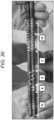
- the protein and the acylating agent are put in an extruder and kneaded.
- a solvent, a base, a reaction accelerator, and the like may be further added to the extruder. Note that, when the mechanochemical treatment is performed using the extruder, a target esterified protein (modified protein) can be continuously produced.
- the frequency can be appropriately adjusted by a person skilled in the art depending on reaction, and may be, for example, 10 to 50 Hz, 10 to 45 Hz, 10 to 40 Hz, 10 to 35 Hz, 15 to 50 Hz, 15 to 45 Hz, 15 to 40 Hz, 15 to 35 Hz, 20 to 50 Hz, 20 to 45 Hz, 20 to 40 Hz, or 20 to 35 Hz.
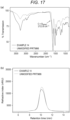
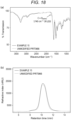
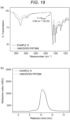
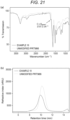
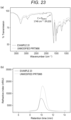
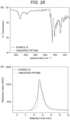
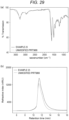
- the reaction time can be up to a time point at which the protein serving as a raw material disappears or detection of an acylated protein (modified protein) is observed at a certain level or more in an infrared (IR) absorption spectrum, gel filtration chromatography (GPC), or the like.
- the reaction time may be any time, and may be, for example, 30 to 150 minutes, 30 to 120 minutes, 30 to 110 minutes, 30 to 100 minutes, 30 to 95 minutes, 60 to 150 minutes, 60 to 120 minutes, 60 to 110 minutes, 60 to 100 minutes, 60 to 95 minutes, 70 to 150 minutes, 70 to 120 minutes, 70 to 110 minutes, 70 to 100 minutes, 70 to 95 minutes, 80 to 150 minutes, 80 to 120 minutes, 80 to 110 minutes, 80 to 100 minutes, or 80 to 95 minutes.
- the solvent only needs to be a solvent capable of swelling the protein or a solvent capable of dissolving at least one of the protein and the acylating agent, but the solvent should be a compound that is liquid at normal temperature and normal pressure and does not chemically react with the protein.
- a mechanochemical treatment to which such a solvent is added is known as liquid assisted grinding (LAG), and is a method for more efficiently advancing a desired reaction by adding a small amount of solvent into a grinding jar.
- the solvent include dimethyl sulfoxide (DMSO), N,N-dimethylformamide (DMF), N,N-dimethylacetamide (DMAc), N-methylpyrrolidone (NMP), dihydrolevoglucosenone, and an ionic liquid.
- the amount of the solvent used only needs to be, for example, 0.01 g to 1 g, and is preferably 0.01 g to 0.8 g, more preferably 0.01 g to 0.6 g, still more preferably 0.01 g to 0.4 g, and most preferably 0.01 g to 0.2 g with respect to 1 g of the mass of the protein.
- the amount of the solvent used only needs to be, for example, 1 to 100 wt%, and is preferably 1 to 80 wt%, more preferably 1 to 60 wt%, still more preferably 1 to 40 wt%, and most preferably 1 to 20 wt% with respect to the protein.
- the solvent forms a microscopic reaction field by swelling the protein, locally bringing the protein into a dissolved state, or the like.
- addition of the solvent is not necessarily required, and for example, when the acylating agent is a liquid at normal temperature and normal pressure and has the above function as the solvent, the addition of the solvent may be unnecessary.
- the base may be any base as long as it can assist acylation of a hydroxy group of a serine residue, a threonine residue, or a tyrosine residue, an amino group of a lysine residue, or a sulfhydryl group of a cysteine residue in the protein.
- Examples of the base include a tertiary amine, a nitrogen-containing aromatic compound, and an inorganic base, and more specific examples thereof include triethylamine, DIPEA (N,N-diisopropylethylamine), DABCO (1,4-diazabicyclo [2.2.2] octane), quinuclidine, DBU (1,8-diazabicyclo [5.4.0] undec-7-ene), DBN (1,5-diazabicyclo [4.3.0] non-5-ene), pyridine, imidazole, sodium hydroxide, potassium hydroxide, sodium bicarbonate, potassium bicarbonate, sodium carbonate, potassium carbonate, cesium carbonate, tripotassium phosphate, sodium acetate, and potassium acetate.
- Triethylamine DIPEA (N,N-diisopropylethylamine)
- DABCO 1,4-diazabicyclo [2.2.2] octane
- the amount of substance of the base used may be, for example, 1 to 10, 1 to 8, 1 to 7, 1 to 6, or 1 to 5 when the amount of substance of a nucleophilic functional group contained in the protein is 1.
- the amount of substance of the base has a preferable range depending on the type of base used and the like, and for example, when an inorganic base such as sodium hydroxide is used as the base, the above amount of substance is preferably 1 to 5 and more preferably 1 to 2, and when a tertiary amine such as DIPEA is used as the base, the above amount of substance is preferably 1 to 5 and more preferably 3.5 to 5.
- the reaction accelerator may be any one that is known to accelerate an acylation reaction in the field of organic chemistry, and examples thereof include 4-dimethylaminopyridine (DMAP). When the acylation is acetylation, no reaction accelerator needs to be used.
- DMAP 4-dimethylaminopyridine
- the amount of the reaction accelerator used only needs to be more than 0 equivalents and 5 equivalents or less, and is preferably 3.5 equivalents to 5 equivalents with respect to the amount of substance 1 of a nucleophilic functional group contained in the protein (one amino acid residue having a nucleophilic functional group).
- the amount of the reaction accelerator used only needs to be more than 0 mol and 1 mol or less, and may be 0.3 mol to 1 mol with respect to 1 mol of the amount of the base used.
- the amount of the reaction accelerator used only needs to be 1 equivalent to 5 equivalents, and is preferably 3.5 equivalents to 5 equivalents with respect to the amount of substance 1 of a nucleophilic functional group contained in the protein (one amino acid residue having a nucleophilic functional group).
- the amount of the reaction accelerator used only needs to be 0.2 to 1 mol, and may be 0.7 to 1 mol with respect to 1 mol of the amount of the base used.
- the mixture is removed from the grinding jar, and may be washed with a solvent.
- a solvent By washing, an unreacted acylating agent and an acid generated by the reaction can be removed.
- the solvent used for washing include water, acetonitrile, acetone, tetrahydrofuran, ethyl acetate, and hexane.
- the solvent used for washing may be distilled off by drying a product. Drying may be performed under reduced pressure.
- the modified protein has a hydrophilic group (for example, a hydroxy group, a carboxy group, an amino group, a sulfo group, or a phosphate group) at a terminal thereof, a contact angle decreases.
- a coating containing such a modified protein further increases wettability and hydrophilicity.
- a hydrophobic group for example, an alkyl group, an alkenyl group, an alkynyl group, a cycloalkyl group, or an aryl group
- Use of a coating containing such a modified protein further increases water repellency and hydrophobicity.
- the contact angle When the contact angle is 90° to 150°, it is suitable for use for the purpose of waterproofing and water repellency, and when the contact angle is 110° to 150°, a self-washing effect of removing water droplets including surface dirt can be expected because of excellent water repellency of the material.
- the contact angle When the contact angle is 70 to 90°, it is suitable for use for the purpose of moisturization, and when the contact angle is 40 to 90°, an effect of facilitating dyeing of the material can be expected by improving a liquid permeation effect and a liquid dispersion effect.
- the modified protein contains a flame-retardant element (for example, when the modified protein is a sulfonated or phosphorylated succinylated protein, a sulfonic acid esterified protein, or a phosphoric acid esterified protein), use of a coating containing such a modified protein further enhances flame retardancy.
- the coating containing such a modified protein is suitable for use for the purpose of improving safety and durability of a relevant product.
- flame retardancy can be imparted by blending a polyphosphoric acid salt or a polynucleotide salt with a protein.
- the flame retardant for example, those described in the Japan Rubber Association, "Review Special issue, Organic compounding agent, Flame retardant” (Hitoshi Nishizawa, 2006, p. 316 to 322 ) are known.
- the polyphosphoric acid salt or the polynucleotide salt when the protein containing the polyphosphoric acid salt or the polynucleotide salt is immersed in water, the polyphosphoric acid salt or the polynucleotide salt may flow out, and the effect may be reduced.
- the modified protein according to the present embodiment has an effect that imparted flame retardancy is hardly reduced even when the modified protein is immersed in water.
- the flame-retardant element is an atom (an atom capable of imparting flame retardancy) often found in a structure of a flame retardant, and examples of the flame-retardant element include a halogen atom, a phosphorus atom, a sulfur atom, a boron atom, and a silicon atom.
- a limiting oxygen index (LOI) value of the modified protein may be 18 or more, 20 or more, 22 or more, 24 or more, 26 or more, 27 or more, 28 or more, 29 or more, or 30 or more.
- the LOI value is a value measured in accordance with the test method for a particulate or low-melting point synthetic resin, defined in Fire Defense Hazardous Material No. 50 designated by Chief of Hazardous Materials Regulation Division, Fire Defense Agency, dated May 31, 1995 .
- the modified protein has a hydrophilic group at a terminal thereof (for example, in a case where the modified protein is a succinylated protein or a maleic acid esterified protein), when the modified protein has a long-chain alkyl group (an alkyl group having 4 or more carbon atoms is preferable, an alkyl group having 6 or more carbon atoms is more preferable, and an alkyl group having 8 or more carbon atoms is still more preferable) by incorporating a water molecule, an effect of promoting movement between polymers can be expected by reducing interaction between chains, and therefore a softening point is lower and a glass transition temperature (Tg) is lower than those of an unmodified protein.
- Tg glass transition temperature
- the modified protein When the unmodified protein is heated to around 150°C, decomposition behavior is significant, and therefore it is difficult to soften the unmodified protein by heating the unmodified protein to 150°C or higher.
- the modified protein according to the present embodiment since the softening point and the glass transition temperature are lowered, the modified protein can be softened at a temperature lower than 150°C, and is easily processed or molded. At a lower temperature, an influence of decomposition can be further suppressed, and deterioration of a material, a significant change in color, and a decrease in strength can be prevented.
- the softening point is desirably 130°C or lower, and more desirably 100°C or lower.
- the above modified protein is suitable for use for the purpose of molding using an extruder or the like and improving material flexibility at a temperature equal to or lower than the softening point.
- a molded body containing the modified protein when a molded body containing the modified protein further contains a plasticizer, the molded body has a softening point and a glass transition temperature that are further lowered.
- the plasticizer a component known in the present industry field can be used, and examples thereof include polyhydric alcohols such as ethylene glycol, propylene glycol, butylene glycol, and glycerol.
- the plasticizer may flow out during processing or due to a change with time, and the effect may be reduced.
- the modified protein according to the present embodiment has an effect that an effect of lowering the softening point and the glass transition temperature of a molded body is hardly reduced even when heating during processing or long-term storage is assumed.
- the modified protein according to the present embodiment can be used, for example, alone or as a composition formed by blending, adding, or mixing another solid or liquid component. That is, the modified protein can be formed as a modified protein composition containing the modified protein. Such a modified protein composition has a solid or liquid form depending on a component other than the modified protein.
- the modified protein composition can be used as, for example, a molding material for molding a fiber, a film, a gel, a porous body, a particle, a resin, or the like. In other words, a modified protein composition molded body is obtained by molding the modified protein composition by a predetermined method.
- the modified protein composition may contain a tackiness improver or an adhesion improver particularly when used as an adhesive, a coating agent, or the like.
- the tackiness improver include a rosin derivative
- the adhesion improver include a saccharide such as starch or sucrose.
- a molded body obtained by molding the modified protein composition can be produced by a known method according to the type of the molded body and the like.
- the molded body is obtained by a known spinning method such as a wet spinning method, a dry-wet spinning method, or a dry spinning method using a dope solution containing a fiber, the modified protein, and a solvent.
- a film, a gel, a porous body, a particle, a resin, or the like can be produced, for example, in accordance with the methods described in JP 5678283 B2 , JP 5782580 B2 , JP 5796147 B2 , JP 5823079 B2 , JP 6830604 B2 , and the like.
- the resin can also be obtained, for example, by removing, from the modified protein composition (for example, gel-like) containing the modified protein and a predetermined solvent or dispersion medium, the solvent or the dispersion medium to solidify the modified protein composition.
- the molded body described above can also be molded using only the modified protein as a material.
- the modified protein can also be said to be a molding material of the molded body.
- the modified protein according to the present embodiment can be used as an adhesive for bonding an adherend or a coating agent for laminating a coating layer on a base material in a solution state, an aqueous dispersion state, a film state, or a powder state containing the modified protein as a main component.
- the solution-state adhesive or the solution-state coating agent, the water-dispersible adhesive or the water-dispersible coating agent, the film-shaped adhesive or the film-shaped coating agent, the powdery adhesive or the powdery coating agent can be obtained by, for example, the following production method.
- laminate refers to a state where one or more films are placed on a base material and subjected to pressure bonding
- adhesive body refers to a film itself having a property that can be bonded to a base material by pressure bonding.
- a coating agent a member that applies pressure to a coating agent layer such that the coating agent layer is in close contact with a surface of a base material is referred to as “pressing body” or “pressurizing body”.
- the solution-state adhesive or the solution-state coating agent containing the modified protein can be produced by a method including a step of dissolving a modified protein obtained by the present embodiment method in a solvent. According to such a method, unlike a conventional solution-state adhesive or solution-state coating agent containing a petroleum-derived component, a biodegradable solution-state adhesive or solution-state coating agent can be easily obtained.
- the solvent used in the production of the solution-state adhesive or the solution-state coating agent only needs to be a liquid capable of dissolving the modified protein, and examples thereof include water, a basic aqueous solution, an acidic aqueous solution, an aqueous medium such as an aqueous solution containing an inorganic salt, an organic solvent, and a mixed solvent thereof.
- the organic solvent include formic acid, dimethyl sulfoxide (DMSO), hexafluoroisopropanol (HFIP), N,N-dimethylformamide (DMF), N,N-dimethylacetamide (DMAc), N-methylpiperidone (NMP), and dihydrolevoglucosenone.
- the modified protein contained in the solution-state adhesive or the solution-state coating agent is obtained by the production method according to the present embodiment, and is not particularly limited as long as the modified protein can be dissolved in the solvent described above.
- An adhesive or a coating agent in which the modified protein is dissolved in an aqueous medium has an advantage that handling properties and the like are superior to those of an adhesive or a coating agent in which the modified protein is dissolved in an organic solvent.
- an aqueous solution-state adhesive or an aqueous solution-state coating agent for example, one obtained by dissolving a modified protein such as a maleic acid esterified protein, a succinic acid esterified protein, a sulfonic acid esterified protein, or a phosphoric acid esterified protein in a basic aqueous solution is suitably used.
- modified proteins have high solubility in a basic aqueous solution.
- aqueous solution-state adhesive or an aqueous solution-state coating agent in which any of the above-described modified proteins is dissolved in a basic aqueous solution it is possible to apply the adhesive or the coating agent having a high concentration to a bonding surface of an adherend described later or a laminate surface, and improvement of adhesive strength thereof can be expected.
- the aqueous solution-state adhesive or coating agent molecules of the modified protein are easily loosened, easily enter fine recesses present on a surface of the adherend, and an adhesive force can be improved.
- a concentration of the modified protein in the solution-state adhesive or the solution-state coating agent is appropriately determined based on a solubility of the modified protein in a solvent or the like.
- the concentration may be, for example, 5 to 40 mass%, 10 to 35 mass%, 15 to 20 mass%, or 20 to 25 mass%.
- the solution-state adhesive or the solution-state coating agent may contain, as necessary, components other than the modified protein, such as various additives contained in a known solution-state adhesive or solution-state coating agent.
- the solution-state adhesive containing the modified protein is used for producing an adhesive body in which a plurality of adherends is bonded to each other.
- the solution-state adhesive is interposed between a plurality of adherends to be bonded, then a solvent in the solution-state adhesive is removed to solidify the modified protein, whereby the adherends can be bonded to each other to obtain an adhesive body.
- an adhesive body is obtained using a biodegradable adhesive, there is an advantage that an adhesive body capable of reducing an environmental load at the time of disposal can be easily produced.
- a material of the adherend is not particularly limited as long as the adherends can be bonded to each other with a solution-state adhesive containing a modified protein, and the adherend may be an organic substance (for example, a cellulose product such as paper or wood, a synthetic resin, or a protein product) or an inorganic substance (a metal or a non-metal such as glass).
- the adherend may be an organic substance (for example, a cellulose product such as paper or wood, a synthetic resin, or a protein product) or an inorganic substance (a metal or a non-metal such as glass).
- a specific method for producing the adhesive body using the solution-state adhesive is not limited at all.
- the solution-state adhesive is put on a bonding surface by applying or dropping the solution-state adhesive to a bonding surface of at least one of adherends to be bonded to each other, or by bringing the bonding surfaces of the adherends into contact with a liquid surface of the solution-state adhesive or immersing the bonding surfaces in the liquid surface, then the adherends are caused to overlap with each other or to butt against each other at the bonding surfaces, whereby the solution-state adhesive may be interposed between the plurality of adherends.
- the solvent in the solution-state adhesive interposed between the plurality of adherends is removed to solidify the modified protein
- heating, air drying, or natural drying may be performed in a state where pressure is applied to the plurality of adherends from at least one of an overlapping direction and a butting direction of the bonding surfaces such that the overlapped or butted bonding surfaces are brought into close contact with each other.
- pressure is applied to the plurality of adherends from at least one of an overlapping direction and a butting direction of the bonding surfaces such that the overlapped or butted bonding surfaces are brought into close contact with each other.
- the solution-state coating agent containing the modified protein is used for producing a laminate in which a coating layer is laminated on the whole or a part of a surface of a base material.
- the solution-state coating agent is supplied to at least a part of a surface of a base material on which a coating layer is to be laminated, the surface part of the base material is coated with the solution-state coating agent, and then a solvent in the solution-state adhesive is removed to solidify the modified protein. This makes it possible to obtain a laminate by laminating the coating layer on at least a part of the surface of the base material.
- a laminate can be obtained using a biodegradable coating agent, and therefore there is an advantage that a laminate capable of reducing an environmental load at the time of disposal can be easily produced.
- a material of the base material is not particularly limited as long as a solution-state coating agent containing the modified protein can be bonded to the base material, and the base material may be similar to an adherend to be bonded with the solution-state adhesive described above.
- a specific method for producing a laminate using the solution-state coating agent is also not limited at all.
- the solution-state coating agent may be supplied to at least a part of the base material so as to form a layer having a predetermined thickness to perform coating.
- the coating agent layer on the surface of the base material may be heated, air-dried, or naturally dried to remove the solvent in the coating agent layer.
- a predetermined pressing body pressing body
- the coating agent layer may be pressed (pressurized) against the surface of the base material such that the coating agent layer is in close contact with the surface of the base material. At this time, it is preferable to prevent the pressing body from being bonded to the solution-state coating agent.
- the adhesion of the solution-state coating agent to the pressing body can be prevented.
- the pressing body include materials exhibiting releasability with respect to the solution-state coating agent, such as polytetrafluoroethylene (PTFE), polypropylene (PP), polyethylene (PE), and silicone rubber.
- the surface treatment of the pressing body include a coating treatment with silicone oil.
- the water-dispersible adhesive or the water-dispersible coating agent containing the modified protein can be produced by a method including a step of dispersing a modified protein obtained by the present embodiment method in an aqueous medium (aqueous liquid). According to such a method, unlike a conventional water-dispersible adhesive or water-dispersible coating agent containing a petroleum-derived component, a biodegradable water-dispersible adhesive or water-dispersible coating agent can be easily obtained.
- Examples of the aqueous medium used for producing the water-dispersible adhesive or the water-dispersible coating agent include water in which the modified protein can be dispersed, a basic aqueous solution, an acidic aqueous solution, and an aqueous solution containing an inorganic salt.
- the solvent used dissolves the modified protein, the solvent is suitable for preparing the solution-state adhesive or coating agent, and when the solvent used does not completely dissolve the modified protein, the solvent is suitable for preparing the water-dispersible adhesive or coating agent.
- the modified protein contained in the water-dispersible adhesive or the water-dispersible coating agent is obtained by the production method according to the present embodiment, and is not particularly limited as long as the modified protein can be dispersed in the aqueous medium described above.
- the modified protein include a maleic acid esterified protein, a succinic acid esterified protein, a sulfonic acid esterified protein, and a phosphoric acid esterified protein.
- These modified proteins have relatively high water absorbency, and therefore a larger amount of the modified proteins can be dispersed in an aqueous medium. Therefore, in the water-dispersible coating agent containing any of these modified proteins, the content ratio of the modified protein can be advantageously increased, and the content ratio of the aqueous medium can be effectively reduced.
- the water-dispersible adhesive and the water-dispersible coating agent may contain components other than the modified protein, such as various additives contained in a known water-dispersible adhesive or water-dispersible coating agent, as necessary.
- the water-dispersible adhesive containing the modified protein is used for producing an adhesive body in which a plurality of adherends is bonded to each other.
- the water-dispersible adhesive is interposed between a plurality of adherends to be bonded, then an aqueous medium in the water-dispersible adhesive is removed to solidify the modified protein, whereby adherends can be bonded to each other to obtain an adhesive body.
- an adhesive body is obtained using a biodegradable adhesive, there is an advantage that an adhesive body capable of reducing an environmental load at the time of disposal can be easily produced.
- a material of the adherend is not particularly limited as long as the adherend can be bonded with the water-dispersible adhesive containing the modified protein, and the adherend may be similar to an adherend to be bonded with the solution-state adhesive containing the modified protein.
- a specific method for producing the adhesive body using the water-dispersible adhesive is not also limited at all.
- the water-dispersible adhesive is interposed between a plurality of adherends to be bonded
- a similar method to the method used when the solution-state adhesive is interposed between a plurality of adherends can be adopted.
- the aqueous medium in the water-dispersible adhesive interposed between the adherends is removed to solidify the modified protein
- a similar method to the method used when the solvent in the solution-state adhesive interposed between the adherends is removed to solidify the modified protein can be adopted.
- the water-dispersible coating agent containing the modified protein is used for producing a laminate in which a coating layer is laminated on the whole or a part of a surface of a base material.
- the water-dispersible coating agent is supplied to at least a part of a surface of a base material on which a coating layer is to be laminated, the surface part of the base material is coated with the solution-state coating agent, and then the aqueous medium in the water-dispersible adhesive is removed to solidify the modified protein. This makes it possible to obtain a laminate by laminating the coating layer on at least a part of the surface of the base material.
- a laminate can be obtained using a biodegradable coating agent, and therefore there is an advantage that a laminate capable of reducing an environmental load at the time of disposal can be easily produced.
- a material of the base material is not particularly limited as long as the water-dispersible coating agent containing the modified protein can be bonded to the base material, and the base material may be similar to a base material on which a coating layer is formed with the solution-state coating agent described above.
- a specific method for producing a laminate using the water-dispersible coating agent is not also limited at all.
- the water-dispersible coating agent is supplied to at least a part of the surface of the base material
- a similar method to the method used when the above-described solution-state coating agent is supplied to the surface of the base material can be adopted.
- the aqueous medium in the water-dispersible coating agent supplied to the surface of the base material is removed to solidify the modified protein
- a method similar to the method used when the solvent in the solution-state coating agent supplied to the surface of the base material is removed to solidify the modified protein can be adopted.
- the film-shaped adhesive or the film-shaped coating agent containing the modified protein can be produced by a method including a step of molding a film from a modified protein solution in which a modified protein obtained by the present embodiment method is dissolved. According to such a method, unlike a conventional film-shaped adhesive or film-shaped coating agent containing a petroleum-derived component, a biodegradable film-shaped adhesive or film-shaped coating agent having can be easily obtained.
- a modified protein solution used as the solution-state adhesive or the solution-state coating agent is suitably used.
- a modified protein such as a maleic acid esterified protein, a succinic acid esterified protein, a sulfonic acid esterified protein, or a phosphoric acid esterified protein in a basic aqueous solution is suitably used.
- a film-shaped adhesive or a film-shaped coating agent obtained by cast-molding such a modified protein solution has high affinity for water.
- the film-shaped adhesive or the film-shaped coating agent absorbs more moisture to be sufficiently softened.
- a method for molding a film from a modified protein solution for example, a method for cast-molding a protein solution is adopted. Generally known procedures and known conditions can be adopted to perform the cast molding.
- the film-shaped adhesive containing the modified protein is used for producing an adhesive body in which a plurality of adherends is bonded to each other.
- the film-shaped adhesive in a state where a film-shaped adhesive is interposed between a plurality of adherends to be bonded, the film-shaped adhesive is swollen or heated to be softened, and then the film-shaped adhesive is cured in a state of being brought into pressure contact with the adherends, whereby the adherends can be bonded to each other to obtain an adhesive body.
- the film-shaped adhesive may be swollen or heated to be softened in advance, interposed between a plurality of adherends, and then cured in a state of being brought into pressure contact with the adherends.
- the adherend may be any adherend as long as the adherend can be bonded with the film-shaped adhesive containing the modified protein, and the adherend may be similar to an adherend to be bonded with the solution-state adhesive containing the modified protein.
- the film-shaped adhesive is softened when it absorbs moisture or is heated, and is cured by subsequent drying or cooling.
- the modified protein which may be a protein before acylation
- the film-shaped adhesive also shrinks by contact with water or heating. Therefore, when being swollen between adherends or heated, the film-shaped adhesive containing the modified protein is softened and partially bites into a gap present on a bonding surface of each of the adherends, and in particular, when the modified protein has the above-described shrinkage property, the film-shaped adhesive shrinks in a state of biting into the gap present on the bonding surface.
- an aqueous liquid such as water that is absorbed by the film-shaped adhesive and can shrink the film-shaped adhesive, or a solution or a dispersion containing water is suitably used. Then, for example, by causing the film-shaped adhesive to absorb water by dropping the above-described aqueous liquid or immersing the film-shaped adhesive in the aqueous liquid, the film-shaped adhesive may be swollen to be softened.
- a method for heating and drying, air-drying, or naturally drying the film-shaped adhesive in a state where the film-shaped adhesive is interposed between adherends can be adopted.
- the film-shaped adhesive When the film-shaped adhesive is heated to be softened, the film-shaped adhesive may be heated before the film-shaped adhesive is interposed between adherends, or the whole of the adherends and the film-shaped adhesive may be heated after the film-shaped adhesive is interposed between the adherends.
- a heating temperature is not particularly limited as long as the heating temperature is a temperature at which the film-shaped adhesive can be softened and the modified protein contained in the film-shaped adhesive is not adversely affected (for example, not decomposed).
- a method for cooling the film-shaped adhesive with a cooling device or allowing the film-shaped adhesive to cool can be adopted.
- the film-shaped coating agent containing the modified protein is used for producing a laminate in which a coating layer is laminated on the whole or a part of a surface of a base material.
- the film-shaped coating agent is swollen or heated to be softened, and then cured in a state of being brought into pressure contact with the surface of the base material, whereby a coating layer can be laminated on at least a part of the surface of the base material to obtain a laminate.
- the film-shaped coating agent may be swollen or heated to be softened in advance, placed so as to cover at least a part of the surface of the base material, and then cured in a state of being brought into pressure contact with adherends.
- the base material may be any material as long as the film-shaped coating agent containing the modified protein can be bonded to the base material, and the base material may be similar to an adherend to be bonded with the film-shaped adhesive containing the modified protein.
- a mechanism by which the film-shaped coating agent is bonded to the surface of the base material is considered to be similar to a mechanism by which the film-shaped adhesive is bonded to a bonding surface of the adherend. Therefore, as a specific method for producing a laminate using the film-shaped coating agent, a similar method to the method used when an adhesive body is obtained using the film-shaped adhesive can be adopted. Note that, when a softened film-shaped coating agent is cured while being brought into pressure contact with the surface of the base material, for example, the film-shaped coating agent may be pressed against the surface of the base material using a pressing body similar to a pressing body used when the solution-state coating agent with which a top surface of the base material is coated is pressed against the surface of the base material.
- a powder composition containing a powder of a modified protein obtained by the present embodiment method is used as the powdery adhesive or the powdery coating agent containing a modified protein.
- This powder composition may contain auxiliary components such as various addition residues as long as the powder composition contains the modified protein as a main component.
- the modified protein contained in the powdery adhesive or the powdery coating agent is not particularly limited as long as the modified protein is obtained by the production method according to the present embodiment.
- the modified protein include a maleic acid esterified protein, a succinic acid esterified protein, a sulfonic acid esterified protein, and a phosphoric acid esterified protein.
- these modified proteins have higher water absorbency than other modified proteins. Therefore, a powdery adhesive or a powdery coating agent containing such a modified protein has a relatively high water content.
- the powdery adhesive or the powdery coating agent may contain components other than the modified protein, such as various additives contained in a known powdery adhesive or powdery coating agent, as necessary.
- the powdery adhesive containing the modified protein is also used for producing an adhesive body in which a plurality of adherends is bonded to each other.
- the powdery adhesive is heated and pressurized via the adherends to solidify the powdery adhesive, whereby the adherends can be bonded to each other to obtain an adhesive body.
- the adherend since an adhesive body is obtained using a biodegradable adhesive, there is an advantage that an adhesive body capable of reducing an environmental load at the time of disposal can be easily produced.
- the adherend may be any adherend as long as the adherend can be bonded with the powdery adhesive containing the modified protein, and for example, the adherend may be similar to an adherend to be bonded with the solution-state adhesive containing the modified protein.
- a specific method for producing the adhesive body using the powdery adhesive is not also limited at all.
- the powdery adhesive interposed between a plurality of adherends to be bonded is heated and pressurized, the adherends are sandwiched by metal plates and the like from both sides opposite to the bonding surface side, and the metal plates are heated to heat the powdery adhesive interposed between the adherends together with the adherends.
- the metal plates are pressurized with a hand press machine or the like, and the powdery adhesive is pressurized for a predetermined time via the adherends.
- the powdery adhesive is converted into a resin and solidified to bond the adherends.
- a heating temperature, a pressurization amount, and a heating and pressurization time when the powdery adhesive is solidified are appropriately selected from a range in which the modified protein can be converted into a resin according to the type of modified protein contained in the powdery adhesive.
- the powdery coating agent containing the modified protein is also used for producing a laminate in which a coating layer is laminated on the whole or a part of a surface of a base material.
- the powdery coating agent is heated and pressurized between a pressurizing body and the base material to be solidified, whereby a coating layer is laminated on at least a part of the surface of the base material.
- a specific method for producing a laminate using the powdery coating agent is not also limited at all.
- a metal plate or the like is disposed so as to cover the entire powdery adhesive placed on the surface of the base material, and the metal plate is heated to heat the powdery adhesive.
- the powdery adhesive is pressurized between the metal plate and the base material for a predetermined time with a hand press machine or the like, whereby the powdery coating agent is converted into a resin and solidified.
- a heating temperature, a pressurization amount, and a heating and pressurization time of the powdery coating agent are similar to those when an adhesive body is obtained using the powdery adhesive.
- acylation of the recombinant protein was performed both by a mechanochemical method and a conventional solution method, and products were evaluated by various analytical methods.
- a recombinant protein PRT966 (500 mg, 4.80 ⁇ mol) was suspended in DMSO (10 mL) while being stirred using a magnetic stirrer hot plate and then dissolved by continuous heating and stirring (80°C, 1 hour) of the mixture to obtain a clear brown solution. Subsequently, Ac 2 O (311 ⁇ L, 3.30 mmol, 3.5 equivalents per hydroxy group) was added to the reaction solution, and then stirred (80°C, 6 hours). Thereafter, the reaction mixture was cooled to room temperature, and was gradually separated into ice-cooled (0°C) RO water (500 mL) while being gently stirred to precipitate a product (1 hour).
- a recombinant protein PRT966 (500 mg, 4.80 ⁇ mol) was suspended in DMSO (10 mL) while being stirred using a magnetic stirrer hot plate and then dissolved by continuous heating and stirring (80°C, 1 hour) of the mixture to obtain a clear brown solution.
- Ac 2 O (311 ⁇ L, 3.30 mmol, 3.5 equivalents per hydroxy group) and DIPEA (574 ⁇ L, 3.30 mmol, 3.5 equivalents per hydroxy group) were added to the reaction solution and stirred (80°C, 6 hours). Thereafter, the reaction mixture was cooled to room temperature, and was gradually added into ice-cooled (0°C) RO water (500 mL) while being gently stirred to precipitate a product (1 hour).
- a recombinant protein PRT966 500 mg, 4.80 ⁇ mol
- Ac 2 O 311 ⁇ L, 3.30 mmol, 3.5 equivalents per hydroxy group
- 20 stainless steel balls 20 stainless steel balls (diameter: 5 mm, manufactured by Retsch GmbH) were added thereto, and the mixture was milled (frequency: 30 Hz, 90 minutes) with a mixer mill type ball mill (mixer mill MM400, manufactured by Retsch GmbH) to obtain a weak yellow white amorphous solid.
- the reaction mixture was removed from the grinding jar and suspended in RO water (25 mL) while being stirred (10 minutes).
- the product was filtered under reduced pressure, and sufficiently washed with RO water and acetone. Thereafter, the product was completely dried under reduced pressure in a vacuum oven (80°C, 1 hour) to obtain a white amorphous powder, which was directly subjected to analysis.
- a 100 kDa recombinant protein PRT966 500 mg, 4.80 ⁇ mol
- Ac 2 O 311 ⁇ L, 3.30 mmol, 3.5 equivalents per hydroxy group
- DIPEA 574 ⁇ L, 3.30 mmol, 3.5 equivalents per hydroxy group
- reaction mixture was removed from the grinding jar and suspended in RO water (25 mL) while being stirred (10 minutes). Thereafter, the product was filtered under reduced pressure, and sufficiently washed with RO water and acetone. Thereafter, the product was completely dried under reduced pressure in a vacuum oven (80°C, 1 hour) to obtain a weak yellow white amorphous powder, which was directly subjected to analysis.
- FT-IR Fourier transform infrared absorption
- an analyte was separated using a liquid chromatography system (trade name: Agilent 1260 Infinity II, manufactured by Agilent Technologies Inc.) equipped with a refractive index (RI) detector, a styrenedivinylbenzene copolymer column (inner diameter: 4.6 mm ⁇ 150 mm) stationary phase equipped with a 0.5 ⁇ m guard column filter (trade name: Shodex GPC HK-G, manufactured by Showa Denko K.K.), and HFIP (manufactured by Central Glass Co., Ltd.).
- RI refractive index
- styrenedivinylbenzene copolymer column inner diameter: 4.6 mm ⁇ 150 mm
- a guard column filter trade name: Shodex GPC HK-G, manufactured by Showa Denko K.K.
- HFIP manufactured by Central Glass Co., Ltd.
- the mobile phase was monitored using an Agilent 1260 Infinity II refractive index detector (RID) (manufactured by Agilent Technologies Inc.) at 40°C with a flow rate of 0.15 mL/min.
- a protein was analyzed as a 0.1 wt% solution obtained by adding sodium trifluoroacetate to HFIP (final concentration: 1 mM).
- TCEP final concentration: 10 mM was added in order to prevent formation of a disulfide bond.
- a sample was dissolved (45°C, 1500 rpm, 1 hour) using a heating and vibrating device (trade name: Front Lab MyBL-100S, manufactured by AS ONE Corporation). The resulting solution was caused to pass through a 0.45 ⁇ m hydrophilic PTFE membrane filter (trade name: Dismic 25HP, manufactured by Advan Tech), and remaining insoluble matters were removed.
- Fig. 1(a) illustrates a comparison among appearances of Comparative Examples 1 and 2 and Examples 1 and 2
- Fig. 1 (b) is a graph in which GPC chromatograms of Comparative Examples 1 and 2, Examples 1 and 2, and an unmodified protein PRT966 are superimposed on each other.
- the modified proteins of Comparative Examples 1 and 2 prepared by the solution method were brown lumps and had to be ground for use.
- Examples 1 and 2 prepared by the mechanochemical method were obtained as white powders, and were also excellent in handleability.
- IR spectra and results of GPC analysis of Comparative Examples 1 and 2 and Examples 1 and 2 are illustrated in Figs. 2 to 5 , respectively.
- Fig. 2(a) illustrates IR spectra of Comparative Example 1 and the unmodified protein PRT966, and a peak appeared at 1740 cm -1 , indicating that acetylation proceeded.
- Fig. 2(b) illustrates GPC chromatograms of Comparative Example 1 and the unmodified protein PRT966, and the retention time was shorter than that of the unmodified protein.
- Fig. 3(a) illustrates IR spectra of Comparative Example 2 and the unmodified protein PRT966, and a peak appeared at 1730 cm -1 , indicating that acetylation proceeded.
- Fig. 3(b) illustrates GPC chromatograms of Comparative Example 2 and the unmodified protein PRT966, and the retention time was slightly shorter than that of the unmodified protein.
- Fig. 4(a) illustrates IR spectra of Example 1 and the unmodified protein PRT966, and a peak appeared at 1740 cm -1 , indicating that acetylation proceeded.
- Fig. 4(b) illustrates GPC chromatograms of Example 1 and the unmodified protein PRT966, and the retention time was slightly shorter than that of the unmodified protein.
- Fig. 3(b) illustrates GPC chromatograms of Comparative Example 2 and the unmodified protein PRT966, and the retention time was slightly shorter than that of the unmodified protein.
- Fig. 4(a) illustrates IR spectra of Example 1 and the unmodified protein PRT966, and a peak appeared at 1740 cm -1 , indicating that acetylation proceeded.
- FIG. 5(a) illustrates IR spectra of Example 2 and the unmodified protein PRT966, and a peak appeared at 1743 cm -1 , indicating that acetylation proceeded.
- Fig. 5(b) illustrates GPC chromatograms of Example 2 and the unmodified protein PRT966, and the retention time was slightly shorter than that of the unmodified protein.
- SDS-PAGE Sodium dodecyl sulfate-polyacrylamide gel electrophoresis
- a protein was dissolved in DMSO, lithium chloride (final concentration: 2 M) was added thereto and dissolved at a final concentration of 1 wt% using a heating shaker (trade name: TMS-200 Turbo Thermoshaker Incubator, manufactured by Hangzhou Allsheng Instruments Co. Ltd.) (80°C, 2000 rpm, 45 minutes), and then the mixture was diluted 50 fold with a 10 M urea aqueous solution. Thereafter, the mixture was mixed with the same amount of a sample buffer containing 3-mercapto-1,2-propanediol, heated (five minutes) to 95°C (trade name: Genius Dry Bath Incubator MD-01N, manufactured by Major Science Co.
- a heating shaker trade name: TMS-200 Turbo Thermoshaker Incubator, manufactured by Hangzhou Allsheng Instruments Co. Ltd.
- the protein was stained by gently stirring (30 rpm, 1 hour) the gel (trade name: Duomax 1030, manufactured by HeidolphInstruments) using Oriole Fluorescent GelStain (manufactured by Bio-Rad Laboratories Inc.) and visualized with imaging software (GelDoc EZ gel imaging system and ImageLabsoftware (manufactured by Bio-Rad Laboratories Inc.)).
- a recombinant protein PRT2882 (SEQ ID NO: 8, 500 mg, 50.5 ⁇ mol), Ac 2 O (301 ⁇ L, 3.18 mmol, 3.5 equivalents per hydroxy group), and DIPEA (317 ⁇ L, 1.82 mmol, 2 equivalents per hydroxy group) were put in a 10 mL stainless steel cup (manufactured by Retsch GmbH), 20 stainless steel balls (diameter: 5 mm, manufactured by Retsch GmbH) were added thereto, and the mixture was milled (frequency: 30 Hz, 90 minutes) with a mixer mill type ball mill (trade name: mixer mill MM400, manufactured by Retsch GmbH) to obtain a dark gray massive solid.
- a mixer mill type ball mill trade name: mixer mill MM400, manufactured by Retsch GmbH
- reaction mixture was removed from the grinding jar and suspended in RO water (25 mL) while being stirred (10 minutes). Thereafter, the product was filtered under reduced pressure, and sufficiently washed with RO water and acetone. Thereafter, the product was completely dried under reduced pressure in a vacuum oven (80°C, 1 hour) to obtain a dark gray amorphous powder, which was subjected to analysis without further treatment.
- a recombinant protein PRT2841 (SEQ ID NO: 9, 500 mg, 28.1 ⁇ mol), Ac 2 O (316 ⁇ L, 3.34 mmol, 3.5 equivalents per hydroxy group), and DIPEA (333 ⁇ L, 1.91 mmol, 2 equivalents per hydroxy group) were put in a 10 mL stainless steel cup (manufactured by Retsch GmbH), 20 stainless steel balls (diameter: 5 mm, manufactured by Retsch GmbH) were added thereto, and the mixture was milled (frequency: 30 Hz, 90 minutes) with a mixer mill type ball mill (trade name: mixer mill MM400, manufactured by Retsch GmbH) to obtain a light gray massive solid.
- a mixer mill type ball mill trade name: mixer mill MM400, manufactured by Retsch GmbH
- reaction mixture was removed from the grinding jar and suspended in RO water (25 mL) while being stirred (10 minutes). Thereafter, the product was filtered under reduced pressure, and sufficiently washed with RO water and acetone. Thereafter, the product was completely dried under reduced pressure in a vacuum oven (80°C, 1 hour) to obtain a pale gray amorphous powder, which was subjected to analysis without further treatment.
- a recombinant protein PRT2662 (SEQ ID NO: 10, 500 mg, 18.2 ⁇ mol), Ac 2 O (331 ⁇ L, 3.50 mmol, 3.5 equivalents per hydroxy group), and DIPEA (349 ⁇ L, 2.00 mmol, 2 equivalents per hydroxy group) were put in a 10 mL stainless steel cup (manufactured by Retsch GmbH), 20 stainless steel balls (diameter: 5 mm, manufactured by Retsch GmbH) were added thereto, and the mixture was milled (frequency: 30 Hz, 90 minutes) with a mixer mill type ball mill (trade name: mixer mill MM400, manufactured by Retsch GmbH) to obtain a pale gray waxy solid.
- a mixer mill type ball mill trade name: mixer mill MM400, manufactured by Retsch GmbH
- reaction mixture was removed from the grinding jar and suspended in RO water (25 mL) while being stirred (10 minutes). Thereafter, the product was filtered under reduced pressure, and sufficiently washed with RO water and acetone. Thereafter, the product was completely dried under reduced pressure in a vacuum oven (80°C, 1 hour) to obtain a pale gray amorphous powder, which was subjected to analysis without further treatment.
- a recombinant protein PRT1000 500 mg, 9.44 ⁇ mol
- Ac 2 O 319 ⁇ L, 3.37 mmol, 3.5 equivalents per hydroxy group
- DIPEA 336 ⁇ L, 1.93 mmol, 2 equivalents per hydroxy group
- the reaction mixture was removed from the grinding jar and suspended in RO water (25 mL) while being stirred (10 minutes).
- the product was filtered under reduced pressure, and sufficiently washed with RO water and acetone. Thereafter, the product was completely dried under reduced pressure in a vacuum oven (80°C, 1 hour) to obtain a white amorphous powder, which was directly subjected to analysis.
- a recombinant protein PRT918 500 mg, 9.48 ⁇ mol
- Ac 2 O 314 ⁇ L, 3.32 mmol, 3.5 equivalents per hydroxy group
- DIPEA 330 ⁇ L, 1.90 mmol, 2 equivalents per hydroxy group
- the reaction mixture was removed from the grinding jar and suspended in RO water (25 mL) while being stirred (10 minutes). Thereafter, the product was filtered under reduced pressure, and sufficiently washed with RO water and acetone. Thereafter, the product was completely dried under reduced pressure in a vacuum oven (80°C, 1 hour) to obtain a white amorphous powder, which was directly subjected to analysis.
- a recombinant protein PRT966 500 mg, 4.80 ⁇ mol
- Ac 2 O 311 ⁇ L, 3.30 mmol, 3.5 equivalents per hydroxy group
- DIPEA 328 ⁇ L, 1.88 mmol, 2 equivalents per hydroxy group
- reaction mixture was removed from the grinding jar and suspended in RO water (25 mL) while being stirred (10 minutes). Thereafter, the product was filtered under reduced pressure, and sufficiently washed with RO water and acetone. Thereafter, the product was completely dried under reduced pressure in a vacuum oven (80°C, 1 hour) to obtain a pale beige amorphous powder, which was directly subjected to analysis.
- a recombinant protein PRT799 500 mg, 2.37 ⁇ mol
- Ac 2 O 305 ⁇ L, 3.23 mmol, 3.5 equivalents per hydroxy group
- DIPEA 321 ⁇ L, 1.84 mmol, 2 equivalents per hydroxy group
- reaction mixture was removed from the grinding jar and suspended in RO water (25 mL) while being stirred (10 minutes). Thereafter, the product was filtered under reduced pressure, and sufficiently washed with RO water and acetone. Thereafter, the product was completely dried under reduced pressure in a vacuum oven (80°C, 1 hour) to obtain a pale gray amorphous powder, which was subjected to analysis without further treatment.
- a recombinant protein PRT1186 (SEQ ID NO: 11, 500 mg, 1.59 ⁇ mol), Ac 2 O (307 ⁇ L, 3.25 mmol, 3.5 equivalents per hydroxy group), and DIPEA (324 ⁇ L, 1.86 mmol, 2 equivalents per hydroxy group) were put in a 10 mL stainless steel cup (manufactured by Retsch GmbH), 20 stainless steel balls (diameter: 5 mm, manufactured by Retsch GmbH) were added thereto, and the mixture was milled (frequency: 30 Hz, 90 minutes) with a mixer mill type ball mill (trade name: mixer mill MM400, manufactured by Retsch GmbH) to obtain a light gray gummy solid.
- a mixer mill type ball mill trade name: mixer mill MM400, manufactured by Retsch GmbH
- reaction mixture was removed from the grinding jar and suspended in RO water (25 mL) while being stirred (10 minutes). Thereafter, the product was filtered under reduced pressure, and sufficiently washed with RO water and acetone. Thereafter, the product was completely dried under reduced pressure in a vacuum oven (80°C, 1 hour) to obtain a white amorphous solid, which was directly subjected to analysis.
- IR spectra and results of GPC analysis of Examples 3 to 10 are illustrated in Figs. 6 to 13 , respectively.
- Fig. 6(a) illustrates IR spectra of Example 3 and the unmodified protein PRT2882, and a peak appeared at 1741 cm -1 , indicating that acetylation proceeded.
- Fig. 6(b) illustrates GPC chromatograms of Example 3 and the unmodified protein PRT2882, and the retention time was slightly shorter than that of the unmodified protein.
- Fig. 7(a) illustrates IR spectra of Example 4 and the unmodified protein PRT2841, and a peak appeared at 1742 cm -1 , indicating that acetylation proceeded.
- Fig. 6(a) illustrates IR spectra of Example 3 and the unmodified protein PRT2882, and a peak appeared at 1742 cm -1 , indicating that acetylation proceeded.
- Fig. 6(b) illustrates
- FIG. 7(b) illustrates GPC chromatograms of Example 4 and the unmodified protein PRT2841, and the retention time was slightly shorter than that of the unmodified protein.
- Fig. 8(a) illustrates IR spectra of Example 5 and the unmodified protein PRT2662, and a peak appeared at 1743 cm -1 , indicating that acetylation proceeded.
- Fig. 8(b) illustrates GPC chromatograms of Example 5 and the unmodified protein PRT2662, and the retention time was slightly shorter than that of the unmodified protein.
- Fig. 9(a) illustrates IR spectra of Example 6 and the unmodified protein PRT1000, and a peak appeared at 1744 cm -1 , indicating that acetylation proceeded.
- Fig. 9(b) illustrates GPC chromatograms of Example 6 and the unmodified protein PRT1000, and the retention time was slightly shorter than that of the unmodified protein.
- Fig. 10(a) illustrates IR spectra of Example 7 and the unmodified protein PRT918, and a peak appeared at 1744 cm -1 , indicating that acetylation proceeded.
- Fig. 10(b) illustrates GPC chromatograms of Example 7 and the unmodified protein PRT918, and the retention time was slightly shorter than that of the unmodified protein.
- Fig. 11(a) illustrates IR spectra of Example 8 and the unmodified protein PRT966, and a peak appeared at 1744 cm -1 , indicating that acetylation proceeded.
- Fig. 11(b) illustrates GPC chromatograms of Example 8 and the unmodified protein PRT966, and the retention time was slightly shorter than that of the unmodified protein.
- Fig. 12(a) illustrates IR spectra of Example 9 and the unmodified protein PRT799, and a peak appeared at 1730 cm -1 , indicating that acetylation proceeded.
- Fig. 12(b) illustrates GPC chromatograms of Example 9 and the unmodified protein PRT799, and the retention time was slightly shorter than that of the unmodified protein.
- Fig. 13(a) illustrates IR spectra of Example 10 and the unmodified protein PRT1186, and a peak appeared at 1731 cm -1 , indicating that acetylation proceeded.
- Fig. 13(b) illustrates GPC chromatograms of Example 10 and the unmodified protein PRT1186, and the retention time was slightly shorter than that of the unmodified protein.
- a recombinant protein PRT966 500 mg, 4.80 ⁇ mol
- Ac 2 O 311 ⁇ L, 3.30 mmol, 3.5 equivalents per hydroxy group
- sodium hydroxide 41.5 mg, 1.04 mmol, 1.1 equivalents per hydroxy group
- 10 mL stainless steel cup manufactured by Retsch GmbH
- 20 stainless steel balls were added thereto, and the mixture was milled (frequency: 30 Hz, 90 minutes) with a mixer mill type ball mill (trade name: mixer mill MM400, manufactured by Retsch GmbH) to obtain a white amorphous solid.
- reaction mixture was removed from the grinding jar and suspended in RO water (25 mL) while being stirred (10 minutes). Thereafter, the product was filtered under reduced pressure, and sufficiently washed with RO water and acetone. Thereafter, the product was completely dried under reduced pressure in a vacuum oven (80°C, 1 hour) to obtain a white amorphous fine powder, which was directly subjected to analysis.
- a recombinant protein PRT966 500 mg, 4.80 ⁇ mol
- Ac 2 O 311 ⁇ L, 3.30 mmol, 3.5 equivalents per hydroxy group
- sodium carbonate 110 mg, 1.04 mmol, 1.1 equivalents per hydroxy group
- 10 mL stainless steel cup manufactured by Retsch GmbH
- 20 stainless steel balls were added thereto, and the mixture was milled (frequency: 30 Hz, 90 minutes) with a mixer mill type ball mill (trade name: mixer mill MM400, manufactured by Retsch GmbH) to obtain a white amorphous solid.
- reaction mixture was removed from the grinding jar and suspended in RO water (25 mL) while being stirred (10 minutes). Thereafter, the product was filtered under reduced pressure, and sufficiently washed with RO water and acetone. Thereafter, the product was completely dried under reduced pressure in a vacuum oven (80°C, 1 hour) to obtain a white amorphous fine powder, which was directly subjected to analysis.
- a recombinant protein PRT966 500 mg, 4.80 ⁇ mol), Ac 2 O (445 ⁇ L, 4.71 mmol, 5 equivalents per hydroxy group), DIPEA (820 ⁇ L, 4.71 mmol, 5 equivalents per hydroxy group), and DMAP (575 mg, 4.71 mmol, 5 equivalents per hydroxy residue) were put in a 10 mL stainless steel cup (manufactured by Retsch GmbH), 20 stainless steel balls (diameter: 5 mm, manufactured by Retsch GmbH) were added thereto, and the mixture was milled (frequency: 30 Hz, 8.6 minutes) with a mixer mill type ball mill (trade name: mixer mill MM400, manufactured by Retsch GmbH) to obtain a blackish brown waxy solid.
- a mixer mill type ball mill trade name: mixer mill MM400, manufactured by Retsch GmbH
- reaction mixture was removed from the grinding jar and suspended in RO water while being stirred (10 minutes). Thereafter, the product was filtered under reduced pressure, and sufficiently washed with RO water and acetone. Thereafter, the product was completely dried under reduced pressure in a vacuum oven (80°C, 1 hour) to obtain a brown amorphous powder, which was directly subjected to analysis.
- IR spectra and results of GPC analysis of Examples 11 to 13 are illustrated in Figs. 14 to 16 , respectively.
- Fig. 14(a) illustrates IR spectra of Example 11 and the unmodified protein PRT966, and a peak appeared at 1743 cm -1 , indicating that acetylation proceeded.
- Fig. 14(b) illustrates GPC chromatograms of Example 11 and the unmodified protein PRT966, and the retention time was slightly shorter than that of the unmodified protein.
- Fig. 15(a) illustrates IR spectra of Example 12 and the unmodified protein PRT966, and a peak appeared at 1745 cm -1 , indicating that acetylation proceeded.
- Fig. 14(a) illustrates IR spectra of Example 11 and the unmodified protein PRT966, and a peak appeared at 1745 cm -1 , indicating that acetylation proceeded.
- FIG. 15(b) illustrates GPC chromatograms of Example 12 and the unmodified protein PRT966, and the retention time was slightly shorter than that of the unmodified protein.
- Fig. 16(a) illustrates IR spectra of Example 13 and the unmodified protein PRT966, and a peak appeared at 1737 cm -1 , indicating that acetylation proceeded.
- Fig. 16(b) illustrates GPC chromatograms of Example 13 and the unmodified protein PRT966, and the retention time was slightly shorter than that of the unmodified protein.
- a recombinant protein PRT966 500 mg, 4.80 ⁇ mol
- succinic anhydride 330 mg, 3.30 mmol, 3.5 equivalents per hydroxy group
- DIPEA 181 ⁇ L, 1.04 mmol, 1.1 equivalents per hydroxy group
- DMAP 127 mg, 1.04 mmol, 1.1 equivalents per hydroxy group
- reaction mixture was removed from the grinding jar and suspended in RO water (25 mL) while being stirred (10 minutes). Thereafter, the product was filtered under reduced pressure, and sufficiently washed with RO water and acetone. Thereafter, the product was completely dried under reduced pressure in a vacuum oven (80°C, 1 hour) to obtain a white amorphous solid, which was directly subjected to analysis.
- a recombinant protein PRT966 500 mg, 4.80 ⁇ mol
- succinic anhydride 330 mg, 3.30 mmol, 3.5 equivalents per hydroxy group
- DIPEA 181 ⁇ L, 1.04 mmol, 1.1 equivalents per hydroxy group
- DBU 155 ⁇ L, 1.04 mmol, 1.1 equivalents per hydroxy group
- reaction mixture was removed from the grinding jar and suspended in RO water (25 mL) while being stirred (10 minutes). Thereafter, the product was filtered under reduced pressure, and sufficiently washed with RO water and acetone. Thereafter, the product was completely dried under reduced pressure in a vacuum oven (80°C, 1 hour) to obtain a grayish brown amorphous solid, which was directly subjected to analysis.
- a recombinant protein PRT966 500 mg, 4.80 ⁇ mol
- succinic anhydride 330 mg, 3.30 mmol, 3.5 equivalents per hydroxy group
- potassium carbonate 455 mg, 3.30 mmol, 3.5 equivalents per hydroxy group
- reaction mixture was removed from the grinding jar and suspended in RO water (25 mL) while being stirred (10 minutes). Thereafter, the product was filtered under reduced pressure, and sufficiently washed with RO water and acetone. Thereafter, the product was completely dried under reduced pressure in a vacuum oven (80°C, 1 hour) to obtain a weak yellowish white amorphous powder, which was directly subjected to analysis.
- a recombinant protein PRT966 500 mg, 4.80 ⁇ mol
- succinic anhydride (471 mg, 4.71 mmol, 5 equivalents per hydroxy group)
- DIPEA 820 ⁇ L, 4.71 mmol, 5 equivalents per hydroxy group
- DMAP 575 mg, 4.71 mmol, 5 equivalents per hydroxy group
- the reaction mixture was removed from the grinding jar and suspended in RO water (25 mL) while being stirred (10 minutes). Thereafter, the product was filtered under reduced pressure, and sufficiently washed with RO water and acetone. Thereafter, the product was completely dried under reduced pressure in a vacuum oven (80°C, 1 hour) to obtain a white amorphous powder, which was directly subjected to analysis.
- a recombinant protein PRT966 500 mg, 4.80 ⁇ mol
- succinic anhydride (471 mg, 4.71 mmol, 5 equivalents per hydroxy group)
- DIPEA 820 ⁇ L, 4.71 mmol, 5 equivalents per hydroxy group
- DMAP 575 mg, 4.71 mmol, 5 equivalents per hydroxy group
- the reaction mixture was removed from the grinding jar and suspended in RO water (25 mL) while being stirred (10 minutes). Thereafter, the product was filtered under reduced pressure, and sufficiently washed with RO water and acetone. Thereafter, the product was completely dried under reduced pressure in a vacuum oven (80°C, 1 hour) to obtain a white amorphous powder, which was directly subjected to analysis.
- IR spectra and results of GPC analysis of Examples 14 to 18 are illustrated in Figs. 17 to 21 , respectively.
- Fig. 17(a) illustrates IR spectra of Example 14 and the unmodified protein PRT966, and a peak appeared at 1713 cm -1 , indicating that succinylation proceeded.
- Fig. 17(b) illustrates GPC chromatograms of Example 14 and the unmodified protein PRT966, and the retention time was almost the same as that of the unmodified protein.
- Fig. 18(a) illustrates IR spectra of Example 15 and the unmodified protein PRT966, and a peak appeared at 1740 cm -1 , indicating that succinylation proceeded.
- Fig. 17(a) illustrates IR spectra of Example 14 and the unmodified protein PRT966, and a peak appeared at 1740 cm -1 , indicating that succinylation proceeded.
- Fig. 17(a) illustrates IR spectra of Example
- FIG. 18(b) illustrates GPC chromatograms of Example 15 and the unmodified protein PRT966, and the retention time was almost the same as that of the unmodified protein.
- Fig. 19(a) illustrates IR spectra of Example 16 and the unmodified protein PRT966, and a peak appeared at 1740 cm -1 , indicating that succinylation proceeded.
- Fig. 19(b) illustrates GPC chromatograms of Example 16 and the unmodified protein PRT966, and the retention time was almost the same as that of the unmodified protein.
- Fig. 20(a) illustrates IR spectra of Example 17 and the unmodified protein PRT966, and a peak appeared at 1721 cm -1 , indicating that succinylation proceeded.
- Fig. 19(a) illustrates IR spectra of Example 16 and the unmodified protein PRT966, and a peak appeared at 1721 cm -1 , indicating that succinylation proceeded.
- FIG. 20(b) illustrates GPC chromatograms of Example 17 and the unmodified protein PRT966, and the retention time was almost the same as that of the unmodified protein.
- Fig. 21(a) illustrates IR spectra of Example 18 and the unmodified protein PRT966, and a peak appeared at 1737 cm -1 , indicating that succinylation proceeded.
- Fig. 21(b) illustrates GPC chromatograms of Example 18 and the unmodified protein PRT966, and the retention time was slightly shorter than that of the unmodified protein.
- a recombinant protein PRT966 500 mg, 4.80 ⁇ mol
- stearic anhydride (1.82 g, 3.30 mmol, 3.5 equivalents per hydroxy group)
- DIPEA 574 ⁇ L, 3.30 mmol, 3.5 equivalents per hydroxy group
- the reaction mixture was removed from the grinding jar and suspended in RO water (25 mL) while being stirred (10 minutes).
- the crude product was filtered under reduced pressure, and sufficiently washed with RO water and acetone.
- the product was partially dried on filter paper, suspended in ethyl acetate (25 mL), and stirred using a magnetic stirrer (10 minutes). Thereafter, the product was collected by vacuum filtration and sufficiently washed with ethyl acetate. Thereafter, a white amorphous powder was obtained in a vacuum oven (80°C, 1 hour), and was directly subjected to analysis.
- a recombinant protein PRT966 500 mg, 4.80 ⁇ mol
- stearoyl chloride 998 mg, 3.30 mmol, 3.5 equivalents per hydroxy group
- DIPEA 574 ⁇ L, 3.30 mmol, 3.5 equivalents per hydroxy group
- the reaction mixture was removed from the grinding jar and suspended in RO water (25 mL) while being stirred (10 minutes).
- the crude product was filtered under reduced pressure, and sufficiently washed with RO water and acetone.
- the product was partially dried on filter paper, suspended in ethyl acetate (25 mL), and stirred using a magnetic stirrer (10 minutes). Thereafter, the product was collected by vacuum filtration, sufficiently washed with ethyl acetate, and then dried in a vacuum oven (80°C, 1 hour) to obtain a weak yellowish white amorphous powder, which was directly subjected to analysis.
- a recombinant protein PRT966 500 mg, 4.80 ⁇ mol
- stearic anhydride (1.82 g, 3.30 mmol, 3.5 equivalents per hydroxy group)
- DIPEA 574 ⁇ L, 3.30 mmol, 3.5 equivalents per hydroxy group
- DMAP 403 mg, 3.30 mmol, 3.5 equivalents per hydroxy group
- the reaction mixture was removed from the grinding jar and suspended in RO water (25 mL) while being stirred (10 minutes).
- the crude product was filtered under reduced pressure, and sufficiently washed with RO water and acetone.
- the product was partially dried on filter paper, suspended in ethyl acetate (25 mL), and stirred using a magnetic stirrer (10 minutes). Thereafter, the product was collected by filtration under reduced pressure, sufficiently washed with ethyl acetate, and then dried in a vacuum oven (80°C, 1 hour) to obtain a white amorphous powder, which was directly subjected to analysis.
- a recombinant protein PRT966 500 mg, 4.80 ⁇ mol
- stearoyl chloride 998 mg, 3.30 mmol, 3.5 equivalents per hydroxy group
- DIPEA 574 ⁇ L, 3.30 mmol, 3.5 equivalents per hydroxy group
- DMAP 403 mg, 3.30 mmol, 3.5 equivalents per hydroxy group
- the reaction mixture was removed from the grinding jar and suspended in RO water (25 mL) while being stirred (10 minutes).
- the crude product was filtered under reduced pressure, and sufficiently washed with RO water and acetone.
- the product was partially dried on filter paper, suspended in ethyl acetate (25 mL), and stirred using a magnetic stirrer (10 minutes). Thereafter, the product was collected by filtration under reduced pressure, sufficiently washed with ethyl acetate, and then dried in a vacuum oven (80°C, 1 hour) to obtain a beige amorphous powder, which was directly subjected to analysis.
- IR spectra and results of GPC analysis of Examples 19 to 22 are illustrated in Figs. 22 to 25 , respectively.
- Fig. 22(a) illustrates IR spectra of Example 19 and the unmodified protein PRT966, and a peak appeared at 1733 cm -1 , indicating that stearylation proceeded.
- Fig. 22(b) illustrates GPC chromatograms of Example 19 and the unmodified protein PRT966, and the retention time was slightly shorter than that of the unmodified protein.
- Fig. 23(a) illustrates IR spectra of Example 20 and the unmodified protein PRT966, and a peak appeared at 1740 cm -1 , indicating that stearylation proceeded.
- Fig. 22(a) illustrates IR spectra of Example 19 and the unmodified protein PRT966, and a peak appeared at 1740 cm -1 , indicating that stearylation proceeded.
- Fig. 22(a) illustrates IR spectra of Example 19
- FIG. 23(b) illustrates GPC chromatograms of Example 20 and the unmodified protein PRT966, and the retention time was almost the same as that of the unmodified protein.
- Fig. 24(a) illustrates IR spectra of Example 21 and the unmodified protein PRT966, and a peak appeared at 1736 cm -1 , indicating that stearylation proceeded.
- Fig. 24(b) illustrates GPC chromatograms of Example 21 and the unmodified protein PRT966, and the retention time was slightly shorter than that of the unmodified protein.
- Fig. 25(a) illustrates IR spectra of Example 22 and the unmodified protein PRT966, and a peak appeared at 1742 cm -1 , indicating that stearylation proceeded.
- Fig. 25(b) illustrates GPC chromatograms of Example 22 and the unmodified protein PRT966, and the retention time was slightly shorter than that of the unmodified protein.
- Estimated number of esterified residues ester/amide ratio ⁇ total number of amino acid residues in protein
- Degree of esterification (%) (estimated number of esterified residues/total number of hydroxy groups) ⁇ 100
- the degree of esterification is an index indicating how much hydroxy groups of amino acid residues constituting a protein are esterified.
- Each of a 100 kDa recombinant protein PRT966, the acetylated protein obtained in Example 11, and the succinylated protein obtained in Example 14 was suspended in any one of water, acetone, and a 0.5 w/v% sodium hydroxide aqueous solution (final concentration: 1 wt%) and mixed by a vortex mixer (FRONT LAB FLX-S50, manufactured by AS ONE Corporation) at room temperature (2500 rpm, 30 seconds).
- a vortex mixer FRONT LAB FLX-S50, manufactured by AS ONE Corporation
- Fig. 26 is a photograph in which a solvent is added to each of the recombinant protein PRT966, the acetylated protein PRT966, and the succinylated protein PRT966.
- the solvents used in Figs. 26(a), 26(b), and 26(c) are water, acetone, and a 0.5 w/v% sodium hydroxide aqueous solution, respectively.
- the proteins were not much dispersed in any of the solvents, whereas the acetylated protein was uniformly dispersed in acetone.
- the succinylated protein was uniformly dispersed in water and dissolved in the alkaline solution.
- Each of a 100 kDa recombinant protein PRT966, an acetylated protein, and a succinylated protein was suspended in DMSO (final concentration: 5 wt%) and heated in a heating shaker (90°C, 1500 rpm, 1 hour).
- FIG. 27 A state of the solution after heating and shaking is illustrated in Fig. 27.
- Fig. 27(a) is a photograph illustrating a state of a protein immediately after DMSO is added
- Fig. 27(b) is a photograph illustrating a state of being dissolved in DMSO
- Fig. 27(c) is a photograph comparing gelation states of the proteins. All of these were transparent viscous solutions (gel-like), and no precipitation was observed. The degree of gelation descended in order of Example 11 (acetylated protein), Example 12 (acetylated protein), an unmodified protein PRT966, Comparative Example 2 (acetylated protein), and Example 14 (succinylated protein).
- a recombinant protein PRT966 and Example 8 were mixed at a predetermined ratio (weight).
- DMSO final concentration: 20 wt%)
- lithium chloride final concentration: 4 wt%) were added to the obtained mixture, and heated and stirred (100°C, 30 minutes) with a magnetic stirrer hot plate to completely dissolve the proteins, thereby obtaining a dope solution (final concentration: 20 wt%).
- the obtained dope solution was loaded into a plastic syringe (trade name: ss-05Lz, manufactured by Terumo Corporation) equipped with a disposable 22G Luer lock needle (trade name: Neolus NN-2225R, manufactured by Terumo Corporation, inner diameter: 0.413 mm). Then, a tip of the needle was immersed in a coagulation bath (RO water at 75°C), and the dope solution was slowly and constantly injected into the coagulation bath while the needle was slowly moved around the coagulation bath all the time.
- a plastic syringe trade name:
- a 100 kDa recombinant protein PRT966 (7.5 g, 72.1 ⁇ mol) and sodium hydroxide (621 mg, 15.5 mmol, 1.1 equivalents per hydroxy group) were put in a 50 mL stainless steel cup (manufactured by Retsch GmbH), one stainless steel ball (diameter: 25 mm, manufactured by Retsch GmbH) was added thereto, and then the mixture was milled (frequency: 30 Hz, 30 minutes) with a mixer mill type ball mill (mixer mill MM400, manufactured by Retsch GmbH) to obtain a homogeneous off-white amorphous powder.
- maleic anhydride (4.85 g, 49.4 mmol, 3.5 equivalents per hydroxy group) was put in the stainless steel cup, and then the mixture was further milled (frequency: 30 Hz, 60 minutes) with a mixer mill type ball mill (mixer mill MM400, manufactured by Retsch GmbH) to obtain a homogeneous off-white amorphous powder.
- the reaction mixture was removed from the stainless steel cup and put in RO water (200 mL) and suspended while being stirrer (5 minutes).
- a 1 M HCl aqueous solution 50 mL was added to the obtained suspension to acidify the suspension, and the suspension was further continuously stirred (5 minutes).
- acetonitrile 100 mL was added to the suspension, and then a product was collected by vacuum filtration (Kiriyama No. 5A, ⁇ 60 mm filter paper, Kiriyama Seisakusho: PG201 diaphragm vacuum pump, Yamato Scientific Co., Ltd.).
- Example 23 a solution-state adhesive in which the maleated protein was dissolved in a basic aqueous solution at a concentration of 20 wt% was obtained. This was designated as Example 23.
- the other cardboard piece was superimposed on the surface of the one cardboard piece to which the adhesive had been applied, and then the two cardboard pieces were sandwiched by clips such that the entire superimposed parts of the two cardboard pieces were pressed against each other, and allowed to stand overnight
- a solvent in the solution-state adhesive was removed, and the solution-state adhesive was solidified to bond the two cardboard pieces to each other, thereby obtaining an adhesive body A in which the two cardboard pieces were bonded to each other.
- a similar operation to that used when the adhesive body A was obtained was performed except that two glass pieces were used instead of the two cardboard pieces, thereby obtaining an adhesive body B in which the two glass pieces were bonded to each other.
- a test kneader (Labo Plast Mill 3S150, manufactured by Toyo Seiki Seisaku-sho, Ltd.) equipped with a roller mixer model R60 (manufactured by Toyo Seiki Seisaku-sho, Ltd., blade shape: roller type) was used as a different direction rotating roller mixer.
- a temperature in a feed chamber (60 mL) of the mixer mill was adjusted to 65°C.
- a ground mixture of a 100 kDa recombinant protein PRT966 (20.0 g, 0.192 mmol) and sodium hydroxide (1.66 g, 41.4 mmol, 1.1 equivalents per nucleophilic residue) was put in the feed chamber while a blade of the mixer mill was inched (10 rpm).
- acetic anhydride 17.8 mL, 188 mmol, 5 equivalents per nucleophilic residue
- the milling procedure was initiated, and the reactants were continuously kneaded (50 rpm, 65°C, 1.5 hours) to obtain a beige amorphous powder.
- the reaction mixture was removed from the feed chamber and suspended in RO water (200 mL) while being stirred for ten minutes.
- the product was collected by vacuum filtration, then sufficiently washed with RO water and acetone, and then completely dried under reduced pressure in a vacuum oven (1 hour, 80°C) to obtain an off-white amorphous fine powder.
- the obtained powder was subjected to FT-IR and GPC analysis without further treatment.
- a temperature in a feed chamber (60 mL) of the mixer mill was adjusted to 65°C.
- a ground mixture of a 100 kDa recombinant protein PRT966 (20.0 g, 0.192 mmol) and sodium hydroxide (1.66 g, 41.4 mmol, 1.1 equivalents per nucleophilic residue) was put in the feed chamber while a blade of the mixer mill was inched (10 rpm).
- succinic anhydride (18.8 g, 188 mmol, 5 equivalents per nucleophilic residue) was carefully put therein dividedly. Inching (10 rpm) was performed until the reactants were homogenized.
- the milling procedure was initiated, and the reactants were continuously kneaded (50 rpm, 65°C, 1.5 hours) to obtain a beige amorphous powder.
- the reaction mixture was removed from the feed chamber and suspended in RO water (200 mL) while being stirred for five minutes. Thereafter, the suspension was acidified by addition of 1 M hydrochloric acid (50 mL) and further stirred for five minutes. Acetonitrile (200 mL) was added to the suspension and further stirred for five minutes.
- the product was collected by vacuum filtration, then sufficiently washed with RO water and acetone, and then completely dried under reduced pressure in a vacuum oven (1 hour, 80°C) to obtain an off-white amorphous fine powder.
- the obtained powder was subjected to FT-IR and GPC analysis without further treatment.
- a test kneader (Labo Plast Mill Model 3S150, manufactured by Toyo Seiki Seisaku-sho, Ltd.) equipped with a unidirectionally rotating twin screw extruder (2D15W type, manufactured by Toyo Seiki Seisaku-sho, Ltd.) from which a die head had been removed was used.
- a screw segment of the extruder was configured as illustrated in Fig. 30 , and a Stagger angle between adjacent discs of a kneading section was adjusted to be 45°.
- FC represents an advancing conveying element
- R represents a reversing element
- K represents a kneading element
- C represents a compression element.
- a temperature of an extruder barrel was adjusted to 160°C. During the reaction, a rotational speed of a screw (100 rpm) was maintained. Succinic anhydride (5.0 g, 50.0 mmol) was gradually added to the extruder in order to lubricate the screw. Extrusion of the molten succinic anhydride was confirmed.
- the suspension was acidified by addition of 1 M hydrochloric acid (100 mL) and further stirred for five minutes.
- Acetonitrile (400 mL) was added to the suspension and further stirred for ten minutes.
- the product was collected by vacuum filtration, sufficiently washed with RO water and acetone, and then completely dried under reduced pressure in a vacuum oven (1 hour, 80°C) to obtain an off-white amorphous fine powder.
- the obtained powder was subjected to FT-IR and GPC analysis without further treatment.
- a recombinant protein PRT966 (7.5 g, 72.1 ⁇ mol) and a sulfur trioxide pyridine complex (7.87 g, 49.4 mmol, 3.5 equivalents per nucleophilic residue) were put in a 125 mL hardened steel grinding jar (manufactured by Retsch GmbH) together with stainless steel grinding media (8 ⁇ ⁇ 20 mm, manufactured by Retsch GmbH), and ground (frequency: 30 Hz, 90 minutes) using a mixer mill type ball mill (trade name: Mixer mill MM500 Control, manufactured by Retsch GmbH), then allowed to stand for 30 minutes, and ground (frequency: 30 Hz, 90 minutes) again to obtain an off-white amorphous powder.
- a mixer mill type ball mill (trade name: Mixer mill MM500 Control, manufactured by Retsch GmbH)
- a recombinant protein PRT966 (7.5 g, 72.1 ⁇ mol) and a sulfur trioxide pyridine complex (7.87 g, 49.4 mmol, 3.5 equivalents per nucleophilic residue) were put in a 125 mL hardened steel grinding jar (manufactured by Retsch GmbH) together with stainless steel grinding media (8 ⁇ ⁇ 20 mm, manufactured by Retsch GmbH), and ground (frequency: 30 Hz, 90 minutes) using a mixer mill type ball mill (trade name: Mixer mill MM500 Control, manufactured by Retsch GmbH), then allowed to stand for 30 minutes, and ground (frequency: 30 Hz, 90 minutes) again to obtain an off-white amorphous powder.
- a mixer mill type ball mill (trade name: Mixer mill MM500 Control, manufactured by Retsch GmbH)
- Stearic acid (7.50 g, 26.4 mmol, 3.5 equivalents per nucleophilic residue) and 1,1-carbonyldiimidazole (4.27 g, 26.4 mmol, 3.5 equivalents per nucleophilic residue) were put in a 50 mL stainless steel grinding jar (manufactured by Retsch GmbH), and a stainless steel grinding medium (1 ⁇ ⁇ 25 mm ball, manufactured by Retsch GmbH) was added thereto.
- the mixture was ground (frequency: 30 Hz, 30 minutes) using a mixer mill type ball mill (Trade name: Mixer mill MM400, manufactured by Retsch GmbH) to obtain a colorless amorphous powder.
- a 100 kDa recombinant protein PRT966 (4.0 g, 38.4 ⁇ mol) was added to the grinding jar and ground (frequency: 30 Hz, 90 minutes) to obtain a colorless amorphous powder.
- the reaction mixture was removed from the grinding jar and suspended in tetrahydrofuran (200 mL) while being stirred over ten minutes. Thereafter, a product was collected by vacuum filtration (Kiriyama No. 5A, ⁇ 95 mm filter paper, Kiriyama Seisakusho: PG201 diaphragm vacuum pump, Yamato Scientific Co., Ltd.), and sufficiently washed with acetone.
- the product was dried at 80°C for one hour under reduced pressure using a vacuum oven, and then an off-white amorphous fine powder (St-PRT) was obtained and directly subjected to analysis.
- a stainless steel milling medium (1 ⁇ ⁇ 25 mm ball, manufactured by Retsch GmbH) was put therein.
- the reaction mixture was ground (frequency: 30 Hz, 90 minutes) with a mixer mill type ball mill (mixer mill MM 400, manufactured by Retsch GmbH) to obtain a granular brown powder.
- the reaction mixture was removed from the grinding jar and suspended in tetrahydrofuran (200 mL) while being stirred over ten minutes. Thereafter, the product was collected by vacuum filtration (Kiriyama No. 5A, ⁇ 95 mm filter paper, Kiriyama Seisakusho: PG201 diaphragm vacuum pump, Yamato Scientific Co., Ltd.), and sufficiently washed with acetone.
- the product was dried at 80°C for one hour under reduced pressure using a vacuum oven, and then an off-white amorphous fine powder (Ol-PRT) was obtained and directly subjected to analysis.
- a 100 kDa maleic acid esterified recombinant protein (5.0 g, 40.5 ⁇ mol) and sodium bisulfite (4.13 g, 39.7 mmol, 5.0 equivalents per nucleophilic residue) were put in a 50 mL stainless steel grinding jar (manufactured by Retsch GmbH), and a stainless steel grinding medium (1 ⁇ ⁇ 25 mm ball, manufactured by Retsch GmbH) was added thereto.
- the mixture was subjected to liquid assist grinding (frequency: 30 Hz, 10 minutes) with RO water (1.0 mL) using a mixer mill type ball mill (trade name: Mixer mill MM400, manufactured by Retsch GmbH) to obtain a light beige amorphous powder.
- the reaction mixture was removed from the grinding jar and suspended in RO water (200 mL) while being stirred over ten minutes.
- Acetonitrile (100 mL) was added to the suspension, and a product was collected by vacuum filtration (Kiriyama No. 5A, ⁇ 95 mm filter paper, Kiriyama Seisakusho: PG201 diaphragm vacuum pump, Yamato Scientific Co., Ltd.), and sufficiently washed with acetone.
- the product was dried at 80°C for one hour under reduced pressure using a vacuum oven, and then an off-white amorphous fine powder (SulfoSucc-PRT) was obtained and directly subjected to analysis.
- a 100 kDa maleic acid esterified PRT966 (5.0 g, 40.5 ⁇ mol), diethyl phosphite (3.59 mL, 27.9 mmol, 3.5 equivalents per nucleophilic residue), and sodium ethoxide (570 mg, 8.76 mmol, 1.1 equivalents per nucleophilic residue) were put in a 50 mL stainless steel grinding jar (manufactured by Retsch GmbH), and a stainless steel grinding medium (1 ⁇ ⁇ 25 mm ball) was added thereto.
- the mixture was subjected to liquid assist grinding (frequency: 30 Hz, 10 minutes) with RO water (1.0 mL) using a mixer mill type ball mill (trade name: Mixer mill MM400, manufactured by Retsch GmbH) to obtain a light beige amorphous powder.
- the reaction mixture was removed from the grinding jar and suspended in RO water (200 mL) while being stirred over ten minutes.
- Acetonitrile (100 mL) was added to the suspension, and a product was collected by vacuum filtration (Kiriyama No. 5A, ⁇ 95 mm filter paper, Kiriyama Seisakusho: PG201 diaphragm vacuum pump, Yamato Scientific Co., Ltd.), and sufficiently washed with acetone.
- the product was dried at 80°C for one hour under reduced pressure using a vacuum oven, and then an off-white amorphous fine powder (DEPS-PRT) was obtained.
- DEPS-PRT off-white amorphous fine powder
- a recombinant protein derivative to be analyzed was put in a 50 mL stainless steel milling jar (manufactured by Retsch GmbH) together with a stainless steel milling medium (1 ⁇ ⁇ 25 mm ball, manufactured by Retsch GmbH), and ground (frequency: 30 Hz, 5 minutes) with a mixer mill type ball mill (mixer mill MM400, manufactured by Retsch GmbH) to obtain a uniform powder.
- the ground sample was stored in a thermohygrostat (temperature range: 20 to 25°C ⁇ 3°C, humidity range: 50 to 65% ⁇ 5%RH) and allowed to equilibrate with the atmosphere over one hour.
- the obtained uniform recombinant protein powder was dissolved in DMSO at 80°C over one hour while being stirred to obtain a 15 wt% dope solution.
- This dope solution was cast on a backing sheet (trade name: SUNDAY PET PG1, transparent color, thickness 0.5 mm, Acrysunday Co., Ltd.) made of polyethylene terephthalate.
- a film thickness was controlled using a doctor blade coating applicator (80 mm ⁇ 400 ⁇ m, Imoto machinery Co., Ltd.) to form a film having a uniform film thickness of 400 ⁇ m.
- Figs. 38(a) to 38(d) are photographs illustrating cast films of PRT966, Ac-PRT, Succ-PRT, and St-PRT, respectively.
- the obtained uniform recombinant protein powder (1.2 g) was added to a stainless steel die (Global Machine Co., Ltd.), compressed at 50 MPa using a tabletop Newton press (trade name: NT-100H, Sansho Industry Co., Ltd.), and held under pressure for one minute.
- the die used has a cylindrical shape and has a rectangular through hole having a cross section of 35 mm ⁇ 15 mm. Thereafter, the pressure was released, and the sample was removed from the die to obtain a compressed sample having a rectangular parallelepiped shape of 35 mm ⁇ 15 mm ⁇ 2 mm.
- thermohygrostat temperature range: 20 to 25°C ⁇ 3°C, humidity range: 50 to 65% ⁇ 5%RH
- Surface wettability was evaluated by measuring a static contact angle between one droplet (about 2 ⁇ L) of RO water and a sample surface. The contact angle was measured by a sessile drop method using a commercially available contact angle meter (trade name: DMs-601, Kyowa Interface Science Co., Ltd.) and image capture and data fitting software (FAMAS, Kyowa Interface Science Co., Ltd.).
- FMAS Kyowa Interface Science Co., Ltd.
- Figs. 38(a) to 38(d) are photographs illustrating cast films of PRT966, Ac-PRT, Succ-PRT, and St-PRT, respectively.
- the measured water contact angles for each recombinant protein derivative are summarized in Table 6.
- An error represents a standard deviation.
- "Ellipse” in Table 6 is an average value of left and right contact angles. From a steepness of the measured water contact angle, contact angle analysis using the compressed powder samples indicated that order from a sample having the highest hydrophobicity to a sample having the highest hydrophilicity was Ac-PRT > St-PRT > PRT966 > Succ-PRT. In any of the experiments, Ac-PRT and St-PRT were observed to be more hydrophobic than PRT966, and Succ-PRT was observed to be more hydrophilic than PRT966.
- a recombinant protein derivative to be analyzed was put in a 50 mL stainless steel milling jar (manufactured by Retsch GmbH) together with a stainless steel milling medium (1 ⁇ ⁇ 25 mm ball), and ground (frequency: 30 Hz, 5 minutes) with a mixer mill type ball mill (mixer mill MM400, manufactured by Retsch GmbH) to obtain a uniform powder.
- the ground sample was stored in a thermohygrostat (temperature range: 20 to 25°C ⁇ 3°C, humidity range: 50 to 65% ⁇ 5%RH) and allowed to equilibrate with the atmosphere over one hour.
- the obtained uniform protein powder (1.2 g) was added to a stainless steel die (Global Machine Co., Ltd.), and pressurized at a pressure of 50 MPa for one minute using a tabletop Newton press (trade name: NT-100H, Sansho Industry Co., Ltd.).
- the die used has a cylindrical shape and has a dumbbell-shaped through hole having a cross section of 45 mm ⁇ 15 mm. Thereafter, the pressure was released, and the sample was removed from the die to obtain a compressed sample having a dumbbell shape of 45 mm ⁇ 15 mm ⁇ 2 mm.
- thermohygrostat 20 to 25°C ⁇ 3°C, 50 to 65% ⁇ 5%RH.
- Each sample was placed in a support such that the length of the sample was horizontal, and at least 40 mm of a strip was extended from the support.
- An extended end of the sample was ignited with a laboratory burner having an orange flame of 25 mm. The flame was applied to the sample for 30 seconds, then the flame was removed, and a time until the flame disappeared and a change in sample mass were recorded.
- FIG. 39(a) is a graph illustrating combustion times of samples
- Fig. 39(b) is a graph illustrating mass losses of the samples.
- An error represents a standard deviation. From the measured combustion times and mass losses, all the protein derivative samples exhibited better fire resistance than PRT966, and Example 31 exhibited the best fire resistance. Order of the fire resistance was Example 31 > Example 28 > Example 27 > PRT966.
- a recombinant protein derivative (neat or containing 20 wt% glycerol as a plasticizer) to be analyzed was put in a 50 mL stainless steel milling jar (manufactured by Retsch GmbH) together with a stainless steel milling medium (1 ⁇ ⁇ 25 mm ball), and ground (frequency: 30 Hz, 5 minutes) with a mixer mill type ball mill (mixer mill MM400, manufactured by Retsch GmbH) to obtain a uniform mixture.
- the obtained uniform mixture (3.0 g) was added to a stainless steel die (Global Machine Co., Ltd.) to which a fluorine-based release agent (trade name: DAIFREE MS-600, DAIKIN INDUSTRIES, LTD.) was thinly applied, and pressurized at a pressure of 30 MPa using a tabletop Newton press (trade name: NT-100H, Sansho Industry Co., Ltd.).
- the die used has a cylindrical shape and has a rectangular through hole having a cross section of 35 mm ⁇ 15 mm.
- the compressed sample was heated to 170°C using a temperature control controller (trade name: MTCD 15-EN, MISUMI Group, Inc.) and held at this temperature for five minutes.
- the sample was cooled to 60°C while being pressurized at 30 MPa. Thereafter, the pressure was released, and the sample was removed from the die to obtain a resin tablet having dimensions of 35 mm ⁇ 15 mm ⁇ 4.5 mm.
- the molded resin tablet was cut into an analysis sample of 5 mm ⁇ 5 mm ⁇ 4.5 mm using a table round saw (trade name: K-210, HOZAN Co., Ltd.) equipped with a diamond disc cutter (particle size: #150, trade name: K-210-3, HOZAN Co., Ltd.).
- Tg glass transition point
- a softening point of each recombinant protein resin sample were determined using a thermomechanical analyzer (trade name: TMA4000, manufactured by NETZSCH japan Co., Ltd.) equipped with a flat-tipped quartz compression-loaded probe ( ⁇ 8 mm compression detection rod P/N T1442-04; compressed support pipe P/N T1442 03, manufactured by NETZSCH japan Co., Ltd.) pressed against the sample with a load of 4.9 N. Thereafter, the sample was heated to 220°C at a constant rate (10 K•min -1 ), and deformation of the sample was recorded.
- Fig. 40 is a graph illustrating softening points, Tg onsets, and melting temperatures Tm of the unmodified PRT966 and the modified proteins. Thermomechanical analysis revealed that, as for both the unmodified protein and the plasticized recombinant protein resin samples, all the modified derivatives had lower glass transition points (Tg) and softening points than the unmodified PRT966, and Example 30 had the lowest Tg onset and softening point.
Landscapes
- Chemical & Material Sciences (AREA)
- Organic Chemistry (AREA)
- Health & Medical Sciences (AREA)
- Life Sciences & Earth Sciences (AREA)
- Biochemistry (AREA)
- Medicinal Chemistry (AREA)
- Engineering & Computer Science (AREA)
- Materials Engineering (AREA)
- Proteomics, Peptides & Aminoacids (AREA)
- Biophysics (AREA)
- Molecular Biology (AREA)
- Genetics & Genomics (AREA)
- General Health & Medical Sciences (AREA)
- Insects & Arthropods (AREA)
- Wood Science & Technology (AREA)
- Chemical Kinetics & Catalysis (AREA)
- Tropical Medicine & Parasitology (AREA)
- Toxicology (AREA)
- Zoology (AREA)
- Gastroenterology & Hepatology (AREA)
- Analytical Chemistry (AREA)
- General Chemical & Material Sciences (AREA)
- Polymers & Plastics (AREA)
- Dispersion Chemistry (AREA)
- Peptides Or Proteins (AREA)
Applications Claiming Priority (4)
| Application Number | Priority Date | Filing Date | Title |
|---|---|---|---|
| JP2022132682 | 2022-08-23 | ||
| JP2023059940 | 2023-04-03 | ||
| JP2023117429 | 2023-07-19 | ||
| PCT/JP2023/030366 WO2024043282A1 (ja) | 2022-08-23 | 2023-08-23 | エステル化タンパク質及びその製造方法 |
Publications (1)
| Publication Number | Publication Date |
|---|---|
| EP4570812A1 true EP4570812A1 (de) | 2025-06-18 |
Family
ID=90013442
Family Applications (1)
| Application Number | Title | Priority Date | Filing Date |
|---|---|---|---|
| EP23857390.1A Pending EP4570812A1 (de) | 2022-08-23 | 2023-08-23 | Verestertes protein und verfahren zur herstellung davon |
Country Status (4)
| Country | Link |
|---|---|
| EP (1) | EP4570812A1 (de) |
| JP (1) | JPWO2024043282A1 (de) |
| CN (1) | CN119731191A (de) |
| WO (1) | WO2024043282A1 (de) |
Family Cites Families (13)
| Publication number | Priority date | Publication date | Assignee | Title |
|---|---|---|---|---|
| JPS5838449B2 (ja) * | 1979-04-17 | 1983-08-23 | カネボウ株式会社 | 微粉末状絹フィプロインの製造法 |
| JP2912430B2 (ja) * | 1990-07-18 | 1999-06-28 | 鐘紡株式会社 | 油性体吸蔵再生蛋白質微粉末及びその製造方法 |
| JPH06116119A (ja) * | 1992-10-08 | 1994-04-26 | Nippon Sheet Glass Co Ltd | 紫外線吸収効果の高い化粧料 |
| RU2421463C2 (ru) | 2005-08-29 | 2011-06-20 | АЭмЗильк ГмбХ | Способ модификации белка шелка пауков, модифицированный белок шелка пауков, кодирующая его последовательность нуклеиновой кислоты, вектор и клетка-хозяин для его экспрессии |
| EP2940066B1 (de) | 2012-12-26 | 2020-02-05 | Spiber Inc. | Spinnenseidenproteinfilm und verfahren zur herstellung davon |
| WO2014175177A1 (ja) | 2013-04-25 | 2014-10-30 | スパイバー株式会社 | ポリペプチドヒドロゲル及びその製造方法 |
| WO2014175179A1 (ja) | 2013-04-25 | 2014-10-30 | スパイバー株式会社 | ポリペプチドパーティクル及びその製造方法 |
| CN104936978B (zh) | 2013-04-25 | 2020-01-21 | 丝芭博株式会社 | 多肽多孔质体及其制造方法 |
| WO2017047504A1 (ja) | 2015-09-18 | 2017-03-23 | Spiber株式会社 | モールド成形体及びモールド成形体の製造方法 |
| EP3542637B1 (de) * | 2016-11-18 | 2024-06-12 | Nissui Corporation | Proteinmaterial mit nutztierfleischähnlicher textur und verfahren zur herstellung davon |
| WO2021065854A1 (ja) * | 2019-09-30 | 2021-04-08 | Spiber株式会社 | 接着剤 |
| EP4122948A4 (de) | 2020-03-16 | 2024-05-01 | Spiber Inc. | Synthetisches polymer und verfahren zur herstellung davon, formmaterial und formkörper |
| WO2021201103A1 (ja) * | 2020-04-01 | 2021-10-07 | Spiber株式会社 | 難燃性材料及びその製造方法 |
-
2023
- 2023-08-23 EP EP23857390.1A patent/EP4570812A1/de active Pending
- 2023-08-23 JP JP2024542857A patent/JPWO2024043282A1/ja active Pending
- 2023-08-23 CN CN202380060527.0A patent/CN119731191A/zh active Pending
- 2023-08-23 WO PCT/JP2023/030366 patent/WO2024043282A1/ja not_active Ceased
Also Published As
| Publication number | Publication date |
|---|---|
| WO2024043282A1 (ja) | 2024-02-29 |
| JPWO2024043282A1 (de) | 2024-02-29 |
| CN119731191A (zh) | 2025-03-28 |
Similar Documents
| Publication | Publication Date | Title |
|---|---|---|
| Lv et al. | Fibroin/collagen hybrid hydrogels with crosslinking method: preparation, properties, and cytocompatibility | |
| Shang et al. | Physical properties of silk fibroin/cellulose blend films regenerated from the hydrophilic ionic liquid | |
| Sionkowska et al. | Chemical and thermal cross-linking of collagen and elastin hydrolysates | |
| JP5858936B2 (ja) | 高分子量の組み換えシルク蛋白質、またはシルク様蛋白質、及びこれを利用して製造されたマイクロ、またはナノサイズのクモの巣線維、またはクモの巣様繊維 | |
| Aluigi et al. | Keratins extracted from Merino wool and Brown Alpaca fibres as potential fillers for PLLA-based biocomposites | |
| EP2506837B1 (de) | Spinnenseidenpartikel zur kontrollierten und verzögerten freisetzung von substanzen | |
| Mano et al. | Production of poly (vinyl alcohol)(PVA) fibers with encapsulated natural deep eutectic solvent (NADES) using electrospinning | |
| Ryu et al. | Dual mode gelation behavior of silk fibroin microgel embedded poly (ethylene glycol) hydrogels | |
| Li et al. | Characterization of acylated pepsin-solubilized collagen with better surface activity | |
| US20150047532A1 (en) | Synthetic spider silk protein compositions and methods | |
| Tadele et al. | Fatty acid modified zein films: Effect of fatty acid chain length on the processability and thermomechanical properties of modified zein films | |
| Medronho et al. | Silk fibroin dissolution in tetrabutylammonium hydroxide aqueous solution | |
| WO2015095407A2 (en) | Recombinant spider silk protein film and method of synthesizing | |
| He et al. | A new method of gelatin modified collagen and viscoelastic study of gelatin-collagen composite hydrogel | |
| JP2022541411A (ja) | 組換えスパイダーシルク押出物製剤 | |
| Rajabinejad et al. | Fabrication and properties of keratoses/polyvinyl alcohol blend films | |
| Wang et al. | A Carbodiimide Cross‐Linked Silk Fibroin/Sodium Alginate Composite Hydrogel with Tunable Properties for Sustained Drug Delivery | |
| Feng et al. | Injectable self-crosslinking hyaluronic acid/silk fibroin blend hydrogel based on disulfide bond | |
| Luo et al. | Preparation and properties of nanometer silk fibroin peptide/polyvinyl alcohol blend films for cell growth | |
| Chen et al. | Study on keratin/PEGDA composite hydrogel with the addition of varied hair protein fractions | |
| US20240132836A1 (en) | Tunable silk-based biomaterials with saccharide substitutions, and methods of producing the same | |
| WO2024043282A1 (ja) | エステル化タンパク質及びその製造方法 | |
| Ghosh et al. | Marine Spongia collagens: Protein characterization and evaluation of hydrogel films | |
| CN101917962A (zh) | 微粒膜组合物 | |
| Zhang et al. | Comparison and evaluation of in vitro degradation behaviors of organosilicone-modified gelatin hybrids |
Legal Events
| Date | Code | Title | Description |
|---|---|---|---|
| STAA | Information on the status of an ep patent application or granted ep patent |
Free format text: STATUS: THE INTERNATIONAL PUBLICATION HAS BEEN MADE |
|
| PUAI | Public reference made under article 153(3) epc to a published international application that has entered the european phase |
Free format text: ORIGINAL CODE: 0009012 |
|
| STAA | Information on the status of an ep patent application or granted ep patent |
Free format text: STATUS: REQUEST FOR EXAMINATION WAS MADE |
|
| 17P | Request for examination filed |
Effective date: 20250312 |
|
| AK | Designated contracting states |
Kind code of ref document: A1 Designated state(s): AL AT BE BG CH CY CZ DE DK EE ES FI FR GB GR HR HU IE IS IT LI LT LU LV MC ME MK MT NL NO PL PT RO RS SE SI SK SM TR |
|
| DAV | Request for validation of the european patent (deleted) | ||
| DAX | Request for extension of the european patent (deleted) | ||
| RAP1 | Party data changed (applicant data changed or rights of an application transferred) |
Owner name: CRANE INC. |