EP4567021A1 - Verfahren zur alkoxycarbonylierung von ethylenisch ungesättigten verbindungen unter einsatz von co2 und einer zinkverbindung - Google Patents
Verfahren zur alkoxycarbonylierung von ethylenisch ungesättigten verbindungen unter einsatz von co2 und einer zinkverbindung Download PDFInfo
- Publication number
- EP4567021A1 EP4567021A1 EP23215246.2A EP23215246A EP4567021A1 EP 4567021 A1 EP4567021 A1 EP 4567021A1 EP 23215246 A EP23215246 A EP 23215246A EP 4567021 A1 EP4567021 A1 EP 4567021A1
- Authority
- EP
- European Patent Office
- Prior art keywords
- bar
- palladium
- ligand
- compound
- alkyl
- Prior art date
- Legal status (The legal status is an assumption and is not a legal conclusion. Google has not performed a legal analysis and makes no representation as to the accuracy of the status listed.)
- Granted
Links
Classifications
-
- C—CHEMISTRY; METALLURGY
- C07—ORGANIC CHEMISTRY
- C07C—ACYCLIC OR CARBOCYCLIC COMPOUNDS
- C07C67/00—Preparation of carboxylic acid esters
-
- C—CHEMISTRY; METALLURGY
- C07—ORGANIC CHEMISTRY
- C07C—ACYCLIC OR CARBOCYCLIC COMPOUNDS
- C07C2601/00—Systems containing only non-condensed rings
- C07C2601/12—Systems containing only non-condensed rings with a six-membered ring
- C07C2601/14—The ring being saturated
-
- C—CHEMISTRY; METALLURGY
- C07—ORGANIC CHEMISTRY
- C07C—ACYCLIC OR CARBOCYCLIC COMPOUNDS
- C07C2601/00—Systems containing only non-condensed rings
- C07C2601/18—Systems containing only non-condensed rings with a ring being at least seven-membered
-
- C—CHEMISTRY; METALLURGY
- C07—ORGANIC CHEMISTRY
- C07C—ACYCLIC OR CARBOCYCLIC COMPOUNDS
- C07C2602/00—Systems containing two condensed rings
- C07C2602/36—Systems containing two condensed rings the rings having more than two atoms in common
- C07C2602/42—Systems containing two condensed rings the rings having more than two atoms in common the bicyclo ring system containing seven carbon atoms
Definitions
- the invention relates to a process for the alkoxycarbonylation of ethylenically unsaturated compounds using CO 2 and a zinc compound.
- the technical object of the invention is to provide a new process which should provide an increased yield of ester.
- (C 1 -C 12 )-alkyl includes straight-chain and branched alkyl groups with 1 to 12 carbon atoms.
- R 1 , R 2 , R 3 , R 4 are -(C 1 -C 4 )-alkyl.
- R 1 , R 2 , R 3 , R 4 represent - tert Bu .
- R 5 , R 6 represent a radical selected from: -H, -O-(C 1 -C 4 )-alkyl.
- R 5 , R 6 represent a radical selected from: -H, -OCH 3 .
- the ligand has the structure (1) or (2):
- the ligand has the structure (1):
- the ligand has the structure (2):
- the compound in process step b) which comprises Pd is selected from: palladium dichloride, palladium(II) acetylacetonate, palladium(II) acetate (Pd(OAc) 2 ), dichloro(1,5-cyclooctadiene)palladium(II), bis(dibenzylideneacetone)palladium (Pd(dba) 2 ), bis(acetonitrile)dichloropalladium(II), palladium(cinnamyl)dichloride
- the compound in process step b) which comprises Pd is selected from: Pd(dba) 2 , Pd(OAc) 2 .
- the zinc compound is selected from: Zn(OTf) 2 , Zn(SO 3 C 6 H 4 CH 3 ) ⁇ xH 2 O, Zn(SO 3 CH 3 ) ⁇ xH 2 O.
- the zinc compound is Zn(OTf) 2 .
- the alcohol in process step d) is selected from: methanol, ethanol, 1-propanol, 1-butanol, 1-pentanol, 1-hexanol, 2-propanol, tert-butanol, 3-pentanol, cyclohexanol, phenol, or mixtures thereof.
- the alcohol in process step d) is selected from: methanol, ethanol, 1-butanol.
- CO2 is supplied at a pressure in the range of 1 MPa (10 bar) to 5 MPa (50 bar).
- CO2 is supplied at a pressure in the range of 1 MPa (10 bar) to 3 MPa (30 bar).
- H 2 is supplied at a pressure in the range of 1 MPa (10 bar) to 5 MPa (50 bar).
- H 2 is supplied at a pressure in the range of 1 MPa (10 bar) to 3 MPa (30 bar).
- heating takes place to a temperature in the range of 80 °C to 160 °C.
- heating takes place to a temperature in the range of 100 °C to 140 °C.
- the solid starting materials palladium precursor Pd(dba) 2 (2.9 mg, 0.005 mmol), ligand (2) 1,2-bis(ditert-butylphosphinomethyl)benzene (d t bpx) (0.01 mmol), and additive X (0.05 mmol) were weighed and placed in a 12 mL screw-cap vial with a 6 mm magnetic stir bar in the glove box.
- the vial was sealed with a Teflon/silicone septum and a phenolic resin cap and then ejected from the glove box.
- the vial was connected to a Schlenk line was connected.
- the experiments with ligand (3) and (4) are comparative experiments.
Landscapes
- Chemical & Material Sciences (AREA)
- Organic Chemistry (AREA)
- Organic Low-Molecular-Weight Compounds And Preparation Thereof (AREA)
Abstract
Description
- Die Erfindung betrifft ein Verfahren zur Alkoxycarbonylierung von ethylenisch ungesättigten Verbindungen unter Einsatz von CO2 und einer Zinkverbindung.
- In
EP 4 001 256 A1 wird ein Verfahren zur Alkoxycarbonylierung von ethylenisch ungesättigten Verbindungen unter Einsatz von benzolbasierten Diphosphinliganden und Aluminiumtriflat beschrieben. - Die technische Aufgabe der Erfindung ist die Bereitstellung eines neuen Verfahrens, welches eine gesteigerte Ausbeute an Ester liefern soll.
- Die Aufgabe wird gelöst durch ein Verfahren nach Anspruch 1.
- Verfahren umfassend die Verfahrensschritte:
- a) Vorlegen einer ethylenisch ungesättigten Verbindung;
- b) Zugabe eines Liganden gemäß Formel (1):

- R1, R2, R3, R4 jeweils für -(C1-C12)-Alkyl stehen,
- R5, R6 jeweils für einen Rest stehen ausgewählt aus: -H, -O-(C1-C12)-Alkyl, -(C1-C12)-Alkyl,
- und einer Verbindung, welche Pd umfasst;
- c) Zugabe einer Zinkverbindung;
- d) Zugabe eines Alkohols;
- e) Zuführen von CO2 und H2;
- f) Erwärmen des Reaktionsgemisches aus a) bis e), wobei die ethylenisch
ungesättigte Verbindung zu einem Ester umgesetzt wird. - Der Begriff (C1-C12)-Alkyl umfasst geradkettige und verzweigte Alkylgruppen mit 1 bis 12 Kohlenstoffatomen.
- In einer Variante des Verfahrens stehen R1, R2, R3, R4 für -(C1-C4)-Alkyl.
- In einer Variante des Verfahrens stehen R1, R2, R3, R4 für -tert Bu.
- In einer Variante des Verfahrens stehen R5, R6 für einen Rest, der ausgewählt ist aus: -H, -O-(C1-C4)-Alkyl.
- In einer Variante des Verfahrens stehen R5, R6 für einen Rest, der ausgewählt ist aus: -H, -OCH3.
- In einer Variante des Verfahrens weist der Ligand die Struktur (1) oder (2) auf:


- In einer Variante des Verfahrens weist der Ligand die Struktur (1) auf:

- In einer Variante des Verfahrens weist der Ligand die Struktur (2) auf:

- In einer Variante des Verfahrens ist die Verbindung in Verfahrensschritt b), welche Pd umfasst, ausgewählt aus: Palladiumdichlorid, Palladium(II)-acetylacetonat, Palladium(II)-acetat (Pd(OAc)2), Dichloro(1,5-cyclooctadiene)palladium(II), Bis(dibenzylideneaceton)palladium (Pd(dba)2), Bis(acetonitrile)dichloropalladium(II), Palladium(cinnamyl)dichlorid
- In einer Variante des Verfahrens ist die Verbindung in Verfahrensschritt b), welche Pd umfasst, ausgewählt aus: Pd(dba)2, Pd(OAc)2.
- In einer Variante des Verfahrens ist die Zinkverbindung ausgewählt aus: Zn(OTf)2, Zn(SO3C6H4CH3)·xH2O, Zn(SO3CH3)·xH2O.
- In einer Variante des Verfahrens ist die Zinkverbindung Zn(OTf)2.
- In einer Variante des Verfahrens ist der Alkohol in Verfahrensschritt d) ausgewählt aus: Methanol, Ethanol, 1-Propanol, 1-Butanol, 1-Pentanol, 1-Hexanol, 2-Propanol, tert-Butanol, 3-Pentanol, Cyclohexanol, Phenol, oder Mischungen davon.
- In einer Variante des Verfahrens ist der Alkohol in Verfahrensschritt d) ausgewählt aus: Methanol, Ethanol, 1-Butanol.
- In einer Variante des Verfahrens erfolgt das Zuführen von CO2 mit einem Druck im Bereich von 1 MPa (10 bar) bis 5 MPa (50 bar).
- In einer Variante des Verfahrens erfolgt das Zuführen von CO2 mit einem Druck im Bereich von 1 MPa (10 bar) bis 3 MPa (30 bar).
- In einer Variante des Verfahrens erfolgt das Zuführen von H2 mit einem Druck im Bereich von 1 MPa (10 bar) bis 5 MPa (50 bar).
- In einer Variante des Verfahrens erfolgt das Zuführen von H2 mit einem Druck im Bereich von 1 MPa (10 bar) bis 3 MPa (30 bar).
- In einer Variante des Verfahrens erfolgt das Erwärmen auf eine Temperatur im Bereich von 80 °C bis 160 °C.
- In einer Variante des Verfahrens erfolgt das Erwärmen auf eine Temperatur im Bereich von 100 °C bis 140 °C.
- Im Folgenden soll die Erfindung anhand von Ausführungsbeispielen näher erläutert werden.
-


- Die festen Ausgangsstoffe Palladiumvorstufe Pd(dba)2 (2,9 mg, 0,005 mmol), Ligand (2) 1,2-Bis(ditert-butylphosphinomethyl)benzol (dtbpx) (0,01 mmol) und Additiv X (0,05 mmol) wurden abgewogen und im Handschuhkasten in ein 12-ml-Schraubdeckel-Vial mit 6-mm-Magnetrührstab gegeben. Das Vial wurde mit einem Teflon/Silikon-Septum und einem Phenolharzdeckel verschlossen und dann aus dem Handschuhkasten ausgetragen. Das Vial wurde mit einer Nadel unter Argonstrom an eine Schlenklinie angeschlossen. Mit einer normalen Spritze bzw. einer Mikroliterspritze wurden destilliertes Methanol (2,0 ml) und destilliertes 1-Octen (157 µl, 1,0 mmol) eingespritzt. Das Vial wurde auf einer Legierungsplatte gehalten und in einen Autoklaven (300 ml) der Reihe 4560 von Parr gegeben. Der Autoklav wurde bei Raumtemperatur zweimal mit Stickstoffgas gespült. Außerdem wurde zweimal mit Kohlendioxid gespült und Kohlendioxid bis 20 bar aufgepresst, wonach Wasserstoff (mit 20 bar) bis zu einem Gesamtdruck von 40 bar zugeführt wurde. Der Ansatz wurde auf 140 °C erhitzt und 20 Stunden gerührt (600 U/min). Danach wurde der Autoklav mit Eiswasser abgekühlt, wonach das Gas vorsichtig abgelassen wurde. Die Lösung wurde mit Isooctan (83 µl, 0,5 mmol) als internem Standard versetzt, über Celite filtriert und durch Gaschromatographie analysiert.
- Pd(dpa)2 (0,005 mmol), Ligand (2) dtbpx (0,01 mmol), Additiv (variable) (0,05 mmol), MeOH, CO2 (20 bar), H2 (20 bar), 140 °C, 20 h
Tabelle 1: Additiv Ausbeute 2a n:iso Ausbeute 3a + 4a Zn(OTf)2 25 % 92 : 8 74 % Zn(SO3C6H4CH3)·xH2O 14 % 92 : 8 85 % Zn(SO3CH3)·xH2O 23 % 94 :6 76 % PTSA·H2O - - 98 % Al(OTf)3 - - 98 % Fe(OTf)3 - - 98 % - Bei den Versuchen mit PTSA·H2O, Al(OTf)3 und Fe(OTf)3 handelt es sich um Vergleichsversuche.
-

- Die Versuchsreihe wurde analog zu der Variation des Additives durchgeführt, nur dass als Additiv in dieser Reihe immer Zn(OTf)2 verwendet wurde, und der Ligand variiert. Von dem Liganden wurden immer 0,01 mmol eingesetzt.
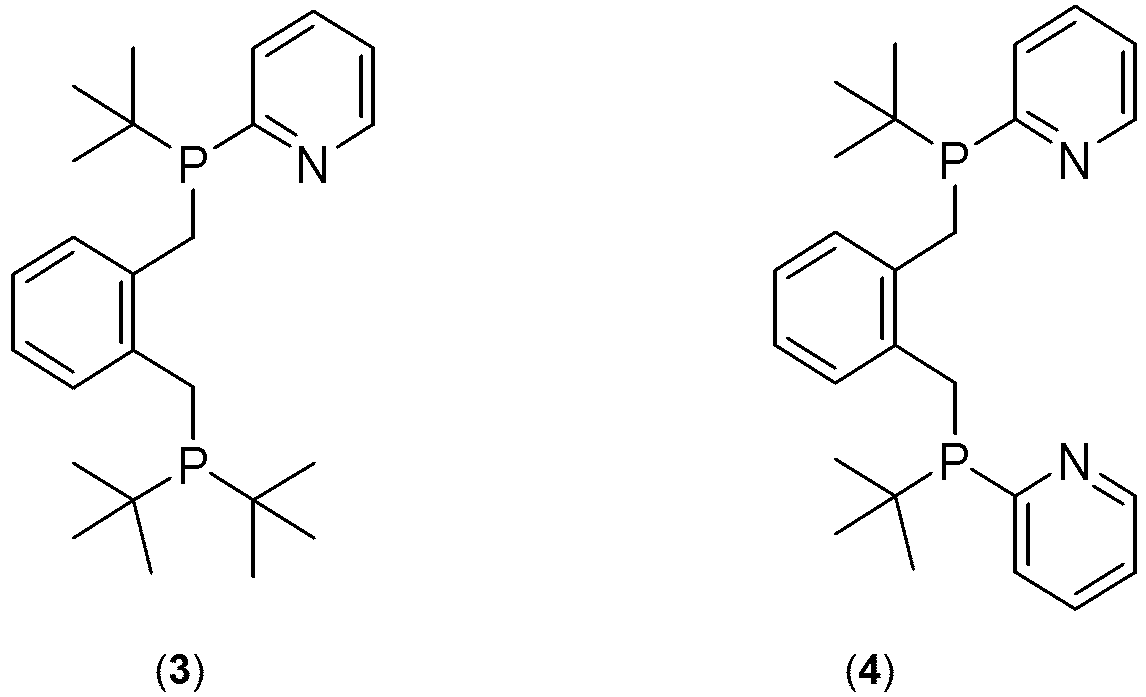
- Pd(dpa)2 (0,005 mmol), Ligand (variable) (0,01 mmol), Additiv: Zn(OTf)2 (0,05 mmol), MeOH, CO2 (20 bar), H2 (20 bar), 140 °C, 20 h
Tabelle 2: Ligand Ausbeute 2a n:iso Ausbeute 3a + 4a (2) 25 % 92 : 8 74 % (1) 33 % 92 : 8 65 % (3) 2% - 97 % (4) < 1 % - 98 % - Bei den Versuchen mit Ligand (3) und (4) handelt es sich um Vergleichsversuche.
- Die Versuchsreihe wurde entsprechend zu den zuvor beschriebenen Versuchen durchgeführt mit den folgenden Reaktionsbedingungen:
Reaktionsbedingungen:
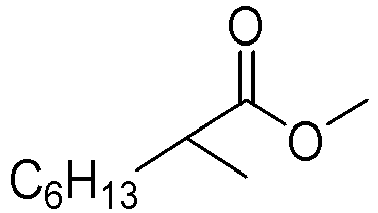
Pd(OAc)2 (0,03 mmol), Ligand (2) dtbpx (0,06 mmol), Additiv: Zn(OTf)2 (0,05 mmol), MeOH, CO2 (20 bar), H2 (20 bar), 120 °C, 45 h Tabelle 3: Methoxycarbonylierungungesättigten Verbindung(en) / Produkt(e) Ausbeute n:iso 
83 % 93 : 7 
69 % 93: 7 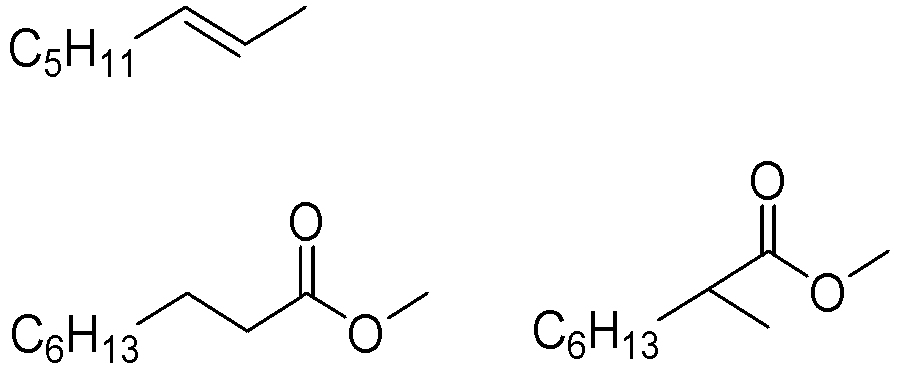
82 % 93: 7 
12 % 
47 % 
44 % 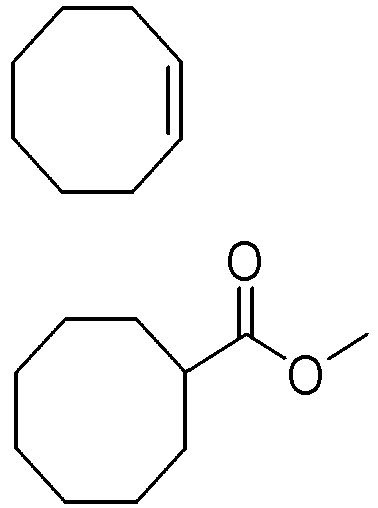
25 % 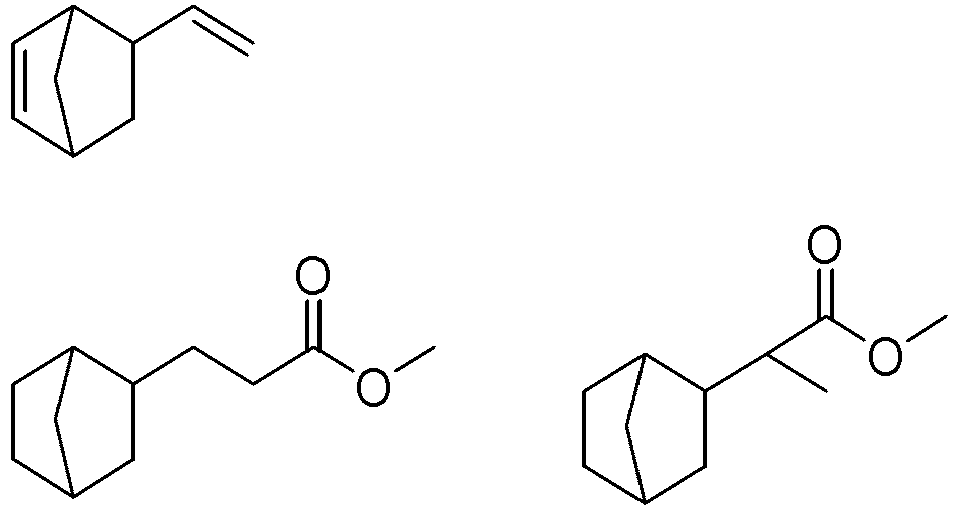
42 % 62 : 38 
15% 99: 1 
18 % 99: 1 
17% 99: 1 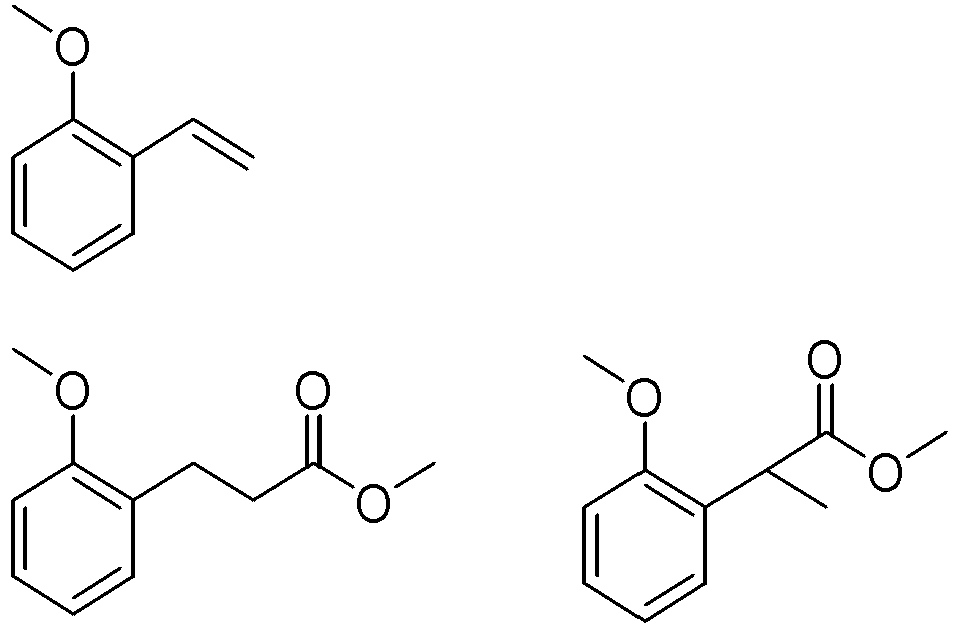
8% 99: 1 
21 % 
32 % 98 : 2 
14 % 90 : 10 
21 % 80 : 20 - In der nachfolgenden Versuchsreihe wurde Ethanol an Stelle von Methanol eingesetzt.
- Pd(OAc)2 (0,03 mmol), Ligand (2) dtbpx (0,06 mmol), Additiv: Zn(OTf)2 (0,05 mmol), EtOH, CO2 (20 bar), H2 (20 bar), 120 °C, 45 h
Tabelle 4: Ethoxycarbonylierung ungesättigten Verbindung(en) / Produkt(e) Ausbeute n:iso 
68 % 93: 7 
66 % 94 :6 
54 % 94 :6 
16 % 
30 % 
29 % 98 : 2 - In der nachfolgenden Versuchsreihe wurde als Alkohol 1-Butanol eingesetzt.
- Pd(OAc)2 (0,03 mmol), Ligand (2) dtbpx (0,06 mmol), Additiv: Zn(OTf)2 (0,05 mmol), 1-Butanol, CO2 (20 bar), H2 (20 bar), 120 °C, 45 h
-
ungesättigten Verbindung(en) / Produkt(e) Ausbeute n:iso 
28 % 92 : 8 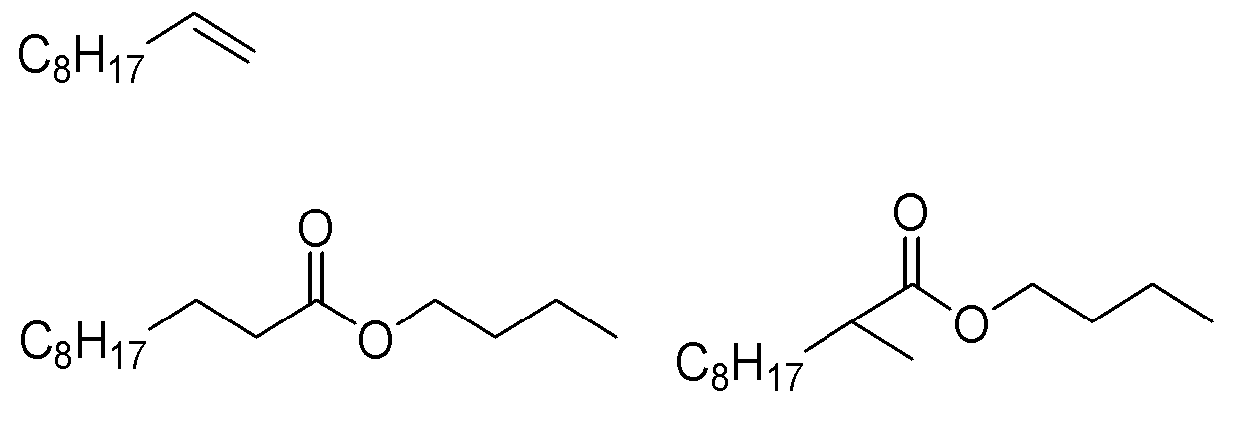
21 % 92 : 8 
23 % 92: 8 - Wie die durchgeführten Versuche zeigen, wird die gestellte Aufgabe durch ein erfindungsgemäßes Verfahren gelöst.
Claims (15)
- Verfahren umfassend die Verfahrensschritte:a) Vorlegen einer ethylenisch ungesättigten Verbindung;b) Zugabe eines Liganden gemäß Formel (I):
 R1, R2, R3, R4 jeweils für-(C1-C12)-Alkyl stehen,R5, R6 jeweils für einen Rest stehen ausgewählt aus: -H, -O-(C1-C12)-Alkyl, -(C1-C12)-Alkyl,und einer Verbindung, welche Pd umfasst;c) Zugabe einer Zinkverbindung;d) Zugabe eines Alkohols;e) Zuführen von CO2 und H2;f) Erwärmen des Reaktionsgemisches aus a) bis e), wobei die ethylenisch ungesättigte Verbindung zu einem Ester umgesetzt wird.
- Verfahren nach Anspruch 1,
wobei R1, R2, R3, R4 für-(C1-C4)-Alkyl stehen. - Verfahren nach einem der Ansprüche 1 bis 2,
wobei R5, R6 für einen Rest stehen ausgewählt aus: -H, -O-(C1-C4)-Alkyl. - Verfahren nach einem der Ansprüche 1 bis 3,
wobei der Ligand die Struktur (1) oder (2) aufweist:

- Verfahren nach einem der Ansprüche 1 bis 4,
wobei der Ligand die Struktur (1) aufweist:
- Verfahren nach einem der Ansprüche 1 bis 4,
wobei der Ligand die Struktur (2) aufweist:
- Verfahren nach einem der Ansprüche 1 bis 6,
wobei die Verbindung in Verfahrensschritt b), welche Pd umfasst, ausgewählt ist aus:
Palladiumdichlorid, Palladium(II)-acetylacetonat, Palladium(II)-acetat (Pd(OAc)2), Dichloro(1,5-cyclooctadiene)palladium(II), Bis(dibenzylideneaceton)palladium (Pd(dba)2), Bis(acetonitrile)dichloropalladium(II), Palladium(cinnamyl)dichlorid - Verfahren nach einem der Ansprüche 1 bis 7,
wobei die Verbindung in Verfahrensschritt b), welche Pd umfasst, ausgewählt ist aus: Pd(dba)2, Pd(OAc)2. - Verfahren nach einem der Ansprüche 1 bis 8,
wobei die Zinkverbindung ausgewählt ist aus: Zn(OTf)2, Zn(SO3C6H4CH3)·xH2O, Zn(SO3CH3)·xH2O. - Verfahren nach einem der Ansprüche 1 bis 9,
wobei die Zinkverbindung Zn(OTf)2 ist. - Verfahren nach einem der Ansprüche 1 bis 10,
wobei der Alkohol in Verfahrensschritt d) ausgewählt ist aus: Methanol, Ethanol, 1-Propanol, 1-Butanol, 1-Pentanol, 1-Hexanol, 2-Propanol, tert-Butanol, 3-Pentanol, Cyclohexanol, Phenol, oder Mischungen davon. - Verfahren nach einem der Ansprüche 1 bis 11,
wobei der Alkohol in Verfahrensschritt d) ausgewählt ist aus: Methanol, Ethanol, 1-Butanol. - Verfahren nach einem der Ansprüche 1 bis 12,
wobei das Zuführen von CO2 mit einem Druck erfolgt im Bereich von 1 MPa (10 bar) bis 5 MPa (50 bar). - Verfahren nach einem der Ansprüche 1 bis 13,
wobei das Zuführen von H2 mit einem Druck erfolgt im Bereich von 1 MPa (10 bar) bis 5 MPa (50 bar). - Verfahren nach einem der Ansprüche 1 bis 14,
wobei das Erwärmen auf eine Temperatur erfolgt im Bereich von 80 °C bis 160 °C.
Priority Applications (1)
| Application Number | Priority Date | Filing Date | Title |
|---|---|---|---|
| EP23215246.2A EP4567021B1 (de) | 2023-12-08 | 2023-12-08 | Verfahren zur alkoxycarbonylierung von ethylenisch ungesättigten verbindungen unter einsatz von co2 und einer zinkverbindung |
Applications Claiming Priority (1)
| Application Number | Priority Date | Filing Date | Title |
|---|---|---|---|
| EP23215246.2A EP4567021B1 (de) | 2023-12-08 | 2023-12-08 | Verfahren zur alkoxycarbonylierung von ethylenisch ungesättigten verbindungen unter einsatz von co2 und einer zinkverbindung |
Publications (3)
| Publication Number | Publication Date |
|---|---|
| EP4567021A1 true EP4567021A1 (de) | 2025-06-11 |
| EP4567021C0 EP4567021C0 (de) | 2026-03-04 |
| EP4567021B1 EP4567021B1 (de) | 2026-03-04 |
Family
ID=89164534
Family Applications (1)
| Application Number | Title | Priority Date | Filing Date |
|---|---|---|---|
| EP23215246.2A Active EP4567021B1 (de) | 2023-12-08 | 2023-12-08 | Verfahren zur alkoxycarbonylierung von ethylenisch ungesättigten verbindungen unter einsatz von co2 und einer zinkverbindung |
Country Status (1)
| Country | Link |
|---|---|
| EP (1) | EP4567021B1 (de) |
Citations (2)
| Publication number | Priority date | Publication date | Assignee | Title |
|---|---|---|---|---|
| EP4001256A1 (de) | 2020-11-24 | 2022-05-25 | Evonik Operations GmbH | Verfahren zur alkoxycarbonylierung von ethylenisch ungesättigter verbindungen unter einsatz von benzolbasierte diphosphinliganden und aluminiumtriflat |
| CN115403465A (zh) * | 2022-05-20 | 2022-11-29 | 湖南工程学院 | 一种二氧化碳和烯烃合成有机羧酸酯的制备方法 |
-
2023
- 2023-12-08 EP EP23215246.2A patent/EP4567021B1/de active Active
Patent Citations (2)
| Publication number | Priority date | Publication date | Assignee | Title |
|---|---|---|---|---|
| EP4001256A1 (de) | 2020-11-24 | 2022-05-25 | Evonik Operations GmbH | Verfahren zur alkoxycarbonylierung von ethylenisch ungesättigter verbindungen unter einsatz von benzolbasierte diphosphinliganden und aluminiumtriflat |
| CN115403465A (zh) * | 2022-05-20 | 2022-11-29 | 湖南工程学院 | 一种二氧化碳和烯烃合成有机羧酸酯的制备方法 |
Non-Patent Citations (1)
| Title |
|---|
| LIPENG WU ET AL: "Ruthenium-catalysed alkoxycarbonylation of alkenes with carbon dioxide", NATURE COMMUNICATIONS, vol. 5, 11 February 2014 (2014-02-11), pages 1 - 6, XP055152708, DOI: 10.1038/ncomms4091 * |
Also Published As
| Publication number | Publication date |
|---|---|
| EP4567021C0 (de) | 2026-03-04 |
| EP4567021B1 (de) | 2026-03-04 |
Similar Documents
| Publication | Publication Date | Title |
|---|---|---|
| EP3763723B1 (de) | Bisphosphite mit einem geschlossenen und einem offenen flügelbaustein | |
| EP3994117B1 (de) | Hydrierung von estern zu alkoholen in gegenwart eines ru-pnn-komplexes | |
| EP4001256A1 (de) | Verfahren zur alkoxycarbonylierung von ethylenisch ungesättigter verbindungen unter einsatz von benzolbasierte diphosphinliganden und aluminiumtriflat | |
| DE69908390T2 (de) | Transferhydrierungsverfahren | |
| DE3633033A1 (de) | Verfahren und katalysatorsystem zur trimerisierung von acetylen und acetylenverbindungen | |
| EP0780157A1 (de) | Rutheniumkomplexe mit einem chiralen, zweizähnigen Phosphinoxazolin-Liganden zur enantioselektiven Transferhydrierung von prochiralen Ketonen | |
| DE1807491C3 (de) | Verfahren zur Oligomerisation konjugierter Diene | |
| DE2124718C3 (de) | Verfahren zur Herstellung einer Carbonsäure oder eines Carbonsäureesters | |
| DE2531103B2 (de) | Verfahren zur Herstellung von Alkoholen | |
| EP4011894B1 (de) | Platin-komplexe mit binaphthyl-diphosphin-liganden für die katalyse der hydroxycarbonylierung ethylenisch ungesättigter verbindungen | |
| EP4001253A1 (de) | Doppelte alkoxycarbonylierung von dienen als eintopfsynthese | |
| DE102011089008B4 (de) | Verfahren zur Herstellung von Estern aus Formiaten und olefinisch ungesättigten Verbindungen | |
| DE102013215705A1 (de) | Verfahren zur Synthese von gesättigten Carbonsäureestern | |
| EP4567021B1 (de) | Verfahren zur alkoxycarbonylierung von ethylenisch ungesättigten verbindungen unter einsatz von co2 und einer zinkverbindung | |
| DE2303271B2 (de) | Verfahren zur Herstellung von Essigsäure oder deren Gemisch mit Methylacetat | |
| EP4455120A1 (de) | Verfahren zur alkoxycarbonylierung von olefinen unter einsatz von synthesegas | |
| DE1280839B (de) | Verfahren zur Herstellung von 1, 4-Dicyanbuten und bzw. oder Adipinsaeuredinitril durch Hydrodimerisierung von Acrylnitril | |
| DE68904457T2 (de) | Verfahren zur herstellung von alkandiolen. | |
| DE3034019C2 (de) | Verfahren zur gleichzeitigen Herstellung von Estern von Alkanolen und vicinalen Glykolen | |
| EP3527576B1 (de) | Propyl-verbrückte diphosphinliganden für die alkoxycarbonylierung | |
| EP0181618B1 (de) | Verfahren zur Herstellung von Substituierten Piperidinen | |
| EP4098646A1 (de) | Verfahren zur hydroformylierung von olefinen mit einem cobalt-präkatalysator | |
| EP1319665B1 (de) | Verfahren zur Hydrierung von ungesättigten Übergangsmetallverbindungen | |
| EP4198002A1 (de) | Pt-xanthen-iod-komplex | |
| EP4403563B1 (de) | Diphosphit mit einem me-flügelbaustein und einem tbu-flügelbaustein |
Legal Events
| Date | Code | Title | Description |
|---|---|---|---|
| PUAI | Public reference made under article 153(3) epc to a published international application that has entered the european phase |
Free format text: ORIGINAL CODE: 0009012 |
|
| STAA | Information on the status of an ep patent application or granted ep patent |
Free format text: STATUS: THE APPLICATION HAS BEEN PUBLISHED |
|
| AK | Designated contracting states |
Kind code of ref document: A1 Designated state(s): AL AT BE BG CH CY CZ DE DK EE ES FI FR GB GR HR HU IE IS IT LI LT LU LV MC ME MK MT NL NO PL PT RO RS SE SI SK SM TR |
|
| STAA | Information on the status of an ep patent application or granted ep patent |
Free format text: STATUS: REQUEST FOR EXAMINATION WAS MADE |
|
| 17P | Request for examination filed |
Effective date: 20250617 |
|
| GRAP | Despatch of communication of intention to grant a patent |
Free format text: ORIGINAL CODE: EPIDOSNIGR1 |
|
| STAA | Information on the status of an ep patent application or granted ep patent |
Free format text: STATUS: GRANT OF PATENT IS INTENDED |
|
| RIC1 | Information provided on ipc code assigned before grant |
Ipc: C07C 67/00 20060101AFI20251006BHEP Ipc: C07C 69/24 20060101ALI20251006BHEP Ipc: C07C 69/608 20060101ALI20251006BHEP Ipc: C07C 69/612 20060101ALI20251006BHEP Ipc: C07C 69/65 20060101ALI20251006BHEP Ipc: C07C 69/74 20060101ALI20251006BHEP Ipc: C07C 69/75 20060101ALI20251006BHEP Ipc: C07C 69/734 20060101ALI20251006BHEP Ipc: C07C 69/753 20060101ALI20251006BHEP |
|
| INTG | Intention to grant announced |
Effective date: 20251028 |
|
| GRAS | Grant fee paid |
Free format text: ORIGINAL CODE: EPIDOSNIGR3 |
|
| GRAA | (expected) grant |
Free format text: ORIGINAL CODE: 0009210 |
|
| STAA | Information on the status of an ep patent application or granted ep patent |
Free format text: STATUS: THE PATENT HAS BEEN GRANTED |
|
| AK | Designated contracting states |
Kind code of ref document: B1 Designated state(s): AL AT BE BG CH CY CZ DE DK EE ES FI FR GB GR HR HU IE IS IT LI LT LU LV MC ME MK MT NL NO PL PT RO RS SE SI SK SM TR |
|
| REG | Reference to a national code |
Ref country code: CH Ref legal event code: F10 Free format text: ST27 STATUS EVENT CODE: U-0-0-F10-F00 (AS PROVIDED BY THE NATIONAL OFFICE) Effective date: 20260304 Ref country code: GB Ref legal event code: FG4D Free format text: NOT ENGLISH |
|
| REG | Reference to a national code |
Ref country code: IE Ref legal event code: FG4D Free format text: LANGUAGE OF EP DOCUMENT: GERMAN |
|
| REG | Reference to a national code |
Ref country code: DE Ref legal event code: R096 Ref document number: 502023003252 Country of ref document: DE |
|
| U01 | Request for unitary effect filed |
Effective date: 20260324 |
|
| U07 | Unitary effect registered |
Designated state(s): AT BE BG DE DK EE FI FR IT LT LU LV MT NL PT RO SE SI Effective date: 20260330 |
|
| PG25 | Lapsed in a contracting state [announced via postgrant information from national office to epo] |
Ref country code: RS Free format text: LAPSE BECAUSE OF FAILURE TO SUBMIT A TRANSLATION OF THE DESCRIPTION OR TO PAY THE FEE WITHIN THE PRESCRIBED TIME-LIMIT Effective date: 20260604 |
|
| PG25 | Lapsed in a contracting state [announced via postgrant information from national office to epo] |
Ref country code: ES Free format text: LAPSE BECAUSE OF FAILURE TO SUBMIT A TRANSLATION OF THE DESCRIPTION OR TO PAY THE FEE WITHIN THE PRESCRIBED TIME-LIMIT Effective date: 20260304 |
|
| PG25 | Lapsed in a contracting state [announced via postgrant information from national office to epo] |
Ref country code: PL Free format text: LAPSE BECAUSE OF FAILURE TO SUBMIT A TRANSLATION OF THE DESCRIPTION OR TO PAY THE FEE WITHIN THE PRESCRIBED TIME-LIMIT Effective date: 20260304 |
|
| PG25 | Lapsed in a contracting state [announced via postgrant information from national office to epo] |
Ref country code: GR Free format text: LAPSE BECAUSE OF FAILURE TO SUBMIT A TRANSLATION OF THE DESCRIPTION OR TO PAY THE FEE WITHIN THE PRESCRIBED TIME-LIMIT Effective date: 20260605 |
|
| PG25 | Lapsed in a contracting state [announced via postgrant information from national office to epo] |
Ref country code: NO Free format text: LAPSE BECAUSE OF FAILURE TO SUBMIT A TRANSLATION OF THE DESCRIPTION OR TO PAY THE FEE WITHIN THE PRESCRIBED TIME-LIMIT Effective date: 20260604 |
|
| PG25 | Lapsed in a contracting state [announced via postgrant information from national office to epo] |
Ref country code: HR Free format text: LAPSE BECAUSE OF FAILURE TO SUBMIT A TRANSLATION OF THE DESCRIPTION OR TO PAY THE FEE WITHIN THE PRESCRIBED TIME-LIMIT Effective date: 20260304 |