EP4564751A1 - Verfahren und vorrichtung zur kanalschätzung - Google Patents
Verfahren und vorrichtung zur kanalschätzung Download PDFInfo
- Publication number
- EP4564751A1 EP4564751A1 EP22952575.3A EP22952575A EP4564751A1 EP 4564751 A1 EP4564751 A1 EP 4564751A1 EP 22952575 A EP22952575 A EP 22952575A EP 4564751 A1 EP4564751 A1 EP 4564751A1
- Authority
- EP
- European Patent Office
- Prior art keywords
- dmrs
- channel estimation
- artificial intelligence
- count
- terminal
- Prior art date
- Legal status (The legal status is an assumption and is not a legal conclusion. Google has not performed a legal analysis and makes no representation as to the accuracy of the status listed.)
- Pending
Links
Images



Classifications
-
- H—ELECTRICITY
- H04—ELECTRIC COMMUNICATION TECHNIQUE
- H04L—TRANSMISSION OF DIGITAL INFORMATION, e.g. TELEGRAPHIC COMMUNICATION
- H04L25/00—Baseband systems
- H04L25/02—Details ; arrangements for supplying electrical power along data transmission lines
- H04L25/0202—Channel estimation
- H04L25/024—Channel estimation channel estimation algorithms
- H04L25/0254—Channel estimation channel estimation algorithms using neural network algorithms
-
- H—ELECTRICITY
- H04—ELECTRIC COMMUNICATION TECHNIQUE
- H04L—TRANSMISSION OF DIGITAL INFORMATION, e.g. TELEGRAPHIC COMMUNICATION
- H04L25/00—Baseband systems
- H04L25/02—Details ; arrangements for supplying electrical power along data transmission lines
- H04L25/0202—Channel estimation
- H04L25/0224—Channel estimation using sounding signals
Definitions
- the disclosure relates to a field of communication technologies, and in particular to a method for channel estimation and a device thereof.
- AI artificial intelligence
- DMRS demodulation reference signal
- PRB physical resource block
- Embodiments of the present disclosure provide a method for channel estimation and a device thereof, which may be applied to the Internet of Vehicle, such as vehicle to everything (V2X) communication, long-term evolution-vehicle (LTE-V) communication, vehicle to vehicle (V2V) communication, etc., or may be applied to fields of intelligent driving, intelligent connected vehicles, etc.
- V2X vehicle to everything
- LTE-V long-term evolution-vehicle
- V2V vehicle to vehicle
- AI artificial intelligence
- a method for channel estimation is provided.
- the method is performed by a terminal, and includes: receiving configuration information of a data transmission channel configured by a network side device for the terminal; and performing channel estimation based on an AI model corresponding to the configuration information of the data transmission channel.
- the terminal may receive the configuration information of the data transmission channel configured by the network side device for the terminal, and perform the channel estimation by using the AI model corresponding to the configuration information. In this way, the terminal may select an AI model suitable for current channel configuration to perform the channel estimation, thus improving an accuracy of AI-based channel estimation.
- the configuration information of the data transmission channel includes at least one of: a physical resource block (PRB) bundling size, a physical downlink shared channel (PDSCH) mapping type, a count of demodulation reference signal (DMRS) resource elements (REs), a count of continuous orthogonal frequency division multiplexing (OFDM) symbols occupied by a DMRS, a DMRS configuration type, or a count of code division multiplexing (CDM) groups occupied by a data-free DMRS antenna port.
- PRB physical resource block
- PDSCH physical downlink shared channel
- DMRS demodulation reference signal
- REs resource elements
- OFDM continuous orthogonal frequency division multiplexing
- CDM code division multiplexing
- the configuration information of the data transmission channel includes the PRB bundling size
- performing the channel estimation based on the AI model corresponding to the configuration information of the data transmission channel includes: determining a target AI model corresponding to the PRB bundling size from a plurality of AI models; and performing the channel estimation based on the target AI model.
- the terminal may perform the channel estimation using an appropriate AI model according to the received different PRB bundling size. In this way, the terminal may select an AI model suitable for current channel configuration to perform the channel estimation, thus improving the accuracy of the AI-based channel estimation.
- the configuration information of the data transmission channel includes the PDSCH mapping type
- performing the channel estimation based on the AI model corresponding to the configuration information of the data transmission channel includes: determining a target AI model corresponding to the PDSCH mapping type from a plurality of AI models; and performing the channel estimation based on the target AI model.
- the terminal may perform the channel estimation using an appropriate AI model according to the received different PDSCH mapping type. In this way, the terminal may select an AI model suitable for current channel configuration to perform the channel estimation, thus improving the accuracy of the AI-based channel estimation.
- the configuration information of the data transmission channel includes the count of DMRS REs
- performing the channel estimation based on the AI model corresponding to the configuration information of the data transmission channel includes: determining that a DMRS configured by the network side device for the terminal is a fronted loaded DMRS according to the count of DMRS REs, and performing the channel estimation based on an AI model corresponding to the fronted loaded DMRS; or, determining that DMRSs configured by the network side device for the terminal include a fronted loaded DMRS and an additional DMRS according to the count of DMRS REs, and performing the channel estimation based on an AI model corresponding to the fronted loaded DMRS and the additional DMRS.
- the terminal may perform the channel estimation using an appropriate AI model according to the received different count of DMRS REs. In this way, the terminal may select an AI model suitable for current channel configuration to perform the channel estimation, thus improving the accuracy of the AI-based channel estimation.
- the configuration information of the data transmission channel includes the count of continuous OFDM symbols occupied by DMRS
- performing channel estimation based on the AI model corresponding to the configuration information of the data transmission channel includes: determining that a DMRS configured by the network side device for the terminal is a single-symbol DMRS according to the count of continuous OFDM symbols occupied by the DMRS, and performing the channel estimation based on an AI model corresponding to the single-symbol DMRS; or, determining that a DMRS configured by the network side device for the terminal is a double-symbol DMRS according to the count of continuous OFDM symbols occupied by the DMRS, and performing the channel estimation based on an AI model corresponding to the double-symbol DMRS.
- the terminal may select an appropriate AI model for the channel estimation according to the received different count of continuous OFDM symbols occupied by the DMRS. In this way, the terminal may select an AI model suitable for current channel configuration to perform the channel estimation, thus improving the accuracy of the AI-based channel estimation.
- the configuration information of the data transmission channel includes the DMRS configuration type
- performing the channel estimation based on the AI model corresponding to the configuration information of the data transmission channel includes: performing the channel estimation based on a first AI model corresponding to the DMRS configuration type, in which, the DMRS configuration type is type 1; or, performing the channel estimation based on a second AI model corresponding to the DMRS configuration type, in which the DMRS configuration type is type 2, and the first AI model and the second AI model are different channel estimation models.
- the terminal may perform the channel estimation using an appropriate AI model according to the received different DMRS configuration type included in the configuration information of the data transmission channel. In this way, the terminal may select an AI model suitable for current channel configuration to perform the channel estimation, thus improving the accuracy of the AI-based channel estimation.
- the configuration information of the data transmission channel includes the count of CDM groups occupied by the data-free DMRS antenna port
- performing the channel estimation based on the AI model corresponding to the configuration information of the data transmission channel includes: determining that a CDM group occupied by a DMRS antenna port configured by the network side device for the terminal is a first CDM group according to the count of CDM groups occupied by the data-free DMRS antenna port, and performing channel estimation based on a first AI model corresponding to the first CDM group; or, determining that a CDM group occupied by a DMRS antenna port configured by the network side device for the terminal is a second CDM group according to the count of CDM groups occupied by the data-free DMRS antenna port, and performing channel estimation based on a second AI model corresponding to the second CDM group; in which the configured DMRS is DMRS configuration type 1, and the first AI model and the second AI model are different channel estimation models.
- the terminal may perform the channel estimation using an appropriate AI model according to the received different count of CDM groups occupied by the data-free DMRS antenna port. In this way, the terminal may select an AI model suitable for current channel configuration to perform the channel estimation, thus improving the accuracy of the AI-based channel estimation.
- the configuration information of the data transmission channel includes the count of CDM groups occupied by the data-free DMRS antenna port
- performing channel estimation based on the AI model corresponding to the configuration information of the data transmission channel includes: determining that a CDM group occupied by a DMRS antenna port configured by the network side device for the terminal is a first CDM group according to the count of CDM groups occupied by the data-free DMRS antenna port, and performing the channel estimation based on a first AI model corresponding to the first CDM group; or, determining that a CDM group occupied by a DMRS antenna port configured by the network side device for the terminal is a second CDM group according to the count of CDM groups occupied by the data-free DMRS antenna port, and performing CDM channel estimation based on a second AI model corresponding to the second CDM group; or, determining that a CDM group occupied by a DMRS antenna port configured by the network side device for the terminal is a third CDM group according to the count of CD
- the terminal may perform the channel estimation using an appropriate AI model according to the received different count of CDM groups occupied by the data-free DMRS antenna port. In this way, the terminal may select an AI model suitable for current channel configuration to perform the channel estimation, thus improving the accuracy of the AI-based channel estimation.
- Another method for channel estimation is provided.
- the method is performed by a network side device, and includes: sending configuration information of a data transmission channel to a terminal, in which the configuration information is configured to instruct the terminal to perform channel estimation based on a corresponding AI model.
- the configuration information of the data transmission channel includes at least one of: a PRB bundling size; a PDSCH mapping type; a count of DMRS REs; a count of continuous OFDM symbols occupied by a DMRS; a DMRS configuration type; or a count of CDM groups occupied by a data-free DMRS antenna port.
- the network side device may send the configuration information of the data transmission channel to the terminal, so that the terminal may perform the channel estimation based on the AI model corresponding to the configuration information.
- the terminal may select an AI model suitable for current channel configuration to perform the channel estimation, thus improving an accuracy of AI-based channel estimation.
- a communication device has an ability to implement part or all of functions of the terminal in the method described in the first aspect.
- the communication device may have functions of some or all of the embodiments of the present disclosure, or may have a function of independently implementing any embodiment of the present disclosure.
- the functions may be implemented by hardware, or may be implemented by executing corresponding software using the hardware.
- the hardware or software includes one or more units or modules corresponding to the above functions.
- a structure of the communication device includes: a transceiver module and a processing module.
- the processing module is configured to support the communication device to perform corresponding functions in the above method.
- the transceiver module is configured to support communication between the communication device and other devices.
- the communication device may further include a storage module coupled to the transceiver module and the processing module, which is configured to store necessary computer programs and data for the communication device.
- the processing module may be a processor.
- the transceiver module may be a transceiver or a communication interface.
- the storage module may be a memory.
- a communication device has an ability to implement part or all of functions of the network side device in the method described in the second aspect.
- the communication device may have functions of some or all of the embodiments of the present disclosure, or may have a function of independently implementing any embodiment of the present disclosure.
- the functions may be implemented by hardware, or may be implemented by executing corresponding software using the hardware.
- the hardware or software includes one or more units or modules corresponding to the above functions.
- a structure of the communication device includes: a transceiver module and a processing module.
- the processing module is configured to support the communication device to perform corresponding functions in the above method.
- the transceiver module is configured to support communication between the communication device and other devices.
- the communication device may further include a storage module coupled to the transceiver module and the processing module, which is configured to store necessary computer programs and data for the communication device.
- the processing module may be a processor.
- the transceiver module may be a transceiver or a communication interface.
- the storage module may be a memory.
- a communication device includes: a processor.
- the processor calls a computer program stored in a memory, the method described in the first aspect above is implemented.
- a communication device includes: a processor.
- the processor calls a computer program stored in a memory, the method described in the second aspect above is implemented.
- a communication device includes: a processor and a memory having a computer program stored therein.
- the processor executes the computer program stored in the memory, the communication device is caused to implement the method described in the first aspect above.
- a communication device includes: a processor and a memory having a computer program stored therein.
- the processor executes the computer program stored in the memory, the communication device is caused to implement the method described in the second aspect above.
- a communication device includes: a processor and an interface circuit.
- the interface circuit is configured to receive code instructions and transmit the code instructions to the processor.
- the processor is configured to run the code instructions to cause the device to perform the method described in the first aspect above.
- a communication device includes: a processor and an interface circuit.
- the interface circuit is configured to receive code instructions and transmit the code instructions to the processor.
- the processor is configured to run the code instructions to cause the device to perform the method described in the second aspect above.
- a channel estimation system includes the communication device of the third aspect and the communication device of the fourth aspect; or the system includes the communication device of the fifth aspect and the communication device of the sixth aspect; or the system includes the communication device of the seventh aspect and the communication device of the eighth aspect; or the system includes the communication device of the ninth aspect and the communication device of the tenth aspect.
- a computer-readable storage medium configured to store instructions used by the above terminal. When the instructions are executed, the terminal is caused to implement the method of the first aspect.
- a readable storage medium configured to store instructions used by the above network side device. When the instructions are executed, the network side device is caused to implement the method of the second aspect.
- a computer program product including a computer program is provided.
- the computer program is running on a computer, the computer is caused to implement the method of the first aspect.
- a computer program product including a computer program is provided.
- the computer program is running on a computer, the computer is caused to implement the method of the second aspect.
- a chip system includes at least one processor and an interface for supporting the terminal in implementing functions involved in the first aspect, e.g., determining or processing at least one of data or information involved in the method described above.
- the chip system further includes a memory.
- the memory is configured to store necessary computer programs and data for the terminal.
- the chip system may consist of chips or may include a chip and other discrete components.
- a chip system includes at least one processor and an interface for supporting the network side device in implementing functions involved in the second aspect, e.g., determining or processing at least one of data or information involved in the method described above.
- the chip system further includes a memory.
- the memory is configured to store necessary computer programs and data for the network side device.
- the chip system may consist of chips or may include a chip and other discrete components.
- a computer program is provided.
- the computer program is running on a computer, the computer is caused to implement the method of the first aspect.
- a computer program is provided.
- the computer program is running on a computer, the computer is caused to implement the method of the second aspect.
- FIG. 1 is a schematic diagram of a communication system provided by an embodiment of the disclosure.
- the communication system may include, but is not limited to, one network side device and one terminal.
- the number and form of devices illustrated in FIG. 1 are only for examples and do not constitute a limitation on the embodiments of the disclosure. In practical applications, the communication system may include two or more network side devices and two or more terminals.
- the communication system as illustrated in FIG. 1 may include, for example, a network side device 101 and a terminal 102.
- LTE long term evolution
- 5G 5th generation
- NR 5th generation new radio
- the network side device 101 in the embodiments of the disclosure is an entity on a network side for transmitting or receiving signals.
- the network device 101 may be an evolved NodeB (eNB), a transmission reception point (TRP), a next generation NodeB (gNB) in an NR system, a base station in other future mobile communication systems, or an access node in a wireless fidelity (WiFi) system, etc.
- eNB evolved NodeB
- TRP transmission reception point
- gNB next generation NodeB
- WiFi wireless fidelity
- the specific technology and specific device form adopted by the network side device are not limited in the embodiments of the disclosure.
- the network side device according to the embodiments of the disclosure may be composed of a central unit (CU) and a distributed unit (DU).
- the CU may also be called as a control unit.
- the CU-DU structure may be used to divide a protocol layer of the network side device, such as a base station, such that some of the protocol layer functions are placed in the CU for centralized control, and some or all of the remaining protocol layer functions are distributed in the DU, which is centrally controlled by the CU.
- a protocol layer of the network side device such as a base station
- the terminal 102 in the embodiments of the disclosure is an entity on a user side for receiving or transmitting signals, such as a cellular phone.
- the terminal may also be referred to as a terminal, a user equipment (UE), a mobile station (MS), a mobile terminal (MT), and the like.
- the terminal may be a car, a smart car, a mobile phone, a wearable device, a Pad with communication functions, a computer with wireless transceiver functions, a virtual reality (VR) terminal, an augmented reality (AR) terminal, a wireless terminal in industrial control, a wireless terminal in self-driving, a wireless terminal in remote medical surgery, a wireless terminal in smart grid, a wireless terminal in transportation safety, a wireless terminal in smart city, a wireless terminal in smart home, etc.
- the specific technology and specific device form adopted by the terminal are not limited in the embodiments of the disclosure.
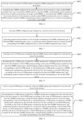
- FIG. 2 is a flowchart of a method for channel estimation provided by an embodiment of the disclosure.
- the method is performed by a terminal. As illustrated in FIG. 2 , the method may include, but is not limited to, following steps.
- step S201 configuration information of a data transmission channel configured by a network side device for the terminal is received.
- the configuration information of the data transmission channel includes at least one of: a physical resource block (PRB) bundling size, a physical downlink shared channel (PDSCH) mapping type, a count of demodulation reference signal (DMRS) resource elements (REs), a count of continuous orthogonal frequency division multiplexing (OFDM) symbols occupied by a DMRS, a DMRS configuration type, or a count of code division multiplexing (CDM) groups occupied by a data-free DMRS antenna port.
- PRB physical resource block
- PDSCH physical downlink shared channel
- DMRS demodulation reference signal
- REs resource elements
- OFDM continuous orthogonal frequency division multiplexing
- CDM code division multiplexing
- channel estimation is performed based on an artificial intelligence (AI) model corresponding to the configuration information of the data transmission channel.
- AI artificial intelligence
- the terminal may select an appropriate AI model from a plurality of preset AI models for channel estimation based on specific contents of the received configuration information of the data transmission channel.
- the AI model may be a neural network model, for example, a deep neural network model or a convolutional neural network model.
- An architecture of the AI model corresponding to each different configuration information may be the same or different.
- An input of the AI model is a measurement value of a reference signal received by the terminal, and an output of the AI model is channel information of all resources of the data transmission channel used by the terminal.
- the AI model corresponding to each different configuration information can accurately extract the channel information of all resources of the data transmission channel corresponding to the configuration information through pre-training.
- the terminal may receive the configuration information of the data transmission channel configured for the terminal by the network side device, and perform the channel estimation by using the AI model corresponding to the configuration information. In this way, the terminal may select an AI model suitable for current channel configuration to perform the channel estimation, thus improving an accuracy of AI-based channel estimation.
- the configuration information of the data transmission channel may include a PRB bundling size
- the terminal may perform the channel estimation using a corresponding AI model according to the PRB bundling size.
- FIG. 3 is a flowchart of a method for channel estimation provided by an embodiment of the disclosure. The method is performed by a terminal. As illustrated in FIG. 3 , the method may include, but is not limited to, following steps.
- a PRB bundling size configured by a network side device for the terminal is received.
- the terminal receives the configuration information of the data transmission channel configured by the network side device for the terminal, and obtains the PRB bundling size included in the configuration information.
- a target AI model corresponding to the PRB bundling size is determined from a plurality of AI models.
- the terminal stores a plurality of AI models.
- Each AI model has a channel estimation function, and there is a correspondence between AI models and PRB bundling sizes.
- the received PRB bundling size configured by the network side device for the terminal is two resource blocks (RBs)
- an AI model corresponding to this PRB bundling size is determined as the target AI model from the plurality of AI models based on the correspondence between AI models and PRB bundling sizes.
- an AI model corresponding to this PRB bundling size is determined as the target AI model from the plurality of AI models based on the correspondence between AI models and PRB bundling sizes.
- channel estimation is performed based on the target AI model.
- characteristics of the data transmission channel under current configuration are extracted based on the target AI model for channel estimation.
- the terminal may perform the channel estimation using an appropriate AI model according to the received different PRB bundling size. In this way, the terminal may select an AI model suitable for current channel configuration to perform the channel estimation, thus improving an accuracy of AI-based channel estimation.
- the configuration information of the data transmission channel may include a PDSCH mapping type
- the terminal may perform channel estimation using a corresponding AI model based on the PDSCH mapping type.
- FIG. 4 is a flowchart of a method for channel estimation provided by an embodiment of the disclosure. The method is performed by a terminal. As illustrated in FIG. 4 , the method may include, but is not limited to, following steps.
- a PDSCH mapping type configured by a network side device for the terminal is received.
- the terminal receives the configuration information of the data transmission channel configured by the network side device for the terminal, and obtains the PDSCH mapping type included in the configuration information.
- a target AI model corresponding to the PDSCH mapping type is determined from a plurality of AI models.
- the terminal stores a plurality of AI models.
- the plurality of AI models include a first AI model and a second AI model, both of which have a channel estimation function.
- the first AI model corresponding to the type A is determined as the target AI model from the plurality of AI models.
- the second AI model corresponding to the type B is determined as the target AI model from the plurality of AI models.
- the PDSCH mapping type is the type A, which indicates that a first DMRS symbol is located at a symbol 2 or symbol 3 in a slot
- the PDSCH mapping type is the type B, which indicates that a first DMRS symbol is fixedly mapped to a first OFDM symbol of the PDSCH.
- channel estimation is performed based on the target AI model.
- step S403 may be implemented by using any of the embodiments of the present disclosure, which is not limited in the embodiments of the disclosure and will not be repeated here.
- the terminal may perform the channel estimation using an appropriate AI model according to the received different PDSCH mapping type. In this way, the terminal may select an AI model suitable for current channel configuration to perform the channel estimation, thus improving an accuracy of AI-based channel estimation.
- the configuration information of the data transmission channel may include a count of DMRS REs
- the terminal may perform channel estimation using a corresponding AI model based on the count of DMRS REs.
- FIG. 5 is a flowchart of a method for channel estimation provided by an embodiment of the disclosure. The method is performed by a terminal. As illustrated in FIG. 5 , the method may include, but is not limited to, following steps.
- a count of DMRS REs configured by a network side device for the terminal is received.
- the terminal receives the configuration information of the data transmission channel configured by the network side device for the terminal, and obtains the count of DMRS REs included in the configuration information.
- a DMRS configured by the network side device for the terminal is a fronted loaded DMRS according to the count of DMRS REs, and channel estimation is performed based on an AI model corresponding to the fronted loaded DMRS; or, it is determined that DMRSs configured by the network side device for the terminal include a fronted loaded DMRS and an additional DMRS according to the count of DMRS REs, and channel estimation is performed based on an AI model corresponding to the fronted loaded DMRS and the additional DMRS.
- the terminal stores a plurality of AI models.
- the plurality of AI models include a first AI model and a second AI model, both of which have a channel estimation function.
- There is a correspondence between the first AI model and the fronted loaded DMRS and there is a correspondence between the second AI model and the DMRSs including the fronted loaded DMRS and the additional DMRS.
- the first AI model corresponding to the fronted DMRS is determined from the plurality of AI models, and the channel estimation is performed based on the first AI model.
- the second AI model corresponding to the DMRSs including the fronted DMRS and the additional DMRS is determined from the plurality of AI models, and the channel estimation is performed based on the second AI model.
- the terminal may perform the channel estimation using an appropriate AI model according to the received different count of DMRS REs. In this way, the terminal may select an AI model suitable for current channel configuration to perform the channel estimation, thus improving an accuracy of AI-based channel estimation.
- the configuration information of the data transmission channel may include a count of continuous OFDM symbols occupied by a DMRS, and the terminal may perform the channel estimation using a corresponding AI model according to the count of continuous OFDM symbols occupied by the DMRS.
- FIG. 6 is a flowchart of a method for channel estimation provided by an embodiment of the disclosure. The method is performed by a terminal. As illustrated in FIG. 6 , the method may include, but is not limited to, following steps.
- step S601 a count of continuous OFDM symbols occupied by DMRS configured by a network side device for the terminal is received.
- the terminal receives the configuration information of the data transmission channel configured by the network side device for the terminal, and obtains the count of continuous OFDM symbols occupied by the DMRS included in the configuration information.
- a DMRS configured by the network side device for the terminal is a single-symbol DMRS according to the count of continuous OFDM symbols occupied by the DMRS, and channel estimation is performed based on an AI model corresponding to the single-symbol DMRS; or, it is determined that a DMRS configured by the network side device for the terminal is a double-symbol DMRS according to the count of continuous OFDM symbols occupied by the DMRS, and channel estimation is performed based on an AI model corresponding to the double-symbol DMRS.
- the terminal stores a plurality of AI models.
- the plurality of AI models include a first AI model and a second AI model, both of which have a channel estimation function. There is a correspondence between the first AI model and a single-symbol DMRS, and there is a correspondence between the second AI model and a double-symbol DMRS.
- the terminal determines that the DMRS configured by the network side device for the terminal is the single-symbol DMRS, determines the first AI model corresponding to the single-symbol DMRS from the plurality of AI models, and performs the channel estimation based on the first AI model.
- the terminal determines that the DMRS configured by the network side device for the terminal is the double-symbol DMRS, determines the second AI model corresponding to the double-symbol DMRS from the plurality of AI models, and performs the channel estimation based on the second AI model.
- the terminal may perform the channel estimation using a corresponding AI model according to the received different count of continuous OFDM symbols occupied by the DMRS. In this way, the terminal may select an AI model suitable for current channel configuration to perform the channel estimation, thus improving an accuracy of AI-based channel estimation.
- the configuration information of the data transmission channel may include a DMRS configuration type
- the terminal may perform the channel estimation using a corresponding AI model based on the DMRS configuration type.
- FIG. 7 is a flowchart of a method for channel estimation provided by an embodiment of the disclosure. The method is performed by a terminal. As illustrated in FIG. 7 , the method may include, but is not limited to, following steps.
- a DMRS configuration type configured by a network side device for the terminal is received.
- the terminal receives the configuration information of the data transmission channel configured by the network side device for the terminal, and obtains the DMRS configuration type included in the configuration information.
- channel estimation is performed based on a first AI model corresponding to the DMRS configuration type, in which the DMRS configuration type is type 1; or, channel estimation is performed based on a second AI model corresponding to the DMRS configuration type, in which the DMRS configuration type is type 2.
- the first AI model and the second AI model are different channel estimation models.
- the terminal stores a plurality of AI models.
- the plurality of AI models include a first AI model and a second AI model, both of which have a channel estimation function.
- There is a correspondence between the first AI model and a DMRS configuration type 1 and there is a correspondence between the second AI model and a DMRS configuration type 2.
- the first AI corresponding to the type 1 is determined from the plurality of AI models, and the channel estimation is performed based on the first AI model.
- the second AI corresponding to the type 2 is determined from the plurality of AI models, and the channel estimation is performed based on the second AI model.
- the DMRS configuration type 1 refers to a DMRS with a frequency domain density of 6
- the DMRS configuration type 2 refers to a DMRS with a frequency domain density of 4.
- the terminal may perform the channel estimation using an appropriate AI model according to the DMRS configuration type included in the received configuration information of a data transmission channel. In this way, the terminal may select an AI model suitable for current channel configuration to perform the channel estimation, thus improving an accuracy of AI-based channel estimation.
- the configuration information of the data transmission channel may include a count of CDM groups occupied by a data-free DMRS antenna port, and the terminal may perform the channel estimation using a corresponding AI model according to the count of CDM groups occupied by the data-free DMRS antenna port.
- FIG. 8 is a flowchart of a method for channel estimation provided by an embodiment of the disclosure. The method is performed by a terminal. As illustrated in FIG. 8 , the method may include, but is not limited to, following steps.
- step S801 a count of CDM groups occupied by a data-free DMRS antenna port configured by a network side device for the terminal is received.
- the terminal receives the configuration information of the data transmission channel configured by the network side device for the terminal, and obtains the count of CDM groups occupied by the data-free DMRS antenna port included in the configuration information.
- a CDM group occupied by a DMRS antenna port configured by the network side device for the terminal is a first CDM group according to the count of CDM groups occupied by the data-free DMRS antenna port, and channel estimation is performed based on a first AI model corresponding to the first CDM group; or, it is determined that a CDM group occupied by a DMRS antenna port configured by the network side device for the terminal is a second CDM group according to the count of CDM groups occupied by the data-free DMRS antenna port, and channel estimation is performed based on a second AI model corresponding to the second CDM group;
- the configured DMRS configuration type is DMRS configuration type 1, and the first AI model and the second AI model are different channel estimation models.
- the terminal stores a plurality of AI models.
- the plurality of AI models include a first AI model and a second AI model, both of which have a channel estimation function.
- the first AI model corresponds to the first CDM group (i.e., CDM group 0)
- the second AI model corresponds to the second CDM group (i.e., CDM group 1).
- the terminal determines that the CDM group occupied by the DMRS antenna port configured by the network side device for the terminal is the first CDM group according to the count of CDM groups occupied by the data-free DMRS antenna port
- the first AI model corresponding to the first CDM group is determined from the plurality of AI models, and the channel estimation is performed based on the first AI model.
- the second AI model corresponding to the second CDM group is determined from the plurality of AI models, and the channel estimation is performed based on the second AI model.
- the terminal may perform the channel estimation using the corresponding AI model according to the count of CDM groups occupied by the data-free DMRS antenna port. In this way, the terminal may select an AI model suitable for current channel configuration to perform the channel estimation, thus improving an accuracy of AI-based channel estimation.
- the configuration information of the data transmission channel may include a count of CDM groups occupied by a data-free DMRS antenna port, and the terminal may perform channel estimation using a corresponding AI model based on the count of CDM groups occupied by the data-free DMRS antenna port.
- FIG. 9 is a flowchart of a method for channel estimation provided by an embodiment of the disclosure. The method is performed by a terminal. As illustrated in FIG. 9 , the method may include, but is not limited to, following steps.
- step S901 a count of CDM groups occupied by a data-free DMRS antenna port configured by a network side device for the terminal is received.
- the terminal receives the configuration information of the data transmission channel configured by the network side device for the terminal, and obtains the count of CDM groups occupied by the data-free DMRS antenna port included in the configuration information.
- a CDM group occupied by a DMRS antenna port configured by the network side device for the terminal is a first CDM group according to the count of CDM groups occupied by the data-free DMRS antenna port, and channel estimation is performed based on a first AI model corresponding to the first CDM group; or, it is determined that a CDM group occupied by a DMRS antenna port configured by the network side device for the terminal is a second CDM group according to the count of CDM groups occupied by the data-free DMRS antenna port, and channel estimation is performed based on a second AI model corresponding to the second CDM group; or, it is determined that a CDM group occupied by a DMRS antenna port configured by the network side device for the terminal is a third CDM group according to the count of CDM groups occupied by the data-free DMRS antenna port, and channel estimation is performed based on a third AI model corresponding to the third CDM group.
- the configured DMRS configuration type is DMRS configuration type 2, and the first AI model, the second AI model and the third AI model are all different channel estimation models.
- the terminal stores a plurality of AI models.
- the plurality of AI models include a first AI model, a second AI model and a third AI model, and the three models all have a channel estimation function.
- the first AI model corresponds to the first CDM group (i.e., CDM group 0)
- the second AI model corresponds to the second CDM group (i.e., CDM group 1)
- the third AI model corresponds to the third CDM group (i.e., CDM group 2).
- the terminal determines that the CDM group occupied by the DMRS antenna port configured by the network side device for the terminal is the first CDM group according to the count of CDM groups occupied by the data-free DMRS antenna port
- the first AI model corresponding to the first CDM group is determined from the plurality of AI models, and the channel estimation is performed based on the first AI model.
- the second AI model corresponding to the second CDM group is determined from the plurality of AI models, and the channel estimation is performed based on the second AI model.
- the terminal determines that the CDM group occupied by the DMRS antenna port configured by the network side device for the terminal is the third CDM group according to the count of CDM groups occupied by the data-free DMRS antenna port
- the third AI model corresponding to the third CDM group is determined from the plurality of AI models, and the channel estimation is performed based on the third AI model.
- the terminal may perform the channel estimation using the corresponding AI model according to the count of CDM groups occupied by the data-free DMRS antenna port. In this way, the terminal may select an AI model suitable for current channel configuration to perform the channel estimation, thus improving an accuracy of AI-based channel estimation.
- FIG. 10 is a flowchart of another method for channel estimation provided by an embodiment of the disclosure.
- the method is performed by a network side device. As illustrated in FIG. 10 , the method may include, but is not limited to, a following step.
- step S1001 configuration information of a data transmission channel is sent to a terminal, in which the configuration information is configured to instruct the terminal to perform channel estimation based on a corresponding AI model.
- the configuration information of the data transmission channel includes at least one of: a PRB bundling size; a PDSCH mapping type; a count of DMRS REs; a count of continuous OFDM symbols occupied by a DMRS; a DMRS configuration type; or a count of CDM groups occupied by a data-free DMRS antenna port.
- the network side device may send the configuration information of the data transmission channel to the terminal, so that the terminal may perform the channel estimation based on the AI model corresponding to the configuration information.
- the terminal may select an AI model suitable for current channel configuration to perform the channel estimation, thus improving an accuracy of AI-based channel estimation.
- the methods provided by embodiments of the disclosure are introduced from the perspectives of the terminal and the network side device respectively.
- the network side device and the terminal may include a hardware structure and a software module, to implement the above-mentioned functions in the form of the hardware structure, the software module, or a combination of the hardware structure and the software module.
- a certain function of the above functions may be implemented in the form of a hardware structure, a software module, or a combination of the hardware structure and the software module.
- FIG. 11 is a schematic diagram of a communication device 110 provided in an embodiment of the disclosure.
- the communication device 110 in FIG. 11 may include a transceiver module 1101 and a processing module 1102.
- the transceiver module 1101 may include a sending module and/or a receiving module.
- the sending module is used to implement a sending function
- the receiving module is used to implement a receiving function.
- the transceiver module 1101 may implement a sending function and/or a receiving function.
- the communication device 110 may be a terminal, or a device in the terminal, or a device that can be used in combination with the terminal.
- the communication device 110 may be a network side device, or a device in the network side device, or a device that can be used in combination with the network side device.
- the transceiver module 1101 is configured to receive configuration information of a data transmission channel configured by a network side device for the terminal, and the processing module is configured to perform channel estimation based on an AI model corresponding to the configuration information of the data transmission channel.
- the configuration information of the data transmission channel includes at least one of: a PRB bundling size; a PDSCH mapping type; a count of DMRS REs; a count of continuous OFDM symbols occupied by a DMRS; a DMRS configuration type; or a count of CDM groups occupied by a data-free DMRS antenna port.
- the configuration information of the data transmission channel includes the PRB bundling size
- the processing module 1102 is further configured to: determine a target AI model corresponding to the PRB bundling size from a plurality of AI models; and perform the channel estimation based on the target AI model.
- the configuration information of the data transmission channel includes the PDSCH mapping type
- the processing module 1102 is further configured to: determine a target AI model corresponding to the PDSCH mapping type from a plurality of AI models; and perform the channel estimation based on the target AI model.
- the configuration information of the data transmission channel includes the count of DMRS REs
- the processing module 1102 is further configured to: determine that a DMRS configured by the network side device for the terminal is a fronted loaded DMRS according to the count of DMRS REs, and perform the channel estimation based on an AI model corresponding to the fronted loaded DMRS; or, determine that DMRSs configured by the network side device for the terminal include a fronted loaded DMRS and an additional DMRS according to the count of DMRS REs, and perform the channel estimation based on an AI model corresponding to the fronted loaded DMRS and the additional DMRS.
- the configuration information of the data transmission channel includes the count of continuous OFDM symbols occupied by the DMRS
- the processing module 1102 is further configured to: determine that a DMRS configured by the network side device for the terminal is a single-symbol DMRS according to the count of continuous OFDM symbols occupied by the DMRS, and perform the channel estimation based on an AI model corresponding to the single-symbol DMRS; or, determine that a DMRS configured by the network side device for the terminal is a double-symbol DMRS according to the count of continuous OFDM symbols occupied by the DMRS, and perform the channel estimation based on an AI model corresponding to the double-symbol DMRS.
- the configuration information of the data transmission channel includes the DMRS configuration type
- the processing module 1102 is further configured to: perform the channel estimation based on a first AI model corresponding to the DMRS configuration type, in which the DMRS configuration type is type 1; or, perform the channel estimation based on a second AI model corresponding to the DMRS configuration type, in which the DMRS configuration type is type 2, and the first AI model and the second AI model are different channel estimation models.
- the configuration information of the data transmission channel includes the count of CDM groups occupied by the data-free DMRS antenna port
- the processing module 1102 is further configured to: determine that a CDM group occupied by a DMRS antenna port configured by the network side device for the terminal is a first CDM group according to the count of CDM groups occupied by the data-free DMRS antenna port, and perform the channel estimation based on a first AI model corresponding to the first CDM group; or, determine that a CDM group occupied by a DMRS antenna port configured by the network side device for the terminal is a second CDM group according to the count of CDM groups occupied by the data-free DMRS antenna port, and perform the channel estimation based on a second AI model corresponding to the second CDM group; in which the configured DMRS is DMRS configuration type 1, and the first AI model and the second AI model are different channel estimation models.
- the configuration information of the data transmission channel includes the count of CDM groups occupied by the data-free DMRS antenna port
- the processing module 1102 is further configured to: determine that a CDM group occupied by a DMRS antenna port configured by the network side device for the terminal is a first CDM group according to the count of CDM groups occupied by the data-free DMRS antenna port, and perform the channel estimation based on a first AI model corresponding to the first CDM group; or, determine that a CDM group occupied by a DMRS antenna port configured by the network side device for the terminal is a second CDM group according to the count of CDM groups occupied by the data-free DMRS antenna port, and perform the channel estimation based on a second AI model corresponding to the second CDM group; or, determine that a CDM group occupied by a DMRS antenna port configured by the network side device for the terminal is a third CDM group according to the count of CDM groups occupied by the data-free DMRS antenna port, and
- the terminal may receive the configuration information of the data transmission channel configured for the terminal by the network side device, and perform the channel estimation based on the AI model corresponding to the configuration information. In this way, the terminal may select an AI model suitable for current channel configuration to perform channel estimation, thus improving an accuracy of AI-based channel estimation.
- the transceiver module 1101 is configured to send configuration information of a data transmission channel to a terminal, in which the configuration information is configured to instruct the terminal to perform channel estimation based on the corresponding AI model.
- the configuration information of the data transmission channel includes at least one of: a PRB bundling size; a PDSCH mapping type; a count of DMRS REs; a count of continuous OFDM symbols occupied by a DMRS; a DMRS configuration type; or a count of CDM groups occupied by a data-free DMRS antenna port.
- the network side device may send the configuration information of the data transmission channel to the terminal, so that the terminal may perform the channel estimation based on the AI model corresponding to the configuration information.
- the terminal may select an AI model suitable for current channel configuration to perform the channel estimation, thus improving an accuracy of AI-based channel estimation.
- FIG. 12 is a schematic diagram of another communication device 120 provided by an embodiment of the disclosure.
- the communication device 120 may be a network side device or a terminal, or may be a chip, a chip system or a processor that supports the network side device to realize the above-described method, or may be a chip, a chip system or a processor that supports the terminal to realize the above-described method.
- the device may be used to realize the methods described in the above method embodiments with reference to the description of the above-described method embodiments.
- the communication device 120 may include one or more processors 1201.
- the processor 1201 may be a general purpose processor or a dedicated processor, such as, a baseband processor and a central processor.
- the baseband processor is used for processing communication protocols and communication data.
- the central processor is used for controlling the communication device (e.g., a base station, a baseband chip, a terminal, a terminal chip, a DU, or a CU), executing computer programs, and processing data of the computer programs.
- the communication device 120 may include one or more memories 1202 on which a computer program 1203 may be stored.
- the processor 1201 executes the computer program 1203 to cause the communication device 120 to perform the methods described in the above method embodiments.
- the memory 1202 may also store data.
- the communication device 120 and the memory 1202 may be provided separately or may be integrated together.
- the communication device 120 may also include a transceiver 1204 and an antenna 1205.
- the transceiver 1204 may be referred to as a transceiver unit, a transceiver machine, or a transceiver circuit, for realizing a transceiver function.
- the transceiver 1204 may include a receiver and a transmitter.
- the receiver may be referred to as a receiving machine or a receiving circuit, for realizing the receiving function.
- the transmitter may be referred to as a transmitter machine or a transmitting circuit, for realizing the transmitting function.
- the communication device 120 may also include one or more interface circuits 1206.
- the interface circuits 1206 are used to receive code instructions and transmit the code instructions to the processor 1201.
- the processor 1201 runs the code instructions to cause the communication device 120 to perform the methods described in the method embodiments.
- the processor 1201 executes steps S202 and S203 in FIG. 2 , steps S302 and S303 in FIG. 3 , step S402 and S403 in FIG. 4 , step S502 in FIG. 5 , step S602 in FIG. 6 , step S702 in FIG. 7 , step S802 in FIG. 8 , and step S902 in FIG. 9 .
- the transceiver 1204 is configured to execute step S201 in FIG. 2 , step S301 in FIG. 3 , step S401 in FIG. 4 , step S501 in FIG. 5 , step S601 in FIG. 6 , step S701 in FIG. 7 , step S801 in FIG. 8 , and step S901 in FIG. 9 .
- the transceiver 1204 executes step S1001 in FIG. 10 .
- the processor 1201 may include a transceiver for implementing the receiving and sending functions.
- the transceiver may be, for example, a transceiver circuit, an interface, or an interface circuit.
- the transceiver circuit, the interface, or the interface circuit for implementing the receiving and sending functions may be separated or may be integrated together.
- the transceiver circuit, the interface, or the interface circuit described above may be used for reading and writing code/data, or may be used for signal transmission or delivery.
- the processor 1201 may store a computer program.
- the communication device 120 is caused to perform the methods described in the method embodiments above.
- the computer program 1203 may be solidified in the processor 1201, and in such case the processor 1201 may be implemented by hardware.
- the communication device 120 may include circuits.
- the circuits may implement the sending, receiving or communicating function in the preceding method embodiments.
- the processor and the transceiver described in the disclosure may be implemented on integrated circuits (ICs), analog ICs, radio frequency integrated circuits (RFICs), mixed signal ICs, application specific integrated circuits (ASICs), printed circuit boards (PCBs), and electronic devices.
- ICs integrated circuits
- RFICs radio frequency integrated circuits
- ASICs application specific integrated circuits
- PCBs printed circuit boards
- the processor and the transceiver can also be produced using various IC process technologies, such as complementary metal oxide semiconductor (CMOS), nMetal-oxide-semiconductor (NMOS), positive channel metal oxide semiconductor (PMOS), bipolar junction transistor (BJT), bipolar CMOS (BiCMOS), silicon-germanium (SiGe), gallium arsenide (GaAs) and so on.
- CMOS complementary metal oxide semiconductor
- NMOS nMetal-oxide-semiconductor
- PMOS positive channel metal oxide semiconductor
- BJT bipolar junction transistor
- BiCMOS bipolar CMOS
- SiGe silicon-germanium
- GaAs gallium arsenide
- the communication device in the description of the above embodiments may be a network side device or a terminal, but the scope of the communication device described in the disclosure is not limited thereto, and the structure of the communication device may not be limited by FIG. 12 .
- the communication device may be a stand-alone device or may be part of a larger device.
- the described communication device may be:
- the case that the communication device may be a chip or a chip system can be referred to the schematic diagram of the chip shown in FIG. 13 .
- the chip 130 shown in FIG. 13 includes a processor 1301 and an interface 1302. There may be one or more processors 1301, and there may be multiple interfaces 1302.
- the interface 1302 is configured to receive configuration information of a data transmission channel configured by a network side device for the terminal, and the processor 1301 is configured to perform channel estimation based on an AI model corresponding to the configuration information of the data transmission channel.
- the configuration information of the data transmission channel includes at least one of: a PRB bundling size; a PDSCH mapping type; a count of DMRS REs; a count of continuous OFDM symbols occupied by a DMRS; a DMRS configuration type; or a count of CDM groups occupied by a data-free DMRS antenna port.
- the configuration information of the data transmission channel includes the PRB bundling size
- the processor 1301 is further configured to: determine a target AI model corresponding to the PRB bundling size from a plurality of AI models; and perform the channel estimation based on the target AI model.
- the configuration information of the data transmission channel includes the PDSCH mapping type
- the processor 1301 is further configured to: determine a target AI model corresponding to the PDSCH mapping type from a plurality of AI models; and perform the channel estimation based on the target AI model.
- the configuration information of the data transmission channel includes the count of DMRS REs
- the processor 1301 is further configured to: determine that a DMRS configured by the network side device for the terminal is a fronted loaded DMRS according to the count of DMRS REs, and perform the channel estimation based on an AI model corresponding to the fronted loaded DMRS; or, determine that DMRSs configured by the network side device for the terminal include a fronted loaded DMRS and an additional DMRS according to the count of DMRS REs, and perform the channel estimation based on an AI model corresponding to the fronted loaded DMRS and the additional DMRS.
- the configuration information of the data transmission channel includes the count of continuous OFDM symbols occupied by DMRS
- the processor 1301 is further configured to: determine that a DMRS configured by the network side device for the terminal is a single-symbol DMRS according to the count of continuous OFDM symbols occupied by DMRS, and perform the channel estimation based on an AI model corresponding to the single-symbol DMRS; or, determine that a DMRS configured by the network side device for the terminal is a double-symbol DMRS according to the count of continuous OFDM symbols occupied by DMRS, and perform the channel estimation based on an AI model corresponding to the double-symbol DMRS.
- the configuration information of the data transmission channel includes the DMRS configuration type
- the processor 1301 is further configured to: perform the channel estimation based on a first AI model corresponding to the DMRS configuration type, in which the DMRS configuration type is type 1; or, perform the channel estimation based on a second AI model corresponding to the DMRS configuration type, in which the DMRS configuration type is type 2, and the first AI model and the second AI model are different channel estimation models.
- the configuration information of the data transmission channel includes the count of CDM groups occupied by the data-free DMRS antenna port
- the processor 1301 is further configured to: determine that a CDM group occupied by a DMRS antenna port configured by the network side device for the terminal is a first CDM group according to the count of CDM groups occupied by the data-free DMRS antenna port, and perform the channel estimation based on a first AI model corresponding to the first CDM group; or, determine that a CDM group occupied by a DMRS antenna port configured by the network side device for the terminal is a second CDM group according to the count of CDM groups occupied by the data-free DMRS antenna port, and perform the channel estimation based on a second AI model corresponding to the second CDM group; in which the configured DMRS is DMRS configuration type 1, and the first AI model and the second AI model are different channel estimation models.
- the configuration information of the data transmission channel includes the count of CDM groups occupied by the data-free DMRS antenna port
- the processor 1301 is further configured to: determine that a CDM group occupied by a DMRS antenna port configured by the network side device for the terminal is a first CDM group according to the count of CDM groups occupied by the data-free DMRS antenna port, and perform the channel estimation based on a first AI model corresponding to the first CDM group; or, determine that a CDM group occupied by a DMRS antenna port configured by the network side device for the terminal is a second CDM group according to the count of CDM groups occupied by the data-free DMRS antenna port, and perform the channel estimation based on a second AI model corresponding to the second CDM group; or, determine that a CDM group occupied by a DMRS antenna port configured by the network side device for the terminal is a third CDM group according to the count of CDM groups occupied by the data-free DMRS antenna port, and perform
- the interface 1302 is configured to send configuration information of a data transmission channel to a terminal, in which the configuration information is configured to instruct the terminal to perform channel estimation based on the corresponding AI model.
- the configuration information of the data transmission channel includes at least one of: a PRB bundling size; a PDSCH mapping type; a count of DMRS REs; a count of continuous OFDM symbols occupied by a DMRS; a DMRS configuration type; or a count of CDM groups occupied by a data-free DMRS antenna port.
- the chip also includes a memory 1303 for storing necessary computer programs and data.
- the embodiments of the disclosure also provide a channel estimation system.
- the system includes a communication device acting as a terminal and a communication device acting as a network side device in the aforementioned embodiment of FIG. 11 , or the system includes a communication device acting as a terminal and a communication device acting as a network side device in the aforementioned embodiment of FIG. 12 .
- the disclosure also provides a readable storage medium having instructions stored thereon. When the instructions are executed by a computer, the function of any of the method embodiments described above is implemented.
- the disclosure also provides a computer program product.
- the computer program product is executed by a computer, the function of any of the method embodiments described above is implemented.
- the above embodiments may be implemented in whole or in part by software, hardware, firmware, or any combination thereof.
- the above embodiments may be implemented, in whole or in part, in the form of a computer program product.
- the computer program product includes one or more computer programs. When loading and executing the computer program on the computer, all or part of processes or functions described in the embodiments of the disclosure is implemented.
- the computer may be a general-purpose computer, a dedicated computer, a computer network, or other programmable devices.
- the computer program may be stored in a computer-readable storage medium or transmitted from one computer-readable storage medium to another computer-readable storage medium.
- the computer program may be transmitted from one web site, computer, server, or data center to another web site, computer, server, or data center, in a wired manner (e.g., using coaxial cables, fiber optics, or digital subscriber lines (DSLs) or wireless manner (e.g., using infrared wave, wireless wave, or microwave).
- the computer-readable storage medium may be any usable medium to which the computer is capable to access or a data storage device such as a server integrated by one or more usable mediums and a data center.
- the usable medium may be a magnetic medium (e.g., a floppy disk, a hard disk, and a tape), an optical medium (e.g., a high-density digital video disc (DVD)), or a semiconductor medium (e.g., a solid state disk (SSD)).
- a magnetic medium e.g., a floppy disk, a hard disk, and a tape
- an optical medium e.g., a high-density digital video disc (DVD)
- DVD high-density digital video disc
- SSD solid state disk
- the term “at least one” in the disclosure may also be described as one or more, and the term “multiple” may be two, three, four, or more, which is not limited in the disclosure.
- “first”, “second”, and “third”, and “A”, “B”, “C” and “D” are used to distinguish different technical features of the type, the technical features described using the “first”, “second”, and “third”, and “A”, “B”, “C” and “D” do not indicate any order of precedence or magnitude.
- the correspondences shown in the tables in this disclosure may be configured or may be predefined.
- the values of information in the tables are merely examples and may be configured to other values, which are not limited by the disclosure.
- the correspondences illustrated in certain rows in the tables in this disclosure may not be configured.
- the above tables may be adjusted appropriately, such as splitting, combining, and the like.
- the names of the parameters shown in the titles of the above tables may be other names that can be understood by the communication device, and the values or representations of the parameters may be other values or representations that can be understood by the communication device.
- Each of the above tables may also be implemented with other data structures, such as, arrays, queues, containers, stacks, linear tables, pointers, chained lists, trees, graphs, structures, classes, heaps, and Hash tables.
- predefine in this disclosure may be understood as define, pre-define, store, pre-store, pre-negotiate, pre-configure, solidify, or pre-fire.
Landscapes
- Engineering & Computer Science (AREA)
- Power Engineering (AREA)
- Computer Networks & Wireless Communication (AREA)
- Signal Processing (AREA)
- Artificial Intelligence (AREA)
- Evolutionary Computation (AREA)
- Mobile Radio Communication Systems (AREA)
Applications Claiming Priority (1)
| Application Number | Priority Date | Filing Date | Title |
|---|---|---|---|
| PCT/CN2022/109259 WO2024021130A1 (zh) | 2022-07-29 | 2022-07-29 | 一种信道估计方法及其装置 |
Publications (2)
| Publication Number | Publication Date |
|---|---|
| EP4564751A1 true EP4564751A1 (de) | 2025-06-04 |
| EP4564751A4 EP4564751A4 (de) | 2025-08-13 |
Family
ID=89705132
Family Applications (1)
| Application Number | Title | Priority Date | Filing Date |
|---|---|---|---|
| EP22952575.3A Pending EP4564751A4 (de) | 2022-07-29 | 2022-07-29 | Verfahren und vorrichtung zur kanalschätzung |
Country Status (4)
| Country | Link |
|---|---|
| US (1) | US20260046173A1 (de) |
| EP (1) | EP4564751A4 (de) |
| CN (1) | CN117795910A (de) |
| WO (1) | WO2024021130A1 (de) |
Family Cites Families (10)
| Publication number | Priority date | Publication date | Assignee | Title |
|---|---|---|---|---|
| KR102455798B1 (ko) * | 2017-08-24 | 2022-10-19 | 삼성전자 주식회사 | 무선 셀룰라 통신 시스템에서 dmrs 포트 그룹핑 방법 및 장치 |
| CN114424623B (zh) * | 2019-09-19 | 2024-07-16 | 上海诺基亚贝尔股份有限公司 | 基于机器学习的信道估计 |
| US11737106B2 (en) * | 2020-02-24 | 2023-08-22 | Qualcomm Incorporated | Distortion probing reference signals |
| EP4135226A4 (de) * | 2020-04-29 | 2023-05-03 | Huawei Technologies Co., Ltd. | Verfahren und vorrichtung zur anpassung eines neuronalen netzwerks |
| CN115606120B (zh) * | 2020-05-25 | 2025-01-10 | Oppo广东移动通信有限公司 | 一种信道状态信息传输方法、电子设备、存储介质及芯片 |
| CN114070676B (zh) * | 2020-08-05 | 2023-03-14 | 展讯半导体(南京)有限公司 | Ai网络模型支持能力上报、接收方法及装置、存储介质 |
| CN114079599B (zh) * | 2020-08-20 | 2024-04-05 | 展讯通信(上海)有限公司 | Pdsch的信道估计方法、系统及ue |
| CN112039807B (zh) * | 2020-08-31 | 2024-11-12 | 中兴通讯股份有限公司 | 下行信道估计方法、装置、通信设备和存储介质 |
| CN113922936B (zh) * | 2021-08-31 | 2023-04-28 | 中国信息通信研究院 | 一种ai技术信道状态信息反馈方法和设备 |
| CN114172765B (zh) * | 2021-12-03 | 2023-07-07 | 中国信息通信研究院 | 一种无线通信人工智能信道估计方法和设备 |
-
2022
- 2022-07-29 EP EP22952575.3A patent/EP4564751A4/de active Pending
- 2022-07-29 US US19/099,377 patent/US20260046173A1/en active Pending
- 2022-07-29 CN CN202280002667.8A patent/CN117795910A/zh active Pending
- 2022-07-29 WO PCT/CN2022/109259 patent/WO2024021130A1/zh not_active Ceased
Also Published As
| Publication number | Publication date |
|---|---|
| EP4564751A4 (de) | 2025-08-13 |
| US20260046173A1 (en) | 2026-02-12 |
| WO2024021130A1 (zh) | 2024-02-01 |
| CN117795910A (zh) | 2024-03-29 |
Similar Documents
| Publication | Publication Date | Title |
|---|---|---|
| EP4412261A1 (de) | Verfahren und vorrichtung zur übertragung von rückkopplungsinformationen und speichermedium | |
| US20250274242A1 (en) | Method and device for determining transmission configuration indication state | |
| EP4518202A1 (de) | Verfahren zur bestimmung des anzeigestatus einer übertragungskonfiguration und vorrichtung | |
| EP4525534A1 (de) | Ressourcenkonfigurationsverfahren und -vorrichtung | |
| US20250274915A1 (en) | Methods and apparatuses for data transmission | |
| WO2023004653A1 (zh) | 一种时隙结构的配置方法及其装置 | |
| EP4391676A1 (de) | Verfahren und vorrichtung zur ausrichtung von downlink-steuerungsinformationen | |
| WO2023168575A1 (zh) | 一种天线切换能力上报方法及其装置 | |
| EP4586564A1 (de) | Informationsbestimmungsverfahren/-vorrichtung/-vorrichtung und speichermedium | |
| EP4513805A1 (de) | Verfahren und vorrichtung zum senden/empfangen von rückkopplungsinformationen | |
| US20250254670A1 (en) | Resource configuration method and device, and storage medium | |
| EP4319001A1 (de) | Verfahren und vorrichtung zur datenempfangsverarbeitung | |
| WO2023044620A1 (zh) | 一种传输配置指示状态的确定方法及其装置 | |
| EP4564751A1 (de) | Verfahren und vorrichtung zur kanalschätzung | |
| EP4518211A1 (de) | Verarbeitungsverfahren für rückkopplung von hybriden automatischen wiederholungsanfragen (harq) und vorrichtung dafür | |
| EP4492898A1 (de) | Verfahren zum senden eines zusätzlichen demodulationsreferenzsignals (dmrs) und vorrichtung dafür | |
| US20240405948A1 (en) | Method and apparatus for reporting multi-carrier aggregation capability | |
| EP4362575A1 (de) | Verfahren und vorrichtung zur implementierung einer paging-ursachenanzeige | |
| CN115843446A (zh) | 一种上行功率控制方法及其装置 | |
| EP4723782A1 (de) | Kommunikationsverfahren und vorrichtung dafür | |
| EP4425857A1 (de) | Signalsendeverfahren und -vorrichtung, signalempfangsverfahren und -vorrichtung, vorrichtung und speichermedium | |
| EP4614904A1 (de) | Anzeigeverfahren und -vorrichtung sowie vorrichtung und chipsystem | |
| US20250219784A1 (en) | Dmrs port indication method and apparatus therefor | |
| EP4597944A1 (de) | Relaiskommunikationsverarbeitungsverfahren und -vorrichtung für endgerätevorrichtung in einem ue-zu-ue-relaisszenario | |
| EP4572201A1 (de) | Vorcodierungsanzeigeverfahren für nicht-codebuch-basierte pusch-übertragung |
Legal Events
| Date | Code | Title | Description |
|---|---|---|---|
| STAA | Information on the status of an ep patent application or granted ep patent |
Free format text: STATUS: THE INTERNATIONAL PUBLICATION HAS BEEN MADE |
|
| PUAI | Public reference made under article 153(3) epc to a published international application that has entered the european phase |
Free format text: ORIGINAL CODE: 0009012 |
|
| STAA | Information on the status of an ep patent application or granted ep patent |
Free format text: STATUS: REQUEST FOR EXAMINATION WAS MADE |
|
| 17P | Request for examination filed |
Effective date: 20250226 |
|
| AK | Designated contracting states |
Kind code of ref document: A1 Designated state(s): AL AT BE BG CH CY CZ DE DK EE ES FI FR GB GR HR HU IE IS IT LI LT LU LV MC MK MT NL NO PL PT RO RS SE SI SK SM TR |
|
| A4 | Supplementary search report drawn up and despatched |
Effective date: 20250714 |
|
| RIC1 | Information provided on ipc code assigned before grant |
Ipc: H04L 25/02 20060101AFI20250708BHEP |
|
| DAV | Request for validation of the european patent (deleted) | ||
| DAX | Request for extension of the european patent (deleted) |