EP4549941A1 - Kolorektalkarzinom-biomarker und verwendung davon - Google Patents
Kolorektalkarzinom-biomarker und verwendung davon Download PDFInfo
- Publication number
- EP4549941A1 EP4549941A1 EP23830973.6A EP23830973A EP4549941A1 EP 4549941 A1 EP4549941 A1 EP 4549941A1 EP 23830973 A EP23830973 A EP 23830973A EP 4549941 A1 EP4549941 A1 EP 4549941A1
- Authority
- EP
- European Patent Office
- Prior art keywords
- colorectal cancer
- dpep1
- tff1
- lgals3
- anpep
- Prior art date
- Legal status (The legal status is an assumption and is not a legal conclusion. Google has not performed a legal analysis and makes no representation as to the accuracy of the status listed.)
- Pending
Links
Images



Classifications
-
- G—PHYSICS
- G01—MEASURING; TESTING
- G01N—INVESTIGATING OR ANALYSING MATERIALS BY DETERMINING THEIR CHEMICAL OR PHYSICAL PROPERTIES
- G01N33/00—Investigating or analysing materials by specific methods not covered by groups G01N1/00 - G01N31/00
- G01N33/48—Biological material, e.g. blood, urine; Haemocytometers
- G01N33/50—Chemical analysis of biological material, e.g. blood, urine; Testing involving biospecific ligand binding methods; Immunological testing
- G01N33/53—Immunoassay; Biospecific binding assay; Materials therefor
- G01N33/574—Immunoassay; Biospecific binding assay; Materials therefor for cancer
- G01N33/57407—Specifically defined cancers
- G01N33/57419—Specifically defined cancers of colon
Definitions
- the present invention relates to a colorectal cancer biomarker and uses thereof.
- the lower gastrointestinal endoscopy is not recommended in a screening test such as a medical checkup for healthy individuals.
- a fecal occult blood test is widely performed as a test for colorectal cancer (for example, Non Patent Documents 1 and 2). It is generally believed that according to the fecal occult blood test, the presence or absence of the contraction of colorectal cancer can be learned, and the mortality rate of colorectal cancer can be reduced. However, the fecal occult blood reaction has low detection sensitivity for early colorectal cancer. There is a report that in the test by the fecal occult blood test, the sensitivity of colorectal cancer in an advanced stage is relatively high at about 80%; however, the sensitivity of early colorectal cancer is about 28.1%.
- the probability that a healthy subject may be erroneously determined as having contracted colorectal cancer, that is, the probability of false positives, is extremely high. That is, the specificity of the fecal occult blood test is insufficient. This is because a positive decision in the fecal occult blood test may be due to a wound in the anus or the mucous membrane. Therefore, an endoscopy that is highly invasive and costly may be additionally performed. Moreover, the complicated handling of a specimen is still another issue with the fecal occult blood test.
- CEA carcinoembryonic antigen
- CA19-9 carbohydrate antigen 19-9
- the present invention provides a colorectal cancer biomarker that enables simple and non-invasive determination of the presence or absence of the contraction of colorectal cancer with exceptional sensitivity and specificity.
- a colorectal cancer biomarker which is at least one urinary protein selected from the group consisting of DPEP1, TFF1, ANPEP, LGALS3, PRG4, CDH17, PIGR, TNFRSF10C, MEP1A, LGALS3BP, APOA1, LRG1, ENPEP, S100A11, MME, and ACP2.
- a colorectal cancer biomarker that enables simple and non-invasive determination of the presence or absence of the contraction of colorectal cancer with exceptional sensitivity and specificity.
- mutant means a natural mutant caused by polymorphism, mutation, or the like, or a mutant including deletion, substitution, addition, or insertion of one or two or more bases.
- sensitivity means (number of true positives)/(number of true positives + number of false negatives). Higher sensitivity makes it easier to detect colorectal cancer at an early stage, which contributes to complete resection of a cancer-affected area and a decrease in the recurrence rate. As a result, early detection can also contribute to a decrease in the mortality rate of colorectal cancer.
- the term "specificity” means (number of true negatives)/(number of true negatives + number of false positives). Higher specificity makes it easier to prevent a healthy subject from being mistakenly determined to be a colorectal cancer patient, and therefore prevents conduction of unnecessary additional tests, which contributes to reducing the burden on the patients and reducing medical costs.
- test does not include a medical practice (for example, an act of diagnosing a human illness, or an act of treating a human illness) by a physician in Japan and in countries where the medical practice is excluded from the subject of the patent.
- a medical practice for example, an act of diagnosing a human illness, or an act of treating a human illness
- the colorectal cancer biomarker of the present invention is at least one urinary protein selected from the group consisting of DPEP1, TFF1, ANPEP, LGALS3, PRG4, CDH17, PIGR, TNFRSF10C, MEP1A, LGALS3BP, APOA1, LRG1, ENPEP, S100A11, MME, and ACP2 (hereinafter, may be simply referred to as "urinary protein").
- the present inventors have conceived to establish a protein that exhibits abnormal expression in urine of a colorectal cancer patient as a biomarker in order to simply and non-invasively test the presence or absence of the contraction of colorectal cancer.
- a urine sample can be collected non-invasively.
- the acquisition and handling of a test sample is convenient as compared with the case of a fecal occult blood test.
- urine as a specimen material has many advantages for testing, such as that anyone can easily collect a specimen, that special instruments or reagents are not required for collection or storage, that a sufficient amount of a specimen can be collected at a time, that collection does not involve pain or risk, and that the circulatory dynamics in the body are reflected.
- a urine sample is the most suitable sample for medical check-ups or screening at home.
- a urine sample of a subject having the above-described advantages is utilized, and urinary proteins contained in very small amounts in urine and/or a combination thereof is used as a colorectal cancer biomarker. This allows the presence or absence of the contraction of colorectal cancer to be tested in a non-invasive manner.
- urine samples have exceptional advantages as a specimen for screening; however, it cannot be said that the advantages are being sufficiently utilized in the field of the colorectal cancer test.
- the colorectal cancer biomarker of the present invention it is possible to perform a test for colorectal cancer in a non-invasive and simple manner and even at home. Therefore, the colorectal cancer biomarker of the present invention is particularly useful in the field of medical check-ups or primary screening.
- the present inventors comprehensively analyzed the protein concentrations in urine samples collected from colorectal cancer patients.
- the present inventors have identified 16 types of colorectal cancer biomarkers in urine, which are DPEP1, TFF1, ANPEP, LGALS3, PRG4, CDH17, PIGR, TNFRSF10C, MEP1A, LGALS3BP, APOA1, LRG1, ENPEP, S100A11, MME, and ACP2. These colorectal cancer biomarkers enable determination of the presence or absence of the contraction of colorectal cancer with exceptional sensitivity and specificity. As shown in Examples that will be described later, with the colorectal cancer biomarker of the present invention, an adenoma in the large intestine can also be detected with exceptional sensitivity in addition to the early colorectal cancer.
- concentration of a protein in urine can be substantially synonymous with terms such as “content”, “amount present”, “expression level”, and “level” of the protein in urine.
- DPEP1 is a polypeptide having an amino acid sequence set forth in SEQ ID NO: 1.
- DPEP1 is an abbreviation for dipeptidase 1.
- the sequence of this protein is well known in the technical field, and can be acquired from, for example, UniProtKB-P16444.
- DPEP1 may be a mutant thereof.
- the present inventors have found that DPEP1 is significantly highly expressed in the urine of colorectal cancer patients. According to the data acquired by the inventors, the DPEP1 concentration in urine shows a positive correlation with the contraction of colorectal cancer.
- the DPEP1 concentration in a urine sample is higher than the cut-off value, it can be determined that the subject has contracted colorectal cancer.
- the DPEP1 concentration in a urine sample is lower than the cut-off value, it can be determined that the subject has not contracted colorectal cancer.
- TFF1 is a polypeptide having an amino acid sequence set forth in SEQ ID NO:2.
- TFF1 is an abbreviation for trefoil factor 1.
- the sequence of this protein is well known in the technical field, and can be acquired from, for example, UniProtKB-P04155.
- TFF1 may be a mutant thereof.
- TFF1 is significantly highly expressed in the urine of colorectal cancer patients. According to the data acquired by the inventors, the TFF1 concentration in urine shows a positive correlation with the contraction of colorectal cancer.
- the TFF1 concentration in a urine sample is higher than the cut-off value, it can be determined that the subject has contracted colorectal cancer.
- the TFF1 concentration in a urine sample is lower than the cut-off value, it can be determined that the subject has not contracted colorectal cancer.
- ANPEP is a polypeptide having an amino acid sequence set forth in SEQ ID NO:3.
- ANPEP is an abbreviation for an alanyl aminopeptidase.
- the sequence of this protein is well known in the technical field, and can be acquired from, for example, UniProtKB-P15144.
- ANPEP may be a mutant thereof.
- the present inventors have found that ANPEP is significantly highly expressed in the urine of colorectal cancer patients. According to the data acquired by the inventors, the ANPEP concentration in urine shows a positive correlation with the contraction of colorectal cancer.
- the subject has contracted colorectal cancer.
- the ANPEP concentration in the urine sample is higher than the cut-off value, it can be determined that the subject has contracted colorectal cancer.
- the ANPEP concentration in the urine sample is lower than the cut-off value, it can be determined that the subject has not contracted colorectal cancer.
- LGALS3 is a polypeptide having an amino acid sequence set forth in SEQ ID NO:4.
- LGALS3 is an abbreviation for galectin-3.
- the sequence of this protein is well known in the technical field, and can be acquired from, for example, UniProtKB-P17931.
- LGALS3 may be a mutant thereof.
- LGALS3 is significantly highly expressed in the urine of colorectal cancer patients. According to the data acquired by the inventors, the LGALS3 concentration in urine shows a positive correlation with the contraction of colorectal cancer.
- the LGALS3 concentration in the urine sample is higher than the cut-off value, it can be determined that the subject has contracted colorectal cancer.
- the LGALS3 concentration in the urine sample is lower than the cut-off value, it can be determined that the subject has not contracted colorectal cancer.
- PRG4 is a polypeptide having an amino acid sequence set forth in SEQ ID NO:5.
- PRG4 is an abbreviation for proteoglycan 4.
- the sequence of this protein is well known in the technical field, and can be acquired from, for example, UniProtKB-Q92954.
- PRG4 may be a mutant thereof.
- the present inventors have found that PRG4 is significantly highly expressed in the urine of colorectal cancer patients. According to the data acquired by the inventors, the PRG4 concentration in urine shows a positive correlation with the contraction of colorectal cancer.
- the PRG4 concentration in a urine sample is higher than the cut-off value, it can be determined that the subject has contracted colorectal cancer.
- the PRG4 concentration in a urine sample is lower than the cut-off value, it can be determined that the subject has not contracted colorectal cancer.
- CDH17 is a polypeptide having an amino acid sequence set forth in SEQ ID NO:6.
- CDH17 is an abbreviation for cadherin-17.
- the sequence of this protein is well known in the technical field, and can be acquired from, for example, UniProtKB-Q12864.
- CDH17 may be a variant thereof.
- CDH17 is significantly highly expressed in the urine of colorectal cancer patients. According to the data acquired by the inventors, the CDH17 concentration in urine shows a positive correlation with the contraction of colorectal cancer.
- the CDH17 concentration in a urine sample is higher than the cut-off value, it can be determined that the subject has contracted colorectal cancer.
- the CDH17 concentration in a urine sample is lower than the cut-off value, it can be determined that the subject has not contracted colorectal cancer.
- PIGR is a polypeptide having an amino acid sequence set forth in SEQ ID NO:7.
- PIGR is an abbreviation for polymeric immunoglobulin receptor. The sequence of this protein is well known in the technical field, and can be acquired from, for example, UniProtKB-P01833. PIGR may be a mutant thereof.
- the present inventors have found that PIGR is significantly highly expressed in the urine of colorectal cancer patients. According to the data acquired by the inventors, the PIGR concentration in urine shows a positive correlation with the contraction of colorectal cancer.
- the PIGR concentration in a urine sample is higher than the cut-off value, it can be determined that the subject has contracted colorectal cancer.
- the PIGR concentration in a urine sample is lower than the cut-off value, it can be determined that the subject has not contracted colorectal cancer.
- TNFRSF10C is a polypeptide having an amino acid sequence set forth in SEQ ID NO:8.
- TNFRSF10C is an abbreviation for Tumor necrosis factor receptor superfamily member 10c.
- the sequence of this protein is well known in the technical field, and can be acquired from, for example, UniProtKB-O14798.
- the TNFRSF10C may be a variant thereof.
- TNFRSF10C is significantly highly expressed in the urine of colorectal cancer patients. According to the data acquired by the inventors, the TNFRSF10C concentration in urine shows a positive correlation with the contraction of colorectal cancer.
- the TNFRSF10C concentration in a urine sample is higher than the cut-off value, it can be determined that the subject has contracted colorectal cancer.
- the TNFRSF10C concentration in a urine sample is lower than the cut-off value, it can be determined that the subject has not contracted colorectal cancer.
- MEP1A is a polypeptide having an amino acid sequence set forth in SEQ ID NO:9.
- MEP1A is an abbreviation for Meprin A subunit alpha.
- the sequence of this protein is well known in the technical field, and can be acquired from, for example, UniProtKB-Q16819.
- MEP1A may be a mutant thereof.
- MEP1A is significantly highly expressed in the urine of colorectal cancer patients. According to the data acquired by the inventors, the MEP1A concentration in urine shows a positive correlation with the contraction of colorectal cancer.
- the LGALS3BP concentration in the urine sample is higher than the cut-off value, it can be determined that the subject has contracted colorectal cancer.
- the LGALS3BP concentration in the urine sample is lower than the cut-off value, it can be determined that the subject has not contracted colorectal cancer.
- the APOA1 concentration in a urine sample is higher than the cut-off value, it can be determined that the subject has contracted colorectal cancer.
- the APOA1 concentration in the urine sample is lower than the cut-off value, it can be determined that the subject has not contracted colorectal cancer.
- LRG1 is a polypeptide having an amino acid sequence set forth in SEQ ID NO:12.
- LRG1 is an abbreviation for leucine rich alpha-2-glycoprotein 1.
- the sequence of this protein is well known in the technical field, and can be acquired from, for example, UniProtKB-P02750.
- LRG1 may be a mutant thereof.
- the present inventors have found that LRG1 is significantly highly expressed in the urine of colorectal cancer patients. According to the data acquired by the inventors, the LRG1 concentration in urine shows a positive correlation with the contraction of colorectal cancer.
- ENPEP is a polypeptide having an amino acid sequence set forth in SEQ ID NO:13.
- ENPEP is an abbreviation for Glutamyl aminopeptidase.
- the sequence of this protein is well known in the technical field, and can be acquired from, for example, UniProtKB-Q07075.
- ENPEP may be a mutant thereof.
- the present inventors have found that ENPEP is significantly highly expressed in the urine of colorectal cancer patients. According to the data acquired by the inventors, the ENPEP concentration in urine shows a positive correlation with the contraction of colorectal cancer.
- S100A11 is a polypeptide having an amino acid sequence set forth in SEQ ID NO:14.
- S100A11 is an abbreviation for Protein S100-A11.
- the sequence of this protein is well known in the technical field, and can be acquired from, for example, UniProtKB-P31949.
- S100A11 may be a mutant thereof.
- the present inventors have found that S100A11 is significantly highly expressed in the urine of colorectal cancer patients. According to the data acquired by the inventors, the S100A11 concentration in urine shows a positive correlation with the contraction of colorectal cancer.
- MME is a polypeptide having an amino acid sequence set forth in SEQ ID NO:15.
- MME is an abbreviation for membrane metalloendopeptidase.
- the MME is also referred to as Neprilysin.
- the sequence of this protein is well known in the technical field, and can be acquired from, for example, UniProtKB-P08473.
- the MME may be a mutant thereof.
- the present inventors have found that MME is significantly highly expressed in the urine of colorectal cancer patients. According to the data acquired by the inventors, the MME concentration in urine shows a positive correlation with the contraction of colorectal cancer.
- the MME concentration in a urine sample is higher than the cut-off value, it can be determined that the subject has contracted colorectal cancer.
- the MME concentration in the urine sample is lower than the cut-off value, it can be determined that the subject has not contracted colorectal cancer.
- ACP2 is a polypeptide having an amino acid sequence set forth in SEQ ID NO:16.
- ACP2 is an abbreviation for acid phosphatase 2.
- ACP2 is also referred to as lysosomal acid phosphatase.
- the sequence of this protein is well known in the technical field, and can be acquired from, for example, UniProtKB-P11117.
- ACP2 may be a variant thereof.
- the present inventors have found that ACP2 is significantly lowly expressed in the urine of colorectal cancer patients. According to the data acquired by the inventors, the ACP2 concentration in urine shows a negative correlation with the contraction of colorectal cancer.
- the subject has contracted colorectal cancer.
- the ACP2 concentration in the urine sample is lower than the cut-off value, it can be determined that the subject has contracted colorectal cancer.
- the ACP2 concentration in the urine sample is higher than the cut-off value, it can be determined that the subject has not contracted colorectal cancer.
- the colorectal cancer biomarker one kind of the above-described 16 types of urinary proteins may be used alone, or two or more kinds thereof may be used in combination. Among these, the sensitivity and specificity in a case where urinary DPEP1 is used alone are extremely high, and the reproducibility is also high.
- the colorectal cancer biomarker is not limited to DPEP1.
- at least one urinary protein selected from the group consisting of DPEP1, TFF1, ANPEP, LGALS3, PRG4, PIGR, and TNFRSF10C is also relatively useful as the colorectal cancer biomarker from the viewpoint of reproducibility.
- Examples of a preferred combination of colorectal cancer biomarkers include the following (1) and (2).
- the combination of the colorectal cancer biomarkers is not limited to the item (1) and the item (2).
- various combinations of urinary proteins may be useful.
- colorectal cancer biomarkers Some examples of use applications of the colorectal cancer biomarkers will be described below. However, the following explanation is given as a representative example of the embodiments of the colorectal cancer biomarker of the present invention. The scope of application of the colorectal cancer biomarker of the present invention is not limited to the following description.
- a method for testing for colorectal cancer of the present invention includes detecting at least one urinary protein selected from the group consisting of DPEP1, TFF1, ANPEP, LGALS3, PRG4, CDH17, PIGR, TNFRSF10C, MEP1A, LGALS3BP, APOA1, LRG1, ENPEP, S100A11, MME, and ACP2.
- the detection of a urinary protein can be carried out by a method that can be usually selected by those skilled in the art, such as an ELISA method, an immunochromatographic method, quantitative mass spectrometry, Western blotting, an immunoassay, a radioimmunoassay, a protein quantification method using a spectrophotometer, such as a BCA method or a Bradford method, or a detection method using an aptamer. Furthermore, a method of visually notifying that a urinary protein has been detected, as in a pregnancy test kit that has already been put into practical use, can also be adopted.
- the urinary protein concentration may be standardized by dividing the urinary protein concentration by the expression level of the protein that is considered to be constantly expressed in urine. Furthermore, an absolute value (raw data) of the urinary protein concentration may be used.
- colorectal cancer can be tested on the basis of the magnitude of the measured value of the protein concentration.
- Examples of the protein for use in standardization, which is constantly expressed in urine, include urinary creatinine.
- urinary creatinine examples include urinary creatinine.
- the amount of the colorectal cancer biomarker is used as an absolute value (raw data) without being standardized by the expression level of such a protein.
- the urinary protein is at least one selected from the group consisting of DPEP1, TFF1, ANPEP, LGALS3, PRG4, CDH17, PIGR, TNFRSF10C, MEP1A, LGALS3BP, APOA1, LRG1, ENPEP, S100A11, and MME
- the urinary protein is ACP2
- the concentration of the detected urinary protein is equal to or less than the cut-off value, it can be determined that the subject has contracted colorectal cancer.
- the cut-off value can be appropriately set by those skilled in the art in consideration of sensitivity, specificity, positive diagnostic rate, positive predictive value, negative predictive value, and the like.
- a value defined each time based on the concentration of the urinary protein in a urine sample collected from the subject who has not contracted colorectal cancer may be used as the cut-off value, or a predefined value may be used as the cut-off value.
- the cut-off value is a value that can be changed depending on a measurement method and a determination method. Furthermore, the cut-off value is a value that can also be changed depending on whether improvement of sensitivity is emphasized or specificity is emphasized.
- the cut-off value may be set in consideration of the balance between sensitivity and specificity. Furthermore, depending on the purpose of the test, for example, in a case where the main purpose is to detect early colorectal cancer, the cut-off value may be set by prioritizing the improvement of sensitivity over specificity.
- the relative value of urinary creatinine (Cr) is preferably 1 to 1000 ng/g.Cr, more preferably 20 to 190 ng/g.Cr, and still more preferably 35 to 128 ng/g.Cr. It is believed that the absolute value in urine is preferably 1 to 1,000 pg/ml, more preferably 35 to 130 pg/ml, and still more preferably 50 to 105 pg/ml.
- the cut-off value for DPEP1 is within the above-described numerical value range, the presence or absence of the contraction of colorectal cancer can be determined with more exceptional sensitivity and specificity.
- the cut-off value when using DPEP1 alone is preferably 1 to 1000 ng/g.Cr, more preferably 20 to 190 ng/g.Cr, and still more preferably 35 to 130 ng/g.Cr, in terms of the urinary Cr-relative value. It is believed that the absolute value in urine is preferably 1 to 1,000 pg/ml, more preferably 35 to 130 pg/ml, and still more preferably 50 to 105 pg/ml.
- a method using a discriminant formula may also be used.
- colorectal cancer patients and healthy individuals can be discriminatively determined.
- the discriminant formula can be acquired by any discriminant analysis method. Examples of the discriminant analysis method include Fisher's discriminant analysis, nonlinear discriminant analysis using the Mahalanobis distance, a neural network, and a Support Vector Machine (SVM); however, the discriminant analysis method is not limited to these examples.
- determination may also be made by utilizing a k-nearest neighbor method, a decision tree, logistic regression analysis, or the like.
- the expression level of the colorectal cancer biomarker may be compared with a reference value for the test and/or diagnosis. By comparing the expression level of the colorectal cancer biomarker with a reference value, it can be determined whether the subject has contracted colorectal cancer.
- the reference value a reference value at which the contraction of colorectal cancer is suspected in a case where the value is equal to or greater than the reference value or in a case where the value is equal to or less than the reference value, is considered.
- the expression level of the colorectal cancer biomarker in a healthy subject may be referred to.
- the reference value is the expression level of a colorectal cancer biomarker in a healthy subject.
- the reference value may be set each time, or a predetermined value may be used as the reference value.
- the reference value used for determination can be appropriately set according to conditions such as the age and sex of the subject, the type of colorectal cancer biomarker to be used, the collection method, and the type of specimen.
- the application range of the colorectal cancer biomarker of the present invention is not necessarily limited to humans.
- the urinary proteins of the orthologs have a possibility of being useful as colorectal cancer biomarkers in the animals as in the case of humans.
- the condition of the subject is also not particularly limited.
- Examples of the subject include a subject for whom it is unclear whether the subject has contracted colorectal cancer; a subject for whom it has already been determined by another method that the subject has contracted colorectal cancer; a subject for whom it has already been determined that the subject has not contracted colorectal cancer; and a subject who is being treated for colorectal cancer.
- the method for testing for colorectal cancer is synonymous with each of the following methods, that is, a method for testing for colorectal cancer, a method of collecting data for diagnosing colorectal cancer, a method for diagnosing colorectal cancer, an in vitro method for assisting in the diagnosis of colorectal cancer, and an examination method for diagnosing colorectal cancer.
- information that is useful for diagnosis of colorectal cancer can be provided by utilizing an objective index without relying on a doctor's judgment.
- a decision on the presence or absence of the contraction of colorectal cancer can be made automatically or mechanically without relying on the judgment of a person having specialized knowledge, such as a doctor or a laboratory technician.
- the colorectal cancer test kit is a kit used for testing for colorectal cancer.
- the colorectal cancer test kit includes: a container for collecting urine of a subject; and a reagent for detecting at least one urinary protein selected from the group consisting of DPEP1, TFF1, ANPEP, LGALS3, PRG4, CDH17, PIGR, TNFRSF10C, MEP1A, LGALS3BP, APOA1, LRG1, ENPEP, S100A11, MME, and ACP2.
- the container is not particularly limited. Various urine collecting containers, a pipette, a cup, a centrifuge tube, and the like may be used. Furthermore, the details and preferred aspects of the colorectal cancer biomarker, that is, specific urinary proteins, are as described above.
- a reagent for detecting a urinary protein for example, a reagent that is experimentally or practically used in techniques that can be usually selected by those skilled in the art, such as an ELISA method, an immunochromatographic method, quantitative mass spectrometry, Western blotting, an immunoassay, a radioimmunoassay, a protein quantification method using a spectrophotometer, such as a BCA method or a Bradford method, or a detection method using an aptamer, is preferred.
- a reagent utilizing a technique of visually notifying that a urinary protein has been detected, as in a pregnancy test kit that has already been put into practical use may also be adopted. It is extremely useful to make the test kit simple, such as a urine pregnancy test kit, and to enable the examination at home.
- the reagent for detecting a urinary protein may be either or both of the following reagent ⁇ and reagent ⁇ .
- Reagent ⁇ A reagent for notifying, by a qualitative technique, that in a case where the urinary protein is at least one selected from the group consisting of DPEP1, TFF1, ANPEP, LGALS3, PRG4, CDH17, PIGR, TNFRSF10C, MEP1A, LGALS3BP, APOA1, LRG1, ENPEP, S100A11, and MME, the subject has contracted colorectal cancer when the concentration of the detected urinary protein is equal to or greater than a threshold value.
- Reagent ⁇ A reagent for notifying, by a qualitative technique, that in a case where the urinary protein is ACP2, the subject has contracted colorectal cancer when the concentration of the detected urinary protein is equal to or less than a threshold value.
- a threshold value for a positive test may be set.
- This threshold value can be appropriately set by those skilled in the art in consideration of sensitivity, specificity, positive diagnosis rate, positive predictive value, negative predictive value, and the like.
- a predefined value based on the concentration of the urinary protein in a urine sample collected from a subject who has not contracted colorectal cancer can be set as the threshold value.
- the threshold value is a value that may be changed depending on whether improvement of sensitivity is emphasized or specificity is emphasized.
- the threshold value may also be set in consideration of the balance between sensitivity and specificity.
- the threshold value of a detection reagent using a qualitative technique such as an immunochromatographic method may be set by prioritizing sensitivity over specificity.
- the colorectal cancer biomarker in the present invention targets a urinary protein. Considering the fact that existing test tapes using an immunochromatographic method or the like are commercially available, the barrier to producing a simple kit is thought to be low for those skilled in the art. Therefore, the production of a simple kit is sufficiently feasible for those skilled in the art.
- the colorectal cancer test kit may be used in a facility or may be used at home.
- the subject receives a test in the facility and collects urine in a container such as a urine sample collecting cup.
- the concentration of urinary proteins is measured at the facility.
- a technique that can be usually selected by those skilled in the art, such as an ELISA method can be applied.
- the test can be carried out quickly and easily with a simple kit such as a test tape.
- the colorectal cancer test kit may include a urine sample container for mailing, dry ice, packaging materials, a user's manual, and the like.
- a simple kit it may also be considered to purchase the kit at a drug store or the like and use the kit at home.
- the method for treating colorectal cancer of the present invention includes diagnosing a subject by using the above-described colorectal cancer biomarker.
- a subject when a subject is diagnosed to contract colorectal cancer, a therapeutic drug for colorectal cancer is administered to the subject.
- surgery is performed on the subject.
- the therapeutic drug for colorectal cancer is not particularly limited.
- As the therapeutic drug for colorectal cancer a drug whose potency and drug efficacy have been clinically proven is preferable.
- the therapeutic drug may be an anticancer agent, a molecular targeted therapeutic drug, or an immune checkpoint inhibitor.
- anticancer agent examples include fluorouracil, a combination drug of tegafur and uracil, a combination drug of tegafur, gimeracil, and oteracil potassium, capecitabine, irinotecan, oxaliplatin, and trifluridine-tipiracil hydrochloride.
- molecular targeted therapeutic drug examples include cetuximab, panitumumab, bevacizumab, ramucirumab, aflibercept, regorafenib, encorafenib, binimetinib, trastuzumab, and pertuzumab.
- immune checkpoint inhibitor examples include nivolumab, ipilimumab, and pembrolizumab.
- the therapeutic drug is not limited to these examples.
- various colorectal cancer therapeutic drugs approved in that country or region can be used.
- the method of administering the drug is not particularly limited. Usually, oral administration, drip infusion, or the like is selected. However, the method of administering the drug is not limited to these examples.
- the surgical procedure carried out on the subject is not particularly limited. Usually, endoscopic surgery, surgical resection, radiation therapy, or the like is selected. However, the surgical procedure carried out on the subject is not limited to these examples.
- colorectal cancer biomarker since the above-described colorectal cancer biomarker is used, the subject can be treated based on diagnostic results with exceptional sensitivity and specificity. Furthermore, the detection sensitivity for early colorectal cancer is also satisfactory. Therefore, colorectal cancer can be treated at an appropriate time, which may contribute to a decrease in the mortality rate of colorectal cancer.
- the colorectal cancer biomarker of the present invention which has been described above using some application examples, uses the concentration of the above-described urinary proteins and/or combinations thereof as an indicator of the presence or absence of the contraction of colorectal cancer or early colorectal cancer. Therefore, the presence or absence of the contraction of colorectal cancer can be determined with exceptional sensitivity and specificity. As shown in Examples that will be described later, with the colorectal cancer biomarker of the present invention, an adenoma in the large intestine can also be detected with exceptional sensitivity in addition to the early colorectal cancer.
- the presence or absence of the contraction of colorectal cancer can be determined simply and non-invasively with exceptional sensitivity and specificity.
- the embodiments of the present invention include the following [1] to [14]. However, the embodiments of the present invention are not limited to the following.
- a method for diagnosing colorectal cancer including: detecting at least one urinary protein selected from the group consisting of DPEP1, TFF1, ANPEP, LGALS3, PRG4, CDH17, PIGR, TNFRSF10C, MEP1A, LGALS3BP, APOA1, LRG1, ENPEP, S100A11, MME, and ACP2.
- the urinary protein is a combination of: DPEP1; and at least one selected from the group consisting of TFF1, ANPEP, LGALS3, PRG4, PIGR, and TNFRSF10C.
- the urinary protein is a combination of: TFF1; and at least one selected from the group consisting of DPEP1, ANPEP, LGALS3, PRG4, PIGR, and TNFRSF10C.
- a method for treating colorectal cancer including:
- a method for treating colorectal cancer including:
- a colorectal cancer biomarker which is at least one urinary protein selected from the group consisting of DPEP1, TFF1, ANPEP, LGALS3, PRG4, CDH17, PIGR, TNFRSF10C, MEP1A, LGALS3BP, APOA1, LRG1, ENPEP, S100A11, MME, and ACP2.
- the colorectal cancer biomarker according to any one of [24] to [26], in which the urinary protein is a combination of: TFF1; and at least one selected from the group consisting of DPEP1, ANPEP, LGALS3, PRG4, PIGR, and TNFRSF10C.
- urinary protein for testing and/or diagnosis of colorectal cancer, in which the urinary protein is at least one selected from the group consisting of DPEP1, TFF1, ANPEP, LGALS3, PRG4, CDH17, PIGR, TNFRSF10C, MEP1A, LGALS3BP, APOA1, LRG1, ENPEP, S100A11, MME, and ACP2.
- the urinary protein is at least one selected from the group consisting of DPEP1, TFF1, ANPEP, LGALS3, PRG4, PIGR, and TNFRSF10C.
- the urinary protein is a combination of: DPEP1; and at least one selected from the group consisting of TFF1, ANPEP, LGALS3, PRG4, PIGR, and TNFRSF10C.
- the urinary protein is a combination of: TFF1; and at least one selected from the group consisting of DPEP1, ANPEP, LGALS3, PRG4, PIGR, and TNFRSF10C.
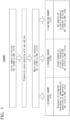
- the discovery cohort was used for discovering a biomarker candidate.
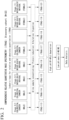
- Comprehensive analysis using relative quantitative mass spectrometry (iTRAQ (registered trademark) was performed on the 32 cases of the discovery cohort (comprehensive analysis cohort).
- the concentration of the urine samples, and the reduction reaction, alkylation, and digestion reaction of proteins were carried out according to general techniques. Subsequently, as shown in FIG. 2 , High pH RP-HPLC Separation and Low pH nano LC-MS/MS were performed in this order, and data analysis was carried out.
- the training cohort was used for establishing colorectal cancer biomarkers.
- concentrations of the 23 types of urinary proteins as biomarker candidates narrowed down by the analysis of the discovery cohort were measured by ELISA for the urine specimens of the 220 cases of the training cohort.
- the urinary protein concentration was acquired not only as an absolute value, which was the measured value itself, but also as a urinary Cr-relative value standardized by dividing the urinary protein concentration by the urinary creatinine concentration.
- the urinary creatinine is usually a protein that is widely expressed in urine of a specimen.
- the candidate protein concentration was standardized by standardizing the protein concentration of a biomarker candidate using the urinary creatinine concentration. The results are shown in Table 1 to Table 4.
- AUC is a statistical index and takes a value from 0 to 1. As the value of AUC is closer to 1, it indicates that the higher the determination ability of the presence or absence of the contraction of colorectal cancer, that is, the diagnostic ability, is higher.
- these identified colorectal cancer biomarkers have p-values lower than those of the proteins of the other biomarker candidates. From this, it can be seen that the colorectal cancer biomarkers are significantly abnormally expressed in the urine of colorectal cancer patients.
- the validation cohort was used for verification of the colorectal cancer biomarkers established through the discovery cohort and the training cohort.
- the 7 types of urinary proteins other than CDH17 that is, DPEP1, TFF1, ANPEP, LGALS3, PRG4, PIGR, and TNFRSF10C, also showed high expression in the urine of the colorectal cancer patients as compared with the healthy individuals in the validation cohort.
- the AUC of urinary DPEP1 was the highest, with the urinary Cr-relative value being 0.809 (Table 5) and the absolute value being 0.930 (Table 6), as in the analysis in the training cohort.
- the urinary DPEP1 showed the highest reproducibility as a biomarker, enabling diagnosis of colorectal cancer with extremely high accuracy.
- Table 7 shows an example of the cut-off values of various colorectal cancer biomarkers for colorectal cancer of stages 0 to III obtained from the analysis results with the urinary Cr-relative values, and the diagnostic accuracy.
- Table 8 shows an example of the cut-off values of various colorectal cancer biomarkers for colorectal cancer of stages 0 to III obtained from the analysis results with the absolute values, and the diagnostic accuracy thereof.
- cut-off values are merely values as an example applied in the current analysis.
- the cut-off values used in actual testing sites are not necessarily the numerical values shown as exemplary examples in the following tables. The same applies to Table 9 and Table 10 that will be described later.
- the cut-off values were calculated as follows. First, the values of (sensitivity, specificity, 1 - specificity) were calculated for each value of each factor, and an ROC curve was drawn. The Youden Index of the ROC curve was used as a cut-off value. The Youden Index is a point at which the value of (sensitivity + specificity - 1) is maximized. Logistic regression analysis was used for calculating the cut-off value for a combination of two or more factors. A formula for predicting colorectal cancer was created using the factors to be combined as explanatory variables, and predicted values were calculated. Thereafter, the sensitivity, the specificity, and 1 - specificity were calculated for each predicted value in the same manner, an ROC curve was drawn, and the Youden Index was used as the cut-off value.
- the cut-off value used in an actual testing site is not necessarily limited to the Youden Index.
- the cut-off value can be set in consideration of the purpose of the colorectal cancer screening. For example, in some cases, it may be preferable to set the cut-off value while prioritizing the improvement of sensitivity.
- the sensitivity was 80.4% while the specificity was 64.5% in terms of the urinary Cr-relative value, and the sensitivity was 85.4% while the specificity was 64.5% in terms of the absolute value.
- the urinary DPEP1 it is believed that colorectal cancer can be determined with exceptional sensitivity and specificity.
- the 16 types of urinary proteins can also be utilized for diagnosis even when two or more kinds are combined.
- various combination patterns centered on the DPEP1 or TFF1 may be considered. Examples of the combination pattern and the sensitivity and specificity thereof are shown together in Table 7 and Table 8.
- the AUC had high values of 0.846 in terms of the urinary Cr-relative value and 0.870 in terms of the absolute value.
- the combination showed high diagnostic accuracy, with a sensitivity of 91.1% and a specificity of 62.8% in terms of the urinary Cr-relative value, and a sensitivity of 94.3% and a specificity of 63.4% in terms of the absolute value.
- Table 9 shows an example of the cut-off values of various colorectal cancer biomarkers for colorectal cancer of stage 0/I obtained from the analysis results with the urinary Cr-relative values, and the diagnostic accuracy.
- Table 10 shows an example of the cut-off values of various colorectal cancer biomarkers for colorectal cancer of stage 0/I obtained from the analysis results with the absolute values, and the diagnostic accuracy.
- the method for calculating the cut-off values shown in each of Table 9 and Table 10 is the same as the method for calculating the cut-off values shown in each of Table 7 and Table 8. That is, the Youden Index of the ROC curve was used as the cut-off value. Furthermore, logistic regression analysis was used for calculating the cut-off value for a combination of two or more factors.
- the cut-off value used in an actual testing site is not necessarily limited to the values shown in Table 9 and Table 10.
- the cut-off value can be set in consideration of the purpose of the colorectal cancer screening. For example, in some cases, it may be preferable to set the cut-off value while prioritizing the improvement of sensitivity.
- early colorectal cancer of stage 0/I that can be resected by endoscopic treatment can also be diagnosed with high accuracy.
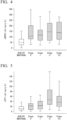
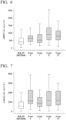
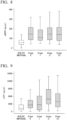
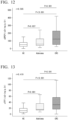
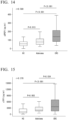
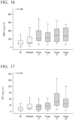
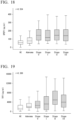
- the expression levels of four urinary proteins (DPEP1, TFF1, ANPEP, and LGALS3) in each stage, which show exceptional sensitivity and specificity when used alone, showed higher values from the stage 0 as compared with healthy individuals for all the proteins.
- the expression levels of all the proteins maintained high values in stages I to III as compared with healthy individuals.
- all the proteins show a graph tendency suitable for the diagnosis of early colorectal cancer.
- FIG. 20 shows an ROC curve based on the urinary Cr-relative value standardized by dividing each urinary protein concentration by the urinary creatinine concentration
- FIG. 21 shows an ROC curve based on the absolute value of each urinary protein concentration.
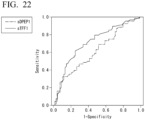
- the AUC of DPEP1 was 0.618, and the AUC of TFF1 was 0.684.
- the AUC of DPEP1 was 0.641, and the AUC of TFF1 was 0.668.
- FIG. 22 shows an ROC curve drawn based on the measured values of each protein concentration. The AUC value was acquired from this ROC curve.
- a colorectal cancer biomarker that enables simple and non-invasive determination of the presence or absence of the contraction of colorectal cancer with exceptional sensitivity and specificity.
Landscapes
- Health & Medical Sciences (AREA)
- Life Sciences & Earth Sciences (AREA)
- Engineering & Computer Science (AREA)
- Immunology (AREA)
- Urology & Nephrology (AREA)
- Chemical & Material Sciences (AREA)
- Biomedical Technology (AREA)
- Molecular Biology (AREA)
- Hematology (AREA)
- Medicinal Chemistry (AREA)
- General Health & Medical Sciences (AREA)
- Biotechnology (AREA)
- Hospice & Palliative Care (AREA)
- Oncology (AREA)
- Food Science & Technology (AREA)
- Microbiology (AREA)
- Analytical Chemistry (AREA)
- Cell Biology (AREA)
- Biochemistry (AREA)
- Physics & Mathematics (AREA)
- General Physics & Mathematics (AREA)
- Pathology (AREA)
- Investigating Or Analysing Biological Materials (AREA)
- Peptides Or Proteins (AREA)
Applications Claiming Priority (2)
| Application Number | Priority Date | Filing Date | Title |
|---|---|---|---|
| JP2022106363 | 2022-06-30 | ||
| PCT/JP2023/020674 WO2024004523A1 (ja) | 2022-06-30 | 2023-06-02 | 大腸がんバイオマーカーおよびその用途 |
Publications (1)
| Publication Number | Publication Date |
|---|---|
| EP4549941A1 true EP4549941A1 (de) | 2025-05-07 |
Family
ID=89382741
Family Applications (1)
| Application Number | Title | Priority Date | Filing Date |
|---|---|---|---|
| EP23830973.6A Pending EP4549941A1 (de) | 2022-06-30 | 2023-06-02 | Kolorektalkarzinom-biomarker und verwendung davon |
Country Status (3)
| Country | Link |
|---|---|
| EP (1) | EP4549941A1 (de) |
| JP (1) | JPWO2024004523A1 (de) |
| WO (1) | WO2024004523A1 (de) |
Families Citing this family (1)
| Publication number | Priority date | Publication date | Assignee | Title |
|---|---|---|---|---|
| CN118670830B (zh) * | 2024-08-20 | 2025-01-10 | 杭州广科安德生物科技有限公司 | 用于结直肠早期癌变检测的生物标志物及其应用 |
Family Cites Families (4)
| Publication number | Priority date | Publication date | Assignee | Title |
|---|---|---|---|---|
| US7582441B1 (en) * | 2005-10-17 | 2009-09-01 | Celera Corporation | Methods and compositions for treating and diagnosing disease |
| US20160209415A1 (en) * | 2015-01-20 | 2016-07-21 | Poochon Scientific LLC | Method to predict or diagnose a colorectal cancer |
| EP3483282A4 (de) * | 2016-07-08 | 2020-07-29 | Hanumat Co., Ltd. | Verfahren zur beurteilung der möglichkeit von dickdarmkrebs |
| JP7421120B2 (ja) | 2021-01-07 | 2024-01-24 | サミー株式会社 | 遊技機 |
-
2023
- 2023-06-02 EP EP23830973.6A patent/EP4549941A1/de active Pending
- 2023-06-02 WO PCT/JP2023/020674 patent/WO2024004523A1/ja not_active Ceased
- 2023-06-02 JP JP2024530599A patent/JPWO2024004523A1/ja active Pending
Also Published As
| Publication number | Publication date |
|---|---|
| WO2024004523A1 (ja) | 2024-01-04 |
| JPWO2024004523A1 (de) | 2024-01-04 |
Similar Documents
| Publication | Publication Date | Title |
|---|---|---|
| JP4486153B2 (ja) | 虫垂炎を診断するための方法およびデバイス | |
| JP4630383B2 (ja) | 虫垂炎の診断のための方法および装置 | |
| KR102442803B1 (ko) | 결장직장암에 대한 복합 테스트 | |
| Moniuszko et al. | Rapid fecal calprotectin test for prediction of mucosal inflammation in ulcerative colitis and Crohn disease: a prospective cohort study | |
| BRPI0619712A2 (pt) | dispositivo para a identificação de um paciente como um candidato para testes radiográficos para o cáncer do pulmão, composição para detectar radiograficamente um cáncer do pulmão de estágio adiantado, dispositivo para o ensaio do cáncer do pulmão, uso de um painel, e, dispositivo de diagnóstico para a detecção do cáncer do pulmão | |
| US12473600B2 (en) | Marker for pancreatic cancer and intraductal papillary mucinous neoplasms | |
| WO2012033999A2 (en) | Biomarkers for predicting kidney and glomerular pathologies | |
| EP4549941A1 (de) | Kolorektalkarzinom-biomarker und verwendung davon | |
| KR20210134946A (ko) | 대장암 및/또는 이의 전암 단계 진단을 위한 단백질 시그니처 | |
| US20130102011A1 (en) | Human leucine-rich a-2-glycoprotein-1 and aminopeptidase n as risk indicators for cancer | |
| WO2016072464A1 (ja) | デオキシハイプシン・シンターゼ遺伝子を指標として用いる動脈硬化及びがんの検出方法 | |
| CN116096913A (zh) | 轻度认知障碍的测试方法、轻度认知障碍的测试试剂以及轻度认知障碍的治疗药候选物质的筛选方法 | |
| PT2274623E (pt) | Método para o diagnóstico de hipertensão arterial pulmonar | |
| Kochhar et al. | Utility of biomarkers in the management of inflammatory bowel disease | |
| CN120752707A (zh) | 神经丝轻链生物标志物组合物及其使用方法 | |
| JP7398226B2 (ja) | 大腸がん罹患のリスクを評価するための方法 | |
| ES2775178T3 (es) | Uso de nucleosomas libres de células como biomarcadores en muestras fecales | |
| CN114774534A (zh) | Mmp19作为肾脏早期损伤相关的生物标志物在早期诊断肾损伤中的应用 | |
| CN115372616A (zh) | 胃癌相关的生物标志物及其应用 | |
| US8697368B2 (en) | Diagnostic marker for lung cancer comprising HPαR as active ingredient | |
| WO2021001303A1 (en) | Succinate as a biomarker for selecting a bariatric surgical procedure and for predicting type 2 diabetes remission after bariatric surgery | |
| US20130157292A1 (en) | Composition for the diagnosis of ovarian cancer or pneumonia comprising thioredoxin 1 as active ingredient and use thereof | |
| IONESCU et al. | Clinical and Epidemiological Characteristics | |
| Firkin | Screening for multiple myeloma | |
| Sabedot et al. | Gene-61. methylation-based liquid biopsy of meningioma primary and recurrent samples |
Legal Events
| Date | Code | Title | Description |
|---|---|---|---|
| STAA | Information on the status of an ep patent application or granted ep patent |
Free format text: STATUS: THE INTERNATIONAL PUBLICATION HAS BEEN MADE |
|
| PUAI | Public reference made under article 153(3) epc to a published international application that has entered the european phase |
Free format text: ORIGINAL CODE: 0009012 |
|
| STAA | Information on the status of an ep patent application or granted ep patent |
Free format text: STATUS: REQUEST FOR EXAMINATION WAS MADE |
|
| 17P | Request for examination filed |
Effective date: 20241220 |
|
| AK | Designated contracting states |
Kind code of ref document: A1 Designated state(s): AL AT BE BG CH CY CZ DE DK EE ES FI FR GB GR HR HU IE IS IT LI LT LU LV MC ME MK MT NL NO PL PT RO RS SE SI SK SM TR |
|
| DAV | Request for validation of the european patent (deleted) | ||
| DAX | Request for extension of the european patent (deleted) |