EP4542194A1 - Gas continuous analysis system, and gas continuous analysis method - Google Patents
Gas continuous analysis system, and gas continuous analysis method Download PDFInfo
- Publication number
- EP4542194A1 EP4542194A1 EP23823888.5A EP23823888A EP4542194A1 EP 4542194 A1 EP4542194 A1 EP 4542194A1 EP 23823888 A EP23823888 A EP 23823888A EP 4542194 A1 EP4542194 A1 EP 4542194A1
- Authority
- EP
- European Patent Office
- Prior art keywords
- gas
- flow channel
- analyzer
- purge
- continuous analysis
- Prior art date
- Legal status (The legal status is an assumption and is not a legal conclusion. Google has not performed a legal analysis and makes no representation as to the accuracy of the status listed.)
- Pending
Links
Images



Classifications
-
- G—PHYSICS
- G01—MEASURING; TESTING
- G01N—INVESTIGATING OR ANALYSING MATERIALS BY DETERMINING THEIR CHEMICAL OR PHYSICAL PROPERTIES
- G01N30/00—Investigating or analysing materials by separation into components using adsorption, absorption or similar phenomena or using ion-exchange, e.g. chromatography or field flow fractionation
- G01N30/02—Column chromatography
- G01N30/04—Preparation or injection of sample to be analysed
-
- G—PHYSICS
- G01—MEASURING; TESTING
- G01N—INVESTIGATING OR ANALYSING MATERIALS BY DETERMINING THEIR CHEMICAL OR PHYSICAL PROPERTIES
- G01N33/00—Investigating or analysing materials by specific methods not covered by groups G01N1/00 - G01N31/00
- G01N33/0004—Gaseous mixtures, e.g. polluted air
- G01N33/0006—Calibrating gas analysers
-
- G—PHYSICS
- G01—MEASURING; TESTING
- G01N—INVESTIGATING OR ANALYSING MATERIALS BY DETERMINING THEIR CHEMICAL OR PHYSICAL PROPERTIES
- G01N1/00—Sampling; Preparing specimens for investigation
- G01N1/02—Devices for withdrawing samples
- G01N1/22—Devices for withdrawing samples in the gaseous state
-
- G—PHYSICS
- G01—MEASURING; TESTING
- G01N—INVESTIGATING OR ANALYSING MATERIALS BY DETERMINING THEIR CHEMICAL OR PHYSICAL PROPERTIES
- G01N30/00—Investigating or analysing materials by separation into components using adsorption, absorption or similar phenomena or using ion-exchange, e.g. chromatography or field flow fractionation
- G01N30/02—Column chromatography
- G01N30/26—Conditioning of the fluid carrier; Flow patterns
- G01N30/28—Control of physical parameters of the fluid carrier
-
- G—PHYSICS
- G01—MEASURING; TESTING
- G01N—INVESTIGATING OR ANALYSING MATERIALS BY DETERMINING THEIR CHEMICAL OR PHYSICAL PROPERTIES
- G01N30/00—Investigating or analysing materials by separation into components using adsorption, absorption or similar phenomena or using ion-exchange, e.g. chromatography or field flow fractionation
- G01N30/02—Column chromatography
- G01N30/88—Integrated analysis systems specially adapted therefor, not covered by a single one of the groups G01N30/04 - G01N30/86
-
- G—PHYSICS
- G01—MEASURING; TESTING
- G01N—INVESTIGATING OR ANALYSING MATERIALS BY DETERMINING THEIR CHEMICAL OR PHYSICAL PROPERTIES
- G01N1/00—Sampling; Preparing specimens for investigation
- G01N1/02—Devices for withdrawing samples
- G01N1/22—Devices for withdrawing samples in the gaseous state
- G01N1/2247—Sampling from a flowing stream of gas
-
- G—PHYSICS
- G01—MEASURING; TESTING
- G01N—INVESTIGATING OR ANALYSING MATERIALS BY DETERMINING THEIR CHEMICAL OR PHYSICAL PROPERTIES
- G01N30/00—Investigating or analysing materials by separation into components using adsorption, absorption or similar phenomena or using ion-exchange, e.g. chromatography or field flow fractionation
- G01N30/02—Column chromatography
- G01N2030/022—Column chromatography characterised by the kind of separation mechanism
- G01N2030/025—Gas chromatography
Definitions
- This invention relates to a gas continuous analysis system and a gas continuous analysis method.
- a gas for example, a flue gas, a process gas, or the like
- a gas is sampled and the sampled gas is introduced into an analyzer.
- the analyzer is then calibrated (zero calibration, span calibration) during a course of this continuous analysis.
- the zero calibration is performed using a zero gas as nitrogen (N 2 ) gas
- the span calibration is performed using a span gas containing a measured component of a known concentration.
- the adsorbable component such as hydrogen fluoride (HF) or hydrogen chloride (HCl) contained in the gas
- the adsorbable component is adsorbed on an inner surface of a piping or a measurement cell of the analyzer, and in case that the zero gas is flown during calibration, the adsorbable component adsorbed in the measurement cell is separated from the measuring cell. Then, it takes time for the indicated value of the analyzer at the time of calibration to stabilize. As a result of this, the calibration time between consecutive analyses becomes longer, and the interruption time in gas continuous analysis becomes longer.
- HF hydrogen fluoride
- HCl hydrogen chloride
- Patent Document 1 Japan Unexamined Patent Application Publication No. 2013-96889
- the present invention is to solve the above-mentioned problem and a main object of this invention is to shorten time for calibration or validation of an analyzer that analyzes a sample gas containing an adsorbable component.
- a gas continuous analysis system in accordance with this invention comprises a main flow channel through which a sample gas containing an adsorbable component flows, an analyzer that analyzes the adsorbable component in the sample gas flowing in the main flow channel, a standard gas flow channel that supplies a standard gas for calibrating or validating the analyzer, and a purge gas flow channel that supplies a purge gas containing moisture to a channel through which the sample gas of the analyzer passes, and is characterized by that the sample gas is introduced into the main flow channel and the sample gas is continuously analyzed by the analyzer, and in the middle of the continuous analysis, the purge gas is supplied to the analyzer from the purge gas flow channel to purge the flow channel through which the sample gas of the analyzer passes, and successively a standard gas is supplied to the analyzer from the standard gas flow channel to calibrate or validate the analyzer.
- the flow channel in which the sample gas of the analyzer flows is purged by using the purge gas containing moisture prior to calibration or validation of the analyzer, it is possible to shorten the time required for stabilizing the indicated value of the analyzer during calibration or validation.
- the purge gas containing moisture is used, the adsorbable component, which is adsorbed inside of the flow channel in which the sample gas of, for example, the measurement cell of the analyzer flows, is easily separated due to water molecules. As a result of this, it is possible to shorten the time for calibration or validation during an interval between continuous analyses, resulting in being able to shorten an interruption time of the continuous analysis of the sample gas.
- the purge gas flow channel supplies atmosphere to the flow channel through which the sample gas of the analyzer gas passes. In accordance with this configuration, it is possible to reduce a cost for the purge gas.
- the analyzer analyzes HF, HCl or NH 3 as the adsorbable component. Since a dipole moment as an index of adsorptive ability is H 2 O>HF>NH 3 >HCl, it is possible for the system that analyzes HF, HCL or NH 3 as the adsorbable component to make the effect of using the purge gas containing moisture remarkable
- the standard gas flow channel has a zero gas flow channel that supplies a zero gas to the analyzer, and a span gas flow channel that supplies a span gas to the analyzer.
- the gas continuous analysis system supplies the purge gas to the analyzer from the purge gas flow channel in the middle of continuous analysis to purge the flow channel through which the sample gas of the analyzer passes, successively supplies the zero gas from the zero gas flow channel to the analyzer to zero-calibrate the analyzer, and supplies the span gas to the analyzer from the span gas flow channel to span-calibrate the analyzer.
- the standard gas flow channel may not have a zero gas flow channel that supplies the zero gas to the analyzer.
- the standard gas flow channel supplies the span gas to the analyzer, and the gas continuous analysis system supplies the purge gas to the analyzer from the purge gas flow channel to purge the flow channel through which the sample gas of the analyzer passes and to zero-calibrate the analyzer, and successively supplies the span gas to the analyzer from the standard gas flow channel to span-calibrate the analyzer.
- the gas continuous analysis system further comprises a second purge gas flow channel that is connected to an upstream side of the analyzer in the main flow channel and that supplies a second purge gas from a connection point of the second purge gas flow channel to the main flow channel toward the upstream side of the main flow channel, and after the continuous analysis is completed, the gas continuous analysis system supplies the second purge gas from the second purge gas flow channel to purge the upstream side of the connection point in the second purge gas flow channel.
- the adsorbable component In case of analyzing an adsorbable component such as HF, HCL or NH 3 , the adsorbable component adsorbs to an inner surface of the piping constituting the main flow channel so that a response time of the analyzer becomes longer.
- an overflow flow channel that discharges a part of the sample gas flowing in the main flow channel in the upstream side of the analyzer.
- a throttle unit is provided between a connection point of the overflow flow channel to the main flow channel and the analyzer in the main flow channel, a main suction pump is provided in the downstream side of the analyzer in the main flow channel, and a sub-suction pump is provided in the overflow flow channel.
- the gas continuous analysis system in accordance with this invention is characterized by comprising a sampling unit that samples a gas containing an adsorbable component flowing in a duct, a main flow channel through which a sample gas sampled by the sampling unit flows, a chromatograph or a mass spectrometer that analyzes an adsorbable component in the sample gas flowing in the main flow channel, and an overflow channel that discharges a part of the sample gas flowing in the main flow channel in an upstream side of the chromatograph or the mass spectrometer.
- the gas continuous analysis method in accordance with this invention is a gas continuous analysis method using a measurement system comprising a main flow channel through which a sample gas containing an adsorbable component flows, an analyzer that analyzes the adsorbable component in the sample gas flowing in the main flow channel, a standard gas flow channel that supplies a standard gas for calibration or validation to the analyzer, and a purge gas flow channel that supplies a purge gas containing moisture to the flow channel through which the sample gas of the analyzer flows, and is characterized by that the sample gas is introduced into the main flow channel and the sample gas is continuously analyzed by the analyzer, the purge gas is supplied to the analyzer from the purge gas flow channel in the middle of continuous analysis to purge the flow channel through which the sample gas of the analyzer passes, and successively the standard gas is supplied to the analyzer from the standard gas flow channel to calibrate or validate the analyzer.
- This gas continuous analysis system 100 in accordance with this embodiment continuously analyzes a concentration of an adsorbable component such as hydrogen fluoride (HF), hydrogen chloride (HCl) or ammonia (NH 3 ) in a sample gas.
- an adsorbable component such as hydrogen fluoride (HF), hydrogen chloride (HCl) or ammonia (NH 3 ) in a sample gas.
- the sample gas is a combustion gas such as a gas under combustion or a combustion exhaust gas (a flue gas) or a process gas.
- the gas under combustion is a gas being burned in an external combustion engine, an industrial furnace, an incinerator, a turbine or a power plant or the like
- the flue gas is a post-combustion gas discharged from the external combustion engine, the industrial furnace, the incinerators, the turbine or the power plant.
- the process gas is a gas in a chemical plant such as petrochemistry, coal chemistry, natural gas chemistry, petroleum refining, methanation and gasifiers, and includes a raw material gas such as a natural gas as well as a gas separated or produced in a chemical plant.
- the process gas includes a gas that has passed through exhaust gas treatment facilities such as a scrubber in a semiconductor manufacturing plant (semiconductor manufacturing equipment), for example, an exhaust gas from etching equipment, which is passed through a scrubber that removes HF or the like generated in a decomposition reaction from the exhaust gas, and the exhaust gas after passing through the scrubber.
- exhaust gas treatment facilities such as a scrubber in a semiconductor manufacturing plant (semiconductor manufacturing equipment), for example, an exhaust gas from etching equipment, which is passed through a scrubber that removes HF or the like generated in a decomposition reaction from the exhaust gas, and the exhaust gas after passing through the scrubber.
- the gas after detoxifying the above various gases may be used as the sample gas.
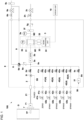
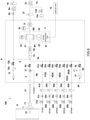
- the gas continuous analysis system 100 comprises a main flow channel 2 through which the sample gas containing an adsorbable component flows, an analyzer 3 that analyzes the adsorbable component in the sample gas flowing in the main flow channel 2, a calibration gas flow channel 4 that is a standard gas flow channel supplying a calibration gas which is a standard gas to the analyzer 3, and a purge gas flow channel (first purge gas flow channel) 5A that supplies a purge gas (first purge gas) containing moisture to a flow channel through which the sample gas of the analyzer 3 flows and a second purge gas flow channel 5B that is connected to an upstream side of the analyzer 3 in the main flow channel 2 and that supplies a second purge gas from a connection point between the second purge gas flow channel 5B and the main flow channel 2 to the upstream side in the main flow channel 2, an overflow flow channel 6 that discharges a part of the sample gas flowing in the main flow channel 2 at the upstream side of the analyzer 3.
- first purge gas flow channel 5A that supplies a
- a sampling unit 7 for sampling the gas flowing in, for example, a flue is provided at one end part of the main flow channel 2.
- This sampling unit 7 has a sampling probe 7P that is inserted into the flue formed by the duct (D). The gas is sampled from the sampling probe 7P.
- the sampling unit 7 has a dust collection filter 71.
- the main flow channel 2 is made of a hot hose 21 from the sampling unit 7 to a housing 8 that houses the analyzer 3. If the hot hose 21 is made of Teflon, it is possible to prevent adsorption of adsorbable components.
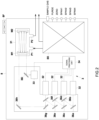
- the code 8F in Fig. 2 is a ventilation unit such as a fan provided on a wall of the housing 8.
- the main flow channel 2 has a dust collection filter 2a, a throttle unit 2b such as an orifice, the analyzer 3 and a main suction pump 2c in this order from the upstream side in the downstream side of the hot hose 21.
- a solenoid switch valve 2d is provided in the upstream side of the dust collection filter 2a in the main flow channel 2.
- a pressure sensor 2e, a flow sensor 2f, a check valve 2g or a pressure regulating valve 2h may be provided between the analyzer 3 and the main suction pump 2c in the main flow channel 2.
- the pressure regurating valve 2h and the main suction pump 2c are provided outside the housing 8.
- the piping in the downstream side of the main suction pump 2c in the main flow channel 2 may be heated to prevent moisture from condensing.
- the heating temperature can be set according to the moisture concentration in the sample gas. If the moisture concentration in the sample gas is, for example, 6 vol%, it can be considered that the heating temperature is, for example, 40°C.
- a dehumidifier or a buffer tank may be provided in the downstream side of the main suction pump 2c to remove the moisture in the sample gas.
- the upstream side of the main suction pump 2c is depressurized and does not need to be heated, however, it may be heated or a dehumidifier or a buffer tank may be provided.
- the analyzer 3 continuously analyzes the concentration of HF, HCl or NH 3 as the adsorbable component in the sample gas, using, for example, an IRLAM detector based on the infrared laser absorption modulation method (refer to the patent document 6886507 ).
- the analyzer 3 comprises a measurement cell 31 into which the sample gas is introduced, a semiconductor laser 32 that irradiates a laser beam into the measurement cell 31, a photodetector 33 that receives the laser beam passing through the measurement cell 31, and a signal processing unit 34 that receives an output signal of the photodetector 33 and that calculates a concentration of the measured component based on a value of the output signal.
- the measurement cell 31 has an introduction port P1 for introducing the sample gas and a discharge port P2 for discharging the sample gas, and a pair of reflecting mirrors M1 and M2 are provided inside of the measurement cell 31 and is a so-called Herriott cell that multiply reflects the laser light.
- the measurement cell 31 is temperature-controlled to a predetermined temperature based on the temperature detected by a temperature sensor 35.
- the concentration of the measured component obtained by the signal processing unit 34 is displayed on a display unit 10, such as a display.
- a quantum cascade laser, an interband cascade laser, or other semiconductor laser can be used as the semiconductor laser 32.
- the quantum cascade laser is a semiconductor laser that uses an intersubband transition with a multiple quantum well structure and that emits a laser beam with a specific wavelength in a wavelength range of about 4 ⁇ m to about 20 ⁇ m.
- the interband cascade laser is a semiconductor laser that uses an interband transition of a multi-stage PN junction with a quantum well structure and that emits a laser beam with a specific wavelength in a wavelength range of about 3 ⁇ m to about 5 ⁇ m.
- other semiconductor laser is a semiconductor laser that uses an interband transition of a single PN junction with a quantum well structure and that is capable of oscillating an ultraviolet light, a visible light, and a near-infrared light mainly in the 0.3 ⁇ m to 3 ⁇ m range.
- the semiconductor laser 32 may comprise a plurality of semiconductor lasers 32 as shown in Fig. 2 .
- a plurality of the semiconductor lasers 32 can be configured to emit laser beams of mutually different wavelength according to the measurement component.
- a plurality of the semiconductor lasers 32 may be configured to emit the laser beams at different timings from each other, or at least two or more can emit the laser beam simultaneously.
- a plurality of the semiconductor lasers 32 may have a plurality of reflecting mirrors 36a to 36h for introducing the laser beam emitted from each of a plurality of the semiconductor lasers 32 into the measurement cell 31.
- the code 8X in Fig. 2 indicates a piping system (the main flow channel 2, the calibration gas flow channel 4, the first purge gas flow channel 5A, the second purge gas flow channel 5B or the overflow flow channel 6 or the like) provided in the housing 8 and used to introduce the sample gas, the purge gas or the calibration gas into the measurement cell 31 in an omitted manner.
- the calibration gas flow channel 4 is connected in an upstream side of the analyzer 3 in the main flow channel 2 and supplies the calibration gas to the main flow channel 2.
- the calibration gas flow channel 4 in accordance with this embodiment is connected in the upstream side of the dust collection filter 2a in the main flow channel 2, concretely between the solenoid valve 2d and the dust collection filter 2a.
- the first purge gas flow channel 5A is connected in the upstream side of the analyzer 3 in the main flow channel 2 and supplies the first purge gas containing moisture to the main flow channel 2 to supply the first purge gas containing moisture to the flow channel in which the sample gas of the analyzer 3 flows.
- the first purge gas flow channel 5A in this embodiment supplies atmosphere as the first purge gas containing moisture to the flow channel in which the sample gas of the analyzer 3 flows.
- a dust collection filter 51 is provided in an atmosphere introduction unit 50 of the first purge gas flow channel 5A.
- the first purge gas flow channel 5A is connected in an upstream side of the dust collection filter 2a in the main flow channel 2, concretely, between the solenoid switch valve 2d and the dust collection filter 2a.
- the first purge gas flow channel 5A joins the calibration gas flow channel 4 and is connected to the main flow channel 2.
- the first purge gas flow channel 5A supplies the atmosphere as the first purge gas also to the calibration gas flow channel 4.
- the first purge gas flow channel 5A is provided with a solenoid open/close valve 5a to switch the supply of the first purge gas.
- the second purge gas flow channel 5B is connected in the upstream side of the analyzer 3 in the main flow channel 2 and supplies the second purge gas to the main flow channel 2 to the upstream side of the connection point of the second purge gas flow channel 5B.
- the second purge gas of this embodiment is to discharge the exhaust gas stagnating in the main flow channel 2 to the outside from the sampling unit 7 by purging the exhaust gas by making the second purge gas flow back into the main flow channel 2.
- a second purge gas source (not shown in drawings) that pumps the second purge gas is connected to the upstream side of the second purge gas flow channel 5B.
- dry air or nitrogen gas can be used as the second purge air.
- the second purge air flow channel 5B is connected to the upstream side of the solenoid valve 2d in the main flow channel 2.
- a three-way valve 2i is provided at the connection point of the second purge gas flow channel 5B in the main flow channel 2.
- the three-way valve 2i may be a manual switching valve or a solenoid switching valve.
- the solenoid valve 2d in the main flow channel 2 may be a three-way valve, and the second purge gas flow channel 5B may be connected to this solenoid valve 2d.
- the overflow channel 6 is connected to the upstream side of the analyzer 3 in the main flow channel 2 and discharges a part of the sample gas flowing in the main flow channel 2.
- the overflow channel 6 is connected to the upstream side of the dust collection filter 2a in the main flow channel 2, concretely, between the solenoid open/close valve 2d and the dust collection filter 2a.
- only the dust collection filter 2a and the throttle unit 2b are provided between the connection point 6x of the overflow flow channel 6 and the analyzer 3, resulting in making a distance from the connection point 6x of the overflow flow channel 6 to the analyzer 3 as short as possible.
- the sub-suction pump 6a is provided in the overflow flow channel 6.
- a needle valve 6b for flow adjustment may be provided in an upstream side of the sub-suction pump 6a, and a flow sensor 6c may be provided in the downstream side of the sub-suction pump 6a.
- the sub-suction pump 6a, the needle valve 6b, and the flow sensor 6c are arranged outside the housing 8.
- the piping outside the housing 8 in the overflow flow channel 6 may be heated to prevent moisture from condensing.
- the heating temperature can be set according to the moisture concentration in the sample gas. In case that the moisture concentration in the sample gas is, for example, 6 vol%, it is conceivable that the heating temperature is set, for example, at 40°C.
- the system can also be configured to remove the moisture in the sample gas by providing a dehumidifier or a buffer tank or the like in the piping outside the housing 8 in the overflow flow channel 6.
- a bypass channel 9 that bypasses the sub-suction pump 6a is connected to the overflow flow channel 6.
- the three-way solenoid valve 6d is provided at the connection point in the upstream side of the overflow flow channel 6 and the bypass channel 9 to enable switching of the flow channels.
- a check valve 6e may be provided in the upstream side of the three-way solenoid valve 6d in the overflow flow channel 6.
- the piping outside the housing 8 in the bypass channel 9 may be heated to prevent moisture from condensing.
- the heating temperature can be set according to the moisture concentration in the sample gas, and in case that the moisture concentration in the sample gas is, for example, 6 vol%, it is conceivable that the heating temperature may be, for example, 40°C.
- the system may be configured to remove the moisture in the sample gas by providing a dehumidifier or buffer tank or the like in the piping outside the housing 8 in the bypass channel 9.
- the piping inside the housing 8 in the main flow channel 2, the overflow flow channel 6 or the bypass flow channel 9 may be heated to prevent moisture from condensing.
- the piping connected to the hot hose 21 up to the orifice 2b may be heated.
- the downstream side of the orifice 2b is depressurized by the main suction pump 2c and does not necessarily need to be heated.
- the system may be configured to partially heat the area prone to condensation depending on the measurement condition or the use condition.
- the flow channels through which the sample gas flows may be made of a material that is resistant to a corrosive gas.
- the piping that constitutes the main flow channel 2, the piping that constitutes the overflow flow channel 6, and/or the piping that constitutes the bypass flow channel 9 may be made of a Teflon pipe or a stainless steel pipe (for example, SUS316L).
- the stainless steel pipe it is conceivable to use the pipe with polished inner surfaces.
- the measurement cell 31 may be made of a material that is resistant to a corrosive gas.
- the measurement cell 31 is made of stainless steel (for example, SUS316L)
- the reflecting mirrors M1 and M2 arranged inside the measurement cell 31 is made of stainless steel (for example, SUS316L) with gold plating on the reflecting surface.
- Hastelloy or Inconel, or the like may be used.
- the sample gas of a sum of a flow rate of a suction flow rate of the main suction pump 2c provided in the main flow channel 2 and a suction flow rate of the sub suction pump 6a provided in the overflow flow channel 6 is sampled.
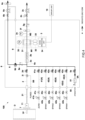
- a part of the sample gas flowing in the main flow channel 2 is then introduced into the analyzer 3 through the collecting filter 2a and the throttle unit 2b.
- Other sample gas is exhausted through the overflow channel 6.
- the sample gas sucked by the main suction pump 2c and introduced into the analyzer 3 through the throttle unit 2b is at a constant flow rate, and the inside of the measurement cell 31 is in a depressurized state. With this state kept, the concentration of HF or HCl, which is the adsorbable component is continuously analyzed by the analyzer 3.
- a calibration process is periodically performed based on, for example, a predetermined schedule. Before this calibration process, a first purge process is performed.
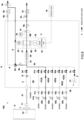
- the first purge gas is supplied from the first purge gas flow channel 5A to the analyzer 3 to purge the flow channel through which the sample gas flows in the analyzer 3 and a part of the calibration gas flow channel 4.
- a flow channel through which the sample gas flows is a flow channel from the sample gas introduction port (not shown in drawings) of the analyzer 3 to the measurement cell 31.
- a part of the calibration gas flow channel 4 is a part in the downstream side of the connection point where the first purge gas flow channel 5A joins the calibration gas flow channel 4.
- the solenoid open/close valve 2d of the main flow channel 2 is closed and the solenoid open/close valve 5a of the first purge gas flow channel 5A is opened.
- the atmosphere containing moisture is introduced from the atmosphere introduction unit 50 of the first purge gas flow channel 5A by the main suction pump 2c to introduce the atmosphere containing moisture into the measurement cell 31 of the analyzer 3.
- adsorbed components adsorbed on the inner surface of the piping from the connection point of the first purge gas flow channel 5A in the main flow channel 2 to the measurement cell 31, the inner surface of the measurement cell 31, and the reflecting mirrors M1 and M2 are separated and removed by water molecules.
- the analyzer 3 is calibrated by supplying the calibration gas to the analyzer 3 from the calibration gas flow channel 4. In other words, the analyzer 3 is calibrated in a purged state.
- zero calibration is performed by supplying the zero gas from the zero gas flow channel 41 to the analyzer 3.
- the solenoid open/close valve 2d of the main flow channel 2 is closed and the solenoid open/close valve 41a of the zero gas flow channel 41 is opened.
- the zero gas is introduced into the measurement cell 31 of the analyzer 3 from the zero gas flow channel 41 by the main suction pump 2c.
- the analyzer 3 is zero calibrated. Even if the calibration gas is supplied in a pressurized state from a cylinder, it is possible to minimize the pressure difference at the connection point 6x at a time when the sample gas flows into the main flow channel 2 ( Fig. 3 ) or the first purge gas flows into the main flow channel 2 ( Fig. 4 ) by opening the three-way solenoid valve 6d in the overflow flow channel 6 to the atmosphere.
- span calibration is performed by supplying the span gas from the span gas flow channel 42 to the analyzer 3.
- the solenoid open/close valve 2d of the main flow channel 2 is closed and either one of the solenoid open/close valves 42a of the span gas flow channel 42 is opened.
- span gas is introduced from the span gas flow channel 42 to the measurement cell 31 of the analyzer 3 by the main suction pump 2c.
- the analyzer 3 is span calibrated. Even if the calibration gas is supplied in a pressurized state from the cylinder, it is possible to minimize the pressure difference at the connection point 6x at a time when the sample gas flows into the main flow channel 2 ( Fig. 3 ) or the first purge gas flows into the main flow channel 2 ( Fig. 4 ) by opening the three-way solenoid valve 6d in the overflow flow channel 6 to the atmosphere.
- the three-way valve 2i is switched to supply the second purge gas from the second purge gas flow channel 5B before or at a time of system shutdown, as shown in Fig. 7 .
- three ports of the three-way valve 2i are in a state where the port connected to the downstream side of the main flow channel 2 is closed and the port connected to the upstream side of the main flow channel 2 and the port connected to the second purge gas flow channel 5B are connected.
- the three ports of the three-way valve 2i are in a state where the port connected to the second purge gas flow channel 5B is closed and the port connected to the upstream side of main flow channel 2 is connected to the downstream side of main flow channel 2.
- the second purge gas is allowed to flow back into the main flow channel 2 through the three-way valve 2i.
- the exhaust gas stagnating in the main flow channel 2 is purged and discharged from the sampling unit 7 to the outside (second purge process).
- the gas continuous analysis system is stopped.
- the first purge gas may be supplied to the downstream side of the main flow channel 2 to purge the analyzer 3, similar to the above-mentioned ⁇ calibration (including purge) >.
- the flow channel through which the sample gas of the analyzer 3 flows is purged using the first purge gas containing moisture before calibrating the analyzer 3, it is possible to shorten the time until the indicated value of the analyzer 3 becomes stable during calibration.
- the adsorbed component adsorbed on the inner surface of the measurement cell 31 of analyzer 3 are easily desorbed by water molecules. As a result of this, the calibration time between consecutive analyses can be shortened, and the interruption time in the continuous analysis of the sample gas can be reduced.
- the sample gas is suctioned by the sub-suction pump 6a and overflows through the overflow channel 6, and during calibration, the calibration gas is pressurized and supplied from the calibration gas cylinder in a state wherein the bypass flow channel 9 is opened to the atmosphere.
- the pressure at the connection point 6x of the overflow flow channel 6 during continuous analysis is not the same as that during calibration, and the internal pressure of the measurement cell 31 differs due to this effect, resulting in changes in the indicated value of the analyzer 3.
- the overflow channel 6 is connected to a compensation gas introduction channel 12 that introduces a compensation gas such as air.
- the compensation gas introduction channel 12 is provided with a check valve 12a and a solenoid open/close valve 12b.
- *1 in Fig. 8 indicates that the compensation gas introduction channel 12 is branched from the first purge gas flow channel 5A, and the atmosphere that has passed through the dust collection filter 51 is introduced into the compensation gas introduction channel 12.
- the compensation gas introduction channel 12 may be provided independently of the first purge gas flow channel 5A.
- the solenoid open/close valve 12b is opened so that the compensation gas is supplied from the compensation gas flow channel 12 to the overflow flow channel 6. This allows the compensation gas to compensate for the shortage of the calibration gas flow rate relative to the suction flow rate of the sub-suction pump 6a during calibration. As a result of this, it is possible to reduce the pressure difference at the connection point 6x between at a time of continuous analysis and at a time of calibration.
- the load of the main suction pump 2c fluctuates between at a time of a normal continuous measurement and at a time of calibration.
- the internal pressure of the measurement cell during continuous measurement after calibration changes from the internal pressure of the measurement cell during continuous measurement before calibration, resulting in a problem of poor reproducibility.
- a pressure adjustment channel 13 is connected between the measurement cell 31 and the main suction pump 2c in the main flow channel 2 to reduce a load fluctuation of the main suction pump 2c during continuous measurement and calibration.
- the pressure adjustment channel 13 suppresses the load fluctuation of the main suction pump 2c by introducing the atmosphere into the main flow channel 2.
- the dust collection filter 13a and the pressure adjustment valve 13b are provided in the pressure adjustment channel 13. In accordance with this configuration, it is possible to reduce the load fluctuation of the main suction pump 2c during continuous measurement and calibration.
- a flow sensor 2s is provided between the measurement cell 31 and the pressure adjustment flow channel 13.
- the zero calibration and the span calibration are performed after the first purge process, however, the first purge process and the zero calibration may be performed simultaneously.
- the gas continuous analysis system 100 supplies the first purge gas from the first purge gas flow channel 5A to the analyzer 3 to purge the analyzer 3 and to zero-calibrate the analyzer 3 in the middle of continuous analysis and continues to supply the span gas from the calibration gas flow channel 4 to the analyzer 3 to span-calibrate the analyzer 3.
- the configuration has the overflow channel 6, however, it can also be configured without an overflow channel 6.
- the configuration has the second purge gas flow channel 5B, however, it can also be configured without a second purge gas flow channel 5B.
- the standard gas flow channel 4 supplies the calibration gas as being a standard gas for calibrating the analyzer 3, however, it may also supply a validation gas as being a standard gas for validating the analyzer 3.
- the validation gas is a gas used to check the performance of the analyzer 3. By supplying the validation gas to the analyzer 3, it is possible to verify the performance of the analyzer 3.
- the analyzer 3 in the above-mentioned embodiment uses the IRLAM detector, however, it can also be a detector using an infrared absorption method, such as a detector using non-dispersive infrared absorption (NDIR) or a detector using Fourier transform infrared spectroscopy (FTIR).
- NDIR non-dispersive infrared absorption
- FTIR Fourier transform infrared spectroscopy
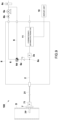
- the gas continuous analysis system of this invention comprises a sampling unit 7 for sampling a gas containing an adsorbable component flowing in a duct, a main flow channel 2 through which the sample gas sampled by the sampling unit 7 flows, a chromatograph or a mass spectrometer 11 for analyzing the adsorbable component in the sample gas flowing in the main flow channel 2, and an overflow flow channel 6 for discharging a part of the sample gas flowing in the main flow channel 2 in the upstream side of the chromatograph or the mass spectrometer 11.
- the chromatograph can be an ion chromatograph, a gas chromatograph, or the like.
- the configuration with the same codes as in the above-mentioned embodiment is the same as that in the above-mentioned embodiment.
- the sample gas introduced into the main flow channel 2 can be made to flow at a higher rate by the overflow flow channel 6.
- the overflow flow channel 6 it is possible to make it difficult for the adsorbable component to be adsorbed on the inner surface of the piping that constitutes the main flow channel 2, and it is possible to improve the accuracy of analysis of a subtle amount of the adsorbable component by the chromatograph or the mass spectrometer 11.
Landscapes
- Chemical & Material Sciences (AREA)
- Health & Medical Sciences (AREA)
- Life Sciences & Earth Sciences (AREA)
- Immunology (AREA)
- Analytical Chemistry (AREA)
- Biochemistry (AREA)
- General Health & Medical Sciences (AREA)
- General Physics & Mathematics (AREA)
- Physics & Mathematics (AREA)
- Pathology (AREA)
- Engineering & Computer Science (AREA)
- Combustion & Propulsion (AREA)
- Food Science & Technology (AREA)
- Medicinal Chemistry (AREA)
- Biomedical Technology (AREA)
- Molecular Biology (AREA)
- Sampling And Sample Adjustment (AREA)
- Investigating Or Analysing Materials By Optical Means (AREA)
Applications Claiming Priority (4)
| Application Number | Priority Date | Filing Date | Title |
|---|---|---|---|
| JP2022097368 | 2022-06-16 | ||
| JP2022130052 | 2022-08-17 | ||
| JP2022205211 | 2022-12-22 | ||
| PCT/JP2023/021728 WO2023243598A1 (ja) | 2022-06-16 | 2023-06-12 | ガス連続分析システム及びガス連続分析方法 |
Publications (1)
| Publication Number | Publication Date |
|---|---|
| EP4542194A1 true EP4542194A1 (en) | 2025-04-23 |
Family
ID=89191248
Family Applications (1)
| Application Number | Title | Priority Date | Filing Date |
|---|---|---|---|
| EP23823888.5A Pending EP4542194A1 (en) | 2022-06-16 | 2023-06-12 | Gas continuous analysis system, and gas continuous analysis method |
Country Status (6)
| Country | Link |
|---|---|
| EP (1) | EP4542194A1 (https=) |
| JP (1) | JPWO2023243598A1 (https=) |
| KR (1) | KR20250023979A (https=) |
| CN (1) | CN119563101A (https=) |
| TW (1) | TW202413916A (https=) |
| WO (1) | WO2023243598A1 (https=) |
Families Citing this family (2)
| Publication number | Priority date | Publication date | Assignee | Title |
|---|---|---|---|---|
| JP7711333B1 (ja) * | 2025-02-17 | 2025-07-22 | 東京瓦斯株式会社 | ガス濃度の測定方法及び正常異常の判断方法 |
| KR102904064B1 (ko) * | 2025-04-22 | 2025-12-24 | 주식회사 엔비컨스 | 공정가스 연속측정 및 모니터링 시스템 |
Family Cites Families (5)
| Publication number | Priority date | Publication date | Assignee | Title |
|---|---|---|---|---|
| JPS5631726Y2 (https=) * | 1976-04-09 | 1981-07-29 | ||
| JP2010281668A (ja) * | 2009-06-04 | 2010-12-16 | Toyota Motor Corp | 排ガス計測システム |
| JP5837415B2 (ja) * | 2011-01-12 | 2015-12-24 | 株式会社堀場製作所 | 多段希釈機構に用いられる臨界オリフィス型定流量器の特性測定方法 |
| JP2013096889A (ja) | 2011-11-02 | 2013-05-20 | Fuji Electric Co Ltd | 赤外線ガス分析計 |
| JP4925493B1 (ja) * | 2011-11-14 | 2012-04-25 | 株式会社ベスト測器 | 混合ガス流量制御装置および排ガス浄化触媒評価装置 |
-
2023
- 2023-06-02 TW TW112120741A patent/TW202413916A/zh unknown
- 2023-06-12 KR KR1020247038452A patent/KR20250023979A/ko active Pending
- 2023-06-12 EP EP23823888.5A patent/EP4542194A1/en active Pending
- 2023-06-12 JP JP2024528848A patent/JPWO2023243598A1/ja active Pending
- 2023-06-12 WO PCT/JP2023/021728 patent/WO2023243598A1/ja not_active Ceased
- 2023-06-12 CN CN202380042116.9A patent/CN119563101A/zh active Pending
Also Published As
| Publication number | Publication date |
|---|---|
| KR20250023979A (ko) | 2025-02-18 |
| TW202413916A (zh) | 2024-04-01 |
| CN119563101A (zh) | 2025-03-04 |
| JPWO2023243598A1 (https=) | 2023-12-21 |
| WO2023243598A1 (ja) | 2023-12-21 |
Similar Documents
| Publication | Publication Date | Title |
|---|---|---|
| EP4542194A1 (en) | Gas continuous analysis system, and gas continuous analysis method | |
| US10684215B2 (en) | Method for measuring air pollutants using a folded tubular photometer | |
| CN104713841B (zh) | 一种自校准分析仪的设计方法及装置 | |
| KR100731864B1 (ko) | 레이저 분광 분석 장치 | |
| CN102439439B (zh) | 液体样品的环境控制、校正和浓度水平的检测 | |
| EP1914545A2 (en) | Vehicle-mountable exhaust gas analyzer | |
| US10761018B2 (en) | System and method for impurity detection in beverage grade gases | |
| CN109425489B (zh) | 排气分析装置、排气分析方法和存储介质 | |
| KR101460874B1 (ko) | 암모니아 화합물 농도 계측 장치 및 암모니아 화합물 농도 계측 방법 | |
| CN114184566B (zh) | 一种基于紫外吸收光谱法适用于不同温度的硫酸根浓度测量模型及其验证方法 | |
| WO2008079612A1 (en) | Separating particulate-containing gas flow into particulate and non-particulate flow portions | |
| KR101139892B1 (ko) | 인시츄 가스분석기 교정시스템 | |
| CN120102797A (zh) | 一种臭氧生成速率监测系统及监测方法 | |
| US20210178352A1 (en) | Method and system for generating interference spectra for low detection limits using reactor | |
| JP5306052B2 (ja) | ガス分析計 | |
| US20060222563A1 (en) | Gas analyzer and method for controlling hydrogen flame ionization detector | |
| JP4550645B2 (ja) | 車両搭載型排気ガス分析装置 | |
| Miñarro et al. | Zero gas reference standards | |
| WO2023218983A1 (ja) | 赤外線ガス分析計及び赤外線ガス分析方法 | |
| Buric et al. | Field testing the Raman gas composition sensor for gas turbine operation | |
| JP2003014626A (ja) | So3分析計におけるベース補正方法 | |
| US12253462B2 (en) | Monitoring gas impurities with total sulfur detection | |
| KR20250155242A (ko) | 가스측정셀 선택 기능을 구비한 ftir 측정장치 | |
| McGowan et al. | In situ versus extractive measurement techniques | |
| Dunayevskiy | Mid Infra-Red Laser Sensor for Continuous Sulfur Trioxide Monitoring to Improve Coal-Fired Power Plant Performance during Flexible Operations |
Legal Events
| Date | Code | Title | Description |
|---|---|---|---|
| STAA | Information on the status of an ep patent application or granted ep patent |
Free format text: STATUS: THE INTERNATIONAL PUBLICATION HAS BEEN MADE |
|
| PUAI | Public reference made under article 153(3) epc to a published international application that has entered the european phase |
Free format text: ORIGINAL CODE: 0009012 |
|
| STAA | Information on the status of an ep patent application or granted ep patent |
Free format text: STATUS: REQUEST FOR EXAMINATION WAS MADE |
|
| 17P | Request for examination filed |
Effective date: 20241126 |
|
| AK | Designated contracting states |
Kind code of ref document: A1 Designated state(s): AL AT BE BG CH CY CZ DE DK EE ES FI FR GB GR HR HU IE IS IT LI LT LU LV MC ME MK MT NL NO PL PT RO RS SE SI SK SM TR |
|
| DAV | Request for validation of the european patent (deleted) | ||
| DAX | Request for extension of the european patent (deleted) | ||
| P01 | Opt-out of the competence of the unified patent court (upc) registered |
Free format text: CASE NUMBER: UPC_APP_0000526_4542194/2026 Effective date: 20260107 |