EP4538352A1 - Verfahren und system zur herstellung von olefin durch dampfcracken von schweren kohlenwasserstoffen - Google Patents
Verfahren und system zur herstellung von olefin durch dampfcracken von schweren kohlenwasserstoffen Download PDFInfo
- Publication number
- EP4538352A1 EP4538352A1 EP23845518.2A EP23845518A EP4538352A1 EP 4538352 A1 EP4538352 A1 EP 4538352A1 EP 23845518 A EP23845518 A EP 23845518A EP 4538352 A1 EP4538352 A1 EP 4538352A1
- Authority
- EP
- European Patent Office
- Prior art keywords
- stream
- vapour
- liquid
- heavier
- separation
- Prior art date
- Legal status (The legal status is an assumption and is not a legal conclusion. Google has not performed a legal analysis and makes no representation as to the accuracy of the status listed.)
- Pending
Links
Images



Classifications
-
- C—CHEMISTRY; METALLURGY
- C10—PETROLEUM, GAS OR COKE INDUSTRIES; TECHNICAL GASES CONTAINING CARBON MONOXIDE; FUELS; LUBRICANTS; PEAT
- C10G—CRACKING HYDROCARBON OILS; PRODUCTION OF LIQUID HYDROCARBON MIXTURES, e.g. BY DESTRUCTIVE HYDROGENATION, OLIGOMERISATION, POLYMERISATION; RECOVERY OF HYDROCARBON OILS FROM OIL-SHALE, OIL-SAND, OR GASES; REFINING MIXTURES MAINLY CONSISTING OF HYDROCARBONS; REFORMING OF NAPHTHA; MINERAL WAXES
- C10G9/00—Thermal non-catalytic cracking, in the absence of hydrogen, of hydrocarbon oils
- C10G9/34—Thermal non-catalytic cracking, in the absence of hydrogen, of hydrocarbon oils by direct contact with inert preheated fluids, e.g. with molten metals or salts
- C10G9/36—Thermal non-catalytic cracking, in the absence of hydrogen, of hydrocarbon oils by direct contact with inert preheated fluids, e.g. with molten metals or salts with heated gases or vapours
-
- C—CHEMISTRY; METALLURGY
- C10—PETROLEUM, GAS OR COKE INDUSTRIES; TECHNICAL GASES CONTAINING CARBON MONOXIDE; FUELS; LUBRICANTS; PEAT
- C10G—CRACKING HYDROCARBON OILS; PRODUCTION OF LIQUID HYDROCARBON MIXTURES, e.g. BY DESTRUCTIVE HYDROGENATION, OLIGOMERISATION, POLYMERISATION; RECOVERY OF HYDROCARBON OILS FROM OIL-SHALE, OIL-SAND, OR GASES; REFINING MIXTURES MAINLY CONSISTING OF HYDROCARBONS; REFORMING OF NAPHTHA; MINERAL WAXES
- C10G55/00—Treatment of hydrocarbon oils, in the absence of hydrogen, by at least one refining process and at least one cracking process
- C10G55/02—Treatment of hydrocarbon oils, in the absence of hydrogen, by at least one refining process and at least one cracking process plural serial stages only
- C10G55/04—Treatment of hydrocarbon oils, in the absence of hydrogen, by at least one refining process and at least one cracking process plural serial stages only including at least one thermal cracking step
-
- C—CHEMISTRY; METALLURGY
- C10—PETROLEUM, GAS OR COKE INDUSTRIES; TECHNICAL GASES CONTAINING CARBON MONOXIDE; FUELS; LUBRICANTS; PEAT
- C10G—CRACKING HYDROCARBON OILS; PRODUCTION OF LIQUID HYDROCARBON MIXTURES, e.g. BY DESTRUCTIVE HYDROGENATION, OLIGOMERISATION, POLYMERISATION; RECOVERY OF HYDROCARBON OILS FROM OIL-SHALE, OIL-SAND, OR GASES; REFINING MIXTURES MAINLY CONSISTING OF HYDROCARBONS; REFORMING OF NAPHTHA; MINERAL WAXES
- C10G55/00—Treatment of hydrocarbon oils, in the absence of hydrogen, by at least one refining process and at least one cracking process
- C10G55/08—Treatment of hydrocarbon oils, in the absence of hydrogen, by at least one refining process and at least one cracking process plural parallel stages only
-
- C—CHEMISTRY; METALLURGY
- C10—PETROLEUM, GAS OR COKE INDUSTRIES; TECHNICAL GASES CONTAINING CARBON MONOXIDE; FUELS; LUBRICANTS; PEAT
- C10G—CRACKING HYDROCARBON OILS; PRODUCTION OF LIQUID HYDROCARBON MIXTURES, e.g. BY DESTRUCTIVE HYDROGENATION, OLIGOMERISATION, POLYMERISATION; RECOVERY OF HYDROCARBON OILS FROM OIL-SHALE, OIL-SAND, OR GASES; REFINING MIXTURES MAINLY CONSISTING OF HYDROCARBONS; REFORMING OF NAPHTHA; MINERAL WAXES
- C10G63/00—Treatment of naphtha by at least one reforming process and at least one other conversion process
- C10G63/06—Treatment of naphtha by at least one reforming process and at least one other conversion process plural parallel stages only
- C10G63/08—Treatment of naphtha by at least one reforming process and at least one other conversion process plural parallel stages only including at least one cracking step
Definitions
- heavier hydrocarbons when used as the feedstock of steam cracking furnace, heavier hydrocarbons (crude oil and the like) have the problems of high final boiling point (higher than 520 °C), containing impurities such as resin, asphaltene and the like, difficult vaporization, easy coking and the like, so that the design of the cracking furnace and the process of production need to be modified and improved correspondingly to adapt to the characteristics of the heavier hydrocarbons (crude oil and the like).
- CN111196936A discloses a combined processing method and plant for producing olefin by direct cracking of crude oil, which is used for producing olefin directly from crude oil, and comprises removing impurities such as water, metals, and non-metals in the feed by pretreatment such as desalting and dewatering, then feeding the treated feed into the first tube bank in convection zone of an ethylene cracking furnace for heating, feeding the heated feed into a vapour-liquid separator, feeding the separated diesel oil and lighter gaseous hydrocarbon into the second tube bank of the convection zone and a radiant zone for steam cracking reaction to produce olefin.
- the liquid from the vapour-liquid separator contains components such as atmospheric residue and the like, and is sent to a hydrogenation unit for further cracking, hydrogenated tail oil, light naphtha and the like generated by cracking are sent back to the second tube bank of the convection zone as feedstock for ethylene cracking, and other generated fractions are sent to the outside unit as byproducts or other raw materials.
- CN107001955A discloses a system and method for efficiently cracking hydrocarbon mixtures, such as mixtures comprising compounds with a standard boiling temperature of greater than 450 °C, 500 °C or even greater than 550 °C, such as whole crude oil.
- CN101528894A discloses a method of processing a liquid crude oil and/or natural vapour condensate feedstock, comprising: subjecting the feedstock to an evaporation step to form a vapor product and a liquid product, subjecting the vapor product to severe thermal cracking, and subjecting the liquid product to a crude oil refinery process.
- CN 101778929A discloses a method for processing a feedstock containing condensate and crude oil in an olefin production plant.
- the feedstock is vaporized and separated into gaseous and liquid hydrocarbons.
- the gaseous hydrocarbon stream is thermally cracked in the plant. Liquid hydrocarbons are recovered.
- CN 103210063A discloses a process for cracking heavier hydrocarbon feed.
- the heavier hydrocarbon feed is passed to a first zone of a vaporization unit to separate a first vapor stream and a first liquid stream.
- the first liquid stream is passed to a second zone of the vaporization unit and intimately contacted with a counter-current steam to produce a second vapor stream and a second liquid stream.
- the second vapor stream is contacted with a wash liquid in a rectification section to form a rectified stream.
- the first vapor stream and the rectified stream are cracked in the radiant zone of the steam cracker to produce a cracked effluent.
- the inventors of the present application found through diligent research that it is very important to control the concentration of heavier hydrocarbons during evaporation and to prevent coking in the convection zone and the radiant zone when direct steam cracking of a heavier hydrocarbon is employed, since the fraction of heavier hydrocarbons (crude oil, etc.) is wide and the content of heavier hydrocarbons is high.
- non-volatile components are enriched in a first-stage liquid phase, so that the content of non-volatile components in the first-stage flash liquid phase is high, and the direct entering of the non-volatile components into the convection zone may easily cause a coking of the convection zone;
- the potential aromatic content in the first-stage flash vapor phase is high, energy waste and reduction of ethylene yield may be caused by direct steam cracking; the first-stage flash vapor phase in the prior art may easily carry non-volatile components, and direct steam cracking will result in coking in the radiant zone.
- the present application aims to provide a process and a system for producing olefin by steam cracking of a heavier hydrocarbon, which can simplify the atmospheric and vacuum distillation unit in traditional methods and systems, enable a simple operation and a flexible splitting of heavier hydrocarbon, balance the feedstock supply of ethylene cracking unit and oil refining related processing unit such as reforming unit, simplify the vapour-liquid separation process, and realize short-process reconstruction of the process, and in which the vapour-liquid separation process has a high efficiency, and can effectively solve the defects of multistage flash process in the prior art, solve the problems of impurity entrainment in heavy components during the vapour-liquid separation process, utilization of aromatic hydrocarbons and coking reduction, realize long-period operation of the cracking furnace, further reduce the energy consumption of the ethylene plant and has wide adaptability to crude oil.
- the present application relates to the following aspects.
- the present application also relates to the following aspects.
- primary dilution steam In the context of the present application, the terms “primary dilution steam”, “secondary dilution steam” and the like are used only to distinguish steams introduced in different steps, while do not have any actual meaning concerning the nature of the steam itself and the like.
- heavier hydrocarbons refer to wide-cut mixed hydrocarbons having a final boiling point of generally above 540 °C, for example an initial boiling temperature of 15 °C and a final boiling temperature of above 750 °C.
- the heavier hydrocarbons may be one or more selected from the following feedstock: paraffinic base crude oil, intermediate base crude oil, naphthenic base crude oil, condensate oil, refined products, and the like.
- the refined products include gasoline, kerosene, diesel oil, tail oil, fuel oil, and reformate from a refinery, that have been processed through a refinery unit such as atmospheric and vacuum, reforming, catalytic, and coking units.
- the method for measuring the initial boiling point, the final boiling point and the distillation range is the atmospheric and vacuum distillation of crude oil, wherein the atmospheric distillation analysis is carried out in accordance with ASTM D-2892, and the vacuum distillation analysis is carried out in accordance with ASTM D-5236.
- API refers to the specific gravity index, which is measured in accordance with ASTM D-2320.
- non-volatile components refer to components having a final boiling point of more than 590 °C, and the analysis of non-volatile components is carried out in accordance with ASTM D6352.
- the potential aromatic content is measured by atmospheric distillation, and the analysis is carried out in accordance with ASTM D-2892.
- the vaporization rate refers to the mass percentage of the vapour stream (excluding steam) to the total amount of feed (excluding steam).
- the potential aromatic content refers to the weight ratio of the sum of the amount of aromatics obtained by converting all naphthenes in the feed to aromatics and the amount of aromatics already present in the feed to the total amount of the feed.
- any two or more embodiments of the present application may be arbitrarily combined, and the resulting technical solution forms a part of the initial disclosure of the present application and falls within the scope of the present application.
- a process for producing olefins by steam cracking of a heavier hydrocarbon is provided.
- the process for producing olefins by steam cracking of a heavier hydrocarbon is carried out in the system for producing olefins by steam cracking of a heavier hydrocarbon described hereinafter.
- contents that are not described in detail for the process may refer directly to relevant contents described below for the system, or vice versa.
- the process for producing olefins by steam cracking of a heavier hydrocarbon comprises a step of subjecting a heavier hydrocarbon to a first separation to obtain a first vapour stream and a first liquid stream.
- the first separation may be performed in any manner known in the art, and for example, any manner or method capable of separating the heavier hydrocarbon into a vapour phase and a liquid phase (vapour-liquid separation), particularly flash, may be mentioned.
- the process for producing olefins by steam cracking of a heavier hydrocarbon further comprises a step of partially condensing (referred to as the second separation) the first vapour stream to obtain a condensate (referred to as the third heavier fraction).
- the partial condensation or the second separation may be performed in any manner known in the art, and for example, any manner or method capable of further separating the first vapour stream by vapour-liquid separation after cooling into a plurality of components or fractions, particularly fractional distillation, may be mentioned.
- the first vapour stream is not sent directly to steam cracking.
- the initial boiling temperature of the third heavier fraction is 165 °C or higher, and the distillation range is preferably 180-380 °C.
- Such a control is conducted mainly for a comprehensive consideration of providing feedstock for reforming, saving investment and energy consumption and modifying the first liquid stream. If the dry point of the third heavier fraction is less than 165 °C, it is indicated that the second separation is incomplete, and a portion of the reforming feed is lost. If the dry point of the third heavier fraction is more than 380 °C, the amount of the first vapour stream is increased, the diameter of the separation column and the number of plates of the second separation need to be increased, and then the investment and energy consumption will be increased.
- the distillation range of the third heavier fraction is 180-380 °C, which is suitable for the modification of the first liquid stream. If the dry point is too low, for example, less than 300 °C, the third heavier fraction is liable to be vaporized, and therefore the content of vaporized non-volatile components in the first liquid stream is not reduced, whereas if the dry point is more than 380 °C the investment for the first separation and the second separation is increased, and the energy consumption for the second separation is increased.
- the process for producing olefins by steam cracking of a heavier hydrocarbon further comprises a step of introducing at least a portion of the third heavier fraction into the first liquid stream to obtain a first modified liquid stream. It is preferred here that 50 wt% or higher or 80 wt% or higher of the total weight of the third heavier fraction is introduced into the first liquid stream.
- the distillation range of the first modified liquid stream can be effectively changed, so that the amplitude of the change of the first modified liquid stream in the convection zone can be widened, the coking of the fourth heating section (4) can be effectively prevented, and the vaporization rate of the second mixed stream in the third separation can be effectively adjusted.
- the process for producing olefins by steam cracking of a heavier hydrocarbon further comprises a step of subjecting the first modified liquid stream to a third separation to obtain a second vapour stream and a second liquid stream.
- a third separation any manner or method capable of separating the first modified liquid stream into a vapour phase and a liquid phase (vapour-liquid separation), particularly flash, may be mentioned.
- the process for producing olefins by steam cracking of a heavier hydrocarbon further comprises a step of subjecting the second vapour stream to steam cracking to obtain a cracked product containing the olefins.
- the API value of the heavier hydrocarbon is not less than 32 (preferably 38 or more).
- the non-volatile components of the heavier hydrocarbon are present in an amount of 25 wt% or less (preferably 0.1 to 5.5 wt%), based on the total weight of the heavier hydrocarbon.
- the heavier hydrocarbon has a potential aromatic content of 10 to 20 wt%, based on the total weight of the heavier hydrocarbon.
- the aromatic hydrocarbon in the fraction with a final boiling point of less than 180 °C can be used as the reforming feedstock.
- the heavier hydrocarbon is preheated to a temperature of 200-400 °C (preferably 240-300 °C) prior to the first separation.
- the final boiling point of the first vapour stream is normally not higher than 400 °C in view of the operating stability of the process.
- the non-volatile components are normally present in an amount of 1 wt% or less, based on the total weight of the first vapour stream.
- the first vapour stream is subjected to the second separation to obtain at least a third lighter fraction, a first intermediate fraction and the third heavier fraction.
- the second separation is preferably carried out in a fractionation column, such as the separation column 7 described below.
- the present application is not particularly limited with respect to the implementation, method, and the like of the second separation, and those known in the art may be employed.
- the third lighter fraction consists essentially of components from C 1 to C 6 , generally has a final boiling temperature of 90 °C or less, and can be sent to other cracking furnaces for cracking
- the first intermediate fraction consists essentially of components from C 6 to C 10
- the initial boiling point or the final boiling point of each fraction in the present application is a range value, and any temperature within the range value may be possible in the actual operation, and the fraction to be separated can be selected in the present application according to the actual production needs.
- the process for producing olefins by steam cracking of a heavier hydrocarbon further comprises subjecting the first intermediate fraction to at least one treatment selected from the group consisting of reforming treatment, refinery processing, and isomeric separation.
- the potential aromatic content in the first intermediate fraction is high, the potential aromatic content of the vapour stream entering the radiant zone can be reduced after the first intermediate fraction being treated in the present application, so that as compared with the existing first-stage flash and second-stage flash processes, the potential aromatic content of the vapour stream entering the radiant zone is lower, the corresponding olefin yield is higher, and the cracking energy consumption is lower.
- the non-volatile component of the third heavier fraction is present in an amount of 1 wt% or less (preferably 0.5 wt% or less), based on the total weight of the third heavier fraction.
- the weight of the third heavier fraction and the first liquid stream is determined according to the nature of the heavier hydrocarbon.
- the principle is that the third heavier fraction can be used for adjusting the vaporization rate of the stream entering the second vapour-liquid separator and controlling the preheating temperature of the first modified liquid stream, so that coking in the preheating and vaporization process of heavier hydrocarbon in the fourth heating section (4) can be effectively inhibited, where the proportion is low, the adjustment is not significant, the control effect is poor, either the preheating temperature cannot be controlled, or the reduction of non-volatile components is not significant; and where the proportion is too high, the energy consumption is increased, the vaporization temperature is high and coking is easy to occur, or the vaporization rate may be lowered when the temperature is reduced to avoid coking.
- the third heavier fraction can be used to regulate the vaporization rate of the stream entering the second vapour-liquid separator, where the proportion is low, the adjustment is not significant, and where the proportion is too high, the energy consumption is increased.
- the first modified liquid stream is subjected to first mixing with a primary dilution steam to obtain a first mixed stream, then the first mixed stream is subjected to first heating, then the first mixed stream after the first heating is subjected to second mixing with a secondary dilution steam to obtain a second mixed stream, and then the second mixed stream is subjected to the third separation to obtain the second vapour stream and the second liquid stream.
- the temperature of the primary dilution steam is 180-400 °C and preferably 200-350 °C.
- the temperature of the first mixed stream after the first heating is 400 °C or less, preferably 250-350 °C.
- the temperature of the secondary dilution steam is 400-630 °C, preferably 450-600 °C.
- the weight ratio of the first modified liquid stream to the primary dilution steam is 1: (0.1-0.5), preferably 1: (0.2-0.4).
- the weight ratio of the first modified liquid stream to the secondary dilution steam is 1: (0.2-0.8), preferably 1: (0.3-0.65).
- the temperature of the second mixed stream is 320-400 °C.
- a liquid hydrocarbon is further introduced into the first liquid stream, and/or the first modified liquid stream, and/or the first mixed stream.
- the weight ratio of the liquid hydrocarbon to the first liquid stream is 1: (0.45-0.85) (preferably 1: (0.5-0.7)).
- the vaporization rate of the heavier hydrocarbon (referred to as the first vaporization rate) is 15 to 60%, preferably 25 to 45%.
- the vaporization rate of the first modified liquid stream or the second mixed stream (referred to as a second vaporization rate) is 40% to 80%, preferably 50% to 70%.
- the difference (absolute value) between the first and second vaporization rates is between 15% and 50% (preferably between 30% and 40%).
- Such a control is conducted mainly for a comprehensive consideration of providing feedstock for reforming, saving the investment for the second separation and modifying the first liquid stream.
- the first vaporization rate should not be too high, as long as the requirement for reforming feedstock can be met.
- the second vaporization rate can be increased to increase the chemical yield of the crude oil in view of satisfying the long-term safe operation, and thus the second vaporization rate is normally much higher than the first vaporization rate.
- the second vaporization rate is normally lower than 80%, and the difference (absolute value) is lower than 30%, which may cause the second vaporization rate to lead to a dry point of the third heavier fraction of more than 380 °C, thus the aim of modifying the first liquid stream cannot be achieved, and the investment for the first separation and the second separation is increased, and the energy consumption of the second separation is increased.
- the difference may be larger than 50%, the aromatic hydrocarbon material separated out by the second separation cannot meet the requirement for reforming feedstock, more light components are present in the second vapour stream, and the distillation range of the cracking feedstock is too wide, and consequently there is no appropriate cracking condition that can be used to achieve an efficient cracking.
- the first modified liquid stream or the second mixed stream is subjected to the third separation to obtain a vapour stream (referred to as primary vapour stream) and a liquid stream (referred to as primary liquid stream), and at least a portion (such as 50 wt% or less or 20 wt% or less of the total weight) of the third heavier fraction is counter-currently contacted with the primary vapour stream to obtain the second vapour stream.
- a vapour stream referred to as primary vapour stream
- primary liquid stream referred to as primary liquid stream
- the content of heavy components in the primary vapour stream can be effectively reduced, so that the requirement of cracking on the heavy components of the stream entering the radiant zone for cracking can be met, so as to reduce coking and prolong the operation cycle of the cracking furnace, and finally realize a cracking with low energy consumption and high efficiency.
- the first modified liquid stream or the second mixed stream is subjected to the third separation to obtain a vapour stream (referred to as primary vapour stream) and a liquid stream (referred to as primary liquid stream), and a separation aid (also referred to as cooling aid) is counter-currently contacted with the primary vapour stream to obtain the second vapour stream.
- a separation aid also referred to as cooling aid
- the vaporization rate of heavier hydrocarbon can be effectively adjusted, and the content of heavy components in the second vapour stream can be effectively controlled, so that the requirement of cracking on the heavy components of the stream entering the radiant zone for cracking can be met, so as to reduce coking and prolong the operation cycle of the cracking furnace, and finally realize a cracking with low energy consumption and high efficiency.
- the weight ratio of the second vapour stream to the third heavier fraction is 1: (0.01-0.35), preferably 1: (0.05-0.2).
- the weight ratio of the second vapour stream to the separation aid is 1: (0.01-0.2), preferably 1: (0.05-0.15).
- the primary vapour stream is first counter-currently contacted with the separation aid, and then counter-currently contacted with the third heavier fraction, or the primary vapour stream is first counter-currently contacted with the third heavier fraction, and then counter-currently contacted with the separation aid.
- the separation aid is at least one selected from the group consisting of liquid hydrocarbons and liquid water.
- the liquid hydrocarbon hydrocarbons having a final boiling point of 200-540 °C (preferably 250-450 °C or 300-400 °C) may be mentioned, preferably at least one selected from the group consisting of heavy naphtha, aviation kerosene oil.
- the primary vapour stream is first counter-currently contacted with the liquid water, and then with the liquid hydrocarbon, or the primary vapour stream is first counter-currently contacted with the liquid hydrocarbon, and then with the liquid water, or the primary vapour stream is counter-currently contacted with the liquid water and the liquid hydrocarbon simultaneously.
- the second vapour stream is subjected to a second heating to a temperature of 500-600 °C (preferably 510-500 °C) prior to the steam cracking.
- the second vapour stream has a content of non-volatile components of 1 wt% or less (preferably 0.5 wt% or less), based on the total weight of the second vapour stream. If the content of non-volatile components of the second vapour stream does not meet this requirement, there may be a risk of coking in the radiant zone.
- a system for producing olefins by steam cracking of a heavier hydrocarbon comprising: a first vapour-liquid separator (8) configured to perform a first separation on the heavier hydrocarbon, to obtain a first vapour stream and a first liquid stream; a separator, such as a separation column (7), configured to perform a second separation on the first vapour stream to obtain the third heavier fraction; a introduction means configured to introduce at least a portion of the third heavier fraction into the first liquid stream to obtain a first modified liquid stream; a second vapour-liquid separator (9) configured to perform a third separation on the first modified liquid stream, to obtain a second vapour stream and a second liquid stream; a steam cracker configured to conduct steam cracking on the second vapour stream to obtain a cracked product comprising the olefins.
- the step S1 further comprises: passing the heavier hydrocarbon to be preheated into the first heating section for first preheating to obtain a first preheated heavier hydrocarbon; respectively passing at least a portion of the first preheated heavier hydrocarbon and a heat exchange medium into a heat exchanger for heat exchange to obtain a second preheated heavier hydrocarbon; then passing the second preheated heavier hydrocarbon into the first vapour-liquid separator as the preheated heavier hydrocarbon; wherein the heat exchange medium comprises steam heated by a heater, or steam heated by the second heating section, or steam from a steam source; optionally, the temperature of the steam is 250-450 °C.
- the step S1 further comprises: introducing at least a portion of the first preheated heavier hydrocarbon into a heater for heating to obtain a third preheated heavier hydrocarbon; then passing the third preheated heavier hydrocarbon into the first vapour-liquid separator as the preheated heavier hydrocarbon.
- the step S1 further comprises: passing at least a portion of the first preheated heavier hydrocarbon from the first heating section into the heavier hydrocarbon preheating section for heating to obtain a fourth preheated heavier hydrocarbon; passing the fourth preheated heavier hydrocarbon into the first vapour-liquid separator as the preheated heavier hydrocarbon.
- the step S1 further comprises: subjecting the first preheated heavier hydrocarbon to desalting, and then to heat exchanging and/or heating, or subjecting the heavier hydrocarbon to be preheated to desalting, and then to first preheating.
- the step S1 further comprises: passing the heavier hydrocarbon to be preheated into a first heating section 1A for first preheating to obtain a first preheated heavier hydrocarbon; respectively introducing at least a portion of the first preheated heavier hydrocarbon and a heat exchange medium into a heat exchanger 6A for heat exchange to obtain a second preheated heavier hydrocarbon; then passing the second preheated heavier hydrocarbon into the first vapour-liquid separator 8 as the preheated heavier hydrocarbon; wherein the heat exchange medium comprises steam heated by a heater 6B, or steam heated by the second heating section 2, or steam from a steam source.
- the step S1 further comprises: introducing at least a portion of the first preheated heavier hydrocarbon into a heater 6B for heating to obtain a third preheated heavier hydrocarbon; and then passing the third preheated heavier hydrocarbon into the first vapour-liquid separator 8 as the preheated heavier hydrocarbon.
- the step S1 further comprises: passing at least a portion of the first preheated heavier hydrocarbon from the first heating section 1A into the heavier hydrocarbon preheating section 1B for heating to obtain a fourth preheated heavier hydrocarbon, and passing the fourth preheated heavier hydrocarbon into the first vapour-liquid separator 8 as the preheated heavier hydrocarbon; or, optionally, passing at least a portion of the first preheated heavier hydrocarbon from the first heating section 1A into the heavier hydrocarbon preheating section 1B, and then passing it through the heat exchanger 6A and/or the heater 6B for heat exchange and/or heating, to obtain a fourth preheated heavier hydrocarbon, and passing the fourth preheated heavier hydrocarbon into the first vapour-liquid separator 8 as the preheated heavier hydrocarbon; or, passing at least a portion of the first preheated heavier hydrocarbon from the first heating section 1A into the heavier hydrocarbon preheating section 1B to obtain a fourth preheated heavier hydrocarbon, and passing another part of the first preheated
- the heat exchange medium may be any heat exchange medium conventionally used in the art, and is not limited to the steam listed.
- step S2 at least a portion of the primary dilution steam is passed into the third heating section 3A for heating, to obtain a superheated primary dilution steam, and the superheated primary dilution steam and the first liquid stream are subjected to first mixing, wherein the temperature of the superheated primary dilution steam is 180-400 °C, preferably 200-350 °C.
- the second vapour stream comprises entrained steam and a second lighter fraction; the second liquid stream comprises a second heavier fraction.
- the second vapour stream comprises entrained steam and the second lighter fraction; the second liquid stream comprises the second heavier fraction.
- the initial boiling point or the final boiling point of each fraction in the present application is a range value, and any temperature within the range value may be possible in the actual operation, and the fraction to be separated can be selected in the present application according to the actual production needs.
- the first intermediate fraction of the present application has a high potential aromatic content, and thus is not suitable for steam cracking, can be flexibly sent to oil refining units, such as reforming units and the like, to serve as feedstock, so that it can be used to produce aromatics, olefins and oils wherever appropriate.
- the steam cracker comprises a convection zone and a radiant zone from top to bottom.
- the convection zone comprises a first heating section 1A, an optional heavier hydrocarbon preheating section 1B, an optional second heating section 2, a third heating section 3A, a fourth heating section 4, a fifth heating section 3B, and a sixth heating section 5.
- the first mixed stream is passed into the fourth heating section 4 for first heating, and then is subjected to the second mixing with a secondary dilution steam superheated by the fifth heating section 3B to obtain a second mixed stream.
- the second vapour stream is passed into a sixth heating section 5 for second heating and then is passed into the radiant zone for steam cracking.
- the first vapour-liquid separator 8 is configured to subject the preheated heavier hydrocarbon to a first separation therein, to obtain a first vapour stream and a first liquid stream.
- the radiant zone of the steam cracker is configured to conduct steam cracking on at least a portion of the first liquid stream to obtain a cracked product comprising olefins.
- the separation column 7 is configured to receive at least a portion of the first vapour stream for a second separation, to obtain at least a third lighter fraction, a first intermediate fraction and a third heavier fraction.
- the separation column 7 is a separator conventionally used in the art, and comprises a conventional condenser, a reboiler and other structures, which can be determined according to actual needs.
- the system further comprises a post-treatment unit configured to perform a post-treatment on the first intermediate fraction.
- the convection zone is provided with a feedstock heating inlet and a feedstock heating outlet
- the radiant zone is provided with a steam cracking inlet and a cracked product outlet
- the first vapour-liquid separator 8 is provided with a vapour-liquid separation inlet, an optional third heavier fraction circulation inlet, an optional cooling aid inlet, a first vapour stream outlet and a first liquid stream outlet.
- the vapour-liquid separation inlet of the first vapour-liquid separator 8 is communicated with the feedstock heating outlet of the convection zone, and the first liquid stream outlet of the first vapour-liquid separator 8 is communicated with the steam cracking inlet of the radiant zone.
- the separation column 7 is provided with a first vapour stream inlet, and with a third lighter fraction outlet, a first intermediate fraction outlet and a third heavier fraction outlet arranged in sequence from top to bottom along the height direction of the separation column 7.
- the first vapour stream inlet of the separation column 7 is communicated with the first vapour stream outlet of the first vapour-liquid separator 8.
- the cooling aid inlet comprises a liquid hydrocarbon inlet and/or a water inlet; optionally, there are a plurality of cooling aid inlets, wherein at least one cooling aid inlet is a water inlet and at least one cooling aid inlet is a liquid hydrocarbon inlet.
- the second vapour-liquid separator 9 is provided with a second mixed stream inlet, a second vapour stream outlet and a second liquid stream outlet, an optional third heavier fraction inlet, and an optional separation aid inlet.
- the separation aid inlet comprises a liquid hydrocarbon inlet and/or a water inlet.
- there are a plurality of separation aid inlets wherein at least one separation aid inlet is a water inlet and at least one separation aid inlet is a liquid hydrocarbon inlet.
- the separation aid inlet is located above the second mixed stream inlet in the axial direction of the second vapour-liquid separator 9.
- the first liquid stream outlet of the first vapour-liquid separator 8 is communicated with the second mixed stream inlet of the second vapour-liquid separator 9.
- a primary dilution steam inlet and a superheated secondary dilution steam inlet are provided on a communicating pipeline between the second mixed stream inlet of the second vapour-liquid separator 9 and the first liquid stream outlet of the first vapour-liquid separator 8.
- the primary dilution steam inlet is disposed at the upstream of the superheated secondary dilution steam inlet; optionally, the third heavier fraction outlet of the separation column 7 is communicated with the third heavier fraction circulation inlet of the first vapour-liquid separator 8 and the third heavier fraction inlet of the second vapour-liquid separator 9, respectively.
- the second vapour stream outlet of the second vapour-liquid separator 9 is communicated with the steam cracking inlet of the radiant zone.
- the convection zone is provided with a first heating section 1A, an optional boiler feed water preheating section BFW, an optional heavier hydrocarbon preheating section 1B, an optional second heating section 2, a third heating section 3A, a fourth heating section 4, an optional hyperpressure steam superheating section VHS, a fifth heating section 3B, and a sixth heating section 5 from top to bottom, in the height direction of the steam cracker.
- the heating inlet of the first heating section 1A is used for introducing heavier hydrocarbon to be preheated; an outlet of the first heating section 1A is communicated with a vapour-liquid separation inlet of a first vapour-liquid separator 8; a pressure regulating valve is provided on an inlet pipeline at the vapour-liquid separation inlet of the first vapour-liquid separator 8 and is used for controlling the preheating temperature of the heavier hydrocarbon entering the first vapour-liquid separator 8; optionally, a pressure regulating valve is provided on the outlet pipeline at the first vapour stream outlet to further control the vaporization rate.
- the first liquid stream outlet of the first vapour-liquid separator 8 is communicated with a heating inlet of the fourth heating section 4 through a first pipeline; the heating inlet of the third heating section 3A is communicated with a primary steam source; the heating outlet of the third heating section 3A is connected to the first pipeline.
- a heating outlet of the fourth heating section 4 is communicated with the second mixed stream inlet of the second vapour-liquid separator 9 through a second pipeline; the heating inlet of the fifth heating section 3B is communicated with a secondary steam source; the heating outlet of the fifth heating section 3B is connected to the second pipeline.
- a heating inlet of the sixth heating section 5 is communicated with a second vapour stream outlet of the second vapour-liquid separator 9; a heating outlet of the sixth heating section 5 is communicated with the steam cracking inlet of the radiant zone.
- the second liquid stream outlet of the second vapour-liquid separator 9 may be communicated with a hydrocracking or catalytic cracking unit.
- the second vapour-liquid separator 9 is internally provided with a structure of a tray, a hydrocyclone or a combination of both.
- the system further comprises a heavier hydrocarbon preheating unit for further conducting a heat exchange on the first preheated heavier hydrocarbon from the first heating stage 1A to control the temperature of the heavier hydrocarbon entering the first vapour-liquid separator 8.
- the heavier hydrocarbon preheating unit comprises a heavier hydrocarbon heating inlet and a heavier hydrocarbon heating outlet.
- the heavier hydrocarbon heating inlet is communicated with the heating outlet of the first heating section 1A, and the heavier hydrocarbon heating outlet is communicated with the vapour-liquid separation inlet of the first vapour-liquid separator 8.
- the heavier hydrocarbon preheating unit comprises a heat exchanger 6A and optionally a heater 6B;
- the heat exchanger 6A comprises a first heating inlet for heavier hydrocarbon, a heat exchange medium inlet, a first heating outlet for heavier hydrocarbon and an outlet for heat exchange medium after heat exchange;
- the first heating inlet for heavier hydrocarbon is formed as a heavier hydrocarbon heating inlet of the heavier hydrocarbon preheating unit and is communicated with the heating outlet of the first heating section 1A;
- a first heating outlet for heavier hydrocarbon, formed as a heavier hydrocarbon heating outlet of the heavier hydrocarbon preheating unit is communicated with the vapour-liquid separation inlet of the first vapour-liquid separator 8.
- the heater 6B comprises a first heating inlet for heat exchange medium and a first heating outlet for heat exchange medium;
- the second heating section 2 comprises a second heating inlet for heat exchange medium and a second heating outlet for heat exchange medium; the first heating inlet for heat exchange medium and the second heating inlet for heat exchange medium are respectively communicated with a steam source.
- the heat exchange medium inlet of the heat exchanger 6A is communicated with the first heating outlet for heat exchange medium of the heater 6B.
- the heat exchange medium inlet of the heat exchanger 6A is communicated with the second heating outlet for heat exchange medium of the second heating section 2; or the heat exchange medium inlet of the heat exchanger 6A is communicated with a steam source.
- the heavier hydrocarbon preheating unit comprises a heater 6B; the heater 6B comprises a second heating inlet for heavier hydrocarbon and a second heating outlet for heavier hydrocarbon; the second heating inlet for heavier hydrocarbon, formed as a heavier hydrocarbon heating inlet of the heavier hydrocarbon preheating unit, is communicated with the heating outlet of the first heating section 1A; the second heating outlet for heavier hydrocarbon, formed as a second heating outlet for heavier hydrocarbon of the heavier hydrocarbon preheating unit, is communicated with the vapour-liquid separation inlet of the first vapour-liquid separator 8.
- the heating outlet of the first heating section 1A is communicated with the heating inlet of the heavier hydrocarbon preheating section 1B, and the heating outlet of the heavier hydrocarbon preheating section 1B is communicated with the vapour-liquid separation inlet of the first vapour-liquid separator 8 via a third pipeline; optionally, the heat exchanger 6A or the heater 6B is connected to a third pipeline.
- the system for producing olefins by steam cracking of a heavier hydrocarbon comprises:
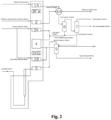
- the process for producing olefins by steam cracking of a heavier hydrocarbon using the system shown in Fig. 1 comprises:
- the system for producing olefins by steam cracking of a heavier hydrocarbon is different from the system shown in Fig. 1 in that: the steam cracker is further provided with a second heating section 2 in place of the heater 6B in Fig. 1 ; a heating outlet of the second heating section 2 is communicated with a heat exchange medium inlet of the heat exchanger 6A; the heat exchange medium is a first steam heated by the second heating section 2.
- the system for producing olefins by steam cracking of a heavier hydrocarbon is different from the system shown in Fig. 1 in that: the system does not comprise the heat exchanger 6A; the heating outlet of the first heating section 1A is communicated with the heating inlet of the heater 6B, and the heating outlet of the heater 6B is communicated with the vapour-liquid separation inlet of the first vapour-liquid separator 8.
- the system for producing olefins by steam cracking of a heavier hydrocarbon is different from the system shown in Fig. 1 in that: the system does not comprise the heater 6B; the heat exchange medium is the third steam; the heating outlet of the first heating section 1A is communicated with the heating inlet of the heater 6B, and the heating outlet of the heater 6B is communicated with the vapour-liquid separation inlet of the first vapour-liquid separator 8.
- the system for producing olefins by steam cracking of a heavier hydrocarbon is different from the system shown in Fig. 1 in that: the system further comprises a heavier hydrocarbon preheating section 1B, but does not comprise the heat exchanger 6A or the heater 6B; the heating outlet of the first heating section 1A is communicated with a heating inlet of the heavier hydrocarbon preheating section 1B, and a heating outlet of the heavier hydrocarbon preheating section 1B is communicated with the vapour-liquid separation inlet of the first vapour-liquid separator 8.
- Fig. 5 is the most preferred embodiment of the heat exchange unit of the present application, where the heat source in the steam cracker is incapable of supplying the heat required by the steam cracking reaction or no reboiler is provided at the outlet of the first heating section 1A, a heat exchanger and/or a heater is provided in the steam cracking system, to introduce an external heat source to heat the reaction stream.
- the above operating temperatures can be normal operating temperatures in a cracking furnace under conventional operating conditions.
- the ethylene yield is calculated as the ratio of the weight of ethylene at the outlet of the radiant zone of the cracking furnace to the weight of heavier hydrocarbon cracked in the radiant zone
- the chemical yield is calculated as the ratio of the total mass of produced chemicals to the total mass of heavier hydrocarbon processed.
- the energy consumption in energy efficiency is calculated based on the energy (MW) consumed by the refinery for producing each ton of ethylene.
- the energy consumption is calculated according to the index and the calculation method specified in the National Standard for calculation of energy consumption in petrochemical engineering design ( GB/T50441-2016 ).
- the distillation range of the heavier hydrocarbon is as follows: TBP 760 MMHG (WT) Distillate mass fraction/% Temperature/°C Initial boiling point 17 10 46 30 153 50 248 70 356 90 527 95 625 98 723
- the heavier hydrocarbon has a content of non-volatile components of 7 wt% and a potential aromatic content of 15 wt%, based on the total weight of the heavier hydrocarbon.
- Example 1 The process for producing olefins by steam cracking of a heavier hydrocarbon of Example 1 specifically comprised the steps of:
- the distillation range of the first vapour stream was: TBP at 760MM (WT) Distillate mass fraction/% Temperature/°C Initial boiling point 17 10 35 30 89 50 119 70 164 90 237 95 271 98 321
- the distillation ranges of the first liquid stream and the first modified liquid stream are as follows: TBP at 760MM (WT) First liquid stream First modified liquid stream Distillate mass fraction/% Temperature/°C Initial boiling point 24 29 10 111 119 30 156 162 50 339 292 70 440 418 90 591 564 95 659 649 98 723 723
- the TBP curve of the first modified material is between 50% and 90% of distillate quantity, the distillation temperature is averagely reduced by about 30 °C, indicating an obvious modifying effect.
- the 99 wt% of the third heavier fraction was introduced into the first liquid stream, so that the vaporization process of the first modified liquid stream in the fourth heating section was accelerated, no obvious coking phenomenon was observed after a continuous operation for 70 days, the coking of the convection zone can be avoided at a higher operation temperature, and a higher chemical yield can be obtained.
- the temperature of the first mixed stream after the first heating may be controlled at 315 °C, and no significant coking occurred even when the temperature of the first mixed stream was raised to 340 °C.
- the second mixed stream in the third separation was adaptable to a higher temperature by introducing a modifier, which in this example can reach a maximum of 350 °C.
- the distillation range of the second vapour stream is as follows: TBP at 760MM (WT) Distillate mass fraction/% Temperature/°C Initial boiling point 18 10 143 30 213 50 264 70 300 90 416 95 446 98 501 100 511
- the ethylene yield is more than 23 wt% (based on the total amount of crude oil entering the radiant zone for cracking)
- the triene yield is 42% (based on the total amount of crude oil entering the radiant zone for cracking)
- the chemical yield is 71% (the mass ratio of the chemicals generated by cracking the crude oil, excluding PGO, PFO and discharged heavy oil, to the crude oil).
- the process for producing olefins by steam cracking of a heavier hydrocarbon of this Example specifically comprised the steps of: S1, preheating heavier hydrocarbon from a storage tank primarily and then subjecting it to a first preheating in a first heating section 1A of a convection zone of a steam cracker, wherein the temperature of the first preheated heavier hydrocarbon was 115 °C; passing the first preheated heavier hydrocarbon into a heat exchanger 6A for further heat exchange with a heat exchange medium to increase the temperature, producing a second preheated heavier hydrocarbon; the heat exchange medium was medium-pressure steam (with a temperature of 350 °C) superheated by a second heating section 2, and the temperature of the second preheated heavier hydrocarbon was 280 °C; passing the second preheated heavier hydrocarbon into a first vapour-liquid separator 8 as the preheated heavier hydrocarbon for first separation to obtain a first vapour stream and a first liquid stream; the first vapour stream had a content of non-volatile components of
- the composition of the third heavier fraction and the first vapour stream was the same as in Example 1, and the amount of the third heavier fraction introduced into the first liquid material was reduced by half as compared with Example 1, so that the modifying effect was limited.
- the distillation ranges of the first liquid stream and the first modified liquid stream in Example 2 are as follows: TBP at 760MM (WT) First liquid stream First modified liquid stream Distillate mass fraction/% Temperature/°C Initial boiling point 24 27 10 111 117 30 156 160 50 339 311 70 440 428 90 591 575 95 659 651 98 723 723
- the TBP curve of the first modified material is between 50% and 90% of distillate quantity, the distillation temperature is averagely reduced by about 15 °C, the modifying effect is reduced compared with that of Example 1, but is still obtained.
- the temperature of the first mixed stream after the first heating may be controlled at 305 °C, and no significant coking occurred even when the temperature of the first mixed stream was raised to 330 °C.
- the second mixed stream in the third separation was adaptable to a higher temperature by introducing a modifier, which in this example can reach a maximum of 340 °C.
- the distillation range of the second vapour stream is as follows: TBP at 760MM (WT) Distillate mass fraction/% Temperature/°C Initial boiling point 18 10 132 30 219 50 272 70 318 90 418 95 448 98 503 100 511
- the ethylene yield is 22.5 wt% (based on the total amount of crude oil entering the radiant zone for cracking)
- the triene yield is 40%
- the chemical yield is 69% (the mass ratio of the chemicals generated by cracking the crude oil, excluding PGO, PFO and discharged heavy oil, to the crude oil).
- Example 3 This example was carried out in accordance with the process flow shown in Fig. 4 using a heavier hydrocarbon having an API of 30 and a distillation range shown below: TBP 760 MMHG (WT) Distillate mass fraction/% Temperature/°C Initial boiling point 57 10 89 30 241 50 375 70 511 90 595 95 682 98 765
- the process for producing olefins by steam cracking of a heavier hydrocarbon of Example 3 specifically comprised the steps of: S1, preheating heavier hydrocarbon from a storage tank primarily and then subjecting it to a first preheating in a first heating section 1A of a convection zone of a steam cracker, wherein the temperature of the first preheated heavier hydrocarbon was 115 °C; passing the first preheated heavier hydrocarbon into a heat exchanger 6A for further heat exchange with a heat exchange medium to increase the temperature, producing a second preheated heavier hydrocarbon; the heat exchange medium was high-pressure steam (with a temperature of 450 °C
- Example 3 the temperature of the first mixed stream after the first heating may be controlled at 295 °C, and the temperature of the first mixed stream may be raised up to 300 °C.
- the second mixed stream in the third separation was adaptable to a higher temperature by introducing a modifier, which in this example can reach a maximum of 320 °C.
- the distillation range of the second vapour stream is as follows: TBP at 760MM (WT) Distillate mass fraction/% Temperature/°C Initial boiling point 67 10 155 30 242 50 299 70 351 90 432 95 445 98 501 100 512
- the ethylene yield is 21 wt% (based on the total amount of crude oil entering the radiant zone for cracking), the triene yield is 37%, and the chemical yield is 55% (the mass ratio of the chemicals generated by cracking the crude oil, excluding PGO, PFO and discharged heavy oils, to the crude oil).
- the process for producing olefins by steam cracking of a heavier hydrocarbon of example 4 specifically comprised the steps of: S1, preheating heavier hydrocarbon from a storage tank primarily and then subjecting it to a first preheating in a first heating section 1A of a convection zone of a steam cracker, wherein the temperature of the first preheated heavier hydrocarbon was 115 °C; passing the first preheated heavier hydrocarbon into an electric heater 6B for heating to increase the temperature, producing a second preheated heavier hydrocarbon, wherein the temperature of the second preheated heavier hydrocarbon was 400 °C; passing the second preheated heavier hydrocarbon into a first vapour-liquid separator 8 as the preheated heavier hydrocarbon for first separation to obtain a first vapour stream and a first liquid stream; the first vaporization rate of the first separation was 50%.
- the load of the separation column 7 was significantly increased.
- S5 the first vapour stream had a content of non-volatile components of 0.1 wt% or less, based on the total weight of the first vapour stream;
- S2 passing the first vapour stream into the separation column 7 for second separation to obtain a third lighter fraction (with a final boiling temperature of 80 °C), a first intermediate fraction (with an initial boiling temperature of 80 °C and a final boiling temperature of 165 °C) and a third heavier fraction, wherein the distillation range of the third heavier fraction is as follows: ASTM D86 Distillate mass fraction/% Temperature/°C Initial boiling point 170 10 266 30 312 50 378 70 495 90 561 100 600
- the third heavier fraction was significantly heavier than that in Example 1/2/3, and in this example, the modifying effect of the third heavier fraction on the first liquid stream was insignificant.
- Example 5 further comprised the following steps: The first intermediate fraction from the third separation was sent to a reformer.
- the first intermediate fraction reforming feed accounted for about 24 wt% of the total crude oil.
- Example 6 further comprised the following steps: subjecting the second mixed stream to the third separation, to obtain a vapour stream (referred to as primary vapour stream) and a liquid stream (referred to as primary liquid stream), and counter-currently contacting the primary vapour stream with 20wt% of the total weight of the third heavier fraction and/or a separation aid (liquid water) to obtain the second vapour stream.
- a vapour stream referred to as primary vapour stream
- a liquid stream referred to as primary liquid stream
- the distillation ranges of the primary vapour stream and the second vapour stream are as follows: TBP at 760MM (WT) Primary vapour stream Second vapour stream Distillate mass fraction/% Temperature/°C Temperature/°C Initial boiling point 20 18 10 144 143 30 235 213 50 277 264 70 323 300 90 432 416 95 469 446 98 513 501 100 522 511
- Example 6 It can be seen from Example 6 that by counter-currently contacting the primary vapour stream with 20wt% of the total weight of the third heavier fraction and/or a separation aid (liquid water), the second vapour stream became significantly lighter, and the final boiling temperature can be reduced by about 10 °C with the same second mixed stream and under the same conditions as in Example 1 .
- Example 2 The experiment was carried out as described in Example 1, except that the initial boiling point of the third heavier fraction was 140 °C.
- the ethylene yield is 23.2% and the chemical yield is 71.5%.
- Example 2 The experiment was carried out as described in Example 1, except that the initial boiling point of the third heavier fraction was 400 °C.
- the ethylene yield is 20.5% and the chemical yield is 65%.
- Example 5 The experiment was carried out as described in Example 5, except that the weight ratio of the third heavier fraction in the first vapour stream to the first liquid stream was 4%.
- the first intermediate fraction obtained from the third separation was sent to a reformer.
- the first intermediate fraction reforming feed accounted for about 18 wt% of the total crude oil, and a portion of the aromatic material was lost compared to Example 5.
- the distillation range of the third heavier fraction is as follows:
- the final boiling point of the third heavier fraction was relatively low, and thus the distillation range of the second vapour phase was widened, and a portion the aromatic hydrocarbon material was transferred into the second vapour phase.
- the ethylene yield is 22.3 wt% (based on the total amount of crude oil entering the radiant zone for cracking)
- the triene yield is 39%
- the chemical yield is 68% (the mass ratio of the chemicals generated by cracking the crude oil, excluding PGO, PFO and discharged heavy oils, to the crude oil).
- Example 2 The experiment was carried out as described in Example 1, except that no separation column 7 for the second separation was provided, and the second vapour stream was fed only to the radiant zone of the steam cracker for steam cracking.
- the ethylene yield is reduced by 2% compared to Example 1 and the chemical yield is reduced by 20% compared to Example 1.
- the pressure drop of the convection zone became larger, coking phenomenon was observed, and the energy consumption of the unit was increased by 2% (Kg standard oil/t ethylene) due to the reduction of the ethylene yield.
- Example 2 The experiment was carried out as described in Example 1, except that no separation column 7 for the second separation was provided, and the first vapour stream was fed to the radiant zone of the steam cracker together with the second vapour stream for steam cracking.
- the ethylene yield is reduced by 1.5% compared to Example 1, and the chemical yield is reduced by 10% compared to Example 1.
- the pressure drop of the convection zone became larger, coking phenomenon was observed, and the energy consumption of the unit was increased by 1.5% (Kg standard oil/t ethylene) due to the reduction of the ethylene yield.
- the heavier hydrocarbon was selected in the same manner as in the examples, except that the heavier hydrocarbon was first separated by an atmospheric and vacuum distillation unit, and then the material suitable for cracking was fed into a cracking furnace and the material suitable for reforming was fed into a reformer for cracking, wherein the steam cracker was operated in accordance with a conventional steam cracking process without a multi-stage flashing equipment.
- the above combination of the atmospheric and vacuum distillation unit, the conventional steam cracker and the reformer unit was used for the purpose of realizing the same product scheme as in Example 1.
Landscapes
- Chemical & Material Sciences (AREA)
- Oil, Petroleum & Natural Gas (AREA)
- Engineering & Computer Science (AREA)
- Chemical Kinetics & Catalysis (AREA)
- General Chemical & Material Sciences (AREA)
- Organic Chemistry (AREA)
- Physics & Mathematics (AREA)
- Thermal Sciences (AREA)
- Production Of Liquid Hydrocarbon Mixture For Refining Petroleum (AREA)
Applications Claiming Priority (2)
| Application Number | Priority Date | Filing Date | Title |
|---|---|---|---|
| CN202210878593.6A CN117487587B (zh) | 2022-07-25 | 2022-07-25 | 一种重质烃蒸汽裂解产生烯烃的方法和系统 |
| PCT/CN2023/109009 WO2024022308A1 (zh) | 2022-07-25 | 2023-07-25 | 一种重质烃蒸汽裂解产生烯烃的方法和系统 |
Publications (2)
| Publication Number | Publication Date |
|---|---|
| EP4538352A1 true EP4538352A1 (de) | 2025-04-16 |
| EP4538352A4 EP4538352A4 (de) | 2025-09-10 |
Family
ID=89683514
Family Applications (1)
| Application Number | Title | Priority Date | Filing Date |
|---|---|---|---|
| EP23845518.2A Pending EP4538352A4 (de) | 2022-07-25 | 2023-07-25 | Verfahren und system zur herstellung von olefin durch dampfcracken von schweren kohlenwasserstoffen |
Country Status (3)
| Country | Link |
|---|---|
| EP (1) | EP4538352A4 (de) |
| CN (1) | CN117487587B (de) |
| WO (1) | WO2024022308A1 (de) |
Families Citing this family (1)
| Publication number | Priority date | Publication date | Assignee | Title |
|---|---|---|---|---|
| EP4588992A1 (de) * | 2024-01-18 | 2025-07-23 | Linde GmbH | Verfahren und system zum dampfkracken |
Family Cites Families (18)
| Publication number | Priority date | Publication date | Assignee | Title |
|---|---|---|---|---|
| US5109928A (en) * | 1990-08-17 | 1992-05-05 | Mccants Malcolm T | Method for production of hydrocarbon diluent from heavy crude oil |
| US7820035B2 (en) * | 2004-03-22 | 2010-10-26 | Exxonmobilchemical Patents Inc. | Process for steam cracking heavy hydrocarbon feedstocks |
| US7247765B2 (en) * | 2004-05-21 | 2007-07-24 | Exxonmobil Chemical Patents Inc. | Cracking hydrocarbon feedstock containing resid utilizing partial condensation of vapor phase from vapor/liquid separation to mitigate fouling in a flash/separation vessel |
| US8696888B2 (en) * | 2005-10-20 | 2014-04-15 | Exxonmobil Chemical Patents Inc. | Hydrocarbon resid processing |
| US7550642B2 (en) | 2006-10-20 | 2009-06-23 | Equistar Chemicals, Lp | Olefin production utilizing whole crude oil/condensate feedstock with enhanced distillate production |
| WO2008131336A1 (en) * | 2007-04-19 | 2008-10-30 | Exxonmobil Chemical Patents Inc. | Process for olefin production |
| US7858834B2 (en) | 2007-08-17 | 2010-12-28 | Equistar Chemicals, Lp | Olefin production utilizing a feed containing condensate and crude oil |
| DE102007045238A1 (de) * | 2007-09-21 | 2009-04-09 | Lurgi Gmbh | Verfahren und Anlage zur Herstellung von Kohlenwasserstoffen |
| US8882991B2 (en) * | 2009-08-21 | 2014-11-11 | Exxonmobil Chemical Patents Inc. | Process and apparatus for cracking high boiling point hydrocarbon feedstock |
| US8273936B2 (en) | 2010-11-22 | 2012-09-25 | Equistar Chemicals, Lp | Process for cracking heavy hydrocarbon feed |
| US10017702B2 (en) * | 2014-10-07 | 2018-07-10 | Lummus Technology Inc. | Thermal cracking of crudes and heavy feeds to produce olefins in pyrolysis reactor |
| US11066611B2 (en) * | 2016-11-21 | 2021-07-20 | Saudi Arabian Oil Company | System for conversion of crude oil to petrochemicals and fuel products integrating vacuum gas oil hydrotreating and steam cracking |
| CN112708459B (zh) * | 2019-10-27 | 2022-05-24 | 中国石油化工股份有限公司 | 一种低碳烯烃的制备方法与系统 |
| CN112745957B (zh) * | 2019-10-31 | 2024-02-13 | 中国石油化工股份有限公司 | 一种原油制备低碳烯烃的方法与系统 |
| US11149213B2 (en) * | 2019-12-27 | 2021-10-19 | Saudi Arabian Oil Company | Method to produce light olefins from crude oil |
| CN111196936A (zh) | 2020-01-17 | 2020-05-26 | 上海竣铭化工工程设计有限公司 | 一种原油直接生产烯烃的组合加工方法和装置 |
| US12391890B2 (en) * | 2020-09-01 | 2025-08-19 | Saudi Arabian Oil Company | Integrated process for conversion of whole crude to light olefins |
| CN116162495B (zh) * | 2021-02-26 | 2024-09-03 | 中国石化工程建设有限公司 | 一种多产烯烃的原油加工方法及系统 |
-
2022
- 2022-07-25 CN CN202210878593.6A patent/CN117487587B/zh active Active
-
2023
- 2023-07-25 WO PCT/CN2023/109009 patent/WO2024022308A1/zh not_active Ceased
- 2023-07-25 EP EP23845518.2A patent/EP4538352A4/de active Pending
Also Published As
| Publication number | Publication date |
|---|---|
| CN117487587B (zh) | 2025-09-30 |
| CN117487587A (zh) | 2024-02-02 |
| EP4538352A4 (de) | 2025-09-10 |
| WO2024022308A1 (zh) | 2024-02-01 |
Similar Documents
| Publication | Publication Date | Title |
|---|---|---|
| JP7417579B2 (ja) | 原油から化学製品用の統合された熱分解および水素化分解ユニット | |
| CN103261374B (zh) | 用于氢化裂解烃进料的方法 | |
| RU2663622C1 (ru) | Термический крекинг сырых нефтей и тяжелого сырья для получения олефинов в реакторах пиролиза | |
| RU2143459C1 (ru) | Способ и устройство для выделения жидких нефтяных продуктов из потока, выходящего из реактора гидроконверсии нефти | |
| JP7092755B2 (ja) | 炭化水素の水蒸気分解のためのプロセスおよびシステム | |
| CN102057018B (zh) | 通过在烃原料的蒸汽裂解期间与原料热交换将来自气-液分离器的液体塔底料流冷却的方法和设备 | |
| EP4538352A1 (de) | Verfahren und system zur herstellung von olefin durch dampfcracken von schweren kohlenwasserstoffen | |
| KR102551521B1 (ko) | 탄화수소 증기를 생성하기 위한 공정 및 시스템 | |
| SG186168A1 (en) | Method for processing hydrocarbon pyrolysis effluent | |
| US4431522A (en) | Catalytic reforming process | |
| US20160160130A1 (en) | Integrated Vacuum Distillate Recovery Process | |
| EA051678B1 (ru) | Способ и система получения олефинов паровым крекингом более тяжелого углеводорода | |
| EP2930225A1 (de) | Verfahren zum hydrocracken eines kohlenwasserstoffrohstoffes | |
| US20250092322A1 (en) | Converting super light crudes, extra light crudes, and condensates to chemicals | |
| RU2108364C1 (ru) | Способ получения низших олефинов из нефти | |
| RU2588121C2 (ru) | Способ гидрокрекинга исходного углеводородного сырья | |
| CN119490866A (zh) | 一种用于蒸汽裂解重质烃的方法和系统 | |
| JPH0346035B2 (de) | ||
| JPH0346037B2 (de) | ||
| EA040414B1 (ru) | Способ и установка для осуществления парового крекинга углеводородов | |
| JPH0346036B2 (de) | ||
| EP2630218A2 (de) | Verfahren zum hydrocracken eines kohlenwasserstoffrohstoffes |
Legal Events
| Date | Code | Title | Description |
|---|---|---|---|
| STAA | Information on the status of an ep patent application or granted ep patent |
Free format text: STATUS: THE INTERNATIONAL PUBLICATION HAS BEEN MADE |
|
| PUAI | Public reference made under article 153(3) epc to a published international application that has entered the european phase |
Free format text: ORIGINAL CODE: 0009012 |
|
| STAA | Information on the status of an ep patent application or granted ep patent |
Free format text: STATUS: REQUEST FOR EXAMINATION WAS MADE |
|
| 17P | Request for examination filed |
Effective date: 20250110 |
|
| AK | Designated contracting states |
Kind code of ref document: A1 Designated state(s): AL AT BE BG CH CY CZ DE DK EE ES FI FR GB GR HR HU IE IS IT LI LT LU LV MC ME MK MT NL NO PL PT RO RS SE SI SK SM TR |
|
| A4 | Supplementary search report drawn up and despatched |
Effective date: 20250808 |
|
| RIC1 | Information provided on ipc code assigned before grant |
Ipc: C10G 55/04 20060101AFI20250804BHEP Ipc: C10G 55/08 20060101ALI20250804BHEP Ipc: C10G 9/36 20060101ALI20250804BHEP Ipc: C10G 63/08 20060101ALI20250804BHEP |
|
| DAV | Request for validation of the european patent (deleted) | ||
| DAX | Request for extension of the european patent (deleted) |