EP4535484A1 - Elektrochemische vorrichtung und elektronische vorrichtung damit - Google Patents
Elektrochemische vorrichtung und elektronische vorrichtung damit Download PDFInfo
- Publication number
- EP4535484A1 EP4535484A1 EP22943102.8A EP22943102A EP4535484A1 EP 4535484 A1 EP4535484 A1 EP 4535484A1 EP 22943102 A EP22943102 A EP 22943102A EP 4535484 A1 EP4535484 A1 EP 4535484A1
- Authority
- EP
- European Patent Office
- Prior art keywords
- group
- positive electrode
- electrochemical apparatus
- electrolyte
- negative electrode
- Prior art date
- Legal status (The legal status is an assumption and is not a legal conclusion. Google has not performed a legal analysis and makes no representation as to the accuracy of the status listed.)
- Pending
Links
Images

Classifications
-
- H—ELECTRICITY
- H01—ELECTRIC ELEMENTS
- H01M—PROCESSES OR MEANS, e.g. BATTERIES, FOR THE DIRECT CONVERSION OF CHEMICAL ENERGY INTO ELECTRICAL ENERGY
- H01M10/00—Secondary cells; Manufacture thereof
- H01M10/05—Accumulators with non-aqueous electrolyte
- H01M10/056—Accumulators with non-aqueous electrolyte characterised by the materials used as electrolytes, e.g. mixed inorganic/organic electrolytes
- H01M10/0564—Accumulators with non-aqueous electrolyte characterised by the materials used as electrolytes, e.g. mixed inorganic/organic electrolytes the electrolyte being constituted of organic materials only
- H01M10/0566—Liquid materials
- H01M10/0567—Liquid materials characterised by the additives
-
- C—CHEMISTRY; METALLURGY
- C07—ORGANIC CHEMISTRY
- C07C—ACYCLIC OR CARBOCYCLIC COMPOUNDS
- C07C255/00—Carboxylic acid nitriles
- C07C255/01—Carboxylic acid nitriles having cyano groups bound to acyclic carbon atoms
- C07C255/02—Carboxylic acid nitriles having cyano groups bound to acyclic carbon atoms of an acyclic and saturated carbon skeleton
- C07C255/04—Carboxylic acid nitriles having cyano groups bound to acyclic carbon atoms of an acyclic and saturated carbon skeleton containing two cyano groups bound to the carbon skeleton
-
- C—CHEMISTRY; METALLURGY
- C07—ORGANIC CHEMISTRY
- C07C—ACYCLIC OR CARBOCYCLIC COMPOUNDS
- C07C255/00—Carboxylic acid nitriles
- C07C255/01—Carboxylic acid nitriles having cyano groups bound to acyclic carbon atoms
- C07C255/02—Carboxylic acid nitriles having cyano groups bound to acyclic carbon atoms of an acyclic and saturated carbon skeleton
- C07C255/05—Carboxylic acid nitriles having cyano groups bound to acyclic carbon atoms of an acyclic and saturated carbon skeleton containing at least three cyano groups bound to the carbon skeleton
-
- C—CHEMISTRY; METALLURGY
- C07—ORGANIC CHEMISTRY
- C07C—ACYCLIC OR CARBOCYCLIC COMPOUNDS
- C07C69/00—Esters of carboxylic acids; Esters of carbonic or haloformic acids
- C07C69/02—Esters of acyclic saturated monocarboxylic acids having the carboxyl group bound to an acyclic carbon atom or to hydrogen
-
- C—CHEMISTRY; METALLURGY
- C07—ORGANIC CHEMISTRY
- C07C—ACYCLIC OR CARBOCYCLIC COMPOUNDS
- C07C69/00—Esters of carboxylic acids; Esters of carbonic or haloformic acids
- C07C69/02—Esters of acyclic saturated monocarboxylic acids having the carboxyl group bound to an acyclic carbon atom or to hydrogen
- C07C69/12—Acetic acid esters
- C07C69/14—Acetic acid esters of monohydroxylic compounds
-
- C—CHEMISTRY; METALLURGY
- C07—ORGANIC CHEMISTRY
- C07C—ACYCLIC OR CARBOCYCLIC COMPOUNDS
- C07C69/00—Esters of carboxylic acids; Esters of carbonic or haloformic acids
- C07C69/02—Esters of acyclic saturated monocarboxylic acids having the carboxyl group bound to an acyclic carbon atom or to hydrogen
- C07C69/22—Esters of acyclic saturated monocarboxylic acids having the carboxyl group bound to an acyclic carbon atom or to hydrogen having three or more carbon atoms in the acid moiety
- C07C69/24—Esters of acyclic saturated monocarboxylic acids having the carboxyl group bound to an acyclic carbon atom or to hydrogen having three or more carbon atoms in the acid moiety esterified with monohydroxylic compounds
-
- C—CHEMISTRY; METALLURGY
- C07—ORGANIC CHEMISTRY
- C07C—ACYCLIC OR CARBOCYCLIC COMPOUNDS
- C07C69/00—Esters of carboxylic acids; Esters of carbonic or haloformic acids
- C07C69/96—Esters of carbonic or haloformic acids
-
- H—ELECTRICITY
- H01—ELECTRIC ELEMENTS
- H01M—PROCESSES OR MEANS, e.g. BATTERIES, FOR THE DIRECT CONVERSION OF CHEMICAL ENERGY INTO ELECTRICAL ENERGY
- H01M10/00—Secondary cells; Manufacture thereof
- H01M10/05—Accumulators with non-aqueous electrolyte
- H01M10/052—Li-accumulators
-
- H—ELECTRICITY
- H01—ELECTRIC ELEMENTS
- H01M—PROCESSES OR MEANS, e.g. BATTERIES, FOR THE DIRECT CONVERSION OF CHEMICAL ENERGY INTO ELECTRICAL ENERGY
- H01M10/00—Secondary cells; Manufacture thereof
- H01M10/05—Accumulators with non-aqueous electrolyte
- H01M10/052—Li-accumulators
- H01M10/0525—Rocking-chair batteries, i.e. batteries with lithium insertion or intercalation in both electrodes; Lithium-ion batteries
-
- H—ELECTRICITY
- H01—ELECTRIC ELEMENTS
- H01M—PROCESSES OR MEANS, e.g. BATTERIES, FOR THE DIRECT CONVERSION OF CHEMICAL ENERGY INTO ELECTRICAL ENERGY
- H01M10/00—Secondary cells; Manufacture thereof
- H01M10/05—Accumulators with non-aqueous electrolyte
- H01M10/056—Accumulators with non-aqueous electrolyte characterised by the materials used as electrolytes, e.g. mixed inorganic/organic electrolytes
- H01M10/0564—Accumulators with non-aqueous electrolyte characterised by the materials used as electrolytes, e.g. mixed inorganic/organic electrolytes the electrolyte being constituted of organic materials only
- H01M10/0566—Liquid materials
- H01M10/0568—Liquid materials characterised by the solutes
-
- H—ELECTRICITY
- H01—ELECTRIC ELEMENTS
- H01M—PROCESSES OR MEANS, e.g. BATTERIES, FOR THE DIRECT CONVERSION OF CHEMICAL ENERGY INTO ELECTRICAL ENERGY
- H01M10/00—Secondary cells; Manufacture thereof
- H01M10/05—Accumulators with non-aqueous electrolyte
- H01M10/056—Accumulators with non-aqueous electrolyte characterised by the materials used as electrolytes, e.g. mixed inorganic/organic electrolytes
- H01M10/0564—Accumulators with non-aqueous electrolyte characterised by the materials used as electrolytes, e.g. mixed inorganic/organic electrolytes the electrolyte being constituted of organic materials only
- H01M10/0566—Liquid materials
- H01M10/0569—Liquid materials characterised by the solvents
-
- H—ELECTRICITY
- H01—ELECTRIC ELEMENTS
- H01M—PROCESSES OR MEANS, e.g. BATTERIES, FOR THE DIRECT CONVERSION OF CHEMICAL ENERGY INTO ELECTRICAL ENERGY
- H01M10/00—Secondary cells; Manufacture thereof
- H01M10/05—Accumulators with non-aqueous electrolyte
- H01M10/058—Construction or manufacture
- H01M10/0587—Construction or manufacture of accumulators having only wound construction elements, i.e. wound positive electrodes, wound negative electrodes and wound separators
-
- H—ELECTRICITY
- H01—ELECTRIC ELEMENTS
- H01M—PROCESSES OR MEANS, e.g. BATTERIES, FOR THE DIRECT CONVERSION OF CHEMICAL ENERGY INTO ELECTRICAL ENERGY
- H01M2220/00—Batteries for particular applications
- H01M2220/30—Batteries in portable systems, e.g. mobile phone, laptop
-
- H—ELECTRICITY
- H01—ELECTRIC ELEMENTS
- H01M—PROCESSES OR MEANS, e.g. BATTERIES, FOR THE DIRECT CONVERSION OF CHEMICAL ENERGY INTO ELECTRICAL ENERGY
- H01M2300/00—Electrolytes
- H01M2300/0017—Non-aqueous electrolytes
- H01M2300/0025—Organic electrolyte
-
- H—ELECTRICITY
- H01—ELECTRIC ELEMENTS
- H01M—PROCESSES OR MEANS, e.g. BATTERIES, FOR THE DIRECT CONVERSION OF CHEMICAL ENERGY INTO ELECTRICAL ENERGY
- H01M2300/00—Electrolytes
- H01M2300/0017—Non-aqueous electrolytes
- H01M2300/0025—Organic electrolyte
- H01M2300/0028—Organic electrolyte characterised by the solvent
- H01M2300/0034—Fluorinated solvents
-
- Y—GENERAL TAGGING OF NEW TECHNOLOGICAL DEVELOPMENTS; GENERAL TAGGING OF CROSS-SECTIONAL TECHNOLOGIES SPANNING OVER SEVERAL SECTIONS OF THE IPC; TECHNICAL SUBJECTS COVERED BY FORMER USPC CROSS-REFERENCE ART COLLECTIONS [XRACs] AND DIGESTS
- Y02—TECHNOLOGIES OR APPLICATIONS FOR MITIGATION OR ADAPTATION AGAINST CLIMATE CHANGE
- Y02E—REDUCTION OF GREENHOUSE GAS [GHG] EMISSIONS, RELATED TO ENERGY GENERATION, TRANSMISSION OR DISTRIBUTION
- Y02E60/00—Enabling technologies; Technologies with a potential or indirect contribution to GHG emissions mitigation
- Y02E60/10—Energy storage using batteries
Definitions
- This application relates to the field of energy storage technologies, and more specifically, to an electrochemical apparatus and an electronic apparatus containing the same.
- rechargeable electrochemical apparatuses are considered to be one of the most attractive energy storage systems.
- electrochemical apparatuses such as lithium-ion batteries have been widely used in electronic products such as notebook computers, smart phones, and wearable devices.
- this application improves formulation composition of an electrolyte and/or designs a size of an electrochemical apparatus to improve fast charging performance and high-temperature interval cycle performance of the electrochemical apparatus.
- this application provides an electrolyte.
- the electrolyte includes a carboxylate compound represented by formula (I) and fluoroethylene carbonate (FEC),
- the carboxylate compound represented by formula (I) includes propyl propionate and ethyl acetate.
- the nitrile compound includes at least one of compounds represented by formula (II) to formula (V):
- this application further provides an electrochemical apparatus, including the electrolyte according to the foregoing embodiments.
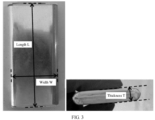
- the electrochemical apparatus further includes a positive electrode, a negative electrode, and a separator sandwiched between the positive electrode and the negative electrode, where the positive electrode, the negative electrode, and the separator are wound to form a cell, and a length L and a width W of the cell satisfy 20 mm ⁇ L ⁇ 300 mm, 20 mm ⁇ W ⁇ 100 mm, and 1 ⁇ L/W ⁇ 4.
- the electrochemical apparatus satisfies at least one of the following characteristics: (d) 5 ⁇ W/T ⁇ 25; (e) 5 ⁇ W/T ⁇ 20; (f) 5 ⁇ W/T ⁇ 15; and (g) 10 ⁇ W/T ⁇ 25.
- the alkyl group includes a methyl group, an ethyl group, a propyl group, an isopropyl group, a butyl group, an isobutyl group, a tert-butyl group, a pentyl group, a hexyl group, a heptyl group, an octyl group, and the like.
- the alkyl group may be arbitrarily substituted.
- alkenylene group covers linear and branched alkenylene groups.
- the alkenylene group may be a C2-C50 alkenylene group, a C2-C40 alkenylene group, a C2-C30 alkenylene group, a C2-C20 alkenylene group, a C2-C10 alkenylene group, a C1-C6 alkenylene group, or a C2-C6 alkenylene group.
- the alkenylene group may be arbitrarily substituted.
- substituent groups may be each independently selected from an alkyl group, an alkenyl group, an aryl group, an alkoxy group, an aryloxy group, a silane group, a siloxy group, an amino group, an ether group, an ester group, a carboxyl group, a sulfonic acid group, a sulfydryl group, a cyano group, halogen, or a combination thereof.
- fluoroethylene carbonate is further added into the electrolyte in this application.
- FEC fluoroethylene carbonate
- w 1 may be but is not limited to 5%, 10%, 15%, 20%, 25%, 30%, 35%, 40%, 45%, 50%, 55%, or 60%, or falls within a range defined by any two of the foregoing values. For example, 10% ⁇ w 1 ⁇ 50% or 15% ⁇ w 1 ⁇ 50%.
- the carboxylate compound represented by formula (I) includes at least propyl propionate.
- propyl propionate is more conducive to stabilizing a positive electrode structure, and therefore can improve the high-temperature ITC performance of the electrochemical apparatus and suppress gas generation while improving the fast charging performance of the electrochemical apparatus, thereby enhancing overall performance of the electrochemical apparatus.
- the nitrile compound includes at least one of hexanedinitrile, butanedinitrile, pentanedinitrile, malonononitrile, 2-methylglutaronitrile, heptanedinitrile, decanedinitrile, nonanedinitrile, 1,4-dicyano-2-butene, ethylene glycol bis(propanenitrile) ether, 3,3'-oxydipropionitrile, thiomalononitrile, hex-2-enedinitrile, butenedinitrile, 2-pentenedinitrile, ethylbutanedinitrile, hex-3-enedinitrile, 2-methyleneglutaronitrile, 4-cyanopilmonitrile, 1,3,6-hexanetricarbonitrile, 1,3,5-trimethylhexahydronitrile, 1,2,3-propanetricarbonitrile, or 1,2,3-tris(2-cyanoxyl)propane.
- complexation protection of the nitrile compound for transition metals in the positive electrode active substance can be further enhanced, oxygen released at the positive electrode under the high-temperature interval cycle condition can be reduced, and the structural stability of the positive electrode can be improved, thereby improving the high-temperature ITC performance of the electrochemical apparatus and suppressing gas generation. That is, when the electrochemical apparatus satisfies 2w 1 2 - 0.01w 1 + 2.3 > x/y > 27w 2 2 - 1.2w 2 + 2.1, the fast charging performance and high-temperature ITC performance of the electrochemical apparatus can be simultaneously improved, and gas generation can be suppressed.
- the electrolyte of this application further includes a lithium salt.
- the lithium salt may include but are not limited to: inorganic lithium salts such as LiPF 6 , LiBF 4 , LiClO 4 , LiAlF 4 , LiSbF 6 , LiTaF 6 , and LiWF 7 ; lithium tungstates such as LiWOF 5 ; lithium carboxylate salts such as HCO 2 Li, CH 3 CO 2 Li, CH 2 FCO 2 Li, CHF 2 CO 2 Li, CF 3 CO 2 Li, CF 3 CH 2 CO 2 Li, CF 3 CF 2 CO 2 Li, CF 3 CF 2 CO 2 Li, CF 3 CF 2 CF 2 CO 2 Li, and CF 3 CF 2 CF 2 CO 2 Li; lithium sulfonates salts such as FSO 3 Li, CH 3 SO 3 Li, CH 2 FSO 3 Li, CHF 2 SO 3 Li, CF 3 SO 3 Li, CF 3 CF 2 SO 3 Li, CF 3 CF 2 SO 3 Li,
- the lithium salt includes at least one of the following: LiPF 6 , LiBF 4 , LiAsF 6 , LiClO 4 , LiB(C 6 H 5 ) 4 , LiCH 3 SO 3 , LiCF 3 SO 3 , LiN(SO 2 CF 3 ) 2 , LiC(SO 2 CF 3 ) 3 , LiSiF 6 , LiBOB, or LiDFOB.
- a percentage of the lithium salt is 0.01 wt% to 20 wt%, 0.01 wt% to 10 wt%, 0.01 wt% to 5 wt%, 0.01 wt% to 3 wt%, 0.1 wt% to 20 wt%, 0.1 wt% to 10 wt%, 0.1 wt% to 5 wt%, 0.1 wt% to 3 wt%, 1 wt% to 20 wt%, 1 wt% to 10 wt%, 1 wt% to 5 wt%, or 1 wt% to 3 wt%.
- the electrolyte further contains any known non-aqueous solvent in the prior art that may be used as a solvent for the electrolyte.
- the non-aqueous solvent includes but is not limited to one or more of the following: cyclic carbonate, linear carbonate, cyclic ether, linear ether, a phosphorus-containing organic solvent, a sulfur-containing organic solvent, and an aromatic fluorine-containing solvent.
- instances of the cyclic carbonate may include but are not limited to one or more of the following: ethylene carbonate (EC), propylene carbonate (PC), and butylene carbonate.
- the cyclic carbonate has 3 to 6 carbon atoms.
- Instances of the linear carbonate substituted with fluorine may include but are not limited to one or more of the following: bis(fluoromethyl) carbonate, bis(difluoromethyl) carbonate, bis(trifluoromethyl) carbonate, bis(2-fluoroethyl) carbonate, bis(2,2-difluoroethyl) carbonate, bis(2,2,2-trifluoroethyl) carbonate, 2-fluoroethyl methyl carbonate, 2,2-difluoroethyl methyl carbonate, and 2,2,2-trifluoroethyl methyl carbonate.
- instances of the cyclic ether may include but are not limited to one or more of the following: tetrahydrofuran, 2-methyltetrahydrofuran, 1,3-dioxolane, 2-methyl-1,3-dioxolane, 4-methyl-1,3-dioxolane, 1,3-dioxane, 1,4-dioxane, and dimethoxypropane.
- instances of the linear ether may include but are not limited to one or more of the following: dimethoxymethane, 1,1-dimethoxyethane, 1,2-dimethoxyethane, diethoxymethane, 1,1-diethoxyethane, 1,2-diethoxyethane, ethoxymethoxymethane, 1,1-ethoxymethoxyethane, and 1,2-ethoxymethoxyethane.
- the aromatic fluorine-containing solvent includes but is not limited to one or more of the following: fluorobenzene, difluorobenzene, trifluorobenzene, tetrafluorobenzene, pentafluorobenzene, hexafluorobenzene, and trifluoromethylbenzene.
- a positive electrode plate includes a positive electrode current collector and a positive electrode active substance layer provided on at least one surface of the positive electrode current collector, where the positive electrode active substance layer contains a positive electrode active substance.
- the positive electrode active substance layer contains a positive electrode active substance.
- the positive electrode active substance is any substance capable of reversibly intercalating and deintercalating metal ions such as lithium ions.
- the positive electrode further includes a positive electrode conductive material, so as to enhance conductivity of the positive electrode.
- the positive electrode conductive material is not limited in type, and any known conductive material may be used. Instances of the positive electrode conductive material may include but are not limited to: graphite such as natural graphite and artificial graphite; carbon black such as acetylene black; carbon materials including amorphous carbon such as needle coke; carbon nanotubes; and graphene.
- the positive electrode conductive material may be used alone or in any combination.
- the thickener is typically used to adjust the viscosity of the slurry.
- the thickener and a styrene-butadiene rubber (SBR) emulsion can be used for slurrying.
- SBR styrene-butadiene rubber
- the thickener is not particularly limited in type. Instances of the thickener may include but are not limited to carboxymethyl cellulose, methyl cellulose, hydroxymethyl cellulose, ethyl cellulose, polyvinyl alcohol, oxidized starch, phosphorylated starch, casein, and salts thereof. The foregoing thickener may be used alone or in any combination.
- a weight percentage of the positive electrode active substance is M%, where 90 ⁇ M ⁇ 99.5. In some embodiments, 95 ⁇ M ⁇ 99. In some embodiments, M may be 90, 92, 94, 95, 96, 97, 98, or 99, or falls within a range defined by any two of the foregoing values.
- the negative electrode current collector is a metal material
- the negative electrode current collector may take forms including but not limited to a metal foil, a metal cylinder, a metal coil, a metal plate, a metal film, a sheet metal mesh, a punched metal, and a foamed metal.
- the negative electrode current collector is a metal film.
- the negative electrode current collector is a copper foil.
- the negative electrode current collector is a rolled copper foil based on a rolling method or an electrolytic copper foil based on an electrolytic method.
- a separator is typically provided between the positive electrode and the negative electrode.
- the electrolyte of this application typically permeates the separator for use.
- the separator may alternatively be a material formed by laminating the foregoing materials, and instances thereof include but are not limited to a three-layer separator formed by laminating polypropylene, polyethylene, and polypropylene in order.
- the form of the separator may be a thin-film form, and instances thereof include but are not limited to a non-woven fabric, a woven fabric, and a microporous film.
- the separator has a pore diameter of 0.01 ⁇ m to 1 ⁇ m and a thickness of 5 ⁇ m to 50 ⁇ m.
- the following separator may alternatively be used: a separator that is obtained by using a resin-based binder to form a composite porous layer containing inorganic particles on the surface of the positive electrode and/or the negative electrode, for example, a separator that is obtained by using fluororesin as a binder to form a porous layer on two surfaces of the positive electrode with alumina particles of which 90% have a particle size less than 1 ⁇ m.
- the porosity of the separator is random. In some embodiments, the porosity of the separator is greater than 10%, greater than 15%, or greater than 20%. In some embodiments, the porosity of the separator is less than 60%, less than 50%, or less than 45%. In some embodiments, the porosity of the separator falls within a range defined by any two of the foregoing values. When the porosity of the separator falls within the foregoing range, its insulation performance and the mechanical strength can be ensured and film resistance can be suppressed, so that the electrochemical apparatus has good safety performance.
- the average pore diameter of the separator is also random. In some embodiments, the average pore diameter of the separator is less than 0.5 ⁇ m or less than 0.2 ⁇ m. In some embodiments, the average pore diameter of the separator is greater than 0.05 ⁇ m. In some embodiments, the average pore diameter of the separator falls within a range defined by any two of the foregoing values. If the average pore diameter of the separator exceeds the foregoing range, a short circuit is likely to occur. When the average pore diameter of the separator falls within the foregoing range, the electrochemical apparatus has good safety performance.
- the electrochemical apparatus In view of design room reserved for an electrochemical apparatus in a notebook computer, the electrochemical apparatus typically tends to be narrow and long in shape. Due to uneven current distribution and unevenly formed SEI film on a narrow and long battery, lithium precipitation is more likely to occur at upper and lower edges in normal-temperature or low-temperature charging, leading to degradation of capacity. In addition, precipitated lithium dendrites may also pierce the separator sandwiched between the positive electrode and the negative electrode to cause a short circuit in the battery, leading to safety problems.
- the positive electrode, the negative electrode, and the separator are wound to form a cell. In some embodiments, the positive electrode, the negative electrode, and the separator are stacked to form a cell.
- designing a size of the battery and simultaneously optimizing the percentage of the carboxylate compound in the electrolyte can further improve the charging rate window of the electrochemical apparatus and alleviate lithium precipitation, thereby improving the fast charging performance of the electrochemical apparatus.
- the length L and the width W of the cell and the percentage w 1 of the carboxylate compound represented by formula (I) satisfy w 1 ⁇ 100/(L/W) ⁇ 10.
- the length L and the width W of the cell and the percentage w 1 of the carboxylate compound represented by formula (I) satisfy w 1 ⁇ 100/(L/W) ⁇ 40.
- w 1 ⁇ 100/(L/W) may be but is not limited to 10, 15, 20, 25, 30, 35, or 40, or falls within a range defined by any two of the foregoing values.
- This application further provides an electronic apparatus, including the electrochemical apparatus according to this application.
- the electrochemical apparatus of this application is not particularly limited to any purpose, and may be used in any electronic apparatus known in the prior art.
- the electrochemical apparatus of this application may be used without limitation in notebook computers, pen-input computers, mobile computers, electronic book players, portable telephones, portable fax machines, portable copiers, portable printers, stereo headsets, video recorders, liquid crystal display televisions, portable cleaners, portable CD players, mini-disc players, transceivers, electronic notebooks, calculators, storage cards, portable recorders, radios, backup power sources, motors, automobiles, motorcycles, motor bicycles, bicycles, lighting appliances, toys, game machines, clocks, electric tools, flash lamps, cameras, large household batteries, and lithium-ion capacitors.
- a positive electrode active material lithium cobalt oxide (LiCoO 2 ), a conductive agent Super P, and a binder polyvinylidene fluoride were mixed at a weight ratio of 97:1:2.
- NMP N-methylpyrrolidone
- the resulting mixture was stirred to uniformity under the action of a vacuum mixer to obtain a positive electrode slurry.
- the positive electrode slurry was evenly applied onto a positive electrode current collector aluminum foil.
- the aluminum foil was dried, followed by cold pressing, cutting, and slitting. Then, drying was performed in vacuum to obtain a positive electrode plate.
- a negative electrode active material artificial graphite, a thickener sodium carboxymethylcellulose (CMC), and a binder styrene-butadiene rubber (SBR) were mixed at a weight ratio of 97:1:2.
- Deionized water was added. Then, the resulting mixture was stirred under the action of a vacuum mixer to obtain a negative electrode slurry. Then, the negative electrode slurry was evenly applied onto a negative electrode current collector copper foil. The copper foil was dried, followed by cold pressing, cutting, and slitting. Then, drying was performed in vacuum to obtain a negative electrode plate.
- Boehmite and polyacrylate were mixed, and the resulting mixture was dissolved in deionized water to form a coating slurry. Then, the coating slurry was evenly applied onto two surfaces of a polyethylene porous substrate by using a micro-gravure coating method, and dried to obtain the separator.
- the battery was discharged to 2.8 V at a constant current of 0.1C, and the weight of the battery was weighed and denoted as m. Then, the battery was disassembled, the cell and the outer packaging aluminum foil film disassembled from the battery were rapidly placed in high-purity acetonitrile (the purity was greater than or equal to 99.9%) for extraction. Then, the extracted supernatant was subjected to a gas chromatography test to obtain compositions and relative percentages p thereof in the electrolyte. The extracted cell and outer packaging aluminum foil film were dried in a vacuum oven.
- the outer packaging aluminum foil film was disassembled and removed to obtain a cell. As shown in FIG 4, a length L, a width W, and a thickness T of the cell were measured with a micrometer respectively.
- Second-cycle discharge capacities of the lithium-ion batteries were recorded, and an average of the first-cycle discharge capacities of the batteries in the groups was measured and denoted as C1; and discharge capacities of the lithium-ion batteries after 250 cycles were recorded, and an average of the discharge capacities of the batteries in the groups was measured and denoted as C250.
- Thickness growth rate ⁇ ′ / ⁇ ⁇ 1 ⁇ 100 % .
- Comparative Examples 1-1 to 1-3 show that adding FEC alone into the electrolyte and keeping the percentage thereof within an appropriate range can improve the fast charging performance of the electrochemical apparatus to some extent.
- the percentage of FEC is excessively high (for example, greater than 12%)
- gas generation is aggravated, leading to significant growth in the thickness of the battery in high-temperature interval cycles.
- the excessively high percentage of FEC does not improve but rather deteriorates the fast charging performance of the electrochemical apparatus at high currents (for example, 1.5C and 3C). This is because an appropriate amount of FEC can effectively alleviate damage to the SEI film at the negative electrode in charging and discharging of the battery and repair the damaged SEI film in a timely manner, thereby improving overcharge performance.
- the linear carboxylate compound is further added into the electrolyte, which improves the fast charging performance of the electrochemical apparatus, and especially significantly improves the fast charging performance at high currents (for example, 1.5C and 3C).
- high currents for example, 1.5C and 3C.
- ethyl acetate ethyl propionate and propyl propionate almost do not deteriorate the high-temperature ITC performance while improving the fast charging performance, and may even improve the high-temperature ITC performance.
- Examples 1-12 to 1-15 combinations of a variety of carboxylate compounds are used, and when 5% ⁇ w 1 ⁇ 60%, 2% ⁇ w 2 ⁇ 12%, and 2 ⁇ w 1 /w 2 ⁇ 20 are satisfied, the fast charging performance and the high-temperature ITC performance are expected to be simultaneously improved.
- both propyl propionate and ethyl propionate being added into the electrolyte can improve the fast charging performance more efficiently while maintaining excellent high-temperature ITC performance.
- Table 2 shows the effect of the cyano group enrichment and percentages of carboxylate and FEC in the electrolyte on the fast charging performance and high-temperature ITC performance of the lithium-ion battery, where the examples in Table 2 are improvements made based on Example 1-14, with a difference being specifically addition of a nitrile additive to the electrolyte.
- Example 2-1 to 2-8 a single nitrile additive is used in the electrolyte, which slightly deteriorates the fast charging performance of the electrochemical apparatus but significantly improves the high-temperature ITC performance.
- the single nitrile compound is added in excess, the viscosity of the electrolyte is increased to some extent, which causes untimely intercalation and deintercalation reactions of lithium ions, and in turn leads to lithium precipitation, thus adversely affecting the high-temperature ITC performance to some extent.
- test results in Table 3 indicate that making the battery size design in combination with the percentage of the carboxylate compound in the electrolyte follow a specified relational expression can improve the charging rate window of the battery and alleviate lithium precipitation, thereby improving the fast charging performance of the electrochemical apparatus.
- Examples 3-13 to 3-17 indicate that in a case that the cell size remains unchanged, adjusting the percentage of the carboxylate compound in the electrolyte to satisfy w 1 ⁇ 100/(L/W) ⁇ 10 can improve the fast charging performance of the electrochemical apparatus, and especially significantly improve the fast charging performance at a high-rate current of above 1.5C. Although the carboxylate compound added can improve the fast charging performance of the electrochemical apparatus, the high-temperature ITC performance is adversely affected. In addition, based on limitations on a size of the electrochemical apparatus used in a notebook computer, adjustment of carboxylate in combination with the cell size design is used as an effective measure to improve both kinetic performance and battery safety.
Landscapes
- Chemical & Material Sciences (AREA)
- Organic Chemistry (AREA)
- Engineering & Computer Science (AREA)
- General Chemical & Material Sciences (AREA)
- Manufacturing & Machinery (AREA)
- Chemical Kinetics & Catalysis (AREA)
- Electrochemistry (AREA)
- Condensed Matter Physics & Semiconductors (AREA)
- Physics & Mathematics (AREA)
- General Physics & Mathematics (AREA)
- Inorganic Chemistry (AREA)
- Materials Engineering (AREA)
- Secondary Cells (AREA)
- Electric Double-Layer Capacitors Or The Like (AREA)
Applications Claiming Priority (1)
| Application Number | Priority Date | Filing Date | Title |
|---|---|---|---|
| PCT/CN2022/094915 WO2023225897A1 (zh) | 2022-05-25 | 2022-05-25 | 电化学装置及包含其的电子装置 |
Publications (2)
| Publication Number | Publication Date |
|---|---|
| EP4535484A1 true EP4535484A1 (de) | 2025-04-09 |
| EP4535484A4 EP4535484A4 (de) | 2026-01-28 |
Family
ID=88045305
Family Applications (1)
| Application Number | Title | Priority Date | Filing Date |
|---|---|---|---|
| EP22943102.8A Pending EP4535484A4 (de) | 2022-05-25 | 2022-05-25 | Elektrochemische vorrichtung und elektronische vorrichtung damit |
Country Status (6)
| Country | Link |
|---|---|
| US (1) | US20240250304A1 (de) |
| EP (1) | EP4535484A4 (de) |
| JP (1) | JP2025516944A (de) |
| KR (1) | KR20250007675A (de) |
| CN (1) | CN116802873A (de) |
| WO (1) | WO2023225897A1 (de) |
Families Citing this family (2)
| Publication number | Priority date | Publication date | Assignee | Title |
|---|---|---|---|---|
| CN119108637B (zh) * | 2024-01-26 | 2025-10-31 | 宁德新能源科技有限公司 | 锂离子电池和电子装置 |
| CN119481225B (zh) * | 2024-12-05 | 2026-01-20 | 中创新航科技集团股份有限公司 | 一种锂离子电池 |
Family Cites Families (21)
| Publication number | Priority date | Publication date | Assignee | Title |
|---|---|---|---|---|
| JP2006079967A (ja) * | 2004-09-10 | 2006-03-23 | Matsushita Electric Ind Co Ltd | 角形電池 |
| EP2605324B1 (de) * | 2010-08-13 | 2018-10-03 | LG Chem, Ltd. | Nichtwässrige elektrolytlösung für eine lithiumsekundärbatterie und lithiumsekundärbatterie damit |
| JP5647734B2 (ja) * | 2010-11-30 | 2015-01-07 | エルジー・ケム・リミテッド | リチウム二次電池 |
| US9123973B2 (en) * | 2010-12-22 | 2015-09-01 | Samsung Sdi Co., Ltd. | Electrolyte for lithium secondary battery and lithium secondary battery comprising the same |
| EP2733780B1 (de) * | 2011-07-14 | 2017-08-30 | LG Chem, Ltd. | Nichtwässriges elektrolyt und lithiumsekundärbatterie damit |
| WO2016017809A1 (ja) * | 2014-08-01 | 2016-02-04 | 宇部興産株式会社 | 非水電解液およびそれを用いた蓄電デバイス |
| WO2016052996A1 (ko) * | 2014-09-30 | 2016-04-07 | 주식회사 엘지화학 | 비수 전해액 리튬 이차전지 |
| JP6642160B2 (ja) * | 2015-03-25 | 2020-02-05 | 三菱ケミカル株式会社 | 非水系電解液及びそれを用いた非水系電解液二次電池 |
| US20180048020A1 (en) * | 2016-08-12 | 2018-02-15 | Lenovo (Beijing) Co., Ltd. | Lithium-ion polymer battery and electronic device |
| CN106159330A (zh) * | 2016-10-08 | 2016-11-23 | 东莞市凯欣电池材料有限公司 | 一种pc基高电压电解液及一种锂离子电池 |
| KR102396617B1 (ko) * | 2016-11-08 | 2022-05-10 | 삼성에스디아이 주식회사 | 리튬 이차 전지용 전해질 및 이를 포함하는 리튬 이차 전지 |
| CN108242556B (zh) * | 2016-12-26 | 2020-01-17 | 宁德时代新能源科技股份有限公司 | 电解液及二次电池 |
| CN109193028B (zh) * | 2018-08-20 | 2020-09-18 | 杉杉新材料(衢州)有限公司 | 一种锂离子电池用非水电解液及使用该非水电解液的锂离子电池 |
| CN112349963B (zh) * | 2019-08-06 | 2022-02-22 | 杉杉新材料(衢州)有限公司 | 一种含硅溶剂和单烷烃硫酸酯锂盐的电解液及锂离子电池 |
| KR102872283B1 (ko) * | 2019-11-07 | 2025-10-16 | 주식회사 엘지에너지솔루션 | 리튬 이차전지용 비수전해액 및 이를 포함하는 리튬 이차전지 |
| EP3951989A4 (de) * | 2019-11-07 | 2022-11-02 | LG Energy Solution, Ltd. | Nichtwässrige elektrolytlösung für eine lithiumsekundärbatterie und lithiumsekundärbatterie damit |
| CN111162315B (zh) * | 2019-12-20 | 2021-11-09 | 惠州亿纬创能电池有限公司 | 电解液及锂离子电池 |
| CN113130890B (zh) * | 2019-12-31 | 2023-01-17 | 深圳新宙邦科技股份有限公司 | 一种锂离子电池 |
| JP7380845B2 (ja) * | 2020-03-31 | 2023-11-15 | 株式会社村田製作所 | 二次電池 |
| KR102872288B1 (ko) * | 2020-07-03 | 2025-10-16 | 주식회사 엘지에너지솔루션 | 리튬 이차전지용 전해질 및 이를 포함하는 리튬 이차전지 |
| CN113206296A (zh) * | 2021-04-30 | 2021-08-03 | 宁德新能源科技有限公司 | 电解液、电化学装置和电子装置 |
-
2022
- 2022-05-25 CN CN202280007272.7A patent/CN116802873A/zh active Pending
- 2022-05-25 JP JP2024569280A patent/JP2025516944A/ja active Pending
- 2022-05-25 KR KR1020247041756A patent/KR20250007675A/ko active Pending
- 2022-05-25 WO PCT/CN2022/094915 patent/WO2023225897A1/zh not_active Ceased
- 2022-05-25 EP EP22943102.8A patent/EP4535484A4/de active Pending
-
2024
- 2024-03-28 US US18/619,623 patent/US20240250304A1/en active Pending
Also Published As
| Publication number | Publication date |
|---|---|
| EP4535484A4 (de) | 2026-01-28 |
| WO2023225897A1 (zh) | 2023-11-30 |
| US20240250304A1 (en) | 2024-07-25 |
| JP2025516944A (ja) | 2025-05-30 |
| KR20250007675A (ko) | 2025-01-14 |
| CN116802873A (zh) | 2023-09-22 |
Similar Documents
| Publication | Publication Date | Title |
|---|---|---|
| CN109860703B (zh) | 一种电解液及电化学装置 | |
| CN109786824B (zh) | 电解液和使用其的电化学装置 | |
| CN114583270B (zh) | 一种锂离子电池 | |
| WO2020168764A1 (en) | Electrochemical device and electronic device | |
| CN111628219A (zh) | 电解液和包含电解液的电化学装置及电子装置 | |
| US20240429398A1 (en) | Electrochemical device and electronic device containing same | |
| CN113078361B (zh) | 一种电解液及电化学装置 | |
| CN112400249A (zh) | 一种电解液及电化学装置 | |
| CN113169299B (zh) | 非水电解质二次电池 | |
| US20240250304A1 (en) | Electrochemical apparatus and electronic apparatus containing same | |
| WO2021179300A1 (zh) | 电化学装置及包含其的电子装置 | |
| US20230275226A1 (en) | Electrochemical apparatus and electronic apparatus | |
| WO2025246570A1 (zh) | 二次电池及包含其的电子装置 | |
| EP4228037A1 (de) | Elektrochemische vorrichtung und elektronische vorrichtung | |
| CN114221034A (zh) | 一种电化学装置及包含该电化学装置的电子装置 | |
| EP4024506A1 (de) | Positive elektrode, elektrochemische vorrichtung und elektronische vorrichtung damit | |
| JP7771368B2 (ja) | 電気化学装置及び電子装置 | |
| US20250349832A1 (en) | Electrochemical Apparatus and Electronic Apparatus including Same | |
| CN116093435B (zh) | 电化学装置和包括其的电子装置 | |
| CN118120092A (zh) | 一种电化学装置及电子装置 | |
| CN115398695A (zh) | 电解液、包含该电解液的电化学装置及电子装置 | |
| EP4224587A1 (de) | Elektrochemische vorrichtung und elektronische vorrichtung damit | |
| CN112368872A (zh) | 一种电解液及电化学装置 | |
| CN116053461B (zh) | 电化学装置和包括其的电子装置 | |
| CN117239241B (zh) | 一种电解液及锂离子电池 |
Legal Events
| Date | Code | Title | Description |
|---|---|---|---|
| STAA | Information on the status of an ep patent application or granted ep patent |
Free format text: STATUS: THE INTERNATIONAL PUBLICATION HAS BEEN MADE |
|
| PUAI | Public reference made under article 153(3) epc to a published international application that has entered the european phase |
Free format text: ORIGINAL CODE: 0009012 |
|
| STAA | Information on the status of an ep patent application or granted ep patent |
Free format text: STATUS: REQUEST FOR EXAMINATION WAS MADE |
|
| 17P | Request for examination filed |
Effective date: 20240327 |
|
| AK | Designated contracting states |
Kind code of ref document: A1 Designated state(s): AL AT BE BG CH CY CZ DE DK EE ES FI FR GB GR HR HU IE IS IT LI LT LU LV MC MK MT NL NO PL PT RO RS SE SI SK SM TR |
|
| DAV | Request for validation of the european patent (deleted) | ||
| DAX | Request for extension of the european patent (deleted) | ||
| REG | Reference to a national code |
Ref country code: DE Ref legal event code: R079 Free format text: PREVIOUS MAIN CLASS: H01M0010052500 Ipc: H01M0010052000 |
|
| A4 | Supplementary search report drawn up and despatched |
Effective date: 20260105 |
|
| RIC1 | Information provided on ipc code assigned before grant |
Ipc: H01M 10/052 20100101AFI20251219BHEP Ipc: H01M 10/0525 20100101ALI20251219BHEP Ipc: H01M 10/0567 20100101ALI20251219BHEP Ipc: H01M 10/0568 20100101ALI20251219BHEP Ipc: H01M 10/0569 20100101ALI20251219BHEP Ipc: C07C 69/14 20060101ALI20251219BHEP Ipc: C07C 69/24 20060101ALI20251219BHEP Ipc: C07C 69/96 20060101ALI20251219BHEP Ipc: H01M 10/0587 20100101ALI20251219BHEP |