EP4534720A1 - Ultrahochfestes kaltgewalztes stahlblech und herstellungsverfahren dafür - Google Patents
Ultrahochfestes kaltgewalztes stahlblech und herstellungsverfahren dafür Download PDFInfo
- Publication number
- EP4534720A1 EP4534720A1 EP22945040.8A EP22945040A EP4534720A1 EP 4534720 A1 EP4534720 A1 EP 4534720A1 EP 22945040 A EP22945040 A EP 22945040A EP 4534720 A1 EP4534720 A1 EP 4534720A1
- Authority
- EP
- European Patent Office
- Prior art keywords
- steel sheet
- less
- rolled steel
- fraction
- ultra
- Prior art date
- Legal status (The legal status is an assumption and is not a legal conclusion. Google has not performed a legal analysis and makes no representation as to the accuracy of the status listed.)
- Pending
Links
Images





Classifications
-
- C—CHEMISTRY; METALLURGY
- C21—METALLURGY OF IRON
- C21D—MODIFYING THE PHYSICAL STRUCTURE OF FERROUS METALS; GENERAL DEVICES FOR HEAT TREATMENT OF FERROUS OR NON-FERROUS METALS OR ALLOYS; MAKING METAL MALLEABLE, e.g. BY DECARBURISATION OR TEMPERING
- C21D1/00—General methods or devices for heat treatment, e.g. annealing, hardening, quenching or tempering
- C21D1/18—Hardening; Quenching with or without subsequent tempering
- C21D1/19—Hardening; Quenching with or without subsequent tempering by interrupted quenching
-
- C—CHEMISTRY; METALLURGY
- C21—METALLURGY OF IRON
- C21D—MODIFYING THE PHYSICAL STRUCTURE OF FERROUS METALS; GENERAL DEVICES FOR HEAT TREATMENT OF FERROUS OR NON-FERROUS METALS OR ALLOYS; MAKING METAL MALLEABLE, e.g. BY DECARBURISATION OR TEMPERING
- C21D1/00—General methods or devices for heat treatment, e.g. annealing, hardening, quenching or tempering
- C21D1/18—Hardening; Quenching with or without subsequent tempering
- C21D1/25—Hardening, combined with annealing between 300 degrees Celsius and 600 degrees Celsius, i.e. heat refining ("Vergüten")
-
- C—CHEMISTRY; METALLURGY
- C21—METALLURGY OF IRON
- C21D—MODIFYING THE PHYSICAL STRUCTURE OF FERROUS METALS; GENERAL DEVICES FOR HEAT TREATMENT OF FERROUS OR NON-FERROUS METALS OR ALLOYS; MAKING METAL MALLEABLE, e.g. BY DECARBURISATION OR TEMPERING
- C21D1/00—General methods or devices for heat treatment, e.g. annealing, hardening, quenching or tempering
- C21D1/84—Controlled slow cooling
-
- C—CHEMISTRY; METALLURGY
- C21—METALLURGY OF IRON
- C21D—MODIFYING THE PHYSICAL STRUCTURE OF FERROUS METALS; GENERAL DEVICES FOR HEAT TREATMENT OF FERROUS OR NON-FERROUS METALS OR ALLOYS; MAKING METAL MALLEABLE, e.g. BY DECARBURISATION OR TEMPERING
- C21D8/00—Modifying the physical properties of ferrous metals or ferrous alloys by deformation combined with, or followed by, heat treatment
- C21D8/02—Modifying the physical properties of ferrous metals or ferrous alloys by deformation combined with, or followed by, heat treatment during manufacturing of plates or strips
-
- C—CHEMISTRY; METALLURGY
- C21—METALLURGY OF IRON
- C21D—MODIFYING THE PHYSICAL STRUCTURE OF FERROUS METALS; GENERAL DEVICES FOR HEAT TREATMENT OF FERROUS OR NON-FERROUS METALS OR ALLOYS; MAKING METAL MALLEABLE, e.g. BY DECARBURISATION OR TEMPERING
- C21D8/00—Modifying the physical properties of ferrous metals or ferrous alloys by deformation combined with, or followed by, heat treatment
- C21D8/02—Modifying the physical properties of ferrous metals or ferrous alloys by deformation combined with, or followed by, heat treatment during manufacturing of plates or strips
- C21D8/0221—Modifying the physical properties of ferrous metals or ferrous alloys by deformation combined with, or followed by, heat treatment during manufacturing of plates or strips characterised by the working steps
- C21D8/0226—Hot rolling
-
- C—CHEMISTRY; METALLURGY
- C21—METALLURGY OF IRON
- C21D—MODIFYING THE PHYSICAL STRUCTURE OF FERROUS METALS; GENERAL DEVICES FOR HEAT TREATMENT OF FERROUS OR NON-FERROUS METALS OR ALLOYS; MAKING METAL MALLEABLE, e.g. BY DECARBURISATION OR TEMPERING
- C21D8/00—Modifying the physical properties of ferrous metals or ferrous alloys by deformation combined with, or followed by, heat treatment
- C21D8/02—Modifying the physical properties of ferrous metals or ferrous alloys by deformation combined with, or followed by, heat treatment during manufacturing of plates or strips
- C21D8/0221—Modifying the physical properties of ferrous metals or ferrous alloys by deformation combined with, or followed by, heat treatment during manufacturing of plates or strips characterised by the working steps
- C21D8/0236—Cold rolling
-
- C—CHEMISTRY; METALLURGY
- C21—METALLURGY OF IRON
- C21D—MODIFYING THE PHYSICAL STRUCTURE OF FERROUS METALS; GENERAL DEVICES FOR HEAT TREATMENT OF FERROUS OR NON-FERROUS METALS OR ALLOYS; MAKING METAL MALLEABLE, e.g. BY DECARBURISATION OR TEMPERING
- C21D8/00—Modifying the physical properties of ferrous metals or ferrous alloys by deformation combined with, or followed by, heat treatment
- C21D8/02—Modifying the physical properties of ferrous metals or ferrous alloys by deformation combined with, or followed by, heat treatment during manufacturing of plates or strips
- C21D8/0247—Modifying the physical properties of ferrous metals or ferrous alloys by deformation combined with, or followed by, heat treatment during manufacturing of plates or strips characterised by the heat treatment
- C21D8/0273—Final recrystallisation annealing
-
- C—CHEMISTRY; METALLURGY
- C21—METALLURGY OF IRON
- C21D—MODIFYING THE PHYSICAL STRUCTURE OF FERROUS METALS; GENERAL DEVICES FOR HEAT TREATMENT OF FERROUS OR NON-FERROUS METALS OR ALLOYS; MAKING METAL MALLEABLE, e.g. BY DECARBURISATION OR TEMPERING
- C21D9/00—Heat treatment, e.g. annealing, hardening, quenching or tempering, adapted for particular articles; Furnaces therefor
- C21D9/46—Heat treatment, e.g. annealing, hardening, quenching or tempering, adapted for particular articles; Furnaces therefor for sheet metals
-
- C—CHEMISTRY; METALLURGY
- C22—METALLURGY; FERROUS OR NON-FERROUS ALLOYS; TREATMENT OF ALLOYS OR NON-FERROUS METALS
- C22C—ALLOYS
- C22C38/00—Ferrous alloys, e.g. steel alloys
- C22C38/001—Ferrous alloys, e.g. steel alloys containing N
-
- C—CHEMISTRY; METALLURGY
- C22—METALLURGY; FERROUS OR NON-FERROUS ALLOYS; TREATMENT OF ALLOYS OR NON-FERROUS METALS
- C22C—ALLOYS
- C22C38/00—Ferrous alloys, e.g. steel alloys
- C22C38/02—Ferrous alloys, e.g. steel alloys containing silicon
-
- C—CHEMISTRY; METALLURGY
- C22—METALLURGY; FERROUS OR NON-FERROUS ALLOYS; TREATMENT OF ALLOYS OR NON-FERROUS METALS
- C22C—ALLOYS
- C22C38/00—Ferrous alloys, e.g. steel alloys
- C22C38/04—Ferrous alloys, e.g. steel alloys containing manganese
-
- C—CHEMISTRY; METALLURGY
- C22—METALLURGY; FERROUS OR NON-FERROUS ALLOYS; TREATMENT OF ALLOYS OR NON-FERROUS METALS
- C22C—ALLOYS
- C22C38/00—Ferrous alloys, e.g. steel alloys
- C22C38/06—Ferrous alloys, e.g. steel alloys containing aluminium
-
- C—CHEMISTRY; METALLURGY
- C21—METALLURGY OF IRON
- C21D—MODIFYING THE PHYSICAL STRUCTURE OF FERROUS METALS; GENERAL DEVICES FOR HEAT TREATMENT OF FERROUS OR NON-FERROUS METALS OR ALLOYS; MAKING METAL MALLEABLE, e.g. BY DECARBURISATION OR TEMPERING
- C21D2211/00—Microstructure comprising significant phases
- C21D2211/001—Austenite
-
- C—CHEMISTRY; METALLURGY
- C21—METALLURGY OF IRON
- C21D—MODIFYING THE PHYSICAL STRUCTURE OF FERROUS METALS; GENERAL DEVICES FOR HEAT TREATMENT OF FERROUS OR NON-FERROUS METALS OR ALLOYS; MAKING METAL MALLEABLE, e.g. BY DECARBURISATION OR TEMPERING
- C21D2211/00—Microstructure comprising significant phases
- C21D2211/002—Bainite
-
- C—CHEMISTRY; METALLURGY
- C21—METALLURGY OF IRON
- C21D—MODIFYING THE PHYSICAL STRUCTURE OF FERROUS METALS; GENERAL DEVICES FOR HEAT TREATMENT OF FERROUS OR NON-FERROUS METALS OR ALLOYS; MAKING METAL MALLEABLE, e.g. BY DECARBURISATION OR TEMPERING
- C21D2211/00—Microstructure comprising significant phases
- C21D2211/005—Ferrite
-
- C—CHEMISTRY; METALLURGY
- C21—METALLURGY OF IRON
- C21D—MODIFYING THE PHYSICAL STRUCTURE OF FERROUS METALS; GENERAL DEVICES FOR HEAT TREATMENT OF FERROUS OR NON-FERROUS METALS OR ALLOYS; MAKING METAL MALLEABLE, e.g. BY DECARBURISATION OR TEMPERING
- C21D2211/00—Microstructure comprising significant phases
- C21D2211/008—Martensite
-
- C—CHEMISTRY; METALLURGY
- C22—METALLURGY; FERROUS OR NON-FERROUS ALLOYS; TREATMENT OF ALLOYS OR NON-FERROUS METALS
- C22C—ALLOYS
- C22C38/00—Ferrous alloys, e.g. steel alloys
- C22C38/18—Ferrous alloys, e.g. steel alloys containing chromium
- C22C38/22—Ferrous alloys, e.g. steel alloys containing chromium with molybdenum or tungsten
-
- C—CHEMISTRY; METALLURGY
- C22—METALLURGY; FERROUS OR NON-FERROUS ALLOYS; TREATMENT OF ALLOYS OR NON-FERROUS METALS
- C22C—ALLOYS
- C22C38/00—Ferrous alloys, e.g. steel alloys
- C22C38/18—Ferrous alloys, e.g. steel alloys containing chromium
- C22C38/24—Ferrous alloys, e.g. steel alloys containing chromium with vanadium
-
- C—CHEMISTRY; METALLURGY
- C22—METALLURGY; FERROUS OR NON-FERROUS ALLOYS; TREATMENT OF ALLOYS OR NON-FERROUS METALS
- C22C—ALLOYS
- C22C38/00—Ferrous alloys, e.g. steel alloys
- C22C38/18—Ferrous alloys, e.g. steel alloys containing chromium
- C22C38/26—Ferrous alloys, e.g. steel alloys containing chromium with niobium or tantalum
-
- C—CHEMISTRY; METALLURGY
- C22—METALLURGY; FERROUS OR NON-FERROUS ALLOYS; TREATMENT OF ALLOYS OR NON-FERROUS METALS
- C22C—ALLOYS
- C22C38/00—Ferrous alloys, e.g. steel alloys
- C22C38/18—Ferrous alloys, e.g. steel alloys containing chromium
- C22C38/28—Ferrous alloys, e.g. steel alloys containing chromium with titanium or zirconium
-
- C—CHEMISTRY; METALLURGY
- C22—METALLURGY; FERROUS OR NON-FERROUS ALLOYS; TREATMENT OF ALLOYS OR NON-FERROUS METALS
- C22C—ALLOYS
- C22C38/00—Ferrous alloys, e.g. steel alloys
- C22C38/18—Ferrous alloys, e.g. steel alloys containing chromium
- C22C38/34—Ferrous alloys, e.g. steel alloys containing chromium with more than 1.5% by weight of silicon
-
- C—CHEMISTRY; METALLURGY
- C22—METALLURGY; FERROUS OR NON-FERROUS ALLOYS; TREATMENT OF ALLOYS OR NON-FERROUS METALS
- C22C—ALLOYS
- C22C38/00—Ferrous alloys, e.g. steel alloys
- C22C38/18—Ferrous alloys, e.g. steel alloys containing chromium
- C22C38/38—Ferrous alloys, e.g. steel alloys containing chromium with more than 1.5% by weight of manganese
Definitions
- the tissue fraction is determined too sensitively to the rapid-cooling endpoint temperature.
- a difference in martensite fractions occurs due to Ms temperature and rapid cooling temperature, making it difficult to uniformly create a uniform microstructure and residual austenite.
- martensite or tempered martensite was used as a main microstructure to secure high strength and formability, and an elongation was secured through residual austenite or ferrite structures. The characteristics of rapid cooling and reheating are that the tissue fractions of tempered martensite, martensite, and remaining austenite vary depending on the rapid cooling end temperature.
- the optimal rapid-cooling end-point temperature section is determined depending upon alloy components to control the microstructure fraction. If the rapid-cooling endpoint temperature is too low, the size of the remaining austenite becomes fine, but its fraction becomes very small. If the rapid-cooling endpoint temperature is too high, the size of the austenite becomes large, the carbon enrichment is insufficient, and after the final cooling, it transforms into a martensite structure or becomes unstable, which makes little contribution to securing elongation.
- the present invention has been made in view of the above problems, and it is one object of the present invention to provide an ultra-high strength cold-rolled steel sheet whose microstructure has been controlled to have high strength and elongation, and a manufacturing method thereof.
- the ultra-high strength cold-rolled steel sheet may include a mixed structure in which tempered martensite, martensite, residual austenite, upper bainite, and lower bainite are mixed, wherein a fraction of the martensite is in a range of greater than 0% and 20% or less, a fraction of the residual austenite is in a range of 10% to 30%, a fraction of the upper bainite is in a range of greater than 0% and 30% or less, a fraction of the lower bainite is in a range of greater than 0% and 30% or less, and a fraction of the tempered martensite is a remaining fraction.
- Manganese has a solid solution-strengthening effect and increases hardenability, delaying the formation of ferrite and bainite during cooling.
- the content of manganese is less than 1.5%, the effect due to manganese addition may not be sufficient, making it difficult to secure hardenability.
- the content of manganese is greater than 3.0%, the transformation of bainite may be excessively delayed, the processability may be reduced due to the formation or segregation of inclusions such as MnS, and the weldability may be reduced due to increased carbon equivalent. Accordingly, it is preferred to add manganese in a content of 1.5% to 3.0% of the total weight of the steel sheet.
- Aluminum is used as a deoxidizer and, similar to silicon, can help suppress carbide formation.
- the content of aluminum is less than 0.01%, the deoxidation effect may be insufficient.
- the content of aluminum is greater than 0.05%, AlN may be formed during slab manufacturing, which can cause cracks during casting or hot rolling. Accordingly, it is preferred to add aluminum in a content of 0.01% to 0.05% based on the total weight of the steel sheet.
- Chromium has a solid solution-strengthening effect, contributes to strength improvement by increasing hardenability, and acts together with C and Mn to refine martensite and bainite structures and stabilize residual austenite.
- the content of chromium is greater than 1.0%, the transformation of bainite may be excessively delayed, and the manufacturing cost of steel may increase. Accordingly, it is preferred to add chromium in a content of greater than 0% and 1.0% or less of the total weight of the steel sheet.
- Nb niobium
- Ti titanium
- V vanadium
- Copper can help stabilize austenite and increase the hardenability of steel.
- the content of the copper is greater than 0.5%, it increases the manufacturing cost of the steel, which is not desirable. Accordingly, it is preferred to add copper in a content of greater than 0% and 0.5% or less of the total weight of the steel sheet.
- the total of nickel and copper in a content of greater than 0% and 1.0% or less.
- Boron can improve the hardenability as in Mn, Cr, and Mo.
- the content of the boron is greater than 0.005%, it may be concentrated on the surface and cause quality deterioration such as plating adhesion. Accordingly, it is preferred to add boron in a content of greater than 0% and 0.005% or less of the total weight of the steel sheet.
- the remaining component of the ultra-high strength cold-rolled steel sheet is iron (Fe).
- Fe iron
- the ultra-high strength cold-rolled steel sheet according to an embodiment of the present invention may include a mixed structure in which ferrite, tempered martensite, martensite, residual austenite, upper bainite, and lower bainite are mixed.
- the fraction of the ferrite may be 0% to 5% (including 0%), the fraction of the martensite may be greater than 0% and 20% or less, the fraction of the residual austenite may be 10% to 30%, the fraction of the upper bainite may be greater than 0% and 30% or less, the fraction of the lower bainite may be greater than 0% and 30% or less, and the fraction of the tempered martensite may be the remaining fraction.
- the minimum value of the sum of the fraction of the upper bainite and the fraction of the lower bainite may be 10%.
- the fractions mean area ratios derived from microstructure photographs through an image analyzer.
- the ferrite may include polygonal ferrite.
- the average diameter of the residual austenite may be, for example 1.0 ⁇ m or less, for example 0.1 ⁇ m to 1.0 ⁇ m.
- the residual austenite is finely distributed in the lath and grain boundaries of the tempered martensite and the bainite, so that the residual austenite can be stabilized, and the strength and elongation can be stably secured.
- the ultra-high strength cold-rolled steel sheet may not include ferrite.
- the ultra-high strength cold-rolled steel sheet may include a mixed structure in which tempered martensite, martensite, residual austenite, upper bainite, and lower bainite are mixed.
- the fraction of martensite may be greater than 0% and 20% or less
- the fraction of residual austenite may be 10% to 30%
- the fraction of the upper bainite may be greater than 0% and 30% or less
- the fraction of the lower bainite may be greater than 0% and 30% or less
- the fraction of the tempered martensite may be the remaining fraction.
- the sum of the fraction of the upper bainite and the fraction of the lower bainite may be 10% to 60%.
- the minimum value of the sum of the fraction of the upper bainite and the fraction of the lower bainite may be 10%.
- a ratio (B/A) of the area (B) of grains having a carbon content of 0.5% or less in austenite to the area (A) of austenite is less than 0.1.
- the ratio (B/A) can be understood as a measure of the compositional stability of the residual austenite (RA) generated in the steel sheet.
- the ratio (B/A) is 0.1 or more, the compositional stability of austenite is insufficient, so the effect of improving elongation due to residual austenite cannot be obtained.
- ⁇ ⁇ is an austenite lattice constant measured by a transmission electron microscope.
- the ratio (C/A) of the area (C) of martensite-austenite grains to the area (A) of austenite is smaller than 0.5.
- the ratio (C/A) can be understood as a measure of the stability for each position of the residual austenite (RA) generated within the steel sheet.
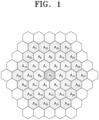
- FIG. 1 illustrates the concept of a way of calculating the average value (K) of crystal orientation differences by averaging differences in crystal orientations between comparison regions adj acent to one region according to a method of manufacturing an ultra-high strength cold-rolled steel sheet according to an embodiment of the present invention
- FIG. 2 illustrates the distribution pattern of the average values (K) of the crystal orientation differences.
- the average value (K) of crystal orientation differences obtained by averaging a difference in crystal orientations between comparison regions adjacent to the region (A 0 ) based on one arbitrary region (A 0 ) in the remaining austenite grain may be an average value (K) of crystal orientation differences obtained by averaging crystal orientation differences between the third comparison regions (A 19 to A 36 ) based on the arbitrary region (A 0 ).
- the average value (K) of the crystal orientation differences obtained by averaging crystal orientation differences between the third comparison regions (A 19 to A 36 ) based on the arbitrary region (A 0 ) may be represented by Equation 1 below.
- (MA) i represents a crystal orientation difference between one region of the third comparison regions (A 19 to A 36 ) and the region (A 0 )
- n may be 19, and m may be 36.
- the distribution of the average values (K) of the crystal orientation differences is from 0° to 5°, and, among these, the maximum value (Kmax), minimum value (Kmin), average value (Kavg) shown in a region in which the average value of the crystal orientation differences is 0° to 3° may be calculated.
- the maximum value (Kmax), minimum value (Kmin), and average value (Kavg) shown in the distribution of the region where the average value (K) of the crystal orientation differences is from 0° to 3° satisfy the relationship of (Kmax - Kavg)/ (Kmax - Kmin) > 0.4.
- the hot-rolled steel sheet is pickled with acid to remove a surface scale layer thereof.
- the hot-rolled steel sheet is cold-rolled at an average reduction ratio of, for example, 40% to 70% to form a cold-rolled steel sheet.
- the average reduction ratio increases, the formability increases due to the tissue refinement effect.
- the average reduction rate is less than 40%, it is difficult to obtain a uniform microstructure.
- the average reduction ratio is higher than 70%, the roll force increases and the process load increases.
- the cold-rolled steel sheet may have a final thickness.
- the cold-rolled steel sheet may have a structure in which the structure of the hot-rolled steel sheet is extended.
- the cold-rolled steel sheet is annealed in a continuous annealing furnace having a normal slow cooling section.
- the annealing is performed to form an austenite single-phase structure.
- the annealing heat treatment temperature and time can affect the austenite grain size, and accordingly, can have a great effect on the strength of the cold-rolled steel sheet.
- the annealing is performed at a heating rate of, for example, 2°C/sec or more, for example, in a range of 2°C/sec to 10°C/sec.
- a heating rate of, for example, 2°C/sec or more, for example, in a range of 2°C/sec to 10°C/sec.
- the annealing may be performed, for example, at a temperature of Ac3 or more, for example, at a temperature in a range of 830°C to 930°C, for example, at a temperature in a range of 830°C to 900°C, for example, for a time in a range of 30 sec to 120 sec.
- the cold-rolled structure is reversely transformed into austenite.
- the annealing temperature is less than 830°C, a single austenite phase cannot be formed to create the final structure, tempered martensite.
- annealing should be performed at A3 temperature or higher to form a single austenite phase.
- the austenite grains may become coarser, which may reduce the strength.
- the annealed cold-rolled steel sheet is slow-cooled at a cooling rate of, for example, 1°C/sec to 15°C/sec, for example, 3°C/sec to 10°C/sec, to a temperature section that suppresses ferrite transformation, for example, a first cooling end temperature of, for example, 650°C to 800°C.
- a first cooling end temperature of the slow cooling is lower than 650°C, ferrite transformation may occur in an undesirable amount, and thus the strength may be reduced. It is preferable that the fraction of ferrite generated by the ferrite transformation is limited to less than 0% to 5%.
- the time maintained at the second cooling end temperature may be in a range of 5 seconds to 90 seconds.
- the holding time is less than 5 seconds, the lower bainite transformation may not occur sufficiently.
- the holding time exceeds 90 seconds, the process cost may increase due to excessively long heat treatment time.
- some unstable austenite may be transformed into martensite during the final cooling to room temperature. If there is a lot of martensite generated at this time, the fraction of the final residual austenite decreases, which may adversely affect formability. Accordingly, it is desirable to control the generated martensite to less than 20%.
- the steel types A to D satisfy the composition ranges of the present invention, specifically, a composition range of carbon (C): 0.28% to 0.45%; silicon (Si): 1.0% to 2.5%; manganese (Mn): 1.5% to 3.0%; aluminum (Al): 0.01% to 0.05%; chromium (Cr): greater than 0% and 1.0% or less; molybdenum (Mo): greater than 0% and 0.5% or less; niobium (Nb); the total of titanium (Ti) and vanadium (V): greater than 0% and 0.1% or less; phosphorus (P): greater than 0% and 0.03% or less; sulfur (S): greater than 0% and 0.03% or less; nitrogen (N): greater than 0% and 0.01% or less; based on % by weight, and the remainder being iron (Fe).
- C carbon
- Si silicon
- Mn manganese
- aluminum (Al) 0.01% to 0.05%
- Cr chromium
- the steel type E is outside the composition range of the present invention and does not satisfy, specifically, a carbon (C) range of 0.28% to 0.45%.
- Table 2 shows the Ac3 temperature, Ms temperature, Ms-140°C temperature and Ms-30°C temperature for each steel type. The unit is °C. [Table 2] Steel type Ac3 Ms Ms-140 Ms-30 A 830 323 183 290 B 830 323 183 290 C 819 321 181 290 D 833 339 199 309 E 845 364 224 334
- the slab of the steel type was reheated at 1200°C and maintained for 3 hours, hot-rolled to a thickness of 2.4 mm at a finish delivery temperature of 950°C, and then coiled at 600°C.
- the coiled hot-rolled steel sheet was pickled to remove the scale on the surface, and cold-rolled to manufacture a cold-rolled steel sheet with a thickness of 1.2 mm.
- Table 3 shows condition values of the heat treatment process used to manufacture the cold-rolled steel sheets of the comparative examples and the examples.
- the "first heat treatment” means heat treatment performed after hot rolling coiling and before cold rolling.
- [Table 3] Ste el typ e Classific ation First heat treatme nt tempera ture (°C) Anneali ng tempera ture (°C) Anneal ing holdin g time First slow cooli ng rate (°C/s ec) First slow cooling tempera ture (°C) First rapid cooli ng rate (°C/s ec) Seco nd rapid cooli ng rate (°C/s ec) Second rapid cooling tempera ture (°C) Rapid cooli ng hold ing time (sec) Partitio ning tempera ture (°C) Partitio ning holding time (sec)
- Example 2 620 850 60 -
- Examples 1 to 4 satisfy the process ranges of the present invention.
- Comparative Example 1 adopted the steel type E which is outside the composition range of the present invention
- Comparative Example 2 exceeds and does not satisfy 500°C to 680°C which is the temperature range of the first heat treatment and is below and does not satisfy 830°C to 930°C which is the annealing temperature range
- Comparative Example 3 satisfies the annealing temperature range, but exceeds and does not satisfy 30 sec to 120 sec which is an annealing holding time, and is below and does not satisfy 5 sec to 90 sec which is a rapid cooling holding time at the second cooling end temperature (180°C to 300°C) after the second cooling (rapid cooling).
- Table 4 shows item values representing the microstructures of the cold-rolled steel sheets of the comparative examples and the examples.
- Examples 1 to 4 satisfy all of the following ranges: the first item value (B/A) ⁇ 0.1, the second item value (C/A) ⁇ 0.5, the third item value ((Kmax-Kavg)/ (Kmax-Kmin))>0.4
- the first item value (B/A) is greater than 0.1
- the third item value ((Kmax-Kavg)/ (Kmax-Kmin)) is smaller than 0.4. It can be confirmed that in the case of Comparative Example 2, the first item value (B/A) is greater than 0.1, and the second item value (C/A) is not smaller than 0.5.
- the second item value (C/A) is not smaller than 0.5.
- Table 5 shows the physical and mechanical properties, such as yield strength (YS), tensile strength (TS), and elongation (EL), yield ratio (YR), and 90-degree bendability (R/t), of the manufactured hot-rolled steel sheet and steel pipes.
- the examples satisfied the target ranges of the yield strength (YS), tensile strength (TS), and elongation (EL), yield ratio (YR), and 90-degree bendability (R/t).
- the TSxT.El value which is the product of the tensile strength and elongation, may be 20000 or more, preferably 21000 or more, more preferably 22000 or more.
- Comparative Example 1 is below and does not satisfy an elongation (EL) range of 15% or more and is below and does not satisfy a product range of tensile strength and elongation of 20000 or more
- Comparative Example 2 is below and does not satisfy an elongation (EL) range of 15% or more, is below and does not satisfy a yield ratio (YR) range of 75% or more, is above and does not satisfy a 90-degree bendability (R/t) range of 3.0 or less, and is below and does not satisfy a product range of tensile strength and elongation of 20000 or more
- Comparative Example 3 is below and does not satisfy a yield strength (YP) range of 1180 MPa or more, is below and does not satisfy a tensile strength (TS) range of 1470 MPa or more, is below and does not satisfy an elongation (EL) range of 15% or more, is below and does not satisfy a yield ratio (YR) range of 75% or more, is above and does not satisfy a 90
- the content of carbon is characterized by being low, and it failed to secure both a tensile strength of 1470 MPa and an elongation of 15% or more.
- the first heat treatment temperature was high, it was characterized by a low annealing temperature, and elongation was not sufficiently secured.
- the first heat treatment temperature is high and the annealing temperature is low, coarse martensite-austenite composite structures, compared to residual austenite, are excessively formed, and they do not show the TRIP effect, so they are considered not helpful in securing elongation.
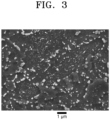
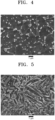
- microstructures were observed after the first heat treatment for Example 1 and Comparative Example 2 having the same composition, and, in the case of Comparative Example 2, coarse cementite with a grain size of 500 nm or more was formed in a large amount. As a result, although a large amount of residual austenite was secured, an elongation of 15% or more was not achieved.
Landscapes
- Chemical & Material Sciences (AREA)
- Engineering & Computer Science (AREA)
- Mechanical Engineering (AREA)
- Materials Engineering (AREA)
- Metallurgy (AREA)
- Organic Chemistry (AREA)
- Physics & Mathematics (AREA)
- Thermal Sciences (AREA)
- Crystallography & Structural Chemistry (AREA)
- Heat Treatment Of Sheet Steel (AREA)
Applications Claiming Priority (2)
| Application Number | Priority Date | Filing Date | Title |
|---|---|---|---|
| KR1020220066960A KR102747793B1 (ko) | 2022-05-31 | 2022-05-31 | 초고강도 냉연강판 및 그 제조방법 |
| PCT/KR2022/019634 WO2023234502A1 (ko) | 2022-05-31 | 2022-12-05 | 초고강도 냉연강판 및 그 제조방법 |
Publications (2)
| Publication Number | Publication Date |
|---|---|
| EP4534720A1 true EP4534720A1 (de) | 2025-04-09 |
| EP4534720A4 EP4534720A4 (de) | 2025-11-19 |
Family
ID=89025153
Family Applications (1)
| Application Number | Title | Priority Date | Filing Date |
|---|---|---|---|
| EP22945040.8A Pending EP4534720A4 (de) | 2022-05-31 | 2022-12-05 | Ultrahochfestes kaltgewalztes stahlblech und herstellungsverfahren dafür |
Country Status (6)
| Country | Link |
|---|---|
| US (1) | US20250092497A1 (de) |
| EP (1) | EP4534720A4 (de) |
| JP (1) | JP2025519191A (de) |
| KR (1) | KR102747793B1 (de) |
| CN (1) | CN119403949A (de) |
| WO (1) | WO2023234502A1 (de) |
Family Cites Families (16)
| Publication number | Priority date | Publication date | Assignee | Title |
|---|---|---|---|---|
| JP5402007B2 (ja) * | 2008-02-08 | 2014-01-29 | Jfeスチール株式会社 | 加工性に優れた高強度溶融亜鉛めっき鋼板およびその製造方法 |
| EP2683839B1 (de) * | 2011-03-07 | 2015-04-01 | Tata Steel Nederland Technology B.V. | Verfahren zur herstellung von hochfestem formbarem stahl und damit hergestellter hochfester formbarer stahl |
| US9896751B2 (en) * | 2011-07-29 | 2018-02-20 | Nippon Steel & Sumitomo Metal Corporation | High strength steel sheet and high strength galvanized steel sheet excellent in shapeability and methods of production of same |
| ES2651149T5 (es) * | 2012-03-30 | 2021-02-15 | Voestalpine Stahl Gmbh | Chapa de acero de alta resistencia laminada en frío y procedimiento de fabricación de dicha chapa de acero |
| WO2017002883A1 (ja) * | 2015-06-30 | 2017-01-05 | 新日鐵住金株式会社 | 高強度冷延鋼板、高強度溶融亜鉛めっき鋼板、および高強度合金化溶融亜鉛めっき鋼板 |
| UA119946C2 (uk) * | 2015-12-29 | 2019-08-27 | Арселорміттал | Спосіб виробництва надвисокоміцної листової сталі, підданої цинкуванню з відпалюванням, і одержана листова сталь, піддана цинкуванню з відпалюванням |
| KR101859068B1 (ko) | 2016-10-31 | 2018-06-28 | 한전케이디엔주식회사 | 선로 상태 판단 장치 |
| CN108018484B (zh) * | 2016-10-31 | 2020-01-31 | 宝山钢铁股份有限公司 | 抗拉强度1500MPa以上成形性优良的冷轧高强钢及其制造方法 |
| WO2019003448A1 (ja) * | 2017-06-30 | 2019-01-03 | Jfeスチール株式会社 | 熱間プレス部材およびその製造方法ならびに熱間プレス用冷延鋼板 |
| WO2019092482A1 (en) * | 2017-11-10 | 2019-05-16 | Arcelormittal | Cold rolled heat treated steel sheet and a method of manufacturing thereof |
| KR102276740B1 (ko) * | 2018-12-18 | 2021-07-13 | 주식회사 포스코 | 연성 및 가공성이 우수한 고강도 강판 및 그 제조방법 |
| KR102209575B1 (ko) * | 2018-12-18 | 2021-01-29 | 주식회사 포스코 | 강도와 연성의 밸런스 및 가공성이 우수한 강판 및 그 제조방법 |
| WO2020128574A1 (en) * | 2018-12-18 | 2020-06-25 | Arcelormittal | Cold rolled and heat-treated steel sheet and method of manufacturing the same |
| US12286682B2 (en) * | 2019-04-30 | 2025-04-29 | Tata Steel Nederland Technology B.V. | High strength steel product and a process to produce a high strength steel product |
| ES2911662T5 (en) * | 2019-06-17 | 2025-06-05 | Tata Steel Ijmuiden Bv | Method of heat treating a high strength cold rolled steel strip |
| KR20220071035A (ko) * | 2020-11-23 | 2022-05-31 | 현대제철 주식회사 | 초고강도 냉연강판 및 그 제조방법 |
-
2022
- 2022-05-31 KR KR1020220066960A patent/KR102747793B1/ko active Active
- 2022-12-05 JP JP2024570577A patent/JP2025519191A/ja active Pending
- 2022-12-05 WO PCT/KR2022/019634 patent/WO2023234502A1/ko not_active Ceased
- 2022-12-05 CN CN202280096580.1A patent/CN119403949A/zh active Pending
- 2022-12-05 EP EP22945040.8A patent/EP4534720A4/de active Pending
-
2024
- 2024-11-27 US US18/961,786 patent/US20250092497A1/en active Pending
Also Published As
| Publication number | Publication date |
|---|---|
| WO2023234502A1 (ko) | 2023-12-07 |
| EP4534720A4 (de) | 2025-11-19 |
| JP2025519191A (ja) | 2025-06-24 |
| KR102747793B1 (ko) | 2024-12-31 |
| US20250092497A1 (en) | 2025-03-20 |
| KR20230166684A (ko) | 2023-12-07 |
| CN119403949A (zh) | 2025-02-07 |
Similar Documents
| Publication | Publication Date | Title |
|---|---|---|
| JP6924284B2 (ja) | 低コストで高成形性の1180MPa級冷間圧延焼鈍二相鋼板およびその製造方法 | |
| EP3901299A1 (de) | Kaltgewalztes stahlblech mit ausgezeichneter verarbeitbarkeit, feuerverzinktes stahlblech und verfahren zu seiner herstellung | |
| EP3859041A1 (de) | Hochfestes kaltgewalztes stahlblech mit hohem lochausdehnungsverhältnis, hochfestes feuerverzinktes stahlblech und herstellungsverfahren dafür | |
| EP2615191B1 (de) | Hochfestes kaltgewalztes stahlblech mit ausgezeichneten dehnungs- und bördelungseigenschaften sowie herstellungsverfahren dafür | |
| EP3235922B1 (de) | Feuerverzinktes stahlblech mit hervorragender lochdehnbarkeit, schmelztauchveredeltes galvannealed-stahlblech und herstellungsverfahren dafür | |
| US20090260729A1 (en) | High-carbon hot-rolled steel sheet and method for producing the same | |
| EP1870483B1 (de) | Warmgewalztes stahlblech, herstellungsverfahren dafür und körper hergestellt durch dessen verformung | |
| EP3009527A1 (de) | Hochfestes kaltgewalztes stahlblech und verfahren zur herstellung davon | |
| KR20220071035A (ko) | 초고강도 냉연강판 및 그 제조방법 | |
| KR20230082600A (ko) | 성형성이 우수한 고강도 강판 및 이의 제조방법 | |
| EP4234750A1 (de) | Ultrahochfestes stahlblech mit hervorragender duktilität und verfahren zur herstellung davon | |
| EP3561121B1 (de) | Kaltgewalztes stahlblech mit hervorragender biegbarkeit und lochaufweitbarkeit und verfahren zur herstellung davon | |
| EP4600399A1 (de) | Stahlblech und verfahren zur herstellung davon | |
| KR20210080664A (ko) | 연성 및 가공성이 우수한 강판 및 이의 제조방법 | |
| KR20250093735A (ko) | 강판 및 이의 제조방법 | |
| EP4438761A1 (de) | Warmgewalztes stahlblech und verfahren zur herstellung davon | |
| US20250092497A1 (en) | Ultra-high strength cold-rolled steel sheet and manufacturing method therefor | |
| KR20220125755A (ko) | 높은 연성과 국부 성형성을 가지는 초고장력 냉연강판 및 그 제조방법 | |
| EP4636115A1 (de) | Hochfestes stahlblech mit hohem streckgrenzenverhältnis und herstellungsverfahren dafür | |
| EP4640894A1 (de) | Kaltgewalztes stahlblech und verfahren zur herstellung davon | |
| KR102904561B1 (ko) | 우수한 성형성을 가지는 초고강도 냉연강판 및 그 제조방법 | |
| KR102924259B1 (ko) | 고강도 냉연강판 및 그 제조방법 | |
| KR102845301B1 (ko) | 고강도 냉연강판 및 그 제조방법 | |
| KR102947806B1 (ko) | 고강도 냉연강판 및 그 제조방법 | |
| EP4640881A1 (de) | Stahlblech und herstellungsverfahren dafür |
Legal Events
| Date | Code | Title | Description |
|---|---|---|---|
| STAA | Information on the status of an ep patent application or granted ep patent |
Free format text: STATUS: THE INTERNATIONAL PUBLICATION HAS BEEN MADE |
|
| PUAI | Public reference made under article 153(3) epc to a published international application that has entered the european phase |
Free format text: ORIGINAL CODE: 0009012 |
|
| STAA | Information on the status of an ep patent application or granted ep patent |
Free format text: STATUS: REQUEST FOR EXAMINATION WAS MADE |
|
| 17P | Request for examination filed |
Effective date: 20241211 |
|
| AK | Designated contracting states |
Kind code of ref document: A1 Designated state(s): AL AT BE BG CH CY CZ DE DK EE ES FI FR GB GR HR HU IE IS IT LI LT LU LV MC ME MK MT NL NO PL PT RO RS SE SI SK SM TR |
|
| DAV | Request for validation of the european patent (deleted) | ||
| DAX | Request for extension of the european patent (deleted) | ||
| A4 | Supplementary search report drawn up and despatched |
Effective date: 20251016 |
|
| RIC1 | Information provided on ipc code assigned before grant |
Ipc: C22C 38/38 20060101AFI20251010BHEP Ipc: C22C 38/34 20060101ALI20251010BHEP Ipc: C22C 38/22 20060101ALI20251010BHEP Ipc: C22C 38/28 20060101ALI20251010BHEP Ipc: C22C 38/24 20060101ALI20251010BHEP Ipc: C22C 38/00 20060101ALI20251010BHEP Ipc: C21D 8/02 20060101ALI20251010BHEP Ipc: C22C 38/06 20060101ALI20251010BHEP |