EP4534635A1 - Verfahren zur herstellung von bioschmiermitteln aus abfallmaterialien - Google Patents
Verfahren zur herstellung von bioschmiermitteln aus abfallmaterialien Download PDFInfo
- Publication number
- EP4534635A1 EP4534635A1 EP23425054.6A EP23425054A EP4534635A1 EP 4534635 A1 EP4534635 A1 EP 4534635A1 EP 23425054 A EP23425054 A EP 23425054A EP 4534635 A1 EP4534635 A1 EP 4534635A1
- Authority
- EP
- European Patent Office
- Prior art keywords
- waste
- lubricants
- reactor
- outlet
- biolubricants
- Prior art date
- Legal status (The legal status is an assumption and is not a legal conclusion. Google has not performed a legal analysis and makes no representation as to the accuracy of the status listed.)
- Granted
Links
Images
Classifications
-
- C—CHEMISTRY; METALLURGY
- C10—PETROLEUM, GAS OR COKE INDUSTRIES; TECHNICAL GASES CONTAINING CARBON MONOXIDE; FUELS; LUBRICANTS; PEAT
- C10M—LUBRICATING COMPOSITIONS; USE OF CHEMICAL SUBSTANCES EITHER ALONE OR AS LUBRICATING INGREDIENTS IN A LUBRICATING COMPOSITION
- C10M175/00—Working-up used lubricants to recover useful products ; Cleaning
-
- C—CHEMISTRY; METALLURGY
- C10—PETROLEUM, GAS OR COKE INDUSTRIES; TECHNICAL GASES CONTAINING CARBON MONOXIDE; FUELS; LUBRICANTS; PEAT
- C10M—LUBRICATING COMPOSITIONS; USE OF CHEMICAL SUBSTANCES EITHER ALONE OR AS LUBRICATING INGREDIENTS IN A LUBRICATING COMPOSITION
- C10M175/00—Working-up used lubricants to recover useful products ; Cleaning
- C10M175/0016—Working-up used lubricants to recover useful products ; Cleaning with the use of chemical agents
-
- C—CHEMISTRY; METALLURGY
- C10—PETROLEUM, GAS OR COKE INDUSTRIES; TECHNICAL GASES CONTAINING CARBON MONOXIDE; FUELS; LUBRICANTS; PEAT
- C10M—LUBRICATING COMPOSITIONS; USE OF CHEMICAL SUBSTANCES EITHER ALONE OR AS LUBRICATING INGREDIENTS IN A LUBRICATING COMPOSITION
- C10M175/00—Working-up used lubricants to recover useful products ; Cleaning
- C10M175/0025—Working-up used lubricants to recover useful products ; Cleaning by thermal processes
-
- C—CHEMISTRY; METALLURGY
- C10—PETROLEUM, GAS OR COKE INDUSTRIES; TECHNICAL GASES CONTAINING CARBON MONOXIDE; FUELS; LUBRICANTS; PEAT
- C10M—LUBRICATING COMPOSITIONS; USE OF CHEMICAL SUBSTANCES EITHER ALONE OR AS LUBRICATING INGREDIENTS IN A LUBRICATING COMPOSITION
- C10M175/00—Working-up used lubricants to recover useful products ; Cleaning
- C10M175/005—Working-up used lubricants to recover useful products ; Cleaning using extraction processes; apparatus therefor
-
- C—CHEMISTRY; METALLURGY
- C10—PETROLEUM, GAS OR COKE INDUSTRIES; TECHNICAL GASES CONTAINING CARBON MONOXIDE; FUELS; LUBRICANTS; PEAT
- C10M—LUBRICATING COMPOSITIONS; USE OF CHEMICAL SUBSTANCES EITHER ALONE OR AS LUBRICATING INGREDIENTS IN A LUBRICATING COMPOSITION
- C10M2207/00—Organic non-macromolecular hydrocarbon compounds containing hydrogen, carbon and oxygen as ingredients in lubricant compositions
- C10M2207/40—Fatty vegetable or animal oils
- C10M2207/401—Fatty vegetable or animal oils used as base material
Definitions
- wastes coming from chemicals are wastes coming from chemicals. Many of the chemicals used every day, in the normal life, are in fact very harmful for health and, in case they are simply left in the environment, they would pollute rivers, lakes and seas, or air, or the soil and plants growing up there. Oils, solvents, lubricants, bleaching agents, chelating agents and others are among the examples of chemicals which are commonly wasted and which lead to health issues.
- Lubricants are in use since a very long time and they are used when mechanical members are moving one with respect to the other and they need to have a relatively low friction, so as to avoid gripping, overheating and the loss of some materials by abrasion. Since machines and cars are presently a lot, it can be imagined how much waste lubricants are discarded every day around the world. Most lubricants are harmful when ingested and their spontaneous decomposition can be even very time consuming.
- the Applicant has filed a number of patents referred to this kind of processes.
- the basic scheme involves a flash initial step, removing water which entered the waste lubricant, followed by a fractioned distillation, removing bitumen and similar substances therefrom and a final hydrorefining step.
- Other steps can be inserted in the process, often improving it.
- the liquid leaving the flash column can be centrifuged, decanted and the bases to be hydrofinished can undergo ultrafiltration, for getting very pure bases. Solids can be further ground and can undergo further purification steps, so as to increase the yield, waste lubricants can be admixed with strong bases, like KOH, before the flash distillation, and so on.
- Such oils are often used to fry food or to prepare some preserved food, especially mushrooms and artichokes. Normally, people waste such oils by pouring them in the sewage, thinking that such oils are not dangerous, being healthy as food. However, although they are not toxic, they are in any case a source of pollution, remaining as such for a long time and not decomposing spontaneously in a reasonably short time. This leadS to the creation of some fatberg, a sort of mass of oil, butter and other fats, with other impurities contained in the sewage. Fatbergs can lead to the failure of sewage, with dirty water spreading on the roads. It would be advisable to avoid situations like this. It would therefore be suitable to find a way to reutilise UCO (Used Cooking Oils), and possibly to find a good application for RUCO (Regenerated Utilised Cooking Oils), into which often UCO is transformed.
- UCO Un Cooking Oils
- RUCO Regenerated Utilised Cooking Oils
- the problem underlying this invention is to propose a process for the production of biolubricants from waste materials, which allows to overcome the drawbacks set forth above and which allows to reutilise UCO and to find a purpose for RUCO and simultaneously to regenerate lubricants within the same plant and process, without soil consumption related to the building of new premises.
- a process which allows to reuse the biological fraction of waste lubricants on one hand and waste vegetable oils, like UCO and RUCO, and biolubricants on the other hand, comprising a series of treatments leading the two groups of waste oils to be transformed into the same product, which is then mixed, hydrolysed and treated, in order to get biolubricants.
- the treatments that waste vegetable oils and biolubricants undergo include centrifugation.
- a centrifugation takes place in more than one step, most preferably in three steps.
- the first one is carried out on the waste vegetable oils as such, preferably after heating and stirring, so removing wastewater and solids;
- the second step is carried out on the liquids leaving the first centrifugation step; preferably, before such second centrifugation step, the liquid is washed with distilled water.
- the second centrifugation step allows to remove wastewater and rubbers which are soluble in water.
- the third step takes place on the liquid coming from the second centrifugation step.
- the liquid is reacted with H 3 PO 4 .
- wastewater coming from the centrifugation steps are neutralised with a strong base.
- the third centrifugation step allows to remove wastewater and rubbers which are not soluble in water.
- the liquids coming from the previous two treatments are mixed together, before undergoing further process steps.
- the mixture undergoes a hydrolysis reaction, catalysed with ZnO, which leads to an aqueous and an oily phases.
- a hydrolysis step is carried out, more preferably two hydrolysis steps are carried out.
- the aqueous phase containing mainly glycerine, is purified, in order to get pure glycerine.
- the purification of glycerine includes a pre-flash step, in order to remove water therefrom.
- the purification of glycerine includes a distillation in a plate distillation column, separating wastewater, pure glylcerine and bitumen.
- the oily phase is dehydrated.
- the dehydrated oily phase undergoes a purification step.
- a purification step includes distillation.
- such a distillation takes place in a plate distillation column.
- this distillation allows to separate the oily phase from bitumen, which is stored for sale, and ZnO, which can be recovered and employed.
- the distillation residue, containing bitumen and ZnO undergoes an enhancement process.
- the oily phase undergoes esterification with alcohols.
- esterification is carried out in the presence of acids as catalyst.
- the products of the esterification step are purified, preferably by distillation. The residue can be partially recycled to the esterification step.
- one or more steps of the inventive process are carried out batchwise.
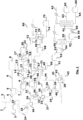
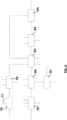
- a plant able to carry out the invention according to a preferred embodiment thereof is depicted in fig. 1 .
- inlet 1 from which waste lubricants are fed
- inlet 2 from which waste biolubricants, UCO and RUCO are fed.
- Inlet 1 feeds a pre-flash column 3, which removes water possibly present in the waste lubricants.
- An outlet 4 feeds a decanter 5, from which two outlets -6 and 7- exit.
- Outlet 6 is the top part of the liquid in the decanter 5 and brings mineral oils to a plant, per se known, for their regeneration 8.
- the plant 8 is per se known, like the ones present in the premises of the Applicant.
- Outlet 7 feeds a tank 9.
- An outlet 10 leaves the tank 9, passes through a heat exchanger 11 into a reactor 12.
- the reactor 12 also receives another feed 13.
- the reactor 12 is stirred by a stirrer 14 and outputs an outlet 15, which, in turn, feeds another stirred reactor 16, which is fed also by an inlet 17.
- Part of the product (bottom fraction) is downloaded by a pipe 18 and another part through a pipe 19 which, in turn, feeds a tank 20.
- the content of the tank 20 can reach a reactor 21 through a pipe 22.
- the inlet 2 feeds a tank 23.
- the contents of the tank 23 can be fed, through a pipe 24, to a heat exchanger 25 and from it to a centrifugal separator 26.
- Solids, together with some wastewater, separated in the centrifugal separator 26 are brought by means of a pipe 27 to a reactor 28.
- Liquids are brought by the pipe 29 to another reactor 30, which is preferably heated and stirred, in order to ensure the best conditions for the reaction.
- the reactor 30 has another inlet 31 and its outlet 32 feeds a centrifugal separator 33. Wastewater leaving the centrifugal separator 33 is fed through a pipe 34 to the reactor 28.
- the other fraction is fed, through a pipe 35 to another reactor 36, preferably stirred and heated for ensuring appropriate reaction conditions; the reactor 36 is fed also through a pipe 37.
- the product leave the reactor 36 through a pipe 38, which, in turn, feeds a centrifugal separator 39, from which an outlet 40 is another feed of the reactor 28.
- the reactor 28 is fed also by an inlet 41 and has two outlets 42 and 43. Therefore, the reactor 28 is fed by pipes 27, 34, 40 and 41.
- the other fraction coming from the centrifugal separator 39 is brought, through a pipe 44 to a tank 45.
- the contents of the tank 45 can be brought, through a pipe 46, to the reactor 21.
- the reactor 21 is fed also by two further inlets, 47 and 48. Therefore, the reactor 21 is fed by pipes 22, 46, 47 and 48.
- An outlet 49 leaves the reactor 21; the outlet 49 is split into a pipe 50 and a pipe 51.
- the pipe 51 feeds a tank 52.
- the contents of the tank 52 can be brought by a pipe 53 through a heat exchanger 54 to a packed distillation column 55.
- This column 55 has two outlets, 56 and 57.
- the outlet 57 feeds a tank 58.
- the contents of the tank 58 can be sent by a pipe 59 and through a heat exchanger 60 to a plate distillation column 61, which gives three different outlets, 62, 63 and 64; outlet 63 feeds a tank 65 and outlet 64 feeds a tank 66.
- Another outlet 67 leaves the reactor 21 and feeds a tank 68.
- the contents of the tank 68 can be fed through a pipe 69 to a reactor 70, preferably stirred and heated, in order to ensure the best reaction conditions.
- the reactor 70 is fed also by inlets 71 and 72.
- the inlet 1 leads to a pre-flash column 3, wherein a pre-flash step 76 takes place.
- the pre-flash step 76 is carried out at a temperature of 100 to 200 °C, preferably at 130-150 °C, in order to balance a low energy consumption and a good removal of water from the oils.
- Water is removed through the outlet 77, while the oils to be regenerated go to a subsequent step 78, wherein fatty acids, coming from the oils to be regenerated are recovered.
- This step 78 takes place in the plant units bearing the numerals 4-7 and 9-20.
- the oils leaving the pre-flash column 3 through the outlet 4 feed a decanter 5, where the light oils - generally mineral oils- of the upper layer are brought, through the outlet 6, to the plant 8 for their regeneration and leave this process.
- the heavy fraction -generally made up by biolubricants present as soaps- leaves the decanter 5 through the outlet 7 and feeds a tank 9. Therefore, the biological fraction of waste lubricants is got through a pre-flash step (76) of waste lubricants and a subsequent step in a decanter (5), from which such biological fraction is taken from the bottom.
- Sulfuric acid is added from the feed 13 at a concentration of 30 to 98 wt.% and the addition is such that the solution added to the oils in the reactor 12 ranges from 1 to 20 wt.%, preferably from 5 to 10 wt.%; at such a concentration, the hydrolysis and the conversion of soaps into acids is complete.
- the product exits through the outlet 15 and is washed with water coming from the inlet 17 in the reactor 16.
- the wastewater is downloaded through the pipe 18, while the product is fed to the tank 20 through the pipe 19.
- the UCO and RUCO are sent from the tank 23, through the pipe 24 and the heat exchanger 25 to a centrifugation step 79, which takes place firstly in the centrifugal separator 26, where the flow of wastes is centrifuged as such.
- the centrifugation in the centrifugal separator 26 takes place at a temperature ranging from 50 to 110 °C, preferably from 70 to 90 °C and with a stirring of 2,000 to 10,000 rpm.
- the preliminary treatment 79 of UCO and RUCO consists of a centrifugation step, separating two fractions: a liquid one and one containing wastewater and solids. In fact, preferably more stages of centrifugation 79 are provided, in order to have a better separation.
- a second hydrolysis step can take place in the reactor 21, under the same conditions of the first one.
- the pipe 50 downloads bitumen as a byproduct, while the rest of this fraction is sent to the tank 52, from where the purification step 81 starts. Flash distillation takes place in the column 55, normally at a temperature of 130-150 °C and a pressure of 0.5-1.0 bar.
- the head fraction is sent to the water treatment facility and the tail in the outlet 57 is then sent to the column 61, where temperature is 250-350 °C at the bottom and 30 to 60 °C at the head and pressure is 0.0130-0.0150 at the bottom and 0.002 to 0.005 at the head, from where wastewater exits from the outlet 62, glycerine from the outlet 63 and is stored in the tank 65 and bitumen through the outlet 64 and is stored in the tank 66, both for delivery and subsequent sale.
- a recycle of fatty acids taken from wastewater in 73 takes place through a pipe 85 to the tank 68.
- the fatty acids are distilled at 6.6x10 -3 to 0.0020 bar, stopping the distillation as soon as the flow rate dramatically drops, normally after 3 to 6 hours.
- the bitumen coming from the distillation residue of the step 82 can undergo a process for the enhancement of the organic molecules therein contained.
- this residue instead of mixing this residue to the other bitumen obtained in other steps of this process or even in other processes, taking place in the same industrial site, this residue is dissolved in an apolar solvent, like a saturated, linear hydrocarbons, such as n-pentane, n-hexane, n-heptane, n-octane, n-nonane, n-decane.
- the solution obtained is stirred for 1 to 4 hours.
- the solution is then filtered off and/or centrifuged and two phases are obtained, one being solid and the other being liquid.
- the solid part contains ZnO and can directly be used as catalyst in the reactor 21 without any further purification, in the hydrolysis step 80, so reducing the consumption of fresh catalyst, with a cost saving.
- the solvent can be removed by distillation and recycled to the first step of this part of the process and the paste remaining can be used as raw material for the production of dyes.
Landscapes
- Chemical & Material Sciences (AREA)
- Engineering & Computer Science (AREA)
- Combustion & Propulsion (AREA)
- Chemical Kinetics & Catalysis (AREA)
- General Chemical & Material Sciences (AREA)
- Oil, Petroleum & Natural Gas (AREA)
- Organic Chemistry (AREA)
- Production Of Liquid Hydrocarbon Mixture For Refining Petroleum (AREA)
- Fats And Perfumes (AREA)
Priority Applications (2)
| Application Number | Priority Date | Filing Date | Title |
|---|---|---|---|
| EP23425054.6A EP4534635B1 (de) | 2023-10-02 | 2023-10-02 | Verfahren zur herstellung von bioschmiermitteln aus abfallmaterialien |
| PCT/IB2024/059213 WO2025074190A1 (en) | 2023-10-02 | 2024-09-23 | Process for the production of biolubricants from waste materials |
Applications Claiming Priority (1)
| Application Number | Priority Date | Filing Date | Title |
|---|---|---|---|
| EP23425054.6A EP4534635B1 (de) | 2023-10-02 | 2023-10-02 | Verfahren zur herstellung von bioschmiermitteln aus abfallmaterialien |
Publications (3)
| Publication Number | Publication Date |
|---|---|
| EP4534635A1 true EP4534635A1 (de) | 2025-04-09 |
| EP4534635B1 EP4534635B1 (de) | 2025-12-17 |
| EP4534635C0 EP4534635C0 (de) | 2025-12-17 |
Family
ID=88923710
Family Applications (1)
| Application Number | Title | Priority Date | Filing Date |
|---|---|---|---|
| EP23425054.6A Active EP4534635B1 (de) | 2023-10-02 | 2023-10-02 | Verfahren zur herstellung von bioschmiermitteln aus abfallmaterialien |
Country Status (2)
| Country | Link |
|---|---|
| EP (1) | EP4534635B1 (de) |
| WO (1) | WO2025074190A1 (de) |
Citations (3)
| Publication number | Priority date | Publication date | Assignee | Title |
|---|---|---|---|---|
| EP0618959B1 (de) * | 1992-09-30 | 1999-05-12 | Viscolube Italiana S.P.A. | Verfahren zur Wiederaufbereitung von Altöl |
| GB2436836A (en) * | 2006-03-31 | 2007-10-10 | Greenergy Biofuels Ltd | Removal of free fatty acids from used cooking oil prior to biodiesel production |
| WO2023126789A1 (en) * | 2021-12-30 | 2023-07-06 | Isuschem S.R.L. | Process for the production of lubricating biooils |
-
2023
- 2023-10-02 EP EP23425054.6A patent/EP4534635B1/de active Active
-
2024
- 2024-09-23 WO PCT/IB2024/059213 patent/WO2025074190A1/en active Pending
Patent Citations (3)
| Publication number | Priority date | Publication date | Assignee | Title |
|---|---|---|---|---|
| EP0618959B1 (de) * | 1992-09-30 | 1999-05-12 | Viscolube Italiana S.P.A. | Verfahren zur Wiederaufbereitung von Altöl |
| GB2436836A (en) * | 2006-03-31 | 2007-10-10 | Greenergy Biofuels Ltd | Removal of free fatty acids from used cooking oil prior to biodiesel production |
| WO2023126789A1 (en) * | 2021-12-30 | 2023-07-06 | Isuschem S.R.L. | Process for the production of lubricating biooils |
Non-Patent Citations (1)
| Title |
|---|
| C�RDENAS JULIANA ET AL: "Pre-treatment of used cooking oils for the production of green chemicals: A review", JOURNAL OF CLEANER PRODUCTION, ELSEVIER, AMSTERDAM, NL, vol. 289, 17 November 2020 (2020-11-17), XP086495277, ISSN: 0959-6526, [retrieved on 20201117], DOI: 10.1016/J.JCLEPRO.2020.125129 * |
Also Published As
| Publication number | Publication date |
|---|---|
| WO2025074190A1 (en) | 2025-04-10 |
| EP4534635B1 (de) | 2025-12-17 |
| EP4534635C0 (de) | 2025-12-17 |
Similar Documents
| Publication | Publication Date | Title |
|---|---|---|
| US8728177B2 (en) | Production of biodiesel and glycerin from high free fatty acid feedstocks | |
| US7871448B2 (en) | Production of biodiesel and glycerin from high free fatty acid feedstocks | |
| EP3494201B1 (de) | Reinigung von rohstoffen durch wärmebehandlung | |
| RU2558364C2 (ru) | Способ автокаталитической этерификации жирных кислот | |
| EP3519541A1 (de) | Ölreinigungsverfahren | |
| AU2017336246B2 (en) | Water treatment of lipid material | |
| EP4457324B1 (de) | Verfahren zur herstellung von bioschmierölen | |
| CN101056985A (zh) | 皂料生物柴油 | |
| EP4534635A1 (de) | Verfahren zur herstellung von bioschmiermitteln aus abfallmaterialien | |
| CN109111032A (zh) | 一种废乳化液资源化处置的工艺方法 | |
| US9725397B2 (en) | Production of biodiesel and glycerin from high free fatty acid feedstocks | |
| US20100058652A1 (en) | Method for Obtaining Fuels from Vegetal and Animal Fat Waste and Installation for Carrying out Said Method | |
| WO2014051415A1 (en) | An oil recovering system from waste effluent | |
| US20170314047A1 (en) | Method for the production of alkyl esters | |
| CN115003783A (zh) | 废油再生过程的副产物的改善 | |
| CN112574806B (zh) | 一种炼化企业处置废润滑油的方法 | |
| US20190040337A1 (en) | Glycerol ester production from wastes containing organic oils and/or fats | |
| JP2002254051A (ja) | 酵母を含む使用済み濾過助剤の処理方法および処理装置 | |
| WO2023235924A1 (en) | Pre-treatment of waste material for biofuel production | |
| WO2026035980A1 (en) | Biofuel feed pretreatment method | |
| WO2026028177A1 (en) | Improved process for pretreating raw renewable feedstocks intended for transformation processes into biofuels | |
| HK40072928A (en) | Enhancement of the byproducts of a regeneration process of exhaust oils | |
| Becker | Control of pollutants for the oilseeds industry | |
| Zamiraei et al. | Study on the process and waste management of the edible oil industry | |
| HK1081589A (en) | Refining process and apparatus |
Legal Events
| Date | Code | Title | Description |
|---|---|---|---|
| STAA | Information on the status of an ep patent application or granted ep patent |
Free format text: STATUS: EXAMINATION IS IN PROGRESS |
|
| PUAI | Public reference made under article 153(3) epc to a published international application that has entered the european phase |
Free format text: ORIGINAL CODE: 0009012 |
|
| 17P | Request for examination filed |
Effective date: 20240514 |
|
| AK | Designated contracting states |
Kind code of ref document: A1 Designated state(s): AL AT BE BG CH CY CZ DE DK EE ES FI FR GB GR HR HU IE IS IT LI LT LU LV MC ME MK MT NL NO PL PT RO RS SE SI SK SM TR |
|
| GRAP | Despatch of communication of intention to grant a patent |
Free format text: ORIGINAL CODE: EPIDOSNIGR1 |
|
| STAA | Information on the status of an ep patent application or granted ep patent |
Free format text: STATUS: GRANT OF PATENT IS INTENDED |
|
| INTG | Intention to grant announced |
Effective date: 20250416 |
|
| GRAJ | Information related to disapproval of communication of intention to grant by the applicant or resumption of examination proceedings by the epo deleted |
Free format text: ORIGINAL CODE: EPIDOSDIGR1 |
|
| STAA | Information on the status of an ep patent application or granted ep patent |
Free format text: STATUS: EXAMINATION IS IN PROGRESS |
|
| GRAJ | Information related to disapproval of communication of intention to grant by the applicant or resumption of examination proceedings by the epo deleted |
Free format text: ORIGINAL CODE: EPIDOSDIGR1 |
|
| GRAP | Despatch of communication of intention to grant a patent |
Free format text: ORIGINAL CODE: EPIDOSNIGR1 |
|
| GRAP | Despatch of communication of intention to grant a patent |
Free format text: ORIGINAL CODE: EPIDOSNIGR1 |
|
| STAA | Information on the status of an ep patent application or granted ep patent |
Free format text: STATUS: GRANT OF PATENT IS INTENDED |
|
| INTC | Intention to grant announced (deleted) | ||
| INTG | Intention to grant announced |
Effective date: 20250805 |
|
| GRAS | Grant fee paid |
Free format text: ORIGINAL CODE: EPIDOSNIGR3 |
|
| GRAA | (expected) grant |
Free format text: ORIGINAL CODE: 0009210 |
|
| STAA | Information on the status of an ep patent application or granted ep patent |
Free format text: STATUS: THE PATENT HAS BEEN GRANTED |
|
| AK | Designated contracting states |
Kind code of ref document: B1 Designated state(s): AL AT BE BG CH CY CZ DE DK EE ES FI FR GB GR HR HU IE IS IT LI LT LU LV MC ME MK MT NL NO PL PT RO RS SE SI SK SM TR |
|
| REG | Reference to a national code |
Ref country code: CH Ref legal event code: F10 Free format text: ST27 STATUS EVENT CODE: U-0-0-F10-F00 (AS PROVIDED BY THE NATIONAL OFFICE) Effective date: 20251217 Ref country code: GB Ref legal event code: FG4D |
|
| REG | Reference to a national code |
Ref country code: DE Ref legal event code: R096 Ref document number: 602023009818 Country of ref document: DE |
|
| U01 | Request for unitary effect filed |
Effective date: 20251218 |
|
| U07 | Unitary effect registered |
Designated state(s): AT BE BG DE DK EE FI FR IT LT LU LV MT NL PT RO SE SI Effective date: 20260105 |