EP4530256A1 - Précurseur de carbonate à base de manganèse, matériau d'électrode positive à base de manganèse riche en lithium et batterie secondaire au lithium-ion - Google Patents
Précurseur de carbonate à base de manganèse, matériau d'électrode positive à base de manganèse riche en lithium et batterie secondaire au lithium-ion Download PDFInfo
- Publication number
- EP4530256A1 EP4530256A1 EP23829429.2A EP23829429A EP4530256A1 EP 4530256 A1 EP4530256 A1 EP 4530256A1 EP 23829429 A EP23829429 A EP 23829429A EP 4530256 A1 EP4530256 A1 EP 4530256A1
- Authority
- EP
- European Patent Office
- Prior art keywords
- manganese
- positive electrode
- lithium
- electrode material
- carbonate precursor
- Prior art date
- Legal status (The legal status is an assumption and is not a legal conclusion. Google has not performed a legal analysis and makes no representation as to the accuracy of the status listed.)
- Pending
Links
Images



Classifications
-
- C—CHEMISTRY; METALLURGY
- C01—INORGANIC CHEMISTRY
- C01G—COMPOUNDS CONTAINING METALS NOT COVERED BY SUBCLASSES C01D OR C01F
- C01G53/00—Compounds of nickel
- C01G53/06—Carbonates
-
- C—CHEMISTRY; METALLURGY
- C01—INORGANIC CHEMISTRY
- C01G—COMPOUNDS CONTAINING METALS NOT COVERED BY SUBCLASSES C01D OR C01F
- C01G53/00—Compounds of nickel
- C01G53/80—Compounds containing nickel, with or without oxygen or hydrogen, and containing one or more other elements
- C01G53/82—Compounds containing nickel, with or without oxygen or hydrogen, and containing two or more other elements
-
- B—PERFORMING OPERATIONS; TRANSPORTING
- B82—NANOTECHNOLOGY
- B82Y—SPECIFIC USES OR APPLICATIONS OF NANOSTRUCTURES; MEASUREMENT OR ANALYSIS OF NANOSTRUCTURES; MANUFACTURE OR TREATMENT OF NANOSTRUCTURES
- B82Y40/00—Manufacture or treatment of nanostructures
-
- C—CHEMISTRY; METALLURGY
- C01—INORGANIC CHEMISTRY
- C01G—COMPOUNDS CONTAINING METALS NOT COVERED BY SUBCLASSES C01D OR C01F
- C01G53/00—Compounds of nickel
- C01G53/40—Complex oxides containing nickel and at least one other metal element
- C01G53/42—Complex oxides containing nickel and at least one other metal element containing alkali metals, e.g. LiNiO2
- C01G53/44—Complex oxides containing nickel and at least one other metal element containing alkali metals, e.g. LiNiO2 containing manganese
- C01G53/50—Complex oxides containing nickel and at least one other metal element containing alkali metals, e.g. LiNiO2 containing manganese of the type (MnO2)n-, e.g. Li(NixMn1-x)O2 or Li(MyNixMn1-x-y)O2
-
- H—ELECTRICITY
- H01—ELECTRIC ELEMENTS
- H01M—PROCESSES OR MEANS, e.g. BATTERIES, FOR THE DIRECT CONVERSION OF CHEMICAL ENERGY INTO ELECTRICAL ENERGY
- H01M10/00—Secondary cells; Manufacture thereof
- H01M10/05—Accumulators with non-aqueous electrolyte
- H01M10/052—Li-accumulators
- H01M10/0525—Rocking-chair batteries, i.e. batteries with lithium insertion or intercalation in both electrodes; Lithium-ion batteries
-
- H—ELECTRICITY
- H01—ELECTRIC ELEMENTS
- H01M—PROCESSES OR MEANS, e.g. BATTERIES, FOR THE DIRECT CONVERSION OF CHEMICAL ENERGY INTO ELECTRICAL ENERGY
- H01M4/00—Electrodes
- H01M4/02—Electrodes composed of, or comprising, active material
- H01M4/04—Processes of manufacture in general
- H01M4/0471—Processes of manufacture in general involving thermal treatment, e.g. firing, sintering, backing particulate active material, thermal decomposition, pyrolysis
-
- H—ELECTRICITY
- H01—ELECTRIC ELEMENTS
- H01M—PROCESSES OR MEANS, e.g. BATTERIES, FOR THE DIRECT CONVERSION OF CHEMICAL ENERGY INTO ELECTRICAL ENERGY
- H01M4/00—Electrodes
- H01M4/02—Electrodes composed of, or comprising, active material
- H01M4/36—Selection of substances as active materials, active masses, active liquids
- H01M4/48—Selection of substances as active materials, active masses, active liquids of inorganic oxides or hydroxides
- H01M4/50—Selection of substances as active materials, active masses, active liquids of inorganic oxides or hydroxides of manganese
- H01M4/505—Selection of substances as active materials, active masses, active liquids of inorganic oxides or hydroxides of manganese of mixed oxides or hydroxides containing manganese for inserting or intercalating light metals, e.g. LiMn2O4 or LiMn2OxFy
-
- H—ELECTRICITY
- H01—ELECTRIC ELEMENTS
- H01M—PROCESSES OR MEANS, e.g. BATTERIES, FOR THE DIRECT CONVERSION OF CHEMICAL ENERGY INTO ELECTRICAL ENERGY
- H01M4/00—Electrodes
- H01M4/02—Electrodes composed of, or comprising, active material
- H01M4/36—Selection of substances as active materials, active masses, active liquids
- H01M4/48—Selection of substances as active materials, active masses, active liquids of inorganic oxides or hydroxides
- H01M4/52—Selection of substances as active materials, active masses, active liquids of inorganic oxides or hydroxides of nickel, cobalt or iron
- H01M4/525—Selection of substances as active materials, active masses, active liquids of inorganic oxides or hydroxides of nickel, cobalt or iron of mixed oxides or hydroxides containing iron, cobalt or nickel for inserting or intercalating light metals, e.g. LiNiO2, LiCoO2 or LiCoOxFy
-
- H—ELECTRICITY
- H01—ELECTRIC ELEMENTS
- H01M—PROCESSES OR MEANS, e.g. BATTERIES, FOR THE DIRECT CONVERSION OF CHEMICAL ENERGY INTO ELECTRICAL ENERGY
- H01M4/00—Electrodes
- H01M4/02—Electrodes composed of, or comprising, active material
- H01M4/62—Selection of inactive substances as ingredients for active masses, e.g. binders, fillers
-
- H—ELECTRICITY
- H01—ELECTRIC ELEMENTS
- H01M—PROCESSES OR MEANS, e.g. BATTERIES, FOR THE DIRECT CONVERSION OF CHEMICAL ENERGY INTO ELECTRICAL ENERGY
- H01M4/00—Electrodes
- H01M4/02—Electrodes composed of, or comprising, active material
- H01M4/62—Selection of inactive substances as ingredients for active masses, e.g. binders, fillers
- H01M4/628—Inhibitors, e.g. gassing inhibitors, corrosion inhibitors
-
- B—PERFORMING OPERATIONS; TRANSPORTING
- B82—NANOTECHNOLOGY
- B82Y—SPECIFIC USES OR APPLICATIONS OF NANOSTRUCTURES; MEASUREMENT OR ANALYSIS OF NANOSTRUCTURES; MANUFACTURE OR TREATMENT OF NANOSTRUCTURES
- B82Y30/00—Nanotechnology for materials or surface science, e.g. nanocomposites
-
- C—CHEMISTRY; METALLURGY
- C01—INORGANIC CHEMISTRY
- C01P—INDEXING SCHEME RELATING TO STRUCTURAL AND PHYSICAL ASPECTS OF SOLID INORGANIC COMPOUNDS
- C01P2002/00—Crystal-structural characteristics
- C01P2002/50—Solid solutions
- C01P2002/52—Solid solutions containing elements as dopants
- C01P2002/54—Solid solutions containing elements as dopants one element only
-
- C—CHEMISTRY; METALLURGY
- C01—INORGANIC CHEMISTRY
- C01P—INDEXING SCHEME RELATING TO STRUCTURAL AND PHYSICAL ASPECTS OF SOLID INORGANIC COMPOUNDS
- C01P2002/00—Crystal-structural characteristics
- C01P2002/70—Crystal-structural characteristics defined by measured X-ray, neutron or electron diffraction data
- C01P2002/72—Crystal-structural characteristics defined by measured X-ray, neutron or electron diffraction data by d-values or two theta-values, e.g. as X-ray diagram
-
- C—CHEMISTRY; METALLURGY
- C01—INORGANIC CHEMISTRY
- C01P—INDEXING SCHEME RELATING TO STRUCTURAL AND PHYSICAL ASPECTS OF SOLID INORGANIC COMPOUNDS
- C01P2002/00—Crystal-structural characteristics
- C01P2002/70—Crystal-structural characteristics defined by measured X-ray, neutron or electron diffraction data
- C01P2002/74—Crystal-structural characteristics defined by measured X-ray, neutron or electron diffraction data by peak-intensities or a ratio thereof only
-
- C—CHEMISTRY; METALLURGY
- C01—INORGANIC CHEMISTRY
- C01P—INDEXING SCHEME RELATING TO STRUCTURAL AND PHYSICAL ASPECTS OF SOLID INORGANIC COMPOUNDS
- C01P2002/00—Crystal-structural characteristics
- C01P2002/80—Crystal-structural characteristics defined by measured data other than those specified in group C01P2002/70
- C01P2002/85—Crystal-structural characteristics defined by measured data other than those specified in group C01P2002/70 by XPS, EDX or EDAX data
-
- C—CHEMISTRY; METALLURGY
- C01—INORGANIC CHEMISTRY
- C01P—INDEXING SCHEME RELATING TO STRUCTURAL AND PHYSICAL ASPECTS OF SOLID INORGANIC COMPOUNDS
- C01P2004/00—Particle morphology
- C01P2004/30—Particle morphology extending in three dimensions
- C01P2004/32—Spheres
-
- C—CHEMISTRY; METALLURGY
- C01—INORGANIC CHEMISTRY
- C01P—INDEXING SCHEME RELATING TO STRUCTURAL AND PHYSICAL ASPECTS OF SOLID INORGANIC COMPOUNDS
- C01P2004/00—Particle morphology
- C01P2004/50—Agglomerated particles
-
- C—CHEMISTRY; METALLURGY
- C01—INORGANIC CHEMISTRY
- C01P—INDEXING SCHEME RELATING TO STRUCTURAL AND PHYSICAL ASPECTS OF SOLID INORGANIC COMPOUNDS
- C01P2004/00—Particle morphology
- C01P2004/60—Particles characterised by their size
- C01P2004/61—Micrometer sized, i.e. from 1-100 micrometer
-
- C—CHEMISTRY; METALLURGY
- C01—INORGANIC CHEMISTRY
- C01P—INDEXING SCHEME RELATING TO STRUCTURAL AND PHYSICAL ASPECTS OF SOLID INORGANIC COMPOUNDS
- C01P2004/00—Particle morphology
- C01P2004/60—Particles characterised by their size
- C01P2004/64—Nanometer sized, i.e. from 1-100 nanometer
-
- C—CHEMISTRY; METALLURGY
- C01—INORGANIC CHEMISTRY
- C01P—INDEXING SCHEME RELATING TO STRUCTURAL AND PHYSICAL ASPECTS OF SOLID INORGANIC COMPOUNDS
- C01P2006/00—Physical properties of inorganic compounds
- C01P2006/10—Solid density
-
- C—CHEMISTRY; METALLURGY
- C01—INORGANIC CHEMISTRY
- C01P—INDEXING SCHEME RELATING TO STRUCTURAL AND PHYSICAL ASPECTS OF SOLID INORGANIC COMPOUNDS
- C01P2006/00—Physical properties of inorganic compounds
- C01P2006/11—Powder tap density
-
- C—CHEMISTRY; METALLURGY
- C01—INORGANIC CHEMISTRY
- C01P—INDEXING SCHEME RELATING TO STRUCTURAL AND PHYSICAL ASPECTS OF SOLID INORGANIC COMPOUNDS
- C01P2006/00—Physical properties of inorganic compounds
- C01P2006/12—Surface area
-
- C—CHEMISTRY; METALLURGY
- C01—INORGANIC CHEMISTRY
- C01P—INDEXING SCHEME RELATING TO STRUCTURAL AND PHYSICAL ASPECTS OF SOLID INORGANIC COMPOUNDS
- C01P2006/00—Physical properties of inorganic compounds
- C01P2006/40—Electric properties
-
- H—ELECTRICITY
- H01—ELECTRIC ELEMENTS
- H01M—PROCESSES OR MEANS, e.g. BATTERIES, FOR THE DIRECT CONVERSION OF CHEMICAL ENERGY INTO ELECTRICAL ENERGY
- H01M4/00—Electrodes
- H01M4/02—Electrodes composed of, or comprising, active material
- H01M2004/021—Physical characteristics, e.g. porosity, surface area
-
- H—ELECTRICITY
- H01—ELECTRIC ELEMENTS
- H01M—PROCESSES OR MEANS, e.g. BATTERIES, FOR THE DIRECT CONVERSION OF CHEMICAL ENERGY INTO ELECTRICAL ENERGY
- H01M4/00—Electrodes
- H01M4/02—Electrodes composed of, or comprising, active material
- H01M2004/026—Electrodes composed of, or comprising, active material characterised by the polarity
- H01M2004/028—Positive electrodes
-
- Y—GENERAL TAGGING OF NEW TECHNOLOGICAL DEVELOPMENTS; GENERAL TAGGING OF CROSS-SECTIONAL TECHNOLOGIES SPANNING OVER SEVERAL SECTIONS OF THE IPC; TECHNICAL SUBJECTS COVERED BY FORMER USPC CROSS-REFERENCE ART COLLECTIONS [XRACs] AND DIGESTS
- Y02—TECHNOLOGIES OR APPLICATIONS FOR MITIGATION OR ADAPTATION AGAINST CLIMATE CHANGE
- Y02E—REDUCTION OF GREENHOUSE GAS [GHG] EMISSIONS, RELATED TO ENERGY GENERATION, TRANSMISSION OR DISTRIBUTION
- Y02E60/00—Enabling technologies; Technologies with a potential or indirect contribution to GHG emissions mitigation
- Y02E60/10—Energy storage using batteries
Definitions
- the present invention belongs to a technical field of lithium-rich manganese-based positive electrode materials, and relates to a manganese-based carbonate precursor of a positive electrode material for a secondary battery and a preparation method thereof, a lithium-rich manganese-based positive electrode material and a preparation method thereof, and a lithium-ion secondary battery, in particular to a manganese-based carbonate precursor containing a trace amount of Na element, a lithium-rich manganese-based positive electrode material and a lithium-ion secondary battery.
- Lithium-rich manganese-based positive electrode material is a new type of high-energy-density and low-cost positive electrode material.
- its operating voltage window should be no less than 4.5V vs Li/Li + to activate lithium-rich phase Li 2 MnO 3 .
- CN113540458 discloses a Na-doped lithium-rich positive electrode material prepared by a sol-gel method, where a molar content of Na ion is 0.84%-8.7% of a molar content of Li ion, and a capacity retention rate reaches 86% after 100 cycles at 0.5C;
- CN113782748 discloses a surface coated cobalt-free lithium-rich positive electrode material with an inner core doped with Na/K metal ion, and the material has improved initial efficiency and cycling stability, where a cobalt-free precursor and a lithium source are mixed and pre-sintered to obtain a pre-sintered material; the pre-sintered material and a metal salt are mixed and calcined to obtain a cobalt-free lithium-rich positive electrode particle; the cobalt-free lithium-rich positive electrode particle is mixed with and coated with an organic
- a technical problem to be solved by the present invention is to provide a manganese-based carbonate precursor of a positive electrode material for a secondary battery and a preparation method thereof, a lithium-rich manganese-based positive electrode material and a preparation method thereof, and a lithium-ion secondary battery, in particular to a positive electrode material prepared by a manganese-based carbonate precursor containing a trace amount of Na element.
- the lithium-rich manganese-based positive electrode material provided in the present invention can effectively improve the initial coulombic efficiency, capacity, average discharge voltage, and cycling stability.
- the material is simple in process and has mild and easy-to-control preparation conditions, which is more conducive to the promotion and application of industrialized production.
- the manganese-based carbonate precursor has a complete carbonate crystal structure
- the main precipitant includes sodium carbonate and/or sodium bicarbonate
- a temperature of the reaction is between 50-60°C;
- the present invention provides a lithium-rich manganese-based positive electrode material, and the positive electrode material has a chemical formula Li 1+a MO 2+a ;
- a relative height and a FWHM of (003) peak are a and b, respectively, and a relative height and a FWHM of (104) peak are c and d, respectively, then 1.0 ⁇ (a / c) * (b / d) ⁇ 1.25;
- D50 particle diameter of the positive electrode material is 6.0-14.0 ⁇ m
- the positive electrode material is a lithium-rich manganese-based positive electrode material containing a trace amount of Na element.
- the present invention also provides a preparation method of the lithium-rich manganese-based positive electrode material as described in any one of the foregoing technical solutions, including the following steps: mixing a manganese-based carbonate precursor with a lithium source, and then sintering, to obtain the lithium-rich manganese-based positive electrode material.
- a heating rate of the sintering is 0.5-10°Cmin
- the present invention provides a lithium-ion secondary battery, including a positive electrode sheet, a negative electrode sheet, a separator, and an electrolyte;
- a mass of the positive electrode active material accounts for 90-96% of a total mass of a slurry for preparation of a positive electrode
- the present invention provides a manganese-based carbonate precursor of a positive electrode material for a secondary battery, the manganese-based carbonate precursor has a chemical formula Ni x Co y Na z Mn 1-x-y-z CO 3 ; where, 0.25 ⁇ x ⁇ 0.35, 0 ⁇ y ⁇ 0.1, 0.25 ⁇ x+y ⁇ 0.4, 0.005 ⁇ z ⁇ 0.03.
- the present invention first designs a manganese-based carbonate precursor with a special structure and composition containing a trace amount of uniformly distributed Na element, where a content of Na is in a range of 0.5-3 mol%, which range can ensure that the structural integrity and consistency of carbonate crystals are not affected.
- the manganese-based carbonate precursor having the trace amount of uniformly distributed Na element inside thereof provided in the present invention has precipitable Na, and by means of simple mixing with the lithium source and sintering, a lithium-rich manganese-based material uniformly doped with Na element can be directly obtained without the need for introducing other Na source, which can effectively avoid uneven doping of Na, improve the doping effect, significantly improve the electrical properties of the material, without significant increase in the production cost. Characterization of XRD characteristics is used to ensure high crystallinity degree and good crystal structure of the primary particles of the manganese-based carbonate precursor.
- the present invention also provides a synthesis method of the manganese-based carbonate precursor, including quantitatively adding an auxiliary precipitant according to a designed content of Na for coprecipitation.
- the method is simple, easy to operate, and has highly controllable result and low cost.
- the present invention obtains a lithium-rich manganese-based positive electrode material containing a trace amount of Na element, where Na element uniformly occupies part of lithium sites of the material, plays a structural support role, improves a bulk phase lithium ion transport coefficient and a positive lithium phase activity, and reduces a lithium-rich phase activity, stabilizing lattice oxygen, effectively improving a structure stability of long cycling, and suppressing voltage attenuation and gas production.
- the lithium-rich manganese-based positive electrode material containing the trace amount of Na element provided in the present invention may effectively improve an initial charging-discharging coulombic efficiency, a first-cycle discharge capacity, an average voltage and the energy efficiency of a lithium-rich positive electrode.
- the purity of all the raw materials in the present invention is not particularly limited, and the invention preferably adopts analytical reagents or conventional purity requirements in the field of preparation of a positive electrode material for a secondary battery.
- Brands and abbreviations of all the raw materials of the present invention are conventional brands and abbreviations in this field, and each brand and abbreviation is clear and definite in the related use field, and the skilled in the art can purchase them from the market or prepare them by conventional methods according to the brands, the abbreviations and corresponding uses.
- the present invention provides a manganese-based carbonate precursor of a positive electrode material for a secondary battery, and the manganese-based carbonate precursor has a chemical formula Ni x Co y Na z Mn 1-x-y-z CO 3 ; where, 0.25 ⁇ x ⁇ 0.35, 0 ⁇ y ⁇ 0.1, 0.25 ⁇ x+y ⁇ 0.4, 0.005 ⁇ z ⁇ 0.03.
- the manganese-based carbonate precursor is preferably a secondary spherical precursor formed by aggregation of primary particles.
- a shape of the primary particles preferably includes a spherical shape and/or an irregular shape, more preferably a spherical shape or an irregular shape.
- an average particle diameter of the primary particles is preferably 50-100 nm, more preferably 60-90 nm, and further preferably 70-80 nm.
- D50 particle diameter of the manganese-based carbonate precursor is preferably 3-15 ⁇ m, more preferably 7-13 ⁇ m, and further preferably 9-11 ⁇ m.
- a specific surface area of the manganese-based carbonate precursor is preferably 30-80 m 2 /g, more preferably 40-70 m 2 /g, and further preferably 50-60 m 2 /g.
- a tap density of the manganese-based carbonate precursor is preferably 1.6-2.2 g/cm 3 , more preferably 1.7-2.1 g/cm 3 , and further preferably 1.8-2.0 g/cm 3 .
- an apparent density of the manganese-based carbonate precursor is preferably 0.7-1.4 g/cm 3 , more preferably 0.8-1.3 g/cm 3 , further preferably 0.9-1.2 g/cm 3 , and even further preferably 1.0-1.1 g/cm 3 .
- the manganese-based carbonate precursor preferably has a complete carbonate crystal structure.
- a corresponding position in a XRD diffraction spectrum of the manganese-based carbonate precursor is preferably consistent with a peak position in the XRD diffraction spectrum of a standard manganese carbonate.
- a relative height and a FWHM of (012) peak are preferably e and f, respectively, and a relative height and a FWHM of (104) peak are g and h, respectively, then 3.3 ⁇ g / e ⁇ 4.4 (or 3.5 ⁇ g / e ⁇ 4.3, or 3.7 ⁇ g / e ⁇ 4.1), 1.0 ⁇ f / h ⁇ 1.2 (or 1.04 ⁇ f / h ⁇ 1.16, or 1.08 ⁇ f / h ⁇ 1.12), 3.0 ⁇ (g*h) / (e*f) ⁇ 4.0 (or 3.2 ⁇ (g*h) / (e *f) ⁇ 3.8, or 3.4 ⁇ (g*h) / (e*f) ⁇ 3.6).
- the manganese-based carbonate precursor preferably contains an insoluble compound of sodium.
- the manganese-based carbonate precursor is preferably prepared by a coprecipitation method.
- the manganese-based carbonate precursor is preferably a manganese-based carbonate precursor containing a trace amount of Na element.
- the secondary battery preferably includes a lithium-ion secondary battery.
- the manganese-based carbonate precursor containing the trace amount of Na element can specifically have the following composition: a manganese-based carbonate precursor containing a trace amount of Na element, with a chemical formula of Ni x Co y Na z Mn 1-x-y-z CO 3 , where, 0.25 ⁇ x ⁇ 0.35, 0 ⁇ y ⁇ 0.1, 0.25 ⁇ x+y ⁇ 0.4, 0.005 ⁇ z ⁇ 0.03.
- a peak position of a XRD diffraction spectrum of the manganese-based carbonate precursor is consistent with a peak position of a XRD diffraction spectrum of a standard manganese carbonate, and a relative height and a FWHM of (012) peak are recorded as e and f, respectively, and a relative height and a FWHM of (104) peak are recorded as g and h, respectively, satisfying 3.3 ⁇ g / e ⁇ 4.4, 1.0 ⁇ f / h ⁇ 1.2, 3.0 ⁇ (g*h) / (e *f) ⁇ 4.0.
- the secondary spherical precursor is formed by aggregation of small primary particles, the primary particles are an irregular shape or a sphere-like shape with an average particle diameter of 50-100 nm.
- a particle diameter of the secondary sphere 3.0 ⁇ m ⁇ D 50 ⁇ 15.0 ⁇ m, 0.6 ⁇ (D 90 -D 10 )/D 50 ⁇ 1.5.
- the secondary sphere has a specific surface area of 30-80 m 2 /g, a tap density of 1.6 g/cm 3 ⁇ TD ⁇ 2.2 g/cm 3 , and an apparent density of 0.7 g/cm 3 ⁇ AD ⁇ 1.4 g/cm 3 .
- the manganese-based carbonate precursor provided in the present invention has uniformly distributed of a trace amount of Na element inside thereof, and by means of simply mixing it with a lithium source and sintering, a lithium-rich manganese-based material uniformly doped with Na element can be directly obtained without the need for introducing other Na source, which effectively avoids uneven doping of Na, improves the doping effect, and significantly improves the electrical properties of the material, and having no significant increase in the production cost at the same time. Characterization of XRD is used to ensure the high crystallinity degree and good crystal structure of the primary particle of the manganese-based carbonate precursor.
- the manganese-based carbonate precursor provided by the present invention has precipitable Na.
- the present invention provides a preparation method of the manganese-based carbonate precursor of the positive electrode material for a secondary battery as described in any one of the foregoing technical solutions, including the following steps: mixing a nickel source, a manganese source, a cobalt source, a main precipitant, an auxiliary precipitant, and a complexing agent solution for reaction, and aging and drying, to obtain the manganese-based carbonate precursor.
- the nickel source preferably includes a nickel salt solution.
- the manganese source preferably includes a manganese salt solution.
- the cobalt source preferably includes a cobalt salt solution.
- the nickel salt preferably includes one or more of nickel sulfate, nickel chloride, and nickel nitrate, and is more preferably nickel sulfate, nickel chloride, or nickel nitrate.
- the cobalt salt preferably includes one or more of cobalt sulfate, cobalt chloride, and cobalt nitrate, and is more preferably cobalt sulfate, cobalt chloride, or cobalt nitrate.
- the manganese salt preferably includes one or more of manganese sulfate, manganese chloride, and manganese nitrate, and is more preferably manganese sulfate, manganese chloride, or manganese nitrate.
- the main precipitant preferably includes sodium carbonate and/or sodium bicarbonate, and is more preferably sodium carbonate or sodium bicarbonate.
- the auxiliary precipitant preferably includes sodium nitrite and/or sodium hexanitritocobaltate, and is more preferably sodium nitrite or sodium hexanitritocobaltate.
- a molar ratio of sodium ions in the auxiliary precipitant to sodium ions in the main precipitant is preferably 0.005-0.03, more preferably 0.01-0.025, and further preferably 0.015-0.02.
- the complexing agent preferably includes ammonia and/or glycine, and is more preferably ammonia or glycine.
- a temperature of the reaction is preferably between 50-60°C, more preferably 52-58°C, and further preferably 54-56°C.
- a pH value during the reaction is preferably 7.5-8.2, more preferably 7.6-8.1, more preferably 7.7-8.0, and further preferably 7.8-7.9.
- a method of the reaction is preferably continuously feeding a raw material into a reaction apparatus for reaction.
- a reaction time is preferably determined based on a particle diameter of the manganese-based carbonate precursor and/or an amount of an overflowed material during the reaction, more preferably based on the particle diameter of the manganese-based carbonate precursor or the amount of the overflowed material during the reaction.
- the preparation method of the manganese-based carbonate precursor containing the trace amount of Na element specifically includes the following steps: a synthesis method of a manganese-based carbonate precursor containing a trace amount of Na element, which is Ni x Co y Na z Mn 1-x-y-z CO 3 (0.005 ⁇ z ⁇ 0.03): A salt solution with a total concentration of transition metal ions of 2 mol/L is prepared at a preset ratio by a coprecipitation method, where one or more of nickel sulfate, nickel chloride, and nickel nitrate is used as a nickel source, one or more of cobalt sulfate, cobalt chloride, and cobalt nitrate is used as a cobalt source, one or more of manganese sulfate, manganese chloride and manganese nit
- Sodium carbonate and/or sodium bicarbonate are used as a main precipitant to precipitate the transition metal ions, and one or more of sodium nitrite and sodium hexanitritocobaltate is used as an auxiliary precipitant to precipitate a trace amount of Na ions, where the auxiliary precipitant and the main precipitant satisfy a molar ratio of 0.005 ⁇ Na( auxiliary precipitant) : Na( main precipitant ) ⁇ 0.03.
- An alkali solution with Na ion concentration of 2 mol/L is formulated, and if sodium hexanitritocobaltate is used as the auxiliary precipitant, an amount of the cobalt salt in the salt solution should be appropriately reduced to ensure a constant ratio of transition metals in the resulting product.
- a complexing agent solution with a total concentration of 0.01-0.03 mol/L is prepared by using one or more of ammonia or glycine as the complexing agent. Then, the salt solution, the alkali solution, and the complexing agent solution are simultaneously pumped into a reaction kettle at a certain flow rate. A temperature of the reaction kettle is maintained at 50-60°C, a stirring speed is 600-800 rpm, and during the reaction, a pH is maintained at 7.5-8.2.
- the feeding of the salt solution, the alkali solution, and the complexing agent solution are stopped, and the material in the reactor kettle and the overflowed material are transferred to an aging kettle for aging and then washed with a deionized water with a temperature of 20-50°C by using a suction filtration or centrifugation method. After washing, drying is performed in a drying oven at 120-160°C, to obtain the manganese-based carbonate precursor containing a trace amount of Na element.
- the fomula (a) is a reaction chemical formula when sodium nitrite is used as the auxiliary precipitant alone;
- the fomula (b) is a reaction chemical formula when sodium hexanitritocobaltate is used as the auxiliary precipitant alone;
- the fomula (c) is a reaction chemical formula when both of them are used as the auxiliary precipitant, where x is a constant, which characterizes a relative content of the two kinds of auxiliary precipitants.
- the present invention provides a lithium-rich manganese-based positive electrode material, and a chemical formula of the positive electrode material is Li 1+ aMO 2+a ;
- a relative height and a FWHM of (003) peak are preferably a and b, respectively, and a relative height and the FWHM of (104) peak are preferably c and d, respectively, then 1.0 ⁇ (a / c) * (b / d) ⁇ 1.25 (or 1.05 ⁇ (a / c) * (b / d) ⁇ 1.20, or 1.1 ⁇ (a / c) * (b / d) ⁇ 1.15).
- the positive electrode material is preferably a secondary spherical positive electrode material formed by aggregation of small primary particles.
- the small primary particles are preferably a spherical shape and/or a hexagonal sheet shape, more preferably a spherical shape or a hexagonal sheet shape.
- an average particle diameter of the small primary particles is preferably 80-200 nm, more preferably 100-180 nm, and further preferably 120-160 nm.
- D50 particle diameter of the positive electrode material is preferably 6.0-14.0 ⁇ m, more 7.0-13.0 ⁇ m, further preferably 9.0-12.0 ⁇ m, and even further preferably 10.0-11.0 ⁇ m.
- a specific surface area of the positive electrode material is preferably 2.5-6.0 m 2 /g, more preferably 3.0-5.5 m 2 /g, further preferably 3.5-5.0 m 2 /g, and even further preferably 4.0-4.5 m 2 /g.
- a tap density of the positive electrode material is preferably 1.8-2.6 g/cm 3 , more preferably 1.9-2.5 g/cm 3 , further preferably 2.0-2.4 g/cm 3 , and even further preferably 2.1-2.3 g/cm 3 .
- an apparent density of the positive electrode material is preferably 0.8-1.4 g/cm 3 , more preferably 0.9-1.3 g/cm 3 , and further preferably 1.0-1.2 g/cm 3 .
- the positive electrode material is a lithium-rich manganese-based positive electrode material containing a trace amount of Na element.
- main peak positions of the XRD diffraction spectrum of the lithium-rich manganese-based positive electrode material are consistent with those of a standard layered ternary layered LiNiO 2 .
- a relative height and a FWHM of (003) peak are recorded as a, b, respectively, a relative height and a FWHM of (104) peak are recorded as c, d, respectively, satisfying 1.0 ⁇ (a / c) * (b / d) ⁇ 1.25.
- the lithium-rich manganese-based positive electrode material is a secondary spherical positive electrode material formed by aggregation of small primary particles.
- the primary particles are a sphere-like shape or a hexagonal sheet shape, and have an average particle diameter of 80-200 nm.
- the secondary spheres have a particle diameter of: 6.0 ⁇ m ⁇ D 50 ⁇ 14.0 ⁇ m, 0.8 ⁇ (D 90 -D 10 )/D 50 ⁇ 1.6, a specific surface area of 2.5-6.0 m 2 /g, a tap density of 1.8 g/cm 3 ⁇ TD ⁇ 2.6 g/cm 3 , and an apparent density of 0.8 g/cm 3 ⁇ AD ⁇ 1.4 g/cm 3 .
- the in-situ doped lithium-rich manganese-based positive electrode described in the present invention can improve the lithium ion transport capacity by uniformly replacing some lithium ions at lithium sites in situ with an appropriate amount of Na ions, and appropriately increasing an interlayer spacing between lithium layers.
- Na ions can play a supporting role, improving the stability of the material structure during a deep deintercalation of lithium ions.
- a proportion of a lithium-rich phase in the material is slightly lower than a proportion of a ternary layered phase, which may ensure that the positive electrode material has good cycling stability while exerting a high capacity.
- a restriction of the XRD characterization makes an exposure ratio of (003) and (101) crystal faces of the positive electrode material reasonable, to further balance the capacity utilization and the cycling stability of the positive electrode.
- the present invention provides a preparation method of the lithium-rich manganese-based positive electrode material as described in any one of the foregoing technical solutions, including the following steps: mixing the manganese-based carbonate precursor and a lithium source, and then sintering, to obtain the lithium-rich manganese-based positive electrode material.
- a heating rate of the sintering is preferably 0.5-10°Cmin, more preferably 2-8°Cmin, and further preferably 4-6°Cmin.
- a sintering mode preferably includes a two-stage sintering.
- a temperature of a first stage of the two-stage sintering is preferably 400-700°C, more preferably 450-650°C, and further preferably 500-600°C.
- a time for the second stage of the two-stage sintering is preferably 3-8 h, more preferably 4-7 h, and further preferably 5-6 h.
- a temperature of a second stage of the two-stage sintering is preferably 800-900°C, more preferably 820-880°C, and further preferably 840-860°C.
- a time for the second stage of the two-stage sintering is preferably 10-15 h, more preferably 11-14 h, and further preferably 12-13 h.
- a preparation method of the lithium-rich manganese-based positive electrode material specifically includes the following steps: a method for synthesizing a lithium-rich positive electrode material by using a manganese-based carbonate precursor containing a trace amount of Na element:
- the manganese-based carbonate precursor Ni x Co y Na z Mn 1-x-y-z CO 3 (0.005 ⁇ z ⁇ 0.03) obtained from the foregoing synthesis method is mixed with a lithium source with a certain stoichiometric ratio thoroughly, where one or more of lithium carbonate, lithium hydroxide, and lithium chloride are used as the lithium source.
- the mixed material is placed in one of a muffle furnace, a box furnace, a tube furnace, a roller kiln, and a rotary kiln and is sintered using a two-stage heat preservation method under a forced airflow condition, where a temperature of a low-temperature stage is 400-700°C and a holding time thereof is 3-8 h; a temperature of a high-temperature stage is 800-900°C, a holding time thereof is 10-15 h and a heating rate thereof is 0.5-10 °C/min. After sintering and naturally cooling to room temperature, a target lithium-rich positive electrode material is obtained.
- the heat preservation of the low-temperature stage may ensure complete decomposition of the manganese-based carbonate precursor and the lithium salt, allowing the reaction to occur fully, the heat preservation of the high-temperature stage may appropriately improve the crystallinity and stability of the material, and forced airflow can timely discharge CO 2 released from decomposition of the carbonate precursor, improving the reaction efficiency and the local reaction consistency.
- the present invention provides a lithium-ion secondary battery, including a positive electrode sheet, a negative electrode sheet, a separator, and an electrolyte;
- a mass of the positive electrode active material preferably accounts for 90-96% of a total mass of a slurry for preparing a positive electrode, more preferably 91-95%, and further preferably 92-94%.
- a negative electrode active material on the negative electrode sheet preferably includes one or more of metal lithium, graphite, and silicon oxide, and more preferably metal lithium, graphite, or silicon oxide.
- the lithium-ion secondary battery is preferably a lithium-ion secondary battery of a lithium-rich manganese-based positive electrode material containing a trace amount of Na element.
- a battery cell of the lithium-ion secondary battery includes a positive electrode sheet, a negative electrode sheet, a separator, an electrolyte, and a shell.
- a ratio of a mass of the active material in the positive electrode sheet to a total mass of the slurry of the positive electrode is 90-96%
- the negative electrode active material is one of metallic lithium, graphite and SiO or a combination thereof.
- the foregoing steps of the present invention provide a manganese-based carbonate precursor containing a trace amount of Na element and a preparation method thereof, a lithium-rich manganese-based positive electrode material and a preparation method thereof, and a secondary battery.
- a content of Na is in a range of 0.5-3mol%, which range can ensure that the structural integrity and consistency of carbonate crystals are not affected.
- the manganese-based carbonate precursor having the trace amount of uniformly distributed Na element inside thereof provided in the present invention has precipitable Na, and by means of simple mixing with a lithium source and sintering, the lithium-rich manganese-based material uniformly doped with Na element can be directly obtained without the need for introducing other Na source, which may effectively avoid uneven doping of Na element, improve the doping effect, and significantly improve the electrical properties of the material, without a significant increase in the production cost at the same time, so it is more conducive to the promotion and application of industrialized production. Characterization of XRD is used to ensure the high crystallinity degree and good crystal structure of the primary particles of the manganese-based carbonate precursor.
- the present invention also provides a synthesis method for the manganese-based carbonate precursor, including quantitatively adding an auxiliary precipitant according to a designed content of Na to allow coprecipitation.
- the method is simple and easy to operate, and has a highly controllable result and low cost.
- the present invention obtains a lithium-rich manganese-based positive electrode material containing a trace amount of Na element, where Na element uniformly occupies some of lithium sites of the material, plays a structural support role, improves a bulk phase lithium ion transport coefficient and a positive lithium phase activity, reduces a lithium-rich phase activity, stabilizing lattice oxygen, effectively improving a structure stability of long cycling, and suppressing voltage attenuation and gas production.
- the lithium-rich manganese-based positive electrode material containing the trace amount of Na element provided in the present invention may effectively improve an initial charging-discharging coulombic efficiency, a first-cycle discharge capacity and an average voltage, and the energy efficiency.
- the following describes a manganese-based carbonate precursor of a positive electrode material for a secondary battery and a preparation method thereof, a lithium-rich manganese-based positive electrode material and a preparation method thereof, and a lithium-ion secondary battery, as provided by the present invention in detail with reference to examples.
- these examples which are implemented based on the technical solutions of the present invention, provide detailed implementation methods and specific operation processes, which are only to further describe the features and advantages of the present invention, rather than limiting claims of the present invention, and scope of protection of the present invention is not limited to the following examples.
- the present example is used to describe preparation of a lithium-rich manganese-based positive electrode material containing a trace amount of Na element and a secondary battery using the positive electrode material as provided in the present invention.
- a salt solution with a total concentration of transition metal ions of 2 mol/L was prepared at a molar ratio of nickel, cobalt and manganese of 20: 10:70, where nickel sulfate is used as a nickel source, cobalt sulfate is used as a cobalt source, and manganese sulfate is used as a manganese source.
- a complexing agent solution with a total concentration of 0.01 mol/L was prepared using ammonia as a complexing agent. Then, the salt solution, the alkali solution and the complexing agent solution were pumped into a reaction kettle at the same time in a flow rate ratio of 1:1.02:1, where a temperature of the reaction kettle is kept at 55°C, a stirring speed is 800 rpm, and a pH is kept at 8.0 during the reaction. After a particle diameter of a precursor was grown to 9.0 ⁇ m and an amount of an overflowed material reached 5 kg, a feeding of the salt solution, the alkali solution and the complexing agent solution was stopped, and the materialin the reactor kettle and the overflowed material were transferred to an aging kettle for aging.
- Ni 0.196 Co 0.098 Mn 0.686 Na 0.02 CO 3 was mixed with lithium carbonate in a molar ratio of 1:1.4 thoroughly.
- the mixed material was placed in a muffle furnace and sintered using a two-stage heat preservation method under a forced airflow condition, where a temperature of a low-temperature stage is 450°C and a holding time thereof is 5 h; a temperature of a high-temperature stage is 850°C, a holding time thereof is 13 h and a heating rate thereof is 5°C/min. After sintering and naturally cooling to room temperature, a lithium-rich manganese-based positive electrode material was obtained.
- a secondary battery was prepared by using the lithium-rich manganese-based positive electrode material containing a trace amount of Na element prepared in the present example as a positive electrode active material by the following specific steps: a positive electrode powder was mixed with an conductive agent Super-P and a binder PVDF in a mass ratio of 92:4:4, an appropriate amount of a NMP solution was added to form a slurry, the slurry was coated to an aluminum foil, dried, and then baked in a vacuum oven at 120°C for 12 h.
- the battery was subjected to a first-cycle charging-discharging test at a voltage window of 2.5-4.55 V at a current density of 50 mAg -1 in a constant current charging-discharging mode, then a 200-cycles cycling test at 250 mAg -1 .
- the test results are shown in Table 1.
- Table 1 shows the physical and chemical parameters and electrical performance of each group of samples provided in the examples and comparative examples of the present invention.
- Table 1 Group Discharge capacity (mAhg -1 ) Initial efficiency (%) Capacity retention rate after 200 cycles (%) Cumulative discharge average voltage attenuation after 200 cycles (mV)
- Example 1 255 92.1 87.3 241
- Example 2 245 90.3 86.8 253
- Example 3 250 91.1 84.2 250
- Example 4 251 91.2 88.6 238
- Example 5 241 90.5 92.4 231
- Example 6 234 87.9 93.7 216
- Example 7 240 91.1 91.5 228
- Example 8 251 90.9 88.6 246
- Example 10 249 90.9 89.5 247
- Example 11 252 91.2 87.9 233
- Example 12 244 89.6 90.9 223 Comparative Example 1 247 89.1 84.7 282 Comparative Example 2 243 88.9
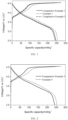
- FIG. 1 is a comparison diagram of first-cycle charging-discharging curves of the positive electrode materials in Example 1 and Comparative Examples 1 and 2 of the present invention.
- the first-cycle coulombic efficiency and energy efficiency of the lithium-rich manganese-based positive electrode material containing the trace amount of Na element prepared by two-stage sintering are significantly improved.
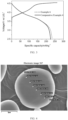
- FIG. 4 is a radial EDS spectrum of Na on a cross-section of a matrix material provided in Example 1 of the present invention.
- a point distribution corresponding to FIG. 4 is shown in Table 2.
- Table 2 shows a point distribution of a radial EDS of Na on the cross-section of the matrix material provided in Example 1 of the present invention.
- FIG. 5 is a radial EDS spectrum of Na on a cross-section of a positive electrode material provided in Example 1 of the present invention.
- a point distribution corresponding to FIG. 5 is shown in Table 3.
- Table 3 shows a point distribution of a radial EDS of Na on the cross-section of the positive electrode material provided in Example 1 of the present invention.
- Table 3 Spectrum label Spectrum 681 Spectrum 682 Spectrum 683 Spectrum 684 Spectrum 685 Spectrum 686 Spectrum 687 Spectrum 688 Spectrum 689 Na/wt% 0.77 0.85 0.68 0.83 0.74 0.89 0.76 0.79 0.81 Mn/wt% 68.06 68.35 68.83 69.00 69.35 68.72 68.67 69.09 68.19 Co/wt% 10.3 10.14 9.54 9.62 9.53 9.83 10.11 9.86 9.79 Ni/wt% 20.87 20.66 20.95 20.55 20.38 20.56 20.46 20.26 21.21 Total amount/wt % 100.00 100.00 100.00 100.00 100.00 100.00 100.00 100.00 100.00 100.00 100.00 100.00 100.00 100.00 100.00 100.00 100.00 100.00 100.00 100.00 100.00
- Na exists in a bulk phase of the material including both the matrix material and the positive electrode material and is uniformly distributed.
- a proportion of Na element in a core area and an edge area of a positive electrode secondary sphere is basically unchanged compared with the matrix, indicating that there is no obvious segregation and enrichment of Na element in the sintering process, thereby ensuring the uniform doping effect for the bulk phase.
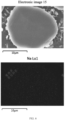
- FIG. 6 is a surface distribution EDS spectrum of Na on a cross-section of the matrix material provided in Example 1 of the present invention.
- FIG. 7 is a surface distribution EDS spectrum of Na on a cross-section of the positive electrode material provided in Example 1 of the present invention.
- FIGS.6 and 7 further show that Na exists uniformly in the bulk phase of the matrix material and the positive electrode material, and there is no tendency of enrichment and uneven distribution of Na element in the sintering process.
- FIG. 8 is a XRD spectrum of the positive electrode material provided in Example 1 of the present invention.
- the present example is used to describe preparation of a lithium-rich manganese-based positive electrode material containing a trace amount of Na element and a secondary battery using the positive electrode material as provided in the present invention.
- a salt solution with a total concentration of transition metal ions of 2 mol/L was prepared at a molar ratio of nickel, cobalt and manganese of 20:10:70, where nickel sulfate is used as a nickel source, cobalt sulfate is used as a cobalt source, and manganese sulfate is used as a manganese source.
- a complexing agent solution with a total concentration of 0.01 mol/L was prepared using ammonia as a complexing agent. Then, the salt solution, the alkali solution and the complexing agent solution were pumped into a reaction kettle at the same time in a flow rate ratio of 1:1.005:1, where a temperature of the reaction kettle is kept at 55°C, a stirring speed is 800 rpm, and a pH is kept at 8.0 during the reaction. After a particle diameter of a precursor was grown to 9.0 ⁇ m and an amount of an overflowed material reached 5 kg, feeding of the salt solution, the alkali solution and the complexing agent solution was stopped, and the matrix in the reactor kettle and the overflowed material were transferred to an aging kettle for aging.
- Ni 0.199 Co 0.0995 Mn 0.6965 Na 0.005 CO 3 was mixed with lithium carbonate in a molar ratio of 1:1.4 thoroughly.
- the mixed material was placed in a muffle furnace and sintered using a two-stage heat preservation method under a forced airflow condition, where a temperature of a low-temperature stage is 450°C and a holding time thereof is 5 h; a temperature of a high-temperature stage is 850°C, a holding time thereof is 13 h and a heating rate thereof is 5°C/min. After sintering and naturally cooling to room temperature, a lithium-rich manganese-based positive electrode material was obtained.
- a secondary battery was prepared by using the lithium-rich manganese-based positive electrode material containing a trace amount of Na element prepared in the present example as a positive electrode active material, and the electrical performance of the secondary battery was tested with the same specific steps as Example 1. The test results are shown in Table 1.
- the present example is used to describe preparation of a lithium-rich manganese-based positive electrode material containing a trace amount of Na element and a secondary battery using the positive electrode material as provided in the present invention.
- a salt solution with a total concentration of transition metal ions of 2 mol/L was prepared at a molar ratio of nickel, cobalt and manganese of 20:10:70, where nickel sulfate is used as a nickel source, cobalt sulfate is used as a cobalt source, and manganese sulfate is used as a manganese source.
- a complexing agent solution with a total concentration of 0.01 mol/L was prepared using ammonia as a complexing agent. Then, the salt solution, the alkali solution and the complexing agent solution were pumped into a reaction kettle at the same time in a flow rate ratio of 1:1.03:1, where a temperature of the reaction kettle is kept at 55°C, a stirring speed is 800 rpm, and a pH is kept at 8.0 during the reaction. After a particle diameter of a precursor was grown to 9.0 ⁇ m and an amount of an overflowed material reached 5 kg, feeding of the salt solution, the alkali solution and the complexing agent solution was stopped, and the material in the reactor kettle and the overflowed material were transferred to an aging kettle for aging.
- Ni 0.194 Co 0.097 Mn 0.679 Na 0.03 CO 3 was mixed with lithium carbonate in a molar ratio of 1:1.4 thoroughly.
- the mixed material was placed in a muffle furnace and sintered using a two-stage heat preservation method under a forced airflow condition, where a temperature of a low-temperature stage is 450°C and a holding time thereof is 5 h; a temperature of a high-temperature stage is 850°C, a holding time thereof is 13 h and a heating rate thereof is 5°C/min. After sintering and naturally cooling to room temperature, a lithium-rich manganese-based positive electrode material was obtained.
- a secondary battery was prepared by using the lithium-rich manganese-based positive electrode material containing a trace amount of Na element prepared in the present example as a positive electrode active material, and the electrical performance of the secondary battery was tested with the same specific steps as Example 1. The test results are shown in Table 1.
- the present example is used to describe preparation of a lithium-rich manganese-based positive electrode material containing a trace amount of Na element and a secondary battery using the positive electrode material, as provided in the present invention.
- a salt solution with a total concentration of transition metal ions of 2 mol/L was prepared at a molar ratio of nickel to manganese of 25:75, where nickel sulfate is used as a nickel source, cobalt sulfate is used as a cobalt source, and manganese sulfate is used as a manganese source.
- a complexing agent solution with a total concentration of 0.02 mol/L was prepared using ammonia as a complexing agent.
- the salt solution, the alkali solution and the complexing agent solution were pumped into a reaction kettle at the same time in a flow rate ratio of 1:1.02:1, where a temperature of the reaction kettle is kept at 60°C, a stirring speed is 700 rpm, and a pH is kept at 8.1 during the reaction.
- a particle diameter of a precursor was grown to 7.0 ⁇ m and an amount of an overflowed material reached 5 kg
- feeding of the salt solution, the alkali solution and the complexing agent solution was stopped, and the material in the reactor kettle and the overflowed material were transferred to an aging kettle for aging.
- deionized water was used for washing via suction filtration at atmospheric temperature. After washing was completed, drying was performed in a drying oven at 120°C, to obtain a manganese-based carbonate precursor containing a trace amount of Na element, Ni 0.245 Mn 0.735 Na 0.02 CO 3 .
- Ni 0.245 Mn 0.735 Na 0.02 CO 3 was mixed with lithium carbonate in a molar ratio of 1:1.4 thoroughly.
- the mixed material was placed in a muffle furnace and sintered using a two-stage heat preservation method under a forced airflow condition, where a temperature of a low-temperature stage is 500°C and a holding time thereof is 4 h; a temperature of a high-temperature stage is 830°C, a holding time thereof is 15 h and a heating rate thereof is 2°C/min. After sintering and naturally cooling to room temperature, a lithium-rich manganese-based positive electrode material was obtained.
- a secondary battery was prepared by using the lithium-rich manganese-based positive electrode material containing a trace amount of Na element prepared in the present example as a positive electrode active material, and the electrical performance of the secondary battery was tested with the same specific steps as Example 1. The test results are shown in Table 1.
- FIG. 2 is a comparison diagram of first-cycle charging-discharging curves of positive electrode materials in Example 4 and Comparative Example 3 of the present invention.
- the first-cycle coulombic efficiency, energy efficiency, discharge capacity and discharge voltage of the lithium-rich manganese-based positive electrode material containing a trace amount of Na element are significantly improved compared with a Na-free lithium-rich manganese-based positive electrode material.
- FIG. 9 is a XRD spectrum of a positive electrode material provided in Example 4 of the present invention.
- the present example is used to describe preparation of a lithium-rich manganese-based positive electrode material containing a trace amount of Na element and a secondary battery using the positive electrode material, as provided in the present invention.
- a salt solution with a total concentration of transition metal ions of 2 mol/L was prepared at a molar ratio of nickel to manganese of 30:70, where nickel sulfate is used as a nickel source, cobalt sulfate is used as a cobalt source, and manganese sulfate is used as a manganese source.
- a complexing agent solution with a total concentration of 0.03 mol/L was prepared using glycine as a complexing agent. Then, the salt solution, the alkali solution and the complexing agent solution were pumped into a reaction kettle at the same time in a flow rate ratio of 1:1.02:1, where a temperature of the reaction kettle is kept at 50°C, a stirring speed is 800 rpm, and a pH is kept at 7.8 during the reaction. After a particle diameter of a precursor was grown to 9.5 ⁇ m and an amount of an overflowed material reached 5 kg, feeding of the salt solution, the alkali solution and the complexing agent solution was stopped, and the material in the reactor kettle and the overflowed material were transferred to an aging kettle for aging.
- Ni 0.288 Co 0.02 Mn 0.672 Na 0.02 CO 3 was mixed with lithium carbonate in a molar ratio of 1: 1.35 thoroughly.
- the mixed material was placed in a box furnace and sintered using a two-stage heat preservation method under a forced airflow condition, where a temperature of a low-temperature stage is 500°C and a holding time thereof is 4 h; a temperature of a high-temperature stage is 860°C, a holding time thereof is 12 h and a heating rate thereof is 4°C/min. After sintering and naturally cooling to room temperature, a lithium-rich manganese-based positive electrode material was obtained.
- a secondary battery was prepared by using the lithium-rich manganese-based positive electrode material containing a trace amount of Na element prepared in the present example as a positive electrode active material, and the electrical performance of the secondary battery was tested with the same specific steps as Example 1. The test results are shown in Table 1.
- the present example is used to describe preparation of a lithium-rich manganese-based positive electrode material containing a trace amount of Na element and a secondary battery using the positive electrode material as provided in the present invention.
- a salt solution with a total concentration of transition metal ions of 2 mol/L was prepared at a molar ratio of nickel to manganese of 35:65, where nickel sulfate is used as a nickel source, cobalt sulfate is used as a cobalt source, and manganese sulfate is used as a manganese source.
- a complexing agent solution with a total concentration of 0.02 mol/L was prepared using glycine as a complexing agent. Then, the salt solution, the alkali solution and the complexing agent solution were pumped into a reaction kettle at the same time in a flow rate ratio of 1:1.02:1, where a temperature of the reaction kettle is kept at 50°C, a stirring speed is 800 rpm, and a pH is kept at 7.9 during the reaction. After a particle diameter of a precursor was grown to 12.0 ⁇ m and an amount of an overflowed material reached 5 kg, feeding of the salt solution, the alkali solution and the complexing agent solution was stopped, and the material in the reactor kettle and the overflowed material were transferred to an aging kettle for aging.
- Ni 0.336 Co 0.02 Mn 0.624 Na 0.02 CO 3 was mixed with lithium carbonate in a molar ratio of 1:1.3 thoroughly.
- the mixed material was placed in a tube furnace and sintered using a two-stage heat preservation method under a forced airflow condition, where a temperature of a low-temperature stage is 500°C and a holding time thereof is 4 h; a temperature of a high-temperature stage is 870°C, a holding time thereof is 10 h and a heating rate thereof is 2°C/min. After sintering and naturally cooling to room temperature, a lithium-rich manganese-based positive electrode material was obtained.
- a secondary battery was prepared by using the lithium-rich manganese-based positive electrode material containing a trace amount of Na element prepared in the present example as a positive electrode active material, and the electrical performance of the secondary battery was tested with the same specific steps as Example 1. The test results are shown in Table 1.
- FIG. 3 is a comparison diagram of first-cycle charging-discharging curves of positive electrode materials in Example 6 and Comparative Example 4 of the present invention.
- the first-cycle coulombic efficiency, energy efficiency and discharge capacity of the lithium-rich manganese-based positive electrode material containing the trace amount of Na element are significantly improved compared with a Na-free lithium-rich manganese-based positive electrode material.
- FIG. 10 is a XRD spectrum of a positive electrode material provided in Example 6 of the present invention.
- the present example is used to describe preparation of a lithium-rich manganese-based positive electrode material containing a trace amount of Na element and a secondary battery using the positive electrode material, as provided in the present invention.
- a salt solution with a total concentration of transition metal ions of 2 mol/L was prepared at a molar ratio of nickel to manganese of 35:5:65, where nickel chloride is used as a nickel source, cobalt chloride is used as a cobalt source, and manganese chloride is used as a manganese source.
- a complexing agent solution with a total concentration of 0.01 mol/L was prepared using ammonia as a complexing agent.
- the salt solution, the alkali solution and the complexing agent solution were pumped into a reaction kettle at the same time in a flow rate ratio of 1:1.02:1, where a temperature of the reaction kettle is kept at 50°C, a stirring speed is 600 rpm, and a pH is kept at 7.8 during the reaction.
- a particle diameter of a precursor was grown to 7.5 ⁇ m and an amount of an overflowed material reached 5 kg
- feeding of the salt solution, the alkali solution and the complexing agent solution was stopped, and the material in the reactor kettle and the overflowed material were transferred to an aging kettle for aging.
- deionized water was used for washing via suction filtration at atmospheric temperature. After washing was completed, drying was performed in a drying oven at 120°C, to obtain a manganese-based carbonate precursor containing a trace amount of Na element, Ni 0.294 Co 0.049 Mn 0.637 Na 0.02 CO 3 .
- Ni 0.294 Co 0.049 Mn 0.637 Na 0.02 CO 3 was mixed with lithium carbonate in a molar ratio of 1: 1.34 thoroughly.
- the mixed material was placed in a roller kiln and sintered using a two-stage heat preservation method under a forced airflow condition, where a temperature of a low-temperature stage is 530°C and a holding time thereof is 3 h; a temperature of a high-temperature stage is 840°C, a holding time thereof is 14 h and a heating rate thereof is 2°C/min. After sintering and naturally cooling to room temperature, a lithium-rich manganese-based positive electrode material was obtained.
- a secondary battery was prepared by using the lithium-rich manganese-based positive electrode material containing a trace amount of Na element prepared in the present example as a positive electrode active material, and the electrical performance of the secondary battery was tested with the same specific steps as Example 1. The test results are shown in Table 1.
- the present example is used to describe preparation of a lithium-rich manganese-based positive electrode material containing a trace amount of Na element and a secondary battery using the positive electrode material as provided in the present invention.
- a salt solution with a total concentration of transition metal ions of 2 mol/L was prepared at a molar ratio of nickel to manganese of 25:5:70, where nickel nitrate is used as a nickel source, cobalt nitrate is used as a cobalt source, and manganese nitrate is used as a manganese source.
- a complexing agent solution with a total concentration of 0.01 mol/L was prepared using ammonia as a complexing agent.
- the salt solution, the alkali solution and the complexing agent solution were pumped into a reaction kettle at the same time in a flow rate ratio of 1:1.02:1, where a temperature of the reaction kettle is kept at 50°C, a stirring speed is 600 rpm, and a pH is kept at 7.8 during the reaction.
- a particle diameter of a precursor was grown to 9.0 ⁇ m and an amount of an overflowed material reached 5 kg
- feeding of the salt solution, the alkali solution and the complexing agent solution was stopped, and the material in the reactor kettle and the overflowed material were transferred to an aging kettle for aging.
- deionized water was used for washing via suction filtration at atmospheric temperature. After washing was completed, drying was performed in a drying oven at 120°C, to obtain a manganese-based carbonate precursor containing a trace amount of Na element, Ni 0.245 Co 0.049 Mn 0.686 Na 0.02 CO 3 .
- Ni 0.245 Co 0.049 Mn 0.686 Na 0.02 CO 3 was mixed with lithium hydroxide in a molar ratio of 1:1.38 thoroughly.
- the mixed material was placed in a roller kiln and sintered using a two-stage heat preservation method under a forced airflow condition, where a temperature of a low-temperature stage is 500°C and a holding time thereof is 3 h; a temperature of a high-temperature stage is 830°C, a holding time thereof is 13 h and a heating rate thereof is 2°C/min. After sintering and naturally cooling to room temperature, a lithium-rich manganese-based positive electrode material was obtained.
- a secondary battery was prepared by using the lithium-rich manganese-based positive electrode material containing a trace amount of Na element prepared in the present example as a positive electrode active material, and the electrical performance of the secondary battery was tested with the same specific steps as Example 1. The test results are shown in Table 1.
- the present example is used to describe preparation of a lithium-rich manganese-based positive electrode material containing a trace amount of Na element and a secondary battery using the positive electrode material as provided in the present invention.
- a salt solution with a total concentration of transition metal ions of 2 mol/L was prepared at a molar ratio of nickel to manganese of 25:5:70, where nickel nitrate is used as a nickel source, cobalt nitrate is used as a cobalt source, and manganese nitrate is used as a manganese source.
- a complexing agent solution with a total concentration of 0.01 mol/L was prepared using glycine as a complexing agent. Then, the salt solution, the alkali solution and the complexing agent solution were pumped into a reaction kettle at the same time in a flow rate ratio of 1:1.02:1, where a temperature of the reaction kettle is kept at 50°C, a stirring speed is 600 rpm, and a pH is kept at 7.8 during the reaction. After a particle diameter of a precursor was grown to 9.0 ⁇ m and an amount of an overflowed material reached 5 kg, feeding of the salt solution, the alkali solution and the complexing agent solution was stopped, and the material in the reactor kettle and the overflowed material were transferred to an aging kettle for aging.
- Ni 0.245 Co 0.049 Mn 0.686 Na 0.02 CO 3 was mixed with lithium hydroxide in a molar ratio of 1:1.38 thoroughly.
- the mixed material was placed in a roller kiln and sintered using a two-stage heat preservation method under a forced airflow condition, where a temperature of a low-temperature stage is 500°C and a holding time thereof is 3 h; a temperature of a high-temperature stage is 850°C, a holding time thereof is 12 h and a heating rate thereof is 2°C/min. After sintering and naturally cooling to room temperature, a lithium-rich manganese-based positive electrode material was obtained.
- a secondary battery was prepared by using the lithium-rich manganese-based positive electrode material containing a trace amount of Na element prepared in the present example as a positive electrode active material, and the electrical performance of the secondary battery was tested with the same specific steps as Example 1. The test results are shown in Table 1.
- the present example is used to describe preparation of a lithium-rich manganese-based positive electrode material containing a trace amount of Na element and a secondary battery using the positive electrode material as provided in the present invention.
- a salt solution with a total concentration of transition metal ions of 2 mol/L was prepared at a molar ratio of nickel to manganese of 25:5:70, where nickel nitrate is used as a nickel source, cobalt nitrate is used as a cobalt source, and manganese nitrate is used as a manganese source.
- a complexing agent solution with a total concentration of 0.01 mol/L was prepared using ammonia and glycine mixed in a molar ratio of 1:1 as a complexing agent. Then, the salt solution, the alkali solution and the complexing agent solution were pumped into a reaction kettle at the same time in a flow rate ratio of 1:1.02:1, where a temperature of the reaction kettle is kept at 50°C, a stirring speed is 600 rpm, and a pH is kept at 7.8 during the reaction.
- Ni 0.245 Co 0.049 Mn 0.686 Na 0.02 CO 3 was mixed with lithium hydroxide in a molar ratio of 1:1.38 thoroughly.
- the mixed material was placed in a roller kiln and sintered using a two-stage heat preservation method under a forced airflow condition, where a temperature of a low-temperature stage is 500°C and a holding time thereof is 3 h; a temperature of a high-temperature stage is 830°C, a holding time thereof is 13 h and a heating rate thereof is 2°C/min. After sintering and naturally cooling to room temperature, a lithium-rich manganese-based positive electrode material was obtained.
- a secondary battery was prepared by using the lithium-rich manganese-based positive electrode material containing a trace amount of Na element prepared in the present example as a positive electrode active material, and the electrical performance of the secondary battery was tested with the same specific steps as Example 1. The test results are shown in Table 1.
- the present example is used to describe preparation of a lithium-rich manganese-based positive electrode material containing a trace amount of Na element and a secondary battery using the positive electrode material as provided in the present invention.
- a salt solution with a total concentration of transition metal ions of 2 mol/L was prepared at a molar ratio of nickel to manganese of 25:75, where nickel nitrate is used as a nickel source, cobalt nitrate is used as a cobalt source, and manganese nitrate is used as a manganese source.
- a complexing agent solution with a total concentration of 0.02 mol/L was prepared using ammonia and glycine mixed in a molar ratio of 1:1 as a complexing agent.
- the salt solution, the alkali solution and the complexing agent solution were pumped into a reaction kettle at the same time in a flow rate ratio of 1:1.02:1, where a temperature of the reaction kettle is kept at 50°C, a stirring speed is 600 rpm, and a pH is kept at 7.8 during the reaction.
- a particle diameter of a precursor was grown to 9.0 ⁇ m and an amount of an overflowed material reached 5 kg
- feeding of the salt solution, the alkali solution and the complexing agent solution was stopped, and the material in the reactor kettle and the overflowed material were transferred to an aging kettle for aging.
- deionized water was used for washing via suction filtration at atmospheric temperature. After washing was completed, drying was performed in a drying oven at 120°C, to obtain a manganese-based carbonate precursor containing a trace amount of Na element, Ni 0.24125 Co 0.005 Mn 0.72375 Na 0.03 CO 3 .
- Ni 0.24125 Co 0.005 Mn 0.72375 Na 0.03 CO 3 was mixed with lithium hydroxide in a molar ratio of 1:1.38 thoroughly.
- the mixed material was placed in a roller kiln and sintered using a two-stage heat preservation method under a forced airflow condition, where a temperature of a low-temperature stage is 500°C and a holding time thereof is 4 h; a temperature of a high-temperature stage is 840°C, a holding time thereof is 13 h and a heating rate thereof is 2°C/min. After sintering and naturally cooling to room temperature, a lithium-rich manganese-based positive electrode material was obtained.
- a secondary battery was prepared by using the lithium-rich manganese-based positive electrode material containing a trace amount of Na element prepared in the present example as a positive electrode active material, and the electrical performance of the secondary battery was tested with the same specific steps as Example 1. The test results are shown in Table 1.
- the present example is used to describe preparation of a lithium-rich manganese-based positive electrode material containing a trace amount of Na element and a secondary battery using the positive electrode material as provided in the present invention.
- a salt solution with a total concentration of transition metal ions of 2 mol/L was prepared at a molar ratio of nickel to manganese of 32:68, where nickel nitrate is used as a nickel source, cobalt nitrate is used as a cobalt source, and manganese nitrate is used as a manganese source.
- a complexing agent solution with a total concentration of 0.02 mol/L was prepared using ammonia and glycine mixed in a molar ratio of 1:1 as a complexing agent. Then, the salt solution, the alkali solution and the complexing agent solution were pumped into a reaction kettle at the same time in a flow rate ratio of 1:1.01:1, where a temperature of the reaction kettle is kept at 50°C, a stirring speed is 600 rpm, and a pH is kept at 7.8 during the reaction.
- Ni 0.3168 Mn 0.6732 Na 0.01 CO 3 was mixed with lithium hydroxide in a molar ratio of 1: 1.37 thoroughly.
- the mixed material was placed in a roller kiln and sintered using a two-stage heat preservation method under a forced airflow condition, where a temperature of a low-temperature stage is 500°C and a holding time thereof is 4 h; a temperature of a high-temperature stage is 855°C, a holding time thereof is 13 h and a heating rate thereof is 2°C/min. After sintering and naturally cooling to room temperature, a lithium-rich manganese-based positive electrode material was obtained.
- a secondary battery was prepared by using the lithium-rich manganese-based positive electrode material containing a trace amount of Na element prepared in the present example as a positive electrode active material, and the electrical performance of the secondary battery was tested with the same specific steps as Example 1. The test results are shown in Table 1.
- the present comparative example is used to describe preparation of a lithium-rich manganese-based positive electrode material without a trace amount of Na element and a secondary battery using the positive electrode material.
- a salt solution with a total concentration of transition metal ions of 2 mol/L was prepared at a molar ratio of nickel, cobalt and manganese of 20:10:70, where nickel sulfate is used as a nickel source, cobalt sulfate is used as a cobalt source, and manganese sulfate is used as a manganese source.
- An alkali solution with a Na ion concentration of 2 mol/L was prepared using sodium carbonate as a precipitant.
- a complexing agent solution with a total concentration of 0.01 mol/L was prepared using ammonia as a complexing agent.
- the salt solution, the alkali solution and the complexing agent solution were pumped into a reaction kettle at the same time in a flow rate ratio of 1:1:1, where a temperature of the reaction kettle is kept at 55°C, a stirring speed is 800 rpm, and a pH is kept at 8.0 during the reaction.
- a particle diameter of a precursor was grown to 9.0 ⁇ m and an amount of an overflowed material reached 5 kg
- feeding of the salt solution, the alkali solution and the complexing agent solution was stopped, and the material in the reactor kettle and the overflowed material were transferred to an aging kettle for aging.
- deionized water was used for washing via suction filtration at atmospheric temperature. After washing was completed, drying was performed in a drying oven at 120°C, obtaining a manganese-based carbonate precursor without a trace amount of Na element, Ni 0.2 Co 0.1 Mn 0.7 CO 3 .
- Ni 0.2 Co 0.1 Mn 0.7 CO 3 was mixed with lithium carbonate in a molar ratio of 1:1.4 thoroughly.
- the mixed material was placed in a muffle furnace and sintered using a two-stage heat preservation method under a forced airflow condition, where a temperature of a low-temperature stage is 450°C and a holding time thereof is 5 h; a temperature of a high-temperature stage is 850°C, a holding time thereof is 13 h and a heating rate thereof is 5°C/min. After sintering and naturally cooling to room temperature, a lithium-rich manganese-based positive electrode material was obtained.
- FIG. 11 is a XRD spectrum of a positive electrode material provided in Comparative Example 1 of the present invention.
- a secondary battery was prepared by using the lithium-rich manganese-based positive electrode material prepared in the present comparative example as a positive electrode active material, and the electrical performance of the secondary battery was tested with the same specific steps as Example 1. The test results are shown in Table 1.
- the present comparative example is used to describe a preparation of a manganese-based positive electrode containing a trace amount of Na element by single stage heat preservation sintering and a secondary battery using the positive electrode material.
- a salt solution with a total concentration of transition metal ions of 2 mol/L was prepared at a molar ratio of nickel, cobalt and manganese of 20:10:70, where nickel sulfate is used as a nickel source, cobalt sulfate is used as a cobalt source, and manganese sulfate is used as a manganese source.
- a complexing agent solution with a total concentration of 0.01 mol/L was prepared using ammonia as a complexing agent. Then, the salt solution, the alkali solution and the complexing agent solution were pumped into a reaction kettle at the same time in a flow rate ratio of 1:1.005:1, where a temperature of the reaction kettle is kept at 55°C, a stirring speed is 800 rpm, and a pH is kept at 8.0 during the reaction. After a particle diameter of a precursor was grown to 9.0 ⁇ m and an amount of an overflowed material reached 5 kg, feeding of the salt solution, the alkali solution and the complexing agent solution was stopped, and the material in the reactor kettle and the overflowed material were transferred to an aging kettle for aging.
- Ni 0.199 Co 0.0995 Mn 0.6965 Na 0.005 CO 3 was mixed with lithium carbonate in a molar ratio of 1:1.4 thoroughly.
- the mixed material was placed in a muffle furnace and sintered heating up to 850°C at 5°C/min under a forced airflow condition, with a holding time of 13 h at this temperature. After sintering and naturally cooling to room temperature, a lithium-rich manganese-based positive electrode material was obtained.
- a secondary battery was prepared by using the lithium-rich manganese-based positive electrode material prepared in the present comparative example as a positive electrode active material, and the electrical performance of the secondary battery was tested with the same specific steps as Example 1. The test results are shown in Table 1.
- the present comparative example is used to describe preparation of a lithium-rich manganese-based positive electrode material without a trace amount of Na element and a secondary battery using the positive electrode material.
- a salt solution with a total concentration of transition metal ions of 2 mol/L was prepared at a molar ratio of nickel to manganese of 25:75, where nickel sulfate is used as a nickel source, cobalt sulfate is used as a cobalt source, and manganese sulfate is used as a manganese source.
- An alkali solution with a Na ion concentration of 2 mol/L was prepared using sodium carbonate as a precipitant.
- a complexing agent solution with a total concentration of 0.02 mol/L was prepared using ammonia as a complexing agent.
- the salt solution, the alkali solution and the complexing agent solution were pumped into a reaction kettle at the same time in a flow rate ratio of 1:1:1, where a temperature of the reaction kettle is kept at 60°C, a stirring speed is 700 rpm, and a pH is kept at 8.1 during the reaction.
- a particle diameter of a precursor was grown to 7.0 ⁇ m and an amount of an overflowed material reached 5 kg
- feeding of the salt solution, the alkali solution and the complexing agent solution was stopped, and the material in the reactor kettle and the overflowed material were transferred to an aging kettle for aging.
- deionized water was used for washing via suction filtration at atmospheric temperature. After washing was completed, drying was performed in a drying oven at 120°C, to obtain a manganese-based carbonate precursor without a trace amount of Na element, Ni 0.25 Mn 0.75 CO 3 .
- Ni 0.25 Mn 0.75 CO 3 was mixed with lithium carbonate in a molar ratio of 1:1.4 thoroughly.
- the mixed material was placed in a muffle furnace and sintered using a two-stage heat preservation method under a forced airflow condition, where a temperature of a low-temperature stage is 500°C and a holding time thereof is 4 h; a temperature of a high-temperature stage is 830°C, a holding time thereof is 15 h and a heating rate thereof is 2°C/min. After sintering and naturally cooling to room temperature, a lithium-rich manganese-based positive electrode material was obtained.
- FIG. 12 is a XRD spectrum of a positive electrode material provided in Comparative Example 3 of the present invention.
- a secondary battery was prepared by using the lithium-rich manganese-based positive electrode material with a trace amount of Na element prepared in the present example as a positive electrode active material, and its electrical performance was tested with the same specific steps as Example 1. The test results are shown in Table 1.
- the present comparative example is used to describe a preparation of a manganese-based positive electrode without a trace amount of Na element and a secondary battery using the positive electrode material.
- a salt solution with a total concentration of transition metal ions of 2 mol/L was prepared at a molar ratio of nickel to manganese of 35:65, where nickel sulfate is used as a nickel source, cobalt sulfate is used as a cobalt source, and manganese sulfate is used as a manganese source.
- An alkali solution with a Na ion concentration of 2 mol/L was prepared using sodium bicarbonate as a precipitant.
- a complexing agent solution with a total concentration of 0.02 mol/L was prepared using glycine as a complexing agent.
- the salt solution, the alkali solution and the complexing agent solution were pumped into a reaction kettle at the same time in a flow rate ratio of 1:1:1, where a temperature of the reaction kettle is kept at 50°C, a stirring speed is 800 rpm, and a pH is kept at 7.9 during the reaction.
- a particle diameter of a precursor was grown to 12.0 ⁇ m and an amount of an overflowed material reached 5 kg
- feeding of the salt solution, the alkali solution and the complexing agent solution was stopped, and the material in the reactor kettle and the overflowed material were transferred to an aging kettle for aging.
- deionized water was used for washing via suction filtration at atmospheric temperature. After washing was completed, drying was performed in a drying oven at 140°C, to obtain a manganese-based carbonate precursor with a trace amount of Na element, which is Ni 0.35 Mn 0.65 CO 3 .
- Ni 0.35 Mn 0.65 CO 3 was mixed with lithium carbonate in a molar ratio of 1:1.3 thoroughly.
- the mixed material was placed in a tube furnace and sintered heating up to 870°C at 2°C/min under a forced airflow condition, with a holding time of 10 h at this temperature. After sintering and naturally cooling to room temperature, a lithium-rich positive electrode material was obtained.
- FIG. 13 is a XRD spectrum of a positive electrode provided in Comparative Example 4 of the present invention.
- a secondary battery was prepared by using the lithium-rich manganese-based positive electrode material prepared in the present comparative example as a positive electrode active material, and its electrical performance was tested with the same specific steps as Example 1. The test results are shown in Table 1.
- Table 4 shows main XRD parameters of samples provided by the examples and comparative examples of the present application.
- the values of (a / c) * (b / d) can be calculated from Table 4. It can be seen that the values of (a / c) * (b / d) of the positive electrodes in Examples 1, 4, and 6 are all less than 1.25, and the values of (a / c) * (b / d) of the comparative examples are all higher than 1.25.
Landscapes
- Chemical & Material Sciences (AREA)
- Engineering & Computer Science (AREA)
- General Chemical & Material Sciences (AREA)
- Chemical Kinetics & Catalysis (AREA)
- Electrochemistry (AREA)
- Inorganic Chemistry (AREA)
- Organic Chemistry (AREA)
- Manufacturing & Machinery (AREA)
- Materials Engineering (AREA)
- Nanotechnology (AREA)
- Physics & Mathematics (AREA)
- Condensed Matter Physics & Semiconductors (AREA)
- General Physics & Mathematics (AREA)
- Crystallography & Structural Chemistry (AREA)
- Composite Materials (AREA)
- Battery Electrode And Active Subsutance (AREA)
- Inorganic Compounds Of Heavy Metals (AREA)
Applications Claiming Priority (2)
| Application Number | Priority Date | Filing Date | Title |
|---|---|---|---|
| CN202210759671.0A CN114933337B (zh) | 2022-06-30 | 2022-06-30 | 一种锰基碳酸盐前驱体、富锂锰基正极材料及锂离子二次电池 |
| PCT/CN2023/077787 WO2024001236A1 (fr) | 2022-06-30 | 2023-02-23 | Précurseur de carbonate à base de manganèse, matériau d'électrode positive à base de manganèse riche en lithium et batterie secondaire au lithium-ion |
Publications (1)
| Publication Number | Publication Date |
|---|---|
| EP4530256A1 true EP4530256A1 (fr) | 2025-04-02 |
Family
ID=82868554
Family Applications (1)
| Application Number | Title | Priority Date | Filing Date |
|---|---|---|---|
| EP23829429.2A Pending EP4530256A1 (fr) | 2022-06-30 | 2023-02-23 | Précurseur de carbonate à base de manganèse, matériau d'électrode positive à base de manganèse riche en lithium et batterie secondaire au lithium-ion |
Country Status (5)
| Country | Link |
|---|---|
| US (1) | US20250122093A1 (fr) |
| EP (1) | EP4530256A1 (fr) |
| KR (1) | KR20250029938A (fr) |
| CN (1) | CN114933337B (fr) |
| WO (1) | WO2024001236A1 (fr) |
Families Citing this family (8)
| Publication number | Priority date | Publication date | Assignee | Title |
|---|---|---|---|---|
| CN114933337B (zh) * | 2022-06-30 | 2023-12-26 | 宁波容百新能源科技股份有限公司 | 一种锰基碳酸盐前驱体、富锂锰基正极材料及锂离子二次电池 |
| CN117985771A (zh) * | 2022-10-27 | 2024-05-07 | 中国石油化工股份有限公司 | 一种锰基正极材料前驱体及其制备方法和应用 |
| CN116102081B (zh) * | 2022-12-23 | 2024-09-17 | 蜂巢能源科技股份有限公司 | 一种正极活性材料前驱体及其制备方法、正极活性材料 |
| WO2025120018A1 (fr) * | 2023-12-06 | 2025-06-12 | Umicore Battery Materials Finland Oy | Matériau actif de cathode et batterie rechargeable au lithium-ion |
| CN118005101B (zh) * | 2024-04-09 | 2024-08-06 | 宁波容百新能源科技股份有限公司 | 铜基碳酸盐前驱体及其制备方法、正极材料和应用 |
| CN118239524B (zh) * | 2024-05-23 | 2024-08-16 | 天津国安盟固利新材料科技股份有限公司 | 一种富锂锰基正极材料及其制备方法和应用 |
| CN118579854A (zh) * | 2024-06-24 | 2024-09-03 | 苏州埃米特材料科技有限公司 | 一种富锂锰基正极材料及其制备方法、电池及电动装置 |
| CN119361672B (zh) * | 2024-10-11 | 2026-02-03 | 北京理工大学 | 基于形貌设计的富锂锰基正极材料及其制备方法、锂离子电池正极片以及锂离子电池 |
Family Cites Families (15)
| Publication number | Priority date | Publication date | Assignee | Title |
|---|---|---|---|---|
| KR101501823B1 (ko) * | 2013-02-13 | 2015-03-12 | 한국생산기술연구원 | 리튬이차전지용 양극복합소재 제조방법 및 이를 이용한 전극 제조방법 및 상기 전극의 충방전 방법 |
| CN103441265B (zh) * | 2013-09-24 | 2015-10-28 | 上海空间电源研究所 | 一种共掺杂富锂复合正极材料及其制备方法 |
| CN104201337B (zh) * | 2014-09-17 | 2017-01-11 | 河北工业大学 | 一种锂离子电池用钠掺杂富锂锰基正极材料及其制备方法 |
| CN106711434B (zh) * | 2015-08-05 | 2019-10-18 | 北京化工大学 | 一种类海胆状含钠富锂层状正极材料及其制备方法 |
| CN105552335A (zh) * | 2016-01-11 | 2016-05-04 | 山东玉皇新能源科技有限公司 | 一种铁钒协同掺杂的富锂锰基正极材料及其制备方法 |
| CN107180959B (zh) * | 2017-06-07 | 2020-01-17 | 北京当升材料科技股份有限公司 | 一种掺钠的富锂锰基固溶体正极材料及其制备方法 |
| CN107644992A (zh) * | 2017-08-31 | 2018-01-30 | 上海空间电源研究所 | 一种钠掺杂的富锂锰基正极材料及其制备方法和用途 |
| CN111170377B (zh) * | 2020-01-19 | 2021-03-09 | 昆明理工大学 | 一种富锂锰基正极材料的制备方法 |
| CN111453776B (zh) * | 2020-02-14 | 2021-04-30 | 北京大学 | 一种锂离子电池富锂锰基正极材料的磷、钨共掺杂改性制备方法 |
| CN111554920A (zh) * | 2020-05-19 | 2020-08-18 | 江西远东电池有限公司 | 一种含钠离子富锂锰基正极材料、其前驱体及制备方法 |
| CN113540458A (zh) * | 2021-06-23 | 2021-10-22 | 西安交通大学 | 一种Na掺杂无钴富锂锰基正极材料及其制备方法 |
| CN113247971B (zh) * | 2021-06-28 | 2021-10-29 | 金驰能源材料有限公司 | 一种碳酸盐前驱体及其制备方法 |
| CN113422033A (zh) * | 2021-07-15 | 2021-09-21 | 大连理工大学 | 一种钇离子掺杂氧化钇包覆改性的富锂锰基正极材料、制备方法及应用 |
| CN113782748B (zh) | 2021-11-09 | 2022-07-12 | 蜂巢能源科技有限公司 | 一种改性无钴富锂正极材料、其制备方法及应用 |
| CN114933337B (zh) * | 2022-06-30 | 2023-12-26 | 宁波容百新能源科技股份有限公司 | 一种锰基碳酸盐前驱体、富锂锰基正极材料及锂离子二次电池 |
-
2022
- 2022-06-30 CN CN202210759671.0A patent/CN114933337B/zh active Active
-
2023
- 2023-02-23 EP EP23829429.2A patent/EP4530256A1/fr active Pending
- 2023-02-23 WO PCT/CN2023/077787 patent/WO2024001236A1/fr not_active Ceased
- 2023-02-23 KR KR1020257003215A patent/KR20250029938A/ko active Pending
-
2024
- 2024-12-23 US US19/000,117 patent/US20250122093A1/en active Pending
Also Published As
| Publication number | Publication date |
|---|---|
| US20250122093A1 (en) | 2025-04-17 |
| CN114933337A (zh) | 2022-08-23 |
| WO2024001236A1 (fr) | 2024-01-04 |
| CN114933337B (zh) | 2023-12-26 |
| KR20250029938A (ko) | 2025-03-05 |
Similar Documents
| Publication | Publication Date | Title |
|---|---|---|
| EP4530256A1 (fr) | Précurseur de carbonate à base de manganèse, matériau d'électrode positive à base de manganèse riche en lithium et batterie secondaire au lithium-ion | |
| CN109336193B (zh) | 多元素原位共掺杂三元材料前驱体及其制备方法和应用 | |
| EP3176859B1 (fr) | Matière active d'électrode positive pour batterie secondaire à électrolyte non aqueux et son procédé de production | |
| EP2662915B1 (fr) | Matière active d'anode à gradient de concentration dans la particule totale pour batterie secondaire au lithium, son procédé de préparation, et batterie secondaire au lithium comprenant cette matière | |
| EP2720305B1 (fr) | Hydroxyde composite contenant du nickel et procédé de fabrication dudit hydroxyde, matériau actif positif pour batterie secondaire à électrolyte non aqueux et procédé de fabrication dudit matériau actif, et batterie secondaire à électrolyte non aqueux | |
| EP3026738B1 (fr) | Matériau actif d'électrode positive pour une pile rechargeable à électrolyte non aqueux, procédé de production de ce dernier et pile rechargeable à électrolyte non aqueux | |
| EP4620909A1 (fr) | Précurseur de phosphate et sa méthode de préparation, matériau d'électrode positive et sa méthode de préparation, feuille d'électrode positive et batterie secondaire | |
| EP1204602B1 (fr) | Procede pour preparer un oxyde mixte lithium-manganese a structure de spinelle offrant des performances electrochimiques ameliorees | |
| CN116632240A (zh) | 一种锂离子电池正极材料及其制备方法、锂离子电池 | |
| EP3147973A1 (fr) | Poudre de titanate de lithium pour électrode de dispositif de stockage d'énergie, matériau de substance active et dispositif de stockage d'énergie utilisant celui-ci | |
| CN115939336A (zh) | 一种钠离子电池正极材料、正极片以及二次电池 | |
| EP4234498A1 (fr) | Matériau ternaire à haute teneur en nickel dopé et sa méthode de préparation | |
| CN104703921A (zh) | Li-Ni复合氧化物颗粒粉末和非水电解质二次电池 | |
| CN112349885B (zh) | 一种改性锂离子电池正极材料及其制备方法 | |
| EP4447156B1 (fr) | Matériau d'électrode positive ternaire, son procédé de préparation et batterie secondaire | |
| CN108448113B (zh) | 一种掺杂改性的磷酸铁锂正级材料的制备方法 | |
| EP3587352A1 (fr) | Oxyde métallique et batterie lithium-ion | |
| CN106169566A (zh) | 一种层状富锂正极材料的制备方法 | |
| Weitong et al. | Preparation of a high performance LiNi 0.6 Co 0.2 Mn 0.2 O 2 cathode material by using citric acid as a complexing agent | |
| CN115911339B (zh) | 一种正极材料及其制备方法与应用 | |
| CN117012941A (zh) | 一种双层包覆球形磷酸锰铁锂正极材料及其制备方法和应用 | |
| CN120432532A (zh) | 一种改性磷酸锰铁锂材料及其制备方法和应用、锂离子电池 | |
| Hwang et al. | Rapid microwave-enhanced ion exchange process for the synthesis of LiNi 0.5 Mn 0.5 O 2 and its characterization as the cathode material for lithium batteries | |
| CN114938686B (zh) | 一种钴酸锂层状正极材料及其制备方法和应用 | |
| CN105895893B (zh) | 一种锂钼钒氧化物锂离子电池正极材料及其制备方法 |
Legal Events
| Date | Code | Title | Description |
|---|---|---|---|
| STAA | Information on the status of an ep patent application or granted ep patent |
Free format text: STATUS: THE INTERNATIONAL PUBLICATION HAS BEEN MADE |
|
| PUAI | Public reference made under article 153(3) epc to a published international application that has entered the european phase |
Free format text: ORIGINAL CODE: 0009012 |
|
| STAA | Information on the status of an ep patent application or granted ep patent |
Free format text: STATUS: REQUEST FOR EXAMINATION WAS MADE |
|
| 17P | Request for examination filed |
Effective date: 20241223 |
|
| AK | Designated contracting states |
Kind code of ref document: A1 Designated state(s): AL AT BE BG CH CY CZ DE DK EE ES FI FR GB GR HR HU IE IS IT LI LT LU LV MC ME MK MT NL NO PL PT RO RS SE SI SK SM TR |
|
| DAV | Request for validation of the european patent (deleted) | ||
| DAX | Request for extension of the european patent (deleted) |