EP4530254A1 - Oberflächenmodifizierung von kieselsäure in kohlenwasserstofflösungsmittel - Google Patents
Oberflächenmodifizierung von kieselsäure in kohlenwasserstofflösungsmittel Download PDFInfo
- Publication number
- EP4530254A1 EP4530254A1 EP24202900.7A EP24202900A EP4530254A1 EP 4530254 A1 EP4530254 A1 EP 4530254A1 EP 24202900 A EP24202900 A EP 24202900A EP 4530254 A1 EP4530254 A1 EP 4530254A1
- Authority
- EP
- European Patent Office
- Prior art keywords
- silica
- rubber
- silane
- solution
- hydrocarbon solvent
- Prior art date
- Legal status (The legal status is an assumption and is not a legal conclusion. Google has not performed a legal analysis and makes no representation as to the accuracy of the status listed.)
- Pending
Links
Images




Classifications
-
- C—CHEMISTRY; METALLURGY
- C01—INORGANIC CHEMISTRY
- C01B—NON-METALLIC ELEMENTS; COMPOUNDS THEREOF; METALLOIDS OR COMPOUNDS THEREOF NOT COVERED BY SUBCLASS C01C
- C01B33/00—Silicon; Compounds thereof
- C01B33/113—Silicon oxides; Hydrates thereof
- C01B33/12—Silica; Hydrates thereof, e.g. lepidoic silicic acid
- C01B33/18—Preparation of finely divided silica neither in sol nor in gel form; After-treatment thereof
-
- C—CHEMISTRY; METALLURGY
- C09—DYES; PAINTS; POLISHES; NATURAL RESINS; ADHESIVES; COMPOSITIONS NOT OTHERWISE PROVIDED FOR; APPLICATIONS OF MATERIALS NOT OTHERWISE PROVIDED FOR
- C09C—TREATMENT OF INORGANIC MATERIALS, OTHER THAN FIBROUS FILLERS, TO ENHANCE THEIR PIGMENTING OR FILLING PROPERTIES ; PREPARATION OF CARBON BLACK ; PREPARATION OF INORGANIC MATERIALS WHICH ARE NO SINGLE CHEMICAL COMPOUNDS AND WHICH ARE MAINLY USED AS PIGMENTS OR FILLERS
- C09C1/00—Treatment of specific inorganic materials other than fibrous fillers; Preparation of carbon black
- C09C1/28—Compounds of silicon
-
- C—CHEMISTRY; METALLURGY
- C08—ORGANIC MACROMOLECULAR COMPOUNDS; THEIR PREPARATION OR CHEMICAL WORKING-UP; COMPOSITIONS BASED THEREON
- C08J—WORKING-UP; GENERAL PROCESSES OF COMPOUNDING; AFTER-TREATMENT NOT COVERED BY SUBCLASSES C08B, C08C, C08F, C08G or C08H
- C08J3/00—Processes of treating or compounding macromolecular substances
- C08J3/20—Compounding polymers with additives, e.g. colouring
- C08J3/22—Compounding polymers with additives, e.g. colouring using masterbatch techniques
- C08J3/226—Compounding polymers with additives, e.g. colouring using masterbatch techniques using a polymer as a carrier
-
- C—CHEMISTRY; METALLURGY
- C09—DYES; PAINTS; POLISHES; NATURAL RESINS; ADHESIVES; COMPOSITIONS NOT OTHERWISE PROVIDED FOR; APPLICATIONS OF MATERIALS NOT OTHERWISE PROVIDED FOR
- C09C—TREATMENT OF INORGANIC MATERIALS, OTHER THAN FIBROUS FILLERS, TO ENHANCE THEIR PIGMENTING OR FILLING PROPERTIES ; PREPARATION OF CARBON BLACK ; PREPARATION OF INORGANIC MATERIALS WHICH ARE NO SINGLE CHEMICAL COMPOUNDS AND WHICH ARE MAINLY USED AS PIGMENTS OR FILLERS
- C09C1/00—Treatment of specific inorganic materials other than fibrous fillers; Preparation of carbon black
- C09C1/28—Compounds of silicon
- C09C1/30—Silicic acid
- C09C1/3081—Treatment with organo-silicon compounds
-
- C—CHEMISTRY; METALLURGY
- C09—DYES; PAINTS; POLISHES; NATURAL RESINS; ADHESIVES; COMPOSITIONS NOT OTHERWISE PROVIDED FOR; APPLICATIONS OF MATERIALS NOT OTHERWISE PROVIDED FOR
- C09C—TREATMENT OF INORGANIC MATERIALS, OTHER THAN FIBROUS FILLERS, TO ENHANCE THEIR PIGMENTING OR FILLING PROPERTIES ; PREPARATION OF CARBON BLACK ; PREPARATION OF INORGANIC MATERIALS WHICH ARE NO SINGLE CHEMICAL COMPOUNDS AND WHICH ARE MAINLY USED AS PIGMENTS OR FILLERS
- C09C3/00—Treatment in general of inorganic materials, other than fibrous fillers, to enhance their pigmenting or filling properties
- C09C3/12—Treatment with organosilicon compounds
-
- C—CHEMISTRY; METALLURGY
- C08—ORGANIC MACROMOLECULAR COMPOUNDS; THEIR PREPARATION OR CHEMICAL WORKING-UP; COMPOSITIONS BASED THEREON
- C08J—WORKING-UP; GENERAL PROCESSES OF COMPOUNDING; AFTER-TREATMENT NOT COVERED BY SUBCLASSES C08B, C08C, C08F, C08G or C08H
- C08J2309/00—Characterised by the use of homopolymers or copolymers of conjugated diene hydrocarbons
- C08J2309/06—Copolymers with styrene
-
- C—CHEMISTRY; METALLURGY
- C08—ORGANIC MACROMOLECULAR COMPOUNDS; THEIR PREPARATION OR CHEMICAL WORKING-UP; COMPOSITIONS BASED THEREON
- C08K—Use of inorganic or non-macromolecular organic substances as compounding ingredients
- C08K9/00—Use of pretreated ingredients
- C08K9/04—Ingredients treated with organic substances
- C08K9/06—Ingredients treated with organic substances with silicon-containing compounds
Definitions
- Silica is hydrophilic and therefore does not easily disperse in hydrocarbon solvents.
- silica is immiscible in hexane by conventional mixing methods.
- silica-SSBR silica-SSBR
- the invention relates to a process in accordance with claim 1, 2 or 3, respectively, to a stable solution in accordance with claim 10 and to a surface-modified silica in accordance with claim 11.
- an ultrasonic vibration system is used to promote a silanization reaction between silica and a silane in a hydrocarbon solvent.
- the produced solution is stable.
- the solution may be directly dried to produce a surface-modified silica (like COUPSIL ® or AGILON ® products from Evonik and PPG, respectively).
- a surface-modified silica like COUPSIL ® or AGILON ® products from Evonik and PPG, respectively.
- the solution may be mixed with a polymer cement to generate a silica/polymer masterbatch.
- the technique of this process method can be used to incorporate silica into virtually any type of rubbery polymer (elastomer).
- the rubbery polymer can be natural rubber, synthetic polyisoprene rubber, polybutadiene rubber, isoprene-butadiene rubber (IBR), styrene butadiene rubber (SBR), styrene-isoprene rubber (SIR), styrene-isoprene-butadiene rubber (SIBR), or some other type of conventional polydiene rubber.
- a process for producing a stable solution containing silica in a hydrocarbon solvent includes ultrasonically mixing silica and a silane in the hydrocarbon solvent.
- the hydrocarbon solvent is an alkane (e.g., hexane, or cyclo-hexane).
- Ultrasonic mixing may be performed for a time period of from 1 to 40 minutes (e.g., from 10 to 40 minutes) and/or at room temperature.
- the silane may be a triethoxysilane.
- the silane is triethoxy(octyl)silane, 1,8-bistriethoxysilyloctane, (3-glycidoxypropyl)methyldiethoxysilane, (3-aminopropyl)triethoxysilane, N-(3-triethoxysilylpropyl)4,5-dihydroimidazole, (3-triethoxysilyl)propylsuccinic anhydride, N-(triethoxysilylpropyl)-O-polyethylene oxide urethane, (3-mercaptopropyl)-triethoxysilane, S-(octanol)mercaptopropyltriethoxysilane, bis[3-(triethoxysilyl)-propyl]disulfide and/or bis[3-(triethoxysilyl)propyl]tetrasulfide.
- a solution produced by the process is also disclosed.
- a process for producing a surface-modified silica includes ultrasonically mixing silica and a silane in a hydrocarbon solvent to form a solution; and drying the solution to obtain the surface-modified silica.
- the hydrocarbon solvent includes an alkane (e.g., hexane, or cyclo-hexane).
- the silane may comprise triethoxy(octyl)silane, 1,8-bistriethoxysilyloctane, (3-glycidoxypropyl)methyldiethoxysilane, (3-aminopropyl)-triethoxysilane, N-(3-triethoxysilylpropyl)4,5-dihydroimidazole, (3-triethoxysilyl)-propylsuccinic anhydride, N-(triethoxysilylpropyl)-O-polyethylene oxide urethane, (3-mercaptopropyl)triethoxysilane, S-(octanol)mercaptopropyltriethoxysilane, bis[3-(triethoxysilyl)propyl]disulfide and/or bis[3-(triethoxysilyl)-propyl]tetrasulfide.
- a surface-modified silica produced by the process is also
- the process includes ultrasonically mixing silica and a silane in a hydrocarbon solvent to form a solution; mixing the solution and a polymer cement to form a mixture; and drying the mixture to form the masterbatch.
- the polymer cement may include a rubber selected from the group consisting of natural rubber, synthetic polyisoprene rubber, polybutadiene rubber, isoprene-butadiene rubber (IBR), styrene butadiene rubber (SBR), styrene-isoprene rubber (SIR), and styrene-isoprene-butadiene rubber (SIBR).
- the solvent includes an alkane (e.g., hexane, or cyclo-hexane).
- the silane comprises triethoxy(octyl)silane, 1,8-bistriethoxysilyloctane, (3-glycidoxypropyl)methyl-diethoxysilane, (3-aminopropyl)-triethoxysilane, N-(3-triethoxysilylpropyl)4,5-dihydroimidazole, (3-triethoxysilyl)-propylsuccinic anhydride, N-(triethoxysilylpropyl) -O-polyethylene oxide urethane, (3-mercaptopropyl)triethoxysilane, S-(octanol)-mercaptopropyltriethoxysilane, bis[3-(triethoxysilyl)propyl]disulfide and/or bis
- a process for preparing a masterbatch includes ultrasonically mixing silica and a silane in a hydrocarbon solvent to form a solution; mixing the solution and a polymer cement to form a mixture; and drying the mixture to form the masterbatch.
- the polymer cement may include at least one rubber selected from: natural rubber, synthetic polyisoprene rubber, polybutadiene rubber, isoprene-butadiene rubber (IBR), styrene butadiene rubber (SBR), styrene-isoprene rubber (SIR), and styrene-isoprene-butadiene rubber (SIBR).
- the hydrocarbon solvent includes an alkane.
- the hydrocarbon solvent may include hexane or cyclohexane.
- the silane includes a triethoxysilane.
- the silane may include triethoxy(octyl)silane, 1,8-bistriethoxysilyloctane, (3-glycidoxypropyl)methyldiethoxysilane, (3-aminopropyl)triethoxysilane, N-(3-triethoxysilylpropyl)4,5-dihydroimidazole, (3-triethoxysilyl)propylsuccinic anhydride, N-(triethoxysilylpropyl)-O-polyethylene oxide urethane, (3-mercaptopropyl)triethoxysilane, S-(octanol)mercaptopropyltriethoxysilane, bis[3-(triethoxysilyl)propyl]disulfide and/or bis[3-(triethoxysilyl)propyl]tetrasulfide.
- the solution and the polymer cement are mixed for a period of from 30 to 60 minutes.
- the ultrasonic mixing may be performed for a period of from 1 to 40 minutes.
- the ultrasonic mixing is performed at room temperature.
- a masterbatch formed by the process is also disclosed.
- the process includes mixing a solution containing a surface-modified silane in a hydrocarbon solvent with a polymer cement to form a mixture; and drying the mixture to form the masterbatch.
- the polymer cement may include at least one rubber selected from natural rubber, synthetic polyisoprene rubber, polybutadiene rubber, isoprene-butadiene rubber (IBR), styrene butadiene rubber (SBR), styrene-isoprene rubber (SIR), and styrene-isoprene-butadiene rubber (SIBR).
- the hydrocarbon solvent comprises an alkane.
- the hydrocarbon solvent comprises hexane or cyclohexane.
- the surface-modified silica may be a silane-modified silica.
- the silane comprises triethoxy(octyl)silane, 1,8-bistriethoxysilyloctane, (3-glycidoxypropyl)methyldiethoxysilane, (3-aminopropyl)triethoxysilane, N-(3-triethoxysilylpropyl)4,5-dihydroimidazole, (3-triethoxysilyl)propylsuccinic anhydride, N-(triethoxysilylpropyl)-O-polyethylene oxide urethane, (3-mercaptopropyl)triethoxysilane, S-(octanol)mercaptopropyltriethoxysilane, bis[3-(triethoxysilyl)propyl]disulf
- the solution and the polymer cement may be mixed for a period of from 30 to 60 minutes.
- the ultrasonic mixing is performed for a period of from 1 to 40 minutes.
- the ultrasonic mixing may be performed at room temperature.
- a masterbatch formed by the process is also disclosed.
- the term “comprising” may include the embodiments “consisting of” and “consisting essentially of.”
- the terms “comprise(s),” “include(s),” “having,” “has,” “can,” “contain(s),” and variants thereof, as used herein, are intended to be open-ended transitional phrases that require the presence of the named ingredients/steps and permit the presence of other ingredients/steps.
- compositions, mixtures, or processes as “consisting of” and “consisting essentially of” the enumerated ingredients/steps, which allows the presence of only the named ingredients/steps, along with any impurities that might result therefrom, and excludes other ingredients/steps.
- each intervening number there between with the same degree of precision is explicitly contemplated.
- the numbers 7 and 8 are contemplated in addition to 6 and 9, and for the range 6.0-7.0, the number 6.0, 6.1, 6.2, 6.3, 6.4, 6.5, 6.6, 6.7, 6.8, 6.9, and 7.0 are explicitly contemplated.
- the present disclosure relates to processes for producing stable silica/hydrocarbon solutions, process for producing surface-modified silicas, and processes for producing masterbatches.
- FIG. 1 is a flow chart illustrating a process for producing a stable silica/hydrocarbon solution 100 in accordance with some embodiments of the present disclosure.
- the process 100 includes providing silica, a silane, and a hydrocarbon solvent 110; and ultrasonically mixing to form a stable solution 120.
- the ultrasonic mixing 120 may promote the silanization reaction between silica and silanes in hydrocarbon solvents.
- the silica may include pyrogenic silica and/or precipitated silica.
- the silica may have a BET (Brunauer-Emmett-Teller) surface area, as measured using nitrogen gas.
- BET Brunauer-Emmett-Teller
- the BET surface area may be in the range of 40 to 600 square meters per gram, or in a range of 80 to 300 square meters per gram.
- the BET method of measuring surface area might be described, for example, in the Journal of the American Chemical Society, Volume 60, as well as ASTM D3037.
- the silica may also be characterized by having a dibutylphthalate (DBP) absorption value in a range of 100 to 400, including 150 to 300.
- DBP dibutylphthalate
- silicas commercially available from PPG Industries under the Hi-Sil trademark with designations 210, 243; silicas from Solvay with, for example, designations of Zeosil 1165MP TM and Zeosil 165GR TM ; silicas from Evonik with, for example, designations VN2 and VN3; chemically treated (pre-hydrophobated) precipitated silicas such as for example Agilon TM 400 from PPG; silicas available from Rhodia, with, for example, designations of Z1165MP and Z165GR and silicas available from Degussa AG with, for example, designations VN2 and VN3.
- the silane may include an alkoxyorganomercaptosilane, an alkylsilane, a bis-3(trialkoxysilylalkyl) polysulfide, and/or an alkoxysilane.
- the alkoxysilane may be an ethoxysilane or a methoxysilane.
- organomercaptosilanes examples include S-(octanol)mercaptopropyltriethoxysilane, 3-mercaptopropyltriethoxysilane, triethoxy mercaptopropyl silane, trimethoxy mercaptopropyl silane, methyl dimethoxy mercaptopropyl silane, methyl diethoxy mercaptopropyl silane, dimethyl methoxy mercaptopropyl silane, triethoxy mercaptoethyl silane, and tripropoxy mercaptopropyl silane.
- the silane is selected from S-(octanol)mercaptopropyltriethoxysilane, bis[3-(triethoxysilyl)propyl]tetrasulfide, vinyltrimethoxysilane, vinyltriethoxysilane, 2-(3,4 epoxycyclohexyl) ethyltrimethoxysilane, 3-glycidoxypropyl methyldimethoxysilane, 3-glycidoxypropyl trimethoxysilane, 3-glycidoxypropyl methyldiethoxysilane, 3-glycidoxypropyl triethoxysilane, p-styryltrimethoxysilane, 3-methacryloxypropyl methyldimethoxysilane, 3-methacryloxypropyl trimethoxysilane, 3-methacryloxypropylmethyldiethoxysilane, 3-methacryloxypropyltriethoxysilane, 3-acryloxypropyltrie
- the hydrocarbon solvent may include one or more of an aromatic compound, a paraffinic compound, and/or a cycloparaffinnic compound.
- the hydrocarbon solvent contains from 4 to 10 carbon atoms.
- the weight ratio of silica to silane may be in a range of from 6 to 33.3.
- the ratio of hydrocarbon solvent (volume) to silica (weight) may be in a range of from 4 to 10 ml/g.
- the ratio of hydrocarbon solvent (volume) to silane (weight) may be in a range of from 40 to 200 ml/g.
- hydrocarbon solvents examples include butane, pentane, isooctane, cyclohexane, n-hexane, benzene, toluene, xylene, ethylbenzene, and diethylbenzene. Mixtures of two or more hydrocarbon solvents may also be utilized.
- ultrasonic mixers examples include 500- and/or 750-watt ultrasonic liquid processors (e.g., from Cole-Parmer - an Antylia Scientific company).
- the sonication probe may have a diameter in a range of from 5 to 50 mm, including from 10 to 30 mm.
- a standard Sonication probe having a diameter of 12.7 mm may be suitable for the sonication of volumes of 250 ml or a diameter of 25.4 mm probe may be suitable for the sonication of volumes up to 1000ml.
- silica/silane/hexane solution 15 to 25 g of silica and 0.75 g to 2.5 g of silane (5 to 10 parts per hundred filler (phf), e.g., 8 phf) are added into a 300ml of glass bottle equipped with magnetic stirrer plus magnetic bar followed by 100 to 150 ml of hexane or cyclohexane.
- the mixture is sonicated with 44% amplitude and magnetic stirring at room temperature for 10 to 40 minutes.
- a method for preparing a surface-modified silica 15 to 25g of silica and 0.75 g to 2.5 g of silane (5 to 10 phf) are added into a 300 ml of glass bottle equipped with magnetic stirrer plus magnetic bar followed by 100 to 150 ml of hexane or cyclohexane. The mixture is sonicated with 44% amplitude and magnetic stirring at room temperature for 10 to 40 minutes. The solvent is removed by rotary evaporation followed by overnight air drying in a hood. The surface modified silica is obtained.
- silica-SSBR masterbatch material 15 to 25 g of silica and 0.75 g to 2.5 g of silane (5 to 10 phf) are added into a 300 ml of glass bottle equipped with magnetic stirrer plus magnetic bar followed by 100 to 150 ml of hexane. The mixture is sonicated with 50% amplitude and magnetic stirring at room temperature for 10 to 40 minutes.
- the silica/silane/hexane solution is mixed with SSBR polymer cement (by controlling Silica/SSBR ratio for a desired silica loading) and shaking with high speed for 30 to 60 minutes in a benchtop reciprocal shaker or mixed in a reactor with agitation (e.g., 200 to 500 rpm).
- the Silica-SSBR-Masterbatch materials are obtained after directly drum drying of the above mixture or coagulated with isopropanol and the solid product is overnight air dried in a hood or steam stripping & drying.
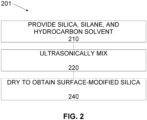
- FIG. 2 is a flow chart illustrating a process for producing a surface-modified silica 201 in accordance with some embodiments of the present disclosure.
- the process 201 includes providing silica, a silane, and a hydrocarbon solvent 210; ultrasonically mixing to form a stable solution 220; and drying to form the surface-modified silica 240.
- the providing 210 and ultrasonic mixing 220 maybe similar to or the same as the corresponding steps 110, 120 in FIG. 1 .
- FIG. 3 is a flow chart illustrating a process for producing a masterbatch 302 in accordance with some embodiments of the present disclosure.
- the process 302 includes providing silica, a silane, and a hydrocarbon solvent 310; ultrasonically mixing to form a stable solution 320; mixing the solution with a polymer cement 330; and drying to form the surface-modified silica 340.
- the providing 310 and ultrasonic mixing 320 maybe similar to or the same as the corresponding steps 110, 120 in FIG. 1 .
- the solution can be liquid/liquid phase mixed 330 with the polymer cement in the same solvent to achieve dispersion of silica in the rubber phase.
- the polymer cement may contain a rubber (e.g., a diene-containing rubber).
- a rubber e.g., a diene-containing rubber.
- Non-limiting examples include natural rubber, synthetic polyisoprene rubber, polybutadiene rubber, isoprene-butadiene rubber (IBR), styrene butadiene rubber (SBR), styrene-isoprene rubber (SIR), and styrene-isoprene-butadiene rubber (SIBR).
- the masterbatch may be compounded into a rubber composition.
- the rubber composition may optionally include, in addition to the masterbatch, one or more rubbers or elastomers containing olefinic unsaturation.
- the additional rubber(s)/elastomer(s) may be the same as or different from the rubber(s)/elastomer(s) of the masterbatch.
- the phrases "rubber or elastomer containing olefinic unsaturation" or “diene-based elastomer” are intended to include both natural rubber and its various raw and reclaim forms as well as various synthetic rubbers. In the description, the terms “rubber” and “elastomer” may be used interchangeably, unless otherwise prescribed.
- rubber composition refers to rubber which has been blended or mixed with various ingredients and materials and such terms are well known to those having skill in the rubber mixing or rubber compounding art.
- Representative synthetic polymers are the homopolymerization products of butadiene and its homologues and derivatives, for example, methylbutadiene, dimethylbutadiene and pentadiene as well as copolymers such as those formed from butadiene or its homologues or derivatives with other unsaturated monomers.
- acetylenes for example, vinyl acetylene
- olefins for example, isobutylene, which copolymerizes with isoprene to form butyl rubber
- vinyl compounds for example, acrylic acid, acrylonitrile (which polymerize with butadiene to form NBR), methacrylic acid and styrene, the latter compound polymerizing with butadiene to form SBR, as well as vinyl esters and various unsaturated aldehydes, ketones and ethers, e.g., acrolein, methyl isopropenyl ketone and vinylethyl ether.
- synthetic rubbers include neoprene (polychloroprene), polybutadiene (including cis-1,4-polybutadiene), polyisoprene (including cis-1,4-polyisoprene), butyl rubber, halobutyl rubber such as chlorobutyl rubber or bromobutyl rubber, styrene/isoprene/butadiene rubber, copolymers of 1,3-butadiene or isoprene with monomers such as styrene, acrylonitrile and methyl methacrylate, as well as ethylene/propylene terpolymers, also known as ethylene/propylene/diene monomer (EPDM), and in particular, ethylene/propylene/ dicyclopentadiene terpolymers.
- neoprene polychloroprene
- polybutadiene including cis-1,4-polybutadiene
- rubbers which may be used include alkoxy-silyl end functionalized solution polymerized polymers (SBR, PBR, IBR and SIBR), silicon-coupled and tin-coupled star-branched polymers.
- SBR alkoxy-silyl end functionalized solution polymerized polymers
- PBR polybutadiene
- SIBR silicon-coupled and tin-coupled star-branched polymers.
- the preferred rubber or elastomers are polyisoprene (natural or synthetic), polybutadiene and SBR.
- At least one additional rubber is preferably of at least two of diene-based rubbers.
- a combination of two or more rubbers is preferred such as cis 1,4-polyisoprene rubber (natural or synthetic, although natural is preferred), 3,4-polyisoprene rubber, styrene/isoprene/butadiene rubber, emulsion and solution polymerization derived styrene/butadiene rubbers, cis 1,4-polybutadiene rubbers, and emulsion polymerization prepared butadiene/acrylonitrile copolymers.
- an emulsion polymerization derived styrene/butadiene might be used having a relatively conventional styrene content of 20 to 28 percent bound styrene or, for some applications, an E-SBR having a medium to relatively high bound styrene content, namely, a bound styrene content of 30 to 45 percent.
- E-SBR emulsion polymerization prepared E-SBR
- styrene and 1,3-butadiene are copolymerized as an aqueous emulsion.
- the bound styrene content can vary, for example, from 5 to 50 percent.
- the E-SBR may also contain acrylonitrile to form a terpolymer rubber, as E-SBAR, in amounts, for example, of 2 to 30 weight percent bound acrylonitrile in the terpolymer.
- Emulsion polymerization prepared styrene/butadiene/acrylonitrile copolymer rubbers containing 2 to 40 weight percent bound acrylonitrile in the copolymer are also contemplated as diene-based rubbers.
- S-SBR solution polymerization prepared SBR
- S-SBR typically has a bound styrene content in a range of 5 to 50, preferably 9 to 36, percent.
- the S-SBR can be conveniently prepared, for example, by organo lithium catalyzation in the presence of an organic hydrocarbon solvent.
- cis 1,4-polybutadiene rubber may be used.
- BR cis 1,4-polybutadiene rubber
- Such BR can be prepared, for example, by organic solution polymerization of 1,3-butadiene.
- the BR may be conveniently characterized, for example, by having at least a 90 percent cis 1,4-content.
- the rubber composition may also include up to 70 phr of processing oil.
- Processing oil may be included in the rubber composition as extending oil typically used to extend elastomers. Processing oil may also be included in the rubber composition by addition of the oil directly during rubber compounding.
- the processing oil used may include both extending oil present in the elastomers, and process oil added during compounding.
- Suitable process oils include various oils as are known in the art, including aromatic, paraffinic, naphthenic, vegetable oils, and low PCA oils, such as MES, TDAE, SRAE and heavy naphthenic oils.
- Suitable low PCA oils include those having a polycyclic aromatic content of less than 3 percent by weight as determined by the IP346 method. Procedures for the IP346 method may be found in Standard Methods for Analysis & Testing of Petroleum and Related Products and British Standard 2000 Parts, 2003, 62nd edition, published by the Institute of Petroleum, United Kingdom.
- the rubber compound may include from 10 to 150 phr of silica. In another embodiment, from 20 to 80 phr of silica may be used. In some embodiments, all of the silica in the rubber compound is from the masterbatch. In other embodiments, additional silica is added during compounding.
- the commonly employed siliceous pigments which may be used in the rubber compound include conventional pyrogenic and precipitated siliceous pigments (silica).
- precipitated silica is used.
- the conventional siliceous pigments employed are precipitated silicas such as, for example, those obtained by the acidification of a soluble silicate, e.g., sodium silicate.
- Commonly employed carbon blacks can be used as a conventional filler in an amount ranging from 10 to 150 phr. In another embodiment, from 20 to 80 phr of carbon black may be used.
- Representative examples of such carbon blacks include N110, N121, N134, N220, N231, N234, N242, N293, N299, N315, N326, N330, N332, N339, N343, N347, N351, N358, N375, N539, N550, N582, N630, N642, N650, N683, N754, N762, N765, N774, N787, N907, N908, N990 and N991.
- These carbon blacks have iodine absorptions ranging from 9 to 145 g/kg and DBP number ranging from 34 to 150 cm 3 /100 g.
- fillers may be used in the rubber composition including particulate fillers including ultra-high molecular weight polyethylene (UHMWPE), crosslinked particulate polymer gels including those disclosed in U.S. Pat. Nos. 6,242,534 ; 6,207,757 ; 6,133,364 ; 6,372,857 ; 5,395,891 ; or 6,127,488 , and plasticized starch composite filler including but not limited to that disclosed in U.S. Pat. No. 5,672,639 .
- Such other fillers may be used in an amount ranging from 1 to 30 phr.
- the rubber composition may contain a conventional sulfur containing organosilicon compound.
- the sulfur containing organosilicon compounds are the 3,3'-bis(trimethoxy or triethoxy silylpropyl) polysulfides.
- the sulfur containing organosilicon compounds are 3,3'-bis(triethoxysilylpropyl) disulfide and/or 3,3'-bis(triethoxysilylpropyl) tetrasulfide.
- suitable sulfur containing organosilicon compounds include compounds disclosed in U.S. Pat. No. 6,608,125 .
- suitable sulfur containing organosilicon compounds include those disclosed in U.S. Patent Publication No. 2003/0130535 .
- the sulfur containing organosilicon compound is Si-363 from Degussa.
- the amount of the sulfur containing organosilicon compound in a rubber composition will vary depending on the level of other additives that are used. Generally speaking, the amount of the compound will range from 0.5 to 20 phr. In one embodiment, the amount will range from 1 to 10 phr.
- the rubber composition would be compounded by methods generally known in the rubber compounding art, such as mixing the various sulfur-vulcanizable constituent rubbers with various commonly used additive materials such as, for example, sulfur donors, curing aids, such as activators and retarders and processing additives, such as oils, resins including tackifying resins and plasticizers, fillers, pigments, fatty acid, zinc oxide, waxes, antioxidants and antiozonants and peptizing agents.
- additives mentioned above are selected and commonly used in conventional amounts.
- sulfur donors include elemental sulfur (free sulfur), an amine disulfide, polymeric polysulfide and sulfur olefin adducts.
- the sulfur-vulcanizing agent is elemental sulfur.
- the sulfur-vulcanizing agent may be used in an amount ranging from 0.5 to 8 phr, alternatively with a range of from 1.5 to 6 phr.
- Typical amounts of tackifier resins, if used, comprise 0.5 to 10 phr, usually 1 to 5 phr.
- processing aids comprise 1 to 50 phr.
- Typical amounts of antioxidants comprise 1 to 5 phr.
- antioxidants may be, for example, diphenyl-p-phenylenediamine and others, such as, for example, those disclosed in The Vanderbilt Rubber Handbook (1978), Pages 344 through 346 .
- Typical amounts of antiozonants comprise 1 to 5 phr.
- Typical amounts of fatty acids, if used, which can include stearic acid comprise 0.5 to 3 phr.
- Typical amounts of zinc oxide comprise 2 to 5 phr.
- Typical amounts of waxes comprise 1 to 5 phr. Often microcrystalline waxes are used.
- peptizers comprise 0.1 to 1 phr.
- Typical peptizers may be, for example, pentachlorothiophenol and dibenzamidodiphenyl disulfide.
- Accelerators are used to control the time and/or temperature required for vulcanization and to improve the properties of the vulcanizate.
- a single accelerator system may be used, i.e., primary accelerator.
- the primary accelerator(s) may be used in total amounts ranging from 0.5 to 4, alternatively 0.8 to 1.5, phr.
- combinations of a primary and a secondary accelerator might be used with the secondary accelerator being used in smaller amounts, such as from 0.05 to 3 phr, in order to activate and to improve the properties of the vulcanizate. Combinations of these accelerators might be expected to produce a synergistic effect on the final properties and are somewhat better than those produced by use of either accelerator alone.
- delayed action accelerators may be used which are not affected by normal processing temperatures but produce a satisfactory cure at ordinary vulcanization temperatures.
- Vulcanization retarders might also be used. Suitable types of accelerators that may be used include amines, disulfides, guanidines, thioureas, thiazoles, thiurams, sulfenamides, dithiocarbamates and xanthates.
- the primary accelerator is a sulfenamide
- the secondary accelerator may be a guanidine, dithiocarbamate or thiuram compound.
- the mixing of the rubber composition can be accomplished by methods known to those having skill in the rubber mixing art.
- the ingredients are typically mixed in at least two stages, namely, at least one non-productive stage followed by a productive mix stage.
- the final curatives including sulfur-vulcanizing agents are typically mixed in the final stage which is conventionally called the "productive" mix stage in which the mixing typically occurs at a temperature, or ultimate temperature, lower than the mix temperature(s) than the preceding non-productive mix stage(s).
- the terms "non-productive" and “productive” mix stages are well known to those having skill in the rubber mixing art.
- the rubber composition may be subjected to a thermomechanical mixing step.
- the thermomechanical mixing step generally comprises a mechanical working in a mixer or extruder for a period of time suitable in order to produce a rubber temperature between 140° C. and 190° C.
- the appropriate duration of the thermomechanical working varies as a function of the operating conditions, and the volume and nature of the components.
- the thermomechanical working may be from 1 to 20 minutes.
- the rubber composition may be incorporated in a variety of rubber components of the tire.
- the rubber component may be a tread (including tread cap and tread base), sidewall, apex, chafer, sidewall insert, wirecoat or innerliner.
- the component is a tread.
- the pneumatic tire may be a race tire, passenger tire, aircraft tire, agricultural, earthmover, off-the-road, or truck tire. In one embodiment, the tire is a passenger or truck tire. The tire may also be a radial or bias.
- the rubber composition may also be used in other products, including non-pneumatic tires, belts, hoses, shoes, airsprings, and engine mounts.
- Vulcanization of the pneumatic tire may be carried out at conventional temperatures ranging from 100° C to 200° C. In one embodiment, the vulcanization is conducted at temperatures ranging from 110° C to 180° C. Any of the usual vulcanization processes may be used such as heating in a press or mold, heating with superheated steam or hot air. Such tires can be built, shaped, molded and cured by various methods which are known and will be readily apparent to those having skill in such art.
- silica 20g is added to 100g of hexane.
- the mixture is ultrasonic vibrated (Ultrasonic Liquid Processor from Sonics & Materials Inc.) for 15 minutes.
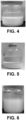
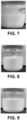
- a suspension is formed and gelled after 24 hours.
- the gel-like mixture is shown in the photograph of FIG. 6 .
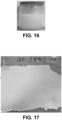
- the mixture is ultrasonic vibrated for 15minutes and shaken for an additional 30 minutes.
- the silica is phase separated from the polymer cement as shown in the photograph of FIG. 10 .
- Non-functionalized SSBR and vinylsilane-functional SSBR were synthesized is Examples 14 and 15, respectively. Details concerning these polymers are summarized in the table below: Polymer ID Non-Fn-SSBR (Example 14) Fn-SSBR (Example 15) Cement Quantity 2 gallons 2 gallons Base Mooney 36.1 48.4 %Solid 14.7 14.7 %Styrene 20.5 20.1 %Vinyl 47.7 49.3 Tg (°C) -22.6 -22.9
- the mixture was directly drum dried or coagulated with isopropanol and the solid product is overnight air dried in a hood.
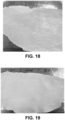
- the product was labeled as FN-SBR/Silane/Silica (100/10phf/80) and is shown in the photograph of FIG. 19 .
- the mixture was directly drum dried or coagulated with isopropanol and the solid product is overnight air dried in a hood.
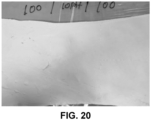
- the product was labeled as FN-SBR/Silane/Silica (100/10phf/100) and is shown in the photograph of FIG. 20 .
Landscapes
- Chemical & Material Sciences (AREA)
- Organic Chemistry (AREA)
- Health & Medical Sciences (AREA)
- Chemical Kinetics & Catalysis (AREA)
- Medicinal Chemistry (AREA)
- Polymers & Plastics (AREA)
- Inorganic Chemistry (AREA)
- Compositions Of Macromolecular Compounds (AREA)
Applications Claiming Priority (1)
| Application Number | Priority Date | Filing Date | Title |
|---|---|---|---|
| US18/477,641 US20250109295A1 (en) | 2023-09-29 | 2023-09-29 | Surface modification of silica in hydrocarbon solvent, masterbatch, and rubber composition |
Publications (1)
| Publication Number | Publication Date |
|---|---|
| EP4530254A1 true EP4530254A1 (de) | 2025-04-02 |
Family
ID=92925470
Family Applications (1)
| Application Number | Title | Priority Date | Filing Date |
|---|---|---|---|
| EP24202900.7A Pending EP4530254A1 (de) | 2023-09-29 | 2024-09-26 | Oberflächenmodifizierung von kieselsäure in kohlenwasserstofflösungsmittel |
Country Status (3)
| Country | Link |
|---|---|
| US (1) | US20250109295A1 (de) |
| EP (1) | EP4530254A1 (de) |
| CN (1) | CN119735967A (de) |
Citations (12)
| Publication number | Priority date | Publication date | Assignee | Title |
|---|---|---|---|---|
| US5395891A (en) | 1992-06-24 | 1995-03-07 | Bayer Aktiengesellschaft | Rubber mixtures containing polybutadiene gel |
| US5672639A (en) | 1996-03-12 | 1997-09-30 | The Goodyear Tire & Rubber Company | Starch composite reinforced rubber composition and tire with at least one component thereof |
| US6127488A (en) | 1997-01-17 | 2000-10-03 | Bayer Ag | Rubber mixtures which contain SBR rubber gels |
| US6133364A (en) | 1998-08-01 | 2000-10-17 | Continental Aktiengesellschaft | Rubber composition, method of formulating the composition and vehicle tire made from the composition |
| US6207757B1 (en) | 1998-08-01 | 2001-03-27 | Continental Aktiengesellschaft | Rubber composition, method of adding and blending the composition and vehicle tire made from the composition |
| US6242534B1 (en) | 1998-08-01 | 2001-06-05 | Continental Aktiengesellschaft | Rubber composition, method of formulating and blending the same and article and tires made therefrom |
| US6372857B1 (en) | 1999-09-07 | 2002-04-16 | Bayer Aktiengesellschaft | Microgel-containing rubber mixtures with masked bi-functional mercaptans and vulcanization products produced therefrom |
| US20030130535A1 (en) | 2001-08-06 | 2003-07-10 | Degussa Ag, | Organosilicon compounds |
| US6608125B2 (en) | 1997-08-21 | 2003-08-19 | Crompton Corporation | Blocked mercaptosilane coupling agents for filled rubbers |
| CN1751795A (zh) * | 2005-08-29 | 2006-03-29 | 中国科学院山西煤炭化学研究所 | 一种胺基功能化二氧化硅的制备方法 |
| CN108948797A (zh) * | 2018-07-18 | 2018-12-07 | 武汉金牛经济发展有限公司 | 一种改性纳米二氧化硅的制备方法 |
| CN111644067A (zh) * | 2020-06-17 | 2020-09-11 | 东北电力大学 | 一种纳米微柱超双疏复合膜的制备方法 |
Family Cites Families (4)
| Publication number | Priority date | Publication date | Assignee | Title |
|---|---|---|---|---|
| DE3316395A1 (de) * | 1983-05-05 | 1984-11-08 | Hüls Troisdorf AG, 53840 Troisdorf | Verfahren zur modifizierung von staerke in gegenwart von loesungsmitteln |
| US8029871B2 (en) * | 2005-06-09 | 2011-10-04 | Hoya Corporation | Method for producing silica aerogel coating |
| US7488671B2 (en) * | 2006-05-26 | 2009-02-10 | General Electric Company | Nanostructure arrays and methods of making same |
| EP3814443A1 (de) * | 2018-06-28 | 2021-05-05 | Nouryon Chemicals International B.V. | Klebstoffzusammensetzungen |
-
2023
- 2023-09-29 US US18/477,641 patent/US20250109295A1/en active Pending
-
2024
- 2024-09-26 EP EP24202900.7A patent/EP4530254A1/de active Pending
- 2024-09-27 CN CN202411357981.5A patent/CN119735967A/zh active Pending
Patent Citations (12)
| Publication number | Priority date | Publication date | Assignee | Title |
|---|---|---|---|---|
| US5395891A (en) | 1992-06-24 | 1995-03-07 | Bayer Aktiengesellschaft | Rubber mixtures containing polybutadiene gel |
| US5672639A (en) | 1996-03-12 | 1997-09-30 | The Goodyear Tire & Rubber Company | Starch composite reinforced rubber composition and tire with at least one component thereof |
| US6127488A (en) | 1997-01-17 | 2000-10-03 | Bayer Ag | Rubber mixtures which contain SBR rubber gels |
| US6608125B2 (en) | 1997-08-21 | 2003-08-19 | Crompton Corporation | Blocked mercaptosilane coupling agents for filled rubbers |
| US6133364A (en) | 1998-08-01 | 2000-10-17 | Continental Aktiengesellschaft | Rubber composition, method of formulating the composition and vehicle tire made from the composition |
| US6207757B1 (en) | 1998-08-01 | 2001-03-27 | Continental Aktiengesellschaft | Rubber composition, method of adding and blending the composition and vehicle tire made from the composition |
| US6242534B1 (en) | 1998-08-01 | 2001-06-05 | Continental Aktiengesellschaft | Rubber composition, method of formulating and blending the same and article and tires made therefrom |
| US6372857B1 (en) | 1999-09-07 | 2002-04-16 | Bayer Aktiengesellschaft | Microgel-containing rubber mixtures with masked bi-functional mercaptans and vulcanization products produced therefrom |
| US20030130535A1 (en) | 2001-08-06 | 2003-07-10 | Degussa Ag, | Organosilicon compounds |
| CN1751795A (zh) * | 2005-08-29 | 2006-03-29 | 中国科学院山西煤炭化学研究所 | 一种胺基功能化二氧化硅的制备方法 |
| CN108948797A (zh) * | 2018-07-18 | 2018-12-07 | 武汉金牛经济发展有限公司 | 一种改性纳米二氧化硅的制备方法 |
| CN111644067A (zh) * | 2020-06-17 | 2020-09-11 | 东北电力大学 | 一种纳米微柱超双疏复合膜的制备方法 |
Non-Patent Citations (2)
| Title |
|---|
| "Standard Methods for Analysis & Testing of Petroleum and Related Products", 2003, INSTITUTE OF PETROLEUM |
| JOURNAL OF THE AMERICAN CHEMICAL SOCIETY, vol. 60 |
Also Published As
| Publication number | Publication date |
|---|---|
| US20250109295A1 (en) | 2025-04-03 |
| CN119735967A (zh) | 2025-04-01 |
Similar Documents
| Publication | Publication Date | Title |
|---|---|---|
| EP2333008B1 (de) | Reifen mit Cellulose enthaltendem Inhaltsstoff | |
| US20090048400A1 (en) | Method for Making Tire with Black Sidewall and Tire Made by the Method | |
| US20110146859A1 (en) | Tire with component containing carbon nanotubes | |
| US20100144946A1 (en) | Pneumatic tire with tread | |
| EP2028021B1 (de) | Reifen mit Komponente mit Kombinationsweichmacher | |
| US20110146873A1 (en) | Pneumatic tire with rubber component containing epoxidized palm oil | |
| CN115044113A (zh) | 橡胶组合物和轮胎 | |
| US20120083559A1 (en) | Pneumatic tire with thread | |
| EP4035907B1 (de) | Fettsäuremodifizierte pflanzliche öle in kautschukzusammensetzungen und reifen | |
| US8143344B2 (en) | Method of making a silica/elastomer composite | |
| EP4008748A1 (de) | Reifen- und kautschukzusammensetzung mit kohlendioxid-erzeugtem kohlenstoffverstärkungsfüllstoff | |
| EP3216623B1 (de) | Kautschukzusammensetzung und luftreifen | |
| US8048941B2 (en) | Silica/elastomer composite, rubber composition and pneumatic tire | |
| EP2289711B1 (de) | Verfahren zur Verarbeitung einer Gummizusammensetzung, Gummizusammensetzung und Luftreifen | |
| US20110245371A1 (en) | Pneumatic tire with rubber component containing alkylalkoxysilane and silicone resin | |
| US20220089844A1 (en) | Rubber composition and a tire | |
| CN115044112A (zh) | 橡胶组合物和轮胎 | |
| EP3926009A1 (de) | Kautschukzusammensetzung und reifen | |
| EP4530254A1 (de) | Oberflächenmodifizierung von kieselsäure in kohlenwasserstofflösungsmittel | |
| EP4530307A1 (de) | Oberflächenmodifizierung von siliciumdioxid in kohlenwasserstofflösungsmittel, masterbatch und kautschukzusammensetzung | |
| US11667775B2 (en) | Resin-modified vegetable oils in rubber compositions and tires | |
| US20230323075A1 (en) | Rubber composition and a tire | |
| US9234089B1 (en) | Pneumatic tire with siloxy nitroxide | |
| US11879055B2 (en) | Non-active sulfur containing functional silanes for silica compounds | |
| US7435775B2 (en) | Tire with component having oxirane resin |
Legal Events
| Date | Code | Title | Description |
|---|---|---|---|
| PUAI | Public reference made under article 153(3) epc to a published international application that has entered the european phase |
Free format text: ORIGINAL CODE: 0009012 |
|
| STAA | Information on the status of an ep patent application or granted ep patent |
Free format text: STATUS: THE APPLICATION HAS BEEN PUBLISHED |
|
| AK | Designated contracting states |
Kind code of ref document: A1 Designated state(s): AL AT BE BG CH CY CZ DE DK EE ES FI FR GB GR HR HU IE IS IT LI LT LU LV MC ME MK MT NL NO PL PT RO RS SE SI SK SM TR |
|
| STAA | Information on the status of an ep patent application or granted ep patent |
Free format text: STATUS: REQUEST FOR EXAMINATION WAS MADE |
|
| 17P | Request for examination filed |
Effective date: 20251002 |