EP4525338A2 - Codeblocksegmentierung zur nutzlastadaptiven codierung unter verwendung von turbocodes und ldpc-codes - Google Patents
Codeblocksegmentierung zur nutzlastadaptiven codierung unter verwendung von turbocodes und ldpc-codes Download PDFInfo
- Publication number
- EP4525338A2 EP4525338A2 EP25155586.8A EP25155586A EP4525338A2 EP 4525338 A2 EP4525338 A2 EP 4525338A2 EP 25155586 A EP25155586 A EP 25155586A EP 4525338 A2 EP4525338 A2 EP 4525338A2
- Authority
- EP
- European Patent Office
- Prior art keywords
- payload
- code block
- wireless communication
- ldpcc
- code
- Prior art date
- Legal status (The legal status is an assumption and is not a legal conclusion. Google has not performed a legal analysis and makes no representation as to the accuracy of the status listed.)
- Pending
Links
- 230000011218 segmentation Effects 0.000 title description 10
- 230000003044 adaptive effect Effects 0.000 title 1
- 230000006854 communication Effects 0.000 claims abstract description 223
- 238000004891 communication Methods 0.000 claims abstract description 223
- 238000000034 method Methods 0.000 claims abstract description 110
- 125000004122 cyclic group Chemical group 0.000 claims abstract description 9
- 230000005540 biological transmission Effects 0.000 claims description 82
- 239000000945 filler Substances 0.000 claims description 8
- 238000001228 spectrum Methods 0.000 description 74
- 230000006870 function Effects 0.000 description 33
- 230000002457 bidirectional effect Effects 0.000 description 17
- 238000010586 diagram Methods 0.000 description 15
- 206010009944 Colon cancer Diseases 0.000 description 10
- 230000002776 aggregation Effects 0.000 description 9
- 238000004220 aggregation Methods 0.000 description 9
- 239000000969 carrier Substances 0.000 description 8
- 238000005516 engineering process Methods 0.000 description 8
- 230000008901 benefit Effects 0.000 description 5
- 238000012545 processing Methods 0.000 description 5
- 230000001360 synchronised effect Effects 0.000 description 5
- 230000008569 process Effects 0.000 description 4
- 230000000153 supplemental effect Effects 0.000 description 4
- 208000028626 extracranial carotid artery aneurysm Diseases 0.000 description 3
- 230000007774 longterm Effects 0.000 description 3
- 230000003287 optical effect Effects 0.000 description 3
- 230000001413 cellular effect Effects 0.000 description 2
- 239000000835 fiber Substances 0.000 description 2
- 239000002245 particle Substances 0.000 description 2
- 230000000737 periodic effect Effects 0.000 description 2
- 230000011664 signaling Effects 0.000 description 2
- 102100036409 Activated CDC42 kinase 1 Human genes 0.000 description 1
- 101000972853 Hordeum vulgare Non-specific lipid-transfer protein 3 Proteins 0.000 description 1
- 101001125214 Hordeum vulgare Non-specific lipid-transfer protein 4.1 Proteins 0.000 description 1
- 102100038192 Serine/threonine-protein kinase TBK1 Human genes 0.000 description 1
- 238000013475 authorization Methods 0.000 description 1
- 230000007175 bidirectional communication Effects 0.000 description 1
- 239000003795 chemical substances by application Substances 0.000 description 1
- 238000004590 computer program Methods 0.000 description 1
- 238000010276 construction Methods 0.000 description 1
- 238000001514 detection method Methods 0.000 description 1
- 230000009977 dual effect Effects 0.000 description 1
- 238000012423 maintenance Methods 0.000 description 1
- 230000007246 mechanism Effects 0.000 description 1
- 238000012986 modification Methods 0.000 description 1
- 230000004048 modification Effects 0.000 description 1
- 238000012544 monitoring process Methods 0.000 description 1
- 230000008520 organization Effects 0.000 description 1
- 230000002441 reversible effect Effects 0.000 description 1
- 238000005070 sampling Methods 0.000 description 1
- 238000012546 transfer Methods 0.000 description 1
Images





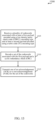
Classifications
-
- H—ELECTRICITY
- H03—ELECTRONIC CIRCUITRY
- H03M—CODING; DECODING; CODE CONVERSION IN GENERAL
- H03M13/00—Coding, decoding or code conversion, for error detection or error correction; Coding theory basic assumptions; Coding bounds; Error probability evaluation methods; Channel models; Simulation or testing of codes
- H03M13/03—Error detection or forward error correction by redundancy in data representation, i.e. code words containing more digits than the source words
- H03M13/05—Error detection or forward error correction by redundancy in data representation, i.e. code words containing more digits than the source words using block codes, i.e. a predetermined number of check bits joined to a predetermined number of information bits
- H03M13/09—Error detection only, e.g. using cyclic redundancy check [CRC] codes or single parity bit
-
- H—ELECTRICITY
- H03—ELECTRONIC CIRCUITRY
- H03M—CODING; DECODING; CODE CONVERSION IN GENERAL
- H03M13/00—Coding, decoding or code conversion, for error detection or error correction; Coding theory basic assumptions; Coding bounds; Error probability evaluation methods; Channel models; Simulation or testing of codes
- H03M13/03—Error detection or forward error correction by redundancy in data representation, i.e. code words containing more digits than the source words
- H03M13/05—Error detection or forward error correction by redundancy in data representation, i.e. code words containing more digits than the source words using block codes, i.e. a predetermined number of check bits joined to a predetermined number of information bits
- H03M13/11—Error detection or forward error correction by redundancy in data representation, i.e. code words containing more digits than the source words using block codes, i.e. a predetermined number of check bits joined to a predetermined number of information bits using multiple parity bits
- H03M13/1102—Codes on graphs and decoding on graphs, e.g. low-density parity check [LDPC] codes
-
- H—ELECTRICITY
- H03—ELECTRONIC CIRCUITRY
- H03M—CODING; DECODING; CODE CONVERSION IN GENERAL
- H03M13/00—Coding, decoding or code conversion, for error detection or error correction; Coding theory basic assumptions; Coding bounds; Error probability evaluation methods; Channel models; Simulation or testing of codes
- H03M13/03—Error detection or forward error correction by redundancy in data representation, i.e. code words containing more digits than the source words
- H03M13/05—Error detection or forward error correction by redundancy in data representation, i.e. code words containing more digits than the source words using block codes, i.e. a predetermined number of check bits joined to a predetermined number of information bits
- H03M13/11—Error detection or forward error correction by redundancy in data representation, i.e. code words containing more digits than the source words using block codes, i.e. a predetermined number of check bits joined to a predetermined number of information bits using multiple parity bits
- H03M13/1102—Codes on graphs and decoding on graphs, e.g. low-density parity check [LDPC] codes
- H03M13/1105—Decoding
-
- H—ELECTRICITY
- H03—ELECTRONIC CIRCUITRY
- H03M—CODING; DECODING; CODE CONVERSION IN GENERAL
- H03M13/00—Coding, decoding or code conversion, for error detection or error correction; Coding theory basic assumptions; Coding bounds; Error probability evaluation methods; Channel models; Simulation or testing of codes
- H03M13/25—Error detection or forward error correction by signal space coding, i.e. adding redundancy in the signal constellation, e.g. Trellis Coded Modulation [TCM]
- H03M13/255—Error detection or forward error correction by signal space coding, i.e. adding redundancy in the signal constellation, e.g. Trellis Coded Modulation [TCM] with Low Density Parity Check [LDPC] codes
-
- H—ELECTRICITY
- H03—ELECTRONIC CIRCUITRY
- H03M—CODING; DECODING; CODE CONVERSION IN GENERAL
- H03M13/00—Coding, decoding or code conversion, for error detection or error correction; Coding theory basic assumptions; Coding bounds; Error probability evaluation methods; Channel models; Simulation or testing of codes
- H03M13/29—Coding, decoding or code conversion, for error detection or error correction; Coding theory basic assumptions; Coding bounds; Error probability evaluation methods; Channel models; Simulation or testing of codes combining two or more codes or code structures, e.g. product codes, generalised product codes, concatenated codes, inner and outer codes
- H03M13/2906—Coding, decoding or code conversion, for error detection or error correction; Coding theory basic assumptions; Coding bounds; Error probability evaluation methods; Channel models; Simulation or testing of codes combining two or more codes or code structures, e.g. product codes, generalised product codes, concatenated codes, inner and outer codes using block codes
-
- H—ELECTRICITY
- H03—ELECTRONIC CIRCUITRY
- H03M—CODING; DECODING; CODE CONVERSION IN GENERAL
- H03M13/00—Coding, decoding or code conversion, for error detection or error correction; Coding theory basic assumptions; Coding bounds; Error probability evaluation methods; Channel models; Simulation or testing of codes
- H03M13/35—Unequal or adaptive error protection, e.g. by providing a different level of protection according to significance of source information or by adapting the coding according to the change of transmission channel characteristics
-
- H—ELECTRICITY
- H03—ELECTRONIC CIRCUITRY
- H03M—CODING; DECODING; CODE CONVERSION IN GENERAL
- H03M13/00—Coding, decoding or code conversion, for error detection or error correction; Coding theory basic assumptions; Coding bounds; Error probability evaluation methods; Channel models; Simulation or testing of codes
- H03M13/35—Unequal or adaptive error protection, e.g. by providing a different level of protection according to significance of source information or by adapting the coding according to the change of transmission channel characteristics
- H03M13/353—Adaptation to the channel
-
- H—ELECTRICITY
- H03—ELECTRONIC CIRCUITRY
- H03M—CODING; DECODING; CODE CONVERSION IN GENERAL
- H03M13/00—Coding, decoding or code conversion, for error detection or error correction; Coding theory basic assumptions; Coding bounds; Error probability evaluation methods; Channel models; Simulation or testing of codes
- H03M13/65—Purpose and implementation aspects
- H03M13/6508—Flexibility, adaptability, parametrability and configurability of the implementation
- H03M13/6513—Support of multiple code types, e.g. unified decoder for LDPC and turbo codes
-
- H—ELECTRICITY
- H04—ELECTRIC COMMUNICATION TECHNIQUE
- H04L—TRANSMISSION OF DIGITAL INFORMATION, e.g. TELEGRAPHIC COMMUNICATION
- H04L1/00—Arrangements for detecting or preventing errors in the information received
- H04L1/0001—Systems modifying transmission characteristics according to link quality, e.g. power backoff
- H04L1/0006—Systems modifying transmission characteristics according to link quality, e.g. power backoff by adapting the transmission format
- H04L1/0007—Systems modifying transmission characteristics according to link quality, e.g. power backoff by adapting the transmission format by modifying the frame length
-
- H—ELECTRICITY
- H04—ELECTRIC COMMUNICATION TECHNIQUE
- H04L—TRANSMISSION OF DIGITAL INFORMATION, e.g. TELEGRAPHIC COMMUNICATION
- H04L1/00—Arrangements for detecting or preventing errors in the information received
- H04L1/0001—Systems modifying transmission characteristics according to link quality, e.g. power backoff
- H04L1/0009—Systems modifying transmission characteristics according to link quality, e.g. power backoff by adapting the channel coding
-
- H—ELECTRICITY
- H04—ELECTRIC COMMUNICATION TECHNIQUE
- H04L—TRANSMISSION OF DIGITAL INFORMATION, e.g. TELEGRAPHIC COMMUNICATION
- H04L1/00—Arrangements for detecting or preventing errors in the information received
- H04L1/004—Arrangements for detecting or preventing errors in the information received by using forward error control
- H04L1/0041—Arrangements at the transmitter end
-
- H—ELECTRICITY
- H04—ELECTRIC COMMUNICATION TECHNIQUE
- H04L—TRANSMISSION OF DIGITAL INFORMATION, e.g. TELEGRAPHIC COMMUNICATION
- H04L1/00—Arrangements for detecting or preventing errors in the information received
- H04L1/004—Arrangements for detecting or preventing errors in the information received by using forward error control
- H04L1/0045—Arrangements at the receiver end
-
- H—ELECTRICITY
- H04—ELECTRIC COMMUNICATION TECHNIQUE
- H04L—TRANSMISSION OF DIGITAL INFORMATION, e.g. TELEGRAPHIC COMMUNICATION
- H04L1/00—Arrangements for detecting or preventing errors in the information received
- H04L1/004—Arrangements for detecting or preventing errors in the information received by using forward error control
- H04L1/0056—Systems characterized by the type of code used
- H04L1/0057—Block codes
-
- H—ELECTRICITY
- H04—ELECTRIC COMMUNICATION TECHNIQUE
- H04L—TRANSMISSION OF DIGITAL INFORMATION, e.g. TELEGRAPHIC COMMUNICATION
- H04L1/00—Arrangements for detecting or preventing errors in the information received
- H04L1/004—Arrangements for detecting or preventing errors in the information received by using forward error control
- H04L1/0056—Systems characterized by the type of code used
- H04L1/0057—Block codes
- H04L1/0058—Block-coded modulation
-
- H—ELECTRICITY
- H04—ELECTRIC COMMUNICATION TECHNIQUE
- H04L—TRANSMISSION OF DIGITAL INFORMATION, e.g. TELEGRAPHIC COMMUNICATION
- H04L1/00—Arrangements for detecting or preventing errors in the information received
- H04L1/004—Arrangements for detecting or preventing errors in the information received by using forward error control
- H04L1/0056—Systems characterized by the type of code used
- H04L1/0061—Error detection codes
-
- H—ELECTRICITY
- H04—ELECTRIC COMMUNICATION TECHNIQUE
- H04L—TRANSMISSION OF DIGITAL INFORMATION, e.g. TELEGRAPHIC COMMUNICATION
- H04L1/00—Arrangements for detecting or preventing errors in the information received
- H04L1/004—Arrangements for detecting or preventing errors in the information received by using forward error control
- H04L1/0056—Systems characterized by the type of code used
- H04L1/0064—Concatenated codes
- H04L1/0066—Parallel concatenated codes
-
- H—ELECTRICITY
- H04—ELECTRIC COMMUNICATION TECHNIQUE
- H04L—TRANSMISSION OF DIGITAL INFORMATION, e.g. TELEGRAPHIC COMMUNICATION
- H04L1/00—Arrangements for detecting or preventing errors in the information received
- H04L1/004—Arrangements for detecting or preventing errors in the information received by using forward error control
- H04L1/0056—Systems characterized by the type of code used
- H04L1/007—Unequal error protection
-
- H—ELECTRICITY
- H04—ELECTRIC COMMUNICATION TECHNIQUE
- H04L—TRANSMISSION OF DIGITAL INFORMATION, e.g. TELEGRAPHIC COMMUNICATION
- H04L1/00—Arrangements for detecting or preventing errors in the information received
- H04L1/004—Arrangements for detecting or preventing errors in the information received by using forward error control
- H04L1/0075—Transmission of coding parameters to receiver
-
- H—ELECTRICITY
- H04—ELECTRIC COMMUNICATION TECHNIQUE
- H04L—TRANSMISSION OF DIGITAL INFORMATION, e.g. TELEGRAPHIC COMMUNICATION
- H04L1/00—Arrangements for detecting or preventing errors in the information received
- H04L1/0078—Avoidance of errors by organising the transmitted data in a format specifically designed to deal with errors, e.g. location
- H04L1/0083—Formatting with frames or packets; Protocol or part of protocol for error control
-
- H—ELECTRICITY
- H04—ELECTRIC COMMUNICATION TECHNIQUE
- H04L—TRANSMISSION OF DIGITAL INFORMATION, e.g. TELEGRAPHIC COMMUNICATION
- H04L1/00—Arrangements for detecting or preventing errors in the information received
- H04L1/08—Arrangements for detecting or preventing errors in the information received by repeating transmission, e.g. Verdan system
-
- H—ELECTRICITY
- H04—ELECTRIC COMMUNICATION TECHNIQUE
- H04L—TRANSMISSION OF DIGITAL INFORMATION, e.g. TELEGRAPHIC COMMUNICATION
- H04L1/00—Arrangements for detecting or preventing errors in the information received
- H04L1/12—Arrangements for detecting or preventing errors in the information received by using return channel
- H04L1/16—Arrangements for detecting or preventing errors in the information received by using return channel in which the return channel carries supervisory signals, e.g. repetition request signals
-
- H—ELECTRICITY
- H04—ELECTRIC COMMUNICATION TECHNIQUE
- H04L—TRANSMISSION OF DIGITAL INFORMATION, e.g. TELEGRAPHIC COMMUNICATION
- H04L1/00—Arrangements for detecting or preventing errors in the information received
- H04L1/12—Arrangements for detecting or preventing errors in the information received by using return channel
- H04L1/16—Arrangements for detecting or preventing errors in the information received by using return channel in which the return channel carries supervisory signals, e.g. repetition request signals
- H04L1/1607—Details of the supervisory signal
-
- H—ELECTRICITY
- H04—ELECTRIC COMMUNICATION TECHNIQUE
- H04L—TRANSMISSION OF DIGITAL INFORMATION, e.g. TELEGRAPHIC COMMUNICATION
- H04L5/00—Arrangements affording multiple use of the transmission path
- H04L5/003—Arrangements for allocating sub-channels of the transmission path
- H04L5/0053—Allocation of signalling, i.e. of overhead other than pilot signals
- H04L5/0055—Physical resource allocation for ACK/NACK
-
- H—ELECTRICITY
- H03—ELECTRONIC CIRCUITRY
- H03M—CODING; DECODING; CODE CONVERSION IN GENERAL
- H03M13/00—Coding, decoding or code conversion, for error detection or error correction; Coding theory basic assumptions; Coding bounds; Error probability evaluation methods; Channel models; Simulation or testing of codes
- H03M13/29—Coding, decoding or code conversion, for error detection or error correction; Coding theory basic assumptions; Coding bounds; Error probability evaluation methods; Channel models; Simulation or testing of codes combining two or more codes or code structures, e.g. product codes, generalised product codes, concatenated codes, inner and outer codes
- H03M13/2957—Turbo codes and decoding
-
- H—ELECTRICITY
- H03—ELECTRONIC CIRCUITRY
- H03M—CODING; DECODING; CODE CONVERSION IN GENERAL
- H03M13/00—Coding, decoding or code conversion, for error detection or error correction; Coding theory basic assumptions; Coding bounds; Error probability evaluation methods; Channel models; Simulation or testing of codes
- H03M13/35—Unequal or adaptive error protection, e.g. by providing a different level of protection according to significance of source information or by adapting the coding according to the change of transmission channel characteristics
- H03M13/356—Unequal error protection [UEP]
-
- H—ELECTRICITY
- H03—ELECTRONIC CIRCUITRY
- H03M—CODING; DECODING; CODE CONVERSION IN GENERAL
- H03M13/00—Coding, decoding or code conversion, for error detection or error correction; Coding theory basic assumptions; Coding bounds; Error probability evaluation methods; Channel models; Simulation or testing of codes
- H03M13/63—Joint error correction and other techniques
- H03M13/6306—Error control coding in combination with Automatic Repeat reQuest [ARQ] and diversity transmission, e.g. coding schemes for the multiple transmission of the same information or the transmission of incremental redundancy
-
- H—ELECTRICITY
- H04—ELECTRIC COMMUNICATION TECHNIQUE
- H04W—WIRELESS COMMUNICATION NETWORKS
- H04W84/00—Network topologies
- H04W84/02—Hierarchically pre-organised networks, e.g. paging networks, cellular networks, WLAN [Wireless Local Area Network] or WLL [Wireless Local Loop]
- H04W84/04—Large scale networks; Deep hierarchical networks
- H04W84/042—Public Land Mobile systems, e.g. cellular systems
Definitions
- the present disclosure for example, relates to wireless communication systems, and more particularly to unified code block segmentation that provides a cyclic redundancy check (CRC) for low density parity check code (LDPCC) codewords.
- CRC cyclic redundancy check
- LDPCC low density parity check code
- Wireless communication systems are widely deployed to provide various types of communication content such as voice, video, packet data, messaging, broadcast, and so on. These systems may be multiple-access systems capable of supporting communication with multiple users by sharing the available system resources (e.g., time, frequency, and power). Examples of such multiple-access systems include code-division multiple access (CDMA) systems, time-division multiple access (TDMA) systems, frequency-division multiple access (FDMA) systems, and orthogonal frequency-division multiple access (OFDMA) systems, (e.g., a Long Term Evolution (LTE) system, or a New Radio (NR) system).
- CDMA code-division multiple access
- TDMA time-division multiple access
- FDMA frequency-division multiple access
- OFDMA orthogonal frequency-division multiple access
- LTE Long Term Evolution
- NR New Radio
- a wireless multiple-access communication system may include a number of base stations, each simultaneously supporting communication for multiple communication devices, otherwise known as user equipment (
- base stations and UEs may communicate using one or more enhanced component carriers (eCCs).
- eCC may be provided in a contention-based radio frequency spectrum band or a contention-free radio frequency spectrum band.
- a contention-based radio frequency spectrum band is a radio frequency spectrum band for which transmitting devices may contend for access (e.g., a radio frequency spectrum band that is available for unlicensed use, such as Wi-Fi use, or a radio frequency spectrum band that is available for use by multiple operators in an equally shared or prioritized manner).
- a contention-free radio frequency spectrum band is a radio frequency spectrum band for which transmitting devices may not contend for access because the radio frequency spectrum band is licensed to particular users for particular uses (e.g., a licensed radio frequency spectrum band usable for Long-Term Evolution (LTE) or LTE-Advanced (LTE-A) communications).
- LTE Long-Term Evolution
- LTE-A LTE-Advanced
- eCCs, LTE/LTE-A component carriers (CCs), and Wi-Fi CCs may share the same radio frequency spectrum band
- LTE/LTE-A or Wi-Fi transmission techniques e.g., encoding techniques
- new or different transmission techniques may be better suited for eCC transmissions.
- LTE/LTE-A transmissions may be encoded using turbo code (TC) encoding.
- TC encoding is useful in that it supports hybrid automatic repeat request (HARQ) processes, puncturing, and rate matching.
- HARQ hybrid automatic repeat request
- TC encoding can be used for eCC transmissions, but tends to increase decoding complexity (e.g., compared to certain other types of encoding, such as LDPCC encoding). The complexity of TC decoding may be further increased under high data rate conditions, as may be used for eCC transmissions.
- the number of TC decoders deployed in a receiver may need to be increased, to provide satisfactory decoding throughput under high data rate conditions, when using TC encoding for high data rate eCC transmissions.
- Wi-Fi transmissions may be encoded using LDPCC encoding.
- LDPCC encoding may be used for eCC transmissions, and may reduce decoding complexity by an order of magnitude in comparison to TC encoding.
- TC encoding When TC encoding is used, a CRC is appended to each codeword for decoding error protection.
- LDPCC encoding is normally not needed, as the code structure provides parity checks for decoding error detection.
- the present disclosure describes a unified code block segmentation that provides a CRC for LDPCC codewords.
- the CRC for LDPCC codewords may be generated at a code block level, similar to how a CRC is generated for a TC code block.
- the CRC may correspond to multiple LDPCC codewords.
- a method for wireless communication may include selecting an encoding type for each payload of a plurality of payloads.
- the selecting may include selecting a LDPCC encoding type for at least a first payload and selecting a TC encoding type for at least a second payload.
- the method may also include segmenting each payload into a plurality of code blocks; generating, for each code block, a CRC; encoding each code block and associated CRC in one or more codewords of a plurality of codewords, in which the encoding is based at least in part on the selected encoding type for a payload associated with the code block; and transmitting the codewords.
- the method may include selecting the encoding type for a payload based at least in part on a characteristic of the payload.
- the characteristic may include at least one of: a payload size, or a transmission data rate, or a transmission resource size, or a combination thereof.
- the method may include transmitting, for at least one of the payloads, at least one of: an indication of the payload size, or an indication of the transmission data rate, or an indication of the transmission resource size, or an indication of the selected encoding type.
- the method may include receiving one of an acknowledgement (ACK) or a non-acknowledgement (NAK) for each code block.
- ACK acknowledgement
- NAK non-acknowledgement
- the method may include receiving a NAK of a code block associated with the first payload, and retransmitting a plurality of LDPCC codewords associated with the code block and a CRC associated with the code block.
- each codeword associated with a code block of the first payload may have an equal codeword length.
- the method may include selecting a code block length of each code block associated with at least the first payload to be an integer multiple of the equal codeword length.
- the method may include combining filler bits with the first payload to maintain the selected code block length.
- each code block associated with the first payload has a code block length that is an integer multiple of an equal codeword length associated with each codeword corresponding to the code block.
- the method may include selecting a code block length of each code block of at least the first payload based at least in part on a length of a TC code block, or a LTE/LTE-A code block, or a combination thereof used to segment at least the second payload. In some examples, the method may include selecting a length of a TC code block used to segment at least the second payload based at least in part on a length of each code block used to segment at least the first payload.
- a device for wireless communication may include means for selecting an encoding type for each payload of a plurality of payloads.
- the selecting may include selecting a LDPCC encoding type for at least a first payload and selecting a TC encoding type for at least a second payload.
- the device may also include means for segmenting each payload into a plurality of code blocks; means for generating, for each code block, a CRC; means for encoding each code block and associated CRC in one or more codewords of a plurality of codewords, the encoding based at least in part on the selected encoding type for a payload associated with the code block; and means for transmitting the codewords.
- the device may include means for selecting the encoding type for a payload based at least in part on a characteristic of the payload.
- the characteristic may include at least one of: a payload size, or a transmission data rate, or a transmission resource size, or a combination thereof.
- the device may include means for transmitting, for at least one of the payloads, at least one of: an indication of the payload size, or an indication of the transmission data rate, or an indication of the transmission resource size, or an indication of the selected encoding type.
- the device may include means for receiving one of an ACK or a NAK for each code block.
- the device may include means for receiving a NAK of a code block associated with the first payload, and means for retransmitting a plurality of LDPCC codewords associated with the code block and a CRC associated with the code block.
- each codeword associated with a code block of the first payload may have an equal codeword length.
- the device may include means for selecting a code block length of each code block associated with at least the first payload to be an integer multiple of the equal codeword length.
- the device may include means for combining filler bits with the first payload to maintain the selected code block length.
- each code block associated with the first payload may have a code block length that is an integer multiple of an equal codeword length associated with each codeword corresponding to the code block.
- the device may include means for selecting a code block length of each code block of at least the first payload based at least in part on a length of a TC code block, or a LTE/LTE-A code block, or a combination thereof used to segment at least the second payload.
- the device may include means for selecting a length of a TC code block used to segment at least the second payload based at least in part on a length of each code block used to segment at least the first payload.
- the device may include a processor, memory in electronic communication with the processor, and instructions stored in the memory.
- the instructions may be executable by the processor to select an encoding type for each payload of a plurality of payloads.
- the selecting may include selecting a LDPCC encoding type for at least a first payload and selecting a TC encoding type for at least a second payload.
- the instructions may also be executable by the processor to segment each payload into a plurality of code blocks; to generate, for each code block, a CRC; to encode each code block and associated CRC in one or more codewords of a plurality of codewords, the encoding based at least in part on the selected encoding type for a payload associated with the code block; and to transmit the codewords.
- the instructions may be executable by the processor to select the encoding type for a payload based at least in part on a characteristic of the payload.
- the characteristic may include at least one of: a payload size, or a transmission data rate, or a transmission resource size, or a combination thereof.
- the instructions may be executable by the processor to receive one of an ACK or a NAK for each code block.
- the instructions may be executable by the processor to receive a NAK of a code block associated with the first payload, and to retransmit a plurality of LDPCC codewords associated with the code block and a CRC associated with the code block.
- each codeword associated with a code block of the first payload may have an equal codeword length.
- each code block associated with the first payload may have a code block length that is an integer multiple of an equal codeword length associated with each codeword corresponding to the code block.
- a non-transitory computer-readable medium storing computer-executable code for wireless communication.
- the code may be executable by a processor to select an encoding type for each payload of a plurality of payloads.
- the selecting may include selecting a LDPCC encoding type for at least a first payload and selecting a TC encoding type for at least a second payload.
- the code may also be executable by the processor to segment each payload into a plurality of code blocks; to generate, for each code block, a CRC; to encode each code block and associated CRC in one or more codewords of a plurality of codewords, the encoding based at least in part on the selected encoding type for a payload associated with the code block; and to transmit the codewords.
- the code may be executable by the processor to select the encoding type for a payload based at least in part on a characteristic of the payload. In some examples, the code may be executable by the processor to receive one of an ACK or a NAK for each code block.
- the method may include receiving a plurality of codewords associated with at least a first payload encoded using a LDPCC encoding type and at least a second payload encoded using a TC encoding type, decoding a set of the codewords associated with the first payload and a CRC, and transmitting one of an ACK or a NAK for the set of the codewords.
- the method may include receiving an indication that the LDPCC encoding type is used to encode the first payload. In some examples, the method may include determining the LDPCC encoding type is used for the first payload based at least in part on receiving: an indication of a payload size, or an indication of a transmission data rate, or an indication of a transmission resource size, or a combination thereof.
- the device may include means for receiving a plurality of codewords associated with at least a first payload encoded using a LDPCC encoding type and at least a second payload encoded using a TC encoding type, means for decoding a set of the codewords associated with the first payload and a CRC, and means for transmitting one of an ACK or a NAK for the set of the codewords.
- the device may include means for receiving an indication that the LDPCC encoding type is used to encode the first payload. In some examples, the device may include means for determining the LDPCC encoding type is used for the first payload based at least in part on receiving: an indication of a payload size, or an indication of a transmission data rate, or an indication of a transmission resource size, or a combination thereof.
- the device may include a processor, memory in electronic communication with the processor, and instructions stored in the memory.
- the instructions may be executable by the processor to receive a plurality of codewords associated with at least a first payload encoded using a LDPCC encoding type and at least a second payload encoded using a TC encoding type, to decode a set of the codewords associated with the first payload and a CRC, and to transmit one of an ACK or a NAK for the set of the codewords.
- non-transitory computer-readable medium storing computer-executable code for wireless communication.
- the code may be executable by a processor to receive a plurality of codewords associated with at least a first payload encoded using a LDPCC encoding type and at least a second payload encoded using a TC encoding type, to decode a set of the codewords associated with the first payload and a CRC, and to transmit one of an ACK or a NAK for the set of the codewords.
- Some wireless communication systems may use eCCs to improve throughput, latency, or reliability of wireless communications.
- An eCC may be characterized by a short symbol duration, wide tone spacing, short subframe duration, operation in a contention-based radio frequency spectrum band (or in a contention-free radio frequency spectrum band), or wide bandwidth.
- An eCC may have a relatively wide bandwidth (e.g.
- a non-eCC e.g., an LTE/LTE-A component carrier (CC), Licensed Assisted Access (LAA) CC, or Stand Alone CC in a contention-based radio frequency spectrum band
- CC LTE/LTE-A component carrier
- LAA Licensed Assisted Access
- Stand Alone CC in a contention-based radio frequency spectrum band
- An eCC may include one or more channels ( e.g., segments of bandwidth, such as four 20 MHz segments of bandwidth).
- the present disclosure describes a unified code block segmentation in which a CRC is provided for LDPCC codewords.
- the techniques may be used to encode eCC payloads.
- FIG. 1 shows an example of a wireless communication system 100, in accordance with various aspects of the present disclosure.
- the wireless communication system 100 may include base stations 105, UEs 115, and a core network 130.
- the wireless communications system 100 may be a LTE (or LTE-Advanced) network, or a New Radio (NR) network.
- LTE Long Term Evolution
- NR New Radio
- wireless communications system 100 may support enhanced broadband communications, ultra-reliable (i.e., mission critical) communications, low latency communications, and communications with low-cost and low-complexity devices.
- the core network 130 may provide user authentication, access authorization, tracking, Internet Protocol (IP) connectivity, and other access, routing, or mobility functions.
- IP Internet Protocol
- the base stations 105 may interface with the core network 130 through backhaul links 132 (e.g., S1, etc.) and may perform radio configuration and scheduling for communication with the UEs 115, or may operate under the control of a base station controller (not shown).
- the base stations 105 may communicate, either directly or indirectly (e.g., through core network 130), with each other over backhaul links 134 ( e.g., X2, etc.), which may be wired or wireless communication links.
- backhaul links 132 e.g., S1, etc.
- backhaul links 134 e.g., X2, etc.
- the base stations 105 may wirelessly communicate with the UEs 115 via one or more base station antennas. Each of the base station 105 sites may provide communication coverage for a respective geographic coverage area 110.
- a base station 105 may be referred to as a base transceiver station, a radio base station, an access point, a radio transceiver, a NodeB, an evolved NodeB (eNB), a Home NodeB, a Home eNodeB, or some other suitable terminology.
- the geographic coverage area 110 for a base station 105 may be divided into sectors (not shown) making up a portion of the coverage area.
- the wireless communication system 100 may include base stations 105 of different types (e.g., macro or small cell base stations). There may be overlapping geographic coverage areas 110 for different technologies.
- the wireless communication system 100 may include an LTE/LTE-A network and may employ narrowband communication techniques, as described below.
- LTE/LTE-A networks the term eNB may be used to describe the base stations 105.
- the wireless communication system 100 may be a Heterogeneous LTE/LTE-A network in which different types of eNBs provide coverage for various geographical regions. For example, each eNB or base station 105 may provide communication coverage for a macro cell, a small cell, or other types of cell.
- cell is a 3GPP term that can be used to describe a base station, a carrier or component carrier associated with a base station, or a coverage area ( e.g., sector, etc.) of a carrier or base station, depending on context.
- a macro cell may cover a relatively large geographic area (e.g., several kilometers in radius) and may allow unrestricted access by UEs with service subscriptions with the network provider.
- a small cell may be a lower-powered base station, as compared with a macro cell that may operate in the same or different (e.g., contention-free, contention-based, etc.) radio frequency spectrum bands as macro cells.
- Small cells may include pico cells, femto cells, and micro cells according to various examples.
- a pico cell may cover a relatively smaller geographic area and may allow unrestricted access by UEs with service subscriptions with the network provider.
- a femto cell also may cover a relatively small geographic area (e.g., a home) and may provide restricted access by UEs having an association with the femto cell (e.g., UEs in a closed subscriber group (CSG), UEs for users in the home, and the like).
- An eNB for a macro cell may be referred to as a macro eNB.
- An eNB for a small cell may be referred to as a small cell eNB, a pico eNB, a femto eNB or a home eNB.
- An eNB may support one or multiple ( e.g., two, three, four, and the like) cells (e.g., component carriers).
- the wireless communication system 100 may support synchronous or asynchronous operation.
- the base stations may have similar frame timing, and transmissions from different base stations may be approximately aligned in time.
- the base stations may have different frame timing, and transmissions from different base stations may not be aligned in time.
- the techniques described herein may be used for either synchronous or asynchronous operations.
- the communication networks may be packet-based networks that operate according to a layered protocol stack.
- communications at the bearer or Packet Data Convergence Protocol (PDCP) layer may be IP-based.
- a Radio Link Control (RLC) layer may perform packet segmentation and reassembly to communicate over logical channels.
- RLC Radio Link Control
- a Medium Access Control (MAC) layer may perform priority handling and multiplexing of logical channels into transport channels.
- the MAC layer may also use HARQ to provide retransmission at the MAC layer to improve link efficiency.
- the Radio Resource Control (RRC) protocol layer may provide establishment, configuration, and maintenance of an RRC connection between a UE 115 and the base stations 105 or core network 130 supporting radio bearers for the user plane data.
- RRC Radio Resource Control
- the transport channels may be mapped to Physical channels.
- SFN system frame number
- Each frame may include ten 1ms subframes numbered from 0 to 9.
- a subframe may be further divided into two .5ms slots, each of which contains 6 or 7 modulation symbol periods (depending on the length of the cyclic prefix prepended to each symbol). Excluding the cyclic prefix, each symbol contains 2048 sample periods.
- the subframe may be the smallest scheduling unit, also known as a TTI.
- a TTI may be shorter than a subframe or may be dynamically selected (e.g., in short TTI bursts or in selected component carriers using short TTIs).
- a resource element may consist of one symbol period and one subcarrier (e.g., a 15 KHz frequency range).
- a resource block may contain 12 consecutive subcarriers in the frequency domain and, for a normal cyclic prefix in each OFDM symbol, 7 consecutive OFDM symbols in the time domain (1 slot), or 84 resource elements.
- the number of bits carried by each resource element may depend on the modulation scheme (the configuration of symbols that may be selected during each symbol period). Thus, the more resource blocks that a UE receives and the higher the modulation scheme, the higher the data rate may be.
- the UEs 115 may be dispersed throughout the wireless communication system 100, and each UE 115 may be stationary or mobile.
- a UE 115 may also include or be referred to by those skilled in the art as a mobile station, a subscriber station, a mobile unit, a subscriber unit, a wireless unit, a remote unit, a mobile device, a wireless device, a wireless communications device, a remote device, a mobile subscriber station, an access terminal, a mobile terminal, a wireless terminal, a remote terminal, a handset, a user agent, a mobile client, a client, or some other suitable terminology.
- a UE 115 may be a cellular phone, a personal digital assistant (PDA), a wireless modem, a wireless communication device, a handheld device, a tablet computer, a laptop computer, a cordless phone, a wireless local loop (WLL) station, a NB-LTE device, a M2M device, a Machine Type Communication (MTC) device, a NB-IoT device or the like.
- PDA personal digital assistant
- WLL wireless local loop
- M2M device Wireless Local loop
- MTC Machine Type Communication
- a UE may be able to communicate with various types of base stations and network equipment, including macro eNBs, small cell eNBs, relay base stations, and the like.
- the communication links 125 shown in wireless communication system 100 may include downlink (DL) transmissions, from a base station 105 to a UE 115, or uplink (UL) transmissions, from a UE 115 to a base station 105.
- the DL transmissions may also be called forward link transmissions, while the UL transmissions may also be called reverse link transmissions.
- the communication links 125 may include dedicated Physical Uplink Control Channel (PUCCH) resources for narrowband communication, as described in the present disclosure.
- PUCCH Physical Uplink Control Channel
- each communication link 125 may include one or more carriers, where each carrier may be a signal made up of multiple sub-carriers (e.g., waveform signals of different frequencies) modulated according to the various radio technologies described above. Each modulated signal may be sent on a different sub-carrier and may carry control information (e.g., reference signals, control channels, etc.), overhead information, user data, etc.
- the communication links 125 may transmit bidirectional communications using a frequency division duplexing (FDD) operation (e.g., using paired spectrum resources) or a time division duplexing (TDD) operation ( e.g., using unpaired spectrum resources).
- FDD frequency division duplexing
- TDD time division duplexing
- the wireless communication system 100 may support operation over a contention-free radio frequency spectrum band (e.g., a radio frequency spectrum band for which transmitting apparatuses may not contend for access because the radio frequency spectrum band is licensed to particular users for particular uses (e.g., a licensed radio frequency spectrum band usable for LTE/LTE-A communications)) or a contention-based radio frequency spectrum band ( e .
- a contention-free radio frequency spectrum band e.g., a radio frequency spectrum band for which transmitting apparatuses may not contend for access because the radio frequency spectrum band is licensed to particular users for particular uses (e.g., a licensed radio frequency spectrum band usable for LTE/LTE-A communications)
- a contention-based radio frequency spectrum band e.
- a radio frequency spectrum band for which transmitting apparatuses may contend for access e.g., a radio frequency spectrum band that is available for unlicensed use, such as Wi-Fi use, a radio frequency spectrum band that is available for use by different radio access technologies, or a radio frequency spectrum band that is available for use by multiple operators in an equally shared or prioritized manner
- a transmitting apparatus e.g., a base station 105 or UE 115
- may transmit one or more channel reservation signals e. g ., one or more channel usage beacon signals (CUBS) over the channel.
- the CUBS may reserve the channel by providing a detectable energy on the channel.
- the CUBS may also serve to identify the transmitting apparatus or synchronize the transmitting apparatus and a receiving apparatus.
- the wireless communication system 100 may utilize one or more eCCs.
- An eCC may be characterized by one or more features including: wide bandwidth, short symbol duration, wide tone spacing, smaller transmission time intervals (TTIs), and operation in a contention-based radio frequency spectrum band (or in a contention-free radio frequency spectrum band).
- an eCC may be associated with a carrier aggregation (CA) configuration or a dual connectivity configuration ( e.g., when multiple serving cells have a suboptimal backhaul link).
- An eCC may also be configured for use in unlicensed spectrum or shared spectrum (where more than one operator is allowed to use the spectrum).
- An eCC characterized by wide bandwidth may include one or more segments that may be utilized by UEs 115 that are not capable of monitoring the whole bandwidth or prefer to use a limited bandwidth (e.g., to conserve power).
- an eCC may utilize a different symbol duration than other CCs, which may include use of a reduced symbol duration as compared with symbol durations of the other CCs. A shorter symbol duration may be associated with increased subcarrier spacing.
- a TTI in an eCC may consist of one or multiple symbols. In some cases, the TTI duration (that is, the number of symbols in a TTI) may be variable. In some cases, an eCC may utilize a different symbol duration than other CCs, which may include use of a reduced symbol duration as compared with symbol durations of the other CCs. A shorter symbol duration is associated with increased subcarrier spacing.
- a device such as a UE 115 or base station 105, utilizing eCCs may transmit wideband signals (e.g., 20, 40, 60, 80 Mhz, etc.) at reduced symbol durations (e.g., 16.67 microseconds).
- a TTI in eCC may consist of one or multiple symbols. In some cases, the TTI duration (that is, the number of symbols in a TTI) may be variable.
- wireless system 100 may utilize both licensed and unlicensed radio frequency spectrum bands.
- wireless system 100 may employ LTE License Assisted Access (LTE-LAA) or LTE Unlicensed (LTE U) radio access technology or NR technology in an unlicensed band such as the 5Ghz Industrial, Scientific, and Medical (ISM) band.
- LTE-LAA LTE License Assisted Access
- LTE U LTE Unlicensed
- NR New Radio
- LBT listen-before-talk
- operations in unlicensed bands may be based on a carrier aggregation (CA) configuration in conjunction with component carriers (CCs) operating in a licensed band.
- operations in unlicensed spectrum may include downlink transmissions, uplink transmissions, or both.
- Duplexing in unlicensed spectrum may be based on frequency division duplexing (FDD), time division duplexing (TDD) or a combination of both.
- FDD frequency division duplexing
- TDD time division duplexing
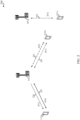
- FIG. 2 shows a wireless communication system 200 in which LTE/LTE-A CCs or eCCs may be deployed under different scenarios using a contention-based radio frequency spectrum band, in accordance with various aspects of the present disclosure. More specifically, FIG. 2 illustrates examples of a supplemental downlink mode (also referred to as a first licensed assisted access mode), a carrier aggregation mode (also referred to as a second licensed assisted access mode), and a standalone mode, in which LTE/LTE-A and/or eCC OFDM numerology is employed using a contention-based radio frequency spectrum band.
- the wireless communication system 200 may be an example of portions of the wireless communication system 100 described with reference to FIG. 1 .
- a first base station 105-a and a second base station 105-b may be examples of aspects of one or more of the base stations 105 described with reference to FIG. 1
- a first UE 115-a, a second UE 115-b, and a third UE 115-c may be examples of aspects of one or more of the UEs 115 described with reference to FIG. 1 .
- the first base station 105-a may transmit OFDMA waveforms to the first UE 115-a using a downlink channel 220.
- the downlink channel 220 may be associated with a frequency F1 in a contention-based radio frequency spectrum band.
- the first base station 105-a may transmit OFDMA waveforms to the first UE 115-a using a first bidirectional link 225 and may receive SC-FDMA waveforms from the first UE 115-a using the first bidirectional link 225.
- the first bidirectional link 225 may be associated with a frequency F4 in a contention-free radio frequency spectrum band.
- the downlink channel 220 in the contention-based radio frequency spectrum band and the first bidirectional link 225 in the contention-free radio frequency spectrum band may operate contemporaneously.
- the downlink channel 220 may provide a downlink capacity offload for the first base station 105-a.
- the downlink channel 220 may be used for unicast services (e.g., addressed to one UE) or for multicast services (e.g., addressed to several LTEs). This scenario may occur with any service provider (e.g., a mobile network operator (MNO)) that uses a contention-free radio frequency spectrum and needs to relieve some of the traffic or signaling congestion.
- MNO mobile network operator
- the first base station 105-a may transmit OFDMA waveforms to the second UE 115-b using a second bidirectional link 230 and may receive OFDMA waveforms, SC-FDMA waveforms, or resource block interleaved FDMA waveforms from the second UE 115-b using the second bidirectional link 230.
- the second bidirectional link 230 may be associated with the frequency F1 in the contention-based radio frequency spectrum band.
- the first base station 105-a may also transmit OFDMA waveforms to the second UE 115-b using a third bidirectional link 235 and may receive SC-FDMA waveforms from the second UE 115-b using the third bidirectional link 235.
- the third bidirectional link 235 may be associated with a frequency F2 in a contention-free radio frequency spectrum band.
- the second bidirectional link 230 may provide a downlink and uplink capacity offload for the first base station 105-a.
- this scenario may occur with any service provider (e.g., MNO) that uses a contention-free radio frequency spectrum and needs to relieve some of the traffic or signaling congestion.
- MNO service provider
- an operational example may include a bootstrapped mode (e.g., supplemental downlink, carrier aggregation) that uses the LTE/LTE-A primary component carrier (PCC) on the contention-free radio frequency spectrum band and at least one secondary component carrier (SCC) on the contention-based radio frequency spectrum band.
- PCC primary component carrier
- SCC secondary component carrier
- data and control may, for example, be communicated in the contention-free radio frequency spectrum band (e.g., via first bidirectional link 225 or third bidirectional link 235) while data may, for example, be communicated in the contention-based radio frequency spectrum band ( e.g., via second bidirectional link 230).
- the carrier aggregation mechanisms supported when using a contention-based radio frequency spectrum band may fall under a hybrid frequency division duplexing-time division duplexing (FDD-TDD) carrier aggregation or a TDD-TDD carrier aggregation with different symmetry across component carriers.
- FDD-TDD hybrid frequency division duplexing-time division duplexing
- the second base station 105-b may transmit OFDMA waveforms to the third UE 115-c using a bidirectional link 250 and may receive OFDMA waveforms, SC-FDMA waveforms, or resource block interleaved FDMA waveforms from the third UE 115-c using the bidirectional link 250.
- the bidirectional link 250 may be associated with the frequency F3 in the contention-based radio frequency spectrum band.
- the standalone mode may be used in non-traditional wireless access scenarios, such as in-stadium access ( e.g., unicast, multicast).
- An example of a type of service provider for this mode of operation may be a stadium owner, cable company, event host, hotel, enterprise, or large corporation that does not have access to a contention-free radio frequency spectrum band.
- a transmitting apparatus such as one of the base stations 105 described with reference to FIGs. 1 and 2 , or one of the UEs 115 described with reference to FIGs. 1 and 2 , may use a gating interval to gain access to a channel of a contention-based radio frequency spectrum band (e.g., to a physical channel of the contention-based radio frequency spectrum band).
- the gating interval may be synchronous and periodic.
- the periodic gating interval may be synchronized with at least one boundary of an LTE/LTE-A radio interval.
- the gating interval may be asynchronous.
- the gating interval may define the application of a contention-based protocol, such as a Listen-Before-Talk (LBT) protocol based on the LBT protocol specified in European Telecommunications Standards Institute (ETSI) (EN 301 893).
- LBT Listen-Before-Talk
- ETSI European Telecommunications Standards Institute
- the gating interval may indicate when a transmitting apparatus needs to perform a contention procedure (e.g., an LBT procedure) such as a Clear Channel Assessment (CCA) procedure or an eCCA procedure.
- a contention procedure e.g., an LBT procedure
- CCA Clear Channel Assessment
- the outcome of the CCA procedure or eCCA procedure may indicate to the transmitting apparatus whether a channel of a contention-based radio frequency spectrum band is available or in use for the gating interval (e.g., an LBT radio frame or transmission burst).
- a CCA procedure or eCCA procedure indicates the channel is available for a corresponding LBT radio frame or transmission burst (e.g., "clear" for use)
- the transmitting apparatus may reserve or use the channel of the contention-based radio frequency spectrum band during part or all of the LBT radio frame.
- the transmitting apparatus may be prevented from using the channel during the LBT radio frame.
- Transmissions made in the wireless communication system 100 or 200 may be encoded.
- the transmissions may be encoded, for example, using TC encoding or LDPCC encoding.
- TC encoding a payload (or transport block) may be segmented into multiple code blocks.
- the size of each code block may be less than or equal to 6,144 bits, and a 24 bit CRC may be generated for (and added to) each code block.
- the CRC provides support for a code block level acknowledgement (ACK) or non-acknowledgement (NAK) having a sufficiently low error probability.
- ACK code block level acknowledgement
- NAK non-acknowledgement
- parity checks can be used to check whether a decoded sequence is a valid codeword.
- the parity checks are short and may not be associated with a sufficiently low error probability (e . g ., the error probability may not be equivalent to the error probability associated with TC decoding ACKs/NAKs.
- One way to decrease the error probability associated with LDPCC decoding is to generate a CRC per LDPCC codeword.
- the overhead in doing so can be relatively high, as LDPCC codewords can be relatively short.
- a CRC may generated at a LDPCC code block level.
- a payload may in some cases be segmented into LDPCC code blocks that are about the same size as TC code blocks ( e.g., code blocks that are no longer than 6,144 bits).
- a LDPCC code block size may be selected such that the overhead of adding a CRC to the code block is sufficiently small (as determined by the application).
- a LDPCC code block, with CRC may be further divided into multiple LDPCC codewords.
- the LDPCC codewords may have equal codeword lengths. However, in the case of equal codeword lengths, the allowed set of LDPCC code block lengths may be smaller than the allowed set of TC code block lengths.
- LDPCC encoded payloads may be ACK'd/NAK'd at the code block level (e .g., all of the LDPCC codewords corresponding to a LDPCC code block may be ACK'd or NAK'd as a bundle).
- FIG. 3 shows a diagram 300 of a payload 305 that may be segmented into code blocks before the code blocks are encoded using LDPCC encoding, in accordance with various aspects of the present disclosure.
- the payload 305 may be transmitted, for example, by any of the base stations 105 or UEs 115 described with reference to FIG. 1 or 2 .
- the payload 305 may be segmented into a plurality of LDPCC code blocks, including a first code block (CB0), a second code block (CB1), a third code block (CB2), and a fourth code block (CB3).
- a CRC may then be generated for each code block (e.g., a first CRC (CRC0) may be generated for the first code block (CB0), a second CRC (CRC1) may be generated for the second code block (CB1), a third CRC (CRC2) may be generated for the third code block (CB2), and a fourth CRC (CRC3) may be generated for the fourth code block (CB3)).
- Each LDPCC code block and associated CRC may then be encoded in a plurality of LDPCC codewords (e . g ., the first code block (CB0) and first CRC (CRC0) may be encoded in the LDPCC codewords CW00, CW01, and CW02; the second code block (CB1) and second CRC (CRC1) may be encoded in the LDPCC codewords CW10, CW11, and CW12; the third code block (CB2) and third CRC (CRC2) may be encoded in the LDPCC codewords CW20, CW21, and CW22; and the fourth code block (CB3) and fourth CRC (CRC3) may be encoded in the LDPCC codewords CW30, CW31, and CW32).
- the first code block (CB0) and first CRC (CRC0) may be encoded in the LDPCC codewords CW00, CW01, and CW02; the second code block (C
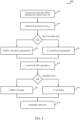
- FIG. 4 is a flow chart illustrating an example method 400 for unified code block segmentation, in accordance with various aspects of the present disclosure.
- the method 400 may be performed by a device such as one of the base stations 105 or UEs 115 described with reference to FIG. 1 or 2 .
- the method 400 may receive, as input, a transmission data rate (e.g., a modulation and coding scheme (MCS)), a transmission resource size, or a combination thereof.
- a transmission data rate e.g., a modulation and coding scheme (MCS)
- MCS modulation and coding scheme
- the method 400 may include determining a payload size ( N pld ) of a payload.
- the payload size may be based at least in part on the transmission data rate or the transmission resource size.
- the method 400 may include selecting an encoding type for the payload.
- the encoding type may be based at least in part on the payload size.
- a LDPCC encoding type may be selected for the payload, and the method 400 may continue at block 420.
- a TC encoding type may be selected for the payload, and the method 400 may continue at block 425.
- the method 400 may include segmenting the payload into a plurality of LDPCC code blocks; and at block 425, the method 400 may include segmenting the payload into a plurality of TC code blocks.
- a same code block size limit N 0
- N 0 6144, as in an LTE/LTE-A network.
- the payload or transport block (TB) may be split into a minimum number of code blocks, subject to the N 0 code block size limit, if any.
- each of the code blocks may have a same or similar size.
- filler bits may be combined with the payload to maintain an equal code block length.
- the size of the code blocks used to segment the payload at block 425 (and in some cases, at block 420) may be identified from a list of allowed code block sizes.
- the method 400 may include generating a CRC for each of the code blocks received from block 420 or 425.
- the method 400 may branch to one of blocks 440 or 445, depending on the encoding type selected at block 415.
- the method 400 may continue at block 440.
- the method 400 may continue at block 445.
- the method 400 may include encoding each code block and associated CRC in one or more LDPCC codewords.
- each codeword associated with a same code block may be have an equal codeword length, and each code block may be encoded in an integer number of LDPCC codewords (and conversely, each LDPCC code block identified at block 420 may be an integer multiple of the equal codeword length).
- the method 400 may include encoding each code block and associated CRC in one or more TC codewords.
- the generated codewords may be transmitted.
- a code block length of each code block associated with a LDPCC encoded payload may be selected to be an integer multiple of an equal codeword length.
- the method 400 may include combining filler bits with a LDPCC encoded payload to maintain the selected code block length.
- a code block length of each code block of a LDPCC encoded payload may be based at least in part on a length of a TC code block, or a LTE or LTE-A code block, or a combination thereof used to segment a TC encoded payload.
- a length of a code block used to segment a TC encoded payload may be selected based at least in part on a length of a code block used to segment a LDPCC encoded payload.
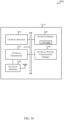
- FIG. 5 shows a diagram 500 of a device 505 for use in wireless communication, in accordance with various aspects of the present disclosure.
- the device 505 may be an example of aspects of one or more of the base stations 105 or UEs 115 described with reference to FIG. 1 or 2 .
- the device 505 may also be or include a processor.
- the device 505 may include a receiver 510, a wireless communication manager 520, or a transmitter 530. Each of these components may be in communication with each other.
- the components of the device 505 may, individually or collectively, be implemented using one or more application-specific integrated circuits (ASICs) adapted to perform some or all of the applicable functions in hardware. Alternatively, the functions may be performed by one or more other processing units (or cores), on one or more integrated circuits. In some other examples, other types of integrated circuits may be used (e.g., Structured/Platform ASICs, Field Programmable Gate Array (FPGA), a System-on-Chip (SoC), and/or other types of Semi-Custom ICs), which may be programmed in any manner known in the art.
- the functions of each component may also be implemented, in whole or in part, with instructions embodied in a memory, formatted to be executed by one or more general or application-specific processors.
- the receiver 510 may include at least one radio frequency (RF) receiver, such as at least one RF receiver operable to receive transmissions over one or more radio frequency spectrum bands.
- the receiver 510 may include an array of receive antennas.
- the one or more radio frequency spectrum bands may be used for LTE/LTE-A or eCC communications, as described, for example, with reference to FIGs. 1-4 .
- the receiver 510 may be used to receive various types of data or control signals ( i . e ., transmissions) over one or more communication links (or channels) of a wireless communication system, such as one or more communication links (or channels) of the wireless communication system 100 or 200 described with reference to FIG. 1 or 2 .
- the receiver 510 may also or alternatively include one or more wired receivers.
- the transmitter 530 may include at least one RF transmitter, such as at least one RF transmitter operable to transmit over one or more radio frequency spectrum bands.
- the transmitter 530 may include an array of transmit antennas.
- the one or more radio frequency spectrum bands may be used for LTE/LTE-A or eCC communications, as described, for example, with reference to FIGs. 1-4 .
- the transmitter 530 may be used to transmit various types of data or control signals ( i.e., transmissions) over one or more communication links (or channels) of a wireless communication system, such as one or more communication links (or channels) of the wireless communication system 100 or 200 described with reference to FIG. 1 or 2 .
- the transmitter 530 may also or alternatively include one or more wired transmitters.
- the wireless communication manager 520 may be used to manage one or more aspects of wireless communication for the device 505. In some examples, part of the wireless communication manager 520 may be incorporated into or shared with the receiver 510 or the transmitter 530. In some examples, the wireless communication manager 520 may include a payload encoding type selector 535, a payload segmenter 540, a CRC generator 545, an encoding manager 550, or a transmission manager 555.
- the payload encoding type selector 535 may be used to select an encoding type for each payload of a plurality of payloads.
- the selecting may include selecting a LDPCC encoding type for at least a first payload and selecting a TC encoding type for at least a second payload.
- the payload segmenter 540 may be used to segment each payload into a plurality of code blocks.
- the CRC generator 545 may be used to generate, for each code block, a CRC.
- the encoding manager 550 may be used to encode each code block and associated CRC in one or more codewords of a plurality of codewords. The encoding may be based at least in part on the selected encoding type for a payload associated with the code block.
- the transmission manager 555 may be used to transmit the codewords.
- FIG. 6 shows a diagram 600 of a wireless communication manager 520-a for use in wireless communication, in accordance with various aspects of the present disclosure.
- the wireless communication manager 520-a may be an example of aspects of the wireless communication manager 520 described with reference to FIG. 5 .
- the components of the wireless communication manager 520-a may, individually or collectively, be implemented using one or more ASICs adapted to perform some or all of the applicable functions in hardware. Alternatively, the functions may be performed by one or more other processing units (or cores), on one or more integrated circuits. In some other examples, other types of integrated circuits may be used (e.g., Structured/Platform ASICs, FPGAs, a SoC, and/or other types of Semi-Custom ICs), which may be programmed in any manner known in the art. The functions of each component may also be implemented, in whole or in part, with instructions embodied in a memory, formatted to be executed by one or more general or application-specific processors.
- the wireless communication manager 520-a may be used to manage one or more aspects of wireless communication for a base station, UE, or other device, such as one of the base stations 105 or UEs 115 described with reference to FIG. 1 or 2 , or the device 505 described with reference to FIG. 5 .
- part of the wireless communication manager 520-a may be incorporated into or shared with a receiver or a transmitter ( e.g., the receiver 510 or the transmitter 530 described with reference to FIG. 5 ).
- the wireless communication manager 520-a may include a payload characteristic identifier 605, a payload encoding type selector 535-a, a payload information communicator 610, a payload segmenter 540-a, a CRC generator 545-a, an encoding manager 550-a, a code block length selector 615, a transmission manager 555-a, an ACK/NAK manager 620, or a retransmission manager 625.
- the payload characteristic identifier 605 may be used to identify one or more characteristics of a plurality of payloads.
- the one or more characteristics may include at least one of a payload size, a transmission data rate, a transmission resource size, or a combination thereof.
- a characteristic of a payload may be based solely on the payload.
- a characteristic of a payload may be based on characteristics of a plurality of payloads (e.g., a characteristic of a payload may be an average value or a maximum value).
- the payload encoding type selector 535-a may be used to select an encoding type for each payload of a plurality of payloads.
- the selecting may include selecting a LDPCC encoding type for at least a first payload and selecting a TC encoding type for at least a second payload.
- an encoding type for a payload may be selected based at least in part on a characteristic of the payload, as identified by the payload characteristic identifier 605.
- the payload information communicator 610 may be used to transmit, for at least one of the payloads, at least one of: an indication of the payload size, an indication of the transmission data rate, an indication of the transmission resource size, or an indication of the selected encoding type.
- the payload segmenter 540-a may be used to segment each payload into a plurality of code blocks.
- the CRC generator 545-a may be used to generate, for each code block, a CRC.
- the encoding manager 550-a may be used to encode each code block and associated CRC in one or more codewords of a plurality of codewords. The encoding may be based at least in part on the selected encoding type for a payload associated with the code block. In some examples, each codeword associated with a code block of the first payload may have an equal codeword length.
- the code block length selector 615 may be used, in conjunction with the encoding manager 550-a, and in some examples, to select a code block length of each code block associated with at least the first payload to be an integer multiple of the equal codeword length. In some examples, the code block length selector 615 may combine filler bits with the first payload, prior to or as part of the encoding performed by the encoding manager 550-a, to maintain the selected code block length. In some examples, each code block associated with the first payload may have a code block length that is an integer multiple of an equal codeword length associated with each codeword corresponding to the code block.
- the code block length selector 615 may be used to select a code block length of each code block of at least the first payload based at least in part on a length of a TC code block, or a LTE or LTE-A code block, or a combination thereof used to segment at least the second payload. In some examples, the code block length selector 615 may be used to select a length of a TC code block used to segment at least the second payload based at least in part on a length of each code block used to segment at least the first payload. The code block length(s) may be selected prior to or as part of the encoding performed by the encoding manager 550-a. The transmission manager 555-a may be used to transmit the codewords.
- the ACK/NAK manager 620 may be used to receive one of an ACK or a NAK for each code block.
- the retransmission manager 625 may be used, when a NAK is received for a code block, to retransmit one or more codewords and CRCs associated with the code block. For example, when a NAK of a code block associated with the first payload is received, the retransmission manager 625 may be used to retransmit a plurality of LDPCC codewords associated with the code block and a CRC associated with the code block.
- FIG. 7 shows a diagram 700 of a device 705 for use in wireless communication, in accordance with various aspects of the present disclosure.
- the device 705 may be an example of aspects of one or more of the base stations 105 or UEs 115 described with reference to FIG. 1 or 2 , or aspects of the device 505 described with reference to FIG. 5 .
- the device 705 may also be or include a processor.
- the device 705 may include a receiver 710, a wireless communication manager 720, or a transmitter 730. Each of these components may be in communication with each other.
- the components of the device 705 may, individually or collectively, be implemented using one or more ASICs adapted to perform some or all of the applicable functions in hardware. Alternatively, the functions may be performed by one or more other processing units (or cores), on one or more integrated circuits. In some other examples, other types of integrated circuits may be used (e.g., Structured/Platform ASICs, FPGAs, a SoC, and/or other types of Semi-Custom ICs), which may be programmed in any manner known in the art. The functions of each component may also be implemented, in whole or in part, with instructions embodied in a memory, formatted to be executed by one or more general or application-specific processors.
- the receiver 710 may include at least one RF receiver, such as at least one RF receiver operable to receive transmissions over one or more radio frequency spectrum bands.
- the receiver 710 may include an array of receive antennas.
- the one or more radio frequency spectrum bands may be used for LTE/LTE-A or eCC communications, as described, for example, with reference to FIGs. 1-4 .
- the receiver 710 may be used to receive various types of data or control signals (i.e., transmissions) over one or more communication links (or channels) of a wireless communication system, such as one or more communication links (or channels) of the wireless communication system 100 or 200 described with reference to FIG. 1 or 2 .
- the receiver 710 may also or alternatively include one or more wired receivers.
- the transmitter 730 may include at least one RF transmitter, such as at least one RF transmitter operable to transmit over one or more radio frequency spectrum bands.
- the transmitter 730 may include an array of transmit antennas.
- the one or more radio frequency spectrum bands may be used for LTE/LTE-A or eCC communications, as described, for example, with reference to FIGs. 1-4 .
- the transmitter 730 may be used to transmit various types of data or control signals ( i.e., transmissions) over one or more communication links (or channels) of a wireless communication system, such as one or more communication links (or channels) of the wireless communication system 100 or 200 described with reference to FIG. 1 or 2 .
- the transmitter 730 may also or alternatively include one or more wired transmitters.
- the wireless communication manager 720 may be used to manage one or more aspects of wireless communication for the device 705. In some examples, part of the wireless communication manager 720 may be incorporated into or shared with the receiver 710 or the transmitter 730. In some examples, the wireless communication manager 720 may include a payload reception manager 735, a codeword decoder 740, or an ACK/NAK manager 745.
- the payload reception manager 735 may be used to receive a plurality of codewords associated with at least a first payload encoded using a LDPCC encoding type and at least a second payload encoded using a TC encoding type.
- the codeword decoder 740 may be used to decode a set of the codewords associated with the first payload and a CRC.
- the ACK/NAK manager 745 may be used to transmit one of an ACK or a NAK for the set of the codewords.
- FIG. 8 shows a diagram 800 of a wireless communication manager 720-a for use in wireless communication, in accordance with various aspects of the present disclosure.
- the wireless communication manager 720-a may be an example of aspects of the wireless communication manager 720 described with reference to FIG. 7 .
- the components of the wireless communication manager 720-a may, individually or collectively, be implemented using one or more ASICs adapted to perform some or all of the applicable functions in hardware. Alternatively, the functions may be performed by one or more other processing units (or cores), on one or more integrated circuits. In some other examples, other types of integrated circuits may be used (e.g., Structured/Platform ASICs, FPGAs, a SoC, and/or other types of Semi-Custom ICs), which may be programmed in any manner known in the art. The functions of each component may also be implemented, in whole or in part, with instructions embodied in a memory, formatted to be executed by one or more general or application-specific processors.
- the wireless communication manager 720-a may be used to manage one or more aspects of wireless communication for a base station, UE, or other device, such as one of the base stations 105 or UEs 115 described with reference to FIG. 1 or 2 , or the device 705 described with reference to FIG. 7 .
- part of the wireless communication manager 720-a may be incorporated into or shared with a receiver or a transmitter ( e.g., the receiver 710 or the transmitter 730 described with reference to FIG. 7 ).
- the wireless communication manager 720-a may include a payload reception manager 735-a, a payload encoding type identifier 805, a codeword decoder 740-a, or an ACK/NAK manager 745-a.
- the payload reception manager 735-a may be used to receive a plurality of codewords associated with at least a first payload encoded using a LDPCC encoding type and at least a second payload encoded using a TC encoding type.
- the payload encoding type identifier 805 may be used to receive an indication that the LDPCC encoding type is used to encode the first payload, or receive an indication that the TC encoding type is used to encode the second payload.
- the payload encoding type identifier 805 may additionally or alternatively be used to determine the LDPCC encoding type is used for the first payload, or determine the TC encoding type is used for the second payload, based at least in part on receiving an indication of a payload size, an indication of a transmission data rate, an indication of a transmission resource size, or a combination thereof for the first payload or the second payload.
- the codeword decoder 740-a may be used to decode a set of the codewords associated with the first payload and a CRC.
- the ACK/NAK manager 745-a may be used to transmit one of an ACK or a NAK for the set of the codewords.
- FIG. 9 shows a diagram 900 of a base station 105-c (e.g., a base station forming part or all of an eNB) for use in wireless communication, in accordance with various aspects of the present disclosure.
- the base station 105-c may be an example of aspects of one or more of the base stations 105 described with reference to FIG. 1 or 2 , or aspects of one or more of device 505 or 705 described with reference to FIG. 5 or 7 .
- the base station 105-c may be configured to implement or facilitate at least some of the base station or device features or functions described with reference to FIGs. 1-8 .
- the base station 105-c may include a base station processor 910, a base station memory 920, at least one base station transceiver (represented by base station transceiver(s) 950), at least one base station antenna (represented by base station antenna(s) 955), or a base station wireless communication manager 960.
- the base station 105-c may also include one or more of a base station communicator 930 or a network communicator 940. Each of these components may be in communication with each other, directly or indirectly, over one or more buses 935.
- the base station memory 920 may include random access memory (RAM) or read-only memory (ROM).
- the base station memory 920 may store computer-readable, computer-executable code 925 containing instructions executable by the base station processor 910 to perform various functions described herein related to wireless communication, including, for example, selecting an encoding type, from among a LDPCC encoding type and a TC encoding type, for each payload of a plurality of payloads, or receiving a plurality of codewords associated with at least a first payload encoded using a LDPCC encoding type and a second payload encoded using a TC encoding type.
- the computer-executable code 925 may not be directly executable by the base station processor 910 but be configured to cause the base station 105-c ( e.g., when compiled and executed) to perform various of the functions described herein.
- the base station processor 910 may include an intelligent hardware device, e.g., a central processing unit (CPU), a microcontroller, an ASIC, etc.
- the base station processor 910 may process information received through the base station transceiver(s) 950, the base station communicator 930, or the network communicator 940.
- the base station processor 910 may also process information to be sent to the transceiver(s) 950 for transmission through the antenna(s) 955, to the base station communicator 930, for transmission to one or more other base stations 105-d and 105-e, or to the network communicator 940 for transmission to a core network 130-a, which may be an example of one or more aspects of the core network 130 described with reference to FIG. 1 .
- the base station processor 910 may handle, alone or in connection with the base station wireless communication manager 960, various aspects of communicating over (or managing communications over) one or more radio frequency spectrum bands.
- the base station transceiver(s) 950 may include a modem configured to modulate packets and provide the modulated packets to the base station antenna(s) 955 for transmission, and to demodulate packets received from the base station antenna(s) 955.
- the base station transceiver(s) 950 may, in some examples, be implemented as one or more base station transmitters and one or more separate base station receivers.
- the base station transceiver(s) 950 may support communications in the one or more radio frequency spectrum bands.
- the base station transceiver(s) 950 may be configured to communicate bi-directionally, via the antenna(s) 955, with one or more UEs, such as one or more of the UEs 115 described with reference to FIG.
- the base station 105-c may, for example, include multiple base station antennas 955 (e.g., an antenna array).
- the base station 105-c may communicate with the core network 130-a through the network communicator 940.
- the base station 105-c may also communicate with other base stations, such as the base stations 105-d and 105-e, using the base station communicator 930.
- the base station wireless communication manager 960 may be configured to program or control some or all of the features or functions described with reference to FIGs. 1-8 related to wireless communication over one or more radio frequency spectrum bands.
- the base station wireless communication manager 960, or portions of it, may include a processor, or some or all of the functions of the base station wireless communication manager 960 may be performed by the base station processor 910 or in connection with the base station processor 910.
- the base station wireless communication manager 960 may be an example of the wireless communication manager 520 or 720 described with reference to FIG. 5 , 6 , 7 , or 8 .
- FIG. 10 shows a diagram 1000 of a UE 115-d for use in wireless communication, in accordance with various aspects of the present disclosure.
- the UE 115-d may have various configurations and may be a wireless communication device, a personal computer (e.g., a laptop computer, a netbook computer, a tablet computer, etc.), a handheld device, a cellular telephone, a smart phone, a cordless phone, a wireless modem, a WLL station, a personal PDA, a DVR, an internet appliance, a gaming console, an e-reader, a narrow-band device, an IoT device, etc.
- a personal computer e.g., a laptop computer, a netbook computer, a tablet computer, etc.
- a handheld device e.g., a cellular telephone, a smart phone, a cordless phone, a wireless modem, a WLL station, a personal PDA, a DVR, an internet appliance, a gaming console, an
- the UE 115-d may, in some examples, have an internal power supply (not shown), such as a small battery, to facilitate mobile or remote operation.
- the UE 115-d may be an example of aspects of one or more of the UEs 115 described with reference to FIG. 1 or 2 , or aspects of one or more of device 505 or 705 described with reference to FIG. 5 or 7 .
- the UE 115-d may be configured to implement at least some of the UE or device features or functions described with reference to FIGs. 1-8 .
- the UE 115-d may include a UE processor 1010, a UE memory 1020, at least one UE transceiver (represented by UE transceiver(s) 1030), at least one UE antenna (represented by UE antenna(s) 1040), or a UE device wireless communication manager 1050. Each of these components may be in communication with each other, directly or indirectly, over one or more buses 1035.
- the UE memory 1020 may include RAM or ROM.
- the UE memory 1020 may store computer-readable, computer-executable code 1025 containing instructions executable by the UE processor 1010 to perform various functions described herein related to wireless communication, including, for example, selecting an encoding type, from among a LDPCC encoding type and a TC encoding type, for each payload of a plurality of payloads, or receiving a plurality of codewords associated with at least a first payload encoded using a LDPCC encoding type and a second payload encoded using a TC encoding type.
- the computer-executable code 1025 may not be directly executable by the UE processor 1010 but be configured to cause the UE 115-d ( e.g., when compiled and executed) to perform various of the functions described herein.
- the UE processor 1010 may include an intelligent hardware device, e.g., a CPU, a microcontroller, an ASIC, etc.
- the UE processor 1010 may process information received through the UE transceiver(s) 1030 or information to be sent to the UE transceiver(s) 1030 for transmission through the UE antenna(s) 1040.
- the UE processor 1010 may handle, alone or in connection with the UE device wireless communication manager 1050, various aspects of communicating over (or managing communications over) one or more radio frequency spectrum bands.
- the UE transceiver(s) 1030 may include a modem configured to modulate packets and provide the modulated packets to the UE antenna(s) 1040 for transmission, and to demodulate packets received from the UE antenna(s) 1040.
- the UE transceiver(s) 1030 may, in some examples, be implemented as one or more UE transmitters and one or more separate UE receivers.
- the UE transceiver(s) 1030 may support communications in the one or more radio frequency spectrum bands.
- the UE transceiver(s) 1030 may be configured to communicate bi-directionally, via the UE antenna(s) 1040, with one or more base stations or other devices, such as one or more of the base stations 105 described with reference to FIG.
- the UE 115-d may include a single UE antenna, there may be examples in which the UE 115-d may include multiple UE antennas 1040.
- the UE device wireless communication manager 1050 may be configured to program or control some or all of the features or functions described with reference to FIGs. 1-8 related to wireless communication over one or more radio frequency spectrum bands.
- the UE device wireless communication manager 1050, or portions of it, may include a processor, or some or all of the functions of the UE device wireless communication manager 1050 may be performed by the UE processor 1010 or in connection with the UE processor 1010.
- the UE device wireless communication manager 1050 may be an example of the wireless communication manager 520 or 720 described with reference to FIG. 5 , 6 , 7 , or 8 .
- FIG. 11 is a flow chart illustrating an example of a method 1100 for wireless communication, in accordance with various aspects of the present disclosure.
- the method 1100 is described below with reference to aspects of the device 505 described with reference to FIG. 5 , or aspects of one or more of the wireless communication manager 520, 520-a, 720, or 720-a described with reference to FIG. 5 , 6 , 7 , or 8 .
- the method 1100 is described below with reference to one or more aspects of the base station wireless communication manager 960 described with reference to FIG. 9 , or with reference to one or more aspects of the UE device wireless communication manager 1050 described with reference to FIG. 10 .
- a device e.g. , a base station or UE
- the method 1100 may include selecting an encoding type for each payload of a plurality of payloads.
- the selecting may include selecting a LDPCC encoding type for at least a first payload and selecting a TC encoding type for at least a second payload.
- the operation(s) at block 1105 may be performed using the wireless communication manager 520, 520-a, 720, or 720-a described with reference to FIG. 5 , 6 , 7 , or 8 , or base station wireless communication manager 960 described with reference to FIG. 9 , or UE device wireless communication manager 1050 described with reference to FIG. 10 , or the payload encoding type selector 535 described with reference to FIG. 5 or 6 .
- the method 1100 may include segmenting each payload into a plurality of code blocks.
- the operation(s) at block 1110 may be performed using the wireless communication manager 520, 520-a, 720, or 720-a described with reference to FIG. 5 , 6 , 7 , or 8 , or base station wireless communication manager 960 described with reference to FIG. 9 , or UE device wireless communication manager 1050 described with reference to FIG. 10 , or the payload segmenter 540 described with reference to FIG. 5 or 6 .
- the method 1100 may include generating, for each code block, a CRC.
- the operation(s) at block 1115 may be performed using the wireless communication manager 520, 520-a, 720, or 720-a described with reference to FIG. 5 , 6 , 7 , or 8 , or base station wireless communication manager 960 described with reference to FIG. 9 , or UE device wireless communication manager 1050 described with reference to FIG. 10 , or the CRC generator 545 described with reference to FIG. 5 or 6 .
- the method 1100 may include transmitting the codewords.
- the operation(s) at block 1125 may be performed using the wireless communication manager 520, 520-a, 720, or 720-a described with reference to FIG. 5 , 6 , 7 , or 8 , or base station wireless communication manager 960 described with reference to FIG. 9 , or UE device wireless communication manager 1050 described with reference to FIG. 10 , or the transmission manager 555 described with reference to FIG. 5 or 6 .
- FIG. 12 is a flow chart illustrating an example of a method 1200 for wireless communication, in accordance with various aspects of the present disclosure.
- the method 1100 is described below with reference to aspects of the device 505 described with reference to FIG. 5 , or aspects of one or more of the wireless communication manager 520, 520-a, 720, or 720-a described with reference to FIG. 5 , 6 , 7 , or 8 .
- the method 1100 is described below with reference to one or more aspects of the base station wireless communication manager 960 described with reference to FIG. 9 , or UE device wireless communication manager 1050 described with reference to FIG. 10 .
- a device e.g., a base station or UE
- the method 1200 may include identifying one or more characteristics of a plurality of payloads.
- the one or more characteristics may include at least one of a payload size, a transmission data rate, a transmission resource size, or a combination thereof.
- a characteristic of a payload may be based solely on the payload.
- a characteristic of a payload may be based on characteristics of a plurality of payloads (e.g., a characteristic of a payload may be an average value or a maximum value).
- the operation(s) at block 1205 may be performed using the wireless communication manager 520, 520-a, 720, or 720-a described with reference to FIG.
- the method 1200 may include selecting an encoding type for each payload of the plurality of payloads.
- the selecting may include selecting a LDPCC encoding type for at least a first payload and selecting a TC encoding type for at least a second payload.
- an encoding type for a payload may be selected based at least in part on a characteristic of the payload, as identified at block 1205.
- the operation(s) at block 1210 may be performed using the wireless communication manager 520, 520-a, 720, or 720-a described with reference to FIG. 5 , 6 , 7 , or 8 , or base station wireless communication manager 960 described with reference to FIG. 9 , or UE device wireless communication manager 1050 described with reference to FIG. 10 , or the payload encoding type selector 535 described with reference to FIG. 5 or 6 .
- the method 1200 may include transmitting, for at least one of the payloads, at least one of: an indication of the payload size, an indication of the transmission data rate, an indication of the transmission resource size, or an indication of the selected encoding type.
- the operation(s) at block 1215 may be performed using the wireless communication manager 520, 520-a, 720, or 720-a described with reference to FIG. 5 , 6 , 7 , or 8 , or base station wireless communication manager 960 described with reference to FIG. 9 , or UE device wireless communication manager 1050 described with reference to FIG. 10 , or the payload information communicator 610 described with reference to FIG. 6 .
- the method 1200 may include segmenting each payload into a plurality of code blocks.
- the operation(s) at block 1220 may be performed using the wireless communication manager 520, 520-a, 720, or 720-a described with reference to FIG. 5 , 6 , 7 , or 8 , or base station wireless communication manager 960 described with reference to FIG. 9 , or UE device wireless communication manager 1050 described with reference to FIG. 10 , or the payload segmenter 540 described with reference to FIG. 5 or 6 .
- the method 1200 may include generating, for each code block, a CRC.
- the operation(s) at block 1225 may be performed using the wireless communication manager 520, 520-a, 720, or 720-a described with reference to FIG. 5 , 6 , 7 , or 8 , or base station wireless communication manager 960 described with reference to FIG. 9 , or UE device wireless communication manager 1050 described with reference to FIG. 10 , or the CRC generator 545 described with reference to FIG. 5 or 6 .
- the method 1200 may include encoding each code block and associated CRC in one or more codewords of a plurality of codewords.
- the encoding may be based at least in part on the selected encoding type for a payload associated with the code block.
- each codeword associated with a code block of the first payload may have an equal codeword length.
- the operation(s) at block 1230 may be performed using the wireless communication manager 520, 520-a, 720, or 720-a described with reference to FIG. 5 , 6 , 7 , or 8 , or base station wireless communication manager 960 described with reference to FIG. 9 , or UE device wireless communication manager 1050 described with reference to FIG. 10 , or the encoding manager 550 described with reference to FIG. 5 or 6 .
- the method 1200 may include transmitting the codewords.
- the operation(s) at block 1235 may be performed using the wireless communication manager 520, 520-a, 720, or 720-a described with reference to FIG. 5 , 6 , 7 , or 8 , or base station wireless communication manager 960 described with reference to FIG. 9 , or UE device wireless communication manager 1050 described with reference to FIG. 10 , or the transmission manager 555 described with reference to FIG. 5 or 6 .
- the method 1200 may include receiving one of an ACK or a NAK for each code block.
- the operation(s) at block 1240 may be performed using the wireless communication manager 520, 520-a, 720, or 720-a described with reference to FIG. 5 , 6 , 7 , or 8 , or base station wireless communication manager 960 described with reference to FIG. 9 , or UE device wireless communication manager 1050 described with reference to FIG. 10 , or the ACK/NAK manager 620 described with reference to FIG. 6 .
- the method 1200 may include retransmitting one or more codewords and CRCs associated with the code block. For example, when a NAK of a code block associated with the first payload is received, the method 1200 may include retransmitting a plurality of LDPCC codewords associated with the code block and a CRC associated with the code block.
- the operation(s) at block 1245 may be performed using the wireless communication manager 520, 520-a, 720, or 720-a described with reference to FIG. 5 , 6 , 7 , or 8 , or base station wireless communication manager 960 described with reference to FIG. 9 , or UE device wireless communication manager 1050 described with reference to FIG. 10 , or the retransmission manager 625 described with reference to FIG. 6 .
- the method 1200 may include selecting a code block length of each code block associated with at least the first payload to be an integer multiple of the equal codeword length. In some examples, the method 1200 may include combining filler bits with the first payload, prior to or as part of the operation(s) at block 1220, to maintain the selected code block length. In some examples, each code block associated with the first payload may have a code block length that is an integer multiple of an equal codeword length associated with each codeword corresponding to the code block.
- the method 1200 may include selecting a code block length of each code block of at least the first payload based at least in part on a length of a TC code block, or a LTE or LTE-A code block, or a combination thereof used to segment at least the second payload.
- the code block length may be selected prior to or as part of the operation(s) at block 1220.
- the method 1200 may include selecting a length of a TC code block used to segment at least the second payload based at least in part on a length of each code block used to segment at least the first payload.
- the length of the TC code block may be selected prior to or as part of the operation(s) at block 1220.
- FIG. 13 is a flow chart illustrating an example of a method 1300 for wireless communication, in accordance with various aspects of the present disclosure.
- the method 1100 is described below with reference to aspects of the device 505 described with reference to FIG. 5 , or aspects of one or more of the wireless communication manager 520, 520-a, 720, or 720-a described with reference to FIG. 5 , 6 , 7 , or 8 .
- the method 1100 is described below with reference to one or more aspects of the base station wireless communication manager 960 described with reference to FIG. 9 , or with reference to one or more aspects of the UE device wireless communication manager 1050 described with reference to FIG. 10 .
- a device e.g., a base station or UE
- the method 1300 may include receiving a plurality of codewords associated with at least a first payload encoded using a LDPCC encoding type and at least a second payload encoded using a TC encoding type.
- the operation(s) at block 1305 may be performed using the wireless communication manager 520, 520-a, 720, or 720-a described with reference to FIG. 5 , 6 , 7 , or 8 , or base station wireless communication manager 960 described with reference to FIG. 9 , or UE device wireless communication manager 1050 described with reference to FIG. 10 , or the payload reception manager 735 or 735-a described with reference to FIG. 7 or 8 .
- the method 1300 may include decoding a set of the codewords associated with the first payload and a CRC.
- the operation(s) at block 1310 may be performed using the wireless communication manager 520, 520-a, 720, or 720-a described with reference to FIG. 5 , 6 , 7 , or 8 , or base station wireless communication manager 960 described with reference to FIG. 9 , or UE device wireless communication manager 1050 described with reference to FIG. 10 , or the codeword decoder 740 described with reference to FIG. 7 or 8 .
- the method 1300 may include transmitting one of an ACK or a NAK for the set of the codewords.
- the operation(s) at block 1315 may be performed using the wireless communication manager 520, 520-a, 720, or 720-a described with reference to FIG. 5 , 6 , 7 , or 8 , or base station wireless communication manager 960 described with reference to FIG. 9 , or UE device wireless communication manager 1050 described with reference to FIG. 10 , or the ACK/NAK manager 745 described with reference to FIG. 7 or 8 .
- the method 1300 may include receiving an indication that the LDPCC encoding type is used to encode the first payload, or receiving an indication that the TC encoding type is used to encode the second payload.
- the method 1300 may include determining the LDPCC encoding type is used for the first payload, or determining the TC encoding type is used for the second payload, based at least in part on receiving an indication of a payload size, an indication of a transmission data rate, an indication of a transmission resource size, or a combination thereof for the first payload or the second payload.
- the methods 1100, 1200, and 1300 provide examples of methods for wireless communication, and that the operations of the method 1100, 1200, or 1300 may be rearranged or otherwise modified.
- Information and signals may be represented using any of a variety of different technologies and techniques.
- data, instructions, commands, information, signals, bits, symbols, and chips that may be referenced throughout the above description may be represented by voltages, currents, electromagnetic waves, magnetic fields or particles, optical fields or particles, or any combination thereof.
- a general-purpose processor may be a microprocessor, but in the alternative, the processor may be any conventional processor, controller, microcontroller, or state machine.
- a processor may also be implemented as a combination of computing devices, e.g., a combination of a DSP and a microprocessor, multiple microprocessors, one or more microprocessors in conjunction with a DSP core, or any other such configuration.
- the functions described herein may be implemented in hardware, software executed by a processor, firmware, or any combination thereof. If implemented in software executed by a processor, the functions may be stored on or transmitted over as one or more instructions or code on a computer-readable medium. Other examples and implementations are within the scope and spirit of the disclosure and appended claims. For example, due to the nature of software, functions described above can be implemented using software executed by a processor, hardware, firmware, hardwiring, or combinations of any of these. Features implementing functions may also be physically located at various positions, including being distributed such that portions of functions are implemented at different physical locations.
- the term "and/or,” when used in a list of two or more items, means that any one of the listed items can be employed by itself, or any combination of two or more of the listed items can be employed.
- the composition can contain A alone; B alone; C alone; A and B in combination; A and C in combination; B and C in combination; or A, B, and C in combination.
- Computer-readable media includes both computer storage media and communication media including any medium that facilitates transfer of a computer program from one place to another.
- a storage medium may be any available medium that can be accessed by a general purpose or special purpose computer.
- computer-readable media can comprise RAM, ROM, EEPROM, CD-ROM or other optical disk storage, magnetic disk storage or other magnetic storage devices, or any other medium that can be used to carry or store desired program code means in the form of instructions or data structures and that can be accessed by a general-purpose or special-purpose computer, or a general-purpose or special-purpose processor.
- any connection is properly termed a computer-readable medium.
- Disk and disc include compact disc (CD), laser disc, optical disc, digital versatile disc (DVD), floppy disk and Blu-ray disc where disks usually reproduce data magnetically, while discs reproduce data optically with lasers. Combinations of the above are also included within the scope of computer-readable media.
Landscapes
- Engineering & Computer Science (AREA)
- Signal Processing (AREA)
- Computer Networks & Wireless Communication (AREA)
- Physics & Mathematics (AREA)
- Probability & Statistics with Applications (AREA)
- Theoretical Computer Science (AREA)
- Quality & Reliability (AREA)
- Mobile Radio Communication Systems (AREA)
- Error Detection And Correction (AREA)
- Detection And Prevention Of Errors In Transmission (AREA)
Applications Claiming Priority (4)
| Application Number | Priority Date | Filing Date | Title |
|---|---|---|---|
| US201662278689P | 2016-01-14 | 2016-01-14 | |
| US15/369,525 US10367530B2 (en) | 2016-01-14 | 2016-12-05 | Unified code block segmentation providing a cyclic redundancy check for low density parity check code codewords |
| EP16820056.6A EP3403332B1 (de) | 2016-01-14 | 2016-12-06 | Kodeblocksegmentierung für nutzdatenabhängige kodierung unter benutzung von turbo kodes und ldpc kodes |
| PCT/US2016/065145 WO2017123345A1 (en) | 2016-01-14 | 2016-12-06 | Code block segmentation for payload adaptive encoding using turbo codes and ldpc codes |
Related Parent Applications (1)
| Application Number | Title | Priority Date | Filing Date |
|---|---|---|---|
| EP16820056.6A Division EP3403332B1 (de) | 2016-01-14 | 2016-12-06 | Kodeblocksegmentierung für nutzdatenabhängige kodierung unter benutzung von turbo kodes und ldpc kodes |
Publications (2)
| Publication Number | Publication Date |
|---|---|
| EP4525338A2 true EP4525338A2 (de) | 2025-03-19 |
| EP4525338A3 EP4525338A3 (de) | 2025-04-30 |
Family
ID=57681735
Family Applications (2)
| Application Number | Title | Priority Date | Filing Date |
|---|---|---|---|
| EP25155586.8A Pending EP4525338A3 (de) | 2016-01-14 | 2016-12-06 | Codeblocksegmentierung zur nutzlastadaptiven codierung unter verwendung von turbocodes und ldpc-codes |
| EP16820056.6A Active EP3403332B1 (de) | 2016-01-14 | 2016-12-06 | Kodeblocksegmentierung für nutzdatenabhängige kodierung unter benutzung von turbo kodes und ldpc kodes |
Family Applications After (1)
| Application Number | Title | Priority Date | Filing Date |
|---|---|---|---|
| EP16820056.6A Active EP3403332B1 (de) | 2016-01-14 | 2016-12-06 | Kodeblocksegmentierung für nutzdatenabhängige kodierung unter benutzung von turbo kodes und ldpc kodes |
Country Status (7)
| Country | Link |
|---|---|
| US (3) | US10367530B2 (de) |
| EP (2) | EP4525338A3 (de) |
| JP (2) | JP6957474B2 (de) |
| KR (2) | KR102656650B1 (de) |
| CN (2) | CN114553374B (de) |
| BR (1) | BR112018014387B1 (de) |
| WO (1) | WO2017123345A1 (de) |
Families Citing this family (16)
| Publication number | Priority date | Publication date | Assignee | Title |
|---|---|---|---|---|
| US10367530B2 (en) | 2016-01-14 | 2019-07-30 | Qualcomm Incorporated | Unified code block segmentation providing a cyclic redundancy check for low density parity check code codewords |
| EP3455966B1 (de) * | 2016-05-13 | 2020-07-15 | Telefonaktiebolaget LM Ericsson (publ) | Adaptive übertragungszeitintervalllänge |
| US10517021B2 (en) | 2016-06-30 | 2019-12-24 | Evolve Cellular Inc. | Long term evolution-primary WiFi (LTE-PW) |
| ES2867852T3 (es) | 2016-07-15 | 2021-10-21 | Sharp Kk | Dispositivo de transmisión, dispositivo de recepción y método de comunicación |
| CN107733560B (zh) * | 2016-08-12 | 2022-08-02 | 中兴通讯股份有限公司 | 数据分割方法、装置及终端 |
| CN112436921B (zh) * | 2016-11-23 | 2023-02-10 | Oppo广东移动通信有限公司 | 数据处理方法、终端设备和网络设备 |
| WO2018142981A1 (ja) * | 2017-02-03 | 2018-08-09 | 株式会社Nttドコモ | ユーザ装置、基地局、信号受信方法及び信号送信方法 |
| US11171758B2 (en) * | 2017-03-24 | 2021-11-09 | Qualcomm Incorporated | Code block grouping and feedback that support efficient retransmissions |
| EP4329344A3 (de) | 2017-03-24 | 2024-04-24 | Samsung Electronics Co., Ltd. | System und verfahren zur client-protokollauswahl für kurzdatendienst |
| CN108667559B (zh) * | 2017-03-31 | 2020-12-15 | 华为技术有限公司 | 一种通信方法及设备 |
| EP3619859B1 (de) * | 2017-05-05 | 2025-06-25 | ZTE Corporation | Übertragung auf der basis von datenblöcken |
| US10877842B2 (en) * | 2017-09-08 | 2020-12-29 | Intel Corporation | Detecting silent data corruption for mass storage devices |
| US12199639B2 (en) * | 2019-08-14 | 2025-01-14 | Lg Electronics Inc. | Encoding technique for HARQ operation |
| CN113381838A (zh) * | 2020-03-09 | 2021-09-10 | 华为技术有限公司 | 数据传输方法及通信装置 |
| EP4118764A1 (de) * | 2020-03-13 | 2023-01-18 | Interdigital Patent Holdings, Inc. | Entwurf einer physikalischen (phy) schicht für hybride automatische wiederholungsanfrage (harq) in einem wlan-system |
| WO2025129645A1 (en) * | 2023-12-22 | 2025-06-26 | Qualcomm Incorporated | Block code design for ambient internet of things (iot) devices |
Family Cites Families (40)
| Publication number | Priority date | Publication date | Assignee | Title |
|---|---|---|---|---|
| JPH08223624A (ja) * | 1995-02-15 | 1996-08-30 | Nec Corp | 無線選択呼出受信機及び無線データ伝送方式 |
| US7751477B2 (en) * | 2003-02-13 | 2010-07-06 | Broadcom Corporation | Communications signal transcoder |
| JP2006060695A (ja) * | 2004-08-23 | 2006-03-02 | Science Univ Of Tokyo | 情報復号方法、情報符号化方法、情報通信方法、情報復号装置、送信装置及び情報通信システム |
| US8826093B2 (en) * | 2005-01-19 | 2014-09-02 | Qualcomm Incorporated | Power saving method for coded transmission |
| KR100881002B1 (ko) * | 2005-02-22 | 2009-02-03 | 삼성전자주식회사 | 통신 시스템에서 지그재그 코드를 이용한 저밀도 패리티 검사 부호 생성 장치 및 방법 |
| US7684779B2 (en) * | 2005-05-31 | 2010-03-23 | Broadcom Corporation | Wireless terminal baseband processor high speed turbo decoding module |
| US8229480B2 (en) * | 2006-04-20 | 2012-07-24 | Tekelec, Inc. | Methods, systems, and computer program products for transferring a message service payload between messaging entities |
| WO2008068747A2 (en) * | 2006-12-03 | 2008-06-12 | Anobit Technologies Ltd. | Automatic defect management in memory devices |
| US8595573B2 (en) * | 2006-12-03 | 2013-11-26 | Apple Inc. | Automatic defect management in memory devices |
| US8583981B2 (en) * | 2006-12-29 | 2013-11-12 | Marvell World Trade Ltd. | Concatenated codes for holographic storage |
| US8566676B2 (en) * | 2007-01-05 | 2013-10-22 | Qualcomm Incorporated | FEC code and code rate selection based on packet size |
| US8627167B1 (en) * | 2007-01-08 | 2014-01-07 | Marvell International Ltd. | Methods and apparatus for providing multi-layered coding for memory devices |
| GB2451434B (en) * | 2007-07-27 | 2012-09-19 | Hewlett Packard Development Co | A method of generating a sequence of display frames for display on a display device |
| CN101383618B (zh) * | 2007-09-05 | 2013-02-27 | 中兴通讯股份有限公司 | 一种传输块的循环冗余校验码的编码方法 |
| US7826436B2 (en) * | 2007-10-01 | 2010-11-02 | Samsung Electronics Co., Ltd. | Method and system for wireless communication of data with a fragmentation pattern and low-density parity-check codes |
| CN101159514A (zh) * | 2007-10-31 | 2008-04-09 | 中兴通讯股份有限公司 | 一种传输块循环冗余码的添加方法 |
| JP2009111941A (ja) * | 2007-11-01 | 2009-05-21 | Panasonic Corp | 無線送信装置および無線受信装置 |
| US8627165B2 (en) * | 2008-03-24 | 2014-01-07 | Micron Technology, Inc. | Bitwise operations and apparatus in a multi-level system |
| WO2009145474A2 (ko) * | 2008-04-02 | 2009-12-03 | 엘지전자주식회사 | 무선통신 시스템에서 harq 수행 방법 |
| US8259643B2 (en) | 2009-02-13 | 2012-09-04 | Samsung Electronics Co., Ltd. | Apparatus and method for codeword to layer mapping in MIMO transmission wireless systems |
| US20100162078A1 (en) * | 2009-03-04 | 2010-06-24 | Comtech Ef Data Corp. | Telecommunication system and related methods |
| CN101867440A (zh) * | 2009-04-15 | 2010-10-20 | 中兴通讯股份有限公司 | 码块分割预处理方法 |
| TWI427936B (zh) * | 2009-05-29 | 2014-02-21 | Sony Corp | 接收設備,接收方法,程式,及接收系統 |
| JP5618143B2 (ja) * | 2010-11-12 | 2014-11-05 | ソニー株式会社 | 符号化装置、符号化方法、復号装置、復号方法、プログラム、および伝送システム |
| KR101813051B1 (ko) * | 2010-12-06 | 2017-12-28 | 삼성전자주식회사 | 비디오 및 오디오 통신 시스템에서 패킷 오류 표시 장치 및 방법 |
| US8612834B2 (en) * | 2011-03-08 | 2013-12-17 | Intel Corporation | Apparatus, system, and method for decoding linear block codes in a memory controller |
| US20130324138A1 (en) | 2012-05-31 | 2013-12-05 | Mediatek Inc. | Method and apparatus for performing channel coding type control |
| WO2015018460A1 (en) * | 2013-08-09 | 2015-02-12 | Telefonaktiebolaget L M Ericsson (Publ) | Adaptation of forward error correction code and/or modulation |
| US10305632B2 (en) | 2013-09-17 | 2019-05-28 | Samsung Electronics Co., Ltd. | Transmitting apparatus and signal processing method thereof |
| US9647692B2 (en) * | 2014-01-24 | 2017-05-09 | Avago Technologies General Ip (Singapore) Pte. Ltd. | Upstream forward error correction codeword filling |
| DE112015001607T5 (de) * | 2014-04-01 | 2017-01-05 | Lattice Semiconductor Corporation | Orthogonale Datenorganisation für Fehlerdetektion und -korrektur in seriellen Videoschnittstellen |
| CN105306165B (zh) * | 2014-06-23 | 2019-10-11 | 中兴通讯股份有限公司 | 数据发送方法及装置 |
| CN105471545B (zh) * | 2014-09-10 | 2020-07-21 | 中兴通讯股份有限公司 | 一种数据包处理方法及装置 |
| US9712187B2 (en) * | 2014-12-05 | 2017-07-18 | Samsung Electronics Co., Ltd. | SC-LDPC codes for wireless communication systems: framework and zigzag-window decoder |
| EP3272037B1 (de) | 2015-03-20 | 2020-04-29 | OE Solutions America, Inc. | Erweiterte übertragung und empfang von entfernten digitalen diagnostischen überwachungsinformationen optischer sende-empfänger |
| WO2017058308A2 (en) * | 2015-06-17 | 2017-04-06 | Hughes Network Systems, Llc | Unique word (uw) based multiple access signal acquisition technique |
| US10367530B2 (en) | 2016-01-14 | 2019-07-30 | Qualcomm Incorporated | Unified code block segmentation providing a cyclic redundancy check for low density parity check code codewords |
| US20170279464A1 (en) | 2016-03-22 | 2017-09-28 | Lg Electronics Inc. | Method of ldpc code encoding for reducing signal overhead and apparatus therefor |
| JP2019515588A (ja) * | 2016-05-11 | 2019-06-06 | アイディーエーシー ホールディングス インコーポレイテッド | 進化型外部符号化のための方法およびシステム |
| US20180145703A1 (en) | 2016-11-23 | 2018-05-24 | Qualcomm Incorporated | Techniques for using a cyclic redundancy check in conjunction with a low-density parity-check encoding scheme |
-
2016
- 2016-12-05 US US15/369,525 patent/US10367530B2/en active Active
- 2016-12-06 BR BR112018014387-1A patent/BR112018014387B1/pt active IP Right Grant
- 2016-12-06 JP JP2018536398A patent/JP6957474B2/ja active Active
- 2016-12-06 CN CN202210378476.3A patent/CN114553374B/zh active Active
- 2016-12-06 EP EP25155586.8A patent/EP4525338A3/de active Pending
- 2016-12-06 KR KR1020187019880A patent/KR102656650B1/ko active Active
- 2016-12-06 WO PCT/US2016/065145 patent/WO2017123345A1/en not_active Ceased
- 2016-12-06 KR KR1020247011570A patent/KR20240049653A/ko not_active Ceased
- 2016-12-06 EP EP16820056.6A patent/EP3403332B1/de active Active
- 2016-12-06 CN CN201680078787.0A patent/CN108604905B/zh active Active
-
2017
- 2017-04-20 US US15/493,038 patent/US10855315B2/en active Active
-
2020
- 2020-11-09 US US17/093,153 patent/US11700021B2/en active Active
-
2021
- 2021-10-06 JP JP2021164613A patent/JP7235825B2/ja active Active
Also Published As
| Publication number | Publication date |
|---|---|
| US20210058096A1 (en) | 2021-02-25 |
| BR112018014387A2 (pt) | 2018-12-11 |
| KR102656650B1 (ko) | 2024-04-09 |
| JP2022008887A (ja) | 2022-01-14 |
| BR112018014387B1 (pt) | 2024-02-27 |
| CN108604905B (zh) | 2022-04-15 |
| CN114553374B (zh) | 2024-08-20 |
| JP7235825B2 (ja) | 2023-03-08 |
| WO2017123345A1 (en) | 2017-07-20 |
| CN108604905A (zh) | 2018-09-28 |
| EP3403332B1 (de) | 2025-03-05 |
| JP6957474B2 (ja) | 2021-11-02 |
| KR20240049653A (ko) | 2024-04-16 |
| US10855315B2 (en) | 2020-12-01 |
| JP2019503146A (ja) | 2019-01-31 |
| US10367530B2 (en) | 2019-07-30 |
| KR20180103889A (ko) | 2018-09-19 |
| EP3403332C0 (de) | 2025-03-05 |
| EP4525338A3 (de) | 2025-04-30 |
| US11700021B2 (en) | 2023-07-11 |
| CN114553374A (zh) | 2022-05-27 |
| US20170207880A1 (en) | 2017-07-20 |
| US20170222661A1 (en) | 2017-08-03 |
| EP3403332A1 (de) | 2018-11-21 |
Similar Documents
| Publication | Publication Date | Title |
|---|---|---|
| US11700021B2 (en) | Techniques to provide a cyclic redundancy check for low density parity check code codewords | |
| US11191106B2 (en) | Random access for low latency wireless communications | |
| US10979181B2 (en) | Hybrid automatic repeat request timing for reduced transmission time intervals | |
| US10742382B2 (en) | Uplink multi-bits acknowledgement for self contained transmissions | |
| AU2016233840B2 (en) | Low latency uplink acknowledgement channel waveform design | |
| KR20170080581A (ko) | Dci 플래그 및 dci 포맷 크기 표시자를 갖는 2―스테이지 pdcch | |
| US10541791B2 (en) | Techniques for reducing latency in a wireless communication system | |
| US20170265181A1 (en) | Techniques for acknowledging scheduling request transmissions on a contention-based physical uplink shared channel | |
| US10433277B2 (en) | Enhanced multicast broadcast multimedia service in enhanced component carriers over variable transmission bandwidth | |
| US9955385B2 (en) | Bundle size determination for narrowband communication | |
| US20160337087A1 (en) | Two-stage transmission of feedback for a downlink transmission |
Legal Events
| Date | Code | Title | Description |
|---|---|---|---|
| PUAI | Public reference made under article 153(3) epc to a published international application that has entered the european phase |
Free format text: ORIGINAL CODE: 0009012 |
|
| STAA | Information on the status of an ep patent application or granted ep patent |
Free format text: STATUS: REQUEST FOR EXAMINATION WAS MADE |
|
| 17P | Request for examination filed |
Effective date: 20250203 |
|
| AC | Divisional application: reference to earlier application |
Ref document number: 3403332 Country of ref document: EP Kind code of ref document: P |
|
| AK | Designated contracting states |
Kind code of ref document: A2 Designated state(s): AL AT BE BG CH CY CZ DE DK EE ES FI FR GB GR HR HU IE IS IT LI LT LU LV MC MK MT NL NO PL PT RO RS SE SI SK SM TR |
|
| REG | Reference to a national code |
Ref country code: DE Ref legal event code: R079 Free format text: PREVIOUS MAIN CLASS: H04L0001160700 Ipc: H03M0013110000 |
|
| PUAL | Search report despatched |
Free format text: ORIGINAL CODE: 0009013 |
|
| AK | Designated contracting states |
Kind code of ref document: A3 Designated state(s): AL AT BE BG CH CY CZ DE DK EE ES FI FR GB GR HR HU IE IS IT LI LT LU LV MC MK MT NL NO PL PT RO RS SE SI SK SM TR |
|
| RIC1 | Information provided on ipc code assigned before grant |
Ipc: H03M 13/00 20060101ALN20250324BHEP Ipc: H04L 1/00 20060101ALI20250324BHEP Ipc: H04L 1/1607 20230101ALI20250324BHEP Ipc: H03M 13/35 20060101ALI20250324BHEP Ipc: H03M 13/09 20060101ALI20250324BHEP Ipc: H03M 13/29 20060101ALI20250324BHEP Ipc: H03M 13/11 20060101AFI20250324BHEP |