EP4521418A1 - System and method for providing health promotion program - Google Patents
System and method for providing health promotion program Download PDFInfo
- Publication number
- EP4521418A1 EP4521418A1 EP23861653.6A EP23861653A EP4521418A1 EP 4521418 A1 EP4521418 A1 EP 4521418A1 EP 23861653 A EP23861653 A EP 23861653A EP 4521418 A1 EP4521418 A1 EP 4521418A1
- Authority
- EP
- European Patent Office
- Prior art keywords
- user
- biometric data
- data
- sensor
- health
- Prior art date
- Legal status (The legal status is an assumption and is not a legal conclusion. Google has not performed a legal analysis and makes no representation as to the accuracy of the status listed.)
- Pending
Links
Images


Classifications
-
- G—PHYSICS
- G16—INFORMATION AND COMMUNICATION TECHNOLOGY [ICT] SPECIALLY ADAPTED FOR SPECIFIC APPLICATION FIELDS
- G16H—HEALTHCARE INFORMATICS, i.e. INFORMATION AND COMMUNICATION TECHNOLOGY [ICT] SPECIALLY ADAPTED FOR THE HANDLING OR PROCESSING OF MEDICAL OR HEALTHCARE DATA
- G16H20/00—ICT specially adapted for therapies or health-improving plans, e.g. for handling prescriptions, for steering therapy or for monitoring patient compliance
-
- A—HUMAN NECESSITIES
- A61—MEDICAL OR VETERINARY SCIENCE; HYGIENE
- A61B—DIAGNOSIS; SURGERY; IDENTIFICATION
- A61B5/00—Measuring for diagnostic purposes; Identification of persons
-
- G—PHYSICS
- G16—INFORMATION AND COMMUNICATION TECHNOLOGY [ICT] SPECIALLY ADAPTED FOR SPECIFIC APPLICATION FIELDS
- G16H—HEALTHCARE INFORMATICS, i.e. INFORMATION AND COMMUNICATION TECHNOLOGY [ICT] SPECIALLY ADAPTED FOR THE HANDLING OR PROCESSING OF MEDICAL OR HEALTHCARE DATA
- G16H10/00—ICT specially adapted for the handling or processing of patient-related medical or healthcare data
-
- G—PHYSICS
- G16—INFORMATION AND COMMUNICATION TECHNOLOGY [ICT] SPECIALLY ADAPTED FOR SPECIFIC APPLICATION FIELDS
- G16H—HEALTHCARE INFORMATICS, i.e. INFORMATION AND COMMUNICATION TECHNOLOGY [ICT] SPECIALLY ADAPTED FOR THE HANDLING OR PROCESSING OF MEDICAL OR HEALTHCARE DATA
- G16H10/00—ICT specially adapted for the handling or processing of patient-related medical or healthcare data
- G16H10/60—ICT specially adapted for the handling or processing of patient-related medical or healthcare data for patient-specific data, e.g. for electronic patient records
-
- G—PHYSICS
- G16—INFORMATION AND COMMUNICATION TECHNOLOGY [ICT] SPECIALLY ADAPTED FOR SPECIFIC APPLICATION FIELDS
- G16H—HEALTHCARE INFORMATICS, i.e. INFORMATION AND COMMUNICATION TECHNOLOGY [ICT] SPECIALLY ADAPTED FOR THE HANDLING OR PROCESSING OF MEDICAL OR HEALTHCARE DATA
- G16H20/00—ICT specially adapted for therapies or health-improving plans, e.g. for handling prescriptions, for steering therapy or for monitoring patient compliance
- G16H20/30—ICT specially adapted for therapies or health-improving plans, e.g. for handling prescriptions, for steering therapy or for monitoring patient compliance relating to physical therapies or activities, e.g. physiotherapy, acupressure or exercising
-
- G—PHYSICS
- G16—INFORMATION AND COMMUNICATION TECHNOLOGY [ICT] SPECIALLY ADAPTED FOR SPECIFIC APPLICATION FIELDS
- G16H—HEALTHCARE INFORMATICS, i.e. INFORMATION AND COMMUNICATION TECHNOLOGY [ICT] SPECIALLY ADAPTED FOR THE HANDLING OR PROCESSING OF MEDICAL OR HEALTHCARE DATA
- G16H20/00—ICT specially adapted for therapies or health-improving plans, e.g. for handling prescriptions, for steering therapy or for monitoring patient compliance
- G16H20/70—ICT specially adapted for therapies or health-improving plans, e.g. for handling prescriptions, for steering therapy or for monitoring patient compliance relating to mental therapies, e.g. psychological therapy or autogenous training
-
- G—PHYSICS
- G16—INFORMATION AND COMMUNICATION TECHNOLOGY [ICT] SPECIALLY ADAPTED FOR SPECIFIC APPLICATION FIELDS
- G16H—HEALTHCARE INFORMATICS, i.e. INFORMATION AND COMMUNICATION TECHNOLOGY [ICT] SPECIALLY ADAPTED FOR THE HANDLING OR PROCESSING OF MEDICAL OR HEALTHCARE DATA
- G16H40/00—ICT specially adapted for the management or administration of healthcare resources or facilities; ICT specially adapted for the management or operation of medical equipment or devices
- G16H40/60—ICT specially adapted for the management or administration of healthcare resources or facilities; ICT specially adapted for the management or operation of medical equipment or devices for the operation of medical equipment or devices
- G16H40/67—ICT specially adapted for the management or administration of healthcare resources or facilities; ICT specially adapted for the management or operation of medical equipment or devices for the operation of medical equipment or devices for remote operation
-
- G—PHYSICS
- G16—INFORMATION AND COMMUNICATION TECHNOLOGY [ICT] SPECIALLY ADAPTED FOR SPECIFIC APPLICATION FIELDS
- G16H—HEALTHCARE INFORMATICS, i.e. INFORMATION AND COMMUNICATION TECHNOLOGY [ICT] SPECIALLY ADAPTED FOR THE HANDLING OR PROCESSING OF MEDICAL OR HEALTHCARE DATA
- G16H50/00—ICT specially adapted for medical diagnosis, medical simulation or medical data mining; ICT specially adapted for detecting, monitoring or modelling epidemics or pandemics
- G16H50/20—ICT specially adapted for medical diagnosis, medical simulation or medical data mining; ICT specially adapted for detecting, monitoring or modelling epidemics or pandemics for computer-aided diagnosis, e.g. based on medical expert systems
-
- G—PHYSICS
- G16—INFORMATION AND COMMUNICATION TECHNOLOGY [ICT] SPECIALLY ADAPTED FOR SPECIFIC APPLICATION FIELDS
- G16H—HEALTHCARE INFORMATICS, i.e. INFORMATION AND COMMUNICATION TECHNOLOGY [ICT] SPECIALLY ADAPTED FOR THE HANDLING OR PROCESSING OF MEDICAL OR HEALTHCARE DATA
- G16H50/00—ICT specially adapted for medical diagnosis, medical simulation or medical data mining; ICT specially adapted for detecting, monitoring or modelling epidemics or pandemics
- G16H50/30—ICT specially adapted for medical diagnosis, medical simulation or medical data mining; ICT specially adapted for detecting, monitoring or modelling epidemics or pandemics for calculating health indices; for individual health risk assessment
-
- G—PHYSICS
- G16—INFORMATION AND COMMUNICATION TECHNOLOGY [ICT] SPECIALLY ADAPTED FOR SPECIFIC APPLICATION FIELDS
- G16H—HEALTHCARE INFORMATICS, i.e. INFORMATION AND COMMUNICATION TECHNOLOGY [ICT] SPECIALLY ADAPTED FOR THE HANDLING OR PROCESSING OF MEDICAL OR HEALTHCARE DATA
- G16H50/00—ICT specially adapted for medical diagnosis, medical simulation or medical data mining; ICT specially adapted for detecting, monitoring or modelling epidemics or pandemics
- G16H50/50—ICT specially adapted for medical diagnosis, medical simulation or medical data mining; ICT specially adapted for detecting, monitoring or modelling epidemics or pandemics for simulation or modelling of medical disorders
-
- G—PHYSICS
- G16—INFORMATION AND COMMUNICATION TECHNOLOGY [ICT] SPECIALLY ADAPTED FOR SPECIFIC APPLICATION FIELDS
- G16H—HEALTHCARE INFORMATICS, i.e. INFORMATION AND COMMUNICATION TECHNOLOGY [ICT] SPECIALLY ADAPTED FOR THE HANDLING OR PROCESSING OF MEDICAL OR HEALTHCARE DATA
- G16H50/00—ICT specially adapted for medical diagnosis, medical simulation or medical data mining; ICT specially adapted for detecting, monitoring or modelling epidemics or pandemics
- G16H50/70—ICT specially adapted for medical diagnosis, medical simulation or medical data mining; ICT specially adapted for detecting, monitoring or modelling epidemics or pandemics for mining of medical data, e.g. analysing previous cases of other patients
Definitions
- the present invention relates to a system and method for providing a health promotion program according to the health condition of users including residents of a house.
- the smart house generally refers to a house that uses information technology (IT) to control appliances that use electricity and gas, such as lighting fixtures, cooking appliances, and air conditioning equipment, thereby to optimally control energy consumption.
- IT information technology
- Patent Document 1 Japanese Unexamined Patent Publication No. 2013-15271 discloses an indoor environment control system for controlling an indoor environment according to the comfort of each person in a room without enlarging time and energy cost even in a simple system, which includes an environment information detection part, a part for detecting information on a person in the room, a control part, and an operation part.
- a storing means of the control part includes a previously prepared database for storing the relationship of information on the person in the room and the comfort of the person in the room.
- a calculating means of the control part generates a regulation signal for controlling a fluctuation of the operation part by regarding the information of the person in the room as a fluctuation index so that the comfort of the person in the room is optimum in the database on the basis of the information of the person in the room detected with the part for detecting the information of the person in the room.
- Patent Document 2 Japanese Patent No. 6539799 discloses a safety confirmation system for accurately determining abnormality of a resident and respond more safely, more reliably, and more swiftly when the abnormality occurs.
- the safety confirmation system includes a first sensor that is installed in a residence and detects at least a resident's heart beat and respiratory rate without contact; an abnormality determination unit that detects significant difference in heart rate and respiratory rate from normal; a communication unit that performs safety confirmation by communicating between an operator and the resident; an arrival information presentation unit that presents the operator with arrival of an ambulance crew to the residence due to a dispatch request by the operator; and a remote unlocking unit that urgently unlocks the key of the residence according to instructions of the operator.
- Patent Document 1 The indoor environment control system of Patent Document 1 is limited to environmental control.
- the safety confirmation system of Patent Document 2 is limited to confirmation of safety.
- These technologies are only a limited use of collected biometric data. Furthermore, these technologies utilize a wearable sensor to collect the biometric data, but there is a person who feels hassle of the putting on and taking off the wearable sensor, and such an operation complicated. Therefore, problems as to usability remain in these technologies.
- one embodiment of the present invention provides a system for providing a health promotion program for a user, which is characterized by including:
- the biometric data includes dynamic data.
- the health promotion program includes, other than exercise programs, various programs and various health information for maintaining and promoting the physical and mental health of the user.
- the other embodiment of the present invention provides a method characterized in that, in the method for providing a health promotion program for a user, a processer and a computer perform the procedures of:
- the present invention it is possible to effectively utilize the biometric data obtained in the daily life of users for maintaining and promoting the health of the users.
- the biometric data refers to all data that can be obtained from the body of the user.
- the biometric data includes not only dynamic data such as walking posture, walking speed, change in joint range of motion, fluctuation in center of gravity and amount of activity, but also time-series data such as myoelectricity, electrocardiography and brain waves, static data such as standing and sitting posture, body temperature, blood pressure and blood flow, heart rate, breathing, sweating, eyeballs, sleeping time, amount and time of excretion, blood components, urine components such as blood sugar level, saliva components, intraoral (tongue, pharynx, etc.) images, and fecal components.
- the residence refers to a building in which the person lives on a daily basis, and includes not only single-family houses and apartment complexes, but also so-called old people's homes.
- the health condition of the user is then determined by computer analysis of the obtained biometric data. For example, by comparing the same kind of biometric data, that is, the first and second biometric data, sensed in different facilities, that is, the first and second facilities, it is possible to exactly evaluate the health conditions of the users under the different environments.
- the measured values of blood pressure, heart rate, respiratory rate, blood flow, and perspiration at the exercise facility are greater than the corresponding values at the residence of the user by the predetermined acceptable degree, it is possible to evaluate that the user performs moderate exercise.
- the measured or estimated values of distance traveled, speed of travel, and metabolism at the workplace of the user are smaller than or equal to the corresponding values at the residence of the user, it is possible to evaluate that the user is in the state of insufficient exercise at the workplace.
- the measured values of blood pressure, heart rate, and respiratory rate at the accommodation and recreational facility are smaller than the corresponding values at the residence of the user by more than the set value, it is possible to evaluate that the user is in a reasonably relaxed state at the accommodation and recreational facility.
- the user may be evaluated as being in a state of lack of concentration.
- the health promotion program customized for each user is generated based on the determination result of the health condition.
- the generated health promotion program includes, other than exercise programs, various programs and various health information for maintaining and promoting the physical and mental health of the user.
- an exercise menu may be presented according to the health condition of the user.
- the health function of the user is promoted.
- the system 1 includes function units which realize a sensing function that collects the biometric data from the user in the facility, an analysis and determination function that determines the health condition of the user by analyzing the collected biometric data, and a program generation function that generates the health promotion program based on the determination result of the health condition.
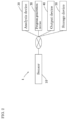
- the system 1 includes a sensor 10, an analysis device 20, a program generation device 30, an output device 40, and a storage device 50 (see FIG. 2 ). Each of these components is communicatively connected via a wired or wireless communication network.
- the sensor 10, the analysis device 20, the program generation device 30, the output device 40, and the storage device 50 may be separate units or may be configured integrally.
- the storage device 50 may be installed as a component of a data center (not shown), and the data center may store not only the collected data but also the collected samples (for example, saliva and fecal samples). In this case, the data center can also be called a biobank.
- the sensor 10 is a general term for various sensors that are installed in the facility 70 such as a residence and continuously collect biometric data of the user H.
- the sensor 10 transmits the collected biometric data to the storage device 50 together with the collection date and time, and the data stores.
- the storage device 50 may be a data server, but is not limited thereto. Note that the sensor 10 may transmit and store the collected biometric data to a storage (not shown) in the facility 70.
- Examples of usable sensors 10 include infrared temperature cameras, hyperspectral imaging cameras, RFID sensors, pressure sensors, motion capture devices, temperature sensors, component analyzers, weight sensors, flow rate sensors, and position sensors (all not shown), and the like, but are not limited thereto.
- the infrared temperature camera is installed, for example, in rooms such as a living room, study, bedroom, and working room of the facility 70, and can measure the facial expressions, heart rate, oxygen saturation, carbon dioxide exhaled amount, surface body temperature, and core body temperature of the user H.
- the pressure sensor is installed, for example, on a hallway floor or an indoor floor, and can measure the foot pressure distribution of the user H.
- the motion capture device is installed, for example, in an indoor hallway, and can measure the walking posture, walking speed, changes in joint range of motion, changes in the center of gravity, amount of activity of the user H.
- the sensing of the biometric data of the user H by the sensor 10 is performed, for example, by constant measurement.
- a sensor for obtaining the environmental data may be installed. That is, a thermometer to measure the room temperature, a hygrometer to measure the humidity in the room, an illuminance meter to measure the brightness of the room, a carbon dioxide meter to measure the CO 2 concentration in the room, etc. may be installed.
- the environmental data collected by these sensors is transmitted and stored in the storage device 50.
- the sensor 10 may include these sensing functions.
- biometric data of the user may be obtained by utilizing various sensors built into wearable devices and portable information terminals such as smartphones. This type of biometric data is useful as an aid to determine the health condition of the user.
- the sensor 10 may include these sensing functions.
- the collected biometric data, the environmental data and the other data are transmitted to and stored in the storage device 50.
- the storage device 50 may store the determination result of the health condition and the generated health promotion program, which will be described later.
- Various data stored in the storage device 50 may be made available to an external computer 80 used by a doctor and a medical institution in charge of the user H under the permission of the user H. Through such medical cooperation, various health records necessary for diagnosis and treatment of the user H can be shared among the medical personnel in a timely manner.
- the data linkage may also include medical doctors, dentists, pharmacists, or dietitians, and is not limited to the medical personnel.
- the analysis device 20 determines the health condition of the user H by analyzing the biometric data collected by the sensor 10.
- the analysis device 20 can suitably utilize an AI analysis for the data analysis.
- the analysis device 20 uses the human biometric data which includes at least one kind of data, which data shows the human facial expressions, heart rate, oxygen saturation, carbon dioxide exhaled amount, surface body temperature, core body temperature, skin protein analysis, body composition, autonomic nerves, HbA1c, internal water content, foot pressure distribution, walking posture, walking speed, change in joint range of motion, fluctuation in center of gravity, amount of activity, myoelectricity, electrocardiography, brain waves, standing and sitting posture, body temperature, blood pressure, blood flow, heart rate, breathing, sweating, eyeballs, sleeping time, amount and time of excretion, blood components, urine components, saliva components, intraoral images, and fecal components, and the human health condition including the energy consumption and exercise effect of the person as a teaching data, and generate a predictive model where the input is the human biometric data, and the output is the health condition of the person by using a machine learning. And the analysis device 20 outputs the health condition of the user from the collected biometric data by using the predictive model.
- data shows the human
- the analysis device 20 can use at least one kind of data among the biometric data such as human facial expressions, heart rate, oxygen saturation, carbon dioxide exhaled amount, surface body temperature, core body temperature, skin protein analysis, body composition, autonomic nerves, HbA1c, internal water content, foot pressure distribution, walking posture, walking speed, changes in joint range of motion, fluctuations in center of gravity, and amount of activity, as a teaching variable (teaching data) as an existing index. That is, the analysis device 20 can conduct a machine learning by using the biometric data of the same type as the data group collected by the sensor 10 as explanatory variables to generate an analysis program.
- the biometric data such as human facial expressions, heart rate, oxygen saturation, carbon dioxide exhaled amount, surface body temperature, core body temperature, skin protein analysis, body composition, autonomic nerves, HbA1c, internal water content, foot pressure distribution, walking posture, walking speed, changes in joint range of motion, fluctuations in center of gravity, and amount of activity
- the analysis device 20 can algorithmically analyze the biometric information such as facial expressions, heart rate, oxygen saturation, carbon dioxide exhaled amount, surface body temperature, core body temperature, skin protein analysis, body composition, autonomic nerves, HbA1c, internal water content, foot pressure distribution, and the motor function information such as joint angle during walking and the time-related change thereof, lower limb muscle strength, center of gravity, or three dimensional moving distance of the observation point correlated thereto, walking posture, walking speed, and amount of activity, by using the basic information such as age, gender, height and weight, as parameters to be utilized.
- biometric information such as facial expressions, heart rate, oxygen saturation, carbon dioxide exhaled amount, surface body temperature, core body temperature, skin protein analysis, body composition, autonomic nerves, HbA1c, internal water content, foot pressure distribution, and the motor function information such as joint angle during walking and the time-related change thereof, lower limb muscle strength, center of gravity, or three dimensional moving distance of the observation point correlated thereto, walking posture, walking speed, and amount of
- the analysis device 20 obtains the objective evaluation including the health function and motor function as the health condition of the user H, by applying the sensing data to the above-mentioned model.
- An example of the machine learning that can be utilized in the present embodiment is a deep learning, but it is not limited thereto.
- the analysis result 20 transmits the determination result of the health condition of the user H to the storage device 50, and then stores therein. Needless to say, the determination result can be effectively used by the medical personnel with the permission of the user H. Further, by outputting the determination result of the health condition of the user H to the output device 40 described later, the user H and the family thereof can detect illness or poor physical condition of the user H at an early stage, and can utilize for health management of the user H. That is, the determination result can be effectively utilized to support the user H and to link with related parties.
- the program generation device 30 generates the health promotion program customized for each user H based on the determination result of the health condition obtained by the analysis device 20.
- the program generation device 30 extracts the biological characteristics of the user by comparing the collected biometric data with the predetermined evaluation index. Then, the program generation device 30 uses the predetermined evaluation index and the evaluation values indicating the effectiveness of the health promotion program are used as the teaching data, and generates the evaluation model where the input is the biometric data, and the output is the evaluation to the health promotion program by using teh machine learning. Then, the program generation device 30 outputs the health promotion program which is presented to the user from the collected biometric data by using the evaluation model together with biological characteristics of the user.
- the health promotion programs are roughly classified into those related to health functions and those related to motor functions.
- the program generation device 30 clarifies the biological characteristics of the user H by comparing the normal range for each individual with evaluation indicators such as epidemiology and medical guidelines, with respect to the facial expressions, heart rate, oxygen saturation, carbon dioxide exhaled amount, surface body temperature, core body temperature, skin protein analysis, body composition, autonomic nerves, HbA1c, internal water content, and foot pressure distribution. Then, the program generation device 30 can construct the algorithm related to each individual lifestyle habits by performing the AI analysis on the measured data, the basic information such as age, gender, height and weight, and the living environment data (for example, biometric data collected by the sensor 10) of the user H, and can present the behavioral changes and the effects associated therewith.
- evaluation indicators such as epidemiology and medical guidelines
- the program generation device 30 can construct the algorithm related to each individual lifestyle habits by performing the AI analysis on the measured data, the basic information such as age, gender, height and weight, and the living environment data (for example, biometric data collected by the sensor 10) of the user H, and can present the behavioral changes and the effects associated therewith
- the program generation device 30 clarifies the characteristics of the dynamic analysis of the user H by comparing the positions and velocities of each joint, joint angles and angular velocities. Then the program generation device 30 can construct the motion measurement algorithms, based on the measured data, in addition to estimated energy consumption and exercise effects during exercise, and can present the recommended exercises, and the energy consumption and exercise effects during exercise.
- AI analysis An example of the AI analysis that can be used here is the deep learning, but it is not limited thereto.
- the program generation device 30 transmits the generated health promotion program to the storage device 50 and stores therein. Needless to say, such a program can be shared among medical personnel with the approval of the user H. Further, by outputting the program to the output device 40, the user H and the family thereof can clearly understand what they should do to maintain, recover, and improve the health functions and motor functions of the user H, and can utilize for the health management of the user H.
- the analysis device 20 and the program generation device 30 can be configured as one or more computers including an arithmetic circuit such as central processing unit (CPU), as well as a random-access memory (RAM) and a read-only memory (ROM).
- the functions of the analysis device 20 and the program generation device 30 described above can be realized by reading an execution program stored in the ROM into the RAM and executing by the CPU.
- the analysis device 20 and the program generation device 30 determine the health condition and generate the health promotion program periodically or at a timing deemed necessary for each individual, by using continuously collected biometric data.
- the output device 40 is a device that outputs the determination result of the health condition and the health promotion program.
- the output device 40 includes the terminal (including smartphone, personal computer), display, printer, projector, speaker of the user H.
- the terminal including smartphone, personal computer
- display printer, projector, speaker of the user H.
- the output device 40 may output an alert to the terminal of the user H and the related parties.
- the output device 40 may display other information related to daily life, such as information regarding energy and housing, and regional information.
- step S1 the sensor 10 senses the biometric data of the user H and stores in the storage device 50 in association with the sensing time. Sensing is performed continuously at predetermined time intervals.
- step S2 the analysis device 20 analyzes the collected biometric data, determines the health condition of the user H, and stores the determination result in the storage device 50.
- the analysis device 20 generates the learned model in advance by the machine learning, and obtains the health condition of the user H by applying the biometric data of the user H to the learned model.
- Step S2 is performed periodically or at a timing deemed necessary for each individual.
- the program generation device 30 When the determination result of the health condition is generated in the analysis device 20, in step S3, the program generation device 30 generates the health promotion program for each user H based on the determination result of the health condition, and stores the program in the storage device 50.
- the determination result of the health condition and the health promotion program are displayed on the output device 40.
- own health condition for example, health functions and motor functions
- the user H can practice the presented health promotion program and utilize for own health management.
- the user H can effectively utilize the biometric data obtained in daily life to promote the health functions of the user H. Furthermore, the user H can understand the effects of performance of the health promotion program through the determination result of subsequent health condition.
- the thus accumulated sensing data, the determination result of the health condition, and the health promotion program are stored in the storage device 50 and shared among medical personnel involved with the user H with the approval of the user H. Thereby, it is expected that this will allow the medical doctors to perform diagnosis and treatment more appropriately and quickly. Such effects can be expected not only during face-to-face medical treatment but also in remote medical treatment, and more fulfilling medical linkage will be realized.
- the sensing data and the determination result of the health condition are also possible to use as a monitoring system for the user H or an abnormality detection system.
- the sensor 10 Since the sensor 10 is installed in the facility 70, there is no need to worry about attachment and detachment unlike wearable sensors. Furthermore, since the sensor 10 is hidden from the eyes of the user H, the user H is not aware of the existence of the sensor 10. Therefore, the daily biometric data of the user H can be obtained, and the health condition of the user H can be understood with high reliability.
- the present invention it is possible to effectively utilize the biometric data obtained in the daily life of users for maintaining and promoting the health of the users.
- the utilization of the biometric data includes support for the users, and information linkage with the medical and care staffs.
Landscapes
- Health & Medical Sciences (AREA)
- Engineering & Computer Science (AREA)
- Medical Informatics (AREA)
- Public Health (AREA)
- General Health & Medical Sciences (AREA)
- Epidemiology (AREA)
- Primary Health Care (AREA)
- Biomedical Technology (AREA)
- Data Mining & Analysis (AREA)
- Pathology (AREA)
- Databases & Information Systems (AREA)
- Life Sciences & Earth Sciences (AREA)
- Biophysics (AREA)
- Business, Economics & Management (AREA)
- General Business, Economics & Management (AREA)
- Developmental Disabilities (AREA)
- Psychiatry (AREA)
- Psychology (AREA)
- Social Psychology (AREA)
- Hospice & Palliative Care (AREA)
- Child & Adolescent Psychology (AREA)
- Physical Education & Sports Medicine (AREA)
- Physics & Mathematics (AREA)
- Heart & Thoracic Surgery (AREA)
- Molecular Biology (AREA)
- Surgery (AREA)
- Animal Behavior & Ethology (AREA)
- Veterinary Medicine (AREA)
- Medical Treatment And Welfare Office Work (AREA)
- Measuring And Recording Apparatus For Diagnosis (AREA)
Applications Claiming Priority (1)
| Application Number | Priority Date | Filing Date | Title |
|---|---|---|---|
| PCT/JP2023/026231 WO2025017824A1 (ja) | 2023-07-18 | 2023-07-18 | 健康増進プログラムを提供するためのシステム及び方法 |
Publications (2)
| Publication Number | Publication Date |
|---|---|
| EP4521418A4 EP4521418A4 (en) | 2025-03-12 |
| EP4521418A1 true EP4521418A1 (en) | 2025-03-12 |
Family
ID=94281896
Family Applications (1)
| Application Number | Title | Priority Date | Filing Date |
|---|---|---|---|
| EP23861653.6A Pending EP4521418A1 (en) | 2023-07-18 | 2023-07-18 | System and method for providing health promotion program |
Country Status (9)
| Country | Link |
|---|---|
| US (1) | US20250253021A1 (https=) |
| EP (1) | EP4521418A1 (https=) |
| JP (1) | JPWO2025017824A1 (https=) |
| KR (1) | KR20250016164A (https=) |
| CN (1) | CN119654683A (https=) |
| AU (1) | AU2023444873A1 (https=) |
| CA (1) | CA3257196A1 (https=) |
| MX (1) | MX2024013634A (https=) |
| WO (1) | WO2025017824A1 (https=) |
Family Cites Families (12)
| Publication number | Priority date | Publication date | Assignee | Title |
|---|---|---|---|---|
| US9928379B1 (en) * | 2008-09-08 | 2018-03-27 | Steven Miles Hoffer | Methods using mediation software for rapid health care support over a secured wireless network; methods of composition; and computer program products therefor |
| JP5851737B2 (ja) | 2011-07-04 | 2016-02-03 | 大和ハウス工業株式会社 | 室内環境制御システム及び室内環境制御方法 |
| US9844344B2 (en) * | 2011-07-05 | 2017-12-19 | Saudi Arabian Oil Company | Systems and method to monitor health of employee when positioned in association with a workstation |
| US8948832B2 (en) * | 2012-06-22 | 2015-02-03 | Fitbit, Inc. | Wearable heart rate monitor |
| JP6689501B2 (ja) * | 2015-09-10 | 2020-04-28 | 株式会社ハンマーバード | 健康情報管理システム |
| AU2019436783B2 (en) | 2019-03-22 | 2024-02-01 | E-Solutions, Inc. | Personal safety verification system |
| BR112022004040A2 (pt) * | 2019-09-06 | 2022-05-24 | Sports Data Labs Inc | Sistema para gerar dados animais simulados e modelos |
| US20220245574A1 (en) * | 2019-11-05 | 2022-08-04 | Strong Force Vcn Portfolio 2019, Llc | Systems, Methods, Kits, and Apparatuses for Digital Product Network Systems and Biology-Based Value Chain Networks |
| US10998101B1 (en) * | 2019-12-15 | 2021-05-04 | Bao Tran | Health management |
| US12102445B2 (en) * | 2020-05-06 | 2024-10-01 | Janssen Pharmaceuticals, Inc. | Monitoring and communicating information using drug administration devices |
| JP7285886B2 (ja) * | 2021-07-13 | 2023-06-02 | 飯田グループホールディングス株式会社 | 健康増進プログラム提供システム及び健康増進プログラム提供方法 |
| JP7274789B1 (ja) * | 2022-01-27 | 2023-05-17 | 芙蓉ディベロップメント株式会社 | ソフトウェア及び健康指標の提供装置 |
-
2023
- 2023-07-18 JP JP2024513452A patent/JPWO2025017824A1/ja active Pending
- 2023-07-18 EP EP23861653.6A patent/EP4521418A1/en active Pending
- 2023-07-18 US US18/686,687 patent/US20250253021A1/en active Pending
- 2023-07-18 CN CN202380013579.2A patent/CN119654683A/zh active Pending
- 2023-07-18 KR KR1020247040795A patent/KR20250016164A/ko active Pending
- 2023-07-18 AU AU2023444873A patent/AU2023444873A1/en active Pending
- 2023-07-18 WO PCT/JP2023/026231 patent/WO2025017824A1/ja active Pending
- 2023-07-18 CA CA3257196A patent/CA3257196A1/en active Pending
-
2024
- 2024-11-04 MX MX2024013634A patent/MX2024013634A/es unknown
Also Published As
| Publication number | Publication date |
|---|---|
| MX2024013634A (es) | 2025-03-07 |
| AU2023444873A1 (en) | 2025-02-06 |
| US20250253021A1 (en) | 2025-08-07 |
| JPWO2025017824A1 (https=) | 2025-01-23 |
| WO2025017824A1 (ja) | 2025-01-23 |
| CN119654683A (zh) | 2025-03-18 |
| KR20250016164A (ko) | 2025-02-03 |
| CA3257196A1 (en) | 2025-04-22 |
Similar Documents
| Publication | Publication Date | Title |
|---|---|---|
| Pham et al. | Delivering home healthcare through a cloud-based smart home environment (CoSHE) | |
| Wang et al. | Activity density map visualization and dissimilarity comparison for eldercare monitoring | |
| JP5669787B2 (ja) | ヒトの健康に関する残差ベースの管理 | |
| JP5862226B2 (ja) | 3dにおいて身体の感覚を追跡、記録、又は解析する方法 | |
| JP5870646B2 (ja) | 患者からのムード情報の単純な収集の方法 | |
| US10872694B2 (en) | Software, health condition determination apparatus, and health condition determination method | |
| CN110832602A (zh) | 软件、健康状态判定装置及健康状态判定方法 | |
| JP2012110715A (ja) | リングベースの誘導給電式SpO2センサ | |
| CN107680674A (zh) | 一种基于健康大数据的健康物联网平台及其管理方法 | |
| JP2012110713A (ja) | 呼吸困難計 | |
| JP2012110714A (ja) | スタチン誘発性ミオパシー及び他の医的障害のセンサベースの診断 | |
| JP2013078567A (ja) | 遠隔健康監視データを提供するための方法および関連するシステム | |
| JP2018175840A (ja) | ソフトウェア、健康状態判定装置及び健康状態判定方法 | |
| WO2017077724A1 (ja) | 健康状態判定装置 | |
| JP7285886B2 (ja) | 健康増進プログラム提供システム及び健康増進プログラム提供方法 | |
| Marschollek et al. | Multimodal home monitoring of elderly people--first results from the lass study | |
| EP4521418A1 (en) | System and method for providing health promotion program | |
| JP7625203B2 (ja) | 熱ストレスの影響推定装置、熱ストレスの影響推定方法、及び、コンピュータプログラム | |
| Nazário et al. | An enhanced quality of context evaluating approach in the e-health sensor platform | |
| Chiriac et al. | Towards combining validation concepts for short and long-term ambient health monitoring | |
| JP2021026477A (ja) | 支援装置及び支援プログラム | |
| WO2023074283A1 (ja) | 健康状態判定方法、及び、健康状態判定システム | |
| Liao et al. | An empirical study on engineering a real-world smart ward using pervasive technologies | |
| Prückner et al. | Emergency monitoring and prevention-eu project emerge | |
| JP7844072B2 (ja) | 情報処理システム、情報処理方法およびコンピュータプログラム |
Legal Events
| Date | Code | Title | Description |
|---|---|---|---|
| STAA | Information on the status of an ep patent application or granted ep patent |
Free format text: STATUS: UNKNOWN |
|
| STAA | Information on the status of an ep patent application or granted ep patent |
Free format text: STATUS: THE INTERNATIONAL PUBLICATION HAS BEEN MADE |
|
| PUAI | Public reference made under article 153(3) epc to a published international application that has entered the european phase |
Free format text: ORIGINAL CODE: 0009012 |
|
| STAA | Information on the status of an ep patent application or granted ep patent |
Free format text: STATUS: REQUEST FOR EXAMINATION WAS MADE |
|
| 17P | Request for examination filed |
Effective date: 20240312 |
|
| A4 | Supplementary search report drawn up and despatched |
Effective date: 20241017 |
|
| AK | Designated contracting states |
Kind code of ref document: A1 Designated state(s): AL AT BE BG CH CY CZ DE DK EE ES FI FR GB GR HR HU IE IS IT LI LT LU LV MC ME MK MT NL NO PL PT RO RS SE SI SK SM TR |