EP4516753A2 - Beschichtete glasscheibe - Google Patents
Beschichtete glasscheibe Download PDFInfo
- Publication number
- EP4516753A2 EP4516753A2 EP24222438.4A EP24222438A EP4516753A2 EP 4516753 A2 EP4516753 A2 EP 4516753A2 EP 24222438 A EP24222438 A EP 24222438A EP 4516753 A2 EP4516753 A2 EP 4516753A2
- Authority
- EP
- European Patent Office
- Prior art keywords
- layer
- opl
- thickness
- dielectric layer
- dielectric
- Prior art date
- Legal status (The legal status is an assumption and is not a legal conclusion. Google has not performed a legal analysis and makes no representation as to the accuracy of the status listed.)
- Pending
Links
Images


Classifications
-
- C—CHEMISTRY; METALLURGY
- C03—GLASS; MINERAL OR SLAG WOOL
- C03C—CHEMICAL COMPOSITION OF GLASSES, GLAZES OR VITREOUS ENAMELS; SURFACE TREATMENT OF GLASS; SURFACE TREATMENT OF FIBRES OR FILAMENTS MADE FROM GLASS, MINERALS OR SLAGS; JOINING GLASS TO GLASS OR OTHER MATERIALS
- C03C17/00—Surface treatment of glass, not in the form of fibres or filaments, by coating
- C03C17/34—Surface treatment of glass, not in the form of fibres or filaments, by coating with at least two coatings having different compositions
- C03C17/36—Surface treatment of glass, not in the form of fibres or filaments, by coating with at least two coatings having different compositions at least one coating being a metal
- C03C17/3602—Surface treatment of glass, not in the form of fibres or filaments, by coating with at least two coatings having different compositions at least one coating being a metal the metal being present as a layer
- C03C17/3639—Multilayers containing at least two functional metal layers
-
- E—FIXED CONSTRUCTIONS
- E06—DOORS, WINDOWS, SHUTTERS, OR ROLLER BLINDS IN GENERAL; LADDERS
- E06B—FIXED OR MOVABLE CLOSURES FOR OPENINGS IN BUILDINGS, VEHICLES, FENCES OR LIKE ENCLOSURES IN GENERAL, e.g. DOORS, WINDOWS, BLINDS, GATES
- E06B9/00—Screening or protective devices for wall or similar openings, with or without operating or securing mechanisms; Closures of similar construction
- E06B9/24—Screens or other constructions affording protection against light, especially against sunshine; Similar screens for privacy or appearance; Slat blinds
-
- C—CHEMISTRY; METALLURGY
- C03—GLASS; MINERAL OR SLAG WOOL
- C03C—CHEMICAL COMPOSITION OF GLASSES, GLAZES OR VITREOUS ENAMELS; SURFACE TREATMENT OF GLASS; SURFACE TREATMENT OF FIBRES OR FILAMENTS MADE FROM GLASS, MINERALS OR SLAGS; JOINING GLASS TO GLASS OR OTHER MATERIALS
- C03C17/00—Surface treatment of glass, not in the form of fibres or filaments, by coating
- C03C17/34—Surface treatment of glass, not in the form of fibres or filaments, by coating with at least two coatings having different compositions
- C03C17/36—Surface treatment of glass, not in the form of fibres or filaments, by coating with at least two coatings having different compositions at least one coating being a metal
-
- C—CHEMISTRY; METALLURGY
- C03—GLASS; MINERAL OR SLAG WOOL
- C03C—CHEMICAL COMPOSITION OF GLASSES, GLAZES OR VITREOUS ENAMELS; SURFACE TREATMENT OF GLASS; SURFACE TREATMENT OF FIBRES OR FILAMENTS MADE FROM GLASS, MINERALS OR SLAGS; JOINING GLASS TO GLASS OR OTHER MATERIALS
- C03C17/00—Surface treatment of glass, not in the form of fibres or filaments, by coating
- C03C17/34—Surface treatment of glass, not in the form of fibres or filaments, by coating with at least two coatings having different compositions
- C03C17/36—Surface treatment of glass, not in the form of fibres or filaments, by coating with at least two coatings having different compositions at least one coating being a metal
- C03C17/3602—Surface treatment of glass, not in the form of fibres or filaments, by coating with at least two coatings having different compositions at least one coating being a metal the metal being present as a layer
- C03C17/3644—Surface treatment of glass, not in the form of fibres or filaments, by coating with at least two coatings having different compositions at least one coating being a metal the metal being present as a layer the metal being silver
-
- C—CHEMISTRY; METALLURGY
- C03—GLASS; MINERAL OR SLAG WOOL
- C03C—CHEMICAL COMPOSITION OF GLASSES, GLAZES OR VITREOUS ENAMELS; SURFACE TREATMENT OF GLASS; SURFACE TREATMENT OF FIBRES OR FILAMENTS MADE FROM GLASS, MINERALS OR SLAGS; JOINING GLASS TO GLASS OR OTHER MATERIALS
- C03C17/00—Surface treatment of glass, not in the form of fibres or filaments, by coating
- C03C17/34—Surface treatment of glass, not in the form of fibres or filaments, by coating with at least two coatings having different compositions
- C03C17/36—Surface treatment of glass, not in the form of fibres or filaments, by coating with at least two coatings having different compositions at least one coating being a metal
- C03C17/3602—Surface treatment of glass, not in the form of fibres or filaments, by coating with at least two coatings having different compositions at least one coating being a metal the metal being present as a layer
- C03C17/3649—Surface treatment of glass, not in the form of fibres or filaments, by coating with at least two coatings having different compositions at least one coating being a metal the metal being present as a layer made of metals other than silver
-
- C—CHEMISTRY; METALLURGY
- C03—GLASS; MINERAL OR SLAG WOOL
- C03C—CHEMICAL COMPOSITION OF GLASSES, GLAZES OR VITREOUS ENAMELS; SURFACE TREATMENT OF GLASS; SURFACE TREATMENT OF FIBRES OR FILAMENTS MADE FROM GLASS, MINERALS OR SLAGS; JOINING GLASS TO GLASS OR OTHER MATERIALS
- C03C17/00—Surface treatment of glass, not in the form of fibres or filaments, by coating
- C03C17/34—Surface treatment of glass, not in the form of fibres or filaments, by coating with at least two coatings having different compositions
- C03C17/36—Surface treatment of glass, not in the form of fibres or filaments, by coating with at least two coatings having different compositions at least one coating being a metal
- C03C17/3602—Surface treatment of glass, not in the form of fibres or filaments, by coating with at least two coatings having different compositions at least one coating being a metal the metal being present as a layer
- C03C17/3657—Surface treatment of glass, not in the form of fibres or filaments, by coating with at least two coatings having different compositions at least one coating being a metal the metal being present as a layer the multilayer coating having optical properties
- C03C17/366—Low-emissivity or solar control coatings
-
- C—CHEMISTRY; METALLURGY
- C03—GLASS; MINERAL OR SLAG WOOL
- C03C—CHEMICAL COMPOSITION OF GLASSES, GLAZES OR VITREOUS ENAMELS; SURFACE TREATMENT OF GLASS; SURFACE TREATMENT OF FIBRES OR FILAMENTS MADE FROM GLASS, MINERALS OR SLAGS; JOINING GLASS TO GLASS OR OTHER MATERIALS
- C03C17/00—Surface treatment of glass, not in the form of fibres or filaments, by coating
- C03C17/34—Surface treatment of glass, not in the form of fibres or filaments, by coating with at least two coatings having different compositions
- C03C17/36—Surface treatment of glass, not in the form of fibres or filaments, by coating with at least two coatings having different compositions at least one coating being a metal
- C03C17/3602—Surface treatment of glass, not in the form of fibres or filaments, by coating with at least two coatings having different compositions at least one coating being a metal the metal being present as a layer
- C03C17/3681—Surface treatment of glass, not in the form of fibres or filaments, by coating with at least two coatings having different compositions at least one coating being a metal the metal being present as a layer the multilayer coating being used in glazing, e.g. windows or windscreens
-
- C—CHEMISTRY; METALLURGY
- C23—COATING METALLIC MATERIAL; COATING MATERIAL WITH METALLIC MATERIAL; CHEMICAL SURFACE TREATMENT; DIFFUSION TREATMENT OF METALLIC MATERIAL; COATING BY VACUUM EVAPORATION, BY SPUTTERING, BY ION IMPLANTATION OR BY CHEMICAL VAPOUR DEPOSITION, IN GENERAL; INHIBITING CORROSION OF METALLIC MATERIAL OR INCRUSTATION IN GENERAL
- C23C—COATING METALLIC MATERIAL; COATING MATERIAL WITH METALLIC MATERIAL; SURFACE TREATMENT OF METALLIC MATERIAL BY DIFFUSION INTO THE SURFACE, BY CHEMICAL CONVERSION OR SUBSTITUTION; COATING BY VACUUM EVAPORATION, BY SPUTTERING, BY ION IMPLANTATION OR BY CHEMICAL VAPOUR DEPOSITION, IN GENERAL
- C23C14/00—Coating by vacuum evaporation, by sputtering or by ion implantation of the coating forming material
- C23C14/0021—Reactive sputtering or evaporation
- C23C14/0036—Reactive sputtering
-
- C—CHEMISTRY; METALLURGY
- C23—COATING METALLIC MATERIAL; COATING MATERIAL WITH METALLIC MATERIAL; CHEMICAL SURFACE TREATMENT; DIFFUSION TREATMENT OF METALLIC MATERIAL; COATING BY VACUUM EVAPORATION, BY SPUTTERING, BY ION IMPLANTATION OR BY CHEMICAL VAPOUR DEPOSITION, IN GENERAL; INHIBITING CORROSION OF METALLIC MATERIAL OR INCRUSTATION IN GENERAL
- C23C—COATING METALLIC MATERIAL; COATING MATERIAL WITH METALLIC MATERIAL; SURFACE TREATMENT OF METALLIC MATERIAL BY DIFFUSION INTO THE SURFACE, BY CHEMICAL CONVERSION OR SUBSTITUTION; COATING BY VACUUM EVAPORATION, BY SPUTTERING, BY ION IMPLANTATION OR BY CHEMICAL VAPOUR DEPOSITION, IN GENERAL
- C23C14/00—Coating by vacuum evaporation, by sputtering or by ion implantation of the coating forming material
- C23C14/22—Coating by vacuum evaporation, by sputtering or by ion implantation of the coating forming material characterised by the process of coating
- C23C14/34—Sputtering
- C23C14/35—Sputtering by application of a magnetic field, e.g. magnetron sputtering
-
- E—FIXED CONSTRUCTIONS
- E06—DOORS, WINDOWS, SHUTTERS, OR ROLLER BLINDS IN GENERAL; LADDERS
- E06B—FIXED OR MOVABLE CLOSURES FOR OPENINGS IN BUILDINGS, VEHICLES, FENCES OR LIKE ENCLOSURES IN GENERAL, e.g. DOORS, WINDOWS, BLINDS, GATES
- E06B3/00—Window sashes, door leaves, or like elements for closing wall or like openings; Layout of fixed or moving closures, e.g. windows in wall or like openings; Features of rigidly-mounted outer frames relating to the mounting of wing frames
- E06B3/66—Units comprising two or more parallel glass or like panes permanently secured together
- E06B3/67—Units comprising two or more parallel glass or like panes permanently secured together characterised by additional arrangements or devices for heat or sound insulation or for controlled passage of light
- E06B3/6715—Units comprising two or more parallel glass or like panes permanently secured together characterised by additional arrangements or devices for heat or sound insulation or for controlled passage of light specially adapted for increased thermal insulation or for controlled passage of light
-
- G—PHYSICS
- G02—OPTICS
- G02B—OPTICAL ELEMENTS, SYSTEMS OR APPARATUS
- G02B5/00—Optical elements other than lenses
- G02B5/20—Filters
- G02B5/208—Filters for use with infrared or ultraviolet radiation, e.g. for separating visible light from infrared and/or ultraviolet radiation
-
- C—CHEMISTRY; METALLURGY
- C03—GLASS; MINERAL OR SLAG WOOL
- C03C—CHEMICAL COMPOSITION OF GLASSES, GLAZES OR VITREOUS ENAMELS; SURFACE TREATMENT OF GLASS; SURFACE TREATMENT OF FIBRES OR FILAMENTS MADE FROM GLASS, MINERALS OR SLAGS; JOINING GLASS TO GLASS OR OTHER MATERIALS
- C03C2217/00—Coatings on glass
- C03C2217/20—Materials for coating a single layer on glass
- C03C2217/21—Oxides
- C03C2217/212—TiO2
-
- C—CHEMISTRY; METALLURGY
- C03—GLASS; MINERAL OR SLAG WOOL
- C03C—CHEMICAL COMPOSITION OF GLASSES, GLAZES OR VITREOUS ENAMELS; SURFACE TREATMENT OF GLASS; SURFACE TREATMENT OF FIBRES OR FILAMENTS MADE FROM GLASS, MINERALS OR SLAGS; JOINING GLASS TO GLASS OR OTHER MATERIALS
- C03C2217/00—Coatings on glass
- C03C2217/20—Materials for coating a single layer on glass
- C03C2217/21—Oxides
- C03C2217/216—ZnO
-
- C—CHEMISTRY; METALLURGY
- C03—GLASS; MINERAL OR SLAG WOOL
- C03C—CHEMICAL COMPOSITION OF GLASSES, GLAZES OR VITREOUS ENAMELS; SURFACE TREATMENT OF GLASS; SURFACE TREATMENT OF FIBRES OR FILAMENTS MADE FROM GLASS, MINERALS OR SLAGS; JOINING GLASS TO GLASS OR OTHER MATERIALS
- C03C2217/00—Coatings on glass
- C03C2217/20—Materials for coating a single layer on glass
- C03C2217/21—Oxides
- C03C2217/228—Other specific oxides
-
- C—CHEMISTRY; METALLURGY
- C03—GLASS; MINERAL OR SLAG WOOL
- C03C—CHEMICAL COMPOSITION OF GLASSES, GLAZES OR VITREOUS ENAMELS; SURFACE TREATMENT OF GLASS; SURFACE TREATMENT OF FIBRES OR FILAMENTS MADE FROM GLASS, MINERALS OR SLAGS; JOINING GLASS TO GLASS OR OTHER MATERIALS
- C03C2217/00—Coatings on glass
- C03C2217/20—Materials for coating a single layer on glass
- C03C2217/21—Oxides
- C03C2217/24—Doped oxides
-
- C—CHEMISTRY; METALLURGY
- C03—GLASS; MINERAL OR SLAG WOOL
- C03C—CHEMICAL COMPOSITION OF GLASSES, GLAZES OR VITREOUS ENAMELS; SURFACE TREATMENT OF GLASS; SURFACE TREATMENT OF FIBRES OR FILAMENTS MADE FROM GLASS, MINERALS OR SLAGS; JOINING GLASS TO GLASS OR OTHER MATERIALS
- C03C2217/00—Coatings on glass
- C03C2217/20—Materials for coating a single layer on glass
- C03C2217/25—Metals
- C03C2217/251—Al, Cu, Mg or noble metals
- C03C2217/254—Noble metals
- C03C2217/256—Ag
-
- C—CHEMISTRY; METALLURGY
- C03—GLASS; MINERAL OR SLAG WOOL
- C03C—CHEMICAL COMPOSITION OF GLASSES, GLAZES OR VITREOUS ENAMELS; SURFACE TREATMENT OF GLASS; SURFACE TREATMENT OF FIBRES OR FILAMENTS MADE FROM GLASS, MINERALS OR SLAGS; JOINING GLASS TO GLASS OR OTHER MATERIALS
- C03C2217/00—Coatings on glass
- C03C2217/20—Materials for coating a single layer on glass
- C03C2217/25—Metals
- C03C2217/261—Iron-group metals, i.e. Fe, Co or Ni
-
- C—CHEMISTRY; METALLURGY
- C03—GLASS; MINERAL OR SLAG WOOL
- C03C—CHEMICAL COMPOSITION OF GLASSES, GLAZES OR VITREOUS ENAMELS; SURFACE TREATMENT OF GLASS; SURFACE TREATMENT OF FIBRES OR FILAMENTS MADE FROM GLASS, MINERALS OR SLAGS; JOINING GLASS TO GLASS OR OTHER MATERIALS
- C03C2218/00—Methods for coating glass
- C03C2218/10—Deposition methods
- C03C2218/15—Deposition methods from the vapour phase
- C03C2218/154—Deposition methods from the vapour phase by sputtering
- C03C2218/155—Deposition methods from the vapour phase by sputtering by reactive sputtering
-
- C—CHEMISTRY; METALLURGY
- C03—GLASS; MINERAL OR SLAG WOOL
- C03C—CHEMICAL COMPOSITION OF GLASSES, GLAZES OR VITREOUS ENAMELS; SURFACE TREATMENT OF GLASS; SURFACE TREATMENT OF FIBRES OR FILAMENTS MADE FROM GLASS, MINERALS OR SLAGS; JOINING GLASS TO GLASS OR OTHER MATERIALS
- C03C2218/00—Methods for coating glass
- C03C2218/10—Deposition methods
- C03C2218/15—Deposition methods from the vapour phase
- C03C2218/154—Deposition methods from the vapour phase by sputtering
- C03C2218/156—Deposition methods from the vapour phase by sputtering by magnetron sputtering
-
- E—FIXED CONSTRUCTIONS
- E06—DOORS, WINDOWS, SHUTTERS, OR ROLLER BLINDS IN GENERAL; LADDERS
- E06B—FIXED OR MOVABLE CLOSURES FOR OPENINGS IN BUILDINGS, VEHICLES, FENCES OR LIKE ENCLOSURES IN GENERAL, e.g. DOORS, WINDOWS, BLINDS, GATES
- E06B9/00—Screening or protective devices for wall or similar openings, with or without operating or securing mechanisms; Closures of similar construction
- E06B9/24—Screens or other constructions affording protection against light, especially against sunshine; Similar screens for privacy or appearance; Slat blinds
- E06B2009/2417—Light path control; means to control reflection
Definitions
- the present invention relates to a substrate with a coating, more specifically the present invention relates to a transparent substrate with a coating wherein said coating comprises multiple layers, some of which comprise functional layers which reflect solar radiation and/or infrared radiation.
- Transparent substrates comprising for example glass
- low-e coating coatings to decrease the emissivity
- solar control coating to shield interior rooms against the entry of excessive amounts of solar energy (heat).
- Coatings which provide such low-emissivity (low-e) and/or solar control when applied to glass substrates may be deposited for example by physical vapour deposition processes, such as, sputtering.
- Sputtered low-emissivity and solar control coating stacks are commonly comprised of repeat sequences such as for example: 'substrate / base dielectric layer sequence, / silver (Ag) / dielectric layer sequence b ', wherein each of the dielectric sequences a and b do not necessarily comprise the same thickness or composition.
- the silver layer serves mainly as an infrared (IR) reflection layer
- the dielectric layer (“DL”) layers may be employed, through suitable selection of material and thickness, to influence the transmission and reflection properties in the visible region of the spectrum, as well as the energy emitted as thermal energy, that is the emissivity and solar energy transmittance of the coated glass substrate.
- Reflections detrimentally affect the view through glass substrates. This problem is particularly significant for applications where a clear view through the glass substrate is crucial to their function.
- a transparent glass substrate provided with a thin-film multilayer structure comprising an alternating array of at least three metallic functional layers and four antireflection coatings located on either side of the metallic functional layers, the antireflection coatings also comprising multiple layers.
- a substrate coated with a film stack comprising at least three films having reflection properties in the infrared (IR) portion of the spectrum and which has high selectivity, that is, a high light transmission T L to solar factor (SF) ratio, (T L /SF), for a given value of T L .
- IR infrared
- SF solar factor
- US 2013/0057951 describes a layer system with n-functional layers based on for example silver and n + 1 dielectric layers. Of significant importance is an absorbing layer located within the stack.
- US 2017/0059753 also describes a film with multiple metal functional layers (for example silver) with at least one absorptive layer.
- the functional layers are surrounded by phase adjustment layers (dielectric layers).
- CN 102372447 discloses a low emissivity glass containing four silver coating layers for automotive and architectural glass as does US 2011/0169402 , however there is no specific teaching in US 2011/0169402 regarding the relationship between the thickness of the silver layers and the dielectric layers.
- a further effect of the increasing number of layers in a coated substrate is that it leads to a variation in the outside colour reflection of a coating when viewed at different angles.
- the aim of the present invention is to therefore provide improved transparent glass substrate, which offer suitable optical properties and thermal properties.
- the present invention aims to provide low emissivity (low-e) and/or solar control coated glass substrates which are capable of withstanding ordinary environmental influences during for example, storage, transport and use and which provide the required substantially neutral colouration and optical properties.
- It is a further aim of the present invention to provide coated glass substrates with a high selectivity, that is, preferably greater than 2.0 (wherein selectivity ratio of light transmission and the g-value of a double glazing unit (DGU)) and a low emissivity value, that is, preferably less than 3 %, corresponding to a low sheet resistance.
- selectivity ratio of light transmission and the g-value of a double glazing unit (DGU)
- DGU double glazing unit
- the present invention aims to address the problems associated with prior art processes and products as detailed above and seeks to deliver economically efficient and commercially desirable coated glass substrates which meet the required optical properties of the glass industry in terms of for example, haze, light transmittance and importantly colour.
- a transparent substrate comprising a multiple layer coating stack, wherein the coating stack comprises:
- the optical layer thickness of each dielectric may be expressed as: 2 ⁇ opl 1 ⁇ opl 2 ⁇ opl n ⁇ opl n + 1 ⁇ 2 , wherein n is 3 and is equal to the number of functional metal silver layers.
- the optical layer thickness of each dielectric may be expressed as: 2 ⁇ opl 1 ⁇ opl 2 ⁇ opl 3 ⁇ opl n ⁇ opl n + 1 ⁇ 2 , wherein n is 4 and is equal to the number of functional metal silver layers.
- the optical layer thickness of each dielectric may be expressed as: 2 ⁇ opl 1 ⁇ opl 2 ⁇ opl 3 ⁇ opl 4 ⁇ opl n ⁇ opl n + 1 ⁇ 2 .
- n is 5 and is equal to the number of functional metal silver layers
- the optical layer thickness of each dielectric may be expressed as: 2 ⁇ opl 1 ⁇ opl 2 ⁇ opl 3 ⁇ opl 4 ⁇ opl 5 ⁇ opl n ⁇ opl n + 1 ⁇ 2 .
- n is 5 and is equal to the number of functional metal silver layers, so on.
- the functional metal layer may comprise silver or gold, however, it is preferred that the functional metal layer comprises silver.
- the number of functional metal layers in the multiple layer coating stack according to the present invention may preferably comprise from 3 to 6. More preferably the number of functional metal layers in the multiple layer coating stack comprises from 4 to 6. Most preferably however, the number of functional metal layers in the multiple layer coating stack comprises 4.
- each dielectric layer may comprises one or more layers of material selected from: TiOx, SnO 2 , ZnO, ZnO:Al, ZrOx, TiOx, Nb 2 O 5 , Ta 2 O 5 , In 2 O 3 , Al 2 O 3 , SiO 2 or alloys or mixtures thereof, such as for example, ZnSnOx, InSnOx; and/or an (oxi)nitride of silicon and/or an (oxi)nitride of aluminium and/or alloys thereof.
- an absorbing layer selected from the group comprising one or more of: Ni, Cr, W, Nb, Ti, V or alloy and mixtures, for example, NiCr or NiV.
- the absorbing layer is preferably used to regulate the light and energy transmission of the coating stack.
- the absorbing layer may also be used as a barrier layer.
- the coating stack has an angular colour-shift between 0° and 60° for the outside reflection when placed in a double glazing unit (DGU) of ⁇ a*, ⁇ b* ⁇ 5. This means that for all viewing angles up to 60°, the colour shift to the 0° view is less than 5 for a* and b*.
- DGU double glazing unit
- the coating stack has an angular colour-shift between 0° and 60° of the outside reflection when placed in a double glazing unit (DGU) of ⁇ b* ⁇ 4.
- the coating stack has an angular colour-shift between 0° and 60° of the outside reflection when placed in a double glazing unit (DGU) of ⁇ a*, ⁇ b* ⁇ 3.
- the coating stack has a colour shift for the outside reflection when present in a double glazing unit (DGU) with thickness variations of 3 % (or more) for one dielectric or metal layer, of less than or equal to 5 for ⁇ a* and less than or equal to 5 for ⁇ b*. That is, if one dielectric or metal layer in the coating stack changes target thickness by 3 %, the colour shift observed is less than 5 for a* and/or b*.
- DGU double glazing unit
- the coating stack has a colour shift for the outside reflection when present in a double glazing unit DGU with thickness variations of 3 % (or more) for one dielectric or metal layer of less than or equal to 4 for ⁇ a* and less than or equal to 4 for ⁇ b*.
- the coating stack has a colour shift for the outside reflection when present in a double glazing unit DGU with thickness variations of 3 % (or more) for one dielectric or metal layer of less than or equal to 3 for ⁇ a* and less than or equal to 3 for ⁇ b*.
- a transparent substrate wherein the multiple layer coating stack comprises:
- the first, second and third functional metal layers may each comprise a layer of silver.
- the first dielectric layer d 1 closest to the glass substrate may comprise in sequence from the glass substrate a layer based on an oxide of titanium (Ti) or alternatively, the first dielectric layer d 1 closest to the glass substrate may comprise in sequence from the glass substrate a layer based on an oxide of titanium (Ti) and/or a layer based on an oxide of zinc (Zn).
- the second dielectric layer d 2 may comprise in sequence from the glass substrate a layer based on an oxide of zinc, and a layer based on an oxide of zinc (Zn) and tin (Sn).
- the third dielectric layer d 3 preferably may comprise in sequence from the glass substrate a layer based on an oxide of zinc (Zn), and/or a layer based on an oxide of zinc (Zn) and tin (Sn).
- the third dielectric may also comprise a layer based on an oxide of zirconium (Zr), and/or a layer based on an oxide of titanium.
- the third dielectric layer may further comprise a layer based on an oxide of zinc located above the layer based on an oxide of titanium.
- the layer of NiCr may preferably be provided to adjust the light transmission for the multiple layer coating stack.
- the multiple layer coating stack may preferably comprise:
- the fourth dielectric layer may comprise a layer based on an oxide of zinc (Zn), and/or a layer based on an oxide of zinc (Zn) and tin (Sn).
- the first, second and third and fourth functional metal layer may comprise a layer of silver.
- first, second, third and fourth dielectric layers may be as described above and the fifth dielectric layer may comprise a layer based on an oxide of zinc (Zn), and/or a layer based on an oxide of zinc (Zn) and tin (Sn).
- NiCr may preferably be provided to adjust the light transmission for the multiple layer coating stack.
- absorbing layer of NiCr there may also be provided between the fourth metallic layer and the fifth dielectric layer sequence.
- the multiple layer coating stack may preferably comprise:
- each functional metal layer may comprises a thickness of between 5 and 25nm. More preferably, each functional metal layer may comprise a thickness of between 6 and 23nm. Most preferably, each functional metal layer may comprise a thickness of between 8 and 21nm.
- the first dielectric layer d 1 comprises in sequence from the glass substrate; a layer based on an oxide of titanium (Ti), and/or a layer based on an oxide of zinc (Zn).
- the second, third, fourth and fifth dielectric layers d 2 , d 3 , d 4 and d 5 may each preferably comprise in sequence from the glass substrate;
- An absorbing layer based on NiCr may also be present in the coating stack.
- the coating stack may preferably be in direct contact with the functional metal layer and may be used in place of the layer based on an oxide of zinc (Zn).
- the fifth dielectric layer d 5 may further comprises a layer based on an oxide of zirconium (Zr).
- the optical layer thickness of the first dielectric layer d 1 is preferably in the range of the 30 to 70 nm.
- the optical layer thickness is equal to the product of the refractive index of the material, (measured at a wavelength of 550nm) and the geometrical layer thickness of the material.
- the optical layer thickness of the second dielectric layer d 2 is preferably in the range 60 to 180 nm. Also, the optical layer thickness of the second dielectric layer d 2 is preferably less than or equal to the optical layer thickness of the third dielectric layer d 3 that is, d 2 ⁇ d 3 .
- the optical layer thickness of the third dielectric layer d 3 is preferably in the range 70 to 200 nm. Also, the optical layer thickness of the third dielectric layer d 3 is preferably less than or equal to the optical layer thickness of the fourth dielectric layer d 4 that is, d 3 ⁇ d 4 .
- the optical layer thickness of the fourth dielectric layer d 4 is preferably in the range 80 to 220 nm.
- the optical layer thickness of the fifth dielectric layer d 5 is preferably in the range 45 to 120 nm.
- the optical layer thickness of the fourth dielectric layer d 4 is preferably less than twice the optical layer thickness of the fifth dielectric layer d 5 , that is, d 4 ⁇ (2 x ds).
- a double glazing unit incorporating a transparent substrate with multiple layer coating stack according to the first aspect of the present invention. It is preferred that all of the features described above in relation to the transparent substrate and multiple layer coating stack according to the first aspect of the present invention also apply to the double glazing unit according to the second aspect of the present invention.
- the transparent substrate comprises glass, more preferably float glass.
- the double glazing unit may comprise a selectivity of greater than or equal to 1.9. More preferably the selectivity of the glazing unit is greater than or equal to 2.0. Most preferably the selectivity of the glazing unit is greater than or equal 2.1.
- the selectivity is the ratio of light transmission and the g-value (total energy transmission) of a double glazing unit (DGU). The light transmission and g-value are calculated according to standard EN 410, incorporated herein by reference.
- the double glazing unit preferably demonstrates an angular dependence for a* and b* outside reflection from 0° to 60° which comprises less than or equal to 5; more preferably less than or equal to 4.0; and most preferably less than or equal to 3.0.
- the double glazing unit according to the second aspect of the present invention further comprises a colour shift with thickness variation of 3 % for one layer of less than or equal to 5; more preferably less than or equal to 4.0; most preferably less than or equal to 3.0.
- b* represents the change in colour from blue to yellow according to the CIE LAB colour space
- a* represents the change in colour from green to red according to the CIE LAB colour space.
- the coatings were deposited on 6 mm thick standard float glass pane with a light transmittance in the region of 90% using AC and/or DC magnetron (or pulsed DC) sputtering devices, medium-frequency sputtering being applied where appropriate.
- Dielectric layers of an oxide of zinc (Zn) and tin (Sn) were reactively sputtered from zinc-tin targets (weight ratio Zn : Sn approximately 50 : 50) in an argon/oxygen (Ar/O 2 ) sputter atmosphere.
- Titanium oxide (TiOx) layers were deposited from a metallic titanium (Ti) or conductive oxide titanium (TiO x ) target in an argon/oxygen (Ar/O 2 ) sputter atmosphere.
- the ZnO:Al growth promoting layers were sputtered from Al-doped zinc metallic targets (aluminium (Al) content about 2 weight %) in an Ar/O 2 sputter atmosphere.
- the functional layers that in all examples consisted of essentially pure silver (Ag) were sputtered from silver targets in an argon (Ar) sputter atmosphere without any added oxygen and at a partial pressure of residual oxygen below 10 -4 mbar.
- NiCr which may serve as absorbing and/or barrier layers located directly above the silver-based functional layers, were sputtered from a metallic NiCr-target in a pure Argon sputter atmosphere.
- Table 1 n the table the geometrical layer thicknesses provided are in nm.
- Example 1 Example 2 (Comparative) Example 3 (Comparative) Example 4 1 TiO x (19) TiO X (33) TiOx (22) TiOx (22.5) 2 ZnO:Al(3.5) 3 Ag (9.3) Ag (14) Ag (11.3) Ag (8.9) 4 ZAO (2) ZAO (2) ZAO (2) ZAO (2) ZAO (2) 5 ZnSnO X (66) ZnSnO x (73) ZnSnO x (80) ZnSnO x (66) 6 Ag (11.5) Ag (14) Ag (14.6) Ag (12) 7 ZAO (2) ZAO (2) ZAO (2) ZAO (2) ZAO (2) 8 ZnSnO x (31) ZnSnO x (38) ZnSnO x (25) ZnSnO x (35) 9 TiOx (29) TiOx (30) TiO X (33) TiOx (30.5) 10 ZnO:Al(3.5) 11 Ag (15.6) Ag (14) Ag (15) Ag (14.5) 12 ZAO (2) ZAO (2) ZAO (2) NiCr (
- Table 1 provides details of the layer sequences for comparative coated glass panes and coated glass panes according to the present invention along with the results for each layer sequence in terms of: Light transmission (T L ), g-value, Selectivity, colour shift ⁇ a*, ⁇ b* under angular 0°- 60° measurement and colour shift ⁇ a*, ⁇ b* for a thickness variation of 3%. All values are for a double glazing unit (DGU). The colour shift is always the shift of the outside reflection. For each example, the layers were deposited onto a 6mm float glass pane in the sequence shown starting with the layer at the top of each column.
- DGU double glazing unit
- the optical layer thickness is determined using a refractive index value of 2.45 for TiOx, a refractive index of 2.07 for ZnO:Al, ZAO and a refractive index of 2.07 for ZnSnOx.
- Example 1 The coating sequence described in Example 1 was prepared as follows. Onto a 6 mm float glass pane a first titanium oxide (TiO x ) layer was applied to form a first dielectric coating sequence with an optical layer thickness oph of 46.6 nm. Atop the titanium oxide (TiO x ) layer was then applied a layer of aluminium doped zinc oxide (ZnO:Al) with an optical thickness 7.3 nm. Consequently, a first dielectric layer is formed with an optical thickness opl 1 of 53.9nm. Atop the ZnO:Al layer was then applied a first silver functional layer (Ag layer 1) to a coating thickness of 9.3 nm.
- TiO x titanium oxide
- ZnO:Al aluminium doped zinc oxide
- a first dielectric layer is formed with an optical thickness opl 1 of 53.9nm.
- Atop the ZnO:Al layer was then applied a first silver functional layer (Ag layer 1) to a coating thickness of 9.3
- a barrier layer of aluminium-doped zinc oxide (ZAO) with an optical layer thickness of 4.1 nm was then deposited on the first silver functional layer (Ag layer 1) to protect the first silver functional layer against the subsequent second coating layer sequence of tin and zinc oxide (ZnSnO x ) applied with an optical layer thickness of 136.6 nm. Consequently, a second dielectric layer sequence was formed comprising a layer of tin and zinc oxide (ZnSnO x ) and aluminium-doped zinc oxide (ZAO) with a combined optical layer thickness opl 2 of 140.7 nm. Next a second silver functional layer (Ag layer 2) was applied above the second dielectric layer, with a thickness of 11.5 nm.
- second barrier layer of aluminium-doped zinc oxide (ZAO) with an optical layer thickness of 4.1 nm applied above the second silver functional layer (Ag layer 2).
- the second barrier layer of aluminium-doped zinc oxide (ZAO) was then coated with a second dielectric coating layer of tin and zinc oxide (ZnSnO x ), with an optical layer thickness of 64.2 nm.
- a second titanium oxide (TiO x ) layer was applied to form a coating with an optical layer thickness of 71.1 nm.
- a second aluminium doped zinc oxide (ZnO:Al) was coated on the titanium oxide with an optical thickness of 7.3 nm, to complete a third dielectric layer sequence formed from a layer of aluminium-doped zinc oxide (ZAO), a layer of tin and zinc oxide (ZnSnO x ), a layer of titanium oxide (TiO x ), and an aluminium doped zinc oxide layer (ZnO:Al) comprising an optical layer thickness opl 3 of 146.7 nm. Above the third dielectric layer sequence was then applied a third silver functional layer (Ag layer 3) with a thickness of 15.6 nm.
- Ag layer 3 aluminium-doped zinc oxide
- a layer of aluminium-doped zinc oxide (ZAO) with an optical layer thickness of 4.1 nm was applied atop the third silver functional layer (Ag layer 3), and above the third layer of aluminium-doped zinc oxide (ZAO) was applied a third layer of tin and zinc oxide (ZnSnO x ) with an optical layer thickness of 159.4 nm to form a fourth dielectric layer sequence, with a combined optical layer thickness, opl 4 of 163.5 nm.
- a fourth silver functional layer (Ag layer 4) with a thickness of 17.4 nm was then applied above the third layer of tin and zinc oxide (ZnSnO x ).
- a layer of aluminium-doped zinc oxide (ZAO) with an optical layer thickness of 4.1 nm was deposited above the fourth silver functional layer (Ag layer 4).
- a fourth layer of tin and zinc oxide (ZnSnO x ) with an optical layer thickness of 82.8 nm was applied above the fourth layer of aluminium-doped zinc oxide (ZAO) to complete the fifth dielectric sequence with a combined optical layer thickness opl 5 of 86.9 nm.
- the 'opl' values expressed above and in relation to the following examples is the optical layer thickness of a material and is based on the product of the refractive index for the material and the geometrical layer thickness of the material measured at a wavelength of 550nm.
- each silver functional layer dAg increases as the distance of the silver functional layer to the glass substrate increases. That is for example, the thickness of the second silver functional layer dAg 2 is greater than the thickness of the first silver functional layer dAg 1 .
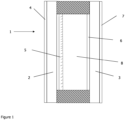
- a double glazing unit (DGU) (1) as illustrated in Figure 1 was prepared using a 6mm glass sheet (2) with a coating (5) as described in example 1. That is, a 6mm thick float glass sheet (2) with a coating as detailed in example 1 was assembled with a second 4 mm thick uncoated float glass sheet (3).
- the two sheets of glass (2, 3) were assembled such that the coated side (5) of the coated glass sheet (2) faced the interspace (8) (referred to as position two in the DGU when installed), that is, the coated glass sheet (2) is closer to the external environment (10) than the uncoated glass sheet (3), to form a thermal insulation double-glazing unit.
- the glass sheets were positioned with an interspace distance of 16 mm between them and, the interspace gap (8) was filled with a 90% argon gas and 10% air filling.
- the uncoated face (4) of the coated glass sheet (2) was therefore present at position 1, and the two uncoated faces (6) and (7) of the second glass sheet (3) were present at positions 3 and 4 respectively.
- the properties of the double glazing with the low-e coating at position 2, were measured in accordance with EN 410. The results are as provided in Table 2: Table 2. Parameter Measured value Light transmittance (T L ) 59 G-value 27 Selectivity 2.18 ⁇ a*, 0°- 60° 1.0 ⁇ b*, 0°- 60° 2.9 ⁇ a*, 3 % 2.5 ⁇ b*, 3 % 2.8
- the Selectivity value is equal to the ratio of the light transmission and g-value for the double glazing unit, wherein each value is calculated using EN 410 incorporated herein by reference.
- a second dielectric layer sequence comprising a layer of tin and zinc oxide (ZnSnO x ) and aluminium-doped zinc oxide (ZAO) with a combined optical layer thickness of 155.2 nm.
- a second silver functional layer (Ag layer 2) was applied above the second dielectric layer, with a thickness of 14 nm.
- second barrier layer of aluminium-doped zinc oxide (ZAO) with an optical layer thickness of 4.1 nm applied above the second silver functional layer (Ag layer 2).
- the second barrier layer of aluminium-doped zinc oxide (ZAO) was then coated with a second dielectric coating layer of tin and zinc oxide (ZnSnO x ), with an optical layer thickness of 78.7 nm.
- a second titanium oxide (TiO x ) layer was applied to form a coating with an optical layer thickness of 73.5 nm, to complete a third dielectric layer sequence opl 3 formed from a layer of aluminium-doped zinc oxide (ZAO), a layer of tin and zinc oxide (ZnSnO x ), and a layer of titanium oxide (TiO x ) and comprising a combined optical layer thickness of 156.3 nm.
- a third silver functional layer (Ag layer 3) with a thickness of 14 nm.
- a layer of aluminium-doped zinc oxide (ZAO) with an optical layer thickness of 4.1 nm was applied atop the third silver functional layer (Ag layer 3), and above the third layer of aluminium-doped zinc oxide (ZAO) was applied a third layer of tin and zinc oxide (ZnSnO x ) with an optical layer thickness of 130.4 nm to form a fourth dielectric layer sequence, opl 4 , with a combined optical layer thickness of 134.6 nm.
- ZnSnO x tin and zinc oxide
- a fourth silver functional layer (Ag layer 4) with a thickness of 14 nm was then applied above the third layer of tin and zinc oxide (ZnSnO x ).
- a layer of aluminium-doped zinc oxide (ZAO) with an optical layer thickness of 4.1 nm was deposited above the coated on the fourth silver functional layer (Ag layer 4).
- a fourth layer of tin and zinc oxide (ZnSnO x ) with an optical layer thickness of 76.6 nm was applied above the fourth layer of aluminium-doped zinc oxide (ZAO) to complete the fifth dielectric sequence, opls,with a combined optical layer thickness of 80.7 nm.
- each silver functional layer is equal for all layers.
- a double glazing unit (DGU) (1) as illustrated in Figure 1 was prepared using a 6mm glass sheet (2) with a coating (5) as described in comparative Example 2. That is, a 6mm thick float glass sheet (2) with a coating as detailed in Example 2 was assembled with a second 4 mm thick uncoated float glass sheet (3). The two sheets of glass (2, 3) were assembled such that the coated side (5) of the coated glass (2) sheet faced the interspace (8) (referred to as position two in a DGU when installed), and with the coated glass sheet (2) closer to the external environment (10) than the uncoated glass sheet (3), to form a thermal insulation double-glazing unit.
- DGU double glazing unit
- the glass sheets were positioned with an interspace distance of 16 mm between them and the interspace gap (8) was filled with a 90% argon gas and 10% air filling.
- the uncoated face (4) of the coated glass sheet (2) was therefore present at position 1, and the two uncoated faces (6) and (7) of the second glass sheet (3) were present at positions 3 and 4 respectively.
- the properties of the double glazing with the low-e coating of comparative Example 2 at position 2, were measured in accordance with EN 410. The results are as provided in Table 3: Table 3.
- the Selectivity value is equal to the ratio of the light transmission and g-value for the double glazing unit, wherein each value is calculated using EN 410 incorporated herein by reference.
- the coating sequence described in comparative Example 3 was prepared as follows. Onto a 6 mm float glass pane a first titanium oxide (TiO x ) layer was applied to form a first dielectric coating sequence with an optical layer thickness oph of 53.9 nm. Atop the titanium oxide (TiO x ) layer was then applied a first silver functional layer (Ag layer 1) to a coating thickness of 11.3 nm. A barrier layer of aluminium-doped zinc oxide (ZAO) with an optical layer thickness of 4.1 nm was then deposited on the first silver functional layer (Ag layer 1) to protect the first silver functional layer against the subsequent second coating layer sequence of tin and zinc oxide (ZnSnO x ) applied with an optical layer thickness of 165.6 nm.
- ZAO aluminium-doped zinc oxide
- a second dielectric layer sequence comprising a layer of tin and zinc oxide (ZnSnO x ) and a layer of aluminium-doped zinc oxide (ZAO) with a combined optical layer thickness opl 2 of 169.7 nm.
- a second silver functional layer (Ag layer 2) was applied above the second dielectric layer, with a thickness of 14.6 nm.
- the second barrier layer of aluminium-doped zinc oxide (ZAO) was then coated with a second dielectric coating layer of tin and zinc oxide (ZnSnO x ), to an optical layer thickness of 51.8 nm.
- a second titanium oxide (TiO x ) layer was applied to form a coating with an optical layer thickness of 80.9 nm, to complete a third dielectric layer sequence formed from a layer of aluminium-doped zinc oxide (ZAO), a layer of tin and zinc oxide (ZnSnO x ), and a layer of titanium oxide (TiO x ) comprising an optical layer thickness opl 3 of 136.8 nm.
- a fourth silver functional layer (Ag layer 4) with a thickness of 15.5 nm was then applied above the third layer of tin and zinc oxide (ZnSnO x ).
- a layer of aluminium-doped zinc oxide (ZAO) with an optical layer thickness of 4.1 nm was deposited above the coated on the fourth silver functional layer (Ag layer 4).
- a fourth layer of tin and zinc oxide (ZnSnO x ) with an optical layer thickness of 31.1 nm was applied above the fourth layer of aluminium-doped zinc oxide (ZAO) to complete the fifth dielectric sequence with a combined optical layer thickness opl 5 of 35.2 nm.
- Example 3 the relationship observed for Example 1, namely, opl 1 ⁇ 2 ⁇ opl 2 ⁇ opl 3 ⁇ opl 4 ⁇ opl 5 ⁇ 2 is not fulfilled for comparative Example 3 and instead, the combined optical thickness for the second dielectric sequence layer opl 2 is smaller than twice the combined optical thickness layer oph; the combined optical thickness layer opl 2 is greater than the combined optical thickness layer opl 3 ; and the combined optical thickness layer opl 3 is greater than the combined optical thickness layer opl 4 . That is, the following relationship for the combined optical thickness layer thicknesses oph to opl 5 is observed for comparative
- a double glazing unit (DGU) (1) as illustrated in Figure 1 was prepared using a 6mm glass sheet (2) with a coating (5) as described in comparative Example 3. That is, a 6mm thick float glass sheet (2) with a coating as detailed in example 3 was assembled with a second 4 mm thick uncoated float glass sheet (3).
- the two sheets of glass (2, 3) were assembled such that the coated side (5) of the coated glass sheet (3) faced the interspace (8) (referred to as position two in a DGU when installed), that is, the coated glass sheet (5) is closer to the external environment (10) than the uncoated glass sheet (3) to form a thermal insulation double-glazing unit.
- the glass sheets were positioned with an interspace distance of 16 mm between them and the interspace gap (8) was filled with a 90% argon gas and 10% air filling.
- the uncoated face (4) of the coated glass sheet (2) was therefore present at position 1, and the two uncoated faces (6) and (7) of the second glass sheet (3) were present at positions 3 and 4 respectively.
- the properties of the double glazing with the low-e coating from comparative Example 3 at position 2, were measured in accordance with EN 410. The results are as provided in Table 4: Table 4.
- the Selectivity value is equal to the ratio of the light transmission and g-value for the double glazing unit, wherein each value is calculated using EN 410 incorporated herein by reference.
- the coating sequence described in Example 4 was prepared as follows. Onto a 6mm float glass pane a first titanium oxide (TiO x ) layer was applied to form a first dielectric coating sequence with an optical layer thickness oph of 55.1 nm. Atop the titanium oxide (TiO x ) layer was then applied a first silver functional layer (Ag layer 1) to a coating thickness of 8.9 nm. A barrier layer of aluminium-doped zinc oxide (ZAO) with an optical layer thickness of 4.1 nm was then deposited on the first silver functional layer (Ag layer 1) to protect the first silver functional layer against the subsequent second coating layer sequence of tin and zinc oxide (ZnSnO x ) applied with an optical layer thickness of 132.5 nm.
- ZAO aluminium-doped zinc oxide
- a fourth silver functional layer (Ag layer 4) with a thickness of 16.9 nm was then applied above the third layer of tin and zinc oxide (ZnSnO x ). Again, a layer of nickel chromium with an optical layer thickness of 0.8 nm was then applied above the fourth silver layer. Finally, a fourth layer of tin and zinc oxide (ZnSnO x ) with an optical layer thickness of 84.9 nm was applied to complete the fifth dielectric sequence with a combined effective optical layer thickness opl 5 of 86.9 nm.
- each silver functional layer dAg increases as the distance of the silver functional layer to the glass substrate increases. That is for example, the thickness of the second silver functional layer dAg 2 is greater than the thickness of the first silver functional layer dAg 1 .
- a double glazing unit (DGU) (1) as illustrated in Figure 1 was prepared using a 6mm glass sheet (2) with a coating (5) as described in Example 4. That is, a 6mm thick float glass sheet (2) with a coating as detailed in Example 4 was assembled with a second 4 mm thick uncoated float glass sheet (3).
- the two sheets of glass (2, 3) were assembled such that the coated side (5) of the coated glass sheet (3) faced the interspace (8) (referred to as position two in a DGU when installed), that is, the coated glass sheet (5) is closer to the external environment (10) than the uncoated glass sheet (3) to form a thermal insulation double-glazing unit.
- the glass sheets were positioned with an interspace distance of 16 mm between them and the interspace gap (8) was filled with a 90% argon gas and 10% air filling.
- the uncoated face (4) of the coated glass sheet (2) is therefore present at position 1, and the two uncoated faces (6) and (7) of the second glass sheet (3) are present at positions 3 and 4 respectively.
- the properties of the double glazing with the low-e coating at position 2, were measured in accordance with EN 410. The results are as provided in Table 5: Table 5.
- Parameter Measured value Light transmittance (T L ) 50 G-value 23 Selectivity 2.17 ⁇ a*, 0°- 60° 2.2 ⁇ b*, 0°- 60° 2.5 ⁇ a*, 3 % 2.9 ⁇ b*, 3 % 2.3
- the Selectivity value is equal to the ratio of the light transmission and G-value for a double glazing unit, wherein each value is calculated using EN 410 incorporated herein by reference.
- the coated glass sheets prepared according to the present invention provide good solar control performance with a high selectivity 2.18 and 2.17.
- both of Examples 1 and 4 show a small variation of the outside colour under different viewing angle when placed in a facade.
- the colour change under different viewing angle when placed in a double glazing unit is as preferred, with a value of less than 3.0 for ⁇ a* and ⁇ b*.
- Example 3 the required optical thickness relationship for the dielectric layers according to the present invention is again not fulfilled. Instead, the optical layer thicknesses for the dielectric layers in Example 3 decrease instead of increasing, as one moves away from the glass substrate.
Landscapes
- Chemical & Material Sciences (AREA)
- Engineering & Computer Science (AREA)
- Materials Engineering (AREA)
- Chemical Kinetics & Catalysis (AREA)
- Organic Chemistry (AREA)
- Geochemistry & Mineralogy (AREA)
- General Chemical & Material Sciences (AREA)
- Life Sciences & Earth Sciences (AREA)
- Structural Engineering (AREA)
- Physics & Mathematics (AREA)
- Mechanical Engineering (AREA)
- Metallurgy (AREA)
- Civil Engineering (AREA)
- Health & Medical Sciences (AREA)
- General Physics & Mathematics (AREA)
- Toxicology (AREA)
- Optics & Photonics (AREA)
- Architecture (AREA)
- Surface Treatment Of Glass (AREA)
- Laminated Bodies (AREA)
- Joining Of Glass To Other Materials (AREA)
- Optical Filters (AREA)
Applications Claiming Priority (3)
| Application Number | Priority Date | Filing Date | Title |
|---|---|---|---|
| GBGB1820002.2A GB201820002D0 (en) | 2018-12-07 | 2018-12-07 | Coated glass pane |
| PCT/GB2019/053468 WO2020115507A1 (en) | 2018-12-07 | 2019-12-09 | Coated glass pane |
| EP19821185.6A EP3891108B1 (de) | 2018-12-07 | 2019-12-09 | Beschichtete glasscheibe |
Related Parent Applications (2)
| Application Number | Title | Priority Date | Filing Date |
|---|---|---|---|
| EP19821185.6A Division EP3891108B1 (de) | 2018-12-07 | 2019-12-09 | Beschichtete glasscheibe |
| EP19821185.6A Division-Into EP3891108B1 (de) | 2018-12-07 | 2019-12-09 | Beschichtete glasscheibe |
Publications (2)
| Publication Number | Publication Date |
|---|---|
| EP4516753A2 true EP4516753A2 (de) | 2025-03-05 |
| EP4516753A3 EP4516753A3 (de) | 2025-06-18 |
Family
ID=65030160
Family Applications (2)
| Application Number | Title | Priority Date | Filing Date |
|---|---|---|---|
| EP24222438.4A Pending EP4516753A3 (de) | 2018-12-07 | 2019-12-09 | Beschichtete glasscheibe |
| EP19821185.6A Active EP3891108B1 (de) | 2018-12-07 | 2019-12-09 | Beschichtete glasscheibe |
Family Applications After (1)
| Application Number | Title | Priority Date | Filing Date |
|---|---|---|---|
| EP19821185.6A Active EP3891108B1 (de) | 2018-12-07 | 2019-12-09 | Beschichtete glasscheibe |
Country Status (8)
| Country | Link |
|---|---|
| US (2) | US12060751B2 (de) |
| EP (2) | EP4516753A3 (de) |
| JP (2) | JP7487198B2 (de) |
| CN (1) | CN113165965B (de) |
| FI (1) | FI3891108T3 (de) |
| GB (1) | GB201820002D0 (de) |
| PL (1) | PL3891108T3 (de) |
| WO (1) | WO2020115507A1 (de) |
Families Citing this family (5)
| Publication number | Priority date | Publication date | Assignee | Title |
|---|---|---|---|---|
| FR3082199B1 (fr) * | 2018-06-12 | 2020-06-26 | Saint-Gobain Glass France | Materiau comprenant un empilement a proprietes thermiques et esthetiques |
| FR3082198B1 (fr) * | 2018-06-12 | 2020-06-26 | Saint-Gobain Glass France | Materiau comprenant un empilement a proprietes thermiques et esthetique |
| JP7722925B2 (ja) | 2019-03-28 | 2025-08-13 | ビトロ フラット グラス エルエルシー | 低い可視光反射率を有するヘッドアップディスプレイのためのコーティング |
| BR112022015804A2 (pt) | 2020-02-14 | 2022-10-11 | Vitro Flat Glass Llc | Artigo revestido e método para a fabricação de um artigo revestido |
| WO2024190750A1 (ja) * | 2023-03-10 | 2024-09-19 | 積水化学工業株式会社 | 合わせガラス用中間膜、及び合わせガラス |
Citations (10)
| Publication number | Priority date | Publication date | Assignee | Title |
|---|---|---|---|---|
| US5595825A (en) | 1993-09-23 | 1997-01-21 | Saint-Gobain Vitrage | Transparent substrate provided with a stack of thin films acting on solar and/or infrared radiation |
| WO2004063111A1 (en) | 2003-01-09 | 2004-07-29 | Guardian Industries Corp. | Heat treatable coated article with niobium nitride ir reflecting layer and method of making same |
| WO2011020974A1 (fr) | 2009-08-21 | 2011-02-24 | Saint-Gobain Glass France | Substrat muni d'un empilement a proprietes thermiques, en particulier pour realiser un vitrage chauffant |
| US20110169402A1 (en) | 2008-05-27 | 2011-07-14 | Guardian Industries Corp. | EMI filter for plasma display panel |
| CN102372447A (zh) | 2010-08-24 | 2012-03-14 | 中国南玻集团股份有限公司 | 含银低辐射玻璃及其制造方法 |
| US20130057951A1 (en) | 2010-05-25 | 2013-03-07 | Agc Glass Europe | Solar control glazing with low solar factor |
| US20140347722A1 (en) | 2011-11-29 | 2014-11-27 | Agc Glass Europe | Solar-control glazing unit |
| US20170059753A1 (en) | 2015-09-01 | 2017-03-02 | Ppg Industries Ohio, Inc. | Solar control coating with enhanced solar control performance |
| US20180194675A1 (en) | 2015-07-08 | 2018-07-12 | Saint-Gobain Glass France | Material provided with a stack having thermal properties |
| US20180194676A1 (en) | 2015-07-08 | 2018-07-12 | Saint-Gobain Glass France | Substrate provided with a stack having thermal properties |
Family Cites Families (21)
| Publication number | Priority date | Publication date | Assignee | Title |
|---|---|---|---|---|
| US4859532A (en) * | 1986-11-27 | 1989-08-22 | Asahi Glass Company Ltd. | Transparent laminated product |
| ES2627198T5 (es) * | 2002-05-03 | 2020-08-21 | Vitro Flat Glass Llc | Sustrato que tiene revestimiento de gestión térmica para una unidad de vidrio aislante |
| US20060055308A1 (en) * | 2004-09-16 | 2006-03-16 | Lairson Bruce M | Plasma display filter with a dielectric/metallic layer stack of at least eleven layers |
| US7339728B2 (en) * | 2005-10-11 | 2008-03-04 | Cardinal Cg Company | Low-emissivity coatings having high visible transmission and low solar heat gain coefficient |
| US7342716B2 (en) * | 2005-10-11 | 2008-03-11 | Cardinal Cg Company | Multiple cavity low-emissivity coatings |
| US7508586B2 (en) * | 2006-04-14 | 2009-03-24 | Southwall Technologies, Inc. | Zinc-based film manipulation for an optical filter |
| FR2936510B1 (fr) * | 2008-09-30 | 2019-08-30 | Saint-Gobain Glass France | Substrat muni d'un empilement a proprietes thermiques, en particulier pour realiser un vitrage chauffant. |
| FR2942794B1 (fr) * | 2009-03-09 | 2011-02-18 | Saint Gobain | Substrat muni d'un empilement a proprietes thermiques comportant des couches a haut indice de refraction |
| BE1019346A3 (fr) * | 2010-05-25 | 2012-06-05 | Agc Glass Europe | Vitrage de controle solaire. |
| JP5938189B2 (ja) * | 2011-10-12 | 2016-06-22 | デクセリアルズ株式会社 | 光学体、窓材、建具および日射遮蔽装置 |
| CN104025704B (zh) * | 2012-01-10 | 2016-10-12 | 法国圣戈班玻璃厂 | 带有导电涂层的透明玻璃 |
| FR2985724B1 (fr) * | 2012-01-16 | 2014-03-07 | Saint Gobain | Substrat muni d'un empilement a proprietes thermiques comportant quatre couches fonctionnelles metalliques. |
| JP2014124815A (ja) * | 2012-12-26 | 2014-07-07 | Central Glass Co Ltd | 低放射膜 |
| ES2691038T5 (es) * | 2013-02-14 | 2023-04-26 | Agc Glass Europe | Acristalamiento antisolar |
| FR3005048B1 (fr) * | 2013-04-30 | 2020-09-25 | Saint Gobain | Substrat muni d'un empilement a proprietes thermiques |
| HUE037218T2 (hu) * | 2013-05-30 | 2018-08-28 | Agc Glass Europe | Napfényvédõ üvegezés |
| US10345499B2 (en) * | 2015-02-03 | 2019-07-09 | Vitro Flat Glass LLC.. | Solar control coating with enhanced solar control performance |
| JP6853486B2 (ja) * | 2016-09-15 | 2021-03-31 | セントラル硝子株式会社 | 日射遮蔽部材 |
| RU2754898C2 (ru) * | 2017-03-10 | 2021-09-08 | ГАРДИАН ГЛАСС, ЭлЭлСи | Оконный блок-стеклопакет с тройным серебряным покрытием и диэлектрическим покрытием на противоположных сторонах стеклянной подложки |
| JP7025665B2 (ja) * | 2017-05-12 | 2022-02-25 | セントラル硝子株式会社 | 日射遮蔽部材 |
| FR3087767B1 (fr) * | 2018-10-30 | 2021-02-26 | Saint Gobain | Materiau comprenant un substrat muni d'un empilement de couches minces a proprietes thermiques |
-
2018
- 2018-12-07 GB GBGB1820002.2A patent/GB201820002D0/en not_active Ceased
-
2019
- 2019-12-09 EP EP24222438.4A patent/EP4516753A3/de active Pending
- 2019-12-09 WO PCT/GB2019/053468 patent/WO2020115507A1/en not_active Ceased
- 2019-12-09 CN CN201980080373.5A patent/CN113165965B/zh active Active
- 2019-12-09 EP EP19821185.6A patent/EP3891108B1/de active Active
- 2019-12-09 US US17/298,744 patent/US12060751B2/en active Active
- 2019-12-09 FI FIEP19821185.6T patent/FI3891108T3/fi active
- 2019-12-09 JP JP2021532157A patent/JP7487198B2/ja active Active
- 2019-12-09 PL PL19821185.6T patent/PL3891108T3/pl unknown
-
2024
- 2024-05-08 JP JP2024075669A patent/JP2024105441A/ja active Pending
- 2024-07-01 US US18/760,798 patent/US20240352789A1/en active Pending
Patent Citations (10)
| Publication number | Priority date | Publication date | Assignee | Title |
|---|---|---|---|---|
| US5595825A (en) | 1993-09-23 | 1997-01-21 | Saint-Gobain Vitrage | Transparent substrate provided with a stack of thin films acting on solar and/or infrared radiation |
| WO2004063111A1 (en) | 2003-01-09 | 2004-07-29 | Guardian Industries Corp. | Heat treatable coated article with niobium nitride ir reflecting layer and method of making same |
| US20110169402A1 (en) | 2008-05-27 | 2011-07-14 | Guardian Industries Corp. | EMI filter for plasma display panel |
| WO2011020974A1 (fr) | 2009-08-21 | 2011-02-24 | Saint-Gobain Glass France | Substrat muni d'un empilement a proprietes thermiques, en particulier pour realiser un vitrage chauffant |
| US20130057951A1 (en) | 2010-05-25 | 2013-03-07 | Agc Glass Europe | Solar control glazing with low solar factor |
| CN102372447A (zh) | 2010-08-24 | 2012-03-14 | 中国南玻集团股份有限公司 | 含银低辐射玻璃及其制造方法 |
| US20140347722A1 (en) | 2011-11-29 | 2014-11-27 | Agc Glass Europe | Solar-control glazing unit |
| US20180194675A1 (en) | 2015-07-08 | 2018-07-12 | Saint-Gobain Glass France | Material provided with a stack having thermal properties |
| US20180194676A1 (en) | 2015-07-08 | 2018-07-12 | Saint-Gobain Glass France | Substrate provided with a stack having thermal properties |
| US20170059753A1 (en) | 2015-09-01 | 2017-03-02 | Ppg Industries Ohio, Inc. | Solar control coating with enhanced solar control performance |
Also Published As
| Publication number | Publication date |
|---|---|
| GB201820002D0 (en) | 2019-01-23 |
| CN113165965A (zh) | 2021-07-23 |
| WO2020115507A1 (en) | 2020-06-11 |
| US20240352789A1 (en) | 2024-10-24 |
| FI3891108T3 (fi) | 2025-04-05 |
| CN113165965B (zh) | 2023-07-28 |
| EP3891108A1 (de) | 2021-10-13 |
| JP2024105441A (ja) | 2024-08-06 |
| PL3891108T3 (pl) | 2025-04-28 |
| US20220034155A1 (en) | 2022-02-03 |
| JP7487198B2 (ja) | 2024-05-20 |
| EP3891108B1 (de) | 2025-02-12 |
| JP2022511863A (ja) | 2022-02-01 |
| EP4516753A3 (de) | 2025-06-18 |
| US12060751B2 (en) | 2024-08-13 |
Similar Documents
| Publication | Publication Date | Title |
|---|---|---|
| EP3891108B1 (de) | Beschichtete glasscheibe | |
| US8003235B2 (en) | Coated glass pane | |
| EP3004014B1 (de) | Emissionsarme sonnenschutzverglasung | |
| EP3004015B1 (de) | Verglasung mit geringer emissivität | |
| JP6444891B2 (ja) | アンチソーラーグレージング | |
| KR101941718B1 (ko) | 박막 다중층이 구비된 투명 기판 | |
| US11149486B2 (en) | Nickel-aluminum blocker film multiple cavity controlled transmission coating | |
| RU2747376C2 (ru) | Подложка, снабженная набором, обладающим тепловыми свойствами, ее применение и ее изготовление | |
| US20130337200A1 (en) | Coated glazing | |
| WO2022053507A1 (en) | Temperable uv reflecting coated glass sheet | |
| EP2102126B1 (de) | Beschichtete glasplatten und herstellungsverfahren dafür | |
| US10563451B2 (en) | Nickel-aluminum blocker film controlled transmission coating | |
| GB2324098A (en) | Solar control coated glass | |
| KR20170086419A (ko) | 저방사 유리 및 그의 제조방법 | |
| WO2021019259A1 (en) | Coated substrate | |
| US20200079686A1 (en) | Low-e matchable coated articles having absorber film and corresponding methods | |
| RU2811705C2 (ru) | Оконное стекло с покрытием | |
| EP4587399A1 (de) | Isolierende mehrfachverglasung mit zwei emissionsarmen beschichtungen | |
| WO2025186542A1 (en) | Coated glass pane | |
| HK40065239A (en) | Nickel-aluminum blocker film multiple cavity controlled transmission coating |
Legal Events
| Date | Code | Title | Description |
|---|---|---|---|
| PUAI | Public reference made under article 153(3) epc to a published international application that has entered the european phase |
Free format text: ORIGINAL CODE: 0009012 |
|
| STAA | Information on the status of an ep patent application or granted ep patent |
Free format text: STATUS: THE APPLICATION HAS BEEN PUBLISHED |
|
| AC | Divisional application: reference to earlier application |
Ref document number: 3891108 Country of ref document: EP Kind code of ref document: P |
|
| AK | Designated contracting states |
Kind code of ref document: A2 Designated state(s): AL AT BE BG CH CY CZ DE DK EE ES FI FR GB GR HR HU IE IS IT LI LT LU LV MC MK MT NL NO PL PT RO RS SE SI SK SM TR |
|
| PUAL | Search report despatched |
Free format text: ORIGINAL CODE: 0009013 |
|
| AK | Designated contracting states |
Kind code of ref document: A3 Designated state(s): AL AT BE BG CH CY CZ DE DK EE ES FI FR GB GR HR HU IE IS IT LI LT LU LV MC MK MT NL NO PL PT RO RS SE SI SK SM TR |
|
| RIC1 | Information provided on ipc code assigned before grant |
Ipc: C03C 17/36 20060101AFI20250509BHEP |
|
| STAA | Information on the status of an ep patent application or granted ep patent |
Free format text: STATUS: REQUEST FOR EXAMINATION WAS MADE |
|
| 17P | Request for examination filed |
Effective date: 20251218 |