EP4494700A2 - Neue orale pharmazeutische zusammensetzung und dosierungsplan zur therapie progressiver fibrosierender interstitieller lungenerkrankungen - Google Patents
Neue orale pharmazeutische zusammensetzung und dosierungsplan zur therapie progressiver fibrosierender interstitieller lungenerkrankungen Download PDFInfo
- Publication number
- EP4494700A2 EP4494700A2 EP24218458.8A EP24218458A EP4494700A2 EP 4494700 A2 EP4494700 A2 EP 4494700A2 EP 24218458 A EP24218458 A EP 24218458A EP 4494700 A2 EP4494700 A2 EP 4494700A2
- Authority
- EP
- European Patent Office
- Prior art keywords
- group
- ild
- pharmaceutical composition
- oral pharmaceutical
- interstitial lung
- Prior art date
- Legal status (The legal status is an assumption and is not a legal conclusion. Google has not performed a legal analysis and makes no representation as to the accuracy of the status listed.)
- Pending
Links
Images

Classifications
-
- A—HUMAN NECESSITIES
- A61—MEDICAL OR VETERINARY SCIENCE; HYGIENE
- A61K—PREPARATIONS FOR MEDICAL, DENTAL OR TOILETRY PURPOSES
- A61K31/00—Medicinal preparations containing organic active ingredients
- A61K31/33—Heterocyclic compounds
- A61K31/395—Heterocyclic compounds having nitrogen as a ring hetero atom, e.g. guanethidine or rifamycins
- A61K31/495—Heterocyclic compounds having nitrogen as a ring hetero atom, e.g. guanethidine or rifamycins having six-membered rings with two or more nitrogen atoms as the only ring heteroatoms, e.g. piperazine or tetrazines
- A61K31/505—Pyrimidines; Hydrogenated pyrimidines, e.g. trimethoprim
- A61K31/519—Pyrimidines; Hydrogenated pyrimidines, e.g. trimethoprim ortho- or peri-condensed with heterocyclic rings
-
- A—HUMAN NECESSITIES
- A61—MEDICAL OR VETERINARY SCIENCE; HYGIENE
- A61K—PREPARATIONS FOR MEDICAL, DENTAL OR TOILETRY PURPOSES
- A61K9/00—Medicinal preparations characterised by special physical form
- A61K9/0012—Galenical forms characterised by the site of application
- A61K9/0053—Mouth and digestive tract, i.e. intraoral and peroral administration
-
- A—HUMAN NECESSITIES
- A61—MEDICAL OR VETERINARY SCIENCE; HYGIENE
- A61K—PREPARATIONS FOR MEDICAL, DENTAL OR TOILETRY PURPOSES
- A61K9/00—Medicinal preparations characterised by special physical form
- A61K9/20—Pills, tablets, discs, rods
- A61K9/28—Dragees; Coated pills or tablets, e.g. with film or compression coating
-
- A—HUMAN NECESSITIES
- A61—MEDICAL OR VETERINARY SCIENCE; HYGIENE
- A61P—SPECIFIC THERAPEUTIC ACTIVITY OF CHEMICAL COMPOUNDS OR MEDICINAL PREPARATIONS
- A61P11/00—Drugs for disorders of the respiratory system
Definitions
- Phosphodiesterases mediate the hydrolysis of the second messengers, cyclic adenosine monophosphate (cAMP) or cyclic guanosine monophosphate.
- PDEs are coded by 11 gene superfamilies containing multiple genes (coding for subtypes A, B, C, etc.) that also give rise to alternative mRNA-splicing variants leading to approximately 100 PDE isoforms.
- PDE4 has traditionally been implicated in the regulation of inflammation and the modulation of immunocompetent cells, and the three selective PDE4 inhibitors currently available support a beneficial role for PDE4 inhibitors in inflammatory and/or autoimmune diseases ( Sakkas et al., 2017, Curr. Med. Chem.
- the first-in-class PDE4 inhibitor oral roflumilast (Daliresp ® , Daxas ® ), was approved by the U.S. Food and Drug Administration in 2011 to reduce the risk of COPD exacerbations in patients with severe COPD associated with chronic bronchitis and a history of exacerbations (U.S. Food & Drug Administration, 2013, DALIRESP ® (roflumilast)).
- Another compound, oral apremilast (Otezla ® ), was approved for the treatment of psoriatic arthritis and plaque psoriasis in 2014 (U.S.
- crisaborole (Eucrisa ® ) was approved in 2016 for topical treatment of mild-to-moderate atopic dermatitis (U.S. Food & Drug Administration, 2016, EUCRISA TM (crisaborole)). None of these show any preferential enzymatic inhibition among the four PDE4 subtypes, A-D.
- bronchoalveolar lavage fluid BALF
- the levels of TNF- ⁇ , interleukin (IL)-13, TGF- ⁇ , and mucin 5ac, the formation of lipid hydroperoxides, and the influx of inflammatory cells (e.g. neutrophils and macrophages) were inhibited.
- inflammatory cells e.g. neutrophils and macrophages
- roflumilast lowered lung hydroxyproline content and mRNA expression of TNF- ⁇ , fibronectin (FN), and CTGF ( Sisson et al., 2018, Physiol. Rep. 6, e13753 ).
- roflumilast was active both in a preventive and in a therapeutic regimen, and under the latter conditions appeared to be therapeutically equipotent to pirfenidone and nintedanib.
- roflumilast inhibited fibrosis, collagen deposition, hydroxyproline and TGF- ⁇ 1 content, cell infiltration, and expression of mRNA for IL-6 and IL-1 ⁇ .
- BALF inflammatory cells macrophages, lymphocytes, neutrophils, and eosinophils
- expression of mRNA for IL-6, IL-1 ⁇ , and monocyte chemotactic protein-1 was inhibited by roflumilast.
- TGF- ⁇ up-regulated PDE4A/B In mouse primary tubular epithelial cells in vitro, TGF- ⁇ up-regulated PDE4A/B, and rolipram inhibited TGF- ⁇ -induced damage, FN expression, and deficiency of mitochondrial biogenesis.
- roflumilast inhibited diethylnitrosamine-induced liver fibrosis, hydroxyproline deposition, and TGF- ⁇ 1 expression in rats ( Essam et al., 2019, Life Sci. 222, 245-254 ).
- rolipram inhibited collagen deposition, ⁇ -smooth muscle actin ( ⁇ -SMA) staining, and mRNA expression, as well as the expression of TGF- ⁇ 1 mRNA and TNF- ⁇ protein, in a bile duct ligation-induced hepatic fibrosis model in rats, with up-regulation of PDE4A, B, and D (Gobejishvili 2019).
- rolipram inhibited mRNA expression of ⁇ -SMA and Col1A2 ( Gobejishvili et al., 2013, J. Pharmacol. Exp. Ther. 347, 80-90 ).
- rolipram inhibited collagen and TGF- ⁇ 1 in a model of trinitrobenzene sulfonic acid-induced colitis in rats ( Videla et al., 2006, J. Pharmacol. Exp. Ther. 316, 940-945 ), and apremilast inhibited fibrosis in colon, collagen deposition, and the expression of genes related to fibrosis in a model of dextran sulfate sodium-induced colitis ulcerosa in mice ( Li et al., 2019, Br. J. Pharmacol. 176, 2209-2226 ).
- rolipram inhibited fibrotic reactions, indicating that PDE4 inhibition has the potential to prevent postoperative intra-abdominal adhesions ( Eser et al., 2012, Dis. Colon Rectum 55, 345-350 ). Adhesions are assumed to result from laparotomy by abnormal healing. In support of this assumption, rolipram has been shown to be active in a subcutaneous or intraperitoneal polyether-polyurethane sponge implant model in mice by inhibiting intra-implant collagen and TGF- ⁇ 1 deposition ( Mendes et al., 2009, Microvasc. Res. 78, 265-271 ).
- HFL-1 functions FN-stimulated chemotaxis and collagen gel contraction
- rolipram and roflumilast The inhibition of HFL-1 functions (FN-stimulated chemotaxis and collagen gel contraction) by rolipram and roflumilast was dependent on cyclooxygenase-2 expression and subsequent PGE2 synthesis ( Kohyama et al., 2002, Am. J. Respir. Cell Mol. Biol. 26, 694-701 ).
- TGF- ⁇ 1-stimulated FN release was inhibited by the PDE4 inhibitors, paralleled by a stimulation of PGE2 release as a positive feedback mechanism ( Togo et al., 2009, Am. J. Physiol. Lung Cell Mol. Physiol. 296, L959-L969 .).
- roflumilast N-oxide the active metabolite of roflumilast, in the presence of PGE2 was shown to inhibit intercellular adhesion molecule-1 and eotaxin release stimulated by TNF- ⁇ , proliferation stimulated by basic fibroblast growth factor (bFGF) plus IL-1 ⁇ , as well as TGF- ⁇ 1-induced ⁇ -SMA, CTGF, and FN mRNA expression in the presence of IL-1 ⁇ ( Sabatini et al., 2010, Pulm. Pharmacol. Ther. 23, 283-291 ). Importantly, IL-1 ⁇ up-regulated PDE4 activity.
- PDE4 subtype-specific siRNA By using PDE4 subtype-specific siRNA, the involvement of PDE4B and PDE4A in this response, as well as the involvement of PDE4B and PDE4D in TGF- ⁇ -induced ⁇ -SMA expression, were shown ( Selige et al., 2011, J. Cell. Physiol. 226, 1970-1980 ). The importance of a cAMP trigger for the modulation of fibroblast functions by PDE4 inhibition was corroborated by the inhibition by roflumilast of TGF- ⁇ 1-induced CTGF mRNA and ⁇ -SMA protein expression, and FN in the presence of the long-acting ⁇ 2-adrenergic agonist indacaterol ( Tannheimer et al., 2012, Respir. Res. 13, 28 ).
- NHLF responses (collagen synthesis, proliferation, reactive oxygen species and F2-isoprostane formation, NADPH oxidase 4 expression) stimulated by bleomycin or 8-epi-PGF2 ⁇ were inhibited by roflumilast N-oxide ( Vecchio et al., 2013, Mediators Inflamm. 2013, 745984 ).
- roflumilast N-oxide Vecchio et al., 2013, Mediators Inflamm. 2013, 745984 .
- TGF- ⁇ -induced mRNA expression of collagen ⁇ 1, CTGF, and FN in the presence of the adenyl cyclase activator forskolin were inhibited by roflumilast and another PDE4 inhibitor (compound 1) ( Sisson et al., 2018, Physiol. Rep. 6, e13753 ), as well as a dual-selective PDE4/5 inhibitor (compound A) ( Muraki et al., 2019, Biosci. Biotechn
- PDE4 inhibitors are able to directly inhibit various fibroblast functions where either an endogenous or an exogenous cAMP trigger is available in the test system. While the availability of cAMP agonists may be limited under artificial in vitro conditions, it can be expected that in diseased (inflammatory, fibrotic) tissues, cAMP agonists like PGE2, adenosine, histamine, or adrenalin may be formed. The importance of PDE4 under such conditions may be further enhanced by up-regulation of PDE4 activity by cytokines such as IL-1 ⁇ .
- TGF- ⁇ 1 stimulated the up-regulation of PDE4 subtypes (PDE4A and 4D), and rolipram and siRNA inhibited epithelial-mesenchymal transition changes like FN and collagen mRNA expression, although not ⁇ -SMA mRNA ( Kolosionek et al., 2009, Mol. Biol. Cell 20, 4751-4765 ).
- Interstitial lung diseases comprise a heterogeneous group of lung diseases affecting the interstitium, distinct from obstructive airway diseases such as asthma or chronic obstructive pulmonary disease (COPD). Prolonged ILD may result in pulmonary fibrosis, but this is not always the case.
- the most extensively studied ILD is idiopathic pulmonary fibrosis (IPF), which is characterized by progressive pulmonary fibrosis.
- Non-IPF ILDs may include connective tissue disease-related ILDs such as those related to rheumatoid arthritis and other autoimmune diseases, systemic sclerosis associated ILD (SSc-ILD), and polymyositis/dermatomyositis, and ILDs related to chronic sarcoidosis, chronic hypersensitivity pneumonitis, idiopathic non-specific interstitial pneumonia, and exposure-related diseases such as asbestosis and silicosis ( Cottin et al, . Eur. Respir. Rev. 28, 180100 ; Kolb, M., and Vasakova, M. (2019), Respir. Res. 20, 57 ). Up to 40% of patients with these ILDs may develop a progressing fibrotic phenotype.
- connective tissue disease-related ILDs such as those related to rheumatoid arthritis and other autoimmune diseases, systemic sclerosis associated ILD (SSc-ILD), and polymyositis/dermatomyos
- Progression of fibrosing ILD is reflected in various parameters, including decline in pulmonary function, decrease in exercise capacity, deterioration in quality of life, worsening of cough and dyspnea, acute exacerbations, and increase of morphologic abnormalities ( Cottin et al. Eur. Respir. Rev. 28, 180100, 2019 ; Kolb and Vasakova, 2019, Respir. Res. 20, 57 ).
- forced vital capacity FVC
- acute exacerbations are associated with very high mortality.
- nintedanib has been approved in the US since 2014 (U.S.
- gastrointestinal side effects are gastrointestinal events, particularly diarrhea, nausea, vomiting, abdominal pain, decreased appetite and a decreased body weight.
- gastrointestinal side effects arise, they are usually managed either by treatment interruption, dose reduction or symptomatic treatment of the gastrointestinal side effects (see Mazzei et al, Ther. Adv. Respir. Dis. 2015, Vol. 9 [3], pp. 121-129 ).
- WO2019/081235 discloses a combination of nintedanib and of the PDE4-inhibitor of formula III which shows in an in vitro assay using human lung fibroblasts a synergistic overadditive effect with respect to fibroblast proliferation.
- WO 2013/026797 nor WO 2019/081235 disclose oral compositions and/or dose regimens of the PDE4-inhibitor of formula III which combine both, an excellent therapeutic efficacy (alone and in combination with standard of care treatment which is either nintedanib treatment or pirfenidone treatment) and an acceptable tolerability/safety profile in human PF-ILD/IPF-patients, in particular acceptable gastrointestinal adverse events/side effects.
- an oral composition comprising a suitable dose and dose regimen of the PDE4 inhibitor of formula III that will combine both, a satisfying therapeutic efficacy for the treatment of PF-ILD patients, preferably of IPF patients, and an acceptable tolerability/safety profile that will lead to sufficient patient compliance.
- the PDE4-inhibitor of formula III is administered to the PF-ILD patient, preferably to the IPF patient, in the dose of 18 mg twice daily.
- the invention concerns an oral pharmaceutical composition
- an oral pharmaceutical composition comprising the PDE4B-inhibitor of formula III in a dose of 18 mg or 9 mg for use in the treatment of one or more progressive fibrosing interstitial lung diseases (PF-ILD), wherein this oral pharmaceutical composition is administered to the patient twice daily.
- PF-ILD progressive fibrosing interstitial lung diseases
- the PDE4-inhibitor of formula III is administered to the PF-ILD patient, preferably to the IPF patient, in the dose of 18 mg twice daily.
- the one or more progressive fibrosing interstitial lung disease is idiopathic pulmonary fibrosis (IPF).
- this oral pharmaceutical composition is a film-coated tablet.
- the invention concerns an oral pharmaceutical composition consisting essentially of
- these oral pharmaceutical compositions consisting essentially of the PDE4B-inhibitor of formula III in the doses of either 18 mg or 9 mg and optionally of one or more pharmaceutically acceptable carriers or excipients which are to be administered twice daily are preferably film-coated tablets.
- compositions comprising the PDE4B-inhibitor of formula III in the above mentioned doses of either 9 mg or 18 mg as the only active agent and optionally one or more pharmaceutically acceptable carriers or excipients are preferably film-coated tablets.
- the invention concerns the use of the PDE4B-inhibitor of formula III for the manufacture of an oral pharmaceutical composition consisting essentially of either 18 mg or 9 mg and optionally of one or more pharmaceutically acceptable carriers or excipients for the treatment of a patient suffering from a progressive fibrosing interstitial pulmonary disease (PF-ILD), wherein said oral pharmaceutical composition is to be administered to said patient twice daily.
- PF-ILD progressive fibrosing interstitial pulmonary disease
- the PDE4B-inhibitor of formula III is administered to the PF-ILD patient, preferably to the IPF patient, in the dose of 18 mg twice daily.
- the progressive fibrosing interstitial pulmonary disease is idiopathic pulmonary fibrosis (IPF).
- the oral pharmaceutical composition consisting essentially of the PDE4B-inhibitor of formula III in the dose of either 18 mg or 9 mg and optionally of one or more pharmaceutically acceptable carriers or excipients for the treatment of a patient suffering from a PF-ILD
- the oral pharmaceutical composition is a film-coated tablet.
- the invention in a third aspect concerns an oral pharmaceutical composition
- an oral pharmaceutical composition comprising
- the progressive fibrosing interstitial lung disease (PF-ILD) to be treated is idiopathic pulmonary fibrosis (IPF).
- the invention concerns the use of the PDE4B-inhibitor of formula III for the manufacture of an oral medicament comprising 18 mg or 9 mg of the PDE4B-inhibitor of formula III for treating a patient suffering from a progressive fibrosing interstitial lung disease (PF-ILD) in combination with a separate oral medicament comprising a therapeutically effective dose of nintedanib (as background treatment), whereby said oral medicament comprising the 18 mg or 9 mg of the PDE4B-inhibitor of formula III is administered to the patient twice daily.
- PF-ILD progressive fibrosing interstitial lung disease
- the invention concerns the use of the PDE4B-inhibitor of formula III for the manufacture of an oral medicament comprising 18 mg or 9 mg of the PDE4B-inhibitor of formula III for treating a patient suffering from a progressive fibrosing interstitial lung disease (PF-ILD) in combination with a separate oral medicament comprising 150 mg of nintedanib (as background treatment), whereby said oral medicament comprising the PDE4B-inhibitor of formula III is administered to the patient twice daily.
- PF-ILD progressive fibrosing interstitial lung disease
- the invention concerns the use of the PDE4B-inhibitor of formula III for the manufacture of an oral medicament comprising 18 mg or 9 mg of the PDE4B-inhibitor of formula III for treating a patient suffering from a progressive fibrosing interstitial lung disease (PF-ILD) in combination with a separate oral medicament comprising 100 mg of nintedanib (as background treatment), whereby said oral medicament comprising the PDE4B-inhibitor of formula III is administered to the patient twice daily.
- PF-ILD progressive fibrosing interstitial lung disease
- the above-mentioned oral medicaments are used for the treatment of idiopathic pulmonary fibrosis (IPF).
- IPF idiopathic pulmonary fibrosis
- the invention concerns an oral pharmaceutical composition
- an oral pharmaceutical composition comprising
- the above-mentioned oral pharmaceutical composition is used for the treatment of idiopathic pulmonary fibrosis (IPF).
- IPF idiopathic pulmonary fibrosis
- the invention concerns the use of the PDE4B-inhibitor of formula III for the manufacture of an oral medicament comprising 18 mg or 9 mg of the PDE4B-inhibitor of formula III for treating a patient suffering from a progressive fibrosing interstitial lung disease (PF-ILD) in combination with a separate oral medicament comprising a therapeutically effective dose of pirfenidone (as background treatment), whereby this oral medicament comprising the PDE4B-inhibitor of formula III is administered to the patient twice daily.
- PF-ILD progressive fibrosing interstitial lung disease
- the progressive fibrosing interstitial lung disease is preferably idiopathic pulmonary fibrosis (IPF).
- the therapeutically effective dose of pirfenidone in the separate oral medicament is preferably a daily dose between 801 mg and 2403 mg.
- the invention concerns a kit for the treatment of a patient suffering from a Progressive Fibrosing Interstitial Lung Disease (PF-ILD) comprising:
- the above-mentioned kit is used for the treatment of idiopathic pulmonary fibrosis (IPF).
- IPF idiopathic pulmonary fibrosis
- the first pharmaceutical composition or dosage form is to be administered simultaneously, concurrently, sequentially, successively, alternately or separately with the second pharmaceutical composition or dosage form.
- the invention concerns a kit for the treatment of a patient suffering from a Progressive Fibrosing Interstitial Lung Disease (PF-ILD) comprising:
- the kit is used for the treatment of a patient suffering from idiopathic pulmonary fibrosis (IPF).
- IPF idiopathic pulmonary fibrosis
- the first pharmaceutical composition or dosage form is to be administered simultaneously, concurrently, sequentially, successively, alternately or separately with the second pharmaceutical composition or dosage form.
- the second pharmaceutical composition or dosage form comprises pirfenidone in the dose of either 267 mg and is administered three times daily or in a dose of 534 mg and is administered three times daily or in the dose of 801 mg and is administered three times daily.
- the second pharmaceutical composition or dosage form comprises pirfenidone in a daily dose between 801 mg and 2403 mg.
- IPF idiopathic pulmonary fibrosis
- the purpose of the study was to find out whether the PDE4 inhibitor of formula III could slow down the worsening of lung function. Participants were in the study for about 4 months. During this time, they visited the study site about 7 times. At the beginning, they visited the study site every 2 weeks. After 1 month of treatment, they visited the study site every 4 weeks.
- One tablet comprising 12 mg of the compound of formula III and one tablet comprising 6 mg of the compound of formula III (“the active agent tablets” resulting in a 18 mg single dose, see Table 1) was administered orally to the patients of the first group twice daily (b.i.d.).
- One 12 mg placebo tablet and one 6 mg placebo tablet both containing no active ingredient, see Table 1) was administered orally to the patients of the second group twice daily (b.i.d.).
- the placebo tablets looked like the tablets of the active ingredient ( the compound of formula III).
- Table 1 Composition of the "active agent tablets” and of the "placebo tablets” as administered in the clinical trial (one 12 mg and one 6 mg tablet of the "active agent tablets” or “placebo tablets” per administration, twice administrations per day) Ingredients Placebo 6 mg tablet (mg/tablet) Placebo 12 mg tablet (mg/tablet) Comp. of form. III 6 mg tablet (mg/tablet) Comp. of form. III 12 mg tablet (mg/tablet) Function Reference to Standards Comp. of form. III 6.00 12.00 Active Ingredient Company Standard Mannitol 103.53 216.58 Lactose monohydrate 138.72 277.44 Filler Ph.
- the "active agent group” and the "placebo group” were further distributed to two different groups regarding background medication: the "AF-group” ("antifibrotic background medication group”) and the "Non-AF-group” ("no antifibrotic background medication group”).
- the trial was a randomised, double-blind, placebo-controlled parallel group study.
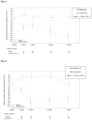
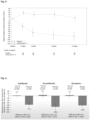
- the lung function of all participating IPF patients has been monitored by measuring the change from baseline in Forced Vital Capacity (FVC) ("primary outcome measure").
- FVC Forced Vital Capacity
- TEAE Treatment Emergent Adverse Events
- Table 3 shows that the time since diagnosis of IPF was longer in the "AF-group” (4.33 yrs.) vs. in the "Non-AF-group” (2.54 yrs.) and was balanced between placebo control and active agent arms.
- Table 3 Demographic Data for treated patients: Time since diagnosis AF-group Non-AF-group Placebo Comp. of form. III Total Placebo Comp. of form.
- Table 4 shows that the IPF patients in the "AF-group” used more nintedanib as background medication than pirfenidone (in the "active agent group” 53.1 % nintedanib and 46.9% pirfenidone, in the "placebo group” 68 % nintedanib and 32 % pirfenidone). Furthermore, Table 4 shows that for the IPF-patients from the "AF-group” the passed time since IPF-diagnosis was longer (4.6 years for the "active agent group” and 3.9 years for the "placebo group") than for the patients of the "Non-AF-group” (2.7 years for the "active agent group” and 2.2 years for the "placebo group”).
- the PDE4-inhibitor of formula III in the 18 mg dose twice daily shows in combination with antifibrotic background medication (either nintedanib or pirfenidone) an impressively improved therapeutic efficacy in IPF-patients over the treatment period of 12 weeks compared to the therapeutic effect in IPF-patients that had been treated by the same antifibrotic background medication alone.
- Placebo 95% confidence interval 95% confidence interval N Mean SD Adjusted Mean [2] SE lower upper Adjusted Mean [2] SE lower upper FVC [ml] For Placebo 25 269000 889.99 -77.70 23.60 -124.87 -30.53 For the Comp. of Form. III 48 2865.29 757.31 2.72 18.13 -33.46 38.89 80.42 29.82 20.85 139.99
- AE adverse events
- diarrhoea was reported approximately twice as frequently for the "active agent group” (16.7 %) than for the corresponding "Placebo group” (8 %) (see Table 11). Within the “AF-group”, diarrhoea was also reported approximately twice as frequently for the "active agent group” (30.6 %) than for the corresponding "Placebo group” (16.0 %) (see Table 11).
- the PDE4-inhibitor of formula III administered bid in a dose of 18 mg seems to lead to an increased frequency of the AE diarrhoea, but also the antifibrotic background medication, in particular background medication with nintedanib, seems to contribute significantly to the increased frequency of reported cases of diarrhoea in the "AF-group” (compared to the "Non-AF-group”).
- diarrhoea The majority of reported diarrhoea events were mild with the exception of two moderate cases of diarrhoea (2.1 %) and one severe case of diarrhoea (1.0 %), which all occured in males and in the "active agent group" of the "AF-group” under nintedanib background therapy. Additionally one severe case of diarrhoea occured in a 64-year-old female in the "Placebo-group" of the "AF-group” under nintedanib background therapy.
- IPF-patients that had obtained nintedanib as antifibrotic background medication adverse events of gastrointestinal disorders, in particular adverse events of diarrhoea, were recorded more frequently and in some cases also lead to the discontinuation of trial treatment (see Tables 14 and 15).
- the IPF-patients that had obtained nintedanib as antifibrotic background medication showed better therapeutic efficacy than the IPF-patients that had obtained pirfenidone as antifibrotic background treatment.
- nintedanib and of the PDE4-inhibitor of formula III in the dose of 18 mg administered twice daily might therefore in particular be suitable for PF-ILD/IPF-patients that have no tendency or predisposition to gastrointestinal disorders, in particular to diarrhoea, or that have experienced in their PF-ILD/IPF treatment history so far no problems due to gastrointestinal disorders, in particular due to diarrhoea.
- the results for the "AF-group with pirfenidone as antifibrotic background treatment" of the presented phase II trial support the hypothesis that the PDE4-inhibitor of formula III in the dose of 18 mg twice daily combined with pirfenidone background treatment (in doses and dose regimens as authorized for pirfenidone (preferably in doses and dose regimens leading to a daily dose between 801 mg and 2403 mg) may lead to a satisfying therapeutic efficacy combined with an excellent tolerability and safety profile (leading to an excellent compliance of the patient).
- pirfenidone and of the PDE4-inhibitor of formula III in the dose of 18 mg administered twice daily might therefore in particular be suitable for PF-ILD/IPF-patients that have a predisposition or tendency to gastrointestinal disorders, in particular to diarrhoea, or that have experienced problems in their PF-ILD/IPF treatment history so far due to gastrointestinal disorders, in particular due to diarrhoea.
Landscapes
- Health & Medical Sciences (AREA)
- Public Health (AREA)
- Chemical & Material Sciences (AREA)
- Medicinal Chemistry (AREA)
- Pharmacology & Pharmacy (AREA)
- Life Sciences & Earth Sciences (AREA)
- Animal Behavior & Ethology (AREA)
- General Health & Medical Sciences (AREA)
- Veterinary Medicine (AREA)
- Epidemiology (AREA)
- Engineering & Computer Science (AREA)
- Bioinformatics & Cheminformatics (AREA)
- Nuclear Medicine, Radiotherapy & Molecular Imaging (AREA)
- Pulmonology (AREA)
- Chemical Kinetics & Catalysis (AREA)
- General Chemical & Material Sciences (AREA)
- Organic Chemistry (AREA)
- Nutrition Science (AREA)
- Physiology (AREA)
- Pharmaceuticals Containing Other Organic And Inorganic Compounds (AREA)
- Medicinal Preparation (AREA)
- Pyridine Compounds (AREA)
- Acyclic And Carbocyclic Compounds In Medicinal Compositions (AREA)
Applications Claiming Priority (5)
| Application Number | Priority Date | Filing Date | Title |
|---|---|---|---|
| US202163287642P | 2021-12-09 | 2021-12-09 | |
| EP21218202 | 2021-12-29 | ||
| EP22177750 | 2022-06-08 | ||
| EP22835249.8A EP4426307B1 (de) | 2021-12-09 | 2022-12-08 | Neue orale pharmazeutische zusammensetzung und dosierungsschema für die therapie von fortschreitenden fibrosierenden interstitiellen lungenerkrankungen |
| PCT/EP2022/084968 WO2023104958A1 (en) | 2021-12-09 | 2022-12-08 | New oral pharmaceutical composition and dose regimen for the therapy of progressive fibrosing interstitial lung diseases |
Related Parent Applications (2)
| Application Number | Title | Priority Date | Filing Date |
|---|---|---|---|
| EP22835249.8A Division-Into EP4426307B1 (de) | 2021-12-09 | 2022-12-08 | Neue orale pharmazeutische zusammensetzung und dosierungsschema für die therapie von fortschreitenden fibrosierenden interstitiellen lungenerkrankungen |
| EP22835249.8A Division EP4426307B1 (de) | 2021-12-09 | 2022-12-08 | Neue orale pharmazeutische zusammensetzung und dosierungsschema für die therapie von fortschreitenden fibrosierenden interstitiellen lungenerkrankungen |
Publications (2)
| Publication Number | Publication Date |
|---|---|
| EP4494700A2 true EP4494700A2 (de) | 2025-01-22 |
| EP4494700A3 EP4494700A3 (de) | 2025-04-16 |
Family
ID=84785289
Family Applications (2)
| Application Number | Title | Priority Date | Filing Date |
|---|---|---|---|
| EP24218458.8A Pending EP4494700A3 (de) | 2021-12-09 | 2022-12-08 | Neue orale pharmazeutische zusammensetzung und dosierungsplan zur therapie progressiver fibrosierender interstitieller lungenerkrankungen |
| EP22835249.8A Active EP4426307B1 (de) | 2021-12-09 | 2022-12-08 | Neue orale pharmazeutische zusammensetzung und dosierungsschema für die therapie von fortschreitenden fibrosierenden interstitiellen lungenerkrankungen |
Family Applications After (1)
| Application Number | Title | Priority Date | Filing Date |
|---|---|---|---|
| EP22835249.8A Active EP4426307B1 (de) | 2021-12-09 | 2022-12-08 | Neue orale pharmazeutische zusammensetzung und dosierungsschema für die therapie von fortschreitenden fibrosierenden interstitiellen lungenerkrankungen |
Country Status (18)
| Country | Link |
|---|---|
| US (2) | US20230181590A1 (de) |
| EP (2) | EP4494700A3 (de) |
| JP (1) | JP2024543161A (de) |
| KR (1) | KR20240121251A (de) |
| AU (2) | AU2022407131C1 (de) |
| CA (1) | CA3234847A1 (de) |
| CL (2) | CL2024001520A1 (de) |
| DK (1) | DK4426307T3 (de) |
| ES (1) | ES3041145T3 (de) |
| FI (1) | FI4426307T3 (de) |
| HR (1) | HRP20251043T1 (de) |
| IL (1) | IL312740A (de) |
| LT (1) | LT4426307T (de) |
| MX (1) | MX2024006270A (de) |
| PL (1) | PL4426307T3 (de) |
| RS (1) | RS67225B1 (de) |
| TW (1) | TW202339731A (de) |
| WO (1) | WO2023104958A1 (de) |
Families Citing this family (2)
| Publication number | Priority date | Publication date | Assignee | Title |
|---|---|---|---|---|
| CN119630673A (zh) * | 2022-08-09 | 2025-03-14 | 西藏海思科制药有限公司 | Pde4b抑制剂及其用途 |
| CN119857088A (zh) * | 2025-01-22 | 2025-04-22 | 杭州畅溪制药有限公司 | 复方吸入粉雾剂及其制备方法 |
Citations (10)
| Publication number | Priority date | Publication date | Assignee | Title |
|---|---|---|---|---|
| WO2006056607A1 (de) | 2004-11-29 | 2006-06-01 | Boehringer Ingelheim International Gmbh | Substituierte pteridine zur behandlung von entzündlichen erkrankungen |
| WO2006058869A2 (de) | 2004-11-29 | 2006-06-08 | Boehringer Ingelheim International Gmbh | Substituierte pteridine zur behandlung von entzündlichen erkrankungen |
| WO2006058868A2 (de) | 2004-11-29 | 2006-06-08 | Boehringer Ingelheim International Gmbh | Substituierte pteridine zur behandlung von entzündlichen erkrankungen |
| WO2006058867A2 (de) | 2004-11-29 | 2006-06-08 | Boehringer Ingelheim International Gmbh | Substituierte pteridine zur behandlung von entzündlichen erkrankungen |
| WO2006111549A1 (de) | 2005-04-21 | 2006-10-26 | Boehringer Ingelheim International Gmbh | Dihydrothienopyrimidine zur behandlung von entzündlichen erkrankungen |
| WO2007118793A1 (de) | 2006-04-19 | 2007-10-25 | Boehringer Ingelheim International Gmbh | Dihydrothienopyrimidine zur behandlung von entzündlichen erkrankungen |
| WO2009050248A1 (de) | 2007-10-19 | 2009-04-23 | Boehringer Ingelheim International Gmbh | Substituierte piperidino-dihydrothienopyrimidine |
| WO2009050242A2 (de) | 2007-10-19 | 2009-04-23 | Boehringer Ingelheim International Gmbh | Heterocyclus-substituierte piperazino-dihydrothienopyrimidine |
| WO2013026797A1 (en) | 2011-08-24 | 2013-02-28 | Boehringer Ingelheim International Gmbh | Novel piperidino-dihydrothienopyrimidine sulfoxides and their use for treating copd and asthma |
| WO2019081235A1 (en) | 2017-10-23 | 2019-05-02 | Boehringer Ingelheim International Gmbh | NEW ASSOCIATION OF ACTIVE AGENTS FOR THE TREATMENT OF PROGRESSIVE FIBROSANT INTERSTITIAL PNEUMOPATHY (PF-ILD) |
-
2022
- 2022-12-08 US US18/063,190 patent/US20230181590A1/en not_active Abandoned
- 2022-12-08 CA CA3234847A patent/CA3234847A1/en active Pending
- 2022-12-08 EP EP24218458.8A patent/EP4494700A3/de active Pending
- 2022-12-08 KR KR1020247020831A patent/KR20240121251A/ko active Pending
- 2022-12-08 IL IL312740A patent/IL312740A/en unknown
- 2022-12-08 EP EP22835249.8A patent/EP4426307B1/de active Active
- 2022-12-08 DK DK22835249.8T patent/DK4426307T3/da active
- 2022-12-08 PL PL22835249.8T patent/PL4426307T3/pl unknown
- 2022-12-08 LT LTEPPCT/EP2022/084968T patent/LT4426307T/lt unknown
- 2022-12-08 ES ES22835249T patent/ES3041145T3/es active Active
- 2022-12-08 RS RS20250900A patent/RS67225B1/sr unknown
- 2022-12-08 AU AU2022407131A patent/AU2022407131C1/en active Active
- 2022-12-08 FI FIEP22835249.8T patent/FI4426307T3/fi active
- 2022-12-08 TW TW111147108A patent/TW202339731A/zh unknown
- 2022-12-08 WO PCT/EP2022/084968 patent/WO2023104958A1/en not_active Ceased
- 2022-12-08 MX MX2024006270A patent/MX2024006270A/es unknown
- 2022-12-08 JP JP2024531320A patent/JP2024543161A/ja active Pending
- 2022-12-08 HR HRP20251043TT patent/HRP20251043T1/hr unknown
-
2024
- 2024-02-23 US US18/585,280 patent/US20250025466A1/en active Pending
- 2024-05-20 CL CL2024001520A patent/CL2024001520A1/es unknown
- 2024-11-26 CL CL2024003616A patent/CL2024003616A1/es unknown
-
2025
- 2025-07-11 AU AU2025205402A patent/AU2025205402A1/en active Pending
Patent Citations (10)
| Publication number | Priority date | Publication date | Assignee | Title |
|---|---|---|---|---|
| WO2006056607A1 (de) | 2004-11-29 | 2006-06-01 | Boehringer Ingelheim International Gmbh | Substituierte pteridine zur behandlung von entzündlichen erkrankungen |
| WO2006058869A2 (de) | 2004-11-29 | 2006-06-08 | Boehringer Ingelheim International Gmbh | Substituierte pteridine zur behandlung von entzündlichen erkrankungen |
| WO2006058868A2 (de) | 2004-11-29 | 2006-06-08 | Boehringer Ingelheim International Gmbh | Substituierte pteridine zur behandlung von entzündlichen erkrankungen |
| WO2006058867A2 (de) | 2004-11-29 | 2006-06-08 | Boehringer Ingelheim International Gmbh | Substituierte pteridine zur behandlung von entzündlichen erkrankungen |
| WO2006111549A1 (de) | 2005-04-21 | 2006-10-26 | Boehringer Ingelheim International Gmbh | Dihydrothienopyrimidine zur behandlung von entzündlichen erkrankungen |
| WO2007118793A1 (de) | 2006-04-19 | 2007-10-25 | Boehringer Ingelheim International Gmbh | Dihydrothienopyrimidine zur behandlung von entzündlichen erkrankungen |
| WO2009050248A1 (de) | 2007-10-19 | 2009-04-23 | Boehringer Ingelheim International Gmbh | Substituierte piperidino-dihydrothienopyrimidine |
| WO2009050242A2 (de) | 2007-10-19 | 2009-04-23 | Boehringer Ingelheim International Gmbh | Heterocyclus-substituierte piperazino-dihydrothienopyrimidine |
| WO2013026797A1 (en) | 2011-08-24 | 2013-02-28 | Boehringer Ingelheim International Gmbh | Novel piperidino-dihydrothienopyrimidine sulfoxides and their use for treating copd and asthma |
| WO2019081235A1 (en) | 2017-10-23 | 2019-05-02 | Boehringer Ingelheim International Gmbh | NEW ASSOCIATION OF ACTIVE AGENTS FOR THE TREATMENT OF PROGRESSIVE FIBROSANT INTERSTITIAL PNEUMOPATHY (PF-ILD) |
Non-Patent Citations (39)
| Title |
|---|
| CORTIJO ET AL., BR. J. PHARMACOL., vol. 156, 2009, pages 534 - 544 |
| COTTIN ET AL., EUR. RESPIR. REV., vol. 28, 2019, pages 180100 |
| COTTIN ET AL.: "28", EUR. RESPIR. REV., pages 180100 |
| DING ET AL., ANTIOXID. REDOX SIGNAL., vol. 29, 2017, pages 637 - 652 |
| DUNKERN ET AL., EUR. J. PHARMACOL., vol. 572, 2007, pages 12 - 22 |
| ESER, DIS. COLON RECTUM, vol. 55, 2012, pages 345 - 350 |
| ESSAM ET AL., LIFE SCI., vol. 222, 2019, pages 245 - 254 |
| FITZMAURICE ET AL., LONGITUDINAL DATA ANALYSIS, CHAPMAN & HALL/CRC, NEW YORK, 2009 |
| GOBEJISHVILI ET AL., J. PHARMACOL. EXP. THER., vol. 347, 2013, pages 80 - 90 |
| HATZELMANN ET AL., PULM. PHARMACOL. THER., vol. 23, 2010, pages 283 - 291 |
| KIM ET AL., EXP. HEMATOL., vol. 44, 2016, pages 332 - 341 |
| KOHYAMA ET AL., AM. J. RESPIR. CELL MOL. BIOL., vol. 26, 2002, pages 694 - 701 |
| KOHYAMA ET AL., CLIN. IMMUNOL., vol. 111, 2004, pages 297 - 302 |
| KOLB, MVASAKOVA, M., RESPIR. RES., vol. 20, 2019, pages 57 |
| KOLOSIONEK ET AL., MOL. BIOL. CELL, vol. 20, 2009, pages 4751 - 4765 |
| LI ET AL., BR. J. PHARMACOL., vol. 176, 2019, pages 2209 - 2226 |
| LI ET AL., FRONT. PHARMACOL., vol. 9, 2018, pages 1048 |
| MAIER ET AL., ANN. RHEUM. DIS., vol. 76, 2017, pages 1133 - 1141 |
| MAZZEI ET AL., THER. ADV. RESPIR. DIS., vol. 9, no. 3, 2015, pages 121 - 129 |
| MENDES ET AL., MICROVASC. RES., vol. 78, 2009, pages 265 - 271 |
| MILARA ET AL., PLOS ONE, vol. 10, 2015, pages e0133453 |
| MURAKI ET AL., BIOSCI. BIOTECHNOL. BIOCHEM., vol. 83, 2019, pages 1000 - 1010 |
| PAN ET AL., RESPIROLOGY, vol. 14, 2009, pages 975 - 982 |
| RAGHU, GCHEN, S.YYEH, W.S.MARONI, BLI, Q.LEE, Y.C.COLLARD, H.R: "Idiopathic pulmonary fibrosis in US Medicare beneficiaries aged 65 years and older: incidence, prevalence, and survival, 2001-11", LANCET RESPIR. MED., vol. 2, 2014, pages 566 - 572 |
| RICHELDI ET AL., EUR. RESPIR. REV., vol. 27, 2018, pages 180074 |
| SAKKAS ET AL., CURR. MED. CHEM., vol. 24, 2017, pages 3054 - 3067 |
| SELIGE ET AL., J. CELL. PHYSIOL., vol. 223, 2010, pages 317 - 326 |
| SELIGE ET AL., J. CELL. PHYSIOL., vol. 226, 2011, pages 1970 - 1980 |
| SISSON ET AL., PHYSIOL. REP, vol. 6, 2018, pages e13753 |
| SISSON ET AL., PHYSIOL. REP., vol. 6, 2018, pages e13753 |
| SUBBIAN ET AL., AM. J. PATHOL., vol. 179, 2011, pages 289 - 301 |
| SUBBIAN ET AL., EBIOMEDICINE, vol. 4, 2016, pages 104 - 114 |
| TANNHEIMER ET AL., RESPIR. RES, vol. 13, 2012, pages 28 |
| TOGO ET AL., AM. J. PHYSIOL. LUNG CELL MOL. PHYSIOL., vol. 296, 2009, pages L959 - L969 |
| TZOUVELEKIS ET AL., THER. CLIN. RISK MANAGEMENT, vol. 11, 2015, pages 359 - 370 |
| UDALOV ET AL., BMC PULM. MED., vol. 10, 2010, pages 26 |
| VANCHERI ET AL.: "nintedanib with Add-on pirfenidone in Idiopathic Pulmonary Fibrosis: Results of the INJOURNEY Trial.", AM J RESPIR CRIT CARE MED., 2017 |
| VECCHIO ET AL., MEDIATORS INFLAMM., 2013, pages 745984 |
| VIDELA ET AL., J. PHARMACOL. EXP. THER., vol. 316, 2006, pages 940 - 945 |
Also Published As
| Publication number | Publication date |
|---|---|
| FI4426307T3 (fi) | 2025-09-10 |
| DK4426307T3 (da) | 2025-09-15 |
| EP4426307A1 (de) | 2024-09-11 |
| LT4426307T (lt) | 2025-09-10 |
| ES3041145T3 (en) | 2025-11-07 |
| HRP20251043T1 (hr) | 2025-10-24 |
| PL4426307T3 (pl) | 2025-11-17 |
| US20250025466A1 (en) | 2025-01-23 |
| WO2023104958A1 (en) | 2023-06-15 |
| EP4426307B1 (de) | 2025-07-02 |
| IL312740A (en) | 2024-07-01 |
| AU2022407131B2 (en) | 2025-06-19 |
| AU2022407131A1 (en) | 2024-04-11 |
| CL2024003616A1 (es) | 2025-03-21 |
| AU2025205402A1 (en) | 2025-07-31 |
| MX2024006270A (es) | 2024-06-11 |
| JP2024543161A (ja) | 2024-11-19 |
| KR20240121251A (ko) | 2024-08-08 |
| TW202339731A (zh) | 2023-10-16 |
| CL2024001520A1 (es) | 2024-11-22 |
| US20230181590A1 (en) | 2023-06-15 |
| AU2022407131C1 (en) | 2025-10-30 |
| CA3234847A1 (en) | 2023-06-15 |
| RS67225B1 (sr) | 2025-10-31 |
| EP4494700A3 (de) | 2025-04-16 |
Similar Documents
| Publication | Publication Date | Title |
|---|---|---|
| EP4494701A2 (de) | Neue therapeutische kombinationen zur behandlung progressiver fibrosierender interstitieller lungenerkrankungen | |
| JP2020196750A (ja) | 線維症を処置するためのセニクリビロック併用療法 | |
| US20250025466A1 (en) | New oral pharmaceutical composition and dose regimen for the therapy of progressive fibrosing interstitial lung diseases | |
| RU2729630C2 (ru) | Терапевтическое средство для фиброза | |
| JP2024519835A (ja) | タウロデオキシコール酸またはその薬学的に許容される塩を有効成分として含む新型コロナウイルス感染症(covid-19)の治療用組成物 | |
| HK40115216A (en) | New oral pharmaceutical composition and dose regimen for the therapy of progressive fibrosing interstitial lung diseases | |
| HK40113149A (en) | New oral pharmaceutical composition and dose regimen for the therapy of progressive fibrosing interstitial lung diseases | |
| HK40113149B (en) | New oral pharmaceutical composition and dose regimen for the therapy of progressive fibrosing interstitial lung diseases | |
| HK40115215A (en) | New therapeutic combinations for the treatment of progressive fibrosing interstitial lung diseases | |
| HK40118402A (en) | New therapeutic combinations for the treatment of progressive fibrosing interstitial lung diseases | |
| KR102076137B1 (ko) | 수축력 저하 수반성 배뇨근 과활동 개선제 | |
| AU2025271047A1 (en) | New therapeutic combinations for the treatment of progressive fibrosing interstitial lung diseases | |
| AU2025271046A1 (en) | New therapeutic combinations for the treatment of progressive fibrosing interstitial lung diseases | |
| JP2025513474A (ja) | 好中球性皮膚疾患の治療 | |
| CN118369098A (zh) | 用于治疗进行性纤维化间质性肺病的新颖治疗组合 | |
| CN118302167A (zh) | 用于治疗进行性纤维化间质性肺病的新颖口服药物组合物及剂量方案 | |
| RU2774928C2 (ru) | Применение производного глутаримида для терапии заболеваний, ассоциированных с аберрантной активностью интерлейкина-6 | |
| KR20220154616A (ko) | 섬유화증의 예방 또는 치료용 약학적 조성물 | |
| WO2025078838A1 (en) | Alvelestat and alpha- 1 antitrypsin for treating respiratory disorders | |
| WO2025133628A1 (en) | Use of alvelestat in specific patients | |
| KR20240055482A (ko) | 글리코겐 가인산분해효소 (pygl) 저해제를 유효성분으로 포함하는 염증성 장 질환 치료용 약학적 조성물 | |
| KR20220152073A (ko) | 피리메타민을 유효성분으로 포함하는 크론병의 치료 또는 예방용 약학 조성물 | |
| JP2007326824A (ja) | 滑膜細胞増殖抑制剤、並びにこれを利用した薬用組成物及び治療方法 |
Legal Events
| Date | Code | Title | Description |
|---|---|---|---|
| PUAI | Public reference made under article 153(3) epc to a published international application that has entered the european phase |
Free format text: ORIGINAL CODE: 0009012 |
|
| STAA | Information on the status of an ep patent application or granted ep patent |
Free format text: STATUS: THE APPLICATION HAS BEEN PUBLISHED |
|
| AC | Divisional application: reference to earlier application |
Ref document number: 4426307 Country of ref document: EP Kind code of ref document: P |
|
| AK | Designated contracting states |
Kind code of ref document: A2 Designated state(s): AL AT BE BG CH CY CZ DE DK EE ES FI FR GB GR HR HU IE IS IT LI LT LU LV MC ME MK MT NL NO PL PT RO RS SE SI SK SM TR |
|
| REG | Reference to a national code |
Ref country code: DE Ref legal event code: R079 Free format text: PREVIOUS MAIN CLASS: A61P0011000000 Ipc: A61K0031519000 |
|
| PUAL | Search report despatched |
Free format text: ORIGINAL CODE: 0009013 |
|
| REG | Reference to a national code |
Ref country code: HK Ref legal event code: DE Ref document number: 40115216 Country of ref document: HK |
|
| AK | Designated contracting states |
Kind code of ref document: A3 Designated state(s): AL AT BE BG CH CY CZ DE DK EE ES FI FR GB GR HR HU IE IS IT LI LT LU LV MC ME MK MT NL NO PL PT RO RS SE SI SK SM TR |
|
| RIC1 | Information provided on ipc code assigned before grant |
Ipc: A61P 11/00 20060101ALI20250313BHEP Ipc: A61K 31/519 20060101AFI20250313BHEP |
|
| STAA | Information on the status of an ep patent application or granted ep patent |
Free format text: STATUS: REQUEST FOR EXAMINATION WAS MADE |
|
| 17P | Request for examination filed |
Effective date: 20250715 |
|
| RAV | Requested validation state of the european patent: fee paid |
Extension state: KH Effective date: 20250812 Extension state: MA Effective date: 20250812 Extension state: MD Effective date: 20250812 Extension state: TN Effective date: 20250812 |
|
| RAX | Requested extension states of the european patent have changed |
Extension state: BA Payment date: 20250812 |