EP4480959A1 - Neue sigma38-variante und verfahren zur herstellung von l-aromatischer aminosäure damit - Google Patents
Neue sigma38-variante und verfahren zur herstellung von l-aromatischer aminosäure damit Download PDFInfo
- Publication number
- EP4480959A1 EP4480959A1 EP23721822.7A EP23721822A EP4480959A1 EP 4480959 A1 EP4480959 A1 EP 4480959A1 EP 23721822 A EP23721822 A EP 23721822A EP 4480959 A1 EP4480959 A1 EP 4480959A1
- Authority
- EP
- European Patent Office
- Prior art keywords
- amino acid
- sigma
- variant
- primer
- aromatic amino
- Prior art date
- Legal status (The legal status is an assumption and is not a legal conclusion. Google has not performed a legal analysis and makes no representation as to the accuracy of the status listed.)
- Pending
Links
Images
Classifications
-
- C—CHEMISTRY; METALLURGY
- C07—ORGANIC CHEMISTRY
- C07K—PEPTIDES
- C07K14/00—Peptides having more than 20 amino acids; Gastrins; Somatostatins; Melanotropins; Derivatives thereof
- C07K14/195—Peptides having more than 20 amino acids; Gastrins; Somatostatins; Melanotropins; Derivatives thereof from bacteria
- C07K14/24—Peptides having more than 20 amino acids; Gastrins; Somatostatins; Melanotropins; Derivatives thereof from bacteria from Enterobacteriaceae (F), e.g. Citrobacter, Serratia, Proteus, Providencia, Morganella, Yersinia
- C07K14/245—Escherichia (G)
-
- C—CHEMISTRY; METALLURGY
- C12—BIOCHEMISTRY; BEER; SPIRITS; WINE; VINEGAR; MICROBIOLOGY; ENZYMOLOGY; MUTATION OR GENETIC ENGINEERING
- C12N—MICROORGANISMS OR ENZYMES; COMPOSITIONS THEREOF; PROPAGATING, PRESERVING, OR MAINTAINING MICROORGANISMS; MUTATION OR GENETIC ENGINEERING; CULTURE MEDIA
- C12N15/00—Mutation or genetic engineering; DNA or RNA concerning genetic engineering, vectors, e.g. plasmids, or their isolation, preparation or purification; Use of hosts therefor
- C12N15/09—Recombinant DNA-technology
- C12N15/63—Introduction of foreign genetic material using vectors; Vectors; Use of hosts therefor; Regulation of expression
- C12N15/70—Vectors or expression systems specially adapted for E. coli
-
- C—CHEMISTRY; METALLURGY
- C12—BIOCHEMISTRY; BEER; SPIRITS; WINE; VINEGAR; MICROBIOLOGY; ENZYMOLOGY; MUTATION OR GENETIC ENGINEERING
- C12P—FERMENTATION OR ENZYME-USING PROCESSES TO SYNTHESISE A DESIRED CHEMICAL COMPOUND OR COMPOSITION OR TO SEPARATE OPTICAL ISOMERS FROM A RACEMIC MIXTURE
- C12P13/00—Preparation of nitrogen-containing organic compounds
- C12P13/04—Alpha- or beta- amino acids
-
- C—CHEMISTRY; METALLURGY
- C12—BIOCHEMISTRY; BEER; SPIRITS; WINE; VINEGAR; MICROBIOLOGY; ENZYMOLOGY; MUTATION OR GENETIC ENGINEERING
- C12P—FERMENTATION OR ENZYME-USING PROCESSES TO SYNTHESISE A DESIRED CHEMICAL COMPOUND OR COMPOSITION OR TO SEPARATE OPTICAL ISOMERS FROM A RACEMIC MIXTURE
- C12P13/00—Preparation of nitrogen-containing organic compounds
- C12P13/04—Alpha- or beta- amino acids
- C12P13/22—Tryptophan; Tyrosine; Phenylalanine; 3,4-Dihydroxyphenylalanine
-
- C—CHEMISTRY; METALLURGY
- C12—BIOCHEMISTRY; BEER; SPIRITS; WINE; VINEGAR; MICROBIOLOGY; ENZYMOLOGY; MUTATION OR GENETIC ENGINEERING
- C12P—FERMENTATION OR ENZYME-USING PROCESSES TO SYNTHESISE A DESIRED CHEMICAL COMPOUND OR COMPOSITION OR TO SEPARATE OPTICAL ISOMERS FROM A RACEMIC MIXTURE
- C12P13/00—Preparation of nitrogen-containing organic compounds
- C12P13/04—Alpha- or beta- amino acids
- C12P13/22—Tryptophan; Tyrosine; Phenylalanine; 3,4-Dihydroxyphenylalanine
- C12P13/227—Tryptophan
Definitions
- the present invention relates to a novel sigma 38 variant and a method of producing an L-aromatic amino acid using the same.
- Aromatic amino acids include phenylalanine, tyrosine, and tryptophan, and phenylalanine and tryptophan are essential amino acids that are not synthesized in vivo and correspond to high value-added industries that form a global market worth $300 billion annually.
- An object of the present invention is to provide a novel sigma 38 variant.
- Another object of the present invention is to provide a polynucleotide encoding the variant.
- Still another object of the present invention is to provide a transformant comprising the variant or the polynucleotide.
- Yet another object of the present invention is to provide a method of producing an L-aromatic amino acid using the transformant.
- One aspect of the present invention provides a sigma 38 variant composed of the amino acid sequence of SEQ ID NO: 1 in which glutamine at position 37 in the amino acid sequence of SEQ ID NO: 3 is substituted with leucine.
- Sigma 38 used in the present invention is a type of sigma factor, a protein that binds to RNA polymerase, and functions to initiate transcription by recognizing and binding to the promoter of a gene.
- the sigma 38 may be a gene encoding sigma 38 or a sequence substantially identical thereto.
- substantially identical means that, when analyzed by aligning each gene sequence, that is, a base sequence or nucleotide sequence, and any other nucleotide sequence for maximum correspondence, the other nucleotide sequence has a sequence homology of at least 70%, at least 80%, at least 90%, or at least 98% to each nucleotide sequence.
- Sigma 38 in the present invention is encoded by the rpoS gene and comprises the amino acid sequence of SEQ ID NO: 3.
- the amino acid sequence of SEQ ID NO: 3 may be derived from wild-type E. coli.
- variant refers to a polypeptide which is obtained by conservative substitution and/or modification of one or more amino acids at the N-terminus, C-terminus of and/or within the amino acid sequence of a specific protein and has an amino acid sequence different from that of the protein before mutation, but retains functions or properties of the protein.
- conservative substitution means replacing one amino acid with another amino acid having similar structural and/or chemical properties. The conservative substitution may have little or no impact on the activity of the resulting protein or polypeptide.
- some variants include those in which one or more portions, such as an N-terminal leader sequence or transmembrane domain, have been removed.
- variants include those in which a portion has been removed from the N- and/or C-terminus of a mature protein.
- the ability of the variant may be increased, unchanged, or reduced compared to that of the polypeptide before mutation.
- variant may be used interchangeably with terms such as mutant, modification, variant polypeptide, modified protein, mutation, and the like.
- the variant in the present invention may be a sigma 38 variant composed of the amino acid sequence of SEQ ID NO: 1 in which the amino acid glutamine at position 37 in the amino acid sequence of SEQ ID NO: 3 is substituted with leucine.
- Another aspect of the present invention provides a polynucleotide encoding the sigma 38 variant.
- polynucleotide refers to a DNA or RNA strand having a certain length or more, which is a long-chain polymer of nucleotides formed by linking nucleotide monomers via covalent bonds. More specifically, the term “polynucleotide” refers to a polynucleotide fragment encoding the variant.
- the polynucleotide may comprise a nucleotide sequence encoding the amino acid sequence of SEQ ID NO: 1.
- the polynucleotide may comprise the nucleotide sequence represented by SEQ ID NO: 2.
- Another aspect of the present invention provides a vector comprising a polynucleotide encoding the sigma 38 variant.
- Still another aspect of the present invention provides a transformant comprising the sigma 38 variant or the polynucleotide.
- the term "vector” refers to any type of nucleic acid sequence transfer structure that is used as a means for transferring and expressing a gene of interest in a host cell. Unless otherwise specified, the term “vector” may mean one allowing the nucleic acid sequence contained therein to be expressed after insertion into the host cell genome and/or one allowing the nucleic acid sequence to be expressed independently. This vector comprises essential regulatory elements operably linked so that an inserted gene can be expressed.
- operably linked means that a gene of interest and sequences for regulating expression of the gene are functionally linked together in a manner enabling gene expression
- regulatory elements include a promoter for initiating transcription, any operator sequence for regulating transcription, a sequence encoding suitable mRNA ribosome binding sites, and a sequence for regulating termination of transcription and translation.
- the vector that is used in the present invention is not particularly limited as long as it may replicate in a host cell, and any vector known in the art may be used.
- Examples of the vector include a natural or recombinant plasmid, cosmid, virus and bacteriophage.
- Examples of a phage vector or cosmid vector include, but are not limited to, pWE15, M13, ⁇ MBL3, ⁇ MBL4, ⁇ IXII, ⁇ ASHII, ⁇ APII, ⁇ t10, ⁇ t11, Charon4A, and Charon21A, and examples of a plasmid vector include, but are not limited to, pBR series, pUC series, pBluescriptII series, pGEM series, pTZ series, pCL series, and pET series.
- the vector may typically be constructed as a vector for cloning or as a vector for expression.
- the vector for expression may be a conventional vector that is used in the art to express a foreign gene or protein in a plant, animal, or microorganism, and may be constructed through various methods known in the art.
- the recombinant vector may be constructed to use a prokaryotic or eukaryotic cell as a host.
- the vector used is an expression vector and uses a prokaryotic cell as a host
- the vector generally comprises a strong promoter capable of promoting transcription (e.g., pL ⁇ promoter, CMV promoter, trp promoter, lac promoter, tac promoter, T7 promoter, etc.), a ribosome binding site for initiation of translation, and a transcription/translation termination sequence.
- the vector comprises a replication origin operating in the eukaryotic cell, such as an f1 replication origin, an SV40 replication origin, a pMB1 replication origin, an adeno replication origin, an AAV replication origin, or a BBV replication origin, without being limited thereto.
- a replication origin operating in the eukaryotic cell such as an f1 replication origin, an SV40 replication origin, a pMB1 replication origin, an adeno replication origin, an AAV replication origin, or a BBV replication origin, without being limited thereto.
- the recombinant vector may comprise a promoter derived from the genome of a mammalian cell (e.g., metallothionein promoter) or a promoter derived from a mammalian virus (e.g., adenovirus late promoter, vaccinia virus 7.5K promoter, SV40 promoter, cytomegalovirus promoter, HSV-tk promoter, etc.), and generally has a polyadenylation sequence as a transcription termination sequence.
- a promoter derived from the genome of a mammalian cell e.g., metallothionein promoter
- a promoter derived from a mammalian virus e.g., adenovirus late promoter, vaccinia virus 7.5K promoter, SV40 promoter, cytomegalovirus promoter, HSV-tk promoter, etc.
- a promoter derived from the genome of a mammalian cell e.g., metallo
- the recombinant vector may comprise a selection marker.
- the selection marker serves to select a transformant (host cell) transformed with the vector, and since only cells expressing the selection marker can survive in the medium treated with the selection marker, it is possible to select transformed cells.
- Representative examples of the selectable marker include, but are not limited to, kanamycin, streptomycin, and chloramphenicol.
- the transformant may be produced by inserting the recombinant vector into a host cell, and the transformant may be obtained by introducing the recombinant vector into an appropriate host cell.
- the host cell is a cell capable of stably and continuously cloning or expressing the expression vector, and any host cell known in the art may be used.
- examples of host cells include, but are not limited to, E. coli sp. strains such as E. coli JM109, E. coli BL21, E. coli RR1, E. coli LE392, E . coli B, E. coli X 1776, E. coli W3110, and E. coli XL1-Blue, Bacillus sp. strains such as Bacillus subtilis, and Bacillus thuringiensis, and various Enterobacteriaceae strains such as Salmonella typhimurium, Serratia marcescens, and Pseudomonas species.
- E. coli sp. strains such as E. coli JM109, E. coli BL21, E. coli RR1, E. coli LE392, E . coli B, E. coli X 1776, E. coli W3110, and E. coli XL1-Blue
- Bacillus sp. strains such as Bacillus subtilis
- host cells include, but are not limited to, yeast (e.g., Saccharomyces cerevisiae ) , insect cells, plant cells and animal cells, such as Sp2/0, CHO K1, CHO DG44, PER.C6, W138, BHK, COS7, 293, HepG2, Huh7, 3T3, RIN, and MDCK cell lines.
- yeast e.g., Saccharomyces cerevisiae
- insect cells e.g., insect cells, plant cells and animal cells, such as Sp2/0, CHO K1, CHO DG44, PER.C6, W138, BHK, COS7, 293, HepG2, Huh7, 3T3, RIN, and MDCK cell lines.
- transformation refers to a phenomenon in which external DNA is introduced into a host cell, thereby artificially causing genetic changes
- transformant refers to a host cell into which external DNA has been introduced and in which the expression of the gene of interest is stably maintained.
- the transformation may be performed using a suitable vector introduction technique selected depending on the host cell, so that the gene of interest or a recombinant vector comprising the same may be expressed in the host cell.
- introduction of the vector may be performed by electroporation, heat-shock, calcium phosphate (CaPO 4 ) precipitation, calcium chloride (CaCl 2 ) precipitation, microinjection, polyethylene glycol (PEG) method, DEAE-dextran method, cationic liposome method, lithium acetate-DMSO method, or a combination thereof, without being limited thereto.
- the transformed gene may be expressed in the host cell, it may be integrated into and placed in the chromosome of the host cell, or it may exist extrachromosomally, without being limited thereto.
- the transformant may include a cell transfected, transformed, or infected with the recombinant vector of the present disclosure in vivo or in vitro, and may be used in the same sense as a recombinant host cell, a recombinant cell, or a recombinant microorganism.
- the transformant may be an Escherichia sp. strain.
- Escherichia sp. strain examples include, but are not limited to, Escherichia coli, Escherichia albertii, Escherichia blattae, Escherichia fergusonii, Escherichia hermannii, Escherichia vulneris, and the like.
- the transformant in the present invention may be a strain either comprising the above-described sigma 38 variant or a polynucleotide encoding the same or comprising the vector comprising the same, a strain expressing the sigma 38 variant or the polynucleotide, or a strain having activity for the sigma 38 variant, without being limited thereto.
- the transformant may have the ability to produce an L-aromatic amino acid.
- the transformant may naturally have the ability to produce an L-aromatic amino acid or may be one artificially endowed with the ability to produce L-aromatic amino acids.
- the transformant may have an increased ability to produce an L-aromatic amino acid, due to a change in the activity of sigma 38.
- the term "increased ability to produce” means that L-aromatic amino acid productivity has increased compared to that of the parent strain.
- the term "parent strain” refers to a wild-type strain or mutant strain to be mutated, and includes a strain that is to be mutated directly or to be transformed with a recombinant vector or the like.
- the parent strain may be a wild-type Escherichia sp. strain or an Escherichia sp. strain mutated from the wild-type strain.
- the transformant according to the present invention exhibits an increased ability to produce an L-aromatic amino acid compared to the parent strain, due to a change in the activity of sigma 38 by introduction of the sigma 38 variant thereinto.
- the amount of L-aromatic amino acid produced by the transformant may be at least 10%, specifically 10 to 80% (preferably 20 to 60%) higher than that produced by the parent strain, and the transformant is capable of producing 3 to 20 g of an L-aromatic amino acid per liter of a culture of the strain.
- Yet another aspect of the present invention provides a method for producing an L-aromatic amino acid, the method comprising steps of: culturing the transformant in a medium; and recovering an L-aromatic amino acid from the transformant or the medium in which the transformants has been cultured.
- the culturing may be performed using a suitable medium and culture conditions known in the art, and any person skilled in the art may easily adjust and use the medium and the culture conditions.
- the medium may be a liquid medium, without being limited thereto.
- Examples of the culturing method include, but are not limited to, batch culture, continuous culture, fed-batch culture, or a combination thereof.
- the medium should meet the requirements of a specific strain in a proper manner, and may be appropriately modified by a person skilled in the art.
- culture medium for the Escherichia sp. strain reference may be made to, but not limited to, a known document (Manual of Methods for General Bacteriology, American Society for Bacteriology, Washington D.C., USA, 1981).
- the medium may contain various carbon sources, nitrogen sources, and trace element components.
- carbon sources that may be used include: sugars and carbohydrates such as glucose, sucrose, lactose, fructose, maltose, starch, and cellulose; oils and fats such as soybean oil, sunflower oil, castor oil, and coconut oil; fatty acids such as palmitic acid, stearic acid, and linoleic acid; alcohols such as glycerol and ethanol; and organic acids such as acetic acid.
- sugars and carbohydrates such as glucose, sucrose, lactose, fructose, maltose, starch, and cellulose
- oils and fats such as soybean oil, sunflower oil, castor oil, and coconut oil
- fatty acids such as palmitic acid, stearic acid, and linoleic acid
- alcohols such as glycerol and ethanol
- organic acids such as acetic acid.
- nitrogen sources examples include peptone, yeast extract, meat extract, malt extract, corn steep liquor, soybean meal, urea, or inorganic compounds such as ammonium sulfate, ammonium chloride, ammonium phosphate, ammonium carbonate, and ammonium nitrate.
- the nitrogen sources may also be used individually or as a mixture, without being limited thereto.
- Examples of phosphorus sources that may be used include, but are not limited to, potassium dihydrogen phosphate or dipotassium hydrogen phosphate or the corresponding sodium-containing salts.
- the culture medium may contain, but is not limited to, metal salts such as magnesium sulfate or iron sulfate, which are required for growth.
- the culture medium may contain essential growth substances such as amino acids and vitamins.
- suitable precursors may be used in the culture medium.
- the medium or individual components may be added to the culture medium batchwise or in a continuous manner by a suitable method during culturing, without being limited thereto.
- the pH of the culture medium may be adjusted by adding compounds such as ammonium hydroxide, potassium hydroxide, ammonia, phosphoric acid and sulfuric acid to the microorganism culture medium in an appropriate manner during the culturing.
- foaming may be suppressed using an anti-foaming agent such as a fatty acid polyglycol ester.
- oxygen or an oxygen-containing gas for example, air
- the temperature of the culture medium may be generally 20°C to 45°C, for example, 25°C to 40°C.
- the culturing may be continued until a desired amount of a useful substance is produced. For example, the culturing time may be 10 hours to 160 hours.
- the produced L-aromatic amino acid in the step of recovering an L-aromatic amino acid from the cultured transformant or the medium in which the transformant has been cultured, may be collected or recovered from the medium using a suitable method known in the art depending on the culture method.
- a suitable method known in the art depending on the culture method.
- a method that may be used to recover the produced L-aromatic amino acid include, but are not limited to, centrifugation, filtration, extraction, spraying, drying, evaporation, precipitation, crystallization, electrophoresis, fractional dissolution (e.g., ammonium sulfate precipitation), chromatography (e.g., ion exchange, affinity, hydrophobicity and size exclusion), and the like.
- the step of recovering an L-aromatic amino acid may be performed by centrifuging the culture medium at a low speed to remove biomass and separating the obtained supernatant through ionexchange chromatography.
- the step of recovering an L-aromatic amino acid may include a process of purifying the L-aromatic amino acid.
- the L-aromatic amino acid may be at least one selected from the group consisting of L-tryptophan, L-phenylalanine, and L-tyrosine.
- the sigma 38 variant according to the present invention is obtained by substituting one or more amino acids in the amino acid sequence constituting sigma 38 to change protein activity, and a recombinant microorganism comprising the sigma 38 variant is capable of efficiently producing an L-aromatic amino acid.
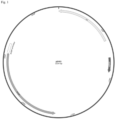
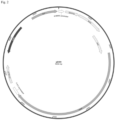
- a vector expressing the sigma 38 variant and strains into which the vector has been introduced were constructed.
- plasmids pDSG and pDS9 were used, and the strains were constructed as follows.
- the plasmid pDSG has an origin of replication that works only in Escherichia coli, contains an ampicillin resistance gene, and has a mechanism for expressing guide RNA (gRNA).
- the plasmid pDS9 has an origin of replication that works only in Escherichia coli, contains a kanamycin resistance gene and ⁇ red genes (exo, bet and gam), and has a mechanism for expressing CAS9 derived from Streptococcus pyogenes.
- a upstream fragment of the amino acid mutation at position 37 of the E. coli rpoS gene encoding sigma 38 was obtained by PCR using a primer pair of primer 7 and primer 9 and a primer pair of primer 8 and primer 10, and a downstream fragment of the amino acid mutation at position 37 of the E. coli rpoS gene was obtained by PCR using a primer pair of primer 11 and primer 13 and a primer pair of primer 12 and primer 14.
- each of the upstream and downstream fragments contained a sequence that modifies glutamine (Gln) at amino acid residue position 37 of the rpoS gene into leucine (Leu).
- each of the gene fragments contained a gRNA sequence targeting Gln of the rpoS gene.
- gRNA a 20 mer upstream of NGG of the sequence to be mutated was selected.
- the obtained fragments upstream and downstream of the amino acid at position 37 of the rpoS gene, and the obtained four pDSG gene fragments were cloned using a self-assembly cloning method ( BioTechniques 51:55-56 (July 2011 )), thereby obtaining a recombinant plasmid which was named pDSG-rpoS(Gln37Leu).
- Escherichia coli KCCM13013P and KCCM10016 were used as parent strains.
- the KCCM13013P strain or the KCCM10016 strain was primarily transformed with the plasmid pDS9 and cultured in LB-Km (containing 25 g/L of LB liquid medium and 50 mg/L of kanamycin) solid medium, and then colonies having kanamycin resistance were selected.
- the selected colonies were secondarily transformed with the pDSG-rpoS(Gln37Leu) plasmid and cultured in LB-Amp & Km (containing 25 g/L of LB liquid medium, 100 mg/L of ampicillin and 50 mg/L of kanamycin) solid medium, and then ampicillin- and kanamycin-resistant colonies were selected.
- a gene fragment was obtained by PCR using a primer pair of primer 17 and primer 18.
- Takara PrimeSTAR Max DNA polymerase was used as polymerase, and PCR amplification was performed for 30 cycles under the following conditions: denaturation at 95°C for 10 sec, annealing at 57°C for 10 sec, and extension at 72°C for 15 sec.
- the sequence of the gene fragment obtained using the primer pair of primer 17 and primer 18 was analyzed by Macrogen.
- the selected secondary transformants were passaged 7 times in LB liquid medium, and colonies were selected on LB solid medium. Each colony was selectively cultured on each of LB, LB-Amp and LB-Km solid media. Colonies that did not grow on the LB-Amp and LB-Km solid media while growing on the LB solid medium were selected.
- the strains constructed in this way were named KCCM13013P_rpoS(Gln37Leu) and KCCM10016_rpoS(Gln37Leu), respectively.
- Example 1 The primer sequences used in Example 1 are shown in Table 1 below.
- Table 1 Primer name SEQ ID NO Primer sequence (5' ⁇ 3') Primer 1 5 CAATTTTATTATAGTAATTGACTATTATAC Primer 2 6 GGAACCCAGTCAATTTTATTATAGTAATTGACTATTATAC Primer 3 7 ACTGGGTTCCTGTTCTACTAGTTTTAGAGCTAGAAATAGC Primer 4 8 TGTTCTACTAGTTTTAGAGCTAGAAATAGC Primer 5 9 GAGCCTGTCGGCCTACCTGCT Primer 6 10 CGGCCGGCATGAGCCTGTCG Primer 7 11 ATGCCGGCCGGGTCCGGGAACAACAAGAAG Primer 8 12 GGTCCGGGAACAACAAGAAG Primer 9 13 GCCTTTTCGTCAAAAACCTC Primer 10 14 TTCTACTAAGGCCTTTTCGTCAAAAACCTC Primer 11 15 CTTAGTAGAATTGGAACCCAGTGATAACGA Primer 12 16 TTGGAACCCAGTGATAACGA Primer 13 17 CGGA
- the L-tryptophan or L-phenylalanine productivities of the parent strains (KCCM13013P and KCCM10016) and the mutant strains (KCCM13013P_rpoS(Gln37Leu) and KCCM10016_rpoS(Gln37Leu)) into which the sigma 38 variant has been introduced were compared.
- each strain 1 vol% of each strain (parent strain or mutant strain) was inoculated into a 100-mL flask containing 10 mL of a medium for tryptophan production or a medium for phenylalanine production (the composition of each medium is shown in Table 2 below) and was cultured with shaking at 37°C and 200 rpm for 72 hours. After completion of the culturing, the concentration of L-tryptophan or L-phenylalanine in the medium was measured using HPLC (Agilent), and the results are shown in Tables 3 and 4, respectively.
- HPLC HPLC
- mutant strains KCCM13013P_rpoS(Gln37Leu) and KCCM10016_rpoS(Gln37Leu) into which the sigma 38 variant has been introduced showed about 24% increases in L-tryptophan and L-phenylalanine production compared to the parent strains KCCM13013P and KCCM10016.
Landscapes
- Chemical & Material Sciences (AREA)
- Organic Chemistry (AREA)
- Health & Medical Sciences (AREA)
- Life Sciences & Earth Sciences (AREA)
- Genetics & Genomics (AREA)
- Engineering & Computer Science (AREA)
- Zoology (AREA)
- Wood Science & Technology (AREA)
- General Health & Medical Sciences (AREA)
- General Engineering & Computer Science (AREA)
- Biotechnology (AREA)
- Biochemistry (AREA)
- Bioinformatics & Cheminformatics (AREA)
- Microbiology (AREA)
- Biomedical Technology (AREA)
- Biophysics (AREA)
- Molecular Biology (AREA)
- General Chemical & Material Sciences (AREA)
- Chemical Kinetics & Catalysis (AREA)
- Physics & Mathematics (AREA)
- Plant Pathology (AREA)
- Gastroenterology & Hepatology (AREA)
- Medicinal Chemistry (AREA)
- Proteomics, Peptides & Aminoacids (AREA)
- Micro-Organisms Or Cultivation Processes Thereof (AREA)
- Preparation Of Compounds By Using Micro-Organisms (AREA)
Applications Claiming Priority (2)
| Application Number | Priority Date | Filing Date | Title |
|---|---|---|---|
| KR1020220020011A KR20230123543A (ko) | 2022-02-16 | 2022-02-16 | 시그마 38 신규 변이체 및 이를 이용한 l-방향족 아미노산 생산 방법 |
| PCT/KR2023/002095 WO2023158174A1 (ko) | 2022-02-16 | 2023-02-14 | 시그마 38 신규 변이체 및 이를 이용한 l-방향족 아미노산 생산 방법 |
Publications (1)
| Publication Number | Publication Date |
|---|---|
| EP4480959A1 true EP4480959A1 (de) | 2024-12-25 |
Family
ID=87578511
Family Applications (1)
| Application Number | Title | Priority Date | Filing Date |
|---|---|---|---|
| EP23721822.7A Pending EP4480959A1 (de) | 2022-02-16 | 2023-02-14 | Neue sigma38-variante und verfahren zur herstellung von l-aromatischer aminosäure damit |
Country Status (4)
| Country | Link |
|---|---|
| EP (1) | EP4480959A1 (de) |
| KR (2) | KR20230123543A (de) |
| CN (1) | CN116940591A (de) |
| WO (1) | WO2023158174A1 (de) |
Family Cites Families (7)
| Publication number | Priority date | Publication date | Assignee | Title |
|---|---|---|---|---|
| US7319026B2 (en) * | 2002-03-07 | 2008-01-15 | Degussa Ag | Amino acid-producing bacteria and a process for preparing L-amino acids |
| DE10244581A1 (de) * | 2002-03-07 | 2003-09-18 | Degussa | Aminosäure produzierende Bakterien und Verfahren zur Herstellung von L-Aminosäuren |
| DE102004003411A1 (de) * | 2004-01-23 | 2005-09-01 | Degussa Ag | Verfahren zur Herstellung von L-Aminosäuren unter Verwendung von Stämmen der Familie Enterobacteriaceae |
| JP5407124B2 (ja) * | 2006-08-18 | 2014-02-05 | 味の素株式会社 | L−グルタミン酸生産細菌及びl−グルタミン酸の製造法 |
| ES2689754T3 (es) * | 2012-08-20 | 2018-11-15 | Evonik Degussa Gmbh | Procedimiento para la preparación fermentativa de L-aminoácidos utilizando cepas mejoradas de la familia Enterobacteriaceae |
| KR101830002B1 (ko) | 2016-10-11 | 2018-02-19 | 대상 주식회사 | 부기질의 공급 강화를 통한 l-트립토판이 과발현되는 균주 및 이를 이용하는 l-트립토판의 제조 방법 |
| KR102284730B1 (ko) * | 2021-04-28 | 2021-08-02 | 씨제이제일제당 주식회사 | 신규한 수용성 피리딘 뉴클레오티드 트랜스수소효소 변이체 및 이를 이용한 l-트립토판 생산 방법 |
-
2022
- 2022-02-16 KR KR1020220020011A patent/KR20230123543A/ko not_active Ceased
-
2023
- 2023-02-14 CN CN202380008905.0A patent/CN116940591A/zh active Pending
- 2023-02-14 EP EP23721822.7A patent/EP4480959A1/de active Pending
- 2023-02-14 WO PCT/KR2023/002095 patent/WO2023158174A1/ko not_active Ceased
- 2023-08-21 KR KR1020230109315A patent/KR102792506B1/ko active Active
Also Published As
| Publication number | Publication date |
|---|---|
| CN116940591A (zh) | 2023-10-24 |
| KR20230127949A (ko) | 2023-09-01 |
| WO2023158174A1 (ko) | 2023-08-24 |
| WO2023158174A9 (ko) | 2023-09-28 |
| KR102792506B1 (ko) | 2025-04-09 |
| KR20230123543A (ko) | 2023-08-24 |
Similar Documents
| Publication | Publication Date | Title |
|---|---|---|
| EP4481037A1 (de) | Neuartige atp-synthasevariante und verfahren zur herstellung von l-aromatischer aminosäure damit | |
| CN117043178A (zh) | 运输蛋白新型变体及利用其的l-芳香族氨基酸的生产方法 | |
| EP4480959A1 (de) | Neue sigma38-variante und verfahren zur herstellung von l-aromatischer aminosäure damit | |
| KR102546734B1 (ko) | L-글루탐산을 생산하는 코리네박테리움 속 변이 미생물 및 이를 이용한 l-글루탐산의 생산 방법 | |
| EP4481039A1 (de) | Neue zinkbindende dehydrogenasevariante und verfahren zur herstellung von l-aromatischer aminosäure damit | |
| EP4481038A1 (de) | Neuartige stressproteinvariante und verfahren zur herstellung einer l-aromatischen aminosäure damit | |
| EP4610351A1 (de) | Neue pyruvatkinase-2-variante und verfahren zur herstellung von l-aromatischer aminosäure damit | |
| EP4610272A1 (de) | Neuartige variante eines dna-bindenden transkriptionsregulatormalzes und verfahren zur herstellung einer l-aromatischen aminosäure damit | |
| EP4610350A1 (de) | Neue phenylalanin:h+ symporter-phep-variante und verfahren zur herstellung von l-aromatischen aminosäuren damit | |
| KR102725668B1 (ko) | 피루베이트 인산화효소 2 신규 변이체 및 이를 이용한 l-방향족 아미노산의 생산 방법 | |
| KR102771798B1 (ko) | Qin 프로파지; 단백질 YnfQ 신규 변이체 및 이를 이용한 L-방향족 아미노산의 생산 방법 | |
| KR102572849B1 (ko) | L-글루탐산을 생산하는 코리네박테리움 속 변이 미생물 및 이를 이용한 l-글루탐산의 생산 방법 | |
| KR102614733B1 (ko) | 포스포에놀피루베이트 카르복실라아제 신규 변이체 및 이를 이용한 5’-이노신산 생산 방법 | |
| KR102572850B1 (ko) | L-글루탐산을 생산하는 코리네박테리움 속 변이 미생물 및 이를 이용한 l-글루탐산의 생산 방법 | |
| KR102636672B1 (ko) | L-글루탐산을 생산하는 코리네박테리움 속 변이 미생물 및 이를 이용한 l-글루탐산의 생산 방법 | |
| KR102636674B1 (ko) | L-글루탐산을 생산하는 코리네박테리움 속 변이 미생물 및 이를 이용한 l-글루탐산의 생산 방법 | |
| US20250257333A1 (en) | Novel 5-dehydro-2-deoxygluconokinase variant and method for producing 5’-inosinic acid using same | |
| KR20240176939A (ko) | Gnat 패밀리 n-아세틸기전이효소 신규 변이체 및 이를 이용한 l-글루탐산의 생산 방법 | |
| KR20240120828A (ko) | 신규 단백질 변이체 및 이를 이용한 l-히스티딘의 생산 방법 | |
| CN117925557A (zh) | 丙酮酸激酶2新型变体及利用其的l-芳香族氨基酸的生产方法 | |
| KR20250164051A (ko) | L-방향족 아미노산 생산능이 향상된 에스케리키아 속 미생물 및 이를 이용한 l-방향족 아미노산의 생산 방법 | |
| CN118126142A (zh) | 苯丙氨酸:H+同向转运体PheP新型变体及利用其的L-芳香族氨基酸的生产方法 |
Legal Events
| Date | Code | Title | Description |
|---|---|---|---|
| STAA | Information on the status of an ep patent application or granted ep patent |
Free format text: STATUS: UNKNOWN |
|
| STAA | Information on the status of an ep patent application or granted ep patent |
Free format text: STATUS: THE INTERNATIONAL PUBLICATION HAS BEEN MADE |
|
| PUAI | Public reference made under article 153(3) epc to a published international application that has entered the european phase |
Free format text: ORIGINAL CODE: 0009012 |
|
| STAA | Information on the status of an ep patent application or granted ep patent |
Free format text: STATUS: REQUEST FOR EXAMINATION WAS MADE |
|
| 17P | Request for examination filed |
Effective date: 20230515 |
|
| AK | Designated contracting states |
Kind code of ref document: A1 Designated state(s): AL AT BE BG CH CY CZ DE DK EE ES FI FR GB GR HR HU IE IS IT LI LT LU LV MC ME MK MT NL NO PL PT RO RS SE SI SK SM TR |
|
| DAV | Request for validation of the european patent (deleted) | ||
| DAX | Request for extension of the european patent (deleted) |