EP4477910A1 - Steuervorrichtung - Google Patents
Steuervorrichtung Download PDFInfo
- Publication number
- EP4477910A1 EP4477910A1 EP22930813.5A EP22930813A EP4477910A1 EP 4477910 A1 EP4477910 A1 EP 4477910A1 EP 22930813 A EP22930813 A EP 22930813A EP 4477910 A1 EP4477910 A1 EP 4477910A1
- Authority
- EP
- European Patent Office
- Prior art keywords
- clutch
- release operation
- electric actuator
- cable
- operation member
- Prior art date
- Legal status (The legal status is an assumption and is not a legal conclusion. Google has not performed a legal analysis and makes no representation as to the accuracy of the status listed.)
- Pending
Links
Images







Classifications
-
- F—MECHANICAL ENGINEERING; LIGHTING; HEATING; WEAPONS; BLASTING
- F16—ENGINEERING ELEMENTS AND UNITS; GENERAL MEASURES FOR PRODUCING AND MAINTAINING EFFECTIVE FUNCTIONING OF MACHINES OR INSTALLATIONS; THERMAL INSULATION IN GENERAL
- F16D—COUPLINGS FOR TRANSMITTING ROTATION; CLUTCHES; BRAKES
- F16D48/00—External control of clutches
- F16D48/06—Control by electric or electronic means, e.g. of fluid pressure
-
- B—PERFORMING OPERATIONS; TRANSPORTING
- B62—LAND VEHICLES FOR TRAVELLING OTHERWISE THAN ON RAILS
- B62M—RIDER PROPULSION OF WHEELED VEHICLES OR SLEDGES; POWERED PROPULSION OF SLEDGES OR SINGLE-TRACK CYCLES; TRANSMISSIONS SPECIALLY ADAPTED FOR SUCH VEHICLES
- B62M7/00—Motorcycles characterised by position of motor or engine
- B62M7/02—Motorcycles characterised by position of motor or engine with engine between front and rear wheels
-
- F—MECHANICAL ENGINEERING; LIGHTING; HEATING; WEAPONS; BLASTING
- F16—ENGINEERING ELEMENTS AND UNITS; GENERAL MEASURES FOR PRODUCING AND MAINTAINING EFFECTIVE FUNCTIONING OF MACHINES OR INSTALLATIONS; THERMAL INSULATION IN GENERAL
- F16D—COUPLINGS FOR TRANSMITTING ROTATION; CLUTCHES; BRAKES
- F16D28/00—Electrically-actuated clutches
-
- F—MECHANICAL ENGINEERING; LIGHTING; HEATING; WEAPONS; BLASTING
- F16—ENGINEERING ELEMENTS AND UNITS; GENERAL MEASURES FOR PRODUCING AND MAINTAINING EFFECTIVE FUNCTIONING OF MACHINES OR INSTALLATIONS; THERMAL INSULATION IN GENERAL
- F16D—COUPLINGS FOR TRANSMITTING ROTATION; CLUTCHES; BRAKES
- F16D48/00—External control of clutches
- F16D48/06—Control by electric or electronic means, e.g. of fluid pressure
- F16D48/064—Control of electrically or electromagnetically actuated clutches
-
- F—MECHANICAL ENGINEERING; LIGHTING; HEATING; WEAPONS; BLASTING
- F16—ENGINEERING ELEMENTS AND UNITS; GENERAL MEASURES FOR PRODUCING AND MAINTAINING EFFECTIVE FUNCTIONING OF MACHINES OR INSTALLATIONS; THERMAL INSULATION IN GENERAL
- F16D—COUPLINGS FOR TRANSMITTING ROTATION; CLUTCHES; BRAKES
- F16D48/00—External control of clutches
- F16D48/02—Control by fluid pressure
- F16D2048/0227—Source of pressure producing the clutch engagement or disengagement action within a circuit; Means for initiating command action in power assisted devices
- F16D2048/0254—Double actuation, i.e. two actuation means can produce independently an engagement or disengagement of the clutch
-
- F—MECHANICAL ENGINEERING; LIGHTING; HEATING; WEAPONS; BLASTING
- F16—ENGINEERING ELEMENTS AND UNITS; GENERAL MEASURES FOR PRODUCING AND MAINTAINING EFFECTIVE FUNCTIONING OF MACHINES OR INSTALLATIONS; THERMAL INSULATION IN GENERAL
- F16D—COUPLINGS FOR TRANSMITTING ROTATION; CLUTCHES; BRAKES
- F16D2300/00—Special features for couplings or clutches
- F16D2300/18—Sensors; Details or arrangements thereof
-
- F—MECHANICAL ENGINEERING; LIGHTING; HEATING; WEAPONS; BLASTING
- F16—ENGINEERING ELEMENTS AND UNITS; GENERAL MEASURES FOR PRODUCING AND MAINTAINING EFFECTIVE FUNCTIONING OF MACHINES OR INSTALLATIONS; THERMAL INSULATION IN GENERAL
- F16D—COUPLINGS FOR TRANSMITTING ROTATION; CLUTCHES; BRAKES
- F16D2500/00—External control of clutches by electric or electronic means
- F16D2500/10—System to be controlled
- F16D2500/11—Application
- F16D2500/1107—Vehicles
- F16D2500/1117—Motorcycle
-
- F—MECHANICAL ENGINEERING; LIGHTING; HEATING; WEAPONS; BLASTING
- F16—ENGINEERING ELEMENTS AND UNITS; GENERAL MEASURES FOR PRODUCING AND MAINTAINING EFFECTIVE FUNCTIONING OF MACHINES OR INSTALLATIONS; THERMAL INSULATION IN GENERAL
- F16D—COUPLINGS FOR TRANSMITTING ROTATION; CLUTCHES; BRAKES
- F16D2500/00—External control of clutches by electric or electronic means
- F16D2500/30—Signal inputs
- F16D2500/302—Signal inputs from the actuator
- F16D2500/3021—Angle
-
- F—MECHANICAL ENGINEERING; LIGHTING; HEATING; WEAPONS; BLASTING
- F16—ENGINEERING ELEMENTS AND UNITS; GENERAL MEASURES FOR PRODUCING AND MAINTAINING EFFECTIVE FUNCTIONING OF MACHINES OR INSTALLATIONS; THERMAL INSULATION IN GENERAL
- F16D—COUPLINGS FOR TRANSMITTING ROTATION; CLUTCHES; BRAKES
- F16D2500/00—External control of clutches by electric or electronic means
- F16D2500/30—Signal inputs
- F16D2500/302—Signal inputs from the actuator
- F16D2500/3023—Force
-
- F—MECHANICAL ENGINEERING; LIGHTING; HEATING; WEAPONS; BLASTING
- F16—ENGINEERING ELEMENTS AND UNITS; GENERAL MEASURES FOR PRODUCING AND MAINTAINING EFFECTIVE FUNCTIONING OF MACHINES OR INSTALLATIONS; THERMAL INSULATION IN GENERAL
- F16D—COUPLINGS FOR TRANSMITTING ROTATION; CLUTCHES; BRAKES
- F16D2500/00—External control of clutches by electric or electronic means
- F16D2500/30—Signal inputs
- F16D2500/302—Signal inputs from the actuator
- F16D2500/3026—Stroke
-
- F—MECHANICAL ENGINEERING; LIGHTING; HEATING; WEAPONS; BLASTING
- F16—ENGINEERING ELEMENTS AND UNITS; GENERAL MEASURES FOR PRODUCING AND MAINTAINING EFFECTIVE FUNCTIONING OF MACHINES OR INSTALLATIONS; THERMAL INSULATION IN GENERAL
- F16D—COUPLINGS FOR TRANSMITTING ROTATION; CLUTCHES; BRAKES
- F16D2500/00—External control of clutches by electric or electronic means
- F16D2500/50—Problem to be solved by the control system
- F16D2500/502—Relating the clutch
- F16D2500/50203—Transition between manual and automatic control of the clutch
-
- F—MECHANICAL ENGINEERING; LIGHTING; HEATING; WEAPONS; BLASTING
- F16—ENGINEERING ELEMENTS AND UNITS; GENERAL MEASURES FOR PRODUCING AND MAINTAINING EFFECTIVE FUNCTIONING OF MACHINES OR INSTALLATIONS; THERMAL INSULATION IN GENERAL
- F16D—COUPLINGS FOR TRANSMITTING ROTATION; CLUTCHES; BRAKES
- F16D2500/00—External control of clutches by electric or electronic means
- F16D2500/70—Details about the implementation of the control system
- F16D2500/704—Output parameters from the control unit; Target parameters to be controlled
- F16D2500/70402—Actuator parameters
- F16D2500/7041—Position
-
- F—MECHANICAL ENGINEERING; LIGHTING; HEATING; WEAPONS; BLASTING
- F16—ENGINEERING ELEMENTS AND UNITS; GENERAL MEASURES FOR PRODUCING AND MAINTAINING EFFECTIVE FUNCTIONING OF MACHINES OR INSTALLATIONS; THERMAL INSULATION IN GENERAL
- F16D—COUPLINGS FOR TRANSMITTING ROTATION; CLUTCHES; BRAKES
- F16D48/00—External control of clutches
- F16D48/06—Control by electric or electronic means, e.g. of fluid pressure
- F16D48/068—Control by electric or electronic means, e.g. of fluid pressure using signals from a manually actuated gearshift linkage
Definitions
- Patent Literature 1 discloses a device capable of automatically controlling a clutch device that connects and disconnects transmission of an output of a prime mover (engine) of a straddle type vehicle.
- An object of the present invention is to provide a control device capable of realizing an automatic control of a clutch device with a relatively simple configuration.
- a control device for automatically controlling a clutch device disposed on a path along which a driving force output from a prime mover is transmitted, the clutch device being configured to connect or disconnect transmission of the driving force according to a manual operation of an operator with respect to a clutch operating element, the control device comprising:
- FIGS. 1 and 2 are a side view and a front view of a straddle type vehicle (hereinafter, simply referred to as a vehicle) 100.
- vehicle 100 is a motorcycle including one front wheel FW and one rear wheel RW.
- an arrow D 1 indicates a front-and-rear direction of the vehicle 100
- an arrow D2 indicates a width direction (a left-and-right direction).
- Fr represents a front side
- Rr represents a rear side.
- R represents a right side at the time of forward movement
- L represents a left side at the time of forward movement.
- the vehicle 100 includes a vehicle body frame 101, which forms its skeleton.
- a front wheel steering unit 102 is supported at a front end of the vehicle body frame 101, and a swing arm 107 is swingably supported at a rear end of the vehicle body frame 101.
- the front wheel steering unit 102 includes a pair of left and right front forks 103 supporting the front wheel FW, and a steering handle 104 attached to an upper portion of the pair of front forks 103.
- a right grip 112R of the steering handle 104 is an operating element (an accelerator grip) with which a rider is able to instruct the vehicle 100 to accelerate.
- An operating element (a brake lever) 113R that receives a braking operation of the rider with respect to the front wheel FW is rotatably provided adjacent to the right grip 112R.
- An operating element (a clutch lever) 113L that receives a connecting/disconnecting operation of the rider with respect to a clutch device 120 is rotatably provided adjacent to a left grip 112L of the steering handle 104.
- a front end of the swing arm 107 is swingably supported by the vehicle body frame 101, and the rear wheel RW is supported by a rear end of the swing arm 107.
- a prime mover 108 and a transmission 109 are supported by the vehicle body frame 101 in a region between the front wheel FW and the rear wheel RW.
- the prime mover 108 is an internal combustion engine, and is particularly a parallel four-cylinder four-stroke DOHC water-cooled engine. Exhaust gas of the prime mover 108 is discharged through an exhaust passage including an exhaust pipe 110 and a muffler 111.
- the clutch device 120 is disposed on a path along which a driving force output from the prime mover 108 is transmitted.
- the clutch device 120 is disposed between the prime mover 108 and the transmission 109, and connects and disconnects the transmission of the driving force of the prime mover 108 to and from the transmission 109.
- the driving force of the prime mover 108 is transmitted to the rear wheel RW through the transmission 109 and a chain transmission mechanism (not illustrated).
- a fuel tank 105 is disposed above the prime mover 108, and a seat 106 on which the rider is to be seated is disposed behind the fuel tank 105.
- the transmission 109 is a manual and constant-mesh type transmission that changes the output of the prime mover 108.
- the transmission 109 is switched between a plurality of gear ratios (for example, 1st-speed to 6th-speed gear ratios) and neutral according to a shift operation of the rider with respect to an operating element 115L (a gear change pedal).
- the operating element 115L is provided adjacent to a left step 114L so as to be operable by the rider. The rider can place his/her left foot on the left step 114L and operate the operating element 115L with the left foot.
- An operating element 115R is a brake pedal provided adjacent to a right step 114R so as to be operable by the rider.
- the rider can perform an operation of braking the rear wheel RW by placing his/her right foot on the right step 114R and operating the operating element 115R with the right foot.
- Steps 116R and 116L are steps for a passenger.
- the clutch device 120 is a wet multi-plate coil spring type clutch, and connection and disconnection thereof are automated by an electric actuator 10.
- the electric actuator 10 is disposed behind the front wheel steering unit 102 in a front portion of the vehicle 100.
- a control unit 2 is disposed below the seat 106. The control unit 2 controls the electric actuator 10, etc.
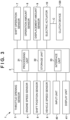
- FIG. 3 is a block diagram of a control device 1 that controls the clutch device 120.
- the control device 1 includes the control unit 2.
- the control unit 2 includes a processing unit 21, a storage unit 22, and an interface unit 23.
- the processing unit 21 is a processor represented by a CPU, and executes a program stored in the storage unit 22.
- the storage unit 22 is a storage device such as a semiconductor memory, and stores a program to be executed by the processing unit 21, data to be used for processing, and the like.
- the interface unit 23 inputs and outputs data to and from the processing unit 21 and a device outside the control unit 2.
- the processing unit 21 drives the electric actuator 10 on the basis of detection results of various sensors 3 to 9, and executes a control to change a clutch capacity of the clutch device 120.
- a throttle opening sensor 3 is a sensor that detects a degree to which a throttle valve that adjusts an inflow amount of air into each combustion chamber of the prime mover 108 is open, and is, for example, a rotary encoder that detects a rotation amount of a throttle shaft.
- An engine speed sensor 4 is a sensor that detects a speed of the prime mover 108, and is, for example, a magnetic crank angle sensor that detects a crank angle of the prime mover 108.
- a shift position sensor 5 is a sensor that detects a state (for example, one of 1st to 6th gears or neutral) of the transmission 109, and is, for example, a sensor that detects a rotation angle of a shift drum (not illustrated) of the transmission 109.
- a vehicle speed sensor 6 is a sensor that detects a vehicle speed of the vehicle 100, and is, for example, a sensor that detects a rotation amount of the front wheel FW.
- a shift operation sensor 7 is a sensor that detects a shift operation of the rider with respect to the operating element 115L, and is, for example, a torque sensor that detects a load acting on a rotation center axis of the operating element 115L.
- An input unit 40 is a device that receives an input from the rider, and is, for example, a switch, a touch panel, or the like. The rider can input a selection of various settings and the like from the input unit 40, and accordingly, the processing unit 21 of the control unit 2 recognizes the rider's selection and the like.
- a display unit 41 is a device that displays information to the rider, and is, for example, an indicator such as an LED, a liquid crystal display device, or the like.
- the input unit 40 and the display unit 41 can be mounted on, for example, the handle 104.
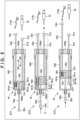
- FIG. 4 is an explanatory view of the clutch device 120 and a related configuration.
- FIG. 5 is an explanatory view of an operation of the transmission mechanism 18.
- the clutch device 120 includes an input gear 122 to which a driving force of the prime mover 108 is input from a crankshaft (not illustrated) of the prime mover 108.
- a clutch outer 121 rotates integrally with the input gear 122 around a rotation center line X1.
- the rotation center line X1 is a rotation center line (axis) of a main shaft 109a of the transmission 109.
- the main shaft 109a is coupled to the clutch center 123 and rotates integrally with the clutch center 123.
- a plurality of disk-shaped clutch plates 125 are stacked in the direction of the rotation center line X1 between the clutch outer 121 and the clutch center 123.
- clutch plates that rotate integrally with the clutch outer 121 and clutch plates that rotate integrally with the clutch center 123 are alternately arranged in the stacking direction, and the drive transmission between the clutch outer 121 and the clutch center 123, that is, the transmission of the driving force of the prime mover 108 to the transmission 109, is performed by frictional engagement between the plurality of clutch plates 125.
- the inner cables 30a to 32a are made of an elastically deformable wire materials, and are, for example, metal wires. Cylindrical engagement portions 30c to 32c are fixed to both end portions of the inner cables 30a to 32a, respectively. The engagement portions 30c and 31c of the inner cables 30a and 31a are engaged with the holders 14 on one side.
- the outer cables 30b to 32b are bendable tubes with flexibility, and end portions of the outer cables 30b and 31b are held by respectively corresponding catchers 15.
- the transmission mechanism 18 includes a movable element 181 and a cylindrical support member 180 that supports the movable element 181 so as to be movable in a reciprocating manner.
- the support member 180 is a case member forming an outer wall of the transmission mechanism 18.
- the inner cables 31a and 32a are inserted through one end (an input side end) 180a in a longitudinal direction of the support member 180 and introduced into the support member 180, and the inner cable 30a is inserted through the other end (an output side end) 180b in the longitudinal direction of the support member 180 and introduced into the support member 180.
- the movable element 180 can move in a reciprocating manner in a D5 direction and a D6 direction opposite to the D5 direction.
- the direction D5 is a rotation direction of the release operation member 128 and corresponds to a direction in which the torque capacity of the clutch device 120 is decreased
- the direction D6 is a rotation direction of the release operation member 128 and corresponds to a direction in which the torque capacity of the clutch device 120 is decreased.
- Engagement grooves 181a and 181b are formed in an end portion of the movable element 180 on the other end 180b side.
- the engagement grooves 181a and 181b are grooves each having a depth in a direction in which the movable element 181 moves in a reciprocating manner.
- the inner cable 31a is inserted through the movable element 181, and the engagement portion 31c thereof is engaged with the engagement groove 181a in the D5 direction and is not engaged with the engagement groove 181a in the D6 direction.
- the inner cable 32a is inserted through the movable element 181, and the engagement portion 32c thereof is engaged with the engagement groove 181b in the D5 direction and is not engaged with the engagement groove 181b in the D6 direction.
- the engagement groove 181b is a groove deeper than the engagement groove 181a, and an elastic member 182 is loaded between the bottom of the groove and the engagement portion 32c.
- the elastic member 182 is a coil spring.
- the rider can select a mode of a manual operation by the rider using the operating element 113L (a manual operation mode) and a mode of an automatic control using the electric actuator 10 (an automatic control mode).
- the selection between these modes can be performed by a rider's selection operation on the input unit 40.
- the clutch capacity of the clutch device 120 is controlled from a drive transmission disconnected state to a drive transmission connected state when the vehicle 100 starts or when the transmission 109 changes its shift.
- the control related to the clutch capacity (clutch pressing load/clutch spring load) of the clutch device 120 using the electric actuator 10 will be described.
- the clutch device 120 is normally in a connected state (clutch capacity: 100%) by the biasing of the clutch spring 126, and it is possible to realize a decrease in clutch capacity (half-clutch state) and a disconnected state (clutch capacity: 0%) by a movement of the lifter shaft 127 according to a rotation of the release operation member 128. Therefore, the clutch capacity is correlated with a torque (or a rotation amount) around the rotation center line X2 of the release operation member 123.
- the coefficient is a coefficient for converting the rotation amount L2 into a movement amount of the end of the connecting member C on the release operation member 128 side, and is set based on, for example, a length of the arm member 16 in the radial direction from the release operation member 123.
- the operation amount L1 and the rotation amount L2 can be detected by the operation amount sensor 8 and the displacement amount sensor 9. Therefore, it is possible to perform a control to change the clutch capacity of the clutch device 120 based on the detection results of the operation amount sensor 8 and the displacement amount sensor 9.
- the electric actuator 10 is driven at least in a range corresponding to a clutch capacity change range (0 to 100%).
- the electric actuator 10 is driven in such a manner that, in a state where the torque capacity of the clutch device 120 is 100% (it is sufficient that the release operation member 128 is in a free state), the rod 13 is full-stroked in a retracting direction from its initial position, and then returned to the initial position, so that the clutch capacity covers the range of 0% to 100%.
- An elongation amount L3 is calculated from detection results of the operation amount sensor 8 and the displacement amount sensor 9 during the driving of the electric actuator 10 to obtain test data EXP of FIG. 6 .
- the horizontal axis represents a rotation amount L2 (corresponding to a tensile load of the connecting member C)
- the vertical axis represents an elongation amount L3
- the broken line represents data at the stage of pulling the connecting member C
- the solid line represents data at the stage of releasing the pulling.
- the operation start point SP is a point at which the clutch device 120 shifts from the connected state to the half-clutch state.
- the operation start point varies depending on the play of the mechanism, etc.
- the touch point TC is a point at which the clutch device 120 shifts from the connected state to the half-clutch state, and varies depending on the wear of the clutch plate 125, etc.
- a feedback control of the drive source 11 may be performed while monitoring a detection result of the displacement amount sensor 9 so as to realize a rotation amount L2 corresponding to a target clutch capacity.
- characteristic information SI may be generated using an average value of detection results of the operation amount sensor 8 and the displacement amount sensor 9.
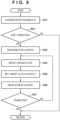
- FIG. 9 is a flowchart illustrating an example in which the clutch capacity of the clutch device 120 is automatically controlled using the characteristic information SI in the automatic control mode, and illustrates an example of a process executed by the processing unit 21 of the control unit 2.
- the illustrated process illustrates an example of a process executed when the clutch device 120 is in the connected state.
- a detection result of the shift operation sensor 7 is acquired.
- the electric actuator 10 is driven so that the clutch device 120 is in a disconnected state.
- the clutch device 120 can be reliably shifted to the disconnected state.
- S24 to S25 relate to a process of shifting the clutch device 120 to the connected state after a shift operation.
- a driving state of the vehicle 100 is detected.
- detection results of the throttle opening sensor 3, the engine speed sensor 4, the shift position sensor 5, and the vehicle speed sensor 6 are acquired.
- a target value of a clutch capacity of the clutch device 120 is set based on the detection results acquired in S24.
- the drive control of the electric actuator 10 (the drive source 11) is performed so as to achieve the target value of the clutch capacity set in S25.
- the characteristic information SI is read from the storage unit 22, the detection result of the displacement amount sensor 9 is monitored, and the feedback control of the drive source 11 is performed so that the rotation amount L2 becomes the rotation amount L2 corresponding to the target value of the clutch capacity set in S25.
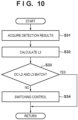
- FIG. 10 illustrates an example of a process related to an intervention of a manual operation of the rider in the automatic control mode, and repeatedly executed in parallel, for example, during the drive control of the electric actuator 10 in S26.
- S31 detection results of the operation amount sensor 8 and the displacement amount sensor 9 are acquired.
- S32 an elongation amount L3 is calculated from the detection results acquired in S31.
- S33 it is determined whether or not the rotation amount L2 detected by the displacement amount sensor 9 matches the elongation amount L3 calculated in S32. This determination can be performed using, for example, the test data EXP of FIG. 6 , and the test data EXP may be stored in the storage unit 22 for this determination.
- the burden of operating the operating element 113L may suddenly increase, which may cause the rider to feel uncomfortable.
- the electric actuator 10 is driven so that the operation amount L1 gradually decreases.
- the switching of the control mode may be notified to the rider in a displayed manner using the display unit 41.
- the control device 2 can be configured by utilizing the conventional manual-type clutch device 120 almost as is, and adding the electric actuator 10 and the sensors 8 and 9 outside the clutch device 120. Therefore, the automatic control of the clutch device 120 can be realized with a relatively simple configuration. Since the clutch capacity can be estimated from the elongation amount of the connecting member C, the control of the clutch capacity can also be realized with a relatively simple configuration. Since the clutch device 120 and the electric actuator 10 can be arranged to be separated from each other through the connecting member C, the degree of freedom in arranging the electric actuator 10 can also be improved.
- the degree of freedom in arranging the electric actuator 10 can be further improved.
- an automatic control corresponding to an individual difference in the clutch device 120 and the like can be performed.
- an automatic control of the clutch device 120 corresponding to a deterioration of the vehicle 100 over time can also be performed. Since an intervention of a manual operation of the rider can be determined by utilizing detection results of the sensors 8 and 9 in the automatic control mode, a clutch control can be performed according to an intention of the rider.
- the release operation member 128 is operated by an operation input of the electric actuator 10 and a manual operation input of the rider with respect to the operating element 113L using the transmission mechanism 18 having a cancellation mechanism.
- the transmission mechanism 18 having a cancellation mechanism.
- other configurations can be adopted.
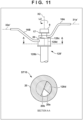
- FIG. 11 is an explanatory view illustrating a release operation member 128' replacing the release operation member 128 and its peripheral structure, and is a cross-sectional view taken along line A-A of the explanatory view.
- the release operation member 128' is a single integrated shaft member formed by vertically connecting a lower member 128b and an upper member 128c to each other.
- the release operation member 128' has a basic structure similar to that of the release operation member 128, and is rotatably supported by the clutch cover 120a.
- the lower member 128b has an eccentric cam portion 128 (not illustrated) similar to that of the release operation member 128.
- a displacement amount (rotation amount) of the release operation member 128' is detected by the displacement amount sensor 9.
- An arm member 16A replacing the arm member 16 is fixed to the upper member 128c, and the arm member 16A and the electric actuator 10 are connected to each other through a connecting member 31a'.
- the operating element 113L is not connected to the arm member 16A.
- the arm member 16A protrudes in the radial direction from the release operation member 128'.
- the connecting member 31a' is, for example, a metal wire.
- An arm member 16B replacing the arm member 16 is attached to the release operation member 128'. That is, in the present embodiment, the arm member 16A for the electric actuator 10 and the arm member 16B for manual operation through the operating element 113L are separately provided.
- the arm member 16B is connected to the operating element 113L through a cable 32a', and the cable 32a' is, for example, a metal wire.
- the arm member 16B protrudes in the radial direction from the release operation member 128', but protrudes in a direction different from that of the arm member 16A in a circumferential direction of the release operation member 128'.
- the rider can rotate the release operation member 128' through the operating element 113L, the connecting member 32a', and the arm member 16B.
- the arm member 16B has a hollow attachment portion 20. As illustrated in the cross-sectional view, the inside of the attachment portion 20 has a through hole 20a having a substantially semicircular cross-sectional shape and an engagement portion 20b defining a side surface of the through hole 20a. An engagement portion 128d of the upper member 128c is inserted into the through hole 20a.
- the engagement portion 128d is a rod-shaped portion having a fanlike cross-sectional shape.
- the arm member 16B is attached to the release operation member 128' in the attachment portion 20 so as to be relatively rotatable coaxially with the release operation member 128' (about the rotation center line X2) within a radial gap between the through hole 20a and the engagement portion 128d.
- a cancellation mechanism is formed on the manual operation side.
- FIG. 12 is an explanatory diagram thereof.
- the arm member 16B rotates to reach a state ST11 of FIG. 12 . Since the engagement portion 20b and the engagement portion 128d are in an engaged state, the release operation member 128' also rotates in conjunction with the rotation of the arm member 16B.
- the release operation member 128' rotates together with the arm member 16A and reaches a state ST12 of FIG. 12 . Since the engagement portion 20b and the engagement portion 128d are not engaged with each other in the state ST12, even if the rider operates the operating element 113L and the arm member 16B rotates thereafter, the release operation member 128' does not rotate. That is, the manual operation of the rider is canceled. In this manner, it is possible to cancel the manual operation through the operating element 113L that overlaps with the operation by the electric actuator 10.
- FIG. 13 illustrates an example of a mechanism that cancels an operation on the electric actuator 10 side.
- a transmission mechanism 19 is provided between the rod 13 and the connecting member 31a'.
- an engagement portion 31c at an end portion of the connecting member 31a' and an elastic member 19c are incorporated in an internal space 19b of a cylindrical case 19a.
- the elastic member 19c is a coil spring in the illustrated example, is loaded between the engagement portion 31c and an inner wall surface of the case 19a, and generates a biasing force in a direction in which the connecting member 31a' is pulled toward the electric actuator 10.
- a state ST20 of FIG. 13 illustrates an initial state corresponding to the initial position of the state ST10 of FIG. 11 .
- the connecting member 31a' moves toward the electric actuator 10 as illustrated in a state ST21 of FIG. 13 . Since the elastic member 19c generates the biasing force in the direction in which the connecting member 31a' is pulled toward the electric actuator 10, this contributes to reducing an operating force with which the rider operates the operating element 113L.
- a state ST22 of FIG. 13 illustrates an example in which the electric actuator 10 is driven from the state ST20 to move the connecting member 31a' in the pulling direction, and the release operation member 128' reaches the state ST12 of FIG. 12 .
- FIG. 14 illustrates one example thereof.
- the electric actuator 10 is disposed at a rear portion of the vehicle 100 (below a rear portion of the seat 106). In this manner, a layout in which the operating element 113L (not illustrated in FIG. 14 ) and the electric actuator 10 are arranged at positions opposite each other with respect to the release operation member 128' in the D1 direction can also be adopted.
- the characteristic information SI in FIG. 6 is information indicating a correlation between a clutch capacity and a rotation amount L2, but the characteristic information SI may be information indicating a correlation between a clutch capacity and an elongation amount L3. Hysteresis characteristics of the connecting member C1 may be considered.
- FIG. 15 illustrates examples of test data EXP and characteristic information SI in the present embodiment.
- the electric actuator 10 is driven at least in a range corresponding to a clutch capacity change range (0 to 100%).
- the electric actuator 10 is driven in such a manner that, in a state where the torque capacity of the clutch device 120 is 100% (it is sufficient that the release operation member 128 is in a free state), the rod 13 is full-stroked in a retracting direction from its initial position, and then returned to the initial position, so that the clutch capacity covers the range of 0% to 100%.
- An elongation amount L3 is calculated from detection results of the operation amount sensor 8 and the displacement amount sensor 9 during the driving of the electric actuator 10 to obtain test data EXP of FIG. 15 .
- the vertical axis represents a rotation amount L2 (corresponding to a tensile load of the connecting member C1)
- the horizontal axis represents an elongation amount L3
- the broken line represents data at the stage of pulling the connecting member C1
- the solid line represents data at the stage of releasing the pulling.
- the characteristic information SI is obtained from the data.
- An operation start point and a touch point are specified from an inflection point or the like of the inclination of each type of data.
- the characteristic information SI includes characteristic information SI1 and characteristic information SI2.
- the characteristic information SI2 is control information used when the characteristic information clutch device 120 is shifted from a connected state to a disconnected state, and is control information used when the connecting member C1 is pulled by the electric actuator 10.
- the characteristic information SI2 includes an operation start point SP2 and a touch point TC2, and a correlation between an elongation amount L3 and a clutch capacity between the operation start point SP2 and the touch point TC2.
- the characteristic information SI1 is control information used when the clutch device 120 is shifted from the disconnected state to the connected state, and is control information used when the connecting member C1 pulled by the electric actuator 10 is sent back and returned to its original length.
- the characteristic information SI1 includes an operation start point SP1 and a touch point TC1, and a correlation between an elongation amount L3 and a clutch capacity between the operation start point SP1 and the touch point TC1.
- the characteristic information SI is stored in, for example, the storage unit 22.
- a feedback control of the drive source 11 may be performed while monitoring detection results of the operation amount sensor 8 and the displacement amount sensor 9 so as to realize an elongation amount L3 corresponding to a target clutch capacity.
- the characteristic information SI2 out of the two types of characteristic information SI1 and SI2 is read from the storage unit 22. Then, by driving the electric actuator 10 until the elongation amount L3 of the connecting member C1 based on the detection results of the operation amount sensor 8 and the displacement amount sensor 9 becomes longer than the elongation amount L3 corresponding to the touch point TC2, the clutch device 120 can be reliably shifted to the disconnected state.
- the characteristic information SI1 is read from the storage unit 22, the detection results of the operation amount sensor 8 and the displacement amount sensor 9 are monitored, and the feedback control of the drive source 11 is performed so that the elongation amount L3 of the connecting member C1 becomes the elongation amount L3 corresponding to the target value of the clutch capacity set in S25.
Landscapes
- Engineering & Computer Science (AREA)
- General Engineering & Computer Science (AREA)
- Physics & Mathematics (AREA)
- Mechanical Engineering (AREA)
- Fluid Mechanics (AREA)
- Electromagnetism (AREA)
- Chemical & Material Sciences (AREA)
- Combustion & Propulsion (AREA)
- Transportation (AREA)
- Hydraulic Clutches, Magnetic Clutches, Fluid Clutches, And Fluid Joints (AREA)
Applications Claiming Priority (1)
| Application Number | Priority Date | Filing Date | Title |
|---|---|---|---|
| PCT/JP2022/010330 WO2023170830A1 (ja) | 2022-03-09 | 2022-03-09 | 制御装置 |
Publications (2)
| Publication Number | Publication Date |
|---|---|
| EP4477910A1 true EP4477910A1 (de) | 2024-12-18 |
| EP4477910A4 EP4477910A4 (de) | 2025-04-02 |
Family
ID=87936337
Family Applications (1)
| Application Number | Title | Priority Date | Filing Date |
|---|---|---|---|
| EP22930813.5A Pending EP4477910A4 (de) | 2022-03-09 | 2022-03-09 | Steuervorrichtung |
Country Status (5)
| Country | Link |
|---|---|
| US (1) | US12297877B2 (de) |
| EP (1) | EP4477910A4 (de) |
| JP (1) | JP7663778B2 (de) |
| CN (1) | CN118922646A (de) |
| WO (1) | WO2023170830A1 (de) |
Family Cites Families (7)
| Publication number | Priority date | Publication date | Assignee | Title |
|---|---|---|---|---|
| JP2006170228A (ja) | 2004-12-10 | 2006-06-29 | Yamaha Motor Co Ltd | クラッチアクチュエータ及び鞍乗型車両 |
| JP4900700B2 (ja) * | 2007-01-30 | 2012-03-21 | 本田技研工業株式会社 | クラッチ制御装置 |
| JP5007252B2 (ja) * | 2008-02-21 | 2012-08-22 | 本田技研工業株式会社 | クラッチアクチュエータ装置 |
| JP2010270804A (ja) * | 2009-05-20 | 2010-12-02 | Aisin Seiki Co Ltd | クラッチバイワイヤシステム |
| JP2014070686A (ja) * | 2012-09-28 | 2014-04-21 | Honda Motor Co Ltd | ツインクラッチ制御装置 |
| WO2020017178A1 (ja) * | 2018-07-19 | 2020-01-23 | 本田技研工業株式会社 | クラッチ制御装置 |
| WO2020213333A1 (ja) * | 2019-04-19 | 2020-10-22 | 本田技研工業株式会社 | クラッチ制御装置 |
-
2022
- 2022-03-09 CN CN202280092733.5A patent/CN118922646A/zh active Pending
- 2022-03-09 JP JP2024505733A patent/JP7663778B2/ja active Active
- 2022-03-09 WO PCT/JP2022/010330 patent/WO2023170830A1/ja not_active Ceased
- 2022-03-09 EP EP22930813.5A patent/EP4477910A4/de active Pending
-
2024
- 2024-09-05 US US18/825,327 patent/US12297877B2/en active Active
Also Published As
| Publication number | Publication date |
|---|---|
| US20240426352A1 (en) | 2024-12-26 |
| CN118922646A (zh) | 2024-11-08 |
| JPWO2023170830A1 (de) | 2023-09-14 |
| EP4477910A4 (de) | 2025-04-02 |
| JP7663778B2 (ja) | 2025-04-16 |
| WO2023170830A1 (ja) | 2023-09-14 |
| US12297877B2 (en) | 2025-05-13 |
Similar Documents
| Publication | Publication Date | Title |
|---|---|---|
| TWI285714B (en) | Motorcycle | |
| ES2675751T3 (es) | Vehículo | |
| US7673728B2 (en) | Automated transmission controller and vehicle including the automated transmission controller | |
| US10941858B2 (en) | Transmission-equipped vehicle | |
| EP4477910A1 (de) | Steuervorrichtung | |
| JP4291927B2 (ja) | 車両の動力伝達装置 | |
| EP4477909A1 (de) | Steuervorrichtung | |
| EP1975443B1 (de) | Kupplung mit Kupplungssteuergerät, Steuerverfahren für die Kupplung und Grätschsitzfahrzeug | |
| US8960398B2 (en) | Clutch operation assisting device and power unit for straddle-type vehicle | |
| EP2696108B1 (de) | Automatikgetriebevorrichtung und mit der Vorrichtung ausgestattetes Sattelfahrzeug | |
| JP7522249B1 (ja) | 鞍乗型車両 | |
| JP4989853B2 (ja) | 車両の変速制御装置 | |
| JP2025137715A (ja) | クラッチ制御装置 | |
| JP2025058717A (ja) | クラッチ装置及び鞍乗型車両 | |
| JP7059442B2 (ja) | 鞍乗り型車両のクラッチ制御装置およびクラッチ制御方法 | |
| JP7130713B2 (ja) | 車両の変速装置 | |
| US20100049412A1 (en) | Control apparatus and control method for transmission | |
| EP1437255B1 (de) | Steuerungssystem einer automatischen Kupplung | |
| JP5396363B2 (ja) | アイドルストップ装置を備えた車両 | |
| JP4248202B2 (ja) | 自動変速機のレンジ切換え装置 | |
| JP6158955B2 (ja) | 動力源制御装置 | |
| JP5232101B2 (ja) | 車両の制御装置 | |
| JPWO2023170829A5 (de) | ||
| JP3973505B2 (ja) | 非常時切換装置付き変速装置 | |
| JP2025105009A (ja) | 車両、および、変速機用の誤り判定方法 |
Legal Events
| Date | Code | Title | Description |
|---|---|---|---|
| STAA | Information on the status of an ep patent application or granted ep patent |
Free format text: STATUS: THE INTERNATIONAL PUBLICATION HAS BEEN MADE |
|
| PUAI | Public reference made under article 153(3) epc to a published international application that has entered the european phase |
Free format text: ORIGINAL CODE: 0009012 |
|
| STAA | Information on the status of an ep patent application or granted ep patent |
Free format text: STATUS: REQUEST FOR EXAMINATION WAS MADE |
|
| 17P | Request for examination filed |
Effective date: 20240909 |
|
| AK | Designated contracting states |
Kind code of ref document: A1 Designated state(s): AL AT BE BG CH CY CZ DE DK EE ES FI FR GB GR HR HU IE IS IT LI LT LU LV MC MK MT NL NO PL PT RO RS SE SI SK SM TR |
|
| A4 | Supplementary search report drawn up and despatched |
Effective date: 20250227 |
|
| RIC1 | Information provided on ipc code assigned before grant |
Ipc: F16D 28/00 20060101ALI20250221BHEP Ipc: F16D 48/06 20060101AFI20250221BHEP |
|
| DAV | Request for validation of the european patent (deleted) | ||
| DAX | Request for extension of the european patent (deleted) | ||
| RAP3 | Party data changed (applicant data changed or rights of an application transferred) |
Owner name: HONDA MOTOR CO., LTD. |