EP4471024A1 - M-cholinrezeptoragonistverbindung, herstellungsverfahren dafür und verwendung davon - Google Patents
M-cholinrezeptoragonistverbindung, herstellungsverfahren dafür und verwendung davon Download PDFInfo
- Publication number
- EP4471024A1 EP4471024A1 EP23746452.4A EP23746452A EP4471024A1 EP 4471024 A1 EP4471024 A1 EP 4471024A1 EP 23746452 A EP23746452 A EP 23746452A EP 4471024 A1 EP4471024 A1 EP 4471024A1
- Authority
- EP
- European Patent Office
- Prior art keywords
- compound
- pilocarpine
- formula
- alkyl
- administration
- Prior art date
- Legal status (The legal status is an assumption and is not a legal conclusion. Google has not performed a legal analysis and makes no representation as to the accuracy of the status listed.)
- Pending
Links
Images




Classifications
-
- C—CHEMISTRY; METALLURGY
- C07—ORGANIC CHEMISTRY
- C07D—HETEROCYCLIC COMPOUNDS
- C07D405/00—Heterocyclic compounds containing both one or more hetero rings having oxygen atoms as the only ring hetero atoms, and one or more rings having nitrogen as the only ring hetero atom
- C07D405/02—Heterocyclic compounds containing both one or more hetero rings having oxygen atoms as the only ring hetero atoms, and one or more rings having nitrogen as the only ring hetero atom containing two hetero rings
- C07D405/06—Heterocyclic compounds containing both one or more hetero rings having oxygen atoms as the only ring hetero atoms, and one or more rings having nitrogen as the only ring hetero atom containing two hetero rings linked by a carbon chain containing only aliphatic carbon atoms
-
- A—HUMAN NECESSITIES
- A61—MEDICAL OR VETERINARY SCIENCE; HYGIENE
- A61K—PREPARATIONS FOR MEDICAL, DENTAL OR TOILETRY PURPOSES
- A61K31/00—Medicinal preparations containing organic active ingredients
- A61K31/33—Heterocyclic compounds
- A61K31/395—Heterocyclic compounds having nitrogen as a ring hetero atom, e.g. guanethidine or rifamycins
- A61K31/41—Heterocyclic compounds having nitrogen as a ring hetero atom, e.g. guanethidine or rifamycins having five-membered rings with two or more ring hetero atoms, at least one of which being nitrogen, e.g. tetrazole
- A61K31/4164—1,3-Diazoles
- A61K31/4178—1,3-Diazoles not condensed 1,3-diazoles and containing further heterocyclic rings, e.g. pilocarpine, nitrofurantoin
-
- A—HUMAN NECESSITIES
- A61—MEDICAL OR VETERINARY SCIENCE; HYGIENE
- A61P—SPECIFIC THERAPEUTIC ACTIVITY OF CHEMICAL COMPOUNDS OR MEDICINAL PREPARATIONS
- A61P27/00—Drugs for disorders of the senses
- A61P27/02—Ophthalmic agents
- A61P27/06—Antiglaucoma agents or miotics
-
- A—HUMAN NECESSITIES
- A61—MEDICAL OR VETERINARY SCIENCE; HYGIENE
- A61P—SPECIFIC THERAPEUTIC ACTIVITY OF CHEMICAL COMPOUNDS OR MEDICINAL PREPARATIONS
- A61P27/00—Drugs for disorders of the senses
- A61P27/02—Ophthalmic agents
- A61P27/08—Mydriatics or cycloplegics
-
- A—HUMAN NECESSITIES
- A61—MEDICAL OR VETERINARY SCIENCE; HYGIENE
- A61P—SPECIFIC THERAPEUTIC ACTIVITY OF CHEMICAL COMPOUNDS OR MEDICINAL PREPARATIONS
- A61P27/00—Drugs for disorders of the senses
- A61P27/02—Ophthalmic agents
- A61P27/12—Ophthalmic agents for cataracts
-
- C—CHEMISTRY; METALLURGY
- C07—ORGANIC CHEMISTRY
- C07C—ACYCLIC OR CARBOCYCLIC COMPOUNDS
- C07C63/00—Compounds having carboxyl groups bound to a carbon atoms of six-membered aromatic rings
- C07C63/04—Monocyclic monocarboxylic acids
- C07C63/06—Benzoic acid
- C07C63/08—Salts thereof
Definitions
- the present disclosure relates to the technical field of pharmaceutical compounds and particularly relates to an M-choline receptor agonist compound, a preparation method therefor, and use thereof.
- Presbyopia is a common vision problem that occurs in middle-aged and elderly individuals. As age increases, the lens of the eye gradually hardens and thickens, and the accommodative ability of the eye muscles also diminishes. This leads to a gradual loss of accommodative function, resulting in a decrease in the zoom ability. When looking at nearby objects, the image is blurred due to the inability to fully focus when projected onto the retina. Presbyopia commonly occurs after the age of 40 and can significantly affect people's quality of life and productivity if left uncorrected.
- presbyopia is one of the diseases with relatively high global morbidity, significantly impacting the quality of life of middle-aged and elderly individuals. With the greatly extended screen time on devices such as smartphones, the incidence of presbyopia is rising yearly.
- the primary treatment for presbyopia is the traditional and typical way of wearing presbyopic glasses, but long-term wearing of presbyopic glasses can easily lead to eye fatigue, headaches, dizziness, and other symptoms. Additionally, the presbyopic glasses need to be worn and taken off frequently and are inconvenient to carry.
- Liquid vision which contains a low dose of aceclidine
- CSF-1 drop is a drug that acts on the parasympathetic nervous system, in which a non-steroidal anti-inflammatory drug is incorporated in an oily base. It can cause pupil constriction and increase the eye's depth of focus, thereby ameliorating presbyopia symptoms.
- some topical formulations are also in different stages of development.
- Vuity as the first drug for presbyopia, still has some drawbacks. For instance, 5 min after drop application, some patients experience symptoms such as bloodshot eyes, ocular redness and swelling, and ocular discomfort, and there are also adverse events such as strong eye irritation and headaches (with an incidence rate of over 5%). Meanwhile, the onset time, duration of effect, and comfort of use of Vuity (pilocarpine HCl) all need to be improved.
- the present disclosure provides a compound represented by formula (A), a pharmaceutically acceptable hydrate or solvate thereof:
- the compound represented by formula (A) is selected from a compound represented by formula I-1 or formula 1-2 shown below:
- R 1 , R 2 , R 3 , R 4 and R 5 are identical or different, and are each independently selected from hydrogen, C 1-6 alkyl, halogen, cyano, and amino.
- R 1 , R 2 , R 3 , R 4 and R 5 are identical or different, and are each independently selected from hydrogen, methyl, ethyl, isopropyl, chlorine, fluorine, and cyano.
- R 1 , R 2 , R 3 , R 4 and R 5 are H.
- R 1 , R 2 , R 3 , R 4 and R 5 are H.
- R 1 , R 2 , R 4 , and R 5 are all H, and R 3 is C 1-6 alkyl, halogen, cyano, or -NR'R".
- R 1 , R 2 , R 3 , and R 5 are all H, and R 4 is C 1-6 alkyl, halogen, cyano, or -NR'R".
- R 1 , R 2 , R 3 , R 4 and R 5 are identical or different, and are each independently selected from hydrogen, C 1-6 alkyl, halogen, -COOR', wherein R' is selected from H and C 1-6 alkyl.
- R 1 , R 2 , R 3 , R 4 and R 5 are identical or different, and are each independently selected from hydrogen, methyl, ethyl, isopropyl, chlorine, fluorine, and bromine.
- Ra and Rb are identical or different, and are each independently selected from hydrogen, C 1-6 alkyl, halogen, and cyano, preferably hydrogen or C 1-6 alkyl.
- R 1 , R 2 , R 3 , R 4 and R 5 are identical or different, at least two of which are hydrogen, and preferably three or four of which are hydrogen.
- the compound represented by formula I-1 is selected from the following: Compound Structure JQ-1 JQ-2 JQ-3 JQ-5 JQ-6 JQ-8 JQ-9 JQ-10
- the compound represented by formula I-2 is selected from the following: No. Compound 1 2 3 4 5 6 7 8 9 10 11 12 13 14 15
- the compound of formula I-1 is:
- the compound of formula I-2 is selected from:
- the present disclosure further provides a preparation method for the compound represented by formula (A) as described above, comprising: reacting pilocarpine with a compound of formula (A-1) to give the compound represented by formula (A): wherein R, R 1 , R 2 , R 3 , R 4 , and R 5 are as defined above.
- the molar ratio of pilocarpine to the compound of formula (A-1) is 1:1.
- the reaction is performed at room temperature.
- the present disclosure further provides a pharmaceutical composition, which comprises at least one of the compound represented by formula (A) and the pharmaceutically acceptable hydrate and solvate thereof as described above.
- the mass concentration of the compound represented by formula (A) is 0.3%-8%, preferably 0.3%-4% or 0.88%-3.5%.
- the pharmaceutical composition further comprises a pharmaceutically acceptable carrier or excipient, such as a humectant, a transdermal absorption enhancer, a preservative, an embedding agent, a film-forming agent, or the like.
- a pharmaceutically acceptable carrier or excipient such as a humectant, a transdermal absorption enhancer, a preservative, an embedding agent, a film-forming agent, or the like.
- the pharmaceutical composition is formulated for oral administration, parenteral administration, ocular administration, topical administration, injection, subcutaneous administration, transdermal administration, rectal administration, buccal administration, or transmucosal administration.
- the pharmaceutical composition can be prepared in the following dosage forms: a suspension, a gel, an ointment, an injectable solution, a spray, or an eye drop formulation.
- the pharmaceutical composition can be formulated into a compound formulation with other drugs, for example, by adding an antiallergic drug, an ingredient with a synergistic effect, an ingredient for improving the comfort level, and the like.
- the pharmaceutical composition is in the form of an eye drop formulation.
- the present disclosure further provides the use of the compound represented by formula (A) for the manufacturing of a medicament for the amelioration or treatment of an ocular disease or disorder.
- the ocular disease or disorder is at least one of presbyopia, cataract, glaucoma, dry eye syndrome, diabetic retinopathy, macular degeneration, optic neuritis, and retinitis pigmentosa.
- the ocular disease or disorder is presbyopia.
- the present disclosure further provides use of at least one of the compounds represented by formula (A) and the pharmaceutically acceptable hydrate and solvate thereof for the manufacturing of a medicament for miosis.
- the therapeutically effective amount of the compound is 0.001-1000 mg per recipient.
- the compound of the present disclosure has a significant effect when used for ocular diseases, especially presbyopia, or when used for ocular miosis, with rapid onset, long duration of effect, and high strength of the effect.
- pilocarpine benzoic acid series compounds represented by formula I-1 The researchers of the present disclosure unexpectedly found that in the screening of various salt forms of pilocarpine, the pilocarpine benzoic acid series compounds overall exhibit a superior pupil constriction effect compared to pilocarpine hydrochloride.
- the pilocarpine benzoic acid series compounds of the present disclosure exhibited a superior initial pupil constriction effect at 5 min compared to the pilocarpine hydrochloride, achieving a faster onset of effect; 2) the measured value of a pilocarpine hydrochloride solution at the time point of 3 h was -3.13 ⁇ 7.35, indicating that the solution had substantially no pupil constriction effect; however, the series compounds of the present application still exhibited a significant pupil constriction effect when measured at the time point of 3 h, and the effect lasted for 4 h or even longer, extending the duration of effect by no less than 33% compared to the pilocarpine hydrochloride; 3) the maximum percentage change in pupil diameter caused by using the pilocarpine hydrochloride was only around 35%, whereas the maximum percentage change in pupil diameter caused by using the series compounds of the present application could reach 40%-45%, with the maximum strength of effect enhanced by 15%-30%.
- the pilocarpine benzoic acid series compounds of the present disclosure exhibit a faster onset of effect, longer duration of effect, and greater strength of effect, with extremely significant differences in various technical indicators.
- the efficacy of the pilocarpine benzoic acid series compounds of the present disclosure can achieve the same or even stronger effect compared to the pilocarpine hydrochloride at half the dose of the pilocarpine hydrochloride.
- the irritation to the rabbit eyes caused by the pilocarpine hydrochloride solution and pilocarpine benzoic acid series solutions is equivalent to that caused by the pilocarpine hydrochloride. If the dose is further reduced, adverse effects can be significantly reduced while achieving the same therapeutic effect.
- Pilocarpine phenylacetate series solutions cause less irritation to the eyes and exhibit a faster onset of effect, with extremely significant differences in various technical indicators.
- the pilocarpine phenylacetate series compound solutions still achieve the same effect as the pilocarpine hydrochloride at half of the molar concentration of the pilocarpine hydrochloride, thereby allowing for a reduced administration dose.
- the active pharmaceutical ingredient and formulation of the pilocarpine phenylacetate series overall exhibit superior stability compared to those of the pilocarpine hydrochloride series, with a slow increasing rate of related impurities and easy quality control. Furthermore, the salt-forming ratio in the pilocarpine phenylacetate series solutions can be maintained around 1:1 under different pH conditions, remaining stable for a long time without precipitation.
- Halogen refers to fluorine, chlorine, bromine, or iodine.
- the halogen is fluorine, chlorine, or bromine.
- C 1-6 alkyl should be understood to represent a linear or branched saturated monovalent hydrocarbyl group having 1-6 carbon atoms, such as methyl, ethyl, n-propyl, n-butyl, isopropyl, isobutyl, sec-butyl, or tert-butyl. More particularly, the group has 1, 2, or 3 carbon atoms (“C 1-3 alkyl”), such as methyl, ethyl, n-propyl, or isopropyl.
- C 1-6 alkoxy refers to the group -O-C 1-6 alkyl, wherein the C 1-6 alkyl is defined as above.
- C 1-6 alkylthio should be understood as -S-C 1-6 alkyl, wherein the C 1-6 alkyl is defined as above.
- C 3-10 cycloalkyl should be understood to represent a saturated monovalent monocyclic or bicyclic hydrocarbon ring having 3, 4, 5, 6, 7, 8, 9, or 10 carbon atoms.
- the C 3-10 cycloalkyl can be a monocyclic hydrocarbyl group such as cyclopropyl, cyclobutyl, cyclopentyl, cyclohexyl, cycloheptyl, cyclooctyl, cyclononyl, or cyclodecyl, or can be a bicyclic hydrocarbyl group such as a decahydronaphthalene ring.
- C 6-14 aryl should be understood to represent an aromatic or partially aromatic monovalent monocyclic, bicyclic or tricyclic hydrocarbon ring having 6, 7, 8, 9, 10, 11, 12, 13, or 14 carbon atoms (“C 6-14 aryl”), in particular a ring having 6 carbon atoms (“C 6 aryl”), such as phenyl or biphenyl; a ring having 9 carbon atoms (“C 9 aryl”), such as indanyl or indenyl; a ring having 10 carbon atoms (“C 10 aryl”), such as tetrahydronaphthyl, dihydronaphthyl or naphthyl; a ring having 13 carbon atoms (“C 13 aryl”), such as fluorenyl; or a ring having 14 carbon atoms (“C 14 aryl”), such as anthryl.
- C 6 aryl a ring having 6 carbon atoms
- C 9 aryl such as indanyl or indenyl
- 5- to 14-membered heteroaryl should be understood to represent a monovalent monocyclic, bicyclic or tricyclic aromatic ring system that has 5, 6, 7, 8, 9, 10, 11, 12, 13 or 14 ring atoms, in particular 5, 6, 9 or 10 carbon atoms, contains 1-5, preferably 1-3 heteroatoms independently selected from N, O and S, and may be benzo-fused in each case.
- the heteroaryl is selected from thienyl, furanyl, pyrrolyl, oxazolyl, thiazolyl, imidazolyl, pyrazolyl, isoxazolyl, isothiazolyl, oxadiazolyl, triazolyl, thiadiazolyl, thia-4H-pyrazolyl and the like and benzo derivatives thereof, such as benzofuranyl, benzothienyl, benzoxazolyl, benzoisoxazolyl, benzimidazolyl, benzotriazolyl, indazolyl, indolyl, isoindolyl and the like; or pyridinyl, pyridazinyl, pyrimidinyl, pyrazinyl, triazinyl and the like and benzo derivatives thereof, such as quinolyl, quinazolinyl, isoquinolyl and the like; or azocinyl, indoli
- 3- to 10-membered heterocyclyl refers to a saturated monovalent monocyclic or bicyclic hydrocarbon ring containing 1-5, preferably 1-3 heteroatoms selected from N, O, and S.
- the heterocyclyl may be connected to the rest of the molecule through any one of the carbon atoms or the nitrogen atom(s) (if present).
- the heterocyclyl may include, but is not limited to: 4-membered rings such as azetidinyl and oxetanyl; 5-membered rings such as tetrahydrofuranyl, dioxolyl, pyrrolidinyl, imidazolidinyl, pyrazolidinyl and pyrrolinyl; 6-membered rings such as tetrahydropyranyl, piperidyl, morpholinyl, dithianyl, thiomorpholinyl, piperazinyl and trithianyl; or 7-membered rings such as diazepanyl.
- the heterocyclyl may be benzo-fused.
- the heterocyclyl may be bicyclic, for example, but not limited to, a 5,5-membered ring such as a hexahydrocyclopenta[ c ]pyrrol-2(1 H )-yl ring, or a 5,6-membered bicyclic ring such as a hexahydropyrrolo[1,2- a ]pyrazin-2(1 H )-yl ring.
- the ring containing the nitrogen atom may be partially unsaturated, i.e., it may contain one or more double bonds, for example, but not limited to, 2,5-dihydro-1 H -pyrrolyl, 4 H -[1,3,4]thiadiazinyl, 4,5-dihydrooxazolyl, or 4 H -[1,4]thiazinyl, or it may be benzo-fused, for example, but not limited to, dihydroisoquinolyl.
- “Pharmaceutically acceptable carrier” refers to a carrier that can be used in the preparation of a pharmaceutical composition, which is generally compatible with the other ingredients in the composition and harmless to the recipient.
- “Pharmaceutically acceptable carrier” includes one or more than one carrier, and embodiments thereof include carriers for topical, ocular, parenteral, intravenous, intraperitoneal, intramuscular, sublingual, nasal and oral administration. “Pharmaceutically acceptable carrier” also includes reagents used in the preparation of an aqueous dispersion and sterile powders for injection or dispersion.
- excipient includes a physiologically compatible additive that can be used in the preparation of a pharmaceutical composition.
- examples of the pharmaceutically acceptable carrier and excipient can be found, for example, in Remington Pharmaceutical Science (16th editi on).
- “Therapeutically effective amount” refers to a dose of a compound or composition that is effective in affecting the amelioration of presbyopia or for use in ocular miosis and other related ocular disorders. As used herein, the term may also refer to an effective amount to produce a desired in-vivo effect (amelioration of presbyopia or miosis) in an animal, preferably a human.
- concentrations of eye drop solutions involved in the following examples refer to mass concentrations.
- the eye drop solutions of groups 1) to 12) described above contained an equimolar concentration of pilocarpine.
- the molar concentration of pilocarpine in the eye drop solution of group 5) was half of the molar concentration of pilocarpine in the solutions of the other 11 groups.
- Digital vernier caliper specification: 0-150 mm; measurement accuracy: 0.01 mm; manufacturer: Guilin Guanglu Measuring Instrument Co., Ltd.
- Each rabbit was subjected to eye drop administration in the left eye (using a pipette), with an administration volume of 100 ⁇ L.
- the measurement result for each rabbit at each time point was represented by the average value of three measurements.
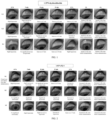
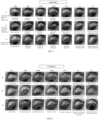
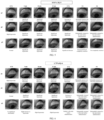
- FIGs. 1-9 The results of the irritation to rabbit eyes caused by different eye drop solutions of benzoic acid and hydrochloride over different periods are shown in FIGs. 1-9 .
- the test results of rabbit pupil change values are shown in Tables 1-1 to 1-9, and the average value and the standard deviation ( x ⁇ SD value) of the percentage changes in pupil diameter (%) at each time point in Tables 1-1 to 1-9 are listed in Table 1-10.
- Table 1-1 Percentage changes in pupil diameter before and after administration of 1.25% pilocarpine hydrochloride solution in six rabbits No.
- the pilocarpine benzoic acid series compounds of the present disclosure overall exhibit a superior pupil constriction effect compared to the pilocarpine hydrochloride.
- the details are as follows: 1) the pilocarpine benzoic acid series compounds of the present disclosure exhibited a superior initial pupil constriction effect at 5 min compared to the pilocarpine hydrochloride, achieving a faster onset of effect; 2) the measured value of the pilocarpine hydrochloride solution at the time point of 3 h was -3.13 ⁇ 7.35, indicating that the solution had substantially no pupil constriction effect; however, the series compounds of the present application still exhibited a significant pupil constriction effect when measured at the time point of 3 h, with the effect lasting for 4 h or even longer, and the statistical results show that the duration of effect was extended by no less than 33% compared to the pilocarpine hydrochloride; 3) the maximum percentage change in pupil diameter caused by using pilocarpine hydrochloride
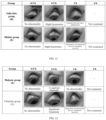
- FIGs. 15-17 The results of the irritation to rabbit eyes caused by different eye drop solutions of the phenylacetic acid series compounds over different time periods are shown in FIGs. 15-17 , and the test results of rabbit pupil change values with different eye drop solutions are shown in Tables 1-11, 1-12 and 1-13.
- Table 1-11 Percentage changes in pupil diameter before and after administration of 1.83% compound 1 solution in five rabbits No.
- Reagent normal saline (specification: 500 mL:4.5 g), purchased from Jiangxi Kelun Pharmaceutical Co., Ltd.
- Pilocarpine hydrochloride with a molecular weight of 244.72 and a purity greater than 95%, from Nanjing Jiqun Pharmaceutical Technology Co., Ltd., prepared into a 1.25% solution using normal saline.
- Pilocarpine nitrate with a molecular weight of 271.27 and a purity of 98%, from Nanjing Jiqun Pharmaceutical Technology Co., Ltd., prepared into a 1.38% solution using normal saline.
- Pilocarpine salicylate with a molecular weight of 346.24 and a purity of 99.73%, from Nanjing Jiqun Pharmaceutical Technology Co., Ltd., prepared into a 1.76% solution using normal saline.
- Pilocarpine malate with a molecular weight of 342.21 and a purity of 99.72%, from Nanjing Jiqun Pharmaceutical Technology Co., Ltd., prepared into a 1.74% solution using normal saline.
- Pilocarpine maleate with a molecular weight of 324.19 and a purity of 99.76%, from Nanjing Jiqun Pharmaceutical Technology Co., Ltd., prepared into a 1.65% solution using normal saline.
- Pilocarpine fumarate with a molecular weight of 324.19 and a purity of 99.74%, from Nanjing Jiqun Pharmaceutical Technology Co., Ltd., prepared into a 1.65% solution using normal saline.
- Pilocarpine lipoate with a molecular weight of 414.58 and a purity of 99.56%, from Nanjing Jiqun Pharmaceutical Technology Co., Ltd., prepared into a 2.11% solution using normal saline.
- Each rabbit in each group was subjected to single eye drop administration in the left eye, with an administration volume of 100 ⁇ L.
- the pupil and iris diameters of the left eye of the rabbits were measured at time points of -0.5 h (i.e., half an hour before administration), 0.5 h, 3 h, and 4 h relative to administration (observation time points were extended if necessary), with the measurement performed 5 times for each rabbit at each time point.
- the entire measurement process was completed by the same person.
- the measurement data are shown in Tables 2-1 and 2-2.
- the eye irritation condition in each group was examined concurrently with the pupil and iris diameters recorded by photography, and the observed phenomena were noted in the original records, as detailed in FIGs. 10 to 12 .
- the pilocarpine hydrochloride, the pilocarpine nitrate, the pilocarpine salicylate, the pilocarpine malate, the pilocarpine maleate, the pilocarpine fumarate, and the like showed substantially no miosis effect on rabbit pupils 3 h after administration, whereas the compound 1 solution in Table 1-11, the compound 2 solution in Table 1-12, and the compound 4 solution in Table 1-13 still showed miosis effect 3 h after administration.
- the duration of effect of the pilocarpine phenylacetate series was extended by at least 1 h, and the duration of efficacy was relatively extended by no less than 33%, thereby increasing the duration of efficacy and reducing the frequency of administration.
- Each rabbit was subjected to eye drop administration in the left eye (using a pipette), with an administration volume of 100 ⁇ L.
- Tables 3-1 to 3-4 The numerical results of pupil changes are shown in Tables 3-1 to 3-4, and the changes in eye irritation phenomenon are shown in FIGs. 13 and 14 .
- Table 3-1 Percentage changes in pupil diameter (%) before and after administration of 1.25% pilocarpine hydrochloride in 6 rabbits No.
- the 0.88% pilocarpine p-toluate in which the molar concentration of pilocarpine was only half of that in the 1.25% pilocarpine hydrochloride
- the administration dose could be significantly reduced, which correspondingly reduced the drug's side effects and the associated impurities.
- FIGs. 13 and 14 respectively show the images of irritation to rabbit eyes caused by pilocarpine p-toluate at concentrations of 0.88% and 3.50%. As can be seen from the images, the irritation to rabbit eyes caused by the 0.88% pilocarpine p-toluate was significantly lower than that caused by the 3.50% pilocarpinep-toluate.
- Reagents normal saline (specification: 500 mL:4.5 g), purchased from Jiangxi Kelun Pharmaceutical Co., Ltd.;
- Table 4-1 Percentage changes in pupil diameter before and after administration of 0.915% compound 1 solution in five rabbits No. Percentage change in pupil diameter caused by 0.915% compound 1 solution Before administration 3 h Cb1 - 0.51% Cb2 - -0.98% Cb3 - -0.17% Cb4 - -0.37% Cb5 - -1.00% Average value - -0.40% SD - 0.01
- Table 4-2 Percentage changes in pupil diameter before and after administration of 0.915% compound 2 solution in five rabbits No.
- Formulation 1 a specific amount of compound 1, boric acid, sodium citrate and sodium chloride was taken, and an appropriate amount of sodium hydroxide/hydrochloric acid was added (for pH adjustment), thus preparing a formulation solution with a concentration of 18.3 mg/mL (10.6 mg/mL in terms of pilocarpine) for compound 1, 10 mg/mL for boric acid, 0.15 mg/mL for sodium citrate and 1 mg/mL for sodium chloride and a pH value of 4.5.
- Formulation 2 a specific amount of compound 1, boric acid, sodium citrate and sodium chloride was taken, and an appropriate amount of sodium hydroxide/hydrochloric acid was added (for pH adjustment), thus preparing a formulation solution with a concentration of 9.15 mg/mL (5.3 mg/mL in terms of pilocarpine) for compound 1, 10 mg/mL for boric acid, 0.15 mg/mL for sodium citrate and 1 mg/mL for sodium chloride and a pH value of 4.5.
- Formulation 3 a specific amount of compound 2, boric acid, sodium citrate and sodium chloride was taken, and an appropriate amount of sodium hydroxide/hydrochloric acid was added (for pH adjustment), thus preparing a formulation solution with a concentration of 18.3 mg/mL (10.6 mg/mL in terms of pilocarpine) for compound 2, 10 mg/mL for boric acid, 0.15 mg/mL for sodium citrate and 1 mg/mL for sodium chloride and a pH value of 4.5.
- Formulation 4 a specific amount of compound 2, boric acid, sodium citrate and sodium chloride was taken, and an appropriate amount of sodium hydroxide/hydrochloric acid was added (for pH adjustment), thus preparing a formulation solution with a concentration of 9.15 mg/mL (5.3 mg/mL in terms of pilocarpine) for compound 2, 10 mg/mL for boric acid, 0.15 mg/mL for sodium citrate and 1 mg/mL for sodium chloride and a pH value of 4.5.
- Formulation 5 a specific amount of pilocarpine hydrochloride compound, boric acid, sodium citrate and sodium chloride was taken, and an appropriate amount of sodium hydroxide/hydrochloric acid was added (for pH adjustment), thus preparing a formulation solution with a concentration of 12.5 mg/mL (10.6 mg/mL in terms of pilocarpine) for pilocarpine hydrochloride, 10 mg/mL for boric acid, 0.15 mg/mL for sodium citrate and 1 mg/mL for sodium chloride and a pH value of 4.5.
- Formulations 1, 3 and 5 contained the same molar concentration of pilocarpine, and formulations 2 and 4 contained pilocarpine at half of the molar concentration of formulations 1, 3 and 5.
- the miosis effects of the solutions of formulations 1-5 were determined using the determination method in Test Example 2, and the determination results are shown in Table 5-1 below.
- Table 5-1 Percentage changes in pupil diameter before and after administration of solutions of formulations 1-5 in five rabbits (average value ⁇ SD) Group Number of animals Percentage change in pupil diameter (%) 3h 4 h Note Formulation 1 5 -10 ⁇ 0.04 -0.8 ⁇ 0.03 The duration of the miosis effect reached 3 h in all rabbits, 4 h in 4 rabbits and 5 h in 1 rabbit.
- Formulation 3 5 -11 ⁇ 0.02 -0.13 ⁇ 0.01 The duration of the miosis effect reached 4 h in all rabbits.
- Formulation 2 5 -2 ⁇ 0.01 2 ⁇ 0.02 The duration of the miosis effect reached 4 h in all rabbits.
- Formulation 4 5 -2 ⁇ 0.04 0 ⁇ 0.03 The duration of the miosis effect reached 3 h in all rabbits and 4 h in 1 rabbit.
- Formulation 5 5 -1 ⁇ 0.05 0.25 ⁇ 0.01 The duration of the miosis effect reached 3 h in 4 rabbits, while 1 rabbit showed no miosis effect at 3 h.
- High-temperature test 1 g of each of compound 1, compound 2 and pilocarpine hydrochloride starting materials were taken and placed in an open container inside a constant temperature device at 40 °C; samples were taken at time points of day 0 and day 5, and then tested according to the key stability examination items. The stability of the active pharmaceutical ingredient itself and the trend of changes in stability under the conditions of influencing factor tests were observed.
- High-humidity test 1 g of each of compound 1, compound 2 and pilocarpine hydrochloride starting materials was taken and placed in an open container inside a constant humidity closed container at 25 °C and with a relative humidity of 75% ⁇ 5%; samples were taken at day 0 and day 5, and then tested according to the requirements of the key stability examination items.
- the key related substances to be examined for pilocarpine include: impurity A isopilocarpine (Z-A), impurity B pilocarpic acid (Z-B), and impurity C isopilocarpic acid (Z-C).
- Z-A impurity A isopilocarpine
- Z-B impurity B pilocarpic acid
- Z-C impurity C isopilocarpic acid
- the related substances were determined according to the high-performance liquid chromatography (General Chapter 0512, Chinese Pharmacopoeia, Volume IV, 2020 Edition).
- Test sample solution an appropriate amount of each test sample was precisely weighed, dissolved in water, and diluted to prepare a solution containing 1 mg of test sample per 1 mL.
- Table 6-2 Results of stability tests on starting materials Compound Influencing factor (Z-B) (%) (Z-C) (%) (Z-A) (%) Maximum single impurity (%) Total impurity (%) Compound 1 Day 0 0 0 0.328 0 0.328 40 °C-5 days 0 0 0.365 0 0.365 Light-5 days 0 0 0.329 0 0.329 RH 75%-5 days 0 0 0.310 0 0.331 Compound 2 Day 0 0 0 0 0.307 0 0.307 40 °C-5 days 0.072 0 0.338 0 0.353 Light-5 days 0.046 0 0.333 0 0.339 RH 75%-5 days 0.116 0 0.311 0 0.427 Pilocarpine hydrochloride Day 0 0 0 0.197 0 0.197 40 °C-5 days 0 0 0.248 0 0.248 Light-5 days 0 0 0.2 0.2
- the impurity increasing rates in the starting materials of compound 1 and compound 2 were comparable to those of the pilocarpine hydrochloride starting material; however, when being placed 5 days under the condition of high humidity (RH 75%), the impurity increasing rates of the starting materials of compound 1 and compound 2 were significantly slower than those of the pilocarpine hydrochloride.
- RH 75%) the impurity increasing rates of the starting materials of compound 1 and compound 2 were significantly slower than those of the pilocarpine hydrochloride.
- the stability of the pilocarpine phenylacetic acid series starting materials of the present disclosure was superior to that of pilocarpine hydrochloride.
- the determination of the salt-forming ratios of the pilocarpine salt formulations was performed using high-performance liquid chromatography with the following conditions: chromatographic column: C18 column; sample injection volume: 10 ⁇ L; mobile phase: K 2 HPO 4 (adjusted to pH 6.50 ⁇ 0.1 with phosphoric acid)-methanol-acetonitrile (63:2:35); flow rate: 0.7 mL/min; column temperature: 30 °C; detection wavelength: 215 nm; gradient elution determination was performed, and the salt-forming ratios were calculated according to the peak areas of free acid radicals and pilocarpine.
- a specific amount of compound 1, boric acid, sodium citrate and sodium chloride was taken to prepare solutions with a concentration of 18.3 mg/mL (10.6 mg/mL based on pilocarpine) for compound 1, 10 mg/mL for boric acid, 0.15 mg/mL for sodium citrate and 1 mg/mL for sodium chloride, and then an appropriate amount of sodium hydroxide/hydrochloric acid was taken and added to each solution (for pH adjustment), thus preparing compound 1 formulation solutions with different pH values.
- the samples were separately injected to determine the salt-forming ratios of different compound 1 formulations. Meanwhile, the salt-forming ratios of the compound 1 formulation solutions with different pH values under different conditions were determined using the above stability examination methods. The results are shown in Table 7-1 below.
- Table 7-1 Compound 1 formulations with different pH values Salt-forming ratio No. pH 0d Light irradiation/5 d Light irradiation/10 d 40 °C/5 d 40 °C/10 d 60 °C/5 d 60 °C/10 d 1 3.6 1.19 1.06 1.06 1.08 1.09 1.15 1.24 2 4.1 1.03 1.04 1.04 1.06 1.06 1.09 1.10 3 4.7 1.03 1.03 1.03 1.04 1.02 1.02 1.00 4 4.8 1.02 1.03 1.02 1.04 1.02 0.99 0.97 5 5.1 1.02 1.03 1.02 1.03 1.01 0.97 0.92 6 5.6 1.02 1.02 1.02 1.01 1.01 0.98 0.91 0.85
- a specific amount of compound 2, boric acid, sodium citrate and sodium chloride was taken to prepare solutions with a concentration of 18.3 mg/mL (10.6 mg/mL based on pilocarpine) for compound 2, 10 mg/mL for boric acid, 0.15 mg/mL for sodium citrate and 1 mg/mL for sodium chloride, and then an appropriate amount of sodium hydroxide/hydrochloric acid was taken and added to each solution (for pH adjustment), thus preparing compound 2 formulation solutions with different pH values.
- the samples were separately injected to determine the salt-forming ratios of different compound 2 formulations. Meanwhile, the salt-forming ratios of the compound 2 formulation solutions with different pH values under different conditions were determined using the above stability examination methods. The results are shown in Table 7-2 below.
- Table 7-2 Compound 2 formulations with different pH values Salt-forming ratio No. pH 0 d Light irradiation/5 d Light irradiation/10 d 40 °C/5 d 40 °C/10 d 60 °C/5 d 60 °C/10 d 1 4.3 1.25 1.12 1.13 1.14 1.15 1.17 1.23 2 4.5 1.00 1.01 1.01 1.02 1.01 1.02 1.01 3 4.8 1.00 1.01 1.01 1.01 1.01 1.00 0.98 0.96 4 5.0 1.00 1.00 1.00 1.00 0.99 0.95 0.92 5 5.5 0.99 1.00 1.00 0.98 0.97 0.90 0.85
Landscapes
- Health & Medical Sciences (AREA)
- Chemical & Material Sciences (AREA)
- Organic Chemistry (AREA)
- Ophthalmology & Optometry (AREA)
- General Health & Medical Sciences (AREA)
- Medicinal Chemistry (AREA)
- Life Sciences & Earth Sciences (AREA)
- Animal Behavior & Ethology (AREA)
- Pharmacology & Pharmacy (AREA)
- Public Health (AREA)
- Veterinary Medicine (AREA)
- Engineering & Computer Science (AREA)
- Bioinformatics & Cheminformatics (AREA)
- Chemical Kinetics & Catalysis (AREA)
- General Chemical & Material Sciences (AREA)
- Nuclear Medicine, Radiotherapy & Molecular Imaging (AREA)
- Epidemiology (AREA)
- Pharmaceuticals Containing Other Organic And Inorganic Compounds (AREA)
- Hydrogenated Pyridines (AREA)
Applications Claiming Priority (3)
| Application Number | Priority Date | Filing Date | Title |
|---|---|---|---|
| CN202210113094 | 2022-01-29 | ||
| CN202210809410 | 2022-07-11 | ||
| PCT/CN2023/073718 WO2023143575A1 (zh) | 2022-01-29 | 2023-01-29 | 一种m-胆碱受体激动剂化合物及其制备方法和用途 |
Publications (2)
| Publication Number | Publication Date |
|---|---|
| EP4471024A1 true EP4471024A1 (de) | 2024-12-04 |
| EP4471024A4 EP4471024A4 (de) | 2025-10-08 |
Family
ID=87470705
Family Applications (1)
| Application Number | Title | Priority Date | Filing Date |
|---|---|---|---|
| EP23746452.4A Pending EP4471024A4 (de) | 2022-01-29 | 2023-01-29 | M-cholinrezeptoragonistverbindung, herstellungsverfahren dafür und verwendung davon |
Country Status (5)
| Country | Link |
|---|---|
| US (1) | US20250154135A1 (de) |
| EP (1) | EP4471024A4 (de) |
| JP (1) | JP7788768B2 (de) |
| CN (1) | CN118679159A (de) |
| WO (1) | WO2023143575A1 (de) |
Family Cites Families (11)
| Publication number | Priority date | Publication date | Assignee | Title |
|---|---|---|---|---|
| IL22583A (en) * | 1964-12-08 | 1968-03-28 | Plantex Ltd | Pilocarpine benzoate |
| US4045558A (en) * | 1975-10-08 | 1977-08-30 | Merck & Co., Inc. | Pilocarpine salts |
| US20060029665A1 (en) * | 2004-08-03 | 2006-02-09 | Transoral Pharmaceuticals, Inc. | Pilocarpine compositions and methods of use thereof |
| CN101342172A (zh) * | 2007-07-13 | 2009-01-14 | 肖正连 | 一种硝酸毛果芸香碱眼用即型凝胶 |
| EP2065038A1 (de) | 2007-11-30 | 2009-06-03 | Pharnext | Neue therapeutische Ansätze zur Behandlung der Charcot-Marie-Tooth Krankheit |
| KR20140140334A (ko) * | 2013-05-29 | 2014-12-09 | 주식회사 대희화학 | 신규한 라미부딘 유기산부가염과 이의 제조방법 |
| CH711969A2 (it) * | 2015-12-29 | 2017-06-30 | Pinelli Roberto | Composizione per il trattamento della presbiopia. |
| AU2017311636B2 (en) | 2016-08-19 | 2023-08-10 | Orasis Pharmaceuticals Ltd. | Ophthalmic pharmaceutical compositions and uses relating thereto |
| SG11201902964YA (en) * | 2016-10-04 | 2019-05-30 | Cellix Bio Private Ltd | Compositions and methods for the treatment of xerostomia |
| AU2019214557A1 (en) * | 2018-02-05 | 2020-08-20 | Cellixbio Private Limited | Combination of an antimuscarinic or an anticholinergic agent and lipoic acid and uses thereof |
| JP2022516796A (ja) | 2019-01-12 | 2022-03-02 | セリックス バイオ プライヴェート リミテッド | 選択的αアドレナリン受容体作用薬又は抗コリン作動薬及びリポ酸の組合せ物並びにその使用 |
-
2023
- 2023-01-29 CN CN202380016333.0A patent/CN118679159A/zh active Pending
- 2023-01-29 US US18/833,951 patent/US20250154135A1/en active Pending
- 2023-01-29 EP EP23746452.4A patent/EP4471024A4/de active Pending
- 2023-01-29 JP JP2024544782A patent/JP7788768B2/ja active Active
- 2023-01-29 WO PCT/CN2023/073718 patent/WO2023143575A1/zh not_active Ceased
Also Published As
| Publication number | Publication date |
|---|---|
| EP4471024A4 (de) | 2025-10-08 |
| US20250154135A1 (en) | 2025-05-15 |
| JP7788768B2 (ja) | 2025-12-19 |
| JP2025502536A (ja) | 2025-01-24 |
| CN118679159A (zh) | 2024-09-20 |
| WO2023143575A1 (zh) | 2023-08-03 |
Similar Documents
| Publication | Publication Date | Title |
|---|---|---|
| CN117285590A (zh) | 一种化合物、其制备方法、包括其的组合物及其应用 | |
| JP7757036B2 (ja) | Kv7チャネル活性化剤の構成および使用方法 | |
| MXPA05002549A (es) | Cristal para un farmaco oral solido y farmaco oral solido que lo contiene para el tratamiento de la disuria. | |
| KR101986272B1 (ko) | 삼환식 화합물, 이를 포함하는 조성물 및 그의 용도 | |
| WO2022121661A1 (zh) | 一种有机酸锂氨基酸盐、晶型、组合物及应用 | |
| EP4471024A1 (de) | M-cholinrezeptoragonistverbindung, herstellungsverfahren dafür und verwendung davon | |
| EP4249476A1 (de) | Salz einer benzothiazolverbindung sowie kristallform und verwendung davon | |
| AU2021433515B2 (en) | Prodrug of celecoxib, preparation method therefor and application thereof | |
| US20250084035A1 (en) | Polymorphic form of meisoindigo and modified formulation of meisoindigo | |
| JP2024028913A (ja) | Pkc阻害剤の固体状態形態 | |
| JP7016880B2 (ja) | チオトロピウムを有効成分として含有する近視予防、近視治療および/または近視進行抑制剤 | |
| CN101993417A (zh) | 磷酸二甲啡烷的稳定新晶型 | |
| TW201400447A (zh) | 3-(15-羥基十五烷基)-2,4,4-三甲基-2-環己烯-1-酮之共結晶 | |
| JP6270603B2 (ja) | ブリモニジン酒石酸塩の新規多形及びその製造方法 | |
| RU2677268C1 (ru) | Частичный агонист допаминовых D2/D3 рецепторов - метиламид 4-{ 2-[4-(2,3-дихлорфенил)-пиперазин-1-ил]-этил} -пиперидин-1-карбоновой кислоты, способы его получения (варианты) и применения | |
| EP2653159B1 (de) | Organische bromfenacsalze und herstellungsverfahren dafür, zusammensetzung daraus und ihre verwendung | |
| WO2026021388A1 (zh) | 用于预防或治疗眼部疾病的化合物、药物组合物及其用途 | |
| HK40117665A (zh) | 环己酮化合物的晶型 | |
| KR100923434B1 (ko) | 시부트라민 티옥트산염, 이의 제조방법 및 이를 포함하는 약제학적 조성물 | |
| WO2025255488A2 (en) | Xanomeline quercetin complexes and trospium salts | |
| KR20240144990A (ko) | 시클로헥세논 화합물의 결정형 | |
| CA3191776A1 (en) | Salts of fenfluramine | |
| WO2019195827A1 (en) | Novel form of ibrutinib | |
| JP2025529076A (ja) | AhR媒介疾患の治療に使用するタピナロおよびそのアナログ製剤 | |
| WO2018187643A1 (en) | Novel forms of afatinib dimaleate |
Legal Events
| Date | Code | Title | Description |
|---|---|---|---|
| STAA | Information on the status of an ep patent application or granted ep patent |
Free format text: STATUS: THE INTERNATIONAL PUBLICATION HAS BEEN MADE |
|
| PUAI | Public reference made under article 153(3) epc to a published international application that has entered the european phase |
Free format text: ORIGINAL CODE: 0009012 |
|
| STAA | Information on the status of an ep patent application or granted ep patent |
Free format text: STATUS: REQUEST FOR EXAMINATION WAS MADE |
|
| 17P | Request for examination filed |
Effective date: 20240724 |
|
| AK | Designated contracting states |
Kind code of ref document: A1 Designated state(s): AL AT BE BG CH CY CZ DE DK EE ES FI FR GB GR HR HU IE IS IT LI LT LU LV MC ME MK MT NL NO PL PT RO RS SE SI SK SM TR |
|
| DAV | Request for validation of the european patent (deleted) | ||
| DAX | Request for extension of the european patent (deleted) | ||
| A4 | Supplementary search report drawn up and despatched |
Effective date: 20250910 |
|
| RIC1 | Information provided on ipc code assigned before grant |
Ipc: C07D 405/06 20060101AFI20250904BHEP Ipc: C07C 63/08 20060101ALI20250904BHEP Ipc: A61K 31/4178 20060101ALI20250904BHEP Ipc: A61P 27/08 20060101ALI20250904BHEP Ipc: A61P 27/06 20060101ALI20250904BHEP Ipc: A61P 27/12 20060101ALI20250904BHEP |