EP4467142A2 - Arzneimittel zur behandlung einer neuen coronavirus-infektion - Google Patents
Arzneimittel zur behandlung einer neuen coronavirus-infektion Download PDFInfo
- Publication number
- EP4467142A2 EP4467142A2 EP23714052.0A EP23714052A EP4467142A2 EP 4467142 A2 EP4467142 A2 EP 4467142A2 EP 23714052 A EP23714052 A EP 23714052A EP 4467142 A2 EP4467142 A2 EP 4467142A2
- Authority
- EP
- European Patent Office
- Prior art keywords
- cov
- sars
- day
- covid
- symptoms
- Prior art date
- Legal status (The legal status is an assumption and is not a legal conclusion. Google has not performed a legal analysis and makes no representation as to the accuracy of the status listed.)
- Pending
Links
Images





Classifications
-
- A—HUMAN NECESSITIES
- A61—MEDICAL OR VETERINARY SCIENCE; HYGIENE
- A61P—SPECIFIC THERAPEUTIC ACTIVITY OF CHEMICAL COMPOUNDS OR MEDICINAL PREPARATIONS
- A61P11/00—Drugs for disorders of the respiratory system
-
- A—HUMAN NECESSITIES
- A61—MEDICAL OR VETERINARY SCIENCE; HYGIENE
- A61K—PREPARATIONS FOR MEDICAL, DENTAL OR TOILETRY PURPOSES
- A61K31/00—Medicinal preparations containing organic active ingredients
- A61K31/33—Heterocyclic compounds
- A61K31/395—Heterocyclic compounds having nitrogen as a ring hetero atom, e.g. guanethidine or rifamycins
- A61K31/53—Heterocyclic compounds having nitrogen as a ring hetero atom, e.g. guanethidine or rifamycins having six-membered rings with three nitrogens as the only ring hetero atoms, e.g. chlorazanil, melamine
-
- A—HUMAN NECESSITIES
- A61—MEDICAL OR VETERINARY SCIENCE; HYGIENE
- A61K—PREPARATIONS FOR MEDICAL, DENTAL OR TOILETRY PURPOSES
- A61K31/00—Medicinal preparations containing organic active ingredients
- A61K31/185—Acids; Anhydrides, halides or salts thereof, e.g. sulfur acids, imidic, hydrazonic or hydroximic acids
- A61K31/19—Carboxylic acids, e.g. valproic acid
- A61K31/194—Carboxylic acids, e.g. valproic acid having two or more carboxyl groups, e.g. succinic, maleic or phthalic acid
-
- A—HUMAN NECESSITIES
- A61—MEDICAL OR VETERINARY SCIENCE; HYGIENE
- A61K—PREPARATIONS FOR MEDICAL, DENTAL OR TOILETRY PURPOSES
- A61K47/00—Medicinal preparations characterised by the non-active ingredients used, e.g. carriers or inert additives; Targeting or modifying agents chemically bound to the active ingredient
- A61K47/06—Organic compounds, e.g. natural or synthetic hydrocarbons, polyolefins, mineral oil, petrolatum or ozokerite
- A61K47/08—Organic compounds, e.g. natural or synthetic hydrocarbons, polyolefins, mineral oil, petrolatum or ozokerite containing oxygen, e.g. ethers, acetals, ketones, quinones, aldehydes, peroxides
- A61K47/12—Carboxylic acids; Salts or anhydrides thereof
-
- A—HUMAN NECESSITIES
- A61—MEDICAL OR VETERINARY SCIENCE; HYGIENE
- A61K—PREPARATIONS FOR MEDICAL, DENTAL OR TOILETRY PURPOSES
- A61K9/00—Medicinal preparations characterised by special physical form
- A61K9/0012—Galenical forms characterised by the site of application
- A61K9/0053—Mouth and digestive tract, i.e. intraoral and peroral administration
-
- A—HUMAN NECESSITIES
- A61—MEDICAL OR VETERINARY SCIENCE; HYGIENE
- A61P—SPECIFIC THERAPEUTIC ACTIVITY OF CHEMICAL COMPOUNDS OR MEDICINAL PREPARATIONS
- A61P31/00—Antiinfectives, i.e. antibiotics, antiseptics, chemotherapeutics
- A61P31/12—Antivirals
-
- A—HUMAN NECESSITIES
- A61—MEDICAL OR VETERINARY SCIENCE; HYGIENE
- A61P—SPECIFIC THERAPEUTIC ACTIVITY OF CHEMICAL COMPOUNDS OR MEDICINAL PREPARATIONS
- A61P31/00—Antiinfectives, i.e. antibiotics, antiseptics, chemotherapeutics
- A61P31/12—Antivirals
- A61P31/14—Antivirals for RNA viruses
-
- A—HUMAN NECESSITIES
- A61—MEDICAL OR VETERINARY SCIENCE; HYGIENE
- A61P—SPECIFIC THERAPEUTIC ACTIVITY OF CHEMICAL COMPOUNDS OR MEDICINAL PREPARATIONS
- A61P43/00—Drugs for specific purposes, not provided for in groups A61P1/00-A61P41/00
-
- A—HUMAN NECESSITIES
- A61—MEDICAL OR VETERINARY SCIENCE; HYGIENE
- A61K—PREPARATIONS FOR MEDICAL, DENTAL OR TOILETRY PURPOSES
- A61K9/00—Medicinal preparations characterised by special physical form
- A61K9/14—Particulate form, e.g. powders, Processes for size reducing of pure drugs or the resulting products, Pure drug nanoparticles
- A61K9/16—Agglomerates; Granulates; Microbeadlets ; Microspheres; Pellets; Solid products obtained by spray drying, spray freeze drying, spray congealing,(multiple) emulsion solvent evaporation or extraction
- A61K9/1605—Excipients; Inactive ingredients
- A61K9/1617—Organic compounds, e.g. phospholipids, fats
- A61K9/1623—Sugars or sugar alcohols, e.g. lactose; Derivatives thereof; Homeopathic globules
-
- A—HUMAN NECESSITIES
- A61—MEDICAL OR VETERINARY SCIENCE; HYGIENE
- A61K—PREPARATIONS FOR MEDICAL, DENTAL OR TOILETRY PURPOSES
- A61K9/00—Medicinal preparations characterised by special physical form
- A61K9/14—Particulate form, e.g. powders, Processes for size reducing of pure drugs or the resulting products, Pure drug nanoparticles
- A61K9/16—Agglomerates; Granulates; Microbeadlets ; Microspheres; Pellets; Solid products obtained by spray drying, spray freeze drying, spray congealing,(multiple) emulsion solvent evaporation or extraction
- A61K9/1605—Excipients; Inactive ingredients
- A61K9/1629—Organic macromolecular compounds
- A61K9/1652—Polysaccharides, e.g. alginate, cellulose derivatives; Cyclodextrin
-
- A—HUMAN NECESSITIES
- A61—MEDICAL OR VETERINARY SCIENCE; HYGIENE
- A61K—PREPARATIONS FOR MEDICAL, DENTAL OR TOILETRY PURPOSES
- A61K9/00—Medicinal preparations characterised by special physical form
- A61K9/20—Pills, tablets, discs, rods
- A61K9/2004—Excipients; Inactive ingredients
- A61K9/2013—Organic compounds, e.g. phospholipids, fats
- A61K9/2018—Sugars, or sugar alcohols, e.g. lactose, mannitol; Derivatives thereof, e.g. polysorbates
-
- A—HUMAN NECESSITIES
- A61—MEDICAL OR VETERINARY SCIENCE; HYGIENE
- A61K—PREPARATIONS FOR MEDICAL, DENTAL OR TOILETRY PURPOSES
- A61K9/00—Medicinal preparations characterised by special physical form
- A61K9/20—Pills, tablets, discs, rods
- A61K9/2004—Excipients; Inactive ingredients
- A61K9/2022—Organic macromolecular compounds
- A61K9/205—Polysaccharides, e.g. alginate, gums; Cyclodextrin
- A61K9/2054—Cellulose; Cellulose derivatives, e.g. hydroxypropyl methylcellulose
-
- C—CHEMISTRY; METALLURGY
- C07—ORGANIC CHEMISTRY
- C07D—HETEROCYCLIC COMPOUNDS
- C07D403/00—Heterocyclic compounds containing two or more hetero rings, having nitrogen atoms as the only ring hetero atoms, not provided for by group C07D401/00
- C07D403/14—Heterocyclic compounds containing two or more hetero rings, having nitrogen atoms as the only ring hetero atoms, not provided for by group C07D401/00 containing three or more hetero rings
Definitions
- the present invention relates to the treatment of diseases associated with a coronavirus 3CL protease.
- the present invention relates to a pharmaceutical composition containing a coronavirus 3CL protease inhibitor for treating novel coronavirus infections (COVID-19).
- Non-patent Document 1 Non-patent Document 1
- SARS-CoV-2 invades host cells when the spike protein on its outer shell specifically binds to angiotensin-converting enzyme 2 (ACE2), which is expressed on the cell membrane surface of target host cells.
- ACE2 is expressed in nasal mucosal epithelial cells, alveolar epithelial cells, epithelial cells of the small intestine, and the like (Non-patent Document 2).
- Non-patent Document 3 An infection by SARS-CoV-2 is named COVID-19 and the World Health Organization (WHO) declared an "Public Health Emergency of International Concern (PHEIC)" on COVID-19 on January 30, 2020. Then, on March 11, 2020, they announced that COVID-19 could be considered a pandemic (global outbreak) due to the global spread of infection and its severity. SARS-CoV-2 was originally thought to be infected only from animals to humans, but in addition to infection to humans from patients infected with diseases, infection to humans from asymptomatic or presymptomatic infected patients has been also revealed (Non-patent Document 1).
- PAXLOVID (TM) was approved for emergency use in the United States, and on February 10, 2022, the Paxlovid ® PACK was approved as special case approval in Japan.
- PAXLOVID (PF-07321332) is as described below and is different from the chemical structure of the compound of the present invention (Non-patent Document 6).
- Non-patent Document 7 On November 29, 2021, the non-clinical study results of S-217622 targeting 3CL protease and its chemical structural formula were published. In addition, it was disclosed that good safety and tolerability were confirmed in a single ascending dose study in healthy Japanese adults. However, nothing has been disclosed regarding therapeutic effects on patients infected with novel coronavirus infections (COVID-19) and its dosage regimen (Non-patent Document 7).
- the present inventors have found that when the coronavirus 3CL protease inhibitor described in Non-patent Document 7 is administered to a human at a specific dosage regimen, the coronavirus 3CL protease inhibitor maintains an effective concentration in blood without exceeding NOAEL (no observable adverse effect level), and is useful for treatment of novel coronavirus infections (COVID-19). Thus, they completed the present invention.
- the present invention relates to the following (1) to (36).
- the present invention also relates to the following items (1') to (10').
- the complex containing the compound represented by Formula (I) and fumaric acid, contained in the pharmaceutical composition of the present invention has an excellent effect of being effective for treating novel coronavirus infections (COVID-19).
- the complex containing the compound represented by Formula (I) and fumaric acid, contained in the pharmaceutical composition of the present invention is a highly safe drug which can maintain an effective concentration in blood without exceeding NOAEL by being administered to a human at a specific dosage regimen.
- the pharmaceutical composition for treating novel coronavirus infections (COVID-19) is characterized in that it is a pharmaceutical composition containing, as an active ingredient, a complex that contains:
- the compound represented by Formula (I) is (6E)-6-[(6-chloro-2-methyl-2H-indazol-5-yl)imino]-3-[(1-methyl-1H-1,2,4-triazol-3-yl)methyl]-1-[(2,4,5-trifluorophenyl)methyl]-1,3,5-triazinane-2,4-dione, and has a coronavirus 3CL protease inhibitory activity.
- the compound represented by Formula (I) includes the following tautomer.
- the complex containing the compound represented by Formula (I) and fumaric acid may form a solvate (for example, hydrate, etc.), a cocrystal and/or a clathrate, and these are described as "complex" herein.
- cocrystal used herein means that counter molecules are regularly arranged in the same crystal lattice and may include any number of counter molecules. Furthermore, cocrystal implies that an intermolecular interaction between a compound and a counter molecule involves non-covalent and non-ionic chemical interaction such as hydrogen bonding and van der Waals force.
- the cocrystal of the compound represented by Formula (I) may be composed of the compound represented by Formula (I) and a counter molecule and may include any number of counter molecules.
- the cocrystal may be composed of the compound represented by Formula (I) and fumaric acid and may include any number of fumaric acids.
- the cocrystal is a cocrystal composed of the compound represented by Formula (I) and fumaric acid at a molar ratio of 1 : 1.
- a cocrystal is distinguished from a salt from the viewpoint that the compound is essentially uncharged or neutral.
- the cocrystal is distinguished from hydrate or solvate from the viewpoint that the counter molecule is neither water nor a solvent.
- Crystal as used in the present specification means a solid in which constituent atoms, ions, molecules, and the like are three-dimensionally arranged with regularity, and is distinguished from an amorphous solid that does not have such a regular internal structure.
- the crystal of the present invention may be a single crystal, a twin crystal, a polycrystal, or the like.
- crystal may include “crystalline polymorphs” that have the same composition but different arrangements in the crystal, and crystals including those crystalline polymorphs are referred to as "crystalline forms”.
- the crystalline form and the crystallinity can be measured by numerous technologies including, for example, powder X-ray diffraction measurement, Raman spectroscopy, infrared absorption spectrometry, water absorption and desorption measurement, differential scanning calorimetry, and dissolution characteristics.
- crystalline polymorphism may be formed by recrystallization of the complex containing the compound represented by Formula (I) and fumaric acid.
- such various salts, complexes (hydrate, solvate, cocrystal, and clathrate), and the crystalline polymorphism can be used, and a mixture of two or more kinds thereof can also be used.
- the X-ray powder diffraction is one of the most sensitive analytical methods for measuring the crystalline form and crystallinity of solid.
- XRPD X-ray powder diffraction
- the rays are reflected at crystal lattice planes, interfere with each other, and show well-ordered diffraction lines corresponding to the period of the structure.
- a diffraction phenomenon does not occur because an amorphous solid usually does not have a well-ordered repetitive period in the structure, and an uncharacterized broad XRPD pattern (also called halo pattern) is exhibited.
- the crystalline form of the compound represented by Formula (I) can be identified by the X-ray powder diffraction pattern and characteristic diffraction peaks.
- the crystalline form of the compounds represented by Formula (I) can be distinguished from the other crystalline form by the presence of characteristic diffraction peaks.
- Characteristic diffraction peaks used in the present specification are peaks selected from an observed diffraction pattern. Characteristic diffraction peaks are preferably selected from about 10 peaks, more preferably about 5 peaks, and even more preferably about 3 peaks, in a diffraction pattern.
- a peak that is identified in the relevant crystal and is not identified in other crystals becomes a characteristic peak preferable for characterizing the crystal, rather than the intensity of a peak. With such characteristic peaks, even one or two peaks can characterize the crystal. When the charts obtained by measurement are compared and these characteristic peaks are found to coincide, it can be said that the powder X-ray diffraction patterns substantially coincide.
- the diffraction angle (2 ⁇ ) in powder X-ray diffraction may cause an error within the range of ⁇ 0.2°
- a value of the diffraction angle of powder X-ray diffraction also includes numerical values within the range of about ⁇ 0.2°. Therefore, not only crystals in which the diffraction angles of peaks in powder X-ray diffraction perfectly coincide, but also crystals in which the diffraction angles of peaks coincide with an error of about ⁇ 0.2°, are included in the present invention.
- the intensity of a peak indicated in the following tables and drawings may fluctuate due to many factors, for example, the effect of selective orientation of crystals with respect to an X-ray beam, the influence of coarse particles, the purity of the substance to be analyzed, or the crystallinity of a sample.
- the peak position can also be shifted based on the fluctuation of the sample height.
- crystallographic parameters for the relevant crystal as well as the atomic coordinates (values indicating the spatial positional relationship of each atom) and a three-dimensional structural model can be obtained.
- atomic coordinates values indicating the spatial positional relationship of each atom
- a three-dimensional structural model can be obtained. See “Guidance on X-ray Structural Analysis”, written by Toshio Sakurai, published by Shokabo Co., Ltd. (1983); X-Ray Structure Determination: A Practical Guide, written by Stout & Jensen, Macmillan Co, New York (1968); and the like.
- crystal structures of a complex, a salt, an optical isomer, a tautomer, and a geometrical isomer such as the present invention are identified, single crystal structure analysis is useful.
- the compound represented by Formula (I) has coronavirus 3CL protease inhibitory activity, and thus is useful as a therapeutic and/or prophylactic agent for diseases associated with the coronavirus 3CL protease.
- the term "therapeutic agent and/or prophylactic agent” is used in the present invention, this also includes a symptom ameliorating agent.
- the disease associated with coronavirus 3CL proteases may be virus infections, and preferably coronavirus infections.
- the coronavirus may be a coronavirus that infects human beings.
- the coronavirus that infects human beings may be HCoV-229E, HCoV-NL63, HCoV-HKU1, HCoV-OC43, SARS-CoV, MERS-CoV, and/or SARS-CoV-2.
- Betacoronavirus As an embodiment, as the coronavirus, Alphacoronavirus and/or Betacoronavirus, more preferably Betacoronavirus, and further preferably Sarbecovirus are exemplified.
- the betacoronavirus may be HCoV-HKU1, HCoV-OC43, SARS-CoV, MERS-CoV, and/or SARS-CoV-2.
- the betacoronavirus may be HCoV-OC43 or SARS-CoV-2, and particularly preferably SARS-CoV-2.
- the betacoronavirus may be betacoronavirus lineage A (B-coronavirus lineage A), betacoronavirus lineage B (B-coronavirus lineage B), and betacoronavirus lineage C (B-coronavirus lineage C).
- the betacoronavirus may be more preferably betacoronavirus lineage A ( ⁇ -coronavirus lineage A) and betacoronavirus lineage B ( ⁇ -coronavirus lineage B) and particularly preferably betacoronavirus lineage B ( ⁇ -coronavirus lineage B).
- betacoronavirus lineage A examples include HCoV-HKU1 and HCoV-OC43, and preferably HCoV-OC43.
- betacoronavirus lineage B examples include SARS-CoV and SARS-CoV-2, and preferably SARS-CoV-2.
- the betacoronavirus lineage C may be MERS-CoV.
- the coronavirus may be HCoV-229E, HCoV-OC43, and/or SARS-CoV-2, and particularly preferably SARS-CoV-2.
- the coronavirus infections may be infections caused by HCoV-229E, HCoV-NL63, HCoV-OC43, HCoV-HKU1, SARS-CoV, MERS-CoV, and/or SARS-CoV-2.
- the coronavirus infections may be infections caused by HCoV-229E, HCoV-OC43, and/or SARS-CoV-2, and particularly preferably infection caused by SARS-CoV-2.
- the coronavirus infections may be particularly preferably novel coronavirus infections (COVID-19).
- the oxygen saturation is less than 96% to more than 93%. There is dyspnea, and a finding of pneumonia is recognized.
- a patient is in ICU or requires an inhalator.
- the above classification is based on definition of the degree of severity in Japan, and for example, the classification of the degree of severity in China or U.S. NIH can be employed.
- an asymptomatic SARS-CoV-2-infected patient means a patient having an asymptomatic pathogen.
- patients who do not have fourteen COVID-19 symptoms recognized are exemplified.
- COVID-19 symptoms low energy (fatigue); pains in muscles or body; headache; chills/sweats; feverishness or fever; dysgeusia; dysosmia; runny nose or stuffy nose; sore throat; coughing; shortness of breath (dyspnea); nausea; emesis; and diarrhea)
- 12 COVID-19 symptoms include low energy (fatigue), pains in muscles or body, headache, chills/sweats, feverishness or fever, runny nose or stuffy nose, sore throat, coughing, shortness of breath (dyspnea), nausea, emesis, and diarrhea.
- the five COVID-19 symptoms include runny nose or stuffy nose, sore throat, coughing, feverishness or fever, and low energy (feeling of fatigue).
- the exacerbation suppression means that the symptom of an asymptomatic SARS-CoV-2-infected patient is suppressed from having a greater degree of severity, such as mild illness, moderate illness I, moderate illness II, or severe illness.
- the exacerbation suppression means that the symptom of an asymptomatic SARS-CoV-2-infected patient or a SARS-CoV-2-infected patient having mild illness is suppressed from having a greater degree of severity, such as moderate illness I, moderate illness II, or severe illness.
- the exacerbation suppression means that the symptom of an asymptomatic SARS-CoV-2-infected patient, a SARS-CoV-2-infected patient having mild illness, or a SARS-CoV-2-infected patient having moderate illness I is suppressed from having a greater degree of severity, such as moderate illness II, or severe illness.
- the exacerbation suppression means that the symptom of an asymptomatic SARS-CoV-2-infected patient, a SARS-CoV-2-infected patient having mild illness, a SARS-CoV-2-infected patient having moderate illness I, or a SARS-CoV-2-infected patient having moderate illness II is suppressed from having a greater degree of severity, such as severe illness.
- the exacerbation suppression means that the hospitalization or death risk of a SARS-CoV-2-infected patient is decreased through the virus replication suppression effect of the present agent.
- the exacerbation suppression means that the inflammation in the lung of a SARS-CoV-2-infected patient is alleviated through the virus replication suppression effect of the present agent.
- the exacerbation suppression means that pneumonia caused by virus infection of SARS-CoV-2 is suppressed through the virus replication suppression effect of the present agent.
- the exacerbation suppression means that overactive immune response of a host caused by virus infection of SARS-CoV-2 is suppressed through the virus replication suppression effect of the present agent.
- the exacerbation suppression means the reduction of the deterioration rate regarding the Ordinal Scale (an ordinal scale that classifies clinical severity into eight grades). Specifically, it means that deterioration of the Ordinal Scale to 3 or more for the first time after the start of treatment is suppressed.
- the shortening of the disease duration means that the time to resolution or improvement is shortened, and indirectly includes an improvement in the total score of the COVID-19 symptoms (14 symptoms).
- the shortening of the disease duration means that the time to resolution or improvement is shortened, and indirectly includes an improvement in the total score of the COVID-19 symptoms (12 symptoms).
- the shortening of the disease duration means that the time to resolution or improvement is shortened, and indirectly includes an improvement in the total score of the COVID-19 symptoms (five symptoms).
- the pharmaceutical composition of the present invention is administered to an infected patient having at least one of exacerbation risk factors and used for suppressing the exacerbation of COVID-19 symptoms.
- the pharmaceutical composition of the present invention is administered to an infected patient having at least one of exacerbation risk factors shown below among SARS-CoV-2-infected patients.
- the pharmaceutical composition of the present invention is used for a patient having pneumonia caused by SARS-CoV-2.
- the pharmaceutical composition of the present invention is administered to an infected patient having at least one of clinical states shown below among SARS-CoV-2-infected patients.
- the pharmaceutical composition of the present invention is administered to an infected patient having at least one of clinical states shown below among SARS-CoV-2-infected patients.
- the compound represented by Formula (I) can be produced, for example, by a synthesis method described below.
- the treatments carried out in ordinary experiments of organic chemistry may be carried out.
- the compound can be synthesized with reference to methods known in the art.
- the treatments carried out in ordinary experiments of organic chemistry may be carried out.
- the compound represented by Formula (I) can be produced with reference to techniques known in the art.
- the compound can be produced, for example, with reference to WO 2010092966 , WO 2012020749 , WO 2013089212 , WO 2014200078 , WO 2012020742 , WO 2013118855 , and the like.
- RT in the specification indicates retention time in an LC/MS: liquid chromatography / mass analysis, and the retention time was measured under the following conditions.
- Powder X-ray diffraction measurement of crystals obtained was performed according to the powder X-ray diffraction measurement method described in the General Testing Methods of the Japanese Pharmacopoeia. Measurement conditions are shown below.
- Phase determination was performed using a direct method program, ShelXT (Sheldrick, G. M., 2015), and regarding refinement, a full-matrix least squares method was carried out using ShelXL (Sheldrick, G. M., 2015).
- the temperature factors of non-hydrogen atoms were all subjected to refinement with anisotropy.
- Hydrogen atoms were computationally introduced using the default parameters of ShelXL and were treated as riding atoms. All the hydrogen atoms were subjected to refinement with isotropic parameters.
- Fig. 2 was made using PLUTON (Spek, 1991)/ORTEP (Johnson, 1976).
- the residue was suspended in a mixed solvent of isopropyl ether, hexane, ethyl acetate and chloroform and collected by filtration.
- the residue, DMF (1.8 mL), potassium carbonate (261 mg, 1.89 mmol), and 3-(chloromethyl)-1-methyl-1H-1,2,4-triazole hydrochloride (159 mg, 0.946 mmol) were mixed.
- the reaction solution was stirred at 60 °C for 6 hours, and a saturated aqueous ammonium chloride solution was added.
- the aqueous layer was extracted with ethyl acetate and the organic layer was washed with brine.
- the organic layer was dried over magnesium sulfate, filtered and concentrated.
- R1 (I> 2.00s (I)) was 0.0470, and it was confirmed from the final difference Fourier that there was no lack of electron density or misplacement.
- the bond length of N10-C9 was about 1.26 ⁇ , and the bond length of N16-C9 was about 1.37 ⁇ .
- the peaks of the diffraction angle (2 ⁇ ): 9.5 ⁇ 0.2°, 10.9 ⁇ 0.2°, 18.6 ⁇ 0.2°, 23.5 ⁇ 0.2°, and 24.6 ⁇ 0.2° are particularly characteristic as the fumaric acid cocrystal Form I crystal of the compound represented by Formula (I).
- the compound represented by Formula (I) has coronavirus 3CL protease inhibitory activity, and thus is useful as a therapeutic and/or prophylactic agent for virus infection.
- the compound represented by Formula (I) has utility as a medicament, and preferably, the compound of the present invention has any one or a plurality of the following excellent features.
- Examples of a coronavirus proliferation inhibitor include embodiments, for example, having EC 50 of 10 ⁇ M or less, preferably 1 ⁇ M or less, and more preferably 100 nM or less, for example, in a CPE suppression effect confirmation test (SARS-CoV-2) described below.
- SARS-CoV-2 CPE suppression effect confirmation test
- crystal complex (cocrystal) of the compound represented by Formula (I) has usefulness as a pharmaceutical preparation and has preferably any or a plurality of the following superior properties.
- the pharmaceutical composition of the present invention can be administered orally or parenterally.
- parenteral administration examples include dermal, subcutaneous, intravenous, intraarterial, intramuscular, intraperitoneal, transmucosal, inhalation, transnasal, ophthalmic, inner ear, or vaginal administration.
- the pharmaceutical composition may be prepared into any dosage form that is commonly used, such as a solid preparation for internal use (e.g., a tablet, a powder, a granule, a capsule, a pill, a film, or the like) or a liquid preparation for internal use (e.g., a suspension, an emulsion, an elixir, a syrup, a lemonade, a spirit, an aromatic water, an extract, a decoction, a tincture, or the like), and administered.
- a solid preparation for internal use e.g., a tablet, a powder, a granule, a capsule, a pill, a film, or the like
- a liquid preparation for internal use e.g., a suspension, an emulsion, an elixir, a syrup, a lemonade, a spirit, an aromatic water, an extract, a decoction, a tincture, or the like
- the tablet may be a sugar-coated tablet, a film-coated tablet, an enteric-coated tablet, a sustained-release tablet, a troche tablet, a sublingual tablet, a buccal tablet, a chewable tablet, or an orally disintegrating tablet;
- the powder and the granule may be a dry syrup;
- the capsule may be a soft capsule, a micro capsule, or a sustained-release capsule.
- the pharmaceutical composition can be suitably administered in any dosage form that is commonly used, such as an injection, an infusion, or a preparation for external use (e.g., an eye drop, a nasal drop, an ear drop, an aerosol, an inhalant, a lotion, an impregnating agent, a liniment, a gargling agent, an enema, an ointment, a plaster, a jelly, a cream, a patch, a poultice, a powder for external use, a suppository, or the like).
- the injectable preparation may be an O/W, W/O, O/W/O, or W/O/W type emulsion, or the like.
- the pharmaceutical composition can be produced by mixing an effective amount of the compound represented by Formula (I) with various pharmaceutical additives suitable for forms of the formulation, such as excipients, binders, disintegrants, and lubricants, as necessary. Further, the pharmaceutical composition can also be used for pediatric patients, geriatric patients, serious cases, or operations by appropriately changing the effective amount of the compound represented by Formula (I), formulation and/or various pharmaceutical additives.
- a pharmaceutical composition for use for a child may be administered to a neonate (less than 4 weeks after birth), an infant (from 4 weeks after birth to less than 1 year), a preschool child (from 1 year to less than 7 years), a child (from 7 years to less than 15 years), or a patient 15 year to 18 years of age.
- a pharmaceutical composition for an elderly may be administered to a patient 65 years of age or older.
- the dose in the case of oral administration is within the range of usually 0.05 to 200 mg/kg/day and preferably 0.1 to 100 mg/kg/day.
- the amount of administration may vary greatly depending on the route of administration; however, the amount of administration is usually 0.005 to 200 mg/kg/day and is preferably in the range of 0.01 to 100 mg/kg/day. This may be administered once a day or several times a day.
- 375 mg of the compound represented by Formula (I) can be orally administered once a day on Treatment Day 1, and 125 mg of the same can be orally administered once a day from Treatment Day 2 to Treatment Day 5.
- 250 mg of the compound represented by Formula (I) can be orally administered once a day on Treatment Day 1, and 125 mg of the same can be orally administered once a day from Treatment Day 2 to Treatment Day 5.
- 250 mg of the compound represented by Formula (I) can be orally administered once a day on Treatment Day 1, and 100 mg of the same can be orally administered once a day from Treatment Day 2 to Treatment Day 5.
- 125 mg of the compound represented by Formula (I) can be orally administered once a day on Treatment Day 1, and 75 mg of the same can be orally administered once a day from Treatment Day 2 to Treatment Day 5.
- 150 mg of the compound represented by Formula (I) can be orally administered once a day on Treatment Day 1, and 75 mg of the same can be orally administered once a day from Treatment Day 2 to Treatment Day 5.
- 75 mg of the compound represented by Formula (I) can be orally administered once a day on Treatment Day 1, and 50 mg of the same can be orally administered once a day from Treatment Day 2 to Treatment Day 5.
- 100 mg of the compound represented by Formula (I) can be orally administered once a day on Treatment Day 1, and 50 mg of the same can be orally administered once a day from Treatment Day 2 to Treatment Day 5.
- 6 mg/kg of the compound represented by Formula (I) can be orally administered once a day on Treatment Day 1, and 3 mg/kg of the same can be orally administered once a day from Treatment Day 2 to Treatment Day 5.
- the compound represented by Formula (I) may be used, for example, combining other medicaments for treating novel coronavirus infections (COVID-19) (as the therapeutic agents, including approved medicaments, and medicaments which are under development or will be developed in the future) (hereinafter, referred to as a concomitant medicament) for the purpose of enforcement of the activity of the compound or reduction of the dose of the compound or the like.
- a concomitant medicament for the purpose of enforcement of the activity of the compound or reduction of the dose of the compound or the like.
- timing of administration of the compound represented by Formula (I) and the concomitant medicament is not limited and these may be administered to the subject simultaneously or at regular intervals.
- the compound represented by Formula (I) and the concomitant medicament may be administered as two or more kinds of different formulations containing each active ingredient or as a single formulation containing both active ingredients.
- the amount of administration of the concomitant drug can be appropriately selected based on the clinically used dosage.
- the mixing ratio of the compound represented by Formula (I) and the concomitant medicament can be appropriately selected in consideration of the subject of administration, administration route, target diseases, symptoms, combinations, and the like.
- the concomitant medicament may be used in the range of 0.01 to 100 parts by weight with respect to 1 part by weight of the compound represented by Formula (I).
- the present invention provides methods of treating novel coronavirus infections (COVID-19) and/or alleviating symptoms caused by novel coronavirus infections (COVID-19).
- the present invention also has the advantage of producing substantially no side effects when the pharmaceutical composition of the present invention is administered to a human.
- the present invention provides a method of reducing symptoms (Long COVID, e.g., feelings of low energy, fatigue, dyspnea, etc.) that continue after recovery from novel coronavirus infections (COVID-19).
- Long COVID e.g., feelings of low energy, fatigue, dyspnea, etc.
- test sample is preliminarily diluted with DMSO to an appropriate concentration, and a 3-fold serial dilution series is prepared and then dispensed into a 96-well plate.
- VeroE6/TMPRSS2 cells (JCRB1819, 1.5 ⁇ 10 4 cells/well) and SARS-CoV-2 hCoV-19/Japan/TY/WK-521/2020, hCoV-19/Japan/QK002/2020, hCoV-19/Japan/QHN001/2020, hCoV-19/Japan/QHN002/2020, hCoV-19/Japan/TY7-501/2021, hCoV-19/Japan/TY7-503/2021, hCoV-19/Japan/TY8-612/2021, hCoV-19/Japan/TY11-927-P1/2021, hCoV-19/Japan/TY33-456/2021, hCoV-19/Japan/TY28-444/2021, hCoV-19/Japan/TY26-717/2021, hCoV-19/Japan/TY38-871/2021, hCoV-19/Japan/TY40-385/20
- CellTiter-Glo (registered trademark) 2.0 is dispensed into each well and mixed with a plate mixer. The plate is left to stand for a certain time, and then the luminescence signals (Lum) is measured with a plate reader.
- Virus strain Fumaric acid cocrystal Form I crystal of compound represented by Formula (I) EC 50 ( ⁇ M) WT strain (WK-521) 0.37 Alpha strain (QHN001/QHN002/QK002) 0.31/0.46/0.33 Beta strain (TY8-612) 0.40 Gamma strain (TY7-501/TY7-503) 0.50/0.43 Delta strain (TY11-927-P1) 0.41 Lambda strain (TY33-456) 0.27 Theta strain (TY28-444) 0.29 Mu strain (TY26-717) 0.43 Omicron BA.1 strain (TY38-873) 0.29 Omicron BA.
- an assay buffer consisting of 20 mM Tris-HCl, 1 mM EDTA, 10 mM DTT, and 0.01% BSA is used.
- test sample is preliminarily diluted with DMSO to an appropriate concentration, and a 3-fold serial dilution series is prepared and then dispensed into a 384-well plate.
- reaction stop solution 0.072 ⁇ M Internal Standard, 0.1% formic acid, 10% acetonitrile
- the plate in which the reaction has been completed is measured using RapidFire System 360 and mass spectrometer (Agilent Technologies, Inc., 6550 iFunnel Q-TOF).
- RapidFire System 360 and mass spectrometer As the mobile phase at the time of measurement, A solution (75% isopropanol, 15% acetonitrile, 5 mM ammonium formate) and B solution (0.01% trifluoroacetic acid, 0.09% formic acid) are used.
- Reaction products detected by the mass spectrometer are calculated using RapidFire Integrator and are taken as Product area value. Furthermore, Internal Standard detected at the same time is also calculated and taken as Internal Standard area value.
- P/IS Product area value/Internal Standard area value
- the fumaric acid cocrystal Form I crystal of the compound represented by Formula (I) was substantively tested. Results are shown below.
- the phase I clinical study was composed of Part 1 to Part 7, and in Part 1, the safety, tolerability, and pharmacokinetics were confirmed when the fumaric acid cocrystal Form I crystal of the compound represented by Formula (I) was administered once and when it was administered repeatedly.
- Part 1 (Secondary objective)
- Part 1 (Secondary endpoints)
- C max , T max , AUL 0-last AUC 0-inf , t 1/2,z , ⁇ z , MRT, CL/F, V z /F, CL R , and Feu
- the subjects who were determined to be eligible by the screening examination were randomly assigned to either the active drug group (see the following table for the dose of the fumaric acid cocrystal Form I crystal of the compound represented by Formula (I)) or the placebo group on the day before the day of administration of the investigational new drug (Day -1). On Day 1, the investigational new drug (active drug or placebo) was administered once in the fasted state.
- the half-life was more than 40 hours in any dose group, which shows that the half-life of the compound represented by Formula (I) was long.
- Test Example 3-2 Prediction from single administration of 500 mg in the fasted state
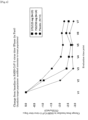
- the plasma drug concentration profile at the dosage regimen in Fig. 3 was simulated by the superposition method assuming that the pharmacokinetics is linear with respect to the active drug concentration in the plasma up to 336 hours of administration when 500 mg of the active drug (suspension formulation) was orally administered to 6 Japanese healthy adult male subjects once on empty stomach in the Japanese phase 1 study.
- the maximum plasma concentrations (C max ) in humans that reduce the virus titer by 2 log and 3 log were estimated to be 14.1 pg/mL and 23.0 ⁇ g/mL, respectively.
- a loading dose was provided. From the above, as the dosage regimen for the phase 2/3 study, the following were set: repeated administration once a day for 5 days of a loading dose of 375 mg (Treatment Day 1) and a maintenance dose of 125 mg (Treatment Day 2 to Treatment Day 5), which were expected to provide the exposure necessary to reduce the virus titer by 2 logs or more; and repeated administration once a day for 5 days of a loading dose of 750 mg (Treatment Day 1) and a maintenance dose of 250 mg (Treatment Day 2 to Treatment Day 5), which were expected to provide the exposure necessary to reduce the virus titer by 3 logs.
- the dosage regimen thus set it was considered that the plasma concentration necessary for the expression of drug efficacy can be maintained without exceeding the NOAEL (75.2-77.6 ⁇ g/mL) obtained in the toxicity test using monkeys.
- the primary endpoint of Phase 2a Part was the change from baseline in SARS-CoV-2 virus titer at each time point in common among mild/moderate and asymptomatic SARS-CoV-2-infected patients, and the antiviral effect of the active drug was confirmed.
- the primary endpoints of Phase 2b Part were the time-weighted average change in the total score of 12 COVID-19 symptoms per unit time from the start of the first administration (Day 1) to 120 hours (Day 6), and the change from baseline in SARS-CoV-2 virus titer on Day 4, in mild/moderate SARS-CoV-2-infected patients, and the clinical improvement and the antiviral effect of the active drug were confirmed.
- the primary endpoint of Phase 3 Part was the time to resolution of five COVID-19 symptoms in mild/moderate SARS-CoV-2-infected patients, and the efficacy was verified by evaluation of the five COVID-19 symptoms in four grades (0: none, 1: mild, 2: moderate, 3: severe) by the patients themselves.
- the primary endpoint of Phase 2b/3 Part is the proportion of patients with onset/worsening COVID-19 symptoms among SARS-CoV-2-infected patients having asymptomatic/mild symptoms only.
- the efficacy was verified by evaluation of the 12 COVID-19 symptoms in four grades (0: none, 1: mild, 2: moderate, 3: severe), and evaluation of dysgeusia and dysosmia in three grades (0: same as usual, 1: less than usual, 2: no sense), by the patients themselves.
- Phase 3 Part and Phase 2b/3 Part were the change from baseline on Day 4 in the amount of SARS-CoV-2 viral RNA, and the time to the first negative SARS-CoV-2 virus titer, and the antiviral effect was verified.
- the tablet contains fumaric acid cocrystal Form I crystal of the compound represented by Formula (I), and contains 250 mg of the compound represented by Formula (I).
- the tablet contains fumaric acid cocrystal Form I crystal of the compound represented by Formula (I), and contains 125 mg of the compound represented by Formula (I).
- Placebo-D tablet It is a tablet having an appearance indistinguishable from the above 250 mg tablet, and does not contain the fumaric acid cocrystal Form I crystal of the compound represented by Formula (I).
- Placebo-B tablet It is a tablet having an appearance indistinguishable from the above 125 mg tablet, and does not contain the fumaric acid cocrystal Form I crystal of the compound represented by Formula (I).
- Phase 2a Part subjects who were determined to be eligible as mild/moderate or asymptomatic SARS-CoV-2-infected patients were randomly assigned at a ratio of 1 : 1 : 1 to any of the active drug 375/125 mg group, the active drug 750/250 mg group, and the placebo group.
- the administration of the active drug is repeated oral administration once a day for 5 days.
- the 375/125 mg group received 375 mg on Day 1 as a loading dose and 125 mg on Days 2 to 5 as a maintenance dose.
- the 750/250mg group received 750 mg on Day 1 as a loading dose and 250 mg on Days 2 to 5 as a maintenance dose.
- Day 1 represents the first day of administration
- Day 2 to Day 5" represent the second to fifth days counted from the first day of administration.
- the primary efficacy endpoint of Phase 2a Part was the change from baseline in SARS-CoV-2 virus titer at each time point in common among mild/moderate and asymptomatic SARS-CoV-2-infected patients. It was defined as an absolute change from baseline in observed value of SARS-CoV-2 virus titer at each time point.
- the primary efficacy endpoints of Phase 2b Part for mild/moderate SARS-CoV-2-infected patients were the time-weighted average change in the total score of 12 COVID-19 symptoms per unit time from the start of the first administration (Day 1) to 120 hours (Day 6), and the change from baseline in SARS-CoV-2 virus titer on Day 4.
- the total score of 12 COVID-19 symptoms is the sum of the scores determined by evaluation in four grades (0: none, 1: mild, 2: moderate, 3: severe) in the subject daily records for each of the 12 COVID-19 symptoms (low energy and tiredness, muscle or body aches, headache, chills or shivering, feeling hot or feverish, stuffy and runny nose, sore throat, cough, shortness of breath (difficulty breathing), nausea, vomiting, diarrhea).
- the AUC from the start of the first administration (Day 1) to 120 hours (Day 6) divided by the evaluation period (unit: time) at the time of AUC calculation was determined as the amount of change per unit time.
- the primary efficacy endpoint of Phase 3 Part for mild/moderate SARS-CoV-2-infected patients was the time to resolution of the five COVID-19 symptoms. It was defined to be the time from the start of administration of investigational active drug to the time point of resolution from all of the five COVID-19 symptoms (stuffy and runny nose, sore throat, cough, feeling hot or feverish, low energy and tiredness).
- COVID-19 symptoms were evaluated in four grades (0: none, 1: mild, 2: moderate, 3: severe) in the subject daily record, and recovery from the symptoms, with the condition of the same remaining for at least 24 hours, was determined according to the following rules.
- the primary efficacy endpoint of Phase 2b/3 Part in the Phase 2/3 study in SARS-CoV-2-infected patients having asymptomatic/mild symptoms only is the proportion of patients who developed/worsened COVID-19 symptoms. It is defined as the proportion of subjects who developed/worsened either the twelve COVID-19 symptoms or dysgeusia and dysosmia during the evaluation period of the subject daily records.
- COVID-19 symptoms are evaluated in three grades of 0 to 2 (0: same as usual, 1: less than usual, 2: no sense) for dysgeusia and dysosmia, and in four grades of 0 to 3 (0: no symptom, 1: mild, 2: moderate, 3: severe) for twelve COVID-19 symptoms, in a subject daily records recorded by subjects, and the onset of symptoms is determined according to the following rules.
- the key secondary efficacy endpoints of Phase 3 Part and Phase 2b/3 Part in the phase 2/3 study were the change from baseline in the SARS-CoV-2 viral RNA amount on Day 4, and the time to the first negative SARS-CoV-2 virus titer.
- the time to the first negative SARS-CoV-2 virus titer was defined as the time from the start of administration of the investigational new drug until a virus titer of SARS-CoV-2 was first less than the detection limit.
- the stratified Peto-Prentice's generalized Wilcoxon test with the SARS-CoV-2 vaccination history (Yes or No) as a stratum was used, and comparison was performed between the 125 mg active drug group and the placebo group for the time to resolution of the five COVID-19 symptoms at a one-sided significance level of 0.025.
- the same analysis as the primary analysis was performed for the population of the mild/moderate SARS-CoV-2-infected patients in the ITT population.
- the time from onset of COVID-19 to randomization was also included in the strata.
- the Mantel-Haenszel test with the SARS-CoV-2 vaccination history (Yes or No) as a stratum was used, and comparison was performed between the 125 mg active drug group and the placebo group for the patients who developed/worsened COVID-19 symptoms at a two-sided significance level of 5%.
- the primary analysis was planned for each of mild/moderate SARS-CoV-2-infected patients and SARS-CoV-2-infected patients having asymptomatic/mild symptoms only.
- mild/moderate SARS-CoV-2-infected patients a population whose time from onset of COVID-19 to randomization was less than 72 hours among the ITT population of Phase 3 Part, as the primary analysis on the change from baseline in SARS-CoV-2 viral RNA amount on Day 4, analysis of covariance was applied with the change from baseline in the SARS-CoV-2 virus RNA amount as a response, the SARS-CoV-2 vaccination history (Yes or No), and the SARS-CoV-2 virus RNA amount at baseline as covariates.
- Pairwise comparison was performed between the 125 mg active drug group and the placebo group. As a key secondary analysis, a similar analysis was performed on the ITT population. At this time, in addition to the SARS-CoV-2 vaccination history, the SARS-CoV-2 viral RNA amount at baseline, the time from onset of COVID-19 to randomization (less than 72 hours, 72 hours or more) were also included in the covariates.
- the primary analysis was planned for each of mild/moderate SARS-CoV-2-infected patients and SARS-CoV-2-infected patients having asymptomatic/mild symptoms only.
- the mild/moderate SARS-CoV-2-infected patients the population whose time from onset of COVID-19 to randomization was less than 72 hours in the mITT population of Phase 3 Part, the stratified log-rank test with the SARS-CoV-2 vaccination history (Yes or No) as a stratum was used. Comparison was performed between the 125 mg active drug group and the placebo group for the time to the first negative SARS-CoV-2 virus titer at a one-sided significance level of 0.025.
- 69 cases were randomized in Phase 2a Part, and 22 cases (of which 1 case did not receive administration) were assigned to the 375/125 mg group, 23 cases were assigned to the 750/250 mg group, and 24 cases were assigned to the placebo group.
- the number of cases positive for baseline RT-PCR was 44, and among them, the number of cases in which a baseline virus titer was detected was 40.
- the constitution of the 40 cases was 14 cases in the 375/125 mg group, 13 cases in the 750/250 mg group, and 13 cases in the placebo group. Note that the number of cases of these populations and the breakdown thereof were calculated on the basis of the RT-PCR measurement results and the virus titer measurement results available by January 17, 2022.
- Phase 2a Part As a final result of Phase 2a Part, among the 69 cases, the number of cases positive for baseline RT-PCR was 47, and among them, the number of cases in which a baseline virus titer was detected was 43. The constitution of the 43 cases was 15 cases in the 375/125 mg group, 14 cases in the 750/250 mg group, and 14 cases in the placebo group.
- Visit The visit date defined in the study protocol is denoted by Visit, and the correspondence relationship with the administration date (Day) and the permitted window are as follows.
- Op V means Optional Visit and indicates any visit date.
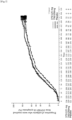
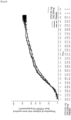
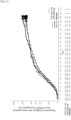
- Fig. 4 shows a mean change from baseline in SARS-CoV-2 virus titer for each group in the modified intention-to-treat population (all subjects randomized and positive for both baseline RT-PCR and virus titer).
- This analysis included mild/moderate SARS-CoV-2-infected patients and asymptomatic SARS-CoV-2-infected patients, and only Visit that was set as an essential visit date was displayed.
- the virus titer was less than the lower detection limit (0.8 log 10 (TCID 50 /mL)
- the value of the virus titer was handled as 0.8 log 10 (TCID 50 /mL).
- the virus titer statistically significantly decreased at a significance level of 0.05 as compared to the placebo group.
- the virus titer In the RT-PCR measurement results and the virus titer measurement results that were available by the time point of January 17, 2022, there was also a tendency for the virus titer to decrease as compared to the placebo group at all time points after Visit 3 (Day 4 after the start of administration) in the 375/125 mg group and after Visit 2 (Day 2 after the start of administration) in the 750/250 mg group.
- a proportion of patients with a positive virus titer at each time point is shown below.
- the proportion of patients with a positive virus titer of 0.8 or more in the placebo group decreased by 80% in the 750/250 mg group and by 63% in the 375/125 mg group.
- the proportion of patients with a positive virus titer of 0.8 or more in the placebo group decreased by 54% in the 750/250 mg group and by 100% in the 375/125 mg group.
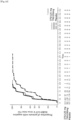
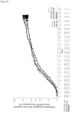
- Time to the first negative SARS-CoV-2 virus titer is shown in Table 10 below and Fig. 5 .
- the time to the first negative SARS-CoV-2 virus titer of 50% of patients became negative was about 4.6 days (111.1 hours) after the start of treatment.
- the time to the first negative SARS-CoV-2 virus titer of 50% of patients became negative was about 2.6 days (61.3 to 62.7 hours) after the start of treatment.
- the time to the first negative SARS-CoV-2 virus titer of 50% of patients was reduced by about 2 days.
- Phase 2b Part 428 cases were randomized, and there were 341 cases in which the virus titer of SARS-CoV-2 was detected at the baseline as the ITT population.
- the 341 cases were composed of 114 cases in the 375/125 mg group, 116 cases in the 750/250 mg group, and 111 cases in the placebo group.
- the virus titer was statistically significantly reduced on Day 4 as compared with the placebo group (p ⁇ 0.0001). Therefore, it was revealed that the administration of the pharmaceutical composition of the present invention exhibits a significantly excellent antiviral effect.
- a proportion of patients with a positive virus titer of 1.1 or more on Day 4 is shown below.
- the proportion of patients with positive virus titers was 50.5%, whereas in the 375/125 mg group, the proportion of patients with positive virus titers was 1.9%, and in the 750/250 mg group, the proportion of patients with positive virus titers was 5.4%.
- the number of cases in which the total score of 12 COVID-19 symptoms was observed both at the baseline and after the start of administration, and the total score of twelve COVID-19 symptoms at the baseline was 1 or more was 332, and the 332 cases were composed of 109 cases in the 375/125 mg group, 113 cases in the 750/250 mg group, and 110 cases in the placebo group.
- the administration of the pharmaceutical composition of the present invention exhibits a significantly excellent clinical symptom resolution effect.
- the adjusted estimated value of the change in the SARS-CoV-2 viral RNA amount on Day 4 showed a decrease of about 1.5 log 10 (copies/mL) in the 375/125 mg group as compared with the placebo group, and a significant difference was observed (covariance analysis: one-sided p ⁇ 0.0001).
- the adjusted estimated value of the change from baseline in the SARS-CoV-2 viral RNA amount on Day 4 showed a decrease of 1.2 log 10 (copies/mL) in the 375/125 mg group as compared with the placebo group.
- the time to the first negative SARS-CoV-2 virus titer was reduced by a median of 29.1 hours (about 1 day) in the 375/125 mg group compared to the placebo group, with a statistically significant difference (stratified log-rank test: one-sided p ⁇ 0.0001).
- the time to the first negative SARS-CoV-2 virus titer was reduced by a median of 37.5 hours (about 1.5 day) in the 375/125 mg group compared to the placebo group.
- the time to resolution of 12 COVID-19 symptoms tended to be reduced by a median of 34.0 hours (about 1.5 day) in the 375/125 mg group compared to the placebo group.
- the time to resolution of 14 COVID-19 symptoms tended to be reduced by a median of 44.1 hours (about 2 day) in the 375/125 mg group compared to the placebo group.
- Phase 2a Part there were no adverse events leading to deaths. Two serious adverse events were observed in the placebo group, but not in the active drug group. Two adverse events leading to the discontinuation of administration were observed in the 375/125 mg group (active drug group), and both were determined to have a causal relationship with the investigational new drug.
- the tablet contains fumaric acid cocrystal Form I crystal of the compound represented by Formula (I), and contains 25 mg of the compound represented by Formula (I).
- the tablet contains fumaric acid cocrystal Form I crystal of the compound represented by Formula (I), and contains 125 mg of the compound represented by Formula (I).
- Placebo-A tablet It is a tablet having an appearance indistinguishable from the above 25 mg tablet, and does not contain the fumaric acid cocrystal Form I crystal of the compound represented by Formula (I).
- Placebo-B tablet It is a tablet having an appearance indistinguishable from the above 125 mg tablet, and does not contain the fumaric acid cocrystal Form I crystal of the compound represented by Formula (I).
- Subjects determined to be eligible are randomly assigned at a ratio of 2:1 to either the active drug group or the placebo group at a ratio of 2:1 for each weight category.
- the administration of the active drug is repeated oral administration once a day for 5 days.
- Those in the category of 40 kg or more receive 375 mg on Day 1 as a loading dose and 125 mg on Days 2 to 5 as a maintenance dose.
- Those in the category of 30 kg or more and less than 40 kg receive 250 mg on Day 1 as a loading dose and 125 mg on Days 2 to 5 as a maintenance dose.
- Those in the category of 20 kg or more and less than 30 kg receive 125 mg on Day 1 as a loading dose and 75 mg on Days 2 to 5 as a maintenance dose.
- Those in the category of 40 kg or more receive 375 mg on Day 1 as a loading dose and 125 mg on Days 2 to 5 as a maintenance dose.
- those in the category of 30 kg or more and less than 40 kg receive 250 mg on Day 1 as a loading dose and 100 mg on Days 2 to 5 as a maintenance dose.
- Those in the category of 20 kg or more and less than 30 kg receive 150 mg on Day 1 as a loading dose and 75 mg on Days 2 to 5 as a maintenance dose.
- Three 125 mg tablets are administered on Day 1, and one 125 mg tablet is administered per day on Days 2 to 5.
- Two 125 mg tablets are administered on Day 1, and one 125 mg tablet is administered per day on Days 2 to 5.
- One 125 mg tablet is administered on Day 1, and three 25 mg tablets are administered per day on Days 2 to 5.
- Three 125 mg tablets are administered on Day 1, and one 125 mg tablet is administered per day on Days 2 to 5.
- Two 125 mg tablets are administered on Day 1, and four 25 mg tablets are administered per day on Days 2 to 5.
- One 125 mg tablet and one 25 mg tablet are administered on Day 1, and three 25 mg tablets are administered per day on Days 2 to 5.
- Three Placebo-B tablets are administered on Day 1, and one Placebo-B tablet is administered per day on Days 2 to 5.
- Two Placebo-B tablets are administered on Day 1, and one Placebo-B tablet is administered per day on Days 2 to 5.
- One Placebo-B tablet is administered on Day 1, and three Placebo-B tablets are administered per day on Days 2 to 5.
- Three Placebo-B tablets are administered on Day 1, and one Placebo-B tablet is administered per day on Days 2 to 5.
- Two Placebo-B tablets are administered on Day 1, and four Placebo-A tablets are administered per day on Days 2 to 5.
- One Placebo-B tablet and one Placebo-A tablet are administered on Day 1, and three Placebo-A tablets are administered per day on Days 2 to 5.
- Day 1 represents the first day of administration
- Day 2 to Day 5" represent the second to fifth days counted from the first day of administration.
- Adverse events are classified according to System Organ Class (SOC) and Preferred Terms (PT) of ICH Medical Dictionary for Regulatory Activities (MedDRA).
- SOC System Organ Class
- PT Preferred Terms
- eCRF electronic case report form
- TEAEs treatment-emergent adverse events
- deaths other serious TEAEs
- TEAEs TEAEs in which administration was discontinued as well as the ratios thereof are tabulated for each dose.
- the 95% confidence interval of these occurrence rates is calculated by the Clopper-Pearson method.
- the number of reported adverse events is also shown.
- An adverse event that has been determined to be "associated" with the investigational new drug regarding causal relationship therebetween is defined as an adverse reaction, and is summarized in the same manner as that for TEAE.
- the summary statistic is calculated for each dose group for the amount of change at each time point based on the observation value at the measurement time point scheduled after randomization and the baseline.
- Qualitative clinical examination data create a shift table between the baseline and the scheduled measurement time points for examination categories.
- the summary statistic is calculated for each dose group for the amount of change at each time point based on the observation value at the measurement time point scheduled after randomization and the baseline.
- PK concentration population For the PK concentration population, a list of plasma concentrations of the compound represented by Formula (I) is prepared for each body weight category and Day together with the elapsed time from administration of the investigational new drug immediately before blood collection to blood collection.
- concentrations of the compound represented by Formula (I) in the plasma at a blood collection time that is 24 hours after administration on Day 2 and Day 6 are tabulated, and summarized as N, Mean, SD, coefficient of variation, geometric mean value and coefficient of variation thereof, median value, minimum value, and maximum value.
- This study is a randomized, double-blind, multicenter, parallel-group, placebo-controlled comparative study involving approximately 2,040 household cohabitants of newly diagnosed symptomatic COVID-19 patients. Subjects are randomly assigned at a ratio of 1 : 1 to either the 375/125 mg active drug group or the placebo group. It is defined to be the proportion of subjects infected with SARS-CoV-2 by Day 10 (confirmed RT-PCR positive by central laboratory) and having developed COVID-19 symptoms.
- the tablet contains fumaric acid cocrystal Form I crystal of the compound represented by Formula (I), and contains 125 mg of the compound represented by Formula (I).
- Placebo tablet It is a tablet having an appearance indistinguishable from the above 125 mg tablet, and does not contain the fumaric acid cocrystal Form I crystal of the compound represented by Formula (I).
- Newly diagnosed symptomatic COVID-19 patients are randomly assigned at a ratio of 1 : 1 to either the active drug group or the placebo group.
- the administration of the active drug is repeated oral administration once a day for 5 days.
- the patient receives 375 mg on Day 1 as a loading dose and 125 mg on Days 2 to 5 as a maintenance dose.
- the follow-up period is 10 days after the investigational new drug is administered for 5 days.
- Three 125 mg tablets are administered on Day 1, and one 125 mg tablet is administered per day on Days 2 to 5.
- Three Placebo tablets are administered on Day 1, and one Placebo tablet is administered per day on Days 2 to 5.
- Day 1 represents the first day of administration
- Day 2 to Day 5" represent the second to fifth days counted from the first day of administration.
- the primary endpoint is the proportion of subjects infected with SARS-CoV-2 by Day 10 (confirmed RT-PCR positive by central laboratory) and having developed COVID-19 symptoms.
- the subjects infected with SARS-CoV-2 by Day 10 (confirmed RT-PCR positive by central laboratory) and having developed COVID-19 symptoms are subjects who meet both the following two criteria among the mITT population.
- a modified Poisson regression model using robust variance is used for the main solution analysis.
- a risk ratio of the active drug group to that of the placebo group is estimated, and the p value for the null hypothesis with the risk ratio of 1 and the 95% confidence interval (CI) of the risk ratio are calculated using the modified Poisson regression model.
- Exemplary covariates in the model include the time from onset of COVID-19 symptoms in the newly diagnosed patient to the time of subject inclusion (less than 48 hours, 48 hours or more), and the geographic region (North America, South America, Europe, Africa, Japan, and Asia other than Japan).
- D-mannitol and magnesium stearate were added as additives to the active pharmaceutical ingredient, the compound represented by Formula (I), to prepare tablets.
- D-mannitol and magnesium stearate were added as additives to the active pharmaceutical ingredient, the compound represented by Formula (I), to prepare granules.
- the method for treating novel coronavirus infections (COVID-19) and the pharmaceutical composition used therefor according to the present invention is considered to exhibit an excellent therapeutic effect by administering a predetermined amount of a complex as an active ingredient containing a compound represented by Formula (I) and fumaric acid to a patient.
- it is a highly safe pharmaceutical composition for treating COVID-19 as it can maintain an effective concentration in blood without exceeding NOAEL when being administered at a specific dosage regimen.
Landscapes
- Health & Medical Sciences (AREA)
- Life Sciences & Earth Sciences (AREA)
- Chemical & Material Sciences (AREA)
- Animal Behavior & Ethology (AREA)
- Pharmacology & Pharmacy (AREA)
- General Health & Medical Sciences (AREA)
- Public Health (AREA)
- Veterinary Medicine (AREA)
- Medicinal Chemistry (AREA)
- Virology (AREA)
- General Chemical & Material Sciences (AREA)
- Chemical Kinetics & Catalysis (AREA)
- Epidemiology (AREA)
- Nuclear Medicine, Radiotherapy & Molecular Imaging (AREA)
- Organic Chemistry (AREA)
- Communicable Diseases (AREA)
- Oncology (AREA)
- Molecular Biology (AREA)
- Engineering & Computer Science (AREA)
- Bioinformatics & Cheminformatics (AREA)
- Physiology (AREA)
- Nutrition Science (AREA)
- Oil, Petroleum & Natural Gas (AREA)
- Pulmonology (AREA)
- Pharmaceuticals Containing Other Organic And Inorganic Compounds (AREA)
- Acyclic And Carbocyclic Compounds In Medicinal Compositions (AREA)
Applications Claiming Priority (7)
| Application Number | Priority Date | Filing Date | Title |
|---|---|---|---|
| JP2022006725 | 2022-01-19 | ||
| JP2022012386 | 2022-01-28 | ||
| JP2022017132 | 2022-02-07 | ||
| JP2022027629 | 2022-02-25 | ||
| JP2022120325 | 2022-07-28 | ||
| JP2022149666 | 2022-09-21 | ||
| PCT/JP2023/001243 WO2023054732A2 (ja) | 2022-01-19 | 2023-01-18 | 新型コロナウイルス感染症治療用医薬 |
Publications (1)
| Publication Number | Publication Date |
|---|---|
| EP4467142A2 true EP4467142A2 (de) | 2024-11-27 |
Family
ID=85780780
Family Applications (1)
| Application Number | Title | Priority Date | Filing Date |
|---|---|---|---|
| EP23714052.0A Pending EP4467142A2 (de) | 2022-01-19 | 2023-01-18 | Arzneimittel zur behandlung einer neuen coronavirus-infektion |
Country Status (8)
| Country | Link |
|---|---|
| US (1) | US20250099474A1 (de) |
| EP (1) | EP4467142A2 (de) |
| JP (2) | JP7273455B1 (de) |
| KR (1) | KR20240137021A (de) |
| AU (1) | AU2023202177A1 (de) |
| MX (1) | MX2024008910A (de) |
| TW (1) | TW202339757A (de) |
| WO (1) | WO2023054732A2 (de) |
Families Citing this family (4)
| Publication number | Priority date | Publication date | Assignee | Title |
|---|---|---|---|---|
| JP7559223B2 (ja) | 2020-08-24 | 2024-10-01 | ギリアード サイエンシーズ, インコーポレイテッド | リン脂質化合物及びその使用 |
| TW202344257A (zh) | 2020-10-16 | 2023-11-16 | 美商基利科學股份有限公司 | 磷脂化合物及其用途 |
| PT4122926T (pt) * | 2021-04-14 | 2025-07-29 | Shionogi & Co | Derivados de triazina com atividade inibitória da replicação de vírus e composição farmacêutica que compreende os mesmos |
| JP2025525948A (ja) | 2022-08-05 | 2025-08-07 | ギリアード サイエンシーズ, インコーポレイテッド | SARS-CoV2主要プロテアーゼ阻害剤 |
Family Cites Families (13)
| Publication number | Priority date | Publication date | Assignee | Title |
|---|---|---|---|---|
| CA2318362A1 (en) * | 1998-01-13 | 1999-07-22 | Sharon T. Cload | Triazine antiviral compounds |
| BRPI1013642A2 (pt) | 2009-02-13 | 2016-04-19 | Shionogi & Co | derivado de triazina e composição farmacêutica compreendendo o mesmo |
| RU2565073C2 (ru) | 2010-08-10 | 2015-10-20 | Сионоги Энд Ко., Лтд. | Триазиновое производное и включающая его фармацевтическая композиция, обладающая анальгетической активностью |
| US9212130B2 (en) | 2010-08-10 | 2015-12-15 | Shionogi & Co., Ltd. | Heterocyclic derivative and pharmaceutical composition comprising the same |
| WO2013089212A1 (ja) | 2011-12-15 | 2013-06-20 | 塩野義製薬株式会社 | 置換トリアジン誘導体およびそれらを含有する医薬組成物 |
| US9550763B2 (en) | 2012-02-09 | 2017-01-24 | Shionogi & Co., Ltd. | Heterocyclic ring and carbocyclic derivative |
| TWI637949B (zh) | 2013-06-14 | 2018-10-11 | 塩野義製藥股份有限公司 | 胺基三衍生物及含有其等之醫藥組合物 |
| WO2019087884A1 (ja) * | 2017-10-31 | 2019-05-09 | 富士フイルム株式会社 | 組成物、抗菌組成物、抗ウイルス用組成物、抗ノロウイルス用組成物、スプレー、ワイパー |
| WO2022158528A1 (ja) * | 2021-01-20 | 2022-07-28 | 国立大学法人北海道大学 | 抗ウイルス剤 |
| US12029772B2 (en) * | 2021-03-29 | 2024-07-09 | Mustafa BARZANI | Willow extract and its use in treating a viral infection, allergic reaction, and other medical conditions |
| PT4122926T (pt) * | 2021-04-14 | 2025-07-29 | Shionogi & Co | Derivados de triazina com atividade inibitória da replicação de vírus e composição farmacêutica que compreende os mesmos |
| CA3233206A1 (en) * | 2021-09-28 | 2023-04-06 | Yuki Tachibana | Pharmaceutical composition containing triazine derivative |
| EP4289432A4 (de) * | 2021-11-24 | 2025-01-15 | Shionogi & Co., Ltd | Triazinderivate enthaltende zubereitung zur oralen verabreichung |
-
2023
- 2023-01-18 KR KR1020247027109A patent/KR20240137021A/ko active Pending
- 2023-01-18 JP JP2023511553A patent/JP7273455B1/ja active Active
- 2023-01-18 EP EP23714052.0A patent/EP4467142A2/de active Pending
- 2023-01-18 AU AU2023202177A patent/AU2023202177A1/en active Pending
- 2023-01-18 MX MX2024008910A patent/MX2024008910A/es unknown
- 2023-01-18 WO PCT/JP2023/001243 patent/WO2023054732A2/ja not_active Ceased
- 2023-01-18 US US18/729,630 patent/US20250099474A1/en active Pending
- 2023-01-18 TW TW112102301A patent/TW202339757A/zh unknown
- 2023-04-26 JP JP2023072576A patent/JP2023105826A/ja active Pending
Also Published As
| Publication number | Publication date |
|---|---|
| MX2024008910A (es) | 2024-07-25 |
| JPWO2023054732A1 (de) | 2023-04-06 |
| WO2023054732A3 (ja) | 2023-06-15 |
| TW202339757A (zh) | 2023-10-16 |
| JP7273455B1 (ja) | 2023-05-15 |
| AU2023202177A1 (en) | 2024-07-18 |
| KR20240137021A (ko) | 2024-09-19 |
| WO2023054732A2 (ja) | 2023-04-06 |
| JP2023105826A (ja) | 2023-07-31 |
| US20250099474A1 (en) | 2025-03-27 |
Similar Documents
| Publication | Publication Date | Title |
|---|---|---|
| EP4467142A2 (de) | Arzneimittel zur behandlung einer neuen coronavirus-infektion | |
| US11814368B2 (en) | Triazine derivatives having virus replication inhibitory activity and pharmaceutical composition comprising the same | |
| EP4289432A1 (de) | Triazinderivate enthaltende zubereitung zur oralen verabreichung | |
| US20220017548A1 (en) | Compounds and Methods for the Treatment of COVID-19 | |
| RU2700415C1 (ru) | Ингибиторы репликации вирусов гриппа | |
| TW202320793A (zh) | 含有三嗪衍生物之醫藥組合物 | |
| EP4410292A1 (de) | Pharmazeutische zusammensetzung mit triazinderivat | |
| US20250025459A1 (en) | Covid-19 treatment medicine characterized by combining 3cl protease inhibitor and covid-19 treatment drug | |
| CN116514734A (zh) | 三嗪衍生物的制造方法和含有三嗪衍生物的口服给与的制剂 | |
| CN116782904A (zh) | 含有三嗪衍生物的医药组合物 | |
| HK40116243A (en) | Pharmaceutical for treating novel coronavirus infection | |
| WO2005121112A1 (ja) | 6-ヒドロキシベンズブロマロン又はその塩からなる医薬組成物 | |
| WO2020194042A1 (en) | Treating influenza using substituted polycyclic pyridone derivatives and prodrugs thereof in a subject having influenza and a severe influenza condition | |
| CN117120057A (zh) | 新型冠状病毒传染病治疗用药物 | |
| HK40114521A (en) | Pharmaceutical composition containing triazine derivative | |
| JP7674711B1 (ja) | ウラシル誘導体を含有する医薬組成物 | |
| WO2004087148A9 (ja) | 肺疾患の治療および/または予防剤 | |
| KR20220050753A (ko) | 바이러스 증식 억제 조성물 및 이의 제조방법 | |
| WO2024153018A1 (zh) | 螺环化合物的结晶及其制备方法 | |
| EP4652993A1 (de) | Antivirale pharmazeutische zusammensetzung und herstellungsverfahren dafür | |
| BR122023002208A2 (pt) | Composições farmacêuticas compreendendo derivados de triazina tendo efeito inibidor de propagação de vírus, inibidores e usos |
Legal Events
| Date | Code | Title | Description |
|---|---|---|---|
| STAA | Information on the status of an ep patent application or granted ep patent |
Free format text: STATUS: THE INTERNATIONAL PUBLICATION HAS BEEN MADE |
|
| PUAI | Public reference made under article 153(3) epc to a published international application that has entered the european phase |
Free format text: ORIGINAL CODE: 0009012 |
|
| STAA | Information on the status of an ep patent application or granted ep patent |
Free format text: STATUS: REQUEST FOR EXAMINATION WAS MADE |
|
| 17P | Request for examination filed |
Effective date: 20240809 |
|
| AK | Designated contracting states |
Kind code of ref document: A2 Designated state(s): AL AT BE BG CH CY CZ DE DK EE ES FI FR GB GR HR HU IE IS IT LI LT LU LV MC ME MK MT NL NO PL PT RO RS SE SI SK SM TR |
|
| REG | Reference to a national code |
Ref country code: HK Ref legal event code: DE Ref document number: 40116243 Country of ref document: HK |
|
| DAV | Request for validation of the european patent (deleted) | ||
| DAX | Request for extension of the european patent (deleted) |