EP4462545A2 - Lithium-ionen-batterie, batterie und elektrische vorrichtung - Google Patents
Lithium-ionen-batterie, batterie und elektrische vorrichtung Download PDFInfo
- Publication number
- EP4462545A2 EP4462545A2 EP24744438.3A EP24744438A EP4462545A2 EP 4462545 A2 EP4462545 A2 EP 4462545A2 EP 24744438 A EP24744438 A EP 24744438A EP 4462545 A2 EP4462545 A2 EP 4462545A2
- Authority
- EP
- European Patent Office
- Prior art keywords
- lithium
- ppm
- positive electrode
- electrolyte
- active material
- Prior art date
- Legal status (The legal status is an assumption and is not a legal conclusion. Google has not performed a legal analysis and makes no representation as to the accuracy of the status listed.)
- Pending
Links
Images


Classifications
-
- H—ELECTRICITY
- H01—ELECTRIC ELEMENTS
- H01M—PROCESSES OR MEANS, e.g. BATTERIES, FOR THE DIRECT CONVERSION OF CHEMICAL ENERGY INTO ELECTRICAL ENERGY
- H01M10/00—Secondary cells; Manufacture thereof
- H01M10/05—Accumulators with non-aqueous electrolyte
- H01M10/056—Accumulators with non-aqueous electrolyte characterised by the materials used as electrolytes, e.g. mixed inorganic/organic electrolytes
- H01M10/0564—Accumulators with non-aqueous electrolyte characterised by the materials used as electrolytes, e.g. mixed inorganic/organic electrolytes the electrolyte being constituted of organic materials only
- H01M10/0566—Liquid materials
- H01M10/0568—Liquid materials characterised by the solutes
-
- H—ELECTRICITY
- H01—ELECTRIC ELEMENTS
- H01M—PROCESSES OR MEANS, e.g. BATTERIES, FOR THE DIRECT CONVERSION OF CHEMICAL ENERGY INTO ELECTRICAL ENERGY
- H01M10/00—Secondary cells; Manufacture thereof
- H01M10/05—Accumulators with non-aqueous electrolyte
- H01M10/056—Accumulators with non-aqueous electrolyte characterised by the materials used as electrolytes, e.g. mixed inorganic/organic electrolytes
-
- H—ELECTRICITY
- H01—ELECTRIC ELEMENTS
- H01M—PROCESSES OR MEANS, e.g. BATTERIES, FOR THE DIRECT CONVERSION OF CHEMICAL ENERGY INTO ELECTRICAL ENERGY
- H01M10/00—Secondary cells; Manufacture thereof
- H01M10/42—Methods or arrangements for servicing or maintenance of secondary cells or secondary half-cells
- H01M10/4235—Safety or regulating additives or arrangements in electrodes, separators or electrolyte
-
- H—ELECTRICITY
- H01—ELECTRIC ELEMENTS
- H01M—PROCESSES OR MEANS, e.g. BATTERIES, FOR THE DIRECT CONVERSION OF CHEMICAL ENERGY INTO ELECTRICAL ENERGY
- H01M10/00—Secondary cells; Manufacture thereof
- H01M10/05—Accumulators with non-aqueous electrolyte
- H01M10/052—Li-accumulators
- H01M10/0525—Rocking-chair batteries, i.e. batteries with lithium insertion or intercalation in both electrodes; Lithium-ion batteries
-
- H—ELECTRICITY
- H01—ELECTRIC ELEMENTS
- H01M—PROCESSES OR MEANS, e.g. BATTERIES, FOR THE DIRECT CONVERSION OF CHEMICAL ENERGY INTO ELECTRICAL ENERGY
- H01M10/00—Secondary cells; Manufacture thereof
- H01M10/05—Accumulators with non-aqueous electrolyte
- H01M10/056—Accumulators with non-aqueous electrolyte characterised by the materials used as electrolytes, e.g. mixed inorganic/organic electrolytes
- H01M10/0564—Accumulators with non-aqueous electrolyte characterised by the materials used as electrolytes, e.g. mixed inorganic/organic electrolytes the electrolyte being constituted of organic materials only
- H01M10/0566—Liquid materials
- H01M10/0567—Liquid materials characterised by the additives
-
- H—ELECTRICITY
- H01—ELECTRIC ELEMENTS
- H01M—PROCESSES OR MEANS, e.g. BATTERIES, FOR THE DIRECT CONVERSION OF CHEMICAL ENERGY INTO ELECTRICAL ENERGY
- H01M10/00—Secondary cells; Manufacture thereof
- H01M10/05—Accumulators with non-aqueous electrolyte
- H01M10/056—Accumulators with non-aqueous electrolyte characterised by the materials used as electrolytes, e.g. mixed inorganic/organic electrolytes
- H01M10/0564—Accumulators with non-aqueous electrolyte characterised by the materials used as electrolytes, e.g. mixed inorganic/organic electrolytes the electrolyte being constituted of organic materials only
- H01M10/0566—Liquid materials
- H01M10/0569—Liquid materials characterised by the solvents
-
- H—ELECTRICITY
- H01—ELECTRIC ELEMENTS
- H01M—PROCESSES OR MEANS, e.g. BATTERIES, FOR THE DIRECT CONVERSION OF CHEMICAL ENERGY INTO ELECTRICAL ENERGY
- H01M4/00—Electrodes
- H01M4/02—Electrodes composed of, or comprising, active material
- H01M4/13—Electrodes for accumulators with non-aqueous electrolyte, e.g. for lithium-accumulators; Processes of manufacture thereof
- H01M4/131—Electrodes based on mixed oxides or hydroxides, or on mixtures of oxides or hydroxides, e.g. LiCoOx
-
- H—ELECTRICITY
- H01—ELECTRIC ELEMENTS
- H01M—PROCESSES OR MEANS, e.g. BATTERIES, FOR THE DIRECT CONVERSION OF CHEMICAL ENERGY INTO ELECTRICAL ENERGY
- H01M4/00—Electrodes
- H01M4/02—Electrodes composed of, or comprising, active material
- H01M4/13—Electrodes for accumulators with non-aqueous electrolyte, e.g. for lithium-accumulators; Processes of manufacture thereof
- H01M4/136—Electrodes based on inorganic compounds other than oxides or hydroxides, e.g. sulfides, selenides, tellurides, halogenides or LiCoFy
-
- H—ELECTRICITY
- H01—ELECTRIC ELEMENTS
- H01M—PROCESSES OR MEANS, e.g. BATTERIES, FOR THE DIRECT CONVERSION OF CHEMICAL ENERGY INTO ELECTRICAL ENERGY
- H01M4/00—Electrodes
- H01M4/02—Electrodes composed of, or comprising, active material
- H01M4/36—Selection of substances as active materials, active masses, active liquids
-
- H—ELECTRICITY
- H01—ELECTRIC ELEMENTS
- H01M—PROCESSES OR MEANS, e.g. BATTERIES, FOR THE DIRECT CONVERSION OF CHEMICAL ENERGY INTO ELECTRICAL ENERGY
- H01M4/00—Electrodes
- H01M4/02—Electrodes composed of, or comprising, active material
- H01M4/36—Selection of substances as active materials, active masses, active liquids
- H01M4/362—Composites
- H01M4/364—Composites as mixtures
-
- H—ELECTRICITY
- H01—ELECTRIC ELEMENTS
- H01M—PROCESSES OR MEANS, e.g. BATTERIES, FOR THE DIRECT CONVERSION OF CHEMICAL ENERGY INTO ELECTRICAL ENERGY
- H01M4/00—Electrodes
- H01M4/02—Electrodes composed of, or comprising, active material
- H01M4/36—Selection of substances as active materials, active masses, active liquids
- H01M4/362—Composites
- H01M4/366—Composites as layered products
-
- H—ELECTRICITY
- H01—ELECTRIC ELEMENTS
- H01M—PROCESSES OR MEANS, e.g. BATTERIES, FOR THE DIRECT CONVERSION OF CHEMICAL ENERGY INTO ELECTRICAL ENERGY
- H01M4/00—Electrodes
- H01M4/02—Electrodes composed of, or comprising, active material
- H01M4/36—Selection of substances as active materials, active masses, active liquids
- H01M4/38—Selection of substances as active materials, active masses, active liquids of elements or alloys
- H01M4/386—Silicon or alloys based on silicon
-
- H—ELECTRICITY
- H01—ELECTRIC ELEMENTS
- H01M—PROCESSES OR MEANS, e.g. BATTERIES, FOR THE DIRECT CONVERSION OF CHEMICAL ENERGY INTO ELECTRICAL ENERGY
- H01M4/00—Electrodes
- H01M4/02—Electrodes composed of, or comprising, active material
- H01M4/36—Selection of substances as active materials, active masses, active liquids
- H01M4/48—Selection of substances as active materials, active masses, active liquids of inorganic oxides or hydroxides
- H01M4/483—Selection of substances as active materials, active masses, active liquids of inorganic oxides or hydroxides for non-aqueous cells
-
- H—ELECTRICITY
- H01—ELECTRIC ELEMENTS
- H01M—PROCESSES OR MEANS, e.g. BATTERIES, FOR THE DIRECT CONVERSION OF CHEMICAL ENERGY INTO ELECTRICAL ENERGY
- H01M4/00—Electrodes
- H01M4/02—Electrodes composed of, or comprising, active material
- H01M4/36—Selection of substances as active materials, active masses, active liquids
- H01M4/48—Selection of substances as active materials, active masses, active liquids of inorganic oxides or hydroxides
- H01M4/485—Selection of substances as active materials, active masses, active liquids of inorganic oxides or hydroxides of mixed oxides or hydroxides for inserting or intercalating light metals, e.g. LiTi2O4 or LiTi2OxFy
-
- H—ELECTRICITY
- H01—ELECTRIC ELEMENTS
- H01M—PROCESSES OR MEANS, e.g. BATTERIES, FOR THE DIRECT CONVERSION OF CHEMICAL ENERGY INTO ELECTRICAL ENERGY
- H01M4/00—Electrodes
- H01M4/02—Electrodes composed of, or comprising, active material
- H01M4/36—Selection of substances as active materials, active masses, active liquids
- H01M4/48—Selection of substances as active materials, active masses, active liquids of inorganic oxides or hydroxides
- H01M4/50—Selection of substances as active materials, active masses, active liquids of inorganic oxides or hydroxides of manganese
- H01M4/505—Selection of substances as active materials, active masses, active liquids of inorganic oxides or hydroxides of manganese of mixed oxides or hydroxides containing manganese for inserting or intercalating light metals, e.g. LiMn2O4 or LiMn2OxFy
-
- H—ELECTRICITY
- H01—ELECTRIC ELEMENTS
- H01M—PROCESSES OR MEANS, e.g. BATTERIES, FOR THE DIRECT CONVERSION OF CHEMICAL ENERGY INTO ELECTRICAL ENERGY
- H01M4/00—Electrodes
- H01M4/02—Electrodes composed of, or comprising, active material
- H01M4/36—Selection of substances as active materials, active masses, active liquids
- H01M4/48—Selection of substances as active materials, active masses, active liquids of inorganic oxides or hydroxides
- H01M4/52—Selection of substances as active materials, active masses, active liquids of inorganic oxides or hydroxides of nickel, cobalt or iron
- H01M4/525—Selection of substances as active materials, active masses, active liquids of inorganic oxides or hydroxides of nickel, cobalt or iron of mixed oxides or hydroxides containing iron, cobalt or nickel for inserting or intercalating light metals, e.g. LiNiO2, LiCoO2 or LiCoOxFy
-
- H—ELECTRICITY
- H01—ELECTRIC ELEMENTS
- H01M—PROCESSES OR MEANS, e.g. BATTERIES, FOR THE DIRECT CONVERSION OF CHEMICAL ENERGY INTO ELECTRICAL ENERGY
- H01M4/00—Electrodes
- H01M4/02—Electrodes composed of, or comprising, active material
- H01M4/36—Selection of substances as active materials, active masses, active liquids
- H01M4/58—Selection of substances as active materials, active masses, active liquids of inorganic compounds other than oxides or hydroxides, e.g. sulfides, selenides, tellurides, halogenides or LiCoFy; of polyanionic structures, e.g. phosphates, silicates or borates
- H01M4/582—Halogenides
-
- H—ELECTRICITY
- H01—ELECTRIC ELEMENTS
- H01M—PROCESSES OR MEANS, e.g. BATTERIES, FOR THE DIRECT CONVERSION OF CHEMICAL ENERGY INTO ELECTRICAL ENERGY
- H01M4/00—Electrodes
- H01M4/02—Electrodes composed of, or comprising, active material
- H01M4/36—Selection of substances as active materials, active masses, active liquids
- H01M4/58—Selection of substances as active materials, active masses, active liquids of inorganic compounds other than oxides or hydroxides, e.g. sulfides, selenides, tellurides, halogenides or LiCoFy; of polyanionic structures, e.g. phosphates, silicates or borates
- H01M4/5825—Oxygenated metallic salts or polyanionic structures, e.g. borates, phosphates, silicates, olivines
-
- H—ELECTRICITY
- H01—ELECTRIC ELEMENTS
- H01M—PROCESSES OR MEANS, e.g. BATTERIES, FOR THE DIRECT CONVERSION OF CHEMICAL ENERGY INTO ELECTRICAL ENERGY
- H01M4/00—Electrodes
- H01M4/02—Electrodes composed of, or comprising, active material
- H01M4/36—Selection of substances as active materials, active masses, active liquids
- H01M4/58—Selection of substances as active materials, active masses, active liquids of inorganic compounds other than oxides or hydroxides, e.g. sulfides, selenides, tellurides, halogenides or LiCoFy; of polyanionic structures, e.g. phosphates, silicates or borates
- H01M4/583—Carbonaceous material, e.g. graphite-intercalation compounds or CFx
- H01M4/587—Carbonaceous material, e.g. graphite-intercalation compounds or CFx for inserting or intercalating light metals
-
- H—ELECTRICITY
- H01—ELECTRIC ELEMENTS
- H01M—PROCESSES OR MEANS, e.g. BATTERIES, FOR THE DIRECT CONVERSION OF CHEMICAL ENERGY INTO ELECTRICAL ENERGY
- H01M4/00—Electrodes
- H01M4/02—Electrodes composed of, or comprising, active material
- H01M2004/026—Electrodes composed of, or comprising, active material characterised by the polarity
- H01M2004/028—Positive electrodes
-
- H—ELECTRICITY
- H01—ELECTRIC ELEMENTS
- H01M—PROCESSES OR MEANS, e.g. BATTERIES, FOR THE DIRECT CONVERSION OF CHEMICAL ENERGY INTO ELECTRICAL ENERGY
- H01M2220/00—Batteries for particular applications
- H01M2220/20—Batteries in motive systems, e.g. vehicle, ship, plane
-
- H—ELECTRICITY
- H01—ELECTRIC ELEMENTS
- H01M—PROCESSES OR MEANS, e.g. BATTERIES, FOR THE DIRECT CONVERSION OF CHEMICAL ENERGY INTO ELECTRICAL ENERGY
- H01M2300/00—Electrolytes
- H01M2300/0017—Non-aqueous electrolytes
- H01M2300/0025—Organic electrolyte
-
- H—ELECTRICITY
- H01—ELECTRIC ELEMENTS
- H01M—PROCESSES OR MEANS, e.g. BATTERIES, FOR THE DIRECT CONVERSION OF CHEMICAL ENERGY INTO ELECTRICAL ENERGY
- H01M2300/00—Electrolytes
- H01M2300/0017—Non-aqueous electrolytes
- H01M2300/0025—Organic electrolyte
- H01M2300/0028—Organic electrolyte characterised by the solvent
- H01M2300/0037—Mixture of solvents
- H01M2300/004—Three solvents
-
- Y—GENERAL TAGGING OF NEW TECHNOLOGICAL DEVELOPMENTS; GENERAL TAGGING OF CROSS-SECTIONAL TECHNOLOGIES SPANNING OVER SEVERAL SECTIONS OF THE IPC; TECHNICAL SUBJECTS COVERED BY FORMER USPC CROSS-REFERENCE ART COLLECTIONS [XRACs] AND DIGESTS
- Y02—TECHNOLOGIES OR APPLICATIONS FOR MITIGATION OR ADAPTATION AGAINST CLIMATE CHANGE
- Y02E—REDUCTION OF GREENHOUSE GAS [GHG] EMISSIONS, RELATED TO ENERGY GENERATION, TRANSMISSION OR DISTRIBUTION
- Y02E60/00—Enabling technologies; Technologies with a potential or indirect contribution to GHG emissions mitigation
- Y02E60/10—Energy storage using batteries
Definitions
- This application relates to a lithium-ion battery, a battery, and an electric apparatus.
- Lithium-ion batteries have characteristics such as high capacity and long service life, and thus are widely used in electronic devices such as mobile phones, laptop computers, electric bicycles, electric vehicles, electric aircrafts, electric ships, electric toy cars, electric toy ships, electric toy aircrafts, and electric tools. Along with the great development of lithium-ion batteries, higher requirements are imposed on the performance of lithium-ion batteries.
- This application provides a lithium-ion battery, a battery, and an electric apparatus, so as to address the problem of poor cycling performance of existing lithium-ion batteries.
- an embodiment of this application proposes a lithium-ion battery.
- the lithium-ion battery includes an electrolyte and a positive electrode plate.
- the electrolyte includes a lithium salt, where the lithium salt includes lithium hexafluorophosphate, and based on a total mass of the electrolyte, a mass proportion of the lithium hexafluorophosphate is 15% to 20%.
- the positive electrode plate includes a positive electrode current collector and a positive electrode film layer disposed on at least one side of the positive electrode current collector and containing a positive electrode active material, where the positive electrode active material includes a compound with a molecular formula Li d Ni a Co b Mn c M (1-a-b-c) Q z , where 0 ⁇ d ⁇ 2.1, 0.6 ⁇ a ⁇ 1, 0 ⁇ b ⁇ 1, 0 ⁇ c ⁇ 1, 0.6 ⁇ a+b+c ⁇ 1, and 1.8 ⁇ z ⁇ 3.5, element M includes at least one of elements B, Mg, Al, Si, P, S, Ca, Sc, Ti, V, Cr, Fe, Cu, Zn, Sr, Y, Zr, Nb, Mo, Cd, Sn, Sb, Te, Ba, Ta, W, Yb, La, and Ce; and element Q includes at least one of elements O and F.
- element M includes at least one of elements B, Mg, Al, Si, P, S, Ca, Sc, Ti, V, Cr, Fe
- the positive electrode active material of the embodiments of this application further includes element M.
- element M can enhance the crystal structure stability of the positive electrode active material, thereby improving the cycling performance of the lithium-ion battery.
- dissolved metal and non-metal elements can migrate through the electrolyte to the surface of the negative electrode plate to cause damage to the solid electrolyte interphase (Solid Electrolyte Interphase, SEI) film on the surface of the negative electrode plate, and may precipitate as elemental metal on the surface of the negative electrode plate, thereby deteriorating the cycling performance.
- SEI Solid Electrolyte Interphase
- the embodiments of this application further employ a high content of lithium hexafluorophosphate, with a mass proportion of lithium hexafluorophosphate LiPF 6 relative to the total mass of the electrolyte being 15% to 20%.
- the high content of lithium hexafluorophosphate can form a protective layer primarily composed of lithium fluoride LiF on the surface of the positive electrode active material, which can mitigate the dissolution of metal and non-metal elements to some extent, thereby further improving the cycling performance of the lithium-ion battery.
- element M includes at least one of elements Ti and Zr.
- the positive electrode active material containing the above elements, combined with the electrolyte, can effectively improve the cycling performance of the lithium-ion battery.
- element M includes element Zr.
- the positive electrode active material containing the above element, combined with the electrolyte, can effectively improve the cycling performance of the lithium-ion battery.
- element M includes at least one of elements Ti and Zr; and the electrolyte includes a first additive, where the first additive includes at least one of lithium difluoroxalate borate LiDFOB and lithium tetrafluoroborate LiBF 4 .
- the first additive contains fluoride ions and boron ions, and the fluoride ions and boron ions have a strong ability of binding with the above metal ions, reducing the risk of metal ions migrating to the surface of the negative electrode plate, thereby improving the cycling performance of the lithium-ion battery.
- Ti and Zr ions can improve the structural stability of the material, they may adversely affect the conduction of lithium ions within the lattice, leading to power degradation.
- the first additive can also compensate for the power degradation caused by Ti and Zr ions.
- element M includes elements Ti and Zr.
- M includes both the elements Ti and Zr, the combined use of the two elements can further stabilize the material structure and improve the cycling performance.
- a mass proportion of element Ti is 100 ppm to 600 ppm.
- a mass proportion of element Zr is 500 ppm to 5000 ppm.
- the positive electrode active material containing the above elements, combined with the electrolyte, can effectively improve the cycling performance of the lithium-ion battery.
- the mass proportion of element Ti is 100 ppm to 600 ppm; the mass proportion of element Zr is 500 ppm to 5000 ppm; and based on the total mass of the electrolyte, a mass proportion of the first additive is 30 ppm to 1200 ppm, optionally 100 ppm to 400 ppm.
- the positive electrode active material includes one or more of single crystal particle and polycrystal particle.
- the positive electrode active material with the above structure, combined with the electrolyte, can effectively improve the cycling performance of the lithium-ion battery.
- the positive electrode active material includes single crystal particles and polycrystal particles.
- the positive electrode active material with the above structure, combined with the electrolyte, can effectively improve the cycling performance of the lithium-ion battery.
- the positive electrode active material includes single crystal particles, where the single crystal particle includes an inner region and an outer region, where the outer region is a region extending 500 nm directly from any point on an outer surface of the single crystal particle toward inside of the single crystal particle; and element M includes element Al, where elements Al are distributed at least in the outer region.
- the distribution of element aluminum Al at least in the outer region helps to form aluminum oxide Al 2 O 3 in the positive electrode active material, which can passivate side reactions between the positive electrode active material and the electrolyte, further enhancing the structural stability of the positive electrode active material and improving the cycling performance of the lithium-ion battery.
- the electrolyte includes a second additive, where the second additive includes lithium difluorophosphate.
- Lithium difluorophosphate LiPO 2 F 2 combined with the element Al in the positive electrode active material, can reduce the DCR on the surface of the positive electrode active material and enhance the interface power.
- a mass proportion of element Al is 500 ppm to 3000 ppm; and based on the total mass of the electrolyte, a mass proportion of the second additive is 100 ppm to 3000 ppm.
- element M further includes at least one of elements P, S, and B, where at least one of elements P, S, and B is distributed in the outer region; and the electrolyte includes a third additive, and the third additive includes lithium fluorosulfonate.
- Elements phosphorus P, sulfur S, and boron B can embed in the oxygen layer, playing a role in stabilizing lithium, thereby enhancing the structural stability of the positive electrode active material and improving the cycling performance of the lithium-ion battery.
- a total mass proportion of elements P, S, and B is 10 ppm to 800 ppm; and based on the total mass of the electrolyte, a mass proportion of the third additive is 50 ppm to 200 ppm.
- the third additive combined with the elements phosphorus P, sulfur S, and boron B in the positive electrode active material, can reduce the DCR on the surface of the positive electrode active material and enhance the interface power.
- the electrolyte includes cyclic carbonate, and based on the total mass of the electrolyte, a ratio of a mass proportion of the cyclic carbonate to the mass proportion of the lithium hexafluorophosphate is (0.60-2.50): 1, optionally (1.00-1.65): 1.
- the ratio of the mass proportion of the cyclic carbonate to the mass proportion of the lithium hexafluorophosphate being within the above range is conducive to fully dissociating more lithium ions from the lithium hexafluorophosphate, so that even at the end stage of low-SOC discharge, the electrolyte system can still contain a large number of lithium ions, and lithium ions are allowed to be continuously dissociated as the battery reaction proceeds, thereby improving the power performance of the battery.
- the mass proportion of the cyclic carbonate is 20% to 30%; and/or the cyclic carbonate includes at least one of ethylene carbonate EC, propylene carbonate PC, and butylene carbonate BC.
- the cyclic carbonate has a high dielectric constant and high ionic conductivity, allowing stable SEI films to be formed on the surface of the negative electrode active material.
- the lithium-ion battery further includes a negative electrode plate, where the negative electrode plate includes a negative electrode current collector and a negative electrode film layer disposed on at least one side of the negative electrode current collector and containing a negative electrode active material, where the negative electrode active material includes element carbon and element silicon, and based on a total mass of the negative electrode active material, a mass proportion of the element silicon is 0.30% to 10.00%.
- the above negative electrode active material and positive electrode active material, combined with the electrolyte, can effectively improve the cycling performance of the lithium-ion battery.
- the negative electrode active material includes both a carbon-based material and a silicon-based material.
- the silicon-based material has higher lithium intercalation and deintercalation voltage plateau. Therefore, even at a low SOC (for example, SOC ⁇ 10%), the silicon-based material can still participate in discharge, compensating for the difficulty/inability of carbon-based materials to continue discharging at a low SOC, improving the direct current resistance DCR during the discharge process of the battery, and thus improving the power performance during the discharge process of the battery.
- the electrolyte in the embodiments of this application also uses 15% to 20% lithium hexafluorophosphate. The synergistic effect of the electrolyte and the negative electrode improves the power performance at the end stage of discharge of the battery.
- the electrolyte includes fluorinated cyclic carbonate, and a ratio of a mass proportion of the fluorinated cyclic carbonate relative to the total mass of the electrolyte to the mass proportion of the element silicon is (0.01-9.5):1, optionally (0.01-0.15):1.
- fluorinated cyclic carbonate can participate in forming the SEI film on the surface of the negative electrode active material, improving the composition and properties of the film, and effectively protecting the negative electrode active material.
- the optimization of the film composition is controlled by adjusting the relative proportion of the film-forming additive in the electrolyte.
- the film formed with the participation of fluorinated cyclic carbonate can improve the flexibility of the SEI film, alleviating the structural collapse caused by the rapid release of a large number of lithium ions from silicon at the end stage of discharge.
- fluorinated cyclic carbonate has a certain desolvation ability, which is conducive to the migration of lithium ions, reducing the DCR at a low SOC and enhancing the discharge power.
- the mass proportion of the fluorinated cyclic carbonate is 0.05% to 5.80%, optionally 0.1% to 1.0%.
- the mass proportion of the fluorinated cyclic carbonate being within the above range can effectively reduce the swelling of the negative electrode active material and reduce the damage to the surface of the positive electrode active material, thereby effectively improving the cycling performance of the lithium-ion battery.
- the fluorinated cyclic carbonate includes at least one of monofluoroethylene carbonate FEC, difluoroethylene carbonate DFEC, and trifluoropropylene carbonate TFPC; and optionally, the fluorinated cyclic carbonate includes monofluoroethylene carbonate FEC.
- a ratio of a press density of the positive electrode film layer to a press density of the negative electrode film layer is (2-2.5): 1.
- the press density of the positive electrode film layer is 3.0 g/cm 3 to 3.5 g/cm 3
- the press density of the negative electrode film layer is 1.3 g/cm 3 to 1.7 g/cm 3 .
- the electrolyte further includes a fourth additive, and the fourth additive includes at least one of 1,3-propane sultone PS, vinylene carbonate VC, and lithium fluorosulfonate LiSO 3 F.
- the above components can participate in forming the SEI film on the surface of the negative electrode active material, allowing the SEI film to effectively alleviate the swelling of the silicon-based material.
- a mass proportion of 1,3-propane sultone PS is 0.1% to 1%; and/or based on the total mass of the electrolyte, a mass proportion of vinylene carbonate VC is 0.1% to 1%; and/or based on the total mass of the electrolyte, a mass proportion of lithium fluorosulfonate LiSO 3 F is 0.1% to 1%.
- the positive electrode active material with the above structure, combined with the electrolyte, can effectively improve the cycling performance of the lithium-ion battery.
- this application further proposes a battery, where the battery includes the lithium-ion battery according to any embodiment of the first aspect of this application.
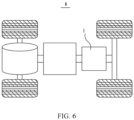
- this application further proposes an electric apparatus including the battery according to any embodiment of the third aspect of this application.
- Ranges disclosed in this application are defined in the form of lower and upper limits.
- a given range is defined by one lower limit and one upper limit selected, where the selected lower and upper limits define boundaries of that particular range. Ranges defined in this method may or may not include end values, and any combinations may be used, meaning any lower limit may be combined with any upper limit to form a range. For example, if ranges of 60-120 and 80-110 are provided for a specific parameter, it is understood that ranges of 60-110 and 80-120 can also be envisioned. In addition, if minimum values of a range are given as 1 and 2, and maximum values of the range are given as 3, 4, and 5, the following ranges can all be envisioned: 1-3, 1-4, 1-5, 2-3, 2-4, and 2-5.
- a value range of "a-b” is a short representation of any combination of real numbers between a and b, where both a and b are real numbers.
- a value range of "0-5" means that all real numbers in the range of "0-5" are listed herein, and "0-5" is just a short representation of a combination of these values.
- a parameter expressed as an integer greater than or equal to 2 is equivalent to disclosure that the parameter is, for example, an integer among 2, 3, 4, 5, 6, 7, 8, 9, 10, 11, 12, and so on.
- a method including steps (a) and (b) indicates that the method may include steps (a) and (b) performed in order or may include steps (b) and (a) performed in order.
- the foregoing method may further include step (c), which indicates that step (c) may be added to the method in any ordinal position, for example, the method may include steps (a), (b), and (c), steps (a), (c), and (b), steps (c), (a), and (b), or the like.
- Rechargeable batteries typically include ion-type batteries and metal-type batteries.
- Metal-type batteries such as lithium metal batteries and sodium metal batteries, have highly active negative electrodes and a high risk of dendrite formation, which reduces the reliability of the batteries.
- Ion-type batteries are widely used due to their high reliability.
- Lithium-ion batteries typically include an electrode assembly and an electrolyte.
- the electrode assembly includes a positive electrode plate, a negative electrode plate, and a separator.
- the separator is disposed between the positive electrode plate and the negative electrode plate to separate them.
- the positive electrode plate includes a positive electrode film layer containing a positive electrode active material.
- the positive electrode active material acts as a donor of lithium ions in the lithium-ion battery.
- the negative electrode plate includes a negative electrode film layer containing a negative electrode active material.
- the negative electrode active material can act as an acceptor of lithium ions.
- the electrolyte provides a path for lithium ions to migrate between the positive electrode plate and the negative electrode plate.
- the positive electrode active material with high capacity is usually used, for example, by increasing the proportion of element nickel in the positive electrode active material.
- the proportion of element nickel increases, the structure of the positive electrode active material becomes more prone to microcracks during cycling, leading to the structural damage or even collapse of the positive electrode active material.
- the cumulative damage to the positive electrode active material increases, deteriorating the cycling performance.
- the positive electrode active material of the lithium-ion battery includes a compound with a molecular formula Li d Ni a Co b Mn c M (1-a-b-c) Y z , where 0 ⁇ d ⁇ 2.1, 0.6 ⁇ a ⁇ 1, 0 ⁇ b ⁇ 1, 0 ⁇ c ⁇ 1, 0.6 ⁇ a+b+c ⁇ 1, and 1.8 ⁇ z ⁇ 3.5.
- Element M includes at least one of elements B, Mg, Al, Si, P, S, Ca, Sc, Ti, V, Cr, Fe, Cu, Zn, Sr, Y, Zr, Nb, Mo, Cd, Sn, Sb, Te, Ba, Ta, W, Yb, La, and Ce.
- Element Y includes at least one of elements O and F.
- the positive electrode active material has a high proportion of element nickel.
- the positive electrode active material of the embodiments of this application further includes element M.
- the introduction of element M can enhance the crystal structure stability of the positive electrode active material, thereby improving the cycling performance of the lithium-ion battery.
- the embodiments of this application further employ a high content of lithium hexafluorophosphate, with a mass proportion of lithium hexafluorophosphate LiPF 6 relative to the total mass of the electrolyte being 15% to 20%.
- the high content of lithium hexafluorophosphate can form a protective layer primarily composed of lithium fluoride LiF on the surface of the positive electrode active material, which can mitigate the dissolution of metal and non-metal elements to some extent, thereby further improving the cycling performance of the lithium-ion battery.
- an embodiment of this application proposes a lithium-ion battery.
- the lithium-ion battery includes an electrolyte and a positive electrode plate.
- the electrolyte includes a lithium salt, where the lithium salt includes lithium hexafluorophosphate, and based on a total mass of the electrolyte, a mass proportion of the lithium hexafluorophosphate is 15% to 20%.
- the positive electrode plate includes a positive electrode current collector and a positive electrode film layer disposed on at least one side of the positive electrode current collector and containing a positive electrode active material, where the positive electrode active material includes a compound with a molecular formula Li d Ni a Co b Mn c M (1-a-b-c) Q z , where 0 ⁇ d ⁇ 2.1, 0.6 ⁇ a ⁇ 1, 0 ⁇ b ⁇ 1, 0 ⁇ c ⁇ 1, 0.6 ⁇ a+b+c ⁇ 1, and 1.8 ⁇ z ⁇ 3.5.
- Element M includes at least one of elements B, Mg, Al, Si, P, S, Ca, Sc, Ti, V, Cr, Fe, Cu, Zn, Sr, Y, Zr, Nb, Mo, Cd, Sn, Sb, Te, Ba, Ta, W, Yb, La, and Ce.
- Element Q includes at least one of elements O and F.
- the positive electrode active material has a relatively high proportion of element nickel, for example, 0.6 ⁇ a ⁇ 1, optionally 0.85 ⁇ a ⁇ 0.95.
- the positive electrode active material of the embodiments of this application further includes element M.
- element M can enhance the crystal structure stability of the positive electrode active material, thereby improving the cycling performance of the lithium-ion battery.
- dissolved metal and non-metal elements can migrate through the electrolyte to the surface of the negative electrode plate to cause damage to the solid electrolyte interphase (Solid Electrolyte Interphase, SEI) film on the surface of the negative electrode plate, and may precipitate as elemental metal on the surface of the negative electrode plate, thereby deteriorating the cycling performance.
- SEI Solid Electrolyte Interphase
- the embodiments of this application further employ a high content of lithium hexafluorophosphate, with a mass proportion of lithium hexafluorophosphate LiPF 6 relative to the total mass of the electrolyte being 15% to 20%.
- the high content of lithium hexafluorophosphate can form a protective layer primarily composed of lithium fluoride LiF on the surface of the positive electrode active material, which can mitigate the dissolution of metal and non-metal elements to some extent, thereby further improving the cycling performance of the lithium-ion battery.
- the mass proportion of lithium hexafluorophosphate is less than 15%, the protective performance on the surface of the positive electrode active material is weakened. Therefore, it is necessary to control the mass proportion of lithium hexafluorophosphate to be greater than or equal to 15%.
- the mass proportion of lithium hexafluorophosphate is greater than 20%, the viscosity of the electrolyte is significantly increased, which is not conducive to the migration of lithium ions from the bulk phase of the negative electrode active material to the surface; and the migration of lithium ions from the surface of the negative electrode to the surface of the positive electrode is slowed down, which is not conducive to the migration of lithium ions from the surface of the negative electrode active material to the bulk phase of the negative electrode active material, and is not conducive to the improvement of cycling performance. Therefore, it is necessary to control the mass proportion of lithium hexafluorophosphate to be less than or equal to 20%.
- the mass proportion of lithium hexafluorophosphate relative to the total mass of the electrolyte may be 15%, 15.5%, 16%, 16.5%, 17%, 17.5%, 18%, 18.5%, 19%, 19.5%, 20%, or in a range defined by any two of these values.
- the positive electrode plate includes a positive electrode current collector and a positive electrode film layer disposed on at least one side of the positive electrode current collector and including a positive electrode active material.
- the positive electrode current collector has two opposite surfaces in its thickness direction, and the positive electrode film layer is disposed on either or both of the two opposite surfaces of the positive electrode current collector.
- the positive electrode active material includes a compound with a molecular formula Li d Ni a Co b Mn c M (1-a-b-c) Q z , where 0 ⁇ d ⁇ 2.1, 0.6 ⁇ a ⁇ 1, 0 ⁇ b ⁇ 1, 0 ⁇ c ⁇ 1, 0.6 ⁇ a+b+c ⁇ 1, and 1.8 ⁇ z ⁇ 3.5.
- Element M includes at least one of elements B, Mg, Al, Si, P, S, Ca, Sc, Ti, V, Cr, Fe, Cu, Zn, Sr, Y, Zr, Nb, Mo, Cd, Sn, Sb, Te, Ba, Ta, W, Yb, La, and Ce.
- Element Q includes at least one of elements O and F.
- the positive electrode active material also includes element nickel, element cobalt, element manganese, and element M.
- element nickel can enhance the gram capacity of the positive electrode active material
- element cobalt can stabilize the crystal structure of the positive electrode active material
- element manganese can enhance the overall structural stability of the positive electrode active material
- element M can improve the crystal structure stability of the positive electrode active material.
- d may be 0.01, 0.02, 0.05, 0.08, 0.10, 0.12, 0.15, 0.18, 0.20, 0.22, 0.25, 0.28, 0.30, 0.32, 0.35, 0.38, 0.40, 0.42, 0.45, 0.48, 0.50, 0.52, 0.55, 0.58, 0.60, 0.61, 0.62, 0.63, 0.64, 0.65, 0.66, 0.67, 0.68, 0.69, 0.70, 0.71, 0.72, 0.73, 0.74, 0.75, 0.76, 0.77, 0.78, 0.79, 0.80, 0.81, 0.82, 0.83, 0.84, 0.85, 0.86, 0.87, 0.88, 0.89, 0.90, 0.91, 0.92, 0.93, 0.94, 0.95, 0.96, 0.97, 0.98, 0.99, 1, 1.1, 1.2, 1.3, 1.4, 1.5, 1.6, 1.7, 1.8, 1.9, 2.0, 2.1, or in a range defined by any two of these values.
- a may be 0.61, 0.62, 0.63, 0.64, 0.65, 0.66, 0.67, 0.68, 0.69, 0.70, 0.71, 0.72, 0.73, 0.74, 0.75, 0.76, 0.77, 0.78, 0.79, 0.80, 0.81, 0.82, 0.83, 0.84, 0.85, 0.86, 0.87, 0.88, 0.89, 0.90, 0.91, 0.92, 0.93, 0.94, 0.95, 0.96, 0.97, 0.98, 0.99, or in a range defined by any two of these values.
- the positive electrode active material with the above structure, combined with the electrolyte, can effectively improve the cycling performance of the lithium-ion battery.
- b may be 0.01, 0.02, 0.05, 0.08, 0.10, 0.12, 0.15, 0.18, 0.20, 0.22, 0.25, 0.28, 0.30, 0.32, 0.35, 0.38, 0.40, 0.42, 0.45, 0.48, 0.50, 0.52, 0.55, 0.58, 0.60, 0.61, 0.62, 0.63, 0.64, 0.65, 0.66, 0.67, 0.68, 0.69, 0.70, 0.71, 0.72, 0.73, 0.74, 0.75, 0.76, 0.77, 0.78, 0.79, 0.80, 0.81, 0.82, 0.83, 0.84, 0.85, 0.86, 0.87, 0.88, 0.89, 0.90, 0.91, 0.92, 0.93, 0.94, 0.95, 0.96, 0.97, 0.98, 0.99, or in a range defined by any two of these values.
- c may be 0.01, 0.02, 0.05, 0.08, 0.10, 0.12, 0.15, 0.18, 0.20, 0.22, 0.25, 0.28, 0.30, 0.32, 0.35, 0.38, 0.40, 0.42, 0.45, 0.48, 0.50, 0.52, 0.55, 0.58, 0.60, 0.61, 0.62, 0.63, 0.64, 0.65, 0.66, 0.67, 0.68, 0.69, 0.70, 0.71, 0.72, 0.73, 0.74, 0.75, 0.76, 0.77, 0.78, 0.79, 0.80, 0.81, 0.82, 0.83, 0.84, 0.85, 0.86, 0.87, 0.88, 0.89, 0.90, 0.91, 0.92, 0.93, 0.94, 0.95, 0.96, 0.97, 0.98, 0.99, or in a range defined by any two of these values.
- a+b+c may be 0.61, 0.62, 0.63, 0.64, 0.65, 0.66, 0.67, 0.68, 0.69, 0.70, 0.71, 0.72, 0.73, 0.74, 0.75, 0.76, 0.77, 0.78, 0.79, 0.80, 0.81, 0.82, 0.83, 0.84, 0.85, 0.86, 0.87, 0.88, 0.89, 0.90, 0.91, 0.92, 0.93, 0.94, 0.95, 0.96, 0.97, 0.98, 0.99, or in a range defined by any two of these values.
- z may be 1.8, 1.9, 2.0, 2.1, 2.2, 2.3, 2.4, 2.5, 2.6, 2.7, 2.8, 2.9, 3.0, 3.1, 3.2, 3.3, 3.4, 3.5, or in a range defined by any two of these values.
- the molar percentage of Li varies at different states of discharge.
- the molar percentage of Li is the initial state of the material, that is, the state before feeding.
- the molar percentage of Li may change after charge and discharge cycles.
- the molar percentage of oxygen O is only a theoretical value. Lattice oxygen release can lead to changes in the molar percentage of oxygen O, and in practice, the molar percentage of oxygen O may fluctuate.
- element M includes at least one of elements titanium Ti and zirconium Zr.
- M includes element Ti.
- Ti can play a role in stabilizing the structure of the positive electrode active material, thereby improving the cycling performance.
- M includes element Zr.
- Zr can also play a role in stabilizing the structure of the positive electrode active material, thereby improving the cycling performance.
- a total mass proportion of elements Ti and Zr is 1600 ppm to 6000 ppm.
- the addition amount of elements Ti and Zr is within the above range, the crystal structure of the positive electrode active material can be further enhanced, improving the cycling performance.
- the total mass proportion of elements Ti and Zr refers to a ratio of the total mass of elements Ti and Zr to the total mass of the positive electrode active material.
- the total mass proportion of elements Ti and Zr may be 1600 ppm, 1700 ppm, 1800 ppm, 1900 ppm, 2000 ppm, 2100 ppm, 2200 ppm, 2300 ppm, 2400 ppm, 2500 ppm, 2600 ppm, 2700 ppm, 2800 ppm, 2900 ppm, 3000 ppm, 3100 ppm, 3150 ppm, 4000 ppm, 5000 ppm, 6000 ppm, or in a range defined by any two of these values.
- a mass proportion of element Ti is 100 ppm to 600 ppm, for example, may be 100 ppm, 200 ppm, 300 ppm, 400 ppm, 450 ppm, 500 ppm, 600 ppm, or in a range defined by any two of these values.
- a mass proportion of element Zr is 500 ppm to 5000 ppm, optionally 1500 ppm to 5000 ppm, for example, may be 500 ppm, 600 ppm, 700 ppm, 800 ppm, 900 ppm, 1000 ppm, 1100 ppm, 1200 ppm, 1300 ppm, 1400 ppm, 1500 ppm, 1600 ppm, 1700 ppm, 1800 ppm, 1900 ppm, 2000 ppm, 2100 ppm, 2200 ppm, 2300 ppm, 2400 ppm, 2500 ppm, 2550 ppm, 3000 ppm, 3500 ppm, 4000 ppm, 5000 ppm, or in a range defined by any two of these values.
- the electrolyte includes a first additive, where the first additive includes at least one of lithium difluoroxalate borate LiDFOB and lithium tetrafluoroborate LiBF 4 .
- the first additive includes at least one of lithium difluoroxalate borate LiDFOB and lithium tetrafluoroborate LiBF 4 .
- metal ions such as Ti and Zr ions in the positive electrode active material are at risk of dissolving into the electrolyte and migrating to the surface of the negative electrode plate.
- the first additive contains fluoride ions and boron ions, and the fluoride ions and boron ions have a strong ability of binding with the above metal ions, reducing the risk of metal ions migrating to the surface of the negative electrode plate, thereby improving the cycling performance of the lithium-ion battery.
- Ti and Zr ions can improve the structural stability of the material, they may adversely affect the conduction of lithium ions within the lattice, leading to power degradation.
- the first additive
- the positive electrode active material includes one or more of single crystal particle and polycrystal particle.
- the positive electrode active material with the above structure, combined with the electrolyte, can effectively improve the cycling performance of the lithium-ion battery.
- the positive electrode active material includes single crystal particles and polycrystal particles.
- the positive electrode active material with the above structure, combined with the electrolyte, can effectively improve the cycling performance of the lithium-ion battery.
- the positive electrode active material includes single crystal particles, where the single crystal particle includes an inner region and an outer region, the outer region is a region extending 500 nm directly from any point on an outer surface of the single crystal particle toward inside of the single crystal particle; and element M includes element aluminum Al, where elements aluminum Al are distributed at least in the outer region.
- the inner region of the single crystal particle can be understood as the core of the single crystal particle, with the outer region coating the inner region. There may be no clear boundary between the outer region and the inner region.
- the outer region and the inner region can be considered as two artificially defined regions.
- the outer region is a region extending 500 nm from any point on an outer surface of the single crystal particle toward inside of the single crystal particle, with the extension path being a straight path.
- the outer region can be understood as a ring structure, where a radial spacing of the ring structure is less than or equal to 500 nm.
- element aluminum Al at least in the outer region helps to form aluminum oxide Al 2 O 3 in the positive electrode active material, which can passivate side reactions between the positive electrode active material and the electrolyte, further enhancing the structural stability of the positive electrode active material and improving the cycling performance of the lithium-ion battery.
- element Al can be further distributed in the inner region.
- a mass proportion of element Al is 500 ppm to 3000 ppm, optionally 1000 ppm to 2000 ppm.
- the mass proportion of element Al may be 500 ppm, 600 ppm, 700 ppm, 800 ppm, 900 ppm, 1000 ppm, 1100 ppm, 1200 ppm, 1300 ppm, 1400 ppm, 1500 ppm, 1600 ppm, 1700 ppm, 1800 ppm, 1900 ppm, 2000 ppm, or in a range defined by any two of these values.
- the electrolyte includes a second additive, where the second additive includes lithium difluorophosphate LiPO 2 F 2 .
- Lithium difluorophosphate LiPO 2 F 2 combined with the element Al in the positive electrode active material, can reduce the DCR on the surface of the positive electrode active material and enhance the interface power.
- element M further includes at least one of elements phosphorus P, sulfur S, and boron B, where at least one of elements P, S, and B is distributed in the outer region.
- element M includes elements phosphorus P, sulfur S, and boron B.
- Elements phosphorus P, sulfur S, and boron B can embed in the oxygen layer, playing a role in stabilizing lithium, thereby enhancing the structural stability of the positive electrode active material and improving the cycling performance of the lithium-ion battery.
- a total mass proportion of elements P, S, and B is 0 ppm to 800 ppm, optionally 10 ppm to 500 ppm, for example, 0, 10 ppm, 20 ppm, 30 ppm, 40 ppm, 50 ppm, 60 ppm, 80 ppm, 100 ppm, 150 ppm, 200 ppm, 250 ppm, 300 ppm, 350 ppm, 400 ppm, 450 ppm, 500 ppm, 600 ppm, 700 ppm, 800 ppm, or in a range defined by any two of these values.
- the total mass proportion of elements P, S, and B is 0, it means that no such elements are added.
- a total mass proportion of element P is 10 ppm to 500 ppm, for example, 10 ppm, 20 ppm, 30 ppm, 40 ppm, 50 ppm, 60 ppm, 80 ppm, 100 ppm, 150 ppm, 200 ppm, 250 ppm, 300 ppm, 350 ppm, 400 ppm, 450 ppm, 500 ppm, 600 ppm, 700 ppm, 800 ppm, or in a range defined by any two of these values.
- a total mass proportion of element S is 10 ppm to 500 ppm, for example, 10 ppm, 20 ppm, 30 ppm, 40 ppm, 50 ppm, 60 ppm, 80 ppm, 100 ppm, 150 ppm, 200 ppm, 250 ppm, 300 ppm, 350 ppm, 400 ppm, 450 ppm, 500 ppm, 600 ppm, 700 ppm, 800 ppm, or in a range defined by any two of these values.
- a total mass proportion of element B is 10 ppm to 500 ppm, for example, 10 ppm, 20 ppm, 30 ppm, 40 ppm, 50 ppm, 60 ppm, 80 ppm, 100 ppm, 150 ppm, 200 ppm, 250 ppm, 300 ppm, 350 ppm, 400 ppm, 450 ppm, 500 ppm, 600 ppm, 700 ppm, 800 ppm, or in a range defined by any two of these values.
- the electrolyte includes a third additive.
- the third additive includes lithium fluorosulfonate and can form a low-impedance film component on the surface of the positive electrode active material.
- the third additive combined with the elements phosphorus P, sulfur S, and boron B in the positive electrode active material, can reduce the DCR on the surface of the positive electrode active material and enhance the interface power.
- the proportion of elements in the positive electrode active material is known in the art and can be tested using the equipment and methods known in the art, for example, determined through inductively coupled plasma atomic emission (ICP-OES, instrument model: Thermo ICAP7400) with reference to EPA 6010D-2014 Inductively Coupled Plasma Atomic Emission Spectrometry.
- ICP-OES inductively coupled plasma atomic emission
- instrument model: Thermo ICAP7400 instrument model: Thermo ICAP7400
- EPA 6010D-2014 Inductively Coupled Plasma Atomic Emission Spectrometry First, 0.4 g of the positive electrode active material is weighed, added with 10 ml of aqua regia (with a concentration of 50%), and placed on a 180°C plate for 30 minutes. After digestion on the plate, the resulting sample is diluted to a volume of 100 mL, and quantitative testing is performed using the standard curve method.
- the positive electrode film layer further optionally includes a positive electrode conductive agent.
- the positive electrode conductive agent is not limited to a particular type in the embodiments of this application.
- the positive electrode conductive agent includes at least one of superconducting carbon, conductive graphite, acetylene black, carbon black, Ketjen black, carbon dots, carbon nanotubes, graphene, and carbon nanofiber.
- a mass proportion of the positive electrode conductive agent is ⁇ 5%.
- the positive electrode film layer further optionally includes a positive electrode binder.
- the positive electrode binder is not limited to a particular type in the embodiments of this application.
- the positive electrode binder may include at least one of polyvinylidene fluoride (PVDF), polytetrafluoroethylene (PTFE), vinylidene fluoride-tetrafluoroethylene-propylene terpolymer, vinylidene fluoride-hexafluoropropylene-tetrafluoroethylene terpolymer, tetrafluoroethylene-hexafluoropropylene copolymer, and fluorine-containing acrylic resin.
- PVDF polyvinylidene fluoride
- PTFE polytetrafluoroethylene
- PTFE polytetrafluoroethylene
- vinylidene fluoride-hexafluoropropylene-tetrafluoroethylene terpolymer vinylidene fluoride-hexafluoropropylene
- a ratio of a press density of the positive electrode film layer to a press density of the negative electrode film layer is (2-2.5): 1, for example, 2:1, 2.1:1, 2.2:1, 2.3:1, 2.4:1, 2.5:1, or in a range defined by any two of these values.
- the press density PD of the positive electrode film layer is 3.0 g/cm 3 to 3.5 g/cm 3 , optionally 3.2 g/cm 3 to 3.5 g/cm 3 , for example, 3 g/cm 3 , 3.1 g/cm 3 , 3.2 g/cm 3 , 3.3 g/cm 3 , 3.35 g/cm 3 , 3.4 g/cm 3 , 3.5 g/cm 3 , or in a range defined by any two of these values.
- the press density of the positive electrode active material layer has a meaning known in the art, and can be tested using a method known in the art. For example, a single-side coated and cold-pressed positive electrode plate (if a double-side coated positive electrode plate is used, a positive electrode membrane on one side may be wiped off first) is taken and punched into a small disc with an area of S1. The small disc is weighed, and the weight is recorded as M1. Then the positive electrode membrane of the weighed positive electrode plate is wiped off, the positive electrode current collector is weighed, and its weight is recorded as M0.
- the positive electrode current collector may be a metal foil current collector or a composite current collector.
- An aluminum foil may be used as an example of the metal foil.
- the composite current collector may include a polymer material matrix and a metal material layer formed on at least one surface of the polymer material matrix.
- the metal material layer may include at least one of aluminum, aluminum alloy, nickel, nickel alloy, titanium, titanium alloy, silver, and silver alloy.
- the polymer material matrix may include at least one of polypropylene (PP), polyethylene terephthalate (PET), polybutylene terephthalate (PBT), polystyrene (PS), and polyethylene (PE).
- a thickness of the positive electrode current collector is less than or equal to 13 ⁇ m, optionally 8 ⁇ m to 13 ⁇ m, and more optionally 10 ⁇ m to 13 ⁇ m.
- the relatively small thickness of the positive electrode current collector can weaken the heat dissipation channel of the lithium-ion battery. Especially when a thin metal current collector is used, the heat dissipation channel of the lithium-ion battery can be further weakened. In a low-SOC discharge state, the lithium-ion battery can retain some heat, which is conducive to reducing the DCR at a low SOC, thereby improving the discharge power at the low SOC.
- the thickness of the positive electrode current collector may be 8 ⁇ m, 8.2 ⁇ m, 8.5 ⁇ m, 8.8 ⁇ m, 9.0 ⁇ m, 9.2 ⁇ m, 9.5 ⁇ m, 9.6 ⁇ m, 9.8 ⁇ m, 10 ⁇ m, 10.5 ⁇ m, 11 ⁇ m, 11.5 ⁇ m, 12 ⁇ m, 12.5 ⁇ m, 13 ⁇ m, or in a range defined by any two of these values.
- the thickness of the positive electrode current collector has a meaning known in the art, and can be tested using the equipment and methods known in the art.
- the positive electrode plate is used as a sample, then the positive electrode film layer on the surface of the positive electrode plate is washed off with an organic solvent such as alcohol, and the thickness of the positive electrode current collector is measured with a micrometer.
- the positive electrode film layer is typically formed by applying a positive electrode slurry onto the positive electrode current collector and performing drying and cold pressing.
- the positive electrode slurry is typically formed by dispersing the positive electrode active material, the optional conductive agent, the optional binder, and any other components in a solvent and stirring them to uniformity.
- the solvent may be N-methylpyrrolidone (NMP), but is not limited thereto.
- the electrolyte includes an organic solvent.
- the organic solvent may include cyclic carbonate, and based on the total mass of the electrolyte, a ratio of a mass proportion of the cyclic carbonate to the mass proportion of the lithium hexafluorophosphate is (0.60-2.50):1, optionally (1.00-1.65):1.
- the presumed beneficial effect is as follows:
- the ratio of the mass proportion of the cyclic carbonate to the mass proportion of the lithium hexafluorophosphate being within the above range is conducive to fully dissociating more lithium ions from the lithium hexafluorophosphate, so that even at the end stage of low-SOC discharge, the electrolyte system can still contain a large number of lithium ions, and lithium ions are allowed to be continuously dissociated as the battery reaction proceeds, thereby improving the power performance of the battery.
- the ratio of the mass proportion of the cyclic carbonate to the mass proportion of the lithium hexafluorophosphate may be 0.6:1, 0.7:1, 0.8:1, 0.9:1, 1.0:1, 1.1:1, 1.15:1, 1.2:1, 1.25:1, 1.3:1, 1.35:1, 1.37:1, 1.4:1, 1.5:1, 1.6:1, 1.65:1, 1.67:1, 1.7:1, 1.8:1, 1.9:1, 2:1, 2.1:1, 2.2:1, or in a range defined by any two of these values.
- the mass proportion of the cyclic carbonate is 10% to 45%, further optionally 20% to 30%.
- Cyclic carbonate has a high dielectric constant and high ionic conductivity, allowing for formation of stable SEI films on the surface of the negative electrode active material.
- the mass proportion of the cyclic carbonate may be 10%, 10.92%, 11%, 12%, 13%, 14%, 15%, 16%, 17%, 18%, 19%, 20%, 20.93%, 21%, 22%, 23%, 23.66%, 24%, 25%, 26%, 27%, 28%, 29%, 29.12%, 30%, 30.03%, 31%, 32%, 33%, 34%, 35%, 36%, 36.4%, 37%, 38%, 39%, 40%, 40.4%, 41%, 42%, 43%, 44%, 45%, or in a range defined by any two of these values.
- the cyclic carbonate may include at least one of ethylene carbonate EC, propylene carbonate PC, and butylene carbonate BC.
- the organic solvent may include linear carbonate, and based on the total mass of the electrolyte, a ratio of a mass proportion of the linear carbonate to the mass proportion of the cyclic carbonate is (0.9-6):1, optionally (1.5-2.65):1.
- a ratio of a mass proportion of the linear carbonate to the mass proportion of the cyclic carbonate is (0.9-6):1, optionally (1.5-2.65):1.
- the ratio of the mass proportion of the linear carbonate to the mass proportion of the cyclic carbonate may be 0.9:1, 1.0:1, 1.1:1, 1.2:1, 1.3:1, 1.37:1, 1.4:1, 1.5:1, 1.6:1, 1.65:1, 1.67:1, 1.7:1, 1.8:1, 1.9:1, 2.0:1, 2.1:1, 2.2:1, 2.3:1, 2.4:1, 2.5:1, 2.6:1, 2.7:1, 2.8:1, 2.9:1, 3.0:1, 3.1:1, 3.2:1, 3.3:1, 3.4:1, 3.5:1, 3.6:1, 3.7:1, 3.8:1, 3.9:1, 4.0:1, 4.1:1, 4.2:1, 4.3:1, 4.4:1, 4.5:1, 4.6:1, 4.7:1, 4.8:1, 4.9:1, 5.0:1, 5.1:1, 5.2:1, 5.3:1, 5.4:1, 5.5:1, 5.6:1, 5.7:1, 5.8:1, 5.9:1, 5.95:1, 6:1, or in a range defined by any
- the mass proportion of the linear carbonate is 35% to 75%, further optionally 50% to 75%.
- Linear carbonate has a relatively low viscosity, which is conducive to the rapid migration of lithium ions and facilitates better electrochemical stability, improving the low-temperature performance of the electrolyte.
- the mass proportion of the linear carbonate may be 35%, 36%, 37%, 38%, 39%, 40%, 41%, 42%, 43%, 44%, 45%, 46%, 47%, 48%, 49%, 50%, 50.4%, 51%, 52%, 52.5%, 53%, 54%, 55%, 56%, 57%, 58%, 59%, 60%, 61%, 62%, 63%, 64%, 65%, 68%, 70%, 71%, 72%, 73%, 74%, 75%, or in a range defined by any two of these values.
- the linear carbonate includes at least one of ethyl methyl carbonate EMC, diethyl carbonate DEC, and dimethyl carbonate DMC.
- the electrolyte may further include an additive.
- the additive includes a first additive, where the first additive includes at least one of lithium difluoroxalate borate LiDFOB and lithium tetrafluoroborate LiBF 4 .
- the first additive includes at least one of lithium difluoroxalate borate LiDFOB and lithium tetrafluoroborate LiBF 4 .
- metal ions such as Ti and Zr ions in the positive electrode active material are at risk of dissolving into the electrolyte and migrating to the surface of the negative electrode plate.
- the first additive contains fluoride ions and boron ions, and the fluoride ions and boron ions have a strong ability of binding with the above metal ions, reducing the risk of metal ions migrating to the surface of the negative electrode plate, thereby improving the cycling performance of the lithium-ion battery. Additionally, the first additive can compensate for the power degradation caused by Ti and Zr ions.
- a mass proportion of the first additive is 30 ppm to 1200 ppm, optionally 100 ppm to 400 ppm.
- the first additive can enhance the ability of binding with Ti and Zr ions, further improving the cycling performance of the lithium-ion battery.
- a mass proportion of the first additive is 30 ppm to 1200 ppm, optionally 100 ppm to 400 ppm.
- the first additive can enhance the ability of binding with Zr ions, further improving the cycling performance of the lithium-ion battery.
- the mass proportion of the first additive may be 30 ppm, 35 ppm, 40 ppm, 45 ppm, 50 ppm, 60 ppm, 70 ppm, 80 ppm, 90 ppm, 100 ppm, 110 ppm, 120 ppm, 130 ppm, 140 ppm, 150 ppm, 160 ppm, 170 ppm, 180 ppm, 190 ppm, 200 ppm, 210 ppm, 220 ppm, 230 ppm, 240 ppm, 250 ppm, 260 ppm, 270 ppm, 280 ppm, 290 ppm, 300 ppm, 310 ppm, 320 ppm, 330 ppm, 340 ppm, 350 ppm, 360 ppm, 370 ppm, 380 ppm, 390 ppm, 400 ppm, 410 ppm, 420 ppm, 430 ppm, 440 ppm, 450 pp
- the additive includes a second additive, where the second additive includes lithium difluorophosphate LiPO 2 F 2 .
- Lithium difluorophosphate LiPO 2 F 2 can form a film layer rich in inorganic components on the surface of the positive electrode active material, helping to enhance the ionic and electronic conductivity of the film layer.
- the film layer formed has a low interface ion impedance, facilitating lithium ion transport and reducing the DCR at a low SOC.
- lithium difluorophosphate, combined with the element Al in the positive electrode active material can reduce the DCR on the surface of the positive electrode active material and enhance the interface power.
- a mass proportion of the second additive is 100 ppm to 3000 ppm, optionally 1000 ppm to 2000 ppm.
- the second additive with the above mass proportion, combined with 500 ppm to 3000 ppm of element Al, can better reduce the DCR on the surface of the positive electrode active material and enhance the interface power.
- the mass proportion of the second additive may be 100 ppm, 150 ppm, 200 ppm, 250 ppm, 300 ppm, 350 ppm, 400 ppm, 450 ppm, 500 ppm, 600 ppm, 700 ppm, 800 ppm, 900 ppm, 1000 ppm, 1100 ppm, 1200 ppm, 1300 ppm, 1400 ppm, 1500 ppm, 1600 ppm, 1700 ppm, 1800 ppm, 1900 ppm, 2000 ppm, 2100 ppm, 2200 ppm, 2300 ppm, 2400 ppm, 2500 ppm, 2600 ppm, 2700 ppm, 2800 ppm, 2900 ppm, 3000 ppm, or in a range defined by any two of these values.
- the additive includes a third additive, and the third additive includes lithium fluorosulfonate.
- the third additive can form a film layer rich in inorganic components on the surface of the positive electrode active material, enhancing the ionic and electronic conductivity of the film layer.
- the film layer formed has a low interface ion impedance, facilitating lithium ion transport and reducing the DCR at a low SOC.
- lithium difluorophosphate combined with the elements phosphorus P, sulfur S, and boron B in the positive electrode active material, can reduce the DCR on the surface of the positive electrode active material and enhance the interface power.
- lithium fluorosulfonate may include at least one of lithium trifluoromethanesulfonate and lithium perfluorohexanesulfonate.
- a mass proportion of the third additive is 50 ppm to 200 ppm.
- the third additive with the above mass proportion combined with 10 ppm to 800 ppm of elements phosphorus P, sulfur S, and boron B, can better reduce the DCR on the surface of the positive electrode active material and enhance the interface power.
- the mass proportion of the third additive may be 50 ppm, 60 ppm, 70 ppm, 80 ppm, 90 ppm, 100 ppm, 200 ppm, or in a range defined by any two of these values.
- the additive includes a fourth additive, and the fourth additive may further include at least one of 1,3-propane sultone PS, vinylene carbonate VC, and lithium fluorosulfonate LiSO 3 F.
- a ratio of a mass proportion of 1,3-propane sultone PS, a mass proportion of vinylene carbonate VC, and a mass proportion of lithium fluorosulfonate LiSO 3 F is (0.050-0.300):(0.100-0.500):(0.001-0.300).
- the mass proportion of one of the components is 0, it means that no such component is added to the electrolyte.
- the above components can participate in forming the SEI film on the surface of the negative electrode active material, allowing the SEI film to effectively alleviate the swelling of the silicon-based material.
- the mass proportion of 1,3-propane sultone PS is 0.1% to 1%, for example, 0.1%, 0.2%, 0.3%, 0.4%, 0.5%, 0.6%, 0.7%, 0.8%, 0.9%, 1.0%, or in a range defined by any two of these values.
- the mass proportion of vinylene carbonate VC is 0.1% to 1%, for example, 0.1%, 0.2%, 0.3%, 0.4%, 0.5%, 0.6%, 0.7%, 0.8%, 0.9%, 1.0%, or in a range defined by any two of these values.
- the mass proportion of lithium fluorosulfonate LiSO 3 F is 0.1% to 1%, for example, 0.1%, 0.2%, 0.3%, 0.4%, 0.5%, 0.6%, 0.7%, 0.8%, 0.9%, 1.0%, or in a range defined by any two of these values.
- the additive may include fluorinated cyclic carbonate.
- Fluorinated cyclic carbonate can participate in forming the SEI film on the surface of the negative electrode active material, effectively protecting the negative electrode active material.
- fluorinated cyclic carbonate has a certain desolvation ability, which is conducive to the migration of lithium ions, reducing the DCR at a low SOC and enhancing the discharge power.
- the fluorinated cyclic carbonate includes at least one of monofluoroethylene carbonate FEC, difluoroethylene carbonate DFEC, and trifluoropropylene carbonate TFPC; and optionally, the fluorinated cyclic carbonate includes monofluoroethylene carbonate FEC.
- FEC contains a relatively small number of fluorine atoms and has higher polarity, allowing fluorine to be more easily released to participate in the SEI film-forming reaction.
- a ratio of a mass proportion of the fluorinated cyclic carbonate relative to the total mass of the electrolyte to the mass proportion of the element silicon is (0.01-9.5):1, optionally (0.01-0.15):1.
- the ratio of the mass proportion of the fluorinated cyclic carbonate relative to the total mass of the electrolyte to the mass proportion of the element silicon may be 0.01:1, 0.02:1, 0.03:1, 0.035:1, 0.04:1, 0.05:1, 0.055:1, 0.06:1, 0.07:1, 0.08:1, 0.1:1, 0.2:1, 0.3:1, 0.4:1, 0.5:1, 0.6:1, 0.7:1, 0.8:1, 0.9:1, 1:1, 1.05:1, 1.1:1, 1.2:1, 1.3:1, 1.35:1, 1.4:1, 1.5:1, 1.57:1, 1.6:1, 1.7:1, 1.8:1, 1.9:1, 2:1, 2.1:1, 2.2:1, 2.3:1, 2.36:1, 2.5:1, 3:1, 3.5
- Fluorinated cyclic carbonate can participate in forming the SEI film on the surface of the negative electrode active material, improving the composition and properties of the film, and effectively protecting the negative electrode active material. Especially in a case of the negative electrode containing silicon, due to the expansion characteristics of silicon, it is more necessary to optimize the composition of the SEI film.
- the optimization of the film composition is controlled by adjusting the relative proportion of the film-forming additive in the electrolyte.
- the film formed with the participation of fluorinated cyclic carbonate can improve the flexibility of the SEI film, alleviating the structural collapse caused by the rapid release of a large number of lithium ions from silicon at the end stage of discharge.
- fluorinated cyclic carbonate has a certain desolvation ability, which is conducive to the migration of lithium ions, reducing the DCR at a low SOC and enhancing the discharge power.
- Research has found that when the content ratio of silicon in the negative electrode active material to FEC in the electrolyte satisfies (0.01-9.5):1, the rate performance of the battery at the end stage of discharge is significantly improved.
- element carbon can effectively alleviate the volume change of silicon, so that the volume change of silicon can be controlled with a relatively small amount of FEC.
- FEC can effectively control the volume change of silicon.
- FEC of the above mass proportion can reduce the risk of its own acidity damaging the surface of the alkaline positive electrode active material, enhancing the cycling stability of the positive electrode active material, thereby further improving the cycling performance of the lithium-ion battery.
- the mass proportion of the fluorinated cyclic carbonate relative to the total mass of the electrolyte may be 0.05% to 5.8%, optionally 0.1% to 1.0%.
- the mass proportion of the fluorinated cyclic carbonate relative to the total mass of the electrolyte may be 0.05%, 0.06%, 0.07%, 0.08%, 0.09%, 0.1%, 0.15%, 0.2%, 0.25%, 0.3%, 0.35%, 0.4%, 0.45%, 0.5%, 0.6%, 0.7%, 0.8%, 0.9%, 0.95%, 0.98%, 1%, 1.1%, 1.2%, 1.3%, 1.4%, 1.5%, 1.6%, 1.7%, 1.8%, 1.9%, 1.91, 2.0%, 2.1%, 2.2%, 2.3%, 2.4%, 2.5%, 2.6%, 2.7%, 2.8%, 2.9%, 3%, 3.1%, 3.2%, 3.3%, 3.4%, 3.5%, 3.6%, 3.7%, 3.8%, 3.82%, 3.9%, 4%, 4.1%, 4.5%, 5%, 5.2%, 5.5%, 5.7%, 5.73%, 5.8%, or in a range defined by any two of these values.
- a ratio of the mass proportion of the fluorinated cyclic carbonate to a mass proportion of the lithium salt is (0.005-0.30):1, optionally (0.005-0.03):1.
- Fluorinated cyclic carbonate can form organics on the surface of the silicon-based material, improving the flexibility of the SEI film.
- Lithium salt can participate in forming the SEI film, so that the SEI film contains inorganic components, helping to enhance the ionic and electronic conductivity of the SEI film, thereby improving the overall ionic and electronic conductivity of the negative electrode plate.
- the ratio of the mass proportion of the fluorinated cyclic carbonate to the mass proportion of the lithium salt is within the above range, both the flexibility and ionic and electronic conductivity of the SEI film can be improved, and the DCR can also be reduced, thereby enhancing the discharge power of the lithium-ion battery.
- the ratio of the mass proportion of the fluorinated cyclic carbonate to the mass proportion of the lithium salt may be 0.005:1, 0.008: 1, 0.010:1, 0.012:1, 0.014:1, 0.016:1, 0.02:1, 0.03:1, 0.04:1, 0.05:1, 0.06:1, 0.07:1, 0.08:1, 0.09:1, 0.10:1, 0.11:1, 0.12:1, 0.13:1, 0.14:1, 0.15:1, 0.16:1, 0.17:1, 0.18:1, 0.19:1, 0.20:1, 0.21:1, 0.22:1, 0.23:1, 0.24:1, 0.25:1, 0.26:1, 0.27:1, 0.28:1, 0.29:1, 0.30:1, or in a range defined by any two of these values.
- the qualitative and quantitative analysis of various substances or elements in this application can be performed using appropriate equipment and methods known to those skilled in the art.
- relevant testing methods reference may be made to national and international testing standards, national and international enterprise standards, and so on. Practitioners can also adaptively change some testing steps or instrument parameters from the perspective of testing accuracy to obtain more accurate testing results.
- a qualitative or quantitative analysis can be performed using one testing method or using several testing methods in combination.
- the types and concentrations of inorganic components/lithium salt in the electrolyte are meanings known in the art and can be tested using the equipment and methods known in the art.
- the inorganic components/lithium salt concentrations in the electrolyte can be qualitatively or quantitatively analyzed using the ion chromatography analysis method with reference to JY/T020-1996 standard General rules for ion chromatography.
- a newly prepared electrolyte is used as a sample, or a battery that has been fully discharged (discharged to a lower cut-off voltage so that the state of charge of the battery is about 0% SOC) is disassembled to obtain the free electrolyte from the battery as a sample, and testing is performed through ion chromatography.
- the types and concentrations of organic components in the electrolyte are meanings known in the art and can be tested using the equipment and methods known in the art.
- the organic components in the electrolyte can be qualitatively and quantitatively analyzed using gas chromatography with reference to GB/T9722-2006 Chemical reagent - General rules for the gas chromatography.
- a newly prepared electrolyte is used as a sample, or a battery that has been fully discharged (discharged to a lower cut-off voltage so that the state of charge of the battery is about 0% SOC) is disassembled to obtain the free electrolyte from the battery as a sample, and testing is performed through ion chromatography.
- the components of a specific additive in the electrolyte are tested through liquid chromatography-nuclear magnetic resonance (NMR).
- NMR liquid chromatography-nuclear magnetic resonance
- the NMR reagent premix solution includes 100 ml of deuterated acetonitrile with 3 ml of trifluoromethylbenzene CF3ph added.
- the above NMR reagent premix solution is pre-dried with 4A molecular sieve (15 g of fresh 4A molecular sieve is added to 100 ml of NMR reagent premix solution, followed by drying in a nitrogen glove box at room temperature (20°C-25°C) for more than 30 days). Testing is performed using 19F NMR (nuclear magnetic resonance (NMR): Bruker Avance 400HD).
- the proportion of the electrolyte in the deuterated reagent is calculated based on the proportion of lithium hexafluorophosphate LiPF 6 .
- an electrolyte retention coefficient of the lithium-ion battery is 1.0 g/Ah to 2.5 g/Ah, optionally 1.8 g/Ah to 2.2 g/Ah.
- the electrolyte retention coefficient of the lithium-ion battery can reflect the retention capacity of the electrolyte.
- the electrolyte retention coefficient of the lithium-ion battery is within the above range, the electrolyte can effectively wet the positive electrode plate and the negative electrode plate.
- there is a gap between the negative electrode plate and the separator providing a space for volume swelling of the silicon-based material, thereby reducing the risk of overall battery swelling.
- the electrolyte retention coefficient of the lithium-ion battery is 1.0 g/Ah to 2.5 g/Ah, optionally 1.0 g/Ah to 1.5 g/Ah.
- the various solutes or solvents in the electrolyte mentioned in this application include substances actively added during the preparation of the electrolyte, as well as substances derived from one or more substances already present in the electrolyte during the preparation process of the electrolyte or during the process of preparing the electrolyte into a battery or during the storage or use of the battery containing the electrolyte.
- the electrolyte retention coefficient of the lithium-ion battery can reflect the retention capacity of the electrolyte.
- the electrolyte retention coefficient of the lithium-ion battery is within the above range, the electrolyte can effectively wet the positive electrode plate and the negative electrode plate.
- there is a gap between the negative electrode plate and the separator providing a space for volume swelling of the silicon-based material, reducing the risk of swelling of the entire lithium-ion battery.
- the electrolyte retention coefficient of the lithium-ion battery may be 1.0 g/Ah, 1.1 g/Ah, 1.2 g/Ah, 1.3 g/Ah, 1.4 g/Ah, 1.5 g/Ah, 1.6 g/Ah, 1.7 g/Ah, 1.8 g/Ah, 1.9 g/Ah, 2.0 g/Ah, 2.1 g/Ah, 2.2 g/Ah, 2.3 g/Ah, 2.4 g/Ah, 2.5 g/Ah, or in a range defined by any two of these values.
- the electrolyte retention coefficient of the lithium-ion battery has a meaning known in the art and can be tested using the equipment and methods known in the art.
- the lithium-ion battery is charged to 4.35 V at 1C and then discharged to 2.8 V at 1C, and the released capacity C is obtained as the denominator; the lithium-ion battery is weighed and recorded as M0, and then disassembled to obtain the positive electrode plate, negative electrode plate, separator, and electrolyte, where the free electrolyte is present in the housing/bag; all the above solid components are placed into an oven and baked at 60°C for more than 4 hours (including but not limited to the positive electrode plate, negative electrode plate, separator, and other mechanical parts of the disassembled lithium-ion battery that contribute to M 0 ), then all the components of the lithium-ion battery are weighed and recorded as M
- the lithium-ion battery further includes a negative electrode plate.
- the negative electrode plate includes a negative electrode current collector and a negative electrode film layer disposed on at least one surface of the negative electrode current collector and including a negative electrode active material.
- the negative electrode current collector includes two opposite surfaces in its thickness direction, and the negative electrode film layer is disposed on either or both of the two opposite surfaces of the negative electrode current collector.
- the negative electrode film layer includes a negative electrode active material, where the negative electrode active material includes element carbon and element silicon, and based on a total mass of the negative electrode active material, a mass proportion of the element silicon is 0.30% to 10.00%. Correspondingly, the mass proportion of the element carbon is 90% to 99.7%.
- the negative electrode active material of the lithium-ion battery includes a carbon-based material providing element carbon and a silicon-based material providing element silicon.
- the carbon-based material providing element carbon primarily contains element carbon and may also contain element silicon, or certainly may contain only element carbon.
- the silicon-based material providing element silicon may contain element silicon and may also contain element carbon, or certainly may contain only element silicon.
- the negative electrode active material includes both the carbon-based material and silicon-based material.
- the silicon-based material Compared to the carbon-based material, the silicon-based material has a higher lithium intercalation and deintercalation voltage plateau, so that even at a low SOC (for example, SOC ⁇ 10%), the silicon-based material can still participate in discharge, compensating for the inability of the carbon-based material to continue discharging at a low SOC, reducing the direct current resistance DCR during the discharge process of the battery, and thus improving the power performance during the discharge process of the battery.
- a low SOC for example, SOC ⁇ 10%
- the mass proportion of element silicon is controlled to be relatively small for the following reasons: Although the silicon-based material has a higher lithium intercalation and deintercalation potential than the carbon-based material, the silicon-based material undergoes significant volume swelling or shrinkage during charge and discharge, which may lead to defects such as structural collapse, cracking, and pulverization of the negative electrode active material, causing undesirable side reactions inside the battery. Moreover, due to the poor conductivity of the silicon-based material, an excessively high silicon content is not conducive to reducing the DCR. Therefore, under the same conditions, batteries with an excessively high silicon content in the negative electrode active material are inferior to batteries with a lower silicon content in terms of power performance.
- the electrolyte in the embodiments of this application also uses 15% to 20% lithium hexafluorophosphate.
- the synergistic effect of the electrolyte and the negative electrode improves the power performance of the battery at the end stage of discharge.
- Lithium hexafluorophosphate can participate in forming the solid electrolyte interphase (Solid Electrolyte Interphase, SEI) film components on the surface of the negative electrode active material.
- SEI Solid Electrolyte Interphase
- the lithium hexafluorophosphate with a high proportion of fluorine atoms can optimize the SEI film components, and a high mass proportion of lithium hexafluorophosphate has more significant improvement on the SEI film components, increasing the proportion of fluorine-lithium compounds (such as lithium fluoride) in the SEI film.
- Such SEI film with a high proportion of fluorine-lithium compounds can alleviate the problem of silicon-based material cracking and pulverization, enhancing the overall structural stability of the negative electrode active material; and can also delay the side reactions on the electrolyte and the surface of the negative electrode active material, thereby enhancing the discharge stability of the silicon-based material at the end stage of discharge and further improving the power performance of the battery.
- the lithium ion concentration in the negative electrode active material is relatively low, and it is more difficult for lithium ions to be deintercalated from the negative electrode active material, reducing the lithium salt concentration difference in the electrolyte system, increasing the internal resistance of the lithium-ion battery, and further reducing the discharge power.
- the electrolyte in the embodiments of this application includes a high content of lithium hexafluorophosphate and can contribute more lithium ions to the battery system, increasing the lithium ion concentration in the electrolyte, effectively reducing the lithium salt concentration polarization, promoting the migration of lithium ions from the negative electrode plate to the positive electrode plate, and further improving the power performance of the lithium-ion battery.
- the mass proportion of the element silicon relative to the total mass of the negative electrode active material may be 0.3% to 10.0%, for example, 0.3%, 0.32%, 0.4%, 0.5%, 0.6%, 0.64%, 0.7%, 0.8%, 0.9%, 1.0%, 1.1%, 1.2%, 1.27%, 1.3%, 1.4%, 1.5%, 1.6%, 1.7%, 1.8%, 1.9%, 1.91%, 2.0%, 2.1%, 2.2%, 2.23%, 2.3%, 2.4%, 2.5%, 2.6%, 2.7%, 2.8%, 2.86%, 2.9%, 3%, 3.1%, 3.5%, 4%, 4.5%, 5%, 5.5%, 6%, 6.5%, 7%, 8%, 9%, 10%, or in a range defined by any two of these values.
- element silicon can come from the silicon-based material, where the silicon-based material can be a raw material for forming the negative electrode film layer.
- the element silicon in the negative electrode active material exists in the negative electrode film layer in at least one form of elemental silicon, silicon-carbon composite, and silicon oxide SiOx (0 ⁇ x ⁇ 2).
- the elemental silicon, silicon-carbon composite, and silicon oxide SiOx (0 ⁇ x ⁇ 2) herein can refer to a silicon-based material or a form in which element silicon exists in the negative electrode plate of the battery already subjected to formation.
- silicon oxide SiOx (0 ⁇ x ⁇ 2) means that silicon atoms and oxygen atoms in the negative electrode film layer can be combined in various ways, and can be at least one of SiO, SiO 1.2 , SiO 2 , and other possible silicon oxides.
- the silicon-carbon composite can refer to a form in which element silicon exists in the negative electrode plate of the battery already subjected to formation.
- the silicon-carbon composite can alternatively be a silicon-carbon composite formed by some chemical reactions between element silicon and element carbon within the battery cell.
- the silicon-carbon composite can alternatively be a physical mixture of elemental silicon and elemental carbon, for example, elemental carbon includes a porous skeleton, and elemental silicon is located in the pore of the porous skeleton or on the surface of the porous skeleton.
- the silicon-carbon composite can alternatively be a carbon layer coating the surface of the silicon.
- the mass proportion of the element silicon relative to the total mass of the negative electrode active material is 0.3% to 3.0%.
- the mass proportion of element silicon relative to the total mass of the negative electrode active material is 0.3% to 10.0%, optionally greater than or equal to 4% and less than or equal to 7.0%. Since the silicon-carbon composite contains element carbon that can alleviate the volume swelling of silicon, the upper mass proportion of element silicon in the silicon-carbon composite can be slightly higher.
- a mass proportion of the silicon-carbon composite relative to the total mass of the negative electrode active material may be greater than or equal to 0.4% to 14.5%, optionally 5.75% to 10%.
- the silicon-carbon composite within the above range can further increase the energy density of the battery cell.
- the element carbon in the silicon-carbon composite can alleviate the swelling of element silicon, the silicon-carbon composite will not swell too much, and the proportion of element silicon in the silicon-carbon composite can be slightly higher than that of the silicon elements in the silicon oxide.
- Such silicon-carbon composite, combined with the above electrolyte system can significantly reduce the internal resistance of the battery at the end stage of discharge, improving the discharge power performance.
- Element carbon is primarily a component of the carbon-based material.
- the carbon-based material may include at least one of artificial graphite and natural graphite.
- the carbon-based material may include artificial graphite.
- the artificial graphite combined with the above electrolyte system and the silicon-carbon composite, can reduce the DCR and improve the power.
- the carbon-based material may include natural graphite.
- Natural graphite generally has a smaller particle size and allows for faster intercalation and deintercalation of lithium ions. Natural graphite usually contains amorphous carbon on its surface, and the amorphous carbon can reduce the DCR and improve the power.
- the qualitative and quantitative analysis of various substances or elements in this application can be performed using appropriate equipment and methods known to those skilled in the art.
- relevant testing methods reference may be made to national and international testing standards, national and international enterprise standards, and so on. Practitioners can also adaptively change some testing steps or instrument parameters from the perspective of testing accuracy to obtain more accurate testing results.
- a qualitative or quantitative analysis can be performed using one testing method or using several testing methods in combination.
- the negative electrode plate or negative electrode active material is tested by X-ray powder diffraction and qualitatively analyzed with reference to JIS/K0131-1996 General rules for X-ray diffractometric analysis.
- the elemental silicon, silicon-carbon composite, and silicon oxide SiOx (0 ⁇ x ⁇ 2) in this application can also be tested by X-ray powder diffraction and qualitatively analyzed.
- the ratio of the mass proportion of the silicon oxide SiO to the mass proportion of the artificial graphite may be 0.5:99.5, 1:99, 1.5:98.5, 2:98, 2.5:97.5, 3:97, 3.5:96.5, 4:96, 4.5:95.5, 5:95, or in a range defined by any two of these values.
- the mass proportion of the silicon oxide SiO may be 0.5% to 5%, optionally 2% to 3.5%, for example, 0.5%, 1.0%, 1.1%, 1.2%, 1.3%, 1.4%, 1.5%, 1.6%, 1.7%, 1.8%, 1.9%, 2.0%, 2.1%, 2.2%, 2.3%, 2.4%, 2.5%, 2.6%, 2.7%, 2.8%, 2.9%, 3%, 3.1%, 3.2%, 3.3%, 3.4%, 3.5%, 3.6%, 3.7%, 3.8%, 3.9%, 4.0%, 4.1%, 4.2%, 4.3%, 4.4%, 4.5%, 4.6%, 4.7%, 4.8%, 4.9%, 5.0%, or in a range defined by any two of these values.
- the mass proportion of the artificial graphite may be 95% to 99.5%, optionally 96.5% to 98%, for example, 95%, 95.1%, 95.2%, 95.3%, 95.4%, 95.5%, 95.6%, 95.7%, 95.8%, 95.9%, 96%, 96.1%, 96.2%, 96.3%, 96.4%, 96.5%, 96.6%, 96.7%, 96.8%, 96.9%, 97%, 97.1%, 97.2%, 97.3%, 97.4%, 97.5%, 97.6%, 97.7%, 97.8%, 97.9%, 98%, 98.1%, 98.2%, 98.3%, 98.4%, 98.5%, 98.6%, 98.7%, 98.8%, 98.8%, 98.9%, 99%,
- a ratio of the mass proportion of the silicon-carbon composite to the mass proportion of the artificial graphite is (0.4:99.6) to (14.5:85.5).
- the discharge power at a low SOC can be further improved.
- the ratio of the mass proportion of the silicon-carbon composite to the mass proportion of the artificial graphite may be 0.4:99.6, 0.5:99.5, 1:99, 1.5:98.5, 2:98, 2.5:97.5, 3:97, 3.5:96.5, 4:96, 4.5:95.5, 5:95, 6.5:93.5, 7:93, 7.5:92.5, 8:92, 8.5:91.5, 9:91, 9.5:90.5, 10:90, 11:89, 12:88, 13:87, 14:86, 14.5:85.5, or in a range defined by any two of these values.
- the mass proportion of the silicon-carbon composite is 0.4% to 14.5%, optionally 5.75% to 10%, for example, 0.4%, 0.5%, 0.8%, 1%, 2%, 3%, 4%, 5%, 5.5%, 5.75%, 6%, 7%, 8%, 9%, 10%, 11%, 12%, 13%, 14%, 14.5%, or in a range defined by any two of these values.
- the mass proportion of the silicon-carbon composite satisfies the above range, the cycling performance of the battery can be improved.
- the mass proportion of the artificial graphite may be 85.5% to 99.6%, optionally 90% to 94.25%, for example, 85.5%, 90%, 91%, 92%, 93%, 94%, 95%, 95.1%, 95.2%, 95.3%, 95.4%, 95.5%, 95.6%, 95.7%, 95.8%, 95.9%, 96%, 96.1%, 96.2%, 96.3%, 96.4%, 96.5%, 96.6%, 96.7%, 96.8%, 96.9%, 97%, 97.1%, 97.2%, 97.3%, 97.4%, 97.5%, 97.6%, 97.7%, 97.8%, 97.9%, 98%, 98.1%, 98.2%, 98.3%, 98.4%, 98.5%, 98.6%, 98.7%, 98.8%, 98.8%, 98.9%, 99%, 99.5%, 99.6%, or in
- a mass proportion of the negative electrode active material is greater than or equal to 85% and less than 100%.
- the mass proportion of the negative electrode active material may be 85%, 86%, 87%, 88%, 89%, 90%, 91%, 92%, 93%, 94%, 95%, 96%, 97%, 98%, 99%, or in a range defined by any two of these values.
- a thickness of the negative electrode film layer on one side is 65 ⁇ m to 90 ⁇ m.
- the thickness of the negative electrode film layer is the thickness of the negative electrode film layer on one side.
- the thickness of the negative electrode film layer on one side of the negative electrode current collector is the thickness of the single-side negative electrode film layer. If the negative electrode current collector has a negative electrode film layer on one side only, the thickness of the negative electrode film layer on that side is the thickness of the single-side negative electrode film layer.
- the thickness of the negative electrode film layer may be 65 ⁇ m, 66 ⁇ m, 67 ⁇ m, 68 ⁇ m, 69 ⁇ m, 70 ⁇ m, 71 ⁇ m, 72 ⁇ m, 73 ⁇ m, 74 ⁇ m, 75 ⁇ m, 76 ⁇ m, 77 ⁇ m, 78 ⁇ m, 79 ⁇ m, 80 ⁇ m, 81 ⁇ m, 82 ⁇ m, 83 ⁇ m, 84 ⁇ m, 85 ⁇ m, 86 ⁇ m, 87 ⁇ m, 88 ⁇ m, 89 ⁇ m, 90 ⁇ m, or in a range defined by any two of these values.
- the thickness of the negative electrode film layer has a meaning known in the art and can be tested using the equipment and methods known in the art.
- testing methods reference may be made to national and international testing standards, national and international enterprise standards, and so on. Practitioners can also adaptively change some testing steps or instrument parameters from the perspective of testing accuracy to obtain more accurate testing results.
- a qualitative or quantitative analysis can be performed using one testing method or using several testing methods in combination. For example, according to GB/T 17359-2012 Microbeam analysis-Quantitative analysis using energy dispersive spectrometry, the negative electrode plate without electrolyte can be used as a sample for ion-polished cross-sectional element analysis to obtain the thickness of the negative electrode film layer.
- the average value can be taken through multiple measurements using a micrometer: taking a negative electrode plate without electrolyte (a negative electrode plate coated with negative electrode film layers on both sides); first measuring the thickness of the negative electrode plate at any five points with a micrometer and obtaining an average value H1; then wiping off the negative electrode film layers, measuring the thickness at any five points of the current collector, and obtaining an average value H2; and obtaining the thickness of the single-side negative electrode film layer according to (H2-H1)/2.
- a press density PD of the negative electrode film layer is 1.3 g/cm 3 to 1.7 g/cm 3 .
- the press density of the negative electrode film layer is within this range, the negative electrode plate can have good kinetic performance and cycling performance.
- the press density PD of the negative electrode film layer may be 1.3 g/cm 3 , 1.35 g/cm 3 , 1.4 g/cm 3 , 1.45 g/cm 3 , 1.5 g/cm 3 , 1.55 g/cm 3 , 1.6 g/cm 3 , 1.65 g/cm 3 , 1.7 g/cm 3 , or in a range defined by any two of these values.
- average can be the average value taken after five parallel tests.
- the negative electrode film layer further optionally includes a negative electrode conductive agent.
- the negative electrode conductive agent is not limited to a particular type in the embodiments of this application.
- the negative electrode conductive agent may include at least one of superconducting carbon, conductive graphite, acetylene black, carbon black, Ketjen black, carbon dots, carbon nanotubes, graphene, and carbon nanofiber.
- a mass proportion of the negative electrode conductive agent is ⁇ 5%.
- the negative electrode film layer further optionally includes a negative electrode binder.
- the negative electrode binder is not limited to a particular type in the embodiments of this application.
- the negative electrode binder may include at least one of styrene-butadiene rubber SBR, water-soluble unsaturated resin SR-1B, and water-based acrylic resin (such as polyacrylic acid PAA, polymethacrylic acid PMAA, sodium polyacrylate PAAS, polyacrylamide PAM, polyvinyl alcohol PVA, sodium alginate SA, and carboxymethyl chitosan CMCS).
- a mass proportion of the negative electrode binder is ⁇ 5%.
- the negative electrode film layer further optionally includes another promoter.
- the another promoter may include a thickener, for example, sodium carboxymethyl cellulose CMC-Na or a PTC thermistor material.
- a mass proportion of the another promoter is ⁇ 2%.
- the negative electrode current collector may be a metal foil current collector or a composite current collector.
- a copper foil may be used as an example of the metal foil.
- the composite current collector may include a polymer material matrix and a metal material layer formed on at least one surface of the polymer material matrix.
- the metal material layer may include at least one of copper, copper alloy, nickel, nickel alloy, titanium, titanium alloy, silver, and silver alloy.
- the polymer material matrix may include at least one of polypropylene, polyethylene terephthalate, polybutylene terephthalate, polystyrene, and polyethylene.
- a thickness of the negative electrode current collector is less than or equal to 6 ⁇ m, optionally a thin current collector with a thickness of 4.5 ⁇ m to 6 ⁇ m, such as a thin metal current collector.
- the negative electrode current collector of the lithium-ion battery in this application is optionally a thin current collector with a thickness of 4.5 ⁇ m to 6 ⁇ m, thereby weakening the heat dissipation channels of the lithium-ion battery.
- the battery In a low-SOC discharge state, the battery can retain some heat, further enhancing the beneficial effect of the low-silicon negative electrode plate combined with the electrolyte system containing a high content of lithium hexafluorophosphate on reducing the DCR growth at the end stage of discharge (at a low SOC), thereby improving the discharge power at a low SOC.
- the thickness of the negative electrode current collector may be 4.0 ⁇ m, 4.1 ⁇ m, 4.2 ⁇ m, 4.3 ⁇ m, 4.4 ⁇ m, 4.5 ⁇ m, 4.6 ⁇ m, 4.7 ⁇ m, 4.8 ⁇ m, 4.9 ⁇ m, 5.0 ⁇ m, 5.1 ⁇ m, 5.2 ⁇ m, 5.3 ⁇ m, 5.4 ⁇ m, 5.5 ⁇ m, 5.6 ⁇ m, 5.7 ⁇ m, 5.8 ⁇ m, 5.9 ⁇ m, 6 ⁇ m, or in a range defined by any two of these values.
- the thickness of the negative electrode current collector has a meaning known in the art and can be tested using the equipment and methods known in the art.
- the negative electrode plate is used as a sample, then the negative electrode film layer on the surface of the negative electrode plate is washed off with an organic solvent such as alcohol, and the thickness of the negative electrode current collector is measured with a micrometer.
- the negative electrode film layer is usually formed by applying a negative electrode slurry onto the negative electrode current collector and performing drying and cold pressing.
- the negative electrode slurry is typically formed by dispersing the negative electrode active material, the optional conductive agent, the optional binder, and the optional another promoter in a solvent and stirring them to uniformity.
- the solvent may be but is not limited to N-methylpyrrolidone (NMP) or deionized water.
- the negative electrode plate does not exclude additional functional layers other than the negative electrode film layer.
- the negative electrode plate in the embodiments of this application further includes a conductive primer layer (which is, for example, formed by a conductive agent and a binder) sandwiched between the negative electrode current collector and the negative electrode film layer and disposed on a surface of the negative electrode current collector.
- the negative electrode plate in the embodiments of this application further includes a protective layer covering a surface of the negative electrode film layer.
- the lithium-ion battery may include a separator, where a porosity of the separator is 30% to 45%.
- the electrolyte Due to the relatively high addition amount of lithium hexafluorophosphate, the electrolyte has a relatively high overall viscosity.
- the relatively high porosity of the separator is conducive to the permeation of the high-viscosity electrolyte through the separator, allowing lithium ions to migrate smoothly.
- the porosity of the separator may be 30%, 31%, 32%, 33%, 34%, 35%, 36%, 37%, 38%, 39%, 40%, 41%, 42%, 43%, 44%, 45%, or in a range defined by any two of these values.
- porosity refers to a percentage of the volume of pores in the separator relative to the total volume of the separator.
- the porosity can be tested according to GB/T 36363-2018 Polyolefin separator for lithium-ion battery.
- the separator includes an organic substrate and a coating disposed on at least one side of the organic substrate.
- the coating includes a heat-resistant layer and an organic layer.
- the heat-resistant layer is located on a surface of the organic substrate, and the organic layer is located on a surface of the heat-resistant layer facing away from the organic substrate.
- the heat-resistant layer includes inorganic particles.
- the above separator, combined with the above electrolyte and negative electrode plate, can significantly improve the power performance of the battery cell.
- the organic layer includes one of a non-fluoropolymer and a fluoropolymer.
- the organic layer includes a non-fluoropolymer.
- the non-fluoropolymer includes polyacrylate, and in this case, the organic layer is a polyacrylate layer.
- the separator includes an organic substrate and a coating disposed on at least one side of the organic substrate.
- the coating includes a ceramic layer and/or a polyacrylate layer.
- the coating may include only a ceramic layer, or only a polyacrylate layer, or both a ceramic layer and a polyacrylate layer.
- the polyacrylate layer can be disposed on at least one surface of the organic substrate, and the ceramic layer is disposed on a surface of the polyacrylate layer facing away from the organic substrate.
- the ceramic layer can be disposed on at least one surface of the organic substrate, and the polyacrylate layer is disposed on a surface of the ceramic layer facing away from the organic substrate.
- the outer surface of the separator has a certain flexibility, which can effectively alleviate the volume swelling or shrinkage of the silicon-based material, enhancing the overall structural stability of the electrode assembly.
- the material of the organic substrate is not particularly limited and can be any known base film with good chemical and mechanical stability.
- the organic substrate includes at least one of a porous polyolefin resin film (for example, at least one of polyethylene, polypropylene, polytetrafluoroethylene, polyvinyl fluoride, and polyvinylidene fluoride), porous glass fiber, and porous nonwoven fabric.
- the organic substrate may be a single-layer film or a multilayer composite film. When the organic substrate is a multilayer composite film, the layers may be made of a same material or different materials.
- a thickness of the organic substrate is 6.6 ⁇ m to 7.6 ⁇ m.
- the transmission rate of lithium ions in the negative electrode plate is substantially consistent with the transmission rate in the separator, reducing the risk of exacerbating the concentration polarization, and helping to improve the discharge performance.
- the thickness of the organic substrate may be 6.6 ⁇ m, 6.7 ⁇ m, 6.8 ⁇ m, 6.9 ⁇ m, 7.0 ⁇ m, 7.1 ⁇ m, 7.2 ⁇ m, 7.3 ⁇ m, 7.4 ⁇ m, 7.5 ⁇ m, 7.6 ⁇ m, or in a range defined by any two of these values.
- the polyacrylate in the polyacrylate layer can be formed by polymerizing polymer monomers.
- the polymer monomers include at least one of a first polymer monomer, a second polymer monomer, and a third polymer monomer.
- the polymer monomers include a first polymer monomer, a second polymer monomer, and a third polymer monomer.
- the polyacrylate formed by polymerizing the above three polymer monomers can provide the separator with suitable adhesion to the electrode plate, improving the kinetic performance of the lithium-ion battery.
- the first polymer monomer has at least one ester bond, optionally one or more of methyl acrylate, ethyl acrylate, n-propyl acrylate, n-butyl acrylate, isobutyl acrylate, sec-butyl acrylate, tert-butyl acrylate, cyclohexyl acrylate, lauryl acrylate, 2-ethylhexyl acrylate, 2-hydroxyethyl acrylate, 2-hydroxypropyl acrylate, methyl methacrylate, ethyl methacrylate, n-butyl methacrylate, 2-methacrylate ethylhexyl, isobornyl methacrylate, lauryl methacrylate, 2-hydroxyethyl methacrylate, 2-hydroxypropyl methacrylate, vinyl acetate, trifluoroethyl methacrylate, glycidyl methacrylate, or trimethylolpropane tri
- the second polymer monomer has at least one cyano bond, optionally one or more of acrylonitrile, methacrylonitrile, and ethyl acrylonitrile, and more optionally, one or more of acrylonitrile and methacrylonitrile.
- the third polymer monomer has at least one amide bond, optionally one or more of acrylamide, N-methylolacrylamide, and N-butoxymethylacrylamide, and more optionally, one or more of acrylamide and N-methylolacrylamide.
- a weight ratio of the first polymer monomer, the second polymer monomer, and the third polymer monomer that form the polyacrylate is (45-70):(10-25):(10-35), for example, (50-70):(10-25):(10-35), (55-70):(10-25):(10-35), (60-70):(10-25):(10-35), (65-70):(10-25):(10-35), (45-70):(15-25):(10-35), (45-70):(20-25):(10-35), (45-70):(22-25):(10-35), (45-70):(10-25):(15-35), (45-70):(10-25):(20-35), (45-70):(10-25):(25-35), (45-70):(10-25):(30-35), or (45-70):(10-25):(32-35).
- the ceramic layer includes inorganic particles with heat resistance.
- the inorganic particles may include at least one of inorganic particles with a dielectric constant of 5 or above, inorganic particles capable of transmitting active ions, and inorganic particles capable of undergoing electrochemical oxidation and reduction.
- the inorganic particles with a dielectric constant of 5 or above may include at least one of boehmite ( ⁇ -AlOOH), aluminum oxide (Al 2 O 3 ), barium sulfate (BaSO 4 ), magnesium oxide (MgO), magnesium hydroxide (Mg(OH) 2 ), silicon-oxygen compound SiO x (0 ⁇ x ⁇ 2), tin dioxide (SnO 2 ), titanium oxide (TiO 2 ), calcium oxide (CaO), zinc oxide (ZnO), zirconium oxide (ZrO 2 ), yttrium oxide (Y 2 O 3 ), nickel oxide (NiO), hafnium dioxide (HfO 2 ), cerium oxide (CeO 2 ), zirconium titanate (ZrTiO 3 ), barium titanate (BaTiO 3 ), magnesium fluoride (MgF 2 ), Pb(Zr,Ti)O 3 (PZT for short), Pb 1-m La m Zr 1-n Ti
- the inorganic particles capable of transmitting active ions may include at least one of lithium phosphate (Li 3 PO 4 ), lithium titanium phosphate (Li x Ti y (PO 4 ) 3 , where 0 ⁇ x ⁇ 2 and 0 ⁇ y ⁇ 3), lithium aluminum titanium phosphate (Li x Al y Ti z (PO 4 ) 3 , where 0 ⁇ x ⁇ 2, 0 ⁇ y ⁇ 1, and 0 ⁇ z ⁇ 3), (LiAlTiP) x O y glass (0 ⁇ x ⁇ 4, and 0 ⁇ y ⁇ 13), lithium lanthanum titanate (Li x La y TiO 3 , where 0 ⁇ x ⁇ 2 and 0 ⁇ y ⁇ 3), lithium germanium phosphide sulfide (Li x Ge y P z S w , where 0 ⁇ x ⁇ 4, 0 ⁇ y ⁇ 1, 0 ⁇ z ⁇ 1, and 0 ⁇ w ⁇ 5), lithium nitride (Li x N y , where 0
- the inorganic particles capable of undergoing electrochemical oxidation and reduction may include at least one of lithium-containing transition metal oxide, olivine-structured lithium-containing phosphate, carbon-based material, silicon-based material, tin-based material, and lithium titanium compound.
- the ceramic layer may further include a binder.
- the binder includes at least one of polyacrylate, acrylic acid, carboxymethyl cellulose, polyvinylidene fluoride-co-trichloroethylene copolymer, polymethyl methacrylate, polyvinylpyrrolidone, polyvinyl acetate, polyethylene-co-vinyl acetate copolymer, polyethylene oxide, polyaromatic ester, cellulose acetate, cellulose butyrate acetate, cellulose propionate acetate, polyvinylidene fluoride, polyacrylonitrile, polyvinyl alcohol, starch, hydroxypropyl cellulose, regenerated cellulose, polytetrafluoroethylene, polyethylene, polypropylene, and cyanoethyl branched starch.
- a thickness of the coating is 1.5 ⁇ m to 2.5 ⁇ m.
- the thickness of the coating is a thickness of the coating on one side, specifically including a total thickness of the ceramic layer and the polyacrylate layer.
- the thickness of the coating on one side of the organic substrate is the thickness of the single-side coating; or if the organic substrate has a coating on one side only, the thickness of the coating on that side is the thickness of the single-side coating.
- the transmission rate of lithium ions in the negative electrode plate is substantially consistent with the transmission rate in the separator, reducing the risk of exacerbating the concentration polarization, and helping to improve the discharge performance.
- the thickness of the coating may be 1.5 ⁇ m, 1.6 ⁇ m, 1.7 ⁇ m, 1.8 ⁇ m, 1.9 ⁇ m, 2.0 ⁇ m, 2.1 ⁇ m, 2.2 ⁇ m, 2.3 ⁇ m, 2.4 ⁇ m, 2.5 ⁇ m, or in a range defined by any two of these values.
- a ratio of the thickness of the ceramic layer to the thickness of the polyacrylate layer may be (0.5-2.0):1, for example, 0.5:1, 0.7:1, 0.8:1, 0.9:1, 1.0:1, 1.1:1, 1.2:1, 1.3:1, 1.4:1, 1.5:1, 1.6:1, 1.7:1, 1.8:1, 1.9:1, 2.0:1, or in a range defined by any two of these values.
- the thickness of the organic substrate and the thickness of the coating have meanings known in the art and can be tested using the equipment and methods known in the art.
- an ion section polisher and a scanning electron microscope can be jointly used for testing.
- testing can be performed according to the following steps: cutting the separator into samples under test of a specific size (for example, 6 mm ⁇ 6 mm); clamping the sample under test by using two electrically and thermally conductive sheets (for example, copper foils), fixing the sample under test and the sheets by using glue (for example, a double-sided tape), and pressing the sample under test and the sheets through a flat iron block with specific mass (for example, approximately 400 g) for a specified period of time (for example, 1 h) to reduce a gap between the sample under test and the copper foils to be as small as possible; trimming edges with scissors, and attaching the sample on the sample stage by using conductive glue, where the sample slightly protrudes from the edge of the sample stage; placing the sample stage in a sample holder and locking the sample holder firmly, powering on an argon ion cross-section polisher and performing evacuation (for example, 10 Pa-4 Pa), setting argon flow (for example, 0.15 MPa), voltage (for example, 8 kV),
- the positive electrode plate, separator, and negative electrode plate can be made into an electrode assembly through winding and/or lamination processes. It can be understood that the electrode assembly may be a wound electrode assembly or a laminated electrode assembly. Optionally, the electrode assembly is a laminated electrode assembly. The laminated electrode assembly makes the positive electrode plate and the negative electrode plate more closely packed, further reducing the DCR.
- the lithium-ion battery may include an outer package.
- the outer package may be used for packaging the electrode assembly and the electrolyte.
- the outer package of the lithium-ion battery may be a hard shell, for example, a hard plastic shell, an aluminum shell, or a steel shell.
- the outer package of the lithium-ion battery may alternatively be a soft pack, for example, a soft pouch.
- a material of the soft package may be plastic, for example, at least one of polypropylene (PP), polybutylene terephthalate (PBT), and polybutylene succinate (PBS).
- the lithium-ion battery is not limited to any particular shape in the embodiments of this application, and the lithium-ion battery may be cylindrical, rectangular, or of any other shape.
- FIG. 1 shows a rectangular lithium-ion battery 5 as an example.
- the outer package may include a housing 51 and a cover plate 53.
- the housing 51 may include a base plate and side plates connected to the base plate, and the base plate and the side plates enclose an accommodating cavity.
- the housing 51 has an opening communicating with the accommodating cavity, and the cover plate 53 is configured to cover the opening to close the accommodating cavity.
- the positive electrode plate, the negative electrode plate, and the separator may be made into an electrode assembly 52 through winding and/or lamination.
- the electrode assembly 52 is packaged in the accommodating cavity.
- the electrolyte infiltrates the electrode assembly 52.
- the positive electrode plate, the separator, the negative electrode plate, and the electrolyte may be assembled to form a lithium-ion battery.
- the positive electrode plate, the separator, and the negative electrode plate may be made into an electrode assembly through winding and/or lamination; the electrode assembly is placed into an outer package, followed by drying and electrolyte injection; and processes such as vacuum packaging, standing, formation, and shaping are performed to obtain a lithium-ion battery.
- the lithium-ion batteries in the embodiments of this application may be assembled into a battery module.
- the battery module may include a plurality of lithium-ion batteries whose quantity can be adjusted based on application and capacity of the battery module.
- FIG. 3 is a schematic diagram of a battery module 4 as an example.
- a plurality of lithium-ion batteries 5 may be sequentially arranged in a length direction of the battery module 4.
- the batteries may alternatively be arranged in any other manners.
- the plurality of lithium-ion batteries 5 may be fixed using fasteners.
- the battery module 4 may further include a housing with an accommodating space, and the plurality of lithium-ion batteries 5 are accommodated in the accommodating space.
- the battery module may be further assembled into a battery pack, and a quantity of battery modules included in the battery pack may be adjusted based on application and capacity of the battery pack.
- FIG. 4 and FIG. 5 are schematic diagrams of a battery pack 1 as an example.
- the battery pack 1 may include a battery box and a plurality of battery modules 4 arranged in the battery box.
- the battery box includes an upper box body 2 and a lower box body 3.
- the upper box body 2 is configured to be engaged with the lower box body 3 to form an enclosed space for accommodating the battery modules 4.
- the plurality of battery modules 4 may be arranged in the battery box in any manner.
- a third aspect of the embodiments of this application provides an electric apparatus.
- the electric apparatus includes at least one of the lithium-ion battery provided in the embodiments of this application, a battery module, and a battery pack.
- the lithium-ion battery, the battery module, or the battery pack may be used as a power source of the electric apparatus or an energy storage unit of the electric apparatus.
- the electric apparatus may be but is not limited to a mobile device (for example, a mobile phone or a laptop computer), an electric vehicle (for example, a battery electric vehicle, a hybrid electric vehicle, a plug-in hybrid electric vehicle, an electric bicycle, an electric scooter, an electric golf vehicle, or an electric truck), an electric train, a ship, a satellite, or an energy storage system.
- a lithium-ion battery, a battery module, or a battery pack may be selected for the electric apparatus based on requirements for using the electric apparatus.
- FIG. 6 is a schematic diagram of an electric apparatus 6 as an example.
- the electric apparatus 6 is a battery electric vehicle, a hybrid electric vehicle, a plug-in hybrid electric vehicle, or the like.
- a battery pack or a battery module may be used.
- the electric apparatus may be a mobile phone, a tablet computer, a laptop computer, or the like.
- the electric apparatus is generally required to be light and thin, and may use the lithium-ion battery as a power source.
- the positive electrode plate includes a positive electrode current collector and a positive electrode film layer.
- the positive electrode current collector is an aluminum foil with a thickness of 10 ⁇ m.
- the positive electrode film layer includes a film formed by uniformly applying the positive electrode slurry (solvent is N-methylpyrrolidone NMP) on a surface of the aluminum foil of the positive electrode current collector and performing drying and cold pressing.
- the positive electrode film layer includes a positive electrode active material, conductive agent carbon black, and binder polyvinylidene fluoride (PVDF) at a weight ratio of 97.5:1.4:1.1.
- the press density of the positive electrode film layer is 3.35 g/cm 3 .
- the positive electrode active material has a single crystal structure, including includes a compound with a molecular formula Li d Ni a Co b Mn c M (1-a-b-c) O z , where the nickel-cobalt-manganese oxide matrix of the positive electrode active material includes a compound with a molecular formula LiNi 0.70 Co 0.10 Mn 0.20 O 2 .
- Element M includes 450 ppm element Ti, 1700 ppm element Zr, 1600 ppm element Al, and 120 ppm (elements B, S, and P).
- the negative electrode plate includes a negative electrode current collector and a negative electrode film layer.
- the negative electrode current collector is a copper foil with a thickness of 4.5 ⁇ m.
- the negative electrode film layer includes a film formed by uniformly applying the negative electrode slurry (with the solvent being deionized water) on the surface of the copper foil of the negative electrode current collector and performing drying and cold pressing.
- the negative electrode film layer includes a negative electrode active material, binder styrene-butadiene rubber (SBR), thickener sodium carboxymethyl cellulose (CMC-Na), and conductive agent carbon black (Super P) at a weight ratio of 96.2:1.8:1.2:0.8.
- the negative electrode active material includes 97% artificial graphite and 3% silicon oxide SiO, with the mass proportion of element silicon relative to the total mass of the negative electrode active material being 1.91%.
- the press density of the negative electrode film layer is 1.4 g/cm 3 .
- the separator can be directly purchased from the separator supplier.
- the separator has a porosity of 30%, and includes an organic substrate (porous polypropylene PP (7 ⁇ m)) and a coating.
- the coating includes a ceramic layer (1 ⁇ m) and a polyacrylate layer (1 ⁇ m).
- the ceramic layer is disposed on both surfaces of the organic substrate.
- the ceramic layer includes a film layer formed by dissolving a binder and inorganic aluminum oxide in N-methylpyrrolidone NMP and applying the resulting slurry onto the organic substrate.
- the polyacrylate layer is disposed on the surface of the ceramic layer facing away from the organic substrate, and the polyacrylate layer is a film layer formed by applying a substance containing polyacrylate onto the surface of the ceramic layer.
- the electrolyte includes an organic solvent, lithium salt, and an additive.
- the organic solvent includes cyclic carbonates (EC, PC, and BC, with a mass ratio of 1:1:1) and linear carbonates (EMC, DMC, and DEC, with a mass ratio of 1:1:1).
- the positive electrode plate, separator, and negative electrode plate were sequentially stacked, with the separator positioned between the positive electrode plate and the negative electrode plate to provide separation, and then the resulting stack was wound to obtain an electrode assembly.
- the electrode assembly was placed into an outer package, followed by drying and electrolyte injection. Processes such as vacuum packaging, standing, formation, and shaping were performed to obtain a lithium-ion battery.
- the electrolyte retention coefficient of the lithium-ion battery was 2.0 g/Ah.
- the lithium-ion battery was prepared using a method similar to that in Example 1, except that the positive electrode active material in Comparative Example 1 did not contain element M.
- the lithium-ion batteries were prepared using a method similar to that in Example 1, except that the components of the electrolyte were adjusted in Comparative Example 2 and Comparative Example 3, particularly the proportion of lithium hexafluorophosphate.
- the lithium-ion battery was prepared using a method similar to that in Example 1, except that the morphology of the positive electrode active material in Example 2 was different.
- the positive electrode active material in Example 2 included polycrystal particles.
- the lithium-ion batteries were prepared using a method similar to that in Example 1, except that the components of the electrolyte were adjusted in Examples 3-1 and 3-2, particularly the proportion of lithium hexafluorophosphate.
- the lithium-ion batteries were prepared using a method similar to that in Example 1, except that the positive electrode active materials in Examples 4-1 to 4-4 were different. The proportion of at least one of Ti and Zr in element M of the positive electrode active materials was adjusted.
- the lithium-ion batteries were prepared using a method similar to that in Example 1, except that the electrolytes in Examples 4-5 to 4-7 were different. The proportion of the first additive in the electrolyte was adjusted.
- the lithium-ion batteries were prepared using a method similar to that in Example 1, except that the positive electrode active materials in Examples 5-1 and 5-2 were different. The proportion of Al in element M of the positive electrode active materials was adjusted.
- the lithium-ion batteries were prepared using a method similar to that in Example 1, except that the electrolytes in Examples 5-3 to 5-4 were different. The proportion of the second additive in the electrolyte was adjusted.
- the lithium-ion batteries were prepared using a method similar to that in Example 1, except that the positive electrode active materials and electrolytes in Examples 6-1 to 6-3 were different. The total proportion of P, B, and S in element M of the positive electrode active materials was adjusted, and the proportion of the third additive in the electrolyte was adjusted.
- the lithium-ion batteries were prepared using a method similar to that in Example 1, except that the electrolytes in Examples 7-1 and 7-2 were different.
- the electrolyte included fluorinated cyclic carbonate.
- the lithium-ion battery was prepared using a method similar to that in Example 1, except that the electrolyte in Example 8 was different.
- the electrolyte included the fourth additive.
- the lithium-ion batteries prepared in the examples and comparative examples were charged to 4.35 V at 1C and then discharged to 2.8 V at 1C. This process was repeated for 500 cycles, and the percentage of the remaining capacity of each lithium-ion battery to its initial capacity was recorded.
- Table 1 Electrolyte Capacity retention rate after 500 cycles Lithium salt Organic solvent First additive Second additive Proportion of LiPF 6 Proportion of cyclic carbonate Content ratio of cyclic carbonate to LiPF 6 Proportion of linear carbonate Proportion of fluorine-containing inorganic borate LiDFOB (ppm) Proportion of fluorine-containing inorganic borate LiBF 4 (ppm) Proportion of fluorine-containing inorganic phosphate LiPO 2 F 2 (ppm) Comparative Example 1 18.20% 25.00% 1.37 51.30% 150 200 1500 73% Comparative Example 2 12.00% 25.00% 2.08 57.50% 150 200 1500 75% Comparative Example 3 23.00% 25.00% 1.09 46.50% 150 200 1500 78% Example 1 18.20% 25.00% 1.37 51.30% 150 200 1500 91% Example 2 18.20% 25.00% 1.37 51.30% 150 200 1500 89% Example 3-1 15.00% 25.00% 1.67 54.50% 150 200 1500 90% Example 3-2 20.00% 25.00% 1.25
- the positive electrode active material in Example 1 has a single crystal structure, including a compound with a molecular formula LiNi a Co b Mn c M (1-a-b-c) O 2 , where the nickel-cobalt-manganese oxide matrix of the positive electrode active material includes a compound with a molecular formula LiNi 0.70 Co 0.10 Mn 0.20 O 2 .
- Element M includes 450 ppm element Ti, 1700 ppm element Zr, 1600 ppm element Al, and 120 ppm (elements B, S, and P).
- the molecular formula of the positive electrode active material in Examples 2, 3-1, and 3-2 is the same as that in Example 1. In Example 2, a polycrystalline structure is used; and in Examples 3-1 and 3-2, single crystal particles are used.
- the positive electrode active material of Comparative Example 1 includes a compound with a molecular formula LiNi 0.70 Co 0.10 Mn 0.20 O 2 , and uses single crystal particles.
- Comparative Examples 2 and 3 both use suitable positive electrode active material systems, where the positive electrode active material includes element M, and the element M includes Ti, Zr, Al, B, S, P, and the like, enhancing the lattice stability of the positive electrode active material system.
- the positive electrode active material includes element M
- the element M includes Ti, Zr, Al, B, S, P, and the like
- lithium hexafluorophosphate with a relatively low content (12%) is used. With the relatively low content of lithium hexafluorophosphate, fewer lithium-fluoride compounds are generated on the surface of the positive electrode active material. As a result, the positive electrode active material cannot be well protected, and there is still a risk of transition metal ions in the positive electrode active material dissolving into the electrolyte, deteriorating the cycling performance of the battery.
- lithium hexafluorophosphate with a relatively high content (23%) is used.
- the high content of lithium hexafluorophosphate causes the viscosity of the electrolyte system to be excessively high, which is not conducive to the migration of lithium ions, leading to poor kinetic performance of the battery.
- the positive electrode active material in Example 1 further includes element M.
- element M The introduction of element M can enhance the crystal structure stability of the positive electrode active material.
- Lithium hexafluorophosphate is also used, with a mass proportion of lithium hexafluorophosphate LiPF 6 relative to the total mass of the electrolyte being 15% to 20%.
- Lithium hexafluorophosphate can form a protective layer primarily composed of lithium fluoride LiF on the surface of the positive electrode active material, mitigating the dissolution of metal and non-metal elements to some extent, thereby improving the cycling performance of the lithium-ion battery.
- Example 1 Compared to the polycrystal particles used in the positive electrode active material in Example 2, the single crystal particles used in Example 1 have relatively fewer contact interfaces with the electrolyte, reducing the risk of side reactions and further enhancing the cycling performance.
- Table 2 Positive electrode active material First additive Second additive Capacity retention rate after 500 cycles Proportion of Ti (ppm) Proportion of Zr (ppm) Proportion of Al (ppm) Total proportion of B, S, and P (ppm) Proportion of fluorine-containing inorganic borate LiDFOB (ppm) Proportion of fluorine-containing inorganic borate LiBF 4 (ppm) Proportion of fluorine-containing inorganic phosphate LiPO 2 F 2 (ppm)
- Example 1 450 1700 1600 120 150 200 1500 91%
- Example 4-1 100 1700 1600 120 150 200 1500 90%
- Example 4-2 600 1700 1600 120 150 200 1500 89%
- Example 4-3 450 500 1600 120 150 200 1500 88%
- the first additive is used in combination with Ti and Zr in the positive electrode active material.
- Ti and Zr can improve the structural stability of the positive electrode active material, and the first additive can compensate for the power degradation caused by Ti and Zr ions, thereby improving the cycling performance of the lithium-ion battery.
- the second additive is used in combination with Al in the positive electrode active material.
- lithium difluorophosphate combined with the element Al in the positive electrode active material, can reduce the DCR on the surface of the positive electrode active material and enhance the interface power.
- the third additive is used in combination with at least one of elements phosphorus P, sulfur S, and boron B in the positive electrode active material, which can reduce the DCR on the surface of the positive electrode active material and enhance the interface power.
- the electrolyte additionally includes fluorinated cyclic carbonate.
- Fluorinated cyclic carbonate can participate in forming the SEI film on the surface of the negative electrode active material, effectively protecting the negative electrode active material and improving the cycling performance of the lithium-ion battery.
- the electrolyte additionally includes the fourth additive.
- the fourth additive can participate in forming the SEI film on the surface of the negative electrode active material, effectively protecting the negative electrode active material and improving the cycling performance of the lithium-ion battery.
- the positive electrode plate includes a positive electrode current collector and a positive electrode film layer.
- the positive electrode current collector is an aluminum foil with a thickness of 12 ⁇ m.
- the positive electrode film layer includes a film layer formed by uniformly applying the positive electrode slurry (with the solvent being N-methylpyrrolidone NMP) on the surface of the positive electrode current collector aluminum foil and performing drying and cold pressing.
- the positive electrode film layer includes a positive electrode active material, conductive agent carbon black, and binder polyvinylidene fluoride (PVDF) at a weight ratio of 97.5: 1.4: 1.1.
- PVDF polyvinylidene fluoride
- the press density of the positive electrode film layer is 3.35 g/cm 3 .
- the positive electrode active material includes single crystal particles and polycrystal particles, and includes a compound with a molecular formula Li d Ni a Co b Mn c M (1-a-b-c) O z , where the nickel-cobalt-manganese oxide matrix of the positive electrode active material includes a compound with a molecular formula LiNi 0.90 Co 0.05 Mn 0.05 O 2 .
- Element M includes 3000 ppm element Zr, 1800 ppm element Al, and 120 ppm (elements B, S, and P).
- the negative electrode plate includes a negative electrode current collector and a negative electrode film layer.
- the negative electrode current collector is a copper foil with a thickness of 4.5 ⁇ m.
- the negative electrode film layer includes a film layer formed by uniformly applying the negative electrode slurry (with the solvent being deionized water) on the surface of the negative electrode current collector copper foil and performing drying and cold pressing.
- the negative electrode film layer includes a negative electrode active material, binder styrene-butadiene rubber (SBR), thickener sodium carboxymethyl cellulose (CMC-Na), and conductive agent carbon black (Super P) at a weight ratio of 96.2:1.8:1.2:0.8.
- the negative electrode active material includes 93% artificial graphite and 7% silicon-carbon composite, with a mass proportion of element silicon relative to a total mass of the negative electrode active material being 4.9%.
- the press density of the negative electrode film layer is 1.4 g/cm 3 .
- the separator can be directly purchased from the separator supplier.
- the separator has a porosity of 30%.
- the separator includes an organic substrate (porous polypropylene PP (7 ⁇ m)) and a coating.
- the coating includes a ceramic layer (1 ⁇ m) and a polyacrylate layer (1 ⁇ m).
- the ceramic layer is disposed on both surfaces of the organic substrate.
- the ceramic layer includes a film layer formed by dissolving a binder and inorganic aluminum oxide in N-methylpyrrolidone NMP and applying the resulting slurry onto the organic substrate.
- the polyacrylate layer is disposed on the surface of the ceramic layer facing away from the organic substrate, and the polyacrylate layer is a film layer formed by applying a substance containing polyacrylate onto the surface of the ceramic layer.
- the electrolyte includes an organic solvent, lithium salt, and 0.25% fluorinated cyclic carbonate FEC.
- the organic solvent includes cyclic carbonates (EC, PC, and BC, with a mass ratio of 1:1:1) and linear carbonates (EMC, DMC, and DEC, with a mass ratio of 1:1:1).
- the lithium salt includes 18.2% lithium hexafluorophosphate.
- the positive electrode plate, separator, and negative electrode plate were sequentially stacked, with the separator positioned between the positive electrode plate and the negative electrode plate to provide separation, and then the resulting stack was wound to obtain an electrode assembly.
- the electrode assembly was placed into an outer package, followed by drying and electrolyte injection. Processes such as vacuum packaging, standing, formation, and shaping were performed to obtain a lithium-ion battery.
- the electrolyte retention coefficient of the lithium-ion battery was 1.3 g/Ah.
- the lithium-ion batteries were prepared using a method similar to that in Example 9-1, except that the proportion of Ni in the positive electrode active material was adjusted.
- the lithium-ion battery was prepared using a method similar to that in Example 9-1, except that the mass proportion of Zr was adjusted.
- the lithium-ion battery was prepared using a method similar to that in Example 9-1, except that the mass proportion of fluorinated cyclic carbonate FEC in the electrolyte was adjusted.
- the lithium-ion batteries prepared in the examples and comparative examples were charged to 4.25 V at 1C and then discharged to 2.8 V at 1C for 500 cycles. The percentage of the remaining capacity of each lithium-ion battery to its initial capacity was recorded.
- Table 4 Positive electrode active material Fluorinated cyclic carbonate Battery capacity retention rate after 500 cycles Molecular formula of positive electrode active material Structure (single crystal/polycrystal) Total proportion of B, S, P, and Al (ppm) Proportion of Zr (ppm) Type Proportion Content ratio of fluorinated cyclic carbonate to element silicon
- Example 9-1 LiNi 0.90 Co 0.05 Mn 0.05 O 2 Single crystal and polycrystal 1920 3000 FEC 0.25% 0.051 89%
- Example 9-2 LiNi 0.92 Co 0.05 Mn 0.03 O 2 3000 0.25% 0.051 88%
- Example 9-3 LiNi 0.88 Co 0.05 Mn 0.07 O 2 3000 0.25% 0.051 87%
- Example 10 LiNi 0.90 Co 0.05 Mn 0.05 O 2 5000 0.25% 0.051 88%
- Example 11 LiNi 0.90 Co 0.05 Mn 0.05 O 2 3000 0.50% 0.102 87%
- the proportion of element Zr, the proportion of element Ni, and the proportion of FEC are controlled in the positive electrode active material system with a high nickel content, and a suitable electrolyte system (the mass proportion of lithium hexafluorophosphate is 15% to 20%) is used, thereby significantly improving the cycling performance.
Landscapes
- Chemical & Material Sciences (AREA)
- Chemical Kinetics & Catalysis (AREA)
- Electrochemistry (AREA)
- General Chemical & Material Sciences (AREA)
- Inorganic Chemistry (AREA)
- Engineering & Computer Science (AREA)
- Manufacturing & Machinery (AREA)
- General Physics & Mathematics (AREA)
- Physics & Mathematics (AREA)
- Condensed Matter Physics & Semiconductors (AREA)
- Materials Engineering (AREA)
- Composite Materials (AREA)
- Crystallography & Structural Chemistry (AREA)
- Battery Electrode And Active Subsutance (AREA)
- Secondary Cells (AREA)
- Metallurgy (AREA)
- Organic Chemistry (AREA)
Applications Claiming Priority (3)
| Application Number | Priority Date | Filing Date | Title |
|---|---|---|---|
| CN202311422403.0A CN117154188B (zh) | 2023-10-30 | 2023-10-30 | 锂离子电池、电池和用电装置 |
| PCT/CN2024/075983 WO2024153255A1 (zh) | 2023-10-30 | 2024-02-05 | 锂离子电池、电池和用电装置 |
| PCT/CN2024/084160 WO2024153269A2 (zh) | 2023-10-30 | 2024-03-27 | 锂离子电池、电池和用电装置 |
Publications (2)
| Publication Number | Publication Date |
|---|---|
| EP4462545A2 true EP4462545A2 (de) | 2024-11-13 |
| EP4462545A4 EP4462545A4 (de) | 2025-11-26 |
Family
ID=88901105
Family Applications (2)
| Application Number | Title | Priority Date | Filing Date |
|---|---|---|---|
| EP24744424.3A Pending EP4462538A4 (de) | 2023-10-30 | 2024-02-05 | Lithium-ionen-batterie, batterie und elektrische vorrichtung |
| EP24744438.3A Pending EP4462545A4 (de) | 2023-10-30 | 2024-03-27 | Lithium-ionen-batterie, batterie und elektrische vorrichtung |
Family Applications Before (1)
| Application Number | Title | Priority Date | Filing Date |
|---|---|---|---|
| EP24744424.3A Pending EP4462538A4 (de) | 2023-10-30 | 2024-02-05 | Lithium-ionen-batterie, batterie und elektrische vorrichtung |
Country Status (6)
| Country | Link |
|---|---|
| US (2) | US20250140895A1 (de) |
| EP (2) | EP4462538A4 (de) |
| JP (2) | JP7775489B2 (de) |
| KR (2) | KR20250063301A (de) |
| CN (3) | CN117154188B (de) |
| WO (2) | WO2024153255A1 (de) |
Families Citing this family (9)
| Publication number | Priority date | Publication date | Assignee | Title |
|---|---|---|---|---|
| CN117154188B (zh) * | 2023-10-30 | 2024-04-12 | 宁德时代新能源科技股份有限公司 | 锂离子电池、电池和用电装置 |
| CN117154187B (zh) * | 2023-10-30 | 2024-06-18 | 宁德时代新能源科技股份有限公司 | 电池单体、电池和用电装置 |
| JP2025132333A (ja) * | 2024-02-29 | 2025-09-10 | 日本特殊陶業株式会社 | 非水電解液および電気化学素子 |
| CN117878383B (zh) * | 2024-03-08 | 2024-09-13 | 宁德时代新能源科技股份有限公司 | 电池单体、电池和用电装置 |
| CN117878244B (zh) * | 2024-03-08 | 2024-09-17 | 宁德时代新能源科技股份有限公司 | 电池单体、电池和用电装置 |
| WO2025208278A1 (zh) * | 2024-04-01 | 2025-10-09 | 宁德时代新能源科技股份有限公司 | 二次电池及用电装置 |
| DE212024000184U1 (de) * | 2024-07-23 | 2025-11-06 | Contemporary Amperex Technology Co Ltd | Batteriezelle, Batterievorrichtung und stromverbrauchende Vorrichtung |
| CN118943290A (zh) * | 2024-07-23 | 2024-11-12 | 宁德新能源科技有限公司 | 电化学装置及电子设备 |
| CN120565801B (zh) * | 2025-06-13 | 2025-09-30 | 宁德时代新能源科技股份有限公司 | 电池单体、电池装置和用电装置 |
Family Cites Families (37)
| Publication number | Priority date | Publication date | Assignee | Title |
|---|---|---|---|---|
| JP2000149945A (ja) | 1998-11-10 | 2000-05-30 | Hitachi Ltd | リチウムイオン二次電池 |
| CA2369030C (en) * | 2001-01-23 | 2006-02-21 | Kabushiki Kaisha Toshiba | Positive electrode active material and lithium ion secondary battery |
| WO2007010915A1 (ja) * | 2005-07-21 | 2007-01-25 | Matsushita Electric Industrial Co., Ltd. | 非水電解質二次電池及びその製造方法 |
| WO2009157524A1 (ja) * | 2008-06-26 | 2009-12-30 | Agcセイミケミカル株式会社 | リチウムイオン二次電池用正極活物質用の表面修飾リチウム含有複合酸化物及びその製造方法 |
| US20140113200A1 (en) * | 2011-07-25 | 2014-04-24 | Fraser Seymour | Functionalized Carbon Electrode, Related Material, Process for Production, and Use Thereof |
| CN104995784A (zh) * | 2013-02-27 | 2015-10-21 | 三菱化学株式会社 | 非水电解液及使用该非水电解液的非水电解质电池 |
| EP2772968B1 (de) * | 2013-02-28 | 2016-11-30 | Samsung SDI Co., Ltd. | Aktives Verbundanodenmaterial, Herstellungsverfahren dafür sowie Anode und Lithiumbatterie mit dem Material |
| CN103730683B (zh) * | 2013-12-27 | 2015-08-19 | 惠州亿纬锂能股份有限公司 | 一种锂电池及其制备方法 |
| KR102519442B1 (ko) * | 2015-12-16 | 2023-04-11 | 삼성전자주식회사 | 양극 활물질, 이를 포함하는 양극 및 리튬 전지, 상기 양극 활물질의 제조방법 |
| TWI633692B (zh) * | 2016-03-31 | 2018-08-21 | 烏明克公司 | 供汽車應用的鋰離子電池組 |
| JP6860783B2 (ja) * | 2016-07-01 | 2021-04-21 | セントラル硝子株式会社 | 非水系電解液、及び非水系電解液二次電池 |
| CN106099174A (zh) * | 2016-08-26 | 2016-11-09 | 东莞市凯欣电池材料有限公司 | 一种硅基负极高电压锂离子电池 |
| JP2018160383A (ja) * | 2017-03-23 | 2018-10-11 | 住友大阪セメント株式会社 | リチウムイオン二次電池用正極材料およびその製造方法、リチウムイオン二次電池用正極、リチウムイオン二次電池 |
| CN108963337B (zh) * | 2017-05-26 | 2020-05-05 | 宁德时代新能源科技股份有限公司 | 锂离子电池及其电解液 |
| JP6863462B2 (ja) * | 2017-08-07 | 2021-04-21 | ダイキン工業株式会社 | 電解液、電気化学デバイス、リチウムイオン二次電池及びモジュール |
| CN110504479B (zh) * | 2018-05-17 | 2021-05-04 | 宁德时代新能源科技股份有限公司 | 锂离子电池 |
| CN110660961B (zh) * | 2018-06-28 | 2021-09-21 | 宁德时代新能源科技股份有限公司 | 正极片及锂离子电池 |
| CN110875491B (zh) * | 2018-08-31 | 2021-03-30 | 宁德时代新能源科技股份有限公司 | 锂离子二次电池 |
| CN110265625B (zh) * | 2018-11-12 | 2020-12-04 | 宁德时代新能源科技股份有限公司 | 负极极片及锂离子二次电池 |
| CN111916706B (zh) * | 2018-11-28 | 2021-10-01 | 宁德时代新能源科技股份有限公司 | 锂离子二次电池、其制造方法、及包含其的电动交通工具、消费类电子产品和机械设备 |
| CN112151789B (zh) * | 2019-06-28 | 2021-10-01 | 宁德时代新能源科技股份有限公司 | 一种正极材料及其制备方法和用途 |
| JP7290087B2 (ja) * | 2019-09-10 | 2023-06-13 | トヨタ自動車株式会社 | 非水電解液二次電池 |
| JP7290088B2 (ja) * | 2019-09-10 | 2023-06-13 | トヨタ自動車株式会社 | 非水電解液二次電池 |
| CN111430689B (zh) * | 2020-03-27 | 2022-10-25 | 蜂巢能源科技有限公司 | 正极材料及其制备方法,正极、锂离子电池和车辆 |
| EP4075547A4 (de) | 2020-10-31 | 2023-08-02 | Contemporary Amperex Technology Co., Limited | Positivelektrodenaktivmaterial und verfahren zu seiner herstellung, sekundärbatterie, batteriemodul, batteriepack und vorrichtung |
| CN119965326A (zh) * | 2020-12-24 | 2025-05-09 | 宁德时代新能源科技股份有限公司 | 锂离子二次电池及其制备方法、电池模块、电池包和装置 |
| JP7754574B2 (ja) | 2021-08-27 | 2025-10-15 | エルジー エナジー ソリューション リミテッド | リチウム二次電池用非水電解液およびそれを含むリチウム二次電池 |
| JP7740734B2 (ja) * | 2021-10-05 | 2025-09-17 | エルジー エナジー ソリューション リミテッド | 低効率正極を含む二次電池 |
| CN114300735B (zh) * | 2021-11-26 | 2023-09-08 | 深圳新宙邦科技股份有限公司 | 锂二次电池 |
| CN114221035B (zh) * | 2021-12-13 | 2023-10-13 | 上海瑞浦青创新能源有限公司 | 一种三元锂离子二次电池 |
| CN114284560A (zh) * | 2021-12-31 | 2022-04-05 | 远景动力技术(江苏)有限公司 | 非水电解液及锂离子电池 |
| CN114843512B (zh) * | 2022-03-22 | 2024-05-31 | 深圳新宙邦科技股份有限公司 | 一种正极片及锂离子电池 |
| CN114864922B (zh) * | 2022-04-29 | 2024-02-09 | 深圳新宙邦科技股份有限公司 | 一种锂离子电池 |
| CN116315090A (zh) * | 2023-02-20 | 2023-06-23 | 深圳新宙邦科技股份有限公司 | 一种锂离子电池 |
| CN116207351B (zh) * | 2023-05-05 | 2024-01-16 | 宁德时代新能源科技股份有限公司 | 电解液、锂二次电池及用电装置 |
| CN117154188B (zh) * | 2023-10-30 | 2024-04-12 | 宁德时代新能源科技股份有限公司 | 锂离子电池、电池和用电装置 |
| CN117613386A (zh) * | 2023-12-14 | 2024-02-27 | 江苏天鹏电源有限公司 | 一种锂离子电池电解液及锂离子电池 |
-
2023
- 2023-10-30 CN CN202311422403.0A patent/CN117154188B/zh active Active
-
2024
- 2024-02-05 WO PCT/CN2024/075983 patent/WO2024153255A1/zh active Pending
- 2024-02-05 EP EP24744424.3A patent/EP4462538A4/de active Pending
- 2024-02-05 JP JP2024543966A patent/JP7775489B2/ja active Active
- 2024-02-05 KR KR1020247024956A patent/KR20250063301A/ko active Pending
- 2024-03-27 CN CN202480001151.0A patent/CN118435407B/zh active Active
- 2024-03-27 KR KR1020247024957A patent/KR20250063302A/ko active Pending
- 2024-03-27 JP JP2024543931A patent/JP2025506352A/ja active Pending
- 2024-03-27 EP EP24744438.3A patent/EP4462545A4/de active Pending
- 2024-03-27 WO PCT/CN2024/084160 patent/WO2024153269A2/zh active Pending
- 2024-03-27 CN CN202510419039.5A patent/CN120073042A/zh active Pending
- 2024-08-12 US US18/800,152 patent/US20250140895A1/en active Granted
- 2024-08-12 US US18/800,159 patent/US20250140941A1/en active Pending
Also Published As
| Publication number | Publication date |
|---|---|
| JP2025506352A (ja) | 2025-03-11 |
| KR20250063301A (ko) | 2025-05-08 |
| KR20250063302A (ko) | 2025-05-08 |
| US20250140941A1 (en) | 2025-05-01 |
| JP2025505532A (ja) | 2025-02-28 |
| CN117154188A (zh) | 2023-12-01 |
| EP4462545A4 (de) | 2025-11-26 |
| WO2024153269A3 (zh) | 2024-09-06 |
| CN117154188B (zh) | 2024-04-12 |
| WO2024153269A2 (zh) | 2024-07-25 |
| WO2024153255A1 (zh) | 2024-07-25 |
| CN118435407B (zh) | 2025-05-13 |
| JP7775489B2 (ja) | 2025-11-25 |
| CN120073042A (zh) | 2025-05-30 |
| EP4462538A4 (de) | 2025-11-26 |
| US20250140895A1 (en) | 2025-05-01 |
| CN118435407A (zh) | 2024-08-02 |
| EP4462538A1 (de) | 2024-11-13 |
Similar Documents
| Publication | Publication Date | Title |
|---|---|---|
| EP4462545A2 (de) | Lithium-ionen-batterie, batterie und elektrische vorrichtung | |
| EP4560760A2 (de) | Batteriezelle, batterie und elektrische vorrichtung | |
| US12300850B2 (en) | Separator, secondary battery comprising same and related battery module, battery pack and device | |
| EP4020614A1 (de) | Elektrochemische vorrichtung, herstellungsverfahren dafür und elektronisches gerät | |
| US20230024649A1 (en) | Separator, preparation method therefor and related secondary battery, battery module, battery pack and device | |
| US20230017049A1 (en) | Separator, preparation method therefor and related secondary battery, battery module, battery pack and device | |
| US20230307790A1 (en) | Separator, preparation method therefor and related secondary battery, battery module, battery pack and device | |
| CN115810717A (zh) | 负极极片及其制备方法、二次电池、电池模块、电池包和用电装置 | |
| US20230016626A1 (en) | Separator, preparation method therefor and related secondary battery, battery module, battery pack and device | |
| EP4071914A1 (de) | Separator, herstellungsverfahren dafür und zugehörige sekundärbatterie, batteriemodul, batteriepack und vorrichtung | |
| CN120341346A (zh) | 电池单体、电池装置以及用电装置 |
Legal Events
| Date | Code | Title | Description |
|---|---|---|---|
| STAA | Information on the status of an ep patent application or granted ep patent |
Free format text: STATUS: THE INTERNATIONAL PUBLICATION HAS BEEN MADE |
|
| PUAI | Public reference made under article 153(3) epc to a published international application that has entered the european phase |
Free format text: ORIGINAL CODE: 0009012 |
|
| STAA | Information on the status of an ep patent application or granted ep patent |
Free format text: STATUS: REQUEST FOR EXAMINATION WAS MADE |
|
| 17P | Request for examination filed |
Effective date: 20240806 |
|
| AK | Designated contracting states |
Kind code of ref document: A2 Designated state(s): AL AT BE BG CH CY CZ DE DK EE ES FI FR GB GR HR HU IE IS IT LI LT LU LV MC ME MK MT NL NO PL PT RO RS SE SI SK SM TR |
|
| A4 | Supplementary search report drawn up and despatched |
Effective date: 20251023 |
|
| RIC1 | Information provided on ipc code assigned before grant |
Ipc: H01M 10/0568 20100101AFI20251017BHEP Ipc: H01M 4/525 20100101ALI20251017BHEP Ipc: H01M 4/131 20100101ALI20251017BHEP Ipc: H01M 4/36 20060101ALI20251017BHEP Ipc: H01M 4/38 20060101ALI20251017BHEP Ipc: H01M 4/485 20100101ALI20251017BHEP Ipc: H01M 4/505 20100101ALI20251017BHEP Ipc: H01M 4/587 20100101ALI20251017BHEP Ipc: H01M 10/0525 20100101ALI20251017BHEP Ipc: H01M 10/0567 20100101ALI20251017BHEP Ipc: H01M 10/0569 20100101ALI20251017BHEP Ipc: H01M 4/02 20060101ALI20251017BHEP |