EP4461435A2 - Druckgussaluminiumlegierungen für bauteile - Google Patents
Druckgussaluminiumlegierungen für bauteile Download PDFInfo
- Publication number
- EP4461435A2 EP4461435A2 EP24202086.5A EP24202086A EP4461435A2 EP 4461435 A2 EP4461435 A2 EP 4461435A2 EP 24202086 A EP24202086 A EP 24202086A EP 4461435 A2 EP4461435 A2 EP 4461435A2
- Authority
- EP
- European Patent Office
- Prior art keywords
- alloy
- cast
- alloys
- aluminum
- mpa
- Prior art date
- Legal status (The legal status is an assumption and is not a legal conclusion. Google has not performed a legal analysis and makes no representation as to the accuracy of the status listed.)
- Pending
Links
Images





Classifications
-
- C—CHEMISTRY; METALLURGY
- C22—METALLURGY; FERROUS OR NON-FERROUS ALLOYS; TREATMENT OF ALLOYS OR NON-FERROUS METALS
- C22C—ALLOYS
- C22C21/00—Alloys based on aluminium
- C22C21/02—Alloys based on aluminium with silicon as the next major constituent
-
- B—PERFORMING OPERATIONS; TRANSPORTING
- B22—CASTING; POWDER METALLURGY
- B22D—CASTING OF METALS; CASTING OF OTHER SUBSTANCES BY THE SAME PROCESSES OR DEVICES
- B22D17/00—Pressure die casting or injection die casting, i.e. casting in which the metal is forced into a mould under high pressure
-
- B—PERFORMING OPERATIONS; TRANSPORTING
- B22—CASTING; POWDER METALLURGY
- B22D—CASTING OF METALS; CASTING OF OTHER SUBSTANCES BY THE SAME PROCESSES OR DEVICES
- B22D21/00—Casting non-ferrous metals or metallic compounds so far as their metallurgical properties are of importance for the casting procedure; Selection of compositions therefor
- B22D21/002—Castings of light metals
- B22D21/007—Castings of light metals with low melting point, e.g. Al 659 degrees C, Mg 650 degrees C
-
- B—PERFORMING OPERATIONS; TRANSPORTING
- B22—CASTING; POWDER METALLURGY
- B22D—CASTING OF METALS; CASTING OF OTHER SUBSTANCES BY THE SAME PROCESSES OR DEVICES
- B22D21/00—Casting non-ferrous metals or metallic compounds so far as their metallurgical properties are of importance for the casting procedure; Selection of compositions therefor
- B22D21/02—Casting exceedingly oxidisable non-ferrous metals, e.g. in inert atmosphere
- B22D21/04—Casting aluminium or magnesium
-
- B—PERFORMING OPERATIONS; TRANSPORTING
- B22—CASTING; POWDER METALLURGY
- B22D—CASTING OF METALS; CASTING OF OTHER SUBSTANCES BY THE SAME PROCESSES OR DEVICES
- B22D31/00—Cutting-off surplus material, e.g. gates; Cleaning and working on castings
- B22D31/002—Cleaning, working on castings
- B22D31/007—Tumbling mills
-
- C—CHEMISTRY; METALLURGY
- C22—METALLURGY; FERROUS OR NON-FERROUS ALLOYS; TREATMENT OF ALLOYS OR NON-FERROUS METALS
- C22C—ALLOYS
- C22C21/00—Alloys based on aluminium
- C22C21/02—Alloys based on aluminium with silicon as the next major constituent
- C22C21/04—Modified aluminium-silicon alloys
-
- C—CHEMISTRY; METALLURGY
- C22—METALLURGY; FERROUS OR NON-FERROUS ALLOYS; TREATMENT OF ALLOYS OR NON-FERROUS METALS
- C22F—CHANGING THE PHYSICAL STRUCTURE OF NON-FERROUS METALS AND NON-FERROUS ALLOYS
- C22F1/00—Changing the physical structure of non-ferrous metals or alloys by heat treatment or by hot or cold working
- C22F1/04—Changing the physical structure of non-ferrous metals or alloys by heat treatment or by hot or cold working of aluminium or alloys based thereon
- C22F1/043—Changing the physical structure of non-ferrous metals or alloys by heat treatment or by hot or cold working of aluminium or alloys based thereon of alloys with silicon as the next major constituent
Definitions
- the present invention relates to aluminum alloys. More specifically, the present invention relates to aluminum alloys with improved strength, ductility, and castability for high-performance applications including automobile parts.
- US 2017/107599 A1 describes copper-free aluminum alloys suitable for high pressure die casting and capable of age-hardening under elevated temperatures.
- the invention is set out in the claims. It may be desirable to produce cast aluminum alloys with high yield strengths such that the alloys do not fail easily, while also containing sufficient ductility. Furthermore, it may be desirable to produce cast aluminum alloys that do not require a heat treatment.
- an alloy composition in one aspect, includes Al, wherein the alloy comprises a yield strength of at least about 130 MPa and a bend angle of at least about 20° at a 3 mm section thickness when as-cast and without further processing.
- the alloy comprises a yield strength of at least about 130 MPa when as-cast and without further processing. In some embodiments, the alloy comprises a bend angle of at least about 24° at a 3 mm section thickness when as-cast and without further processing. In some embodiments, the alloy comprises a flow length of at least about 1.8 m. In some embodiments, the alloy comprises an ⁇ -Al volume fraction of at least about 90%.
- the alloy comprises about 0.03 wt.% to about 0.25 wt.% of Mg 2 Si phases. In some embodiments, the alloy comprises about 0.01 wt.% to about 0.9 wt.% of Al 2 Cu phases. In some embodiments, the alloy comprises about 0.03 wt.% to about 0.2 wt.% of AlCuMgSi phases. In some embodiments, the alloy comprises about 0.3 wt.% to about 3 wt.% of AlFeSi phases. In some embodiments, the alloy composition further comprises Cu and Mg, wherein a weight ratio of Cu:Mg is about 4:1 to about 1:1. In some embodiments, the alloy has an oxygen reduction factor (ORF) with respect to A380 kinetics of at most about 1.
- ORF oxygen reduction factor
- the alloy composition further comprises one or more of:
- the alloy composition further comprises one or more of:
- the alloy composition further comprises one or more of:
- the incidental impurities are at most about 0.1 wt.%.
- an automobile article including the alloy composition is described.
- the automobile article is an automobile chassis.
- a process for preparing an alloy includes providing alloy components, wherein at least one of the alloy components comprises Al, melting the alloy components to form a melted alloy, and cooling the melted alloy to form an as-cast alloy, wherein the as-cast alloy comprises a yield strength of at least about 130 MPa and a bend angle of at least about 20° at a 3 mm section thickness.
- further processing is not performed on the as-cast alloy.
- the process further comprises die-casting the melted alloy.
- die-casting is high-pressure die-casting (HPDC).
- the process further comprises further processing the as-cast alloy to form a processed alloy.
- the further processing step is selected from the group consisting of heat treating, aging, solution treating, surface finishing and combinations thereof.
- Embodiments relate to aluminum alloys useful for creating products such as vehicle chassis or chassis components.
- the vehicle is an electric vehicle powered by a battery pack.
- the alloys were created to provide sufficient castability, and also provide relatively high yield strength and ductility, as well as eliminating the need for subsequent heat treatment of the cast alloy.
- the alloy comprises a yield strength of at least about 130 MPa and a bend angle of at least about 20° at a 3 mm section thickness when as-cast and without further processing.
- the aluminum alloys comprise vanadium to provide many of these enhancements.
- the aluminum alloy has a specific weight ratio of copper to magnesium to provide many of these enhancements of an alloy with the desired features.
- the aluminum alloy has a weight ratio of Cu:Mg of about 4:1 to about 1:1. In one embodiment, the aluminum alloy has a weight ratio of Cu:Mg of about 4:1 to about 2:1.
- aluminum alloys with these compositions were found to have high yield strength and high ductility compared to available aluminum alloys. As mentioned below, the aluminum alloys are described herein by the weight percent (wt %) of the total elements and particles within the alloy, as well as specific properties of the alloys. It will be understood that the remaining composition of any alloy described herein is aluminum and incidental impurities.
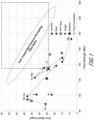
- FIG. 1 is a chart showing bend angles and yield strengths numerous commercial high pressure die cast (HPDC) alloys.
- the target alloy mechanical requirements in FIG. 1 are shown to be greater than 135 MPa yield strength and greater than 24 degree bend angle.
- FIG. 1 demonstrates that the commercial alloys either require heat treatment to meet the necessary mechanical requirements, or do not meet the necessary requirements.
- embodiments of the disclosure relate to casting aluminum alloys with both high yield strength and high ductility, without the need for post-casting heat treatment.
- the aluminum alloys were found to have high yield strength and high ductility compared to conventional, commercially available aluminum alloys.
- the aluminum alloys are described herein by the weight percent (wt %) of the total elements and particles within the alloy, as well as specific properties of the alloys. It will be understood that the remaining composition of any alloy described herein is aluminum and incidental impurities.
- Impurities may be present in the starting materials or introduced in one of the processing and/or manufacturing steps to create the aluminum alloy.
- Incidental impurities are compounds and/or elements that do not or do not substantially affect the material properties of the composition, such as yield strength, ductility and eliminating the need for heat treatment.
- the total incidental impurities are, are about, are at most, or are at most about, 1 wt.%, 0.5 wt.%, 0.2 wt.% 0.1 wt.%, 0.05 wt.% or 0.01 wt.%, or any range of values therebetween.
- the total incidental impurities are, are about, are at most, or are at most about, 1 wt.%, 0.5 wt.%, 0.2 wt.% 0.1 wt.%, 0.05 wt.% or 0.01 wt.%, or any range of values therebetween.
- each elemental incidental impurity is, is about, is at most, or is at most about, 0.5 wt.%, 0.2 wt.% 0.1 wt.%, 0.05 wt.%, 0.01 wt.%, 0.005 wt.% or 0.001 wt.%, or any range of values therebetween.
- the aluminum alloy composition comprises Si in the range of, or of about, 6.5-7.5 wt %, Cu in the range of, or of about, 0.4-0.8 wt %, Mn in the range of, or of about, 0.3-0.7 wt %, Mg in the range of, or of about, 0.2-0.4 wt %, Fe of at most, or of at most about, 0.4 wt %, V in the range of, or of about, 0.05-0.15 wt %, Sr in the range of, or of about, 0.01-0.03 wt %, Ti of at most, or of at most about, 0.15 wt %, Cr of at most, or of at most about, 0.03 wt %, with the remaining composition (by wt %) being Al and incidental impurities, wherein the maximum incidental impurities total 0.15 or 0.1 wt %.
- each elemental incidental impurity is, is about, is at most,
- the aluminum alloy composition comprises Si in the range of, or of about, 6.5-11 wt %, Cu in the range of, or of about, 0.3-0.8 wt %, Mn in the range of, or of about, 0.3-0.8 wt %, Mg in the range of, or of about, 0.1-0.4 wt %, Fe of at most, or of at most about, 0.5 wt %, V in the range of, or of about, 0.05-0.15 wt %, Sr in the range of, or of about, 0.01-0.05 wt %, Ti of at most, or of at most about, 0.15 wt %, Cr of at most, or of at most about, 0.03 wt %, with the remaining composition (by wt %) being Al and incidental impurities, wherein the maximum incidental impurities total 0.15 or 0.1 wt %.
- each elemental incidental impurity is, is about, is at most, or is
- the aluminum alloy composition comprises silicon (Si) in an amount of, of about, of at most, or of at most about, 15 wt.%, 13 wt.%, 12 wt.%, 11 wt.%, 10 wt.%, 9 wt.%, 8 wt.%, 7 wt.%, 6 wt.%, 5 wt.% or 3 wt.%, or any range of values therebetween.
- the aluminum alloy composition comprises copper (Cu) in an amount of, of about, of at most, or of at most about, 1 wt.%, 0.9 wt.%, 0.8 wt.%, 0.7 wt.%, 0.6 wt.%, 0.5 wt.%, 0.4 wt.%, 0.3 wt.%, 0.2 wt.% or 0.1 wt.%, or any range of values therebetween.
- the aluminum alloy composition comprises manganese (Mn) in an amount of, of about, of at most, or of at most about, 0.6 wt.%, 0.5 wt.%, 0.45 wt.%, 0.4 wt.%, 0.35 wt.%, 0.3 wt.%, 0.25 wt.%, 0.2 wt.%, 0.15 wt.%, 0.1 wt.% or 0.05 wt.%, or any range of values therebetween.
- Mn manganese
- the aluminum alloy composition comprises iron (Fe) in an amount of, of about, of at most, or of at most about, 0.8 wt.%, 0.7 wt.%, 0.6 wt.%, 0.5 wt.%, 0.4 wt.%, 0.3 wt.%, 0.2 wt.%, 0.1 wt.%, 0.05 wt.%, or 0.01 wt.%, or any range of values therebetween.
- iron (Fe) in an amount of, of about, of at most, or of at most about, 0.8 wt.%, 0.7 wt.%, 0.6 wt.%, 0.5 wt.%, 0.4 wt.%, 0.3 wt.%, 0.2 wt.%, 0.1 wt.%, 0.05 wt.%, or 0.01 wt.%, or any range of values therebetween.
- the aluminum alloy composition comprises vanadium (V) in an amount of, of about, of at most, or of at most about, 4 wt.%, 3 wt.%, 2.5 wt.%, 2 wt.%, 1.5 wt.%, 1 wt.%, 0.5 wt.%, 0.4 wt.%, 0.3 wt.%, 0.2 wt.%, 0.1 wt.% or 0.05 wt.%, or any range of values therebetween.
- V vanadium
- the aluminum alloy composition comprises strontium (Sr) in an amount of, of about, of at most, or of at most about, 0.1 wt.%, 0.08 wt.%, 0.07 wt.%, 0.06 wt.%, 0.05 wt.%, 0.045 wt.%, 0.04 wt.%, 0.035 wt.%, 0.03 wt.%, 0.025 wt.%, 0.02 wt.%, 0.015 wt.%, 0.01 wt.% or 0.005 wt.%, or any range of values therebetween.
- strontium Sr
- the aluminum alloy composition comprises titanium (Ti) in an amount of, of about, of at most, or of at most about, 0.3 wt.%, 0.2 wt.%, 0.15 wt.%, 0.14 wt.%, 0.13 wt.%, 0.12 wt.%, 0.1 wt.%, 0.08 wt.%, 0.07 wt.%, 0.06 wt.%, 0.05 wt.%, 0.04 wt.%, 0.03 wt.%, 0.02 wt.%, 0.01 wt.% or 0.005 wt.%, or any range of values therebetween.
- the aluminum alloy composition comprises chromium (Cr) in an amount of, of about, of at most, or of at most about, 0.1 wt.%, 0.07 wt.%, 0.05 wt.%, 0.04 wt.%, 0.03 wt.%, 0.02 wt.%, 0.01 wt.% or 0.005 wt.%, or any range of values therebetween.
- Cr chromium
- the aluminum alloy composition comprises each elemental incidental impurity in an amount of, of about, of at most, or of at most about, 0.1 wt.%, 0.07 wt.%, 0.05 wt.%, 0.04 wt.%, 0.03 wt.%, 0.02 wt.%, 0.01 wt.% or 0.005 wt.%, or any range of values therebetween.
- the aluminum alloy composition comprises a maximum incidental impurities total in an amount of, of about, of at most, or of at most about, 0.3 wt.%, 0.2 wt.%, 0.15 wt.%, 0.1 wt.%, 0.07 wt.%, 0.05 wt.%, 0.04 wt.%, 0.03 wt.%, 0.02 wt.%, 0.01 wt.% or 0.005 wt.%, or any range of values therebetween.
- the aluminum alloy composition comprises a weight ratio of Cu:Mg in an amount of, or of about, 4:1, 3.5:1, 3:1, 2.5:1, 2:1, 1.5:1 or 1:1, or any range of values therebetween.
- the ⁇ -Al volume fraction of an alloy is, is about, is at least, or is at least about, 85%, 90%, 91%, 92%, 93%, 94%, 95%, 96%, 97%, 98% or 99%, or any range of values therebetween.
- the aluminum alloy composition comprises Mg 2 Si phases in, in about in less than, or less than about, 2 wt.%, 1.5 wt.%, 1 wt.%, 0.9 wt.%, 0.8 wt.%, 0.7 wt.%, 0.6 wt.%, 0.5 wt.%, 0.45 wt.%, 0.4 wt.%, 0.35 wt.%, 0.3 wt.%, 0.25 wt.%, 0.2 wt.%, 0.15 wt.%, 0.1 wt.%, 0.05 wt.%, 0.04 wt.%, 0.03 wt.%, 0.02 wt.%, 0.01 wt.% or 0.005 wt.%, or any range of values therebetween.
- the aluminum alloy composition comprises Al 2 Cu phases in, in about, in less than, or less than about, 2 wt.%, 1.7 wt.%, 1.5 wt.%, 1.4 wt.%, 1.3 wt.%, 1.2 wt.%, 1.1 wt.%, 1 wt.%, 0.9 wt.%, 0.8 wt.%, 0.7 wt.%, 0.6 wt.%, 0.5 wt.%, 0.45 wt.%, 0.4 wt.%, 0.35 wt.%, 0.3 wt.%, 0.25 wt.%, 0.2 wt.%, 0.15 wt.%, 0.1 wt.%, 0.05 wt.%, 0.04 wt.%, 0.03 wt.%, 0.02 wt.%, 0.01 wt.%, 0.008 wt.%, 0.005 wt.% or 0.001
- the aluminum alloy composition comprises AlCuMgSi phases in, in about, in at least, or in at least about, 2 wt.%, 1.7 wt.%, 1.5 wt.%, 1.4 wt.%, 1.3 wt.%, 1.2 wt.%, 1.1 wt.%, 1 wt.%, 0.9 wt.%, 0.8 wt.%, 0.7 wt.%, 0.6 wt.%, 0.5 wt.%, 0.45 wt.%, 0.4 wt.%, 0.35 wt.%, 0.3 wt.%, 0.25 wt.%, 0.2 wt.%, 0.15 wt.%, 0.1 wt.%, 0.05 wt.%, 0.04 wt.%, 0.03 wt.%, 0.02 wt.%, 0.01 wt.%, 0.008 wt.%, 0.005 wt.% or
- the aluminum alloy composition comprises AlFeSi phases in, in about, in less than, less than about, in at least, or in at least about, 6 wt.%, 5 wt.%, 4.5 wt.%, 4 wt.%, 3.7 wt.%, 3.5 wt.%, 3.4 wt.%, 3.2 wt.%, 3.1 wt.%, 3 wt.%, 2.9 wt.%, 2.8 wt.%, 2.7 wt.%, 2.6 wt.%, 2.5 wt.%, 2.4 wt.%, 2.2 wt.%, 2 wt.%, 1.8 wt.%, 1.5 wt.%, 1.2 wt.%, 1 wt.%, 0.9 wt.%, 0.8 wt.%, 0.7 wt.%, 0.6 wt.%, 0.5 wt.%, 0.45 wt.%,
- the yield strength of the aluminum alloys described herein are at least or at least about 120 MPa.
- the yield strength is, is about, is at least, or is at least about, 120 MPa, 125 MPa, 130 MPa, 135 MPa, 140 MPa, 145 MPa, 150 MPa, 155 MPa, 160 MPa, 165 MPa, 170 MPa, 180 MPa or 200 MPa, or any range of values therebetween.
- the yield strength is, or is about, 120 MPa, 125 MPa, 130 MPa, 135 MPa, 140 MPa, 145 MPa, 150 MPa, 155 MPa, 160 MPa, 165 MPa, 170 MPa, 180 MPa or 200 MPa, or any range of values therebetween.
- the ductility of metal alloy should also be considered such that the parts are reproducibly manufacturable by using a casting process.
- Ductility of an alloy may be measured by the bend angle and/or the elongation of the alloy, although bend angle is preferred.
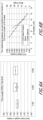
- FIG. 3A is a plot of bend angles and ⁇ -aluminum volume fractions for alloys
- FIG. 3B is a plot of bend angles and magnesium/nickel content for alloys of some embodiments.
- bend angle of an alloy is, is about, is at least, or is at least about, 15°, 20°, 23°, 25°, 30°, 35°, 40°, or 50°, or any range of values therebetween. In some embodiments, bend angle is, or is about, 15°, 20°, 23°, 25°, 30°, 35°, 40°, 50° or 60°, or any range of values therebetween. In some embodiments, the bend angle is measured at a 3 mm section thickness. In some embodiments, the bend angle is measured using the VDA238-100 evaluation standards. In some embodiments,
- the as-cast aluminum alloy In addition to sufficient yield strength and ductility when cast, the as-cast aluminum alloy must provide sufficient flowability and resistance to hot tearing and shrinkage cracking when high pressure die cast (HPDC). Unless specified otherwise, flow lengths described herein are under HPDC conditions. In a metal casting process, the metal alloy must have sufficient flowability to flow into and fill all intricacies of the mold. In molds with narrow and/or long mold channels, a sufficiently high flowability of the alloy is required to fill the mold.
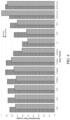
- FIG. 4 is a bar chart showing the predicted and tested normalized flow lengths under HPDC conditions of alloys of some embodiments.
- Hot tearing and shrinkage cracking are common and catastrophic defects observed when casting alloys, including aluminum alloys. Without being able to prevent hot tearing in alloy, reliable and reproducible parts cannot be created. Hot tearing is the formation of an irreversible crack while the cast part is still in the semisolid casting. Although hot tearing is often associated with the casting process itself-linked to the creation of thermal stresses during the shrinkage of the melt flow during solidification, the underlying thermodynamics and microstructure of the alloy plays a part.
- the alloy has a casting flow length under HPDC conditions of, of about, of at least, or of at least about, 1 m, 1.1 m, 1.2 m, 1.3 m, 1.4 m, 1.5 m, 1.6 m, 1.7 m, 1.8 m, 1.9 m, 2 m, 2.2 m, 2.5 m, 3 m or 5 m, or any range of values therebetween.
- the alloy does not, or does not substantially, develop hot tears and/or shrinkage cracks throughout the casting flow length.
- the as-cast alloys are resistant to corrosion and/or oxidation.
- the alloy has an oxygen reduction factor (ORF) with respect to A380 kinetics of, of about, of at most, or of at most about, 2, 1.5, 1, 0.9, 0.8, 0.7, 0.6, 0.5, 0.4, 0.3, 0.2 or 0.1, or any range of values therebetween.
- ORF oxygen reduction factor
- a melt for an alloy can be prepared by heating the alloy above the melting temperature of the alloy components. As the melt is cast and cooled to room temperature, the alloys may go through cooling at various rates.
- the processing conditions can create larger or smaller grain sizes, increase or decrease the size and number of precipitates, and help minimize as-cast segregation.
- the alloy is die-cast. In some embodiments, the alloy is high pressure die-cast (HPDC). In certain embodiments, the aluminum alloy is cast without further processing. In some embodiments, the as-cast aluminum alloy is not further processed through heat treatment, and maintains the yield strength and ductility as mentioned above. In other embodiments, the as-cast aluminum alloy is further processed. In some embodiments, further processing methods include heat treating, aging, solution treating and surface finishing.
- the after the aluminum-alloy melt has been formed it may be cast into a die to form a high-performance product or part.
- product can be part of an automobile, such as parts of chassis and/or other crash components.
- Predictive models were performed to calculate yield strengths and ductility (e.g. bend angle) of aluminum alloy cast without further heat treatment processing.
- a number of predictive aluminum alloy compositions were created and experimentally tested for their as-cast yield strengths and ductility without heat treatment, including compositions 3C1, 3C3a, 3C3b, 3C4, 3C5, 3C6, 3C7, 3C8, 3C9 and 3C10.
- the results of these experimental tests are shown in FIG. 5 , which is a plot showing bend angles and yield strengths of alloy compositions 3C1, 3C3a, 3C3b, 3C4, 3C5, 3C6, 3C7, 3C8, 3C9 and 3C10.
- the elemental weight percent compositions of alloy compositions 3C1, 3C3a, 3C3b, 3C4, 3C5, 3C6, 3C7, 3C8, 3C9 and 3C10, with the remainder of the compositions being aluminum, are shown below in Table 1.
- the as-cast aluminum alloy composition of 3C10 was found to have a yield strength of about 143 MPa and a bend angle of about 25°, and the composition of aluminum alloy 3C10 that falls within Alloys 1, 2 and 3 shown below in Table 2.
- silicon content is relatively high, at about 8-12 wt.% in order to have sufficient flowability when cast. This is because the relative increase of heat of fusion attributed to silicon content allows an increase in latent heat contribution such that heat may be retained within the alloy system when cast, and therefore the alloy may retain its liquid phase for enough time to achieve sufficient casting lengths.
- silicon concentrations are necessary for flowability when the alloy is cast in HPDC condition.
- FIG. 6A is a bar chart showing experimental results of flow lengths and silicon content for alloys of some embodiments under HPDC conditions through a 3 mm section thickness. Castings were made using an about 700 ton high pressure die casting machine and a die designed to maintain even flow front for a 3mm thick casting up to 2 m in length. The various alloys were tested with the same casting conditions and the castings flow length was quantified.
- FIG. 6A shows that an alloy composition with 7.5 wt.% silicon had a flow length of about 1.4 meters, an alloy composition with 8.5 wt.% silicon had a flow length of about 1.45 meters, and an alloy composition with 9.5 wt.% silicon had a flow length of about 1.45 meters.
- silicon ranges for the alloy composition should be maintained over 6 wt.% to achieve advantageous flow lengths, but could be less than 11 wt.% (e.g. 8 wt.% or 7.5 wt.%) to minimize eutectic silicon phase's effect on reducing ductility.
- FIG. 6B is a line graph showing calculated results demonstrating the relationship between bend angle and FCC (i.e. aluminum matrix) mole fraction as a function of silicon content for alloys of some embodiments. Whereas FCC of aluminum is the most ductile phase present in the alloy composition, the silicon eutectic phase is a relatively more brittle phase. FIG. 6B demonstrates such a relationship between aluminum and silicon, where increasing silicon content of the alloy results in a reduction in the FCC mole fraction and bend angle.
- FCC i.e. aluminum matrix
- FIG. 7 is a predictive model chart showing yield strengths at Cu:Mg ratios of 3:1 at various magnesium and silicon weight percentages for alloys of some embodiments.
- increases in copper, magnesium and/or silicon are calculated to increase yield strengths of the alloy in part through the formation of strengthening precipitates (e.g. Mg 2 Si, Al 2 Cu and AlCuMgSi)
- strengthening precipitates e.g. Mg 2 Si, Al 2 Cu and AlCuMgSi
- FIG. 7 demonstrates that alloys within the silicon compositional ranges of Alloys 1, 2 or 3 of Table 2 and a Cu:Mg ratio of about 3:1 (e.g. 2:1 to 4:1) carefully balances yield strength and ductility.
- Such a Cu:Mg ratio selection unexpectedly and advantageously promotes the formation of the AlCuMgSi precipitate, which improves the alloys yield strength without substantially hindering ductility relative to other precipitates (e.g. Mg 2 Si and/or Al 2 Cu).
- FIG. 8A is a plot showing experimental results of bend angles for alloys of some embodiments including various magnesium and strontium amounts. As demonstrated, magnesium solute content and Mg 2 Si are both contributors to yield strength, but have negative effects on ductility.
- FIG. 8B is a plot showing experimental results of tensile yield strength and bend angles for alloys of some embodiments with varying copper and magnesium weight percentages. As demonstrated, cast 3 mm coupon results matched predictions shown in FIG. 7 of improved yield strengths decreased ductility associated with increased magnesium content.
- FIGS. 9A and 9B are optical micrograph cross-sectional images of a comparative alloy and an alloy of the present disclosure, respectively, wherein indicated phases were located and analyzed using energy-dispersive X-ray spectroscopy (EDS).
- the comparative alloy of FIG. 9A includes less than 0.05 wt.% vanadium, which is outside of the range of Alloys 1, 2 and 3 of Table 2.
- FIG. 9A includes less than 0.05 wt.% vanadium, which is outside of the range of Alloys 1, 2 and 3 of Table 2.
- feature 902 is a AlFeSi(Mn) phase shown with a plate morphology that was found to include less than 0.2 wt.% V
- feature 904 is a AlFeSi(Mn + V) phase with globular morphology more favorable for ductility that was found to include greater than 1.2 wt.% V.
- increased sharp morphological features e.g. plate morphologies
- iron impurities increase alloy crack initiation and propagation.
- the alloy of FIG. 9B shows a decrease in plate morphologies, and generally shows feature 906 of AlFeSi(Mn + V) phase with globular morphology more favorable for ductility, which was found to include greater than 1.2 wt.% V.
- vanadium and manganese may be used to reduce iron impurity solubility and stabilize AlFeSi(Mn,V) phases that have a rounded morphology. This allows the alloy to maintain high ductility performance with higher tolerances of Fe.
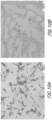
- FIG. 10A is an optical micrograph cross-sectional image of an aluminum and silicon alloy with 9.5 wt.% silicon and remainder of aluminum and incidental impurities
- FIG. 10B is an optical micrograph cross-sectional image of an aluminum, silicon and strontium alloy with 9.5 wt.% silicon, added strontium and remainder of aluminum and incidental impurities. While FIG. 10A shows silicon eutectic phases with sharp morphologies known to reduce ductility, the use of a strontium alloy the modifier in FIG. 10B is shown to blunt the silicon phase growth and create an alloy with more rounded morphologies favorable for ductility.
Landscapes
- Chemical & Material Sciences (AREA)
- Engineering & Computer Science (AREA)
- Mechanical Engineering (AREA)
- Materials Engineering (AREA)
- Metallurgy (AREA)
- Organic Chemistry (AREA)
- Physics & Mathematics (AREA)
- Thermal Sciences (AREA)
- Crystallography & Structural Chemistry (AREA)
- Continuous Casting (AREA)
- Extrusion Of Metal (AREA)
- Body Structure For Vehicles (AREA)
- Superconductors And Manufacturing Methods Therefor (AREA)
Applications Claiming Priority (4)
| Application Number | Priority Date | Filing Date | Title |
|---|---|---|---|
| US202062964554P | 2020-01-22 | 2020-01-22 | |
| US202063093608P | 2020-10-19 | 2020-10-19 | |
| EP21704681.2A EP4093894B1 (de) | 2020-01-22 | 2021-01-20 | Aluminiumgusslegierungen für bauteile |
| PCT/US2021/014177 WO2021150604A1 (en) | 2020-01-22 | 2021-01-20 | Die cast aluminum alloys for structural components |
Related Parent Applications (1)
| Application Number | Title | Priority Date | Filing Date |
|---|---|---|---|
| EP21704681.2A Division EP4093894B1 (de) | 2020-01-22 | 2021-01-20 | Aluminiumgusslegierungen für bauteile |
Publications (2)
| Publication Number | Publication Date |
|---|---|
| EP4461435A2 true EP4461435A2 (de) | 2024-11-13 |
| EP4461435A3 EP4461435A3 (de) | 2025-02-19 |
Family
ID=74587149
Family Applications (2)
| Application Number | Title | Priority Date | Filing Date |
|---|---|---|---|
| EP21704681.2A Active EP4093894B1 (de) | 2020-01-22 | 2021-01-20 | Aluminiumgusslegierungen für bauteile |
| EP24202086.5A Pending EP4461435A3 (de) | 2020-01-22 | 2021-01-20 | Druckgussaluminiumlegierungen für bauteile |
Family Applications Before (1)
| Application Number | Title | Priority Date | Filing Date |
|---|---|---|---|
| EP21704681.2A Active EP4093894B1 (de) | 2020-01-22 | 2021-01-20 | Aluminiumgusslegierungen für bauteile |
Country Status (7)
| Country | Link |
|---|---|
| US (1) | US20230046008A1 (de) |
| EP (2) | EP4093894B1 (de) |
| JP (2) | JP7728766B2 (de) |
| KR (1) | KR20220129568A (de) |
| CN (1) | CN115003832A (de) |
| ES (1) | ES3004343T3 (de) |
| WO (1) | WO2021150604A1 (de) |
Families Citing this family (5)
| Publication number | Priority date | Publication date | Assignee | Title |
|---|---|---|---|---|
| KR102810780B1 (ko) * | 2021-10-18 | 2025-05-26 | 한국재료연구원 | 고강도 고연신 고열전도도 알루미늄 주조합금 및 그 제조방법 |
| JP2024539658A (ja) * | 2021-10-18 | 2024-10-29 | コリア インスティテュート オブ マテリアルズ サイエンス | 高強度、高延伸及び高熱伝導度のアルミニウム鋳造合金、並びにその製造方法 |
| CN114411020B (zh) * | 2022-01-13 | 2022-10-14 | 上海交通大学 | 一种非热处理强化高强高韧压铸铝硅合金 |
| CN114574734B (zh) * | 2022-03-01 | 2022-09-27 | 重庆工商大学 | 一种含钇和钐的高强铸造铝合金及其制备方法 |
| CN116287891B (zh) * | 2023-05-25 | 2023-08-08 | 小米汽车科技有限公司 | 一种免热处理压铸铝合金及其制备方法和应用 |
Citations (1)
| Publication number | Priority date | Publication date | Assignee | Title |
|---|---|---|---|---|
| US20170107599A1 (en) | 2015-10-19 | 2017-04-20 | GM Global Technology Operations LLC | New high pressure die casting aluminum alloy for high temperature and corrosive applications |
Family Cites Families (23)
| Publication number | Priority date | Publication date | Assignee | Title |
|---|---|---|---|---|
| JPH06228719A (ja) * | 1993-02-01 | 1994-08-16 | Nippon Light Metal Co Ltd | アルミニウム合金鋳造体に曲げ部を形成する方法および高剛性アルミニウム合金鋳造体並びにその製造法 |
| JPH11293375A (ja) * | 1998-04-14 | 1999-10-26 | Hitachi Metals Ltd | 高靱性アルミニウム合金ダイカストおよびその製造方法 |
| DE10323741B3 (de) | 2003-05-24 | 2004-10-14 | Daimlerchrysler Ag | Hoch- und warmfeste, zähe Al-Gusslegierungen |
| JP2006183122A (ja) | 2004-12-28 | 2006-07-13 | Denso Corp | ダイカスト用アルミニウム合金およびアルミニウム合金鋳物の製造方法 |
| EP2758557B1 (de) | 2011-09-19 | 2015-11-04 | Alcoa GmbH | Verbesserte aluminiumgusslegierungen mit vanadium |
| CN102676887B (zh) * | 2012-06-11 | 2014-04-16 | 东莞市闻誉实业有限公司 | 加压铸造用铝合金及该铝合金的铸件 |
| CN103305730A (zh) * | 2013-05-16 | 2013-09-18 | 天津立中合金集团有限公司 | 一种新型Al-Si-Mg-Cu-Sr铸造合金 |
| ES2694519T3 (es) | 2013-12-20 | 2018-12-21 | Alcoa Usa Corp. | Aleación de función de AlSiMgCu de alto rendimiento |
| FR3036986B1 (fr) | 2015-06-05 | 2017-05-26 | Constellium Neuf-Brisach | Tole pour carrosserie automobile a resistance mecanique elevee |
| DE102015007929A1 (de) * | 2015-06-20 | 2016-12-22 | Daimler Ag | Aluminium-Gusslegierung, Verfahren zum Herstellen eines Bauteils aus einer Aluminium-Gusslegierung und Verwendung einer Aluminium-Gusslegierung |
| CN107923004B (zh) * | 2015-08-13 | 2021-12-14 | 美铝美国公司 | 改善的3xx铝铸造合金及其制备方法 |
| JP6506678B2 (ja) | 2015-11-02 | 2019-04-24 | 株式会社神戸製鋼所 | 自動車構造部材用アルミニウム合金板およびその製造方法 |
| BR112017021504B1 (pt) | 2015-12-18 | 2022-04-05 | Novelis Inc | Método para produzir um produto de metal de liga de alumínio, produto de metal de liga de alumínio, partes de corpo de transporte e automotivo, alojamento de dispositivo eletrônico, e, liga de alumínio |
| JP2017133044A (ja) | 2016-01-25 | 2017-08-03 | 株式会社神戸製鋼所 | アルミニウム合金板およびアルミニウム合金構造部材 |
| EP3235916B1 (de) | 2016-04-19 | 2018-08-15 | Rheinfelden Alloys GmbH & Co. KG | Gusslegierung |
| WO2017185321A1 (en) * | 2016-04-29 | 2017-11-02 | GM Global Technology Operations LLC | Die-casting aluminum alloys for thin-wall casting components |
| CN109415780B (zh) | 2016-06-01 | 2021-02-23 | 阿莱利斯铝业迪弗尔私人有限公司 | 6xxx系列铝合金锻造坯料及其制造方法 |
| US20180010214A1 (en) | 2016-07-05 | 2018-01-11 | GM Global Technology Operations LLC | High strength high creep-resistant cast aluminum alloys and hpdc engine blocks |
| FR3060606B1 (fr) * | 2016-12-19 | 2018-12-07 | Constellium Neuf-Brisach | Alliage d’aluminium pour soudage par laser sans fil d’apport |
| MX2019011144A (es) | 2017-03-23 | 2019-12-11 | Novelis Inc | Fundición de chatarra de aluminio reciclado. |
| DE112018005321T5 (de) | 2017-09-20 | 2020-06-18 | Aisin Aw Co., Ltd. | Druckguss-aluminiumlegierung und funktionsbauteil unter verwendung dieser |
| CN110714148A (zh) * | 2019-11-21 | 2020-01-21 | 珠海市润星泰电器有限公司 | 一种高性能半固态压铸铝合金及其制备方法 |
| NO20211429A1 (en) | 2021-11-24 | 2023-05-25 | Norsk Hydro As | A 6xxx aluminium alloy with improved properties and a process for manufacturing extruded products |
-
2021
- 2021-01-20 ES ES21704681T patent/ES3004343T3/es active Active
- 2021-01-20 CN CN202180010331.1A patent/CN115003832A/zh active Pending
- 2021-01-20 WO PCT/US2021/014177 patent/WO2021150604A1/en not_active Ceased
- 2021-01-20 KR KR1020227026718A patent/KR20220129568A/ko not_active Ceased
- 2021-01-20 EP EP21704681.2A patent/EP4093894B1/de active Active
- 2021-01-20 JP JP2022543078A patent/JP7728766B2/ja active Active
- 2021-01-20 US US17/758,864 patent/US20230046008A1/en active Pending
- 2021-01-20 EP EP24202086.5A patent/EP4461435A3/de active Pending
-
2025
- 2025-08-13 JP JP2025134678A patent/JP2025172770A/ja active Pending
Patent Citations (1)
| Publication number | Priority date | Publication date | Assignee | Title |
|---|---|---|---|---|
| US20170107599A1 (en) | 2015-10-19 | 2017-04-20 | GM Global Technology Operations LLC | New high pressure die casting aluminum alloy for high temperature and corrosive applications |
Also Published As
| Publication number | Publication date |
|---|---|
| US20230046008A1 (en) | 2023-02-16 |
| CN115003832A (zh) | 2022-09-02 |
| EP4093894B1 (de) | 2024-10-09 |
| KR20220129568A (ko) | 2022-09-23 |
| JP7728766B2 (ja) | 2025-08-25 |
| ES3004343T3 (en) | 2025-03-12 |
| JP2025172770A (ja) | 2025-11-26 |
| WO2021150604A1 (en) | 2021-07-29 |
| JP2023510881A (ja) | 2023-03-15 |
| EP4461435A3 (de) | 2025-02-19 |
| EP4093894A1 (de) | 2022-11-30 |
Similar Documents
| Publication | Publication Date | Title |
|---|---|---|
| EP4093894B1 (de) | Aluminiumgusslegierungen für bauteile | |
| EP2369025B1 (de) | Magnesiumlegierung und magnesiumlegierungsguss | |
| US20120087826A1 (en) | High strength aluminum casting alloy | |
| US20180010214A1 (en) | High strength high creep-resistant cast aluminum alloys and hpdc engine blocks | |
| KR101756016B1 (ko) | 다이캐스팅용 알루미늄 합금 및 이를 이용하여 제조한 알루미늄 합금의 열처리 방법 | |
| JP6590814B2 (ja) | 高性能耐クリープ性マグネシウム合金 | |
| JP2001220639A (ja) | アルミニウム鋳造用合金 | |
| EP1957221B1 (de) | Kombination aus giessverfahren und legierungszusammensetzungen, die zu gussteilen mit überlegener kombination von kriechfestigkeit bei erhöhter temperatur, duktilität und korrossionsleistung führt | |
| JP6229130B2 (ja) | 鋳造用アルミニウム合金及びそれを用いた鋳物 | |
| EP3964597B1 (de) | Aluminiumbasierte legierung | |
| JP4145242B2 (ja) | 鋳物用アルミニウム合金、アルミニウム合金製鋳物およびアルミニウム合金製鋳物の製造方法 | |
| KR102589799B1 (ko) | 고강도 알루미늄-계 합금 및 그로부터 물품을 생산하기 위한 방법 | |
| CN103290280A (zh) | 一种低密度、低淬火敏感性Al-Zn-Mg-Cu系列铝合金 | |
| CN106282696A (zh) | 一种高强高韧铝合金 | |
| AU2018394138A1 (en) | Aluminium alloy | |
| EP3143174A1 (de) | Legierung | |
| KR20250076581A (ko) | 알루미늄 주조 합금 | |
| EP0992600B1 (de) | Aluminiumlegierung mit hoher Zähigkeit, für Druckgussteile | |
| HK40079752A (en) | Die cast aluminum alloys for structural components | |
| CN121592915B (zh) | 一种高性能改性铝合金材料及其加工方法 | |
| EP4372114A1 (de) | Mehrkomponentenaluminiumlegierungen mit verbesserten heissrisseneigenschaften und verringerter porosität | |
| CN117701959A (zh) | 一种Ni/Ca复合添加Al-5Cu-0.5Mn-0.3Ti高强韧压铸铝合金及其制备方法 | |
| WO2025259916A1 (en) | Aluminum alloy composition utilizing scrap metal, and methods thereof | |
| Yeom et al. | Effects of Mg Enhancement and Heat Treatment on Microstructures and |
Legal Events
| Date | Code | Title | Description |
|---|---|---|---|
| PUAI | Public reference made under article 153(3) epc to a published international application that has entered the european phase |
Free format text: ORIGINAL CODE: 0009012 |
|
| STAA | Information on the status of an ep patent application or granted ep patent |
Free format text: STATUS: THE APPLICATION HAS BEEN PUBLISHED |
|
| AC | Divisional application: reference to earlier application |
Ref document number: 4093894 Country of ref document: EP Kind code of ref document: P |
|
| AK | Designated contracting states |
Kind code of ref document: A2 Designated state(s): AL AT BE BG CH CY CZ DE DK EE ES FI FR GB GR HR HU IE IS IT LI LT LU LV MC MK MT NL NO PL PT RO RS SE SI SK SM TR |
|
| REG | Reference to a national code |
Ref country code: DE Ref legal event code: R079 Free format text: PREVIOUS MAIN CLASS: B22D0021040000 Ipc: C22C0021020000 |
|
| PUAL | Search report despatched |
Free format text: ORIGINAL CODE: 0009013 |
|
| AK | Designated contracting states |
Kind code of ref document: A3 Designated state(s): AL AT BE BG CH CY CZ DE DK EE ES FI FR GB GR HR HU IE IS IT LI LT LU LV MC MK MT NL NO PL PT RO RS SE SI SK SM TR |
|
| RIC1 | Information provided on ipc code assigned before grant |
Ipc: B22D 21/04 20060101ALI20250113BHEP Ipc: B22D 21/00 20060101ALI20250113BHEP Ipc: B22D 17/00 20060101ALI20250113BHEP Ipc: C22F 1/043 20060101ALI20250113BHEP Ipc: C22C 21/04 20060101ALI20250113BHEP Ipc: C22C 21/02 20060101AFI20250113BHEP |
|
| STAA | Information on the status of an ep patent application or granted ep patent |
Free format text: STATUS: REQUEST FOR EXAMINATION WAS MADE |
|
| 17P | Request for examination filed |
Effective date: 20250818 |