EP4454501A1 - Wärmetauscher, sektionale heizvorrichtung und aerosolerzeugungsvorrichtung - Google Patents
Wärmetauscher, sektionale heizvorrichtung und aerosolerzeugungsvorrichtung Download PDFInfo
- Publication number
- EP4454501A1 EP4454501A1 EP22910130.8A EP22910130A EP4454501A1 EP 4454501 A1 EP4454501 A1 EP 4454501A1 EP 22910130 A EP22910130 A EP 22910130A EP 4454501 A1 EP4454501 A1 EP 4454501A1
- Authority
- EP
- European Patent Office
- Prior art keywords
- conductive ceramic
- porous conductive
- aerosol generating
- generating device
- air
- Prior art date
- Legal status (The legal status is an assumption and is not a legal conclusion. Google has not performed a legal analysis and makes no representation as to the accuracy of the status listed.)
- Pending
Links
Images






Classifications
-
- A—HUMAN NECESSITIES
- A24—TOBACCO; CIGARS; CIGARETTES; SIMULATED SMOKING DEVICES; SMOKERS' REQUISITES
- A24F—SMOKERS' REQUISITES; MATCH BOXES; SIMULATED SMOKING DEVICES
- A24F40/00—Electrically operated smoking devices; Component parts thereof; Manufacture thereof; Maintenance or testing thereof; Charging means specially adapted therefor
- A24F40/40—Constructional details, e.g. connection of cartridges and battery parts
- A24F40/46—Shape or structure of electric heating means
-
- A—HUMAN NECESSITIES
- A24—TOBACCO; CIGARS; CIGARETTES; SIMULATED SMOKING DEVICES; SMOKERS' REQUISITES
- A24D—CIGARS; CIGARETTES; TOBACCO SMOKE FILTERS; MOUTHPIECES OF CIGARS OR CIGARETTES; MANUFACTURE OF TOBACCO SMOKE FILTERS OR MOUTHPIECES
- A24D1/00—Cigars; Cigarettes
- A24D1/20—Cigarettes specially adapted for simulated smoking devices
-
- A—HUMAN NECESSITIES
- A24—TOBACCO; CIGARS; CIGARETTES; SIMULATED SMOKING DEVICES; SMOKERS' REQUISITES
- A24F—SMOKERS' REQUISITES; MATCH BOXES; SIMULATED SMOKING DEVICES
- A24F40/00—Electrically operated smoking devices; Component parts thereof; Manufacture thereof; Maintenance or testing thereof; Charging means specially adapted therefor
- A24F40/40—Constructional details, e.g. connection of cartridges and battery parts
- A24F40/48—Fluid transfer means, e.g. pumps
- A24F40/485—Valves; Apertures
-
- H—ELECTRICITY
- H05—ELECTRIC TECHNIQUES NOT OTHERWISE PROVIDED FOR
- H05B—ELECTRIC HEATING; ELECTRIC LIGHT SOURCES NOT OTHERWISE PROVIDED FOR; CIRCUIT ARRANGEMENTS FOR ELECTRIC LIGHT SOURCES, IN GENERAL
- H05B3/00—Ohmic-resistance heating
- H05B3/20—Heating elements having extended surface area substantially in a two-dimensional [2D] plane, e.g. plate-heater
- H05B3/22—Heating elements having extended surface area substantially in a two-dimensional [2D] plane, e.g. plate-heater non-flexible
- H05B3/26—Heating elements having extended surface area substantially in a two-dimensional [2D] plane, e.g. plate-heater non-flexible heating conductor mounted on insulating base
- H05B3/265—Heating elements having extended surface area substantially in a two-dimensional [2D] plane, e.g. plate-heater non-flexible heating conductor mounted on insulating base the insulating base being an inorganic material, e.g. ceramic
-
- A—HUMAN NECESSITIES
- A24—TOBACCO; CIGARS; CIGARETTES; SIMULATED SMOKING DEVICES; SMOKERS' REQUISITES
- A24F—SMOKERS' REQUISITES; MATCH BOXES; SIMULATED SMOKING DEVICES
- A24F40/00—Electrically operated smoking devices; Component parts thereof; Manufacture thereof; Maintenance or testing thereof; Charging means specially adapted therefor
- A24F40/20—Devices using solid inhalable precursors
Definitions
- the present application relates to the technical field of electronic atomization, and in particular to a heat exchanger, a segmented heating device and an aerosol generating device.
- the electronic atomization device forms smokable aerosols by evaporating e-liquids
- the low-temperature non-combusted smoking set forms smokable aerosols by heating an herbal product at a low temperature ranging from 200 °C to 400 °C.
- both of the electronic atomization device and the low-temperature non-combusted smoking set work at a lower temperature, and produce aerosols with much less harmful compositions than the conventional combusting cigarettes from the e-liquids or the herbal product.
- the electronic atomization device and the low-temperature non-combusted smoking set remarkably reduce negative effects of the conventional combusting cigarettes on the human body.
- the low-temperature non-combusted smoking set usually heats herbal product at the low temperature to generate the smokable aerosols in two ways, namely peripheral heating and central heating.
- a heating sheet or a heating pin usually serves as a heater.
- the heating sheet or the heating pin is inserted into the herbal product, and generates heat to heat and atomize the herbal product.
- the heating sheet or the heating pin is heating, it may easily generate a significant temperature gradient along a radial direction of the herbal product. Specifically, the heat spreads along a direction from a center of the heating sheet to a periphery, causing a relatively high temperature in a center heating region and a relatively low temperature in a peripheral heating region, so the herbal product is heated unevenly.
- a part of the herbal product close to the center heating region is sufficiently heated, while another part of the herbal product away from the center heating region is insufficiently heated. Therefore, few smoke are formed by the aerosols, which makes the aerosols taste bad and affects the smoking experience of a user.
- a primary object of the present application is to provide a heat exchanger, a segmented heating device and an aerosol generating device, so as to solve the technical problem that an herbal product is unevenly heated in an existing low-temperature non-combusted smoking set, which may otherwise make aerosols taste bad and affects the smoking experience of a smoker.
- an aerosol generating device configured for heating an herbal product is provided according to the present application.
- the aerosol generating device includes an outer housing and an air heater, where
- the at least one first air inlet hole is defined at an end portion of an end of the outer housing away from the accommodation cavity.
- an interlayer having a cavity is provided in a side wall of the outer housing, and the at least one first air inlet hole is defined at a top end of the interlayer at an end of the outer housing close to the accommodation cavity.
- an interlayer having a cavity is provided in a side wall of the outer housing, and the first air inlet hole is defined on the side wall of the outer housing at an end of the outer housing close to the accommodation cavity.
- a porosity of the porous conductive ceramic ranges from 30% to 70%.
- a pore-opening degree of the porous conductive ceramic is larger than or equal to 90%.
- At least one layer of a thermal insulation material is provided outside an outer surface of the porous conductive ceramic, and the thermal insulation material is provided with at least one second air inlet hole in communication with the air channel and at least one air outlet hole in communication with the accommodation cavity.
- the thermal insulation material is a dense ceramic housing or a ceramic glaze layer.
- the at least one second air inlet hole is provided on the thermal insulation material on the porous conductive ceramic and is away from the accommodation cavity.
- the at least one air outlet hole is provided on the thermal insulation material on the porous conductive ceramic and is close to the accommodation cavity.
- the air heater includes a positive pin and a negative pin, and the porous conductive ceramic is electrically connected to the positive pin and the negative pin.
- the porous conductive ceramic includes a first end and a second end that are opposite to each other, the positive pin is electrically connected to the first end, and the negative pin is electrically connected to the second end.
- the porous conductive ceramic includes a first end and a second end that are opposite to each other, the positive pin is provided at an outer side face of the porous conductive ceramic and is close to the first end, and the negative pin is provided at the outer side face of the porous conductive ceramic and is close to the second end.
- a position on the porous conductive ceramic where the positive pin is provided and a position on the porous conductive ceramic where the negative pin is provided are spaced apart along a circumferential direction of the porous conductive ceramic.
- porous conductive ceramic is of a cylindrical shape, a conical shape, a helical shape, a trapezoidal shape, a dumbbell shape, a concave shape, a spherical shape or an irregular shape.
- porous conductive ceramic is vertically and coaxially arranged in the outer housing.
- porous conductive ceramic is transversely arranged in the outer housing, and a certain included angle is included between an axial direction of the porous conductive ceramic and an axial direction of the outer housing.
- the aerosol generating device includes a power supply assembly, and the power supply assembly is mounted in the outer housing, and is electrically connected to the porous conductive ceramic.
- the power supply assembly includes a power supply and a control board, and the control board is electrically connected to the power supply and the porous conductive ceramic.
- the herbal product includes a first herb segment and a second herb segment that are connected as a whole;
- the air heater includes a first positive pin and a first negative pin
- the porous conductive ceramic includes a first end and a second end that are opposite to each other, the first positive pin is electrically connected to the first end, and the first negative pin is electrically connected to the second end.
- an end of the porous conductive ceramic where the first positive pin is connected and another end of the porous conductive ceramic where the first negative pin is connected are at two corners on a diagonal of an axial section of the porous conductive ceramic.
- the peripheral heater includes a second positive pin, a second negative pin and a dense conductive ceramic that is provided with the second cavity, the dense conductive ceramic includes a third end and a fourth end that are opposite to each other, the second positive pin is electrically connected to the third end, and the second negative pin is electrically connected to the fourth end.
- an end of the dense conductive ceramic where the second positive pin is connected and another end of the dense conductive ceramic where the second negative pin is connected are at two corners on a diagonal of an axial section of the dense conductive ceramic.
- the third end of the dense conductive ceramic and the first end of the porous conductive ceramic are spaced apart or connected in an insulative manner.
- the segmented heating device includes a negative wire, a first positive wire and a second positive wire
- the peripheral heater includes a dense conductive ceramic having the second cavity
- the first cavity is a stepped blind hole
- the stepped blind hole includes a first hole channel and a second hole channel that is configured to accommodate the first herb segment, the second hole channel is located between the first hole channel and the second cavity, and a diameter of the second hole channel is larger than a diameter of the first hole channel.
- an inner circumferential wall of the second hole channel and/or an outer circumferential wall of the porous conductive ceramic are each covered by a dense sealing layer.
- the air channel is located between an inner wall of the outer housing and an outer wall of the peripheral heater, and air flowing through the air channel flows into the first cavity through an end face of an end of the porous conductive ceramic close to the peripheral heater.
- the outer housing includes a cover, the accommodation cavity includes a third cavity, the cover is provided with the third cavity that is hollow for the herbal product to be inserted;
- a thermal insulation layer is provided between an inner wall of the outer housing and an outer wall of the porous conductive ceramic, and/or between the inner wall of the outer housing and an outer wall of the peripheral heater.
- the thermal insulation layer is made of aerogels, foams or ceramic fibers.
- the aerosol generating device includes a control board and a power supply that are mounted inside the outer housing, and the control board is electrically connected to the power supply, the porous conductive ceramic and the peripheral heater.
- a heat exchanger is further provided according to the present application, and the heat exchanger is the air heater of the aerosol generating device according to any one of the above solutions.
- a segmented heating device is further provided according to the present application, which is the segmented heating device of the aerosol generating device according to any one of the above solutions.
- the porous conductive ceramic with pores distributed everywhere serves as the air heater to heat the air flowing through the porous conductive ceramic, and delivers the heated hot air to the accommodation cavity accommodating the herbal product.
- the herbal product inside the accommodation cavity is heated and atomized by the hot air generated by the porous conductive ceramic.
- the hot air can quickly permeate into each part of the herbal product, such that the herbal product can be heated fast and evenly as a whole, thereby achieving even heating of the herbal product. Therefore, the taste of the aerosols generated by the heated herbal product is improved, which provides a better smoking experience to the user.
- smoke can be generated from the herbal product more quickly, which reduces the waiting time of the user, and achieves a performance of smoking right after turning on.
- a component when a component is said to be “fixed” to another component, it may be directly fixed onto the other component or there may be an intermediate component present at the same time.
- a component When a component is said to be “connected” to another component, it may be directly connected to the other component or there may be an intermediate component present at the same time.
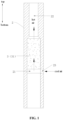
- an aerosol generating device configured for heating an herbal product 1 is provided according to an embodiment of the present application.
- the aerosol generating device includes an outer housing 2 and an air heater 3.
- An accommodation cavity 22 that accommodates the herbal product 1 and an air channel 21 is provided inside the outer housing 2.
- the outer housing 2 is provided with at least one first air inlet hole 23, and air from an exterior enters the air channel 21 through the first air inlet hole 23. That is, the first air inlet hole 23 is in communication with the exterior and the air channel 21.
- the air heater 3 includes a porous conductive ceramic 31 mounted inside the outer housing 2, and at least a part of the porous conductive ceramic 31 is located between the accommodation cavity 22 and the air channel 2. Multiple pores for the air to pass through are distributed in the whole porous conductive ceramic 31.
- the porous conductive ceramic 31 is configured to heat the air that flows through the porous conductive ceramic 31 and enters the accommodation cavity 22, so that the heated air can heat the herbal product 1.
- the above herbal product 1 may be low-temperature non-combusted tobacco (a cigarette, for example), or may be of other types of aerosol generating products, such as tea plant leaves, tobacco leaves, tobacco shreds, cannabis and the like, which may be selected according to actual needs of the user, and is not specifically limited in the present embodiment.
- the low-temperature non-combusted tobacco refers to an aerosol generating product made of materials such as tobacco shreds, tobacco pellets, plant fragments, tobacco flavorings, propylene glycol and the like.
- the low-temperature non-combusted tobacco is also called a low-temperature non-combusted cigarette due to its rod-like shape (a cylindrical shape, for example).
- the low-temperature non-combusted process is actually a low-temperature dry distillation process, whose heating temperature ranges from 200 °C to 400 °C.
- the low temperature herein refers to a temperature at which the herbal product 1 can generate aerosols without combustion, for example, a temperature between 200 °C and 400 °C.
- the shape of the herbal product 1 may be of a certain shape (a rod-shaped cigarette, for example) or may not be of a certain shape (shapeless tobacco shreds, for example) in actual use, which is not specifically limited in the present embodiment.
- the porous conductive ceramic 31 is a conductive ceramic material that is sintered at high temperature, and has a huge number of pore structures in communication with each other and in communication with a surface of the material.
- the porous conductive ceramic 31 may be made of a mixture of conductive powder and at least one of silicon carbide, silicon dioxide, aluminium oxide and zirconium dioxide, and the conductive powder may be made of at least one of titanium nitride, zirconium nitride, titanium carbonitride, titanium carbide, zirconium carbide, thallium carbide, hafnium carbide, titanium diboride, zirconium diboride, thallium boride, hafnium diboride, molybdenum disilicide and tungsten carbide.
- the shape of the porous conductive ceramic 31 may be regular or irregular in actual implementations.
- the porous conductive ceramic 31 may be of a cylindrical shape, a conical shape, a helical shape, a trapezoidal shape, a dumbbell shape, a concave shape, a spherical shape or the like, as long as the porous conductive ceramic 31 can heat the air and deliver the heated air to the accommodation cavity 22 accommodating the herbal product 1.
- the implementation is not limited in the present embodiment.
- the porous conductive ceramic 31 when being mounted inside the outer housing 2, the porous conductive ceramic 31 may be vertically and coaxially arranged inside the outer housing 2.
- the porous conductive ceramic 31 may be transversely arranged inside the outer housing 2 and there is an angle between an axial direction of the porous conductive ceramic 31 and an axial direction of the outer housing 2, as long as the porous conductive ceramic 31 can heat the air and deliver the heated air to the accommodation cavity 22 accommodating the herbal product 1.
- the implementation is not limited in the present embodiment.
- the air channel 21 may be formed by an internal space of the outer housing 2 in actual implementations.
- an interlayer 211 having a cavity is provided in a side wall of the outer housing 2, and the first air inlet hole 23 is provided at a top end of the interlayer 211 at an end of the outer housing 2 close to the accommodation cavity 22.
- an interlayer 211 having a cavity is provided in the side wall of the outer housing 2, and the first air inlet hole 23 is provided on the side wall of the outer housing 2 at the end of the outer housing 2 close to the accommodation cavity 22.
- the air channel 21 may be a component of a tube type that is independent from the outer housing 2, as long as the air from the exterior can flow into the porous conductive ceramic 31 through the air channel 21.
- the implementation is not specifically limited in the present embodiment. It may be appreciated that, when the air channel 21 is formed by the internal space of the outer housing 2, the first air inlet hole 23 may be regarded as an air inlet end of the air channel 21.
- the air channel 21 when the air channel 21 is arranged, the air channel 21 may be provided as close as possible to an outer surface of the porous conductive ceramic. For example, if the air channel 21 is an independent tube-typed component, an outer wall of the air channel 21 may tightly contact an outer side wall of the porous conductive ceramic.
- the porous conductive ceramic 31 when the porous conductive ceramic 31 is powered and generates heat, cool air flowing into the air channel 21 from the exterior can be preheated by excess heat diffusing from the outer surface of the porous conductive ceramic 31, thereby increasing the utilization rate of the heat generated by the porous conductive ceramic 31, thus the porous conductive ceramic 31 can heat the air flowing from the air channel 21 faster to a required temperature (between 200°C and 400°C, for example), which helps the herbal product 1 inside the accommodation cavity 22 to produce smoke faster.
- a required temperature between 200°C and 400°C, for example
- the aerosol generating device further includes a power supply part in some actual applications.
- the porous conductive ceramic 31 is electrically connected to the power supply part of the aerosol generating device by wires or the like, such that after being powered, the porous conductive ceramic 31 can heat the air flowing from the exterior and deliver the heated air to the accommodation cavity 22 to heat the herbal product 1 inside the accommodation cavity 22 evenly.
- the porous conductive ceramic 31 with pores distributed everywhere serves as the air heater to heat the air flowing through the porous conductive ceramic 31, and delivers the heated hot air to the accommodation cavity 22 accommodating the herbal product 1.
- the herbal product 1 inside the accommodation cavity 22 is heated and atomized by the hot air generated by the porous conductive ceramic 31.
- the hot air can quickly permeate into each part of the herbal product 1, such that the whole herbal product 1 can be heated evenly, thereby achieving even heating for the herbal product 1. Therefore, the taste of the aerosols produced from the heated tobacco is improved, which provides better smoking experience to the user.
- smoke can be produced by the tobacco more quickly, which reduces the waiting time of the user, and achieves a performance of smoking right after turning on.
- the first air inlet hole 23 is provided at an end portion of an end of the outer housing 2 away from the accommodation cavity 22.
- the present arrangement reduces a risk brought by a situation where, the air inlet hole is blocked by a hand of the user during smoking, which makes the air from the exterior not able to enter the porous conductive ceramic 31 smoothly and to be heated continuously.
- At least one layer of a thermal insulation material 32 is provided outside the outer surface of the porous conductive ceramic 31, and the thermal insulation material 32 is provided with at least one second air inlet hole 322 in communication with the air channel 21 and at least one air outlet hole 321 in communication with the accommodation cavity 22.
- the thermal insulation material 32 is preferably made of an insulative, air proof, heat resisting and non-toxic material.
- the thermal insulation material 32 may be a dense ceramic housing sleeved outside the porous conductive ceramic 31, or may be a ceramic glaze layer coated on the outer surface of the porous conductive ceramic 31, or certainly may be other types of thermal insulation materials, as long as the using requirement is satisfied.
- the implementation is not specifically limited in the present embodiment.
- the second air inlet hole 322 is provided on the thermal insulation material 32 on the porous conductive ceramic 31 and is away from the accommodation cavity 22, and the air outlet hole 321 is provided on the thermal insulation material 32 on the porous conductive ceramic 31 and is close to the accommodation cavity 22.
- the second air inlet hole 322 may be provided on the thermal insulation material 32 on a bottom face of the porous conductive ceramic 31, or may be provided on the thermal insulation material 32 on the side wall at a bottom end of the porous conductive ceramic 31.
- the air outlet hole 321 may be provided on the thermal insulation material 32 on a top face of the porous conductive ceramic, or may be provided on the thermal insulation material 32 on the side wall at a top end of the porous conductive ceramic 31.
- the air heater 3 includes a positive pin 33 and a negative pin 34
- the porous conductive ceramic 31 is electrically connected to the positive pin 33 and the negative pin 34.
- the porous conductive ceramic 31 may be electrically connected to the positive pin 33 and the negative pin 34 by welding or other means.
- the positive pin 33 and the negative pin 34 are provided on the porous conductive ceramic 31, which facilitates electrical connection between the porous conductive ceramic 31 and the power supply part of the aerosol generating device in some specific applications.
- the porous conductive ceramic 31 includes a first end and a second end that are opposite to each other.
- the positive pin 33 is electrically connected to the first end of the porous conductive ceramic 31, and the negative pin 34 is electrically connected to the second end of the porous conductive ceramic 31.
- the positive pin 33 is electrically connected to an end face of the first end of the porous conductive ceramic 31, and the negative pin 34 is electrically connected to an end face of the second end of the porous conductive ceramic 31.
- the positive pin and the negative pin are arranged at the two ends of the porous conductive ceramic 31 away from each other, which prevents the positive pin 33 and the negative pin 34 from being short-circuited for being too close to each other, thereby ensuring the porous conductive ceramic 31 to generate heat normally without short circuit when being powered.
- the porous conductive ceramic 31 includes a first end and a second end that are opposite to each other.
- the positive pin 33 is provided at an outer side face of the porous conductive ceramic 31 and is close to the first end
- the negative pin 34 is provided at the outer side face of the porous conductive ceramic 31 and is close to the second end. This arrangement also prevents the positive pin 33 and the negative pin 34 from being short-circuited for being too close to each other, thereby ensuring the porous conductive ceramic 31 to generate heat normally without short circuit when being powered.
- a position on the porous conductive ceramic 31 where the positive pin 33 is provided and a position on the porous conductive ceramic 31 where the negative pin 34 is provided are spaced apart along a circumferential direction of the porous conductive ceramic 31. More preferably, an end of the porous conductive ceramic 31 where the positive pin 33 is connected and another end of the porous conductive ceramic 31 where the negative pin 34 is connected are at two corners on a diagonal of an axial section of the porous conductive ceramic 31. In this way, when the porous conductive ceramic 31 is powered, a current can flow through the whole porous conductive ceramic 31 more sufficiently, and the porous conductive ceramic 31 generates heat better when being powered.
- the porosity of the porous conductive ceramic 31 is preferably between 30% and 70%. It should be noted that, those skilled in the art would understand that, the porosity of the porous conductive ceramic 31 refers to a ratio of the volume of the pores in the porous conductive ceramic to the total volume of the porous conductive ceramic in the natural state expressed in percentage.
- the pore-opening degree of the porous conductive ceramic 31 is preferably larger than or equal to 90%.
- the pore-opening degree of the porous conductive ceramic 31 refers to a ratio of the number of through pores to the total number of the pore structures in the porous conductive ceramic expressed in percentage, where the total number of the pore structures is equal to a sum of the number of the through pores and the number of closed pores.
- the above aerosol generating device includes a power supply assembly 8, which is the power supply part of the aerosol generating device.
- the power supply assembly 8 is mounted inside the outer housing 2, and is electrically connected to the porous conductive ceramic 31.
- the power supply assembly 8 includes a power supply (not shown in the figures) and a control board (not shown in the figures).
- the control board is electrically connected to the power supply and the porous conductive ceramic 31, and the control board is configured to control the operation of the porous conductive ceramic 31.
- the control board controls the power supply to supply power to the porous conductive ceramic 31, such that the porous conductive ceramic 31 can heat the air flowing through the porous conductive ceramic 31.
- the heated hot air heats and atomizes the herbal product 1 to produce aerosols for the user to smoke.
- the power supply may be a lithium battery or other batteries, which is configured to supply power to the porous conductive ceramic 31, thus the porous conductive ceramic 31 can be powered to generate heat.
- a heat exchanger for heating the herbal product 1 is further provided according to an embodiment of the present application, and the heat exchanger is the air heater 3 of the aerosol generating device according to any one of the above embodiments.
- the heat exchanger is applied to an aerosol generating device.
- the aerosol generating device includes the outer housing 2.
- a mounting cavity that accommodates the heat exchanger and an accommodation cavity 22 that accommodates the herbal product 1 and is in communication with the mounting cavity are provided inside the outer housing 2.
- the heat exchanger is mounted inside the mounting cavity of the aerosol generating device, and is electrically connected to the power supply part of the aerosol generating device by wires or the like, such that the heat exchanger can heat the air flowing from the exterior and deliver the heated air to the accommodation cavity 22 to evenly heat the herbal product 1 inside the accommodation cavity 22 after being powered.
- the porous conductive ceramic 31 with pores distributed everywhere serves as the heat exchanger.
- the porous conductive ceramic 31 can heat the air flowing through the porous conductive ceramic 31, and deliver the heated hot air to the accommodation cavity 22 accommodating the herbal product 1.
- the herbal product 1 inside the accommodation cavity 22 is heated and atomized by the hot air generated by the porous conductive ceramic 31.
- the hot air can permeate into each part of the herbal product 1, such that the whole herbal product 1 can be heated evenly, thereby achieving an even heating for the herbal product 1. Therefore, the taste of the aerosols being produced is improved, which provides a better smoking experience to the user.
- other contents of the heat exchanger in this embodiment may refer to the above descriptions in the embodiments of the aerosol generating device, which is not described in detail herein.
- the air heating method that heats the herbal product 1 using hot air generated by the porous conductive ceramic 31 can perform heating evenly.
- the hot air flows from bottom to top, if the herbal product 1 to be heated is long (in other words, the herbal product 1 to be heated has a large thickness or height), there is a temperature gradient in the heated herbal product 1 that decreases from bottom to top.
- the temperature of the hot air is required to be increased continually, i.e.
- both the central heating method and the air heating method perform a central heating for the whole herbal product 1, thus they have a common problem that, volatile substances (such as nicotine and flavoring substances) in the herbal product 1 may be released intensively in the first half of the overall smoking process, which brings the user a strong taste or even makes the user choke, while in the second half of the smoking process, the volatile substances may be decrease fast, which brings the user a mild and poor taste.
- volatile substances such as nicotine and flavoring substances
- the herbal product 1 can be smoked by 15 puffs in a whole process
- the volatile substances in the herbal product 1 are usually intensively released in the first 7 puffs, and decrease faster in the remaining puffs.
- the whole herbal product 1 is about to be consumed, almost no volatile substances are released. Therefore, there is a problem that the taste is not well kept.
- improvements are made in further embodiments of the present application based on the aerosol generating device according to the above embodiments, the detailed contents of which are described in the following related embodiments.
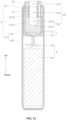
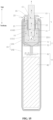
- the herbal product in a case where the herbal product to be heated is relatively long, the herbal product includes a first herb segment 11 and a second herb segment 12 that are connected as a whole.
- An aerosol generating device includes a segmented heating device, and the segmented heating device includes a peripheral heater 4 and the air heater 3 according to the above embodiments that includes the porous conductive ceramic 31.
- the above accommodation cavity 22 includes a first cavity 221 and a second cavity 222.
- the porous conductive ceramic 31 in the present embodiment is provided with the first cavity 221 that accommodates the first herb segment 11 and is in communication with the air channel 21.
- the porous conductive ceramic 31 is configured to heat air that flows through the air channel 21 and enters the first cavity 221 up to a first temperature, and the heated air further heats the first herb segment 11 to generate aerosols in an atomized state.
- the peripheral heater 4 is provided inside the outer housing 2 and is located above the porous conductive ceramic 31, and the peripheral heater 4 is provided with the second cavity 222 that accommodates the second herb segment 12 and is in communication with the first cavity 221.
- the peripheral heater 4 may be configured to directly heat the second herb segment 12 from the room temperature to the atomized state to generate aerosols, or may be configured to heat and atomize the second herb segment 12 after the hot air heated by the porous conductive ceramic 31 preheats the second herb segment 12 to a certain preheating temperature or a threshold before atomization, or may be configured to preheat the second herb segment 12 from the room temperature to a certain temperature and then heat the second herb segment 12 to the atomized state to generate aerosols.
- the use of the peripheral heater 4 is not specifically limited herein.
- the above herbal product specifically includes a filter tip 13, and the filter tip 13, the second herb segment 12 and the first herb segment 11 are connected in sequence into a whole.
- the above first temperature refers to an atomization temperature that makes the first herb segment 11 produce aerosols without combustion.
- the atomization temperature varies with types of the herbal product, and is usually between 200°C and 400°C.
- the peripheral heater 4 may be a heating tube based on a metal resistor.
- the heating tube based on the metal resistor includes a hollow tube body and a metal resistor attached to the tube body.
- the metal resistor may be of a heating sheet, a heating mesh or a heating wire.
- the tube body may be made of a metal or an insulating ceramic, and the metal resistor may be attached on an inner surface or an outer surface of the tube body by printing, coating, inlaying or other methods.
- heat generated by the metal resistor after being powered can be used to perform peripheral heating on the second herb segment 12 inside the second cavity 222.
- the operation principles of the aerosol generating device according to the present embodiment are as follows.
- the herbal product Before use, the herbal product is inserted into the outer housing 2, such that most of the filter tip 13 is exposed outside.
- a part of the herbal product inside the first cavity 221 is referred to as the first herb segment 11, and another part of the herbal product inside the second cavity 222 is referred to as the second herb segment 12.
- the filter tip 13 yet another part of the herbal product from a second position 15 to an end of the herbal product exposed outside the aerosol generating device is referred to as the filter tip 13
- the part of the herbal product from a first position 14 to the other end of the herbal product away from the filter tip 13 is referred to as the first herb segment 11
- the another part of the herbal product between the first position 14 and the second position 15 is referred to as the second herb segment 12.
- the second herb segment 12 is not completely put into the second cavity 222, instead, a little part of the second herb segment 12 extends out of the second cavity 222, and the little part of the second herb segment 12 has a length ranging from 2 mm to 3 mm.
- the air heater 3 is turned on to heat the air that flows through the air channel 21 and enters into the first cavity 221 to form hot air.
- the hot air flows through the first herb segment 11, heats and atomizes the first herb segment 11, such that volatile substances in the first herb segment 11 are released to form aerosols that can be smoked by the user.
- the temperature of the hot air gradually decreases along a direction from the first herb segment 11 to the second herb segment 12 (there is usually a temperature decrease of 20°C to 50°C). Therefore, when the hot air flows through the second herb segment 12, the hot air with a decreased temperature can only atomize a small part of the second herb segment 12 or even cannot atomize the second herb segment 12 at all. In the second half of the smoking process, the volatile substances in the first herb segment 11 are almost depleted.
- the air heater 3 is turned off and the peripheral heater 4 is turned on. The peripheral heater 4 heats and atomizes the second herb segment 12, such that volatile substances in the second herb segment 12 are released to form aerosols for the user to smoke.
- the air heater 3 can not only preheat an inner wall of the first cavity 221 to preheat the lower half of the herbal product 1, i.e. the first herb segment 11, but also heat the air to allow the hot air to heat and atomize the first herb segment 11, while the upper half of the herbal product 1, i.e. the second herb segment 12 is preheated, heated and atomized by the peripheral heater 4. In this way, different parts of the herbal product 1 can be heated and atomized by the segmented heating method.
- the hot air generated by the air heater 3 heats and atomizes the first herb segment 11
- the temperature of the hot air gradually decreases along the direction from the first herb segment 11 to the second herb segment 12 and the hot air cannot sufficiently atomize the second herb segment 12
- the hot air with a decreased temperature can still preheat the second herb segment 12.
- the peripheral heater 4 heats and atomizes the second herb segment 12
- the second herb segment 12 only needs to absorb a small amount of heat to be fully atomized and produce abundant aerosols.
- the heating temperature of the hot air does not need not to be increased or only needs to be increased slightly to evenly heat and fully atomize the upper half of the herbal product 1, thereby effectively preventing the herbal product 1 from being carbonized due to local overheating.
- the hot air forms hot airflow and flows into the herbal product 1 only when the user smokes.
- the air heater 3 may preheat the first herb segment 11 to a second temperature. Specifically, during operation of the air heater 3, the inner wall of the first cavity 221 generates some heat, and the inner wall of the first cavity 221 contacts the first herb segment 11 to preheat the first herb segment 11. It should be noted that, the air heater 3 may preheat only the first herb segment 11, or may preheat the second herb segment 12 when heating and atomizing the first herb segment 11. In addition, the peripheral heater 4 may preheat the second herb segment 12 to a third temperature, where the second temperature and the third temperature are both lower than the first temperature.
- the first temperature is the atomization temperature at which herbal products such as low-temperature non-combusted tobacco and cannabis are heated to produce aerosols.
- the first temperature may be between 200 °C and 400 °C
- the second temperature may be between 100 °C and 290 °C
- the third temperature may be between 100 °C and 290 °C.
- the atomization temperature of the herbal product is 320 °C
- the first temperature is 320 °C
- the second temperature may be 240 °C
- the third temperature may also be 240 °C.
- the aerosol generating device is at a preheating stage at first when being operated. That is, the air heater 3 or both the air heater 3 and the peripheral heater 4 are turned on to preheat the first herb segment 11 and the second herb segment 12. During the preheating process, the air heater 3 may work at the second temperature, and the peripheral heater 4 may work at the third temperature. It may be appreciated that, at the preheating stage of the aerosol generating device, since the user does not smoke, hot airflow cannot form due to lack of smoking action of the user even if the air heater 3 heats the air. Therefore, the hot air cannot preheat the herbal product at the preheating stage of the aerosol generating device. After preheating is finished, a first stage of the smoking of the user, i.e.
- the air heater 3 is turned on to heat and atomize the first herb segment 11, while the peripheral heater 4 may be not operated or may preheat the second herb segment 12.
- the air heater 3 works at the first temperature. That is, at the first stage, the air heater 3 heats the first herb segment 11 to the first temperature, such that the first herb segment 11 is atomized and produces smoke.
- a second stage of the smoking of the user i.e. the second half of the whole smoking process is entered.
- the peripheral heater 4 is turned on to heat and atomize the second herb segment 12, while the air heater 3 may be not operated or may be operated to preheat.
- the air heater 3 is operated to preheat, such that the air flowing through the second herb segment 12 is hot rather than cool when the user smokes.
- the second herb segment 12 can produce smoke faster, and reduce the waiting time of the user, thereby improving the using experience of the user.
- the air heater 3 works at a lower temperature than the first temperature in the preheating process. For example, suppose that the first temperature is 310 °C, the air heater 3 may work at 120 °C, 150 °C, 200 °C, 210 °C, 220 °C or the like in the preheating process.
- the peripheral heater 4 works at the first temperature.
- the peripheral heater 4 heats the second herb segment 12 to the second temperature, such that the second herb segment 12 is atomized and produces smoke.
- the aerosol generating device is turned off.
- the first herb segment 11 and the second herb segment 12 are preheated, such that the first herb segment 11 and the second herb segment 12 can be quickly heated to the atomization temperature at which they can produce aerosols when being heated and atomized.
- the first herb segment 11 and the second herb segment 12 can produce smoke fast and reduce the waiting time of the user, which improves the using experience of the user.
- the air heater 3 apart from the porous conductive ceramic 31 having the first cavity 221, the air heater 3 further includes a first positive pin 35 and a first negative pin 36.
- the porous conductive ceramic 31 includes a first end and a second end that are opposite to each other.
- the first positive pin 35 is electrically connected to the first end of the porous conductive ceramic 31 (i.e. an upper end of the porous conductive ceramic 31), and the first negative pin 36 is electrically connected to the second end of the porous conductive ceramic 31 (i.e. a lower end of the porous conductive ceramic 31).
- an end portion of the first positive pin 35 may be electrically connected to an end face of the first end of the porous conductive ceramic 31, or may be electrically connected to the outer side wall of the porous conductive ceramic 31 at the first end.
- the first negative pin 36 may be electrically connected to an end face of the second end of the porous conductive ceramic 31, or may be electrically connected to the outer side wall of the porous conductive ceramic 31 at the second end, as long as the porous conductive ceramic 31 can be powered and heat normally.
- the implementation is not specifically limited in the present embodiment.
- a portion of the porous conductive ceramic 31 where a current flows through can be powered and generate heat when the first positive pin 35 and the first negative pin 36 are connected to a power supply.
- cool air from the exterior flows into internal pores of the porous conductive ceramic 31 from the air channel 21, the cool air with a relatively low temperature is heated to be hot air with a relatively high temperature, thereby performing the air heating.
- the inner wall of the first cavity 221 generates heat quickly after the porous conductive ceramic 31 is powered, thereby the first herb segment 11 is preheated at the preheating stage of the aerosol generating device.
- an air heat exchanger based on a metal resistor in the prior art is arranged in a manner that, a metal resistor is provided in a flowing path between the air channel 21 and the first cavity 221, where the metal resistor may be of a heating sheet, a heating mesh, a heating wire or the like.
- the cool air flowing from the exterior is heated to be hot air by the heat generated by the metal resistor being powered, and the hot air flows into the first cavity 221 and atomizes the first herb segment 11 inside the first cavity 221.
- the porous conductive ceramic 31 serves as the air heater.
- the smoking taste of the user can be improved.
- the herbal product cannot be preheated by the hot air at the preheating stage of the aerosol generating device, the heat can be radiated outwards only after the metal resistor heats the inner wall of the first cavity 221 when the air heat exchanger based on the metal resistor is powered.
- the heat has to be conducted from the metal resistor to the inner wall of the first cavity 221, thereby the heat loss is high, and relatively high power is required to achieve a demanded preheating performance.
- the air heater 3 based on the porous conductive ceramic 31 according to the present embodiment can directly generate heat as a whole after being powered, and the heat generated on the inner wall of the first cavity 221 can be quickly conducted to the first herb segment 11. Therefore, compared with the air heat exchanger based on the metal resistor, the heat loss is lower, which helps to reduce the preheating time of the first herb segment 11 at the preheating stage of the aerosol generating device, and consumes less power.
- an end of the porous conductive ceramic 31 where the first positive pin 35 is connected and another end of the porous conductive ceramic 31 where the first negative pin 36 is connected are at two corners on a diagonal of an axial section of the porous conductive ceramic 31.
- the axial section of the porous conductive ceramic 31 is a rectangle
- the end of the porous conductive ceramic 31 where the first positive pin 35 is connected is referred to as a first positive connection end for short
- the other end of the porous conductive ceramic 31 where the first negative pin 36 is connected is referred to as a first negative connection end for short
- a line connecting the first positive connection end and the first negative connection end can be approximated as a diagonal of the rectangle.
- the air channel 21 is located between an inner wall of the outer housing 2 and an outer wall of the peripheral heater 4, and the air flowing through the air channel 21 can flow into the first cavity 221 through the end face of the end of the porous conductive ceramic close to the peripheral heater 4.
- the air heater 3 and the peripheral heater 4 are turned on at the same time to preheat the herbal product before the hot air heats and atomizes the first herb segment 11.
- the temperature of the air flowing into the air channel 21 from the exterior can be increased by excess heat generated by the peripheral heater 4, whereby the air heater 3 can heat the air that flows through the air channel 21 and enters the first cavity 221 up to the required temperature more quickly. In this way, not only is the utilization efficiency of the heat increased, but also the operation time of the air heater 3 is reduced to save power.
- the outer housing 2 includes a main housing 24 and a cover 25 that is provided at an upper portion of the main housing 24.
- the air heater 3 and the peripheral heater 4 are both mounted inside the main housing 24.
- the cover 25 is provided with a third cavity 223 that is hollow for the herbal product to be inserted into.
- the cover 25 is mounted outside the peripheral heater 4, and the third cavity 223 is in communication with the second cavity 222.
- At least one air channel 21 is provided between an inner wall of the cover 25 and an outer wall of the cover 25, and a side wall at an end portion of an end of the cover 25 away from the porous conductive ceramic 31 is provided with at least one first air inlet hole 23 in communication with the air channel 21.
- multiple air channels 21 are provided annularly between the inner wall of the cover 25 and the outer wall of the cover 25.
- the side wall at the end portion of the end of the cover 25 away from the porous conductive ceramic 31 is provided with multiple first air inlet holes 23 in communication with the multiple air channels 21.
- the cover 25 may be made of polyethylene or other materials, as long as the cover 25 performs thermal insulation to some degree. The implementation is not specifically limited in the present embodiment.
- the air channel 21 can be easily provided between the inner wall of the outer housing 2 and the outer wall of the peripheral heater 4, such that the air flowing through the air channel 21 takes advantage of the excess heat generated by the peripheral heater 4, thereby reducing power consumption of the air heater 3, on the other hand, the first air inlet hole 23 is provided on the side wall at the end portion of the cover 25, thereby reducing a risk brought by a situation that, the air inlet hole 23 is blocked by the mouth or the hand of the user during smoking, thus the air from the exterior smoothly enters the air heater 3 to be heated and used.
- the first cavity 221 of the porous conductive ceramic 31 is a stepped blind hole
- the stepped blind hole includes a first hole channel 2211 and a second hole channel 2212 that accommodates the first herb segment 11.
- the second hole channel 2212 is located between the first hole channel 2211 and the second cavity 222, and a diameter of the second hole channel 2212 is larger than a diameter of the first hole channel 2211.
- the first cavity 221 is the stepped blind hole, it can serve as an air channel for the hot air to flow out, such that the hot air can preheat or heat and atomize the herbal product along the direction from the first herb segment 11 to the second herb segment 12.
- a bottom wall of the second hole channel 2212 may serve as a limiting step to prevent the first herb segment 11 from being inserted so deeply that the air channel is blocked. In this way, the hot air generated by the porous conductive ceramic 31 during operation can flow into the herbal product more smoothly for preheating or heating and atomizing.
- an inner circumferential wall of the second hole channel 2212 and an outer circumferential wall of the porous conductive ceramic 31 may be covered by a dense sealing layer 6. That is to say, only the inner circumferential wall of the second hole channel 2212 is covered by the dense sealing layer 6, or only the outer circumferential wall of the porous conductive ceramic 31 is covered by the dense sealing layer 6, or both the inner circumferential wall of the second hole channel 2212 and the outer circumferential wall of the porous conductive ceramic 31 are covered by the dense sealing layer 6, which is not specifically limited herein.
- both the inner circumferential wall of the second hole channel 2212 and the outer circumferential wall of the porous conductive ceramic 31 are covered by the dense sealing layer 6.
- the sealing layer 6 may be a dense ceramic glaze layer, or a dense teflon coating, or made of other dense heat resisting materials, as long as the sealing layer 6 can prevent air leakage.
- the implementation is not specifically limited in the present embodiment.
- the dense sealing layer 6 provided on the inner circumferential wall of the second hole channel 2212, the hot air can intensively flow out of the first hole channel 2211, such that the hot air can evenly heat the herbal product from bottom to top.
- the hot air is prevented from escaping to the exterior, thereby increasing the utilization rate of the hot air.
- the outer circumferential wall of the porous conductive ceramic 31, the bottom face of the porous conductive ceramic 31, an inner circumferential wall of the first hole channel 2211 and the inner circumferential wall of the second hole channel 2212 are all covered by the dense sealing layer 6, while the top face of the porous conductive ceramic 31 is not provided with the sealing layer 6, such that the air from the exterior can enter the porous conductive ceramic 31.
- the hot air can intensively flow out of a bottom wall of the first hole channel 2211 and evenly heat the herbal product from bottom to top.
- the air flowing from the air channel 21 to the internal pores of the porous conductive ceramic 31 can flow through each part of the porous conductive ceramic 31 thoroughly to fully utilize the internal heating space of the porous conductive ceramic 31, thereby further increasing the efficiency of the air heater 3 when heating the air.
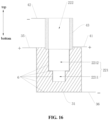
- the peripheral heater 4 may employ the following structural forms. Specifically, referring to FIG. 15 and FIG. 16 , in an exemplary embodiment of the present application, the peripheral heater 4 includes a second positive pin 41, a second negative pin 42 and a dense conductive ceramic 43 having the second cavity 222.
- the dense conductive ceramic 43 includes a third end and a fourth end that are opposite to each other.
- the second positive pin 41 is electrically connected to the third end of the dense conductive ceramic 43 (i.e., a lower end of the dense conductive ceramic 43), and the second negative pin 42 is electrically connected to the fourth end of the dense conductive ceramic 43 (i.e., an upper end of the dense conductive ceramic 43).
- an end portion of the second positive pin 41 may be electrically connected to an end face of the third end of the dense conductive ceramic 43, or may be electrically connected to an outer side wall of the dense conductive ceramic 43 at the third end.
- an end portion of the second negative pin 42 may be electrically connected to an end face of the fourth end of the dense conductive ceramic 43, or may be electrically connected to the outer side wall of the dense conductive ceramic 43 at the fourth end, as long as the dense conductive ceramic 43 can be powered and generate heat normally.
- the implementation is not specifically limited in the present embodiment.
- the peripheral heater 4 when the second positive pin 41 and the second negative pin 42 are connected to the power supply, a portion of the dense conductive ceramic 43 where a current flows through can be powered and generate heat, thus the dense conductive ceramic 43 can perform the peripheral heating, i.e. preheat or heat and atomize the second herb segment 12 from inside to outside.
- the heating tube based on the metal resistor includes the hollow tube body and the metal resistor attached to the surface of the tube body. When the heating tube based on the metal resistor is powered, only if the metal resistor heats the tube body can the heat be radiated outwards. The heat conduction from the metal resistor to the tube body leads to a relatively high heat loss.
- the peripheral heater 4 based on the dense conductive ceramic 43 according to the present embodiment can directly generate heat as a whole after being powered, and the generated heat can be quickly conducted to the second herb segment 12. Therefore, compared with the heating tube based on the metal resistor, the heat loss is lower, and the conversion efficiency from electrical power to heat is higher, which helps to reduce the time required for preheating or heating and atomizing the second herb segment 12.
- an end of the dense conductive ceramic 43 where the second positive pin 41 is connected and another end of the dense conductive ceramic 43 where the second negative pin 42 is connected are at two corners on a diagonal of an axial section of the dense conductive ceramic 43.
- the porous conductive ceramic 31 and the dense conductive ceramic 43 are coaxially arranged.
- the porous conductive ceramic 31 performs the air heating and the dense conductive ceramic 43 performs the peripheral heating, if the third end of the dense conductive ceramic 43 and the first end of the porous conductive ceramic 31 directly contact each other and are electrically connected, the segmented heating device can still be controlled to heat in a segmented manner.
- the dense conductive ceramic 43 and the porous conductive ceramic 31 cannot work at the same time. This is because that, when each electrode is connected to the power supply, a current can not only flow from the first positive pin 35 to both the first negative pin 36 and the second negative pin 42, but also flow from the second positive pin 41 to both the first negative pin 36 and the second negative pin 42.
- the current flowing through the dense conductive ceramic 43 and the porous conductive ceramic 31 may easily get so large that the dense conductive ceramic 43 and the porous conductive ceramic 31 are burn out.
- the third end of the dense conductive ceramic 43 and the first end of the porous conductive ceramic 31 are spaced apart or connected in an insulative manner.
- the third end of the dense conductive ceramic 43 and the first end of the porous conductive ceramic 31 may be connected in an insulative manner by interference fit, transition fit, thread fit or the like.
- a position where the third end of the dense conductive ceramic 43 and the first end of the porous conductive ceramic 31 contact each other is coated with an insulating ceramic glaze layer, an insulating paint or the like to achieve electrical insulation.
- other means may be employed for the insulative connection between the third end of the dense conductive ceramic 43 and the first end of the porous conductive ceramic 31, as long as the insulative connection is achieved.
- the implementation is not specifically limited in the present embodiment.
- the segmented heating device includes a negative wire 53, a first positive wire 51 and a second positive wire 52.
- the air heater 3 includes a porous conductive ceramic 31 having the first cavity 221
- the peripheral heater 4 includes a dense conductive ceramic having the second cavity 222.
- the porous conductive ceramic 31 includes a first end and a second end that are opposite to each other
- the dense conductive ceramic 43 includes a third end and fourth end that are opposite to each other.
- the first end of the porous conductive ceramic 31 and the third end of the dense conductive ceramic 43 are connected in an insulative manner.
- the negative wire 53 is electrically connected to the first end of the porous conductive ceramic 31 and the third end of the dense conductive ceramic 43, the first positive wire 51 is electrically connected to the second end of the porous conductive ceramic 31, and the second positive wire 52 is electrically connected to the fourth end of the dense conductive ceramic 43.
- the porous conductive ceramic 31 and the dense conductive ceramic 43 are coaxially arranged.
- An end of the dense conductive ceramic 43 where the negative wire 53 is connected and another end of the dense conductive ceramic 43 where the second positive wire 52 is connected are at two corners on a diagonal of an axial section of the dense conductive ceramic 43.
- An end of the porous conductive ceramic 31 where the negative wire 53 is connected and another end of the porous conductive ceramic 31 where the first positive wire 51 is connected are at two corners on a diagonal of an axial section of the porous conductive ceramic 31.
- the segmented heating device according to the present embodiment differs from the segmented heating device shown in FIG. 16 in that, the porous conductive ceramic 31 and the dense conductive ceramic 43 share a same electrode. That is, the number of the electrodes used in the segmented heating device according to the present embodiment is decreased.
- the negative wire 53, the first positive wire 51, the second positive wire 52, the first positive pin 35, the second positive pin 41, the first negative pin 36 and the second negative pin 42 may be made of a same material or different materials. For example, they are made of a same metal material, or different metal materials, as long as they are conductive. The implementation is not specifically limited herein.
- the first end of the porous conductive ceramic 31 and the third end of the dense conductive ceramic 43 may be connected by interference fit, transition fit, thread fit or the like. At the same time, a position where the first end of the porous conductive ceramic 31 and the third end of the dense conductive ceramic 43 contact each other is coated with an insulating ceramic glaze layer, an insulating paint or the like to achieve electrical insulation.
- an insulating ceramic glaze layer an insulating paint or the like to achieve electrical insulation.
- other means may be employed for the insulative connection between the first end of the porous conductive ceramic 31 and the third end of the dense conductive ceramic 43, as long as the insulative connection is achieved.
- the implementation is not specifically limited in the present embodiment.
- the porous conductive ceramic 31 and the dense conductive ceramic 43 are both made of conductive ceramics, and differing in that, the porous conductive ceramic 31 is of a porous structure with pores, while the dense conductive ceramic 43 is of a dense structure without pores. This difference results from different forming processes.
- the forming processes of the porous conductive ceramic 31 and the dense conductive ceramic 43 are both mature processes in this technical field, which are not described in detail herein.
- the porous conductive ceramic 31 can directly generate heat as a whole to perform the air heating and perform preheating on the first herb segment 11.
- the dense conductive ceramic 43 can directly generate heat as a whole to perform the peripheral heating. Since the porous conductive ceramic 31 and the dense conductive ceramic 43 are both made of conductive ceramics, they can be sintered into a whole to reduce the producing cost of the segmented heating device.
- an thermal insulation layer 7 may be provided between the inner wall of the outer housing 2 and the outer wall of the porous conductive ceramic 31, or an thermal insulation layer 7 may be provided between the inner wall of the outer housing 2 and the outer wall of the peripheral heater 4, or thermal insulation layers 7 may be provided both between the inner wall of the outer housing 2 and the outer wall of the porous conductive ceramic 31 and between the inner wall of the outer housing 2 and the outer wall of the peripheral heater 4 respectively, which are not limited herein.
- the thermal insulation layer 7 includes a thermal insulation tube 71 and a thermal insulation pad 72.
- the thermal insulation tube 71 is mounted outside the cover 25 and outside the porous conductive ceramic 31, and is located between the inner wall of the outer housing 2 and the segmented heating device.
- the thermal insulation pad 72 is located at the bottom portion of the porous conductive ceramic 31.
- the thermal insulation layer 7 may be made of aerogels, foams, ceramic fibers or other thermal insulating materials, as long as using requirements are satisfied. The implementation is not specifically limited in the present embodiment.
- the aerosol generating device includes a power supply assembly 8 mounted inside the outer housing 2, and the power supply assembly 8 includes a control board 81 and a power supply 82.
- the outer housing 2 includes the main housing 24 and the cover 25 described hereinabove.
- the main housing 24 includes a first housing portion 241 and a second housing portion 242.
- the air channel 21 and the segmented heating device are arranged inside the first housing portion 241.
- the control board 81 and the power supply 82 are arranged inside the second housing portion 242.
- the control board 81 is electrically connected to the power supply 82, the porous conductive ceramic 31 and the peripheral heater 4.
- the power supply 82 may be a lithium battery or other types of batteries.
- the control board 81 is configured to control the operation of the porous conductive ceramic 31 and the peripheral heater 4. When the herbal product is inserted into the corresponding cavities of the aerosol generating device, the control board 81 controls the power supply 82 to supply power to the porous conductive ceramic 31 and the peripheral heater 4.
- a segmented heating device is further provided according to an embodiment of the present application, which is the segmented heating device of the aerosol generating device shown in FIGs. 12 to 18 . That is, the segmented heating device in this embodiment can be applied to the aerosol generating device shown in FIGs. 12 to 18 .
- the aerosol generating device at least includes the outer housing 2.
- the air channel 21 and a mounting space for accommodating the segmented heating device are provided in the outer housing 2.
- the segmented heating device includes the porous conductive ceramic 31 and the peripheral heater 4 connected to the porous conductive ceramic 31.
- the porous conductive ceramic 31 is provided inside the outer housing 2 and is provided with the first cavity 221 that accommodates the first herb segment 11 and is in communication with the air channel 21.
- the peripheral heater 4 is provided inside the outer housing 2 and is located above the porous conductive ceramic 31.
- the peripheral heater 4 is provided with the second cavity 222 that accommodates the second herb segment 12 and is in communication with the first cavity 221.
- the segmented heating device is mounted in the mounting space of the outer housing 2, such that the porous conductive ceramic 31 of the segmented heating device is in communication with the air channel 21.
- the segmented heating device is electrically connected to the power supply part of the aerosol generating device by wires or the like, such that the segmented heating device performs segmented heating after being powered.
- the segmented heating device performs air heating through the porous conductive ceramic 31 and performs peripheral heating through the peripheral heater 4.
- other contents of the segmented heating device may refer to the above descriptions in the embodiments of the aerosol generating device, which are not described in detail herein.
Landscapes
- Chemical & Material Sciences (AREA)
- Engineering & Computer Science (AREA)
- Ceramic Engineering (AREA)
- Resistance Heating (AREA)
Applications Claiming Priority (3)
| Application Number | Priority Date | Filing Date | Title |
|---|---|---|---|
| CN202123300320.3U CN216821765U (zh) | 2021-12-24 | 2021-12-24 | 加热组件、热交换器及气溶胶发生装置 |
| CN202221792502.9U CN217791487U (zh) | 2022-07-12 | 2022-07-12 | 分段加热装置及加热不燃烧装置 |
| PCT/CN2022/141005 WO2023116818A1 (zh) | 2021-12-24 | 2022-12-22 | 热交换器、分段加热装置及气溶胶发生装置 |
Publications (2)
| Publication Number | Publication Date |
|---|---|
| EP4454501A1 true EP4454501A1 (de) | 2024-10-30 |
| EP4454501A4 EP4454501A4 (de) | 2025-12-10 |
Family
ID=86901312
Family Applications (1)
| Application Number | Title | Priority Date | Filing Date |
|---|---|---|---|
| EP22910130.8A Pending EP4454501A4 (de) | 2021-12-24 | 2022-12-22 | Wärmetauscher, sektionale heizvorrichtung und aerosolerzeugungsvorrichtung |
Country Status (5)
| Country | Link |
|---|---|
| US (1) | US20240341359A1 (de) |
| EP (1) | EP4454501A4 (de) |
| JP (1) | JP2024544342A (de) |
| KR (1) | KR20240166983A (de) |
| WO (1) | WO2023116818A1 (de) |
Family Cites Families (22)
| Publication number | Priority date | Publication date | Assignee | Title |
|---|---|---|---|---|
| AR089602A1 (es) * | 2011-12-30 | 2014-09-03 | Philip Morris Products Sa | Articulo generador de aerosoles para usar con un dispositivo generador de aerosoles |
| CN203618782U (zh) * | 2013-11-27 | 2014-06-04 | 浙江中烟工业有限责任公司 | 一种分段式加热非燃烧吸烟装置 |
| CN103734909A (zh) * | 2013-12-13 | 2014-04-23 | 浙江中烟工业有限责任公司 | 一种基于半导体加热的非燃烧吸烟装置 |
| WO2015192300A1 (zh) * | 2014-06-16 | 2015-12-23 | 深圳麦克韦尔股份有限公司 | 多孔陶瓷的制备方法、多孔陶瓷及电子烟 |
| CN205072071U (zh) * | 2015-09-11 | 2016-03-09 | 深圳麦克韦尔股份有限公司 | 电加热烟具及其加热组件 |
| CN106509995B (zh) * | 2015-09-11 | 2024-07-12 | 深圳麦克韦尔科技有限公司 | 电加热烟具及其加热组件和控制方法 |
| CZ307004B6 (cs) * | 2016-03-08 | 2017-11-08 | Power Heat Energy S.R.O. | Způsob výroby tepelné energie, zařízení k tomu určená a systémy tepelné generace |
| EP3188570B1 (de) * | 2016-04-22 | 2019-09-11 | Shenzhen First Union Technology Co., Ltd. | Zerstäuber einer elektronischen zigarette, zerstäubungskern mit keramischem heizelement und keramisches heizelement darin |
| CN109152427B (zh) * | 2016-05-31 | 2022-03-11 | 菲利普莫里斯生产公司 | 气溶胶生成系统的热扩散器 |
| JP6409025B2 (ja) * | 2016-06-20 | 2018-10-17 | 株式会社ステップ・ケイ・スリー | 無煙電子タバコ |
| KR102709311B1 (ko) * | 2017-05-10 | 2024-09-25 | 필립모리스 프로덕츠 에스.에이. | 복수의 에어로졸 형성 기재와 함께 사용하기 위한 에어로졸 발생 물품, 장치 및 시스템 |
| CN108926036B (zh) * | 2017-05-27 | 2021-07-06 | 深圳麦克韦尔科技有限公司 | 吸烟系统及其吸烟装置 |
| GB201719867D0 (en) * | 2017-11-29 | 2018-01-10 | British American Tobacco Investments Ltd | Apparatus for heating aerosolisable |
| CN211910539U (zh) * | 2019-05-16 | 2020-11-13 | 厦门蜂涛陶瓷有限公司 | 非接触式电子烟加热器及其发烟制品承载组件 |
| KR102433808B1 (ko) * | 2019-08-08 | 2022-08-18 | 주식회사 케이티앤지 | 에어로졸 생성 시스템 |
| US12161164B2 (en) * | 2019-09-19 | 2024-12-10 | Philip Morris Products S.A | Induction heater enabling lateral airflow |
| PL3831221T3 (pl) * | 2019-12-02 | 2024-01-22 | Jt International S.A. | Urządzenie generujące aerozol z porowatym podgrzewaczem konwekcyjnym |
| EP3858167A1 (de) * | 2020-01-30 | 2021-08-04 | Nerudia Limited | Rauchersatzvorrichtung |
| CN113729298A (zh) * | 2021-09-03 | 2021-12-03 | 深圳市吉迩科技有限公司 | 一种气溶胶生成制品及气溶胶发生装置 |
| CN113841935B (zh) * | 2021-09-29 | 2025-10-03 | 深圳市吉迩科技有限公司 | 一种气溶胶生成装置及气溶胶生成系统 |
| CN216821765U (zh) * | 2021-12-24 | 2022-06-28 | 深圳市新宜康科技股份有限公司 | 加热组件、热交换器及气溶胶发生装置 |
| CN217791487U (zh) * | 2022-07-12 | 2022-11-15 | 深圳市新宜康科技股份有限公司 | 分段加热装置及加热不燃烧装置 |
-
2022
- 2022-12-22 EP EP22910130.8A patent/EP4454501A4/de active Pending
- 2022-12-22 KR KR1020247024841A patent/KR20240166983A/ko active Pending
- 2022-12-22 JP JP2024538683A patent/JP2024544342A/ja active Pending
- 2022-12-22 WO PCT/CN2022/141005 patent/WO2023116818A1/zh not_active Ceased
-
2024
- 2024-06-23 US US18/751,338 patent/US20240341359A1/en active Pending
Also Published As
| Publication number | Publication date |
|---|---|
| WO2023116818A1 (zh) | 2023-06-29 |
| KR20240166983A (ko) | 2024-11-26 |
| JP2024544342A (ja) | 2024-11-28 |
| EP4454501A4 (de) | 2025-12-10 |
| US20240341359A1 (en) | 2024-10-17 |
Similar Documents
| Publication | Publication Date | Title |
|---|---|---|
| EP3881696B1 (de) | Poröses heizaggregat und dieses enthaltender zerstäuber | |
| CN216821765U (zh) | 加热组件、热交换器及气溶胶发生装置 | |
| CN205624474U (zh) | 陶瓷发热雾化芯和应用该雾化芯的电子烟雾化器 | |
| CN110710722B (zh) | 非接触式电子烟加热器 | |
| JP7292756B2 (ja) | 加熱空気式電子タバコヒーター、セラミック発熱体及びその製造方法 | |
| CN110742321B (zh) | 并列式分段发热结构及其应用的低温烟具 | |
| CN110022622B (zh) | 一种氧化铝蜂窝陶瓷发热体及其制备方法 | |
| US12022866B2 (en) | Atomizer and electronic cigarette | |
| CN210782901U (zh) | 雾化芯、雾化器及气溶胶产生装置 | |
| CN110742322B (zh) | 并列加热式分段发热结构及其应用的低温烟具 | |
| WO2023082984A1 (zh) | 雾化芯、雾化器及电子雾化装置 | |
| CN111449300A (zh) | 电子雾化装置及其雾化器和雾化组件 | |
| CN114515024B (zh) | 待雾化基质的雾化方法、雾化芯、雾化器及电子雾化装置 | |
| KR20230141157A (ko) | 에어로졸 발생 장치의 세라믹 무화기 | |
| CN216821763U (zh) | 雾化芯、雾化器及电子雾化装置 | |
| US20240341359A1 (en) | Heat exchanger, sectional heating device, and aerosol generating device | |
| CN218474035U (zh) | 雾化器及电子雾化装置 | |
| CN217609556U (zh) | 雾化芯、雾化器及电子雾化装置 | |
| CN112790429B (zh) | 卧式陶瓷导热体、加热件、电子雾化装置以及电子雾化器 | |
| CN219288761U (zh) | 烟支加热装置及加热不燃烧烟具 | |
| CN218354594U (zh) | 电子雾化装置 | |
| CN218831960U (zh) | 雾化器及电子雾化装置 | |
| CN217791487U (zh) | 分段加热装置及加热不燃烧装置 | |
| CN214802304U (zh) | 卧式陶瓷导热体、加热件、电子雾化装置以及电子雾化器 | |
| CN215736884U (zh) | 电子烟雾化组件和电子烟 |
Legal Events
| Date | Code | Title | Description |
|---|---|---|---|
| STAA | Information on the status of an ep patent application or granted ep patent |
Free format text: STATUS: THE INTERNATIONAL PUBLICATION HAS BEEN MADE |
|
| PUAI | Public reference made under article 153(3) epc to a published international application that has entered the european phase |
Free format text: ORIGINAL CODE: 0009012 |
|
| STAA | Information on the status of an ep patent application or granted ep patent |
Free format text: STATUS: REQUEST FOR EXAMINATION WAS MADE |
|
| 17P | Request for examination filed |
Effective date: 20240724 |
|
| AK | Designated contracting states |
Kind code of ref document: A1 Designated state(s): AL AT BE BG CH CY CZ DE DK EE ES FI FR GB GR HR HU IE IS IT LI LT LU LV MC ME MK MT NL NO PL PT RO RS SE SI SK SM TR |
|
| DAV | Request for validation of the european patent (deleted) | ||
| DAX | Request for extension of the european patent (deleted) | ||
| A4 | Supplementary search report drawn up and despatched |
Effective date: 20251106 |
|
| RIC1 | Information provided on ipc code assigned before grant |
Ipc: A24F 40/46 20200101AFI20251031BHEP Ipc: A24F 40/485 20200101ALI20251031BHEP Ipc: A24F 40/20 20200101ALN20251031BHEP |