EP4450621A1 - Novel promoter - Google Patents
Novel promoter Download PDFInfo
- Publication number
- EP4450621A1 EP4450621A1 EP22907457.0A EP22907457A EP4450621A1 EP 4450621 A1 EP4450621 A1 EP 4450621A1 EP 22907457 A EP22907457 A EP 22907457A EP 4450621 A1 EP4450621 A1 EP 4450621A1
- Authority
- EP
- European Patent Office
- Prior art keywords
- nucleotide sequence
- promoter
- seq
- dna
- sub
- Prior art date
- Legal status (The legal status is an assumption and is not a legal conclusion. Google has not performed a legal analysis and makes no representation as to the accuracy of the status listed.)
- Pending
Links
Images

Classifications
-
- C—CHEMISTRY; METALLURGY
- C12—BIOCHEMISTRY; BEER; SPIRITS; WINE; VINEGAR; MICROBIOLOGY; ENZYMOLOGY; MUTATION OR GENETIC ENGINEERING
- C12N—MICROORGANISMS OR ENZYMES; COMPOSITIONS THEREOF; PROPAGATING, PRESERVING, OR MAINTAINING MICROORGANISMS; MUTATION OR GENETIC ENGINEERING; CULTURE MEDIA
- C12N15/00—Mutation or genetic engineering; DNA or RNA concerning genetic engineering, vectors, e.g. plasmids, or their isolation, preparation or purification; Use of hosts therefor
- C12N15/09—Recombinant DNA-technology
- C12N15/63—Introduction of foreign genetic material using vectors; Vectors; Use of hosts therefor; Regulation of expression
- C12N15/74—Vectors or expression systems specially adapted for prokaryotic hosts other than E. coli, e.g. Lactobacillus, Micromonospora
- C12N15/77—Vectors or expression systems specially adapted for prokaryotic hosts other than E. coli, e.g. Lactobacillus, Micromonospora for Corynebacterium; for Brevibacterium
-
- C—CHEMISTRY; METALLURGY
- C12—BIOCHEMISTRY; BEER; SPIRITS; WINE; VINEGAR; MICROBIOLOGY; ENZYMOLOGY; MUTATION OR GENETIC ENGINEERING
- C12N—MICROORGANISMS OR ENZYMES; COMPOSITIONS THEREOF; PROPAGATING, PRESERVING, OR MAINTAINING MICROORGANISMS; MUTATION OR GENETIC ENGINEERING; CULTURE MEDIA
- C12N15/00—Mutation or genetic engineering; DNA or RNA concerning genetic engineering, vectors, e.g. plasmids, or their isolation, preparation or purification; Use of hosts therefor
- C12N15/09—Recombinant DNA-technology
- C12N15/63—Introduction of foreign genetic material using vectors; Vectors; Use of hosts therefor; Regulation of expression
-
- C—CHEMISTRY; METALLURGY
- C12—BIOCHEMISTRY; BEER; SPIRITS; WINE; VINEGAR; MICROBIOLOGY; ENZYMOLOGY; MUTATION OR GENETIC ENGINEERING
- C12P—FERMENTATION OR ENZYME-USING PROCESSES TO SYNTHESISE A DESIRED CHEMICAL COMPOUND OR COMPOSITION OR TO SEPARATE OPTICAL ISOMERS FROM A RACEMIC MIXTURE
- C12P1/00—Preparation of compounds or compositions, not provided for in groups C12P3/00 - C12P39/00, by using microorganisms or enzymes
- C12P1/04—Preparation of compounds or compositions, not provided for in groups C12P3/00 - C12P39/00, by using microorganisms or enzymes by using bacteria
-
- C—CHEMISTRY; METALLURGY
- C12—BIOCHEMISTRY; BEER; SPIRITS; WINE; VINEGAR; MICROBIOLOGY; ENZYMOLOGY; MUTATION OR GENETIC ENGINEERING
- C12P—FERMENTATION OR ENZYME-USING PROCESSES TO SYNTHESISE A DESIRED CHEMICAL COMPOUND OR COMPOSITION OR TO SEPARATE OPTICAL ISOMERS FROM A RACEMIC MIXTURE
- C12P7/00—Preparation of oxygen-containing organic compounds
- C12P7/02—Preparation of oxygen-containing organic compounds containing a hydroxy group
- C12P7/22—Preparation of oxygen-containing organic compounds containing a hydroxy group aromatic
-
- C—CHEMISTRY; METALLURGY
- C12—BIOCHEMISTRY; BEER; SPIRITS; WINE; VINEGAR; MICROBIOLOGY; ENZYMOLOGY; MUTATION OR GENETIC ENGINEERING
- C12P—FERMENTATION OR ENZYME-USING PROCESSES TO SYNTHESISE A DESIRED CHEMICAL COMPOUND OR COMPOSITION OR TO SEPARATE OPTICAL ISOMERS FROM A RACEMIC MIXTURE
- C12P7/00—Preparation of oxygen-containing organic compounds
- C12P7/40—Preparation of oxygen-containing organic compounds containing a carboxyl group including Peroxycarboxylic acids
- C12P7/42—Hydroxy-carboxylic acids
Definitions
- the present invention relates to a novel promoter.
- Patent Literature 1 discloses a promoter of the elongation factor tu as a high active promoter that functions in Corynebacterium bacteria.
- Patent Literature 2 discloses that various promoter sequences derived from Escherichia bacteria and Corynebacterium bacteria were analyzed and promoters, SPL1, SPL7, and SPL13, that function as high active promoters in Corynebacterium bacteria were synthesized from the sequences.
- the present invention provides a DNA having a promoter activity, consisting of a nucleotide sequence selected from the group consisting of the following (a) to (c) :
- the present invention provides a promoter consisting of a DNA selected from the group consisting of the following (g) to (i):
- the present invention provides an expression vector including the above DNA or promoter.
- the present invention provides a DNA expression cassette including the above DNA or promoter.
- the present invention provides a corynebacterium including the above expression vector or the DNA expression cassette.
- the present invention provides a method for producing a material of interest, including:
- amino acid sequences or nucleotide sequences is calculated by Lipman-Pearson method ( Science, 1985, 227: 1435-1441 ), specifically, calculated by analysis using a homology analysis program of genetic information processing software GENETYX Ver. 12 by setting the Unit size to compare (ktup) to 2.
- the term "at least 90% identity" with respect to a nucleotide sequence refers to an identity of 90% or more, preferably 95% or more, more preferably 96% or more, further preferably 97% or more, further more preferably 98% or more, and still more preferably 99% or more.
- nucleotide sequence can mean preferably from 1 to 20, more preferably from 1 to 10, further preferably from 1 to 5, further more preferably from 1 to 3, and still more preferably from 1 or 2.
- additional of nucleotide(s) include that one or several nucleotides are added to one end or both ends of a sequence.
- amino acid residues refers to 20 amino acid residues constituting a protein: alanine (Ala or A), arginine (Arg or R), asparagine (Asn or N), aspartic acid (Asp or D), cysteine (Cys or C), glutamine (Gln or Q), glutamic acid (Glu or E), glycine (Gly or G), histidine (His or H), isoleucine (Ile or I), leucine (Leu or L), lysine (Lys or K), methionine (Met or M), phenylalanine (Phe or F), proline (Pro or P), serine (Ser or S), threonine (Thr or T), tryptophane (Trp or W), tyrosine (Tyr or Y), and valine (Val or V).
- upstream and downstream refers to upstream and downstream in the transcription direction of the gene.
- an upstream sequence and a “downstream sequence” of a gene refers to sequences located on the 5' and 3' sides of the gene, respectively, in a DNA sense chain.
- a "promoter linked upstream of a gene” means that the promoter is present on the 5'-side of the gene in a DNA sense chain.
- a "nucleotide sequence upstream of a gene” means a nucleotide sequence on the 5'-side of the gene in a DNA sense chain, that is, a nucleotide sequence that is present on the 5'-side adjacent to the start codon of the gene.
- operable linkage of a gene and a control region means that the gene and the control region are linked such that the gene can be expressed under the control of the control region.
- the procedure of "operable linkage" of a gene and a control region is well-known to those skilled in the art.
- promoter activity means an activity of promoting transcription of a DNA (gene) to an mRNA.
- the promoter activity can be verified by using an appropriate reporter gene.
- a promoter activity can be verified by liking a DNA encoding a detectable protein, i.e., a reporter gene, downstream of the promoter and measuring the production amount of the reporter gene.
- the reporter gene examples include a ⁇ -galactosidase (LacZ) gene, a ⁇ - glucuronidase (GUS) gene, a luciferase gene, a ⁇ - lactamase gene, a gene of an enzyme that acts on a chromogenic substrate, such as a gene encoding EtbC (2,3-dihydroxy-ethylbenzene 1,2-dioxygenase), and a gene of a fluorescent protein, such as a gene encoding GFP (green fluorescent protein).
- the promoter activity can be verified by measuring the expression level of an mRNA transcribed from a reporter gene by quantitative RT-PCR or the like.
- the promoter activity can also be verified by measuring a reaction involving a protein encoded by the reporter gene.
- HFM122 NCBI Reference Sequence: WP_010920262.1
- WP_010920262.1 4-hydroxybenzoate 3-monooxygenase
- its mutant referenced in JP-A-2021-73914
- the activity of a promoter can be measured by measuring the concentration of 4-ABA, 4,3-AHBA, or both or calculating the conversion rate from 4-ABA to 4,3-AHBA based on the concentration.
- the "material of interest” is a material that can be produced by a cell and is a material whose production or an increase in production amount is desired.
- a material encoded by a gene a material encoded by a gene (gene of interest)
- a material produced by the action of a material encoded by a gene a material produced by the action of a material encoded by a gene (gene of interest)
- a material whose production amount is increased by the action of a material encoded by a gene gene of interest
- the present invention provides a novel promoter and a method for producing a material of interest by using the promoter.
- the present inventors studied promoters derived from Corynebacterium bacteria and found a novel promoter having a high transcription activity.
- the promoter of the present invention has a high transcription activity and can notably improve the transcription level of a gene as an object to be controlled. According to the promoter of the present invention, the efficiency of microbiological production of a material of interest can be improved.
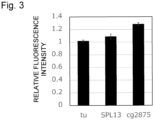
- the present inventors found that among genes derived from Corynebacterium glutamicum, a DNA consisting of the nucleotide sequence (SEQ ID NO: 1) of 613 bp upstream of the start codon of a gene indicated by Gene ID: cg2875 has a high promoter activity compared to the tu promoter and SPL13 promoter which are known to have a high activity ( Figures 1 to 3 ).
- the cg2875 gene of Corynebacterium glutamicum consists of the nucleotide sequence of SEQ ID NO: 2 encoding the amino acid sequence of SEQ ID NO: 3 and is a gene predicted as an ORF by the ORF prediction software Glimmer.
- the protein encoded by the cg2875 gene is known to be a membrane protein and to be mycolated, the function and expression level thereof have not been known ( Issa, H. et al., PLoS One, 2017, 12(2): e0171955 ).
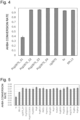
- the present inventors found that a DNA consisting of the nucleotide sequence (SEQ ID NO: 23) of 208 bp upstream of the cg2875 gene among nucleotide sequences upstream of the cg2875 gene has a high promoter activity compared to the tu promoter and the SPL13 promoter ( Figure 4 ).
- the DNA has a promoter activity equivalent to that of the tu promoter or SPL13 promoter, as long as it includes at least the nucleotide sequence (SEQ ID NO: 21) of 86 bp at the 3' end.
- DNAs consisting of nucleotide sequences (SEQ ID NO: 26 to 41) upstream of homologs of the cg2875 gene have a high promoter activity compared to the tu promoter and the SPL13 promoter ( Figure 5 ).
- a “homolog of the cg2875 gene” indicates a gene that is inferred to encode a polypeptide having a function equivalent to that of the cg2875 protein, and examples thereof include a gene downstream of a nucleotide sequence with a query cover of 98% or more in BLAST search using the nucleotide sequence (SEQ ID NO: 23) of a promoter of the cg2875 gene as a query and a gene encoding an amino acid sequence with a query cover of 100% in BLAST search using the amino acid sequence (SEQ ID NO: 3) of the cg2875 protein as a query.
- amino acid sequences encoded by the homologs can be represented as follows: MX 1 X 2 X 3 FX 1 IX 4 QX 5 IFX 1 GX 6 X 1 X 1 LX 7 X 1 SX 8 X 1 X 1 GAQX 9 VFX 10 X 1 X 11 X 1 X 1 X 12 SS (SEQ ID NO: 169) wherein X 1 is any amino acid residue, X 2 is S or A, X 3 is V or I, X 4 is F or I, X 5 is S or A, X 6 is V or I, X 7 is V or I, X 8 is V or I, X 9 is G or N, X 10 is D or T, X 11 is I or V, and X 12 is A or F.
- promoter of a homolog of the cg2875 gene examples include a promoter consisting of a nucleotide sequence with a query cover of 98% or more in BLAST search using the nucleotide sequence (SEQ ID NO: 23) of a promoter of the cg2875 gene as a query and a promoter consisting of a nucleotide sequence upstream of the gene encoding an amino acid sequence with a query cover of 100% in BLAST search using the amino acid sequence (SEQ ID NO: 3) of the cg2875 protein as a query.
- the present invention relates to a novel DNA having a promoter activity, a novel promoter, an expression vector containing the DNA or the promoter, a DNA expression cassette, and a transformant, and a method for producing a material of interest using the transformant.
- Examples of the DNA having a promoter activity of the present invention include a DNA having a promoter activity and consisting of a nucleotide sequence selected from the group consisting of the following (a) to (c):
- the length of the nucleotide sequence upstream of a gene encoding a polypeptide consisting of the above amino acid sequence is not particularly limited, as long as a promoter activity is exhibited, and is preferably 85 bp or more, more preferably 100 bp or more, and further preferably 200 bp or more and is preferably 800 bp or less, more preferably 650 bp or less, and further preferably 250 bp or less and is further more preferably 208 bp.
- the range of the length of the nucleotide sequence is preferably from 85 to 800 bp, more preferably from 85 to 650 bp, further preferably from 100 to 650 bp, further more preferably from 100 to 250 bp, still preferably from 200 to 250 bp, and still more preferably 208 bp.
- the DNA having a promoter activity of the present invention consists of a nucleotide sequence selected from the group consisting of the following (d) to (f): (d) a nucleotide sequence of any of SEQ ID NOs: 1, 21 to 23, and 26 to 41; (e) a nucleotide sequence having at least 90% identity with a nucleotide sequence of any of SEQ ID NOs: 1, 21 to 23, and 26 to 41; and (f) a nucleotide sequence having deletion, substitution, addition or insertion of one or several nucleotides in a nucleotide sequence of any of SEQ ID NOs: 1, 21 to 23, and 26 to 41.
- the DNA consisting of a nucleotide sequence of any of SEQ ID NOs: 1, 21 to 23, and 26 to 41 has a promoter activity as shown in Examples below.
- Microorganisms from which the DNAs consisting of nucleotide sequences of SEQ ID NOs: 26 to 41 are derived are shown in Table 7 below.
- the DNA having a promoter activity of the present invention consists of a nucleotide sequence selected from the group consisting of the following (d') to (f) :
- the DNA having a promoter activity of the present invention in a nucleotide sequence selected from the group consisting of (d') to (f') above includes a nucleotide sequence selected from the group consisting of the following (d") to (f"):
- the DNA having a promoter activity of the present invention has a promoter activity at least in a corynebacterium.
- the DNA having a promoter activity of the present invention has an improved promotor activity compared to the tu promoter. More preferably, the DNA having a promoter activity of the present invention has an improved promoter activity compared to the SPL13 promoter.
- Examples of the promoter of the present invention include a promoter consisting of a DNA selected from the group consisting of the following (g) to (i):
- the length of the nucleotide sequence upstream of a gene encoding a polypeptide consisting of the above amino acid sequence is not particularly limited, as long as a promoter activity is exhibited, and is preferably 85 bp or more, more preferably 100 bp or more, and further preferably 200 bp or more and is preferably 800 bp or less, more preferably 650 bp or less, and further preferably 250 bp or less, and is further more preferably 208 bp.
- the range of the length of the nucleotide sequence is preferably from 85 to 800 bp, more preferably from 85 to 650 bp, further preferably from 100 to 650 bp, further more preferably from 100 to 250 bp, still preferably from 200 to 250 bp, and still more preferably 208 bp.
- the promoter of the present invention consists of a DNA selected from the group consisting of the following (j) to (l):
- the DNA consisting of a nucleotide sequence of any of SEQ ID NOs: 1, 21 to 23, and 26 to 41 has a promoter activity as shown in Examples below.
- Microorganisms from which the DNAs consisting of nucleotide sequences of SEQ ID NOs: 26 to 41 are derived are shown in Table 7 below.
- the promoter of the present invention consists of a DNA selected from the group consisting of the following (j') to (l'):
- the promoter of the present invention in the DNA selected from the group consisting of the above (j') to (l') includes a DNA selected from the group consisting of the following (j") to (l"):
- the promoter of the present invention has a promoter activity at least in a corynebacterium.
- the promoter of the present invention has an improved promoter activity, compared to the tu promoter. More preferably, the promoter of the present invention has an improved promoter activity, compared to the SPL13 promoter.
- the DNA having a promoter activity of the present invention and the promoter of the present invention are collectively referred to as the "promoter or the like of the present invention.
- the method for obtaining the promoter or the like of the present invention is not particularly limited, and can be obtained by ordinary chemical synthesis or genetic engineering.
- the promoter or the like of the present invention can be artificially synthesized based on a nucleotide sequence (e.g., SEQ ID NOs: 1, 21 to 23, and 26 to 41) of the promoter or the like of the present invention.
- the artificial synthesis can use, for example, a commercially available DNA synthesis service provided from GenScript Biotech Corporation and so on.
- a nucleotide sequence (e.g., SEQ ID NO: 1, 21 to 23, and 26 to 41) of the promoter or the like of the present invention can be cloned from microorganisms such as Corynebacterium glutamicum according to, for example, the method described in Molecular Cloning - A LABORATORY MANUAL THIRD EDITION (Joseph Sambrook, David W. Russell, Cold Spring Harbor Laboratory Press, 2001 ).
- the promoter or the like of the present invention can be produced by introducing a mutation to a DNA of a nucleotide sequence (e.g., SEQ ID NOs: 1, 21 to 23, and 26 to 41) of the promoter or the like of the present invention.
- a nucleotide sequence e.g., SEQ ID NOs: 1, 21 to 23, and 26 to 41
- Examples of the method of mutagenesis include ultraviolet irradiation and site-specific mutagenesis.
- the site-specific mutagenesis include a method using splicing overlap extension (SOE) PCR ( Horton, et al., Gene, 77, 61-68, 1989 ), an ODA method ( Hashimoto-Gotoh, et al., Gene, 152, 271-276, 1995 ), and a Kunkel method ( Kunkel, T.A., Proc. Natl.
- the promoter or the like of the present invention can be obtained by selecting a DNA having a desired promoter activity from mutagenized DNAs. For example, a gene of interest is operably linked downstream of a mutated DNA, and the expression level of the gene of interest is analyzed to select a DNA having a promoter activity.
- a promoter or the like of the present invention consisting of a nucleotide sequence having at least 90% identity with the nucleotide sequence (e.g., SEQ ID NOs: 1, 21 to 23, and 26 to 41) of the promoter or the like of the present invention or a promoter or the like of the present invention consisting of a nucleotide sequence having deletion, substitution, addition or insertion of one or several nucleotides in a nucleotide sequence (e.g., SEQ ID NOs: 1, 21 to 23, and 26 to 41) of the promoter or the like of the present invention.
- the promoter or the like of the present invention has a function of controlling the expression a gene located downstream thereof.
- a DNA fragment including an expression control region with an excellent transcription activity can be obtained by using the promoter or the like of the present invention.
- the DNA fragment may include, in addition to the promoter or the like of the present invention and the gene of interest, a cis-element or terminator that improves the transcription activity of the promoter or the like.
- the DNA fragment may include a selection marker gene such as a drug resistance gene and an auxotrophic marker gene.
- the DNA fragment including the gene of interest and the promoter or the like of the present invention is a DNA expression cassette for expressing the gene of interest.
- the above-described DNA fragment including the promoter or the like of the present invention can be constructed so as to contain restriction enzyme recognition sequences at both ends.
- the promoter or the like of the present invention can be introduced into a vector using the restriction enzyme recognition sequences.
- a vector is cleaved by restriction enzymes, and a DNA fragment including the promoter or the like of the present invention and containing restriction enzyme cleavage sequences at the ends is added thereto to introduce the promoter or the like of the present invention into the vector (restriction enzyme method).
- the DNA fragment including the promoter or the like of the present invention may be introduced directly into a genome of a host cell.
- a DNA fragment including the promoter or the like of the present invention may be introduced upstream of the gene of interest in a genome of a host cell.
- the above-described DNA expression cassette including a gene of interest and the promoter or the like of the present invention may be introduced into a genome of a host cell.
- an expression vector that can improve the expression of a gene of interest at a transcription level can be obtained by incorporating the promoter or the like of the present invention into the expression vector that allows the gene of interest to be expressed.
- the promoter or the like of the present invention can be operably linked upstream of a DNA encoding the gene of interest.
- the expression vector containing the promoter or the like of the present invention may be a vector to be introduced into a chromosome of a host cell or a vector to be retained outside a chromosome.
- the expression vector is preferably one that can be reproduced in a host cell.
- Examples of the expression vector include a vector for E. coli and a vector for a corynebacterium, and for example, a plasmid, a cosmid, a phasmid, a phage, a transposon, and a BAC vector can be used.
- Preferable examples of the vector include pET21-a(+), pUC18/19, pUC118/119, pBR322, pMW218/219, pZ1 ( Applied and Environmental Microbiology, 1989, 55: 684-688 ), pEKEx1 ( Gene, 1991, 102: 93-98 ), pHS2-1 ( Gene, 1991, 107: 69-74 ), pCLiK5MCS ( JP-A-2005-522218 ), pCG2 ( JP-A-58-35197 ), pNG2 ( FEMS Microbiology Letters, 1990, 66: 119-124 ), pAG1 ( JP-A-61-52290 ), and pHKPsacB1 ( WO 2014/007273 ).
- the gene of interest that is located downstream of the promoter or the like of the present invention is not particularly limited.
- the gene of interest is a gene encoding a material of interest or an enzyme involved in synthesis of the material.
- the gene of interest may be a heterologous gene encoding a heterologous expression product, a gene derived from the same species introduced from outside, a gene encoding an expression product that is native to the host cell, or a gene encoding any protein, peptide, nucleic acid, or the like.
- Examples of the material encoded by the gene of interest include an enzyme, a hormone, a cytokine, another bioactive peptide, a transporter, and a non-coding RNA.
- Examples of the enzyme include an oxidoreductase, a transferase, a hydrolase, a lyase, an isomerase, a ligase or synthetase, a glycolytic enzyme, an enzyme of the pentose phosphate cycle, an enzyme of the TCA cycle, and an enzyme involved in synthesis of an aromatic compound.
- genes encoding enzymes involved in synthesis of aromatic compounds of a host cell such as genes encoding gallic acid synthase (described in JP-A-2009-065839 and JP-A-2009-213392 ), AroF, AroG, PabAB, and PabC.
- examples of the aromatic compound include gallic acid, protocatechuic acid (PCA), aminohydroxybenzoic acid (AHBA), pyridine dicarboxylic acid (PDCA), catechol, and 4-hydroxybenzoic acid.
- a transformant of the present invention can be obtained by introducing an expression vector or DNA fragment containing the promoter or the like of the present invention into a host cell by a general transformation method such as an electroporation method, a transformation method, a transfection method, a conjugation method, a protoplast method, a particle gun method, and an Agrobacterium method.
- a general transformation method such as an electroporation method, a transformation method, a transfection method, a conjugation method, a protoplast method, a particle gun method, and an Agrobacterium method.
- the host cell into which the vector or DNA fragment is introduced is not particularly limited, as long as the promoter or the like of the present invention can function as a promoter in the cell, and examples thereof preferably include bacteria and more preferably a corynebacterium.
- the corynebacterium are preferably Corynebacterium glutamicum, Corynebacterium efficiens, Corynebacterium ammoniagenes, Corynebacterium halotolerans, Corynebacterium alkanolyticum, and Corynebacterium callunae and more preferably Corynebacterium glutamicum.
- Coryneform bacteria such as Brevibacterium flavum, Brevibacterium lactofermentum, Brevibacterium divaricatum, and Corynebacterium lilium
- Corynebacterium glutamicum Liebl W., et al., Int. J. Syst. Bacteriol., 1991, 41: 255-260 ; Kazuo KOMAGATA, et al., Fermentation and Industry, 1987, 45: 944-963 ).
- the transformant can be used in production of a material of interest.
- a transformant including an expression vector or DNA fragment containing a gene encoding a material of interest or an enzyme involved in synthesis of the material and a promoter or the like of the present invention operably linked upstream of the gene is cultured, and the gene is expressed under the control of the promoter or the like of the present invention to produce the material of interest.
- Examples of the material of interest are as described above, and preferable examples thereof include the material encoded by the above-described gene of interest, and a product synthesized by the action of the material, for example, an aromatic compound produced by the above-described enzyme involved in the production of the aromatic compound.
- Examples of the aromatic compound include gallic acid, protocatechuic acid (PCA), aminohydroxybenzoic acid (AHBA), pyridine dicarboxylic acid (PDCA), catechol, and 4-hydroxybenzoic acid.
- the culture conditions of a transformant are not particularly limited, as long as proliferation of the transformant cell and production of the material of interest are possible.
- examples of a preferable medium include an LB medium and a CGXII medium ( Journal of Bacteriology, 1993, 175: 5595-5603 ), and examples of culture conditions include culture temperature from 15°C to 45°C and culture time from 1 to 7 days.
- examples of a preferable medium include an LB medium and an M9 medium
- examples of culture conditions include culture temperature from 15°C to 45°C and culture time from 1 to 7 days.
- the material of interest can be obtained by collecting the material of interest from the culture. As needed, the collected material of interest may be further purified.
- the method for collecting or purifying the material of interest from the culture is not particularly limited, and may be performed according to a known collection or purification method. For example, a culture is collected and is subjected to cell disruption treatment by ultrasound, pressure, or the like as needed. Subsequently, cellular components are removed by gradation, filtration, centrifugation, or the like, and a fraction containing the remaining material of interest may be then collected.
- the material of interest can be purified by applying the collected fraction to a method such as dialysis, salting out, ion exchange, distillation, solvent extraction, or the like or a combination thereof.
- a method for producing a material of interest by the present invention the culture of a transformant and collection of a material of interest may be performed by any of a batch method, a semi-batch method, or a continuous method.
- Example 1 Production of plasmid for evaluation of promoter activity
- a vector fragment was amplified using pECsf_gapS_pabABC_tuD_HFM122_V47L (see JP-A-2021-073914 ) as a template and primers (SEQ ID NOs: 4 and 5).
- pECsf_gapS_pabABC_tuD_HFM122_V47L a gene encoding HFM122_V47L, in which valine at position 47 of HFM122 was substituted with leucine and which had an activity higher than wild-type HFM122, was linked under the control of the tu promoter of Corynebacterium glutamicum ATCC13032 strain.
- a sequence in which the linker sequence of the vector fragment was added to the promoter sequence (Pcg2875) of Gene ID: cg2875 represented by SEQ ID NO: 1 was amplified using the genomic DNA of ATCC13032 strain as a template and primers (SEQ ID NOs: 6 and 7).
- the vector fragment and the Pcg2875 fragment were linked with In-Fusion HD cloning kit ( Clontech Laboratories, Inc.) to produce pECsf_gapS_pabABC_Pcg2875_HFM122_V47L. ECOS Competent E.
- Coli DH5 ⁇ strain (Nippon Gene Co., Ltd.) was transformed using the obtained plasmid solution, and the resulting cell solution was spread on an LB agar medium containing kanamycin and left at 37°C overnight.
- colony PCR was performed using KOD One PCR Master Mix (TOYOBO CO., LTD.) and primers (SEQ ID NOs: 8 and 9).
- Transformants confirmed to have introduction of plasmids containing a gene of interest were inoculated in 2 mL of an LB liquid medium containing kanamycin and cultured at 37°C overnight.
- a plasmid was purified from the resulting culture solution using NucleoSpin Plasmid EasyPure (Takara Bio Inc.) to obtain pECsf_gapS_pabABC_Pcg2875_HFM122_V47L.
- a vector fragment was amplified using the pECsf_gapS_pabABC_tuD_HFM122_V47L as a templated and primers (SEQ ID NOs: 10 and 11).
- the SPL13 promoter sequence (SEQ ID NO: 12) disclosed in Patent Literature 2 was chemically synthesized using artificial gene synthesis service of Eurofins Genomics K.K.
- a sequence in which the linker sequence of the vector fragment was added to the SPL13 promoter sequence was amplified using primers (SEQ ID NOs: 13 and 14).
- the vector fragment and the SPL13 promoter fragment were linked with In-Fusion HD cloning kit (Clontech Laboratories, Inc.) to produce pECsf_gapS_pabABC_SPL13_HFM122_V47L.
- ECOS Competent E . Coli DH5 ⁇ strain (Nippon Gene Co., Ltd.) was transformed using the obtained plasmid solution, and the resulting cell solution was spread on an LB agar medium containing kanamycin and left at 37°C overnight.
- colony PCR was performed using KOD One PCR Master Mix (TOYOBO CO., LTD.) and primers (SEQ ID NOs: 9 and 13).
- Transformants confirmed to have introduction of plasmids containing a gene of interest were inoculated in 2 mL of an LB liquid medium containing kanamycin and cultured at 37°C overnight.
- a plasmid was purified from the resulting culture solution using NucleoSpin Plasmid EasyPure (Takara Bio Inc.) to obtain pECsf_gapS_pabABC_SPL13_HEM122_V47L.
- Corynebacterium glutamicum KC341 strain obtained in Reference Example 1 described later was transformed using the plasmids pECsf_gapS_pabABC_Pcg2875_HFM122_V47L and pECsf_gapS_pabABC_SPL13_HFM122_V47L obtained in Example 1 and the pECsf_gapS_pabABC_tuD_HFM122_V47L by electroporation (Bio-Rad Laboratories, Inc.). The obtained transformant cell solution was spread on an LB agar medium containing kanamycin and then left at 30°C for 2 days, and the obtained colonies were used as transformants.
- Example 2 The transformants obtained in Example 2 were each inoculated in a tube containing 10 mL of CGXII medium (containing 50 mg/L kanamycin sulfate) shown in Table 2 and cultured with shaking at 200 rpm at 30°C for 2 days.
- CGXII medium containing 50 mg/L kanamycin sulfate
- CGXII medium composition (per 1 L) Glucose 50 g (NH 4 ) 2 SO 4 10 g Urea 5 g KH 2 PO 4 1 g K 2 HPO 4 1 g MgSO 4 7H 2 O 0.25 g CaCl 2 2H 2 O 10 mg FeSO 4 7H 2 O 10 mg MnSO 4 5H 2 O 10 mg ZnSO 4 7H 2 O 1 mg CuSO 4 5H 2 O 0.2 mg NiCl 2 6H 2 O 0.02 mg Biotin (pH7) 0.2 mg Tryptone 10 g
- AHBA 4-Amino-3-hydroxybenzoic acid
- 4-ABA 4-aminobenzoic acid
- AHBA conversion rate (AHBA concentration) / ⁇ (AHBA concentration) + (ABA concentration) ⁇
- the concentration of the substrate ABA was low, the concentration of the product AHBA was high, and the AHBA conversion rate was high in the strain that expressed HFM122_V47L by the cg2875 promoter compared to the strains that expressed HFM122_V47L by the tu promoter or the SPL13 promoter. Accordingly, it was demonstrated that the activity of the cg2875 promoter is higher than those of the tu promoter and SPL13 promoter.
- a reporter protein mCherry sequence (SEQ ID NO: 168) was amplified using pmCherry Vector purchased from Takara Bio Inc. as a template and primers (SEQ ID NOs: 156 and 157).
- a vector fragment containing the linker sequence of the mCherry fragment was amplified using pECsf_gapS_pabABC_tuD_HFM122_V47L (see JP-A-2021-073914 ) as a template and primers (SEQ ID NOs: 158 and 159).
- a sequence in which the linker sequence of the mCherry fragment and the linker sequence of the vector fragment were added to the promoter sequence (Pcg2875) of Gene ID: cg2875 represented by SEQ ID NO: 1 was amplified using the genomic DNA of ATCC13032 strain as a template and primers (SEQ ID NO: 160 and 161).
- the vector fragment, the mCherry fragment, and the Pcg2875 fragment were linked with In-Fusion HD cloning kit (Clontech laboratories, Inc.) to produce pECsf_Pcg2875_mCherry. ECOS Competent E.
- Coli DH5 ⁇ strain (Nippon Gene Co., Ltd.) was transformed using the obtained plasmid solution, and the resulting cell solution was spread on an LB agar medium containing kanamycin and left at 37°C overnight.
- colony PCR was performed using KOD One PCR Master Mix (TOYOBO CO., LTD.) and primers (SEQ ID NOs: 162 and 163).
- Transformants confirmed to have introduction of plasmids containing a gene of interest were inoculated in 2 mL of an LB liquid medium containing kanamycin and cultured at 37°C overnight.
- a plasmid was purified from the resulting culture solution using NucleoSpin Plasmid EasyPure (Takara Bio Inc.) to obtain pECsf_Pcg2875_mCherry.
- a reporter protein mCherry sequence was amplified using pmCherry Vector purchased from Takara Bio Inc. as a template and primers (SEQ ID NOs: 156 and 157).
- a vector fragment containing the linker sequence of the mCherry fragment was amplified using pECsf_gapS_pabABC_tuD_HFM122_V47L (see JP-A-2021-073914 ) as a template and primers (SEQ ID NOs: 158 and 159).
- a sequence in which the linker sequence of the mCherry fragment and the linker sequence of the vector fragment were added to the tu promoter sequence of the Corynebacterium glutamicum ATCC13032 strain was amplified using pECsf_gapS_pabABC_tuD_HFM122_V47L (see JP-A-2021-073914 ) as a template and primers (SEQ ID NOs: 164 and 165).
- the vector fragment, the mCherry fragment, and tuD fragment were linked with In-Fusion HD cloning kit (Clontech laboratories, Inc.) to produce pECsf_tuD_mCherry. ECOS Competent E.
- Coli DH5 ⁇ strain (Nippon Gene Co., Ltd.) was transformed using the obtained plasmid solution, and the resulting cell solution was spread on an LB agar medium containing kanamycin and left at 37°C overnight.
- colony PCR was performed using KOD One PCR Master Mix (TOYOBO CO., LTD.) and primers (SEQ ID NOs: 162 and 163).
- Transformants confirmed to have introduction of plasmids containing a gene of interest were inoculated in 2 mL of an LB liquid medium containing kanamycin and cultured at 37°C overnight.
- a plasmid was purified from the resulting culture solution using NucleoSpin Plasmid EasyPure (Takara Bio Inc.) to obtain pECsf_tuD_mCherry.
- a reporter protein mCherry sequence was amplified using pmCherry Vector purchased from Takara Bio Inc. as a template and primers (SEQ ID NOs: 156 and 157).
- a vector fragment containing the linker sequence of the mCherry fragment was amplified using pECsf_gapS_pabABC_tuD_HFM122_V47L (see JP-A-2021-073914 ) as a template and primers (SEQ ID NOs: 158 and 159).
- the SPL13 promoter sequence disclosed in Patent Literature 2 was chemically synthesized using artificial gene synthesis service of Eurofins Genomics K.K.
- a sequence in which the linker sequence of the mCherry fragment and the linker sequence of the vector fragment were added to the SPL13 promoter sequence was amplified using primers (SEQ ID NOs: 166 and 167).
- the vector fragment, the mCherry fragment, and the SPL13 promoter fragment were linked with In-Fusion HD cloning kit (Clontech laboratories, Inc.) to produce pECsf_SPL13_mCherry. ECOS Competent E.
- Coli DH5 ⁇ strain (Nippon Gene Co., Ltd.) was transformed using the obtained plasmid solution, and the resulting cell solution was spread on an LB agar medium containing kanamycin and left at 37°C overnight.
- colony PCR was performed using KOD One PCR Master Mix (TOYOBO CO., LTD.) and primers (SEQ ID NOs: 162 and 163).
- Transformants confirmed to have introduction of plasmids containing a gene of interest were inoculated in 2 mL of an LB liquid medium containing kanamycin and cultured at 37°C overnight.
- a plasmid was purified from the resulting culture solution using NucleoSpin Plasmid EasyPure (Takara Bio Inc.) to obtain pECsf_SPL13_mCherry.
- the Corynebacterium glutamicum DRHG145 strain (see Japanese Patent No. 6322576 ) was transformed using each plasmid obtained in Example 4 by an electroporation method (Bio-Rad Laboratories, Inc.). The obtained transformant cell solution was spread on an LB agar medium containing kanamycin and then left at 30°C for 2 days, and the obtained colonies were used as transformants.
- Example 5 The transformants obtained in Example 5 were each inoculated in a tube containing 10 mL of CGXII medium (containing 50 mg/L kanamycin sulfate) shown in Table 2 and cultured with shaking at 200 rpm at 30°C for 2 days.
- CGXII medium containing 50 mg/L kanamycin sulfate
- Relative fluorescence intensity relative to the tu promoter is shown in Figure 3 .
- the fluorescence intensity was high in the strain that expressed mCherry by the cg2875 promoter compared to the strains that expressed mCherry by the tu promoter or the SPL13 promoter. Accordingly, it was demonstrated that the activity of the cg2875 promoter is higher than those of the tu promoter and SPL13 promoter.
- a plasmid with a reduced cg2875 promoter (Pcg2875) to 80 bp (SEQ ID NO: 20) was produced by inverse PCR using pECsf_gapS_pabABC_Pcg2875_HFM122_V47L as a template and primers (SEQ ID NOs: 15 and 16).
- ECOS Competent E . Coli DH5 ⁇ strain (Nippon Gene Co., Ltd.) was transformed using the obtained plasmid solution, and the resulting cell solution was spread on an LB agar medium containing kanamycin and left at 37°C overnight.
- colony PCR was performed using KOD One PCR Master Mix (TOYOBO CO., LTD.) and primers (SEQ ID NOs: 24 and 25).
- Transformants confirmed to have introduction of plasmids containing a promoter region reduced to 80 bp were inoculated in 2 mL of an LB liquid medium containing kanamycin and cultured at 37°C overnight.
- a plasmid was purified from the resulting culture solution using NucleoSpin Plasmid EasyPure (Takara Bio Inc.) to obtain pECsf_gapS_pabABC_Pcg2875_S1_HFM122_V47L.
- a plasmid pECsf_gapS_pabABC_Pcg2875_S2_HFM122_V47L with a cg2875 promoter reduced to 86 bp (SEQ ID NO: 21) was obtained as in the above 1) except that primers of SEQ ID NOs: 15 and 17 were used as the primers of inverse PCR.
- a plasmid pECsf_gapS_pabABC_Pcg2875_S3_HFM122_V47L with a cg2875 promoter reduced to 96 bp (SEQ ID NO: 22) was obtained as in the above 1) except that primers of SEQ ID NOs: 15 and 18 were used as the primers of inverse PCR.
- a plasmid pECsf_gapS_pabABC_Pcg2875_S4_HFM122_V47L with a cg2875 promoter reduced to 208 bp (SEQ ID NO: 23) was obtained as in the above 1) except that primers of SEQ ID NOs: 15 and 19 were used as the primers of inverse PCR.
- Transformants were obtained as in Example 2 except that the plasmids pECsf_gapS_pabABC_Pcg2875_S1_HFM122_V47L, pECsf_gapS_pabABC_Pcg2875_S2_HFM122_V47L, pECsf_gapS_pabABC_Pcg2875_S3_HFM122_V47L, and pECsf_gapS_pabABC_Pcg2875_S4_HFM122_V47L obtained in Example 7 were used.
- Transformants were cultured as in 1) of Example 3 except that the transformants obtained in Examples 2 and 8 were used.
- the promoter activity of each of the obtained culture solutions was measured as in 2) of Example 3.
- the AHBA conversion rate was high in the strain that expressed HFM122_V47L by the cg2875_S4 promoter that is a cg2875 promoter reduced to 208 bp compared to the strains that expressed HFM122_V47L by the tu or SPL13 promoter. Accordingly, it was demonstrated that the activity of the cg2875 promoter is higher than those of the tu promoter and SPL13 promoter as long as the length of the promoter region is 208 bp or more.
- the AHBA conversion rate in the strain that expressed HFM122_V47L by the cg2875_S2 promoter that is a cg2875 promoter reduced to 86 bp was equivalent or more compared to the strains that expressed HFM122_V47L by the tu or SPL13 promoter.
- the AHBA conversion rate was low in the strain that expressed HFM122_V47L by the cg2875_S1 promoter that is a cg2875 promoter reduced to 80 bp compared to the strains that expressed HFM122_V47L by the tu or SPL13 promoter. Accordingly, it was demonstrated that the activity of the cg2875 promoter is equivalent or more to those of the tu promoter and SPL13 promoter as long as the length of the promoter region is 86 bp or more.
- amino acid sequence (SEQ ID NO: 3) of cg2875 was subjected to BLAST search. Alignment sequences having a query cover of 100% were extracted from the search result to obtain 8 homologous amino acid sequences.
- 208 bp nucleotide sequences (promoter sequences) upstream of the genes encoding 8 homologous amino acid sequences were extracted from each genome sequence as homologous promoter sequences.
- Duplicate sequences were excluded from the 208 bp nucleotide sequence of the cg2875_S4 promoter, 42 nucleotide sequences of the promoters in the above 1), and 8 nucleotide sequences of the promoters in the above 2), 51 nucleotide sequences in total, to obtain 16 nucleotide sequences (SEQ ID NOs: 23 and 26 to 41) of homologous promoters. Origins of the homologous promoters are shown in Table 7, and amino acid sequences (SEQ ID NOs: 3 and 42 to 57) encoded by the genes downstream of the homologous promoters are shown in Table 8. [Table 7] Promoter name SEQ ID NO Origin microorganism Accession No.
- the amino acid sequence of the protein encoded by the gene downstream of each homologous promoter can be represented by the following formula: MX 1 X 2 X 3 FX 1 IX 4 QX 5 IFX 1 GX 6 X 1 X 1 LX 7 X 1 SX 8 X 1 X 1 GAQX 9 VFX 10 X 1 X 11 X 1 X 1 X 12 SS wherein X 1 is any amino acid residue, X 2 is S or A, X 3 is V or I, X 4 is F or I, X 5 is S or A, X 6 is V or I, X 7 is V or I, X 8 is V or I, X 9 is G or N, X 10 is D or T, X 11 is I or V, and X 12 is A or F.
- a vector fragment was amplified using pECsf_gapS_pabABC_tuD_HFM122_V47L as a template and primers (SEQ ID NOs: 4 and 5).
- the cgUSDA promoter sequence (PcgUSDA, SEQ ID NO: 28) was chemically synthesized using artificial gene synthesis service of Eurofins Genomics K.K.
- a sequence in which the linker sequence of the vector fragment was added to the cgUSDA promoter sequence was amplified using primers (SEQ ID NOs: 58 and 59).
- the vector fragment and the cgUSDA promoter fragment were linked with In-Fusion HD cloning kit (Clonetech laboratories, Inc.).
- ECOS Competent E. Coli DH5 ⁇ strain (Nippon Gene Co., Ltd.) was transformed using the obtained plasmid solution, and the resulting cell solution was spread on an LB agar medium containing kanamycin and left at 37°C overnight.
- colony PCR was performed using KOD One PCR Master Mix (TOYOBO CO., LTD.) and primers (SEQ ID NOs: 60 and 58).
- Transformants confirmed to have introduction of plasmids containing a gene of interest were inoculated in 2 mL of an LB liquid medium containing kanamycin and cultured at 37°C overnight.
- a plasmid was purified from the resulting culture solution using NucleoSpin Plasmid EasyPure (Takara Bio Inc.) to obtain pECsf_gapS_pabABC_PcgUSDA_HFM122_V47L.
- cgR promoter PcgR, SEQ ID NO: 29
- cgB414 promoter PcgB414, SEQ ID NO: 30
- bfZL1 promoter PbfZL1, SEQ ID NO: 31
- cgScgG1 promoter PcgScgG1, SEQ ID NO: 33
- cgYI promoter PcgYI, SEQ ID NO: 34
- csN24 promoter PcsN24, SEQ ID NO: 35
- ccjz16 promoter Pccjz16, SEQ ID NO: 37
- cdgimn1 promoter Pcdgimn1, SEQ ID NO: 38
- cgCS176 promoter PcgCS176, SEQ ID NO: 39
- cgBCo promoter PcgBCo, SEQ ID NO: 40
- cgKbcgl promoter PcgKbcgl, SEQ ID NO: 41
- Plasmids in which the cgTQ2223 promoter sequence (PcgTQ2223, SEQ ID NO: 26) or the cgATCC21831 promoter sequence (PcgATCC21831, SEQ ID NO: 27) and HFM122_V47L were linked were produced by inverse PCR using pECsf_gapS_pabABC_Pcg2875_HFM122_V47L as a template and primers (SEQ ID NOs: 83 and 84, or 85 and 86). ECOS Competent E.
- Coli DH5 ⁇ strain (Nippon Gene Co., Ltd.) was transformed using the obtained plasmid solutions, and the resulting cell solutions were each spread on an LB agar medium containing kanamycin and left at 37°C overnight. The generated colonies were inoculated in 2 mL of an LB liquid medium containing kanamycin and cultured at 37°C overnight.
- Plasmids were purified from the resulting culture solutions using NucleoSpin Plasmid EasyPure (Takara Bio Inc.) to obtain pECsf_gapS_pabABC_PcgTQ2223_HEM122_V47L and pECsf_gapS_pabABC_PcgATCC21831_HFM122_V47L.
- a plasmid in which the cgmcc1 promoter sequence (Pcgmcc1, SEQ ID NO: 32) and HFM122_V47L were linked was produced by inverse PCR using pECsf_gapS_pabABC_PbfZL1_HEM122_V47L as a template and primers (SEQ ID NOs: 87 and 88).
- ECOS Competent E. Coli DH5 ⁇ strain (Nippon Gene Co., Ltd.) was transformed using the obtained plasmid solution, and the resulting cell solution was spread on an LB agar medium containing kanamycin and left at 37°C overnight.
- the generated colonies were inoculated in 2 mL of an LB liquid medium containing kanamycin and cultured at 37°C overnight.
- a plasmid was purified from the resulting culture solution using NucleoSpin Plasmid EasyPure (Takara Bio Inc.) to obtain pECsf_gapS_pabABC_Pcgmcc1_HFM122_V47L.
- a plasmid in which the cgYImut promoter sequence (PcgYImut, SEQ ID NO: 91) in which A at position 138 was replaced with G and T at position 139 was replaced with C in the cgYI promoter sequence (PcgYI, SEQ ID NO: 34) and the HFM122_V47L were linked was produced by inverse PCR using pECsf_gapS_pabABC_PcgYI_HFM122_V47L as a template and primers (SEQ ID NOs: 89 and 90) .
- ECOS Competent E was produced by inverse PCR using pECsf_gapS_pabABC_PcgYI_HFM122_V47L as a template and primers (SEQ ID NOs: 89 and 90) .
- Coli DH5 ⁇ strain (Nippon Gene Co., Ltd.) was transformed using the obtained plasmid solution, and the resulting cell solution was spread on an LB agar medium containing kanamycin and left at 37°C overnight. The generated colonies were inoculated in 2 mL of an LB liquid medium containing kanamycin and cultured at 37°C overnight. A plasmid was purified from the resulting culture solution using NucleoSpin Plasmid EasyPure (Takara Bio Inc.) to obtain pECsf_gapS_pabABC_PcgYImut_HFM122_V47L.
- a plasmid in which the cgB253 promoter sequence (PcgB253, SEQ ID NO: 36) and HFM122_V47L were linked was produced by inverse PCR using pECsf_gapS_pabABC_PcgYImut_HFM122_V47L as a template and primers (SEQ ID NOs: 92 and 93).
- the ECOS Competent E. Coli DH5 ⁇ strain was transformed using the obtained plasmid solution, and the resulting cell solution was spread on an LB agar medium containing kanamycin and left at 37°C overnight.
- the generated colonies were inoculated in 2 mL of an LB liquid medium containing kanamycin and cultured at 37°C overnight.
- a plasmid was purified from the resulting culture solution using NucleoSpin Plasmid EasyPure to obtain pECsf_gapS_pabABC_PcgB253_HFM122_V47L.
- Transformants were obtained as in Example 2 except that 16 plasmids obtained in 4) to 7) of Example 10 were used.
- Transformants were cultured as in 1) of Example 3 except that the transformants obtained in Examples 2 and 11 were used.
- the promoter activity of each of the obtained culture solutions was measured as in 2) of Example 3.
- the AHBA conversion rate was high in every stain that expressed HFM122_V47L by a homologous promoter compared to the strains that expressed HFM122_V47L by the tu or SPL13 promoter. Accordingly, it was demonstrated that the activity of every homologous promoter is higher than those of the tu promoter and SPL13 promoter.
- the 5' upstream region (SEQ ID NO: 94) of the cg2391 gene region was amplified with two DNA primers (SEQ ID NOs: 95 and 96), and the 5' region (SEQ ID NO: 97) in the cg2391 gene ORF was amplified with two DNA primers (SEQ ID NOs: 98 and 99) to obtain DNA fragments.
- a DNA fragment (SEQ ID NO: 100) containing the promoter (hereinafter, referred to as tu promoter) of the tuf gene (cg0587) of the Corynebacterium glutamicum ATCC13032 strain was amplified using the genome of the ATCC13032 strain as a template and two DNA primers (SEQ ID NOs: 101 and 102) to obtain a DNA fragment.
- a PCR product was obtained by amplification using pHKPsacB1 (see WO 2014/007273 ) as a template and two DNA primers (SEQ ID NOs: 103 and 104) and the obtained PCT product was treated with DpnI (Takara Bio Inc.).
- DNA fragments were each purified by subjecting the obtained four PCR products to NucleoSpin Gel and PCR Clean-up (Clontech laboratories Inc.) and were linked with In-Fusion HD Cloning Kit (Takara Bio Inc.) to produce a plasmid pHKPsacB_Ptu-aroG.
- pHKPsacB_Ptu-aroG was introduced into Corynebacterium glutamicum HT23 strain (see WO 2014/007273 ) using a transformation method by electroporation, and a KC265sr strain was obtained by selection by kanamycin resistance.
- the KC265sr strain was analyzed by a PCR method (Sapphire Amp (Takara Bio Inc.)) using primers of SEQ ID NOs: 95 and 105, and it was confirmed that the KC265sr strain was a single crossover homologous recombinant in which the plasmid pHKPsacB_Ptu-aroG was introduced into the promoter region of cg2391.
- the KC265sr strain was cultured in 1 mL of an LB liquid medium (10 g/L tryptone, 5 g/L yeast extract, and 10 g/L sodium chloride) for 24 hours, and part of the culture solution was smear-cultured on an LB agar medium containing 20% sucrose to obtain a KC265 strain. It was confirmed by a PCR method (Sapphire Amp (Takara Bio Inc.)) using primers of SEQ ID NOs: 105 and 106 that the KC265 strain was a double crossover homologous recombinant in which the tu promoter was introduced into the cg2391 (aroG) promoter region as expected.
- an LB liquid medium (10 g/L tryptone, 5 g/L yeast extract, and 10 g/L sodium chloride
- the 5' upstream region (SEQ ID NO: 107) of a cg1835 gene region was amplified with two DNA primers (SEQ ID NOs: 108 and 109), and the 5' region (SEQ ID NO: 110) in a cg1835 gene ORF was amplified with two DNA primers (SEQ ID NOs: 111 and 112) to obtain DNA fragments.
- a DNA fragment (SEQ ID NO: 100) including a tu promoter was amplified with two DNA primers (SEQ ID NOs: 101 and 102) using a genome of ATCC13032 strain as a template to obtain a DNA fragment.
- a PCR product was obtained by amplification using pHKPsacB1 as a template and two DNA primers (SEQ ID NOs: 103 and 104) and the obtained PCR product was treated with DpnI (Takara Bio Inc.). DNA fragments were each purified by subjecting the obtained four PCR products to NucleoSpin Gel and PCR Clean-up (Takara Bio Inc.) and were linked with In-Fusion HD Cloning Kit (Clontech laboratories, Inc.) to produce plasmid pHKPsacB_Ptu-aroE3.
- the above-described plasmid pHKPsacB_Ptu-aroE3 was introduced into the KC265 strain obtained in 1) using a transformation method by electroporation, and a KC282sr strain was obtained by selection by kanamycin resistance.
- the KC282sr strain was analyzed by a PCR method (Sapphire Amp (Takara Bio Inc.)) using primers of SEQ ID NOs: 108 and 113, and it was confirmed that the KC282sr strain was a single crossover homologous recombinant in which the plasmid pHKPsacB_Ptu-aroE3 was introduced into the promoter region of cg1835.
- the KC282sr strain was cultured in 1 mL of an LB liquid medium (10 g/L tryptone, 5 g/L yeast extract, and 10 g/L sodium chloride) for 24 hours, and part of the culture solution was smear-cultured on an LB agar medium containing 20% sucrose to obtain a KC282 strain. It was confirmed by a PCR method (Sapphire Amp (Takara Bio Inc.)) using primers of SEQ ID NOs: 113 and 114 that the KC282 strain was a double crossover homologous recombinant in which the tu promoter was introduced into the cg1835 (aroE3) promoter region as expected.
- an LB liquid medium (10 g/L tryptone, 5 g/L yeast extract, and 10 g/L sodium chloride)
- the 5' upstream region (SEQ ID NO: 115) of a cg1827 gene region was amplified with two DNA primers (SEQ ID NOs: 116 and 117), and the 5' region (SEQ ID NO: 118) in a cg1827 gene ORF was amplified with two DNA primers (SEQ ID NOs: 119 and 120) to obtain DNA fragments.
- a DNA fragment (SEQ ID NO: 100) including a tu promoter was amplified with two DNA primers (SEQ ID NOs: 101 and 102) using a genome of ATCC13032 strain as a template to obtain a DNA fragment.
- a PCR product was obtained by amplification using pHKPsacB1 as a template and two DNA primers (SEQ ID NOs: 103 and 104) and the obtained PCR product was treated with DpnI (Takara Bio Inc.). DNA fragments were each purified by subjecting the obtained four PCR products to NucleoSpin Gel and PCR Clean-up (Takara Bio Inc.) and were linked with In-Fusion HD Cloning Kit (Clontech laboratories, Inc.) to produce plasmid pHKPsacB_Ptu-aroB.
- the above-described plasmid pHKPsacB_Ptu-aroB was introduced into the KC282 strain obtained in 2) using a transformation method by electroporation, and a KC300sr strain was obtained by selection by kanamycin resistance.
- the KC300sr strain was analyzed by a PCR method (Sapphire Amp (Takara Bio Inc.)) using primers of SEQ ID NOs: 116 and 121, and it was confirmed that the KC300sr strain was a single crossover homologous recombinant in which the plasmid pHKPsacB_Ptu-aroB was introduced into the promoter region of cg1827.
- the KC300sr strain was cultured in 1 mL of an LB liquid medium (10 g/L tryptone, 5 g/L yeast extract, and 10 g/L sodium chloride) for 24 hours, and part of the culture solution was smear-cultured on an LB agar medium containing 20% sucrose to obtain a KC300 strain. It was confirmed by a PCR method (Sapphire Amp (Takara Bio Inc.)) using primers of SEQ ID NOs: 121 and 122 that the KC300 strain was a double crossover homologous recombinant in which the tu promoter was introduced into the cg1827 (aroB) promoter region as expected.
- an LB liquid medium (10 g/L tryptone, 5 g/L yeast extract, and 10 g/L sodium chloride)
- the 5' upstream region (SEQ ID NO: 123) of a cg0873 gene region was amplified with two DNA primers (SEQ ID NOs: 124 and 125), and the 5' region (SEQ ID NO: 126) in a cg0873 gene ORF was amplified with two DNA primers (SEQ ID NOs: 127 and 128) to obtain DNA fragments.
- a DNA fragment (SEQ ID NO: 100) including a tu promoter was amplified with two DNA primers (SEQ ID NOs: 101 and 102) using a genome of ATCC13032 strain as a template to obtain a DNA fragment.
- a PCR product was obtained by amplification using pHKPsacB1 as a template and two DNA primers (SEQ ID NOs: 103 and 104) and the obtained PCR product was treated with DpnI (Takara Bio Inc.). DNA fragments were each purified by subjecting the obtained four PCR products to NucleoSpin Gel and PCR Clean-up (Takara Bio Inc.) and were linked with In-Fusion HD Cloning Kit (Clontech laboratories, Inc.) to produce plasmid pHKPsacB_Ptu-aroA.
- the above-described plasmid pHKPsacB_Ptu-aroA was introduced into the KC300 strain obtained in 3) using a transformation method by electroporation, and a KC314sr strain was obtained by selection by kanamycin resistance.
- the KC314sr strain was analyzed by a PCR method (Sapphire Amp (Takara Bio Inc.)) using primers of SEQ ID NOs: 124 and 129, and it was confirmed that the KC314sr strain was a single crossover homologous recombinant in which the plasmid pHKPsacB_Ptu-aroA was introduced into the promoter region of cg0873.
- the KC314sr strain was cultured in 1 mL of an LB liquid medium (10 g/L tryptone, 5 g/L yeast extract, and 10 g/L sodium chloride) for 24 hours, and part of the culture solution was smear-cultured on an LB agar medium containing 20% sucrose to obtain a KC314 strain. It was confirmed by a PCR method (Sapphire Amp (Takara Bio Inc.)) using primers of SEQ ID NOs: 129 and 130 that the KC314 strain was a double crossover homologous recombinant in which the tu promoter was introduced into the cg0873 (aroA) promoter region as expected.
- an LB liquid medium (10 g/L tryptone, 5 g/L yeast extract, and 10 g/L sodium chloride)
- the 5' upstream region (SEQ ID NO: 131) of a cg1226 gene region was amplified with two DNA primers (SEQ ID NOs: 132 and 133), and the 3' region (SEQ ID NO: 134) of the cg1226 gene region was amplified with two DNA primers (SEQ ID NOs: 135 and 136) to obtain DNA fragments.
- a DNA fragment (SEQ ID NO: 100) containing the tu promoter was amplified using the genome of the ATCC13032 strain as a template and two DNA primers (SEQ ID NOs: 101 and 102) to obtain a DNA fragment.
- the DNA fragment (SEQ ID NO: 137) of the cg0503 gene was amplified using the genome of the ATCC13032 strain as a template and two DNA primers (SEQ ID NOs: 138 and 139) to obtain a DNA fragment.
- a PCR product was obtained by amplification using pHKPsacB1 as a template and two DNA primers (SEQ ID NOs: 103 and 104) and the obtained PCR product was treated with DpnI (Takara Bio Inc.).
- DNA fragments were each purified by subjecting the obtained five PCR products to NucleoSpin Gel and PCR Clean-up (Takara Bio Inc.) and were linked with In-Fusion HD Cloning Kit (Clontech laboratories, Inc.) to produce a plasmid pHKPsacB_ ⁇ pobA::Ptu-qsuC.
- the above-described plasmid pHKPsacB_ ⁇ pobA::Ptu-qsuC was introduced into the KC314 strain obtained in 4) using a transformation method by electroporation, and a KC315sr strain was obtained by selection by kanamycin resistance.
- the KC315sr strain was analyzed by a PCR method (Sapphire Amp (Takara Bio Inc.)) using primers of SEQ ID NOs: 132 and 140, and it was confirmed that the KC315sr strain was a single crossover homologous recombinant in which the plasmid pHKPsacB_ ⁇ pobA::Ptu-qsuC was introduced into the promoter region of cg1226.
- the KC315sr strain was cultured in 1 mL of an LB liquid medium (10 g/L tryptone, 5 g/L yeast extract, and 10 g/L sodium chloride) for 24 hours, and part of the culture solution was smear-cultured on an LB agar medium containing 20% sucrose to obtain a KC315 strain.
- an LB liquid medium (10 g/L tryptone, 5 g/L yeast extract, and 10 g/L sodium chloride
- KC315 strain was a double crossover homologous recombinant in which the cg0503 (qsuC) gene bound to the tu promoter was introduced into the cg1226 (pobA) gene region as expected.
- the cg0620 gene ORF region and the 5' upstream region were amplified with two DNA primers (SEQ ID NOs: 143 and 144), and the 3' downstream region (SEQ ID NO: 145) of the cg0620 gene was amplified with two DNA primers (SEQ ID NOs: 146 and 147) to obtain DNA fragments.
- a DNA fragment (SEQ ID NO: 148) containing the tu promoter was produced by artificial gene synthesis and amplified with two DNA primers (SEQ ID NOs: 149 and 150) to obtain a DNA fragment.
- a DNA fragment containing an E was produced by artificial gene synthesis and amplified with two DNA primers (SEQ ID NOs: 149 and 150) to obtain a DNA fragment.
- coli aroG mutant mutant of aspartic acid at position 146 to asparagine gene was produced by artificial gene synthesis, and using this as a template, amplification with two DNA primers (SEQ ID NOs: 151 and 152) was performed to obtain a DNA fragment (SEQ ID NO: 153).
- a PCR product was obtained by amplification using pHKPsacB1 as a template and two DNA primers (SEQ ID NOs: 103 and 104) and the obtained PCR product was treated with DpnI (Takara Bio Inc.).
- DNA fragments were each purified by subjecting the obtained five PCR products to NucleoSpin Gel and PCR Clean-up (Takara Bio Inc.) and were linked with In-Fusion HD Cloning Kit (Clontech laboratories, Inc.) to produce a plasmid pHKPsacB_cg0620_Ptu-aroG_D146N.
- the above-described plasmid pHKPsacB_cg0620_Ptu-aroG_D146N was introduced into the KC315 strain obtained in 5) using a transformation method by electroporation, and a KC341sr strain was obtained by selection by kanamycin resistance.
- the KC41sr strain was analyzed by a PCR method (Sapphire Amp (Takara Bio Inc.)) using primers of SEQ ID NOs: 143 and 154, and it was confirmed that the KC341sr strain was a single crossover homologous recombinant in which the plasmid pHKPsacB_cg0620_Ptu-aroG_D146N was introduced into the 3' downstream region of the cg0620 gene.
- the KC341sr strain was cultured in 1 mL of an LB liquid medium (10 g/L tryptone, 5 g/L yeast extract, and 10 g/L sodium chloride) for 24 hours, and part of the culture solution was smear-cultured on an LB agar medium containing 20% sucrose to obtain a KC341 strain. It was confirmed by a PCR method (Sapphire Amp (Takara Bio Inc.)) using primers of SEQ ID NOs: 154 and 155 that the KC341 strain was a double crossover homologous recombinant in which the E. coli- derived aroG mutant gene bound to the tu promoter was introduced into the 3' downstream region of the cg0620 gene as expected.
- an LB liquid medium (10 g/L tryptone, 5 g/L yeast extract, and 10 g/L sodium chloride)
Landscapes
- Chemical & Material Sciences (AREA)
- Life Sciences & Earth Sciences (AREA)
- Organic Chemistry (AREA)
- Engineering & Computer Science (AREA)
- Genetics & Genomics (AREA)
- Health & Medical Sciences (AREA)
- Wood Science & Technology (AREA)
- Zoology (AREA)
- Bioinformatics & Cheminformatics (AREA)
- Biotechnology (AREA)
- General Engineering & Computer Science (AREA)
- Microbiology (AREA)
- Biochemistry (AREA)
- General Health & Medical Sciences (AREA)
- Biomedical Technology (AREA)
- General Chemical & Material Sciences (AREA)
- Chemical Kinetics & Catalysis (AREA)
- Physics & Mathematics (AREA)
- Biophysics (AREA)
- Molecular Biology (AREA)
- Plant Pathology (AREA)
- Mycology (AREA)
- Micro-Organisms Or Cultivation Processes Thereof (AREA)
- Preparation Of Compounds By Using Micro-Organisms (AREA)
Applications Claiming Priority (2)
| Application Number | Priority Date | Filing Date | Title |
|---|---|---|---|
| JP2021201877 | 2021-12-13 | ||
| PCT/JP2022/045940 WO2023112933A1 (ja) | 2021-12-13 | 2022-12-13 | 新規プロモーター |
Publications (1)
| Publication Number | Publication Date |
|---|---|
| EP4450621A1 true EP4450621A1 (en) | 2024-10-23 |
Family
ID=86774407
Family Applications (1)
| Application Number | Title | Priority Date | Filing Date |
|---|---|---|---|
| EP22907457.0A Pending EP4450621A1 (en) | 2021-12-13 | 2022-12-13 | Novel promoter |
Country Status (5)
| Country | Link |
|---|---|
| US (1) | US20250051785A1 (enExample) |
| EP (1) | EP4450621A1 (enExample) |
| JP (1) | JP2023087682A (enExample) |
| CN (1) | CN118382696A (enExample) |
| WO (1) | WO2023112933A1 (enExample) |
Family Cites Families (12)
| Publication number | Priority date | Publication date | Assignee | Title |
|---|---|---|---|---|
| JPS5835197A (ja) | 1981-08-26 | 1983-03-01 | Kyowa Hakko Kogyo Co Ltd | プラスミドpcg2 |
| JPS6152290A (ja) | 1984-08-21 | 1986-03-14 | Asahi Chem Ind Co Ltd | プラスミドpAG/ |
| JP4623825B2 (ja) * | 1999-12-16 | 2011-02-02 | 協和発酵バイオ株式会社 | 新規ポリヌクレオチド |
| DE10128510A1 (de) * | 2001-06-13 | 2002-12-19 | Degussa | Methode zur Fermentationskontrolle |
| DE10217058A1 (de) | 2002-04-17 | 2003-11-27 | Basf Ag | Verfahren zur Herstellung von schwefelhaltigen Feinchemikalien |
| DE10359594A1 (de) | 2003-12-18 | 2005-07-28 | Basf Ag | PEF-TU-Expressionseinheiten |
| JP5140848B2 (ja) | 2007-09-10 | 2013-02-13 | 株式会社ジナリス | 没食子酸の製造法 |
| JP5142268B2 (ja) | 2008-03-10 | 2013-02-13 | 株式会社ジナリス | 改良型没食子酸合成酵素および没食子酸の製造法 |
| US10047382B2 (en) | 2012-07-03 | 2018-08-14 | Kao Corporation | Useful microorganism and method for producing substance of interest |
| CN110283823B (zh) | 2016-08-31 | 2023-05-12 | Cj第一制糖株式会社 | 新型启动子及其应用 |
| JP7502852B2 (ja) | 2019-11-08 | 2024-06-19 | 花王株式会社 | 4-アミノ安息香酸水酸化活性を有するポリペプチド及びその利用 |
| JP7498598B2 (ja) * | 2020-05-29 | 2024-06-12 | 花王株式会社 | 新規プロモーター |
-
2022
- 2022-12-13 WO PCT/JP2022/045940 patent/WO2023112933A1/ja not_active Ceased
- 2022-12-13 CN CN202280082543.5A patent/CN118382696A/zh active Pending
- 2022-12-13 JP JP2022198903A patent/JP2023087682A/ja active Pending
- 2022-12-13 EP EP22907457.0A patent/EP4450621A1/en active Pending
- 2022-12-13 US US18/719,350 patent/US20250051785A1/en active Pending
Also Published As
| Publication number | Publication date |
|---|---|
| CN118382696A (zh) | 2024-07-23 |
| US20250051785A1 (en) | 2025-02-13 |
| WO2023112933A1 (ja) | 2023-06-22 |
| JP2023087682A (ja) | 2023-06-23 |
Similar Documents
| Publication | Publication Date | Title |
|---|---|---|
| EP4105229A1 (en) | Microorganism comprising variant lyse and method of l-amino acid production using same | |
| EP2772546B1 (en) | Secretion production method for protein | |
| EP3530748B1 (en) | Method for the secretory production proteins | |
| KR20190068610A (ko) | 단백질의 분비 생산법 | |
| KR102617168B1 (ko) | 쉬와넬라 오네이덴시스 유래 단백질을 발현하는 미생물, 및 이를 이용한 l-아미노산 생산 방법 | |
| KR20220139085A (ko) | L-아르기닌을 생산하는 코리네박테리움 속 미생물 및 이를 이용한 l-아르기닌 생산방법 | |
| KR102277407B1 (ko) | 신규한 글루타메이트 합성 효소 서브 유니트 알파 변이체 및 이를 이용한 l-글루탐산 생산 방법 | |
| EP4556483A1 (en) | Protein variant and method for producing l-lysine using same | |
| EP3783106A1 (en) | Method for secretory production of protein | |
| EP4450621A1 (en) | Novel promoter | |
| JP7498598B2 (ja) | 新規プロモーター | |
| JP7502852B2 (ja) | 4-アミノ安息香酸水酸化活性を有するポリペプチド及びその利用 | |
| US20220411831A1 (en) | Polypeptide Having 4-Aminobenzoic Acid Hydroxylation Activity and Use Thereof | |
| JP7531311B2 (ja) | 没食子酸合成酵素 | |
| JP7488649B2 (ja) | 4-アミノ安息香酸水酸化活性を有するポリペプチド及びその利用 | |
| KR102725724B1 (ko) | LacI 계열 DNA 결합 전사 조절자의 활성이 약화된 미생물 및 이를 이용한 L-글루탐산의 생산방법 | |
| CN115500080B (zh) | 新型双功能亚甲基四氢叶酸脱氢酶/亚甲基四氢叶酸环水解酶变体及使用其生产xmp或gmp的方法 | |
| JP7223480B2 (ja) | 4-アミノ安息香酸水酸化活性を有するポリペプチド及びその利用 | |
| KR101461408B1 (ko) | 신규 선택 시스템 | |
| KR20230004002A (ko) | 고농도 l-글루탐산을 생산하기 위한 균주 및 이를 이용한 l-글루탐산 생산방법 | |
| EP4092042A1 (en) | Novel branched-chain amino acid permease variant and method for producing l-valine using same | |
| KR102856290B1 (ko) | 카르바모일 인산 합성효소 라지 서브유닛 변이체 및 이를 이용한 l-오르니틴 생산 방법 | |
| JP7502858B2 (ja) | 4-アミノ安息香酸水酸化活性を有するポリペプチド及びその利用 | |
| EP4610350A1 (en) | Novel phenylalanine:h+ symporter phep variant, and method for producing l-aromatic amino acids using same | |
| EP4610272A1 (en) | Novel variant of dna-binding transcriptional regulator malt and method for producing l-aromatic amino acid using same |
Legal Events
| Date | Code | Title | Description |
|---|---|---|---|
| STAA | Information on the status of an ep patent application or granted ep patent |
Free format text: STATUS: THE INTERNATIONAL PUBLICATION HAS BEEN MADE |
|
| PUAI | Public reference made under article 153(3) epc to a published international application that has entered the european phase |
Free format text: ORIGINAL CODE: 0009012 |
|
| STAA | Information on the status of an ep patent application or granted ep patent |
Free format text: STATUS: REQUEST FOR EXAMINATION WAS MADE |
|
| 17P | Request for examination filed |
Effective date: 20240712 |
|
| AK | Designated contracting states |
Kind code of ref document: A1 Designated state(s): AL AT BE BG CH CY CZ DE DK EE ES FI FR GB GR HR HU IE IS IT LI LT LU LV MC ME MK MT NL NO PL PT RO RS SE SI SK SM TR |
|
| DAV | Request for validation of the european patent (deleted) | ||
| DAX | Request for extension of the european patent (deleted) |