EP4450054A2 - Mittel zur repigmentierung von keratinfasern, insbesondere menschlichen haaren - Google Patents
Mittel zur repigmentierung von keratinfasern, insbesondere menschlichen haaren Download PDFInfo
- Publication number
- EP4450054A2 EP4450054A2 EP24199211.4A EP24199211A EP4450054A2 EP 4450054 A2 EP4450054 A2 EP 4450054A2 EP 24199211 A EP24199211 A EP 24199211A EP 4450054 A2 EP4450054 A2 EP 4450054A2
- Authority
- EP
- European Patent Office
- Prior art keywords
- group
- hair
- cosmetic formulation
- formulation according
- blue
- Prior art date
- Legal status (The legal status is an assumption and is not a legal conclusion. Google has not performed a legal analysis and makes no representation as to the accuracy of the status listed.)
- Pending
Links
Images





Classifications
-
- A—HUMAN NECESSITIES
- A61—MEDICAL OR VETERINARY SCIENCE; HYGIENE
- A61K—PREPARATIONS FOR MEDICAL, DENTAL OR TOILETRY PURPOSES
- A61K8/00—Cosmetics or similar toiletry preparations
- A61K8/18—Cosmetics or similar toiletry preparations characterised by the composition
- A61K8/30—Cosmetics or similar toiletry preparations characterised by the composition containing organic compounds
- A61K8/49—Cosmetics or similar toiletry preparations characterised by the composition containing organic compounds containing heterocyclic compounds
- A61K8/4906—Cosmetics or similar toiletry preparations characterised by the composition containing organic compounds containing heterocyclic compounds with one nitrogen as the only hetero atom
- A61K8/4913—Cosmetics or similar toiletry preparations characterised by the composition containing organic compounds containing heterocyclic compounds with one nitrogen as the only hetero atom having five membered rings, e.g. pyrrolidone carboxylic acid
- A61K8/492—Cosmetics or similar toiletry preparations characterised by the composition containing organic compounds containing heterocyclic compounds with one nitrogen as the only hetero atom having five membered rings, e.g. pyrrolidone carboxylic acid having condensed rings, e.g. indol
-
- A—HUMAN NECESSITIES
- A61—MEDICAL OR VETERINARY SCIENCE; HYGIENE
- A61K—PREPARATIONS FOR MEDICAL, DENTAL OR TOILETRY PURPOSES
- A61K8/00—Cosmetics or similar toiletry preparations
- A61K8/18—Cosmetics or similar toiletry preparations characterised by the composition
- A61K8/30—Cosmetics or similar toiletry preparations characterised by the composition containing organic compounds
- A61K8/40—Cosmetics or similar toiletry preparations characterised by the composition containing organic compounds containing nitrogen
- A61K8/41—Amines
- A61K8/418—Amines containing nitro groups
-
- A—HUMAN NECESSITIES
- A61—MEDICAL OR VETERINARY SCIENCE; HYGIENE
- A61K—PREPARATIONS FOR MEDICAL, DENTAL OR TOILETRY PURPOSES
- A61K8/00—Cosmetics or similar toiletry preparations
- A61K8/18—Cosmetics or similar toiletry preparations characterised by the composition
- A61K8/30—Cosmetics or similar toiletry preparations characterised by the composition containing organic compounds
- A61K8/49—Cosmetics or similar toiletry preparations characterised by the composition containing organic compounds containing heterocyclic compounds
- A61K8/494—Cosmetics or similar toiletry preparations characterised by the composition containing organic compounds containing heterocyclic compounds with more than one nitrogen as the only hetero atom
- A61K8/4953—Cosmetics or similar toiletry preparations characterised by the composition containing organic compounds containing heterocyclic compounds with more than one nitrogen as the only hetero atom containing pyrimidine ring derivatives, e.g. minoxidil
-
- A—HUMAN NECESSITIES
- A61—MEDICAL OR VETERINARY SCIENCE; HYGIENE
- A61Q—SPECIFIC USE OF COSMETICS OR SIMILAR TOILETRY PREPARATIONS
- A61Q5/00—Preparations for care of the hair
- A61Q5/10—Preparations for permanently dyeing the hair
-
- A—HUMAN NECESSITIES
- A61—MEDICAL OR VETERINARY SCIENCE; HYGIENE
- A61K—PREPARATIONS FOR MEDICAL, DENTAL OR TOILETRY PURPOSES
- A61K2800/00—Properties of cosmetic compositions or active ingredients thereof or formulation aids used therein and process related aspects
- A61K2800/40—Chemical, physico-chemical or functional or structural properties of particular ingredients
- A61K2800/42—Colour properties
- A61K2800/43—Pigments; Dyes
- A61K2800/432—Direct dyes
- A61K2800/4324—Direct dyes in preparations for permanently dyeing the hair
-
- A—HUMAN NECESSITIES
- A61—MEDICAL OR VETERINARY SCIENCE; HYGIENE
- A61K—PREPARATIONS FOR MEDICAL, DENTAL OR TOILETRY PURPOSES
- A61K2800/00—Properties of cosmetic compositions or active ingredients thereof or formulation aids used therein and process related aspects
- A61K2800/40—Chemical, physico-chemical or functional or structural properties of particular ingredients
- A61K2800/59—Mixtures
- A61K2800/592—Mixtures of compounds complementing their respective functions
Definitions
- the present invention relates to a cosmetic formulation containing a dye precursor selected from the group consisting of indole derivatives and indoline derivatives, and a xanthine derivative.
- the invention further relates to the use of the cosmetic formulation for repigmenting keratin fibers, in particular human hair.
- a person's hair color depends on the amount of melanin (eumelanin and pheomelanin) contained in the fiber layer of the hair and produced by melanocytes in the hair follicles. As part of the normal aging process, but also due to certain illnesses, stress, vitamin and mineral deficiencies or excessive alcohol or nicotine consumption, melanin production can decrease, resulting in hypopigmentation. Such hair appears white or colorless to the observer. The visual impression of gray hair results from the mixture of pigmented and pigmentless hair.
- the average life cycle of a hair is three to seven years, then the hair falls out and a new hair grows in its place. Gradually, the proportion of white or pigmentless hair predominates and the hair turns grey.
- Oxidation dyes are traditionally used for permanent, intensive dyeings with good fastness properties and good gray coverage.
- Such dyes usually contain oxidation dye precursors, so-called developer components and coupler components, which form the actual dyes under the influence of oxidizing agents such as hydrogen peroxide or atmospheric oxygen, or by coupling with one or more coupler components.
- precursors of the natural hair pigment melanin can be applied to the hair, which form practically nature-identical dyes as part of oxidative processes in the hair.
- the coloring can be done using atmospheric oxygen as the only oxidizing agent, so that no other oxidizing agents are required.
- Such a process using 5,6-dihydroxyindoline as a dye precursor is used, for example, in EP 0 530 229 B1 described.
- direct dyes also known as direct dyes
- direct dyes are used for temporary coloring. These are dye molecules that are absorbed directly into the hair and no longer require an oxidative process to form the color. In comparison to oxidative hair coloring, the colors obtained with direct dyes are less durable and wash out more quickly. Coloring with direct dyes usually remains on the hair for a period of between 5 and 20 washes.
- WO 99/66890 describes a dye for dyeing keratin fibers containing a dye precursor, which can be an indoline or indole derivative, e.g. a derivative of 5,6-dihydroxyindoline or 5,6-dihydroxyindole, and an amino acid or an oligopeptide.
- a dye precursor which can be an indoline or indole derivative, e.g. a derivative of 5,6-dihydroxyindoline or 5,6-dihydroxyindole, and an amino acid or an oligopeptide.
- the color can be formed by means of air oxidation.
- DE 10 2018 127 182 A1 relates to a two-component system for artificial hair coloring containing separately an anhydrous carrier medium which comprises an alkane, a fatty alcohol and an alcohol, as well as an aqueous phase which contains hydrogen peroxide.
- An organosilicon compound from the group of silanes can be included to protect and care for the hair.
- WO 2005/007615 A1 relates to 2-(amino- or substituted amino)-5-(substituted oxymethyl)-phenol compounds and compositions for the oxidative dyeing of keratin fibres.
- the resulting color bodies form with the precursors of the natural hair pigment melanin with a significant delay and the color tones cannot be adequately controlled.
- the intermediate color tones often turn out to be an unnatural violet.
- Another disadvantage is the unpigmented hairline that appears as the hair grows back.
- the object of the present invention was to provide a cosmetic formulation which is suitable for pigmenting or repigmenting keratin fibers, in particular human hair, and in particular offers improved authenticity properties of the pigmented or repigmented keratin fibers as well as improved gray coverage. Furthermore, this cosmetic formulation should have improved properties compared to formulations known from the prior art in terms of quality, intensity and duration of the coloring performance.
- the object is achieved by providing a cosmetic formulation which contains a dye precursor selected from the group consisting of indole derivatives and indoline derivatives, and a xanthine derivative.
- the cosmetic formulation according to the invention achieves good grey coverage and excellent fastness properties with long-lasting colouring performance and reduced greying of the hairline.
- the xanthine derivative contained in the formulation according to the invention together with the dye precursor, stimulates the keratinocytes in the hair roots so that they produce more natural pigment again.
- the xanthine derivative also causes the hair to stay on the head for longer. This delays the loss of hair that is still pigmented and also contributes to the natural repigmentation of hair that is already poorly pigmented or pigmentless.
- the terms pigmentation and repigmentation are used interchangeably.
- the dye precursor contained in the formulation according to the invention which is an indole derivative and/or indoline derivative, is preferably an indole derivative and/or indoline derivative which has a hydroxy or amino group, preferably as a substituent on the six-membered ring.
- These groups can carry further substituents, e.g. in the form of an etherification or esterification of the hydroxy group or an alkylation of the amino group.
- Compounds with two of these groups, in particular two hydroxy groups, one or both of which can be etherified or esterified, are particularly preferred.
- the dye precursor is an indole derivative.
- Representatives preferred according to the invention are 5,6-dihydroxyindole, N-methyl-5,6-dihydroxyindole, N-ethyl-5,6-dihydroxyindole, N-propyl-5,6-dihydroxyindole, N-butyl-5,6-dihydroxyindole.
- the compound of formula (I) is selected from 5,6-dihydroxyindole, N-methyl-5,6-dihydroxyindole and their physiologically acceptable salts.
- the dye precursor used in the formulation according to the invention is 5,6-dihydroxyindole.
- the dye precursor is an indoline derivative.
- Representatives preferred according to the invention are 5,6-dihydroxyindoline, N-methyl-5,6-dihydroxyindoline, N-ethyl-5,6-dihydroxyindole.
- the compound of formula (II) is selected from 5,6-dihydroxyindoline, N-methyl-5,6-dihydroxyindoline and their physiologically acceptable salts.
- the dye precursor used in the formulation according to the invention is 5,6-dihydroxyindoline.
- the dye precursor used in the formulation according to the invention is dihydroxyindoline hydrobromide (2,3-dihydro-1H-indole-5,6-diol hydrobromide).
- indole and indoline derivatives contained in the agents according to the invention can be used both as free bases and in the form of their physiologically acceptable salts with inorganic or organic acids, e.g. hydrochlorides, sulfates and hydrobromides.
- the indole or indoline derivative is usually contained in the formulation according to the invention in an amount of 0.001-5 wt.%, preferably 0.005-2 wt.%, preferably 0.01-2 wt.%, preferably 0.01-1.5 wt.%, preferably in an amount of about 0.05 wt.%, 0.1 wt.%, 0.2 wt.%, 0.3 wt.%, 0.4 wt.%, 0.5 wt.%, 0.6 wt.%, 0.7 wt.%, 0.8 wt.%, 0.9 wt.%, 1.0 wt.%, 1.5 wt.%, each based on the total weight of the formulation.
- the dye precursor is an indole derivative, preferably 5,6-dihydroxyindole, which is contained in the formulation according to the invention in an amount of 0.01-2 wt.%, preferably 0.05-0.6 wt.%, preferably in an amount of 0.08-0.5 wt.%, preferably in an amount of about 0.1-0.5 wt.%, in each case based on the total weight of the formulation.
- the dye precursor is an indoline derivative, preferably dihydroxyindoline hydrobromide (2,3-dihydro-1H-indole-5,6-diol hydrobromide), which is contained in the formulation according to the invention in an amount of 0.01-4.0 wt. %, preferably 0.05-2.0 wt. %, preferably in an amount of 0.08-1.0 wt. %, preferably in an amount of about 0.1-0.5 wt. %, in each case based on the total weight of the formulation.
- indoline derivative preferably dihydroxyindoline hydrobromide (2,3-dihydro-1H-indole-5,6-diol hydrobromide)
- the formulation according to the invention may also contain more than one indole or indoline derivative or mixtures of indole and indoline derivatives.
- the formation of the pigment from the dye precursor i.e. the indole or indoline derivative, occurs by reaction with atmospheric oxygen; no additional oxidizing agent is required.
- the xanthine derivative contained in the cosmetic formulation, together with the dye precursor, leads in particular to the keratinocytes in the hair roots being stimulated to produce more natural pigment.
- the xanthine derivative causes the hair to stay on the head for longer, which leads to on the one hand, it delays the loss of still pigmented hair and on the other hand it contributes to the natural repigmentation of already pigment-poor or pigmentless hair.
- the preferred xanthine derivative according to the invention is caffeine.
- caffeine is 1,3,7-trimethyl-3,7-dihydro-1H-purine-2,6-dione. Alternatively, caffeine is also called 1,3,7-trimethylxanthine.
- Caffeine is represented by the following chemical formula (III).
- Caffeine is a methylxanthine alkaloid belonging to the class of methylxanthines. It is a bitter crystalline substance, can be considered a purine derivative and is chemically related to the adenine and guanine bases of deoxyribonucleic acids and ribonucleic acid.
- the xanthine derivative is usually present in the formulation according to the invention in an amount of 0.0001-10 wt.%, preferably 0.01-5 wt.%, preferably 0.05-2 wt.%, preferably 0.1-1.5 wt.%, preferably in an amount of about 0.0001 wt.%, 0.05 wt.%, 0.1 wt.%, 0.2 wt.%, 0.3 wt.%, 0.5 wt.%, 0.7 wt.%, 1.0 wt.%, 1.3 wt.%, 1.4 wt.%, 1.5 wt.%, in each case based on the total weight of the formulation.
- the formulations according to the invention further contain at least one direct dye.
- direct dyes are dye molecules that are absorbed directly into the hair and no longer require an oxidative process to produce the color.
- Preferred direct dyes include nitrophenylenediamines, nitroaminophenols, azo dyes, anthraquinones and indophenols and are preferably selected from the group of dyes known under the international names or trade names HC Yellow 2, HC Yellow 4, HC Yellow 5, HC Yellow 6, HC Yellow 12, Acid Yellow 1, Acid Yellow 10, Acid Yellow 23, Acid Yellow 36, Basic Yellow 57, Basic Yellow 87, HC Orange 1, Disperse Orange 3, Acid Orange 7, Basic Orange 31, HC Red1, HC Red 3, HC Red 10, HC Red 11, HC Red 13, HC Red BN, Acid Red 33, Acid Red 52, Pigment Red 57:1, BasicRed51, Basic Red 76, HC Blue 2, HC Blue 12, HC Blue 16, Disperse Blue 3, Acid Blue 7, Basic Blue 99, Acid Green 50, HC Violet 1, Disperse Violet 1, Disperse Violet 4, Acid Violet 43, Disperse Black 9, Acid Black 1, Acid Black 52, Basic Brown 16 and Basic Brown 17 as well as 1,4-diamino-2-nitrobenzene, 2-a
- the direct dye is usually present in the formulation according to the invention in an amount of 0.001-5 wt.%, preferably 0.05-3 wt.%, preferably 0.1-2 wt.%, preferably 0.1-1.2 wt.%, preferably in an amount of about 0.1 wt.%, 0.2 wt.%, 0.3 wt.%, 0.4 wt.%, 0.5 wt.%, 0.6 wt.%, 0.7 wt.%, 0.8 wt.%, 0.9 wt.%, 1.0 wt.%, 1.1 wt.%, 1.2 wt.%, 1.3 wt.%, 1.4 wt.%, 1.5 wt.%, 1.6 wt.%, 1.7 wt.%, 1.8 wt.%, 1.9 wt.%, 2.0 wt.%, in each case based on the total weight of the formulation.
- the direct dye is selected from the group consisting of 2-amino-6-chloro-4-nitrophenol, 1,4-bis-( ⁇ -hydroxyethyl)-amino-2-nitrobenzene, Basic Yellow 57, Basic Red 76, Basic Brown 16, Basic Brown 17, Basic Blue 99, HC Blue 2, HC Blue 12, HC Blue 16 and Acid Violet 43.
- the direct dye is HC Blue 2.
- the formulation according to the invention contains 5,6-dihydroxyindole as a dye precursor and caffeine as a xanthine derivative.
- 5,6-dihydroxyindole is present in an amount of 0.05-0.6% by weight and caffeine in an amount of 0.8-1.2% by weight, each based on the total weight of the formulation.
- the formulation according to the invention contains 5,6-dihydroxyindole as a dye precursor, caffeine as a xanthine derivative and also HC Blue 2 as a direct dye.
- 5,6-dihydroxyindole is present in an amount of 0.05-0.6% by weight, caffeine in an amount of 0.8-1.2% by weight and the direct dye in an amount of 0.1-1.2% by weight, each based on the total weight of the formulation.
- the cosmetic formulation according to the invention can contain all additives known in such preparations (i.e. active ingredients, additional substances and auxiliary substances).
- the cosmetic formulation comprises a surfactant.
- the surfactant can be an anionic, non-ionic, cationic or zwitterionic surfactant.
- the surfactant is preferably an anionic or non-ionic surfactant, in particular an anionic or non-ionic surfactant that is as mild as possible (ie particularly skin-compatible).
- Non-ionic surfactants are used according to the invention in particular because of their very good emulsification properties and their excellent skin care properties.
- Anionic surfactants are preferred because they have a particularly high cleaning performance. They are therefore particularly suitable for cleaning formulations such as shampoos.
- Cationic surfactants have excellent hair care properties and are used according to the invention in particular in hair care formulations such as conditioners, shampoos and treatments.
- the formulation according to the invention preferably contains surfactants in an amount of 2 to 40 wt.%, in particular 5 to 30 wt.%, preferably 7 to 20 wt.%, particularly preferably 10 to 17 wt.%, based in each case on the total weight of the formulation.
- Suitable amounts of surfactant are: 8 wt.%; 9 wt.%; 10 wt.%; 11 wt.%; 12 wt.%; 13 wt.%, 14 wt.%, 15 wt.%, 16 wt.%, 17 wt.%, 18 wt.%, 19 wt.%, 20 wt.%, 21 wt.%, 22 wt.%, 23 wt.%, 24 wt.%, 25 wt.%, based in each case on the total weight of the formulation.
- the cosmetic formulation of the invention particularly preferably contains one or more anionic surfactants in an amount of 0.1 to 20 wt. %, preferably 1 to 17 wt.
- anionic surfactant are: 1 wt. %, 2 wt. %, 3 wt. %, 4 wt. %, 5 wt. %, 6 wt. %, 7 wt. %, 8 wt. %, 9 wt. %, 10 wt. %, 11 wt. %, 12 wt. %, 13 wt. %, 14 wt. %, 15 wt. %, 16 wt. %, 17 wt. %, 18 wt. %, 19 wt. %, 20 wt. %, based in each case on the total weight of the formulation.
- the surfactants have a particularly high cleaning performance and are extremely well tolerated by the skin, scalp and hair.
- the surfactants of the present invention are described in the book " Surfactants and interfacial phenomena", by Milton Rosen and Joy Kunjappu, John Wiley & Sons, Inc.-Verlag, 2012, 4 . edition described.
- the surfactant is an anionic surfactant selected from alkyl carboxylates, alkyl sulfonates, alkyl sulfates, alkyl ether sulfates, alkyl phosphates, alkyl sarcosinates, alkyl taurates, amino acid surfactants and mixtures thereof.
- the surfactant is particularly preferably selected from alkyl carboxylates, alkyl sulfates, alkyl sarcosinates, alkyl taurates, alkyl glutamate, such as sodium cocoyl glutamate/disodium cocoyl glutamate, alkyl glycinate, alkyl alaninate, such as sodium cocoyl alaninate and mixtures thereof. Also preferred due to their cleaning performance are fatty alcohol polyglycerol ether sulfates, monoglyceride sulfates, mono- and/or dialkyl sulfosuccinates, fatty acid isethionates and ⁇ -olefin sulfonates.
- Alkyl carboxylates have the generic formula RCO 2 M
- alkyl sulfates have the generic formula ROSO 3 M
- alkyl sarcosinates have the generic formula RC(O)N(CH 3 )CH 2 CO 2 M
- alkyl taurates have the generic formula RC(O)N(CH 3 )CH 2 CH 2 SO 3 M
- R is a C 4 -C 26 alkyl or C 4 -C 26 alkenyl
- M is a water-soluble cation such as ammonium, sodium or potassium.
- M is sodium cation.
- R is C 12 -C 16 alkyl or a C 12 -C 18 alkyl.
- the surfactant is a nonionic surfactant (also referred to as a nonionic emulsifier).
- nonionic surfactant also referred to as a nonionic emulsifier.
- Non-limiting examples include glycerol fatty acid esters, fatty alcohols, polyoxyethylene ethers of one or more fatty alcohols, alkoxylated fatty acid alkyl esters, polyglycerol ethers of fatty alcohols, polyglycerol esters of fatty acids, polyethylene glycol and/or polypropylene glycol ethers, fatty acid amides, alkylphenol polyglycol ethers, amine oxides, and alkyl polyglucosides.
- the surfactant is selected from the group of glycerol fatty acid esters, fatty alcohols, polyoxyethylene ethers of one or more fatty alcohols, polyglycerol ethers of fatty alcohols, polyglycerol esters of fatty acids and mixtures thereof.
- glycerol fatty acid ester refers to a glycerol mono- or glycerol difatty acid ester.
- Glycerol difatty acid esters have the formula R 3 -COO-(CH 2 CH(OH)CH 2 )-OOR 4 or R 3 -COO-(CH 2 CH(OOR 4 )CH 2 )-OH.
- Glycerol monofatty acid esters have the formula R 3 -COO-(CH 2 CH(OH)CH 2 )-OH or HO-(CH 2 CH(OOR 3 )CH 2 )-OH.
- R 3 and R 4 are independently selected from C 6 -C 28 alkyl and C 6 -C 28 alkenyl.
- Glycerol monofatty acid esters contain a glycerol group which is bonded to a single fatty acid via an ester bond. Examples are glycerin monostearate, glycerin monobehenate, glycerin monocaprylate, glycerin monocaprate and glycerin monolaurate.
- Fatty alcohols are compounds of the formula H 3 C-(CH 2 ) n -CH 2 -OH, where n is an integer between 4 and 20, preferably an integer between 6 and 16.
- Polyoxyethylene ethers are compounds of the formula R 5 (OC 2 H 3 ) n OH, where R 5 is selected from C 6 -C 28 alkyl, C 6 -C 28 alkenyl, substituted and unsubstituted phenoxy groups; and n is an integer greater than 1.
- the polyoxyethylene ether of one or more fatty alcohols is selected from the group steareth-2, steareth-21, macrogol-cetostearyl ether 12, ceteareth-25, macrogol-cetostearyl ether 20 and mixtures of the aforementioned compounds More preferably, the polyoxyethylene ether is a compound selected from the group of ceteareth-25, macrogol cetostearyl ether 20 and mixtures of the aforementioned compounds.
- polyglycerol ethers of fatty alcohols refers to a compound of the formula R 6 O-(C 3 H 6 O 2 ) n -H, where R 6 is a branched or linear C 6 -C 28 alkyl or C 6 -C 28 alkenyl and n is an integer greater than 1, preferably an integer from 2 to 10. It is preferred that the formulation contains 0.01 to 15.0 wt.%, 0.1 to 10.0 wt.%, or 1 to 5.0 wt.% polyglycerol ether.
- polyglycerol esters of fatty acids refers to compounds containing both a polyglycerol moiety and at least one C 6 -C 26 alkyl or C 6 -C 26 alkenyl carboxylic acid moiety. These compounds may have the formula R 7 -R 8 -(C 3 H 6 O 2 ) n -H, where R 7 is a C 6 -C 26 alkanoate or C 6 -C 26 alkenoate moiety and R 8 is a suitable linking molecule or direct bond.
- the polyglycerol moiety and the C 6 -C 26 alkyl or C 6 -C 26 alkenyl carboxylic acid moiety may be directly linked by an ester bond or may contain a linking moiety linking these two moieties together.
- Non-limiting examples of this group are polyglyceryl-3-methylglucose distearate, polyglycerol polycrinoleate, polyglyceryl dimerate isostearate, polyglyceryl-2-laurate, polyglyceryl-2-sesquiisostearate, polyglyceryl-3-distearate (Cremophor GS 32), polyglyceryl-3-oleate, polyglyceryl-3-methylglycose distea arate, polyglyceryl-4-caprate (polyglycerol caprate T2010190), polyglyceryl-4-diisostearate / polyhydroxystearate / sebacate (Isolan GPS) and polyglyceryl-4-isostear
- the surfactant comprises a cationic surfactant, such as a quaternary surfactant.
- Quaternary surfactants contain at least one N atom that is covalently bonded to 4 alkyl or aryl groups. This leads to a positive charge, regardless of the pH value.
- Alkyl betaine, alkylamidopropyl betaine and alkylamidopropyl hydroxysulfaine are advantageous.
- the cationic surfactants used according to the invention can also preferably be selected from the group of quaternary ammonium compounds, in particular benzyltrialkylammonium chlorides or bromides, such as benzyldimethylstearylammonium chloride, and also alkyltrialkylammonium salts, for example cetyltrimethylammonium chloride or bromide, alkyldimethylhydroxyethylammonium chlorides or bromides, dialkyldimethylammonium chlorides or bromides, alkylamidoethyltrimethylammonium ether sulfates, alkylpyridinium salts, for example lauryl- or cetylpyrimidinium chloride, imidazoline derivatives and compounds with cationic character such as amine oxides, for example alkyldimethylamine oxides or alkylaminoethyldimethylamine oxides. It is particularly advantageous to use cetyltrimethylammonium salts.
- the formulation according to the invention contains at least one additive.
- additives which are usually used in shampoos, conditioners and emulsions for treating the skin, scalp and hair.
- the at least one additive can be present in a proportion of 0.01% by weight to 12.0% by weight, more preferably from 0.25% by weight to 10.0% by weight, in particular from 1.0 to 7.0% by weight.
- the at least one additive can further be selected from the group consisting of hair conditioning agents, refatting agents, preservatives, stabilizers, fragrances, antioxidants, rheology modifiers, thickeners, care agents, dyes, pearlizing agents, lightening agents, solvents, setting compounds, anti-dandruff agents, vitamins, alkalizing agents or pH adjusters and combinations thereof.
- Hair conditioning agents can reduce static electricity in hair by neutralizing electrical charges on its surface.
- hair conditioning agents are quaternary ammonium compounds.
- Refatting agents also called refatting agents or superfatting agents
- refatting agents are lipophilic substances that can prevent a disruptive effect on the epidermal barrier function.
- refatting agents are wool wax, squalene, liquid paraffin, vegetable oils, silicones and cetyl palmitate.
- Preservatives are substances that are used for preservation by killing microorganisms that decompose the formulation and/or inhibiting their growth.
- the preservatives can preferably be selected from the group consisting of benzoic acid, benzoic acid derivatives, sorbic acid, sorbic acid derivatives, salicylic acid, salicylic acid derivatives, phenoxyethanol, parabens and combinations thereof.
- sodium benzoate and/or potassium sorbate are used as preservatives in the formulation according to the invention. In a slightly acidic environment, sodium benzoate releases benzoic acid and potassium sorbate releases sorbic acid. Both acids are said to have an antimicrobial effect.
- Stabilizers can protect light-sensitive components against radiation and are preferably UV absorbers such as benzophenone derivatives.
- fragrances can give the formulation a pleasant smell.
- perfumes which are familiar to those skilled in the art.
- An antioxidant or antioxidant agent is a chemical compound that slows down or completely prevents the oxidation of other components in the formulation according to the invention.
- examples of possible antioxidants include citric acid, ascorbic acid, sodium sulfite and butylhydroxyanisole.
- Rheology modifiers and thickeners can help to improve the application properties of the formulation according to the invention.
- table salt sodium chloride
- table salt sodium chloride
- Naturally occurring gelling agents can also be used as thickeners, which are preferably selected from agar, xanthan gum, cellulose and/or cellulose derivatives or alginic acid.
- care products are understood to mean substances that care for the hair and/or scalp.
- Hydrolyzed wheat protein, panthenol and allantoin have a caring effect on the scalp and hair.
- Hydrolyzed wheat protein has mainly moisturizing properties.
- the formulation according to the invention can contain colorants as additional dyes, for example to give the formulation a visually appealing color.
- the formulation according to the invention can contain, for example, CI 47005 as a suitable colorant.
- the solvent used can be a solvent or solvent mixture that is common to the person skilled in the art.
- Preferred solvents are ethanol or butylene glycol, in particular 1,4-butylene glycol, propylene glycol and isopropyl alcohol. Ethanol or propylene glycol is preferred.
- These solvents can preferably be present in the formulation according to the invention in an amount of 0.1 to 70% by weight. They are most preferably present in an amount of 0.1 to 5.0% by weight.
- Strengthening compounds are preferably selected from the group consisting of waxes, synthetic polymers and mixtures thereof. Suitable strengthening compounds are known to the person skilled in the art and are described, for example, in Goddard, E. Desmond; Gruber, James V. (1999), “Principles of polymer science and technology in cosmetics and personal care", Series: Cosmetic science and technology series : v. 22nd, New York (Marcel Dekker, INC. ); Schrader, Karlheinz (1989), “Fundamentals and formulations of cosmetics” (2nd edition), Chapter 3.7, Heidelberg (Hüthig ); as well as Scott, Richard (2017), “ingredients focus: cosmetic waxes and butters", Personal Care Europe 10(3), 46-47 described.
- Anti-dandruff agents are used to control excessive dandruff formation on the scalp. Suitable anti-dandruff agents are known to the expert and are available, for example, in Trüeb, RM (2009). "Treating dandruff successfully.” Akt Dermatol 35(01/02): 19-24 ; Trueb, R.M. (2007). “Shampoos: ingredients, efficacy and adverse effects.” J. German Dermatol. Ges. 5(5): 356-365 ; Sanfilippo, A. and J. English (2006). "An overview of medicated shampoos used in dandruff treatment.” P AND T 31(7): 396 ; as well as Futterer, E. (1981). "Evaluation of efficacy of antidandruff agents.” J Soc Cosmet Chem 32:327–338 described.
- Vitamins and minerals such as niacinamide (vitamin B3), vitamin E or zinc are used to achieve a positive effect on the growth and repair of hair damage.
- Suitable vitamins and minerals are known to the expert and can be found, for example, in Pietrzik K, Golly I, Loew D, Handbook of Vitamins, Elsevier GmbH, Urban & Fischer Verlag, Kunststoff 2008 ; H. Lauteneller, Vitamins in cosmetics, medical Beauty Forum 2020 (3), 14-17 ; as well as Martini MC, Chivot M., Peyrefitte G., Textbook of Cosmetics: Basics - Basic Ingredients - Basic Techniques, Hogrefe AG, Bern 2001 described.
- Alkalizing agents or pH adjusters are used to adjust the pH of the formulation to a desired range.
- Suitable alkalizing agents or pH adjusters include sodium hydroxide, monoethanolamine 0.1-5%, phosphoric acid and citric acid.
- Example compositions are shown in the following table: ingredient Amount in wt.% Aqua [water] ad 100 sodium lauryl ether sulfate 5-15 sodium myreth sulfate 0-5 sodium cocoamphoacetate 0-5 Laureth-2 0-5 Cocoamidopropyl betaine 0-5 disodium lauryl sulfosuccinate 0-5 sodium lauroyl glutamate 0-5 panthenol 0-5 caffeine 0.1-5 sodium chloride 0-5 phenoxyethanol 0-5 wheat protein hydrolysate 0-3 cocoglucoside 0-3 glyceryl oleate 0-3 phosphoric acid 0-3 sodium benzoate 0-3 PEG-120 Methylglucose dioleate 0-3 potassium sorbate 0-3 HC Blue 2 0.1-2 allantoin 0-3 PEG-40 hydrogenated castor oil 0-3 menthol 0-2 Polyquaternium-7 0-2 sodium hydroxide 0-2 disodium EDTA 0
- compositions according to the invention are applied topically.
- a topical application is an external application, in particular a local, external Application is to be understood.
- Compositions according to the invention are preferably hair care products (ie treatment agents such as shampoos, conditioners or treatments).
- the formulation according to the invention is present as a shampoo, conditioner, treatment or color treatment, in particular as a shampoo or color treatment.
- the cosmetic formulation of the present invention is particularly suitable for pigmenting and/or repigmenting keratin fibers.
- the present invention relates to the use of the cosmetic formulation comprising a dye precursor selected from the group consisting of indoline derivatives and indole derivatives, and a xanthine derivative as a bioactive substance for pigmenting and/or repigmenting keratin fibers.
- keratin fibers are understood to mean hair, in particular human hair.
- human hair includes in particular head hair and beard hair.
- the present invention relates to the use of the cosmetic formulation for pigmenting and/or repigmenting human hair.
- the formula is preferably distributed in wet or dry hair and rinsed out after a residence time of between 1 and 30 minutes.
- the cosmetic formulation according to the invention for the pigmentation and/or repigmentation of keratin fibers, in particular human hair causes the hair to be slowly and gently colored permanently and at the same time the keratinocytes in the hair roots are stimulated so that they again produce increased natural pigment.
- the invention relates to the use of the cosmetic formulation for the pigmentation and/or repigmentation of human hair, whereby the hair is slowly and gently dyed permanently and at the same time the keratinocytes in the hair roots are stimulated so that they again produce increased natural pigment.
- the invention relates to a method for pigmenting and/or repigmenting keratin fibers, in particular human Hair, whereby the cosmetic formulation according to the invention is applied to the hair and then the hair is colored.
- the coloring is only caused by atmospheric oxygen, no other oxidizing agent is required.
- the comparison formulation contains caffeine as a xanthine derivative and HC Blue 2 as a direct dye.
- ingredient amount in wt.% Aqua [water] ad 100 sodium lauryl ether sulfate 11.5 sodium cocoamphoacetate 3 cocamidopropyl betaine 1.7 caffeine 1.1 panthenol 0.92 sodium chloride 1 phenoxyethanol 0.7 cocoglucoside 0.5 glyceryl oleate 0.5 phosphoric acid 0.4 PEG-120 Methylglucose dioleate 0.3 HC Blue 2 0.22 menthol 0.2
- Polyquaternium-7 0.2 sodium hydroxide 0.15 niacinamide 0.1 zinc PCA 0.1 dye / coloring agent 0.1 citric acid 0.06
- Example formulation 1 contains dihydroxyindole and caffeine as a xanthine derivative. ingredient amount in wt.% Aqua [water] ad 100 sodium lauryl ether sulfate 8.0 sodium myreth sulfate 2.5 Laureth-2 2 panthenol 1.7 sodium chloride 1.65 disodium lauryl sulfosuccinate 1.5 sodium lauroyl glutamate 1.3 caffeine 1.1 PEG-120 Methylglucose dioleate 0.75 wheat protein hydrolysate 0.7 dihydroxyindole 0.49 allantoin 0.4 citric acid 0.38 sodium benzoate 0.36 propylene glycol 0.3 potassium sorbate 0.3 PEG-40 hydrogenated castor oil 0.18 cocoglucoside 0.18 glyceryl oleate 0.17 Polyquaternium-7 0.17 disodium EDTA 0.15 zinc PCA 0.1 niacinamide 0.1 tocopherol 0.06
- Example formulation 2 contains dihydroxyindole, caffeine as a xanthine derivative and HC Blue 2 as a direct dye. ingredient amount in wt.% Aqua [water] ad 100 sodium lauryl ether sulfate 11.5 sodium cocoamphoacetate 3 cocamidopropyl betaine 1.7 caffeine 1.1 panthenol 0.92 sodium chloride 1 phenoxyethanol 0.7 cocoglucoside 0.5 glyceryl oleate 0.5 phosphoric acid 0.4 PEG-120 Methylglucose dioleate 0.3 HC Blue 2 0.22 menthol 0.2 Polyquaternium-7 0.2 sodium hydroxide 0.15 dihydroxyindole 0.2 niacinamide 0.1 zinc PCA 0.1 dye / coloring agent 0.1 citric acid 0.06
- Example formulation 3 contains dihydroxyindole, caffeine as a xanthine derivative and HC Blue 2 as a direct dye. ingredient amount in wt.% Aqua [water] ad 100 sodium lauryl ether sulfate 9 sodium myreth sulfate 3 sodium cocoamphoacetate 1 Laureth-2 2 disodium lauryl sulfosuccinate 1 sodium lauroyl glutamate 2 caffeine 0.9 sodium chloride 1 wheat protein hydrolysate 0.7 phosphoric acid 0.3 sodium benzoate 0.5 potassium sorbate 0.2 HC Blue 2 1 allantoin 0.4 PEG-40 hydrogenated castor oil 0.4 Polyquaternium-7 0.2 disodium EDTA 0.2 dihydroxyindole 0.3 tocopherol 0.02
- Example formulation 4 contains dihydroxyindole, caffeine as a xanthine derivative and HC Blue 2 as a direct dye. ingredient amount in wt.% Aqua [water] ad 100 sodium lauryl ether sulfate 11 sodium myreth sulfate 2 Laureth-2 3 Cocoamidopropyl betaine 2 disodium lauryl sulfosuccinate 1 sodium lauroyl glutamate 1 panthenol 0.5 caffeine 1 sodium chloride 0.9 phenoxyethanol 0.5 wheat protein hydrolysate 0.5 cocoglucoside 0.3 glyceryl oleate 0.4 phosphoric acid 0.25 sodium benzoate 0.2 PEG-120 Methylglucose dioleate 0.1 potassium sorbate 0.5 HC Blue 2 0.8 allantoin 0.1 PEG-40 hydrogenated castor oil 0.2 menthol 0.2 sodium hydroxide 0.1 disodium EDTA 0.2 dihydroxyindole 0.1 citric acid 0.03 niacinamide 0.2 zinc PC
- Example formulation 5 contains dihydroxyindole and caffeine as a xanthine derivative. ingredient amount in wt.% Aqua [water] ad 100 sodium lauryl ether sulfate 12 sodium cocoamphoacetate 2 Cocoamidopropyl betaine 2 panthenol 1 caffeine 1.1 sodium chloride 0.9 phenoxyethanol 0.8 cocoglucoside 0.4 glyceryl oleate 0.3 phosphoric acid 0.3 PEG-120 Methylglucose dioleate 0.2 menthol 0.2 Polyquaternium-7 0.1 sodium hydroxide 0.2 disodium EDTA 0.1 dihydroxyindole 0.2 citric acid 0.06 niacinamide 0.2 zinc PCA 0.2 dye / coloring agent 0.5
- the neutral formula contains neither caffeine nor DHI nor HC Blue 2.
- washing tests were carried out.
- Kerling strands were subjected to a wash-up test with a shampoo containing 5,6-DHI, caffeine and HC Blue 2 (example formulation 2) or with a shampoo containing HC Blue 2 and caffeine (comparison formulation) to investigate the dyeing performance in terms of quality and intensity.
- Hair strands used Kerling white selected, adhesive braid 2 cm wide, 12 cm long, 3 g/pc., Ch. 1719
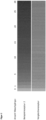
- Figure 1 shows a comparison of strands D1/D2 treated with example recipe 2 with strands E1/E2 treated with the comparison recipe.
- the comparison of the color preview for the two shampoos used is in Figure 2 shown.
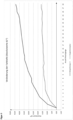
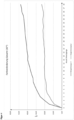
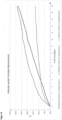
- the Figures 3 and 4 show the change in color depth as absolute values dL* ( Figure 3 ) or as total color change dE* ( Figure 4 ).
- the figures show the gradual build-up of the colour effect with repeated application as well as the improved colouring result compared to the comparison formulation.
- Kerling strands were subjected to a wash-up and wash-out test with a shampoo containing 5,6-DHI, caffeine and HC Blue 2 (example formulation 2) or with a shampoo containing HC Blue 2 and caffeine (comparison formulation) to investigate the coloring performance in terms of quality, intensity and duration.
- FIGS 5-7 show the change in color depth when washing with color shampoo or washing out with a neutral formula according to the protocols given above.
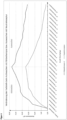
- Figure 8 shows the comparison of the color change for the two shampoos used on a single strand of hair after 15 wash-ups, followed by 15 wash-outs, measured with the Konica measuring device (Konica-Minolta Spectrophotometer CM600d, measuring geometry d/8°, Specular Component Excluded (SCE), standard illuminant D65, field of view 10°).
- the figures show the gradual build-up of the color effect with repeated use and the improved coloring result compared to the comparison formula. After discontinuing treatment with the shampoo according to the invention, the color effect also lasts longer than when using the comparison formula.
- the comparison of the color preview for the shampoos used is for a single strand of hair in Figure 9 shown.
- the Figures 10 and 11 show the change in color depth as absolute values dL* ( Figure 10 ) or as total color change dE* ( Figure 11 ).
- the figures show the gradual build-up of the colour effect with repeated application as well as the improved colouring result compared to the comparison formulation.
- the Kerling white and Imhair bleached strands were dyed for 15 minutes with 10 g of sample formula 2, rinsed for 1 minute and air dried for 1.5 hours (any residual moisture was then blow-dried). Measurements were taken on the day of treatment after 15 minutes of exposure time (initial shade) and after 1, 2, 3, 8, 9, 10, 11, 14 and 15 days.
- the measured values demonstrate a - also visually perceptible - shift in nuance from the original graphite to a more natural, brownish color.
Landscapes
- Health & Medical Sciences (AREA)
- Life Sciences & Earth Sciences (AREA)
- Animal Behavior & Ethology (AREA)
- General Health & Medical Sciences (AREA)
- Public Health (AREA)
- Veterinary Medicine (AREA)
- Birds (AREA)
- Epidemiology (AREA)
- Cosmetics (AREA)
- Coloring (AREA)
Abstract
Description
- Die vorliegende Erfindung betrifft eine kosmetische Formulierung enthaltend ein Farbstoffvorprodukt, ausgewählt aus der Gruppe bestehend aus Indol-Derivaten und Indolin-Derivaten, und ein Xanthin-Derivat. Die Erfindung betrifft ferner die Verwendung der kosmetischen Formulierung zur Repigmentierung von Keratinfasern, insbesondere menschlichen Haaren.
- Die Haarfarbe eines Menschen hängt von der Menge der Melanine Eumelanin und Phäomelanin ab, die in der Faserschicht der Haare enthalten sind und von Melanozyten in den Haarfollikeln produziert werden. Im Rahmen des normalen Alterungsprozesses, aber auch bedingt durch bestimmte Krankheitszustände, Stress, Vitamin- und Mineralstoffmangel oder übermäßigen Alkohol- oder Nikotinkonsum kann es zum Nachlassen der Melaninproduktion kommen, in deren Folge es zu einer Hypopigmentierung kommt. Solche Haare erscheinen dem Betrachter weiß oder farblos. Der optische Eindruck von grauem Haar resultiert aus der Mischung aus pigmentierten und pigmentlosen Haaren.
- Der durchschnittliche Lebenszyklus eines Haars beträgt drei bis sieben Jahre, dann fallen die Haare aus und ein neues Haar wächst an dieser Stelle. Allmählich überwiegt der Anteil an weißen oder pigmentlosen Haaren, das Haar ergraut.
- Die Veränderung der Haarfarbe und insbesondere die Pigmentierung oder Repigmentierung von grauen Haaren stellt einen wichtigen Bereich der modernen Kosmetik dar. Hierbei sind insbesondere gute Echtheitseigenschaften und gute Grauabdeckung sowie langanhaltende Dauer der Färbungen wünschenswert.
- Für permanente, intensive Färbungen mit guten Echtheitseigenschaften und guter Grauabdeckung werden herkömmlicherweise Oxidationsfärbemittel verwendet. Solche Färbemittel enthalten üblicherweise Oxidationsfarbstoffvorprodukte, sogenannte Entwicklerkomponenten und Kupplerkomponenten, die unter dem Einfluss von Oxidationsmitteln, wie z.B. Wasserstoffperoxid, oder von Luftsauerstoff untereinander oder unter Kupplung mit einer oder mehreren Kupplerkomponenten die eigentlichen Farbstoffe ausbilden.
- Der Einsatz oxidativer Färbemittel ist jedoch nach wie vor mit Beeinträchtigungen oder Schädigungen der Haare und insbesondere deren Oberflächenstruktur verbunden.
- Alternativ können Vorstufen des natürlichen Haarfarbstoffes Melanin auf das Haar aufgebracht werden, die im Rahmen oxidativer Prozesse im Haar praktisch naturidentische Farbstoffe ausbilden. Die Ausfärbung kann dabei mit Luftsauerstoff als einzigem Oxidationsmittel erfolgen, so dass keine weiteren Oxidationsmittel erforderlich sind. Ein solches Verfahren mit 5,6-Dihydroxyindolin als Farbstoffvorprodukt ist beispielsweise in
EP 0 530 229 B1 beschrieben. - Im Gegensatz dazu kommen für temporäre Färbungen direktziehende Farbstoffe, auch Direktzieher genannt, zum Einsatz. Hierbei handelt es sich um Farbstoffmoleküle, die direkt auf das Haar aufziehen und keinen oxidativen Prozess zur Ausbildung der Farbe mehr benötigen. Im Vergleich zur oxidativen Haarfärbung weisen die mit direktziehenden Farbstoffen erhaltenen Färbungen eine geringere Haltbarkeit und schnellere Auswaschbarkeit auf. Färbungen mit direktziehenden Farbstoffen verbleiben üblicherweise für einen Zeitraum zwischen 5 und 20 Haarwäschen auf dem Haar.
-
WO 99/66890 -
DE 10 2018 127 182 A1 betrifft ein Zweikomponentensystem zur künstlichen Haarfärbung enthaltend getrennt voneinander ein wasserfreies Trägermedium, welches ein Alkan, einen Fettalkohol und einen Alkohol umfasst, sowie eine wässrige Phase, welche Wasserstoffperoxid enthält. Eine siliciumorganische Verbindung aus der Gruppe der Silane kann zum Schutz und zur Pflege der Haare enthalten sein. -
DE 10 2007 038 484 A1 beschreibt ein Haarbehandlungsmittel zum Schutz vor äußeren Einflüssen, wobei das Haarbehandlungsmittel Bakterienferment(e) aus Thermus thermophilus enthält. -
WO 2005/007615 A1 betrifft 2-(Amino- oder substituierte Amino)-5-(substituierte oxymethyl)-phenolverbindungen sowie Zusammensetzungen zum oxidativen Färben von Keratinfasern. - Mit den im Stand der Technik bekannten Formulierungen lassen sich jedoch keine ausreichend zufriedenstellenden Ergebnisse hinsichtlich Qualität, Intensität und Dauer der Färbeleistung bei gleichzeitig möglichst geringer Beeinträchtigung oder Schädigung der Haarstruktur erzielen.
- So bilden sich mit den Vorstufen des natürlichen Haarfarbstoffes Melanin die entstehenden Farbkörper stark zeitverzögert und die Farbtöne lassen sich unzureichend kontrollieren. Zudem fallen die Zwischenfarbtöne oft unnatürlich violett aus. Ein weiterer Nachteil ist der mit dem Nachwachsen der Haare in Erscheinung tretende unpigmentierte, Haaransatz.
- Zusammenfassend besteht insbesondere bei den Echtheitseigenschaften, der Grauabdeckung und der Dauer der Färbeleistung weiterhin Verbesserungsbedarf.
- Ausgehend hiervon war es die Aufgabe der vorliegenden Erfindung, eine kosmetische Formulierung bereitzustellen, die zur Pigmentierung oder Repigmentierung von Keratinfasern, insbesondere menschlichen Haaren geeignet ist und insbesondere verbesserte Echtheitseigenschaften der pigmentierten oder repigmentierten Keratinfasern sowie eine verbesserte Grauabdeckung bietet. Weiterhin sollte diese kosmetische Formulierung hinsichtlich Qualität, Intensität und Dauer der Färbeleistung verbesserte Eigenschaften gegenüber aus dem Stand der Technik bekannten Formulierungen aufweisen.
- Diese Aufgabe wurde überraschend durch die Formulierung gemäß Anspruch 1 und deren Verwendung gemäß Anspruch 11 gelöst. Bevorzugte Ausführungsformen gehen aus den abhängigen Ansprüchen hervor.
- Erfindungsgemäß wird die Aufgabe durch die Bereitstellung einer kosmetischen Formulierung gelöst, welche ein Farbstoffvorprodukt, ausgewählt aus der Gruppe bestehend aus Indol-Derivaten und Indolin-Derivaten, und ein Xanthin-Derivat enthält.
- Es wurde überraschenderweise festgestellt, dass der Kontrast zum nachwachsenden Haar (Haaransatz) signifikant geringer ausfällt, da die natürliche Pigmentbildung in der Haarwurzel angeregt wird, bei gleichzeitiger Verdunkelung des bereits herausgewachsenen Haares.
- Insgesamt werden die Haare schrittweise dunkler, wobei sich der Farbeffekt dezent aufbaut, graue Haare deutlich abgedeckt werden, der Gesamteindruck der Haarfarbe deutlich dunkler wirkt.
- Somit werden mit der erfindungsgemäßen kosmetischen Formulierung eine gute Grauabdeckung sowie ausgezeichnete Echtheitseigenschaften bei langanhaltender Dauer der Färbeleistung und einem reduzierten Nachgrauen des Haaransatzes erreicht.
- Durch das in der erfindungsgemäßen Formulierung enthaltene Xanthin-Derivat kommt es zusammen mit dem Farbstoffvorprodukt zu einer Anregung der Keratinozyten in den Haarwurzeln, damit diese wieder verstärkt natürliches Pigment produzieren. Ferner bewirkt das Xanthin-Derivat einen längeren Verbleib des Haares auf dem Kopf. Somit wird zum einen der Verlust noch pigmentierter Haare verzögert und zum anderen ein Beitrag zur natürlichen Repigmentierung bereits pigmentarmer oder pigmentloser Haare geleistet. Im Rahmen der vorliegenden Erfindung werden die Begriffe Pigmentierung und Repigmentierung austauschbar verwendet.
- Das in der erfindungsgemäßen Formulierung enthaltene Farbstoffvorprodukt, bei dem es sich um ein Indol-Derivat und/oder Indolin-Derivat handelt, ist bevorzugt ein Indol-Derivat und/oder Indolin-Derivat, welches eine Hydroxy- oder Aminogruppe, bevorzugt als Substituent am Sechsring aufweist. Diese Gruppen können weitere Substituenten tragen, z. B. in Form einer Veretherung oder Veresterung der Hydroxygruppe oder eine Alkylierung der Aminogruppe. Verbindungen mit zwei dieser Gruppen, insbesondere zwei Hydroxygruppen, von denen eine oder beide verethert oder verestert sein können, sind besonders bevorzugt.
- In einer bevorzugten Ausführungsform der Erfindung handelt es sich bei dem Farbstoffvorprodukt um ein Indol-Derivat.
- Erfindungsgemäß bevorzugt ist das Farbstoffvorprodukt ein Derivat des 5,6-Dihydroxyindols der Formel (I),

- R1 Wasserstoff, eine C1-C4-Alkylgruppe oder eine C1-C4-Hydroxyalkylgruppe bedeutet,
- R2 Wasserstoff oder eine-COOH-Gruppe bedeutet, wobei die-COOH-Gruppe auch als Salz mit einem physiologisch verträglichen Kation vorliegen kann,
- R3 Wasserstoff oder eine C1-C4-Alkylgruppe bedeutet,
- R4 Wasserstoff, eine C1-C4-Alkylgruppe, eine Aminogruppe oder eine Gruppe -CO-R6 bedeutet, in der R6 eine C1-C4-Alkylgruppe bedeutet, und
- R5 eine der unter R4 genannten Gruppen bedeutet,
- oder ein physiologisch verträgliches Salz dieser Verbindungen mit einer organischen oder anorganischen Säure.
- Erfindungsgemäß bevorzugte Vertreter sind 5,6-Dihydroxyindol, N-Methyl-5,6-dihydroxyindol, N-Ethyl-5,6-dihydroxyindol, N-Propyl-5,6-dihydroxyindol, N-Butyl-5,6-dihydroxyindol.
- In einer besonders bevorzugten Ausführungsform ist die Verbindung der Formel (I) ausgewählt aus 5,6-Dihydroxyindol, N-Methyl-5,6-dihydroxyindol sowie deren physiologisch verträglichen Salzen.
- Ganz besonders bevorzugt handelt es sich bei dem in der erfindungsgemäßen Formulierung eingesetzten Farbstoffvorprodukt um 5,6-Dihydroxyindol.
- In einer weiteren bevorzugten Ausführungsform der Erfindung handelt es sich bei dem Farbstoffvorprodukt um ein Indolin-Derivat.
- Erfindungsgemäß bevorzugt ist das Farbstoffvorprodukt ein Derivat des 5,6-Dihydroxyindolins der Formel (II),

- R1 Wasserstoff, eine C1-C4-Alkylgruppe oder eine C1-C4-Hydroxyalkylgruppe bedeutet,
- R2 Wasserstoff oder eine-COOH-Gruppe bedeutet, wobei die-COOH-Gruppe auch als Salz mit einem physiologisch verträglichen Kation vorliegen kann,
- R3 Wasserstoff oder eine C1-C4-Alkylgruppe bedeutet,
- R4 Wasserstoff, eine C1-C4-Alkylgruppe, eine Aminogruppe oder eine Gruppe -CO-R6 bedeutet, in der R6 eine C1-C4-Alkylgruppe bedeutet, und
- R5 eine der unter R4 genannten Gruppen bedeutet,
- oder ein physiologisch verträgliches Salz dieser Verbindungen mit einer organischen oder anorganischen Säure.
- Erfindungsgemäß bevorzugte Vertreter sind 5,6-Dihydroxyindolin, N-Methyl-5,6-dihydroxyindolin, N-Ethyl-5,6-dihydroxyindol.
- In einer besonders bevorzugten Ausführungsform ist die Verbindung der Formel (II) ausgewählt aus 5,6-Dihydroxyindolin, N-Methyl-5,6-dihydroxyindolin sowie deren physiologisch verträglichen Salzen.
- Ganz besonders bevorzugt handelt es sich bei dem in der erfindungsgemäßen Formulierung eingesetzten Farbstoffvorprodukt um 5,6-Dihydroxyindolin.
- In einer weiteren besonders bevorzugten Ausführungsform handelt es sich bei dem in der erfindungsgemäßen Formulierung eingesetzten Farbstoffvorprodukt um Dihydroxyindolin-hydrobromid (2,3-Dihydro-1H-indol-5,6-diol-hydrobromid).
- Die in den erfindungsgemäßen Mitteln enthaltenen Indol- und Indolin-Derivate können sowohl als freie Basen als auch in Form ihrer physiologisch verträglichen Salze mit anorganischen oder organischen Säuren, z. B. der Hydrochloride, der Sulfate und Hydrobromide, eingesetzt werden.
- Das Indol- oder Indolin-Derivat ist in der erfindungsgemäßen Formulierung üblicherweise in einer Menge von 0,001-5 Gew.-%, vorzugsweise 0,005-2 Gew.-%, bevorzugt 0,01-2 Gew.-%, bevorzugt 0,01-1,5 Gew.-%, bevorzugt in einer Menge von etwa 0,05 Gew.-%, 0,1 Gew.-%, 0,2 Gew.-%, 0,3 Gew.-%, 0,4 Gew.-%, 0,5 Gew.-%, 0,6 Gew.-%, 0,7 Gew.-%, 0,8 Gew.-%, 0,9 Gew.-%, 1,0 Gew.-%, 1,5 Gew.-% jeweils bezogen auf das Gesamtgewicht der Formulierung, enthalten.
- In einer besonders bevorzugten Ausführungsform handelt es sich bei dem Farbstoffvorprodukt um ein Indol-Derivat, vorzugsweise 5,6-Dihydroxyindol, wobei dieses in der erfindungsgemäßen Formulierung in einer Menge von 0,01-2 Gew.-%, bevorzugt 0,05-0,6 Gew.-%, bevorzugt in einer Menge von 0,08-0,5 Gew.-%, bevorzugt in einer Menge von etwa 0,1-0,5 Gew.-%, jeweils bezogen auf das Gesamtgewicht der Formulierung, enthalten ist.
- In einer weiteren besonders bevorzugten Ausführungsform handelt es sich bei dem Farbstoffvorprodukt um ein Indolin-Derivat, vorzugsweise Dihydroxyindolin-hydrobromid (2,3-Dihydro-1H-indol-5,6-diol-hydrobromid), wobei dieses in der erfindungsgemäßen Formulierung in einer Menge von 0,01-4,0 Gew.-%, bevorzugt 0,05-2,0 Gew.-%, bevorzugt in einer Menge von 0,08-1,0 Gew.-%, bevorzugt in einer Menge von etwa 0,1-0,5 Gew.-%, jeweils bezogen auf das Gesamtgewicht der Formulierung, enthalten ist.
- Die erfindungsgemäße Formulierung kann auch mehr als ein Indol- oder Indolin-Derivat oder Mischungen von Indol- und Indolin-Derivaten enthalten.
- Die Ausbildung des Pigments aus dem Farbstoffvorprodukt, d. h. dem Indol- oder Indolin-Derivat, erfolgt durch Reaktion mit Luftsauerstoff, es ist kein zusätzliches Oxidationsmittel erforderlich.
- Das in der kosmetischen Formulierung enthaltene Xanthin-Derivat führt zusammen mit dem Farbstoffvorprodukt insbesondere dazu, dass die Keratinozyten in den Haarwurzeln angeregt werden, wieder verstärkt natürliches Pigment zu produzieren. Darüber hinaus bewirkt das Xanthin-Derivat einen längeren Verbleib des Haares auf dem Kopf, was zum einen den Verlust noch pigmentierter Haare verzögert und zum anderen zur natürlichen Repigmentierung bereits pigmentarmer oder pigmentloser Haare beiträgt.
- Das erfindungsgemäß bevorzugte Xanthin-Derivat ist Koffein.
- Der IUPAC-Name von Koffein ist 1,3,7-Trimethyl-3,7-dihydro-1H-purin-2,6-dion. Alternativ wird Koffein auch als 1,3,7-Trimethylxanthin bezeichnet. Koffein wird durch die folgende chemische Formel (III) dargestellt.

- Koffein ist ein zur Klasse der Methylxanthine gehörendes Methylxanthinalkaloid. Es ist eine bittere kristalline Substanz, kann als Purinderivat betrachtet werden und ist chemisch mit den Adenin- und Guaninbasen der Desoxyribonukleinsäuren und der Ribonukleinsäure verwandt.
- Das Xanthin-Derivat ist in der erfindungsgemäßen Formulierung üblicherweise in einer Menge von 0,0001-10 Gew.-%, bevorzugt 0,01-5 Gew.-%, bevorzugt 0,05-2 Gew.-%, bevorzugt 0,1-1,5 Gew.-%, bevorzugt in einer Menge von etwa 0,0001 Gew.-%, 0,05 Gew.-%, 0,1 Gew.-%, 0,2 Gew.-%, 0,3 Gew.-%, 0,5 Gew.-%, 0,7 Gew.-%, 1,0 Gew.-%, 1,3 Gew.-%, 1,4 Gew.-%, 1,5 Gew.-%, jeweils bezogen auf das Gesamtgewicht der Formulierung, enthalten.
- In einer bevorzugten Ausführungsform enthalten die erfindungsgemäßen Formulierungen weiterhin mindestens einen direktziehenden Farbstoff.
- Hierbei wurde überraschenderweise festgestellt, dass der Farbeffekt einer Formulierung, die neben dem Farbstoffvorprodukt vom Indol- oder Indolin-Typ und dem Xanthin-Derivat auch noch einen direktziehenden Farbstoff enthält, intensiver ist, als anhand der Farbeffekte der Einzelkomponenten, Farbstoffvorprodukt vom Indol- oder Indolin-Typ und direktziehender Farbstoff, zu erwarten gewesen wäre. Die Verdunklungseffekte (Repigmentierung) werden durch die Kombination mit direktziehenden Farbstoffen synergistisch bezüglich der Schnelligkeit des Farbeintritts und der Farbtiefe gesteigert.
- Bei Anwesenheit einer Kombination aus Farbstoffvorprodukt vom Indol- oder Indolin-Typ und direktziehendem Farbstoff tritt somit ein synergistischer Effekt auf. Somit wird mit der erfindungsgemäßen kosmetischen Formulierung enthaltend ein Farbstoffvorprodukt vom Indol- oder Indolin-Typ, ein Xanthin-Derivat und einen direktziehenden Farbstoff vorteilhafterweise ein besonders intensiver Farbeffekt erreicht, wobei eine hervorragende Grauabdeckung sowie ausgezeichnete Echtheitseigenschaften, d. h. ein in hohem Maße natürlicher Farbton bei langanhaltender Dauer des Färbeergebnisses erreicht wird.
- Wie eingangs erwähnt, handelt es sich bei direktziehenden Farbstoffen um Farbstoffmoleküle, die direkt auf das Haar aufziehen und keinen oxidativen Prozess zur Ausbildung der Farbe mehr benötigen.
- Bevorzugte direktziehende Farbstoffe umfassen Nitrophenylendiamine, Nitroaminophenole, Azofarbstoffe, Anthrachinone und Indophenole und sind vorzugsweise ausgewählt aus der Gruppe der unter den internationalen Bezeichnungen bzw. Handelsnamen bekannten Farbstoffe HC Yellow 2, HC Yellow 4, HC Yellow 5, HC Yellow 6, HC Yellow 12, Acid Yellow 1, Acid Yellow 10, Acid Yellow 23, Acid Yellow 36, Basic Yellow 57, Basic Yellow 87, HC Orange 1, Disperse Orange 3, Acid Orange 7, Basic Orange 31, HC Red1, HC Red 3, HC Red 10, HC Red 11, HC Red 13, HC Red BN, Acid Red 33, Acid Red 52, Pigment Red 57:1, BasicRed51, Basic Red 76, HC Blue 2, HC Blue 12, HC Blue 16, Disperse Blue 3, Acid Blue 7, Basic Blue 99, Acid Green 50, HC Violet 1, Disperse Violet 1, Disperse Violet 4, Acid Violet 43, Disperse Black 9, Acid Black 1, Acid Black 52, Basic Brown 16 und Basic Brown 17 sowie 1,4-Diamino-2-nitrobenzol, 2-Amino-4-nitrophenol, 1,4-Bis-(β-hydroxyethyl)-amino-2-nitrobenzol, 3-Nitro-4-(β-hydroxyethyl)-aminophenol, 2-(2-Hydroxyethyl)amino-4,6-dinitrophenol, 1-(2'-Hydroxyethyl)amino-4-methyl-2-nitrobenzol, 1-Amino-4-(2-hydroxyethyl)-amino-5-chlor-2-nitrobenzol, 4-Amino-3-nitrophenol, 1 -(2-Ureidoethyl)amino-4-nitrobenzol, 4-Amino-2-nitrodiphenylamin-2'-carbonsäure, 6-Nitro-1,2,3,4-tetrahydrochinoxalin, 2-Hydroxy-1,4-naphthochinon, Hydroxyethyl-2-nitro-toluidin, Pikraminsäure und deren Salze, 2-Amino-6-chlor-4-nitrophenol, 4-Ethylamino-3-nitrobenzoesäure und 2-Chlor-6-ethylamino-1-hydroxy-4-nitrobenzol.
- Der direktziehende Farbstoff ist in der erfindungsgemäßen Formulierung üblicherweise in einer Menge von 0,001-5 Gew.-%, vorzugsweise 0,05-3 Gew.-%, bevorzugt 0,1-2 Gew.-%, bevorzugt 0,1-1,2 Gew.-%, bevorzugt in einer Menge von etwa 0,1 Gew.-%, 0,2 Gew.-%, 0,3 Gew.-%, 0,4 Gew.-%, 0,5 Gew.-%, 0,6 Gew.-%, 0,7 Gew.-%, 0,8 Gew.-%, 0,9 Gew.-%, 1,0 Gew.-%, 1,1 Gew.-%, 1,2 Gew.-%, 1,3 Gew.-%, 1,4 Gew.-%, 1,5 Gew.-%, 1,6 Gew.-%, 1,7 Gew.-%, 1,8 Gew.-%, 1,9 Gew.-%, 2,0 Gew.-%, jeweils bezogen auf das Gesamtgewicht der Formulierung, enthalten.
- In einer bevorzugten Ausführungsform ist der direktziehende Farbstoff ausgewählt aus der Gruppe bestehend aus 2-Amino-6-chlor-4-nitrophenol, 1,4-Bis-(β-hydroxyethyl)-amino-2-nitrobenzol, Basic Yellow 57, Basic Red 76, Basic Brown 16, Basic Brown 17, Basic Blue 99, HC Blue 2, HC Blue 12, HC Blue 16 und Acid Violet 43.
- In einer besonders bevorzugten Ausführungsform der Erfindung handelt es sich bei dem direktziehenden Farbstoff um HC Blue 2.
- In einer besonders bevorzugten Ausführungsform enthält die erfindungsgemäße Formulierung 5,6-Dihydroxyindol als Farbstoffvorprodukt und Koffein als Xanthin-Derivat. Hierbei ist 5,6-Dihydroxyindol in einer Menge von 0,05-0,6 Gew.-% und Koffein in einer Menge von 0,8-1,2 Gew.-%, jeweils bezogen auf das Gesamtgewicht der Formulierung, enthalten.
- In einer weiteren besonders bevorzugten Ausführungsform enthält die erfindungsgemäße Formulierung 5,6-Dihydroxyindol als Farbstoffvorprodukt, Koffein als Xanthin-Derivat und ferner HC Blue 2 als direktziehenden Farbstoff. Hierbei ist 5,6-Dihydroxyindol in einer Menge von 0,05-0,6 Gew.-%, Koffein in einer Menge von 0,8-1,2 Gew.-% und der direktziehende Farbstoff in einer Menge von 0,1-1,2 Gew.-%, jeweils bezogen auf das Gesamtgewicht der Formulierung, enthalten.
- Weiterhin kann die erfindungsgemäße kosmetische Formulierung alle in solchen Zubereitungen bekannten Additive (d. h. Wirk-, Zusatz- und Hilfsstoffe) enthalten.
- In einer Ausführungsform umfasst die kosmetische Formulierung ein Tensid. Das Tensid kann ein anionisches, nichtionisches, kationisches oder zwitterionisches Tensid sein. Bevorzugt ist das Tensid ein anionisches oder nichtionisches Tensid, insbesondere ein möglichst mildes (d.h. besonders hautverträgliches) anionisches oder nichtionisches Tensid. Nichtionische Tenside werden dabei erfindungsgemäß insbesondere wegen ihrer sehr guten Emulgationseigenschaften sowie ihrer ausgezeichneten Hautpflegeeigenschaften eingesetzt. Anionische Tenside sind bevorzugt, weil sie eine besonders hohe Reinigungsleistung aufweisen. Daher eignen sie sich besonders gut in Reinigungsformulierungen wie Shampoos. Kationische Tenside besitzen hervorragende Haarpflegeeigenschaften und werden erfindungsgemäß insbesondere in Haarpflegeformulierungen eingesetzt wie in Conditionern, Shampoos und Kuren.
- Die erfindungsgemäße Formulierung enthält Tenside vorzugsweise in einer Menge von 2 bis 40 Gew.-%, insbesondere von 5 bis 30 Gew.-%, bevorzugt von 7 bis 20 Gew.-%, besonders bevorzugt von 10 bis 17 Gew.-%, jeweils bezogen auf das Gesamtgewicht der Formulierung. Geeignete Mengen an Tensid lauten: 8 Gew.-%; 9 Gew.-%; 10 Gew.-%; 11 Gew.-%; 12 Gew.-%; 13 Gew.-%, 14 Gew.-%, 15 Gew.-%, 16 Gew.-%, 17 Gew.-%, 18 Gew.-%, 19 Gew.-%, 20 Gew.-%, 21 Gew.-%, 22 Gew.-%, 23 Gew.-%, 24 Gew.-%, 25 Gew.-%, jeweils bezogen auf das Gesamtgewicht der Formulierung. Besonders bevorzugt enthält die kosmetische Formulierung der Erfindung ein oder mehrere anionische Tenside in einer Menge von 0,1 bis 20 Gew.-%, bevorzugt von 1 bis 17 Gew.-% und besonders bevorzugt von 5 bis 15 Gew.-%, jeweils bezogen auf das Gesamtgewicht der Formulierung. Geeignete Mengen an anionischem Tensid lauten: 1 Gew.-%, 2 Gew.-%, 3 Gew.-%, 4 Gew.-%, 5 Gew.-%, 6 Gew.-%, 7 Gew.-%, 8 Gew.-%; 9 Gew.-%; 10 Gew.-%; 11 Gew.-%; 12 Gew.-%; 13 Gew.-%; 14 Gew.-%; 15 Gew.-%; 16 Gew.-%; 17 Gew.-%; 18 Gew.-%, 19 Gew.-%, 20 Gew. -%, jeweil s bezogen auf das Gesamtgewicht der Formulierung. In diesen Mengen weisen die Tenside eine besonders hohe Reinigungsleistung auf und sind äußerst verträglich für Haut, Kopfhaut und Haare.
- Die Tenside der vorliegenden Erfindung sind u.a. in dem Buch "Surfactants and interfacial phenomena", von Milton Rosen und Joy Kunjappu, John Wiley & Sons, Inc.-Verlag, 2012, 4. Auflage beschrieben.
- In einer bevorzugten Ausführungsform ist das Tensid ein anionisches Tensid ausgewählt aus Alkylcarboxylaten, Alkylsulfonaten, Alkylsulfaten, Alkylethersulfaten, Alkylphosphaten, Alkylsarkosinaten, Alkyltauraten, Aminosäure-Tensiden und Mischungen davon. Besonders bevorzugt ist das Tensid ausgewählt aus Alkylcarboxylaten, Alkylsulfaten, Alkylsarkosinaten, Alkyltauraten, Alkylglutamat, wie Natriumcocoylglutamat/Dinatriumcocoylglutamat, Alkylgycinat, Alkylalaninat, wie Natriumcocoylalaninat und Mischungen davon. Ebenso bevorzugt wegen ihrer Reinigungsleistung sind Fettalkoholpolyglycerolethersulfate, Monoglyceridsulfate, Mono- und/oder Dialkylsulfosuccinate, Fettsäureisethionate, und α-Olefinsulfonate.
- Alkylcarboxylate haben die generische Formel RCO2M, Alkylsulfate haben die generische Formel ROSO3M, Alkylsarkosinate haben die generische Formel RC(O)N(CH3)CH2CO2M, und Alkyltaurate haben die generische Formel RC(O)N(CH3)CH2CH2SO3M, wobei R jeweils ein C4-C26-Alkyl oder C4-C26-Alkenyl ist und M ein wasserlösliches Kation wie z.B. Ammonium, Natrium oder Kalium darstellt. Vorzugsweise ist Mein Natriumkation. Bevorzugt ist Rein C12-C16-Alkyl oder ein C12-C18-Alkyl.
- In einer Ausführungsform ist das Tensid ein nichtionisches Tensid (auch als nichtionischer Emulgator bezeichnet). Nicht-einschränkende Beispiele umfassen Glycerinfettsäureester, Fettalkohole, Polyoxyethylenether eines oder mehrerer Fettalkohole, alkoxylierte Fettsäurealkylester, Polyglycerinether von Fettalkoholen, Polyglycerinester von Fettsäuren, Polyethylenglykol- und/oder Polypropylenglykolether, Fettsäureamide, Alkylphenolpolyglycolether, Aminoxide und Alkylpolyglucoside.
- In einer Ausführungsform ist das Tensid ausgewählt aus der Gruppe der Glycerinfettsäureester, Fettalkohole, Polyoxyethylenether eines oder mehrerer Fettalkohole, Polyglycerinether von Fettalkoholen, Polyglycerinester von Fettsäuren und deren Mischungen.
- In der vorliegenden Erfindung bezieht sich der Begriff "Glycerinfettsäureester" auf einen Glycerinmono- oder Glycerindifettsäureester. Glycerindifettsäureester weisen die Formel R3-COO-(CH2CH(OH)CH2)-OOR4 oder R3-COO-(CH2CH(OOR4)CH2)-OH auf. Glycerinmonofettsäureester weisen die Formel R3-COO-(CH2CH(OH)CH2)-OH oder HO-(CH2CH(OOR3)CH2)-OH auf. Dabei sind R3 und R4 unabhängig voneinander aus C6-C28-Alkyl und C6-C28-Alkenyl ausgewählt. Glycerinmonofettsäureester enthalten eine Glycerin-Gruppe, welche über eine Esterbindung an eine einzige Fettsäure gebunden. Beispiele sind Glycerinmonostearat, Glycerinmonobehenat, Glycerinmonocaprylat, Glycerinmonocaprat und Glycerinmonolaurat.
- Fettalkohole (gesättigt) sind Verbindungen der Formel H3C-(CH2)n-CH2-OH, wobei n eine ganze Zahl zwischen 4 und 20 ist, vorzugsweise eine ganze Zahl zwischen 6 und 16.
- Polyoxyethylenether sind Verbindungen der Formel R5(OC2H3)nOH, wobei R5 ausgewählt ist aus C6-C28-Alkyl, C6-C28-Alkenyl, substituierte und unsubstituierte Phenoxy-Gruppen; und n eine ganze Zahl größer 1 ist. Vorzugsweise wird der Polyoxyethylenether eines oder mehrerer Fettalkohole aus der Gruppe Steareth-2, Steareth-21, Makrogol-Cetostearylether 12, Ceteareth-25, Makrogol-Cetostearylether 20 und Mischungen der vorgenannten Verbindungen ausgewählt. Noch bevorzugter ist der Polyoxyethylenether eine Verbindung ausgewählt aus der Gruppe von Ceteareth-25, Makrogol-Cetostearylether 20 und Mischungen der vorgenannten Verbindungen.
- Der Begriff "Polyglycerinether von Fettalkoholen" bezieht sich auf eine Verbindung der Formel R6O-(C3H6O2)n-H, wobei R6 ein verzweigtes oder lineares C6-C28-Alkyl oder C6-C28-Alkenyl ist und n eine ganze Zahl größer als 1, vorzugsweise eine ganze Zahl von 2 bis 10, ist. Es wird bevorzugt, dass die Formulierung 0,01 bis 15,0 Gew.-%, 0,1 bis 10,0 Gew.-% oder 1 bis 5,0 Gew.-% Polyglycerinether enthält.
- Der Begriff "Polyglycerinester von Fettsäuren" bezieht sich auf Verbindungen, die sowohl eine Polyglycerineinheit als auch mindestens eine C6-C26-Alkyl- oder C6-C26-Alkenylcarbonsäureeinheit enthalten. Diese Verbindungen können die Formel R7-R8-(C3H6O2)n-H aufweisen, wobei R7 ein C6-C26-Alkanoat- oder C6-C26-Alkenoat-Rest ist und R8 ein geeignetes Verbindungsmolekül oder eine direkte Bindung ist. Somit können die Polyglycerineinheit und die C6-C26-Alkyl- oder C6-C26-Alkenylcarbonsäureeinheit direkt durch eine Esterbindung verbunden sein oder eine Verbindungseinheit enthalten, die diese beiden Einheiten miteinander verbindet. Nicht einschränkende Beispiele für diese Gruppe sind Polyglyceryl-3-methylglucosedistearat, Polyglycerinpolycrinoleat, Polyglyceryl-Dimerat-Isostearat, Polyglyceryl-2-Laurat, Polyglyceryl-2-Sesquiisostearat, Polyglyceryl-3-Distearat (Cremophor GS 32), Polyglyceryl-3-Oleat, Polyglyceryl-3-Methylglykose-Distearat, Polyglyceryl-4-Caprat (Polyglycerolcaprat T2010190), Polyglyceryl-4-Diisostearat / Polyhydroxystearat / Sebacat (Isolan GPS) und Polyglyceryl-4-Isostearat.
- In einer Ausführungsform umfasst das Tensid ein kationisches Tensid, wie beispielsweise ein quaternäres Tensid. Quaternäre Tenside enthalten mindestens ein N-Atom, das mit 4 Alkyl- oder Arylgruppen kovalent verbunden ist. Dies führt, unabhängig vom pH-Wert, zu einer positiven Ladung. Vorteilhaft sind Alkylbetain, Alkylamidopropylbetain und Alkylamidopropylhydroxysulfain. Die erfindungsgemäß verwendeten kationischen Tenside können ferner bevorzugt gewählt werden aus der Gruppe der quaternären Ammoniumverbindungen, insbesondere Benzyltrialkylammoniumchloride oder -bromide, wie beispielsweise Benzyldimethylstearylammoniumchlorid, ferner Alkyltrialkylammoniumsalze, beispielsweise Cetyltrimethylammoniumchlorid oder -bromid, Alkyldimethylhydroxyethylammoniumchloride oder -bromide, Dialkyldimethylammoniumchloride oder -bromide, Alkylamidethyltrimethylammoniumethersulfate, Alkylpyridiniumsalze, beispielsweise Lauryl- oder Cetylpyrimidiniumchlorid, Imidazolinderivate und Verbindungen mit kationischem Charakter wie Aminoxide, beispielsweise Alkyldimethylaminoxide oder Alkylaminoethyldimethylaminoxide. Vorteilhaft sind insbesondere Cetyltrimethylammoniumsalze zu verwenden.
- In einer weiteren Ausführungsform enthält die erfindungsgemäße Formulierung mindestens ein Additiv. Bevorzugt sind Additive, die üblicherweise in Shampoos, Conditionern und Emulsionen zur Behandlung der Haut, der Kopfhaut und der Haare eingesetzt werden. Das mindestens eine Additiv kann in einem Anteil von 0,01 Gew.-% bis 12,0 Gew.-%, mehr bevorzugt von 0,25 Gew.-% bis 10,0 Gew.-%, insbesondere von 1,0 bis 7,0 Gew.-% vorliegen.
- Das mindestens eine Additiv kann ferner ausgewählt sein aus der Gruppe bestehend aus Haarkonditionierungsmitteln, Rückfettern, Konservierungsmitteln, Stabilisatoren, Duftstoffen, Antioxidantien, Rheologiemodifikatoren, Verdickungsmitteln, Pflegemitteln, Farbstoffen, Perlganzmitteln, Aufhellungsmitteln, Lösungsmitteln, festigenden Verbindungen, Antischuppenwirkstoffen, Vitaminen, Alkalisierungsmitteln bzw. pH-Stellmitteln und Kombinationen hiervon.
- Haarkonditionierungsmittel können statische Aufladungen der Haare durch das Neutralisieren von elektrischer Ladung an ihrer Oberfläche verringern. Beispiele für Haarkonditionierungsmittel sind quartäre Ammoniumverbindungen.
- Rückfetter, auch Rückfettungsmittel oder Überfettungsmittel genannt, sind lipophile Substanzen, die eine störende Auswirkung auf die epidermale Barrierefunktion verhindern können. Beispiele für Rückfetter sind Wollwachs, Squalen, flüssiges Paraffin, pflanzliche Öle, Silikone und Cetylpalmitat.
- Konservierungsmittel sind Substanzen, die zur Konservierung verwendet werden, indem sie die Formulierung zersetzende Mikroorganismen abtöten und/oder deren Wachstum hemmen. Vorzugsweise können die Konservierungsmittel ausgewählt sein aus der Gruppe bestehend aus Benzoesäure, Benzoesäurederivaten, Sorbinsäure, Sorbinsäurederivaten, Salicylsäure, Salicylsäurederivaten, Phenoxyethanol, Parabenen und Kombinationen hiervon. In einer bevorzugten Ausführungsform werden Natriumbenzoat und/oder Kaliumsorbat als Konservierungsmittel in der erfindungsgemäßen Formulierung eingesetzt. Natriumbenzoat setzt in leicht saurem Milieu Benzoesäure und Kaliumsorbat Sorbinsäure frei. Beiden Säuren wird eine antimikrobielle Wirkung zugeschrieben.
- Stabilisatoren können lichtempfindliche Komponenten gegenüber Strahlung schützen und sind bevorzugt UV-Absorber wie beispielsweise Benzophenonderivate.
- Die Zugabe von Duftstoffen kann für einen angenehmen Geruch der Formulierung sorgen. Beispiele sind die dem Fachmann bekannten Parfums.
- Ein Antioxidans oder Antioxidationsmittel ist eine chemische Verbindung, die eine Oxidation anderer Komponenten in der erfindungsgemäßen Formulierung verlangsamt oder gänzlich verhindert. Als Antioxidantien kommen beispielsweise Zitronensäure, Ascorbinsäure, Natriumsulfit und Butylhydroxyanisol in Frage.
- Rheologiemodifikatoren und Verdickungsmittel können dabei helfen, die Applikationseigenschaften der erfindungsgemäßen Formulierung zu verbessern. Als Rheologiemodifikator und Verdickungsmittel kann die Zugabe von Kochsalz (Natriumchlorid) in Betracht gezogen werden. Durch die Zugabe von Kochsalz kann die Fließfähigkeit der erfindungsgemäßen Formulierung in gewissen Grenzen beeinflusst und auf das nötige Maß eingestellt werden. Als Verdicker können zusätzlich natürlich vorkommende Gelbildner eingesetzt werden, die bevorzugt ausgewählt sind aus Agar, Xanthan Gum, Cellulose und oder Cellulose-Derivaten oder Alginsäure.
- Im Rahmen der Anmeldung sollen unter Pflegemitteln Substanzen verstanden werden, welche die Haare und/oder die Kopfhaut pflegen. Hydrolysiertes Weizenprotein, Panthenol und Allantoin wirken pflegend auf Kopfhaut und Haare. Hydrolysiertes Weizenprotein hat hauptsächlich feuchtigkeitsspendende Eigenschaften.
- Als weitere Farbstoffe können in der erfindungsgemäßen Formulierung Anfärbestoffe enthalten sein, beispielsweise um der Formulierung eine optisch ansprechende Farbe zu geben. In der erfindungsgemäßen Formulierung kann z.B. CI 47005 als geeigneter Anfärbestoff enthalten sein.
- Als Lösungsmittel kann ein für den Fachmann auf diesem Gebiet gängiges Lösungsmittel oder Lösungsmittelgemisch eingesetzt werden. Bevorzugte Lösungsmittel sind Ethanol oder Butylenglykol, insbesondere 1,4-Butylenglykol, Propylenglykol und Isopropylalkohol. Bevorzugt ist Ethanol bzw. Propylenglykol. Diese Lösungsmittel können vorzugsweise in einer Menge von 0,1 bis 70 Gew.% in der erfindungsgemäßen Formulierung enthalten sein. Ganz besonders bevorzugt sind sie in einer Menge von 0,1 bis 5,0 Gew.% enthalten.
- Festigende Verbindungen sind vorzugsweise aus der Gruppe bestehend aus Wachsen, synthetischen Polymeren und Mischungen davon ausgewählt. Geeignete festigende Verbindungen sind dem Fachmann bekannt und beispielsweise in Goddard, E. Desmond; Gruber, James V. (1999), "Principles of polymer science and technology in cosmetics and personal care", Series: Cosmetic science and technology series : v. 22., New York (Marcel Dekker, INC.); Schrader, Karlheinz (1989), "Grundlagen und Rezepturen der Kosmetika" (2. Auflage), Kapitel 3.7, Heidelberg (Hüthig); sowie Scott, Richard (2017), "ingredients focus:cosmetic waxes and butters", Personal Care Europe 10(3), 46-47 beschrieben.
- Antischuppenwirkstoffe werden eingesetzt, um übermäßige Bildung von Schuppen auf der Kopfhaut zu kontrollieren. Geeignete Antischuppenwirkstoffe sind dem Fachmann bekannt und beispielsweise in Trüeb, R. M. (2009). "Kopfschuppen erfolgreich behandeln." Akt Dermatol 35(01/02): 19-24; Trueb, R. M. (2007). "Shampoos: ingredients, efficacy and adverse effects." J. Dtsch. Dermatol. Ges. 5(5): 356-365; Sanfilippo, A. and J. English (2006). "An overview of medicated shampoos used in dandruff treatment." P AND T 31(7): 396; sowie Futterer, E. (1981). "Evaluation of efficacy of antidandruff agents." J Soc Cosmet Chem 32: 327-338 beschrieben.
- Vitamine und Mineralstoffe wie Niacinamid (Vitamin B3), Vitamin E oder Zink werden eingesetzt, um einen positiven Effekt auf das Wachstum und die Reparatur von Haarschädigungen zu erzielen. Geeignete Vitamine und Mineralstoffe sind dem Fachmann bekannt und beispielsweise in Pietrzik K, Golly I, Loew D, Handbuch Vitamine, Elsevier GmbH, Urban & Fischer Verlag, München 2008; H. Lautenschläger, Vitamine in der Kosmetik, medical Beauty Forum 2020 (3), 14-17; sowie Martini M.C., Chivot M., Peyrefitte G., Lehrbuch Kosmetik: Grundlagen - Grundstoffe - Grundtechniken, Hogrefe AG, Bern 2001 beschrieben.
- Alkalisierungsmittel bzw. pH-Stellmittel werden eingesetzt, um den pH-Wert der Formulierung auf einen gewünschten Bereich einzustellen. Geeignete Alkalisierungsmittel bzw. pH-Stellmittel umfassen unter anderem Natriumhydroxid, Monoethanolamin 0,1-5%, Phosphorsäure und Citronensäure.
- Beispielhafte Zusammensetzungen sind in der folgenden Tabelle dargestellt:
Bestandteil Menge in Gew.-%% Aqua [Wasser] ad 100 Natriumlaurylethersulfat 5-15 Natriummyrethsulfat 0-5 Natrium-Cocoamphoacetat 0-5 Laureth-2 0-5 Cocoamidopropylbetain 0-5 Dinatriumlaurylsulfosuccinat 0-5 Natriumlauroylglutamat 0-5 Panthenol 0-5 Koffein 0,1-5 Natriumchlorid 0-5 Phenoxyethanol 0-5 Weizenproteinhydrolysat 0-3 Cocoglucosid 0-3 Glyceryloleat 0-3 Phosphorsäure 0-3 Natriumbenzoat 0-3 PEG-120 Methylglucosedioleat 0-3 Kaliumsorbat 0-3 HC Blue 2 0,1-2 Allantoin 0-3 PEG-40 hydriertes Rizinusöl 0-3 Menthol 0-2 Polyquaternium-7 0-2 Natriumhydroxid 0-2 Dinatrium-EDTA 0-2 Dihydroxyindol 0,01-2 Tocopherol 0-2 Zitronensäure 0-2 Niacinamid 0-2 Zink PCA 0-2 Farbstoff / Anfärbestoff 0-2 - Erfindungsgemäß wird die Zusammensetzung topisch angewendet. Unter einer topischen Anwendung ist eine äußerliche Anwendung, insbesondere eine örtliche, äußerliche Anwendung zu verstehen. Erfindungsgemäße Zusammensetzungen sind bevorzugt Haarpflegeprodukte (d.h. Behandlungsmittel wie Shampoos, Conditioner oder Kuren).
- In einer bevorzugten Ausführungsform liegt die erfindungsgemäße Formulierung als Shampoo, Conditioner, Kur oder Farbkur vor, insbesondere als Shampoo oder Farbkur.
- Die kosmetische Formulierung der vorliegenden Erfindung ist insbesondere zur Pigmentierung und/oder Repigmentierung von Keratinfasern geeignet.
- Dementsprechend betrifft die vorliegende Erfindung in einer weiteren Ausführungsform die Verwendung der kosmetischen Formulierung enthaltend ein Farbstoffvorprodukt, ausgewählt aus der Gruppe bestehend aus Indolin-Derivaten und Indol-Derivaten, und ein Xanthin-Derivat als Bioaktivstoff zur Pigmentierung und/oder Repigmentierung von Keratinfasern.
- Unter "Keratinfasern" sind im Sinne der vorliegenden Erfindung Haare zu verstehen, insbesondere menschliche Haare. Der Begriff "menschliche Haare" umfasst hierbei insbesondere Kopfhaare und Barthaare.
- In einer bevorzugten Ausführungsform betrifft die vorliegende Erfindung die Verwendung der kosmetischen Formulierung zur Pigmentierung und/oder Repigmentierung von menschlichen Haaren.
- Hierbei wird die Formulierung vorzugsweise im nassen oder trockenen Haar verteilt und nach einer Verweildauer zwischen 1 und 30 Minuten wieder ausgespült.
- Die erfindungsgemäße kosmetischen Formulierung zur Pigmentierung und/oder Repigmentierung von Keratinfasern, insbesondere menschlichen Haaren, bewirkt, dass die Haare langsam und schonend permanent gefärbt und gleichzeitig die Keratinozyten in den Haarwurzeln angeregt werden, damit diese wieder verstärkt natürliches Pigment produzieren.
- Somit betrifft die Erfindung in einer weiteren Ausführungsform die Verwendung der kosmetischen Formulierung zur Pigmentierung und/oder Repigmentierung von menschlichen Haaren, wobei die Haare langsam und schonend permanent gefärbt und gleichzeitig die Keratinozyten in den Haarwurzeln angeregt werden, damit diese wieder verstärkt natürliches Pigment produzieren.
- In einer weiteren Ausführungsform betrifft die Erfindung ein Verfahren zur Pigmentierung und/oder Repigmentierung von Keratinfasern, insbesondere menschlichen Haaren, wobei die erfindungsgemäße kosmetische Formulierung auf das Haar aufgebracht wird und anschließend die Ausfärbung erfolgt. Die Ausfärbung wird lediglich durch Luftsauerstoff bewirkt, es ist kein weiteres Oxidationsmittel erforderlich.
- Anhand der nachfolgenden Formulierungen soll die Erfindung verdeutlicht werden, ohne sie jedoch auf die speziellen Beispiele einschränken zu wollen.
-
-
Figur 1 Vergleichsfotos von mit Beispielrezeptur 2 (D1/D2) bzw. Vergleichsrezeptur (E1/E2) gewaschenen Strähnen -
Figur 2 Vergleich der Farbvorschau für die beiden verwendeten Shampoos Beispielrezeptur 2 bzw. Vergleichsrezeptur -
Figur 3 Veränderung der Farbtiefe bei Verwendung der Shampoos Beispielrezeptur 2 bzw. Vergleichsrezeptur als Absolutwerte dL* -
Figur 4 Farbveränderung gesamt dE* bei Verwendung der Shampoos Beispielrezeptur 2 bzw. Vergleichsrezeptur -
Figur 5 Veränderung der Farbtiefe beim Aufwaschen mit Färbeshampoo (5 Waschgänge) bzw. Auswaschen mit Neutralrezeptur (14 Waschgänge) -
Figur 6 Veränderung der Farbtiefe beim Aufwaschen mit Färbeshampoo (10 Waschgänge) bzw. Auswaschen mit Neutralrezeptur (15 Waschgänge) -
Figur 7 Veränderung der Farbtiefe beim Aufwaschen mit Färbeshampoo (15 Waschgänge) bzw. Auswaschen mit Neutralrezeptur (15 Waschgänge) -
Figur 8 Vergleich der Farbveränderung für die beiden verwendeten Shampoos auf jeweils einer einzelnen Strähne bei 15 Aufwaschgängen, gefolgt von 15 Auswaschgängen -
Figur 9 Vergleich der Farbvorschau für die verwendeten Shampoos Beispielrezeptur 1 bzw. Beispielrezeptur 2 bzw. Vergleichsrezeptur auf jeweils einer einzelnen Strähne bei 15 Aufwaschgängen -
Figure 10 Veränderung der Farbtiefe bei Verwendung der Shampoos Beispielrezeptur 1 bzw. Beispielrezeptur 2 bzw. Vergleichsrezeptur als Absolutwerte dL* -
Figur 11 Farbveränderung gesamt dE* bei Verwendung der Shampoos Beispielrezeptur 1 bzw. Beispielrezeptur 2 bzw. Vergleichsrezeptur - Die folgenden Rezepturen wurden durch für den Fachmann bekannte Maßnahmen hergestellt.
- Die Vergleichsrezeptur enthält Koffein als Xanthin-Derivat und HC Blue 2 als direktziehenden Farbstoff.
Bestandteil Menge in Gew.-% Aqua [Wasser] ad 100 Natriumlaurylethersulfat 11,5 Natrium-Cocoamphoacetat 3 Cocamidopropylbetain 1,7 Koffein 1,1 Panthenol 0,92 Natriumchlorid 1 Phenoxyethanol 0,7 Cocoglucosid 0,5 Glyceryloleat 0,5 Phosphorsäure 0,4 PEG-120 Methylglucosedioleat 0,3 HC Blue 2 0,22 Menthol 0,2 Polyquaternium-7 0,2 Natriumhydroxid 0,15 Niacinamid 0,1 Zink PCA 0,1 Farbstoff / Anfärbestoff 0,1 Zitronensäure 0,06 - Die Beispielrezeptur 1 enthält Dihydroxyindol und Koffein als Xanthin-Derivat.
Bestandteil Menge in Gew.-% Aqua [Wasser] ad 100 Natriumlaurylethersulfat 8,0 Natriummyrethsulfat 2,5 Laureth-2 2 Panthenol 1,7 Natriumchlorid 1,65 Dinatriumlaurylsulfosuccinat 1,5 Natriumlauroylglutamat 1,3 Koffein 1,1 PEG-120 Methylglucosedioleat 0,75 Weizenproteinhydrolysat 0,7 Dihydroxyindol 0,49 Allantoin 0,4 Zitronensäure 0,38 Natriumbenzoat 0,36 Propylenglykol 0,3 Kaliumsorbat 0,3 PEG-40 hydriertes Rizinusöl 0,18 Cocoglucosid 0,18 Glyceryloleat 0,17 Polyquaternium-7 0,17 Dinatrium-EDTA 0,15 Zink PCA 0,1 Niacinamid 0,1 Tocopherol 0,06 - Die Beispielrezeptur 2 enthält Dihydroxyindol, Koffein als Xanthin-Derivat und HC Blue 2 als direktziehenden Farbstoff.
Bestandteil Menge in Gew.-% Aqua [Wasser] ad 100 Natriumlaurylethersulfat 11,5 Natrium-Cocoamphoacetat 3 Cocamidopropylbetain 1,7 Koffein 1,1 Panthenol 0,92 Natriumchlorid 1 Phenoxyethanol 0,7 Cocoglucosid 0,5 Glyceryloleat 0,5 Phosphorsäure 0,4 PEG-120 Methylglucosedioleat 0,3 HC Blue 2 0,22 Menthol 0,2 Polyquaternium-7 0,2 Natriumhydroxid 0,15 Dihydroxyindol 0,2 Niacinamid 0,1 Zink PCA 0,1 Farbstoff / Anfärbestoff 0,1 Zitronensäure 0,06 - Die Beispielrezeptur 3 enthält Dihydroxyindol, Koffein als Xanthin-Derivat und HC Blue 2 als direktziehenden Farbstoff.
Bestandteil Menge in Gew.-% Aqua [Wasser] ad 100 Natriumlaurylethersulfat 9 Natriummyrethsulfat 3 Natrium-Cocoamphoacetat 1 Laureth-2 2 Dinatriumlaurylsulfosuccinat 1 Natriumlauroylglutamat 2 Koffein 0,9 Natriumchlorid 1 Weizenproteinhydrolysat 0,7 Phosphorsäure 0,3 Natriumbenzoat 0,5 Kaliumsorbat 0,2 HC Blue 2 1 Allantoin 0,4 PEG-40 hydriertes Rizinusöl 0,4 Polyquaternium-7 0,2 Dinatrium-EDTA 0,2 Dihydroxyindol 0,3 Tocopherol 0,02 - Die Beispielrezeptur 4 enthält Dihydroxyindol, Koffein als Xanthin-Derivat und HC Blue 2 als direktziehenden Farbstoff.
Bestandteil Menge in Gew.-% Aqua [Wasser] ad 100 Natriumlaurylethersulfat 11 Natriummyrethsulfat 2 Laureth-2 3 Cocoamidopropylbetain 2 Dinatriumlaurylsulfosuccinat 1 Natriumlauroylglutamat 1 Panthenol 0,5 Koffein 1 Natriumchlorid 0,9 Phenoxyethanol 0,5 Weizenproteinhydrolysat 0,5 Cocoglucosid 0,3 Glyceryloleat 0,4 Phosphorsäure 0,25 Natriumbenzoat 0,2 PEG-120 Methylglucosedioleat 0,1 Kaliumsorbat 0,5 HC Blue 2 0,8 Allantoin 0,1 PEG-40 hydriertes Rizinusöl 0,2 Menthol 0,2 Natriumhydroxid 0,1 Dinatrium EDTA 0,2 Dihydroxyindol 0,1 Zitronensäure 0,03 Niacinamid 0,2 Zink PCA 0,2 Farbstoff / Anfärbestoff 0,1 - Die Beispielrezeptur 5 enthält Dihydroxyindol und Koffein als Xanthin-Derivat.
Bestandteil Menge in Gew.-% Aqua [Wasser] ad 100 Natriumlaurylethersulfat 12 Natrium-Cocoamphoacetat 2 Cocoamidopropylbetain 2 Panthenol 1 Koffein 1,1 Natriumchlorid 0,9 Phenoxyethanol 0,8 Cocoglucosid 0,4 Glyceryloleat 0,3 Phosphorsäure 0,3 PEG-120 Methylglucosedioleat 0,2 Menthol 0,2 Polyquaternium-7 0,1 Natriumhydroxid 0,2 Dinatrium EDTA 0,1 Dihydroxyindol 0,2 Zitronensäure 0,06 Niacinamid 0,2 Zink PCA 0,2 Farbstoff / Anfärbestoff 0,5 - Die Neutralrezeptur enthält weder Koffein noch DHI noch HC Blue 2.
Bestandteil Menge in Gew.-% Aqua [Wasser] ad 100 Natriumlaurylethersulfat 10 Laureth-2 1,9 Dinatriumlaurylsulfosuccinat 1,5 Natriumchlorid 1,3 Natriumlauroylglutamat 1,3 Panthenol 1,2 PEG-120 Methylglucosedioleat 0,5 Weizenproteinhydrolysat 0,49 Zitronensäure 0,4 Natriumcitrat 0,35 Propylenglykol 0,2 Menthol 0,2 PEG-40 hydriertes Rizinusöl 0,2 Kaliumsorbat 0,19 Polyquaternium-7 0,17 Dinatrium EDTA 0,11 Natriumbenzoat 0,1 Zink PCA 0,06 Niacinamid 0,055 Tocopherol 0,032 Farbstoff / Anfärbestoff 0,0005 - Zur Bewertung der Färbeleistung hinsichtlich Qualität, Intensität und Dauer wurden die folgenden Waschtests (Aufwasch- sowie Auswaschversuche) durchgeführt.
- Kerling-Strähnen wurden einem Aufwaschversuch mit einem Shampoo enthaltend 5,6-DHI, Koffein und HC Blue 2 (Beispielrezeptur 2) bzw. mit einem Shampoo enthaltend HC Blue 2 und Koffein (Vergleichsrezeptur) unterzogen, um die Färbeleistung hinsichtlich Qualität und Intensität zu untersuchen.
- Waschprotokoll:
- Strähnen 30 s mit lauwarmem Wasser befeuchten, überschüssiges Wasser zwischen zwei Fingern ausstreichen
- Pro 5 Strähnen insgesamt 5 g Shampoo 1 min einmassieren
- Insgesamt 5 Minuten einwirken lassen
- 1 Minute mit lauwarmem Wasser ausspülen, anschließend in Küchenrolle ausdrücken
- Kämmen, einzeln ausgebreitet an der Luft trocknen
- Am nächsten Tag Strähnen mit dem Konica (Konica-Minolta Spectrophotometer CM600d, Messgeometrie d/8°, Specular Component Excluded (SCE), Normlichtart D65, Gesichtsfeld 10°) einlesen (alle 5 Waschgänge Beispielsträhnen fotografieren); dann Waschzyklus wiederholen
- Verwendete Haarsträhnen:
Kerling weiß selektiert, Klebetresse 2 cm breit, 12 cm lang, 3 g/St., Ch. 1719 - Verwendete Shampoos:
- Beispielrezeptur 2 Strähnen D1-D5
- Vergleichsrezeptur Strähnen E1-E5
- Pro Produkt wurden jeweils 5 Strähnen verwendet, es wurden jeweils 28 Waschgängen durchgeführt.
-
Figur 1 zeigt einen Vergleich der mit Beispielrezeptur 2 behandelten Strähnen D1/D2 mit Strähnen E1/E2, welche mit der Vergleichsrezeptur behandelt wurden. - Der Vergleich der Farbvorschau für die beiden verwendeten Shampoos ist in
Figur 2 dargestellt. DieFiguren 3 und4 zeigen die Veränderung der Farbtiefe als Absolutwerte dL* (Figur 3 ) bzw. als Farbveränderung gesamt dE* (Figur 4 ). Aus den Figuren ist der graduelle Aufbau des Farbeffekts bei wiederholter Anwendung ersichtlich sowie das gegenüber der Vergleichsrezeptur verbesserte Färbergebnis. - Kerling-Strähnen wurden einem Aufwasch- und Auswaschversuch mit einem Shampoo enthaltend 5,6-DHI, Koffein und HC Blue 2 (Beispielrezeptur 2) bzw. mit einem Shampoo enthaltend HC Blue 2 und Koffein (Vergleichsrezeptur) unterzogen, um die Färbeleistung hinsichtlich Qualität, Intensität und Dauer zu untersuchen.
-
- Strähnen 30 s mit lauwarmem Wasser befeuchten, überschüssiges Wasser zwischen zwei Fingern ausstreichen
- Pro 5 Strähnen insgesamt 5 g Shampoo 1 min einmassieren
- Insgesamt 5 Minuten einwirken lassen
- 1 Minute mit lauwarmem Wasser ausspülen, anschließend in Küchenrolle ausdrücken
- Kämmen, einzeln ausgebreitet an der Luft trocknen
- Am nächsten Tag Strähnen mit dem Konica (Konica-Minolta Spectrophotometer CM600d, Messgeometrie d/8°, Specular Component Excluded (SCE), Normlichtart D65, Gesichtsfeld 10°) einlesen, fotografieren; dann Waschzyklus wiederholen
-
- Kerling weiß selektiert, Klebetresse 2cm breit, 12 cm lang
- Verwendete Färbeshampoos:
- Beispielrezeptur 2 Strähnen B1-B15
- Vergleichsrezeptur Strähnen C1-C15
- Zum Auswaschen wurde die Neutralrezeptur-verwendet.
- Pro Produkt wurden jeweils 15 Strähnen in Portionen à 5 Stück behandelt.
- Die Farbveränderung wurde über die folgenden Aufwasch- und Auswaschgänge verfolgt:
- jeweils 5 Waschgänge mit Färbeshampoo zum Aufwaschen, gefolgt von 14 Waschgängen mit Neutralrezeptur (
Figur 5 ) - jeweils 10 Waschgänge mit Färbeshampoo zum Aufwaschen, gefolgt von 15 Waschgängen mit Neutralrezeptur (
Figur 6 ) - jeweils 15 Waschgänge mit Färbeshampoo zum Aufwaschen, gefolgt von 15 Waschgängen mit Neutralrezeptur (
Figur 7 ). - Die
Figuren 5-7 zeigen jeweils die Veränderung der Farbtiefe beim Aufwaschen mit Färbeshampoo bzw. Auswaschen mit Neutralrezeptur gemäß den oben angegebenen Protokollen.Figur 8 zeigt den Vergleich der Farbveränderung für die beiden verwendeten Shampoos auf jeweils einer einzelnen Strähne bei 15 Aufwaschgängen, gefolgt von 15 Auswaschgängen, gemessen mit dem Konica-Messgerät (Konica-Minolta Spectrophotometer CM600d, Messgeometrie d/8°, Specular Component Excluded (SCE), Normlichtart D65, Gesichtsfeld 10°). Aus den Figuren ist der graduelle Aufbau des Farbeffekts bei wiederholter Anwendung ersichtlich sowie das gegenüber der Vergleichsrezeptur verbesserte Färbergebnis. Nach Absetzen der Behandlung mit dem erfindungsgemäßen Shampoo hält der Farbeffekt zudem länger an als bei Verwendung der Vergleichsrezeptur. - White Virgin-Strähnen (Fa. Imhair) wurden einem Aufwaschversuch mit einem Shampoo enthaltend 5,6-DHI und Koffein (Beispielrezeptur 1) bzw. mit einem Shampoo enthaltend 5,6-DHI, Koffein und HC Blue 2 (Beispielrezeptur 2) bzw. mit einem Shampoo enthaltend HC Blue 2 und Koffein (Vergleichsrezeptur) unterzogen, um die Färbeleistung hinsichtlich Qualität und Intensität zu untersuchen.
-
- Strähnen 30 s mit lauwarmem Wasser befeuchten, überschüssiges Wasser zwischen zwei Fingern ausstreichen
- Pro 3 Strähnen insgesamt 2 g Shampoo 30 s einmassieren
- Insgesamt 5 Minuten einwirken lassen
- 1 Minute mit lauwarmem Wasser ausspülen
- Kämmen, an der Luft trocknen
- Am nächsten Tag Strähnen mit dem Konica einlesen, fotografieren; dann Waschzyklus wiederholen
-
- White Virgin (Fa. Imhair)
- Verwendete Shampoos:
- Beispielrezeptur 1 Strähnen 1-3
- Beispielrezeptur 2 Strähnen 4-6
- Vergleichsrezeptur Strähnen 7-9
- Pro Produkt wurden jeweils 3 Strähnen verwendet, es wurden jeweils 15 Waschgängen durchgeführt.
- Der Vergleich der Farbvorschau für die verwendeten Shampoos ist jeweils für eine einzelne Haarsträhne in
Figur 9 dargestellt. DieFiguren 10 und11 zeigen die Veränderung der Farbtiefe als Absolutwerte dL* (Figur 10 ) bzw. als Farbveränderung gesamt dE* (Figur 11 ). Aus den Figuren ist der graduelle Aufbau des Farbeffekts bei wiederholter Anwendung ersichtlich sowie das gegenüber der Vergleichsrezeptur verbesserte Färbergebnis. - Zur Untersuchung der ausgefärbten Nuance über die Zeit wurden die Strähnen Kerling white und Imhair blondiert 15 min mit 10 g Beispielrezeptur 2 gefärbt, 1 min ausgespült und 1,5 h an der Luft getrocknet (Restfeuchte wurde dann trockengeföhnt). Es wurden Messungen am Tag der Behandlung nach 15 min Einwirkzeit (Ausgangsnuance) sowie nach 1, 2, 3, 8, 9, 10, 11, 14 und 15 Tagen vorgenommen.
L*(D65) a*(D65) b*(D65) dL*(D65) da*(D65) db*(D65) dE*ab(D65) Strähne Kerling, white 76,58 2,15 21 ------ ------ ------ ------ Ausgangsnuance (nach 15 min Einwirkzeit) 62,32 1,58 5,02 -14,27 -0,57 -15,98 21,43 eingelesen nach 1d 62,11 2,05 5,23 -14,48 -0,1 -15,77 21,41 eingelesen nach 2d 63,06 2,22 4,59 -13,52 0,07 -16,42 21,27 eingelesen nach 3d 63,02 2,44 5,09 -13,56 0,29 -15,91 20,91 eingelesen nach 8d 62,95 2,53 5,57 -13,64 0,38 -15,44 20,6 eingelesen nach 9d 62,86 2,35 5,5 -13,73 0,21 -15,51 20,71 eingelesen nach 10d 62,63 2,57 5,87 -13,95 0,42 -15,13 20,58 eingelesen nach 11d 62,59 2,61 5,47 -14 0,46 -15,53 20,91 eingelesen nach 14d 63,16 3,1 6,34 -13,43 0,95 -14,67 19,91 eingelesen nach 15d 63,59 3,16 6,26 -12,99 1,02 -14,74 19,68 L*(D65) a*(D65) b*(D65) dL*(D65) da*(D65) db*(D65) dE*ab(D65) Strähne Imhair, blondiert 76,9 3,5 24,61 ------ ------ ------ ------ Ausgangsnuance (nach 15 min Einwirkzeit) 51,51 1,01 2,73 -25,38 -2,49 -21,88 33,61 eingelesen nach 1d 51,71 1,6 2,8 -25,19 -1,9 -21,82 33,38 eingelesen nach 2d 52,11 1,61 2,79 -24,78 -1,89 -21,82 33,08 eingelesen nach 3d 51,57 2,06 3,23 -25,33 -1,43 -21,38 33,17 eingelesen nach 8d 52,21 2,22 3,78 -24,68 -1,28 -20,84 32,33 eingelesen nach 9d 51,98 2,13 3,84 -24,92 -1,36 -20,78 32,47 eingelesen nach 10d 52 2,29 4,16 -24,9 -1,21 -20,46 32,24 eingelesen nach 11d 52,11 2,29 4,16 -24,79 -1,21 -20,46 32,16 eingelesen nach 14d 52,69 2,65 4,86 -24,21 -0,84 -19,75 31,25 eingelesen nach 15d 53,23 2,68 5,01 -23,67 -0,82 -19,61 30,74 - Die Messwerte belegen eine - auch optisch wahrnehmbare - Nuancenverschiebung vom ursprünglichen Graphit hin zu einem natürlicheren, bräunlicheren Farbton.
Claims (12)
- Kosmetische Formulierung enthaltend ein Farbstoffvorprodukt, ausgewählt aus der Gruppe bestehend aus Indolin-Derivaten und Indol-Derivaten und mindestens einen direktziehenden Farbstoff.
- Kosmetische Formulierung nach Anspruch 1, wobei das Farbstoffvorprodukt ein Indol-Derivat ist.
- Kosmetische Formulierung nach Anspruch 1 oder Anspruch 2, wobei das Farbstoffvorprodukt ein Derivat des 5,6-Dihydroxyindols der Formel (I) ist,
 R1 Wasserstoff, eine C1-C4-Alkylgruppe oder eine C1-C4-Hydroxy-alkylgruppe bedeutet,R2 Wasserstoff oder eine-COOH-Gruppe bedeutet, wobei die-COOH-Gruppe auch als Salz mit einem physiologisch verträglichen Kation vorliegen kann,R3 Wasserstoff oder eine C1-C4-Alkylgruppe bedeutet,R4 Wasserstoff, eine C1-C4-Alkylgruppe, eine Aminogruppe oder eine Gruppe -CO-R6 bedeutet, in der R6 eine C1-C4-Alkylgruppe bedeutet, undR5 eine der unter R4 genannten Gruppen bedeutet,oder ein physiologisch verträgliches Salz dieser Verbindungen mit einer organischen oder anorganischen Säure.
 - Kosmetische Formulierung nach Anspruch 3, wobei die Verbindung der Formel (I) ausgewählt ist aus 5,6-Dihydroxyindol, N-Methyl-5,6-dihydroxyindol sowie deren physiologisch verträglichen Salzen.
- Kosmetische Formulierung nach einem der Ansprüche 1-4, wobei das Farbstoffvorprodukt ein Indolin-Derivat ist.
- Kosmetische Formulierung nach einem der Ansprüche 1-5, wobei das Farbstoffvorprodukt ein Derivat des 5,6-Dihydroxyindolins der Formel (II) ist,
 R1 Wasserstoff, eine C1-C4-Alkylgruppe oder eine C1-C4-Hydroxy-alkylgruppe bedeutet,R2 Wasserstoff oder eine-COOH-Gruppe bedeutet, wobei die-COOH-Gruppe auch als Salz mit einem physiologisch verträglichen Kation vorliegen kann,R3 Wasserstoff oder eine C1-C4-Alkylgruppe bedeutet,R4 Wasserstoff, eine C1-C4-Alkylgruppe, eine Aminogruppe oder eine Gruppe -CO-R6 bedeutet, in der R6 eine C1-C4-Alkylgruppe bedeutet, undR5 eine der unter R4 genannten Gruppen bedeutet,oder ein physiologisch verträgliches Salz dieser Verbindungen mit einer organischen oder anorganischen Säure.
 - Kosmetische Formulierung nach Anspruch 6, wobei die Verbindung der Formel (II) ausgewählt ist aus 5,6-Dihydroxyindolin, N-Methyl-5,6-dihydroxyindolin sowie deren physiologisch verträglichen Salzen.
- Kosmetische Formulierung nach einem der Ansprüche 1-7, wobei der direktziehende Farbstoff ausgewählt ist aus der Gruppe bestehend aus 2-Amino-6-chlor-4-nitrophenol, 1,4-Bis-(β-hydroxyethyl)-amino-2-nitrobenzol, Basic Yellow 57, Basic Red 76, Basic Brown 16, Basic Brown17, Basic Blue 99, HC Blue 2, HC Blue 12, HC Blue 16 und Acid Violet 43, bevorzugt HC Blue 2 ist.
- Verwendung der kosmetischen Formulierung nach einem der vorhergehenden Ansprüche zur Repigmentierung von Keratinfasern, insbesondere menschlichen Haaren.
- Verwendung nach Anspruch 9 zur Repigmentierung von menschlichen Haaren, wobei die Formulierung im nassen oder trockenen Haar verteilt wird und nach einer Verweildauer zwischen 1 und 30 Minuten wieder ausgespült wird.
- Verwendung nach Anspruch 9 oder Anspruch 10 zur Repigmentierung von menschlichen Haaren, wobei die Haare langsam und schonend permanent gefärbt und gleichzeitig die Keratinozyten in den Haarwurzeln angeregt werden, damit diese wieder verstärkt natürliches Pigment produzieren.
- Verfahren zur Repigmentierung von Keratinfasern, insbesondere menschlichen Haaren, wobei die kosmetische Formulierung nach einem der Ansprüche 1-8 auf das Haar aufgebracht wird und anschließend die Ausfärbung erfolgt.
Priority Applications (1)
| Application Number | Priority Date | Filing Date | Title |
|---|---|---|---|
| EP24199211.4A EP4450054A3 (de) | 2022-09-22 | 2022-09-22 | Mittel zur repigmentierung von keratinfasern, insbesondere menschlichen haaren |
Applications Claiming Priority (2)
| Application Number | Priority Date | Filing Date | Title |
|---|---|---|---|
| EP24199211.4A EP4450054A3 (de) | 2022-09-22 | 2022-09-22 | Mittel zur repigmentierung von keratinfasern, insbesondere menschlichen haaren |
| EP22197130.2A EP4154864B1 (de) | 2022-09-22 | Mittel zur repigmentierung von keratinfasern, insbesondere menschlichen haaren |
Related Parent Applications (2)
| Application Number | Title | Priority Date | Filing Date |
|---|---|---|---|
| EP22197130.2A Division-Into EP4154864B1 (de) | 2022-09-22 | 2022-09-22 | Mittel zur repigmentierung von keratinfasern, insbesondere menschlichen haaren |
| EP22197130.2A Division EP4154864B1 (de) | 2022-09-22 | 2022-09-22 | Mittel zur repigmentierung von keratinfasern, insbesondere menschlichen haaren |
Publications (2)
| Publication Number | Publication Date |
|---|---|
| EP4450054A2 true EP4450054A2 (de) | 2024-10-23 |
| EP4450054A3 EP4450054A3 (de) | 2025-04-02 |
Family
ID=83444894
Family Applications (1)
| Application Number | Title | Priority Date | Filing Date |
|---|---|---|---|
| EP24199211.4A Pending EP4450054A3 (de) | 2022-09-22 | 2022-09-22 | Mittel zur repigmentierung von keratinfasern, insbesondere menschlichen haaren |
Country Status (4)
| Country | Link |
|---|---|
| EP (1) | EP4450054A3 (de) |
| JP (1) | JP2025530509A (de) |
| KR (1) | KR20250069936A (de) |
| WO (1) | WO2024062091A1 (de) |
Citations (5)
| Publication number | Priority date | Publication date | Assignee | Title |
|---|---|---|---|---|
| EP0530229B1 (de) | 1990-05-19 | 1995-06-28 | Henkel Kommanditgesellschaft auf Aktien | Oxidationsfärbemittel für keratinfasern |
| WO1999066890A1 (de) | 1998-06-23 | 1999-12-29 | Henkel Kommanditgesellschaft Auf Aktien | Färbemittel zum färben von keratinfasern |
| WO2005007615A1 (en) | 2003-07-07 | 2005-01-27 | The Procter & Gamble Company | 2-(amino or substituted amino)-5-(substituted oxymethyl)-phenol compounds, dyeing compositions containing them, and use thereof |
| DE102007038484A1 (de) | 2007-08-14 | 2009-02-19 | Henkel Ag & Co. Kgaa | Haarbehandlungsmittel mit Bakterienferment(en) |
| DE102018127182A1 (de) | 2018-10-31 | 2020-04-30 | Henkel Ag & Co. Kgaa | Zweikomponentensystem zur künstlichen Haarfärbung |
Family Cites Families (4)
| Publication number | Priority date | Publication date | Assignee | Title |
|---|---|---|---|---|
| DE4137971A1 (de) * | 1991-11-19 | 1993-05-27 | Henkel Kgaa | 5,6-dihydroxyindoline als additiv zu haarfaerberezepturen |
| FR2769835B1 (fr) * | 1997-10-22 | 1999-11-26 | Oreal | Composition de teinture d'oxydation des fibres keratiniques et procede de teinture mettant en oeuvre cette composition |
| RU2168978C2 (ru) * | 1997-10-22 | 2001-06-20 | Л'Ореаль | Композиция для окрашивания кератиновых волокон, способ их окрашивания, упаковка набора для окрашивания кератиновых волокон |
| DE102007040313A1 (de) * | 2007-08-24 | 2009-02-26 | Henkel Ag & Co. Kgaa | Haarbehandlungsmittel |
-
2022
- 2022-09-22 EP EP24199211.4A patent/EP4450054A3/de active Pending
-
2023
- 2023-09-22 WO PCT/EP2023/076198 patent/WO2024062091A1/de not_active Ceased
- 2023-09-22 JP JP2025517632A patent/JP2025530509A/ja active Pending
- 2023-09-22 KR KR1020257012672A patent/KR20250069936A/ko active Pending
Patent Citations (5)
| Publication number | Priority date | Publication date | Assignee | Title |
|---|---|---|---|---|
| EP0530229B1 (de) | 1990-05-19 | 1995-06-28 | Henkel Kommanditgesellschaft auf Aktien | Oxidationsfärbemittel für keratinfasern |
| WO1999066890A1 (de) | 1998-06-23 | 1999-12-29 | Henkel Kommanditgesellschaft Auf Aktien | Färbemittel zum färben von keratinfasern |
| WO2005007615A1 (en) | 2003-07-07 | 2005-01-27 | The Procter & Gamble Company | 2-(amino or substituted amino)-5-(substituted oxymethyl)-phenol compounds, dyeing compositions containing them, and use thereof |
| DE102007038484A1 (de) | 2007-08-14 | 2009-02-19 | Henkel Ag & Co. Kgaa | Haarbehandlungsmittel mit Bakterienferment(en) |
| DE102018127182A1 (de) | 2018-10-31 | 2020-04-30 | Henkel Ag & Co. Kgaa | Zweikomponentensystem zur künstlichen Haarfärbung |
Non-Patent Citations (11)
| Title |
|---|
| FUTTERER, E.: "Evaluation of efficacy of antidandruff agents", J SOC COSMET CHEM, vol. 32, 1981, pages 327 - 338, XP055166570 |
| GODDARD, E. DESMONDGRUBER, JAMES V.: "Cosmetic science and technology series", vol. 22, 1999, MARCEL DEKKER, INC., article "Principles of polymer science and technology in cosmetics and personal care" |
| H. LAUTENSCHLÄGER, VITAMINE IN DER KOSMETIK, MEDICAL BEAUTY FORUM, vol. 3, 2020, pages 14 - 17 |
| MARTINI M.C.CHIVOT M.PEYREFITTE G.: "Lehrbuch Kosmetik: Grundlagen - Grundstoffe - Grundtechniken", 2001, HOGREFE AG |
| MILTON ROSENJOY KUNJAPPU: "Surfactants and interfacial phenomena", 2012, JOHN WILEY & SONS, INC.-VERLAG |
| PIETRZIK KGOLLY ILOEW D: "Handbuch Vitamine", 2008, ELSEVIER GMBH, URBAN & FISCHER VERLAG |
| SANFILIPPO, A.J. ENGLISH: "An overview of medicated shampoos used in dandruff treatment", P AND T, vol. 31, no. 7, 2006, pages 396 |
| SCHRADER, KARLHEINZ: "Grundlagen und Rezepturen der Kosmetika", 1989 |
| SCOTT, RICHARD: "ingredients focus:cosmetic waxes and butters", PERSONAL CARE EUROPE, vol. 10, no. 3, 2017, pages 46 - 47 |
| TRÜEB, R. M.: "Kopfschuppen erfolgreich behandeln", AKT DERMATOL, vol. 35, no. 01/02, 2009, pages 19 - 24 |
| TRUEB, R. M.: "Shampoos: ingredients, efficacy and adverse effects", J. DTSCH. DERMATOL. GES., vol. 5, no. 5, 2007, pages 356 - 365, XP055072148, DOI: 10.1111/j.1610-0387.2007.06304.x |
Also Published As
| Publication number | Publication date |
|---|---|
| EP4154864A1 (de) | 2023-03-29 |
| KR20250069936A (ko) | 2025-05-20 |
| JP2025530509A (ja) | 2025-09-11 |
| WO2024062091A1 (de) | 2024-03-28 |
| EP4450054A3 (de) | 2025-04-02 |
Similar Documents
| Publication | Publication Date | Title |
|---|---|---|
| EP0340592B2 (de) | Haarbehandlungsmittel mit natürlichen Inhaltsstoffen | |
| EP0898955B1 (de) | Sonnenschutzmittel mit Ultraspektralschutz | |
| DE3115537C2 (de) | ||
| DE3635147C2 (de) | Verwendung von 2,3-Indolindionen zum Färben von Keratinfasern | |
| EP0754443A2 (de) | Haarbehandlungsmittel sowie Verfahren zu dessen Herstellung | |
| EP1179339B1 (de) | Kosmetische Mittel enthaltend Malvaceae-Samenextrakte | |
| EP1037591A1 (de) | Kosmetische mittel enthaltend eine spezielle wirkstoffkombination | |
| DE69500038T2 (de) | Keratinische Fasern Oxydationsfärbemittel enthaltend einen Derivaten von Paraphenylenediamine und einen 6-Hydroxy 1,4-Benzoxazine | |
| DE4230076C2 (de) | cis-Urocaninsäure als Antioxidans | |
| DE60304247T2 (de) | Zusammensetzung zum Färben von menschlichen Haaren | |
| WO1996009807A1 (de) | 2-hydroxy-1-ethanon-derivate zum färben keratinhaltiger fasern | |
| DE60131422T2 (de) | Zubereitung enthaltend vitamin-c-bestandteil und pigment | |
| DE3442366C2 (de) | ||
| DE3034910A1 (de) | Praeparate und verfahren zur behandlung von keratinmaterialien | |
| EP4154864B1 (de) | Mittel zur repigmentierung von keratinfasern, insbesondere menschlichen haaren | |
| EP0367926A1 (de) | Haarfärbe- und Haartönungsmittel | |
| EP4221677A1 (de) | Zusammensetzung zur behandlung von haaren und der kopfhaut | |
| DE69013972T2 (de) | Kosmetische Zusammensetzung. | |
| EP4450054A2 (de) | Mittel zur repigmentierung von keratinfasern, insbesondere menschlichen haaren | |
| DE202022003085U1 (de) | Mittel zur Repigmentierung von Keratinfasern, insbesondere menschlichen Haaren | |
| DE202022003215U1 (de) | Mittel zur Repigmentierung von Keratinfasern, insbesondere menschlichen Haaren | |
| EP3727599B1 (de) | Mittel zum färben von keratinfasern enthaltend eine kombination aus einem p-phenylenderivat und 2,7-naphthalindiol sowie dessen verwendung zur reduzierung des gelbstichs in einer frisur | |
| DE202024002570U1 (de) | Conditioner für Keratinfasern | |
| DE69502854T2 (de) | Zusammensetzung zur Bekämpfung von Hautflecken und/oder Hautalterung und ihre Verwendungen | |
| EP1834631B1 (de) | Kosmetische oder dermatologische Zubereitungen enthaltend Glycyrrhetin und/oder Glycyrrhizin sowie Glucosederivate bzw. Glycerinether |
Legal Events
| Date | Code | Title | Description |
|---|---|---|---|
| PUAI | Public reference made under article 153(3) epc to a published international application that has entered the european phase |
Free format text: ORIGINAL CODE: 0009012 |
|
| STAA | Information on the status of an ep patent application or granted ep patent |
Free format text: STATUS: THE APPLICATION HAS BEEN PUBLISHED |
|
| AC | Divisional application: reference to earlier application |
Ref document number: 4154864 Country of ref document: EP Kind code of ref document: P |
|
| AK | Designated contracting states |
Kind code of ref document: A2 Designated state(s): AL AT BE BG CH CY CZ DE DK EE ES FI FR GB GR HR HU IE IS IT LI LT LU LV MC MK MT NL NO PL PT RO RS SE SI SK SM TR |
|
| PUAL | Search report despatched |
Free format text: ORIGINAL CODE: 0009013 |
|
| AK | Designated contracting states |
Kind code of ref document: A3 Designated state(s): AL AT BE BG CH CY CZ DE DK EE ES FI FR GB GR HR HU IE IS IT LI LT LU LV MC MK MT NL NO PL PT RO RS SE SI SK SM TR |
|
| RIC1 | Information provided on ipc code assigned before grant |
Ipc: A61Q 5/10 20060101ALI20250225BHEP Ipc: A61K 8/49 20060101ALI20250225BHEP Ipc: A61K 8/41 20060101AFI20250225BHEP |