EP4435696A1 - Verfahren, vorrichtung und system zum testen einer formmaschine und computerlesbares speichermedium - Google Patents
Verfahren, vorrichtung und system zum testen einer formmaschine und computerlesbares speichermedium Download PDFInfo
- Publication number
- EP4435696A1 EP4435696A1 EP23733614.4A EP23733614A EP4435696A1 EP 4435696 A1 EP4435696 A1 EP 4435696A1 EP 23733614 A EP23733614 A EP 23733614A EP 4435696 A1 EP4435696 A1 EP 4435696A1
- Authority
- EP
- European Patent Office
- Prior art keywords
- equipment
- host computer
- task
- location
- transport
- Prior art date
- Legal status (The legal status is an assumption and is not a legal conclusion. Google has not performed a legal analysis and makes no representation as to the accuracy of the status listed.)
- Pending
Links
Images




Classifications
-
- H—ELECTRICITY
- H04—ELECTRIC COMMUNICATION TECHNIQUE
- H04W—WIRELESS COMMUNICATION NETWORKS
- H04W4/00—Services specially adapted for wireless communication networks; Facilities therefor
- H04W4/70—Services for machine-to-machine communication [M2M] or machine type communication [MTC]
-
- G—PHYSICS
- G05—CONTROLLING; REGULATING
- G05B—CONTROL OR REGULATING SYSTEMS IN GENERAL; FUNCTIONAL ELEMENTS OF SUCH SYSTEMS; MONITORING OR TESTING ARRANGEMENTS FOR SUCH SYSTEMS OR ELEMENTS
- G05B23/00—Testing or monitoring of control systems or parts thereof
- G05B23/02—Electric testing or monitoring
- G05B23/0205—Electric testing or monitoring by means of a monitoring system capable of detecting and responding to faults
- G05B23/0218—Electric testing or monitoring by means of a monitoring system capable of detecting and responding to faults characterised by the fault detection method dealing with either existing or incipient faults
- G05B23/0221—Preprocessing measurements, e.g. data collection rate adjustment; Standardization of measurements; Time series or signal analysis, e.g. frequency analysis or wavelets; Trustworthiness of measurements; Indexes therefor; Measurements using easily measured parameters to estimate parameters difficult to measure; Virtual sensor creation; De-noising; Sensor fusion; Unconventional preprocessing inherently present in specific fault detection methods like PCA-based methods
-
- G—PHYSICS
- G06—COMPUTING OR CALCULATING; COUNTING
- G06Q—INFORMATION AND COMMUNICATION TECHNOLOGY [ICT] SPECIALLY ADAPTED FOR ADMINISTRATIVE, COMMERCIAL, FINANCIAL, MANAGERIAL OR SUPERVISORY PURPOSES; SYSTEMS OR METHODS SPECIALLY ADAPTED FOR ADMINISTRATIVE, COMMERCIAL, FINANCIAL, MANAGERIAL OR SUPERVISORY PURPOSES, NOT OTHERWISE PROVIDED FOR
- G06Q10/00—Administration; Management
- G06Q10/06—Resources, workflows, human or project management; Enterprise or organisation planning; Enterprise or organisation modelling
-
- G—PHYSICS
- G06—COMPUTING OR CALCULATING; COUNTING
- G06Q—INFORMATION AND COMMUNICATION TECHNOLOGY [ICT] SPECIALLY ADAPTED FOR ADMINISTRATIVE, COMMERCIAL, FINANCIAL, MANAGERIAL OR SUPERVISORY PURPOSES; SYSTEMS OR METHODS SPECIALLY ADAPTED FOR ADMINISTRATIVE, COMMERCIAL, FINANCIAL, MANAGERIAL OR SUPERVISORY PURPOSES, NOT OTHERWISE PROVIDED FOR
- G06Q10/00—Administration; Management
- G06Q10/10—Office automation; Time management
-
- G—PHYSICS
- G06—COMPUTING OR CALCULATING; COUNTING
- G06Q—INFORMATION AND COMMUNICATION TECHNOLOGY [ICT] SPECIALLY ADAPTED FOR ADMINISTRATIVE, COMMERCIAL, FINANCIAL, MANAGERIAL OR SUPERVISORY PURPOSES; SYSTEMS OR METHODS SPECIALLY ADAPTED FOR ADMINISTRATIVE, COMMERCIAL, FINANCIAL, MANAGERIAL OR SUPERVISORY PURPOSES, NOT OTHERWISE PROVIDED FOR
- G06Q10/00—Administration; Management
- G06Q10/20—Administration of product repair or maintenance
-
- G—PHYSICS
- G06—COMPUTING OR CALCULATING; COUNTING
- G06Q—INFORMATION AND COMMUNICATION TECHNOLOGY [ICT] SPECIALLY ADAPTED FOR ADMINISTRATIVE, COMMERCIAL, FINANCIAL, MANAGERIAL OR SUPERVISORY PURPOSES; SYSTEMS OR METHODS SPECIALLY ADAPTED FOR ADMINISTRATIVE, COMMERCIAL, FINANCIAL, MANAGERIAL OR SUPERVISORY PURPOSES, NOT OTHERWISE PROVIDED FOR
- G06Q50/00—Information and communication technology [ICT] specially adapted for implementation of business processes of specific business sectors, e.g. utilities or tourism
- G06Q50/04—Manufacturing
Definitions
- This application relates to the field of forming machines, and in particular, to a forming-machine equipment testing method, an apparatus, a system, and a computer-readable storage medium.
- a test equipment is generally required to implement a test process on a battery to test electrical parameters of the battery multiple times, so as to ensure that the electrical parameters of the battery always stay within the normal ranges.
- embodiments of this application are intended to provide a forming-machine equipment testing method, an apparatus, a system, and a computer-readable storage medium, enabling the forming-machine equipment to automatically execute test tasks, which reduces workload of workers while improving test efficiency.
- this application provides a forming-machine equipment testing method, applied to a forming-machine equipment testing system.
- the forming-machine equipment testing system includes a scheduling host computer, and the scheduling host computer stores a task start time corresponding to each type of equipment.
- the method includes: determining, by the scheduling host computer, an equipment transport task for the equipment after a task start time of the equipment is reached; determining, by the scheduling host computer, whether the equipment meets the equipment transport task; and if the equipment meets the equipment transport task, instructing, by scheduling host computer, an intelligent transport device to transport the equipment to a corresponding target location, so as to execute a test task for the equipment.
- the task start time of each piece of equipment is prestored in the scheduling host computer. Therefore, the scheduling host computer can be triggered to directly generate a corresponding equipment transport task after the task start time is reached, implementing periodic automatic testing and reducing the workload of workers.
- the intelligent transport device is controlled to transport the equipment, it is first determined whether the equipment meets the equipment transport task, and only when the equipment transport task is met, the intelligent transport device is controlled to transport the equipment to the corresponding target location. This reduces unexpected transport performed by the intelligent transport device and improves the testing efficiency of the forming-machine equipment.
- the forming-machine equipment testing system further includes a location host computer.
- the method further includes: after the intelligent transport device transports the equipment to the corresponding target location, determining, by the location host computer, a target test task corresponding to the equipment and delivering the target test task to the equipment.
- the target test task corresponding to the equipment is automatically determined by the location host computer and delivered to the equipment. The entire process of generating a target test task is completed automatically by the location host computer without human intervention, reducing labor costs.
- the determining, by the location host computer, a target test task corresponding to the equipment includes: obtaining, by the location host computer, a graphic code of the equipment, and determining an equipment type of the equipment based on the graphic code; and determining, by the location host computer, the corresponding target test task based on the equipment type.
- the equipment type is determined based on the graphic code of the equipment, and each piece of equipment corresponds to a unique graphic code.
- the unique equipment type can be determined based on the graphic code because a test task corresponding to each equipment type remains unchanged. Therefore, the equipment type is determined based on the graphic code and then the target test task is determined accordingly. This can greatly avoid risks caused by executing a wrong task by equipment, and improve the accuracy of task execution by the equipment.
- the forming-machine equipment testing system further includes a location host computer.
- the determining, by the scheduling host computer, an equipment transport task for the equipment includes: receiving, by the scheduling host computer, a specified location input externally and determining the equipment transport task for the equipment based on the specified location.
- the method further includes: after the intelligent transport device transports the equipment to the specified location, receiving, by the location host computer, a target test task input externally and delivering the target test task to the equipment.
- the scheduling host computer when the target location corresponding to the equipment is under overhaul, the scheduling host computer is configured to determine a specified location according to information input externally, the location host computer is configured to obtain a target test task input externally, and the equipment is transported to the specified location for executing the target test task. Therefore, the test task for the equipment is completed manually.
- corresponding test tasks can be executed flexibly in another location, avoiding the case where equipment fails to execute a test task during overhaul of the target location and improving the flexibility of target test task execution by the forming-machine equipment.
- the determining, by the scheduling host computer, whether the equipment meets the equipment transport task includes: determining, by the scheduling host computer, whether the target location corresponding to the equipment meets an admission condition; if the target location meets the admission condition, determining, by the scheduling host computer, whether an equipment type of the equipment is an equipment type corresponding to a current test task; and if the equipment type of the equipment is an equipment type corresponds to the current test task, determining that the equipment meets the equipment transport task.
- whether the target location meets the admission condition and whether the equipment type is an equipment type corresponding to the current test task are determined separately.
- the equipment transport task is determined only when the target location meets the admission condition and the equipment type is the equipment type corresponding to the current test task. This prevents the intelligent transport device from performing unexpected transport in case of the equipment being inconsistent with the equipment type corresponding to the current test task and the target location being occupied, and improves the execution efficiency and accuracy of equipment transport tasks.
- the determining, by the scheduling host computer, whether an equipment type of the equipment is an equipment type corresponding to a current test task includes: obtaining, by the scheduling host computer, a graphic code of the equipment and determining the equipment type of the equipment based on the graphic code, so as to determine whether the equipment type of the equipment is an equipment type corresponds to the current test task.
- the graphic code of the equipment is obtained, and equipment type verification is performed on the to-be-transported equipment based on a binding relationship between graphic codes and equipment types, so as to determine that the to-be-transported equipment is of the equipment type corresponding to the current test task. In this way, equipment will not be transported by wrong, improving the accuracy of transport tasks.
- the method further includes: after the target test task is executed in the target location, obtaining, by the scheduling host computer, equipment data corresponding to the target test task executed by the equipment; determining, by the scheduling host computer, whether the equipment data meets an equipment backhauling task; and if the equipment data meets the equipment backhauling task, instructing, by the scheduling host computer, the intelligent transport device to transport the equipment back to an original location of the equipment.
- whether the equipment meets the equipment backhauling task is determined based on the equipment data, and when the equipment meets the transport task, the intelligent transport device is instructed to transport the equipment back to the original location, so as to periodically schedule each piece of equipment to execute corresponding test tasks. This allows the forming-machine equipment to execute test tasks automatically, reducing human intervention and labor costs while improving the test task execution efficiency of the forming-machine equipment.
- an embodiment of this application further provides a system for executing a forming-machine equipment task, including a scheduling host computer.
- the scheduling host computer stores a task start time corresponding to each type of equipment , and the scheduling host computer is configured to: determine an equipment transport task for the equipment after a task start time of the equipment is reached; determine whether the equipment meets the equipment transport task; and if the equipment meets the equipment transport task, instruct an intelligent transport device to transport the equipment to a corresponding target location, so as to execute a test task for the equipment.
- the task start time of each piece of equipment is prestored in the scheduling host computer. Therefore, the scheduling host computer can be triggered to directly generate a corresponding equipment transport task after the task start time is reached, implementing periodic automatic testing and reducing the workload of workers.
- periodic automatic testing simplifies management of test tasks for equipment and reduces errors in records and missed records for manual recording, further improving the testing accuracy of forming-machine equipment.
- the intelligent transport device is controlled to transport the equipment, it is first determined whether the equipment meets the equipment transport task, and only when the equipment transport task is met, the intelligent transport device is controlled to transport the equipment to the corresponding target location. This reduces unexpected transport performed by the intelligent transport device and improves the testing efficiency of the forming-machine equipment.
- the system further includes a location host computer.
- the location host computer is configured to: after the intelligent transport device transports the equipment to the corresponding target location, determine a target test task corresponding to the equipment and deliver the target test task to the equipment.
- the target test task corresponding to the equipment is automatically determined by the location host computer and delivered to the equipment. The entire process of generating a target test task is completed automatically by the location host computer without human intervention, reducing labor costs.
- the location host computer is further configured to: obtain a graphic code of the equipment and determine an equipment type of the equipment based on the graphic code; and determine the corresponding target test task based on the equipment type.
- the equipment type is determined based on the graphic code of the equipment, and each piece of equipment corresponds to a unique graphic code.
- the unique equipment type can be determined based on the graphic code because a test task corresponding to each equipment type remains unchanged. Therefore, the equipment type is determined based on the graphic code and then the target test task is determined accordingly. This can greatly avoid risks caused by executing a wrong task by a piece of equipment, and improve the accuracy of task execution by the equipment.
- the system further includes a location host computer.
- the location host computer is configured to: after the intelligent transport device transports the equipment to the corresponding target location, receive a target test task input externally and deliver the target test task to the equipment.
- the scheduling host computer when the target location corresponding to the equipment is under overhaul, the scheduling host computer is configured to determine a specified location according to information input externally, the location host computer is configured to obtain a target test task input externally, and the equipment is transported to the specified location for executing the target test task. Therefore, the test task for the equipment is completed manually.
- the scheduling host computer is further configured to determine whether the target location corresponding to the equipment meets an admission condition.
- the scheduling host computer is further configured to: if the target location meets the admission condition, determine whether an equipment type of the equipment is an equipment type corresponding to a current test task; and if the equipment type of the equipment is an equipment type corresponds to the current test task, determine that the equipment meets the equipment transport task.
- whether the target location meets the admission condition and whether the equipment type is an equipment type corresponding to the current test task are determined separately.
- the equipment transport task is determined only when the target location meets the admission condition and the equipment type is the equipment type corresponding to the current test task. This prevents the intelligent transport device from performing unexpected transport in case of the equipment being inconsistent with the equipment type corresponding to the current test task and the target location being occupied, and improves the execution efficiency and accuracy of equipment transport tasks.
- the scheduling host computer is further configured to obtain a graphic code of the equipment and determine the equipment type of the equipment based on the graphic code, so as to determine whether the equipment type of the equipment is an equipment type corresponds to the current test task.
- the graphic code of the equipment is obtained, and equipment type verification is performed on the to-be-transported equipment based on a binding relationship between graphic codes and equipment types, so as to determine that the to-be-transported equipment is of the equipment type corresponding to the current test task. In this way, a piece of equipment will not be transported by wrong, improving the accuracy of transport tasks.
- the scheduling host computer is further configured to: obtain equipment data corresponding to the target test task executed by the equipment; determine whether the equipment data meets an equipment backhauling task; and if the equipment data meets the equipment backhauling task, instruct the intelligent transport device to transport the equipment back to an original location of the equipment.
- whether the equipment meets the equipment backhauling task is determined based on the equipment data, and when the equipment meets the transport task, the intelligent transport device is instructed to transport the equipment back to the original location, so as to periodically schedule each piece of equipment to execute corresponding test tasks. This allows the forming-machine equipment to execute test tasks automatically, reducing human intervention and labor costs while improving the test task execution efficiency of the forming-machine equipment.
- an embodiment of this application further provides an electronic device, including a processor and a memory.
- the memory stores machine-readable instructions executable by the processor.
- the steps of the method according to the first aspect or any one of possible implementations of the first aspect are implemented.
- this application provides a computer-readable storage medium, and the computer-readable storage medium stores a computer program.
- the computer program is executed by a processor, the method according to the first aspect or any one of possible implementations of the first aspect is implemented.
- this application provides a computer program product.
- the computer program product runs on a computer, the method according to the first aspect or any one of possible implementations of the first aspect is implemented.
- the term "and/or" is only an associative relationship for describing associated objects, indicating that three relationships may be present.
- a and/or B may indicate the following three cases: presence of only A, presence of both A and B, and presence of only B.
- the character "/" in this specification generally indicates an "or" relationship between contextually associated objects.
- a plurality of means more than two (inclusive).
- a plurality of groups means more than two (inclusive) groups
- a plurality of pieces means more than two (inclusive) pieces.
- a forming machine is also referred to as a silicon-controlled battery charging and discharging machine, a battery charging and discharging power source, a battery forming device, or the like, which is suitable for a charging and discharging test during formation of electric bicycle batteries and electric vehicle batteries.
- the test can activate and increase the battery capacity of battery electrode plates.
- various parameters of a battery need to be tested within a specified period of time, so as to ensure that the electrical parameters of the battery always stay within the normal ranges.
- Existing forming-machine equipment typically includes multiple types of test equipment. A separate test equipment is provided for each electrical parameter test, so that each parameter of the battery can be tested separately.
- a power source test equipment is used for testing a power source parameter of the battery
- a temperature test equipment is used for testing a temperature parameter of the battery
- a flatness test equipment is used for testing a flatness parameter of the battery
- a pressure test equipment is used for testing a pressure parameter of the battery, and so on.
- the existing testing method is: for testing an electrical parameter of a battery, a corresponding test equipment needs to be transported to a corresponding location in order to complete a test of a corresponding electrical parameter by using the test equipment in the location.
- the inventors have found, through long-term research, that there are many types of test equipment for a forming machine and many corresponding locations, and each battery correspondingly has many electrical parameters to be tested. As a result, actual electrical parameter testing is a major task. At present, it is extremely laborious to manually transport a test equipment to a location, with low efficiency and high labor costs.
- each electrical parameter of a battery needs to be tested at intervals to guarantee the testing accuracy. For example, a power source needs to be tested every half a year to ensure the accuracy of the power source test.
- the test time of an electrical parameter usually needs to be recorded manually, and the corresponding equipment is controlled within a specified period of time to complete a test task. During manual recording, errors or missed record often occur. That is, a systematic record of use cannot be formed, which is not conducive to management of many types of equipment and corresponding test tasks.
- the inventors have designed a forming-machine equipment testing method.
- task start time of each piece of equipment stored in a scheduling host computer is used to trigger the scheduling host computer to generate a transport task, and an intelligent transport device is instructed to transport the equipment to a target location for a test task.
- This implements automatic triggering of test tasks, avoiding possible omission during manual recording and startup of the test tasks.
- the intelligent transport device replaces human in transportation, which improves the transport efficiency while reducing labor costs.
- a forming-machine equipment testing method disclosed by an embodiment of this application can be applied to a forming-machine equipment testing system.
- the forming-machine equipment testing system is used for, including but not limited to, calibration of electrical parameters of batteries.
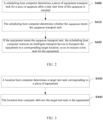
- FIG. 1 is a schematic diagram of a forming-machine equipment testing system according to some embodiments of this application.
- the forming-machine equipment testing system may include a scheduling host computer 100.
- the system may further include, for example, a location host computer 200.
- the scheduling host computer 100 is in communication connection with one or more location host computers 200 via a network, for data communication or interaction.
- the scheduling host computer 100 may be a web server, a database server, a personal computer (PC), a tablet PC, a smartphone, a personal digital assistant (PDA), or the like.
- the location host computer 200 may be a web server, a database server, a personal computer (PC), a tablet computer, a smartphone, a personal digital assistant (PDA), or the like.
- the scheduling host computer 100 and the location host computer 200 may be two independent devices or two different parts integrated to one device. Disposition of the scheduling host computer 100 and the location host computer 200 can be selected based on actual situation, which is not specifically limited in this application.
- a piece of equipment is scheduled by the scheduling host computer 100 to be transported to a corresponding target location, and the equipment is scheduled to be transported back to an original location after the equipment completes a test task.
- the location host computer 200 is used to deliver an obtained target test task of a piece of equipment to the corresponding equipment, so that the equipment executes the target test task.
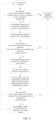
- a forming-machine equipment testing method can be applied to the foregoing forming-machine equipment testing system. As shown in FIG. 2 , the forming-machine equipment testing method includes the following steps.
- Step S400 A scheduling host computer determines an equipment transport task for the equipment after a task start time of the equipment is reached.
- Step S410 The scheduling host computer determines whether the equipment meets the equipment transport task.
- Step S420 If the equipment meets the equipment transport task, the scheduling host computer instructs an intelligent transport device to transport the equipment to a corresponding target location, so as to execute a test task for the equipment.
- the scheduling host computer stores a task start time corresponding to each type of equipment.
- the scheduling host computer further stores a corresponding task cycle time for each type of equipment.
- the task start time herein may be an initial task start time or a task start time upon arrival of a cycle of each task.
- the task start time and task cycle corresponding to each type of equipment may be the same or different.
- the task start time and task cycle corresponding to each piece of equipment are determined based on specific work of the equipment, which is not specifically limited in this application.
- step S400 after a task start time of a piece of equipment is reached, the scheduling host computer determines a piece of equipment corresponding to the task start time based on the task start time and a prestored relationship between equipment and task start times, and generates, based on the equipment, an equipment transport task corresponding to the equipment.
- the equipment transport task After the equipment transport task is generated, it is ensured that the equipment can be successfully transported to the target location corresponding to the equipment. On this basis, whether the equipment meets the equipment transport task may also be determined before the equipment is transported. After the equipment meets the equipment transport task, the transport task is executed, so as to prevent unexpected transport. It should be understood that conditions corresponding to the equipment transport task to be met by the equipment may include a to-be-met transport status of the target location and a condition to be met by the equipment itself.
- the scheduling host computer After determining that the equipment meets the equipment transport condition, the scheduling host computer delivers the equipment transport task to an intelligent transport device, so that the intelligent transport device transports the equipment from the original location to the target location and the equipment executes the corresponding test task in the target location.
- the task start time of each piece of equipment is prestored in the scheduling host computer. Therefore, the scheduling host computer can be triggered to directly generate a corresponding equipment transport task after the task start time is reached.
- This realizes the purpose of periodic automatic testing, simplifies management of test tasks for equipment, and reduces errors in records and missed records for manual recording, thereby improving the testing accuracy of forming-machine equipment.
- the intelligent transport device is controlled to transport the equipment, it is first determined whether the equipment meets the equipment transport task, and only when the equipment transport task is met, the intelligent transport device is controlled to transport the equipment to the corresponding target location. This reduces unexpected transport performed by the intelligent transport device and improves the testing efficiency of the forming-machine equipment.
- the forming-machine equipment testing system further includes the location host computer, as described above. As shown in FIG. 3 , after the intelligent transport device transports the equipment to the corresponding target location, the method further includes the following steps.
- Step S430 A location host computer determines a target test task corresponding to a piece of equipment.
- Step S440 The location host computer delivers the target test task to the equipment.
- one or more location host computers may be provided. If one location host computer is provided, the location host computer corresponds to all target locations.
- the forming machine includes nine types of equipment and the nine types of equipment correspond to nine target locations. All the nine target locations correspond to the one location host computer.
- each location host computer corresponds to one target location.
- each location host computer may alternatively correspond to a plurality of target locations.
- the forming machine includes nine types of equipment and the nine types of equipment correspond to nine target locations.
- Each of the nine target locations may correspond to one location host computer, that is, nine location host computers are provided.
- three location host computers may be provided, and each location host computer corresponds to three target locations.
- the foregoing target test task includes but is not limited to a power source test task, a temperature test task, a pressure test task, and the like. Each type of equipment corresponds to one test task.
- a binding relationship between equipment and equipment types is stored in the location host computer.
- the location host computer determines an equipment type corresponding to the equipment based on obtained equipment information.
- the equipment information may be information for distinguishing equipment, such as an equipment image or an equipment identifier.
- the equipment image can be acquired by an image acquisition apparatus, and the image acquisition apparatus may be provided in a target location, at the place of the intelligent transport device, or the like.
- the image acquisition apparatus may be located based on the actual situation, which is not specifically limited in this application.
- the equipment identifier may be obtained from the scheduling host computer or the intelligent transport device. For example, when delivering an equipment transport task to the intelligent transport device, the scheduling host computer may also send equipment transport task information to the location host computer.
- the equipment transport task information includes an equipment identifier of the equipment.
- the intelligent transport device sends equipment information of the equipment to the location host computer.
- the equipment information includes an equipment identifier of the equipment and the like.
- a binding relationship between equipment types and target locations is stored in the location host computer.
- the location host computer determines an equipment type corresponding to the equipment based on location information corresponding to the equipment. For example, a piece of equipment A1 corresponds to a target location A2. After obtaining information that the target location A2 is occupied, the location host computer determines that the equipment Al needs to execute a test task, and then determines a corresponding equipment type based on the target location and determines a corresponding target test task based on the equipment type.
- step S430 is merely exemplary and does not constitute any limitation on step S430.
- the location host computer After determining the target test task, the location host computer delivers the target test task to the equipment transported to the target location. After receiving the target test task, the equipment in the target location executes the corresponding test task.
- the location host computer automatically determines the target test task corresponding to the equipment and delivers it to the equipment.
- the entire process of generating a target test task can be completed automatically by the location host computer without human intervention, reducing labor costs.
- step S430 includes step S431 to step S433.
- Step S431. The location host computer obtains a graphic code of the equipment.
- Step S432. The location host computer determines an equipment type of the equipment based on the graphic code.
- Step S433. The location host computer determines the corresponding target test task based on the equipment type.
- each piece of equipment has a graphic code
- each piece of equipment corresponds to a unique graphic code, so as to determine the identifier of the equipment based on the graphic code.
- the graphic code includes, but is not limited to, a quick response code or a barcode.
- the scheduling host computer can determine an equipment type of a piece of equipment by obtaining the graphic code of the equipment, and determines, based on the equipment type, whether the equipment meets the equipment transport task. In this way, when the location host computer needs to determine a target test task, the location host computer can obtain the graphic code of the equipment from the scheduling host computer.
- a scanning device may also be provided to scan the graphic code of the equipment and send the obtained graphic code to the location host computer.
- step S432 after obtaining the graphic code of the equipment, the location host computer determines the equipment type of the equipment based on the graphic code and a prestored binding relationship between equipment graphic codes and equipment types.
- the location host computer prestores test tasks corresponding to each equipment type. After determining the equipment type, the location host computer further determines that a test task bound to the equipment type is the target test task.
- the equipment type is determined based on the graphic code of the equipment, and each piece of equipment corresponds to a unique graphic code.
- the unique equipment type can be determined based on the graphic code because a test task corresponding to each equipment type remains unchanged. Therefore, the equipment type is determined based on the graphic code and then the target test task is determined accordingly. This can greatly avoid risks caused by executing a wrong task by a piece of equipment, and improve the accuracy of task execution by the equipment.
- step S400 includes: the scheduling host computer receives a specified location input externally and determines the equipment transport task for the equipment based on the specified location.
- the method further includes the following steps.
- Step S450 The location host computer receives a target test task input externally.
- Step S460 The location host computer delivers the target test task to the equipment.
- the external input may be a specified location and target test task that are selected manually through an interactive interface or an input and output device.
- a target location in order to ensure the safety and accuracy of target locations, generally a target location is maintained when failed, or a target location is overhauled at the set time of overhaul to ensure that the target location is in a safe condition.
- a target location When a target location is under maintenance or overhaul but task start time is reached for a piece of equipment corresponding to the target location, another location can be manually specified as the location for the equipment to execute the test task.
- the specified location is input into the scheduling host computer.
- the scheduling host computer generates an equipment transport task based on the specified location and the equipment, and the intelligent transport device transports the equipment to the specified location. After the intelligent transport device transports the equipment to the specified location, a target test task corresponding to the equipment is determined manually, and the target test task to be executed by the equipment is input through the interactive interface or an input and output device.
- step S420 In the case of external input, the specified location and the target test task are determined in a manual mode. In the manual mode, step S420 may be still performed in the automatic mode, or may be omitted so that step S430 is performed subsequent to step S410. In the manual mode, whether to perform S420 can be determined based on the actual situation, which is not specifically limited in this application.
- the determining the target location based on the equipment by the scheduling host computer and determining the target test task by the location host computer are implemented in the automatic mode.
- both the manual mode and automatic mode may be set for the forming-machine equipment testing method. If both the manual mode and automatic mode are set, an execution order of the two modes can be determined based on priorities. For example, the priority of the manual mode may be set to be higher than that of the automatic mode. In other words, the automatic mode does not work when the manual mode is activated.
- both the manual mode and automatic mode may be set for the forming-machine equipment testing method. If both the manual mode and automatic mode are set, the manual mode can be activated at a set point of time (generally a fixed point of overhaul time for a target location), and the automatic mode is activated at all points of time points except that for the manual mode.
- a set point of time generally a fixed point of overhaul time for a target location
- the scheduling host computer when the target location corresponding to the equipment is under overhaul, the scheduling host computer is configured to determine a specified location according to information input externally, the location host computer is configured to obtain a target test task input externally, and the equipment is transported to the specified location for executing the target test task. Therefore, the test task for the equipment is completed manually.
- corresponding test tasks can be executed flexibly in another location, avoiding the case where a piece of equipment fails to execute a test task during overhaul of the target location and improving the flexibility of target test task execution by the forming-machine equipment.
- step S410 includes step S411 to step S413.
- Step S411 The scheduling host computer determines whether the target location corresponding to the equipment meets an admission condition.
- a transport status of the target location to be met may be that a previous test task is completed in the target location or the target location is in an unoccupied state.
- equipment data is uploaded to the scheduling host computer. Then, the scheduling host computer directly determines, based on the equipment data, whether the previous test task is completed in the target location.
- a status of the target location may be obtained by a sensor or an image acquisition apparatus.
- the sensor may be an optical sensor, a pressure sensor, or the like, so that the status of the target location can be determined based on an optical signal or a pressure signal of the target location.
- the image acquisition apparatus may be a scanner, a camera, a video camera, or the like, so as to determine, based on image information of the target location, whether the target location is occupied.
- the scheduling host computer may further determine whether the equipment itself meets a transport condition.
- the condition to be met by the equipment itself may be that the equipment is in an unoccupied state.
- the status of the equipment may be obtained in the following manner.
- equipment data is uploaded to the scheduling host computer. Then, the scheduling host computer directly determines, based on the equipment data, whether the previous test task is completed in the target location, so as to determine the status of the equipment.
- the status of the equipment is obtained by a sensor or an image acquisition apparatus provided in an original location of the equipment.
- the sensor may be an optical sensor, a pressure sensor, or the like, so that the status of the equipment can be determined based on an optical signal or a pressure signal of the original location.
- the image acquisition apparatus may be a scanner, a camera, a video camera, or the like, so that the status of the equipment is determined based on image information of the equipment.
- condition to be met by the equipment itself may be that the equipment is of the equipment type corresponding to the current test task.
- the scheduling host computer stores a binding relationship between equipment and equipment types.
- the scheduling host computer determines an equipment type corresponding to the equipment based on obtained equipment information.
- the equipment information may be an equipment image, and the equipment image can be acquired by an image acquisition apparatus.
- the image acquisition apparatus may be provided in an original location of the equipment, at the place of the intelligent transport device, or the like.
- the image acquisition apparatus may be provided based on actual situation, which is not specifically limited in this application.
- the equipment information may also be an equipment graphic code, and the equipment graphic code corresponds to a unique equipment identifier.
- the equipment graphic code herein can be obtained by using a scanning device. After obtaining the equipment graphic code, the scanning device sends the equipment graphic code to the scheduling host computer, so that the scheduling host computer determines an equipment type corresponding to the equipment based on the equipment identifier in the graphic code.
- the equipment type corresponding to the current test task may be determined based on a current point of time or a to-be-tested parameter of the current test task in the scheduling host computer or the location host computer. Determining of the equipment type corresponding to the current test task can be adjusted based on the actual situation, which is not specifically limited in this application.
- step S412 is merely exemplary, and does not constitute any limitation on step S412.
- whether the target location meets the admission condition and whether the equipment type is the equipment type corresponding to the current test task are determined separately.
- the equipment transport task is determined only when the target location meets the admission condition and the equipment type is the equipment type corresponding to the current test task. This prevents the intelligent transport device from performing unexpected transport in case of the equipment being inconsistent with the equipment type corresponding to the current test task and the target location being occupied, and improves the execution efficiency and accuracy of equipment transport tasks.
- step S412 includes: the scheduling host computer obtains a graphic code of the equipment and determines the equipment type of the equipment based on the graphic code, so as to determine whether the equipment type of the equipment is an equipment type corresponds to the current test task.
- the foregoing forming-machine equipment is provided with a unique corresponding graphic code, so that an equipment identifier and an equipment type corresponding to each piece of equipment can be determined based on the graphic code.
- the scheduling host computer herein may obtain the graphic code of the equipment through a scanning device or may obtain the graphic code of the equipment through an image acquisition device.
- the scanning device or the image acquisition device herein can be provided in an original location of the equipment.
- an equipment scanning location may also be provided.
- the scanning device or the image acquisition device is provided in the equipment scanning location. It should be understood that after it is determined that a target location meets an admission condition, the intelligent transport device can transport the equipment to the equipment scanning location, so as to obtain the graphic code of the equipment at the equipment scanning location.
- the scheduling host computer can determine an equipment type of the equipment based on the graphic code of the equipment and a binding relationship between graphic codes and equipment types that is prestored in the scheduling host computer.
- the graphic code of the equipment is obtained, and equipment type verification is performed on the to-be-transported equipment based on the binding relationship between graphic codes and equipment types, so as to determine that the to-be-transported equipment is of the equipment type corresponding to the current test task. In this way, a piece of equipment will not be transported by wrong, improving the accuracy of transport tasks.
- the method further includes the following steps.
- Step S500 The scheduling host computer obtains equipment data corresponding to the target test task executed by the equipment.
- Step S510 The scheduling host computer determines whether the equipment data meets an equipment backhauling task.
- Step S520 If the equipment data meets the equipment backhauling task, the scheduling host computer instructs the intelligent transport device to transport the equipment back to an original location of the equipment.
- step S500 after completing a target test task, each piece of equipment uploads, to the scheduling host computer, the equipment data for the target test task executed by the equipment, so that the scheduling host computer obtains the equipment data corresponding to the target test task executed by the equipment.
- the scheduling host computer may obtain equipment data of each piece of equipment at preset intervals, including the equipment data corresponding to the target test task executed by the equipment.
- the scheduling host computer can further determine, based on the equipment data of the equipment, whether the equipment meets the equipment backhauling task.
- the equipment meeting the equipment backhauling task may include that the original location of the equipment is unoccupied, the equipment has completed the target test task, and so on.
- the manner of determining whether the original location is occupied is the same as that of determining whether the target location is occupied, and details are not described herein again.
- Whether the equipment has completed the target test task can be determined based on the equipment data.
- the equipment data includes the time when the equipment executes the test task. Specifically, whether the equipment executes a test task after execution of the latest equipment transport task is determined, so as to determine whether the equipment has completed the target test task.
- the equipment uploads to the scheduling host computer the equipment data on execution of the target test task, where the equipment data is uploaded using preset fields.
- the scheduling host computer provides a preset storage format for storing the equipment data.
- equipment task number, equipment pallet number, location number, status, and the like may be arranged sequentially from left to right.
- the equipment data can be uploaded according to the foregoing fields.
- the foregoing fields may further include equipment type, task start time, task end time, upload result, and the like.
- the equipment data of each piece of equipment can be queried on the scheduling host computer and displayed on a display apparatus.
- the equipment data can be displayed in a set storage format. As shown in the foregoing example of storage, the equipment data may include equipment task number, equipment pallet number, location number, status, and the like, which are displayed sequentially from left to right.
- the scheduling host computer obtains the equipment data for the target test task executed by the equipment.
- the scheduling host computer can automatically record data such as execution time, content, and the equipment type for the target test task executed by the equipment to form a systematic record of use. This facilitates automatic management of equipment, locations, and the like, and simplifies management of equipment and locations for the forming machine.
- whether the equipment meets the equipment backhauling task is determined based on the equipment data, and when the equipment meets the transport task, the intelligent transport device is instructed to transport the equipment back to the original location, so as to periodically schedule each piece of equipment to execute corresponding test tasks. This allows the forming-machine equipment to execute test tasks automatically, reducing human intervention and labor costs while improving the test task execution efficiency of the forming-machine equipment.
- an embodiment of this application provides a forming-machine equipment testing system. It can be understood that the system corresponds to the method embodiments implemented in FIG. 2 to FIG. 7 , and can implement the steps in the foregoing method. For specific functions of the system, refer to the foregoing description. To avoid repetition, detailed description is appropriately omitted.
- the system includes a scheduling host computer 100.
- the scheduling host computer 100 is configured to: determine an equipment transport task for the equipment after a task start time of the equipment is reached; determine whether the equipment meets the equipment transport task; and if the equipment meets the equipment transport task, instruct an intelligent transport device to transport the equipment to a corresponding target location, so that the equipment is controlled to execute a test task in a target location.
- the forming-machine equipment testing system may further include an intelligent transport device.
- the intelligent transport device is in communication connection with the scheduling host computer 100 and/or a location host computer 200 via a network, for data communication or interaction.
- the intelligent transport device may be an RGV (Rail Guided Vehicle), an AGV trolley, a robot, a robot arm, or the like.
- the intelligent transport device is used to transport a piece of equipment from an original location to a corresponding target location after obtaining a transport command. Moreover, the intelligent transport device transports the equipment back to the original location after the equipment has completed a task in the target location.
- the task start time of each piece of equipment is prestored in the scheduling host computer. Therefore, the scheduling host computer can be triggered to directly generate a corresponding equipment transport task after the task start time is reached.
- This realizes the purpose of periodic automatic testing, simplifies management of test tasks for equipment, and reduces errors in records and missed records for manual recording, thereby improving the testing accuracy of forming-machine equipment.
- the intelligent transport device is controlled to transport the equipment, it is first determined whether the equipment meets the equipment transport task, and only when the equipment transport task is met, the intelligent transport device is controlled to transport the equipment to the corresponding target location. This reduces unexpected transport performed by the intelligent transport device and improves the testing efficiency of the forming-machine equipment.
- the system further includes a location host computer 200.
- the location host computer is configured to: after the intelligent transport device transports the equipment to the corresponding target location, determine a target test task corresponding to the equipment and deliver the target test task to the equipment.
- the location host computer 200 is further configured to: obtain a graphic code of the equipment and determine an equipment type of the equipment based on the graphic code; and determine the corresponding target test task based on the equipment type.
- the system further includes a location host computer 200, configured to: after the intelligent transport device transports the equipment to the corresponding target location, receive a target test task input externally and deliver the target test task to the equipment.
- a location host computer 200 configured to: after the intelligent transport device transports the equipment to the corresponding target location, receive a target test task input externally and deliver the target test task to the equipment.
- the scheduling host computer 100 is further configured to determine whether the target location corresponding to the equipment meets an admission condition.
- the scheduling host computer 100 is further configured to: if the target location meets the admission condition, determine whether an equipment type of the equipment is an equipment type corresponding to a current test task; and if the equipment type of the equipment is an equipment type corresponds to the current test task, determine that the equipment meets the equipment transport task.
- the scheduling host computer 100 is further configured to obtain a graphic code of the equipment and determine the equipment type of the equipment based on the graphic code, so as to determine whether the equipment type of the equipment is an equipment type corresponds to the current test task.
- the scheduling host computer 100 is further configured to: obtain the equipment data corresponding to the execution of the target test task by the equipment; determine whether the equipment data meets the equipment backhauling task; and if the equipment data meets the equipment backhauling task, instruct the intelligent handling device to transport the equipment back to the original location of the equipment.
- the forming-machine equipment testing system may further include a scanning device.
- the scanning device is in communication connection with the scheduling host computer 100 and/or the location host computer 200 via a network, for data communication or interaction.
- the scanning device may be a scanner, a camera, a video camera, a scanner gun, or the like.
- the scanning device is used to obtain a graphic code of the equipment, so as to determine an equipment type of the equipment based on the graphic code.
- the scheduling host computer 100 and the location host computer 200 both store a binding relationship between graphic codes of equipment and equipment types.
- the scanning device can send the acquired graphic code to the scheduling host computer 100 and/or the location host computer 200, so that the scheduling host computer 100 and/or the location host computer 200 determine an equipment type corresponding to the equipment.
- the intelligent transport device may first transport the equipment to the location of the scanning device after obtaining a transport command.
- the scanning device obtains the graphic code of the equipment, sends the graphic code to the scheduling host computer 100, and verifies the equipment type of the equipment through the scheduling host computer 100.
- the scanning device and the intelligent transport device may be part of the forming-machine equipment testing system or may be device independent of the forming-machine equipment testing system. Disposition of the scanning device and intelligent transport device may be adjusted based on the actual situation, which is not specifically limited in this application.
- FIG. 8 is a schematic flowchart of an interaction between various devices in a forming-machine equipment testing system.
- the forming-machine equipment testing system controls a piece of equipment to execute a test task.
- the scheduling host computer 100 stores a task start time corresponding to each type of equipment. When task start time is reached, the scheduling host computer 100 determines a corresponding piece of equipment based on the task start time, and determines, based on the equipment, whether a target location corresponding to the equipment meets the equipment transport task.
- the equipment transport task is generated when the target location meets the equipment transport task, and the equipment transport task is sent to the intelligent transport device.
- the intelligent transport device transports the equipment to the location of the scanning device.
- the scanning device scans the graphic code on the equipment and sends the graphic code to the scheduling host computer 100.
- the scheduling host computer 100 determines the equipment type corresponding to the equipment based on the graphic code and a prestored binding relationship between graphic codes and equipment types, and determines whether the equipment type is the equipment type required by the current test task.
- the intelligent transport device transports the equipment from the location of the scanning device to the target location.
- the location host computer 200 obtains the graphic code of the equipment from the scheduling host computer 100 or the scanning device, determines the target test task corresponding to the target location based on the graphic code and the prestored binding relationship between graphic codes and equipment types, and delivers the target test task to the equipment so that the target test task is executed by the equipment.
- the equipment After the equipment executes the target test task, the equipment sends equipment data on execution of the target test task to the scheduling host computer 100. After obtaining the equipment data, the scheduling host computer 100 determines whether the equipment meets an equipment backhauling task based on the equipment data. When the equipment meets the equipment backhauling task, the intelligent transport device is instructed to transport the equipment back to the original location of the equipment.
- FIG. 9 is a block diagram of the electronic device.
- An electronic device 10 may include a memory 101 and a processor 103.
- a person of ordinary skill in the art may understand that the structure illustrated in FIG. 9 is merely exemplary and does not limit the structure of the electronic device 10.
- the electronic device 10 may further include more or fewer components than shown in FIG. 9 , or have a different configuration from as shown in FIG. 9 .
- the memory 101 and the processor 103 are in direct or indirect electric connection to implement data transmission or interaction. For example, these components may be electrically connected to each other via one or more communication buses or signal cables.
- the processor 103 is used to execute executable modules stored in the memory.
- the memory 101 may be, but is not limited to, a random access memory (RAM), a read only memory (ROM), a programmable read-only memory (PROM), an erasable programmable read-only memory (EPROM), an electric erasable programmable read-only memory (EEPROM), and the like.
- RAM random access memory
- ROM read only memory
- PROM programmable read-only memory
- EPROM erasable programmable read-only memory
- EEPROM electric erasable programmable read-only memory
- the processor 103 may be an integrated circuit chip with a signal processing capability.
- the processor 103 may be a general-purpose processor, including a central processing unit (CPU), a network processor (NP), and the like; or may be a digital signal processor (DSP), an application specific integrated circuit (ASIC), a field programmable gate array (FPGA) or another programmable logic device, a discrete gate or transistor logic device, or a discrete hardware component.
- DSP digital signal processor
- ASIC application specific integrated circuit
- FPGA field programmable gate array
- the methods, steps, and logic block diagrams disclosed in the embodiments of this application can be implemented or performed.
- the general-purpose processor may be a microprocessor, or the processor may be any conventional processor or the like.
- the electronic device 10 in this embodiment can be used to perform various steps in the various methods provided in the embodiments of this application.
- This application provides a computer-readable storage medium, and the computer-readable storage medium stores a computer program.
- the computer program is executed by a processor, the method in any one of the foregoing optional implementations is implemented.
- the storage medium may be implemented by any type of volatile or nonvolatile storage device or a combination thereof, such as a static random access memory (), an electrically erasable programmable read-only memory (EEPROM), an erasable programmable read only memory (EPROM), a programmable read-only memory (PROM), a read-only memory (ROM), a magnetic memory, a flash memory, a magnetic disk, or a compact disc.
- EEPROM electrically erasable programmable read-only memory
- EPROM erasable programmable read only memory
- PROM programmable read-only memory
- ROM read-only memory
- magnetic memory a magnetic memory
- flash memory a flash memory
- magnetic disk a magnetic disk
- compact disc compact disc
- This application provides a computer program product.
- the computer program product runs on a computer, the method in any one of the optional implementations is implemented by the computer.
- each block in the flowcharts or the block diagrams may represent part of a module, a program segment or code, and part of the module, the program segment or the code includes one or more executable instructions configured to realize a specified logical function.
- the functions marked in the blocks may also be realized in a sequence different from those marked in the accompanying drawings.
- each block in the block diagrams and/or the flowcharts and a combination of the blocks in the block diagrams and/or the flowcharts may be implemented by a dedicated hardware-based system configured to execute a specified function or operation or may be implemented by a combination of a special hardware and a computer instruction.
- each functional module in each embodiment of the application may be integrated into an independent part, each module may also independently exist, and two or more than two modules may also be integrated into an independent part.
- the function may also be stored in a computer-readable storage medium.
- the technical solutions of the application substantially or parts making contributions to the conventional art or part of the technical solutions may be embodied in form of software product, and the computer software product is stored in a storage medium, including a plurality of instructions configured to enable a computer device (which may be a personal computer, a server, a network device or the like) to execute all or part of the steps of the method in each embodiment of the application.
- the foregoing storage medium includes various media capable of storing program codes such as a U disk, a mobile hard disk, a read-only memory (ROM), a random access memory (RAM), a magnetic disk, or an optical disk.
Landscapes
- Engineering & Computer Science (AREA)
- Business, Economics & Management (AREA)
- Human Resources & Organizations (AREA)
- Strategic Management (AREA)
- General Physics & Mathematics (AREA)
- Physics & Mathematics (AREA)
- Entrepreneurship & Innovation (AREA)
- Economics (AREA)
- General Business, Economics & Management (AREA)
- Tourism & Hospitality (AREA)
- Marketing (AREA)
- Theoretical Computer Science (AREA)
- Operations Research (AREA)
- Quality & Reliability (AREA)
- Automation & Control Theory (AREA)
- Health & Medical Sciences (AREA)
- Manufacturing & Machinery (AREA)
- Primary Health Care (AREA)
- Data Mining & Analysis (AREA)
- Development Economics (AREA)
- Educational Administration (AREA)
- Game Theory and Decision Science (AREA)
- Computer Networks & Wireless Communication (AREA)
- Signal Processing (AREA)
- General Health & Medical Sciences (AREA)
- Management, Administration, Business Operations System, And Electronic Commerce (AREA)
Applications Claiming Priority (2)
| Application Number | Priority Date | Filing Date | Title |
|---|---|---|---|
| CN202310084915.4A CN118466475A (zh) | 2023-02-07 | 2023-02-07 | 化成机工装测试方法、装置、系统及计算机可读存储介质 |
| PCT/CN2023/081729 WO2024164392A1 (zh) | 2023-02-07 | 2023-03-15 | 化成机工装测试方法、装置、系统及计算机可读存储介质 |
Publications (2)
| Publication Number | Publication Date |
|---|---|
| EP4435696A4 EP4435696A4 (de) | 2024-09-25 |
| EP4435696A1 true EP4435696A1 (de) | 2024-09-25 |
Family
ID=92119468
Family Applications (1)
| Application Number | Title | Priority Date | Filing Date |
|---|---|---|---|
| EP23733614.4A Pending EP4435696A1 (de) | 2023-02-07 | 2023-03-15 | Verfahren, vorrichtung und system zum testen einer formmaschine und computerlesbares speichermedium |
Country Status (2)
| Country | Link |
|---|---|
| US (1) | US20240264589A1 (de) |
| EP (1) | EP4435696A1 (de) |
Families Citing this family (1)
| Publication number | Priority date | Publication date | Assignee | Title |
|---|---|---|---|---|
| US12524743B2 (en) * | 2024-04-24 | 2026-01-13 | Steven Scannapieco | Maintenance management software and methods of performing the same |
Family Cites Families (8)
| Publication number | Priority date | Publication date | Assignee | Title |
|---|---|---|---|---|
| US9477519B2 (en) * | 2014-09-18 | 2016-10-25 | Robert D. Pedersen | Distributed activity control systems and methods |
| CN105911475A (zh) * | 2016-04-12 | 2016-08-31 | 中国船舶重工集团公司第七〇二研究所 | 一种动力电池Pack测试系统 |
| US11663561B2 (en) * | 2017-12-29 | 2023-05-30 | Lyft, Inc. | Charge scheduling across a fleet of autonomous vehicles (AVs) |
| EP3579174A1 (de) * | 2018-06-08 | 2019-12-11 | Hexagon Technology Center GmbH | Mobile fahrzeuge in der herstellung |
| US11330395B2 (en) * | 2020-02-14 | 2022-05-10 | Aurora Flight Services Corp., A Subsidiary Of The Boeing Company | Access control system and method |
| JP7487552B2 (ja) * | 2020-05-20 | 2024-05-21 | セイコーエプソン株式会社 | 充電方法および充電システム |
| WO2022023797A1 (en) * | 2020-07-31 | 2022-02-03 | Siemens Industry Software Ltd. | Method and apparatus for emulating automated guided vehicle (agv) system |
| CN112630669A (zh) * | 2020-12-08 | 2021-04-09 | 合肥国轩高科动力能源有限公司 | 一种基于rgv穿梭车的pack电池包电性能检测方法及系统 |
-
2023
- 2023-03-15 EP EP23733614.4A patent/EP4435696A1/de active Pending
- 2023-07-04 US US18/346,786 patent/US20240264589A1/en active Pending
Also Published As
| Publication number | Publication date |
|---|---|
| US20240264589A1 (en) | 2024-08-08 |
| EP4435696A4 (de) | 2024-09-25 |
Similar Documents
| Publication | Publication Date | Title |
|---|---|---|
| US20120173392A1 (en) | Method, system and apparatus for managing inventory | |
| JP5701458B1 (ja) | 作画装置および制御システム | |
| CN113031591A (zh) | 推料机器人的异常处理方法、装置、服务器及存储介质 | |
| EP4435696A1 (de) | Verfahren, vorrichtung und system zum testen einer formmaschine und computerlesbares speichermedium | |
| TWM608799U (zh) | 智慧倉庫系統 | |
| CN108121307A (zh) | 信息处理装置、信息处理系统、信息处理方法以及记录介质 | |
| CN112465421A (zh) | 一种机房资产u位级位置管理方法、装置和设备 | |
| CN110689259A (zh) | 电力系统计量数字化检测管理系统 | |
| CN111652394A (zh) | 工单处理方法、装置和设备 | |
| EP2390739A2 (de) | Verfahren und Vorrichtung zur Bereitstellung von Informationen zu einer Industrieanlage | |
| CN118348920A (zh) | 生产数据检查方法、检查系统和存储介质 | |
| CN117745037A (zh) | 一种针对巡检内容的自定义配置方法及其系统 | |
| CN105335770A (zh) | 生产异常事件实时管理系统 | |
| JPWO2016071974A1 (ja) | リモート制御装置および制御システム | |
| WO2024098608A1 (zh) | 物料管理方法、装置、计算机设备及存储介质 | |
| WO2025190050A1 (zh) | 标识码的识别方法、识别装置和仓储系统 | |
| EP4156375B1 (de) | Bms-verwaltungsvorrichtung und -verfahren | |
| CN121093912A (zh) | 一种面向后评价报告的Agent协同式长文生成系统及方法 | |
| CN120493452A (zh) | 线缆连接方案确定方法及装置 | |
| JP6881480B2 (ja) | 産業機器管理システム、産業機器管理方法、及びプログラム | |
| CN115422219B (zh) | 机器人机型数据同步方法、系统及介质 | |
| WO2024164392A1 (zh) | 化成机工装测试方法、装置、系统及计算机可读存储介质 | |
| EP2386991A1 (de) | Anlagenbetriebsverwaltungs-/-unterstützungssystem | |
| US10935965B2 (en) | Operation management apparatus | |
| CN116071046A (zh) | 基于工业互联网的设备巡检保养数据处理方法及系统 |
Legal Events
| Date | Code | Title | Description |
|---|---|---|---|
| STAA | Information on the status of an ep patent application or granted ep patent |
Free format text: STATUS: UNKNOWN |
|
| STAA | Information on the status of an ep patent application or granted ep patent |
Free format text: STATUS: THE INTERNATIONAL PUBLICATION HAS BEEN MADE |
|
| PUAI | Public reference made under article 153(3) epc to a published international application that has entered the european phase |
Free format text: ORIGINAL CODE: 0009012 |
|
| STAA | Information on the status of an ep patent application or granted ep patent |
Free format text: STATUS: REQUEST FOR EXAMINATION WAS MADE |
|
| 17P | Request for examination filed |
Effective date: 20230703 |
|
| A4 | Supplementary search report drawn up and despatched |
Effective date: 20240627 |
|
| AK | Designated contracting states |
Kind code of ref document: A1 Designated state(s): AL AT BE BG CH CY CZ DE DK EE ES FI FR GB GR HR HU IE IS IT LI LT LU LV MC ME MK MT NL NO PL PT RO RS SE SI SK SM TR |
|
| RAP1 | Party data changed (applicant data changed or rights of an application transferred) |
Owner name: CONTEMPORARY AMPEREX TECHNOLOGY(HONG KONG) LIMITED |
|
| STAA | Information on the status of an ep patent application or granted ep patent |
Free format text: STATUS: EXAMINATION IS IN PROGRESS |
|
| 17Q | First examination report despatched |
Effective date: 20250327 |
|
| GRAP | Despatch of communication of intention to grant a patent |
Free format text: ORIGINAL CODE: EPIDOSNIGR1 |
|
| STAA | Information on the status of an ep patent application or granted ep patent |
Free format text: STATUS: GRANT OF PATENT IS INTENDED |
|
| DAV | Request for validation of the european patent (deleted) | ||
| DAX | Request for extension of the european patent (deleted) | ||
| INTG | Intention to grant announced |
Effective date: 20260305 |