EP4418366A1 - Negativelektrodenmaterial, batterie, verfahren zur herstellung des negativelektrodenmaterials und verfahren zur herstellung der batterie - Google Patents
Negativelektrodenmaterial, batterie, verfahren zur herstellung des negativelektrodenmaterials und verfahren zur herstellung der batterie Download PDFInfo
- Publication number
- EP4418366A1 EP4418366A1 EP22881058.6A EP22881058A EP4418366A1 EP 4418366 A1 EP4418366 A1 EP 4418366A1 EP 22881058 A EP22881058 A EP 22881058A EP 4418366 A1 EP4418366 A1 EP 4418366A1
- Authority
- EP
- European Patent Office
- Prior art keywords
- negative electrode
- electrode material
- carbon
- silicon
- less
- Prior art date
- Legal status (The legal status is an assumption and is not a legal conclusion. Google has not performed a legal analysis and makes no representation as to the accuracy of the status listed.)
- Pending
Links
Images



Classifications
-
- H—ELECTRICITY
- H01—ELECTRIC ELEMENTS
- H01M—PROCESSES OR MEANS, e.g. BATTERIES, FOR THE DIRECT CONVERSION OF CHEMICAL ENERGY INTO ELECTRICAL ENERGY
- H01M4/00—Electrodes
- H01M4/02—Electrodes composed of, or comprising, active material
- H01M4/36—Selection of substances as active materials, active masses, active liquids
-
- C—CHEMISTRY; METALLURGY
- C01—INORGANIC CHEMISTRY
- C01G—COMPOUNDS CONTAINING METALS NOT COVERED BY SUBCLASSES C01D OR C01F
- C01G41/00—Compounds of tungsten
- C01G41/02—Oxides; Hydroxides
-
- H—ELECTRICITY
- H01—ELECTRIC ELEMENTS
- H01G—CAPACITORS; CAPACITORS, RECTIFIERS, DETECTORS, SWITCHING DEVICES, LIGHT-SENSITIVE OR TEMPERATURE-SENSITIVE DEVICES OF THE ELECTROLYTIC TYPE
- H01G11/00—Hybrid capacitors, i.e. capacitors having different positive and negative electrodes; Electric double-layer [EDL] capacitors; Processes for the manufacture thereof or of parts thereof
- H01G11/22—Electrodes
- H01G11/30—Electrodes characterised by their material
-
- H—ELECTRICITY
- H01—ELECTRIC ELEMENTS
- H01M—PROCESSES OR MEANS, e.g. BATTERIES, FOR THE DIRECT CONVERSION OF CHEMICAL ENERGY INTO ELECTRICAL ENERGY
- H01M10/00—Secondary cells; Manufacture thereof
- H01M10/05—Accumulators with non-aqueous electrolyte
- H01M10/052—Li-accumulators
-
- H—ELECTRICITY
- H01—ELECTRIC ELEMENTS
- H01M—PROCESSES OR MEANS, e.g. BATTERIES, FOR THE DIRECT CONVERSION OF CHEMICAL ENERGY INTO ELECTRICAL ENERGY
- H01M10/00—Secondary cells; Manufacture thereof
- H01M10/05—Accumulators with non-aqueous electrolyte
- H01M10/052—Li-accumulators
- H01M10/0525—Rocking-chair batteries, i.e. batteries with lithium insertion or intercalation in both electrodes; Lithium-ion batteries
-
- H—ELECTRICITY
- H01—ELECTRIC ELEMENTS
- H01M—PROCESSES OR MEANS, e.g. BATTERIES, FOR THE DIRECT CONVERSION OF CHEMICAL ENERGY INTO ELECTRICAL ENERGY
- H01M4/00—Electrodes
- H01M4/02—Electrodes composed of, or comprising, active material
- H01M4/04—Processes of manufacture in general
- H01M4/0471—Processes of manufacture in general involving thermal treatment, e.g. firing, sintering, backing particulate active material, thermal decomposition, pyrolysis
-
- H—ELECTRICITY
- H01—ELECTRIC ELEMENTS
- H01M—PROCESSES OR MEANS, e.g. BATTERIES, FOR THE DIRECT CONVERSION OF CHEMICAL ENERGY INTO ELECTRICAL ENERGY
- H01M4/00—Electrodes
- H01M4/02—Electrodes composed of, or comprising, active material
- H01M4/13—Electrodes for accumulators with non-aqueous electrolyte, e.g. for lithium-accumulators; Processes of manufacture thereof
- H01M4/139—Processes of manufacture
- H01M4/1393—Processes of manufacture of electrodes based on carbonaceous material, e.g. graphite-intercalation compounds or CFx
-
- H—ELECTRICITY
- H01—ELECTRIC ELEMENTS
- H01M—PROCESSES OR MEANS, e.g. BATTERIES, FOR THE DIRECT CONVERSION OF CHEMICAL ENERGY INTO ELECTRICAL ENERGY
- H01M4/00—Electrodes
- H01M4/02—Electrodes composed of, or comprising, active material
- H01M4/36—Selection of substances as active materials, active masses, active liquids
- H01M4/362—Composites
- H01M4/364—Composites as mixtures
-
- H—ELECTRICITY
- H01—ELECTRIC ELEMENTS
- H01M—PROCESSES OR MEANS, e.g. BATTERIES, FOR THE DIRECT CONVERSION OF CHEMICAL ENERGY INTO ELECTRICAL ENERGY
- H01M4/00—Electrodes
- H01M4/02—Electrodes composed of, or comprising, active material
- H01M4/36—Selection of substances as active materials, active masses, active liquids
- H01M4/362—Composites
- H01M4/366—Composites as layered products
-
- H—ELECTRICITY
- H01—ELECTRIC ELEMENTS
- H01M—PROCESSES OR MEANS, e.g. BATTERIES, FOR THE DIRECT CONVERSION OF CHEMICAL ENERGY INTO ELECTRICAL ENERGY
- H01M4/00—Electrodes
- H01M4/02—Electrodes composed of, or comprising, active material
- H01M4/36—Selection of substances as active materials, active masses, active liquids
- H01M4/38—Selection of substances as active materials, active masses, active liquids of elements or alloys
-
- H—ELECTRICITY
- H01—ELECTRIC ELEMENTS
- H01M—PROCESSES OR MEANS, e.g. BATTERIES, FOR THE DIRECT CONVERSION OF CHEMICAL ENERGY INTO ELECTRICAL ENERGY
- H01M4/00—Electrodes
- H01M4/02—Electrodes composed of, or comprising, active material
- H01M4/36—Selection of substances as active materials, active masses, active liquids
- H01M4/38—Selection of substances as active materials, active masses, active liquids of elements or alloys
- H01M4/386—Silicon or alloys based on silicon
-
- H—ELECTRICITY
- H01—ELECTRIC ELEMENTS
- H01M—PROCESSES OR MEANS, e.g. BATTERIES, FOR THE DIRECT CONVERSION OF CHEMICAL ENERGY INTO ELECTRICAL ENERGY
- H01M4/00—Electrodes
- H01M4/02—Electrodes composed of, or comprising, active material
- H01M4/36—Selection of substances as active materials, active masses, active liquids
- H01M4/48—Selection of substances as active materials, active masses, active liquids of inorganic oxides or hydroxides
-
- H—ELECTRICITY
- H01—ELECTRIC ELEMENTS
- H01M—PROCESSES OR MEANS, e.g. BATTERIES, FOR THE DIRECT CONVERSION OF CHEMICAL ENERGY INTO ELECTRICAL ENERGY
- H01M4/00—Electrodes
- H01M4/02—Electrodes composed of, or comprising, active material
- H01M4/36—Selection of substances as active materials, active masses, active liquids
- H01M4/48—Selection of substances as active materials, active masses, active liquids of inorganic oxides or hydroxides
- H01M4/483—Selection of substances as active materials, active masses, active liquids of inorganic oxides or hydroxides for non-aqueous cells
-
- H—ELECTRICITY
- H01—ELECTRIC ELEMENTS
- H01M—PROCESSES OR MEANS, e.g. BATTERIES, FOR THE DIRECT CONVERSION OF CHEMICAL ENERGY INTO ELECTRICAL ENERGY
- H01M4/00—Electrodes
- H01M4/02—Electrodes composed of, or comprising, active material
- H01M4/36—Selection of substances as active materials, active masses, active liquids
- H01M4/58—Selection of substances as active materials, active masses, active liquids of inorganic compounds other than oxides or hydroxides, e.g. sulfides, selenides, tellurides, halogenides or LiCoFy; of polyanionic structures, e.g. phosphates, silicates or borates
-
- H—ELECTRICITY
- H01—ELECTRIC ELEMENTS
- H01M—PROCESSES OR MEANS, e.g. BATTERIES, FOR THE DIRECT CONVERSION OF CHEMICAL ENERGY INTO ELECTRICAL ENERGY
- H01M4/00—Electrodes
- H01M4/02—Electrodes composed of, or comprising, active material
- H01M4/36—Selection of substances as active materials, active masses, active liquids
- H01M4/58—Selection of substances as active materials, active masses, active liquids of inorganic compounds other than oxides or hydroxides, e.g. sulfides, selenides, tellurides, halogenides or LiCoFy; of polyanionic structures, e.g. phosphates, silicates or borates
- H01M4/583—Carbonaceous material, e.g. graphite-intercalation compounds or CFx
-
- H—ELECTRICITY
- H01—ELECTRIC ELEMENTS
- H01M—PROCESSES OR MEANS, e.g. BATTERIES, FOR THE DIRECT CONVERSION OF CHEMICAL ENERGY INTO ELECTRICAL ENERGY
- H01M4/00—Electrodes
- H01M4/02—Electrodes composed of, or comprising, active material
- H01M4/36—Selection of substances as active materials, active masses, active liquids
- H01M4/58—Selection of substances as active materials, active masses, active liquids of inorganic compounds other than oxides or hydroxides, e.g. sulfides, selenides, tellurides, halogenides or LiCoFy; of polyanionic structures, e.g. phosphates, silicates or borates
- H01M4/583—Carbonaceous material, e.g. graphite-intercalation compounds or CFx
- H01M4/587—Carbonaceous material, e.g. graphite-intercalation compounds or CFx for inserting or intercalating light metals
-
- H—ELECTRICITY
- H01—ELECTRIC ELEMENTS
- H01M—PROCESSES OR MEANS, e.g. BATTERIES, FOR THE DIRECT CONVERSION OF CHEMICAL ENERGY INTO ELECTRICAL ENERGY
- H01M4/00—Electrodes
- H01M4/02—Electrodes composed of, or comprising, active material
- H01M4/62—Selection of inactive substances as ingredients for active masses, e.g. binders, fillers
-
- H—ELECTRICITY
- H01—ELECTRIC ELEMENTS
- H01M—PROCESSES OR MEANS, e.g. BATTERIES, FOR THE DIRECT CONVERSION OF CHEMICAL ENERGY INTO ELECTRICAL ENERGY
- H01M4/00—Electrodes
- H01M4/02—Electrodes composed of, or comprising, active material
- H01M4/62—Selection of inactive substances as ingredients for active masses, e.g. binders, fillers
- H01M4/624—Electric conductive fillers
- H01M4/625—Carbon or graphite
-
- H—ELECTRICITY
- H01—ELECTRIC ELEMENTS
- H01G—CAPACITORS; CAPACITORS, RECTIFIERS, DETECTORS, SWITCHING DEVICES, LIGHT-SENSITIVE OR TEMPERATURE-SENSITIVE DEVICES OF THE ELECTROLYTIC TYPE
- H01G11/00—Hybrid capacitors, i.e. capacitors having different positive and negative electrodes; Electric double-layer [EDL] capacitors; Processes for the manufacture thereof or of parts thereof
- H01G11/22—Electrodes
- H01G11/24—Electrodes characterised by structural features of the materials making up or comprised in the electrodes, e.g. form, surface area or porosity; characterised by the structural features of powders or particles used therefor
-
- H—ELECTRICITY
- H01—ELECTRIC ELEMENTS
- H01G—CAPACITORS; CAPACITORS, RECTIFIERS, DETECTORS, SWITCHING DEVICES, LIGHT-SENSITIVE OR TEMPERATURE-SENSITIVE DEVICES OF THE ELECTROLYTIC TYPE
- H01G11/00—Hybrid capacitors, i.e. capacitors having different positive and negative electrodes; Electric double-layer [EDL] capacitors; Processes for the manufacture thereof or of parts thereof
- H01G11/22—Electrodes
- H01G11/30—Electrodes characterised by their material
- H01G11/32—Carbon-based
-
- H—ELECTRICITY
- H01—ELECTRIC ELEMENTS
- H01M—PROCESSES OR MEANS, e.g. BATTERIES, FOR THE DIRECT CONVERSION OF CHEMICAL ENERGY INTO ELECTRICAL ENERGY
- H01M4/00—Electrodes
- H01M4/02—Electrodes composed of, or comprising, active material
- H01M2004/026—Electrodes composed of, or comprising, active material characterised by the polarity
- H01M2004/027—Negative electrodes
-
- Y—GENERAL TAGGING OF NEW TECHNOLOGICAL DEVELOPMENTS; GENERAL TAGGING OF CROSS-SECTIONAL TECHNOLOGIES SPANNING OVER SEVERAL SECTIONS OF THE IPC; TECHNICAL SUBJECTS COVERED BY FORMER USPC CROSS-REFERENCE ART COLLECTIONS [XRACs] AND DIGESTS
- Y02—TECHNOLOGIES OR APPLICATIONS FOR MITIGATION OR ADAPTATION AGAINST CLIMATE CHANGE
- Y02E—REDUCTION OF GREENHOUSE GAS [GHG] EMISSIONS, RELATED TO ENERGY GENERATION, TRANSMISSION OR DISTRIBUTION
- Y02E60/00—Enabling technologies; Technologies with a potential or indirect contribution to GHG emissions mitigation
- Y02E60/10—Energy storage using batteries
-
- Y—GENERAL TAGGING OF NEW TECHNOLOGICAL DEVELOPMENTS; GENERAL TAGGING OF CROSS-SECTIONAL TECHNOLOGIES SPANNING OVER SEVERAL SECTIONS OF THE IPC; TECHNICAL SUBJECTS COVERED BY FORMER USPC CROSS-REFERENCE ART COLLECTIONS [XRACs] AND DIGESTS
- Y02—TECHNOLOGIES OR APPLICATIONS FOR MITIGATION OR ADAPTATION AGAINST CLIMATE CHANGE
- Y02P—CLIMATE CHANGE MITIGATION TECHNOLOGIES IN THE PRODUCTION OR PROCESSING OF GOODS
- Y02P70/00—Climate change mitigation technologies in the production process for final industrial or consumer products
- Y02P70/50—Manufacturing or production processes characterised by the final manufactured product
Definitions
- the present invention relates to a negative electrode material, a battery, a method for producing a negative electrode material, and a method for producing a battery.
- Patent Literature 1 describes a negative electrode in which tungsten trioxide is disposed on a surface of graphite. By disposing tungsten trioxide on the surface of the graphite, diffusibility of lithium ions can be improved, and the characteristics of the battery such as capacity can be improved.
- Patent Literature 1 JP 2018-45904 A
- the present invention has been made in view of the above, and an object of the present invention is to provide a negative electrode material having improved performance, a battery, a method for producing a negative electrode material, and a method for producing a battery.
- a negative electrode material according to the present disclosure is a negative electrode material for a battery and includes: carbon; sodium tungstate provided on a surface of the carbon; and silicon provided on the surface of the carbon.
- a battery according to the present disclosure includes: the above-described negative electrode material; and a positive electrode material.
- a method for producing a negative electrode material includes the steps of: adding silicon to a first solution containing sodium in which a surfactant is dissolved, to produce a second solution in which silicon is dispersed in the first solution; adding carbon to the second solution to produce a third solution in which carbon is dispersed in the second solution; mixing the third solution and a tungsten solution containing oxygen and tungsten to produce a fourth solution; and producing a negative electrode material by removing a liquid component of the fourth solution.
- a method for producing a battery according to the present disclosure includes: the above-described method for producing a negative electrode material; and a step of producing a positive electrode material.
- the performance of the negative electrode material can be improved.
- FIG. 1 is a schematic partial cross-sectional view of a battery according to the present embodiment.
- a battery 1 according to the present embodiment is a lithium ion secondary battery.
- the battery 1 includes a casing 10, an electrode group 12, and an electrolyte (not illustrated).
- the casing 10 is a case for storing the electrode group 12 and the electrolyte therein.
- the casing 10 may include wiring, terminals, and the like connected to the electrode group 12.
- the electrode group 12 includes a negative electrode 14, a positive electrode 16, and a separator 18.
- the electrode group 12 has a configuration in which the separator 18 is disposed between the negative electrode 14 and the positive electrode 16.
- the electrode group 12 has a so-called stacked electrode group structure in which a rectangular negative electrode 14 and a rectangular positive electrode 16 are alternately stacked with a rectangular separator 18 interposed therebetween.
- the electrode group 12 is not limited to the stacked electrode group structure.
- the electrode group 12 may have a wound electrode group structure in which a strip-shaped negative electrode 14 and a strip-shaped positive electrode 16 are stacked with a strip-shaped separator 18 interposed therebetween and wound.
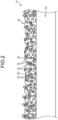
- FIG. 2 is a schematic cross-sectional view of an example of a negative electrode according to the present embodiment.
- the negative electrode 14 includes a current collecting layer 20 and a negative electrode material layer 22.
- the current collecting layer 20 is a layer formed of a conductive member. Examples of the conductive member of the current collecting layer 20 include copper.
- the negative electrode material layer 22 is a layer containing the negative electrode material according to the present embodiment.
- the negative electrode material layer 22 is provided on a surface of the current collecting layer 20.
- a thickness of the current collecting layer 20 may be, for example, about 15 ⁇ m or more and 40 ⁇ m or less, and a thickness of the negative electrode material layer 22 may be, for example, about 20 ⁇ m or more and 200 ⁇ m or less.
- the negative electrode material layer 22 contains a negative electrode material.
- the negative electrode material includes carbon, sodium tungstate provided on a surface of the carbon, and silicon provided on the surface of the carbon.
- the sodium tungstate is a tungsten compound represented by Na x WO y , and x and y are numbers larger than 0. Details of Na x WO y will be described below.
- sodium tungstate may take not only a form of Na x WO y but also a form such as Na 2 WO 4 or Na 5 W 14 O 44 in terms of a crystal structure.
- Na 2 WO 4 is represented by the chemical formula of Na x WO y since the molar ratio of Na is 2, the molar ratio of W is 1, and the molar ratio of O is 4.
- Na 5 W 14 O 44 is represented by the chemical formula of Na 5/14 WO 44/14 (that is, the molar ratio of Na is 5/14, the molar ratio of W is 1, and the molar ratio of O is 44/14) when the molar ratio of W is converted to 1, it can be said that it is represented by the chemical formula of Na x WO y . That is, it can be said that sodium tungstate represented by the chemical formula of Na x WO y refers to sodium tungstate in which a ratio of the molar ratio of Na, the molar ratio of W, and the molar ratio of O is X:1:Y.
- the negative electrode material of the negative electrode material layer 22 includes carbon particles 30 which are particles of carbon, Na x WO y (sodium tungstate) particles 32 which are particles of sodium tungstate, and silicon particles 33 which are particles of silicon.
- the shape of the particle here is not limited to a spherical shape or the like, and may be any shape such as a linear shape or a sheet shape. Furthermore, the shape of the particle surface may be smooth or uneven.
- the negative electrode material of the present embodiment may include inevitable impurities in the balance.
- the sodium tungstate provided on the surface of the carbon includes at least one of sodium tungstate obtained by directly fixing sodium tungstate to carbon, sodium tungstate obtained by indirectly fixing sodium tungstate to carbon via silicon fixed to carbon, sodium tungstate obtained by indirectly fixing silicon to carbon via sodium tungstate fixed to carbon, and sodium tungstate obtained by directly or indirectly fixing composite particles in which sodium tungstate and silicon are directly fixed to carbon.
- the negative electrode material in the present embodiment preferably includes at least silicon and carbon to which sodium tungstate is fixed.
- the negative electrode material of the negative electrode material layer 22 includes a plurality of carbon particles 30.
- the carbon particles 30 contain amorphous carbon or graphite.
- the amorphous carbon is amorphous carbon having no crystal structure.
- Amorphous carbon is sometimes called amorphous carbon or diamond-like carbon, and can be said to be carbon in which sp2 bonds and sp3 bonds are mixed.
- the carbon particles of amorphous carbon are composed of amorphous carbon as a whole, and preferably contain no components other than amorphous carbon except for inevitable impurities. Specifically, it is preferable that the carbon particles of amorphous carbon do not contain graphite.
- Graphite is carbon having a planar crystal structure.
- An average particle size of the carbon particles 30 is preferably 1 ⁇ m or more and 50 ⁇ m or less, and more preferably 1 ⁇ m or more and 20 ⁇ m or less. When the average particle size is within this range, the strength of the electrode film can be maintained.
- the negative electrode material of the negative electrode material layer 22 further includes a plurality of Na x WO y particles 32 and silicon particles 33. More specifically, a plurality of Na x WO y particles 32 and silicon particles 33 are provided for each carbon particle 30. One Na x WO y particle 32 of the plurality of Na x WO y particles 32 is provided on the surface of the carbon particle 30. In addition, the other Na x WO y particles 32 of the plurality of Na x WO y particles 32 are provided on the surface of the silicon particles 33. More specifically, the silicon particles 33 are in adhesion (contact) with the surface of the carbon particle 30, and the Na x WO y particles 32 are in adhesion (contact) with the surface of the silicon particle 33.
- the carbon particles 30, the Na x WO y particles 32, and the silicon particles 33 may be made into a composite.
- the carbon particles 30 and the silicon particles 33 may be made into a composite, and the carbon particles 30 and the Na x WO y particles 32 may be made into a composite. Therefore, the negative electrode material of the negative electrode material layer 22 has a configuration in which the carbon particles 30, the Na x WO y particles 32, and the silicon particles 33 are made into a composite, and may further include at least one of a configuration in which the carbon particles 30 and the silicon particles 33 are made into a composite and a configuration in which the carbon particles 30 and the Na x WO y particles 32 are made into a composite.
- sodium tungstate may take not only a form of Na x WO y but also a form such as Na 2 WO 4 or Na 5 W 14 O 44 in terms of a crystal structure.
- Na 2 WO 4 is represented by the chemical formula of Na x WO y since the molar ratio of Na is 2, the molar ratio of W is 1, and the molar ratio of O is 4.
- Na 5 W 14 O 44 is represented by the chemical formula of Na 5/14 WO 44/14 (that is, the molar ratio of Na is 5/14, the molar ratio of W is 1, and the molar ratio of O is 44/14) when the molar ratio of W is converted to 1, it can be said that it is represented by the chemical formula of Na x WO y . That is, it can be said that sodium tungstate represented by the chemical formula of Na x WO y refers to sodium tungstate in which a ratio of the molar ratio of Na, the molar ratio of W, and the molar ratio of O is X:1:Y.
- the making into a composite refers to a state in which it is impossible to separate the silicon particles 33 from the carbon particles 30, separate the silicon particles 33 from the Na x WO y particles 32, and separate the Na x WO y particles 32 from the carbon particles 30 at least in a case where an external force does not act.
- the external force refers to a force when a solid electrolyte interphase (SEI) film is formed to cover the entire surface layer and is expanded and contracted when a battery using a negative electrode material is operated.
- SEI solid electrolyte interphase
- the making into a composite includes at least one of formation of a composite in which the silicon particles 33 are disposed on the surface of the carbon particle 30 and the Na x WO y particles 32 are disposed on the surface of the silicon particle 33, formation of a composite in which the Na x WO y particles 32 are disposed on the surface of the carbon particle 30 and the silicon particles 33 are disposed on the surface of the Na x WO y particle 32, formation of a composite in which the silicon particles 33 are disposed on the surface of the carbon particle 30, formation of a composite in which the Na x WO y particles 32 are disposed on the surface of the carbon particle 30, formation a composite in which the Na x WO y particles 32 are disposed on the surface of the silicon particle 33, and disposition of the Na x WO y particles 32 and the Si particles 33 on the surface of the carbon particle 30 and adhesion (contact) between the Na x WO y particles 32 and the Si particles 33.
- the Na x WO y particles 32 included in the negative electrode material of the negative electrode material layer 22 preferably have y (molar ratio of O) of 3, in other words, preferably Na x WO 3 .
- y (molar ratio of Na) is preferably more than 0 and 1 or less
- y (molar ratio of O) is preferably 2 or more and 4 or less.
- the Na x WO y particles 32 it is more preferable that the molar ratio of x is 0.1 or more and 0.95 or less and y is 2.5 or more and 3.5 or less, it is still more preferable that the molar ratio of x is 0.1 or more and 0.95 or less and y is 2.8 or more and 3.2 or less, and it is further still more preferable that the molar ratio of x is 0.3 or more and 0.7 or less and y is 2.8 or more and 3.2 or less.
- the Na x WO y particles 32 can be appropriately disposed on the surface of the carbon particle 30.
- the negative electrode material of the negative electrode material layer 22 may include only one type of Na x WO y particles 32 or may include a plurality of types of Na x WO y particles 32.
- the negative electrode material of the negative electrode material layer 22 preferably includes at least one of Na 0.78 WO 3 and Na 0.48 WO 3 , Na 0.72 WO 3 and Na 0.48 WO 3 , Na 0.44 WO 3 , Na 0.48 WO 3 , and Na 0.52 WO 3 , Na 2 WO 4 , and Na 5 W 14 O 44 as the Na x WO y particles 32.
- the negative electrode material of the negative electrode material layer 22 in the present embodiment preferably includes at least one of Na 0.78 WO 3 and Na 0.48 WO 3 , Na 0.72 WO 3 and Na 0.48 WO 3 , Na 0.44 WO 3 and Na 0.48 WO 3 , Na 0.52 WO 3 , Na 2 WO 4 , and Na 5 W 14 O 44 as the sodium tungstate.
- the compound included in the negative electrode material such as the Na x WO y particles 32 can be measured by X-ray diffraction (XRD).
- XRD X-ray diffraction
- the measurement conditions in XRD may be, for example, as follows.
- An average particle size of the Na x WO y particles 32 is smaller than the average particle size of the carbon particles 30.
- the average particle size of the Na x WO y particles 32 is preferably 100 nm or more and 20 ⁇ m or less, and more preferably 100 nm or more and 1 ⁇ m or less.
- the negative electrode material has a structure in which the particulate sodium tungstate (Na x WO y particles 32) and the silicon (silicon particles 33) are provided on the surface of the carbon particle 30, but is not limited thereto.
- the negative electrode material may have a structure in which sodium tungstate and silicon are provided on a surface of carbon, and the shape of each of the sodium tungstate and the silicon provided on the surface of the carbon may be arbitrary.
- sodium tungstate was used as the tungsten compound or the tungsten oxide.
- silicon is used, and a silicon compound or a silicon oxide may be used.
- Contents of the sodium tungstate (Na x WO y particles 32) and the silicon in the negative electrode material can be confirmed by measuring contents of Na, W, O, and Si by fluorescent X-ray analysis. That is, since at least a part of the total amount of Na, W, O, and Si detected by fluorescent X-ray analysis constitutes the sodium tungstate (Na x WO y particles 32) and the silicon, the contents of the sodium tungstate and the silicon can be confirmed by the contents of Na, W, O, and Si.
- the negative electrode material preferably has a content of Na of 0.01% or more and 0.5% or less in terms of a mass ratio, a content of W of 1% or more and 20% or less in terms of a mass ratio, a content of O of 1% or more and 15% or less in terms of a mass ratio, and a content of Si of 1% or more and 15% or less in terms of a mass ratio when measured by fluorescent X-ray analysis.
- the negative electrode material more preferably has a content of Na of 0.02% or more and 0.5% or less in terms of a mass ratio, a content of W of 0.7% or more and 17% or less in terms of a mass ratio, a content of O of 2% or more and 13% or less in terms of a mass ratio, and a content of Si of 2% or more and 12% or less in terms of a mass ratio when measured by fluorescent X-ray analysis.
- the negative electrode material still more preferably has a content of Na of 0.03% or more and 0.4% or less in terms of a mass ratio, a content of W of 1% or more and 15% or less in terms of a mass ratio, a content of O of 3% or more and 12% or less in terms of a mass ratio, and a content of Si of 3% or more and 10% or less in terms of a mass ratio when measured by fluorescent X-ray analysis.
- a content of Na, W, O, and Si are in these ranges, appropriate amounts of sodium tungstate and silicon are included, and a tungsten compound and silicon can be appropriately disposed on the surface of the carbon.
- the content of C is preferably 60% or more and 95% or less, more preferably 65% or more and 95% or less, and still more preferably 70% or more and 92% or less in terms of a mass ratio.
- the tungsten compound can be appropriately attached and disposed on the surface of the carbon.
- Na/W which is a ratio of the content of Na to the content of W is preferably 0.001 or more and 0.2 or less, more preferably 0.005 or more and 0.15 or less, and still more preferably 0.007 or more and 0.15 or less in terms of a mass ratio.
- W/C which is a ratio of the content of W to the content of C is preferably 0.005 or more and 0.3 or less, more preferably 0.008 or more and 0.25 or less, and still more preferably 0.01 or more and 0.2 or less in terms of a mass ratio.
- Si/O which is a ratio of the content of Si to the content of O is preferably 0.1 or more and 2 or less, more preferably 0.2 or more and 1.5 or less, and still more preferably 0.3 or more and 1.3 or less in terms of a mass ratio.
- the tungsten compound can be appropriately attached and disposed on the surface of the carbon.
- Si/W which is a ratio of the content of Si to the content of W is preferably 0.1 or more and 15 or less, more preferably 0.15 or more and 12 or less, and still more preferably 0.2 or more and 10 or less in terms of a mass ratio.
- Si/C which is a ratio of the content of Si to the content of C is preferably 0.01 or more and 0.3 or less, more preferably 0.02 or more and 0.25 or less, and still more preferably 0.03 or more and 0.15 or less in terms of a mass ratio.
- the tungsten compound and the silicon can be appropriately attached and disposed on the surface of the carbon.
- the fluorescent X-ray analysis may be performed using a wavelength dispersive fluorescent X-ray analyzer, and the measurement conditions may be as follows.
- the negative electrode material layer 22 may contain a substance other than the negative electrode material (carbon particles 30, Na x WO y particles 32, and silicon particles 33).
- the negative electrode material layer 22 may contain, for example, a binder.
- a material of the binder may be any material, and examples thereof include polyvinylidene fluoride (PVDF), carboxymethyl cellulose (CMC), styrene butadiene rubber (SBR), and polyacrylic acid (PAA).
- PVDF polyvinylidene fluoride
- CMC carboxymethyl cellulose
- SBR styrene butadiene rubber
- PAA polyacrylic acid
- the binders may be used alone or in combination of two or more.
- the carbon particles 30 are amorphous carbon, it is preferable that the negative electrode material layer 22, in other words, the negative electrode material does not include graphite.
- the disposition of the Na x WO y particles 32 and the silicon particles 33 on the surface of the carbon particle 30 can be confirmed by observation with an electron microscope such as a scanning electron microscope (SEM) or a transmission electron microscope (TEM).
- an electron microscope such as a scanning electron microscope (SEM) or a transmission electron microscope (TEM).
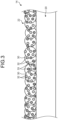
- FIG. 3 is a schematic cross-sectional view of another example of a negative electrode according to the present embodiment.
- the silicon particles 33 may be in adhesion (contact) with the surface of the carbon particle 30, and the Na x WO y particles 32 may be in adhesion (contact) with the surface of the carbon particle 30.
- the carbon particles 30 and the silicon particles 33 may be made into a composite, and the carbon particles 30 and the Na x WO y particles 32 may be made into a composite.
- the Na x WO y particles 32 preferably have a cubic crystal structure and a tetragonal crystal structure. That is, the negative electrode material includes at least one of sodium tungstate having a cubic crystal structure and sodium tungstate having a tetragonal crystal structure.
- the crystal structure of sodium tungstate included in the negative electrode material is not limited thereto, and for example, sodium tungstate having another crystal structure such as a triclinic crystal may be included.
- the negative electrode material has a structure in which the particulate sodium tungstate (Na x WO y particles 32) and the silicon particles 33 are provided on the surface of the carbon particle 30, but is not limited thereto.
- the negative electrode material may have a structure in which sodium tungstate and silicon are provided on a surface of carbon, and the shape of each of the sodium tungstate and the silicon provided on the surface of the carbon may be arbitrary.
- the positive electrode 16 includes a current collecting layer and a positive electrode material layer.
- the current collecting layer of the positive electrode 16 is a layer formed of a conductive member, and examples of the conductive member here include aluminum.
- the positive electrode material layer is a layer of a positive electrode material, and is provided on a surface of the current collecting layer of the positive electrode 16.
- a thickness of the current collecting layer of the positive electrode may be, for example, about 10 ⁇ m or more and 30 ⁇ m or less, and a thickness of the positive electrode material layer may be, for example, about 10 ⁇ m or more and 100 ⁇ m or less.
- the positive electrode material layer contains a positive electrode material.
- the positive electrode material includes particles of a lithium compound which is a compound containing lithium.
- the lithium compound may contain only one kind of material or two or more kinds of materials.
- the positive electrode material layer may contain a substance other than the positive electrode material, and may contain, for example, a binder.
- the material of the binder may be any material, and examples thereof include polyvinylidene fluoride (PVDF), polytetrafluoroethylene (PTFE), and PAA.
- PVDF polyvinylidene fluoride
- PTFE polytetrafluoroethylene
- PAA PAA
- the separator 18 is an insulating member.
- the separator 18 is, for example, a porous film formed of a resin, and examples of the resin include polyethylene (PE) and polypropylene (PP).
- the separator 18 may have a structure in which films of different materials are stacked.
- the separator 18 may include a separator 13 and a heat resistant layer.
- the heat resistant layer is a layer containing a substance having a high melting point.
- the heat resistant layer may include, for example, particles of an inorganic material such as alumina.
- the electrolyte provided in the battery 1 is a nonaqueous electrolyte. Voids in the electrode group 12 are impregnated with the electrolyte.
- the electrolyte contains, for example, a lithium salt and an aprotic solvent.
- the lithium salt is dispersed and dissolved in an aprotic solvent. Examples of the lithium salt include LiPF 6 , LiBF 4 , Li[N(FSO 2 ) 2 ], Li[N(CF 3 SO 2 ) 2 ], Li[B(C 2 O 4 ) 2 ], and LiPO 2 F 2 .
- the aprotic solvent may be, for example, a mixture of a cyclic carbonate ester and a chain carbonate ester.
- Examples of the cyclic carbonate ester include EC, PC, and butylene carbonate.
- Examples of the chain carbonate ester include dimethyl carbonate (DMC), ethyl methyl carbonate (EMC), and diethyl carbonate (DEC).
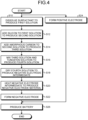
- FIG. 4 is a flowchart for explaining an example of a method for producing a battery of the present embodiment.
- the negative electrode 14 is formed in Step S10 to Step S22.
- a surfactant is dissolved in a solvent to produce a first solution (Step S10).
- the first solution is a solution in which a surfactant is dissolved and Na (Na in an ionic state) is contained.
- the surfactant is used to disperse carbon and silicon.
- any substance capable of dispersing carbon may be used, and in the present embodiment, a substance containing Na is used.
- the surfactant containing Na for example, sodium dodecyl sulfate (SDS) may be used.
- the solvent of the first solution may be any solvent that dissolves the surfactant, and for example, water may be used.
- the surfactant is not limited to a surfactant containing Na.
- a surfactant not containing Na and a compound containing Na may be dissolved in a solvent to produce the first solution.
- the surfactant not containing Na for example, poly(oxyethylene) alkyl ether, polyoxyethylene nonylphenyl ether, or the like may be used.
- poly(oxyethylene) alkyl ether having an alkyl group having 12 or more and 15 or fewer carbon atoms is preferably used, and for example, C 12 H 25 O(C 2 H 4 ) n H (poly (oxyethylene) dodecyl ether), C 13 H 27 O(C 2 H 4 ) n H (poly (oxyethylene) tridecyl ether), C 13 H 27 O(C 2 H 4 ) n H (poly (oxyethylene) isotridecyl ether), C 14 H 25 O(C 2 H 4 ) n H (poly (oxyethylene) tetradecyl ether), C 155 H 25 O(C 2 H 4 ) n H (poly (oxyethylene) pentadecyl ether), or the like may be used.
- n is an integer of 1 or more.
- the polyoxyethylene nonylphenyl ether for example, C 9 H 19 C 6 (CH 2 CH 2 O) 8 H, C 9 H 19 C 6 (CH 2 CH 2 O) 10 H, C 9 H 19 C 6 (CH 2 CH 2 O) 12 H, or the like may be used.
- the compound containing Na for example, sodium sulfate, sodium stearate, sodium hyaluronate, sodium hypochlorite, or the like may be used.
- a content of the surfactant in the first solution that is, the amount of the surfactant added is preferably 0.1% or more and 10% or less, more preferably 0.5% or more and 7% or less, and still more preferably 1% or more and 5% or less in terms of a mass ratio with respect to the amount of the carbon raw material added in the subsequent Step S14.
- the affinity between carbon and Na x WO y can be appropriately improved.
- Step S12 a silicon raw material is added to the first solution to produce a second solution.
- the silicon raw material is silicon used as a raw material.
- Step S12 first, a silicon raw material is charged into a solvent to produce a silicon solution. In the present embodiment, water is used as the solvent. Then, the silicon solution is added to the first solution and stirred to produce a second solution.
- a content of the silicon in the first solution that is, the amount of the silicon added is preferably 1% or more and 10% or less, more preferably 2% or more and 8% or less, and still more preferably 3% or more and 6% or less in terms of a mass ratio with respect to the amount of the carbon raw material added in the subsequent Step S14.
- a carbon raw material is added to the second solution to produce a third solution (Step S14).
- the carbon raw material is amorphous carbon used as a raw material.
- An average particle size of the carbon raw material is, for example, preferably 1 ⁇ m or more and 50 ⁇ m or less, and more preferably 1 ⁇ m or more and 20 ⁇ m or less. When the average particle size of the carbon raw material is in this range, the capacity of the battery can be increased.
- the second solution to which the carbon raw material is added that is, the third solution is stirred to disperse the carbon raw material in the second solution. That is, the third solution can be said to be the second solution in which the carbon raw material is dispersed.
- the carbon raw material may be produced, for example, by an oil furnace method.
- the oil furnace method for example, a raw material oil is sprayed into a high-temperature atmosphere to be thermally decomposed, and then rapidly cooled to produce a particulate amorphous carbon raw material.
- the method for producing the carbon raw material is not limited thereto, and may be any method.
- the tungsten solution is a solution containing W and O.
- the tungsten solution is, for example, a solution produced by dissolving a tungsten oxide raw material in a solvent.
- the tungsten oxide raw material here is a raw material of the Na x WO y particles 32, and for example, tungsten trioxide is used.
- As the solvent for example, an alkaline liquid is used, and in the present embodiment, an aqueous ammonia solution is used. Therefore, in the present embodiment, the tungsten solution is an alkaline solution containing W and O, more specifically, ammonium tungstate. However, the tungsten solution may be any solution containing W and O.
- a content of W contained in the tungsten solution added to the second solution is preferably 0.5% or more and 20% or less, more preferably 1% or more and 15% or less, and still more preferably 1.3% or more and 10% or less in terms of a mass ratio with respect to the amount of the carbon raw material added in Step S14.
- the affinity between carbon and Na x WO y can be appropriately improved.
- the Na x WO y particles 32 can be appropriately formed on the surface of the carbon particle 30 to increase the capacity of the battery as a negative electrode.
- Step S18 and S20 are executed as the negative electrode material production steps.
- the fourth solution is dried to produce a negative electrode intermediate (Step S18; drying step).
- Step S18 for example, the liquid component contained in the fourth solution is removed, that is, evaporated by drying the fourth solution at 80°C for 12 hours in the atmosphere.
- the drying conditions may be arbitrary. It can be said that the negative electrode intermediate contains a solid component remaining after the liquid component of the fourth solution is removed.
- Step S20 heating step
- a negative electrode material in which the Na x WO y particles 32 are provided on the surface of the silicon particle 33 is formed. That is, Na, W, and O in an ionic state contained in the third solution are precipitated as the Na x WO y particles 32 on the surface of the carbon particle 30 dispersed in the fourth solution, and a negative electrode material is formed.
- the conditions for heating the negative electrode intermediate in the heating step may be arbitrary, and the heating step is preferably performed as follows. That is, the heating step preferably includes a step of putting the negative electrode intermediate into a furnace to make the inside of the furnace an inert atmosphere, a first heating step of heating the negative electrode intermediate to a first temperature at a first heating rate, and a second heating step of heating the negative electrode intermediate heated to the first temperature to a second temperature at a second heating rate.
- the inert atmosphere in the step of making the inside of the furnace an inert atmosphere may be, for example, a nitrogen atmosphere or a rare gas atmosphere such as Ar.
- the inert atmosphere may be created by replacing oxygen in the furnace with nitrogen or a rare gas. Note that this step is not essential.
- the first heating step is a step of removing metals, organic substances, and the like contained in the negative electrode intermediate.
- the first heating temperature in the first heating step is, for example, 550°C, but is not limited thereto, and is preferably 150°C or higher and 625°C or lower, preferably 175°C or higher and 600°C or lower, and more preferably 200°C or higher and 575°C or lower.
- the first heating rate may be any rate.
- the first heating rate is preferably 45°C/hour or more and 75°C/hour or less, more preferably 50°C/hour or more and 70°C/hour or less, and still more preferably 55°C/hour or more and 65°C/hour or less.
- the second heating step is a step of producing Na x WO y after the first heating step.
- the second heating temperature in the second heating step is higher than the first heating temperature, for example, 700°C, but is not limited thereto, and is preferably 680°C or higher and 750°C or lower, preferably 685°C or higher and 740°C or lower, and more preferably 690°C or higher and 730°C or lower.
- the second heating rate may be any rate.
- the second heating rate is preferably higher than the first heating rate, and for example, is preferably 165°C/hour or more and 195°C/hour or less, more preferably 170°C/hour or more and 190°C/hour or less, and still more preferably 175°C/hour or more and 185°C/hour or less.
- Na x WO y can be appropriately produced while shortening the time required for the process.
- the negative electrode intermediate heated to the second heating temperature is preferably held at the second heating temperature for a predetermined time.
- the holding time is preferably 1.25 hours or longer and 2.75 hours or shorter, more preferably 1.5 hours or longer and 2.5 hours or shorter, and still more preferably 1.75 hours or longer and 2.25 hours or shorter.
- the step of heating the negative electrode intermediate to the third temperature at the third heating rate and holding the negative electrode intermediate at the third temperature for a predetermined time may be provided before the first heating step (and after the step of creating the inert atmosphere in the present embodiment).
- the third temperature is lower than the first temperature, and is, for example, 100°C, but is not limited thereto, and is preferably 80°C or higher and 120°C or lower, preferably 85°C or higher and 115°C or lower, and more preferably 90°C or higher and 110°C or lower.
- the third heating rate may be any rate.
- the third heating rate is preferably 165°C/hour or more and 195°C/hour or less, more preferably 170°C/hour or more and 190°C/hour or less, and still more preferably 175°C/hour or more and 185°C/hour or less.
- the predetermined time for holding at the third heating temperature may also be arbitrary, and for example, is preferably 0.5 hours or longer and 1.75 hours or shorter, more preferably 0.75 hours or longer and 1.5 hours or shorter, and still more preferably 1.0 hour or longer and 1.25 hours or shorter. By providing this step, moisture can be appropriately removed.
- the negative electrode 14 is formed using the formed negative electrode material (Step S22). That is, the negative electrode material layer 22 containing a negative electrode material is formed on the surface of the current collecting layer 20 to form the negative electrode 14.
- the positive electrode 16 is formed (Step S24).
- a positive electrode material may be formed by the same method as in Steps S10 to S20 except that a lithium compound raw material which is a lithium compound is used instead of the carbon raw material. Then, a positive electrode material layer containing a positive electrode material is formed on the surface of the current collecting layer for the positive electrode 16 to form the positive electrode 16.
- the battery 1 is produced using the negative electrode 14 and the positive electrode 16 (Step S26). Specifically, the negative electrode 14, the separator 18, and the positive electrode 16 are stacked to form the electrode group 12, and the electrode group 12 and the electrolyte are housed in the casing 10 to produce the battery 1.
- Steps S10 to S20 the fourth solution in which Na, O, W, and Si are contained and carbon is dispersed is produced, and the liquid component is removed from the fourth solution to produce the negative electrode material.
- a solution method such a method for producing a negative electrode material is appropriately referred to as a solution method.
- the above production method is referred to as a first production method.
- the negative electrode material for a battery according to the present embodiment includes carbon, sodium tungstate provided on a surface of the carbon, and silicon provided on the surface of the carbon.
- the negative electrode material according to the present embodiment can improve battery characteristics such as capacity by providing sodium tungstate and silicon on the surface of the carbon.
- a negative electrode material including silicon provided on the surface of the carbon can be produced by a solution method using a raw material including carbon, sodium tungstate, and silicon.
- amorphous carbon is used as carbon, and sodium tungstate is provided on a surface of the amorphous carbon.
- the amorphous carbon can contain a functional group on the surface when sodium tungstate is disposed on the surface.
- sodium tungstate can be appropriately trapped on the surface of the amorphous carbon by the functional group, and sodium tungstate can be appropriately disposed on the surface.
- the amorphous carbon can contain a functional group (for example, a hydroxy group and a carboxyl group) on the surface when sodium tungstate is disposed on the surface. Therefore, sodium tungstate can be appropriately trapped on the surface of the amorphous carbon by the functional group, and tungsten trioxide can be appropriately disposed.
- sodium tungstate is fixed to the surface of the amorphous carbon by the functional group, adhesion of the sodium tungstate to the surface of the amorphous carbon can be increased, and separation of the sodium tungstate from the surface of the carbon can be suppressed.
- a hard carbon raw material is produced at a temperature lower than that of, for example, graphite, it is easy to remain without removing the functional group, and sodium tungstate and silicon can be appropriately disposed on the surface.
- the negative electrode material according to the present embodiment is preferably a composite of carbon, sodium tungstate, and silicon.
- sodium tungstate and silicon can be appropriately disposed on the surface of the carbon.
- sodium tungstate is represented by a chemical formula of Na x WO y , x is preferably more than 0 and 1 or less, and y is preferably 2 or more and 4 or less.
- sodium tungstate of such a chemical formula sodium tungstate can be appropriately disposed on the surface of the carbon.
- the negative electrode material according to the present embodiment preferably has a content of sodium of 0.01% or more and 0.5% or less in terms of a mass ratio, a content of tungsten of 0.5% or more and 20% or less in terms of a mass ratio, and a content of oxygen of 1% or more and 15% or less in terms of a mass ratio when measured by fluorescent X-ray analysis.
- sodium tungstate is appropriately included, and thus, sodium tungstate can be appropriately disposed on the surface of the carbon.
- the negative electrode material according to the present embodiment preferably has Na/W, which is a content ratio of sodium to tungsten, of 0.001 or more and 0.2 or less when measured by fluorescent X-ray analysis.
- Na/W is a content ratio of sodium to tungsten, of 0.001 or more and 0.2 or less when measured by fluorescent X-ray analysis.
- Na/W is in this range, sodium tungstate is appropriately included, and thus, sodium tungstate can be appropriately disposed on the surface of the carbon.
- the carbon is preferably amorphous carbon or graphite.
- sodium tungstate and silicon can be appropriately disposed on a surface of amorphous carbon or graphite.
- the negative electrode material according to the present embodiment includes sodium tungstate having at least one crystal structure of a tetragonal crystal, a cubic crystal, and an orthorhombic crystal. Such a crystal structure allows sodium tungstate to be appropriately disposed on the surface of the carbon.
- sodium tungstate is represented by a chemical formula of Na x WO y , x is more than 0 and 1 or less, and y is 2 or more and 4 or less.
- sodium tungstate of such a chemical formula sodium tungstate can be appropriately disposed on the surface of the carbon.
- the negative electrode material according to the present embodiment preferably has a content of sodium of 0.01% or more and 0.5% or less in terms of a mass ratio, a content of tungsten of 1% or more and 20% or less in terms of a mass ratio, a content of oxygen of 1% or more and 15% or less in terms of a mass ratio, and a content of silicon of 1% or more and 15% or less in terms of a mass ratio when measured by fluorescent X-ray analysis.
- sodium tungstate is appropriately included, and thus, sodium tungstate can be appropriately disposed on the surface of the carbon.
- the negative electrode material according to the present embodiment has Na/W, which is a content ratio of sodium to tungsten, of 0.001 or more and 0.2 or less when measured by fluorescent X-ray analysis.
- Na/W is a content ratio of sodium to tungsten, of 0.001 or more and 0.2 or less when measured by fluorescent X-ray analysis.
- sodium tungstate is appropriately included, and thus, sodium tungstate can be appropriately disposed on the surface of the carbon.
- the negative electrode material according to the present embodiment has Si/C, which is a content ratio of silicon to carbon, of 0.01 or more and 0.3 or less when measured by fluorescent X-ray analysis.
- Si/C is a content ratio of silicon to carbon, of 0.01 or more and 0.3 or less when measured by fluorescent X-ray analysis.
- Si/C is in this range, sodium tungstate is appropriately included, and thus, sodium tungstate can be appropriately disposed on the surface of the carbon.
- the negative electrode material according to the present embodiment has W/C, which is a content ratio of tungsten to carbon, of 0.005 or more and 0.3 or less when measured by fluorescent X-ray analysis.
- W/C is a content ratio of tungsten to carbon, of 0.005 or more and 0.3 or less when measured by fluorescent X-ray analysis.
- W/C is in this range, sodium tungstate is appropriately included, and thus, sodium tungstate can be appropriately disposed on the surface of the carbon.
- the negative electrode material according to the present embodiment has Si/W, which is a content ratio of silicon to tungsten, of 0.1 or more and 15 or less when measured by fluorescent X-ray analysis.
- Si/W is in this range, sodium tungstate is appropriately included, and thus, sodium tungstate can be appropriately disposed on the surface of the carbon.
- the negative electrode material according to the present embodiment has Si/O, which is a content ratio of silicon to oxygen, of 0.1 or more and 2 or less when measured by fluorescent X-ray analysis.
- Si/O is a content ratio of silicon to oxygen, of 0.1 or more and 2 or less when measured by fluorescent X-ray analysis.
- Si/O is in this range, sodium tungstate is appropriately included, and thus, sodium tungstate can be appropriately disposed on the surface of the carbon.
- a method for producing a negative electrode material includes a step of adding silicon to a first solution containing sodium in which a surfactant is dissolved, to produce a second solution in which silicon is dispersed in the first solution; a step of adding amorphous carbon to the second solution to produce a third solution in which amorphous carbon is dispersed in the second solution; a step of mixing the third solution and a tungsten solution containing oxygen and tungsten to produce a fourth solution; and a step of producing a negative electrode material by removing a liquid component of the fourth solution.
- the amount of W added is preferably 0.5% or more and 20% or less, more preferably 1% or more and 15% or less, and still more preferably 1.3% or more and 10% or less in terms of a mass ratio with respect to the amount of the carbon raw material added in Step S14.
- the amount of W added is in this range, sodium tungstate can be appropriately formed on a surface of hard carbon, and the battery characteristics can be improved as a negative electrode.
- the negative electrode material production step preferably includes a drying step of drying the fourth solution to produce a negative electrode intermediate and a heating step of heating the negative electrode intermediate.
- a drying step of drying the fourth solution to produce a negative electrode material sodium tungstate can be appropriately formed on the surface of the carbon, and the battery characteristics can be improved as a negative electrode.
- the heating step preferably includes a step of heating the negative electrode intermediate to a first temperature of 150°C or higher and 625°C or lower at a first heating rate, a step of heating the negative electrode intermediate heated to the first temperature, to a second temperature of 680°C or higher and 750°C or lower at a second heating rate higher than the first heating rate, and a step of holding the negative electrode intermediate at the second temperature.
- Example 1 a negative electrode material was produced by the solution method described in the embodiment. Specifically, as a first solution, a solution in which SDS was dissolved using water as a solvent and a surfactant was prepared. A concentration of SDS in the first solution was set to 4.85%. Then, a silicon raw material was added to the first solution so that a mass ratio of the silicon raw material in the first solution to the amorphous carbon raw material to be added was 4.85%, and the mixture was stirred to obtain a second solution. Then, an amorphous carbon raw material was added to the second solution so that a mass ratio of SDS in the second solution to the amorphous carbon raw material to be added was 3%, and the mixture was stirred to obtain a third solution.
- a first solution a solution in which SDS was dissolved using water as a solvent and a surfactant was prepared. A concentration of SDS in the first solution was set to 4.85%. Then, a silicon raw material was added to the first solution so that a mass ratio of the silicon raw
- ammonium tungstate (tungsten solution) was added to the third solution so that the amount of W contained in the ammonium tungstate (tungsten solution) with respect to the amorphous carbon raw material in the third solution was 5% in terms of a mass ratio, thereby obtaining a fourth solution.
- the fourth solution was stirred, and then moisture was evaporated by heating and dried to produce a negative electrode intermediate.
- the negative electrode intermediate was introduced into a tubular furnace (firing furnace), and heated to 550°C (first heating temperature) at a first heating rate of 60°C/hour under an argon atmosphere. After reaching the first heating temperature, the temperature was raised to 700°C (second heating temperature) at a second heating rate of 180°C/hour and held for 2 hours. After holding for 2 hours, the heating was stopped and the temperature was naturally lowered to 50°C to produce a negative electrode material.
- Example 1 a silicon raw material was produced as follows. First, a high-purity silicon chunk (purity: 11 N) of several mm was pulverized using a jaw crusher, and then the pulverized silicon particles were separated using a sieve having a mesh size of 0.5 mm. Next, the silicon particles passed through a sieve with a mesh size of 0.5 mm were put into a spherical ball mill and pulverized for 6 hours to obtain silicon fine particles (silicon raw material). The particle size distribution of the obtained silicon fine particles was determined by a laser diffraction scattering type particle size distribution measurement method (apparatus product name "Microtrac MT3300EXII").
- a volume average particle size of the silicon fine particles was 1.92 ⁇ m, and d50 (median diameter) was 0.31 ⁇ m.
- a maximum volume diameter and a minimum volume diameter of the silicon fine particles were 32.23 ⁇ m and 0.066 ⁇ m, respectively.
- Example 2 a negative electrode material was produced in the same manner as in Example 1, except that the pulverization time was set to 3 hours, and the amounts of silicon, tungsten, and SDS added were set to 4 wt%, 2 wt%, and 1 wt%, respectively.
- Example 3 a negative electrode material was produced in the same manner as in Example 1, except that the pulverization time was set to 4 hours, and the amounts of silicon, tungsten, and SDS added were set to 4 wt%, 15 wt%, and 5 wt%, respectively.
- Example 4 a negative electrode material was produced in the same manner as in Example 1, except that the shape of the container used for pulverization was a long body container, the pulverization time was set to 2 hours, and the amounts of silicon, tungsten, and SDS added were set to 4 wt%, 10 wt%, and 5 wt%, respectively.
- Example 5 a negative electrode material was produced in the same manner as in Example 1, except that the shape of the container used for pulverization was a long body container, the pulverization time was set to 1 hour, and the amounts of silicon, tungsten, and SDS added were set to 10 wt%, 2 wt%, and 2 wt%, respectively.
- Example 6 a negative electrode material was produced in the same manner as in Example 1, except that the shape of the container used for pulverization was a long body container, the pulverization time was set to 3 hours, and the amounts of silicon, tungsten, and SDS added were set to 3 wt%, 4 wt%, and 10 wt%, respectively.
- Example 7 a negative electrode material was produced in the same manner as in Example 1, except that the shape of the container used for pulverization was a long body container, the pulverization time was set to 2 hours, the concentration of C 12 H 25 O(C 2 H 4 ) n H (poly(oxyethylene) dodecyl ether) added as a surfactant in the first solution was set to 4%, and the concentration of sodium stearate added was set to 1%.
- Comparative Example 1 only carbon was used as a negative electrode material.
- FIG. 5 is a table showing identification results of the negative electrode material in each example.
- the negative electrode material produced in each example was subjected to fluorescent X-ray analysis to measure the content of elements contained in the negative electrode material and Na/W, Si/C, W/C, Si/W, and Si/O.
- the measurement results of the contents of the elements are illustrated in FIG. 5 . Note that as the measurement conditions of the fluorescent X-ray analysis, the conditions described in the above embodiment were used.
- the negative electrode materials of Examples 1 to 7 also include elements (here, S) other than C derived from carbon, Na, W, and O derived from sodium tungstate, and Si derived from silicon, but these elements are impurities. In addition, inevitable impurities may be included in addition to the elements listed in FIG. 5 .
- the negative electrode material produced in each example was subjected to XRD to identify the chemical formula and crystal structure of sodium tungstate included in the negative electrode material.
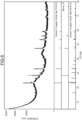
- the measurement results of XRD are illustrated in FIG. 6 . Note that as the measurement conditions of XRD, the conditions described in the above embodiment were used.
- FIG. 6 illustrates measurement results of XRD of the negative electrode material in Example 2.
- XRD measurement shows that the negative electrode material of Example 2 includes cubic Na 0.72 WO 3 and tetragonal Na 0.48 WO 3 .
- Si is contained.
- the samples other than Example 2 also contain Si, but are omitted in the following description.
- the negative electrode material of Example 1 was found to contain cubic Na 0.78 WO 3 and tetragonal Na 0.48 WO 3
- the negative electrode material of Example 3 was found to contain cubic Na 0.44 WO 3 and triclinic Na 5 (W 14 O 44 )
- the negative electrode material of Example 4 was found to contain cubic Na 0.49 WO 3 and tetragonal Na 0.33 WO 3
- the negative electrode materials of Examples 5 and 6 were found to contain tetragonal Na 0.48 WO 3
- the negative electrode material of Example 7 was found to contain cubic Na 2 WO 4 , by XRD measurement.
- the negative electrode material produced in each example was observed by an SEM. As shown in the observation results of the SEM, it can be seen that sodium tungstate is provided on the surface of the carbon in Examples 1 to 7.
- the capacity of the negative electrode using the negative electrode material was measured. Specifically, a current value per 1 g (mAh/g) when the C-rate was 0.2 and a current value per 1 g (mAh/g) when the C-rate was 3.2 were measured.
- the current value of the negative electrode per 1 g when the C-rate is 0.2 refers to a current value that consumes a rated capacity in 5 hours.
- FIG. 5 illustrates evaluation results. As illustrated in FIG. 5 , it is found that in Examples 1 to 7 in which sodium tungstate is provided on the surface of the carbon, the battery characteristics at 0.2 C and the battery characteristics at 3.2 C are improved as compared with Comparative Example 1 in which sodium tungstate is not included.
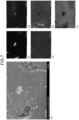
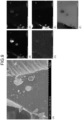
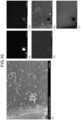
- FIGS. 7 to 10 illustrate photographs and elemental analysis results obtained by imaging the negative electrode material of Example 1 with an SEM.
- the SEM photographs show that the surfaces of the carbon particles 30 are scaly.
- (A) on the left side is an SEM photograph
- the right side is an element analysis result.
- the upper left part (B) of the element analysis result is a tungsten distribution image
- the middle left part (C) is a sodium distribution image
- the upper right part (D) is an oxygen distribution image
- the middle right part (E) is a silicon distribution image
- the lower right part (F) is a carbon distribution image.
- tungsten and silicon do not overlap on the surface of the carbon particle 30.
- Sodium has a slightly higher concentration at the position of tungsten in the middle of the photograph.
- tungsten and silicon overlap on the surface of the carbon particle 30.
- the concentration of sodium is slightly high at the upper right position where the concentration of tungsten is high.
- a large number of particles other than tungsten and silicon are attached to the surface of carbon particle 30.
- the concentration of sodium is slightly high at the upper left position where the concentration of tungsten is high.
- the embodiments of the present invention have been described above, the embodiments are not limited by the contents of the embodiments.
- the constituent elements described above include those that can be easily assumed by those skilled in the art or those that are substantially the same.
- the constituent elements described above can be appropriately combined.
- various omissions, substitutions, or changes in the constituent elements can be made without departing from the gist of the embodiments described above.
Landscapes
- Chemical & Material Sciences (AREA)
- Chemical Kinetics & Catalysis (AREA)
- Electrochemistry (AREA)
- General Chemical & Material Sciences (AREA)
- Engineering & Computer Science (AREA)
- Inorganic Chemistry (AREA)
- Manufacturing & Machinery (AREA)
- Composite Materials (AREA)
- Materials Engineering (AREA)
- Organic Chemistry (AREA)
- Power Engineering (AREA)
- Microelectronics & Electronic Packaging (AREA)
- Battery Electrode And Active Subsutance (AREA)
Applications Claiming Priority (2)
| Application Number | Priority Date | Filing Date | Title |
|---|---|---|---|
| JP2021168446A JP7739924B2 (ja) | 2021-10-13 | 2021-10-13 | 負極材料、電池、負極材料の製造方法、及び電池の製造方法 |
| PCT/JP2022/038092 WO2023063363A1 (ja) | 2021-10-13 | 2022-10-12 | 負極材料、電池、負極材料の製造方法、及び電池の製造方法 |
Publications (2)
| Publication Number | Publication Date |
|---|---|
| EP4418366A1 true EP4418366A1 (de) | 2024-08-21 |
| EP4418366A4 EP4418366A4 (de) | 2026-03-18 |
Family
ID=85988660
Family Applications (1)
| Application Number | Title | Priority Date | Filing Date |
|---|---|---|---|
| EP22881058.6A Pending EP4418366A4 (de) | 2021-10-13 | 2022-10-12 | Negativelektrodenmaterial, batterie, verfahren zur herstellung des negativelektrodenmaterials und verfahren zur herstellung der batterie |
Country Status (6)
| Country | Link |
|---|---|
| US (1) | US20240396030A1 (de) |
| EP (1) | EP4418366A4 (de) |
| JP (1) | JP7739924B2 (de) |
| CN (1) | CN118104012A (de) |
| TW (1) | TW202329510A (de) |
| WO (1) | WO2023063363A1 (de) |
Family Cites Families (9)
| Publication number | Priority date | Publication date | Assignee | Title |
|---|---|---|---|---|
| JP2008285388A (ja) | 2007-05-21 | 2008-11-27 | Toyota Motor Corp | リチウムイオン伝導性向上材 |
| CN102683706A (zh) | 2012-01-20 | 2012-09-19 | 石家庄学院 | 石墨毡改性电极的制备方法和全钒液流电池的制备方法 |
| CN102569815B (zh) | 2012-01-20 | 2014-09-03 | 石家庄学院 | 全钒液流电池用电极材料及其制备方法 |
| KR20160040046A (ko) | 2014-10-02 | 2016-04-12 | 삼성에스디아이 주식회사 | 복합 음극 활물질, 상기 복합 음극 활물질을 포함하는 음극 및 상기 음극을 포함하는 리튬 이차전지 |
| JP6519558B2 (ja) | 2016-09-15 | 2019-05-29 | トヨタ自動車株式会社 | リチウムイオン二次電池およびその製造方法 |
| JP7088156B2 (ja) | 2019-10-09 | 2022-06-21 | 三菱マテリアル株式会社 | 負極材料の製造方法、及び電池の製造方法 |
| JP7099489B2 (ja) * | 2020-04-10 | 2022-07-12 | 三菱マテリアル株式会社 | 負極材料、電池、負極材料の製造方法、及び電池の製造方法 |
| EP4322251A4 (de) * | 2021-04-08 | 2025-07-23 | Mitsubishi Materials Corp | Negativelektrodenmaterial, batterie, verfahren zur herstellung des negativelektrodenmaterials und verfahren zur herstellung der batterie |
| JP7739925B2 (ja) * | 2021-10-13 | 2025-09-17 | 三菱マテリアル株式会社 | 負極材料、電池、負極材料の製造方法、及び電池の製造方法 |
-
2021
- 2021-10-13 JP JP2021168446A patent/JP7739924B2/ja active Active
-
2022
- 2022-10-12 CN CN202280068452.6A patent/CN118104012A/zh active Pending
- 2022-10-12 TW TW111138646A patent/TW202329510A/zh unknown
- 2022-10-12 WO PCT/JP2022/038092 patent/WO2023063363A1/ja not_active Ceased
- 2022-10-12 EP EP22881058.6A patent/EP4418366A4/de active Pending
- 2022-10-12 US US18/696,517 patent/US20240396030A1/en active Pending
Also Published As
| Publication number | Publication date |
|---|---|
| CN118104012A (zh) | 2024-05-28 |
| TW202329510A (zh) | 2023-07-16 |
| EP4418366A4 (de) | 2026-03-18 |
| US20240396030A1 (en) | 2024-11-28 |
| JP2023058399A (ja) | 2023-04-25 |
| WO2023063363A1 (ja) | 2023-04-20 |
| JP7739924B2 (ja) | 2025-09-17 |
Similar Documents
| Publication | Publication Date | Title |
|---|---|---|
| EP3678235B1 (de) | Positivelektrodenaktivmaterial für lithiumsekundärbatterie, positivelektrode für lithiumsekundärbatterie und lithiumsekundärbatterie | |
| EP2872451B1 (de) | Dotierte nickelatverbindungen | |
| US20190020023A1 (en) | Positive-electrode active material for non-aqueous electrolyte secondary batteries, production method thereof, and nonaqueous electrolyte secondary battery | |
| KR20170125074A (ko) | 비수계 전해질 이차 전지용 정극 활물질 및 그의 제조 방법 | |
| EP3757065A1 (de) | Metallverbundhydroxidpartikel und verfahren zur herstellung davon, positivelektrodenaktivsubstanz für sekundärbatterien mit wasserfreiem elektrolyt, verfahren zur herstellung davon und sekundärbatterie mit wasserfreiem elektrolyt | |
| EP3998237A1 (de) | Herstellungsverfahren für positivelektrodenaktivmaterial für lithium-ionen sekundärbatterie | |
| EP3757067A1 (de) | Metallverbundhydroxidpartikel und verfahren zur herstellung davon, positivelektrodenaktivsubstanz für sekundärbatterien mit wasserfreiem elektrolyt, verfahren zur herstellung davon und sekundärbatterie mit wasserfreiem elektrolyt | |
| EP3509142A1 (de) | Positivelektrodenaktivmaterial für lithiumsekundärbatterien, positivelektrode für lithiumsekundärbatterien und lithiumsekundärbatterie | |
| EP3998234B1 (de) | Positivelektrodenaktivmaterial für lithium-ionen-sekundärbatterie und lithium-ionen-sekundärbatterie | |
| EP4322251A1 (de) | Negativelektrodenmaterial, batterie, verfahren zur herstellung des negativelektrodenmaterials und verfahren zur herstellung der batterie | |
| EP3998235A1 (de) | Positivelektrodenaktivmaterial für eine lithium-ionen-sekundärbatterie sowie lithium-ionen-sekundärbatterie | |
| EP4418364A1 (de) | Negativelektrodenmaterial, batterie, verfahren zur herstellung des negativelektrodenmaterials und verfahren zur herstellung der batterie | |
| EP4418365A1 (de) | Negativelektrodenmaterial, batterie, verfahren zur herstellung eines negativelektrodenmaterials und verfahren zur herstellung einer batterie | |
| WO2019163847A1 (ja) | 金属複合水酸化物とその製造方法、非水電解質二次電池用正極活物質とその製造方法、および非水電解質二次電池 | |
| EP4614609A1 (de) | Positivelektrodenaktivmaterial für lithium-ionen-sekundärbatterien und lithium-ionen-sekundärbatterie | |
| EP4418366A1 (de) | Negativelektrodenmaterial, batterie, verfahren zur herstellung des negativelektrodenmaterials und verfahren zur herstellung der batterie | |
| EP4135074A1 (de) | Negativelektrodenmaterial, batterie, verfahren zur herstellung des negativelektrodenmaterials und verfahren zur herstellung der batterie | |
| EP3998238A1 (de) | Positivelektrodenaktivmaterial für eine lithium-ionen-sekundärbatterie sowie lithium-ionen-sekundärbatterie | |
| EP4614606A1 (de) | Positivelektrodenaktivmaterial für eine lithium-ionen-sekundärbatterie und lithium-ionen-sekundärbatterie | |
| EP4614612A1 (de) | Verfahren zur herstellung eines positivelektrodenaktivmaterials für eine lithium-ionen-sekundärbatterie | |
| EP4614608A1 (de) | Positivelektrodenaktivmaterial für eine lithium-ionen-sekundärbatterie und lithium-ionen-sekundärbatterie | |
| EP4614614A1 (de) | Verfahren zur herstellung eines positivelektrodenaktivmaterials für eine lithium-ionen-sekundärbatterie | |
| EP4614610A1 (de) | Verfahren zur herstellung eines positivelektrodenaktivmaterials für eine lithium-ionen-sekundärbatterie | |
| KR20190000457A (ko) | 비수계 전해질 이차 전지용 정극 활물질과 그의 제조 방법, 및 비수계 전해질 이차 전지 |
Legal Events
| Date | Code | Title | Description |
|---|---|---|---|
| STAA | Information on the status of an ep patent application or granted ep patent |
Free format text: STATUS: THE INTERNATIONAL PUBLICATION HAS BEEN MADE |
|
| PUAI | Public reference made under article 153(3) epc to a published international application that has entered the european phase |
Free format text: ORIGINAL CODE: 0009012 |
|
| STAA | Information on the status of an ep patent application or granted ep patent |
Free format text: STATUS: REQUEST FOR EXAMINATION WAS MADE |
|
| 17P | Request for examination filed |
Effective date: 20240403 |
|
| AK | Designated contracting states |
Kind code of ref document: A1 Designated state(s): AL AT BE BG CH CY CZ DE DK EE ES FI FR GB GR HR HU IE IS IT LI LT LU LV MC ME MK MT NL NO PL PT RO RS SE SI SK SM TR |
|
| DAV | Request for validation of the european patent (deleted) | ||
| DAX | Request for extension of the european patent (deleted) | ||
| A4 | Supplementary search report drawn up and despatched |
Effective date: 20260216 |
|
| RIC1 | Information provided on ipc code assigned before grant |
Ipc: H01M 4/587 20100101AFI20260210BHEP Ipc: H01M 4/36 20060101ALI20260210BHEP Ipc: H01M 4/38 20060101ALI20260210BHEP Ipc: H01G 11/30 20130101ALI20260210BHEP Ipc: H01M 4/583 20100101ALI20260210BHEP Ipc: H01M 10/052 20100101ALI20260210BHEP Ipc: H01M 4/04 20060101ALI20260210BHEP Ipc: H01M 4/48 20100101ALI20260210BHEP Ipc: H01M 4/58 20100101ALI20260210BHEP Ipc: H01M 4/62 20060101ALI20260210BHEP Ipc: H01M 4/1393 20100101ALI20260210BHEP Ipc: H01M 10/0525 20100101ALI20260210BHEP Ipc: H01G 11/32 20130101ALN20260210BHEP |