EP4417618A1 - Bicyclischer epha2-peptidligand und konjugat davon - Google Patents
Bicyclischer epha2-peptidligand und konjugat davon Download PDFInfo
- Publication number
- EP4417618A1 EP4417618A1 EP22880418.3A EP22880418A EP4417618A1 EP 4417618 A1 EP4417618 A1 EP 4417618A1 EP 22880418 A EP22880418 A EP 22880418A EP 4417618 A1 EP4417618 A1 EP 4417618A1
- Authority
- EP
- European Patent Office
- Prior art keywords
- leu
- hcys
- pro
- cys
- harg
- Prior art date
- Legal status (The legal status is an assumption and is not a legal conclusion. Google has not performed a legal analysis and makes no representation as to the accuracy of the status listed.)
- Pending
Links
Images
Classifications
-
- C—CHEMISTRY; METALLURGY
- C07—ORGANIC CHEMISTRY
- C07K—PEPTIDES
- C07K7/00—Peptides having 5 to 20 amino acids in a fully defined sequence; Derivatives thereof
- C07K7/04—Linear peptides containing only normal peptide links
- C07K7/08—Linear peptides containing only normal peptide links having 12 to 20 amino acids
-
- A—HUMAN NECESSITIES
- A61—MEDICAL OR VETERINARY SCIENCE; HYGIENE
- A61K—PREPARATIONS FOR MEDICAL, DENTAL OR TOILETRY PURPOSES
- A61K47/00—Medicinal preparations characterised by the non-active ingredients used, e.g. carriers or inert additives; Targeting or modifying agents chemically bound to the active ingredient
- A61K47/50—Medicinal preparations characterised by the non-active ingredients used, e.g. carriers or inert additives; Targeting or modifying agents chemically bound to the active ingredient the non-active ingredient being chemically bound to the active ingredient, e.g. polymer-drug conjugates
- A61K47/51—Medicinal preparations characterised by the non-active ingredients used, e.g. carriers or inert additives; Targeting or modifying agents chemically bound to the active ingredient the non-active ingredient being chemically bound to the active ingredient, e.g. polymer-drug conjugates the non-active ingredient being a modifying agent
- A61K47/62—Medicinal preparations characterised by the non-active ingredients used, e.g. carriers or inert additives; Targeting or modifying agents chemically bound to the active ingredient the non-active ingredient being chemically bound to the active ingredient, e.g. polymer-drug conjugates the non-active ingredient being a modifying agent the modifying agent being a protein, peptide or polyamino acid
- A61K47/65—Peptidic linkers, binders or spacers, e.g. peptidic enzyme-labile linkers
-
- A—HUMAN NECESSITIES
- A61—MEDICAL OR VETERINARY SCIENCE; HYGIENE
- A61K—PREPARATIONS FOR MEDICAL, DENTAL OR TOILETRY PURPOSES
- A61K47/00—Medicinal preparations characterised by the non-active ingredients used, e.g. carriers or inert additives; Targeting or modifying agents chemically bound to the active ingredient
- A61K47/50—Medicinal preparations characterised by the non-active ingredients used, e.g. carriers or inert additives; Targeting or modifying agents chemically bound to the active ingredient the non-active ingredient being chemically bound to the active ingredient, e.g. polymer-drug conjugates
- A61K47/51—Medicinal preparations characterised by the non-active ingredients used, e.g. carriers or inert additives; Targeting or modifying agents chemically bound to the active ingredient the non-active ingredient being chemically bound to the active ingredient, e.g. polymer-drug conjugates the non-active ingredient being a modifying agent
- A61K47/62—Medicinal preparations characterised by the non-active ingredients used, e.g. carriers or inert additives; Targeting or modifying agents chemically bound to the active ingredient the non-active ingredient being chemically bound to the active ingredient, e.g. polymer-drug conjugates the non-active ingredient being a modifying agent the modifying agent being a protein, peptide or polyamino acid
- A61K47/64—Drug-peptide, drug-protein or drug-polyamino acid conjugates, i.e. the modifying agent being a peptide, protein or polyamino acid which is covalently bonded or complexed to a therapeutically active agent
-
- A—HUMAN NECESSITIES
- A61—MEDICAL OR VETERINARY SCIENCE; HYGIENE
- A61P—SPECIFIC THERAPEUTIC ACTIVITY OF CHEMICAL COMPOUNDS OR MEDICINAL PREPARATIONS
- A61P35/00—Antineoplastic agents
-
- C—CHEMISTRY; METALLURGY
- C07—ORGANIC CHEMISTRY
- C07K—PEPTIDES
- C07K14/00—Peptides having more than 20 amino acids; Gastrins; Somatostatins; Melanotropins; Derivatives thereof
- C07K14/001—Peptides having more than 20 amino acids; Gastrins; Somatostatins; Melanotropins; Derivatives thereof by chemical synthesis
-
- C—CHEMISTRY; METALLURGY
- C07—ORGANIC CHEMISTRY
- C07K—PEPTIDES
- C07K7/00—Peptides having 5 to 20 amino acids in a fully defined sequence; Derivatives thereof
- C07K7/04—Linear peptides containing only normal peptide links
- C07K7/06—Linear peptides containing only normal peptide links having 5 to 11 amino acids
-
- C—CHEMISTRY; METALLURGY
- C07—ORGANIC CHEMISTRY
- C07K—PEPTIDES
- C07K7/00—Peptides having 5 to 20 amino acids in a fully defined sequence; Derivatives thereof
- C07K7/50—Cyclic peptides containing at least one abnormal peptide link
- C07K7/54—Cyclic peptides containing at least one abnormal peptide link with at least one abnormal peptide link in the ring
- C07K7/56—Cyclic peptides containing at least one abnormal peptide link with at least one abnormal peptide link in the ring the cyclisation not occurring through 2,4-diamino-butanoic acid
Definitions
- the present invention relates to a peptide ligand having high affinity for Eph receptor tyrosine kinase A2 (EphA2).
- EphA2 Eph receptor tyrosine kinase A2
- the present invention also relates to a polypeptide-drug conjugate that conjugates the peptide ligand to one or more toxin molecules and the use of the peptide ligand and the drug conjugate in a drug for preventing and/or treating EphA2 overexpressed disease.
- Eph receptors are an important class of receptor tyrosine kinases (RTKs). Eph receptor signalling is involved in various biological events and mainly results in cell-cell repulsion or cell-cell adhesion. Therefore, Eph receptors and corresponding ligands have important functions in embryonic tissue architecture, neuronal targeting, and vascular development. Moreover, high levels of Eph proteins are found in various malignant tumours, and the overexpression greatly promotes the development of cancer. Some Eph receptors, especially EphA2, have been shown to play an important role in the regulation of cancer development and tumour progression.
- RTKs receptor tyrosine kinases
- EphA2 is a transmembrane tyrosine kinase receptor and a member of the receptor tyrosine kinase (RTK) superfamily. Like other tyrosine kinases, the EphA2 molecule can be divided into three domains, including an extracellular ligand-binding region, an intracellular tyrosine kinase active functional region, and a transmembrane region. Unlike most Eph kinases, which are synthesized during development, EphA2 is primarily localized to proliferative epithelial cells in adults. Adult EphA2 is expressed in normal tissues only when there are highly proliferative epithelial cells.
- RTK receptor tyrosine kinase
- EphA2 is abundantly expressed in prostate cancer, lung cancer, oesophageal cancer, colorectal carcinoma, cervical cancer, ovarian cancer, breast cancer and skin cancer.
- the expression of EphA2 is associated with poor prognosis, increased metastatic potential and reduced survival of tumour patients. Therefore, the transcriptional pattern and functional relevance in malignant tumours of EphA2 make the protein an attractive target for cancer therapy.
- EphA2-targeted therapies have emerged in clinical trials for various types and stages of malignant tumours.
- Clinical strategies to inhibit EphA2 include EphA2-targeting antibody-cytotoxic drug conjugates (ADCs) or peptide-drug conjugates (PDCs); tyrosine kinase inhibitors (TKIs), such as dasatinib, which has been approved for marketing; CAR-T cells that recognize and target EphA2 antigen; and nanocarriers designed to deliver EphA2-targeting siRNAs to tumour cells.
- ADCs antibody-cytotoxic drug conjugates
- PDCs peptide-drug conjugates
- TKIs tyrosine kinase inhibitors
- dasatinib which has been approved for marketing
- CAR-T cells that recognize and target EphA2 antigen
- nanocarriers designed to deliver EphA2-targeting siRNAs to tumour cells.
- EphA2 is expressed in various cell and tissue types, and its expression in normal tissues may lead to unexpected toxic and side effects.
- the diverse signalling modes of the EphA2 receptor also complicate the targeting strategies, and the most suitable approach may vary depending on the environment.
- EphA2 may be kinase-independent, blocking the receptor's kinase activity with traditional small molecule inhibitors targeting RTKs may not inhibit EphA2 ligand-independent oncogenic effect.
- EphA2 In view of the role of EphA2 in tumour development and the limitations of the existing EphA2-targeting drugs, it will be of important clinical significance to develop ligands that target EphA2 with good efficacy and high selectivity for the treatment of patients with EphA2 overexpressed tumours.
- the present invention provides a peptide ligand specific for EphA2, wherein the peptide ligand has a bicyclic peptide structure, demonstrates both high affinity for the target and exceptional selectivity and stability, and further has the advantage of being suitable for injection, inhalation, nasal, ocular, oral or topical administration.
- a peptide ligand specific for EphA2 comprising a polypeptide and a non-aromatic molecular scaffold, wherein the polypeptide comprises at least three residues independently selected from Cys and Hcys, and wherein at least one of the residues is a Hcys residue, the three Cys and Hcys residues are separated by two loop sequences, and the Cys or Hcys residue of the polypeptide is connected to the scaffold via a thioether bond, thereby forming two polypeptide loops on the molecular scaffold;
- the peptide ligand comprises a polypeptide and a non-aromatic molecular scaffold, wherein the polypeptide comprises at least three residues independently selected from Cys and Hcys, and wherein two of the residues are Hcys residues, the three Cys and Hcys residues are separated by two loop sequences, and the Cys or Hcys residue of the polypeptide is connected to the scaffold via a thioether bond, thereby forming two polypeptide loops on the molecular scaffold;
- the peptide ligand comprises a polypeptide and a non-aromatic molecular scaffold, wherein the polypeptide comprises at least three residues independently selected from Cys and Hcys, and wherein one of the residues is a Hcys residue, the three Cys and Hcys residues are separated by two loop sequences, and the Cys or Hcys residue of the polypeptide is connected to the scaffold via a thioether bond, thereby forming two polypeptide loops on the molecular scaffold;
- the peptide ligand comprises a polypeptide and a non-aromatic molecular scaffold, wherein the polypeptide comprises at least three residues independently selected from Cys and Hcys, and wherein two of the residues are Hcys residues, the three Cys and Hcys residues are separated by two loop sequences, the Cys or Hcys residue of the polypeptide is connected to the scaffold via a thioether bond, thereby forming two polypeptide loops on the molecular scaffold, and the molecular scaffold is selected from TATA;
- the peptide ligand comprises a polypeptide and a non-aromatic molecular scaffold, wherein the polypeptide comprises at least three residues independently selected from Cys and Hcys, and wherein one of the residues are a Hcys residue, the three Cys and Hcys residues are separated by two loop sequences, the Cys or Hcys residue of the polypeptide is connected to the scaffold via a thioether bond, thereby forming two polypeptide loops on the molecular scaffold, and the molecular scaffold is selected from TATA;
- the peptide ligand comprises an amino acid sequence selected from: Xa1-A1-Xa2-A2-Xa3,
- polypeptide sequence of the peptide ligand is selected from one of SEQ ID NO:8-SEQ ID NO:14:
- the peptide ligand is a bicyclic peptide containing one of the following structures and optionally containing an additional amino acid sequence at either the N-terminus or C-terminus of the structures:
- the peptide ligand is a bicyclic peptide of formula 1-2 or II-2, wherein
- the present invention also provides a drug conjugate or a pharmaceutically acceptable salt thereof, wherein the conjugate comprises the peptide ligand as described above conjugated to one or more effectors and/or functional groups via a linker; in some specific embodiments, the conjugate comprises the peptide ligand as described above conjugated to one effector and/or functional group via a linker; in some specific embodiments, the conjugate comprises the peptide ligand as described above conjugated to two effectors and/or functional groups via a linker;
- the effector is a cytotoxic agent; in some specific embodiments, the cytotoxic agent is selected from the following group: alkylating agents, antimetabolites, plant alkaloids, terpenoids, podophyllotoxins and a derivative thereof, taxanes and a derivative thereof, a topoisomerase inhibitor, and antitumour antibiotics; in some specific embodiments, the cytotoxic agent is selected from the following group: cisplatin, carboplatin, oxaliplatin, mechlorethamine, cyclophosphamide, chlorambucil, ifosfamide, azathioprine, mercaptopurine, a pyrimidine analogue, vincristine, vinblastine, vinorelbine, vindesine, etoposide, teniposide, taxol, camptothecine, irinotecan, topotecan, amsacrine, etoposide, etoposide phosphate,
- the linker is a peptide linker, a disulphide linker, an enzyme-dependent linker, or a pH-dependent linker; and these linkers can be cleaved under certain conditions to release the effector molecule;
- the linker is a peptide linker, a disulphide linker or a pH-dependent linker; and these linkers can be cleaved under certain conditions to release the effector molecule;
- the disulphide linker is selected from DMDS, MDS, DSDM, NDMDS or a structure of formula III:
- the linker is -PABC-Cit-Val-glutaryl-, -PABC-cyclobutyl-Ala-Cit- ⁇ Ala-, or wherein PABC represents p-aminobenzylcarbamate; in some specific embodiments, the linker is (-PABC-Cit-Val-CO-CH 2 ) 2 N-CH 2 (CH 2 OCH 2 ) 2 CH 2 NH-glutaryl-;
- the drug conjugate has a structure of formula I, formula II, formula III, formula IV, V or VI:
- the present invention provides a peptide ligand specific for EphA2, comprising a polypeptide and a non-aromatic molecular scaffold, wherein the polypeptide comprises at least three residues independently selected from Cys and Hcys, and wherein at least one of the residues is a Hcys residue, the three Cys and Hcys residues are separated by two loop sequences, and the Cys or Hcys residue of the polypeptide is connected to the scaffold via a thioether bond, thereby forming two polypeptide loops on the molecular scaffold.
- the peptide ligand specific for EphA2 comprises an amino acid sequence selected from: Xa1-A1-Xa2-A2-Xa3
- the polypeptide of the first or second technical solution comprises the amino acid sequence as shown in SEQ ID NO:1: Xa1-Hyp-Leu-Val-Asn-Pro-Leu-Xa2-Leu-His-Pro-(D-Asp)-Trp-(hArg)-Xa3 (SEQ ID NO:1).
- the polypeptide comprises an amino acid sequence as shown in any one of SEQ ID NO:1-SEQ ID NO:7:
- polypeptide sequence of the peptide ligand is selected from one of SEQ ID NO:8-SEQ ID NO:14:
- the peptide ligand is a bicyclic peptide containing one of the following structures:
- the peptide ligand is a bicyclic peptide having one of the following structures:
- a drug conjugate or a pharmaceutically acceptable salt thereof wherein the conjugate comprises the peptide ligand according to any one of the first to eighth technical solutions conjugated to one or more effectors and/or functional groups via a linker.
- the drug conjugate or the pharmaceutically acceptable salt thereof according to the seventh technical solution, wherein the effector is a cytotoxic agent.
- the drug conjugate or the pharmaceutically acceptable salt thereof according to the tenth technical solution, wherein the cytotoxic agent is selected from the following group: alkylating agents, antimetabolites, plant alkaloids, terpenoids, podophyllotoxins and a derivative thereof, taxanes and a derivative thereof, a topoisomerase inhibitor, and antitumour antibiotics.
- the cytotoxic agent is selected from the following group: alkylating agents, antimetabolites, plant alkaloids, terpenoids, podophyllotoxins and a derivative thereof, taxanes and a derivative thereof, a topoisomerase inhibitor, and antitumour antibiotics.
- the drug conjugate or the pharmaceutically acceptable salt thereof is selected from the following group: cisplatin, carboplatin, oxaliplatin, mechlorethamine, cyclophosphamide, chlorambucil, ifosfamide, azathioprine, mercaptopurine, a pyrimidine analogue, vincristine, vinblastine, vinorelbine, vindesine, etoposide, teniposide, taxol, camptothecine, irinotecan, topotecan, amsacrine, etoposide, etoposide phosphate, teniposide, actinomycin D, doxorubicin, epirubicin, epothilone and a derivative thereof, bleomycin and a derivative thereof, dactinomycin and a derivative thereof
- the drug conjugate or the pharmaceutically acceptable salt thereof according to the tenth technical solution, wherein the cytotoxic agent is selected from DM1, MMAE or SN38.
- the linker is a peptide linker, a disulphide linker, an enzyme-dependent linker, or a pH-dependent linker; in certain embodiments, the linker is a peptide linker, a disulphide linker, or a pH-dependent linker.
- the drug conjugate or the pharmaceutically acceptable salt thereof according to the fourteenth technical solution, wherein the disulphide linker is selected from DMDS, MDS, DSDM, NDMDS or a structure of formula III:
- the linker is -PABC-Cit-Val-glutaryl-, -PABC-cyclobutyl-Ala-Cit- ⁇ Ala-, or (-PABC-Cit-Val-CO-CH 2 ) 2 N-CH 2 (CH 2 OCH 2 ) 2 CH 2 NH-glutaryl-, wherein PABC represents p-aminobenzylcarbamate; or the linker is
- the drug conjugate or the pharmaceutically acceptable salt thereof according to the ninth technical solution, wherein the drug conjugate has a structure of formula I, formula II, formula III, formula IV, formula V, or formula VI:
- a drug conjugate or a pharmaceutically acceptable salt thereof wherein the drug conjugate is selected from one of the following structures:
- the present invention also relates to a pharmaceutical composition, comprising the drug conjugate or the pharmaceutically acceptable salt thereof according to any one of the preceding ninth to eighteenth technical solutions, and a pharmaceutically acceptable carrier and/or excipient.
- the pharmaceutical composition or pharmaceutical preparation comprises 1-1500 mg of the drug conjugate or the pharmaceutically acceptable salt thereof according to any one of the preceding technical solutions, and a pharmaceutically acceptable carrier and/or excipient.
- the present invention also relates to the use of the drug conjugate or the pharmaceutically acceptable salt thereof according to any one of the preceding ninth to eighteenth technical solutions or a composition thereof in the preparation for preventing and/or treating EphA2 overexpressed disease.
- the EphA2 overexpressed disease is cancer.
- cancers and their benign counterparts that can be treated (inhibited) include, but are not limited to tumours of epithelial origin (adenomas and carcinomas of various types including adenocarcinomas, squamous carcinomas, transitional cell carcinomas and other carcinomas) such as carcinomas of the bladder and urinary tract, breast, gastrointestinal tract (including the oesophagus, stomach (gastric), small intestine, colon, rectum and anus), liver (hepatocellular carcinoma), gall bladder and biliary system, exocrine pancreas, kidney, lung (for example adenocarcinomas, small cell lung carcinomas, non-small cell lung carcinomas, bronchioalveolar carcinomas and mesotheliomas), head and neck (for example cancers of the tongue, buccal cavity, larynx, pharynx, nasopharynx, tonsil, salivary glands, nasal cavity and par
- leukaemia, lymphomas and premalignant haematological disorders and disorders of borderline malignancy including haematological malignancies and related conditions of lymphoid lineage (for example acute lymphocytic leukaemia [ALL], chronic lymphocytic leukaemia [CLL], B-cell lymphomas such as diffuse large B-cell lymphoma [DLBCL], follicular lymphoma, Burkitt's lymphoma, mantle cell lymphoma, T-cell lymphomas and leukaemia, natural killer [NK] cell lymphomas, Hodgkin's lymphomas, hairy cell leukaemia, monoclonal gammopathy of uncertain significance, plasmacytoma, multiple myeloma, and post-transplant lymphoproliferative disorders), and haematological malignancies and related conditions of myeloid lineage (for example acute myelogenous leukaemia [AML], chronic myelogenous leukaemia [CML], chronic myelo
- EphA2 overexpressed disease is further selected from: prostate cancer, lung cancer, breast cancer, gastric cancer, ovarian cancer, oesophageal cancer, multiple myeloma and fibrosarcoma.
- the present invention also provides a method for treating a tumour, comprising administering to a subject a therapeutically effective amount of the drug conjugate or the pharmaceutically acceptable salt thereof according to any one of the preceding technical solutions, and a pharmaceutically acceptable carrier and/ or excipient, wherein the subject comprises a mammal or human, the therapeutically effective amount is preferably 1-1500 mg; and the tumour is preferably prostate cancer, lung cancer, breast cancer, gastric cancer, ovarian cancer, oesophageal cancer, multiple myeloma and fibrosarcoma.
- the present invention also provides a method for treating a tumour, comprising administering to the mammal or human a therapeutically effective amount of the drug conjugate or the pharmaceutically acceptable salt thereof or a co-crystal or the pharmaceutical composition according to the present invention.
- an "effective amount” or “therapeutically effective amount” as described in the present application refers to administration of a sufficient amount of the compound disclosed in the present application that will alleviate to some extent one or more symptoms of the diseases or conditions being treated.
- the outcome is the reduction and/or remission of signs, symptoms or causes of the disease, or any other desired change in the biological system.
- an "effective amount” in terms of the therapeutic use is an amount of the composition comprising the compound disclosed in the present application that is required to provide clinically significant reduction of the symptoms of the disease.
- Examples of the therapeutically effective amount include, but are not limited to 1-1500 mg, 1-1400 mg, 1-1300 mg, 1-1200 mg, 1-1000 mg, 1-900 mg, 1-800 mg, 1-700 mg, 1-600 mg, 1-500 mg, 1-400 mg, 1-300 mg, 1-250 mg, 1-200 mg, 1-150 mg, 1-125 mg, 1-100 mg, 1-80 mg, 1-60 mg, 1-50 mg, 1-40 mg, 1-25 mg, 1-20 mg, 5-1500 mg, 5-1000 mg, 5-900 mg, 5-800 mg, 5-700 mg, 5-600 mg, 5-500 mg, 5-400 mg, 5-300 mg, 5-250 mg, 5-200 mg, 5-150 mg, 5-125 mg, 5-100 mg, 5-90 mg, 5-70 mg, 5-80 mg, 5-60 mg, 5-50 mg, 5-40 mg, 5-30 mg, 5-25 mg, 5-20 mg, 10-1500 mg, 10-1000 mg, 10-900 mg, 10-800 mg, 10-700 mg, 10-600 mg, 10-500 mg, 10-450 mg, 10-400 mg, 10-300 mg, 10-250 mg, 10-200 mg, 10-150 mg
- the present invention relates to a pharmaceutical composition or pharmaceutical preparation, comprising a therapeutically effective amount of the drug conjugate or the pharmaceutically acceptable salt or co-crystal thereof according to the present invention, and a carrier and/or excipient.
- the pharmaceutical composition can be in a unit preparation form (the amount of the drug substance in the unit preparation is also referred to as the "preparation strength").
- the pharmaceutical composition comprises the compound, or the stereoisomer, deuterated compound, solvate, pharmaceutically acceptable salt, or co-crystal thereof according to the present invention in an amount including but not limited to 1-1500 mg, 5-1000 mg, 10-800 mg, 20-600 mg, 25-500 mg, 40-200 mg, 50-100 mg, 1 mg, 1.25 mg, 2.5 mg, 5 mg, 10 mg, 12.5 mg, 15 mg, 20 mg, 25 mg, 30 mg, 35 mg, 40 mg, 45 mg, 50 mg, 55 mg, 60 mg, 65 mg, 70 mg, 75 mg, 80 mg, 85 mg, 90 mg, 95 mg, 100 mg, 110 mg, 120 mg, 125 mg, 130 mg, 140 mg, 150 mg, 160 mg, 170 mg, 180 mg, 190 mg, 200 mg, 210 mg, 220 mg, 230 mg, 240 mg, 250 mg, 275 mg, 300 mg, 325 mg, 350 mg, 375 mg, 400 mg, 425 mg, 450 mg, 475 mg, 500 mg, 525 mg,
- the present invention also relates to a method for treating a disease in a mammal or human, comprising administering to a subject a therapeutically effective amount of the drug conjugate or the pharmaceutically acceptable salt or co-crystal thereof according to the present invention, and a pharmaceutically acceptable carrier and/or excipient, wherein the therapeutically effective amount is preferably 1-1500 mg; and the disease is preferably prostate cancer, lung cancer, breast cancer, gastric cancer, ovarian cancer, oesophageal cancer, multiple myeloma and fibrosarcoma.
- the present invention also relates to a method for treating a disease in a mammal or human, comprising administering to a subject a drug, i.e., the conjugate or the pharmaceutically acceptable salt or co-crystal thereof according to the present invention, and a pharmaceutically acceptable carrier and/excipient in a daily dose of 1-1500 mg/day, wherein the daily dose can be a single dose or divided doses; in some embodiments, the daily dose includes, but is not limited to 10-1500 mg/day, 20-1500 mg/day, 25-1500 mg/day, 50-1500 mg/day, 75-1500 mg/day, 100-1500 mg/day, 200-1500 mg/day, 10-1000 mg/day, 20-1000 mg/day, 25-1000 mg/day, 50-1000 mg/day, 75-1000 mg/day, 100-1000 mg/day, 200-1000 mg/day, 25-800 mg/day, 50-800 mg/day, 100-800 mg/day, 200-800 mg/day, 25-400 mg/day, 50-400
- the present invention relates to a kit, wherein the kit can comprise a composition in the form of a single dose or multiple doses and comprises the conjugate or the pharmaceutically acceptable salt or co-crystal thereof according to the present invention, and the amount of the conjugate or the pharmaceutically acceptable salt or co-crystal thereof according to the present invention is identical to the amount of same in the above-mentioned pharmaceutical composition.
- the amount of the conjugate or the pharmaceutically acceptable salt or co-crystal thereof according to the present invention is calculated in the form of a free base in each case.
- preparation strength refers to the weight of the drug substance contained in each vial, tablet or other unit preparation.
- the peptides of the present invention can be prepared synthetically by standard techniques, followed by reaction with a molecular scaffold in vitro. When this is performed, standard chemistry may be used. This enables the rapid large-scale preparation of soluble material for further downstream experiments or validation. Such methods could be accomplished using conventional chemistry such as that disclosed in Timmerman et al. (2005, ChemBioChem ).
- the drug conjugate of the present invention can be synthesized according to the following route:
- peptide ligand refers to a peptide covalently bound to a molecular scaffold.
- such peptides comprise two or more reactive groups (i.e., cysteine residues or homocysteine residues) which are capable of forming covalent bonds (such as a thioether bond) with the scaffold, and a sequence subtended between the reactive groups which is referred to as the loop sequence, since it forms a loop when the peptide is bound to the scaffold.
- the peptides comprise at least three cysteine residues or homocysteine residues (Cys residues or Hcys residues), and form at least two loops on the scaffold.
- the molecular scaffold comprises a non-aromatic molecular scaffold.
- non-aromatic molecular scaffold refers to any molecular scaffold as defined herein which does not contain an aromatic carbocyclic or heterocyclic ring system. Suitable examples of non-aromatic molecular scaffolds are described in Heinis et al. (2014) Angewandte Chemie, International Edition 53(6) 1602-1606 .
- the molecular scaffold may be a small molecule, such as a small organic molecule.
- the molecular scaffold may be a macromolecule. In some cases, the molecular scaffold is a macromolecule composed of amino acids, nucleotides or carbohydrates.
- the molecular scaffold comprises reactive groups that are capable of reacting with functional group(s) of the polypeptide to form covalent bonds.
- the molecular scaffold may comprise chemical groups which form the linkage with a peptide, such as amines, thiols, alcohols, ketones, aldehydes, nitriles, carboxylic acids, esters, alkenes, alkynes, azides, anhydrides, succinimides, maleimides, alkyl halides and acyl halides.
- An example of an ⁇ unsaturated carbonyl containing compound is 1,1',1"-(1,3,5-triazinane-1,3,5-triyl)triprop-2-en-1-one (TATA) ( Angewandte Chemie, International Edition (2014), 53(6), 1602-1606 ).
- polypeptide refers to a compound formed by three or more amino acid molecules linked together via peptide bonds.
- the amino acid units in a polypeptide are referred to as amino acid residues.
- Effectors and/or functional groups are molecules or fragments having pharmacological effects or specific functions that can be connected (via linkers), for example, to the N and/or C termini of the polypeptide, to an amino acid within the polypeptide, or to the molecular scaffold.
- Suitable effectors and/or functional groups comprise an antibody and a moiety or fragment thereof, a cytotoxic molecule or a fragment thereof, an enzyme inhibitor molecule or a fragment thereof, a metal chelator, etc.
- the effector and/or functional group is a drug.
- the effector and/or functional group is particularly a cytotoxic agent, including alkylating agents, antimetabolites, plant alkaloids, terpenoids, podophyllotoxins and a derivative thereof, taxanes and a derivative thereof, a topoisomerase inhibitor, antitumour antibiotics, etc.
- cytotoxic agent including alkylating agents, antimetabolites, plant alkaloids, terpenoids, podophyllotoxins and a derivative thereof, taxanes and a derivative thereof, a topoisomerase inhibitor, antitumour antibiotics, etc.
- the effector and/or functional group is more particularly cisplatin, carboplatin, oxaliplatin, mechlorethamine, cyclophosphamide, chlorambucil, ifosfamide, azathioprine, mercaptopurine, a pyrimidine analogue, vincristine, vinblastine, vinorelbine, vindesine, etoposide, teniposide, taxol, camptothecine, irinotecan, topotecan, amsacrine, etoposide, etoposide phosphate, teniposide, actinomycin D, doxorubicin, epirubicin, epothilone and a derivative thereof, bleomycin and a derivative thereof, dactinomycin and a derivative thereof, plicamycin and a derivative thereof, mitomycin C, calicheamycin, maytansine and a derivative thereof, and auristatin and a derivative thereof
- derivative refers to a product derived from the substitution of hydrogen atoms or atomic groups in a compound by other atoms or atomic groups.
- the carbon, hydrogen, oxygen, sulphur, nitrogen and halogen involved in the groups and compounds of the present invention all comprise isotopes thereof, and are optionally further substituted with one or more of the corresponding isotopes thereof, wherein the isotopes of carbon comprise 12 C, 13 C and 14 C; the isotopes of hydrogen comprise protium (H), deuterium (deuterium, also known as heavy hydrogen), and tritium (T, also known as superheavy hydrogen); the isotopes of oxygen comprise 16 O, 17 O and 18 O; the isotopes of sulphur comprise 32 S, 33 S, 34 S and 36 S; the isotopes of nitrogen comprise 14 N and 15 N; the isotope of fluorine comprises 19 F; the isotopes of chlorine comprise 35 Cl and 37 Cl; and the isotopes of bromine comprise 79 Br and 81 Br.
- the isotopes of carbon comprise 12 C, 13 C and 14 C
- pharmaceutically acceptable salt refers to a salt of the compound of the present invention, which salt maintains the biological effectiveness and characteristics of a free acid or a free base and is obtained by reacting the free acid with a non-toxic inorganic base or organic base, or reacting the free base with a non-toxic inorganic acid or organic acid.
- composition represents a mixture of one or more compounds described herein and the stereoisomers, solvates, pharmaceutically acceptable salts or co-crystals thereof and other components comprising physiologically/pharmaceutically acceptable carriers and/or excipients.
- carrier refers to: a system that does not cause significant irritation to the organism and does not eliminate the biological activity and characteristics of the administered compound, and can change the way the drug enters the human body and the distribution of the drug in the body, control the release rate of the drug and delivery the drug to targeted organs.
- Non-limiting examples of the carrier include microcapsule, microsphere, nanoparticle, liposome, etc.
- excipient refers to: a substance that is not a therapeutic agent per se, but used as a diluent, adjuvant, adhesive and/or vehicle for addition to a pharmaceutical composition, thereby improving the disposal or storage properties thereof, or allowing to or promoting the formation of a compound or a pharmaceutical composition into a unit dosage form for administration.
- a pharmaceutically acceptable excipient can provide various functions and can be described as a wetting agent, a buffer, a suspending agent, a lubricant, an emulsifier, a disintegrating agent, an absorbent, a preservative, a surfactant, a colorant, a flavouring agent and a sweetening agent.
- Examples of pharmaceutically acceptable excipients include, but are not limited to: (1) sugars, such as lactose, glucose and sucrose; (2) starch, such as corn starch and potato starch; (3) cellulose and its derivatives, such as sodium carboxymethyl cellulose, ethyl cellulose, cellulose acetate, hydroxypropyl methylcellulose, hydroxypropyl cellulose, microcrystalline cellulose and croscarmellose (such as croscarmellose sodium); (4) tragacanth powder; (5) malt; (6) gelatine; (7) talc; (8) excipients, such as cocoa butter or suppository wax; (9) oils, such as peanut oil, cottonseed oil, safflower oil, sesame oil, olive oil, corn oil and soybean oil; (10) diols, such as propylene glycol; (11) polyols, such as glycerine, sorbitol, mannitol and polyethylene glycol; (12) esters, such as eth
- polypeptide was synthesized using standard Fmoc chemistry:
- Fmoc protecting agent Removal of the Fmoc protecting agent was carried out using 20% piperidine/DMF solution for 30 minutes. The coupling reaction was monitored using ninhydrin, and the resin was washed with DMF 5 times.
- the crude peptide P14 was dissolved in 50% MeCN/H 2 O (500 mL), and TATB (purchased from PharmaBlock Sciences (Nanjing), Inc., 270 mg, 0.60 mmol) was slowly added for at least 30 minutes at room temperature under stirring. After the addition, the mixture was stirred at room temperature for 30 minutes, ammonium bicarbonate was added to adjust the mixture to pH 8, and the reaction solution was stirred at room temperature for 12 hours. When the reaction was completed as shown by LC-MS, the resulting product was purified by preparative HPLC (mobile phase A: 0.075% TFA in H 2 O, B: CH 3 CN) to obtain HSK-P14 (135 mg, purity: 95.3%) as a white solid.
- TATB purchased from PharmaBlock Sciences (Nanjing), Inc.
- polypeptide was synthesized using standard Fmoc chemistry:
- Fmoc protecting agent Removal of the Fmoc protecting agent was carried out using 20% piperidine/DMF solution for 30 minutes. The coupling reaction was monitored using ninhydrin, and the resin was washed with DMF 5 times.
- the crude peptide P15 was dissolved in 50% MeCN/H 2 O (500 mL), and TATA (purchased from PharmaBlock Sciences (Nanjing), Inc., 150 mg, 0.60 mmol) was slowly added for at least 30 minutes at room temperature under stirring. After the addition, the mixture was stirred at room temperature for 30 minutes, ammonium bicarbonate was added to adjust the mixture to pH 8, and the reaction solution was stirred at room temperature for 12 hours. When the reaction was completed as shown by LC-MS, the resulting product was purified by preparative HPLC (mobile phase A: 0.075% TFA in H 2 O, B: CH 3 CN) to obtain HSK-P15 (115 mg, purity: 95.8%) as a white solid.
- TATA purchased from PharmaBlock Sciences (Nanjing), Inc., 150 mg, 0.60 mmol
- polypeptide was synthesized using standard Fmoc chemistry:
- Fmoc protecting agent Removal of the Fmoc protecting agent was carried out using 20% piperidine/DMF solution for 30 minutes. The coupling reaction was monitored using ninhydrin, and the resin was washed with DMF 5 times.
- the crude peptide P17 was dissolved in 50% MeCN/H 2 O (500 mL), and TATA (purchased from PharmaBlock Sciences (Nanjing), Inc., 150 mg, 0.60 mmol) was slowly added for at least 30 minutes at room temperature under stirring. After the addition, the mixture was stirred at room temperature for 30 minutes, ammonium bicarbonate was added to adjust the mixture to pH 8, and the reaction solution was stirred at room temperature for 12 hours. When the reaction was completed as shown by LC-MS, the resulting product was purified by preparative HPLC (mobile phase A: 0.075% TFA in H 2 O, B: CH 3 CN) to obtain HSK-P17 (110 mg, purity: 96.8%) as a white solid.
- TATA purchased from PharmaBlock Sciences (Nanjing), Inc., 150 mg, 0.60 mmol
- polypeptide was synthesized using standard Fmoc chemistry:
- Fmoc protecting agent Removal of the Fmoc protecting agent was carried out using 20% piperidine/DMF solution for 30 minutes. The coupling reaction was monitored using ninhydrin, and the resin was washed with DMF 5 times.
- the crude peptide P30 was dissolved in 50% MeCN/H 2 O (500 mL), and TATA (purchased from PharmaBlock Sciences (Nanjing), Inc., 150 mg, 0.60 mmol) was slowly added for at least 30 minutes at room temperature under stirring. After the addition, the mixture was stirred at room temperature for 30 minutes, ammonium bicarbonate was added to adjust the mixture to pH 8, and the reaction solution was stirred at room temperature for 12 hours. When the reaction was completed as shown by LC-MS, the resulting product was purified by preparative HPLC (mobile phase A: 0.075% TFA in H 2 O, B: CH 3 CN) to obtain HSK-P30 (115 mg, purity: 96.4%) as a white solid.
- TATA purchased from PharmaBlock Sciences (Nanjing), Inc., 150 mg, 0.60 mmol
- HSK-P16, HSK-P21, HSK-P23, HSK-P24, HSK-P25, HSK-P26, HSK-P27, HSK-P28, HSK-P29, HSK-P31, HSK-P32, and HSK-P33 were respectively synthesized according to the above-mentioned method.
- HSK-P15 amino acid sequence: ( ⁇ -Ala)-Sar10-Ala(hArg)Asp-SEQ ID NO:2 (Cys-HyP-Leu-Val-Asn-Pro-Leu-Cys-Leu-His-Pro-(D-Asp)-Trp-hArg-Hcys), molecular scaffold: TATA.
- HSK-P16 amino acid sequence: ( ⁇ -Ala)-Sar10-Ala(hArg)Asp-SEQ ID NO:3 (Cys-HyP-Leu-Val-Asn-Pro-Leu-Hcys-Leu-His-Pro-(D-Asp)-Trp-hArg-Cys), molecular scaffold: TATA.
- HSK-P17 amino acid sequence: ( ⁇ -Ala)-Sar10-Ala(hArg)Asp-SEQ ID NO:4 (Hcys-HyP-Leu-Val-Asn-Pro-Leu-Cys-Leu-His-Pro-(D-Asp)-Trp-hArg-Cys), molecular scaffold: TATA.
- HSK-P21 amino acid sequence: ( ⁇ -Ala)-Sar10-Ala(hArg)Asp-SEQ ID NO:1 (Hcys-HyP-Leu-Val-Asn-Pro-Leu-Hcys-Leu-His-Pro-(D-Asp)-Trp-hArg-Hcys), molecular scaffold: TATA.
- HSK-P23 amino acid sequence: ( ⁇ -Ala)-Sar10-Ala(hArg)Asp-SEQ ID NO:2 (Cys-HyP-Leu-Val-Asn-Pro-Leu-Cys-Leu-His-Pro-(D-Asp)-Trp-hArg-Hcys), molecular scaffold: TATB.
- HSK-P24 amino acid sequence: ( ⁇ -Ala)-Sar10-Ala(hArg)Asp-SEQ ID NO:3 (Cys-HyP-Leu-Val-Asn-Pro-Leu-Hcys-Leu-His-Pro-(D-Asp)-Trp-hArg-Cys), molecular scaffold: TATB.
- HSK-P25 amino acid sequence: ( ⁇ -Ala)-Sar10-Ala(hArg)Asp-SEQ ID NO:4 (Hcys-HyP-Leu-Val-Asn-Pro-Leu-Cys-Leu-His-Pro-(D-Asp)-Trp-hArg-Cys), molecular scaffold: TATB.
- HSK-P26 amino acid sequence: ( ⁇ -Ala)-Sar10-Ala(hArg)Asp-SEQ ID NO:7 (Hcys-HyP-Leu-Val-Asn-Pro-Leu-Hcys-Leu-His-Pro-(D-Asp)-Trp-hArg-Cys), molecular scaffold: TATB.
- HSK-P27 amino acid sequence: ( ⁇ -Ala)-Sar10-Ala(hArg)Asp-SEQ ID NO:6 (Hcys-HyP-Leu-Val-Asn-Pro-Leu-Cys-Leu-His-Pro-(D-Asp)-Trp-hArg-Hcys), molecular scaffold: TATB.
- HSK-P28 amino acid sequence: ( ⁇ -Ala)-Sar10-Ala(hArg)Asp-SEQ ID NO:5 (Cys-HyP-Leu-Val-Asn-Pro-Leu-Hcys-Leu-His-Pro-(D-Asp)-Trp-hArg-Hcys), molecular scaffold: TATB.
- HSK-P29 amino acid sequence: ( ⁇ -Ala)-Sar10-Ala(hArg)Asp-SEQ ID NO:7 (Hcys-HyP-Leu-Val-Asn-Pro-Leu-Hcys-Leu-His-Pro-(D-Asp)-Trp-hArg-Cys), molecular scaffold: TATA.
- HSK-P30 amino acid sequence: ( ⁇ -Ala)-Sar10-Ala(hArg)Asp-SEQ ID NO:6 (Hcys-HyP-Leu-Val-Asn-Pro-Leu-Cys-Leu-His-Pro-(D-Asp)-Trp-hArg-Hcys), molecular scaffold: TATA.
- HSK-P31 amino acid sequence: ( ⁇ -Ala)-Sar10-Ala(hArg)Asp-SEQ ID NO:5 (Cys-HyP-Leu-Val-Asn-Pro-Leu-Hcys-Leu-His-Pro-(D-Asp)-Trp-hArg-Hcys), molecular scaffold: TATA.
- HSK-P32 amino acid sequence: ( ⁇ -Ala)-Sar10-Ala(hArg)Asp-SEQ ID NO:1 (Hcys-HyP-Leu-Val-Asn-Pro-Leu-Hcys-Leu-His-Pro-(D-Asp)-Trp-hArg-Hcys), molecular scaffold:
- HSK-P33 amino acid sequence: ( ⁇ -Ala)-Sar10-Ala(hArg)Asp-SEQ ID NO:1 (Hcys-HyP-Leu-Val-Asn-Pro-Leu-Hcys-Leu-His-Pro-(D-Asp)-Trp-hArg-Hcys), molecular scaffold:
- Example 1 Reference can be made to Example 1 for the synthetic method: Intermediate 10 (10 mg, 7.5 ⁇ mol) and HSK-P16 (20 mg, 6.2 ⁇ mol) were added to DMA (1 mL) and then N,N-diisopropylethylamine (2.4 mg, 18.6 ⁇ mol) was added. The mixture was stirred at room temperature for 18 h. The reaction mixture was separated and purified by a liquid phase preparative column to obtain compound 3 (10 mg).
- Example 1 Reference can be made to Example 1 for the synthetic method: Intermediate 10 (10 mg, 7.5 ⁇ mol) and HSK-P21 (20 mg, 6.2 ⁇ mol) were added to DMA (1 mL) and then N,N-diisopropylethylamine (2.4 mg, 18.6 ⁇ mol was added. The mixture was stirred at room temperature for 18 h. The reaction mixture was separated and purified by a liquid phase preparative column to obtain compound 5 (10 mg).
- Example 1 Reference can be made to Example 1 for the synthetic method: Intermediate 10 (15 mg, 11.4 ⁇ mol and HSK-P23 (30 mg, 9.5 ⁇ mol were added to DMA (1 mL) and then N,N-diisopropylethylamine (3.7 mg, 28.5 ⁇ mol was added. The mixture was stirred at room temperature for 18 h. The reaction mixture was separated and purified by a liquid phase preparative column to obtain compound 6 (15 mg).
- Example 1 Reference can be made to Example 1 for the synthetic method: Intermediate 10 (15 mg, 11.4 ⁇ mol and HSK-P24 (30 mg, 9.5 ⁇ mol were added to DMA (1 mL) and then N,N-diisopropylethylamine (3.7 mg, 28.5 ⁇ mol was added. The mixture was stirred at room temperature for 18 h. The reaction mixture was separated and purified by a liquid phase preparative column to obtain compound 7 (15 mg).
- Example 1 Reference can be made to Example 1 for the synthetic method: Intermediate 10 (15 mg, 11.4 ⁇ mol and HSK-P25 (30 mg, 9.5 ⁇ mol were added to DMA (1 mL) and then N,N-diisopropylethylamine (3.7 mg, 28.5 ⁇ mol was added. The mixture was stirred at room temperature for 18 h. The reaction mixture was separated and purified by a liquid phase preparative column to obtain compound 8 (15 mg).
- Example 1 Reference can be made to Example 1 for the synthetic method: Intermediate 10 (15 mg, 11.3 ⁇ mol and HSK-P26 (30 mg, 9.4 ⁇ mol were added to DMA (1 mL) and then N,N-diisopropylethylamine (3.7 mg, 28.5 ⁇ mol was added. The mixture was stirred at room temperature for 18 h. The reaction mixture was separated and purified by a liquid phase preparative column to obtain compound 9 (14 mg).
- Example 1 Reference can be made to Example 1 for the synthetic method: Intermediate 10 (15 mg, 11.3 ⁇ mol and HSK-P27 (30 mg, 9.4 ⁇ mol were added to DMA (1 mL) and then N,N-diisopropylethylamine (3.7 mg, 28.5 ⁇ mol was added. The mixture was stirred at room temperature for 18 h. The reaction mixture was separated and purified by a liquid phase preparative column to obtain compound 10 (16 mg).
- Example 1 Reference can be made to Example 1 for the synthetic method: Intermediate 10 (15 mg, 11.3 ⁇ mol and HSK-P28 (30 mg, 9.4 ⁇ mol were added to DMA (1 mL) and then N,N-diisopropylethylamine (3.7 mg, 28.5 ⁇ mol was added. The mixture was stirred at room temperature for 18 h. The reaction mixture was separated and purified by a liquid phase preparative column to obtain compound 11 (15 mg).
- Example 1 Reference can be made to Example 1 for the synthetic method: Intermediate 10 (15 mg, 11.2 ⁇ mol and HSK-P29 (30 mg, 9.3 ⁇ mol were added to DMA (1 mL) and then N,N-diisopropylethylamine (3.7 mg, 28.5 ⁇ mol was added. The mixture was stirred at room temperature for 18 h. The reaction mixture was separated and purified by a liquid phase preparative column to obtain compound 12 (14 mg).
- Example 1 Reference can be made to Example 1 for the synthetic method: Intermediate 10 (15 mg, 11.2 ⁇ mol and HSK-P31 (30 mg, 9.3 ⁇ mol were added to DMA (1 mL) and then N,N-diisopropylethylamine (3.7 mg, 28.5 ⁇ mol was added. The mixture was stirred at room temperature for 18 h. The reaction mixture was separated and purified by a liquid phase preparative column to obtain compound 14 (17 mg).
- Example 1 Reference can be made to Example 1 for the synthetic method: Intermediate 10 (15 mg, 11.2 ⁇ mol and HSK-P32 (30 mg, 9.3 ⁇ mol were added to DMA (1 mL) and then N,N-diisopropylethylamine (3.7 mg, 28.5 ⁇ mol was added. The mixture was stirred at room temperature for 18 h. The reaction mixture was separated and purified by a liquid phase preparative column to obtain compound 15 (17 mg).
- Example 1 Reference can be made to Example 1 for the synthetic method: Intermediate 10 (15 mg, 11.2 ⁇ mol and HSK-P33 (30 mg, 9.3 ⁇ mol were added to DMA (1 mL) and then N,N-diisopropylethylamine (3.7 mg, 28.5 ⁇ mol was added. The mixture was stirred at room temperature for 18 h. The reaction mixture was separated and purified by a liquid phase preparative column to obtain compound 16 (15 mg).
- 19e (1.9 g, 4.14 mmol) was subjected to chiral preparation to obtain 19e-1 (0.64 g, 35.5%, retention time: 1.878 min) and 19e-2 (0.6g, 33.3%, retention time: 1.965 min).
- Chiral preparation method instrument: Waters 150 MGM; chromatographic column: cellulose-2 Column (250 ⁇ 30 mm, I.D. 30 mm, 10 um particle size); mobile phase: A: carbon dioxide, and B: IPA; isocratic elution: 20% mobile phase B; flow rate: 100 mL/min; back pressure: 100 bar; column temperature: 25°C; wavelength: 220 nm; elution time: 5 min.
- Preparative chromatographic conditions a. composition of mobile phases A and B: mobile phase A: acetonitrile; mobile phase B: water (containing 0.1% TFA); b. gradient elution: mobile phase A: 5%-70%; c. flow rate: 12 mL/min. d. elution time: 20 min.
- Example 19 Compound 19e-2 was used as raw material and compound 20 (28 mg, 58.89%) was obtained after reaction and purification.
- Preparative HPLC separation method 1. Instrument: waters 2767 (preparative liquid phase chromatographic instrument); chromatographic column: SunFire@ Prep C18 (19 mm ⁇ 250 mm) 2. The sample was dissolved in DMF and filtered with a 0.45 ⁇ m filter to prepare a sample solution. 3. Preparative chromatographic conditions: a. composition of mobile phases A and B: mobile phase A: acetonitrile; mobile phase B: water (containing 0.1% TFA); b. gradient elution: mobile phase A: 5%-70%; c. flow rate: 12 mL/min. d. elution time: 20 min.
- PC3 cell culture conditions RPMI-1640 + 10% FBS + 1% penicillin-streptomycin solution.
- the cells were cultured in a 37°C, 5% CO 2 incubator.
- the PC3 cells in the exponential growth phase were collected and plated in a 96-well cell culture plate at a density of 500 cells/well (90 ⁇ L/well).
- the cells were cultured overnight in a 37°C, 5% CO 2 incubator.
- 10 ⁇ L of the compound at different concentrations was added to each well so that the final concentration of DMSO in each well was 0.1%.
- the mixture was cultured in a 37°C, 5% CO 2 incubator for 3 days.
- Table 1 Inhibitory activity of the compounds on the proliferation of PC3 cells Compound IC 50 (nM) Max inh.% 10 ⁇ M Compound 2 A 75.0 Compound 4 A 73.5 Compound 8 B 77.8 Compound 9 B 71.7 Compound 13 B 72.9 Compound 17 A 69.4 Compound 18 B 92.7 Notes: A ⁇ 10 nM, 10 nM ⁇ B ⁇ 50 nM, 50 nM ⁇ C ⁇ 100 nM.
- the compounds of the present invention had a very excellent inhibitory activity with IC50 values of less than 100 nM, wherein compounds having some structures had IC50 values of less than 50 nM or even 10 nM; some compounds having excellent structures had IC50 values of less than 5 nM; and some compounds having more excellent structures had IC50 values of less than 2 nM.
- compounds 2, 4 and 17 had IC 50 values of 3.1 nM, 2.9 nM and 1 nM, respectively.
- Control compound BT5528 had an IC 50 value of 7.4 nM.
- Human multiple myeloma MOLP8 cells purchased from DSMZ were placed in complete RPMI-1640 medium (supplemented with 20% foetal bovine serum) and cultured at 37°C and 5% CO 2 .
- the cells in the exponential growth phase were collected, and the cell suspension was adjusted to 8000 cells/135 ⁇ L with the culture medium. 135 ⁇ L of the cell suspension was added to each well of a 96-well cell culture plate and incubated overnight. The next day, compounds at different concentrations were added, and the plate was placed in the incubator and incubated for 5 days.
- Table 2 Inhibitory activity of the compound on MOLP8 cells Compound IC 50 (nM) Max inh.% 10 ⁇ M Compound 4 IC 50 /MMAE IC 50 Compound 4 143.6 99.1 120
- Solvent for intravenous administration 5% DMA+95% (20% SBE-CD).
- Human prostate cancer PC3 cells were placed in an RPMI-1640 medium (supplemented with 10% foetal bovine serum and 1% penicillin-streptomycin solution) and cultured at 37°C. Conventional digestion treatment with trypsin was carried out twice a week for passage. When the cell saturation was 80%-90%, and the number reached the requirement, the cells were collected, counted, and inoculated.
- Male CB-17 SCID mice (from Beijing Vital River Laboratory Animal Technology Co., Ltd.) were subcutaneously inoculated with 0.1 mL (2 ⁇ 10 6 ) of PC3 cells (plus matrigel, with the volume ratio of 1 : 1) on the right back.
- tumour volume reached about 80 - 120 mm 3
- grouping and administration were performed (marked as Day 0).
- the administration frequency was once a week and the administration cycle was 35 days (Day 0-Day 34).
- the tumour diameter was measured twice a week with a vernier calliper.
- TGI (%) [1- (average tumour volume at the end of administration in the treatment group - average tumour volume at the beginning of administration in the treatment group)/(average tumour volume at the end of treatment in the solvent control group - average tumour volume at the beginning of treatment in the solvent control group)] ⁇ 100%.
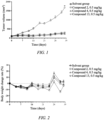
- the tumour growth curve and the animal body weight change curve were as shown in Figure 1 and Figure 2 , respectively.
- Test results after 35 days (administration frequency: once a week), the TGIs of the groups administered with compound 2, compound 4 and compound 13 were 90%, 92% and 88%, respectively; the maximum body weight losses of the animals in all administration groups were obviously lower than that of the solvent group.
Landscapes
- Health & Medical Sciences (AREA)
- Chemical & Material Sciences (AREA)
- Life Sciences & Earth Sciences (AREA)
- Organic Chemistry (AREA)
- Medicinal Chemistry (AREA)
- General Health & Medical Sciences (AREA)
- Proteomics, Peptides & Aminoacids (AREA)
- Pharmacology & Pharmacy (AREA)
- Veterinary Medicine (AREA)
- Public Health (AREA)
- Animal Behavior & Ethology (AREA)
- Molecular Biology (AREA)
- Engineering & Computer Science (AREA)
- Bioinformatics & Cheminformatics (AREA)
- Genetics & Genomics (AREA)
- Biophysics (AREA)
- Biochemistry (AREA)
- General Chemical & Material Sciences (AREA)
- Chemical Kinetics & Catalysis (AREA)
- Epidemiology (AREA)
- Nuclear Medicine, Radiotherapy & Molecular Imaging (AREA)
- Gastroenterology & Hepatology (AREA)
- Medicines That Contain Protein Lipid Enzymes And Other Medicines (AREA)
- Peptides Or Proteins (AREA)
- Medicinal Preparation (AREA)
Applications Claiming Priority (5)
| Application Number | Priority Date | Filing Date | Title |
|---|---|---|---|
| CN202111180715 | 2021-10-14 | ||
| CN202210081789 | 2022-01-24 | ||
| CN202210540531 | 2022-05-17 | ||
| CN202210737371 | 2022-06-27 | ||
| PCT/CN2022/125377 WO2023061482A1 (zh) | 2021-10-14 | 2022-10-14 | EphA2的双环肽配体及其缀合物 |
Publications (1)
| Publication Number | Publication Date |
|---|---|
| EP4417618A1 true EP4417618A1 (de) | 2024-08-21 |
Family
ID=85987302
Family Applications (1)
| Application Number | Title | Priority Date | Filing Date |
|---|---|---|---|
| EP22880418.3A Pending EP4417618A1 (de) | 2021-10-14 | 2022-10-14 | Bicyclischer epha2-peptidligand und konjugat davon |
Country Status (9)
| Country | Link |
|---|---|
| US (1) | US20250000988A1 (de) |
| EP (1) | EP4417618A1 (de) |
| JP (1) | JP2024537396A (de) |
| KR (1) | KR20240082410A (de) |
| CN (1) | CN118103388A (de) |
| AU (1) | AU2022365991A1 (de) |
| CA (1) | CA3235116A1 (de) |
| TW (1) | TW202320856A (de) |
| WO (1) | WO2023061482A1 (de) |
Families Citing this family (2)
| Publication number | Priority date | Publication date | Assignee | Title |
|---|---|---|---|---|
| EP4382130A4 (de) * | 2021-08-17 | 2025-12-24 | Tianjin Conjustar Biologics Co Ltd | Polypeptid-wirkstoff-konjugat mit neuartiger struktur und anwendung davon |
| CN119874840B (zh) * | 2025-03-31 | 2025-08-08 | 晶核生物医药科技(上海)有限公司 | 一种双环肽及其应用 |
Family Cites Families (6)
| Publication number | Priority date | Publication date | Assignee | Title |
|---|---|---|---|---|
| RU2470668C2 (ru) * | 2005-08-19 | 2012-12-27 | Эндосайт, Инк. | Конъюгаты лиганда с несколькими лекарственными средствами |
| ZA200900545B (en) * | 2006-07-18 | 2010-03-31 | Sanofi Aventis | Antagonist antibody against EPHA2 for the treatment of cancer |
| GB201607827D0 (en) * | 2016-05-04 | 2016-06-15 | Bicycle Therapeutics Ltd | Bicyclic peptide-toxin conjugates specific for MT1-MMP |
| TWI825046B (zh) * | 2017-12-19 | 2023-12-11 | 英商拜西可泰克斯有限公司 | Epha2特用之雙環胜肽配位基 |
| GB201721265D0 (en) * | 2017-12-19 | 2018-01-31 | Bicyclerd Ltd | Bicyclic peptide ligands specific for EphA2 |
| GB201810316D0 (en) * | 2018-06-22 | 2018-08-08 | Bicyclerd Ltd | Peptide ligands for binding to EphA2 |
-
2022
- 2022-10-14 CN CN202280069310.1A patent/CN118103388A/zh active Pending
- 2022-10-14 EP EP22880418.3A patent/EP4417618A1/de active Pending
- 2022-10-14 AU AU2022365991A patent/AU2022365991A1/en active Pending
- 2022-10-14 US US18/701,190 patent/US20250000988A1/en active Pending
- 2022-10-14 TW TW111138977A patent/TW202320856A/zh unknown
- 2022-10-14 KR KR1020247016017A patent/KR20240082410A/ko active Pending
- 2022-10-14 JP JP2024522494A patent/JP2024537396A/ja active Pending
- 2022-10-14 WO PCT/CN2022/125377 patent/WO2023061482A1/zh not_active Ceased
- 2022-10-14 CA CA3235116A patent/CA3235116A1/en active Pending
Also Published As
| Publication number | Publication date |
|---|---|
| JP2024537396A (ja) | 2024-10-10 |
| CA3235116A1 (en) | 2023-04-20 |
| TW202320856A (zh) | 2023-06-01 |
| WO2023061482A1 (zh) | 2023-04-20 |
| CN118103388A (zh) | 2024-05-28 |
| AU2022365991A1 (en) | 2024-05-30 |
| KR20240082410A (ko) | 2024-06-10 |
| US20250000988A1 (en) | 2025-01-02 |
Similar Documents
| Publication | Publication Date | Title |
|---|---|---|
| JP7116217B2 (ja) | Mt1-mmpに特異的な二環性ペプチドリガンド | |
| CN111741771B (zh) | 特异于epha2的双环肽配体 | |
| JP7551500B2 (ja) | ヘテロタンデム二環式ペプチド複合体 | |
| EP3452096B1 (de) | Für mt1-mmp spezifische bicyclische peptidtoxinkonjugate | |
| CN113543813B (zh) | Cd38特异性的双环肽配体 | |
| JP5358564B2 (ja) | 環状ペプチドcxcr4アンタゴニスト | |
| CA3154672A1 (en) | Bicyclic peptide ligand drug conjugates | |
| EP3897849A1 (de) | Für pd-l1 spezifische bicyclische peptidliganden | |
| EP4003527A1 (de) | Bicyclischer heterotandem-peptidkomplex | |
| CN113383007A (zh) | Caix特异性的双环肽配体 | |
| US20250000988A1 (en) | Epha2 bicyclic peptide ligand and conjugate thereof | |
| JP2006515866A (ja) | 腫瘍および内皮細胞を標的とするペプチド、その組成物および使用 | |
| EP1753776B1 (de) | In stellung 7 mit cyclischen peptiden konjugierte camptothecine als zytostatika | |
| WO2023066314A1 (zh) | Nectin-4的双环肽配体及其用途 | |
| CN113507961A (zh) | FAPα特异性的双环肽配体 | |
| WO2023088236A1 (zh) | Mt1-mmp的双环肽配体及其缀合物 | |
| US20240398965A1 (en) | Bicyclic peptide ligand drug conjugates | |
| HK40117689A (en) | Heterotandem bicyclic peptide complexes | |
| HK40117689B (en) | Heterotandem bicyclic peptide complexes | |
| EA047678B1 (ru) | БИЦИКЛИЧЕСКИЕ ПЕПТИДНЫЕ ЛИГАНДЫ, ОБЛАДАЮЩИЕ СПЕЦИФИЧНОСТЬЮ К EphA2 |
Legal Events
| Date | Code | Title | Description |
|---|---|---|---|
| STAA | Information on the status of an ep patent application or granted ep patent |
Free format text: STATUS: THE INTERNATIONAL PUBLICATION HAS BEEN MADE |
|
| PUAI | Public reference made under article 153(3) epc to a published international application that has entered the european phase |
Free format text: ORIGINAL CODE: 0009012 |
|
| STAA | Information on the status of an ep patent application or granted ep patent |
Free format text: STATUS: REQUEST FOR EXAMINATION WAS MADE |
|
| 17P | Request for examination filed |
Effective date: 20240513 |
|
| AK | Designated contracting states |
Kind code of ref document: A1 Designated state(s): AL AT BE BG CH CY CZ DE DK EE ES FI FR GB GR HR HU IE IS IT LI LT LU LV MC ME MK MT NL NO PL PT RO RS SE SI SK SM TR |
|
| DAV | Request for validation of the european patent (deleted) | ||
| DAX | Request for extension of the european patent (deleted) |