EP4407313A1 - Blutzellentrennmittel und blutzellentrennverfahren damit - Google Patents
Blutzellentrennmittel und blutzellentrennverfahren damit Download PDFInfo
- Publication number
- EP4407313A1 EP4407313A1 EP22872869.7A EP22872869A EP4407313A1 EP 4407313 A1 EP4407313 A1 EP 4407313A1 EP 22872869 A EP22872869 A EP 22872869A EP 4407313 A1 EP4407313 A1 EP 4407313A1
- Authority
- EP
- European Patent Office
- Prior art keywords
- polymer
- blood cell
- cell separation
- agent
- amino group
- Prior art date
- Legal status (The legal status is an assumption and is not a legal conclusion. Google has not performed a legal analysis and makes no representation as to the accuracy of the status listed.)
- Pending
Links
Images
Classifications
-
- G—PHYSICS
- G01—MEASURING; TESTING
- G01N—INVESTIGATING OR ANALYSING MATERIALS BY DETERMINING THEIR CHEMICAL OR PHYSICAL PROPERTIES
- G01N33/00—Investigating or analysing materials by specific methods not covered by groups G01N1/00 - G01N31/00
- G01N33/48—Biological material, e.g. blood, urine; Haemocytometers
-
- B—PERFORMING OPERATIONS; TRANSPORTING
- B01—PHYSICAL OR CHEMICAL PROCESSES OR APPARATUS IN GENERAL
- B01J—CHEMICAL OR PHYSICAL PROCESSES, e.g. CATALYSIS OR COLLOID CHEMISTRY; THEIR RELEVANT APPARATUS
- B01J20/00—Solid sorbent compositions or filter aid compositions; Sorbents for chromatography; Processes for preparing, regenerating or reactivating thereof
- B01J20/22—Solid sorbent compositions or filter aid compositions; Sorbents for chromatography; Processes for preparing, regenerating or reactivating thereof comprising organic material
- B01J20/26—Synthetic macromolecular compounds
- B01J20/265—Synthetic macromolecular compounds modified or post-treated polymers
- B01J20/267—Cross-linked polymers
-
- B—PERFORMING OPERATIONS; TRANSPORTING
- B01—PHYSICAL OR CHEMICAL PROCESSES OR APPARATUS IN GENERAL
- B01J—CHEMICAL OR PHYSICAL PROCESSES, e.g. CATALYSIS OR COLLOID CHEMISTRY; THEIR RELEVANT APPARATUS
- B01J20/00—Solid sorbent compositions or filter aid compositions; Sorbents for chromatography; Processes for preparing, regenerating or reactivating thereof
- B01J20/28—Solid sorbent compositions or filter aid compositions; Sorbents for chromatography; Processes for preparing, regenerating or reactivating thereof characterised by their form or physical properties
- B01J20/28002—Solid sorbent compositions or filter aid compositions; Sorbents for chromatography; Processes for preparing, regenerating or reactivating thereof characterised by their form or physical properties characterised by their physical properties
- B01J20/28004—Sorbent size or size distribution, e.g. particle size
-
- B—PERFORMING OPERATIONS; TRANSPORTING
- B01—PHYSICAL OR CHEMICAL PROCESSES OR APPARATUS IN GENERAL
- B01J—CHEMICAL OR PHYSICAL PROCESSES, e.g. CATALYSIS OR COLLOID CHEMISTRY; THEIR RELEVANT APPARATUS
- B01J20/00—Solid sorbent compositions or filter aid compositions; Sorbents for chromatography; Processes for preparing, regenerating or reactivating thereof
- B01J20/28—Solid sorbent compositions or filter aid compositions; Sorbents for chromatography; Processes for preparing, regenerating or reactivating thereof characterised by their form or physical properties
- B01J20/28014—Solid sorbent compositions or filter aid compositions; Sorbents for chromatography; Processes for preparing, regenerating or reactivating thereof characterised by their form or physical properties characterised by their form
- B01J20/28016—Particle form
-
- B—PERFORMING OPERATIONS; TRANSPORTING
- B01—PHYSICAL OR CHEMICAL PROCESSES OR APPARATUS IN GENERAL
- B01J—CHEMICAL OR PHYSICAL PROCESSES, e.g. CATALYSIS OR COLLOID CHEMISTRY; THEIR RELEVANT APPARATUS
- B01J20/00—Solid sorbent compositions or filter aid compositions; Sorbents for chromatography; Processes for preparing, regenerating or reactivating thereof
- B01J20/30—Processes for preparing, regenerating, or reactivating
- B01J20/32—Impregnating or coating ; Solid sorbent compositions obtained from processes involving impregnating or coating
- B01J20/3202—Impregnating or coating ; Solid sorbent compositions obtained from processes involving impregnating or coating characterised by the carrier, support or substrate used for impregnation or coating
- B01J20/3204—Inorganic carriers, supports or substrates
-
- B—PERFORMING OPERATIONS; TRANSPORTING
- B01—PHYSICAL OR CHEMICAL PROCESSES OR APPARATUS IN GENERAL
- B01J—CHEMICAL OR PHYSICAL PROCESSES, e.g. CATALYSIS OR COLLOID CHEMISTRY; THEIR RELEVANT APPARATUS
- B01J20/00—Solid sorbent compositions or filter aid compositions; Sorbents for chromatography; Processes for preparing, regenerating or reactivating thereof
- B01J20/30—Processes for preparing, regenerating, or reactivating
- B01J20/32—Impregnating or coating ; Solid sorbent compositions obtained from processes involving impregnating or coating
- B01J20/3214—Impregnating or coating ; Solid sorbent compositions obtained from processes involving impregnating or coating characterised by the method for obtaining this coating or impregnating
- B01J20/3217—Resulting in a chemical bond between the coating or impregnating layer and the carrier, support or substrate, e.g. a covalent bond
- B01J20/3219—Resulting in a chemical bond between the coating or impregnating layer and the carrier, support or substrate, e.g. a covalent bond involving a particular spacer or linking group, e.g. for attaching an active group
-
- B—PERFORMING OPERATIONS; TRANSPORTING
- B01—PHYSICAL OR CHEMICAL PROCESSES OR APPARATUS IN GENERAL
- B01J—CHEMICAL OR PHYSICAL PROCESSES, e.g. CATALYSIS OR COLLOID CHEMISTRY; THEIR RELEVANT APPARATUS
- B01J20/00—Solid sorbent compositions or filter aid compositions; Sorbents for chromatography; Processes for preparing, regenerating or reactivating thereof
- B01J20/30—Processes for preparing, regenerating, or reactivating
- B01J20/32—Impregnating or coating ; Solid sorbent compositions obtained from processes involving impregnating or coating
- B01J20/3231—Impregnating or coating ; Solid sorbent compositions obtained from processes involving impregnating or coating characterised by the coating or impregnating layer
- B01J20/3242—Layers with a functional group, e.g. an affinity material, a ligand, a reactant or a complexing group
- B01J20/3268—Macromolecular compounds
- B01J20/3272—Polymers obtained by reactions otherwise than involving only carbon to carbon unsaturated bonds
-
- B—PERFORMING OPERATIONS; TRANSPORTING
- B01—PHYSICAL OR CHEMICAL PROCESSES OR APPARATUS IN GENERAL
- B01J—CHEMICAL OR PHYSICAL PROCESSES, e.g. CATALYSIS OR COLLOID CHEMISTRY; THEIR RELEVANT APPARATUS
- B01J20/00—Solid sorbent compositions or filter aid compositions; Sorbents for chromatography; Processes for preparing, regenerating or reactivating thereof
- B01J20/30—Processes for preparing, regenerating, or reactivating
- B01J20/32—Impregnating or coating ; Solid sorbent compositions obtained from processes involving impregnating or coating
- B01J20/3291—Characterised by the shape of the carrier, the coating or the obtained coated product
- B01J20/3293—Coatings on a core, the core being particle or fiber shaped, e.g. encapsulated particles, coated fibers
-
- B—PERFORMING OPERATIONS; TRANSPORTING
- B01—PHYSICAL OR CHEMICAL PROCESSES OR APPARATUS IN GENERAL
- B01J—CHEMICAL OR PHYSICAL PROCESSES, e.g. CATALYSIS OR COLLOID CHEMISTRY; THEIR RELEVANT APPARATUS
- B01J39/00—Cation exchange; Use of material as cation exchangers; Treatment of material for improving the cation exchange properties
- B01J39/08—Use of material as cation exchangers; Treatment of material for improving the cation exchange properties
- B01J39/16—Organic material
- B01J39/18—Macromolecular compounds
-
- C—CHEMISTRY; METALLURGY
- C08—ORGANIC MACROMOLECULAR COMPOUNDS; THEIR PREPARATION OR CHEMICAL WORKING-UP; COMPOSITIONS BASED THEREON
- C08F—MACROMOLECULAR COMPOUNDS OBTAINED BY REACTIONS ONLY INVOLVING CARBON-TO-CARBON UNSATURATED BONDS
- C08F292/00—Macromolecular compounds obtained by polymerising monomers on to inorganic materials
Definitions
- the present invention relates to an agent for use in blood cell separation, and a method of separating blood cells using the same, and more particularly, it relates to an agent for use in blood cell separation comprising a specific polymer carried on an inorganic carrier, and a method of separating blood cell using the same.
- Blood is a specimen used in various biochemical or immunological tests, and is usually separated into plasma or serum and blood cells to be respectively subjected to various analyses. Recently, there is a need to shorten the time between specimen collection and presentation of analysis results, and attempts have been made to shorten the time required for blood cell separation and to perform processes of from the separation to the analysis in sequence in many clinical tests.
- centrifugation method has been commonly employed for separation between a plasma or serum and a blood cell, and simpler and faster blood cell separation methods that do not require centrifugation are under investigation.
- Patent Document 1 a solution containing a cholic acid-based surfactant and an acid
- Patent Document 2 a specific quaternary amine sulfone polymer
- Proposed been also has a simple test device comprising a reaction pad containing a reagent to be reacted with a target soluble component, and a filtering pad for separating soluble components and a blood cell (Patent Document 3), and this filtering pad is composed of a carrier matrix which is impregnated with thrombin and lectin.
- this device blood is introduced to the filtering pad, and plasma or serum separated from blood cells is introduced into the reaction pad for analysis. Therefore, this device has a merit that the separated plasma or serum is directly subjected to analysis.
- the plasma or serum separated by the filtering pad may be contaminated with thrombin and lectin, but particular consideration is not given to this issue in this device.
- a blood filter wherein a blood coagulant is impregnated in or adhered to a glass nonwoven fabric, has been proposed (Patent Document 4), and poly(diallyl dimethyl ammonium chloride) is used as the blood coagulant.
- the blood coagulant may be dissociated from the glass nonwoven fabric to contaminate the separated plasma or serum, but particular consideration is not given to this issue in this filter, either.
- an object of the present invention is to provide an agent for use in blood cell separation capable of exhibiting excellent blood cell separation ability with avoiding contamination of a sample with a polymer contained in the agent for use in blood cell separation, and a method of separating blood cell using the same.
- the present invention relates to:
- the polymer(s) carried on the inorganic carrier are not desorbed, and hence a separated sample is not contaminated with the polymer(s). Therefore, accurate measurements can be conducted in various analysis systems. Even when a sample to be introduced into an analysis system is required to have a pH suitable for the analysis, blood cells can be separated under a pH condition suitable for the analysis, and hence a sample resulting from the separation process can be directly subjected to the analysis.
- An agent for use in blood cell separation of the present invention is an agent for use in blood cell separation comprising an inorganic carrier, and polymer(s) having a constituent unit with amino group(s), wherein at least some of the amino group(s) are a primary amino group, a secondary amino group, or a tertiary amino group; at least some of the polymer(s) are carried on the inorganic carrier; and the polymer(s) carried on the inorganic carrier are linked to others of the polymer(s) through crosslinking.
- an agent for use in blood cell separation of the present invention contains polymer(s) having a constituent unit with amino group(s), at least some of which are a primary amino group, a secondary amino group, or a tertiary amino group (hereinafter referred to also as "Specific Polymer(s)").
- An agent for use in blood cell separation of the present invention comprises Specific Polymer(s), and can hence realize excellent technical effects such as excellent blood cell separation performance.
- Specific Polymer(s) are stably carried on an inorganic carrier, which allows blood cells to be captured and separated efficiently and with favorable handleability.
- An agent for use in blood cell separation of the present invention may contain only one type of Specific Polymer(s), or may contain a combination of two or more types of Specific Polymer.
- Specific Polymer(s) are only required to be a (co)polymer having at least one constituent unit having, in the molecule, amino group(s), at least some of which are a primary amino group, a secondary amino group, or a tertiary amino group (hereinafter referred to also as the "Specific Constituent Unit(s)”), and is not particularly limited otherwise.
- (co)polymer encompasses both a homopolymer and a copolymer, and accordingly, Specific Polymer(s) may be a homopolymer, which consists of Specific Constituent Unit(s), or may be a copolymer, which has another constituent unit in addition to Specific Constituent Unit(s).
- Specific Polymers are only required to have at least one Specific Constituent Unit in the molecule, but from the viewpoint of a blood cell separation speed, it preferably has a plurality of Specific Constituent Units. More specifically, the ratio of Specific Constituent Unit(s) to all constituent units of Specific Polymer is preferably 1 mol% or more, more preferably 10 to 100 mol%, and particularly preferably 50 to 100 mol%.
- Specific Polymer(s) may have, in the molecule, only one type of Specific Constituent Unit(s), or may have two or more types of Specific Constituent Units.
- Specific Polymer(s) has two or more types of Specific Constituent Units
- the above-described ratio of Specific Constituent Unit(s) to all constituent units of Specific Polymer is calculated based on the total molar number of the two or more types of Specific Constituent Units.
- Specific Constituent Unit(s) are only required to have amino groups, at least some of which are a primary amino group, a secondary amino group, or a tertiary amino group, and is not particularly limited otherwise.
- the amino group(s) in Specific Constituent Unit(s), at least some of which are a primary amino group, a secondary amino group, or a tertiary amino group allows Specific Polymers to be more efficiently crosslinked with each other to be more stably carried on an inorganic carrier. From the viewpoint of realizing favorable blood cell separation performance, at least some of the amino group(s) in Specific Constituent Unit(s) are preferably a secondary amino group or a tertiary amino group.
- the amino group(s) in Specific Constituent Unit(s) may be a free amino group, or a cationic amino group having an addition salt or the like.
- (a1) an allylamine (co)polymer, (a2) a diallylamine (co)polymer, and (a3) a polyethyleneimine can be preferably used.
- a diallylamine (co) and/or (a3) a polyethyleneimine are particularly preferably used as Specific Polymer(s).
- an allylamine (co)polymer used preferably as Specific Polymer of the present invention, has a constituent unit derived from (A1) a monoallylamine-based monomer.
- the monoallylamine-based monomer has an amino group, and a constituent unit derived from (A1) the monoallylamine-based monomer hence corresponds to Specific Constituent Unit(s) in (a1) an allylamine (co)polymer.
- the amino group(s) in a constituent unit derived from (A1) a monoallylamine-based monomer may be any of primary, secondary, and tertiary, and from the viewpoint of realizing favorable blood cell separation performance, it is preferably a secondary amino group, or a tertiary amino group.
- a constituent unit derived from (A1) a monoallylamine-based monomer preferably has a structure represented by the following formula (I), or a structure of an addition salt thereof.
- R 1 and R 2 each independently represent a hydrogen atom, or a monovalent organic group, and more preferably, R 1 and R 2 each independently represent a hydrogen atom, an alkyl group having 1 to 12 carbon atoms, or a cycloalkyl group having 5 to 6 carbon atoms.
- An alkyl group having 1 to 12 carbon atoms which is a preferable alternative of R 1 and R 2 , may be either linear or branched, or may be an aralkyl group. Examples thereof include a methyl group, an ethyl group, a n-propyl group, an isopropyl group, a n-butyl group, an isobutyl group, a sec-butyl group, a tert-butyl group, a pentyl group, a hexyl group, an octyl group, a decyl group, a dodecyl group, and a benzyl group.
- Examples of a cycloalkyl group having 5 to 6 carbon atoms which is another preferable alternative of R 1 and R 2 , include, but are not limited to, a cyclopentyl group, and a cyclohexyl group.
- HX represents an inorganic acid or an organic acid
- H represents a hydrogen atom
- X is not especially limited as long as it is a group capable of forming an inorganic acid or an organic acid together with hydrogen.
- the type of the addition salt is not particularly limited, and from the viewpoints of availability, reaction controllability, and the like, for example, hydrochloride, sulfate, phosphate, nitrate, sulfite, phosphite, nitrite, hydrobromide, acetate, amidosulfate, methanesulfonate, trifluoroacetate, and p-toluenesulfonate can be used.
- hydrochloride, sulfate, phosphate, and amidosulfate are preferred, and hydrochloride, sulfate, phosphate, and amidosulfate having a structure derived from monoallylamine are particularly preferred.
- an allylamine (co)polymer may consist of constituent unit(s) derived from (A1) a monoallylamine-based monomer (namely, may be a homopolymer of a monoallylamine-based monomer), or may have another constituent unit in addition to a constituent unit derived from (A1) a monoallylamine-based monomer (namely, may be a copolymer of a monoallylamine-based monomer, and another monomer).
- the ratio of constituent unit(s) derived from (A1) a monoallylamine-based monomer to all constituent units of (a1) an allylamine (co)polymer is preferably 5 to 100 mol%, and particularly preferably 10 to 100 mol%.
- the ratio of constituent unit(s) derived from (A1) a monoallylamine-based monomer can be appropriately adjusted by adjusting the ratio of a monoallylamine-based monomer used in production of (a1) an allylamine (co)polymer, and other polymerization conditions.
- a constituent unit other than one derived from (A1) a monoallylamine-based monomer which constitutes (a1) an allylamine (co)polymer is not particularly limited, and such a constituent unit can be derived by performing copolymerization appropriately using a monomer copolymerizable with a monoallylamine-based monomer.
- copolymerizable monomer examples include, but are not limited to, diallylamines such as diallylamine, and diallylmethylamine, or addition salts thereof; anionic monomers such as dicarboxylic acid, and acrylamides such as acrylamide, dimethylacrylamide, acryloylmorpholine, N-[3-(dimethylamino)propyl](meth)acrylamide, (3-acrylamidopropyl)trimethylammonium chloride and (3-methacrylamidopropyl)trimethylammonium chloride; allyl alcohols and allyl ethers such as ethylene glycol monoallyl ether; allyl sulfonic acids such as (sodium) (meth)allylsulfonate, or addition salts thereof; vinyl sulfonic acids such as (sodium) vinyl sulfonate, or addition salts thereof; and sodium isoprenesulfonate.
- diallylamines such as diallylamine, and
- diallylamines anionic monomers such as dicarboxylic acid, acrylamides and the like can be preferably used. From the viewpoint of realizing favorable blood cell separation performance and the like, it is particularly preferable that diallylamines having a secondary amino group are copolymerized.
- the monomer copolymerizable with a monoallylamine-based monomer only one type of monomer(s) can be used, or two or more types of monomers can be used in combination.
- diallylamines will be described below in relation to (a2) a diallylamine (co)polymer.
- An anionic monomer such as dicarboxylic acid can be copolymerized to introduce anionic constituent unit(s) into (a1) an allylamine (co)polymer.
- an allylamine (co)polymer has anionic constituent unit(s)
- the allylamine (co)polymer becomes what is called an amphoteric polymer, so that advantageous effects such as miscibility with blood cells or the like, and hydrophilicity can be realized.
- Anionic constituent unit(s) of the present embodiment may be constituent unit(s) capable of having negative charge through desorption, and is not limited otherwise, and preferably has a structure derived from a divalent carboxylic acid, but it particularly preferably has a structure represented by the following structural formula (1), (2), or (3):
- R 3 is hydrogen or a methyl group
- Y is hydrogen, Na, K, NH 4 , 1/2Ca, 1/2Mg, 1/2Fe, 1/3Al, or 1/3Fe each independently with respect to a carboxy group to be bonded.
- Anionic constituent unit(s) may have a structure corresponding to none of the structural formulas (1), (2), and (3) as long as it has an anionic group such as a carboxyl group.
- one type of anionic constituent unit(s) may be used, or a plurality of types of anionic constituent units having different structures from each other may be used in combination.
- the respective anionic constituent units may have different structures represented by the same general structural formula (1), (2), or (3), or may have different structures represented by different general structural formulas.
- a plurality of types of anionic constituent units that are represented by the general structural formula (1) but have different structures in Y from each other may be employed.
- one type of anionic constituent unit(s) having a structure represented by the structural formula (1), and another type of anionic constituent unit(s) having a structure represented by the structural formula (2) may be employed.
- anionic constituent unit(s) are preferably derived from maleic acid, and in this case, the anionic constituent unit (s) has a structure represented by the formula (2), in which both of Ys are hydrogen.
- the content of the anionic constituent unit(s) are not particularly limited.
- anionic constituent unit(s) are derived from an unsaturated dicarboxylic acid
- the molar ratio thereof to constituent unit(s) derived from (A1) a monoallylamine-based monomer is such that the constituent unit(s) derived from (A1) a monoallylamine-based monomer/anionic constituent unit(s) is preferably 1/0.1 to 1/0.5, and particularly preferably 1/0.2 to 1/0.5.
- anionic constituent unit(s) may be derived from an unsaturated monocarboxylic acid.
- the ratio of constituent unit(s) derived from (A1) a monoallylamine-based monomer/anionic constituent unit(s) is preferably 1/1 to 100/1, and particularly preferably 1/1 to 10/1.
- the total ratio of constituent unit(s) derived from (A1) a monoallylamine-based monomer and anionic constituent unit(s) to all constituent units is preferably 80 mol% or more, and particularly preferably 90 mol% or more.
- the total ratio of constituent unit(s) derived from (A1) a monoallylamine-based monomer and anionic constituent unit(s) to all constituent units is 80 mol% or more, favorable properties such as improvement of blood cell separation ability can be realized.
- the molecular weight of (a1) an allylamine (co)polymer is not particularly limited, and a (co)polymer having a preferable molecular weight according to a mode of use of a blood cell separation agent, and relationship with other components or the like may be obtained commercially or by polymerization.
- a weight average molecular weight (Mw) is preferably 500 to 10,000,000.
- the weight average molecular weight (Mw) is more preferably 1,000 to 1,000,000.
- the weight average molecular weight (Mw) is particularly preferably 2,000 to 500,000.
- the weight average molecular weight (Mw) is preferably higher in the above-described range, and for example, the weight average molecular weight (Mw) is preferably 8,000 or more.
- the weight average molecular weight (Mw) of (a1) an allylamine (co)polymer can be measured, for example, with a liquid chromatograph by gel permeation chromatography (GPC method). More specifically, it can be measured by, for example, the method described in Examples herein.
- the molecular weight of (a1) an allylamine (co)polymer can be appropriately adjusted by choosing the presence or absence, type and composition of comonomer(s), the temperature, time and pressure employed in the polymerization process, the type and amount of a radical initiator used in the polymerization process, and the like.
- the rotational viscosity [ ⁇ ] of (a1) an allylamine (co)polymer is also not particularly limited, and can be appropriately set in consideration of ease of carrying it on an inorganic carrier, production cost and the like, and is preferably 10 to 700 mPa•s (25°C), and particularly preferably 10 to 60 mPa•s (25°C).
- the rotational viscosity [ ⁇ ] can be measured by a method usually employed in the art, and for example, can be measured with a digital B type viscometer DV-3T manufactured by AMETEK Brookfield. The measurement can be performed with a ULA adapter used, representatively with a liquid amount of 16 mL and a liquid temperature of 25°C.
- the rotational viscosity [ ⁇ ] can be appropriately adjusted by adjusting or choosing diluted concentrations employed in polymerization, the presence or absence, type and composition of comonomer(s), the temperature, time and pressure employed in the polymerization process, the type and amount of a radical initiator used in the polymerization process, and the like.
- a diallylamine (co)polymer preferably used as Specific Polymer(s) of the present invention, is a (co)polymer having a constituent unit derived from (A2) a diallylamine-based monomer.
- a diallylamine-based monomer has an amino group, and hence a constituent unit derived from (A2) a diallylamine-based monomer corresponds to Specific Constituent Unit(s) in (a2) a diallylamine (co)polymer.
- (co)polymer encompasses both a homopolymer and a copolymer, and accordingly, (a2) a diallylamine (co)polymer may be a homopolymer consisting of constituent unit(s) derived from (A2) a diallylamine-based monomer, or may be a copolymer having constituent unit(s) derived from (A2) a diallylamine-based monomer and different constituent unit(s).
- a diallylamine (co)polymer has constituent unit(s) derived from a diallylamine-based monomer (A2).
- constituent unit(s) derived from (A2) a diallylamine-based monomer preferably has a structure represented by the following structural formula (IIa) or (IIb), or a structure of an inorganic acid salt thereof or an organic acid salt thereof, or a structure represented by the following structural formula (IIIa) or (IIIb):
- R 4 represents a hydrogen atom, or a monovalent organic group, and is preferably a hydrogen atom, an alkyl group having 1 to 10 carbon atoms, a cycloalkyl group having 5 to 10 carbon atoms, or an aralkyl group having 7 to 10 carbon atoms.
- R 5 and R 6 each independently represent a hydrogen atom or a monovalent organic group (at least one of R 5 and R 6 being a hydrogen atom), and are preferably a hydrogen atom, an alkyl group having 1 to 10 carbon atoms, a cycloalkyl group having 5 to 10 carbon atoms, or an aralkyl group having 7 to 10 carbon atoms; and X - is a counter ion.
- R 4 is more preferably a hydrogen atom, a methyl group, an ethyl group, or a benzyl group, and particularly preferably a hydrogen atom, or a methyl group.
- R 5 and R 6 are preferably each independently a hydrogen atom, a methyl group, an ethyl group, or a benzyl group, and particularly preferably a hydrogen atom, or a methyl group.
- a diallylamine (co)polymer may have, as a constituent unit derived from (A2) a diallylamine-based monomer, constituent unit(s) having the structure represented by the structural formula (IIa) or (IIb), i.e., constituent unit(s) in a free structure form, or may have constituent unit(s) in the form of an inorganic acid salt or an organic acid salt represented by the formula (IIa) or (IIb), i.e. an addition salt thereof, or a structure represented by the structural formula (IIIa) or (IIIb), i.e. a structure having a counter ion.
- a diallylamine monomer having an addition salt or a counter ion is preferably used.
- a process for removing an addition salt such as HCl and a counter ion from a polymer is complicated, and can increase the cost. Therefore, use of an addition salt type or counter ion type of (a2) a diallylamine (co)polymer, which can be produced without such a process, is a preferable embodiment also from the viewpoint of cost and the like.
- an inorganic acid salt or organic acid salt having the structure represented by the structural formula (IIa) or (IIb) is preferably a hydrochloride, carboxylate, sulfonate, or alkyl sulfate salt, and particularly preferably a hydrochloride.
- a diallylamine (co)polymer has, as constituent unit(s) derived from (A2) a diallylamine-based monomer, the structure represented by the structural formula (IIIa) or (IIIb), the counter ion X - is not particularly limited, and from the viewpoints of availability, reaction controllability and the like, it is preferably a chlorine ion, a carboxylic acid ion, a sulfonic acid ion, or an alkyl sulfate ion, and particularly preferably a chlorine ion, or an ethyl sulfate ion.
- constituent unit(s) derived from one type of (A2) diallylamine-based monomer(s) may be singly used, or constituent units derived from a plurality of types of (A2) diallylamine-based monomers having different structures from each other may be used in combination.
- the respective diallylamine-based constituent units may have different structures represented by the same general structural formula (IIa), (IIb), (IIIa), or (IIIb), or may have different structures represented by different general structural formulas.
- constituent units derived from a plurality of types of (A2) diallylamine-based monomers represented by the general structural formula (IIa) but different in the structure of R 4 from each other may be used.
- one type of constituent unit(s) (A2) having a structure represented by the structural formula (IIa) and another type of constituent unit(s) (A2) having a structure represented by the structural formula (IIIa) may be used.
- the content of constituent unit(s) derived from (A2) diallylamine-based monomer(s) in (a2) a diallylamine (co)polymer is not particularly limited, and the constituent unit(s) preferably account for 1 mol% or more, and more preferably 5 to 100 mol% of all constituent units of (a2) a diallylamine (co)polymer.
- the ratio of constituent unit(s) derived from (A2) diallylamine-based monomer(s) can be appropriately adjusted by adjusting the ratio of diallylamine-based monomer(s) and other polymerization conditions employed in the production of (a2) a diallylamine (co)polymer.
- a constituent unit other than constituent unit(s) derived from (A2) diallylamine-based monomer(s) in (a2) diallylamine (co)polymer is not particularly limited, and such a constituent unit can be derived by performing copolymerization appropriately using a monomer copolymerizable with a diallylamine-based monomer.
- copolymerizable monomer examples include, but are not limited to, monoallylamines, or addition salts thereof; anionic monomers such as dicarboxylic acid, and sulfur dioxide; and acrylamides such as acrylamide, dimethylacrylamide, acryloylmorpholine, N-[3-(dimethylamino)propyl](meth)acrylamide, (3-acrylamidopropyl)trimethylammonium chloride, (3-methacrylamidopropyl)trimethylammonium chloride; allyl alcohols and allyl ethers such as ethylene glycol monoallyl ether; allyl sulfonic acids such as (sodium) (meth)allylsulfonate, or addition salts thereof; vinyl sulfonic acids such as (sodium) vinyl sulfonate, or addition salts thereof; and sodium isoprenesulfonate.
- anionic monomers such as dicarboxylic acid, and sulfur dioxide
- acrylamides
- monoallylamines such as dicarboxylic acid, sulfur dioxide, acrylamides, and the like can be preferably used.
- monomers other than diallylamine-based monomers one type of monomers can be used, or two or more types of monomers can be used in combination.
- constituent unit(s) derived from a monoallylamine, an anionic monomer such as dicarboxylic acid, or the like are the same as those described above in relation to (a1) an allylamine (co)polymer.
- Sulfur dioxide constituent unit(s) in a copolymer of the present embodiment are derived from sulfur dioxide having a structure represented by the following structural formula (4):
- the ratio of sulfur dioxide constituent unit(s) to all constituent units of a copolymer of the present embodiment is preferably 1 mol% or more.
- advantageous properties such as improved polymerizability, and hydrophobicity, and improved performance of separating an anionic component (such as blood cells) can be more effectively imparted to a copolymer of the present embodiment.
- the ratio of sulfur dioxide constituent units is more preferably 1 to 50 mol%, and particularly preferably 10 to 50 mol%.
- the ratio between constituent unit(s) derived from (A2) diallylamine-based monomer(s) and sulfur dioxide constituent unit(s) is also not particularly limited, and any ratio can be selected as long as these are copolymerizable. From the viewpoint of increasing the molecular weight of a copolymer, it is preferable that the ratios of these constituent units are not largely different from each other, and for example, the ratio between constituent unit(s) derived from (A2) diallylamine-based monomer(s) and constituent unit(s) derived from sulfur dioxide is preferably 99:1 to 50:50, and particularly preferably 90:10 to 50:50.
- the molecular weight of (a2) a diallylamine (co)polymer is not particularly limited, and such a (co)polymer having a preferable molecular weight according to a mode of use of a blood cell separation agent, and relationship with other components or the like may be obtained commercially or by polymerization.
- the weight average molecular weight (Mw) is preferably 500 to 10,000,000.
- the weight average molecular weight (Mw) is more preferably 1,000 to 1,000,000.
- the weight average molecular weight (Mw) is particularly preferably 2,000 to 500,000.
- the weight average molecular weight (Mw) is preferably higher in the above-described range, and for example, the weight average molecular weight (Mw) is preferably 15,000 or more.
- the weight average molecular weight (Mw) of (a2) a diallylamine (co)polymer can be measured, for example, with a liquid chromatograph by gel permeation chromatography (GPC method). More specifically, it can be measured by, for example, the method described in Examples herein.
- the molecular weight of (a2) a diallylamine (co)polymer can be appropriately adjusted by choosing the presence or absence, type and composition of comonomer(s), the temperature, time and pressure employed in the polymerization process, the type and amount of a radical initiator used in the polymerization process, and the like.
- the rotational viscosity [ ⁇ ] of (a2) a diallylamine (co)polymer is also not particularly limited, and can be appropriately set in consideration of ease of carrying it on an inorganic carrier, production cost and the like, and is preferably 10 to 1,500 mPa•s (25°C), and particularly preferably 10 to 500 mPa•s (25°C).
- the rotational viscosity [ ⁇ ] can be measured by a method usually employed in the art, and for example, can be measured with a digital B type viscometer DV-3T manufactured by AMETEK Brookfield. The measurement can be performed with a ULA adapter, typically with a liquid amount of 16 mL at a liquid temperature of 25°C.
- the rotational viscosity [ ⁇ ] can be appropriately adjusted by choosing the presence or absence, type and composition of comonomer(s), the temperature, time and pressure employed in the polymerization process, the type and amount of a radical initiator used in the polymerization process, and the like.
- a polyethyleneimine preferably used as Specific Polymer in the present invention, is a polymer having constituent(s) unit derived from ethyleneimine, and more specifically, has constituent unit(s) having a structure represented by the following formula (IVa):
- a polyethyleneimine has constituent unit(s) having the structure represented by the formula (IVa) and hence has an amino group. It therefore corresponds to a polymer having constituent(s) unit with amino group(s). i.e., Specific Polymer.
- the amino group(s) are a secondary amino group, and therefore, it also corresponds to a (co)polymer having constituent unit(s) with a secondary amino group or a tertiary amino group, which is preferable as Specific Polymer(s).
- a polyethyleneimine may consist of constituent unit(s) having the structure represented by the formula (IVa), or may further have constituent unit(s) having another structure.
- a polyethyleneimine may have a branched structure by means of having a tertiary amino group and may have, for example, a structure represented by the following formula (IVb). Even in the structure of the following formula (IVb), a secondary amino group is present in a linear portion and a primary amino group is present at the end.
- a polymer having constituent unit(s) with amino group(s), at least some of which are a primary amino group, a secondary amino group, or a tertiary amino group i.e., Specific Polymer(s)
- a (co)polymer having constituent unit(s) with a secondary amino group or a tertiary amino group which is particularly preferable as Specific Polymer.
- addition salts are not particularly limited, and as for (a1) an allylamine (co)polymer and (a2) a diallylamine (co)polymer, for example, various organic acid salts and inorganic acid salts described above can be appropriately used.
- the molecular weight of (a3) a polyethyleneimine is not particularly limited, and the weight average molecular weight is preferably in a range of 100 to 2,000,000, more preferably 500 to 2,000,000, and particularly preferably in a range of 1,000 to 2,000,000.
- a polyethyleneimine can be synthesized, for example, by ring-opening polymerization of ethyleneimine in the presence of an acid catalyst.
- a commercially available polyethyleneimine may be used and includes Lupasol commercially available from BASF (brand name: Lupasol SK (average molecular weight: about 2,000,000), Lupasol G20 (average molecular weight: about 1,300), Lupasol G20WF (average molecular weight: about 1,300), Lupasol P (average molecular weight: about 750,000), Lupasol PS (average molecular weight: about 750,000), Lupasol PR8515 (2,000), Lupasol PN40, Lupasol WF (average molecular weight: about 25,000), Lupasol SC-61B (average molecular weight: 110,000), and Lupasol FG), Epomin commercially available from Nippon Shokubai Co., Ltd.
- a method for producing Specific Polymer(s) is not particularly limited, and Specific Polymer(s) can be produced by any methods conventionally known in this technical field, and can be produced by, for example, homopolymerizing a monoallylamine or diallylamine monomer, or an inorganic acid salt or organic acid salt thereof, or copolymerizing it with another monomer if desired.
- a solvent is not particularly limited, and may be an aqueous solvent, or an organic solvent such as alcohol, ether, sulfoxide, or amide, and is preferably an aqueous solvent.
- a monomer concentration varies depending on the type of a monomer, or the type of a solvent used in the (co)polymerization, but in case of an aqueous solvent, is usually 10 to 75% by weight.
- This (co)polymerization reaction is usually a radical polymerization reaction, and is performed in the presence of a radical polymerization catalyst.
- the type of the radical polymerization catalyst is not particularly limited, and preferable examples include peroxides such as t-butyl hydroperoxide, persulfates such as ammonium persulfate, sodium persulfate, and potassium persulfate, and azobis-based or diazo-based aqueous azo compounds.
- An amount of the radical polymerization catalyst to be added is generally 0.1 to 20 mol%, and preferably 1.0 to 10 mol% with respect to all monomers.
- a polymerization temperature is generally 0 to 100°C, and preferably 5 to 80°C, and a polymerization time is generally 1 to 150 hours, and preferably 5 to 100 hours.
- As a polymerization atmosphere no serious problem occurs in polymerizability even in the air, and the polymerization can be performed in an inert gas atmosphere of nitrogen or the like.
- An agent for use in blood cell separation of the present invention is an agent for use in blood cell separation comprising an inorganic carrier, and polymer(s) having constituent unit(s) with amino group(s) (Specific Polymer(s)), wherein at least some of the polymer(s) are carried on the inorganic carrier, preferably by adsorption through electrostatic interaction and/or by a covalent bond.
- the carried Specific Polymer(s) on an inorganic carrier is preferable from the viewpoints of handleability, reuse of the blood cell separation agent, and reduced contamination of a sample separated from blood cells with the blood cell separation agent.
- the shape or form of the inorganic carrier is not particularly limited, and for example, a container, an inner wall of a tube, an inorganic particle, a magnetic bead, glass wool, or glass filter paper can be used as the inorganic carrier.
- the material of the inorganic carrier can be glass, silica, kaolin, zeolite, bentonite or the like because such a material itself has blood cell separation ability, and can easily carry Specific (Co) Polymer(s).
- the particle size of the inorganic carrier is not particularly limited, either, and a primary particle size thereof is preferably 0.05 to 500 ⁇ m, and particularly preferably 0.1 to 50 ⁇ m.
- a method for carrying Specific Polymer(s) on an inorganic carrier is not particularly limited, and Specific Polymer(s) is preferably carried on an inorganic carrier by being adsorbed through electrostatic interaction, and/or being bonded by a covalent bond, which allows Specific Polymer(s) to be stably carried.
- a method for adsorbing Specific Polymer(s) on an inorganic carrier through electrostatic interaction is not particularly limited, but can be preferably performed by adjusting a pH of a dispersion or a solution in which Specific Polymer(s) are dispersed or dissolved, adjusting concentrations of solid components, particularly, polymers, and so on.
- the pH of a dispersion or a solution containing Specific Polymer(s) is preferably 5 to 11, and particularly preferably pH 7 to 10.
- the concentration of Specific Polymer(s) is preferably 1.0 to 20% by weight, and particularly preferably 2.5 to 10% by weight.
- a method for bonding Specific Polymer(s) to an inorganic carrier by covalent bond is also not particularly limited, and a covalent bond can be made through a reaction between a functional group such as an amino group of Specific Polymer(s) and a reactive group present on the surface of the inorganic carrier, or by using a compound having reactivity with both of them.
- a silane coupling agent is preferably used.
- the type of the silane coupling agent is not particularly limited, and epoxy silane, methacrylic silane, acrylic silane, chloro silane, and the like can be preferably used.
- epoxy silane is particularly preferably used.
- Specific Polymer(s) may be crosslinked with each other.
- Specific Polymer(s) When Specific Polymer(s) are adsorbed on an inorganic carrier through electrostatic interaction, Specific Polymer(s) tends to become desorbed through pH change, but in case that Specific Polymer(s) are crosslinked with each other, even if some of Specific Polymer(s) are desorbed through pH change, the crosslinked Specific Polymers as a whole remain adsorbed. Therefore, when Specific Polymer(s) are adsorbed on an inorganic carrier by electrostatic interaction, the crosslinking of Specific Polymer(s) with each other is technically much valuable.
- crosslinking agents conventionally used in this technical field can be appropriately used, and peroxide-based crosslinking agents, epoxy-based crosslinking agents, alkyl halide-based crosslinking agents, and the like can be appropriately used.
- the crosslinking is performed preferably using a crosslinking agent that is a compound containing, in total, at least two functional groups capable of forming a covalent bond with an amino group of Specific Polymer(s).
- Examples of such a functional group include a halogen group, an aldehyde group, an epoxy group, a carboxyl group, an acid anhydride group, an acid halide group, a N-chloroformyl group, a chloroformate group, an imide ether group, an amidinyl group, an isocyanate group, and a vinyl group.
- crosslinking agent examples include ethylene glycol diacrylate, propylene glycol diacrylate, butylene glycol diacrylate, ethylene glycol dimethacrylate, propylene glycol dimethacrylate, butylene glycol dimethacrylate, polyethylene glycol dimethacrylate, polyethylene glycol diacrylate, methylene bisacrylamide, methylene bismethacrylamide, ethylene bisacrylamide, epichlorohydrin, toluene diisocyanate, ethylene bismethacrylamide, ethylidene bisacrylamide, divinyl benzene, bisphenol A dimethacrylate, bisphenol A diacrylate, 1,4-butanediol diglycidyl ether, 1,2-ethanediol diglycidyl ether (ethylene glycol diglycidyl ether (EGDGE)), 1,3-dichloropropane, 1,2-dichloroethane, 1,3-dibromopropane, 1,2-d
- the concentration of a crosslinking agent in crosslinking Specific Polymer(s) with each other is such that the molar ratio of a crosslinking agent/Specific Polymer(s) is preferably 0.05 to 20, and particularly preferably 0.4 to 15.
- the blood cell separation performance can be improved in maintaining the adsorption of Specific Polymer(s) as a whole.
- a method of separating blood cells of the present invention is not particularly limited except for this point and allow blood cells to be separated in various forms.
- the blood cell separation agent may be added to and mixed with a sample containing blood cells in a collection container, or a collected specimen containing blood cells may be added to and mixed with the blood cell separation agent in a container, so that the blood cells are captured, and the sample can be separated into the blood cells and a liquid phase.
- This method can be easily employed in clinical practice and advantageously versatile.
- a liquid phase separated from blood cells is not contaminated with the blood cell separation agent.
- Specific Polymer(s) are carried on an inorganic carrier, and therefore, a liquid phase separated from blood cells is not contaminated with the blood cell separation agent.
- Specific Polymer(s) are not desorbed from the inorganic carrier of the blood cell separation agent, and hence the sample is not contaminated with Specific Polymer(s). Therefore, a sample having a pH suitable for pH conditions of an analysis system, such as the pH of a mobile phase of HPLC, can be obtained, and such a sample can be directly subjected to an analysis even if the analysis requires a sample having a prescribed pH.
- a liquid phase separated from blood cells is not contaminated with the blood cell separation agent, and particularly when a sample is obtained by blood cell separation under conditions of exposure to an acidic solution or an alkaline solution, Specific Polymer(s) are not desorbed from the inorganic carrier, and a sample having a pH suitable for pH conditions of an analysis system can be obtained in the same manner as in a blood cell separation agent in which Specific Polymer(s) are carried on a particulate or fibrous inorganic carrier.
- a blood cell separation agent in which Specific Polymer(s) are carried on a particulate inorganic carrier can be filled in a container such as a column or a sample flow path of an analyzer, together with a support composed of a filtering material if appropriate, to construct a blood cell separation member or a blood cell separation part.
- a blood cell separation agent in which Specific Polymer(s) are carried on a particulate inorganic carrier can be first mixed with a sample containing blood cells, and the resultant mixture is then introduced into a container, such as a column, having been filled with a filtering material, to separate the blood cells and a liquid phase.
- a sample which has flowed out of the blood cell separation member or the blood cell separation part can be directly subjected to various analyses, and hence those methods are applicable to a case of requiring a sample having a pH suitable for pH conditions of an analysis system, such as the pH of a mobile phase of HPLC. Therefore, various analyses can be continuously performed following the blood cell separation.
- the filtering material contained in the support include sheet-shaped or particulate filter paper, sheet-shaped or particulate chromatography paper, a particulate silica gel, a particulate or fibrous alumina, particulate diatomite, particulate or fibrous glass, and a combination thereof.
- a blood cell separation agent in which Specific Polymer(s) are carried on a sheet-shaped or fibrous inorganic carrier may be filled in a container, such as a column or a sample flow path of an analyzer, to construct a blood cell separation member or a blood cell separation part.
- a blood cell separation agent and method of the present invention are applicable to any sample containing blood cells, and can be thus applied to, for example, blood, urine, lymph, a brain fluid, a body cavity fluid, an exudate fluid, digestive juices, and feces.
- a representative applicable sample is blood, which encompasses a whole blood specimen, and a blood specimen containing an anticoagulant such as heparin, and a whole blood specimen is the most representative sample.
- the weight average molecular weights of the following cationic polymers were measured by the following methods, respectively.
- the weight average molecular weight (Mw) of a cationic polymer containing an anionic constituent unit (ii) was measured with Hitachi L-2000 High Performance Liquid Chromatograph by gel permeation chromatography (GPC method).
- Hitachi L-2130 pump was used, as a detector, Hitachi L-2490 RI detector was used, and as columns, two TOSOH TSKgel ⁇ -M (exclusion limit molecular weight: 10,000,000) connected in series were used.
- a sample was prepared to a concentration of 0.5 g/100 mL with an eluent, and was used in an amount of 100 ⁇ L.
- As the eluent 0.15 mol/L sodium sulfate and 1 wt% acetic acid aqueous solution were used. The measurement was performed at a column temperature of 40°C at a flow rate of 1.0 mL/min.
- a calibration curve was obtained by using, as a standard substance, pullulan having a molecular weight of 5,900, 47,300, 212,000, and 788,000, and the weight average molecular weight (Mw) of the cationic polymer was obtained based on the calibration curve.
- the weight average molecular weights (Mw) of other cationic polymers were measured with Chromaster(R) 5450 High Performance Liquid Chromatograph manufactured by Hitachi High-Tech Corporation by gel permeation chromatography (GPC method).
- an RI refractive index detector was used, and as columns, aqueous gel filtration type columns GS-220HQ (exclusion limit molecular weight: 3,000) and GS-620HQ (exclusion limit molecular weight: 2,000,000) manufactured by Shodex Asahipak connected in series were used.
- a sample was prepared to a concentration of 0.5 g/100 mL with an eluent, and was used in an amount of 20 ⁇ L.
- As the eluent 0.4 mol/L sodium chloride aqueous solution was used. The measurement was performed at a column temperature of 30° at a flow rate of 1.0 mL/min.
- a calibration curve was obtained by using, as a standard substance, polyethylene glycol having a molecular weight of 106, 194, 440, 600, 1,470, 4,100, 7,100, 10,300, 12,600, 23,000 and the like, and the weight average molecular weight (Mw) of the cationic polymer was obtained based on the calibration curve.
- silica beads manufactured by Micromod Pelletechnologie
- 500 ⁇ L of NaOH adjusted to 1N was added and stirred for 30 minutes. After removing the supernatant, the resultant was repeatedly washed with distilled water until neutral.
- a diallylamine hydrochloride-sulfur dioxide copolymer (brand name: PAS-92, manufactured by Nittobo Medical Co., Ltd., class of amine: secondary, pH of polymer: 7, weight average molecular weight: 5,000, unit molecular weight with respect to amine: 197.68) was dissolved in pure water to prepare a polymer solution at a solid content concentration of 10% by weight (0.253 mmol) and adjusted with 4 N NaOH to pH 7.0.
- epichlorohydrin manufactured by Tokyo Chemical Industry Co., Ltd.
- 500 ⁇ L of the resultant solution molar ratio of the crosslinking agent to 1 mol of the polymer: 0.756
- silica beads on which the cationic polymer was immobilized was washed with MES-HEPES buffer (20 mM MES, 20 mM HEPES, pH 5.0), and subsequently with HEPES buffer (20 mM HEPES, 150 mM NaCl, pH 7.0). Thereafter, the cationic polymer-immobilized silica beads were suspended in 500 ⁇ L of HEPES buffer to be used as a blood cell separation agent.
- a blood cell separation agent was prepared in the same manner as in Example 1 except that ethylene glycol diglycidyl ether (EGDGE, manufactured by Tokyo Chemical Industry Co., Ltd.) was added to the polymer solution at a final concentration of 3% by volume (0.19 mmol), and that 500 ⁇ L of the resultant solution (molar ratio of the crosslinking agent to 1 mol of the polymer: 0.381) was mixed with the washed silica beads.
- EGDGE ethylene glycol diglycidyl ether
- a blood cell separation agent was prepared in the same manner as in Example 1 except that 25 mg of silica beads (manufactured by Micromod Pelletechnologie) with a particle size of 0.1 ⁇ m were used.
- a blood cell separation agent was prepared in the same manner as in Example 1 except that 25 mg of silica beads (manufactured by Micromod Pelletechnologie) with a particle size of 0.5 ⁇ m were used.
- silica beads manufactured by Micromod Pelletechnologie
- a particle size of 0.3 ⁇ m were washed in the same manner as in Example 1, and then suspended in 500 ⁇ L of HEPES buffer without immobilizing the cationic polymer thereon, and the resultant was used as a blood cell separation agent.
- a blood cell separation agent was prepared in the same manner as in Example 1 except that 500 ⁇ L of the polymer solution not containing epichlorohydrin (manufactured by Tokyo Chemical Industry Co., Ltd.) was mixed with the washed silica beads, and the resultant was stirred at room temperature for 1 day to carry the cationic polymer on the silica beads.
- an allylamine polymer (brand name: PAA-08, manufactured by Nittobo Medical Co., Ltd., class of amine: primary, pH of polymer: 7, weight average molecular weight: 8,000, unit molecular weight with respect to amine: 57.09) was dissolved in pure water at a concentration of 10% by weight (0.876 mmol) to prepare a polymer solution.
- a blood cell separation agent was prepared in the same manner as in Example 5 except that a polymer solution was prepared by dissolving, in pure water, an allylamine hydrochloride-diallylamine hydrochloride copolymer (brand name: PAA-D11-HC1, manufactured by Nittobo Medical Co., Ltd., class of amine: primary + secondary, pH of polymer: 7, weight average molecular weight: 100,000, unit molecular weight with respect to amine: 113.59) at a concentration of 10% by weight (4.402 mmol), and that 5 mL of a solution obtained by adding epichlorohydrin (manufactured by Tokyo Chemical Industry Co., Ltd.) to the polymer solution at a final concentration of 3% by volume (1.91 mmol) (molar ratio of the crosslinking agent to 1 mol of the polymer: 0.435) was mixed with the glass beads.
- a polymer solution was prepared by dissolving, in pure water, an allylamine hydrochloride-diallylamine hydro
- a blood cell separation agent was prepared in the same manner as in Example 5 except that a polymer solution was prepared by dissolving, in pure water, an allylamine hydrochloride-diallylamine hydrochloride copolymer (brand name: PAA-D19-HC1, manufactured by Nittobo Medical Co., Ltd., class of amine: primary + secondary, pH of polymer: 7, weight average molecular weight: 40,000, unit molecular weight with respect to amine: 131.62) at a concentration of 10% by weight (3.799 mmol), and that 5 mL of a solution obtained by adding epichlorohydrin (manufactured by Tokyo Chemical Industry Co., Ltd.) to the polymer solution at a final concentration of 3% by volume (1.91 mmol) (molar ratio of the crosslinking agent to 1 mol of the polymer: 0.504) was mixed with the glass beads.
- an allylamine hydrochloride-diallylamine hydrochloride copolymer brand name: PAA-D19
- a blood cell separation agent was prepared in the same manner as in Example 5 except that a polymer solution was prepared by dissolving, in pure water, a diallylamine polymer (brand name: PAS-21, manufactured by Nittobo Medical Co., Ltd., class of amine: secondary, pH of polymer: 7, weight average molecular weight: 5,000, unit molecular weight with respect to amine: 97.16) at a concentration of 10% by weight (5.146 mmol), and that 5 mL of a solution obtained by adding epichlorohydrin (manufactured by Tokyo Chemical Industry Co., Ltd.) to the polymer solution at a final concentration of 3% by volume (1.91 mmol) (molar ratio of the crosslinking agent to 1 mol of the polymer: 0.372) was mixed with the glass beads.
- a polymer solution was prepared by dissolving, in pure water, a diallylamine polymer (brand name: PAS-21, manufactured by Nittobo Medical Co., Ltd., class of
- a blood cell separation agent was prepared in the same manner as in Example 5 except that a polymer solution was prepared by dissolving, in pure water, a diallylamine hydrochloride polymer (brand name: PAS-21CL, manufactured by Nittobo Medical Co., Ltd., class of amine: secondary, pH of polymer: 7, weight average molecular weight: 50,000, unit molecular weight with respect to amine: 133.62) in a concentration of 10% by weight (3.742 mmol), and that 5 mL of a solution obtained by adding epichlorohydrin (manufactured by Tokyo Chemical Industry Co., Ltd.) to the polymer solution at a final concentration of 3% by volume (1.91 mmol) (molar ratio of the crosslinking agent to 1 mol of the polymer: 0.511) was mixed with the glass beads.
- a polymer solution was prepared by dissolving, in pure water, a diallylamine hydrochloride polymer (brand name: PAS-21CL, manufactured by Nittobo Medical
- a blood cell separation agent was prepared in the same manner as in Example 5 except that a polymer solution was prepared by dissolving, in pure water, a methyl diallylamine hydrochloride polymer (brand name: PAS-M-1L, manufactured by Nittobo Medical Co., Ltd., class of amine: tertiary, pH of polymer: 9, weight average molecular weight: 5,000, unit molecular weight with respect to amine: 147.65) in a concentration of 10% by weight (67.728 mmol), and that 5 mL of a solution obtained by adding 1,3-dichloropropane (manufactured by Tokyo Chemical Industry Co., Ltd.) to the polymer solution at a final concentration of 3% by volume (31.60 mmol) (molar ratio of the crosslinking agent to 1 mol of the polymer: 0.467) was mixed with the glass beads.
- a polymer solution was prepared by dissolving, in pure water, a methyl diallylamine hydrochloride
- a blood cell separation agent was prepared in the same manner as in Example 5 except that a polymer solution was prepared by dissolving, in pure water, a diallylamine hydrochloride-maleic acid copolymer (brand name: PAS-411, manufactured by Nittobo Medical Co., Ltd., class of amine: secondary, pH of polymer: 7, weight average molecular weight: 40,000, unit molecular weight with respect to amine: 172.31) in a concentration of 10% by weight (2.902 mmol), and that 5 mL of a solution obtained by adding epichlorohydrin (manufactured by Tokyo Chemical Industry Co., Ltd.) to the polymer solution at a final concentration of 3% by volume (1.91 mmol) (molar ratio of the crosslinking agent to 1 mol of the polymer: 0.659) was mixed with the glass beads.
- a polymer solution was prepared by dissolving, in pure water, a diallylamine hydrochloride-maleic acid copolymer (brand name: PA
- a blood cell separation agent was prepared in the same manner as in Example 5 except that a polymer solution was prepared by dissolving, in pure water, a diallylamine hydrochloride-sulfur dioxide copolymer (brand name: PAS-92, manufactured by Nittobo Medical Co., Ltd., class of amine: secondary, pH of polymer: 9, weight average molecular weight: 5,000, unit molecular weight with respect to amine: 197.68) in a concentration of 10% by weight (2.529 mmol), and that 5 mL of a solution obtained by adding epichlorohydrin (manufactured by Tokyo Chemical Industry Co., Ltd.) to the polymer solution at a final concentration of 3% by volume (1.91 mmol) (molar ratio of the crosslinking agent to 1 mol of the polymer: 0.756) was mixed with the glass beads.
- a polymer solution was prepared by dissolving, in pure water, a diallylamine hydrochloride-sulfur dioxide copolymer (
- a blood cell separation agent was prepared in the same manner as in Example 5 except that a polymer solution was prepared by dissolving, in pure water, a diallylamine hydrochloride-sulfur dioxide copolymer (brand name: PAS-92, manufactured by Nittobo Medical Co., Ltd., class of amine: secondary, pH of polymer: 7, weight average molecular weight: 5,000, unit molecular weight with respect to amine: 197.68) in a concentration of 2.5% by weight (0.632 mmol), and that 5 mL of a solution obtained by adding epichlorohydrin (manufactured by Tokyo Chemical Industry Co., Ltd.) to the polymer solution at a final concentration of 12.5% by volume (7.97 mmol) (molar ratio of the crosslinking agent to 1 mol of the polymer: 12.606) was mixed with the glass beads.
- a polymer solution was prepared by dissolving, in pure water, a diallylamine hydrochloride-sulfur dioxide copolymer (
- Example 5 Example 6
- Example 7 Example 8
- Example 10 Example 11
- Example 12 Example 13 Comparative Example 3 Carrier Glass Beads Particle Size of Carrier Median Particle Size of 53 to 38 ⁇ m Cationic Polymer Methyl Diallylamine Hydrochloride Polymer (PAS-M-IL) Diallylamine Hydrochloride-Maleic Acid Copolymer (PAS-411) Diallylamine Hydrochloride-Sulfur Dioxide Copolymer (PAS-92) Diallylamine Hydrochloride-Sulfur Dioxide Copolymer (PAS-92) - Weight Average Molecular Weight 5, 000 40, 000 5, 000 5, 000 - Unit Molecular Weight with respect to Amine 147. 65 172. 31 197. 68 197.
- PAS-M-IL Diallylamine Hydrochloride-Maleic Acid Copolymer
- PAS-92 Diallylamine Hydrochloride-Sulfur Dioxide Copolymer
- PAS-92 Diallylamine Hydrochloride-Sulfur Dioxid
- silane coupling agent-containing acetic acid solution 25 mg of silica beads with a particle size of 1.5 ⁇ m (manufactured by Micromod Pelletechnologie) were added to 500 ⁇ L of the silane coupling agent-containing acetic acid solution, the resultant was stirred at room temperature for 1 hour to cause coupling of the silane coupling agent, a supernatant was removed, and the resultant was washed with 500 ⁇ L of anhydrous ethanol, and dried in a draft.
- a diallylamine hydrochloride-sulfur dioxide copolymer (brand name: PAS-92, manufactured by Nittobo Medical Co., Ltd., class of amine: secondary, pH of polymer: 7, weight average molecular weight: 5,000, unit molecular weight with respect to amine: 197.68) was dissolved in pure water to prepare a polymer solution at a concentration of 10% by weight (0.253 mmol) and adjusted with 4 N NaOH to pH 7.0.
- epichlorohydrin manufactured by Tokyo Chemical Industry Co., Ltd.
- a final concentration of 3% by volume (0.19 mmol)
- 500 ⁇ L of the resultant solution 500 ⁇ L
- the silica beads having been coupled to the silane coupling agent were added, and the resultant was stirred at room temperature overnight to synthesize cationic polymer-immobilized silica beads.
- the synthesized cationic polymer-immobilized silica beads were washed with MES-HEPES buffer (20 mM MES, 20 mM HEPES, pH 5.0), and subsequently with HEPES buffer (20 mM HEPES, 150 mM NaCl, pH 7.0). Thereafter, the cationic polymer-immobilized silica beads were suspended in 500 ⁇ L of HEPES buffer to be used as a blood cell separation agent.
- a blood cell separation agent was prepared in the same manner as in Example 14 except that a silane coupling agent-containing acetic acid solution was prepared by adding, to an acetic acid solution adjusted to 1.0% by volume, epoxy silane: Z6040 (manufactured by Dow Corning Toray Co., Ltd.) at a final concentration of 0.1% by volume, and stirring the resultant overnight.
- a silane coupling agent-containing acetic acid solution was prepared by adding, to an acetic acid solution adjusted to 1.0% by volume, epoxy silane: Z6040 (manufactured by Dow Corning Toray Co., Ltd.) at a final concentration of 0.1% by volume, and stirring the resultant overnight.
- Example 14 Carrier Silica Beads Particle Size of Carrier ( ⁇ m) 1.
- PAS-92 Cationic Polymer Diallylamine Hydrochloride-Sulfur Dioxide Copolymer
- PAS-92 Class of Amine Secondary Weight Average Molecular Weight 5, 000 Unit Molecular Weight with respect to Amine 197.
- pH of Polymer 7 Polymer Concentration (wt%) 10 Bonding Method Covalent Bond Crosslinking Agent Epichlorohydrin Crosslinking Agent Concentration (vol%) 3 Crosslinking Agent/Polymer (molar ratio) 0. 756 Silane Coupling Agent Acrylic Silane Epoxy Silane
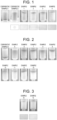
- a column for blood cell separation was produced by placing filter paper having a retention particle size of 1 ⁇ m (manufactured by Kiriyama glass Co.) on the bottom of InertSep(R) empty reservoir (manufactured by GL Sciences Inc.) having an inner diameter of 5.7 mm and a volume of 1 mL, and filling thereon 0.1 g of a filter paper powder (manufactured by ADVANTEC) having a mesh size of 300 or more.
- a column for blood cell separation was produced by placing filter paper having a retention particle size of 1 ⁇ m (manufactured by Kiriyama glass Co.) on the bottom of InertSep(R) empty reservoir (manufactured by GL Sciences Inc.) having an inner diameter of 5.7 mm and a volume of 1 mL, and filling thereon 500 ⁇ L of the cationic polymer-immobilized glass beads prepared in each of Examples 5 to 13.
- the column for blood cell separation was connected to a syringe pump (manufactured by Tokyo Garasu Kikai Co., Ltd.), and 2 mL of HEPES buffer (20 mM HEPES, 150 mM NaCl, pH 7.0) was fed at a flow rate of 0.5 mL/min.
- HEPES buffer 20 mM HEPES, 150 mM NaCl, pH 7.0
- the blood cell separation ability was visually determined in accordance with the following criteria:
- the blood cell separation agent of each of Examples 1 to 15 and Comparative Examples 1 and 2 was dispensed in an amount of 50 ⁇ L, a supernatant was removed by centrifugation operation, and the resultant was washed with 50 ⁇ L of HEPES buffer (20 mM HEPES, 150 mM NaCl, pH 7.0) to collect a supernatant. Thereafter, the resultant was washed again with 50 ⁇ L of MES-HEPES buffer (20 mM MES, 20 mM HEPES, pH 5.0) to similarly collect a supernatant.
- HEPES buffer (20 mM HEPES, 150 mM NaCl, pH 7.0
- MES-HEPES buffer 20 mM MES, 20 mM HEPES, pH 5.0
- Example Comparative Example 1 2 3 4 1 2 Carrier Silica Beads Particle Size of Carrier ( ⁇ m) 0. 3 0. 3 0. 1 0. 5 0. 3 0. 3 Cationic Polymer PAS-92 - PAS-92 Class of Amine Secondary - Secondary Weight Average Molecular Weight 5, 000 - 5, 000 Unit Molecular Weight with respect to Amine 197. 68 - 197.
- Example Comparative Example 10 11 12 13 3 Carrier Glass Beads Particle Size of Carrier ( ⁇ m) Median Particle Size of 53 to 38 Cationic Polymer PAS-M-1L PAS-411 PAS-92 - Class of Amine Tertiary Secondary Secondary - Weight Average Molecular Weight 5, 000 40, 000 5, 000 - Unit Molecular Weight with respect to Amine 147. 65 172. 31 197.
- the blood cell separation agents of Examples 1 to 15 all had excellent blood cell separation ability, and the polymers were not desorbed even under acidic conditions.
- the blood cell separation agent of Comparative Example 2 which was prepared without a crosslinking process, was found to be liable to exhibit lowered blood cell separation ability (as compared with those of Examples 1 and 2), and the polymer was desorbed under acidic conditions. Accordingly, it was revealed that when Specific Polymer(s) are intermolecularly and/or intramolecularly crosslinked, the blood cell separation ability is improved, and the polymer is not desorbed from the inorganic carrier even through pH change.
Landscapes
- Chemical & Material Sciences (AREA)
- Organic Chemistry (AREA)
- Chemical Kinetics & Catalysis (AREA)
- Analytical Chemistry (AREA)
- Health & Medical Sciences (AREA)
- Inorganic Chemistry (AREA)
- Engineering & Computer Science (AREA)
- Life Sciences & Earth Sciences (AREA)
- Medicinal Chemistry (AREA)
- Polymers & Plastics (AREA)
- Materials Engineering (AREA)
- Urology & Nephrology (AREA)
- Hematology (AREA)
- Molecular Biology (AREA)
- Biomedical Technology (AREA)
- Food Science & Technology (AREA)
- Physics & Mathematics (AREA)
- Biochemistry (AREA)
- General Health & Medical Sciences (AREA)
- General Physics & Mathematics (AREA)
- Immunology (AREA)
- Pathology (AREA)
- Addition Polymer Or Copolymer, Post-Treatments, Or Chemical Modifications (AREA)
Applications Claiming Priority (2)
| Application Number | Priority Date | Filing Date | Title |
|---|---|---|---|
| JP2021152944 | 2021-09-21 | ||
| PCT/JP2022/034900 WO2023048115A1 (ja) | 2021-09-21 | 2022-09-20 | 血球分離剤、およびそれを用いた血球分離方法 |
Publications (2)
| Publication Number | Publication Date |
|---|---|
| EP4407313A1 true EP4407313A1 (de) | 2024-07-31 |
| EP4407313A4 EP4407313A4 (de) | 2026-02-11 |
Family
ID=85719488
Family Applications (1)
| Application Number | Title | Priority Date | Filing Date |
|---|---|---|---|
| EP22872869.7A Pending EP4407313A4 (de) | 2021-09-21 | 2022-09-20 | Blutzellentrennmittel und blutzellentrennverfahren damit |
Country Status (5)
| Country | Link |
|---|---|
| US (1) | US20240375083A1 (de) |
| EP (1) | EP4407313A4 (de) |
| JP (1) | JPWO2023048115A1 (de) |
| CN (1) | CN118076891A (de) |
| WO (1) | WO2023048115A1 (de) |
Family Cites Families (17)
| Publication number | Priority date | Publication date | Assignee | Title |
|---|---|---|---|---|
| JPS5926062A (ja) | 1982-08-03 | 1984-02-10 | Sekisui Chem Co Ltd | 血清と血餅との分離方法 |
| JPS62226809A (ja) * | 1986-03-27 | 1987-10-05 | Olympus Optical Co Ltd | シリカ系物質 |
| JPS62298763A (ja) * | 1986-06-18 | 1987-12-25 | Olympus Optical Co Ltd | 無機担体へのリガンド固定化方法 |
| CA1318588C (en) * | 1988-01-19 | 1993-06-01 | Henry Jeong | Method and device for separating plasma from red cells |
| CA2031975A1 (en) | 1990-01-12 | 1991-07-13 | Brian R. Barkes | Device and method of separating and assaying whole blood |
| US4994192A (en) * | 1990-01-16 | 1991-02-19 | Eastman Kodak Company | Amine polymers as coagulator accelerators in blood phase separation |
| CA2104976A1 (en) * | 1992-09-02 | 1994-03-03 | Stephan D. Daubney | Separation of plasma or serum from whole blood using a red blood cell binding component and a polymer containing multiple cationic sites |
| JP3514848B2 (ja) * | 1994-12-19 | 2004-03-31 | 積水化学工業株式会社 | 血液検査用容器 |
| JP4156108B2 (ja) * | 1998-12-02 | 2008-09-24 | 松下電器産業株式会社 | 血液の分析方法 |
| JP2004201752A (ja) * | 2002-12-24 | 2004-07-22 | Toray Ind Inc | タンパク吸着抑制材料およびそれを用いたカラム |
| JP4483230B2 (ja) * | 2003-08-27 | 2010-06-16 | 東レ株式会社 | 血漿分離用の膜およびそれを用いた血液浄化システム |
| JP2005164330A (ja) * | 2003-12-01 | 2005-06-23 | Arkray Inc | 血球分離用具 |
| JP4621862B2 (ja) * | 2005-02-17 | 2011-01-26 | 財団法人ヒューマンサイエンス振興財団 | 化学センサ |
| JP2009039350A (ja) * | 2007-08-09 | 2009-02-26 | Hitachi Chem Co Ltd | 血球分離材及び血球分離材の製造方法 |
| JP6889535B2 (ja) | 2016-10-05 | 2021-06-18 | デンカ株式会社 | 赤血球の凝集方法及び分離方法並びに赤血球凝集用試薬 |
| JP2020085887A (ja) | 2018-11-19 | 2020-06-04 | 日東電工株式会社 | 血液フィルター |
| WO2020105270A1 (ja) * | 2018-11-19 | 2020-05-28 | 日東電工株式会社 | 血液フィルター |
-
2022
- 2022-09-20 EP EP22872869.7A patent/EP4407313A4/de active Pending
- 2022-09-20 CN CN202280063141.0A patent/CN118076891A/zh active Pending
- 2022-09-20 JP JP2023549686A patent/JPWO2023048115A1/ja active Pending
- 2022-09-20 WO PCT/JP2022/034900 patent/WO2023048115A1/ja not_active Ceased
- 2022-09-20 US US18/687,146 patent/US20240375083A1/en active Pending
Also Published As
| Publication number | Publication date |
|---|---|
| CN118076891A (zh) | 2024-05-24 |
| EP4407313A4 (de) | 2026-02-11 |
| US20240375083A1 (en) | 2024-11-14 |
| JPWO2023048115A1 (de) | 2023-03-30 |
| WO2023048115A1 (ja) | 2023-03-30 |
Similar Documents
| Publication | Publication Date | Title |
|---|---|---|
| EP1889857B1 (de) | Neues verpackungsmaterial mit ausgezeichneten hydrophilen eigenschaften und herstellungsverfahren dafür | |
| US7223341B2 (en) | Positively charged membrane | |
| US6884345B1 (en) | Chromatography method and a column material useful in said method | |
| US9944784B2 (en) | Temperature-responsive polymer particles in protein separation applications | |
| US9643174B2 (en) | Temperature responsive adsorbent having a strong cation exchange group and method for producing the same | |
| US8092682B2 (en) | Matrix for separation of polyethers and method of separation | |
| JPS5858026B2 (ja) | クロマトグラフイ−用充填剤及びその製造法 | |
| EP2556095B1 (de) | Silancopolymere und ihre verwendung | |
| EP4407313A1 (de) | Blutzellentrennmittel und blutzellentrennverfahren damit | |
| WO2013187512A1 (ja) | アルカリ耐性を有するイオン交換温度応答性吸着材、及びその製造方法 | |
| EP4406981A1 (de) | Mittel zur trennung von blutzellen zur analyse und blutzellentrennungsverfahren | |
| JPH0788366A (ja) | 分離剤の製造方法 | |
| EP1614459A1 (de) | Positiv geladene Membran | |
| JPS6392627A (ja) | 親水性多孔粒子 | |
| WO2026004963A1 (ja) | 分離材、分離材の製造方法、標的分子の分離方法、混合物、及びクロマトグラフィー用カラム | |
| JPS63267437A (ja) | クロマトグラフイ−用吸着担体 | |
| JPS62151752A (ja) | クロマトグラフイ−用担体及びその製造方法 |
Legal Events
| Date | Code | Title | Description |
|---|---|---|---|
| STAA | Information on the status of an ep patent application or granted ep patent |
Free format text: STATUS: THE INTERNATIONAL PUBLICATION HAS BEEN MADE |
|
| PUAI | Public reference made under article 153(3) epc to a published international application that has entered the european phase |
Free format text: ORIGINAL CODE: 0009012 |
|
| STAA | Information on the status of an ep patent application or granted ep patent |
Free format text: STATUS: REQUEST FOR EXAMINATION WAS MADE |
|
| 17P | Request for examination filed |
Effective date: 20240314 |
|
| AK | Designated contracting states |
Kind code of ref document: A1 Designated state(s): AL AT BE BG CH CY CZ DE DK EE ES FI FR GB GR HR HU IE IS IT LI LT LU LV MC MK MT NL NO PL PT RO RS SE SI SK SM TR |
|
| DAV | Request for validation of the european patent (deleted) | ||
| DAX | Request for extension of the european patent (deleted) | ||
| A4 | Supplementary search report drawn up and despatched |
Effective date: 20260113 |
|
| RIC1 | Information provided on ipc code assigned before grant |
Ipc: G01N 33/48 20060101AFI20260107BHEP Ipc: B01J 20/26 20060101ALI20260107BHEP Ipc: B01J 20/28 20060101ALI20260107BHEP Ipc: B01J 20/32 20060101ALI20260107BHEP |