EP4407033A1 - Verfahren zur reinigung von einzelsträngiger dna - Google Patents
Verfahren zur reinigung von einzelsträngiger dna Download PDFInfo
- Publication number
- EP4407033A1 EP4407033A1 EP22886021.9A EP22886021A EP4407033A1 EP 4407033 A1 EP4407033 A1 EP 4407033A1 EP 22886021 A EP22886021 A EP 22886021A EP 4407033 A1 EP4407033 A1 EP 4407033A1
- Authority
- EP
- European Patent Office
- Prior art keywords
- stranded dna
- binding protein
- product
- dna binding
- purifying
- Prior art date
- Legal status (The legal status is an assumption and is not a legal conclusion. Google has not performed a legal analysis and makes no representation as to the accuracy of the status listed.)
- Pending
Links
- 108020004414 DNA Proteins 0.000 title claims abstract description 153
- 102000053602 DNA Human genes 0.000 title claims abstract description 141
- 108020004682 Single-Stranded DNA Proteins 0.000 title claims abstract description 127
- 238000000034 method Methods 0.000 title claims abstract description 77
- 102000052510 DNA-Binding Proteins Human genes 0.000 claims abstract description 123
- 101710176276 SSB protein Proteins 0.000 claims abstract description 120
- 101710126859 Single-stranded DNA-binding protein Proteins 0.000 claims abstract description 120
- 101710116602 DNA-Binding protein G5P Proteins 0.000 claims abstract description 119
- 101710162453 Replication factor A Proteins 0.000 claims abstract description 119
- 101710176758 Replication protein A 70 kDa DNA-binding subunit Proteins 0.000 claims abstract description 119
- 238000000746 purification Methods 0.000 claims abstract description 73
- 238000001042 affinity chromatography Methods 0.000 claims abstract description 29
- 239000003153 chemical reaction reagent Substances 0.000 claims abstract description 21
- 238000002156 mixing Methods 0.000 claims abstract description 12
- 125000003275 alpha amino acid group Chemical group 0.000 claims description 19
- 238000011084 recovery Methods 0.000 claims description 16
- FWMNVWWHGCHHJJ-SKKKGAJSSA-N 4-amino-1-[(2r)-6-amino-2-[[(2r)-2-[[(2r)-2-[[(2r)-2-amino-3-phenylpropanoyl]amino]-3-phenylpropanoyl]amino]-4-methylpentanoyl]amino]hexanoyl]piperidine-4-carboxylic acid Chemical compound C([C@H](C(=O)N[C@H](CC(C)C)C(=O)N[C@H](CCCCN)C(=O)N1CCC(N)(CC1)C(O)=O)NC(=O)[C@H](N)CC=1C=CC=CC=1)C1=CC=CC=C1 FWMNVWWHGCHHJJ-SKKKGAJSSA-N 0.000 claims description 14
- KFZMGEQAYNKOFK-UHFFFAOYSA-N Isopropanol Chemical compound CC(C)O KFZMGEQAYNKOFK-UHFFFAOYSA-N 0.000 claims description 10
- 230000027455 binding Effects 0.000 claims description 9
- 230000008569 process Effects 0.000 claims description 9
- 238000001179 sorption measurement Methods 0.000 claims description 9
- 239000012634 fragment Substances 0.000 claims description 7
- 239000013612 plasmid Substances 0.000 claims description 7
- 229920002704 polyhistidine Polymers 0.000 claims description 7
- 102000005720 Glutathione transferase Human genes 0.000 claims description 6
- 108010070675 Glutathione transferase Proteins 0.000 claims description 6
- 241000868182 Thermus thermophilus HB8 Species 0.000 claims description 6
- 239000002808 molecular sieve Substances 0.000 claims description 6
- URGAHOPLAPQHLN-UHFFFAOYSA-N sodium aluminosilicate Chemical compound [Na+].[Al+3].[O-][Si]([O-])=O.[O-][Si]([O-])=O URGAHOPLAPQHLN-UHFFFAOYSA-N 0.000 claims description 6
- 238000004587 chromatography analysis Methods 0.000 claims description 5
- 238000012869 ethanol precipitation Methods 0.000 claims description 5
- 238000000605 extraction Methods 0.000 claims description 5
- 238000002205 phenol-chloroform extraction Methods 0.000 claims description 5
- 241000701844 Bacillus virus phi29 Species 0.000 claims description 4
- 238000012408 PCR amplification Methods 0.000 claims description 4
- 238000001712 DNA sequencing Methods 0.000 claims description 3
- 241000588724 Escherichia coli Species 0.000 claims description 3
- 241000588748 Klebsiella Species 0.000 claims description 3
- 241001353152 Salmonella phage Vi II-E1 Species 0.000 claims description 3
- 241001580613 Synechococcus phage S-CBS2 Species 0.000 claims description 3
- 241000705957 Yersinia phage PY54 Species 0.000 claims description 3
- 238000001641 gel filtration chromatography Methods 0.000 claims description 3
- 238000005342 ion exchange Methods 0.000 claims description 3
- 238000004255 ion exchange chromatography Methods 0.000 claims description 3
- 238000001556 precipitation Methods 0.000 claims description 3
- 239000000047 product Substances 0.000 description 88
- 239000000523 sample Substances 0.000 description 38
- RAXXELZNTBOGNW-UHFFFAOYSA-N imidazole Natural products C1=CNC=N1 RAXXELZNTBOGNW-UHFFFAOYSA-N 0.000 description 33
- 239000011324 bead Substances 0.000 description 25
- 108090000623 proteins and genes Proteins 0.000 description 23
- 239000006228 supernatant Substances 0.000 description 22
- FAPWRFPIFSIZLT-UHFFFAOYSA-M Sodium chloride Chemical compound [Na+].[Cl-] FAPWRFPIFSIZLT-UHFFFAOYSA-M 0.000 description 20
- 102000004169 proteins and genes Human genes 0.000 description 17
- 238000011534 incubation Methods 0.000 description 15
- 238000002360 preparation method Methods 0.000 description 15
- 238000004458 analytical method Methods 0.000 description 14
- 239000000499 gel Substances 0.000 description 14
- 238000000246 agarose gel electrophoresis Methods 0.000 description 13
- 238000007885 magnetic separation Methods 0.000 description 11
- 239000011780 sodium chloride Substances 0.000 description 10
- AJPJDKMHJJGVTQ-UHFFFAOYSA-M sodium dihydrogen phosphate Chemical compound [Na+].OP(O)([O-])=O AJPJDKMHJJGVTQ-UHFFFAOYSA-M 0.000 description 9
- 229910000162 sodium phosphate Inorganic materials 0.000 description 9
- 108091033409 CRISPR Proteins 0.000 description 8
- 230000003321 amplification Effects 0.000 description 8
- 238000003199 nucleic acid amplification method Methods 0.000 description 8
- 238000001742 protein purification Methods 0.000 description 8
- 238000012795 verification Methods 0.000 description 8
- 239000000872 buffer Substances 0.000 description 7
- 238000005119 centrifugation Methods 0.000 description 7
- 239000012535 impurity Substances 0.000 description 7
- 150000003839 salts Chemical class 0.000 description 7
- 230000015572 biosynthetic process Effects 0.000 description 6
- 239000002773 nucleotide Substances 0.000 description 6
- 125000003729 nucleotide group Chemical group 0.000 description 6
- 239000012264 purified product Substances 0.000 description 6
- 230000010076 replication Effects 0.000 description 6
- 238000007480 sanger sequencing Methods 0.000 description 6
- 238000003786 synthesis reaction Methods 0.000 description 6
- PXHVJJICTQNCMI-UHFFFAOYSA-N Nickel Chemical compound [Ni] PXHVJJICTQNCMI-UHFFFAOYSA-N 0.000 description 5
- 239000011543 agarose gel Substances 0.000 description 5
- 238000006243 chemical reaction Methods 0.000 description 5
- 238000010586 diagram Methods 0.000 description 5
- 238000001962 electrophoresis Methods 0.000 description 5
- 238000001502 gel electrophoresis Methods 0.000 description 5
- 239000002609 medium Substances 0.000 description 5
- 238000012163 sequencing technique Methods 0.000 description 5
- 239000013598 vector Substances 0.000 description 5
- 238000010354 CRISPR gene editing Methods 0.000 description 4
- 108700020911 DNA-Binding Proteins Proteins 0.000 description 4
- 239000012149 elution buffer Substances 0.000 description 4
- 238000005516 engineering process Methods 0.000 description 4
- 230000014509 gene expression Effects 0.000 description 4
- 244000005700 microbiome Species 0.000 description 4
- 239000000203 mixture Substances 0.000 description 4
- 108700014590 single-stranded DNA binding proteins Proteins 0.000 description 4
- 239000000243 solution Substances 0.000 description 4
- 239000011534 wash buffer Substances 0.000 description 4
- 229920001817 Agar Polymers 0.000 description 3
- PEDCQBHIVMGVHV-UHFFFAOYSA-N Glycerine Chemical compound OCC(O)CO PEDCQBHIVMGVHV-UHFFFAOYSA-N 0.000 description 3
- 108091005804 Peptidases Proteins 0.000 description 3
- 239000004365 Protease Substances 0.000 description 3
- 102100037486 Reverse transcriptase/ribonuclease H Human genes 0.000 description 3
- 239000008272 agar Substances 0.000 description 3
- 210000004027 cell Anatomy 0.000 description 3
- 238000007796 conventional method Methods 0.000 description 3
- 239000012043 crude product Substances 0.000 description 3
- 239000013604 expression vector Substances 0.000 description 3
- 239000000706 filtrate Substances 0.000 description 3
- 238000003198 gene knock in Methods 0.000 description 3
- 238000004128 high performance liquid chromatography Methods 0.000 description 3
- 238000011068 loading method Methods 0.000 description 3
- 239000000463 material Substances 0.000 description 3
- 239000012528 membrane Substances 0.000 description 3
- 238000012986 modification Methods 0.000 description 3
- 230000004048 modification Effects 0.000 description 3
- 230000035772 mutation Effects 0.000 description 3
- 238000005096 rolling process Methods 0.000 description 3
- 101150112274 ssb gene Proteins 0.000 description 3
- XLYOFNOQVPJJNP-UHFFFAOYSA-N water Chemical compound O XLYOFNOQVPJJNP-UHFFFAOYSA-N 0.000 description 3
- 108020005004 Guide RNA Proteins 0.000 description 2
- 101710163270 Nuclease Proteins 0.000 description 2
- ISAKRJDGNUQOIC-UHFFFAOYSA-N Uracil Chemical compound O=C1C=CNC(=O)N1 ISAKRJDGNUQOIC-UHFFFAOYSA-N 0.000 description 2
- 150000001413 amino acids Chemical class 0.000 description 2
- 239000012148 binding buffer Substances 0.000 description 2
- 239000006227 byproduct Substances 0.000 description 2
- 239000003183 carcinogenic agent Substances 0.000 description 2
- 239000012501 chromatography medium Substances 0.000 description 2
- 230000000052 comparative effect Effects 0.000 description 2
- 238000010276 construction Methods 0.000 description 2
- 238000005520 cutting process Methods 0.000 description 2
- 238000004925 denaturation Methods 0.000 description 2
- 230000036425 denaturation Effects 0.000 description 2
- 238000010790 dilution Methods 0.000 description 2
- 239000012895 dilution Substances 0.000 description 2
- 230000034431 double-strand break repair via homologous recombination Effects 0.000 description 2
- 238000012444 downstream purification process Methods 0.000 description 2
- 230000000694 effects Effects 0.000 description 2
- 238000002474 experimental method Methods 0.000 description 2
- 239000012467 final product Substances 0.000 description 2
- 108020001507 fusion proteins Proteins 0.000 description 2
- 102000037865 fusion proteins Human genes 0.000 description 2
- 238000003209 gene knockout Methods 0.000 description 2
- 229930027917 kanamycin Natural products 0.000 description 2
- SBUJHOSQTJFQJX-NOAMYHISSA-N kanamycin Chemical compound O[C@@H]1[C@@H](O)[C@H](O)[C@@H](CN)O[C@@H]1O[C@H]1[C@H](O)[C@@H](O[C@@H]2[C@@H]([C@@H](N)[C@H](O)[C@@H](CO)O2)O)[C@H](N)C[C@@H]1N SBUJHOSQTJFQJX-NOAMYHISSA-N 0.000 description 2
- 229960000318 kanamycin Drugs 0.000 description 2
- 229930182823 kanamycin A Natural products 0.000 description 2
- 239000012139 lysis buffer Substances 0.000 description 2
- 230000001404 mediated effect Effects 0.000 description 2
- 229910052759 nickel Inorganic materials 0.000 description 2
- 102000039446 nucleic acids Human genes 0.000 description 2
- 108020004707 nucleic acids Proteins 0.000 description 2
- 150000007523 nucleic acids Chemical class 0.000 description 2
- 239000012474 protein marker Substances 0.000 description 2
- 108091008146 restriction endonucleases Proteins 0.000 description 2
- 230000000717 retained effect Effects 0.000 description 2
- 238000002864 sequence alignment Methods 0.000 description 2
- 238000002415 sodium dodecyl sulfate polyacrylamide gel electrophoresis Methods 0.000 description 2
- 238000003260 vortexing Methods 0.000 description 2
- 238000005406 washing Methods 0.000 description 2
- 238000001262 western blot Methods 0.000 description 2
- 241000701833 Bacillus phage Nf Species 0.000 description 1
- 238000009010 Bradford assay Methods 0.000 description 1
- 230000004543 DNA replication Effects 0.000 description 1
- 241001198387 Escherichia coli BL21(DE3) Species 0.000 description 1
- 241001646716 Escherichia coli K-12 Species 0.000 description 1
- 241001529936 Murinae Species 0.000 description 1
- 108020004711 Nucleic Acid Probes Proteins 0.000 description 1
- 108091028043 Nucleic acid sequence Proteins 0.000 description 1
- 101710170912 SOSS complex subunit B1 Proteins 0.000 description 1
- 101710141933 Single-stranded DNA-binding protein 1 Proteins 0.000 description 1
- 102100029719 Single-stranded DNA-binding protein, mitochondrial Human genes 0.000 description 1
- 239000007983 Tris buffer Substances 0.000 description 1
- 238000010171 animal model Methods 0.000 description 1
- 238000007846 asymmetric PCR Methods 0.000 description 1
- 230000009286 beneficial effect Effects 0.000 description 1
- 238000011097 chromatography purification Methods 0.000 description 1
- 238000011109 contamination Methods 0.000 description 1
- 238000012937 correction Methods 0.000 description 1
- 210000004748 cultured cell Anatomy 0.000 description 1
- 230000003013 cytotoxicity Effects 0.000 description 1
- 231100000135 cytotoxicity Toxicity 0.000 description 1
- 239000008367 deionised water Substances 0.000 description 1
- 229910021641 deionized water Inorganic materials 0.000 description 1
- 239000012153 distilled water Substances 0.000 description 1
- 238000010362 genome editing Methods 0.000 description 1
- 230000006801 homologous recombination Effects 0.000 description 1
- 238000002744 homologous recombination Methods 0.000 description 1
- 230000006872 improvement Effects 0.000 description 1
- 238000000338 in vitro Methods 0.000 description 1
- 238000003780 insertion Methods 0.000 description 1
- 230000037431 insertion Effects 0.000 description 1
- BPHPUYQFMNQIOC-NXRLNHOXSA-N isopropyl beta-D-thiogalactopyranoside Chemical compound CC(C)S[C@@H]1O[C@H](CO)[C@H](O)[C@H](O)[C@H]1O BPHPUYQFMNQIOC-NXRLNHOXSA-N 0.000 description 1
- 238000011031 large-scale manufacturing process Methods 0.000 description 1
- 239000007788 liquid Substances 0.000 description 1
- 239000011259 mixed solution Substances 0.000 description 1
- 231100000350 mutagenesis Toxicity 0.000 description 1
- 239000002853 nucleic acid probe Substances 0.000 description 1
- 230000009437 off-target effect Effects 0.000 description 1
- 239000002244 precipitate Substances 0.000 description 1
- 238000012113 quantitative test Methods 0.000 description 1
- 238000003259 recombinant expression Methods 0.000 description 1
- 230000009467 reduction Effects 0.000 description 1
- 238000004153 renaturation Methods 0.000 description 1
- 239000012898 sample dilution Substances 0.000 description 1
- 230000000087 stabilizing effect Effects 0.000 description 1
- 210000000130 stem cell Anatomy 0.000 description 1
- 238000006467 substitution reaction Methods 0.000 description 1
- 238000012360 testing method Methods 0.000 description 1
- LENZDBCJOHFCAS-UHFFFAOYSA-N tris Chemical compound OCC(N)(CO)CO LENZDBCJOHFCAS-UHFFFAOYSA-N 0.000 description 1
- 229940035893 uracil Drugs 0.000 description 1
Images



Classifications
-
- C—CHEMISTRY; METALLURGY
- C07—ORGANIC CHEMISTRY
- C07K—PEPTIDES
- C07K1/00—General methods for the preparation of peptides, i.e. processes for the organic chemical preparation of peptides or proteins of any length
- C07K1/14—Extraction; Separation; Purification
- C07K1/16—Extraction; Separation; Purification by chromatography
- C07K1/22—Affinity chromatography or related techniques based upon selective absorption processes
-
- C—CHEMISTRY; METALLURGY
- C12—BIOCHEMISTRY; BEER; SPIRITS; WINE; VINEGAR; MICROBIOLOGY; ENZYMOLOGY; MUTATION OR GENETIC ENGINEERING
- C12N—MICROORGANISMS OR ENZYMES; COMPOSITIONS THEREOF; PROPAGATING, PRESERVING, OR MAINTAINING MICROORGANISMS; MUTATION OR GENETIC ENGINEERING; CULTURE MEDIA
- C12N15/00—Mutation or genetic engineering; DNA or RNA concerning genetic engineering, vectors, e.g. plasmids, or their isolation, preparation or purification; Use of hosts therefor
- C12N15/09—Recombinant DNA-technology
- C12N15/10—Processes for the isolation, preparation or purification of DNA or RNA
- C12N15/1003—Extracting or separating nucleic acids from biological samples, e.g. pure separation or isolation methods; Conditions, buffers or apparatuses therefor
- C12N15/1006—Extracting or separating nucleic acids from biological samples, e.g. pure separation or isolation methods; Conditions, buffers or apparatuses therefor by means of a solid support carrier, e.g. particles, polymers
- C12N15/101—Extracting or separating nucleic acids from biological samples, e.g. pure separation or isolation methods; Conditions, buffers or apparatuses therefor by means of a solid support carrier, e.g. particles, polymers by chromatography, e.g. electrophoresis, ion-exchange, reverse phase
-
- C—CHEMISTRY; METALLURGY
- C07—ORGANIC CHEMISTRY
- C07K—PEPTIDES
- C07K14/00—Peptides having more than 20 amino acids; Gastrins; Somatostatins; Melanotropins; Derivatives thereof
- C07K14/195—Peptides having more than 20 amino acids; Gastrins; Somatostatins; Melanotropins; Derivatives thereof from bacteria
-
- C—CHEMISTRY; METALLURGY
- C12—BIOCHEMISTRY; BEER; SPIRITS; WINE; VINEGAR; MICROBIOLOGY; ENZYMOLOGY; MUTATION OR GENETIC ENGINEERING
- C12N—MICROORGANISMS OR ENZYMES; COMPOSITIONS THEREOF; PROPAGATING, PRESERVING, OR MAINTAINING MICROORGANISMS; MUTATION OR GENETIC ENGINEERING; CULTURE MEDIA
- C12N15/00—Mutation or genetic engineering; DNA or RNA concerning genetic engineering, vectors, e.g. plasmids, or their isolation, preparation or purification; Use of hosts therefor
- C12N15/09—Recombinant DNA-technology
- C12N15/10—Processes for the isolation, preparation or purification of DNA or RNA
- C12N15/1003—Extracting or separating nucleic acids from biological samples, e.g. pure separation or isolation methods; Conditions, buffers or apparatuses therefor
- C12N15/1006—Extracting or separating nucleic acids from biological samples, e.g. pure separation or isolation methods; Conditions, buffers or apparatuses therefor by means of a solid support carrier, e.g. particles, polymers
- C12N15/1013—Extracting or separating nucleic acids from biological samples, e.g. pure separation or isolation methods; Conditions, buffers or apparatuses therefor by means of a solid support carrier, e.g. particles, polymers by using magnetic beads
-
- C—CHEMISTRY; METALLURGY
- C12—BIOCHEMISTRY; BEER; SPIRITS; WINE; VINEGAR; MICROBIOLOGY; ENZYMOLOGY; MUTATION OR GENETIC ENGINEERING
- C12Q—MEASURING OR TESTING PROCESSES INVOLVING ENZYMES, NUCLEIC ACIDS OR MICROORGANISMS; COMPOSITIONS OR TEST PAPERS THEREFOR; PROCESSES OF PREPARING SUCH COMPOSITIONS; CONDITION-RESPONSIVE CONTROL IN MICROBIOLOGICAL OR ENZYMOLOGICAL PROCESSES
- C12Q1/00—Measuring or testing processes involving enzymes, nucleic acids or microorganisms; Compositions therefor; Processes of preparing such compositions
- C12Q1/68—Measuring or testing processes involving enzymes, nucleic acids or microorganisms; Compositions therefor; Processes of preparing such compositions involving nucleic acids
- C12Q1/6804—Nucleic acid analysis using immunogens
-
- C—CHEMISTRY; METALLURGY
- C12—BIOCHEMISTRY; BEER; SPIRITS; WINE; VINEGAR; MICROBIOLOGY; ENZYMOLOGY; MUTATION OR GENETIC ENGINEERING
- C12Q—MEASURING OR TESTING PROCESSES INVOLVING ENZYMES, NUCLEIC ACIDS OR MICROORGANISMS; COMPOSITIONS OR TEST PAPERS THEREFOR; PROCESSES OF PREPARING SUCH COMPOSITIONS; CONDITION-RESPONSIVE CONTROL IN MICROBIOLOGICAL OR ENZYMOLOGICAL PROCESSES
- C12Q1/00—Measuring or testing processes involving enzymes, nucleic acids or microorganisms; Compositions therefor; Processes of preparing such compositions
- C12Q1/68—Measuring or testing processes involving enzymes, nucleic acids or microorganisms; Compositions therefor; Processes of preparing such compositions involving nucleic acids
- C12Q1/6806—Preparing nucleic acids for analysis, e.g. for polymerase chain reaction [PCR] assay
-
- C—CHEMISTRY; METALLURGY
- C07—ORGANIC CHEMISTRY
- C07K—PEPTIDES
- C07K2319/00—Fusion polypeptide
- C07K2319/40—Fusion polypeptide containing a tag for immunodetection, or an epitope for immunisation
-
- C—CHEMISTRY; METALLURGY
- C07—ORGANIC CHEMISTRY
- C07K—PEPTIDES
- C07K2319/00—Fusion polypeptide
- C07K2319/80—Fusion polypeptide containing a DNA binding domain, e.g. Lacl or Tet-repressor
Definitions
- the present application relates to the field of biotechnology, and in particular, to a method for purifying single-stranded DNA.
- CRISPR/Cas9 is a technology for directionally engineering a DNA sequence of a target gene by a single-stranded gRNA (Guide RNA)-mediated Cas9 nuclease, and can efficiently achieve functions of specific gene knockout, gene knock-in, site-specific modification and the like.
- Single-stranded DNA serving as an HDR (Homology directed repair) template has a plurality of advantages in CRISPR/Cas9 gene knock-in experiments, such as improvement of editing efficiency and editing accuracy, and reduction of off-target effect and cytotoxicity. Therefore, the single-stranded DNA template is very suitable for being applied to insertion, replacement and correction of genes based on CRISPR technology, and is an ideal technical solution for gene editing of primary cells and stem cells and establishment of a gene engineering animal model.
- Patent WO 2020135651 discloses preparing a single-stranded DNA sample by skillfully combining uracil specific excision reagent (USER)-mediated self-looping of double-stranded DNA with accurate cleaving of a type II restriction endonuclease and rolling circle replication (RCA) of thermostatically amplified single-stranded DNA, which also increases the yield of a single-stranded DNA sample from conventional several ug to tens of ug.
- USR uracil specific excision reagent
- RCA rolling circle replication
- One of embodiments according to the present disclosure provides a method for purifying single-stranded DNA.
- the method comprises: mixing a sample containing the single-stranded DNA with a single-stranded DNA binding protein, and incubating for a first time period to obtain a first product, wherein the first product contains a conjugate of the single-stranded DNA and the single-stranded DNA binding protein; and purifying the first product to obtain a target product containing purified single-stranded DNA.
- the single-stranded DNA binding protein when the sample is mixed with the single-stranded DNA binding protein, has a final concentration of 0.5 ng/ ⁇ L to 500 ng/ ⁇ L.
- the single-stranded DNA binding protein when the sample is mixed with the single-stranded DNA binding protein, has a final concentration of 1 ng/ ⁇ L to 200 ng/ ⁇ L.
- the first time period is 30 minutes to 12 hours.
- the first time period is 2-4 hours.
- the sample is mixed with the single-stranded DNA binding protein and then incubated at 30-37°C.
- the step of purifying the first product comprises: separating and purifying the first product to obtain a second product; and purifying the second product to at least remove the single-stranded DNA binding protein, so as to obtain the target product containing purified single-stranded DNA.
- the first product is separated and purified by affinity chromatography, ion exchange chromatography or gel filtration chromatography.
- the first product is separated and purified by the affinity chromatography.
- the single-stranded DNA binding protein carries a purification tag.
- the purification tag is a polyhistidine tag, a glutathione-S-transferase tag, a FLAG tag or a Strep-tagII tag.
- the second product is purified by a process selected from at least one of the following: phenol chloroform extraction, DNA adsorption spin column recovery, plasmid extraction ion exchange column recovery, isopropanol precipitation, ethanol precipitation and molecular sieve chromatography.
- the method further comprises performing PCR amplification and DNA sequencing on the target product to verify whether the target product contains a complete sequence of the single-stranded DNA.
- the single-stranded DNA binding protein comprises a single-stranded DNA binding protein derived from Escherichia coli, phage phi29, Salmonella phage Vi II-E1, Thermus thermophilus HB8, Klebsiella phage Phi K02, Yersinia phage Py54 or Synechococcus phage S-CBS2, a core functional fragment thereof, a homolog sequence thereof, or a mutant sequence thereof.
- the single-stranded DNA binding protein comprises a sequence that has at least 80% sequence identity with an amino acid sequence set forth in SEQ ID NO: 2, 9, 10 or 11 and has a function of binding to single-stranded DNA.
- kits for purifying single-stranded DNA the kit comprises a single-stranded DNA binding protein and a purification reagent.
- the purification reagent is an affinity chromatography purification reagent.
- One of embodiments according to the present disclosure provides a use of a single-stranded DNA binding protein in purifying single-stranded DNA.
- a single-stranded DNA binding proteins is a protein that can bind to single-stranded DNA, and mainly functions as stabilizing the unwound single strand of DNA during DNA replication, preventing renaturation and protecting the single-stranded part from being degraded by nucleases.
- This specification provides that the binding ability of the single-stranded DNA binding protein to single-stranded DNA can be used to purify single-stranded DNA in a large scale and efficiently to achieve higher yields.
- a method for purifying single-stranded DNA is provided.
- the method comprises: mixing a sample containing single-stranded DNA with a single-stranded DNA binding protein, and incubating for a first time period to obtain a first product, wherein the first product contains a conjugate of the single-stranded DNA and the single-stranded DNA binding protein; purifying the first product to obtain a target product containing the purified single-stranded DNA.
- the sample may be a product of a process for large-scale production of single-stranded DNA, and thus the sample may contain non-specific amplification products, such as double-stranded DNA.
- the conventional method is to use gel electrophoresis to recover single-stranded DNA in the sample.
- this method has a low yield, greatly increases the time and labor cost of a downstream purification process, and impedes the large-scale preparation.
- the purification method based on the single-stranded DNA binding protein provided by the present disclosure can be used to purify ] the single-stranded DNA in a large scale and efficiently by using the binding ability of the single-stranded DNA binding protein to the single-stranded DNA.
- the sample refers to any sample containing single-stranded DNA of a certain purity.
- a proportion of the single-stranded DNA in the sample may be about 10%, 20%, 30%, 40%, 50%, 60%, 70%, 80%, 90%, and the like, which is not limited by the present disclosure.
- the single-stranded DNA is also referred to as a target sequence.
- the single-stranded DNA binding protein when the sample is mixed with the single-stranded DNA binding protein, may have a final concentration of 0.1 ng/ ⁇ L to 1000 ng/ ⁇ L. In some embodiments, when the sample is mixed with the single-stranded DNA binding protein, the single-stranded DNA binding protein may have a final concentration of 0.5 ng/ ⁇ L to 500 ng/ ⁇ L. In some embodiments, when the sample is mixed with the single-stranded DNA binding protein, the single-stranded DNA binding protein may have a final concentration of 1 ng/ ⁇ L to 200 ng/ ⁇ L.
- the first time period of incubation after the sample is mixed with the single-stranded DNA binding protein may be 20 minutes to 24 hours. In some embodiments, the first time period of incubation after the sample is mixed with the single-stranded DNA binding protein may be 30 minutes to 15 hours. In some embodiments, the first time period of incubation after the sample is mixed with the single-stranded DNA binding protein may be 30 minutes to 12 hours, for example, 2 hours to 4 hours. In some embodiments, the first time period of incubation after the sample is mixed with the single-stranded DNA binding protein may be 30 minutes to 6 hours. In some embodiments, the first time period of incubation after the sample is mixed with the single-stranded DNA binding protein may be 2-4 hours.
- the sample is mixed with the single-stranded DNA binding protein and then incubated at 30-37°C.
- the incubation temperature may be 30°C, 32°C, 35°C, 37°C, and the like.
- the step of purifying the first product may comprise: separating and purifying the first product to obtain a second product; and purifying the second product to at least remove the single-stranded DNA binding protein to obtain the target product containing purified single-stranded DNA.
- the first product is separated and purified to remove impurities in the first product that do not bind to the single-stranded DNA binding protein, and thus a second product is obtained.
- This step can be implemented by various methods for separating and purifying proteins.
- the purification method may include affinity chromatography, ion exchange chromatography, gel filtration chromatography (molecular sieve) or the like, which is not limited by the present disclosure.
- the method for separating and purifying the first product is affinity chromatography.
- the affinity chromatography may include various affinity chromatography methods for separating and purifying proteins. This is not limited by the present disclosure.
- the single-stranded DNA binding protein may further comprise a purification tag for affinity chromatography purification, such as a polyhistidine tag, a glutathione-S-transferase tag, a FLAG tag or a Strep-tagII tag.
- a purification tag for affinity chromatography purification such as a polyhistidine tag, a glutathione-S-transferase tag, a FLAG tag or a Strep-tagII tag.
- the single-stranded DNA binding protein may carry a purification tag, and magnetic beads corresponding to the purification tag may be used for purification.
- a single-stranded DNA binding protein may comprise a polyhistidine tag, and the corresponding magnetic beads may carry nickel; the single-stranded DNA binding protein may comprise a glutathione-S-transferase (GST) tag, and the corresponding magnetic beads may be GST fusion protein purification magnetic beads; or the single-stranded DNA binding protein may comprise a Strep-tagII tag, and the corresponding magnetic beads may be Strep-tagII protein purification magnetic beads.
- the single-stranded DNA binding protein may use a FLAG tag, and a FLAG-tag fusion protein purification kit may be used for purification.
- the first product and an affinity chromatography purification medium may be incubated at room temperature for 30 minutes to 1 hour, and components that do not bind to the single-stranded DNA binding protein are eluted by a buffer with different concentration gradients (e.g., a buffer containing imidazole with different concentrations) or a buffer with different pH gradients to obtain a second product containing a conjugate of single-stranded DNA and the single-stranded DNA binding protein.
- a buffer with different concentration gradients e.g., a buffer containing imidazole with different concentrations
- a buffer with different pH gradients e.g., a buffer with different pH gradients
- the whole purification process does not involve a DNA dye and a carcinogenic agent, and the product has good biological safety, which provides great convenience for clinical trials and other applications.
- the purification process of the final product does not involve amplification or denaturation, and nucleotide errors, losses or mutation caused by high-difficulty sequences in the target sequence can be avoided, so that the method for purifying the single-stranded DNA provided by the present disclosure can be suitable for purifying single-stranded DNA with various lengths and structures, and has a wide application range.
- the reagent materials required in the whole process are conventional protein purification reagents and tools, the system is convenient to amplify, and the cost is low.
- high-difficulty sequence refers to a sequence that contains, but is not limited to, hairpin structure which is caused by inverted repeats, high-low GC sequence or poly structure, which are difficult to amplify by PCR, resulting in inefficient synthesis.
- the remaining liquid may be optionally collected and analyzed to determine whether the single-stranded DNA is well adsorbed to the affinity adsorption medium.
- affinity chromatography is performed using a magnetic bead method
- the magnetic beads can be collected using a magnetic separation rack after incubating the first product with the magnetic beads for 30-60 minutes, and the supernatant is obtained for analysis. For example only, a certain amount of supernatant may be taken and analyzed by gel electrophoresis.
- the result shows that no to-be-purified single-stranded DNA exists in the supernatant, it indicates that the DNA in the sample is substantially completely adsorbed on the affinity adsorption medium. If the result shows that a large amount of single-stranded DNA still exists in the supernatant, it indicates that the single-stranded DNA binding protein does not completely bind to the single-stranded DNA in the sample, or the selected affinity chromatography medium has a poor effect.
- the purification yield can be improved by examining whether the used single-stranded DNA binding protein can normally bind to single-stranded DNA, increasing the concentration of the used single-stranded DNA binding protein, increasing the incubation time period after the sample is mixed with the single-stranded DNA binding protein, or replacing the affinity chromatography medium.
- the second product can optionally be sampled for analysis to determine the effect of the affinity chromatography purification. For example, a certain amount of the second product may be taken and analyzed by gel electrophoresis. If the result shows that only single-stranded DNA exists in the second product, it indicates that the double-stranded DNA impurities are removed; if the result shows that both single-stranded DNA and double-stranded DNA exist in the second product, it indicates that the double-stranded DNA impurities are not completely removed, and the selected affinity chromatography process is not suitable.
- the non-specific adsorption of the double-stranded DNA may be caused by the excessive amount of the single-stranded DNA binding protein, which can be improved by reducing the concentration of the used single-stranded DNA binding protein, reducing the incubation time period after the sample is mixed with the single-stranded DNA binding protein, or performing secondary incubation and purification on the sample and a small amount of the single-stranded DNA binding protein, so as to avoid the situation that the double-stranded DNA impurities are not completely removed.
- the second product is purified to remove single-stranded DNA binding protein, imidazole, salts and other undesirable impurities from the second product.
- This purification step may be selected from any one or more of the following methods: phenol chloroform extraction, DNA adsorption spin column recovery, plasmid extraction ion exchange column recovery, isopropanol precipitation, ethanol precipitation and molecular sieve chromatography supported by high performance liquid chromatography. This is not limited by the present disclosure.
- the single-stranded DNA binding protein comprises a single-stranded DNA binding protein derived from Escherichia coli, phage phi29 ( Bacillus phage Nf ), Salmonella phage Vi II-E1, Thermus thermophilus HB8, Klebsiella phage Phi K02, Yersinia phage Py54 or Synechococcus phage S-CBS2, a core functional fragment thereof, a homolog sequence thereof, or a mutant sequence thereof.
- the term "core functional fragment” as used herein refers to a fragment in the protein structure that enables the protein to normally complete its specific function.
- the term "homolog sequence” refers to a sequence that derives from the same ancestor but that gradually develops partial differences during evolution.
- the "mutant sequence” refers to a sequence after natural mutation or artificially induced mutation of a wild-type sequence.
- the core functional fragment, the homolog sequence, or the mutant sequence mentioned here derived from of the single-stranded DNA binding proteins of the above-mentioned microorganisms still have the ability to bind to single-stranded DNA.
- the single-stranded DNA binding protein used in the present disclosure may be a protein from various sources and capable of binding to single-stranded DNA, such as derived from other microorganisms not mentioned above or derived from artificial synthesis. This is not limited by the present disclosure.
- the single-stranded DNA binding protein is a mutant of the single-stranded DNA binding protein from the above-described microorganism; and the mutant of the single-stranded DNA binding protein comprises a sequence that has at least 70%, 75%, 80%, 85%, 90%, 91%, 92%, 93%, 94%, 95%, 96%, 97%, 98% or 99% of sequence identity to an amino acid sequence of the single-stranded DNA binding protein from the above-mentioned microorganism and has a function of binding to single-stranded DNA.
- the single-stranded DNA binding protein derived from Thermus thermophilus HB8 has accession No. WP_011227803.1 at NCBI (SEQ ID NO: 9); the mutant derived from the single-stranded DNA binding protein from Thermus thermophilus HB8 has an amino acid sequence of SEQ ID NO: 2 and a nucleotide sequence of SEQ ID NO: 1.
- the single-stranded DNA binding protein derived from Escherichia coli K-12 has accession No. AKK14256.2 (SEQ ID NO: 10) at NCBI; and the single-stranded DNA binding protein derived from phage phi29 has accession No. YP_009910721.1 at NCBI (SEQ ID NO: 11).
- the single-stranded DNA binding protein comprises a sequence that has at least 85%, 90%, 91%, 92%, 93%, 94%, 95%, 96%, 97%, 98% or 99% of sequence identity to an amino acid sequence set forth in SEQ ID NO: 2, 9, 10 or 11 and has a function of binding to single-stranded DNA.
- the single-stranded DNA binding protein comprises an amino acid sequence set forth in SEQ ID NO: 2, 9, 10 or 11.
- the amino acid sequence of the single-stranded DNA binding protein is set forth in SEQ ID NO: 2, 9, 10 or 11.
- the identity of the single-stranded DNA binding protein to the amino acid sequence set forth in SEQ ID NO: 2 is greater than or equal to 80%. In some embodiments, the identity of the single-stranded DNA binding protein to the amino acid sequence set forth in SEQ ID NO: 2 is greater than or equal to 85%. In some embodiments, the identity of the single-stranded DNA binding protein to the amino acid sequence set forth in SEQ ID NO: 2 is greater than or equal to 90%. In some embodiments, the identity of the single-stranded DNA binding protein to the amino acid sequence set forth in SEQ ID NO: 2 is greater than or equal to 92%.
- the identity of the single-stranded DNA binding protein to the amino acid sequence set forth in SEQ ID NO: 2 is greater than or equal to 95%. In some embodiments, the identity of the single-stranded DNA binding protein to the amino acid sequence set forth in SEQ ID NO: 2 is greater than or equal to 97%. In some embodiments, the identity of the single-stranded DNA binding protein to the amino acid sequence set forth in SEQ ID NO: 2 is greater than or equal to 99%. In one embodiment, the amino acid sequence of the single-stranded DNA binding protein is set forth in SEQ ID NO. 2.
- sequence identity refers to the amount of identity, generally expressed as a percentage, between two nucleotide/amino acid sequences (e.g., a query sequence and a reference sequence). Typically, sequence alignment is performed and a gap (if any) is introduced before calculating the percentage identity between two nucleotide/amino acid sequences. If bases or amino acids in the two sequences are the same at a certain alignment position, the two sequences are considered to be identical or matched at that position. If the bases/amino acids in the two sequences are different, the two sequences are considered to be non-identical or mismatched at that position.
- the number of matched positions is divided by the total number of positions in the alignment window to obtain sequence identity.
- the number of gaps and/or the gap length are also taken into account.
- the publicly available alignment software BLAST available at ncbi.nlm.nih.gov
- BLAST can be employed to obtain the optimal sequence alignment and calculate the sequence identity between two nucleotide/amino acid sequences by using default settings.
- the target product may be subj ected to PCR amplification and DNA sequencing to verify whether the target product contains a complete sequence of the single-stranded DNA. If the sequencing result is consistent with the sequence of the single-stranded DNA, it indicates that the single-stranded DNA in the target product is complete and can be used in the next step, including but not limited to CRISPR/Cas9 technology, to achieve functions of specific gene knockout, gene knock-in, site-specific modification, and the like. If the sequencing result is inconsistent with the sequence of the single-stranded DNA, it indicates that the sample may contain various single-stranded DNA or other impurities may be mixed in the purification process, and further purification is required.
- kits for purifying single-stranded DNA may comprise the aforementioned single-stranded DNA binding protein and protein purification reagent.
- the protein purification reagent is an affinity chromatography purification reagent.
- the affinity chromatography purification reagent may comprise a magnetic bead, an elution buffer, a wash buffer and a binding buffer.
- the binding buffer may contain 50 mM NaH 2 PO 4 and 300 mM NaCl, and has a pH of 8.0.
- the wash buffer may contain 50 mM NaH 2 PO 4 , 300 mM NaCl and 10 mM imidazole, and has a pH of 8.0.
- the elution buffer may contain 50 mM NaH 2 PO 4 , 300 mM NaCl and 250 mM imidazole, and has a pH of 8.0.
- the kit may further comprise one or more nucleic acid primers and one or more nucleic acid probes for PCR amplification and sequencing to verify whether the target product contains a complete sequence of the single-stranded DNA.
- a use of a single-stranded DNA binding protein in purifying single-stranded DNA comprises: mixing a sample containing the single-stranded DNA with a single-stranded DNA binding protein, and incubating for a first time period to obtain a first product, the first product contains a conjugate of the single-stranded DNA and the single-stranded DNA binding protein; purifying the first product by using affinity chromatography to obtain a second product; and purifying the second product to at least remove the single-stranded DNA binding protein to obtain a target product containing purified single-stranded DNA.
- the method for purifying single-stranded DNA provided by the present disclosure may bring about beneficial effects including but not limited to: (1) the method is suitable for large-scale purification of single-stranded DNA, and has a high yield; (2) compared with a conventional method (such as gel purification), the method for purifying single-stranded DNA provided by the present disclosure uses an affinity chromatography process, and has high speed and high efficiency; (3) the whole purification process does not involve a DNA dye and a carcinogenic agent, and the product has good biological safety, which provides great convenience for clinical trials and other applications; (4) the purification process of the final product does not involve amplification or denaturation, and nucleotide errors, losses or mutation caused by high-difficulty sequences in the target sequence can be avoided, so that the method for purifying the single-stranded DNA provided by the present disclosure can be suitable for purifying single-stranded DNA with various lengths and structures, and has a wide application range; and (5) the reagent materials required in the whole process are conventional protein pur
- test materials used in the following examples were purchased from conventional biochemical reagent companies unless otherwise specified. Unless otherwise specified, the quantitative tests in the following examples were performed in triplicate, and the results were averaged.
- a mutant sequence (SEQ ID NO: 1) of an SSB gene derived from Thermus thermophilus HB8 selected in the present disclosure was synthesized by Nanjing GenScript Biotech Co., Ltd.
- a pET28a kanamycin resistance vector was selected as an expression vector, an SSB gene (SEQ ID NO: 1) was inserted between restriction endonuclease cutting sites NdeI and HindIII, i.e., between base 5130 and base 5923 to obtain a protein expression vector having a polyhistidine tag at the N-terminus, and a recombinant plasmid was obtained by a homologous recombination method, as shown in FIG. 1 .
- An amino acid sequence of the SSB protein obtained and encoded by the SSB gene mutant sequence is set forth in SEQ ID NO: 2.
- Escherichia coli BL21 (DE3) strain was transformed with the recombinant plasmid.
- a single colony was inoculated into a TB large-scale medium containing kanamycin resistance and cultured at 37°C.
- OD 600 reached about 1.2
- the cultured cells were induced to express target proteins with 0.5 mM IPTG at 15°C/16 h.
- the cells were harvested by centrifugation.
- the cell precipitate was resuspended in lysis buffer (lysis buffer: 50 mM Tris, 150 mM NaCl, 5% glycerol) and then sonicated, and the supernatant was collected after centrifugation. The supernatant was further purified by using a nickel-containing affinity chromatography purification medium column to obtain the target protein. The target protein was filtered and sterilized using a 0.22 ⁇ m filter membrane, and then stored in aliquots.
- lysis buffer 50 mM Tris, 150 mM NaCl, 5% glycerol
- the protein concentration was determined by Bradford protein assay using BSA as a standard, and the purified single-stranded DNA binding protein had a concentration of 2.62 mg/ml. Protein purity and molecular weight were determined by reducing SDS-PAGE and Western blot (the main antibody involved was murine anti-His antibody, purchased from Nanjing GenScript Biotech Co., Ltd., Cat. No. A00186) results, as shown in FIG. 2 , where lane M1 is protein Marker (Bio-rad, Cat. No.1610374S), lane M2 is protein Marker (Genscript, Cat.
- lane BSA is standard; and lane R is the purified target single-stranded DNA binding protein, and the band of the purified single-stranded DNA binding protein is consistent with the theoretical molecular weight (32.05 KDa) and the purity is 90%.
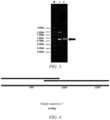
- single-stranded DNA was prepared by using rolling circle replication (RCA) of thermostatically amplified single-stranded DNA to obtain the target sequence 1: the crude single-stranded DNA product with a length of 1630 nt (SEQ ID NO: 3), containing many non-specific amplification products.
- the crude single-stranded DNA product was analyzed by agarose gel electrophoresis, as shown in FIG. 3 , where lane 1 is the crude single-stranded DNA product, and the proportion of single-stranded DNA product in grayscale analysis is 60.25%.
- Step I Binding of single-stranded DNA binding protein to crude single-stranded DNA product.
- the purified single-stranded DNA binding protein obtained in Example 1 was diluted 5-fold, the diluted single-stranded DNA binding protein was added to 10 mL of crude single-stranded DNA product and mixed evenly, and the volume ratio of the mixture was shown in Table 1. The mixture was incubated for 2 hours at 37°C to ensure that the single-stranded DNA binding protein and the target single-stranded DNA in the crude product can be fully binded to obtain an incubation product.
- Step II Purification of the target sequence by affinity chromatography.
- Ni-Charged MagBeads magnetic bead (Ni filled magnetic beads, Nanjing GenScript Biotech Co., Ltd., Cat. No. L00295) purification method was used to purify the target sequence 1 that binds to the single-stranded DNA binding protein in step I to obtain an affinity chromatography purified product.
- the specific steps are as follows:
- Step III Removal and purification of single-stranded DNA binding protein with polyhistidine tag.
- the affinity chromatography purified product obtained in step II contained byproducts such as single-stranded DNA binding protein, imidazole and salt, and in this example, the byproducts such as protein, imidazole and salt in the reaction system were removed by using Qiagen-DNA plasmid extraction kit (QIAGEN, Cat. No./ID: 12143), and finally the purified product was obtained, as shown in FIG.
- lane 1 is a crude single-stranded DNA product
- the proportion of single-stranded DNA in grayscale analysis is 60.25%
- lane 2 is a purified single-stranded DNA product
- the proportion of single-stranded DNA in grayscale analysis is 100%, which indicates that the purified single-stranded DNA product of target sequence 1 with 100% purity was obtained through step III.
- This step can also remove protease and salt in the reaction system by phenol-chloroform extraction, DNA adsorption spin column recovery, isopropanol/ethanol precipitation, or molecular sieve chromatography supported by high performance liquid chromatography.
- Step IV Sanger sequencing verification.
- the purified single-stranded DNA product obtained in step III was diluted to 50 ng/ ⁇ L, and the purified single-stranded DNA product was used as a template.
- Primer 1630 nt-F and primer 1630 nt-R were used to amplify the full length sequence which was ligated into the universal vector pUC57 by means of blunt end manner.
- the names and sequences of the amplification primers are as follows:
- the verification result shows that the target single-stranded DNA sequence conforms to a theoretical sequence and no error site occurs, which indicates that this method is a practical, efficient and convenient method for purifying the target single-stranded DNA in a large scale.
- single-stranded DNA was prepared by using rolling circle replication (RCA) of thermostatically amplified single-stranded DNA to obtain the target sequence 2:
- a crude single-stranded DNA product (SEQ ID NO: 8) with a length of 4000 nt, containing many non-specific amplification products.
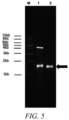
- the crude single-stranded DNA product was analyzed by agarose gel electrophoresis, as shown in FIG. 5 .
- Lane 1 is a crude single-stranded DNA product, and the proportion of single-stranded DNA in grayscale analysis is 53.45%.
- Step I Binding of single-stranded DNA binding protein to crude single-stranded DNA product
- the purified single-stranded DNA binding protein obtained in Example 1 was diluted 5-fold, the diluted single-stranded DNA binding protein was added to 10 mL of crude single-stranded DNA product and mixed evenly, and the volume ratio of the mixture was shown in Table 1. The mixture was incubated for 2 hours at 37°C to ensure that the single-stranded DNA binding protein and the target single-stranded DNA in the crude product can be fully binded to obtain an incubation product.
- Step II Purification of the target sequence by affinity chromatography.
- Ni-Charged MagBeads magnetic bead (Nanjing GenScript Biotech Co., Ltd., Cat. No. L00295) purification method was used to purify the target sequence 2 that binds to the single-stranded DNA binding protein in step I.
- the specific steps are as follows:
- Step III Removal and purification of single-stranded DNA binding protein with polyhistidine tag.
- the affinity chromatography purified product contained the added single-stranded DNA binding protein, imidazole, salt and other products, and in this example, the removal of protease and salt in the reaction system was performed by a Qiagen-DNA plasmid extraction column.
- the purified single-stranded DNA product of the target sequence 2 was finally obtained, as shown in FIG. 5 , where lane 1 is a crude single-stranded DNA product, the proportion of single-stranded DNA in grayscale analysis is 53.45%, lane 2 is a purified single-stranded DNA product, and the proportion of single-stranded DNA in grayscale analysis is 100%, which indicates that the purified single-stranded DNA product of target sequence 2 with 100% purity was obtained through step III.
- This step can also remove protease and salt in the reaction system by phenol-chloroform extraction, DNA adsorption spin column recovery, isopropanol/ethanol precipitation, or molecular sieve chromatography supported by high performance liquid chromatography.
- Step IV Sanger sequencing verification.
- the purified single-stranded DNA product of target sequence 2 obtained in step III was diluted to 50 ng/ ⁇ L.
- the purified single-stranded DNA product of target sequence 2 was used as a template, primer P-4000-F and primer P-4000-seq4 were used to amplify the 1-2000 bp region of the sequence, and primer P-4000-seq11 and primer P-4000-R were used to amplify the 1788-4000 bp region of the sequence, and the amplified sequences were ligated into the universal vector pUC57 by means of blunt end manner, respectively.
- the names and sequences of the amplification primers are as follows:
- the verification result shows that the target single-stranded DNA sequence conforms to a theoretical sequence and no error site occurs, which indicates that this method is a practical, efficient and convenient method for purifying the target sequence in a large scale.
- the conventional agarose gel electrophoresis recovery uses an AxyPrep DNA gel recovery kit (Axygen, Cat. No. AP-GX-250) for purification, and the specific steps are as follows: Step I: Preparation of 2.5% agarose gel electrophoresis
- Step II Gel electrophoresis of crude single-stranded DNA product
- Example 2 The procedure of Example 2 was followed, with the reagent addition scaled up in a ratio of 1 : 5, and the remaining parameters unchanged.
- the purification method using single-stranded DNA binding protein shortens 73.7% of the time period; reduces by 67.2% of the cost of the reagents used, and increases by a factor of 2.7 of the yield of the desired product.
Landscapes
- Chemical & Material Sciences (AREA)
- Health & Medical Sciences (AREA)
- Life Sciences & Earth Sciences (AREA)
- Organic Chemistry (AREA)
- Engineering & Computer Science (AREA)
- Genetics & Genomics (AREA)
- Zoology (AREA)
- Wood Science & Technology (AREA)
- Analytical Chemistry (AREA)
- Biomedical Technology (AREA)
- Bioinformatics & Cheminformatics (AREA)
- General Engineering & Computer Science (AREA)
- Biotechnology (AREA)
- Biochemistry (AREA)
- Molecular Biology (AREA)
- General Health & Medical Sciences (AREA)
- Biophysics (AREA)
- Proteomics, Peptides & Aminoacids (AREA)
- Physics & Mathematics (AREA)
- Microbiology (AREA)
- Crystallography & Structural Chemistry (AREA)
- Plant Pathology (AREA)
- Medicinal Chemistry (AREA)
- Immunology (AREA)
- Gastroenterology & Hepatology (AREA)
- Chemical Kinetics & Catalysis (AREA)
- Pathology (AREA)
- Peptides Or Proteins (AREA)
- Measuring Or Testing Involving Enzymes Or Micro-Organisms (AREA)
Applications Claiming Priority (2)
| Application Number | Priority Date | Filing Date | Title |
|---|---|---|---|
| CN202111247093 | 2021-10-26 | ||
| PCT/CN2022/127682 WO2023072145A1 (zh) | 2021-10-26 | 2022-10-26 | 一种纯化单链dna的方法 |
Publications (2)
| Publication Number | Publication Date |
|---|---|
| EP4407033A1 true EP4407033A1 (de) | 2024-07-31 |
| EP4407033A4 EP4407033A4 (de) | 2025-04-02 |
Family
ID=86160484
Family Applications (1)
| Application Number | Title | Priority Date | Filing Date |
|---|---|---|---|
| EP22886021.9A Pending EP4407033A4 (de) | 2021-10-26 | 2022-10-26 | Verfahren zur reinigung von einzelsträngiger dna |
Country Status (4)
| Country | Link |
|---|---|
| US (1) | US20250002897A1 (de) |
| EP (1) | EP4407033A4 (de) |
| CN (1) | CN118176302A (de) |
| WO (1) | WO2023072145A1 (de) |
Families Citing this family (2)
| Publication number | Priority date | Publication date | Assignee | Title |
|---|---|---|---|---|
| WO2024153215A1 (zh) * | 2023-01-19 | 2024-07-25 | 南京金斯瑞生物科技有限公司 | 单链dna分子量标及其制备方法 |
| CN119753013A (zh) * | 2024-11-25 | 2025-04-04 | 杭州宏望医学检验实验室有限公司 | 一种适用于自身抗体检测的cho细胞株的构建及其应用 |
Family Cites Families (7)
| Publication number | Priority date | Publication date | Assignee | Title |
|---|---|---|---|---|
| JP2005218385A (ja) * | 2004-02-06 | 2005-08-18 | Dnaform:Kk | 1本鎖dnaを調製するための方法 |
| JP4860199B2 (ja) * | 2005-07-29 | 2012-01-25 | アイシン精機株式会社 | 高度好熱菌由来の改変型一本鎖dna結合タンパク質、及び該タンパク質を用いた核酸の等温増幅方法 |
| US8633018B2 (en) * | 2009-10-26 | 2014-01-21 | Daochun KONG | Fusion protein containing a single-stranded DNA binding protein and methods for expression and purification of the same |
| CN101709306B (zh) * | 2009-12-16 | 2014-07-09 | 孔道春 | 含单链dna结合蛋白的融合蛋白及其表达和纯化的方法 |
| EP3904511A4 (de) | 2018-12-28 | 2022-03-09 | Jiangsu Genscript Biotech Co., Ltd. | Einzelkettiges dna-syntheseverfahren |
| AU2020232317A1 (en) * | 2019-03-06 | 2021-10-07 | Intima Bioscience, Inc. | Mesophilic Argonaute systems and uses thereof |
| CN111621498A (zh) * | 2020-06-11 | 2020-09-04 | 江苏赛索飞生物科技有限公司 | 一种单链结合蛋白的纯化方法及其在基因合成中的应用 |
-
2022
- 2022-10-26 US US18/704,449 patent/US20250002897A1/en active Pending
- 2022-10-26 WO PCT/CN2022/127682 patent/WO2023072145A1/zh not_active Ceased
- 2022-10-26 EP EP22886021.9A patent/EP4407033A4/de active Pending
- 2022-10-26 CN CN202280067546.1A patent/CN118176302A/zh active Pending
Also Published As
| Publication number | Publication date |
|---|---|
| CN118176302A (zh) | 2024-06-11 |
| EP4407033A4 (de) | 2025-04-02 |
| US20250002897A1 (en) | 2025-01-02 |
| WO2023072145A1 (zh) | 2023-05-04 |
Similar Documents
| Publication | Publication Date | Title |
|---|---|---|
| EP4114932A2 (de) | Klasse-ii-typ-v-crispr-systeme | |
| EP4407033A1 (de) | Verfahren zur reinigung von einzelsträngiger dna | |
| SE454596B (sv) | Plasmid, forfarande for dess framstellning, bakteriecell innehallande densamma, forfarande for transformering av bakterieceller samt forfarande for expression av ett protein | |
| WO1999063076A1 (en) | Novel method of large scale plasmid purification | |
| CN112063643B (zh) | 一种用于检测细菌中膜蛋白相互作用的表达载体及方法 | |
| JP2019048807A (ja) | たんぱく質精製の新規な方法 | |
| CN116102663A (zh) | 一种猴痘病毒b6r抗原及其制备方法与应用 | |
| US4725535A (en) | Promoter probe vectors | |
| KR20250054234A (ko) | 클래스 ii, v형 crispr 시스템 | |
| US20240084285A1 (en) | Method for producing target dna sequence and cloning vector | |
| JP2004520040A (ja) | 細胞からタンパク質を抽出するための方法および組成物 | |
| AU2021424650A1 (en) | Faustovirus capping enzyme, mrna capping enzyme compositions, methods and kits | |
| CN117327683B (zh) | 一种在DNA的gC基序上实现高效C/G到T/A编辑的高保真LnCBE系统 | |
| CN120384065B (zh) | 一种基于casposase转座酶的基因定点插入工具及应用 | |
| CN118956812B (zh) | 一种提高入核效率的TAT-Tn5转座酶、制备及在ATAC-seq中的应用 | |
| KR101775790B1 (ko) | 핵산 분리 및 정제를 위한 세포용해 조성물 | |
| CN120283051A (zh) | 单链dna分子量标及其制备方法 | |
| Gallet et al. | Large scale purification of linear plasmid DNA for efficient high throughput cloning | |
| WO2024131232A1 (zh) | 环状rna分离和纯化方法 | |
| JP6702984B2 (ja) | タンパク質の単離 | |
| CN117821484A (zh) | 一种HindIII限制性内切酶的制备方法及其应用 | |
| CN115975987A (zh) | 一种AscI限制性内切酶的制备方法 | |
| CN120607591A (zh) | 分裂内含肽及其应用 | |
| CN118599829A (zh) | 一种线性共价闭合dsDNA的制备方法 | |
| CN119876120A (zh) | 一种纯化质粒dna的方法 |
Legal Events
| Date | Code | Title | Description |
|---|---|---|---|
| STAA | Information on the status of an ep patent application or granted ep patent |
Free format text: STATUS: THE INTERNATIONAL PUBLICATION HAS BEEN MADE |
|
| PUAI | Public reference made under article 153(3) epc to a published international application that has entered the european phase |
Free format text: ORIGINAL CODE: 0009012 |
|
| STAA | Information on the status of an ep patent application or granted ep patent |
Free format text: STATUS: REQUEST FOR EXAMINATION WAS MADE |
|
| 17P | Request for examination filed |
Effective date: 20240422 |
|
| AK | Designated contracting states |
Kind code of ref document: A1 Designated state(s): AL AT BE BG CH CY CZ DE DK EE ES FI FR GB GR HR HU IE IS IT LI LT LU LV MC ME MK MT NL NO PL PT RO RS SE SI SK SM TR |
|
| DAV | Request for validation of the european patent (deleted) | ||
| DAX | Request for extension of the european patent (deleted) | ||
| A4 | Supplementary search report drawn up and despatched |
Effective date: 20250227 |
|
| RIC1 | Information provided on ipc code assigned before grant |
Ipc: C12Q 1/6806 20180101ALI20250221BHEP Ipc: C12Q 1/6804 20180101ALI20250221BHEP Ipc: C07K 19/00 20060101ALI20250221BHEP Ipc: C07K 1/22 20060101ALI20250221BHEP Ipc: C12N 15/62 20060101ALI20250221BHEP Ipc: C12N 15/63 20060101AFI20250221BHEP |