EP4383716A2 - Zeitverarbeitung für videocodierungstechnologie - Google Patents
Zeitverarbeitung für videocodierungstechnologie Download PDFInfo
- Publication number
- EP4383716A2 EP4383716A2 EP24172638.9A EP24172638A EP4383716A2 EP 4383716 A2 EP4383716 A2 EP 4383716A2 EP 24172638 A EP24172638 A EP 24172638A EP 4383716 A2 EP4383716 A2 EP 4383716A2
- Authority
- EP
- European Patent Office
- Prior art keywords
- temporal
- decoder
- residuals
- block
- tile
- Prior art date
- Legal status (The legal status is an assumption and is not a legal conclusion. Google has not performed a legal analysis and makes no representation as to the accuracy of the status listed.)
- Pending
Links
Images



Classifications
-
- H—ELECTRICITY
- H04—ELECTRIC COMMUNICATION TECHNIQUE
- H04N—PICTORIAL COMMUNICATION, e.g. TELEVISION
- H04N19/00—Methods or arrangements for coding, decoding, compressing or decompressing digital video signals
- H04N19/50—Methods or arrangements for coding, decoding, compressing or decompressing digital video signals using predictive coding
- H04N19/503—Methods or arrangements for coding, decoding, compressing or decompressing digital video signals using predictive coding involving temporal prediction
-
- H—ELECTRICITY
- H04—ELECTRIC COMMUNICATION TECHNIQUE
- H04N—PICTORIAL COMMUNICATION, e.g. TELEVISION
- H04N19/00—Methods or arrangements for coding, decoding, compressing or decompressing digital video signals
- H04N19/46—Embedding additional information in the video signal during the compression process
-
- H—ELECTRICITY
- H04—ELECTRIC COMMUNICATION TECHNIQUE
- H04N—PICTORIAL COMMUNICATION, e.g. TELEVISION
- H04N19/00—Methods or arrangements for coding, decoding, compressing or decompressing digital video signals
- H04N19/30—Methods or arrangements for coding, decoding, compressing or decompressing digital video signals using hierarchical techniques, e.g. scalability
- H04N19/33—Methods or arrangements for coding, decoding, compressing or decompressing digital video signals using hierarchical techniques, e.g. scalability in the spatial domain
-
- H—ELECTRICITY
- H04—ELECTRIC COMMUNICATION TECHNIQUE
- H04N—PICTORIAL COMMUNICATION, e.g. TELEVISION
- H04N19/00—Methods or arrangements for coding, decoding, compressing or decompressing digital video signals
- H04N19/10—Methods or arrangements for coding, decoding, compressing or decompressing digital video signals using adaptive coding
- H04N19/102—Methods or arrangements for coding, decoding, compressing or decompressing digital video signals using adaptive coding characterised by the element, parameter or selection affected or controlled by the adaptive coding
- H04N19/103—Selection of coding mode or of prediction mode
- H04N19/109—Selection of coding mode or of prediction mode among a plurality of temporal predictive coding modes
-
- H—ELECTRICITY
- H04—ELECTRIC COMMUNICATION TECHNIQUE
- H04N—PICTORIAL COMMUNICATION, e.g. TELEVISION
- H04N19/00—Methods or arrangements for coding, decoding, compressing or decompressing digital video signals
- H04N19/10—Methods or arrangements for coding, decoding, compressing or decompressing digital video signals using adaptive coding
- H04N19/102—Methods or arrangements for coding, decoding, compressing or decompressing digital video signals using adaptive coding characterised by the element, parameter or selection affected or controlled by the adaptive coding
- H04N19/117—Filters, e.g. for pre-processing or post-processing
-
- H—ELECTRICITY
- H04—ELECTRIC COMMUNICATION TECHNIQUE
- H04N—PICTORIAL COMMUNICATION, e.g. TELEVISION
- H04N19/00—Methods or arrangements for coding, decoding, compressing or decompressing digital video signals
- H04N19/10—Methods or arrangements for coding, decoding, compressing or decompressing digital video signals using adaptive coding
- H04N19/102—Methods or arrangements for coding, decoding, compressing or decompressing digital video signals using adaptive coding characterised by the element, parameter or selection affected or controlled by the adaptive coding
- H04N19/119—Adaptive subdivision aspects, e.g. subdivision of a picture into rectangular or non-rectangular coding blocks
-
- H—ELECTRICITY
- H04—ELECTRIC COMMUNICATION TECHNIQUE
- H04N—PICTORIAL COMMUNICATION, e.g. TELEVISION
- H04N19/00—Methods or arrangements for coding, decoding, compressing or decompressing digital video signals
- H04N19/10—Methods or arrangements for coding, decoding, compressing or decompressing digital video signals using adaptive coding
- H04N19/102—Methods or arrangements for coding, decoding, compressing or decompressing digital video signals using adaptive coding characterised by the element, parameter or selection affected or controlled by the adaptive coding
- H04N19/12—Selection from among a plurality of transforms or standards, e.g. selection between discrete cosine transform [DCT] and sub-band transform or selection between H.263 and H.264
- H04N19/122—Selection of transform size, e.g. 8x8 or 2x4x8 DCT; Selection of sub-band transforms of varying structure or type
-
- H—ELECTRICITY
- H04—ELECTRIC COMMUNICATION TECHNIQUE
- H04N—PICTORIAL COMMUNICATION, e.g. TELEVISION
- H04N19/00—Methods or arrangements for coding, decoding, compressing or decompressing digital video signals
- H04N19/10—Methods or arrangements for coding, decoding, compressing or decompressing digital video signals using adaptive coding
- H04N19/102—Methods or arrangements for coding, decoding, compressing or decompressing digital video signals using adaptive coding characterised by the element, parameter or selection affected or controlled by the adaptive coding
- H04N19/124—Quantisation
-
- H—ELECTRICITY
- H04—ELECTRIC COMMUNICATION TECHNIQUE
- H04N—PICTORIAL COMMUNICATION, e.g. TELEVISION
- H04N19/00—Methods or arrangements for coding, decoding, compressing or decompressing digital video signals
- H04N19/10—Methods or arrangements for coding, decoding, compressing or decompressing digital video signals using adaptive coding
- H04N19/102—Methods or arrangements for coding, decoding, compressing or decompressing digital video signals using adaptive coding characterised by the element, parameter or selection affected or controlled by the adaptive coding
- H04N19/13—Adaptive entropy coding, e.g. adaptive variable length coding [AVLC] or context adaptive binary arithmetic coding [CABAC]
-
- H—ELECTRICITY
- H04—ELECTRIC COMMUNICATION TECHNIQUE
- H04N—PICTORIAL COMMUNICATION, e.g. TELEVISION
- H04N19/00—Methods or arrangements for coding, decoding, compressing or decompressing digital video signals
- H04N19/10—Methods or arrangements for coding, decoding, compressing or decompressing digital video signals using adaptive coding
- H04N19/102—Methods or arrangements for coding, decoding, compressing or decompressing digital video signals using adaptive coding characterised by the element, parameter or selection affected or controlled by the adaptive coding
- H04N19/132—Sampling, masking or truncation of coding units, e.g. adaptive resampling, frame skipping, frame interpolation or high-frequency transform coefficient masking
-
- H—ELECTRICITY
- H04—ELECTRIC COMMUNICATION TECHNIQUE
- H04N—PICTORIAL COMMUNICATION, e.g. TELEVISION
- H04N19/00—Methods or arrangements for coding, decoding, compressing or decompressing digital video signals
- H04N19/10—Methods or arrangements for coding, decoding, compressing or decompressing digital video signals using adaptive coding
- H04N19/134—Methods or arrangements for coding, decoding, compressing or decompressing digital video signals using adaptive coding characterised by the element, parameter or criterion affecting or controlling the adaptive coding
- H04N19/136—Incoming video signal characteristics or properties
-
- H—ELECTRICITY
- H04—ELECTRIC COMMUNICATION TECHNIQUE
- H04N—PICTORIAL COMMUNICATION, e.g. TELEVISION
- H04N19/00—Methods or arrangements for coding, decoding, compressing or decompressing digital video signals
- H04N19/10—Methods or arrangements for coding, decoding, compressing or decompressing digital video signals using adaptive coding
- H04N19/169—Methods or arrangements for coding, decoding, compressing or decompressing digital video signals using adaptive coding characterised by the coding unit, i.e. the structural portion or semantic portion of the video signal being the object or the subject of the adaptive coding
- H04N19/17—Methods or arrangements for coding, decoding, compressing or decompressing digital video signals using adaptive coding characterised by the coding unit, i.e. the structural portion or semantic portion of the video signal being the object or the subject of the adaptive coding the unit being an image region, e.g. an object
- H04N19/172—Methods or arrangements for coding, decoding, compressing or decompressing digital video signals using adaptive coding characterised by the coding unit, i.e. the structural portion or semantic portion of the video signal being the object or the subject of the adaptive coding the unit being an image region, e.g. an object the region being a picture, frame or field
-
- H—ELECTRICITY
- H04—ELECTRIC COMMUNICATION TECHNIQUE
- H04N—PICTORIAL COMMUNICATION, e.g. TELEVISION
- H04N19/00—Methods or arrangements for coding, decoding, compressing or decompressing digital video signals
- H04N19/10—Methods or arrangements for coding, decoding, compressing or decompressing digital video signals using adaptive coding
- H04N19/169—Methods or arrangements for coding, decoding, compressing or decompressing digital video signals using adaptive coding characterised by the coding unit, i.e. the structural portion or semantic portion of the video signal being the object or the subject of the adaptive coding
- H04N19/17—Methods or arrangements for coding, decoding, compressing or decompressing digital video signals using adaptive coding characterised by the coding unit, i.e. the structural portion or semantic portion of the video signal being the object or the subject of the adaptive coding the unit being an image region, e.g. an object
- H04N19/176—Methods or arrangements for coding, decoding, compressing or decompressing digital video signals using adaptive coding characterised by the coding unit, i.e. the structural portion or semantic portion of the video signal being the object or the subject of the adaptive coding the unit being an image region, e.g. an object the region being a block, e.g. a macroblock
-
- H—ELECTRICITY
- H04—ELECTRIC COMMUNICATION TECHNIQUE
- H04N—PICTORIAL COMMUNICATION, e.g. TELEVISION
- H04N19/00—Methods or arrangements for coding, decoding, compressing or decompressing digital video signals
- H04N19/10—Methods or arrangements for coding, decoding, compressing or decompressing digital video signals using adaptive coding
- H04N19/169—Methods or arrangements for coding, decoding, compressing or decompressing digital video signals using adaptive coding characterised by the coding unit, i.e. the structural portion or semantic portion of the video signal being the object or the subject of the adaptive coding
- H04N19/177—Methods or arrangements for coding, decoding, compressing or decompressing digital video signals using adaptive coding characterised by the coding unit, i.e. the structural portion or semantic portion of the video signal being the object or the subject of the adaptive coding the unit being a group of pictures [GOP]
-
- H—ELECTRICITY
- H04—ELECTRIC COMMUNICATION TECHNIQUE
- H04N—PICTORIAL COMMUNICATION, e.g. TELEVISION
- H04N19/00—Methods or arrangements for coding, decoding, compressing or decompressing digital video signals
- H04N19/10—Methods or arrangements for coding, decoding, compressing or decompressing digital video signals using adaptive coding
- H04N19/169—Methods or arrangements for coding, decoding, compressing or decompressing digital video signals using adaptive coding characterised by the coding unit, i.e. the structural portion or semantic portion of the video signal being the object or the subject of the adaptive coding
- H04N19/18—Methods or arrangements for coding, decoding, compressing or decompressing digital video signals using adaptive coding characterised by the coding unit, i.e. the structural portion or semantic portion of the video signal being the object or the subject of the adaptive coding the unit being a set of transform coefficients
-
- H—ELECTRICITY
- H04—ELECTRIC COMMUNICATION TECHNIQUE
- H04N—PICTORIAL COMMUNICATION, e.g. TELEVISION
- H04N19/00—Methods or arrangements for coding, decoding, compressing or decompressing digital video signals
- H04N19/10—Methods or arrangements for coding, decoding, compressing or decompressing digital video signals using adaptive coding
- H04N19/169—Methods or arrangements for coding, decoding, compressing or decompressing digital video signals using adaptive coding characterised by the coding unit, i.e. the structural portion or semantic portion of the video signal being the object or the subject of the adaptive coding
- H04N19/184—Methods or arrangements for coding, decoding, compressing or decompressing digital video signals using adaptive coding characterised by the coding unit, i.e. the structural portion or semantic portion of the video signal being the object or the subject of the adaptive coding the unit being bits, e.g. of the compressed video stream
-
- H—ELECTRICITY
- H04—ELECTRIC COMMUNICATION TECHNIQUE
- H04N—PICTORIAL COMMUNICATION, e.g. TELEVISION
- H04N19/00—Methods or arrangements for coding, decoding, compressing or decompressing digital video signals
- H04N19/30—Methods or arrangements for coding, decoding, compressing or decompressing digital video signals using hierarchical techniques, e.g. scalability
-
- H—ELECTRICITY
- H04—ELECTRIC COMMUNICATION TECHNIQUE
- H04N—PICTORIAL COMMUNICATION, e.g. TELEVISION
- H04N19/00—Methods or arrangements for coding, decoding, compressing or decompressing digital video signals
- H04N19/30—Methods or arrangements for coding, decoding, compressing or decompressing digital video signals using hierarchical techniques, e.g. scalability
- H04N19/36—Scalability techniques involving formatting the layers as a function of picture distortion after decoding, e.g. signal-to-noise [SNR] scalability
-
- H—ELECTRICITY
- H04—ELECTRIC COMMUNICATION TECHNIQUE
- H04N—PICTORIAL COMMUNICATION, e.g. TELEVISION
- H04N19/00—Methods or arrangements for coding, decoding, compressing or decompressing digital video signals
- H04N19/42—Methods or arrangements for coding, decoding, compressing or decompressing digital video signals characterised by implementation details or hardware specially adapted for video compression or decompression, e.g. dedicated software implementation
- H04N19/423—Methods or arrangements for coding, decoding, compressing or decompressing digital video signals characterised by implementation details or hardware specially adapted for video compression or decompression, e.g. dedicated software implementation characterised by memory arrangements
-
- H—ELECTRICITY
- H04—ELECTRIC COMMUNICATION TECHNIQUE
- H04N—PICTORIAL COMMUNICATION, e.g. TELEVISION
- H04N19/00—Methods or arrangements for coding, decoding, compressing or decompressing digital video signals
- H04N19/44—Decoders specially adapted therefor, e.g. video decoders which are asymmetric with respect to the encoder
- H04N19/45—Decoders specially adapted therefor, e.g. video decoders which are asymmetric with respect to the encoder performing compensation of the inverse transform mismatch, e.g. Inverse Discrete Cosine Transform [IDCT] mismatch
-
- H—ELECTRICITY
- H04—ELECTRIC COMMUNICATION TECHNIQUE
- H04N—PICTORIAL COMMUNICATION, e.g. TELEVISION
- H04N19/00—Methods or arrangements for coding, decoding, compressing or decompressing digital video signals
- H04N19/50—Methods or arrangements for coding, decoding, compressing or decompressing digital video signals using predictive coding
- H04N19/59—Methods or arrangements for coding, decoding, compressing or decompressing digital video signals using predictive coding involving spatial sub-sampling or interpolation, e.g. alteration of picture size or resolution
-
- H—ELECTRICITY
- H04—ELECTRIC COMMUNICATION TECHNIQUE
- H04N—PICTORIAL COMMUNICATION, e.g. TELEVISION
- H04N19/00—Methods or arrangements for coding, decoding, compressing or decompressing digital video signals
- H04N19/60—Methods or arrangements for coding, decoding, compressing or decompressing digital video signals using transform coding
-
- H—ELECTRICITY
- H04—ELECTRIC COMMUNICATION TECHNIQUE
- H04N—PICTORIAL COMMUNICATION, e.g. TELEVISION
- H04N19/00—Methods or arrangements for coding, decoding, compressing or decompressing digital video signals
- H04N19/70—Methods or arrangements for coding, decoding, compressing or decompressing digital video signals characterised by syntax aspects related to video coding, e.g. related to compression standards
-
- H—ELECTRICITY
- H04—ELECTRIC COMMUNICATION TECHNIQUE
- H04N—PICTORIAL COMMUNICATION, e.g. TELEVISION
- H04N19/00—Methods or arrangements for coding, decoding, compressing or decompressing digital video signals
- H04N19/80—Details of filtering operations specially adapted for video compression, e.g. for pixel interpolation
-
- H—ELECTRICITY
- H04—ELECTRIC COMMUNICATION TECHNIQUE
- H04N—PICTORIAL COMMUNICATION, e.g. TELEVISION
- H04N19/00—Methods or arrangements for coding, decoding, compressing or decompressing digital video signals
- H04N19/80—Details of filtering operations specially adapted for video compression, e.g. for pixel interpolation
- H04N19/82—Details of filtering operations specially adapted for video compression, e.g. for pixel interpolation involving filtering within a prediction loop
Definitions
- the present invention relates to methods, apparatuses, computer programs and computer readable media for use in video coding technology.
- Compression and decompression of signals is a consideration in many known systems.
- Many types of signal for example video, may be compressed and encoded for transmission, for example over a data communications network.
- Scalable encoding involves encoding a signal along with information to allow the reconstruction of the signal at one or more different levels of quality, for example depending on the capabilities of the decoder and the available bandwidth.
- Described herein is a hybrid backward-compatible coding technology.
- the examples described herein provide a flexible, adaptable, highly efficient and computationally inexpensive coding format which combines a different video coding format, a base codec, (e.g. AVC, HEVC, or any other present or future codec) with at least two enhancement levels of coded data.
- a base codec e.g. AVC, HEVC, or any other present or future codec
- the general structure of the encoding scheme uses a down-sampled source signal encoded with a base codec, adds a first level of correction data to the decoded output of the base codec to generate a corrected picture, and then adds a further level of enhancement data to an up-sampled version of the corrected picture.
- the streams are considered to be a base stream and an enhancement stream. It is worth noting that typically the base stream is expected to be decodable by a hardware decoder while the enhancement stream is expected to be suitable for software processing implementation with suitable power consumption.
- This structure creates a plurality of degrees of freedom that allow great flexibility and adaptability to many situations, thus making the coding format suitable for many use cases including over-the-top (OTT) transmission, live streaming, live ultra-high definition (UHD) broadcast, and so on.
- OTT over-the-top
- UHD live ultra-high definition
- the decoded output of the base codec is not intended for viewing, it is a fully decoded video at a lower resolution, making the output compatible with existing decoders and, where considered suitable, also usable as a lower resolution output.
- the codec format uses a minimum number of simple coding tools. When combined synergistically, they can provide visual quality improvements when compared with a full resolution picture encoded with the base codec whilst at the same time generating flexibility in the way they can be used.
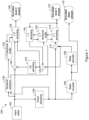
- Figure 1 shows a first example encoder 100.
- the illustrated components may also be implemented as steps of a corresponding encoding process.
- an input full resolution video 102 is processed to generate various encoded streams.
- a first encoded stream (encoded base stream 110) is produced by feeding a base encoder 106 (e.g., AVC, HEVC, or any other codec) with a down-sampled version of the input video, which is produced by down-sampling 104 the input video 102.
- a second encoded stream (encoded level 1 stream 116) is produced by applying an encoding operation 114 to the residuals obtained by taking the difference 112 between the reconstructed base codec video and the down-sampled version of the input video.
- the reconstructed base codec video is obtained by decoding the output of the base encoder 106 with a base decoder 108.
- a third encoded stream (encoded level 2 stream 128) is produced by processing 126 the residuals obtained by taking the difference 124 between an up-sampled version of a corrected version of the reconstructed base coded video and the input video 102.
- the corrected version of the reconstructed base codec video is obtained by combining 120 the reconstructed base codec video and the residuals obtained by applying a decoding operation 118 to the encoded level 1 stream 116.
- the level 1 encoding operation 114 operates with an optional level 1 temporal buffer 130, which may be used to apply temporal processing as described further below.
- the level 2 encoding operation 126 also operates with an optional level 2 temporal buffer 132, which may be used to apply temporal processing as described further below.
- the level 1 temporal buffer 130 and the level 2 temporal buffer 132 may operate under the control of a temporal selection component 134.
- the temporal selection component 134 may receive one or more of the input video 102 and the output of the down-sampling 104 to select a temporal mode. This is explained in more detail in later examples.
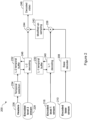
- Figure 2 shows a first example decoder 200.
- the illustrated components may also be implemented as steps of a corresponding decoding process.
- the decoder receives the three streams (an encoded base stream 210, an encoded level 1 stream 216 and an encoded level 2 stream 228) generated by an encoder such as the encoder 100 of Figure 1 together with headers 236 containing further decoding information.
- the encoded base stream 210 is decoded by a base decoder 208 corresponding to the base decoder used in the encoder, and its output is combined 238 with the decoded residuals obtained by decoding 240 the encoded level 1 stream 216.
- the combined video is up-sampled 242 and further combined 244 with the decoded residuals obtained by applying a decoding operation 246 to the encoded level 2 stream 228.
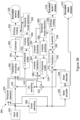
- Figures 3A and 3B show different variations of a second example encoder 300, 380.
- the second example encoder 300, 380 may comprise an implementation of the first example encoder 100 of Figure 1 .
- the encoding steps of the stream are expanded in more detail to provide an example of how the steps may be performed.
- Figure 3A illustrates a first variation with temporal prediction provided only in the second level of the enhancement process, i.e. with respect to the level 2 encoding.
- Figure 3B illustrates a second variation with temporal prediction performed in both levels of enhancement (i.e. levels 1 and 2).
- the base stream 310 is substantially created by a process as explained with reference to Figure 1 . That is, an input video 302 is down-sampled 304 (i.e. a down-sampling operation 304 is applied to the input video 302 to generate a down-sampled input video). The down-sampled video obtained by down-sampling 304 the input video 302 is then encoded using a first base encoder 306 (i.e. an encoding operation is applied to the down-sampled input video to generate an encoded base stream 310 using a first or base encoder 306). Preferably the first or base encoder 306 is a codec suitable for hardware decoding.
- the encoded base stream 310 may be referred to as the base layer or base level.
- the enhancement stream may comprise two streams.
- a first level of enhancement (described herein as "level 1") provides for a set of correction data which can be combined with a decoded version of the base stream to generate a corrected picture.
- This first enhancement stream is illustrated in Figures 1 and 3 as the encoded Level 1 stream 316.
- the enhancement stream may be generated by an enhancement encoder.
- the enhancement encoder may be different to the base encoder 306 used to generate the encoded base stream 310.
- the encoded base stream 310 is decoded using a base decoder 308 (i.e. a decoding operation is applied to the encoded base stream 310 to generate a decoded base stream).
- the difference 312 between the decoded base stream and the down-sampled input video obtained by down-sampling 304 the input video 302 is then created (i.e. a subtraction operation 312 is applied to the down-sampled input video and the decoded base stream to generate a first set of residuals).
- residuals is used in the same manner as that known in the art, that is, the error between a reference frame and a desired frame.
- the reference frame is the decoded base stream and the desired frame is the down-sampled input video.
- the residuals used in the first enhancement level can be considered as a corrected video as they 'correct' the decoded base stream to the down-sampled input video that was used in the base encoding operation.
- the difference 312 is then encoded to generate the encoded Level 1 stream 316 (i.e. an encoding operation is applied to the first set of residuals to generate a first enhancement stream 316).
- the encoding operation comprises several steps, each of which is optional and preferred and provides particular benefits.
- the steps include a transform step 336, a quantization step 338 and an entropy encoding step 340.
- the encoding process identifies if the residuals ranking mode is selected. If residuals mode is selected the residuals ranking step may be performed (i.e. a residuals ranking operation may be performed on the first step of residuals to generate a ranked set of residuals). The ranked set of residuals may be filtered so that not all residuals are encoded into the first enhancement stream 316 (or correction stream).
- the first set of residuals, or the ranked or filtered first set of residuals are then transformed 336, quantized 338 and entropy encoded 340 to produce the encoded Level 1 stream 316 (i.e. a transform operation 336 is applied to the first set of residuals or the filtered first set of residuals depending on whether or not ranking mode is selected to generate a transformed set of residuals; a quantization operation 338 is applied to the transformed set of residuals to generate a set of quantized residuals; and, an entropy encoding operation 340 is applied to the quantized set of residuals to generate the first level of enhancement stream 316).
- a transform operation 336 is applied to the first set of residuals or the filtered first set of residuals depending on whether or not ranking mode is selected to generate a transformed set of residuals
- a quantization operation 338 is applied to the transformed set of residuals to generate a set of quantized residuals
- an entropy encoding operation 340 is applied to the quantized set of residuals to generate
- the entropy encoding operation 340 may be a Huffman encoding operation or a run-length encoding operation or both.
- a control operation (not shown in the Figures) may be applied to the quantized set of residuals so as to correct for the effects of the ranking operation.
- the enhancement stream may comprise a first level of enhancement 316 and a second level of enhancement 328.
- the first level of enhancement 316 may be considered to be a corrected stream.
- the second level of enhancement 328 may be considered to be a further level of enhancement that converts the corrected stream to the original input video.
- the further level of enhancement 328 is created by encoding a further set of residuals which are the difference 324 between an up-sampled version of a decoded level 1 stream and the input video 302.
- the quantized (or controlled) set of residuals are inversely quantized 342 and inversely transformed 344 before a de-blocking filter (not shown in the Figures) is optionally applied to generate a decoded first set of residuals (i.e. an inverse quantization operation 342 is applied to the quantized first set of residuals to generate a de-quantized first set of residuals; an inverse transform operation 344 is applied to the de-quantized first set of residuals to generate a de-transformed first set of residuals; and, a de-blocking filter operation is optionally applied to the de-transformed first set of residuals to generate a decoded first set of residuals).
- the de-blocking filter step is optional depending on the transform 336 applied and comprises applying a weighted mask to each block of the de-transformed 344 first set of residuals.
- the decoded base stream is combined 320 with the decoded first set of residuals (i.e. a summing operation 320 is performed on the decoded base stream and the decoded first set of residuals to generate a re-created first stream). As illustrated in Figures 3A and 3B , that combination is then up-sampled 322 (i.e. an up-sampling operation 322 is applied to the re-created first stream to generate an up-sampled re-created stream).
- the up-sampled stream is then compared to the input video 302 which creates a further set of residuals (i.e. a difference operation 324 is applied to the up-sampled re-created stream to generate a further set of residuals).
- the further set of residuals are then encoded as the encoded Level 2 enhancement stream 328 (i.e. an encoding operation is then applied to the further set of residuals to generate an encoded further enhancement stream 328).
- the encoding applied to the level 2 residuals may comprise several steps.
- Figure 3A illustrates the steps as temporal prediction (described further below), transform 348, quantization 350 and entropy encoding 352.
- the encoding process identifies if the residuals ranking mode is selected. If residuals mode is selected the residuals ranking step may be performed (i.e. a residuals ranking operation may be performed on the further set of residuals to generate a further ranked set of residuals). The further ranked set of residuals may be filtered so that not all residuals are encoded into the further enhancement stream 328.
- the further set of residuals or the further ranked set of residuals are subsequently transformed 348 (i.e. a transform operation 348 is performed on the further ranked set of residuals to generate a further transformed set of residuals).
- the transform operation 348 may utilise a predicted coefficient or predicted average derived from the re-created first stream, prior to up-sampling 322. Further information is below.
- Figure 3A shows a variation of the second example encoder 300 where temporal prediction is performed as part of the level 2 encoding process.
- Temporal prediction is performed using the temporal selection component 334 and the level 2 temporal buffer 332.
- the temporal selection component 334 may determine a temporal processing mode as described in more detail below and control the use of the level 2 temporal buffer 332 accordingly. For example, if no temporal processing is to be performed the temporal selection component 334 may indicate that the contents of the level 2 temporal buffer 332 are to be set to 0.
- Figure 3B shows a variation of the second example encoder 380 where temporal prediction is performed as part of both the level 1 and the level 2 encoding process.
- a level 1 temporal buffer 330 is provided in addition to the level 2 temporal buffer 332.
- the second example encoder 300, 380 of Figures 3A or 3B may further modify the coefficients (i.e. the transformed residuals output by a transform component) by subtracting a corresponding set of coefficients derived from an appropriate temporal buffer.
- the corresponding set of coefficients may comprise a set of coefficients for a same spatial area (e.g. a same coding unit as located within a frame) that are derived from a previous frame (e.g. coefficients for the same area for a previous frame). These coefficients may be derived or otherwise obtained from a temporal buffer. Coefficients obtained from a temporal buffer may be referred to herein as temporal coefficients.
- the subtraction may be applied by a subtraction component such as the third subtraction components 354 and 356 (for respective levels 2 and 1).
- This temporal prediction step will be further described with respect to later examples.
- the encoded coefficients correspond to a difference between the frame and an other frame of the stream.
- the other frame may be an earlier or later frame (or block in the frame) in the stream.
- the encoding process may encode the difference between a transformed frame in the stream and the transformed residuals of the frame.
- the entropy may be reduced.
- Temporal prediction may be applied selectively for groups of coding units (referred to herein as "tiles") based on control information and the application of temporal prediction at a decoder may be applied by sending additional control information along with the encoded streams (e.g. within headers).
- Temporal prediction may be performed for one colour plane or for multiple colour planes.
- the subtraction may be applied as an element wise subtraction for a "frame" of video where the elements of the frame represent transformed coefficients, where the transform is applied with respect to a particular n by n coding unit size (e.g. 2x2 or 4x4).
- the difference that results from the temporal prediction (e.g. the delta above) may be stored in the buffer for use for a subsequent frame.
- the residual that results to the temporal prediction is a coefficient residual with respect to the buffer.
- Figures 3A and 3B show temporal prediction being performed after the transform operation, it may also be performed after the quantize operation. This may avoid the need to apply the level 2 inverse quantization component 358 and/or the level 1 inverse quantize component 360.
- the output of the second example encoders 300, 380 after performing an encoding process is an encoded base stream 310 and one or more enhancement streams which preferably comprise an encoded level 1 stream 316 for a first level of enhancement and an encoded level 2 stream 328 for a further or second level of enhancement.
- Figures 4A and 4B illustrate respective variations of a second example decoder 400, 480.
- the variations of the second example decoder 400, 480 may be respectively implemented to correspond to the first example decoder 200 of Figure 2 .
- the decoding steps and components are expanded in more detail to provide an example of how the decoding may be performed.
- Figure 4A illustrates a variation where temporal prediction is used only for the second level (i.e. level 2)
- Figure 4B illustrates a variation in which temporal prediction is used in both levels (i.e. levels 1 and 2).
- further variations are envisaged (e.g. level 1 but not level 2), where the form of the configuration may be controlled using signalling information.
- the decoder 480 may parse the headers 436 (e.g. containing global configuration data, picture configuration data, and other data blocks) and configure the decoder based on those headers 436.
- the decoder 400, 480 may decode each of the base stream 410, the first enhancement stream 416 and the further enhancement stream 428. The frames of the stream may be synchronised and then combined to derive the decoded video 448.
- the enhancement streams may undergo the steps of entropy decoding 450, 452, inverse quantization 454, 456 and inverse transform 458, 460 to re-create a set of residuals.
- the decoding processes of Figures 4A and 4B comprise retrieving an array of entropy decoded quantized coefficients representing a first level of enhancement and outputting an array of L-1 residuals.
- the entropy decoded quantized coefficients in this case are obtained by applying the entropy decoding 450 operation to the encoded L-1 stream 416.
- the decoding processes of Figures 4A and 4B further comprise retrieving an array of samples of output of a base decoder 408.
- the decoding processes of Figures 4A and 4B further comprise applying a de-quantization process 454 to the array of entropy decoded quantized coefficients to derive a set of de-quantized coefficients, applying a transformation process 458 to the set of de-quantized coefficients and optionally applying a filter process (Not shown in Figures 4A and 4B ) to output the array of L-1 residuals representing a first level of enhancement, which may be referred to as a preliminary set of residuals.
- the de-quantization process 454 is applied to entropy decoded quantized coefficients for respective blocks of a frame of the encoded level 1 stream 416, and the transformation process 458 (which may be referred to as an inverse transform operation) is applied to the output of the de-quantization process 454 for the respective blocks of the frame.
- the decoding processes of Figures 4A and 4B then further comprise recreating a picture by combining 462 the array of L-1 residuals with the array of samples of output of the base decoder 408.
- the decoding processes of Figures 4A and 4B comprise applying a transform process 458 from a set of predetermined transform processes according to a signalled parameter.
- the transform process 458 may be applied on a 2x2 coding unit or a 4x4 coding unit.
- a coding unit may be referred to herein as a block of elements in an array, in this case the array of L-1 residuals.
- the decoding processes of Figures 4A and 4B comprise retrieving an array of entropy decoded quantized coefficients representing a further level of enhancement and outputting an array of residuals.
- the further level of enhancement is a second level of enhancement and the array of residuals output is an array of L-2 residuals.
- the method of Figures 4A and 4B further comprises retrieving the array of L-1 residuals of the first level of enhancement corresponding to the array of entropy decoded quantized coefficients representing a further level of enhancement.
- the method of Figures 4A and 4B further comprises applying an up-sampling process 464 to the array of residuals of the first level of enhancement.
- the up-sampling process 464 is applied to the combination of the array of L-1 residuals of the first level of enhancement and the corresponding array of samples of output of the base decoder 408.
- the up-sampling process 464 is a modified up-sampling process, in which a modifier is added to a residual.
- the step of adding a modifier may be performed as part of the transform process 460.
- the step of adding a modifier may be performed as part of the modified up-sampling process 464, as shown in Figures 4A and 4B .
- the step of adding a modifier therefore results in a modification of a residual.
- the modification may be performed based on a location of the residual in a frame.
- the modification may be a predetermined value.
- temporal prediction is applied during the level 2 decoding.
- the temporal prediction is controlled by a temporal prediction component 466.
- control information for the temporal prediction is extracted from the encoded level 2 stream 428, as indicated by the arrow from the stream to the temporal prediction component 466.
- control information for the temporal prediction may be sent separately from the encoded level 2 stream 428, e.g. in the headers 436.
- the temporal prediction component 466 controls the use of the level 2 temporal buffer 432, e.g. it may determine a temporal mode and control temporal refresh as described with reference to later examples.
- the contents of the temporal buffer 432 may be updated based on data for a previous frame of residuals.
- the contents of the buffer are added 468 to the second set of residuals.
- the contents of the temporal buffer 432 are added 468 to the output of a level 2 decoding component 446 (which in Figure 4A implements the entropy decoding 452, the inverse quantization 456 and the inverse transform 460).
- the contents of the temporal buffer may represent any set of intermediate decoding data and as such the addition 468 may be moved appropriately to apply the contents of the temporal buffer at an appropriate stage (e.g.
- the addition 468 may be located before the inverse transform 460).
- the temporal-corrected second set of residuals are then combined 470 with the output of the up-sampling 464 to generate the decoded video 448.
- the decoded video 448 is at a level 2 spatial resolution, which may be higher than a level 1 spatial resolution.
- the second set of residuals apply a correction to the (viewable) upsampled reconstructed video, where the correction adds back in fine detail and improves the sharpness of lines and features.
- the transform processes 458, 460 may be selected from a set of predetermined transform processes according to a signalled parameter.
- the transform process 460 may be applied on a 2x2 block of elements in the array of L-2 residuals or a 4x4block of elements in the array of L-2 residuals.
- Figure 4B shows a variation of the second example decoder 480.
- temporal prediction control data is received by a temporal prediction component 466 from headers 436.
- the temporal prediction component 466 controls both the level 1 and level 2 temporal prediction, but in other examples separate control components may be provided for both levels if desired.
- Figure 4B shows how the reconstructed second set of residuals that are added 468 to the output of the level 2 decoding component 446 may be fed back to be stored in the level 2 temporal buffer 432 for a next frame (the feedback is omitted from Figure 4A for clarity).
- a level 1 temporal buffer 430 is also shown that operates in a similar manner to the level 2 temporal buffer 432 described above and the feedback loop for the buffer is shown in this Figure.
- the contents of the level 1 temporal buffer 430 are added into the level 1 residual processing pipeline via a summation 472. Again, the position of this summation 472 may vary along the level 1 residual processing pipeline depending on where the temporal prediction is applied (e.g. if it is applied in transformed coefficient space, it may be located before the level 1 inverse transform component 458).
- Figure 4B shows two ways in which temporal control information may be signalled to the decoder.
- a first way is via headers 436 as described above.
- a second way, which may be used as an alternative or additional signalling pathway is via data encoded within the residuals themselves.
- Figure 4B shows a case whereby data 474 may be encoded into an HH transformed coefficient and so may be extracted following entropy decoding 452. This data 474 may be extracted from the level 2 residual processing pipeline and passed to the temporal prediction component 466.
- Each enhancement stream or both enhancement streams may be encapsulated into one or more enhancement bitstreams using a set of Network Abstraction Layer Units (NALUs).
- NALUs are meant to encapsulate the enhancement bitstream in order to apply the enhancement to the correct base reconstructed frame.
- the NALU may for example contain a reference index to the NALU containing the base decoder reconstructed frame bitstream to which the enhancement has to be applied.
- the enhancement can be synchronised to the base stream and the frames of each bitstream combined to produce the decoded output video (i.e. the residuals of each frame of enhancement level are combined with the frame of the base decoded stream).
- a group of pictures may represent multiple NALUs.
- Each frame may be composed of three different planes representing a different colour component, e.g. each component of a three-channel YUV video may have a different plane.
- Each plane may then have residual data that relates to a given level of enhancement, e.g. a Y plane may have a set of level 1 residual data and a set of level 2 residual data.
- a Y plane may have a set of level 1 residual data and a set of level 2 residual data.
- the level-1 residuals data and the level-2 residuals data may be partitioned as follows. Residuals data is divided into blocks whose size depends on the size of the transform used.
- the blocks are for example a 2x2 block of elements if a 2x2 directional decomposition transform is used or a 4x4 block of elements if a 4x4 directional decomposition transform is used.
- a tile is a group of blocks that cover a region of a frame (e.g. a M by N region, which may be a square region).
- a tile is for example a 32x32 tile of elements.
- each frame in an encoded stream may be divided into a plurality of tiles, and each tile of the plurality of tiles may be divided into a plurality of blocks.
- each frame may be partitioned into a plurality of planes, where each plane is divided into a plurality of tiles, and each tile of the plurality of tiles is divided into a plurality of blocks.
- the down-sampling process 104, 304 is applied to the input video 102, 302 to produce a down-sampled video to be encoded by a base encoder 106, 306.
- the down-sampling 104, 304 can be done either in both vertical and horizontal directions, or alternatively only in the horizontal direction.
- the input to the L-1 encoding operation 114 comprises the L-1 residuals obtained by taking the difference 112, 312 between the decoded output of the base decoder 108, 308 and the down-sampled video obtained by down-sampling 104, 304 the input video 102, 302.
- the L-1 residuals are then transformed 336, quantized 338 and encoded 340 as further described below.
- the transform 336 outputs transform coefficients (i.e. transformed L-1 residuals).
- transforms There are two types of transforms that could be used in the transformation process 336. Both leverage small kernels which are applied directly to the residuals that remain after the stage of applying the predicted average.
- a first transform has a 2x2 kernel which is applied to a 2x2 block of residuals.
- a second transform has a 4x4 kernel which is applied to a 4x4 block of residuals.
- Suitably adapted transformations may also be applied if down- and/or up-sampling is performed in a horizontal direction only (e.g. with certain elements set to 0).
- a decoding or inverse transformation may use the same matrix, e.g. Hadamard matrices are their own inverse.
- the coefficients are then quantized 338 using a linear quantizer.
- the linear quantizer may use a dead zone of variable size.
- the linear quantizer may use a dead zone of different size compared to the quantization step and non-centered dequantization offset.
- the quantized coefficients are encoded using an entropy coder 340.
- entropy coder 340 There are two schemes of entropy coding 340. In a first scheme, the quantized coefficients are encoded using a Run-Length-Encoder (RLE). In a second scheme, the quantized coefficients are first encoded using RLE, then the encoded output is processed using a Huffman Encoder. This may beneficially encode long streams of 0s, which are typically found with transformed residuals, with the RLE, and then further beneficially encode different frequencies of quantized values (e.g. that often have a reduced number as the value increases due to the distributions of the residuals and their linearly transformed values) using the Huffman encoder.
- RLE Run-Length-Encoder
- the L-1 residuals are further ranked and selected in order to determine which residuals should be transformed 336 and encoded. Preferably this is preformed prior to entropy encoding 340.
- the encoder will further modify the coefficients by subtracting the corresponding coefficients derived from a level 1 temporal buffer 130, 330, i.e. temporal prediction described below.
- the input to the L-1 decoding operation 118 comprises the L-1 encoded residuals, which are passed through an entropy decoder 450, a de-quantizer 454 and an inverse transform module 458.
- the operations performed by these modules are the inverse operations performed by the modules described above.
- the residuals may be in part predicted from co-located residuals from a level 1 temporal buffer 130, 330.
- the co-located residuals may be referred to herein as temporal predictions.
- the decoded residuals may be fed to a deblocking filter module.
- the deblocking filter operates on each block of transformed residuals by applying a mask whose weights can be specified.
- the general structure of the mask is as follows: ⁇ ⁇ ⁇ ⁇ ⁇ 1 1 ⁇ ⁇ 1 1 ⁇ ⁇ ⁇ ⁇ ⁇ where 0 ⁇ ⁇ ⁇ 1 and 0 ⁇ ⁇ ⁇ 1.
- the output from combining 120, 320 the decoded (and deblocked, if applicable) L-1 residuals and base decoded video is up-sampled 122, 322 in order to generate an up-sampled reconstructed video.
- the upsampling may be selectable and signalled in the bytestream.
- the input to the L-2 encoding operation 126 comprises the L-2 residuals obtained by taking the difference 124, 324 between the up-sampled reconstructed video and the input video 102, 302.
- the L-2 residuals are then transformed 348, quantized 350 and encoded 352 as further described below.
- the transform 348, quantization 350 and encoding 352 are performed in the same manner as described in relation to L-1 encoding 114.
- the transform 348 outputs transform coefficients (i.e. transformed L-2 residuals). If RM has been selected, the L-2 residuals are further ranked and selected in order to determine which residuals should be transformed and encoded.
- the L-2 encoding operation 126 may further comprise two additional processes as described below.
- the encoder will further modify the transformed coefficient C00 (e.g. an "Average” or "A" coefficient for a 2x2 transform). If the 2x2 transform is used, C00 will be modified by subtracting the value of the up-sampled residual which the transformed block of residuals is predicted from. If the 4x4 transform is used, C00 will be modified by subtracting the average value of the four up-sampled residuals which the transformed block of residuals is predicted from.
- C00 e.g. an "Average” or "A" coefficient for a 2x2 transform
- the encoder will further modify the coefficients by subtracting the corresponding coefficients derived from a level 2 temporal buffer 132, 332, as described above.
- the input to the L-2 decoding operation 246, 446 comprises the encoded L-2 residuals.
- the decoding process of the L-2 residuals are passed through an entropy decoder 452, a de-quantizer 456 and an inverse transform module 460.
- the operations performed by these modules are the inverse operations performed by the modules described above. If the temporal selection mode has been selected for the L-2 encoding, the residuals may be in part predicted from co-located residuals from a level 2 temporal buffer 132, 332.
- the co-located residuals may be referred to herein as temporal predictions.
- the modified up-sampling process 242,464 comprises two steps, the second depending on a signalling received by the decoder.
- a first step the combination 238, 462 of the decoded (and deblocked, if applicable) L-1 residuals and base decoded video 208, 408 (L-1 reconstructed video) is up-sampled to generate an up-sampled reconstructed video.
- a second step is implemented. In particular, the value of the element in the L-1 reconstructed value from which a 2x2 block in the up-sampled reconstructed video was derived is added to said 2x2 block in the up-sampled reconstructed video.
- bitstream may be replaced by stream or bytestream or NALU stream as appropriate.
- the following example relates to a temporal prediction process applied during the level 2 decoding.
- the following temporal prediction process may additionally or alternatively be applied during the level 1 decoding.
- the decoder 400, 480 is configured to receive a temporal enabled parameter which specifies whether temporal prediction should be used when decoding a picture.
- the temporal enabled parameter may be referred to herein as a first parameter with a first value that indicates temporal processing is enabled.
- the temporal enabled parameter indicates whether the decoder 400, 480 is to refresh the values of temporal predictions derived from the contents of the temporal buffer 432.
- the value of the temporal enabled parameter may have a bit length of one bit. In this example, a value of 1 specifies that temporal prediction will be used when decoding a picture and a value of 0 specifies that temporal prediction will not be used when decoding a picture.
- the temporal enabled parameter may be received once for a group of pictures associated with the encoded streams discussed above, the group of pictures being a collection of successive pictures within a coded video stream.
- the decoder 400, 480 is configured to receive a temporal refresh bit parameter which specifies whether the temporal buffer 432 should be refreshed for the frame. If a frame comprises multiple planes, the refresh may be applied for all planes in the frame (i.e. for the frame that comprises the planes). Refreshing the temporal buffer 432 may include setting the values from the temporal buffer 432 to zero. In this way, when the contents of the temporal buffer 432 are added 468 to the second set of residuals, the second set of residuals will be unchanged in the same way as if the temporal buffer 432 was not applied.
- the value of the temporal refresh bit parameter may have a bit length of one bit.
- a value of 1 specifies that the temporal buffer 432 is to be refreshed for the frame and a value of 0 indicates that the temporal buffer 432 is not to be refreshed for the frame.
- the temporal refresh bit parameter may be received once for each picture in the coded video stream.
- the temporal enabled and temporal refresh bit parameters may be comprised in the temporal control information signalled to the decoder, e.g. via headers 436 as described above.
- temporal prediction process is invoked as specified below.
- Inputs to the invoked temporal prediction process are:
- Outputs to this process are the (nTbS)x(nTbS) array of the modified TransCoeffQ coefficients and the (nTbS)x(nTbS) array tempPredSamples with elements tempPredSamples [ x ][ y ] .
- the array of the tempPredSamples represents a set of temporal predictions derived using the temporal buffer 432.
- the array tempPredSamples of a size (nTbS)x(nTbS) is added to the (nTbS)x(nTbS) array resSamples and resSamples array is stored to the temporalBuffer at the location ( xTbP, yTbP ).
- resSamples represent the second set of residuals
- tempPredSamples represents a set of temporal predictions, which as above may be derived from the contents of the temporal buffer 432, e.g. depending on the temporal signalling received at the decoder.
- the contents of the temporal buffer 432 are added 468 to the second set of residuals to generate a temporal-corrected second set of residuals that is then stored to the temporal buffer 432.
- a set of temporal predictions derived from the temporal buffer are combined with a set of residuals for each block of a plurality of blocks to perform the temporal prediction.
- This for example involves obtaining a respective preliminary residual element of a set of preliminary residuals for respective elements of a block and obtaining a respective temporal prediction associated with the element, where the temporal prediction may be set to zero in certain cases, or derived from the contents of the temporal buffer, which may in turn be zeroed by certain temporal signalling that is received at the decoder.
- the respective preliminary residual elements may then be combined with the temporal predictions for the block to output a reconstructed set of residual values (e.g. level 2 residual values) for combination with the upsampled reconstructed signal from the lower levels (e.g. level 1 and the base level).
- the decoder 400, 480 is configured to provide for zeroing of values of sets of temporal predictions at three levels: at a frame level; at a tile level; and at a block level.
- the temporal_refresh _ bit described above may be used to instruct a refresh of the temporal buffer 432 (e.g. zeroing of the temporal buffer values) at the frame level, where all values in the temporal buffer, e.g. that relate to the complete frame, are set to zero. This may then provide for a zeroing of temporal prediction values, where these values are later derived from the temporal buffer 432.
- temporal signalling that indicates whether temporal prediction values are to be derived from the temporal buffer 432 or set to zero, may be carried within the transform coefficient values (e.g. the value of a coefficient such as HH for a 4x4 transform prior to the inverse transform).
- a parameter such as temporal tile_intra_signalling enabled may be used to indicate that the block level signalling for one block in the tile is to be used to instruct a refresh of the temporal buffer 432 for the tile, i.e. the block level signalling for one block in the tile becomes tile level signalling.
- the temporal buffer 432 is refreshed, the values within the temporal buffer are set to 0, which then means that for subsequent blocks in the same tile, the values applied from the temporal buffer will be zero, regardless of the block level signalling.
- the temporal buffer 432 may be refreshed at a frame level for a first frame and at a tile level for at least one tile of a second frame, and temporal predictions may be zeroed at a block level for at least one block of a third frame.
- the zeroing of the temporal predictions may be seen as an equivalent operation to zeroing the temporal buffer 432, both operations result in elements with 0 values being applied at addition 468.
- the decoder 400, 480 may be configured to refresh the values of the temporal buffer 432 for a first tile of a frame and apply zeroes for temporal predictions for a first block of a second tile of the same frame while applying non-zero values of temporal predictions for a second block of the second tile.
- generating the decoded video may be performed block wise. In this way, generating a block of elements in a frame of the decoded video can be performed without using another block of elements in the same frame of the decoded video that was previously generated. For this reason, the temporal prediction process can be performed in parallel for all blocks of elements in a frame as opposed to sequentially performing the temporal prediction process for each block of elements in the frame.
- Some further examples relate to a method of encoding an input video into a plurality of encoded streams, such that the encoded streams may be combined to reconstruct the input video, the method comprising: receiving a full resolution input video; downsampling the full resolution input video to create a downsampled video; encoding the downsampled video using a first codec to create a base encoded stream; reconstructing a video from the encoded video to generate a reconstructed video; comparing the reconstructed video to the input video; and, creating one or more further encoded streams based on the comparison.
- the input video compared to the reconstructed video may be the downsampled video.
- comparing the reconstructed video to the input video comprises: comparing the reconstructed video to the downsampled video to create a first set of residuals and wherein creating the one or more further encoded streams comprises encoding the first set of residuals to create a first level encoded stream.
- the input video compared to the reconstructed video may be the full resolution input video and the reconstructed video may be upsampled.
- comparing the reconstructed video to the input video comprises: upsampling the reconstructed video to generate an up-sampled reconstructed video; and, comparing the up-sampled reconstructed video to the full resolution input video to create a second set of residuals and wherein creating the one or more further encoded streams comprises encoding the second difference to create a second level encoded stream.
- the method may generate a base encoded stream, a first level encoded stream and a second level encoded stream according to the above defined example methods.
- Each of the first level encoded stream and the second level encoded stream may contain enhancement data used by a decoder to enhance the encoded base stream.
- the step of encoding the first set of residuals comprises: applying a transform to the set of residuals to create a set of coefficients; applying a quantization operation to the coefficients to create a set of quantized coefficients; and, applying an encoding operation to the quantized coefficients.
- the step of encoding the second set of residuals comprises: applying a transform to the second set of residuals to create a set of coefficients; applying a quantization operation to the coefficients to create a set of quantized coefficients; and, applying an encoding operation to the quantized coefficients.
- the transform for encoding the first and/or second set of residuals may for example be a discrete cosine transform or a wavelet transform.
- the transform may be a small transform (e.g.: using a 2x2 kernel or a 4x4 kernel) which decomposes a block of elements into directional components.
- the 2x2 kernel may be a Hadamard transform. More details on the transform can be found for example in patent applications PCT/EP2013/059847 or PCT/GB2017/052632 , which are incorporated herein by reference.
- the encoder may select between different transforms to be used, for example between the 2x2 kernel and the 4x4 kernel. This enables further flexibility in the way the residuals are encoded. The selection of the transform may be based on an analysis of the data to be transformed.
- the first set of residuals and second set of residuals may have different transforms applied to them and the selection may be predetermined or selected during the process.
- the transform used may be signalled in a header.
- the quantization for encoding the first and/or second set of residuals may for example be a linear quantization.
- the linear quantizer may use a dead zone of variable size.
- the encoding operation may for example be an entropy encoder and may include run-length encoding and/or Huffman encoding.
- Residuals may be a difference between two videos or frames.
- the step of encoding the first set of residuals may comprise: ranking the first set of residuals based on a pre-analysis of the first set of residuals; and, selecting a subset of residuals to be transformed and encoded.
- the method comprises analysing the first set of residuals and, based on the analysis, either performing the following steps or not: ranking the first set of residuals; and, selecting a subset of residuals to be transformed and encoded.
- the method comprises analysing the first set of residuals and: ranking the first set of residuals; and, selecting a subset of residuals to be transformed and encoded, such that the steps of ranking and/or selecting are performed differentially based on the analysis.
- the step of applying a transform is performed on the selected subset of residuals of the first set of residuals.
- the step of encoding the second set of residuals may comprise: ranking the second set of residuals based on a pre-analysis of the second set of residuals; and, selecting a subset of residuals to be transformed and encoded.
- the method comprises analysing the second set of residuals and, based on the analysis, either performing the following steps or not: ranking the second set of residuals; and/or, selecting a subset of residuals to be transformed and encoded.
- the method comprises analysing the second set of residuals and: ranking the second set of residuals; and, selecting a subset of residuals to be transformed and encoded, such that the steps of ranking and/or selecting are performed differentially based on the analysis.
- the step of applying a transform is performed on the selected subset of residuals of the second set of residuals.
- the encoded streams may be accompanied by one or more headers which include parameters indicating aspects of the encoding process to facilitate decoding.
- the headers may include the codec used, the transform applied, the quantization applied, and/or other decoding parameters.
- the step of quantization may comprise adapting the quantization based on an analysis of the coefficients and/or data to be transformed, for example, the residuals data.
- the distribution used in the quantization step may be adapted.
- the step of encoding the first set of residuals may comprise: deriving a set of temporal coefficients from a temporal buffer; and, subtracting the set of temporal coefficients from the set of coefficients.
- the step of encoding the second set of residuals may comprise: deriving a set of temporal coefficients from a temporal buffer; and, subtracting the set of temporal coefficients from the set of coefficients.
- a step of ranking and selecting may be applied to the residuals data, a step of subtracting temporal coefficients may be performed and also that quantization may be adapted.
- Each of these steps may be predetermined and selectively applied or may be applied based on analysis of the input video, downsampled video, reconstructed video, upsampled video or any combination of the above to improve the overall performance of the encoder.
- the steps may be selectively applied based on a predetermined set of rules or determinatively applied based on the analysis or feedback of the performance.
- the first codec is a hardware-based codec, preferably the first codec is AVC, HEVC, AV1, VP8, or VP9.
- An example method further comprises sending the base encoded stream.
- An example method further comprises sending the first level encoded stream.
- An example method further comprises sending the second level encoded stream.
- Some further examples relate to a method of decoding a plurality of encoded streams into a reconstructed output video, the method comprising: receiving a first base encoded stream; decoding the first base encoded stream according to a first codec to generate a first output video; receiving one or more further encoded streams; decoding the one or more further encoded streams to generate a set of residuals; and, combining the set of residuals with the first video to generate a decoded video.
- the method comprises retrieving a plurality of decoding parameters from a header.
- the decoding parameters may indicate which procedural steps were included in the encoding process.
- the step of decoding the one or more further encoded streams to generate a set of residuals comprises: applying an entropy decoding operation; applying a de-quantization operation; and, applying an inverse transform operation to generate a set of residuals.
- the step of decoding the one or more further encoded streams to generate a set of residuals comprises: predicting a subset of residuals based on co-located residuals from a temporal buffer.
- the method may comprise receiving a first level encoded stream and receiving a second level encoded stream.
- the step of decoding the one or more further encoded streams to generate a set of residuals comprises: decoding the first level encoded stream to derive a first set of residuals; wherein the step of combining the set of residuals with the first video to generate a decoded video, comprises: combining the first set of residuals with the first output video to generate a second output video; upsampling the second output video to generate an up-sampled second output video; decoding the second level encoded stream to derive a second set of residuals; and, combining the second set of residuals with the second output video to generate a reconstructed output video.
- the step of upsampling the second output video to generate an up-sampled second output video comprises: adding a value of an element in the first set of residuals from which a block in the up-sampled second output video was derived to a corresponding block in the up-sampled second output video.
- the block may be a 2x2 block. This addition step may be selectively performed based on a predetermined value or a signal included in a header.
- the step of decoding the first level encoded stream to derive a first set of residuals comprises: applying an entropy decoding operation; applying a de-quantization operation; and, applying an inverse transform operation to generate the first set of residuals.
- the step of decoding the first level encoded stream to derive a first set of residuals comprises: applying a de-blocking filter configured to apply a mask to a block of residuals.
- the mask may be weighted according to a set of predefined weights.
- the step of decoding the second level encoded stream to derive a second set of residuals comprises: applying an entropy decoding operation; applying a de-quantization operation; and, applying an inverse transform operation to generate the second set of residuals.
- the inverse transform operation may be an inverse operation of the operations defined above or may be a substantially mirrored operation. That is, a 2x2 block or 4x4 block transform may be selectively applied.
- the transform may be detected by the decoding method or signalled in a header.
- coefficients may be modified by adding a value of the residual which the transformed block of residuals is predicted from. If a 4x4 transform is used, coefficients will be modified by adding an average value of the four residuals.
- the method may further comprise displaying or outputting the reconstructed output.
- a method of decoding a plurality of encoded streams into a reconstructed output video comprises: receiving an encoded enhancement stream; decoding the encoded enhancement stream to derive a set of residuals, the decoding comprising: obtaining a set of preliminary set of residuals from the encoded enhancement stream; deriving a set of temporal predictions using a temporal buffer; and adding the set of temporal predictions to the set of preliminary residuals to output a processed set of residuals (e.g. level 2 residuals).
- a processed set of residuals e.g. level 2 residuals
- the method of decoding the plurality of encoded streams into a reconstructed output video also comprises: receiving a first output video, the first output video comprising an output of a base decoder applied to a base level encoded stream; receiving a further encoded enhancement stream relating to a lower level; decoding the further encoded enhancement stream to derive a further set of residuals combining the further set of residuals with the first output video to generate a second output video; up-sampling the second output video to generate an up-sampled second output video; and combining the processed set of residuals with the up-sampled second output video to generate the reconstructed output video.
- the decoding of the encoded enhancement stream to derive the set of preliminary residuals comprises: applying an entropy decoding operation; applying a de-quantization operation; applying a transform operation to generate the set of preliminary residuals.
- the decoding of the further encoded enhancement stream to derive the further set of residuals comprises: obtaining a further set of preliminary residuals from the further encoded enhancement stream; deriving a further set of temporal predictions using a second temporal buffer; and adding the further set of temporal predictions to the further set of preliminary residuals to output the further set of (level 1) residuals.
- the decoding of the further encoded enhancement stream (i.e. level 1 stream) to derive the further set of residuals (i.e. level 1 residuals) comprises: applying a entropy decoding operation; applying a de-quantization operation; applying a transform operation to generate the further set of residuals.
- Temporal processing as described in these examples may be applied similarly and selectively to each of the enhancement levels described herein.
- a decoder may be configured to apply temporal processing using a temporal buffer.
- the decoder may be configured to decode a plurality of encoded streams into a reconstructed output video.
- the decoder may be configured to receive a first output video, the first output video comprising an output of a base decoder applied to a base level encoded stream.
- the decoder may be configured to receive one or more further encoded streams.
- the decoder may be configured to decode respective frames of the one or more further encoded streams to derive respective sets of residuals.
- each frame of the respective frames may be divided into a plurality of tiles.
- Each tile may be divided into a plurality of blocks.
- each frame of the respective frames may be divided into a plurality of planes.
- Each plane may be divided into a plurality of tiles.
- Each tile of the plurality of tiles may be divided into a plurality of blocks.
- the decoder may also be configured to combine the sets of residuals with the first output video to generate the reconstructed output video.
- the decoder may be configured to obtain, for each block of the plurality of blocks, a preliminary set of residuals from the one or more further encoded streams.
- the decoder may be configured to derive a set of temporal predictions using a temporal buffer.
- the decoder may be configured to combine the set of temporal predictions with the preliminary set of residuals to output data for combination with the first output video.
- the decoder may be configured to provide for selectively zeroing the values of the set of temporal predictions.
- the decoder may be configured to provide for zeroing of values of the set of temporal predictions at a frame level, for at least one of the respective frames.
- the decoder may be configured to provide for zeroing of values of the set of temporal predictions at a tile level, for at least one of the plurality of tiles.
- the decoder may be configured to provide for zeroing of values at a block level, for at least one of the plurality of blocks.
- the decoder may be configured to obtain respective residual elements of a block of the plurality of blocks.
- the decoder may be configured to derive a respective temporal prediction of the set of temporal predictions from the temporal buffer for each of the respective residual elements.
- the decoder may be configured to zero the values of the set of temporal predictions by refreshing at least a portion of the temporal buffer.
- Some further examples relate to an apparatus for decoding a data set into a reconstructed video from a data set comprising a header and a payload.
- the apparatus configured to decode an output video according to the above steps.
- the apparatus may comprise a processor configured to carry out the method of any of the above aspects.
- An encoder and decoder may also be provided.
- Some further examples relate to computer readable media which when executed by a processor cause the processor to perform any of the methods of the above aspects.
Landscapes
- Engineering & Computer Science (AREA)
- Multimedia (AREA)
- Signal Processing (AREA)
- Physics & Mathematics (AREA)
- Discrete Mathematics (AREA)
- General Physics & Mathematics (AREA)
- Compression Or Coding Systems Of Tv Signals (AREA)
- Compression, Expansion, Code Conversion, And Decoders (AREA)
- Compression Of Band Width Or Redundancy In Fax (AREA)
Applications Claiming Priority (6)
| Application Number | Priority Date | Filing Date | Title |
|---|---|---|---|
| GBGB1903844.7A GB201903844D0 (en) | 2019-03-20 | 2019-03-20 | A method of encoding and decoding a video |
| GBGB1904014.6A GB201904014D0 (en) | 2019-03-23 | 2019-03-23 | Video coding technology |
| GBGB1904492.4A GB201904492D0 (en) | 2019-03-29 | 2019-03-29 | Video coding technology |
| GBGB1905325.5A GB201905325D0 (en) | 2019-04-15 | 2019-04-15 | Video coding technology |
| PCT/GB2020/050693 WO2020188272A1 (en) | 2019-03-20 | 2020-03-18 | Temporal processing for video coding technology |
| EP20715152.3A EP3942814B1 (de) | 2019-03-20 | 2020-03-18 | Zeitliche signalisierung für videokodierungstechnologie |
Related Parent Applications (1)
| Application Number | Title | Priority Date | Filing Date |
|---|---|---|---|
| EP20715152.3A Division EP3942814B1 (de) | 2019-03-20 | 2020-03-18 | Zeitliche signalisierung für videokodierungstechnologie |
Publications (2)
| Publication Number | Publication Date |
|---|---|
| EP4383716A2 true EP4383716A2 (de) | 2024-06-12 |
| EP4383716A3 EP4383716A3 (de) | 2024-08-21 |
Family
ID=69770937
Family Applications (6)
| Application Number | Title | Priority Date | Filing Date |
|---|---|---|---|
| EP20709689.2A Active EP3942818B1 (de) | 2019-03-20 | 2020-02-28 | Restfilterung in der signalverbesserungscodierung |
| EP26168287.6A Pending EP4746409A2 (de) | 2019-03-20 | 2020-02-28 | Restfilterung in signalverstärkungscodierung |
| EP20715121.8A Pending EP3942816A1 (de) | 2019-03-20 | 2020-03-10 | Modifizierte aufwärtsabtastung für videocodierungstechnik |
| EP24172638.9A Pending EP4383716A3 (de) | 2019-03-20 | 2020-03-18 | Zeitverarbeitung für videocodierungstechnologie |
| EP20715152.3A Active EP3942814B1 (de) | 2019-03-20 | 2020-03-18 | Zeitliche signalisierung für videokodierungstechnologie |
| EP20715179.6A Pending EP3942806A1 (de) | 2019-03-20 | 2020-03-19 | Quantisierung von residuals in der videocodierung |
Family Applications Before (3)
| Application Number | Title | Priority Date | Filing Date |
|---|---|---|---|
| EP20709689.2A Active EP3942818B1 (de) | 2019-03-20 | 2020-02-28 | Restfilterung in der signalverbesserungscodierung |
| EP26168287.6A Pending EP4746409A2 (de) | 2019-03-20 | 2020-02-28 | Restfilterung in signalverstärkungscodierung |
| EP20715121.8A Pending EP3942816A1 (de) | 2019-03-20 | 2020-03-10 | Modifizierte aufwärtsabtastung für videocodierungstechnik |
Family Applications After (2)
| Application Number | Title | Priority Date | Filing Date |
|---|---|---|---|
| EP20715152.3A Active EP3942814B1 (de) | 2019-03-20 | 2020-03-18 | Zeitliche signalisierung für videokodierungstechnologie |
| EP20715179.6A Pending EP3942806A1 (de) | 2019-03-20 | 2020-03-19 | Quantisierung von residuals in der videocodierung |
Country Status (16)
| Country | Link |
|---|---|
| US (5) | US12335508B2 (de) |
| EP (6) | EP3942818B1 (de) |
| JP (2) | JP7548934B2 (de) |
| KR (2) | KR20220003509A (de) |
| CN (5) | CN113994689B (de) |
| AU (2) | AU2020244264B2 (de) |
| BR (2) | BR112021018469A2 (de) |
| CA (2) | CA3133943A1 (de) |
| DK (1) | DK3942814T3 (de) |
| ES (1) | ES2987092T3 (de) |
| FI (1) | FI3942814T3 (de) |
| GB (6) | GB2599509B (de) |
| MX (2) | MX2021011337A (de) |
| PL (1) | PL3942814T3 (de) |
| WO (4) | WO2020188237A1 (de) |
| ZA (1) | ZA202107043B (de) |
Families Citing this family (13)
| Publication number | Priority date | Publication date | Assignee | Title |
|---|---|---|---|---|
| CN113994689B (zh) | 2019-03-20 | 2024-12-06 | 威诺瓦国际有限公司 | 信号增强编码中的残差滤波 |
| CN114616830A (zh) * | 2019-11-07 | 2022-06-10 | 英特尔公司 | 超高分辨率视频内容的异构实时流送和解码 |
| GB2621248B (en) | 2020-11-27 | 2024-09-04 | V Nova Int Ltd | Video encoding using pre-processing |
| GB2601368B (en) * | 2020-11-27 | 2023-09-20 | V Nova Int Ltd | Video decoding using post-processing control |
| GB202107036D0 (en) | 2021-05-17 | 2021-06-30 | V Nova Int Ltd | Secure decoder and secure decoding methods |
| GB2607123B (en) | 2021-10-25 | 2023-10-11 | V Nova Int Ltd | Enhancement decoding implementation and method |
| GB2614763B (en) | 2022-03-29 | 2024-05-01 | V Nova Int Ltd | Upsampling filter for applying a predicted average modification |
| GB2625756B (en) | 2022-12-22 | 2024-12-18 | V Nova Int Ltd | Methods and modules for video pipelines |
| GB2624947B (en) | 2023-03-24 | 2024-12-04 | V Nova Int Ltd | Enhancement decoding implementation and method |
| GB2624478B (en) | 2023-03-24 | 2024-11-06 | V Nova Int Ltd | Method of decoding a video signal |
| CN116156170B (zh) * | 2023-04-24 | 2024-04-16 | 北京中星微人工智能芯片技术有限公司 | 数据流的发送方法、装置、电子设备和存储介质 |
| GB2639675A (en) | 2024-03-28 | 2025-10-01 | V Nova Int Ltd | Rate distortion optimisation implementation and method |
| GB2643431A (en) | 2024-08-14 | 2026-02-18 | V Nova Int Ltd | Methods and apparatuses for data restructuring |
Family Cites Families (89)
| Publication number | Priority date | Publication date | Assignee | Title |
|---|---|---|---|---|
| JPH05308629A (ja) * | 1992-05-01 | 1993-11-19 | Olympus Optical Co Ltd | 動画像符号化方式 |
| JP3516622B2 (ja) | 1993-03-29 | 2004-04-05 | ソニー株式会社 | 復号化装置及び方法 |
| GB2293734B (en) * | 1994-09-20 | 1997-04-09 | Ricoh Kk | Method for compression using reversible embedded wavelets |
| JPH11289542A (ja) | 1998-02-09 | 1999-10-19 | Matsushita Electric Ind Co Ltd | 画像符号化装置、画像符号化方法、および画像符号化プログラムを記録した記録媒体 |
| US6249549B1 (en) * | 1998-10-09 | 2001-06-19 | Matsushita Electric Industrial Co., Ltd. | Down conversion system using a pre-decimation filter |
| US6044757A (en) * | 1998-12-18 | 2000-04-04 | Mason; Marvin Gene | Removable end cover for cylinder shaped food rolls |
| US7035473B1 (en) * | 2000-03-01 | 2006-04-25 | Sharp Laboratories Of America, Inc. | Distortion-adaptive visual frequency weighting |
| US7751473B2 (en) | 2000-05-15 | 2010-07-06 | Nokia Corporation | Video coding |
| WO2003036979A1 (en) | 2001-10-26 | 2003-05-01 | Koninklijke Philips Electronics N.V. | Spatial scalable compression scheme using adaptive content filtering |
| US7072394B2 (en) | 2002-08-27 | 2006-07-04 | National Chiao Tung University | Architecture and method for fine granularity scalable video coding |
| US7403660B2 (en) * | 2003-04-30 | 2008-07-22 | Nokia Corporation | Encoding picture arrangement parameter in picture bitstream |
| US20070160300A1 (en) * | 2003-12-08 | 2007-07-12 | Koninklijke Philips Electronic, N.V. | Spatial scalable compression scheme with a dead zone |
| WO2005057935A2 (en) * | 2003-12-09 | 2005-06-23 | Koninklijke Philips Electronics, N.V. | Spatial and snr scalable video coding |
| KR101082233B1 (ko) | 2004-01-20 | 2011-11-09 | 파나소닉 주식회사 | 화상 부호화 방법, 화상 복호화 방법, 화상 부호화 장치,화상 복호화 장치 및 그 프로그램 |
| CN101032174B (zh) * | 2004-09-29 | 2013-07-03 | 汤姆森研究基金有限公司 | 用于降低分辨率更新视频编码和解码的方法和装置 |
| KR100703749B1 (ko) * | 2005-01-27 | 2007-04-05 | 삼성전자주식회사 | 잔차 재 추정을 이용한 다 계층 비디오 코딩 및 디코딩방법, 이를 위한 장치 |
| AU2006241637A1 (en) * | 2005-04-29 | 2006-11-09 | Samsung Electronics Co., Ltd. | Video coding method and apparatus supporting fast fine granular scalability |
| KR100878811B1 (ko) | 2005-05-26 | 2009-01-14 | 엘지전자 주식회사 | 비디오 신호의 디코딩 방법 및 이의 장치 |
| US8279918B2 (en) * | 2005-07-15 | 2012-10-02 | Utc Fire & Security Americas Corporation, Inc. | Method and apparatus for motion compensated temporal filtering using residual signal clipping |
| US20070025441A1 (en) * | 2005-07-28 | 2007-02-01 | Nokia Corporation | Method, module, device and system for rate control provision for video encoders capable of variable bit rate encoding |
| US20070230564A1 (en) * | 2006-03-29 | 2007-10-04 | Qualcomm Incorporated | Video processing with scalability |
| JP2008078979A (ja) * | 2006-09-21 | 2008-04-03 | Victor Co Of Japan Ltd | 動画像階層符号量割当装置、階層符号化装置、階層符号量割当プログラム及び階層符号化プログラム |
| EP1933564A1 (de) | 2006-12-14 | 2008-06-18 | Thomson Licensing | Verfahren und Vorrichtung zur Kodierung und/oder Dekodierung von Videodaten mittels adaptiver Vorhersagefolge für räumliche und Bittiefenvorhersage |
| US8199812B2 (en) * | 2007-01-09 | 2012-06-12 | Qualcomm Incorporated | Adaptive upsampling for scalable video coding |
| WO2008118394A1 (en) * | 2007-03-23 | 2008-10-02 | New York University | Methods of affecting nitrogen assimilation in plants |
| US8170121B2 (en) * | 2007-11-13 | 2012-05-01 | Harmonic Inc. | H.264/AVC based approach to scalable video compression |
| KR101375663B1 (ko) | 2007-12-06 | 2014-04-03 | 삼성전자주식회사 | 영상을 계층적으로 부호화/복호화하는 방법 및 장치 |
| KR101425602B1 (ko) * | 2008-03-12 | 2014-07-31 | 삼성전자주식회사 | 영상 부호화/복호화 장치 및 그 방법 |
| US8711948B2 (en) * | 2008-03-21 | 2014-04-29 | Microsoft Corporation | Motion-compensated prediction of inter-layer residuals |
| US9571856B2 (en) | 2008-08-25 | 2017-02-14 | Microsoft Technology Licensing, Llc | Conversion operations in scalable video encoding and decoding |
| CN102187674B (zh) | 2008-10-15 | 2014-12-10 | 法国电信公司 | 用于对实施不同大小的块的图像序列进行译码的方法和装置、解码方法和装置 |
| RU2504011C2 (ru) * | 2009-03-13 | 2014-01-10 | Долби Лабораторис Лайсэнзин Корпорейшн | Многоуровневое сжатие видеоизображения с расширенным динамическим диапазоном, визуальным динамическим диапазоном и широкой цветовой гаммой |
| WO2010127692A1 (en) * | 2009-05-05 | 2010-11-11 | Telefonaktiebolaget Lm Ericsson (Publ) | Scalable video coding method, encoder and computer program |
| EP2495973B1 (de) | 2009-10-30 | 2019-02-27 | Sun Patent Trust | Decodierverfahren, decodiervorrichtung, codierverfahren und codiervorrichtung |
| JP2011199396A (ja) | 2010-03-17 | 2011-10-06 | Ntt Docomo Inc | 動画像予測符号化装置、動画像予測符号化方法、動画像予測符号化プログラム、動画像予測復号装置、動画像予測復号方法、及び動画像予測復号プログラム |
| CN102055974B (zh) | 2010-10-14 | 2013-04-17 | 华为技术有限公司 | 数据压缩、解压缩方法、装置及系统 |
| EP2664151A4 (de) | 2011-01-14 | 2016-01-20 | Vidyo Inc | Hochgeschichtete syntax für zeitliche skalierbarkeit |
| EP2479994B1 (de) * | 2011-01-19 | 2017-03-15 | BlackBerry Limited | Verfahren und Vorrichtung für die verbesserte Mehrschicht-Datenkomprimierung |
| UA109312C2 (uk) * | 2011-03-04 | 2015-08-10 | Імпульсно-кодова модуляція з квантуванням при кодуванні відеоінформації | |
| EP3324622B1 (de) | 2011-04-14 | 2019-09-11 | Dolby Laboratories Licensing Corporation | Prädiktor mit multiplen regressionen und multiplen farbkanälen |
| WO2012148883A1 (en) * | 2011-04-25 | 2012-11-01 | Dolby Laboratories Licensing Corporation | Non-linear vdr residual quantizer |
| TWI575933B (zh) * | 2011-11-04 | 2017-03-21 | 杜比實驗室特許公司 | 階層式視覺動態範圍編碼中之層分解技術 |
| US9635354B2 (en) * | 2011-12-19 | 2017-04-25 | Sony Corporation | Image processing device and method |
| RU2597509C2 (ru) * | 2012-02-29 | 2016-09-10 | Сони Корпорейшн | Устройство и способ обработки изображений |
| GB2501115B (en) * | 2012-04-13 | 2015-02-18 | Canon Kk | Methods for segmenting and encoding an image, and corresponding devices |
| WO2013128010A2 (en) * | 2012-03-02 | 2013-09-06 | Canon Kabushiki Kaisha | Method and devices for encoding a sequence of images into a scalable video bit-stream, and decoding a corresponding scalable video bit-stream |
| US9210425B2 (en) | 2012-04-11 | 2015-12-08 | Google Technology Holdings LLC | Signaling of temporal motion vector predictor (MVP) flag for temporal prediction |
| DK2850829T3 (da) * | 2012-05-14 | 2022-03-07 | V Nova Int Ltd | Dekomponering af residualen data under kodning, afkodning og rekonstruktion af signaler i et gradueret hierarki |
| US9843801B2 (en) * | 2012-07-10 | 2017-12-12 | Qualcomm Incorporated | Generalized residual prediction for scalable video coding and 3D video coding |
| US9102227B2 (en) * | 2012-07-30 | 2015-08-11 | Mcmaster University | Electro-mechanical double-rotor compound hybrid transmission |
| US9641836B2 (en) * | 2012-08-07 | 2017-05-02 | Qualcomm Incorporated | Weighted difference prediction under the framework of generalized residual prediction |
| AU2013323836B2 (en) * | 2012-09-27 | 2017-12-07 | Dolby Laboratories Licensing Corporation | Inter-layer reference picture processing for coding standard scalability |
| WO2014049205A1 (en) | 2012-09-28 | 2014-04-03 | Nokia Corporation | An apparatus, a method and a computer program for video coding and decoding |
| US9357211B2 (en) * | 2012-12-28 | 2016-05-31 | Qualcomm Incorporated | Device and method for scalable and multiview/3D coding of video information |
| ES2702614T3 (es) * | 2013-01-02 | 2019-03-04 | Dolby Laboratories Licensing Corp | Codificación retrocompatible para señales de vídeo de ultra alta definición con dominio dinámico aumentado |
| GB2509703B (en) * | 2013-01-04 | 2016-09-14 | Canon Kk | Method and apparatus for encoding an image into a video bitstream and decoding corresponding video bitstream using enhanced inter layer residual prediction |
| WO2014106692A1 (en) * | 2013-01-07 | 2014-07-10 | Nokia Corporation | Method and apparatus for video coding and decoding |
| US11146803B2 (en) * | 2013-03-11 | 2021-10-12 | Dolby Laboratories Licensing Corporation | Distribution of multi-format high dynamic range video using layered coding |
| US10070140B2 (en) * | 2013-04-08 | 2018-09-04 | Hfi Innovation Inc. | Method and apparatus for quantization matrix signaling and representation in scalable video coding |
| CA2909445C (en) * | 2013-04-15 | 2024-02-20 | Luca Rossato | Hybrid backward-compatible signal encoding and decoding |
| EP2816805B1 (de) * | 2013-05-29 | 2020-12-30 | BlackBerry Limited | Verlustbehaftete Datenkompression mit bedingter Rekonstruktionsverfeinerung |
| US10264272B2 (en) * | 2013-10-15 | 2019-04-16 | Qualcomm Incorporated | Device and method for scalable coding of video information |
| JP2015144423A (ja) * | 2013-12-25 | 2015-08-06 | 三星電子株式会社Samsung Electronics Co.,Ltd. | 画像符号化装置、画像復号化装置、それらの方法、プログラム及び画像処理システム |
| WO2015098561A1 (ja) * | 2013-12-27 | 2015-07-02 | ソニー株式会社 | 復号装置および復号方法、並びに、符号化装置および符号化方法 |
| US12177417B2 (en) | 2014-01-08 | 2024-12-24 | Qualcomm Incorporated | Support of non-HEVC base layer in HEVC multi-layer extensions |
| JP5753595B2 (ja) | 2014-01-30 | 2015-07-22 | 株式会社Nttドコモ | 動画像予測符号化装置、動画像予測符号化方法、動画像予測符号化プログラム、動画像予測復号装置、動画像予測復号方法、及び動画像予測復号プログラム |
| EP2919232A1 (de) * | 2014-03-14 | 2015-09-16 | Fraunhofer-Gesellschaft zur Förderung der angewandten Forschung e.V. | Codierer, Decodierer und Verfahren zur Codierung und Decodierung |
| US20150264404A1 (en) | 2014-03-17 | 2015-09-17 | Nokia Technologies Oy | Method and apparatus for video coding and decoding |
| US9807406B2 (en) * | 2014-03-17 | 2017-10-31 | Qualcomm Incorporated | Picture flushing and decoded picture buffer parameter inference for multi-layer bitstreams |
| EP3123716B1 (de) * | 2014-03-27 | 2020-10-28 | Microsoft Technology Licensing, LLC | Einstellung von quantisierung/skalierung und inverser quantisierung/skalierung beim wechseln von farbräumen |
| US9661329B2 (en) * | 2014-04-30 | 2017-05-23 | Intel Corporation | Constant quality video coding |
| US10200713B2 (en) * | 2015-05-11 | 2019-02-05 | Qualcomm Incorporated | Search region determination for inter coding within a particular picture of video data |
| US10397585B2 (en) * | 2015-06-08 | 2019-08-27 | Qualcomm Incorporated | Processing high dynamic range and wide color gamut video data for video coding |
| US10681379B2 (en) * | 2015-09-29 | 2020-06-09 | Qualcomm Incorporated | Non-separable secondary transform for video coding with reorganizing |
| US10283032B2 (en) * | 2015-10-07 | 2019-05-07 | Samsung Display Co., Ltd. | Integrated circuit for nonlinear data encoding |
| CA3007464C (en) * | 2015-12-11 | 2022-09-06 | Sharp Kabushiki Kaisha | Broadcast system with a watermark payload |
| US9836820B2 (en) | 2016-03-03 | 2017-12-05 | Mitsubishi Electric Research Laboratories, Inc. | Image upsampling using global and local constraints |
| US10271062B2 (en) * | 2016-03-18 | 2019-04-23 | Google Llc | Motion vector prediction through scaling |
| US10440401B2 (en) * | 2016-04-07 | 2019-10-08 | Dolby Laboratories Licensing Corporation | Backward-compatible HDR codecs with temporal scalability |
| KR102390298B1 (ko) * | 2016-07-04 | 2022-04-25 | 소니그룹주식회사 | 화상 처리 장치 및 방법 |
| GB2552353B (en) * | 2016-07-20 | 2022-04-20 | V Nova Int Ltd | Apparatuses, methods, computer programs and computer-readable media |
| GB2553556B (en) | 2016-09-08 | 2022-06-29 | V Nova Int Ltd | Data processing apparatuses, methods, computer programs and computer-readable media |
| CN109845266B (zh) * | 2016-10-14 | 2021-08-10 | 联发科技股份有限公司 | 用以移除涟漪效应的平滑化滤波方法和装置 |
| GB2573486B (en) * | 2017-12-06 | 2022-12-21 | V Nova Int Ltd | Processing signal data using an upsampling adjuster |
| CN108337516B (zh) * | 2018-01-31 | 2022-01-18 | 宁波大学 | 一种面向多用户的hdr视频动态范围可分级编码方法 |
| EP3928512A4 (de) * | 2019-03-11 | 2022-06-22 | Huawei Technologies Co., Ltd. | Schrittweise decodierungsauffrischung in der videocodierung |
| CN113994689B (zh) | 2019-03-20 | 2024-12-06 | 威诺瓦国际有限公司 | 信号增强编码中的残差滤波 |
| GB2618714B (en) | 2019-03-20 | 2024-03-13 | V Nova Int Ltd | Low complexity enhancement video coding |
| WO2021005348A1 (en) * | 2019-07-05 | 2021-01-14 | V-Nova International Ltd | Quantization of residuals in video coding |
-
2020
- 2020-02-28 CN CN202080036648.8A patent/CN113994689B/zh active Active
- 2020-02-28 GB GB2114970.3A patent/GB2599509B/en active Active
- 2020-02-28 GB GB2311254.3A patent/GB2617304B/en active Active
- 2020-02-28 EP EP20709689.2A patent/EP3942818B1/de active Active
- 2020-02-28 WO PCT/GB2020/050492 patent/WO2020188237A1/en not_active Ceased
- 2020-02-28 EP EP26168287.6A patent/EP4746409A2/de active Pending
- 2020-02-28 US US17/441,034 patent/US12335508B2/en active Active
- 2020-03-10 EP EP20715121.8A patent/EP3942816A1/de active Pending
- 2020-03-10 US US17/441,038 patent/US12177468B2/en active Active
- 2020-03-10 CN CN202080037119.XA patent/CN114270854B/zh active Active
- 2020-03-10 MX MX2021011337A patent/MX2021011337A/es unknown
- 2020-03-10 GB GB2114966.1A patent/GB2596968B/en active Active
- 2020-03-10 CN CN202511235757.3A patent/CN121125996A/zh active Pending
- 2020-03-10 WO PCT/GB2020/050574 patent/WO2020188242A1/en not_active Ceased
- 2020-03-18 KR KR1020217033582A patent/KR20220003509A/ko active Pending
- 2020-03-18 FI FIEP20715152.3T patent/FI3942814T3/fi active
- 2020-03-18 CN CN202080036654.3A patent/CN113994687B/zh active Active
- 2020-03-18 US US17/439,564 patent/US12413767B2/en active Active
- 2020-03-18 PL PL20715152.3T patent/PL3942814T3/pl unknown
- 2020-03-18 GB GB2114967.9A patent/GB2596969B/en active Active
- 2020-03-18 EP EP24172638.9A patent/EP4383716A3/de active Pending
- 2020-03-18 BR BR112021018469A patent/BR112021018469A2/pt unknown
- 2020-03-18 DK DK20715152.3T patent/DK3942814T3/da active
- 2020-03-18 EP EP20715152.3A patent/EP3942814B1/de active Active
- 2020-03-18 WO PCT/GB2020/050693 patent/WO2020188272A1/en not_active Ceased
- 2020-03-18 CA CA3133943A patent/CA3133943A1/en active Pending
- 2020-03-18 JP JP2021558488A patent/JP7548934B2/ja active Active
- 2020-03-18 GB GB2311262.6A patent/GB2617777B/en active Active
- 2020-03-18 AU AU2020244264A patent/AU2020244264B2/en active Active
- 2020-03-18 ES ES20715152T patent/ES2987092T3/es active Active
- 2020-03-19 BR BR112021018470A patent/BR112021018470A2/pt unknown
- 2020-03-19 CA CA3133767A patent/CA3133767A1/en active Pending
- 2020-03-19 GB GB2114971.1A patent/GB2596970B/en active Active
- 2020-03-19 EP EP20715179.6A patent/EP3942806A1/de active Pending
- 2020-03-19 JP JP2021558489A patent/JP2022528403A/ja active Pending
- 2020-03-19 AU AU2020244267A patent/AU2020244267B2/en active Active
- 2020-03-19 WO PCT/GB2020/050725 patent/WO2020188282A1/en not_active Ceased
- 2020-03-19 MX MX2021011333A patent/MX2021011333A/es unknown
- 2020-03-19 CN CN202080036627.6A patent/CN114009027B/zh active Active
- 2020-03-19 KR KR1020217033583A patent/KR20220003510A/ko active Pending
- 2020-03-19 US US17/441,040 patent/US12160601B2/en active Active
-
2021
- 2021-09-21 ZA ZA2021/07043A patent/ZA202107043B/en unknown
-
2024
- 2024-12-03 US US18/966,783 patent/US20250330629A1/en active Pending
Also Published As
Similar Documents
| Publication | Publication Date | Title |
|---|---|---|
| EP3942814B1 (de) | Zeitliche signalisierung für videokodierungstechnologie | |
| EP3942813B1 (de) | Zeitliche signalisierung für videokodierungstechnologie | |
| US12309408B2 (en) | Exchanging information in hierarchical video coding | |
| US20230141312A1 (en) | Transformed coefficient ordering for entropy coding | |
| US20250301142A1 (en) | Modified upsampling for video coding technology | |
| US20250063173A1 (en) | Digital image processing | |
| EA046975B1 (ru) | Временная обработка для технологии кодирования видео |
Legal Events
| Date | Code | Title | Description |
|---|---|---|---|
| PUAI | Public reference made under article 153(3) epc to a published international application that has entered the european phase |
Free format text: ORIGINAL CODE: 0009012 |
|
| STAA | Information on the status of an ep patent application or granted ep patent |
Free format text: STATUS: THE APPLICATION HAS BEEN PUBLISHED |
|
| AC | Divisional application: reference to earlier application |
Ref document number: 3942814 Country of ref document: EP Kind code of ref document: P |
|
| AK | Designated contracting states |
Kind code of ref document: A2 Designated state(s): AL AT BE BG CH CY CZ DE DK EE ES FI FR GB GR HR HU IE IS IT LI LT LU LV MC MK MT NL NO PL PT RO RS SE SI SK SM TR |
|
| PUAL | Search report despatched |
Free format text: ORIGINAL CODE: 0009013 |
|
| AK | Designated contracting states |
Kind code of ref document: A3 Designated state(s): AL AT BE BG CH CY CZ DE DK EE ES FI FR GB GR HR HU IE IS IT LI LT LU LV MC MK MT NL NO PL PT RO RS SE SI SK SM TR |
|
| RIC1 | Information provided on ipc code assigned before grant |
Ipc: H04N 19/80 20140101ALI20240718BHEP Ipc: H04N 19/59 20140101ALI20240718BHEP Ipc: H04N 19/46 20140101ALI20240718BHEP Ipc: H04N 19/70 20140101ALI20240718BHEP Ipc: H04N 19/503 20140101ALI20240718BHEP Ipc: H04N 19/48 20140101ALI20240718BHEP Ipc: H04N 19/18 20140101ALI20240718BHEP Ipc: H04N 19/136 20140101ALI20240718BHEP Ipc: H04N 19/107 20140101ALI20240718BHEP Ipc: H04N 19/50 20140101ALI20240718BHEP Ipc: H04N 19/124 20140101ALI20240718BHEP Ipc: H04N 19/36 20140101ALI20240718BHEP Ipc: H04N 19/187 20140101ALI20240718BHEP Ipc: H04N 19/182 20140101ALI20240718BHEP Ipc: H04N 19/17 20140101ALI20240718BHEP Ipc: H04N 19/167 20140101ALI20240718BHEP Ipc: H04N 19/14 20140101ALI20240718BHEP Ipc: H04N 19/132 20140101ALI20240718BHEP Ipc: H04N 19/93 20140101ALI20240718BHEP Ipc: H04N 19/91 20140101ALI20240718BHEP Ipc: H04N 19/33 20140101AFI20240718BHEP |
|
| STAA | Information on the status of an ep patent application or granted ep patent |
Free format text: STATUS: REQUEST FOR EXAMINATION WAS MADE |
|
| 17P | Request for examination filed |
Effective date: 20250217 |