EP4374007B1 - Couche de revêtement d'imprégnation pour feuilles isolantes et stratifiés multicouches - Google Patents
Couche de revêtement d'imprégnation pour feuilles isolantes et stratifiés multicouches Download PDFInfo
- Publication number
- EP4374007B1 EP4374007B1 EP22750985.8A EP22750985A EP4374007B1 EP 4374007 B1 EP4374007 B1 EP 4374007B1 EP 22750985 A EP22750985 A EP 22750985A EP 4374007 B1 EP4374007 B1 EP 4374007B1
- Authority
- EP
- European Patent Office
- Prior art keywords
- multilayer laminate
- aramid
- floc
- mineral powder
- silicate mineral
- Prior art date
- Legal status (The legal status is an assumption and is not a legal conclusion. Google has not performed a legal analysis and makes no representation as to the accuracy of the status listed.)
- Active
Links
Images

Classifications
-
- B—PERFORMING OPERATIONS; TRANSPORTING
- B29—WORKING OF PLASTICS; WORKING OF SUBSTANCES IN A PLASTIC STATE IN GENERAL
- B29C—SHAPING OR JOINING OF PLASTICS; SHAPING OF MATERIAL IN A PLASTIC STATE, NOT OTHERWISE PROVIDED FOR; AFTER-TREATMENT OF THE SHAPED PRODUCTS, e.g. REPAIRING
- B29C70/00—Shaping composites, i.e. plastics material comprising reinforcements, fillers or preformed parts, e.g. inserts
- B29C70/04—Shaping composites, i.e. plastics material comprising reinforcements, fillers or preformed parts, e.g. inserts comprising reinforcements only, e.g. self-reinforcing plastics
- B29C70/06—Fibrous reinforcements only
- B29C70/10—Fibrous reinforcements only characterised by the structure of fibrous reinforcements, e.g. hollow fibres
- B29C70/16—Fibrous reinforcements only characterised by the structure of fibrous reinforcements, e.g. hollow fibres using fibres of substantial or continuous length
- B29C70/18—Fibrous reinforcements only characterised by the structure of fibrous reinforcements, e.g. hollow fibres using fibres of substantial or continuous length in the form of a mat, e.g. sheet moulding compound [SMC]
-
- B—PERFORMING OPERATIONS; TRANSPORTING
- B29—WORKING OF PLASTICS; WORKING OF SUBSTANCES IN A PLASTIC STATE IN GENERAL
- B29C—SHAPING OR JOINING OF PLASTICS; SHAPING OF MATERIAL IN A PLASTIC STATE, NOT OTHERWISE PROVIDED FOR; AFTER-TREATMENT OF THE SHAPED PRODUCTS, e.g. REPAIRING
- B29C70/00—Shaping composites, i.e. plastics material comprising reinforcements, fillers or preformed parts, e.g. inserts
- B29C70/04—Shaping composites, i.e. plastics material comprising reinforcements, fillers or preformed parts, e.g. inserts comprising reinforcements only, e.g. self-reinforcing plastics
- B29C70/28—Shaping operations therefor
- B29C70/40—Shaping or impregnating by compression not applied
- B29C70/50—Shaping or impregnating by compression not applied for producing articles of indefinite length, e.g. prepregs, sheet moulding compounds [SMC] or cross moulding compounds [XMC]
-
- B—PERFORMING OPERATIONS; TRANSPORTING
- B32—LAYERED PRODUCTS
- B32B—LAYERED PRODUCTS, i.e. PRODUCTS BUILT-UP OF STRATA OF FLAT OR NON-FLAT, e.g. CELLULAR OR HONEYCOMB, FORM
- B32B27/00—Layered products comprising a layer of synthetic resin
- B32B27/12—Layered products comprising a layer of synthetic resin next to a fibrous or filamentary layer
-
- B—PERFORMING OPERATIONS; TRANSPORTING
- B32—LAYERED PRODUCTS
- B32B—LAYERED PRODUCTS, i.e. PRODUCTS BUILT-UP OF STRATA OF FLAT OR NON-FLAT, e.g. CELLULAR OR HONEYCOMB, FORM
- B32B27/00—Layered products comprising a layer of synthetic resin
- B32B27/18—Layered products comprising a layer of synthetic resin characterised by the use of special additives
-
- B—PERFORMING OPERATIONS; TRANSPORTING
- B32—LAYERED PRODUCTS
- B32B—LAYERED PRODUCTS, i.e. PRODUCTS BUILT-UP OF STRATA OF FLAT OR NON-FLAT, e.g. CELLULAR OR HONEYCOMB, FORM
- B32B37/00—Methods or apparatus for laminating, e.g. by curing or by ultrasonic bonding
- B32B37/14—Methods or apparatus for laminating, e.g. by curing or by ultrasonic bonding characterised by the properties of the layers
- B32B37/24—Methods or apparatus for laminating, e.g. by curing or by ultrasonic bonding characterised by the properties of the layers with at least one layer not being coherent before laminating, e.g. made up from granular material sprinkled onto a substrate
-
- B—PERFORMING OPERATIONS; TRANSPORTING
- B32—LAYERED PRODUCTS
- B32B—LAYERED PRODUCTS, i.e. PRODUCTS BUILT-UP OF STRATA OF FLAT OR NON-FLAT, e.g. CELLULAR OR HONEYCOMB, FORM
- B32B38/00—Ancillary operations in connection with laminating processes
- B32B38/08—Impregnating
-
- B—PERFORMING OPERATIONS; TRANSPORTING
- B32—LAYERED PRODUCTS
- B32B—LAYERED PRODUCTS, i.e. PRODUCTS BUILT-UP OF STRATA OF FLAT OR NON-FLAT, e.g. CELLULAR OR HONEYCOMB, FORM
- B32B5/00—Layered products characterised by the non- homogeneity or physical structure, i.e. comprising a fibrous, filamentary, particulate or foam layer; Layered products characterised by having a layer differing constitutionally or physically in different parts
- B32B5/02—Layered products characterised by the non- homogeneity or physical structure, i.e. comprising a fibrous, filamentary, particulate or foam layer; Layered products characterised by having a layer differing constitutionally or physically in different parts characterised by structural features of a fibrous or filamentary layer
- B32B5/022—Non-woven fabric
-
- B—PERFORMING OPERATIONS; TRANSPORTING
- B32—LAYERED PRODUCTS
- B32B—LAYERED PRODUCTS, i.e. PRODUCTS BUILT-UP OF STRATA OF FLAT OR NON-FLAT, e.g. CELLULAR OR HONEYCOMB, FORM
- B32B5/00—Layered products characterised by the non- homogeneity or physical structure, i.e. comprising a fibrous, filamentary, particulate or foam layer; Layered products characterised by having a layer differing constitutionally or physically in different parts
- B32B5/22—Layered products characterised by the non- homogeneity or physical structure, i.e. comprising a fibrous, filamentary, particulate or foam layer; Layered products characterised by having a layer differing constitutionally or physically in different parts characterised by the presence of two or more layers which are next to each other and are fibrous, filamentary, formed of particles or foamed
- B32B5/24—Layered products characterised by the non- homogeneity or physical structure, i.e. comprising a fibrous, filamentary, particulate or foam layer; Layered products characterised by having a layer differing constitutionally or physically in different parts characterised by the presence of two or more layers which are next to each other and are fibrous, filamentary, formed of particles or foamed one layer being a fibrous or filamentary layer
- B32B5/26—Layered products characterised by the non- homogeneity or physical structure, i.e. comprising a fibrous, filamentary, particulate or foam layer; Layered products characterised by having a layer differing constitutionally or physically in different parts characterised by the presence of two or more layers which are next to each other and are fibrous, filamentary, formed of particles or foamed one layer being a fibrous or filamentary layer another layer next to it also being fibrous or filamentary
- B32B5/265—Layered products characterised by the non- homogeneity or physical structure, i.e. comprising a fibrous, filamentary, particulate or foam layer; Layered products characterised by having a layer differing constitutionally or physically in different parts characterised by the presence of two or more layers which are next to each other and are fibrous, filamentary, formed of particles or foamed one layer being a fibrous or filamentary layer another layer next to it also being fibrous or filamentary characterised by one fibrous or filamentary layer being a non-woven fabric layer
-
- D—TEXTILES; PAPER
- D21—PAPER-MAKING; PRODUCTION OF CELLULOSE
- D21H—PULP COMPOSITIONS; PREPARATION THEREOF NOT COVERED BY SUBCLASSES D21C OR D21D; IMPREGNATING OR COATING OF PAPER; TREATMENT OF FINISHED PAPER NOT COVERED BY CLASS B31 OR SUBCLASS D21G; PAPER NOT OTHERWISE PROVIDED FOR
- D21H13/00—Pulp or paper, comprising synthetic cellulose or non-cellulose fibres or web-forming material
- D21H13/10—Organic non-cellulose fibres
- D21H13/20—Organic non-cellulose fibres from macromolecular compounds obtained otherwise than by reactions only involving carbon-to-carbon unsaturated bonds
- D21H13/26—Polyamides; Polyimides
-
- D—TEXTILES; PAPER
- D21—PAPER-MAKING; PRODUCTION OF CELLULOSE
- D21H—PULP COMPOSITIONS; PREPARATION THEREOF NOT COVERED BY SUBCLASSES D21C OR D21D; IMPREGNATING OR COATING OF PAPER; TREATMENT OF FINISHED PAPER NOT COVERED BY CLASS B31 OR SUBCLASS D21G; PAPER NOT OTHERWISE PROVIDED FOR
- D21H17/00—Non-fibrous material added to the pulp, characterised by its constitution; Paper-impregnating material characterised by its constitution
- D21H17/20—Macromolecular organic compounds
- D21H17/33—Synthetic macromolecular compounds
- D21H17/34—Synthetic macromolecular compounds obtained by reactions only involving carbon-to-carbon unsaturated bonds
- D21H17/37—Polymers of unsaturated acids or derivatives thereof, e.g. polyacrylates
-
- D—TEXTILES; PAPER
- D21—PAPER-MAKING; PRODUCTION OF CELLULOSE
- D21H—PULP COMPOSITIONS; PREPARATION THEREOF NOT COVERED BY SUBCLASSES D21C OR D21D; IMPREGNATING OR COATING OF PAPER; TREATMENT OF FINISHED PAPER NOT COVERED BY CLASS B31 OR SUBCLASS D21G; PAPER NOT OTHERWISE PROVIDED FOR
- D21H17/00—Non-fibrous material added to the pulp, characterised by its constitution; Paper-impregnating material characterised by its constitution
- D21H17/20—Macromolecular organic compounds
- D21H17/33—Synthetic macromolecular compounds
- D21H17/46—Synthetic macromolecular compounds obtained otherwise than by reactions only involving carbon-to-carbon unsaturated bonds
- D21H17/54—Synthetic macromolecular compounds obtained otherwise than by reactions only involving carbon-to-carbon unsaturated bonds obtained by reactions forming in the main chain of the macromolecule a linkage containing nitrogen
- D21H17/55—Polyamides; Polyaminoamides; Polyester-amides
-
- D—TEXTILES; PAPER
- D21—PAPER-MAKING; PRODUCTION OF CELLULOSE
- D21H—PULP COMPOSITIONS; PREPARATION THEREOF NOT COVERED BY SUBCLASSES D21C OR D21D; IMPREGNATING OR COATING OF PAPER; TREATMENT OF FINISHED PAPER NOT COVERED BY CLASS B31 OR SUBCLASS D21G; PAPER NOT OTHERWISE PROVIDED FOR
- D21H17/00—Non-fibrous material added to the pulp, characterised by its constitution; Paper-impregnating material characterised by its constitution
- D21H17/63—Inorganic compounds
- D21H17/67—Water-insoluble compounds, e.g. fillers, pigments
- D21H17/68—Water-insoluble compounds, e.g. fillers, pigments siliceous, e.g. clays
-
- D—TEXTILES; PAPER
- D21—PAPER-MAKING; PRODUCTION OF CELLULOSE
- D21H—PULP COMPOSITIONS; PREPARATION THEREOF NOT COVERED BY SUBCLASSES D21C OR D21D; IMPREGNATING OR COATING OF PAPER; TREATMENT OF FINISHED PAPER NOT COVERED BY CLASS B31 OR SUBCLASS D21G; PAPER NOT OTHERWISE PROVIDED FOR
- D21H27/00—Special paper not otherwise provided for, e.g. made by multi-step processes
-
- D—TEXTILES; PAPER
- D21—PAPER-MAKING; PRODUCTION OF CELLULOSE
- D21H—PULP COMPOSITIONS; PREPARATION THEREOF NOT COVERED BY SUBCLASSES D21C OR D21D; IMPREGNATING OR COATING OF PAPER; TREATMENT OF FINISHED PAPER NOT COVERED BY CLASS B31 OR SUBCLASS D21G; PAPER NOT OTHERWISE PROVIDED FOR
- D21H27/00—Special paper not otherwise provided for, e.g. made by multi-step processes
- D21H27/30—Multi-ply
-
- D—TEXTILES; PAPER
- D21—PAPER-MAKING; PRODUCTION OF CELLULOSE
- D21H—PULP COMPOSITIONS; PREPARATION THEREOF NOT COVERED BY SUBCLASSES D21C OR D21D; IMPREGNATING OR COATING OF PAPER; TREATMENT OF FINISHED PAPER NOT COVERED BY CLASS B31 OR SUBCLASS D21G; PAPER NOT OTHERWISE PROVIDED FOR
- D21H27/00—Special paper not otherwise provided for, e.g. made by multi-step processes
- D21H27/30—Multi-ply
- D21H27/32—Multi-ply with materials applied between the sheets
-
- D—TEXTILES; PAPER
- D21—PAPER-MAKING; PRODUCTION OF CELLULOSE
- D21H—PULP COMPOSITIONS; PREPARATION THEREOF NOT COVERED BY SUBCLASSES D21C OR D21D; IMPREGNATING OR COATING OF PAPER; TREATMENT OF FINISHED PAPER NOT COVERED BY CLASS B31 OR SUBCLASS D21G; PAPER NOT OTHERWISE PROVIDED FOR
- D21H27/00—Special paper not otherwise provided for, e.g. made by multi-step processes
- D21H27/30—Multi-ply
- D21H27/32—Multi-ply with materials applied between the sheets
- D21H27/34—Continuous materials, e.g. filaments, sheets, nets
-
- D—TEXTILES; PAPER
- D21—PAPER-MAKING; PRODUCTION OF CELLULOSE
- D21H—PULP COMPOSITIONS; PREPARATION THEREOF NOT COVERED BY SUBCLASSES D21C OR D21D; IMPREGNATING OR COATING OF PAPER; TREATMENT OF FINISHED PAPER NOT COVERED BY CLASS B31 OR SUBCLASS D21G; PAPER NOT OTHERWISE PROVIDED FOR
- D21H27/00—Special paper not otherwise provided for, e.g. made by multi-step processes
- D21H27/30—Multi-ply
- D21H27/38—Multi-ply at least one of the sheets having a fibrous composition differing from that of other sheets
-
- H—ELECTRICITY
- H01—ELECTRIC ELEMENTS
- H01B—CABLES; CONDUCTORS; INSULATORS; SELECTION OF MATERIALS FOR THEIR CONDUCTIVE, INSULATING OR DIELECTRIC PROPERTIES
- H01B3/00—Insulators or insulating bodies characterised by the insulating materials; Selection of materials for their insulating or dielectric properties
- H01B3/02—Insulators or insulating bodies characterised by the insulating materials; Selection of materials for their insulating or dielectric properties mainly consisting of inorganic substances
- H01B3/04—Insulators or insulating bodies characterised by the insulating materials; Selection of materials for their insulating or dielectric properties mainly consisting of inorganic substances mica
-
- H—ELECTRICITY
- H01—ELECTRIC ELEMENTS
- H01B—CABLES; CONDUCTORS; INSULATORS; SELECTION OF MATERIALS FOR THEIR CONDUCTIVE, INSULATING OR DIELECTRIC PROPERTIES
- H01B3/00—Insulators or insulating bodies characterised by the insulating materials; Selection of materials for their insulating or dielectric properties
- H01B3/18—Insulators or insulating bodies characterised by the insulating materials; Selection of materials for their insulating or dielectric properties mainly consisting of organic substances
- H01B3/30—Insulators or insulating bodies characterised by the insulating materials; Selection of materials for their insulating or dielectric properties mainly consisting of organic substances plastics; resins; waxes
- H01B3/44—Insulators or insulating bodies characterised by the insulating materials; Selection of materials for their insulating or dielectric properties mainly consisting of organic substances plastics; resins; waxes vinyl resins; acrylic resins
- H01B3/447—Insulators or insulating bodies characterised by the insulating materials; Selection of materials for their insulating or dielectric properties mainly consisting of organic substances plastics; resins; waxes vinyl resins; acrylic resins from acrylic compounds
-
- H—ELECTRICITY
- H01—ELECTRIC ELEMENTS
- H01B—CABLES; CONDUCTORS; INSULATORS; SELECTION OF MATERIALS FOR THEIR CONDUCTIVE, INSULATING OR DIELECTRIC PROPERTIES
- H01B3/00—Insulators or insulating bodies characterised by the insulating materials; Selection of materials for their insulating or dielectric properties
- H01B3/18—Insulators or insulating bodies characterised by the insulating materials; Selection of materials for their insulating or dielectric properties mainly consisting of organic substances
- H01B3/48—Insulators or insulating bodies characterised by the insulating materials; Selection of materials for their insulating or dielectric properties mainly consisting of organic substances fibrous materials
- H01B3/52—Insulators or insulating bodies characterised by the insulating materials; Selection of materials for their insulating or dielectric properties mainly consisting of organic substances fibrous materials wood; paper; press board
-
- B—PERFORMING OPERATIONS; TRANSPORTING
- B29—WORKING OF PLASTICS; WORKING OF SUBSTANCES IN A PLASTIC STATE IN GENERAL
- B29K—INDEXING SCHEME ASSOCIATED WITH SUBCLASSES B29B, B29C OR B29D, RELATING TO MOULDING MATERIALS OR TO MATERIALS FOR MOULDS, REINFORCEMENTS, FILLERS OR PREFORMED PARTS, e.g. INSERTS
- B29K2279/00—Use of polymers having nitrogen, with or without oxygen or carbon only, in the main chain not provided for in groups B29K2261/00 - B29K2277/00, as reinforcement
- B29K2279/08—PI, i.e. polyimides or derivatives thereof
- B29K2279/085—Thermoplastic polyimides, e.g. polyesterimides, PEI, i.e. polyetherimides, or polyamideimides; Derivatives thereof
-
- B—PERFORMING OPERATIONS; TRANSPORTING
- B29—WORKING OF PLASTICS; WORKING OF SUBSTANCES IN A PLASTIC STATE IN GENERAL
- B29K—INDEXING SCHEME ASSOCIATED WITH SUBCLASSES B29B, B29C OR B29D, RELATING TO MOULDING MATERIALS OR TO MATERIALS FOR MOULDS, REINFORCEMENTS, FILLERS OR PREFORMED PARTS, e.g. INSERTS
- B29K2309/00—Use of inorganic materials not provided for in groups B29K2303/00 - B29K2307/00, as reinforcement
- B29K2309/10—Mica
-
- B—PERFORMING OPERATIONS; TRANSPORTING
- B29—WORKING OF PLASTICS; WORKING OF SUBSTANCES IN A PLASTIC STATE IN GENERAL
- B29K—INDEXING SCHEME ASSOCIATED WITH SUBCLASSES B29B, B29C OR B29D, RELATING TO MOULDING MATERIALS OR TO MATERIALS FOR MOULDS, REINFORCEMENTS, FILLERS OR PREFORMED PARTS, e.g. INSERTS
- B29K2995/00—Properties of moulding materials, reinforcements, fillers, preformed parts or moulds
- B29K2995/0037—Other properties
- B29K2995/0094—Geometrical properties
- B29K2995/0097—Thickness
-
- B—PERFORMING OPERATIONS; TRANSPORTING
- B29—WORKING OF PLASTICS; WORKING OF SUBSTANCES IN A PLASTIC STATE IN GENERAL
- B29L—INDEXING SCHEME ASSOCIATED WITH SUBCLASS B29C, RELATING TO PARTICULAR ARTICLES
- B29L2031/00—Other particular articles
- B29L2031/34—Electrical apparatus, e.g. sparking plugs or parts thereof
- B29L2031/3412—Insulators
-
- B—PERFORMING OPERATIONS; TRANSPORTING
- B29—WORKING OF PLASTICS; WORKING OF SUBSTANCES IN A PLASTIC STATE IN GENERAL
- B29L—INDEXING SCHEME ASSOCIATED WITH SUBCLASS B29C, RELATING TO PARTICULAR ARTICLES
- B29L2031/00—Other particular articles
- B29L2031/748—Machines or parts thereof not otherwise provided for
- B29L2031/749—Motors
-
- B—PERFORMING OPERATIONS; TRANSPORTING
- B32—LAYERED PRODUCTS
- B32B—LAYERED PRODUCTS, i.e. PRODUCTS BUILT-UP OF STRATA OF FLAT OR NON-FLAT, e.g. CELLULAR OR HONEYCOMB, FORM
- B32B37/00—Methods or apparatus for laminating, e.g. by curing or by ultrasonic bonding
- B32B37/14—Methods or apparatus for laminating, e.g. by curing or by ultrasonic bonding characterised by the properties of the layers
- B32B37/24—Methods or apparatus for laminating, e.g. by curing or by ultrasonic bonding characterised by the properties of the layers with at least one layer not being coherent before laminating, e.g. made up from granular material sprinkled onto a substrate
- B32B2037/243—Coating
-
- B—PERFORMING OPERATIONS; TRANSPORTING
- B32—LAYERED PRODUCTS
- B32B—LAYERED PRODUCTS, i.e. PRODUCTS BUILT-UP OF STRATA OF FLAT OR NON-FLAT, e.g. CELLULAR OR HONEYCOMB, FORM
- B32B2250/00—Layers arrangement
- B32B2250/03—3 layers
-
- B—PERFORMING OPERATIONS; TRANSPORTING
- B32—LAYERED PRODUCTS
- B32B—LAYERED PRODUCTS, i.e. PRODUCTS BUILT-UP OF STRATA OF FLAT OR NON-FLAT, e.g. CELLULAR OR HONEYCOMB, FORM
- B32B2250/00—Layers arrangement
- B32B2250/40—Symmetrical or sandwich layers, e.g. ABA, ABCBA, ABCCBA
-
- B—PERFORMING OPERATIONS; TRANSPORTING
- B32—LAYERED PRODUCTS
- B32B—LAYERED PRODUCTS, i.e. PRODUCTS BUILT-UP OF STRATA OF FLAT OR NON-FLAT, e.g. CELLULAR OR HONEYCOMB, FORM
- B32B2260/00—Layered product comprising an impregnated, embedded, or bonded layer wherein the layer comprises an impregnation, embedding, or binder material
- B32B2260/02—Composition of the impregnated, bonded or embedded layer
- B32B2260/021—Fibrous or filamentary layer
-
- B—PERFORMING OPERATIONS; TRANSPORTING
- B32—LAYERED PRODUCTS
- B32B—LAYERED PRODUCTS, i.e. PRODUCTS BUILT-UP OF STRATA OF FLAT OR NON-FLAT, e.g. CELLULAR OR HONEYCOMB, FORM
- B32B2260/00—Layered product comprising an impregnated, embedded, or bonded layer wherein the layer comprises an impregnation, embedding, or binder material
- B32B2260/04—Impregnation, embedding, or binder material
- B32B2260/046—Synthetic resin
-
- B—PERFORMING OPERATIONS; TRANSPORTING
- B32—LAYERED PRODUCTS
- B32B—LAYERED PRODUCTS, i.e. PRODUCTS BUILT-UP OF STRATA OF FLAT OR NON-FLAT, e.g. CELLULAR OR HONEYCOMB, FORM
- B32B2262/00—Composition or structural features of fibres which form a fibrous or filamentary layer or are present as additives
- B32B2262/02—Synthetic macromolecular fibres
- B32B2262/0261—Polyamide fibres
- B32B2262/0269—Aromatic polyamide fibres
-
- B—PERFORMING OPERATIONS; TRANSPORTING
- B32—LAYERED PRODUCTS
- B32B—LAYERED PRODUCTS, i.e. PRODUCTS BUILT-UP OF STRATA OF FLAT OR NON-FLAT, e.g. CELLULAR OR HONEYCOMB, FORM
- B32B2264/00—Composition or properties of particles which form a particulate layer or are present as additives
- B32B2264/10—Inorganic particles
- B32B2264/102—Oxide or hydroxide
- B32B2264/1023—Alumina
-
- B—PERFORMING OPERATIONS; TRANSPORTING
- B32—LAYERED PRODUCTS
- B32B—LAYERED PRODUCTS, i.e. PRODUCTS BUILT-UP OF STRATA OF FLAT OR NON-FLAT, e.g. CELLULAR OR HONEYCOMB, FORM
- B32B2264/00—Composition or properties of particles which form a particulate layer or are present as additives
- B32B2264/10—Inorganic particles
- B32B2264/102—Oxide or hydroxide
- B32B2264/1026—Mica
-
- B—PERFORMING OPERATIONS; TRANSPORTING
- B32—LAYERED PRODUCTS
- B32B—LAYERED PRODUCTS, i.e. PRODUCTS BUILT-UP OF STRATA OF FLAT OR NON-FLAT, e.g. CELLULAR OR HONEYCOMB, FORM
- B32B2264/00—Composition or properties of particles which form a particulate layer or are present as additives
- B32B2264/10—Inorganic particles
- B32B2264/104—Oxysalt, e.g. carbonate, sulfate, phosphate or nitrate particles
-
- B—PERFORMING OPERATIONS; TRANSPORTING
- B32—LAYERED PRODUCTS
- B32B—LAYERED PRODUCTS, i.e. PRODUCTS BUILT-UP OF STRATA OF FLAT OR NON-FLAT, e.g. CELLULAR OR HONEYCOMB, FORM
- B32B2305/00—Condition, form or state of the layers or laminate
- B32B2305/10—Fibres of continuous length
- B32B2305/18—Fabrics, textiles
-
- B—PERFORMING OPERATIONS; TRANSPORTING
- B32—LAYERED PRODUCTS
- B32B—LAYERED PRODUCTS, i.e. PRODUCTS BUILT-UP OF STRATA OF FLAT OR NON-FLAT, e.g. CELLULAR OR HONEYCOMB, FORM
- B32B2307/00—Properties of the layers or laminate
- B32B2307/30—Properties of the layers or laminate having particular thermal properties
- B32B2307/306—Resistant to heat
-
- B—PERFORMING OPERATIONS; TRANSPORTING
- B32—LAYERED PRODUCTS
- B32B—LAYERED PRODUCTS, i.e. PRODUCTS BUILT-UP OF STRATA OF FLAT OR NON-FLAT, e.g. CELLULAR OR HONEYCOMB, FORM
- B32B2377/00—Polyamides
-
- B—PERFORMING OPERATIONS; TRANSPORTING
- B32—LAYERED PRODUCTS
- B32B—LAYERED PRODUCTS, i.e. PRODUCTS BUILT-UP OF STRATA OF FLAT OR NON-FLAT, e.g. CELLULAR OR HONEYCOMB, FORM
- B32B2457/00—Electrical equipment
-
- H—ELECTRICITY
- H02—GENERATION; CONVERSION OR DISTRIBUTION OF ELECTRIC POWER
- H02K—DYNAMO-ELECTRIC MACHINES
- H02K1/00—Details of the magnetic circuit
- H02K1/06—Details of the magnetic circuit characterised by the shape, form or construction
Definitions
- the present invention relates to the field of producing impregnated insulating coating layers.
- the present invention relates to multilayer laminates having impregnated coating layers comprising nonwoven sheets containing crystalline silicate mineral powder such as for aramid/mica electrical insulators.
- the present invention relates to multilayer laminates having impregnated coating layers made of acrylate resin, for aramid/mica electrical insulators.
- aramid/mica sheets are used for electrically insulating motors.
- Mica has excellent physical, electrical and thermal properties and has high stability and adaptability even at high temperatures; however, it has poor mechanical strength and thus cannot be used directly for making insulating sheets. Mica may advantageously be added to aramid sheets to impart greater resistance to partial discharge to said sheets.
- aramid/mica insulating sheets One of the major problems for the production of aramid/mica insulating sheets is that when mica is introduced into the aramid paper structure, it is sparingly cohesive and tends to become detached. The surface of the aramid/mica paper is thus dusty and difficult to laminate and to impregnate with epoxy and polyester resins, or to use as an insulator in a rotating or static electrical machine.
- US 2014/0 028 140 A1 describes an aramid/mica tape wrapped around a rotating coil for the purpose of giving it electrical insulation with respect to the exterior.
- the aramid/mica tape also has a layer of an adhesive resin containing acryloyl-based compounds, which is used for improving the adhesion between the mica and the aramid.
- the adhesive resin layer is applied to the already-formed aramid/mica paper and therefore does not penetrate deeply therein.
- the compactness of the aramid/mica sheets is only partially increased.
- US 2021/0 062 429 A1 proposes an alternative method for improving the mechanical properties of aramid/mica sheets, based on the use of aramid nanofibers instead of aramid microfibers, to be incorporated into an insulating sheet containing mica. In this manner, the surface area of interaction between the aramid and the mica is increased and the compactness of the aramid/mica sheets is promoted.
- the process described in US 2021/0 062 429 A1 for making aramid nanofibers is complex, laborious and thus expensive.
- one of the objects of the present invention is to provide multilayer laminates comprising nonwoven sheets containing a crystalline silicate mineral powder, for example mica, characterized by high surface cohesion and a compact surface.
- a crystalline silicate mineral powder for example mica
- one of the objects of the present invention is to provide multilayer laminates comprising aramid/mica insulating sheets, in which the mica particles are stably attached to the aramid fibers, so that they do not become detached during use.
- a multilayer laminate having a first surface and a second surface, the multilayer laminate comprising at least three layers characterised in that the layers comprise:
- nonwoven backing sheets for instance comprising an aramid paper, containing a crystalline silicate mineral powder are impregnated with a layer of coating resin, which is capable of penetrating deep into the insulating sheets and thus of improving their compactness.
- the combination of an inner layer of either i) heat resistant floc and binder that is free of crystalline silicate mineral powder, or ii) heat resistant polymeric film being free of crystalline silicate mineral powder, with the two outer layers containing crystalline silicate mineral powder, provides the multilayer laminate with additional functionally associated with the properties of the inner layer material. Since the inner layer is covered by the outer layers, the material composition suitable for use in the inner layer can be expanded because that inner layer does not need to have crystalline silicate mineral powder for use in electrical insulation.
- the nonwoven sheet comprises aramid paper.
- Aramid paper is advantageously used since aramid is a material characterized by high dielectric strength, excellent mechanical capacities, such as flexibility and resilience, and high thermal stability.
- the crystalline silicate mineral powder comprises mica.
- aramid/mica insulating sheets are provided, in which the surface of the sheets is coated with a low-viscosity acrylate resin, for example a resin with a viscosity of between 5 cps and 150 cps, preferably equal to 10 cps.
- a low-viscosity acrylate resin for example a resin with a viscosity of between 5 cps and 150 cps, preferably equal to 10 cps.
- the impregnating resin layer has, for example, a thickness of at least 5 ⁇ m, preferably at least 10 ⁇ m, even more preferably at least 15 ⁇ m, in aramid sheets having a thickness of between 0.08 mm and 0.15 mm, and a thickness of at least 15 ⁇ m, preferably of at least 40 ⁇ m, in aramid sheets having a thickness of between 0.2 mm and 0.25 mm.
- an insulating sheet in which the crystalline silicate mineral powder comprises mica.
- mica can be used as an additive for increasing the partial discharge resistance.
- the reason for this is that mica is characterized by unique physical, thermal and electrical properties and high stability, resilience and adaptability.
- an insulating sheet comprising aramid and mica is provided.
- an aramid paper which includes a certain amount of mica in its structure is characterized by higher resistance to partial discharge than an aramid paper free of additives.
- each first and second nonwoven backing sheet of the multilayer laminate comprises 15 to 80 weight percent crystalline silicate mineral powder, 5 to 25 weight percent heat-resistant floc, and 20 to 60 weight percent binder, based on the total amount of said crystalline silicate mineral powder, floc, and binder in each first and second nonwoven backing sheet, and wherein each of the first and second surfaces of the multilayer laminate is coated with the impregnating resin, and each of the first and second surfaces are stabilized by a region of the said impregnating resin that both covers and extends into each of the first and second outer layers forming said first and second surfaces of the multilayer laminate.
- the region of impregnating resin extends into each outer layer a distance of 10 to 50 micrometers from each of said first and second surfaces, and further, the region of impregnating resin having a thickness of impregnating resin of from 5 to 50 micrometers on each of said first and second surfaces. In some embodiments, the region of impregnating resin has a thickness of impregnating resin on each of said first and second surfaces of from 5 to 25 micrometers.
- the crystalline silicate mineral powder is mica.
- the multilayer laminate has a thermal conductivity of greater than 0.18 Watts per meter-Kelvin as measured per ASTM D5470; while in other embodiments the multilayer laminate has a thermal conductivity of greater than 0.25 Watts per meter-Kelvin as measured per ASTM D5470.
- multilayer laminate has a total thickness of 0.10 to 0.4 millimeters, and in another embodiment the multilayer laminate has a total thickness of 0.15 to 0.35 millimeters.
- each first or second nonwoven backing sheet in the multilayer laminate comprises 20 to 70 weight percent mica. In some other embodiments, wherein each first or second nonwoven backing sheet in the multilayer laminate comprises 30 to 60 weight percent mica.
- each first or second nonwoven backing sheet in the multilayer laminate comprises heat-resistant floc, preferably aramid floc; and the preferred aramid floc is poly (metaphenylene isophthalamide) floc.
- each first or second nonwoven backing sheet in the multilayer laminate comprises a binder, preferably a binder of aramid fibrids; and the preferred aramid fibrids are poly (metaphenylene isophthalamide) fibrids.
- the inner layer of the multilayer laminate comprises heat-resistant floc, preferably aramid floc; and the preferred aramid floc is poly (metaphenylene isophthalamide) floc.
- the inner layer in the multilayer laminate comprises a binder, preferably a binder of aramid fibrids; and the preferred aramid fibrids are poly (metaphenylene isophthalamide) fibrids.
- an insulating sheet in which the coating comprises a compound of acrylate monomers and of acrylate oligomers.
- an insulating sheet in which the acrylate oligomers are urethane acrylate, epoxy acrylate and/or polyester acrylate.
- an insulating sheet in which the impregnating resin also comprises a polymerization photoinitiator, in particular a UV polymerization photoinitiator.
- the heat resistant polymeric film ii) of the inner layer of the multilayer laminate comprises polyethylene terephthalate (PET), polyethylene napthalate (PEN), polyphenylene sulfide (PPS), polyimide, polyether ether ketone (PEEK), other polyarylether ketone (PAEK)-type polymers, or mixtures thereof.
- PET polyethylene terephthalate
- PEN polyethylene napthalate
- PPS polyphenylene sulfide
- PES polyimide
- PEEK polyether ether ketone
- PAEK polyarylether ketone
- the of heat resistant floc and binder i) of the inner layer of the multilayer laminate is an aramid paper comprising aramid floc and aramid fibrid binder and being free of mica.
- a method for producing an insulating sheet comprising the following steps:
- the backing sheet for example made of aramid paper containing mica
- the backing sheet is impregnated with a coating resin layer that is capable of penetrating deep into the matrix.
- the mica is prevented from becoming detached from the aramid paper following exposure to various mechanical stresses during implementation processes, but the electrical properties of the aramid/mica paper are not affected.
- aramid/mica sheets are characterized by higher resistance to partial discharge than aramid sheets.
- the method of the present invention thus makes it possible to simplify the subsequent processing and lamination of aramid/mica insulating sheets and to facilitate their use as insulating materials for insertion, for example, in the stator slots of electric motors.
- the aramid/mica backing sheets are supplied on reels and the impregnating resin is applied to the sheets by means of a "roll to roll” process.
- a method for producing an insulating sheet in which the coating layer comprises a compound of acrylate monomers and of acrylate oligomers.
- a compound of acrylate monomers with acrylate oligomers is characterized by high mobility and a low molecular weight, for example a molecular weight of between 200 daltons and 500 daltons, and is thus capable of penetrating the porosity of the insulating sheet.
- acrylate compounds are capable of penetrating deep into the aramid/mica paper, compacting and permanently fixing the mica powder into the structure of the aramid paper.
- a method for the production of an insulating sheet in which the acrylate monomers are bifunctional or trifunctional methacrylates, for example 1,6-hexanediol diacrylate (HDDA), dipropylene glycol diacrylate (DPGDA), butanediol dimethacrylate (BDMA), neopentyl glycol diacrylate (NPGDA), isobornyl acrylate (IBOA), hydroxyethyl methacrylate (HEMA), hydroxyethyl acrylate (HEA), trimethylolpropane triacrylate (TMPTA), pentaerythrityl triacrylate (PETIA), tetramethylene dimethacrylate, hexanediol dimethacrylate, propoxylates and/or ethoxylates.
- HDDA 1,6-hexanediol diacrylate
- DPGDA dipropylene glycol diacrylate
- BDMA butanediol
- a method for producing an insulating sheet in which the acrylate oligomers are urethane acrylate, epoxy acrylate and/or polyester acrylate.
- a method for producing an insulating sheet in which the coating layer comprises an unsaturated polyester imide material.
- polyester imide resin is capable of penetrating deep into the matrix of the insulating sheet, avoiding any possibility of dust shedding and falling off, thereby improving the processability of the insulating material.
- this polyester imide resin normally used for impregnating electric motors, into a UV-polymerizable coating by adding a photoinitiator to the resin mixture.
- a method for producing an insulating sheet in which the coating layer comprises an organic solvent and the method also comprises the following step: c) evaporation of the organic solvent by drying the resin-impregnated sheet.
- the advantage of this configuration is that an organic solvent, for example, methyl ethyl ketone, is added to the coating formulation for the purpose of improving the deep penetration of the acrylate oligomers and monomers.
- the organic solvent is used as an unreactive diluent for the purpose of reducing the viscosity of the coating formulation, to allow the application of the wet coating by means of rotogravure and thus obtain a uniform and homogeneous surface.
- the organic solvent is evaporated off.
- a method for producing an insulating sheet in which the impregnating resin also comprises a polymerization photoinitiator, in particular a UV polymerization photoinitiator, for example Omnirad TPO-L or 2-hydroxy-2-methyl-1-phenylpropanone, and in which the method also comprises the following step: d) exposing the resin-impregnated sheet to UV radiation to bring about the polymerization of the coating layer.
- a polymerization photoinitiator in particular a UV polymerization photoinitiator, for example Omnirad TPO-L or 2-hydroxy-2-methyl-1-phenylpropanone
- the advantage of this configuration is that polymerization of the impregnating resin takes place after applying the resin to the insulating sheet and following exposure to UV light. In this manner, the impregnating resin can penetrate deep into the insulating paper and can compact it, preventing, for example, the detachment and shedding of mica in the subsequent processing steps.
- the UV polymerization process is induced by exposure to an ultraviolet lamp, preferably having a wavelength in the range between 200 nm and 400 nm, whose emissions are concentrated on the substrate onto which a liquid formulation containing the photoinitiator has been applied.
- an ultraviolet lamp preferably having a wavelength in the range between 200 nm and 400 nm, whose emissions are concentrated on the substrate onto which a liquid formulation containing the photoinitiator has been applied.
- radicals are generated that interact with the impregnating resin, bringing about polymerization and crosslinking of the formulation, which changes from liquid to solid.
- the aramid/mica paper thus impregnated, and the multilayer laminate may advantageously be used, for example, in the construction of electric motors, as a secondary insulator (slot insulator).
- a laminate comprising at least one insulating sheet such as those described above and at least one plastic film layer, in which the insulating sheet is laminated onto one side of the plastic film layer, preferably so as to form the outer side of the laminate.
- This configuration is particularly advantageous since the combination of at least one aramid paper insulating sheet and at least one plastic film layer makes it possible to obtain an insulating laminate which has physical, dielectric, thermal and mechanical properties that can be adapted to the user's needs.
- the various layers of aramid sheets and plastic film adhere to each other by means of suitable adhesives.
- a laminate comprising an insulating sheet of aramid paper that is adhered firmly to one or both faces of a layer of plastic film, so that this insulating sheet forms the outer layer of the laminate.
- the outer layer of the laminate refers to the layer that is in contact with the external environment.
- a laminate comprising several layers of plastic film alternating with aramid paper insulating sheets, in which said insulating sheet forms at least one outer layer of the laminate.
- the laminate may comprise alternating layers of plastic film and of insulating paper sheets, and may have one outer side formed by an aramid paper sheet and one outer side formed by a plastic film layer, or it may have both outer sides formed by aramid paper sheets.
- the various layers of aramid sheets and of plastic film adhere to each other by means of suitable adhesives.
- the present invention relates to a multilayer laminate comprising at least one nonwoven backing sheet 7 comprising a crystalline silicate mineral powder, in particular mica, impregnated with a coating of a resin based on acrylate derivatives which penetrates deep into the sheet itself.
- nonwoven backing sheet it is meant a sheet structure produced by bonding and/or interlocking of fibrous material into a random web or mat by mechanical, chemical, or thermal methods, and combinations thereof.
- One preferred type of nonwoven backing sheet is a paper.
- aramid means aromatic polyamide, wherein at least 85% of the amide (-CONH-) linkages are attached directly to two aromatic rings.
- additives can be used with the aramid and may be dispersed throughout the polymer structure. It has been found that up to as much as about 10 percent by weight of other polymeric material can be blended with the aramid. It has also been found that copolymers can be used having as much as about 10 percent of other diamines substituted for the diamine of the aramid or as much as about 10 percent of other diacid chlorides substituted for the diacid chloride of the aramid.
- the preferred aramid is a meta-aramid.
- the aramid polymer is considered a meta-aramid when the two rings or radicals are meta oriented with respect to each other along the molecular chain.
- the preferred meta-aramid is poly(meta-phenylene isophthalamide)(MPD-I).
- MPD-I poly(meta-phenylene isophthalamide)(MPD-I).
- U.S. Patent Nos. 3,063,966 ; 3,227,793 ; 3,287,324 ; 3,414,645 ; and 5,667,743 are illustrative of useful methods for making aramid fibers that could be used to make aramid floc.
- the preferred aramid floc is a meta-aramid floc, and especially preferred is floc made from the meta-aramid poly(meta-phenylene isophthalamide)(MPD-I).
- the term "floc”, as used herein, means fibers that are cut to a short length and that are customarily used in the preparation of papers. Typically, floc has a length of from about 3 to about 20 millimeters. A preferred length is from about 3 to about 7 millimeters. Floc is normally produced by cutting continuous fibers into the required lengths using well-known methods in the art.
- fibrouss means very small, nongranular, fibrous or film-like particles with at least one of their three dimensions being of minor magnitude relative to the largest dimension. These particles are prepared by precipitation of a solution of polymeric material using a non-solvent under high shear.
- Aramid fibrids are non-granular film-like particles of aromatic polyamide having a melting point or decomposition point above 320°C.
- the preferred aramid fibrid is a meta-aramid fibrid, and especially preferred are fibrids made from the meta-aramid poly(meta-phenylene isophthalamide)(MPD-I).
- Fibrids generally have a largest dimension length in the range of about 0.1 mm to about 1 mm with a length-to-width aspect ratio of about 5:1 to about 10:1.
- the thickness dimension is on the order of a fraction of a micron, for example, about 0.1 microns to about 1.0 micron. While not required, it is preferred to incorporate aramid fibrids into the layers while the fibrids are in a never-dried state.
- aramid paper as used herein, it is meant a planar sheet made from one or more plies or layers of aramid materials that are prepared by paper-making processes.
- Representative devices and machinery that can be used to make plies or layers include continuous-processing equipment such as, for example without limitation to, a Fourdrinier or inclined wire machine, or batch-processing equipment such as those that make paper by hand in a hand-sheet mold containing a forming screen.
- a mixture of the desired amounts of mica and fibrous material is combined in water to make an aqueous dispersion; and then this mica-containing aqueous dispersion is then used to make the mica-containing nonwoven sheets by a suitable nonwoven process.
- mica-containing aramid paper mica, MPD-I flbrids, and MPD-I floc in the amounts previously mentioned herein, are combined in water to form a mica-containing aqueous dispersion suitable as a furnish for papermaking.
- the mica-containing dispersion is then supplied to the headbox of a papermaking machine and a wet laid web is formed.
- the speed of the paper machine is controlled to provide the desired thickness of the wet laid web.
- the wet laid web is then dried to form an unconsolidated mica-containing aramid formed web or layer, which can be further consolidated by calendering or can be combined with other like formed web(s) and then consolidated by calendering.
- the term "layer” as used in a), b), or c) in the multilayer laminate preferably refers to a thin planar material of a specific composition; for example, a paper or a film.
- the term “face” refers to either of the two major surfaces of the layer or paper or film (i.e., one side or the other of the layer or paper or film).
- mica types that may be used for the present invention includes: muscovite, phlogopite, fluorophlogopite, and synthetic mica.
- the acrylate resin is obtained following condensation between a hydroxylated resin and an acrylic or methacrylic acid.
- the acrylate resin is preferably diluted in a reactive acrylate solvent and in an unreactive organic solvent, for example methyl ethyl ketone, in order to lower its viscosity in application and to promote the penetration of the coating into the aramid paper. In this manner, the aramid/mica paper is compacted deep down and the detachment and shedding of the mica in the subsequent processing steps are hindered.
- the polymerization of the coating resin is induced after the coating layer has been applied to the aramid/mica sheet and after the coating has penetrated into the aramid/mica sheet.
- polymerization of the coating resin is induced by the addition of a photoinitiator and exposure to UV light, preferably with a wavelength in the range between 200 nm and 400 nm.
- Nonlimiting examples of photoinitiators used in the present invention include Omnirad TPO-L, 2-hydroxy-2-methyl-1-phenylpropanone, diphenyl-2,4,6-trimethylbenzoylphosphine oxide (TPO), phosphine oxide (BAPO), phenylbis(2,4,6-trimethylbenzoyl)phosphine oxide (BAPO), 1-hydroxycyclohexyl phenyl ketone (HCPK), 2-hydroxy-2-methyl-1-phenyl-1-propanone (HMPP), or the photoinitiators belonging to the class of bi-acylphosphate oxide polymers (TPO), or the photoinitiators belonging to the class of ⁇ -hydroxy ketones.
- TPO 2-hydroxy-2-methyl-1-phenylpropanone
- BAPO phosphine oxide
- BAPO phenylbis(2,4,6-trimethylbenzoyl)phosphine oxide
- HCPK 1-hydroxycyclohexyl phenyl ketone
- the insulating sheet 10 may be used for insulating rotating or static components of electrical machines.
- the insulating sheet 10 may be used as an outer layer on one or both sides of a composite laminate of plastic film layers, and said laminate may be used for insulating rotating or static components of electrical machines.
- one or more insulating sheets 10 may be used to form a multilayer laminate, in which the laminate comprises a plurality of plastic film layers laminated together, preferably alternating with layers of aramid paper, and the laminate may be used for insulating rotating or static components of electrical machines.
- the insulating sheet 10 or the laminates described above may be used, in rotating electrical machines, for insulation of the stator slots, for closing same, and also for separating phases on the head of windings; in static electrical machines, they may be used as interlayer insulators.
- Figure 1 shows a suitably sized insulating sheet 11 used for insulating the stator 20 slot of an electric motor.
- aramid/mica insulating sheets 11, impregnated with resin are cut into segments essentially equal in length to the depth of the stator 20 and equal in width to the development of the slot to be insulated.
- the insulating sheet 11 may advantageously be inserted into the grooves of stator 20 of an electric motor by pushing it using a presser.
- the function of the insulating sheet 11 is "secondary insulation": the current passes through the copper winding 30, which already has its own primary insulation, while the slot insulating sheet 11 contributes toward separating the magnetic sheet metal from the copper winding 30.
- Preformed aramid/mica backing sheets 7 are preferably supplied in reels, having, for example, a width equal to 1 m and a length of between 100 m and 2000 m.
- the backing sheets 7 may be, for example, DuPont TM Nomex ® 818 sheets, such as those described in the document "DuPont TM Nomex ® 818, Technical Data Sheet, ⁇ Copyright 2016 DuPont.”
- the backing sheets 7 may include, for example, an amount of mica equal to 50% of the total composition.
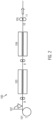
- the acrylate resin coating is applied onto the preformed aramid/mica backing sheets 7 by means of a "roll to roll” process schematically illustrated in Figure 2 .
- An unwinder 101 supplies the production line 100 with an aramid/mica backing reel 7.
- a liquid formulation is prepared comprising a resin based on acrylate monomers and acrylate oligomers, for example an unsaturated polyester imide resin, to which a UV polymerization photoinitiator is added, for example Omnirad TPO-L or 2-hydroxy-2-methyl-1-phenylpropanone, and an unreactive organic solvent, for example methyl ethyl ketone (MEK), to lower the viscosity of the resin itself and to allow better penetration of the resin into the aramid paper matrix.
- a resin based on acrylate monomers and acrylate oligomers for example an unsaturated polyester imide resin, to which a UV polymerization photoinitiator is added, for example Omnirad TPO-L or 2-hydroxy-2-methyl-1-phenylpropanone, and an unreactive organic solvent, for example methyl ethyl ketone (MEK), to lower the viscosity of
- the liquid formulation is applied to the aramid/mica backing sheets 7 preferably by the gravure or gravure engraved roller coating technique, or the Meyer bar technique, or impregnation using Foulard machines.
- the liquid formulation is initially collected in the cavities of the engraved roller and is subsequently transferred onto the aramid/mica backing sheet 7.
- the amount of liquid formulation applied depends on the depth of the cells of the gravure engraved roller.
- liquid formulation in the range between 10 g and 20 g per square meter of backing sheet 7, where the liquid formulation comprises a solution containing between 10% by weight and 50% by weight of acrylate resin in an unreactive organic solvent, so as to obtain a dry deposit of acrylate resin of between 1 g and 10 g per square meter of backing sheet 7 and to reach an impregnation depth of between 5 ⁇ m and 50 ⁇ m.
- the impregnated sheet 8 After application of the liquid formulation, the impregnated sheet 8 reaches the heating station 103 comprising an industrial oven, where the unreactive organic solvent is evaporated off.
- the impregnated sheet 8 is heated to a temperature in the range between 90°C and 120°C to evaporate off the solvent part and to dry the coating.
- a sheet 9 is obtained in which the unreactive organic solvent has evaporated off.
- the sheet 9 then reaches the UV irradiation station 104, where it is exposed to radiation emitted by an ultraviolet lamp.
- the UV radiation is focused on a substrate onto which a liquid formulation containing the photoinitiator has been applied.
- free radicals are generated which interact with the acrylate resin that has penetrated into the sheet and induce polymerization of the formulation, which changes from liquid to solid.
- an insulating sheet 10 is thus obtained in which the acrylate-based impregnating resin is polymerized.
- the operations of liquid formulation application, organic solvent evaporation and UV irradiation are repeated for the opposite side of the insulating sheet 10.
- the insulating sheet 10 comprising a resin-impregnated surface can be returned to the application station 102, where the liquid formulation is applied to the opposite surface, and then it can be passed once again through the heating station 103 and the UV irradiation station 104.
- the insulation sheet 10 is cut into smaller sheets, from which individual pieces of insulation 11 are made.
- the insulating sheet 10 is cut into reels with a width equal to the development of the stator slot, for example with a width of between 1 cm and 10 cm.
- the crystalline silicate mineral powder comprises mica
- other crystalline silicate mineral powders for example including vermiculite, calcined clay, silica, talc, wollastonite, and/or combinations thereof.
- each of the listed powders may be used with aramid fibers as a reinforcing element.
- the nonwoven backing sheet is preferably a paper structure comprising aramid fibers
- fibers for example, glass fibers, a mixed aramid paper, or a film of polyamide-imide, polyester, polyimide ether, polyether ketone, polyether sulfone, polysulfide, polyimide, or the like.
- each of the indicated reinforcing elements may be used to contain mica as a crystalline silicate mineral powder.
- the layers are bound with an adhesive.
- the first outer layer, the inner layer, and the second outer layer are coextensive with each other in the multilayer laminate.
- the multilayer laminate has a total of 20 to 70 weight percent crystalline silicate mineral powder, based on the total amount of said crystalline silicate mineral powder, floc, and binder in the multilayer laminate. In some embodiments, the multilayer laminate has a total of 30 to 60 weight percent crystalline silicate mineral powder, based on the total amount of said crystalline silicate mineral powder, floc, and binder in the multilayer laminate.
- the heat-resistant floc in the multilayer laminate is aramid floc, especially aramid floc that is poly (metaphenylene isophthalamide) floc.
- the binder includes aramid fibrids, especially aramid fibrids that are poly (metaphenylene isophthalamide) fibrids.
- the surfaces of the multilayer laminate comprise a coating comprising a compound of acrylate monomers and of acrylate oligomers.
- the heat resistant polymeric film ii) of the inner layer of the multilayer laminate comprises polyethylene terephthalate (PET), polyethylene napthalate (PEN), polyphenylene sulfide (PPS), polyimide, polyether ether ketone (PEEK), other polyarylether ketone (PAEK)-type polymers, or mixtures thereof.
- PET polyethylene terephthalate
- PEN polyethylene napthalate
- PPS polyphenylene sulfide
- PES polyimide
- PEEK polyether ether ketone
- PAEK polyarylether ketone
- the first and second outer layers are insulating sheets as previously described herein; and in some embodiments the first and second outer layers comprise aramid paper.
- each of the first and second outer layers comprises 15 to 80 weight percent crystalline silicate mineral powder, 5 to 25 weight percent heat-resistant floc, and 20 to 60 weight percent binder, based on the total amount of said crystalline silicate mineral powder, floc, and binder in each first and second outer layer; and each of the first and second surfaces of the multilayer laminate is coated with the impregnating resin, and each of the first and second surfaces are stabilized by a region of the said impregnating resin that both covers and extends into each of the first and second outer layers forming said first and second surfaces of the multilayer laminate; the region of impregnating resin extending into each outer layer a distance of 10 to 50 micrometers from each of said first and second surfaces, and further, the region of impregnating resin having a thickness of impregnating resin of from 5 to 50 micrometers on
Landscapes
- Chemical & Material Sciences (AREA)
- Chemical Kinetics & Catalysis (AREA)
- Engineering & Computer Science (AREA)
- Inorganic Chemistry (AREA)
- Spectroscopy & Molecular Physics (AREA)
- Physics & Mathematics (AREA)
- Textile Engineering (AREA)
- Composite Materials (AREA)
- Dispersion Chemistry (AREA)
- Mechanical Engineering (AREA)
- Life Sciences & Earth Sciences (AREA)
- Wood Science & Technology (AREA)
- Laminated Bodies (AREA)
- Insulating Bodies (AREA)
- Organic Insulating Materials (AREA)
- Insulation, Fastening Of Motor, Generator Windings (AREA)
- Paper (AREA)
- Application Of Or Painting With Fluid Materials (AREA)
Claims (15)
- Stratifié multicouche ayant une première surface et une deuxième surface, le stratifié multicouche comprenant au moins trois couches,
caractérisé en ce que :les couches comprennenta) une première couche externe qui est une première feuille de support non tissée (7) contenant une poudre minérale de silicate cristallin,b) une couche interne qui comprend :(i) un floc résistant à la chaleur et un liant et qui est dépourvue de poudre minérale de silicate cristallin,
ou(ii) un film polymère résistant à la chaleur qui est dépourvu de poudre minérale de silicate cristallin,c) une deuxième couche externe qui est une deuxième feuille de support non tissée (7) contenant une poudre minérale de silicate cristallin,dans lequel la première couche externe, la couche interne et la deuxième couche externe sont coextensives les unes par rapport aux autres et liées face à face les unes par rapport aux autres, la couche interne étant entre la première et la deuxième couche externe, etdans lequel le stratifié multicouche contient au total de 15 à 80 pour cent en poids de poudre minérale de silicate cristallin, sur la base de la quantité totale de ladite poudre minérale de silicate cristallin, dudit floc et dudit liant dans le stratifié multicouche, etledit stratifié multicouche comprend également un revêtement d'une résine d'imprégnation à base de dérivés d'acrylate. - Stratifié multicouche selon la revendication 1, dans lequel ladite poudre minérale de silicate cristallin comprend du mica.
- Stratifié multicouche selon la revendication 1 ou la revendication 2, dans lequel chaque première et chaque deuxième feuille de support non tissée comprend de 15 à 80 pour cent en poids de poudre minérale de silicate cristallin, de 5 à 25 pour cent en poids de floc résistant à la chaleur et de 20 à 60 pour cent en poids de liant, sur la base de la quantité totale de ladite poudre minérale de silicate cristallin, dudit floc et dudit liant dans chaque première et chaque deuxième feuille de support non tissée, etdans lequel chacune des première et deuxième surfaces du stratifié multicouche est revêtue de la résine d'imprégnation, et chacune des première et deuxième surfaces est stabilisée par une région de ladite résine d'imprégnation qui couvre et s'étend dans chacune des première et deuxième couches externes qui forment lesdites première et deuxième surfaces du stratifié multicouche,la région de résine d'imprégnation s'étendant dans chaque couche externe sur une distance de 10 à 50 micromètres à partir de chacune desdites première et deuxième surfaces, et en outre, la région de résine d'imprégnation ayant une épaisseur de résine d'imprégnation allant de 5 à 50 micromètres sur chacune desdites première et deuxième surfaces, de préférence allant de 5 à 25 micromètres.
- Stratifié multicouche selon l'une quelconque des revendications 1 à 3 ayant(i) une conductivité thermique supérieure à 0,18 watt par mètre-kelvin, de préférence supérieure à 0,25 watt par mètre-kelvin, et/ou(ii) une épaisseur totale de 0,10 à 0,4 millimètre, de préférence de 0,15 à 0,35 millimètre.
- Stratifié multicouche selon l'une quelconque des revendications 2 à 4, dans lequel la première ou deuxième feuille de support non tissée comprend de 20 à 70 pour cent en poids de mica, de préférence de 30 à 60 pour cent en poids de mica.
- Stratifié multicouche selon l'une quelconque des revendications 3 à 5, dans lequel(i) le floc résistant à la chaleur est un floc aramide, dans lequel le floc aramide est de préférence un floc poly(métaphénylène isophtalamide), et/ou(ii) le liant inclut des fibrides d'aramide, dans lequel les fibrides d'aramide sont de préférence des fibrides de poly(métaphénylène isophtalamide).
- Stratifié multicouche selon l'une quelconque des revendications 1 à 6, dans lequel ledit revêtement comprend un composé de monomères acrylate et d'oligomères acrylate, dans lequel lesdits monomères acrylate sont de préférence des méthacrylates bifonctionnels ou trifonctionnels, par exemple le diacrylate de 1,6-hexanediol (HDDA), le diacrylate de dipropylène glycol (DPGDA), le diméthacrylate de butanediol (BDMA), le diacrylate de néopentyl glycol (NPGDA), l'acrylate d'isobornyle (IBOA), le méthacrylate d'hydroxyéthyle (HEMA), l'acrylate d'hydroxyéthyle (HEA), le triacrylate de triméthylpropane (TMPTA), le triacrylate de pentaérythrityle (PETIA), le diméthacrylate de tétraméthylène, le diméthacrylate d'hexanediol, des propoxylates et/ou des éthoxylates, et/ou dans lequel lesdits oligomères acrylate sont de préférence l'acrylate d'uréthane, l'acrylate d'époxy et/ou l'acrylate de polyester.
- Stratifié multicouche selon l'une quelconque des revendications 1 à 7,dans lequel ledit revêtement de résine d'imprégnation comprend un matériau polyesterimide insaturé, et/oudans lequel ladite résine d'imprégnation comprend également un photo-initiateur de polymérisation, en particulier un photo-initiateur de polymérisation UV, par exemple l'Omnirad TPO-L, la 2-hydroxy-2-méthyl-1-phénylpropanone, l'oxyde de diphényl-2,4,6-triméthylbenzoylphosphine (TPO), l'oxyde de phosphine (BAPO), l'oxyde de phénylbis(2,4,6-triméthylbenzoyl)phosphine (BAPO), la 1-hydroxycyclohexyl phényl cétone (HCPK), ou la 2-hydroxy-2-méthyl-1-phényl-1-propanone (HMPP), et/oudans lequel ladite résine d'imprégnation comprend également un solvant organique, par exemple la méthyl éthyl cétone, et/oudans lequel le film polymère résistant à la chaleur ii) de la couche interne du stratifié multicouche comprend du polyéthylène téréphtalate (PET), du polyéthylène naphtalate (PEN), du sulfure de polyphénylène (PPS), du polyimide, de la polyéther éther cétone (PEEK), d'autres polymères de type polyaryléther cétone (PAEK), ou des mélanges de ceux-ci, et/oudans lequel le film polymère résistant à la chaleur ii) de la couche interne du stratifié multicouche comprend en outre de l'oxyde d'aluminium ou du nitrure de bore, et/oudans lequel le film polymère résistant à la chaleur ii) de la couche interne est un thermoplastique, et la première couche externe, la couche interne et la deuxième couche externe sont liées face à face par ledit film thermoplastique, et/oudans lequel le floc résistant à la chaleur et le liant i) de la couche interne sont un papier d'aramide comprenant le floc aramide et le liant de fibrides d'aramide et étant dépourvu de mica, et/oudans lequel chacune desdites première et deuxième feuilles de support non tissées (7) comprend une quantité de ladite résine d'imprégnation à base de dérivés d'acrylate comprenant entre 1 g et 10 g par mètre carré de ladite feuille d'isolation (10, 11), et/oudans lequel ladite résine d'imprégnation à base de dérivés d'acrylate a une viscosité comprise entre 5 cps et 150 cps.
- Moteur électrique comprenant le stratifié multicouche selon l'une des revendications 1 à 8.
- Procédé de production d'un stratifié multicouche ayant une première surface et une deuxième surface, le stratifié multicouche comprenant au moins trois couches,caractérisé en ce que le procédé comprend les étapes consistant à :a) fournir une première couche externe qui est une première feuille de support non tissée (7) contenant une poudre minérale de silicate cristallin, la première couche externe comprenant un revêtement d'une résine d'imprégnation à base de dérivés d'acrylate,b) fournir une couche interne qui comprend :i) un floc résistant à la chaleur et un liant et qui est dépourvue de poudre minérale de silicate cristallin, ouii) un film polymère résistant à la chaleur qui est dépourvu de poudre minérale de silicate cristallin, etc) fournir une deuxième couche externe qui est une deuxième feuille de support non tissée (7) contenant une poudre minérale de silicate cristallin, la deuxième couche externe comprenant un revêtement d'une résine d'imprégnation à base de dérivés d'acrylate,d) lier face à face la première couche externe, la couche interne et la deuxième couche externe, la couche interne étant entre les première et deuxième couches externes,dans lequel le stratifié multicouche a un total de 15 à 80 pour cent en poids de poudre minérale de silicate cristallin, sur la base de la quantité totale de ladite poudre minérale de silicate cristallin, dudit floc et dudit liant dans le stratifié multicouche.
- Procédé de la revendication 10, dans lequel(i) les couches sont liées avec un adhésif, et/ou(ii) les couches sont coextensives les unes par rapport aux autres dans le stratifié multicouche.
- Procédé de la revendication 10 ou la revendication 11, dans lequel le stratifié multicouche a un total de 20 à 70 pour cent en poids de poudre minérale de silicate cristallin, sur la base de la quantité totale de ladite poudre minérale de silicate cristallin, dudit floc et dudit liant dans le stratifié multicouche, de préférence un total de 30 à 60 pour cent en poids de poudre minérale de silicate cristallin, sur la base de la quantité totale de ladite poudre minérale de silicate cristallin, dudit floc et dudit liant dans le stratifié multicouche.
- Procédé selon l'une quelconque des revendications 10 à 12, dans lequel(i) le floc résistant à la chaleur est un floc aramide, dans lequel le floc aramide est de préférence un floc poly(métaphénylène isophtalamide), et/ou(ii) le liant inclut des fibrides d'aramide, dans lequel les fibrides d'aramide sont de préférence des fibrides de poly(métaphénylène isophtalamide).
- Procédé selon l'une quelconque des revendications 10 à 13, dans lequel ledit revêtement comprend un composé de monomères acrylate et d'oligomères acrylate, et/ou
dans lequel le film polymère résistant à la chaleur ii) de la couche interne du stratifié multicouche comprend du polyéthylène téréphtalate (PET), du polyéthylène naphtalate (PEN), du sulfure de polyphénylène (PPS), du polyimide, de la polyéther éther cétone (PEEK), d'autres polymères de type polyaryléther cétone (PAEK), ou des mélanges de ceux-ci. - Procédé selon l'une quelconque des revendications 10 à 14, dans lequel chacune des première et deuxième couches externes comprend de 15 à 80 pour cent en poids de poudre minérale de silicate cristallin, de 5 à 25 pour cent en poids de floc résistant à la chaleur et de 20 à 60 pour cent en poids de liant, sur la base de la quantité totale de ladite poudre minérale de silicate cristallin, dudit floc et dudit liant dans chaque première et chaque deuxième couche externe, etdans lequel chacune des première et deuxième surfaces du stratifié multicouche est revêtue de la résine d'imprégnation, et chacune des première et deuxième surfaces est stabilisée par une région de ladite résine d'imprégnation qui couvre et s'étend dans chacune des première et deuxième couches externes qui forment lesdites première et deuxième surfaces du stratifié multicouche,la région de résine d'imprégnation s'étendant dans chaque couche externe sur une distance de 10 à 50 micromètres par rapport à chacune desdites première et deuxième surfaces, et en outre, la région de résine d'imprégnation ayant une épaisseur de résine d'imprégnation allant de 5 à 50 micromètres sur chacune desdites première et deuxième surfaces, de préférence allant de 5 à 25 micromètres.
Applications Claiming Priority (2)
| Application Number | Priority Date | Filing Date | Title |
|---|---|---|---|
| IT102021000018965A IT202100018965A1 (it) | 2021-07-19 | 2021-07-19 | Strato di rivestimento impregnante per fogli isolanti |
| PCT/US2022/073827 WO2023004278A1 (fr) | 2021-07-19 | 2022-07-18 | Couche de revêtement d'imprégnation pour feuilles isolantes et stratifiés multicouches |
Publications (2)
| Publication Number | Publication Date |
|---|---|
| EP4374007A1 EP4374007A1 (fr) | 2024-05-29 |
| EP4374007B1 true EP4374007B1 (fr) | 2025-06-04 |
Family
ID=78086761
Family Applications (2)
| Application Number | Title | Priority Date | Filing Date |
|---|---|---|---|
| EP22751985.7A Active EP4374008B1 (fr) | 2021-07-19 | 2022-07-18 | Couche de revêtement d'imprégnation pour feuilles isolantes |
| EP22750985.8A Active EP4374007B1 (fr) | 2021-07-19 | 2022-07-18 | Couche de revêtement d'imprégnation pour feuilles isolantes et stratifiés multicouches |
Family Applications Before (1)
| Application Number | Title | Priority Date | Filing Date |
|---|---|---|---|
| EP22751985.7A Active EP4374008B1 (fr) | 2021-07-19 | 2022-07-18 | Couche de revêtement d'imprégnation pour feuilles isolantes |
Country Status (8)
| Country | Link |
|---|---|
| US (2) | US20240316879A1 (fr) |
| EP (2) | EP4374008B1 (fr) |
| JP (2) | JP2024527793A (fr) |
| KR (2) | KR20240029104A (fr) |
| CN (2) | CN117813428A (fr) |
| IT (1) | IT202100018965A1 (fr) |
| PL (1) | PL4374007T3 (fr) |
| WO (2) | WO2023004276A1 (fr) |
Families Citing this family (3)
| Publication number | Priority date | Publication date | Assignee | Title |
|---|---|---|---|---|
| KR20250030616A (ko) * | 2023-08-25 | 2025-03-05 | 이노에프앤씨(주) | 알루미늄 주조품용 함침제 조성물 |
| WO2025191490A1 (fr) * | 2024-03-12 | 2025-09-18 | Coveme S.P.A. | Couche de revêtement d'imprégnation pour feuilles isolantes |
| WO2025197829A1 (fr) * | 2024-03-18 | 2025-09-25 | 日東シンコー株式会社 | Feuille isolante et moteur |
Family Cites Families (16)
| Publication number | Priority date | Publication date | Assignee | Title |
|---|---|---|---|---|
| US3063966A (en) | 1958-02-05 | 1962-11-13 | Du Pont | Process of making wholly aromatic polyamides |
| US3227793A (en) | 1961-01-23 | 1966-01-04 | Celanese Corp | Spinning of a poly(polymethylene) terephthalamide |
| US3414645A (en) | 1964-06-19 | 1968-12-03 | Monsanto Co | Process for spinning wholly aromatic polyamide fibers |
| US3287324A (en) | 1965-05-07 | 1966-11-22 | Du Pont | Poly-meta-phenylene isophthalamides |
| EP0355558A1 (fr) * | 1988-08-18 | 1990-02-28 | Siemens Aktiengesellschaft | Bande isolante pour la fabrication d'un manchon isolant imprégné pour conducteurs électriques |
| US5667743A (en) | 1996-05-21 | 1997-09-16 | E. I. Du Pont De Nemours And Company | Wet spinning process for aramid polymer containing salts |
| US9437348B2 (en) * | 2010-12-17 | 2016-09-06 | 3M Innovative Properties Company | Electrical insulation material |
| BR112013025505B1 (pt) | 2011-04-18 | 2020-04-22 | Mitsubishi Electric Corp | bobina de rotor, e, método para fabricar uma bobina de rotor |
| US20130196161A1 (en) * | 2011-08-03 | 2013-08-01 | Ei Du Pont De Nemours And Company | Laminates useful for electrical insulation |
| DE102013204124A1 (de) * | 2013-03-11 | 2014-09-11 | Evonik Industries Ag | Composite-Halbzeuge und daraus hergestellte Formteile sowie direkt hergestellte Formteile auf Basis von hydroxyfunktionalisierten (Meth)Acrylaten und Uretdionen die mittels Strahlung duroplastisch vernetzt werden |
| US9844928B2 (en) * | 2014-06-16 | 2017-12-19 | E I Du Pont De Nemours And Company | High limiting oxygen index electrical insulation laminates |
| US10186353B2 (en) * | 2015-06-30 | 2019-01-22 | E I Du Pont De Nemours And Company | Corona-resistant resin-compatible laminates |
| EP3504719A4 (fr) * | 2016-08-25 | 2021-02-17 | 3M Innovative Properties Company | Matériau d'isolation électrique thermoconducteur |
| US11509016B2 (en) * | 2019-03-15 | 2022-11-22 | Dupont Safety & Construction, Inc. | Papers useful as thermal insulation and flame barriers for battery cells |
| CN110485195B (zh) | 2019-08-26 | 2020-07-24 | 湖南大学 | 一种芳纶纳米纤维基绝缘纸及其制备方法 |
| CN111118963A (zh) * | 2019-12-19 | 2020-05-08 | 安徽五秒达网络科技有限公司 | 一种耐火安全电缆用高性能复合云母带的制备方法 |
-
2021
- 2021-07-19 IT IT102021000018965A patent/IT202100018965A1/it unknown
-
2022
- 2022-07-18 WO PCT/US2022/073825 patent/WO2023004276A1/fr not_active Ceased
- 2022-07-18 US US18/578,628 patent/US20240316879A1/en active Pending
- 2022-07-18 WO PCT/US2022/073827 patent/WO2023004278A1/fr not_active Ceased
- 2022-07-18 KR KR1020247005567A patent/KR20240029104A/ko active Pending
- 2022-07-18 JP JP2024502622A patent/JP2024527793A/ja active Pending
- 2022-07-18 US US18/578,802 patent/US20240351318A1/en active Pending
- 2022-07-18 CN CN202280051369.8A patent/CN117813428A/zh active Pending
- 2022-07-18 EP EP22751985.7A patent/EP4374008B1/fr active Active
- 2022-07-18 PL PL22750985.8T patent/PL4374007T3/pl unknown
- 2022-07-18 KR KR1020247005564A patent/KR20240029103A/ko active Pending
- 2022-07-18 CN CN202280051359.4A patent/CN117730181A/zh active Pending
- 2022-07-18 JP JP2024502626A patent/JP2024527795A/ja active Pending
- 2022-07-18 EP EP22750985.8A patent/EP4374007B1/fr active Active
Also Published As
| Publication number | Publication date |
|---|---|
| WO2023004278A1 (fr) | 2023-01-26 |
| US20240351318A1 (en) | 2024-10-24 |
| CN117730181A (zh) | 2024-03-19 |
| US20240316879A1 (en) | 2024-09-26 |
| IT202100018965A1 (it) | 2023-01-19 |
| EP4374008B1 (fr) | 2025-09-24 |
| EP4374007A1 (fr) | 2024-05-29 |
| JP2024527795A (ja) | 2024-07-26 |
| CN117813428A (zh) | 2024-04-02 |
| KR20240029103A (ko) | 2024-03-05 |
| EP4374008A1 (fr) | 2024-05-29 |
| KR20240029104A (ko) | 2024-03-05 |
| WO2023004276A1 (fr) | 2023-01-26 |
| PL4374007T3 (pl) | 2025-09-22 |
| JP2024527793A (ja) | 2024-07-26 |
Similar Documents
| Publication | Publication Date | Title |
|---|---|---|
| EP4374007B1 (fr) | Couche de revêtement d'imprégnation pour feuilles isolantes et stratifiés multicouches | |
| KR101157708B1 (ko) | 고 열전도성 유전 테이프 | |
| EP1968168B1 (fr) | Isolateur de bobine, bobine d'armature isolée par l'isolateur de bobine et machine éléctrique rotative électrique dotée de la bobine d'armature | |
| US7120993B2 (en) | Method of manufacturing insulated coil | |
| EP2203535B1 (fr) | Ruban d'isolation électrique à propriétés de collage et d'imprégnation de résine maîtrisées | |
| JP4103390B2 (ja) | 絶縁材及び電機巻線とその製造法 | |
| Boulter et al. | Historical development of rotor and stator winding insulation materials and systems | |
| EP2001941A1 (fr) | Formation de charges dendritiques de haute conductivité thermique | |
| CN101189686B (zh) | 电绝缘材料,电力设备和生产电绝缘材料的方法 | |
| KR102517812B1 (ko) | 내코로나 수지 친화성 라미네이트 | |
| EP3069868B1 (fr) | Matériau d'isolation électrique inorganique | |
| KR20190004265A (ko) | 수지 호환성이 있는 라미네이트 구조체 | |
| JPS6136329B2 (fr) | ||
| JP2000040420A (ja) | 無担体雲母絶縁体 | |
| JPWO2023004278A5 (fr) | ||
| JP3354346B2 (ja) | 積層板の製造方法 | |
| JPS61266051A (ja) | 高圧回転電機コイルの絶縁処理方法 | |
| JPS61209233A (ja) | 積層板の製造方法 | |
| JPH08109273A (ja) | 樹脂シート |
Legal Events
| Date | Code | Title | Description |
|---|---|---|---|
| STAA | Information on the status of an ep patent application or granted ep patent |
Free format text: STATUS: UNKNOWN |
|
| STAA | Information on the status of an ep patent application or granted ep patent |
Free format text: STATUS: THE INTERNATIONAL PUBLICATION HAS BEEN MADE |
|
| PUAI | Public reference made under article 153(3) epc to a published international application that has entered the european phase |
Free format text: ORIGINAL CODE: 0009012 |
|
| STAA | Information on the status of an ep patent application or granted ep patent |
Free format text: STATUS: REQUEST FOR EXAMINATION WAS MADE |
|
| 17P | Request for examination filed |
Effective date: 20240129 |
|
| AK | Designated contracting states |
Kind code of ref document: A1 Designated state(s): AL AT BE BG CH CY CZ DE DK EE ES FI FR GB GR HR HU IE IS IT LI LT LU LV MC MK MT NL NO PL PT RO RS SE SI SK SM TR |
|
| DAV | Request for validation of the european patent (deleted) | ||
| DAX | Request for extension of the european patent (deleted) | ||
| GRAP | Despatch of communication of intention to grant a patent |
Free format text: ORIGINAL CODE: EPIDOSNIGR1 |
|
| STAA | Information on the status of an ep patent application or granted ep patent |
Free format text: STATUS: GRANT OF PATENT IS INTENDED |
|
| INTG | Intention to grant announced |
Effective date: 20250217 |
|
| RAP3 | Party data changed (applicant data changed or rights of an application transferred) |
Owner name: COVEME S.P.A. Owner name: DUPONT SAFETY & CONSTRUCTION, INC. |
|
| GRAS | Grant fee paid |
Free format text: ORIGINAL CODE: EPIDOSNIGR3 |
|
| GRAA | (expected) grant |
Free format text: ORIGINAL CODE: 0009210 |
|
| STAA | Information on the status of an ep patent application or granted ep patent |
Free format text: STATUS: THE PATENT HAS BEEN GRANTED |
|
| P01 | Opt-out of the competence of the unified patent court (upc) registered |
Free format text: CASE NUMBER: APP_17669/2025 Effective date: 20250410 |
|
| AK | Designated contracting states |
Kind code of ref document: B1 Designated state(s): AL AT BE BG CH CY CZ DE DK EE ES FI FR GB GR HR HU IE IS IT LI LT LU LV MC MK MT NL NO PL PT RO RS SE SI SK SM TR |
|
| REG | Reference to a national code |
Ref country code: GB Ref legal event code: FG4D |
|
| REG | Reference to a national code |
Ref country code: CH Ref legal event code: EP |
|
| REG | Reference to a national code |
Ref country code: DE Ref legal event code: R096 Ref document number: 602022015590 Country of ref document: DE |
|
| REG | Reference to a national code |
Ref country code: IE Ref legal event code: FG4D |
|
| PGFP | Annual fee paid to national office [announced via postgrant information from national office to epo] |
Ref country code: FR Payment date: 20250610 Year of fee payment: 4 |
|
| REG | Reference to a national code |
Ref country code: NL Ref legal event code: MP Effective date: 20250604 |
|
| PG25 | Lapsed in a contracting state [announced via postgrant information from national office to epo] |
Ref country code: ES Free format text: LAPSE BECAUSE OF FAILURE TO SUBMIT A TRANSLATION OF THE DESCRIPTION OR TO PAY THE FEE WITHIN THE PRESCRIBED TIME-LIMIT Effective date: 20250604 Ref country code: FI Free format text: LAPSE BECAUSE OF FAILURE TO SUBMIT A TRANSLATION OF THE DESCRIPTION OR TO PAY THE FEE WITHIN THE PRESCRIBED TIME-LIMIT Effective date: 20250604 |
|
| PGFP | Annual fee paid to national office [announced via postgrant information from national office to epo] |
Ref country code: DE Payment date: 20250604 Year of fee payment: 4 |
|
| REG | Reference to a national code |
Ref country code: LT Ref legal event code: MG9D |
|
| PG25 | Lapsed in a contracting state [announced via postgrant information from national office to epo] |
Ref country code: NO Free format text: LAPSE BECAUSE OF FAILURE TO SUBMIT A TRANSLATION OF THE DESCRIPTION OR TO PAY THE FEE WITHIN THE PRESCRIBED TIME-LIMIT Effective date: 20250904 Ref country code: GR Free format text: LAPSE BECAUSE OF FAILURE TO SUBMIT A TRANSLATION OF THE DESCRIPTION OR TO PAY THE FEE WITHIN THE PRESCRIBED TIME-LIMIT Effective date: 20250905 |
|
| PGFP | Annual fee paid to national office [announced via postgrant information from national office to epo] |
Ref country code: TR Payment date: 20250813 Year of fee payment: 4 Ref country code: PL Payment date: 20250616 Year of fee payment: 4 Ref country code: IT Payment date: 20250731 Year of fee payment: 4 |
|
| PG25 | Lapsed in a contracting state [announced via postgrant information from national office to epo] |
Ref country code: BG Free format text: LAPSE BECAUSE OF FAILURE TO SUBMIT A TRANSLATION OF THE DESCRIPTION OR TO PAY THE FEE WITHIN THE PRESCRIBED TIME-LIMIT Effective date: 20250604 |
|
| PG25 | Lapsed in a contracting state [announced via postgrant information from national office to epo] |
Ref country code: HR Free format text: LAPSE BECAUSE OF FAILURE TO SUBMIT A TRANSLATION OF THE DESCRIPTION OR TO PAY THE FEE WITHIN THE PRESCRIBED TIME-LIMIT Effective date: 20250604 |
|
| PGFP | Annual fee paid to national office [announced via postgrant information from national office to epo] |
Ref country code: AT Payment date: 20251020 Year of fee payment: 4 |
|
| PG25 | Lapsed in a contracting state [announced via postgrant information from national office to epo] |
Ref country code: RS Free format text: LAPSE BECAUSE OF FAILURE TO SUBMIT A TRANSLATION OF THE DESCRIPTION OR TO PAY THE FEE WITHIN THE PRESCRIBED TIME-LIMIT Effective date: 20250904 |
|
| PG25 | Lapsed in a contracting state [announced via postgrant information from national office to epo] |
Ref country code: LV Free format text: LAPSE BECAUSE OF FAILURE TO SUBMIT A TRANSLATION OF THE DESCRIPTION OR TO PAY THE FEE WITHIN THE PRESCRIBED TIME-LIMIT Effective date: 20250604 |
|
| PG25 | Lapsed in a contracting state [announced via postgrant information from national office to epo] |
Ref country code: NL Free format text: LAPSE BECAUSE OF FAILURE TO SUBMIT A TRANSLATION OF THE DESCRIPTION OR TO PAY THE FEE WITHIN THE PRESCRIBED TIME-LIMIT Effective date: 20250604 |
|
| PG25 | Lapsed in a contracting state [announced via postgrant information from national office to epo] |
Ref country code: PT Free format text: LAPSE BECAUSE OF FAILURE TO SUBMIT A TRANSLATION OF THE DESCRIPTION OR TO PAY THE FEE WITHIN THE PRESCRIBED TIME-LIMIT Effective date: 20251006 |
|
| PG25 | Lapsed in a contracting state [announced via postgrant information from national office to epo] |
Ref country code: IS Free format text: LAPSE BECAUSE OF FAILURE TO SUBMIT A TRANSLATION OF THE DESCRIPTION OR TO PAY THE FEE WITHIN THE PRESCRIBED TIME-LIMIT Effective date: 20251004 |
|
| PG25 | Lapsed in a contracting state [announced via postgrant information from national office to epo] |
Ref country code: SM Free format text: LAPSE BECAUSE OF FAILURE TO SUBMIT A TRANSLATION OF THE DESCRIPTION OR TO PAY THE FEE WITHIN THE PRESCRIBED TIME-LIMIT Effective date: 20250604 |
|
| PG25 | Lapsed in a contracting state [announced via postgrant information from national office to epo] |
Ref country code: CZ Free format text: LAPSE BECAUSE OF FAILURE TO SUBMIT A TRANSLATION OF THE DESCRIPTION OR TO PAY THE FEE WITHIN THE PRESCRIBED TIME-LIMIT Effective date: 20250604 |
|
| PG25 | Lapsed in a contracting state [announced via postgrant information from national office to epo] |
Ref country code: EE Free format text: LAPSE BECAUSE OF FAILURE TO SUBMIT A TRANSLATION OF THE DESCRIPTION OR TO PAY THE FEE WITHIN THE PRESCRIBED TIME-LIMIT Effective date: 20250604 |
|
| PG25 | Lapsed in a contracting state [announced via postgrant information from national office to epo] |
Ref country code: SK Free format text: LAPSE BECAUSE OF FAILURE TO SUBMIT A TRANSLATION OF THE DESCRIPTION OR TO PAY THE FEE WITHIN THE PRESCRIBED TIME-LIMIT Effective date: 20250604 |
|
| REG | Reference to a national code |
Ref country code: CH Ref legal event code: H13 Free format text: ST27 STATUS EVENT CODE: U-0-0-H10-H13 (AS PROVIDED BY THE NATIONAL OFFICE) Effective date: 20260224 |
|
| REG | Reference to a national code |
Ref country code: DE Ref legal event code: R097 Ref document number: 602022015590 Country of ref document: DE |
|
| PG25 | Lapsed in a contracting state [announced via postgrant information from national office to epo] |
Ref country code: RO Free format text: LAPSE BECAUSE OF FAILURE TO SUBMIT A TRANSLATION OF THE DESCRIPTION OR TO PAY THE FEE WITHIN THE PRESCRIBED TIME-LIMIT Effective date: 20250604 |
|
| PG25 | Lapsed in a contracting state [announced via postgrant information from national office to epo] |
Ref country code: LU Free format text: LAPSE BECAUSE OF NON-PAYMENT OF DUE FEES Effective date: 20250718 |
|
| REG | Reference to a national code |
Ref country code: BE Ref legal event code: MM Effective date: 20250731 |
|
| PG25 | Lapsed in a contracting state [announced via postgrant information from national office to epo] |
Ref country code: MC Free format text: LAPSE BECAUSE OF FAILURE TO SUBMIT A TRANSLATION OF THE DESCRIPTION OR TO PAY THE FEE WITHIN THE PRESCRIBED TIME-LIMIT Effective date: 20250604 |
|
| PLBE | No opposition filed within time limit |
Free format text: ORIGINAL CODE: 0009261 |
|
| STAA | Information on the status of an ep patent application or granted ep patent |
Free format text: STATUS: NO OPPOSITION FILED WITHIN TIME LIMIT |
|
| PG25 | Lapsed in a contracting state [announced via postgrant information from national office to epo] |
Ref country code: DK Free format text: LAPSE BECAUSE OF FAILURE TO SUBMIT A TRANSLATION OF THE DESCRIPTION OR TO PAY THE FEE WITHIN THE PRESCRIBED TIME-LIMIT Effective date: 20250604 |
|
| PG25 | Lapsed in a contracting state [announced via postgrant information from national office to epo] |
Ref country code: BE Free format text: LAPSE BECAUSE OF NON-PAYMENT OF DUE FEES Effective date: 20250731 |
|
| REG | Reference to a national code |
Ref country code: CH Ref legal event code: L10 Free format text: ST27 STATUS EVENT CODE: U-0-0-L10-L00 (AS PROVIDED BY THE NATIONAL OFFICE) Effective date: 20260416 |