EP4368710A1 - Linear peptides inhibiting ck2-mediated phosphorylation and compositions comprising same - Google Patents
Linear peptides inhibiting ck2-mediated phosphorylation and compositions comprising same Download PDFInfo
- Publication number
- EP4368710A1 EP4368710A1 EP22760645.6A EP22760645A EP4368710A1 EP 4368710 A1 EP4368710 A1 EP 4368710A1 EP 22760645 A EP22760645 A EP 22760645A EP 4368710 A1 EP4368710 A1 EP 4368710A1
- Authority
- EP
- European Patent Office
- Prior art keywords
- seq
- peptide
- polypeptides
- polypeptide
- identified
- Prior art date
- Legal status (The legal status is an assumption and is not a legal conclusion. Google has not performed a legal analysis and makes no representation as to the accuracy of the status listed.)
- Pending
Links
Images




Classifications
-
- C—CHEMISTRY; METALLURGY
- C07—ORGANIC CHEMISTRY
- C07K—PEPTIDES
- C07K7/00—Peptides having 5 to 20 amino acids in a fully defined sequence; Derivatives thereof
- C07K7/04—Linear peptides containing only normal peptide links
- C07K7/06—Linear peptides containing only normal peptide links having 5 to 11 amino acids
-
- C—CHEMISTRY; METALLURGY
- C12—BIOCHEMISTRY; BEER; SPIRITS; WINE; VINEGAR; MICROBIOLOGY; ENZYMOLOGY; MUTATION OR GENETIC ENGINEERING
- C12Y—ENZYMES
- C12Y207/00—Transferases transferring phosphorus-containing groups (2.7)
- C12Y207/11—Protein-serine/threonine kinases (2.7.11)
- C12Y207/11001—Non-specific serine/threonine protein kinase (2.7.11.1), i.e. casein kinase or checkpoint kinase
-
- C—CHEMISTRY; METALLURGY
- C07—ORGANIC CHEMISTRY
- C07K—PEPTIDES
- C07K14/00—Peptides having more than 20 amino acids; Gastrins; Somatostatins; Melanotropins; Derivatives thereof
- C07K14/435—Peptides having more than 20 amino acids; Gastrins; Somatostatins; Melanotropins; Derivatives thereof from animals; from humans
- C07K14/46—Peptides having more than 20 amino acids; Gastrins; Somatostatins; Melanotropins; Derivatives thereof from animals; from humans from vertebrates
- C07K14/47—Peptides having more than 20 amino acids; Gastrins; Somatostatins; Melanotropins; Derivatives thereof from animals; from humans from vertebrates from mammals
- C07K14/4701—Peptides having more than 20 amino acids; Gastrins; Somatostatins; Melanotropins; Derivatives thereof from animals; from humans from vertebrates from mammals not used
- C07K14/4702—Regulators; Modulating activity
- C07K14/4703—Inhibitors; Suppressors
-
- A—HUMAN NECESSITIES
- A61—MEDICAL OR VETERINARY SCIENCE; HYGIENE
- A61P—SPECIFIC THERAPEUTIC ACTIVITY OF CHEMICAL COMPOUNDS OR MEDICINAL PREPARATIONS
- A61P35/00—Antineoplastic agents
-
- C—CHEMISTRY; METALLURGY
- C12—BIOCHEMISTRY; BEER; SPIRITS; WINE; VINEGAR; MICROBIOLOGY; ENZYMOLOGY; MUTATION OR GENETIC ENGINEERING
- C12N—MICROORGANISMS OR ENZYMES; COMPOSITIONS THEREOF; PROPAGATING, PRESERVING, OR MAINTAINING MICROORGANISMS; MUTATION OR GENETIC ENGINEERING; CULTURE MEDIA
- C12N9/00—Enzymes; Proenzymes; Compositions thereof; Processes for preparing, activating, inhibiting, separating or purifying enzymes
- C12N9/10—Transferases (2.)
- C12N9/12—Transferases (2.) transferring phosphorus containing groups, e.g. kinases (2.7)
-
- A—HUMAN NECESSITIES
- A61—MEDICAL OR VETERINARY SCIENCE; HYGIENE
- A61K—PREPARATIONS FOR MEDICAL, DENTAL OR TOILETRY PURPOSES
- A61K38/00—Medicinal preparations containing peptides
-
- C—CHEMISTRY; METALLURGY
- C07—ORGANIC CHEMISTRY
- C07K—PEPTIDES
- C07K2319/00—Fusion polypeptide
- C07K2319/01—Fusion polypeptide containing a localisation/targetting motif
- C07K2319/10—Fusion polypeptide containing a localisation/targetting motif containing a tag for extracellular membrane crossing, e.g. TAT or VP22
Definitions
- the present invention relates to the field of molecular pharmacology and human medicine.
- the invention relates to obtaining linear peptides that inhibit the phosphorylation event mediated by the enzyme Casein Kinase 2 (CK2), through direct interaction with the phosphoacceptor site on the substrate. Due to their biological activity, the peptides and polypeptides of the invention are useful for the treatment of different types of solid tumors and of other origins.
- CK2 Casein Kinase 2
- CK2 is a serine/threonine enzyme that is involved in increasing cell proliferation, and its intracellular localization is fundamentally nuclear during the process of malignant transformation ( Tawfic S., et al., 2001, Histol. Histopathol. 16:573-582 ). Therefore, this enzyme constitutes an attractive therapeutic target. ( Duncan J.S., et al., 2008, Biochim. Biophys. Acta, 1784: 33-47 ).
- the CK2 enzyme-mediated phosphorylation event has been manipulated in experimental oncology by using chemical compounds derived from 4,5,6,7-tetrabromobenzotriazole (TBB) ( Pagano M.A., et al., 2004, J. Med. Chem., 47: 6239-6247 ), antisense oligonucleotides ( Slaton J.W., et al., 2004, Mol. Cancer Res. 2:712-720 ) and peptides that block the interaction between the catalytic and regulatory subunits of the enzyme ( Laudet B., et al., 2007, Biochem. J., 408: 363-373 ).
- TAB 4,5,6,7-tetrabromobenzotriazole
- the chemical compound CX-4945 inhibits the two catalytic subunits of the enzyme CK2 ( Siddiqui-Jain A., et al., 2010, Cancer Res. 70: 10288-10298 ), and is a potent inhibitor of cell proliferation in vitro, with a mean maximum inhibitory concentration (IC 50 ) of 5.5 ⁇ M. Only this CK2 enzyme inhibitor has been satisfactorily evaluated in humans, where favorable pharmacokinetic and safety parameters were recorded in Phase I clinical studies ( Lim J.K.C., et al., 2010, Cancer Res. 70: 2763-2766 Only this CK2 enzyme inhibitor has been satisfactorily evaluated in humans, where favorable pharmacokinetic and safety parameters were recorded in Phase I clinical studies.
- the CIGB-300 peptide is a chimeric molecule that contains a cyclic peptide that interacts with the CK2 phosphoacceptor site on the substrate and an "intracellular penetration" peptide from the Tat1 protein of the Human Immunodeficiency Virus (HIV), to guarantee its internalization in the cell.
- HIV Human Immunodeficiency Virus
- CIGB-300 has demonstrated antiproliferative and proapoptotic properties, in vitro and in vivo, in various lines of solid tumors such as lung, cervix, larynx ( Perera Y., et al., 2014, Mol Clin Oncol, 2 (6): 935-944 ) and in liquid tumors such as chronic lymphocytic leukemia ( Martins L., et al., 2013, Oncotarget, 5(1): 258-263 ) and T-type acute lymphoblastic leukemia ( Perera Y., et al., 2020, Cancers, 12, 1377 ).
- solid tumors such as lung, cervix, larynx ( Perera Y., et al., 2014, Mol Clin Oncol, 2 (6): 935-944 ) and in liquid tumors such as chronic lymphocytic leukemia ( Martins L., et al., 2013, Oncotarget, 5(1): 258-263 ) and T-type acute lymphoblast
- CIGB-300 is a 25 amino acid peptide, containing methionine in its sequence and an intramolecular disulfide bond. These are sources of chemical instability in the molecule, and can be the cause of inconsistencies in the higher stages of product development, whether in the liquid or lyophilized formulation and in stability studies. ( Frokjaer S. et al., 2000, Pharmaceutical formulation development of peptides and proteins.
- the present invention solves the aforementioned problem by providing linear peptides that inhibit the CK2-mediated phosphorylation and that have an amino acid sequence that is selected from the group consisting of the sequences identified as SEQ ID NO: 45, SEQ ID NO: 49, SEQ ID NO: 50, and SEQ ID NO: 57 - SEQ ID NO: 62.
- peptides differ from CIGB-300 in that they are linear, smaller in size, and chemically more stable. They do not have methionine or cysteine in their sequence, which is an advantage. In addition, from the productive point of view, the obtention is more feasible.
- linear peptides identified as SEQ ID NO: 45, SEQ ID NO: 49, SEQ ID NO: 50, and SEQ ID NO: 57 - SEQ ID NO: 62 were selected for their ability to interact with the phosphoacceptor site of the CK2 enzyme on the E7 substrate of the Human Papillomavirus (HPV)-16 (LNDSSEEEDEI), and also for its ability to inhibit CK2-mediated phosphorylation of this oncoprotein. As seen in the examples of the present invention, these linear peptides are capable of inhibiting CK2-mediated phosphorylation of the E7 protein in a similar manner to peptide CIGB-300.
- the peptides of the invention can be chemically conjugated with peptides of "intracellular penetration", belonging to proteins such as the Tat1 protein of HIV ( Schwarze S.R., et al., 2000, Trends Pharmacol, 21: 45-48 ), la prote ⁇ na VP22 del Virus Herpes Simples ( Lindgreen M., et al., 2000, Trends Pharmacol Sci, 21: 99-103 ), the Penetratin and the Transportan ( Gariepy J., et al., 2001, Trends Biotech 19: 21-28 ), among others.
- proteins such as the Tat1 protein of HIV ( Schwarze S.R., et al., 2000, Trends Pharmacol, 21: 45-48 ), la prote ⁇ na VP22 del Virus Herpes Simples ( Lindgreen M., et al., 2000, Trends Pharmacol Sci, 21: 99-103 ), the Penetratin and the Transportan ( Gariepy J., et al.,
- polypeptides comprising linear peptides that have an amino acid sequence that is selected from the sequences identified as SEQ ID NO: 45, SEQ ID NO: 49, SEQ ID NO: 50, and SEQ ID NO: 57 - SEQ ID NO: 62 and one cell penetrating peptide.
- the intracellularly penetrating peptide in these polypeptides is a peptide from the Tat1 protein of HIV.
- the intracellularly penetrating peptide has an amino acid sequence that is identified as SEQ ID NO: 65 either SEQ ID NO: 66.
- the polypeptide of the invention has an amino acid sequence that is selected from the group consisting of the sequences identified as SEQ ID NO: 35, SEQ ID NO: 47, SEQ ID NO: 48, and SEQ ID NO: 51 - SEQ ID NO: 56.
- polypeptide CIGB-300 Most of these polypeptides are more active than peptide CIGB-300, as they have a lower IC 50 in various cancer cell lines (lung, bladder, larynx, pancreas, and leukemia).
- the polypeptides were able to produce a dose-dependent effect on the proliferation of cancer cells.
- the polypeptide identified as SEQ ID NO: 35 shows IC 50 values similar to those of CIGB-300 in these cell lines. However, it is considered superior because it has a linear amino acid sequence, smaller in size and more chemically stable, with productive advantages that accelerate the development of the therapeutic product.
- a combinatorial library of linear peptides by type "one-bead-one-compound” was synthesized, containing more than 16 million of different peptide sequences, and the screening was carried out with a synthetic peptide comprising the 28-38 region of the E7 oncoprotein modified with Biotin.
- mass spectrometry the sequences of the peptides contained in the nine beads that were positive to the screening were assigned.
- the peptides identified a SEQ ID NO: 1- SEQ ID NO: 9 were chemically synthesized, and it was confirmed that they were capable of inhibiting CK2-mediated phosphorylation in the E7 oncoprotein of HPV-16.
- polypeptides containing the nine peptides were designed and synthesized, in which the intracellular penetration peptide corresponding to the HIV Tat1 protein was added at the N-terminus (GRKKRRQRRRPPQ, identified as SEQ ID NO: 65).
- SEQ ID NO: 65 the intracellular penetration peptide corresponding to the HIV Tat1 protein was added at the N-terminus.
- a Trp positional scanning library was designed and obtained to assess the impact of Trp incorporation on the biological activity of polypeptides identified as SEQ ID NO: 18 - SEQ ID NO: 20.
- the antiproliferative effect of the 24 polypeptides generated in the Trp library (identified as SEQ ID NO: 21 - SEQ ID NO: 44) in the NCI-H125 cell line.
- the IC 50 values of the polypeptide identified as SEQ ID NO: 35 and CIGB-300, obtained in the NCI-H125 and AsPC-1 (pancreatic adenocarcinoma) cell lines are comparable.
- the polypeptide identified as SEQ ID NO: 35 is considered superior to CIGB-300, because it is a linear sequence of smaller size, more chemically stable and with productive advantages.
- SEQ ID NO: 47 and SEQ ID NO: 48 Two other linear polypeptides more active than the CIGB-300 peptide, identified in the invention as SEQ ID NO: 47 and SEQ ID NO: 48, are the result of a study where a second Trp residue was introduced at three positions in the polypeptide identified as SEQ ID NO: 35. It was shown that the polypeptides identified as SEQ ID NO: 47 and SEQ ID NO: 48 are more potent than peptide CIGB-300, in their ability to inhibit cell proliferation in pancreatic cancer (AsPC-1, PanC-1) and acute myeloid leukemia (OCI-AML3) cell lines, and were similar to CIGB- 300 in the lung cancer cell line used (NCI-H 125).
- AsPC-1, PanC-1 pancreatic cancer
- OCI-AML3 acute myeloid leukemia
- SEQ ID NO: 47 As a result of the introduction of unnatural amino acids in the sequences identified as SEQ ID NO: 47 and SEQ ID NO: 48, in sites prone to enzymatic degradation, six new linear polypeptides more active than CIGB-300 were obtained, which were identified as SEQ ID NO: 51 - SEQ ID NO: 56.
- Antiproliferative assays were performed on the NCI-H125, Hep2C (laryngeal carcinoma) cell lines, and on two bladder cancer lines (MGH-U3 and MGH-U4).
- the IC 50 values of the peptides identified as SEQ ID NO: 51 - SEQ ID NO: 56, obtained in the NCI-H125, Hep2C, MGH-U3 and MGH-U4 cell lines, are lower than those obtained for the CIGB-300, which shows that they are more potent.
- the IC 50 values are lower by an order of magnitude compared to the CIGB-300, which is very attractive as it is a little explored niche, not resolved and with a high impact on health.
- the introduction of the unnatural amino acids was done to increase the stability to proteases. Surprisingly, it was also possible to enhance the ability of these polypeptides to inhibit CK2-mediated phosphorylation.
- the invention also provides pharmaceutical compositions that comprise at least one linear peptide that has an amino acid sequence that is selected from the group consisting of the sequences identified as SEQ ID NO: 45, SEQ ID NO: 49, SEQ ID NO: 50, and SEQ ID NO: 57 - SEQ ID NO: 62, or at least one polypeptide that has an amino acid sequence that is selected from the group consisting of the sequences identified as SEQ ID NO: 35, SEQ ID NO: 47, SEQ ID NO: 48, and SEQ ID NO: 51 - SEQ ID NO: 56, and a pharmaceutically acceptable excipient.
- the pharmaceutical composition is formulated for administration by the systemic, intratumoral, oral, or mucosal route.
- the pharmaceutical compositions are useful for the treatment of solid or liquid tumors in an individual in need thereof.
- the object of the invention is the use of linear peptides that have a sequence that is selected from the group composed of the sequences identified as SEQ ID NO: 45, SEQ ID NO: 49, SEQ ID NO: 50, and SEQ ID NO: 57 - SEQ ID NO: 62, or polypeptides that have an amino acid sequence that is selected from the group consisting of the sequences identified as SEQ ID NO: 35, SEQ ID NO: 47, SEQ ID NO: 48, and SEQ ID NO: 51 - SEQ ID NO: 56, to manufacture a drug.
- said medicament is used in the treatment of solid or liquid tumors.
- the invention discloses a method of treating solid or liquid tumors in an individual in need thereof comprising administering a therapeutically effective amount of a pharmaceutical composition comprising at least one linear peptide having an amino acid sequence that is selected from the group composed of the sequences identified a SEQ ID NO: 45, SEQ ID NO: 49, SEQ ID NO: 50, and SEQ ID NO: 57 - SEQ ID NO: 62, or at least one polypeptide that has an amino acid sequence that is selected from the group consisting of the sequences identified as SEQ ID NO: 35, SEQ ID NO: 47, SEQ ID NO: 48, and SEQ ID NO: 51 - SEQ ID NO: 56.
- the solid tumor being treated is a tumor of the lung, cervix, larynx, pancreas, or bladder.
- the liquid tumor being treated is chronic lymphocytic leukemia, T-type acute lymphoblastic leukemia, or acute myeloid leukemia.
- Example 1 Selection of linear peptides that interact with the phosphoacceptor site of the CK2 enzyme in the E7 protein of HPV-16.
- a combinatorial library of synthetic linear peptides named BCP-1 by type of "one-bead-one-compound” was screened, containing more than 16 million of different peptide sequences.
- This library was designed to be compatible with electrospray ionization mass spectrometry (ESI-MS) sequence analysis ( Masforrol Y., et al., 2012, ACS Combinatorial Science, 14(3): 145-9 ).
- BIOT biotinylated synthetic peptide
- LNDSSEEEDEI the E7 substrate of HPV-16
- the streptavidin-alkaline phosphatase conjugate was used as recognition molecule, and p-toluidine salt of 5-bromo-4-chloro-3-indolyl-phosphate (BCIP) was used as substrate for development.
- BCIP 5-bromo-4-chloro-3-indolyl-phosphate
- BIOT peptide was synthesized on 4-methylbenzhydrylamine (MBHA) resin, using the Fmoc/tBu chemistry ( Field GB and Noble RL. Int. J. Peptide Protein Res. 1990; 35(3):161-214 ). It was purified by reverse phase chromatography (RP-HPLC) and its identity was confirmed by ESI-MS. It was obtained with more than 95% purity, and ESI-MS analysis confirmed its molecular mass (MM) of 1574.6 Da.
- MBHA 4-methylbenzhydrylamine
- the BCP-1 library was placed in a polypropylene reactor with a vacuum filtration system and mechanical agitation. It was washed with purified water and saline phosphate buffer solution (PBS) pH 7.4; and blocked with 1% bovine serum albumin (BSA) in PBS pH 7.4 for one hour. Solvents and reagents were removed by vacuum filtration. The library was incubated with 80 mL of a BIOT peptide solution at 150 ⁇ g/mL in 1% BSA in PBS pH 7.4, for 16 h at 4°C.
- PBS purified water and saline phosphate buffer solution
- BSA bovine serum albumin
- T-PBS Tween-PBS
- BCIP BCIP
- the positive beads were separated from the rest by visual examination, with the aid of an ocular lens, transferred to a reactor with a frit, and regenerated. Subsequently, tests were performed to rule out nonspecific recognition by the streptavidin-alkaline phosphatase conjugate and BCIP. Screening was carried out under conditions of greater astringency, to select the sequences of greater affinity and reduce the number of positive beads, for which the concentration of the BIOT peptide was reduced to 120 ⁇ g/mL. Positive beads were regenerated and sequence identification was carried out by nanoESI-MS/MS, according to the procedure described above ( Masforrol Y., et al, 2012, ACS Combinatorial Science, 14(3): 145-9 ).
- the peptides were synthesized directly on the Tentagel resin, using the Fmoc/tBu chemistry ( Field G.B. et al., 1990, Int. J. Peptide Protein Res., 35(3):161-214 ).
- An enzymatic reaction was carried out on the peptide coupled to the resin, with the BIOT peptide at a concentration of 120 ⁇ g/mL
- the streptavidin-alkaline phosphatase conjugate was used as recognition molecule, and BCIP was used as substrate for development.
- Peptides were synthesized on MBHA resin using Fmoc/tBu chemistry ( Field GB and Noble RL. Int. J. Peptide Protein Res. 1990; 35(3):161-214 ). Peptides were purified by RP-HPLC and their identity confirmed by ESI-MS. For synthesis, they were designated as F11P04 - F11P12, and their amino acid sequences correspond to the sequences identified as SEQ ID NO: 1- SEQ ID NO: 9. As seen in Table 2, all were obtained with more than 95% purity and ESI-MS analysis confirmed their identity. Table 2. Characterization of the synthetic peptides containing the sequences identified after screening the BCP-1 library with BIOT.
- the assay to measure the effect of these peptides on the CK2-mediated phosphorylation of the HPV-16 E7 oncoprotein was based on an in vitro phosphorylation reaction, where the E7 oncoprotein of HPV-16 expressed in Escherichia coli was used as substratum. This oncoprotein was obtained as a fusion protein to Glutathione S-Transferase.
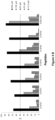
- the assay was performed according to the procedure previously described. ( Perea S.E., et al., 2004, Cancer Res., 64: 7127-7129 ). The results are shown in Figure 1 , and indicate that the peptides identified as SEQ ID NO: 1- SEQ ID NO: 9 are capable of inhibiting CK2-mediated phosphorylation of the E7 protein of HPV-16.
- the sequences identified as SEQ ID NO: 1 - SEQ ID NO: 9 the intracellular penetration peptide Tat, corresponding to the Tat1 protein of HIV, was added at the N-terminus, (GRKKRRQRRRPPQ).
- a beta Alanine ( ⁇ A) residue was introduced as a spacer between the peptide of interest and the Tat peptide.
- the polypeptides were coded as F11P13- F11P21 for synthesis, and correspond to the sequences identified as SEQ ID NO: 12 - SEQ ID NO: 20, as shown in Table 3.
- Peptide CIGB-300 was identified as SEQ ID NO: 64, and the Tat peptide was identified as SEQ ID NO: 65.
- Example 2 The synthesis, purification and identity analysis of the peptides was carried out as shown in Example 2. As shown in Table 3, all of them were obtained with more than 95% purity and the ESI-MS analysis confirmed their identity. Table 3. Characterization of the synthetic polypeptides identified as SEQ ID NO: 12 - SEQ ID NO: 20.
- polypeptides F11P13-F11P21 SEQ ID NO: 12 - SEQ ID NO: 20
- the cell line exhibits high sensitivity to low concentrations of the drug under evaluation ( HU L.-Y., et al, 2018, European Review for Medical and Pharmacological Sciences, 22: 4551-4556 ).
- the antiproliferative effect of the CIGB-300 peptide has been widely characterized in this line ( Cirigliano S.M., et al., 2017, Cancer Cell International, 17, 42 ), therefore, it was selected as a positive control. Tat peptide was used as a negative control.
- the polypeptides were evaluated at the concentrations of 25, 50, 100 and 200 ⁇ M.
- the cell proliferation assay was performed by a previously described procedure ( Perera Y., et al., 2012, J. Pept. Sci, 18 (4):215-23 ).
- Figure 2 show data from the antiproliferative assay in NCI-H125 cells. Each bar corresponds to the values of the percentage of inhibition of cell proliferation (% I) reached for the concentrations of the polypeptides evaluated (25, 50, 100 and 200 ⁇ M). The polypeptides that showed a cell proliferation inhibition value greater than or equal to 20% were selected, since this percentage value is within the coefficient of variation of the assay. Only the polypeptides F11P19, F11P20 and F11P21 inhibited cell proliferation between 20% and 30%, at the concentration of 200 ⁇ M. Only 50% inhibition of proliferation was achieved with peptide CIGB-300, used as a control.
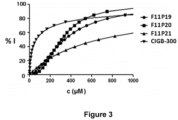
- Figure 3 shows the dose-effect curves of the polypeptides F11P19, F11P20 and F11P21, in comparison with the peptide CIGB-300.
- the IC 50 values for polypeptides F11P19, F11P20, F11P21 and for CIGB-300 were 336 ⁇ M, 305 ⁇ M, 668 ⁇ M and 64 ⁇ M, respectively.
- the IC 50 values of the polypeptides F11P19, F11P20, F11P21 are still far from the IC 50 value obtained for CIGB-300, so it is necessary to optimize said primary structures to improve their biological activity.
- Example 4 Optimization of the sequences identified as SEQ ID NO: 18- SEQ ID NO: 20 by means of a Tryptophan scan in charge.
- Trp amino acid was excluded in the BCP-1 library synthesis by design ( Masforrol Y., et al, 2012, ACS Combinatorial Science, 14(3): 145-9 ). For this reason, Trp position scanning libraries were designed for the sequences identified as SEQ ID NO: 18 - SEQ ID NO: 20, in which the punctual substitution of each amino acid residue for the Trp in charge was performed (Table 4). This allowed us to study the contribution of Trp at each position of the cargo sequence.
- Trp position-scanning library polypeptides were synthesized on MBHA resin using Fmoc/tBu chemistry ( Field GB y Noble RL. Int. J. Peptide Protein Res. 1990; 35(3):161-214 ), RP-HPLC purified and identity confirmed by ESI-MS. As can be seen in Table 4, which shows the amino acid sequences, all of them were obtained with more than 95% purity and the ESI-MS analysis confirmed the identity with the designed molecule.
- Example 2 To corroborate that the modification with Trp does not affect the ability of the polypeptides to interact with the phosphoacceptor site of the CK2 enzyme in the E7 protein, the procedure described in Example 1 was followed. The 24 polypeptides coupled to the resin developed a blue color intense after enzyme assay, evidencing interaction with the phosphoacceptor site of the CK2 enzyme in the model E7 substrate. On the other hand, to demonstrate that the modification with Trp does not affect the effect of the polypeptides on the phosphorylation of the E7 protein by CK2, the procedure described in Example 2 was followed.
- the 24 polypeptides identified as SEQ ID NO: 21- SEQ ID NO: 44 maintained the ability to inhibit the phosphorylation of the E7 protein of HPV-16, mediated by CK2, since phosphorylation inhibition values between 60-85% were obtained. CIGB-300 showed 87% inhibition of phosphorylation. Evaluation of the antiproliferative activity of synthetic polypeptides generated by positional scanning of Trp (SEQ ID NO: 21- SEQ ID NO: 44) was performed on the NCI-H125 cell line. The test was performed by the procedure previously described. ( Perera Y., et al., 2012, J. Pept. Sci, 18(4): 215-23 ).
- Precursor polypeptides F11P19, F11P20, F11P21
- peptide CIGB-300 were included as positive controls.
- the polypeptides were evaluated at the concentrations of 12.5; 25; fifty; 100 and 200 ⁇ M.
- Figure 4A shows the results of percent inhibition of cell proliferation for polypeptide concentrations of 100 and 200 ⁇ M.
- Figure 5 shows the dose-effect curves of the polypeptides A14P27, A14P31, A14P33, A14P43, A14P46, A14P59 and CIGB-300.
- Table 5 shows that the IC 50 values for these six polypeptides are lower than those obtained for their precursor polypeptides F11P19 (336 ⁇ M), F11P20 (305 ⁇ M) and F11P21 (668 ⁇ M).
- the IC 50 of the A14P46 polypeptide (72 ⁇ M) is comparable to the IC 50 of the CIGB-300 reference peptide (64 ⁇ M).
- polypeptide A14P46 (SEQ ID NO: 35) is comparable to CIGB-300 in its ability to inhibit cell proliferation in the NCI-H125 and AsPC-1 cell lines ( Figures 5 and 6 ), however it is superior because is a linear polypeptide of smaller size, chemically more stable, not including either methionine or cysteine in its sequence, which makes it more attractive from a productive point of view.
- Example 5 Optimization of the polypeptide identified as SEQ ID NO: 35 by introducing a second Trp residue in its sequence.
- Example 4 Based on the results obtained in Example 4, another Trp residue was introduced at positions X 1 , X 4 and X 5 of the A14P46 polypeptide, and its impact on biological activity was evaluated.
- Polypeptides were synthesized on MBHA resin using Fmoc/tBu chemistry, ( Field GB y Noble RL. Int. J. Peptide Protein Res. 1990; 35(3):161-214 ), purified by RP-HPLC, and identity confirmed by ESI-MS. As shown in Table 6, the three peptides were obtained with more than 95% purity and ESI-MS analysis confirmed the identity of the molecule. Table 6. Characterization of the peptides generated for the optimization of the peptide identified as SEQ ID NO: 35.
- Bold highlights the introduction of the second Trp residue in the peptide sequence identified as SEQ ID NO: 35.
- polypeptides A15P35, A15P36 and A15P37 were able to produce a dose-dependent effect on the proliferation of NCI-H125 cells.
- the three polypeptides also showed a dose-response pattern.
- Table 7 summarizes the IC 50 values of the A15P35, A15P36 and A15P37 polypeptides obtained in the NCI-H125, AsPC-1, PanC-1 and OCI-AML3 cell lines, in comparison with their precursor A14P46 and with the control peptide.
- CIGB-300 The IC 50 values of the polypeptide A15P35 are similar to those obtained for its precursor A14P46 and for CIGB-300, in the four lines studied, which shows that the introduction of Trp in position X1 of the sequence is irrelevant.
- IC 50 values obtained for polypeptides A15P36 and A15P37 were lower than those obtained for polypeptide A14P46 and peptide CIGB-300, especially in pancreatic cancer cell lines (AsPC-1, PanC-1). and acute myeloid leukemia (OCI-AML3).
- control peptides A14P46 and CIGB-300 are included.
- both peptides were synthesized without the Tat or ⁇ A sequence, using the synthesis procedure described in this example.
- the peptides D15P105 (SEQ ID NO: 49) and D15P106 (SEQ ID NO: 50) they were obtained with more than 95% purity, and the ESI-MS analysis corroborated their molecular masses of 1245.7 Da and 1176.6 Da, respectively.
- the phosphorylation assay was performed as described in Example 2, and phosphorylation inhibition values of 87% and 82%, respectively, were obtained, confirming the ability of both peptides to inhibit CK2-mediated phosphorylation in protein HPV-16 E7.
- results of this example show that the introduction of a second Trp in positions X4 and X5 of the polypeptide sequence A14P46 (SEQ ID NO: 35), favors the interaction of the peptide with the phosphoacceptor site, and therefore its ability to inhibit phosphorylation by CK2.
- A15P36 and A15P37 polypeptides are shown to be more potent than CIGB-300 in their ability to inhibit cell proliferation in pancreatic cancer (AsPC-1, PanC-1) and acute myeloid leukemia (OCI-AML3) cell lines. Both polypeptides have the additional advantage that they are linear sequences of smaller size, chemically more stable, since they do not have sensitive residues such as methionine and cysteine. In addition, they are more attractive from the productive point of view.
- Example 6 Optimization of the polypeptides identified as SEQ ID NO: 47 and SEQ ID NO: 48 by introducing unnatural amino acids (D- and L-N-methyl amino acids).
- D-Arg was incorporated into R8 of Tat and the protection of K16, R17 and Y20 was evaluated with the introduction of D-Lys, D-Arg and NMe-Tyr, respectively.
- the N-terminus of each polypeptide was acetylated to protect it from N-peptidases.
- Polypeptides E17P01, E17P02 and E17P03 are derivatives of A15P36 and polypeptides D17P78, D17P79 and D17P80 (SEQ ID NO: 54 - SEQ ID NO: 56) are derivatives of A15P37.
- Polypeptides were synthesized on MBHA resin using Fmoc/tBu chemistry, purified by RP-HPLC, and identity confirmed by ESI-MS. As shown in Table 8, all were obtained with more than 95% purity and ESI-MS analysis confirmed the identity of the molecule. Table 8. Characterization of the polypeptides identified as SEQ ID NO: 51- SEQ ID NO: 56. SEQ ID NO: Code Sequence Purity (%) MW (Da) 51 E17P01 98.4 3058.8 52 E17P02 96.3 3058.8 53 E17P03 96.6 3072.8 54 D17P78 97.3 2989.7 55 D17P79 98.2 2989.7 56 D17P80 95.7 3003.7
- Example 2 To corroborate that the introduction of unnatural amino acids does not affect the ability of the polypeptides to interact with the phosphoacceptor site of the CK2 enzyme in the E7 protein, the procedure described in Example 1 was followed. The six resin-coupled polypeptides developed a deep blue color after enzyme assay, evidencing interaction with the phosphoacceptor site of the CK2 enzyme on the model E7 substrate. On the other hand, to demonstrate that the modification does not affect the effect of the peptides on the phosphorylation by the enzyme CK2 in the E7 protein, the procedure described in Example 2 was followed.
- polypeptides E17P01-E17P03 and D17P78-D17P80 identified with SEQ ID NO: 51 - SEQ ID NO: 56, maintain the ability to inhibit CK2-mediated phosphorylation in the E7 protein of HPV-16, phosphorylation inhibition values between 83 and 90% were obtained.
- Antiproliferative assays were performed on the NCI-H125, Hep2C (laryngeal carcinoma) cell lines, and on two bladder cancer lines (MGH-U3 and MGH-U4). The test was carried out according to the procedure previously described ( Perera Y., et al, 2012, Pept. Sci, 18 (4):215-23 ).
- Figures 8 and 9 show the dose-effect curves in the NCI-H125 cell line of the polypeptides E17P01, E17P02 and E17P03 (SEQ ID NO: 51- SEQ ID NO: 53) and D17P78, D17P79 and D17P80 (SEQ ID NO: 54- SEQ ID NO: 56), respectively.
- the control CIGB-300 peptide and the precursor polypeptides A15P36 and A15P37, were included respectively.
- the six polypeptides were able to produce a dose-dependent effect on the proliferation of cells of the NCI-H125 line.
- MGH-U3 and MGH-U4 cell lines all six polypeptides also showed a dose-response pattern.
- Table 9 summarizes the IC 50 values of the polypeptides E17P01, E17P02, E17P03, D17P78, D17P79 and D17P80 (SEQ ID NO: 51- SEQ ID NO: 56) obtained in the cell lines NCI-H125, Hep2C, MGH- U3 and MGH-U4, in comparison with their precursors and the control peptide CIGB-300.
- Table 9 shows that the IC 50 values of the polypeptides identified as SEQ ID NO: 51 - SEQ ID NO: 56, in the NCI-H125, Hep2C, MGH-U3 and MGH-U4 cell lines, are lower than those obtained for the peptide CIGB-300, which shows that they are more powerful in terms of their antiproliferative effect.
- the IC 50 values are one order of magnitude lower than the CIGB-300, which is very attractive, as it is a little explored niche, unresolved and with a high impact on health.
- control polypeptides A15P36, A15P37 and CIGB-300 are included.
- the phosphorylation assay was performed as described in Example 2, and phosphorylation inhibition values between 83 and 90% were obtained, confirming the ability of these peptides to inhibit CK2-mediated phosphorylation of the HPV-16 E7 protein.
- polypeptides identified as SEQ ID NO: 51 - SEQ ID NO: 56 are more potent than the peptide CIGB-300, in terms of their ability to inhibit cell proliferation, in particular their inhibitory activity in lines of bladder cancer (MGH-U3 and MGH-U4).
- these peptides are linear, smaller in size, and chemically more stable, which brings undoubted advantages from the production point of view.
- Athymic female BalbC mice between 6 and 8 weeks old, were used.
- MGH-U3 cells from bladder cell carcinoma, were used.
- cells were suspended in PBS at a concentration of 1 000 000 cells per milliliter. The cell suspension was inoculated subcutaneously in the abdominal cavity of the animals.
- Administration of E17P01 polypeptide (identified as SEQ ID NO: 51) or CIGB-300 was started 5 days after the tumor cells were inoculated, and continued for 5 consecutive days, intraperitoneally. The polypeptide and peptide were dissolved in PBS.
- the administered dose was 20 ⁇ g, which corresponds to 1 mg/kg of weight.
- the tumor volume (in mm 3 ) was measured, as a parameter to evaluate the antitumor effect of the polypeptide.
- the E17P01 polypeptide showed its ability to inhibit tumor progression, which was greater than that observed for CIGB-300.
Landscapes
- Chemical & Material Sciences (AREA)
- Health & Medical Sciences (AREA)
- Life Sciences & Earth Sciences (AREA)
- Organic Chemistry (AREA)
- General Health & Medical Sciences (AREA)
- Genetics & Genomics (AREA)
- Medicinal Chemistry (AREA)
- Molecular Biology (AREA)
- Biochemistry (AREA)
- Zoology (AREA)
- Bioinformatics & Cheminformatics (AREA)
- Engineering & Computer Science (AREA)
- Wood Science & Technology (AREA)
- Proteomics, Peptides & Aminoacids (AREA)
- Biophysics (AREA)
- General Engineering & Computer Science (AREA)
- Veterinary Medicine (AREA)
- Public Health (AREA)
- Animal Behavior & Ethology (AREA)
- Pharmacology & Pharmacy (AREA)
- Nuclear Medicine, Radiotherapy & Molecular Imaging (AREA)
- Chemical Kinetics & Catalysis (AREA)
- General Chemical & Material Sciences (AREA)
- Toxicology (AREA)
- Microbiology (AREA)
- Biotechnology (AREA)
- Biomedical Technology (AREA)
- Gastroenterology & Hepatology (AREA)
- Peptides Or Proteins (AREA)
- Medicines That Contain Protein Lipid Enzymes And Other Medicines (AREA)
- Medicinal Preparation (AREA)
- Immunology (AREA)
- Epidemiology (AREA)
Applications Claiming Priority (2)
| Application Number | Priority Date | Filing Date | Title |
|---|---|---|---|
| CU2021000058A CU24766B1 (es) | 2021-07-09 | 2021-07-09 | Péptidos lineales que inhiben la fosforilación mediada por ck2 |
| PCT/CU2022/050007 WO2023280330A1 (es) | 2021-07-09 | 2022-07-07 | Péptidos lineales que inhiben la fosforilación mediada por ck2 y composiciones que los comprenden |
Publications (1)
| Publication Number | Publication Date |
|---|---|
| EP4368710A1 true EP4368710A1 (en) | 2024-05-15 |
Family
ID=83080989
Family Applications (1)
| Application Number | Title | Priority Date | Filing Date |
|---|---|---|---|
| EP22760645.6A Pending EP4368710A1 (en) | 2021-07-09 | 2022-07-07 | Linear peptides inhibiting ck2-mediated phosphorylation and compositions comprising same |
Country Status (11)
| Country | Link |
|---|---|
| US (1) | US20240317827A1 (https=) |
| EP (1) | EP4368710A1 (https=) |
| JP (1) | JP2024534231A (https=) |
| KR (1) | KR20240032882A (https=) |
| CN (1) | CN117795064A (https=) |
| AR (1) | AR126388A1 (https=) |
| AU (1) | AU2022308094A1 (https=) |
| CA (1) | CA3225387A1 (https=) |
| CU (1) | CU24766B1 (https=) |
| MX (1) | MX2024000542A (https=) |
| WO (1) | WO2023280330A1 (https=) |
Families Citing this family (1)
| Publication number | Priority date | Publication date | Assignee | Title |
|---|---|---|---|---|
| CN118290537B (zh) * | 2024-05-09 | 2025-02-07 | 永州中古生物技术有限公司 | 一种在nci-h460细胞系中对ck2起到抑制作用的多肽 |
Family Cites Families (3)
| Publication number | Priority date | Publication date | Assignee | Title |
|---|---|---|---|---|
| CU23225A1 (es) | 2001-12-20 | 2007-08-30 | Ct Ingenieria Genetica Biotech | PéPTIDOS PARA EL TRATAMIENTO DEL CáNCER ASOCIADO AL VIRUS PAPILOMA HUMANO (VPH) Y DE OTROS TUMORES EPITELIALES |
| WO2006020207A2 (en) * | 2004-07-19 | 2006-02-23 | University Of Cincinnati | Compounds for control of appetite |
| CA2629751A1 (en) * | 2004-11-12 | 2006-05-18 | The University Of British Columbia | Antimicrobial peptides |
-
2021
- 2021-07-09 CU CU2021000058A patent/CU24766B1/es unknown
-
2022
- 2022-07-06 AR ARP220101768A patent/AR126388A1/es unknown
- 2022-07-07 AU AU2022308094A patent/AU2022308094A1/en active Pending
- 2022-07-07 US US18/578,001 patent/US20240317827A1/en active Pending
- 2022-07-07 KR KR1020247003121A patent/KR20240032882A/ko active Pending
- 2022-07-07 MX MX2024000542A patent/MX2024000542A/es unknown
- 2022-07-07 EP EP22760645.6A patent/EP4368710A1/en active Pending
- 2022-07-07 JP JP2024514574A patent/JP2024534231A/ja active Pending
- 2022-07-07 CA CA3225387A patent/CA3225387A1/en active Pending
- 2022-07-07 WO PCT/CU2022/050007 patent/WO2023280330A1/es not_active Ceased
- 2022-07-07 CN CN202280055326.7A patent/CN117795064A/zh active Pending
Non-Patent Citations (1)
| Title |
|---|
| DATABASE EMBL [online] 20 December 2001 (2001-12-20), "LIN Y ET AL: "Rhodospirillales bacterium (bioreactor metagenome) carboxylesterase/lipase family protein", XP093377606, retrieved from https://www.ebi.ac.uk/ena/browser/api/embl/MBL8834019.1?lineLimit=1000 Database accession no. MBL8834019 * |
Also Published As
| Publication number | Publication date |
|---|---|
| CU24766B1 (es) | 2025-08-13 |
| WO2023280330A1 (es) | 2023-01-12 |
| JP2024534231A (ja) | 2024-09-18 |
| CU20210058A7 (es) | 2023-02-13 |
| US20240317827A1 (en) | 2024-09-26 |
| KR20240032882A (ko) | 2024-03-12 |
| AU2022308094A1 (en) | 2024-02-01 |
| MX2024000542A (es) | 2024-02-02 |
| AR126388A1 (es) | 2023-10-11 |
| CN117795064A (zh) | 2024-03-29 |
| CA3225387A1 (en) | 2023-01-12 |
Similar Documents
| Publication | Publication Date | Title |
|---|---|---|
| US8765909B2 (en) | Metastin derivatives and use thereof | |
| ES2375038T3 (es) | Derivados de metastina y su uso. | |
| EP3877396B1 (en) | Polypeptides for the treatment of cancer | |
| KR20080033331A (ko) | 종양 치료제 | |
| CN111690041B (zh) | 一类具有抗肿瘤活性多肽及其制备方法 | |
| EP4368710A1 (en) | Linear peptides inhibiting ck2-mediated phosphorylation and compositions comprising same | |
| WO2015022283A1 (en) | Yap-tead inhibitors | |
| WO2013173755A1 (en) | Modification of peptides using a bis(thioether)arylbridge approach | |
| JP2001103993A (ja) | 環状ペプチド及びセリンプロテアーゼ阻害剤 | |
| CN114605498A (zh) | 订书肽类抗肿瘤活性化合物及药物组合物与应用 | |
| US8697651B2 (en) | Amyloid β fibrillogenesis-inhibiting peptide | |
| US10046022B2 (en) | Synthetic peptide that increases radiosensitivity of tumor cells and use of same | |
| CZ20011700A3 (cs) | Benzoxazolové deriváty a léčiva na jejich bázi | |
| CN115160406A (zh) | 一类新型抗肿瘤环肽活性分子的制备方法与应用 | |
| US20140336127A1 (en) | Stabilized Peptide Helices For Inhibiting Dimerization Of Chemokine C Motif Receptor 2 (CCR2) | |
| WO2024094685A1 (en) | Ccr2 inhibitors and methods of use | |
| US20240228543A1 (en) | Cyclic peptide inhibitors of usp22 | |
| WO2025186255A1 (en) | Gipr inhibitors and methods of use | |
| RU2792848C2 (ru) | Полипептиды для лечения заболеваний | |
| RU2454425C2 (ru) | Производные метастина и их применение | |
| US20160215033A1 (en) | Granulocyte Macrophage Colony-Stimulating Factor Compositions | |
| WO2025043696A1 (zh) | 抗病毒多肽类似物 | |
| JP2008063275A (ja) | 抗fiv剤 | |
| EP0566824A1 (en) | Enzymatic peptide synthesis | |
| HK1130500B (en) | Metastin derivatives and use thereof |
Legal Events
| Date | Code | Title | Description |
|---|---|---|---|
| STAA | Information on the status of an ep patent application or granted ep patent |
Free format text: STATUS: UNKNOWN |
|
| STAA | Information on the status of an ep patent application or granted ep patent |
Free format text: STATUS: THE INTERNATIONAL PUBLICATION HAS BEEN MADE |
|
| PUAI | Public reference made under article 153(3) epc to a published international application that has entered the european phase |
Free format text: ORIGINAL CODE: 0009012 |
|
| STAA | Information on the status of an ep patent application or granted ep patent |
Free format text: STATUS: REQUEST FOR EXAMINATION WAS MADE |
|
| 17P | Request for examination filed |
Effective date: 20231218 |
|
| AK | Designated contracting states |
Kind code of ref document: A1 Designated state(s): AL AT BE BG CH CY CZ DE DK EE ES FI FR GB GR HR HU IE IS IT LI LT LU LV MC MK MT NL NO PL PT RO RS SE SI SK SM TR |
|
| DAV | Request for validation of the european patent (deleted) | ||
| DAX | Request for extension of the european patent (deleted) | ||
| STAA | Information on the status of an ep patent application or granted ep patent |
Free format text: STATUS: EXAMINATION IS IN PROGRESS |
|
| 17Q | First examination report despatched |
Effective date: 20260320 |