EP4354633A1 - Ccs-anordnung, batteriemodulstruktur und batterie - Google Patents
Ccs-anordnung, batteriemodulstruktur und batterie Download PDFInfo
- Publication number
- EP4354633A1 EP4354633A1 EP22822260.0A EP22822260A EP4354633A1 EP 4354633 A1 EP4354633 A1 EP 4354633A1 EP 22822260 A EP22822260 A EP 22822260A EP 4354633 A1 EP4354633 A1 EP 4354633A1
- Authority
- EP
- European Patent Office
- Prior art keywords
- cells
- hole
- adhesive
- positioning
- bus bar
- Prior art date
- Legal status (The legal status is an assumption and is not a legal conclusion. Google has not performed a legal analysis and makes no representation as to the accuracy of the status listed.)
- Pending
Links
Images

Classifications
-
- H—ELECTRICITY
- H01—ELECTRIC ELEMENTS
- H01M—PROCESSES OR MEANS, e.g. BATTERIES, FOR THE DIRECT CONVERSION OF CHEMICAL ENERGY INTO ELECTRICAL ENERGY
- H01M50/00—Constructional details or processes of manufacture of the non-active parts of electrochemical cells other than fuel cells, e.g. hybrid cells
- H01M50/50—Current conducting connections for cells or batteries
- H01M50/502—Interconnectors for connecting terminals of adjacent batteries; Interconnectors for connecting cells outside a battery casing
- H01M50/503—Interconnectors for connecting terminals of adjacent batteries; Interconnectors for connecting cells outside a battery casing characterised by the shape of the interconnectors
-
- H—ELECTRICITY
- H01—ELECTRIC ELEMENTS
- H01M—PROCESSES OR MEANS, e.g. BATTERIES, FOR THE DIRECT CONVERSION OF CHEMICAL ENERGY INTO ELECTRICAL ENERGY
- H01M50/00—Constructional details or processes of manufacture of the non-active parts of electrochemical cells other than fuel cells, e.g. hybrid cells
- H01M50/50—Current conducting connections for cells or batteries
- H01M50/502—Interconnectors for connecting terminals of adjacent batteries; Interconnectors for connecting cells outside a battery casing
- H01M50/507—Interconnectors for connecting terminals of adjacent batteries; Interconnectors for connecting cells outside a battery casing comprising an arrangement of two or more busbars within a container structure, e.g. busbar modules
-
- H—ELECTRICITY
- H01—ELECTRIC ELEMENTS
- H01M—PROCESSES OR MEANS, e.g. BATTERIES, FOR THE DIRECT CONVERSION OF CHEMICAL ENERGY INTO ELECTRICAL ENERGY
- H01M10/00—Secondary cells; Manufacture thereof
- H01M10/60—Heating or cooling; Temperature control
- H01M10/65—Means for temperature control structurally associated with the cells
- H01M10/653—Means for temperature control structurally associated with the cells characterised by electrically insulating or thermally conductive materials
-
- H—ELECTRICITY
- H01—ELECTRIC ELEMENTS
- H01M—PROCESSES OR MEANS, e.g. BATTERIES, FOR THE DIRECT CONVERSION OF CHEMICAL ENERGY INTO ELECTRICAL ENERGY
- H01M50/00—Constructional details or processes of manufacture of the non-active parts of electrochemical cells other than fuel cells, e.g. hybrid cells
- H01M50/20—Mountings; Secondary casings or frames; Racks, modules or packs; Suspension devices; Shock absorbers; Transport or carrying devices; Holders
- H01M50/204—Racks, modules or packs for multiple batteries or multiple cells
- H01M50/207—Racks, modules or packs for multiple batteries or multiple cells characterised by their shape
- H01M50/213—Racks, modules or packs for multiple batteries or multiple cells characterised by their shape adapted for cells having curved cross-section, e.g. round or elliptic
-
- H—ELECTRICITY
- H01—ELECTRIC ELEMENTS
- H01M—PROCESSES OR MEANS, e.g. BATTERIES, FOR THE DIRECT CONVERSION OF CHEMICAL ENERGY INTO ELECTRICAL ENERGY
- H01M50/00—Constructional details or processes of manufacture of the non-active parts of electrochemical cells other than fuel cells, e.g. hybrid cells
- H01M50/20—Mountings; Secondary casings or frames; Racks, modules or packs; Suspension devices; Shock absorbers; Transport or carrying devices; Holders
- H01M50/244—Secondary casings; Racks; Suspension devices; Carrying devices; Holders characterised by their mounting method
-
- H—ELECTRICITY
- H01—ELECTRIC ELEMENTS
- H01M—PROCESSES OR MEANS, e.g. BATTERIES, FOR THE DIRECT CONVERSION OF CHEMICAL ENERGY INTO ELECTRICAL ENERGY
- H01M50/00—Constructional details or processes of manufacture of the non-active parts of electrochemical cells other than fuel cells, e.g. hybrid cells
- H01M50/20—Mountings; Secondary casings or frames; Racks, modules or packs; Suspension devices; Shock absorbers; Transport or carrying devices; Holders
- H01M50/262—Mountings; Secondary casings or frames; Racks, modules or packs; Suspension devices; Shock absorbers; Transport or carrying devices; Holders with fastening means, e.g. locks
- H01M50/264—Mountings; Secondary casings or frames; Racks, modules or packs; Suspension devices; Shock absorbers; Transport or carrying devices; Holders with fastening means, e.g. locks for cells or batteries, e.g. straps, tie rods or peripheral frames
-
- H—ELECTRICITY
- H01—ELECTRIC ELEMENTS
- H01M—PROCESSES OR MEANS, e.g. BATTERIES, FOR THE DIRECT CONVERSION OF CHEMICAL ENERGY INTO ELECTRICAL ENERGY
- H01M50/00—Constructional details or processes of manufacture of the non-active parts of electrochemical cells other than fuel cells, e.g. hybrid cells
- H01M50/20—Mountings; Secondary casings or frames; Racks, modules or packs; Suspension devices; Shock absorbers; Transport or carrying devices; Holders
- H01M50/289—Mountings; Secondary casings or frames; Racks, modules or packs; Suspension devices; Shock absorbers; Transport or carrying devices; Holders characterised by spacing elements or positioning means within frames, racks or packs
- H01M50/291—Mountings; Secondary casings or frames; Racks, modules or packs; Suspension devices; Shock absorbers; Transport or carrying devices; Holders characterised by spacing elements or positioning means within frames, racks or packs characterised by their shape
-
- H—ELECTRICITY
- H01—ELECTRIC ELEMENTS
- H01M—PROCESSES OR MEANS, e.g. BATTERIES, FOR THE DIRECT CONVERSION OF CHEMICAL ENERGY INTO ELECTRICAL ENERGY
- H01M50/00—Constructional details or processes of manufacture of the non-active parts of electrochemical cells other than fuel cells, e.g. hybrid cells
- H01M50/20—Mountings; Secondary casings or frames; Racks, modules or packs; Suspension devices; Shock absorbers; Transport or carrying devices; Holders
- H01M50/289—Mountings; Secondary casings or frames; Racks, modules or packs; Suspension devices; Shock absorbers; Transport or carrying devices; Holders characterised by spacing elements or positioning means within frames, racks or packs
- H01M50/293—Mountings; Secondary casings or frames; Racks, modules or packs; Suspension devices; Shock absorbers; Transport or carrying devices; Holders characterised by spacing elements or positioning means within frames, racks or packs characterised by the material
-
- H—ELECTRICITY
- H01—ELECTRIC ELEMENTS
- H01M—PROCESSES OR MEANS, e.g. BATTERIES, FOR THE DIRECT CONVERSION OF CHEMICAL ENERGY INTO ELECTRICAL ENERGY
- H01M50/00—Constructional details or processes of manufacture of the non-active parts of electrochemical cells other than fuel cells, e.g. hybrid cells
- H01M50/30—Arrangements for facilitating escape of gases
-
- H—ELECTRICITY
- H01—ELECTRIC ELEMENTS
- H01M—PROCESSES OR MEANS, e.g. BATTERIES, FOR THE DIRECT CONVERSION OF CHEMICAL ENERGY INTO ELECTRICAL ENERGY
- H01M50/00—Constructional details or processes of manufacture of the non-active parts of electrochemical cells other than fuel cells, e.g. hybrid cells
- H01M50/50—Current conducting connections for cells or batteries
- H01M50/502—Interconnectors for connecting terminals of adjacent batteries; Interconnectors for connecting cells outside a battery casing
- H01M50/521—Interconnectors for connecting terminals of adjacent batteries; Interconnectors for connecting cells outside a battery casing characterised by the material
- H01M50/522—Inorganic material
-
- H—ELECTRICITY
- H01—ELECTRIC ELEMENTS
- H01M—PROCESSES OR MEANS, e.g. BATTERIES, FOR THE DIRECT CONVERSION OF CHEMICAL ENERGY INTO ELECTRICAL ENERGY
- H01M50/00—Constructional details or processes of manufacture of the non-active parts of electrochemical cells other than fuel cells, e.g. hybrid cells
- H01M50/50—Current conducting connections for cells or batteries
- H01M50/572—Means for preventing undesired use or discharge
- H01M50/584—Means for preventing undesired use or discharge for preventing incorrect connections inside or outside the batteries
- H01M50/588—Means for preventing undesired use or discharge for preventing incorrect connections inside or outside the batteries outside the batteries, e.g. incorrect connections of terminals or busbars
-
- H—ELECTRICITY
- H01—ELECTRIC ELEMENTS
- H01M—PROCESSES OR MEANS, e.g. BATTERIES, FOR THE DIRECT CONVERSION OF CHEMICAL ENERGY INTO ELECTRICAL ENERGY
- H01M50/00—Constructional details or processes of manufacture of the non-active parts of electrochemical cells other than fuel cells, e.g. hybrid cells
- H01M50/50—Current conducting connections for cells or batteries
- H01M50/572—Means for preventing undesired use or discharge
- H01M50/584—Means for preventing undesired use or discharge for preventing incorrect connections inside or outside the batteries
- H01M50/59—Means for preventing undesired use or discharge for preventing incorrect connections inside or outside the batteries characterised by the protection means
-
- H—ELECTRICITY
- H01—ELECTRIC ELEMENTS
- H01M—PROCESSES OR MEANS, e.g. BATTERIES, FOR THE DIRECT CONVERSION OF CHEMICAL ENERGY INTO ELECTRICAL ENERGY
- H01M50/00—Constructional details or processes of manufacture of the non-active parts of electrochemical cells other than fuel cells, e.g. hybrid cells
- H01M50/20—Mountings; Secondary casings or frames; Racks, modules or packs; Suspension devices; Shock absorbers; Transport or carrying devices; Holders
- H01M50/258—Modular batteries; Casings provided with means for assembling
-
- Y—GENERAL TAGGING OF NEW TECHNOLOGICAL DEVELOPMENTS; GENERAL TAGGING OF CROSS-SECTIONAL TECHNOLOGIES SPANNING OVER SEVERAL SECTIONS OF THE IPC; TECHNICAL SUBJECTS COVERED BY FORMER USPC CROSS-REFERENCE ART COLLECTIONS [XRACs] AND DIGESTS
- Y02—TECHNOLOGIES OR APPLICATIONS FOR MITIGATION OR ADAPTATION AGAINST CLIMATE CHANGE
- Y02E—REDUCTION OF GREENHOUSE GAS [GHG] EMISSIONS, RELATED TO ENERGY GENERATION, TRANSMISSION OR DISTRIBUTION
- Y02E60/00—Enabling technologies; Technologies with a potential or indirect contribution to GHG emissions mitigation
- Y02E60/10—Energy storage using batteries
Definitions
- the present application relates to the technical field of batteries, for example, relates to a CCS, a battery module structure and a battery.
- a battery module also known as a battery device, is the energy storage unit of a power battery pack. By modularizing a plurality of cells, subsequent installation and use are facilitated.
- the battery module is widely used in various industries due to the advantages of high power and stable voltage output.
- the battery module contains a cell contacting system (CCS), which is complex in structure and mainly includes a support plate and a bus bar.
- CCS cell contacting system
- the positioning effect between the support plate and the cells is poor, and the cells and the support plate are easily misaligned, which leads to poor connection stability between the bus bar and the cells, and thus leads to risks such as short circuit of the cells, which has great potential safety hazards.
- the present application provides a CCS, which can limit cells to prevent the cells from being short-circuited caused by contact, and at the same time, the CCS can increase the stability of connection between a bus bar and the cells to prevent the cells from being short-circuited caused by excursion of the bus bar.
- an embodiment of the present application provides a CCS, arranged at the tops of a plurality of cells, wherein a gap is formed between adjacent cells, and the CCS includes:
- the bus bar is provided with a positioning hole
- the fixing frame is provided with a positioning column
- the positioning column passes through the positioning hole
- the CCS further includes heat-conductive adhesive, wherein the heat-conductive adhesive is arranged on the end faces of the fixing frame and the bus bar, and can bond the fixing frame and the bus bar.
- the fixing frame is provided with an installation groove
- the bus bar is arranged in the installation groove
- the installation hole is formed in the bottom face of the installation groove
- the side edge of the bus bar, the bottom face of the installation groove and the side wall of the installation groove define an adhesive storage groove
- the adhesive storage groove can accommodate the heat-conductive adhesive
- the fixing frame is provided with an adhesive passing hole, the adhesive passing hole is located at the top end of the cell, and the heat-conductive adhesive can fill the adhesive passing hole and makes contact with the top end of the cell.
- the bus bar includes a positive electrode connecting part and a negative electrode connecting part
- the installation hole includes a positive electrode installation hole and a negative electrode installation hole
- the positive electrode connecting part passes through the positive electrode installation hole and is electrically connected with a positive electrode of the cell
- the negative electrode connecting part passes through the negative electrode installation hole and is electrically connected with a negative electrode of the cell.
- the embodiment of the present application provides a battery module structure, which includes the CCS, and further includes a bracket and a plurality of cells, wherein the bottom face of the bracket is provided with a plurality of placing parts, a positioning part is arranged along the periphery of the placing part, the placing part and the positioning part define an accommodating groove, the bottom of the cell is placed in the accommodating groove, and the cell and the bracket are fixedly connected by structural adhesive.
- the positioning part includes a plurality of positioning blocks which are arranged at intervals.
- the positioning block is arranged at the joint between adjacent placing parts.
- the side face of the positioning block is provided with a groove.
- the thickness of the top of the positioning block is smaller than the thickness of the bottom of the positioning block.
- the battery module structure further includes a tray, wherein the bracket is arranged on the tray, the tray is provided with a plurality of pressure relief holes, the placing part is provided with a through hole, and the pressure relief hole communicates with the through hole.
- the bracket is provided with an adhesive overflow hole, an adhesive injection space is formed between the bracket and the tray, and the structural adhesive can flow to the adhesive injection space through the gap between adjacent cells and the adhesive overflow hole.
- the edge of the through hole is provided with a ring rib which forms a communication channel between the pressure relief hole and the through hole, and the ring rib makes contact with the tray.
- the placing part is provided with a raised edge, the raised edge faces the tray, and the raised edge is configured to increase the contact area between the structural adhesive and the bracket.
- the embodiment of the present application also provides a battery, which includes a box and the battery module structure, wherein the battery module structure is arranged inside the box.
- orientation or positional relationships indicated by terms such as “central”, “upper”, “lower”, “left”, “right”, “vertical”, “horizontal”, “inner” and “outer” are the orientation or positional relationships based on the accompanying drawings, are merely intended to facilitate description of the present application and simplifying of the description, rather than to indicate or imply that the device or element referred to must have a specific orientation or be constructed and operated in a specific orientation.
- first and second are only used for descriptive purposes, and cannot be understood as indicating or implying relative importance.
- first position and “second position” are two different positions.
- first feature being “on”, “above and “over” the second feature includes that the first feature is directly above and obliquely above the second feature, or only indicates that the horizontal height of the first feature is higher than that of the second feature.
- first feature being “under”, “below” and “beneath” the second feature includes that the first feature is directly below and obliquely below the second feature, or only indicates that the horizontal height of the first features is smaller than that of the second feature.
- connection may be fixed connection or detachable connection or integrated connection, may be mechanical connection or electric connection, and may be direct connection or indirect connection through an intermediate medium, or internal communication of two elements.
- connection may be fixed connection or detachable connection or integrated connection, may be mechanical connection or electric connection, and may be direct connection or indirect connection through an intermediate medium, or internal communication of two elements.
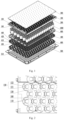
- this embodiment provides a CCS, which is arranged at the tops of a plurality of cells 1000, and a gap is formed between adjacent cells 1000.
- the CCS includes a fixing frame 100 and a bus bar 200.
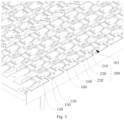
- the fixing frame 100 is arranged at the tops of the cells 1000, and is provided with a plurality of positioning protrusions 110, the positioning protrusion 110 can extend into the gap between adjacent cells 1000 and makes contact with the side faces of the cells 1000, and the fixing frame 100 is also provided with installation holes 120.
- the bus bar 200 is embedded in the installation holes 120. The bus bar 200 makes contact with the cells 1000 and electrically connects the plurality of cells 1000.
- the positioning protrusions 110 can be inserted into the gaps between adjacent cells 1000 when the fixing frame 100 and the cells 1000 are assembled.
- the shape of the positioning protrusion 110 is set according to the gap between adjacent cells 1000, so that the positioning protrusion 110 can make contact with the side faces of the cells 1000 to play a role in limiting the positions of the cells 1000 so as to prevent the cells 1000 from being short-circuited caused by contact.
- the bus bar 200 is arranged at the tops of the cells, and the installation holes 120 for installing the bus bar 200 are formed in the fixing frame 100, and the bus bar 200 is embedded into the installation holes 120 and makes contact with and is connected with the cells 1000, thus effectively preventing the short circuit of the cells 1000 caused by the misalignment of the bus bar 200.
- the fixing frame 100 provided in this embodiment has a simple structure, can limit the cells 1000, and facilitates the connection stability between the bus bar 200 and the cells 1000, thus ensuring the stability and safety of the overall structure of the battery.
- the fixing frame 100 provided in this embodiment may be made of plastic or other insulating materials, so as to avoid the danger of short circuit between the cells 1000.
- the fixing frame 100 is rectangular as a whole, and includes an end face and side plates connected to the end face.
- the fixing frame 100 and the cells 1000 are assembled, the fixing frame 100 is buckled on the tops of the cells 1000, and the positioning protrusions 110 are inserted into the gaps between adjacent cells 1000.
- the side plates can play a role in limiting cells 1000 located outside, so that the overall structure is compact and reliable.
- the cells 1000 are arranged in such a way that a gap is formed among three adjacent cells 1000, and the gap is roughly in the shape of triangular prism. Therefore, the cross section of the positioning protrusion 110 on the fixing frame 100 is roughly in the shape of triangle, three sides of the triangle have certain radians, and the radians are set according to the outer diameter of the battery.
- the bus bar 200 includes a positive electrode connecting part 210 and a negative electrode connecting part 220
- the installation hole 120 includes a positive electrode installation hole 121 and a negative electrode installation hole 122
- the positive electrode connecting part 210 passes through the positive electrode installation hole 121 and is electrically connected with the positive electrode of the cell 1000
- the negative electrode connecting part 220 passes through the negative electrode installation hole 122 and is electrically connected with the negative electrode of the cell 1000.
- the bus bar 200 includes a plurality of single bus bars, each single bus bar includes a positive electrode connecting part 210 and a negative electrode connecting part 220, and two single bus bars are connected by a base material 230.
- setting the positive electrode installation hole 121 and the negative electrode installation hole 122 separately can improve the connection reliability of the cells 1000, effectively avoid the short circuit of the cells 1000 caused by the misalignment of the bus bar 200 or poor contact of the bus bar 200 with the cells 1000, and increase the structural strength of the fixing frame 100.
- the bus bar 200 is provided with positioning holes 240
- the fixing frame 100 is provided with positioning columns 140
- the positioning columns 140 pass through the corresponding positioning holes 240, so as to position the bus bar 200 and prevent misalignment between the bus bar 200 and the cells 1000.
- each single bus bar is provided with a positioning hole 240, which is arranged between the positive electrode connecting part 210 and the negative electrode connecting part 220
- the positioning column 140 is arranged between the positive electrode installation hole 121 and the negative electrode installation hole 122.
- the positioning hole 240 and the positioning column 140 should be matched in position and shape.
- the positioning column 140 may also be arranged on the base material 230 or the positive electrode connecting part 210 or the negative electrode connecting part 220.
- the CCS also includes heat-conductive adhesive 300, and the heat-conductive adhesive 300 is arranged on the end faces of the fixing frame 100 and the bus bar 200, and can bond the fixing frame 100 and the bus bar 200.
- the bus bar 200 is seriously locally hot, and due to the arrangement of the heat-conductive adhesive 300, the heat of the bus bar 200 can be transferred to a part with lower temperature, so as to avoid potential safety hazards such as thermal runaway of the cells 1000 caused by overhigh local temperature inside the battery.
- the heat-conductive adhesive 300 due to the arrangement of the heat-conductive adhesive 300, the bus bar 200 and a bracket 400 can be sticked, thus increasing the rigidity and stability of the structure.
- the fixing frame 100 is provided with installation grooves 101, the bus bar 200 is arranged in the installation grooves 101, the installation hole 120 is formed in the bottom face of the installation groove 101, the side face of the bus bar 200, the bottom face of the installation groove 101 and the side wall of the installation groove 101 define an adhesive storage groove 150, and the adhesive storage groove 150 can accommodate the heat-conductive adhesive 300.
- the cross-sectional area of the installation groove 101 is larger than that of the bus bar 200. Therefore, after the bus bar 200 is placed in the fixing frame 100, there is a circle of gap around the bus bar 200, which is the adhesive storage groove 150.
- the height of the installation groove 101 is larger than the thickness of the bus bar 200, so the heat-conductive adhesive 300 can fill the surface of the bus bar 200 to cover the bus bar 200, which can also improve the heat transfer effect and increase the firmness of connection between parts.
- the fixing frame 100 is provided with an adhesive passing hole 130, the adhesive passing hole 130 is located at the top end of the cell 1000, and the heat-conductive adhesive 300 can fill the adhesive passing hole 130 and makes contact with the top end of the cell 1000. Due to the arrangement of the adhesive passing hole 130, the heat-conductive adhesive 300 can directly make contact with part of the surface of the top end of the cell 1000 to directly transfer the heat generated by the cell 1000, so as to quickly reduce the heat of the cell 1000, thus ensuring the safety of the cell 1000.
- the shape of the adhesive passing hole 130 may be set according to the shape of the bus bar 200, and the area of the adhesive passing hole 130 should be large enough, but at the same time, it should be guaranteed that the bracket 400 have sufficient structural strength.
- the adhesive passing hole 130 may also be a round hole, a square hole or a waist-shaped hole.
- this embodiment also provides a battery module structure, which includes the above CCS and a bracket 400.
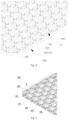
- the bottom face of the bracket 400 is provided with a plurality of placing parts 410, a positioning part 42 is arranged along the periphery of the placing part 410, the placing part 410 and the positioning part 42 define an accommodating groove 41, the bottom of the cell 1000 is placed in the accommodating groove 41, and the cell 1000 and the bracket 400 are fixedly connected by structural adhesive 600.
- the outer contour of the placing part 410 is designed as a circle according to the shape of the bottom of the cell 1000, and the splicing positions of the placing parts 410 are tangent and connected with each other.
- the bracket 400 is placed at the bottoms of the cells 1000, and can play a dual role in supporting and positioning the cells 1000. Since the positioning part 42 is arranged on the periphery of the placing part 410, the placing part 410 and the positioning part 42 define the accommodating groove 41, the cell 1000 is placed in the accommodating groove 41, and each accommodating groove 41 corresponds to one cell 1000, during assembly, the plurality of cells 1000 can be installed at the same time, so that the assembly efficiency is greatly improved, the assembly precision is ensured, and automation is easy to realize.
- the structural adhesive 600 is adopted to fixedly connect the bracket 400 and the cells 1000, so that the connection is convenient and reliable, and the cells 1000 are effectively prevented from loosening and falling off.
- the positioning part 42 includes a plurality of positioning blocks 420, which are arranged at intervals. Two surfaces of the positioning block 420 are both cambered surfaces, and the two cambered surfaces respectively face two different cells 1000.
- the positioning part 420 may also be a cylindrical structure which is arranged on the periphery of the placing part 410 and extends towards the top of the cell 1000, or a plurality of curved-plate-shaped structures which are arranged along the periphery of the positioning part 42. Any structure form which can position the cell 1000 falls within the protection scope of the present application.
- the positioning block 420 is arranged at the joint between adjacent placing parts 410.
- six other placing parts 410 are connected to the periphery of each placing part 410 located in the middle of the bracket 400, therefore, six positioning blocks 420 are arranged on the periphery of the placing part 410.
- the number of the positioning blocks 420 may be three, five or other, and the positions of the positioning blocks 420 may be set according to the actual arrangement of the cells 1000.
- the thickness of the top of the positioning block 420 is smaller than the thickness of the bottom of the positioning block 420
- the width of the top of the positioning block 420 is smaller than the width of the bottom of the positioning block 420.
- the side face of the positioning block 420 may be provided with a groove 421, which can accommodate the structural adhesive 600.
- two side faces of the positioning block 420 are each provided with a groove 421, and the grooves 421 are V-shaped grooves, can increase the creepage distance, ensure the electrical safety, increase the adhesive bonding area and increase the grouping strength.
- the diameter of the circle defined by the bottoms of the positioning blocks 420 is slightly larger than the diameter of the bottom of the cell 1000, with the diameter difference therebetween ranges from 0.1mm to 0.4 mm, which, for example, may be 0.1 mm, 0.2mm or 0.3mm.
- the bottom of the positioning part 42 may make contact with the bottom of the cell 1000, so as to clamp the cell 1000 into the positioning part 42.
- the battery module structure further includes a tray 500, the bracket 400 is arranged on the tray 500, the tray 500 is provided with a plurality of pressure relief holes 510, the placing part 410 is provided with a through hole 440, and the pressure relief hole 510 communicates with the through hole 440.
- the tray 500 can play a role in supporting the bracket 400, and at the same time, due to the arrangement of the pressure relief holes 510 and the through holes 440, the heat of the cells 1000 or the gas generated when thermal runaway of the battery occurs can be quickly guided out of the bottoms of the cells 1000, thus enhancing the heat dissipation effect and increasing the safety performance of the overall structure of the battery.
- the tray 500 is made of metal
- the bracket 400 is made of plastic or other materials with good insulating property
- the placing part 410 can prevent the bottom face of the cell 1000 from making contact with the tray 500, thus playing an insulation protection role.
- the bracket 400 is provided with an adhesive overflow hole 430, an adhesive injection space is formed between the bracket 400 and the tray 500, the structural adhesive 600 can flow into the adhesive injection space through the gap between adjacent cells 1000 and the adhesive overflow hole 430, and the structural adhesive 600 is configured to bond the tray 500, the bracket 400 and the cells 1000.
- an unconnected part among three adjacent placing parts 410 forms one adhesive overflow hole 430
- the shape of the adhesive overflow hole 430 is set according to the gap between the cells 1000
- six adhesive overflow holes 430 are formed around each placing part 410.
- the number and shape of the overflow holes 430 may be correspondingly set according to the arrangement of the cells 1000.
- the gap between the cells 1000, the adhesive overflow hole 430 and the adhesive injection space between the bracket 400 and the tray 500 communicate.
- the structural adhesive 600 can fill the adhesive injection space to bond the tray 500 and the bracket 400.
- the structural adhesive 600 can fill the gaps between adjacent cells 1000 to bond the plurality of cells 1000.
- the structural adhesive 600 can fill the periphery of the positioning block 420 to bond the bracket 400 and the cells 1000.
- the structural adhesive 600 can also play an insulating role between adjacent cells 1000 as well as between the cells 1000 and the tray 500 in addition to a bonding role.
- the edge of the through hole 440 is provided with a ring rib 411, which forms a communication channel between the pressure relief hole 510 and the through hole 440, and the ring rib 411 makes contact with the tray 500.
- the ring rib 411 plays a supporting role between the bracket 400 and the tray 500.
- the ring rib 411 is arranged on the inner ring of the placing part 410, so there is a certain interval between adjacent ring ribs 411, and the ring rib 411 has a certain height, so that an adhesive injection space is formed between the bracket 400 and the tray 500, and the structural adhesive 600 can fill the adhesive injection space.
- the placing part 410 is provided with a raised edge 412, and the raised edge 412 faces the tray 500 and is configured to increase the contact area between the structural adhesive 600 and the bracket 400, thereby increasing the bonding firmness.
- the raised edge 412 is arranged around the periphery of the placing part 410, a groove is formed between the raised edge 412 and the ring rib 411, and the structural adhesive 600 can fill the groove.
- the raised edge 412 may also be one or more columnar structures, and any structure form that can increase the bonding firmness between the structural adhesive 600 and the tray 500 falls within the protection scope of the present application.
- this embodiment also provides a battery, which includes a box and the above-mentioned battery module structure, and the battery module structure is arranged inside the box.
- the tops of the cells 1000 are limited by the fixing frame 100, and the bottoms of the cells 1000 are limited by the bracket 400, so that the cells 1000 are firmly limited between the fixing frame 100 and the bracket 400 to be prevented from being short-circuited due to contact. Due to the arrangement of the through holes 440 in the bracket 400 and the pressure relief holes 510 in the tray 500, the problem of spread of high-temperature gas due to thermal runaway of the cells 1000 is effectively solved.
- the heat-conductive adhesive 300 is adopted to bond the bracket 400 and the bus bar 200, which greatly prevents the heat from being concentrated at the tops of the cells 1000 and facilitates dispersion of the heat, and at the same time, at the bottoms of the cells 1000, the structural adhesive 600 is adopted to fix and bond the cells 1000, the bracket 400 and the tray 500, so that the whole structure is compact and the strength is high.
Landscapes
- Chemical & Material Sciences (AREA)
- Chemical Kinetics & Catalysis (AREA)
- Electrochemistry (AREA)
- General Chemical & Material Sciences (AREA)
- Inorganic Chemistry (AREA)
- Engineering & Computer Science (AREA)
- Manufacturing & Machinery (AREA)
- Battery Mounting, Suspending (AREA)
Applications Claiming Priority (3)
| Application Number | Priority Date | Filing Date | Title |
|---|---|---|---|
| CN202221524993.9U CN217788724U (zh) | 2022-06-17 | 2022-06-17 | 一种ccs组件、电池模组结构及电池 |
| CN202210691692.3A CN114976503A (zh) | 2022-06-17 | 2022-06-17 | 一种ccs组件、电池模组结构及电池 |
| PCT/CN2022/127291 WO2023240875A1 (zh) | 2022-06-17 | 2022-10-25 | Ccs组件、电池模组结构及电池 |
Publications (2)
| Publication Number | Publication Date |
|---|---|
| EP4354633A1 true EP4354633A1 (de) | 2024-04-17 |
| EP4354633A4 EP4354633A4 (de) | 2024-07-31 |
Family
ID=89169545
Family Applications (1)
| Application Number | Title | Priority Date | Filing Date |
|---|---|---|---|
| EP22822260.0A Pending EP4354633A4 (de) | 2022-06-17 | 2022-10-25 | Ccs-anordnung, batteriemodulstruktur und batterie |
Country Status (2)
| Country | Link |
|---|---|
| US (1) | US20230411798A1 (de) |
| EP (1) | EP4354633A4 (de) |
Families Citing this family (3)
| Publication number | Priority date | Publication date | Assignee | Title |
|---|---|---|---|---|
| USD1086054S1 (en) * | 2022-09-30 | 2025-07-29 | Eve Energy Co., Ltd. | Battery module bracket |
| USD1086052S1 (en) * | 2022-11-01 | 2025-07-29 | Eve Energy Co., Ltd. | Battery module bracket |
| CN118877335B (zh) * | 2024-08-22 | 2026-02-06 | 合肥国轩高科动力能源有限公司 | 一种电池托盘及其使用方法 |
Family Cites Families (3)
| Publication number | Priority date | Publication date | Assignee | Title |
|---|---|---|---|---|
| KR102204303B1 (ko) * | 2017-10-27 | 2021-01-15 | 주식회사 엘지화학 | 전지 셀 냉각 및 고정 구조가 통합된 배터리 모듈 및 이를 포함하는 배터리 팩 |
| CN114024081B (zh) * | 2021-10-29 | 2023-12-05 | 中国第一汽车股份有限公司 | 一种动力电池 |
| CN114122625A (zh) * | 2021-11-29 | 2022-03-01 | 蜂巢能源科技有限公司 | 电池模组的连接装置及电池模组 |
-
2022
- 2022-10-25 EP EP22822260.0A patent/EP4354633A4/de active Pending
- 2022-12-28 US US18/147,691 patent/US20230411798A1/en active Pending
Also Published As
| Publication number | Publication date |
|---|---|
| US20230411798A1 (en) | 2023-12-21 |
| EP4354633A4 (de) | 2024-07-31 |
Similar Documents
| Publication | Publication Date | Title |
|---|---|---|
| EP4354633A1 (de) | Ccs-anordnung, batteriemodulstruktur und batterie | |
| US20240222779A1 (en) | Cell module and battery system | |
| KR102857423B1 (ko) | 배터리 팩 | |
| CN114976503A (zh) | 一种ccs组件、电池模组结构及电池 | |
| CN217788692U (zh) | 一种电池包 | |
| EP4542747A1 (de) | Batteriepack | |
| EP2765632B1 (de) | Batteriemodulbaugruppe mit verbesserter zuverlässigkeit sowie mittelgrosses und grosses batteriepack damit | |
| CN114976458A (zh) | 一种电池包 | |
| CN217788725U (zh) | 一种ccs组件及电池包 | |
| WO2013183945A1 (ko) | 안정성이 향상된 구조 및 높은 냉각 효율성을 갖는 전지모듈 | |
| US20260011851A1 (en) | Energy storage power supply | |
| WO2022160297A1 (zh) | 电池组及其制造方法 | |
| CN115579563B (zh) | 一种电池模组、电池包、用电装置和制造电池模组的设备 | |
| CN114464941A (zh) | 一种电芯模组及电池系统 | |
| CN217788724U (zh) | 一种ccs组件、电池模组结构及电池 | |
| WO2024037655A1 (zh) | 电池模组上盖结构、电池模组及电池包 | |
| WO2025060319A1 (zh) | 储能装置和用电设备 | |
| US20240120591A1 (en) | Battery cell module and battery system | |
| CN121507254A (zh) | 电池盖板及电池 | |
| CN218182402U (zh) | 电池包及储能设备 | |
| WO2023240875A1 (zh) | Ccs组件、电池模组结构及电池 | |
| CN109994686A (zh) | 软包电池支架、软包电池组及蓄电池 | |
| JP2014022237A (ja) | 電池パック | |
| CN222546568U (zh) | 一种电池包、用电装置及储能装置 | |
| CN222106967U (zh) | 电池单体及电池模组 |
Legal Events
| Date | Code | Title | Description |
|---|---|---|---|
| STAA | Information on the status of an ep patent application or granted ep patent |
Free format text: STATUS: UNKNOWN |
|
| STAA | Information on the status of an ep patent application or granted ep patent |
Free format text: STATUS: THE INTERNATIONAL PUBLICATION HAS BEEN MADE |
|
| PUAI | Public reference made under article 153(3) epc to a published international application that has entered the european phase |
Free format text: ORIGINAL CODE: 0009012 |
|
| STAA | Information on the status of an ep patent application or granted ep patent |
Free format text: STATUS: REQUEST FOR EXAMINATION WAS MADE |
|
| 17P | Request for examination filed |
Effective date: 20221221 |
|
| AK | Designated contracting states |
Kind code of ref document: A1 Designated state(s): AL AT BE BG CH CY CZ DE DK EE ES FI FR GB GR HR HU IE IS IT LI LT LU LV MC ME MK MT NL NO PL PT RO RS SE SI SK SM TR |
|
| A4 | Supplementary search report drawn up and despatched |
Effective date: 20240701 |
|
| RIC1 | Information provided on ipc code assigned before grant |
Ipc: H01M 50/503 20210101ALI20240625BHEP Ipc: H01M 50/30 20210101ALI20240625BHEP Ipc: H01M 50/293 20210101ALI20240625BHEP Ipc: H01M 10/653 20140101ALI20240625BHEP Ipc: H01M 50/59 20210101ALI20240625BHEP Ipc: H01M 50/588 20210101ALI20240625BHEP Ipc: H01M 50/522 20210101ALI20240625BHEP Ipc: H01M 50/291 20210101ALI20240625BHEP Ipc: H01M 50/264 20210101ALI20240625BHEP Ipc: H01M 50/258 20210101ALI20240625BHEP Ipc: H01M 50/244 20210101ALI20240625BHEP Ipc: H01M 50/213 20210101ALI20240625BHEP Ipc: H01M 50/507 20210101AFI20240625BHEP |
|
| DAV | Request for validation of the european patent (deleted) | ||
| DAX | Request for extension of the european patent (deleted) |