EP4350065A1 - Verfahren und vorrichtung zur messung der trommeleintrittstemperatur eines wäschetrockners und wäschetrockner - Google Patents
Verfahren und vorrichtung zur messung der trommeleintrittstemperatur eines wäschetrockners und wäschetrockner Download PDFInfo
- Publication number
- EP4350065A1 EP4350065A1 EP22810375.0A EP22810375A EP4350065A1 EP 4350065 A1 EP4350065 A1 EP 4350065A1 EP 22810375 A EP22810375 A EP 22810375A EP 4350065 A1 EP4350065 A1 EP 4350065A1
- Authority
- EP
- European Patent Office
- Prior art keywords
- drum
- warm air
- temperature
- entering
- air duct
- Prior art date
- Legal status (The legal status is an assumption and is not a legal conclusion. Google has not performed a legal analysis and makes no representation as to the accuracy of the status listed.)
- Withdrawn
Links
Images
Classifications
-
- D—TEXTILES; PAPER
- D06—TREATMENT OF TEXTILES OR THE LIKE; LAUNDERING; FLEXIBLE MATERIALS NOT OTHERWISE PROVIDED FOR
- D06F—LAUNDERING, DRYING, IRONING, PRESSING OR FOLDING TEXTILE ARTICLES
- D06F58/00—Domestic laundry dryers
- D06F58/32—Control of operations performed in domestic laundry dryers
- D06F58/34—Control of operations performed in domestic laundry dryers characterised by the purpose or target of the control
-
- D—TEXTILES; PAPER
- D06—TREATMENT OF TEXTILES OR THE LIKE; LAUNDERING; FLEXIBLE MATERIALS NOT OTHERWISE PROVIDED FOR
- D06F—LAUNDERING, DRYING, IRONING, PRESSING OR FOLDING TEXTILE ARTICLES
- D06F34/00—Details of control systems for washing machines, washer-dryers or laundry dryers
- D06F34/14—Arrangements for detecting or measuring specific parameters
- D06F34/26—Condition of the drying air, e.g. air humidity or temperature
-
- D—TEXTILES; PAPER
- D06—TREATMENT OF TEXTILES OR THE LIKE; LAUNDERING; FLEXIBLE MATERIALS NOT OTHERWISE PROVIDED FOR
- D06F—LAUNDERING, DRYING, IRONING, PRESSING OR FOLDING TEXTILE ARTICLES
- D06F2103/00—Parameters monitored or detected for the control of domestic laundry washing machines, washer-dryers or laundry dryers
- D06F2103/28—Air properties
- D06F2103/32—Temperature
-
- D—TEXTILES; PAPER
- D06—TREATMENT OF TEXTILES OR THE LIKE; LAUNDERING; FLEXIBLE MATERIALS NOT OTHERWISE PROVIDED FOR
- D06F—LAUNDERING, DRYING, IRONING, PRESSING OR FOLDING TEXTILE ARTICLES
- D06F2105/00—Systems or parameters controlled or affected by the control systems of washing machines, washer-dryers or laundry dryers
- D06F2105/26—Heat pumps
-
- D—TEXTILES; PAPER
- D06—TREATMENT OF TEXTILES OR THE LIKE; LAUNDERING; FLEXIBLE MATERIALS NOT OTHERWISE PROVIDED FOR
- D06F—LAUNDERING, DRYING, IRONING, PRESSING OR FOLDING TEXTILE ARTICLES
- D06F2105/00—Systems or parameters controlled or affected by the control systems of washing machines, washer-dryers or laundry dryers
- D06F2105/28—Electric heating
Definitions
- the invention belongs to the technical field of clothes drying, and in particular relates to a method, a device for detecting the drum-entering temperature of a clothes dryer and a clothes dryer.
- Existing clothes dryers are generally divided into two types: vented and condensing.
- vented clothes dryers air is heated by a heater to generate warm air, which is then blown into the drum through the drum-entering air duct, and then the warm air directly enters the exhaust pipe after passing through the clothes.
- the warm air heats and dries the clothes while carrying away moisture.
- condensing clothes dryers the internal air circulates within the drum and ducts. First, clothes to be dried are placed inside the drum, and the warm air generated by the heater is supplied to the drum. The supplied warm air comes into contact with the clothes in the drum and dries them.
- the high-temperature and high-humidity air generated during clothes drying first passes through a lint filter to remove lint from the air. Then, it enters the condenser through a turbine fan for steam condensation and cooling, turning into low-temperature and low-humidity air entering the rear duct of the machine and is reheated by the heater before entering the drum through the inlet.
- the dryer determines its operational status. It can promptly detect whether the warm air temperature is insufficient or excessively high, allowing the dryer to make adjustments, such as increasing the heating temperature when the temperature is insufficient or stopping heating when the temperature is excessively high.
- the existing dryers typically use a thermostat or temperature sensor installed on the drum-entering air duct to control the drum-entering temperature into the drum.
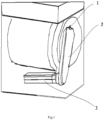
- the thermostat or temperature sensor 1 is usually placed in an upper position on the drum-entering air duct 2. It controls the temperature inside the drum by detecting the actual temperature of the drum inlet to ensure that the temperature entering the drum does not exceed the deformation or damage temperature of the corresponding clothing material.
- the installation position of the existing temperature sensor or thermostat is limited by the temperature working range of the device and must be placed away from the heater 3.
- This arrangement often leads to situations where, under full-load drying or poor airflow conditions, the air lingers in the heater for an extended period, causing a rapid increase in temperature.
- high-temperature detection may not be timely, resulting in the heater continuing to heat the air.
- the temperature of the warm air entering the drum becomes excessively high, potentially damaging the clothing. It may also lead to the abnormal tripping of mechanical thermostats.
- multiple levels of temperature protection control are often employed for drum-entering temperature control.
- the temperature sensor or thermostat serves as the first-level electronic control, combined with software control to promptly stop heating when a problem is detected.
- the second level or higher may involve mechanical controls, some of which are resettable, while others are non-resettable.
- non-resettable mechanical thermostats are used and the electronic control delays its judgment due to inadequate detection, it can lead to the tripping of the mechanical thermostat.
- users can only resolve the problem by requesting after-sales maintenance. This clearly diminishes the user experience and affects product quality.
- the objective of the present invention is to propose a method, a device for detecting the drum-entering temperature of a clothes dryer and a clothes dryer.
- a temperature sensor or thermostat is positioned near the heater in the drum-entering air duct to promptly and accurately detect warm air temperatures.
- a method for ensuring the accuracy of the actual detected values involves querying a correlation table between detection values and warm air temperatures.
- the present invention addresses the problem in the prior art where temperature sensors or thermostats are positioned away from the heater, leading to delayed and inaccurate temperature detection due to the high-temperature influence.
- the invention is implemented as follows:
- One aspect of the present invention provides a method for detecting drum-entering temperature of a clothes dryer drum, wherein the dryer comprising:
- the correlation table between detection values and warm air temperatures is obtained and stored within the clothes dryer through the following steps: simulating several sets of exhaust resistances at a set heating temperature; initiating a drying process with simulated exhaust resistances; obtaining actual warm air temperature values inside the drum-entering air duct and detection values of the temperature sensor; and recording the detection values and actual warm air temperature values to create a correlation table between the detection values and the warm air temperatures at various exhaust resistances under the set heating temperature.
- the method includes the following steps: determining the heating temperature; detecting the exhaust resistance; querying the correlation between detection values and warm air temperatures under the heating temperature and the exhaust resistance to obtain the actual warm air temperature entering the drum.
- a second aspect of the present invention is to provide a device for detecting the drum-entering temperature of a clothes dryer, and it comprises:
- the device includes a storage module configured to store the correlation table between detection values and warm air temperatures; wherein the correlation table between detection values and warm air temperatures is obtained through the following steps: simulating several sets of exhaust resistances at a set heating temperature; initiating a drying process with simulated exhaust resistances; obtaining actual warm air temperature values inside the drum-entering air duct and detection values of the temperature sensor; and recording the detection values and actual warm air temperature values to create a correlation table between the detection values and the warm air temperatures at various exhaust resistances under the set heating temperature.
- the device includes a query preparation module, which is configured to determine the heating temperature and detect exhaust resistance, enabling the warm air temperature determination module to query the correlation between detection values and warm air temperatures stored in the storage module based on the heating temperature and the exhaust resistance to obtain the actual warm air temperature entering the drum.
- a query preparation module configured to determine the heating temperature and detect exhaust resistance, enabling the warm air temperature determination module to query the correlation between detection values and warm air temperatures stored in the storage module based on the heating temperature and the exhaust resistance to obtain the actual warm air temperature entering the drum.
- a third aspect of the present invention provides a device for detecting the drum-entering temperature of a clothes dryer, and it comprises:
- the device includes: a storage module used to store the table correlating detected values with warm air temperatures; wherein the table is generated based on the following steps: simulating various sets of exhaust resistances at the set heating temperature; initiating the drying process with simulated exhaust resistances; obtaining the actual warm air temperature within the drum-entering air duct and the detected value of the thermostat during the simulated exhaust resistances; recording the detected values and actual warm air temperatures to create a table correlating detected values with warm air temperatures at various exhaust resistances under the set heating temperature.
- the device also includes a query preparation module, which is configured to determine the heating temperature and detect exhaust resistance, enabling the warm air temperature determination module to query the correlation between detection values and warm air temperatures stored in the storage module based on the heating temperature and the exhaust resistance to obtain the actual warm air temperature entering the drum.
- a query preparation module configured to determine the heating temperature and detect exhaust resistance, enabling the warm air temperature determination module to query the correlation between detection values and warm air temperatures stored in the storage module based on the heating temperature and the exhaust resistance to obtain the actual warm air temperature entering the drum.
- a forth aspect of the present invention provides a clothes dryer, which comprises the dryer drum-entering temperature detection device as described above.
- the advantages and positive effects of the present invention are as follows: in the dryer drum-entering temperature detection method, device, and dryer proposed by the present invention, instead of placing the temperature sensor or thermostat at the uppermost end of the drum-entering air duct, far from the heater, the present invention installs the temperature sensor or thermostat within the set range of the warm air inlet of the drum-entering air duct, bringing it closer to the heater. When the warm air generated by the heater enters the drum-entering air duct through the warm air inlet, it can be immediately detected by the temperature sensor or thermostat. This enables timely control of the heater to stop heating, preventing the warm air temperature inside the drum from becoming excessively high and damaging the clothes, as well as avoiding abnormal interruptions in mechanical thermostats.
- the present invention introduces the means of opening the air distribution opening on the side of the drum-entering air duct adjacent to the temperature sensor or thermostat.
- the heated warm air enters the drum-entering air duct, it creates negative pressure inside the air distribution opening, causing external air to flow into the drum-entering air duct through the air distribution opening.
- the relatively cooler air passing over the surface of the temperature sensor or thermostat lowers its surrounding temperature, ensuring that it does not exceed its operating limit.
- the present invention corrects actual detected values by querying a table correlating detected values with warm air temperatures. This guarantees that the detected warm air temperature is the actual warm air temperature, resolving the technical problem in the prior art where temperature sensors or thermostats are influenced by high heater temperatures, causing delayed and inaccurate temperature readings.
- the present invention employs the means of simulating various sets of exhaust resistances at the set heating temperature to summarize the corresponding relationship between actual temperature values inside the drum-entering air duct and actual detected values of the temperature sensor or thermostat under different heating temperatures and exhaust resistances. This information is stored in a table correlating detected values with warm air temperatures at various exhaust resistances under the set heating temperature, facilitating accurate measurement of the actual warm air temperature based on queries.
- first and second are used for descriptive purposes only and should not be interpreted as indicating or implying relative importance or specifying the quantity of the indicated technical features. Consequently, features designated as “first” and “second” may explicitly or implicitly encompass one or more instances of that feature. In the description of the present invention, unless otherwise stated, the term “multiple” means two or more.
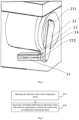
- a device for detecting the drum-entering temperature of a clothes dryer drum of the present invention includes a heater 21, a drum-entering air duct 22, a temperature sensor 23, and an air distribution opening 24.
- the drum-entering air duct 22 comprises a warm air inlet 221 and an inner drum inlet 222.
- Warm air generated by the heater 21 enters the drum-entering air duct 22 through the warm air inlet 221, and the drum-entering air duct 22 is connected to the inner drum through the inner drum inlet 222.
- the warm air flows through the drum-entering air duct 22 and enters the inner drum through the inner drum inlet 222, where it is used to dry clothes and remove moisture, which is then expelled directly from the inner drum.
- the temperature sensor 23 is installed on the drum-entering air duct 22 and is positioned within a set range of the warm air inlet 221.
- the set range is used to limit the distance between the temperature sensor 23 and the heater 21, ensuring that the temperature sensor 23 is close enough to the heater 21 to promptly detect the rise in temperature of the heated warm air.
- the temperature sensor 23 and the air distribution opening 24 are installed and positioned on a side of the drum-entering air duct 22 facing the heater 21.
- This arrangement not only reduces the linear distance between the temperature sensor 21 and the heater 21 but also prevents interference with other tests performed on the clothes dryer.
- the side-mounted air distribution opening 24 can prevent smoke from affecting the shell structure that is used for cooling the exterior of the drum-entering air duct when smoke escapes from the air distribution opening.
- the present invention installs the temperature sensor 23 within the set range of the warm air inlet 221 of the drum-entering air duct 22, positioning it close to the heater 21.
- warm air generated by the heater 21 enters the drum-entering air duct 22 through the warm air inlet 221, it can be immediately detected by the temperature sensor 23. This enables timely control of the heater 21 to stop heating, avoiding excessively high warm air temperatures inside the drum, which could damage clothes, and also prevents the mechanical thermostat from malfunctioning.
- the air distribution opening 24 is selectively opened in the drum-entering air duct 22, positioned at a side of the temperature sensor 23.
- warm air enters the drum-entering air duct 22 through the warm air inlet 221, it flows through the air distribution opening 24 and generates negative pressure around the air distribution opening 24.
- This negative pressure causes cold air from the exterior of the drum-entering air duct 22 to enter through the air distribution opening 24 and flow over the surface of the temperature sensor 23, reducing its surrounding temperature and ensuring that it operates within acceptable temperature limits.
- the present invention employs the following technical solutions to ensure the accuracy of temperature detection by the temperature sensor.
- Step S31 Obtaining the detection value of the temperature sensor.
- Warm air generated by the heater 21 enters the drum-entering air duct 22 through the warm air inlet 221.
- the temperature sensor 23 detects the temperature of the warm air. Simultaneously, cold air entering the drum-entering air duct 22 through the air distribution opening 24 cools the temperature sensor 23.
- Step S32 Querying a correlation table between detection values and warm air temperatures to obtain the actual warm air temperature entering the drum.
- This correlation table is stored in the clothes dryer's memory.
- the clothes dryer initiates the drying process, it first determines the heating temperature (typically set by the user or a default for the drying process), and then detects the current exhaust resistance of the dryer. Based on the heating temperature and exhaust resistance, the stored correlation table is queried to yield the relationship between the detection value and the warm air temperature for the given heating temperature and exhaust resistance, resulting in the determination of the actual warm air temperature entering the drum.
- the detection of exhaust resistance can be accomplished by measuring the pressure difference between the exhaust duct and the drum-entering air duct or by calculating the temperature difference between these two ducts. Specific methods for detection may vary and can be implemented using technical means in the prior art, without specific limitations imposed by the present invention.
- the present invention simulates several sets of exhaust resistance under the set heating temperature. Under the set heating temperature and different exhaust resistances, it summarizes the corresponding relationship between the actual temperature values inside the drum-entering air duct and the detection values of temperature sensors or thermostats. This further forms the correlation table between the detection values and the warm air temperatures under different exhaust resistance values and the set heating temperature, which is stored for querying. This enables the clothes dryer to determine the actual warm air temperature based on the query, ensuring the accuracy of the measurement.
- the present invention further provides a device for detecting the drum-entering temperature of a clothes dryer drum, as shown in Fig.4 .
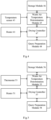
- the device includes a heater 41, a drum-entering air duct, a temperature sensor 43, an air distribution opening, a warm air temperature determination module 45, a storage module 46, and a drying controller 47.
- the drum-entering air duct includes a warm air inlet and an inner drum inlet.
- the warm air generated by the heater 41 enters the drum-entering air duct through the warm air inlet.
- the drum-entering air duct connects with the inner drum through the inner drum inlet, allowing the warm air to flow from the drum-entering air duct into the inner drum.
- the temperature sensor 43 is installed on the drum-entering air duct and is positioned within the set range of the warm air inlet.
- the air distribution opening is positioned on the drum-entering air duct and is located at a side of the temperature sensor 43.
- the warm air temperature determination module 45 is configured to obtain the detection value from the temperature sensor 43, to query a correlation table between detection values and warm air temperatures stored in the storage module 46 to obtain the actual warm air temperature entering the drum.
- the storage module 46 is used to store the correlation table between detection values and warm air temperatures, wherein the correlation table is obtained through the following steps: simulating a plurality of exhaust resistances under a set heating temperature, initiating a drying process with simulated exhaust resistances, obtaining actual warm air temperatures inside the drum-entering air duct and detection values of the temperature sensor, and recording the detection values and actual warm air temperatures to create the correlation table between the detection values and the actual warm air temperatures under the set heating temperature and different exhaust resistances.
- the device for detecting the drum-entering temperature of a clothes dryer drum further includes a query preparation module 48 used to determine the heating temperature and detect the exhaust resistance, so as to allow the warm air temperature determination module 45 to query the stored correlation between the detection values and the warm air temperatures under different exhaust resistances and the set heating temperature in the storage module 46 to obtain the actual warm air temperature entering the drum.
- a query preparation module 48 used to determine the heating temperature and detect the exhaust resistance, so as to allow the warm air temperature determination module 45 to query the stored correlation between the detection values and the warm air temperatures under different exhaust resistances and the set heating temperature in the storage module 46 to obtain the actual warm air temperature entering the drum.
- the drying controller 47 is connected to the warm air temperature determination module 45 and the heater 41, which is configured to receive the determined actual warm air temperature from the warm air temperature determination module 45, to control the execution of the drying process based on the actual warm air temperature entering the drum and to promptly turn off the heater 41 when the actual warm air temperature entering the drum exceeds a limit.
- the present invention also provides a device for detecting the drum-entering temperature of a clothes dryer drum that includes a heater 51, a drum-entering air duct, a thermostat 53, an air distribution opening, a warm air temperature determination module 55, a storage module 56, and a drying controller 57.
- the drying controller 57 controls the heating temperature of the heater 51 and controls the on/off status of the heater 51.
- the drum-entering air duct includes a warm air inlet and an inner drum inlet.
- the warm air generated by the heater 51 enters the drum-entering air duct through the warm air inlet.
- the drum-entering air duct connects with the inner drum through the inner drum inlet, allowing the warm air to flow from the drum-entering air duct into the inner drum.
- the thermostat 53 is installed on the drum-entering air duct and is positioned within the set range of the warm air inlet, which is configured to send a signal to the drying controller 57 when the detected temperature exceeds a limit, causing the drying controller 57 to stop heating.
- the air distribution opening is positioned on the drum-entering air duct and is located at a side of the thermostat 53.
- the warm air temperature determination module 55 is configured to obtain the detection value from the thermostat 53, to query a correlation table between detection values and warm air temperatures stored in the storage module 56, and to determine the actual warm air temperature entering the drum.
- the storage module 56 is used to store the correlation table between detection values and warm air temperatures, wherein the correlation table is obtained through the following steps: simulating a plurality of exhaust resistances under a set heating temperature, initiating a drying process with simulated exhaust resistances, obtaining actual warm air temperatures inside the drum-entering air duct and detection values of the temperature sensor, and recording the detection values and actual warm air temperatures to create the correlation table between the detection values and the actual warm air temperatures under different exhaust resistances and the set heating temperature.
- the device for detecting the drum-entering temperature of a clothes dryer drum also includes a query preparation module 58 used to determine the heating temperature and detect the exhaust resistance, so as to allow the warm air temperature determination module 55 to query the stored correlation between detection values and warm air temperatures under different exhaust resistances and the set heating temperature in the storage module 56 to obtain the actual warm air temperature entering the drum.
- a query preparation module 58 used to determine the heating temperature and detect the exhaust resistance, so as to allow the warm air temperature determination module 55 to query the stored correlation between detection values and warm air temperatures under different exhaust resistances and the set heating temperature in the storage module 56 to obtain the actual warm air temperature entering the drum.
- the present invention also provides a clothes dryer that utilizes the device for detecting the drum-entering temperature of a clothes dryer drum presented herein.
- the clothes dryer can promptly and accurately detect the warm air temperature entering the dryer drum.
- By combining means for air distribution opening at the side of the temperature sensor or the thermostat based on the negative pressure generated inside the inner drum inlet, relatively cold air is drawn into the inner drum inlet, which cools the surface of the temperature sensor or the thermostat.
- By combining the query of the correlation table between detection values and warm air temperatures ensures the accuracy of the actual detections. This addresses the technical problem in the prior art where temperature sensors or thermostats are positioned far from the heater, leading to delayed and inaccurate temperature measurements.
- control part can be implemented through hardware processors executing computer instructions stored in the memory in software form.
- the detailed explanation is omitted here.
- the programs corresponding to the actions executed by the above-mentioned control can all be stored in a computer-readable storage medium in software form, for the processor to call and execute the operations corresponding to each module.
- the computer-readable storage medium mentioned above can include volatile memory, such as random access memory (RAM); it can also include non-volatile memory, such as read-only memory (ROM), flash memory, hard disk, or solid-state drive (SSD); it can also include a combination of the aforementioned types of memory.
- volatile memory such as random access memory (RAM)
- non-volatile memory such as read-only memory (ROM), flash memory, hard disk, or solid-state drive (SSD)
- ROM read-only memory
- SSD solid-state drive
- the processor mentioned above can also refer to multiple processing elements collectively.
- the processor can be a central processing unit (CPU), as well as other general-purpose processors, digital signal processors, application-specific integrated circuits (ASICs), field-programmable gate arrays (FPGAs), or other programmable logic devices, discrete gates, or transistor logic devices, discrete hardware components, etc.
- General-purpose processors can be microprocessors or any conventional processors, and they can also be dedicated processors.
Landscapes
- Engineering & Computer Science (AREA)
- Textile Engineering (AREA)
- Control Of Washing Machine And Dryer (AREA)
- Detail Structures Of Washing Machines And Dryers (AREA)
Applications Claiming Priority (2)
| Application Number | Priority Date | Filing Date | Title |
|---|---|---|---|
| CN202110585916.8A CN115404682A (zh) | 2021-05-27 | 2021-05-27 | 干衣机进筒温度检测方法、装置及干衣机 |
| PCT/CN2022/092395 WO2022247648A1 (zh) | 2021-05-27 | 2022-05-12 | 干衣机进筒温度检测方法、装置及干衣机 |
Publications (2)
| Publication Number | Publication Date |
|---|---|
| EP4350065A1 true EP4350065A1 (de) | 2024-04-10 |
| EP4350065A4 EP4350065A4 (de) | 2024-07-31 |
Family
ID=84156416
Family Applications (1)
| Application Number | Title | Priority Date | Filing Date |
|---|---|---|---|
| EP22810375.0A Withdrawn EP4350065A4 (de) | 2021-05-27 | 2022-05-12 | Verfahren und vorrichtung zur messung der trommeleintrittstemperatur eines wäschetrockners und wäschetrockner |
Country Status (3)
| Country | Link |
|---|---|
| EP (1) | EP4350065A4 (de) |
| CN (1) | CN115404682A (de) |
| WO (1) | WO2022247648A1 (de) |
Family Cites Families (6)
| Publication number | Priority date | Publication date | Assignee | Title |
|---|---|---|---|---|
| US7444762B2 (en) * | 2005-03-11 | 2008-11-04 | Whirlpool Corporation | Combined temperature sensor for clothes dryer |
| JP4388088B2 (ja) * | 2007-02-16 | 2009-12-24 | 株式会社東芝 | 衣類乾燥機 |
| DE102008021376A1 (de) * | 2008-04-29 | 2009-11-05 | BSH Bosch und Siemens Hausgeräte GmbH | Ablufttrockner mit Gegenlufterkennung sowie Verfahren zu seinem Betrieb |
| JP5297322B2 (ja) * | 2009-09-30 | 2013-09-25 | 日立アプライアンス株式会社 | 洗濯乾燥機および乾燥機 |
| JP6352614B2 (ja) * | 2013-10-31 | 2018-07-04 | 東芝ライフスタイル株式会社 | 洗濯乾燥機 |
| CN204959416U (zh) * | 2015-05-29 | 2016-01-13 | 无锡小天鹅股份有限公司 | 干衣机的热泵式烘干装置以及具有其的干衣机 |
-
2021
- 2021-05-27 CN CN202110585916.8A patent/CN115404682A/zh active Pending
-
2022
- 2022-05-12 WO PCT/CN2022/092395 patent/WO2022247648A1/zh not_active Ceased
- 2022-05-12 EP EP22810375.0A patent/EP4350065A4/de not_active Withdrawn
Also Published As
| Publication number | Publication date |
|---|---|
| CN115404682A (zh) | 2022-11-29 |
| EP4350065A4 (de) | 2024-07-31 |
| WO2022247648A1 (zh) | 2022-12-01 |
Similar Documents
| Publication | Publication Date | Title |
|---|---|---|
| EP3660205B1 (de) | Verfahren und vorrichtung zur bestimmung von wäschetrocknung | |
| CN102560990B (zh) | 具有环境温度传感器的干衣机 | |
| CN101831781B (zh) | 滚筒洗衣机的自动烘干方法 | |
| CN111101357A (zh) | 一种干衣机的风路堵塞检测方法及干衣机 | |
| KR101224054B1 (ko) | 의류처리장치 및 의류처리장치의 운전방법 | |
| WO2017049942A1 (zh) | 一种检测环境温度的方法、装置和电子设备 | |
| US11920988B2 (en) | Improving, detecting and indicating stability in an industrial temperature dry block calibrator | |
| CN111631613B (zh) | 一种具有绝对湿度传感器的烹饪设备及其控制方法 | |
| CN112146230B (zh) | 一种压缩机保护控制方法、控制装置及空调器 | |
| CN111549490B (zh) | 一种烘干设备的判干方法及烘干设备 | |
| CN106403147A (zh) | 空调器的控制方法、控制系统及控制装置 | |
| US10669667B2 (en) | System and method for detecting moisture content in a dryer appliance | |
| CN108004718A (zh) | 衣物护理机及检测衣物护理机内衣物量的方法 | |
| CN111503814A (zh) | 防凝露控制方法、装置及空调器 | |
| CN114401621B (zh) | 一种服务器的入风温度的确定方法、装置、设备和介质 | |
| EP4350065A1 (de) | Verfahren und vorrichtung zur messung der trommeleintrittstemperatur eines wäschetrockners und wäschetrockner | |
| CN110594182A (zh) | 一种风扇风向检测方法及系统 | |
| KR101229363B1 (ko) | 의류처리장치의 냉매누설 감지방법 및 냉매누설 감지수단을 갖는 의류처리장치 | |
| JP2017187237A (ja) | 熱交換型換気装置 | |
| CN201083548Y (zh) | 热传测量设备 | |
| CN116556032A (zh) | 衣物烘干设备及其控制方法 | |
| CN110359257A (zh) | 用于衣物处理设备的控制方法和衣物处理设备 | |
| TWI650519B (zh) | 熱水裝置的火焰電流檢知方法及其熱水裝置 | |
| KR101229364B1 (ko) | 의류처리장치의 냉매누설 감지방법 및 냉매누설 감지수단을 갖는 의류처리장치 | |
| CN219871125U (zh) | 一种蒸烤箱的湿度检测装置 |
Legal Events
| Date | Code | Title | Description |
|---|---|---|---|
| STAA | Information on the status of an ep patent application or granted ep patent |
Free format text: STATUS: THE INTERNATIONAL PUBLICATION HAS BEEN MADE |
|
| PUAI | Public reference made under article 153(3) epc to a published international application that has entered the european phase |
Free format text: ORIGINAL CODE: 0009012 |
|
| STAA | Information on the status of an ep patent application or granted ep patent |
Free format text: STATUS: REQUEST FOR EXAMINATION WAS MADE |
|
| 17P | Request for examination filed |
Effective date: 20231128 |
|
| AK | Designated contracting states |
Kind code of ref document: A1 Designated state(s): AL AT BE BG CH CY CZ DE DK EE ES FI FR GB GR HR HU IE IS IT LI LT LU LV MC MK MT NL NO PL PT RO RS SE SI SK SM TR |
|
| A4 | Supplementary search report drawn up and despatched |
Effective date: 20240627 |
|
| RIC1 | Information provided on ipc code assigned before grant |
Ipc: D06F 33/50 20200101AFI20240621BHEP |
|
| DAV | Request for validation of the european patent (deleted) | ||
| DAX | Request for extension of the european patent (deleted) | ||
| STAA | Information on the status of an ep patent application or granted ep patent |
Free format text: STATUS: THE APPLICATION IS DEEMED TO BE WITHDRAWN |
|
| 18D | Application deemed to be withdrawn |
Effective date: 20241203 |