EP4350042A2 - Elektrode für elektrochemische reaktionsvorrichtung, membranelektrodenanordnung und elektrochemische reaktionsvorrichtung - Google Patents
Elektrode für elektrochemische reaktionsvorrichtung, membranelektrodenanordnung und elektrochemische reaktionsvorrichtung Download PDFInfo
- Publication number
- EP4350042A2 EP4350042A2 EP23195194.8A EP23195194A EP4350042A2 EP 4350042 A2 EP4350042 A2 EP 4350042A2 EP 23195194 A EP23195194 A EP 23195194A EP 4350042 A2 EP4350042 A2 EP 4350042A2
- Authority
- EP
- European Patent Office
- Prior art keywords
- gap
- electrode
- thickness
- stack
- layer
- Prior art date
- Legal status (The legal status is an assumption and is not a legal conclusion. Google has not performed a legal analysis and makes no representation as to the accuracy of the status listed.)
- Pending
Links
- 238000003487 electrochemical reaction Methods 0.000 title claims abstract description 29
- 239000012528 membrane Substances 0.000 title claims description 27
- 239000003054 catalyst Substances 0.000 claims abstract description 108
- 239000000758 substrate Substances 0.000 claims abstract description 28
- 229910052741 iridium Inorganic materials 0.000 claims description 18
- GKOZUEZYRPOHIO-UHFFFAOYSA-N iridium atom Chemical compound [Ir] GKOZUEZYRPOHIO-UHFFFAOYSA-N 0.000 claims description 18
- 239000003792 electrolyte Substances 0.000 claims description 15
- BASFCYQUMIYNBI-UHFFFAOYSA-N platinum Chemical compound [Pt] BASFCYQUMIYNBI-UHFFFAOYSA-N 0.000 claims description 14
- 230000000149 penetrating effect Effects 0.000 claims description 8
- KDLHZDBZIXYQEI-UHFFFAOYSA-N Palladium Chemical compound [Pd] KDLHZDBZIXYQEI-UHFFFAOYSA-N 0.000 claims description 7
- 229910052697 platinum Inorganic materials 0.000 claims description 6
- 239000010931 gold Substances 0.000 claims description 5
- KJTLSVCANCCWHF-UHFFFAOYSA-N Ruthenium Chemical compound [Ru] KJTLSVCANCCWHF-UHFFFAOYSA-N 0.000 claims description 4
- PCHJSUWPFVWCPO-UHFFFAOYSA-N gold Chemical compound [Au] PCHJSUWPFVWCPO-UHFFFAOYSA-N 0.000 claims description 4
- 229910052737 gold Inorganic materials 0.000 claims description 4
- 229910052751 metal Inorganic materials 0.000 claims description 4
- 239000002184 metal Substances 0.000 claims description 4
- 239000010948 rhodium Substances 0.000 claims description 4
- 229910052707 ruthenium Inorganic materials 0.000 claims description 4
- 229910052715 tantalum Inorganic materials 0.000 claims description 4
- GUVRBAGPIYLISA-UHFFFAOYSA-N tantalum atom Chemical compound [Ta] GUVRBAGPIYLISA-UHFFFAOYSA-N 0.000 claims description 4
- 229910052762 osmium Inorganic materials 0.000 claims description 3
- SYQBFIAQOQZEGI-UHFFFAOYSA-N osmium atom Chemical compound [Os] SYQBFIAQOQZEGI-UHFFFAOYSA-N 0.000 claims description 3
- 229910052763 palladium Inorganic materials 0.000 claims description 3
- 229910052703 rhodium Inorganic materials 0.000 claims description 3
- MHOVAHRLVXNVSD-UHFFFAOYSA-N rhodium atom Chemical compound [Rh] MHOVAHRLVXNVSD-UHFFFAOYSA-N 0.000 claims description 3
- 238000005868 electrolysis reaction Methods 0.000 description 71
- PXHVJJICTQNCMI-UHFFFAOYSA-N Nickel Chemical compound [Ni] PXHVJJICTQNCMI-UHFFFAOYSA-N 0.000 description 64
- 229910001868 water Inorganic materials 0.000 description 43
- XLYOFNOQVPJJNP-UHFFFAOYSA-N water Substances O XLYOFNOQVPJJNP-UHFFFAOYSA-N 0.000 description 39
- 229910052759 nickel Inorganic materials 0.000 description 31
- QVGXLLKOCUKJST-UHFFFAOYSA-N atomic oxygen Chemical compound [O] QVGXLLKOCUKJST-UHFFFAOYSA-N 0.000 description 20
- 238000000034 method Methods 0.000 description 20
- 239000001301 oxygen Substances 0.000 description 20
- 229910052760 oxygen Inorganic materials 0.000 description 20
- 238000004544 sputter deposition Methods 0.000 description 20
- 239000010936 titanium Substances 0.000 description 20
- RTAQQCXQSZGOHL-UHFFFAOYSA-N Titanium Chemical compound [Ti] RTAQQCXQSZGOHL-UHFFFAOYSA-N 0.000 description 18
- 229910052719 titanium Inorganic materials 0.000 description 18
- 238000005530 etching Methods 0.000 description 16
- 239000011148 porous material Substances 0.000 description 16
- 239000002253 acid Substances 0.000 description 15
- 239000004745 nonwoven fabric Substances 0.000 description 15
- 230000007423 decrease Effects 0.000 description 14
- 239000002243 precursor Substances 0.000 description 11
- 239000000463 material Substances 0.000 description 9
- 230000000052 comparative effect Effects 0.000 description 7
- 238000007254 oxidation reaction Methods 0.000 description 7
- UFHFLCQGNIYNRP-UHFFFAOYSA-N Hydrogen Chemical compound [H][H] UFHFLCQGNIYNRP-UHFFFAOYSA-N 0.000 description 6
- 230000015572 biosynthetic process Effects 0.000 description 6
- 238000006243 chemical reaction Methods 0.000 description 6
- 239000001257 hydrogen Substances 0.000 description 6
- 229910052739 hydrogen Inorganic materials 0.000 description 6
- GPRLSGONYQIRFK-UHFFFAOYSA-N hydron Chemical compound [H+] GPRLSGONYQIRFK-UHFFFAOYSA-N 0.000 description 6
- 229910000510 noble metal Inorganic materials 0.000 description 5
- 238000004458 analytical method Methods 0.000 description 4
- 230000003647 oxidation Effects 0.000 description 4
- 239000008400 supply water Substances 0.000 description 4
- MYMOFIZGZYHOMD-UHFFFAOYSA-N Dioxygen Chemical compound O=O MYMOFIZGZYHOMD-UHFFFAOYSA-N 0.000 description 3
- XEEYBQQBJWHFJM-UHFFFAOYSA-N Iron Chemical compound [Fe] XEEYBQQBJWHFJM-UHFFFAOYSA-N 0.000 description 3
- 229910001882 dioxygen Inorganic materials 0.000 description 3
- 238000007599 discharging Methods 0.000 description 3
- 238000002149 energy-dispersive X-ray emission spectroscopy Methods 0.000 description 3
- 239000007789 gas Substances 0.000 description 3
- 238000010438 heat treatment Methods 0.000 description 3
- 239000007788 liquid Substances 0.000 description 3
- 238000006722 reduction reaction Methods 0.000 description 3
- OKTJSMMVPCPJKN-UHFFFAOYSA-N Carbon Chemical compound [C] OKTJSMMVPCPJKN-UHFFFAOYSA-N 0.000 description 2
- YZCKVEUIGOORGS-UHFFFAOYSA-N Hydrogen atom Chemical compound [H] YZCKVEUIGOORGS-UHFFFAOYSA-N 0.000 description 2
- 229920000557 Nafion® Polymers 0.000 description 2
- 239000004372 Polyvinyl alcohol Substances 0.000 description 2
- 238000004833 X-ray photoelectron spectroscopy Methods 0.000 description 2
- 239000011230 binding agent Substances 0.000 description 2
- 239000011575 calcium Substances 0.000 description 2
- 229910052799 carbon Inorganic materials 0.000 description 2
- 239000011651 chromium Substances 0.000 description 2
- 239000012530 fluid Substances 0.000 description 2
- 239000003014 ion exchange membrane Substances 0.000 description 2
- 239000011572 manganese Substances 0.000 description 2
- 239000000203 mixture Substances 0.000 description 2
- 239000010955 niobium Substances 0.000 description 2
- 229920002451 polyvinyl alcohol Polymers 0.000 description 2
- 239000002994 raw material Substances 0.000 description 2
- OYPRJOBELJOOCE-UHFFFAOYSA-N Calcium Chemical compound [Ca] OYPRJOBELJOOCE-UHFFFAOYSA-N 0.000 description 1
- VYZAMTAEIAYCRO-UHFFFAOYSA-N Chromium Chemical compound [Cr] VYZAMTAEIAYCRO-UHFFFAOYSA-N 0.000 description 1
- 229920003935 Flemion® Polymers 0.000 description 1
- PWHULOQIROXLJO-UHFFFAOYSA-N Manganese Chemical compound [Mn] PWHULOQIROXLJO-UHFFFAOYSA-N 0.000 description 1
- ZOKXTWBITQBERF-UHFFFAOYSA-N Molybdenum Chemical compound [Mo] ZOKXTWBITQBERF-UHFFFAOYSA-N 0.000 description 1
- VEQPNABPJHWNSG-UHFFFAOYSA-N Nickel(2+) Chemical compound [Ni+2] VEQPNABPJHWNSG-UHFFFAOYSA-N 0.000 description 1
- XUIMIQQOPSSXEZ-UHFFFAOYSA-N Silicon Chemical compound [Si] XUIMIQQOPSSXEZ-UHFFFAOYSA-N 0.000 description 1
- ATJFFYVFTNAWJD-UHFFFAOYSA-N Tin Chemical compound [Sn] ATJFFYVFTNAWJD-UHFFFAOYSA-N 0.000 description 1
- 238000010521 absorption reaction Methods 0.000 description 1
- 239000003513 alkali Substances 0.000 description 1
- 239000000956 alloy Substances 0.000 description 1
- 229910045601 alloy Inorganic materials 0.000 description 1
- 229910052782 aluminium Inorganic materials 0.000 description 1
- XAGFODPZIPBFFR-UHFFFAOYSA-N aluminium Chemical compound [Al] XAGFODPZIPBFFR-UHFFFAOYSA-N 0.000 description 1
- 230000005540 biological transmission Effects 0.000 description 1
- 229910052791 calcium Inorganic materials 0.000 description 1
- 239000003575 carbonaceous material Substances 0.000 description 1
- 238000005341 cation exchange Methods 0.000 description 1
- 229910052804 chromium Inorganic materials 0.000 description 1
- 229910017052 cobalt Inorganic materials 0.000 description 1
- 239000010941 cobalt Substances 0.000 description 1
- GUTLYIVDDKVIGB-UHFFFAOYSA-N cobalt atom Chemical compound [Co] GUTLYIVDDKVIGB-UHFFFAOYSA-N 0.000 description 1
- 239000013078 crystal Substances 0.000 description 1
- 238000013461 design Methods 0.000 description 1
- 230000006866 deterioration Effects 0.000 description 1
- 238000011161 development Methods 0.000 description 1
- 238000009792 diffusion process Methods 0.000 description 1
- HTXDPTMKBJXEOW-UHFFFAOYSA-N dioxoiridium Chemical compound O=[Ir]=O HTXDPTMKBJXEOW-UHFFFAOYSA-N 0.000 description 1
- 239000004744 fabric Substances 0.000 description 1
- 229910052735 hafnium Inorganic materials 0.000 description 1
- VBJZVLUMGGDVMO-UHFFFAOYSA-N hafnium atom Chemical compound [Hf] VBJZVLUMGGDVMO-UHFFFAOYSA-N 0.000 description 1
- XLYOFNOQVPJJNP-ZSJDYOACSA-N heavy water Substances [2H]O[2H] XLYOFNOQVPJJNP-ZSJDYOACSA-N 0.000 description 1
- 238000005470 impregnation Methods 0.000 description 1
- 150000002500 ions Chemical class 0.000 description 1
- 229910000457 iridium oxide Inorganic materials 0.000 description 1
- 229910052748 manganese Inorganic materials 0.000 description 1
- 238000013507 mapping Methods 0.000 description 1
- 238000002844 melting Methods 0.000 description 1
- 230000008018 melting Effects 0.000 description 1
- 239000007769 metal material Substances 0.000 description 1
- 150000002739 metals Chemical class 0.000 description 1
- 238000012986 modification Methods 0.000 description 1
- 230000004048 modification Effects 0.000 description 1
- 229910052750 molybdenum Inorganic materials 0.000 description 1
- 239000011733 molybdenum Substances 0.000 description 1
- 229910001453 nickel ion Inorganic materials 0.000 description 1
- 229910052758 niobium Inorganic materials 0.000 description 1
- GUCVJGMIXFAOAE-UHFFFAOYSA-N niobium atom Chemical compound [Nb] GUCVJGMIXFAOAE-UHFFFAOYSA-N 0.000 description 1
- 239000011368 organic material Substances 0.000 description 1
- 238000007747 plating Methods 0.000 description 1
- 238000010248 power generation Methods 0.000 description 1
- 238000005546 reactive sputtering Methods 0.000 description 1
- VSZWPYCFIRKVQL-UHFFFAOYSA-N selanylidenegallium;selenium Chemical compound [Se].[Se]=[Ga].[Se]=[Ga] VSZWPYCFIRKVQL-UHFFFAOYSA-N 0.000 description 1
- 238000007086 side reaction Methods 0.000 description 1
- 229910052710 silicon Inorganic materials 0.000 description 1
- 239000010703 silicon Substances 0.000 description 1
- 238000005477 sputtering target Methods 0.000 description 1
- 229910052712 strontium Inorganic materials 0.000 description 1
- CIOAGBVUUVVLOB-UHFFFAOYSA-N strontium atom Chemical compound [Sr] CIOAGBVUUVVLOB-UHFFFAOYSA-N 0.000 description 1
- 239000000126 substance Substances 0.000 description 1
- 238000006467 substitution reaction Methods 0.000 description 1
- JBQYATWDVHIOAR-UHFFFAOYSA-N tellanylidenegermanium Chemical compound [Te]=[Ge] JBQYATWDVHIOAR-UHFFFAOYSA-N 0.000 description 1
- WFKWXMTUELFFGS-UHFFFAOYSA-N tungsten Chemical compound [W] WFKWXMTUELFFGS-UHFFFAOYSA-N 0.000 description 1
- 229910052721 tungsten Inorganic materials 0.000 description 1
- 239000010937 tungsten Substances 0.000 description 1
- 229910021642 ultra pure water Inorganic materials 0.000 description 1
- 239000012498 ultrapure water Substances 0.000 description 1
- LEONUFNNVUYDNQ-UHFFFAOYSA-N vanadium atom Chemical compound [V] LEONUFNNVUYDNQ-UHFFFAOYSA-N 0.000 description 1
- 239000011800 void material Substances 0.000 description 1
- 238000004876 x-ray fluorescence Methods 0.000 description 1
Images
Classifications
-
- C—CHEMISTRY; METALLURGY
- C25—ELECTROLYTIC OR ELECTROPHORETIC PROCESSES; APPARATUS THEREFOR
- C25B—ELECTROLYTIC OR ELECTROPHORETIC PROCESSES FOR THE PRODUCTION OF COMPOUNDS OR NON-METALS; APPARATUS THEREFOR
- C25B11/00—Electrodes; Manufacture thereof not otherwise provided for
- C25B11/02—Electrodes; Manufacture thereof not otherwise provided for characterised by shape or form
- C25B11/03—Electrodes; Manufacture thereof not otherwise provided for characterised by shape or form perforated or foraminous
- C25B11/031—Porous electrodes
- C25B11/032—Gas diffusion electrodes
-
- C—CHEMISTRY; METALLURGY
- C25—ELECTROLYTIC OR ELECTROPHORETIC PROCESSES; APPARATUS THEREFOR
- C25B—ELECTROLYTIC OR ELECTROPHORETIC PROCESSES FOR THE PRODUCTION OF COMPOUNDS OR NON-METALS; APPARATUS THEREFOR
- C25B1/00—Electrolytic production of inorganic compounds or non-metals
- C25B1/01—Products
- C25B1/02—Hydrogen or oxygen
- C25B1/04—Hydrogen or oxygen by electrolysis of water
-
- C—CHEMISTRY; METALLURGY
- C25—ELECTROLYTIC OR ELECTROPHORETIC PROCESSES; APPARATUS THEREFOR
- C25B—ELECTROLYTIC OR ELECTROPHORETIC PROCESSES FOR THE PRODUCTION OF COMPOUNDS OR NON-METALS; APPARATUS THEREFOR
- C25B11/00—Electrodes; Manufacture thereof not otherwise provided for
- C25B11/02—Electrodes; Manufacture thereof not otherwise provided for characterised by shape or form
-
- C—CHEMISTRY; METALLURGY
- C25—ELECTROLYTIC OR ELECTROPHORETIC PROCESSES; APPARATUS THEREFOR
- C25B—ELECTROLYTIC OR ELECTROPHORETIC PROCESSES FOR THE PRODUCTION OF COMPOUNDS OR NON-METALS; APPARATUS THEREFOR
- C25B11/00—Electrodes; Manufacture thereof not otherwise provided for
- C25B11/02—Electrodes; Manufacture thereof not otherwise provided for characterised by shape or form
- C25B11/03—Electrodes; Manufacture thereof not otherwise provided for characterised by shape or form perforated or foraminous
- C25B11/031—Porous electrodes
-
- C—CHEMISTRY; METALLURGY
- C25—ELECTROLYTIC OR ELECTROPHORETIC PROCESSES; APPARATUS THEREFOR
- C25B—ELECTROLYTIC OR ELECTROPHORETIC PROCESSES FOR THE PRODUCTION OF COMPOUNDS OR NON-METALS; APPARATUS THEREFOR
- C25B11/00—Electrodes; Manufacture thereof not otherwise provided for
- C25B11/04—Electrodes; Manufacture thereof not otherwise provided for characterised by the material
- C25B11/051—Electrodes formed of electrocatalysts on a substrate or carrier
- C25B11/052—Electrodes comprising one or more electrocatalytic coatings on a substrate
- C25B11/053—Electrodes comprising one or more electrocatalytic coatings on a substrate characterised by multilayer electrocatalytic coatings
-
- C—CHEMISTRY; METALLURGY
- C25—ELECTROLYTIC OR ELECTROPHORETIC PROCESSES; APPARATUS THEREFOR
- C25B—ELECTROLYTIC OR ELECTROPHORETIC PROCESSES FOR THE PRODUCTION OF COMPOUNDS OR NON-METALS; APPARATUS THEREFOR
- C25B11/00—Electrodes; Manufacture thereof not otherwise provided for
- C25B11/04—Electrodes; Manufacture thereof not otherwise provided for characterised by the material
- C25B11/051—Electrodes formed of electrocatalysts on a substrate or carrier
- C25B11/054—Electrodes comprising electrocatalysts supported on a carrier
-
- C—CHEMISTRY; METALLURGY
- C25—ELECTROLYTIC OR ELECTROPHORETIC PROCESSES; APPARATUS THEREFOR
- C25B—ELECTROLYTIC OR ELECTROPHORETIC PROCESSES FOR THE PRODUCTION OF COMPOUNDS OR NON-METALS; APPARATUS THEREFOR
- C25B11/00—Electrodes; Manufacture thereof not otherwise provided for
- C25B11/04—Electrodes; Manufacture thereof not otherwise provided for characterised by the material
- C25B11/051—Electrodes formed of electrocatalysts on a substrate or carrier
- C25B11/055—Electrodes formed of electrocatalysts on a substrate or carrier characterised by the substrate or carrier material
- C25B11/057—Electrodes formed of electrocatalysts on a substrate or carrier characterised by the substrate or carrier material consisting of a single element or compound
- C25B11/065—Carbon
-
- C—CHEMISTRY; METALLURGY
- C25—ELECTROLYTIC OR ELECTROPHORETIC PROCESSES; APPARATUS THEREFOR
- C25B—ELECTROLYTIC OR ELECTROPHORETIC PROCESSES FOR THE PRODUCTION OF COMPOUNDS OR NON-METALS; APPARATUS THEREFOR
- C25B11/00—Electrodes; Manufacture thereof not otherwise provided for
- C25B11/04—Electrodes; Manufacture thereof not otherwise provided for characterised by the material
- C25B11/051—Electrodes formed of electrocatalysts on a substrate or carrier
- C25B11/073—Electrodes formed of electrocatalysts on a substrate or carrier characterised by the electrocatalyst material
- C25B11/075—Electrodes formed of electrocatalysts on a substrate or carrier characterised by the electrocatalyst material consisting of a single catalytic element or catalytic compound
- C25B11/081—Electrodes formed of electrocatalysts on a substrate or carrier characterised by the electrocatalyst material consisting of a single catalytic element or catalytic compound the element being a noble metal
-
- C—CHEMISTRY; METALLURGY
- C25—ELECTROLYTIC OR ELECTROPHORETIC PROCESSES; APPARATUS THEREFOR
- C25B—ELECTROLYTIC OR ELECTROPHORETIC PROCESSES FOR THE PRODUCTION OF COMPOUNDS OR NON-METALS; APPARATUS THEREFOR
- C25B9/00—Cells or assemblies of cells; Constructional parts of cells; Assemblies of constructional parts, e.g. electrode-diaphragm assemblies; Process-related cell features
- C25B9/17—Cells comprising dimensionally-stable non-movable electrodes; Assemblies of constructional parts thereof
- C25B9/19—Cells comprising dimensionally-stable non-movable electrodes; Assemblies of constructional parts thereof with diaphragms
-
- C—CHEMISTRY; METALLURGY
- C25—ELECTROLYTIC OR ELECTROPHORETIC PROCESSES; APPARATUS THEREFOR
- C25B—ELECTROLYTIC OR ELECTROPHORETIC PROCESSES FOR THE PRODUCTION OF COMPOUNDS OR NON-METALS; APPARATUS THEREFOR
- C25B9/00—Cells or assemblies of cells; Constructional parts of cells; Assemblies of constructional parts, e.g. electrode-diaphragm assemblies; Process-related cell features
- C25B9/17—Cells comprising dimensionally-stable non-movable electrodes; Assemblies of constructional parts thereof
- C25B9/19—Cells comprising dimensionally-stable non-movable electrodes; Assemblies of constructional parts thereof with diaphragms
- C25B9/23—Cells comprising dimensionally-stable non-movable electrodes; Assemblies of constructional parts thereof with diaphragms comprising ion-exchange membranes in or on which electrode material is embedded
-
- H—ELECTRICITY
- H01—ELECTRIC ELEMENTS
- H01M—PROCESSES OR MEANS, e.g. BATTERIES, FOR THE DIRECT CONVERSION OF CHEMICAL ENERGY INTO ELECTRICAL ENERGY
- H01M4/00—Electrodes
- H01M4/86—Inert electrodes with catalytic activity, e.g. for fuel cells
- H01M4/8647—Inert electrodes with catalytic activity, e.g. for fuel cells consisting of more than one material, e.g. consisting of composites
- H01M4/8657—Inert electrodes with catalytic activity, e.g. for fuel cells consisting of more than one material, e.g. consisting of composites layered
-
- H—ELECTRICITY
- H01—ELECTRIC ELEMENTS
- H01M—PROCESSES OR MEANS, e.g. BATTERIES, FOR THE DIRECT CONVERSION OF CHEMICAL ENERGY INTO ELECTRICAL ENERGY
- H01M4/00—Electrodes
- H01M4/86—Inert electrodes with catalytic activity, e.g. for fuel cells
- H01M4/90—Selection of catalytic material
- H01M4/92—Metals of platinum group
-
- H—ELECTRICITY
- H01—ELECTRIC ELEMENTS
- H01M—PROCESSES OR MEANS, e.g. BATTERIES, FOR THE DIRECT CONVERSION OF CHEMICAL ENERGY INTO ELECTRICAL ENERGY
- H01M8/00—Fuel cells; Manufacture thereof
- H01M8/10—Fuel cells with solid electrolytes
- H01M2008/1095—Fuel cells with polymeric electrolytes
-
- Y—GENERAL TAGGING OF NEW TECHNOLOGICAL DEVELOPMENTS; GENERAL TAGGING OF CROSS-SECTIONAL TECHNOLOGIES SPANNING OVER SEVERAL SECTIONS OF THE IPC; TECHNICAL SUBJECTS COVERED BY FORMER USPC CROSS-REFERENCE ART COLLECTIONS [XRACs] AND DIGESTS
- Y02—TECHNOLOGIES OR APPLICATIONS FOR MITIGATION OR ADAPTATION AGAINST CLIMATE CHANGE
- Y02E—REDUCTION OF GREENHOUSE GAS [GHG] EMISSIONS, RELATED TO ENERGY GENERATION, TRANSMISSION OR DISTRIBUTION
- Y02E60/00—Enabling technologies; Technologies with a potential or indirect contribution to GHG emissions mitigation
- Y02E60/30—Hydrogen technology
- Y02E60/50—Fuel cells
Definitions
- Arrangements relate to an electrode for an electrochemical reaction device, a membrane electrode assembly, and an electrochemical reaction device.
- the water electrolysis device includes, for example, a membrane electrode assembly (MEA) including an anode, a cathode, and an electrolyte membrane.
- MEA membrane electrode assembly
- the water electrolysis device oxidizes water by the anode, for example, to produce a hydrogen ion and oxygen, and reduces the hydrogen ion by the cathode to produce hydrogen.
- An electrode for an electrochemical reaction device in an arrangement includes: a substrate; and a stack provided on the substrate.
- the stack includes catalyst layers and gap layers, and each catalyst layer and each gap layer are alternately stacked.
- One of the gap layers has a first region and a second region, the first region having a first thickness, the second region having a first gap, and the first gap having a second thickness, and the second thickness is 3 times or more and 10 times or less the first thickness.
- connecting includes not only directly connecting but also indirectly connecting, unless otherwise specified.
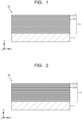
- FIG. 1 is a schematic cross-sectional view illustrating an example structure of an electrode.
- FIG. 1 illustrates an X-axis, a Y-axis orthogonal to the X-axis, and a Z-axis orthogonal to the X-axis and the Y-axis.
- FIG. 1 also illustrates a part of the X-Z cross section of an electrode 10.
- the electrode 10 illustrated in FIG. 1 includes a substrate 11 and a stack 12.
- the electrode 10 is an electrode for electrochemical reaction device, which is also called an electrochemical reaction device electrode.
- Examples of the electrode include a cathode of a water electrolysis device.
- the electrode 10 is not limited the cathode of the water electrolysis device, and the electrode 10 may be an anode of an electrolysis device different from the water electrolysis device.
- the substrate 11 for example, can be made using one or more of carbon materials such as carbon cloth and carbon paper, and one or more of metal materials such as titanium (Ti), nickel (Ni), and iron (Fe) and alloys containing at least one of these metals such as SUS.
- the substrate 11 may be a nonwoven fabric, mesh substrate, or porous substrate with these materials.
- the stack 12 is provided on the substrate 11.
- the stack 12 includes a catalyst layer 121 and a gap layer 122.
- FIG. 1 illustrates a plurality of the catalyst layers 121 and a plurality of the gap layers 122.
- Each catalyst layers 121 and each gap layers 122 are alternately stacked on the substrate 11.
- the catalyst layers 121 may be partially joined together at one or more ends of each of the catalyst layers 121in at least one of the X-axis direction and the Y-axis direction. This can prevent deformation of the stack 12 caused by pressure in the stacking direction.
- the stack 12 may include at least one catalyst pillar connecting at least two of the catalyst layers 121 in order from a surface of the stack 12. This can prevent peeling of the catalyst layer 121.
- the catalyst layer 121 includes an anode catalyst that promotes oxidation of an oxidizable material (a material to be oxidized) or a cathode catalyst that promotes reduction of a reducible material (a material to be reduced).
- the number of the catalyst layers 121 is not particularly limited, and is, for example, 5 or more and 20 or less.
- the thickness of the catalyst layer 121 is, for example, 4 nm or more and 50 nm or less.
- the anode catalyst for example, contains at least one noble metal or oxide thereof.
- the at least one noble metal for example, includes at least one of platinum (Pt), palladium (Pd), iridium (Ir), ruthenium (Ru), rhodium (Rh), osmium (Os), gold (Au), and tantalum (Ta).
- the anode catalyst may contain a plurality of these catalyst materials.
- the anode catalyst is, for example, a material that promotes an oxidation reaction of water.
- the cathode catalyst for example, contains at least one metal of platinum (Pt), iron (Fe), calcium (Ca), iridium (Ir), and ruthenium (Ru), or at least one oxide thereof.
- the gap layer 122 is provided between the catalyst layers 121.
- the gap layer 122 forms a space.
- the average thickness of the gap layer 122 is, for example, 1 nm or more and 100 nm or less.
- the average thickness of the stack 12 is, for example, 10 nm or more and 900 nm or less.
- the thickness is less than 10 nm, the amount of catalyst is small and the reaction efficiency decreases.
- the thickness exceeds 900 nm, the diffusibility deteriorates, and the performance of supplying water to the catalyst layer or the performance of discharging an oxygen gas deteriorates, resulting in a decrease in the performance.
- the dimensions and composition of the substrate 11, the stack 12, the catalyst layer 121, and the gap layer 122 can be measured using, for example, a scanning electron microscope (SEM), an X-ray fluorescence analysis (XRF), elemental mapping by a transmission electron microscope (TEM), TEM high-angle annular dark-field (HAADF), and an energy dispersive X-ray spectroscopy (EDS) line analysis.
- SEM scanning electron microscope
- XRF X-ray fluorescence analysis
- TEM transmission electron microscope
- HAADF TEM high-angle annular dark-field
- EDS energy dispersive X-ray spectroscopy
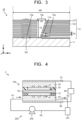
- FIG. 2 is a schematic cross-sectional view for explaining an example of a method of forming the stack 12.
- the stack 12 can be formed by alternately forming a precursor layer 121a of the catalyst layer 121 and a pore former layer (a pore-forming material layer) 122a using sputtering, and then removing the pore former layers 122a with the precursor layers 121a remaining.
- This method can control the thicknesses of each of the catalyst layer 121 and the pore former layer 122a on the order of nanometers, and further facilitates control of the composition or the oxidation state, to improve the degree of freedom in the design of the catalyst layer 121.
- the precursor layer 121a includes an anode catalyst or a cathode catalyst.
- the precursor layer 121a is crystalized by performing a heat treatment to form an oriented crystal structure.
- the precursor layer 121a may be preferably formed using reactive sputtering in which an oxygen gas is added into a chamber of a sputtering apparatus.
- the pore former layer 122a has a pore former.
- the pore former for example, contains at least one non-noble metal or oxide thereof.
- the non-noble metal include iron (Fe), cobalt (Co), nickel (Ni), manganese (Mn), aluminum (Al), zinc (Zn), tantalum (Ta), tungsten (W), hafnium (Hf), silicon (Si), molybdenum (Mo), titanium (Ti), zirconium (Zr), niobium (Nb), vanadium (V), chromium (Cr), tin (Sn), and strontium (Sr).
- the pore former layers 122a can be removed by selective etching using chemicals such as acid or alkali, for example, with the catalyst layers 121 remaining.
- the stack 12 may be heated by a heat treatment to promote melting of the pore former layers 122a.
- the pore former may also be included in the precursor layer 121a.
- the precursor layer 121a containing the pore former can be formed by performing sputtering using a mixed sputtering target containing a raw material of the precursor layer 121a and a raw material of the pore former. This formation method can removes also the pore former in the precursor layer 121a with the pore former in the pore former layer 122a by selective etching to form the porous catalyst layer 121. Therefore, the surface area of the catalyst layer 121 can be increased.
- the electrode 10 illustrated in FIG. 1 is used as an anode of a water electrolysis device, for example, if the thickness of the gap layer 122 (an interval in the thickness direction (Z-axis direction) of the stacks 12) is small, the ability to supply water to the anode may decrease. Further, if the thickness of the gap layer 122 is small, the ability to discharge the oxygen produced by the anode may decrease. These cause a decrease in the cell voltage of the electrochemical reaction device and cause a decrease in the performance of the electrochemical reaction device.
- the electrochemical reaction device of the arrangement includes a gap having a thickness greater than the thickness of the gap layer 122 in a part of the stack 12.
- An example structure of the electrode 10 including the stack 12 having a gap will be explained with reference to FIG. 3.
- FIG. 3 is a schematic cross-sectional view illustrating another example structure of the electrode 10. Elements different from the electrode 10 illustrated in FIG. 1 will be explained, and the explanation of the electrode 10 illustrated in FIG. 1 can be used as appropriate for the other elements.
- the electrode 10 illustrated in FIG. 3 includes the substrate 11 and the stack 12, similarly to the electrode 10 illustrated in FIG. 1 .
- the surface of the substrate 11 has an uneven surface 11a, which includes regions having different levels.
- the difference in height of the uneven surface 11a is preferably, for example, 10 nm or more and 100 nm or less. When the difference in height is less than 10 nm, the formation of a gap becomes difficult. When the difference in height exceeds 100 nm, the adhesion between the substrate 11 and the stack 12 may deteriorate. This causes peeling of the catalyst layer 121, which is undesirable.
- the uneven surface 11a does not necessarily have to be provided.
- the stack 12 has a gap 13a and a gap 13b.
- the presence or absence of each of the gap 13a or the gap 13b is determined, for example, by using a scanning electron microscope (SEM) to observe an X-Z cross section with a length of 2 ⁇ m in the X-axis direction of electrode 10 at ten different locations.
- SEM scanning electron microscope
- the stack 12 only needs to have at least one of the gaps 13a and the gaps 13b in at least one of the ten observation images.
- the gap 13a may extend to the side of the stack 12, for example.
- the gap 13a defines a space.
- the gap 13a has a thickness T1 that is greater than a thickness T0 of the gap layer 122.
- the thickness T0 corresponds to the average thickness of a region (first region) of all the gap layers 122 excluding the gaps 13a and 13b.
- the thickness T0 is, for example, 1 nm or more and 50 nm or less, and preferably 1 nm or more and 10 nm or less.
- the thickness T1 is preferably 3 times or more and 10 times or less the thickness T0.
- the thickness T1 is less than 3 times the thickness T0, it is difficult to sufficiently improve the ability to supply water and the ability to discharge oxygen described above.
- the thickness T1 exceeds 10 times the thickness T0, the adhesion may deteriorate. This causes peeling of the catalyst layer 121, which is undesirable.
- the thickness T1 is, for example, 10 nm or more and 50 nm or less.
- the gap 13a is narrow, and thus the ability to supply water and the performance of discharging oxygen decrease, and the reaction efficiency decreases.
- the thickness T1 exceeds 50 nm, the adhesion of the catalyst layer 121 may deteriorate. This causes peeling of the catalyst layer 121, which is undesirable.
- the conductivity in the thickness direction or the diffusivity of water or oxygen decreases, causing a decrease in the performance of the electrochemical reaction device.
- a width W1 of the gap 13a is defined by the length of a region (second region) of the gap 13a in which the thickness T1 is 3 times or more and 10 times or less the thickness T0 in the X-Z cross section.
- the width W1 of the gap 13a is preferably 1/500 times (0.002 times) or more and 1/10 times (0.1 times) or less a width W0 of the gap layer 122.
- the gap 13a preferably includes a region having a length of 1/500 times (0.002 times) or more and 1/10 times (0.1 times) or less the width W0 of the gap layer 122, the region having the thickness T1.
- the width W0 is defined by the average length of the portion of all the gap layers 122 excluding the gaps 13a and 13b in the X-Z cross section.
- the width W0 is, for example, 1 ⁇ m or more and 30 ⁇ m or less, and further 5 ⁇ m or more and 10 ⁇ m or less.
- a plurality of the gaps 13a may be provided as illustrated in FIG. 3 .
- the gap 13a may be provided between the substrate 11 and the catalyst layer 121 and between a plurality of the catalyst layers 121, as illustrated in FIG. 3 . This arrangement is not limited to this, as long as at least one gap 13a is provided.
- the gap 13b penetrates at least two of the catalyst layers 121 along a direction intersecting with the surface of the substrate 11.
- the gap 13b preferably penetrates at least three or more catalyst layers 121.
- FIG. 3 illustrates the gap 13b that penetrates all the catalyst layers 121 and is exposed to the upper surface of the stack 12 in the Z-axis direction.
- the gap 13b may communicate with the gap 13a.
- the gap 13b may extend in the Y-axis direction.
- the gap 13b defines a space. Examples of the gap 13b include a crack.
- a width W2 of the gap 13b is defined by the maximum width of the gap 13b in the direction vertical to the thickness direction of the stack 12.
- the width W2 of the gap 13b is preferably 25 nm or more and 900 nm or less, for example.
- the width W2 is less than 25 nm, the formation of a gap becomes difficult. Further, no improvement in the performance of supplying water is expected and the performance of discharging oxygen is the same as usual, thus not contributing to the improvement in reaction efficiency.
- the width W2 exceeds 900 nm, the adhesion may deteriorate. This causes peeling of the catalyst layer 121, which is undesirable.
- the gap 13b may have a circular shape or a polygonal shape when viewed from the Z-axis direction.
- the thickness T2 of the gap 13b is defined by the maximum length of the gap 13b in the thickness direction of the stack 12.
- the thickness T2 of the gap 13b is preferably, for example, equal to or more than 1/3 of the thickness of the stack 12 and equal to or less than the thickness of the stack 12. This can improve the ability to supply water and the ability to discharge oxygen, for example.
- the gap 13b is likely to be provided on the uneven surface 11a. This is because the stack 12 is easily deformed on the uneven surface 11a in the process of forming the stack 12. This arrangement is not limited to this, and the gap 13b may be provided in a region different from the uneven surface 11a. Further, a plurality of the gaps 13b may be formed.
- the thickness T0, the width W0, the thickness T1, the width W1, the thickness T2, and the width W2 can be measured using, for example, a SEM, XRF, HAADF, or EDS line analysis.
- the gap 13a or the gap 13b is likely to be formed by the deformation of the stack 12 caused by removing the pore former layers 122a illustrated in FIG. 2 . Therefore, the presence or absence, the size, and the number of gaps 13a and 13b can be adjusted, for example, by adjusting the conditions for forming the stack 12. For example, the presence or absence, the size, and the number of gaps 13a and 13b can be adjusted according to the conditions of the heat treatment temperature when forming the catalyst layer 121.
- the formation of the gap 13a and the gap 13b can also be controlled by introducing oxygen in the atmosphere during sputtering for forming the pore former layer 122a.
- oxygen concentration is 30 mass% or more and less than 60 mass%, the gap 13a or the gap 13b is likely to be formed.
- the oxygen concentration is 60 mass% or more and 90 mass% or less, the gap 13a or the gap 13b is more likely to be formed.
- the oxygen concentration is 0 mass% or more and less than 30 mass%, the gap 13a or the gap 13b is less likely to be formed.
- the formation of the gap 13a and the gap 13b can also be controlled by the oxidation number of the anode catalyst to be used during sputtering for forming the catalyst layer 121.
- the gap 13a or the gap 13b is less likely to be formed.
- a catalyst element having a valence of 2 or more and 3 or less is contained, the gap 13a or the gap 13b is likely to be formed.
- the electrode arrangement includes the stack 12 having either the gap 13a or the gap 13b to facilitate movement of liquids such as water or gases such as oxygen through the gap 13a or the gap 13b and thus improve the ability to supply liquid and the ability to discharge gas.
- FIG. 4 is a schematic view illustrating an example configuration of an electrochemical reaction device.
- An electrochemical reaction device 1 illustrated in FIG. 4 includes a membrane electrode assembly 100 and an anode solution supply system 200.
- the membrane electrode assembly 100 includes an electrode 10, an electrode 20, and an electrolyte membrane 30.
- the electrode 10 has a function as an anode.
- the electrode 10 can be formed by applying the structure of the electrode 10 illustrated in FIG. 3 , for example.
- the catalyst layer 121 of the electrode 10 includes an anode catalyst.
- the substrate 11 of the electrode 10 faces on an anode flow path 41 through which an anode solution flows.
- the stack 12 of the electrode 10 faces on the electrolyte membrane 30.
- the anode flow path 41 has grooves provided on the surface of an anode flow path plate 40.
- the anode flow path 41 has an inlet and an outlet, which are not illustrated.
- the inlet of the anode flow path 41 is connected to an anode supply flow path P1.
- the outlet of the anode flow path 41 is connected to an anode discharge flow path P2.
- the shape of the anode flow path 41 is not limited in particular, and may have a serpentine shape along the surface of the anode flow path plate 40, for example.
- the electrode 20 has a function as a cathode.
- the electrode 20 includes a cathode catalyst.
- the explanation of the cathode catalyst of this arrangement can substitute the explanation of the cathode catalyst in the first arrangement as appropriate.
- the cathode catalyst is formed as a cathode catalyst layer on a substrate, for example.
- the substrate can be formed using a material applicable to the substrate 11 of the electrode 10.
- a particulate cathode catalyst may be mixed with a binder made of a proton-conducting organic material to form the cathode catalyst layer. Examples of the binder include polyvinyl alcohol (PVA).
- the substrate of the electrode 20 faces on a cathode flow path 51.
- the cathode catalyst layer of the electrode 20 faces on the electrolyte membrane 30.
- the cathode flow path 51 has grooves provided on the surface of a cathode flow path plate 50.
- the cathode flow path 51 has an outlet, which is not illustrated.
- the outlet of the cathode flow path 51 is connected to a product collector, which is not illustrated.
- the shape of the cathode flow path 51 is not limited in particular, and may have a serpentine shape along the surface of the cathode flow path 51, for example.
- the electrolyte membrane 30 is provided between the electrode 10 and the electrode 20.
- the electrolyte membrane 30 can be made of a membrane such as an ion exchange membrane that allows ions to move between the electrode 10 and the electrode 20, for example.
- the ion exchange membrane include a cation exchange membrane such as Nafion or Flemion.
- the electrolyte membrane 30 may be impregnated with part of the catalyst layers of the electrode 10 and the electrode 20. This impregnation can increase the adhesion between the electrode 10 and the electrolyte membrane 30 and the adhesion between the electrode 20 and the electrolyte membrane 30.
- the electrode 10 and the electrode 20 are electrically connected to an anode current collector 60 and a cathode current collector 70, respectively.
- Each of the anode current collector 60 and the cathode current collector 70 is electrically connected to a power supply 80 via a current introduction member such as wirings.
- the power supply 80 is not limited to a power source such as a normal system power supply or a battery, and may have a power source that supplies power generated by renewable energy such as photovoltaics or wind power generation.
- the power supply 80 may include the power source and a power controller that adjusts the output of the power source to control the voltage between the electrode 10 and the electrode 20.
- the electrode 10, the electrode 20, the electrolyte membrane 30, the anode flow path plate 40, the cathode flow path plate 50, the anode current collector 60, and the cathode current collector 70 may be stacked to each other, This stack is also called an electrolysis cell.
- the stack may be provided between supporting plates, which are not illustrated, and further tightened with bolts or the like.
- the anode solution supply system 200 includes an anode solution container 201, a flow rate controller 202, and a circulation flow path P3, and is configured so that the anode solution circulates through the anode flow path 41.
- the anode solution supply system 200 connects the anode supply flow path P1 and the anode discharge flow path P2 via the circulation flow path P3.
- the electrochemical reaction device 1 may have at least one selected from a valve or a pump in the middle of the anode supply flow path P1, in the middle of the anode discharge flow path P2, and/or in the middle of the circulation flow path P3 to control the pressure of each flow path or the flow rate of a fluid flowing through the corresponding flow path.
- the anode solution container 201 includes a tank that stores a fluid containing the anode solution to be discharged from the outlet of the anode flow path 41 through the anode discharge flow path P2 (also referred to as an anode discharge liquid).
- the flow rate controller 202 is provided in the middle of at least one of the anode supply flow path P1, the anode discharge flow path P2, and the circulation flow path P3, and can control the flow rate of the anode solution.
- the anode solution is introduced to the anode flow path 41 through the anode supply flow path P1.
- the electrochemical reaction device 1 may have a pressure controller provided in the middle of at least one of the anode supply flow path P1, the anode discharge flow path P2, and the circulation flow path P3 to control the pressure of the anode flow path 41.
- the anode solution container 201 may be connected to an anode solution supply source, which is not illustrated, and the anode solution container 201 may be replenished with the anode solution from the anode solution supply source.
- the anode solution is preferably a solution containing at least water (H 2 O).
- the anode solution may contains, for example, ultrapure water.
- the anode solution may contain nickel ions.
- an anode solution is supplied to the anode flow path 41, and the power supply 80 applies a voltage between the electrode 10 and the electrode 20 to supply current.
- the anode solution is supplied to the gap layer 122, the gap 13a, or the gap 13b of the electrode 10.
- a current is applied between the electrode 10 and the electrode 20
- an oxidation reaction near the electrode 10 and a reduction reaction near the electrode 20 occur as described below.
- water is oxidized to produce a hydrogen ion and the hydrogen ion is reduced to produce hydrogen is explained here, but other side reactions may also occur.
- H + produced at the electrode 10 moves through the anode solution present in the electrode 10 and the electrolyte membrane 30 and reaches the vicinity of the electrode 20.
- the electron (e - ) based on the current supplied from the power supply 80 to the electrode 20 and H + that has moved to the vicinity of the electrode 20 cause a reduction reaction of the hydrogen ion. Specifically, as expressed in Expression (2) below, the hydrogen ion is reduced to produce hydrogen.
- the hydrogen produced at the electrode 20 is discharged from the outlet of the cathode flow path 51.
- the discharged hydrogen may be collected by a cathode product collector, which is not illustrated. 4H + + 4e - ⁇ 2H 2 ... (2)
- the electrochemical reaction device in this arrangement includes the stack 12 having either the gap 13a or the gap 13b in the first arrangement in the electrode 10, to move the anode solution and oxygen through the gap 13a or the gap 13b, and thus improve the ability to supply the water of the anode solution, and the ability to discharge the oxygen of the oxidation product.
- a water electrolysis device having the configuration illustrated in FIG. 4 was manufactured.
- the catalyst layer 121 and the gap layer 122 were formed by alternately sputtering Ir and nickel on a titanium nonwoven fabric and etching the nickel with acid.
- the thickness of the catalyst layer 121 was 30 nm.
- the thickness of the stack 12 was 350 nm.
- the number of layers of the catalyst layer 121 was 10.
- the electrode 20 was formed by applying a carbon-supported platinum catalyst to a gas diffusion layer.
- the electrolyte membrane 30 was Nafion.
- the anode flow path plate 40 and the cathode flow path plate 50 were formed by cutting titanium.
- the anode current collector 60 and the cathode current collector 70 were formed by plating a titanium plate with gold.
- Example 1 the temperature of the electrolysis cell was set to 80°C, and an electrolysis operation was continuously performed at a current density of 2 A/cm 2 while supplying water to the anode.
- the voltage between the electrode 10 and the electrode 20 was measured 48 hours after the start of the electrolysis operation, and then the voltage was 1.782 V The result is illustrated in Table 1.
- a water electrolysis device was manufactured in the same manner as in Example 1, except that the conditions for forming the electrode 10 were different from those in Example 1.
- the catalyst layer 121 and the gap layer 122 were formed by alternately sputtering Ir and nickel on a titanium nonwoven fabric and etching the nickel with acid. Observation of the cross section of the electrode 10 using an SEM revealed that the electrode 10 had gaps 13a between the catalyst layers 121 of the stack 12. The size of any one gap 13a was measured.
- the thickness T0 of the gap layer 122 was 5 nm.
- the width W0 of the gap layer 122 was 15 ⁇ m.
- the thickness T1 of the gap 13a was 45 nm.
- the width W1 of the gap 13a was 150 nm.
- Example 2 In the electrolysis device in Example 2, an electrolysis operation was performed under the same conditions as in Example 1. Further, the voltage across the electrolysis cell was measured by the same method as in Example 1, and then the voltage was 1.788 V The result is illustrated in Table 1.
- a water electrolysis device was manufactured in the same manner as in Example 1, except that the conditions for forming the electrode 10 were different from those in Example 1.
- the catalyst layer 121 and the gap layer 122 were formed by sputtering iridium and nickel alternately on a titanium nonwoven fabric and etching the nickel with acid. Observation of the cross section of the electrode 10 using an SEM revealed that the electrode 10 had gaps 13a between the catalyst layers 121 of the stack 12. The size of any one gap 13a was measured.
- the thickness T0 of the gap layer 122 was 5 nm.
- the width W0 of the gap layer 122 was 15 ⁇ m.
- the thickness T1 of the gap 13a was 17 nm.
- the width W1 of the gap 13a was 150 nm.
- Example 3 In the electrolysis device in Example 3, an electrolysis operation was performed under the same conditions as in Example 1. Further, the voltage across the electrolysis cell was measured by the same method as in Example 1, and then the voltage was 1.802 V The result is illustrated in Table 1.
- a water electrolysis device was manufactured in the same manner as in Example 1, except that the conditions for forming the electrode 10 were different from those in Example 1.
- the catalyst layer 121 and the gap layer 122 were formed by sputtering iridium and nickel alternately on a titanium nonwoven fabric and etching the nickel with acid. Observation of the cross section of the electrode 10 using an SEM revealed that the electrode 10 had gaps 13a between the catalyst layers 121 of the stack 12. The size of any one gap 13a was measured.
- the thickness T0 of the gap layer 122 was 5 nm.
- the width W0 of the gap layer 122 was 15 ⁇ m.
- the thickness T1 of the gap 13a was 15 nm or more.
- the width W1 of the gap 13a was 1500 nm. This was the length of 1/10 times the length of the width W0 of the gap layer 122.
- Example 4 In the electrolysis device in Example 4, an electrolysis operation was performed under the same conditions as in Example 1. Further, the voltage across the electrolysis cell was measured by the same method as in Example 1, and then the voltage was 1.850 V The result is illustrated in Table 1.
- a water electrolysis device was manufactured in the same manner as in Example 1, except that the conditions for forming the electrode 10 were different from those in Example 1.
- the catalyst layer 121 and the gap layer 122 were formed by sputtering iridium and nickel alternately on a titanium nonwoven fabric and etching the nickel with acid. Observation of the cross section of the electrode 10 using an SEM revealed that the electrode 10 had gaps 13a between the catalyst layers 121 of the stack 12. The size of any one gap 13a was measured.
- the thickness T0 of the gap layer 122 was 5 nm.
- the width W0 of the gap layer 122 was 15 ⁇ m.
- the thickness T1 of the gap 13a was 15 nm or more.
- the width W1 of the gap 13a was 30 nm. This was the length of 1/500 times or less the width W0 of the gap layer 122.
- Example 5 In the electrolysis device in Example 5, an electrolysis operation was performed under the same conditions as in Example 1. Further, the voltage across the electrolysis cell was measured by the same method as in Example 1, and then the voltage was 1.825 V The result is illustrated in Table 1.
- a water electrolysis device was manufactured in the same manner as in Example 1, except that the conditions for forming the electrode 10 were different from those in Example 1.
- the catalyst layer 121 and the gap layer 122 were formed by sputtering iridium and nickel alternately on a titanium nonwoven fabric and etching the nickel with acid. Observation of the cross section of the electrode 10 using an SEM revealed that the electrode 10 had gaps 13a between the catalyst layers 121 of the stack 12. The size of any one gap 13a was measured.
- the thickness T0 of the gap layer 122 was 5 nm.
- the width W0 of the gap layer 122 was 15 ⁇ m.
- the thickness T1 of the gap 13a was 15 nm or more.
- the width W1 of the gap 13a was 150 nm. This was the length of 1/100 times the length of the width W0 of the gap layer 122.
- Example 6 In the electrolysis device in Example 6, an electrolysis operation was performed under the same conditions as in Example 1. Further, the voltage across the electrolysis cell was measured by the same method as in Example 1, and then the voltage was 1.790 V The result is illustrated in Table 1.
- a water electrolysis device was manufactured in the same manner as in Example 1, except that the conditions for forming the electrode 10 were different from those in Example 1.
- the catalyst layer 121 and the gap layer 122 were formed by sputtering iridium and nickel alternately on a titanium nonwoven fabric and etching the nickel with acid. Observation of the cross section of the electrode 10 using an SEM revealed that the electrode 10 had gaps 13b penetrating a plurality of the catalyst layers 121 of the stack 12. The size of any one gap 13b was measured.
- the thickness T0 of the gap layer 122 was 5 nm.
- the width W0 of the gap layer 122 was 15 ⁇ m.
- the thickness T2 of the gap 13b was 350 nm. This was the same as the thickness of the stack 12.
- the width W2 of the gap 13b was 200 nm.
- Example 7 In the electrolysis device in Example 7, an electrolysis operation was performed under the same conditions as in Example 1. Further, the voltage across the electrolysis cell was measured by the same method as in Example 1, and then the voltage was 1.783 V The result is illustrated in Table 1.
- a water electrolysis device was manufactured in the same manner as in Example 1, except that the conditions for forming the electrode 10 were different from those in Example 1.
- the catalyst layer 121 and the gap layer 122 were formed by sputtering iridium and nickel alternately on a titanium nonwoven fabric and etching the nickel with acid. Observation of the cross section of the electrode 10 using an SEM revealed that the electrode 10 had gaps 13b penetrating a plurality of the catalyst layers 121 of the stack 12. The size of any one gap 13b was measured.
- the thickness T0 of the gap layer 122 was 5 nm.
- the width W0 of the gap layer 122 was 7 ⁇ m.
- the thickness T2 of the gap 13b was about 117 nm. This was the same as 1/3 the thickness of the thickness of the stack 12.
- the width W2 of the gap 13b was 60 nm.
- Example 8 In the electrolysis device in Example 8, an electrolysis operation was performed under the same conditions as in Example 1. Further, the voltage across the electrolysis cell was measured by the same method as in Example 1, and then the voltage was 1.804 V The result is illustrated in Table 1.
- a water electrolysis device was manufactured in the same manner as in Example 1, except that the conditions for forming the electrode 10 were different from those in Example 1.
- the catalyst layer 121 and the gap layer 122 were formed by sputtering iridium and nickel alternately on a titanium nonwoven fabric and etching the nickel with acid. Observation of the cross section of the electrode 10 using an SEM revealed that the electrode 10 had gaps 13b penetrating a plurality of the catalyst layers 121 of the stack 12. The size of any one gap 13b was measured.
- the thickness T0 of the gap layer 122 was 5 nm.
- the width W0 of the gap layer 122 was 7 ⁇ m.
- the thickness T2 of the gap 13b was 105 nm.
- the width W2 of the gap 13b was 30 nm.
- Example 9 In the electrolysis device in Example 9, an electrolysis operation was performed under the same conditions as in Example 1. Further, the voltage across the electrolysis cell was measured by the same method as in Example 1, and then the voltage was 1.850 V The result is illustrated in Table 1.
- a water electrolysis device was manufactured in the same manner as in Example 1, except that the conditions for forming the electrode 10 were different from those in Example 1.
- the catalyst layer 121 and the gap layer 122 were formed by sputtering iridium and nickel alternately on a titanium nonwoven fabric and etching the nickel with acid. Observation of the cross section of the electrode 10 using an SEM revealed that the electrode 10 had gaps 13b penetrating a plurality of the catalyst layers 121 of the stack 12. The size of any one gap 13b was measured.
- the thickness T0 of the gap layer 122 was 5 nm.
- the width W0 of the gap layer 122 was 7 ⁇ m.
- the thickness T2 of the gap 13b was 300 nm.
- the width W2 of the gap 13b was 200 nm.
- Example 10 In the electrolysis device in Example 10, an electrolysis operation was performed under the same conditions as in Example 1. Further, the voltage across the electrolysis cell was measured by the same method as in Example 1, and then the voltage was 1.821 V The result is illustrated in Table 1.
- a water electrolysis device was manufactured in the same manner as in Example 1, except that the conditions for forming the electrode 10 were different from those in Example 1.
- the catalyst layer 121 and the gap layer 122 were formed by sputtering iridium and nickel alternately on a titanium nonwoven fabric and etching the nickel with acid. Observation of the cross section of the electrode 10 using an SEM revealed that the electrode 10 had gaps 13a between the catalyst layers 121 of the stack 12 and gaps 13b penetrating a plurality of the catalyst layers 121 of the stack 12. The sizes of any one gap 13a and any one gap 13b were measured.
- the thickness T0 of the gap layer 122 was 5 nm.
- the width W0 of the gap layer 122 was 7 ⁇ m.
- the thickness T1 of the gap 13a was 30 nm.
- the width W1 of the gap 13a was 150 nm.
- the thickness T2 of the gap 13b was 350 nm.
- the width W2 of the gap 13b was 150 nm.
- Example 11 In the electrolysis device in Example 11, an electrolysis operation was performed under the same conditions as in Example 1. Further, the voltage across the electrolysis cell was measured by the same method as in Example 1, and then the voltage was 1.821 V The result is illustrated in Table 1.
- a water electrolysis device was manufactured in the same manner as in Example 11, except that the conditions for forming the electrode 10 were different from those in Example 11.
- the catalyst layer 121 and the gap layer 122 were formed by sputtering iridium and nickel alternately on a titanium nonwoven fabric and etching the nickel with acid. Observation of the cross section of the electrode 10 using an SEM revealed that the electrode 10 had gaps 13a between the catalyst layers 121 of the stack 12 and gaps 13b penetrating a plurality of the catalyst layers 121 of the stack 12. The sizes of any one gap 13a and any one gap 13b were measured.
- the thickness T0 of the gap layer 122 was 5 nm.
- the width W0 of the gap layer 122 was 7 ⁇ m.
- the thickness T1 of the gap 13a was 30 nm.
- the width W1 of the gap 13a was 150 nm.
- the thickness T2 of the gap 13b was 230 nm.
- the width W2 of the gap 13b was 150 nm
- Example 12 In the electrolysis device in Example 12, an electrolysis operation was performed under the same conditions as in Example 1. Further, the voltage across the electrolysis cell was measured by the same method as in Example 1, and then the voltage was 1.785 V The result is illustrated in Table 1.
- a water electrolysis device was manufactured in the same manner as in Example 1, except that the conditions for forming the electrode 10 were different from those in Example 1.
- the catalyst layer 121 and the gap layer 122 were formed by sputtering iridium and nickel alternately on a titanium nonwoven fabric and etching the nickel with acid. Observation of the cross section of the electrode 10 using an SEM revealed that the electrode 10 did not have the gaps 13a or the gaps 13b.
- the thickness T0 of the gap layer 122 was 5 nm.
- the width W0 of the gap layer 122 was 15 ⁇ m.
- Example 1 In the electrolysis device in Comparative example 1, an electrolysis operation was performed under the same conditions as in Example 1. Further, the voltage across the electrolysis cell was measured by the same method as in Example 1, and then the voltage was 1.910 V The result is illustrated in Table 1.
- a water electrolysis device was manufactured in the same manner as in Example 11, except that the conditions for forming the electrode 10 were different from those in Example 11.
- the catalyst layer 121 and the gap layer 122 were formed by sputtering iridium and nickel alternately on a titanium nonwoven fabric and etching the nickel with acid.
- the oxygen concentration during sputtering was set to be lower than that in Example 1.
- Observation of the cross section of the electrode 10 using an SEM revealed that the electrode 10 had gaps 13a between the catalyst layers 121 of the stack 12. The size of any one gap 13a was measured.
- the thickness T0 of the gap layer 122 was 5 nm.
- the width W0 of the gap layer 122 was 15 ⁇ m.
- the thickness T1 of the gap 13a was 7 nm.
- the width W1 of the gap 13a was 20 nm.
- Example 2 In the electrolysis device in Comparative example 2, an electrolysis operation was performed under the same conditions as in Example 1. Further, the voltage across the electrolysis cell was measured by the same method as in Example 1, and then the voltage was 1.905 V The result is illustrated in Table 1.
- Table 1 Void layer 122 Gap 13a Gap 13b Cell voltage Thickness T0 Width W0 Presence or absence Thickness T1 Width W1 Presence or absence Thickness T2 Width W2
- Example 1 5nm 15 ⁇ m Present 30nm 150nm Absent - - 1.782V
- Example 2 5nm 15 ⁇ m Present 45nm 150nm Absent - - 1.788V
- Example 3 5nm 15 ⁇ m Present 17nm 150nm Absent - - 1.802V
- Example 4 5nm 15 ⁇ m Present 15nm 1500nm Absent - - 1.850V
- Example 5 5nm 15 ⁇ m Present 15nm 30nm Absent - - 1.825V
- Examples 1 to 12 and Comparative examples 1 and 2 reveal that forming at least one of the gap 13a and the gap 13b in the stack 12 and controlling its shape or size can inhibit the increase in cell voltage. This can inhibit the deterioration of the cell performance.
- the presence of the gap improves the diffusibility of water or oxygen, the oxygen gas generated on the surface of the catalyst is efficiently discharged from the surface of the catalyst, water can easily enter a clearance between cracks, the contact area between the catalyst and water increases, the executed reaction area increases, and thereby, the reaction efficiency can be improved.
- the voltage across the electrolysis cell is preferably, for example, 1.23 V or more and 1.85 V or less, and more preferably 1.23 V or more and 1.78 V or less.
- An electrode for electrochemical reaction device comprising:
- a width of the first gap is 1/500 times or more and 1/10 times or less a width of the first region.
- the stack further includes a second gap penetrating at least two of the catalyst layers in order from the surface of the stack and communicating with the first gap.
- a thickness of the second gap is equal to or more than 1/3 of a thickness of the stack and equal to or less than the thickness of the stack.
- a width of the second gap is 25 nm or more and 900 nm or less.
- each catalyst layer contains at least one metal selected from the group consisting of platinum, palladium, iridium, ruthenium, rhodium, osmium, gold, and tantalum.
- each catalyst layer contains iridium.
- each catalyst layer is porous.
- each gap layer has a second average thickness of 1 nm or more and 100 nm or less.
- a membrane electrode assembly comprising:
- An electrochemical reaction device comprising the membrane electrode assembly according to clause 14.
- the device according to any one of clause 16 to clause 18, further comprising a tank configured to store the anode solution discharged from the anode flow path through the anode discharge flow path, the anode solution containing nickel.
Landscapes
- Chemical & Material Sciences (AREA)
- Chemical Kinetics & Catalysis (AREA)
- Electrochemistry (AREA)
- Materials Engineering (AREA)
- Engineering & Computer Science (AREA)
- Metallurgy (AREA)
- Organic Chemistry (AREA)
- Inorganic Chemistry (AREA)
- General Chemical & Material Sciences (AREA)
- Composite Materials (AREA)
- Electrolytic Production Of Non-Metals, Compounds, Apparatuses Therefor (AREA)
- Electrodes For Compound Or Non-Metal Manufacture (AREA)
- Inert Electrodes (AREA)
Applications Claiming Priority (1)
| Application Number | Priority Date | Filing Date | Title |
|---|---|---|---|
| JP2022159397A JP2024053265A (ja) | 2022-10-03 | 2022-10-03 | 電気化学反応装置用電極、膜電極接合体、および電気化学反応装置 |
Publications (2)
| Publication Number | Publication Date |
|---|---|
| EP4350042A2 true EP4350042A2 (de) | 2024-04-10 |
| EP4350042A3 EP4350042A3 (de) | 2024-10-09 |
Family
ID=87930143
Family Applications (1)
| Application Number | Title | Priority Date | Filing Date |
|---|---|---|---|
| EP23195194.8A Pending EP4350042A3 (de) | 2022-10-03 | 2023-09-04 | Elektrode für elektrochemische reaktionsvorrichtung, membranelektrodenanordnung und elektrochemische reaktionsvorrichtung |
Country Status (4)
| Country | Link |
|---|---|
| US (1) | US20240117510A1 (de) |
| EP (1) | EP4350042A3 (de) |
| JP (1) | JP2024053265A (de) |
| AU (1) | AU2023222974B2 (de) |
Cited By (1)
| Publication number | Priority date | Publication date | Assignee | Title |
|---|---|---|---|---|
| EP4350046A3 (de) * | 2022-10-03 | 2024-10-30 | Kabushiki Kaisha Toshiba | Elektrode, membranelektrodenanordnung, elektrochemische zelle, stapel und elektrolyseur |
Families Citing this family (1)
| Publication number | Priority date | Publication date | Assignee | Title |
|---|---|---|---|---|
| JP2025174833A (ja) * | 2024-05-17 | 2025-11-28 | 株式会社東芝 | 水電解セル、水電解セルスタックおよび水電解セルの製造方法 |
Family Cites Families (11)
| Publication number | Priority date | Publication date | Assignee | Title |
|---|---|---|---|---|
| JP5676334B2 (ja) * | 2011-03-28 | 2015-02-25 | 株式会社東芝 | 層状触媒層、膜電極接合体、および電気化学セル |
| JP5728452B2 (ja) * | 2011-09-28 | 2015-06-03 | 株式会社東芝 | 電気化学セル用触媒層、膜電極接合体及び電気化学セル |
| JP5898759B2 (ja) * | 2014-12-24 | 2016-04-06 | 株式会社東芝 | 層状触媒層、膜電極接合体、および電気化学セル |
| JP6822878B2 (ja) * | 2017-03-22 | 2021-01-27 | 株式会社東芝 | 膜電極接合体、電気化学セル、スタック、燃料電池及び車両。 |
| EP3453785A1 (de) * | 2017-09-07 | 2019-03-13 | Kabushiki Kaisha Toshiba | Membranelektrodenanordnung, elektrochemische zelle und elektrochemische vorrichtung |
| JP6961432B2 (ja) * | 2017-09-21 | 2021-11-05 | 株式会社東芝 | 電極、膜電極接合体、電気化学セル、スタック、燃料電池、車両及び飛翔体 |
| JP6971944B2 (ja) * | 2018-03-22 | 2021-11-24 | 株式会社東芝 | 触媒積層体、膜電極複合体、電気化学セル、スタック、水電解装置および水利用システム |
| US10777821B2 (en) * | 2018-03-22 | 2020-09-15 | Kabushiki Kaisha Toshiba | Catalyst, anode, membrane electrode assembly, water electrolysis cell, stack, water electrolyzer, and hydrogen utilizing system |
| JP7003016B2 (ja) * | 2018-03-22 | 2022-01-20 | 株式会社東芝 | 水電解の陽極に用いる酸素発生用触媒、陽極、膜電極複合体、水電解用セル、スタック及び水電解装置 |
| US11515552B2 (en) * | 2018-03-22 | 2022-11-29 | Kabushiki Kaisha Toshiba | Catalyst laminate, membrane electrode assembly, electrochemical cell, stack, water electrolyzer, and hydrogen utilizing system |
| EP3960905A4 (de) * | 2019-04-26 | 2022-08-03 | Panasonic Intellectual Property Management Co., Ltd. | Elektrode für elektrolyse und verfahren zur herstellung einer elektrode für elektrolyse |
-
2022
- 2022-10-03 JP JP2022159397A patent/JP2024053265A/ja active Pending
-
2023
- 2023-08-31 AU AU2023222974A patent/AU2023222974B2/en active Active
- 2023-09-01 US US18/459,490 patent/US20240117510A1/en active Pending
- 2023-09-04 EP EP23195194.8A patent/EP4350042A3/de active Pending
Cited By (1)
| Publication number | Priority date | Publication date | Assignee | Title |
|---|---|---|---|---|
| EP4350046A3 (de) * | 2022-10-03 | 2024-10-30 | Kabushiki Kaisha Toshiba | Elektrode, membranelektrodenanordnung, elektrochemische zelle, stapel und elektrolyseur |
Also Published As
| Publication number | Publication date |
|---|---|
| AU2023222974A1 (en) | 2024-04-18 |
| US20240117510A1 (en) | 2024-04-11 |
| EP4350042A3 (de) | 2024-10-09 |
| AU2023222974B2 (en) | 2025-02-13 |
| JP2024053265A (ja) | 2024-04-15 |
Similar Documents
| Publication | Publication Date | Title |
|---|---|---|
| Zhang et al. | Status and perspectives of key materials for PEM electrolyzer | |
| KR101374975B1 (ko) | 촉매층, 막 전극 접합체 및 전기화학 전지 | |
| US8334233B2 (en) | Catalyst layer-supporting substrate, method of producing the same and fuel cell | |
| EP4350043A2 (de) | Wasserelektrolysevorrichtung und verfahren zur steuerung der wasserelektrolysevorrichtung | |
| US20240117510A1 (en) | Electrode for electrochemical reaction device, membrane electrode assembly, and electrochemical reaction device | |
| US10777821B2 (en) | Catalyst, anode, membrane electrode assembly, water electrolysis cell, stack, water electrolyzer, and hydrogen utilizing system | |
| US11515552B2 (en) | Catalyst laminate, membrane electrode assembly, electrochemical cell, stack, water electrolyzer, and hydrogen utilizing system | |
| JP6971944B2 (ja) | 触媒積層体、膜電極複合体、電気化学セル、スタック、水電解装置および水利用システム | |
| US20240110297A1 (en) | Electrode for electrochemical reaction device, membrane electrode assembly, and electrochemical reaction device | |
| US9537155B2 (en) | Non-carbon mixed-metal oxide electrocatalysts | |
| US20090023032A1 (en) | Electrode for fuel cell, electrolyte-dispersed solution for forming electrode, method of producing the solution, and polymer electrolyte fuel cell | |
| US20070243443A1 (en) | Fuel Cell | |
| EP4350047A2 (de) | Elektrode, membranelektrodenanordnung, elektrochemische zelle, stapel und elektrolyseur | |
| EP1808920A1 (de) | Katalysator in Nanogrösse für Anode einer PEM Brennstoffzelle | |
| JP7793498B2 (ja) | 積層触媒、電極、膜電極複合体、電気化学セル、スタック、電解装置 | |
| EP4350039A2 (de) | Elektrode, membranelektrodenanordnung, elektrochemische zelle, stapel und elektrolyseur | |
| US20230250543A1 (en) | Catalyst layer, membrane electrode assembly | |
| JP2009224151A (ja) | 燃料電池セパレータ | |
| EP4707431A1 (de) | Elektrode | |
| US12540412B2 (en) | Water electrolysis cell, method of producing water electrolysis cell | |
| US20260081187A1 (en) | Electrode, membrane electrode assembly, electrochemical cell, stack, and electrolyzer |
Legal Events
| Date | Code | Title | Description |
|---|---|---|---|
| PUAI | Public reference made under article 153(3) epc to a published international application that has entered the european phase |
Free format text: ORIGINAL CODE: 0009012 |
|
| STAA | Information on the status of an ep patent application or granted ep patent |
Free format text: STATUS: REQUEST FOR EXAMINATION WAS MADE |
|
| 17P | Request for examination filed |
Effective date: 20230904 |
|
| AK | Designated contracting states |
Kind code of ref document: A2 Designated state(s): AL AT BE BG CH CY CZ DE DK EE ES FI FR GB GR HR HU IE IS IT LI LT LU LV MC ME MK MT NL NO PL PT RO RS SE SI SK SM TR |
|
| PUAL | Search report despatched |
Free format text: ORIGINAL CODE: 0009013 |
|
| AK | Designated contracting states |
Kind code of ref document: A3 Designated state(s): AL AT BE BG CH CY CZ DE DK EE ES FI FR GB GR HR HU IE IS IT LI LT LU LV MC ME MK MT NL NO PL PT RO RS SE SI SK SM TR |
|
| RIC1 | Information provided on ipc code assigned before grant |
Ipc: H01M 8/10 20160101ALI20240903BHEP Ipc: H01M 4/92 20060101ALI20240903BHEP Ipc: H01M 4/86 20060101ALI20240903BHEP Ipc: C25B 11/081 20210101ALI20240903BHEP Ipc: C25B 11/053 20210101ALI20240903BHEP Ipc: C25B 11/031 20210101ALI20240903BHEP Ipc: C25B 11/02 20210101ALI20240903BHEP Ipc: C25B 9/23 20210101ALI20240903BHEP Ipc: C25B 1/04 20210101AFI20240903BHEP |