EP4313060B1 - Rifamycin analogs in combination with vancomycin and uses thereof - Google Patents
Rifamycin analogs in combination with vancomycin and uses thereof Download PDFInfo
- Publication number
- EP4313060B1 EP4313060B1 EP22716719.4A EP22716719A EP4313060B1 EP 4313060 B1 EP4313060 B1 EP 4313060B1 EP 22716719 A EP22716719 A EP 22716719A EP 4313060 B1 EP4313060 B1 EP 4313060B1
- Authority
- EP
- European Patent Office
- Prior art keywords
- pharmaceutically acceptable
- acceptable salt
- amide
- ester
- vancomycin
- Prior art date
- Legal status (The legal status is an assumption and is not a legal conclusion. Google has not performed a legal analysis and makes no representation as to the accuracy of the status listed.)
- Active
Links
Images
Classifications
-
- A—HUMAN NECESSITIES
- A61—MEDICAL OR VETERINARY SCIENCE; HYGIENE
- A61K—PREPARATIONS FOR MEDICAL, DENTAL OR TOILETRY PURPOSES
- A61K31/00—Medicinal preparations containing organic active ingredients
- A61K31/33—Heterocyclic compounds
- A61K31/395—Heterocyclic compounds having nitrogen as a ring hetero atom, e.g. guanethidine or rifamycins
- A61K31/535—Heterocyclic compounds having nitrogen as a ring hetero atom, e.g. guanethidine or rifamycins having six-membered rings with at least one nitrogen and one oxygen as the ring hetero atoms, e.g. 1,2-oxazines
- A61K31/5375—1,4-Oxazines, e.g. morpholine
- A61K31/5383—1,4-Oxazines, e.g. morpholine ortho- or peri-condensed with heterocyclic ring systems
-
- A—HUMAN NECESSITIES
- A61—MEDICAL OR VETERINARY SCIENCE; HYGIENE
- A61K—PREPARATIONS FOR MEDICAL, DENTAL OR TOILETRY PURPOSES
- A61K31/00—Medicinal preparations containing organic active ingredients
- A61K31/33—Heterocyclic compounds
- A61K31/395—Heterocyclic compounds having nitrogen as a ring hetero atom, e.g. guanethidine or rifamycins
- A61K31/535—Heterocyclic compounds having nitrogen as a ring hetero atom, e.g. guanethidine or rifamycins having six-membered rings with at least one nitrogen and one oxygen as the ring hetero atoms, e.g. 1,2-oxazines
- A61K31/5375—1,4-Oxazines, e.g. morpholine
- A61K31/538—1,4-Oxazines, e.g. morpholine ortho- or peri-condensed with carbocyclic ring systems
-
- A—HUMAN NECESSITIES
- A61—MEDICAL OR VETERINARY SCIENCE; HYGIENE
- A61K—PREPARATIONS FOR MEDICAL, DENTAL OR TOILETRY PURPOSES
- A61K38/00—Medicinal preparations containing peptides
- A61K38/04—Peptides having up to 20 amino acids in a fully defined sequence; Derivatives thereof
- A61K38/14—Peptides containing saccharide radicals; Derivatives thereof, e.g. bleomycin, phleomycin, muramylpeptides or vancomycin
-
- A—HUMAN NECESSITIES
- A61—MEDICAL OR VETERINARY SCIENCE; HYGIENE
- A61P—SPECIFIC THERAPEUTIC ACTIVITY OF CHEMICAL COMPOUNDS OR MEDICINAL PREPARATIONS
- A61P31/00—Antiinfectives, i.e. antibiotics, antiseptics, chemotherapeutics
- A61P31/04—Antibacterial agents
-
- A—HUMAN NECESSITIES
- A61—MEDICAL OR VETERINARY SCIENCE; HYGIENE
- A61K—PREPARATIONS FOR MEDICAL, DENTAL OR TOILETRY PURPOSES
- A61K2300/00—Mixtures or combinations of active ingredients, wherein at least one active ingredient is fully defined in groups A61K31/00 - A61K41/00
Definitions
- the present disclosure relates to rifamycin analog compounds used in combination with vancomycin for inhibiting bacterial growth and treating bacterial infections, as well as and pharmaceutical compositions and dosage forms comprising rifamycin analogs and vancomycin, and methods of use thereof.
- Staphylococcus aureus is a Gram-positive, round-shaped bacterium that is a member of the Firmicutes, and it is a usual member of the microbiota of the body, frequently found in the upper respiratory tract and on the skin. It is often positive for catalase and nitrate reduction and is a facultative anaerobe that can grow without the need for oxygen.
- S. aureus usually acts as a commensal of the human microbiota, it can also become an opportunistic pathogen, being a common cause of skin infections including abscesses, respiratory infections such as sinusitis, and food poisoning.
- Pathogenic strains often promote infections by producing virulence factors such as potent protein toxins, and the expression of a cell-surface protein that binds and inactivates antibodies.
- S. aureus can cause a range of illnesses, from minor skin infections, such as pimples, impetigo, boils, cellulitis, folliculitis, carbuncles, scalded skin syndrome, and abscesses, to life-threatening diseases such as pneumonia, meningitis, osteomyelitis, endocarditis, toxic shock syndrome, bacteremia, and sepsis. It is still one of the five most common causes of hospital-acquired infections and is often the cause of wound infections following surgery.
- MRSA methicillin-resistant S. aureus
- Rifamycins a subclass of the ansamycin antibiotic family, are a group of antibiotics that are synthesized either naturally by the bacterium Amycolatopsis rifamycinica or artificially. Rifamycins are particularly effective against mycobacteria, and are therefore used to treat tuberculosis, leprosy, and mycobacterium avium complex (MAC) infections.
- the rifamycin group includes the "classic" rifamycin drugs as well as the rifamycin analogs rifampicin (or rifampin), rifabutin, rifapentine, rifalazil and rifaximin.
- Rifamycin SV sold under the trade name Aemcolo, is FDA-approved for treatment of travelers' diarrhea in some circumstances.
- Rifamycin class antibiotics inhibit bacterial RNA polymerase (RNAP) and have potent activity against S. aureus. Monotherapy with this class of antibiotics, however, can lead to selection of a resistant population during treatment. Therefore, rifamycin antibiotics can be used in combination with first line antibiotics to improve outcomes, commonly in infections involving prostheses or foreign devices.
- RNAP bacterial RNA polymerase
- Vancomycin is a very important antibiotic for the treatment of Gram-positive infections, including S. aureus infections. It has been proposed that vancomycin works by binding to the D-ala-D-ala termini of Lipid II molecules and/or to nascent peptidoglycan, preventing maturation of the cell wall. Vancomycin is used to treat infections that are resistant to antibiotics, including antibiotic-resistance S. aureus infections. Hence, vancomycin has been called the "antibiotic of last resort" because it is often the last remaining option for the treatment of Gram-positive infections caused by strains that have become resistant to all other antibiotics. Resistance to vancomycin first appeared about fifteen years ago and the frequency of resistance is increasing. There have been numerous efforts to develop further treatments to combat the emergent vancomycin-resistant strains.
- WO2020/132483 discloses rifamycin analog compounds of Formula (A), which can be used in combination with a second antibiotic, such as vancomycin, for inhibiting bacterial growth and treating bacterial infections.
- a second antibiotic such as vancomycin
- the present disclosure provides a method of preventing or inhibiting growth of a bacterium comprising administering an effective amount of:
- the compound of a) is compound (I) or a pharmaceutically acceptable salt thereof. In one embodiment, the compound of a) is compound (II) or a pharmaceutically acceptable salt thereof.
- the bacterium is a Gram-positive bacterium. In one embodiment, the bacterium is a penicillin-resistant bacterium, or a methicillin-resistant bacterium.
- the bacterium is Staphylococcus aureus. In one embodiment, the bacterium is selected from methicillin-resistant Staphylococcus aureus (MRSA) and methicillin-susceptible Staphylococcus aureus (MSSA). In one embodiment, the bacterium is methicillin-resistant Staphylococcus aureus (MRSA).
- MRSA methicillin-resistant Staphylococcus aureus
- MSSA methicillin-susceptible Staphylococcus aureus
- MRSA methicillin-resistant Staphylococcus aureus
- the present disclosure provides a method of treating a bacterial infection in a subject in need of such treatment comprising administering to the subject an effective amount of:
- the compound of a) is compound (I) or a pharmaceutically acceptable salt thereof. In one embodiment, the compound of a) is compound (II) or a pharmaceutically acceptable salt thereof.
- the bacterial infection is caused by a Gram-positive bacterium. In one embodiment, the bacterial infection is caused by a penicillin-resistant bacterium or a methicillin-resistant bacterium.
- the bacterial infection is caused by Staphylococcus aureus.
- the bacterial infection is caused by a bacterium selected from methicillin-resistant Staphylococcus aureus (MRSA) and methicillin-susceptible Staphylococcus aureus (MSSA).
- MRSA methicillin-resistant Staphylococcus aureus
- MSSA methicillin-susceptible Staphylococcus aureus
- MRSA methicillin-resistant Staphylococcus aureus
- the bacterial infection is selected from cellulitis, bacteremia, dermonecrosis, eyelid infection, eye infection, neonatal conjunctivitis, osteomyelitis, impetigo, boils, scalded skin syndrome, food poisoning, pneumonia, surgical infection, urinary tract infection, burn infection, meningitis, endocarditis, septicemia, toxic shock syndrome, septic arthritis, mastitis, infection associated with a prosthetic joint, infection associated with a catheter, and infection associated with an implant.
- the benefit to a subject to be treated is either statistically significant or at least perceptible to the patient or to the physician.
- the subject is a human.
- the term "effective" applied to dose or amount refers to that quantity of a compound or pharmaceutical composition that is sufficient to result in a desired activity upon administration to a subject in need thereof. Note that when a combination of active ingredients is administered, the effective amount of the combination may or may not include amounts of each ingredient that would have been effective if administered individually. The exact amount required will vary from subject to subject, depending on the species, age, and general condition of the subject, the severity of the condition being treated, the particular drug or drugs employed, the mode of administration, and the like.
- compositions of the disclosure refers to molecular entities and other ingredients of such compositions that are physiologically tolerable and do not typically produce untoward reactions when administered to a mammal (e.g., a human).
- pharmaceutically acceptable means approved by a regulatory agency of the Federal or a state government or listed in the U.S. Pharmacopeia or other generally recognized pharmacopeia for use in mammals, and more particularly in humans.
- terapéuticaally effective amount refers to an amount that produces the desired effect for which it is administered. The exact amount will depend on the purpose of the treatment, and will be ascertainable by one skilled in the art using known techniques (see, for example, Lloyd (1999) The Art, Science and Technology of Pharmaceutical Compounding ).
- Ranges can be expressed herein as from “about” or “approximately” one particular value and/or to “about” or “approximately” another particular value. When such a range is expressed, another embodiment includes from the one particular value and/or to the other particular value.
- structures depicted herein are also meant to include all isomeric (e.g., enantiomeric, diastereomeric, and geometric (or conformational)) forms of the structure; for example, the R and S configurations for each asymmetric center, (Z) and (E) double bond isomers, and (Z) and (E) conformational isomers. Therefore, single stereochemical isomers as well as enantiomeric, diastereomeric, and geometric (or conformational) mixtures of the present compounds are within the scope of the disclosure.
- structures depicted herein are also meant to include compounds that differ only in the presence of one or more isotopically enriched atoms.
- compounds having the present structures except for the replacement of hydrogen by deuterium or tritium, or the replacement of a carbon by a 11 C- or 13 C- or 14 C -enriched carbon, or the replacement of an oxygen by a 17 O- or 18 O-enriched oxygen, or the replacement of a nitrogen by a 15 N-enriched nitrogen are within the scope of this disclosure.
- crystalline forms of the compounds of the disclosure and salts thereof are also within the scope of the disclosure.
- the compounds of the disclosure may be isolated in various amorphous and crystalline polymorphic forms, including without limitation amorphous and crystalline polymorphic forms which are anhydrous, hydrated, non-solvated, or solvated.
- Example hydrates include hemihydrates, monohydrates, dihydrates, and the like.
- the compounds of the disclosure are anhydrous and non-solvated.
- anhydrous is meant that the crystalline form of the compound contains essentially no bound water in the crystal lattice structure, i.e., the compound does not form a crystalline hydrate.
- crystalline form is meant to refer to a certain lattice configuration of a crystalline substance.
- Different crystalline forms (polymorphic forms) of the same substance typically have different crystalline lattices (e.g., unit cells) which are attributed to different physical properties that are characteristic of each of the crystalline forms.
- different lattice configurations have different water or solvent content.
- the different crystalline lattices can be identified by solid state characterization methods such as by X-ray powder diffraction (PXRD). Other characterization methods such as differential scanning calorimetry (DSC), thermogravimetric analysis (TGA), dynamic vapor sorption (DVS), solid state NMR, and the like further help identify the crystalline form as well as help determine stability and solvent/water content.
- Crystalline forms of a substance include both solvated (e.g., hydrated) and non-solvated (e.g., anhydrous) forms.
- a hydrated form is a crystalline form that includes water in the crystalline lattice. Hydrated forms can be stoichiometric hydrates, where the water is present in the lattice in a certain water/molecule ratio such as for hemihydrates, monohydrates, dihydrates, etc. Hydrated forms can also be non-stoichiometric, where the water content is variable and dependent on external conditions such as humidity.
- the compounds of the disclosure are substantially isolated.
- substantially isolated is meant that a particular compound is at least partially isolated from impurities.
- a compound of the disclosure comprises less than about 50%, less than about 40%, less than about 30%, less than about 20%, less than about 15%, less than about 10%, less than about 5%, less than about 2.5%, less than about 1%, or less than about 0.5% of impurities.
- Impurities generally include anything that is not the substantially isolated compound including, for example, other crystalline forms and other substances.
- antibiotic includes any molecule that specifically inhibits the growth of or kills micro-organisms, such as bacteria, but is non-lethal to the host at the concentration and dosing interval administered.
- an antibiotic is non-toxic to the host at the administered concentration and dosing intervals.
- Antibiotics effective against bacteria can be broadly classified as either bactericidal (i.e., directly kills) or bacteriostatic (i.e., prevents division). Anti-bactericidal antibiotics can be further subclassified as narrow-spectrum or broad-spectrum.
- a broad-spectrum antibiotic is one effective against a broad range of bacteria including both Gram-positive and Gram-negative bacteria, in contrast to a narrow-spectrum antibiotic, which is effective against a smaller range or specific families of bacteria.
- antibiotics include: aminoglycosides, e.g., amikacin, gentamicin, kanamycin, neomycin, netilmicin, streptomycin, tobramycin, paromycin, ansamycins, e.g., geldanamycin, herbimycin, carbacephems, e.g., loracarbef, carbapenems, e.g., ertapenum, doripenem, imipenem/cilastatin, meropenem, cephalosporins (first generation), e.g., cefadroxil, cefazolin, cefalotin, cefalexin, cephalosporins (second generation), e.g., ceflaclor, cef
- MRSA methicillin-resistant Staphylococcus aureus
- RSA oxacillin-resistant Staphylococcus aureus
- MSSA Metal-sensitive Staphylococcus aureus
- vancomycin derivative refers to a compound having a structure derived from vancomycin, which exhibits the same or substantially similar biological activity and physicochemical properties as vancomycin. Examples include, but are not limited to, salts, esters, amides, salts of esters or amides, and N-oxides of vancomycin. In the context of the disclosures herein, reference to the biological activity of vancomycin is reference to its inhibitory or biocidal activity on Gram-positive bacterial growth.
- the present disclosure provides rifamycin analog compounds in combination with vancomycin, and pharmaceutically acceptable salts thereof as well as, pharmaceutical compositions and dosage forms comprising same and methods for inhibiting bacterial growth and/or treating a bacterial infection in a subject in need of such treatment.
- the present disclosure provides rifamycin analogs (I) and (II) according to the following structures: or pharmaceutically acceptable salts thereof, in combination with vancomycin, or a pharmaceutically acceptable salt thereof.
- Vancomycin is an antibiotic medication used to treat a number of bacterial infections, e.g., as a treatment for complicated skin infections, bloodstream infections, endocarditis, bone and joint infections, and meningitis caused by S. aureus, e.g., MRSA. Vancomycin has the following chemical structure:
- a rifamycin analog is used in combination with vancomycin.
- a rifamycin analog is used in combination with a derivative of vancomycin as defined in the claims.
- the vancomycin derivative as used herein has a structure derived from vancomycin, which exhibits the same or substantially similar biological activity and physicochemical properties as vancomycin. Examples include salts, esters, amides, salts of esters or amides, and N-oxides of vancomycin.
- reference to the biological activity of vancomycin is reference to its inhibitory or biocidal activity on Gram-positive bacterial growth.
- the rifamycin analog used in combination with vancomycin or a derivative thereof as defined in the claims is rifamycin analog (I), or pharmaceutically acceptable salts thereof.
- the rifamycin analog used in combination with vancomycin is rifamycin analog (II), or pharmaceutically acceptable salts thereof.
- the rifamycin analog is used in combination with vancomycin or a derivative thereof as defined in the claims. and further in combination with a third active agent, e.g., a third antibiotic agent.
- the third antibiotic is effective against Staphylococcus aureus.
- the third antibiotic is selected from an aminoglycoside, a beta-lactam, a macrolide, a cyclic peptide, a tetracycline, a fluoroquinoline, a fluoroquinolone, and an oxazolidinone.
- salts refers to derivatives of the disclosed compounds wherein the parent compound is modified by converting an existing acid or base moiety to its salt form.
- salts include, but are not limited to, mineral acid (such as HC1, HBr, H 2 SO 4 ) or organic acid (such as acetic acid, benzoic acid, trifluoroacetic acid salts of basic residues such as amines; alkali (such as Li, Na, K, Mg, Ca) or organic (such as trialkylammonium) salts of acidic residues such as carboxylic acids; and the like.
- the salts of the present application can be synthesized from the parent compound which contains a basic or acidic moiety conventional chemical methods. Generally, such salts can be prepared by reacting the free acid or base forms of these compounds with a stoichiometric amount of the appropriate base or acid in water or in an organic solvent, or in a mixture of the two. In some embodiments, non-aqueous media like ether, ethyl acetate, ethanol, isopropanol, or acetonitrile (ACN) may be used.
- non-aqueous media like ether, ethyl acetate, ethanol, isopropanol, or acetonitrile (ACN) may be used.
- the present application also includes pharmaceutically acceptable salts of the compounds described herein.
- pharmaceutically acceptable salts include a subset of the “salts” described above which are conventional non-toxic salts of the parent compound formed, for example, from non-toxic inorganic or organic acids. Lists of suitable salts are found in Remington's Pharmaceutical Sciences, 17th ed., Mack Publishing Company, Easton, Pa., 1985, p. 1418 and Berge, SM et al, Journal of Pharmaceutical Science, 1977, 66, 1, 1-19 .
- phrases "pharmaceutically acceptable” is employed herein to refer to those compounds, materials, compositions, and/or dosage forms which are, within the scope of sound medical judgment, suitable for use in contact with the tissues of human beings and animals without excessive toxicity, irritation, allergic response, or other problem or complication, commensurate with a reasonable benefit/risk ratio.
- Rifamycin analog compounds depicted herein include all isomeric (e.g ., enantiomeric, diastereomeric, and geometric (or conformational)) forms of the compound; for example, the R and S configurations for each asymmetric center, (Z) and (E) double bond isomers, and (Z) and (E) conformational isomers. Therefore, single stereochemical isomers as well as enantiomeric, diastereomeric, and geometric (or conformational) mixtures of the present compounds are within the scope of the disclosure. All tautomeric forms of the compounds presented herein are also within the scope of the disclosure.
- Rifamycin analog compounds described herein also include all compounds that differ only in the presence of one or more isotopically enriched atoms.
- compounds having the present structures except for the replacement of hydrogen by deuterium or tritium, or the replacement of a carbon by a 11 C- or 13 C- or 14 C -enriched carbon, or the replacement of an oxygen by a 17 O- or 18 O-enriched oxygen, or the replacement of a nitrogen by a 15 N-enriched nitrogen are within the scope of this disclosure.
- Crystalline forms of the compounds of the disclosure and salts thereof are also within the scope of the disclosure.
- the compounds of the disclosure may be isolated in various amorphous and crystalline polymorphic forms, including without limitation amorphous and crystalline polymorphic forms which are anhydrous, hydrated, non-solvated, or solvated.
- Example hydrates include hemihydrates, monohydrates, dihydrates, and the like.
- the compounds of the disclosure are anhydrous and non-solvated.
- anhydrous is meant that the crystalline form of the compound contains essentially no bound water in the crystal lattice structure, i.e., the compound does not form a crystalline hydrate.
- compositions comprising the rifamycin analog compounds described herein and vancomycin.
- the rifamycin analogs and vancomycin can be administered in the form of pharmaceutical compositions which is a combination of rifamycin analogs and vancomycin and a pharmaceutically acceptable carrier.
- These compositions can be prepared in a manner well known in the pharmaceutical art, and can be administered by a variety of routes.
- Such pharmaceutical compositions can be administered systemically.
- systemic as used herein includes parenteral, topical, transdermal, oral, by inhalation/pulmonary, rectal, nasal, buccal, and sublingual administration.
- parenteral includes subcutaneous, intradermal, intravenous, intramuscular, intracranial, and intraperitoneal administration.
- the compounds are administered orally, topically, intranasally, intravenously, intramuscularly, or subcutaneously in therapeutically effective amounts to treat bacterial infections (e.g., S . aureus infections).
- compositions containing rifamycin analogs and vancomycin can be prepared in combination with one or more pharmaceutically acceptable carriers.
- the active ingredient is typically mixed with an excipient, diluted by an excipient or enclosed within such a carrier in the form of, for example, a capsule, sachet, paper, or other container.
- the excipient serves as a diluent, it can be a solid, semi-solid, or liquid material, which acts as a vehicle, carrier or medium for the active ingredient.
- compositions can be in the form of tablets, pills, powders, lozenges, sachets, cachets, elixirs, suspensions, emulsions, solutions, syrups, aerosols (as a solid or in a liquid medium), ointments containing, for example, up to 10 % by weight of the active compound, soft and hard gelatin capsules, suppositories, sterile injectable solutions, and sterile packaged powders.
- the pharmaceutical composition of the disclosure is in liquid form.
- Liquid forms include, by way of non-limiting example, emulsions, solutions, suspensions, syrups, slurries, dispersions, colloids and the like.
- a pharmaceutical composition described herein is in liquid, semi-solid or solid ( e.g ., powder) form.
- a pharmaceutical composition described herein is in semi-solid form, e.g ., a gel, a gel matrix, a cream, a paste, or the like.
- semi-solid forms comprise a liquid vehicle.
- the pharmaceutical composition of the disclosure is a solid dosage form, such a tablet, a granule, a sachet, or a powder.
- pharmaceutical compositions comprising a compound of the disclosure or a pharmaceutically acceptable salt thereof in the form of a dissolving tablet, a dissolving wafer, a capsule, or a gel capsule.
- solid dosage forms described herein comprise a solid vehicle (e.g ., as used in a tablet), and/or a gaseous vehicle ( e.g ., as used in DPI).
- a composition is in a unit dose formulation for oral, intranasal, intravenous, or other administration to a patient.
- unit dosage forms refers to physically discrete units suitable as unitary dosages for human subjects and other mammals, each unit containing a predetermined quantity of active material calculated to produce the desired therapeutic effect, in association with a suitable pharmaceutical excipient.
- rifamycin analogs according to the disclosure in combination with vancomycin can be effective over a wide dosage range and are generally administered in a pharmaceutically effective amount. It will be understood, however, that the amount of the compound and/or combination of compounds actually administered will usually be determined by a physician, according to the relevant circumstances, including the condition to be treated, the chosen route of administration, the actual compound administered, the age, weight, and response of the individual patient, the severity of the patient's symptoms, and the like.
- a composition or unit dosage form described herein is administered as an emulsion, a solution, a suspension, a syrup, a slurry, a dispersion, a colloid, a dissolving tablet, a dissolving wafer, a capsule, a gel capsule, a semi-solid, a solid forma gel, a gel matrix, a cream, a paste, a tablet, a granule, a sachet, a powder, or the like.
- the rifamycin analog (I) or (II) as provided herein
- about 0.001 mg to about 10000 mg, about 0.1 mg to about 5000 mg, about 1 mg to about 3000 mg, about 10 mg to about 2000 mg, about 100 mg to about 1000 mg, about 250 mg to about 750 mg, or about 100 mg, or about 200 mg, or about 250 mg, or about 300 mg, or about 400 mg, or about 500 mg, or about 600 mg, or about 700 mg, or about 750 mg or about 1000 mg, or about 1500 mg, or about 2000 mg of vancomycin or a derivative thereof, per day or per dose is administered to an individual.
- 0.0001 mg/kg to about 10000 mg/kg, about 0.001 mg/kg to about 5000 mg/kg, about 0.01 mg/kg to about 1000 mg/kg, about 0.1 mg/kg to about 750 mg/kg, or about 0.125 mg/kg to about 600 mg/kg, or about 0.25 mg/kg to about 300 mg/kg, or about 0.5 mg/kg to about 100 mg/kg, or about 1 mg/kg to about 50 mg/kg, or about 0.001 mg/kg to about 50 mg/kg of, or about 0.002 mg/kg to about 25 mg/kg, or about 0.01 mg/kg to about 25 mg/kg, or about 0.02 mg/kg to about 25 mg/kg, or about 0.05 mg/kg to about 25 mg/kg, or about 0.01 mg/kg to about 25 mg/kg, or about 0.25 mg/kg to about 25 mg/kg of vancomycin or a derivative thereof per day or per dose is administered to an individual.
- the active compound can be milled to provide the appropriate particle size prior to combining with the other ingredients. If the active compound is substantially insoluble, it can be milled to a particle size of less than 200 mesh. If the active compound is substantially water soluble, the particle size can be adjusted by milling to provide a substantially uniform distribution in the formulation, e.g. about 40 mesh.
- suitable excipients include lactose, dextrose, sucrose, sorbitol, mannitol, starches, gum acacia, calcium phosphate, alginates, tragacanth, gelatin, calcium silicate, microcrystalline cellulose, polyvinylpyrrolidone, cellulose, water, syrup, and methyl cellulose.
- the formulations can additionally include: lubricating agents such as talc, magnesium stearate, and mineral oil; wetting agents; emulsifying and suspending agents; preserving agents such as methyl- and propylhydroxy-benzoates; sweetening agents; and flavoring agents.
- lubricating agents such as talc, magnesium stearate, and mineral oil
- wetting agents such as talc, magnesium stearate, and mineral oil
- emulsifying and suspending agents such as methyl- and propylhydroxy-benzoates
- preserving agents such as methyl- and propylhydroxy-benzoates
- sweetening agents and flavoring agents.
- the principal active ingredient is mixed with a pharmaceutical excipient to form a solid pre-formulation composition containing a homogeneous mixture of the rifamycin analog and vancomycin.
- a pharmaceutical excipient for preparing solid compositions such as tablets, the principal active ingredient is mixed with a pharmaceutical excipient to form a solid pre-formulation composition containing a homogeneous mixture of the rifamycin analog and vancomycin.
- each active ingredient is typically dispersed evenly throughout the composition so that the composition can be readily subdivided into equally effective unit dosage forms such as tablets, pills and capsules.
- This solid pre-formulation is then subdivided into unit dosage forms of the type described above containing from, for example, 0.001 to about 5000 mg of each active ingredient of the present application.
- the tablets or pills containing the rifamycin analog and vancomycin can be coated or otherwise compounded to provide a dosage form affording the advantage of prolonged action.
- the tablet or pill can comprise an inner dosage and an outer dosage component, the latter being in the form of an envelope over the former.
- the two components can be separated by an enteric layer which serves to resist disintegration in the stomach and permit the inner component to pass intact into the duodenum or to be delayed in release.
- enteric layers or coatings such materials including a number of polymeric acids and mixtures of polymeric acids with such materials as shellac, cetyl alcohol, and cellulose acetate.
- liquid forms in which the rifamycin analog and vancomycin and compositions comprising rifamycin analog and vancomycin of the present application can be incorporated for administration orally or by injection include aqueous solutions, suitably flavored syrups, aqueous or oil suspensions, and flavored emulsions with edible oils such as cottonseed oil, sesame oil, coconut oil, or peanut oil, as well as elixirs and similar pharmaceutical vehicles.
- compositions for inhalation or insufflation include solutions and suspensions in pharmaceutically acceptable, aqueous or organic solvents, or mixtures thereof, and powders.
- the liquid or solid compositions may contain suitable pharmaceutically acceptable excipients as described supra.
- the compositions are administered by the oral or nasal respiratory route for local or systemic effect.
- Compositions can be nebulized by use of inert gases. Nebulized solutions may be breathed directly from the nebulizing device or the nebulizing device can be attached to a face masks tent, or intermittent positive pressure breathing machine. Solution, suspension, or powder compositions can be administered orally or nasally from devices which deliver the formulation in an appropriate manner.
- compositions administered to a patient can be in the form of pharmaceutical compositions described above. These compositions can be sterilized by conventional sterilization techniques, or may be sterile filtered. Aqueous solutions can be packaged for use as is, or lyophilized, the lyophilized preparation being combined with a sterile aqueous carrier prior to administration.
- the pH of the compound preparations typically will be between 3 and 11, more preferably from 5 to 9. It will be understood that use of certain of the foregoing excipients, carriers, or stabilizers will result in the formation of pharmaceutical salts.
- the therapeutic dosage of the compounds of the disclosure can vary according to, for example, the particular use for which the treatment is made, the manner of administration of the compound, the health and condition of the patient, and the judgment of the prescribing physician.
- the proportion or concentration of the compounds of the disclosure in a pharmaceutical composition can vary depending upon a number of factors including dosage, chemical characteristics (e.g., hydrophobicity), and the route of administration.
- the dosage is likely to depend on such variables as the type and extent of progression of the disease or disorder, the overall health status of the particular patient, the relative biological efficacy of the compound selected, formulation of the excipient, and its route of administration. Effective doses can be extrapolated from dose-response curves derived from in vitro or animal model test systems.
- kits useful for example, in the treatment of bacterial infections (e.g., S. aureus infections), which include one or more containers containing a pharmaceutical composition comprising a therapeutically effective amount of a rifamycin analog and vancomycin.
- kits can further include, if desired, one or more of various conventional pharmaceutical kit components, such as, for example, containers with one or more pharmaceutically acceptable carriers, additional containers, etc., as will be readily apparent to those skilled in the art.
- Instructions, either as inserts or as labels, indicating quantities of the components to be administered, guidelines for administration, and/or guidelines for mixing the components, can also be included in the kit.
- a kit may comprise the rifamycin analog compound and the vancomycin in the same container.
- kits may comprise the rifamycin analog compound and the vancomycin in separate containers.
- the present disclosure provides a kit comprising a) a first container comprising a compound selected from and or a pharmaceutically acceptable salt thereof,
- Delivery devices are important not only for delivering the compounds of the disclosure, but also for providing an appropriate environment for storage. This would include protection from microbial contamination and chemical degradation.
- the device and formulation should be compatible so as to avoid potential leaching or adsorption.
- the delivery device (or its packaging) can be optionally provided with a label and/or with instructions for use indicating how the composition(s) should be used.
- the present disclosure provides a method of preventing or inhibiting growth of a bacterium comprising administering an effective amount of:
- the present disclosure provides a method of preventing or inhibiting growth of a bacterium comprising administering an effective amount of:
- the present disclosure provides a method of preventing or inhibiting growth of a bacterium comprising administering an effective amount of:
- the present disclosure provides a method of preventing or inhibiting growth of a bacterium comprising administering an effective amount of a) a compound (I) or (II) or a pharmaceutically acceptable salt thereof, and b) vancomycin or an ester, amide, N-oxide, a pharmaceutically acceptable salt of an ester or amide, or a pharmaceutically acceptable salt thereof, wherein the bacterium is a Gram-positive bacterium.
- the present disclosure provides a method of preventing or inhibiting growth of a bacterium comprising administering an effective amount of a) a compound (I) or (II) or a pharmaceutically acceptable salt thereof, and b) vancomycin or an ester, amide, N-oxide, a pharmaceutically acceptable salt of an ester or amide, or a pharmaceutically acceptable salt thereof, wherein the bacterium is a penicillin-resistant bacterium, or a methicillin-resistant bacterium.
- the present disclosure provides a method of preventing or inhibiting growth of a bacterium comprising administering an effective amount of a) a compound (I) or (II) or a pharmaceutically acceptable salt thereof, and b) vancomycin or an ester, amide, N-oxide, a pharmaceutically acceptable salt of an ester or amide, or a pharmaceutically acceptable salt thereof, wherein the bacterium is Staphylococcus aureus, e.g., methicillin-resistant Staphylococcus aureus (MRSA) and methicillin-susceptible Staphylococcus aureus (MSSA).
- MRSA methicillin-resistant Staphylococcus aureus
- MSSA methicillin-susceptible Staphylococcus aureus
- the present disclosure provides a method of treating a bacterial infection in a subject in need of such treatment comprising administering to the subject an effective amount of:
- the present disclosure provides a method of treating a bacterial infection in a subject in need of such treatment comprising administering to the subject an effective amount of:
- the present disclosure provides a method of treating a bacterial infection in a subject in need of such treatment comprising administering to the subject an effective amount of:
- the present disclosure provides a method of treating a bacterial infection in a subject in need of such treatment comprising administering to the subject an effective amount of a) a compound (I) or (II) or a pharmaceutically acceptable salt thereof, and b) vancomycin or an ester, amide, N-oxide, a pharmaceutically acceptable salt of an ester or amide, or a pharmaceutically acceptable salt thereof, wherein the bacterium is a Gram-positive bacterium.
- the present disclosure provides a method of treating a bacterial infection in a subject in need of such treatment comprising administering to the subject an effective amount of a) a compound (I) or (II) or a pharmaceutically acceptable salt thereof, and b) vancomycin or an ester, amide, N-oxide, a pharmaceutically acceptable salt of an ester or amide, or a pharmaceutically acceptable salt thereof, wherein the bacterium is a penicillin-resistant bacterium, or a methicillin-resistant bacterium.
- the present disclosure provides a method of treating a bacterial infection in a subject in need of such treatment comprising administering to the subject an effective amount of a) a compound (I) or (II) or a pharmaceutically acceptable salt thereof, and b) vancomycin or an ester, amide, N-oxide, a pharmaceutically acceptable salt of an ester or amide, or a pharmaceutically acceptable salt thereof, wherein the bacterium is Staphylococcus aureus, e.g., methicillin-resistant Staphylococcus aureus (MRSA) and methicillin-susceptible Staphylococcus aureus (MSSA).
- MRSA methicillin-resistant Staphylococcus aureus
- MSSA methicillin-susceptible Staphylococcus aureus
- the present disclosure provides a method of treating a bacterial infection in a subject in need of such treatment comprising administering to the subject an effective amount of a) a compound (I) or (II) or a pharmaceutically acceptable salt thereof, and b) vancomycin or an ester, amide, N-oxide, a pharmaceutically acceptable salt of an ester or amide, or a pharmaceutically acceptable salt thereof, wherein the bacterial infection is selected from cellulitis, bacteremia, dermonecrosis, eyelid infection, eye infection, neonatal conjunctivitis, osteomyelitis, impetigo, boils, scalded skin syndrome, food poisoning, pneumonia, surgical infection, urinary tract infection, burn infection, meningitis, endocarditis, septicemia, toxic shock syndrome, septic arthritis, mastitis, infection associated with a prosthetic joint, infection associated with a catheter, and infection associated with an implant.
- the bacterial infection is selected from cellulitis, bacteremia, dermonecros
- the present disclosure provides a method of preventing or treating a disease in a subject in need thereof comprising administering to the subject an effective amount of a) a compound selected from and or a pharmaceutically acceptable salt thereof, and b) vancomycin or an ester, amide, N-oxide, a pharmaceutically acceptable salt of an ester or amide, or a pharmaceutically acceptable salt thereof, wherein the disease is selected from cellulitis, bacteremia, dermonecrosis, eyelid infection, eye infection, neonatal conjunctivitis, osteomyelitis, impetigo, boils, scalded skin syndrome, food poisoning, pneumonia, surgical infection, urinary tract infection, burn infection, meningitis, endocarditis, septicemia, toxic shock syndrome, septic arthritis, mastitis, infection associated with a prosthetic joint, infection associated with a catheter, and infection associated with an implant.
- the disease is selected from cellulitis, bacteremia, dermonecrosis, eyelid infection, eye infection, neon
- the present disclosure provides a method of enhancing efficacy of vancomycin or an ester, amide, N-oxide, a pharmaceutically acceptable salt of an ester or amide thereof comprising administering to a subject in need thereof an effective amount of:
- the present disclosure provides a method of enhancing efficacy of a compound selected from and or a pharmaceutically acceptable salt thereof, the method comprising administering a subject in need thereof an effective amount of the compound (I) or (II) in combination with vancomycin or an ester, amide, N-oxide, a pharmaceutically acceptable salt of an ester or amide, or a pharmaceutically acceptable salt thereof.
- the compound (I) or (II) and vancomycin can be administered systemically.
- systemic includes parenteral, topical, transdermal, oral, by inhalation/pulmonary, rectal, nasal, buccal, and sublingual administration.
- parenteral as used herein includes subcutaneous, intradermal, intravenous, intramuscular, intracranial, and intraperitoneal administration.
- the compounds i.e., compound (I) or (II) and vancomycin
- the compounds are administered orally, topically, intranasally, intravenously, intramuscularly, or subcutaneously in therapeutically effective amounts to treat bacterial infections (e.g., S. aureus infections).
- one or both compounds are administered orally.
- one or both compounds are administered parenterally, i.e., intravenously, intramuscularly, or subcutaneously.
- one or both compounds are administered topically.
- one or both compounds are administered intranasally.
- the subject is a mammal. In one embodiment of any of the methods described herein, the subject is human.
- the method comprises administering a third therapeutic agent.
- the third therapeutic agent is a third antibiotic.
- the third antibiotic is effective against Staphylococcus aureus.
- the third antibiotic is selected from an aminoglycoside, a beta-lactam, a macrolide, a cyclic peptide, a tetracycline, a fluoroquinoline, a fluoroquinolone, and an oxazolidinone.
- the third antibiotic is selected from clindamycin, novobiocin, rumblemulin, daptomycin, sitafloxacin, teicoplanin, triclosan, napthyridone, radezolid, doxorubicin, ampicillin, imipenem, doripenem, gemcitabine, dalbavancin, and azithromycin.
- the method comprises administering a pharmaceutical composition comprising a rifamycin analog and vancomycin, or a pharmaceutically acceptable salt thereof, or a pharmaceutical dosage form comprising a rifamycin analog and vancomycin, or a pharmaceutically acceptable salt thereof of the present disclosure.
- composition, or the dosage form is administered to the subject orally, topically, intranasally, intravenously, intramuscularly, or subcutaneously.
- the compound (I) or (II), or a pharmaceutically acceptable salt thereof, and the vancomycin or a derivative thereof, as defined in the claims, or a pharmaceutically acceptable salt thereof are administered in a single dosage form.
- This dosage form may be a solid or a liquid dosage form comprising both active agents.
- the compound (I) or (II), or a pharmaceutically acceptable salt thereof, and the vancomycin or a derivative thereof, as defined in the claims, or a pharmaceutically acceptable salt thereof are administered in separate dosage forms.
- the separate dosage forms may both be solid dosage forms, or liquid dosage forms, or one liquid and one solid dosage forms.
- the dosage form comprising the rifamycin analog (I) or (II) is a dosage form for oral administration
- the dosage form comprising vancomycin is a dosage form for intravenous or subcutaneous administration.
- the dosage form comprising the rifamycin analog (I) or (II) is a dosage form for oral administration
- the dosage form comprising vancomycin is a dosage form for intravenous administration.
- both dosage forms are for intravenous or subcutaneous administration.
- both dosage forms are for oral administration.
- the separate dosage forms may be administered simultaneously. In some embodiments, the separate dosage forms may be administered simultaneously on the same day, or within 30 min from each other, or within 1 hour from each other.
- the separate dosage forms may be administered at different times. When the separate dosage forms are administered at different times, they may be administered on the same day or on separate days, e.g., consecutive days or non-consecutive days. In some embodiments, the separate dosage forms may be administered at separate times on the same day. In some embodiments, the separate dosage forms may be administered at least 1 day apart, or at least 2 days apart, or at least 3 days apart, or at least 4 days apart.
- the compound (I) or (II), or a pharmaceutically acceptable salt thereof, and the vancomycin or a derivative thereof, as defined in the claims, or a pharmaceutically acceptable salt thereof are administered on the same day.
- the compound (I) or (II), or a pharmaceutically acceptable salt thereof, and the vancomycin or a derivative thereof, as defined in the claims, or a pharmaceutically acceptable salt thereof are administered on the same day in separate dosage forms.
- the compound (I) or (II), or a pharmaceutically acceptable salt thereof, and the vancomycin or a derivative thereof, as defined in the claims, or a pharmaceutically acceptable salt thereof are administered simultaneously.
- the compound (I) or (II), or a pharmaceutically acceptable salt thereof, and the vancomycin or a derivative thereof, as defined in the claims, or a pharmaceutically acceptable salt thereof are administered simultaneously in separate dosage forms.
- the compound (I) or (II), or a pharmaceutically acceptable salt thereof, and the vancomycin or a derivative thereof, as defined in the claims, or a pharmaceutically acceptable salt thereof, are not administered on the same day.
- the compound (I) or (II), or a pharmaceutically acceptable salt thereof, and the vancomycin or a derivative thereof, as defined in the claims, or a pharmaceutically acceptable salt thereof are administered on consecutive days.
- the compound (I) or (II), or a pharmaceutically acceptable salt thereof, and the vancomycin or a derivative thereof, as defined in the claims, or a pharmaceutically acceptable salt thereof are administered on separate, non-consecutive days.
- the vancomycin or a derivative thereof, as defined in the claims, or a pharmaceutically acceptable salt thereof is administered twice daily.
- the compound (I) or (II), or a pharmaceutically acceptable salt thereof is administered once daily.
- the rifamycin analog (I) or (II) as provided herein
- Rifamycin analog (I) was synthesized from rifamycin S as shown in Scheme 1, below, and as described below.
- reaction tube was recapped with a septum and pierced with a needle attached to evacuate and backfilled with argon (this process was repeated twice) followed by addition of 1,4-dioxane (2.0 mL) via syringe.
- the reaction was heated at 55°C ⁇ 5 in an oil bath under argon pressure for 15 h, the reaction was allowed to cool to room temperature before filtration through a pad of Celite ® and rinsed with EtOAc.
- the crude material was concentrated in vacuo and purified on a 15.5 g C18 Aq Gold column (gradient elution: 10 - 95% MeCN in water, 0.05% acetic acid in both).
- Rifamycin analog (II) was prepared as shown in Scheme 2, below, and described below.
- Example 3 S. aureus IV advanced disseminated infection mouse model
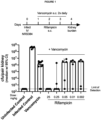
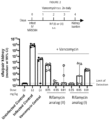
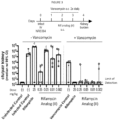
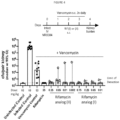
- mice Six-week-old Balb/c mice were then infected intravenously through the tail vein with 100 ⁇ L of the bacterial suspension, for a final infectious dose of 1.5x10 ⁇ 7 cfu/mouse NRS384 or 6.0x10 ⁇ 7 N315. From one to three days post infection, indicated mice were treated with 110 mg/kg vancomycin subcutaneously twice daily where indicated. Rifamycin analogs (I) or (II) were administered subcutaneously at the indicated dose two days after infection. Mice were monitored for weight loss and body conditioning score throughout the infection. At four days post infection, mice were euthanized, and the S . aureus kidney burden was quantified by tissue homogenization followed by enumeration of colony forming units through serial dilution in PBS and plating onto trypticase soy agar plates. Data points represent the kidney burden from individual mice tested.
- Example 3A Median S. aureus NRS384 kidney burden in mice treated with rifampicin in combination with vancomycin
- Rifampicin was effective in combination with vancomycin at 25 and 0.25 mg/kg, but efficacy was reduced at lower doses.
- Example 3B Median S. aureus NRS384 kidney burden in mice treated with rifamycin analogs (I) or (II) in combination with vancomycin
- Rifamycin analogs (I) and (II) in combination with vancomycin are effective at reducing S . aureus kidney burden at lower doses than rifampicin in combination with vancomycin (Example 3A).
- rifamycin analog (II) reduced S . aureus kidney burden to below the limit of detection even at the lowest tested dose of 0.01 mg/kg.
- Example 3C Median S. aureus NRS384 kidney burden in mice treated with rifampicin or rifamycin analog (II) with or without combination with vancomycin
- rifamycin analog (II) is highly effective at low doses, including 0.05 and 0.002 mg/kg, reducing the bacterial load to below the limit of detection when given in combination with vancomycin.
- Rifamycin analog (II) in combination with vancomycin is more effective than either monotherapy, i.e., than rifamycin analog (II) alone or vancomycin alone, in reducing the bacterial burden.
- Example 3D Median S. aureus N315 kidney burden in mice treated with rifampicin or rifamycin analogs (I) or (II) in combination with vancomycin
- mice infected with S . aureus MSRA strain N315 were treated with 25 mg/kg rifampicin (control), or 0.01 - 0.75 mg/kg rifamycin analog (I), or 0.002 - 0.25 mg/kg rifamycin analog (II) in combination with vancomycin, with vancomycin alone as a control.
- Rifamycin analog (I) was efficacious in combination with vancomycin to reduce the bacterial load to below the limit of detection at a dose of 0.01 mg/kg.
- Rifamycin analog (II) was efficacious in combination with vancomycin to reduce the bacterial load to below the limit of detection at a dose of 0.002 mg/kg.
Landscapes
- Health & Medical Sciences (AREA)
- Life Sciences & Earth Sciences (AREA)
- General Health & Medical Sciences (AREA)
- Veterinary Medicine (AREA)
- Animal Behavior & Ethology (AREA)
- Medicinal Chemistry (AREA)
- Public Health (AREA)
- Chemical & Material Sciences (AREA)
- Pharmacology & Pharmacy (AREA)
- Epidemiology (AREA)
- Organic Chemistry (AREA)
- Bioinformatics & Cheminformatics (AREA)
- Communicable Diseases (AREA)
- Nuclear Medicine, Radiotherapy & Molecular Imaging (AREA)
- General Chemical & Material Sciences (AREA)
- Gastroenterology & Hepatology (AREA)
- Engineering & Computer Science (AREA)
- Oncology (AREA)
- Immunology (AREA)
- Proteomics, Peptides & Aminoacids (AREA)
- Chemical Kinetics & Catalysis (AREA)
- Pharmaceuticals Containing Other Organic And Inorganic Compounds (AREA)
- Medicines That Contain Protein Lipid Enzymes And Other Medicines (AREA)
- Nitrogen And Oxygen Or Sulfur-Condensed Heterocyclic Ring Systems (AREA)
Applications Claiming Priority (2)
| Application Number | Priority Date | Filing Date | Title |
|---|---|---|---|
| US202163166597P | 2021-03-26 | 2021-03-26 | |
| PCT/US2022/021922 WO2022204499A1 (en) | 2021-03-26 | 2022-03-25 | Rifamycin analogs in combination with vancomycin and uses thereof |
Publications (2)
| Publication Number | Publication Date |
|---|---|
| EP4313060A1 EP4313060A1 (en) | 2024-02-07 |
| EP4313060B1 true EP4313060B1 (en) | 2025-03-05 |
Family
ID=81308077
Family Applications (1)
| Application Number | Title | Priority Date | Filing Date |
|---|---|---|---|
| EP22716719.4A Active EP4313060B1 (en) | 2021-03-26 | 2022-03-25 | Rifamycin analogs in combination with vancomycin and uses thereof |
Country Status (14)
| Country | Link |
|---|---|
| US (1) | US20240189319A1 (https=) |
| EP (1) | EP4313060B1 (https=) |
| JP (1) | JP2024511165A (https=) |
| KR (1) | KR20230162654A (https=) |
| CN (1) | CN117098540A (https=) |
| AU (1) | AU2022246161A1 (https=) |
| BR (1) | BR112023019720A2 (https=) |
| CA (1) | CA3213382A1 (https=) |
| CL (1) | CL2023002840A1 (https=) |
| CO (1) | CO2023013406A2 (https=) |
| ES (1) | ES3017798T3 (https=) |
| IL (1) | IL307220A (https=) |
| MX (1) | MX2023011328A (https=) |
| WO (1) | WO2022204499A1 (https=) |
Families Citing this family (2)
| Publication number | Priority date | Publication date | Assignee | Title |
|---|---|---|---|---|
| WO2024221162A1 (zh) * | 2023-04-24 | 2024-10-31 | 丹诺医药(苏州)有限公司 | 化合物预防关节假体周围感染的方法 |
| KR20260012505A (ko) | 2024-07-18 | 2026-01-27 | 이화여자대학교 산학협력단 | 기계 학습을 이용한 반코마이신 초회 투여량 적합성 판단 시스템 및 방법 |
Family Cites Families (2)
| Publication number | Priority date | Publication date | Assignee | Title |
|---|---|---|---|---|
| CN118955710A (zh) * | 2018-05-09 | 2024-11-15 | 里珍纳龙药品有限公司 | 抗msr1抗体及其使用方法 |
| PH12021551476A1 (en) * | 2018-12-21 | 2022-04-25 | Regeneron Pharma | Rifamycin analogs and antibody-drug conjugates thereof |
-
2022
- 2022-03-25 ES ES22716719T patent/ES3017798T3/es active Active
- 2022-03-25 AU AU2022246161A patent/AU2022246161A1/en not_active Abandoned
- 2022-03-25 IL IL307220A patent/IL307220A/en unknown
- 2022-03-25 BR BR112023019720A patent/BR112023019720A2/pt unknown
- 2022-03-25 MX MX2023011328A patent/MX2023011328A/es unknown
- 2022-03-25 KR KR1020237036447A patent/KR20230162654A/ko active Pending
- 2022-03-25 US US18/552,303 patent/US20240189319A1/en active Pending
- 2022-03-25 CA CA3213382A patent/CA3213382A1/en active Pending
- 2022-03-25 EP EP22716719.4A patent/EP4313060B1/en active Active
- 2022-03-25 CN CN202280025168.0A patent/CN117098540A/zh active Pending
- 2022-03-25 JP JP2023558774A patent/JP2024511165A/ja active Pending
- 2022-03-25 WO PCT/US2022/021922 patent/WO2022204499A1/en not_active Ceased
-
2023
- 2023-09-25 CL CL2023002840A patent/CL2023002840A1/es unknown
- 2023-10-09 CO CONC2023/0013406A patent/CO2023013406A2/es unknown
Also Published As
| Publication number | Publication date |
|---|---|
| US20240189319A1 (en) | 2024-06-13 |
| CN117098540A (zh) | 2023-11-21 |
| BR112023019720A2 (pt) | 2024-01-23 |
| CO2023013406A2 (es) | 2023-10-30 |
| AU2022246161A1 (en) | 2023-10-12 |
| KR20230162654A (ko) | 2023-11-28 |
| ES3017798T3 (en) | 2025-05-13 |
| CA3213382A1 (en) | 2022-09-29 |
| WO2022204499A1 (en) | 2022-09-29 |
| MX2023011328A (es) | 2023-12-14 |
| CL2023002840A1 (es) | 2024-03-15 |
| EP4313060A1 (en) | 2024-02-07 |
| IL307220A (en) | 2023-11-01 |
| JP2024511165A (ja) | 2024-03-12 |
Similar Documents
| Publication | Publication Date | Title |
|---|---|---|
| CA2846107C (en) | Nitrogen containing compounds and their use | |
| CN101553470A (zh) | 抗菌的喹啉衍生物 | |
| JP5961177B2 (ja) | 化合物及びその使用 | |
| EP4313060B1 (en) | Rifamycin analogs in combination with vancomycin and uses thereof | |
| CN108658991B (zh) | 3,5-二取代甲基吡唑并[1,5-a]嘧啶-7-酚盐类似物和衍生物制备方法和用途 | |
| CN108368079A (zh) | 治疗细菌感染的化合物及方法 | |
| RS61194B1 (sr) | Postupak za pravljenje hinolonskih jedinjenja | |
| WO2011113361A1 (zh) | 头孢唑肟钠结晶水合物及其制备方法和用途 | |
| CN105636966A (zh) | 抗细菌铁载体-氨基青霉素缀合物 | |
| CN101232884A (zh) | 作为抗菌剂的喹啉衍生物 | |
| CN111787921A (zh) | 锌离子载体及其用途 | |
| US10570179B2 (en) | Substituted urea depsipeptide analogs as activators of the CLPP endopeptidase | |
| CA2924733A1 (en) | Aryl substituted aminomethyl spectinomycin analogs as antibacterial agents | |
| HK40105351A (en) | Rifamycin analogs in combination with vancomycin and uses thereof | |
| HK40105351B (en) | Rifamycin analogs in combination with vancomycin and uses thereof | |
| CN101541752A (zh) | 抗菌的喹啉衍生物 | |
| CN104981238B (zh) | 抗细菌化合物 | |
| WO2018213378A1 (en) | Inhibitors of nucleotidyltransferase superfamily enzymes as antibiotics | |
| US20250228841A1 (en) | Compositions affecting pigment production and methods for treatment of bacterial diseases | |
| EP4406952A1 (en) | New compounds for treating staphylococcus infections | |
| EP4406945A1 (en) | New compounds for treating streptococcus infections | |
| CN110885313A (zh) | 一种抗菌活性四苯基吡唑化合物及其制备方法与应用 | |
| HK1122210B (en) | Quinoline derivatives as antibacterial agents | |
| HK1137431B (en) | Antibacterial quinoline derivatives | |
| HK1137431A1 (en) | Antibacterial quinoline derivatives |
Legal Events
| Date | Code | Title | Description |
|---|---|---|---|
| STAA | Information on the status of an ep patent application or granted ep patent |
Free format text: STATUS: UNKNOWN |
|
| STAA | Information on the status of an ep patent application or granted ep patent |
Free format text: STATUS: THE INTERNATIONAL PUBLICATION HAS BEEN MADE |
|
| PUAI | Public reference made under article 153(3) epc to a published international application that has entered the european phase |
Free format text: ORIGINAL CODE: 0009012 |
|
| STAA | Information on the status of an ep patent application or granted ep patent |
Free format text: STATUS: REQUEST FOR EXAMINATION WAS MADE |
|
| 17P | Request for examination filed |
Effective date: 20231016 |
|
| AK | Designated contracting states |
Kind code of ref document: A1 Designated state(s): AL AT BE BG CH CY CZ DE DK EE ES FI FR GB GR HR HU IE IS IT LI LT LU LV MC MK MT NL NO PL PT RO RS SE SI SK SM TR |
|
| REG | Reference to a national code |
Ref country code: HK Ref legal event code: DE Ref document number: 40105351 Country of ref document: HK |
|
| GRAP | Despatch of communication of intention to grant a patent |
Free format text: ORIGINAL CODE: EPIDOSNIGR1 |
|
| STAA | Information on the status of an ep patent application or granted ep patent |
Free format text: STATUS: GRANT OF PATENT IS INTENDED |
|
| RAP3 | Party data changed (applicant data changed or rights of an application transferred) |
Owner name: REGENERON PHARMACEUTICALS, INC. |
|
| INTG | Intention to grant announced |
Effective date: 20240925 |
|
| GRAS | Grant fee paid |
Free format text: ORIGINAL CODE: EPIDOSNIGR3 |
|
| GRAA | (expected) grant |
Free format text: ORIGINAL CODE: 0009210 |
|
| STAA | Information on the status of an ep patent application or granted ep patent |
Free format text: STATUS: THE PATENT HAS BEEN GRANTED |
|
| AK | Designated contracting states |
Kind code of ref document: B1 Designated state(s): AL AT BE BG CH CY CZ DE DK EE ES FI FR GB GR HR HU IE IS IT LI LT LU LV MC MK MT NL NO PL PT RO RS SE SI SK SM TR |
|
| REG | Reference to a national code |
Ref country code: GB Ref legal event code: FG4D |
|
| REG | Reference to a national code |
Ref country code: CH Ref legal event code: EP |
|
| P01 | Opt-out of the competence of the unified patent court (upc) registered |
Free format text: CASE NUMBER: APP_8045/2025 Effective date: 20250218 |
|
| REG | Reference to a national code |
Ref country code: IE Ref legal event code: FG4D |
|
| REG | Reference to a national code |
Ref country code: DE Ref legal event code: R096 Ref document number: 602022011449 Country of ref document: DE |
|
| PGFP | Annual fee paid to national office [announced via postgrant information from national office to epo] |
Ref country code: AT Payment date: 20250417 Year of fee payment: 4 |
|
| REG | Reference to a national code |
Ref country code: ES Ref legal event code: FG2A Ref document number: 3017798 Country of ref document: ES Kind code of ref document: T3 Effective date: 20250513 |
|
| PG25 | Lapsed in a contracting state [announced via postgrant information from national office to epo] |
Ref country code: RS Free format text: LAPSE BECAUSE OF FAILURE TO SUBMIT A TRANSLATION OF THE DESCRIPTION OR TO PAY THE FEE WITHIN THE PRESCRIBED TIME-LIMIT Effective date: 20250605 |
|
| PG25 | Lapsed in a contracting state [announced via postgrant information from national office to epo] |
Ref country code: FI Free format text: LAPSE BECAUSE OF FAILURE TO SUBMIT A TRANSLATION OF THE DESCRIPTION OR TO PAY THE FEE WITHIN THE PRESCRIBED TIME-LIMIT Effective date: 20250305 |
|
| PGFP | Annual fee paid to national office [announced via postgrant information from national office to epo] |
Ref country code: DE Payment date: 20250423 Year of fee payment: 4 |
|
| REG | Reference to a national code |
Ref country code: NL Ref legal event code: MP Effective date: 20250305 |
|
| PGFP | Annual fee paid to national office [announced via postgrant information from national office to epo] |
Ref country code: ES Payment date: 20250425 Year of fee payment: 4 |
|
| REG | Reference to a national code |
Ref country code: LT Ref legal event code: MG9D |
|
| PG25 | Lapsed in a contracting state [announced via postgrant information from national office to epo] |
Ref country code: NO Free format text: LAPSE BECAUSE OF FAILURE TO SUBMIT A TRANSLATION OF THE DESCRIPTION OR TO PAY THE FEE WITHIN THE PRESCRIBED TIME-LIMIT Effective date: 20250605 |
|
| PGFP | Annual fee paid to national office [announced via postgrant information from national office to epo] |
Ref country code: IT Payment date: 20250331 Year of fee payment: 4 |
|
| PG25 | Lapsed in a contracting state [announced via postgrant information from national office to epo] |
Ref country code: HR Free format text: LAPSE BECAUSE OF FAILURE TO SUBMIT A TRANSLATION OF THE DESCRIPTION OR TO PAY THE FEE WITHIN THE PRESCRIBED TIME-LIMIT Effective date: 20250305 |
|
| PG25 | Lapsed in a contracting state [announced via postgrant information from national office to epo] |
Ref country code: LV Free format text: LAPSE BECAUSE OF FAILURE TO SUBMIT A TRANSLATION OF THE DESCRIPTION OR TO PAY THE FEE WITHIN THE PRESCRIBED TIME-LIMIT Effective date: 20250305 |
|
| PGFP | Annual fee paid to national office [announced via postgrant information from national office to epo] |
Ref country code: FR Payment date: 20250409 Year of fee payment: 4 |
|
| PG25 | Lapsed in a contracting state [announced via postgrant information from national office to epo] |
Ref country code: BG Free format text: LAPSE BECAUSE OF FAILURE TO SUBMIT A TRANSLATION OF THE DESCRIPTION OR TO PAY THE FEE WITHIN THE PRESCRIBED TIME-LIMIT Effective date: 20250305 Ref country code: GR Free format text: LAPSE BECAUSE OF FAILURE TO SUBMIT A TRANSLATION OF THE DESCRIPTION OR TO PAY THE FEE WITHIN THE PRESCRIBED TIME-LIMIT Effective date: 20250606 |
|
| PGFP | Annual fee paid to national office [announced via postgrant information from national office to epo] |
Ref country code: CH Payment date: 20250424 Year of fee payment: 4 |
|
| PG25 | Lapsed in a contracting state [announced via postgrant information from national office to epo] |
Ref country code: AT Free format text: LAPSE BECAUSE OF FAILURE TO SUBMIT A TRANSLATION OF THE DESCRIPTION OR TO PAY THE FEE WITHIN THE PRESCRIBED TIME-LIMIT Effective date: 20250305 |
|
| REG | Reference to a national code |
Ref country code: AT Ref legal event code: MK05 Ref document number: 1772293 Country of ref document: AT Kind code of ref document: T Effective date: 20250305 |
|
| PG25 | Lapsed in a contracting state [announced via postgrant information from national office to epo] |
Ref country code: NL Free format text: LAPSE BECAUSE OF FAILURE TO SUBMIT A TRANSLATION OF THE DESCRIPTION OR TO PAY THE FEE WITHIN THE PRESCRIBED TIME-LIMIT Effective date: 20250305 |
|
| PG25 | Lapsed in a contracting state [announced via postgrant information from national office to epo] |
Ref country code: SE Free format text: LAPSE BECAUSE OF FAILURE TO SUBMIT A TRANSLATION OF THE DESCRIPTION OR TO PAY THE FEE WITHIN THE PRESCRIBED TIME-LIMIT Effective date: 20250305 |
|
| PG25 | Lapsed in a contracting state [announced via postgrant information from national office to epo] |
Ref country code: SM Free format text: LAPSE BECAUSE OF FAILURE TO SUBMIT A TRANSLATION OF THE DESCRIPTION OR TO PAY THE FEE WITHIN THE PRESCRIBED TIME-LIMIT Effective date: 20250305 |
|
| PG25 | Lapsed in a contracting state [announced via postgrant information from national office to epo] |
Ref country code: PT Free format text: LAPSE BECAUSE OF FAILURE TO SUBMIT A TRANSLATION OF THE DESCRIPTION OR TO PAY THE FEE WITHIN THE PRESCRIBED TIME-LIMIT Effective date: 20250707 |
|
| PG25 | Lapsed in a contracting state [announced via postgrant information from national office to epo] |
Ref country code: PL Free format text: LAPSE BECAUSE OF FAILURE TO SUBMIT A TRANSLATION OF THE DESCRIPTION OR TO PAY THE FEE WITHIN THE PRESCRIBED TIME-LIMIT Effective date: 20250305 |
|
| VS25 | Lapsed in a validation state [announced via postgrant information from nat. office to epo] |
Ref country code: MD Free format text: LAPSE BECAUSE OF FAILURE TO SUBMIT A TRANSLATION OF THE DESCRIPTION OR TO PAY THE FEE WITHIN THE PRESCRIBED TIME-LIMIT Effective date: 20250305 |
|
| PG25 | Lapsed in a contracting state [announced via postgrant information from national office to epo] |
Ref country code: EE Free format text: LAPSE BECAUSE OF FAILURE TO SUBMIT A TRANSLATION OF THE DESCRIPTION OR TO PAY THE FEE WITHIN THE PRESCRIBED TIME-LIMIT Effective date: 20250305 Ref country code: CZ Free format text: LAPSE BECAUSE OF FAILURE TO SUBMIT A TRANSLATION OF THE DESCRIPTION OR TO PAY THE FEE WITHIN THE PRESCRIBED TIME-LIMIT Effective date: 20250305 |
|
| PG25 | Lapsed in a contracting state [announced via postgrant information from national office to epo] |
Ref country code: RO Free format text: LAPSE BECAUSE OF FAILURE TO SUBMIT A TRANSLATION OF THE DESCRIPTION OR TO PAY THE FEE WITHIN THE PRESCRIBED TIME-LIMIT Effective date: 20250305 |
|
| PG25 | Lapsed in a contracting state [announced via postgrant information from national office to epo] |
Ref country code: SK Free format text: LAPSE BECAUSE OF FAILURE TO SUBMIT A TRANSLATION OF THE DESCRIPTION OR TO PAY THE FEE WITHIN THE PRESCRIBED TIME-LIMIT Effective date: 20250305 |
|
| PG25 | Lapsed in a contracting state [announced via postgrant information from national office to epo] |
Ref country code: IS Free format text: LAPSE BECAUSE OF FAILURE TO SUBMIT A TRANSLATION OF THE DESCRIPTION OR TO PAY THE FEE WITHIN THE PRESCRIBED TIME-LIMIT Effective date: 20250705 |
|
| PG25 | Lapsed in a contracting state [announced via postgrant information from national office to epo] |
Ref country code: LU Free format text: LAPSE BECAUSE OF NON-PAYMENT OF DUE FEES Effective date: 20250325 |
|
| REG | Reference to a national code |
Ref country code: DE Ref legal event code: R097 Ref document number: 602022011449 Country of ref document: DE |
|
| REG | Reference to a national code |
Ref country code: BE Ref legal event code: MM Effective date: 20250331 |
|
| PG25 | Lapsed in a contracting state [announced via postgrant information from national office to epo] |
Ref country code: MC Free format text: LAPSE BECAUSE OF FAILURE TO SUBMIT A TRANSLATION OF THE DESCRIPTION OR TO PAY THE FEE WITHIN THE PRESCRIBED TIME-LIMIT Effective date: 20250305 |
|
| PLBE | No opposition filed within time limit |
Free format text: ORIGINAL CODE: 0009261 |
|
| STAA | Information on the status of an ep patent application or granted ep patent |
Free format text: STATUS: NO OPPOSITION FILED WITHIN TIME LIMIT |
|
| PG25 | Lapsed in a contracting state [announced via postgrant information from national office to epo] |
Ref country code: DK Free format text: LAPSE BECAUSE OF FAILURE TO SUBMIT A TRANSLATION OF THE DESCRIPTION OR TO PAY THE FEE WITHIN THE PRESCRIBED TIME-LIMIT Effective date: 20250305 |
|
| REG | Reference to a national code |
Ref country code: CH Ref legal event code: L10 Free format text: ST27 STATUS EVENT CODE: U-0-0-L10-L00 (AS PROVIDED BY THE NATIONAL OFFICE) Effective date: 20260114 |
|
| PG25 | Lapsed in a contracting state [announced via postgrant information from national office to epo] |
Ref country code: BE Free format text: LAPSE BECAUSE OF NON-PAYMENT OF DUE FEES Effective date: 20250331 |
|
| PG25 | Lapsed in a contracting state [announced via postgrant information from national office to epo] |
Ref country code: IE Free format text: LAPSE BECAUSE OF NON-PAYMENT OF DUE FEES Effective date: 20250325 |
|
| 26N | No opposition filed |
Effective date: 20251208 |
|
| VS25 | Lapsed in a validation state [announced via postgrant information from nat. office to epo] |
Ref country code: MA Free format text: FAILURE TO ELECT DOMICILE IN THE NATIONAL COUNTRY Effective date: 20250606 |
|
| VS25 | Lapsed in a validation state [announced via postgrant information from nat. office to epo] |
Ref country code: MA Free format text: LAPSE BECAUSE OF FAILURE TO SUBMIT A TRANSLATION OF THE DESCRIPTION OR TO PAY THE FEE WITHIN THE PRESCRIBED TIME-LIMIT Effective date: 20250305 |