EP4298151B1 - Neue antimikrobielle und antithrombogene medizinische vorrichtung - Google Patents
Neue antimikrobielle und antithrombogene medizinische vorrichtung Download PDFInfo
- Publication number
- EP4298151B1 EP4298151B1 EP22709674.0A EP22709674A EP4298151B1 EP 4298151 B1 EP4298151 B1 EP 4298151B1 EP 22709674 A EP22709674 A EP 22709674A EP 4298151 B1 EP4298151 B1 EP 4298151B1
- Authority
- EP
- European Patent Office
- Prior art keywords
- carbon atoms
- hydrocarbon chain
- unsubstituted
- substituted
- formula
- Prior art date
- Legal status (The legal status is an assumption and is not a legal conclusion. Google has not performed a legal analysis and makes no representation as to the accuracy of the status listed.)
- Active
Links
Images






Classifications
-
- C—CHEMISTRY; METALLURGY
- C08—ORGANIC MACROMOLECULAR COMPOUNDS; THEIR PREPARATION OR CHEMICAL WORKING-UP; COMPOSITIONS BASED THEREON
- C08G—MACROMOLECULAR COMPOUNDS OBTAINED OTHERWISE THAN BY REACTIONS ONLY INVOLVING UNSATURATED CARBON-TO-CARBON BONDS
- C08G71/00—Macromolecular compounds obtained by reactions forming a ureide or urethane link, otherwise, than from isocyanate radicals in the main chain of the macromolecule
- C08G71/04—Polyurethanes
-
- A—HUMAN NECESSITIES
- A61—MEDICAL OR VETERINARY SCIENCE; HYGIENE
- A61L—METHODS OR APPARATUS FOR STERILISING MATERIALS OR OBJECTS IN GENERAL; DISINFECTION, STERILISATION OR DEODORISATION OF AIR; CHEMICAL ASPECTS OF BANDAGES, DRESSINGS, ABSORBENT PADS OR SURGICAL ARTICLES; MATERIALS FOR BANDAGES, DRESSINGS, ABSORBENT PADS OR SURGICAL ARTICLES
- A61L27/00—Materials for grafts or prostheses or for coating grafts or prostheses
- A61L27/14—Macromolecular materials
- A61L27/18—Macromolecular materials obtained otherwise than by reactions only involving carbon-to-carbon unsaturated bonds
-
- A—HUMAN NECESSITIES
- A61—MEDICAL OR VETERINARY SCIENCE; HYGIENE
- A61L—METHODS OR APPARATUS FOR STERILISING MATERIALS OR OBJECTS IN GENERAL; DISINFECTION, STERILISATION OR DEODORISATION OF AIR; CHEMICAL ASPECTS OF BANDAGES, DRESSINGS, ABSORBENT PADS OR SURGICAL ARTICLES; MATERIALS FOR BANDAGES, DRESSINGS, ABSORBENT PADS OR SURGICAL ARTICLES
- A61L27/00—Materials for grafts or prostheses or for coating grafts or prostheses
- A61L27/28—Materials for coating prostheses
- A61L27/34—Macromolecular materials
-
- A—HUMAN NECESSITIES
- A61—MEDICAL OR VETERINARY SCIENCE; HYGIENE
- A61L—METHODS OR APPARATUS FOR STERILISING MATERIALS OR OBJECTS IN GENERAL; DISINFECTION, STERILISATION OR DEODORISATION OF AIR; CHEMICAL ASPECTS OF BANDAGES, DRESSINGS, ABSORBENT PADS OR SURGICAL ARTICLES; MATERIALS FOR BANDAGES, DRESSINGS, ABSORBENT PADS OR SURGICAL ARTICLES
- A61L29/00—Materials for catheters, medical tubing, cannulae, or endoscopes or for coating catheters
- A61L29/04—Macromolecular materials
- A61L29/06—Macromolecular materials obtained otherwise than by reactions only involving carbon-to-carbon unsaturated bonds
-
- A—HUMAN NECESSITIES
- A61—MEDICAL OR VETERINARY SCIENCE; HYGIENE
- A61L—METHODS OR APPARATUS FOR STERILISING MATERIALS OR OBJECTS IN GENERAL; DISINFECTION, STERILISATION OR DEODORISATION OF AIR; CHEMICAL ASPECTS OF BANDAGES, DRESSINGS, ABSORBENT PADS OR SURGICAL ARTICLES; MATERIALS FOR BANDAGES, DRESSINGS, ABSORBENT PADS OR SURGICAL ARTICLES
- A61L29/00—Materials for catheters, medical tubing, cannulae, or endoscopes or for coating catheters
- A61L29/08—Materials for coatings
- A61L29/085—Macromolecular materials
-
- C—CHEMISTRY; METALLURGY
- C08—ORGANIC MACROMOLECULAR COMPOUNDS; THEIR PREPARATION OR CHEMICAL WORKING-UP; COMPOSITIONS BASED THEREON
- C08G—MACROMOLECULAR COMPOUNDS OBTAINED OTHERWISE THAN BY REACTIONS ONLY INVOLVING UNSATURATED CARBON-TO-CARBON BONDS
- C08G18/00—Polymeric products of isocyanates or isothiocyanates
- C08G18/06—Polymeric products of isocyanates or isothiocyanates with compounds having active hydrogen
- C08G18/08—Processes
- C08G18/16—Catalysts
- C08G18/22—Catalysts containing metal compounds
- C08G18/24—Catalysts containing metal compounds of tin
- C08G18/244—Catalysts containing metal compounds of tin tin salts of carboxylic acids
- C08G18/246—Catalysts containing metal compounds of tin tin salts of carboxylic acids containing also tin-carbon bonds
-
- C—CHEMISTRY; METALLURGY
- C08—ORGANIC MACROMOLECULAR COMPOUNDS; THEIR PREPARATION OR CHEMICAL WORKING-UP; COMPOSITIONS BASED THEREON
- C08G—MACROMOLECULAR COMPOUNDS OBTAINED OTHERWISE THAN BY REACTIONS ONLY INVOLVING UNSATURATED CARBON-TO-CARBON BONDS
- C08G18/00—Polymeric products of isocyanates or isothiocyanates
- C08G18/06—Polymeric products of isocyanates or isothiocyanates with compounds having active hydrogen
- C08G18/28—Polymeric products of isocyanates or isothiocyanates with compounds having active hydrogen characterised by the compounds used containing active hydrogen
- C08G18/40—High-molecular-weight compounds
- C08G18/48—Polyethers
- C08G18/4833—Polyethers containing oxyethylene units
- C08G18/4837—Polyethers containing oxyethylene units and other oxyalkylene units
- C08G18/4845—Polyethers containing oxyethylene units and other oxyalkylene units containing oxypropylene or higher oxyalkylene end groups
-
- C—CHEMISTRY; METALLURGY
- C08—ORGANIC MACROMOLECULAR COMPOUNDS; THEIR PREPARATION OR CHEMICAL WORKING-UP; COMPOSITIONS BASED THEREON
- C08G—MACROMOLECULAR COMPOUNDS OBTAINED OTHERWISE THAN BY REACTIONS ONLY INVOLVING UNSATURATED CARBON-TO-CARBON BONDS
- C08G18/00—Polymeric products of isocyanates or isothiocyanates
- C08G18/06—Polymeric products of isocyanates or isothiocyanates with compounds having active hydrogen
- C08G18/70—Polymeric products of isocyanates or isothiocyanates with compounds having active hydrogen characterised by the isocyanates or isothiocyanates used
- C08G18/72—Polyisocyanates or polyisothiocyanates
- C08G18/74—Polyisocyanates or polyisothiocyanates cyclic
- C08G18/75—Polyisocyanates or polyisothiocyanates cyclic cycloaliphatic
- C08G18/758—Polyisocyanates or polyisothiocyanates cyclic cycloaliphatic containing two or more cycloaliphatic rings
-
- C—CHEMISTRY; METALLURGY
- C09—DYES; PAINTS; POLISHES; NATURAL RESINS; ADHESIVES; COMPOSITIONS NOT OTHERWISE PROVIDED FOR; APPLICATIONS OF MATERIALS NOT OTHERWISE PROVIDED FOR
- C09D—COATING COMPOSITIONS, e.g. PAINTS, VARNISHES OR LACQUERS; FILLING PASTES; CHEMICAL PAINT OR INK REMOVERS; INKS; CORRECTING FLUIDS; WOODSTAINS; PASTES OR SOLIDS FOR COLOURING OR PRINTING; USE OF MATERIALS THEREFOR
- C09D175/00—Coating compositions based on polyureas or polyurethanes; Coating compositions based on derivatives of such polymers
- C09D175/04—Polyurethanes
-
- A—HUMAN NECESSITIES
- A61—MEDICAL OR VETERINARY SCIENCE; HYGIENE
- A61L—METHODS OR APPARATUS FOR STERILISING MATERIALS OR OBJECTS IN GENERAL; DISINFECTION, STERILISATION OR DEODORISATION OF AIR; CHEMICAL ASPECTS OF BANDAGES, DRESSINGS, ABSORBENT PADS OR SURGICAL ARTICLES; MATERIALS FOR BANDAGES, DRESSINGS, ABSORBENT PADS OR SURGICAL ARTICLES
- A61L2300/00—Biologically active materials used in bandages, wound dressings, absorbent pads or medical devices
- A61L2300/40—Biologically active materials used in bandages, wound dressings, absorbent pads or medical devices characterised by a specific therapeutic activity or mode of action
- A61L2300/404—Biocides, antimicrobial agents, antiseptic agents
-
- A—HUMAN NECESSITIES
- A61—MEDICAL OR VETERINARY SCIENCE; HYGIENE
- A61L—METHODS OR APPARATUS FOR STERILISING MATERIALS OR OBJECTS IN GENERAL; DISINFECTION, STERILISATION OR DEODORISATION OF AIR; CHEMICAL ASPECTS OF BANDAGES, DRESSINGS, ABSORBENT PADS OR SURGICAL ARTICLES; MATERIALS FOR BANDAGES, DRESSINGS, ABSORBENT PADS OR SURGICAL ARTICLES
- A61L2300/00—Biologically active materials used in bandages, wound dressings, absorbent pads or medical devices
- A61L2300/40—Biologically active materials used in bandages, wound dressings, absorbent pads or medical devices characterised by a specific therapeutic activity or mode of action
- A61L2300/42—Anti-thrombotic agents, anticoagulants, anti-platelet agents
-
- A—HUMAN NECESSITIES
- A61—MEDICAL OR VETERINARY SCIENCE; HYGIENE
- A61L—METHODS OR APPARATUS FOR STERILISING MATERIALS OR OBJECTS IN GENERAL; DISINFECTION, STERILISATION OR DEODORISATION OF AIR; CHEMICAL ASPECTS OF BANDAGES, DRESSINGS, ABSORBENT PADS OR SURGICAL ARTICLES; MATERIALS FOR BANDAGES, DRESSINGS, ABSORBENT PADS OR SURGICAL ARTICLES
- A61L2420/00—Materials or methods for coatings medical devices
- A61L2420/02—Methods for coating medical devices
Definitions
- the present invention relates to a new medical device comprising polyhydroxyurethane, particularly a catheter or a prosthetic heart valve and a method of manufacturing thereof.
- the present invention also relates to the use of the medical device to load and release a bioactive molecule, particularly an antibacterial or anti-thrombotic molecule.
- Medical devices for implant or insertion into the body of a patient are commonly used in the medical field.
- Catheters and indwelling tubing or prosthetic valves represent an important market size of medical devices.
- Medical devices such as implants are necessary in the treatment of patients, but can generate a risk of inflammation or infection by microorganisms due to the use of such implants or the procedure of placement of the implant in the body.
- Medical devices for implant or insertion into the body of a patient may also generate in-vivo calcification, degradation and thrombosis.
- the inflammation or infection of an implant begins with a colonization of the implant surface or its surrounding area with bacteria or formation of biofilm on the surface of the implant.
- PU Auranofin releasing antibacterial and antibiofilm polyurethane
- polyurethane compounds suffer from some serious issues.
- Polyurethane are based on isocyanate chemistry comprising a reaction between a diol and an isocyanate to form a linear polyurethane.
- the isocyanate based materials are toxic because they are synthetized from a toxic and hazardous phosgene. Also polyurethane based isocyanates are sensitive to moisture that can produce unstable monosubstituted carbamic acids, which decompose in a strongly exothermic reaction to produce urea and carbon dioxide.
- WO 2014/185856 discloses an implantable medical device comprising a polyhydroxyurethane and the production method thereof.
- Hannes Blattman et al in Macromolecular Rapid Communication (2014-07-30) pages 1238-1254 describes non-isocyanate polyurethane obtained from a polycyclocarbonate and a polyamine of different structure.
- WO 2013/060950 discloses medical device comprising hydroxyurethane obtained from cyclic carbonates and amino-compounds.
- Gabriel Rockiki Polymer for AdvancesTechnology (2015-05-13), p707-761 ) describes non-isocyanates polyurethanes of different structures.
- Each of these documents describe an implantable medical device comprising a polyhydroxyurethane. There is however no indication about their suitability to load bioactive molecules or how they should be adapted for this purpose.
- non-isocyanate polyurethanes also called polyhydroxyurethane (PHU) for use in the manufacture of a new medical device or for coating a medical device.
- the new medical device comprising one or more polyhydroxyurethane (PHU) can be loaded and release, or be grafted with bioactive molecules, particularly antibacterial, anti-thrombotic molecules or anti-calcification agents.
- non-isocyanate polyurethanes has many attractive features for biomedical applications, including low cost, excellent biocompatibility, low toxicity, and a variety of mechanical properties that allows their use in several manufacturing methods such as for example extrusion, co-extrusion, moulding or 3D printing methods.
- implantable medical device refers to all implantable foreign material for clinical use in host mammal such as for prosthetic joints, pacemakers, implantable cardioverter-defibrillators, catheters, such as intravascular or urinary catheters, stent including coronary stent, prosthetic heart valves, intraocular lens, dental implants, breast implants, endotracheal tubes, gastrostomy tubes and the like.
- the implantable medical device comprising polyhydroxyurethane (PHU) is a catheter that can be introduced in the host mammal to deliver fluids such as blood products, glucose solutions, medications diagnostic agents and so forth.
- Catheters may also be used for example to withdraw blood from vasculature in order to treat blood or to drain urine from the urinary bladder or for gathering of samples.
- catheter refers to urinary catheters, central venous catheters, cardiovascular catheters, neurovascular catheters, intravenous catheters, and specialty catheters, but also endotracheal tubes, cannulae, ophthalmic catheter and the like.
- the catheter according to the invention comprises one or more polyhydroxyurethanes (PHU).
- PHU polyhydroxyurethanes
- the catheter according to the invention may be partially or totally made of one or more polyhydroxyurethane (PHU).
- the catheter according to the invention may be partially or totally coated with one or more polyhydroxyurethane (PHU).
- PHU polyhydroxyurethane
- the medical device comprising one or more polyhydroxyurethane (PHU) is a prosthetic heart valve such as a polymeric valve, a mechanical valve or a bioprosthetic valve.
- the prosthetic heart valve comprising one or more polyhydroxyurethane (PHU) may be partially or totally made of one or more polyhydroxyurethane (PHU).
- the prosthetic heart valve comprising one or more polyhydroxyurethane (PHU) may be partially or totally coated with one or more polyhydroxyurethane (PHU).
- valves are mechanical valves.
- the mechanical valves may be mono or bi-leaflet heart valves made of either pyrolytic carbon or titanium coated with pyrolytic carbon and further coated with one or more polyhydroxyurethane (PHU).
- PHU polyhydroxyurethane
- the valves are bioprosthetic valves.
- the bioprosthetic valve also called tissue valve can be a bi-leaflet or tri-leaflet heart valve having tissues components provided by a donor animal and further coated with one or more polyhydroxyurethane (PHU).
- PHU polyhydroxyurethane
- the valves are polymeric valves.
- the Polymeric valve can be a bi-leaflet or tri-leaflet heart valve totally or partly made from one or more polyhydroxyurethane (PHU).
- PHU polyhydroxyurethane
- the polymeric valve may also be totally or partly coated on its surface with PHU, when made from another polymeric composition.
- host mammal refers to a human, but can also refer to an animal.
- the new medical device comprising said one or more non-isocyanate polyurethanes or polyhydroxyurethane (PHU), as a coating at the surface thereof and/or as main component of the medical device's bulk composition, is advantageously more hemocompatible, inducing less coagulation and less platelet adhesion than medical device comprising isocyanate-based Polyurethane.
- PHU polyhydroxyurethane
- the new medical device comprising said one or more non-isocyanate polyurethanes or polyhydroxyurethane (PHU), can advantageously load and release one or more bioactive molecules for local therapeutical treatment.
- the invention provides a medical device comprising one or more polyhydroxyurethane (PHU) based on formula (1), optionally obtained by thermal polymerisation wherein n is an integer greater or equal to 1 (n ⁇ 1), preferably n is between 1 and 100, more preferably between 1 and 20.
- PHU polyhydroxyurethane
- the polyhydroxyurethane obtained by thermal polymerisation is either a linear or a network structure.
- R 3 and R 4 represents an hydrogen atom
- R 1 is not or and when R 3 and R 4 represent an hydrogen atom, then R 2 is not
- the medical device according to the invention is characterised in that the one or more polyhydroxyurethane (PHU) is based on formula (1)
- R 1 is polypropylene oxide, polyethylene oxide, polybutylene oxide, polytetrahydrofuran, or a mixture thereof and R 2 is an alkylene.
- the medical device according to the present invention wherein the polyhydroxyurethane based on formula (1) is obtained by thermal polyaddition of polycyclocarbonate of formula (2)
- the medical device according to the invention is characterised-in-that the polycylocarbonate of formula (2) is a polypropylene glycol)-bis-cyclocarbonate (PPGbisCC) of formula (5) wherein m is an integer ⁇ 1, preferably between 1 and 100, most preferably between 1 and 10; and the polyamine is 4-4'methylene-bis-(cyclohexylamine) (MBCHA) of formula(4)
- PPGbisCC polypropylene glycol)-bis-cyclocarbonate
- m is an integer ⁇ 1, preferably between 1 and 100, most preferably between 1 and 10
- the polyamine is 4-4'methylene-bis-(cyclohexylamine) (MBCHA) of formula(4)
- the medical device according to the invention is characterised-in-that the polyamine is 4,4'methylene-bis-(cyclohexylamine) of formula (4) in combination with tris(2-aminoethyl)amine (TAEA) of formula (6).
- the polyamine is 4,4'methylene-bis-(cyclohexylamine) of formula (4) in combination with tris(2-aminoethyl)amine (TAEA) of formula (6).
- the medical device according to the invention is characterised-in-that the polycyclocarbonate is polytetrahydrofuranebiscyclocarbonate of formula (8) wherein p is an integer is ⁇ 1, preferably between 1 and 100, most preferably between 1 and 10; and the polyamine is 4-4'methylene-bis-(cyclohexylamine) (MBCHA) of formula (4).
- p is an integer is ⁇ 1, preferably between 1 and 100, most preferably between 1 and 10
- the polyamine is 4-4'methylene-bis-(cyclohexylamine) (MBCHA) of formula (4).
- the medical device according to the invention characterised-in-that the polyamine is polyamine is 4-4'methylene-bis-(cyclohexylamine) of formula (4) in combination with tris(2-aminoethyl)amine (TAEA) of formula (6)
- the polyhydroxyurethane (PHU) of the medical device according to the invention is based on formula (9):
- the polyhydroxyurethane (PHU) of the medical device according to the invention is based on formula (9) and is obtained by UV polyaddition of a polyallylcarbamatehydroxy derivative of formula (10) with a dithiol of formula (11) and a photoinitiator;
- the medical device according to the invention is characterised in that the polyallylcarbamatehydroxy derivative is a polyallylcarbamatehydroxypropyleneoxide of formula(14) wherein t ⁇ 1, preferably t is between 1 and 1000 and most preferably between 1 and 20.
- the medical device of the invention is a catheter or a prosthetic heart valve.
- the resent invention also encompasses a method of manufacturing a medical device comprising polyhydroxyurethane as described herein; characterised in that the method comprises a mixture step (a) or (b) corresponding respectively to a thermal or UV polymerisation:
- the present invention also encompasses a method of coating a medical device comprising a polyhydroxyurethane as described herein; the method comprising depositing onto a surface of the medical device at least one layer of polyhydroxyurethane based on formula (1) or on formula (9)
- the medical device according to the invention further comprises a bioactive molecule, preferably an antibacterial or an anti-thrombotic agent.
- PHUs based on formula (1) with a linear structure such as when R 3 and R 4 represents an hydrogen atom can advantageously be used in Fused Filament Fabrication(FFF) or Fused Deposition Modeling (FDM), also called 3D printing
- FFF Fused Filament Fabrication
- FDM Fused Deposition Modeling
- polyhydroxyurethane (PHU) of formula (1) is obtained by thermal polyaddition of a polyamine of formula (3) with a polycyclocarbonate of formula (2)
- polycyclocarbonates used in the present invention are:
- the polycyclocarbonates can be prepared by any methods known by the art, for instance from polyols by converting all or part of the alcohol functions of said polyol into glydicylether functions, followed by carbonation of said glycidylether functions as described in EP 3 199 569A1 , or by epoxidation of molecules bearing at least 2 external double bonds, followed by the (organo)catalyzed carbon dioxide coupling reaction as described by L.-N. He & al., "One-pot stepwise synthesis of cyclic carbonates directly from olefins with CO2 promoted by K2S2O8/NaBr", J. CO2 Util., 2016, 16, 313-317 and by R.
- the polyamine of formula (3) can be a primary, a secondary or a tertiary polyamine.
- the polyamines of formula (3) are for example diamines, in particular linear aliphatic diamines, such as 1,2-diaminoethane, 1,3-diaminopropane, butane-1,4-diamine, pentane-1,5-diamine, 1,6-diaminohexane, or 1,12-diaminododecane, hexamethylenediamine, 4,9-dioxa-1,12-dodecanediamine, 2,2'-(ethane-1,2-diylbis(oxy))diethanamine or cyclic aliphatic diamines, such as isophoronediamine (IPDA), triamines, such as tris(2-aminoethyl)amine (TAEA), or any other polyamines, such as polyethylene imine or dimeric fatty acid diamines or aromatic diamine, such as o-xylylenediamine, m-xylylenediamine, p-
- multifunctional amines with long chain segments and/or a low number of -NH 2 functionalities may yield a linear and flexible structure; while the use of polyamine with short chain segments and a higher number of -NH 2 functionalities may yield crosslinked and more rigid network structure.
- the polyamine of formula (3) is a primary polydiamine, most preferably 4-4'-methylenebis(cyclohexylamine) (MBCHA) of formula (4) to provide a polyhydroxyurethane PHU of formula (1) wherein R 2 is a methylenebis(cyclohexyl) group
- a primary polyamine can be used in combination with another primary polyamine or in combination with a secondary or tertiary polyamine.
- primary polyamine refers to a polyamine of formula (3) wherein R 5 and R 6 are hydrogen.
- second polyamine refers to a polyamine of formula (3) wherein either R 5 or R 6 is hydrogen.
- ternary polyamine refers to a polyamine of formula (3) wherein R 5 and R 6 are both different from hydrogen.
- the thermal polyaddition is a ring opening reaction of the polycyclocarbonate of formula (2) with a polyamine of formula (3) under temperature between 10 to 100°C, preferably between 65 and 80°C.
- the polycyclocarbonate of formula (2) reacts with the polyamine used as a nucleophile (Nu)).
- the thermal polyaddition is preferably carried out with a catalyst used to increase the kinetics of the carbonate/amine reaction and to permit the decarboxylation of the cyclic carbonate.
- a catalyst used to increase the kinetics of the carbonate/amine reaction and to permit the decarboxylation of the cyclic carbonate.
- a wide range of catalysts can be used (see for instance Blain et al., Green Chemistry 2014, 16, 4286 ).
- the choice of suitable catalyst depends on the specific formulation used but also on the temperature used to form the poyhydroxyurethane.
- the catalyst may be chosen from amine catalysts, such as triazabicyclodecene (TBD), 1,4-diazabicyclo[2.2.2]octane (DABCO), 1,8-diazabicyclo[5.4.0]undec-7-ene (DBU), 7-Methyl-1,5,7-triazabicyclo[4.4.0]dec-5-ene (MTBD) , or other guanidines and amidines, trimethylhydroxyethyl ethylene diamine, trimethylaminopropylethanolamine, dimethylethanolamine, bis(2-dimethylaminoethyl) ether, triethylenediamine, dimethylaminocyclohexane, N-methyl morpholine, dimethylaminopyridine (DMAP), trimethylamine (NEt 3 ), trimethylamine, phosphazenes, phosphines (triaryl and trialkylphosphines).
- TBD triazabicyclodecene
- the catalyst may also be chosen from ionic salts or ionic liquids composed of a combination of a cation and an anion.
- the cation may be selected from alkali metals such as Na + , Li + , K + , Cs + or other metal such as Mg 2+ , Ca 2+ or organic cations including ammonium , phosphonium , imidazolium, pirazolium, triazolium, tetrazolium, pyridinium, piperidinium, pyrrolidinium, guanidinium or amidinium as described in WO2021/004993 .
- polyether refers to a straight or branched aliphatic or aromatic polymeric chain comprising two or more ether (-O- ) linkage.
- polyether particularly refers to polyalkylene oxide C 2n H 4n O n+1 such as polypropylene oxide also called polyproylene glycol, polyethylene oxide also called polyethylene glycol, polybutylene oxide also called polybutylene glycol or a mixture thereof.
- polyethylene oxide refers to: wherein n is an integer that is sufficiently large to have molecular weight from about 300 to about 10,000g/mol.
- polypropylene oxide refers to: wherein n is an integer that is sufficiently large to have molecular weight from about 300 to about 10,000g/mol.
- polybutylene oxide refers to: wherein n is an integer that is sufficiently large to have molecular weight from about 300 to about 10,000 g/mol.
- polyester refers to a straight or branched aliphatic or aromatic polymeric chain comprising two or more carboxyl (-COO- ) linkages.
- polyol refers to a straight or branched aliphatic or aromatic polymeric chain comprising two or more alcohol group.
- polysiloxane or silicone as used herein refers to a polymer consisting of a silicon-oxygen backbone of formula (18) wherein n is an integer that is sufficiently large to have molecular weight from about 300 to about 10000g/mol.
- C 1-6 -alkyl refers to a straight or branched, saturated hydrocarbon chain having 1 to 6 carbon atoms such as e.g. methyl, ethyl, n-propyl, isopropyl, n-butyl, sec-butyl, isobutyl, tert-butyl, n-pentyl, 2-methylbutyl, 3-methylbutyl, n-hexyl, 4-methylpentyl, neopentyl, n-hexyl, 1,2-dimethylpropyl, 2,2-dimethylpropyl and 1,2,2-trimethylpropyl.
- C 1-6 -alkoxy refers to a straight or branched monovalent substituent comprising a C 1-6 -alkyl group linked through an ether oxygen having its free valence bond from the ether oxygen and having 1 to 6 carbon atoms e.g. methoxy, ethoxy, propoxy, isopropoxy, butoxy, pentoxy.
- heteroatom refers to an atom selected from N, O, S, Si and S(O)n (where n is 0, 1 or 2), SiO.
- cycloalkyl refers to a monovalent or bivalent 3 to 8 membered carbon ring, for example cyclopropyl, cyclobutyl, cyclopentyl, cyclohexyl, cycloheptyl or cyclooctyl.
- heterocycle refers monovalent or bivalent non-aromatic mono- or bi-cyclic radical of four to nine ring atoms in which one to three ring atoms are heteroatoms independently selected from N, O and S(O)n (where n is 0, 1 or 2), with the remaining ring atoms being C.
- heteroatoms independently selected from N, O and S(O)n (where n is 0, 1 or 2), with the remaining ring atoms being C.
- aryl refers a monovalent or bivalent aromatic carbocyclic group containing 6 to 14, particularly 6 to 10, carbon atoms and having at least one aromatic ring or multiple condensed rings in which at least one ring is aromatic. Examples include phenyl, benzyl, naphthyl, biphenyl, anthryl, azalenyl or indanyl.
- heteroaryl refers a monovalent or bivalent cyclic aromatic group containing 1, 2 or 3 heteroatoms, having at least one aromatic ring or multiple condensed rings in which at least one ring is aromatic.
- the aromatic ring may be a 6 membered ring, such as pyridinyl, or a 5-membered ring, such as thiazolyl, isoxazolyl, isothiazolyl, oxadiazolyl, imidazolyl, triazolyl or thiadiazolyl.
- the present invention provides a medical device comprising one or more polyhydroxyurethane (PHU) based on formula (7) wherein r is an integer equal or superior to 1 (r >, 1) and s is an integer equal or superior to 1 (s ⁇ 1) .
- PHU polyhydroxyurethane
- r is between 1 and 100, more preferably between 1 and 10.
- s is between 1 and 500, more preferably between 1 and 20, most preferably between 1 and 6.
- the polyhydroxyurethane (PHU) based on formula (7) also called polypropylene glycol based PHU may be obtained by thermal polyaddition between polypropylene glycol bis(cyclo-carbonate) (PPG biscc) of formula (5) wherein m is an integer equal or superior to 1 (m ⁇ 1); preferably m is between 1 and 1000, more preferably between 1 and 20; and 4-4'methylene-bis-(cyclohexylamine) (MBCHA) of formula (4)
- the Polypropylene glycol based PHU as described herein has the advantage to be more hemocompatible inducing less coagulation and platelet adhesion and less prone to bacterial infection than the corresponding polyurethane (PU) or polypropylene glycol based PU of formula (17) obtained by a reaction illustrated in figure 1 and wherein m and q are equal or superior to 1 (m ⁇ 1) and (q >, 1).
- the present invention provides a medical device comprising one or more polyhydroxyurethane (PHU) obtained by polyaddition between polypropylene glycol bis(cyclo-carbonate) (PPG bisCC) of formula (5) and a diamine, preferably 4-4'methylene-bis-(cyclohexylamine) (MBCHA) of formula (4) and with a triamine, preferably tris(2-aminoethyl)amine (TAEA) of formula (6).
- PHU polyhydroxyurethane
- PPG bisCC polypropylene glycol bis(cyclo-carbonate)
- MBCHA 4-4'methylene-bis-(cyclohexylamine)
- TAEA tris(2-aminoethyl)amine
- the resulting PHU becomes an interconnected 3D network with better mechanical properties.
- the present invention provides a medical device comprising one or more polyhydroxyurethane (PHU) obtained by thermal polyaddition of polytetrahydrofurane biscyclocarbonate (PTHF bisCC) of formula (8)
- the resulting polytetrahydrofurane based PHU obtained by thermal polyaddition has the advantage to be more hemocompatible inducing less coagulation and platelet adhesion and less prone to bacterial infection than the corresponding polyurethane (PTHF based PU).
- the present invention provides a medical device comprising one or more polyhydroxyurethane (PHU) obtained by thermal polyaddition of polytetrahydrofuran biscyclocarbonate of formula (8) with a diamine, preferably 4-4'-methylenebis(cyclohexylamine) of formula (4) and with a triamine, preferably tris(2-aminoethyl)amine (TAEA) of formula (6):
- PHU polyhydroxyurethane
- TEEA tris(2-aminoethyl)amine
- the invention provides a medical device comprising one or more polyhydroxyurethane (PHU) based on formula (9) and obtained by UV polymerisation.
- PHU polyhydroxyurethane
- the resulting polyhydroxyurethane based on formula (9) is a network structure.
- the polyhydroxyurethane (PHU) based on formula (9) is obtained by UV polymerisation in a two steps reaction:
- the first step is an aminolysis of polycarbonate of formula (2)
- an amine containing one or more olefins such as for example an allylamine to obtain a polyallylcarbamate hydroxy derivative bearing photoresponsive groups on the linear or branched hydrocarbon chain, particularly at the extremities of the main chain.
- the first step of aminolysis of polycarbonate of formula (2) is carried out with an allylamine to obtain a polyallylcarbamate hydroxy derivative of formula (10)
- the polyallylcarbamate hydroxy derivative of formula (10) contains vinyl photoresponsive groups at the extremities of the main linear or branched hydrocarbon chain, but may also contain vinyl photoresponsive groups on the main chain.
- the aminolysis may be carried out at a temperature between 20 and 100°C, preferably between 40°C and 60°C, most preferably 40°C.
- the aminolysis may be catalysed with DBU, DMAP, DABCO, TBD, MTBD and DBN as illustrated hereafter:
- the aminolysis is preferably carried out with DBU catalyst or 2,3,4,6,7,8,9,10-octahydropyrimido[1,2-a]azepine (DBU),
- the resulting polyallylcarbamate hydroxy derivative of formula (10) is then UV polymerised in presence of a thiol of formula (16) preferably of formula (11) as crosslinker and a photoinitiator.
- a thiol of formula (16) preferably of formula (11) as crosslinker and a photoinitiator.
- thiol refers to bi-thiols, tri-thiols, tetra-thiols, or hexa-thiol preferably pentaerythrityl tetrathiol, thiol trimethyol propane, pentaerythritol tetra (3-mercaptopropionate), trimethylolpropane tri (3-mercaptopropionate), pentaerythritol tetrathioglycolate and/or trimethylolpropane thioglycolate, tris [2-(3-mercaptopropionyloxy)ethyl] isocyanurate.
- a telechelic, branched or multiarms polymer bearing thiol groups at each chain-end such as polyethylene glycol dithiol or polypropylene glycol dithiol
- thiol groups at each chain-end such as polyethylene glycol dithiol or polypropylene glycol dithiol
- polymer backbone such as polyethylene glycol dithiol or polypropylene glycol dithiol
- a peptide or protein containing at least two thiols such as polyethylene glycol dithiol or polypropylene glycol dithiol
- Preferred di-thiol and trithiol are for example 2-2'(ethylenedioxy)diethanethiol of formula (12) and 2,2-bis(3-sulfanylpropanoyloxymetyl)butyl -sufanylpropanoate of formula (13).
- photoinitiator refers for example to bis(2,4,6-trimethylbenzoyl)-phenylphosphineoxide also called Irgacure 819; bis-(4-methoxybenzoyl)diethylgermanium also called Ivocerin; 2,3-bornanedione also called camphorquinone; Lithium phenyl-2,4,6-trimethylbenzoylphosphinate also called LAP, Riboflavin-5-phosphate.
- the photoiniator is Irgacure 819.
- the photoinitiator may be used at a low concentration between 0 and 0.1%, preferably below 0.1%.
- UV polymerization occurs at a wavelength between 300 and 400nm preferably at 365 nm.
- UV polymerization may be further combined with heating to increase the crosslinking and evaporate trace of solvent. Such additional heating may be carried out between 40 and 100°C, preferably 70°C.
- the resulting polyhydroxyurethane of formula (9) comprises hydroxyl groups and other groups that can advantageously be used to load and release bioactive molecules for local medical treatment.
- the first step is an aminolysis of polypropyleneoxidebicyclocarbonate of formula (5), also called PPGbisCC wherein m is an integer equal or superior to 1, preferably m is between 1 and 1000, more preferably between 1 and 20.
- the bicyclocarbonate of formula (5) is first reacted with an allylamine to obtain a polyallylcarbamatehydroxypropyleneoxide of formula (14) also called PPG-allyl wherein t is an integer superior or equal to 1, preferably t is between 1 and 1000, more preferably between 1 and 20
- the polyallylcarbamatehydroxypropyleneoxide of formula (14) is then crosslinked with a dithiol of formula (13) in presence of a photoinitiator such bis(2,4,6-trimethylbenzoyl)-phenylphosphineoxide under UV radiation preferably from 300 to 400nm, most preferably 365nm.
- the medical device is made or partly made of one or more polyhydroxyurethane (PHU), particularly of PHU based on formula (1) or of PHU based on formula (9).
- the medical device made or partly made of polyhydroxyurethane (PHU) may optionally be reinforced with high surface area particles or fibers to improve mechanical properties, such as for example tensile strength, elongation at break, Elastic and shear modulus.
- the Polyhydroxyurethane (PHU) structure based on formula (1) may optionally be reinforced by addition of high surface area particles or fibers such as for example silica, functionalized silica, polypropylene terephthalate mesh or polyethylene mesh or a mixture thereof.
- high surface area particles or fibers such as for example silica, functionalized silica, polypropylene terephthalate mesh or polyethylene mesh or a mixture thereof.
- the addition of high surface area particles or fibers is made in the mixture of polycarbonate of formula (2) with polyamine of formula (3) before thermal polymerization.
- the polyhydroxyurethane (PHU) structure based on formula (9) may optionally be reinforced by addition of high surface area particles or fibers such as for example silica, functionalized silica, polypropylene terephthalate mesh or polyethylene mesh or a mixture thereof.
- high surface area particles or fibers such as for example silica, functionalized silica, polypropylene terephthalate mesh or polyethylene mesh or a mixture thereof.
- the addition of high surface area particles or fibers is made in the mixture of polyallylcarbamate hydroxy derivative of formula (10) with thiol of formula (11) before UV polymerization.
- the medical device made or partly made of one or more polyhydroxyurethane (PHU) optionally with high surface area particles may be carried out by casting, injection molding, extrusion, coextrusion, spraying, 3D printing, coating or additive manufacturing to produce the medical device according to the invention.
- PHU polyhydroxyurethane
- the medical device partly or totally made of one or more PHU is advantageously more hemocompatible inducing less coagulation and platelet adhesion and less prone to bacterial infection than corresponding medical device comprising polyurethane (PU)
- the medical device partly or totally made of one or more PHU may advantageously load and release bioactive molecules, thereby providing a local medical treatment.
- the medical device comprises one or more polyhydroxyurethane (PHU); particulary PHU based on formula (1) or PHU based on formula (9) coated at least partly or totally on the surface of the medical device, for example on the surface of a catheter or of a prosthetic heart valve.
- PHU polyhydroxyurethane
- the polyhydroxyurethane (PHU) used to coat at least partly or totally the surface of a medical device may be anchored or attached onto the surface of the medical device, using various physical or chemical methods, such as surface irradiation, layer-by-layer (LbL) assembly, spin coating, plasma deposition and the like.
- the medical device partly or totally coated with one or more PHU is advantageously more hemocompatible inducing less coagulation and platelet adhesion and less prone to bacterial infection than corresponding medical device coated with polyurethane (PU).
- PU polyurethane
- the at least partly or totally PHU coated medical device may advantageously be loaded and release, or be grafted with bioactive molecules, thereby providing a local medical treatment.
- the medical device is a catheter comprising a shaft made of one or more polyhydroxyurethane (PHU) or is a catheter coated with one or more polyhydroxyurethane (PHU).
- the shaft may be a single lumen shaft, shafts with multiple lumens, such as for example two, three, four or even more.
- the shaft is prepared by extrusion of one or more polyhydroxyurethane (PHU) according to methods well known in the art, during a monolayer or multi-layer co-extrusion process.
- the medical device is a prosthetic valve made or partly made of one or more polyhydroxyurethane (PHU).
- PHU may be synthetised directly in molds designed to mimic native valve having symmetric tri-leaflet design as reproduced in figure 2 .
- polyhydroxyurethane In order to meet the properties of a native valve, polyhydroxyurethane (PHU) should have mechanical properties strong enough such as a Young's modulus around 2-3MPa, a tensile strength superior to 1.5MPa and an elastic deformation superior to 35%.
- polyhydroxyurethane PHU
- PHU polyhydroxyurethane
- Such properties are met with polyhydroxyurethane (PHU), but may be improved after incorporation of a reinforced particle such as silica by creation of crosslinking nodes to which polyhydroxyurethane are attached by their OH groups or after incorporation of reinforced polyester mesh to improve tensile strength.
- reinforced mesh are polyethylene or polypropylene terephthalate mesh.
- Prosthetic heart valve may be made by 3D printing with a computer program that was optimized for valve designs to meet computational fluid dynamics.
- the new medical device made or coated with one or more PHU can advantageously comprise bioactive molecules that are further released progressively over time, thereby providing medical treatment such as for example improved anti-infectious or anti-thrombotic effect.
- the PHU is impregnated with one or more bioactive molecules.
- the medical device comprises one or more PHU impregnated with bioactive molecules.
- the medical device comprises one or more PHU grafted with bioactive molecules.
- the new medical device comprising one or more PHU impregnated with bioactive molecules advantageously provide localised delivery to provide rapid therapeutic activity while minimizing offsite toxicity and lowering susceptibility to resistance.
- polyhydroxyurethane (PHU) can load bioactive molecules by immersion in a solvent containing the bioactive molecules.
- the polyhydroxyurethane (PHU) according to the invention swells when in contact of the solvent allowing the loading of the bioactive molecules.
- the solvent of immersion may be alcohol, water, THF, CH 2 Cl 2 or a mixture thereof or any other solvent mixture which can solubilize the bioactive molecules and swell the PHU.
- the loading of the bioactive molecules occurs through H-binding with OH groups of PHU.
- the polyhydroxyurethane (PHU) of the present invention can release the bioactive molecules over time upon implementation in the human body.
- polyhydroxyurethane (PHU) of the present invention can be grafted with bioactive molecules by methods known in the art.
- bioactive molecule refers for example to antibacterial agent, anti-biofilm formation agent, anti-platelet agents, anti-coagulants, anti-thrombotic agents, and anti-calcification agents.
- the bioactive molecule may be incorporated within the bulk of the medical device made of one or more polyhydroxyurethane (PHU) or at the surface of the medical device coated with one or more polyhydroxyurethane.
- Bioactive molecule may include any agent which is desired to be delivered to cells, tissues or organs for modulating or otherwise modifying cell function, including for therapeutic effects.
- Bioactive molecules include, but are not limited to, pharmaceutically active compounds or diagnostic compounds.
- Bioactive molecules include, but are not limited to, nucleotides (aptamers, RNAi, antisense oligonucleotides), peptides, oligopeptides, proteins, apoproteins, glycoproteins, antigens and antibodies or antibody fragments thereto, receptors and other membrane proteins, retro-inverso oligopeptides, protein analogs in which at least one non-peptide linkage replaces a peptide linkage, enzymes, coenzymes, enzyme inhibitors, amino acids and their derivatives, hormones, lipids, phospholipids, liposomes, ricin or ricin fragments; toxins such as aflatoxin, digoxin, xanthotoxin, rubratoxin; analgesics such as aspirin
- nucleotides include nucleotides; oligonucleotides; polynucleotides; and their art-recognized and biologically functional analogs and derivatives including, for example, methylated polynucleotides and nucleotide analogs having phosphorothioate linkages; plasmids, cosmids, artificial chromosomes, other nucleic acid vectors; antisense polynucleotides including those substantially complementary to at least one endogenous nucleic acid or those having sequences with a sense opposed to at least portions of selected viral or retroviral genomes; promoters; enhancers; inhibitors; other ligands for regulating gene transcription and translation.
- the bioactive molecule may be an anti-infective agent.
- Anti-infective agents include, but are not limited to antibiotics, such as amikacin, gentamicin, kanamycin, neomycin, netilmicin, tobramycin, paromomycin, streptomycin, spectinomycin, geldanamycin, herbimycin, rifaximin, loracarbef, ertapenem, dorpenem, imipenem/cilastatin, meropenem, cefadroxil, cefazolin, cefalotin, cephalexin, cefaclor, cefamandole, cefoxitin, cefproxil, cefuroxime, cefixime, cefdinir, cedfitoren, cefoperazone, cefotaxime, cefpodoxime, ceftazidime, ceftibuten, ceftizoxime, ceftriaxone, cefepime, ce
- Anti-biofilm formation agents include, but are not limited to naturally occurring peptides such as human cathelicidin LL-37 or the bovine peptide indolicidin, or synthetic peptides such as 1018, natural compounds with 2-aminoimidazole moiety, 2-aminoimidazole based inhibitors, benzimidazoles analogs, indole-triazo-amide analogs, plant-derived biofilm inhibitors such as emodin, phloretin, casbane diterpene, resveratrol and its oligomers, sulphur derivatives, brominated furanone analogs, bromopyrrole alkaloids, skyllamycins and (-)-ageloxime D structures, cembranoids, N-acyl homoserine lactone analogs, carolacton, molecules that interfere with the formation of amyloid-like fibres, fatty acids, nitric oxide donors, ionic liquids as 1-alkyl-3-methyl imidazolium chloride, 1-
- Anti-platelet agents include, but are not limited to, irreversible cyclooxygenase inhibitors such as aspirin and trifusal (Disgren), Adenosine diphosphate (ADP) receptor inhibitors such as Clopidogrel (Plavix), prasugrel (Effient), ticagrelor (Brilinta), ticlopidine (Ticlid), Phosphodiesterase inhibitors such as cilostazol (Pletal), Protease-activated receptor-1 (PAR-1) antagonists such as vorapaxar (Zontivity), glycoprotein IIB/IIIA inhibitors (intravenous use only) such as abciximab (ReoPro), eptifibatide (Integrilin), tirofiban (Aggrastat), Adenosine reuptake inhibitors such as dipyridamole (Persantine), thromboxane inhibitors, thromboxane synthase inhibitors and thromboxane
- Anti-coagulants include, but are not limited, to acenocoumarol, coumatetralyl, dicoumarol, ethyl biscoumacetate, phenprocoumon, warfarin, clorindione, dipjenadione, phenindione, ticlomarol, bemiparin, certoparin, ardeparin, dalteparin, enoxaparin, nadroparin, parnaparin, reviparin, dabigatran, apixaban, betrixabaan, darexaban, edoxaban, otamixaban, rivaroxaban, alteplase, danaparoid, tinzaparin, and fondaparinux.
- Thrombolytic agents include, but are not limited to, alteplase, reteplase, tenecteplase, saruplase, urokinase, anistreplase, monteplase, streptokinase, ancrod, brinase and fibrinolysin.
- Anti-thrombotic agents comprises anti-coagulants and anti-platelet agents.
- Anti-calcification agents include, but are not limited to, bisphosphonates, aluminium salts, glutaraldehyde, amino oleic acid, and metalloproteinase inhibitors.
- the method of manufacturing the medical device comprising one or more polyhydroxyurethane (PHU) may optionally further comprise an addition of reinforced particle or fiber in the mixture step (a) or (b).
- step (a) or (b) may be then further processed either by moulding, extrusion, coextrusion or 3D printing to obtain respectively by thermal or UV polymerisation a medical device comprising a polyhydroxyurethane based respectively on formula (1) or (9) .
- photoresponsive group refers to one or more vinyl or allyl groups.
- Poly(ethylene glycol) biscyclocarbonate was synthetised by coupling CO 2 with PEG diglycidyl ether 500g/mol (0.06 mol, 30g, 1eq.) from Sigma Aldrich, using a bicomponent organocatalyst that combined tetra butyl ammoniumiodide (TBAI 0.03 mol, 0.05eq) from Sigma Aldrich as the catalyst in 80 ml highpressure cell equipped with a mechanical stirrer (Autoclave Top Industrie).
- the coupling reaction illustrated in Figure 3 was performed at 80°C and 100 bar using 5 mole % of catalyst ([TBAI]). These conditions ensured a complete conversion of the terminal epoxy rings into the corresponding cyclic carbonates in 24 hours.
- Poly(ethylene glycol) biscyclocarbonate was collected and TBAI was removed by liquid-liquid extractions.
- Polyethylene glycol) biscyclocarbonate was first solubilized in 400ml of chloroform, washed with 4 ⁇ 400ml of Milli-Qwater and finally 400 ml of Milli-Qwater with ammonium sulfate (10 g/l). The organic fraction iwas collected and rotavaped.
- Example 2 thermal synthesis of polyhydroxyurethane (PHU 728 and PHU 468 ) from polypropylene glycol biscyclo carbonate PPG bisCC (728 and 468).
- ANPIA1bL6 and ANPIA1bL7
- ANPIA1bL6 PPG bisCC 728 g/mol (1.92 mmol, 1.40 g, 1 eq., prepared from PPGDE 640 g/mol (see example 1)), 4-((4-aminocyclohexyl)methyl)cyclohexanamine (MBCHA, 0.38 mmol, 0.08 g, 0.2 eq.) from Sigma Aldrich and Tris(2-aminoethyl)amine (TAEA, 1.02 mmol, 0.15 g, 0.53 eq.) from Sigma Aldrich were introduced in a vial and magnetically stirred at 40 °C for 10 minutes. The resulting mixture was poured into a flat Teflon mold (5 x 2.5 x 0.1 cm) and placed at 70 °C in the oven for 24 hours.
- ANPIA1bL7 The same procedure was used with PPG bisCC 468 g/mol (prepared from PPGDE 380 g/mol) by adapting the quantities of the other reagents to keep the same molar ratios (PPGDE/MBCHA/TAEA: 1/0,2/0,53).
- Example 3 thermal synthesis of Polypropylene glycol based-polyurethane PU(L25C).
- the reaction proceeded for 5min, and the resultant melt was poured onto greased Kapton paper and pressed between two aluminum plates equipped with 1 mm spacers at 80 °C and 5 psi for 3 hr. After removing from the mold, the sample was post-cured at 100 °C for 24 h.
- Example 4 thermal synthesis of Polypropylene glycol based-polyurethane PU(L25D) also called PPG based PU.
- PPG based-PU L25D was prepared by mixing 4,4'-methylene bis(cyclohexyl isocyanate) (0.82 g, 3.13mmol) from Sigma Aldrich, triethanolamine (0.062 g, 0.41mmol) from Sigma Aldrich and polypropylene glycol (1g, 2.5mmol) from Sigma Aldrich.
- the second route to obtain a PHU network is the UV crosslinking.
- UV-PHU was synthetized in two steps according to the chemical reaction scheme illustrated in figure 4 .
- the first step is a grafting of allyl functions at the end of PPG bisCC chains. Allylamine was thus added in excess in order to obtain quantitative functionalization, and 2,3,4,7,8,9-octahydropyrimido(1,2-a)azepine (DBU) was used to catalyse the reaction.
- DBU 2,3,4,7,8,9-octahydropyrimido(1,2-a)azepine
- the PPG-allyl obtained in the first step reacts with the thiol groups of 2,2-bis(3-sulfanylpropanoyloxymethyl) butyl 3-sulfanylpropanoate as crosslinking agent and Irgacure 819 (BASF) as photoinitiator under UV irradiation (365 nm).
- This step led therefore to the PHU network.
- the second step is also described in more detail at example 17.
- Example 6 mechanical properties - comparison Polypropylene glycol based-PU and Polypropylene glycol based-PHU
- PBS phosphate-buffered saline water
- the Contact angles were measured using a contact angle meter DGD Fast/60 and the software WINDROP by GBX Instruments in surface energy mode. For each measurement, a droplet of 15 ⁇ l of Milli-Qwater was deposited on the surface of the material. Contact angles were then determined after 180 seconds. The measurements were repeated three times on three different spots.
- Example 7 synthesis of Polyhydroxyurethane as a crosslinked network
- Polypropylene glycol) diglycidyl ether (PPGDE) 640 g/mol (0.047 mol, 30 g, 1 eq.) from Sigma Aldrich and tetrabutylammonium iodide (TBAI, 0.047 mol, 1.73g, 0.05 eq.) from Sigma Aldrich were introduced in an 80 ml high pressure autoclave (Top Industrie).
- the stainless-steel reactor was then filled with 100 bars of CO 2 from Air Liquide and heated up to 80 °C for 24 hours. After depressurization of the reactor, the resulting product is collected and TBAI was removed by liquid-liquid extractions.
- PPG bisCC is first solubilized in 400 ml of chloroform, washed with 4 x 400 ml of Milli-Q water and finally 400 ml of Milli-Q water with ammonium sulfate (10 g/l) from Sigma Aldrich. The organic fraction was collected and the solvent removed by a rotary evaporator. The same procedure was used with PPGDE 380 g/mol (0.079 mol) from Sigma Aldrich and 0.079 moles of tetrabutylammonium iodide from Sigma Aldrich.
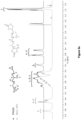
- Figure 5a shows the 1 H NMR spectra of PPGDE 640 g/mol and PPG bisCC after purification of the catalyst.
- the conversion of PPGDE to PPG bisCC is clearly shown as the peaks corresponding to epoxy groups in the range 2.6-3.2 ppm have completely disappeared in the PGG bisCC spectrum, while the peaks assigned to the cyclo-carbonates of PPG bisCC appear at 4.5 and 4.8 ppm.
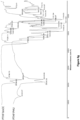
- the FTR-ATR spectra of PPGDE and PPG bisCC are also shown in Figure 5b .
- the total disappearance of the peaks assigned to the epoxy groups of PPGDE at 1250 cm -1 and 907 cm -1 is visible.
- Second step Synthesis of a crosslinked poly(hydroxyurethane) networks:
- PPG bisCC Bis(cyclocarbonate) polypropylene glycol) 728 g/mol (1.92 mmol, 1.40 g, 1 eq., prepared from PPGDE 640 g/mol, 4-((4-aminocyclohexyl)methyl)cyclohexanamine (MBCHA, 0.38 mmol, 0.08 g, 0.2 eq.) and N',N'-bis(2-aminoethyl)ethane-1,2-diamine (TAEA, 1.02 mmol, 0.15 g, 0.53 eq.) were introduced in a vial and magnetically stirred at 40 °C for 10 minutes. This solution was then poured into a flat Teflon mold (5 x 2.5 x 0.1 cm) and placed at 70 °C in the oven for 24 hours before being characterized by FTIR-ATR spectra.
- Figure 5c shows a FTIR-ATR spectra of bisCC PPG and PHU wherein the peaks corresponding to cyclo-carbonate functional groups of PTHF bisCC at 1797 cm -1 and 1166 cm -1 have completely disappeared, and new peaks corresponding to -OH and -NH groups (3340 cm -1 ), and CO (1698 cm -1 ), NH (1552 cm -1 ), N-CO-O and C-O-C (1342 cm -1 ) of urethane groups are visible.
- PPG bisCC 468 g/mol prepared from PPGDE 380 g/mol
- PPGDE 380 g/mol The same procedure was used with PPG bisCC 468 g/mol (prepared from PPGDE 380 g/mol) by adapting the quantities of the other reagents to keep the same molar ratios (2.99 mmol, 1.40 g and 1 eq. of BisCC PPG, 0.60 mmol, 0.13 g and 0.2 eq. of MBCHA and 1.58 mmol, 0.23 g and 0.53 eq. of TAEA).
- the amines used were sometimes varied but used in the same molar ratios.
- Example 8 thermal synthesis of Polytetrahydrofuran based-PHU
- PTHF Polytetrahydrofuran
- DEPTHF was then recovered by evaporation under vacuum of the excess of ECH and redissolved in dichloromethane (200 mL) from Aldrich.
- the CH2Cl2 solution was extracted twice with water, followed by drying over anhydrous magnesium sulfate, filtration, and elimination of dichloromethane.
- Figure 5d shows a 1H NMR spectra of PTHF and PTHF bisCC wherein the conversion of PTHF to DEPTHF was proved by the apparition of the peaks corresponding to epoxy groups in the range 2.6-3.2 ppm. Almost quantitative yield (91-97%) was observed after 12h of reaction at 40°C.
- Figure 5e shows a FTIR-ATR spectra of PTHF and PTHFDE wherein functionalization of PTHF was confirmed by apparition of a new peaks at 1250 cm -1 and 910 cm -1 corresponding to the epoxy groups and by the disappearance of the peaks at 3400 cm -1 assigned to the -OH groups of PTHF .
- Step 2 Synthesis of polytetrahydrofuran bis(cyclo-carbonate) (PTHF bisCC) 850g / mol:
- DEPTHF 760 g/mol (25 g, 1 eq.) and tetrabutylammonium iodide (TBAI, 0.6g, 0.05 eq.) were introduced in an 80 ml high pressure autoclave.
- the stainless-steel reactor was then filled with 100 bar of CO 2 from Air Liquide and heated up to 80 °C for 24 hours. After depressurization of the reactor, the resulting product was collected and TBAI was removed from it by liquid-liquid extractions.
- PTHF bisCC was thus first solubilized in 400 ml of chloroform, washed with 4 x 400 ml of Milli-Q water and finally 400 ml of Milli-Q water with ammonium sulfate (10 g/l)from Sigma Aldrich. The organic fraction was collected and rotavaped.
- Figure 5d shows the NMR analysis of PTHF and PTHF bisCC, wherein the total conversion of PTHFDE to PTHF bisCC is clearly confirmed, as the peaks corresponding to epoxy groups in the range 2.6-3.2 ppm have completely disappeared, while the peaks assigned to the cyclocarbonates of PTHF bisCC appear at 4.5 and 4.8 ppm.
- Figure 5f shows the FTR-ATR spectra of PTHFDE and PTHF bisCC wherein the apparition of the peaks assigned to the cyclocarbonate groups of PTHF bisCC are recorded at 1797 cm -1 and 1166 cm -1 .
- PTHF bisCC 850g/mol (1eq.) and 1,12-diaminododecane (eg.) from Sigma Aldrich were introduced in a vial and magnetically stirred at 120°C for 10 minutes.
- the resulting solution was then poured into a flat Teflon mold (5 x2.5 x0.1 cm) and placed at 40°C in an oven for 24 hours before being characterized by differential scanning calorimetry (DSC).
- the DSC analysis shows a Tg around -61 °C and a Tm that ranges from ⁇ 8 °C to ⁇ 14 °C, characteristic of a semi-crystalline polymer.
- Figure 5f shows a FTIR-ATR spectra of PTHF bisCC and PHU, wherein the peaks corresponding to cyclocarbonate functional groups of PTHF bisCC at 1797 cm -1 and 1166 cm -1 were completely disappeared, and new peaks corresponding to -OH and -NH groups (3340 cm -1 ), and CO (1698 cm -1 ), NH (1552 cm -1 ), N-CO-O and C-O-C (1342 cm -1 ) of urethane groups are visible.
- Example 9 loading and releasing of Minocycline over time - comparison polypropylene glycol based PU / polypropylene glycol based PHU and polytetrahydrofuran based-PU / polytetrahydrofuran based-PHU
- Polypropylene glycol based PU ( 380g/mol), Polytetrahydrofuran based-PU ( 650g/mol); Polypropylene glycol based PHU(468g/mol) and Polytetrahydrofuran based PHU (850g/mol) were immersed into 1 mL of a CH2CI2/C2H5OH (1:1) solution of minocycline (5 mg/mL) for 25min.
- PHU discs (7 mm) were immersed into 1 mL of a CH 2 Cl 2 /C 2 H 5 OH (1:1) solution of minocycline (5 mg/mL) for 25min.
- the swollen discs (7 mm) were wiped with filter paper and dried in a vacuum oven at room temperature for 2 h.
- the amount of minocycline loaded in the PHU discs were determined by soaking the films in PBS buffer solution (1 mL) for unloading under static condition.
- the release solutions were collected and completely replaced with fresh medium before the Minocycline was quantified/analyzed by HPLC spectrometry and compared to a standard concentration curve of minocycline in CH2Cl2/C2H5OH (1:1) solution.
- Figure 6 illustrates a much better release for PTHF PHU and PPG PHU with respectively 1 mg and 0,6 mg release after 6000min compared to PTHF based PU and PPG based PPU with respectively 0,01mg and no release after 6000min.
- Example 10 hemocompatibility, coagulation and platelet adhesion tests -comparison polypropylene glycol based PU(PPG-PU)/ polypropylene glycol based PHU (PPG-PHU) and polytetrahydrofuran based-PU(PTHF-PU) / polytetrahydrofuran based-PHU (PTHF-PHU).
- the present example describes five protocols of testing polymer hemocompatibility to further illustrate in examples 11-15 that the medical device comprising Polyhydroxyurethane according to the invention is more hemocompatible, inducing less coagulation and less platelet adhesion than medical device comprising medical grade polyurethanes used as reference.
- PU polyurethane
- SpeediCath ® medical grade urinary catheter, SpeediCath ® , Coloplast and Carbothane TM ref PC3585A, Lubrizol
- PHU PPG-PHU, PTHF-PHU
- UV-sterilized patches Prior to use, UV-sterilized patches were washed with sterile saline solution under shaking for 3 days. The washing solution was changed every day.
- the NaPTT reagent is a synthetic phospholipid platelet substitute intended for the study of activation of contact phase of coagulation.
- the Stago Analyzer is a semi-automated system integrated with an electro-mechanical clot detection method (Viscosity-based detection system). Clot formation in citrated human standard plasma is catalyzed by the addition of Ca 2+ ions as well as by phospholipids. Kaolin was used as a positive control for contact phase activation.
- Negative control plasma alone
- Positive control 100mg/mL kaolin
- Platelet adhesion on surfaces is analysed by using the p-NitroPhenil Phosphate (pNPP) test. Values obtained with this test are directly proportional to the number of platelets adhering to the surface.
- the pNPP test measures the levels of alkaline and acid phosphatases released upon platelet lysis. The hydrolysis of pNPP, a substrate of these phosphatases, produces p-nitrophenol, which has a maximal absorbance at 405nm and is proportional to the amount of platelets bound to the surface.
- Negative control blood incubated in empty wells
- Positive control blood incubated with zymosan 10 ⁇ g/ml
- Example 11 Comparison PU, PPG-PHU, PTHF-PHU in % hemolysis :
- PU polyurethane
- PHU polyhydroxyurethane
- Hemolysis rates were determined as described in the protocol of testing of example 10 at point a.
- hemolysis rates were all below 2%, which is considered non-hemolytic. Thus, neither PPG-PHU nor PTHF-PHU polymers caused hemolysis. The hemolysis rate was similar to that obtained in direct contact with a medical-grade PU, used as a reference control.
- Example 12 comparison PU, PPG-PHU in complement activation test:
- Complement activation is an immune system's reaction to inflammation and bacterial infection.
- PU polyurethane
- PHU polyhydroxyurethane
- Plasma was separated and levels of activated complement 5 (C5a) were determined by ELISA as described in the protocol of testing of example 10 at point e.
- PPG-PHU like medical grade PU, did not activate the complement cascade in contrast to zymosan which induced a clear increase in plasma C5a levels.
- Example 13 comparison PU, PPG-PHU, PTHF-PHU in contact phase activation coagulation test:
- PU polyurethane
- PHU polyhydroxyurethane
- Coagulation activation was assessed in a coagulometer upon plasma recalcification by using the NaPTT reagent as described in the protocol of testing of example 10 at point c.
- PPG-PHU made of PPG of two different molecular weight
- the positive control kaolin led to significantly shorter clotting times than the polymers.
- Baseline corresponds to plasma that was not put in contact with polymers.
- Example 14 comparison PU, PPG-PHU in human platelet adherence (absorbance test): Human platelets do not adhere on PPG-PHU
- PU polyurethane
- PHU polyhydroxyurethane
- Platelet adhesion was analysed by using the p-NitroPhenil Phosphate (pNPP) assay as described in the protocol of testing of example 10 at point b As shown in Figure 10 , human platelets did not adhere to PPG-PHU nor to medical grade PU, while adhesion was observed on fibrinogen.
- pNPP p-NitroPhenil Phosphate
- Example 15 comparison PU, PPG-PHU in human protein absorption:
- PU polyurethane
- PHU polyhydroxyurethane
- Example 16 synthesis allyl polypropylene glycol biscyclo carbonate PPG bisCC Mw 728 and 468
- Allyl functions were grafted on PPG bisCC 728 g/mol by mixing PPG bisCC 728 (1.30 mmol, 1 g, 1 eq.), allylamine (3.25 mmol, 0.19 g, 2.5 eq.) and 2,3,4,6,7,8,9,10-octahydropyrimido[1,2-a]azepine (DBU, 0.13 mmol, 0.02 g, 0.1 eq.) in a vial at 40 °C for 3-4 days. The mixture was then drawn under vacuum for several hours to remove the allylamine excess and obtained PPG with allyl at both extremities of the PPG chain.
- DBU 2,3,4,6,7,8,9,10-octahydropyrimido[1,2-a]azepine
- Example 17 UV synthesis of polyhydroxy urethane (PHU) : polypropylene glycol biscyclo carbonate PPG bisCC 728
- PPGbisCC728 and PPGbisCC468 were then removed from the molds and characterized by different techniques.
- the conversion of bisCC PPG into PPG-PHU-allyl was checked by 1 H NMR spectroscopy ( figure 5h ).
- the disappearance of the peaks assigned to the cyclo-carbonates of bisCC PPG located at 4.8 and 4.5 ppm is visible, so as the appearance of peaks corresponding to PPG-PHU-allyl in 5.9 - 5.8 and 5.2 - 5.1 ppm.
- the conversion of PPG-PHU-allyl into UV cured PPG-PHU networks was then checked and confirmed by IR spectroscopy.
- FTIR-ATR spectra of PPG-PHU-allyl and UV cured network are shown in figure 5i .
- the peaks corresponding to functional groups of PPG-PHU are also shown, namely -OH and -NH groups (3200-3500 cm -1 ), and CO (1711 cm -1 ), NH (1535 cm -1 ), N-CO-O and C-O-C (1256 cm -1 ) of urethane groups.
- Example 18 glass-transition temperature - comparison thermal and UV cured PPGbisCC728 (PHU1) and PGbisCC468(PHU2).
- UV-PHUs 1 and 2 have T g s of -23.1 and -4.7°C, respectively; while PHUs 1 and 2 have T g s of -25.1 and -1.3°C as show in Table 2.
- the same tendency was observed in thermogravimetry.
- the TGA curves of UV-PHUs 1 and 2 show thermal degradations similar to those of PHUs 1 and 2, i.e. between 300 and 350 °C.
- Example 19 Equilibrium Water Absorption - comparison thermal and UV cured PPGbisCC728(PHU1) and PGbisCC468(PHU2).
- PBS phosphate-buffered saline water
- EWA The equilibrium water absorption
- Example 20 Rheological properties: comparison thermal and UV cured PPGbisCC728(PHU1) and PGbisCC468(PHU2).
- Rheological properties were measured using two types of strain-controlled rheometer. The first one was used for thermal dynamic rheology (ARES from Rheometric Scientific) at 70 °C with the software TA Orchestrator, and the second was used for UV dynamic rheology (ARES G2 from TA Instruments) at room temperature and with the TRIOS program.
- the UV lamp was the same than for the UV syntheses, namely an Omnicure Series 2000 of 200 W at 365 nm.
- the gel point of UV-PHU 1 (GP 1 ) is lower than the gel point of PHU 2 (GP 2 ), which means that the crosslinking network is formed faster with the polymer of smaller masses.
- the storage modulus of PHU 2 being higher than the one of PHU 1 also indicates that its crosslinking degree is superior because the molar masses between the crosslinking nodes of PHU 2 are smaller.
- UV-PHU 1 are practically identical of those of PHU 1 , the similar PHU obtained by thermal crosslinking route (cf. Tables 2 and 3). However, this is not the case for UV-PHU 2 and PHU 2 . Indeed, while PHU 2 has a Young's modulus of 15.62 MPa, UV-PHU 2 shows an elastic modulus of only 1.53 MPa. Its stress and elongation at break are also lower compared to PHU 2 .
- UV-PHU 2 presents a higher T g value and higher stress and elongation at break in the hydrated state than UV-PHU 1 .
- the difference between the Young's modulus values obtained under dry and wet conditions is also much less significant than with thermal cured PHUs. This can be explained by a higher hydrophobic content of UV cured PHUs, due to the insertion of allyl groups and 2,2-bis(3-sulfanylpropanoyloxymethyl) butyl 3-sulfanylpropanoate.
- UV cured PHUs contain as much -OH groups as thermal cured PHUs. However, the ratio between polar and non-polar groups decreases drastically in UV cured PHUs.
- Example 21 3D printing of UV-PHU 1 and UV-PHU 2
- a sheet of PHUs was printed on a heating plate of a 3D printer.
- the parameters of 3D printing were a flow rate of 0.03 ml/min on a plate heated up to 70 °C and UV light exposure percentage of 50%.
- UV-PHU 2 was chosen since it showed the best mechanical properties.
- the 3D printed PHU showing the best results is shown in Table 6 (3D-PHU 1 ), in which 3D-PHU1 is compared to UV-PHU 2 , the same polymer but crosslinked without being 3D printed (cf. example 17).
- 3D-PHU 1 showed the same EWA than UV-PHU 2 (only 10%) and even higher mechanical properties, in both dry and hydrated states.
- Example 22 preparation of a prosthetic heart valve based on PHU.
- a tri-leaflet prosthetic heart valve prototype based on polyhydroxyurethane has been prepared by compression molding.
- the valve is at size 24 mm with a leaflet thickness of 0,5mm and is reproduced at Figure 2 .
- Bis(cyclocarbonate) polypropylene glycol) (bisCC PPG) 728 g/mol (1.92 mmol, 1.40 g, 1 eq., 4-((4-aminocyclohexyl)methyl) cyclohexanamine (MBCHA, 0.38 mmol, 0.08 g, 0.2 eq.) and N',N'-bis(2-aminoethyl)ethane-1,2-diamine (TAEA, 1.02 mmol, 0.15 g, 0.53 eq.) were introduced in a vial and magnetically stirred at 40 °C for 10 minutes. This solution was then injected inside a mold and placed at 70 °C in an oven for 24 hours.
- valve prototype was then tested in a pulse duplicator from Vivitro Labs, product code 18363 for its hydrodynamic properties and according to ISO 5840 requirements. Flow and pressure data were acquired under simulated cardiac conditions.
- EOA effective orifice area
- regurge fraction percentage
Landscapes
- Health & Medical Sciences (AREA)
- Chemical & Material Sciences (AREA)
- Chemical Kinetics & Catalysis (AREA)
- Medicinal Chemistry (AREA)
- Life Sciences & Earth Sciences (AREA)
- Organic Chemistry (AREA)
- Veterinary Medicine (AREA)
- Public Health (AREA)
- General Health & Medical Sciences (AREA)
- Animal Behavior & Ethology (AREA)
- Epidemiology (AREA)
- Polymers & Plastics (AREA)
- Transplantation (AREA)
- Oral & Maxillofacial Surgery (AREA)
- Dermatology (AREA)
- Wood Science & Technology (AREA)
- Materials Engineering (AREA)
- Engineering & Computer Science (AREA)
- Materials For Medical Uses (AREA)
Claims (15)
- Implantierbare medizinische Vorrichtung, umfassend ein oder mehrere Polyhydroxyurethane (PHU) 1, dadurch gekennzeichnet, dass das eine oder die mehreren Polyhydroxyurethane (PHU) auf Formel (1) oder auf Formel (9) basieren:

 wobei R1 für eine lineare oder verzweigte Kohlenwasserstoffkette steht, die unsubstituiert oder substituiert sein kann, und wobei eine oder mehrere Kohlenwasserstoffgruppen der Kohlenwasserstoffkette durch ein Heteroatom, ein Keton, ein Cycloalkyl, einen Heterocyclus, ein Aryl oder ein Heteroaryl ersetzt sein können, wobei jede dieser Gruppen substituiert oder unsubstituiert sein kann, wobei die Kohlenwasserstoffkette 2 bis 60 Kohlenstoffatome aufweist;wobei R2 für ein Aryl oder ein Heteroaryl, wobei jede dieser Gruppen unsubstituiert oder substituiert sein kann, oder eine lineare oder verzweigte Kohlenwasserstoffkette, die unsubstituiert oder substituiert sein kann, und wobei eine oder mehrere Kohlenwasserstoffgruppen der Kohlenwasserstoffkette durch ein Heteroatom, ein Cycloalkyl oder einen Heterocyclus ersetzt sein können, wobei jede dieser Gruppen unsubstituiert oder substituiert sein kann, wobei die Kohlenwasserstoffkette mindestens 2 Kohlenstoffatome, vorzugsweise 2 bis 60 Kohlenstoffatome, weiter bevorzugt 2 bis 20 Kohlenstoffatome, noch weiter bevorzugt 2 bis 15 Kohlenstoffatome, aufweist, oder eine Mischung davon steht; vorzugsweise R2 für ein Alkylen steht;wobei R3 und R4 gleich oder verschieden sind und für H, eine gerade oder verzweigte gesättigte Kohlenwasserstoffkette C1-6-Alkyl mit 1 bis 6 Kohlenstoffatomen; C1-6-Alkoxyalkyl mit 1 bis 6 Kohlenstoffatomen stehenund wobei n für eine ganze Zahl ≥ 1 steht, vorzugsweise n zwischen 1 und 100, weiter bevorzugt zwischen 1 und 20, steht;mit der Ausnahme, dass dann, wenn R3 und/oder R4 für ein Wasserstoffatom stehen, R3 nicht für
 und mit der Ausnahme, dass dann, wenn R3 und/oder R4 fürein Wasserstoffatom stehen, R2 nicht für
 wobei R8 für ein Aryl oder ein Heteroaryl, wobei jede dieser Gruppen unsubstituiert oder substituiert sein kann, oder eine lineare oder verzweigte Kohlenwasserstoffkette, die unsubstituiert oder substituiert sein kann, und wobei eine oder mehrere Kohlenwasserstoffgruppen der Kohlenwasserstoffkette durch ein Heteroatom, ein Cycloalkyl oder einen Heterocyclus ersetzt sein können, wobei jede dieser Gruppen unsubstituiert oder substituiert sein kann, wobei die Kohlenwasserstoffkette mindestens 2 Kohlenstoffatome, insbesondere 2 bis 60 Kohlenstoffatome, spezieller 2 bis 20 Kohlenstoffatome, noch spezieller 2 bis 15 Kohlenstoffatome, aufweist, oder eine Mischung davon steht; vorzugsweise R8 für ein Alkylen steht; undwobei u für eine ganze Zahl ≥ 1, vorzugsweise zwischen 1 und 10, weiter bevorzugt zwischen 1 und 5, steht.
 - Medizinische Vorrichtung nach Anspruch 1, wobei R1 für Polypropylenoxid, Polyethylenoxid, Polybutylenoxid, Polytetrahydrofuran oder eine Mischung davon steht.
- Medizinische Vorrichtung nach Anspruch 1, umfassend Polyhydroxyurethan (PHU) auf der Basis von Formel (1), wobei R1 für Polypropylenoxid, Polyethylenoxid, Polybutylenoxid, Polytetrahydrofuran oder eine Mischung davon steht und R2 für ein Alkylen steht.
- Medizinische Vorrichtung nach Anspruch 1, wobei das Polyhydroxyurethan auf Basis von Formel (1) erhalten wird durch thermische Polyaddition von Polycyclocarbonat der Formel (2)
 wobei R1 für eine Kohlenstoffbindung zwischen einem Cyclocarbonatring oder für eine lineare oder verzweigte Kohlenwasserstoffkette, die unsubstituiert oder substituiert sein kann, und wobei ein oder mehrere Kohlenwasserstoffgruppen der Kohlenwasserstoffkette durch ein Heteroatom, ein Keton, ein Cycloalkyl, einen Heterocyclus, ein Aryl oder ein Heteroaryl ersetzt sein können, wobei jede dieser Gruppen substituiert oder unsubstituiert sein kann, wobei die Kohlenwasserstoffkette 2 bis 40 Kohlenstoffatome aufweist, steht; vorzugsweise R1 für Polypropylenoxid, Polyethylenoxid, Polybutylenoxid, Polytetrahydrofuran oder eine Mischung davon steht;wobei x für eine ganze Zahl zwischen 1 und 4 steht;wobei y für eine ganze Zahl größer oder gleich 2 steht; mit einem Polyamin der Formel (3)
 wobei z für eine ganze Zahl zwischen 2 und 6 steht;wobei R2 für ein Aryl oder ein Heteroaryl, wobei jede dieser Gruppen unsubstituiert oder substituiert sein kann, oder eine lineare oder verzweigte Kohlenwasserstoffkette, die unsubstituiert oder substituiert sein kann, und wobei eine oder mehrere Kohlenwasserstoffgruppen der Kohlenwasserstoffkette durch ein Heteroatom, ein Cycloalkyl oder einen Heterocyclus ersetzt sein können, wobei jede dieser Gruppen unsubstituiert oder substituiert sein kann, wobei die Kohlenwasserstoffkette mindestens 2 Kohlenstoffatome, insbesondere 2 bis 60 Kohlenstoffatome, spezieller 2 bis 20 Kohlenstoffatome, noch spezieller 2 bis 15 Kohlenstoffatome, aufweist, steht; vorzugsweise R2 für ein Alkylen steht;wobei R5 und R6 gleich oder verschieden sind und für H , eine gerade oder verzweigte gesättigte Kohlenwasserstoffkette C1-6-Alkyl mit 1 bis 6 Kohlenstoffatomen stehen; vorzugsweise R5 und R6 für Wasserstoff stehen;mit der Ausnahme, dass dann, wenn R5 und/oder R6 für Wasserstoff stehen, R2 nicht für
 mit der Ausnahme, dass dann, wenn R5 und/oder R6 für ein Wasserstoffatom stehen, R1 nicht für

- Medizinische Vorrichtung nach Anspruch 4, dadurch gekennzeichnet, dass es sich bei dem Polycylocarbonat der Formel (2) um ein Poly(propylenglykol)biscyclocarbonat (PPGbisCC) der Formel (5) handelt, wobei m für eine ganze Zahl ≥ 1, vorzugsweise zwischen 1 und 100, ganz besonders bevorzugt zwischen 1 und 10, steht;


- Medizinische Vorrichtung nach Anspruch 5, dadurch gekennzeichnet, dass es sich bei dem Polyamin um 4,4'-Methylenbis(cyclohexylamin) der Formel (4) in Kombination mit Tris(2-aminoethyl)amin (TAEA) der Formel (6) handelt.

- Medizinische Vorrichtung nach Anspruch 4, dadurch gekennzeichnet, dass es sich bei dem Polycyclocarbonat um Polytetrahydrofuranbiscyclocarbonat der Formel (8) handelt, wobei p für eine ganze Zahl ≥ 1, vorzugsweise zwischen 1 und 100, ganz besonders bevorzugt zwischen 1 und 10, steht;


- Medizinische Vorrichtung nach Anspruch 7, dadurch gekennzeichnet, dass es sich bei dem Polyamin um 4-4'-Methylenbis(cyclohexylamin) der Formel (4) in Kombination mit Tris(2-aminoethyl)amin (TAEA) der Formel (6) handelt.


- Medizinische Vorrichtung nach Anspruch 1, wobei das Polyhydroxyurethan (PHU) auf Basis von Formel (9) erhalten wird durch thermische Addition von Polycarbonat der Formel (2)
 wobei R1 für eine Kohlenstoffbindung zwischen einem Cyclocarbonatring oder für eine lineare oder verzweigte Kohlenwasserstoffkette, die unsubstituiert oder substituiert sein kann, und wobei ein oder mehrere Kohlenwasserstoffgruppen der Kohlenwasserstoffkette durch ein Heteroatom, ein Keton, ein Cycloalkyl, einen Heterocyclus, ein Aryl oder ein Heteroaryl ersetzt sein können, wobei jede dieser Gruppen substituiert oder unsubstituiert sein kann, wobei die Kohlenwasserstoffkette 2 bis 60 Kohlenstoffatome aufweist, steht;wobei y für eine ganze Zahl gleich oder größer als 2 steht;wobei x für eine ganze Zahl zwischen 1 und 4 steht;mit einem Polyamin der Formel (15) unter Erhalt eines Polycarbamathydroxyderivats, das auf Licht ansprechende Gruppen trägt:
 wobei R2 für eine lineare oder verzweigte ungesättigte Kohlenwasserstoffkette mit 2 bis 40 Kohlenstoffatomen steht, wobei die lineare oder verzweigte ungesättigte Kohlenwasserstoffkette mindestens eine auf Licht ansprechende Gruppe trägt;wobei R5 für Wasserstoff steht und R6 für Wasserstoff, eine gerade oder verzweigte gesättigte Kohlenwasserstoffkette C1-6-Alkyl mit 1 bis 6 Kohlenstoffatomen steht, vorzugsweise R6 für Wasserstoff steht; undwobei z für eine ganze Zahl ≥ 1, vorzugsweise zwischen 1 und 6, steht;und das Polycarbamathydroxyderivat, das auf Licht ansprechende Gruppen trägt,weiter durch UV-Polyaddition mit einem Thiol der Formel (16), vorzugsweise einem Dithiol der Formel (11), und einem Photoinitiator umgesetzt wird;
R8-(SH)k (16);
 wobei R8 für ein Aryl oder ein Heteroaryl, wobei jede dieser Gruppen unsubstituiert oder substituiert sein kann, oder eine lineare oder verzweigte Kohlenwasserstoffkette, die unsubstituiert oder substituiert sein kann, und wobei eine oder mehrere Kohlenwasserstoffgruppen der Kohlenwasserstoffkette durch ein Heteroatom, ein Cycloalkyl oder einen Heterocyclus ersetzt sein können, wobei jede dieser Gruppen unsubstituiert oder substituiert sein kann, wobei die Kohlenwasserstoffkette mindestens 2 Kohlenstoffatome, insbesondere 2 bis 60 Kohlenstoffatome, spezieller 2 bis 20 Kohlenstoffatome, noch spezieller 2 bis 15 Kohlenstoffatome, aufweist, oder eine Mischung davon steht; vorzugsweise R8 für ein Alkylen steht;wobei k für eine ganze Zahl größer oder gleich 2, vorzugsweise zwischen 2 und 6, steht.
 - Medizinische Vorrichtung nach Anspruch 9, wobei es sich bei der auf Licht ansprechenden Gruppe um eine Allylgruppe handelt und es sich bei dem Polycarbamathydroxyderivat, das auf Licht ansprechende Gruppen trägt, um ein Polyallylcarbamathydroxyderivat der Formel (10)
 handelt, wobei R1 für eine lineare oder verzweigte Kohlenwasserstoffkette, die unsubstituiert oder substituiert sein kann, und wobei ein oder mehrere Kohlenwasserstoffgruppen der Kohlenwasserstoffkette durch ein Heteroatom, ein Keton, ein Cycloalkyl, einen Heterocyclus, ein Aryl oder ein Heteroaryl ersetzt sein können, wobei jede dieser Gruppen substituiert oder unsubstituiert sein kann, wobei die Kohlenwasserstoffkette 2 bis 60 Kohlenstoffatome aufweist, steht; vorzugsweise R1 für Polypropylenoxid, Polyethylenoxid, Polybutylenoxid, Polytetrahydrofuran oder eine Mischung davon steht;und es sich bei dem Thiol um ein Dithiol der Formel (11)
 handelt, wobei R8 für ein Aryl oder ein Heteroaryl, wobei jede dieser Gruppen unsubstituiert oder substituiert sein kann, oder eine lineare oder verzweigte Kohlenwasserstoffkette, die unsubstituiert oder substituiert sein kann, und wobei eine oder mehrere Kohlenwasserstoffgruppen der Kohlenwasserstoffkette durch ein Heteroatom, ein Cycloalkyl oder einen Heterocyclus ersetzt sein können, wobei jede dieser Gruppen unsubstituiert oder substituiert sein kann, wobei die Kohlenwasserstoffkette mindestens 2 Kohlenstoffatome, insbesondere 2 bis 60 Kohlenstoffatome, spezieller 2 bis 20 Kohlenstoffatome, noch spezieller 2 bis 15 Kohlenstoffatome, aufweist, oder eine Mischung davon steht; vorzugsweise R8 für ein Alkylen steht.
 - Medizinische Vorrichtung nach Anspruch 10, dadurch gekennzeichnet, dass es sich bei dem Polyallylcarbamathydroxyderivat um ein Polyallylcarbamathydroxypropylenoxid der Formel (14)

- Medizinische Vorrichtung nach einem der Ansprüche 1 bis 11, bei der es sich um einen Katheter oder eine künstliche Herzklappe handelt.
- Verfahren zur Herstellung einer implantierbaren medizinischen Vorrichtung, die Polyhydroxyurethan umfasst, nach einem der Ansprüche 1-11, dadurch gekennzeichnet, dass das Verfahren Schritt a) oder Schritt b) umfasst, die jeweils einer thermischen Polymerisation bzw. UV-Polymerisation oder einer Kombination davon entsprechen:a) Mischen eines Polycyclocarbonats der Formel (2) mit einem Polyamin der Formel (3) und gegebenenfalls einem Katalysator unter Erhalt eines Polyhydroxyurethans auf Basis von Formel (1) durch thermische Polymerisation;

 wobei R1 für eine Kohlenstoffbindung zwischen einem Cyclocarbonatring oder für eine lineare oder verzweigte Kohlenwasserstoffkette, die unsubstituiert oder substituiert sein kann, und wobei ein oder mehrere Kohlenwasserstoffgruppen der Kohlenwasserstoffkette durch ein Heteroatom, ein Keton, ein Cycloalkyl, einen Heterocyclus, ein Aryl oder ein Heteroaryl ersetzt sein können, wobei jede dieser Gruppen substituiert oder unsubstituiert sein kann, wobei die Kohlenwasserstoffkette 2 bis 40 Kohlenstoffatome aufweist, steht; vorzugsweise R1 für Polypropylenoxid, Polyethylenoxid, Polybutylenoxid, Polytetrahydrofuran oder eine Mischung davon steht;wobei R2 für ein Aryl oder ein Heteroaryl, wobei jede dieser Gruppen unsubstituiert oder substituiert sein kann, oder eine lineare oder verzweigte Kohlenwasserstoffkette, die unsubstituiert oder substituiert sein kann, und wobei eine oder mehrere Kohlenwasserstoffgruppen der Kohlenwasserstoffkette durch ein Heteroatom, ein Cycloalkyl oder einen Heterocyclus ersetzt sein können, wobei jede dieser Gruppen unsubstituiert oder substituiert sein kann, wobei die Kohlenwasserstoffkette mindestens 2 Kohlenstoffatome, vorzugsweise 2 bis 60 Kohlenstoffatome, weiter bevorzugt 2 bis 20 Kohlenstoffatome, noch weiter bevorzugt 2 bis 15 Kohlenstoffatome, aufweist, steht;wobei R5 und R6 gleich oder verschieden sind und für H, eine gerade oder verzweigte gesättigte Kohlenwasserstoffkette C1-6-Alkyl mit 1 bis 6 Kohlenstoffatomen stehen; vorzugsweise R5 und R6 für Wasserstoff stehen; mit der Ausnahme, dass dann, wenn R5 und/oder R6 für Wasserstoff stehen, R2 nicht für
 und mit der Ausnahme, dass dann, wenn R5 und/oder R6 für Wasserstoff stehen, R1 nicht für
 wobei R3 und R4 gleich oder verschieden sind und für H, eine gerade oder verzweigte gesättigte Kohlenwasserstoffkette C1-6-Alkyl mit 1 bis 6 Kohlenstoffatomen; C1-6-Alkoxyalkyl mit 1 bis 6 Kohlenstoffatomen stehen;und wobei n für eine ganze Zahl ≥ 1 steht, vorzugsweise n zwischen 1 und 100, weiter bevorzugt zwischen 1 und 20, steht;mit der Ausnahme, dass dann, wenn R3 und/oder R4 für ein Wasserstoffatom stehen, R1 nicht für
 b) Mischen eines Polyvinylcarbamathydroxyderivats, das auf Licht ansprechende Gruppen trägt, vorzugsweise der Formel (10), mit einem Thiol der Formel (16), vorzugsweise der Formel (11), und einem Photoinitiator unter Erhalt eines Polyhydroxyurethans auf Basis von Formel (9) durch UV-Polymerisation;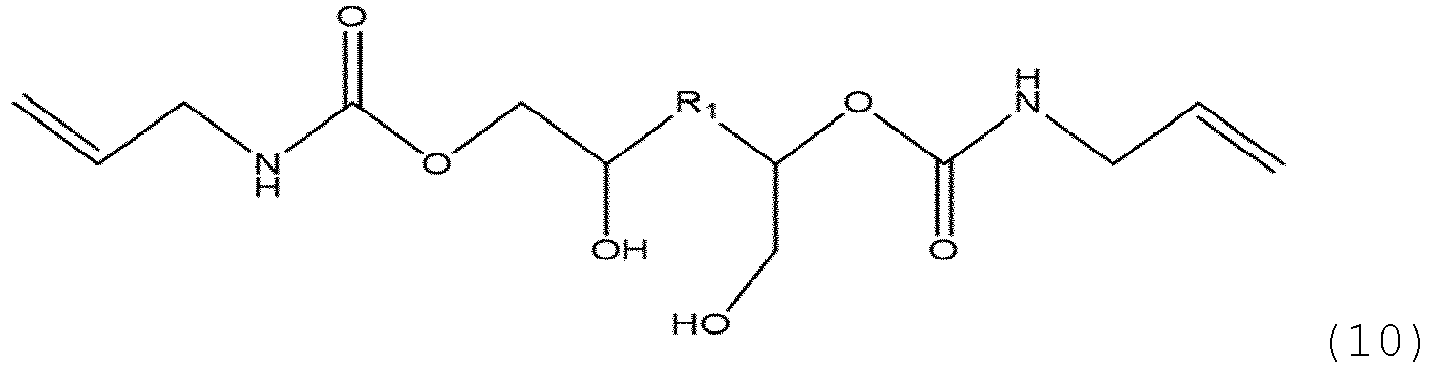
R8-(SH)k (16);

 wobei R1 für eine lineare oder verzweigte Kohlenwasserstoffkette, die unsubstituiert oder substituiert sein kann, und wobei ein oder mehrere Kohlenwasserstoffgruppen der Kohlenwasserstoffkette durch ein Heteroatom, ein Keton, ein Cycloalkyl, einen Heterocyclus, ein Aryl oder ein Heteroaryl ersetzt sein können, wobei jede dieser Gruppen substituiert oder unsubstituiert sein kann, wobei die Kohlenwasserstoffkette 2 bis 60 Kohlenstoffatome aufweist, steht; vorzugsweise R1 für Polypropylenoxid, Polyethylenoxid, Polybutylenoxid, Polytetrahydrofuran oder eine Mischung davon steht;wobei R8 für ein Aryl oder ein Heteroaryl, wobei jede dieser Gruppen unsubstituiert oder substituiert sein kann, oder eine lineare oder verzweigte Kohlenwasserstoffkette, die unsubstituiert oder substituiert sein kann, und wobei eine oder mehrere Kohlenwasserstoffgruppen der Kohlenwasserstoffkette durch ein Heteroatom, ein Cycloalkyl oder einen Heterocyclus ersetzt sein können, wobei jede dieser Gruppen unsubstituiert oder substituiert sein kann, wobei die Kohlenwasserstoffkette mindestens 2 Kohlenstoffatome, insbesondere 2 bis 60 Kohlenstoffatome, spezieller 2 bis 20 Kohlenstoffatome, noch spezieller 2 bis 15 Kohlenstoffatome, aufweist, oder eine Mischung davon steht; vorzugsweise R8 für ein Alkylen steht; undwobei k für eine ganze Zahl ≥ 2, vorzugsweise zwischen 2 und 6, steht;wobei u für eine ganze Zahl ≥ 1, vorzugsweise zwischen 1 und 10, weiter bevorzugt zwischen 1 und 5, steht.
 - Verfahren zum Beschichten einer implantierbaren medizinischen Vorrichtung, die Polyhydroxyurethan umfasst, nach einem der Ansprüche 1-11, das Verfaren das Aufbringen auf eine Oberfläche der medizinischen Vorrichtung von mindestens eine Schicht aus Polyhydroxyurethan auf Basis von Formel (1) und/oder Formel (9) umfasst:

 wobei R1 für eine Kohlenstoffbindung zwischen einem Cyclocarbonatring oder für eine lineare oder verzweigte Kohlenwasserstoffkette, die unsubstituiert oder substituiert sein kann, und wobei ein oder mehrere Kohlenwasserstoffgruppen der Kohlenwasserstoffkette durch ein Heteroatom, ein Keton, ein Cycloalkyl, einen Heterocyclus, ein Aryl oder ein Heteroaryl ersetzt sein können, wobei jede dieser Gruppen substituiert oder unsubstituiert sein kann, wobei die Kohlenwasserstoffkette 2 bis 40 Kohlenstoffatome aufweist, steht; vorzugsweise R1 für Polypropylenoxid, Polyethylenoxid, Polybutylenoxid, Polytetrahydrofuran oder eine Mischung davon steht;wobei R2 für ein Aryl oder ein Heteroaryl, wobei jede dieser Gruppen unsubstituiert oder substituiert sein kann, oder eine lineare oder verzweigte Kohlenwasserstoffkette, die unsubstituiert oder substituiert sein kann, und wobei eine oder mehrere Kohlenwasserstoffgruppen der Kohlenwasserstoffkette durch ein Heteroatom, ein Cycloalkyl oder einen Heterocyclus ersetzt sein können, wobei jede dieser Gruppen unsubstituiert oder substituiert sein kann, wobei die Kohlenwasserstoffkette mindestens 2 Kohlenstoffatome, vorzugsweise 2 bis 60 Kohlenstoffatome, weiter bevorzugt 2 bis 20 Kohlenstoffatome, noch weiter bevorzugt 2 bis 15 Kohlenstoffatome, aufweist, steht;wobei R3 und R4 gleich oder verschieden sind und für H, eine gerade oder verzweigte gesättigte Kohlenwasserstoffkette C1-6-Alkyl mit 1 bis 6 Kohlenstoffatomen; C1-6-Alkoxyalkyl mit 1 bis 6 Kohlenstoffatomen stehen;mit der Ausnahme, dass dann, wenn R3 und/oder R4 für ein Wasserstoffatom stehen, R1 nicht für
 und mit der Ausnahme, dass dann, wenn R3 und/oder R4 für ein Wasserstoffatom stehen, R2 nicht für
 wobei R8 für ein Aryl oder ein Heteroaryl, wobei jede dieser Gruppen unsubstituiert oder substituiert sein kann, oder eine lineare oder verzweigte Kohlenwasserstoffkette, die unsubstituiert oder substituiert sein kann, und wobei eine oder mehrere Kohlenwasserstoffgruppen der Kohlenwasserstoffkette durch ein Heteroatom, ein Cycloalkyl oder einen Heterocyclus ersetzt sein können, wobei jede dieser Gruppen unsubstituiert oder substituiert sein kann, wobei die Kohlenwasserstoffkette mindestens 2 Kohlenstoffatome, insbesondere 2 bis 60 Kohlenstoffatome, spezieller 2 bis 20 Kohlenstoffatome, noch spezieller 2 bis 15 Kohlenstoffatome, aufweist, oder eine Mischung davon steht; vorzugsweise R8 für ein Alkylen steht;wobei u für eine ganze Zahl ≥ 1, vorzugsweise zwischen 1 und 10, weiter bevorzugt zwischen 1 und 5, steht;und wobei n für eine ganze Zahl ≥ 1 steht, vorzugsweise n zwischen 1 und 100, weiter bevorzugt zwischen 1 und 20, steht.
 - Medizinische Vorrichtung nach einem der Ansprüche 1 bis 12, die ferner ein bioaktives Molekül, vorzugsweise ein antibakterielles Mittel oder ein Antithrombotikum, umfasst.
Applications Claiming Priority (2)
| Application Number | Priority Date | Filing Date | Title |
|---|---|---|---|
| EP21159597 | 2021-02-26 | ||
| PCT/EP2022/054854 WO2022180235A1 (en) | 2021-02-26 | 2022-02-25 | New antimicrobial and antithrombogenic medical device |
Publications (3)
| Publication Number | Publication Date |
|---|---|
| EP4298151A1 EP4298151A1 (de) | 2024-01-03 |
| EP4298151C0 EP4298151C0 (de) | 2024-11-06 |
| EP4298151B1 true EP4298151B1 (de) | 2024-11-06 |
Family
ID=74797816
Family Applications (1)
| Application Number | Title | Priority Date | Filing Date |
|---|---|---|---|
| EP22709674.0A Active EP4298151B1 (de) | 2021-02-26 | 2022-02-25 | Neue antimikrobielle und antithrombogene medizinische vorrichtung |
Country Status (5)
| Country | Link |
|---|---|
| US (1) | US20240139371A1 (de) |
| EP (1) | EP4298151B1 (de) |
| JP (1) | JP7737213B2 (de) |
| CN (1) | CN116368168A (de) |
| WO (1) | WO2022180235A1 (de) |
Families Citing this family (1)
| Publication number | Priority date | Publication date | Assignee | Title |
|---|---|---|---|---|
| EP4541837A1 (de) * | 2023-10-20 | 2025-04-23 | Université de Liège | Polyoxazolidonderivate und deren verwendung in medizinischen vorrichtungen |
Family Cites Families (9)
| Publication number | Priority date | Publication date | Assignee | Title |
|---|---|---|---|---|
| FR2981931B1 (fr) * | 2011-10-28 | 2014-07-04 | Gen Produits Ind S E G Soc D Expl | Procede de preparation d'un compose comprenant au moins un motif beta-hydroxy-urethane et/ou au moins un motif gamma-hydroxy-urethane. |
| JP5861923B2 (ja) * | 2011-12-22 | 2016-02-16 | Dic株式会社 | ガスバリア性多層フィルム |
| US20160096914A1 (en) * | 2013-05-16 | 2016-04-07 | Cyclicor Ab | Urethanes, polymers thereof, coating compositions and their production from cyclic carbonates |
| EP2813497B1 (de) * | 2013-06-13 | 2019-08-28 | Dentsply DeTrey GmbH | Dentale Zusammensetzung |
| CN106255723B (zh) * | 2014-04-25 | 2019-03-22 | 宣伟投资管理有限公司 | 多环碳酸酯化合物以及由其形成的聚合物和组合物 |
| EP3199569B1 (de) | 2016-01-29 | 2021-05-19 | FAURECIA Sièges d'Automobile | Isocyanatfreie polyurethanschäume |
| EP3292867B1 (de) | 2016-09-09 | 2019-05-15 | Université de Liège | Triazolo(4,5-d)pyrimidin-derivate zur vorbeugung und behandlung bakterieller infektionen |
| EP3527571A1 (de) | 2018-02-14 | 2019-08-21 | Université de Liège | Pyrimidinderivate zur vorbeugung und behandlung einer bakteriellen infektion |
| EP3760664A1 (de) | 2019-07-05 | 2021-01-06 | Université de Liège | Selbstblähende isocyanatfreie polyurethanschäume |
-
2022
- 2022-02-25 US US18/261,643 patent/US20240139371A1/en active Pending
- 2022-02-25 CN CN202280007091.4A patent/CN116368168A/zh active Pending
- 2022-02-25 EP EP22709674.0A patent/EP4298151B1/de active Active
- 2022-02-25 JP JP2023535497A patent/JP7737213B2/ja active Active
- 2022-02-25 WO PCT/EP2022/054854 patent/WO2022180235A1/en not_active Ceased
Also Published As
| Publication number | Publication date |
|---|---|
| EP4298151A1 (de) | 2024-01-03 |
| EP4298151C0 (de) | 2024-11-06 |
| US20240139371A1 (en) | 2024-05-02 |
| JP7737213B2 (ja) | 2025-09-10 |
| JP2024510363A (ja) | 2024-03-07 |
| WO2022180235A1 (en) | 2022-09-01 |
| CN116368168A (zh) | 2023-06-30 |
Similar Documents
| Publication | Publication Date | Title |
|---|---|---|
| JP5599712B2 (ja) | オリゴフッ素化架橋ポリマーおよびそれの使用 | |
| CN102046008B (zh) | 抗微生物聚合物及其用途 | |
| US10251982B2 (en) | Biocompatible, biomimetic ampholyte materials | |
| US11305018B2 (en) | Linear polyester and semi-linear glycidol polymer systems: formulation and synthesis of novel monomers and macromolecular structures | |
| EP2729457B1 (de) | Verfahren zur herstellung eines polymers, polymerartikel, bioelement und cyclisches carbonat | |
| JP4042162B2 (ja) | 生体適合性ポリマー | |
| JP2012509365A (ja) | 界面活性および反応性末端基によるポリマーの表面改質 | |
| TW201700638A (zh) | 表面修改的聚合物組成物 | |
| US20110097801A1 (en) | Tissue scaffolding composites | |
| EP4298151B1 (de) | Neue antimikrobielle und antithrombogene medizinische vorrichtung | |
| TW201717755A (zh) | 生物殺滅活性聚合物組成物 | |
| EP3436092B1 (de) | Gewebehaftende biomedizinische materialien | |
| EP3723839B1 (de) | Zusammensetzungen und verfahren zur beschichtung von polyharnstoffcopolymeren | |
| DE102011081260B4 (de) | Verfahren zur Herstellung von beschichteten Glasoberflächen und Glasgefäßen zur Handhabung von Biomolekülen oder biologischen Materialien sowie die entsprechenden Glasgefäße | |
| WO2014133102A1 (ja) | 抗血栓性材料としての生体親和性ポリマー及びその中間体として有用な環状カーボネート並びにその製造方法 | |
| JP2014161675A (ja) | 抗血栓性材料としての生体親和性ポリマー | |
| EP3762445B1 (de) | Carbonatgebundene oberflächenmodifizierende makromoleküle | |
| KR100285238B1 (ko) | 폴리디메틸실록산(pdms)과 폴리에틸렌글리콜(peg)이 결합된 의료용 폴리우레탄 및 그의 제조방법 | |
| EP4674873A1 (de) | Cyclisches oligomer, verfahren zur herstellung davon, compoundierungsmaterial und verbundstoff damit sowie damit oberflächenmodifizierte oder oberflächenbehandelte medizinische artikel | |
| JP2017203062A (ja) | 新規ポリマー | |
| US7708774B1 (en) | Polyethylene oxide and silicone copolymers and their usage on medical devices | |
| HK40034254A (en) | Carbonate-linked surface modifying macromolecules | |
| HK40034254B (en) | Carbonate-linked surface modifying macromolecules | |
| JPH0748431A (ja) | 医療用ポリウレタンウレア重合体 | |
| JP2005171045A (ja) | セグメント化ポリウレタンウレア |
Legal Events
| Date | Code | Title | Description |
|---|---|---|---|
| STAA | Information on the status of an ep patent application or granted ep patent |
Free format text: STATUS: UNKNOWN |
|
| STAA | Information on the status of an ep patent application or granted ep patent |
Free format text: STATUS: THE INTERNATIONAL PUBLICATION HAS BEEN MADE |
|
| PUAI | Public reference made under article 153(3) epc to a published international application that has entered the european phase |
Free format text: ORIGINAL CODE: 0009012 |
|
| STAA | Information on the status of an ep patent application or granted ep patent |
Free format text: STATUS: REQUEST FOR EXAMINATION WAS MADE |
|
| 17P | Request for examination filed |
Effective date: 20230811 |
|
| AK | Designated contracting states |
Kind code of ref document: A1 Designated state(s): AL AT BE BG CH CY CZ DE DK EE ES FI FR GB GR HR HU IE IS IT LI LT LU LV MC MK MT NL NO PL PT RO RS SE SI SK SM TR |
|
| DAV | Request for validation of the european patent (deleted) | ||
| DAX | Request for extension of the european patent (deleted) | ||
| GRAP | Despatch of communication of intention to grant a patent |
Free format text: ORIGINAL CODE: EPIDOSNIGR1 |
|
| STAA | Information on the status of an ep patent application or granted ep patent |
Free format text: STATUS: GRANT OF PATENT IS INTENDED |
|
| INTG | Intention to grant announced |
Effective date: 20240710 |
|
| GRAS | Grant fee paid |
Free format text: ORIGINAL CODE: EPIDOSNIGR3 |
|
| GRAA | (expected) grant |
Free format text: ORIGINAL CODE: 0009210 |
|
| STAA | Information on the status of an ep patent application or granted ep patent |
Free format text: STATUS: THE PATENT HAS BEEN GRANTED |
|
| AK | Designated contracting states |
Kind code of ref document: B1 Designated state(s): AL AT BE BG CH CY CZ DE DK EE ES FI FR GB GR HR HU IE IS IT LI LT LU LV MC MK MT NL NO PL PT RO RS SE SI SK SM TR |
|
| REG | Reference to a national code |
Ref country code: GB Ref legal event code: FG4D |
|
| REG | Reference to a national code |
Ref country code: CH Ref legal event code: EP |
|
| REG | Reference to a national code |
Ref country code: DE Ref legal event code: R096 Ref document number: 602022007523 Country of ref document: DE |
|
| REG | Reference to a national code |
Ref country code: IE Ref legal event code: FG4D |
|
| U01 | Request for unitary effect filed |
Effective date: 20241122 |
|
| U07 | Unitary effect registered |
Designated state(s): AT BE BG DE DK EE FI FR IT LT LU LV MT NL PT RO SE SI Effective date: 20241128 |
|
| U20 | Renewal fee for the european patent with unitary effect paid |
Year of fee payment: 4 Effective date: 20250221 |
|
| PG25 | Lapsed in a contracting state [announced via postgrant information from national office to epo] |
Ref country code: HR Free format text: LAPSE BECAUSE OF FAILURE TO SUBMIT A TRANSLATION OF THE DESCRIPTION OR TO PAY THE FEE WITHIN THE PRESCRIBED TIME-LIMIT Effective date: 20241106 Ref country code: IS Free format text: LAPSE BECAUSE OF FAILURE TO SUBMIT A TRANSLATION OF THE DESCRIPTION OR TO PAY THE FEE WITHIN THE PRESCRIBED TIME-LIMIT Effective date: 20250306 |
|
| PG25 | Lapsed in a contracting state [announced via postgrant information from national office to epo] |
Ref country code: ES Free format text: LAPSE BECAUSE OF FAILURE TO SUBMIT A TRANSLATION OF THE DESCRIPTION OR TO PAY THE FEE WITHIN THE PRESCRIBED TIME-LIMIT Effective date: 20241106 |
|
| PG25 | Lapsed in a contracting state [announced via postgrant information from national office to epo] |
Ref country code: NO Free format text: LAPSE BECAUSE OF FAILURE TO SUBMIT A TRANSLATION OF THE DESCRIPTION OR TO PAY THE FEE WITHIN THE PRESCRIBED TIME-LIMIT Effective date: 20250206 |
|
| PG25 | Lapsed in a contracting state [announced via postgrant information from national office to epo] |
Ref country code: GR Free format text: LAPSE BECAUSE OF FAILURE TO SUBMIT A TRANSLATION OF THE DESCRIPTION OR TO PAY THE FEE WITHIN THE PRESCRIBED TIME-LIMIT Effective date: 20250207 |
|
| PG25 | Lapsed in a contracting state [announced via postgrant information from national office to epo] |
Ref country code: PL Free format text: LAPSE BECAUSE OF FAILURE TO SUBMIT A TRANSLATION OF THE DESCRIPTION OR TO PAY THE FEE WITHIN THE PRESCRIBED TIME-LIMIT Effective date: 20241106 |
|
| PG25 | Lapsed in a contracting state [announced via postgrant information from national office to epo] |
Ref country code: RS Free format text: LAPSE BECAUSE OF FAILURE TO SUBMIT A TRANSLATION OF THE DESCRIPTION OR TO PAY THE FEE WITHIN THE PRESCRIBED TIME-LIMIT Effective date: 20250206 |
|
| PG25 | Lapsed in a contracting state [announced via postgrant information from national office to epo] |
Ref country code: SM Free format text: LAPSE BECAUSE OF FAILURE TO SUBMIT A TRANSLATION OF THE DESCRIPTION OR TO PAY THE FEE WITHIN THE PRESCRIBED TIME-LIMIT Effective date: 20241106 |
|
| PG25 | Lapsed in a contracting state [announced via postgrant information from national office to epo] |
Ref country code: SK Free format text: LAPSE BECAUSE OF FAILURE TO SUBMIT A TRANSLATION OF THE DESCRIPTION OR TO PAY THE FEE WITHIN THE PRESCRIBED TIME-LIMIT Effective date: 20241106 |
|
| PG25 | Lapsed in a contracting state [announced via postgrant information from national office to epo] |
Ref country code: CZ Free format text: LAPSE BECAUSE OF FAILURE TO SUBMIT A TRANSLATION OF THE DESCRIPTION OR TO PAY THE FEE WITHIN THE PRESCRIBED TIME-LIMIT Effective date: 20241106 |
|
| PLBE | No opposition filed within time limit |
Free format text: ORIGINAL CODE: 0009261 |
|
| STAA | Information on the status of an ep patent application or granted ep patent |
Free format text: STATUS: NO OPPOSITION FILED WITHIN TIME LIMIT |
|
| PG25 | Lapsed in a contracting state [announced via postgrant information from national office to epo] |
Ref country code: MC Free format text: LAPSE BECAUSE OF FAILURE TO SUBMIT A TRANSLATION OF THE DESCRIPTION OR TO PAY THE FEE WITHIN THE PRESCRIBED TIME-LIMIT Effective date: 20241106 |
|
| REG | Reference to a national code |
Ref country code: CH Ref legal event code: PL |
|
| 26N | No opposition filed |
Effective date: 20250807 |
|
| PG25 | Lapsed in a contracting state [announced via postgrant information from national office to epo] |
Ref country code: CH Free format text: LAPSE BECAUSE OF NON-PAYMENT OF DUE FEES Effective date: 20250228 |
|
| PG25 | Lapsed in a contracting state [announced via postgrant information from national office to epo] |
Ref country code: IE Free format text: LAPSE BECAUSE OF NON-PAYMENT OF DUE FEES Effective date: 20250225 |